
__
George H.W. Bush’s Ill-Fated Luxury Tax
When politicians target “the rich” with class-warfare schemes like wealth taxes, it’s often ordinary people that bear the costs.
For a painful example of how this works in the real world, check out the first 42 seconds of this video.
From an economic perspective, this is a story about secondary or indirect effects. Or, as noted in the video, there are unintended consequences.
In most cases, the fundamental problem with class-warfare taxes is that they penalize saving and investment with double taxation.  This is bad for workers because there’s a strong link between the level of capital (i.e., machines, tools, technology) and productivity.
And since there’s also a strong link between productivity and pay, this explains why ordinary people generally don’t enjoy much opportunity in societies with spite-driven tax laws.
Now let’s consider the case of the luxury tax, which was part of President George H.W. Bush‘s disastrous 1990 tax increase.
Rather than being a broad tax on saving and investment, it was an excise tax on a group of products (the levy on expensive boats got most of the attention).
Let’s see what actually happened, and we’ll start with some excerpts from this 1993 column in the Washington Post by James Glassman.
Rich people aren’t happy about paying this extra money. Even if they can afford it, they think it’s unfair. And in some cases, they’re refusing to pay it — simply by refusing to buy new boats and planes. Of course, rich people don’t have to buy a new 90-foot Broward… So the federal government doesn’t get the tax money — and, worse, Broward doesn’t sell its yacht and various boat builders get put out of work.
As a result, in its first year and a half, the yacht tax raised a pathetic $12,655,000 for the Treasury. …Meanwhile, the tax has contributed to the general devastation of the American boating industry — as well as the jewelers, furriers and private-plane manufacturers that were also targets of the excise tax… What went wrong with the luxury tax was that, in trying to go after the rich guys’ toys, Congress put the toymakers out of business. The rich guys, meanwhile, bought other toys (including foreign-made ones) not covered by the tax; or they bought used toys and refurbished them; or they simply saved the money, waiting to spend it another day.
The government still collected some money from the tax on the “toys,” but it’s also important to understand that it lost money when the “toymakers” lost their jobs.
So there was a Laffer Curve-type effect.
The great, late, Walter Williams opined on this issue more recently. Here are segments of his 2011 column.
Let’s look at what happened when…George H.W. Bush signed the Omnibus Budget Reconciliation Act of 1990 and broke his “read my lips” vow not to agree to new taxes. When Congress imposed a 10 percent luxury tax on yachts, private airplanes and expensive automobiles,
Sen. Ted Kennedy and then-Senate Majority Leader George Mitchell crowed publicly about how the rich would finally be paying their fair share of taxes. What actually happened…In the first year, one-third of U.S. yacht-building companies stopped production, and according to a report by the congressional Joint Economic Committee, the industry lost 7,600 jobs. When it was over, 25,000 workers had lost their jobs building yachts, and 75,000 more jobs were lost in companies that supplied yacht parts and material. …Jobs shifted to companies in Europe and the Bahamas.
Walter explicitly explains why the government lost revenue.
The U.S. Treasury collected zero revenue from the sales driven overseas. …Congress told us that the luxury tax on boats, aircraft and jewelry would raise $31 million in revenue a year. Instead, …job losses cost the government a total of $24.2 million in unemployment benefits and lost income tax revenues. The net effect of the luxury tax was a loss of $7.6 million in fiscal 1991. …Why did congressional dreams of greater revenues turn into a nightmare? Kennedy, Mitchell and their congressional colleagues simply assumed that the rich would act the same after the imposition of the luxury tax as they did before and that the only difference would be more money in the government’s coffers. Like most politicians then and now, they had what economists call a zero-elasticity vision of the world, a fancy way of saying they believed that people do not respond to price changes. People always respond to price changes. The only debatable issue is how much and over what period.
And Walter’s analysis also applies to Joe Biden’s proposed tax increases.
It’s quite possible that the government will collect more money if Biden’s fiscal plan is enacted, but not as much as politicians think. More important, there will be lots of collateral economic damage.
Call me crazy, but I don’t want ordinary people to lose jobs simply because greedy politicians want more money so they can try to buy more votes.
P.S. If it’s any consolation, politicians from other nations can be equally foolish and short-sighted. Both France and Italy suffered when governments went after yachts.
P.P.S. You won’t be surprised to learn that pro-tax former Senator John Kerry avoided taxes on his yacht.
—
Milton Friedman – Is tax reform possible?
Cutting the U.S.’s Corporate Tax Rate
The Growing Need for Trump’s Proposed 15 percent Corporate Tax Rate
November 19, 2016 by Dan Mitchell
There are several features of President-Elect Trump’s tax plan that are worthy of praise, including death tax repeal, expensing, and lower marginal tax rates on households.
But the policy that probably deserves the most attention is Trump’s embrace of a 15 percent tax rate for business.
 What makes this policy so attractive – and vitally important – is that the rest of the world has been in a race to reduce corporate tax burdens.
Ironically, the U.S. helped start the race by cutting the corporate tax rate as part of the 1986 Tax Reform Act. But ever since then, policy in America has stagnated while other developed nations are engaged in a virtuous contest to become more competitive.
And that race continues every day.
Most impressively, as reported by the Financial Times, Hungary will cut its corporate tax rate from 19 percent to 9 percent.
Hungary’s government is to cut its corporate tax rate to the lowest level in the EU in a sign of increasingly competitive tax practices among countries seeking to lure foreign direct investment. Prime Minister Viktor Orban said a new 9 per cent corporate tax rate would be introduced in 2017, significantly lower than Ireland’s 12.5 per cent. …The government said the new single band would apply to all businesses. “Corporation tax will be lowered to single digits next year: a rate of 9 per cent will apply equally to small and medium-sized enterprises and large corporations,” a statement said. …Gabor Bekes, senior research fellow at Hungary’s Institute of Economics…said the measure would likely provoke complaints of unfair tax competition from western capitals.
Needless to say, complaints from Paris, Rome, and Berlin would be a sign that Hungary is doing the right thing.
Croatia also is moving policy in the right direction, albeit in a less aggressive fashion.
Corporate income tax will…be cut from 20 to 18 per cent for large companies and from 20 to 12 per cent for small and mid-level companies whose income is no higher than 400,000 euros annually.
Though the Croatian government also plans to lower tax rates on households.
Before the reform, people with salaries between 300 and 1,750 euros a month were taxed at 25 per cent, while now everyone earning up to 2,325 euros a month will be taxed at a 24 per cent rate. People earning more than 2,325 euros a month will have a 36 per cent tax rate, replacing a 40 per cent tax rate for anyone earning over 1,750 euros a month.
But let’s keep the focus on business taxation.
Our friends on the left don’t like Trump’s plan for a corporate tax cut, but here are there things they should know.
- A lower corporate tax rate won’t necessarily reduce corporate tax revenue,
 particularly over time as there’s more investment and job creation.
 - A lower corporate tax rate will dramatically – if not completely – eliminate any incentive for American companies to engage in inversions.
- A lower corporate tax rate will boost workers wages by increasing the nation’s capital stock and thus improving productivity.
If you want more information, here’s my primer on corporate taxation. You can also watch this video.
Or, to make matters simple, we can just copy Estonia, which has the world’s best system according to the Tax Foundation.
Related posts:
FRIEDMAN FRIDAY Mark J. Perry@Mark_J_Perry July 30, 2016 10:46 am | AEIdeas Happy 104th birthday, Milton Friedman
Free to Choose: Part 1 of 10 The Power of the Market (Featuring Milton Friedman) Free to Choose Part 2: The Tyranny of Control (Featuring Milton Friedman Free to Choose Part 4: From Cradle to Grave Featuring Milton Friedman Mark J. Perry@Mark_J_Perry July 30, 2016 10:46 am | AEIdeas Happy 104th birthday, Milton Friedman Tomorrow […]
FRIEDMAN FRIDAY Champion of Liberty by Stephen Moore Friday, October 26, 2012
Free to Choose: Part 1 of 10 The Power of the Market (Featuring Milton Friedman) Free to Choose Part 2: The Tyranny of Control (Featuring Milton Friedman Free to Choose Part 4: From Cradle to Grave Featuring Milton Friedman Free to Choose Part 5: Created Equal Featuring Milton Friedman Champion of Liberty by Stephen Moore […]
FRIEDMAN FRIDAY Socialism, RIP Tottering European economies prove again the Keynesian model is a failure By Stephen Moore – – Sunday, July 12, 2015
Free to Choose: Part 1 of 10 The Power of the Market (Featuring Milton Friedman) Free to Choose Part 2: The Tyranny of Control (Featuring Milton Friedman Socialism, RIP Tottering European economies prove again the Keynesian model is a failure By Stephen Moore – – Sunday, July 12, 2015 ANALYSIS/OPINION: A few years ago, the […]
FRIEDMAN FRIDAY What Would Milton Friedman Say? Immigration opponents often try to claim the famed economist as an ally. They’re mistaken. By STEPHEN MOORE Updated May 29, 2013 8:31 p.m. ET
Free to Choose: Part 1 of 10 The Power of the Market (Featuring Milton Friedman) What Would Milton Friedman Say? Immigration opponents often try to claim the famed economist as an ally. They’re mistaken. By STEPHEN MOORE Updated May 29, 2013 8:31 p.m. ET One of the fascinating sideshows of the immigration debate within the […]
FRIEDMAN FRIDAY Obama loves the death tax but listen to what Milton Friedman had to say about it!!!
__ Obama loves the death tax but listen to what Milton Friedman had to say about it!!! Milton Friedman Redistribution of Wealth and the Death Tax ___________ The Obama Administration’s Assault on the Rule of Law September 6, 2016 by Dan Mitchell What’s the worst development in economic policy of the Obama years? The faux stimulus […]
FRIEDMAN FRIDAY Dan Mitchell and Milton Friedman: Subsidies for Higher Education Are the Problem!
Milton Friedman – Should Higher Education Be Subsidized? Published on Aug 14, 2013 Professor Friedman leads a roundtable discussion with students. http://www.LibertyPen.com Hillary Is Wrong: Subsidies for Higher Education Are the Problem, not the Solution August 24, 2016 by Dan Mitchell “So many bad ideas, so little time.” That’s my attitude about Hillary Clinton. She proposes […]
FRIEDMAN FRIDAY Milton Friedman and Walter Williams have explained, minimum wage laws are especially harmful for blacks!
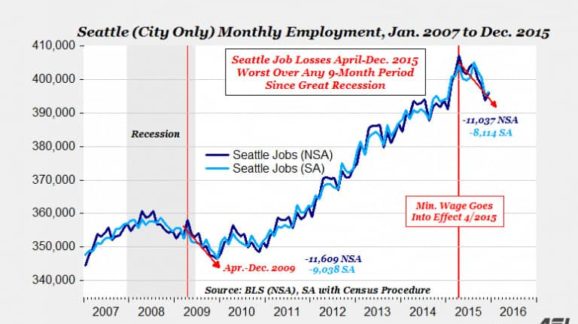
Milton Friedman – A Conversation On Minimum Wage Published on Oct 4, 2013 A debate on whether the minimum wage hurts or helps the working class. http://www.LibertyPen.com Is Anybody Shocked that Higher Minimum Wage Mandates Are Resulting in Fewer Jobs? August 25, 2016 by Dan Mitchell While economists are famous for their disagreements (and their incompetent […]
FRIEDMAN FRIDAY Milton Friedman and Dan Mitchell look at the economics of medical care!!
Milton Friedman on Medical Care (Full Lecture) Another Grim Reminder that Obamacare Has Made Healthcare More Expensive August 29, 2016 by Dan Mitchell Way back in 2009, some folks on the left shared a chart showing that national expenditures on healthcare compared to life expectancy. This comparison was not favorable to the United States, which easily […]
FRIEDMAN FRIDAY 2 videos by Milton Friedman on welfare state plus 2 cartoons that illustrate the fate of socialism from the Cato Institute
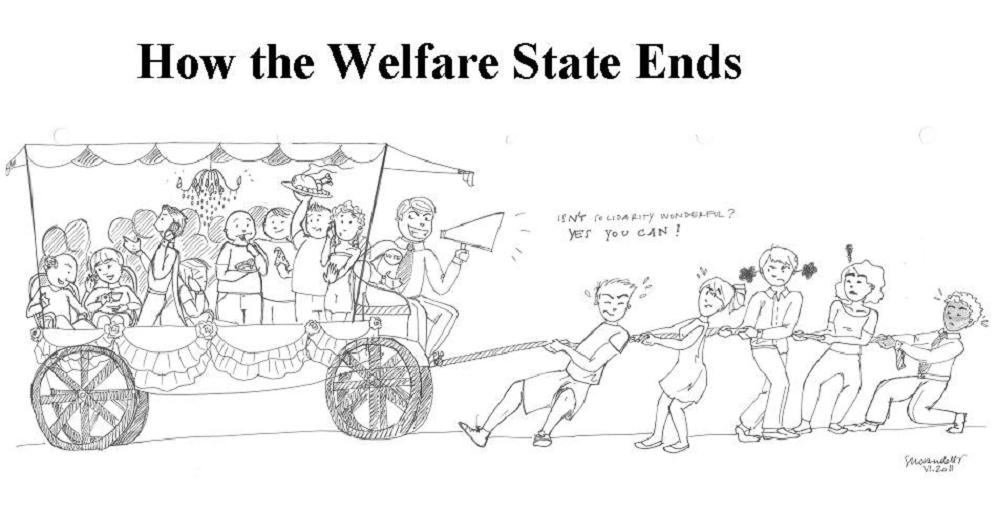
__________ Cato Institute scholar Dan Mitchell is right about Greece and the fate of socialism: Two Pictures that Perfectly Capture the Rise and Fall of the Welfare State July 15, 2011 by Dan Mitchell In my speeches, especially when talking about the fiscal crisis in Europe (or the future fiscal crisis in America), I often […]
FRIEDMAN FRIDAY Milton Friedman has the two solutions to the Black Teenage Unemployment Problem!!!
Milton Friedman on Donahue Show in 1979 Milton Friedman has the two solutions to the Black Teenage Unemployment Problem!!! The solutions would be first to lower the Minimum Wage Amount and second give students the opportunity to have vouchers so their parents can put them in the best schools when they start in the kindergarten […]









 Slower than flying, less convenient than driving, and more expensive than either one.




 The Daily Hatch

“What is history but a fable agreed upon?” as Napoleon once put it, and never has that been more true than the story of the Great Depression and its aftermath. With liberals again pitching more government spending “stimulus” in Washington, it’s critical we get this history right.
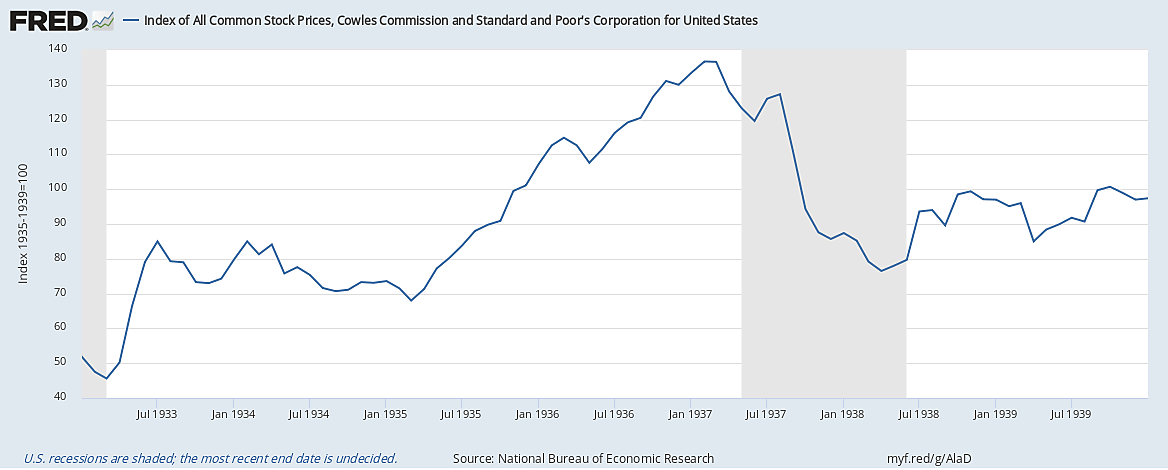
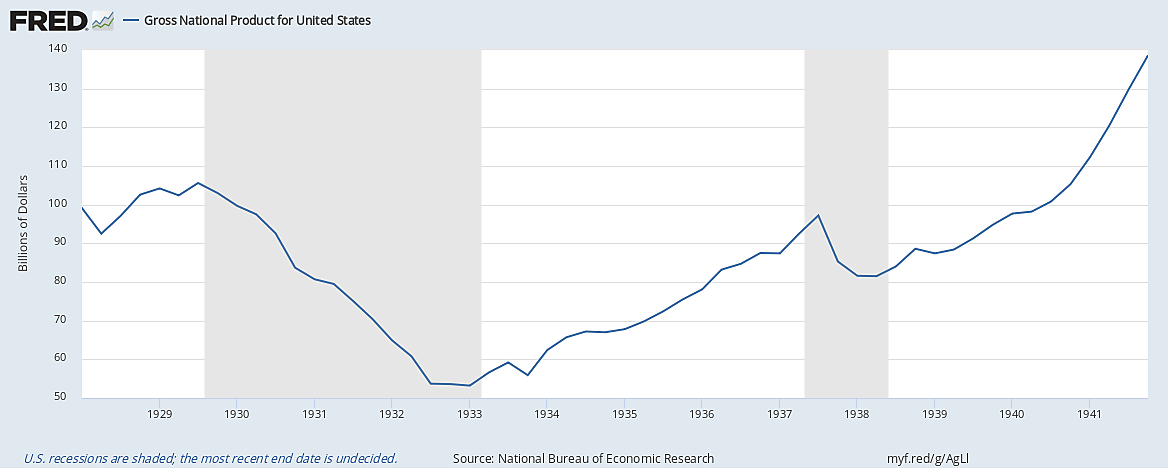
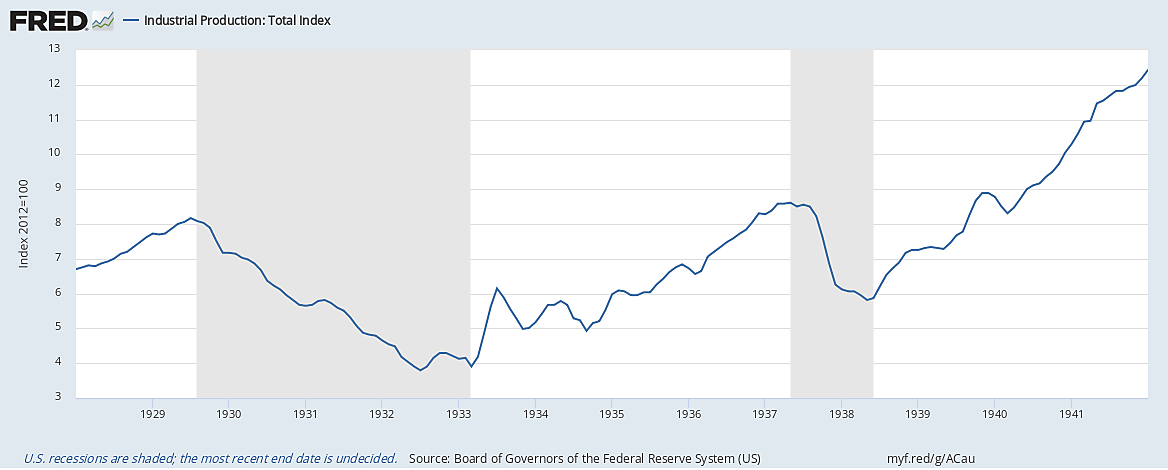
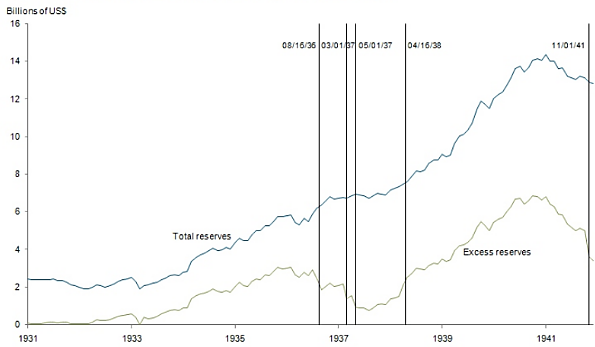
In a previous column I unmasked the historical lie that Franklin Roosevelt’s New Deal programs ended the Great Depression. After seven years of New Deal-era explosions in federal debt and spending, the U.S. economy was still flat on its back, and misery could be seen on the street corners. By 1940, unemployment still averaged a sky-high 14.6 percent. That’s some recovery.
However, I’ve been deluged with the same question from readers: Ok, what did end the Great Depression? Again, the history books get this chapter of history wrong. Most history books tell us that it was government spending on steroids to mobilize for World War II after the Japanese attacks on Pearl Harbor on Dec. 7, 1941.
Well, it is true that the economic output surged and unemployment fell, but periods of all-out war are very different than periods of peace. Is it any surprise that unemployment fell dramatically when nearly 12 million Americans joined the military?
My mother, a teenager in that period, used to tell me that during the war, when fuel was scarce and needed for the military, you wouldn’t be caught dead driving to the movie theater or a party. It was regarded as unpatriotic and selfish. People continued to produce even with high tax rates (94 percent during the war) when their tax dollars were financing the fight against the Nazis and the Japanese.
For nearly four years — from 1942 to 1945 — America was not a free-market economy. We were an all-out wartime economy — with the normal laws of economics suspended.
However, a war is no way to fix an economy — obviously. Countering terrorist acts of the Islamic State is not a jobs program. During World War II, when we built ships, tanks, fighter planes, dropped bombs and sent our troops into harm’s way, we weren’t creating wealth. A war is no more stimulating to the economy than a burglar stealing your money, the Japanese tsunami in 2011, Hurricane Katrina in 2005, or a tornado that levels an entire town. Without such calamity, the resources spent reconstructing (or destroying in the case of war) would be spent either purchasing useful, life-enhancing products for consumption or investing in technology and capital equipment requisite to increasing economic output.
War in self-defense might be necessary to protect our families, but any economic growth derived from it is far less beneficial than growth derived from free people making individual decisions on what to consume and in what to invest.
In the 1940s, government spending did indeed surge. The federal share of gross domestic product (GDP) rose from less than 12 percent in 1941 to more than 40 percent in 1943-45. In other words, almost half of everything that was produced in the nation was to fight the war. Domestic spending on many FDR New Deal programs in education, training and social services dropped more than 90 percent.
The real issue is what caused the economy to surge after the war was over.
This story is also not covered in the history books. Shortly after his third re-election in 1944, and at a time when the outcome of the war was no longer in question, FDR and his domestic advisers plotted a “new” New Deal with such spending items as national health insurance. The Keynesians were sure that the massive reduction in government spending would catastrophically tank the economy.
Paul Samuelson, the dean of neo-Keynesians at that time, warned in 1943 that unless wartime spending and controls were extended, there would be “the greatest period of unemployment and industrial dislocation which any economy has ever faced.” Business Week predicted unemployment would hit 14 percent with the postwar cutbacks.
Here’s what happened. Government spending collapsed from 41 percent of GDP in 1945 to 24 percent in 1946 to less than 15 percent by 1947. And there was no “new” New Deal. This was by far the biggest cut in government spending in U.S. history. Tax rates were cut and wartime price controls were lifted. There was a very short, eight-month recession, but then the private economy surged.
Here are the numbers on the private economy. Personal consumption grew by 6.2 percent in 1945 and 12.4 percent in 1946 even as government spending crashed. At the same time, private investment spending grew by 28.6 percent and 139.6 percent.
The less the feds spent, the more people spent and invested. Keynesianism was turned on its head. Milton Friedman’s free markets were validated.
In 1946, the unemployment rate averaged below 4 percent, and it stayed that low for the better part of a decade. This all happened during the biggest reduction in government spending in American history under President Truman.
In sum, it wasn’t government spending, but the shrinkage of government that finally ended the Great Depression. That’s what should be in every history book — but isn’t.
Originally appeared in the Washington Times.