Category Archives: Francis Schaeffer

A great article by Mat Viola on the morality discussion in the Alfred Hitchock movie “Rope”

A great article by  Mat Viola on the morality discussion in the Alfred Hitchock movie “Rope”

_______________

Episode VII – The Age of Non Reason

_

Dr. Francis Schaeffer – Episode 8 – The Age of Fragmentation

NoMirrorHDDHrorriMoN

Francis Schaeffer- How Should We Then Live? -8- The Age of Fragmentation

Joseph Rozak·

https://www.youtube.com/watch?v=LEmwy_dI2j0

I love the works of Francis Schaeffer and I have been on the internet reading several blogs that talk about Schaeffer’s work and the work below was really helpful. Schaeffer’s film series “How should we then live?  Wikipedia notes, “According to Schaeffer, How Should We Then Live traces Western history from Ancient Rome until the time of writing (1976) along three lines: the philosophic, scientific, and religious.[3] He also makes extensive references to art and architecture as a means of showing how these movements reflected changing patterns of thought through time. Schaeffer’s central premise is: when we base society on the Bible, on the infinite-personal God who is there and has spoken,[4] this provides an absolute by which we can conduct our lives and by which we can judge society.  Here are some posts I have done on this series: Francis Schaeffer’s “How should we then live?” Video and outline of episode 10 “Final Choices” episode 9 “The Age of Personal Peace and Affluence”episode 8 “The Age of Fragmentation”episode 7 “The Age of Non-Reason” episode 6 “The Scientific Age”  episode 5 “The Revolutionary Age” episode 4 “The Reformation” episode 3 “The Renaissance”episode 2 “The Middle Ages,”, and  episode 1 “The Roman Age,” .

MORALITY WITH ROPE

“There are no moral phenomena at all, but only a moral interpretation of phenomena.” – Friedrich Nietzsche, Beyond Good and Evil

“The mere material world suggests to us no concepts of good or evil, because we can discern in it no system of grades of value.” – Alfred North Whitehead

“No known race is so little human as not to suppose a moral order so innately desirable as to have an inevitable existence. It is man’s most fundamental myth.” – Joseph Wood Krutch, The Modern Temper

“I just wanted to illustrate, in an entertaining way, that there is no God and that we’re alone in the universe, and there is nobody out there to punish you. That your morality is strictly up to you. If you’re willing to murder and you can get away with it and you can live with it, that’s fine.” – Woody Allen, on Crimes and Misdemeanors
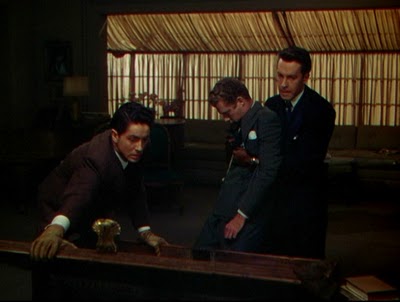
rope1.jpg

Alfred Hitchcock’s Rope stars Farley Granger and John Dall as thinly disguised versions of Leopold and Loeb, the brilliant students and self-described Übermensch who considered themselves exempt from the laws and morals of “ordinary” men, and put their philosophy into action by murdering a young boy for kicks. For them, killing a human being was just another experience, scarcely distinguishable, morally speaking, from any other action – like, say, squashing an ant. In Rope the names have changed to Phillip (Granger) and Brandon (John Dall), but the attitudes are the same. They murder a mutual acquaintance for the thrill of it, arguing that “the few are those men of such intellectual and cultural superiority that they’re above the traditional moral concepts. Good and evil, right and wrong, were invented for the ordinary, average man, the inferior man, because he needs them.”

Not surprisingly, the film doesn’t endorse this view. In the end, Mr. Smith himself, James Stewart, shows up brimming with moral indignation to deliver an impassioned argument against the duo’s dastardly deed, saying, “…we’re each of us a separate human being with the right to live and work and think as individuals, but with an obligation to the society we live in. By what right did you dare decide that that boy in there was inferior and therefore could be killed? Did you think you were God, Brandon? Is that what you thought when you choked the life out of him? I don’t know what you thought or what you are but I know what you’ve done. You’ve murdered! You’ve strangled the life out of a fellow human being who could live and love as you never could…”
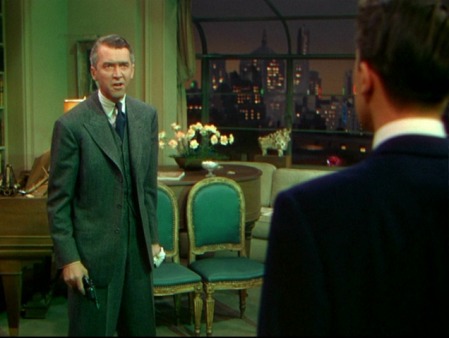
ropen1.jpg

The message is as obvious as is it predictable: murder is wrong! Few would argue with this statement. It seems to be a self-evident truth. But is it? I’m afraid the issue isn’t so black and white. Stewart’s character believes murder is wrong. John Dall’s character believes murder is right. Who’s correct? The problem is that we cannot logically decide between these competing moral claims unless there is an objective standard of morality to which we can repair for adjudication. Only such a standard would provide us the means to resolve disputes between people whose notions of right and wrong differ. The question is, though, does such a standard of morality actually exist?

First, a few definitions are in order:

Subjective:

  • 1) Based on or influenced by personal feelings, tastes, or opinions.
  • 2) Existing in the mind; belonging to the thinking subject rather than to the object of thought.
  • 3) Proceeding from or taking place in a person’s mind rather than the external world.

My favorite color is green. That is a subjective sentiment. That green is my favorite color need not imply that green is or should be everybody’s favorite color. It is not the “right” color, in any objective sense. Nature has not, after all, indicated a color preference.

Objective:

  • 1) Not influenced by personal feelings or opinions in considering and representing facts.
  • 2) Not dependent on the mind for existence; actual.
  • 3) Anything which actually exists, as distinguished from something thought or felt to exist.

2+2=4. That is an objective fact. Take two objects from here, two objects from there, put them together, and you have four objects. There’s no room for individual interpretation or preference. It is not right for some and wrong for others. There is only one valid answer. 2+2= 5 may be identified as an error, notwithstanding the ramblings of Dostoyevsky’s Underground Man, because math is not a subjective matter.

Morality

  • 1) Principles concerning the distinction between right and wrong or good and bad behavior.
  • 2) Of or concerned with the judgment of the goodness or badness of human action and character.

Murder is wrong. That is a moral claim. To which category do moral claims belong: subjective or objective? Is asserting that “murder is wrong” an objective fact like “2+2=4″, or is it a subjective sentiment like “my favorite color is green”? Is there an objective standard of morality to which we can refer to settle the matter? Or do questions of right and wrong, good and bad, fall into the subjective realm, amounting to nothing more than personal preference? I would argue that, whether we like it or not, moral claims belong squarely in the latter category.

The laws of math and logic are universally applicable. There’s no denying them. 2+2=4 is necessarily true. Furthermore, 2+2=4 was so even before the advent of humans. Let’s say a prehistoric squirrel gathers 2 nuts from under one tree, two nuts from under another tree, and then takes them all back to his nest. How many nuts does this squirrel have? He has 4, obviously. Is it any less true just because a human isn’t around to compute it? Did humans magically make 2+2=4 simply by thinking it? I don’t think so, and that’s because the laws of mathematics inhere in reality. Humans discovered mathematical laws; they didn’t invent them.

Morality doesn’t work that way. A moral claim like murder is wrong is not necessarily true. Right and wrong, good or bad, do not exist in nature. They are merely human constructs that help us get along, very much like the rules of courtesy. The universe, I’m afraid, is perfectly indifferent to morality. Whether one chooses to observe a moral rule like murder is wrong or stealing is bad is an entirely subjective matter, no more obligatory than, say, the rule instructing us not to split infinitives. Let’s say a bigger squirrel comes along and steals the smaller squirrel’s nuts. Has the bigger squirrel acted immorally? Was he “wrong” to steal the nuts? Obviously not, and that’s because the rules of morality do notinhere in reality. Humans didn’t discover moral rules; they invented them.
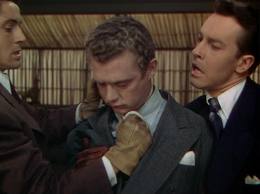
imagesca9x1eed.jpg

Allow me to return to Rope for a moment. I’ve never been a fan of the film. Its gimmicky one-set, long-take approach is hardly conducive to Hitchcock’s strengths as a director. Hitchcock himself acknowledged this, pretty much dismissing the film as a stunt: “When I look back, I realize that it was quite nonsensical because I was breaking with my own theories on the importance of cutting and montage for the visual narration of a story…no doubt about it, films must be cut”.

Also problematic are the stilted performances, particularly Granger’s awful turn as Phillip the Boobermensch. Just about everything he does or says is a howler. Perhaps my favorite bit is when he frantically calls out to “Brandon! Brandon!” when he sees the rope hanging out of the chest which contains the body. Brandon tells him to pull it out, and Phillip whines “I can’t”, as if he were totally incapable of functioning on his own. Later, when Stewart picks up the rope, Phillip hysterically whimpers, “He’s got it! He’s got it! He knows, he knows, he knows…” I mean, jeez, couldn’t Brandon find someone better than this guy with whom to carry out the “perfect crime”?

Thematically, the film offers a conventional, noncontroversial and comforting take on morality. During Stewart’s concluding diatribe on the immorality of murder, Brandon, himself now reduced to the level of Boobermensch, mutely stands around (as only characters in films based on plays are wont to do) allowing Stewart to prattle on without offering a counterargument, as if he’s been stunned speechless by the persuasive power of Stewart’s devastating argument. (For a vastly more insightful, unsettling, and intellectually challenging exploration of the “morality of murder” see Woody Allen’s masterful Crimes and Misdemeanors).

After watching Rope I happened to notice that the Self-Styled Siren, a popular classic movie bloggerette, had posted a tribute to the late Farley Granger, which consisted mostly of a defense of the “severely underrated Rope“. Her many followers quickly chimed in with their usual assent. All very boring, frankly. No one bothered to mention anything about the heady philosophical issues at the film’s core. I mean, what an opportunity to discuss Nietzsche, morality, murder, nihilism etc.! I felt the conversation could use some livening up, and so I posted the following:

“There’s nothing wrong, objectively speaking, with snuffing out a human life, notwithstanding all of Stewart’s histrionic protestations to the contrary.”

I had to chuckle at the Siren’s response:

“Mat, I would address your objections to Rope, but the last line of your first comment has, frankly, scared me to death.”

Apparently, for the Siren, a proposition qualifies as worthy of dispute only if it preserves her cozy feelings of security and well-being. (Not that there’s anything morally wrong with that, of course). This is a woman who could tell you everything you never wanted to know about old Hollywood stars – like, say, all the juicy details of the secret love affair between Jeanette Macdonald and Nelson Eddy – but when the discussion turns to a genuinely challenging subject, particularly one that frightens her, she’ll go all mum on you. (One suspects that a CAT scan of the Siren’s brain would reveal that the region controlling appreciation for classic Hollywood movies, technically known as the hippoclassic cinebellum, is grossly overdeveloped).

But I digress. Saying “there’s nothing wrong, objectively speaking, with snuffing out a human life” is, of course, not the same as saying, “there’s nothing wrong, subjectively speaking, with snuffing out a human life.” The operative phrase here is “objectively speaking”. I don’t personally condone murder. I don’t personally like murder. I’m happy to see this prejudice of mine codified as the law of the land. I cannot provide a reason, however, why murder is objectively wrong. But there’s no shortage of folks who try to provide such a reason. I’ll now examine some of the more common arguments, and explain why I find them wanting:

The Self-Evident Argument

People often respond to the suggestion that there’s nothing objectively wrong with murder with simple incredulity. For them, apparently, the proposition that murder is wrong is self-evidently true. They might respond by saying things like, “if you don’t know why murder is wrong I really don’t know what to say to you.”

Of course, this is in fact no argument at all. Here’s one thing they might say: “murder is objectively wrong because…” If one doesn’t need a reason to justify his belief that murder is morally wrong, then neither does a murderer need a reason to justify his belief that murder is morally right. After all, murderers have their own “self-evident truths.” We’re no closer to resolving the dispute with which we started. If one person says “murder is wrong” and another says “murder is right”, how do we logically decide between these competing moral claims in the absence of an objective standard to which we can refer to settle the matter? “Because I strongly feel that murder is wrong” does not, I’m afraid, constitute an objective standard.

The Golden Rule – Do unto others as you would have them do unto you.

Why should anyone necessarily adopt this rule? A sadistic murderer, for example, derives pleasure from inflicting pain on others. He values his own pleasure above everything else. He considers his own pleasure to be the greatest good, and if morality is purely subjective as I am arguing, then maximizing his pleasure, which would entail torturing his victim to death, is, for him, the right thing to do. Why then should he not adopt the rule that torturing people to death is good? Why should he care about the victim? What obligates him to care for her?

Most of us find the behavior of a sadistic murderer nauseating. That is true. But unless an objective source of human worth and moral obligation exists, we have no logical grounds to say that his sadistic behavior is morally wrong. In fact, in the absence of an objective standard of morality we have to forfeit altogether our cherished notions of morally right or wrong behavior. Good and bad, right and wrong, become vacant categories. Assertions like “murder is wrong” mean nothing more than “I don’t like murder.”

Survival of the species

All animal species possess characteristics which have historically contributed to the perpetuation of their species. Humans are no different. Some attempt to infer a moral imperative from this fact. The argument goes something like this: that which preserves life, such as empathy, is good, and that which destroys life, such as murder, is bad. There are several problems with this position:

First, it commits the fallacy of trying to derive an “ought” from an “is”. That certain behaviors tend to preserve life is a fact. That we ought to behave in ways that tend to preserve life is not. The first is a truth-statement, the second a value-statement, and never the twain shall meet. You simply cannot logically derive a value from a fact.

Second, it begs the question: why is life/survival good? Millions of species have already gone extinct. Why should anyone necessarily care if the human species goes the way of the dinosaur? Why is human life any more valuable than any other animal species?

Third, it commits the naturalistic fallacy. Allow me to quote G.E. Moore:

“The survival of the fittest does not mean, as one might suppose, the survival of what is fittest to fulfill a good purpose – best adapted to a good end: at the last, it means merely the survival of the fittest to survive: and the value of the scientific theory just consists in showing what are the causes which produce certain biological effects. Whether these effects are good or bad, it cannot pretend to judge.”

Just because something is “natural” doesn’t make it “good” (or “bad”, for that matter). Often that which preserves life also destroys life. Aggression, no less than empathy, is a characteristic which has facilitated human survival. Vanquishing entire tribes of people has generally been successful throughout human prehistory and recorded history. Just ask the descendants of the North American Indian – if you can find any. The point is that one has to be awfully selective when attempting to base his morality on what evolution has wrought. After all, the “better angels of our nature” evolved right alongside the “fallen” ones.

God

There’s no way around it: the implications of atheism lead inevitably to moral nihilism.  I do think that God, were he to exist, would qualify as an objective source of moral values (though even this is debatable), since, being omniscient, he would presumably know infallibly what is good and what is bad. But first his existence would need to be demonstrated. Good luck.

rope1.bmp

So let’s take this full circle back to Rope. Here’s the full text of Stewart’s concluding monologue:

“You’ve given my words a meaning I’ve never dreamed of. And you’ve tried to twist them into a cold, logical excuse for your ugly murder. Well, they never were that, Brandon. You can’t make them that. There must have been something deep inside of you from the very start that let you do this thing. But there’s always been something deep inside me that would never let me do it. Tonight you’ve made me ashamed of every concept I ever had of superior or inferior beings. And I thank you for that shame. Because now I know that we’re each of us a separate human being, Brandon, with the right to live and work and think as individuals, but with an obligation to the society we live in. By what right do you dare say that there’s a superior few to which you belong? By what right did you dare decide that that boy in there was inferior and therefore could be killed? Did you think you were God, Brandon? Is that what you thought when you choked the life out of him? Is that what you thought when you served food from his grave? Well, I don’t know what you thought or what you are but I know what you’ve done. You’ve murdered! You’ve strangled the life out of a fellow human being who could live and love as you never could…”

Stewart, playing Rupert Cadell, delivers this entire monologue uninterrupted. Brandon and Phillip, the two supposed Übermensch, just stand around like dimwits as Stewart rants. I thought it might be fun to imagine what Brandonmight have said and done, were he not such a Boobermensch, in response to Stewart’s diatribe. The following, then, is my re-write of this scene:

Rupert Cadell
You’ve given my words a meaning I’ve never dreamed of. And you’ve tried to twist them into a cold, logical excuse for your ugly murder.

Brandon
Hey, Mr. Smith, we’re not in Washington anymore. No filibustering here. If you think I’ll allow you to go off on a rant against me unchallenged you’re gravely mistaken. First of all, I don’t need an excuse to commit murder. I did it for the same reason I do anything: I wanted to. I felt like doing it and I did it. Secondly, it wasn’t ugly. Au contraire:  it was a thing of beauty. You haven’t lived until you’ve strangled the life out of someone, my friend. It’s a fucking rush. You oughta try it some time.

The bluntness with which Brandon discusses the murder flusters Rupert. Trying to regain his composure he faces Brandon with all the courage he can muster and, with righteous indignation, says:

jimmystewart1.jpg

Rupert
The name’s not Mr. Smith! It’s Rupert Cadell!

Brandon
I stand corrected. Is that it? Are you done? Is that all you have to say?

Rupert
No, that’s not all I have to say! I have much more to say! Much more! And by the time I’m finished saying it…

Brandon slaps Rupert on the cheek.

Brandon
Well, say it, man! Say it!

Rupert
There must have been something deep inside of you from the very start that let you do this thing. But there’s always been something deep inside of me that would never let me do it.

Brandon slaps Rupert on the other cheek for good measure.

Brandon
Ok, so we’ve established that we both have something deep inside of us. That’s a sure sign that what we’re discussing here is a purely subjective matter. The something deep inside of me says that murder is good. The something deep inside of you says that murder is bad. Without an objective standard of morality, this just means that I like murder, and you don’t. So what? I like chocolate. You don’t. What’s your point?

Rupert (whimpering)
Please stop slapping me. It hurts.

Brandon
Ok, sorry, I’ll stop slapping you.

Rupert (relieved)
Thank you.

Brandon delivers a punishing right hook to the side of Rupert’s head. Rupert crumples to the floor.
work_video_synkope_vertigo1.jpg

Brandon
Does that feel any better? I repeat: what’s your goddamn point?

Rupert struggles back to his feet.

Rupert
Ok, ok. We’re each of us a separate human being, Brandon, with the right to live and work and think as individuals, but with an obligation to the society we live in.

Brandon delivers a crushing haymaker straight to Rupert’s nose. Rupert cries out in agony, blood spraying like a geyser from his broken nose.

Brandon
Sorry, Roopy, but the impulse to stay alive is not a “right.” “Rights” don’t exist in nature. “Human rights” is a purely man-made concept which has no basis in reality. If you want to pretend you have a “right” to live go right ahead, but don’t expect me to. That boy in there had no more inherent right to live than anyone or anything else does. I didn’t violate his “right” to live because he didn’t have one.

Rupert (struggling to get up on one knee)
By what right do you dare…?

Before Rupert can finish the question, Brandon wallops him with a devastating uppercut to the chin, knocking Rupert flat on his back. Barely conscious now, Rupert moans in abject pain, his head spinning.

691.jpg

Brandon
Let me cut you off right there. I just got done saying that rights are purely fictitious. And then you start your next sentence with, “By what right…”? Have you not been listening? Quit sticking so slavishly to the crummy script, you fool. It doesn’t apply anymore. Are you incapable of improvising?

Brandon takes his pistol out of his pocket and kneels down to show it to Rupert.

Brandon
See this? The script says I’m supposed to hand it over to you like some fucking moron. But that ain’t gonna happen. See, that’s the difference between you and me, Roopy. You mindlessly obey whatever authority tells you. I don’t. The screenwriter wants you to be a mouthpiece for “society” and so you play along like some unthinking automaton emitting preprogrammed drivel. Well, this is my script now, and so you’d better come up with something a little more persuasive. You want the gun? Here, have it.

Brandon slams the butt of the gun down hard on Rupert’s skull, finally knocking him into merciful unconsciousness.
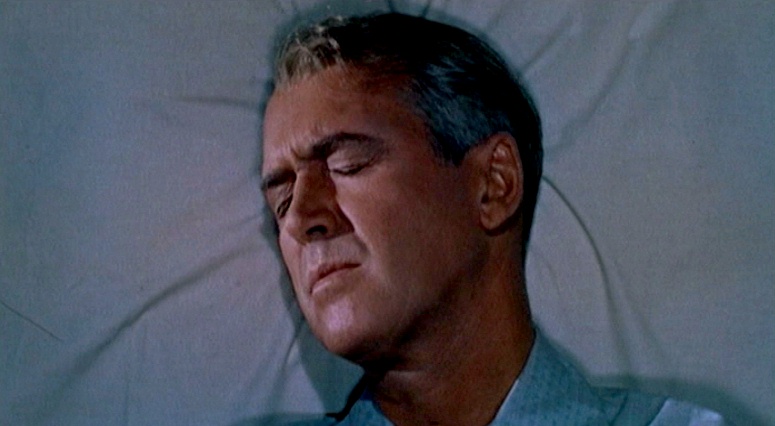
vertigo21.jpg

Brandon looks over at Phillip, who has been silently watching the whole time from his piano.

Brandon
Well, what have you got to say for yourself?

Phillip
You frighten me. You always have. From the very first day in prep school.

Brandon
Oh, Jesus. Can’t you say anything that isn’t in the script either?

Phillip
That’s a lie. There isn’t a word of truth in the whole story. I never strangled a chicken in my life. I never strangled a chicken and you know it!”

Brandon conks Phillip over the head with the gun, knocking him out as well, and drags him over next to Rupert. Brandon tosses a glass of water in Rupert’s face to wake him up, and then sits back in a reclining chair and lights up his pipe and waits for Rupert to regain consciousness. Rupert starts to stir, then sits up, rubbing his beleaguered head.

Phillip mumbles something. Rupert leans closer to get a better listen.

Brandon
What’s he saying now?

Rupert
I think he said, “He’s got it. He’s got it. He knows, he knows, he knows…”

Brandon
Yeah, that’s what I thought. He’s just mumbling some more gibberish from the script. Remember? That’s what he said when you took the rope out of your pocket.

Rupert
Oh yeah, that’s right.

Brandon
Guess who has the rope now?

Brandon produces the rope from his pocket and shows Rupert.

rope-pic-31.jpgits-a-wonderful-life-jimmy-vision1.png

Brandon (puffing on his pipe like a gentleman of leisure)
But let’s get back to our little discussion, shall we? I believe you were saying that we have an obligation to the society we live in or some such nonsense.

Rupert
That’s right, we do.

Brandon
Still sticking to the script, eh? I was hoping I had knocked some sense into you, but no, you’re still shackled to the illogical ideas of your creators, I see. Look, Roopy, nothing at all obligates me to care for society. I have a moral obligation tomyself and myself alone. What is good for me is the only good I recognize. Why should I care about society? Why should I be morally obligated to anybody or anything else but myself?

Rupert
Did you think you were God, Brandon? Is that what you thought when you choked the life out of him? Is that what you thought when you served food from his grave?

Brandon
Actually, I thought the burgers were a little dry myself. How was yours?

Rupert
Mine was nice and juicy. Very delici… Gosh darn it, you murdered that boy over there and you’re talking about hamburgers? What kind of monster are you? Answer the question: did you think you were God when you chocked the life out of that boy?

Brandon looks at the morally indignant Rupert with amusement and takes a long drag on his pipe.

Brandon
Getting a little demanding for a guy with his face bashed in, aren’t we, Roopy? To answer your question, no, I didn’t think I was God. I can’t very well think of myself as something I don’t believe in, now can I? I’ll leave the murdering in the name of God to your precious “society”.

Rupert
Well, I don’t know what you thought or what you are but I know what you’ve done. You’ve murdered! You’ve strangled the life out of a fellow human being who could live and love as you never could…”

Brandon
Look, Roopy, that boy over there was just a random collection of atoms with no more objective worth or value than any other piece of matter. You think his life had value. I don’t. I simply considered him unworthy of living and took the necessary steps to snuff him out of existence. You can bellow till you’re blue in the face that what I did was wrong, but you can’t objectively prove that it was.

Rupert
You’re insane, Brandon!

Brandon
Tut-tut, tut-tut. My, aren’t we rude for interrupting. You really oughta work on your manners, Roopy. Please, let me finish. You say I could never live and love as he could, and you’re right. I choose to live and love differently. I live to kill and I love to kill. His way of living and loving was not objectively any better than mine. And besides, now that that inanimate hunk of meat over there is objectively dead, I’m sure you’ll agree that he certainly cannot live and love as I can.

Rupert
You’re insane, Brandon! Insane and crazy and sick and twisted and cruel and demented and perverse and warped and abnormal and inhuman and loathsome and vicious and mean and perverted and nasty and brutal and pitiless and malicious and cruel…

Brandon
You already said cruel.

Rupert
…and unwholesome and ruthless and heartless and merciless and cold-blooded and hateful and despicable and disgusting and repugnant and detestable and abhorrent and noxious and sadistic and malevolent and evil and odious and contemptible and iniquitous…

Brandon
Oooh, iniquitous. Good one!

Rupert
… and repulsive and sickening and ghastly and nauseating and revolting and foul and abominable and wicked and monstrous and repellent and depraved…

Finally, Rupert starts hyperventilating from the strain of emitting so many consecutive insults.
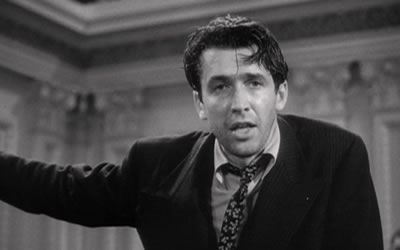
367-21.jpg

Brandon chuckles and gets up from his recliner and walks over to Rupert. He takes a long drag on his pipe and blows the smoke directly in Rupert’s face.

Brandon
Ok, let’s see. By my count, that’s 47 insults you’ve hurled in my direction in lieu of an argument. Ad hominem attacks are very unbecoming of you, Roopy. Notwithstanding your invective, the question remains: how was it objectivelywrong to snuff out that boy’s life?

Phillip starts mumbling.

Phillip
I never strangled a chicken in my life…

Brandon tosses water in Phillip’s face.

Phillip fully regains consciousness and looks up at Brandon.

Phillip
I’ve been praying I’d wake up and find out we hadn’t done it yet. I’m scared to death, Brandon. I think we’re going to get caught.

Brandon
Go on, Phillip, utter one more line from that script. Go on, I dare you.

Phillip
Have you ever bothered for just one minute to understand how someone else might feel?

Brandon
I wonder how this feels.

dz2oca26m6xscal3a74zcap7al2ncaxd7y2vcajk1unlcad502q3ca9yzw49camrve11caklacxzcaua7e9qcabmlfa2carczop7cafbs80tca1lcwu6ca8nz9k9caiq0qrqcaishg46carjx885cayk74ew.jpg

Brandon puts the rope around Phillip’s neck and tugs hard. Phillip gasps for breath, his eyes bulging out of their sockets.

Rupert
Please, Brandon, stop!

Brandon releases his grip on the rope, allowing Phillip to catch his breath.

Brandon (to Phillip)
Not another word from that script. Got it?

Phillip
What the devil are you doing?

Brandon retightens the rope around Phillip’s neck. Then he hands the rope to Rupert and points his gun at him.

Brandon (to Rupert)
I’ll give you one chance to save yourself. Finish off this Boobermensch and I’ll let you live. What was it you said earlier this evening? That you’d like to have a “Strangulation Day”? Well, today is that day, Rupert.

Rupert
I was only joking, for Christ’s sake!

Brandon cocks the gun.

Brandon
Whose life do you value more, Rupert? Yours or his? Do it and you walk out of here alive. Don’t do it and you’ll end up in that chest with the other dead meat.

Rupert
No! I can’t! I won’t!

Brandon
He’s going to die whether you do it or not. If you don’t do it you’re going to die too. At least save yourself, Rupert.

Rupert
May God forgive me.

Brandon
Wait! Before you do it, let’s see if Phillip has any last words.

Phillip
I had a rotten evening.

Brandon
Yep, quoting from the script to the last. Unbelievable! Do it!
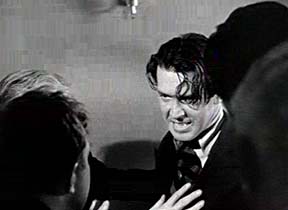
mrsmith661.jpg

Rupert yanks hard on the rope, choking the life out of Phillip the Boobermensch. Rupert lets the rope slip from his fingers and Phillip’s lifeless body slumps to the floor. Brandon drags the corpse over to the chest and tosses Phillip into it with the other body. He then walks back over to Rupert and puts his arm around him.

Brandon
Well, how was it? How did it feel?

Rupert
I take back everything I said, Brandon. That was incredible! You’re so right, you haven’t lived until you’ve choked the life out of someone. What a fucking rush that was!

Brandon pats Rupert on the shoulder and then walks over to the phone and dials.

Brandon
Hi Mrs. Cadell, this is Brandon Shaw speaking. I’m doing well, and you? So nice to talk to you. Listen, Rupert and I have been doing a lot of catching up, and it’s getting late and so I’ve invited him to stay for the night. I hope you don’t mind. Good! And since he’s still going to be here in the morning, I would be honored if you’d join us for breakfast. Great! Say, around 8:00? I look forward to seeing you, Mrs. Cadell.

Brandon hangs up.

Brandon
Charming lady, Roopy. I hope the eggs will be better than the burgers.

Rupert
What the devil are you up to?

mcauley-vertigo-splsh1.jpg

Brandon
Well, Roopy, yesterday was “Strangulation Day”, today is “Bullet in the Head Day”.

Brandon fires a bullet into Rupert’s head, and tosses him into the chest with the other two bodies.

Then Brandon breaks the fourth wall and addresses the audience directly.

Brandon
Ladies and gentlemen, if my actions this evening have repelled you, so be it. I can’t change the way you feel. But if you think that what I’ve done is morally wrong, I would simply remind you that that’s merely your opinion. In my opinion what I have done is right. It was fun, it was exciting, and it felt oh-so-good. Your opinion is no more valid than mine. It’s just different. Your values are no better than mine. They’re just different. After all, since no objective standard of morality exists, all you’re really saying is that you don’t like murder, and all I’m really saying is that I like murder. You may think that your moral outrage toward me amounts to something more than your own paltry knot of predilections. It does not. You may think that there is a higher standard to which I may be held. There is not. Morality, as you understand it, is a myth, a fantasy, a fairy-tale. Objectively speaking, murder is neither good nor bad, neither right nor wrong. It simply is. The universe is completely indifferent to morality. Nature is utterly amoral. Nothing is wrong. Nothing is right. Nothing is bad. Nothing is good. It is simply not possible to do something morally wrong. It is only possible to call something “wrong”. But no matter how passionately you shout, it doesn’t make it so. My actions this evening were no different, morally speaking, from that of a cat torturing a mouse. I am no more morally obligated to refrain from torture than is a cat. Moreover, humans have no more intrinsic value or worth than a mouse has. The value you assign to yourself and others is purely subjective and completely arbitrary. You may feel that you and others have value and worth, but do not forget for a moment that I feel that you and others don’t. Don’t delude yourself: your feelings are no more authoritative than mine. They’re just different. Whyshould I feel that you have value and worth? After all, you’re nothing more than a chance arrangement of particles with no more inherent value or worth than any other chance arrangement of particles. If this upsets you, it is because you have an innate, deep-rooted dread of nihilism, of the almost certain possibility that you are nothing more than a product of the blind whim of nature, that your most cherished concerns are mere brute stupidities deposited in you by the mindless, amoral process of evolution, that ultimately nothing has value, nothing has meaning and nothing matters, that all your effort is futile and absurd, and that just around the bend complete and utter annihilation and oblivion await you.

Good evening.

Posted on April 26th, 2011 by Mat Viola
Filed under: Miscellaneous

Taking on Ark Times Bloggers on the “Absurdity of Life without God!!” Part 15 (Robert Lewis of Men’s Fraternity suggested too many are focused on things that will pass away and not on making an eternal difference in others lives)

The Bible and Science (Part 03)

There Is A Difference Between Absolute and Objective Moral Values

Published on Dec 6, 2012

For more resources visit: http://www.reasonablefaith.org

The Bethinking National Apologetics Day Conference: “Countering the New Atheism” took place during the UK Reasonable Faith Tour in October 2011. Christian academics William Lane Craig, John Lennox, Peter J Williams and Gary Habermas lead 600 people in training on how to defend and proclaim the credibility of Christianity against the growing tide of secularism and New Atheist popular thought in western society.

In this session, William Lane Craig delivers his critique of Richard Dawkins’ objections to arguments for the existence of God, followed by questions and answers from the audience. In this clip, Dr Craig addresses a question about objective moral values and distinguishes them from absolute moral values.

Dr. Francis Schaeffer – The Biblical Flow of Truth & History (part 2)

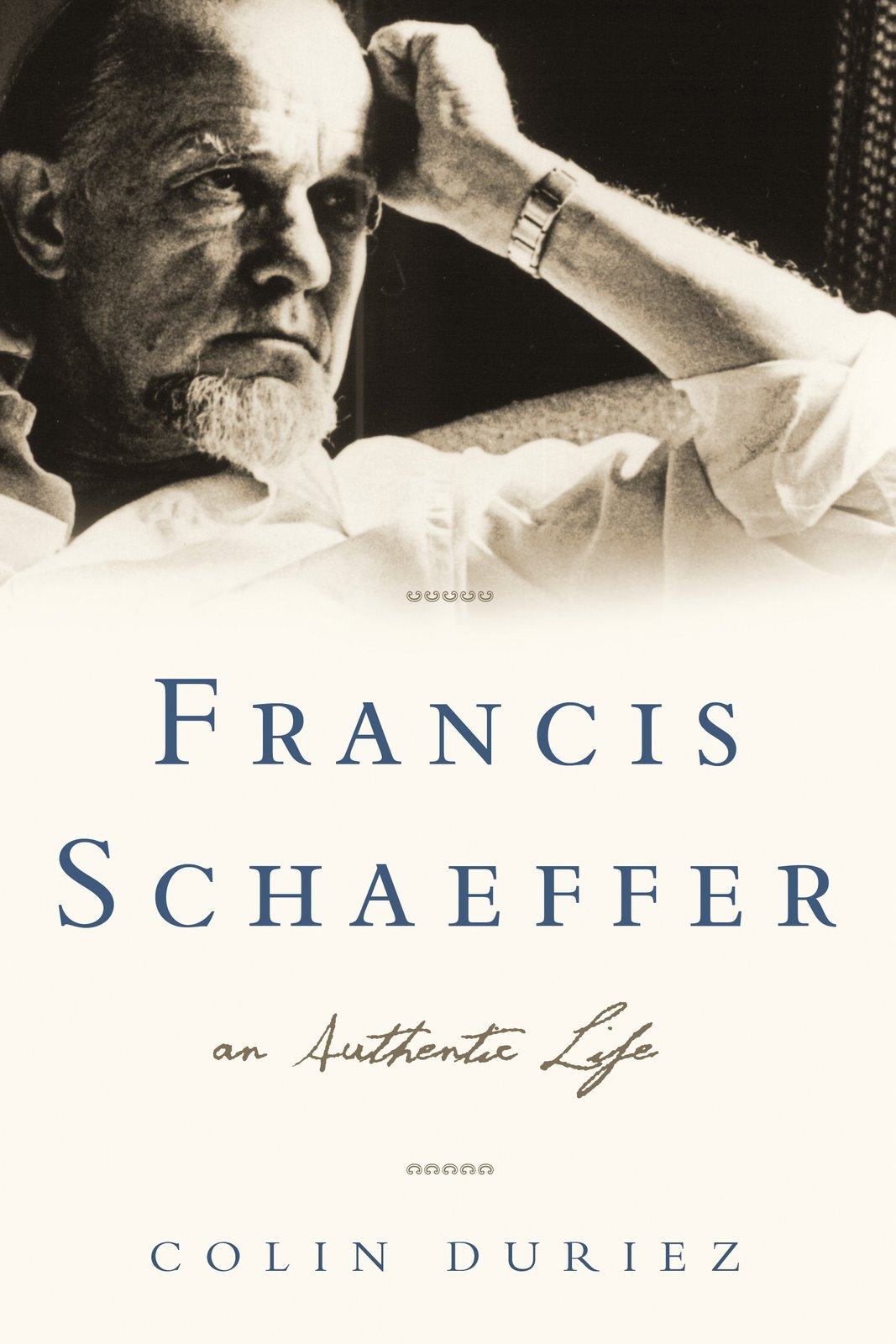
Francis Schaeffer pictured below:

______________________________

_________________

Life without God in the picture is absurdity!!!. That was the view of King Solomon when he wrote the Book of Ecclesiastes 3000 years ago and it is the view of many of the modern philosophers todayModern man has tried to come up with a lasting meaning for life without God in the picture (life under the sun), but it is not possible. Without the infinite-personal God of the Bible to reveal moral absolutes then man is left to embrace moral relativism. In a time plus chance universe man is reduced to a machine and can not find a place for values such as love. Both of Francis Schaeffer’s film series have tackled these subjects and he shows how this is reflected in the arts.

Here are some posts I have done on the series “HOW SHOULD WE THEN LIVE? : Francis Schaeffer’s “How should we then live?” Video and outline of episode 10 “Final Choices” episode 9 “The Age of Personal Peace and Affluence”episode 8 “The Age of Fragmentation”episode 7 “The Age of Non-Reason” episode 6 “The Scientific Age”  episode 5 “The Revolutionary Age” episode 4 “The Reformation” episode 3 “The Renaissance”episode 2 “The Middle Ages,”, and  episode 1 “The Roman Age,” .

In the film series “WHATEVER HAPPENED TO THE HUMAN RACE?” the arguments are presented  against abortion (Episode 1),  infanticide (Episode 2),   euthenasia (Episode 3), and then there is a discussion of the Christian versus Humanist worldview concerning the issue of “the basis for human dignity” in Episode 4 and then in the last episode a close look at the truth claims of the Bible.

I have discussed many subjects with my liberal friends over at the Ark Times Blog in the past and I have taken them on now on the subject of the absurdity of life without God in the picture. Most of my responses included quotes from William Lane Craig’s book THE ABSURDITY OF LIFE WITHOUT GOD.  Here is the result of one of those encounters from June of 2013:

DeathByInches asserted, “You are doomed to die Saline, get used to it.”

It is funny that you said that last night I was at church and heard Ecclesiastes 7:2 read,
“It is better to go to a house of mourning than to go to a house of feasting, for death is the destiny of everyone; the living should take this to heart.”

Robert Lewis the founder of “Men’s Fraternity” quoted this verse last night at Fellowship Bible Church in a meeting I attended. He noted that many people spend so much time on their careers that it is very interesting that usually the things mentioned at their funerals have very little to do with how much they accomplished in their careers but what impact they had on close friends and family members. Lewis suggested that many are out of balance today because they are focused on things that will pass away and not on making an eternal difference in others lives.

I THINK THAT ROBERT LEWIS IS RIGHT ABOUT THE IMPORTANCE OF MAKING AN ETERNAL IMPACT, BUT IF YOU, DEATHBYINCHES, ARE RIGHT ABOUT DEATH BEING THE ABSOLUTE END THEN WHO CARES HOW WE ACT IN THIS LIFE.

On this subject William Lane Craig noted:

If life ends at the grave, then it makes no difference whether one has lived as a Stalin or as a saint. Since one’s destiny is ultimately unrelated to one’s behavior, you may as well just live as you please. As Dostoyevsky put it: “If there is no immortality, then all things are permitted.” On this basis, a writer like Ayn Rand is absolutely correct to praise the virtues of selfishness. Live totally for self; no one holds you accountable! Indeed, it would be foolish to do anything else, for life is too short to jeopardize it by acting out of anything but pure self-interest. Sacrifice for another person would be stupid. Kai Nielsen, an atheist philosopher who attempts to defend the viability of ethics without God, in the end admits,

We have not been able to show that reason requires the moral point of view, or that all really rational persons, unhoodwinked by myth or ideology, need not be individual egoists or classical amoralists. Reason doesn’t decide here. The picture I have painted for you is not a pleasant one. Reflection on it depresses me…. Pure practical reason, even with a good knowledge of the facts, will not take you to morality.8

But the problem becomes even worse. For, regardless of immortality, if there is no God, then any basis for objective standards of right and wrong seems to have evaporated. All we are confronted with is, in Jean-Paul Sartre’s words, the bare, valueless fact of existence. Moral values are either just expressions of personal taste or the by-products of socio-biological evolution and conditioning. In the words of one humanist philosopher, “The moral principles that govern our behavior are rooted in habit and custom, feeling and fashion.”9 In a world without God, who is to say which actions are right and which are wrong? Who is to judge that the values of Adolf Hitler are inferior to those of a saint? The concept of morality loses all meaning in a universe without God. As one contemporary atheistic ethicist points out, “To say that something is wrong because … it is forbidden by God, is … perfectly understandable to anyone who believes in a law-giving God. But to say that something is wrong … even though no God exists to forbid it, is not understandable….” “The concept of moral obligation [is] unintelligible apart from the idea of God. The words remain but their meaning is gone.”10 In a world without a divine lawgiver, there can be no objective right and wrong, only our culturally and personally relative, subjective judgments. This means that it is impossible to condemn war, oppression, or crime as evil. Nor can one praise brotherhood, equality, and love as good. For in a universe without God, good and evil do not exist—there is only the bare valueless fact of existence, and there is no one to say that you are right and I am wrong.

Related posts:

Francis Schaeffer’s “How should we then live?” Video and outline of episode 10 “Final Choices” (Schaeffer Sundays)

E P I S O D E 1 0   Dr. Francis Schaeffer – Episode X – Final Choices 27 min FINAL CHOICES I. Authoritarianism the Only Humanistic Social Option One man or an elite giving authoritative arbitrary absolutes. A. Society is sole absolute in absence of other absolutes. B. But society has to be […]

Francis Schaeffer’s “How should we then live?” Video and outline of episode 9 “The Age of Personal Peace and Affluence” (Schaeffer Sundays)

E P I S O D E 9 Dr. Francis Schaeffer – Episode IX – The Age of Personal Peace and Affluence 27 min T h e Age of Personal Peace and Afflunce I. By the Early 1960s People Were Bombarded From Every Side by Modern Man’s Humanistic Thought II. Modern Form of Humanistic Thought Leads […]

Francis Schaeffer’s “How should we then live?” Video and outline of episode 8 “The Age of Fragmentation” (Schaeffer Sundays)

E P I S O D E 8 Dr. Francis Schaeffer – Episode VIII – The Age of Fragmentation 27 min I saw this film series in 1979 and it had a major impact on me. T h e Age of FRAGMENTATION I. Art As a Vehicle Of Modern Thought A. Impressionism (Monet, Renoir, Pissarro, Sisley, […]

Francis Schaeffer’s “How should we then live?” Video and outline of episode 7 “The Age of Non-Reason” (Schaeffer Sundays)

E P I S O D E 7 Dr. Francis Schaeffer – Episode VII – The Age of Non Reason I am thrilled to get this film series with you. I saw it first in 1979 and it had such a big impact on me. Today’s episode is where we see modern humanist man act […]

Francis Schaeffer’s “How should we then live?” Video and outline of episode 6 “The Scientific Age” (Schaeffer Sundays)

E P I S O D E 6 How Should We Then Live 6#1 Uploaded by NoMirrorHDDHrorriMoN on Oct 3, 2011 How Should We Then Live? Episode 6 of 12 ________ I am sharing with you a film series that I saw in 1979. In this film Francis Schaeffer asserted that was a shift in […]

Francis Schaeffer’s “How should we then live?” Video and outline of episode 5 “The Revolutionary Age” (Schaeffer Sundays)

E P I S O D E 5 How Should We Then Live? Episode 5: The Revolutionary Age I was impacted by this film series by Francis Schaeffer back in the 1970′s and I wanted to share it with you. Francis Schaeffer noted, “Reformation Did Not Bring Perfection. But gradually on basis of biblical teaching there […]

Francis Schaeffer’s “How should we then live?” Video and outline of episode 4 “The Reformation” (Schaeffer Sundays)

Dr. Francis Schaeffer – Episode IV – The Reformation 27 min I was impacted by this film series by Francis Schaeffer back in the 1970′s and I wanted to share it with you. Schaeffer makes three key points concerning the Reformation: “1. Erasmian Christian humanism rejected by Farel. 2. Bible gives needed answers not only as to […]

“Schaeffer Sundays” Francis Schaeffer’s “How should we then live?” Video and outline of episode 3 “The Renaissance”

Francis Schaeffer’s “How should we then live?” Video and outline of episode 3 “The Renaissance” Francis Schaeffer: “How Should We Then Live?” (Episode 3) THE RENAISSANCE I was impacted by this film series by Francis Schaeffer back in the 1970′s and I wanted to share it with you. Schaeffer really shows why we have so […]

Francis Schaeffer’s “How should we then live?” Video and outline of episode 2 “The Middle Ages” (Schaeffer Sundays)

  Francis Schaeffer: “How Should We Then Live?” (Episode 2) THE MIDDLE AGES I was impacted by this film series by Francis Schaeffer back in the 1970′s and I wanted to share it with you. Schaeffer points out that during this time period unfortunately we have the “Church’s deviation from early church’s teaching in regard […]

Francis Schaeffer’s “How should we then live?” Video and outline of episode 1 “The Roman Age” (Schaeffer Sundays)

Francis Schaeffer: “How Should We Then Live?” (Episode 1) THE ROMAN AGE   Today I am starting a series that really had a big impact on my life back in the 1970′s when I first saw it. There are ten parts and today is the first. Francis Schaeffer takes a look at Rome and why […]

Francis Schaeffer: “Whatever Happened to the Human Race” (Episode 5) TRUTH AND HISTORY

Francis Schaeffer: “Whatever Happened to the Human Race” (Episode 5) TRUTH AND HISTORY Published on Oct 7, 2012 by AdamMetropolis This crucial series is narrated by the late Dr. Francis Schaeffer and former Surgeon General Dr. C. Everett Koop. Today, choices are being made that undermine human rights at their most basic level. Practices once […]

Francis Schaeffer: “Whatever Happened to the Human Race” (Episode 4) THE BASIS FOR HUMAN DIGNITY

The opening song at the beginning of this episode is very insightful. Francis Schaeffer: “Whatever Happened to the Human Race” (Episode 4) THE BASIS FOR HUMAN DIGNITY Published on Oct 7, 2012 by AdamMetropolis This crucial series is narrated by the late Dr. Francis Schaeffer and former Surgeon General Dr. C. Everett Koop. Today, choices […]

Francis Schaeffer: “Whatever Happened to the Human Race” (Episode 3) DEATH BY SOMEONE’S CHOICE

Francis Schaeffer: “Whatever Happened to the Human Race” (Episode 3) DEATH BY SOMEONE’S CHOICE Published on Oct 6, 2012 by AdamMetropolis This crucial series is narrated by the late Dr. Francis Schaeffer and former Surgeon General Dr. C. Everett Koop. Today, choices are being made that undermine human rights at their most basic level. Practices […]

Francis Schaeffer: “Whatever Happened to the Human Race?” (Episode 2) SLAUGHTER OF THE INNOCENTS

Francis Schaeffer: “Whatever Happened to the Human Race?” (Episode 2) SLAUGHTER OF THE INNOCENTS Published on Oct 6, 2012 by AdamMetropolis This crucial series is narrated by the late Dr. Francis Schaeffer and former Surgeon General Dr. C. Everett Koop. Today, choices are being made that undermine human rights at their most basic level. Practices […]

Francis Schaeffer: “Whatever Happened to the Human Race” (Episode 1) ABORTION OF THE HUMAN RACE

It is not possible to know where the pro-life evangelicals are coming from unless you look at the work of the person who inspired them the most. That person was Francis Schaeffer.  I do care about economic issues but the pro-life issue is the most important to me. Several years ago Adrian Rogers (past president of […]

Ecclesiastes, Purpose, Meaning, and the Necessity of God by Suiwen Liang (Quotes Will Durant, Madalyn Murray O’Hair, Stephen Jay Gould,Richard Dawkins, Jean-Paul Sartre,Bertrand Russell, Leo Tolstoy, Loren Eiseley,Aldous Huxley, G.K. Chesterton, Ravi Zacharias, and C.S. Lewis.)

Ecclesiastes 2-3 Published on Sep 19, 2012 Calvary Chapel Spring Valley | Sunday Evening | September 16, 2012 | Derek Neider _____________________________ I have written on the Book of Ecclesiastes and the subject of the meaning of our lives on several occasions on this blog. In this series on Ecclesiastes I hope to show how secular […]

Robert Leroe on Ecclesiastes (Mentions Thomas Aquinas, Princess Diana, Mother Teresa, King Solomon, King Rehoboam, Eugene Peterson, Chuck Swindoll, and John Newton.)

Ecclesiastes 1 Published on Sep 4, 2012 Calvary Chapel Spring Valley | Sunday Evening | September 2, 2012 | Pastor Derek Neider _____________________ I have written on the Book of Ecclesiastes and the subject of the meaning of our lives on several occasions on this blog. In this series on Ecclesiastes I hope to show how […]

Super Bowl, Black Eyed Peas, and the Meaning of Life and Ecclesiastes

Ecclesiastes 8-10 | Still Searching After All These Years Published on Oct 9, 2012 Calvary Chapel Spring Valley | Sunday Evening | October 7, 2012 | Pastor Derek Neider _______________________ Ecclesiastes 11-12 | Solomon Finds His Way Published on Oct 30, 2012 Calvary Chapel Spring Valley | Sunday Evening | October 28, 2012 | Pastor Derek Neider […]

Truth Tuesday:The Way of Discovery: A Personal Journey of Faith Henry F. Schaefer III

The Way of Discovery: A Personal Journey of Faith  Henry F. Schaefer III

The Scientific Age

Uploaded by  on Oct 3, 2011

_______________

Episode VII – The Age of Non Reason

____________________

Episode 8: The Age Of Fragmentation

Published on Jul 24, 2012

Dr. Schaeffer’s sweeping epic on the rise and decline of Western thought and Culture

_______________________

There are many people of low intelligence  and many brilliant persons who do not put there faith in Christ and many others that do!!!! One of the brilliant believers is Dr. Henry F. Schaefer III and he tells his story below.

I love the works of Francis Schaeffer and I have been on the internet reading several blogs that talk about Schaeffer’s work and the work below  by Henry F. Schaefer III was really helpful. Schaeffer’s film series “How should we then live?  Wikipedia notes, “According to Schaeffer, How Should We Then Live traces Western history from Ancient Rome until the time of writing (1976) along three lines: the philosophic, scientific, and religious.[3] He also makes extensive references to art and architecture as a means of showing how these movements reflected changing patterns of thought through time. Schaeffer’s central premise is: when we base society on the Bible, on the infinite-personal God who is there and has spoken,[4] this provides an absolute by which we can conduct our lives and by which we can judge society.  Here are some posts I have done on this series: Francis Schaeffer’s “How should we then live?” Video and outline of episode 10 “Final Choices” episode 9 “The Age of Personal Peace and Affluence”episode 8 “The Age of Fragmentation”episode 7 “The Age of Non-Reason” episode 6 “The Scientific Age”  episode 5 “The Revolutionary Age” episode 4 “The Reformation” episode 3 “The Renaissance”episode 2 “The Middle Ages,”, and  episode 1 “The Roman Age,” .

In the film series “WHATEVER HAPPENED TO THE HUMAN RACE?” the arguments are presented  against abortion (Episode 1),  infanticide (Episode 2),   euthanasia (Episode 3), and then there is a discussion of the Christian versus Humanist worldview concerning the issue of “the basis for human dignity” in Episode 4 and then in the last episode a close look at the truth claims of the Bible.

Francis Schaeffer

The Way of Discovery: A Personal Journey of Faith

Henry F. Schaefer III


Professor Henry F. (Fritz) Schaefer is one of the most distinguished physical scientists in the world.  The U.S. News and World Report cover story of December 23, 1991 speculated that Professor Schaefer is a “five time nominee for the Nobel Prize.” He has received four of the most prestigious awards of the American Chemical Society, as well as the most highly esteemed award (the Centenary Medal) given to a non-British subject by London’s Royal Society of Chemistry. He is a Fellow of the American Academy of Arts and Sciences. Moreover, his general interest lectures on science and religion have riveted large audiences in nearly all the major universities in the U.S.A. and in Beijing, Berlin, Budapest, Calcutta, Cape Town, New Delhi, Hong Kong, Istanbul, London, Paris, Prague, Sarajevo, Seoul, Shanghai, Singapore, Sofia, St. Petersburg, Sydney, Tokyo, Warsaw, Zagreb, and Zürich.

For 18 years Dr. Schaefer was a faculty member at the University of California at Berkeley, where he remains Professor of Chemistry, Emeritus. Since 1987 Dr. Schaefer has been Graham Perdue Professor of Chemistry and Director of the Center for Computational Chemistry at the University of Georgia.


I would like to take as my theme the title of a book by Michael Polanyi entitled The Way of Discovery. Polanyi was a well–known physical chemist in England who later became even better known as a philosopher. In The Way of Discovery, he makes the point that scientists are not robots, mechanically filling up notebooks with data and coming to inevitable conclusions. To put it another way, science is not just an exercise in advanced logical positivism.

Rather, Polanyi argues, there is much of the artist in the good scientist, and he or she approaches the laboratory with a wealth of presuppositions and intuitions about how things should be.

I can confirm Polanyi’s thesis with an example from my own research. In 1978, one of the most distinguished organic chemists in the world suggested that it was just a matter of time before someone would make the cyclopropyne molecule. Since cyclopropyne would contain a carbon–carbon triple bond in a three–membered ring, my own chemical intuition was very skeptical about such a suggestion. Guided by this presupposition, we were able to demonstrate that cyclopropyne does not involve a triple bond.

One can find pieces of Polanyi’s thesis scattered throughout the philosophy of science. For example, Albert Einstein wrote in 1938 that, “Physical concepts are free creations of the human mind and are not, however it may seem, uniquely determined by the physical world.” So intuition and presupposition in science are by no means harmful, as long as they are continually refined in the dialogue with observation.

The Way of Discovery

Intuition and presupposition are necessary ingredients to discovery. I am a theoretical chemist by profession. Prior to my first involvement with Freshman Chemistry ten years ago, I had spent most of my time as a professor doing research in theoretical chemistry. My research consists of using mathematical equations and computers to understand the electronic structure of molecules. More specifically, we attempt to predict the shapes of molecules, their energetics, their spectra, and how they react with other molecules.

As Polanyi points out, the real excitement of science is the excitement of discovery—to observe things that no human being has ever seen, to discover a new and potentially important molecule or a new type of chemical reaction. If you were to ask the average Ph.D. chemist what Professor Henry Schaefer’s most important discovery was, he or she would probably say “the structure of methylene.”

From time to time, people actually do ask me “What is your most important discovery?” And I respond that the most important discovery in my life occurred during my fourth year on the faculty at Berkeley. This was not a time of professional turbulence in my life. Although I was still an assistant professor, I had been told that the chemistry department was going to recommend my promotion to tenure. Nor was it a time of personal turbulence, since I had already been married for seven years to the most wonderful woman in the world. At the time of this discovery, my students and I were doing some very interesting theoretical work on the identification of the interstellar molecules hydrogen isocyanide and protonated carbon monoxide.

Some Personal Discoveries

However, the most important discovery of my life was my discovery of Jesus Christ. In 1973, I discovered the Jesus Christ of history, the Jesus whose life is described on the pages of the New Testament.

The Jesus I discovered 20 years ago was rather different from the one I had heard of as a boy in church. That Jesus was a well–intentioned, infinitely tolerant person who laid down some simple moral rules which all religions now embrace. The real Jesus bore some resemblance to the Jesus of my youth, but not very much. In particular the real Jesus sharply challenged the religious leaders of His time. And He claimed to be the only way to establish the relationship with God for which we were originally created, stating that all who claimed otherwise were thieves, robbers, and false prophets. The real Jesus was a very controversial person.

I discovered that on a Sunday morning 1,960 years ago that Jesus rose physically from the dead. I discovered that the resurrection of Jesus is not only historically true, but that it’s one of the best–attested facts in all of ancient history. If you haven’t made this discovery yet, I would strongly encourage you to examine the evidence carefully. A good summary of the evidence for the resurrection is given in Frank Morrison’s book, Who Moved the Stone?

I discovered that when the apostles spoke of Jesus being the Son of God, they didn’t mean that God was His Father in some vague and undefinable way. Jesus’ closest companions meant that He was God the Son. Jesus Christ, the carpenter from Nazareth, was and is God almighty.

I discovered that I could know for certain that I have a relationship with God forever. Now this may strike some of you as a terribly arrogant statement. And it would be if it were based on anything I had done. But I’m going to spend eternity in relationship with God because Jesus died on the cross for my rebelliousness and disobedience. It is not because of anything I’ve done, but in spite of everything I’ve done.

I discovered that the New Testament is a reliable historical document. When I became a Christian 12 years ago, I wasn’t sure of this, but a book by the British classics scholar F.F. Bruce changed my thinking in this regard. And as time went by I came to have a deep respect for the Old Testament as well, because I discovered that Jesus spoke personally of its authenticity. I want to emphasize here that a belief in the complete truthfulness of the Bible need not carry with it a wooden or unnaturally literalistic understanding of every verse. To quote a statement of faith that I like very much,

We affirm that God in His work of inspiration (of the Bible, that is) utilized the distinctive personalities and literary styles of the writers who He had chosen and prepared.

In this context, my personal opinion is that the universe is probably 15–20 billion years old. I am convinced that such a view is completely consistent with the teaching of the first chapter of Genesis. For those of you who want to go into this matter in depth, I recommend James Montgomery Boice’s commentary on the first eleven chapters of Genesis.

I discovered that I could share my new–found faith in Jesus Christ with friends and with strangers. I discovered that most of the questions that people have about Christianity boil down to about ten distinct questions, and that there are intellectually sound answers to all ten.

One of my most interesting experiences occurred about 15 years ago. My wife, Karen, and I went with a friend to a visit a husband and wife who had visited our church. We should have expected something unusual because this couple was only about 25 years old and they lived in a $250,000 house. Furthermore, the man who answered the door was about 6’8″ tall. As we sat around getting acquainted, I asked Tom where he and Susie had moved from, to find that they had just moved up from Los Angeles. When I asked what kind of work Tom did, he replied that he was in professional sports. I was still oblivious to all this and so was Karen, but fortunately the third member of our party recognized that we were talking to the starting forward for the Golden State Warriors [professional basketball team] and blurted out, “Oh, so you’re that Tom Abernathy!” The best part of that evening was the ending. An hour after that awkward introduction, Tom and Susie Abernathy received Jesus Christ as their Savior and Lord.

I discovered that there is no problem too heavy for Jesus. Fourteen years ago, I spent several months at the University of Texas. On a Sunday morning (December 9, 1979, to be exact) I had just returned from church and was tidying up a few things in my office in Austin. My wife called and told me that our five–month old son Pierre had just died of crib death, or sudden infant death syndrome. Whatever illusion I had that life was just a bowl of cherries disappeared forever in that instant of time. Without going into the details, I can stand here tonight and tell you that never before nor since have I been so overwhelmed with the certainty of the love of my heavenly Father. There is no problem in your life that Jesus can’t bring you through.

I discovered that life with Jesus begins at the moment of conversion, [through] death, and then on to eternity. Jesus isn’t only interested in extracting a prayer of submission from me. He wants to change my whole life. That’s a tremendous challenge.

Finally, I discovered that the intellectual challenge to fully understand the depths of the Christian faith is quite comparable to that required to plumb the depths of molecular quantum mechanics. I’ve been at it in earnest for over twenty years and haven’t come close to exhausting the wealth of 20th century Christian intellectual writing. Almost anything written by C.S. Lewis is good—my advice is to read it all.

If you want to understand existentialism, read Francis Schaeffer. A book to start with is, The God Who Is There. If you like biography and history, as I do, read Arnold Dallimore’s two volumes on the great evangelist George Whitefield. I’ve read a lot of biographies and Dallimore’s Whitefield is the best. If you want to concentrate on Bible Study and have gone through the lighter commentaries, check out Martin Lloyd–Jones’ eight volumes on the Apostle Paul’s Letter to the Romans. Lloyd–Jones speaks with authority to both the intellect and the heart. And finally, if your passion is theology, make an investment in Carl F. H. Henry’s six volumes of God, Revelation, and Authority. I think Carl Henry is the most outstanding theologian of this generation. His wisdom overflows each of these volumes.

I don’t want to leave without reminding you that there are many spiritual counterfeits today. If you don’t have a church of your own, look for one that is centered on Jesus Christ and based on the Bible.

I’d like to close this message with a series of four questions that Francis Schaeffer asked a young woman who had come to Switzerland searching for truth:

  1. First, he asked her, first, did she believe that God existed—God as clearly revealed in the Bible, who is infinite and yet can be know personally?
  2. Second, did she recognize that she was a sinner in light of God’s standards?
  3. Third, did she believe that Jesus Christ truly came in space, time, and history?
  4. And fourth, would she bow to Him and accept what He, Christ, did for her individually by taking her deserved punishment on the cross?

Copyright © 2001 by Henry F. Schaefer III. All rights reserved.

Related posts:

Taking on Ark Times Bloggers on various issues Part A “The Pro-life Issue” (Francis Schaeffer Quotes Part 1 includes the film SLAUGHTER OF THE INNOCENTS) (editorial cartoon)

I have gone back and forth and back and forth with many liberals on the Arkansas Times Blog on many issues such as abortion, human rights, welfare, poverty, gun control  and issues dealing with popular culture. Here is another exchange I had with them a while back. My username at the Ark Times Blog is Saline […]

“Schaeffer Sunday” Francis Schaeffer: “Whatever Happened to the Human Race” (Episode 1) ABORTION OF THE HUMAN RACE

It is not possible to know where the pro-life evangelicals are coming from unless you look at the work of the person who inspired them the most. That person was Francis Schaeffer.  I do care about economic issues but the pro-life issue is the most important to me. Several years ago Adrian Rogers (past president of […]

The movie “Les Miserables” and Francis Schaeffer

I got this off a Christian blog spot. This person makes some good points and quotes my favorite Christian philosopher Francis Schaeffer too. Prostitution, Chaos, and Christian Art The newest theatrical release of Victor Hugo’s 1862 novel “Les Miserables” was released on Christmas, but many Christians are refusing to see the movie. The reason simple — […]

“Schaeffer Sunday” Francis Schaeffer is one of the great evangelical theologians of our modern day

Francis Schaeffer was truly a great man and I enjoyed reading his books. A theologian #2: Rev. Francis Schaeffer Duriez, Colin. Francis Schaeffer: An Authentic Life. Wheaton, IL: Crossway Books, 2008. Pp. 240. Francis Schaeffer is one of the great evangelical theologians of our modern day. I was already familiar with some of his books and his […]

“Schaeffer Sundays” Francis Schaeffer’s own words concerning infanticide and youth enthansia

Francis Schaeffer: “Whatever Happened to the Human Race?” (Episode 2) SLAUGHTER OF THE INNOCENTS Published on Oct 6, 2012 by AdamMetropolis ___________ The 45 minute video above is from the film series created from Francis Schaeffer’s book “Whatever Happened to the Human Race?” with Dr. C. Everett Koop. This book  really helped develop my political views […]

Francis Schaeffer’s wife Edith passes away on Easter weekend 2013 Part 7 (includes pro-life editorial cartoon)

The Francis and Edith Schaeffer Story Pt.1 – Today’s Christian Videos The Francis and Edith Schaeffer Story – Part 3 of 3 Francis Schaeffer: “Whatever Happened to the Human Race” (Episode 1) ABORTION OF THE HUMAN RACE Published on Oct 6, 2012 by AdamMetropolis ________________ Picture of Francis Schaeffer and his wife Edith from the […]

The Mark of the Christian by Francis Schaeffer Part 1

  THE MARK OF A CHRISTIAN – CLASS 1 – Introduction Published on Mar 7, 2012 This is the introductory class on “The Mark Of A Christian” by Francis Schaeffer. The class was originally taught at Redeemer Presbyterian Church in Overland Park, KS by Dan Guinn from FrancisSchaefferStudies.org as part of the adult Sunday School hour […]

“Schaeffer Sundays” Francis Schaeffer’s own words concerning humanist dominated public schools in USA even though country was founded on a Christian base

Francis Schaeffer: “Whatever Happened to the Human Race?” (Episode 2) SLAUGHTER OF THE INNOCENTS Published on Oct 6, 2012 by AdamMetropolis The 45 minute video above is from the film series created from Francis Schaeffer’s book “Whatever Happened to the Human Race?” with Dr. C. Everett Koop. This book  really helped develop my political views concerning […]

“Schaeffer Sundays” Francis Schaeffer’s own words concerning where the Bible-believing Christians been the last few decades

Francis Schaeffer: “Whatever Happened to the Human Race” (Episode 1) ABORTION OF THE HUMAN RACE Published on Oct 6, 2012 by AdamMetropolis The 45 minute video above is from the film series created from Francis Schaeffer’s book “Whatever Happened to the Human Race?” with Dr. C. Everett Koop. This book  really helped develop my political views […]

Taking on Ark Times Bloggers on various issues Part E “Moral absolutes and abortion” Francis Schaeffer Quotes part 5(includes the film SLAUGHTER OF THE INNOCENTS) (editorial cartoon)

I have gone back and forth and back and forth with many liberals on the Arkansas Times Blog on many issues such as abortion, human rights, welfare, poverty, gun control  and issues dealing with popular culture. Here is another exchange I had with them a while back. My username at the Ark Times Blog is Saline […]

“Schaeffer Sundays” Francis Schaeffer’s own words concerning religious liberals and humanists

Francis Schaeffer: “Whatever Happened to the Human Race” (Episode 5) TRUTH AND HISTORY Published on Oct 7, 2012 by AdamMetropolis The 45 minute video above is from the film series created from Francis Schaeffer’s book “Whatever Happened to the Human Race?” with Dr. C. Everett Koop. This book  really helped develop my political views concerning abortion, […]

Open letter to President Obama (Part 423) Remembering Koop part 2 editorial picture

(Emailed to White House on 3-4-13.)

President Obama c/o The White House
1600 Pennsylvania Avenue NW
Washington, DC 20500

Dear Mr. President,

I know that you receive 20,000 letters a day and that you actually read 10 of them every day. I really do respect you for trying to get a pulse on what is going on out here.

I wanted to share with you some about my pro-life perspective.

Dr. C. Everett Koop on Baby Doe, euthanasia, abortion

Uploaded on Nov 3, 2008

Dr. Koop answers questions on Baby Doe, euthanasia and abortion during interview at Wheaton College, Wheaton, IL http://www.christianethics.org

Dr. Koop

On 2-25-13 we lost a great man when we lost Dr. C. Everett Koop. I have written over and over the last few years quoting Dr. C. Everett Koop and his good friend Francis Schaeffer. They both came together for the first time in 1973 when Dr. Koop operated on Schaeffer’s daughter and as a result they became close friends. That led to their involvement together in the book and film series “WHATEVER HAPPENED TO THE HUMAN RACE?” in 1979.

In the film series “WHATEVER HAPPENED TO THE HUMAN RACE?” the arguments are presented  against abortion (Episode 1),  infanticide (Episode 2),   euthenasia (Episode 3), and then there is a discussion of the Christian versus Humanist worldview concerning the issue of “the basis for human dignity” in Episode 4 and then in the last episode a close look at the truth claims of the Bible.

In this 1979 film series they dealt with the big social issues and predicted what social problems we have in the future because of humanism. For instance, they knew that the Jack Kevorkians of the world would be coming down the pike. They predicted that there was a slippery slope from abortion to infanticide to youth euthanasia brought on by the materialistic worldview.

AUL calls Dr. C. Everett Koop “A Pro-life Giant and Pioneer,” and says former board member will be greatly missed
By Americans United for Life
Tuesday, February 26th, 2013

WASHINGTON, D.C. (02-26-13) Americans United for Life President and CEO Dr. Charmaine Yoest paid tribute to AUL’s former board member Dr. C. Everett Koop who passed away this week, saying he was “a pro-life giant. He saw the issues of abortion and infanticide for what they were, assaults on the civil rights of the most vulnerable of human beings.”

Dr. Yoest made the following statement: “C. Everett Koop, M.D., was a pro-life pioneer in every possible sense of the term.  While most publicly known for his service as Surgeon General of the United States under President Ronald Reagan, Dr. Koop’s most enduring legacy is that which he carved in 35 years of practice as the foremost pediatric surgeon in the country, if not the world.  He was among the founders of the medical specialty of general pediatric surgery, launched the Journal of Pediatric Surgery as its first editor, and in 1956 established, at the Children’s Hospital of Philadelphia (CHOP), the first neonatal surgical intensive care unit in the nation.

“Dr. Koop joined the Board of Directors of Americans United for Life in the mid-1970s.  He published The Right to Live, The Right to Die, in 1976, setting forth his principled beliefs against abortion, infanticide, and medical neglect of handicapped newborns. He took leave from his medical practice to co-produce, with Francis Schaeffer, the groundbreaking film and book, Whatever Happened to the Human Race?

“Importantly, Dr. Koop’s leadership was pivotal in turning the tide against the medical neglect of handicapped newborns.  He keynoted the 1981 AUL conference, Infanticide and the Handicapped Newborn. As Surgeon General, he supported development and implementation of the ‘Baby Doe’regulations, promulgated after the much-publicized death of ‘Baby Doe’ in Bloomington, Indiana – an infant born with Downs syndrome whose parents refused to treat correctable esophageal atresia with surgery, ultimately leading to the baby’s needless death. It was no coincidence that Dr. Koop also pioneered the techniques to correct such disorders. Thanks to these regulations, and the Baby Doe Amendments passed by Congress in 1984, such deliberate and lethal medical neglect is prohibited under Federal civil rights laws.

“Dr. Koop’s name became synonymous with CHOP; his residents at that institution became the leaders of their field at hospitals in the United States and internationally. There, he developed surgical techniques that have saved the lives of countless children who otherwise would have died, or been allowed to die, because of their deformities.  He invented anesthetic and surgical techniques suited to the small bodies of his patients, developed surgical techniques to correct various forms of atresias, and successfully treated extremely complex cases of conjoined twins.

“There is no doubt that Dr. Koop’s leadership in the field of neonatal and pediatric surgery literally saved thousands of lives, and continues to do so today.  His own writings, and his work with Francis Schaeffer, inspired an entire generation of pro-life activists and leaders.  His surgical breakthroughs, coupled with his policy leadership, made possible the civil rights protections enjoyed today by handicapped newborns.

“Tragically, his piercing question, ‘whatever happened to the human race?,’ continues to haunt the conscience of a nation where abortion on demand remains the law of the land, and campaigns for assisted suicide and euthanasia continue. He will be greatly missed.”

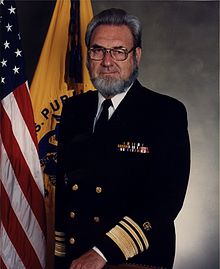
Dr. C. Everett Koop is pictured above.

In the film series “WHATEVER HAPPENED TO THE HUMAN RACE?” the arguments are presented  against abortion (Episode 1),  infanticide (Episode 2),   euthanasia (Episode 3), and then there is a discussion of the Christian versus Humanist worldview concerning the issue of “the basis for human dignity” in Episode 4 and then in the last episode a close look at the truth claims of the Bible.

Francis Schaeffer: How Should We Then Live? (Full-Length Documentary)

Francis Schaeffer Whatever Happened to the Human Race (Episode 1) ABORTION

Francis Schaeffer: What Ever Happened to the Human Race? (Full-Length Documentary)

Part 1 on abortion runs from 00:00 to 39:50, Part 2 on Infanticide runs from 39:50 to 1:21:30, Part 3 on Youth Euthanasia runs from 1:21:30 to 1:45:40, Part 4 on the basis of human dignity runs from 1:45:40 to 2:24:45 and Part 5 on the basis of truth runs from 2:24:45 to 3:00:04

Dr. Francis schaeffer – The flow of Materialism(from Part 4 of Whatever happened to human race?)

Dr. Francis Schaeffer – The Biblical flow of Truth & History (intro)

Francis Schaeffer – The Biblical Flow of History & Truth (1)

Dr. Francis Schaeffer – The Biblical Flow of Truth & History (part 2)

Thank you so much for your time. I know how valuable it is. I also appreciate the fine family that you have and your commitment as a father and a husband.

Sincerely,

Everette Hatcher III, 13900 Cottontail Lane, Alexander, AR 72002, ph 501-920-5733, lowcostsqueegees@yahoo.com

Related posts:

Open letter to President Obama (Part 232 B) Dr. C. Everett Koop and Reagan pictured together

Dr. C. Everett Koop with Ronald Reagan. Dr. Koop was delayed in his confirmation by Ted Kennedy because of his film Whatever Happened to the Human Race? President Obama c/o The White House 1600 Pennsylvania Avenue NW Washington, DC 20500 Dear Mr. President, I know that you receive 20,000 letters a day and that you […]

“Sanctity of Life Saturday” Francis Schaeffer and Dr. C. Everett Koop asked Reagan to issue pro-life proclamation in 1983 (includes video ABORTION OF THE HUMAN RACE)

In the film series “WHATEVER HAPPENED TO THE HUMAN RACE?” the arguments are presented  against abortion (Episode 1),  infanticide (Episode 2),   euthenasia (Episode 3), and then there is a discussion of the Christian versus Humanist worldview concerning the issue of “the basis for human dignity” in Episode 4 and then in the last episode a close […]

Dr. C. Everett Koop on abortion’s 1973 Roe v. Wade impact on child abuse

Dr. C. Everett Koop with Ronald Reagan. Dr. Koop was delayed in his confirmation by Ted Kennedy because of his film Whatever Happened to the Human Race? Watch the film below starting at the 19 minute mark and that will lead into a powerful question from Dr. C. Everett Koop. This 1979 film is WHATEVER […]

Open letter to President Obama (Part 221 B) Dr. C. Everett Koop and Francis Schaeffer rightly called abortion “the watershed issue of our era”

 Dr. Koop was delayed in his confirmation by Ted Kennedy because of his film Whatever Happened to the Human Race? Francis Schaeffer February 21, 1982 (Part 1) Uploaded by DeBunker7 on Feb 21, 2008 READ THIS FIRST: In decline of all civilizations we first see a war against the freedom of ideas. Discussion is limited […]

Francis Schaeffer and C. Everette Koop on the Hippocratic oath (March for Life January 20, 2013)

Dr. C. Everett Koop was appointed to the Reagan administration but was held up in the Senate in his confirmation hearings by Ted Kennedy because of his work in pro-life causes. I was thinking about the March for Life that is coming up on Jan 20, 2013  and that is why I posted this today […]

Ronald Wilson Reagan pictured with Dr. C. Everett Koop

High resolution version (11,426,583 Bytes) Description: The photograph is signed by President Ronald Reagan with the inscription “To Chick Koop, With Best Wishes.” Chick, from chicken coop, was the nickname Koop gained will attending Dartmouth College in the mid-1930s. Koop maintained a cordial relationship with President Reagan, despite his disappointment over Reagan’s refusal to address […]

Francis Schaeffer and C. Everett Koop were prophetic (jh29)

Francis Schaeffer and C. Everett Koop were prophetic (jh29) What Ever Happened to the Human Race? I recently heard this Breakpoint Commentary by Chuck Colson and it just reminded me of how prophetic Francis Schaeffer and C. Everett Koop were in the late 1970′s with their book and film series “Whatever happened to the human […]

Should Michele Bachmann be punished for taking pro-life views from Schaeffer and Koop? (March for Life January 20, 2013)

  Dr. C. Everett Koop I was thinking about the March for Life that is coming up on Jan 20, 2013  and that is why I posted this today Secular leaps of faith 39 Comments Written by Janie B. Cheaney August 15, 2011, 2:17 PM I’m willing to cut Ryan Lizza some slack. His profile […]

“Schaeffer Sundays” Francis Schaeffer’s own words concerning humanism and its bad results

Francis Schaeffer: “Whatever Happened to the Human Race?” (Episode 2) SLAUGHTER OF THE INNOCENTS Published on Oct 6, 2012 by AdamMetropolis The 45 minute video above is from the film series created from Francis Schaeffer’s book “Whatever Happened to the Human Race?” with Dr. C. Everett Koop. This book  really helped develop my political views concerning […]

“Sanctity of Life Saturday”:Derek Melleby’s review of the book “Francis Schaeffer: An Authentic Life” (includes film THE BASIS FOR HUMAN DIGNITY)

  I truly believe that many of the problems we have today in the USA are due to the advancement of humanism in the last few decades in our society. Ronald Reagan appointed the evangelical Dr. C. Everett Koop to the position of Surgeon General in his administration. He partnered with Dr. Francis Schaeffer in making […]

Taking on Ark Times bloggers about abortion on the 40th anniversary date of Roe v. Wade (Part 5) “Slavery issue compared to rights of unborn child”

The best pro-life film I have ever seen below by Francis Schaeffer and Dr. C. Everett Koop “Whatever happened to the human race?” Over the years I have taken on the Ark Times liberal bloggers over and over and over concerning the issue of abortion. I asked over and over again for one liberal blogger […]

Taking on Ark Times bloggers about abortion on the 40th anniversary date of Roe v. Wade (Part 4) “How do pro-lifers react to the movie THE CIDER HOUSE RULES?”

Francis Schaeffer pictured above._________ The best pro-life film I have ever seen below by Francis Schaeffer and Dr. C. Everett Koop “Whatever happened to the human race?” Over the years I have taken on the Ark Times liberal bloggers over and over and over concerning the issue of abortion. I asked over and over again […]

Taking on Ark Times bloggers about abortion on the 40th anniversary date of Roe v. Wade (Part 3) “What should be the punishment for abortion doctors?”

The best pro-life film I have ever seen below by Francis Schaeffer and Dr. C. Everett Koop “Whatever happened to the human race?” On 1-24-13 I took on the child abuse argument put forth by Ark Times Blogger “Deathbyinches,” and the day before I pointed out that because the unborn baby has all the genetic code […]

Taking on Ark Times bloggers about abortion on the 40th anniversary date of Roe v. Wade (Part 2) “The pro-abortion child abuse argument destroyed here”

PHOTO BY STATON BREIDENTHAL from Pro-life march in Little Rock on 1-20-13. Tim Tebow on pro-life super bowl commercial. Over the years I have taken on the Ark Times liberal bloggers over and over and over concerning the issue of abortion. Here is another encounter below. On January 22, 2013 (on the 40th anniversary of the […]

Taking on Ark Times bloggers about abortion on the 40th anniversary date of Roe v. Wade (Part 6) For many pro-abortionists ” …the problem is not determining when actual human life begins, but when the value of that life begins to out weigh other considerations”

The best pro-life film I have ever seen below by Francis Schaeffer and Dr. C. Everett Koop “Whatever happened to the human race?” Francis Schaeffer pictured above._________ The 45 minute video above is from the film series created from Francis Schaeffer’s book “Whatever Happened to the Human Race?” with Dr. C. Everett Koop. This book  really […]

Taking on Ark Times bloggers about abortion on the 40th anniversary date of Roe v. Wade (Part 7) “Poverty not good reason for abortion, why not give up for adoption?”

Dr Richard Land discusses abortion and slavery – 10/14/2004 – part 3 The best pro-life film I have ever seen below by Francis Schaeffer and Dr. C. Everett Koop “Whatever happened to the human race?” Over the years I have taken on the Ark Times liberal bloggers over and over and over concerning the issue […]

Taking on Ark Times bloggers about abortion on the 40th anniversary date of Roe v. Wade (Part 1)

Dr Richard Land discusses abortion and slavery – 10/14/2004 – part 3 The best pro-life film I have ever seen below by Francis Schaeffer and Dr. C. Everett Koop “Whatever happened to the human race?” Over the years I have taken on the Ark Times liberal bloggers over and over and over concerning the issue […]

Paul Greenberg became pro-life because we are all “endowed with certain unalienable rights”

On January 20, 2013 I heard Paul Greenberg talk about the words of Thomas Jefferson that we are all “endowed with certain unalienable rights” and the most important one is the right to life. He mentioned this also in this speech below from 2011: Paul Greenberg Dinner Speech 2011 Fall 2011 Issue Some of you […]

How Pulitzer Prize-winning Paul Greenberg, one of the most respected and honored commentators in America, changed his mind about abortion and endorses now the pro-life view

It is not possible to know where the pro-life evangelicals are coming from unless you look at the work of the person who inspired them the most. That person was Francis Schaeffer.  I do care about economic issues but the pro-life issue is the most important to me. Several years ago Adrian Rogers (past president of […]

SCHAEFFER SUNDAY The Abolition of truth and morality by Francis Schaeffer

The Scientific Age

https://youtu.be/aR445v8_27M
Uploaded by  on Oct 3, 2011

I love the works of Francis Schaeffer and I have been on the internet reading several blogs that talk about Schaeffer’s work and the work below was really helpful. Schaeffer’s film series “How should we then live?  Wikipedia notes, “According to Schaeffer, How Should We Then Live traces Western history from Ancient Rome until the time of writing (1976) along three lines: the philosophic, scientific, and religious.[3] He also makes extensive references to art and architecture as a means of showing how these movements reflected changing patterns of thought through time. Schaeffer’s central premise is: when we base society on the Bible, on the infinite-personal God who is there and has spoken,[4] this provides an absolute by which we can conduct our lives and by which we can judge society.  Here are some posts I have done on this series: Francis Schaeffer’s “How should we then live?” Video and outline of episode 10 “Final Choices” episode 9 “The Age of Personal Peace and Affluence”episode 8 “The Age of Fragmentation”episode 7 “The Age of Non-Reason” episode 6 “The Scientific Age”  episode 5 “The Revolutionary Age” episode 4 “The Reformation” episode 3 “The Renaissance”episode 2 “The Middle Ages,”, and  episode 1 “The Roman Age,” .

The Abolition of Truth and MoralityFrancis A. SchaefferThe basic problem of the Christians in this country in the last eighty years or so, in regard to society and in regard to government, is that they have seen things in bits and pieces instead of totals.They have very gradually become disturbed over permissiveness, pornography, the public schools, the breakdown of the family, and finally abortion. But they have not seen this as a totality — each thing being a part, a symptom, of a much larger problem. They have failed to see that all of this has come about due to a shift in world view — that is, through a fundamental change in the overall way people think and view the world and life as a whole. This shift has been away from a world view that was at least vaguely Christian in people’s memory (even if they were not individually Christian) toward something completely different — toward a world view based upon the idea that the final reality is impersonal matter or energy shaped into its present form by impersonal chance. They have not seen that this world view has taken the place of the one that had previously dominated Northern European culture, including the United States, which was at least Christian in memory, even if the individuals were not individually Christian.These two world views stand as totals in complete antithesis to each other in content and also in their natural results —including sociological and governmental results, and specifically including law.It is not that these two world views are different only in how they understand the nature of reality and existence. They also inevitably produce totally different results. The operative word here is inevitably. It is not just that they happen to bring forth different results, but it is absolutely inevitable that they will bring forth different results.Why have the Christians been so slow to understand this? There are various reasons but the central one is a defective view of Christianity. This has its roots in the Pietist movement under the leadership of P. J. Spener in the seventeenth century. Pietism began as a healthy protest against formalism and a too abstract Christianity. But it had a deficient, “platonic” spirituality. It was platonic in the sense that Pietism made a sharp division between the “spiritual” and the “material” world — giving little, or no, importance to the “material” world. The totality of human existence was not afforded a proper place. In particular it neglected the intellectual dimension of Christianity.Christianity and spirituality were shut up to a small, isolated part of life. The totality of reality was ignored by the pietistic thinking. Let me quickly say that in one sense Christians should be pietists in that Christianity is not just a set of doctrines, even the right doctrines. Every doctrine is in some way to have an effect upon our lives. But the poor side of Pietism and its resulting platonic outlook has really been a tragedy not only in many people’s individual lives, but in our total culture.True spirituality covers all of reality. There are things the Bible tells us as absolutes which are sinful — which do not conform to the character of God. But aside from these the Lordship of Christ covers all of life and all of life equally. It is not only that true spirituality covers all of life, but it covers all parts of the spectrum of life equally. In this sense there is nothing concerning reality that is not spiritual.

Related to this, it seems to me, is the fact that many Christians do not mean what I mean when I say Christianity is true, or Truth. They are Christians and they believe in, let us say, the truth of creation, the truth of the virgin birth, the truth of Christ’s miracles, Christ’s substitutionary death, and His coming again. But they stop there with these and other individual truths.

When I say Christianity is true I mean it is true to total reality—the total of what is, beginning with the central reality, the objective existence of the personal-infinite God. Christianity is not just a series of truths but Truth — Truth about all of reality. And the holding to that Truth intellectually — and then in some poor way living upon that Truth, the Truth of what is — brings forth not only certain personal results, but also governmental and legal results.

Now let’s go over to the other side — to those who hold the materialistic final reality concept. They saw the complete and total difference between the two positions more quickly than Christians. There were the Huxleys, George Bernard Shaw (1856-1950), and many others who understood a long time ago that there are two total concepts of reality and that it was one total reality against the other and not just a set of isolated and separated differences. The Humanist Manifesto1, published in 1933, showed with crystal clarity their comprehension of the totality of what is involved. It was to our shame that Julian (1887-1975)and Aldous Huxley (1894-1963), and the others like them, understood much earlier than Christians that these two world views are two total concepts of reality standing in antithesis to each other. We should be utterly ashamed that this is the fact.

They understood not only that there were two totally different concepts but that they would bring forth two totally different conclusions, both for individuals and for society. What we must understand is that the two world views really do bring forth with inevitable certainty not only personal differences, but also total differences in regard to society, government, and law.

There is no way to mix these two total world views. They are separate entities that cannot be synthesized. Yet we must say that liberal theology, the very essence of it from its beginning, is an attempt to mix the two. Liberal theology tried to bring forth a mixture soon after the Enlightenment and has tried to synthesize these two views right up to our own day. But in each case when the chips are down these liberal theologians have always come down, as naturally as a ship coming into home port, on the side of the nonreligious humanist. They do this with certainty because what their liberal theology really is is humanism expressed in theological terms instead of philosophic or other terms.

An example of this coming down naturally on the side of the nonreligious humanists is the article by Charles Hartshorne in the January 21, 1981, issue of The Christian Century,pages 42-45. Its title is, “Concerning Abortion, an Attempt at a Rational View.” He begins by equating the fact that the human fetus is alive with the fact that mosquitoes and bacteria are also alive. That is, he begins by assuming that human life is not unique. He then continues by saying that even after the baby is born it is not fully human until its social relations develop (though he says the infant does have some primitive social relations an unborn fetus does not have). His conclusion is, “Nevertheless, I have little sympathy with the idea that infanticide is just another form of murder. Persons who are already functionally persons in the full sense have more important rights even than infants.” He then, logically, takes the next step: “Does this distinction apply to the killing of a hopelessly senile person or one in a permanent coma? For me it does.” No atheistic humanist could say it with greater clarity. It is significant at this point to note that many of the denominations controlled by liberal theology have come out, publicly and strongly, in favor of abortion.

Dr. Martin E. Marty is one of the respected, theologically liberal spokesmen. He is an associate editor of The Christian Century and Fairfax M. Cone distinguished service professor at the University of Chicago divinity school. He is often quoted in the secular press as the spokesman for “mainstream” Christianity. In a Christian Century article in the January 7-14, 1981, issue (pages 13-17 with an addition on page 31), he has an article entitled: “Dear Republicans: A Letter on Humanisms.” In it he brilliantly confuses the terms “being human,” humanism, the humanities and being “in love with humanity.” Why does he do this? As a historian he knows the distinctions of those words, but when one is done with these pages the poor reader who knows no better is left with the eradication of the total distinction between the Christian position and the humanist one. I admire the cleverness of the article, but I regret that in it Dr. Marty has come down on the nonreligious humanist side, by confusing the issues so totally.

It would be well at this point to stress that we should not confuse the very different things which Dr. Marty did confuse. Humanitarianism is being kind and helpful to people, treating people humanly. The humanities are the studies of literature, art, music, etc. — those things which are the products of human creativity. Humanism is the placing of Man at the center of all things and making him the measure of all things.

Thus, Christians should be the most humanitarian of all people. And Christians certainly should be interested in the humanities as the product of human creativity, made possible because people are uniquely made in the image of the great Creator. In this sense of being interested in the humanities it would be proper to speak of a Christian humanist. This is especially so in the past usage of that term. This would then mean that such a Christian is interested (as we all should be) in the product of people’s creativity. In this sense, for example, Calvin could be called a Christian humanist because he knew the works of the Roman writer Seneca so very well.2 John Milton and many other Christian poets could also be so called because of their knowledge not only of their own day but also of antiquity.

But in contrast to being humanitarian and being interested in the humanities Christians should be inalterably opposed to the false and destructive humanism, which is false to the Bible and equally false to what Man is.

Along with this we must keep distinct the “humanist world view” of which we have been speaking and such a thing as the “Humanist Society,” which produced the Humanist Manifestos I and II (1933and 1973). The Humanist Society is made up of a relatively small group of people (some of whom, however, have been influential — John Dewey, Sir Julian Huxley, Jacques Monod, B. F. Skinner, etc.). By way of contrast, the humanist world view includes many thousands of adherents and today controls the consensus in society, much of the media, much of what is taught in our schools, and much of the arbitrary law being produced by the various departments of government.

The term humanism used in this wider, more prevalent way means Man beginning from himself, with no knowledge except what he himself can discover and no standards outside of himself. In this view Man is the measure of all things, as the Enlightenment expressed it.

Nowhere have the divergent results of the two total concepts of reality, the Judeo-Christian and the humanist world view, been more open to observation than in government and law.

We of Northern Europe (and we must remember that the United States, Canada, Australia, New Zealand and so on are extensions of Northern Europe) take our form-freedom balance in government for granted as though it were natural. There is form in acknowledging the obligations in society, and there is freedom in acknowledging the rights of the individual. We have form, we have freedom; there is freedom, there is form. There is a balance here which we have come to take as natural in the world. It is not natural in the world. We are utterly foolish if we look at the long span of history and read the daily newspapers giving today’s history and do not understand that the form-freedom balance in government which we have had in Northern Europe since the Reformation and in the countries extended from it is unique in the world, past and present.

That is not to say that no one wrestled with these questions before the Reformation nor that no one produced anything worthwhile. One can think, for example, of the Conciliar Movement in the late medieval church and the early medieval parliaments.3 Especially one must consider the ancient English Common Law. And in relation to that Common Law (and all English Law) there is Henry De Bracton. I will mention more about him in a moment.

Those who hold the material-energy, chance concept of reality, whether they are Marxist or non-Marxist, not only do not know the truth of the final reality, God, they do not know who Man is. Their concept of Man is what Man is not, just as their concept of the final reality is what final reality is not. Since their concept of Man is mistaken, their concept of society and of law is mistaken, and they have no sufficient base for either society or law.

They have reduced Man to even less than his natural finiteness by seeing him only as a complex arrangement of molecules, made complex by blind chance. Instead of seeing him as something great who is significant even in his sinning, they see Man in his essence only as an intrinsically competitive animal, that has no other basic operating principle than natural selection brought about by the strongest, the fittest, ending on top. And they see Man as acting in this way both individually and collectively as society.

Even on the basis of Man’s finiteness having people swear in court in the name of humanity,as some have advocated, saying something like, “We pledge our honor before all mankind”4 would be insufficient enough. But reduced to the materialistic view of Man, it is even less. Although many nice words may be used, in reality law constituted on this basis can only mean brute force.

In this setting Jeremy Bentham’s (1748-1842) Utilitarianism can be and must be all that law means. And this must inevitably lead to the conclusion of Oliver Wendell Holmes Jr. (1841-1935): “The life of the law has not been logic: it has been experience.”5 That is, there is no basis for law except Man’s limited, finite experience. And especially with the Darwinian, survival-of-the-fittest concept of Man (which Holmes held) that must, and will, lead to Holmes’ final conclusion: law is “the majority vote of that nation that could lick all others.”6

The problem always was, and is, What is an adequate base for law? What is adequate so that the human aspiration for freedom can exist without anarchy, and yet provides a form that will not become arbitrary tyranny?

In contrast to the materialistic concept, Man in reality is made in the image of God and has real humanness. This humanness has produced varying degrees of success in government, bringing forth governments that were more than only the dominance of brute force.

And those in the stream of the Judeo-Christian world view have had something more. The influence of the Judeo-Christian world view can be perhaps most readily observed in Henry De Bracton’s influence on British Law. An English judge living in the thirteenth century, he wrote De Legi bus et Consuetudinibus (c. 1250).

Bracton, in the stream of the Judeo-Christian world view, said:

And that he [the King] ought to be under the law appears clearly in the analogy of Jesus Christ, whose vice-regent on earth he is, for though many ways were open to Him for his ineffable redemption of the human race, the true mercy of God chose this most powerful way to destroy the devil’s work, he would not use the power of force but the reason of justice. 7,8

In other words, God in His sheer power could have crushed Satan in his revolt by the use of that sufficient power. But because of God’s character, justice came before the use of power alone. Therefore Christ died that justice, rooted in what God is, would be the solution. Bracton codified this: Christ’s example, because of who He is, is our standard, our rule, our measure. Therefore power is not first, but justice is first in society and law. The prince may have the power to control and to rule, but he does not have the right to do so without justice. This was the basis of English Common Law. The Magna Charta (1215) was written within thirty-five years (or less) of Bracton’s De Legibus and in the midst of the same universal thinking in England at that time.

The Reformation (300 years after Bracton) refined and clarified this further. It got rid of the encrustations that had been added to the Judeo-Christian world view and clarified the point of authority—with authority resting in the Scripture rather than church and Scripture, or state and Scripture. This not only had meaning in regard to doctrine but clarified the base for law.

That base was God’s written Law, back through the New Testament to Moses’ written Law; and the content and authority of that written Law is rooted back to Him who is the final reality. Thus, neither church nor state were equal to, let alone above, that Law. The base for law is not divided, and no one has the right, to place anything, including king, state or church, above the content of God’s Law.

What the Reformation did was to return most clearly and consistently to the origins, to the final reality, God; but equally to the reality of Man — not only Man’s personal needs (such as salvation), but also Man’s social needs.

What we have had for four hundred years, produced from this clarity, is unique in contrast to the situation that has existed in the world in forms of government. Some of you have been taught that the Greek city states had our concepts in government. It simply is not true.9 All one has to do is read Plato’s Republic to have this come across with tremendous force.

When the men of our State Department, especially after World War II, went all over the world trying to implant our form-freedom balance in government downward on cultures whose philosophy and religion would never have produced it, it has, in almost every case, ended in some form of totalitarianism or authoritarianism.

The humanists push for “freedom,” but having no Christian consensus to contain it, that “freedom” leads to chaos or to slavery under the state (or under an elite). Humanism, with its lack of any final base for values or law, always leads to chaos. It then naturally leads to some form of authoritarianism to control the chaos. Having produced the sickness, humanism gives more of the same kind of medicine for a cure. With its mistaken concept of final reality, it has no intrinsic reason to be interested in the individual, the human being. Its natural interest is the two collectives: the state and society.


Notes

  • Humanist Manifestos I and II (New York: Prometheus Books, 1973).
  • Thismust not be confused with the humanistic elements which were developing slightly earlier in the Renaissance. Francis A. Schaeffer, How Should We Then Live? (Old Tappan, NJ: Fleming H. Revel! Co., 1976), pp. 58-78.
  • See How Should We Then Live?,pp. 40 and 109.
  • See Will and Ariel Durant’s book, The Lessons of History (New York: Simon & Schuster, 1968), pp. 84-86.
  • AmericanLaw Review, XIV, (1880), p. 233.
  • Harvard Law Review, XL, (1918).
  • Henry De Bracton, Translation of De Legi bus et Consuetudinibus (Cambridge, Mass.: Harvard-Belknap, 1968).
  • See James L Fisk, The Law and Its Timeless Standard (Washington: Lex Rex Institute).
  • See Will and Ariel Durant’s The Lessons of History, pp. 70-75.

Author

Dr. Francis A. Schaeffer is widely recognized as one of the most influential Christian thinkers of the day. He is the author of twenty-two books which have been translated into twenty-five foreign languages, with more than three million copies in print.

Dr. Schaeffer has lectured frequently at leading universities in the U.S. and abroad. With his wife, Edith, the Schaeffers founded L’Abri Fellowship, an international study center and community in Switzerland with branches in England, The Netherlands, Sweden, and the U.S.

Among Dr. Schaeffer’s most influential books are The God Who Is There, Escape From Reason, He Is There and He Is Not Silent, and The Mark of the Christian. His two most recent books — How Should We Then Live? and Whatever Happened to the Human Race? (written with Dr. C. Everett Koop) — have also been produced as major film series. Whether in books, films or the work of L’Abri, Dr. Schaeffer has proclaimed a common theme — the uncompromising Truth of historic, biblical Christianity and its relevance for all of life.

“Sanctity of Life Saturday” Remembering Dr. C. Everett Koop with pictures and quotes Part 26 (includes editorial cartoon)

MemFormer Surgeon General C.Everett Koop © A Genuine G-Shot.wmv

Pictured with Ronald Reagan above.

On 2-25-13 we lost a great man when we lost Dr. C. Everett Koop. I have written over and over the last few years quoting Dr. C. Everett Koop and his good friend Francis Schaeffer. They both came together for the first time in 1973 when Dr. Koop operated on Schaeffer’s daughter and as a result they became close friends. That led to their involvement together in the book and film series “WHATEVER HAPPENED TO THE HUMAN RACE?” in 1979.

Here is fine article from Donald Shoemaker’s blog:

“The Legacy of Dr. C. Everett Koop”

Dr. C. Everett Koop, surgeon general under President Reagan, passed away on February 25. In 1989 I wrote an opinion piece on Dr. Koop’s influence as a Christian public figure.

Dr. Koop: A Christian Who Makes a Difference
By Donald P. Shoemaker
Long Beach Press-Telegram
January 21, 1989

Later this year the term of Surgeon General C. Everett Koop will end. Since Sunday is the 16th anniversary of the tragic and infamous U.S. Supreme Court Roe v. Wade abortion decision, it is appropriate to recall the service Dr. Koop has rendered as a Christian servant to society.

Prior to becoming surgeon general, Dr. Koop had already established himself as a national figure. He was well known for his skills in corrective surgery for birth defects. He was also well known for his strong viewpoints against abortion, infanticide and euthanasia. These were expressed in his book The Right to Live, The Right to Die. Dr. Koop believed that the ethical climate of permissive abortion would lead to a climate diminishing the value of the medically dependent newborn and elderly.

By the late 1970s, Dr. Koop was working increasingly with the “Right to Life” movement. He accepted my invitation for him to serve on the Board of Reference for the Christian right-to-life ministry “Crusade for Life.” In 1979 I had the privilege of dining with him and his wife when he delivered a keynote address to the National Right to life Convention.

Also in 1979 Dr. Koop co-authored, with the late Christian apologist Dr. Francis A. Schaeffer, the pro-life Christian book Whatever Happened to the Human Race? Drs. Koop and Schaeffer produced a film series on the book’s themes and lectured nationwide.

When President Reagan nominated Dr. Koop to be surgeon general, the doctor’s anti-abortion views led to a stormy confirmation struggle with the Senate which dragged on for months. Once confirmed, Dr. Koop worked for regulations to provide lifesaving treatment for severely handicapped infants and launched a strong anti-smoking campaign.

Then came the AIDS crisis and Dr. Koop sailed into the center of controversy once again. He called for early sex education and for condom use as a means (though less desirous than abstinence or monogamous relationships) to stem the spread of the AIDS virus. Suddenly, Dr. Koop found himself appreciated by former enemies and deplored by former supporters among the “religious right.”

His critics saw his actions, typified in his AIDS report mailed nationwide, as moral compromise or even capitulation. In my opinion, the critics failed to grapple adequately with the problem of communicating values into a world that often rejects the better solutions. An “all or nothing” attitude toward ethical engagement will probably result in “nothing” and will have little social impact.

Dr. Koop saw himself as the nation’s chief health officer, not as a “chaplain,” and said, “My message is a perfectly moral one. But everybody isn’t moral and everybody isn’t Christian. I cannot let those people go down the drain because they do not agree with me.”

As this term of service enters its final year, he has started a new crusade against domestic violence.

I look back over his years of service in and out of government and see Dr. Koop as an outstanding model of Christian commitment to public life. He reflects on his public service this way: “My thrust has been…that you really can’t separate your practice from your faith. And I’m serving the Lord for these eight years as the surgeon general. I do it with personal honesty and integrity to the best of my ability. And my personal honesty and integrity are based upon my Christian beliefs.”

The world needs thousand more like Dr. Koop.

___________________

In the film series “WHATEVER HAPPENED TO THE HUMAN RACE?” the arguments are presented  against abortion (Episode 1),  infanticide (Episode 2),   euthenasia (Episode 3), and then there is a discussion of the Christian versus Humanist worldview concerning the issue of “the basis for human dignity” in Episode 4 and then in the last episode a close look at the truth claims of the Bible.

In this 1979 film series they dealt with the big social issues and predicted what social problems we have in the future because of humanism. For instance, they knew that the Jack Kevorkians of the world would be coming down the pike. They predicted that there was a slippery slope from abortion to infanticide to youth euthanasia brought on by the materialistic worldview.

Dr. C. Everett Koop is pictured above.


In the film series “WHATEVER HAPPENED TO THE HUMAN RACE?” the arguments are presented  against abortion (Episode 1),  infanticide (Episode 2),   euthanasia (Episode 3), and then there is a discussion of the Christian versus Humanist worldview concerning the issue of “the basis for human dignity” in Episode 4 and then in the last episode a close look at the truth claims of the Bible.

Francis Schaeffer: How Should We Then Live? (Full-Length Documentary)

Francis Schaeffer Whatever Happened to the Human Race (Episode 1) ABORTION

Francis Schaeffer: What Ever Happened to the Human Race? (Full-Length Documentary)

Part 1 on abortion runs from 00:00 to 39:50, Part 2 on Infanticide runs from 39:50 to 1:21:30, Part 3 on Youth Euthanasia runs from 1:21:30 to 1:45:40, Part 4 on the basis of human dignity runs from 1:45:40 to 2:24:45 and Part 5 on the basis of truth runs from 2:24:45 to 3:00:04

Dr. Francis schaeffer – The flow of Materialism(from Part 4 of Whatever happened to human race?)

Dr. Francis Schaeffer – The Biblical flow of Truth & History (intro)

Francis Schaeffer – The Biblical Flow of History & Truth (1)

Dr. Francis Schaeffer – The Biblical Flow of Truth & History (part 2)

President Obama is doing everything he can to help expand abortion rights as this editorial cartoon shows:

C. Everett Koop

Related posts:

Remembering Dr. C. Everett Koop with pictures and quotes Part 12 (with editorial cartoon)

Dr. C. Everett Koop on Baby Doe, euthanasia, abortion Uploaded on Nov 3, 2008 Dr. Koop answers questions on Baby Doe, euthanasia and abortion during interview at Wheaton College, Wheaton, IL http://www.christianethics.org Dr. Koop   On 2-25-13 we lost a great man when we lost Dr. C. Everett Koop. I have written over and over […]

Remembering Dr. C. Everett Koop with pictures and quotes Part 11 (including editorial cartoon on abortion)

Dr. Koop Memorial Tribute Former Surgeon General C.Everett Koop © A Genuine G-Shot.wmv On 2-25-13 we lost a great man when we lost Dr. C. Everett Koop. I have written over and over the last few years quoting Dr. C. Everett Koop and his good friend Francis Schaeffer. They both came together for the first […]

Remembering Dr. C. Everett Koop with pictures and quotes Part 10 (includes editorial cartoon about abortion)

Newsmaker Interview with Surgeon General C. Everett Koop Published on Feb 25, 2013 The PBS NewsHour interviewed former Surgeon General, Dr. C. Everett Koop, on the anniversary of the first surgeon general’s report on smoking. Jim Lehrer interviewed Koop for a newsmaker conversation for the The MacNeil/Lehrer NewsHour from the surgeon general’s office in Washington […]

Remembering Dr. C. Everett Koop with pictures and quotes Part 9 (Picture of Joycelyn Elders with Koop)

Dr. C. Everett Koop on Baby Doe, euthanasia, abortion Uploaded on Nov 3, 2008 Dr. Koop answers questions on Baby Doe, euthanasia and abortion during interview at Wheaton College, Wheaton, IL http://www.christianethics.org Dr. Koop   Joycelyn Elders was the first black Surgeon General of the USA and I have a picture of her with Dr. C. […]

Remembering Dr. C. Everett Koop with pictures and quotes Part 8 (editorial picture about Surgeon General)

Memorial Tribute Former Surgeon General C.Everett Koop © A Genuine G-Shot.wmv Dr. Koop. C. Everett Koop Before Dr. C. Everett Koop arrived in 1981 as Surgeon General could anybody ever name who the Surgeon General was? Koop also caused lots of editorial cartoons to be drawn about him because of his positions he took on […]

Remembering Dr. C. Everett Koop with pictures and quotes Part 7 (Public Health poster)

Newsmaker Interview with Surgeon General C. Everett Koop Published on Feb 25, 2013 The PBS NewsHour interviewed former Surgeon General, Dr. C. Everett Koop, on the anniversary of the first surgeon general’s report on smoking. Jim Lehrer interviewed Koop for a newsmaker conversation for the The MacNeil/Lehrer NewsHour from the surgeon general’s office in Washington […]

Remembering Dr. C. Everett Koop with pictures and quotes Part 6 (includes funniest cartoon ever during Koop’s tenure)

Dr. C. Everett Koop on Baby Doe, euthanasia, abortion Uploaded on Nov 3, 2008 Dr. Koop answers questions on Baby Doe, euthanasia and abortion during interview at Wheaton College, Wheaton, IL http://www.christianethics.org Dr. Koop. C. Everett Koop On June 8, 1988 Ralph Dunagin of the LA Times came out with the funniest editorial cartoon I […]

Remembering Dr. C. Everett Koop with pictures and quotes Part 5 (Public Health poster developed under Koop)

Memorial Tribute Former Surgeon General C.Everett Koop © A Genuine G-Shot.wmv Dr. C. Everett Koop was active on getting the word out about how people could catch AIDS. Public Health officials during the second half of the 1980s became concerned about the spread of AIDS particularly among minorities, a disproportionate number of whom were intravenous […]

Remembering Dr. C. Everett Koop with pictures and quotes Part 4 (funny editorial cartoon too)

Dr. Koop Gary Brookings of the Richmond Times Dispatch did a very funny editorial cartoon about the time in 1988 when Dr. C. Everett Koop sent the unapproved mail  piece out to millions of homes about AIDS. There were many such cartoons at the time since everyone knew Dr. Koop got the mail piece out […]

Remembering Dr. C. Everett Koop with pictures and quotes Part 3 ( three more editorial cartoons too)

Dr. Koop with Hillary Clinton In 1980 I really was influenced at my highschool by a teacher of mine named Mark Brink. He introduced me to the film series “Whatever happened to the human race?” by Francis Schaeffer and Dr. C. Everett Koop. In this  film series that came out in 1979 they dealt with […]

Remembering Dr. C. Everett Koop with pictures and quotes Part 2 (Doonesbury cartoon by Gary Trudeau included)

Dr. Koop On 2-25-13 we lost a great man when we lost Dr. C. Everett Koop. I have written over and over the last few years quoting Dr. C. Everett Koop and his good friend Francis Schaeffer. They both came together for the first time in 1973 when Dr. Koop operated on Schaeffer’s daughter and […]

Remembering Dr. C. Everett Koop with pictures and quotes Part 1

Dr. C. Everett Koop is pictured above. Francis Schaeffer: “Whatever Happened to the Human Race” (Episode 1) ABORTION OF THE HUMAN RACE Published on Oct 6, 2012 by AdamMetropolis Dr. Koop On 2-25-13 we lost a great man when we lost Dr. C. Everett Koop. I have written over and over the last few years […]

Open letter to President Obama (Part 232 B) Dr. C. Everett Koop and Reagan pictured together

Dr. C. Everett Koop with Ronald Reagan. Dr. Koop was delayed in his confirmation by Ted Kennedy because of his film Whatever Happened to the Human Race? President Obama c/o The White House 1600 Pennsylvania Avenue NW Washington, DC 20500 Dear Mr. President, I know that you receive 20,000 letters a day and that you […]

“Sanctity of Life Saturday” Francis Schaeffer and Dr. C. Everett Koop asked Reagan to issue pro-life proclamation in 1983 (includes video ABORTION OF THE HUMAN RACE)

In the film series “WHATEVER HAPPENED TO THE HUMAN RACE?” the arguments are presented  against abortion (Episode 1),  infanticide (Episode 2),   euthenasia (Episode 3), and then there is a discussion of the Christian versus Humanist worldview concerning the issue of “the basis for human dignity” in Episode 4 and then in the last episode a close […]

Dr. C. Everett Koop on abortion’s 1973 Roe v. Wade impact on child abuse

Dr. C. Everett Koop with Ronald Reagan. Dr. Koop was delayed in his confirmation by Ted Kennedy because of his film Whatever Happened to the Human Race? Watch the film below starting at the 19 minute mark and that will lead into a powerful question from Dr. C. Everett Koop. This 1979 film is WHATEVER […]

Open letter to President Obama (Part 221 B) Dr. C. Everett Koop and Francis Schaeffer rightly called abortion “the watershed issue of our era”

 Dr. Koop was delayed in his confirmation by Ted Kennedy because of his film Whatever Happened to the Human Race? Francis Schaeffer February 21, 1982 (Part 1) Uploaded by DeBunker7 on Feb 21, 2008 READ THIS FIRST: In decline of all civilizations we first see a war against the freedom of ideas. Discussion is limited […]

Francis Schaeffer and C. Everette Koop on the Hippocratic oath (March for Life January 20, 2013)

Dr. C. Everett Koop was appointed to the Reagan administration but was held up in the Senate in his confirmation hearings by Ted Kennedy because of his work in pro-life causes. I was thinking about the March for Life that is coming up on Jan 20, 2013  and that is why I posted this today […]

Ronald Wilson Reagan pictured with Dr. C. Everett Koop

High resolution version (11,426,583 Bytes) Description: The photograph is signed by President Ronald Reagan with the inscription “To Chick Koop, With Best Wishes.” Chick, from chicken coop, was the nickname Koop gained will attending Dartmouth College in the mid-1930s. Koop maintained a cordial relationship with President Reagan, despite his disappointment over Reagan’s refusal to address […]

Francis Schaeffer and C. Everett Koop were prophetic (jh29)

Francis Schaeffer and C. Everett Koop were prophetic (jh29) What Ever Happened to the Human Race? I recently heard this Breakpoint Commentary by Chuck Colson and it just reminded me of how prophetic Francis Schaeffer and C. Everett Koop were in the late 1970′s with their book and film series “Whatever happened to the human […]

Should Michele Bachmann be punished for taking pro-life views from Schaeffer and Koop? (March for Life January 20, 2013)

  Dr. C. Everett Koop I was thinking about the March for Life that is coming up on Jan 20, 2013  and that is why I posted this today Secular leaps of faith 39 Comments Written by Janie B. Cheaney August 15, 2011, 2:17 PM I’m willing to cut Ryan Lizza some slack. His profile […]

“Schaeffer Sundays” Francis Schaeffer’s own words concerning humanism and its bad results

Francis Schaeffer: “Whatever Happened to the Human Race?” (Episode 2) SLAUGHTER OF THE INNOCENTS Published on Oct 6, 2012 by AdamMetropolis The 45 minute video above is from the film series created from Francis Schaeffer’s book “Whatever Happened to the Human Race?” with Dr. C. Everett Koop. This book  really helped develop my political views concerning […]

“Sanctity of Life Saturday”:Derek Melleby’s review of the book “Francis Schaeffer: An Authentic Life” (includes film THE BASIS FOR HUMAN DIGNITY)

  I truly believe that many of the problems we have today in the USA are due to the advancement of humanism in the last few decades in our society. Ronald Reagan appointed the evangelical Dr. C. Everett Koop to the position of Surgeon General in his administration. He partnered with Dr. Francis Schaeffer in making […]

Taking on Ark Times bloggers about abortion on the 40th anniversary date of Roe v. Wade (Part 5) “Slavery issue compared to rights of unborn child”

The best pro-life film I have ever seen below by Francis Schaeffer and Dr. C. Everett Koop “Whatever happened to the human race?” Over the years I have taken on the Ark Times liberal bloggers over and over and over concerning the issue of abortion. I asked over and over again for one liberal blogger […]

Taking on Ark Times bloggers about abortion on the 40th anniversary date of Roe v. Wade (Part 4) “How do pro-lifers react to the movie THE CIDER HOUSE RULES?”

Francis Schaeffer pictured above._________ The best pro-life film I have ever seen below by Francis Schaeffer and Dr. C. Everett Koop “Whatever happened to the human race?” Over the years I have taken on the Ark Times liberal bloggers over and over and over concerning the issue of abortion. I asked over and over again […]

Taking on Ark Times bloggers about abortion on the 40th anniversary date of Roe v. Wade (Part 3) “What should be the punishment for abortion doctors?”

The best pro-life film I have ever seen below by Francis Schaeffer and Dr. C. Everett Koop “Whatever happened to the human race?” On 1-24-13 I took on the child abuse argument put forth by Ark Times Blogger “Deathbyinches,” and the day before I pointed out that because the unborn baby has all the genetic code […]

Taking on Ark Times bloggers about abortion on the 40th anniversary date of Roe v. Wade (Part 2) “The pro-abortion child abuse argument destroyed here”

PHOTO BY STATON BREIDENTHAL from Pro-life march in Little Rock on 1-20-13. Tim Tebow on pro-life super bowl commercial. Over the years I have taken on the Ark Times liberal bloggers over and over and over concerning the issue of abortion. Here is another encounter below. On January 22, 2013 (on the 40th anniversary of the […]

Taking on Ark Times bloggers about abortion on the 40th anniversary date of Roe v. Wade (Part 6) For many pro-abortionists ” …the problem is not determining when actual human life begins, but when the value of that life begins to out weigh other considerations”

The best pro-life film I have ever seen below by Francis Schaeffer and Dr. C. Everett Koop “Whatever happened to the human race?” Francis Schaeffer pictured above._________ The 45 minute video above is from the film series created from Francis Schaeffer’s book “Whatever Happened to the Human Race?” with Dr. C. Everett Koop. This book  really […]

Taking on Ark Times bloggers about abortion on the 40th anniversary date of Roe v. Wade (Part 7) “Poverty not good reason for abortion, why not give up for adoption?”

Dr Richard Land discusses abortion and slavery – 10/14/2004 – part 3 The best pro-life film I have ever seen below by Francis Schaeffer and Dr. C. Everett Koop “Whatever happened to the human race?” Over the years I have taken on the Ark Times liberal bloggers over and over and over concerning the issue […]

Taking on Ark Times bloggers about abortion on the 40th anniversary date of Roe v. Wade (Part 1)

Dr Richard Land discusses abortion and slavery – 10/14/2004 – part 3 The best pro-life film I have ever seen below by Francis Schaeffer and Dr. C. Everett Koop “Whatever happened to the human race?” Over the years I have taken on the Ark Times liberal bloggers over and over and over concerning the issue […]

Paul Greenberg became pro-life because we are all “endowed with certain unalienable rights”

On January 20, 2013 I heard Paul Greenberg talk about the words of Thomas Jefferson that we are all “endowed with certain unalienable rights” and the most important one is the right to life. He mentioned this also in this speech below from 2011: Paul Greenberg Dinner Speech 2011 Fall 2011 Issue Some of you […]

How Pulitzer Prize-winning Paul Greenberg, one of the most respected and honored commentators in America, changed his mind about abortion and endorses now the pro-life view

It is not possible to know where the pro-life evangelicals are coming from unless you look at the work of the person who inspired them the most. That person was Francis Schaeffer.  I do care about economic issues but the pro-life issue is the most important to me. Several years ago Adrian Rogers (past president of […]

Open letter to President Obama (Part 421) Taking on Ark Times Bloggers on various issues Part A “The Pro-life Issue” (Francis Schaeffer Quotes Part 1 includes the film SLAUGHTER OF THE INNOCENTS) (editorial cartoon)

(Emailed to White House on 3-4-13.)

President Obama c/o The White House
1600 Pennsylvania Avenue NW
Washington, DC 20500

Dear Mr. President,

I know that you receive 20,000 letters a day and that you actually read 10 of them every day. I really do respect you for trying to get a pulse on what is going on out here.

I wanted to share with you some about my pro-life perspective.

I have gone back and forth and back and forth with many liberals on the Arkansas Times Blog on many issues such as abortion, human rights, welfare, poverty, gun control  and issues dealing with popular culture. Here is another exchange I had with them a while back. My username at the Ark Times Blog is Saline Republican.

On 2-19-13 I asserted on the Ark Times Blog, “Abortion should be illegal.”

On 2-19-13 “the Outlier” responded on the Ark Times Blog :

Since Saline can never walk in a pregnant woman’s shoes (and neither can any of these portly politicians), maybe he should just keep his nose and vaginal probes out of their business. Unless the fetus is his, he should never have a say.

On 2-19-13 “the HardHeadWoman” asserted on the Ark Times Blog :

Saline appears to have a very bad case of ‘anti-choice Tourettes’.
Just can’t help himself. He can’t go 5 minutes without blurting out some ridiculous abortion talking point.

On 2-19-13 “Norma Bates” asked on the Ark Times Blog :

I’ll bite. WHY, exactly, should abortion be illegal, Saline? This is the place to share your reasoning.

On 2-19-13 I responded to what Norma had asked on the Ark Times Blog :

Norma the answer is that genetics tells us that the unborn baby has the same genetic code that a full grown human has. Here is all the quotes from scientists including my atheist friend Dr Kevin Henke. https://thedailyhatch.org/2011/06/23/ark-ti…

I was also moved by David Sanders interview with the abortionist Dr William F Harrison concerning advice he gave to abort about 25 years ago to a 16 yr old pregnant girl. The you girl did not abort and her daughter is now graduating with a masters because her mother rejected Dr Harrison’s advice. Dr Harrison admitted that sent a cold chill down his spine when thinks of his advice.

Dr. C. Everett Koop said that everyone that advocates abortion has the benefit of already being born. What if you were to ask that lady today if her mother should have taken Dr Harrison’s advice?

_________

Actually I used to write  a lot of letters to the editor in the 1990’s about pro-life issues and I found that a Mr. William F. Harrison from Fayetteville was constantly taking the other side and being critical of my letters with his letters to the editor. I found out many years later that he ran the biggest abortion clinic in the state of Arkansas.

I truly believe that many of the problems we have today in the USA are due to the advancement of humanism in the last few decades in our society. Ronald Reagan appointed the evangelical Dr. C. Everett Koop to the position of Surgeon General in his administration. He partnered with Dr. Francis Schaeffer in making the video below. It is very valuable information for Christians to have.  Actually I have included a video below that includes comments from him on this subject.

In the film series “WHATEVER HAPPENED TO THE HUMAN RACE?” the arguments are presented  against abortion (Episode 1),  infanticide (Episode 2),   euthenasia (Episode 3), and then there is a discussion of the Christian versus Humanist worldview concerning the issue of “the basis for human dignity” in Episode 4 and then in the last episode a close look at the truth claims of the Bible.

Francis Schaeffer and his wife Edith pictured below.

In the film series “WHATEVER HAPPENED TO THE HUMAN RACE?” the arguments are presented  against abortion (Episode 1),  infanticide (Episode 2),   euthanasia (Episode 3), and then there is a discussion of the Christian versus Humanist worldview concerning the issue of “the basis for human dignity” in Episode 4 and then in the last episode a close look at the truth claims of the Bible.

Francis Schaeffer: How Should We Then Live? (Full-Length Documentary)

Francis Schaeffer Whatever Happened to the Human Race (Episode 1) ABORTION

Francis Schaeffer: What Ever Happened to the Human Race? (Full-Length Documentary)

Part 1 on abortion runs from 00:00 to 39:50, Part 2 on Infanticide runs from 39:50 to 1:21:30, Part 3 on Youth Euthanasia runs from 1:21:30 to 1:45:40, Part 4 on the basis of human dignity runs from 1:45:40 to 2:24:45 and Part 5 on the basis of truth runs from 2:24:45 to 3:00:04

Dr. Francis schaeffer – The flow of Materialism(from Part 4 of Whatever happened to human race?)

Dr. Francis Schaeffer – The Biblical flow of Truth & History (intro)

Francis Schaeffer – The Biblical Flow of History & Truth (1)

Dr. Francis Schaeffer – The Biblical Flow of Truth & History (part 2)

___________

What happens to a society that has no basis for values? Francis Schaeffer knew where that would lead:

“Humanism, man beginning only from himself, had destroyed the old basis of values, and could find no way to generate with certainty any new values. In the resulting vacuum the impoverished values of personal peace and affluence had come to stand supreme.”

Francis Schaeffer Quotes

Posted by Matt on March 6, 2012

Francis Schaeffer would have celebrated his 100th birthday in January. I’m obviously a couple months late with this, but here are a few quotes in remembrance of a life well lived.

Francis Schaeffer

“Think of this great flaming phrase: “certain inalienable rights.” Who gives the rights? The state? Then they are not inalienable because the state can change them and take them away. Where do the rights come from? [Jefferson and others] understood that they were founding the country upon the concept that goes back into the Judeo-Christian thinking that there is Someone there who gave the inalienable rights.”

“In passing, we should note this curious mark of our own age: the only absolute allowed is the absolute insistence that there is no absolute.”

“Humanism, man beginning only from himself, had destroyed the old basis of values, and could find no way to generate with certainty any new values. In the resulting vacuum the impoverished values of personal peace and affluence had come to stand supreme.”

Biblical orthodoxy without compassion is surely the ugliest thing in the world.”

“But if I live in a world of nonabsolutes and would fight social injustice on the mood of the moment, how can I establish what social justice is? What criterion do I have to distinguish between right and wrong so that I can know what I should be fighting? Is it not possible that I could in fact acquiesce in evil and stamp out good? The word love cannot tell me how to discern, for within the humanistic framework love can have no defined meaning.”

“There is no place for love in a totally closed cause and effect system.”

Here is a great pro-life cartoon:

Thank you so much for your time. I know how valuable it is. I also appreciate the fine family that you have and your commitment as a father and a husband.

Sincerely,

Everette Hatcher III, 13900 Cottontail Lane, Alexander, AR 72002, ph 501-920-5733, lowcostsqueegees@yahoo.com

Related posts:

Francis Schaeffer’s prayer for us in USA

 Francis Schaeffer: “Whatever Happened to the Human Race” (Episode 1) ABORTION OF THE HUMAN RACE Published on Oct 6, 2012 by AdamMetropolis The 45 minute video above is from the film series created from Francis Schaeffer’s book “Whatever Happened to the Human Race?” with Dr. C. Everett Koop. This book  really helped develop my political views […]

Francis Schaeffer’s “How should we then live?” Video and outline of episode 10 “Final Choices” (Schaeffer Sundays)

E P I S O D E 1 0   Dr. Francis Schaeffer – Episode X – Final Choices 27 min FINAL CHOICES I. Authoritarianism the Only Humanistic Social Option One man or an elite giving authoritative arbitrary absolutes. A. Society is sole absolute in absence of other absolutes. B. But society has to be […]

Francis Schaeffer’s “How should we then live?” Video and outline of episode 9 “The Age of Personal Peace and Affluence” (Schaeffer Sundays)

E P I S O D E 9 Dr. Francis Schaeffer – Episode IX – The Age of Personal Peace and Affluence 27 min T h e Age of Personal Peace and Afflunce I. By the Early 1960s People Were Bombarded From Every Side by Modern Man’s Humanistic Thought II. Modern Form of Humanistic Thought Leads […]

Francis Schaeffer’s “How should we then live?” Video and outline of episode 8 “The Age of Fragmentation” (Schaeffer Sundays)

E P I S O D E 8 Dr. Francis Schaeffer – Episode VIII – The Age of Fragmentation 27 min I saw this film series in 1979 and it had a major impact on me. T h e Age of FRAGMENTATION I. Art As a Vehicle Of Modern Thought A. Impressionism (Monet, Renoir, Pissarro, Sisley, […]

Francis Schaeffer’s “How should we then live?” Video and outline of episode 7 “The Age of Non-Reason” (Schaeffer Sundays)

E P I S O D E 7 Dr. Francis Schaeffer – Episode VII – The Age of Non Reason I am thrilled to get this film series with you. I saw it first in 1979 and it had such a big impact on me. Today’s episode is where we see modern humanist man act […]

Francis Schaeffer’s “How should we then live?” Video and outline of episode 6 “The Scientific Age” (Schaeffer Sundays)

E P I S O D E 6 How Should We Then Live 6#1 Uploaded by NoMirrorHDDHrorriMoN on Oct 3, 2011 How Should We Then Live? Episode 6 of 12 ________ I am sharing with you a film series that I saw in 1979. In this film Francis Schaeffer asserted that was a shift in […]

Francis Schaeffer’s “How should we then live?” Video and outline of episode 5 “The Revolutionary Age” (Schaeffer Sundays)

E P I S O D E 5 How Should We Then Live? Episode 5: The Revolutionary Age I was impacted by this film series by Francis Schaeffer back in the 1970′s and I wanted to share it with you. Francis Schaeffer noted, “Reformation Did Not Bring Perfection. But gradually on basis of biblical teaching there […]

Francis Schaeffer’s “How should we then live?” Video and outline of episode 4 “The Reformation” (Schaeffer Sundays)

Dr. Francis Schaeffer – Episode IV – The Reformation 27 min I was impacted by this film series by Francis Schaeffer back in the 1970′s and I wanted to share it with you. Schaeffer makes three key points concerning the Reformation: “1. Erasmian Christian humanism rejected by Farel. 2. Bible gives needed answers not only as to […]

“Schaeffer Sundays” Francis Schaeffer’s “How should we then live?” Video and outline of episode 3 “The Renaissance”

Francis Schaeffer’s “How should we then live?” Video and outline of episode 3 “The Renaissance” Francis Schaeffer: “How Should We Then Live?” (Episode 3) THE RENAISSANCE I was impacted by this film series by Francis Schaeffer back in the 1970′s and I wanted to share it with you. Schaeffer really shows why we have so […]

Francis Schaeffer’s “How should we then live?” Video and outline of episode 2 “The Middle Ages” (Schaeffer Sundays)

  Francis Schaeffer: “How Should We Then Live?” (Episode 2) THE MIDDLE AGES I was impacted by this film series by Francis Schaeffer back in the 1970′s and I wanted to share it with you. Schaeffer points out that during this time period unfortunately we have the “Church’s deviation from early church’s teaching in regard […]

Francis Schaeffer’s “How should we then live?” Video and outline of episode 1 “The Roman Age” (Schaeffer Sundays)

Francis Schaeffer: “How Should We Then Live?” (Episode 1) THE ROMAN AGE   Today I am starting a series that really had a big impact on my life back in the 1970′s when I first saw it. There are ten parts and today is the first. Francis Schaeffer takes a look at Rome and why […]

Francis Schaeffer: “Whatever Happened to the Human Race” (Episode 5) TRUTH AND HISTORY

Francis Schaeffer: “Whatever Happened to the Human Race” (Episode 5) TRUTH AND HISTORY Published on Oct 7, 2012 by AdamMetropolis This crucial series is narrated by the late Dr. Francis Schaeffer and former Surgeon General Dr. C. Everett Koop. Today, choices are being made that undermine human rights at their most basic level. Practices once […]

Francis Schaeffer: “Whatever Happened to the Human Race” (Episode 4) THE BASIS FOR HUMAN DIGNITY

The opening song at the beginning of this episode is very insightful. Francis Schaeffer: “Whatever Happened to the Human Race” (Episode 4) THE BASIS FOR HUMAN DIGNITY Published on Oct 7, 2012 by AdamMetropolis This crucial series is narrated by the late Dr. Francis Schaeffer and former Surgeon General Dr. C. Everett Koop. Today, choices […]

Francis Schaeffer: “Whatever Happened to the Human Race” (Episode 3) DEATH BY SOMEONE’S CHOICE

Francis Schaeffer: “Whatever Happened to the Human Race” (Episode 3) DEATH BY SOMEONE’S CHOICE Published on Oct 6, 2012 by AdamMetropolis This crucial series is narrated by the late Dr. Francis Schaeffer and former Surgeon General Dr. C. Everett Koop. Today, choices are being made that undermine human rights at their most basic level. Practices […]

Francis Schaeffer: “Whatever Happened to the Human Race?” (Episode 2) SLAUGHTER OF THE INNOCENTS

Francis Schaeffer: “Whatever Happened to the Human Race?” (Episode 2) SLAUGHTER OF THE INNOCENTS Published on Oct 6, 2012 by AdamMetropolis This crucial series is narrated by the late Dr. Francis Schaeffer and former Surgeon General Dr. C. Everett Koop. Today, choices are being made that undermine human rights at their most basic level. Practices […]

Francis Schaeffer: “Whatever Happened to the Human Race” (Episode 1) ABORTION OF THE HUMAN RACE

It is not possible to know where the pro-life evangelicals are coming from unless you look at the work of the person who inspired them the most. That person was Francis Schaeffer.  I do care about economic issues but the pro-life issue is the most important to me. Several years ago Adrian Rogers (past president of […]

The following essay explores the role that Francis Schaeffer played in the rise of the pro-life movement. It examines the place of How Should We Then Live?, Whatever Happened to the Human Race?, and A Christian Manifesto in that process.

This essay below is worth the read. Schaeffer, Francis – “Francis Schaeffer and the Pro-Life Movement” [How Should We Then Live?, Whatever Happened to the Human Race?, A Christian Manifesto] Editor note: <p> </p> [The following essay explores the role that Francis Schaeffer played in the rise of the pro-life movement.  It examines the place of […]

Who was Francis Schaeffer? by Udo Middelmann

Great article on Schaeffer. Who was Dr. Francis A. Schaeffer? By Francis Schaeffer The unique contribution of Dr. Francis Schaeffer on a whole generation was the ability to communicate the truth of historic Biblical Christianity in a way that combined intellectual integrity with practical, loving care. This grew out of his extensive understanding of the Bible […]

There is a difference between believing the Bible is true and the Bible contains truth

There is a difference between believing the Bible is true and the Bible contains truth

The Scientific Age

Uploaded by  on Oct 3, 2011

I love the works of Francis Schaeffer and I have been on the internet reading several blogs that talk about Schaeffer’s work and the work below was really helpful. Schaeffer’s film series “How should we then live?  Wikipedia notes, “According to Schaeffer, How Should We Then Live traces Western history from Ancient Rome until the time of writing (1976) along three lines: the philosophic, scientific, and religious.[3] He also makes extensive references to art and architecture as a means of showing how these movements reflected changing patterns of thought through time. Schaeffer’s central premise is: when we base society on the Bible, on the infinite-personal God who is there and has spoken,[4] this provides an absolute by which we can conduct our lives and by which we can judge society.  Here are some posts I have done on this series: Francis Schaeffer’s “How should we then live?” Video and outline of episode 10 “Final Choices” episode 9 “The Age of Personal Peace and Affluence”episode 8 “The Age of Fragmentation”episode 7 “The Age of Non-Reason” episode 6 “The Scientific Age”  episode 5 “The Revolutionary Age” episode 4 “The Reformation” episode 3 “The Renaissance”episode 2 “The Middle Ages,”, and  episode 1 “The Roman Age,” .

In the film series “WHATEVER HAPPENED TO THE HUMAN RACE?” the arguments are presented  against abortion (Episode 1),  infanticide (Episode 2),   euthanasia (Episode 3), and then there is a discussion of the Christian versus Humanist worldview concerning the issue of “the basis for human dignity” in Episode 4 and then in the last episode a close look at the truth claims of the Bible.

Francis Schaeffer

__________________________

I truly believe that many of the problems we have today in the USA are due to the advancement of humanism in the last few decades in our society. Ronald Reagan appointed the evangelical Dr. C. Everett Koop to the position of Surgeon General in his administration. He partnered with Dr. Francis Schaeffer in making the video below. It is very valuable information for Christians to have.  Actually I have included a video below that includes comments from him on this subject.

Francis Schaeffer

In the film series “WHATEVER HAPPENED TO THE HUMAN RACE?” the arguments are presented  against abortion (Episode 1),  infanticide (Episode 2),   euthanasia (Episode 3), and then there is a discussion of the Christian versus Humanist worldview concerning the issue of “the basis for human dignity” in Episode 4 and then in the last episode a close look at the truth claims of the Bible.

Francis Schaeffer: How Should We Then Live? (Full-Length Documentary)

Francis Schaeffer Whatever Happened to the Human Race (Episode 1) ABORTION

Francis Schaeffer: What Ever Happened to the Human Race? (Full-Length Documentary)

Part 1 on abortion runs from 00:00 to 39:50, Part 2 on Infanticide runs from 39:50 to 1:21:30, Part 3 on Youth Euthanasia runs from 1:21:30 to 1:45:40, Part 4 on the basis of human dignity runs from 1:45:40 to 2:24:45 and Part 5 on the basis of truth runs from 2:24:45 to 3:00:04

Dr. Francis schaeffer – The flow of Materialism(from Part 4 of Whatever happened to human race?)

Dr. Francis Schaeffer – The Biblical flow of Truth & History (intro)

Francis Schaeffer – The Biblical Flow of History & Truth (1)

Dr. Francis Schaeffer – The Biblical Flow of Truth & History (part 2)

There is a difference between believing the Bible is true and the Bible contains truth.

Ideas Have Consequences

by Henry Morris III, D.Min. *

“Argument weak at this point. Thump podium and holler louder!”

This cliché is quoted derisively from time to time to demonstrate that all arguments have presuppositional beginnings that are logically and empirically “weak.” Every idea, all religions (belief systems)–even scientific theories–have foundational concepts that are unprovable by physical means and intellectual acumen.

This is so commonly understood and widely accepted that we rarely think about this ubiquitous condition. Everybody believes in something. Even the atheist believes that there is no God; there is certainly no way to “prove” such a concept. All men and women have faith that their particular presuppositions provide an adequate basis for their actions and lifestyles.

That broad set of presuppositions is also known as a worldview.

Dallas Willard relates a concept in his book Divine Conspiracy that he occasionally uses in his classes:

In our culture one is considered educated if one “knows the right answers.” That is, if one knows which answers are the correct ones. I sometimes joke with my students at the university where I teach by asking them if they believe what they wrote on their tests. They always laugh. They know belief is not required. Belief only controls life.1

Belief controls life. Now that piece of wisdom is important!

Jesus said it this way:

A good man out of the good treasure of his heart bringeth forth that which is good; and an evil man out of the evil treasure of his heart bringeth forth that which is evil: for of the abundance of the heart his mouth speaketh. (Luke 6:45)

Belief controls life. Ideas have consequences.

  • What you believe determines what you think.
  • What you think dictates what you do.
  • And what you do dominates your life.

In 1981, Francis Schaeffer wrote A Christian Manifesto as a response to a “new” Humanist Manifesto. As he opened his critique of the humanist’s thinking, Dr. Schaeffer noted the fundamental “change in the overall way people think and view the world and life as a whole. This shift has been away from a world view that was at least vaguely Christian in people’s memory (even if they were not individually Christian) toward something completely different–toward a world view based upon the idea that the final reality is impersonal matter or energy shaped into its present form by impersonal chance.”2

This wholesale shift in thinking has so permeated the evangelical church that most Christians struggle with the concept of an almighty, omniscient Creator to whom they must answer one day. The pervasive symptom of this change in thinking is the shift away from trusting the revealed Word of God as an absolute source of truth from the God who cannot lie (Titus 1:2).

Many evangelical churches believe that the Bible may “contain” truth, but that one can no longer be certain of its authority, accuracy, or applicability. Science has supposedly rendered the early chapters of Genesis either useless as history or downright deceptive. Scholars have uncovered so-called “new” secrets about the Lord Jesus and about the Bible. Famous preachers, politicians, and celebrities loudly proclaim allegiance to Jesus, only to be exposed in some scandal that would embarrass the heathen.

We have come far–but certainly not in the right direction! What, then, is the possibility or the potential for righteous correction?

Wherewithal shall a young man cleanse his way? by taking heed thereto according to thy word. With my whole heart have I sought thee: O let me not wander from thy commandments. Thy word have I hid in mine heart, that I might not sin against thee. (Psalm 119:9-11)

May the heart of the great Creator, whose word spoke the heavens into existence, draw us this day into a certainty about His inspired word of truth.

References

  1. Willard, D. 1998. The Divine Conspiracy: Rediscovering Our Hidden Life in God. San Francisco: HarperSanFrancisco, 317.
  2. Schaeffer, F. A. 1981. A Christian Manifesto. Westchester, IL: Crossway Books, 17-18.

* Dr. Morris is Chief Executive Officer of the Institute for Creation Research.

Cite this article: Morris III, H. 2009. Ideas Have Consequences. Acts & Facts. 38 (6): 22.

Related posts:

Francis Schaeffer’s “How should we then live?” Video and outline of episode 10 “Final Choices” (Schaeffer Sundays)

E P I S O D E 1 0   Dr. Francis Schaeffer – Episode X – Final Choices 27 min FINAL CHOICES I. Authoritarianism the Only Humanistic Social Option One man or an elite giving authoritative arbitrary absolutes. A. Society is sole absolute in absence of other absolutes. B. But society has to be […]

Francis Schaeffer’s “How should we then live?” Video and outline of episode 9 “The Age of Personal Peace and Affluence” (Schaeffer Sundays)

E P I S O D E 9 Dr. Francis Schaeffer – Episode IX – The Age of Personal Peace and Affluence 27 min T h e Age of Personal Peace and Afflunce I. By the Early 1960s People Were Bombarded From Every Side by Modern Man’s Humanistic Thought II. Modern Form of Humanistic Thought Leads […]

Francis Schaeffer’s “How should we then live?” Video and outline of episode 8 “The Age of Fragmentation” (Schaeffer Sundays)

E P I S O D E 8 Dr. Francis Schaeffer – Episode VIII – The Age of Fragmentation 27 min I saw this film series in 1979 and it had a major impact on me. T h e Age of FRAGMENTATION I. Art As a Vehicle Of Modern Thought A. Impressionism (Monet, Renoir, Pissarro, Sisley, […]

Francis Schaeffer’s “How should we then live?” Video and outline of episode 7 “The Age of Non-Reason” (Schaeffer Sundays)

E P I S O D E 7 Dr. Francis Schaeffer – Episode VII – The Age of Non Reason I am thrilled to get this film series with you. I saw it first in 1979 and it had such a big impact on me. Today’s episode is where we see modern humanist man act […]

Francis Schaeffer’s “How should we then live?” Video and outline of episode 6 “The Scientific Age” (Schaeffer Sundays)

E P I S O D E 6 How Should We Then Live 6#1 Uploaded by NoMirrorHDDHrorriMoN on Oct 3, 2011 How Should We Then Live? Episode 6 of 12 ________ I am sharing with you a film series that I saw in 1979. In this film Francis Schaeffer asserted that was a shift in […]

Francis Schaeffer’s “How should we then live?” Video and outline of episode 5 “The Revolutionary Age” (Schaeffer Sundays)

E P I S O D E 5 How Should We Then Live? Episode 5: The Revolutionary Age I was impacted by this film series by Francis Schaeffer back in the 1970′s and I wanted to share it with you. Francis Schaeffer noted, “Reformation Did Not Bring Perfection. But gradually on basis of biblical teaching there […]

Francis Schaeffer’s “How should we then live?” Video and outline of episode 4 “The Reformation” (Schaeffer Sundays)

Dr. Francis Schaeffer – Episode IV – The Reformation 27 min I was impacted by this film series by Francis Schaeffer back in the 1970′s and I wanted to share it with you. Schaeffer makes three key points concerning the Reformation: “1. Erasmian Christian humanism rejected by Farel. 2. Bible gives needed answers not only as to […]

“Schaeffer Sundays” Francis Schaeffer’s “How should we then live?” Video and outline of episode 3 “The Renaissance”

Francis Schaeffer’s “How should we then live?” Video and outline of episode 3 “The Renaissance” Francis Schaeffer: “How Should We Then Live?” (Episode 3) THE RENAISSANCE I was impacted by this film series by Francis Schaeffer back in the 1970′s and I wanted to share it with you. Schaeffer really shows why we have so […]

Francis Schaeffer’s “How should we then live?” Video and outline of episode 2 “The Middle Ages” (Schaeffer Sundays)

  Francis Schaeffer: “How Should We Then Live?” (Episode 2) THE MIDDLE AGES I was impacted by this film series by Francis Schaeffer back in the 1970′s and I wanted to share it with you. Schaeffer points out that during this time period unfortunately we have the “Church’s deviation from early church’s teaching in regard […]

Francis Schaeffer’s “How should we then live?” Video and outline of episode 1 “The Roman Age” (Schaeffer Sundays)

Francis Schaeffer: “How Should We Then Live?” (Episode 1) THE ROMAN AGE   Today I am starting a series that really had a big impact on my life back in the 1970′s when I first saw it. There are ten parts and today is the first. Francis Schaeffer takes a look at Rome and why […]

Francis Schaeffer: “Whatever Happened to the Human Race” (Episode 5) TRUTH AND HISTORY

Francis Schaeffer: “Whatever Happened to the Human Race” (Episode 5) TRUTH AND HISTORY Published on Oct 7, 2012 by AdamMetropolis This crucial series is narrated by the late Dr. Francis Schaeffer and former Surgeon General Dr. C. Everett Koop. Today, choices are being made that undermine human rights at their most basic level. Practices once […]

Francis Schaeffer: “Whatever Happened to the Human Race” (Episode 4) THE BASIS FOR HUMAN DIGNITY

The opening song at the beginning of this episode is very insightful. Francis Schaeffer: “Whatever Happened to the Human Race” (Episode 4) THE BASIS FOR HUMAN DIGNITY Published on Oct 7, 2012 by AdamMetropolis This crucial series is narrated by the late Dr. Francis Schaeffer and former Surgeon General Dr. C. Everett Koop. Today, choices […]

Francis Schaeffer: “Whatever Happened to the Human Race” (Episode 3) DEATH BY SOMEONE’S CHOICE

Francis Schaeffer: “Whatever Happened to the Human Race” (Episode 3) DEATH BY SOMEONE’S CHOICE Published on Oct 6, 2012 by AdamMetropolis This crucial series is narrated by the late Dr. Francis Schaeffer and former Surgeon General Dr. C. Everett Koop. Today, choices are being made that undermine human rights at their most basic level. Practices […]

Francis Schaeffer: “Whatever Happened to the Human Race?” (Episode 2) SLAUGHTER OF THE INNOCENTS

Francis Schaeffer: “Whatever Happened to the Human Race?” (Episode 2) SLAUGHTER OF THE INNOCENTS Published on Oct 6, 2012 by AdamMetropolis This crucial series is narrated by the late Dr. Francis Schaeffer and former Surgeon General Dr. C. Everett Koop. Today, choices are being made that undermine human rights at their most basic level. Practices […]

Francis Schaeffer: “Whatever Happened to the Human Race” (Episode 1) ABORTION OF THE HUMAN RACE

It is not possible to know where the pro-life evangelicals are coming from unless you look at the work of the person who inspired them the most. That person was Francis Schaeffer.  I do care about economic issues but the pro-life issue is the most important to me. Several years ago Adrian Rogers (past president of […]

The following essay explores the role that Francis Schaeffer played in the rise of the pro-life movement. It examines the place of How Should We Then Live?, Whatever Happened to the Human Race?, and A Christian Manifesto in that process.

This essay below is worth the read. Schaeffer, Francis – “Francis Schaeffer and the Pro-Life Movement” [How Should We Then Live?, Whatever Happened to the Human Race?, A Christian Manifesto] Editor note: <p> </p> [The following essay explores the role that Francis Schaeffer played in the rise of the pro-life movement.  It examines the place of […]

Taking on Ark Times Bloggers on the “Absurdity of Life without God!!” Part 14 ( You can’t identify evil without revealed truth from the infinite personal God)

The Fruits of Atheism (Part 4)

Uploaded on Apr 10, 2009

Examining the Creation/Evolution Controversy in Light of Reason and Revelation

Evolutionary Hoaxes (Part 1/4)

Uploaded on Apr 10, 2009

Examining the Creation/Evolution Controversy in Light of Reason and Revelation

___________________

Evolutionary Hoaxes (Part 2/4)

Uploaded on Apr 10, 2009

Examining the Creation/Evolution Controversy in Light of Reason and Revelation

The Bible and Science (Part 05)

Why Can’t Morals Be Grounded In Society?

Published on Aug 31, 2012

Dr William Lane Craig was invited by the School of Oriental and African Studies (SOAS) Christian Union, London to give a lecture titled “Can we be good without God?” In this video Dr Craig answers a question about the objectivity of morality. Should we consider morals to be objective? If so, why can’t morals be “abiding” and objectively grounded in society?

The lecture formed part of the Reasonable Faith Tour in October 2011. The Tour was sponsored by Damaris Trust, UCCF and Premier Christian Radio.

The entire lecture “Can We Be Good Without God” can be viewed here: http://youtu.be/jzlEnrJfDBc

For more resources visit Dr Craig’s website: http://www.reasonablefaith.org

We welcome your comments in the Reasonable Faith forums:
http://www.reasonablefaith.org/forums/

Be sure to visit both of our Youtube channels for more videos:
youtube.com/reasonablefaithorg and youtube.com/drcraigvideos

More videos from the tour can be viewed at: http://www.youtube.com/user/Reasonabl…

____________________________________

Dr. Francis schaeffer – The flow of Materialism

(Samuel Beckett example: Life is  meaningless, live in tension with reality)

(Modern man sees no hope for the future and has deluded himself by appealing to nonreason to stay sane. Look at the example of the lady tied to the railroad tracks in this above video as a example.)

Francis and Edith Schaeffer pictured below:

HOW SHOULD WE THEN LIVE? was both a book and a film series.

______________

_________________

Life without God in the picture is absurdity!!!. That was the view of King Solomon when he wrote the Book of Ecclesiastes 3000 years ago and it is the view of many of the modern philosophers today. Modern man has tried to come up with a lasting meaning for life without God in the picture (life under the sun), but it is not possible. Without the infinite-personal God of the Bible to reveal moral absolutes then man is left to embrace moral relativism. In a time plus chance universe man is reduced to a machine and can not find a place for values such as love. Both of Francis Schaeffer’s film series have tackled these subjects and he shows how this is reflected in the arts.

Here are some posts I have done on the series “HOW SHOULD WE THEN LIVE? : Francis Schaeffer’s “How should we then live?” Video and outline of episode 10 “Final Choices” episode 9 “The Age of Personal Peace and Affluence”episode 8 “The Age of Fragmentation”episode 7 “The Age of Non-Reason” episode 6 “The Scientific Age”  episode 5 “The Revolutionary Age” episode 4 “The Reformation” episode 3 “The Renaissance”episode 2 “The Middle Ages,”, and  episode 1 “The Roman Age,” .

In the film series “WHATEVER HAPPENED TO THE HUMAN RACE?” the arguments are presented  against abortion (Episode 1),  infanticide (Episode 2),   euthenasia (Episode 3), and then there is a discussion of the Christian versus Humanist worldview concerning the issue of “the basis for human dignity” in Episode 4 and then in the last episode a close look at the truth claims of the Bible.

I have discussed many subjects with my liberal friends over at the Ark Times Blog in the past and I have taken them on now on the subject of the absurdity of life without God in the picture. Most of my responses included quotes from William Lane Craig’s book THE ABSURDITY OF LIFE WITHOUT GOD.  Here is the result of one of those encounters from June of 2013:

I wrote:

Zatharus wrote, “Man cannot remake himself without suffering,
for he is both the marble and the sculptor.”
Alexis Carrel

Zatharus has it ever occurred to you that there is no such thing as evil without revealed truth. It is just your opinion versus mine. Hitler liked having a society with just his own race alive and who is to say that he was wrong?

You got to check out Woody Allen’s movie “Crimes and Misdeamors.”

The basic question Woody Allen is presenting to his own agnostic humanistic worldview is: If you really believe there is no God there to punish you in an afterlife, then why not murder if you can get away with it? The secular humanist worldview that modern man has adopted does not work in the real world that God has created. God “has planted eternity in the human heart…” (Ecclesiastes 3:11). This is a direct result of our God-given conscience. The apostle Paul said it best in Romans 1:19, “For that which is known about God is evident to them and made plain in their inner consciousness, because God has shown it to them” (Amplified Version).

It’s no wonder, then, that one of Allen’s fellow humanists would comment, “Certain moral truths — such as do not kill, do not steal, and do not lie — do have a special status of being not just ‘mere opinion’ but bulwarks of humanitarian action. I have no intention of saying, ‘I think Hitler was wrong.’ Hitler WAS wrong.” (Gloria Leitner, “A Perspective on Belief,” The Humanist, May/June 1997, pp.38-39). Here Leitner is reasoning from her God-givne conscience and not from humanist philosophy. It wasn’t long before she received criticism. Humanist Abigail Ann Martin responded, “Neither am I an advocate of Hitler; however, by whose criteria is he evil?” (The Humanist, September/October 1997, p. 2.). Humanists don’t really have an intellectual basis for saying that Hitler was wrong, but their God-given conscience tells them that they are wrong on this issue.

Related posts:

Francis Schaeffer’s “How should we then live?” Video and outline of episode 10 “Final Choices” (Schaeffer Sundays)

E P I S O D E 1 0   Dr. Francis Schaeffer – Episode X – Final Choices 27 min FINAL CHOICES I. Authoritarianism the Only Humanistic Social Option One man or an elite giving authoritative arbitrary absolutes. A. Society is sole absolute in absence of other absolutes. B. But society has to be […]

Francis Schaeffer’s “How should we then live?” Video and outline of episode 9 “The Age of Personal Peace and Affluence” (Schaeffer Sundays)

E P I S O D E 9 Dr. Francis Schaeffer – Episode IX – The Age of Personal Peace and Affluence 27 min T h e Age of Personal Peace and Afflunce I. By the Early 1960s People Were Bombarded From Every Side by Modern Man’s Humanistic Thought II. Modern Form of Humanistic Thought Leads […]

Francis Schaeffer’s “How should we then live?” Video and outline of episode 8 “The Age of Fragmentation” (Schaeffer Sundays)

E P I S O D E 8 Dr. Francis Schaeffer – Episode VIII – The Age of Fragmentation 27 min I saw this film series in 1979 and it had a major impact on me. T h e Age of FRAGMENTATION I. Art As a Vehicle Of Modern Thought A. Impressionism (Monet, Renoir, Pissarro, Sisley, […]

Francis Schaeffer’s “How should we then live?” Video and outline of episode 7 “The Age of Non-Reason” (Schaeffer Sundays)

E P I S O D E 7 Dr. Francis Schaeffer – Episode VII – The Age of Non Reason I am thrilled to get this film series with you. I saw it first in 1979 and it had such a big impact on me. Today’s episode is where we see modern humanist man act […]

Francis Schaeffer’s “How should we then live?” Video and outline of episode 6 “The Scientific Age” (Schaeffer Sundays)

E P I S O D E 6 How Should We Then Live 6#1 Uploaded by NoMirrorHDDHrorriMoN on Oct 3, 2011 How Should We Then Live? Episode 6 of 12 ________ I am sharing with you a film series that I saw in 1979. In this film Francis Schaeffer asserted that was a shift in […]

Francis Schaeffer’s “How should we then live?” Video and outline of episode 5 “The Revolutionary Age” (Schaeffer Sundays)

E P I S O D E 5 How Should We Then Live? Episode 5: The Revolutionary Age I was impacted by this film series by Francis Schaeffer back in the 1970′s and I wanted to share it with you. Francis Schaeffer noted, “Reformation Did Not Bring Perfection. But gradually on basis of biblical teaching there […]

Francis Schaeffer’s “How should we then live?” Video and outline of episode 4 “The Reformation” (Schaeffer Sundays)

Dr. Francis Schaeffer – Episode IV – The Reformation 27 min I was impacted by this film series by Francis Schaeffer back in the 1970′s and I wanted to share it with you. Schaeffer makes three key points concerning the Reformation: “1. Erasmian Christian humanism rejected by Farel. 2. Bible gives needed answers not only as to […]

“Schaeffer Sundays” Francis Schaeffer’s “How should we then live?” Video and outline of episode 3 “The Renaissance”

Francis Schaeffer’s “How should we then live?” Video and outline of episode 3 “The Renaissance” Francis Schaeffer: “How Should We Then Live?” (Episode 3) THE RENAISSANCE I was impacted by this film series by Francis Schaeffer back in the 1970′s and I wanted to share it with you. Schaeffer really shows why we have so […]

Francis Schaeffer’s “How should we then live?” Video and outline of episode 2 “The Middle Ages” (Schaeffer Sundays)

  Francis Schaeffer: “How Should We Then Live?” (Episode 2) THE MIDDLE AGES I was impacted by this film series by Francis Schaeffer back in the 1970′s and I wanted to share it with you. Schaeffer points out that during this time period unfortunately we have the “Church’s deviation from early church’s teaching in regard […]

Francis Schaeffer’s “How should we then live?” Video and outline of episode 1 “The Roman Age” (Schaeffer Sundays)

Francis Schaeffer: “How Should We Then Live?” (Episode 1) THE ROMAN AGE   Today I am starting a series that really had a big impact on my life back in the 1970′s when I first saw it. There are ten parts and today is the first. Francis Schaeffer takes a look at Rome and why […]

Francis Schaeffer: “Whatever Happened to the Human Race” (Episode 5) TRUTH AND HISTORY

Francis Schaeffer: “Whatever Happened to the Human Race” (Episode 5) TRUTH AND HISTORY Published on Oct 7, 2012 by AdamMetropolis This crucial series is narrated by the late Dr. Francis Schaeffer and former Surgeon General Dr. C. Everett Koop. Today, choices are being made that undermine human rights at their most basic level. Practices once […]

Francis Schaeffer: “Whatever Happened to the Human Race” (Episode 4) THE BASIS FOR HUMAN DIGNITY

The opening song at the beginning of this episode is very insightful. Francis Schaeffer: “Whatever Happened to the Human Race” (Episode 4) THE BASIS FOR HUMAN DIGNITY Published on Oct 7, 2012 by AdamMetropolis This crucial series is narrated by the late Dr. Francis Schaeffer and former Surgeon General Dr. C. Everett Koop. Today, choices […]

Francis Schaeffer: “Whatever Happened to the Human Race” (Episode 3) DEATH BY SOMEONE’S CHOICE

Francis Schaeffer: “Whatever Happened to the Human Race” (Episode 3) DEATH BY SOMEONE’S CHOICE Published on Oct 6, 2012 by AdamMetropolis This crucial series is narrated by the late Dr. Francis Schaeffer and former Surgeon General Dr. C. Everett Koop. Today, choices are being made that undermine human rights at their most basic level. Practices […]

Francis Schaeffer: “Whatever Happened to the Human Race?” (Episode 2) SLAUGHTER OF THE INNOCENTS

Francis Schaeffer: “Whatever Happened to the Human Race?” (Episode 2) SLAUGHTER OF THE INNOCENTS Published on Oct 6, 2012 by AdamMetropolis This crucial series is narrated by the late Dr. Francis Schaeffer and former Surgeon General Dr. C. Everett Koop. Today, choices are being made that undermine human rights at their most basic level. Practices […]

Francis Schaeffer: “Whatever Happened to the Human Race” (Episode 1) ABORTION OF THE HUMAN RACE

It is not possible to know where the pro-life evangelicals are coming from unless you look at the work of the person who inspired them the most. That person was Francis Schaeffer.  I do care about economic issues but the pro-life issue is the most important to me. Several years ago Adrian Rogers (past president of […]

Ecclesiastes, Purpose, Meaning, and the Necessity of God by Suiwen Liang (Quotes Will Durant, Madalyn Murray O’Hair, Stephen Jay Gould,Richard Dawkins, Jean-Paul Sartre,Bertrand Russell, Leo Tolstoy, Loren Eiseley,Aldous Huxley, G.K. Chesterton, Ravi Zacharias, and C.S. Lewis.)

Ecclesiastes 2-3 Published on Sep 19, 2012 Calvary Chapel Spring Valley | Sunday Evening | September 16, 2012 | Derek Neider _____________________________ I have written on the Book of Ecclesiastes and the subject of the meaning of our lives on several occasions on this blog. In this series on Ecclesiastes I hope to show how secular […]

Robert Leroe on Ecclesiastes (Mentions Thomas Aquinas, Princess Diana, Mother Teresa, King Solomon, King Rehoboam, Eugene Peterson, Chuck Swindoll, and John Newton.)

Ecclesiastes 1 Published on Sep 4, 2012 Calvary Chapel Spring Valley | Sunday Evening | September 2, 2012 | Pastor Derek Neider _____________________ I have written on the Book of Ecclesiastes and the subject of the meaning of our lives on several occasions on this blog. In this series on Ecclesiastes I hope to show how […]

Super Bowl, Black Eyed Peas, and the Meaning of Life and Ecclesiastes

Ecclesiastes 8-10 | Still Searching After All These Years Published on Oct 9, 2012 Calvary Chapel Spring Valley | Sunday Evening | October 7, 2012 | Pastor Derek Neider _______________________ Ecclesiastes 11-12 | Solomon Finds His Way Published on Oct 30, 2012 Calvary Chapel Spring Valley | Sunday Evening | October 28, 2012 | Pastor Derek Neider […]

Brian LePort on Ecclesiastes

Ecclesiastes 6-8 | Solomon Turns Over a New Leaf Published on Oct 2, 2012 Calvary Chapel Spring Valley | Sunday Evening | September 30, 2012 | Pastor Derek Neider _____________________ I have written on the Book of Ecclesiastes and the subject of the meaning of our lives on several occasions on this blog. In this series […]

J.W. Wartick on Ecclesiastes

Ecclesiastes 4-6 | Solomon’s Dissatisfaction Published on Sep 24, 2012 Calvary Chapel Spring Valley | Sunday Evening | September 23, 2012 | Pastor Derek Neider ___________________ I have written on the Book of Ecclesiastes and the subject of the meaning of our lives on several occasions on this blog. In this series on Ecclesiastes I hope […]

Overview of the Book of Ecclesiastes

Overview of the Book of Ecclesiastes Overview of the Book of EcclesiastesAuthor: Solomon or an unknown sage in the royal courtPurpose: To demonstrate that life viewed merely from a realistic human perspective must result in pessimism, and to offer hope through humble obedience and faithfulness to God until the final judgment.Date: 930-586 B.C. Ecclesiastes 2-3 Published on Sep 19, […]

Doy Moyer on the Book of Ecclesiastes and Apologetics

Ecclesiastes 1 Published on Sep 4, 2012 Calvary Chapel Spring Valley | Sunday Evening | September 2, 2012 | Pastor Derek Neider _____________________ I have written on the Book of Ecclesiastes and the subject of the meaning of our lives on several occasions on this blog. In this series on Ecclesiastes I hope to show how […]

Solomon was the author of Ecclesiastes

Ecclesiastes 8-10 | Still Searching After All These Years Published on Oct 9, 2012 Calvary Chapel Spring Valley | Sunday Evening | October 7, 2012 | Pastor Derek Neider _______________________ Ecclesiastes 11-12 | Solomon Finds His Way Published on Oct 30, 2012 Calvary Chapel Spring Valley | Sunday Evening | October 28, 2012 | Pastor Derek Neider […]

By Everette Hatcher III | Posted in Current Events | Edit | Comments (0)

Here is Wikipedia entry on Schaeffer’s book “He is There and He is not silent”

Here is Wikipedia entry on Schaeffer’s book “He is There and He is not silent”

_______________

Episode VII – The Age of Non Reason

____________________

Episode 8: The Age Of Fragmentation

Published on Jul 24, 2012

Dr. Schaeffer’s sweeping epic on the rise and decline of Western thought and Culture

_______________________

I love the works of Francis Schaeffer and I have been on the internet reading several blogs that talk about Schaeffer’s work and the work below was really helpful. Schaeffer’s film series “How should we then live?  Wikipedia notes, “According to Schaeffer, How Should We Then Live traces Western history from Ancient Rome until the time of writing (1976) along three lines: the philosophic, scientific, and religious.[3] He also makes extensive references to art and architecture as a means of showing how these movements reflected changing patterns of thought through time. Schaeffer’s central premise is: when we base society on the Bible, on the infinite-personal God who is there and has spoken,[4] this provides an absolute by which we can conduct our lives and by which we can judge society.  Here are some posts I have done on this series: Francis Schaeffer’s “How should we then live?” Video and outline of episode 10 “Final Choices” episode 9 “The Age of Personal Peace and Affluence”episode 8 “The Age of Fragmentation”episode 7 “The Age of Non-Reason” episode 6 “The Scientific Age”  episode 5 “The Revolutionary Age” episode 4 “The Reformation” episode 3 “The Renaissance”episode 2 “The Middle Ages,”, and  episode 1 “The Roman Age,” .

Here is Wikipedia entry on Schaeffer’s book “He is There and He is not silent”:

He Is There and He Is Not Silent

From Wikipedia, the free encyclopedia

Jump to: navigation, search

He Is There and He Is Not Silent is a philosophical work written by American apologist and Christian theologian Francis A. Schaeffer, Wheaton, IL:Tyndale House, first published in 1972. It is Book Three in Volume One of The Complete Works of Francis A. Schaeffer A Christian Worldview. Westchester, IL:Crossway Books, 1982. This is the third book of Francis Schaeffer’s “Trilogy.”

Contents

[hide]

[edit] Overview

He Is There and He Is Not Silent is divided into four chapters, followed by two appendices. The first of these chapters deals with metaphysics; the second, morals; and the third and fourth, epistemology. The first appendix concerns revelation and the second the concept of faith. To give the reader an idea of what the book is about, an overview of “Chapter 1. The Metaphysical Necessity” is presented.

[edit] Table of contents

Introduction

Chapter 1. The Metaphysical Necessity

In the opening chapter, Schaeffer, after briefly defining “metaphysics,” states two dilemmas concerning humankind. First, he claims that humans exhibit “mannishness” and have a personal nature, separating them from the impersonal, but that humans are also finite. Second, he points out the contrast between the nobility and the cruelty of man. He then presents his view of the two classes of answers to these dilemmas.

First, what Schaeffer calls the “Line of Despair” (and associates with existentialism): that there is no logical answer to the dilemmas, and that all is “chaotic, irrational, and absurd.” Schaeffer characterizes this view as impossible to hold in practice, because order is necessary for life. Schaeffer also accuses advocates of this viewpoint of utilizing logic when it suits their arguments, but attacking logic when it is convenient.

The second class of answers Schaeffer postulates is that logic exists, and that the subject of metaphysics is open to rational discussion. Within this category, Schaeffer discusses three specific answers: first, existence ex nihilo, that all that exists “has come out of absolutely nothing.” Schaeffer labels this answer “unthinkable.” Second, Schaeffer lists the “impersonal beginning,” and along with it, “reductionism.” His criticism is that such an answer fails to give meaning or significance to particulars. Furthermore, he alleges that there is no proof that an impersonal beginning could produce complexity or personality. Schaeffer also attacks pantheism in this vein, which he labels “paneverythingism,” propounding that while it provides an answer for unity and universals, it fails to explain the origin of diversity and particulars.

Finally, Schaeffer introduces the answer of the personal beginning. In addition to providing an explanation for both complexity and personality, Schaeffer writes that the answer to the dilemma of both unity/universals and diversity/particulars may be found in the doctrine of the Trinity.

Returning to the two dilemmas given at the beginning of the chapter, Schaeffer describes what he calls the “Personal-Infinite God.” On the side of personality, Schaeffer posits a “chasm” between God and Man, on the one side, and the animal, the flower, and the machine on the other. On the side of infiniteness, Schaeffer moves the chasm to between God and Man. The existence of this “complete chasm,” Schaeffer says, is the origin of our confusion on issues of metaphysics.

Schaeffer finishes the chapter by concluding that there is a “God who is there,” reprising the titular phrase of his book, The God Who Is There. However, he extends beyond this by describing revelatory knowledge, via the idea that God has spoken: “He is not silent.”

Chapter 2. The Moral Necessity

Chapter 3. The Epistemological Necessity: The Problem

Chapter 4. The Epistemological Necessity: The Answer

Appendix A. Is Propositional Revelation Nonsense?

Appendix B. “Faith” Versus Faith

[edit] References

[edit] External links