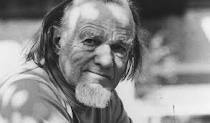
Category Archives: Francis Schaeffer

Open letter to President Obama (Part 429) Taking on Ark Times Bloggers on various issues Part C “Abortion” (Francis Schaeffer Quotes part 3 includes the film SLAUGHTER OF THE INNOCENTS) (editorial cartoon)

(Emailed to White House on 3-4-13.)

President Obama c/o The White House
1600 Pennsylvania Avenue NW
Washington, DC 20500

Dear Mr. President,

I know that you receive 20,000 letters a day and that you actually read 10 of them every day. I really do respect you for trying to get a pulse on what is going on out here.

I wanted to share with you some about my pro-life perspective.

I have gone back and forth and back and forth with many liberals on the Arkansas Times Blog on many issues such as abortion, human rights, welfare, poverty, gun control  and issues dealing with popular culture. Here is another exchange I had with them a while back. My username at the Ark Times Blog is Saline Republican.

On 2-21-13 on the Arkansas Times Blog  Stephen Anthony Lafferty rightly noted: 

It is a great poverty to kill an unborn child so you may live as you wish. ~Mother Teresa of Calcutta

On 2-21-13 on the Arkansas Times Blog  Hackett responded, “You should research Mother Teresa before quoting her.”

On 2-21-13 on the Arkansas Times Blog  I observed: 

It is sad that we talk about “fetuses” so often when they are unborn babies. Here is a cartoon that deals with abortion. http://25.media.tumblr.com/tumblr_m8j1z9OK…

On 2-21-13 on the Arkansas Times Blog  the person using the username “arhogfan501 wrote:

Let me get this straight. If someone kills a fetus with a vacuum hose, it’s legal and everything is ok. If a drunk driver kills a fetus, it’s negligent homicide. You people make perfect sense!

On 2-21-13 on the Arkansas Times Blog  I observed: 

“arhogfan501” you are exactly right about the fact that when aborting unborn babies is allowed then one’s morality keeps getting turned upside down when murder is condemned elsewhere but there is no moral basis for condemning it. Take a look at this editorial picture that puts this in perspective and it makes your point. http://www.killbabies.com/17.gif

On 2-21-13 on the Arkansas Times Blog  Cindi Cobb responded: 

Arhogfan501, the fetus is not a threat to the life of the drunk driver. It is a threat to the life of the pregnant female. One female died in the world from childbirth and pregnancy complications in the time it took me to type that sentence. The next five minutes, five more will die. Even minute another one dies. Abortions are self-defense.

On 2-21-13 on the Arkansas Times Blog  I observed: 

“Stephen Anthony Lafferty brought up the subject of selfishness. That reminds me of a story about Hillary Clinton, who I admit probably will be our next president. I got this off of Doug Lawrence’s blog:

Hillary Clinton’s encounter with Mother Teresa began, it just so happens, at the National Prayer Breakfast, way back in 1994. That year, the keynoter was a special guest: Mother Teresa. Nearly 3,000 packed a huge room. Near the dais were the president and first lady—the Clintons.

Unlike in typical years, where the keynoter sits among the assembled waiting for others to finish speaking, Mother Teresa appeared from behind a curtain only when called to the platform, and then slowly hunched toward the microphone. She began talking about Jesus and John the Baptist in their wombs, about their mothers, and how the “unborn child” in the womb of Elizabeth—John—leapt with joy, heralding the arrival of Christ as Mary neared Elizabeth, a moment known as “The Visitation.”

Mother Teresa next spoke of love, of selfishness, of a lack of love for the unborn—and a lack of want of the unborn because of selfishness. Then, the gentle sister made this elite group uncomfortable: “But I feel that the greatest destroyer of peace today is abortion, because Jesus said, ‘If you receive a little child, you receive me.’ So every abortion is the denial of receiving Jesus.”

After an awkward silence, the entire ballroom erupted in a standing ovation that seemed to last minutes. It felt even longer to the embarrassed Clintons (and Al and Tipper Gore), who remained seated and did not clap.

Undeterred by the Clintons’ coldness, the tiny, aged lady was only warming up. Abortion was, said Mother, “really a war against the child, and I hate the killing of the innocent child, murder by the mother herself. And if we accept that the mother can kill even her own child, how can we tell other people not to kill one another? … This is why the greatest destroyer of love and peace is abortion.”

Keep on quoting Mother Teresa!!!!! I love it!!!

In the film series “WHATEVER HAPPENED TO THE HUMAN RACE?” the arguments are presented  against abortion (Episode 1),  infanticide (Episode 2),   euthenasia (Episode 3), and then there is a discussion of the Christian versus Humanist worldview concerning the issue of “the basis for human dignity” in Episode 4 and then in the last episode a close look at the truth claims of the Bible.

Francis Schaeffer and his wife Edith pictured below.

In the film series “WHATEVER HAPPENED TO THE HUMAN RACE?” the arguments are presented  against abortion (Episode 1),  infanticide (Episode 2),   euthanasia (Episode 3), and then there is a discussion of the Christian versus Humanist worldview concerning the issue of “the basis for human dignity” in Episode 4 and then in the last episode a close look at the truth claims of the Bible.

Francis Schaeffer Videos

WHATEVER HAPPENED TO THE HUMAN RACE? Videos

Whatever Happened to the Human Race? Episode 1

https://youtu.be/1VWGBkmdPOE

Whatever Happened to the Human Race? Episode 2

https://youtu.be/ps8DhXD8jm4

Whatever Happened to the Human Race? Episode 3

https://youtu.be/W7mUGg3vdOw

Whatever Happened to the Human Race? Episode 4

https://youtu.be/7BUMrDXNSi0

Whatever Happened to the Human Race? Episode 5

https://youtu.be/VfqBN9iW0_Q

——-

___________

Francis Schaeffer saw the issues that our society would be facing in the future because of humanism and he was right on just about everything. Take a look at some of his quotes below: (By the way one of my favorite quotes is the first one listed below.)

“But the dignity of human life is unbreakably linked to the existence of the personal-infinite God. It is because there is a personal-infinite God who has made men and women in His own image that they have a unique dignity of life as human beings. Human life then is filled with dignity, and the state and humanistically oriented law have no right and no authority to take human life arbitrarily in the way it is being taken.”
Francis A. Schaeffer
“Christianity is not just involved with “salvation”, but with the total man in the total world. The Christian message begins with the existence of God forever, and then with creation. It does not begin with salvation. We must be thankful for salvation, but the Christian message is more than that. Man has a value because he is made in the image of God.”
Francis A. Schaeffer, Art & the Bible
“There is nothing more ugly than an orthodoxy without understanding or without compassion.”
Francis A. Schaeffer
“The central problem of our age is not liberalism or modernism, nor the old Roman Catholicism or the new Roman Catholicism, nor the threat of communism, nor even the threat of rationalism and the monolithic consensus which surrounds us. All these are dangerous but not the primary threat. The real problem is this: the church of the Lord Jesus Christ, individually corporately, tending to do the Lord’s work in the power of the flesh rather than of the Spirit. The central problem is always in the midst of the people of God, not in the circumstances surrounding them.”
Francis A. Schaeffer, No Little People
“In God’s world the individual counts. Therefore, Christian art should deal with the individual.”
Francis A. Schaeffer, Art & the Bible
“If there is no final place for civil disobedience, then the government has been made autonomous, and as such, it has been put in the place of the Living God.”
Francis A. Schaeffer, A Christian Manifesto
“The Christian should be the person who is alive, whose imagination absolutely boils, which moves, which produces something a bit different from God’s world because God made us to be creative.”
Francis A. Schaeffer, He Is There and He Is Not Silent
“As my son Frankie put it, Humanism has changed the Twenty-third Psalm: They began – I am my shepherd. Then – Sheep are my shepherd. Then – Everything is my shepherd. Finally – Nothing is my shepherd.”
Francis A. Schaeffer, How Should We Then Live? The Rise and Decline of Western Thought and Culture
“One of the greatest injustices we do to our young people is to ask them to be conservative. Christianity is not conservative, but revolutionary.”
Francis A. Schaeffer, The Church at the End of the Twentieth Century: Including The Church Before the Watching World
“We may not play with the new theology even if we may think we can turn it to our advantage.”
Francis A. Schaeffer
“Christian art today should be twentieth-century art.”
Francis A. Schaeffer, Art & the Bible
“There is no place in God’s world where there are no people who will come and share a home as long as it is a real home.”
Francis A. Schaeffer
“Christianity is realistic because it says that if there is no truth, there is also no hope; and there can be no truth if there is no adequate base. It is prepared to face the consequences of being proved false and say with Paul: If you find the body of Christ, the discussion is finished, let us eat and drink for tomorrow we die. It leaves absolutely no room for a romantic answer.”
Francis A. Schaeffer
“…the hippies of the 1960s did understand something. They were right in fighting the plastic culture, and the church should have been fighting it too… More than this, they were right in the fact that the plastic culture – modern man, the mechanistic worldview in university textbooks and in practice, the total threat of the machine, the establishment technology, the bourgeois upper middle class – is poor in its sensitivity to nature… As a utopian group, the counterculture understands something very real, both as to the culture as a culture, but also as to the poverty of modern man’s concept of nature and the way the machine is eating up nature on every side.”
Francis A. Schaeffer, Pollution & the Death of Man
“Today we have a weakness in our education process in failing to understand the natural associations between the disciplines. We tend to study all our disciplines in unrelated parallel lines. This tends to be true in both Christian and secular education. This is one of the reasons why evangelical Christians have been taken by surprise at the tremendous shift that has come in our generation.”
Francis A. Schaeffer
“The Bible is the weapon which enables us to join with our Lord on the offensive in defeating the spiritual hosts of wickedness. But is must be the Bible as the Word of God in everything it teaches- in matters if salvation, but just as much where it speaks of history and science and morality. If we compromise in any if these areas…we destroy the power of the Word and ourselves in the hands of the enemy.”
Francis A. Schaeffer, The Great Evangelical Disaster

Thank you so much for your time. I know how valuable it is. I also appreciate the fine family that you have and your commitment as a father and a husband.

Sincerely,

Everette Hatcher III, 13900 Cottontail Lane, Alexander, AR 72002, ph 501-920-5733, lowcostsqueegees@yahoo.com

Related posts:

Francis Schaeffer’s prayer for us in USA

 Francis Schaeffer: “Whatever Happened to the Human Race” (Episode 1) ABORTION OF THE HUMAN RACE Published on Oct 6, 2012 by AdamMetropolis The 45 minute video above is from the film series created from Francis Schaeffer’s book “Whatever Happened to the Human Race?” with Dr. C. Everett Koop. This book  really helped develop my political views […]

Francis Schaeffer’s “How should we then live?” Video and outline of episode 10 “Final Choices” (Schaeffer Sundays)

E P I S O D E 1 0   Dr. Francis Schaeffer – Episode X – Final Choices 27 min FINAL CHOICES I. Authoritarianism the Only Humanistic Social Option One man or an elite giving authoritative arbitrary absolutes. A. Society is sole absolute in absence of other absolutes. B. But society has to be […]

Francis Schaeffer’s “How should we then live?” Video and outline of episode 9 “The Age of Personal Peace and Affluence” (Schaeffer Sundays)

E P I S O D E 9 Dr. Francis Schaeffer – Episode IX – The Age of Personal Peace and Affluence 27 min T h e Age of Personal Peace and Afflunce I. By the Early 1960s People Were Bombarded From Every Side by Modern Man’s Humanistic Thought II. Modern Form of Humanistic Thought Leads […]

Francis Schaeffer’s “How should we then live?” Video and outline of episode 8 “The Age of Fragmentation” (Schaeffer Sundays)

E P I S O D E 8 Dr. Francis Schaeffer – Episode VIII – The Age of Fragmentation 27 min I saw this film series in 1979 and it had a major impact on me. T h e Age of FRAGMENTATION I. Art As a Vehicle Of Modern Thought A. Impressionism (Monet, Renoir, Pissarro, Sisley, […]

Francis Schaeffer’s “How should we then live?” Video and outline of episode 7 “The Age of Non-Reason” (Schaeffer Sundays)

E P I S O D E 7 Dr. Francis Schaeffer – Episode VII – The Age of Non Reason I am thrilled to get this film series with you. I saw it first in 1979 and it had such a big impact on me. Today’s episode is where we see modern humanist man act […]

Francis Schaeffer’s “How should we then live?” Video and outline of episode 6 “The Scientific Age” (Schaeffer Sundays)

E P I S O D E 6 How Should We Then Live 6#1 Uploaded by NoMirrorHDDHrorriMoN on Oct 3, 2011 How Should We Then Live? Episode 6 of 12 ________ I am sharing with you a film series that I saw in 1979. In this film Francis Schaeffer asserted that was a shift in […]

Francis Schaeffer’s “How should we then live?” Video and outline of episode 5 “The Revolutionary Age” (Schaeffer Sundays)

E P I S O D E 5 How Should We Then Live? Episode 5: The Revolutionary Age I was impacted by this film series by Francis Schaeffer back in the 1970′s and I wanted to share it with you. Francis Schaeffer noted, “Reformation Did Not Bring Perfection. But gradually on basis of biblical teaching there […]

Francis Schaeffer’s “How should we then live?” Video and outline of episode 4 “The Reformation” (Schaeffer Sundays)

Dr. Francis Schaeffer – Episode IV – The Reformation 27 min I was impacted by this film series by Francis Schaeffer back in the 1970′s and I wanted to share it with you. Schaeffer makes three key points concerning the Reformation: “1. Erasmian Christian humanism rejected by Farel. 2. Bible gives needed answers not only as to […]

“Schaeffer Sundays” Francis Schaeffer’s “How should we then live?” Video and outline of episode 3 “The Renaissance”

Francis Schaeffer’s “How should we then live?” Video and outline of episode 3 “The Renaissance” Francis Schaeffer: “How Should We Then Live?” (Episode 3) THE RENAISSANCE I was impacted by this film series by Francis Schaeffer back in the 1970′s and I wanted to share it with you. Schaeffer really shows why we have so […]

Francis Schaeffer’s “How should we then live?” Video and outline of episode 2 “The Middle Ages” (Schaeffer Sundays)

  Francis Schaeffer: “How Should We Then Live?” (Episode 2) THE MIDDLE AGES I was impacted by this film series by Francis Schaeffer back in the 1970′s and I wanted to share it with you. Schaeffer points out that during this time period unfortunately we have the “Church’s deviation from early church’s teaching in regard […]

Francis Schaeffer’s “How should we then live?” Video and outline of episode 1 “The Roman Age” (Schaeffer Sundays)

Francis Schaeffer: “How Should We Then Live?” (Episode 1) THE ROMAN AGE   Today I am starting a series that really had a big impact on my life back in the 1970′s when I first saw it. There are ten parts and today is the first. Francis Schaeffer takes a look at Rome and why […]

Francis Schaeffer: “Whatever Happened to the Human Race” (Episode 5) TRUTH AND HISTORY

Francis Schaeffer: “Whatever Happened to the Human Race” (Episode 5) TRUTH AND HISTORY Published on Oct 7, 2012 by AdamMetropolis This crucial series is narrated by the late Dr. Francis Schaeffer and former Surgeon General Dr. C. Everett Koop. Today, choices are being made that undermine human rights at their most basic level. Practices once […]

Francis Schaeffer: “Whatever Happened to the Human Race” (Episode 4) THE BASIS FOR HUMAN DIGNITY

The opening song at the beginning of this episode is very insightful. Francis Schaeffer: “Whatever Happened to the Human Race” (Episode 4) THE BASIS FOR HUMAN DIGNITY Published on Oct 7, 2012 by AdamMetropolis This crucial series is narrated by the late Dr. Francis Schaeffer and former Surgeon General Dr. C. Everett Koop. Today, choices […]

Francis Schaeffer: “Whatever Happened to the Human Race” (Episode 3) DEATH BY SOMEONE’S CHOICE

Francis Schaeffer: “Whatever Happened to the Human Race” (Episode 3) DEATH BY SOMEONE’S CHOICE Published on Oct 6, 2012 by AdamMetropolis This crucial series is narrated by the late Dr. Francis Schaeffer and former Surgeon General Dr. C. Everett Koop. Today, choices are being made that undermine human rights at their most basic level. Practices […]

Francis Schaeffer: “Whatever Happened to the Human Race?” (Episode 2) SLAUGHTER OF THE INNOCENTS

Francis Schaeffer: “Whatever Happened to the Human Race?” (Episode 2) SLAUGHTER OF THE INNOCENTS Published on Oct 6, 2012 by AdamMetropolis This crucial series is narrated by the late Dr. Francis Schaeffer and former Surgeon General Dr. C. Everett Koop. Today, choices are being made that undermine human rights at their most basic level. Practices […]

Francis Schaeffer: “Whatever Happened to the Human Race” (Episode 1) ABORTION OF THE HUMAN RACE

It is not possible to know where the pro-life evangelicals are coming from unless you look at the work of the person who inspired them the most. That person was Francis Schaeffer.  I do care about economic issues but the pro-life issue is the most important to me. Several years ago Adrian Rogers (past president of […]

The following essay explores the role that Francis Schaeffer played in the rise of the pro-life movement. It examines the place of How Should We Then Live?, Whatever Happened to the Human Race?, and A Christian Manifesto in that process.

This essay below is worth the read. Schaeffer, Francis – “Francis Schaeffer and the Pro-Life Movement” [How Should We Then Live?, Whatever Happened to the Human Race?, A Christian Manifesto] Editor note: <p> </p> [The following essay explores the role that Francis Schaeffer played in the rise of the pro-life movement.  It examines the place of […]

Who was Francis Schaeffer? by Udo Middelmann

Great article on Schaeffer. Who was Dr. Francis A. Schaeffer? By Francis Schaeffer The unique contribution of Dr. Francis Schaeffer on a whole generation was the ability to communicate the truth of historic Biblical Christianity in a way that combined intellectual integrity with practical, loving care. This grew out of his extensive understanding of the Bible […]

Truth Tuesday:Francis Schaeffer Life and Thought Overview by Michael Donahue

Francis Schaeffer Life and Thought Overview by Michael Donahue

How Should We Then Live? Episode 5: The Revolutionary Age

Episode VII – The Age of Non Reason

____________________

Episode 8: The Age Of Fragmentation

Published on Jul 24, 2012

Dr. Schaeffer’s sweeping epic on the rise and decline of Western thought and Culture

_______________________

I love the works of Francis Schaeffer and I have been on the internet reading several blogs that talk about Schaeffer’s work and the work below by Michael Donahue  was really helpful. Schaeffer’s film series “How should we then live?  Wikipedia notes, “According to Schaeffer, How Should We Then Live traces Western history from Ancient Rome until the time of writing (1976) along three lines: the philosophic, scientific, and religious.[3] He also makes extensive references to art and architecture as a means of showing how these movements reflected changing patterns of thought through time. Schaeffer’s central premise is: when we base society on the Bible, on the infinite-personal God who is there and has spoken,[4] this provides an absolute by which we can conduct our lives and by which we can judge society.  Here are some posts I have done on this series: Francis Schaeffer’s “How should we then live?” Video and outline of episode 10 “Final Choices” episode 9 “The Age of Personal Peace and Affluence”episode 8 “The Age of Fragmentation”episode 7 “The Age of Non-Reason” episode 6 “The Scientific Age”  episode 5 “The Revolutionary Age” episode 4 “The Reformation” episode 3 “The Renaissance”episode 2 “The Middle Ages,”, and  episode 1 “The Roman Age,” .

In the film series “WHATEVER HAPPENED TO THE HUMAN RACE?” the arguments are presented  against abortion (Episode 1),  infanticide (Episode 2),   euthanasia (Episode 3), and then there is a discussion of the Christian versus Humanist worldview concerning the issue of “the basis for human dignity” in Episode 4 and then in the last episode a close look at the truth claims of the Bible.

Francis Schaeffer

Saturday, March 17, 2012

Francis Schaeffer Life and Thought Overview


His Life
Looking at the impassioned yet tongue tied young man in the early 1930’s at a Presbyterian youth group, it would be hard to tell that he was going to be one of the most influential Evangelicals of the 20th century. He was Francis Schaeffer. At the youth group meeting Shaeffer had risen to his feet to dispute the claims of a minister who was giving a talk entitled, “Why I Know Jesus is Not the Son of God, and How I Know the Bible is Not the Word of God” (Burson and Walls 37). Although not able to come up with many sound arguments, he felt the urge to confront falsehood. This burning desire would drive him to investigate and find answers to the problems that plagued humanity and Christianity, especially issues relating to the moral decay of western civilization.Francis August Schaeffer was born in 1912 into a blue collar, hard-working family in Germantown Pennsylvania. His parents were not intellectuals by any means, His father worked with his hands and had hopes of Francis becoming an engineer (Burson and Walls 35). His family was not very religious, but did attend a Presbyterian Church that had slipped off into liberalism. Francis was later to discover that liberal theology was one of the greatest maladies of the western world. Francis started reading the Bible around the age of 17 and believed it, he soon realized that he was alone at his church in his conviction, but the Lord quickly lead him to the Ashmead Place church, which held to the authority of God’s word (Burson and Walls 36).Sensing the call of God on his life, Francis enrolled in college in order to get on a trajectory to seminary, which was against his parents wishes. After getting his bachelors he enrolled in Westminister Theological Seminary, where he learned from J. Greshom Machen and Cornelious Van Til. Both of these men had a profound effect on Schaeffer’s understanding of the world. After graduating he became a minister and lived in Missouri for 10 years, then moved his family to Switzerland in 1948 (Burson and Walls 39).This move came about after the American Council of Church’s had asked him to tour Europe in 1947 to asses the need of the church’s in war torn areas. Schaeffer had developed a taste for art and used this trip to visit many of the famous cathedrals and museums. What startled him the most was the amazing beauty of human accomplishment put in contrast with the devastation of human depravity (Burson and Walls 40).
The Schaeffer’s started a ministry in Switzerland called L’Abri, a Christian commune which was like a christian youth hostel and college. He began giving lectures that gave orthodox Christian answers to the problems students were facing. In 1968 he published two books which are still widely influential today, Escape from Reason and The God Who Is There (Morris 12). Over the course of the next 16 years, until his death in 1984, he wrote 21 books in total and many other booklets and articles (Schaeffer, The Great 12).

His Thought
Dr. Schaeffer divided his work into three categories, “My earlier books dealt especially with the intellectual questions of philosophy and matters in the area of culture. Then there were the books dealing with the Christian life and the church. More recently my books have dealt especially with the area of civil needs and the need of law and government” (The Great 11). In a summary of Schaeffers work, Thomas Morris divided his apologetic’s up into metaphysics, morality and epistemology (23). This paper is a look at Francis Schaeffer’s views on morality, which will take into perspective books in each of the categories Schaeffer mentioned.
Schaeffer’s book How Should We Then Live; A Study of the Rise and Fall of Western Civilization, explains his view of the origin of the western world and its moral decline. He took the classical view that Western thought originated with the Greek philosophers Socrates, Plato and Aristotle, their ideas influencing Roman culture which in turn spread them over Europe by military conquest. What made his view unique was that he saw the transition in thought to modernism starting with Aquinas, rather than Descartes (Schaeffer, Escape 11).

Thomas Aquinas introduced the concept of nature and grace, which Schaeffer saw as the beginning of a long series of divisions between the metaphysical and the actual (Escape 9). Whatever is metaphysical is placed above in what he called the “upper story” and whatever could be known by the senses was placed below. These divisions moved from nature versus grace to universals versus particulars by the neo-platonists of the late 15th century (Schaeffer, Escape 17). Kant brought this division to freedom versus nature (Schaeffer, Escape 33), then Hegel and Kierkegaard brought the division to faith versus rationality (Schaeffer, Escape 42).

Schaeffer saw all these divisions as an attempt to make humanity autonomous. As seen from these divisions, without God, man becomes an irrational nonentity. With the autonomous world view man died “as far as rationality and logic are concerned” (Schaeffer, Escape 53). He realized that man cannot live like this, he has to have meaning; “man made in the image of God cannot live as though he is nothing and thus he places in the upper story all sorts of desperate things” (Schaeffer, Escape 53).
This autonomous view of humanity led to the death of values (Schaeffer, How Should 205). The western world had once been led by a Christian consensus which came out of a long history dating back to the Roman Empire. This consensus had waned at times, but had experienced a re-birth in the reformation and the great awakening, but with the enlightenment and the industrial revolution this consensus began to die. Enlightenment rationalism took control of the arts, music, higher education and eventually theology. The Higher critics of the 18th and 19th century were just the theological out workings of the enlightenment, they excluded God and built their own world view (Schaeffer, The Great 35).

Schaeffer saw human thought working in progressively downward steps, starting with philosophy then art and music, then out to general culture and lastly landing on theology (Escape 43). Once the line of dispair reached theology it was not long before the mainline denominations began to crumble. Splits over Biblical authority and foundational doctrines left the 20th century church in ruins. Schaeffer saw this as the precursor to the moral breakdown of the 1960’s (The Great 35).

After the denominational collapse people were left without any moral foundation. “As the more Christian-dominated consensus weakened, the majority of people adopted two impoverished values: personal peace and affluence” (Schaeffer, How Should 205). The next generation quickly realized that there was no meaning to what their parents believed about life “because the only hope of meaning had been placed in the area of non-reason, drugs were brought into the picture” (Schaeffer, How Should 206).
Drug abuse had been around for a long time, but the existential philosophers promoted it as an ideology; Timothy Leary even went so far as to say that drugs were the sacraments of a new religion (Schaeffer, How Should 206). The other ideology that arose was the “New-Left”, encompassing all types of political ideas that are often classed as “liberal” (Schaeffer, How Should 208). These new left political ideas ranged from feminism to abortion, free speech to nudity. Schaeffer saw all this as a rebellion against the values of their parents generation. “The young people wanted more to life than personal peace and affluence. They were right in their analysis of the problem, but they were mistaken in their solutions” (How Should 208).

Schaeffer showed that the humanistic view of man fails. “It fails to explain man. It fails to explain the universe and its form. It fails to stand up in the area of epistemology” (Schaeffer, He Is There 64).
“Christianity offers an entirely different set of presuppositions. The other presuppositions simply do not meet the need” (Schaeffer, He Is There 65). A presupposition, as defined by Shaeffer is “a belief or theory which is assumed before the next step in the logical development. Such a prior postulate often consciously or unconsciously affects the way a person subsequently responds” (Morris 18). The presuppositions that Schaeffer was advocating have been summed up into two major assumptions by Morris. First, people have to accept belief in the personal God of the Bible. Second, they need to accept orthodox faith as providing the only answer to their inner and outer experience (Morris 19-21).

These presuppositions are needed as a foundation for the only view of ourselves and the world that matches our experience and gives meaning to humanity. This gives Christianity the authority to stand against those that would either distort the facts of history in order to return to a golden age of Christian dominance, or accommodate to the spirit of the age, distorting the facts of history and orthodox Christian doctrine (Schaeffer, The Great 118).

Works Cited

Burson, Scott R., and Jerry L. Walls. C.S. Lewis & Francis Schaeffer: Lessons for a New Century from the Most Influential Apologists of Our Time. Downers Grove, IL: InterVarsity, 1998. Print.

Morris, Thomas V. Francis Schaeffer’s Apologetics: a Critique. Chicago: Moody, 1976. Print.

Schaeffer, Francis A. Escape from Reason. London: Inter-Varsity Fellowship, 1968. Print.

—. He Is There and He Is Not Silent. Wheaton, IL: Tyndale House, 1972. Print.

—. How Should We Then Live?: the Rise and Decline of Western Thought and Culture. Old Tappan, NJ: F. H. Revell, 1976. Print.

—. The Great Evangelical Disaster. Westchester, IL: Crossway, 1984. Print.

Schaeffer, Francis A., and C. Everett Koop. Whatever Happened to the Human Race? Old

Tappan, NJ: F.H. Revell, 1979. Print.

The New King James Bible: New Testament. Nashville: T. Nelson, 1979. Print

Related posts:

Francis Schaeffer’s wife Edith passes away on Easter weekend 2013 Part 7 (includes pro-life editorial cartoon)

The Francis and Edith Schaeffer Story Pt.1 – Today’s Christian Videos The Francis and Edith Schaeffer Story – Part 3 of 3 Francis Schaeffer: “Whatever Happened to the Human Race” (Episode 1) ABORTION OF THE HUMAN RACE Published on Oct 6, 2012 by AdamMetropolis ________________ Picture of Francis Schaeffer and his wife Edith from the […]

The Mark of the Christian by Francis Schaeffer Part 1

  THE MARK OF A CHRISTIAN – CLASS 1 – Introduction Published on Mar 7, 2012 This is the introductory class on “The Mark Of A Christian” by Francis Schaeffer. The class was originally taught at Redeemer Presbyterian Church in Overland Park, KS by Dan Guinn from FrancisSchaefferStudies.org as part of the adult Sunday School hour […]

Francis Schaeffer’s wife Edith passes away on Easter weekend 2013 Part 6 (includes pro-life editorial cartoon and tribute from son-in-law Ranald Macaulay)

The Francis and Edith Schaeffer Story Pt.1 – Today’s Christian Videos The Francis and Edith Schaeffer Story – Part 3 of 3 Francis Schaeffer: “Whatever Happened to the Human Race” (Episode 1) ABORTION OF THE HUMAN RACE Published on Oct 6, 2012 by AdamMetropolis ________________ Picture of Francis Schaeffer and his wife Edith from the […]

Francis Schaeffer’s wife Edith passes away on Easter weekend 2013 Part 5 (includes pro-life editorial cartoon)

The Francis and Edith Schaeffer Story Pt.1 – Today’s Christian Videos The Francis and Edith Schaeffer Story – Part 3 of 3 Francis Schaeffer: “Whatever Happened to the Human Race” (Episode 1) ABORTION OF THE HUMAN RACE Published on Oct 6, 2012 by AdamMetropolis ________________ Picture of Francis Schaeffer and his wife Edith from the […]

Francis Schaeffer’s wife Edith passes away on Easter weekend 2013 Part 4 (includes pro-life editorial cartoon)

The Francis and Edith Schaeffer Story Pt.1 – Today’s Christian Videos The Francis and Edith Schaeffer Story – Part 3 of 3 Francis Schaeffer: “Whatever Happened to the Human Race” (Episode 1) ABORTION OF THE HUMAN RACE Published on Oct 6, 2012 by AdamMetropolis ________________ Picture of Francis Schaeffer and his wife Edith from the […]

Francis Schaeffer’s wife Edith passes away on Easter weekend 2013 Part 3 (includes pro-life editorial cartoon)

The Francis and Edith Schaeffer Story Pt.1 – Today’s Christian Videos The Francis and Edith Schaeffer Story – Part 3 of 3 Francis Schaeffer: “Whatever Happened to the Human Race” (Episode 1) ABORTION OF THE HUMAN RACE Published on Oct 6, 2012 by AdamMetropolis ________________ Picture of Francis Schaeffer and his wife Edith from the […]

“Schaeffer Sundays” Francis Schaeffer’s own words concerning humanist dominated public schools in USA even though country was founded on a Christian base

Francis Schaeffer: “Whatever Happened to the Human Race?” (Episode 2) SLAUGHTER OF THE INNOCENTS Published on Oct 6, 2012 by AdamMetropolis The 45 minute video above is from the film series created from Francis Schaeffer’s book “Whatever Happened to the Human Race?” with Dr. C. Everett Koop. This book  really helped develop my political views concerning […]

“Schaeffer Sundays” Francis Schaeffer’s own words concerning where the Bible-believing Christians been the last few decades

Francis Schaeffer: “Whatever Happened to the Human Race” (Episode 1) ABORTION OF THE HUMAN RACE Published on Oct 6, 2012 by AdamMetropolis The 45 minute video above is from the film series created from Francis Schaeffer’s book “Whatever Happened to the Human Race?” with Dr. C. Everett Koop. This book  really helped develop my political views […]

Taking on Ark Times Bloggers on various issues Part E “Moral absolutes and abortion” Francis Schaeffer Quotes part 5(includes the film SLAUGHTER OF THE INNOCENTS) (editorial cartoon)

I have gone back and forth and back and forth with many liberals on the Arkansas Times Blog on many issues such as abortion, human rights, welfare, poverty, gun control  and issues dealing with popular culture. Here is another exchange I had with them a while back. My username at the Ark Times Blog is Saline […]

“Schaeffer Sundays” Francis Schaeffer’s own words concerning religious liberals and humanists

Francis Schaeffer: “Whatever Happened to the Human Race” (Episode 5) TRUTH AND HISTORY Published on Oct 7, 2012 by AdamMetropolis The 45 minute video above is from the film series created from Francis Schaeffer’s book “Whatever Happened to the Human Race?” with Dr. C. Everett Koop. This book  really helped develop my political views concerning abortion, […]

Francis Schaeffer quotes on man’s despair

Francis Schaeffer quotes on man’s despair

_______________

Episode VII – The Age of Non Reason

____________________

Episode 8: The Age Of Fragmentation

Published on Jul 24, 2012

Dr. Schaeffer’s sweeping epic on the rise and decline of Western thought and Culture

_______________________

I love the works of Francis Schaeffer and I have been on the internet reading several blogs that talk about Schaeffer’s work and the work below was really helpful. Schaeffer’s film series “How should we then live?  Wikipedia notes, “According to Schaeffer, How Should We Then Live traces Western history from Ancient Rome until the time of writing (1976) along three lines: the philosophic, scientific, and religious.[3] He also makes extensive references to art and architecture as a means of showing how these movements reflected changing patterns of thought through time. Schaeffer’s central premise is: when we base society on the Bible, on the infinite-personal God who is there and has spoken,[4] this provides an absolute by which we can conduct our lives and by which we can judge society.  Here are some posts I have done on this series: Francis Schaeffer’s “How should we then live?” Video and outline of episode 10 “Final Choices” episode 9 “The Age of Personal Peace and Affluence”episode 8 “The Age of Fragmentation”episode 7 “The Age of Non-Reason” episode 6 “The Scientific Age”  episode 5 “The Revolutionary Age” episode 4 “The Reformation” episode 3 “The Renaissance”episode 2 “The Middle Ages,”, and  episode 1 “The Roman Age,” .

Here are some quotes from Francis Schaeffer:

Francis A. Schaeffer (transcribed from various texts)


“Logical positivism claims to lay the foundation for each step as it goes along, in a rational way.  Yet in reality it puts forth no theoretical universal to validate its very first step.  Positivists accept that, though they present no logical reason why this should be so, what reaches them from the ‘outside’ may be called ‘data’, i.e. has objective validity…At once I said, ‘How do you know, on the basis of logical positivism, that it is data?'”

“[I]n practice a man cannot totally reject the methodology of antithesis…unless he experiences the total alienation from himself caused by some form of mental breakdown.”

“Probably the best way to describe this concept of modern theology is to say that it is faith in faith, rather than faith directed to an object which is actually there.”

“[Leonardo da Vinci] understood that man beginning from himself would never be able to come to meaning on the basis of mathematics.  And he knew that having only individual things, particulars, one could never come to universals or meaning and thus one only ends with mechanics…Everything, including man, is the machine.”

“What is despair?  It arises from the abandonment of the hope of a unified answer for knowledge and life…Modern man has given up his hope of unity and lives in despair – the despair of no longer thinking that what has always been the aspiration of men is at all possible.”

“[T]he basis of [Marquis] de Sade’s sadism was his concept of determinism.  De Sade’s position was that what is, is right.”

“The soul is not more important than the body.  God made the whole man and the whole man is important.”

“People today are trying to hang on to the dignity of man, and they do not know how to because they have lost the truth that man is made in the image of God.”

“The result of seeking for a unity on the basis of the uniformity of natural causes in a closed system is that freedom does not exist.”

“At Berkeley the Free Speech Movement arose…At first it was politically neither left nor right, but rather a call for freedom to express any political views on Sproul Plaza.  Then soon the Free Speech Movement becamse the Dirty Speech Movement, in which freedom was seen as shouting four-letter words [swear words] into a mike.  Soon after, it became the platform for the political New Left…”

“[E]verything is not the result of the impersonal plus time plus chance, but…there is an infinite-personal God who is the Creator of the universe, the space-time continuum.”

“…no one has yet shown how man could have been brought forth from non-man solely by time plus chance.”

Related posts:

Francis Schaeffer’s “How should we then live?” Video and outline of episode 10 “Final Choices” (Schaeffer Sundays)

E P I S O D E 1 0   Dr. Francis Schaeffer – Episode X – Final Choices 27 min FINAL CHOICES I. Authoritarianism the Only Humanistic Social Option One man or an elite giving authoritative arbitrary absolutes. A. Society is sole absolute in absence of other absolutes. B. But society has to be […]

Francis Schaeffer’s “How should we then live?” Video and outline of episode 9 “The Age of Personal Peace and Affluence” (Schaeffer Sundays)

E P I S O D E 9 Dr. Francis Schaeffer – Episode IX – The Age of Personal Peace and Affluence 27 min T h e Age of Personal Peace and Afflunce I. By the Early 1960s People Were Bombarded From Every Side by Modern Man’s Humanistic Thought II. Modern Form of Humanistic Thought Leads […]

Francis Schaeffer’s “How should we then live?” Video and outline of episode 8 “The Age of Fragmentation” (Schaeffer Sundays)

E P I S O D E 8 Dr. Francis Schaeffer – Episode VIII – The Age of Fragmentation 27 min I saw this film series in 1979 and it had a major impact on me. T h e Age of FRAGMENTATION I. Art As a Vehicle Of Modern Thought A. Impressionism (Monet, Renoir, Pissarro, Sisley, […]

Francis Schaeffer’s “How should we then live?” Video and outline of episode 7 “The Age of Non-Reason” (Schaeffer Sundays)

E P I S O D E 7 Dr. Francis Schaeffer – Episode VII – The Age of Non Reason I am thrilled to get this film series with you. I saw it first in 1979 and it had such a big impact on me. Today’s episode is where we see modern humanist man act […]

Francis Schaeffer’s “How should we then live?” Video and outline of episode 6 “The Scientific Age” (Schaeffer Sundays)

E P I S O D E 6 How Should We Then Live 6#1 Uploaded by NoMirrorHDDHrorriMoN on Oct 3, 2011 How Should We Then Live? Episode 6 of 12 ________ I am sharing with you a film series that I saw in 1979. In this film Francis Schaeffer asserted that was a shift in […]

Francis Schaeffer’s “How should we then live?” Video and outline of episode 5 “The Revolutionary Age” (Schaeffer Sundays)

E P I S O D E 5 How Should We Then Live? Episode 5: The Revolutionary Age I was impacted by this film series by Francis Schaeffer back in the 1970′s and I wanted to share it with you. Francis Schaeffer noted, “Reformation Did Not Bring Perfection. But gradually on basis of biblical teaching there […]

Francis Schaeffer’s “How should we then live?” Video and outline of episode 4 “The Reformation” (Schaeffer Sundays)

Dr. Francis Schaeffer – Episode IV – The Reformation 27 min I was impacted by this film series by Francis Schaeffer back in the 1970′s and I wanted to share it with you. Schaeffer makes three key points concerning the Reformation: “1. Erasmian Christian humanism rejected by Farel. 2. Bible gives needed answers not only as to […]

“Schaeffer Sundays” Francis Schaeffer’s “How should we then live?” Video and outline of episode 3 “The Renaissance”

Francis Schaeffer’s “How should we then live?” Video and outline of episode 3 “The Renaissance” Francis Schaeffer: “How Should We Then Live?” (Episode 3) THE RENAISSANCE I was impacted by this film series by Francis Schaeffer back in the 1970′s and I wanted to share it with you. Schaeffer really shows why we have so […]

Francis Schaeffer’s “How should we then live?” Video and outline of episode 2 “The Middle Ages” (Schaeffer Sundays)

  Francis Schaeffer: “How Should We Then Live?” (Episode 2) THE MIDDLE AGES I was impacted by this film series by Francis Schaeffer back in the 1970′s and I wanted to share it with you. Schaeffer points out that during this time period unfortunately we have the “Church’s deviation from early church’s teaching in regard […]

Francis Schaeffer’s “How should we then live?” Video and outline of episode 1 “The Roman Age” (Schaeffer Sundays)

Francis Schaeffer: “How Should We Then Live?” (Episode 1) THE ROMAN AGE   Today I am starting a series that really had a big impact on my life back in the 1970′s when I first saw it. There are ten parts and today is the first. Francis Schaeffer takes a look at Rome and why […]

Francis Schaeffer: “Whatever Happened to the Human Race” (Episode 5) TRUTH AND HISTORY

Francis Schaeffer: “Whatever Happened to the Human Race” (Episode 5) TRUTH AND HISTORY Published on Oct 7, 2012 by AdamMetropolis This crucial series is narrated by the late Dr. Francis Schaeffer and former Surgeon General Dr. C. Everett Koop. Today, choices are being made that undermine human rights at their most basic level. Practices once […]

Francis Schaeffer: “Whatever Happened to the Human Race” (Episode 4) THE BASIS FOR HUMAN DIGNITY

The opening song at the beginning of this episode is very insightful. Francis Schaeffer: “Whatever Happened to the Human Race” (Episode 4) THE BASIS FOR HUMAN DIGNITY Published on Oct 7, 2012 by AdamMetropolis This crucial series is narrated by the late Dr. Francis Schaeffer and former Surgeon General Dr. C. Everett Koop. Today, choices […]

Francis Schaeffer: “Whatever Happened to the Human Race” (Episode 3) DEATH BY SOMEONE’S CHOICE

Francis Schaeffer: “Whatever Happened to the Human Race” (Episode 3) DEATH BY SOMEONE’S CHOICE Published on Oct 6, 2012 by AdamMetropolis This crucial series is narrated by the late Dr. Francis Schaeffer and former Surgeon General Dr. C. Everett Koop. Today, choices are being made that undermine human rights at their most basic level. Practices […]

Francis Schaeffer: “Whatever Happened to the Human Race?” (Episode 2) SLAUGHTER OF THE INNOCENTS

Francis Schaeffer: “Whatever Happened to the Human Race?” (Episode 2) SLAUGHTER OF THE INNOCENTS Published on Oct 6, 2012 by AdamMetropolis This crucial series is narrated by the late Dr. Francis Schaeffer and former Surgeon General Dr. C. Everett Koop. Today, choices are being made that undermine human rights at their most basic level. Practices […]

Francis Schaeffer: “Whatever Happened to the Human Race” (Episode 1) ABORTION OF THE HUMAN RACE

It is not possible to know where the pro-life evangelicals are coming from unless you look at the work of the person who inspired them the most. That person was Francis Schaeffer.  I do care about economic issues but the pro-life issue is the most important to me. Several years ago Adrian Rogers (past president of […]

The following essay explores the role that Francis Schaeffer played in the rise of the pro-life movement. It examines the place of How Should We Then Live?, Whatever Happened to the Human Race?, and A Christian Manifesto in that process.

This essay below is worth the read. Schaeffer, Francis – “Francis Schaeffer and the Pro-Life Movement” [How Should We Then Live?, Whatever Happened to the Human Race?, A Christian Manifesto] Editor note: <p> </p> [The following essay explores the role that Francis Schaeffer played in the rise of the pro-life movement.  It examines the place of […]

The Need to Read: Francis Schaeffer – A Christian Scholar and Visionary Worldview Thinker

The Scientific Age

Uploaded by  on Oct 3, 2011

_______________

Episode VII – The Age of Non Reason

____________________

Episode 8: The Age Of Fragmentation

Published on Jul 24, 2012

Dr. Schaeffer’s sweeping epic on the rise and decline of Western thought and Culture

_______________________

 
I love the works of Francis Schaeffer and I have been on the internet reading several blogs that talk about Schaeffer’s work and the work below was really helpful. Schaeffer’s film series “How should we then live?  Wikipedia notes, “According to Schaeffer, How Should We Then Live traces Western history from Ancient Rome until the time of writing (1976) along three lines: the philosophic, scientific, and religious.[3] He also makes extensive references to art and architecture as a means of showing how these movements reflected changing patterns of thought through time. Schaeffer’s central premise is: when we base society on the Bible, on the infinite-personal God who is there and has spoken,[4] this provides an absolute by which we can conduct our lives and by which we can judge society.  Here are some posts I have done on this series: Francis Schaeffer’s “How should we then live?” Video and outline of episode 10 “Final Choices” episode 9 “The Age of Personal Peace and Affluence”episode 8 “The Age of Fragmentation”episode 7 “The Age of Non-Reason” episode 6 “The Scientific Age”  episode 5 “The Revolutionary Age” episode 4 “The Reformation” episode 3 “The Renaissance”episode 2 “The Middle Ages,”, and  episode 1 “The Roman Age,” .

Great article on Schaeffer:

The Need to Read: Francis Schaeffer – A Christian Scholar and Visionary Worldview Thinker Print E-mail

Todd Kappelman Written by Todd Kappelman

Todd Kappelman provides us with a compelling introduction to the thought and writings of Francis Schaeffer, one of the great Christian thinkers of the 20th century.  As a Christian scholar and a visionary worldview thinker, Schaeffer applied Scriptural truth to the issues people are dealing with in the modern world.  He demonstrated that Christ’s truth is universal both across time and cultures.

The Need to Read series began several months ago with a program on C.S. Lewis . The rationale for this series is that many of the great writers who have helped many Christians mature are now either unknown or neglected by many who could use these authors insights into the faith.

This installment focuses on Francis Schaeffer (1912-1984), one of the most recognized and respected Christian authors of the twentieth century. He saw so much more in what he was looking at and agonized over it much more that the rest of us. He was one of the truly great Christians of our time.{1} If this is the case, and I and many others believe that it is, then this question follows: What was Schaeffer looking at? The remarkable answer to this question is all of human history and the long chain of events which have led to modern man as we see him today.

In a time when true scholarship is often equated with specialization in a particular period, people, or subject, Schaeffer was a grand generalist. He was a true Renaissance man who knew something about everything, as opposed to everything about something. In addition to his remarkable and encyclopedic knowledge of human history, he was able to connect important events together such that Christians can see what has happened in human history, what is happening now, and what will happen if man continues on his present course. Schaeffer was a visionary who had an uncanny understanding of the times we live in and what mankind can expect in the near future.

Schaeffers greatest gift, like that of C.S. Lewis, was his concern for the average Christian. He believed philosophy, theology, and ethics should not be reserved for the conversation of learned academics; rather they should be the daily concern of the man on the street. The price for ignorance of the subjects could be our life, or more importantly, our very souls. The Scriptures are very clear concerning the price of ignorance. The prophet Hosea said that Gods people perish for lack of knowledge.{2} In light of this observation, Schaeffers genius was his ability to communicate extremely difficult philosophical and theological issues on a non- technical level. His writings provide Christians with access to some of the most pressing concerns of our times.

Several aspects of Schaeffers style and sweeping concerns will be discussed in this essay. First, he perceived the wholeness of the created order. There is a basic need in all human beings to know the answers to the great questions of life, and Schaeffer believed that God has given man the answers in the form of natural and specific revelation.

Second, Schaeffer believed that man has a natural inclination to desire the reasonable. Schaeffer argued that the Christian faith is not only true, but that it is the most plausible account for the existence of man and his place in the universe. He contended that an irrational faith is not what God intended to communicate to man.

Third, Schaeffer was one of the original cultural critics of the twentieth century. He believed that mankind, both Christians and non-Christians, was adrift on a sea of irrationality. He further believed that this drift was intensifying to the point that true, orthodox Christianity was being lost.

Schaeffer and The God Who Is There

Francis Schaeffer developed some important themes in three of his books: The God Who Is There, Escape from Reason, and He Is There and He Is Not Silent.

Lets consider The God Who Is There first. The major thesis in this book is that modern man has abandoned the idea of truth, and that has had widespread consequences in every area of life.

In his argumentation, Schaeffer summarizes the last half of the twentieth century, tracing the development of the intellectual climate in Western society. Previous generations had grown up with a basic operational belief that the law of non-contradiction was true. What Schaeffer would have us understand about the law of non- contradiction is this: a statement cannot be both true and false in the same way at the same time. For example, you are either reading this essay or you are not. You cannot be both reading this and not reading it at the same time. Either you are or you are not–choose one.

When we hear something like this, our first reaction is of course we believe in this law of non-contradiction. We believe in it and live by it, even if we did not know what it was called until just a few moments ago. But Schaeffer points out that there has been a gradual decline of belief in this basic principle beginning with philosophy in the late eighteenth century. This first step in the movement away from reason is followed by second and third steps in the areas of art and music. These are, in turn, followed by the fourth steps of general culture and theology. There is much debate about which step came first and who followed whom. The important thing to realize is that after the seventeenth and eighteenth century Enlightenment in Europe, and certainly before the height of the Industrial age, men in the highest positions of academic and artistic life began to think very differently.

In the first half of this century, Western man began to think in terms of mutually exclusive truths. In other words, we began to believe that two people could believe mutually exclusive truths simultaneously and both of them could be correct. This would be like two people seeing an object and one claiming that it existed and the other claiming that it did not exist. The two men shake hands and say that they are both right in their conclusions. Objective reality is completely undermined and nothing is true. The result of this thinking is that man begins to despair of his condition.{3} He doesnt know what is ultimately true.

Schaeffers ambition was to help Christians be salt and light in our world. And to do that, we have to understand how people think. Schaeffer also cautions Christians against capitulation to irrationality themselves.{4} In the spirit of cooperation, many Christians are choosing to remain silent when they hear people say that all religions are the same, or that Christianity may be true for one person, but not true for another. Christians cannot afford to remain silent in a world that is embracing irrationality. The unity of orthodox Christianity should be centered and grounded on truth. This is not always easy, but it is absolutely necessary.

Escape from Reason

In The God Who Is There, Schaeffers main thesis is that modern man is characterized by his willingness to live a life of contradictions. In the book Escape from Reason, he shows how we arrived at this position, and what can be done about it.

Francis Schaeffer believed that one of the great watershed periods of human history occurred in the late sixteenth and early seventeenth centuries. The Reformation was a fifteenth and sixteenth century movement, but it was religious in nature and ultimately resulted in the formation of the Protestant churches. The Renaissance, argues Schaeffer, largely emphasized human reason and the achievements of man. In sharp contrast, the Reformation emphasized the will of God and the authority of the Holy Scriptures. It must be remembered that Schaeffer is generalizing in much of what is said here and that both movements had good and bad aspects.

Schaeffer maintains that men in the Renaissance believed they were great because of the wonderful art, literature, and architecture they produced. The Reformation man believed he was great because of the God who had made him. Man was made to have a relationship with his creator, but the Renaissance man found himself more and more concerned with the things of this world.{5}

As the emphasis on man increased, the importance of God decreased. This movement was further facilitated by discoveries in the sciences which allowed man to understand the universe on purely naturalistic principles. The result of mans success in explaining some aspects of the universe through reason alone was that he began to try to explain every aspect of the universe through reason alone.

Men found that they were able to explain much through reason, but the larger philosophical questions proved to be too great. In addition, they discovered that there were many questions that could not be answered by reason alone. Some of these questions were: How did everything begin? Why is there something rather than nothing? What happens to us after we die? These questions are traditionally answered by theology, and the answers usually included an appeal to a divine being called God.

Modern man, thus, was faced with two possibilities. Either he could return to the answers found in the Scriptures, or he could live as though life had meaning even though he did not believe that it really did.{6} Schaeffer argued that men in the Western philosophical tradition largely opted for irrational existence, escaping the requirements of reason, hence the title Escape from Reason. Schaeffers conclusion to this problem is that Christians must return to a serious belief in the Scriptures and their ability to answer the big philosophical problems, and that we must live our faith consistently in front of the world.{7} In addition, Schaeffer believed that the days are gone when the average man on the street would respond to the Gospel. The language has changed, and we must learn to speak in this new language.{8} We must educate ourselves and be ready to give an account of how modern man got into his present state of affairs.

He Is There and He Is Not Silent

In the analysis of the previous two books, we have seen that Schaeffer explains the development of modern history and how mankind has largely embraced non-reason in the area of morals. In He Is There and He Is Not Silent, Schaeffer outlines a solution for the predicament that faces modern man. He argues that there are three areas in which modern mankind has an absolute necessity for God: metaphysics, morals, and epistemology.{9} These are three areas of philosophy which have to do with, respectively, the problem of existence, the problem of mans moral behavior, and how man can come to a true knowledge of anything at all.

Prior to the seventeenth century, philosophy and theology recognized that they were dealing with the same basic questions. The only difference between the two disciplines was that the former appealed largely to reason and natural revelation, while the latter appealed mostly to reason and special revelation. In the middle ages, philosophy was said to be the handmaiden to theology. Theology was understood to be the queen of the sciences. When philosophy took the lead, it soon became apparent that it was not up to the task of answering the big questions. The reality of God known through His revelation, however, does provide the answers for such questions.

Lets consider the areas of metaphysics, moral, and epistemology. The metaphysical need for the existence of God implies that there must be something or someone who is big enough, powerful enough, wise enough, and willing enough to create and maintain the universe we live in. If these requirements are not met, then man is forced to admit that he is here by chance occurrence and has no special destiny.{10}

The moral necessity of Gods existence centers on man as a personal being and a being who distinguishes between right and wrong. There are only two options. Either man was created from an impersonal beginning and his moral system is a product of his culture, or man had a personal beginning and was given laws to follow and an internal sense of right and wrong.{11} The moral necessity of God is founded on the philosophical need to account for why man is both cruel and wonderful at the same time. This can only be explained in terms of the biblical account of the Fall.

The epistemological necessity of Gods existence addresses our ability to know what is ultimately real. Much of the modern problem in the area of knowledge began in the seventeenth century. As the scientific revolution developed, the criteria for truth became that which could be demonstrated in a laboratory. The result was that belief in God and the miraculous, which cannot be demonstrated in a laboratory, came into doubt and were eventually dismissed by many. The final result was pessimism regarding theological truths and, more recently, any truth at all. We have all encountered the individual who asks, How do you know that? And often this question is repeated for every subsequent answer.

The only answer to these three dilemmas is an appeal to the God who is there, and to His natural and special revelation. The basis of Christianity is the belief that God is there and that man can communicate with Him. If this is not true, then we are without a foundation.

Francis Schaeffer and “The Man Without a Bible”

The purpose of this discussion of the works of Francis Schaeffer is that we hope Christians will once again turn to this great apologist for the Christian faith and learn from him. In closing, we will address one of his lesser known works titled Death In The City. In chapter seven, The Man Without a Bible, Schaeffer offers some advice for Christians living in a post-Christian world. He argues very convincingly that the church in America has largely turned away from God and the knowledge of the things of God. This occurred in just a few short decades, from the 1920s to the 1960s.{12}

We must always bear in mind that many people do not believe that the Bible is inspired or authoritative. For these people the Bible is just another book. The dismantling of biblical authority has been very efficient in the last 150 years. Very few of our major secular universities treat the Bible as authoritative anymore. Yet many of these universities were founded at a time when no one would have doubted the importance of the Holy Scriptures. The majority of men at the end of this century hold vastly different views about the Bible than did their ancestors at the close of the previous century. So, how do we share the Christian message with the man without the Bible?

Schaeffer cites three instances where Paul spoke to non-Christians and did not appeal to the Scriptures. These are found in Acts 14:15-17; 17:16-32, and Romans 1:18-2:16. The reason that Paul did not use the Scriptures on these three occasions is that the people he was addressing did not recognize the claims that the Holy Scriptures made on their lives. In approaching these individuals, Paul appealed to the moral knowledge that men possess as a feature of their created being. Schaeffer refers to this as the manishness of man.

In Romans 1:18 we have the description of Gods wrath being poured out on man. Schaeffer believes that this is an ideal place to approach modern man. We may tell the modern non-believer that he knows that God exists and that he has suppressed this knowledge. (The knowledge of God must be understood here as natural revelation, and not the gospel.) Paul means that each and every man, regardless of what he says, knows that God exists. This knowledge of God that the non-believer possesses is supplemented by the moral argument for Gods existence. The fact that men hold beliefs about right and wrong betrays the fact that they know that God necessarily exists. Men willingly suppress this knowledge of God and this brings His wrath.

The man without the Bible has suppressed the natural revelation of God, not the special revelation found in the Scriptures. The man without the Bible has not followed his initial knowledge of God to the proper conclusions and therefore remains lost. The many men without the Bible present both an opportunity and a challenge for the Christian. The opportunity is that this man is lost and Christians can share their faith with him. The challenge is in showing these lost people how the world around them and the human nature within them point toward the existence of God.

Francis Schaeffer was wonderful at discussing Christian truths with non-believers without appealing to the Scriptures. It is our loss if we do not familiarize ourselves with, and use, the works of one of this countrys greatest Christian thinkers.

Notes

  1. J.I. Packer, forward to Francis A. Schaeffer Trilogy, by Francis Schaeffer (Wheaton: Crossway Publishers, 1990), xiv.
  2. Hosea 4:6.
  3. Francis Schaeffer, The God Who Is There in Francis A. Schaeffer Trilogy (Wheaton: Crossway Publishers, 1990), 109-114.
  4. Ibid., 196.
  5. Ibid., 217-224.
  6. Ibid., 225-236.
  7. Ibid., 261-270.
  8. Ibid., 207-208.
  9. Francis Schaeffer, He Is There and He Is Not Silent in Francis A. Schaeffer Trilogy (Wheaton: Crossway Publishers, 1990), 277.
  10. Ibid., 275-290.
  11. Ibid., 291-302.
  12. Ibid., 211.

©1999 Probe Ministries.


About the Author

Todd KappelmanTodd A. Kappelman is a field associate with Probe Ministries. He is a graduate of Dallas Baptist University (B.A. and M.A.B.S., religion and Greek), and the University of Dallas (M.A., philosophy/humanities). Currently he is pursuing a Ph.D. in philosophy at the University of Dallas. He has served as assistant director of the Trinity Institute, a study center devoted to Christian thought and inquiry. He has been the managing editor of The Antithesis, a bi-monthly publication devoted to the critique of foreign and independent film. His central area of expertise is Continental philosophy (especially nineteenth and twentieth century) and postmodern thought.

Related posts:

Francis Schaeffer’s “How should we then live?” Video and outline of episode 10 “Final Choices” (Schaeffer Sundays)

E P I S O D E 1 0   Dr. Francis Schaeffer – Episode X – Final Choices 27 min FINAL CHOICES I. Authoritarianism the Only Humanistic Social Option One man or an elite giving authoritative arbitrary absolutes. A. Society is sole absolute in absence of other absolutes. B. But society has to be […]

Francis Schaeffer’s “How should we then live?” Video and outline of episode 9 “The Age of Personal Peace and Affluence” (Schaeffer Sundays)

E P I S O D E 9 Dr. Francis Schaeffer – Episode IX – The Age of Personal Peace and Affluence 27 min T h e Age of Personal Peace and Afflunce I. By the Early 1960s People Were Bombarded From Every Side by Modern Man’s Humanistic Thought II. Modern Form of Humanistic Thought Leads […]

Francis Schaeffer’s “How should we then live?” Video and outline of episode 8 “The Age of Fragmentation” (Schaeffer Sundays)

E P I S O D E 8 Dr. Francis Schaeffer – Episode VIII – The Age of Fragmentation 27 min I saw this film series in 1979 and it had a major impact on me. T h e Age of FRAGMENTATION I. Art As a Vehicle Of Modern Thought A. Impressionism (Monet, Renoir, Pissarro, Sisley, […]

Francis Schaeffer’s “How should we then live?” Video and outline of episode 7 “The Age of Non-Reason” (Schaeffer Sundays)

E P I S O D E 7 Dr. Francis Schaeffer – Episode VII – The Age of Non Reason I am thrilled to get this film series with you. I saw it first in 1979 and it had such a big impact on me. Today’s episode is where we see modern humanist man act […]

Francis Schaeffer’s “How should we then live?” Video and outline of episode 6 “The Scientific Age” (Schaeffer Sundays)

E P I S O D E 6 How Should We Then Live 6#1 Uploaded by NoMirrorHDDHrorriMoN on Oct 3, 2011 How Should We Then Live? Episode 6 of 12 ________ I am sharing with you a film series that I saw in 1979. In this film Francis Schaeffer asserted that was a shift in […]

Francis Schaeffer’s “How should we then live?” Video and outline of episode 5 “The Revolutionary Age” (Schaeffer Sundays)

E P I S O D E 5 How Should We Then Live? Episode 5: The Revolutionary Age I was impacted by this film series by Francis Schaeffer back in the 1970′s and I wanted to share it with you. Francis Schaeffer noted, “Reformation Did Not Bring Perfection. But gradually on basis of biblical teaching there […]

Francis Schaeffer’s “How should we then live?” Video and outline of episode 4 “The Reformation” (Schaeffer Sundays)

Dr. Francis Schaeffer – Episode IV – The Reformation 27 min I was impacted by this film series by Francis Schaeffer back in the 1970′s and I wanted to share it with you. Schaeffer makes three key points concerning the Reformation: “1. Erasmian Christian humanism rejected by Farel. 2. Bible gives needed answers not only as to […]

“Schaeffer Sundays” Francis Schaeffer’s “How should we then live?” Video and outline of episode 3 “The Renaissance”

Francis Schaeffer’s “How should we then live?” Video and outline of episode 3 “The Renaissance” Francis Schaeffer: “How Should We Then Live?” (Episode 3) THE RENAISSANCE I was impacted by this film series by Francis Schaeffer back in the 1970′s and I wanted to share it with you. Schaeffer really shows why we have so […]

Francis Schaeffer’s “How should we then live?” Video and outline of episode 2 “The Middle Ages” (Schaeffer Sundays)

  Francis Schaeffer: “How Should We Then Live?” (Episode 2) THE MIDDLE AGES I was impacted by this film series by Francis Schaeffer back in the 1970′s and I wanted to share it with you. Schaeffer points out that during this time period unfortunately we have the “Church’s deviation from early church’s teaching in regard […]

Francis Schaeffer’s “How should we then live?” Video and outline of episode 1 “The Roman Age” (Schaeffer Sundays)

Francis Schaeffer: “How Should We Then Live?” (Episode 1) THE ROMAN AGE   Today I am starting a series that really had a big impact on my life back in the 1970′s when I first saw it. There are ten parts and today is the first. Francis Schaeffer takes a look at Rome and why […]


Francis Schaeffer: “Whatever Happened to the Human Race” (Episode 5) TRUTH AND HISTORY

Francis Schaeffer: “Whatever Happened to the Human Race” (Episode 5) TRUTH AND HISTORY Published on Oct 7, 2012 by AdamMetropolis This crucial series is narrated by the late Dr. Francis Schaeffer and former Surgeon General Dr. C. Everett Koop. Today, choices are being made that undermine human rights at their most basic level. Practices once […]

Francis Schaeffer: “Whatever Happened to the Human Race” (Episode 4) THE BASIS FOR HUMAN DIGNITY

The opening song at the beginning of this episode is very insightful. Francis Schaeffer: “Whatever Happened to the Human Race” (Episode 4) THE BASIS FOR HUMAN DIGNITY Published on Oct 7, 2012 by AdamMetropolis This crucial series is narrated by the late Dr. Francis Schaeffer and former Surgeon General Dr. C. Everett Koop. Today, choices […]

Francis Schaeffer: “Whatever Happened to the Human Race” (Episode 3) DEATH BY SOMEONE’S CHOICE

Francis Schaeffer: “Whatever Happened to the Human Race” (Episode 3) DEATH BY SOMEONE’S CHOICE Published on Oct 6, 2012 by AdamMetropolis This crucial series is narrated by the late Dr. Francis Schaeffer and former Surgeon General Dr. C. Everett Koop. Today, choices are being made that undermine human rights at their most basic level. Practices […]

Francis Schaeffer: “Whatever Happened to the Human Race?” (Episode 2) SLAUGHTER OF THE INNOCENTS

Francis Schaeffer: “Whatever Happened to the Human Race?” (Episode 2) SLAUGHTER OF THE INNOCENTS Published on Oct 6, 2012 by AdamMetropolis This crucial series is narrated by the late Dr. Francis Schaeffer and former Surgeon General Dr. C. Everett Koop. Today, choices are being made that undermine human rights at their most basic level. Practices […]


Francis Schaeffer: “Whatever Happened to the Human Race” (Episode 1) ABORTION OF THE HUMAN RACE

It is not possible to know where the pro-life evangelicals are coming from unless you look at the work of the person who inspired them the most. That person was Francis Schaeffer.  I do care about economic issues but the pro-life issue is the most important to me. Several years ago Adrian Rogers (past president of […]

The following essay explores the role that Francis Schaeffer played in the rise of the pro-life movement. It examines the place of How Should We Then Live?, Whatever Happened to the Human Race?, and A Christian Manifesto in that process.

This essay below is worth the read. Schaeffer, Francis – “Francis Schaeffer and the Pro-Life Movement” [How Should We Then Live?, Whatever Happened to the Human Race?, A Christian Manifesto] Editor note: <p> </p> [The following essay explores the role that Francis Schaeffer played in the rise of the pro-life movement.  It examines the place of […]

The Law and the Law of Love by Francis Schaeffer

Episode VII – The Age of Non Reason

I love the works of Francis Schaeffer and I have been on the internet reading several blogs that talk about Schaeffer’s work and the work below was really helpful. Schaeffer’s film series “How should we then live?  Wikipedia notes, “According to Schaeffer, How Should We Then Live traces Western history from Ancient Rome until the time of writing (1976) along three lines: the philosophic, scientific, and religious.[3] He also makes extensive references to art and architecture as a means of showing how these movements reflected changing patterns of thought through time. Schaeffer’s central premise is: when we base society on the Bible, on the infinite-personal God who is there and has spoken,[4] this provides an absolute by which we can conduct our lives and by which we can judge society.  Here are some posts I have done on this series: Francis Schaeffer’s “How should we then live?” Video and outline of episode 10 “Final Choices” episode 9 “The Age of Personal Peace and Affluence”episode 8 “The Age of Fragmentation”episode 7 “The Age of Non-Reason” episode 6 “The Scientific Age”  episode 5 “The Revolutionary Age” episode 4 “The Reformation” episode 3 “The Renaissance”episode 2 “The Middle Ages,”, and  episode 1 “The Roman Age,” .

By Francis A. Schaeffer
The question before us is what the Christian life, true spirituality, really is,
and how it may be lived in a twentieth-century setting.
The first point that we must make is that it is impossible even to begin
living the Christian life, or to know anything of true spirituality, before one
is a Christian. And the only way to become a Christian is neither by trying to
live some sort of a Christian life nor by hoping for some sort of religious
experience, but rather by accepting Christ as Savior. No matter how complicated,
educated, or sophisticated we may be, or how simple we may be, we
must all come the same way, insofar as becoming a Christian is concerned.
As the kings of the earth and the mighty of the earth are born in exactly the
same way, physically, as the simplest man, so the most intellectual person
must become a Christian in exactly the same way as the simplest person.
This is true for all men everywhere, through all space and all time. There are
no exceptions. Jesus said a totally exclusive word: “No man cometh unto the
Father, but by me” (John 14:6).The reason for this is that all men are separated from God because of
their true moral guilt. God exists, God has a character, God is a holy God;
and when men sin (and we all must acknowledge we have sinned not only by
mistake but by intention), they have true moral guilt before the God who
exists. That guilt is not just the modern concept of guilt-feelings, a psychological
guilty feeling in man. It is a true moral guilt before the infinite-
personal, holy God. Only the finished, substitutionary work of Christ
upon the cross as the Lamb of God-in history, space, and time-is enough
to remove this. Our true guilt, that brazen heaven which stands between us
and God, can be removed only upon the basis of the finished work of Christ
plus nothing on our part. The Bible’s whole emphasis is that there must be
no humanistic note added at any point in the accepting of the gospel. It is
the infinite value of the finished work of Christ, the second person of the
Trinity, upon the cross plus nothing that is the sole basis for the removal ofour guilt. When we thus come, believing God, the Bible says we are declared
justified by God, the guilt is gone, and we are returned to fellowship with
God-the very thing for which we were created in the first place.
Just as the only basis for the removal of our guilt is the finished work of
Christ upon the cross in history, plus nothing, so the only instrument for
accepting that finished work of Christ upon the cross is faith. This is not
faith in the twentieth-century or Kierkegaardian concept of faith as a jump
in the dark-not a solution on the basis of faith in faith. It is believing the
specific promises of God; no longer turning our backs on them, no longer
calling God a liar, but raising the empty hands of faith and accepting that
finished work of Christ as it was fulfilled in history upon the cross. The Bible
says that at that moment we pass from death to life, from the kingdom of
darkness to the kingdom of God’s dear Son. We become, individually, children
of God. We are children of God from that time on. I repeat, there is no
way to begin the Christian life except through the door of spiritual birth,
any more than there is any other way to begin physical life except through
the door of physical birth.Yet, having said this about the beginning of the Christian life, we must
also realize that while the new birth is necessary as the beginning, it is only
the beginning. We must not think that because we have accepted Christ as
Savior and are therefore Christians, this is all there is in the Christian life. In
one way physical birth is the most important part in our physical life,
because we are not alive in the external world until we have been born. In
another way, however, it is the least important of all the aspects of our life,
because it is only the beginning and then it is past. After we are born, the
important thing is the living of our life in all its relationships, possibilities,
and capabilities. It is exactly the same with the new birth. In one way, the
new birth is the most important thing in our spiritual life, because we are
not Christians until we have come this way. In another way, however, after
one has become a Christian, it must be minimized, in that we should not
always have our mind only on our new birth. The important thing after
being born spiritually is to live. There is a new birth, and then there is the
Christian life to be lived. This is the area of sanctification, from the time of
the new birth through this present life, until Jesus comes or until we die.
Often, after a person is born again and asks, “What shall I do next?” he
is given a list of things, usually of a limited nature and primarily negative.
Often he is given the idea that if he does not do this series of things (whatever
this series of things happens to be in the particular country and location

and at the time he happens to live), he will be spiritual. This is not so. The
true Christian life, true spirituality, is not merely a negative not-doing of any
small list of things. Even if the list began as a very excellent list of things to
beware of in that particular historic setting, we still must emphasize that the
Christian life, or true spirituality, is more than refraining from a certain list
of external taboos in a mechanical way.

Because this is true, there almost always comes into being another
group of Christians that rises up and begins to work against such a list of
taboos; thus, there is a tendency toward a struggle in Christian circles
between those who set up a certain list of taboos and those who, feeling
there is something wrong with this, say, “Away with all taboos, away with all
lists.” Both of these groups can be right and both can be wrong, depending
on how they approach the matter.

I was impressed by this on one Saturday night at L’Abri, when we were
having one of our discussion times. On that particular night everybody
present was a Christian, many of them from groups in countries where
“lists” had been very much accentuated. They began to talk against the use
of taboos, and at first as I listened to them I rather agreed with them, in the
direction they were going. But as I listened further to this conversation, and
as they spoke against the taboos in their own countries, it became quite clear
to me that what they really wanted was merely to be able to do the things
that the taboos were against. What they really wanted was a more lax Christian
life. But we must see that in giving up such lists, in feeling the limitation
of the “list” mentality, we must not do this merely in order to be able to live a
looser life; it must be for something deeper. So I think both sides of this discussion
can be right and both sides can be wrong. We do not come to true
spirituality or the true Christian life merely by keeping a list, but neither do
we come to it merely by rejecting the list and then shrugging our shoulders
and living a looser life.

If we are considering outward things in relation to true spirituality, we
are face-to-face not with some small list, but with the whole Ten Commandments
and all of God’s other commands. In other words, if I see the
list as a screen, and I say this small list is trite, dead, and cheap, and I take
hold of the screen and lift it away, then I am not face-to-face with a looser
thing; I am face-to-face with the whole Ten Commandments and all that is
included in them. I am also face-to-face with what we might call the Law of
Love, the fact that I am to love God and I am to love my fellowman.
In the book of Romans, in the fourteenth chapter, verse fifteen, we read:

“But if thy brother be grieved with thy meat, now walkest thou not charitably.
Destroy not him with thy meat, forwhomChrist died.” This is the law of God.
In a very real sense there is no liberty here. It is an absolute declaration that we
are to do this. It is perfectly true that we cannot be saved by doing this, we cannot
do this in our own strength, and none of us do this perfectly in this life.
Nevertheless, it is an imperative. It is the absolute command of God. The
same thing is true in 1 Corinthians 8:12-13: “But when ye sin so against the
brethren, and wound their weak conscience, ye sin against Christ. Wherefore,
if meat make my brother to offend, I will eat no flesh while the world
standeth, lest I make my brother to offend.” Therefore, when I take hold of
the screen of a trite list and say, “This is too superficial,” and I push it aside, I
must see what I amdoing. I amnot now confronted with a libertine concept,
but I am confronted with the whole Ten Commandments and with the Law
of Love. So even if we are dealing only with outward commands, we have not
moved into a looser life; we have moved into something much more profound
and heart-searching. As a matter of fact, when we are done with our
honest wrestling before God, very often we will find that we will be observing
at least some of the taboos on these lists. But having gone deeper, we find that
we will be observing them for a completely different reason. Curiously
enough we often come around in a circle through our liberty, through the study
of the deeper teaching, and find we do want to keep these things. But now not
for the same reason-that of social pressure. It is no longer merely a matter of
holding to an accepted list in order that Christians will think well of us.
However, eventually the Christian life and true spirituality are not to
be seen as outward at all, but inward. The climax of the Ten Commandments
is the tenth commandment in Exodus 20:17: “Thou shalt not covet
thy neighbor’s house, thou shalt not covet thy neighbor’s wife, nor his manservant,
nor his maidservant, nor his ox, nor his ass, nor any thing that is thy
neighbor’s.” The commandment not to covet is an entirely inward thing.
Coveting is never an outward thing, from the very nature of the case. It is an
intriguing factor that this is the last command that God gives us in the Ten
Commandments and thus the hub of the whole matter. The end of the
whole thing is that we arrive at an inward situation and not merely an outward
one. Actually, we break this last commandment, not to covet, before
we break any of the others. Any time that we break one of the other commandments
of God, it means that we have already broken this commandment
in coveting. It also means that any time we break one of the others, we
break this last commandment as well. So no matter which of the other Ten
Commandments you break, you break two: the commandment itself, and
this commandment not to covet. This is the hub of the wheel.

In Romans 7:7-9, Paul states very clearly that this was the commandment
which gave him a sense of being sinful:
What shall we say then? Is the law sin? God forbid. Nay, I had not
known sin, but by the law: for I had not known lust except the law
had said, Thou shalt not covet. But sin, taking occasion by the commandment,
wrought in me all manner of concupiscence. For without
the law sin was dead. For I was alive without the law once: but
when the commandment came, sin revived, and I died.
Now he did not mean he was perfect before; this is clear from what
Paul has said. What he is saying here is, “I did not know I was a sinner; I
thought I would come out all right, because I was keeping these outward
things and was getting along all right in comparison with other people.” He
would have been measuring himself against the externalized form of the
commandments that the Jews had in their tradition. But when he opened
the Ten Commandments and read that the last commandment was not to
covet, he saw he was a sinner. When did this take place? He does not tell us,
but personally I feel that God was working inwardly in him and making him
feel this lack even before the experience on the Damascus road-that
already he had seen he was a sinner and had been troubled in the light of the
tenth commandment-and then Christ spoke to him.

Coveting is the negative side of the positive commands, “Thou shalt
love the Lord thy God with all thy heart, and with all thy soul, and with all
thy mind. . . . [And] thou shalt love thy neighbour as thyself” (Matthew
22:37, 39).

Love is internal, not external. There can be external manifestations,
but love itself will always be an internal factor. Coveting is always internal;
the external manifestation is a result. We must see that to love God with all
the heart, mind, and soul is not to covet against God; and to love man, to
love our neighbor as ourselves, is not to covet against man. When I do not
love the Lord as I should, I amcoveting against the Lord. And when I do not
love my neighbor as I should, I am coveting against him.

“Thou shalt not covet” is the internal commandment that shows the
man who thinks himself to be moral that he really needs a Savior. The
average such “moral” man, who has lived comparing himself to other men
and comparing himself to a rather easy list of rules (even if they cause him
some pain and difficulty), can feel, like Paul, that he is getting along all
right. But suddenly, when he is confronted with the inward command not
to covet, he is brought to his knees. It is exactly the same with us as Christians.
This is a very central concept if we are to have any understanding or
any real practice of the true Christian life or true spirituality. I can take
lists that men make and I can seem to keep them, but to do that, my heart
does not have to be bowed. But when I come to the inward aspect of the
Ten Commandments, when I come to the inward aspect of the Law of
Love, if I am listening even in a poor fashion to the direction of the Holy
Spirit, I can no longer feel proud. I am brought to my knees. In this life I
can never say, “I have arrived; it is finished; look at me-I am holy.” When
we talk of the Christian life or true spirituality, when we talk about freedom
from the bonds of sin, we must be wrestling with the inward problems
of not coveting against God and men, of loving God and men, and
not merely some set of externals.

This immediately raises a question. Does this mean that any desire is
coveting and therefore sinful? The Bible makes plain that this is not so-all
desire is not sin. So then the question arises, when does proper desire become
coveting? I think we can put the answer down simply: desire becomes sin when
it fails to include love of God or men. Further, I think there are two practical
tests as to when we are coveting against God or men; first, I am to love God
enough to be contented; second, I am to love men enough not to envy.
Let us pursue these two tests. First, in regard to God: I amto love God
enough to be contented, because otherwise even our natural and proper
desires bring us into revolt against God. God has made us with proper
desires, but if there is not a proper contentment on my part, to this extent I
am in revolt against God, and of course revolt is the whole central problem
of sin. When I lack proper contentment, either I have forgotten that God is
God, or I have ceased to be submissive to him. We are now speaking about a
practical test to judge if we are coveting against God. A quiet disposition and
a heart giving thanks at any given moment is the real test of the extent to
which we love God at that moment. I would like to give some strong words
to you from the Bible to remind us that this is God’s own standard for Christians:
“But fornication, and all uncleanness, or covetousness, let it not be
once named among you, as becometh saints; neither filthiness, nor foolish
talking, nor jesting, which are not convenient; but rather giving of thanks”
(Ephesians 5:3-4).

Thus, the “giving of thanks” is in contrast to the whole, black list that
stands above. In Ephesians 5:20 it is even stronger: “Giving thanks always
for all things unto God and the Father in the name of our Lord Jesus Christ.”
How inclusive are the “all things” for which we are to give thanks? These
same “all things” are also mentioned in the book of Romans: “And we know
that all things work together for good to them that love God, to them who
are the called according to his purpose” (8:28). This is not a kind of magic-
the infinite-personal God promises that he will work all things together for
the Christian’s good.

Here I am told that if I am a true Christian, “all things” work
together for my good. It is not all things except the sorrow; it is not all
things except the battle. We throw the words “all things” in Romans 8:28
around all things.We do honor to God and the finished work of Christ as
we throw that circle around the whole; all things work together for good to
those “who love God,” for those “who are the called according to his purpose.”
But to the extent to which we properly throw the term “all things”
around all things, it carries with it also the “all things” of Ephesians 5:20:
“Giving thanks always for all things unto God and the Father. . . .”We cannot
separate these two. The “all things” of Ephesians 5:20 is as wide as the
“all things” of Romans 8:28. It must be giving of thanks for all things-this
is God’s standard.

Philippians deals with this also. In Philippians 4:6 we read, “Be careful
for nothing; but in everything by prayer and supplication with thanksgiving
let your requests be made known unto God.”

“Be careful for nothing” here means: Do not be overcome by care in
anything, by worry in anything, but rather “by prayer and supplication with
thanksgiving let your requests be made known unto God.” Of course, this is
a statement concerning prayer in contrast to the worry, but at the same time
it carries with it the direct command to thank God in the midst of the prayer
for the “everything.” Or we may note Colossians 2:7: “Rooted and built up
in him, and stablished in the faith, as ye have been taught, abounding
therein with thanksgiving.” You will notice this is linked to the sixth verse:
“As ye have therefore received Christ Jesus the Lord, so walk ye in him.”
What does it mean to walk in Christ? It is to be “rooted and built up in him,
and established in the faith.” (And there are many of us who think this is by
faith; the instrument to do this is faith) “Abounding therein with
thanksgiving”; the final note is on the thanksgiving.

Then we find in Colossians 3:15: “And let the peace of God rule in your
hearts, to the which also ye are called in one body; and be ye thankful.” And
verse 17: “And whatsoever ye do in word or deed, do all in the name of the
Lord Jesus, giving thanks to God and the Father by him.” And again in
Colossians 4:2: “Continue in prayer, and watch in the same with thanksgiving.”
These words about thanksgiving are, in one sense, hard words. They
are beautiful, but they do not give us any room to move-the “all things”
includes all things.

Weread in 1 Thessalonians 5:18: “In every thing give thanks: for this is
the will of God in Christ Jesus concerning you.” And this is linked to the
next verse, verse 19: “Quench not the Spirit.” Surely one thing is clear. God
says to us: in everything give thanks.

I think we can see all this in its proper perspective if we go back to
Romans 1:21: “Because that, when they knew God, they glorified him not as
God, neither were thankful; but became vain in their imaginations, and
their foolish heart was darkened.” This is the central point: They were not
thankful. Instead of giving thanks they “became vain in their imaginations,
and their foolish heart was darkened.” Professing themselves to be wise,
they became fools. The beginning of man’s rebellion against God was, and
is, the lack of a thankful heart. They did not have proper, thankful hearts-
seeing themselves as creatures before the Creator and being bowed not only
in their knees, but in their stubborn hearts. The rebellion is a deliberate
refusal to be the creature before the Creator, to the extent of being thankful.
Love must carry with it a “thank-you,” not in a superficial or “official” way,
but in being thankful and saying in the mind or with the voice “Thank you”
to God. As we shall see later, this is not to be confused with failing to stand
against what is cruel in the world as it now is, but it does mean having a
thankful heart toward the God who is there.

Two things are immediately involved here, if we are to see this in the
Christian framework rather than in a non-Christian one. The first is that as
Christians we say we live in a personal universe, in the sense that it was created
by a personal God. Now that we have accepted Christ as our Savior,
God the Father is our Father. When we say we live in a personal universe and
God the Father is our Father, to the extent that we have less than a trusting
attitude we are denying what we say we believe. We say that, as Christians,
we have by choice taken the place of creatures before the Creator, but as we
show a lack of trust, we are exhibiting that at that moment, in practice, we
have not really so chosen.

The second thing we must comprehend in order to understand a contented
heart in the Christian framework, rather than in a non-Christian
one, is illustrated by Camus’s dilemma in The Plague. As Christians we say
we live in a supernatural universe and that there is a battle, since the fall of
man, and that this battle is in both the seen world and the unseen world.
This is what we say we believe; we insist on this against the naturalists and
against the anti-supernaturalists. If we really believe this, first, we can be
contented and yet fight evil, and second, surely it is God’s right to put us as
Christians where he judges best in the battle.

In a Christian understanding of contentment, we must see contentment
in relation to these things. To summarize, there is a personal God. He
is my Father since I have accepted Christ as my Savior. Then surely when I
lack trust, I amdenying what I say I believe. At the same time, I say there is a
battle in the universe, and God is God. Then, if I lack trust, what I amreally
doing is denying in practice that he has a right, as my God, to use me where
he wants in the spiritual battle that exists in the seen and the unseen world.
The trust and contentment must be in the Christian framework, but in the
proper framework the contentment is deeply important.

If the contentment goes and the giving of thanks goes, we are not loving
God as we should, and proper desire has become coveting against God.
This inward area is the first place of loss of true spirituality. The outward is
always just a result of it.

The second test as to when proper desire becomes coveting is that we
should love men enough not to envy, and this is not only envy for money; it is
for everything. It can, for instance, be envy of his spiritual gifts. There is a simple
test for this. Natural desires have become coveting against a fellow creature,
one of our kind, a fellow man, when we have a mentality that would give
us secret satisfaction at his misfortune. If a man has something, and he loses it,
do we have an inward pleasure? A secret satisfaction at his loss? Do not speak
too quickly and say it is never so, because you will make yourself a liar. We
must all admit that even when we get on in our Christian life, even in these
areas where we say we are longing for the church of Jesus Christ to be more
alive in our generation, often we have this awful secret satisfaction at the loss
of other men, even at the loss of brothers in Christ. Now if this mentality is
upon me, in any way, then my natural desires have become coveting. I am
inwardly coveting, and I am not loving men as I should.
Inward coveting-lack of love toward men-soon tends to spill over
into the external world. It cannot be kept in the internal world completely.

This occurs in various degrees. When I have a wrong regret that others have
what I do not possess, and this regret is allowed to grow, very quickly it
comes to make me dislike the person himself. Surely we all have felt this. As
the Holy Spirit makes us increasingly honest with ourselves, we must
acknowledge that often we have a dislike of a person because we have had
wrong desire toward something of his. More than this, if I would be happy if
he were to lose something, the next step in the external world is moving
either subtly or more openly to cause him to have the loss, either in lying
about him, stealing from him, or whatever it may be.

In 1 Corinthians 10:23-24 I amtold that my longing in love should be
to seek for the other man’s good and not just my own: “All things are lawful
for me, but all things edify not. Let no man seek his own, but every man
another’s wealth.” And the same is true in 1 Corinthians 13:4-5: “Charity
suffereth long, and is kind; charity envieth not; charity vaunteth not itself, is
not puffed up, doth not behave itself unseemly, seeketh not her own. . . .”
When we read these things and understand that failure in these areas
is really coveting, a lack of love, every one of us must be upon his knees as
Paul was upon his knees when he saw the commandment not to covet; it
destroys any superficial view of the Christian life.

These are the areas of true spirituality. These are the areas of true
Christian living. They are not basically external; they are internal, they are
deep; they go down into the areas of our lives we like to hide from ourselves.
The inward area is the first place of loss of true Christian life, of true spirituality,
and the outward sinful act is the result. If we can only get hold of
this-that the internal is the basic, the external is always merely the
result-it will be a tremendous starting place.

However, true spirituality, the Christian life, is even one step beyond
this. So far we have moved from the concept of a small, limited list of things to
the whole Ten Commandments and the whole Law of Love. And then we
have moved from the external to the internal. But in both of these cases we
have dealt largely with that which is negative. But true spirituality, the Christian
life, is deeper than even a profound concept of a proper negative. True
spirituality, the true Christian life, is finally positive. We have touched on this
in “Thou shalt love the Lord thy God with all thy heart, and with all thy soul,
and with all thy mind,” and “Thou shalt love thy neighbour as thyself” (Matthew
22:37, 39). But let us now especially emphasize that true spirituality, that
true Christian life, is not even simply the proper negative in the deepest
realms of our being. There is a biblical negative and then a positive.

As this study goes on, we shall deal more extensively with the following
passages, but let us look at them quickly at this stage. Romans 6:4 is a biblical
negative (and the tenses I read are the tenses as they are in Greek rather than
the way they are translated in our King James translation): “Therefore we
were buried with him by baptism into death.” This is a negative.Wewere buried
with him by baptism into death. We find the same thing in the first part of
the sixth verse: “Knowing this, that our old man was crucified with him.”
When I accepted Christ as Savior, when God as Judge declared me justified,
these things became legally true. My call in the Christian life is to see them
become true in my life in practice. In Galatians 2:20 we find the same thing
with a negative emphasis: “I have been crucified with Christ.”

These negatives must never be overlooked, either in justification or
the Christian life, or we will not be able to understand the following
positives. In Galatians 6:14 we have this word: “But God forbid that I should
glory, save in the cross of our Lord Jesus Christ, by whom [or whereby] the
world is crucified unto me, and I unto the world.” This is a tremendously
strong negative. And this is not to be just a theoretical proposition; it is to be
(as we shall see later) practiced, by the grace of God. There is a place, therefore,
for a true biblical negative. But now let us go on and notice that the
Christian life, true spirituality, does not stop with this negative. There is a
positive.

So in Galatians 2:20 again, “I am crucified with Christ.” Then there
comes a break in the verse. In my own Bible I have marked it with two little
lines, so that the break would be strongly apparent to me, even in a quick
reading: “I have been crucified with Christ: [break] nevertheless I live; yet
not I, but Christ liveth in me: and the life which I now live in the flesh I live
by the faith of the Son of God, who loved me, and gave himself for me.” So
although there is a negative, it swept over into a positive, and to stop at the
negative is to miss the whole point. The true Christian life is not an external
life, or thought-life, of basic negatives; it is not hating life, in the way that we
are apt to do when we get into despondency or other psychological problems.
The Christian negative is not a nihilist negative-there is a true biblical
negative-but the Christian life does not stop with a negative. There is a
true life in the present as well as in the future.

In the book of Romans we feel the same force (6:4): “Therefore we
were buried with him by baptism into death; that like as Christ was raised up
from the dead by the glory of the Father, even so we also should walk in newness
of life.” This is the way it should be read: that “we may walk in newness
of life.” This is it; there is a positive. There is a possibility of walking in newness
of life in the present life, right now, between the new birth and our
death, or the second coming of Jesus. In Romans 6:6 it is the same:
“Knowing this, that our old man was crucified with him, in order that the
body of sin might be destroyed, that henceforth we should not serve sin.” So
we died with Christ, but we rose with Christ. That is the emphasis. Christ’s
death is a historic fact in the past, and we will be raised from the dead in
future history, but there is to be a positive exhibition in present history,
now, before our future resurrection. As an illustration, we read the negative
in Galatians 5:15: “But if ye bite and devour one another, take heed that ye
be not consumed one of another.” He is talking of Christians. This is a negative.
But there is a positive (verse 14): “For all the law is fulfilled in one word,
even in this; Thou shalt love thy neighbour as thyself.” And there is also a
positive in verses 22 and 23 of the same chapter: “But the fruit of the Spirit is
love, joy, peace, longsuffering, gentleness, goodness, faith, meekness, temperance:
against such there is no law.” So the context leads us from the negative
to the positive in our considerations of the Christian life.

In summary then, of this chapter, which is an introduction to all that
follows:
1. The true Christian life, true spirituality, does not just mean that we
have been born again. It must begin there, but it means much more
than that. It does not mean only that we are going to be in heaven.
It does mean that, but it means much more than that. The true
Christian life, true spirituality in the present life, means more than
being justified and knowing that I am going to heaven.
2. It is not just a desire to get rid of taboos in order to live an easier and
a looser life. Our desire must be for a deeper life. And when I begin
to think of this, the Bible presents to me the whole of the Ten Commandments
and the whole of the Law of Love.
3. True spirituality, the true Christian life, is not just outward, but it
is inward-it is not to covet against God and men.
4. But it is even more than this: it is positive-positive in inward reality,
and then positive in outward results. The inward thing is to be
positive and not just negative; and then sweeping out of the inward
positive reality, there is to be a positive manifestation externally. It
is not just that we are dead to certain things, but we are to love God,
we are to be alive to him, we are to be in communion with him, in
this present moment of history. And we are to love men, to be alive to
men as men, and to be in communication on a true personal level
with men, in this present moment of history.

When I speak of the Christian life, or freedom from the bonds of sin,
or of true spirituality, the four points listed above are what the Bible says we
should mean, and anything less than this is trifling with God-trifling with
him who created the world, and trifling also with him who died on the cross.
This is what we are to have in mind when we begin such a study; otherwise,
there is no use even beginning to talk about experiential freedom from the
bonds of sin or about an experiential reality of the Christian life, of true spirituality.
If this is not in our minds, at least in some poor comprehension and
at least in some poor aspiration, we might as well stop. Anything else is trifling
with God, and because it is trifling with God, it is sin.

Copyright © 1971, From True Spirituality by Francis Schaeffer,

Francis A. Schaeffer Institute of Church Leadership Development  www.churchleadership.org

Related posts:

Francis Schaeffer’s “How should we then live?” Video and outline of episode 10 “Final Choices” (Schaeffer Sundays)

E P I S O D E 1 0   Dr. Francis Schaeffer – Episode X – Final Choices 27 min FINAL CHOICES I. Authoritarianism the Only Humanistic Social Option One man or an elite giving authoritative arbitrary absolutes. A. Society is sole absolute in absence of other absolutes. B. But society has to be […]

Francis Schaeffer’s “How should we then live?” Video and outline of episode 9 “The Age of Personal Peace and Affluence” (Schaeffer Sundays)

E P I S O D E 9 Dr. Francis Schaeffer – Episode IX – The Age of Personal Peace and Affluence 27 min T h e Age of Personal Peace and Afflunce I. By the Early 1960s People Were Bombarded From Every Side by Modern Man’s Humanistic Thought II. Modern Form of Humanistic Thought Leads […]

Francis Schaeffer’s “How should we then live?” Video and outline of episode 8 “The Age of Fragmentation” (Schaeffer Sundays)

E P I S O D E 8 Dr. Francis Schaeffer – Episode VIII – The Age of Fragmentation 27 min I saw this film series in 1979 and it had a major impact on me. T h e Age of FRAGMENTATION I. Art As a Vehicle Of Modern Thought A. Impressionism (Monet, Renoir, Pissarro, Sisley, […]

Francis Schaeffer’s “How should we then live?” Video and outline of episode 7 “The Age of Non-Reason” (Schaeffer Sundays)

E P I S O D E 7 Dr. Francis Schaeffer – Episode VII – The Age of Non Reason I am thrilled to get this film series with you. I saw it first in 1979 and it had such a big impact on me. Today’s episode is where we see modern humanist man act […]

Francis Schaeffer’s “How should we then live?” Video and outline of episode 6 “The Scientific Age” (Schaeffer Sundays)

E P I S O D E 6 How Should We Then Live 6#1 Uploaded by NoMirrorHDDHrorriMoN on Oct 3, 2011 How Should We Then Live? Episode 6 of 12 ________ I am sharing with you a film series that I saw in 1979. In this film Francis Schaeffer asserted that was a shift in […]

Francis Schaeffer’s “How should we then live?” Video and outline of episode 5 “The Revolutionary Age” (Schaeffer Sundays)

E P I S O D E 5 How Should We Then Live? Episode 5: The Revolutionary Age I was impacted by this film series by Francis Schaeffer back in the 1970′s and I wanted to share it with you. Francis Schaeffer noted, “Reformation Did Not Bring Perfection. But gradually on basis of biblical teaching there […]

Francis Schaeffer’s “How should we then live?” Video and outline of episode 4 “The Reformation” (Schaeffer Sundays)

Dr. Francis Schaeffer – Episode IV – The Reformation 27 min I was impacted by this film series by Francis Schaeffer back in the 1970′s and I wanted to share it with you. Schaeffer makes three key points concerning the Reformation: “1. Erasmian Christian humanism rejected by Farel. 2. Bible gives needed answers not only as to […]

“Schaeffer Sundays” Francis Schaeffer’s “How should we then live?” Video and outline of episode 3 “The Renaissance”

Francis Schaeffer’s “How should we then live?” Video and outline of episode 3 “The Renaissance” Francis Schaeffer: “How Should We Then Live?” (Episode 3) THE RENAISSANCE I was impacted by this film series by Francis Schaeffer back in the 1970′s and I wanted to share it with you. Schaeffer really shows why we have so […]

Francis Schaeffer’s “How should we then live?” Video and outline of episode 2 “The Middle Ages” (Schaeffer Sundays)

  Francis Schaeffer: “How Should We Then Live?” (Episode 2) THE MIDDLE AGES I was impacted by this film series by Francis Schaeffer back in the 1970′s and I wanted to share it with you. Schaeffer points out that during this time period unfortunately we have the “Church’s deviation from early church’s teaching in regard […]

Francis Schaeffer’s “How should we then live?” Video and outline of episode 1 “The Roman Age” (Schaeffer Sundays)

Francis Schaeffer: “How Should We Then Live?” (Episode 1) THE ROMAN AGE   Today I am starting a series that really had a big impact on my life back in the 1970′s when I first saw it. There are ten parts and today is the first. Francis Schaeffer takes a look at Rome and why […]

Francis Schaeffer: “Whatever Happened to the Human Race” (Episode 5) TRUTH AND HISTORY

Francis Schaeffer: “Whatever Happened to the Human Race” (Episode 5) TRUTH AND HISTORY Published on Oct 7, 2012 by AdamMetropolis This crucial series is narrated by the late Dr. Francis Schaeffer and former Surgeon General Dr. C. Everett Koop. Today, choices are being made that undermine human rights at their most basic level. Practices once […]

Francis Schaeffer: “Whatever Happened to the Human Race” (Episode 4) THE BASIS FOR HUMAN DIGNITY

The opening song at the beginning of this episode is very insightful. Francis Schaeffer: “Whatever Happened to the Human Race” (Episode 4) THE BASIS FOR HUMAN DIGNITY Published on Oct 7, 2012 by AdamMetropolis This crucial series is narrated by the late Dr. Francis Schaeffer and former Surgeon General Dr. C. Everett Koop. Today, choices […]

Francis Schaeffer: “Whatever Happened to the Human Race” (Episode 3) DEATH BY SOMEONE’S CHOICE

Francis Schaeffer: “Whatever Happened to the Human Race” (Episode 3) DEATH BY SOMEONE’S CHOICE Published on Oct 6, 2012 by AdamMetropolis This crucial series is narrated by the late Dr. Francis Schaeffer and former Surgeon General Dr. C. Everett Koop. Today, choices are being made that undermine human rights at their most basic level. Practices […]

Francis Schaeffer: “Whatever Happened to the Human Race?” (Episode 2) SLAUGHTER OF THE INNOCENTS

Francis Schaeffer: “Whatever Happened to the Human Race?” (Episode 2) SLAUGHTER OF THE INNOCENTS Published on Oct 6, 2012 by AdamMetropolis This crucial series is narrated by the late Dr. Francis Schaeffer and former Surgeon General Dr. C. Everett Koop. Today, choices are being made that undermine human rights at their most basic level. Practices […]

Francis Schaeffer: “Whatever Happened to the Human Race” (Episode 1) ABORTION OF THE HUMAN RACE

It is not possible to know where the pro-life evangelicals are coming from unless you look at the work of the person who inspired them the most. That person was Francis Schaeffer.  I do care about economic issues but the pro-life issue is the most important to me. Several years ago Adrian Rogers (past president of […]

The following essay explores the role that Francis Schaeffer played in the rise of the pro-life movement. It examines the place of How Should We Then Live?, Whatever Happened to the Human Race?, and A Christian Manifesto in that process.

This essay below is worth the read. Schaeffer, Francis – “Francis Schaeffer and the Pro-Life Movement” [How Should We Then Live?, Whatever Happened to the Human Race?, A Christian Manifesto] Editor note: <p> </p> [The following essay explores the role that Francis Schaeffer played in the rise of the pro-life movement.  It examines the place of […]

“Sanctity of Life Saturday” Remembering Dr. C. Everett Koop with pictures and quotes Part 27 (includes editorial cartoon)

Dr. C. Everett Koop on Baby Doe, euthanasia, abortion

Uploaded on Nov 3, 2008

Dr. Koop answers questions on Baby Doe, euthanasia and abortion during interview at Wheaton College, Wheaton, IL http://www.christianethics.org

Dr. Koop with Al Gore in the White House pictured above.

On 2-25-13 we lost a great man when we lost Dr. C. Everett Koop. I have written over and over the last few years quoting Dr. C. Everett Koop and his good friend Francis Schaeffer. They both came together for the first time in 1973 when Dr. Koop operated on Schaeffer’s daughter and as a result they became close friends. That led to their involvement together in the book and film series “WHATEVER HAPPENED TO THE HUMAN RACE?” in 1979.

Here are some quotes from that great book and film series that Schaeffer and Koop took part in:

Quotes From The Book


The thinkables of the eighties and nineties will certainly include things which most people today find unthinkable and immoral, even unimaginable and too extreme to suggest. Yet — since they do not have some overriding principle that takes them beyond relativistic thinking — when these become thinkable and acceptable in the eighties and nineties, most people will not even remember that they were unthinkable in the seventies. They will slide into each new thinkable without a jolt.
(Francis A. Schaeffer and C. Everette Koop, Whatever Happened to the Human Race?, Ch. 1)


In our time, humanism has replaced Christianity as the consensus of the west. This has had many results, not the least of which is to change people’s view of themselves and their attitudes toward other human beings. Here is how the change came about. Having rejected God, humanistic scientists, philosophers and professors began to teach that only what can be mathematically measured is real and that all reality is like a machine. Man is only one part of the larger cosmic machine. Man is more complicated than the machines people make, but is still a machine, nevertheless.
(Francis A. Schaeffer and C. Everette Koop, Whatever Happened to the Human Race?, Ch. 1)


For a while, Western culture — from sheer inertia — continued to live by the old Christian ethics while increasingly embracing the mechanistic, time-plus-chance view of people. People came more and more to hold that the universe is intrinsically and originally impersonal — as a stone is impersonal. Thus, by chance, life began on the earth and then, through long, long periods of time, by chance, life became more complex, until man with his special brain came into existence. By “chance” is meant that there was no reason for these things to occur; they just happened that way. No matter how loftily it is phrased, this view drastically reduces our view of self-worth as well as our estimation of the worth of others, for we are viewing ourselves as mere accidents of the universe.
(Francis A. Schaeffer and C. Everette Koop, Whatever Happened to the Human Race?, Ch. 1)


The Bible teaches that man is made in the image of God and therefore is unique. Remove that teaching, as humanism has done on both sides of the Iron Curtain, and there is no adequate basis for treating people well.
(Francis A. Schaeffer and C. Everette Koop, Whatever Happened to the Human Race?, Ch. 1)


…because the Christian consensus has been put aside, we are faced today with a flood of personal cruelty. As we have noted, the Christian consensus gave great freedoms without leading to chaos — because society in general functioned within the values given in the Bible, especially the unique value of human life. Now that humanism has taken over, the former freedoms run riot, and individuals, acting on what they are taught, increasingly practice their cruelties without restraint. And why shouldn’t they? If the modern humanistic view of man is correct and man is only a product of chance in a universe that has no ultimate values, why should an individual refrain from being cruel to another person, if that person seems to be standing in his or her way?
(Francis A. Schaeffer and C. Everette Koop, Whatever Happened to the Human Race?, Ch. 1)


Modern humanism has an inherent need to manipulate and tinker with the natural processes, including human nature [through genetics], because humanism:

1. Rejects the doctrine of Creation.
2. Therefore rejects the idea that there is anything stable or “given” about human nature.
3. Sees human nature as part of a long, unfolding process of development in which everything is changing.
4. Casts around for some solution to the problem of despair that this determinist-evolutionist vision induces.
5. Can only find a solution in the activity of the human will, which — in opposition to its own system — it hopes can transcend the inexorable flow of nature and act upon nature.
6. Therefore encourages manipulation of nature, including tinkering with people, as the only way of escaping from nature’s bondage. But this manipulation cannot have any certain criteria to guide it because, with God abolished, the only remaining criterion is nature (which is precisely what humanist man wants to escape from) and nature is both noncruel and cruel.
(Francis A. Schaeffer and C. Everette Koop, Whatever Happened to the Human Race?, Ch. 1)


With nothing higher than human opinion upon which to base judgments and with ethics equaling no ethics, the justification for seeing crime and cruelty as disturbing is destroyed. The very word crime and even the word cruelty lose meaning. There is no final reason on which to forbid anything — “If nothing is forbidden, then anything is possible.”
(Francis A. Schaeffer and C. Everette Koop, Whatever Happened to the Human Race?, Ch. 1)


If man is not made in the image of God, nothing then stands in the way of inhumanity. There is no good reason why mankind should be perceived as special. Human life is cheapened. We can see this in many of the major issues being debated in our society today: abortion, infanticide, euthanasia, the increase of child abuse and violence of all kinds, pornography (and its particular kinds of violence as evidenced in sadomasochism), the routine torture of political prisoners in many parts of the world, the crime explosion, and the random violence which surrounds us.
(Francis A. Schaeffer and C. Everette Koop, Whatever Happened to the Human Race?, Ch. 1)
© 1999 Rational Pi, all rights reserved

In the film series “WHATEVER HAPPENED TO THE HUMAN RACE?” the arguments are presented  against abortion (Episode 1),  infanticide (Episode 2),   euthenasia (Episode 3), and then there is a discussion of the Christian versus Humanist worldview concerning the issue of “the basis for human dignity” in Episode 4 and then in the last episode a close look at the truth claims of the Bible.

In this 1979 film series they dealt with the big social issues and predicted what social problems we have in the future because of humanism. For instance, they knew that the Jack Kevorkians of the world would be coming down the pike. They predicted that there was a slippery slope from abortion to infanticide to youth euthanasia brought on by the materialistic worldview.

Dr. C. Everett Koop is pictured above.


Francis Schaeffer Whatever Happened to the Human Race (Episode 1) ABORTION

Francis Schaeffer: What Ever Happened to the Human Race? (Full-Length Documentary)

Part 1 on abortion runs from 00:00 to 39:50, Part 2 on Infanticide runs from 39:50 to 1:21:30, Part 3 on Youth Euthanasia runs from 1:21:30 to 1:45:40, Part 4 on the basis of human dignity runs from 1:45:40 to 2:24:45 and Part 5 on the basis of truth runs from 2:24:45 to 3:00:04

It is a sad fact that so many unborn babies have been aborted in the last 40 years and this editorial cartoon touches on that fact:

Dr. Koop.

C. Everett Koop

Related posts:

Remembering Dr. C. Everett Koop with pictures and quotes Part 12 (with editorial cartoon)

Dr. C. Everett Koop on Baby Doe, euthanasia, abortion Uploaded on Nov 3, 2008 Dr. Koop answers questions on Baby Doe, euthanasia and abortion during interview at Wheaton College, Wheaton, IL http://www.christianethics.org Dr. Koop   On 2-25-13 we lost a great man when we lost Dr. C. Everett Koop. I have written over and over […]

Remembering Dr. C. Everett Koop with pictures and quotes Part 11 (including editorial cartoon on abortion)

Dr. Koop Memorial Tribute Former Surgeon General C.Everett Koop © A Genuine G-Shot.wmv On 2-25-13 we lost a great man when we lost Dr. C. Everett Koop. I have written over and over the last few years quoting Dr. C. Everett Koop and his good friend Francis Schaeffer. They both came together for the first […]

Remembering Dr. C. Everett Koop with pictures and quotes Part 10 (includes editorial cartoon about abortion)

Newsmaker Interview with Surgeon General C. Everett Koop Published on Feb 25, 2013 The PBS NewsHour interviewed former Surgeon General, Dr. C. Everett Koop, on the anniversary of the first surgeon general’s report on smoking. Jim Lehrer interviewed Koop for a newsmaker conversation for the The MacNeil/Lehrer NewsHour from the surgeon general’s office in Washington […]

Remembering Dr. C. Everett Koop with pictures and quotes Part 9 (Picture of Joycelyn Elders with Koop)

Dr. C. Everett Koop on Baby Doe, euthanasia, abortion Uploaded on Nov 3, 2008 Dr. Koop answers questions on Baby Doe, euthanasia and abortion during interview at Wheaton College, Wheaton, IL http://www.christianethics.org Dr. Koop   Joycelyn Elders was the first black Surgeon General of the USA and I have a picture of her with Dr. C. […]

Remembering Dr. C. Everett Koop with pictures and quotes Part 8 (editorial picture about Surgeon General)

Memorial Tribute Former Surgeon General C.Everett Koop © A Genuine G-Shot.wmv Dr. Koop. C. Everett Koop Before Dr. C. Everett Koop arrived in 1981 as Surgeon General could anybody ever name who the Surgeon General was? Koop also caused lots of editorial cartoons to be drawn about him because of his positions he took on […]

Remembering Dr. C. Everett Koop with pictures and quotes Part 7 (Public Health poster)

Newsmaker Interview with Surgeon General C. Everett Koop Published on Feb 25, 2013 The PBS NewsHour interviewed former Surgeon General, Dr. C. Everett Koop, on the anniversary of the first surgeon general’s report on smoking. Jim Lehrer interviewed Koop for a newsmaker conversation for the The MacNeil/Lehrer NewsHour from the surgeon general’s office in Washington […]

Remembering Dr. C. Everett Koop with pictures and quotes Part 6 (includes funniest cartoon ever during Koop’s tenure)

Dr. C. Everett Koop on Baby Doe, euthanasia, abortion Uploaded on Nov 3, 2008 Dr. Koop answers questions on Baby Doe, euthanasia and abortion during interview at Wheaton College, Wheaton, IL http://www.christianethics.org Dr. Koop. C. Everett Koop On June 8, 1988 Ralph Dunagin of the LA Times came out with the funniest editorial cartoon I […]

Remembering Dr. C. Everett Koop with pictures and quotes Part 5 (Public Health poster developed under Koop)

Memorial Tribute Former Surgeon General C.Everett Koop © A Genuine G-Shot.wmv Dr. C. Everett Koop was active on getting the word out about how people could catch AIDS. Public Health officials during the second half of the 1980s became concerned about the spread of AIDS particularly among minorities, a disproportionate number of whom were intravenous […]

Remembering Dr. C. Everett Koop with pictures and quotes Part 4 (funny editorial cartoon too)

Dr. Koop Gary Brookings of the Richmond Times Dispatch did a very funny editorial cartoon about the time in 1988 when Dr. C. Everett Koop sent the unapproved mail  piece out to millions of homes about AIDS. There were many such cartoons at the time since everyone knew Dr. Koop got the mail piece out […]

Remembering Dr. C. Everett Koop with pictures and quotes Part 3 ( three more editorial cartoons too)

Dr. Koop with Hillary Clinton In 1980 I really was influenced at my highschool by a teacher of mine named Mark Brink. He introduced me to the film series “Whatever happened to the human race?” by Francis Schaeffer and Dr. C. Everett Koop. In this  film series that came out in 1979 they dealt with […]

Remembering Dr. C. Everett Koop with pictures and quotes Part 2 (Doonesbury cartoon by Gary Trudeau included)

Dr. Koop On 2-25-13 we lost a great man when we lost Dr. C. Everett Koop. I have written over and over the last few years quoting Dr. C. Everett Koop and his good friend Francis Schaeffer. They both came together for the first time in 1973 when Dr. Koop operated on Schaeffer’s daughter and […]

Remembering Dr. C. Everett Koop with pictures and quotes Part 1

Dr. C. Everett Koop is pictured above. Francis Schaeffer: “Whatever Happened to the Human Race” (Episode 1) ABORTION OF THE HUMAN RACE Published on Oct 6, 2012 by AdamMetropolis Dr. Koop On 2-25-13 we lost a great man when we lost Dr. C. Everett Koop. I have written over and over the last few years […]

Open letter to President Obama (Part 232 B) Dr. C. Everett Koop and Reagan pictured together

Dr. C. Everett Koop with Ronald Reagan. Dr. Koop was delayed in his confirmation by Ted Kennedy because of his film Whatever Happened to the Human Race? President Obama c/o The White House 1600 Pennsylvania Avenue NW Washington, DC 20500 Dear Mr. President, I know that you receive 20,000 letters a day and that you […]

“Sanctity of Life Saturday” Francis Schaeffer and Dr. C. Everett Koop asked Reagan to issue pro-life proclamation in 1983 (includes video ABORTION OF THE HUMAN RACE)

In the film series “WHATEVER HAPPENED TO THE HUMAN RACE?” the arguments are presented  against abortion (Episode 1),  infanticide (Episode 2),   euthenasia (Episode 3), and then there is a discussion of the Christian versus Humanist worldview concerning the issue of “the basis for human dignity” in Episode 4 and then in the last episode a close […]

Dr. C. Everett Koop on abortion’s 1973 Roe v. Wade impact on child abuse

Dr. C. Everett Koop with Ronald Reagan. Dr. Koop was delayed in his confirmation by Ted Kennedy because of his film Whatever Happened to the Human Race? Watch the film below starting at the 19 minute mark and that will lead into a powerful question from Dr. C. Everett Koop. This 1979 film is WHATEVER […]

Open letter to President Obama (Part 221 B) Dr. C. Everett Koop and Francis Schaeffer rightly called abortion “the watershed issue of our era”

 Dr. Koop was delayed in his confirmation by Ted Kennedy because of his film Whatever Happened to the Human Race? Francis Schaeffer February 21, 1982 (Part 1) Uploaded by DeBunker7 on Feb 21, 2008 READ THIS FIRST: In decline of all civilizations we first see a war against the freedom of ideas. Discussion is limited […]

Francis Schaeffer and C. Everette Koop on the Hippocratic oath (March for Life January 20, 2013)

Dr. C. Everett Koop was appointed to the Reagan administration but was held up in the Senate in his confirmation hearings by Ted Kennedy because of his work in pro-life causes. I was thinking about the March for Life that is coming up on Jan 20, 2013  and that is why I posted this today […]

Ronald Wilson Reagan pictured with Dr. C. Everett Koop

High resolution version (11,426,583 Bytes) Description: The photograph is signed by President Ronald Reagan with the inscription “To Chick Koop, With Best Wishes.” Chick, from chicken coop, was the nickname Koop gained will attending Dartmouth College in the mid-1930s. Koop maintained a cordial relationship with President Reagan, despite his disappointment over Reagan’s refusal to address […]

Francis Schaeffer and C. Everett Koop were prophetic (jh29)

Francis Schaeffer and C. Everett Koop were prophetic (jh29) What Ever Happened to the Human Race? I recently heard this Breakpoint Commentary by Chuck Colson and it just reminded me of how prophetic Francis Schaeffer and C. Everett Koop were in the late 1970′s with their book and film series “Whatever happened to the human […]

Should Michele Bachmann be punished for taking pro-life views from Schaeffer and Koop? (March for Life January 20, 2013)

  Dr. C. Everett Koop I was thinking about the March for Life that is coming up on Jan 20, 2013  and that is why I posted this today Secular leaps of faith 39 Comments Written by Janie B. Cheaney August 15, 2011, 2:17 PM I’m willing to cut Ryan Lizza some slack. His profile […]

“Schaeffer Sundays” Francis Schaeffer’s own words concerning humanism and its bad results

Francis Schaeffer: “Whatever Happened to the Human Race?” (Episode 2) SLAUGHTER OF THE INNOCENTS Published on Oct 6, 2012 by AdamMetropolis The 45 minute video above is from the film series created from Francis Schaeffer’s book “Whatever Happened to the Human Race?” with Dr. C. Everett Koop. This book  really helped develop my political views concerning […]

“Sanctity of Life Saturday”:Derek Melleby’s review of the book “Francis Schaeffer: An Authentic Life” (includes film THE BASIS FOR HUMAN DIGNITY)

  I truly believe that many of the problems we have today in the USA are due to the advancement of humanism in the last few decades in our society. Ronald Reagan appointed the evangelical Dr. C. Everett Koop to the position of Surgeon General in his administration. He partnered with Dr. Francis Schaeffer in making […]

Taking on Ark Times bloggers about abortion on the 40th anniversary date of Roe v. Wade (Part 5) “Slavery issue compared to rights of unborn child”

The best pro-life film I have ever seen below by Francis Schaeffer and Dr. C. Everett Koop “Whatever happened to the human race?” Over the years I have taken on the Ark Times liberal bloggers over and over and over concerning the issue of abortion. I asked over and over again for one liberal blogger […]

Taking on Ark Times bloggers about abortion on the 40th anniversary date of Roe v. Wade (Part 4) “How do pro-lifers react to the movie THE CIDER HOUSE RULES?”

Francis Schaeffer pictured above._________ The best pro-life film I have ever seen below by Francis Schaeffer and Dr. C. Everett Koop “Whatever happened to the human race?” Over the years I have taken on the Ark Times liberal bloggers over and over and over concerning the issue of abortion. I asked over and over again […]

Taking on Ark Times bloggers about abortion on the 40th anniversary date of Roe v. Wade (Part 3) “What should be the punishment for abortion doctors?”

The best pro-life film I have ever seen below by Francis Schaeffer and Dr. C. Everett Koop “Whatever happened to the human race?” On 1-24-13 I took on the child abuse argument put forth by Ark Times Blogger “Deathbyinches,” and the day before I pointed out that because the unborn baby has all the genetic code […]

Taking on Ark Times bloggers about abortion on the 40th anniversary date of Roe v. Wade (Part 2) “The pro-abortion child abuse argument destroyed here”

PHOTO BY STATON BREIDENTHAL from Pro-life march in Little Rock on 1-20-13. Tim Tebow on pro-life super bowl commercial. Over the years I have taken on the Ark Times liberal bloggers over and over and over concerning the issue of abortion. Here is another encounter below. On January 22, 2013 (on the 40th anniversary of the […]

Taking on Ark Times bloggers about abortion on the 40th anniversary date of Roe v. Wade (Part 6) For many pro-abortionists ” …the problem is not determining when actual human life begins, but when the value of that life begins to out weigh other considerations”

The best pro-life film I have ever seen below by Francis Schaeffer and Dr. C. Everett Koop “Whatever happened to the human race?” Francis Schaeffer pictured above._________ The 45 minute video above is from the film series created from Francis Schaeffer’s book “Whatever Happened to the Human Race?” with Dr. C. Everett Koop. This book  really […]

Taking on Ark Times bloggers about abortion on the 40th anniversary date of Roe v. Wade (Part 7) “Poverty not good reason for abortion, why not give up for adoption?”

Dr Richard Land discusses abortion and slavery – 10/14/2004 – part 3 The best pro-life film I have ever seen below by Francis Schaeffer and Dr. C. Everett Koop “Whatever happened to the human race?” Over the years I have taken on the Ark Times liberal bloggers over and over and over concerning the issue […]

Taking on Ark Times bloggers about abortion on the 40th anniversary date of Roe v. Wade (Part 1)

Dr Richard Land discusses abortion and slavery – 10/14/2004 – part 3 The best pro-life film I have ever seen below by Francis Schaeffer and Dr. C. Everett Koop “Whatever happened to the human race?” Over the years I have taken on the Ark Times liberal bloggers over and over and over concerning the issue […]

Paul Greenberg became pro-life because we are all “endowed with certain unalienable rights”

On January 20, 2013 I heard Paul Greenberg talk about the words of Thomas Jefferson that we are all “endowed with certain unalienable rights” and the most important one is the right to life. He mentioned this also in this speech below from 2011: Paul Greenberg Dinner Speech 2011 Fall 2011 Issue Some of you […]

How Pulitzer Prize-winning Paul Greenberg, one of the most respected and honored commentators in America, changed his mind about abortion and endorses now the pro-life view

It is not possible to know where the pro-life evangelicals are coming from unless you look at the work of the person who inspired them the most. That person was Francis Schaeffer.  I do care about economic issues but the pro-life issue is the most important to me. Several years ago Adrian Rogers (past president of […]

Open letter to President Obama (Part 427) Remembering Koop part 3 editorial picture

(Emailed to White House on 3-4-13.)

President Obama c/o The White House
1600 Pennsylvania Avenue NW
Washington, DC 20500

Dear Mr. President,

I know that you receive 20,000 letters a day and that you actually read 10 of them every day. I really do respect you for trying to get a pulse on what is going on out here.

I wanted to share with you some about my pro-life perspective.

MemFormer Surgeon General C.Everett Koop © A Genuine G-Shot.wmv

orial Tribute ________________

Dr. Koop with Hillary Clinton

In 1980 I really was influenced at my highschool by a teacher of mine named Mark Brink. He introduced me to the film series “Whatever happened to the human race?” by Francis Schaeffer and Dr. C. Everett Koop.

In this  film series that came out in 1979 they dealt with the big social issues and predicted what social problems we have in the future because of humanism. For instance, they knew that the Jack Kevorkians of the world would be coming down the pike. They predicted that there was a slippery slope from abortion to infanticide to youth euthanasia brought on by the materialistic worldview.

Later in the summer of 1980 I saw the film series “Free to Choose” by Milton Friedman and I read his book “Free to Choose” over and over during the years that followed. That same year I worked in Ronald Reagan’s campaign as a volunteer.

Sadly all of those political and religious heroes of mine have now passed away. Francis Schaeffer at age 72 in 1984, Ronald Reagan at age 93 in 2004, Milton Friedman at age 94 in 2006 and now Dr. C. Everett Koop at age 96 on Feb 25, 2013.

I still stay in touch with my former teacher Mark Brink and enjoy corresponding with him. He introduced me to the film series “Whatever happened to the human race?” that truly was an amazing look at the social issues that we would be facing in the coming years in the USA.

I found three more editorial cartoons of Dr. C. Everett Koop from the 1980’s. He also did some work with the Clinton Administration in the 1990’s on several issues. I had forgotten about that.

On 2-25-13 we lost a great man when we lost Dr. C. Everett Koop. I have written over and over the last few years quoting Dr. C. Everett Koop and his good friend Francis Schaeffer. They both came together for the first time in 1973 when Dr. Koop operated on Schaeffer’s daughter and as a result they became close friends. That led to their involvement together in the book and film series “WHATEVER HAPPENED TO THE HUMAN RACE?” in 1979.

In the film series “WHATEVER HAPPENED TO THE HUMAN RACE?” the arguments are presented  against abortion (Episode 1),  infanticide (Episode 2),   euthenasia (Episode 3), and then there is a discussion of the Christian versus Humanist worldview concerning the issue of “the basis for human dignity” in Episode 4 and then in the last episode a close look at the truth claims of the Bible.

(normal size jpg)e

Title:
Attention! All Aboard!! Hey, Folks. . . Hello. . . Yoo-Hoo. . .

(normal size jpg)

We’re Not Finished

Abortion is not simply one item on our social agenda.
Stan Guthrie
[ posted 5/20/2008 9:29AM ]

Ever since C. Everett Koop and Francis Schaeffer pricked our consciences, abortion has been on the front burner for socially minded evangelicals. Thirty-five years since Roe v. Wade, it’s time to ask whether it should remain the sine qua non of Christian social engagement.

Claiming to represent the new center, an increasingly self-confident wing of sincere evangelicals thinks not. “The evangelical social agenda is now much broader and deeper,” asserts Jim Wallis in his new book, The Great Awakening, “engaging issues such as poverty and economic justice, global warming, hiv/aids, sex trafficking, genocide in Darfur, and the ethics of the war in Iraq.”

In The Scandal of Evangelical Politics, Ron Sider, echoing a common complaint that pro-lifers believe that “life begins at conception and ends at birth,” says starvation and second-hand smoke are also “sanctity of life” issues.

In other words, these and other voices seem to be saying that fighting legalized abortion—the deliberate, state- sanctioned taking of 50 million unborn human lives from their mothers’ wombs since 1973 (and the accompanying national guilt)—should simply be one item among many on an ever-expanding evangelical to-do list. I agree that we have multiple responsibilities as Christians, and different callings. But if everything is a priority, then nothing is. While no one is saying that defending unborn human life is optional, the way we sometimes talk about our broader agenda appears to minimize the importance of abortion.

If everything is a priority, then nothing is.

Imagine an adviser telling Martin Luther King Jr. that he won’t be participating in the march from Selma to Montgomery because there is a broader social agenda. Rightly might King retort, “But we’re not finished!”

Despite all our other good and necessary deeds during the ’60s, we evangelicals faced scathing criticism for being largely awol on civil rights, the premier social issue of the era. What will future generations say if we neglect the preeminent moral issue of our day? We cannot excuse ourselves by saying, “Well, protecting unborn human life is someone else’s calling, but [fill in the blank] is my calling.” We are all called to fight abortion.

“God wants to save these children,” Ohio Congressman Tony Hall says in Michael Lindsay’s Faith in the Halls of Power. “He doesn’t want these children killed.” Jesus never turned his back on children. Will we?

And faltering now would be doubly tragic, because the tide is turning. According to the pro-choice Guttmacher Institute, the abortion rate has dropped to its lowest level since 1974. The number has also fallen, from 1.6 million abortions in 1990 to 1.2 million in 2005. While that’s still far too many, and the prospect of actually overturning Roe seems distant, it’s real progress nevertheless.

For example, Americans United for Life notes that over a 14-year period, Mississippi passed 15 pro-life laws, such as the Abortion Complication Reporting Act. As a result, the number of abortions has declined by 60 percent, and six of seven abortion clinics in the state have closed.

Thanks to pregnancy care centers, ramped up adoption efforts, increased access to ultrasounds, and the judicious use of pro-life arguments (such as those in Francis Beckwith’s book Defending Life), we are also winning hearts and minds. The Pew Research Center reports that 18- to 29-year-olds (many of whom consider themselves abortion survivors) consistently favor tougher abortion restrictions than do those 30 and older. In 2003 Gallup found that 32 percent of teens surveyed said abortion should be illegal in all cases—compared with 17 percent of adults. Even Hollywood appears to be sympathetic to pro-life concerns (ct, February, page 34).

Yes, some pro-lifers have besmirched the cause by the use of violence, brass-knuckle political tactics, or hateful rhetoric. And yes, a majority of Americans favors keeping abortion legal in some circumstances. But Carrie Gordon Earll of Focus on the Family notes that most would make abortion illegal except in cases of rape, incest, or threat to the life of the mother. “That’s a far cry from what we have today,” Earll says, “and an encouraging sign that this nation can move back to a place where abortion is no longer legal or thinkable.”

It’s hard to find anyone who is “pro-abortion” these days. Hillary Clinton calls abortion a “sad, even tragic choice.” Barack Obama opposed banning partial-birth abortion, which the Supreme Court restricted last year. But even Obama told this magazine, “I don’t know anybody who is pro-abortion.”

No, we will not all be called to picket or pray in front of an abortion clinic or pass legislation or support an unwed mother or adopt a child or write letters to the editor. But we all can do something.

Opposing abortion is not simply another agenda item for evangelicals. It is our sacred duty. Whatever other good deeds we are called to do—and there are many—we cannot say abortion is someone else’s business. It’s our business.

e

Dr. C. Everett Koop is pictured above.

Dr Francis Schaeffer – Whatever Happened to the Human Race – Episode 1


Thank you so much for your time. I know how valuable it is. I also appreciate the fine family that you have and your commitment as a father and a husband.

Sincerely,

Everette Hatcher III, 13900 Cottontail Lane, Alexander, AR 72002, ph 501-920-5733, lowcostsqueegees@yahoo.com

Related posts:

Open letter to President Obama (Part 232 B) Dr. C. Everett Koop and Reagan pictured together

Dr. C. Everett Koop with Ronald Reagan. Dr. Koop was delayed in his confirmation by Ted Kennedy because of his film Whatever Happened to the Human Race? President Obama c/o The White House 1600 Pennsylvania Avenue NW Washington, DC 20500 Dear Mr. President, I know that you receive 20,000 letters a day and that you […]

“Sanctity of Life Saturday” Francis Schaeffer and Dr. C. Everett Koop asked Reagan to issue pro-life proclamation in 1983 (includes video ABORTION OF THE HUMAN RACE)

In the film series “WHATEVER HAPPENED TO THE HUMAN RACE?” the arguments are presented  against abortion (Episode 1),  infanticide (Episode 2),   euthenasia (Episode 3), and then there is a discussion of the Christian versus Humanist worldview concerning the issue of “the basis for human dignity” in Episode 4 and then in the last episode a close […]

Dr. C. Everett Koop on abortion’s 1973 Roe v. Wade impact on child abuse

Dr. C. Everett Koop with Ronald Reagan. Dr. Koop was delayed in his confirmation by Ted Kennedy because of his film Whatever Happened to the Human Race? Watch the film below starting at the 19 minute mark and that will lead into a powerful question from Dr. C. Everett Koop. This 1979 film is WHATEVER […]

Open letter to President Obama (Part 221 B) Dr. C. Everett Koop and Francis Schaeffer rightly called abortion “the watershed issue of our era”

 Dr. Koop was delayed in his confirmation by Ted Kennedy because of his film Whatever Happened to the Human Race? Francis Schaeffer February 21, 1982 (Part 1) Uploaded by DeBunker7 on Feb 21, 2008 READ THIS FIRST: In decline of all civilizations we first see a war against the freedom of ideas. Discussion is limited […]

Francis Schaeffer and C. Everette Koop on the Hippocratic oath (March for Life January 20, 2013)

Dr. C. Everett Koop was appointed to the Reagan administration but was held up in the Senate in his confirmation hearings by Ted Kennedy because of his work in pro-life causes. I was thinking about the March for Life that is coming up on Jan 20, 2013  and that is why I posted this today […]

Ronald Wilson Reagan pictured with Dr. C. Everett Koop

High resolution version (11,426,583 Bytes) Description: The photograph is signed by President Ronald Reagan with the inscription “To Chick Koop, With Best Wishes.” Chick, from chicken coop, was the nickname Koop gained will attending Dartmouth College in the mid-1930s. Koop maintained a cordial relationship with President Reagan, despite his disappointment over Reagan’s refusal to address […]

Francis Schaeffer and C. Everett Koop were prophetic (jh29)

Francis Schaeffer and C. Everett Koop were prophetic (jh29) What Ever Happened to the Human Race? I recently heard this Breakpoint Commentary by Chuck Colson and it just reminded me of how prophetic Francis Schaeffer and C. Everett Koop were in the late 1970′s with their book and film series “Whatever happened to the human […]

Should Michele Bachmann be punished for taking pro-life views from Schaeffer and Koop? (March for Life January 20, 2013)

  Dr. C. Everett Koop I was thinking about the March for Life that is coming up on Jan 20, 2013  and that is why I posted this today Secular leaps of faith 39 Comments Written by Janie B. Cheaney August 15, 2011, 2:17 PM I’m willing to cut Ryan Lizza some slack. His profile […]

“Schaeffer Sundays” Francis Schaeffer’s own words concerning humanism and its bad results

Francis Schaeffer: “Whatever Happened to the Human Race?” (Episode 2) SLAUGHTER OF THE INNOCENTS Published on Oct 6, 2012 by AdamMetropolis The 45 minute video above is from the film series created from Francis Schaeffer’s book “Whatever Happened to the Human Race?” with Dr. C. Everett Koop. This book  really helped develop my political views concerning […]

“Sanctity of Life Saturday”:Derek Melleby’s review of the book “Francis Schaeffer: An Authentic Life” (includes film THE BASIS FOR HUMAN DIGNITY)

  I truly believe that many of the problems we have today in the USA are due to the advancement of humanism in the last few decades in our society. Ronald Reagan appointed the evangelical Dr. C. Everett Koop to the position of Surgeon General in his administration. He partnered with Dr. Francis Schaeffer in making […]

Taking on Ark Times bloggers about abortion on the 40th anniversary date of Roe v. Wade (Part 5) “Slavery issue compared to rights of unborn child”

The best pro-life film I have ever seen below by Francis Schaeffer and Dr. C. Everett Koop “Whatever happened to the human race?” Over the years I have taken on the Ark Times liberal bloggers over and over and over concerning the issue of abortion. I asked over and over again for one liberal blogger […]

Taking on Ark Times bloggers about abortion on the 40th anniversary date of Roe v. Wade (Part 4) “How do pro-lifers react to the movie THE CIDER HOUSE RULES?”

Francis Schaeffer pictured above._________ The best pro-life film I have ever seen below by Francis Schaeffer and Dr. C. Everett Koop “Whatever happened to the human race?” Over the years I have taken on the Ark Times liberal bloggers over and over and over concerning the issue of abortion. I asked over and over again […]

Taking on Ark Times bloggers about abortion on the 40th anniversary date of Roe v. Wade (Part 3) “What should be the punishment for abortion doctors?”

The best pro-life film I have ever seen below by Francis Schaeffer and Dr. C. Everett Koop “Whatever happened to the human race?” On 1-24-13 I took on the child abuse argument put forth by Ark Times Blogger “Deathbyinches,” and the day before I pointed out that because the unborn baby has all the genetic code […]

Taking on Ark Times bloggers about abortion on the 40th anniversary date of Roe v. Wade (Part 2) “The pro-abortion child abuse argument destroyed here”

PHOTO BY STATON BREIDENTHAL from Pro-life march in Little Rock on 1-20-13. Tim Tebow on pro-life super bowl commercial. Over the years I have taken on the Ark Times liberal bloggers over and over and over concerning the issue of abortion. Here is another encounter below. On January 22, 2013 (on the 40th anniversary of the […]

Taking on Ark Times bloggers about abortion on the 40th anniversary date of Roe v. Wade (Part 6) For many pro-abortionists ” …the problem is not determining when actual human life begins, but when the value of that life begins to out weigh other considerations”

The best pro-life film I have ever seen below by Francis Schaeffer and Dr. C. Everett Koop “Whatever happened to the human race?” Francis Schaeffer pictured above._________ The 45 minute video above is from the film series created from Francis Schaeffer’s book “Whatever Happened to the Human Race?” with Dr. C. Everett Koop. This book  really […]

Taking on Ark Times bloggers about abortion on the 40th anniversary date of Roe v. Wade (Part 7) “Poverty not good reason for abortion, why not give up for adoption?”

Dr Richard Land discusses abortion and slavery – 10/14/2004 – part 3 The best pro-life film I have ever seen below by Francis Schaeffer and Dr. C. Everett Koop “Whatever happened to the human race?” Over the years I have taken on the Ark Times liberal bloggers over and over and over concerning the issue […]

Taking on Ark Times bloggers about abortion on the 40th anniversary date of Roe v. Wade (Part 1)

Dr Richard Land discusses abortion and slavery – 10/14/2004 – part 3 The best pro-life film I have ever seen below by Francis Schaeffer and Dr. C. Everett Koop “Whatever happened to the human race?” Over the years I have taken on the Ark Times liberal bloggers over and over and over concerning the issue […]

Paul Greenberg became pro-life because we are all “endowed with certain unalienable rights”

On January 20, 2013 I heard Paul Greenberg talk about the words of Thomas Jefferson that we are all “endowed with certain unalienable rights” and the most important one is the right to life. He mentioned this also in this speech below from 2011: Paul Greenberg Dinner Speech 2011 Fall 2011 Issue Some of you […]

How Pulitzer Prize-winning Paul Greenberg, one of the most respected and honored commentators in America, changed his mind about abortion and endorses now the pro-life view

It is not possible to know where the pro-life evangelicals are coming from unless you look at the work of the person who inspired them the most. That person was Francis Schaeffer.  I do care about economic issues but the pro-life issue is the most important to me. Several years ago Adrian Rogers (past president of […]

Excerpts from Francis Schaeffer book “The God who is there”

Excerpts from Francis Schaeffer book “The God who is there”

Episode VII – The Age of Non Reason

____________________

Episode 8: The Age Of Fragmentation

Published on Jul 24, 2012

Dr. Schaeffer’s sweeping epic on the rise and decline of Western thought and Culture

I love the works of Francis Schaeffer and I have been on the internet reading several blogs that talk about Schaeffer’s work and the work below was really helpful. Schaeffer’s film series “How should we then live?  Wikipedia notes, “According to Schaeffer, How Should We Then Live traces Western history from Ancient Rome until the time of writing (1976) along three lines: the philosophic, scientific, and religious.[3] He also makes extensive references to art and architecture as a means of showing how these movements reflected changing patterns of thought through time. Schaeffer’s central premise is: when we base society on the Bible, on the infinite-personal God who is there and has spoken,[4] this provides an absolute by which we can conduct our lives and by which we can judge society.  Here are some posts I have done on this series: Francis Schaeffer’s “How should we then live?” Video and outline of episode 10 “Final Choices” episode 9 “The Age of Personal Peace and Affluence”episode 8 “The Age of Fragmentation”episode 7 “The Age of Non-Reason” episode 6 “The Scientific Age”  episode 5 “The Revolutionary Age” episode 4 “The Reformation” episode 3 “The Renaissance”episode 2 “The Middle Ages,”, and  episode 1 “The Roman Age,” .

Very good:

Excerpts from

The God Who Is There

by Francis Schaeffer

(Emphasis added throughout)


“The present chasm between the generations has been brought about almost entirely by a change in the concept of truth. Wherever you look today the new concept holds the field. The consensus about us is almost monolithic, whether you review the arts, literature or just simply read the newspapers and magazines…. On every side you can feel the stranglehold of this new methodology—and by ‘methodology’ we mean the way we approach truth and knowing. … And just as fog cannot be kept out by walls or doors, so this consensus comes in around us, till the room we live in is no longer distinct, and yet we hardly realise what has happened….

        “Young people from Christian homes are brought up in the old framework of truth. Then they are subjected to the modern framework. In time they become confused because they do not understand the alternatives with which they are being presented. Confusion becomes bewilderment, and before long they are overwhelmed. This is unhappily true not only of young people, but of many pastors, Christian educators, evangelists and missionaries as well. So this change in the concept of the way we come to knowledge and truth is the most crucial problem, as I understand it, facing Christianity today.”13

If you had lived in … the United States before about 1935, you would not have had to spend much time, in practice, in thinking about your presuppositions. … What were these presuppositions? The basic one was that there really are such things as absolutes. They accepted the possibility of an absolute in the area of Being (or knowledge), and in the area of morals. Therefore, because they accepted the possibility of absolutes, though men might disagree as to what these were, nevertheless they could reason together…. So if anything was true, the opposite was false. In morality, if one thing was right, its opposite was wrong…. 14

The shift has been tremendous. Thirty or more years ago you could have said such things as ‘This is true’ or ‘This is right’, and you would have been on everybody’s wavelength. …Thus in evangelism, in spiritual matters and in Christian education, you could have begun with the certainty that your audience understood you.”14

TENDENCY TOWARDS A UNIFORM CULTURE

…the world-spirit does not always take the same form. So the Christian must resist the spirit of the world in the form it takes in his own generation. If he does not do this he is not resisting the spirit of the world at all. … It is our generation of Christians more than any other who need to heed these words which are attributed to Martin Luther:

“If I profess with the loudest voice and clearest exposition every portion of the truth of God except precisely that little point which the world and the devil are at that moment attacking, I am not confessing Christ, however boldly I may be professing Christ. Where the battle rages, there the loyalty of the soldier is proved, and to be steady on all the battlefield besides, is mere fight and disgrace if he flinches at that point.”18

HEGEL, THE DOORWAY

It was the German philosopher Hegel (1770—1831) who became the first man to open the door into the line of despair. Before his time truth was conceived on the basis of antithesis, not for any adequate reason but because man romantically acted upon it. Truth, in the sense of antithesis, is related to the idea of cause and effect. Cause and effect produces a chain reaction which goes straight on in a horizontal line. With the coming of Hegel all this changed….

What Hegel taught arrived at just the right moment of history for his thinking to have its maximum effect.’ Imagine that Hegel … said, ‘I have a new idea. From now on let us think in this way; instead of thinking in terms of cause and effect, what we really have is a thesis, and opposite is an antithesis, and the answer to their relationship is not in the horizontal movement of cause and effect, but the answer is always synthesis.’ … It has never been the same since. If one understands the development of philosophy, or morals, or political thought from that day to this, one knows that Hegel and synthesis have won. In other words, Hegel has removed the straight line of previous thought and in its place he has substituted a triangle. Instead of antithesis we have, as modem man’s approach to truth, synthesis.20

KIERKEGAARD, THE FIRST MAN BELOW

“It is often said that Søren Kierkegaard, the Dane (1813-55)… is the father of modern secular thinking and of the new theological thinking…. Why is it that Kierkegaard can so aptly be thought of as the father of both? What proposition did he add to Hegel’s thought that made the difference? Kierkegaard came to the conclusion that you could not arrive at synthesis by reason. Instead, you achieved everything of real importance by a leap of faith. So he separated absolutely the rational and logical from faith…. 21 

“…from that time on, if rationalistic man wants to deal with the real things of human life (such as purpose, significance, the validity of love) he must discard rational thought about them and make a gigantic, non-rational leap of faith. The rationalistic framework had failed to produce an answer on the basis of reason, and so all hope of a uniform field of knowledge had to be abandoned.”22

[C. S. Lewis illustrates this new thinking: Truth + myth = understanding of evolving truths. See Surprised by Joy]

“…the evolutionary humanism as a whole, which is current today, is in the same plight. Anyone can assert with all the persuasion at his command that man is due for a rosy future. But this again is a leap of faith, if there is no point of observation, either clinically or sociologically, to demonstrate that man will be better tomorrow than he was yesterday or is today.
“Sir Julian Huxley has taken such a purely optimistic answer one step further by stating that man will only be improved by accepting a new mystique. Thus he suggests that society will function better if it has a religion, even though no god really exists. For example, he says:

“From the specifically religious point of view, the desirable direction of evolution might be defined as the divinisation of existence—but for this to have operative significance we must frame a new definition of ‘the divine’ free from all connotations of external supernatural beings.
“Religion today is imprisoned in a theistic frame of ideas, compelled to operate in the unrealities of the dualistic world. In the unitary humanist frame it acquires a new look and new freedom. With the aid of our new vision it has the opportunity of escaping from the theistic impasse and of playing its proper role in the real world of unitary existence.”26-27

“Now it may be true that it can be shown by observation that society copes better with life through believing that there is a god. But, in that case, surely optimistic humanism … shows exactly the same irrational leap of faith… if in order to be optimistic, it rests upon the necessity of mankind believing and functioning on a lie.”27

THEOLOGY AND SEMANTIC MYSTICISM

Neo-orthodoxy at first glance seems to have an advantage over secular existentialism, in that it appears to have more substance in its optimistic expressions than its secular counterpart. … But in the new theology, use is made of certain religious words which have a connotation of…  meaning to those who hear them. Real communication is not in fact established, but an illusion of communication is given by employing words rich in connotations.”56

THE USE OF WORDS AND SYMBOLS

Every word has two parts. There is the dictionary definition and there is the connotation. Words may be synonymous by definition but have completely different connotations. Therefore we find that when such a symbol as the cross is used, whether in writing or painting, a certain connotation stirs the mind of people brought up in a Christian culture, even if they have rejected Christianity. So when the new theology uses such words, without definition, an illusion of meaning is given which is pragmatically useful in arousing deep motivations….

“An illusion of communication and content is given so that, when a word is used in this deliberately undefined way, the hearer ‘thinks’ he knows what it means.” 57

“To the new theology, the usefulness of a symbol is in direct proportion to its obscurity. There is connotation, as in the word god, but there is no definition. The secret of the strength of neo-orthodoxy is that these religious symbols… give an illusion of meaning. …
“At first acquaintance this concept gives the feeling of spirituality. ‘I do not ask for answers, I just believe.’ This sounds sharply spiritual and it deceives many fine people…..  The new theology sounds spiritual and vibrant and they are trapped….

Whenever men say they are looking for greater reality, we must show them at once the reality of true Christianity. This is real because it is concerned with the God who is there and who has spoken to us about Himself, not just the use of the symbol ‘god’ or ‘christ’ which sounds spiritual but is not. The men who merely use the symbol ought to be pessimists, for the mere word god or the idea god is not a sufficient base for the optimism they display…. 

This is the kind of ‘beievism’ which is demanded by this theology…. It is no more than a jump into an undefinable, irrational, semantic mysticism.”58

TODAY’S OPPORTUNITY FOR THE NEW THEOLOGY

“Men are facing a society without structure and they want to fill the void that has appeared. For a long time Reformation ideas formed the basis of North European culture, and this extended to include that of America and English-speaking Canada, etc. But today that has been destroyed by the relativism both inside [82] and outside the churches. Hence historic Christianity is now a minority group….
      “Society cannot function without form and motivation. As the old sociological forms have been swept away, new ones must be found or society breaks down altogether. Sir Julian Huxley has stepped in at this point with his suggestion that religion has a real place in modern society. But, he would contend, it must be understood that religion is always evolving and that it needs to come under the control of society.

      “This suggestion is not as ridiculous as it sounds, even coming from a convinced humanist, if one understands the mentality of our age. The prevailing dialectical methodology fits itself easily into religious forms….
     Teilhard de Chardin… illustrates that the progressive Roman Catholic theologians are further away from historic Reformation Christianity than classical Roman Catholicism, because they are also dialectical thinkers.

     “The orthodox Roman Catholic would tell me that I am bound for hell because I reject the true Church. He is dealing with a concept of absolute truth. But the new Roman Catholic who sits at my fireside says, ‘You are all right, Dr. Schaeffer, because you are so sincere.’ In the new Roman Catholicism such a statement usually means that the dialectical method has taken over.

Therefore we are not surprised to find that … others such as Hans KUng have been strongly influenced by neo-orthodoxy. It is important to note that the position on Scripture by the Vatican Council has shifted in the same-direction and men such as Raymond Panikkar, Dom Bede Griffiths [close friend of C. S. Lewis]… are proclaiming a synthesis between Roman Catholicism and Hinduism.” 83

“The time, therefore, does seem right for this new theology to give the needed sociological forms and motivations. It is true, of course, that society could look elsewhere amongst the secular mysticisms for a new evolving religion, but the new theology has some strong advantages.
      Firstly, the undefined connotation words that they are using are deeply rooted in our Western culture. This is much easier and more powerful than using new and untraditional words.
      Secondly, these men control almost every large denomination in Protestantism…. This gives them the advantage of functioning within the organisational stream of the Church, and thus both its organisation and linguistic continuity is at their disposal.
      Thirdly, people in our culture in general are already in process of being accustomed to accept non-defined, contentless religious words and symbols, without any rational or historical control. Such words and symbols are ready to be filled with the content of the moment. The words ‘Jesus’ or ‘Christ’ are the most ready for the manipulator. The phrase ‘Jesus Christ’ has become a contentless banner which can be carried in any direction for sociological purposes.

“…because the phrase ‘Jesus Christ’ has been separated from true history and the content of Scripture, it can be used to trigger religiously motivated sociological actions directly contrary to the teaching of Christ…. It is against such manipulated semantic mysticism that we do very well to prepare ourselves, our children and our spiritual children.” 84

___________

Related posts:

Francis Schaeffer’s “How should we then live?” Video and outline of episode 10 “Final Choices” (Schaeffer Sundays)

E P I S O D E 1 0   Dr. Francis Schaeffer – Episode X – Final Choices 27 min FINAL CHOICES I. Authoritarianism the Only Humanistic Social Option One man or an elite giving authoritative arbitrary absolutes. A. Society is sole absolute in absence of other absolutes. B. But society has to be […]

Francis Schaeffer’s “How should we then live?” Video and outline of episode 9 “The Age of Personal Peace and Affluence” (Schaeffer Sundays)

E P I S O D E 9 Dr. Francis Schaeffer – Episode IX – The Age of Personal Peace and Affluence 27 min T h e Age of Personal Peace and Afflunce I. By the Early 1960s People Were Bombarded From Every Side by Modern Man’s Humanistic Thought II. Modern Form of Humanistic Thought Leads […]

Francis Schaeffer’s “How should we then live?” Video and outline of episode 8 “The Age of Fragmentation” (Schaeffer Sundays)

E P I S O D E 8 Dr. Francis Schaeffer – Episode VIII – The Age of Fragmentation 27 min I saw this film series in 1979 and it had a major impact on me. T h e Age of FRAGMENTATION I. Art As a Vehicle Of Modern Thought A. Impressionism (Monet, Renoir, Pissarro, Sisley, […]

Francis Schaeffer’s “How should we then live?” Video and outline of episode 7 “The Age of Non-Reason” (Schaeffer Sundays)

E P I S O D E 7 Dr. Francis Schaeffer – Episode VII – The Age of Non Reason I am thrilled to get this film series with you. I saw it first in 1979 and it had such a big impact on me. Today’s episode is where we see modern humanist man act […]

Francis Schaeffer’s “How should we then live?” Video and outline of episode 6 “The Scientific Age” (Schaeffer Sundays)

E P I S O D E 6 How Should We Then Live 6#1 Uploaded by NoMirrorHDDHrorriMoN on Oct 3, 2011 How Should We Then Live? Episode 6 of 12 ________ I am sharing with you a film series that I saw in 1979. In this film Francis Schaeffer asserted that was a shift in […]

Francis Schaeffer’s “How should we then live?” Video and outline of episode 5 “The Revolutionary Age” (Schaeffer Sundays)

E P I S O D E 5 How Should We Then Live? Episode 5: The Revolutionary Age I was impacted by this film series by Francis Schaeffer back in the 1970′s and I wanted to share it with you. Francis Schaeffer noted, “Reformation Did Not Bring Perfection. But gradually on basis of biblical teaching there […]

Francis Schaeffer’s “How should we then live?” Video and outline of episode 4 “The Reformation” (Schaeffer Sundays)

Dr. Francis Schaeffer – Episode IV – The Reformation 27 min I was impacted by this film series by Francis Schaeffer back in the 1970′s and I wanted to share it with you. Schaeffer makes three key points concerning the Reformation: “1. Erasmian Christian humanism rejected by Farel. 2. Bible gives needed answers not only as to […]

“Schaeffer Sundays” Francis Schaeffer’s “How should we then live?” Video and outline of episode 3 “The Renaissance”

Francis Schaeffer’s “How should we then live?” Video and outline of episode 3 “The Renaissance” Francis Schaeffer: “How Should We Then Live?” (Episode 3) THE RENAISSANCE I was impacted by this film series by Francis Schaeffer back in the 1970′s and I wanted to share it with you. Schaeffer really shows why we have so […]

Francis Schaeffer’s “How should we then live?” Video and outline of episode 2 “The Middle Ages” (Schaeffer Sundays)

  Francis Schaeffer: “How Should We Then Live?” (Episode 2) THE MIDDLE AGES I was impacted by this film series by Francis Schaeffer back in the 1970′s and I wanted to share it with you. Schaeffer points out that during this time period unfortunately we have the “Church’s deviation from early church’s teaching in regard […]

Francis Schaeffer’s “How should we then live?” Video and outline of episode 1 “The Roman Age” (Schaeffer Sundays)

Francis Schaeffer: “How Should We Then Live?” (Episode 1) THE ROMAN AGE   Today I am starting a series that really had a big impact on my life back in the 1970′s when I first saw it. There are ten parts and today is the first. Francis Schaeffer takes a look at Rome and why […]

Francis Schaeffer: “Whatever Happened to the Human Race” (Episode 5) TRUTH AND HISTORY

Francis Schaeffer: “Whatever Happened to the Human Race” (Episode 5) TRUTH AND HISTORY Published on Oct 7, 2012 by AdamMetropolis This crucial series is narrated by the late Dr. Francis Schaeffer and former Surgeon General Dr. C. Everett Koop. Today, choices are being made that undermine human rights at their most basic level. Practices once […]

Francis Schaeffer: “Whatever Happened to the Human Race” (Episode 4) THE BASIS FOR HUMAN DIGNITY

The opening song at the beginning of this episode is very insightful. Francis Schaeffer: “Whatever Happened to the Human Race” (Episode 4) THE BASIS FOR HUMAN DIGNITY Published on Oct 7, 2012 by AdamMetropolis This crucial series is narrated by the late Dr. Francis Schaeffer and former Surgeon General Dr. C. Everett Koop. Today, choices […]

Francis Schaeffer: “Whatever Happened to the Human Race” (Episode 3) DEATH BY SOMEONE’S CHOICE

Francis Schaeffer: “Whatever Happened to the Human Race” (Episode 3) DEATH BY SOMEONE’S CHOICE Published on Oct 6, 2012 by AdamMetropolis This crucial series is narrated by the late Dr. Francis Schaeffer and former Surgeon General Dr. C. Everett Koop. Today, choices are being made that undermine human rights at their most basic level. Practices […]

Francis Schaeffer: “Whatever Happened to the Human Race?” (Episode 2) SLAUGHTER OF THE INNOCENTS

Francis Schaeffer: “Whatever Happened to the Human Race?” (Episode 2) SLAUGHTER OF THE INNOCENTS Published on Oct 6, 2012 by AdamMetropolis This crucial series is narrated by the late Dr. Francis Schaeffer and former Surgeon General Dr. C. Everett Koop. Today, choices are being made that undermine human rights at their most basic level. Practices […]

Francis Schaeffer: “Whatever Happened to the Human Race” (Episode 1) ABORTION OF THE HUMAN RACE

It is not possible to know where the pro-life evangelicals are coming from unless you look at the work of the person who inspired them the most. That person was Francis Schaeffer.  I do care about economic issues but the pro-life issue is the most important to me. Several years ago Adrian Rogers (past president of […]

The following essay explores the role that Francis Schaeffer played in the rise of the pro-life movement. It examines the place of How Should We Then Live?, Whatever Happened to the Human Race?, and A Christian Manifesto in that process.

This essay below is worth the read. Schaeffer, Francis – “Francis Schaeffer and the Pro-Life Movement” [How Should We Then Live?, Whatever Happened to the Human Race?, A Christian Manifesto] Editor note: <p> </p> [The following essay explores the role that Francis Schaeffer played in the rise of the pro-life movement.  It examines the place of […]

Francis Schaeffer on Education

____________________

Episode 8: The Age Of Fragmentation

Published on Jul 24, 2012

Dr. Schaeffer’s sweeping epic on the rise and decline of Western thought and Culture

_______________________

 
I love the works of Francis Schaeffer and I have been on the internet reading several blogs that talk about Schaeffer’s work and the work below was really helpful. Schaeffer’s film series “How should we then live?  Wikipedia notes, “According to Schaeffer, How Should We Then Live traces Western history from Ancient Rome until the time of writing (1976) along three lines: the philosophic, scientific, and religious.[3] He also makes extensive references to art and architecture as a means of showing how these movements reflected changing patterns of thought through time. Schaeffer’s central premise is: when we base society on the Bible, on the infinite-personal God who is there and has spoken,[4] this provides an absolute by which we can conduct our lives and by which we can judge society.  Here are some posts I have done on this series: Francis Schaeffer’s “How should we then live?” Video and outline of episode 10 “Final Choices” episode 9 “The Age of Personal Peace and Affluence”episode 8 “The Age of Fragmentation”episode 7 “The Age of Non-Reason” episode 6 “The Scientific Age”  episode 5 “The Revolutionary Age” episode 4 “The Reformation” episode 3 “The Renaissance”episode 2 “The Middle Ages,”, and  episode 1 “The Roman Age,” .

In the film series “WHATEVER HAPPENED TO THE HUMAN RACE?” the arguments are presented  against abortion (Episode 1),  infanticide (Episode 2),   euthanasia (Episode 3), and then there is a discussion of the Christian versus Humanist worldview concerning the issue of “the basis for human dignity” in Episode 4 and then in the last episode a close look at the truth claims of the Bible.

Francis Schaeffer

__________________________

 
By Francis A. Schaeffer

(From a speech given in 1982…)

Now, moving from public schools to private schools, what is the priority? Notice I am not saying Christian schools, but all private schools, including Christian schools. If you are really going to do something here, you have to think larger than your own interest. What we must do in the private schools, including the Christian schools, is to stand against those who have done so much to ruin our public schools in not allowing them to get a hold on the private schools, and specifically, the Christian schools, through a control of the curriculum. What we should be doing is struggling to see that the Christian school’s curriculum is not controlled by those who have with their world view ruined the public schools.

This does not mean that the state does not have a legitimate interest in the safety of the pupils in such a thing as a firedoor. There are Christian schools that have said the state has no right even to tell them not to have a fire trap. That is not so. The state has a responsibility to say that a group of people meeting in a building like this we are meeting in have exit signs around the room, so that if there is a fire you will not all burn to death, and that is equally so for the kids in school. So the issue is not something like fire doors. The issue is that they must not begin to bring the same destructive teaching into the private schools by the back door of curriculum control that they have brought so dominantly into the public schools. We must not allow them to bring in through the back door a control of the curriculum and especially at the very point where the Bible’s content is denied and contaminated. Therefore, the protection of the Christian school curriculum is another one of the priorities, which Christians ought to be consciously and intelligently standing for.

However, let me say another side of this question of the Christian school and our protection of it. While we are saying that the Christian school is not to allow its curriculum to be corrupted, we must also say that the private school, and specifically the Christian school, should give a good education.

We are to say we are going to control the curriculum. We are not going to let the state bring in the materialistic view as the final reality through the back door. But if we are going to say that with any validity the Christian schools must be giving a really good education. It should not just be a matter of not teaching what is wrong in a twisted education that rules out a Creator. Our Christian schools should not primarily be negative oriented. It is to be positive.

It is not just to be negative. It should be a superior education, if you are going to really protect the Christian school. It should certainly teach the students how to read and write and how to do mathematics better than most public schools enjoy today. It should do that but it should also appreciate and teach the full scope of human learning. Christian education is indeed knowing the Bible, of course it is, but Christian education should also deal with all human knowledge. We can think of what I said previously about the humanities. Christian education should deal with all human knowledge – presenting it in a framework of truth, rooted in the Creator’s existence, and in his creation. Real Christian education, if we are going to protect our Christian schools, is not just the negative side, it is positive, touching on all human knowledge; and in each case, according to the level of the students, showing how it fits into the total framework of truth, the truth of all reality as rooted in the Creator’s existence and in His creation. If the Judeo-Christian position is the truth of all reality, and-it is, then all the disciplines, and very much including a knowledge of, and I would repeat, an appreciation of, the humanities and the arts are a part of Christian education. Some Christians seem absolutely blind at this point.

If Christianity is not just one more religion, one more upper story kind of thing (as I speak of it in Escape From Reason and in my other books) then it has something to say about all the disciplines, and it certainly has something to say about the humanities and the arts and the appreciation of them. And I want to say quite firmly, if your Christian school does not do this, I do not believe it is giving a good education. It is giving a truncated education and it is not honoring to the Lord.

If truth is one, that is if truth has unity, then Christian education means understanding, and being excited by, the associations between the disciplines and showing how these associations are rooted in the Creator’s existence. I do not know if you know what you are hearing or not. It is a flaming fire. It is gorgeous if you understand what we have in the teaching and revelation of God. If we are going to have really a Christian education, it means understanding truth is not a series of isolated subjects but there are associations, and the associations are rooted in nothing less than the existence of the Creator Himself.

True Christian education is not a negative thing; it is not a matter of isolating the student from the full scope of knowledge. Isolating the student from large sections of human knowledge is not the basis of a Christian education. Rather it is giving him or her the framework or total truth, rooted in the Creator’s existence and in the Bible’s teaching, so that in each step of the formal learning process the student will understand what is true and what is false and why it is true or false. It is not isolating students from human knowledge. It is teaching them in a framework of the total Biblical teaching, beginning with the tremendous central thing, that in the beginning God created the heavens and the earth. It is teaching in this framework, so that on their own level, as they are introduced to all of human knowledge, they are not introduced in the midst of a vacuum, but they are taught each step along the way why what they are hearing is either true or false. That is true education. The student, then, is an educated person. I just say in passing, John Harvard understood that when he founded Harvard University. It was founded with this whole thing in mind. The student, then if he is taught this way, is an educated person, who will have the tools to keep learning and enjoy learning throughout all of life. Is life dull? How can it be dull? No, a true education, a Christian education, is more than the negative, though that is there. It is giving the tools in the opening the doors to all human knowledge, in the Christian framework so they will know what is truth and what is untruth, so they can keep learning as long as they live, and they can enjoy, they can really enjoy, the whole wrestling through field after field of knowledge. That is what an educated person is.

In short, Christian education should produce students more educated in the totality of knowledge, culture and life, than non-Christian education rooted in a false view of truth. The Christian education should end with a better educated boy and girl and man and woman, than the false could ever produce. Protecting the Christian school must carry with it more than the negative; it should produce a superior education in all areas of. knowledge, and notice I am saying all areas of human knowledge.

Permission is granted in advance by the author to anyone who wishes to reproduce this speech in part or in full provided that the following credit is given wherever it appears:

Copyright by Francis A. Schaeffer, 1982, “Priorities 1982”. Two speeches given at the L’Abri Mini-Seminars in 1982.

Francis A. Schaeffer Institute of Church Leadership Development http://www.truespirituality.org/

Related posts:

Francis Schaeffer’s “How should we then live?” Video and outline of episode 10 “Final Choices” (Schaeffer Sundays)

E P I S O D E 1 0   Dr. Francis Schaeffer – Episode X – Final Choices 27 min FINAL CHOICES I. Authoritarianism the Only Humanistic Social Option One man or an elite giving authoritative arbitrary absolutes. A. Society is sole absolute in absence of other absolutes. B. But society has to be […]

Francis Schaeffer’s “How should we then live?” Video and outline of episode 9 “The Age of Personal Peace and Affluence” (Schaeffer Sundays)

E P I S O D E 9 Dr. Francis Schaeffer – Episode IX – The Age of Personal Peace and Affluence 27 min T h e Age of Personal Peace and Afflunce I. By the Early 1960s People Were Bombarded From Every Side by Modern Man’s Humanistic Thought II. Modern Form of Humanistic Thought Leads […]

Francis Schaeffer’s “How should we then live?” Video and outline of episode 8 “The Age of Fragmentation” (Schaeffer Sundays)

E P I S O D E 8 Dr. Francis Schaeffer – Episode VIII – The Age of Fragmentation 27 min I saw this film series in 1979 and it had a major impact on me. T h e Age of FRAGMENTATION I. Art As a Vehicle Of Modern Thought A. Impressionism (Monet, Renoir, Pissarro, Sisley, […]

Francis Schaeffer’s “How should we then live?” Video and outline of episode 7 “The Age of Non-Reason” (Schaeffer Sundays)

E P I S O D E 7 Dr. Francis Schaeffer – Episode VII – The Age of Non Reason I am thrilled to get this film series with you. I saw it first in 1979 and it had such a big impact on me. Today’s episode is where we see modern humanist man act […]

Francis Schaeffer’s “How should we then live?” Video and outline of episode 6 “The Scientific Age” (Schaeffer Sundays)

E P I S O D E 6 How Should We Then Live 6#1 Uploaded by NoMirrorHDDHrorriMoN on Oct 3, 2011 How Should We Then Live? Episode 6 of 12 ________ I am sharing with you a film series that I saw in 1979. In this film Francis Schaeffer asserted that was a shift in […]

Francis Schaeffer’s “How should we then live?” Video and outline of episode 5 “The Revolutionary Age” (Schaeffer Sundays)

E P I S O D E 5 How Should We Then Live? Episode 5: The Revolutionary Age I was impacted by this film series by Francis Schaeffer back in the 1970′s and I wanted to share it with you. Francis Schaeffer noted, “Reformation Did Not Bring Perfection. But gradually on basis of biblical teaching there […]

Francis Schaeffer’s “How should we then live?” Video and outline of episode 4 “The Reformation” (Schaeffer Sundays)

Dr. Francis Schaeffer – Episode IV – The Reformation 27 min I was impacted by this film series by Francis Schaeffer back in the 1970′s and I wanted to share it with you. Schaeffer makes three key points concerning the Reformation: “1. Erasmian Christian humanism rejected by Farel. 2. Bible gives needed answers not only as to […]

“Schaeffer Sundays” Francis Schaeffer’s “How should we then live?” Video and outline of episode 3 “The Renaissance”

Francis Schaeffer’s “How should we then live?” Video and outline of episode 3 “The Renaissance” Francis Schaeffer: “How Should We Then Live?” (Episode 3) THE RENAISSANCE I was impacted by this film series by Francis Schaeffer back in the 1970′s and I wanted to share it with you. Schaeffer really shows why we have so […]

Francis Schaeffer’s “How should we then live?” Video and outline of episode 2 “The Middle Ages” (Schaeffer Sundays)

  Francis Schaeffer: “How Should We Then Live?” (Episode 2) THE MIDDLE AGES I was impacted by this film series by Francis Schaeffer back in the 1970′s and I wanted to share it with you. Schaeffer points out that during this time period unfortunately we have the “Church’s deviation from early church’s teaching in regard […]

Francis Schaeffer’s “How should we then live?” Video and outline of episode 1 “The Roman Age” (Schaeffer Sundays)

Francis Schaeffer: “How Should We Then Live?” (Episode 1) THE ROMAN AGE   Today I am starting a series that really had a big impact on my life back in the 1970′s when I first saw it. There are ten parts and today is the first. Francis Schaeffer takes a look at Rome and why […]


Francis Schaeffer: “Whatever Happened to the Human Race” (Episode 5) TRUTH AND HISTORY

Francis Schaeffer: “Whatever Happened to the Human Race” (Episode 5) TRUTH AND HISTORY Published on Oct 7, 2012 by AdamMetropolis This crucial series is narrated by the late Dr. Francis Schaeffer and former Surgeon General Dr. C. Everett Koop. Today, choices are being made that undermine human rights at their most basic level. Practices once […]

Francis Schaeffer: “Whatever Happened to the Human Race” (Episode 4) THE BASIS FOR HUMAN DIGNITY

The opening song at the beginning of this episode is very insightful. Francis Schaeffer: “Whatever Happened to the Human Race” (Episode 4) THE BASIS FOR HUMAN DIGNITY Published on Oct 7, 2012 by AdamMetropolis This crucial series is narrated by the late Dr. Francis Schaeffer and former Surgeon General Dr. C. Everett Koop. Today, choices […]

Francis Schaeffer: “Whatever Happened to the Human Race” (Episode 3) DEATH BY SOMEONE’S CHOICE

Francis Schaeffer: “Whatever Happened to the Human Race” (Episode 3) DEATH BY SOMEONE’S CHOICE Published on Oct 6, 2012 by AdamMetropolis This crucial series is narrated by the late Dr. Francis Schaeffer and former Surgeon General Dr. C. Everett Koop. Today, choices are being made that undermine human rights at their most basic level. Practices […]

Francis Schaeffer: “Whatever Happened to the Human Race?” (Episode 2) SLAUGHTER OF THE INNOCENTS

Francis Schaeffer: “Whatever Happened to the Human Race?” (Episode 2) SLAUGHTER OF THE INNOCENTS Published on Oct 6, 2012 by AdamMetropolis This crucial series is narrated by the late Dr. Francis Schaeffer and former Surgeon General Dr. C. Everett Koop. Today, choices are being made that undermine human rights at their most basic level. Practices […]


Francis Schaeffer: “Whatever Happened to the Human Race” (Episode 1) ABORTION OF THE HUMAN RACE

It is not possible to know where the pro-life evangelicals are coming from unless you look at the work of the person who inspired them the most. That person was Francis Schaeffer.  I do care about economic issues but the pro-life issue is the most important to me. Several years ago Adrian Rogers (past president of […]

The following essay explores the role that Francis Schaeffer played in the rise of the pro-life movement. It examines the place of How Should We Then Live?, Whatever Happened to the Human Race?, and A Christian Manifesto in that process.

This essay below is worth the read. Schaeffer, Francis – “Francis Schaeffer and the Pro-Life Movement” [How Should We Then Live?, Whatever Happened to the Human Race?, A Christian Manifesto] Editor note: <p> </p> [The following essay explores the role that Francis Schaeffer played in the rise of the pro-life movement.  It examines the place of […]

Open letter to President Obama (Part 425) Taking on Ark Times Bloggers on various issues Part B “Gendercide” (Francis Schaeffer Quotes Part 2 includes the film ABORTION OF THE HUMAN RACE) (editorial cartoon)

(Emailed to White House on 3-4-13.)

President Obama c/o The White House
1600 Pennsylvania Avenue NW
Washington, DC 20500

Dear Mr. President,

I know that you receive 20,000 letters a day and that you actually read 10 of them every day. I really do respect you for trying to get a pulse on what is going on out here.

I wanted to share with you some about my pro-life perspective.

I have gone back and forth and back and forth with many liberals on the Arkansas Times Blog on many issues such as abortion, human rights, welfare, poverty, gun control  and issues dealing with popular culture. Here is another exchange I had with them a while back. My username at the Ark Times Blog is Saline Republican.

On 2-19-13 the liberal blogger “DeathbyInches asserted on the Ark Times Blog,

Used to when I’d see David Sanders on my TV it would usually cause my bowels to move right after that.

And would a young girl be looking for an oil change if she was sitting in an abortion clinic? I’ll have to ask the many women I know if when they were younger and went to LR or Fayetteville for an abortion…did they find the doctor on his knees begging them to go for it because his babies needed new shoes.

When, unless the mother isn’t able or the fetus has a major defect…..what other times does a doctor look at a woman and “advise” she better ditch that fetus before the sun goes down….little Missy! I smell a cooked up story….sniff sniff….yep…cooked up, sure smells like it.

On 2-19-13 I responded on the Ark Times Blog,

DBI,you are wrong about young pregnant girls not being encouraged to have abortions for small things. Gendercide is actually happening a lot today. DO YOU FAVOR GENDERCIDE ? Here is a video of this happening in Texas. https://thedailyhatch.org/2012/06/11/why-wo…

Over 100 millions girls are missing today. These girls were victims of gendercide. The war on baby girls begins in the womb. Here is an article below about the case in Texas.

AUSTIN, May 29 — Today, Live Action released a new undercover video showing a Planned Parenthood abortion clinic in Austin, TX encouraging a woman to obtain a late-term abortion because she was purportedly carrying a girl and wanted to have a boy. The video is first in a new series titled “Gendercide: Sex-Selection in America,” exposing the practice of sex-selective abortion in the United States and how Planned Parenthood and the rest of the abortion industry facilitate the selective elimination of baby girls in the womb.

“I see that you’re saying that you want to terminate if it’s a girl, so are you just wanting to continue the pregnancy in the meantime?” a counselor named “Rebecca” offers the woman, who is purportedly still in her first trimester and cannot be certain about the gender. “The abortion covers you up until 23 weeks,” explains Rebecca, “and usually at 5 months is usually (sic) when they detect, you know, whether or not it’s a boy or a girl.” Doctors agree that the later in term a doctor performs an abortion, the greater the risk of complications.

The Planned Parenthood staffer suggests that the woman get on Medicaid in order to pay for an ultrasound to determine the gender of her baby, even though she plans to use the knowledge for an elective abortion. She also tells the woman to “just continue and try again” for the desired gender after aborting a girl, and adds, “Good luck, and I hope that you do get your boy.”

“The search-and-destroy targeting of baby girls through prenatal testing and abortion is a pandemic that is spreading across the globe,” notes Lila Rose, founder and president of Live Action. “Research proves that sex-selective abortion has now come to America. The abortion industry, led by Planned Parenthood, is a willing participant.”

Six studies in the past four years indicate that there are thousands of “missing girls” in the U.S., many from sex-selective abortion. The U.K., India, Australia, and other countries ban sex-selective abortion, but the U.S., save for three states, does not. On Wednesday, Congress will debate the Prenatal Non-Discrimination Act (PRENDA), which would ban sex-selective abortions nationally.

“Planned Parenthood and their ruthless abortion-first mentality is the real ‘war on women’,” says Rose. “Sex-selective abortion is gender discrimination with lethal consequences for little girls.”

The complete, unedited video and transcript can be viewed at http://www.ProtectOurGirls.com, a hub of research and information on sex-selective abortions.

Live Action is a youth led movement dedicated to building a culture of life and ending the human rights abuse of abortion. They use new media to educate the public about the humanity of the unborn and investigative journalism to expose threats against the vulnerable and defenseless.

For further information, please contact Dan Wilson or Jameson Cunningham with Shirley & Banister Public Affairs at (703) 739-5920 or (800) 536-5920 and email at media@liveaction.org

More information at LiveAction.org.

On 2-19-13 the liberal blogger “DeathbyInches responded on the Ark Times Blog,

Thanks ever so much Saline, but a quick Google tells me it ain’t wise to put any stock in this dailyhatch.org stuff.

______________

In the film series “WHATEVER HAPPENED TO THE HUMAN RACE?” the arguments are presented  against abortion (Episode 1),  infanticide (Episode 2),   euthenasia (Episode 3), and then there is a discussion of the Christian versus Humanist worldview concerning the issue of “the basis for human dignity” in Episode 4 and then in the last episode a close look at the truth claims of the Bible.

Francis Schaeffer and his wife Edith pictured below.

In the film series “WHATEVER HAPPENED TO THE HUMAN RACE?” the arguments are presented  against abortion (Episode 1),  infanticide (Episode 2),   euthanasia (Episode 3), and then there is a discussion of the Christian versus Humanist worldview concerning the issue of “the basis for human dignity” in Episode 4 and then in the last episode a close look at the truth claims of the Bible.

Francis Schaeffer: How Should We Then Live? (Full-Length Documentary)

Francis Schaeffer Whatever Happened to the Human Race (Episode 1) ABORTION

Francis Schaeffer: What Ever Happened to the Human Race? (Full-Length Documentary)

Part 1 on abortion runs from 00:00 to 39:50, Part 2 on Infanticide runs from 39:50 to 1:21:30, Part 3 on Youth Euthanasia runs from 1:21:30 to 1:45:40, Part 4 on the basis of human dignity runs from 1:45:40 to 2:24:45 and Part 5 on the basis of truth runs from 2:24:45 to 3:00:04

Dr. Francis schaeffer – The flow of Materialism(from Part 4 of Whatever happened to human race?)

Dr. Francis Schaeffer – The Biblical flow of Truth & History (intro)

Francis Schaeffer – The Biblical Flow of History & Truth (1)

Dr. Francis Schaeffer – The Biblical Flow of Truth & History (part 2)

Francis Schaeffer saw the issues that our society would be facing in the future because of humanism and he was right on just about everything. Take a look at some of his quotes below: (By the way one of my favorite quotes is the first one listed below.)

“We must realize that the Reformation world view leads in the direction of government freedom. But the humanist world view with inevitable certainty leads in the direction of statism. This is so because humanists, having no god, must put something at the center, and it is inevitably society, government, or the state.”
Francis A. Schaeffer
“The Christian in the one whose imagination should fly beyond the stars.”
Francis A. Schaeffer, Art & the Bible
“Biblical orthodoxy without compassion is surely the ugliest thing in the world.”
Francis A. Schaeffer
“The Bible is clear here: I am to love my neighbor as myself, in the manner needed, in a practical way, in the midst of the fallen world, at my particular point of history. This is why I am not a pacifist. Pacifism in this poor world in which we live — this lost world — means that we desert the people who need our greatest help.”
Francis A. Schaeffer
“To fail to exhibit that we take truth seriously at those points where there is a cost in our doing so, is to push the next generation in the relative, dialectical millstream that surrounds us. ”
Francis A. Schaeffer
“A Christian should use these arts to the glory of God, not just as tracts, mind you, but as things of beauty to the praise of God. An art work can be a doxology in itself.”
Francis A. Schaeffer, Art & the Bible
“The tree in the field is to be treated with respect. It is not to be romanticized as the old lady romanticizes her cat (that is, she reads human reactions into it). . . . But while we should not romanticize the tree, we must realize that God made it and it deserves respect because he made it as a tree. Christians who do not believe in the complete evolutionary scale have reason to respect nature as the total evolutionist never can, because we believe that God made these things specifically in their own areas. So if we are going to argue against evolutionists intellectually, we should show the results of our beliefs in our attitudes. The Christian is a man who has a reason for dealing with each created thing on a high level of respect.”
Francis A. Schaeffer, Pollution & the Death of Man
“The basic problem of the Christians in this country in the last eighty years or so, in regard to society and in regard to government, is that they have seen things in bits and pieces instead of totals.”
Francis A. Schaeffer, A Christian Manifesto
“A compassionate open home is part of Christian responsibility, and should be practiced up to the level of capacity.”
Francis A. Schaeffer
“The ancients were afraid that if they went to the end of the earth they would fall off and be consumed by dragons. But once we understand that Christianity is true to what is there, true to the ultimate environment – the infinite, personal God who is really there – then our minds are freed. We can pursue any question and can be sure that we will not fall off the end of the earth.”
Francis A. Schaeffer, Art & the Bible
“How should an artist begin to do his work as an artist? I would insist that he begin his work as an artist by setting out to make a work of art.”
Francis A. Schaeffer, Art & the Bible
“In face of this modern nihilism, Christians are often lacking in courage. We tend to give the impression that we will hold on to the outward forms whatever happens, even if God really is not there. But the opposite ought to be true of us, so that people can see that we demand the truth of what is there and that we are not dealing merely with platitudes. In other words, it should be understood that we take this question of truth and personality so seriously that if God were not there we would be among the first of those who had the courage to step out of the queue.”
Francis A. Schaeffer
“‎People have presuppositions… By ‘presuppositions’ we mean the basic way that an individual looks at life- his worldview. The grid through which he sees the world. Presuppositions rest upon that which a person considers to be the truth of what exists. A person’s presuppositions provide the basis for their values- and therefore the basis for their decisions.”
Francis A. Schaeffer
“Most people catch their presuppositions from their family and surrounding society, the way that a child catches the measles. But people with understanding realize that their presuppositions should be *chosen* after a careful consideration of which worldview is true.”
Francis A. Schaeffer, How Should We Then Live? The Rise and Decline of Western Thought and Culture

Thank you so much for your time. I know how valuable it is. I also appreciate the fine family that you have and your commitment as a father and a husband.

Sincerely,

Everette Hatcher III, 13900 Cottontail Lane, Alexander, AR 72002, ph 501-920-5733, lowcostsqueegees@yahoo.com

Related posts:

Francis Schaeffer’s prayer for us in USA

 Francis Schaeffer: “Whatever Happened to the Human Race” (Episode 1) ABORTION OF THE HUMAN RACE Published on Oct 6, 2012 by AdamMetropolis The 45 minute video above is from the film series created from Francis Schaeffer’s book “Whatever Happened to the Human Race?” with Dr. C. Everett Koop. This book  really helped develop my political views […]

Francis Schaeffer’s “How should we then live?” Video and outline of episode 10 “Final Choices” (Schaeffer Sundays)

E P I S O D E 1 0   Dr. Francis Schaeffer – Episode X – Final Choices 27 min FINAL CHOICES I. Authoritarianism the Only Humanistic Social Option One man or an elite giving authoritative arbitrary absolutes. A. Society is sole absolute in absence of other absolutes. B. But society has to be […]

Francis Schaeffer’s “How should we then live?” Video and outline of episode 9 “The Age of Personal Peace and Affluence” (Schaeffer Sundays)

E P I S O D E 9 Dr. Francis Schaeffer – Episode IX – The Age of Personal Peace and Affluence 27 min T h e Age of Personal Peace and Afflunce I. By the Early 1960s People Were Bombarded From Every Side by Modern Man’s Humanistic Thought II. Modern Form of Humanistic Thought Leads […]

Francis Schaeffer’s “How should we then live?” Video and outline of episode 8 “The Age of Fragmentation” (Schaeffer Sundays)

E P I S O D E 8 Dr. Francis Schaeffer – Episode VIII – The Age of Fragmentation 27 min I saw this film series in 1979 and it had a major impact on me. T h e Age of FRAGMENTATION I. Art As a Vehicle Of Modern Thought A. Impressionism (Monet, Renoir, Pissarro, Sisley, […]

Francis Schaeffer’s “How should we then live?” Video and outline of episode 7 “The Age of Non-Reason” (Schaeffer Sundays)

E P I S O D E 7 Dr. Francis Schaeffer – Episode VII – The Age of Non Reason I am thrilled to get this film series with you. I saw it first in 1979 and it had such a big impact on me. Today’s episode is where we see modern humanist man act […]

Francis Schaeffer’s “How should we then live?” Video and outline of episode 6 “The Scientific Age” (Schaeffer Sundays)

E P I S O D E 6 How Should We Then Live 6#1 Uploaded by NoMirrorHDDHrorriMoN on Oct 3, 2011 How Should We Then Live? Episode 6 of 12 ________ I am sharing with you a film series that I saw in 1979. In this film Francis Schaeffer asserted that was a shift in […]

Francis Schaeffer’s “How should we then live?” Video and outline of episode 5 “The Revolutionary Age” (Schaeffer Sundays)

E P I S O D E 5 How Should We Then Live? Episode 5: The Revolutionary Age I was impacted by this film series by Francis Schaeffer back in the 1970′s and I wanted to share it with you. Francis Schaeffer noted, “Reformation Did Not Bring Perfection. But gradually on basis of biblical teaching there […]

Francis Schaeffer’s “How should we then live?” Video and outline of episode 4 “The Reformation” (Schaeffer Sundays)

Dr. Francis Schaeffer – Episode IV – The Reformation 27 min I was impacted by this film series by Francis Schaeffer back in the 1970′s and I wanted to share it with you. Schaeffer makes three key points concerning the Reformation: “1. Erasmian Christian humanism rejected by Farel. 2. Bible gives needed answers not only as to […]

“Schaeffer Sundays” Francis Schaeffer’s “How should we then live?” Video and outline of episode 3 “The Renaissance”

Francis Schaeffer’s “How should we then live?” Video and outline of episode 3 “The Renaissance” Francis Schaeffer: “How Should We Then Live?” (Episode 3) THE RENAISSANCE I was impacted by this film series by Francis Schaeffer back in the 1970′s and I wanted to share it with you. Schaeffer really shows why we have so […]

Francis Schaeffer’s “How should we then live?” Video and outline of episode 2 “The Middle Ages” (Schaeffer Sundays)

  Francis Schaeffer: “How Should We Then Live?” (Episode 2) THE MIDDLE AGES I was impacted by this film series by Francis Schaeffer back in the 1970′s and I wanted to share it with you. Schaeffer points out that during this time period unfortunately we have the “Church’s deviation from early church’s teaching in regard […]

Francis Schaeffer’s “How should we then live?” Video and outline of episode 1 “The Roman Age” (Schaeffer Sundays)

Francis Schaeffer: “How Should We Then Live?” (Episode 1) THE ROMAN AGE   Today I am starting a series that really had a big impact on my life back in the 1970′s when I first saw it. There are ten parts and today is the first. Francis Schaeffer takes a look at Rome and why […]

Francis Schaeffer: “Whatever Happened to the Human Race” (Episode 5) TRUTH AND HISTORY

Francis Schaeffer: “Whatever Happened to the Human Race” (Episode 5) TRUTH AND HISTORY Published on Oct 7, 2012 by AdamMetropolis This crucial series is narrated by the late Dr. Francis Schaeffer and former Surgeon General Dr. C. Everett Koop. Today, choices are being made that undermine human rights at their most basic level. Practices once […]

Francis Schaeffer: “Whatever Happened to the Human Race” (Episode 4) THE BASIS FOR HUMAN DIGNITY

The opening song at the beginning of this episode is very insightful. Francis Schaeffer: “Whatever Happened to the Human Race” (Episode 4) THE BASIS FOR HUMAN DIGNITY Published on Oct 7, 2012 by AdamMetropolis This crucial series is narrated by the late Dr. Francis Schaeffer and former Surgeon General Dr. C. Everett Koop. Today, choices […]

Francis Schaeffer: “Whatever Happened to the Human Race” (Episode 3) DEATH BY SOMEONE’S CHOICE

Francis Schaeffer: “Whatever Happened to the Human Race” (Episode 3) DEATH BY SOMEONE’S CHOICE Published on Oct 6, 2012 by AdamMetropolis This crucial series is narrated by the late Dr. Francis Schaeffer and former Surgeon General Dr. C. Everett Koop. Today, choices are being made that undermine human rights at their most basic level. Practices […]

Francis Schaeffer: “Whatever Happened to the Human Race?” (Episode 2) SLAUGHTER OF THE INNOCENTS

Francis Schaeffer: “Whatever Happened to the Human Race?” (Episode 2) SLAUGHTER OF THE INNOCENTS Published on Oct 6, 2012 by AdamMetropolis This crucial series is narrated by the late Dr. Francis Schaeffer and former Surgeon General Dr. C. Everett Koop. Today, choices are being made that undermine human rights at their most basic level. Practices […]

Francis Schaeffer: “Whatever Happened to the Human Race” (Episode 1) ABORTION OF THE HUMAN RACE

It is not possible to know where the pro-life evangelicals are coming from unless you look at the work of the person who inspired them the most. That person was Francis Schaeffer.  I do care about economic issues but the pro-life issue is the most important to me. Several years ago Adrian Rogers (past president of […]

The following essay explores the role that Francis Schaeffer played in the rise of the pro-life movement. It examines the place of How Should We Then Live?, Whatever Happened to the Human Race?, and A Christian Manifesto in that process.

This essay below is worth the read. Schaeffer, Francis – “Francis Schaeffer and the Pro-Life Movement” [How Should We Then Live?, Whatever Happened to the Human Race?, A Christian Manifesto] Editor note: <p> </p> [The following essay explores the role that Francis Schaeffer played in the rise of the pro-life movement.  It examines the place of […]

Who was Francis Schaeffer? by Udo Middelmann

Great article on Schaeffer. Who was Dr. Francis A. Schaeffer? By Francis Schaeffer The unique contribution of Dr. Francis Schaeffer on a whole generation was the ability to communicate the truth of historic Biblical Christianity in a way that combined intellectual integrity with practical, loving care. This grew out of his extensive understanding of the Bible […]