I wanted to share with you some about my pro-life perspective.
Newsmaker Interview with Surgeon General C. Everett Koop
Published on Feb 25, 2013
The PBS NewsHour interviewed former Surgeon General, Dr. C. Everett Koop, on the anniversary of the first surgeon general’s report on smoking. Jim Lehrer interviewed Koop for a newsmaker conversation for the The MacNeil/Lehrer NewsHour from the surgeon general’s office in Washington on Jan. 11, 1989. Koop died Monday at the age of 96.
Dr. Koop.
C. Everett Koop
Dr. C. Everett Koop played a key role in getting the word out about AIDS. As scientists during the early 1980s uncovered the mechanism by which AIDS is transmitted, public health agencies launched educational campaigns that warned, as did this poster, against the risk of infection from intravenous drug use and the sharing of contaminated needles, unprotected intercourse, and the transmission of the AIDS virus from mother to child. It is pictured below.
On 2-25-13 we lost a great man when we lost Dr. C. Everett Koop. I have written over and over the last few years quoting Dr. C. Everett Koop and his good friend Francis Schaeffer. They both came together for the first time in 1973 when Dr. Koop operated on Schaeffer’s daughter and as a result they became close friends. That led to their involvement together in the book and film series “WHATEVER HAPPENED TO THE HUMAN RACE?” in 1979.
C. Everett Koop, a former U.S. Surgeon General who served under President Ronald Reagan from 1982 to 1989 and was known for his pro-life views, passed away on Monday at his home in Hanover, N.H.
The National Right to Life, one of the oldest and largest pro-life organizations in the country, said in a statement on Tuesday that they were “deeply saddened” by Dr. Koop’s death.
“In an era when pro-abortionists tried to declare that the abortion issue was ‘settled law,’ Dr. Koop provided a voice for the voiceless,” said Carol Tobias, president of National Right to Life.
The former surgeon general co-authored a pro-life book titled Whatever Happened to the Human Race with the late Francis Schaeffer, which argued for the value and dignity of all human life, and opposed practices such as abortion, infanticide, and euthanasia.
“To this day, Whatever Happened to the Human Race is a must-read for its almost prophetic anticipation of the world we live in today,” Tobias added.
The pediatric surgeon, who was 96 years old when he passed away on Monday, was outspoken on a number of issues, and drew criticism both from conservatives and liberals alike.
Reuters noted that Koop, who campaigned passionately against the dangers of HIV and AIDS, urged the use of condoms for men if they were unable to practice abstinence, in order to prevent the spread of the disease. Conservative activist Phyllis Schlafly blasted those efforts for “teaching of safe sodomy in public schools.”
At the same time, he was targeted by some feminist activists for his pro-life views and opposition to abortion, even being labeled “a monster” by one such feminist leader. As a Presbyterian Christian, Koop opposed the practice based on personal and religious views.
For many, however, he was an inspirational figure and a household name who did a great deal for health education in the U.S.
“He saved countless lives through his leadership in confronting the public health crisis that came to be known as AIDS and standing up to powerful special interests like the tobacco companies,” U.S. Representative Henry Waxman, a California Democrat, said on Monday.
“Dr. Koop was not only a pioneering pediatric surgeon but also one of the most courageous and passionate public health advocates of the past century,” added Dr. Wiley W. Souba, dean of the Geisel School.
Slate magazine noted that one of his lasting legacies is his groundbreaking seven-page brochure, “Understanding AIDS,” released in 1986, when the deadly disease was spreading throughout the country and many people were lacking in information about its causes and effects. The pamphlet was distributed to over 107 million households by 1998, making it the largest public health mailing in history.
“In hindsight, that brochure may not be perfect, but it represented the best available information the country had about AIDS at the time,” Slate reported. “Perhaps most importantly, it made sure to refute the notion that it was an epidemic that only some communities had to worry about.”
Koop is survived by his three children, one of whom is a pastor at a nondenominational church, his wife, Cora, and eight grandchildren.
Francis Schaeffer: How Should We Then Live? (Full-Length Documentary)
Francis Schaeffer Whatever Happened to the Human Race (Episode 1) ABORTION
Francis Schaeffer: What Ever Happened to the Human Race? (Full-Length Documentary)
Part 1 on abortion runs from 00:00 to 39:50, Part 2 on Infanticide runs from 39:50 to 1:21:30, Part 3 on Youth Euthanasia runs from 1:21:30 to 1:45:40, Part 4 on the basis of human dignity runs from 1:45:40 to 2:24:45 and Part 5 on the basis of truth runs from 2:24:45 to 3:00:04
Thank you so much for your time. I know how valuable it is. I also appreciate the fine family that you have and your commitment as a father and a husband.
Sincerely,
Everette Hatcher III, 13900 Cottontail Lane, Alexander, AR 72002, ph 501-920-5733, lowcostsqueegees@yahoo.com
Dr. C. Everett Koop with Ronald Reagan. Dr. Koop was delayed in his confirmation by Ted Kennedy because of his film Whatever Happened to the Human Race? President Obama c/o The White House 1600 Pennsylvania Avenue NW Washington, DC 20500 Dear Mr. President, I know that you receive 20,000 letters a day and that you […]
In the film series “WHATEVER HAPPENED TO THE HUMAN RACE?” the arguments are presented against abortion (Episode 1), infanticide (Episode 2), euthenasia (Episode 3), and then there is a discussion of the Christian versus Humanist worldview concerning the issue of “the basis for human dignity” in Episode 4 and then in the last episode a close […]
Dr. C. Everett Koop with Ronald Reagan. Dr. Koop was delayed in his confirmation by Ted Kennedy because of his film Whatever Happened to the Human Race? Watch the film below starting at the 19 minute mark and that will lead into a powerful question from Dr. C. Everett Koop. This 1979 film is WHATEVER […]
Dr. Koop was delayed in his confirmation by Ted Kennedy because of his film Whatever Happened to the Human Race? Francis Schaeffer February 21, 1982 (Part 1) Uploaded by DeBunker7 on Feb 21, 2008 READ THIS FIRST: In decline of all civilizations we first see a war against the freedom of ideas. Discussion is limited […]
Dr. C. Everett Koop was appointed to the Reagan administration but was held up in the Senate in his confirmation hearings by Ted Kennedy because of his work in pro-life causes. I was thinking about the March for Life that is coming up on Jan 20, 2013 and that is why I posted this today […]
High resolution version (11,426,583 Bytes) Description: The photograph is signed by President Ronald Reagan with the inscription “To Chick Koop, With Best Wishes.” Chick, from chicken coop, was the nickname Koop gained will attending Dartmouth College in the mid-1930s. Koop maintained a cordial relationship with President Reagan, despite his disappointment over Reagan’s refusal to address […]
Francis Schaeffer and C. Everett Koop were prophetic (jh29) What Ever Happened to the Human Race? I recently heard this Breakpoint Commentary by Chuck Colson and it just reminded me of how prophetic Francis Schaeffer and C. Everett Koop were in the late 1970′s with their book and film series “Whatever happened to the human […]
Dr. C. Everett Koop I was thinking about the March for Life that is coming up on Jan 20, 2013 and that is why I posted this today Secular leaps of faith 39 Comments Written by Janie B. Cheaney August 15, 2011, 2:17 PM I’m willing to cut Ryan Lizza some slack. His profile […]
Francis Schaeffer: “Whatever Happened to the Human Race?” (Episode 2) SLAUGHTER OF THE INNOCENTS Published on Oct 6, 2012 by AdamMetropolis The 45 minute video above is from the film series created from Francis Schaeffer’s book “Whatever Happened to the Human Race?” with Dr. C. Everett Koop. This book really helped develop my political views concerning […]
I truly believe that many of the problems we have today in the USA are due to the advancement of humanism in the last few decades in our society. Ronald Reagan appointed the evangelical Dr. C. Everett Koop to the position of Surgeon General in his administration. He partnered with Dr. Francis Schaeffer in making […]
The best pro-life film I have ever seen below by Francis Schaeffer and Dr. C. Everett Koop “Whatever happened to the human race?” Over the years I have taken on the Ark Times liberal bloggers over and over and over concerning the issue of abortion. I asked over and over again for one liberal blogger […]
Francis Schaeffer pictured above._________ The best pro-life film I have ever seen below by Francis Schaeffer and Dr. C. Everett Koop “Whatever happened to the human race?” Over the years I have taken on the Ark Times liberal bloggers over and over and over concerning the issue of abortion. I asked over and over again […]
The best pro-life film I have ever seen below by Francis Schaeffer and Dr. C. Everett Koop “Whatever happened to the human race?” On 1-24-13 I took on the child abuse argument put forth by Ark Times Blogger “Deathbyinches,” and the day before I pointed out that because the unborn baby has all the genetic code […]
PHOTO BY STATON BREIDENTHAL from Pro-life march in Little Rock on 1-20-13. Tim Tebow on pro-life super bowl commercial. Over the years I have taken on the Ark Times liberal bloggers over and over and over concerning the issue of abortion. Here is another encounter below. On January 22, 2013 (on the 40th anniversary of the […]
The best pro-life film I have ever seen below by Francis Schaeffer and Dr. C. Everett Koop “Whatever happened to the human race?” Francis Schaeffer pictured above._________ The 45 minute video above is from the film series created from Francis Schaeffer’s book “Whatever Happened to the Human Race?” with Dr. C. Everett Koop. This book really […]
Dr Richard Land discusses abortion and slavery – 10/14/2004 – part 3 The best pro-life film I have ever seen below by Francis Schaeffer and Dr. C. Everett Koop “Whatever happened to the human race?” Over the years I have taken on the Ark Times liberal bloggers over and over and over concerning the issue […]
Dr Richard Land discusses abortion and slavery – 10/14/2004 – part 3 The best pro-life film I have ever seen below by Francis Schaeffer and Dr. C. Everett Koop “Whatever happened to the human race?” Over the years I have taken on the Ark Times liberal bloggers over and over and over concerning the issue […]
On January 20, 2013 I heard Paul Greenberg talk about the words of Thomas Jefferson that we are all “endowed with certain unalienable rights” and the most important one is the right to life. He mentioned this also in this speech below from 2011: Paul Greenberg Dinner Speech 2011 Fall 2011 Issue Some of you […]
It is not possible to know where the pro-life evangelicals are coming from unless you look at the work of the person who inspired them the most. That person was Francis Schaeffer. I do care about economic issues but the pro-life issue is the most important to me. Several years ago Adrian Rogers (past president of […]
Spirituality and Pop Music – from Tori Amos to Lauryn Hill BY: David John Seel, Jr.
Spirituality is hip and was omnipresent in pop music in 1998. From pop to hip-hop, Sanskrit to Scripture, popular culture displayed a renewed spiritual consciousness. At the year’s Video Music Awards, Madonna, the former Material Girl, performed “Shanti/Ashtangi,” a Sanskrit sloka off her award-winning album, Ray of Light. At the Grammy Awards, Lauryn Hill accepted the award for “Album of the Year” by reading a passage from Psalm 40, and adding “Know that God is great and he conquers all.”And the growth in spiritual interest is hardly limited to the universe of music. One could also point to the popularity of the angel-to-the-rescue dramas on TV, the apocalyptic blockbusters in theaters, and the bestsellers on the soul in bookstores. Some cultural analysts have even suggested that the 1990s may well be remembered in the publishing world as “the decade of the soul.”Is this simply a fad—a shallow fashion statement like wearing a crucifix or Tibetan mala beads? A reader responds in the April 1999 issue of Spin, “This current emphasis on spirituality is just another confirmation of the state of emptiness we all feel at times. But for a chic guru to flaunt it like the newest Tamagotchi is pretty pathetic.” And you too may want to explain this away to a crass commercialism of matters best left in private.
Nevertheless, spirituality is going platinum in the music world and it may well portend to a deeper longing in the contemporary consciousness. It is to this possibility that my comments are addressed.
The Beat of the Heart
Music has a unique place within youth culture. Even more than fashion or entertainment choices, music is the identity trademark of teens. Historian Garry Wills once wrote, “Show me your leader and you have bared your soul.” Likewise, show me your CD collection and you have bared your soul. Tell me what music you most identify with, what posters hang in your dorm room, and you say a lot about the state of your heart. Whether you listen to pop, electronica, metal, Ska, grunge, Goth, hip-hop, country, Phish or the women of Lilith Fair, your choice says something about who you are. For example, if I were to tell you that my nineteen-year-old son who attends Colby College in Maine listens to Phish and my fifteen-year-old son who attends a boarding school in New York listens to Ska, then you would be able to place them in a particular social group within any college or prep school.
Music, then, is the beat of the heart and explores the most basic questions of identity: “Where do I find security?” and “How do I find significance?” Put differently, teens long to “find a home” and to “make a name” for themselves. In the parlance of hip-hop, identity is about “finding blood” and “getting big.” The New York Times Magazine editor Charles McGrath, commenting on a photo essay of American teens, observes, “The really powerful feeling here, the emotion animating almost all these pictures in one way or another, is not so much physical desire as simply the wish to connect: to belong, to fit in. It may not be too much to say that all these kids are looking for surrogate families, for people who will take them in and accept them without question, and what’s fascinating is how much the process is reduced to symbols and uniforms.”
“Will you be there for me?” is the central religious question for youth today, writes Tom Beaudoin, author of Virtual Faith: The Irreverent Spiritual Quest of Generation X. At its most basic, it is a relational rather than a philosophical question. It is personal rather than abstract. It is a question born of broken relationships, laced with realism, poignant with need. It unmasks the fear of abandonment as well as the loss of meaning. It is the cry for an embrace, the passion for intimacy, the longing for fidelity at the deepest levels of the heart. It is the longing for a love that will not leave in the morning light. Augustine, reflecting on his youth, admits in his Confessions that “The single desire that dominated my search for delight was simply to love and to be loved.” It is the desire expressed in Madonna’s 1998 song “Drowned World/Substitute for Love:” “I traveled round the world / Looking for a home / I found myself in crowded rooms / Feeling so alone.” The song ends, “My substitute for love / This is my religion.” Music is an experience that often speaks in a language more profound than words. Here we find expressed the soul’s longings and loves that we don’t often dare to express ourselves.
Spirituality is an important theme within pop music and music is an important vehicle through which teenage identity is expressed. We will look now at three frequent themes expressed through pop spirituality: a crisis of meaning, a critique of Christianity, and a celebration of paganism. This analysis will not examine explicitly gospel or Christian music, even though I am well aware of the popularity of such groups as Jars of Clay and DC Talk as well as artists such as Kirk Franklin. What is of particular interest to me is how spirituality is being expressed musically in venues where it is most unlikely.
Pop Spirituality Unplugged
1. Crisis of Meaning
In the summer of 1996, Rolling Stone magazine declared that the “Hot Mood” of 90s youth was confusion. In the article, Will Dana referred to a line in Yeats’ poem, “The Second Coming:” “Things fall apart; the center cannot hold.” Of contemporary youth culture, he wrote, “We used to think the center couldn’t hold. All of a sudden, there doesn’t seem to be a center at all.” Contemporary music does not simply speak of the loss of meaning, but the loss of the possibility of meaning. Michael Stipes of the rock group R.E.M. sings, “I can’t taste it / I’m tired and naked / I don’t know what I’m hungry for / I don’t know what I want anymore.” Or Smashing Pumpkin’s lead singer Billy Corgan’s shout “God is empty / just like me,” from the song “Zero.” Sheryl Crow asks, “If it makes you happy / Then why the hell are you so sad?” Grunge band, Creed’s My Own Prison album, asks pointedly, “What’s this life for?”
A video for my uni project on the negative side of technology, i focused on weaponry and war, nuclear war in particular. I used clips released by the American government during the Cold War to inform the public (and on the whole) mislead them, by suggesting procedures they could carry out to ensure their safety. Of course in a nuclear war situation, they would make little difference! I used the fantastic Zero by Smashing Pumpkins as the soundtrack.
______________________
Creed – What’s This Life For (Video 2009)
Uploaded on Dec 2, 2009
Music video by Creed performing What’s This Life For. (C) 2009 Wind-up Records, LLC
______________
Reality doesn’t leave many options. Most of the time our answer is simply whatever is fun—follow Jimmy Buffett’s “parrot-heads” to “Margaritaville.” Sometimes our answer is the freedom to have and do whatever we want, a freedom that comes with wealth and power—follow hip-hop’s Master P to the land of No Limit. On rarer occasions, we might think of helping out someone else—realizing with Jewel that the “ugly girl,” “faggot,” and “Jew” are all just “pieces of you.” Education for most people is just a means of delayed gratification for wealth, power, and pleasure. The getting of wisdom, it seems, inspires few songs. And that leaves spirituality. When everything else seems like a wild goose chase, when the diversions seem like dead-ends, some may stop and ask the deeper questions of the heart. There are many songs that explore these cul-de-sacs of meaning-when all our life’s aspirations seem out of synch with our life’s actualities.
Stuck in an abusive relationship, Tori Amos asks on her 1991 album, Little Earthquakes, “Why do we crucify ourselves / Every day I crucify myself / Nothing I do is good enough for you / Crucify myself every day / And my HEART is sick of being in chains.” Jewel explained on her 1998 album, Spirit, “When you’re standing in deep water / And you’re bailing yourself out with a straw / And when you’re drowning in deep water / And you wake up making love to a wall / Well it’s these little times that help to remind / It’s nothing without love.” But “Is love possible in a world like this?” Amos asks whether love is only a series of one-night stands where sex substitutes for intimacy. Is there more than sex? Can you hold what I hold dear? Will you be there for me?
Songs about sex, love, and relationships are essentially spiritual explorations about the meaning of life at heart-level. Listen to Tori Amos’ song “Leather,” to the poignancy of her questions. There is nothing theoretical or abstract about the fear, loneliness, and finally despair exposed in her music.
Tori Amos Leather
Uploaded on Jan 7, 2007
Tori Amos, Leather
________________
“Leather”
Tori Amos, Little Earthquakes (1991)
Look I’m standing naked before you
Don’t you want more than my sex
I can scream as loud as your last one
But I can’t claim innocence
Oh god could it be the weather
Oh god why am I here
If love isn’t forever
And it’s NOT THE WEATHER
Hand me my leather
I could just pretend that you love me
The night would lose all sense of fear
But why do I need you to love me
When you can’t hold what I hold dear
I almost ran over an angel
He had a nice big fat cigar
“IN A SENSE” he said
“You’re alone here
So if you jump you best jump far”…
The angel’s spiritual counsel is that you are, in fact, alone here, and so if you want a solution, you’d best jump far. Many are following Tori Amos’ lead by abandoning traditional religious answers for newer forms of spirituality. But in route, a few cheap shots at one’s upbringing are standard fare. This is the second theme of pop spirituality—a critique of Christianity.
2. Critique of Christianity
Tori Amos was born the daughter of a North Carolina Methodist minister. She long since abandoned Christianity for a mythical, pagan, fairy world. Amos is the “Anne Rice of rock,” or as another observer put it, “a moon child for lost souls and misfits.” Her hostility toward Christianity—in part explainable to her experience of rape—is legendary. (Listen to her song, “Me and a Gun,” on Little Earthquakes.) Rolling Stone’s Steven Daly says of Amos, “The woman has few peers in the God-baiting stakes. Compared with the Amos oeuvre, Madonna’s blasphemous stunts look positively devout; and when this little minister’s daughter starts exorcising the ‘shame’ of her ‘Victorian Christian’ upbringing, she makes soi-disant Satanist Marilyn Manson seem cartoonish and ineffectual.”
“Yes, I do have a mission,” Amos says bluntly, “To expose the dark side of Christianity.” Of her song, “God,” on the 1996 album, Boys For Pele, she comments, “Why don’t people want to hear about God getting a blow job? I thought those born-again Christians would love that.”
Emily Saliers of Indigo Girls is also a preacher’s kid. In her 1989 song, “Closer To Fine,” she proclaims her liberation from moral absolutes, “The less I seek my source for some definitive / The closer I am to fine.” On R.E.M.’s 1991 Out of Time album, Michael Stipes sings about “Losing My Religion.” Alanis Morisette, on her 1995 Jagged Little Pill album, takes aim at her Catholic upbringing in her song, “Forgiven:” “We all had delusions in our heads / We all had our minds made up for us / We had to believe in something / So we did.”
Pop spirituality is largely spirituality without God, if God is understood as the transcendent God of the Bible. Sarah McLachlan in her 1997 cover of XTC’s song “Dear God,” sings a cosmic “Dear John” letter blaming God for all the evil and disease in the world. Listen to her musical testimony to the rejection of God.
Heartwrenching cover of the XTC song…a commentary on the authenticity of the traditional portrayal of the universal construction which shockingly retains its creationist ideologies. To question is to illuminate.
________________________
“Dear God”
Sarah McLachlan, Sampler (1997)
Dear God,
Hope you got the letter down here.
I don’t mean a big reduction in the price of beer
But all the people that you made in your image,
See them starving on their feet
‘Cause they don’t get enough to eat
From God
I can’t believe in you.
Dear God,
Sorry to disturb you, but
I feel that I should be heard loud and clear.
We all need a big reduction in the amount of tears
And all the people that you made in your image,
See them fighting in the street
‘Cause they can’t make opinions meet
About God,
I can’t believe in you.
Did you make disease, and the diamond blue?
Did you make mankind after we made you?
And the devil, too?!
Dear God,
Don’t know if you notice, but…
Your name is on a lot of quotes in this book,
Us crazy humans wrote it, you should take a look,
And all the people that you made in your image,
Still believing that junk is true
Well I know it ain’t, and so do you
Dear God,
I can’t believe in…
I don’t believe in…
I won’t believe in heaven and hell.
No saints, no sinners, no devil as well.
No pearly gates, no thorny crown.
You’re always letting us humans down.
The wars you bring, the babes you drown.
And it’s the same the whole world ‘round.
The hurt I see helps to compound
That Father, Son, and Holy Ghost
Is just somebody’s unholy hoax
And if you’re up there you’d perceive
That my heart’s here upon my sleeve.
If there’s one thing I don’t believe in….
It’s you…
Dear God.
There are many people who may still use “god-talk,” but in more and more cases the meaning has changed. The immanent gods of Nature are replacing the historic transcendent Creator God of Christianity. This is the third trend in pop spirituality: the celebration of paganism.
3. Celebration of Paganism
With a few notable exceptions, God is largely dead in pop spirituality. Instead we are offered a design-it-yourself, cafeteria approach to religion that is non-institutional, individualist, subjective, and syncretistic. The cover of July-August 1998 UTNE Reader reads, “Designer God: In a mix-and-match world, why not create your own religion?” Pop spirituality is infused with an eclectic array of Eastern and neopagan spiritualities. “Contemporary American spirituality is largely a cut-and-paste affair,” writes Spin’s Erik Davis, “perfectly in tune with today’s musical mixology.”
The central characteristic of contemporary spirituality is an “inner pluralism.” All of the world religions are found in a single psyche. Traditional boundaries between religion dissolve and individuals hold multiple citizenship in a number of separate faiths with no complete allegiance to any. Princeton sociologist Robert Wuthnow recently interviewed a 26-year-old disabilities counselor for a study on American spirituality. She described her religious preference as “Methodist-Taoist-Native American-Quaker-Russian Orthodox-Buddhist-Jew.” Spirituality today is a divine deli where consumers of meaning pick and choose among increasingly exotic pagan alternatives. Art historian Camille Paglia argues that “Popular culture is an eruption of paganism… Judeo-Christianity never defeated paganism but rather drove it underground, from which it constantly erupts in all kinds of ways.”
The rebirth of paganism is a return to varieties of pantheism, the worship of nature. Pantheism, C.S. Lewis observed, is “humanity’s natural religion.” Here one doesn’t get “saved,” one gets “connected.” Pagan wisdom consists in the attempt to understand how our lives are to be properly placed and perceived within the forces of Nature. The aim is to open one’s heart to these unseen realities. “Consumed with how much you get,” Madonna chides, “you’re frozen when your heart is not open.” Pop spirituality combines personal autonomy with cosmic meaning. “You hold the key,” Madonna explains. Everyone follows their own road as they follow the signs of their heart. Listen to Madonna’s techno-influenced “Sky Fits Heaven” on the 1998 Grammy Pop Album of the Year, Ray of Light.
Madonna – 07. Sky Fits Heaven
Uploaded on Apr 27, 2011
Sky Fits Heaven
Madonna
Ray Of Light [1998]
_________________
“Sky Fits Heaven”
Madonna, Ray of Light (1998)
Sky fits heaven so fly it
That’s what the prophet said to me
Child fits mother so hold your baby tight
That’s what my future could see
Fate fits karma so use it
That’s what the wise man said to me
Love fits virtue so hold on to the light
That’s what our future will be
Traveling down this road
Watching the signs as I go
I think I’ll follow the sun
Isn’t everyone just
Traveling down their own road
Watching the signs as they go
I think I’ll follow my heart
It’s a very good place to start
Traveling down my own road
Watching the signs as they go
Traveling down my own road
Watching the signs as I go
Traveling, traveling
Watching the signs as I go
Hand fits giving so do it
That’s what the Gospel said to me
Life fits living so let your judgments go
That’s how our future should be
Traveling down this road
Watching the signs as I go
Think I’ll follow the sun
Isn’t everyone just
Traveling down their own road
Watching the signs as they go
Think I’ll follow my heart
It’s a very good place to start
Traveling down my own road
Watching the signs as they go
Just in case anyone misses her religious direction, “Sky Fits Heaven” flows seamlessly into the next song, Madonna’s Sanskrit version of a Hindu prayer.
Examined more closely, however, theoretical pantheism quickly degenerates into practical “metheism.” The worship of nature becomes the worship of one’s own nature, even the spiritualizing of one’s instincts, bordering on autoeroticism.
Neale Donald Walsch’s book series Conversations With God is a multi-year run-away best seller. What is it that makes these books so popular? Walsch’s central argument is simply that God is me. Listen to these excerpts: “Blessed are the Self-centered, for they shall know God… The highest good is that which produces the highest good for you… A thing is only right or wrong because you say it is. A thing is not right or wrong intrinsically… So be ready, kind soul. For you will be vilified and spat upon…from the moment you accept and adopt your holy cause—the realization of Self.”
G. K. Chesterton was right to warn, “That Jones shall worship the god within him turns out ultimately to mean that Jones shall worship Jones.” Again Spin’s Erik Davis observes of the current music scene, “Mystical options such as yoga and pop cabala offer direct access to deeper essence, without the pesky moral codes of conventional religion. Unfortunately, this search can easily degenerate into another American cult of the self, a cult that already enshrines celebrities as the closest thing mortals come to being realized beings.” Likewise, Princeton theologian Thomas Molnar concludes, “A good case can be made for the proposition that what attracts members of a weakened Christian civilization to Oriental creeds and occult doctrines is not Buddhism, the Tantra, the Tao, the Zen, Brahmanism, or shamanism. Much more important, is the presence in each of these new religions…of the hope of self-divination.”
This is consumer spirituality well suited for the celebrity limelight and lifestyle. Paganism is spirituality attuned to the postmodern zeitgeist; for in the end, it celebrates self and sex. Whenever meaning is sought in Nature its practice takes a predictable course—and it has been this way from the beginning of time: a personal deity offers a personal morality reinforced by a personal power, which ends in the worship of the person and their passions. Paganism always ends in that which is violent and orgiastic. Chesterton again observes, “A man loves Nature in the morning for her innocence and amiability, and at nightfall, if he is loving her still, it is for her darkness and her cruelty.” Paganism is a theology of hubris and hedonism.
Pop spirituality, then, quickly becomes the highest form of self-worship—the divination of ego, the spiritualizing of desire. This is religion adapted to therapeutic consumerism: cosmic meaning without personal morality, self-affirmation without self-constraint. Jewel, whose debut 1995 album Pieces of You sold over 10 million copies, asks, “Who will save your soul, if you won’t save your own?” Who’s my savior in pop spirituality? In the final analysis, I am. God is me and what I want is god.
The Miseducation of Spirituality Lite
But the story doesn’t end here. Enter Lauryn Hill. In her truly remarkable debut solo hip-hop album, The Miseducation of Lauryn Hill, she raises the stakes on pop spirituality lite. Here is a 23-year-old with spiritual unction. “There is always a spiritual war, but there’s a battle for the souls of black folk, and just folk in general, and the music has a lot to do with it,” she says. In interviews, Hill unequivocally describes herself as Christian (tinged with Rastafarian influences). Locating her prophetic message within the Christian narrative gives her words an unusual gravity and grace. Life is lived not for personal freedom, but personal responsibility. One’s choices are made before the face of God. In her song, “Final Hour,” she challenges the avarice of hip-hop: “You could get the money / You could get the power / But keep your eyes on the final hour.” In “Superstar,” Hill warns that no one—not even hip-hop superstars—can live above spiritual laws: “Now tell me your philosophy / On exactly what an artist should be / Should they be someone with prosperity / And no concept of reality? / Now who you know without any flaws / That lives above the spiritual laws / And does anything they feel just because / There’s always someone there who’ll applaud.”
The significance of Lauryn Hill’s accomplishments—10 Grammy Award nominations, 5 Grammy Awards (more than any other artist in history), a triple-platinum album—cannot be appreciated without understanding hip-hop. Mall America has become hip-hop. Hip-hop is pop style. No other musical genre has as much influence today in youth culture than rap. “Hip-hop is the rock of today,” boasts MC Jean Wyclef. “It is the folk music of this generation,” says Beck. Music critic Nelson George writes, “Now we know that rap music, and hip-hop style as a whole, has utterly broken through from its ghetto roots to assert a lasting influence on American clothing, magazine publication, television, language, sexuality, and social policy as well as its obvious presence in records and movies.” In 1998, for the first time ever, rap out-sold what previously had been America’s top-selling format, country music. White kids purchase more than 70% of hip-hop albums. There is an increasing influence of white rap artist such as the Beastie Boys, Everlast, and the artist Eminen, (a.k.a. Marshall Mathers) a white 19-year-old rapper from Detroit backed by Dr. Dre.
Nor is hip-hop known for its positive message. “Hip-hop is the rebellious voice of youth. It’s what people want to hear,” explains MC Jay-Z in Time’s cover story, “Hip-Hop Nation.” “Kids don’t want to be like Mike anymore. Their heroes are rappers,” claims MC Sean (Puffy) Combs. The central tenets of hip-hop are rebellion, aggression, and materialism. It is pop culture’s answer to commodified rebellion. “Hip-hop is perhaps the only art form that celebrates capitalism openly…. Rappers make money without remorse,” writes Time’s Christopher Farley. Hip-hop is hoppin’, writes Nelson George, because “materialism replaced spirituality as the definer of life’s worth…. A voracious appetite for ‘goods,’ not good.”
Hip-hop is the most image-driven part of pop music and has spawned a revolution in fashion. By 1996, Tommy Hilfiger had become the leading apparel company traded on the New York Stock Exchange largely due to its embrace of hip-hop. Finally, hip-hop promotes an in-your-face aggressive attitude toward others. Hip-hop rules the world of youth culture for a reason. It reflects what kids are thinking, an uncaring attitude about rules or responsibility.
Not so Lauryn Hill. She is on a mission to change the world for the good. Change will come, she argues, from the inside out. “How you gon’ win / When you ain’t right within?” she asks in her hot single, “Doo Wop That Thing.” Hers is a message of hope and optimism like Jewel. But unlike Jewel, her confidence is in a God who is more than a New Age dream or a neopagan natural force. She sings of our responsibility to plant the seeds of change. Hill does not have a Polyannaish faith in faith, but a realistic confidence that everything is in God’s hands. It is because she is adjacent to the King that she fears no human being and believes that after winter comes the spring. Here is “Everything Is Everything,” where Hill addresses the hopelessness of urban youth and the possibility that their dreams will one day find their place.
Music video by Lauryn Hill performing Everything Is Everything. (C) 1998 Sony BMG Music Entertainment
_____________________________
“Everything Is Everything”
Lauryn Hill, The Miseducation of Lauryn Hill (1998)
Everything is everything
What is meant to be, will be
After winter, must come spring
Change, it comes eventually
I wrote these words for everyone
Who struggles in their youth
Who won’t accept deception
Instead of what is truth
It seems we lose the game
Before we even start to play
Who made these rules? We’re so confused
Easily led astray
Let me tell ya that
I philosophy
Possibly speak tongues
Beat drums, Abyssinian, street Baptist
Rap this in fine linen
From the beginning
My practice extending across the atlas
I begat this
Flippin’ in the ghetto on a dirty mattress
You can’t match this rapper/actress
More powerful than two Cleopatras
Bomb graffiti on the tomb of Nefertiti
MCs ain’t ready to take it to the Serengeti
My rhymes is heavy like the mind of Sister Betty
L. Boogie spars with stars and constellations
Then came down for a little conversation
Adjacent to the king, fear no human being
Roll with cherubims to Nassau Coliseum
Now hear this mixture
Where hip hop meets scripture
Develop a negative into a positive picture
Sometimes it seems
We’ll touch that dream
But things come slow or not at all
And the ones on top, won’t make it stop
So convinced that they might fall
Let’s love ourselves then we can’t fail
To make a better situation
Tomorrow, our seed will grow
All we need is dedication
Lauryn Hill portrays a traditional spiritual search in the most unlikely of musical forms. A point not lost on Hill herself. Accepting the Grammy she beamed, “Wow, ya know what, this is amazing. I thank you God. Thank you Father, so much. This is crazy ‘cause this is hip-hop music.” Hill is larger than life, because unlike Amos, McLachlan, Madonna, and Jewel her spiritual resources are finally outside herself.
Pop Spirituality Assessed
We began with the question what is pop spirituality? And I’ve explored three dominant themes. Its depiction of the crisis of meaning; its conscious critique of Christianity; and its celebration of paganism. I have also suggested that Lauryn Hill stands alone in the music world today speaking like the Old Testament prophetess Deborah. But more important than what is pop spirituality, is the more personal question, what does it say about us?
The popularity of pop spirituality says that many are stopping the distractions long enough to ask the deeper questions of life. In this way, this trend in pop music is a significant spiritual accomplishment. Here is an honest look at the deeper longings of the heart. Here is a critique of the unreflective life. Here is an admission of the vanity of fame, fashion, and fortune. We all live cluttered lives. Pop spirituality challenges the distractions that fill our hours and indifference that fill our hearts with the honest seeker’s question: “There must be something more?” “Hell is not populated mainly by passionate rebels,” writes philosopher Peter Kreeft, “but by nice, bland, indifferent, respectable people who simply never gave a damn.” For the Mod Squad soundtrack, Lauryn Hill wrote these lyrics: “There ain’t no excuse / ‘Cause in every situation man chooses / His own plate / His own fate / His own date at redemption / And only fools and babies get exemptions / In the hereafter school / See, we all stay for detention / And, uh, did I mention / It’s either ascension or descension / No third dimension / So pay attention.”
Paganism may offer spirituality without morality, a religion that celebrates self and sex. But even paganism—with all its talk of fairies and spirits—puts to the lie the arrogant materialism that rules out the inner realities of the soul. C. S. Lewis observed, “Christians and pagans had much more in common with each other than either has with a post-Christian. The gap between those who worship different gods is not so wide as that between those who worship and those who do not.” The discerning question is not “whether spirits,” but “which spirits.” In pop spirituality there is the recognition that we are not human beings having a spiritual experience, but spiritual beings having a human experience. The spiritual is our highest and natural environment: life lived at its fullest. As Augustine concluded after years of hard partying and intellectual seeking, “You have formed us for yourself, and our hearts are restless until they find their rest in you.” Pop spirituality is the outer voice of this inner search.
Celtic scholar John O’Donohue has written a new book entitled, Eternal Echoes: Exploring Our Yearning to Belong. Our heart’s longings to belong are, in fact, eternal echoes. O’Donohue said recently, “Maybe divinity is actually that secret tissue which links everything that is—matter, spirit, future, past, possibility, fact, question, quest. Maybe the divine is the great belonging.” The Apostle John says, “Perfect love drives out fear.” It is for this love that we long.
This is beautifully captured in Jewel’s song, “Absence of Fear.” Listen to her haunting lyrics and music and ask yourself this question: For what are you wanting and waiting?
“Absence of Fear”
Jewel, Spirit (1998)
Inside my skin there is this space
It twists and turns
It bleeds and aches
Inside my heart there’s an empty room
It’s waiting for lightning
It’s waiting for you
And I am wanting
And I am needing you here
Inside the absence of fear
Muscle and sinew
Velvet and stone
This vessel is haunted
It creaks and moans
My bones call to you
In their separate skin
I make myself translucent
To let you in, for
I am wanting
And I am needing you here
Inside the absence of fear
There is this hunger
This restlessness inside of me
And it knows that you’re no stranger
You’re my gravity
My hands will adore you though all darkness aim
They will lay you out in moonlight
And reinvent your name
For I am wanting you
And I am needing you here
I need you near
Inside the absence of fear
Questions: 1. When Dr. Seel gave this address at Chatham Hall, he played the five songs, “Leather,” “Dear God,” “Sky Fits Heaven,” “Everything is Everything,” and “Absence of Fear” so the students could listen to them with him. We recommend that you do the same, especially if you meet with friends in a small group to discuss this article—something we also highly recommend. (If you are not familiar with this music, listen to each song more than once. It would also be wise to take the time to listen to some—or preferably all—of the rest of the songs on each album.) 2. “Spirituality in Pop Music” is an example of a Christian using pop music as a window of insight into our culture. How does Dr. Seel go about accomplishing this? To what extent are you developing skill in finding windows of insight into the surrounding culture? What plans should you make? 3. Because this was a talk given to a group of college students, it is also an example of how believers can use pop culture as a point of contact with non-Christians to prompt discussion about the Big Questions of life. (What Francis Schaeffer called pre-evangelism.) How does Dr. Seel go about accomplishing this? 4. To what extent are you developing skill in finding points of contact in the surrounding culture to prompt discussion with non-Christians? What plans should you make? 5. “Show me your CD collection,” Dr. Seel says, “and you have bared your soul. Tell me what music you most identify with, what posters hang in your dorm room, and you say a lot about the state of your heart.” What does your CD collection say about you? 6. Some Christians would raise questions—or serious objections—to purchasing, listening to, or displaying some (or all) of the albums Dr. Seel mentions. What might their questions / objections consist of? What passages of Scripture might they raise? How would you respond to their questions / objections? 7. To what extent is the Christian community prepared for the interest in spirituality which is occurring on post-modern culture? What reading (or listening) might you plan to do in order to better understand this cultural shift? If you are involved in either home-schooling or Christian schooling—especially with junior- or senior-high students—to what extent is that schooling preparing your children with the discernment skills Dr. Seel models in this article? To what extent is that schooling introducing your children to this cultural shift? To what extent is that schooling teaching your children to think Christianly about pop music so they can listen to it with discernment?
Source: –
David John Seel, Jr. John Seel is a cultural renewal entrepreneur, film producer, and educational reformer. He is a Senior Fellow at the Work Research Foundation and adjunct professor at Gordon-Conwell Theological Seminary. He and his wife, Kathryn, live in Cohasset, Massachusetts. He can be reached at djsjr@earthlink.net.
__________________
Related posts:
ith Everette Hatcher
Search Results for: ‘music monday francis schaeffer’
The Francis and Edith Schaeffer Story Pt.1 – Today’s Christian Videos The Francis and Edith Schaeffer Story – Part 3 of 3 Francis Schaeffer: “Whatever Happened to the Human Race” (Episode 1) ABORTION OF THE HUMAN RACE Published on Oct 6, 2012 by AdamMetropolis ________________ Mrs. Schaeffer became a missionary in Switzerland. Associated Press / April 4, […]
Uploaded by emimusic on Feb 28, 2009 Pre-VEVO play count: 22,581,204 Music video by The Verve performing Bitter Sweet Symphony. ________ At the 4.40 mark in the clip below Chris Martin identifies the best song ever written in his estimation: What does the song mean? Here is a thought off the internet: This song is […]
Coldplay – In My Place (Live in Dallas) June 22 2012 Published on Jun 24, 2012 by maimiaa Coldplay performing at American Airlines Center in Dallas, TX Coldplay brought confetti, lights and thousands of fans to the American Airlines Center; see photos from their colorful show Photo Gallery News Sports Lifestyles Comments (0) 7/11 […]
Coldplay – Mylo Xyloto/Hurts Like Heaven (Live) @ American Airlines Center Coldplay brought confetti, lights and thousands of fans to the American Airlines Center; see photos from their colorful show Photo Gallery News Sports Lifestyles Comments (0) 2/11 Published on Jun 24, 2012 by Crwdickerson Coldplay Performing Mylo Xyloto/Hurts Like Heaven @ […]
Nico’s sad story of drugs and her interaction with Jim Morrison Nico – These Days The Doors (1991) – Movie Trailer / Best Parts The Doors Movie – Back Door Man/When The Music’s Over/Arrest of Jim Morrison Uploaded on Jul 30, 2009 A clip from “The Doors” movie with “Back Door Man”, “When The Music’s […]
Pictures and Videos of Edie Sedgwick and the story of her losing battle against drugs and alcohol Part 2 Drugs and alcohol have taken the life of many people and I have posted many times about their unfortunate deaths. Whitney Houston, Amy Winehouse, Gary Thain, Janis Joplin, Jimi Hendrix, Brian Jones, Kurt Cobain, and Jim […]
Pictures and Videos of Edie Sedgwick and the story of her losing battle against drugs and alcohol Part 1 Factory Girl – The Real Edie Uploaded on Aug 30, 2011 Friends and family of Edie Sedgwick discuss what the factory girl was really like, and the battles and relationships she went through _____________ Edie Sedgwick Excerpt […]
I really enjoyed the movie “Savannah Smiles” last night and afterwards I looked up what happened to Bridgette Andersen and where she is today. IMDB notes: Bridgette Andersen was born on July 11, 1975 to Frank Glass and Teresa Andersen in Inglewood, California and grew up in Malibu. She always considered it good luck to […]
Today I heard Tim Todd’s testimony about drugs. Related posts: Whitney Houston dead at 48, long history of drugs and alcohol February 11, 2012 – 8:31 pm Sad news about Whitney Houston’s death tonight. I have included some earlier posts about drugs and alcohol and rock stars. LOS ANGELES (AP) — Whitney Houston, who ruled as […]
I have written about the “27 Club” several times in the past and I have got a lot of hits in the last 30 days on these blog posts below that deal with Rock and Rollers and drugs. Keith Richards’ wife is a bible believing christian Pete de Freitas of Echo and the Bunnymen is a […]
Sad news about Whitney Houston’s death tonight. I have included some earlier posts about drugs and alcohol and rock stars. LOS ANGELES (AP) — Whitney Houston, who ruled as pop music’s queen until her majestic voice and regal image were ravaged by drug use, erratic behavior and a tumultuous marriage to singer Bobby Brown, has […]
Aaron Douglas played for Vols and Bama before dying because of drugs jh39 Aaron Douglas was a lineman for Alabama and I have already written about another Bama lineman by the name of Barrett Jones who was a teammate of Aaron’s. Here are the two links below: Barrett Jones of Alabama Crimson Tide (Part 1 […]
The recent events in Little Rock concerning KARK TV’s top weatherman Brett Cummins and his experience of drinking alcohol and snorting coke has left a lot of people asking questions. Since the evening ended in the tragic death of one of Brett’s friends, Dexter Williams, many questions have centered on the use of illegal drugs. […]
Brett Cummins has risen to be the top tv weatherman in the evening at KARK News 4. However, something is missing in his life. (I wish Brett would just take the time to read the story by Marvin A. McMickle | Senior Pastor, Antioch Baptist Church, Cleveland, Ohio at the end of this post). I […]
Dr. Francis A. Schaeffer (1912-1984) was an author, thinker, and speaker. TIME magazine once called him “a missionary to the intellectuals.” In 1955 he and his wife founded The L’Abri Fellowship, a community in the Swiss Alps intended to assist sincere seekers in arriving at a sound basis for the Christian faith. Dr. Schaeffer’s books have been translated into more than 25 languages, with over 3 million in print. For further information on L’Abri, call 508-481-6490.
OUR QUESTION Isn’t it possible that all religions point to the same God – one that is just perceived in different ways?
“A man can only love a God who exists and is personal and about whom he has knowledge.” -FAS _________________________________________________
OUR QUESTION What does it mean to believe on Jesus Christ, or to cast oneself on Christ?
DR. SCHAEFFER’S ANSWER “I would suggest there are four crucial aspects to be considered… [These] are not slogans to be repeated by rote and they do not have to be said in these words, but the individual must have come to a positive conclusion and affirmation concerning them, if he is to believe in the biblical sense:
1. Do you believe that God exists and that He is a personal God, and that Jesus Christ is God – remembering that we are not talking of the word or idea god, but of the infinite-personal God who is there?
2. Do you acknowledge that you are guilty in the presence of this God – remembering that we are not talking about guilt feelings, but true moral guilt?
3. Do you believe that Jesus Christ died in space and time in history on the cross, and that when He died His substitutional work of bearing God’s punishment against sin was fully accomplished and complete?
4. On the basis of God’s promises in His written communication to us, the Bible, do you (or have you) cast yourself on this Christ as your personal Saviour – not trusting in anything you yourself have ever done or ever will do?
Francis Schaeffer: How Should We Then Live? (Full-Length Documentary)
Francis Schaeffer: What Ever Happened to the Human Race? (Full-Length Documentary)
Part 1 on abortion runs from 00:00 to 39:50, Part 2 on Infanticide runs from 39:50 to 1:21:30, Part 3 on Youth Euthanasia runs from 1:21:30 to 1:45:40, Part 4 on the basis of human dignity runs from 1:45:40 to 2:24:45 and Part 5 on the basis of truth runs from 2:24:45 to 3:00:04
Francis Schaeffer “BASIS FOR HUMAN DIGNITY” Whatever…HTTHR
Dr. Francis schaeffer – The flow of Materialism(from Part 4 of Whatever happened to human race?)
Dr. Francis Schaeffer – The Biblical flow of Truth & History (intro)
Francis Schaeffer – The Biblical Flow of History & Truth (1)
Dr. Francis Schaeffer – The Biblical Flow of Truth & History (part 2)
Francis Schaeffer: “Whatever Happened to the Human Race” (Episode 1) ABORTION OF THE HUMAN RACE Published on Oct 6, 2012 by AdamMetropolis The 45 minute video above is from the film series created from Francis Schaeffer’s book “Whatever Happened to the Human Race?” with Dr. C. Everett Koop. This book really helped develop my political views […]
E P I S O D E 1 0 Dr. Francis Schaeffer – Episode X – Final Choices 27 min FINAL CHOICES I. Authoritarianism the Only Humanistic Social Option One man or an elite giving authoritative arbitrary absolutes. A. Society is sole absolute in absence of other absolutes. B. But society has to be […]
E P I S O D E 9 Dr. Francis Schaeffer – Episode IX – The Age of Personal Peace and Affluence 27 min T h e Age of Personal Peace and Afflunce I. By the Early 1960s People Were Bombarded From Every Side by Modern Man’s Humanistic Thought II. Modern Form of Humanistic Thought Leads […]
E P I S O D E 8 Dr. Francis Schaeffer – Episode VIII – The Age of Fragmentation 27 min I saw this film series in 1979 and it had a major impact on me. T h e Age of FRAGMENTATION I. Art As a Vehicle Of Modern Thought A. Impressionism (Monet, Renoir, Pissarro, Sisley, […]
E P I S O D E 7 Dr. Francis Schaeffer – Episode VII – The Age of Non Reason I am thrilled to get this film series with you. I saw it first in 1979 and it had such a big impact on me. Today’s episode is where we see modern humanist man act […]
E P I S O D E 6 How Should We Then Live 6#1 Uploaded by NoMirrorHDDHrorriMoN on Oct 3, 2011 How Should We Then Live? Episode 6 of 12 ________ I am sharing with you a film series that I saw in 1979. In this film Francis Schaeffer asserted that was a shift in […]
E P I S O D E 5 How Should We Then Live? Episode 5: The Revolutionary Age I was impacted by this film series by Francis Schaeffer back in the 1970′s and I wanted to share it with you. Francis Schaeffer noted, “Reformation Did Not Bring Perfection. But gradually on basis of biblical teaching there […]
Dr. Francis Schaeffer – Episode IV – The Reformation 27 min I was impacted by this film series by Francis Schaeffer back in the 1970′s and I wanted to share it with you. Schaeffer makes three key points concerning the Reformation: “1. Erasmian Christian humanism rejected by Farel. 2. Bible gives needed answers not only as to […]
Francis Schaeffer’s “How should we then live?” Video and outline of episode 3 “The Renaissance” Francis Schaeffer: “How Should We Then Live?” (Episode 3) THE RENAISSANCE I was impacted by this film series by Francis Schaeffer back in the 1970′s and I wanted to share it with you. Schaeffer really shows why we have so […]
Francis Schaeffer: “How Should We Then Live?” (Episode 2) THE MIDDLE AGES I was impacted by this film series by Francis Schaeffer back in the 1970′s and I wanted to share it with you. Schaeffer points out that during this time period unfortunately we have the “Church’s deviation from early church’s teaching in regard […]
Francis Schaeffer: “How Should We Then Live?” (Episode 1) THE ROMAN AGE Today I am starting a series that really had a big impact on my life back in the 1970′s when I first saw it. There are ten parts and today is the first. Francis Schaeffer takes a look at Rome and why […]
Francis Schaeffer: “Whatever Happened to the Human Race” (Episode 5) TRUTH AND HISTORY Published on Oct 7, 2012 by AdamMetropolis This crucial series is narrated by the late Dr. Francis Schaeffer and former Surgeon General Dr. C. Everett Koop. Today, choices are being made that undermine human rights at their most basic level. Practices once […]
The opening song at the beginning of this episode is very insightful. Francis Schaeffer: “Whatever Happened to the Human Race” (Episode 4) THE BASIS FOR HUMAN DIGNITY Published on Oct 7, 2012 by AdamMetropolis This crucial series is narrated by the late Dr. Francis Schaeffer and former Surgeon General Dr. C. Everett Koop. Today, choices […]
Francis Schaeffer: “Whatever Happened to the Human Race” (Episode 3) DEATH BY SOMEONE’S CHOICE Published on Oct 6, 2012 by AdamMetropolis This crucial series is narrated by the late Dr. Francis Schaeffer and former Surgeon General Dr. C. Everett Koop. Today, choices are being made that undermine human rights at their most basic level. Practices […]
Francis Schaeffer: “Whatever Happened to the Human Race?” (Episode 2) SLAUGHTER OF THE INNOCENTS Published on Oct 6, 2012 by AdamMetropolis This crucial series is narrated by the late Dr. Francis Schaeffer and former Surgeon General Dr. C. Everett Koop. Today, choices are being made that undermine human rights at their most basic level. Practices […]
It is not possible to know where the pro-life evangelicals are coming from unless you look at the work of the person who inspired them the most. That person was Francis Schaeffer. I do care about economic issues but the pro-life issue is the most important to me. Several years ago Adrian Rogers (past president of […]
This essay below is worth the read. Schaeffer, Francis – “Francis Schaeffer and the Pro-Life Movement” [How Should We Then Live?, Whatever Happened to the Human Race?, A Christian Manifesto] Editor note: <p> </p> [The following essay explores the role that Francis Schaeffer played in the rise of the pro-life movement. It examines the place of […]
Great article on Schaeffer. Who was Dr. Francis A. Schaeffer? By Francis Schaeffer The unique contribution of Dr. Francis Schaeffer on a whole generation was the ability to communicate the truth of historic Biblical Christianity in a way that combined intellectual integrity with practical, loving care. This grew out of his extensive understanding of the Bible […]
Examining the Creation/Evolution Controversy in Light of Reason and Revelation
Evolutionary Hoaxes (Part 1/4)
Uploaded on Apr 10, 2009
Examining the Creation/Evolution Controversy in Light of Reason and Revelation
___________________
Evolutionary Hoaxes (Part 2/4)
Uploaded on Apr 10, 2009
Examining the Creation/Evolution Controversy in Light of Reason and Revelation
The Bible and Science (Part 05)
Why Can’t Morals Be Grounded In Society?
Published on Aug 31, 2012
Dr William Lane Craig was invited by the School of Oriental and African Studies (SOAS) Christian Union, London to give a lecture titled “Can we be good without God?” In this video Dr Craig answers a question about the objectivity of morality. Should we consider morals to be objective? If so, why can’t morals be “abiding” and objectively grounded in society?
The lecture formed part of the Reasonable Faith Tour in October 2011. The Tour was sponsored by Damaris Trust, UCCF and Premier Christian Radio.
(Samuel Beckett example: Life is meaningless, live in tension with reality)
(Modern man sees no hope for the future and has deluded himself by appealing to nonreason to stay sane. Look at the example of the lady tied to the railroad tracks in this above video as a example.)
Francis and Edith Schaeffer pictured below:
HOW SHOULD WE THEN LIVE? was both a book and a film series.
I have discussed many subjects with my liberal friends over at the Ark Times Blog in the past and I have taken them on now on the subject of the absurdity of life without God in the picture. Most of my responses included quotes from William Lane Craig’s book THE ABSURDITY OF LIFE WITHOUT GOD. Here is the result of one of those encounters from June of 2013:
I wrote:
DeathByInches wrote that “there’s zero proof that we do anything except cease living when we die.”
There is plenty of evidence that there is an afterlife. The Bible has lots of evidence showing it is God’s revealed word to us and this has been demonstrated over and over again because of the historical records that show that many of the prophecies of the Bible have already been fulfilled in the past. If it can be shown that the Bible is God’s inerrant word then there is an afterlife. DO WE AGREE ON THAT?
Let’s take a look at a few Bible prophecies that were fulfilled about 2500 years ago when the ancient kingdoms and cities of Babylon, Nineveh, Tyre and Edom were destroyed. The Bible makes the assertion that these entities were destroyed because they had sought to destroy the Holy Land of Israel and the people of Israel (the Jews).
Babylon Will Rule Over Judah for 70 Years
You can read the first such prophecy in Jeremiah 25:11-12. This prophecy was written sometime from 626 to about 586 BC and was not fulfilled until about 609 BC to 539 BC (approximately 50 years later, depending on your calculation)
Babylon’s Gates Will Open for Cyrus
If you read Isaiah 45:1 (written perhaps between 701 and 681 BC), you will find a prophecy that was ultimately fulfilled hundreds of years later in 539 BC.
Babylon’s Kingdom Will Be Permanently Overthrown
In Isaiah 13:19 (written between 701 and 681 BC) there exists yet another prophecy that was not fulfilled until 539 BC.
Isaiah 13:19
Babylon, the jewel of kingdoms, the glory of the Babylonians’ pride, will be overthrown by God like Sodom and Gomorrah.
Babylon Will Be Reduced to Swampland
In Isaiah 14:23 (written between 701 and 681 BC), the prophet makes yet another prediction that does not come true until 539 BC.
Isaiah 14:23
“I will turn her into a place for owls and into swampland; I will sweep her with the broom of destruction,” declares the Lord Almighty.
The Jews Will Survive Babylonian Rule and Return Home
In Jeremiah 32:36-37, (written from about 626 and 586 BC), yet another prophet makes a bold prediction that was ultimately fulfilled in 536 BC.
Nineveh Will Be Destroyed By Fire
Once again, in Nahum 3:15 (written around 614 BC) the prophet makes a prediction which ultimately did come true.
Nahum 3:15
There the fire will devour you; the sword will cut you down and, like grasshoppers, consume you…
Tyre Will Be Attacked By Many Nations
In Ezekiel 26:3 (written between 587-586 BC) the prophet predicts the attacks on Tyre that occurred in 573 BC, 332 BC, and 1291 AD.
Ezekiel 26:3
therefore this is what the Sovereign Lord says: I am against you, O Tyre, and I will bring many nations against you, like the sea casting up its waves.
The prophet said that Tyre, the Phoenician Empire’s most powerful city, would be attacked by many nations, because of its treatment of Israel. At about the time that Ezekiel delivered this prophecy, Babylon had begun a 13-year attack on Tyre’s mainland. Later, in about 332 BC, Alexander the Great conquered the island of Tyre and brought an end to the Phoenician Empire. Then, after that, Tyre later fell again under the rule of the Romans, the Crusaders and the Moslems, who destroyed the city yet again, in 1291!
Tyre’s Stones, Timber and Soil Will Be Cast Into the Sea
In a remarkable prediction, the prophet writes in Ezekiel 26:12 (written between 587-586 BC) that the stone, timber and soil of Tyre will be thrown into the sea! This was fulfilled in 333-332 BC.
Ezekiel 26:12
They will plunder your wealth and loot your merchandise; they will break down your walls and demolish your fine houses and throw your stones, timber and rubble into the sea.
The prophet said that Tyre’s stones, timber and soil would be thrown into the sea. That’s probably a fitting description of how Alexander the Great built a land bridge from the mainland to the island of Tyre when he attacked in 333-332 BC. It is believed that he took the rubble from Tyre’s mainland ruins and tossed it – stones, timber and soil – into the sea, to build the land bridge (which is still there).
The Jews Will Avenge the Edomites
In Ezekiel 25:14 (written between 593-571 BC), the prophet predicts that the Jews will eventually have revenge against the Edomites. This was not fulfilled, however for over 400 years (until approximately 100 BC)
Edom Will Be Toppled and Humbled
In Jeremiah 49:16 (written sometime from 626 to about 586 BC) the prophet predicts that Edom will be toppled. This was fulfilled in approximately 100 BC:
________________
The Old Testament prophecies in Isaiah 53 and Psalms 22 are powerful and as are the ones in Daniel 2, 7-11.
These are researchable. I understand how skeptics love to take pot shots at the Bible, but let us take a look at some of the facts.
Craig L. Blomberg records a number of archaeological finds that coincide with events recorded in the gospel according to John:
Archaeologists have unearthed the five porticoes of the pool of Bethesda by the Sheep Gate (John 5:2), the pool of Siloam (9:1-7), Jacob’s well at Sychar (4:5), the ‘Pavement’ (Gabbatha) where Pilate tried Jesus (19:13), and Solomon’s porch in the temple precincts (10:22-23)… Since then, discovery of an ossuary (bone-box) of a crucified man named Johanan from first-century Palestine confirms that nails were driven in his ankles, as in Christ’s; previously some skeptics thought that the Romans used only ropes to affix the legs of condemned men to their crosses. And less than five years ago, in 1990, the burial grounds of Caiaphas, the Jewish high priest, and his family were uncovered in Jerusalem. These and numerous other details create a favorable impression of the Gospel’s trustworthiness in the areas in which they can be tested.
Sir William Ramsay, famed archaeologist, began a study of Asia Minor with little regard for the book of Acts. He later wrote:
I may fairly claim to have entered on this investigation without prejudice in favor of the conclusion which I shall now seek to justify to the reader. On the contrary, I began with a mind unfavorable to it,… It did not then lie in my line of life to investigate the subject minutely; but more recently I found myself brought into contact with the Book of Acts as an authority for the topography, antiquities and society of Asia Minor. It was gradually borne upon me that in various details the narrative showed marvelous truth.
E P I S O D E 1 0 Dr. Francis Schaeffer – Episode X – Final Choices 27 min FINAL CHOICES I. Authoritarianism the Only Humanistic Social Option One man or an elite giving authoritative arbitrary absolutes. A. Society is sole absolute in absence of other absolutes. B. But society has to be […]
E P I S O D E 9 Dr. Francis Schaeffer – Episode IX – The Age of Personal Peace and Affluence 27 min T h e Age of Personal Peace and Afflunce I. By the Early 1960s People Were Bombarded From Every Side by Modern Man’s Humanistic Thought II. Modern Form of Humanistic Thought Leads […]
E P I S O D E 8 Dr. Francis Schaeffer – Episode VIII – The Age of Fragmentation 27 min I saw this film series in 1979 and it had a major impact on me. T h e Age of FRAGMENTATION I. Art As a Vehicle Of Modern Thought A. Impressionism (Monet, Renoir, Pissarro, Sisley, […]
E P I S O D E 7 Dr. Francis Schaeffer – Episode VII – The Age of Non Reason I am thrilled to get this film series with you. I saw it first in 1979 and it had such a big impact on me. Today’s episode is where we see modern humanist man act […]
E P I S O D E 6 How Should We Then Live 6#1 Uploaded by NoMirrorHDDHrorriMoN on Oct 3, 2011 How Should We Then Live? Episode 6 of 12 ________ I am sharing with you a film series that I saw in 1979. In this film Francis Schaeffer asserted that was a shift in […]
E P I S O D E 5 How Should We Then Live? Episode 5: The Revolutionary Age I was impacted by this film series by Francis Schaeffer back in the 1970′s and I wanted to share it with you. Francis Schaeffer noted, “Reformation Did Not Bring Perfection. But gradually on basis of biblical teaching there […]
Dr. Francis Schaeffer – Episode IV – The Reformation 27 min I was impacted by this film series by Francis Schaeffer back in the 1970′s and I wanted to share it with you. Schaeffer makes three key points concerning the Reformation: “1. Erasmian Christian humanism rejected by Farel. 2. Bible gives needed answers not only as to […]
Francis Schaeffer’s “How should we then live?” Video and outline of episode 3 “The Renaissance” Francis Schaeffer: “How Should We Then Live?” (Episode 3) THE RENAISSANCE I was impacted by this film series by Francis Schaeffer back in the 1970′s and I wanted to share it with you. Schaeffer really shows why we have so […]
Francis Schaeffer: “How Should We Then Live?” (Episode 2) THE MIDDLE AGES I was impacted by this film series by Francis Schaeffer back in the 1970′s and I wanted to share it with you. Schaeffer points out that during this time period unfortunately we have the “Church’s deviation from early church’s teaching in regard […]
Francis Schaeffer: “How Should We Then Live?” (Episode 1) THE ROMAN AGE Today I am starting a series that really had a big impact on my life back in the 1970′s when I first saw it. There are ten parts and today is the first. Francis Schaeffer takes a look at Rome and why […]
Francis Schaeffer: “Whatever Happened to the Human Race” (Episode 5) TRUTH AND HISTORY Published on Oct 7, 2012 by AdamMetropolis This crucial series is narrated by the late Dr. Francis Schaeffer and former Surgeon General Dr. C. Everett Koop. Today, choices are being made that undermine human rights at their most basic level. Practices once […]
The opening song at the beginning of this episode is very insightful. Francis Schaeffer: “Whatever Happened to the Human Race” (Episode 4) THE BASIS FOR HUMAN DIGNITY Published on Oct 7, 2012 by AdamMetropolis This crucial series is narrated by the late Dr. Francis Schaeffer and former Surgeon General Dr. C. Everett Koop. Today, choices […]
Francis Schaeffer: “Whatever Happened to the Human Race” (Episode 3) DEATH BY SOMEONE’S CHOICE Published on Oct 6, 2012 by AdamMetropolis This crucial series is narrated by the late Dr. Francis Schaeffer and former Surgeon General Dr. C. Everett Koop. Today, choices are being made that undermine human rights at their most basic level. Practices […]
Francis Schaeffer: “Whatever Happened to the Human Race?” (Episode 2) SLAUGHTER OF THE INNOCENTS Published on Oct 6, 2012 by AdamMetropolis This crucial series is narrated by the late Dr. Francis Schaeffer and former Surgeon General Dr. C. Everett Koop. Today, choices are being made that undermine human rights at their most basic level. Practices […]
It is not possible to know where the pro-life evangelicals are coming from unless you look at the work of the person who inspired them the most. That person was Francis Schaeffer. I do care about economic issues but the pro-life issue is the most important to me. Several years ago Adrian Rogers (past president of […]
Ecclesiastes 2-3 Published on Sep 19, 2012 Calvary Chapel Spring Valley | Sunday Evening | September 16, 2012 | Derek Neider _____________________________ I have written on the Book of Ecclesiastes and the subject of the meaning of our lives on several occasions on this blog. In this series on Ecclesiastes I hope to show how secular […]
Ecclesiastes 1 Published on Sep 4, 2012 Calvary Chapel Spring Valley | Sunday Evening | September 2, 2012 | Pastor Derek Neider _____________________ I have written on the Book of Ecclesiastes and the subject of the meaning of our lives on several occasions on this blog. In this series on Ecclesiastes I hope to show how […]
Ecclesiastes 8-10 | Still Searching After All These Years Published on Oct 9, 2012 Calvary Chapel Spring Valley | Sunday Evening | October 7, 2012 | Pastor Derek Neider _______________________ Ecclesiastes 11-12 | Solomon Finds His Way Published on Oct 30, 2012 Calvary Chapel Spring Valley | Sunday Evening | October 28, 2012 | Pastor Derek Neider […]
Ecclesiastes 6-8 | Solomon Turns Over a New Leaf Published on Oct 2, 2012 Calvary Chapel Spring Valley | Sunday Evening | September 30, 2012 | Pastor Derek Neider _____________________ I have written on the Book of Ecclesiastes and the subject of the meaning of our lives on several occasions on this blog. In this series […]
Ecclesiastes 4-6 | Solomon’s Dissatisfaction Published on Sep 24, 2012 Calvary Chapel Spring Valley | Sunday Evening | September 23, 2012 | Pastor Derek Neider ___________________ I have written on the Book of Ecclesiastes and the subject of the meaning of our lives on several occasions on this blog. In this series on Ecclesiastes I hope […]
Overview of the Book of Ecclesiastes Overview of the Book of EcclesiastesAuthor: Solomon or an unknown sage in the royal courtPurpose: To demonstrate that life viewed merely from a realistic human perspective must result in pessimism, and to offer hope through humble obedience and faithfulness to God until the final judgment.Date: 930-586 B.C. Ecclesiastes 2-3 Published on Sep 19, […]
Ecclesiastes 1 Published on Sep 4, 2012 Calvary Chapel Spring Valley | Sunday Evening | September 2, 2012 | Pastor Derek Neider _____________________ I have written on the Book of Ecclesiastes and the subject of the meaning of our lives on several occasions on this blog. In this series on Ecclesiastes I hope to show how […]
Ecclesiastes 8-10 | Still Searching After All These Years Published on Oct 9, 2012 Calvary Chapel Spring Valley | Sunday Evening | October 7, 2012 | Pastor Derek Neider _______________________ Ecclesiastes 11-12 | Solomon Finds His Way Published on Oct 30, 2012 Calvary Chapel Spring Valley | Sunday Evening | October 28, 2012 | Pastor Derek Neider […]
Freedom means that people should be able to make their own decisions, but that freedom is not achievable when government forces values upon its people, said Heritage President Jim DeMint at the Values Voter Summit.
“As we cringe at what’s going on in Washington today, particularly with Obamacare, it should remind us that every time Washington tries to control another part of our lives it creates division and diminishes the love that Americans have for our country,” DeMint said.
“They think that if everyone is forced to do the same thing and believe the same things that there will be more equality and unity,” he said. “But when people have many different values and beliefs, if they are forced to endure, pay for, or participate in activities that violate their conscience, this creates disharmony and division, even hate.”
DeMint said that Americans need to learn to love their country again, and one of the ways to do that is to give the power back to the people.
“We can unite America and restore our prosperity and our strength, but it can’t be done from Washington,” DeMint said. “We must push dollars and decisions back to the states and to the people.”
For the rest of Senator DeMint’s speech on restoring freedom to America, watch the video above.
Francis Schaeffer: How Should We Then Live? (Full-Length Documentary)
Francis Schaeffer Whatever Happened to the Human Race (Episode 1) ABORTION
Francis Schaeffer: What Ever Happened to the Human Race? (Full-Length Documentary)
Part 1 on abortion runs from 00:00 to 39:50, Part 2 on Infanticide runs from 39:50 to 1:21:30, Part 3 on Youth Euthanasia runs from 1:21:30 to 1:45:40, Part 4 on the basis of human dignity runs from 1:45:40 to 2:24:45 and Part 5 on the basis of truth runs from 2:24:45 to 3:00:04
Francis Schaeffer “BASIS FOR HUMAN DIGNITY” Whatever…HTTHR
Dr. Francis schaeffer – The flow of Materialism(from Part 4 of Whatever happened to human race?)
Dr. Francis Schaeffer – The Biblical flow of Truth & History (intro)
Francis Schaeffer – The Biblical Flow of History & Truth (1)
Dr. Francis Schaeffer – The Biblical Flow of Truth & History (part 2)
Francis Schaeffer: “Whatever Happened to the Human Race” (Episode 1) ABORTION OF THE HUMAN RACE Published on Oct 6, 2012 by AdamMetropolis The 45 minute video above is from the film series created from Francis Schaeffer’s book “Whatever Happened to the Human Race?” with Dr. C. Everett Koop. This book really helped develop my political views […]
E P I S O D E 1 0 Dr. Francis Schaeffer – Episode X – Final Choices 27 min FINAL CHOICES I. Authoritarianism the Only Humanistic Social Option One man or an elite giving authoritative arbitrary absolutes. A. Society is sole absolute in absence of other absolutes. B. But society has to be […]
E P I S O D E 9 Dr. Francis Schaeffer – Episode IX – The Age of Personal Peace and Affluence 27 min T h e Age of Personal Peace and Afflunce I. By the Early 1960s People Were Bombarded From Every Side by Modern Man’s Humanistic Thought II. Modern Form of Humanistic Thought Leads […]
E P I S O D E 8 Dr. Francis Schaeffer – Episode VIII – The Age of Fragmentation 27 min I saw this film series in 1979 and it had a major impact on me. T h e Age of FRAGMENTATION I. Art As a Vehicle Of Modern Thought A. Impressionism (Monet, Renoir, Pissarro, Sisley, […]
E P I S O D E 7 Dr. Francis Schaeffer – Episode VII – The Age of Non Reason I am thrilled to get this film series with you. I saw it first in 1979 and it had such a big impact on me. Today’s episode is where we see modern humanist man act […]
E P I S O D E 6 How Should We Then Live 6#1 Uploaded by NoMirrorHDDHrorriMoN on Oct 3, 2011 How Should We Then Live? Episode 6 of 12 ________ I am sharing with you a film series that I saw in 1979. In this film Francis Schaeffer asserted that was a shift in […]
E P I S O D E 5 How Should We Then Live? Episode 5: The Revolutionary Age I was impacted by this film series by Francis Schaeffer back in the 1970′s and I wanted to share it with you. Francis Schaeffer noted, “Reformation Did Not Bring Perfection. But gradually on basis of biblical teaching there […]
Dr. Francis Schaeffer – Episode IV – The Reformation 27 min I was impacted by this film series by Francis Schaeffer back in the 1970′s and I wanted to share it with you. Schaeffer makes three key points concerning the Reformation: “1. Erasmian Christian humanism rejected by Farel. 2. Bible gives needed answers not only as to […]
Francis Schaeffer’s “How should we then live?” Video and outline of episode 3 “The Renaissance” Francis Schaeffer: “How Should We Then Live?” (Episode 3) THE RENAISSANCE I was impacted by this film series by Francis Schaeffer back in the 1970′s and I wanted to share it with you. Schaeffer really shows why we have so […]
Francis Schaeffer: “How Should We Then Live?” (Episode 2) THE MIDDLE AGES I was impacted by this film series by Francis Schaeffer back in the 1970′s and I wanted to share it with you. Schaeffer points out that during this time period unfortunately we have the “Church’s deviation from early church’s teaching in regard […]
Francis Schaeffer: “How Should We Then Live?” (Episode 1) THE ROMAN AGE Today I am starting a series that really had a big impact on my life back in the 1970′s when I first saw it. There are ten parts and today is the first. Francis Schaeffer takes a look at Rome and why […]
Francis Schaeffer: “Whatever Happened to the Human Race” (Episode 5) TRUTH AND HISTORY Published on Oct 7, 2012 by AdamMetropolis This crucial series is narrated by the late Dr. Francis Schaeffer and former Surgeon General Dr. C. Everett Koop. Today, choices are being made that undermine human rights at their most basic level. Practices once […]
The opening song at the beginning of this episode is very insightful. Francis Schaeffer: “Whatever Happened to the Human Race” (Episode 4) THE BASIS FOR HUMAN DIGNITY Published on Oct 7, 2012 by AdamMetropolis This crucial series is narrated by the late Dr. Francis Schaeffer and former Surgeon General Dr. C. Everett Koop. Today, choices […]
Francis Schaeffer: “Whatever Happened to the Human Race” (Episode 3) DEATH BY SOMEONE’S CHOICE Published on Oct 6, 2012 by AdamMetropolis This crucial series is narrated by the late Dr. Francis Schaeffer and former Surgeon General Dr. C. Everett Koop. Today, choices are being made that undermine human rights at their most basic level. Practices […]
Francis Schaeffer: “Whatever Happened to the Human Race?” (Episode 2) SLAUGHTER OF THE INNOCENTS Published on Oct 6, 2012 by AdamMetropolis This crucial series is narrated by the late Dr. Francis Schaeffer and former Surgeon General Dr. C. Everett Koop. Today, choices are being made that undermine human rights at their most basic level. Practices […]
It is not possible to know where the pro-life evangelicals are coming from unless you look at the work of the person who inspired them the most. That person was Francis Schaeffer. I do care about economic issues but the pro-life issue is the most important to me. Several years ago Adrian Rogers (past president of […]
This essay below is worth the read. Schaeffer, Francis – “Francis Schaeffer and the Pro-Life Movement” [How Should We Then Live?, Whatever Happened to the Human Race?, A Christian Manifesto] Editor note: <p> </p> [The following essay explores the role that Francis Schaeffer played in the rise of the pro-life movement. It examines the place of […]
Great article on Schaeffer. Who was Dr. Francis A. Schaeffer? By Francis Schaeffer The unique contribution of Dr. Francis Schaeffer on a whole generation was the ability to communicate the truth of historic Biblical Christianity in a way that combined intellectual integrity with practical, loving care. This grew out of his extensive understanding of the Bible […]
Dr Richard Land discusses abortion and slavery – 10/14/2004 – part 3 The best pro-life film I have ever seen below by Francis Schaeffer and Dr. C. Everett Koop “Whatever happened to the human race?” Over the years I have taken on the Ark Times liberal bloggers over and over and over concerning the issue […]
The best pro-life film I have ever seen below by Francis Schaeffer and Dr. C. Everett Koop “Whatever happened to the human race?” Francis Schaeffer pictured above._________ The 45 minute video above is from the film series created from Francis Schaeffer’s book “Whatever Happened to the Human Race?” with Dr. C. Everett Koop. This book really […]
The best pro-life film I have ever seen below by Francis Schaeffer and Dr. C. Everett Koop “Whatever happened to the human race?” Over the years I have taken on the Ark Times liberal bloggers over and over and over concerning the issue of abortion. I asked over and over again for one liberal blogger […]
Francis Schaeffer pictured above._________ The best pro-life film I have ever seen below by Francis Schaeffer and Dr. C. Everett Koop “Whatever happened to the human race?” Over the years I have taken on the Ark Times liberal bloggers over and over and over concerning the issue of abortion. I asked over and over again […]
The best pro-life film I have ever seen below by Francis Schaeffer and Dr. C. Everett Koop “Whatever happened to the human race?” On 1-24-13 I took on the child abuse argument put forth by Ark Times Blogger “Deathbyinches,” and the day before I pointed out that because the unborn baby has all the genetic code […]
PHOTO BY STATON BREIDENTHAL from Pro-life march in Little Rock on 1-20-13. Tim Tebow on pro-life super bowl commercial. Over the years I have taken on the Ark Times liberal bloggers over and over and over concerning the issue of abortion. Here is another encounter below. On January 22, 2013 (on the 40th anniversary of the […]
Dr Richard Land discusses abortion and slavery – 10/14/2004 – part 3 The best pro-life film I have ever seen below by Francis Schaeffer and Dr. C. Everett Koop “Whatever happened to the human race?” Over the years I have taken on the Ark Times liberal bloggers over and over and over concerning the issue […]
His preferred medium was talk—conversation, whether with an individual or with a large group of people. He had the uncanny knack of addressing an individual personally, even if one was sitting with several hundred other people. His tapes, books, and films are best seen as embodiments of his conversation or table talk. The overwhelming impression of those who met him briefly or more extensively, particularly in connection with his homely yet expansive community at L’Abri in Switzerland, was his kindness, a word that constantly occurs in people’s memories of him, whether Dutch, English, American, Irish, or other nationality.
His attire was quirky and memorable, dapper in knee-breeches and colorful tops, a goatee beard he wore later in life adding to his artistic, cultured appearance, far from the stereotype of the evangelical pastor. He was cool, knew about Bob Dylan, Jackson Pollock, Merce Cunningham, the older Wittgenstein, the younger Heidegger, and neoorthodoxy and spoke of postmodernism in the sixties before it was clearly post. He bluntly challenged evangelical and fundamentalist pietism and later superspirituality as “neo-platonic.” This challenge left at least one of his students, me, wondering at the time how it was “neo” as well as “platonic,” but it had the desired effect of leading to a spiritual pilgrimage that was often painful.
Francis Schaeffer was a small man whose giant passion for truth, for reality, for God, and for the needs of people made him a key shaper of modern Christianity, larger than any label put on him. This biography portrays his formation and achievement, illuminating the complex person and his vivid teaching.
Having studied under Francis Schaeffer when young, interviewed him about the course of his life near the end of it, and heard many friends and others acknowledge their debt to him, I waited in vain for a comprehensive biography. I have therefore tried to meet this need. It is now nearly a quarter-century since his death, and it seems to me that his essential message is as topical and important as it was in his lifetime. He has some detractors, but for me, he always eludes their nets. I have attempted to give an affectionate, accurate, warts-and-all portrait of a fascinating and complex person whom people always remembered. To ensure a truthful and reasonably objective portrait, I have been guided by over 180,000 words of oral history concerning Francis Schaeffer. This oral history was gathered by the historian Christopher Catherwood, his wife (musicologist Paulette Catherwood), and myself. We carried out interviews in Switzerland, the Netherlands, England, Northern Ireland, and the USA, talking to a variety of people, including former L’Abri members, workers, helpers, students, as well as members of the immediate family.
I’ve also made use of PCA (Presbyterian Church of America) archive material, early writings of Francis Schaeffer, letters, biography and memoirs by Edith Schaeffer, writings of the novelist Frank Schaeffer, and assessments of the pastor-intellectual (including Time magazine and De Spiegel). I’ve put this into a continuous narrative so that the reader might get to know Francis Schaeffer, his vision and concerns, and the thrust of his teaching (the purpose of my book is, of course, biographical, not to give an analysis of Schaeffer’s thought).
My hope is that my book may play a little part in drawing a new generation of readers to Schaeffer’s crucial work and message—sadly, they can no longer have the benefit of the teacher in person. I emphasize teacher. Schaeffer was of the old school of teacher or master—charismatic, memorable, learned. Though he wasn’t a scholar in the usually accepted sense, he pushed those who truly listened to explore more, to learn more, to be more prepared for living as a Christian and human being in today’s post-Christian, media-rich, exciting, dangerous world. Like John Milton I believe the image of God is captured in a unique way in books, and though Schaeffer is dead, his mind and spirit are alive in his writings, even though they lack the elegance and style of a C. S. Lewis. His message can still leap from mind to mind, as it did at the time I remember as a student. Our world still cries out for his imaginative L’Abri (“The Shelter”), which can and should take many forms for differing needs.
A biography of Francis Schaeffer must account for his remarkable impact on people of many types—the intellectual, the humble laborer, the scientist, the artist, the doubting Christian, the questioning nonbeliever; man, woman, youth, and child; white, black, hairy, and smooth. After Francis Schaeffer’s first visit to Europe, still suffering from the effects of war in 1947, a wall of parochialism in his life began to collapse—a process quickened by his friendship with the Dutchman Hans Rookmaaker and his own long-standing interest in and love for art. A biography of him (or a critique, for that matter) cannot itself be parochial in any sense, intellectual or regional. He was larger than any denominational or political context.
In this book I write about Francis Schaeffer’s strengths and flaws, placing him in the context of his times, portraying the formation of his ideas and the genesis of his lectures, writings, seminars, and movies, as well as the complex person and his relationships. I portray the establishment and impact of the L’Abri community, and the deeper idea of a “shelter,” as Schaeffer’s most representative and abiding achievement, showing the development of this unique phenomenon and revealing its importance in the context of church and recent cultural history. The man himself is pictured as in essence undivided, rather than consisting of two or even three Schaeffers, though he went through sometimes anguished change and growth. Even his late and very emphatic association with the American church in the Reagan years was for him a development from the L’Abri work, not a capitulation to what he called the “middle-class church.”
Though Francis Schaeffer is undivided, the distinct phases of his life are all portrayed here, each illuminating the other phases: his working-class childhood in Germantown, Pennsylvania; his intellectual and cultural awakening and student and seminary years; the ten years as a “separated” pastor in eastern and midwestern America; his early years in Europe working with his wife Edith for Children for Christ and speaking widely on the dangers of a new, deceptive liberalism as regards the Bible; the crisis in his faith resulting in a deep experience of the Holy Spirit; the birth and early struggles of L’Abri in Switzerland; the gradual opening up of a wider ministry through taped lectures, international speaking, books, and the formation of new L’Abri centers, first in England, then in other countries; and, at the end of his life, the dramatic, celebrity phase of the movies and large seminars, in which Schaeffer extended his cultural analysis to the sphere of politics, law, and government, putting his long-standing role as a compassionate controversialist into the spotlight, with all its distortions of view.
As I was completing this book, Frank Schaeffer’s Crazy for God was published. This is a confessional memoir of his life. While it vividly and sometimes poignantly portrays Frank’s own life and journey, it added little to what I had already documented about his father—as a biographer I knew his strengths and weaknesses. Many of those interviewed for this book spoke of them openly. What I must remark on is Frank’s portrayal of his father as keeping up a façade of conviction about his faith, especially in his final years. This bears no relation to what was the case. Francis Schaeffer was always open about his personal struggles and failings—this was the secret of his strength as a pastor and as a counselor. He emphatically did not divorce his inner and public life. When I was a young student, on my first or second visit to his L’Abri community in Switzerland, I once joined him on the descent to the chalet-style chapel for his regular Saturday night discussion. Suddenly he confided, “Colin, I feel like I’m about to jump out of an airplane without a parachute.”
In an unpublished letter to his close friend and peer Hans Rookmaaker, perhaps that same year, he confided that he was low after working hard on the manuscript of The God Who Is There with an editor: “I am so very much behind in every aspect of the work that I feel in a rather depressed mood which means of course that it is a difficult time. However, the Lord continues to open doors and we are thankful. . . . I would be glad if you would continue to pray for me personally because . . . this is a bit of a low period for me. However, I suppose I will be dug out in a couple of weeks and then I will feel better.”1
As my book reveals, Francis Schaeffer in the twilight of his life was as convinced of the truth-claims of Christianity and the efficacy of what he called the finished work of Christ as he was after his struggles in the early 1950s and even immediately after his conversion in 1930. Indeed, his conviction continued to deepen into his closing years, allowing him no respite from his grief over the lost condition of human beings and still expanding his empathy for those whom he encountered. In his final film series, Whatever Happened to the Human Race? He included a powerful episode about the historical underpinnings of Christian conviction.
What is the essence of Francis Schaeffer? Is it his system of theology, his books, his political campaigning, the existence of L’Abri? Ironically, though he attacked first the “old” modernism, then the “new” modernism of existentialism, neo-orthodoxy, and even, in anticipation, postmodernism, he demonstrates what might be called an existential Christianity—living in the moment; embracing the reality of existence; seeing the underpinning certainty of Christian faith in the historical death and resurrection of Jesus Christ; and reckoning on the specific intervention of the Holy Spirit in conversion at a point in time in a person’s life, after which he or she passes from death to life. Schaeffer might be dismissed as a scholar or even original thinker (though it can be argued he was both, but particularly the latter), but his realistic, existential Christianity is remarkable and perhaps unique for someone of his biblical orthodoxy in his generation and is the secret, perhaps, of his impact on many people of diverse backgrounds and nationalities.
A full list of acknowledgments appears toward the end of this book, but I must here especially express my thanks to Christopher and Paulette Catherwood, for their brilliant and enthusiastic help with the interviewing for this book; to Ted Griffin, for his wise and thorough editing; to others who added to this book in a very special way, including Lane Dennis, John and Prisca Sandri, Ranald and Susan Macaulay, and Udo and Deborah Middelmann. Though not well enough to give me more than a warm smile and greeting, Edith Schaeffer’s published records of the family and L’Abri history, and unpublished Family Letters must have a special mention. While Christopher, Paulette, and I interviewed, we received kindness and hospitality of a Dutch, Swiss, English, Irish, and American variety. I particularly remember the kindness of Marleen and Albert Hengelaar and the inspiring memories of the late Anky Rookmaaker as she reached back in her mind to the war years; the events she recounted seemed as yesterday. It is a privilege even to share a little in others’ lives.
The Francis and Edith Schaeffer Story Pt.1 – Today’s Christian Videos The Francis and Edith Schaeffer Story – Part 3 of 3 Francis Schaeffer: “Whatever Happened to the Human Race” (Episode 1) ABORTION OF THE HUMAN RACE Published on Oct 6, 2012 by AdamMetropolis ________________ Picture of Francis Schaeffer and his wife Edith from the […]
THE MARK OF A CHRISTIAN – CLASS 1 – Introduction Published on Mar 7, 2012 This is the introductory class on “The Mark Of A Christian” by Francis Schaeffer. The class was originally taught at Redeemer Presbyterian Church in Overland Park, KS by Dan Guinn from FrancisSchaefferStudies.org as part of the adult Sunday School hour […]
The Francis and Edith Schaeffer Story Pt.1 – Today’s Christian Videos The Francis and Edith Schaeffer Story – Part 3 of 3 Francis Schaeffer: “Whatever Happened to the Human Race” (Episode 1) ABORTION OF THE HUMAN RACE Published on Oct 6, 2012 by AdamMetropolis ________________ Picture of Francis Schaeffer and his wife Edith from the […]
The Francis and Edith Schaeffer Story Pt.1 – Today’s Christian Videos The Francis and Edith Schaeffer Story – Part 3 of 3 Francis Schaeffer: “Whatever Happened to the Human Race” (Episode 1) ABORTION OF THE HUMAN RACE Published on Oct 6, 2012 by AdamMetropolis ________________ Picture of Francis Schaeffer and his wife Edith from the […]
The Francis and Edith Schaeffer Story Pt.1 – Today’s Christian Videos The Francis and Edith Schaeffer Story – Part 3 of 3 Francis Schaeffer: “Whatever Happened to the Human Race” (Episode 1) ABORTION OF THE HUMAN RACE Published on Oct 6, 2012 by AdamMetropolis ________________ Picture of Francis Schaeffer and his wife Edith from the […]
The Francis and Edith Schaeffer Story Pt.1 – Today’s Christian Videos The Francis and Edith Schaeffer Story – Part 3 of 3 Francis Schaeffer: “Whatever Happened to the Human Race” (Episode 1) ABORTION OF THE HUMAN RACE Published on Oct 6, 2012 by AdamMetropolis ________________ Picture of Francis Schaeffer and his wife Edith from the […]
Francis Schaeffer: “Whatever Happened to the Human Race?” (Episode 2) SLAUGHTER OF THE INNOCENTS Published on Oct 6, 2012 by AdamMetropolis The 45 minute video above is from the film series created from Francis Schaeffer’s book “Whatever Happened to the Human Race?” with Dr. C. Everett Koop. This book really helped develop my political views concerning […]
Francis Schaeffer: “Whatever Happened to the Human Race” (Episode 1) ABORTION OF THE HUMAN RACE Published on Oct 6, 2012 by AdamMetropolis The 45 minute video above is from the film series created from Francis Schaeffer’s book “Whatever Happened to the Human Race?” with Dr. C. Everett Koop. This book really helped develop my political views […]
I have gone back and forth and back and forth with many liberals on the Arkansas Times Blog on many issues such as abortion, human rights, welfare, poverty, gun control and issues dealing with popular culture. Here is another exchange I had with them a while back. My username at the Ark Times Blog is Saline […]
Francis Schaeffer: “Whatever Happened to the Human Race” (Episode 5) TRUTH AND HISTORY Published on Oct 7, 2012 by AdamMetropolis The 45 minute video above is from the film series created from Francis Schaeffer’s book “Whatever Happened to the Human Race?” with Dr. C. Everett Koop. This book really helped develop my political views concerning abortion, […]
Well, the title alone probably tells you what I’m thinking in this article, but I’ll embellish anyways. I sense the confluence of several strong forces coming together that will significantly challenge how Christians manage their businesses in the coming years. There will be significant tradeoff choices that will reveal who we are as individuals and what we really value. The Affordable Health Care Act – more commonly known as ObamaCare – is a symptom of a larger problem in our culture, but will be the vehicle through which Christian business owners may be forced to make difficult choices.
In this post, I’ll discuss a long-forgotten work by Francis Schaeffer and C. Everett Koop, then connect their thinking and predictions to what is probably (in my estimation) in Obamacare and then end with an outline of the key challenges that those of us who are disciples of Jesus Christ will likely face. In all honesty, I hope that I’m wrong in the predictive points in this post. But I posit this information as a way for our society to look at ourselves in the mirror and ask if this is what we seriously want our country to be like.
In the revised copy of Schaeffer’s book, Whatever Happened to the Human Race, Koop joins Schaeffer in discussing critical beliefs in America in the early 80′s. Nearly 30 years later, we are dangerously close to reaping the fruits of seeds sown back in the 60′s and 70′s. I’ll quote at length from several sections of their book:
The human life issues will define our own time. For far from being only single issues, abortion, infanticide, and euthanasia strike at the heart of our most basic beliefs about God and man. The way in which we ultimately decide them will determine the future for all of us. As Mother Teresa has said, “If a mother can kill her own children, then what can be next?” Indeed, what can be next for all of us? If we can take one life because it does not measure up to our standards of perfection, what is to stop us from taking any life-simply for our own convenience? Abortion and infanticide are only the beginning steps on a slippery slope that will lead to death for all but the planned and perfect members of our society.
Francis A. Schaeffer;C. Everett Koop. Whatever Happened to the Human Race? (Revised Edition) (Kindle Locations 40-45). Kindle Edition.
Abortion, infanticide, and euthanasia are not only questions for women and other relatives directly involved-nor are they the prerogatives of a few people who have thought through the wider ramifications. They are life-and-death issues that concern the whole human race and should be addressed as such. Putting pressure on the public and on legislators to accept a lower view of human beings, small groups of people often argue their case by using a few extreme examples to gain sympathy for ideas and practices that later are not limited to extreme cases. These then become the common practice of the day. Abortion, for example, has moved from something once considered unusual and now in many cases is an accepted form of “birth control.” Infanticide is following the same pattern. The argument begins with people who have a so-called vegetative existence. There then follows a tendency to expand the indications and eliminate almost any child who is unwanted for some reason. The same movement can be seen with euthanasia. The arguments now being put forward center on the “miserable” person in old age-one dying of cancer, for instance. But once the doors are open, there is no reason why the aged, weak, and infirm will not find that as they become economic burdens they will be eliminated under one pretext or another.
Francis A. Schaeffer;C. Everett Koop. Whatever Happened to the Human Race? (Revised Edition) (Kindle Locations 542-549). Kindle Edition.
The concern about euthanasia and the use of that term in our common vocabulary lead to a degradation of the elderly and, ultimately, to inferior health care for the elderly-as well as encouraging the thought that those who do not want to “shuffle off” quickly are somehow failing in their contribution to society. Economic considerations then creep in, and old folks are made to feel-in this crazy, schizophrenic society of ours-that they are in some way depriving younger and more deserving people of the medical care that is now being provided them at the same cost. For example, one of the undersecretaries of the Department of Health, Education and Welfare suggested in 1977 that the various states that did not enact living-will legislation be penalized by having withdrawn or curtailed the federal funds that would ordinarily supplement state funds allocated for certain major programs.”
Francis A. Schaeffer;C. Everett Koop. Whatever Happened to the Human Race? (Revised Edition) (Kindle Locations 829-834). Kindle Edition.
Now, consider the reporting that questioned whether or not Vice President Dick Cheney should have received his heart transplant, given how old he is. Because ObamaCare will ultimately ration health care based on political factors that try to answer the question about who should receive care relative to age and/or habit, we can be confident that these decisionswill be life and death decisions that are based on political considerations.
I’m telling you now: ObamaCare coupled with our lack of commitment to following God, will lead to euthanasia because old people will be deemed “not worthy” of expensive care because of their diminished utility and value to society. Just like babies are killed in the womb for the convenience of the mother, elderly people who need expensive care to keep living will be cast aside – perhaps nicely – but still cast aside and denied the care they need because it will be deemed too expensive and/or an impairment on the care of someone else who is more useful to society. And God forbid that the care of the elderly inconvenience anyone in this “it’s all about me” age. As costs (predictably) skyrocket for health care once the government is in full control, we’ll find that the concepts of euthanasia will become more and more acceptable to society. It might take another 30 – 50 years, but it will become acceptable.
Add to this the coming wars between the generations as the older folks demand the goodies and benefits from the government that they believe they are entitled to and the younger generation fighting tooth and nail to not have their taxes raised anymore to pay for programs that are obviously going bankrupt.
Folks, I’m not usually a pessimist, but I see significant class, generational and health care warfare emerging in the county in the coming 30 years. It will not surprise me at all if many in their 40′s and 50′s – including myself – will find ourselves in the middle of a storm as politicians continue to pit groups against each other based on class, income, health care, generational issues and so forth. And the timing and method of the ending of our lives may rest in the hands of a bureaucrat whose job it is to figure out who should and should not receive immediate care due to scarce resources and government mandates.
What does the Bible have to say about all of this? Briefly, in the Scriptures we find that:
The younger members of a family should look after the elderly in their family and the church should look after widows who are unable to provide for themselves. The church has allowed itself to neglect clear teaching from the Bible because they have forfeited their responsibility to the government.
Retirement is not a Biblical concept. American Christians have bought into the lie that they deserve to spend their final years in the lap of convenience and leisure. Neither is commanded or advocated in the Bible.
Personal responsibility is an assumed value and principle behind nearly every command in Scripture. For example, “let him who stole steal no more, but rather, let him work with his hands, so that he will have something to give”. Think about it. You can’t move from being a thief to being a giver without taking personal responsibility both for stealing and for giving. However, if my stealing is classified as a compulsion or is explained by a life of poverty or abuse during my childhood, then I’m no longer responsible for my actions. To the extent that our government and/or society diminishes our responsibility to own our words and actions and the results from our words and actions, to that extent, the Scriptures are being supplanted with human foolishness. Our society is filled with people who honestly believe that the government is responsible to make them happy, to provide for them, to ameliorate their pain and to give them what they lack. We won’t survive as a country if we continue to allow ourselves to grow a dependency class who lack a sense of personal responsibility
What is incredibly frightening is that some of this future rests literally in the hands of one man – one justice of the Supreme Court – who will probably be the deciding vote on whether Obamacare lives or dies. One vote. I don’t think I’m overstating it when I say that the quality of our future rests literally in the hands of a few unelected people who may make a legal judgment based primarily on their own political views. AS our country moves farther and farther from the Lord, our views of God and man continue to deteriorate. The logical conclusion of a society that has jettisoned God is one where government assumes the role of God.
Interestingly enough, Christians alone can change this future – without taking political sides. 2 Chronicles tells us that if we simply forsake our sin, call on God’s name, humble ourselves and pray, He will hear our prayers and will heal our land. This is such a strong promise that I wonder if we honestly believe it can happen. The future that Schaeffer, Koop and I have outlined need not become reality if Christians will simply forsake our sin and call on the Lord in humility.
I’m speaking to Christians now – the rest of you can eavesdrop – are you willing to get on your knees and cry out to God for your sin and the sin of this nation? Are you willing to be inconvenienced in order to help drive healing in this nation? Do you take 2 Chronicles 7.14 seriously?
I’m sure some who have read this will think that my post is over the top – it may be hard to pull your eyes out from under your forehead. I get it. But in the absence of our nation returning to God, I believe it is predictable that we will end up not only killing our unborn for the sake of convenience, but we’ll also (effectively) kill our elderly to save on costs and to not inconvenience ourselves too much should they consume too much health care resources.
I wanted to share with you some about my pro-life perspective.
Dr. C. Everett Koop on Baby Doe, euthanasia, abortion
Uploaded on Nov 3, 2008
Dr. Koop answers questions on Baby Doe, euthanasia and abortion during interview at Wheaton College, Wheaton, IL http://www.christianethics.org
Dr. Koop.
C. Everett Koop
On June 8, 1988 Ralph Dunagin of the LA Times came out with the funniest editorial cartoon I have ever seen about Dr. C. Everett Koop time in office as Surgeon General. It is found below.
On 2-25-13 we lost a great man when we lost Dr. C. Everett Koop. I have written over and over the last few years quoting Dr. C. Everett Koop and his good friend Francis Schaeffer. They both came together for the first time in 1973 when Dr. Koop operated on Schaeffer’s daughter and as a result they became close friends. That led to their involvement together in the book and film series “WHATEVER HAPPENED TO THE HUMAN RACE?” in 1979.
C. Everett Koop, the Surgeon General under President Reagan, has died at age 96. The mainstream obituaries are hailing his work to battle smoking and the AIDS epidemic. But he was also a devout Christian and a crusader against abortion. Koop collaborated with Francis Schaeffer on the book and video series Whatever Happened to the Human Race?, a work that helped mobilize Christians for the pro-life cause.
Former U.S. Surgeon General C. Everett Koop, a pediatric surgeon turned public health advocate, died Monday. He was 96.
Koop served as surgeon general from 1982 to 1989, under Presidents Ronald Reagan and George H.W. Bush.
He was outspoken on controversial public health issues and did much to raise the profile the office of the surgeon general.
He died peacefully at his home in Hanover, New Hampshire, Dartmouth College said in a news release announcing his death.
“Dr. Koop did more than take care of his individual patients — he taught all of us about critical health issues that affect our larger society,” said Dartmouth President Carol L. Folt. “Through that knowledge, he empowered each of us to improve our own well-being and quality of life. Dr. Koop’s commitment to education allowed him to do something most physicians can only dream of: improving the health of millions of people worldwide.”
Koop, called “Chick” by his friends, was perhaps best known for his work around HIV/AIDS. He wrote a brochure about the disease that was sent to 107 million households in the United States in 1988. It was the largest public health mailing ever, according to a biography of Koop on a website of the surgeon general.
He was also well-known for his work around tobacco, calling for a “smoke-free” society. His 1986 surgeon general’s report on the dangers of secondhand smoke was seminal.
“That was the shot heard around the world, and it began to change public policy everywhere,” said John Seffrin, chief executive officer of the American Cancer Society.
The report started the move toward prohibiting smoking on airplanes, restaurants and at workplaces.
“The legacy of C. Everett Koop is how a wonderful, famous pediatric surgeon, who’d already made a name for himself, was willing at a relatively advanced age to do public service and show bold leadership that would have dramatic impact and change the world,” Seffrin said.
Prior to his tenure as surgeon general, Koop was surgeon-in-chief at the Children’s Hospital of Philadelphia, where he was a pioneer in the field of pediatric surgery and helped to establish the country’s first neonatal intensive care nursery. He was also the founding editor-in-chief of the Journal of Pediatric Surgery, Dartmouth said.
Koop was born in Brooklyn, New York, and attended Dartmouth, Weill Cornell Medical College and the Perelman School of Medicine at the University of Pennsylvania.
He was the author of more than 200 articles and books and the recipient of various awards. In 1991, Koop won an Emmy for a five-part series on health care reform, Dartmouth said. He was awarded the Presidential Medal of Freedom in 1995.
Again, this says nothing about his faith or his pro-life influence. I actually met him, finding myself sitting with him at a banquet. He projected the bedside manner of a trusted family doctor and played that role for the whole nation.
Title:
If Anything Comes in the Mail from the Surgeon General, Don’t Open It!
Francis Schaeffer: How Should We Then Live? (Full-Length Documentary)
Francis Schaeffer Whatever Happened to the Human Race (Episode 1) ABORTION
Francis Schaeffer: What Ever Happened to the Human Race? (Full-Length Documentary)
Part 1 on abortion runs from 00:00 to 39:50, Part 2 on Infanticide runs from 39:50 to 1:21:30, Part 3 on Youth Euthanasia runs from 1:21:30 to 1:45:40, Part 4 on the basis of human dignity runs from 1:45:40 to 2:24:45 and Part 5 on the basis of truth runs from 2:24:45 to 3:00:04
Thank you so much for your time. I know how valuable it is. I also appreciate the fine family that you have and your commitment as a father and a husband.
Sincerely,
Everette Hatcher III, 13900 Cottontail Lane, Alexander, AR 72002, ph 501-920-5733, lowcostsqueegees@yahoo.com
Dr. C. Everett Koop with Ronald Reagan. Dr. Koop was delayed in his confirmation by Ted Kennedy because of his film Whatever Happened to the Human Race? President Obama c/o The White House 1600 Pennsylvania Avenue NW Washington, DC 20500 Dear Mr. President, I know that you receive 20,000 letters a day and that you […]
In the film series “WHATEVER HAPPENED TO THE HUMAN RACE?” the arguments are presented against abortion (Episode 1), infanticide (Episode 2), euthenasia (Episode 3), and then there is a discussion of the Christian versus Humanist worldview concerning the issue of “the basis for human dignity” in Episode 4 and then in the last episode a close […]
Dr. C. Everett Koop with Ronald Reagan. Dr. Koop was delayed in his confirmation by Ted Kennedy because of his film Whatever Happened to the Human Race? Watch the film below starting at the 19 minute mark and that will lead into a powerful question from Dr. C. Everett Koop. This 1979 film is WHATEVER […]
Dr. Koop was delayed in his confirmation by Ted Kennedy because of his film Whatever Happened to the Human Race? Francis Schaeffer February 21, 1982 (Part 1) Uploaded by DeBunker7 on Feb 21, 2008 READ THIS FIRST: In decline of all civilizations we first see a war against the freedom of ideas. Discussion is limited […]
Dr. C. Everett Koop was appointed to the Reagan administration but was held up in the Senate in his confirmation hearings by Ted Kennedy because of his work in pro-life causes. I was thinking about the March for Life that is coming up on Jan 20, 2013 and that is why I posted this today […]
High resolution version (11,426,583 Bytes) Description: The photograph is signed by President Ronald Reagan with the inscription “To Chick Koop, With Best Wishes.” Chick, from chicken coop, was the nickname Koop gained will attending Dartmouth College in the mid-1930s. Koop maintained a cordial relationship with President Reagan, despite his disappointment over Reagan’s refusal to address […]
Francis Schaeffer and C. Everett Koop were prophetic (jh29) What Ever Happened to the Human Race? I recently heard this Breakpoint Commentary by Chuck Colson and it just reminded me of how prophetic Francis Schaeffer and C. Everett Koop were in the late 1970′s with their book and film series “Whatever happened to the human […]
Dr. C. Everett Koop I was thinking about the March for Life that is coming up on Jan 20, 2013 and that is why I posted this today Secular leaps of faith 39 Comments Written by Janie B. Cheaney August 15, 2011, 2:17 PM I’m willing to cut Ryan Lizza some slack. His profile […]
Francis Schaeffer: “Whatever Happened to the Human Race?” (Episode 2) SLAUGHTER OF THE INNOCENTS Published on Oct 6, 2012 by AdamMetropolis The 45 minute video above is from the film series created from Francis Schaeffer’s book “Whatever Happened to the Human Race?” with Dr. C. Everett Koop. This book really helped develop my political views concerning […]
I truly believe that many of the problems we have today in the USA are due to the advancement of humanism in the last few decades in our society. Ronald Reagan appointed the evangelical Dr. C. Everett Koop to the position of Surgeon General in his administration. He partnered with Dr. Francis Schaeffer in making […]
The best pro-life film I have ever seen below by Francis Schaeffer and Dr. C. Everett Koop “Whatever happened to the human race?” Over the years I have taken on the Ark Times liberal bloggers over and over and over concerning the issue of abortion. I asked over and over again for one liberal blogger […]
Francis Schaeffer pictured above._________ The best pro-life film I have ever seen below by Francis Schaeffer and Dr. C. Everett Koop “Whatever happened to the human race?” Over the years I have taken on the Ark Times liberal bloggers over and over and over concerning the issue of abortion. I asked over and over again […]
The best pro-life film I have ever seen below by Francis Schaeffer and Dr. C. Everett Koop “Whatever happened to the human race?” On 1-24-13 I took on the child abuse argument put forth by Ark Times Blogger “Deathbyinches,” and the day before I pointed out that because the unborn baby has all the genetic code […]
PHOTO BY STATON BREIDENTHAL from Pro-life march in Little Rock on 1-20-13. Tim Tebow on pro-life super bowl commercial. Over the years I have taken on the Ark Times liberal bloggers over and over and over concerning the issue of abortion. Here is another encounter below. On January 22, 2013 (on the 40th anniversary of the […]
The best pro-life film I have ever seen below by Francis Schaeffer and Dr. C. Everett Koop “Whatever happened to the human race?” Francis Schaeffer pictured above._________ The 45 minute video above is from the film series created from Francis Schaeffer’s book “Whatever Happened to the Human Race?” with Dr. C. Everett Koop. This book really […]
Dr Richard Land discusses abortion and slavery – 10/14/2004 – part 3 The best pro-life film I have ever seen below by Francis Schaeffer and Dr. C. Everett Koop “Whatever happened to the human race?” Over the years I have taken on the Ark Times liberal bloggers over and over and over concerning the issue […]
Dr Richard Land discusses abortion and slavery – 10/14/2004 – part 3 The best pro-life film I have ever seen below by Francis Schaeffer and Dr. C. Everett Koop “Whatever happened to the human race?” Over the years I have taken on the Ark Times liberal bloggers over and over and over concerning the issue […]
On January 20, 2013 I heard Paul Greenberg talk about the words of Thomas Jefferson that we are all “endowed with certain unalienable rights” and the most important one is the right to life. He mentioned this also in this speech below from 2011: Paul Greenberg Dinner Speech 2011 Fall 2011 Issue Some of you […]
It is not possible to know where the pro-life evangelicals are coming from unless you look at the work of the person who inspired them the most. That person was Francis Schaeffer. I do care about economic issues but the pro-life issue is the most important to me. Several years ago Adrian Rogers (past president of […]
Francis Schaeffer: How Should We Then Live? (Full-Length Documentary)
Francis Schaeffer Whatever Happened to the Human Race (Episode 1) ABORTION
Francis Schaeffer: What Ever Happened to the Human Race? (Full-Length Documentary)
Part 1 on abortion runs from 00:00 to 39:50, Part 2 on Infanticide runs from 39:50 to 1:21:30, Part 3 on Youth Euthanasia runs from 1:21:30 to 1:45:40, Part 4 on the basis of human dignity runs from 1:45:40 to 2:24:45 and Part 5 on the basis of truth runs from 2:24:45 to 3:00:04
________________
Picture of Francis Schaeffer and his wife Edith from the 1930′s above. I was sad to read about Edith passing away on Easter weekend in 2013. I wanted to pass along this fine article below.
Thousands were led to belief in the importance of prayer by her weekly prayer times with students
Written by Marvin Padgett | Monday, April 1, 2013
As a personal note, no one, aside from my parents, more deeply affected the way I see God, his universe, his people and all people than did the Schaeffers. Their deep and sincere belief that Jesus Christ was Lord of all—all, all—carried me along throughout all my life. It was a deep and gracious thing that the Lord did to all me and mine to know these two great saints personally.
Edith Schaeffer passed into the presence of her Lord and Savior, whom she had served well and tirelessly for many years, on March 30th. Born Edith Rachel Merritt Seville on November 3, 1914, the fourth child of George and Jessie Seville, while her parents were serving in China with the China Inland Mission, her life began and ended as a missionary. She attended Beaver College in Glenside PA. After meeting in a church youth group, the Schaeffers married in 1935. Mrs. Schaeffer has four children, Priscilla, Susan, Deborah, and Frank; fifteen grandchildren, thirty-four great-grandchildren, and two great-great grandchildren.
She was possessed of a love of and zest for life. As a child she saw her father accommodate himself to the local Chinese culture rather than expecting it to accommodate itself to Western ways. This marked her life as the Schaeffers later defended and demonstrated their belief in the dignity of the lives of all human beings. Both firmly believed that all human beings were created in the image of God and were more like God than any other creature or thing in the entire universe.
Mealtimes were not cafeteria style, but served on finely set tables with folded napkins. There is a direct line from this treatment of people to the later controversies over human lives being taken in the horror of abortion. All death was seen as a horror, but hardly ever more so than in abortion.
She gave her life in service to God and all those created in his image. Schedules were never as important as the needs of the people in front of her. Planes missed, dignitaries kept waiting, and artificial imperatives all quailed before the dignity of the person with her at the moment.
Thousands were led to belief in the importance of prayer by her weekly prayer times with students. Prayer, public or private, convenient or inconvenient, came first. She truly believed that she was communicating with her Lord and God. Dr. and Mrs. Schaeffer were “constant in prayer” beyond anyone the writer has known.
Mealtimes were long and full of discussion. While the students were served elegantly, they were expected after the meals to clean up the mess that was made in the work of those who had prepared these feasts. We live after the Fall and before the coming of the Lord. In this time, work has to be done. She saw all godly work was as dignified and necessary. People were always to be treated well.
The ministry of L’Abri, cofounded by the Schaeffers, was the result of conflicts with a mission agency. This led the Schaeffers to begin L’Abri, a residential Christian community, that began in 1955 in a remote Swiss village and became one of the most important Christian works of our time. Beginning without a commitment to an American style growth mentality, the Schaeffers employed prayer for their needs in order to demonstrate to a watching world that the God they served was able to supply all their needs.
Honest answers to honest questions became a by-word at L’Abri. Men and women, young and old, flocked to an obscure Swiss village to find answers to their questions. A hard fought determination to the very concept of Truth and that the Bible was “breathed out by God,” led the Schaeffers to be dogged in their beliefs, and to demonstrate by word and deed that the God of the Bible “is there and is not silent.” All this work was permeated by loving patience for the difficult ones in their midst that they might be won.
Edith Schaeffer wrote nineteen books, many bestsellers, including L’Abri, and her Evangelical Christian Publishers Association Gold Medallion winners, Affliction (This was used by the writer as an important tool in graduate school.) and The Tapestry: the Life and Times of Francis and Edith Schaeffer.
As a personal note, no one, aside from my parents, more deeply affected the way I see God, his universe, his people and all people than did the Schaeffers. Their deep and sincere belief that Jesus Christ was Lord of all—all, all—carried me along throughout all my life. It was a deep and gracious thing that the Lord did to all me and mine to know
these two great saints personally. SDG!
Marvin Padgett is a Teaching Elder in the Presbyterian Church in America. He is currently the Acting Executive Director of Great Commission Publications.
Who is this influential man, not widely known outside of the conservative evangelical community?
FRONTLINE profiled Schaeffer in episode six of God in America, our co-production with American Experience. The above clip explores his role as a catalyst who inspired evangelicals’ re-entry into American politics in 1970s, including that:
He provided an “intellectual ballast” to a community tarred with an anti-intellectual reputation after Scopes Trial: “He was confrontational. He was willing to say ‘Modernity has gone wrong’ … He gave a way to hang onto the Biblical narrative and yet be a modern, intelligent person,” explained religion scholar Stephen Prothero.
He was “an embodiment of the counterculture”: With his long hair, goatee, knickers and knee socks, Schaeffer cut a striking figure. L’Abri (“the shelter”), the spiritual community he founded in the Swiss Alps, attracted “lots of long-haired hippies, coming through with backpacks,” his son Frank, who remembers Timothy Leary coming to L’Abri on a pilgrimage, told us.
His documentary films inspired thousands of evangelicals — including Bachmann — to enter the political arena: His first series, How Should We Then Live (watch here) targeted what Schaeffer saw as the culture’s great evil — secular humanism. “Humanism is man putting himself at the center of all things, rather than the creator God,” Schaeffer explains in the film. He goes on to argue that surrendering to humanism would lead to the moral decay of society.
He persuaded Jerry Falwell that evangelicals needed to take up the cause of abortion: Falwell and other evangelicals initially viewed Roe v. Wade as “a Catholic issue.” Even Schaeffer himself initially didn’t see abortion as a political cause. He was persuaded to the cause by his son Frank (who, after impregnating his girlfriend at age 17, became a passionate abortion foe) and his good friend Dr. C. Everett Koop. Schaeffer’s second film series Whatever Happened to the Human Race (watch here) is a powerful indictment of abortion, euthanasia and indifference to life: “If in these last decades of the 20th century, the Christian community does not make a determined stand on the issue of each individual to have a right to live and a right to be treated as made in the image of God, rather than a machine, I believe we have failed in the greatest moral challenge of this century. The choice is yours to make.”
__________________________
(Francis did a great job in his film series “How Should we then live?” in looking at how humanism has affected art and culture in the Western World in the last 2000 years. My favorite episodes include his study of the Renaissance, the Revolutionary age, the age of Nonreason, and the age of Fragmentation.)
Planned Parenthood is the largest abortion provider in the USA and this editorial cartoon touches on this issue.
E P I S O D E 1 0 Dr. Francis Schaeffer – Episode X – Final Choices 27 min FINAL CHOICES I. Authoritarianism the Only Humanistic Social Option One man or an elite giving authoritative arbitrary absolutes. A. Society is sole absolute in absence of other absolutes. B. But society has to be […]
E P I S O D E 9 Dr. Francis Schaeffer – Episode IX – The Age of Personal Peace and Affluence 27 min T h e Age of Personal Peace and Afflunce I. By the Early 1960s People Were Bombarded From Every Side by Modern Man’s Humanistic Thought II. Modern Form of Humanistic Thought Leads […]
E P I S O D E 8 Dr. Francis Schaeffer – Episode VIII – The Age of Fragmentation 27 min I saw this film series in 1979 and it had a major impact on me. T h e Age of FRAGMENTATION I. Art As a Vehicle Of Modern Thought A. Impressionism (Monet, Renoir, Pissarro, Sisley, […]
E P I S O D E 7 Dr. Francis Schaeffer – Episode VII – The Age of Non Reason I am thrilled to get this film series with you. I saw it first in 1979 and it had such a big impact on me. Today’s episode is where we see modern humanist man act […]
E P I S O D E 6 How Should We Then Live 6#1 Uploaded by NoMirrorHDDHrorriMoN on Oct 3, 2011 How Should We Then Live? Episode 6 of 12 ________ I am sharing with you a film series that I saw in 1979. In this film Francis Schaeffer asserted that was a shift in […]
E P I S O D E 5 How Should We Then Live? Episode 5: The Revolutionary Age I was impacted by this film series by Francis Schaeffer back in the 1970′s and I wanted to share it with you. Francis Schaeffer noted, “Reformation Did Not Bring Perfection. But gradually on basis of biblical teaching there […]
Dr. Francis Schaeffer – Episode IV – The Reformation 27 min I was impacted by this film series by Francis Schaeffer back in the 1970′s and I wanted to share it with you. Schaeffer makes three key points concerning the Reformation: “1. Erasmian Christian humanism rejected by Farel. 2. Bible gives needed answers not only as to […]
Francis Schaeffer’s “How should we then live?” Video and outline of episode 3 “The Renaissance” Francis Schaeffer: “How Should We Then Live?” (Episode 3) THE RENAISSANCE I was impacted by this film series by Francis Schaeffer back in the 1970′s and I wanted to share it with you. Schaeffer really shows why we have so […]
Francis Schaeffer: “How Should We Then Live?” (Episode 2) THE MIDDLE AGES I was impacted by this film series by Francis Schaeffer back in the 1970′s and I wanted to share it with you. Schaeffer points out that during this time period unfortunately we have the “Church’s deviation from early church’s teaching in regard […]
Francis Schaeffer: “How Should We Then Live?” (Episode 1) THE ROMAN AGE Today I am starting a series that really had a big impact on my life back in the 1970′s when I first saw it. There are ten parts and today is the first. Francis Schaeffer takes a look at Rome and why […]
In a news cycle driven by the latest quotes from Rick Perry, Barack Obama, and Mitt Romney, you would not expect to see Francis Schaeffer popping up on the daily ticker. The American expatriate, wearer-of-knickers, connoisseur of Swiss cosmopolitanism, and, above all, philosophically minded Calvinist public intellectual once made national headlines, to be sure. But suddenly he has returned, posthumously torturing the public square with supposed plans of a Christian political takeover, a master-strategy foiled in his day yet rising again in the phoenix of Michelle Bachmann’s presidential campaign.
Bad history and considerable ink-spilling aside, all this prompts a question: did Schaeffer ever really leave? A controversy recently erupted in the Twittersphere over this very matter. Alan Jacobs, one of evangelicalism’s most astute scholars, wrote in response to the aforementioned claims of Schaeffer-inspired dominionism, that he could not recall hearing the L’Abri founder’s name mentioned in 25 years of teaching in Christian academic institutions. Once one acknowledged that Schaeffer inspired evangelicals to engage ideas and appreciate art, Jacobs suggested that one had to concede that the man was no longer necessary.
Surely, Jacobs was right to suggest (implicitly) that the idea that Schaeffer’s work even now rouses hordes of evangelicals to attempt political takeover is ridiculous. But was Schaeffer’s influence really as circumscribed as suggested?
The Man and His Work
First things first: Schaeffer is unparalleled in evangelical history. There is no one who prefigures him and no one who now perfectly emulates him. Born in 1912, Schaeffer was raised in a Protestant home and came to faith in 1930. He studied and moved in fundamentalist circles in the 1930s and 40s and was influenced early on by famed controversialist Carl McIntire. Schaeffer moved to Europe in 1948 to conduct missionary work among children. Warming quickly to the physical beauty and intellectual spirit of Switzerland, Schaeffer and his wife, Edith, established L’Abri, a shelter-turned-community-turned-waystation, in 1955.
Through a variety of unusual encounters with spiritual pilgrims, Schaeffer soon earned a reputation as an evangelical guru, one to whom skeptics or struggling Christians could go for all-night conversation that led in many cases to personal transformation. The salon-like discussions were often taped and subsequently distributed throughout the world by Schaeffer devotees as a cycle developed: more guests distributing more tapes led to more guests. Schaeffer became something of an evangelical celebrity, with stories circulating throughout evangelicalism of visits from the son of President Gerald Ford, the children of Billy Graham, and counter-cultural mystic Timothy Leary.
In the mid-50s, Schaeffer began venturing back across the pond to lecture in the United States at schools like Harvard, MIT, Wheaton, Calvin, and many more, electrifying his audiences even as he provoked them. His talks ranged over Western philosophy and theology and held his audiences spellbound. The apologist knew how not to over-conclude, to leave his hearers on the edge of a rhetorical precipice. According to Baylor historian Barry Hankins, in a 1968 Wheaton College address, Schaeffer ended on a dime:
There is death in the city; there’s death in the city; there’s death in the city.
He then sat down. Those who believe in the cultivation of searing oratory will find ample means of growth in the Schaefferian corpus.
Hankins suggests that the two major tenets of Schaeffer’s speaking (and his broader program) were these: (1) Christianity is logically non-contradictory and (2) a system in which one can live consistently. Perhaps we could add a third: the living God reached out to a suffering world to offer it hope and salvation. Amid generous and wide-ranging engagement with major intellectual and cultural voices, Schaeffer propounded these themes in texts like He Is There and Is Not Silent, The God Who Is There, and Escape from Reason. His apologetic approach was presuppositional, but Schaeffer did not believe that this view abnegated understanding of and even affection for the non-Christian world. He practiced a rough-and-ready brand of cultural engagement but famously said that a Christian studies the world “with tears.” For Schaeffer, the intellectual life of the public Christian had intrinsic value even as it was, of necessity, missiological. One studied to understand, then set out to engage and persuade.
Schaeffer in Contemporary Evangelical Life
We cannot fully reconstruct the sweeping events, the great struggles and victories, of the evangelical icon in this piece. Such has been attempted, with a good deal of success, by two recent biographies, the first by British writer Colin Duriez entitled Francis Schaeffer: An Authentic Life (Crossway, 2008), the second by Hankins entitled Francis Schaeffer and the Shaping of Evangelical America(Eerdmans, 2009). These books—one popular, the other academic (but each valuable for either audience)—suggest by way of mere existence that Francis Schaeffer is an important figure for the contemporary evangelical movement. The same goes for prior works by authors including Lane Dennis, Scott Burson and Jerry Walls, and Christopher Catherwood. In 2008, Christianity Today published a cover story on L’Abri, noting by way of title that it was “Not Your Father’s L’Abri.” Whatever one of thinks of him—whether savant or kook—Schaeffer’s name is still on our lips.
Schaeffer’s legacy lives on in institutional form at Covenant Theological Seminary, which houses the Francis A. Schaeffer Institute. Headed by academic Jerram Barrs, a disciple of the apologist, the institute offers an annual lectureship, colloquia, and a fellows program that has drawn some of the brightest evangelical minds. Led by Bruce Little, the L. Russ Bush Center for Faith and Culture at Southeastern Baptist Theological Seminary recently acquired the Schaeffer papers and held a major conference in Schaeffer’s honor. The World Journalism Institute, affiliated with prominent evangelical writer Marvin Olasky, has a Francis Schaeffer Chair of Apologetics.
Prominent evangelical leaders and theologians who count (or counted) themselves deeply influenced by Schaeffer include William Brown, president of Cedarville University; David Wells of Gordon-Conwell Theological Seminary; William Edgar of Westminster Theological Seminary; James Sire of the University of Missouri; Harold O. J. Brown, late of Trinity Evangelical Divinity School; Lane Dennis of Crossway Books; Os Guinness; Udo Middleman; Barrs; Douglas Wilson; and Nancy Pearcey. Schaeffer’s books—and books about Schaeffer—are assigned reading at a wide range of evangelical schools, including TEDS (I read Hankins’s text in a doctoral seminar), The Southern Baptist Theological Seminary (several of Schaeffer’s works were assigned in my systematic theology classes taught by Al Mohler), Covenant Theological Seminary, Biola University, Southeastern Seminary, and many others. L’Abri shelters operate in 11 locations around the world and have grown in the last several decades, even if the movement seems in places to have distanced itself from Schaeffer (there is little about him on the L’Abri website, a quixotic reality).
Though he has won his eternal reward, Schaeffer’s ideas continue to animate Christians adhering to the conservative tradition, whether his defense of inerrancy, his care for the unborn, his love for art, film, and literature, or his belief in “true truth.” His 27 books continue to find an international audience. The “worldview thinking” that Schaeffer and other figures such as Carl F. H. Henry championed and popularized has essentially won the day as the dominant intellectual approach of evangelicalism, whether in the basement of the home-school consortium or the cavernous halls of the top-tier Christian university. Popular speakers and apologists like Chuck Colson, Josh McDowell, James Dobson, and Ravi Zacharias all promote this theocentric integration of intellectual and spiritual concerns, even if none of them has followed true Schaefferian suit and adopted knickers or a walking stick.
Schaeffer’s effect on evangelicalism, whether academic or popular, extends widely enough that it is difficult in the final analysis to quantify his influence. The number of pastors, scholars, missionaries, and other leaders affected by Francis Schaeffer number in the thousands, to be sure. Many of them frequent this site; some of them owe their love for theology and cultural engagement to Schaeffer, and others may credit their very salvation to him.
Conclusion
Was Schaeffer necessary? Is he relevant beyond a basic apprehension of the importance of ideas and art? Does his legacy endure and spread in our day? The answer to all three of these questions seems to be a decisive yes. Schaeffer was not a perfect man to his wife or family. He was not and did not present himself as an academic scholar, so one can find holes or mischaracterizations in his work. H did not seem to have a strong doctrine of the local church. He is not appreciated or even known by all evangelicals. Despite his flaws and the passage of time, however, we can conclude that Francis Schaeffer was a brilliant apologist who helped midcentury evangelicals by pioneering worldview thinking, cultural engagement, and robustly theological outreach to intellectuals, artists, and others whom Christians struggled to evangelize. He is worth studying, reading, and appreciating.
D. A. Carson has engaged the life and thought of Schaeffer with nuance. His work offers a fitting conclusion to our brief tour of the significance of the apologist: “In the aeons to come, there will be hundreds, perhaps thousands, of redeemed men and women who will rise up and call him blessed for helping them to escape from various intellectual and moral quagmires.” May that number only increase.


 High resolution version (16,596,036 Bytes)


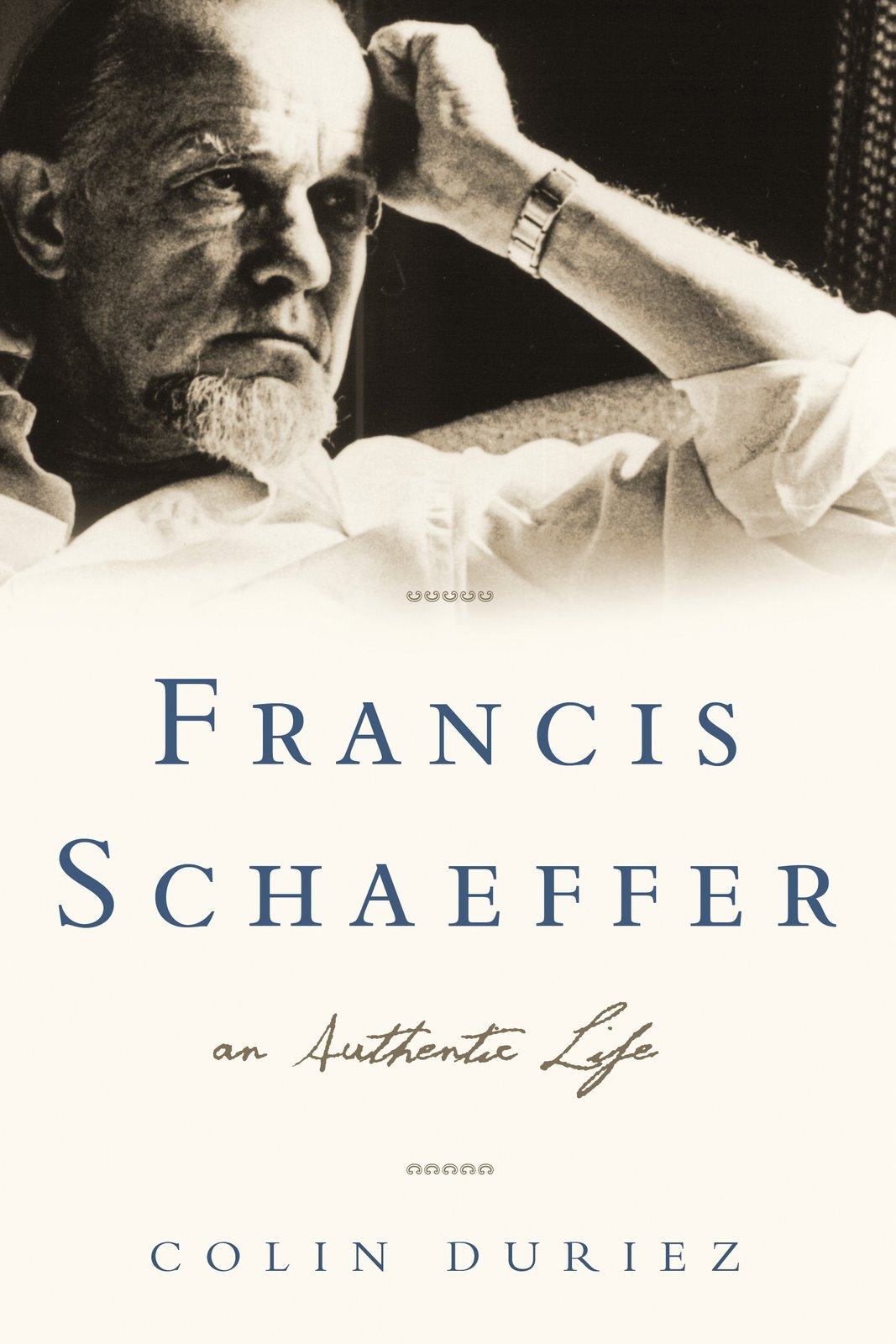


 High resolution version (11,797,840 Bytes)


 The Daily Hatch
