Category Archives: Current Events

Examining STAR WARS: THE FORCE AWAKENS from a Christian Perspective!!!!

Hinduism tells us good and evil come from the same impersonal force and that is exactly the lesson from STAR WARS:THE FORCE AWAKENS. There is a lot of talk of a “balance needed in the force” but should there be a balance between light and darkness or good and evil?

________

Star Wars: The Force Awakens Official Teaser Trailer #1 (2015) – J.J. Abrams Movie HD


__________

Star Wars: The Force Awakens Official Teaser #2


STAR WARS: THE FORCE AWAKENS

Wonderfully Familiar AND Fresh with the same false worldview

None Light Moderate Heavy
Language        
Violence        
Sex        
Nudity        
© Baehr, 2015

Starring: Harrison Ford, Carrie Fisher,
Mark Hamill, Daisy Ridley,
John Boyega, Adam Driver,
Oscar Isaac, Anthony Daniels,
Peter Mayhew, Andy Serkis,
Domnhall Gleeson, Lupita
Nyong’o, Gwendolyn Christie

Genre: Science Fiction

Audience: Teenagers and adults

Rating: PG-13

Runtime: 135 minutes

Distributor: Lucasfilm/Walt Disney Company

Director: J.J. Abrams

Executive Producer: Tommy Harper, Jason McGatlin

Producer: Kathleen Kennedy, J.J. Abrams,
Bryan Burk

Writer: Lawrence Kasdan, J.J. Abrams,
Michael Arndt

Address Comments To:

Robert Iger, President/CEO, The Walt Disney Company (Walt Disney Pictures, Pixar, Marvel Studios, Lucasfilm, Touchstone Pictures)
Alan Horn, Chairman, Walt Disney Studios
500 South Buena Vista Street
Burbank, CA 91521
Phone: (818) 560-1000; Website: http://www.disney.com

Content:

(PaPaPa, FRFR, O, Ro, BB, C, ACAC, L, VV, A, M) Strong pagan, somewhat mixed, worldview with New Age monism regarding the impersonal and all-encompassing Force, (including confusing talk about restoring “balance” to the Force although it’s clear that the “good side” of the Force must overcome and perhaps even destroy the “dark side” of the Force), characters use the occult power of the Force to control minds and move objects and people without physically touching them, some pagan mysticism includes mystical visions, but mitigated by strong moral elements and some redemptive elements including strong anti-totalitarian message, villains try to control people and make them conform, but one character resists, doing the right thing is explicitly extolled, strong pro-family sentiments expressed, and sacrifice and repentance promoted; two “h” obscenities; strong, exciting action violence includes explosions, laser gunfights, lightsaber battles, people killed, spaceships flying about and chasing one another, fighting, character thrown against tree, characters wounded, large monsters attack people, brief images of blood, and character apparently has been beaten up, and villain tries to torture characters to talk; no sexual content, but some implied romance and hugs; no nudity; implied alcohol use; no smoking or drugs; and, brief lying but exposed and lead villain gets uncontrollably angry when things don’t go his way.

Summary:

STAR WARS: THE FORCE AWAKENS combines some old familiar faces with some new ones in a story about a hunt for Luke Skywalker, who has disappeared but is desperately needed to train some new Jedi warriors to fight a new threat to the peace of the galaxy. STAR WARS: THE FORCE AWAKENS provides nearly constant, inspiring fun in a new battle of good versus evil, but it’s marred by a little too much New Age paganism and unbiblical monism. Parents please teach your children to be media wise.

Review:

First, the good news. STAR WARS: THE FORCE AWAKENS is the best, most exciting, and best written, directed and acted STAR WARS movie since the first trilogy, probably since THE EMPIRE STRIKES BACK. It also has some strong moral content, redemptive moments and pro-family sentiments. However, although it only lags a couple brief moments during its 132 minutes, the movie sometimes could use a little bit better dialogue (especially during the second half) and a stronger, slightly more satisfying redemptive climax, which is always the key to making a really great movie.

Above all, though, the movie’s biggest problem has nothing to do with bad storytelling or bad filmmaking, or even a better climax. Far from it! The biggest problem is that the movie has a very strong New Age pagan worldview promoting impersonal Eastern monism, a worldview that, ultimately, is irrational and warrants strong caution.

The setup for the story is that a new threat to the new republic has arisen. A group of really bad guys calling themselves the First Order (and still using the old empire’s cloned storm troopers) is trying to destroy the republic. Meanwhile, General Leia Organa has sent her best pilot, Poe Dameron, to find her brother, Luke Skywalker, who disappeared years ago. Poe is headed to see a man who might have a map to Luke’s whereabouts. If the republic’s resistance fighters can find Luke, perhaps he can raise up a new Jedi order to defeat the First Order.

Eventually, everything depends on a repentant storm trooper whom Poe names Finn and a feisty female scavenger named Rey. Will the ambivalent Force be with them?

STAR WARS: THE FORCE AWAKENS is, in many ways, the STAR WARS movie that fans and moviegoers have been longing to see. With STAR WARS screenwriting veteran Lawrence Kasdan (SILVERADO) and Director J.J. Abrams (STAR TREK) on board, THE FORCE AWAKENS has a tight script with lots of exciting action and great characterizations. The movie makes excellent use of veteran STAR WARS performers Harrison Ford, Carrie Fisher and Mark Hamill. After all, the story’s premise involves the hunt for the missing Luke Skywalker, Hamill’s iconic hero. That said, the movie relies the most on Harrison Ford’s lovable rogue, Han Solo, and his trusty companion, Chewbacca (Peter Mayhew). Their appearance early in the movie will get a big cheer not only from STAR WARS fans but also from movie lovers everywhere.

Also holding the film together are newcomers Daisy Ridley and John Boyega, who play Rey and Finn. Daisy Ridley in particular is a real find. Her appearance is one of the most striking first appearances in a major movie role since . . . well, since Harrison Ford first donned the persona of Han Solo in the original STAR WARS in 1977. As for Boyega, he easily fits in well with whoever is onscreen, whether it’s Daisy Ridley, Harrison Ford, Oscar Isaac as Poe, or even Chewbacca. To top it all, Adam Driver makes an imposing antagonist as the lead villain, even when he takes off his mask.

Director J.J. Abrams is one of the best action directors around. THE FORCE AWAKENS is his best movie since MISSION: IMPOSSIBLE III. He also does very well with all the actors. A few lines of expository dialogue occasionally let him down, John Williams’ newer music is sometimes a little repetitive, and the script should have developed Oscar Isaac’s character a bit better. Still, THE FORCE AWAKENS has plenty of nifty twists, exhilarating action, nostalgic moments, clever one-liners, and emotional scenes to help Abrams keep things moving and keep viewers engaged.

All in all, therefore, STAR WARS: THE FORCE AWAKENS is clearly one of the better popcorn movies of the year. However, despite its strong moral elements and lightly conservative, but strong, opposition to totalitarian bullies, THE FORCE AWAKENS has a strong New Age pagan worldview overall.

For instance, the movie has a couple mystical moments where characters establish an emotional connection to the Force or through it. In regard to the infamous Force, the movie also promotes modern monism, a New Age theology claiming that there’s a universal, but impersonal, energy or “Force” that is part of everything and surrounds everyone. This is typical STAR WARS mythology. However, in THE FORCE AWAKENS, it’s suggested a couple times that there must be a “balance” not only in the Force but also between the “good side” and the “dark side” of the Force. This is Non-Christian Eastern monism and moral dualism.

In this light, it’s interesting to note that these lines in the movie logically contradict the rest of the story, which clearly and strongly says the good must defeat and overcome, if not destroy, the dark side. The movie also suggests, in a redemptive way, that characters who succumb to the dark side can actually redeem themselves by rejecting the dark side and coming into the light. That’s not really “balance.” It also reflects an ethical monotheistic theology, not a monistic, pantheistic one where morality is “maya,” or an illusion.

Thus, Christians, and especially Christian parents and grandparents, should teach their children and other people about the logical contradictions and irrational mysticism of the STAR WARS movies, including THE FORCE AWAKENS. They should also note how such New Age thinking differs from the ethical monotheism and redemption of the Gospel of Jesus Christ and the enlightenment and divine fellowship or communion that comes from a personal relationship with Jesus and from the power of the Holy Spirit.

MOVIEGUIDE® recommends people focus on the positive moral and redemptive content or messages in STAR WARS: THE FORCE AWAKENS. Strong or extreme caution is warranted when it comes to the movie’s confused, impersonal, pagan monism. Christians have a better, more personal “Force” – our Lord and Savior, Jesus Christ, who created everything and redeems us and comes to us through the personal, divine power of the Holy Spirit.

Parents please teach your children to be media wise. A great way to learn how to teach them to keep the faith and be media-wise is by reading THE CULTURE-WISE FAMILY®.

Star Wars: The Force Awakens Trailer (Official)

In Brief:

STAR WARS: THE FORCE AWAKENS combines old familiar faces with new ones. A new group of bad guys called the First Order is threatening the new republic. General Leia Organa has sent her best pilot to obtain a map revealing the whereabouts of her brother, Luke Skywalker, who disappeared years ago. The republic needs Luke to train new Jedi knights to save the galaxy. Han Solo and Chewbacca team up with a repentant storm trooper and a female scavenger to get the map to Leia and her resistance fighters.

STAR WARS: THE FORCE AWAKENS is the STAR WARS movie that fans and moviegoers have been longing to see. It’s exciting, emotional and well made, with standout performances by Harrison Ford and newcomer Daisy Ridley. It also has some strong moral content, redemptive moments and pro-family sentiments. However, the movie’s pagan, somewhat mixed worldview contains some New Age mysticism and a renewed, rather contradictory, monistic take on the Force and the morality behind it. So, MOVIEGUIDE® advises strong or extreme caution for THE FORCE AWAKENS. Parents please teach your children to be media wise.

(HD 1080p) Anakin Skywalker vs. Obi-Wan Kenobi

__________


Obi-Wan Kenobi: Let her go, Anakin!

Padmé: [struggling to breathe] Anakin…

Obi-Wan: Let… her… go.[Vader releases Padmé; she collapses into unconsciousness]

Vader: You turned her against me!

Obi-Wan: You have done that yourself!

Vader: YOU WILL NOT TAKE HER FROM ME!!

Obi-Wan: Your anger and your lust for power have already done that. You have allowed this Dark Lord to twist your mind, until now…until now you have become the very thing you swore to destroy.

Vader: Don’t lecture me, Obi-Wan! I see through the lies of the Jedi! I do not fear the Dark Side as you do! I have brought peace, freedom, justice, and security to my new Empire!

Obi-Wan: [incredulously] Your new Empire?

Vader: Don’t make me kill you.

Obi-Wan: Anakin, my allegiance is to the Republic! To democracy!!

Vader: If you’re not with me, then you’re my enemy!

Obi-Wan: Only a Sith deals in absolutes. I will do what I must.

Vader: You will try.[They duel]

LET ME GIVE THE SHORT ANSWER TO THIS FIRST:

Philosopher and Theologian, Francis A. Schaeffer has argued, “If there are no absolutes by which to judge society, then society is absolute.” Francis Schaeffer, How Shall We Then Live? (Old Tappan NJ: Fleming H Revell Company, 1976), p. 224.

Star Culture Wars

While tweaking the original Star Wars movie for re-release, director George Lucas decided that he needed to clarify the status of pilot Han Solo’s soul.

In the old version, Solo shot first in his cantina showdown with a bounty hunter. But in the new one, Lucas addressed this moral dilemma with a slick edit that showed Greedo firing first. Thus, Solo was not a murderer, but a mere scoundrel on the way to redemption.

“Lucas wanted to make sure that people knew that Han didn’t shoot someone in cold blood,” said broadcaster Dick Staub. “That would raise serious questions about his character, because we all know that murder if absolutely wrong.”

The Star Wars films do, at times, have a strong sense of good and evil.

Yet in the climactic scene of the new “Revenge of the Sith,” the evil Darth Vader warns his former master: “If you’re not with me, you’re my enemy.” Obi-Wan Kenobi replies, “Only a Sith deals in absolutes.”

Say what? If that is true, how did Lucas decide it was wrong for Solo to gun down a bounty hunter? Isn’t that a moral absolute? If so, why are absolutes absolutely wrong in the saga’s latest film? Good questions, according to Staub.

While we’re at it, the Jedi knights keep saying they must resist the “dark side” of the mysterious, deistic Force. But they also yearn for a “chosen one” who will “bring balance” to the Force, a balance between good and evil.

“There is this amazing internal inconsistency in Lucas that shows how much conflict there is between the Eastern religious beliefs that he wants to embrace and all those Judeo-Christian beliefs that he grew up with,” said Staub, author of a book for young people entitled “Christian Wisdom of the Jedi Masters.”

“I mean, you’re supposed balance the light and the dark? How does that work?”

The key is that Lucas — who calls himself a “Buddhist Methodist” — believes all kinds of things, even when the beliefs clash. This approach allows the digital visionary to take chunks of the world’s major religions and swirl them in the blender of his imagination. Thus, the Force contains elements of Judaism, Christianity, Animism, Hinduism, Buddhism, Taoism and even Islam.

Is Jesus a Sith?

OK, it’s finally over. My childhood movie fascination is now complete—I’ve seen “Episode Three.” I have in many ways “grown-up” with Star Wars. I was six when the first (I mean the fourth) movie came out, and I saw all of the original three (Episodes 4, 5, and 6) in the theater when they first came out. I had all the Star Wars figures, the Death Star, the Millennium Falcon, the Land Speeder—you name it, I had it. All of my friends had them too…we were the Star Wars generation.

Incredibly though, the new trilogy of movies (Episodes 1, 2, and 3) has captured the imagination of a whole new generation. My son was more excited to see the movie than I was. He wore his Darth Vader tee shirt and sat in patient anticipation through the obligatory “coming attractions.” And it was interesting to observe the reactions of people as they were walking out of the theater two and a half hours later. For the fathers and mothers, it was sort of like a sigh of relief, a moment of closure. They weren’t so much energized by the movie as they were contemplating it. You could see wheels turning and brains buzzing putting all of the Star Wars pieces together. The kids on the other hand were all ablaze with what they just witnessed, they were talking about their favorite parts and “Anakin this” and “Yoda that.” One movie—two very different reactions.

Being a parent and well on the “contemplative” side of the age gap, I found myself mulling over what I had just seen as we walked to the car. With my son talking a mile a minute about his favorite parts, I kept replaying a certain scene in my mind. If you’ve seen the movie you’ll remember the scene, if not, let me try to paint the picture. Anakin (Darth Vader) and Obi-Wan are fighting. They stop fighting to discuss why they’re fighting (in typical Hollywood style). After voicing his displeasure with the Jedi (the “good” side), Anakin turns his back to the audience and tells Obi-Wan, “Whoever is not with me is my enemy.” Obi-Wan looks at Anakin unbelievingly and states emphatically, “Only the Sith deal in absolutes.” The Sith are the Dark Side’s equivalent of the Jedi. Obi-Wan is saying that Anakin is now a full-fledged “bad guy.” This scene took the magic of the whole Star Wars series that has been building ever since I was six and instantly deflated it. The whole “good vs. evil” story that had been the staple of all of the Star Wars episodes was a sham. I had been had.

I realized at this point in the movie that Darth Vader wasn’t the “bad guy” because he was on the bad side of the force, it was because he was so sure he was right. Obi-Wan and Yoda constantly lament Anakin’s association with the Chancellor of the Senate, Palpatine (who becomes the Emperor). They begin to fear that Palpatine is a Sith. About this they are right, Palpatine is a Sith and he is slowly turning Anakin against his former mentors. The turning point for Anakin comes when a member of the Jedi council, Mace Windu, is ready to kill Palpatine because he is “too dangerous” to leave alive. Anakin tells Windu that this is not the Jedi way (which it’s not), but situational ethics are the name of the game for Windu. Anakin sees the hypocrisy in this and his view of the Jedi instantly changes, and he does nothing as Palpatine (now the Emperor) proceeds to kill Windu. Anakin becomes Palpatine’s disciple—and consequently, Darth Vader—on the spot.

The troubling part about all of this for me was the post-modern double standard that we are faced with in our own day and galaxy. You see, Anakin is constantly counseled in all of the first three episodes that the Dark Side of the force is bad and the Jedi are good. But we get to the real deal in Episode Three when Obi-Wan makes this revealing statement about only the Sith dealing in absolutes. What does the Jedi deal in then? Feelings, emotions, hopes? On what basis does Obi-Wan make his assessment that the Dark Side and the Emperor are “evil?” This is exactly the same dilemma that the court at the Nuremberg Trial found itself in. The Nazis argued that they acted in accord with the laws of Germany and were simply following orders, yet were on trial for crimes against humanity. The “sovereign nation” ideal had its limits. Obi-Wan wants the same thing here. It’s easy enough to proclaim that the Dark Side is evil, but it’s really another thing to prove it when the Jedi are also out trying to eliminate those that they deem “dangerous.” It all becomes relative; the only true “bad guy” is one who “deals in absolutes.”

What would Obi-Wan have said to Jesus, who said much the same thing as Anakin in Matthew 12:30, “He who is not with Me is against Me; and he who does not gather with Me scatters.” Jesus makes an emphatic statement here. He is declaring for all who read and hear that there is no middle-ground, there is no neutrality. As much as our post-modern world would like to have each viewpoint as valid as the next, they can’t live this way. Obi-Wan couldn’t live this way either. If Anakin’s absolutist worldview was just another valid viewpoint (presumably Obi-Wan doesn’t deal in absolutes), then why bother fighting him. Why not shake hands and wish him well in his future galaxy-conquesting endeavors? Why not? Because Obi-Wan is an absolutist too, he just doesn’t want to admit it.

As I said, this scene revealed the whole Star Wars series for what it really was. George Lucas showed his true colors here. He was not making a grand good vs. evil epic. He was making a modern commentary, complete with double-standards and non-sequiturs. Lucas was simply toeing the line of modern politics. The only real enemy in today’s world is the one who thinks in terms of black and white—the fundamentalist. Whether they are Christian, Muslim, Democrat or Republican, the only one who is wrong, is the one who thinks he’s right. But we, as Christians, must remember Jesus’ (and Anakin’s) words. There is a war of ideas going on, and you must fall on one side or the other. Neutrality is not an option…as much as we would like it to be.

All Seven Star Wars Teaser Trailers

In the article, “Star Wars: The Religion,” from the August 1999  Trumpet  Print Edition » by DENNIS LEAP we read:

In the second produced film, The Empire Strikes Back, Yoda, the little green 900-year-old Jedi master, describes the Force to a troubled, weak-in-faith Luke Skywalker. He explains, “For my ally is the Force. And a powerful ally it is. Life creates it and makes it grow. Its energy surrounds us and binds us. Luminous beings are we, not this crude matter. You must feel the Force around you. You—between you and me—the tree—the rock—everywhere. Yes, even between the land and the ship.” If the Force represents God, then the Star Wars God is very impersonal!

Let’s be honest. The Force represents evolution and nature worship far better than the worship of a personal God. Did you realize that people who practice witchcraft love the concept of the Force? Why? They believe it represents nature worship!

‘Star Wars’ SPOILER: Watch a Major Scene From the Movie

This entire post is one big spoiler, so if you don’t want to hear about a major moment in Star Wars history, stop reading. Star Wars: The Force Awakens brings about the end of an era with the sad, yet heroic death of Han Solo. Harrison Ford returns to the franchise, reprising his role as Han Solo, and we are introduced to his son Kylo Ren (aka Ben Solo), played by actor Adam Driver. Han Solo’s son Kylo is actually the one who kills him, as Kylo needs to cut off his last emotional tie in order to fully join the Dark Side. This may sound familiar as it is the same kind of idea that Luke Skywalker and Darth Vader battled with years ago.

The death scene occurs in the third act of the movie with Kylo stabbing Han Solo with his lightsaber before Solo falls off of a bridge. Here is a Twit pic of the scene below.

Han Solo, Han Solo Dies, Han Solo Death Scene, Han Solo Dead, Han Solo Star Wars The Force Awakens, Han Solo Dies In Force Awakens, Star Wars The Force Awakens Spoilers, Force Awakens Ending

(Twitter)

Solo confronts his son and tries to convince him that Snoke is just using him for his power, but Kylo stands firm. Solo tells Kylo that when Snoke gets what he wants, he’ll crush him. Both men’s eyes well up with tears as Solo pleads with his son to return home. Kylo tells him that it’s too late and that he wants to be “free of this pain.” Kylo says he knows what he has to do but he doesn’t know if he has the strength to do it. He then asks his father to help him and Solo says he’ll do anything for him. Kylo pulls out the lightsaber and the two share a long last look at each other. Kylo suddenly stabs his father with tears in his eyes and tells him, “Thank you.” Solo then reaches out to lovingly touch his son’s face before he falls limply off the bridge. As Solo is stabbed to death, Chewbacca and main character Rey cry out in upset. It is a truly heartbreaking scene.

Top 15 Star Wars The Force Awakens Facts You Should Know

Take a look at this excellent article by Steven J. Rosen on Hinduism and Star Wars:

Yoda and Yoga

The Bhagavad-Gita may well have been Yoda’s manual for teaching Luke Skywalker the way of the Jedi.

BY: Steven J. Rosen

At first glance, it might seem that “Star Wars” and Hinduism have little in common. The “Star Wars” films are modern science-fiction classics, created as entertainment. They make use of futuristic spaceships and imaginative weapons that the real world has not yet seen. Hinduism, for its part, is an ancient religious tradition-or, more explicitly, a family of religious traditions, such as Vaishnavism, Shaivism, and Shaktism–meant for spiritual enhancement and personal fulfillment. What, if anything, do the films have to do with the religion?

My thesis is simple. Lucas, the creator of “Star Wars,” was heavily influenced by Joseph Campbell, the famed mythologist. Campbell’s preferred stock of philosophical stories comes from India. This is well known. Campbell explained the Mahabharata and the Ramayana, the principal epics of contemporary Hinduism, to Lucas, who digested their many stories and gave them back to us as “Star Wars.” Lucas himself says that he was “influenced by Eastern myths.” Here’s one example I use in my forthcoming book, drawing on the first film of the series, which was released in 1977:

A beautiful princess is kidnapped by a powerful but evil warlord. With determined urgency, a mysterious non-human entity delivers a distress call to a budding young hero. The youthful hero, a prince, comes to the princess’s rescue, aided by a noble creature that is half-man and half-animal. In the end, after a war that epitomizes the perennial battle between good and evil, the beautiful maiden returns home. The valiant efforts of the prince and his comrade, who were assisted by an army of anthropomorphic bears in the fight to return the princess to safety, are duly rewarded, and peace and righteousness once again engulf the kingdom.

In the Eastern part of the world, the story evokes memories of the Ramayana, an ancient epic from which many of India’s myths and religious traditions originate: The princess is Sita, kidnapped by the power-mad Ravana. Her loving husband Rama, the archetypal hero who, as the story goes, is Vishnu (God) in human form, soon becomes aware of her plight and anxiously pursues her.

How did he learn of Ravana’s nefarious deed? The good-hearted Jatayu, a talking vulture-like creature, sworn to protect the princess, sees the demon-king abduct Sita. He attempts to rescue her on his own, but Ravana mercilessly cuts him down. Luckily, Rama happens upon the dying Jatayu, who manages to recount all that has taken place before he expires.

After a period of intense grieving, Rama engages his devoted half-human/half monkey companion, Hanuman, in a lengthy search for the princess and, after a complex series of events, they wage war to get Sita back. Aided by an army of Vanaras (bears and monkeys who have anthropomorphic characteristics), Rama rescues Sita from Ravana. The forces of the underworld defeated, Rama-raja (the kingdom of truth and righteousness) reigns supreme.

In Western countries, the story would remind most readers of the first “Star Wars” movie. Here, too, the princess–this time, Princess Leia–is kidnapped. In the “Star Wars” universe, evil incarnates as Darth Vader, who holds Leia against her will. Artoo-Deetoo (R2-D2), an android, carries a desperate cry for help. The princess, just before being captured, managed to conceal a holographic message in the droid’s memory banks. Thus, through this futuristic robot, she asks for the assistance of Obi-Wan Kenobi, a master among the mystical Jedi knights, hoping he would come to her aid.

Luke Skywalker, a farm boy from the planet Tatooine, is the one who first receives this message, however, and it is he who turns to the retired Obi-Wan to alert him to the princess’s plight. Luke himself is reluctant to travel into unknown territory, into a world of action and intrigue. But Obi-Wan convinces him to go, telling him that “the Force” will protect him.

The two team up with Han Solo, a renegade space cowboy, and Chewbacca, a “half-man/ half-monkey” creature who devotedly assists them. By the end of the original “Star Wars” trilogy, in the company of legions of bear soldiers, they wage a war to end all wars–Darth Vader and his evil empire are defeated and the princess is returned to safety.

Is it a stretch to say that Lucas was directly and/ or indirectly influenced by the Ramayana? This author, obviously, thinks not. And there are many other parallels between Star Wars and Hindu tradition as well. Consider the example of the relationship between Yoda and Luke–a dead-ringer for the traditional Guru/ disciple relationship, especially as depicted in the ancient Hindu text, the Bhagavad-gita.

Yoda teaches Luke self-control, the importance of restraining the senses. Every Jedi, he says, must overcome desire and anger. The Gita must have been Yoda’s sourcebook: “A faithful man who is dedicated to the pursuit of knowledge–and who subdues his senses–is eligible to achieve such knowledge, and having achieved it he quickly attains the supreme spiritual peace.” (4.39) Again, “By the time death arrives, one must be able to tolerate the urges of the material senses and overcome the force of desire and anger. If one does so, he will be well situated and able to leave his body without regret.” (5.23)

It is interesting, too, that Yoda locates the source of the Jedis’ strength as flowing from “the Force,” which he essentially defines as the ground of all being. Indeed, Yoda tells Luke that all ability comes from the Force, but that this is especially true of the Jedis’ supernatural powers. The Gita also says that all power flows from the “Force,” i.e., the metaphysical source of all that is: “Of all that is material and all that is spiritual, know for certain that I am both the origin and dissolution. . . .Everything rests upon Me, as pearls are strung on a thread. . . . I am the ability in man.” (7.6-8)

Yoda’s name is closely linked to the Sanskrit “yuddha,” which means “war.” Accordingly, he teaches a chivalrous form of warfare, imbued with ethics and spirituality, to the Jedi knights. The non-aggressive but valiant ways of these knights are exactly like those of Kshatriyas, ancient Indian warriors who emphasized yogic codes and the art of protective combat. In this, Yoda resembles Dronacharya from the Mahabharata, who, in the forest (again like Yoda), trains the Pandava heroes to be righteous protectors of the innocent.

In the Ramayana, Vishvamitra Muni, as Rama’s spiritual master, teaches the great avatar (incarnation of God) to be adept in the art of war, but he also teaches him that fighting must always be based on yogic principles–he teaches Rama while they are living in the forest as well. Both Dronacharya and Vishvamitra seem like earlier incarnations of Yoda.

In this sense, and in many others, the Hindu scriptures may be the ultimate guidebooks for aspiring Jedis: Consider the Bhagavad-gita yet again: Lust, anger, and greed, the Gita tells us, are deeply embedded in our consciousness. Just ask Anakin. And deep-rooted habits are not always easy to overcome. Nonetheless, in the Gita, Krishna helps us through the darkest of battles by explaining the source of our dilemma, the gradual steps by which we delude ourselves, and by putting us in touch with the spiritual element lying dormant within our hearts. He tells us that those who are enamored by materialistic life begin simply by contemplating the objects of the senses.

Again, just ask Anakin. Such contemplation naturally leads to self-interested action and, finally, attachment. This, in turn, gives rise to anger. Why anger? Because everything in the world is temporary, and so we eventually lose the objects of our attachment. Anger, Krishna says, leads to bewilderment, and bewilderment to loss of memory. At this point, intelligence is lost. We can watch this happening to Anakin in “Attack of the Clones” and, further, in the latest film, “Revenge of the Sith.”

Other connections to Hinduism are also apparent in the prequels. For example, the idea of midi-chlorians, or living cells found in high concentration in Jedi blood, resonates with the idea of Paramatma, or the Lord in the Heart. Vaishnava Hinduism uses this concept to explain how God (the Force?) exists inside our bodies as a symbiont, as it were, allowing living entities to commune with Him. Also, young Anakin Skywalker, a Jedi priest, wears a shikha, or a tuft of hair, on the back of his head. While this religious symbolism is found in several ancient monastic traditions, it is nowhere as pronounced as in the Vaishnava Hindu tradition. In the Bhagavad-Gita, Krishna teaches that intelligence means good memory and fine discretion–both of which fall away when we adopt a materialistic and self-centered approach to life. This vicious cycle puts us in a non-spiritual frame of mind, in which we forget who we are and what life is really all about. Krishna refers to this as “a material whirlpool” that drags people ever lower; it is a complex downward spiral that begins, as He says in the Gita, simply by one’s contemplating the objects of the senses. (2.61-64) Krishna thus tells Arjuna not to be fooled by sensual stimulation and, instead, to control his senses for a higher purpose. This, indeed, is the teaching of the Jedi and a lesson that is valuable to each and every one of us.

Can people learn this Hindu wisdom from watching “Star Wars”? Most likely not. They’ll have to go to established religious texts and the paths traversed by the sages. But something is definitely afoot here. More than 70,000 people in Australia, in a census poll, declared that they are followers of the Jedi faith, the “religion” engendered by the “Star Wars” films. Despite the extremism and absurdity of this statistic-of people adhering to a faith concocted in a fictional film series-experts see in it a manifestation of the movies’ spiritual dimension.

In light of this enthusiasm, it’s not surprising that the “Star Wars” universe continues to grow. Lucas is now re-mastering the entire series into special 3-D versions, updated for modern times. New TV shows based on “Star Wars” are planned for upcoming seasons. And you now learn of parallels between this consequential film epic and one of the earliest religious traditions known to humankind. What’s next?! Only the Force is likely to know!

Francis Schaeffer “BASIS FOR HUMAN DIGNITY” Whatever…HTTHR

At the 20:15 mark in the above video Francis Schaeffer discusses how Eastern Religions unsuccessfully attempt to relieve the tension.

Relieving the Tension in the East
Within Eastern thinking, attempts to relieve the tension have been made by introducing “personal gods.” To the uninitiated these gods seem to be real persons; they are said to appear to human beings and even have sexual intercourse with them. But they are not really personal. Behind them their source is the “impersonal everything” of which they are simply emanations. We find a multitude of gods and goddesses with their attendant mythologies, like the Ramayana, which then give the simple person a “feeling” of personality in the universe. People need this, because it is hard to live as if there is nothing out there in or beyond the universe to which they can relate personally. The initiated, however, understand. They know that ultimate reality is impersonal. So they submit themselves to the various techniques of the Eastern religions to eliminate their “personness.” Their goal is to achieve a state of consciousness not bounded by the body and the senses or even by such ideals as “love” or “good.”
Probably the most sophisticated Eastern attempt to deal with the tension we are considering is the Bhagavad-Gita. This is a religious writing probably produced around 200 B.C. in India. It has been the inspiration for multitudes of Hindus through the centuries and most notably for Indian spiritual and political leader Mahatma Gandhi. In it the individual is urged to participate in acts of charity. At the same time, however, the individual is urged to enter into these acts in “a spirit of detachment.” Why? Because the proper attitude is to understand that none of these experiences really matter. It is the state of consciousness that rises above personality which is important, for personality is, after all, an abnormality within the impersonal universe.
Alternatively, the East proposes a system of “endless cycles” to try to give some explanation for things which exist about us. This has sometimes been likened to the ocean. The ocean casts up waves for a time, but the waves are still a part of the ocean, and then the waves pull back into the ocean and disappear. Interestingly enough, the Western materialist also tries to explain the form of the universe by a theory of endless cycles. He says that impersonal material or energy always exists, but that this goes through endless cycles, taking different forms – the latest of which began with the “big bang” which spawned the present expanding universe. Previously, billions and billions of years ago, this eternal material or energy had a different form and had contracted into the heavy mass from which came the present cycle of our universe. Both the Eastern thought and the Western put forth this unproven idea of endless cycles because their answers finally answer nothing.
We have emphasized the problems involved in these two alternatives because they are real. It is helpful to see that the only serious intellectual alternatives to the Christian position have such endless difficulties that they actually are non-answers. We do it, too, because we find people in the West who imagine that Christianity has nothing to say on these big issues and who discard the Bible without ever considering it. This superior attitude, as we said earlier, is quite unfounded. The real situation is very different. The humanists of the Enlightenment acted as if they would conquer all before them, but two centuries have changed that.
One would have imagined at this point that Western man would have been glad for a solution to the various dilemmas facing him and would have welcomed answers to the big questions. But people are not as eager to find the truth as is sometimes made out. The history of Western thought during the past century confirms this.

Star Wars: The Force Awakens [All 3 trailers.]

Related posts:

FRANCIS SCHAEFFER ANALYZES ART AND CULTURE PART 85 (Breaking down the song “When I’m Sixty-Four” Part B) Featured Photographer and Journalist is Bill Harry

One would think that the young people of the 1960’s thought little of death but is that true? The most successful song on the  SGT PEPPER’S album was about the sudden death of a close friend and the album cover was pictured in front of a burial scene.   Francis Schaeffer’s favorite album was SGT. […]

FRANCIS SCHAEFFER ANALYZES ART AND CULTURE PART 84 (Breaking down the song “When I’m Sixty-Four”Part A) Featured Photographer is Annie Leibovitz

_________ I think it is revolutionary for a 18 year old Paul McCartney to write a song about an old person nearing death. This demonstrates that the Beatles did really think about the process of life and its challenges from birth to day in a  complete way and the possible answer. Solomon does that too […]

FRANCIS SCHAEFFER ANALYZES ART AND CULTURE Part 83 THE BEATLES (Why was Karlheinz Stockhausen on the cover of Sgt. Pepper’s? ) (Feature on artist Nam June Paik )

_____________ Karlheinz Stockhausen was friends with both Lennon and McCartney and he influenced some of their music. Today we will take a close look at his music and his views and at some of the songs of the Beatles that he influenced.   Dr. Francis Schaeffer: How Should We Then Live? Episode 9 (Promo Clip) […]

FRANCIS SCHAEFFER ANALYZES ART AND CULTURE Part 82 THE BEATLES, Breaking down the song DEAR PRUDENCE (Photographer featured is Bill Eppridge)

Mia and Prudence Farrow both joined the Beatles in their trip to India to check out Eastern Religions. Francis Schaeffer noted, ” The younger people and the older ones tried drug taking but then turned to the eastern religions. Both drugs and the eastern religions seek truth inside one’s own head, a negation of reason. […]

FRANCIS SCHAEFFER ANALYZES ART AND CULTURE Part 81 THE BEATLES Why was Dylan Thomas put on the cover of SGT PEPPERS? (Featured artist is sculptor David Wynne)

    Dylan Thomas was included on SGT PEPPER’S cover because of words like this, “Too proud to cry, too frail to check the tears, And caught between two nights, blindness and death.” Francis Schaeffer noted: This is sensitivity crying out in darkness. But it is not mere emotion; the problem is not on this […]

FRANCIS SCHAEFFER ANALYZES ART AND CULTURE Part 80 THE BEATLES (breaking down the song “Lucy in the Sky with Diamonds” ) (Featured artist is Saul Steinberg)

John Lennon was writing about a drug trip when he wrote the song LUCY IN THE SKY WITH DIAMONDS and Paul later confirmed that many years later. Francis Schaeffer correctly noted that the Beatles’ album Sgt. Pepper’s brought the message of drugs and Eastern Religion to the masses like no other means of communication could. Today […]

FRANCIS SCHAEFFER ANALYZES ART AND CULTURE Part 79 THE BEATLES (Why was William Burroughs on Sgt. Pepper’s cover? ) (Feature on artist Brion Gysin)

______________ Why was William S. Burroughs put on the cover of Sgt. Pepper’s Lonely Hearts Club Band? Burroughs was challenging the norms of the 1960’s but at the same time he was like the Beatles in that he was also searching for values and he never found the solution. (In the last post in this […]

FRANCIS SCHAEFFER ANALYZES ART AND CULTURE PART 78 THE BEATLES (Breaking down the song TOMORROW NEVER KNOWS) Featured musical artist is Stuart Gerber

The Beatles were “inspired by the musique concrète of German composer and early electronic music pioneer Karlheinz Stockhausen…”  as SCOTT THILL has asserted. Francis Schaeffer noted that ideas of  “Non-resolution” and “Fragmentation” came down German and French streams with the influence of Beethoven’s last Quartets and then the influence of Debussy and later Schoenberg’s non-resolution which is in total contrast […]

FRANCIS SCHAEFFER ANALYZES ART AND CULTURE Part 77 THE BEATLES (Who got the Beatles talking about Vietnam War? ) (Feature on artist Nicholas Monro )

It was the famous atheist Bertrand Russell who pointed out to Paul McCartney early on that the Beatles needed to bring more attention to the Vietnam war protests and Paul promptly went back to the group and reported Russell’s advice. We will take a closer look at some of Russell’s views and break them down […]

FRANCIS SCHAEFFER ANALYZES ART AND CULTURE Part 76 THE BEATLES (breaking down the song STRAWBERRY FIELDS FOREVER) (Artist featured is Jamie Wyeth)

Francis Schaeffer correctly noted: In this flow there was also the period of psychedelic rock, an attempt to find this experience without drugs, by the use of a certain type of music. This was the period of the Beatles’ Revolver (1966) and Strawberry Fields Forever (1967). In the same period and in the same direction […]

_______________


______________

MUSIC MONDAY “The Altantic Magazine” pans Coldplay’s new album but I disagree!!!

___________

I don’t agree with this review but I am putting it out there for you to make up your own opinions on. I do like the new album but over time I will rate it against the other albums.

How Coldplay Found a New Way to Be Boring

On A Head Full of Dreams, they’ve lost even the ability to excite with gentleness.

There’s a lot to say about Coldplay’s new album. The guest list alone—Beyoncé, Stargate, Gwyneth Paltrow, Noel Gallagher, Khatia Buniatishvili, Barack Obama—is material for fan-fiction about dinner parties. The songs are about Chris Martin moving on from the spectacularly public “conscious uncoupling” between him and Paltrow with a sense of enlightened glee. Included are the sound of the famously soft-rock band playing disco and some “Bitch Better Have My Money”-style beats. The album was released a day after the announcement that the band would play the Super Bowl halftime show, and in a surprising move with industry-wide implications, it was put on Apple’s streaming music service a week before it hits Spotify. It’s supposedly Coldplay’s last album.

Fun talking points. Much more fun than the music itself.A Head Full of Dreams presents itself as shiny and hyperactive, adventuresome and openhearted, radically optimistic. What it really is, though, is a seminar in the many-splendored ways that music can be boring.

A common reaction here would be to say “it’s Coldplay, of course it’s boring.” The truth is that the best Coldplay is quite the opposite, and it’s worth thinking a bit about the different ways of defining musical boredom. One of those ways is through genre. Coldplay began their career playing rock that sounds like Oasis, which is to say it sounds like a zillion guitar bands before and since. Chris Martin has the kind of voice that reminds one of visiting CVS for Sudafed, and it’s usually delivering inspirational slogans so clumsy that even Upworthy wouldn’t bother with them. The band’s added more diverse sounds over the years—laser-show synthesizers, pompous classical touches—but its essential nature precludes the possibility of edge or aggression. It is soft, always. For people who favor noisier rock or electronica or rap or any sort of music in which challenging the listener matters, this is boring.

But as pure songcraft, Coldplay’s most popular material can be, and probably is, taught in musicology courses about inducing excitement through sound. Go back to “Clocks.” Its steady beat, insistent piano riff, and pleasingly repetitious vocal line jacket the listener snuggly, securing them within the song as surely as the lap bar does on a roller coaster. And then the rollercoaster takes you places. You’re pitched up for the chorus and pitched back down for the verse; sonic density also peaks—hear those strings in the glorious “nothing else compares” part?—and then dissipates. The highs feel very high, but there’s never any sense of careening away, never a possibility of disorientation. To extend the amusement-ride comparison, think Disneyland attractions: enough action to raise everyone’s pulse a bit, but not enough to truly frighten the kids or grandparents.

It basically works this way in all successful Coldplay songs. They strap you in and then scoot you along; uplift is both an emotional idea Martin’s lyrics obsess over and a metaphorical concept to describe what the choruses do. As for the melodies, I liked what my colleague Derek Thompson wrote in 2011 about “Every Teardrop Is a Waterfall”: “They draw clear lines. They take a shape. They pose a question, and they give a satisfying answer. They open the chord and resolve the fleeting dissonance, and it’s all done deftly enough that the hook comes into focus just as it’s ending.”

Okay. So the band creates excitement via a formula, and formulas are, by another definition of the term, boring. Even Coldplay seems to be a little bored, seven albums into their career. On A Head Full of Dreams you can hear the band trying out some other formula, or focusing on certain parts of the old recipe to the exclusion of others. But something’s not working. It’s not physiologically exciting anymore. You can admire many of the creative choices, but you quickly forget what you just listened to. Which might be the truest form of boring.

The opening title song fades in with distantly chiming bells, a synthetic dance pulse, a drum set shuffling complicatedly, and a guitar repeatedly drawing a high, short melody. It’s a cool, unusual arrangement. A lot of this stuff drops out for a bit before the two-minute mark, and you retroactively realized you just experienced the chorus, when Martin sang the title of the song twice to the tune of that guitar line you’d heard earlier. The second verse doesn’t end in a chorus, but rather launches into an Arcade Fire-style “ohh-ohhhh” refrain.

This experimentation with structure is, theoretically, worth applauding. But when artists screw with pop templates, it’s often to communicate something unconventional, to get a different emotional perspective, or to draw the listener along in some new way. Martin, though, is as banal and treacly as ever. As the title indicates, he’s telling-not-showing about how great it is to dream about the future. Most importantly, the song tires the ear. Pop songwriters talk about the “victim-to-victory” trope, where a downtrodden verse gives way to a transcendent chorus. Coldplay’s been great at that. But this song is all victory, all the time: essentially two plateaus with a valley in the middle. The main theme is catchy, but it’s hard to remember where it is in the song.

Because of that hook, “A Head Full of Dreams” is actually one of the better things on the album. Another semi-success is “Adventure of a Lifetime,” the Studio 54-indebted single whose cleverly interlocking elements make the song feel sturdy even as it denies a full singalong payoff. I have mixed feeling about the track with Beyoncé, “Hymn for the Weekend,” a transparent attempt at adding some spiritualistic pretense to YOLO-type pop songs. “Feeling drunk and high / so high / so high” is the ever-climbing chorus, and—despite its ridiculousness—it’s a good one. But the instrumentation, which sounds like a klezmer band attempting EDM, just plods. The effect is akin to being drowned in confetti.

Not all of the songs are departures, but even the most Coldplay-y ones are unusually inert. “Amazing Day” is like “Earth Angel” without any sense of space or scale; even for many people who’ve acquired a tolerance for Martin’s goopy delivery, the song will be too thick with sentiment to sit through more than once. The piano ballad “Everglow” has a lovely melody, but, again, the chorus doesn’t deliver the contrasting whoosh that you come to Coldplay for. What the band’s essentially delivered is an album about being high all the time, which might explain why it has almost no distinguishable heights.


Amazing Day – Coldplay (Live in Global Citizen 2015 – Only Audio + Lyrics in Descrip.)

“Amazing Day”

Sat on a roof
Named every star
Shed every bruise and
Showed every scarSat on a roof
Your hand in mine, singing
“Life has a beautiful, crazy design”
And time seemed to say
“Forget the world and it’s weight”
Here I just wanna stay

Amazing day [x2]

Sat on a roof
Named every star and
You showed me a place
Where you can be who you are

And the view
The whole Milky Way
In your eyes
I’m drifting away
And in your arms
I just wanna sway

Amazing day [x4]

And I asked every book
Poetry, chime
“Can there be breaks
In the chaos of times?”
Oh, thanks God
You must’ve heard when I prayed
Because now I always
Want to feel this way

Amazing day [x4]

Coldplay – Amazing Day (new song) (lyric) testo + traduzione (lyrics)

Related posts:

The Spiritual Implication of Coldplay songs

_________ Coldplay – Midnight At the bottom of this post are links to other articles about the spiritual implications of some Coldplay songs. Midnight (Coldplay song) From Wikipedia, the free encyclopedia “Midnight” Song by Coldplay Recorded 2013 at The Bakery and The Beehive (London, England) Genre Ambient, experimental rock,electronic[1] Label Parlophone, Atlantic Writer Guy Berryman, Jonny Buckland, Will Champion, Jon Hopkins, Chris Martin Producer […]

“Music Monday” The most popular posts in the last 30 days about the spiritual quest of Chris Martin of Coldplay that can be found on www.thedailyhatch.org

These are some of the most popular posts in the last 30 days about the spiritual quest of Chris Martin of Coldplay that can be found on http://www.thedailyhatch.org: Chris Martin of Coldplay unknowingly lives out his childhood Christian beliefs (Part 3 of notes from June 23, 2012 Dallas Coldplay Concert, Martin left Christianity because of […]

Steve Jobs, Death, Woody Allen, Ecclesiastes and the band Coldplay

_________________________ (If you want to check out other posts I have done about about Steve Jobs:Some say Steve Jobs was an atheist , Steve Jobs and Adoption , What is the eternal impact of Steve Jobs’ life? ,Steve Jobs versus President Obama: Who created more jobs? ,Steve Jobs’ view of death and what the Bible has to say about it ,8 things you might not know about […]

“Music Monday” Coldplay the documentary with pictures and videos (Part 7 )

Coldplay Live 2003 Backstage Chris Martin revealed in his interview with Howard Stern that he was rasied an evangelical Christian but he has left the church. I believe that many words that he puts in his songs today are generated from the deep seated Christian beliefs from his childhood that find their way out in […]

Are Gwyneth Paltrow and Chris Martin looking for Spiritual Answers? (Coldplay’s spiritual search Part 4)jh62

  I wrote this article a couple of years ago. Are Gwyneth Paltrow and Chris Martin looking for Spiritual Answers? Just like King Solomon’s predicament in the Book of Ecclesiastes, both of these individuals are very wealthy, famous, and successful, but they still are seeking satisfying answers to life’s greatest questions even though it seems […]

Insight into what Coldplay meant by “St. Peter won’t call my name” (Series on Coldplay’s spiritual search, Part 3)jh61

Coldplay seeks to corner the market on earnest and expressive rock music that currently appeals to wide audiences Here is an article I wrote a couple of years ago about Chris Martin’s view of hell. He says he does not believe in it but for some reason he writes a song that teaches that it […]

Will Coldplay’s 2011 album continue on spiritual themes found in 2008 Viva La Vida? (Series on Coldplay’s spiritual search, Part 2)jh60

Views:2 By waymedia Coldplay Coldplay – Life In Technicolor ii Back in 2008 I wrote a paper on the spiritual themes of Coldplay’s album Viva La Vida and I predicted this spiritual search would continue in the future. Below is the second part of the paper, “Coldplay’s latest musical lyrics indicate a Spiritual Search for the […]

MUSIC MONDAY Reviews of Coldplay’s new album

___________

plastered in smiley faces

3/5stars

‘Business as usual’: Coldplay at the American music awards in Los Angeles, November 2015.
‘Business as usual’: Coldplay at the American music awards in Los Angeles, November 2015. Photograph: Kevin Mazur/AMA2015/WireImage

If smiley faces weren’t already taken as a signifier in pop, this album would be plastered in them. Coldplay’s last album, Ghost Stories (2014), was a sombre affair dealing with the fallout from Chris Martin’s conscious uncoupling. A Head Full of Dreams, by contrast, splats the band in primary hues, accentuating the positive with dance moves, ape costumes, high-profile guest spots – Beyoncé, Noel Gallagher – and Norwegian pop producers Stargate.

Instead of emoticons, Coldplay have illustrated this feeling with the spectrum of colours – à la Jamie xx, or Radiohead’s In Rainbows – and their newfound equanimity with “the flower of life”, a geometric doodle also used by emo bandBring Me the Horizon, the latter almost certainly a coincidence.

Coldplay have tended to absorb their influences more transparently than most. And for all the novelties here – electronic touches, chiefly – many echoes of U2 and Arcade Fire remain. As this album wends its way through departures and retrenchments, it feels very much like a transitional work, with the foursome dipping a toe into unfamiliar waters, keeping the other foot firmly on the shore.

On the one hand, you have lead single Adventure of a Lifetime, all flute loop and easy funk, a Hawaiian-shirted holiday from the earnest piano rock. “We are diamonds/Taking shape” is one of Martin’s better lyrics. It’s brand-busting, but hardly groundbreaking. Halfway through Army of One, Martin goes a little R&B (his heart goes “bu-boom-bu-boom-boom”) and you get a sense of what this album might have been.

Coldplay – Adventure Of A Lifetime (Official video)

Mostly, it’s business as usual, with more programming. Just two minutes and 20 seconds into the opening, title track, we find the first anthemic “oh-woah”, something of a Coldplay trademark; the kind of thing that has helped sell them in non-anglophone markets. Coldplay’s USP has always been epic consolation, and so it proves here once again on the final track, Up & Up, a singalong that’s hard to resist.

The reinventions just aren’t brave enough. A promised pop takeover by Stargate never quite materialises on Everglow – another Coldplay piano ballad, remarkable for being about the split and featuring Gwyneth Paltrow on backing vocals. If you are the kind of person who shares Facebook posts of inspirational quotes, there’s Kaleidoscope – an interlude featuring a Rumi poem about mindful acceptance, followed up by a snippet of President Obama singing Amazing Grace at the funeral of South Carolina state senator Clementa Pinckney. A poignant touch, but hardly the stuff of dreams.

___________

Related posts:

The Spiritual Implication of Coldplay songs

_________ Coldplay – Midnight At the bottom of this post are links to other articles about the spiritual implications of some Coldplay songs. Midnight (Coldplay song) From Wikipedia, the free encyclopedia “Midnight” Song by Coldplay Recorded 2013 at The Bakery and The Beehive (London, England) Genre Ambient, experimental rock,electronic[1] Label Parlophone, Atlantic Writer Guy Berryman, Jonny Buckland, Will Champion, Jon Hopkins, Chris Martin Producer […]

“Music Monday” The most popular posts in the last 30 days about the spiritual quest of Chris Martin of Coldplay that can be found on www.thedailyhatch.org

These are some of the most popular posts in the last 30 days about the spiritual quest of Chris Martin of Coldplay that can be found on http://www.thedailyhatch.org: Chris Martin of Coldplay unknowingly lives out his childhood Christian beliefs (Part 3 of notes from June 23, 2012 Dallas Coldplay Concert, Martin left Christianity because of […]

Steve Jobs, Death, Woody Allen, Ecclesiastes and the band Coldplay

_________________________ (If you want to check out other posts I have done about about Steve Jobs:Some say Steve Jobs was an atheist , Steve Jobs and Adoption , What is the eternal impact of Steve Jobs’ life? ,Steve Jobs versus President Obama: Who created more jobs? ,Steve Jobs’ view of death and what the Bible has to say about it ,8 things you might not know about […]

“Music Monday” Coldplay the documentary with pictures and videos (Part 7 )

Coldplay Live 2003 Backstage Chris Martin revealed in his interview with Howard Stern that he was rasied an evangelical Christian but he has left the church. I believe that many words that he puts in his songs today are generated from the deep seated Christian beliefs from his childhood that find their way out in […]

Are Gwyneth Paltrow and Chris Martin looking for Spiritual Answers? (Coldplay’s spiritual search Part 4)jh62

  I wrote this article a couple of years ago. Are Gwyneth Paltrow and Chris Martin looking for Spiritual Answers? Just like King Solomon’s predicament in the Book of Ecclesiastes, both of these individuals are very wealthy, famous, and successful, but they still are seeking satisfying answers to life’s greatest questions even though it seems […]

Insight into what Coldplay meant by “St. Peter won’t call my name” (Series on Coldplay’s spiritual search, Part 3)jh61

Coldplay seeks to corner the market on earnest and expressive rock music that currently appeals to wide audiences Here is an article I wrote a couple of years ago about Chris Martin’s view of hell. He says he does not believe in it but for some reason he writes a song that teaches that it […]

Will Coldplay’s 2011 album continue on spiritual themes found in 2008 Viva La Vida? (Series on Coldplay’s spiritual search, Part 2)jh60

Views:2 By waymedia Coldplay Coldplay – Life In Technicolor ii Back in 2008 I wrote a paper on the spiritual themes of Coldplay’s album Viva La Vida and I predicted this spiritual search would continue in the future. Below is the second part of the paper, “Coldplay’s latest musical lyrics indicate a Spiritual Search for the […]

Open letter to GA Athletic Director Greg McGarity concerning firing of Mark Richt!!!!

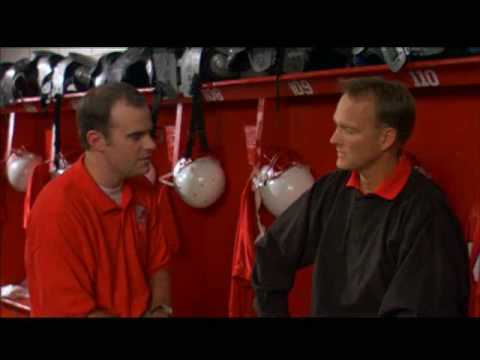
Mark Richt appeared in the movie “Facing the Giants”

November 30, 2015
Greg McGarity, Athletic Director, University of Georgia
Dear Mr McGarity,
I know that you are in a tough position now since you are trying to get a football coach that can win more than all the other coaches in the country currently. Personally I think you have set the bar too high. You had a coach that is #5 on the list of coaches with the best winning % now but that was not good enough for you.
I remember when LSU went around and collected millions to buy out Les and then the leadership of the university discovered how many Tiger fans loved Les because of his 110 wins in a 11 year period!!! Then the administration backed off.

Let’s look at some of facts you had to examine.

Chip Towers wrote:

Richt’s dismissal represented a rarity in that he was let go less than 24 hours after completing a 9-3 season. It also came after winning 49 games in the last five years (9.8 per season), after winning a higher percentage of games (.740) than any coach in modern school history, while sitting fifth in the nation among winningest active coaches and while being one of only four men in NCAA Division I history to record 135 or more wins in his first 14 seasons.
Let me put another fact out there. In January of 2013 Bama beat Nortre Dame 42-14 FOR THE NATIONAL TITLE and just one game earlier that same season Georgia had a first down at the Bama 10 Yard Line with time running out and barely missed an opportunity to represent the SEC in that national title game. IN OTHER WORDS, YOU HAD A COACH THAT WAS COACHING AT A VERY HIGH LEVEL!!! Why did you fire him?
I just wonder why the upper tier of the SEC coaches are getting fired?
Let’s go back to LSU again. They went 13-1 and beat Bama earlier in that same year on the road but lost to Bama in national title game.
Let’s add Auburn to mix. Their coach wins national title with Cam Newton and then is fired a couple of years later.
What is Sabin to make of this?  His toughest competition: GA, AUB and LSU all attempt to fire their coaches because their teams are not good enough!!!
Ironic!!!! It’s the world turned upside down. That is not mentioning the fact that Tommy T actually had a winning record over Bama!!!
Thanks for your time and I wish Georgia continued success in the future but only at a lower level. Maybe you can drop from 74% to 72% since Vince Dooley won at that rate and he was able to remain the head coach for 25 years and by the way he was the best speaker we ever had the Little Rock Touchdown Club!!!!
Everette Hatcher, P.O.Box 23416, Little Rock, AR 72221, everettehatcher@gmail.com, http://www.thedailyhatch.org

Mark Richt, Greg McGarity UGA press conference

__________

______________

___________________

Vince Dooley of Georgia & Frank Broyles of Arkansas_1969 Sugar Bowl.jpg

____________

__________

Related posts:

I went to 12 of the Little Rock Touchdown Club Lunches this year and I enjoyed George Schroeder’s talk the most!!!

I went to 12 of the Little Rock Touchdown Club Lunches this year and I enjoyed George Schroeder’s talk the most!!! Coach Kevin Kelley (L) of the Pulaski Academy and USA Today writer Goerge Schroeder FWAA president George Schroeder presents the Grantland Rice Trophy to Florida coach Urban Meyer. (Photo: Alex Gort/Orange Bowl) Little Rock […]

Tony Bua told some funny stories at LITTLE ROCK TOUCHDOWN CLUB!!!!

______   Tony Bua told some funny stories at LITTLE ROCK TOUCHDOWN CLUB!!!! Little Rock Touchdown Club – November 16, 2015 Tony Bua is shown in this photo. Bua definitely enjoyed his ride with Razorbacks Share on facebookShare on twitterMore Sharing Services0 By Jeremy Muck This article was published November 17, 2015 at 3:28 a.m. […]

Mack Brown does great job at Little Rock Touchdown Club!!!

______ Brown: It takes a different kind of coach at Texas Share on facebookShare on twitterMore Sharing Services0 By Jeremy Muck This article was published today at 3:14 a.m. Being the head football coach at the University of Texas is no small task. Ask Mack Brown, who was in charge of the Longhorns’ football program […]

STEPHEN JONES OF DALLAS COWBOYS SPEAKS AT LITTLE ROCK TOUCHDOWN CLUB PART 3

_________ Cowboys VP: Don’t be surprised if we change quarterbacks <p>Cowboys vice president Stephen Jones</p> By SportsDayDFW.com Follow @SportsDayDFW websports@dallasnews.com Staff Published: 12 October 2015 05:33 PM Updated: 12 October 2015 10:46 PM Cowboys vice president Stephen Jones spoke at the Little Rock Touchdown Club on Monday. Some highlights via @LRTouchdownClub and â@chase_shannon : On […]

STEPHEN JONES OF DALLAS COWBOYS SPEAKS AT LITTLE ROCK TOUCHDOWN CLUB PART 2

___________ Jones: Cowboys studying options Share on facebookShare on twitterMore Sharing Services1 By Jeremy Muck This article was published today at 3:03 a.m. PHOTO BY MELISSA GERRITS Dallas Cowboys COO Stephen Jones reacts to comments by Rex Nelson before addressing the Little Rock Touchdown Club October 12, 2015 at Embassy Suites. Comments aAFont Size It […]

STEPHEN JONES OF DALLAS COWBOYS SPEAKS AT LITTLE ROCK TOUCHDOWN CLUB PART 1

___________ Stephen Jones did a great job at the Little Rock Touchdown Club today and he told a lot of stories about his dad and  Father Tribou of Catholic High of Little Rock. Little Rock Touchdown Club – October 12, 2015 Streamed live on Oct 12, 2015 Stephen Jones speaks to the Touchdown Club _______________ […]

Jay Barker speaks to Little Rock Touchdown Club on 10-5-15 PART 4

___________ Jay Barker mentioned his wife Sara Evans several times in his talk at Little Rock Touchdown Club so I have included some of her musical videos and more about their relationship below. Little Rock Touchdown Club – October 5, 2015 Streamed live on Oct 5, 2015 Jay Barker speaks to the Touchdown Club _____________________ […]

Jay Barker speaks to Little Rock Touchdown Club on 10-5-15 PART 3 Jay Barker said that coach Gene Stallings emphasized the THIRD WEEKEND IN OCTOBER series with the Vols

______________ Jay Barker said that coach Gene Stallings emphasized the THIRD WEEKEND IN OCTOBER series with the Vols when he was the coach at Bama and sure enough those 4 games that Barker started in came down to the wire.  Bama tying in 93 and winning the other 3. In 91 Bama won over #8 […]

Jay Barker speaks to Little Rock Touchdown Club on 10-5-15 PART 2

Jay Barker explained at the Little Rock Touchdown Club what the word CHAMPIONS  meant to him and it all started with being Christ-centered and that is the “C” in CHAMPIONS. Barker warned against being self-centered or morality-centered.   Little Rock Touchdown Club – October 5, 2015 Streamed live on Oct 5, 2015 Jay Barker speaks to […]

Jay Barker speaks to Little Rock Touchdown Club on 10-5-15 PART 1 Jay Barker said Sabin will motivate Bama players by saying, “Hogs went into Knoxville and knocked off Vols and now they believe they can come in here and knock us off too!!!!”

Jay Barker said Sabin will motivate Bama players by saying, “Hogs went into Knoxville and knocked off Vols and now they believe they can come in here and knock us off too!!!!” Little Rock trip not first for Barker By Jeremy Muck This article was published today at 3:11 a.m. Comments aAFont Size PHOTO BY […]

How Jimmy Sexton became college football’s ultimate power broker

Sports Files with Geoff Calkins – April 24, 2012

How Jimmy Sexton became college football’s ultimate power broker

SOMEWHERE HIGH ABOVE Mississippi, the super agent some call the most powerful man in college football is simultaneously clutching his knee with his left hand and an armrest with his right. His eyes are tightly closed.

Jimmy Sexton is riding in a King Air 200, which bounces like a yo-yo through heavy turbulence from a slow-moving thunderstorm. He opens his eyes and shouts at the two pilots in the cockpit.

“Hey, guys, is it going to be like this [the] whole way?” Sexton asks them.

“We hope not,” one of them says. “We’re trying to climb higher to get above it.”

“How long have we been in the air?” Sexton asks out loud to no one in particular.

It had been only 14 minutes.

“Great,” Sexton says. “This is going to be great for your story. The guy whocontrols everything is freaking out at 18,000 feet.”

Indeed, the short flight from Oxford, Mississippi, to Tuscaloosa, Alabama, in the late afternoon on Nov. 7 is one of the rare occasions in which Sexton, the agent behind the careers of many of college football’s most successful coaches, doesn’t seem completely in control.


BEFORE THIS COLLEGE football regular season ended, there were more than a dozen head-coaching openings, including Power 5 jobs at schools such as Miami, Missouri, South Carolina, USC and Virginia Tech. A handful of other jobs opened as soon as the regular season ended, including Georgia, Rutgers and Virginia, in what might be the most active firing-and-hiring season in recent college football history.

While there’s uneasiness at football offices from coast to coast, the one certainty is that the decision-makers at many of them will have Sexton on speed dial. He’s the go-between for many coaches and the athletic directors who want to hire them.

In many ways, Sexton drives the marketplace when it comes to college football coaches. With a roster so deep, there’s a good chance some of his clients are going to be fired and others are going to be hired — sometimes for the same job.

Sexton is the co-head of the football division of Creative Artists Agency, which represents more than 100 professional players and more than 50 FBS coaches. He personally reps more than a dozen FBS coaches, including Alabama’s Nick Saban, Auburn’s Gus Malzahn, Florida State’s Jimbo Fisher and UCLA’s Jim Mora.

That’s why he is considered one of the most powerful people in the sport, even if the 52-year-old single father of three sons doesn’t like the label very much.

“I don’t really understand it,” Sexton said. “I don’t try to be influential. I just try to build good relationships. In this business, it’s all about the relationships you have with your clients and the people who are hiring them.”

Earlier this year, Forbes estimated that Sexton has negotiated about $742.5 million in contracts for NFL players and college coaches, earning about $24.8 million in commissions (the industry average is about 3 to 4 percent). He recently negotiated huge deals for NFL clients including Philip Rivers, Ndamukong Suh and Julio Jones.

“He’s never pissed anybody off,” Saban said. “He’s always done great for me, and I really appreciate it. Not once has somebody been upset about the negotiations. You really don’t want to ruin relationships over those kinds of things.”

Sexton always seems to be on top of everything happening in the coaching world, even if he is rarely in one place for very long. His iPhone is constantly in his hand and his voice mailbox always seems to be full when he doesn’t answer. He has probably accumulated more than one million frequent-flyer miles since football season kicked off in early September.

“He doesn’t slow down,” Malzahn said. “The great thing about Jimmy is that he’s wide awake if you call him at 6 a.m. and he’s wide awake if you call him at 1 a.m. He’s always there.”

Last Saturday, Sexton had clients on opposite sidelines in three of the sport’s biggest rivalries: Alabama (Saban) vs. Auburn (Malzahn), Florida (Jim McElwain) vs. Florida State (Fisher) and UCLA (Mora) vs. USC (Clay Helton).

In those games, Sexton says it’s hard to cheer for one team.

“I think sometimes if you catch yourself rooting for a guy, you’re rooting for the guy who needs it most,” Sexton said. “It’s hard. It’s good for your business, but sometimes they’re beating each other.

“In a perfect world for business, you’d want them all to win enough to where they’d get new deals, but it doesn’t work out that way.”

Sexton works closely with CAA agents Trace Armstrong — who represents Ohio State’s Urban Meyer, Notre Dame’s Brian Kelly and Penn State’s James Franklin — and Walker Jones in managing the firm’s college coaches. They oversee a handful of other junior agents and about 30 employees in offices in Atlanta, Memphis and Nashville.

As the dominoes started to fall in recent days, Sexton was right in the middle of the action, landing the two premier jobs for two of his clients. Helton, who has a 6-2 record in two stints as USC’s interim coach, landed the Trojans’ job, and Alabama defensive coordinator Kirby Smart was tabbed by Georgia to replace Mark Richt, who was fired after 15 seasons. The two biggest openings in the country were filled by clients who had never before been permanent head coaches.

Auburn defensive coordinator Will Muschamp, another Sexton client who was fired as Florida’s head coach last year, is a candidate for the South Carolina job.

“People talk about how we’re going to make so much money because there are so many open jobs and we’re going to move our people around,” Sexton said. “I don’t look at it like that. I look at it like there are going to be a bunch of schools open, and we’re going to place our clients at the best places for them to succeed. That’s really what it’s all about.”

Some of Sexton’s clients are already trying to land the same jobs. For example, Indianapolis Colts associate head coach Rob Chudzinski is a candidate at Miami, along with former Rutgers and Tampa Bay Buccaneers coach Greg Schiano and former Hurricanes coach Butch Davis, both Sexton clients.

In many ways, Sexton’s role as adviser to so many coaches seems like a walking contradiction.

“If a job came open and another one of Jimmy’s guys was up for it, I don’t think he has the power to tell an athletics director, ‘Here’s your guy,'” said Ole Miss coach Hugh Freeze, who is represented by Sexton. “You have to think that he wouldn’t push one over the other and would push both equally.”


SOMETIMES, THE TOPSY-TURVY world of college football puts Sexton in uncomfortable situations. In some instances, he has been accused of having too much influence, as well as having the ability to pull too many strings behind the scenes.

Last year, for instance, Florida fired Muschamp, a Sexton client, and replaced him with McElwain, a Sexton client, then used Sexton’s expertise in negotiating McElwain’s $7 million buyout at Colorado State, a complicated process that included the scheduling of a future game between the schools as compensation. The Gators then paid Muschamp a $6.3 million buyout for the remaining four years on his contract and watched as Sexton landed Muschamp a deal as the defensive coordinator at Auburn for $1.6 million a year, making him the highest-paid assistant in the country.

“Obviously, Jimmy was Will’s agent and he’s Mac’s agent, but he didn’t push Jim McElwain on us,” Florida athletic director Jeremy Foley said. “It’s our job to find the coaches. It’s not Jimmy Sexton’s job. The University of Florida is hiring its coaches, and if they work out great or don’t work out, it’s on us. It’s on nobody else. It’s on me.

“In my dealings with Jimmy, the bottom line is I find him trustable. When he tells you something, it’s the truth. Obviously, he’s an agent and he does what he does. … He’s been a straight shooter and I respect him for that.”

But that wasn’t the extent of Sexton’s involvement.

Freeze was also one of the Gators’ top targets — until he signed a four-year contract extension that boosted his salary from $3 million to $4.5 million annually to stay with the Rebels.

Another example of Sexton’s clout: In 2013, with Mack Brown on the hot seat at Texas, Sexton took a 45-minute phone call with former Texas Regent Tom Hicks and current Regent Wallace Hall Jr. about Saban’s interest in replacing Brown. According to e-mails obtained by the Associated Press in November of that year, Sexton told the Texas officials that Saban would consider leaving Alabama for Texas and that coaching the Crimson Tide had put Saban under “special pressure.”

“I don’t hire the coach. I’ve never hired a coach. Contrary to what people might believe, I never hired a coach at Tennessee.”

Agent Jimmy Sexton, a Tennessee alum.

Saban, who said he was unaware of the meeting, dismissed the idea that he’d leave Alabama and joked that he was too old to start over at another school.

But even so, when Texas eventually fired Brown, Sexton was able to negotiate new contracts for Saban, Fisher, Malzahn and Mora at their current schools after they were linked as potential candidates to coach the Longhorns.

At one point, Tennessee (Sexton’s alma mater) hired three of his clients consecutively. Sexton represented former Volunteers coach Phillip Fulmer, who guided UT to a 1998 national championship and was fired after the 2008 season. Then-UT athletics director Mike Hamilton hired Kiffin to replace Fulmer. Hamilton then hired Derek Dooley when Kiffin bolted for USC after only one season with the Volunteers in 2009.

“I don’t hire the coach. I’ve never hired a coach,” Sexton said. “Contrary to what people might believe, I never hired a coach at Tennessee.

“I remember the Lane Kiffin deal like it was yesterday. They let Fulmer go and there was a two- or three-week gap in between. Mike Hamilton called me and said, ‘I need to go talk to somebody. I can’t go talk to anybody for two or three more weeks because everybody is still playing. Who can I go talk to?’ I told him to fly Lane Kiffin to Atlanta and talk to him there. They hired him and the rest is history.”

While Sexton has some influence in which coaches are hired, he doesn’t have much say in whether they’ll succeed. Some of his clients, such as Saban, have been wildly successful, while others such as Dooley and recently fired Rutgers coach Kyle Flood struggled.

“Bill Parcells used to say to me that they don’t sell insurance for this business,” Sexton said. “In other words, you can’t insure success. Sometimes it works and sometimes it doesn’t.”

Because many of Sexton’s clients compete against one another, he often toes a fine line in regards to what he divulges from his conversations with them. Some of the information his clients share with him might be considered state secrets.

For instance, Sexton was told earlier this season that quarterback Jake Coker wasn’t going to start against Ole Miss on Sept. 19, a decision Saban didn’t tell the media. When Sexton talked to Freeze later in the week, he couldn’t tell him that Crimson Tide backup Cooper Bateman was going to start.

“I’ve been with the guy since 1997 and never once have I felt like I couldn’t trust him with anything,” Saban said. “Anything I’ve ever told him or asked him, even though he represents a lot of guys, I still think I can trust the guy. He never tells me anything about the other guys, and I never ask him. I never put him in that situation. He’s never, ever told me something that I thought I shouldn’t know about somebody else. That’s why you can trust him.”

In the end, both Crimson Tide quarterbacks played in a 43-37 loss to the Rebels, which was Alabama’s only defeat of the regular season.

“I would never expect — and nor would he — ever cross that line,” Freeze said. “I’m totally confident that he would protect anything that I share with him, as he would with his other clients.”


ACTING LIKE SWITZERLAND in many of the sport’s fiercest rivalries isn’t exactly easy. On Nov. 6, the day before Sexton watched a pair of his coaches lead their teams in two of the biggest SEC games of the season, he flew home to Memphis after spending 10 consecutive days on the road.

When Sexton is away, a full-time nanny and assistant manage his house and help care for his two younger sons, Parker, 18, who is headed to the University of Texas on a golf scholarship, and Blake, 14. His oldest son, James III, 20, is a sophomore at Ole Miss.

Sexton is constantly juggling his sons’ activities, along with the needs of his clients. This week, for instance, Sexton was working on job openings while also attending three of his youngest son’s basketball games. When his sons were growing up, he often attended their Pop Warner football games in the morning, and then they jumped on a plane with him to attend a college football game.

“It’s amazing how he juggles everything and cares for his boys,” said Colorado’s Mike MacIntyre, one of Sexton’s clients. “That’s what makes me feel good about him. I trust him a ton, but I even trust him more when I see how he is with his boys.”

After returning from his extended business trip, Sexton planned to spend a rare night at home. He lives in the suburbs of Memphis on an expansive property he shares with the parents of former Alabama and current Chicago Bears offensive lineman Barrett Jones.

But while driving to a restaurant in Memphis, a friend of Sexton’s called from Oxford and urged him to come there for dinner. Sexton had planned to drive to Ole Miss the next morning to watch the Rebels play Arkansas before flying to watch the Crimson Tide play.

After a five-minute phone call, Sexton pulled a U-turn on Poplar Avenue in his Range Rover and headed back to his house. After packing an overnight bag and calling his nanny to make sure she’d be there to care for his chocolate lab, Shaq, he made the 70-mile drive to Oxford.

Soon, Sexton was having dinner with a few close friends at a trendy new restaurant on the square. He mingled with Sean and Leigh Ann Tuohy, the Ole Miss grads made famous in the movie “The Blind Side.” A few minutes later, Heisman Trophy winner Tim Tebow, one of Sexton’s most famous clients and a close friend, stopped by his table to say hello.

Early Saturday, Sexton attended parents’ weekend at his son’s Ole Miss fraternity, purchased a pullover jacket for his youngest son and even took a telephone call from a Power 5 athletic director looking for a new head coach.

He then spent a few hours in the Ole Miss football offices, where he watched Florida struggle to beat Vanderbilt 9-7 to win the SEC East, which, as part of McElwain’s contract, earned the coach a $37,500 bonus in his first season. Then Sexton watched the Rebels play the Hogs from Freeze’s suite at Vaught-Hemingway Stadium. Sexton kept one eye on the TV, watching Fisher’s Florida State team stay close with No. 1 Clemson before the Tigers eventually won the game, 23-13.

Former NFL and USC defensive coordinator Monte Kiffin, whose son, Chris, is the Rebels’ defensive line coach, also watched the game from Freeze’s suite. It was his first time watching the Rebels play in person. When Kiffin mentioned that he’d never watched Alabama play in person, either, Sexton offered him a seat on his plane and a chance to go watch Lane Kiffin, Monte’s oldest son, as well as a return flight after the game.

On the phone before the game, Sexton had jokingly asked Freeze to make sure his team was ahead by three touchdowns at halftime so he wouldn’t miss Alabama’s kickoff. Instead, the Rebels and Razorbacks were tied at 17 at the half when he left the stadium. Once the plane landed in Tuscaloosa more than an hour later, the Hogs and Rebels were deadlocked at 31 heading into the fourth quarter.

After the plane landed on the rain-slicked runway at Tuscaloosa Regional Airport, Sexton and his party climbed into a pickup truck. His son Blake and his friend, who also attended the SEC doubleheader, noticed a gun rack — complete with guns — on the truck’s ceiling.

“Don’t worry,” the driver told them. “They’re not loaded.”

Welcome to Tuscaloosa.

A few minutes later, Sexton was behind the wheel of a rental car, hoping to beat traffic to watch the end of the Ole Miss game. Sexton used several side streets to avoid the crowds on Paul W. Bryant Drive and pulled into a parking space adjacent to Bryant-Denny Stadium.

He was able to watch the end of the Ole Miss game in the North Field Suites. Arkansas tight end Hunter Henry caught a pass on fourth-and-25 and wildly lateraled over his head to tailback Alex Collins, who ran 31 yards for a first down. Meanwhile, Sexton’s assistant, Autumn Clark, was hiding under a table, unable to watch the dramatic ending. Clark played basketball for Freeze in high school and also worked for him at Ole Miss until Sexton hired her.

She might have been the only person in Bryant-Denny Stadium who wasn’t cheering when Arkansas upset Ole Miss 53-52 in overtime. The Razorbacks’ victory meant Alabama would win the SEC West if it won its final three conference games.

Sexton spent the next three hours watching the Crimson Tide dismantle then-No. 2 LSU 30-16 from a luxury suite. He spent much of the night talking to Baltimore Ravens general manager Ozzie Newsome, with whom he’s worked on NFL deals in the past. Sexton also showed plenty of interest in a game on one of the TVs: Auburn and Malzahn were upsetting Texas A&M and Sumlin 26-10 on the road. The Tigers were coming off back-to-back losses and desperately needed a victory.

“We need a couple of our guys to rebound,” Sexton said.

Just before midnight, Sexton made his way through the crowd to wait outside Alabama’s locker room, where he greeted Kiffin and Smart as they made their way off the field. Sexton would have to wait a while to see Saban, who spent more than an hour mingling with recruits and filming his weekly TV show.

Sexton sometimes avoids seeing coaches after games, especially if two of his clients were coaching against each other.

“I don’t love going to the games where I have both coaches,” Sexton said.


SEXTON WASN’T EVEN an agent when he helped negotiate his first deal. He was a 20-year-old equipment manager at Tennessee in 1983, when Volunteers defensive end Reggie White was considered one of the premier prospects in the draft. During a walk-through practice at the Citrus Bowl, two men in trench coats approached Sexton. One of them was Pepper Rodgers, coach of the Memphis Showboats of the up-and-coming United States Football League, and the other was Robert Fraley, an agent. They knew Sexton and White were close friends and shared a dorm suite at UT.

“It was like a scene out of a movie,” Sexton said.

“Do you know how much money Lawrence Taylor makes in the NFL?” Fraley asked Sexton.

“He’s a great player,” Sexton said. “How much does he make?”

“He makes $400,000,” Fraley said. “He’s the highest-paid defensive player in the NFL. We want you to go in there and tell Reggie White we’re going to offer him $1.5 million as soon as the game is over tomorrow night.”

Sexton ran into the locker room and found White.

“Big Dog, you’re about ready to get paid,” Sexton told him.

Later that night, Sexton and White discussed the deal in their hotel room. White told Sexton he’d been contacted by a few agents but didn’t know any of them. He asked Sexton to represent him.

The next day, Sexton called his father, a dentist in Memphis.

“Whatever you do, you better be careful,” his father told him.

After Tennessee defeated Maryland 30-23 in the Citrus Bowl, Rodgers and Fraley found Sexton on the sideline. They handed him a manila envelope that contained a USFL contract.

The next day, Sexton went home to Memphis for the Christmas holidays. Rodgers called him and asked him to invite White to the Liberty Bowl. White agreed to come to the game, but he wanted a date with actress Vanessa Williams, who was singing the national anthem. Their prospective romance ended after a short conversation in a skybox. The date never happened.

Rodgers and Fraley sent Sexton to the Hula Bowl, a college football all-star game in Hawaii, to keep a close eye on White. When Sexton arrived at his hotel, a man approached him in the lobby. The man told Sexton to leave White alone, which Sexton believed was a warning from the NFL.

Eventually, White decided to sign a five-year, $4 million contract with the Showboats, and Sexton had an attorney finalize the deal. White played two seasons in Memphis before the USFL collapsed in 1985, and then he signed a four-year, $1.85 million deal with the Philadelphia Eagles, who held his NFL rights.

“I started to think it was a viable business,” Sexton said.

“Most of these guys can do anything. Nick Saban could run General Motors. He just happens to be a football coach.”

Jimmy Sexton

After finishing his final year at Tennessee in 1984, Sexton planned to attend law school. But Don Kessinger, a former MLB shortstop, and Kyle Rote Jr., a former pro soccer player, offered Sexton a position at their fledgling sports agency. One of Sexton’s first clients was Scottie Pippen, a budding basketball star from Central Arkansas.

Sexton represented NBA players for about 10 years before transitioning to work full-time with NFL players and coaches. His first coaching client was then-Ole Miss coach Tommy Tuberville. He asked Sexton to examine his contract, and Sexton negotiated a clause into the deal that made it easier for Tuberville to leave if the school’s chancellor or athletics director left. In 1999, Tuberville left for Auburn — shortly after he said he’d leave Ole Miss in a “pine box” — and had to pay the Rebels only a $100,000 buyout.

One of the biggest breaks in Sexton’s career came amid tragedy in 1999. Fraley, who had approached Sexton at the Citrus Bowl more than 15 years earlier, died in the same plane accident that also killed PGA golfer Payne Stewart. Fraley represented New York Jets coach Bill Parcells, who soon hired Sexton as his agent. Parcells liked how Sexton negotiated contracts for a handful of players who signed with the Jets.

“Parcells had a huge impact on me, probably more than any other guy in the business,” Sexton said. “He was very much a mentor to me as far as convincing me that this was a huge business. He would tell me, ‘Jimmy, you don’t get it. The players’ business is great, but the coaching side is where nobody is and there’s a huge need for it.’ He really pushed me that way.”

Sexton then landed another big client when Saban hired him to negotiate his contract when he left Michigan State for LSU after the 1999 season. Current NCAA president Mark Emmert, then the LSU chancellor, was on the other end of the negotiating table.

“I remember when I asked Mark Emmert for $1.2 million for Nick Saban in 1999,” Sexton said. “It’s all I could do to hold a straight face. It really was. When he said yes, I was like, ‘Oh, my gosh!’

“That’s not even competitive anymore.”

At a Final Four press conference in 2009, the late Myles Brand, Emmert’s predecessor as NCAA president, questioned schools’ roles in skyrocketing salaries being offered to coaches.

“You have to ask some very hard questions, whether this is really in tune with the academic values, whether we’ve reached a point already that these high salaries and packages for coaches has really extended beyond what’s expected within the academic community,” Brand said.

But Sexton said the market is what has driven the rise in compensation.

“Most of these guys can do anything,” Sexton said. “Nick Saban could run General Motors. He just happens to be a football coach.”

This season, Saban is college football’s highest-paid coach, earning more than $7 million in base salary and outside income.

Sexton negotiated that deal, of course, just like he did when he helped the Crimson Tide land Saban in January 2007. Two years after guiding LSU to the 2003 BCS national championship, Saban left to coach the Miami Dolphins. His two mediocre seasons in the NFL ramped up speculation that Saban would return to college football.

After repeatedly being asked about the Crimson Tide’s opening, Saban famously told reporters, “I guess I have to say it: I’m not going to be the Alabama coach.”

But Sexton had been talking to then-Alabama athletics director Mal Moore behind the scenes. When the Dolphins’ season ended, Moore flew to South Florida. However, Saban refused to meet with him. After spending a couple of days in a hotel room a block from Saban’s house, Moore called Sexton out of desperation.

“Jimmy, we’ve been talking about this for a month,” Moore said. “He won’t even meet with me. We’ve got to make this happen.”

“Mal, just be patient with him,” Sexton said. “You’ve got to hang in there. Do notget on that plane and go back to Tuscaloosa.”

“Don’t worry,” Moore said. “I’m taking this plane to Cuba if Nick Saban isn’t on it.”

The next day, Saban met with Moore and agreed to take the Alabama job.

“Before I ever went to Miami, Jimmy told me, ‘You’ve got to make a decision, man. Is your legacy going to be as a college coach or do you want to take the next step and take a challenge?'” Saban said. “I think he saw after I was in Miami for two years that I was a little frustrated.”

Now in his ninth season at Alabama, Saban has won three national championships and has the Crimson Tide on the brink of reaching the College Football Playoff for the second straight year.

Sexton figures to have his hands in many of the high-profile decisions that are about to be made for schools hoping to land another coach who can be a difference-maker.


FANS WON’T SEE the man working the deals in the background, and Sexton wouldn’t have it any other way.

“The people that think he desires attention or wants it don’t know him at all,” Freeze said. “He’d rather be in a corner unnoticed than to be talked about in that light.”

Sexton is not out front in press conferences announcing the contracts he negotiated. Instead, he prefers for his clients to receive the attention. In fact, a Google images search returns few photographs of him.

“I try to stay back in the weeds,” Sexton said. “Where I see coaches and players have problems is when the agent tries to become part of the show. You’re an agent. You’re only trying to facilitate something for your client, and that’s your job. It’s not to say, ‘Hey, look, I’m Jimmy Sexton.’ I think my clients like the fact that I don’t try to find attention. I want to be the exact opposite of what the stereotype is of an agent.”

But, like on that plane headed for Tuscaloosa, Sexton can’t control everything. As his influence has been felt across the college landscape, his reputation precedes him.

After he wandered onto the field after Saban’s Crimson Tide defeated Georgia 32-28 in the 2012 SEC championship game, fans celebrated the man who brought them the title. Or at least brought them the coach who delivered it.

A chant began to echo across the Alabama student section.

“Jim-my Sex-ton! Jim-my Sex-ton!”

He couldn’t find an exit soon enough

Related posts:

I went to 12 of the Little Rock Touchdown Club Lunches this year and I enjoyed George Schroeder’s talk the most!!!

I went to 12 of the Little Rock Touchdown Club Lunches this year and I enjoyed George Schroeder’s talk the most!!! Coach Kevin Kelley (L) of the Pulaski Academy and USA Today writer Goerge Schroeder FWAA president George Schroeder presents the Grantland Rice Trophy to Florida coach Urban Meyer. (Photo: Alex Gort/Orange Bowl) Little Rock […]

Tony Bua told some funny stories at LITTLE ROCK TOUCHDOWN CLUB!!!!

______   Tony Bua told some funny stories at LITTLE ROCK TOUCHDOWN CLUB!!!! Little Rock Touchdown Club – November 16, 2015 Tony Bua is shown in this photo. Bua definitely enjoyed his ride with Razorbacks Share on facebookShare on twitterMore Sharing Services0 By Jeremy Muck This article was published November 17, 2015 at 3:28 a.m. […]

Mack Brown does great job at Little Rock Touchdown Club!!!

______ Brown: It takes a different kind of coach at Texas Share on facebookShare on twitterMore Sharing Services0 By Jeremy Muck This article was published today at 3:14 a.m. Being the head football coach at the University of Texas is no small task. Ask Mack Brown, who was in charge of the Longhorns’ football program […]

STEPHEN JONES OF DALLAS COWBOYS SPEAKS AT LITTLE ROCK TOUCHDOWN CLUB PART 3

_________ Cowboys VP: Don’t be surprised if we change quarterbacks <p>Cowboys vice president Stephen Jones</p> By SportsDayDFW.com Follow @SportsDayDFW websports@dallasnews.com Staff Published: 12 October 2015 05:33 PM Updated: 12 October 2015 10:46 PM Cowboys vice president Stephen Jones spoke at the Little Rock Touchdown Club on Monday. Some highlights via @LRTouchdownClub and â@chase_shannon : On […]

STEPHEN JONES OF DALLAS COWBOYS SPEAKS AT LITTLE ROCK TOUCHDOWN CLUB PART 2

___________ Jones: Cowboys studying options Share on facebookShare on twitterMore Sharing Services1 By Jeremy Muck This article was published today at 3:03 a.m. PHOTO BY MELISSA GERRITS Dallas Cowboys COO Stephen Jones reacts to comments by Rex Nelson before addressing the Little Rock Touchdown Club October 12, 2015 at Embassy Suites. Comments aAFont Size It […]

STEPHEN JONES OF DALLAS COWBOYS SPEAKS AT LITTLE ROCK TOUCHDOWN CLUB PART 1

___________ Stephen Jones did a great job at the Little Rock Touchdown Club today and he told a lot of stories about his dad and  Father Tribou of Catholic High of Little Rock. Little Rock Touchdown Club – October 12, 2015 Streamed live on Oct 12, 2015 Stephen Jones speaks to the Touchdown Club _______________ […]

Jay Barker speaks to Little Rock Touchdown Club on 10-5-15 PART 4

___________ Jay Barker mentioned his wife Sara Evans several times in his talk at Little Rock Touchdown Club so I have included some of her musical videos and more about their relationship below. Little Rock Touchdown Club – October 5, 2015 Streamed live on Oct 5, 2015 Jay Barker speaks to the Touchdown Club _____________________ […]

Jay Barker speaks to Little Rock Touchdown Club on 10-5-15 PART 3 Jay Barker said that coach Gene Stallings emphasized the THIRD WEEKEND IN OCTOBER series with the Vols

______________ Jay Barker said that coach Gene Stallings emphasized the THIRD WEEKEND IN OCTOBER series with the Vols when he was the coach at Bama and sure enough those 4 games that Barker started in came down to the wire.  Bama tying in 93 and winning the other 3. In 91 Bama won over #8 […]

Jay Barker speaks to Little Rock Touchdown Club on 10-5-15 PART 2

Jay Barker explained at the Little Rock Touchdown Club what the word CHAMPIONS  meant to him and it all started with being Christ-centered and that is the “C” in CHAMPIONS. Barker warned against being self-centered or morality-centered.   Little Rock Touchdown Club – October 5, 2015 Streamed live on Oct 5, 2015 Jay Barker speaks to […]

Jay Barker speaks to Little Rock Touchdown Club on 10-5-15 PART 1 Jay Barker said Sabin will motivate Bama players by saying, “Hogs went into Knoxville and knocked off Vols and now they believe they can come in here and knock us off too!!!!”

Jay Barker said Sabin will motivate Bama players by saying, “Hogs went into Knoxville and knocked off Vols and now they believe they can come in here and knock us off too!!!!” Little Rock trip not first for Barker By Jeremy Muck This article was published today at 3:11 a.m. Comments aAFont Size PHOTO BY […]

I went to 12 of the Little Rock Touchdown Club Lunches this year and I enjoyed George Schroeder’s talk the most!!!

I went to 12 of the Little Rock Touchdown Club Lunches this year and I enjoyed George Schroeder’s talk the most!!!

Coach Kevin Kelley (L) of the Pulaski Academy and USA Today writer Goerge Schroeder

FWAA president George Schroeder presents the Grantland Rice Trophy to Florida coach Urban Meyer. (Photo: Alex Gort/Orange Bowl)

Little Rock Touchdown Club – November 23, 2015

Schroeder: Blink, and you miss it

Writer: College football season full of surprises

By Jeremy Muck

This article was published November 24, 2015 at 3:58 a.m.

USA Today college football reporter George Schroeder follows the sport as close as anyone in the national media.

And the 2015 season, Schroeder said, has unique characteristics.

Schroeder gave his take Monday to members of the Little Rock Touchdown Club.

“It’s been a wild, did-you-see-that-game season,” Schroeder said, speaking at the club’s weekly luncheon at the Embassy Suites Hotel.

Schroeder, who is from Little Rock, mentioned the last-minute finishes for Michigan State at Michigan, the Miami-Duke game and the Arkansas’ 4th-and-25 lateral against Mississippi in overtime.

“Arkansas, it was the wildest lateral that actually worked,” Schroeder, 47, said. “We don’t know what’s going to happen.”

Schroeder revealed a top four of Clemson, Alabama, Iowa and Oklahoma when talking about the weekly College Football Playoff rankings, which will be released tonight.

He ranks Michigan State, Notre Dame and Baylor as Nos. 5-7, respectively.

Iowa, which is 10-0 and the only undefeated team remaining from the Big Ten Conference, has clinched a spot in the Big 10 Championship game Dec. 5. The Hawkeyes are a nice team with a good resume, Schroeder said, but he understands why some national analysts have questioned whether Iowa is a top-four team.

But then again, Schroeder said that there isn’t a great team in college football, calling Alabama “very good” but not great.

“You could draw the top four out of a hat,” Schroeder said.

The College Football Playoff’s four-team structure is in its second season, and Schroeder said that while he’s opposed to increasing the number of teams to 8, he said he does feel that the playoff will have eight teams at some point in the future.

“It’s the best regular-season in sports,” Schroeder said, backing his stance about the merits of a four-team playoff. “But it is going to go to eight sometime.

Regarding Arkansas’ 2015 season, Schroeder said he and several analysts overlooked the Razorbacks’ losses of defensive linemen — Trey Flowers and Darius Philon and linebacker Martrell Spaight — instead believing they could win 9-10 games team this season.

“This is a team, despite what happened [against] Mississippi State, that nobody wants to play right now,” Schroeder said. “They have every shot to be 7-5 and win a bowl game.

“They’ve looked better than the teams they’ve beaten. It’s not a fluke. They’ve just been flat better than Ole Miss and LSU. It should be encouraging to Arkansas fans.”

Schroeder, who has worked at USA Today since 2012, started his career at the Arkansas Democrat-Gazette from 1991 to 1999. He became the Oklahoma football beat reporter at The Oklahoman, where he worked from 1999 to 2007. Schroeder was hired as a sports columnist at The Register Guard in Eugene, Ore., in 2007 and spent five years at that paper before being hired at USA Today.

Schroeder said that if Arkansas (6-5) had three fewer losses, it would hold its own in a bowl game against teams that will play in the New Year’s Six bowls. Instead, the Razorbacks will play in a non-New Year’s Six bowl for the second consecutive season. Arkansas beat Texas in last year’s Texas Bowl to finish 7-6.

“They’re likely to get some opponent who can’t handle them,” Schroeder said. “They’re likely to catch an opponent that they can roll, which is not a bad way to end the season. If you can’t play in the playoff, a New Year’s Six game or in Florida, then go win big.

“If they’re not disappointed in themselves, then they can go do that.”

Sports on 11/24/2015

Print Headline: Schroeder: Blink, and you miss it

Related posts:

Tony Bua told some funny stories at LITTLE ROCK TOUCHDOWN CLUB!!!!

______   Tony Bua told some funny stories at LITTLE ROCK TOUCHDOWN CLUB!!!! Little Rock Touchdown Club – November 16, 2015 Tony Bua is shown in this photo. Bua definitely enjoyed his ride with Razorbacks Share on facebookShare on twitterMore Sharing Services0 By Jeremy Muck This article was published November 17, 2015 at 3:28 a.m. […]

Mack Brown does great job at Little Rock Touchdown Club!!!

______ Brown: It takes a different kind of coach at Texas Share on facebookShare on twitterMore Sharing Services0 By Jeremy Muck This article was published today at 3:14 a.m. Being the head football coach at the University of Texas is no small task. Ask Mack Brown, who was in charge of the Longhorns’ football program […]

STEPHEN JONES OF DALLAS COWBOYS SPEAKS AT LITTLE ROCK TOUCHDOWN CLUB PART 3

_________ Cowboys VP: Don’t be surprised if we change quarterbacks <p>Cowboys vice president Stephen Jones</p> By SportsDayDFW.com Follow @SportsDayDFW websports@dallasnews.com Staff Published: 12 October 2015 05:33 PM Updated: 12 October 2015 10:46 PM Cowboys vice president Stephen Jones spoke at the Little Rock Touchdown Club on Monday. Some highlights via @LRTouchdownClub and â@chase_shannon : On […]

STEPHEN JONES OF DALLAS COWBOYS SPEAKS AT LITTLE ROCK TOUCHDOWN CLUB PART 2

___________ Jones: Cowboys studying options Share on facebookShare on twitterMore Sharing Services1 By Jeremy Muck This article was published today at 3:03 a.m. PHOTO BY MELISSA GERRITS Dallas Cowboys COO Stephen Jones reacts to comments by Rex Nelson before addressing the Little Rock Touchdown Club October 12, 2015 at Embassy Suites. Comments aAFont Size It […]

STEPHEN JONES OF DALLAS COWBOYS SPEAKS AT LITTLE ROCK TOUCHDOWN CLUB PART 1

___________ Stephen Jones did a great job at the Little Rock Touchdown Club today and he told a lot of stories about his dad and  Father Tribou of Catholic High of Little Rock. Little Rock Touchdown Club – October 12, 2015 Streamed live on Oct 12, 2015 Stephen Jones speaks to the Touchdown Club _______________ […]

Jay Barker speaks to Little Rock Touchdown Club on 10-5-15 PART 4

___________ Jay Barker mentioned his wife Sara Evans several times in his talk at Little Rock Touchdown Club so I have included some of her musical videos and more about their relationship below. Little Rock Touchdown Club – October 5, 2015 Streamed live on Oct 5, 2015 Jay Barker speaks to the Touchdown Club _____________________ […]

Jay Barker speaks to Little Rock Touchdown Club on 10-5-15 PART 3 Jay Barker said that coach Gene Stallings emphasized the THIRD WEEKEND IN OCTOBER series with the Vols

______________ Jay Barker said that coach Gene Stallings emphasized the THIRD WEEKEND IN OCTOBER series with the Vols when he was the coach at Bama and sure enough those 4 games that Barker started in came down to the wire.  Bama tying in 93 and winning the other 3. In 91 Bama won over #8 […]

Jay Barker speaks to Little Rock Touchdown Club on 10-5-15 PART 2

Jay Barker explained at the Little Rock Touchdown Club what the word CHAMPIONS  meant to him and it all started with being Christ-centered and that is the “C” in CHAMPIONS. Barker warned against being self-centered or morality-centered.   Little Rock Touchdown Club – October 5, 2015 Streamed live on Oct 5, 2015 Jay Barker speaks to […]

Jay Barker speaks to Little Rock Touchdown Club on 10-5-15 PART 1 Jay Barker said Sabin will motivate Bama players by saying, “Hogs went into Knoxville and knocked off Vols and now they believe they can come in here and knock us off too!!!!”

Jay Barker said Sabin will motivate Bama players by saying, “Hogs went into Knoxville and knocked off Vols and now they believe they can come in here and knock us off too!!!!” Little Rock trip not first for Barker By Jeremy Muck This article was published today at 3:11 a.m. Comments aAFont Size PHOTO BY […]

I really enjoyed hearing Heath Shuler today at the Little Rock Touchdown Club!!!

__________ Little Rock Touchdown Club – September 28, 2015 I really enjoyed hearing Heath Shuler today at the Little Rock Touchdown Club!!! Q&A: Rep. Heath Shuler Shuler, a Democratic Congressman from North Carolina who ran as a social conservative, defeated a Republican incumbent in 2006. Interview by Collin Hansen/ JUNE 26, 2007 What is the […]

MUSIC MONDAY Brian Welch of Korn and his Christian conversion and deliverance from drugs Part 4

Brian Welch of Korn and his Christian conversion  and deliverance from drugs Part 4

_________

brian welch testimony

Korn – Did my time

Uploaded on Jun 27, 2009

Korn – Did my time (Lara Croft Tomb Raider : The Cradle of Life SoundTrack)

________________________

Pulp Fiction (3D, HD) – Overdose Needle Scene in optional Analglyph 3D (b)

Brian ‘Head’ Welch: ‘Life Is About Drugs And Mistakes’

artist: Brian Welch date: 11/21/2011 category: interviews
I like this
103
voted: 13
Brian 'Head' Welch: 'Life Is About Drugs And Mistakes'

When BrianHeadWelch crawled out of Korn in 2005 he was addicted to drugs and an alcoholic. He finally pulled himself together and in 2008 released Save Me From Myself, a solo album full of dark synths, epic-length songs and tunes all sung by Head himself. Now three years later Welch has returned to the studio to record his follow-up album [maybe an EP]. “Paralyzed” is the first single from the upcoming record and it is a brutal vision punctuated by the staccato guitars Head made famous in Korn. The vocals rise to nasty growls and descend into melodic passages revealing how capable the ex-Kornman is as a vocalist. It has not been an easy road. Sober now for many years, Head looks back at his first solo album, his time with Korn and reflects on those moments with a clear head. He was unabashedly open in this conversation and didn’t try to cover up the things he’d done with smoke and mirrors. As further testament to his newfound sense of professionalism, he called precisely at 1:30 p.m. for our interview. The phone rang, I picked it up and someone on the other end said, “Hi, this is Ed.” I said, “Oh, man, I’m sorry I’m waiting for a call from Brian Welch. Could you please hang up?” There was a laugh on the other end. “This is Head.” The connection wasn’t great and I thought the voice had uttered, “Ed.” He had a laugh and we jumped into the dialog. UG: You left Korn in 2005 and didn’t record Save Me From Myself, your first solo album until 2008. What were you doing for those three years? Brian Welch: First of all I wanted to focus on my life and what I was doing and Who am I now? I was a single father so I was taking care of that. I was working on music off and on and I also wrote a book in 2006 and the whole year I spent writing my autobiography [Save Me From Myself]. So that kept me busy and just doin’ the everyday dad stuff, the school, and that stuff. When did you seriously start thinking about putting together your first solo album? I was thinkin’ about it since ’05 since right when I left but it wasn’t nothin’ in a rush. It just kinda took its time and then it finally was done. Like I was happy with it and it was good enough to release for ’08 and that’s just kinda when it all came together. Were any of the songs that ended up on Save Me From Myself stuff you had written for Korn? I wrote it after I left the band and it was more like an experimental album and there a lot of songs were about my life change and everything. Just being fed up with the party and stuff like that; it was for that time period. In what ways was the album experimental? It was my first one so I was experimenting with like singing and all kinds of stuff. There’s one nine-minute song on the album and a lot of five- and six-minute songs. There was just like stuff we [Korn] would never do like before. I experimented with string sounds a lot of keyboard synth sounds and we never did that. So it was just like one of those albums I just wanted to do new stuff. You brought in Josh Freese on drums and Tony Levin on basswere you looking for something special in a rhythm section? Yeah, totally. My manager at the time knew those people and stuff and so it just kind of clicked and it just happened. And it was fun to see these legends in there tearin’ it up on my stuff. It was good times.

With the Korn guys we were all family but we were dysfunctional and we were drunk the whole time.

You used a rhythm guitarist on the albumArchie J. Muise, Jr.but did you play most of the guitars on Save Me From Myself? Yeah, totally. I did a lot of em but Archie came in and he was nailin’ some stuff better than me on some of the rhythms so I was like, You need to record some stuff. But I did most of it. In Korn, you and Munky did all the guitars together. How different was it being the sole guitar player in the band? Yeah, it was different. It was more on my plate that I had to come up with the stuff like that. Sure, with the Korn guys we were all family but we were dysfunctional and we were drunk the whole time. So it was good to get away from the craziness but I sure missed havin’ someone to collaborate with like that but it was cool. It was new and exciting so I just went for it. You talk about Korn being drunk pretty much all the time. How was the band able to function in the studio if everyone was drinking? We wouldn’t get wasted while we were recording. We’d wake up, most likely have a hangover and stuff like that, and just kinda wake up, eat and just start recording. And not really start drinkin’ til after; we would keep it together. Certainly one of the experimental aspects of Save Me From Myself was you being the lead singer. Were you influenced by watching Jonathan Davis record all those years? Yeah, totally. Some of the stuff where I’m singin’ now, I’m not the best singer so you know how Jonathan sounds sick sometimes when he sings? He sounds disturbed. And so, yeah, I get a lot of that dark sound like that. It just kinda goes with the style that we do. I learned a lot watchin’ him and a lot of the other bands like the Deftones and Tool and stuff like that. Had you done much singing in Korn? I did some screams and I did a couple backups live but I didn’t do a lot on the records except for the early records like the first two. You knew you wanted to be the singer on your album? Yeah, the reason being I wanted to speak about stuff I went through and I didn’t want another person to do that. It would be weird so yeah, I wanted to try it. I always admired vocalists and it was a cool thing for me to try and do. It was awesome. Flush was the first single from Save Me From Myself. Was that song chosen specifically to sort of introduce Head musically post-Korn? Yeah, and some of the other songs were more spiritual sounding you know. I wanted to release one that was more like just rockin’ and just talkin’ about getting sick of being sick. Steven Tyler said once, I’m sick and tired of being sick and tired. That’s kinda what the song’s about and so I thought it would be a good choice to come out with. The video was pretty heavy. Were you concerned about alienating some of your fans? I wanted to do somethin’ visual; I wanted to do a video but I didn’t have my band picked out yet so it was just me. We just did what we could with it. It was pretty heavy but that’s the life. We did interviews with some ex-drug addicts and strippers and all these messed up lives so we just built the video around that. We got some actresses and it was a little heavy but I think it was meant to be for the time. Bob Clearmountain mixed Save Me From Myself. How did you come to work with him? Again that was a manager call. He’s very like well known and everything but I’d never heard of him. My manager was a fan of him and I heard of the artists he’d worked with [Bruce Springsteen; The Rolling Stones; Bon Jovi] and I said, Heck, yeah, let’s go get him. He only mixed four songs and then a friend of mine did the others. How did you feel about your guitar sounds on Save Me From Myself? They’re good and I liked em. I think I’m getting better sounds now on my new stuff. I like the sound of the new song Paralyzed that I put out. The Save Me From Myself record was cool and I had a lot of cool pedal effects and stuff that reminded me of some of the Korn stuff we used to do. But as far as rhythms and stuff I really like the tones we’re getting right now. Washed By Blood was the nine-minute song you mentioned earlier. That had synth strings and big walls of guitars and was a really different-sounding track. Yeah, totally. I just loved the melody and the strings and stuff and that’s how I was feeling back then. I was feeling like peace and I was feelin’ really good about the future. So that’s what came out and it was really good for the time. Is there a fine line between writing songs about your own life and having a lyric come across as too preachy or artificial? Yeah, totally and the new stuff is more about life. Not totally but you’ve got to live and learn. You know what I mean? Everybody warned me too and I was, I don’t care. I’m doing what I want. But I had to do everything in my time. You talked about getting better guitar sounds on the upcoming recorddid you also want to go a bit heavier than Save Me From Myself? Yeah, the producer Jasen Rauch wanted to pull that out of me. That song just came so quickly and he came to me with the idea and then we both worked on it. I’m really stoked on it; it’s really a lot of energy comes when we play live. I’ve been playing it live for a month and I’m really stoked on it. How did you come to work with Jasen Rauch? I signed on with Union Management, the Union Entertainment Group actually, and he’s one of their clients and I liked the band, Red. I liked their stuff so it was just a natural progress that we hooked up. Once we did it it just clicked and we had two songs in three days that I’m really just stoked on. So I’m hitting the studio and looking to finish an EP or an album by November 7th. Who are the musicians on the album? The guys in my band are Michael Valentine playing bass; Dan Johnson on the drums and J.R. is playing guitar too.

I just want the best-sounding product so it’s all working better and it’s gonna be the best thing.

Is this record taking a more band approach than the Save Me From Myself record where you tended to do a lot of it by yourself? Uh, yeah, we’ll track it all separately but it’s all different now because my solo album was all me and that’s how I wanted it to sound and I did that and it was cool and I’m glad. But this time I’m givin’ it to the producer and allowing him to produce me and write with other people. I just want the best-sounding product so it’s all working better and it’s gonna be the best thing. The writing has been going smoothly? Yeah, we’ll have a few done before this year is done; we’ll have like six or seven. Would you mind commenting on some of the Korn stuff? Yeah, no problem. The first Korn record was pretty important in the development of that type of music. When you were making Korn, did you have any idea of what you were creating? A little bit but there was no way no one could predict the impact it had. We knew that it was special and there was a couple people that came to the studio like this guy named McG who is a movie producer now who did Charlie’s Angels. He hadn’t done nothin’ when we met him and he was just a friend of one of the guys that we hooked up with through the record. He came and listened to it while we were recording and he was like, Dude, this stuff is gonna be huge and we’re like, What? You’re crazy. He said, It doesn’t sound like nothin’ out there and sure enough he was right. He did our videos and later on he blew up too and he’s doin’ movies now. Yeah, we knew we had something unique but we didn’t know it was gonna impact that hard. What was it like playing guitar with Munky on that first record? That was always when we were jammin’ in the studio. That was always live and we’d write the songs live. Nowadays it’s differentyou write it on computer and do that but back then it was just get in a room with a bunch of friends, get some beers and jam out. So that was how we did it and it was really fun back then. The first time an audience really heard Korn was with Blind, the first single. Was that a good representation of who the band were at that time? I think it’s really cool; it’s so different. Even now I play Blind in my set. I love some of the stuff we did and I play two or three songs in my set of Korn’s just because I like it and I’m proud of it. So that was a really cool song because it had a fat riff and the verses were really melodic and everything and a chorus that grooved. So I think it was a good introduction song to Korn fans. When you look at the Greatest Hits, Vol. 1 album, how does that collection of songs stand up for you today? Yeah, it’s a trip and it’s humbling. Just really stoked because there’s a lot of musicians out there that are better than us that are just rippers and are just so good. And for us to make it so successful it’s almost a crime. But we did have a unique sound and stuff like that but it’s just funny how we were just these dudes partying, having fun and making music and we just made it so big. I’m pretty thankful to be part of it. What do you remember about recording A.D.I.D.A.S.? Actually it’s funny cause I called in sick that day and they all wrote it without me. There’s like that one and Y’All Want A Single off a later record [Untouchables] and two others off later records that I wasn’t a part of cause I was sick and I didn’t come in. It was a drug sicknessI did drugs the night before and stuff like that so I lied to them at the time cause I didn’t want to feel like a loser [laughs]. I wasn’t a part of that song but I remember they wrote it and A.D.I.D.A.S. stands for all day I dream about sex and they were all reminiscing about their childhood and how they used to say that in school. So everybody was excited about that and I liked it and it was a really cool melody and the guitar part was pretty catchy. The nrr nrr nrr nrr nrr, that thing was catchy. Look In the Mirror album was your last record with Korn. As your final statement with them what do you think about the album? I was on drugs that whole recordI was on crystal methamphetamine. You asked earlier about the studio and I was really havin’ hard time in the studio then. I think that it shows. I think it’s lacking the production and I think it’s not good at all. It’s one of our least-selling records. There are a couple of okay songs but I just really don’t like the drum sounds. It wasn’t horrible or nothin’ but it’s just one of my least favorites and it was in my darkest times so I don’t think it held up as much. I wrote some stuff but I just wasn’t in my primeI was definitely lacking then. So eventually the drugs really did impact on the band. Yeah, totally. In the beginning it didn’t with the alcohol but the drugs took us all down later on in one way or another. It’s strange that bands don’t get into drugs until after they’ve become successful. You’d think that when a band is fighting to become successful is when the drugs and drinking would happen. It’s just a party and everyone wants to party with the band after the show. And everybody wants to go hang out with the girls and stuff and it’s a cycle that most bands go through. It’s pretty jacked up.

There was no way no one could predict the impact the first Korn record had.

If Korn hadn’t been pulled apart by drugs and you stayed with them, what kind of music do you think you’d be making now? I think everything happened the way it was meant to be so I don’t really think about that. I’m glad it happened actually because I got humbled by it and it taught me about what life is really aboutabout drugs and mistakes. Do you talk to any of the guys in Korn? Yeah, totally. Jonathan and Fieldy came and visited us at a solo show about a month ago but I haven’t seen the guitar player, Munky, though. I haven’t seen him or talked to him since ’05. I think there’s some bitterness on his part about that still but we got nothin’ but good vibes towards each other and we’re just doing our own thing. Did you hear any of the last Korn album? Yeah, there’s a couple songs I liked. They’re still doin’ it and I’m proud of em. I interviewed Munky a while ago and he really had nothing but positive things to say about you. Oh, that’s cool. He’s up and down you know. I went and hung out with Jonathan and stuff like that and I just heard about some comments he made because they were talking about us getting back together and stuff. I don’t wanna do thatI’m doin’ my solo stuff and I’m happy doin’ the smaller things that I’m doing. And I have no desire but I heard the comments saying that, I don’t wanna talk to him. We made four records without him. So he’s up and down a little but I think overall we’ve got nothin’ but love for each other. His bitterness about you leaving was probably because he was really hurt when you left. I totally agree with you. You’re finishing up your tour now? Yeah, we have one more show with the band, Red, and then we’re off into the studio for the next three months. I’ll be glad to get home. I’m so stokedI’ve got some good ideas and I’m just really excited to get some new stuff done. Dude, I’m like done playing these songs liveI need new material. I mean it’s ’08 and I’m tourin’ on these songs. I’ve got one single out, Paralyzed a month ago so I’m at my wits end. But I’ve been building up the fanbase and stuff like that so it’s a good time to get some new music. Interview by Steven Rosen Ultimate-Guitar.Com 2011

Related posts:

Jim Morrison’s sad drug death was followed by Pamela Courson’s sad story!!!

Jim Morrison’s sad drug death was followed by Pamela Courson’s sad story!!! pamela courson/ jim morrison interview   Interview with Jim Morrison’s father and sister Uploaded on Aug 9, 2010 This interview is from “When You’re Strange” DVD bonus material. I do not own this video and own no rights to it! Pamela Courson Uploaded […]

I’m Waiting for the Man sung by Nico in 1982 (about waiting for drug fix)

__________ NICO – I’m Waiting For The Man – (1982, Warehouse, Preston, UK)   One of the top 10 songs from The Velvet Underground and Nico is the song “I’m Waiting for the Man I’m Waiting for the Man From Wikipedia, the free encyclopedia Jump to: navigation, search “I’m Waiting for the Man” Song by […]

The life of Lou Reed (includes videos from 1960′s and 1970′s)

The life of Lou Reed (includes videos from 1960′s and 1970′s) ____________ Rock & Roll – Velvet Underground The Velvet Underground – Venus in Furs – Live 1) Lou Reed – Sweet Jane – live in Paris, 1974 Velvet Underground-”Sunday Morning” from “Velvet Underground and Nico” LP Lou Reed From Wikipedia, the free encyclopedia Jump […]

Jim Morrison’s relationship with Nico

Jim Morrison’s relationship with Nico   Nico Icon documentary part 1. Nico Icon documentary part 2. ______________ Jim Morrison at Andy Warhol’s Party.wmv (with Nico) Uploaded on Apr 26, 2010 From the Oliver Stone movie. The Doors. _______________________ nico discusses jim morrison. Uploaded on Jan 2, 2008 nico discusses jim, and how he impacted her […]

Pictures and Videos of Edie Sedgwick and the story of her losing battle against drugs and alcohol Part 2

Pictures and Videos of Edie Sedgwick and the story of her losing battle against drugs and alcohol Part 2 Drugs and alcohol have taken the life of many people and I have posted many times about their unfortunate deaths. Whitney Houston, Amy Winehouse, Gary Thain, Janis Joplin, Jimi Hendrix, Brian Jones, Kurt Cobain, and Jim […]

Pictures and Videos of Edie Sedgwick and the story of her losing battle against drugs and alcohol Part 1

Pictures and Videos of Edie Sedgwick and the story of her losing battle against drugs and alcohol Part 1 Factory Girl – The Real Edie Uploaded on Aug 30, 2011 Friends and family of Edie Sedgwick discuss what the factory girl was really like, and the battles and relationships she went through _____________ Edie Sedgwick Excerpt […]

Crystal Bridges Museum of American Art opens on 11-11-11

  Around 4 years ago I was in Philadelphia and the local radio station had a talk show that was blasting Alice Walton for coming into town and buying  the 1876 Thomas Eakins’ masterpiece “The Gross Clinic” which was hanging at the  Jefferson Medical College. However, the people of Philadelphia were given 45 days to […]

By Everette Hatcher III | Posted in Arkansas Times, Current Events | Tagged , , , , , , | Edit | Com

The artwork of Ellsworth Kelly

__

ellsworth-kelly_spectrum-iv-in-thirteen-parts1

Ellsworth Kelly

ellsworth kelly

Ellsworth Kelly

Featured artist today is Ellsworth Kelly

Interview with Visual Artist Ellsworth Kelly at Art Basel

Uploaded on Jun 4, 2008

http://www.vernissage.tv | In honor of Ellsworth Kelly’s 85th birthday, Matthew Marks Gallery presents a one-person exhibition by the artist at Art 39 Basel. On display at the gallery’s booth at Art Basel are 20 works by Ellsworth Kelly made over the course of his nearly 60 year career. VernissageTV correspondent Sabine Trieloff met Ellsworth Kelly on the occasion of his exhibition. In this conversation, Ellsworth Kelly talks about his work and present and future projects. Ellsworth Kelly is also featured in the Fernand Léger exhibition at the Fondation Beyeler in Basel (on view through September 7, 2008). Basel, June 3, 2008.

American Abstraction Since Ellsworth Kelly

Great article on Ellsworth Kelly:

Ellsworth Kelly

American Painter and Sculptor

Movements: Minimalism, Hard-edge Painting

Born: May 31, 1923 – Newburgh, New York

“I have worked to free shape from its ground, and then to work the shape so that it has a definite relationship to the space around it; so that it has a clarity and a measure within itself of its parts (angles, curves, edges and mass); and so that, with color and tonality, the shape finds its own space and always demands its freedom and separateness.”

Synopsis

Ellsworth Kelly has been a widely influential force in the post-war art world. He first rose to critical acclaim in the 1950s with his bright, multi-paneled and largely monochromatic canvases. Maintaining a persistent focus on the dynamic relationships between shape, form and color, Kelly was one of the first artists to create irregularly shaped canvases. His subsequent layered reliefs, flat sculptures, and line drawings further challenged viewers’ conceptions of space. While not adhering to any one artistic movement, Kelly vitally influenced the development of Minimalism, Hard-edge painting, Color Field, and Pop art.

Key Ideas

Kelly intends for viewers to experience his artwork with instinctive, physical responses to the work’s structure, color, and surrounding space rather than with contextual or interpretive analysis. He encourages a kind of silent encounter, or bodily participation by the viewer with the artwork, chiefly by presenting bold and contrasting colors free of gestural brushstrokes or recognizable imagery, panels protruding gracefully from the wall, and irregular forms inhabiting space as confidently as the viewer before them.
Real-life observations are the backbone of Kelly’s abstraction works, which are replications of the shapes, shadows, and other visual sensations he experiences in the world around him. As did the early twentieth century Dadaists, Kelly delights in the spontaneous, the casual, and the ephemeral means of finding such “readymade” subjects.
The subtle fluctuation between the meditative, decorative and industrial in much of Kelly’s work can be traced in part to this design training in art school. In this sense, Kelly continuesHenri Matisse’s lyrical and decorative ideal of creating an art of visual serenity, even as the painted motif is now reduced to its simplest and sometimes most mysterious configuration. The special camouflage unit of which Kelly was a part during his service in World War II, and the principles of visual scrambling he undertook, has also contributed greatly to Kelly’s intense visual motifs.

Most Important Art

Red Blue Green (1963)
Kelly put great emphasis on the tensions between the ‘figure’ and the ‘ground’ in his paintings, aiming to establish dynamism within otherwise flat surfaces. In Red Blue Green, part of his crucial series exploring this motif, Kelly’s sharply delineated, bold red and blue shapes both contrast and resonate with the solid green background, taking natural forms as inspiration. The relationship between the two balanced forms and the surrounding color anticipates the powerful depth that defined Kelly’s later relief paintings. Therefore, these works serve an important bridge connecting his flat, multi-panel paintings to his sculptural, layered works.
Oil on canvas. Dimensions: 83 5/8 x 135 7/8 inches. Photo courtesy of the artist. ©Estate of Ellsworth Kelly – The Museum of Contemporary Art San Diego, gift of Dr. and Mrs. Jack M. Farris

More Art Works

By submitting above you agree to the ArtStory privacy policy.

Biography

Childhood

Born in Newburgh, New York in 1923, Ellsworth Kelly was the second of three boys. He grew up in northern New Jersey, where he spent much of his time alone, often watching birds and insects. These observations of nature would later inform his unique way of creating and looking at art. After graduating from high school, he studied technical art and design at the Pratt Institute from 1941-1942. His parents, an insurance company executive and a teacher, were practical and supported his art career only if he pursued this technical training. In 1943, Kelly enlisted in the army and joined the camouflage unit called “the Ghost Army,” which had among its members many artists and designers. The unit’s task was to misdirect enemy soldiers with inflatable tanks. While in the army, Kelly served in France, England and Germany, including a brief stay in Paris. His visual experiences with camouflage and shadows, as well as his short time in Paris strongly impacted Kelly’s aesthetic and future career path.

Early Training

After his army discharge in 1945, Kelly studied at the Boston Museum of the Fine Arts School for two years, where his work was largely figurative and classical. In 1948, with support from the G.I. Bill, he returned to Paris and began a six-year stay. Abstract Expressionism was taking shape in the U.S., but Kelly’s physical distance allowed him to develop his style away from its dominating influence. He enrolled at the Ecole des Beaux-Arts, saying at that point, “I wasn’t interested in abstraction at all. I was interested in Picasso, in the Renaissance.” Romanesqueand Byzantine art appealed to him, as did the Surrealist method of automatic drawing and the concept of art dictated by chance.

While absorbing the work of these many movements and artists, Kelly has said, “I was deciding what I didn’t want in a painting, and just kept throwing things out – like marks, lines and the painted edge.” During a visit to the Musee d’Art Moderne in Paris, he paid more attention to the museum’s windows than to the art on display. Directly inspired by this observation, he created his own version of these windows. After that point, he has said, “Painting as I had known it was finished for me. Everywhere I looked, everything I saw, became something to be made, and it had to be made exactly as it was, with nothing added.” This view shaped what would become Kelly’s overarching artistic perspective throughout his career, and his way of transforming what he saw in reality into the abstracted content, form, and colors of his art.

Mature Period

Ellsworth Kelly Biography

After being well received within the Paris art world, Kelly left for New York in 1954, at the height of Abstract Expressionism. While his work markedly differed from that of his New York colleagues, he said, “By the time I got to New York I felt like I was already through with gesture. I wanted something more subdued, less conscious.. I didn’t want my personality in it. The space I was interested in was not the surface of the painting, but the space between you and the painting.” Although his work was not a reaction to Abstract Expressionism, Kelly did find inspiration in the large scale of the Abstract Expressionist works and continued creating ever-larger paintings and sculptures.

In New York City, while creating canvases with precise blocks of solid color, he lived in a community with such artists as James Rosenquist, Jack Youngerman, and Agnes Martin. The Betty Parsons Gallery gave Kelly his first solo show in 1956. In 1959, he was part of the Museum of Modern Art’s major Sixteen Americans exhibition, alongside Jasper Johns, Frank Stella and Robert Rauschenberg.

His rectangular panels gave way to unconventionally shaped canvases, painted in bold, monochromatic colors. At the same time, Kelly was making sculptures comprised of flat shapes and bright color. His sculptures were largely two-dimensional and shallow, more so than his paintings. Conversely, in the paintings he was experimenting with relief. During the 1960s, Kelly began printmaking as well. Throughout his career, frequent subjects for his lithographs and drawings have been simple, lined renditions of plants, leaves and flowers. In these works, as with his abstracted paintings, Kelly placed primary importance in form and shape.

Late Period

In 1970, Kelly moved to upstate New York, where he continues to reside and work today. Over the next two decades, he made use of his bigger studio space by creating even larger multi-panel works and outdoor steel, aluminum and bronze sculptures. He also adopted more curved forms in both canvas shapes and areas of precisely painted color. In addition to creating totemic sculptures, Kelly began making publicly commissioned artwork, including a sculpture for the city of Barcelona in 1978 and an installation for the United States Holocaust Memorial Museum in Washington, D.C. in 1993. He continues to make new paintings, sculptures, drawings and lithographs, even re-visiting older collages and drawings and turning them into new works. The more recent creations have expanded his use of relief and layering, while continuing to utilize brightly colored, abstracted shapes. Kelly is currently represented by Matthew Marks Gallery in New York City.

Legacy

Ellsworth Kelly Photo

When Kelly returned to the United States from Paris in 1954, he joined a new wave of American painters coming of age in the wake of Abstract Expressionism, many wishing to turn away from the New York School’s preoccupation with inner, ego-based psychological expression toward a new mode of working with broad fields of color, the empirical observation of nature, and the referencing of everyday life. Kelly was increasingly influential during the early 1960s and 1970s among his own circle, including Robert Indiana, Agnes Martin, and James Rosenquist. He also provided an example of abstract, scaled-down visual reflection to evolving Minimalist sculptors such as Donald Judd, Carl Andre, and Richard Serra. More recently, Donald Sultan’s schematic, abstract still lives of fruit, flowers, and other everyday subjects clearly owe a debt to Kelly’s example, as does the work of many graphic designers of the postwar period.

Related posts:

FRANCIS SCHAEFFER ANALYZES ART AND CULTURE PART 85 (Breaking down the song “When I’m Sixty-Four” Part B) Featured Photographer and Journalist is Bill Harry

One would think that the young people of the 1960’s thought little of death but is that true? The most successful song on the  SGT PEPPER’S album was about the sudden death of a close friend and the album cover was pictured in front of a burial scene.   Francis Schaeffer’s favorite album was SGT. […]

FRANCIS SCHAEFFER ANALYZES ART AND CULTURE PART 84 (Breaking down the song “When I’m Sixty-Four”Part A) Featured Photographer is Annie Leibovitz

_________ I think it is revolutionary for a 18 year old Paul McCartney to write a song about an old person nearing death. This demonstrates that the Beatles did really think about the process of life and its challenges from birth to day in a  complete way and the possible answer. Solomon does that too […]

FRANCIS SCHAEFFER ANALYZES ART AND CULTURE Part 83 THE BEATLES (Why was Karlheinz Stockhausen on the cover of Sgt. Pepper’s? ) (Feature on artist Nam June Paik )

_____________ Karlheinz Stockhausen was friends with both Lennon and McCartney and he influenced some of their music. Today we will take a close look at his music and his views and at some of the songs of the Beatles that he influenced.   Dr. Francis Schaeffer: How Should We Then Live? Episode 9 (Promo Clip) […]

FRANCIS SCHAEFFER ANALYZES ART AND CULTURE Part 82 THE BEATLES, Breaking down the song DEAR PRUDENCE (Photographer featured is Bill Eppridge)

Mia and Prudence Farrow both joined the Beatles in their trip to India to check out Eastern Religions. Francis Schaeffer noted, ” The younger people and the older ones tried drug taking but then turned to the eastern religions. Both drugs and the eastern religions seek truth inside one’s own head, a negation of reason. […]

FRANCIS SCHAEFFER ANALYZES ART AND CULTURE Part 81 THE BEATLES Why was Dylan Thomas put on the cover of SGT PEPPERS? (Featured artist is sculptor David Wynne)

    Dylan Thomas was included on SGT PEPPER’S cover because of words like this, “Too proud to cry, too frail to check the tears, And caught between two nights, blindness and death.” Francis Schaeffer noted: This is sensitivity crying out in darkness. But it is not mere emotion; the problem is not on this […]

FRANCIS SCHAEFFER ANALYZES ART AND CULTURE Part 80 THE BEATLES (breaking down the song “Lucy in the Sky with Diamonds” ) (Featured artist is Saul Steinberg)

John Lennon was writing about a drug trip when he wrote the song LUCY IN THE SKY WITH DIAMONDS and Paul later confirmed that many years later. Francis Schaeffer correctly noted that the Beatles’ album Sgt. Pepper’s brought the message of drugs and Eastern Religion to the masses like no other means of communication could. Today […]

FRANCIS SCHAEFFER ANALYZES ART AND CULTURE Part 79 THE BEATLES (Why was William Burroughs on Sgt. Pepper’s cover? ) (Feature on artist Brion Gysin)

______________ Why was William S. Burroughs put on the cover of Sgt. Pepper’s Lonely Hearts Club Band? Burroughs was challenging the norms of the 1960’s but at the same time he was like the Beatles in that he was also searching for values and he never found the solution. (In the last post in this […]

FRANCIS SCHAEFFER ANALYZES ART AND CULTURE PART 78 THE BEATLES (Breaking down the song TOMORROW NEVER KNOWS) Featured musical artist is Stuart Gerber

The Beatles were “inspired by the musique concrète of German composer and early electronic music pioneer Karlheinz Stockhausen…”  as SCOTT THILL has asserted. Francis Schaeffer noted that ideas of  “Non-resolution” and “Fragmentation” came down German and French streams with the influence of Beethoven’s last Quartets and then the influence of Debussy and later Schoenberg’s non-resolution which is in total contrast […]

FRANCIS SCHAEFFER ANALYZES ART AND CULTURE Part 77 THE BEATLES (Who got the Beatles talking about Vietnam War? ) (Feature on artist Nicholas Monro )

It was the famous atheist Bertrand Russell who pointed out to Paul McCartney early on that the Beatles needed to bring more attention to the Vietnam war protests and Paul promptly went back to the group and reported Russell’s advice. We will take a closer look at some of Russell’s views and break them down […]

FRANCIS SCHAEFFER ANALYZES ART AND CULTURE Part 76 THE BEATLES (breaking down the song STRAWBERRY FIELDS FOREVER) (Artist featured is Jamie Wyeth)

Francis Schaeffer correctly noted: In this flow there was also the period of psychedelic rock, an attempt to find this experience without drugs, by the use of a certain type of music. This was the period of the Beatles’ Revolver (1966) and Strawberry Fields Forever (1967). In the same period and in the same direction […]

MUSIC MONDAY Brian Welch of Korn and his Christian conversion and deliverance from drugs Part 3

Brian Welch of Korn and his Christian conversion  and deliverance from drugs Part 3

Brian Welch: From Korn to Jesus

Uploaded on Aug 22, 2008

Former guitarist and co-founder of heavy rock group Korn, Brian Welch talks about the amazing turn his life took when he accepted God for who He is. Saved from drugs and addiction, Welch tells his amazing testimony of Jesus’ love and salvation.

Want to learn more about how Jesus can change your life? Go here to find out more: http://www.cbn.com/spirituallife/Bibl…

Still have questions? We’d love to hear from you. Just go here: http://www.cbn.com/contact/feedback-s…

_________________________

Korn – Blind

________________________

Korn guitarist Brian Welch speaks on God, sobriety

Print
Font Size:
Default font size
Larger font size
Buy this photo
NEIL BLAKE | nblake@mdn.netBrian “Head” Welch talks at Bullock Creek High School auditorium about his transformation from a drug addict to a follower of Jesus on Wednesday. Welch spoke openly about his band, Korn, and their rise to fame and his  struggles with alcohol and substance abuse.

Korn guitarist, former drug addict and reformed Christian Brian “Head” Welch stepped out onto Bullock Creek Auditorium’s stage last night to tell his story after a fitting introduction — that we are all “children of God,” whether we’re black, white, straight, gay, dressed in leather or tattooed.

Fitting, because Welch looked just like a man you’d never want to cross. Dreadlocks hung down to his waist, tattoos crawled up his arms. His iPhone — from which he opened with a Psalm — was linked by a long, thin silver chain to his black pants.

His honesty, though, was instantly disarming. Pacing back and forth, Welch told his life’s story in quick, almost nervous words, speaking with the humor and charisma of a man without pretense. He told listeners early that you can tell when someone’s faking it, and promised to be as genuine with them as he could.

Welch was in Midland to talk about his tumultuous past and journey to Christianity via metal music and drugs. Brought to Midland by the STEP UP organization and numerous area churches, he spent the afternoon visiting recovering substance abusers in the Ten Sixteen Recovery Network in Midland before Wednesday evening’s talk.

He rewound back to age 10, when he discovered the guitar as a young boy living in Bakersfield, Calif. As his life went on, it never really involved Christianity — church “felt like a funeral,” and even though he had a friend and an adult in his life both work to get him interested, nothing permanently stuck.

As he grew older — into his late teens and early 20s — he stayed outside of faith. “Music, my friends, and having a good time — that’s all I knew,” he said, noting his experiences with alcohol and marijuana: “That’s what life is like without God, and I lived that way for years.”

Welch moved to Hollywood around age 20 to follow friends who were already pursuing music there. It wasn’t a quick road to the top, though — Welch worked as their roadie, paying the rent by working for Pizza Hut and as a furniture mover.

After a move back to Bakersfield, when he was about to give up on a life in music, his friends invited him to join their band. From those beginnings, Korn was born, and within a year, they’d landed a record deal.

That’s where things started to take a marked turn, both for the better and for the worse. While Welch was touring with Korn, he started using speed.

“When you get that big, every coke dealer wants to come out and give you their stuff,” he said, from girls to drugs. Over the years, Welch slipped deeper and deeper into his addiction, trying numerous drugs, including Vicodin and Xanax.

He had a few short recoveries. The first came after his marriage and the birth of his daughter, lasting four months, until Korn’s bassist asked him at a concert, “you’re not going to watch Rage (Against the Machine) sober, are you? Have fun with that.”

Other recoveries were similar stories.

Eventually, Welch’s marriage — his wife was also addicted during those years — collapsed. The turning point came when a group of Realtors he’d invested with invited him to church. There, he met people who weren’t “perfect” — for example, the pastor had beaten his wife before committing himself to Christianity, eventually saving his marriage.

The message stuck with Welch this time, and though he had some backsliding, he started making his way toward recovery. He said he had to turn down some temptations to make it work, though — Korn signed a $25 million record deal shortly after he left the band.

But today, Welch is sober, and has a new reputation among metal musicians for his beliefs. Gene Simmons once mentioned it to him at a concert: “So, are you over all this Jesus stuff yet?”

Welch said he doesn’t let it bother him, and that it’s almost a badge of honor. “That guy (Simmons) knows me as the Jesus Guy, even if he’s kind of mocking,” he said.

His career has turned around, too. Korn has reunited, all sober, and another member is Christian as well. Besides his former band, Welch works with another musical project, Love and Death, and is the author of multiple books, including “Stronger: Forty Days of Metal and Spirituality.”

Kurt Faust, founder and president of STEP UP (Success Through Education and Positive Coaching), was instrumental in bringing Welch to Midland. Faust said he’s always been a “metalhead,” even when he was a counselor at H.H. Dow High School.

“But I drew the line at death metal,” Faust said, “because as a counselor I could see the negative impact it was making on kids — and Korn was under that line.”

Since Welch’s direction change, though, he’s become the kind of person Faust wanted to bring to Midland.

“There are a lot of Brians in this town,” Faust said — a lot of people who are struggling and could use a role model like Welch.

Nonetheless, Faust said he was nervous about the event. “It’s an incredible risk,” he said, “because it’s a very conservative community.”

The audience, about 200 strong, didn’t seem to mind.

Dave Vercellino, associate pastor at New Life Vineyard Church in Midland, said he was impressed by Welch’s story.

“It gives us all hope,” he said, that no matter how bad the choice we make might be, we can still turn our lives around.

Sylvia Claes, 19, was brought by her friend, who wanted to expose her to Christianity.

“I liked how real his story was,” Claes said,” like he said at the beginning, you can tell when people are being phony.”

Though the next few days and weeks will keep him in Los Angeles shooting music videos with Korn, Welch can’t reliably predict where he’ll be in the long term. Two short years ago, he would have never placed himself where he is now.

As far as speaking, Welch said he does it to help other people who are in the dark like he was — “people who are stuck.”

“It’s nothing about me,” Welch said.

Related posts:

Jim Morrison’s sad drug death was followed by Pamela Courson’s sad story!!!

Jim Morrison’s sad drug death was followed by Pamela Courson’s sad story!!! pamela courson/ jim morrison interview   Interview with Jim Morrison’s father and sister Uploaded on Aug 9, 2010 This interview is from “When You’re Strange” DVD bonus material. I do not own this video and own no rights to it! Pamela Courson Uploaded […]

I’m Waiting for the Man sung by Nico in 1982 (about waiting for drug fix)

__________ NICO – I’m Waiting For The Man – (1982, Warehouse, Preston, UK)   One of the top 10 songs from The Velvet Underground and Nico is the song “I’m Waiting for the Man I’m Waiting for the Man From Wikipedia, the free encyclopedia Jump to: navigation, search “I’m Waiting for the Man” Song by […]

The life of Lou Reed (includes videos from 1960′s and 1970′s)

The life of Lou Reed (includes videos from 1960′s and 1970′s) ____________ Rock & Roll – Velvet Underground The Velvet Underground – Venus in Furs – Live 1) Lou Reed – Sweet Jane – live in Paris, 1974 Velvet Underground-”Sunday Morning” from “Velvet Underground and Nico” LP Lou Reed From Wikipedia, the free encyclopedia Jump […]

Jim Morrison’s relationship with Nico

Jim Morrison’s relationship with Nico   Nico Icon documentary part 1. Nico Icon documentary part 2. ______________ Jim Morrison at Andy Warhol’s Party.wmv (with Nico) Uploaded on Apr 26, 2010 From the Oliver Stone movie. The Doors. _______________________ nico discusses jim morrison. Uploaded on Jan 2, 2008 nico discusses jim, and how he impacted her […]

Pictures and Videos of Edie Sedgwick and the story of her losing battle against drugs and alcohol Part 2

Pictures and Videos of Edie Sedgwick and the story of her losing battle against drugs and alcohol Part 2 Drugs and alcohol have taken the life of many people and I have posted many times about their unfortunate deaths. Whitney Houston, Amy Winehouse, Gary Thain, Janis Joplin, Jimi Hendrix, Brian Jones, Kurt Cobain, and Jim […]

Pictures and Videos of Edie Sedgwick and the story of her losing battle against drugs and alcohol Part 1

Pictures and Videos of Edie Sedgwick and the story of her losing battle against drugs and alcohol Part 1 Factory Girl – The Real Edie Uploaded on Aug 30, 2011 Friends and family of Edie Sedgwick discuss what the factory girl was really like, and the battles and relationships she went through _____________ Edie Sedgwick Excerpt […]

Crystal Bridges Museum of American Art opens on 11-11-11

  Around 4 years ago I was in Philadelphia and the local radio station had a talk show that was blasting Alice Walton for coming into town and buying  the 1876 Thomas Eakins’ masterpiece “The Gross Clinic” which was hanging at the  Jefferson Medical College. However, the people of Philadelphia were given 45 days to […]

By Everette Hatcher III | Posted in Arkansas Times, Current Events | Tagged , , , , , , | Edit | Comments (0)

The artwork of Claes Oldenburg

Alphabet/Good Humor

IMG 1804 Alphabet/Good Humor claes oldenburg

Featured artist is Claes Oldenburg

Claes Oldenburg

Claes Oldenburg

Claes Oldenburg

From Wikipedia, the free encyclopedia
Claes Oldenburg
Museum Ludwig - Pressekonferenz - Claes Oldenburg-3979.jpg

Claes Oldenburg 2012
Born January 28, 1929 (age 86)
Stockholm, Sweden
Nationality American
Education Latin School of Chicago,
Art Institute of Chicago,
Yale University
Known for Sculpture, Public Art
Movement Pop Art
Awards Rolf Schock Prizes in Visual Arts(1995)

Claes Oldenburg (born January 28, 1929) is an American sculptor, best known for his public art installations typically featuring very large replicas of everyday objects. Another theme in his work is soft sculpture versions of everyday objects. Many of his works were made in collaboration with his wife, Coosje van Bruggen. Van Bruggen died in 2009 after 32 years of marriage. Oldenburg lives and works in New York.

Early life and education[edit]

Claes Oldenburg was born on January 28, 1929 in Stockholm, the son of Gösta Oldenburg[1] and his wife Sigrid Elisabeth née Lindforss.[2] His father was then a Swedish diplomat stationed in New York and in 1936 was appointed Consul General of Sweden to Chicago where Oldenburg grew up, attending the Latin School of Chicago. He studied literature and art history at Yale University[3] from 1946 to 1950, then returned to Chicago where he took classes at The School of the Art Institute of Chicago. While further developing his craft, he worked as a reporter at the City News Bureau of Chicago. He also opened his own studio and, in 1953, became a naturalized citizen of the United States. In 1956, he moved to New York, working part-time in the library of the Cooper Union Museum for the Arts of Decoration.[4]

Work[edit]

Oldenburg’s first recorded sales of artworks were at the 57th Street Art Fair in Chicago, where he sold 5 items for a total price of $25.[5] He moved back to New York City in 1956. There he met a number of artists, including Jim Dine, Red Grooms, and Allan Kaprow, whose Happenings incorporated theatrical aspects and provided an alternative to the abstract expressionism that had come to dominate much of the art scene. Oldenburg began toying with the idea of soft sculpture in 1957, when he completed a free-hanging piece made from a woman’s stocking stuffed with newspaper. (The piece was untitled when he made it but is now referred to as Sausage.)[6]

In 1959, Oldenburg started to make figures, signs and objects out of papier-mâché, sacking and other rough materials, followed in 1961 by objects in plaster and enamel based on items of food and cheap clothing.[4]Oldenburg’s first show that included three-dimensional works, in May 1959, was at the Judson Gallery, at Judson Memorial Church on Washington Square.[7] During this time, artist Robert Beauchamp described Oldenburg as “brilliant,” due to the reaction that the pop artist brought to a “dull” abstract expressionist period.[8]

In the 1960s Oldenburg became associated with the Pop Art movement and created many so-called happenings, which were performance art related productions of that time. The name he gave to his own productions was “Ray Gun Theater”. The cast of colleagues who appeared in his performances of included artists Lucas Samaras, Tom Wesselman, Carolee Schneemann, Oyvind Fahlstrom and Richard Artschwager, dealer Annina Nosei, critic Barbara Rose, and screenwriter Rudy Wurlitzer.[6] His first wife (1960–1970) Patty Mucha, who sewed many of his early soft sculptures, was a constant performer in his happenings. This brash, often humorous, approach to art was at great odds with the prevailing sensibility that, by its nature, art dealt with “profound” expressions or ideas. But Oldenburg’s spirited art found first a niche then a great popularity that endures to this day. In December 1961, he rented a store on Manhattan’s Lower East Side to house “The Store,” a month-long installation he had first presented at the Martha Jackson Gallery in New York, stocked with sculptures roughly in the form of consumer goods.[6]

Oldenburg moved to Los Angeles in 1963 “because it was the most opposite thing to New York I could think of”.[6] That same year, he conceived AUT OBO DYS, performed in the parking lot of the American Institute of Aeronautics and Astronautics in December 1963. In 1965 he turned his attention to drawings and projects for imaginary outdoor monuments. Initially these monuments took the form of small collages such as a crayon image of a fat, fuzzy teddy bear looming over the grassy fields of New York’s Central Park (1965)[9] and Lipsticks in Piccadilly Circus, London (1966).[10] In 1967, New York city cultural adviser Sam Green realized Oldenburg’s first outdoor public monument; Placid Civic Monument took the form of a Conceptual performance/action behind the Metropolitan Museum of Art, New York, with a crew of gravediggers digging a 6-by-3-foot rectangular hole in the ground.[3]In 1969, Oldenberg contributed a drawing to the Moon Museum.

Many of Oldenburg’s large-scale sculptures of mundane objects elicited ridicule before being accepted. For example, the 1969 Lipstick (Ascending) on Caterpillar Tracks, was removed from its original place in Beinecke Plaza atYale University, and “circulated on a loan basis to other campuses”.[11] With its “bright color, contemporary form and material and its ignoble subject, it attacked the sterility and pretentiousness of the classicistic building behind it.” The artist “pointed out it opposed levity to solemnity, color to colorlessness, metal to stone, simple to asophisticated tradition. In theme, it is both phallic, life-engendering, and a bomb, the harbinger of death. Male in form, it is female in subject…”[11] One of a number of sculptures that have interactive capabilities, it now resides in the Morse College courtyard.

From the early 1970s Oldenburg concentrated almost exclusively on public commissions.[10] His first public work, “Three-Way Plug” came on commission from Oberlin College with a grant from the National Endowment for the Arts.[12] His collaboration with Dutch/American writer and art historian Coosje van Bruggen dates from 1976. Their first collaboration came when Oldenburg was commissioned to rework Trowel I, a 1971 sculpture of an oversize garden tool, for the grounds of the Kröller-Müller Museum in Otterlo, the Netherlands.[13] Oldenburg has officially signed all the work he has done since 1981 with both his own name and van Bruggen’s.[6] In 1988, the two created the iconic Spoonbridge and Cherry sculpture for the Walker Art Center in Minneapolis, Minnesota that remains a staple of the Minneapolis Sculpture Garden as well as a classic image of the city. Typewriter Eraser, Scale X (1999) is in the National Gallery of Art Sculpture Garden. Another well known construction is the Free Stamp in downtown Cleveland, Ohio. This Free Stamp has an energetic cult following.[citation needed]

In addition to freestanding projects, they occasionally contributed to architectural projects, among them two Los Angeles projects in collaboration with architect Frank O. Gehry: Toppling Ladder With Spilling Paint, which was installed at Loyola Law School in 1986, and Binoculars, Chiat/Day Building, completed in Venice in 1991;.[6] The couple’s collaboration with Gehry also involved a return to performance for Oldenburg when the trio presented Il Corso del Coltello, in Venice, Italy, in 1985; other characters were portrayed by Germano Celant and Pontus Hultén.[14] “Coltello” is the source of “Knife Ship,” a large-scale sculpture that served as the central prop; it was later seen in Los Angeles in 1988 when Oldenburg, Van Bruggen and Gehry presented Coltello Recalled: Reflections on a Performance at the Japanese American Cultural & Community Center and the exhibition Props, Costumes and Designs for the Performance “Il Corso del Coltello” at Margo Leavin Gallery.[6]

In 2001, Oldenburg and van Bruggen created ‘Dropped Cone’, a huge inverted ice cream cone, on top of a shopping center in Cologne, Germany.[15] Installed at the Pennsylvania Academy of the Fine Arts in 2011, Paint Torchis a towering 53-foot-high pop sculpture of a paintbrush, capped with bristles that are illuminated at night. The sculpture is installed at a daring 60-degree angle, as if in the act of painting.[16]

Exhibitions[edit]

Claes Oldenburg in Stedelijk Museum Amsterdam (1970)

Oldenburg’s first one-man show in 1959, at the Judson Gallery in New York, included figurative drawings and papier-mâché sculptures.[10] He was honored with a solo exhibition of his work at the Moderna Museet (organized by Pontus Hultén), in 1966; the Museum of Modern Art, New York, in 1969; and with a retrospective organized by Germano Celant at the Solomon R. Guggenheim Museum,[17] New York, in 1995 (travelling to the National Gallery of Art, Washington, D.C.; Museum of Contemporary Art, Los Angeles; Kunst- und Ausstellungshalle der Bundesrepublik Deutschland, Bonn; and Hayward Gallery, London). In 2002 the Whitney Museum of American Art in New York held a retrospective of the drawings of Oldenburg and Van Bruggen; the same year, the Metropolitan Museum of Art in New York exhibited a selection of their sculptures on the roof of the museum.[3]

Oldenburg is represented by The Pace Gallery in New York and Margo Leavin Gallery in Los Angeles.

The city of Milan, Italy, commissioned the work known as Needle, Thread and Knot (Italian: Ago, filo e nodo) which is installed in the Piazzale Cadorna.

Recognition[edit]

In 1989, Oldenburg won the Wolf Prize in Arts. In 2000, he was awarded the National Medal of Arts.[18] Oldenburg has also received honorary degrees from Oberlin College, Ohio, in 1970;Art Institute of Chicago, Illinois, in 1979; Bard College, New York, in 1995; and Royal College of Art, London, in 1996, as well as the following awards: Brandeis University Sculpture Award, 1971; Skowhegan Medal for Sculpture, 1972; Art Institute of Chicago, First Prize Sculpture Award, 72nd American Exhibition, 1976; Medal, American Institute of Architects, 1977; Wilhelm-Lehmbruck Prize for Sculpture, Duisburg, Germany, 1981; Brandeis University Creative Arts Award for Lifetime Artistic Achievement, The Jack I. and Lillian Poses Medal for Sculpture, 1993; Rolf Schock Foundation Prize, Stockholm, Sweden, 1995. He is a member of the American Academy and Institute of Arts and Letters since 1975 and the American Academy of Arts and Sciences since 1978.[19]

Oldenburg and Coosje van Bruggen have together received honorary degrees from California College of the Arts, San Francisco, California, in 1996; University of Teesside, Middlesbrough, England, in 1999; Nova Scotia College of Art and Design, Halifax, Nova Scotia, in 2005; the College for Creative Studies in Detroit, Michigan, in 2005, and the Pennsylvania Academy of Fine Arts, 2011. Awards of their collaboration include the Distinction in Sculpture, SculptureCenter, New York (1994); Nathaniel S. Saltonstall Award, Institute of Contemporary Art, Boston (1996); Partners in Education Award, Solomon R. Guggenheim Museum, New York (2002); and Medal Award, School of the Museum of Fine Arts, Boston (2004).[19]

In her 16-minute, 16mm film Manhattan Mouse Museum (2011), artist Tacita Dean captured Oldenburg in his studio as he gently handles and dusts the small objects that line his bookshelves. The film is less about the artist’s iconography than the embedded intellectual process that allows him to transform everyday objects into remarkable sculptural forms.[20]

Personal life[edit]

Patty Mucha was Oldenburg’s first wife, from 1960 to 1970. She was a constant performer in Oldenburg’s happenings and performed with The Druds.

Between 1969 and 1977, Oldenburg was in a relationship with the feminist artist and sculptor, Hannah Wilke, who died in 1993.[21] They shared several studios and traveled together, and Wilke often photographed him.

Oldenburg and his second wife, Coosje van Bruggen, met in 1970 when Oldenburg’s first major retrospective traveled to the Stedelijk Museum in Amsterdam, where van Bruggen was a curator.[22] They were married in 1977.[23]

In 1992 Oldenburg and van Bruggen acquired Château de la Borde, a small Loire Valley chateau, whose music room gave them the idea of making a domestically sized collection.[22] Van Bruggen and Oldenburg renovated the house, decorating it with modernist pieces by Le Corbusier, Charles and Ray Eames, Alvar Aalto, Frank Gehry, Eileen Gray.[24] Van Bruggen died on January 10, 2009, from the effects of breast cancer.[13]

Oldenburg’s brother, art historian Richard E. Oldenburg, was director of the Museum of Modern Art, New York, between 1972 and 1993,[6] and later chairman of Sotheby’s America.[25]

Art market[edit]

Oldenburg’s sculpture Typewriter Eraser (1976), the third piece from an edition of three, was sold for $2.2 million at Christie’s New York in 2009.[26]

Gallery[edit]

Claes Oldenburg 2

Claes Oldenburg

Related posts:

FRANCIS SCHAEFFER ANALYZES ART AND CULTURE PART 85 (Breaking down the song “When I’m Sixty-Four” Part B) Featured Photographer and Journalist is Bill Harry

One would think that the young people of the 1960’s thought little of death but is that true? The most successful song on the  SGT PEPPER’S album was about the sudden death of a close friend and the album cover was pictured in front of a burial scene.   Francis Schaeffer’s favorite album was SGT. […]

FRANCIS SCHAEFFER ANALYZES ART AND CULTURE PART 84 (Breaking down the song “When I’m Sixty-Four”Part A) Featured Photographer is Annie Leibovitz

_________ I think it is revolutionary for a 18 year old Paul McCartney to write a song about an old person nearing death. This demonstrates that the Beatles did really think about the process of life and its challenges from birth to day in a  complete way and the possible answer. Solomon does that too […]

FRANCIS SCHAEFFER ANALYZES ART AND CULTURE Part 83 THE BEATLES (Why was Karlheinz Stockhausen on the cover of Sgt. Pepper’s? ) (Feature on artist Nam June Paik )

_____________ Karlheinz Stockhausen was friends with both Lennon and McCartney and he influenced some of their music. Today we will take a close look at his music and his views and at some of the songs of the Beatles that he influenced.   Dr. Francis Schaeffer: How Should We Then Live? Episode 9 (Promo Clip) […]

FRANCIS SCHAEFFER ANALYZES ART AND CULTURE Part 82 THE BEATLES, Breaking down the song DEAR PRUDENCE (Photographer featured is Bill Eppridge)

Mia and Prudence Farrow both joined the Beatles in their trip to India to check out Eastern Religions. Francis Schaeffer noted, ” The younger people and the older ones tried drug taking but then turned to the eastern religions. Both drugs and the eastern religions seek truth inside one’s own head, a negation of reason. […]

FRANCIS SCHAEFFER ANALYZES ART AND CULTURE Part 81 THE BEATLES Why was Dylan Thomas put on the cover of SGT PEPPERS? (Featured artist is sculptor David Wynne)

    Dylan Thomas was included on SGT PEPPER’S cover because of words like this, “Too proud to cry, too frail to check the tears, And caught between two nights, blindness and death.” Francis Schaeffer noted: This is sensitivity crying out in darkness. But it is not mere emotion; the problem is not on this […]

FRANCIS SCHAEFFER ANALYZES ART AND CULTURE Part 80 THE BEATLES (breaking down the song “Lucy in the Sky with Diamonds” ) (Featured artist is Saul Steinberg)

John Lennon was writing about a drug trip when he wrote the song LUCY IN THE SKY WITH DIAMONDS and Paul later confirmed that many years later. Francis Schaeffer correctly noted that the Beatles’ album Sgt. Pepper’s brought the message of drugs and Eastern Religion to the masses like no other means of communication could. Today […]

FRANCIS SCHAEFFER ANALYZES ART AND CULTURE Part 79 THE BEATLES (Why was William Burroughs on Sgt. Pepper’s cover? ) (Feature on artist Brion Gysin)

______________ Why was William S. Burroughs put on the cover of Sgt. Pepper’s Lonely Hearts Club Band? Burroughs was challenging the norms of the 1960’s but at the same time he was like the Beatles in that he was also searching for values and he never found the solution. (In the last post in this […]

FRANCIS SCHAEFFER ANALYZES ART AND CULTURE PART 78 THE BEATLES (Breaking down the song TOMORROW NEVER KNOWS) Featured musical artist is Stuart Gerber

The Beatles were “inspired by the musique concrète of German composer and early electronic music pioneer Karlheinz Stockhausen…”  as SCOTT THILL has asserted. Francis Schaeffer noted that ideas of  “Non-resolution” and “Fragmentation” came down German and French streams with the influence of Beethoven’s last Quartets and then the influence of Debussy and later Schoenberg’s non-resolution which is in total contrast […]

FRANCIS SCHAEFFER ANALYZES ART AND CULTURE Part 77 THE BEATLES (Who got the Beatles talking about Vietnam War? ) (Feature on artist Nicholas Monro )

It was the famous atheist Bertrand Russell who pointed out to Paul McCartney early on that the Beatles needed to bring more attention to the Vietnam war protests and Paul promptly went back to the group and reported Russell’s advice. We will take a closer look at some of Russell’s views and break them down […]

FRANCIS SCHAEFFER ANALYZES ART AND CULTURE Part 76 THE BEATLES (breaking down the song STRAWBERRY FIELDS FOREVER) (Artist featured is Jamie Wyeth)

Francis Schaeffer correctly noted: In this flow there was also the period of psychedelic rock, an attempt to find this experience without drugs, by the use of a certain type of music. This was the period of the Beatles’ Revolver (1966) and Strawberry Fields Forever (1967). In the same period and in the same direction […]