The mystery started to unravel after the AP wrote a story about the man on July 5, noting that he was “hidden from view, standing just outside the frame of that now-famous photograph” of President Obama’s national security team watching the raid that took down the 9/11 mastermind.
According to the Observer, John Young, a writer for Cryptome.org noted a man’s yellow tie in that photo, then matched that tie with one worn by a man whose full face is revealed in other photos released by the White House.
From there, the Observer sought to put a name to the face and wrestled with the question about whether to publish it if they did. The piece is a classic detective story — read the whole thing.
Fox News quotes former CIA operations officer Charles Faddis, who contends that revealing the man’s identity “is a real serious matter.”
“It’s not entertainment, some people may think it is, but it’s not … There are real people out there that are going to be killed because of this.”
“I implore you, do not publish this man’s name,” former deputy director of central intelligence John McLaughlin told the Observer.
Crimes and Misdemeanors: A Discussion: Part 1 Adrian Rogers – Crossing God’s Deadline Part 2 Jason Tolbert provided this recent video from Mike Huckabee: John Brummett in his article “Huckabee speaks for bad guy below,” Arkansas News Bureau, May 5, 2011 had to say: Are we supposed to understand and accept that Mike Huckabee is […]
Next Back BroadcastAs the U.S. fought wars in Iraq and Afghanistan, bin Laden periodically released audio and video recordings (like this one, from 2007) calling for the destruction of America and its allies. Kimberly Dozier of the Associated Press reported today in her article, “Bin Laden’s diary shows he eyed new targets, big […]
Jane Felix-Browne, a 51-year-old grandmother and parish councillor from Cheshire has married a son of Osama bin Laden after a holiday romance A British divorcee said Wednesday she has married Omar bin Laden, the al-Qaida leader’s fourth son, after they met in Egypt last fall.Jane Felix-Browne, a 51-year-old grandmother from Moulton, […]
AP Osama’s youngest son, Hamza, is believed to have escaped the compound where his terror fiend dad was killed by SEALs. Chuck Bennett of the NY Post in his article “Osama’s youngest son escaped capture,” wrote this morning: Osama bin Laden’s youngest known son — a budding teen terrorist groomed since childhood to wage jihad […]
Omar bin Laden, son of Osama bin Laden, in his apartment in Al-Rahad city near Cairo in 2008 The New York Times reported today: The adult sons of Osama bin Laden have lashed out at President Obama over their father’s death, accusing the United States of violating its basic legal principles by killing an […]
In Woody Allen’s latest movie “Midnight in Paris,” the reference is made to the cold heartless universe. This points out that Woody Allen is trying to look for some hope in this universe somewhere. Did he find any lasting answers? The review of the movie below notes: “The call of the artist is to find an antidote to the emptiness of the present.” Actually that is the instruction that Gertrude Stein gives to Gil during the movie. I agree totally and I have suggestions to offer Mr. Allen.
I read an excellent article by David Mishkin concerning Woody Allen’s search for God and I wanted to share a portion of it with you.
This is an archived article. It originally appeared on March 1, 1993. Some information may be outdated.
A red-haired boy sits next to his mother in the psychiatrist’s office. She is describing her son’s problems and expressing her disappointment in him. Why is he always depressed? Why can’t he be like other boys his age? The doctor turns to the boy and asks why he is depressed. In a hopeless daze the boy replies, “The universe is expanding, and if the universe is everything…and if it’s expanding…someday it will break apart and that’s the end of everything…what’s the point?”
His mother leans over, slaps the kid and scolds: “What is that your business!”
This scene from Annie Hall typifies Woody Allen’s quest for understanding! Allen touches on various topics and themes in all his cinematic works, but three subjects continually resurface: the existence of God, the fear of death and the nature of morality. These are all Jewish questions or at least theological issues. Woody Allen is a seeker who wants answers to the Ultimate Questions. His movie characters differ, yet they are all, in some way, asking these questions he wants answered. They are all “Woody Allens” wrestling with the same issues. He explains:
Maybe it’s because I’m depressed so often that I’m drawn to writers like Kafka, Dostoevski and to a filmmaker like Bergman. I think I have all the symptoms and problems that their characters are occupied with: an obsession with death, an obsession with God or the lack of God, the question of why we are here. Almost all of my work is autobiographical—exaggerated but true.1
But Woody Allen does not allow himself to dwell too long on these universal problems. The mother’s response to her red-haired son’s angst is typical of the comedic lid the filmmaker presses over his depressing outlook to close the issue. True, Woody Allen has made his mark by asking big questions. But it is the absence of satisfactory answers to those questions that causes much of the angst—and humor—we see on the screen. Off screen we see little difference.
Allen’s (authorized) biography, published in 1991, sheds some light on his life and times. Woody Allen, whose given name was Allan Konigsberg, was born and raised in Brooklyn, New York. Allen describes his Jewish family and neighborhood as being from “the heart of the old world, their values are God and carpeting.”2 While he did not embrace the religion of his youth, his Jewishness is ever present in his characters, plots and dialogue. Jewish thought is intrinsic to his life and work.
One can see this in the 1977 film Annie Hall, where Allen’s character, Alvy, is put in contrast to his Midwestern, gentile girlfriend. In one scene he is visiting Annie’s parents. Her grandmother stares at him, picturing him as a stereotypical Chasidic Jew with side locks, black hat and a long coat. The screen splits as Alvy imagines his family on the right and hers on the left. Her parents ask what his parents will be doing for “the holidays”:
“We fast, to atone for our sins,” his mother explains.
Annie’s mother is confused. “What sins? I don’t understand.”
Alvy’s father responds with a shrug: “To tell you the truth, neither do we.”
Nothing worth knowing can be understood by the mind.3
Allen suggests that the greatest thinkers in history died knowing no more than he does now.
In Crimes and Misdemeanors Woody Allen tackles the issue of morality on a much more serious level. Wealthy ophthalmologist Judah Rosenthal has been having an extramarital affair for two years. When he attempts to end his illicit relationship, his mistress threatens to tell his wife. When backed into an impossible corner and offered an easy way out, Judah finds himself thinking the unthinkable.
Judah’s moral confusion is presented against a backdrop of the religion of his youth. Though he has long since rejected the Jewish religion, he is continually confronted with memories that activate his conscience. He remembers the words of his childhood rabbi:
“The eyes of God are on us always.”
Judah later speaks with another rabbi, a contemporary of his. The rabbi remarks on their contrasting worldviews:
“You see it [the world] as harsh and empty of values and pitiless. And I couldn’t go on living if I didn’t feel with all my heart a moral structure with real meaning and forgiveness and some kind of higher power and a reason to live. Otherwise there is no basis to know how to live.”
These words are ultimately pushed aside, as Judah succumbs to the simple solution of hiring a hit-man to murder his demanding lady in waiting. After the crime, Judah experiences gut-wrenching guilt. Judah Rosenthal finds the case for morality so strong that after the murder he blurts out:
“Without God, life is a cesspool!”
His conscience pushes him to great despair as, again, he examines the situation from a past vantage point. He envisions a Passover seder from his childhood. The conversation becomes a family debate over the importance of the celebration. Some of the relatives don’t believe in God and consider the ritual a foolish waste of time. The head of the extended family stoutly defends his faith, saying, “If necessary, I will always choose God over truth.”
Perhaps this is why Judah rejected his religion—he could not see faith as anything other than some sort of noble delusion for those who refuse to accept life’s ugly truths. As Judah continues to dwell on his crime, he has another vision in which his rabbi friend challenges him with the question: “You don’t think God sees?”
“God is a luxury I can’t afford,” Judah replies. There is a final ring to the statement as Judah decides to put the entire incident behind him.
Judah almost turns himself in; however, the price is too high and so he chooses denial, the most common escape. “In reality,” he says in the last scene, “we rationalize, we deny or else we couldn’t go on living.”
Another character, Professor Levy, speaks on morality in one of the film’s subplots. Levy is an aging philosopher much admired by the character played by Woody Allen, a filmmaker. The filmmaker is planning a documentary based on Levy’s life, and we first see the professor on videotape, discussing the paradox of the ancient Israelites:
“They created a God who cares but who also demands that you behave morally. This God asks Abraham to sacrifice his son, who is beloved to him.…After 5,000 years we have not succeeded to create a really and entirely loving image of God.”
Levy eventually commits suicide. Despite his great learning, his final note discloses nothing more than the obvious: “I’ve gone out the window.”
Professor Levy’s suicide leaves Allen’s character stunned. Still, his humor ameliorates the situation as the filmmaker protests,
“When I grew up in Brooklyn, nobody committed suicide; everyone was too unhappy.”
The final comment on Levy’s suicide is a surprising departure from Allen’s security blanket of humor:
“No matter how elaborate a philosophical system you work out, in the end it’s gotta be incomplete.”
Remember, all of the dialogue is written by Woody Allen. Though his own character supplies comic relief to this dark film, his conclusions are just as bleak. Everyone is guilty of something whether it’s considered a crime or a misdemeanor.
Yet, Allen’s theological questions rarely address the nature of that guilt. The word “sin” is reserved for the grossest offenses—the ones that make the evening news—or would, if they were discovered. Judah Rosenthal’s crime is easily recognizable as sin, while various other infidelities and compromises are mere misdemeanors.
Sin against God is not something Allen appears to take seriously in any of his films. When evangelist Billy Graham was a guest on one of Allen’s 1960s television specials, the comedian was asked (not by Graham) to name his greatest sin. He responded:
“I once had impure thoughts about Art Linkletter.”24
However, when he distances himself from the personal nature of sin and looks to crimes or sins against humanity, Allen speaks with a passion.
In Hannah and Her Sisters the viewer is introduced to the character of Frederick, an angry, isolated artist who is disgusted with the conditions of the world. Of Auschwitz, Frederick remarks to his girlfriend:
“The real question is: ‘Given what people are, why doesn’t it happen more often?’ Of course, it does, in subtler forms.…”
In Allen’s theology, all have fallen short to a greater or lesser degree, but ironically, his view of human imperfection never appears in the same discussion as his thoughts about God.
He does admit to being disconnected with the universe:
“I am two with nature.”25
But he doesn’t mention a connection with a personal God because he doesn’t see a correlation between human failures and the question of connectedness to God.
While Allen is a unique thinker, he seems to be pedestrian when it comes to wrestling with problems of immorality and even inhumanity. While he calls the existence of God into question, he does not deal with our responsibility in acknowledging God if he does exist.
It is simple to analyze sin on a human level. The more people get hurt, the bigger the sin. But the biblical perspective is quite different: Any and all sin causes separation from God. One cannot view such a cosmic separation as large or small based on degrees of sin. Ironically, one of Allen’s short stories underscores the foolishness of comparison degrees of sin:
“Astronomers talk of an inhabited planet named Quelm, so distant from earth that a man traveling at the speed of light would take six million years to get there, although they are planning a new express route that will cut two hours off the trip.”26
The biblical perspective of separation from God is similar. Having “better morals” than the drug pusher, the rapist or the ax murderer makes a big difference—in our society. We should all strive to be the best people we can be, if only to improve the overall quality of life. But in terms of a relationship with God, doing the best one can is like being two hours closer to Quelm. God is so removed from any unrighteousness that the difference between “a little unrighteous” and a lot is irrelevant.
The question his films and essays never ask is: Could being alienated from God be the root cause of our alienation from one another…and even our alienation from our own selves?
“It’s hard to get your heart and your head to agree in life. In my case they’re not even friendly.”27
Woody Allen has a unique way of expressing the uneasy terms on which many people find their heads and their hearts. Perhaps that is why he has received 14 Academy Award nominations. Allen will shoot a scene as many as twenty times, hoping to capture the actors and scenery perfectly. His biographer says “he doesn’t like to go to the next thing until what he’s working on is perfect—a process that guarantees self-defeat.”28
Is filmmaking Woody Allen’s escape from the world at large? His biographer notes, “He assigns himself mental tasks throughout the day with the intent that not a moment will pass without his mind being occupied and therefore insulated from the dilemma of eschatology.”29
It is a continual process—writing takes his mind off of the ultimate questions, yet the characters he creates are always obsessed with those very same questions. Allen determines their fate, occasionally handing out a happy ending. And he seems painfully aware that he will have little to say about the ending of his own script.
There is much to be appreciated and enjoyed in Woody Allen’s humor, but it also seems as if he uses jokes to avoid taking the possibility of God’s existence very seriously. Maybe Woody Allen is afraid to find that God doesn’t exist, or on the other hand maybe he’s afraid to find that he does. In either case, he seems to need to add a comic edge to questions about God to prove that he is not wholehearted in his hope for answers.
Will Woody Allen tackle the problem of his own halfhearted search for God in a serious way in some future film or essay? Maybe, but if the Bible can be believed, it’s an issue that God has already dealt with. The prophet Jeremiah quotes the Creator as saying: “You will seek me and find me when you seek me with all your heart.” (Jer. 29:13).
____________________________________
Earlier I wrote a post about the “golden age fallacy” that Woody Allen destroys in this film. The thinking that things would be better if we lived in a different time or a different place. However, Allen is still searching for meaning in life and deep down he knows in his heart that God made him for a special reason and not to just live a life without any lasting meaning. That is the reason he keeps bringing up these issues in his films.
Here I wanted to make two further suggestions to Mr. Allen myself:
1. You may not have as much resources as Solomon but you can still start on a spiritual search for the afterlife. .
A. Go to the Grand Canyon and see if you can deny the outward witness of God’s handiwork. That leads me to the scripture in Ecclesiastes 3:11, “…{God} has planted eternity in the human heart…”
B. Rent a dvd of the movie CRIMES AND MISDEMEANORS by Woody Allen and see if you can answer this simple question: Do evil man like Hitler get off or will they be punished in an afterlife?
2. Read John 3:1-21 and see what happened when Jesus spoke to a true seeking skeptic of his day named Nicodemus. .
John 3:1-21
1 There was a man named Nicodemus, a Jewish religious leader who was a Pharisee. 2 After dark one evening, he came to speak with Jesus. “Rabbi,” he said, “we all know that God has sent you to teach us. Your miraculous signs are evidence that God is with you.” 3 Jesus replied, “I tell you the truth, unless you are born again,[a] you cannot see the Kingdom of God.” 4 “What do you mean?” exclaimed Nicodemus. “How can an old man go back into his mother’s womb and be born again?” 5 Jesus replied, “I assure you, no one can enter the Kingdom of God without being born of water and the Spirit.[b] 6 Humans can reproduce only human life, but the Holy Spirit gives birth to spiritual life.[c] 7 So don’t be surprised when I say, ‘You[d] must be born again.’ 8 The wind blows wherever it wants. Just as you can hear the wind but can’t tell where it comes from or where it is going, so you can’t explain how people are born of the Spirit.” 9 “How are these things possible?” Nicodemus asked. 10 Jesus replied, “You are a respected Jewish teacher, and yet you don’t understand these things? 11 I assure you, we tell you what we know and have seen, and yet you won’t believe our testimony. 12 But if you don’t believe me when I tell you about earthly things, how can you possibly believe if I tell you about heavenly things? 13 No one has ever gone to heaven and returned. But the Son of Man[e] has come down from heaven. 14 And as Moses lifted up the bronze snake on a pole in the wilderness, so the Son of Man must be lifted up, 15 so that everyone who believes in him will have eternal life.[f] 16 “For God loved the world so much that he gave his one and only Son, so that everyone who believes in him will not perish but have eternal life. 17 God sent his Son into the world not to judge the world, but to save the world through him. 18 “There is no judgment against anyone who believes in him. But anyone who does not believe in him has already been judged for not believing in God’s one and only Son. 19 And the judgment is based on this fact: God’s light came into the world, but people loved the darkness more than the light, for their actions were evil. 20 All who do evil hate the light and refuse to go near it for fear their sins will be exposed. 21 But those who do what is right come to the light so others can see that they are doing what God wants.[g]”
Endnotes
Eric Lax, Woody Allen, (New York: Knopf Publishing, 1991), p. 179.
Ibid., p. 166.
Manhattan, 1979.
Lax, p. 141.
Stardust Memories, 1980.
Lax, p. 150.
Sleeper, 1973.
Hannah and Her Sisters, 1986.
Woody Allen, “My Speech to the Graduates,” Side Effects, (New York: Random House Publ., 1980), p. 82.
Sleeper.
Lax, p. 183.
Woody Allen, “Death (A Play),” Without Feathers, (New York: Random House Publ., 1975), p. 106.
Woody Allen, “My Philosophy,” Getting Even, (New York: Warner Books, 1971), p. 25.
Allen, “Early Essays,” Without Feathers, p. 108.
Allen, “Selections From the Allen Notebook,” Without Feathers, p. 10.
Allen, “My Apology,” Side Effects, p. 54.
Stardust Memories.
Allen, “My Speech to the Graduates,” Side Effects, p. 82.
Sleeper.
Allen, “Selections From the Allen Notebook,” Without Feathers, p. 8.
Allen, “Examining Psychic Phenomena,” Without Feathers, p. 11.
Lax, p. 41.
Love and Death, 1975.
Lax, p. 132.
Ibid., p. 39.
Allen, “Fabulous Tales and Mythical Beasts,” Without Feathers, p. 194.
The call of the artist is to find an antidote to the emptiness of the present. So goes the pulse of Woody Allen’s latest feature Midnight in Paris. Allen’s trademark themes of existential angst, restlessness, and fear of death permeate this film as well, but with a charm that’s a welcome departure from the more formulaic and forgettable pictures he’s added to his stable in recent years. A writer/director as prolific as Allen (who manages to churn out a new movie yearly) can’t avoid hits and misses, but his work has been trending toward the latter in the autumn of his career.
Not so with Midnight in Paris. Once obsessively fixated in New York, he’s found a voice in Europe of late, and this latest endeavor glorifies Paris almost as fawningly. Standing in for the character Allen certainly would have played himself in his prime, Owen Wilson portrays Gil Pender, a restless Hollywood hack with literary aspirations on holiday with his fiancée Inez (Rachel McAdams) in the City of Light.
Gil and Inez may mesh when it comes to the little things (they both enjoy the “pita bread” at Indian restaurants, for instance) they butt heads on the grander scale. He enjoys walking through the rain and regrets never having moved to Paris when he once had the chance, while she’d prefer to furnish their home in Malibu with $20,000 desks.
Though not explicitly revealed in the film’s trailers, it’s no great secret that Gil winds up stumbling into the Paris of the past, much like Jeff Daniels walked off the silver screen in Allen’s The Purple Rose of Cairo. Inexplicably, Gil finds himself rubbing elbows with his late artistic heroes, the likes of Hemingway (Corey Stoll), Fitzgerald (Tom Hiddleston), Gertrude Stein (Kathy Bates), and Dali (Adrien Brody). He’s soon smitten by Picasso’s muse Adriana (Marion Cotillard), while wrestling his own displeasure with the present day.
Wilson carries the picture as Gil, innocent and likable as he subtly shifts through time without the need of a vortex or DeLorean or hot tub. And he’s much more suited and capable of the Allen stand-in role than predecessors such as Will Ferrell or Larry David. Cotillard is warm and alluring while McAdams is cold but no less stunning. The film itself is shot with soft light but vivid colors and the story enchants without carrying too much philosophical heft.
With a feast of literary and art references, the humor is of an esoteric brand and much of the film will be lost on the uninitiated. Still, Allen creates a world within a world that will delight even those who might not grasp why others in the theater are laughing. As usual, we may have to endure several more years of lesser works before arriving at another gem, but with Midnight in Paris Allen proves that, though we may yearn for the golden age, he can still make us happy in the present.
On the way into work this morning I heard Tommy Smith back on the radio at 103.7 the buzz this morning for the first time since he had been arrested. He told David and Roger that he was sorry for all the lies and he never wanted to lie again about drinking. He never wanted to take another drink in his whole life.
He is back from Palm Springs, California where he was at a facility to treat his addiction. Fifty days later he is back and last night he went to bed at 9:30pm but did not get but an hour and half of sleep because he was so nervous about this morning.
Smith said he was sorry for what he did. At first he resented the local media for blowing the whistle on him, but he realized about 5 days later that it was not their fault, but in fact their job to report everything that happened.
Smith got to watch TV every night in Palm Springs two hours every night . One hour every night after dinner then another hour after their last class of the evening. Smith also mentioned that he had found God and had been praying a lot.
A lady caller noted that she had been alcohol free for about 5 years now in a very emotional call. She noted a rainbow over Little Rock this morning and wished Tommy good luck.
Popular Little Rock DJ Tommy Smith has been arrested for DWI, leaving the scene of an accident, possession of a controlled substance and failure to stop. According to Arkansas Online, the 56-year old co-host of “The Show with No Name” on 103.7 The Buzz, an Arkansas State Police officer caught up with Smith after a hit and run on Interstate 430 was called in. The driver had crossed the median. That driver turned out to be Smith
who appeared drunk and admitted to drinking two pints of liquor and taking a Xanax. He refused a breathalzyer. Bond was set at $500.
I have been going through all the historical figures mentioned in Woody Allen’s latest movie “Midnight in Paris,” and today I will be discussing Alice B. Toklas. Also I will take a look at Woody Allen’s search for the meaning in life in connection with this film.
In one scene Ernest Heminingway brings Gil to meet Gertrude Stein. Alice opens the door and Heminingway greets her. That is the extent of her involvement in the film.
Acting as Stein’s confidante, lover, cook, secretary, muse, editor, critic, and general organizer, Toklas remained a background figure, chiefly living in the shadow of Stein, until Stein published her memoirs in 1933 under the teasing title The Autobiography of Alice B. Toklas. It became Stein’s bestselling book. The two were a couple until Gertrude Stein’s death in 1946.[1]
In Woody Allen’s latest movie “Midnight in Paris,” Allen seems to offer hope for the future even though everyone knows he has always been a person that has embraced nihilism. It is my view that deep down Woody Allen knows that God has created him and this world is not a world made by chance. Therefore, he continues to search for that missing part of his life though his agnostic views tell him that he must say that the world is meaningless.
Allen is also looking at this issue of “golden age thinking” in his film “Midnight in Paris.” Take a look at this quote below from Allen.
You’re revisiting something with this movie that you opened up with A Midsummer Night’s Sex Comedy and The Purple Rose of Cairo.
It’s a recurring, nagging feeling of mine that the reality we’re all trapped in is, in actual fact, if you dissect it, like a nightmare. I’m always looking for ways to escape that reality. One escapes it by going to the movies. One escapes it by becoming involved in the trivial nonsense of “Are the Yankees going to win?” or “Are the Mets going to win?” When in fact it means nothing. But life means nothing either. It means as much as the ballgame. So you’re constantly looking for ways to escape from reality. And one of the fallacies that comes up all the time is the Golden Age fallacy, that you’d have been happier at a different time. Just as people think, “If I moved to Paris I’d be happier” or “If I moved to London…” Then they do, and they’re not. Even though these places are great, they’re not happier, because it isn’t the geography that’s eating them up, it’s the existential reality of how grim a predicament we’re in. So, I’ve played around with that before, the notion of wanting to get out of the real world, get out of time. Here, Owen does get a chance to go back, and it’s fine. But he realizes as he looks around that those people want to go back too, and that it doesn’t matter where you go, that life is unsatisfying whether you lived in the renaissance or la belle époque or now or 100 years from now. It’s an unsatisfying situation.
You mean, because it’s never going to be all-embracing, and you’ll never have the perfect conversations and the perfect sympathy that you want.
You’re always looking for some way to beat the house, but you can never do it. You get to Paris in the Twenties, you see that everyone there is unhappy too and they want to be someplace else, and there’s a lot of downside—you go to the dentist and there’s no novocaine, there are a lot of negatives. So you have to eventually conclude that you’re in a meaningless and even tragic predicament. Starting from these grim ground rules, you’ve gotta figure out how you’re going to navigate through life and why it’s worth it. This is all grim stuff for comedy.
_________________________________
Others have struggled with this same question of meaning. Below I examine some of their searches along with Allen’s.
Conclusions on the Meaning of Life from Solomon, Woody Allen, Coldplay and Kansas
Just like King Solomon of ancient Israel, all of these individuals are very wealthy, famous, and successful. Yet after reaching the top of their fields, they still were seeking the answers to life’s greatest questions even though it seemed they had experienced all the best the world had to offer.
Unlike many the past grammy winners of “Best Rock Album,” Viva La Vida or Death and All His Friends by Coldplay is filled with songs that deal with spiritual themes such as death, the meaning of life and searching for an afterlife.
Leadsinger Chris Martin notes, “…because we’ve had some people close to us we’ve lost, but some miracles — we’ve got kids. So, life has been very extreme recently, and so both death and life pop up quite often” (MTV News interview, June 9, 2008).
The subject of death is prominent in the songs “Death and All His Friends,” and the “Cemeteries of London.” Then the song “The Escapist” states, “And in the end, We lie awake and we dream, we’re makin our escape.” In the end we all die. Therefore, I assume this song is searching for an afterlife.
The song “Glass of Water” sheds some more light on where we could possibly go: “Oh he said you could see a future inside a glass of water, with riddles and the rhymes, He asked ‘Will I see heaven in mine?’ ”
Coldplay is clearly searching for spiritual answers but it seems they have not found them quite yet. The song “42“: “Time is so short and I’m sure, There must be something more.” Then the song “Lost“: “Every river that I tried to cross, Every door I ever tried was locked, I’m just waiting til the shine wears off, You might be a big fish in a little pond, Doesn’t mean you’ve won, Because along may come a bigger one and you will be lost.”
Solomon went to the extreme in his searching in the Book of Ecclesiastes for this “something more” that Coldplay is talking about, but he found riches (2:8-11), pleasure (2:1), education (2:3), fame (2:9) and his work (2:4) all “meaningless” and “vanity” and “a chasing of the wind.”
All of his accomplishments would not be remembered (1:11) and who is to say that they had not already been done before by others (1:10)? This reminds me of the big fish in the little pond that Coldplay was talking about. Even if you think you are on top, are you really and for how long? Overshadowing it all was Solomon’s upcoming death which depressed him because both people and animals alike “go to the same place — they came from dust and they return to dust” (3:20). Woody Allen made a similar point, “My 70-plus years will be spent better than those of a beggar on the streets of Calcutta. But we’ll wind up the same place.”
In 1978 I heard the song “Dust in the Wind” by Kansas when it rose to #6 on the charts. That song told me that Kerry Livgren the writer of that song and a member of Kansas had come to the same conclusion that Solomon had. I remember mentioning to my friends at church that we may soon see some members of Kansas become Christians because their search for the meaning of life had obviously come up empty even though they had risen from being an unknown band to the top of the music business and had all the wealth and fame that came with that. But just like Solomon they realized death comes to everyone and “there must be something more.”
Livgren wrote:
“All we do, crumbles to the ground though we refuse to see, Dust in the Wind, All we are is dust in the wind, Don’t hang on, Nothing lasts forever but the Earth and Sky, It slips away, And all your money won’t another minute buy.”
The movie maker Woody Allen has embraced the nihilistic message of the song “Dust in the Wind” by Kansas. David Segal in his article, “Things are Looking Up for the Director Woody Allen. No?” (Washington Post, July 26, 2006), wrote, “Allen is evangelically passionate about a few subjects. None more so than the chilling emptiness of life…The 70-year-old writer and director has been musing about life, sex, work, death and his generally futile search for hope…the world according to Woody is so bereft of meaning, so godless and absurd, that the only proper response is to curl up on a sofa and howl for your mommy.”
The song “Dust in the Wind” recommends, “Don’t hang on.” Allen himself says, “It’s just an awful thing and in that context you’ve got to find an answer to the question: ‘Why go on?’ ” It is ironic that Chris Martin the leader of Coldplay regards Woody Allen as his favorite director.
Lets sum up the final conclusions of these gentlemen: Coldplay is still searching for that “something more.” Woody Allen has concluded the search is futile.
Both Kerry Livgren and Dave Hope of Kansas became Christians eventually. Kerry Livgren first tried Eastern Religions and Dave Hope had to come out of a heavy drug addiction. I was shocked and elated to see their personal testimony on The 700 Club in 1981 and that same interview can be seen on youtube today. Livgren lives in Topeka, Kansas today where he teaches “Diggers,” a Sunday school class at Topeka Bible Church. Hope is the head of Worship, Evangelism and Outreach at Immanuel Anglican Church in Destin, Florida.
You can hear Kerry Livgren’s story from this youtube link:
(part 1 ten minutes)
(part 2 ten minutes)
Solomon’s experiment was a search for meaning of life “under the sun”(1:3). Then in last few words in the Book of Ecclesiastes he looks above the sun and brings God back into the picture: “The conclusion, when all has been heard, is: Fear God and keep His commandments, because this applies to every person. For God will bring every act to judgment, everything which is hidden, whether it is good or evil.”
United States’ Abby Wambach celebrates scoring her side’s 2nd goal during the semifinal match between France and the United States at the Women’s Soccer World Cup in Moenchengladbach, Germany, Wednesday, July 13, 2011. (AP Photo/Martin Meissner)
Wambach broke a tense tie with a monstrous header — what else? — off Lauren Cheney’s corner kick in the 79th minute. Cheney delivered the ball perfectly to the far post, and Wambach jumped over the scrum and pushed the ball past French goalkeeper Berangere Sapowicz. It was Wambach’s third goal of the tournament and 12th of her career, tying her with fellow American Michelle Akers for third on the all-time World Cup scoring list.
Alex Morgan added an insurance goal in the 82nd, the first for the World Cup rookie.
The Americans will now play either Japan or Sweden in Sunday’s final in Frankfurt.
USA vs Mexico (2-4) All goals and highlights 2011 Gold CUP FINAL PASADENA, Calif. – In just a few short minutes, Mexico turned the tables on the United States, then ran away with its second straight Gold Cup win. This one means more than the title they took in 2009 against a second-team USA. Now […]
USA vs Mexico (2-4) All goals and highlights 2011 Gold CUP FINAL USA Vs Mexico 2-4 – All Goals & Match Highlights – June 25 2011 – CONCACAF Gold Cup Final – [HQ] USA VS MEXICO 2-4 Highlights CONCACAF FINAL USA vs Mexico [2-4] AMAZING Giovani Dos Santos goal Other posts on soccer: Top 10 […]
Wilson Hatcher picks Mexico to win 3-2 and the USA to win 2-0. Everette Hatcher picks Mexico to win 4-1 and the USA to win 1-0. US looks to apply lessons learned Carlos Bocanegra (R), Armando Cooper during the US and Panama’s June 12 meeting. Ives Galarcep is a […]
The United States scored early to seal the deal against Jamaica with great communication. Panama will be much harder to beat but I know America can beat anyone in CONCACAF. In the News: U.S. advances in Gold Cup soccer Jermine Jones broke a scoreless tie early in the second half, leading the United States to […]
Italy Four Time World Cup Winner 1934 – 1938 – 1982 – 2006 AP Photo With Europe on the brink of war, Mussolini’s Italian team, defending champions, reveled in their role as tournament heel. Their fixtures in France drew boisterous mobs of exiled Italian anti-fascists, up to 10,000 strong, who came to jeer their country’s […]
Guadalupe Vs United States 0-1 “Full Highlights”Resumen Everette Hatcher: My prediction is that the USA will win 4-3 today. Wilson Hatcher : My prediction is that the USA will win 1-1 in penalty kicks over Jamaica. Other posts about soccer: USA must defeat Guadeloupe in Gold Cup in KC tonight June 13, 2011 – 10:07 am […]
The Kansas City Star reported: The Kansas City Star reported: Less than 24 hours after a history-making loss, the United States men’s national soccer team landed in Kansas City bloody, but unbowed. Not only did a 2-1 defeat against Panama on Saturday night mark the Americans’ first group-play loss in the 20-year history of the […]
LA Galaxy reported: Gold Cup: USA at loss for answers after historic loss No explanation for lackadaisical start, says Donovan after loss Simon Borg MLSsoccer.com June 11, 2011 (Getty Images) TAMPA, Fla. – It’s a script the US national team has seen play out plenty of times over the last year or so: Slow start. […]
Yahoo Sports reported: The rivalry between the Seattle Sounders and the Vancouver Whitecaps goes back to their days in the old NASL in the 1970s, but the final 10 minutes of their first MLS match against each other on Saturday night might have been the best yet. The Sounders’ Mauro Rosales pulled the score even […]
I have really enjoyed doing this study and I am also including some additional posts concerning issues brought up by the movie. Below are the links to all the historical characters so far mentioned in the film “Midnight in Paris.” Below that I look at the history Notre Dame Cathedral and the “Cult of Reason” that was put in during the French Revolution. Woody Allen believes that God is not in the picture and that man must use his reason to get to values and morality. However, that did not work well for those in the time of the French Revolution and it will not work out today.
I have been going through all the historical characters mentioned in Woody Allen’s latest movie “Midnight in Paris,” but today I am looking at the history of Notre Dame Cathedral and the cult of reason.
Notre-Dame Cathedral attracts 13 million visitors each year.
Notre Dame Cathedral (full name: Cathédrale Notre-Dame de Paris, “Our Lady of Paris”) is a beautiful cathedral on the the Île de la Cité in Paris. Begun in 1163 and mostly completed by 1250, Notre Dame is an important example of French Gothic architecture, sculpture and stained glass.
The Notre Dame is the most popular monument in Paris and in all of France, beating even the Eiffel Tower with 13 million visitors each year. But the famous cathedral is also an active Catholic church, a place of pilgrimage, and the focal point for Catholicism in France – religious events of national significance still take place here.
Cathedral view from the southeast, on a bridge over the Seine.
History
The Notre Dame de Paris stands on the site of Paris’ first Christian church, Saint Etienne basilica, which was itself built on the site of a Roman temple to Jupiter.
Notre-Dame’s first version was a “magnificent church” built by Childebert I, the king of the Franks at the time, in 528, and was already the cathedral of the city of Paris in the 10th century. However, in 1160, having become the “parish church of the kings of Europe,” Bishop Maurice de Sully deemed the building unworthy of its lofty role, and had it demolished.
Construction on the current cathedral began in 1163, during the reign of Louis VII, and opinion differs as to whether Bishop Maurice de Sully or Pope Alexander III laid the foundation stone of the cathedral.
Construction of the west front, with its distinctive two towers, began in around 1200 before the nave had been completed. Over the construction period, numerous architects worked on the site, as is evidenced by the differing styles at different heights of the west front and towers.
Between 1210 and 1220, the fourth architect oversaw the construction of the level with the rose window and the great halls beneath the towers. The towers were finished around 1245 and the cathedral was finally completed around 1345.
During the reigns of Louis XIV and Louis XV at the end of the 17th century the cathedral underwent major alterations, during which many tombs and stained glass windows were destroyed.
In 1793, the cathedral fell victim to the French Revolution. Many sculptures and treasures were destroyed or plundered; the cathedral was rededicated to the Cult of Reason and later to the Cult of the Supreme Being. Lady Liberty replaced the Virgin Mary on several altars. The cathedral also came to be used as a warehouse for the storage of food.
Napoleon Bonaparte, who had declared the Empire on May 28, 1804, was crowned Emperor at Notre-Dame on December 2, 1804.
A restoration program was initiated in 1845, overseen by architects Jean-Baptiste-Antoine Lassus and Eugene Viollet-le-Duc. The restoration lasted 23 years, and included the construction of a spire.
In 1871, a civil uprising leading to the establishment of the short-lived Paris Commune nearly set fire to the cathedral, and some records suggest that a mount of chairs within the cathedral were set alight. In 1905, the law of separation of Church and State was passed; as all cathedrals, Notre-Dame remains state property, but its use is granted to the Roman Catholic Church.
The Te Deum Mass took place in the cathedral to celebrate the liberation of Paris in August 26, 1944. The Requiem Mass of General Charles de Gaulle took place in the cathedral on November 12, 1970.
In 1991, a major restoration program was undertaken. It was expected to last 10 years but continued well into the 21st century – the cleaning and restoration of the old sculptures was an exceedingly delicate job. But now the scaffolding is down and the result is spectacular: the stone architecture and sculptures gleam in their original honey-toned color instead of industrial black.
The beautiful north rose window.
E P I S O D E 5
T h e
REVOLUTIONARY AGE
I. Bible as Absolute Base for Law
A. Paul Robert’s mural in Lausanne.
B. Rutherford’s Lex Rex (Law Is King): Freedom without chaos; government by law rather than arbitrary government by men.
C. Impact of biblical political principles in America.
1. Rutherford’s influence on U.S. Constitution: directly through Witherspoon; indirectly through Locke’s secularized version of biblical politics.
2. Locke’s ideas inconsistent when divorced from Christianity.
3. One can be personally non-Christian, yet benefit from Christian foundations: e.g. Jefferson and other founders.
II. The Reformation and Checks and Balances
A. Humanist and Reformation views of politics contrasted.
B. Sin is reason for checks and balances in Reformed view: Calvin’s position at Geneva examined.
C. Checks and balances in Protestant lands prevented bloody resolution of tensions.
D. Elsewhere, without this biblically rooted principle, tensions had to be resolved violently.
III. Contrast Between English and French Political Experience
A. Voltaire’s admiration of English conditions.
B. Peaceful nature of the Bloodless Revolution of 1688 in England related to Reformation base.
C. Attempt to achieve political change in France on English lines, but on Enlightenment base, produced a bloodbath and a dictatorship.
1. Constructive change impossible on finite human base.
2. Declaration of Rights of Man, the rush to extremes, and the Goddess of Reason.
3. Anarchy or repression: massacres, Robespierre, the Terror.
4. Idea of perfectibility of Man maintained even during the Terror.
IV. Anglo-American Experience Versus Franco-Russian
A. Reformation experience of freedom without chaos contrasts with that of Marxist-Leninist Russia.
B. Logic of Marxist-Leninism.
1. Marxism not a source of freedom.
2. 1917 Revolution taken over, not begun, by Bolsheviks.
3. Logic of communism: elite dictatorship, suppression of freedoms, coercion of allies.
V. Reformation Christianity and Humanism: Fruits Compared
A. Reformation gave absolutes to counter injustices; where Christians failed they were untrue to their principles.
B. Humanism has no absolute way of determining values consistently.
C. Differences practical, not just theoretical: Christian absolutes give limited government; denial of absolutes gives arbitrary rule.
VI. Weaknesses Which Developed Later in Reformation Countries
A. Slavery and race prejudice.
1. Failure to live up to biblical belief produces cruelty.
2. Hypocritical exploitation of other races.
3. Church’s failure to speak out sufficiently against this hypocrisy.
B. Noncompassionate use of accumulated wealth.
1. Industrialism not evil in itself, but only through greed and lack of compassion.
2. Labor exploitation and gap in living standards.
3. Church’s failure to testify enough against abuses.
C. Positive face of Reformation Christianity toward social evil.
1. Christianity not the only influence on consensus.
a) Church’s silence betrayed; did not reflect what it said it believed.
b) Non-Christian influences also important at that time; and many so-called Christians were “social” Christians only.
2. Contributions of Christians to social reform.
a) Varied efforts in slave trade, prisons, factories.
(1) Wesley, Newton, Clarkson, Wilberforce, and abolition of slavery.
(2) Howard, Elizabeth Fry, and prison reforms.
(3) Lord Shaftesbury and reform in the factories.
b) Impact of Whitefield-Wesley revivals on society.
VII. Reformation Did Not Bring Perfection
But gradually on basis of biblical teaching there was a unique improvement.
A. With Bible the ordinary citizen could say that majority was wrong.
B. Tremendous freedom without chaos because Bible gives a base for law.
A Christian Manifesto Francis Schaeffer
Published on Dec 18, 2012
A video important to today. The man was very wise in the ways of God. And of government. Hope you enjoy a good solis teaching from the past. The truth never gets old.
The Roots of the Emergent Church by Francis Schaeffer
Francis Shaeffer – The early church (part1)
Francis Shaeffer – The early church (part 2)
Francis Shaeffer – The early church (part 3)
Francis Shaeffer – The early church (part 4)
Francis Shaeffer – The early church (part 5)
How Should We then Live Episode 7 small (Age of Nonreason)
#02 How Should We Then Live? (Promo Clip) Dr. Francis Schaeffer
10 Worldview and Truth
Two Minute Warning: How Then Should We Live?: Francis Schaeffer at 100
Francis Schaeffer Whatever Happened to the Human Race (Episode 1) ABORTION
Francis Schaeffer “BASIS FOR HUMAN DIGNITY” Whatever…HTTHR
Arkansas Democrat-Gazette review:
LITTLE ROCK — Midnight in Paris 88 Cast: Owen Wilson, Rachel McAdams, Marion Cotillard, Alison Pill, Kathy Bates, Michael Sheen, Adrien Brody Director: Woody Allen Rating: PG-13, for some sexual references and smoking Running time: 100 minutes
In Woody Allen’s Midnight in Paris, a 1920 Peugeot cruises down a narrow, cobbled street. Somewhere, a clock sounds midnight. The car comes to a stop in front of Gil.
Played by one of Allen’s best avatars, Owen Wilson, this American in Paris has joined his rather forceful fiancee, Inez (Rachel McAdams), and her underwhelmed parents in the City of Light.
“Take a cab,” Inez had told him earlier in the evening. “You’ll get lost.”
Now, he is. And Gil will be a great deal more turned around before he finds his soul’s bearings. That vintage sedan is the color of a bumblebee, and a festive buzzing emanates from within.
There’s heightened buzz around Allen’s comedy too, with some hailing it as his best work in 10 years. (It opened May’s Cannes Film Festival.)
Yet, as playfully inventive a jaunt as Midnight in Paris is, this assessment suffers from the very hankering that afflicts Gil: nostalgia for a bygone era at the risk of missing out on the present.
Midnight in Paris isn’t as telling about class as Allen’s Match Point, or as celebratory and vivid about being smitten by a European city as Vicky Cristina Barcelona.
It is a lyrically crafted fable about romance, creativity and the pleasures – and cautionary lessons – met when idealizing another artist’s era.
You see, Gil loves Paris, especially that burg of the 1920s when a whir of creativity put the likes of Er-nest Hemingway and F. Scott Fitzgerald in the company of artists Salvador Dali and Pablo Picasso. These are not the travelers who people the recently published tome, The Greater Journey: Americans in Paris, by David McCullough, but that vivid generation that came after.
That vintage convertible transports Gil, the successful screenwriter but full-of-doubt novelist, night after night to the Paris of the 1920s. As he moves back and forth between now and then, the beguiling, amber-hued nights of Scott (Tom Hiddleston) and Zelda (Alison Pill), Dali (Adrien Brody) and Hemingway (Corey Stoll)trump the present of Inez and her parents.
Kathy Bates has fun presiding over a salon as Gertrude Stein, or Gert to her friends and the authors who bring their manuscripts to her.
One night at Gert’s, Gil meets Adriana. With a face seemingly crafted by fate for the old-fashioned close-up, Marion Cotillard (those eyes!) portrays the woman who captures the fancy of Picasso, Hemingway and, yes, our shirt-tucked-intohis-chinos scribe.
Midnight in Paris is charming and clever, at times wickedly astute and hopeful.
But what stands between this movie and greatness is contempt. Not Gil’s – he’s a naif, an optimist. The current of dislike is Allen’s – for Inez and herugly American ilk.
The pseudo-cultured and glibly provincial are well-represented by Inez and her monied parents John and Helen. And actors Kurt Fuller and Mimi Kennedy make it so easy to bristle at these two. Inez’s friend Paul (Michael Sheen) is equally insufferable.
These people aren’t nice. But the deck feels a bit too stacked.
We’re led to ask – even as we root for Gil – how has hegotten this far in a relationship with this harridan – beautifully clad, shapely but a harpy just the same? What are we to make of that?
I am really reaching at this point. Up until this point I have really been trying to only talk about the characters that Woody Allen referenced in his latest movie “Midnight in Paris.” However, now I am stepping over the line and talking about famous philosophers who ate regularly at Les Deux Magots which is featured in the movie. So be it.
The Deux Magots literary prize has been awarded to a French novel every year since 1933.
The name originally belonged to a fabric and novelty shop at nearby 23 Rue de Buci. The shop sold silk lingerie and took its name from a popular play of the moment (1800s) entitled Les Deux Magots de la Chine (Two Figurines from China.)[2] In 1873 the business transferred to its current location in the Place Saint-Germain-des-Prés. In 1884 the business changed to a café and liquoriste, keeping the name.
Auguste Boulay bought the business in 1914, when it was on the brink of bankruptcy, for 400,000 francs (anciens). The present manager, Catherine Mathivat, is his great-great-granddaughter.
De Beauvoir grew up in a respected borgeois family, the eldest of two daughters. She adopted atheism while still an adolescent, and decided to devote her life to writing and studying.
She graduated from the Sorbonne in 1929, writing a thesis on Leibniz. Philosophy was, for her a discussion and study of the essentials of existence– though she was also fascinated by beauty and aesthetics.
De Beauvoir taught high school while developing the basis for her philosophical thought between 1931 and 1943. Following in the tradition of the 18th century ‘gadfly’ philosophe’s, De Beauvoir used her background in formal philosophy to voice her sentiments on feminism and existentialism.
Jean-Paul Sartre and De beauvoir met after her studies in the Sorbonne, the beginning of a friendship which lasted until his death in 1980. This period began what she described as a ‘moral’ phase of life; the culmination of which was her most important philosophical work, The Ethics of Ambiguity(1948). She began the phase with an essay entitled Pyrrhus et Cineas(1944), and the earlier novel called L’Envitee(1943).
No doubt born of the confusion and madness of WWII, De Beauvoir included in her Ethics Sartre’s ontology of being-for-itself and being-in-itself. She also draws heavily on his conception of human beings as creatures who are free. Freedom of choice, humanity’s utmost value, is the criterion for morality and immorality in one’s acts. Good acts increase one’s freedom, while bad ones limit that freedom.
No doubt, her linkage to Sartre was the reason that she received the unwanted title of existentialist. Among other things, she also was an anti-colonialist, publicly criticising France’s position in Algiers, a pro-abortionist and a socialist with Marxist sympathies.
Her major thrust into philosophical analysis was due to her life-long friendship with Sartre. Using some of the ideas she worked with in Ethics and a few of the underpinnings of existentialism as described by Sartre, she went on to produce her famous work, The Second Sex. Working with the idea that women are the “other,” and another statement: “that women is not born, but made,” De Beauvoir delves deep into the history of women’s oppression. This was the definitive declaration of woman’s independence.
Her other works include a four part autobiography, a prize winning novel called The Mandarins, and a novel condemning society for its treatment of the elderly, The Coming of Age. Writing on her mother’s death she produced A Very Easy Death. One of her final novels was a diary recording the slow lingering death of her friend Sartre, called Adieux: A Farewell to Sartre.
Her final words on Sartre’s death(and her own, in Adieux) were:
“My death will not bring us together again. This is how things are. It is in itself splendid that we were able to live our lives in harmony for so long.”
Treasury Secretary Timothy Geithner warns us that the federal government will no longer be able to meet its obligations if the debt ceiling is not raised by August 2. The result: default, with financial chaos to follow. Despite that stark warning, the debate over spending cuts versus revenue enhancements persists. Political compromise remains elusive.
Enter a handful of imaginative lawyers who promise to save us from economic ruination — not by spending less or taxing more, but by applying the Public Debt Clause in Section 4 of the 14th Amendment. Essentially, they claim the Constitution forbids default and, consequently, a debt ceiling that triggers default is itself unconstitutional.
The Public Debt Clause says “The validity of the public debt of the United States, authorized by law … shall not be questioned.” That 1868 provision was intended primarily to prevent repudiation of Civil War debts. But the Supreme Court in Perry v. United States (1935) held that all federal debt is covered: The constitutional text “indicates a broader connotation. … [It] applies as well to the government bonds in question, and to others duly authorized by the Congress.” Still, that leaves several unanswered questions: First, what constitutes “public debt … authorized by law”? Second, is default comparable to repudiation in its effect on the debt’s “validity”? Third, even if default is unconstitutional, does that mean a debt ceiling is also unconstitutional?
Robert A. Levy is chairman of the Cato Institute and a constitutional lawyer.
Perry plainly states that authorized and existing public debt must be paid. But proponents of the debt ceiling argue that Perry is irrelevant because the ceiling refers to new obligations that haven’t yet been authorized or issued. The counter-argument, to which I subscribe, is that Congress’s appropriation of funds for subsequent expenditure is equivalent to authorizing debt that would finance the expenditure. Note that the Impoundment Control Act of 1974 bars the president from rescinding spending. In other words, Congress has implicitly authorized the executive branch to borrow; and a statutory ceiling on that borrowing — even though signed by the executive — cannot be harmonized with the spending directive.
Debt ceiling advocates also assert that Perry involves repudiation, which is more draconian than merely defaulting. Repudiation is a declaration that the money is not owed. A default, by contrast, declares inability to pay, which may even be accompanied by an acknowledgment that the debt remains valid. As long as the debt is not formally repudiated, so the argument goes, default does not automatically render one’s debt invalid.
Once again, I subscribe to the counter-argument: If a friend refused to repay my loan when due, while assuring me that he would get around to it at an indefinite future date, I would be hard-pressed to intuit that his default — although not a repudiation — left me with a debt of unquestioned validity. A default undeniably affects the integrity of public obligations. And that, said the Supreme Court in Perry, is not permissible under the 14th Amendment: “[T]he expression ‘the validity of the public debt’ [embraces] whatever concerns the integrity of the public obligations.”
If that logic were extended, however, Section 4 of the 14th Amendment might also mandate higher taxes, sales of public property and budget cuts. Without those funding sources, the validity of the public debt might also be called into question. Yet, clearly, enactment of those policies is not constitutionally decreed. Instead, consider this more plausible interpretation: Congress is precluded from capping all sources of funds that could be used to pay the debt, but not from capping some sources. Accordingly, a debt ceiling is constitutional as long as other funding is not statutorily barred. That means, of course, Congress and the president would be compelled either to reduce spending, raise taxes, sell the Treasury’s mortgage-backed securities ($100 billion) or gold ($389 billion), delay principal and interest on debt held by the Federal Reserve (16% of total debt) or simply revalue the Treasury’s gold certificates at the current market price (a gain of $378 billion) by amending the Par Value Modification Act. The choices to avoid default are numerous, notwithstanding a debt ceiling.
So, to recap, here are my conclusions, tempered by awareness that legal authorities across the ideological spectrum have wide-ranging views: First, duly enacted appropriations are legally the counterpart of “public debt … authorized by law.” Second, default on public debt, like repudiation, casts doubt on the debt’s “validity,” and therefore is unconstitutional under the Public Debt Clause. Third, a congressional ban on all funding sources to pay principal and interest would lead ineluctably to default, and is thus unconstitutional as well. But fourth, a debt ceiling that forecloses only one source of funding, leaving open several alternative sources, passes constitutional muster.
As a practical matter, I suspect no one has legal standing to challenge an executive decision to borrow in excess of the ceiling. Standing to sue entails a showing of imminent, concrete and particularized injury to the plaintiff — distinct from injury to the broader public. Perhaps Congress as a whole could claim such injury, but that would require a joint resolution, which would never pass the Democratic-controlled Senate. Moreover, even if someone had standing, the Supreme Court would likely treat the debt ceiling dispute as non-justiciable — that is, as a political question lacking legal criteria by which a court can resolve the impasse.
Finally, there is one subject on which legal scholars seem to agree: Nothing good can come from an attempt to invoke the Public Debt Clause. The constitutional implications for separation-of-powers, the effect on capital markets, the not-so-farfetched prospect of another divisive and ultimately futile bid to impeach a president — those considerations should convince the Obama administration and Congress that they, not the courts, must restore fiscal sanity.
I am really reaching at this point. Up until this point I have really been trying to only talk about the characters that Woody Allen referenced in his latest movie “Midnight in Paris.” However, now I am stepping over the line and talking about famous philosophers who ate regularly at Les Deux Magots which is featured in the movie. So be it.
The Deux Magots literary prize has been awarded to a French novel every year since 1933.
The name originally belonged to a fabric and novelty shop at nearby 23 Rue de Buci. The shop sold silk lingerie and took its name from a popular play of the moment (1800s) entitled Les Deux Magots de la Chine (Two Figurines from China.)[2] In 1873 the business transferred to its current location in the Place Saint-Germain-des-Prés. In 1884 the business changed to a café and liquoriste, keeping the name.
Auguste Boulay bought the business in 1914, when it was on the brink of bankruptcy, for 400,000 francs (anciens). The present manager, Catherine Mathivat, is his great-great-granddaughter.
Sartre’s worldview is discussed in the film series “How should we then live?” by Francis Schaeffer below.
Transcript from “How Should we then live?”:
Humanist man beginning only from himself has concluded that he is only a machine. Humanist man has no place for a personal God, but there is also no place for man’s significance as man and no place for love, no place for freedom.
Man is only a machine, but the men who hold this position could not and can not live like machines. If they could then modern man would not have his tensions either in his intellectual position or in his life, but he can’t. So they leap away from reason to try to find something that gives meaning to their lives, to life itself, even though to do so they deny their reason.
Once this is done any type of thing could be put there. Because in the area of nonreason, reason gives no basis for a choice. This is the hallmark of modern man. How did it happen? It happened because proud humanist man, though he was finite, insisted in beginning only from himself and only from what he could learn and not from other knowledge, he did not succeed. Perhaps the best known of existentialist philosophers was Jean Paul Sartre. He used to spend much of his time here in Paris at the Les Deux Magots.
Sartre’s position is in the area of reason everything is absurd, but one can authenticate himself, that is give validity to his existence by an act of the will. In Sartre’s position one could equally help an old woman across the street or run her down.
Reason was not involved, and there was nothing to show the direction this authentication by an act of the will should take. But Sartre himself could live consistantly with his own position. At a certain point he signed the Algerian Manifesto which declared that the Algerian war was a dirty war. This action meant that man could use his reason to decide that some things were right and some things were wrong and so he destroyed his own system.
How Should We then Live Episode 7 small (Age of Nonreason)
#02 How Should We Then Live? (Promo Clip) Dr. Francis Schaeffer
10 Worldview and Truth
Two Minute Warning: How Then Should We Live?: Francis Schaeffer at 100
Francis Schaeffer Whatever Happened to the Human Race (Episode 1) ABORTION
Francis Schaeffer “BASIS FOR HUMAN DIGNITY” Whatever…HTTHR
The unity and true knowledge of reality defined as starting from Man alone.
II. Shift in Modern Philosophy
A. Eighteenth century as the vital watershed.
B. Rousseau: ideas and influence.
1. Rousseau and autonomous freedom.
2. Personal freedom and social necessity clash in Rousseau.
3. Rousseau’s influence.
a) Robespierre and the ideology of the Terror.
b) Gauguin, natural freedom, and disillusionment.
C. DeSade: If nature is the absolute, cruelty equals non-cruelty.
D. Impossible tension between autonomous freedom and autonomous reasons conclusion that the universe and people are a part of the total cosmic machine.
E. Kant, Hegel, and Kierkegaard and their followers sought for a unity but they did not solve the problem.
1. After these men and their followers, there came an absolute break between the area of meaning and values, and the area of reason.
2. Now humanistic philosophy sees reason as always leading to pessimism; any hope of optimism lies in non-reason.
III. Existentialism and Non-Reason
A. French existentialism.
1. Total separation of reason and will: Sartre.
2. Not possible to live consistently with this position.
B. German existentialism.
1. Jaspers and the “final experience.”
2. Heidegger and angst.
C. Influence of existentialism.
1. As a formal philosophy it is declining.
2. As a generalized attitude it dominates modern thought.
IV. Forms of Popularization of Nonrational Experience
A. Drug experience.
1. Aldous Huxley and “truth inside one’s head.”
2. Influence of rock groups in spreading the drug culture; psychedelic rock.
B. Eastern religious experience: from the drug trip to the Eastern religious trip.
C. The occult as a basis for “hope” in the area of non-reason.
V. Theological Liberalism and Existentialism
A. Preparation for theological existentialism.
1. Renaissance’s attempt to “synthesize” Greek philosophers and Christianity; religious liberals’ attempt to “synthesize” Enlightenment and Christianity.
2. Religious liberals denied supernatural but accepted reason.
3. Schweitzer’s demolition of liberal aim to separate the natural from the supernatural in the New Testament.
B. Theological existentialism.
1. Intellectual failure of rationalist theology opened door to theological existentialism.
2. Barth brought the existential methodology into theology.
a) Barth’s teaching led to theologians who said that the Bible is not true in the areas of science and history, but they nevertheless look for a religious experience from it.
b) For many adherents of this theology, the Bible does not give absolutes in regard to what is right or wrong in human behavior.
3. Theological existentialism as a cul-de-sac.
a) If Bible is divorced from its teaching concerning the cosmos and history, its values can’t be applied to a historic situation in either morals or law; theological pronouncements
about morals or law are arbitrary.
b) No way to explain evil or distinguish good from evil. Therefore, these theologians are in same position as Hindu philosophers (as illustrated by Kali).
c) Tillich, prayer as reflection, and the deadness of “god.”
d) Religious words used for manipulation of society.
VI. Conclusion
With what Christ and the Bible teach, Man can have life instead of death—in having knowledge that is more than finite Man can have from himself.
Questions
1. What is the difference between theologians and philosophers of the rationalist tradition and those of the existentialist tradition?
2. “If the early church had embraced an existentialist theology, it would have been absorbed into the Roman pantheon.” It didn’t. Why not?
3. “It is true that existentialist theology is foreign to biblical religion. But biblical religion was the product of a particular culture and, though useful for societies in the same cultural stream, it is no longer suitable for an age in which an entire range of world cultures requires a common religious denominator. Religious existentialism provides that, without losing the universal instinct for the holy.” Study this statement carefully. What assumptions are betrayed by it?
4. Can you isolate attitudes and tendencies in yourself, your church, and your community which reflect the “existentialist methodology” described by Dr. Schaeffer?
Key Events and Persons
Rousseau: 1712-1778
Kant: 1724-1804
Marquis de Sade: 1740-1814
The Social Contract: 1762
Hegel: 1770-1831
Kierkegaard: 1813-1855
Paul Gauguin: 1848-1903
Whence, What Whither?: 1897-1898
Albert Schweitzer: 1875-1965
Quest for the Historical Jesus: 1906
Karl Jaspers: 1883-1969
Paul Tillich: 1886-1965
Karl Barth: 1886-1968
Martin Heidegger: 1889-1976
Aldous Huxley: 1894-1963
J.P. Sartre: 1905-1980
Beatles’ Sergeant Pepper: 1967
Further Study
Unless already familiar with them, take time to listen to the Beatles’ records, as well as to discs put out by other groups at the time.
Albert Camus, The Stranger (1942).
Aldous Huxley, The Doors of Perception (1954).
Rousseau, The Social Contract (1762).
J.P. Sartre, Nausea (1938).
Paul Tillich, The Courage to Be (1952).
Following Rousseau, the exaggeration of the delights and the pathos of nature and experience which marks Romanticism may be sampled in, for example, Wordsworth’s poems, Casper David Friedrich’s paintings, and Schubert’s songs.
J.G. Fichte, Addresses to the German Nation (1968).
J.W. von Goethe, The Sorrows of Young Werther (1962).
Erich Heller, The Disinherited Mind (1952).
______________________________________
Jean-Paul Sartre, (1905-1980) born in Paris in 1905, studied at the École Normale Supérieure from 1924 to 1929 and became Professor of Philosophy at Le Havre in 1931. With the help of a stipend from the Institut Français he studied in Berlin (1932) the philosophies of Edmund Husserl and Martin Heidegger. After further teaching at Le Havre, and then in Laon, he taught at the Lycée Pasteur in Paris from 1937 to 1939. Since the end of the Second World War, Sartre has been living as an independent writer.
Sartre is one of those writers for whom a determined philosophical position is the centre of their artistic being. Although drawn from many sources, for example, Husserl’s idea of a free, fully intentional consciousness and Heidegger’s existentialism, the existentialism Sartre formulated and popularized is profoundly original. Its popularity and that of its author reached a climax in the forties, and Sartre’s theoretical writings as well as his novels and plays constitute one of the main inspirational sources of modern literature. In his philosophical view atheism is taken for granted; the “loss of God” is not mourned. Man is condemned to freedom, a freedom from all authority, which he may seek to evade, distort, and deny but which he will have to face if he is to become a moral being. The meaning of man’s life is not established before his existence. Once the terrible freedom is acknowledged, man has to make this meaning himself, has to commit himself to a role in this world, has to commit his freedom. And this attempt to make oneself is futile without the “solidarity” of others.
The conclusions a writer must draw from this position were set forth in “Qu’est-ce que la littérature?” (What Is Literature?), 1948: literature is no longer an activity for itself, nor primarily descriptive of characters and situations, but is concerned with human freedom and its (and the author’s) commitment. Literature is committed; artistic creation is a moral activity.
While the publication of his early, largely psychological studies, L’Imagination (1936), Esquisse d’une théorie des émotions (Outline of a Theory of the Emotions), 1939, and L’Imaginaire: psychologie phénoménologique de l’imagination (The Psychology of Imagination), 1940, remained relatively unnoticed, Sartre’s first novel, La Nausée (Nausea), 1938, and the collection of stories Le Mur (The Wall and other Stories), 1938, brought him immediate recognition and success. They dramatically express Sartre’s early existentialist themes of alienation and commitment, and of salvation through art.
His central philosophical work, L’Etre et le néant (Being and Nothingness), 1943, is a massive structuralization of his concept of being, from which much of modern existentialism derives. The existentialist humanism which Sartre propagates in his popular essay L’Existentialisme est un humanisme (Existentialism is a Humanism), 1946, can be glimpsed in the series of novels, Les Chemins de la Liberté (The Roads to Freedom), 1945-49.
Sartre is perhaps best known as a playwright. In Les Mouches (The Flies), 1943, the young killer’s committed freedom is pitted against the powerless Jupiter, while in Huis Clos (No Exit), 1947, hell emerges as the togetherness of people.
Sartre has engaged extensively in literary critisicm and has written studies on Baudelaire (1947) and Jean Genet (1952). A biography of his childhood, Les Mots (The Words), appeared in 1964.
Roger Arpajou/Versitil Cinema & Gravier Productions, Courtesy of Sony Pictures Classics
Owen Wilson, left, is Gil, who travels back in time to 1920s Paris, and Marion Cotillard is Adriana, a fictional mistress of Picasso’s who catches Gil’s eye. More Photos »
He runs into Scott and Zelda Fitzgerald at an elegant soiree, where he hears Cole Porter crooning “Let’s Do It (Let’s Fall in Love).” He gets writing advice from a laconic Hemingway, persuades Gertrude Stein to read the manuscript of his novel, and falls in love with Picasso’s mistress. He meets Salvador Dalí, T. S. Eliot, Djuna Barnes, Josephine Baker, Luis Buñuel, Man Ray and others in the enormously talented cast of expatriates and bohemians that peopled Jazz Age Paris. Reeling from the folly of World War I and so offering fodder for novels and paintings dripping with disillusionment, Paris was the center of the artistic universe then, and those legends really did converge on Paris around the same time.
“If you are lucky enough to have lived in Paris as a young man then wherever you go for the rest of your life, it stays with you, for Paris is a moveable feast,” Hemingway wrote in “A Moveable Feast,” his memoir that was posthumously published in 1964.
The movie sometimes assumes viewers know the details of these luminous lives, so it may be helpful to understand some of the complicated relationships that made Paris in that era both a dream and often something less.
In 1922 Hemingway and his first wife, Hadley, took a two-room flat near the Sorbonne that had no hot water and no indoor toilet. He also rented a room around the corner to write, something like the “attic with a skylight” Gil craves. It had a view of the smokestacks and rooftops that Mr. Allen captures in worshipful shots of the city.
Hemingway also discovered Shakespeare & Company, a bookstore near the Jardin du Luxembourg owned by Sylvia Beach that became a crossroads for Americans in Paris. It’s where he borrowed books by Turgenev and Tolstoy, and it makes a cameo in the film.
Gil meets Hemingway in a run-down cafe not unlike the legendary Dingo, where Hemingway’s less than beautiful friendship with Fitzgerald began with the latter’s drunken near-blackout. Hemingway, who is parodied in the film with dialogue like “no subject is terrible if the story is true and if the prose is clean and honest,” was envious of the seemingly effortless lyricism of Fitzgerald’s writing in works like “The Great Gatsby.” In “Midnight in Paris,” Hemingway tells Fitzgerald that Zelda, a writer herself, sees her husband as a competitor. But “A Moveable Feast” offers a more full-throated account. Hemingway grew to despise Zelda, partly because she had betrayed Fitzgerald with a French aviator and partly because he blamed her decadent tempestuousness for ruining her husband’s productivity.
Picasso and Matisse, who appear in the film, also had a rivalry, barely acknowledged in the film, with the two artists echoing — some critics say swiping — each other’s themes. Both gained the attention of the art collector Leo Stein and his sister, Gertrude. In the film Gil hears that Gertrude Stein has bought a Matisse for 500 francs and, in the hope of making a time-bending killing, asks her if he could pick up “six or seven” Matisses as well. The twice-married Picasso was famous for mistresses, and in the film Marion Cotillard plays Adriana, a capricious, if melancholy stand-in for all of Picasso’s lovers, models and muses. She claims to have been the lover of Modigliani and Braque as well. In actuality, Picasso’s mistresses were relatively constant. Marie-Thérèse Walter, who was 17 when she met Picasso, was with him for eight years, bearing him a daughter, Maya. Dora Maar, whom he met around 1935, was his lover for at least eight years as well.
The Indiana-born Cole Porter maintained an elegant apartment, where he gave hedonistic parties that were daring for their mingling of gay and straight friends. Porter met and married Linda Lee Thomas, a divorcée from Louisville who was eight years older and aware that Porter was gay. They set up an even more lavish apartment — walls covered in zebra hide — near Les Invalides, a home that seems like the setting for the on-screen party where Porter entertains his guests at the piano.
The film recounts how many Porter songs were hommages to Paris —“I Love Paris” and “C’est Magnifique,” among them — and indeed Porter wrote a musical, “Paris,” for the chanteuse Irene Bordoni. One of the show’s songs was “Let’s Do It,” with teasingly suggestive lines including: “In shallow shoals English soles do it./Goldfish in the privacy of bowls do it.”
When Gil sits down in a cafe with Dalí and Man Ray, he confides to those artists his shock at being catapulted back in time. Man Ray is delighted with the idea, but Gil tells him that’s because “you’re a Surrealist and I’m a normal guy.”
Dalí, played here by Adrien Brody, first visited Paris in 1926, grew the mustache that would become his trademark, and met his idol and fellow Spaniard, Picasso. Experimenting with many forms, Dalí fell in with a circle of Surrealists in Montparnasse whose members were probing the Freudian depths of their psyches for what they regarded as a new expressive frontier. He met his future wife, Gala, who was inconveniently married to a Surrealist poet.
Dalí collaborated with Buñuel on the short avant-garde film “Un Chien Andalou.” In “Midnight in Paris,” Gil suggests to Buñuel that he make a film about a dinner party gone haywire. Buñuel, of course, took up the suggestion. The film was “The Exterminating Angel,” released in 1962.
This article has been revised to reflect the following correction:
Correction: May 31, 2011
An earlier version of this article omitted the final paragraph.
This article has been revised to reflect the following correction:
Correction: June 1, 2011
An article on Saturday about figures from the Paris arts scene in the 1920s who appear in the new Woody Allen movie, “Midnight in Paris,” including the filmmaker Luis Buñuel, misidentified a film by Buñuel that the Allen movie’s protagonist urges him to make some day. It is “The Exterminating Angel,”
I have enjoyed Woody Allen’s latest movie “Midnight in Paris.” Going through all the characters referenced has been a real education. Today I am discussing Jean Cocteau. There is a scene in the movie when Gil is invited by Scott and Zelda Fitzgerald to attend a party hosted by Jean Cocteau. They all jump into a back of a car with Cole Porter and the Spanish bull fighter Juan Belmonte (who was personal friends of Ernest Heminingway) and take off to the Cocteau party where they see the famous Josephine Baker dance.
Jean Maurice Eugène Clément Cocteau
5 July 1889 Maisons-Laffitte, France
His work was played out in the theatrical world of the Grands Theatres, the Boulevards and beyond during the Parisian epoque he both lived through and helped define and create. His versatile, unconventional approach and enormous output brought him international acclaim.
Cocteau was born in Maisons-Laffitte, Yvelines, once a small village near Paris to Georges Cocteau and his wife Eugénie Lecomte, a prominent Parisian family. His father was a lawyer and amateur painter, who committed suicide when Cocteau was nine. He left home at age fifteen. Despite his achievements in virtually all literary and artistic fields, Cocteau insisted that he was primarily a poet and that all his work was poetry. He published his first volume of poems, Aladdin’s Lamp, at nineteen. Soon Cocteau became known in the Bohemian artistic circles as ‘The Frivolous Prince’—the title of a volume he published at twenty-two. Edith Wharton described him as a man “to whom every great line of poetry was a sunrise, every sunset the foundation of the Heavenly City…”[citation needed]
In his early twenties, Cocteau became associated with the writers Marcel Proust, André Gide, and Maurice Barrès. In 1912 he collaborated withLéon Bakst to produce Le Dieu bleu for the Ballets Russes – the principal dancers being Tamara Karsavina and Vaslav Nijinsky. During World War I Cocteau served in the Red Cross as an ambulance driver. This was the period in which he met the poet Guillaume Apollinaire, artists Pablo Picasso and Amedeo Modigliani, and numerous other writers and artists with whom he later collaborated. The Russian ballet-master Sergei Diaghilev challenged Cocteau to write a scenario for the ballet – “Astonish me,”[citation needed] he urged. This resulted in Parade which was produced by Diaghilev, designed by Picasso, and composed by Erik Satie in 1917. An important exponent of avant-garde art, he had great influence on the work of others, including the group of composer friends in Montparnasse known as Les six. “If it had not been for Apollinaire in uniform,” wrote Cocteau, “with his skull shaved, the scar on his temple and the bandage around his head, women would have gouged our eyes out with hairpins.”[citation needed] Cocteau denied being a Surrealist or being in any way attached to the movement.[citation needed]
Portrait of Jean Cocteau by Federico de Madrazo de Ochoa
In 1918 he met the French poet Raymond Radiguet. They collaborated extensively, socialized, and undertook many journeys and vacations together. Cocteau also got Radiguet exempted from military service. In admiration of Radiguet’s great literary talent, Cocteau promoted his friend’s works in his artistic circle and also arranged for the publication by Grasset of Le Diable au corps (a largely autobiographical story of an adulterous relationship between a married woman and a younger man), exerting his influence to have the novel awarded the “Nouveau Monde” literary prize. Some contemporaries and later commentators thought there might have been a romantic component to their friendship.[1] Cocteau himself was aware of this perception, and worked earnestly to dispel the notion that their relationship was sexual in nature.[2]
There is disagreement over Cocteau’s reaction to Radiguet’s sudden death in 1923, with some claiming that it left him stunned, despondent and prey toopium addiction. Opponents of that interpretation point out that he did not attend the funeral (he generally did not attend funerals) and immediately left Paris with Diaghilev for a performance of Les noces (The Wedding) by the Ballets Russes at Monte Carlo. Cocteau himself much later characterised his reaction as one of “stupor and disgust.”[citation needed] His opium addiction at the time,[3] Cocteau said, was only coincidental, due to a chance meeting with Louis Laloy, the administrator of the Monte Carlo Opera. Cocteau’s opium use and his efforts to stop profoundly changed his literary style. His most notable book,Les Enfants terribles, was written in a week during a strenuous opium weaning. In Opium, Diary of an Addict, he recounts the experience of his recovery from opium addiction in 1929. His account, which includes vivid pen-and-ink illustrations, alternates between his moment-to-moment experiences of drug withdrawal and his current thoughts about people and events in his world. Cocteau was supported throughout his recovery by his friend and correspondent philosopher Jacques Maritain. Under Maritain’s influence Cocteau made a temporary return to the sacraments of the Catholic Church.
Cocteau’s experiments with the human voice peaked with his play La Voix humaine. The story involves one woman on stage speaking on the telephone with her (invisible and inaudible) departing lover, who is leaving her to marry another woman. The telephone proved to be the perfect prop for Cocteau to explore his ideas, feelings, and “algebra” concerning human needs and realities in communication.
Cocteau acknowledged in the introduction to the script that the play was motivated, in part, by complaints from his actresses that his works were too writer/director-dominated and gave the players little opportunity to show off their full range of talents. La Voix humaine was written, in effect, as an extravagant aria for Madame Berthe Bovy. Before came Orphée, later turned into one of his more successful films; after came La Machine infernale, arguably his most fully realized work of art. La Voix humaine is deceptively simple—a woman alone on stage for almost one hour of non-stop theatre speaking on the telephone with her departing lover. It is, in fact, full of theatrical codes harking back to the Dadaists’ Vox Humana experiments after World War One, Alphonse de Lamartine’s “La Voix humaine”, part of his larger work Harmonies poétiques et religieuses and the effect of the creation of the Vox Humana (“voix humaine”), an organ stop of the Regal Class by Church organ masters (late 16th century) that attempted to imitate the human voice but never succeeded in doing better than the sound of a male chorus at a distance.
Reviews varied at the time and since but whatever the critique, the play represents Cocteau’s state of mind and feelings towards his actors at the time: on the one hand, he wanted to spoil and please them; on the other, he was fed up by their diva antics and was ready for revenge. It is also true that none of Cocteau’s works has inspired as much imitation: Francis Poulenc‘s opera La Voix humaine, Gian Carlo Menotti‘s “opera bouffa” The Telephone and Roberto Rosselini‘s film version in Italian with Anna MagnaniL’Amore (1948). There has also been a long line of interpreters including Simone Signoret, Ingrid Bergman and Liv Ullmann (in the play) and Julia Migenes (in the opera).
According to one theory about how Cocteau was inspired to write La Voix humaine, he was experimenting with an idea by fellow French playwright Henri Bernstein.[4] “When, in 1930, theComedie-Française produced his La Voix humaine… Cocteau disavowed both literary right and literary left, as if to say, ‘I’m standing as far right as Bernstein, in his very place, but it is an optical illusion: the avant-garde is spheroid and I’ve gone farther left than anyone else.'”[citation needed]
In the 1930s, Cocteau had an affair with Princess Natalie Paley, the beautiful daughter of a Romanovgrand duke and herself a sometimes actress, model, and former wife of couturierLucien Lelong. She became pregnant. To Cocteau’s distress and Paley’s life-long regret, the fetus was aborted. Cocteau’s longest-lasting relationships were with the French actors Jean Marais and Edouard Dermithe, whom Cocteau formally adopted. Cocteau cast Marais in The Eternal Return (1943), Beauty and the Beast (1946), Ruy Blas (1947), and Orpheus (1949).
During the Nazi occupation of France, Cocteau’s friend Arno Breker convinced him that Adolf Hitler was a pacifist and patron of the arts with France’s best interests in mind. In his diary, Cocteau accused France of disrespect towards Hitler and speculated on the Führer’s sexuality. Cocteau effusively praised Breker’s sculptures in an article entitled ‘Salut à Breker’ published in 1942. This piece caused him to be arraigned on charges of collaboration after the war, though he was cleared of any wrongdoing and had in fact used his contacts to attempt to save friends such as Max Jacob.[5]
In 1940, Le Bel Indifférent, Cocteau’s play written for and starring Édith Piaf, was enormously successful. He also worked with Pablo Picasso on several projects and was friends with most of the European art community. Cocteau’s films, most of which he both wrote and directed, were particularly important in introducing the avant-garde into French cinema and influenced to a certain degree the upcoming French New Wave genre.
Cocteau died of a heart attack at his chateau in Milly-la-Forêt, Essonne, France, on 11 October 1963 at the age of 74. It is said that upon hearing of the death of his friend, the French singer Édith Piaf the same day, he choked so badly that his heart failed. He is buried beneath the floor of the Chapelle Saint Blaise Des Simples in Milly-la-Forêt. The epitaph on his gravestone set in the floor of the chapel reads: “I stay with you” (“Je reste avec vous”).
Midnight in Paris begins with a Manhattan-esque montage of the titular city, and after so many consecutive duds, Woody Allen has finally rediscovered (and relocated) the vital essence that traces back to his very best films. Don’t mistake his latest for a nostalgic throwback, though–in fact, it’s something of an essay on the dangerous intoxication of nostalgic throwbacks. Take it, too, as fair indication that Allen has shared our frustrations with his recent output and knew that the only way to get out of his rut was to confront the spectre of his earlier work. While he probably hates himself for it, it was bound to happen sooner or later: the pull of the past is simply too great to resist. Here, Manhattan becomes Paris, Paris becomes Manhattan, and we’re left to wonder what, exactly, that’s supposed to mean in the long run. Allen projects himself onto a younger avatar, who in turn projects himself onto the artists who came before him, who in turn have their own projections to deal with. As usual, Allen stops the action cold to explain his theses in a brief monologue, but for the first time in a long time, it feels necessary. It feels like legitimate self-criticism.
Hollywood screenwriter Gil (Owen Wilson) is struggling through a novel, convinced that he would’ve seen greater artistic success had he sacrificed the big paydays for a little more time spent daydreaming in the City of Lights. He returns there for a mini-vacation, and after several frustrating nights in the company of selfish fiancé Inez (Rachel McAdams), Gil wanders alone in search of inspiration. On a random street corner, he’s picked up by an old-timey car and transported to 1920s Paris, where he meets a who’s who of the era’s cultural elite: F. Scott Fitzgerald (Tom Hiddleston), Ernest Hemingway (Corey Stoll), Salvador Dalí (Adrien Brody), Gertrude Stein (Kathy Bates), and what seems like every other major artist of the early twentieth century. Naturally, they love his gaping naïveté and (obnoxious) hero worship. He gets to show off his work to some pretty big names and maybe even enjoy an affair with resident muse Adriana (Marion Cotillard), though as these excursions continue, they demonstrate little purpose beyond fulfilling the writer’s desire for self-gratification. (In a brief stay back in his own reality, Gil uses his newfound historical knowledge to take the piss out of a pompous, wannabe art critic (Michael Sheen) with eyes on Inez.) Would it have been possible for someone to meet all of these artists in the same place in such rapid succession? More importantly, does Gil make any real progress on his much-ballyhooed novel? It doesn’t really matter, because if he’s getting all this attention from these idols, well, he must be a good writer.
Gil’s superficial interactions in yesteryear mirror his relationships in the modern day. If we are to conclude that Inez is wrong for Gil, then we must also ask why they got engaged in the first place. Early political conversations with his future father-in-law (Kurt Fuller) reveal an unwillingness to engage opposing viewpoints, while Gil’s flirtation with a local merchant (Léa Seydoux) only seems to transpire because he thinks the romantic setting demands it. “‘Prufrock’ is my mantra,” Gil says upon meeting T.S. Eliot, unaware of just how well he embodies that poem as an aging romantic, an interloper gawking impotently as the women come and go, talking of Michelangelo. The entire thing is an exercise in intellectual tourism and impossible fever dreams (as all art may be, the film’s wink of an ending suggests) Allen understands only too well. Ultimately, Midnight in Parisis about the struggle to figure out where the “true self” emerges from a cacophony of influences and preconceived notions of an unlived past.
In other words, the film follows through on the career retrospective Allen promised with Whatever Works. He recognizes nostalgia as poisonous to his craft, yet at the same time, he can’t suppress his curiosity over revisiting his old stuff. In the movie’s funniest moment, Gil pitches The Exterminating Angel to a confused Luis Buñuel (Adrien de Van), and suddenly Woody appears overly concerned about what Bergman and Fellini thought about his own pastiches of the same. (Does he feel differently about them, and their impact on him, now that they’re dead?)) Armed with the appropriate time and distance, Woody takes a good, long look at his career and the man he used to be, and despite decades of denial, he betrays his desire to understand what he has accomplished and what he’ll leave behind. Does he regard his younger self as a separate entity? What has he really learned in his career as an artist? Thankfully, unlike his last few films, Midnight in Paris actually explores these themes and lets enough questions linger to keep it interesting. It’s almost as if Allen decided to punish himself with the power of true introspection. After all’s said and done, it’s not hard to imagine him traveling back in time to visit his much younger self–a much more persuasive artistic force–to tell him how much he loves his movies… particularly the early, funny ones. Truly, we have come full circle.–Ian Pugh



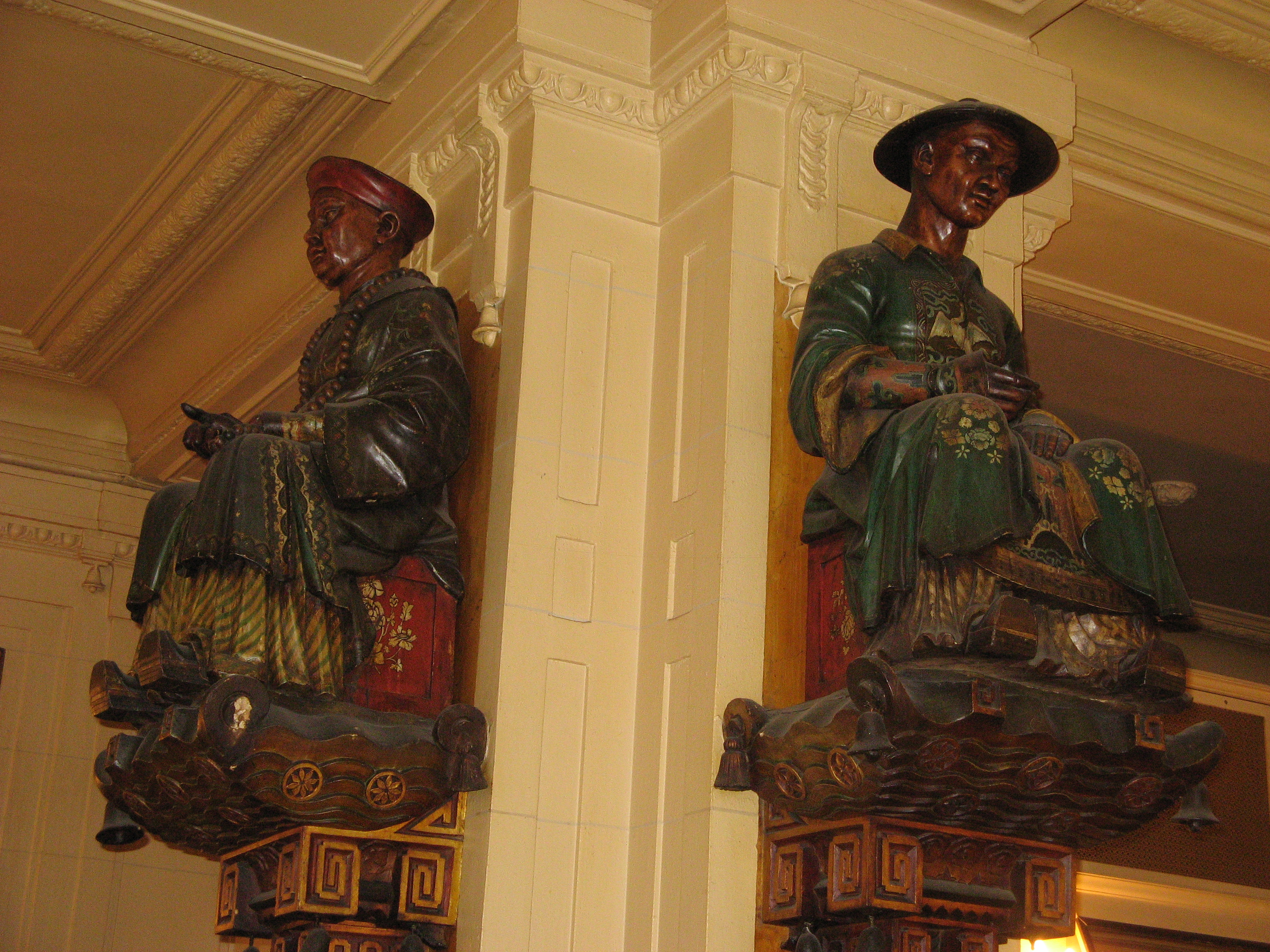
 Simone De Beauvoir
 Jean-Paul Sartre, (1905-1980) born in Paris in
 Slide Show


 The Daily Hatch