“The credit of the United States ‘is not a bargaining chip,’ Obama said on 1-14-13. However, President Obama keeps getting our country’s credit rating downgraded as he raises the debt ceiling higher and higher!!!!
Washington Could Learn a Lot from a Drug Addict
Just spend more, don’t know how to cut!!! Really!!! That is not living in the real world is it?
Making more dependent on government is not the way to go!!
Why is our government in over 16 trillion dollars in debt? There are many reasons for this but the biggest reason is people say “Let’s spend someone else’s money to solve our problems.”Liberals like Max Brantley have talked this way for years. Brantley will say that conservatives are being harsh when they don’t want the government out encouraging people to be dependent on the government. The Obama adminstration has even promoted a plan for young people to follow like Julia the Moocher.
Imagine standing a baby carrot up next to the 25-story Stephens building in Little Rock. That gives you a picture of the impact on the national debt that federal spending in Arkansas on Medicaid expansion would have, while here at home expansion would give coverage to more than 200,000 of our neediest citizens, create jobs, and save money for the state.
Here’s the thing: while more than a billion dollars a year in federal spending would represent a big-time stimulus for Arkansas, it’s not even a drop in the bucket when it comes to the national debt.
Currently, the national debt is around $16.4 trillion. In fiscal year 2015, the federal government would spend somewhere in the neighborhood of $1.2 billion to fund Medicaid expansion in Arkansas if we say yes. That’s about 1/13,700th of the debt.
It’s hard to get a handle on numbers that big, so to put that in perspective, let’s get back to the baby carrot. Imagine that the height of the Stephens building (365 feet) is the $16 trillion national debt. That $1.2 billion would be the length of a ladybug. Of course, we’re not just talking about one year if we expand. Between now and 2021, the federal government projects to contribute around $10 billion. The federal debt is projected to be around $25 trillion by then, so we’re talking about 1/2,500th of the debt. Compared to the Stephens building? That’s a baby carrot.
______________
Here is how it will all end if everyone feels they should be allowed to have their “baby carrot.”
How sad it is that liberals just don’t get this reality.
While living in Europe in the 1760s, Franklin observed: “in different countries … the more public provisions were made for the poor, the less they provided for themselves, and of course became poorer. And, on the contrary, the less was done for them, the more they did for themselves, and became richer.”
Alexander Fraser Tytler, Lord Woodhouselee(15 October 1747 – 5 January 1813) was a Scottish lawyer, writer, and professor. Tytler was also a historian, and he noted, “A democracy cannot exist as a permanent form of government. It can only exist until the majority discovers it can vote itself largess out of the public treasury. After that, the majority always votes for the candidate promising the most benefits with the result the democracy collapses because of the loose fiscal policy ensuing, always to be followed by a dictatorship, then a monarchy.”
[Jefferson affirms that the main purpose of society is to enable human beings to keep the fruits of their labor.— TGW]
To take from one, because it is thought that his own industry and that of his fathers has acquired too much, in order to spare to others, who, or whose fathers have not exercised equal industry and skill, is to violate arbitrarily the first principle of association, “the guarantee to every one of a free exercise of his industry, and the fruits acquired by it.” If the overgrown wealth of an individual be deemed dangerous to the State, the best corrective is the law of equal inheritance to all in equal degree; and the better, as this enforces a law of nature, while extra taxation violates it.
[From Writings of Thomas Jefferson, ed. Albert E. Bergh (Washington: Thomas Jefferson Memorial Association, 1904), 14:466.]
_______
Jefferson pointed out that to take from the rich and give to the poor through government is just wrong. Franklin knew the poor would have a better path upward without government welfare coming their way. Milton Friedman’s negative income tax is the best method for doing that and by taking away all welfare programs and letting them go to the churches for charity.
We got to act fast and get off this path of socialism. Morning Bell: Welfare Spending Shattering All-Time Highs Robert Rector and Amy Payne October 18, 2012 at 9:03 am It’s been a pretty big year for welfare—and a new report shows welfare is bigger than ever. The Obama Administration turned a giant spotlight […]
We need to cut Food Stamp program and not extend it. However, it seems that people tell the taxpayers back home they are going to Washington and cut government spending but once they get up there they just fall in line with everyone else that keeps spending our money. I am glad that at least […]
Government Must Cut Spending Uploaded by HeritageFoundation on Dec 2, 2010 The government can cut roughly $343 billion from the federal budget and they can do so immediately. __________ Liberals argue that the poor need more welfare programs, but I have always argued that these programs enslave the poor to the government. Food Stamps Growth […]
Milton Friedman – The Negative Income Tax Published on May 11, 2012 by LibertyPen In this 1968 interview, Milton Friedman explained the negative income tax, a proposal that at minimum would save taxpayers the 72 percent of our current welfare budget spent on administration. http://www.LibertyPen.com Source: Firing Line with William F Buckley Jr. ________________ Milton […]
Dan Mitchell Commenting on Obama’s Failure to Propose a Fiscal Plan Published on Aug 16, 2012 by danmitchellcato No description available. ___________ After the Welfare State Posted by David Boaz Cato senior fellow Tom G. Palmer, who is lecturing about freedom in Slovenia and Tbilisi this week, asked me to post this announcement of his […]
Is President Obama gutting the welfare reform that Bill Clinton signed into law? Morning Bell: Obama Denies Gutting Welfare Reform Amy Payne August 8, 2012 at 9:15 am The Obama Administration came out swinging against its critics on welfare reform yesterday, with Press Secretary Jay Carney saying the charge that the Administration gutted the successful […]
Thomas Sowell – Welfare Welfare reform was working so good. Why did we have to abandon it? Look at this article from 2003. The Continuing Good News About Welfare Reform By Robert Rector and Patrick Fagan, Ph.D. February 6, 2003 Six years ago, President Bill Clinton signed legislation overhauling part of the nation’s welfare system. […]
Uploaded by ForaTv on May 29, 2009 Complete video at: http://fora.tv/2009/05/18/James_Bartholomew_The_Welfare_State_Were_In Author James Bartholomew argues that welfare benefits actually increase government handouts by ‘ruining’ ambition. He compares welfare to a humane mousetrap. —– Welfare reform was working so good. Why did we have to abandon it? Look at this article from 2003. In the controversial […]
Thomas Sowell If the welfare reform law was successful then why change it? Wasn’t Bill Clinton the president that signed into law? Obama Guts Welfare Reform Robert Rector and Kiki Bradley July 12, 2012 at 4:10 pm Today, the Obama Department of Health and Human Services (HHS) released an official policy directive rewriting the welfare […]
I have been writing President Obama letters and have not received a personal response yet. (He reads 10 letters a day personally and responds to each of them.) However, I did receive a form letter in the form of an email on July 10, 2012. I don’t know which letter of mine generated this response so I have […]
On May 20, 2012 I attended the St. George’s Independent School commencement exercises in Collierville, Tennessee. School President William W. Taylor used the Beatles as an example of a group of people that brought different talents together to accomplish much.
He also quoted from the song “My Life” which happens to be one of my favorite songs. It goes like this:
There are places I’ll remember
All my life though some have changed
Some forever not for better
Some have gone and some remain
All these places have their moments
With lovers and friends I still can recall
Some are dead and some are living
In my life I’ve loved them all
But of all these friends and lovers
There is no one compares with you
And these memories lose their meaning
When I think of love as something new
Though I know I’ll never lose affection
For people and things that went before
I know I’ll often stop and think about them
In my life I love you more
Though I know I’ll never lose affection
For people and things that went before
I know I’ll often stop and think about them
In my life I love you more
In my life I love you more
Writers: Lennon-McCartney Recorded: October 18 and 22, 1965 Released: December 6, 1965 Not released as a single
‘In My Life” represented a crucial breakthrough for John Lennon — as well as a creative struggle. The song began with a question: During a March 1964 interview with Lennon, journalist Kenneth Allsop asked why he hadn’t written more lyrics about his life and experiences. “I had a sort of professional songwriter’s attitude to writing pop songs,” Lennon said to Rolling Stone in 1970. “I would write [books like] In His Own Write, to express my personal emotions. I’d have a separate songwriting John Lennon who wrote songs for the meat market. I didn’t consider them to have any depth at all. They were just a joke.”
Taking Allsop’s critique to heart, Lennon wrote a long poem about people and places from his past, touching on Liverpool landmarks like Penny Lane, Strawberry Field and Menlove Avenue. “I had a complete set of lyrics after struggling with a journalistic version of a trip downtown on a bus, naming every sight,” he said. When he read the poem later, though, “it was the most boring ‘What I Did on My Holidays’ song, and it wasn’t working. But then I laid back, and these lyrics started coming to me about the places I remember.”
What happened next is a dispute that will never be resolved. “In My Life” is one of only a handful of Lennon-McCartney songs where the two strongly disagreed over who wrote what: According to Lennon, “The whole lyrics were already written before Paul even heard it. His contribution melodically was the harmony and the middle eight.” According to McCartney, Lennon basically had the first verse done. At one of their writing sessions at Lennon’s Weybridge estate, the two painstakingly rewrote the lyrics, making them less specific and more universal. (Some of Lennon’s lines, like his reference to the late Stu Sutcliffe, the Beatles’ former bassist, in “some are dead and some are living,” remained.) McCartney also says he wrote the melody on Lennon’s Mellotron, inspired by Smokey Robinson, as well as the gentle opening guitar figure.
Regardless of its true authorship, “In My Life” represented Lennon’s evolution as an artist. “I started being me about the songs, not writing them objectively, but subjectively,” Lennon said. “I think it was Dylan who helped me realize that — not by any discussion or anything, but by hearing his work.” The Beatles were huge Dylan fans by early 1964, playing The Freewheelin’ Bob Dylan nonstop in between gigs. When Dylan visited the Beatles in New York that August, he famously introduced them to marijuana. (He thought the Beatles were already pot smokers, having misheard the lyrics “I can’t hide” in “I Want to Hold Your Hand” as “I get high.”) Dylan and pot would be the great twin influences that led the Beatles out of their moptop period and on to their first masterpiece, Rubber Soul.
Before that album, “We were just writing songs à la the Everly Brothers and Buddy Holly,” Lennon said, “pop songs with no more thought to them than that.” He rightly called “In My Life” “my first real, major piece of work. Up until then, it had all been glib and throwaway.”
I have spent alot of time talking about Woody Allen films on this blog and looking at his worldview. He has a hopeless, meaningless, nihilistic worldview that believes we are going to turn to dust and there is no afterlife. Even though he has this view he has taken the opportunity to look at the weaknesses of his own secular view. I salute him for doing that. That is why I have returned to his work over and over and presented my own Christian worldview as an alternative. Take a moment and read again a good article on Woody Allen below. There are some links below to some other posts about him.
The new Woody Allen film, Whatever Works — his 40th for those keeping count — signals a return for the filmmaker in more ways than one. For starters, it is his first film to shoot on location in New York since Melinda and Melinda in 2004, interrupting a half-decade European vacation during which the 73-year-old Allen has directed three films in London and one in Spain. It also marks the realization of a project he first conceived in the 1970s as a vehicle for Zero Mostel, then set aside following the actor’s untimely death. The result is a light comic burlesque — a minor key but eminently pleasurable Allen confection — starring Seinfeld and Curb Your Enthusiasm mastermind Larry David as Boris Yellnikoff, an atheistic, egotistical, misanthropic physics professor whose contempt for the entire human race is lessened by his chance meeting with the ditzy Southern belle (Evan Rachel Wood) he finds squatting underneath his backstairs.
Allen is running late on the sunny May afternoon, when I show up at his Upper East Side editing room, tucked away inconspicuously behind a door labeled “Manhattan Film Center” on the ground floor of an otherwise residential building. It’s here that Allen cuts all his films, screens them (and others) in a soundproof, green velour screening room, auditions actors for his upcoming projects (and there is always an upcoming project), and otherwise holds court. On the two previous occasions I have come here to interview him, the results have never been less than surprising, Allen holding forth with unexpected candor and ease about his films and about the cosmic matters that weigh heavy on his soul. And today is no exception, as Allen enters in his signature attire of pastel button-down, khaki trousers and well-worn brown lace-ups, apologizes for his lateness, and proceeds to talk at length about the meaning of life (or lack thereof), the trouble with actors, and the allure of younger women.
The title Whatever Works suggests a philosophy of life but also a work ethic. In other words, if you make a film a year, as you do, you can’t afford to sit around waiting for the muses to descend.
I’ve never been someone who’s waited for the muses, because my background is in television. When I came up, we used to write shows, and if you were writing for Gary Moore or Sid Caesar — whoever it was — you had to have a show. It was live. When you came in on a Monday morning, you had to think of something. You couldn’t wait for inspiration; you just had to do it. So I got used to that, and I can do it to this day. I can go into a room and — it doesn’t always come out good — but I can produce something. I do think it’s an ethic. It keeps you out of mischief. If you work, it keeps you distracted. It keeps you from thinking about yourself too much, about how terrible you are, about how great you are. It’s certainly humbling.
I’ve often used this comparison: With mental patients in an institution, they give them basket weaving, finger painting and things like that to do, because the very act of working with your hands is healthful and therapeutic. It’s the same thing with making a film, which is a handmade product. You have to write it, you have to go out and shoot it, then we come here and we put the film together and put the music in. For a period of time, you get two rewards: You get the reward of distraction — you don’t think about the outside world, and you’re faced with solvable problems, and if they’re not solvable, you don’t die because of it. And then, if it’s the right film, you get to live in a fake reality for a number of months. So if I’m making a picture like The Purple Rose of Cairo or Bullets Over Broadway or Everyone Says I Love You, for several months, I get to live with very beautiful women and very witty men and they have costumes, and the sets are beautiful. It’s a very pleasant way to waste your life.
It’s funny that you mention those three films in particular because, like them, Whatever Works seems like a fantasy. The characters and the story all have a heightened, exaggerated feel.
Right, it’s a cartoon tale. The mother, the father — everyone in the movie is cartoonlike.
I was also reminded of two of your more recent films, Match Point and Cassandra’s Dream, both of which also concern luck, chance and the randomness of life, even though Whatever Works is actually a script you wrote more than 30 years ago. When we spoke at the time of the release of Match Point, you said, “You’re always searching for control, and in the end, you’re at the mercy of the hoisted piano not falling on your head.” And here there is a scene in which a person falls from a window onto another person’s head!
The same obsessions I had when I first started, I have now. I’ve been in psychoanalysis, I’ve been successful, I’ve had ups, I’ve had downs. I’ve had some hit movies, movies that failed. But with everything that’s happened to me, all of my experiences, I’ve never been able to solve the real problems of life that have plagued every playwright since Euripides and Aristophanes. No progress has been made on the existential themes and the subject of interpersonal relations, which are still brutal and painful and fragile and very hard to make work, and which cause everybody an enormous amount of suffering and grief. Why are we here? What is the point of it all?
Take Camus’ question [in The Myth of Sisyphus] of whether or not to commit suicide. Now, even the most grim people come to rationalizations where, in Camus’ case, he feels that pushing the rock up the hill, the doing of it, is worth it and you don’t have to succeed. But I feel — in answer to the question of why should we not kill ourselves given a meaningless, godless existence — that it’s a pre-intellectual question, and that your body answers it for you. Your mind will never be able to give you a convincing justification for living your life, because from a logical point of view, if your life is indeed meaningless — which it is — and there’s nothing out there, what is the point of it? Well, the point of it is only that you’re too scared to terminate it because you’re hard-wired, it’s in your blood, to live and to want to live and to want to protect yourself. So, while I’m home babbling about how meaningless life is and how cruel and brutal and without any purpose, if there’s a fire in my house, I’ll go to extreme measures to save my life. And then when I’ve saved my life, I’ll say to myself, “Why did you bother to do that?”
Even by the standards of some of the antisocial, unlikable characters you’ve written in the past, including the ones you yourself played in Anything Else and Deconstructing Harry, Boris seems a step beyond.
You know, at one point I was going to call this film, when I first wrote it for Zero, The Worst Man in the World. I thought it would be a funny character — a guy who is the quintessence of misanthropy and who can’t fit in, doesn’t want to fit in, rejects everything, just isn’t someone who can deal with life or wants to deal with it. He doesn’t accept it: He finds the fact that he’s mortal to be unacceptable. He cannot agree to the rules of life. The characters I’ve played in those other movies were certainly in that direction but not as extreme as I wanted to make the character of Boris.
Did you, at any point in the past three decades, consider playing the role yourself?
No, because when I thought of it for Zero, I thought of it as a part for a fat man. I thought of him as a big, aggressive physicist, a Russian chess genius who had no time for “microbes” and “earthworms.” And I can’t do that. My source of comedy is more victim — I find myself frightened when I hear the noise in the other room, that sort of thing. This guy was grandiose. It was hard to think of people who could play him now, and then [casting director] Juliet Taylor mentioned Larry, whom I had worked with very briefly before and whom I knew from Curb Your Enthusiasm. But it seemed to me that he could do it, because on his television show he’s very authentic. He’s not an overacter or a fake posturer. Of course, he told me up and down the line how he couldn’t do it, how he’s not an actor and this and that, and then I knew he’d be great. Because it’s the ones like Diane Keaton, who tell you how bad they are, who always come through. It’s the ones who tell you how great they are who never come through.
People who can act are naturals. Over the years, I’ve met and worked with people who studied all over the place, and if they had natural talent, it was great. If they didn’t, the fact that they had studied didn’t mean anything. I’ve gotten guys off the street — literally off the street — who come in here and, when they speak, they’re un-self-conscious and authentic. Whereas, with a lot of professional actors, they come in to meet for a part and we’ll be chatting like we’re chatting now, and they’re just fine. Then, they read the part and they go into their acting mode, and everything about them suddenly becomes inauthentic. They feel they have to do something to the material or they’re not justifying their paycheck. So they start acting it, and you don’t want them to act it; you want them to just say it. If they’re supposed to be a salesman, you want them to be a salesman like you’d experience a salesman. But they don’t. They start playing a salesman.
The real revelation in the film, I think, is Evan Rachel Wood, who has been very strong in a number of movies but who hasn’t had an opportunity to play this sort of 1930s screwball ingenue.
I had never heard of her, and my wife said you should look at this girl Evan Rachel Wood, because I saw her in one or two movies and she’s just great. Then a few days after that, [production designer] Santo Loquasto was talking to me and he said the exact same thing. So I checked her out and saw that she was a remarkable actress — complicated and dark, really exceptional. I didn’t know if she could do comedy or not. I thought she could, and she agreed to do it, so I assumed she wouldn’t agree to do it if she didn’t think she could. And so she did it and she was incredibly good. I said to her, “It’s a Southern girl, you’re going to have to do a Southern accent,” and she wouldn’t do it for me, wouldn’t show me her Southern accent until we shot. Now, I can empathize with that. It’s risky, because if she couldn’t do it, I would have been in very serious trouble. But she did it, and she just did it great.
On the other hand, Ed Begley Jr. [who plays Wood’s father] had no idea he was going to be required to do a Southern accent. He came to New York, got into costume, came to the set. The first shot we shot in the movie was with him, and he had no idea. I said, “You know you’re going to have to play this with a Southern accent. You do do a Southern accent, right?” He said, “Well, I think I can.” I said, “Okay, because I assumed you knew that when you read it.” But he didn’t, and he just simply did it. So much for all this meticulous preparing.
So much for The Method.
I was with a Japanese lady yesterday, who was in town doing interviews because Vicky Cristina Barcelona is opening in Japan. She asked me what pictures I’ve liked [recently] and I mentioned Rachel Getting Married, which was a picture I liked very much. She said she had interviewed Jonathan Demme and he had said it was the first time he shot a picture without rehearsals, and of course everyone in it was great and it was a wonderful picture. I, on the other hand, have never done rehearsals. I just don’t think they’re necessary. And yet, there are directors — great directors, like Ingmar Bergman — who would rehearse and rehearse. I wouldn’t know what to do at a rehearsal. When I was in Paul Mazursky’s Scenes From a Mall, he did extensive rehearsing, and he’s a wonderful guy and a wonderful director, but I thought it was nuts at the time. I thought, “How do you have the patience for this?” But that’s how he works. I just never put a minute’s thought into it beforehand, to the point where an actor will come to the set not even knowing he’s got to do a Southern accent. And yes, I could have been very traumatized if he had said, “Oh, I can’t do a Southern accent. I just can’t do one. If you need British, fine, but I can’t do Southern.” So I’ve been lucky that way, that I haven’t run into a catastrophe. It’s the same thing if there’s a scene with a lot of physical action. I work it out with the cameraman and bring in the actor with no rehearsal and say, “Start over here and go over there and pick up a cigarette and then come over here,” and 99 percent of the time that’s exactly what they do and it looks fine. Once in a great while, someone will say, “I don’t know what I’m doing over there. I’d feel better walking over to the window.” And I always say, “So, walk to the window.”
The film suggests that Boris is redeemed, humanized in a way by his encounter with this much younger woman, and you yourself have said that you’ve found a happiness with your wife, Soon-Yi, that you never imagined you would find with a younger Korean woman who has no connection to the film industry.
In fiction, that was even a theme as far back as Manhattan, that in this presumably more innocent, younger person — before they get spoiled by the world — that one can find a certain happiness. Mine was very good luck, personally, that way, but that has always been an idea of mine going back quite far. Even Annie Hall, when you think of it, was kind of a naive girl from Chippewa Falls, who was young and came to New York and knew nothing and was a real hick, a rube, with all her colloquial expressions but with the thought that she would become a mature woman. At that time, she represented for me the same kind of freshness.
When we spoke last year, you were just about to come to Los Angeles to direct your first opera, Puccini’s Gianni Schicchi, and you joked that you were going to skip town quickly before anyone had the chance to tar and feather you for it.
It turned out in the end to be quite a pleasant experience, because I was surrounded by gifted people. The cast was wonderful; I didn’t cast them, they gave me the cast. The conductor was wonderful. It was just a pleasure. And, of course, I was working with a piece of material that’s great. It was the first time I directed anything that wasn’t mine, and so I could devote myself strictly to directing. I didn’t have to write and constantly patch up bad writing. This is what I’m doing all the time in my own films. They’re always an original script, and they’re all full of mistakes. It’s not like it’s a Broadway show, where I take it out of town and iron the kinks out. With a movie, this is it, so I’m rewriting all the time and fixing and helping and adjusting. Here, Puccini has a little masterpiece both musically and in terms of the story, so all I had to do was mount it. Now, it’s a short opera, and I don’t think I could do Aida with the elephants.
Is there anything you can say about the film you are preparing to shoot this summer, other than that it takes place in London again and stars Naomi Watts?
You know the full cast, right? Anthony Hopkins, Freida Pinto, Josh Brolin, Antonio Banderas. The cast is great. It’s a comedy-drama, I can tell you that. It’s a comic film but comic in the way that either Vicky Cristina or Hannah and Her Sisters was. It’s not comic like Bananas. This is real, with a serious side to it but hopefully a reasonable amount of laughs. Hopefully.
Here is a complete list of all the posts I did on the film “Midnight in Paris”
I read this on http://www.crosswalk.com which is one of my favorite websites. Life Lessons from Woody Allen Stephen McGarvey I confess I am a huge film buff. But I’ve never really been a Woody Allen fan, even though most film critics consider him to be one of the most gifted and influential filmmakers of our […]
“Music Monday”:Coldplay’s best songs of all time (Part 6) This is “Music Monday” and I always look at a band with some of their best music. I am currently looking at Coldplay’s best songs. Here are a few followed by another person’s preference: My son Hunter Hatcher’s 15th favorite song is “trouble.” Even though […]
Woody Allen, the film writer, director, and actor, has consistently populated his scripts with characters who exchange dialogue concerning meaning and purpose. In Hannah and Her Sisters a character named Mickey says, “Do you realize what a thread were all hanging by? Can you understand how meaningless everything is? Everything. I gotta get some answers.”{7} […]
“Music Monday”:Coldplay’s best songs of all time (Part 5) This is “Music Monday” and I always look at a band with some of their best music. I am currently looking at Coldplay’s best songs. Here are a few followed by another person’s preference: Hunter picked “Don’t Panic,” as his number 16 pick of Coldplay’s best […]
(If you want to check out other posts I have done about about Steve Jobs:Some say Steve Jobs was an atheist , Steve Jobs and Adoption , What is the eternal impact of Steve Jobs’ life? ,Steve Jobs versus President Obama: Who created more jobs? ,Steve Jobs’ view of death and what the Bible has to say about it ,8 things you might not know about Steve Jobs ,Steve […]
I am a big Woody Allen fan. Not all his films can be recommended but he does look at some great issues and he causes the viewer to ask the right questions. My favorite is “Crimes and Misdemeanors” but the recent film “Midnight in Paris” was excellent too. Looking at the (sometimes skewed) morality of […]
(The signs are up on the buses in Little Rock now and the leader of the movement to put them up said on the radio today that he does not anticipate any physical actions against the signs by Christians. He noted that the Christians that he knows would never stoop to that level.) Debate: Christianity […]
Dave Hogan/ Getty Images This is “Music Monday” and I always look at a band with some of their best music. I am currently looking at Coldplay’s best songs. Here are a few followed by another person’s preference: For the 17th best Coldplay song of all-time, Hunter picks “42.” He notes, “You thought you might […]
If you like Woody Allen films as much as I do then join me every Wednesday for another look the man and his movies. Below are some of the posts from the past:
Crimes and Misdemeanors: A Discussion: Part 1 Adrian Rogers – Crossing God’s Deadline Part 2 Jason Tolbert provided this recent video from Mike Huckabee: John Brummett in his article “Huckabee speaks for bad guy below,” Arkansas News Bureau, May 5, 2011 had to say: Are we supposed to understand and accept that Mike Huckabee is […]
Woody Allen, the film writer, director, and actor, has consistently populated his scripts with characters who exchange dialogue concerning meaning and purpose. In Hannah and Her Sisters a character named Mickey says, “Do you realize what a thread were all hanging by? Can you understand how meaningless everything is? Everything. I gotta get some answers.”{7} […]
Bananas (1971) en cast ex-wife, Louise Lasser (the duo were married from 1966 to 1969), as his romantic lead in this quirky comedy. When asked why he chose to title the movie Bananas, Allen quipped, “Because there are no bananas in it.” “Midnight in Paris” is one of Woody Allen best works. Woody Allen […]
Several members of the 70′s band Kansas became committed Christians after they realized that the world had nothing but meaningless to offer. It seems through the writings of both Woody Allen and Chris Martin of Coldplay that they both are wrestling with the issue of death and what meaning does life bring. Kansas went through […]
I guess the reason I have spent so much time on Woody Allen is because in so many films he discusses the big questions in life. His movie “Crimes and Misdemeanors” is a perfect example. Check out my earlier post Nihilism can be seen in Woody Allen’s latest film “Midnight in Paris” . September (1987) The director […]
Woody Allen and the Abandonment of Guilt Dr. Marc T. Newman : AgapePress Print In considering filmmaking as a pure visual art form, Woody Allen would have to be considered a master of the medium. From his humble beginnings as a comedy writer and filmmaker, he has emerged as a major influential force in Hollywood. […]
The dvd sales of “Midnight in Paris” which went on sale in December have gone through the roof (look at the bottom of this post) and this summer we learned this fact below: ‘Midnight in Paris’ becomes Woody Allen’s all-time biggest hit. How the heck did that happen? by Owen Gleiberman Categories: Annie Hall, Bridesmaids, […]
Woody Allen interviews Billy Graham on Religion This article below makes we think of the lady tied to the Railroad in the Schaeffer video. Dr. Francis schaeffer – The flow of Materialism (Modern man sees no hope for the future and has deluded himself by appealing to nonreason to stay sane. Look at the example […]
A surprisingly civil discussion between evangelical Billy Graham and agnostic comedian Woody Allen. Skip to 2:00 in the video to hear Graham discuss premarital sex, to 4:30 to hear him respond to Allen’s question about the worst sin and to 7:55 for the comparison between accepting Christ and taking LSD. ___________________ The Christian Post > […]
“Woody Wednesday” Allen acts silly in 1971 interview (Part 4) Woody Allen interview 1971 PART 4/4 Uploaded by captainvontrapp on Jul 21, 2008 Woody Allen interview from 1971, just after the worldwide release of ‘Bananas’ ________________________ David Mishkin God and Carpeting: The Theology of Woody Allen by David Mishkin March 1, 1993 This is an […]
In a friendly game of keep away, Barrett Jones demonstrates why he is a formidable opponent on the football field. The mission team he led in Nicaragua visited several schools to share the love of Christ with the children. Special to the Courier
ECS graduate Barrett Jones, right, now an offensive lineman at Alabama, spent his spring break with teammate Hardie Buck lending a helping hand in earthquake-ravaged Haiti.
____________
This year like many years in the past I made the trip down to War Memorial to see the Salt Bowl between the Benton Panthers and the Bryant Hornets. Again this year over 20,000 people gathered to see this high school football game. Many doubted the crowd would be that big this year since the game was moved to the 4th week of the football season, but the naysayers were wrong. The Saline County shootout drew another huge crowd. That is what I call having a passion for football.
Football is a great game to learn life lessons from and many in Saline County have benefitted from the coaching they have received from many fine football coaches on the high school level that truly care about the lives of their young men. Maybe that is part of the reason we are so passionate about this game of football.
I heard Bryant’s Shane Broadway tell Benton’s Grant Merrill on the radio on Jan 7th he attended the recent Benton v. Bryant basketball game, but he just was not ready for basketball yet since he was still so into football mode. Many people across the country feel the same way.
I grew up in Memphis with a good friend of mine who was passionate about football. Actually he was a Notre Dame Fighting Irish fan. Once he got a driver license he took off at least once a year and drove to South Bend and attempted to buy a ticket outside the stadium for a football game to see his beloved team play. He has been able to see Notre Dame play in person every year since 1978. Now that is what I call having a passion for football.
Let me now tell you about my other longtime Notre Dame Fighting Irish friends. Tim, Pat and Jim Monahan are brothers, and have been running Monahan Inc of Arcola, Illinois for many years. They sell handles and broomcorn, and since at Little Rock Broom Works we need those items to make brooms, we have been a customer of theirs for many years.
Two of Tim’s sons have actually played football for Notre Dame. Both fit the “Rudy” description. Out of high school they received many offers to play at the small college level, but they chose to walk-on at Notre Dame. Tom Monahan got some playing time his senior year as a blocking back in 1986, and Mark Monahan did the same as a defensive back in 1995. Former Arkansas Coach Lou Holtz coached both players.
Why did they walk on at Notre Dame? Probably it had something to do with how far back the Monahan family goes with the Fighting Irish. These boys’ grandfather Tom Monahan played for Knute Rockne from 1928 to 1931.
The Monahan’s still have in their possession a letter dated August 2, 1929 from Rockne encouraging Monahan to put on 10 to 15 lbs. He went on to write, “I think you have the potentialities to make a good center with a little more experience, and you will get that this fall.” Unfortunately, Rockne’s life was cut short at age 43 in a plane crash in 1931.
Lou Holtz gave Arkansas some great years as the Razorback Football Coach from 1977 to 1983. Actually I got to see Holtz coach several times at the tale end of that span and I have had season tickets to the football games since 1984. In fact, the 2011 season when the Hogs finished ranked #5 was the first time since 1977 that the Razorbacks finished in the top 5. The final poll at the end of the 1977 season had the Irish #1 and the Hogs #3. It took us 34 years to achieve that get back to that level.
Arkansas has had someone involved in the national races though. Gus Malzahn who played football at Henderson State with Bryant’s head coach Paul Calley was the offensive coordinator at Auburn during their national championship run in 2010.
During this year’s National Championship game as a Razorback fan it was hard to pull for a SEC West competitor like Alabama, but I do have a connection through my family this year to Alabama. My father’s good friend Harry Smith has two grandsons playing for Alabama. Barrett Jones (#75) is the reigning Outland Trophy winner and his brother Harrison (#82) is a sophomore. Their younger brother Walker is a senior at Evangelical Christian School (ECS) where I graduated from high school, and he is also committed to play for the Tide next year.
So far the Jones brothers have 5 national championship rings between them. Furthermore, Harrison still has two years to play and Walker is just showing up on campus in August of 2013.
My son Wilson and I got to visit with Rex Jones at the halftime of the Arkansas- Alabama game in Fayetteville in September of 2012. Both of his sons were playing a great game that day as the Hogs got slammed 52-0. I am hopeful the Hogs are more competitive in 2013.
It is truly a small world after all. Several years ago my son Wilson met the Luciens at Fellowship Bible Church where we are members. They are a family that live and serve as missionaries in Hatti, but they do get to spend a couple of months each year back here in Arkansas. Recently Wilson and several of his friends went to a movie together and Lydia Lucien told Wilson that Barrett Jones has come the last two years to their village in Hatti to help with their mission projects.
Barrett Jones reminds me of Tim Tebow. Jones noted, “I don’t want to be known as a football player who happens to be a Christian, I want to be known as a Christian who happens to play football.”
The Baptist Press reported in April of 2012:
Jones organized and led a team of 31 of his friends and family members on a mission trip to Jinotega, Nicaragua, during his spring break, March 11-16.
The team participated in several nightly revival services at Shalom Baptist Church in Jinotega and visited three public schools and an orphanage. At each location, they gave their personal testimonies, presented the Gospel story and interacted with the children by playing sports and games and simply reflecting God’s love.
The 21-year-old Jones made his priorities in his testimony at the revival service at Shalom Baptist on March 13.
“Tonight, I want to talk to you a little bit about what I’m really passionate about,” he told the crowd, “and that’s not football — it’s Jesus Christ.”
We know that football is a great game, but making differences in people’s lives is even better. I will be pulling for Barrett in the big game of life, but as a Hog fan I hope my Razorbacks give his brothers a tougher battle than we have recently.
Everette Hatcher is a regular contributor to The Saline Courier. He is the fourth generation in his family to work in the broom manufacturing business. Everette and his wife Jill have four children and live in Shannon Hills.
EnlargeVasha Hunt | vhunt@al.com Alabama offensive lineman Barrett Jones (75) celebrates after the second string goes in during the fourth quarter of the BCS National Championship NCAA football game, Monday, January 07, 2013, at Sun Life Stadium in Miami Gardens, Fla. The #2 Alabama Crimson Tide played the Notre Dame Fighting Irish for the BCS National Championship. Vasha Hunt/vhunt@al.com
The offensive line of the Alabama Crimson Tide is very, very, very good. Sadly I saw my Hogs get beaten 52-0 to Bama and it seemed that the Tide liked running up the middle behind the center Barrett Jones, and I must say that Jones is deserving of consideration of the Heisman Trophy. This is […]
The secret of Bama’s success is not their great running backs but their great offensive line. Sadly I saw my Hogs get beaten 52-0 to Bama and it seemed that the Tide liked running up the middle behind the center Barrett Jones, and I must say that Jones is deserving of consideration of the Heisman Trophy. […]
Alabama quarterback AJ McCarron celebrates with offensive linesman Barrett Jones as the clock winds down. — Nuccio DiNuzzo, Chicago Tribune, Jan. 7, 2013
Alabama’s versatile Barrett Jones could become the first offensive lineman to be a Heisman Trophy finalist since 1996 Talking about a beatdown!!! Sadly I saw my Hogs get beaten 52-0 to Bama and it seemed that the Tide liked running up the middle behind the center Barrett Jones, and I must say that Jones is […]
Sadly I saw my Hogs get beaten 52-0 to Bama and it seemed that the Tide liked running up the middle behind the center Barrett Jones, and I must say that Jones is deserving of consideration of the Heisman Trophy. This is not the first time I have written about this subject. Jones grew up […]
I saw him play in person at the 52-0 Bama victory over my Hogs in Fayetteville a few weeks ago and I must say that Barrett Jones is deserving of consideration of the Heisman Trophy. This is not the first time I have written about this subject. Jones grew up at the same church I […]
Two years ago Barrett Jones and his Alabama Crimson Tide teammates came to Fayetteville and left town with a hard fought come from behind victory. This year things look a little easier on the front end at least. I wrote an article last year about Barrett and I just wrote one today and they both were […]
FR111446 AP Alabama Coach Nick Saban speaks to the media at the Southeastern Conference NCAA college football media days in Hoover, Ala. on Thursday, July 19, 2012. (AP Photo/Butch Dill) ___________ Yesterday I talked about Alabama in the SEC football preview and I today I am profiling their best player. I really respect Barrett Jones […]
For Barrett Jones is a Tim Tebow type of person and I am glad that people like Jones and Tebow are not ashamed of their Savior Jesus Christ. They don’t try to live two lives, one in church and one that is different in the lockerroom. Barrett Jones is the 2011 Outland Trophy winner […]
Knoxnews.com reports: LAKE BUENA VISTA, Fla. (AP) — Alabama’s Barrett Jones has won the Outland Trophy as the nation’s most outstanding interior lineman. The announcement was made during the College Football Awards show at Disney World. Stanford’s David DeCastro and Penn State’s Devon Still were the other finalists. Jones is the third Alabama player to […]
Today I am starting a new series called “Christians in Athletics.” Barrett Jones grew up under the ministry of Adrian Rogers at Bellevue. Below is a clip from the Memorial Service for Dr. Rogers. Barrett Jones of Alabama Crimson Tide has spent time the last two years ministering to earthquake victims in Haiti. Actually […]
Barrett Jones of Alabama Crimson Tide has spent time the last two years ministering to earthquake victims in Haiti. (Barrett grew up and went to ECS where I graduated and to Bellevue Baptist where I was a member while growing up. Adrian Rogers was the pastor from 1972 to 2004.) Actually I wrote about Barrett’s […]
Alabama head coach Nick Saban is dunked with Gatorade in the final seconds of the BCS National Championship college football game against Notre Dame Monday, Jan. 7, 2013, in Miami. Alabama won 42-14. (AP Photo/Wilfredo Lee)
If you thought the policy side of the “American Taxpayer Relief Act of 2012” is bad, did you notice that there’s a constitutional problem too? I’m sure there’s more than one, actually, but this one was easy to spot without even digging into the gory details.
Recall that the fiscal cliff bill was first passed by the Senate in the wee hours of New Year’s Day, and then seconded by a vote of the House some 20 hours later. And yet, Article I, Section 7, Clause 1—known as the Origination Clause—states: “All Bills for raising Revenue shall originate in the House of Representatives; but the Senate may propose or concur with Amendments as on other Bills.”
Far from being “archaic, idiosyncratic and downright evil”—as Georgetown law professor Mike Seidman claimed as part of his argument for throwing out the Constitution altogether—this provision serves, or at least is supposed to serve, the very real and timeless purpose of keeping the taxing power as close to the voters as possible. Mindful of the potential for abuses of this awesome power (see, e.g., John Roberts on Obamacare) the Constitution’s authors chose to give it to the congressional body that is elected every two years directly by people in local districts (the House), instead of the one whose members serve alternating six-year terms and weren’t initially directly elected (the Senate). As Cato adjunct scholar Tim Sandefur explains in a forthcoming law review article (footnotes/citations omitted):
When the Anti-Federalist “Brutus” warned that the taxing power, “exercised without limitation,” will “introduce itself into every corner of the city, and country” and “light upon the head of every person in the United States” crying “GIVE! GIVE!” the Constitution’s supporters answered that this risk was minimized by the political checks over the taxing power. “The exclusive privilege of originating money bills [belongs] to the house of representatives,” wrote Alexander Hamilton. This would ensure that the power to tax belonged to “the most popular branch” of the government, “the favorite of the people.” James Madison reiterated this point: the “principal reason” why the House was given the power “of originating money bills” was that the Representatives “were chosen by the people, and supposed to be the best acquainted with their interest and ability.” Perhaps the point was put best by George Mason, who considered the Senate “[a]n aristocratic body” which “should ever be suspected of an encroaching tendency,” and believed that “[t]he purse strings should never be put into its hands.”
So what happened last week? Did Harry Reid, John Boehner, and Barack Obama simply agree to ignore the Constitution? (Specifically here, I mean—we know they do generally where federal power is concerned.) Were the House and Senate parliamentarians overruled by a naked political deal?
No, actually what happened is an end-run around the Origination Clause that alas happens with some regularity (and at the hands of both parties): some other revenue bill that passed the House but hasn’t been acted on by the Senate (deliberately or not) gets “amended” by a complete removal and replacement of its entire contents, including the title. This is, of course, what happened with Obamacare, as Sandefur again explains:
On November 19, 2009, Senator Harry Reid submitted an “amendment” to a bill that the House had passed the previous month, H.B. 3590. That bill, the “Service Members Home Ownership Act of 2009,” provided incentives for veterans to buy houses. Reid’s amendment struck out the entire text of H.B. 3590, and replaced it with what became the PPACA—including the Individual Mandate and 17 other separate revenue-raising provisions, estimated to increase federal revenue by $486 billion by 2019. Although this “strike and replace” procedure—sometimes called “gut and amend”—is not uncommon, the Court has never determined whether Congress can use the trick to get around the Origination Clause’s mandate.
(The reason Tim knows so much about this seemingly obscure – if important – clause is that he’s the lead attorney on Pacific Legal Foundation’s case, Sissel v. U.S. Dept. of Health & Human Services, that challenges Obamacare’s individual mandate in its metamorphosis into a tax.)
And so too with the “American Taxpayer Relief Act of 2012,” which was a true tax-relief bill of the same name that House Republicans (and 19 Democrats) passed on August 1, 2012. That bill was naturally DOA in Harry Reid’s Senate, but it did become a useful shell for last week’s shenanigans.
So there you have it: What’s a little Constitution between friends?
Oh, and a langiappe about our favorite new law: given that it was passed on January 1—but alas has not gone away with that day’s hangovers —even the year in the title is wrong. To be fair, however, it was both American and an act of Congress.
I have spent alot of time talking about Woody Allen films on this blog and looking at his worldview. He has a hopeless, meaningless, nihilistic worldview that believes we are going to turn to dust and there is no afterlife. Even though he has this view he has taken the opportunity to look at the weaknesses of his own secular view. I salute him for doing that. That is why I have returned to his work over and over and presented my own Christian worldview as an alternative. Take a moment and read again a good article on Woody Allen below. There are some links below to some other posts about him.
In the final scene of Manhattan, Woody Allen’s character, Isaac, is lying on the sofa with a microphone and a tape-recorder, dictating to himself an idea for a short story. It’ll be about “people in Manhattan,” he says, “who are constantly creating these real unnecessary, neurotic problems for themselves” because they cannot bear to confront the “more unsolvable, terrible problems about the universe.” In an attempt to keep it optimistic, he begins by asking himself the question, “Why is life worth living?” He gives it some thought. “That’s a very good question,” he says, “There are certain things, I guess, that make it worthwhile.” And then the list begins: Groucho Marx, Willie Mays, the second movement of Mozart’s ‘Jupiter Symphony,’ Louis Armstrong’s recording of Potato Head Blues, “Swedish movies, naturally,” Flaubert’s Sentimental Education, Marlon Brando, Frank Sinatra, “those incredible apples and pears by Cézanne, the crabs at Sam Wo’s … Tracy’s face.”
This list acts as an important hinge in the film’s narrative, the point at which Isaac suddenly becomes aware of his feelings for Tracy and resolves to go after her. But within the list there is also something far greater being communicated, something which, I believe, can be described as the central subject of nearly every Woody Allen film, or, perhaps, as the thing that compels him to make films in the first place. Isaac is conveying here a belief in the sheer power of art, its ability to provide a sense of worth to an otherwise empty existence. Art, Woody Allen seems to be saying, is the only valuable response – or the only conceivable response – to the dreadful human predicament as he sees it.
~ ~ ~
“My relationship with death remains the same: I’m strongly against it.”
~ ~ ~
Recently, at the Cannes Film Festival, Woody Allen was asked about what motivates him. He simply laughed and said, “Fear is what drives me.” Work, for Allen, is a wonderful distraction from the “terrible truth” – the ostensible meaninglessness of life, the apparent futility of all human endeavour, the inevitability of sickness, the unescapable prognosis of death. Film-making, like the “unnecessay, neurotic problems” dreamt up by the characters in Isaac’s short story, diverts Allen’s attention away from this reality, from the fear that presents itself when he stops to think about the fact that eventually everybody dies, “the sun burns out, and the earth is gone, and … all the stars, all the planets, the entire universe, goes, disappears.” So this fear is the reason for his prolificity, the impulse behind all of his artistic achievements. Manhattan, Annie Hall, Hannah and Her Sisters, Sleeper came about, first of all, as distractions, projects that prevented him from having to “sit in a chair and think about what a terrible situation all human beings are in.”
I believe there’s a lot of truth in Woody Allen’s perspective. We distract ourselves constantly, we refuse to think about the meaning of our existence, we skirt around the inevitable. Certainly – and he acknowledges this – Allen is not the first person to have hit upon this truth. It’s been recognised by thinkers such as Kierkegaard, Nietzsche, Freud, Sartre, the Buddha and the writer of Ecclesiastes. And Allen knows, too, that one can’t live in a perpetual awareness of this fact. Such a life would be crippling torment. Indeed, it’s this very torment that Tolstoy found himself in after having realised that there was “nothing ahead other than deception of life and of happiness, and the reality of suffering and death: of complete annihilation.” After realising, in other words, the sheer absurdness of human existence, the meaninglessness of life without God. In his Confession he writes:
My life came to a standstill. I could breathe, eat, drink and sleep and I could not help breathing, eating, drinking and sleeping; but there was no life in me because I had no desires whose gratification I would have deemed it reasonable to fulfil. If I wanted something I knew in advance that whether or not I satisfied my desire nothing would come of it.
We can’t live like this, says Woody Allen. We must provide ourselves with necessary delusions in order to carry ourselves through life. He remarks that, in fact, it’s only those people whom he calls “self-deluded” that seem to find any kind of real satisfaction in living, any peace or enjoyment. These people can say, “Well, my priest, or my rabbi tells me everthing’s going to be all right,” and they find their answers in what he calls “magical solutions.” And this recourse to the “magical” he dismisses as nonsense.
It’s worth comparing Woody Allen’s pessimistic agnosticism with the utopian atheism of someone like Richard Dawkins. Evidently, the former worldview is entirely consistent with non-belief in God, but it’s not clear that the latter is. In fact, it appears unfounded, false. Dawkins removes God from the picture entirely, yet clings persistently to a belief in life’s meaning, grounding this meaning, it appears, in natural selection. There’s a contradiction here in Dawkins’ thought. On the one hand, he claims that science “can tell us why we are here, tell us the purpose of human existence,” yet, on the other, he insists on characterising natural selection itself as a blind mechanism, containing “no design, no purpose, no evil, no good, nothing but pointless indifference.”
Whilst I myself do believe in God and don’t share Woody Allen’s agnostic belief, I can respect his consistency, his willingness to acknowledge an existence without God for what it really is: “a grim, painful, nightmarish, meaningless experience.” His worldview follows naturally from what Heidegger termed the state of human “abandonment,” the absence of God in all human affairs. Dawkins’ worldview, however, doesn’t – it’s an embarrassing mishmash of strict empricist and naturalistic belief with what really amounts to a kind of foggy mysticism, a belief system according to which human beings can create for themselves an objective purpose. What he fails to realise is that this purpose is nothing more than a delusion, a mere appearance of purpose. It might get us up in the morning, but, once again, it’s no more real than the neurotic problems dreamt up by Isaac’s characters.
~ ~ ~
“It is impossible to experience one’s death objectively and still carry a tune.”
~ ~ ~
Let’s return to Woody Allen’s seemingly affirmative opinion of art. Given his lifelong insistence on the belief that human existence is “a big, meaningless thing,” how are we to make sense of Isaac’s list? Is it really possible to reconcile Woody Allen’s adament nihilism with his invocation of the power of art, its ability to stand firm in the face of such a “terrible truth”? The point to be made, I believe, is a very subtle one. In that same interview at Cannes, Allen talks about the role of the artist as he sees it: essentially, they must respond to the question that Isaac poses, “Why is life worth living?” Faced with the emptiness of life, they must try to “figure out – knowing that it’s true, knowing the worst – why it’s still worthwhile.” Allen isn’t, I believe, claiming that art can provide objective meaning to life. Such an assertion would conflict with his unswerving pessimism. Instead, he’s saying that the essence of art, what animates it, what inspires it to flourish, is a courageous struggle against this “terrible truth.” The artist, he says, must confront the futility of life, look at it in the face, embrace it in all of its hopelessness and despair, and provide humanity with an honest reply. The question we should ask in response, then, isn’t, ‘Can Woody Allen justify his belief in objective meaning as embodied in art?’ I don’t think he believes in objective meaning, a necessary purpose for human existence. Rather, the question should be, ‘Is it possible for the artist to look squarely at the human predicament and supply humanity with a worthwhile answer?’
And this, I want to say, still isn’t possible. As we’ve seen in the example of Tolstoy, one can’t live one’s life in full awareness of its apparent futility, of the imminence of death, of the falsity of one’s happiness, and yet carry on as normal. One would end up utterly debilitated. And if this is indeed how artists have been living for centuries, confronting the inevitable, facing the dismal truth, then art itself is an inexplicable phenomenon.
~ ~ ~
“On the plus side, death is one of the few things that can be done just as easily lying down.”
~ ~ ~
The answer isn’t to appeal to art as something that can provide human existence with objective meaning. Such a ‘faith in art’ would merely beg the question, ‘But why is art so special?’ How can art, if viewed as just another custom, an event within the world, give purpose and value to human life? How can that which is within the world give meaning to that which is also within the world? Meaning, I believe, can only come from without, from a personal God who transcends the world, yet is immanent within it, actively involved in human existence, instilling it with significance and worth. One of the purposes of art, I believe, is to reflect the being and glory of God, who is the groundof being itself. Far from art being an escape from a “terrible truth” or a desperate attempt to confront and suppress nihilism, it should be seen as an affirmative activity, an act of creative celebration to be enjoyed in the company of our good Creator God.
Here is a complete list of all the posts I did on the film “Midnight in Paris”
I read this on http://www.crosswalk.com which is one of my favorite websites. Life Lessons from Woody Allen Stephen McGarvey I confess I am a huge film buff. But I’ve never really been a Woody Allen fan, even though most film critics consider him to be one of the most gifted and influential filmmakers of our […]
“Music Monday”:Coldplay’s best songs of all time (Part 6) This is “Music Monday” and I always look at a band with some of their best music. I am currently looking at Coldplay’s best songs. Here are a few followed by another person’s preference: My son Hunter Hatcher’s 15th favorite song is “trouble.” Even though […]
Woody Allen, the film writer, director, and actor, has consistently populated his scripts with characters who exchange dialogue concerning meaning and purpose. In Hannah and Her Sisters a character named Mickey says, “Do you realize what a thread were all hanging by? Can you understand how meaningless everything is? Everything. I gotta get some answers.”{7} […]
“Music Monday”:Coldplay’s best songs of all time (Part 5) This is “Music Monday” and I always look at a band with some of their best music. I am currently looking at Coldplay’s best songs. Here are a few followed by another person’s preference: Hunter picked “Don’t Panic,” as his number 16 pick of Coldplay’s best […]
(If you want to check out other posts I have done about about Steve Jobs:Some say Steve Jobs was an atheist , Steve Jobs and Adoption , What is the eternal impact of Steve Jobs’ life? ,Steve Jobs versus President Obama: Who created more jobs? ,Steve Jobs’ view of death and what the Bible has to say about it ,8 things you might not know about Steve Jobs ,Steve […]
I am a big Woody Allen fan. Not all his films can be recommended but he does look at some great issues and he causes the viewer to ask the right questions. My favorite is “Crimes and Misdemeanors” but the recent film “Midnight in Paris” was excellent too. Looking at the (sometimes skewed) morality of […]
(The signs are up on the buses in Little Rock now and the leader of the movement to put them up said on the radio today that he does not anticipate any physical actions against the signs by Christians. He noted that the Christians that he knows would never stoop to that level.) Debate: Christianity […]
Dave Hogan/ Getty Images This is “Music Monday” and I always look at a band with some of their best music. I am currently looking at Coldplay’s best songs. Here are a few followed by another person’s preference: For the 17th best Coldplay song of all-time, Hunter picks “42.” He notes, “You thought you might […]
I liked Dr. James Buchanan because he believed in freedom and he was constantly attacking those who would try to chip away at our freedoms. Here is a quote below:
“The Clean Air Act’s Unduly stringent and extremely costly provisions could seriously threaten this nation’s economic expansion.”
Excerpted from a letter written by several noted economists–including Milton Friedman and James Buchanan–urging President Bush to veto the expansion of the Clean Air Act. From the Wall Street Journal editorial “Clean Air Politics”.
Friday, October 19, 1990
________
ALSO DR. BUCHANAN WARNED US ABOUT RUNNING UP DEFICITS EVERY YEAR AND HE PREDICTED THAT WOULD CONTINUE!!!!
Today’s passing of Nobel Prize-winning economist James M. Buchanan is a sad milestone, but a good time to remember his impact on economics. Buchanan’s basic contribution to economic theory (and policy) was both simple and profound: Political decision makers, just like consumers and producers, are self-interested and subject to constraints. This important insight appears to be almost entirely ignored, even by many conservatives, in the current policy debates.
The topic of deficit financing for governments was a continual concern for Professor Buchanan. While other economists debated the appropriate level and timing of federal deficits, Buchanan warned of the danger of deficit finance when it left the world of economic theory and entered the world of political gamesmanship. History has confirmed his theory—unlike economists, politicians will continually prefer to run up the debt. Deficits allow politicians to provide special-interest backers with costly projects during the current election cycle while deferring payment until after the next election. The result has been (as he predicted) a virtually unending string of budget deficits and an ever-rising national debt.
Though growing up on a rural Tennessee farm gave him strong populist inclinations, experience and intellect made him realize that big government would be bent to the will of the politically powerful and was not the friend of the little person. He constantly advocated for institutional changes (such as a constitutional amendment to require balanced budgets) to limit leviathan government.
James M. Buchanan’s creative thinking and originality will be sorely missed. Let’s hope his lessons endure.
Would you like to know the spirtual meaning of these words above by Coldplay or find a christian response to the song “The Last Resort” by Papa Roach? You could if you checked out “Music Monday” here every week and see all the videos and articles. Take a look at the links before that refer to these songs:
BradyBunchClip 05 – Marcia meets Davy Jones Uploaded by BradyBunchClips on May 12, 2009 After multiple attempts, Marcia gets to meet Davy Jones! ___________________ From Wikipedia: Davy Jones Jones performing in Geneva, Illinois, in 2006 Born David Thomas Jones 30 December 1945(1945-12-30) Openshaw, Manchester, England Died February 29, 2012(2012-02-29) (aged 66) Indiantown, Florida, United States […]
(Sittin On) The Dock Of The Bay Uploaded by taylorgdaniel on Jun 9, 2010 Downtown Memphis, July 9, 2010, solo by Taylor G. Daniel of Germantown. This song was actually sung just a few miles away from where Redding originally recorded it in downtown Memphis at Stax Records. ______________________ Over the years Otis Redding’s influence […]
Papa Roach – Last Resort (Censored Version) This series of posts concerns the song “The Last Resort.” Amy Winehouse died today and it was a tragic loss. That really troubled me that she did not seek spiritual help instead of turning to drugs and alcohol. This post today will give hope to those we feel like […]
I think that Viva La Vida is their 4th best CD. It is balanced better than all of their albums. This CD had many songs that were very similar. Although this album has their only number one hit in the US, Viva La Vida. I loved “VIVA LA VIDA” “VIOLET HILL” “LIFE IN TECHNICOLOR” “YES” […]
This is “Music Monday” and I always look at a band with some of their best music. I am currently looking at Coldplay’s best songs. Here are a few followed by another person’s preference: My son Hunter Hatcher’s 3rd favorite Coldplay song is ”Every Tear Drop is a WaterFall” Hunter noted, “Recent favorite of mine. I […]
Coldplay seeks to corner the market on earnest and expressive rock music that currently appeals to wide audiences Here is an article I wrote a couple of years ago about Chris Martin’s view of hell. He says he does not believe in it but for some reason he writes a song that teaches that it […]
BERTRAND RUSSELL
But aren’t you now saying in effect, I mean by God whatever is good or the sum total of what is good — the system of what is good, and, therefore, when a young man loves anything that is good he is loving God. Is that what you’re saying, because if so, it wants a bit of arguing.
FATHER COPLESTON
I don’t say, of course, that God is the sum-total or system of what is good in the pantheistic sense; I’m not a pantheist, but I do think that all goodness reflects God in some way and proceeds from Him, so that in a sense the man who loves what is truly good, loves God even if he doesn’t advert to God. But still I agree that the validity of such an interpretation of a man’s conduct depends on the recognition of God’s existence, obviously.
BERTRAND RUSSELL
Yes, but that’s a point to be proved.
FATHER COPLESTON
Quite so, but I regard the metaphysical argument as probative, but there we differ.
BERTRAND RUSSELL
You see, I feel that some things are good and that other things are bad. I love the things that are good, that I think are good, and I hate the things that I think are bad. I don’t say that these things are good because they participate in the Divine goodness.
FATHER COPLESTON
Yes, but what’s your justification for distinguishing between good and bad or how do you view the distinction between them?
BERTRAND RUSSELL
I don’t have any justification any more than I have when I distinguish between blue and yellow. What is my justification for distinguishing between blue and yellow? I can see they are different.
FATHER COPLESTON
Well, that is an excellent justification, I agree. You distinguish blue and yellow by seeing them, so you distinguish good and bad by what faculty?
BERTRAND RUSSELL
By my feelings.
FATHER COPLESTON
By your feelings. Well, that’s what I was asking. You think that good and evil have reference simply to feeling?
BERTRAND RUSSELL
Well, why does one type of object look yellow and another look blue? I can more or less give an answer to that thanks to the physicists, and as to why I think one sort of thing good and another evil, probably there is an answer of the same sort, but it hasn’t been gone into in the same way and I couldn’t give it [to] you.
FATHER COPLESTON
Well, let’s take the behavior of the Commandant of Belsen. That appears to you as undesirable and evil and to me too. To Adolf Hitler we suppose it appeared as something good and desirable, I suppose you’d have to admit that for Hitler it was good and for you it is evil.
BERTRAND RUSSELL
No, I shouldn’t quite go so far as that. I mean, I think people can make mistakes in that as they can in other things. if you have jaundice you see things yellow that are not yellow. You’re making a mistake.
FATHER COPLESTON
Yes, one can make mistakes, but can you make a mistake if it’s simply a question of reference to a feeling or emotion? Surely Hitler would be the only possible judge of what appealed to his emotions.
BERTRAND RUSSELL
It would be quite right to say that it appealed to his emotions, but you can say various things about that among others, that if that sort of thing makes that sort of appeal to Hitler’s emotions, then Hitler makes quite a different appeal to my emotions.
FATHER COPLESTON
Granted. But there’s no objective criterion outside feeling then for condemning the conduct of the Commandant of Belsen, in your view?
BERTRAND RUSSELL
No more than there is for the color-blind person who’s in exactly the same state. Why do we intellectually condemn the color-blind man? Isn’t it because he’s in the minority?
FATHER COPLESTON
I would say because he is lacking in a thing which normally belongs to human nature.
BERTRAND RUSSELL
Yes, but if he were in the majority, we shouldn’t say that.
FATHER COPLESTON
Then you’d say that there’s no criterion outside feeling that will enable one to distinguish between the behavior of the Commandant of Belsen and the behavior, say, of Sir Stafford Cripps or the Archbishop of Canterbury.
BERTRAND RUSSELL
The feeling is a little too simplified. You’ve got to take account of the effects of actions and your feelings toward those effects. You see, you can have an argument about it if you can say that certain sorts of occurrences are the sort you like and certain others the sort you don’t like. Then you have to take account of the effects of actions. You can very well say that the effects of the actions of the Commandant of Belsen were painful and unpleasant.
FATHER COPLESTON
They certainly were, I agree, very painful and unpleasant to all the people in the camp.
BERTRAND RUSSELL
Yes, but not only to the people in the camp, but to outsiders contemplating them also.
FATHER COPLESTON
Yes, quite true in imagination. But that’s my point. I don’t approve of them, and I know you don’t approve of them, but I don’t see what ground you have for not approving of them, because after all, to the Commandant of Belsen himself, they’re pleasant, those actions.
BERTRAND RUSSELL
Yes, but you see I don’t need any more ground in that case than I do in the case of color perception. There are some people who think everything is yellow, there are people suffering from jaundice, and I don’t agree with these people. I can’t prove that the things are not yellow, there isn’t any proof, but most people agree with him that they’re not yellow, and most people agree with me that the Commandant of Belsen was making mistakes.
FATHER COPLESTON
Well, do you accept any moral obligation?
BERTRAND RUSSELL
Well, I should have to answer at considerable length to answer that. Practically speaking — yes. Theoretically speaking I should have to define moral obligation rather carefully.
FATHER COPLESTON
Well, do you think that the word “ought” simply has an emotional connotation?
BERTRAND RUSSELL
No, I don’t think that, because you see, as I was saying a moment ago, one has to take account of the effects, and I think right conduct is that which would probably produce the greatest possible balance in intrinsic value of all the acts possible in the circumstances, and you’ve got to take account of the probable effects of your action in considering what is right.
FATHER COPLESTON
Well, I brought in moral obligation because I think that one can approach the question of God’s existence in that way. The vast majority of the human race will make, and always have made, some distinction between right and wrong. The vast majority I think has some consciousness of an obligation in the moral sphere. It’s my opinion that the perception of values and the consciousness of moral law and obligation are best explained through the hypothesis of a transcendent ground of value and of an author of the moral law. I do mean by “author of the moral law” an arbitrary author of the moral law. I think, in fact, that those modern atheists who have argued in a converse way “there is no God; therefore, there are no absolute values and no absolute law,” are quite logical.
BERTRAND RUSSELL
I don’t like the word “absolute.” I don’t think there is anything absolute whatever. The moral law, for example, is always changing. At one period in the development of the human race, almost everybody thought cannibalism was a duty.
FATHER COPLESTON
Well, I don’t see that differences in particular moral judgments are any conclusive argument against the universality of the moral law. Let’s assume for the moment that there are absolute moral values, even on that hypothesis it’s only to be expected that different individuals and different groups should enjoy varying degrees of insight into those values.
BERTRAND RUSSELL
I’m inclined to think that “ought,” the feeling that one has about “ought” is an echo of what has been told one by one’s parents or one’s nurses.
FATHER COPLESTON
Well, I wonder if you can explain away the idea of the “ought” merely in terms of nurses and parents. I really don’t see how it can be conveyed to anybody in other terms than itself. It seems to be that if there is a moral order bearing upon the human conscience, that that moral order is unintelligible apart from the existence of God.
BERTRAND RUSSELL
Then you have to say one or other of two things. Either God only speaks to a very small percentage of mankind — which happens to include yourself — or He deliberately says things are not true in talking to the consciences of savages.
FATHER COPLESTON
Well, you see, I’m not suggesting that God actually dictates moral precepts to the conscience. The human being’s ideas of the content of the moral law depends entirely to a large extent on education and environment, and a man has to use his reason in assessing the validity of the actual moral ideas of his social group. But the possibility of criticizing the accepted moral code presupposes that there is an objective standard, and there is an ideal moral order, which imposes itself (I mean the obligatory character of which can be recognized). I think that the recognition of this ideal moral order is part of the recognition of contingency. It implies the existence of a real foundation of God.
BERTRAND RUSSELL
But the law-giver has always been, it seems to me, one’s parents or someone like. There are plenty of terrestrial law-givers to account for it, and that would explain why people’s consciences are so amazingly different in different times and places.
FATHER COPLESTON
It helps to explain differences in the perception of particular moral values, which otherwise are inexplicable. It will help to explain changes in the matter of the moral law in the content of the precepts as accepted by this or that nation, or this or that individual. But the form of it, what Kant calls the categorical imperative, the “ought,” I really don’t see how that can possibly be conveyed to anybody by nurse or parent because there aren’t any possible terms, so far as I can see, with which it can be explained. it can’t be defined in other terms than itself, because once you’ve defined it in other terms than itself you’ve explained it away. It’s no longer a moral “ought.” It’s something else.
BERTRAND RUSSELL
Well, I think the sense of “ought” is the effect of somebody’s imagined disapproval, it may be God’s imagined disapproval, but it’s somebody’s imagined disapproval. And I think that is what is meant by “ought.”
FATHER COPLESTON
It seems to me to be external customs and taboos and things of that sort which can most easily be explained simply through environment and education, but all that seems to me to belong to what I call the matter of the law, the content. The idea of the “ought” as such can never be conveyed to a man by the tribal chief or by anybody else, because there are no other terms in which it could be conveyed. It seems to me entirely….
BERTRAND RUSSELL
But I don’t see any reason to say that — I mean we all know about conditioned reflexes. We know that an animal, if punished habitually for a certain sort of act, after a time will refrain. I don’t think the animal refrains from arguing within himself, “Master will be angry if I do this.” He has a feeling that that’s not the thing to do. That’s what we can do with ourselves and nothing more.
FATHER COPLESTON
I see no reason to suppose that an animal has a consciousness or moral obligation; and we certainly don’t regard an animal as morally responsible for his acts of disobedience. But a man has a consciousness of obligation and of moral values. I see no reason to suppose that one could condition all men as one can “condition” an animal, and I don’t suppose you’d really want to do so even if one could. If “behaviorism” were true, there would be no objective moral distinction between the emperor Nero and St. Francis of Assisi. I can’t help feeling, Lord Russell, you know, that you regard the conduct of the Commandant of Belsen as morally reprehensible, and that you yourself would never under any circumstances act in that way, even if you thought, or had reason to think, that possibly the balance of the happiness of the human race might be increased through some people being treated in that abominable manner.
BERTRAND RUSSELL
No. I wouldn’t imitate the conduct of a mad dog. The fact that I wouldn’t do it doesn’t really bear on this question we’re discussing.
FATHER COPLESTON
No, but if you were making a utilitarian explanation of right and wrong in terms of consequences, it might be held, and I suppose some of the Nazis of the better type would have held that although it’s lamentable to have to act in this way, yet the balance in the long run leads to greater happiness. I don’t think you’d say that, would you? I think you’d say that sort of action is wrong — and in itself, quite apart from whether the general balance of happiness is increased or not. Then, if you’re prepared to say that, then I think you must have some criterion of feeling, at any rate. To me, that admission would ultimately result in the admission of an ultimate ground of value in God.
BERTRAND RUSSELL
I think we are perhaps getting into confusion. It is not direct feeling about the act by which I should judge, but rather a feeling as to the effects. And I can’t admit any circumstances in which certain kinds of behavior, such as you have been discussing, would do good. I can’t imagine circumstances in which they would have a beneficial effect. I think the persons who think they do are deceiving themselves. But if there were circumstances in which they would have a beneficial effect, then I might be obliged, however reluctantly, to say — “Well, I don’t like these things, but I will acquiesce in them,” just as I acquiesce in the Criminal Law, although I profoundly dislike punishment.
FATHER COPLESTON
Well, perhaps it’s time I summed up my position. I’ve argued two things. First, that the existence of God can be philosophically proved by a metaphysical argument; secondly, that it is only the existence of God that will make sense of man’s moral experience and of religious experience. Personally, I think that your way of accounting for man’s moral judgments leads inevitably to a contradiction between what your theory demands and your own spontaneous judgments. Moreover, your theory explains moral obligation away, and explaining away is not explanation.
As regards the metaphysical argument, we are apparently in agreement that what we call the world consists simply of contingent beings. That is, of beings no one of which can account for its own existence. You say that the series of events needs no explanation: I say that if there were no necessary being, no being which must exist and cannot not-exist, nothing would exist. The infinity of the series of contingent beings, even if proved, would be irrelevant. Something does exist; therefore, there must be something which accounts for this fact, a being which is outside the series of contingent beings. If you had admitted this, we could then have discussed whether that being is personal, good, and so on. On the actual point discussed, whether there is or is not a necessary being, I find myself, I think in agreement with the great majority of classical philosophers.
You maintain, I think, that existing beings are simply there, and that I have no justification for raising the question of the explanation of their existence. But I would like to point out that this position cannot be substantiated by logical analysis; it expresses a philosophy which itself stands in need of proof. I think we have reached an impasse because our ideas of philosophy are radically different; it seems to me that what I call a part of philosophy, that you call the whole, insofar at least as philosophy is rational.
It seems to me, if you will pardon my saying so, that besides your own logical system — what you call “modern” in opposition to antiquated logic (a tendentious adjective) — you maintain a philosophy which cannot be substantiated by logical analysis. After all, the problem of God’s existence is an existential problem whereas logical analysis does not deal directly with problems of existence. So it seems to me, to declare that the terms involved in one set of problems are meaningless because they are not required in dealing with another set of problems, is to settle from the beginning the nature and extent of philosophy, and that is itself a philosophical act which stands in need of justification.
BERTRAND RUSSELL
Well, I should like to say just a few words by way of summary on my side. First, as to the metaphysical argument: I don’t admit the connotations of such a term as “contingent” or the possibility of explanation in Father Copleston’s sense. I think the word “contingent” inevitably suggests the possibility of something that wouldn’t have this what you might call accidental character of just being there, and I don’t think is true except int he purely causal sense. You can sometimes give a causal explanation of one thing as being the effect of something else, but that is merely referring one thing to another thing and there’s no — to my mind — explanation in FATHER COPLESTON’s sense of anything at all, nor is there any meaning in calling things “contingent” because there isn’t anything else they could be.
That’s what I should say about that, but I should like to say a few words about Father Copleston’s accusation that I regard logic as all philosophy — that is by no means the case. I don’t by any means regard logic as all philosophy. I think logic is an essential part of philosophy and logic has to be used in philosophy, and in that I think he and I are at one. When the logic that he uses was new — namely, in the time of Aristotle, there had to be a great deal of fuss made about it; Aristotle made a lot of fuss about that logic. Nowadays it’s become old and respectable, and you don’t have to make so much fuss about it. The logic that I believe in is comparatively new, and therefore I have to imitate Aristotle in making a fuss about it; but it’s not that I think it’s all philosophy by any means — I don’t think so. I think it’s an important part of philosophy, and when I say that, I don’t find a meaning for this or that word, that is a position of detail based upon what I’ve found out about that particular word, from thinking about it. It’s not a general position that all words that are used in metaphysics are nonsense, or anything like that which I don’t really hold.
As regards the moral argument, I do find that when one studies anthropology or history, there are people who think it their duty to perform acts which I think abominable, and I certainly can’t, therefore, attribute Divine origin to the matter of moral obligation, which FATHER COPLESTON doesn’t ask me to; but I think even the form of moral obligation, when it takes the form of enjoining you to eat your father or what not, doesn’t seem to me to be such a very beautiful and noble thing; and, therefore, I cannot attribute a Divine origin to this sense of moral obligation, which I think is quite easily accounted for in quite other ways.


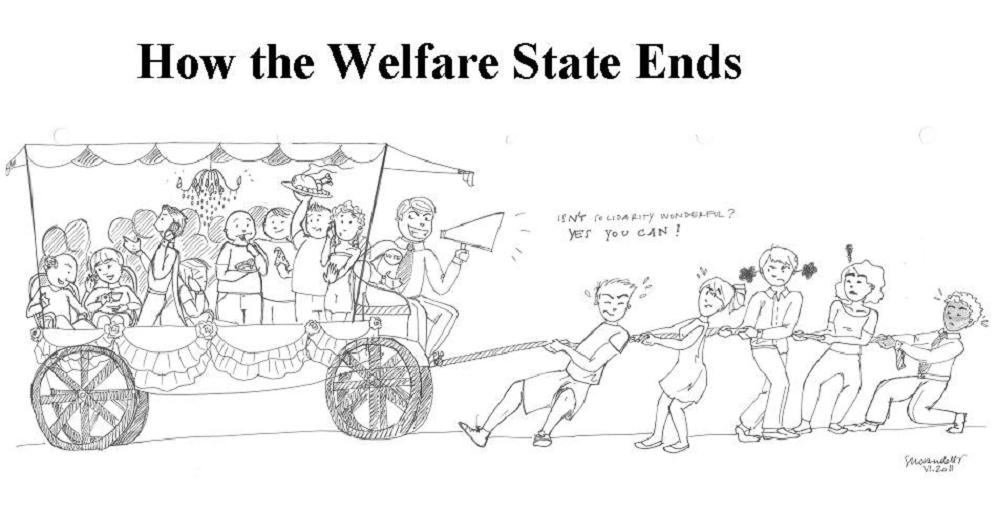


 Alabama head coach Nick Saban is dunked with Gatorade in the final seconds of the BCS National Championship college football game against Notre Dame Monday, Jan. 7, 2013, in Miami. Alabama won 42-14. (AP Photo/Wilfredo Lee)
 BERTRAND RUSSELL
 FATHER COPLESTON


 The Daily Hatch