Category Archives: Atheists Confronted

Taking on Ark Times Bloggers on the “Absurdity of Life without God!!” Part 2 (NIETZSCHE predicted that someday people would realize the implications of their atheism)

The Bible and Science (Part 02)

How Can We Demonstrate that Objective Moral Values Exist to a Nihilist Who Holds

Published on Dec 17, 2012

For more resources visit: http://www.reasonablefaith.org

The Bethinking National Apologetics Day Conference: “Countering the New Atheism” took place during the UK Reasonable Faith Tour in October 2011. Christian academics William Lane Craig, John Lennox, Peter J Williams and Gary Habermas lead 600 people in training on how to defend and proclaim the credibility of Christianity against the growing tide of secularism and New Atheist popular thought in western society.

In this session, William Lane Craig delivers his critique of Richard Dawkins’ objections to arguments for the existence of God, followed by questions and answers from the audience. In this clip, Dr Craig addresses a question about how objective moral values can be demonstrated to a Nihilist, who hold that they are illusory.

Richard Dawkins Vs. William Lane Craig Debate

Uploaded on Oct 23, 2011

Richard Dawkins TIMES:
7:20
32:15
1:03:05
1:19:33
1:39:33

William Lane Craig TIMES:
13:39
46:27
1:14:04
1:36:08

__________________

Francis Schaeffer – The Biblical Flow of History & Truth (1)

Francis Schaeffer pictured below
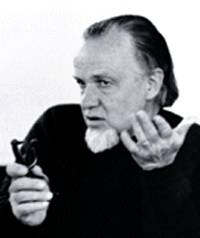
File:Francis Schaeffer.jpg

_________________

Life without God in the picture is absurdity!!!. That was the view of King Solomon when he wrote the Book of Ecclesiastes 3000 years ago and it is the view of many of the modern philosophers today. Modern man has tried to come up with a lasting meaning for life without God in the picture (life under the sun), but it is not possible. Without the infinite-personal God of the Bible to reveal moral absolutes then man is left to embrace moral relativism. In a time plus chance universe man is reduced to a machine and can not find a place for values such as love. Both of Francis Schaeffer’s film series have tackled these subjects and he shows how this is reflected in the arts.

Here are some posts I have done on the series “HOW SHOULD WE THEN LIVE? : Francis Schaeffer’s “How should we then live?” Video and outline of episode 10 “Final Choices” episode 9 “The Age of Personal Peace and Affluence”episode 8 “The Age of Fragmentation”episode 7 “The Age of Non-Reason” episode 6 “The Scientific Age”  episode 5 “The Revolutionary Age” episode 4 “The Reformation” episode 3 “The Renaissance”episode 2 “The Middle Ages,”, and  episode 1 “The Roman Age,” .

In the film series “WHATEVER HAPPENED TO THE HUMAN RACE?” the arguments are presented  against abortion (Episode 1),  infanticide (Episode 2),   euthenasia (Episode 3), and then there is a discussion of the Christian versus Humanist worldview concerning the issue of “the basis for human dignity” in Episode 4 and then in the last episode a close look at the truth claims of the Bible.

I have discussed many subjects with my liberal friends over at the Ark Times Blog in the past and I have taken them on now on the subject of the absurdity of life without God in the picture. Most of my responses included quotes from William Lane Craig’s book THE ABSURDITY OF LIFE WITHOUT GOD.  Here is the result of one of those encounters from June of 2013:

I wrote:

Zatharus, let me show you the result of your atheism. You wrote, “You are here because your parents had sex; knowledge of an afterlife is even less knowable than a before life; other than that created by the person, 42. Can we now discuss the dichotomy of existentialism?”
Then you quoted, Friedrich Nietzsche, “To live is to suffer, to survive is to find some meaning in the suffering.”
________________
NIETZSCHE understood what a lot of people today fail to realize.

William Lane Craig writes:

Do you understand the gravity of the alternatives before us? For if God exists, then there is hope for man. But if God does not exist, then all we are left with is despair. Do you understand why the question of God’s existence is so vital to man? As Francis Schaeffer aptly put it, “If God is dead, then man is dead, too.”

Unfortunately, the mass of mankind do not realize this fact. They continue on as though nothing has changed. I’m reminded of NIETZSCHE’S story of the madman who in the early morning hours burst into the marketplace, lantern in hand, crying, “I seek God! I seek God!” Since many of those standing about did not believe in God, he provoked much laughter. “Did God get lost?” they taunted him. “Or is he hiding? Or maybe he has gone on a voyage or emigrated!” Thus they yelled and laughed. Then, writes Nietzsche, the madman turned in their midst and pierced them with his eyes.

“Whither is God?” he cried, “I shall tell you. We have killed him—you and I. All of us are his murderers. But how have we done this? How were we able to drink up the sea? Who gave us the sponge to wipe away the entire horizon? What did we do when we unchained this earth from its sun? Whither is it moving now? Away from all suns? Are we not plunging continually? Backward, sideward, forward, in all directions? Is there any up or down left? Are we not straying as through an infinite nothing? Do we not feel the breath of empty space? Has it not become colder? Is not night and more night coming on all the while? Must not lanterns be lit in the morning? Do we not hear anything yet of the noise of the gravediggers who are burying God? … God is dead…. And we have killed him. How shall we, the murderers of all murderers, comfort ourselves?”14

The crowd stared at the madman in silence and astonishment. At last he dashed his lantern to the ground. “I have come too early,” he said. “This tremendous event is still on its way—it has not yet reached the ears of man.” People did not yet truly comprehend the consequences of what they had done in killing God. But NIETZSCHE predicted that someday people would realize the implications of their atheism; and this realization would usher in an age of nihilism—the destruction of all meaning and value in life. The end of Christianity, wrote NIETZSCHE, means the advent of nihilism. This most gruesome of guests is standing already at the door. “Our whole European culture is moving for some time now,” wrote NIETZSCHE, “with a tortured tension that is growing from decade to decade, as toward a catastrophe: restlessly, violently, headlong, like a river that wants to reach the end, that no longer reflects, that is afraid to reflect.”15

MOST PEOPLE STILL DO NOT REFLECT ON THE CONSEQUENCES OF ATHEISM AND SO, LIKE THE CROWD IN THE MARKETPLACE, GO UNKNOWINGLY ON THEIR WAY. But when we realize, as did Nietzsche, what atheism implies, then his question presses hard upon us: how shall we, the murderers of all murderers, comfort ourselves?

Related posts:

Francis Schaeffer’s “How should we then live?” Video and outline of episode 10 “Final Choices” (Schaeffer Sundays)

E P I S O D E 1 0   Dr. Francis Schaeffer – Episode X – Final Choices 27 min FINAL CHOICES I. Authoritarianism the Only Humanistic Social Option One man or an elite giving authoritative arbitrary absolutes. A. Society is sole absolute in absence of other absolutes. B. But society has to be […]

Francis Schaeffer’s “How should we then live?” Video and outline of episode 9 “The Age of Personal Peace and Affluence” (Schaeffer Sundays)

E P I S O D E 9 Dr. Francis Schaeffer – Episode IX – The Age of Personal Peace and Affluence 27 min T h e Age of Personal Peace and Afflunce I. By the Early 1960s People Were Bombarded From Every Side by Modern Man’s Humanistic Thought II. Modern Form of Humanistic Thought Leads […]

Francis Schaeffer’s “How should we then live?” Video and outline of episode 8 “The Age of Fragmentation” (Schaeffer Sundays)

E P I S O D E 8 Dr. Francis Schaeffer – Episode VIII – The Age of Fragmentation 27 min I saw this film series in 1979 and it had a major impact on me. T h e Age of FRAGMENTATION I. Art As a Vehicle Of Modern Thought A. Impressionism (Monet, Renoir, Pissarro, Sisley, […]

Francis Schaeffer’s “How should we then live?” Video and outline of episode 7 “The Age of Non-Reason” (Schaeffer Sundays)

E P I S O D E 7 Dr. Francis Schaeffer – Episode VII – The Age of Non Reason I am thrilled to get this film series with you. I saw it first in 1979 and it had such a big impact on me. Today’s episode is where we see modern humanist man act […]

Francis Schaeffer’s “How should we then live?” Video and outline of episode 6 “The Scientific Age” (Schaeffer Sundays)

E P I S O D E 6 How Should We Then Live 6#1 Uploaded by NoMirrorHDDHrorriMoN on Oct 3, 2011 How Should We Then Live? Episode 6 of 12 ________ I am sharing with you a film series that I saw in 1979. In this film Francis Schaeffer asserted that was a shift in […]

Francis Schaeffer’s “How should we then live?” Video and outline of episode 5 “The Revolutionary Age” (Schaeffer Sundays)

E P I S O D E 5 How Should We Then Live? Episode 5: The Revolutionary Age I was impacted by this film series by Francis Schaeffer back in the 1970′s and I wanted to share it with you. Francis Schaeffer noted, “Reformation Did Not Bring Perfection. But gradually on basis of biblical teaching there […]

Francis Schaeffer’s “How should we then live?” Video and outline of episode 4 “The Reformation” (Schaeffer Sundays)

Dr. Francis Schaeffer – Episode IV – The Reformation 27 min I was impacted by this film series by Francis Schaeffer back in the 1970′s and I wanted to share it with you. Schaeffer makes three key points concerning the Reformation: “1. Erasmian Christian humanism rejected by Farel. 2. Bible gives needed answers not only as to […]

“Schaeffer Sundays” Francis Schaeffer’s “How should we then live?” Video and outline of episode 3 “The Renaissance”

Francis Schaeffer’s “How should we then live?” Video and outline of episode 3 “The Renaissance” Francis Schaeffer: “How Should We Then Live?” (Episode 3) THE RENAISSANCE I was impacted by this film series by Francis Schaeffer back in the 1970′s and I wanted to share it with you. Schaeffer really shows why we have so […]

Francis Schaeffer’s “How should we then live?” Video and outline of episode 2 “The Middle Ages” (Schaeffer Sundays)

  Francis Schaeffer: “How Should We Then Live?” (Episode 2) THE MIDDLE AGES I was impacted by this film series by Francis Schaeffer back in the 1970′s and I wanted to share it with you. Schaeffer points out that during this time period unfortunately we have the “Church’s deviation from early church’s teaching in regard […]

Francis Schaeffer’s “How should we then live?” Video and outline of episode 1 “The Roman Age” (Schaeffer Sundays)

Francis Schaeffer: “How Should We Then Live?” (Episode 1) THE ROMAN AGE   Today I am starting a series that really had a big impact on my life back in the 1970′s when I first saw it. There are ten parts and today is the first. Francis Schaeffer takes a look at Rome and why […]

Francis Schaeffer: “Whatever Happened to the Human Race” (Episode 5) TRUTH AND HISTORY

Francis Schaeffer: “Whatever Happened to the Human Race” (Episode 5) TRUTH AND HISTORY Published on Oct 7, 2012 by AdamMetropolis This crucial series is narrated by the late Dr. Francis Schaeffer and former Surgeon General Dr. C. Everett Koop. Today, choices are being made that undermine human rights at their most basic level. Practices once […]

Francis Schaeffer: “Whatever Happened to the Human Race” (Episode 4) THE BASIS FOR HUMAN DIGNITY

The opening song at the beginning of this episode is very insightful. Francis Schaeffer: “Whatever Happened to the Human Race” (Episode 4) THE BASIS FOR HUMAN DIGNITY Published on Oct 7, 2012 by AdamMetropolis This crucial series is narrated by the late Dr. Francis Schaeffer and former Surgeon General Dr. C. Everett Koop. Today, choices […]

Francis Schaeffer: “Whatever Happened to the Human Race” (Episode 3) DEATH BY SOMEONE’S CHOICE

Francis Schaeffer: “Whatever Happened to the Human Race” (Episode 3) DEATH BY SOMEONE’S CHOICE Published on Oct 6, 2012 by AdamMetropolis This crucial series is narrated by the late Dr. Francis Schaeffer and former Surgeon General Dr. C. Everett Koop. Today, choices are being made that undermine human rights at their most basic level. Practices […]

Francis Schaeffer: “Whatever Happened to the Human Race?” (Episode 2) SLAUGHTER OF THE INNOCENTS

Francis Schaeffer: “Whatever Happened to the Human Race?” (Episode 2) SLAUGHTER OF THE INNOCENTS Published on Oct 6, 2012 by AdamMetropolis This crucial series is narrated by the late Dr. Francis Schaeffer and former Surgeon General Dr. C. Everett Koop. Today, choices are being made that undermine human rights at their most basic level. Practices […]

Francis Schaeffer: “Whatever Happened to the Human Race” (Episode 1) ABORTION OF THE HUMAN RACE

It is not possible to know where the pro-life evangelicals are coming from unless you look at the work of the person who inspired them the most. That person was Francis Schaeffer.  I do care about economic issues but the pro-life issue is the most important to me. Several years ago Adrian Rogers (past president of […]

Ecclesiastes, Purpose, Meaning, and the Necessity of God by Suiwen Liang (Quotes Will Durant, Madalyn Murray O’Hair, Stephen Jay Gould,Richard Dawkins, Jean-Paul Sartre,Bertrand Russell, Leo Tolstoy, Loren Eiseley,Aldous Huxley, G.K. Chesterton, Ravi Zacharias, and C.S. Lewis.)

Ecclesiastes 2-3 Published on Sep 19, 2012 Calvary Chapel Spring Valley | Sunday Evening | September 16, 2012 | Derek Neider _____________________________ I have written on the Book of Ecclesiastes and the subject of the meaning of our lives on several occasions on this blog. In this series on Ecclesiastes I hope to show how secular […]

Robert Leroe on Ecclesiastes (Mentions Thomas Aquinas, Princess Diana, Mother Teresa, King Solomon, King Rehoboam, Eugene Peterson, Chuck Swindoll, and John Newton.)

Ecclesiastes 1 Published on Sep 4, 2012 Calvary Chapel Spring Valley | Sunday Evening | September 2, 2012 | Pastor Derek Neider _____________________ I have written on the Book of Ecclesiastes and the subject of the meaning of our lives on several occasions on this blog. In this series on Ecclesiastes I hope to show how […]

Super Bowl, Black Eyed Peas, and the Meaning of Life and Ecclesiastes

Ecclesiastes 8-10 | Still Searching After All These Years Published on Oct 9, 2012 Calvary Chapel Spring Valley | Sunday Evening | October 7, 2012 | Pastor Derek Neider _______________________ Ecclesiastes 11-12 | Solomon Finds His Way Published on Oct 30, 2012 Calvary Chapel Spring Valley | Sunday Evening | October 28, 2012 | Pastor Derek Neider […]

Brian LePort on Ecclesiastes

Ecclesiastes 6-8 | Solomon Turns Over a New Leaf Published on Oct 2, 2012 Calvary Chapel Spring Valley | Sunday Evening | September 30, 2012 | Pastor Derek Neider _____________________ I have written on the Book of Ecclesiastes and the subject of the meaning of our lives on several occasions on this blog. In this series […]

J.W. Wartick on Ecclesiastes

Ecclesiastes 4-6 | Solomon’s Dissatisfaction Published on Sep 24, 2012 Calvary Chapel Spring Valley | Sunday Evening | September 23, 2012 | Pastor Derek Neider ___________________ I have written on the Book of Ecclesiastes and the subject of the meaning of our lives on several occasions on this blog. In this series on Ecclesiastes I hope […]

Overview of the Book of Ecclesiastes

Overview of the Book of Ecclesiastes Overview of the Book of EcclesiastesAuthor: Solomon or an unknown sage in the royal courtPurpose: To demonstrate that life viewed merely from a realistic human perspective must result in pessimism, and to offer hope through humble obedience and faithfulness to God until the final judgment.Date: 930-586 B.C. Ecclesiastes 2-3 Published on Sep 19, […]

Doy Moyer on the Book of Ecclesiastes and Apologetics

Ecclesiastes 1 Published on Sep 4, 2012 Calvary Chapel Spring Valley | Sunday Evening | September 2, 2012 | Pastor Derek Neider _____________________ I have written on the Book of Ecclesiastes and the subject of the meaning of our lives on several occasions on this blog. In this series on Ecclesiastes I hope to show how […]

Solomon was the author of Ecclesiastes

Ecclesiastes 8-10 | Still Searching After All These Years Published on Oct 9, 2012 Calvary Chapel Spring Valley | Sunday Evening | October 7, 2012 | Pastor Derek Neider _______________________ Ecclesiastes 11-12 | Solomon Finds His Way Published on Oct 30, 2012 Calvary Chapel Spring Valley | Sunday Evening | October 28, 2012 | Pastor Derek Neider […]

By Everette Hatcher III | Posted in Current Events | Edit | Comments (0)

Taking on Ark Times Bloggers on the “Absurdity of Life without God!!” Part 1 (French physicist Blaise Pascal on the meaning of life)

The Bible and Science (Part 01)

Atheists Trying to Have Their Cake and Eat It Too on Morality

Uploaded on Jul 27, 2011

http://reasonablefaith.org – Atheists Trying to Have Their Cake and Eat It Too on Morality. This video shows that when an atheist denies objective morality they also affirm moral good and evil without the thought of any contradiction or inconsistency on their part.

William Lane Craig and his arguments and evidence for God:

Moral Argument for God:

http://www.youtube.com/view_play_list…

Contingency Argument for God (the Leibnizian Argument):

http://www.youtube.com/view_play_list…

Kalam Cosmological Argument for God:

http://www.youtube.com/view_play_list…

Teleological Argument for God:

http://www.youtube.com/view_play_list…

Ontological Argument for God:

http://www.youtube.com/view_play_list…

Belief in God as Properly Basic:

http://www.youtube.com/playlist?p=PLE…

Link:

http://drcraigvideos.blogspot.com

_______________________________________

Dr. Francis Schaeffer – The Biblical flow of Truth & History (intro)

_______________________

Francis Schaeffer and his wife Edith pictured below.

—————————–

_________________

Life without God in the picture is absurdity!!!. That was the view of King Solomon when he wrote the Book of Ecclesiastes 3000 years ago and it is the view of many of the modern philosophers todayModern man has tried to come up with a lasting meaning for life without God in the picture (life under the sun), but it is not possible. Without the infinite-personal God of the Bible to reveal moral absolutes then man is left to embrace moral relativism. In a time plus chance universe man is reduced to a machine and can not find a place for values such as love. Both of Francis Schaeffer’s film series have tackled these subjects and he shows how this is reflected in the arts.

Here are some posts I have done on the series “HOW SHOULD WE THEN LIVE? : Francis Schaeffer’s “How should we then live?” Video and outline of episode 10 “Final Choices” episode 9 “The Age of Personal Peace and Affluence”episode 8 “The Age of Fragmentation”episode 7 “The Age of Non-Reason” episode 6 “The Scientific Age”  episode 5 “The Revolutionary Age” episode 4 “The Reformation” episode 3 “The Renaissance”episode 2 “The Middle Ages,”, and  episode 1 “The Roman Age,” .

In the film series “WHATEVER HAPPENED TO THE HUMAN RACE?” the arguments are presented  against abortion (Episode 1),  infanticide (Episode 2),   euthenasia (Episode 3), and then there is a discussion of the Christian versus Humanist worldview concerning the issue of “the basis for human dignity” in Episode 4 and then in the last episode a close look at the truth claims of the Bible.

I have discussed many subjects with my liberal friends over at the Ark Times Blog in the past and I have taken them on now on the subject of the absurdity of life without God in the picture. Most of my responses included quotes from William Lane Craig’s book THE ABSURDITY OF LIFE WITHOUT GOD.  Here is the result of one of those encounters from June of 2013:

I wrote:

Why do so many people never get around to the big questions in life? (Why am I here? Is there an afterlife? Is there a purpose and lasting meaning to our lives?)

At least many of the readers of the Ark Times have wrestled with these questions.

William Lane Craig in his book “The Absurdity of Life without God,” opens the book by giving noting that one of the earliest examples of a Christian apology appealing to the human predicament is the Pensées of the French mathematician and physicist Blaise Pascal (1623–1662). Having come to a personal faith in Christ in 1654, Pascal had planned to write a defense of the Christian faith entitled L’Apologie de la religion chrétienne, but he died of a debilitating disease at the age of only thirty-nine years, leaving behind hundreds of notes for the work, which were then published posthumously as the Pensées…Despite their predicament, however, most people, incredibly, refuse to seek an answer or even to think about their dilemma. Instead, they lose themselves in escapisms. Listen to Pascal’s description of the reasoning of such a person:

I know not who sent me into the world, nor what the world is, nor what I myself am. I am terribly ignorant of everything. I know not what my body is, nor my senses, nor my soul and that part of me which thinks what I say, which reflects upon itself as well as upon all external things, and has no more knowledge of itself than of them.
I see the terrifying immensity of the universe which surrounds me, and find myself limited to one corner of this vast expanse, without knowing why I am set down here rather than elsewhere, nor why the brief period appointed for my life is assigned to me at this moment rather than another in all the eternity that has gone before and will come after me. On all sides I behold nothing but infinity, in which I am a mere atom, a mere passing shadow that returns no more. All I know is that I must soon die, but what I understand least of all is this very death which I cannot escape.
As I know not whence I come, so I know not whither I go. I only know that on leaving this world I fall for ever into nothingness or into the hands of a wrathful God, without knowing to which of these two states I shall be everlastingly consigned. Such is my condition, full of weakness and uncertainty. From all this I conclude that I ought to spend every day of my life without seeking to know my fate. I might perhaps be able to find a solution to my doubts; but I cannot be bothered to do so, I will not take one step towards its discovery.3
_________________

Pascal can only regard such indifference as insane. Man’s condition ought to impel him to seek to discover whether there is a God and a solution to his predicament. But people occupy their time and their thoughts with trivialities and distractions, so as to avoid the despair, boredom, and anxiety that would inevitably result if those diversions were removed.

______

Zartharus responded:

You are here because your parents had sex; knowledge of an afterlife is even less knowable than a before life; other than that created by the person, 42. Can we now discuss the dichotomy of existentialism?

“To live is to suffer, to survive is to find some meaning in the suffering.”
Friedrich Nietzsche

__________________

Related posts:

Francis Schaeffer’s “How should we then live?” Video and outline of episode 10 “Final Choices” (Schaeffer Sundays)

E P I S O D E 1 0   Dr. Francis Schaeffer – Episode X – Final Choices 27 min FINAL CHOICES I. Authoritarianism the Only Humanistic Social Option One man or an elite giving authoritative arbitrary absolutes. A. Society is sole absolute in absence of other absolutes. B. But society has to be […]

Francis Schaeffer’s “How should we then live?” Video and outline of episode 9 “The Age of Personal Peace and Affluence” (Schaeffer Sundays)

E P I S O D E 9 Dr. Francis Schaeffer – Episode IX – The Age of Personal Peace and Affluence 27 min T h e Age of Personal Peace and Afflunce I. By the Early 1960s People Were Bombarded From Every Side by Modern Man’s Humanistic Thought II. Modern Form of Humanistic Thought Leads […]

Francis Schaeffer’s “How should we then live?” Video and outline of episode 8 “The Age of Fragmentation” (Schaeffer Sundays)

E P I S O D E 8 Dr. Francis Schaeffer – Episode VIII – The Age of Fragmentation 27 min I saw this film series in 1979 and it had a major impact on me. T h e Age of FRAGMENTATION I. Art As a Vehicle Of Modern Thought A. Impressionism (Monet, Renoir, Pissarro, Sisley, […]

Francis Schaeffer’s “How should we then live?” Video and outline of episode 7 “The Age of Non-Reason” (Schaeffer Sundays)

E P I S O D E 7 Dr. Francis Schaeffer – Episode VII – The Age of Non Reason I am thrilled to get this film series with you. I saw it first in 1979 and it had such a big impact on me. Today’s episode is where we see modern humanist man act […]

Francis Schaeffer’s “How should we then live?” Video and outline of episode 6 “The Scientific Age” (Schaeffer Sundays)

E P I S O D E 6 How Should We Then Live 6#1 Uploaded by NoMirrorHDDHrorriMoN on Oct 3, 2011 How Should We Then Live? Episode 6 of 12 ________ I am sharing with you a film series that I saw in 1979. In this film Francis Schaeffer asserted that was a shift in […]

Francis Schaeffer’s “How should we then live?” Video and outline of episode 5 “The Revolutionary Age” (Schaeffer Sundays)

E P I S O D E 5 How Should We Then Live? Episode 5: The Revolutionary Age I was impacted by this film series by Francis Schaeffer back in the 1970′s and I wanted to share it with you. Francis Schaeffer noted, “Reformation Did Not Bring Perfection. But gradually on basis of biblical teaching there […]

Francis Schaeffer’s “How should we then live?” Video and outline of episode 4 “The Reformation” (Schaeffer Sundays)

Dr. Francis Schaeffer – Episode IV – The Reformation 27 min I was impacted by this film series by Francis Schaeffer back in the 1970′s and I wanted to share it with you. Schaeffer makes three key points concerning the Reformation: “1. Erasmian Christian humanism rejected by Farel. 2. Bible gives needed answers not only as to […]

“Schaeffer Sundays” Francis Schaeffer’s “How should we then live?” Video and outline of episode 3 “The Renaissance”

Francis Schaeffer’s “How should we then live?” Video and outline of episode 3 “The Renaissance” Francis Schaeffer: “How Should We Then Live?” (Episode 3) THE RENAISSANCE I was impacted by this film series by Francis Schaeffer back in the 1970′s and I wanted to share it with you. Schaeffer really shows why we have so […]

Francis Schaeffer’s “How should we then live?” Video and outline of episode 2 “The Middle Ages” (Schaeffer Sundays)

  Francis Schaeffer: “How Should We Then Live?” (Episode 2) THE MIDDLE AGES I was impacted by this film series by Francis Schaeffer back in the 1970′s and I wanted to share it with you. Schaeffer points out that during this time period unfortunately we have the “Church’s deviation from early church’s teaching in regard […]

Francis Schaeffer’s “How should we then live?” Video and outline of episode 1 “The Roman Age” (Schaeffer Sundays)

Francis Schaeffer: “How Should We Then Live?” (Episode 1) THE ROMAN AGE   Today I am starting a series that really had a big impact on my life back in the 1970′s when I first saw it. There are ten parts and today is the first. Francis Schaeffer takes a look at Rome and why […]

Francis Schaeffer: “Whatever Happened to the Human Race” (Episode 5) TRUTH AND HISTORY

Francis Schaeffer: “Whatever Happened to the Human Race” (Episode 5) TRUTH AND HISTORY Published on Oct 7, 2012 by AdamMetropolis This crucial series is narrated by the late Dr. Francis Schaeffer and former Surgeon General Dr. C. Everett Koop. Today, choices are being made that undermine human rights at their most basic level. Practices once […]

Francis Schaeffer: “Whatever Happened to the Human Race” (Episode 4) THE BASIS FOR HUMAN DIGNITY

The opening song at the beginning of this episode is very insightful. Francis Schaeffer: “Whatever Happened to the Human Race” (Episode 4) THE BASIS FOR HUMAN DIGNITY Published on Oct 7, 2012 by AdamMetropolis This crucial series is narrated by the late Dr. Francis Schaeffer and former Surgeon General Dr. C. Everett Koop. Today, choices […]

Francis Schaeffer: “Whatever Happened to the Human Race” (Episode 3) DEATH BY SOMEONE’S CHOICE

Francis Schaeffer: “Whatever Happened to the Human Race” (Episode 3) DEATH BY SOMEONE’S CHOICE Published on Oct 6, 2012 by AdamMetropolis This crucial series is narrated by the late Dr. Francis Schaeffer and former Surgeon General Dr. C. Everett Koop. Today, choices are being made that undermine human rights at their most basic level. Practices […]

Francis Schaeffer: “Whatever Happened to the Human Race?” (Episode 2) SLAUGHTER OF THE INNOCENTS

Francis Schaeffer: “Whatever Happened to the Human Race?” (Episode 2) SLAUGHTER OF THE INNOCENTS Published on Oct 6, 2012 by AdamMetropolis This crucial series is narrated by the late Dr. Francis Schaeffer and former Surgeon General Dr. C. Everett Koop. Today, choices are being made that undermine human rights at their most basic level. Practices […]

Francis Schaeffer: “Whatever Happened to the Human Race” (Episode 1) ABORTION OF THE HUMAN RACE

It is not possible to know where the pro-life evangelicals are coming from unless you look at the work of the person who inspired them the most. That person was Francis Schaeffer.  I do care about economic issues but the pro-life issue is the most important to me. Several years ago Adrian Rogers (past president of […]

Ecclesiastes, Purpose, Meaning, and the Necessity of God by Suiwen Liang (Quotes Will Durant, Madalyn Murray O’Hair, Stephen Jay Gould,Richard Dawkins, Jean-Paul Sartre,Bertrand Russell, Leo Tolstoy, Loren Eiseley,Aldous Huxley, G.K. Chesterton, Ravi Zacharias, and C.S. Lewis.)

Ecclesiastes 2-3 Published on Sep 19, 2012 Calvary Chapel Spring Valley | Sunday Evening | September 16, 2012 | Derek Neider _____________________________ I have written on the Book of Ecclesiastes and the subject of the meaning of our lives on several occasions on this blog. In this series on Ecclesiastes I hope to show how secular […]

Robert Leroe on Ecclesiastes (Mentions Thomas Aquinas, Princess Diana, Mother Teresa, King Solomon, King Rehoboam, Eugene Peterson, Chuck Swindoll, and John Newton.)

Ecclesiastes 1 Published on Sep 4, 2012 Calvary Chapel Spring Valley | Sunday Evening | September 2, 2012 | Pastor Derek Neider _____________________ I have written on the Book of Ecclesiastes and the subject of the meaning of our lives on several occasions on this blog. In this series on Ecclesiastes I hope to show how […]

Super Bowl, Black Eyed Peas, and the Meaning of Life and Ecclesiastes

Ecclesiastes 8-10 | Still Searching After All These Years Published on Oct 9, 2012 Calvary Chapel Spring Valley | Sunday Evening | October 7, 2012 | Pastor Derek Neider _______________________ Ecclesiastes 11-12 | Solomon Finds His Way Published on Oct 30, 2012 Calvary Chapel Spring Valley | Sunday Evening | October 28, 2012 | Pastor Derek Neider […]

Brian LePort on Ecclesiastes

Ecclesiastes 6-8 | Solomon Turns Over a New Leaf Published on Oct 2, 2012 Calvary Chapel Spring Valley | Sunday Evening | September 30, 2012 | Pastor Derek Neider _____________________ I have written on the Book of Ecclesiastes and the subject of the meaning of our lives on several occasions on this blog. In this series […]

J.W. Wartick on Ecclesiastes

Ecclesiastes 4-6 | Solomon’s Dissatisfaction Published on Sep 24, 2012 Calvary Chapel Spring Valley | Sunday Evening | September 23, 2012 | Pastor Derek Neider ___________________ I have written on the Book of Ecclesiastes and the subject of the meaning of our lives on several occasions on this blog. In this series on Ecclesiastes I hope […]

Overview of the Book of Ecclesiastes

Overview of the Book of Ecclesiastes Overview of the Book of EcclesiastesAuthor: Solomon or an unknown sage in the royal courtPurpose: To demonstrate that life viewed merely from a realistic human perspective must result in pessimism, and to offer hope through humble obedience and faithfulness to God until the final judgment.Date: 930-586 B.C. Ecclesiastes 2-3 Published on Sep 19, […]

Doy Moyer on the Book of Ecclesiastes and Apologetics

Ecclesiastes 1 Published on Sep 4, 2012 Calvary Chapel Spring Valley | Sunday Evening | September 2, 2012 | Pastor Derek Neider _____________________ I have written on the Book of Ecclesiastes and the subject of the meaning of our lives on several occasions on this blog. In this series on Ecclesiastes I hope to show how […]

Solomon was the author of Ecclesiastes

Ecclesiastes 8-10 | Still Searching After All These Years Published on Oct 9, 2012 Calvary Chapel Spring Valley | Sunday Evening | October 7, 2012 | Pastor Derek Neider _______________________ Ecclesiastes 11-12 | Solomon Finds His Way Published on Oct 30, 2012 Calvary Chapel Spring Valley | Sunday Evening | October 28, 2012 | Pastor Derek Neider […]

Easter weekend 2013, List of posts on series: Is the Bible historically accurate? (Updated 1 through 14C)

“In Christ Alone” music video featuring scenes from “The Passion of the Christ”. It is sung by Lou Fellingham of Phatfish and the writer of the hymn is Stuart Townend.

On this Easter weekend 2013 there is no other better time to take a look at the truth and accuracy of the Bible. 


Is the Bible historically accurate? Here are some of the posts I have done in the past on the subject:


1. 
The Babylonian Chronicle
of Nebuchadnezzars Siege of Jerusalem

This clay tablet is a Babylonian chronicle recording events from 605-594BC. It was first translated in 1956 and is now in the British Museum. The cuneiform text on this clay tablet tells, among other things, 3 main events: 1. The Battle of Carchemish (famous battle for world supremacy where Nebuchadnezzar of Babylon defeated Pharoah Necho of Egypt, 605 BC.), 2. The accession to the throne of Nebuchadnezzar II, the Chaldean, and 3. The capture of Jerusalem on the 16th of March, 598 BC.

2. Hezekiah’s Siloam Tunnel Inscription.

King Hezekiah of Judah ruled from 721 to 686 BC. Fearing a siege by the Assyrian king, Sennacherib, Hezekiah preserved Jerusalem’s water supply by cutting a tunnel through 1,750 feet of solid rock from the Gihon Spring to the Pool of Siloam inside the city walls (2 Kings 20; 2 Chron. 32). At the Siloam end of the tunnel, an inscription, presently in the archaeological museum at Istanbul, Turkey, celebrates this remarkable accomplishment.

3. Taylor Prism (Sennacherib Hexagonal Prism)

It contains the victories of Sennacherib himself, the Assyrian king who had besieged Jerusalem in 701 BC during the reign of king Hezekiah, it never mentions any defeats. On the prism Sennacherib boasts that he shut up “Hezekiah the Judahite” within Jerusalem his own royal city “like a caged bird.” This prism is among the three accounts discovered so far which have been left by the Assyrian king Sennacherib of his campaign against Israel and Judah.

4. Biblical Cities Attested Archaeologically.

In addition to Jericho, places such as Haran, Hazor, Dan, Megiddo, Shechem, Samaria, Shiloh, Gezer, Gibeah, Beth Shemesh, Beth Shean, Beersheba, Lachish, and many other urban sites have been excavated, quite apart from such larger and obvious locations as Jerusalem or Babylon. Such geographical markers are extremely significant in demonstrating that fact, not fantasy, is intended in the Old Testament historical narratives;

5. The Discovery of the Hittites

Most doubting scholars back then said that the Hittites were just a “mythical people that are only mentioned in the Bible.” Some skeptics pointed to the fact that the Bible pictures the Hittites as a very big nation that was worthy of being coalition partners with Egypt (II Kings 7:6), and these bible critics would assert that surely we would have found records of this great nation of Hittites.  The ironic thing is that when the Hittite nation was discovered, a vast amount of Hittite documents were found. Among those documents was the treaty between Ramesses II and the Hittite King.

6.Shishak Smiting His Captives

The Bible mentions that Shishak marched his troops into the land of Judah and plundered a host of cities including Jerusalem,  this has been confirmed by archaeologists. Shishak’s own record of his campaign is inscribed on the south wall of the Great Temple of Amon at Karnak in Egypt. In his campaign he presents 156 cities of Judea to his god Amon. 

7. Moabite Stone

The Moabite Stone also known as the Mesha Stele is an interesting story. The Bible says in 2 Kings 3:5 that Mesha the king of Moab stopped paying tribute to Israel and rebelled and fought against Israel and later he recorded this event. This record from Mesha has been discovered.

8Black Obelisk of Shalmaneser III

The tribute of Jehu, son of Omri, silver, gold, bowls of gold, chalices of gold, cups of gold, vases of gold, lead, a sceptre for the king, and spear-shafts, I have received.”

View from the dome of the Capitol!9A Verification of places in Gospel of John and Book of Acts.

Sir William Ramsay, famed archaeologist, began a study of Asia Minor with little regard for the book of Acts. He later wrote:

I found myself brought into contact with the Book of Acts as an authority for the topography, antiquities and society of Asia Minor. It was gradually borne upon me that in various details the narrative showed marvelous truth.

9B Discovery of Ebla TabletsWhen I think of discoveries like the Ebla Tablets that verify  names like Adam, Eve, Ishmael, David and Saul were in common usage when the Bible said they were, it makes me think of what amazing confirmation that is of the historical accuracy of the Bible.

10. Cyrus Cylinder

There is a well preserved cylinder seal in the Yale University Library from Cyrus which contains his commands to resettle the captive nations.

11. Puru “The lot of Yahali” 9th Century B.C.E.

This cube is inscribed with the name and titles of Yahali and a prayer: “In his year assigned to him by lot (puru) may the harvest of the land of Assyria prosper and thrive, in front of the gods Assur and Adad may his lot (puru) fall.”  It provides a prototype (the only one ever recovered) for the lots (purim) cast by Haman to fix a date for the destruction of the Jews of the Persian Empire, ostensibly in the fifth century B.C.E. (Esther 3:7; cf. 9:26).

12. The Uzziah Tablet Inscription

The Bible mentions Uzziah or Azariah as the king of the southern kingdom of Judah in 2 Kings 15. The Uzziah Tablet Inscription is a stone tablet (35 cm high x 34 cm wide x 6 cm deep) with letters inscribed in ancient Hebrew text with an Aramaic style of writing, which dates to around 30-70 AD. The text reveals the burial site of Uzziah of Judah, who died in 747 BC.

13. The Pilate Inscription

The Pilate Inscription is the only known occurrence of the name Pontius Pilate in any ancient inscription. Visitors to the Caesarea theater today see a replica, the original is in the Israel Museum in Jerusalem. There have been a few bronze coins found that were struck form 29-32 AD by Pontius Pilate

14. Caiaphas Ossuary

This beautifully decorated ossuary found in the ruins of Jerusalem, contained the bones of Caiaphas, the first century AD. high priest during the time of Jesus.

14 B Pontius Pilate Part 2      

In June 1961 Italian archaeologists led by Dr. Frova were excavating an ancient Roman amphitheatre near Caesarea-on-the-Sea (Maritima) and uncovered this interesting limestone block. On the face is a monumental inscription which is part of a larger dedication to Tiberius Caesar which clearly says that it was from “Pontius Pilate, Prefect of Judea.”

14c. Three greatest American Archaeologists moved to accept Bible’s accuracy through archaeology.

Despite their liberal training, it was archaeological research that bolstered their confidence in the biblical text:Albright said of himself, “I must admit that I tried to be rational and empirical in my approach [but] we all have presuppositions of a philosophical order.” The same statement could be applied as easily to Gleuck and Wright, for all three were deeply imbued with the theological perceptions which infused their work.

Keith Green performing “Easter Song” live from The Daisy Club — LA (1982)

Charles Darwin’s slide toward agnosticism

Francis Schaeffer gave a great talk on Charles Darwin’s slide toward agnosticism. I will see if I can dig up the notes from Schaeffer’s talk. I have talked about evolution a lot in the past on this blog. Here are some of the same points that Schaeffer made below in this article by Dr. John Morris.

“Natural” Selection versus “Supernatural” Design

by John D. Morris, Ph.D.

Few Christians realize the extent to which the evolutionary world view conflicts with the Biblical world view. While many attempt to keep a foot in each camp, acknowledging Christ as Savior yet holding evolution to be a fact of history, Christianity and evolution cannot both be true. Evolution is, at its very essence, an atheistic explanation of the world around us. Not all adherents of evolution are atheists, but certainly the leading proponents of evolution recognize that the concept leaves no room for the workings of God in nature.

Consider the following oft-repeated quote from Sir Julian Huxley, who, until his recent death, was perhaps the world’s leading spokesperson for evolution and who, from his position as head of UNESCO at the United Nations, did much to unite the world under an evolutionary, humanistic banner.

Darwin pointed out that no supernatural designer was needed; since natural selection could account for any known form of life, there was no room for a supernatural agency in its evolution … we can dismiss entirely all ideas of a supernatural overriding mind being responsible for the evolutionary process.[1]

On the other hand, Scripture, in many places and in many ways, identifies God as Creator, and claims that His creation was an act of forethought, of planning, of design. Supernatural processes were used to accomplish this design, not just natural processes. “The heavens declare the glory of God, and the firmament showeth His handiwork” (Psalm 19:1). “Thou art worthy, O Lord, to receive glory and honor and power; for thou hast created all things, and for thy pleasure they are and were created” (Revelation 4:11).

These two concepts, supernatural design versus natural processes operating by chance, represent the two views of origins, and are opposite. They cannot both be true. Nobel Prize-winning zoologist Jacques Monod said it this way:

” … it necessarily follows that chance alone is at the source of every innovation…. Pure chance, absolutely free but blind, at the very root of the stupendous edifice of evolution.”[2]

The recent edition of the authoritative Encyclopaedia Britannica informs us that:

Darwin did two things: He showed that evolution was a fact contradicting literal interpretations of Scriptural legends of creation and that its cause, natural selection, was automatic with no room for divine guidance or design.[3]

Many Christians believe in evolution, but they must come to realize that the evolutionary way of thinking, conflicting as it does with the facts of science, is a logical necessity, if, and only if, there has been no supernatural input in nature.

Furthermore, if evolution is true, the entire Christian faith is a sham. Dr. William Provine, Professor of History and Biology at Cornell University and author of many anti-creation articles, wrote recently that Darwin recognized:

… if natural selection explained adaptations, and evolution by descent were true, then the argument from design was dead and all that went with it, namely: 1) the existence of a personal God, 2) free will, 3) life after death, 4) immutable moral laws, and 5) ultimate meaning in life.[4]

But evolution is not a fact! Evolution is not even in a category of things that could ever be a scientific fact! It is a world view about the past — an historical reconstruction. It is a way to interpret scientific data, such as rocks, fossils, and complex living systems which exist in the present. It is a potential answer to the question, “What happened in the unobserved past to make the present get to be this way?”

As we have seen, this answer encompasses far more than merely a scientific proposal. As currently understood by leading evolutionists, it embraces strict naturalism, an anti-God philosophy, and results in a denial of the major doctrines of Scripture.

Darwin, in his writings, letters, and memoirs, promoted natural selection as a means by which the incredible design obvious in every living system could be derived through purely mechanistic, naturalistic processes. He devoted great energy to refuting the writings of William Paley, in which Paley reasoned that one can infer from the functional complexity of a system that intelligence was necessary in its formation. Just as a complex watch necessarily implies a watchmaker, so living systems, much more complex than a watch, demand that a Creator was involved in their origin. His position was eminently logical, but necessarily implied a Creator-God.

And this helps explain why Darwin and his modern disciples combat the concept of design with such vigor. If such a Creator exists, He has the authority to set the rules for His creation, and the authority to set the rules for breaking His rules. Accountability for our actions to a holy, Creator-God is not easily accepted by the natural man.

Jesus told Nicodemus, “And this is the condemnation, that light is come into the world, and men loved darkness rather than light, because their deeds were evil” (John 3:19).

If no supernatural agency has been at work throughout history, then creation is dead. But if evolutionists even allow a spark of supernatural design in history, then evolution is dead, for evolution necessarily relies on solely natural processes.

But design in living things is obvious. Even the single-celled organism is complex beyond the ability of scientists to understand, let alone duplicate. All of life is governed by the marvelously complex genetic code, which contains not only design and order, but what is equivalent to written information. This DNA code must not only be written correctly, the rest of the cell must be able to read it and follow its instructions, if the cell is to metabolize its food, carry out the myriad of enzyme reactions, and, especially, to reproduce. This code had to be present at the origin of life. How could it have written itself? And how could all the various organelles learn how to read and obey it?

Carl Sagan, the modern-day evolutionary spokesperson has admitted:

The information content of a simple cell has been established as around 1012 bits, comparable to about a hundred million pages of the Encyclopaedia Britannica.[5]

And yet he believes the code wrote itself, by purely random, natural processes, as non-living chemicals sprang to life!

Is this view really credible? Is it really scientific to ascribe to natural processes functions and products which clearly are the result of intelligent design? The Bible tells us that even “the invisible things of Him from the creation of the world are clearly seen, being understood by the things that are made, even His eternal power and Godhead; so that they are without excuse” (Romans 1:20).

A favorite example of obvious design has always been the human eye. With its many functioning parts — the lens, cornea, iris, etc., the controlling muscles, the sensitive rods and cones which translate light energy into chemical signals, the optic nerve which speeds these signals to a decoding center in the brain — and on and on. The eye was unquestionably designed by an incredibly intelligent Designer who had a complete grasp of optical physics.

Darwin was frustrated by the eye’s complexity, even though he knew only a fraction of what scientists have now discovered about the eye. In his book, Origin of Species, he included a section entitled, “Organs of Extreme Perfection and Complication,” in which he declared:

To suppose that the eye, with all its inimitable contrivances for adjusting the focus to different amounts of light, and for the correction of spherical and chromatic aberration, could have been formed by natural selection, seems, I freely confess, absurd in the highest degree.[6]

Yet in the next several pages, he discussed how he thought it might have happened.

One may wonder why Darwin was forced to adopt and defend what he admitted was an absurd conclusion. His reasoning is made plain in the following quote. Keep in mind that Darwin was raised in a nominally religious home, but whose extended family had a well-established anti-Christian perspective. Darwin, himself, studied for the ministry, as was common in those days for individuals of a scholarly bent, but eventually rejected the Christian faith.

In a May 22, 1860 letter to Professor Asa Gray of Harvard, propagator of evolution on the American continent, Darwin wrote, evidently to answer Gray’s advocacy of “theistic” evolution:

I had no intention to write atheistically. But I own that I cannot see as plainly as others do, and as I should wish to do, evidence of design and beneficence (or goodness) on all sides of us. There seems to me to be too much misery in the world. I cannot persuade myself that a beneficent and omnipotent God would have designedly created the ichneumonidae (parasites) with the express intention of their feeding within the living bodies of caterpillars, or that a cat should play with mice. Not believing this, I see no necessity in the belief that the eye was expressly designed [parenthesis added].

Notice that Darwin was not looking at the eye and concluding an evolutionary origin. He looked at the pain, suffering, misery, and death in the world, and concluded that there must not be a God as revealed in the Bible. If there was such a God, He wouldn’t have created the world as we encounter it.

You see, Darwin had a theological problem. He had rejected the Biblical doctrine of the entrance of death into the world as the result of sin. Adam and Eve had rebelled against the Creator’s authority, resulting in the distortion of God’s original, deathless, “very good” creation. Darwin rejected the doctrine that the Creator had, Himself, died to pay sin’s penalty, and had conquered death by rising from the dead, one day to abolish pain and suffering and misery and death forever.

Having rejected the God of the Bible and the possibility of supernatural input into the universe, all Darwin had to work with were natural processes. These led to admittedly absurd conclusions, but if there is no God, there remains no other choice.

The existence of suffering and death has led many to abandon the concept of God. But to one who accepts the Bible’s teachings on these foundational issues, there is no need to embrace solely natural processes as creator.

— References —

  1. 1] Julian Huxley, in Issues in Evolution, Sol Tax, ed. (University of Chicago Press, 1960) p. 45.
  2. 2] Jacques Monod, Chance and Necessity (New York: Alfred A. Knopf, 1971), pp. 112-113.
  3. [3] The New Encyclopaedia Britannica, 15th Edition, “The Theory of Evolution,” 1986, Vol. 18, p. 996.
  4. [4] William Provine, in First Things, (“Responses to Phillip Johnson’s article, `Evolution as Dogma: The Establishment of Naturalism,'” October 1990), p. 23.
  5. [5] Carl Sagan, The New Encyclopaedia Britannica, 15th Edition, “Life,” 1986, Vol. 22, p. 987.
  6. [6] Charles Darwin, Origin of Species, 1859 (Sixth Edition, 1872) (New York, Mentor Books, 1958), p. 133.
    * Dr. Morris is President of the Institute for Creation Research.

_________________

Doug Linder wrote in 2004:

There is a hint in Darwin’s autobiography that he recognizes that a natural world governed solely by fixed laws loses some of its magic.  He quoted how, in the journal he wrote while on the Beagle’s voyage, he had described the grandeur of a Brazilian rainforest: “It is not possible to give an adequate idea of the higher feelings of wonder, admiration, and devotion which fill and elevate the mind.” (CD, 91)  Darwin remembered being filled with “conviction that there is more in man than the mere breath of his body.”  His understanding of natural selection and the passing years emptied this feeling.  “But now,” he lamented, “the grandest scenes would not cause any such convictions and feelings to rise in the my mind.  It may truly be said that I am like a man who has become color-blind, and the universal belief by men of the existence of redness makes my present loss of perception of not the least value as evidence.”  (CD, 91)

Darwin’s theory, by implication, suggested that evolution might also explain morality.  Indeed, he saw in animals the types of empathy that underlie moral systems.  (R&L, 41) A belief in God, he speculated, is “perhaps an inherited effect on [children’s] brains” and that it “would be as difficult for them to throw off their belief in God as for a monkey to throw off its instinctive fear and hatred of the snake.”  (CD, 93)  When Charles Darwin’s son, Frank, edited his father’s autobiography in 1885, the quoted portion of preceding line was one that prompted a concerned letter from Darwin’s wife, Emma Darwin, who had reviewed Frank’s compilation.  She called it “the one sentence in the Autobiography which I very much wish to omit.”  In part, she acknowledged, she objected to it because “your father’s opinion that all morality has grown up by evolution is painful to me.”  She complained that the sentence “gives one a sort of shock” and worried how readers might react to the equating of spiritual beliefs and “the fear of monkeys toward snakes.”  (CD, 93n2)  The sentence that so shocked his wife, is also, it turns out, one that goes to the heart of a controversy that remains heated to this day: Is there something in our epistemological make-up that makes us ask the God Question?

Charles Darwin understood better than anyone how his theory on the origin of new species threatened prevailing religious beliefs.  He referred to himself as “the Devil’s Chaplain” and complained that publishing the theory felt “like confessing a murder.”  He knew especially well how his ideas troubled his pious wife.  (BB, 388)

Darwin’s view left no place for God–or so it seemed to those who would take up the fight against evolution.  Morality, his religious critics would maintain, had to have a transcendent source or all was lost.  (SP, 52)  Not only would Darwin’s naturalizing of the mind attract the fire of Fundamentalists, but also many other religious leaders who accepted other aspects of his theory.

_________

Related posts:

Review of Carl Sagan book (Part 4 of series on Evolution)

Review of Carl Sagan book (Part 4 of series on Evolution) The Long War against God-Henry Morris, part 5 of 6 Uploaded by FLIPWORLDUPSIDEDOWN3 on Aug 30, 2010 http://www.icr.org/ http://store.icr.org/prodinfo.asp?number=BLOWA2 http://store.icr.org/prodinfo.asp?number=BLOWASG http://www.fliptheworldupsidedown.com/blog _______________________ I got this from a blogger in April of 2008 concerning candidate Obama’s view on evolution: Q: York County was recently in the news […]

Review of Carl Sagan book (Part 3 of series on Evolution)

Review of Carl Sagan book (Part 3 of series on Evolution) The Long War against God-Henry Morris, part 4 of 6 Uploaded by FLIPWORLDUPSIDEDOWN3 on Aug 30, 2010 http://www.icr.org/ http://store.icr.org/prodinfo.asp?number=BLOWA2 http://store.icr.org/prodinfo.asp?number=BLOWASG http://www.fliptheworldupsidedown.com/blog ______________________________________ I got this from a blogger in April of 2008 concerning candidate Obama’s view on evolution: Q: York County was recently in the news […]

Dr. Bergman: “Evolution teaches that the living world has no plan or purpose except survival”(Section B of Part 2 of series on Evolution)

Dr. Bergman: “Evolution teaches that the living world has no plan or purpose except survival”(Section B of Part 2 of series on Evolution) The Long War against God-Henry Morris, part 3 of 6 Uploaded by FLIPWORLDUPSIDEDOWN3 on Aug 30, 2010 http://www.icr.org/ http://store.icr.org/prodinfo.asp?number=BLOWA2 http://store.icr.org/prodinfo.asp?number=BLOWASG http://www.fliptheworldupsidedown.com/blog ________________________________________ I got this from a blogger in April of 2008 concerning candidate […]

Dr. Bergman: “Evolution teaches that the living world has no plan or purpose except survival”(Section A of Part 2 of series on Evolution)

Dr. Bergman: “Evolution teaches that the living world has no plan or purpose except survival”(Section A of Part 2 of series on Evolution) The Long War against God-Henry Morris, part 2 of 6 Uploaded by FLIPWORLDUPSIDEDOWN3 on Aug 30, 2010 http://www.icr.org/ http://store.icr.org/prodinfo.asp?number=BLOWA2 http://store.icr.org/prodinfo.asp?number=BLOWASG http://www.fliptheworldupsidedown.com/blog ____________ I got this from a blogger in April of 2008 concerning candidate […]

THREE TELLING ARGUMENTS AGAINST EVOLUTION by Adrian Rogers (Part 1 of series on Evolution)

THREE TELLING ARGUMENTS AGAINST EVOLUTION by Adrian Rogers (Part 1 of series on Evolution) The Long War against God-Henry Morris, part 1 of 6 Uploaded by FLIPWORLDUPSIDEDOWN3 on Aug 30, 2010 http://www.icr.org/ http://store.icr.org/prodinfo.asp?number=BLOWA2 http://store.icr.org/prodinfo.asp?number=BLOWASG http://www.fliptheworldupsidedown.com/blog _____________________________________ I got this from a blogger in April of 2008 concerning candidate Obama’s view on evolution: Q: York County was recently […]

RC Sproul and Stephen C. Meyer discuss evolution

RC Sproul Interviews Stephen Meyer, Part 1 of 5 Uploaded by LigonierMinistries on Mar 2, 2010 RC Sproul sits down with Stephen Meyer, author of the book, “Signature in the Cell”, and they discuss philosophy, evolution, education, Intelligent Design, and more.   Below is more on the bio of Stephen C. Meyer: Dr. Stephen C. […]

RC Sproul and Ben Stein discuss evolution

A very interesting discussion of Ben Stein’s movie “Expelled” and the issue of evolution.   Review by Movie Guide: Content: (BBB, CC, L, V) Very strong Judeo-Christian worldview with positive proof of God and refutation of Darwinism and atheism and the false philosophies of our age, with positive references to God and Jesus Christ, but more […]

Carl Sagan v. Nancy Pearcey

On March 17, 2013 at our worship service at Fellowship Bible Church, Ben Parkinson who is one of our teaching pastors spoke on Genesis 1. He spoke about an issue that I was very interested in.

Ben started the sermon by reading the following scripture:

Genesis 1-2:3

English Standard Version (ESV)

The Creation of the World

1 In the (A)beginning, God created the heavens and the earth. The earth was (B)without form and void, and darkness was over the face of the deep. And the Spirit of God was hovering over the face of the waters.

And God said, (C)“Let there be light,” and there was light. And God saw that the light was good. And God separated the light from the darkness. God called the light Day, and the darkness he called Night. And there was evening and there was morning, the first day.

And God said, (D)“Let there be an expanse[a] in the midst of the waters, and let it separate the waters from the waters.” And God made[b] the expanse and (E)separated the waters that were under the expanse from the waters that were (F)above the expanse. And it was so. And God called the expanse Heaven.[c] And there was evening and there was morning, the second day.

And God said, (G)“Let the waters under the heavens be gathered together into one place, and let the dry land appear.” And it was so. 10 God called the dry land Earth,[d] and the waters that were gathered together he called Seas. And God saw that it was good.

11 And God said, (H)“Let the earth sprout vegetation, plants[e] yielding seed, and fruit trees bearing fruit in which is their seed, each according to its kind, on the earth.” And it was so. 12 The earth brought forth vegetation, plants yielding seed according to their own kinds, and trees bearing fruit in which is their seed, each according to its kind. And God saw that it was good. 13 And there was evening and there was morning, the third day.

14 And God said, “Let there be lights in the expanse of the heavens to separate the day from the night. And let them be for (I)signs and for (J)seasons,[f] and for days and years, 15 and let them be lights in the expanse of the heavens to give light upon the earth.” And it was so. 16 And God (K)made the two great lights—the greater light to rule the day and the lesser light to rule the night—and the stars. 17 And God set them in the expanse of the heavens to give light on the earth, 18 to (L)rule over the day and over the night, and to separate the light from the darkness. And God saw that it was good. 19 And there was evening and there was morning, the fourth day.

20 And God said, “Let the waters swarm with swarms of living creatures, and let birds[g] fly above the earth across the expanse of the heavens.” 21 So (M)God created the great sea creatures and every living creature that moves, with which the waters swarm, according to their kinds, and every winged bird according to its kind. And God saw that it was good. 22 And God blessed them, saying, (N)“Be fruitful and multiply and fill the waters in the seas, and let birds multiply on the earth.” 23 And there was evening and there was morning, the fifth day.

24 And God said, “Let the earth bring forth living creatures according to their kinds—livestock and creeping things and beasts of the earth according to their kinds.” And it was so. 25 And God made the beasts of the earth according to their kinds and the livestock according to their kinds, and everything that creeps on the ground according to its kind. And God saw that it was good.

26 Then God said, (O)“Let us make man[h] in our image, (P)after our likeness. And (Q)let them have dominion over the fish of the sea and over the birds of the heavens and over the livestock and over all the earth and over every creeping thing that creeps on the earth.”

27 So God created man in his own image,
    in the image of God he created him;
    (R)male and female he created them.

28 And God blessed them. And God said to them, (S)“Be fruitful and multiply and fill the earth and subdue it, and have dominion over the fish of the sea and over the birds of the heavens and over every living thing that moves on the earth.” 29 And God said, “Behold, I have given you every plant yielding seed that is on the face of all the earth, and every tree with seed in its fruit. (T)You shall have them for food. 30 And (U)to every beast of the earth and to every bird of the heavens and to everything that creeps on the earth, everything that has the breath of life, I have given every green plant for food.” And it was so. 31 (V)And God saw everything that he had made, and behold, it was very good. And there was evening and there was morning, the sixth day.

The Seventh Day, God Rests

2 Thus the heavens and the earth were finished, and (W)all the host of them. And (X)on the seventh day God finished his work that he had done, and he rested on the seventh day from all his work that he had done. So God blessed the seventh day and made it holy, because on it God rested from all his work that he had done in creation.

___________

Then Ben brought up an age-old question: “Who created God?” The answer is very simple. God has always existed. This reminded me of the time I got to interact with Carl Sagan on this same issue. 

I really believe Hebrews 4:12 when it asserts:

For the word of God is living and active and sharper than any two-edged sword, and piercing as far as the division of soul and spirit, of both joints and marrow, and able to judge the thoughts and intentions of the heart.

That verse prompted  me in 1992 to start sending a particular cassette tape out to these skeptics such as Carl Sagan. This tape included three messages (“How I know the Bible is the Word of God,” Adrian Rogers, Sept 1972; “The Final Judgement,” Adrian Rogers,Sept 1972; “How to get a pure heart,” Bill Elliff, 1992.)

On Dec 5, 1995 Carl Sagan while suffering from cancer took time to finally answer the 4 letters I had written to him up to that point.(I don’t know if he ever listened to the tapes I had sent him.) Here is his response: 

Thanks for your recent letter about evolution and abortion. The correlation is hardly one to one; there are evolutionists who are anti-abortion and anti-evolutionists who are pro-abortion.You argue that God exists because otherwise we could not understand the world in our consciousness. But if you think God is necessary to understand the world, then why do you not ask the next question of where God came from? And if you say “God was always here,” why not say that the universe was always here? On abortion, my views are contained in the enclosed article (Sagan, Carl and Ann Druyan {1990}, “The Question of Abortion,” Parade Magazine, April 22.)

I responded with a two page letter on Jan 10, 1996 and I never heard back again from Dr. Sagan and he died on Dec 20, 1996. His wife Ann Druyan reported that many people of faith reached out to Sagan in last few months of his life, but he never left his agnosticism. 

I wish I had heard this message from Ben Parkinson before I wrote Sagan that final letter. One very important point was made by Ben when he quoted from Nancy Pearcey.

Nancy Pearcey in her book TOTAL TRUTH notes:

If you press any set of ideas back far enough, eventually you reach some starting point. Something has to be taken as self-existent–the ultimate reality and source of everything else. There’s no reason for it to exist; it just “is.” For the materialist, the ultimate reality is matter, and everything is reduced to material constituents. For the pantheist, the ultimate reality is a spiritual force or substratum, and the goal of meditation is to reconnect with that spiritual oneness. For the doctrinaire Darwinist, biology is ultimate, and everything, even religion and morality, is reduced to a product of Darwinian processes. For the empiricist, all knowledge is traceable ultimately to sense data, and anything not known by sensation is unreal.

And so on. Every system of thought begins with some ultimate principle. If it does not begin with God, it will begin with some dimension of creation–This starting assumption has to be accepted by faith, not by prior reasoning… In short, it is not as though Christians have faith, while secularists base their convictions purely on facts and reason. Secularism itself is based on ultimate beliefs, just as much as Christianity is. Some part of creation–usually matter or nature–functions in the role of the divine. So the question is not which view is religious and which is purely rational; the question is which is true and which is false.

Then Ben observed, “Even those who don’t believe in a God believe that something existed forever. Could be matter could be some kind of spiritual force, could be something biological. There is something that has always been there, no matter who you are and no matter how much you want to escape it. The one true story which has been given to us by the one who did exist forever gives us the most beautiful explanation of what that something is. Is a personal existent, eternal, all-powerful, all-knowing, loving, just creator God. That is who that has existed forever and that is who has created everything around us.”

Ben also went on and read the following scriptures:

Psalm 19:1-6

English Standard Version (ESV)

The Law of the Lord Is Perfect

To the choirmaster. A Psalm of David.

19 (A)The heavens declare the glory of God,
    and the sky above[a] proclaims his handiwork.
Day to day pours out speech,
    and night to night reveals knowledge.
There is no speech, nor are there words,
    whose voice is not heard.
(B)Their (C)voice[b] goes out through all the earth,
    and their words to the end of the world.
In them he has set a tent for (D)the sun,
    (E)which comes out like (F)a bridegroom leaving his chamber,
    and, like a strong man, runs its course with joy.
Its rising is from the end of the heavens,
    and its circuit to the end of them,
    and there is nothing hidden from its heat.

Romans 1:17-22 (Amplified Bible)

17For in the Gospel a righteousness which God ascribes is revealed, both springing from faith and leading to faith [disclosed through the way of faith that arouses to more faith]. As it is written, The man who through faith is just and upright shall live and shall live by faith.(A)

    18For God’s [holy] wrath and indignation are revealed from heaven against all ungodliness and unrighteousness of men, who in their wickedness repress and hinder the truth and make it inoperative.

    19For that which is known about God is evident to them and made plain in their inner consciousness, because God [Himself] has shown it to them.

    20For ever since the creation of the world His invisible nature and attributes, that is, His eternal power and divinity, have been made intelligible and clearly discernible in and through the things that have been made (His handiwork). So [men] are without excuse [altogether without any defense or justification],(B)

    21Because when they knew and recognized Him as God, they did not honor and glorify Him as God or give Him thanks. But instead they became futile and [a]godless in their thinking [with vain imaginings, foolish reasoning, and stupid speculations] and their senseless minds were darkened.

    22Claiming to be wise, they became fools [professing to be smart, they made simpletons of themselves].

_____________
This second passage in Romans was one that I actually used in two of my letters to Carl Sagan.

I have read lots of Carl Sagan’s books and written several reviews and papers on his views. I will just leave you with two thoughts. 

Sagan observed,”Plainly, there’s something within me that’s ready to believe in life after death…If some good evidence for life after death was announced, I’d be eager to examine it; but it would have to be real scientific data, not mere antedote”(pp 203-204, The DemonHaunted World, 1995). 

Sagan said he had taken a look at Old Testament prophecy and it did not impress him because it was too vague. He had taken a look at Christ’s life in the gospels, but said it was unrealistic for God to send a man to communicate for God. Instead, Sagan suggested that God could have written a mathematical formula in the Bible or put a cross in the sky.However, what happens at the conclusion of the movie Contact?  This is Sagan’s last message to the world in the form of the movie that appeared shortly after his death. Dr Arroway (Jodie Foster) who is a young atheistic scientist who meets with an alien and this alien takes the form of Dr. Arroway’s father. The alien tells her that they thought this would make it easier for her. In fact, he meets her on a beach that resembles a beach that she grew up near so she would also be comfortable with the surroundings. Carl Sagan when writing this script chose to put the alien in human form so Dr. Arroway could relate to the alien. Christ chose to take our form and come into our world too and still many make up excuses for not believing.

Lastly, Carl Sagan could not rid himself of the “mannishness of man.” Those who have read Francis Schaeffer’s many books know exactly what I am talking about. We are made in God’s image and we are living in God’s world. Therefore, we can not totally suppress the objective truths of our unique humanity. In my letter of Jan 10, 1996 to Dr. Sagan, I really camped out on this point a long time because I had read Sagan’s  book Shadows of Forgotten Ancestors  and in it  Sagan attempts to  totally debunk the idea that we are any way special. However, what does Dr. Sagan have Dr. Arroway say at the end of the movie Contact when she is testifying before Congress about the alien that  communicated with her? See if you can pick out the one illogical word in her statement: “I was given a vision how tiny, insignificant, rare and precious we all are. We belong to something that is greater than ourselves and none of us are alone.” 

Dr Sagan deep down knows that we are special so he could not avoid putting the word “precious” in there. Schaeffer said unbelievers are put in a place of tension when they have to live in the world that God has made because deep down they know they are special because God has put that knowledge in their hearts.We are not the result of survival of the fittest and headed back to the dirt forevermore. This is what Schaeffer calls “taking the roof off” of the unbeliever’s worldview and showing the inconsistency that exists. 

Related posts:

Review of Carl Sagan book (Part 4 of series on Evolution)jh68

Review of Carl Sagan book (Part 4 of series on Evolution) The Long War against God-Henry Morris, part 5 of 6 Uploaded by FLIPWORLDUPSIDEDOWN3 on Aug 30, 2010 http://www.icr.org/ http://store.icr.org/prodinfo.asp?number=BLOWA2 http://store.icr.org/prodinfo.asp?number=BLOWASG http://www.fliptheworldupsidedown.com/blog _______________________ This is a review I did a few years ago. THE DEMON-HAUNTED WORLD: Science as a Candle in the Dark by Carl […]

Review of Carl Sagan book (Part 3 of series on Evolution)

Review of Carl Sagan book (Part 3 of series on Evolution) The Long War against God-Henry Morris, part 4 of 6 Uploaded by FLIPWORLDUPSIDEDOWN3 on Aug 30, 2010 http://www.icr.org/ http://store.icr.org/prodinfo.asp?number=BLOWA2 http://store.icr.org/prodinfo.asp?number=BLOWASG http://www.fliptheworldupsidedown.com/blog ______________________________________ I was really enjoyed this review of Carl Sagan’s book “Pale Blue Dot.” Carl Sagan’s Pale Blue Dot by Larry Vardiman, Ph.D. […]

Dr. Bergman: “Evolution teaches that the living world has no plan or purpose except survival”(Section B of Part 2 of series on Evolution)

Dr. Bergman: “Evolution teaches that the living world has no plan or purpose except survival”(Section B of Part 2 of series on Evolution) The Long War against God-Henry Morris, part 3 of 6 Uploaded by FLIPWORLDUPSIDEDOWN3 on Aug 30, 2010 http://www.icr.org/ http://store.icr.org/prodinfo.asp?number=BLOWA2 http://store.icr.org/prodinfo.asp?number=BLOWASG http://www.fliptheworldupsidedown.com/blog ________________________________________ Is there any purpose in life? Evolution is clear on […]

Dr. Bergman: “Evolution teaches that the living world has no plan or purpose except survival”(Section A of Part 2 of series on Evolution)

Dr. Bergman: “Evolution teaches that the living world has no plan or purpose except survival”(Section A of Part 2 of series on Evolution) The Long War against God-Henry Morris, part 2 of 6 Uploaded by FLIPWORLDUPSIDEDOWN3 on Aug 30, 2010 http://www.icr.org/ http://store.icr.org/prodinfo.asp?number=BLOWA2 http://store.icr.org/prodinfo.asp?number=BLOWASG http://www.fliptheworldupsidedown.com/blog Is there any purpose in life? Evolution is clear on this […]

THREE TELLING ARGUMENTS AGAINST EVOLUTION by Adrian Rogers (Part 1 of series on Evolution)jh57

The Long War against God-Henry Morris, part 1 of 6 Uploaded by FLIPWORLDUPSIDEDOWN3 on Aug 30, 2010 http://www.icr.org/ http://store.icr.org/prodinfo.asp?number=BLOWA2 http://store.icr.org/prodinfo.asp?number=BLOWASG http://www.fliptheworldupsidedown.com/blog _____________________________________ Do you think the theory of evolution is true? Check out this short article by Adrian Rogers: “O Timothy, keep that which is committed to thy trust, avoiding profane and vain babblings, and […]


Atheists confronted here on www.thedailyhatch.org

If you want to check out some of the past posts were atheists have been confronted then check out these links below.

Back in March of 2011 my sons, Hunter and Wilson were  attending church on a Sunday at Grace Community Church where John MacArthur preached. They actually got to visit with him briefly. Here is a clip of him from “Larry King Live.”

In the Arkansas Times Blog today there is a post by “mudturtle” that goes like this:

Genesis is filled with Creation myths, myths that appear in one form or another and virtually every culture. Do you want your kid’s teacher talking about the myth of “Adam and Eve”? Leviticus is down right scary, but it is a good place to point out the inconsistencies in Bible and how contrary they are to our common life.

The Gospels? Like 5 blind men describing an elephant. What were Matthew, Mark, Luke and John thinking?

_______________________

I understand how skeptics love to take pot shots at the Bible, but let us take a look at some of the facts.

Craig L. Blomberg records a number of archaeological finds that coincide with events recorded in the gospel according to John:

Archaeologists have unearthed the five porticoes of the pool of Bethesda by the Sheep Gate (John 5:2), the pool of Siloam (9:1-7), Jacob’s well at Sychar (4:5), the ‘Pavement’ (Gabbatha) where Pilate tried Jesus (19:13), and Solomon’s porch in the temple precincts (10:22-23)… Since then, discovery of an ossuary (bone-box) of a crucified man named Johanan from first-century Palestine confirms that nails were driven in his ankles, as in Christ’s; previously some skeptics thought that the Romans used only ropes to affix the legs of condemned men to their crosses. And less than five years ago, in 1990, the burial grounds of Caiaphas, the Jewish high priest, and his family were uncovered in Jerusalem. These and numerous other details create a favorable impression of the Gospel’s trustworthiness in the areas in which they can be tested.

Sir William Ramsay, famed archaeologist, began a study of Asia Minor with little regard for the book of Acts. He later wrote:

I may fairly claim to have entered on this investigation without prejudice in favor of the conclusion which I shall now seek to justify to the reader. On the contrary, I began with a mind unfavorable to it,… It did not then lie in my line of life to investigate the subject minutely; but more recently I found myself brought into contact with the Book of Acts as an authority for the topography, antiquities and society of Asia Minor. It was gradually borne upon me that in various details the narrative showed marvelous truth.

________________________________________

I wrote the famous atheist Anthony Flew a series of letters during the 1990’s and he was kind to answer several of them. I also sent him several cassette tapes and video tapes of Adrian Rogers messages. I will start a new series on this subject and post his responses. Below is a video clip filmed close to end of Dr Flew’s life.

Adrian Rogers:

pastor_wfl

Related posts:

Review of Carl Sagan book (Part 4 of series on Evolution)jh68

Review of Carl Sagan book (Part 4 of series on Evolution) The Long War against God-Henry Morris, part 5 of 6 Uploaded by FLIPWORLDUPSIDEDOWN3 on Aug 30, 2010 http://www.icr.org/ http://store.icr.org/prodinfo.asp?number=BLOWA2 http://store.icr.org/prodinfo.asp?number=BLOWASG http://www.fliptheworldupsidedown.com/blog _______________________ This is a review I did a few years ago. THE DEMON-HAUNTED WORLD: Science as a Candle in the Dark by Carl […]

Review of Carl Sagan book (Part 3 of series on Evolution)

Review of Carl Sagan book (Part 3 of series on Evolution) The Long War against God-Henry Morris, part 4 of 6 Uploaded by FLIPWORLDUPSIDEDOWN3 on Aug 30, 2010 http://www.icr.org/ http://store.icr.org/prodinfo.asp?number=BLOWA2 http://store.icr.org/prodinfo.asp?number=BLOWASG http://www.fliptheworldupsidedown.com/blog ______________________________________ I was really enjoyed this review of Carl Sagan’s book “Pale Blue Dot.” Carl Sagan’s Pale Blue Dot by Larry Vardiman, Ph.D. […]

Dr. Bergman: “Evolution teaches that the living world has no plan or purpose except survival”(Section B of Part 2 of series on Evolution)

Dr. Bergman: “Evolution teaches that the living world has no plan or purpose except survival”(Section B of Part 2 of series on Evolution) The Long War against God-Henry Morris, part 3 of 6 Uploaded by FLIPWORLDUPSIDEDOWN3 on Aug 30, 2010 http://www.icr.org/ http://store.icr.org/prodinfo.asp?number=BLOWA2 http://store.icr.org/prodinfo.asp?number=BLOWASG http://www.fliptheworldupsidedown.com/blog ________________________________________ Is there any purpose in life? Evolution is clear on […]

Dr. Bergman: “Evolution teaches that the living world has no plan or purpose except survival”(Section A of Part 2 of series on Evolution)

Dr. Bergman: “Evolution teaches that the living world has no plan or purpose except survival”(Section A of Part 2 of series on Evolution) The Long War against God-Henry Morris, part 2 of 6 Uploaded by FLIPWORLDUPSIDEDOWN3 on Aug 30, 2010 http://www.icr.org/ http://store.icr.org/prodinfo.asp?number=BLOWA2 http://store.icr.org/prodinfo.asp?number=BLOWASG http://www.fliptheworldupsidedown.com/blog Is there any purpose in life? Evolution is clear on this […]

THREE TELLING ARGUMENTS AGAINST EVOLUTION by Adrian Rogers (Part 1 of series on Evolution)jh57

The Long War against God-Henry Morris, part 1 of 6 Uploaded by FLIPWORLDUPSIDEDOWN3 on Aug 30, 2010 http://www.icr.org/ http://store.icr.org/prodinfo.asp?number=BLOWA2 http://store.icr.org/prodinfo.asp?number=BLOWASG http://www.fliptheworldupsidedown.com/blog _____________________________________ Do you think the theory of evolution is true? Check out this short article by Adrian Rogers: “O Timothy, keep that which is committed to thy trust, avoiding profane and vain babblings, and […]

Atheists confronted: How I confronted Carl Sagan the year before he died jh47

In today’s news you will read about Kirk Cameron taking on the atheist Stephen Hawking over some recent assertions he made concerning the existence of heaven. Back in December of 1995 I had the opportunity to correspond with Carl Sagan about a year before his untimely death. Sarah Anne Hughes in her article,”Kirk Cameron criticizes […]

Christopher Hitchens’ debate with Douglas Wilson (Part 12)

Christopher Hitchens vs. Douglas Wilson Debate at Westminster Theological Seminary, Part 12 of 12 Douglas Wilson I am afraid your argument is tangled up with greater difficulties than the ethnicity of the Samaritan, and so that issue really need not detain us any longer. I have been asking you to provide a warrant for morality, […]


Bertrand Russell v. Frederick Copleston debate transcript (Part 3)

Great debate

Fr. Frederick C. Copleston vs Bertrand Russell – Part 1

Uploaded by on Jul 15, 2009

BBC Radio Third Programme Recording January 28, 1948. BBC Recording number T7324W. This is an excerpt from the full broadcast from cassette tape A303/5 Open University Course, Problems of Philosophy Units 7-8. Older than 50 years, out of UK/BBC copyright.
Pardon the hissy audio. It was recorded 51 years ago after all. I tried to clean it up but I found that the voices were clearer without any filters. Meh.

This is an excerpt from the famous BBC Radio debate between Father Frederick C. Copleston and Bertrand Russell. In this section, they discuss Leibniz’s Argument from Contingency, which is a form of the Cosmological Argument. It differs from other Cosmological arguments (e.g. Kalam) in that it is consistent with an eternal universe, as it doesn’t appeal to first causes, but rather the principle of sufficient reason. It can be summarized in this way:

(1) Everything that exists contingently has a reason for its existence.
(2) The universe exists contingently.
Therefore:
(3) The universe has a reason for its existence.
(4) If the universe has a reason for its existence then that reason is God.
Therefore:
(5) God exists.

_________________________

There is no audio for part 3.

RELIGIOUS EXPERIENCE

    FATHER COPLESTON
Let’s. Well, perhaps I might say a word about religious experience, and then we can go on to moral experience. I don’t regard religious experience as a strict proof of the existence of God, so the character of the discussion changes somewhat, but I think it’s true to say that the best explanation of it is the existence of God. By religious experience I don’t mean simply feeling good. I mean a loving, but unclear, awareness of some object which irresistibly seems to the experiencer as something transcending the self, something transcending all the normal objects of experience, something which cannot be pictured or conceptualized, but of the reality of which doubt is impossible
— at least during the experience. I should claim that cannot be explained adequately and without residue, simply subjectively. The actual basic experience at any rate is most easily explained on the hypotheses that there is actually some objective cause of that experience.

    BERTRAND RUSSELL
I should reply to that line of argument that the whole argument from our own mental states to something outside us, is a very tricky affair. Even where we all admit its validity, we only feel justified in doing so, I think, because of the consensus of mankind. If there’s a crowd in a room and there’s a clock in a room, they can all see the clock. The face that they can all see it tends to make them think that it’s not an hallucination: whereas these religious experiences do tend to be very private.

    FATHER COPLESTON
Yes, they do. I’m speaking strictly of mystical experience proper, and I certainly don’t include, by the way, what are called visions. I mean simply the experience, and I quite admit it’s indefinable, of the transcendent object or of what seems to be a transcendent object. I remember Julian Huxley in some lecture saying that religious experience, or mystical experience, is as much a real experience as falling in love or appreciating poetry and art. Well, I believe that when we appreciate poetry and art we appreciate definite poems or a definite work of art. If we fall in love, well, we fall in love with somebody and not with nobody.

    BERTRAND RUSSELL
May I interrupt for a moment here. That is by no means always the case. Japanese novelists never consider that they have achieved a success unless large numbers of real people commit suicide for love of the imaginary heroine.

    FATHER COPLESTON
Well, I must take your word for these goings on in Japan. I haven’t committed suicide, I’m glad to say, but I have been strongly influenced in the taking of two important steps in my life by two biographies. However, I must say I see little resemblance between the real influence of those books on me and the mystic experience proper, so far, that is, as an outsider can obtain an idea of that experience.

    BERTRAND RUSSELL
Well, I mean we wouldn’t regard God as being on the same level as the characters in a work of fiction. You’ll admit there’s a distinction here?

    FATHER COPLESTON
I certainly should. But what I’d say is that the best explanation seems to be the not purely subjectivist explanation. Of course, a subjectivist explanation is possible in the case of certain people in whom there is little relation between the experience and life, in the case of deluded people and hallucinated people, and so on. But when you get what one might call the pure type, say St. Francis of Assisi, when you get an experience that results in an overflow of dynamic and creative love, the best explanation of that it seems to me is the actual existence of an objective cause of the experience.

    BERTRAND RUSSELL
Well, I’m not contending in a dogmatic way that there is not a God. What I’m contending is that we don’t know that there is. I can only take what is recorded as I should take other records and I do find that a very great many things are reported, and I am sure you would not accept things about demons and devils and what not — and they’re reported in exactly the same tone of voice and with exactly the same conviction. And the mystic, if his vision is veridical, may be said to know that there are devils. But I don’t know that there are.

    FATHER COPLESTON
But surely in the case of the devils there have been people speaking mainly of visions, appearance, angels or demons and so on. I should rule out the visual appearances, because I think they can be explained apart from the existence of the object which is supposed to be seen.

    BERTRAND RUSSELL
But don’t you think there are abundant recorded cases of people who believe that they’ve heard Satan speaking to them in their hearts, in just the same way as the mystics assert God — and I’m not talking now of an external vision, I’m talking of a purely mental experience. That seems to be an experience of the same sort as mystics’ experience of God, and I don’t seek that from what mystics tell us you can get any argument for God which is not equally an argument for Satan.

    FATHER COPLESTON
I quite agree, of course, that people have imagined or thought they have heard of seen Satan. And I have no wish in passing to deny the existence of Satan. But I do not think that people have claimed to have experienced Satan in the precise way in which mystics claim to have experienced God. Take the case of a non-Christian, Plotinus. He admits the experience is something inexpressible, the object is an object of love, and therefore, not an object that causes horror and disgust. And the effect of that experience is, I should say, borne out, or I mean the validity of th experience is borne out in the records of the life of Plotinus. At any rate it is more reasonable to suppose that he had that experience if we’re willing to accept Porphyry’s account of Plontinus’ general kindness and benevolence.

    BERTRAND RUSSELL
The fact that a belief has a good moral effect upon a man is no evidence whatsoever in favor of its truth.

    FATHER COPLESTON
No, but if it could actually be proved that the belief was actually responsible for a good effect on a man’s life, I should consider it a presumption in favor of some truth, at any rate of the positive part of the belief not of its entire validity. But in any case I am using the character of the life as evidence in favor of the mystic’s veracity and sanity rather than as a proof of the truth of his beliefs.

    BERTRAND RUSSELL
But even that I don’t think is any evidence. I’ve had experiences myself that have altered my character profoundly. And I thought at the time at any rate that it was altered for the good. Those experiences were important, but they did not involve the existence of something outside me, and I don’t think that if I’d thought they did, the fact that they had a wholesome effect would have been any evidence that I was right.

    FATHER COPLESTON
No, but I think that the good effect would attest your veracity in describing your experience. Please remember that I’m not saying that a mystic’s mediation or interpretation of his experience should be immune from discussion or criticism.

    BERTRAND RUSSELL
Obviously the character of a young man may be — and often is — immensely affected for good by reading about some great man in history, and it may happen that the great man is a myth and doesn’t exist, but they boy is just as much affected for good as if he did. There have been such people. Plutarch’s Lives take Lycurgus as an example, who certainly did not exist, but you might be very much influenced by reading Lycurgus under the impression that he had previously existed. You would then be influenced by an object that you’d loved, but it wouldn’t be an existing object.

    FATHER COPLESTON
I agree with you on that, of course, that a man may be influenced by a character in fiction. Without going into the question of what it is precisely that influences him (I should say a real value) I think that the situation of that man and of the mystic are different. After all the man who is influenced by Lycurgus hasn’t got the irresistible impression that he’s experience in some way the ultimate reality.

    BERTRAND RUSSELL
I don’t think you’ve quite got my point about these historical characters — these unhistorical characters in history. I’m not assuming what you call an effect on the reason. I’m assuming that the young man reading about this person and believing him to be real loves him — which is quite easy to happen, and yet he’s loving a phantom.

    FATHER COPLESTON
In one sense he’s loving a phantom that’s perfectly true, in the sense, I mean, that he’s loving X or Y who doesn’t exist. But at the same time, it is not, I think, the phantom as such that the young man loves; he perceives a real value, an idea which he recognizes as objectively valid, and that’s what excites his love.

    BERTRAND RUSSELL
Well, in the same sense we had before about the characters in fiction.

    FATHER COPLESTON
Yes, in one sense the man’s loving a phantom — perfectly true. But in another sense he’s loving what he perceives to be a value.

Bertrand Russell v. Frederick Copleston debate transcript and audio (Part 2)

Uploaded by on Jul 15, 2009

BBC Radio Third Programme Recording January 28, 1948. BBC Recording number T7324W. This is an excerpt from the full broadcast from cassette tape A303/5 Open University Course, Problems of Philosophy Units 7-8. Older than 50 years, out of UK/BBC copyright.
Pardon the hissy audio. It was recorded 51 years ago after all. I tried to clean it up but I found that the voices were clearer without any filters. Meh.

This is an excerpt from the famous BBC Radio debate between Father Frederick C. Copleston and Bertrand Russell. In this section, they discuss Leibniz’s Argument from Contingency, which is a form of the Cosmological Argument. It differs from other Cosmological arguments (e.g. Kalam) in that it is consistent with an eternal universe, as it doesn’t appeal to first causes, but rather the principle of sufficient reason. It can be summarized in this way:

(1) Everything that exists contingently has a reason for its existence.
(2) The universe exists contingently.
Therefore:
(3) The universe has a reason for its existence.
(4) If the universe has a reason for its existence then that reason is God.
Therefore:
(5) God exists.

_________________________

 FATHER COPLESTON
Well, you say, I believe, that it is bad grammar, or rather bad syntax to say for example “T. S. Eliot exists”; one ought to say, for example, “He, the author of Murder in the Cathedral, exists.” Are you going to say that the proposition, “The cause of the world exists,” is without meaning? You may say that the world has no cause; but I fail to see how you can say that the proposition that “the cause of the world exists” is meaningless. Put it in the form of a question: “Has the world a cause?” or “Does a cause of the world exist?” Most people surely would understand the question, even if they don’t agree about the answer.

        BERTRAND RUSSELL
Well, certainly the question “Does the cause of the world exist?” is a question that has meaning. But if you say “Yes, God is the cause of the world” you’re using God as a proper name; then “God exists” will not be a statement that has meaning; that is the position that I’m maintaining. Because, therefore, it will follow that it cannot be an analytic proposition ever to say that this or that exists. For example, suppose you take as your subject “the existent round-square,” it would look like an analytic proposition that “the existent round- square exists,” but it doesn’t exist.

        FATHER COPLESTON
No, it doesn’t, then surely you can’t say it doesn’t exist unless you have a conception of what existence is. As to the phrase “existent round-square,” I should say that it has no meaning at all.

        BERTRAND RUSSELL
I quite agree. Then I should say the same thing in another context in reference to a “necessary being.”

        FATHER COPLESTON
Well, we seem to have arrived at an impasse. To say that a necessary being is a being that must exist and cannot not exist has for me a definite meaning. For you it has no meaning.

        BERTRAND RUSSELL
Well, we can press the point a little, I think. A being that must exist and cannot not exist, would surely, according to you, be a being whose essence involves existence.

    FATHER COPLESTON
Yes, a being the essence of which is to exist. But I should not be willing to argue the existence of God simply from the idea of His essence because I don’t think we have any clear intuition of God’s essence as yet. I think we have to argue from the world of experience to God.

        BERTRAND RUSSELL
Yes, I quite see the distinction. But, at the same time, for a being with sufficient knowledge, it would be true to say “Here is this being whose essence involves existence!”

        FATHER COPLESTON
Yes, certainly if anybody saw God, he would see that God must exist.

        BERTRAND RUSSELL
So that I mean there is a being whose essence involves existence although we don’t know that essence. We only know there is such a being.

        FATHER COPLESTON
Yes, I should add we don’t know the essence a priori. It is only a posteriori through our experience of the world that we come to a knowledge of the existence of that being. And then one argues, the essence and existence must be identical. Because if God’s essence and God’s existence was not identical, then some sufficient reason for this existence would have to be found beyond God.

        BERTRAND RUSSELL
So it all turns on this question of sufficient reason, and I must say you haven’t defined sufficient reason” in a way that I can understand — what do you mean by sufficient reason? You don’t mean cause?

        FATHER COPLESTON
Not necessarily. Cause is a kind of sufficient reason. Only contingent being can have a cause. God is His own sufficient reason; and He is not cause of Himself. By sufficient reason in the full sense I mean an explanation adequate for the existence of some particular being.

        BERTRAND RUSSELL
But when is an explanation adequate? Suppose I am about to make a flame with a match. You may say that the adequate explanation of that is that I rub it on the box.

        FATHER COPLESTON
Well, for practical purposes — but theoretically, that is only a partial explanation. An adequate explanation must ultimately be a total explanation, to which nothing further can be added.

        BERTRAND RUSSELL
Then I can only say that you’re looking for something which can’t be got, and which one ought not to expect to get.

    FATHER COPLESTON
To say that one has not found it is one thing; to say that one should not look for it seems to me rather dogmatic.

        BERTRAND RUSSELL
Well, I don’t know. I mean, the explanation of one thing is another thing which makes the other thing dependent on yet another, and you have to grasp this sorry scheme of things entire to do what you want, and that we can’t do.

        FATHER COPLESTON
But are you going to say that we can’t, or we shouldn’t even raise the question of the existence of the whole of this sorry scheme of things — of the whole universe?

        BERTRAND RUSSELL
Yes, I don’t think there’s any meaning in it at all. I think the word “universe” is a handy word in some connections, but I don’t think it stands for anything that has a meaning.

      FATHER COPLESTON
If the word is meaningless, it can’t be so very handy. In any case, I don’t say that the universe is something different from the objects which compose it (I indicated that in my brief summary of the proof), what I’m doing is to look for the reason, in this case the cause of the objects — the real or imagined totality of which constitute what we call the universe. You say, I think that the universe — or my existence if you prefer, or any other existence — is unintelligible?

    BERTRAND RUSSELL
First may I take up the point that if a word is meaningless it can’t be handy. That sounds well but isn’t in fact correct. Take, say, such a word as “the” or “than.” You can’t point to any object that those words mean, but they are very useful words; I should say the same of “universe.” But leaving that point, you ask whether I consider that the universe is unintelligible. I shouldn’t say unintelligible — I think it is without explanation. Intelligible, to my mind, is a different thing. Intelligible has to do with the thing itself intrinsically and not with its relations.

    FATHER COPLESTON
Well, my point is that what we call the world is intrinsically unintelligible, apart from the existence of God. You see, I don’t believe that the infinity of the series of events — I mean a horizontal series, so to speak — if such an infinity could be proved, would be in the slightest degree relevant to the situation. If you add up chocolates you get chocolates after all and not a sheep. If you add up chocolates to infinity, you presumably get an infinite number of chocolates. So if you add up contingent beings to infinity, you still get contingent beings, not a necessary being. An infinite series of contingent beings will be, to my way of thinking, as unable to cause itself as one contingent being. However, you say, I think, that it is illegitimate to raise the question of what will explain the existence of any particular object?

    BERTRAND RUSSELL
It’s quite all right if you mean by explaining it, simply finding a cause for it.

    FATHER COPLESTON
Well, why stop at one particular object? Why shouldn’t one raise the question of the cause of the existence of all particular objects?

    BERTRAND RUSSELL
Because I see no reason to think there is any. The whole concept of cause is one we derive from our observation of particular things; I see no reason whatsoever to suppose that the total has any cause whatsoever.

    FATHER COPLESTON
Well, to say that there isn’t any cause is not the same thing as saying that we shouldn’t look for a cause. The statement that there isn’t any cause should come, if it comes at all, at the end of the inquiry, not the beginning. In any case, if the total has no cause, then to my way of thinking it must be its own cause, which seems to me impossible. Moreover, the statement that the world is simply there if in answer to a question, presupposes that the question has meaning.

    BERTRAND RUSSELL
No, it doesn’t need to be its own cause, what I’m saying is that the concept of cause is not applicable to the total.

    FATHER COPLESTON
Then you would agree with Sartre that the universe is what he calls “gratuitous”?

    BERTRAND RUSSELL
Well, the word “gratuitous” suggests that it might be something else; I should say that the universe is just there, and that’s all.

    FATHER COPLESTON
Well, I can’t see how you can rule out the legitimacy of asking the question how the total, or anything at all comes to be there. Why something rather than nothing, that is the question? The fact that we gain our knowledge of causality empirically, from particular causes, does not rule out the possibility of asking what the cause of the series is. If the word “cause” were meaningless or if it could be shown that Kant’s view of the matter were correct, the question would be illegitimate I agree; but you don’t seem to hold that the word “cause” is meaningless, and I do not suppose you are a Kantian.

    BERTRAND RUSSELL
I can illustrate what seems to me your fallacy. Every man who exists has a mother, and it seems to me your argument is that therefore the human race must have a mother, but obviously the human race hasn’t a mother — that’s a different logical sphere.

    FATHER COPLESTON
Well, I can’t really see any parity. If I were saying “every object has a phenomenal cause, therefore, the whole series has a phenomenal cause,” there would be a parity; but I’m not saying that; I’m saying, every object has a phenomenal cause if you insist on the infinity of the series — but the series of phenomenal causes is an insufficient explanation of the series. Therefore, the series has not a phenomenal cause but a transcendent cause.

    BERTRAND RUSSELL
That’s always assuming that not only every particular thing in the world, but the world as a whole must have a cause. For that assumption I see no ground whatever. If you’ll give me a ground I’ll listen to it.

    FATHER COPLESTON
Well, the series of events is either caused or it’s not caused. If it is caused, there must obviously be a cause outside the series. If it’s not caused then it’s sufficient to itself, and if it’s sufficient to itself it is what I call necessary. But it can’t be necessary since each member is contingent, and we’ve agreed that the total has no reality apart from its members, therefore, it can’t be necessary. Therefore, it can’t be — uncaused — therefore it must have a cause. And I should like to observe in passing that the statement “the world is simply there and is inexplicable” can’t be got out of logical analysis.

    BERTRAND RUSSELL
I don’t want to seem arrogant, but it does seem to me that I can conceive things that you say the human mind can’t conceive. As for things not having a cause, the physicists assure us that individual quantum transitions in atoms have no cause.

    FATHER COPLESTON
Well, I wonder now whether that isn’t simply a temporary inference.

    BERTRAND RUSSELL
It may be, but it does show that physicists’ minds can conceive it.

    FATHER COPLESTON
Yes, I agree, some scientists — physicists — are willing to allow for indetermination within a restricted field. But very many scientists are not so willing. I think that Professor Dingle, of London University, maintains that the Heisenberg uncertainty principle tells us something about the success (or the lack of it) of the present atomic theory in correlating observations, but not about nature in itself, and many physicists would accept this view. In any case, I don’t see how physicists can fail to accept the theory in practice, even if they don’t do so in theory. I cannot see how science could be conducted on any other assumption than that of order and intelligibility in nature. The physicist presupposes, at least tacitly, that there is some sense in investigating nature and looking for the causes of events, just as the detective presupposes that there is some sense in looking for the cause of a murder. The metaphysician assumes that there is sense in looking for the reason or cause of phenomena, and, not being a Kantian, I consider that the metaphysician is as justified in his assumption as the physicist. When Sartre, for example, says that the world is gratuitous, I think that he has not sufficiently considered what is implied by “gratuitous.”

    BERTRAND RUSSELL
I think — there seems to me a certain unwarrantable extension here; a physicist looks for causes; that does not necessarily imply that there are causes everywhere. A man may look for gold without assuming that there is gold everywhere; if he finds gold, well and good, if he doesn’t he’s had bad luck. The same is true when the physicists look for causes. As for Sartre, I don’t profess to know what he means, and I shouldn’t like to be thought to interpret him, but for my part, I do think the notion of the world having an explanation is a mistake. I don’t see why one should expect it to have, and I think you say about what the scientist assumes is an over-statement.

    FATHER COPLESTON
Well, it seems to me that the scientist does make some such assumption. When he experiments to find out some particular truth, behind that experiment lies the assumption that the universe is not simply discontinuous. There is the possibility of finding out a truth by experiment. The experiment may be a bad one, it may lead to no result, or not to the result that he wants, but that at any rate there is the possibility, through experiment, of finding out the truth that he assumes. And that seems to me to assume an ordered and intelligible universe.

    BERTRAND RUSSELL
I think you’re generalizing more than is necessary. Undoubtedly the scientist assumes that this sort of thing is likely to be found and will often be found. He does not assume that it will be found, and that’s a very important matter in modem physics.

    FATHER COPLESTON
Well, I think he does assume or is bound to assume it tacitly in practice. It may be that, to quote Professor Haldane, “when I Iight the gas under the kettle, some of the water molecules will fly off as vapor, and there is no way of finding out which will do so,” but it doesn’t follow necessarily that the idea of chance must be introduced except in relation to our knowledge.

    BERTRAND RUSSELL
No it doesn’t — at least if I may believe what he says. He’s finding out quite a lot of things — the scientist is finding out quite a lot of things that are happening in the world, which are, at first, beginnings of causal chains — first causes which haven’t in themselves got causes. He does not assume that everything has a cause.

    FATHER COPLESTON
Surely that’s a first cause within a certain selected field. It’s a relatively first cause.

    BERTRAND RUSSELL
I don’t think he’d say so. If there’s a world in which most events, but not all, have causes, he will then be able to depict the probabilities and uncertainties by assuming that this particular event you’re interested in probably has a cause. And since in any case you won’t get more than probability that’s good enough.

    FATHER COPLESTON
It may be that the scientist doesn’t hope to obtain more than probability, but in raising the question he assumes that the question of explanation has a meaning. But your general point then, Lord Russell, is that it’s illegitimate even to ask the question of the cause of the world?

    BERTRAND RUSSELL
Yes, that’s my position.

    FATHER COPLESTON
If it’s a question that for you has no meaning, it’s of course very difficult to discuss it, isn’t it?

    BERTRAND RUSSELL
Yes, it is very difficult. What do you say — shall we pass on to some other issue?

Bertrand Russell v. Frederick Copleston debate transcript and audio (Part 1)

Fr. Frederick C. Copleston vs Bertrand Russell – Part 1

Uploaded by on Jul 15, 2009

BBC Radio Third Programme Recording January 28, 1948. BBC Recording number T7324W. This is an excerpt from the full broadcast from cassette tape A303/5 Open University Course, Problems of Philosophy Units 7-8. Older than 50 years, out of UK/BBC copyright.
Pardon the hissy audio. It was recorded 51 years ago after all. I tried to clean it up but I found that the voices were clearer without any filters. Meh.

This is an excerpt from the famous BBC Radio debate between Father Frederick C. Copleston and Bertrand Russell. In this section, they discuss Leibniz’s Argument from Contingency, which is a form of the Cosmological Argument. It differs from other Cosmological arguments (e.g. Kalam) in that it is consistent with an eternal universe, as it doesn’t appeal to first causes, but rather the principle of sufficient reason. It can be summarized in this way:

(1) Everything that exists contingently has a reason for its existence.
(2) The universe exists contingently.
Therefore:
(3) The universe has a reason for its existence.
(4) If the universe has a reason for its existence then that reason is God.
Therefore:
(5) God exists.

_________________________

A DEBATE
ON THE EXISTENCE
OF GOD
 
 
A DEBATE
ON THE EXISTENCE OF GOD


FATHER COPLESTON VERSUS BERTRAND RUSSELL     
Fredric Charles Copleston, (1907 – 1994)          
A Jesuit priest and author of a nine-volume History of Philosophy


        FATHER COPLESTON
As we are going to discuss the existence of God, it might perhaps be as well to come to some provisional agreement as to what we understand by the term “God.” I presume that we mean a supreme personal being — distinct from the world and creator of the world. Would you agree — provisionally at least — to accept this statement as the meaning of the term “God”?

        BERTRAND RUSSELL
Yes, I accept this definition.

       FATHER COPLESTON
Well, my position is the affirmative position that such a being actually exists, and that His existence can be proved philosophically. Perhaps you would tell me if your position is that of agnosticism or of atheism. I mean, would you say that the non-existence of God can be proved?

        BERTRAND RUSSELL

No, I should not say that: my position is agnostic.

        FATHER COPLESTON
Would you agree with me that the problem of God is a problem of great importance? For example, would you agree that if God does not exist, human beings and human history can have no other purpose than the purpose they choose to give themselves, which — in practice — is likely to mean the purpose which those impose who have the power to impose it?

        BERTRAND RUSSELL
Roughly speaking, yes, though I should have to place some limitation on your last clause.

        FATHER COPLESTON
Would you agree that if there is no God — no absolute Being — there can be no absolute values? I mean, would you agree that if there is no absolute good that the relativity of values results?

        BERTRAND RUSSELL
No, I think these questions are logically distinct. Take, for instance, G. E. Moore’s Principia Ethica, where he maintains that there is a distinction of good and evil, that both of these are definite concepts. But he does not bring in the idea of God to support that contention.

        FATHER COPLESTON
Well, suppose we leave the question of good till later, till we come to the moral argument, and I give first a metaphysical argument. I’d like to put the main weight on the metaphysical argument based on Leibniz’s argument from “Contingency” and then later we might discuss the moral argument. Suppose I give a brief statement on the metaphysical argument and that then we go on to discuss it?

        BERTRAND RUSSELL
That seems to me to be a very good plan.

THE ARGUMENT FROM CONTINGENCY

        FATHER COPLESTON

Well, for clarity’s sake, I’ll divide the argument into distinct stages. First of all, I should say, we know that there are at least some beings in the world which do not contain in themselves the reason for their existence. For example, I depend on my parents, and now on the air, and on food, and so on. Now, secondly, the world is simply the real or imagined totality or aggregate of individual objects, none of which contain in themselves alone the reason for their existence. There isn’t any world distinct from the objects which form it, any more than the human race is something apart from the members. Therefore, I should say, since objects or events exist, and since no object of experience contains within itself reason of its existence, this reason, the totality of objects, must have a reason external to itself. That reason must be an existent being. Well, this being is either itself the reason for its own existence, or it is not. If it is, well and good. If it is not, then we must proceed farther. But if we proceed to infinity in that sense, then there’s no explanation of existence at all. So, I should say, in order to explain existence, we must come to a being which contains within itself the reason for its own existence, that is to say, which cannot not exist.

        BERTRAND RUSSELL
This raises a great many points and it is not altogether easy to know where to begin, but I think that, perhaps, in answering your argument, the best point at which to begin is the question of necessary being. The word “necessary” I should maintain, can only be applied significantly to propositions. And, in fact, only to such as are analytic
— that is to say — such as it is self-contradictory to deny. I could only admit a necessary being if there were a being whose existence it is self-contradictory to deny. I should like to know whether you would accept Leibniz’s division of propositions into truths of reason and truths of fact. The former — the truths of reason — being necessary.

        FATHER COPLESTON
Well, I certainly should not subscribe to what seems to be Leibniz’s idea of truths of reason and truths of fact, since it would appear that, for him, there are in the long run only analytic propositions. It would seem that for Leibniz truths of fact are ultimately reducible to truths of reason. That is to say, to analytic propositions, at least for an omniscient mind. Well, I couldn’t agree with that. For one thing it would fail to meet the requirements of the experience of freedom. I don’t want to uphold the whole philosophy of Leibniz. I have made use of his argument from contingent to necessary being, basing the argument on the principle of sufficient reason, simply because it seems to me a brief and clear formulation of what is, in my opinion, the fundamental metaphysical argument for God’s existence.

        BERTRAND RUSSELL
But, to my mind, “a necessary proposition” has got to be analytic. I don’t see what else it can mean. And analytic propositions are always complex and logically somewhat late. “Irrational animals are animals” is an analytic proposition; but a proposition such as “This is an animal” can never be analytic. In fact, all the propositions that can be analytic are somewhat late in the build-up of propositions.

        FATHER COPLESTON
Take the proposition “if there is a contingent being then there is a necessary being.” I consider that that proposition hypothetically expressed is a necessary proposition. If you are going to call every necessary proposition an analytic proposition, then — in order to avoid a dispute in terminology — I would agree to call it analytic, though I don’t consider it a tautological proposition. But the proposition is a necessary proposition only on the supposition that there is a contingent being. That there is a contingent being actually existing has to be discovered by experience, and the proposition that there is a contingent being is certainly not an analytic proposition, though once you know, I should maintain, that there is a contingent being, it follows of necessity that there is a necessary being.

        BERTRAND RUSSELL
The difficulty of this argument is that I don’t admit the idea of a necessary being and I don’t admit that there is any particular meaning in calling other beings “contingent.” These phrases don’t for me have a significance except within a logic that I reject.

        FATHER COPLESTON
Do you mean that you reject these terms because they won’t fit in with what is called “modern logic”?

        BERTRAND RUSSELL
Well, I can’t find anything that they could mean. The word “necessary,” it seems to me, is a useless word, except as applied to analytic propositions, not to things.

        FATHER COPLESTON
In the first place, what do you mean by “modern logic?” As far as I know, there are somewhat differing systems. In the second place, not all modern logicians surely would admit the meaninglessness of metaphysics. We both know, at any rate, one very eminent modern thinker whose knowledge of modern logic was profound, but who certainly did not think that metaphysics are meaningless or, in particular, that the problem of God is meaningless. Again, even if all modern logicians held that metaphysical terms are meaningless, it would not follow that they were right. The proposition that metaphysical terms are meaningless seems to me to be a proposition based on an assumed philosophy.

The dogmatic position behind it seems to be this: What will not go into my machine is non-existent, or it is meaningless; it is the expression of emotion. I am simply trying to point out that anybody who says that a particular system of modern logic is the sole criterion of meaning is saying something that is over-dogmatic; he is dogmatically insisting that a part of philosophy is the whole of philosophy. After all, a “contingent” being is a being which has not in itself the complete reason for its existence that’s what I mean by a contingent being. You know, as well as I do, that the existence of neither of us can be explained without reference to something or somebody outside us, our parents, for example. A “necessary” being, on the other hand means a being that must and cannot not exist. You may say that there is no such being, but you will find it hard to convince me that you do not understand the terms I am using. If you do not understand them, then how can you be entitled to say that such a being does not exist, if that is what you do say?

        BERTRAND RUSSELL
Well, there are points here that I don’t propose to go into at length. I don’t maintain the meaninglessness of metaphysics in general at all. I maintain the meaninglessness of certain particular terms — not on any general ground, but simply because I’ve not been able to see an interpretation of those particular terms. It’s not a general dogma — it’s a particular thing. But those points I will leave out for the moment. And I will say that what you have been saying brings us back, it seems to me, to the ontological argument that there is a being whose essence involves existence, so that his existence is analytic. That seems to me to be impossible, and it raises, of course, the question what one means by existence, and as to this, I think a subject named can never be significantly said to exist but only a subject described. And that existence, in fact, quite definitely is not a predicate.

Atheists confronted here on www.thedailyhatch.org

If you want to check out some of the past posts where atheists have been confronted then check out these links below.

Back in March of 2011 my sons, Hunter and Wilson were  attending church on a Sunday at Grace Community Church where John MacArthur preached. They actually got to visit with him briefly. Here is a clip of him from “Larry King Live.”

In the Arkansas Times Blog today there is a post by “mudturtle” that goes like this:

Genesis is filled with Creation myths, myths that appear in one form or another and virtually every culture. Do you want your kid’s teacher talking about the myth of “Adam and Eve”? Leviticus is down right scary, but it is a good place to point out the inconsistencies in Bible and how contrary they are to our common life.

The Gospels? Like 5 blind men describing an elephant. What were Matthew, Mark, Luke and John thinking?

_______________________

I understand how skeptics love to take pot shots at the Bible, but let us take a look at some of the facts.

Craig L. Blomberg records a number of archaeological finds that coincide with events recorded in the gospel according to John:

Archaeologists have unearthed the five porticoes of the pool of Bethesda by the Sheep Gate (John 5:2), the pool of Siloam (9:1-7), Jacob’s well at Sychar (4:5), the ‘Pavement’ (Gabbatha) where Pilate tried Jesus (19:13), and Solomon’s porch in the temple precincts (10:22-23)… Since then, discovery of an ossuary (bone-box) of a crucified man named Johanan from first-century Palestine confirms that nails were driven in his ankles, as in Christ’s; previously some skeptics thought that the Romans used only ropes to affix the legs of condemned men to their crosses. And less than five years ago, in 1990, the burial grounds of Caiaphas, the Jewish high priest, and his family were uncovered in Jerusalem. These and numerous other details create a favorable impression of the Gospel’s trustworthiness in the areas in which they can be tested.

Sir William Ramsay, famed archaeologist, began a study of Asia Minor with little regard for the book of Acts. He later wrote:

I may fairly claim to have entered on this investigation without prejudice in favor of the conclusion which I shall now seek to justify to the reader. On the contrary, I began with a mind unfavorable to it,… It did not then lie in my line of life to investigate the subject minutely; but more recently I found myself brought into contact with the Book of Acts as an authority for the topography, antiquities and society of Asia Minor. It was gradually borne upon me that in various details the narrative showed marvelous truth.

________________________________________

I wrote the famous atheist Anthony Flew a series of letters during the 1990’s and he was kind to answer several of them. I also sent him several cassette tapes and video tapes of Adrian Rogers messages. I will start a new series on this subject and post his responses. Below is a video clip filmed close to end of Dr Flew’s life.

Adrian Rogers:

pastor_wfl

Related posts:

Review of Carl Sagan book (Part 4 of series on Evolution)jh68

Review of Carl Sagan book (Part 4 of series on Evolution) The Long War against God-Henry Morris, part 5 of 6 Uploaded by FLIPWORLDUPSIDEDOWN3 on Aug 30, 2010 http://www.icr.org/ http://store.icr.org/prodinfo.asp?number=BLOWA2 http://store.icr.org/prodinfo.asp?number=BLOWASG http://www.fliptheworldupsidedown.com/blog _______________________ This is a review I did a few years ago. THE DEMON-HAUNTED WORLD: Science as a Candle in the Dark by Carl […]

Review of Carl Sagan book (Part 3 of series on Evolution)

Review of Carl Sagan book (Part 3 of series on Evolution) The Long War against God-Henry Morris, part 4 of 6 Uploaded by FLIPWORLDUPSIDEDOWN3 on Aug 30, 2010 http://www.icr.org/ http://store.icr.org/prodinfo.asp?number=BLOWA2 http://store.icr.org/prodinfo.asp?number=BLOWASG http://www.fliptheworldupsidedown.com/blog ______________________________________ I was really enjoyed this review of Carl Sagan’s book “Pale Blue Dot.” Carl Sagan’s Pale Blue Dot by Larry Vardiman, Ph.D. […]

Dr. Bergman: “Evolution teaches that the living world has no plan or purpose except survival”(Section B of Part 2 of series on Evolution)

Dr. Bergman: “Evolution teaches that the living world has no plan or purpose except survival”(Section B of Part 2 of series on Evolution) The Long War against God-Henry Morris, part 3 of 6 Uploaded by FLIPWORLDUPSIDEDOWN3 on Aug 30, 2010 http://www.icr.org/ http://store.icr.org/prodinfo.asp?number=BLOWA2 http://store.icr.org/prodinfo.asp?number=BLOWASG http://www.fliptheworldupsidedown.com/blog ________________________________________ Is there any purpose in life? Evolution is clear on […]

Dr. Bergman: “Evolution teaches that the living world has no plan or purpose except survival”(Section A of Part 2 of series on Evolution)

Dr. Bergman: “Evolution teaches that the living world has no plan or purpose except survival”(Section A of Part 2 of series on Evolution) The Long War against God-Henry Morris, part 2 of 6 Uploaded by FLIPWORLDUPSIDEDOWN3 on Aug 30, 2010 http://www.icr.org/ http://store.icr.org/prodinfo.asp?number=BLOWA2 http://store.icr.org/prodinfo.asp?number=BLOWASG http://www.fliptheworldupsidedown.com/blog Is there any purpose in life? Evolution is clear on this […]

THREE TELLING ARGUMENTS AGAINST EVOLUTION by Adrian Rogers (Part 1 of series on Evolution)jh57

The Long War against God-Henry Morris, part 1 of 6 Uploaded by FLIPWORLDUPSIDEDOWN3 on Aug 30, 2010 http://www.icr.org/ http://store.icr.org/prodinfo.asp?number=BLOWA2 http://store.icr.org/prodinfo.asp?number=BLOWASG http://www.fliptheworldupsidedown.com/blog _____________________________________ Do you think the theory of evolution is true? Check out this short article by Adrian Rogers: “O Timothy, keep that which is committed to thy trust, avoiding profane and vain babblings, and […]

Atheists confronted: How I confronted Carl Sagan the year before he died jh47

In today’s news you will read about Kirk Cameron taking on the atheist Stephen Hawking over some recent assertions he made concerning the existence of heaven. Back in December of 1995 I had the opportunity to correspond with Carl Sagan about a year before his untimely death. Sarah Anne Hughes in her article,”Kirk Cameron criticizes […]

Christopher Hitchens’ debate with Douglas Wilson (Part 12)

Christopher Hitchens vs. Douglas Wilson Debate at Westminster Theological Seminary, Part 12 of 12 Douglas Wilson I am afraid your argument is tangled up with greater difficulties than the ethnicity of the Samaritan, and so that issue really need not detain us any longer. I have been asking you to provide a warrant for morality, […]