Richard Dawkins on Carl Sagan, Einstein and Religion | A How To Academy …
—
Francis Schaeffer the Founder of the L’Abri community
The Cosmos Is All That Is
Francis Schaeffer wrote in 1981 in CHRISTIAN MANIFESTO chapter 3 The Destruction of Faith and Freedom:
Then there was a shift into materialistic science based on a philosophic change to the materialistic concept of final reality. This shift was based on no addition to the facts known. It was a choice, in faith, to see things that way. No clearer expression of this could be given than Carl Sagan’s arrogant statement on public television–made without any scientific proof for the statement–to 140 million viewers: “The cosmos is all that is or ever was or ever was or ever will be.” He opened the series, COSMOS, with this essentially creedal declaration and went on to build every subsequent conclusion upon it.
Many people today do not seem to realize that the same poisonous philosophy (evolutionism) that justified killing under Hitler 1 has also infected the American abortion mentality.
According to documents released as recently as February 10, 1992, “Joseph Mengele, the Auschwitz death-camp doctor known as the ‘Angel of Death’ for his experiments on inmates, practiced medicine in Buenos Aires for several years in the 1950s. He ‘had a reputation as a specialist in abortions,’ which were illegal.” 2 It should not be surprising that one who extinguished life at Auschwitz would practice a similar grisly crusade on life in the womb.
Humans Emerging From Embryos?
Carl Sagan encourages the fiction that life in the womb traces an evolutionary history. We “must decide,” he writes, “what distinguishes a human being from other animals and when, during gestation, the uniquely human qualities—whatever they are—emerge.” 3 He compared the appearance of the developing embryo to “a segmented worm” and added that “something like the gill arches of a fish or an amphibian . . . become conspicuous, and there is a pronounced tail.” The face becomes “reptilian. . . (then) somewhat pig-like.” Eventually, it “resembles a primate’s but is still not quite human.”
In the article, evolutionary thinking offers yet again “justification” for extinguishing life thought to be subhuman. This, of course, is pseudo-science and nonsense. The science of genetics has confirmed that the embryo is identifiably human from the moment of conception.
Sanger — “Babies in the Womb”!
Another insidious development occurred earlier in the century (about the time Hitler himself was forming his ideas). It involved Margaret Sanger (1879-1966), the founder of Planned Parenthood (a major promoter of abortions in America today). She has been given the unusual title, “Father of Modern Society.” 4 Her evolutionary mentality will be documented below, but first there should be a consideration of her views relating to abortion.
In her Woman and the New Race, Sanger offered a conflicting message about this issue. On the one hand she wrote, “I assert that the hundreds of thousands of abortions performed in America each year are a disgrace to civilization.” 5 Pro-lifers would heartily agree! She even referred to “babies” in the womb—not using the now “politically correct” term, fetuses: “There will be no killing of babies in the womb by abortion.” 5
Her message was inconsistent, however. Not only did Linda Gordon, author of Woman’s Body, Woman’s Right—a major work dealing with the history of birth control in America—indicate that Margaret Sanger “defended women’s rights to abortion,” 6 Sanger herself, in the very volume denouncing abortion already cited, wrote, “The most merciful thing that the large family does to one of its infant members is to kill it.” 5 This hardly sounds pro-life.
Whatever may be said of Sanger’s confused views, her legacy is an organization that certainly encourages and participates in the killing of thousands and even millions of, to use her phrase, America’s “infant members.” What was it about her philosophy that allowed for this?
“Defectives,” “Dependents,” and “Morons”!
Hitler’s link to evolution has already been documented.1 He put survival of-the-fittest into action, and millions of “unfit” people died as a result.
Many Americans believe that something comparable to what happened under the leadership of Hitler is happening now in America. “Babies in the womb,” most of them healthy and fit, have been slaughtered by the tens of millions in the United States of America — 4,000 every day!
What some may not realize is that the same poisonous philosophy that infected Hitler also influenced Margaret Sanger. She said Charles Darwin observed “that we do not permit helpless human beings to die off, but we create philanthropies and charities, build asylums and hospitals and keep the medical profession busy preserving those who could not otherwise survive.” Her view was that such philanthropies and charities were “ameliorative” at best, and that some so-called benevolences were “positively injurious to the community and the future of the race.”
Her following words (content-wise) sound like they could have been spoken by Adolf Hitler himself: “The most serious charge that can be brought against modern ‘benevolence’ is that it encourages the perpetuation of defectives, delinquents and dependents. These are the most dangerous elements in the world community, the most devastating curse on human progress and expression.”
One wonders how far Sanger would like to have taken her eugenics. She reported a study of the United States Army and concluded that “nearly half—47.3 percent—of the population had the mentality of twelve-year-old children or less—in other words, that they were morons.” 7
On the racial dimension, Linda Gordon (cf. above) quotes from a letter written by Margaret Sanger to Clarence Gamble on October 19, 1939: “We do not want word to go out that we want to exterminate the Negro population and the minister is the man who can straighten out the idea if it ever occurs to any of their more rebellious members.” 6 Many years prior, Sanger said, “Whether or not the white races will be ultimately wiped off the face of the earth depends, to my mind, largely upon the conduct and behavior of the white people themselves. (Applause.)” 8
Birth control for Sanger was “nothing more or less than the facilitation of the process of weeding out the unfit.” A eugenist, she defined the field as “the attempt to solve the problem from the biological and evolutionary point of view.” She wanted to change things “to the construction and evolution of humanity itself.” 8 She advocated applying “a stem and rigid policy of sterilization and segregation to that grade of population whose progeny is already tainted, or whose inheritance is such that objectionable traits may be transmitted to offspring.” 9 Revealing pro-choice tendencies, she went on to promote the notion of giving “certain dysgenic groups in our population their choice of segregation or sterilizations.” 9
Ms. Sanger assumed “the evolutionary process of man” 10 and argued that the “intelligence of a people is of slow evolutional development” 5 She hoped for a motherhood that would refuse “to bring forth weaklings.”5 Such a motherhood “withholds the unfit brings forth the fit.” 5 She wrote of “woman’s upward struggle” 5 and described the “lack of balance between the birth rate of the ‘unfit’ and the ‘fit'” as “the greatest present menace to civilization.” 7
Rejection of Only Solution!
The Lord Jesus Christ sanctified life in the womb by living there Himself for nine months (Isaiah 49:5, cf. Luke 1:35). He also created every womb that was ever made (John 1:3). As the promised “seed” of the woman (Genesis 3:15), He came to rescue daughters (like those for whom Margaret Sanger expressed concern throughout her writings) from their burdens of pain, suffering, sin, and death. He came to set them free (John 9:36), and many women would testify that they have indeed been set free and will be set free even from death.
Margaret Sanger, however, wrote of a different Jesus—”a Jesus who (would) not die upon the cross.” 5 In place of the real Jesus who understands suffering intimately, she chose the hollow shell of evolutionary “science.” Sadly, she wrote, “Interest in the vague sentimental fantasies of extra-mundane existence, in pathological or hysterical flights from the realities of our earthiness, will have through atrophy disappeared, for in that dawn men and women will have come to the realization . . . that here close at hand is our paradise, our everlasting abode, our Heaven and our eternity.” 7 But how is Margaret Sanger qualified to make such pronouncements?
Her present bodily “abode” is very undesirable (coffin? charred remains?), but Jesus is alive with a resurrected body in heaven! After He was resurrected, He proclaimed, “I am He that liveth, and was dead; and, behold, I am alive for evermore, Amen; and have the keys of hell and of death” (Revelation 1:18).
Jesus’ teachings about the future, contrary to Margaret Sanger’s preachings, were neither “vague sentimental fantasies” nor “pathological,” and they will never “atrophy.” Heaven and earth may pass—but His words will never pass away (Matthew 24:35). He emphatically said, “I am the resurrection, and the life: he that believeth in me, though he were dead, yet shall he live: And whosoever liveth and believeth in me shall never die” (John 11:25,26).
Conclusion
The evolutionary mentality behind abortion is bad science and leads to bad ethics. On the positive side, Margaret Sanger did encourage attention to a very important subject—to what she called “the titanic strength of the sexual instinct.” 7 Indirectly, she was affirming the Scriptural truth that “love is strong as death; jealousy is cruel as the grave . . . . Many waters cannot quench love, neither can the floods drown it: if a man would give all the substance of his house for love, it would utterly be condemned” (Song of Solomon 8:6,7).
She sought to promote birth control. The ultimate need, however, is for Holy Spirit control. The Lord Jesus Christ, after receiving from the Father the promise of the Holy Spirit, shed Him forth upon the earth for the benefit of His followers (Acts 2:33). The only way an unbeliever can experience this loving presence and control is to bow the heart in repentance and faith before the Sovereign Creator-Savior, Jesus Christ.References
[1] Paul G. Humber, “The Ascent of Racism,” Impact (Institute for Creation Research, February 1987). [2] Nathaniel C. Nash, “Mengele an Abortionist, Argentine Files Suggest,” The New York Times, February 11, 1992, p. A8. [3] Carl Sagan and Ann Druyan, “Is It Possible To Be Pro-Life And Pro-Choice?” Parade Magazine, April 22, 1990, pp. 5,7. [4] Elasah Drogin, Margaret Sanger: Father of Modern Society (New Hope, Ky: CUL Publications, 1989). [5] Margaret Sanger, Woman and the New Race (New York: Brentano’s Publishers, 1920), pp. 44,45,63,126,159,226,229,232,234. [6] Linda Gordon, Woman’s Body, Woman’s Right (New York: Grossman Pub., 1976), pp. 223,332-333. [7] Margaret Sanger, The Pivot of Civilization (New York: Brentano’s Publishers, 1922), pp. 8,25,103,113,123,170- 171,263,275-276. [8] Raymond Pierpoint, Editor, Report of the Fifth International Neo-Malthusian and Birth Control Conference (London: William Heinemann [Medical Books] Ltd., 1922), pp. 31,199. [9] Margaret Sanger, “A Plan for Peace,” Birth Control Review, April, 1932, pp. 107,108. 10. Margaret Sanger, Editor, “Self Preservation,” The Woman Rebel, April 1914, p. 16. [10] Margaret Sanger, Editor, ” Birth Control Review,” April 1914, p. 16.
* Mr. Humber, A.B., M.S., B.D., is a schoolmaster at The Haverford School, Haverford, PA.
How Should We Then Live | Season 1 | Episode 6 | The Scientific Age
–
FEATURED ARTIST IS WATTEAU
JEAN-ANTOINE WATTEAU (1684-1721)
Watteau is today considered one of the pioneers of the Rococo style. Unfortunately, he died at the height of his powers, as it is evidenced in the great portrait of “Gilles” painted in the year of his death.
I have gone back and forth and back and forth with many liberals on the Arkansas Times Blog on many issues such as abortion, human rights, welfare, poverty, gun control and issues dealing with popular culture. Here is another exchange I had with them a while back. My username at the Ark Times Blog is Saline […]
On March 17, 2013 at our worship service at Fellowship Bible Church, Ben Parkinson who is one of our teaching pastors spoke on Genesis 1. He spoke about an issue that I was very interested in. Ben started the sermon by reading the following scripture: Genesis 1-2:3 English Standard Version (ESV) The Creation of the […]
At the end of this post is a message by RC Sproul in which he discusses Sagan. Over the years I have confronted many atheists. Here is one story below: I really believe Hebrews 4:12 when it asserts: For the word of God is living and active and sharper than any two-edged sword, and piercing as far as the […]
In today’s news you will read about Kirk Cameron taking on the atheist Stephen Hawking over some recent assertions he made concerning the existence of heaven. Back in December of 1995 I had the opportunity to correspond with Carl Sagan about a year before his untimely death. Sarah Anne Hughes in her article,”Kirk Cameron criticizes […]
In this post we are going to see that through the years humanist thought has encouraged artists like Michelangelo to think that the future was extremely bright versus the place today where many artist who hold the humanist and secular worldview are very pessimistic. In contrast to Michelangelo’s DAVID when humanist man thought he […]
_________ Antony Flew on God and Atheism Published on Feb 11, 2013 Lee Strobel interviews philosopher and scholar Antony Flew on his conversion from atheism to deism. Much of it has to do with intelligent design. Flew was considered one of the most influential and important thinker for atheism during his time before his death […]
J.I.PACKER WROTE OF SCHAEFFER, “His communicative style was not that of acautious academic who labors for exhaustive coverage and dispassionate objectivity. It was rather that of an impassioned thinker who paints his vision of eternal truth in bold strokes and stark contrasts.Yet it is a fact that MANY YOUNG THINKERS AND ARTISTS…HAVE FOUND SCHAEFFER’S ANALYSES A LIFELINE TO SANITY WITHOUT WHICH THEY COULD NOT HAVE GONE ON LIVING.”
Francis Schaeffer in Art and the Bible noted, “Many modern artists, it seems to me, have forgotten the value that art has in itself. Much modern art is far too intellectual to be great art. Many modern artists seem not to see the distinction between man and non-man, and it is a part of the lostness of modern man that they no longer see value in the work of art as a work of art.”
Many modern artists are left in this point of desperation that Schaeffer points out and it reminds me of the despair that Solomon speaks of in Ecclesiastes. Christian scholar Ravi Zacharias has noted, “The key to understanding the Book of Ecclesiastes is the term ‘under the sun.’ What that literally means is you lock God out of a closed system, and you are left with only this world of time plus chance plus matter.” THIS IS EXACT POINT SCHAEFFER SAYS SECULAR ARTISTSARE PAINTING FROM TODAY BECAUSE THEY BELIEVED ARE A RESULTOF MINDLESS CHANCE.
____
___________________
_______________
Francis Schaeffer- How Should We Then Live? -6- The Scientific Age
I have written a lot in the past about Carl Sagan on my blog and over and over again these posts have been some of my most popular because I believe Carl Sagan did a great job of articulating the naturalistic view that the world is a result of nothing more than impersonal matter, time and chance. Christians like me have to challenge those who hold this view and that is why I took it upon myself to read many of Sagan’s books and to watch his film series Cosmos.
Francis Schaeffer in his book HE IS THERE AND HE IS NOT SILENT (Chapter 4) asserts:
Because men have lost the objective basis for certainty of knowledge in the areas in which they are working, more and more we are going to find them manipulating science according to their own sociological or political desires rather than standing upon concrete objectivity. We are going to find increasingly what I would call sociological science, where men manipulate the scientific facts. Carl Sagan (1934-1996), professor of astronomy and space science at Cornell University, demonstrates that the concept of a manipulated science is not far-fetched. He mixes science and science fiction constantly. He is a true follower of Edgar Rice Burroughs (1875-1950). The media gives him much TV prime time and much space in the press and magazine coverage, and the United State Government spent millions of dollars in the special equipment which was included in the equipment of the Mars probe–at his instigation, to give support to his obsessive certainty that life would be found on Mars, or that even large-sized life would be found there. With Carl Sagan the line concerning objective science is blurred, and the media spreads his mixture of science and science fiction out to the public as exciting fact.
There is a tension in a person’s life that denies the existence of God but then he can’t live that way in the real world. Carl Sagan had this tension in his life. He denied that humans were special but he said we were precious in his movie CONTACT. He said that God didn’t exist but he did spend his whole life looking for life on other planets and if we had found it he said they would be able possibly to tell us what our purpose is in the universe. Note in the quote above that Schaeffer accuses Sagan of mixing science and science fiction. One side of his brain was ruling out that we have meaning and the other side was constanting searching for it.
In Sagan’s books and in his film series COSMOS he assumes that science is only naturalistic and materialistic and God is locked out. However, in the book THE DEMON-HAUNTED WORLD he does admit that he would be willing to consider evidence that pointed to God’s existence, but again in this review I attacked Sagan’s basis for his morality decisions and how it was insufficient on a materialistic base.
Sagan is the David Duncan Professor of Astronomy and Space Sciences at Cornell University. He is author of many best sellers, including Cosmos, which became the most widely read science book ever published in the English language.
In this book Sagan discusses the claims of the paranormal and fringe-science. For instance, he examines closely such issues as astrology (p. 303), crop circles (p. 75), channelers (pp. 203-206), UFO abductees (pp. 185-186), faith-healing fakes (p. 229), and witch-hunting (p. 119). Readers of The Skeptical Inquirer will notice that Sagan’s approach is very similar.
Sagan writes:
The Committee for the Scientific Investigation of Claims of the Paranormal is an organization of scientists, academics, magicians, and others dedicated to skeptical scrutiny of emerging or full-blown pseudo-sciences. It was founded by the University of Buffalo philosopher Paul Kurtz in 1976. I’ve been affiliated with it since its beginning. Its acronym, CSICOP, is pronounced Asci-cop C as if it’s an organization of scientists performing a police function Y CSICOP publishes a bimonthly periodical called AThe Skeptical Inquirer. On the day it arrives, I take it home from the office and pore through its pages, wondering what new misunderstandings will be revealed (p. 299).
Sagan points out that in 1991 two pranksters in England admitted that they had been making crop figures for 15 years. They flattened the wheat with a heavy steel bar. Later on they used planks and ropes, but the media paid brief attention to the confession of these hoaxers. Why? Sagan concludes, ’Demons sell; hoaxers are boring and in bad taste’ (p. 76).
Christians must admire Sagan’s commitment to critical thinking, logic, and freedom of thought. He takes on many subjects in this book, and the vast majority of his analysis is exceptional. However, his opinions on religious matters are affected by his devotion to scientism. Sagan believes only that which can be proved by science is true. He disputes psychologist Charles Tart’s assertion that scientism is ’dehumanizing, despiritualizing’ (p. 267). Sagan comments, ’There is very little doubt that, in the everyday world, matter (and energy) exist. The evidence is all around us. In contrast, as I’ve mentioned earlier the evidence for something non-material called `spirit’ or `soul’ is very much in doubt’ (p. 267).
Science can only prove things about the physical world, and it cannot prove anything about the spiritual world. Does that mean that the mind and soul don’t exist? Of course not! First, we must realize that science is not the only way to truth. Even Sagan must admit that he must justify values like ’be objective’ or ’report data honestly’. Where do those values come from? They came from outside science, but they must be in place for science to work.
Sagan gives an illustration that contrasts physics and metaphysics. He shows that the physicist’s idea will have to be discarded if tests fail in the laboratory. Therefore, the main difference between physics and metaphysics is that the metaphysicist has no laboratory. This is a cute story, but can science answer the basic questions that underline all knowledge? Metaphysics is necessary for science to take place. It is not true that science is superior to metaphysics like Sagan would have us believe. The presuppositions of science can only be validated by philosophy. J. P. Moreland has correctly said, ’The validation of science is a philosophical issue, not a scientific one, and any claim to the contrary will be a self-refuting philosophical claim’ (Scaling the Secular City, p. 197).
Second, the absence of scientific evidence for the soul does not mean the soul does not exist. Sagan himself states,’Absence of evidence is not evidence of absence’ (p. 213).
I was impressed with the way Sagan put his inner thoughts on the table. For instance, he comments, ’Plainly, there’s something within me that’s ready to believe in life after death…If some good evidence for life after death was announced, I’d be eager to examine it; but it would have to be real scientific data, not mere anecdote’ (pp. 203-204). What kind of evidence is Sagan looking for? It certainly is not vague prophecies. He states, ’Think of how many religions attempt to validate themselves with prophecy…Think of how many people rely on these prophecies, however vague, however unfulfilled, to support or prop up their beliefs…Yet has there ever been a religion with the prophetic accuracy and reliability of science? (p. 30). The answer to that question is yes. Christianity can point to very clear passages such as Isaiah 53 and Daniel 11 written hundreds of years before the events occurred.
While comparing science to religion, Sagan comments, ’Science is far from a perfect instrument of knowledge. It’s just the best we have (pp. 27-28). Here Sagan is only half right. Science is imperfect, but it is not better than the Bible.’
The Demon-Haunted World is a thought-provoking book that I thoroughly enjoyed. Some of Sagan’s anti-Christian views come through, but on the whole, this book uses critical thinking and logic and applies them to the claims of the paranormal and fringe-science of our day.
Reviewed by Everette Hatcher III, P.O. Box 23416, Little Rock, AR 72221.
I agree with Sagan that we should embrace “the hard truth” but do the facts indicate that the Bible is filled with fables? If you want evidence lends support to the idea that the Bible is true then check out these next few videos by Francis Schaeffer and the material in the remaining part of this post:
Best-selling author Nancy Pearcey and writer-editor J. Richard Pearcey have teamed up to create the Francis Schaeffer Center for Worldview and Culture on the campus of Houston Baptist University.
The purpose of the Francis Schaeffer Center is to “promote foundational research and out-of-the-box creative thinking based on historic Christianity as a total way of life informed by verifiable truth concerning God, humanity, and the cosmos,” according to the FSC mission statement.
Nancy Pearcey serves as director of the Francis Schaeffer Center. Formerly an agnostic, Nancy is professor and scholar-in-residence at HBU. She is the author of seminal works such as Total Truth, The Soul of Science, and Saving Leonardo, and also serves as editor at large of The Pearcey Report. Nancy was heralded in The Economist as “America’s pre-eminent evangelical Protestant female intellectual.”
Courses created by FSC will give students a unique opportunity to work through Nancy’s award-winning books and other foundational resources on worldview and cultural engagement. “Our goal at FSC is to equip students in every major to be critical and creative thinkers,” Pearcey said. “Under the visionary leadership of President Robert Sloan, Houston Baptist University is moving forward strategically to implement a Christian worldview approach more intentionally and comprehensively across all the disciplines.”
The Center is named for noted author Francis A. Schaeffer, whose work with wife Edith at L’Abri Fellowship in Switzerland won international respect for giving an “honest answer to honest questions.” Time magazine hailed the Schaeffers’ work as a “Mission to Intellectuals.”
J. Richard Pearcey serves as associate director of the Center. Richard is scholar for worldview studies at HBU, as well as editor and publisher of The Pearcey Report. He is formerly managing editor of the Capitol Hill newspaper Human Events and associate editor of the “Evans-Novak Political Report.”
“If the Christian worldview is true to reality, and we think a rational case can be made that it is, it can be the key to a renaissance of humanity, freedom, and creativity,” Richard said. “Nancy and I met at L’Abri in Switzerland, so we are grateful for the opportunity to say ‘thank you’ to the Schaeffers and their work by inspiring students and others — teachers, activists, professionals — to apply Christian thought forms across the whole of life, from art to science to business and politics.”
HBU Provost John Mark Reynolds said, “When I was a young adult, the writings and films of Francis Schaeffer modeled a way of doing Christian apologetics that had an important impact on my life. It is my honor to see HBU set up a study center dedicated to the Schaeffer approach to worldview studies. There is no better time for Christians to impact the culture, few better models than Schaeffer for evangelicals, and no better team than Nancy and Richard Pearcey to set up the center.”
Part 1 on abortion runs from 00:00 to 39:50, Part 2 on Infanticide runs from 39:50 to 1:21:30, Part 3 on Youth Euthanasia runs from 1:21:30 to 1:45:40, Part 4 on the basis of human dignity runs from 1:45:40 to 2:24:45 and Part 5 on the basis of truth runs from 2:24:45 to 3:00:04
Featured artist is James Bishop
James Bishop – Walkthrough led by Carter Ratcliff – September 27, 2014
David Zwirner is pleased to present an exhibition of paintings by American artist James Bishop, on view at the gallery’s 537 West 20th Street location. The exhibition will include works spanning the artist’s prolific career and will present several large paintings on canvas from the 1960s to the early 1980s, as well as small-scale paintings on paper, to which Bishop turned exclusively in 1986 and continues to produce today. Providing a rare opportunity to view the artist’s work, the show will be his first solo presentation in New York since 1987.
Throughout his career, Bishop has engaged European and American traditions of post-War abstraction while developing a subtle, poetic, and highly unique visual language of his own. Alternating between—and at times interweaving—painting and drawing, Bishop’s works explore the ambiguities and paradoxes of material opacity and transparency, flatness and spatiality, as well as linear tectonics and loosely composed forms. Privileging the nuanced and expressive qualities of color and scale, Bishop’s luminous works have been described by American poet and art critic John Ashbery as “half architecture, half air.”1
In the early 1960s, Bishop developed the vocabulary of color and form that would characterize his paintings on canvas for over twenty years: a reduced but rich palette, the employment of subtle architectonic abstractions, and a consistently large, square format that reinforces the viewer’s sense of scale and space. Included in the exhibition are Having, 1970; State, 1972; and Maintenant, 1981, which demonstrate Bishop’s ability to render form, dimensionality, and light through the sensitive and seemingly effortless layering of paint. By overlapping thin but radiant veils of monochrome color, Bishop creates discrete geometric frameworks that suggest doors, windows, cubes, or, as the artist describes, an uncertain scaffolding. In works such as Early, 1967, and Untitled (Bank), 1974, Bishop juxtaposes contrasting fields of white and color to produce simple but evocative abstract compositions.
Related to but distinct from his works on canvas, Bishop’s paintings on paper retain similarly monochrome palettes, while differing in their intimate scale and at times irregularly-shaped support. Devoting himself exclusively to this medium in 1986, Bishop was motivated by the idea that “writing with the hand rather than with the arm” might allow him “to make something… more personal, subjective, and possibly original.”2 In these delicately-rendered works, the traces of Bishop’s hand preserve their charge of personal and emotional resonance, achieving a grand inner scale and restrained monumentality.
Born in 1927 in Neosho, Missouri, Bishop studied painting at Washington University, St. Louis, Missouri, and Black Mountain College, North Carolina, and art history at Columbia University, New York, before traveling to Europe in 1957 and settling in Blévy, France. His work has been the subject of major museum exhibitions: in 1993-94, James Bishop, Paintings and Works on Paper traveled from the Kunstmuseum Winterthur, Switzerland, to the Galerie national de Jeu de Paume, Paris, and the Westfälisches Landesmuseum, Münster; and in 2007-08, James Bishop. Malerie auf Papier/Paintings on Paper traveled from the Staatliche Graphische Sammlung München, Munich, to the Josef Albers Museum Quadrat Bottrop, Germany, and The Art Institute of Chicago.
Bishop’s work can be found in important public and private collections throughout the United States and Europe, including The Art Institute of Chicago; Australian National Gallery, Canberra; Brooklyn Museum of Art, New York; Grey Art Gallery & Study Center, New York University Art Collection, New York; Musée de Grenoble; Musée d’Art Moderne de la Ville de Paris; The Museum of Modern Art, New York; Centre Georges Pompidou, Paris; Louisiana Museum of Modern Art, Humlebæk, Denmark; ARCO Foundation, Madrid; Staatliche Graphische Sammlung München, Munich; San Francisco Museum of Modern Art; Tel Aviv Museum; Kunstmuseum Winterthur; and Kunsthaus Zürich, among others. This is his first exhibition at David Zwirner.
1John Ashbery, “The American Painter James Bishop,” in Dieter Schwarz and Alfred Pacquement, eds., James Bishop: Paintings and Works on Paper (Düsseldorf: Richter Verlag, 1993), p. 109.
2“Artists should never be seen nor heard,” James Bishop in conversation with Dieter Schwarz, in ibid., p. 36
For all press inquiries and to RSVP to the September 6 guided tour and press preview, contact
Kim Donica +1 212 727 2070 kim@davidzwirner.com
I have been waiting to see a large selection of James Bishop’s paintings since the mid-1970s, ever since reading John Ashbery’s appraisal in a secondhand copy of Art News Annual 1966: “It is a shame that Bishop’s paintings, partly owing to his personal aloofness, seem destined for neglect in both New York and Paris, for he is one of the great original American painters of his generation.”
Who was this artist that Ashbery thought so highly of? My curiosity was further piqued when the only other substantial mention of him that I could find was by another poet and art critic, Carter Ratcliff. From various pieces Ashbery wrote, I learned that Bishop had gone to Black Mountain College in 1953, where he studied with Esteban Vicente, and that he liked the work of Robert Motherwell. In 1957 he went to Paris and didn’t return to New York until 1966, ostensibly missing a close-up view of the rise of Pop Art, Color Field painting and Minimalism, the whole caboodle of postwar American painting. Which is not to say that he didn’t know, care about or see American art, particularly by the Abstract Expressionists. Nor did his self-imposed exile in Paris prevent him from traveling to Italy and closely studying the work of artists as diverse as Cosimo Tura and Lorenzo Lotto. He also saw work by artists such as Frank Stella and Ellsworth Kelly in Paris.
At the same time, Ashbery, who lived in Paris during these years, seems to have been the only American critic of the period to champion Bishop. Was he right? Or was this one of those enthusiasms that poets are known to have that is better left forgotten? The fact that Ashbery wrote about Bishop again in 1979, when he was a critic for New York, suggests he didn’t harbor any reservations about his original assessment.
After seeing James Bishop, which is currently on view at David Zwirner (September 6–October 25, 2014), I would urge anyone who cares about what an artist can do with paint to go and immerse themselves in this beautiful, sensitive, astringent exhibition of eleven mostly square, human-scaled paintings in oil and four small works (all are less than six inches in height and width), done in oil and crayon on paper. The paintings were completed between 1962-63 and 1986, while the four works on paper are from 2012. Whether large or small, the works invite the viewer to look closely and to linger over them, to be absorbed by the full range of their subtle synthesis of structure, light and disintegration.
Born in Neosho, Missouri, in 1927, Bishop belongs to the generation that includes Joan Mitchell (1925–1992) and Helen Frankenthaler (1928–2011). While he has expressed his admiration for their work, and, like them, was influenced by Abstract Expressionism, he clearly went his own way. Even though I hadn’t seen any of Bishop’s work, Ashbery’s recounting of his refusal to align himself with any of the styles of the times, from Minimalism and Color Field painting to Pop Art and Painterly Realism, got my attention. If anything, he seems to have learned from the various strains of postwar abstract art without being caught up in their ideologies.
As Ashbery observed, “Bishop has always been a Minimalist, but a sensitive one: the stripping down is obviously a decision of the heart, not the head.” (New York, May 21, 1979.) A deeply responsive contrarian who never aligned himself with any established aesthetic agenda or critical doctrine, Bishop rejected the certainty of Frank Stella’s dictum, “What you see is what you see,” and its denial of contradiction and doubt, in favor of ambiguity, particularly regarding the relationship between surface and space, and between form and dispersion. Furthermore, in “Artists should never be seen nor heard,” a 1993 conversation with Dieter Schwartz, Bishop states: “I never could do a kind of sixties painting in the Greenbergian sense, and I was a failure at it…” How wonderful! Bishop seems never to have fretted over the fact he could not and did not fit in. For many obvious reasons, I find this immensely heartening.
A number of paintings in the Zwirner exhibition suggests that Bishop disagreed fundamentally with Clement Greenberg, who believed that painting resists three-dimensionality and illusionism. While Bishop has said that he learned from Frankenthaler, he has never been a purist who either privileged one technique over another or strived for pure opticality. In addition, he liked ochers and browns, which he characterized as “inexpensive earth colors,” because they were “impure,” and had “associations to earth, blood, wine, shit etc.”
While Bishop’s list of associations suggests that he is a symbolist and, in that regard, allied with Motherwell, I think this would constitute a misunderstanding. What Bishop’s work does so powerfully and originally is hold a wide gamut of visual contradictions and ambiguities in tight proximity: the paintings blossom out of the various irresolvable conflicts that he sets in motion. Moreover, unlike many of the artists working in the wake of Abstract Expressionism, he didn’t believe that feelings, however inchoate, are superfluous to painting. Rather, he believed painting was a language that the viewer had to learn how to read; he wasn’t interested in delivering something the viewers already knew.
In “State” (1972), a glowing monochromatic square with tonalities falling somewhere among earth red, rust and dried blood, Bishop divides the top half of the painting into vertical and horizontal bands, which frame eight squares. Placed in the upper half, and held in place by the physical edges of the painting’s top and flanking sides, the ghostly bands float above a subtly inflected surface that we look at, as well as into, unable to settle comfortably in either domain. Moving between illusionism and surface, the space seems to expand and contract. Both the bands and the surface keep changing. Moreover, in certain areas, the washes of paint become a field in which a few pulverized particles are visible. Paint becomes becomes both a dried puddle and a disembodied light. “State” embodies a world where defining terms such as surface and illusionism, form and formlessness become hazy. Everything, the painting quietly underscores, is fleeting, a mirage. It seems to me that Bishop connects this visual experience to his philosophical understanding of reality and change.
Within the square format of “Maintenant” (1981), which is French for “now,” or the eternal and changing present, a steeple-like structure rises up from the painting’s bottom edge, slowly distinguishing itself from the gray wall of paint. Is the structure solid, made of light, or both? What about the paint surrounding the structure? Is it solid, made of air, or both? It seems to be both a solid object and a mirage, an architectural detail and a ghost. It is this duality that I find compelling and challenging. Is reality both a fleeting mirage and something graspable? What about the body, with its blood and shit? Is this too a mirage? A briefly inhabited form that time will soon scatter?
James Bishopcontinues at David Zwirner (537 West 20th Street, Chelsea, Manhattan) through October 25.
James Bishop met with Alex Bacon and longtime friend Barbara Rose in New York for only the third interview he has given in his over 60-year career. An exhibition of work from the early 1960s through the present is on view at David Zwirner through October 25.
Photo by Thomas Cugini. Courtesy of Annemarie Verna Galerie.
Barbara Rose: The 1960s and ’70s was a moment when there was very serious, analytic painting in which people were doing very subtle work—often in close-valued colors, and acknowledging the material quality of the canvas, but in a different way than the people favored by Clement Greenberg. The sensibility in Paris was different. There were brilliant critics there like your friend Marcelin Pleynet and Hubert Damisch.
I lived through that period in Paris when James was involved with what was going on—with other people, artists, critics, galleries. At the time, there were new legitimate things happening in Paris—something I can’t say today—for example, Supports/Surfaces and the magazine Tel Quel, and Larry Rubin’s Galerie Lawrence that then became Galerie Ileana Sonnabend. I think there is a connection between your work and Supports/Surfaces, which is having a renaissance now. Is that true, James?
Alex Bacon: They certainly liked your work. For example, Louis Cane wrote several essays on it for Peinture cahiers théoriques.
James Bishop: I didn’t actually have anything to do with those Supports/Surfaces people. I think about three of them are interesting artists: Daniel Dezeuze, Claude Viallat, and certainly Pierre Buraglio, who has a wonderful color sense and makes strange little things. Claude has a big show in Montpellier now, and he’s still going on repeating this endless form.
My first show was at Lucien Durand which was kind of spaced like a railroad car. The paintings couldn’t be very big and they weren’t anyway. My second show was at the famed Galerie Lawrence. Very much against his brother, William Rubin, and Greenberg’s everything, Larry showed both Joan Mitchell and me.
Rose: It was courageous of Larry to show your work, since his brother Bill was a card-carrying Greenbergian at the time. And Greenberg, maybe he didn’t know you? Because he didn’t say anything bad, but I don’t think he said anything at all about your work.
Bishop: There was a Spanish collector who had a number of my paintings, and who also had paintings by Morris Louis, Kenneth Noland, and others. So he had some say. Greenberg was happy to have lunch with him, of course. And he tried to get Greenberg interested in my work. Greenberg said something so off that I’ve never forgotten it: “He’s much too influenced by Agnes Martin.” [Laughter.] It was just a way of putting it down, getting rid of it.
There was one dealer I worked with quite closely who, like Greenberg, was not very interested in sculpture. He was passionate about painting and color, and he thought the way into the future was Matisse’s cutouts.
Bacon: It seems that you also had a strong response to Matisse’s cutouts.
Bishop: I never got over the show of the blue nudes that I saw in Paris in the 1960s. It’s very clear to me that Matisse dominates his century.
Rose: I see a dialogue with Matisse, but then it pushes in another direction with these earth tones, which, of course, Matisse would never have used. And I think that’s your real dialogue: you’re talking to Matisse. Or are you talking to anybody else?
Bishop: I would never dare interrupt Matisse, but I was telling Alex earlier about the people that I knew like Ad Reinhardt and Robert Motherwell, and how they loved to talk. Pontificating is more like it. [Laughter.]
Rose: Oh, God. Especially Motherwell. I think the central aspect of your work, outside of the drawing, is the luminosity.
Bishop: Which is very possible with oil painting.
Bacon: We were talking before about your process, which seems to be more akin to something like glazing, perhaps, than to pouring.
Bishop: They have to be stretched, and they have to be flat on the floor, or I can’t work with my very liquid paint. It’s never poured, I prep a tin in which I mix up a couple of tubes of oil paint with a lot of turpentine, a lot or a little less depending on what I want to do. If I want it to look a little thicker or if I want it to look a little… There’s one painting here that’s quite hysterical, the brown one with the bars and squares, “State” (1972). I made about 18 paintings like that because there are a lot of different things you can do within those parameters.
Bacon: It seems clear now, having learned a bit more about how you make them, that you must be able to allow for more gradation as you move the paint around, after you apply it?
Bishop: Yes, “State” has the most movement.
Bacon: Is it the movement that creates the different values in those passages in “State”?
Bishop: It’s picking up a stretched canvas that has, say, a square or a bar of very wet paint, very liquid paint. But, the important thing is what they look like, it’s not the technique. That’s just a way of getting to something that I found interesting.
Rose: Did you find anything in New York before you left for Paris?
Bishop: Well, I had seen three or four things that I found very interesting just before I left New York in the late 1950s. And one was Joan Mitchell, one was Helen Frankenthaler, and the other was Cy Twombly. And Twombly was a real shock for me, and Kimber Smith. But I could never just throw things around like that.
Bacon: Can you tell us something about your student years?
Bishop: You know, as a student, we would wait every month for ARTnews to arrive. There was nothing else except the Magazine of Art with Robert Goldwater. I was a student from ’51 through ’54 at Washington University in St. Louis and we would also see things at the University of Illinois at Urbana-Champaign. Then I met somebody at Black Mountain who said, “Why don’t you come?” That college was falling apart so rapidly you could just go.
Rose: Who were the other people at Black Mountain while you were there?
Bishop: Well, let’s see. The only one I still see is Dorothea Rockburne. There were about six or seven painting students. I don’t know what happened to all the others. The one thing that was so good about this last year was that Stefan Wolpe was there, the composer. John Cage was there. David Tudor would play a concert on Saturday night. Pierre Boulez had sent John his piano sonata, which was only about a month old. I had no idea at the time what I had gotten into.
Rose: Did you ever have a figurative phase?
Bishop: I don’t know. I think so much is figurative. It’s hard to divide a line—except that little painting in there, “Untitled” (1962-3) who owns it also asked me, “Did you ever make figurative paintings?” And I said, “Well, I think there’s a table and chair in your painting.” [Laughter.]
Rose: Did you draw from the figure?
Bishop: Oh, that was the best thing about Washington University. We drew and drew and drew.
Rose: I think if you see it, you feel it, and that’s what’s lacking today.
Bishop: It’s essential.
Rose: Did you feel the situation in Paris, while you were there, was different from New York?
Bishop: There were a number of great intellectual figures still alive in those days in Paris. Georges Bataille and Samuel Beckett and Michel Foucault. But they weren’t interested in painting.
James Bishop. “State,” 1972. Oil on canvas, 72 × 72 1/8″. Copyright 2014 James Bishop. Courtesy of David Zwirner, New York/London.
Rose: They were interested in ideas.
Bishop: And the other thing that was probably important was that a number of travelling shows arrived two or three years after there had been a great resistance in Paris to American art. The first one was the show that everyone assumed was theC.I.A., about the superiority of American Abstract Expressionism. It was the first chance for people to see this work that they’d all been hearing about, or that they’d seen reproductions of, or occasionally one work would turn up in a group show somewhere. Then after that there was a Newman show, and there was a Reinhardt show, and there was a Rothko show, a Franz Kline show. I always had a postcard of Motherwell’s “Voyage” up on my wall, wherever I was. Because you know you could look at Motherwell, and you could look at Bradley Walker Tomlin, and go out and try to do something. But what could you do with Reinhardt, Newman, Rothko? Nothing. You could admire it but students couldn’t try to find something to do with it.
Rose: Bradley Walker Tomlin is someone who really needs to be brought into focus because he’s a great, great painter. But he died so young! He made a very bad career decision, he died [laughs]. Do you paint every day?
Bishop: No. But I do something. Mostly there are the paintings on paper. The works on paper have more “action” than the bigger paintings, ironically. But I’ve been making more little collages lately. There was a whole group in Chicago, but otherwise, they only get reproduced a little bit here and there. I had four in Basel this year. When I was living on Lispenard Street there was a print shop downstairs a couple of doors along, and they would throw out the most wonderful things in their dumpster. I found this whole stack of cards. At times I got to something interesting, where I tried out a color, or something like that, or made a scribble of some kind, and I’d paste it on here and it got to the point where there were about 20-some works. Over the years I probably took out about four that didn’t seem to be right. But the others are all still together.
Bacon: It seems that even though you experimented in a wide range of ways of working, both early on and maybe even now within the constraints of the medium of drawing, there was nonetheless this tightening of formal parameters, beginning in the mid-’60s when you were able to buy 194 centimeter-wide lengths of canvas. For a time, that enabled a certain kind of focus. When you decided to make works on 194-centimeter square canvases, you started producing paintings that mostly have window or ladder-like forms. So, whereas you had been experimenting a lot before, what exactly excited you about narrowing and focusing things in that time?
Bishop: Well, sometimes when someone says it looks like a house, or a window, I say, “It’s a horizontal, a vertical, and a diagonal.” And then if they say, “Oh, there’s a vertical crossing a horizontal,” then I say, “well, maybe it’s a little house!” [Laughs.] Everything comes from somewhere, but people don’t always realize it. You look at a painting years later and think, “that must have been… I must have seen…” Usually in my case, it’s having seen something. I can make a list of about a hundred influences.
Bacon: How do you see your paintings functioning? What is the role of having these structural armatures, like the horizontal and vertical bars?
Bishop: I say I either want them or need them. I can’t get by without them in a way. I think you ask yourself, “What can I do on a large square canvas, or on a small piece of paper that might be interesting?”—first of all for yourself, and in the end hopefully for somebody else, too.
Bacon: In the mid-to-late-’60s, when these large square paintings with pseudo-architectural forms were well underway, you were in New York a lot more, and you showed most often with Fischbach. In a way, this groups you with the other people who showed there, many of whom, like Robert Mangold and Jo Baer, were of a minimal or conceptualist bent. This placed you as part of a broader conversation about painting and reduced form. Did you feel that when you were in New York you were in an active conversation with those people and those ideas?
Bishop: The first show in New York was 1966 at Fischbach because John Ashbery, who I knew in Paris, had written about my work, and he had told Donald Droll, who then saw them. He came around and said, “In September, I’m going to be working at this gallery on 57th Street with a woman named Marilyn Fischbach. Would you like to be shown in the gallery?” That was the first show, which was in December ’66, so that’s how I got to New York. I don’t think I ever would have otherwise. I came out for that show and I found New York very interesting. Sylvia and Bob Mangold are still good friends. But mostly, there was a lot of music and Susi Bloch, an art historian friend who died young, and I went to performances maybe two or three times a week. A lot of small groups were playing new music by new people. New York was very interesting in the ’60s and the ’70s, but then it began to slow down.
Rose: Getting back to the part of Alex’s question about your relationship to Minimal and Conceptual art, I may be wrong, but I don’t think you start with a concept?
Bishop: With the large paintings I have an idea that I want to try to do this and that.
Rose: What was this “this and that” that you wanted to do?
Bishop: Well, it would be a certain color, or colors next to one another.
Bacon: It seems like essentially you’re experimenting with different ways of playing out a vocabulary? Like in “Untitled (Bank)” (1974) you play with the primed white as an active color.
Bishop: The reason that part of the painting only comes up that high, is because it’s not a bank like Credit Suisse, it’s bank like dirt, like a riverbank. There’s some red sort of leaking out of that part of the painting.
Bacon: We were talking earlier today about how, since the whites in your work are not painted, by you at least, since the canvas comes to you from the manufacturer already primed with that white ground, and then you didn’t paint the top, but you painted the bottom half, it functions almost literally like a bank, right? Because, even though you’re using very thin paint, it’s more built-up than the white ground. In the same way that you create those crossbeam forms in a painting like “Early” (1967) by making ridges as you push and move the paint around, it creates this kind of very subtle, but nonetheless material, difference. And it creates a spatial effect where the white, even though it’s not receding endlessly into space, it’s nonetheless quite literally just behind the painted passages.
Bishop: It’s awfully hard to get it to go behind, it’s so strong optically, but you know sometimes I want it to be fairly nicely done, so I would draw my very wet brush along this way but if you push it the other way, it will look torn, and I think that goes back to Esteban Vicente’s collages, and Motherwell’s, too. And I always liked that look. There’s also something about the kind of flatness, and shiny look of that canvas with only one coat of primer, that you can make things look a little bit like paper.
Bacon: I thought it was stunning the way you allow that primer to have that luminosity, but it’s kind of contained. You talk a lot about wanting the viewer to get up close to the work, and there’s obviously so much detail, and so much happening in that kind of intimate engagement.
Rose: Intimacy is a very good word. Barnett Newman for example talked about wanting the viewer to have an intimate experience with the work.
Bacon: Is that why you chose the human scale of the 194-centimeter square?
Bishop: Yes, and I really do think that they should be looked at up close.
Bacon: Looking at the work up close I felt like it was similar to how with certain people—they’re great on first encounter, but when you learn their quirks things go to a whole new level. Your paintings really open up in this kind of way when you spend time with them.
Bishop: [Laughs.] These rooms at David Zwirner, in addition to being really nice shapes and sizes, also change during the day. We were putting the paintings up in the morning, and when we came back in the afternoon I saw some things that I hadn’t seen before. I like that very much.
Bacon: When I saw the show, I couldn’t leave. Because somehow every time I thought I’d seen it all, gotten all the paintings had to offer—even in the best way—at just that instant they would slyly let slip something new. They have a very interesting personality. They’re very much reserved, and they’re certainly not shouting at you but, nonetheless, they like to keep on talking if you’re willing to listen carefully.
Rose: There you go, and there he is! I’ve always said, “If it’s authentic art, the artist and the work are the same.” The problem arises when an artist wills something because they want it to be liked or whatever, it doesn’t work. In the end you can only paint yourself. Did you have any kind of relationship with Reinhardt?
Bishop: Well I met him and he asked me to come and see him and I did. We sat and talked at that huge window in his studio that looks out toward Washington Square.
Rose: I used to visit Ad a lot myself. In his work, there is a sense of the emerging form, which is not in a field. His work doesn’t create foreground/background disjunctions either. I feel there’s some kind of a relationship with your work.
Bacon: What’s interesting is that we’re talking about looking from up close and I think Reinhardt is actually the only one of those artists whose work is not meant to be looked at from up close. Even though there’s a certain pleasure to investigating their velvety surfaces.
Rose: Right! You have to sit back and wait for the form to emerge.
Bacon: Exactly, that’s why he would install barriers and things like that, in part to protect them but also in part because to see them unfold, you had to be at a distance, they didn’t work if you had your nose in them. He created a certain intimacy in distance and I think the intimacy of your paintings, James, is of a very similar nature. I think the David Zwirner galleries work really well at fostering that sense of intimate contact with your paintings.
Bishop: They’re wonderful spaces!
Rose: I think there’s one other point, and it’s really important and that is about intimacy, and impact, and time. The thing Greenberg wanted was the “one shot painting” you got right away. Great, you get it right away and then what? Meditative paintings take time to experience. I see you as a meditative painter, Ad was a meditative painter for example. Now, however, people don’t want to spend the time it takes to experience the work. I think perhaps now European time is very different from American time.
Bishop: Yes.
Bacon: Do you feel the act of making is meditative? Would you agree with Barbara’s statement? That the act of making, the time, the working out of the work is meditative for you?
Bishop: Perhaps not meditation in the strict sense of the word, but something very close. But I don’t know if I would call it “meditative.”
Rose: They certainly don’t look labored. They don’t look too worked over.
Bishop: No, because you wouldn’t do that with most of the paintings. With the large ones, I knew pretty much what I wanted to do and then it either turned out or it didn’t, and some of it was more interesting. At any rate it might take about a day or two but with the works on paper, sometimes I come back months later, and put on a little something more, and that’s what I like about them.
Bacon: But on that general note, it seems interesting to me to read your recollection of this conversation with Annette Michelson, about your first show, where she said that you were not interested in materials. You answered, “I’m interested in them insofar as I try to eliminate them.” But then, seeing the paintings, I think Molly Warnock is the only one who has noticed that you often leave in things like the paintbrush’s bristles, if they fall off, even the marks made when the paint splashes are left as is. It’s like, even if you’re trying to kind of get rid of the materiality of certain things, you leave in the materiality of any “accidents.”
Bishop: Well that’s basically what life is. My life is just a series. Everyday you can fall down stairs, or whatever.
Rose: Don’t do that! [Laughs.]
Bacon: Barbara, maybe you see what I mean here in “Closed” (1974)? This painting works kind of like a Reinhardt, with close-valued tones that cause the forms to emerge slowly over time. And then this one, “Untitled (Bank)” you can look at in an instant, but it has this undercoat of paint that comes through with close looking. So they both have this temporal unfolding for me, in time and through color, but they’re very differently achieved.
Rose: “Closed” reminds me of things that Marc Devade was doing around the same time. It’s really very beautiful. It’s almost as if the white comes forward, which is really strange.
Bishop: People have said that about Marc and me, but I don’t see it. In terms of the white in the paintings, I purposefully chose the off-white wall color for this show because I’m quite hysterical about white walls. I don’t think you can see anything on a white wall. And so I told them to take a big tin of off-white and put in some raw umber. I think it stays behind the paintings very nicely, especially when they’ve got the white in them. It just stays there, and you don’t have to fight it. You wouldn’t look at paintings in a snowstorm! We’re here at noon, and I think I see more in this today. It seems to be a very good time. The forms in this painting, “State” are still closed, but it’s more open than it was. It lets me see the divisions.
Bacon: Do you prefer that the divisions be more visible?
Bishop: Well I don’t want to make a monochrome! I don’t want to make a square that’s all one thing. The most important thing is finding some way to divide up the surface that is interesting, and you’d be surprised how much you can get out of this kind of thing, putting it this way and that way. That’s why there are so many that are made like that, 18 altogether.
Bacon: What I was trying to get at is that it seems like when you got to the 194-centimeter square canvas, then you had this idea that you could explore very similar imagery in multiple works.
Bishop: The roll, you know, is 194 centimeters wide. And then I made the square. Even then, the early paintings are sometimes rectangles, either vertical, but more often horizontal. But I didn’t realize that the square was a good idea until I stretched it, and then I realized what it was.
Bacon: Because this is also how you were making them, with this proximity, this arm-length distance, right? This kind of interaction with the canvas as you’re laying down the paint, and then moving it to see what painterly effects you can achieve. So that must have been exciting, after having done such a variety of work, isolating certain things that could be worked through in these more subtle variations, right?
Bishop: The exciting part was when you were trying to do the parts in the middle of the canvas and not fall in. That was exciting! It’s usually two squares that come together, like in “State.” But “Closed” is different in that way, they overlap in the middle. I think it’s the only one that was that way.
Bacon: You only would paint two coats of paint, right? There’s only two coats of paint on the paintings. They’re not highly worked or anything.
Bishop: That’s enough. You just need the undercoat and the overcoat.
Rose: This was painted on the floor? That was the way Helen Frankenthaler and many of the color field painters—and, of course, Pollock—worked.
Bishop: Yes, I couldn’t do it otherwise.
Bacon: How do you feel about people saying that these square forms reference something like the structure behind them? Like the stretcher?
Bishop: The reading of them as referential to the paintings’ material structure is really off, and if they think it looks like a door or something, what does it matter?
Bacon: You prefer that to the structural reading?
Bishop: Well, the stretcher bars are only about that wide [gestures], if people look at the back, they would find that the band I painted is not as wide as the stretcher bar. The best thing that people could say is: “What does it look like? It looks like a painting.” Art is art is art.
Rose: So why did you stop making large paintings?
Bishop: Because I found it more interesting to work smaller on paper. I just lost interest in doing the sort of things that I did before. I can go on working at my speed on paper for as long as possible. Someone asked if I was working, and I said not very much, but I don’t worry about it, I just do what I feel like doing.
Bacon: So the works on paper haven’t ever inspired you to work something out in a painting? You never thought, “Oh, this is an idea that I could work out on canvas?” It’s enough to just work it out on paper?
Bishop: Yes, I do sometimes think that this work on paper might make a good painting. But the more I thought about it, the less I was convinced that it was necessary. That it should just be what it was—a work on paper.
Bacon: Here you leave in the fallen bristles from your brush. These little accidents give the painting a particular life and personality.
Bishop: I like the mistakes. There are a lot of mistakes in that very disheveled one, “Other Colors” (1965). It looks like something awful has happened and it’s coming up out of the sewer.
Bacon: It’s easy to walk quickly by these paintings and not get anything, they aren’t going to reach out and shout at you. You have to come to them, but if you do, there’s a lot to get out of them.
Rose: I agree, there’s a lot to see if you take the time to look. What happens now is that American culture has become so technological and if you don’t get it in 30 seconds, it’s over. And that’s a real problem.
Bishop: I hope it’s not very antisocial, but I don’t really feel that I should be trying to make things as easy as possible. I like to make it a little difficult.
The pessimism of modern man comes from the realization that there is no “universal system” that can explain everything. Man with himself at the center of the universe cannot explain the world and how it got here, or even man and his place in it. Today, knowledge has become relative. The relativity of knowledge allows for many perspectives. Many people can have different views, without there being a “right” or “wrong” view. Many different views are just many different views, many different concepts, theories, ideas, systems, none are right or wrong–they are just different.
In a culture we see the same “relative” approach to concepts, styles, morals, views, some competing, some supporting but none are better or worse than any other. This “relativity” emphasizes disconnection and chaos not coherence, connectivity, and order. How did we get to this point? How did so much of the world come to have these beliefs about pessimism and relativism?
If the “Age of Nonreason” was the recognition of man’s pessimism and his resulting flight into absurdity, then, the “Age of Fragmentation” represents the modes of communication of that pessimism and Nonreason. Rather than a philosophy, the Age of Fragmentation is really the story of how modern pessimism has been propagated geographically, culturally and socially to almost all mankind.
Schaeffer opens this chapter of How Should We Then Live with the following statement: “Modern pessimism and modem fragmentation have spread in three distinct ways across to people of our own culture and to people worldwide. Geographically, it spread from the European mainland to England, after a time jumping the Atlantic to the United States. Culturally, it spread in the various disciplines from philosophy to art, to music, to general culture (the novel, poetry, drama, films), and to theology. Socially, it spread from the intellectuals to the educated and then through the mass media to everyone.” It is primarily in the culture, through its art, music, literature, and drama/films that man comes to learn how sees and understands himself. It is in the output of modern culture that the humanist’s soul is revealed. As we consider the “Age of Fragmentation” consider the statement that “As a man thinketh, so is he.”
The social spread of modern pessimism introduced a phenomenon that has been called the “generation gap.” The generation gap came about as the younger generations were introduced to new thoughts and ideas while their elders still held the “old” ways. Those who held the old ways did so more from habit than conviction. They were without a foundation for the values they claimed to hold so dear. With the recognition by the younger generation that there was no basis for the beliefs that their elders held, a gap in belief systems of the generations appeared. Dead traditions, empty values, force of habit, described the older generation while change, new thinking, pessimism in reason, optimism in Nonreason, became the foundation for the values of the younger generation. Welcome to the generation gap.
Today, Western Culture has almost reached what Schaeffer calls a “monolithic consensus.” The overwhelming consensus is the basic dichotomy of humanism–-reason leads to pessimism and optimism is in the area of Nonreason. This view was first taught in philosophy, then it was presented in art, music, literature, and drama/film, seeping throughout the culture, eventually even into theology–-Welcome to the Age of Fragmentation!
How did art come to be used as a vehicle for modern thought? Art in general and painting in particular has always seemed to represent the thought of the day. It is one thing to read about the thought of a particular period but the thought comes alive when one looks at the art of the period. It was no different with modern thought and its wrestling with the “dichotomy of humanism” and modern art. As Schaeffer explains, the way to modern art began in response to “the way naturalists were painting.” The naturalist painters could replicate the scene which they were painting but the viewer was left to ask the question “Is there any meaning to what I am looking at?” And on reflection the answer was no because the “art had become sterile.” This began to change with the rise of Impressionism.
Impressionism was a major movement, first in painting and later in music, that developed primarily in France during the late 19th and early 20th centuries. Impressionist painting comprises the work produced between about 1867 and 1886 by a group of artists who shared a set of related approaches and techniques. The most conspicuous characteristic of Impressionism was an attempt to accurately and objectively record visual reality with transient effects of light and color. The principal Impressionist painters were Claude Monet, Pierre Auguste Renoir, Camille Pissarro, Alfred Sisley, Berthe Morisot, Armand Guillaumin, and Frédéric Bazille, who worked together, influenced each other, and exhibited together independently. Edgar Degas and Paul Cézanne also painted in an Impressionist style for a time in the early 1870s.
The period of Impressionism and Postimpressionism painting was about appearance and reality. There were no universals in impressionistic painting. The Impressionist painters were all great artists yet their works leave unanswered the question “where is the reality?” “These men painted only what their eyes brought them, but this left the question whether there was a reality behind the light waves reaching the eyes.”
Claude Monet’s Haystack series of 1890-1891 provide us with something of a bridge between the impressionist and postimpressionist painters. The series did not function as an accurate record of sequence of time nor as a row of stacks of wheat. Instead, asMonet told Geffroy, he was “more and more driven with the need to render ce que j’epreuve”—what he felt or experienced as he encountered the world of nature. And he came to experience nature differently. “For me, landscape hardly exists at all as landscape, because its appearance is constantly changing,” he said; “but it lives by virtue of its surroundings—the air and light—which vary continually.” A single painting of the subject denies this constant variation over time. So what Monet pursued was not the objective fact of these stacks of grain, as defined by light and air, but how his eye perceived them over the passage of time. The landscape served, then, as a point of departure, a vehicle for artistic self-expression. Monet’s series is testimony to one of the basic tenets of modern art: the notion that the artist can reconstruct nature according to the formal and expressive potential of the image itself. One might suggest that here reality became a dream. “As reality tended to become a dream, Impressionism as a movement fell apart. With Impressionism the door was opened for art to become the vehicle for modern thought.”
Postimpressionism is an umbrella term that encompasses a variety of artists who were influenced by Impressionism but took their art in other directions. The postimpressionist period lasts from 1880 to the 1900. There is no single well-defined style of Postimpressionism, but in general it is less idyllic and more emotionally charged than Impressionist work. The classic postimpressionists are Paul Gauguin, Paul Cezanne, Vincent van Gogh, Henri Rousseau and Henri de Toulouse-Lautrec. The Pointillists and Les Nabis are also generally included among the Postimpressionists.
Breaking free of the naturalism of Impressionism in the late 1880s, this group of young painters sought independent artistic styles for expressing emotions rather than simply optical impressions, concentrating on themes of deeper symbolism. By using simplified colors and definitive forms, their art was characterized by a renewed aesthetic sense as well as abstract tendencies. The postimpressionist painters, responding to Impressionism, followed diverse stylistic paths in search of authentic intellectual and artistic achievements. These artists, often working independently, are today called postImpressionists. These postimpressionists attempted to find the way back to reality, to the absolute behind the particulars. “They felt the loss of universals, tried to solve the problem, and they failed. It is not that these painters were always consciously painting their philosophy of life, but in their work as a whole, their worldview was often reflected.” The art of the great postimpressionists “became the vehicle for modern man’s view of the fragmentation of truth and life.”
Painting expresses an idea as a work of art. From this point art could move to the extremes of ultranaturalism, such as the photo-realists or to abstraction, where “reality becomes so fragmented that it disappears, and man is left to make up his personal world.” Wassily Kandinsky (1866-1944), a Russian-born artist was one of the first creators of pure abstraction in modern painting. Kandinsky was never solely a painter, but a theoretician, and organizer at the same time. A gifted author, he expressed his views on art and artistic activity in his numerous writings. After successful avant-garde exhibitions, he founded the influential Munich group Der Blaue Reiter (The Blue Rider; 1911-14) and began completely abstract painting. His forms evolved from fluid and organic to geometric and, finally, to pictographic (e.g. Tempered Élan, 1944).
Besides painting and writing, Kandinsky, was an accomplished musician. He once said: “Color is the keyboard, the eyes are the harmonies, the soul is the piano with many strings. The artist is the hand that plays, touching one key or another, to cause vibrations in the soul.” The concept that color and musical harmony are linked has a long history, intriguing scientists such as Sir Isaac Newton. Kandinsky used color in a highly theoretical way associating tone with timbre (the sound’s character), hue with pitch, and saturation with the volume of sound. He even claimed that when he saw color he heard music. In 1912 Kandinsky wrote an article titled “About the Question of Form” in The Blue Rider saying that, “since the old harmony (a unity of knowledge) had been lost, only two possibilities remained–extreme naturalism or extreme abstraction.” “Both,” he said, “were equal.”
Pablo Picasso’s (1881-1973) painting Les Demoiselles d’Avignon is a significant work in the genesis of modern art. The painting portrays five naked prostitutes in a brothel; two pushing aside curtains around the space where the other women strike seductive and erotic poses—but their figures are composed of flat, splintered planes rather than rounded volumes, their eyes are lopsided or staring or asymmetrical, and the two women at the right have threatening masks for heads. The space, too, which should recede, comes forward in jagged shards, like broken glass. In the still life, at the bottom, a piece of melon slices the air like a scythe.
The faces of the figures at the right are influenced by African masks, which Picasso assumed had functioned as magical protectors against dangerous spirits: this work, he said later, was his “first exorcism painting.” A specific danger he had in mind was life-threatening sexual disease, a source of considerable anxiety in Paris at the time; earlier sketches for the painting more clearly link sexual pleasure to mortality. In its brutal treatment of the body and its clashes of color and style (other sources for this work include ancient Iberian statuary and the work of Paul Cézanne), Les Demoiselles d’Avignon marks a radical break from traditional composition and perspective.
The result of months of preparation and revision, this painting revolutionized the art world when first seen in Picasso’s studio. Its monumental size, 8′ x 7′ 8″, underscored, “the shocking incoherence resulting from the outright sabotage of conventional representation.” Picasso drew on sources as diverse as Iberian sculpture, African tribal masks, and El Greco’s painting to make this startling composition.
In great art the technique fits the worldview being presented, and fragmentation or abstraction well fits the worldview of modern man. The technique expresses both “the concept of a fragmented world and fragmented man.” A world-famous photographer and writer, David Douglas Duncan, a friend of Pablo Picasso, about whom he published six coffee-table books, “says about a certain set of Picasso’s pictures in Picasso’s private collection is in a way a summing up of much of Picasso’s work: ‘Of course, not one of these pictures was actually a portrait but his prophecy of a ruined world.”“ Abstract art “was a complete break with the art of the Renaissance which had been founded on man’s humanist hope.” We saw In Les Demoiselles d’Avignon people were no longer human: “the humanity had been lost.” This becomes increasingly apparent that the techniques of art become more advanced “humanity was increasingly fragmented.” Fragmentation and abstraction, in art, was a wide road to “the absurdity of all things.”
Dada was an informal international movement that began with the start of the First World War. Primarily, in Europe and North America, Dada was an antiwar movement, “a protest against the bourgeois nationalist and colonialist interests which many Dadaists believed were the root cause of the war, and against the cultural and intellectual conformity—in art and more broadly in society—that corresponded to the war.” Most Dadaists believed that “the ‘reason’ and ‘logic’ of bourgeois capitalist society had led people into war. They expressed their rejection of that ideology in artistic expression that appeared to reject logic and embrace chaos and irrationality.” For example, George Grosz later recalled that his Dadaist art was intended as a protest “against this world of mutual destruction.”
Dadaists rebelled against what modern society and culture were. Dada was not art. It was anti-art. “According to its proponents, Dada was not art—it was ‘anti-art’ in the sense that Dadaists protested the contemporary academic and cultured values of art.” The intent of Dada was to “destroy traditional culture and aesthetics.” The Dada movement, more than an antiwar protest movement, popularized the absurd, not simply in art but in everything. Schaeffer concludes: “Dada carried to its logical conclusion the notion of all having come about by chance; the result was the final absurdity of everything, including humanity.”
Schaeffer concludes this section of art as a vehicle of Modern Thought by reviewing the progression of philosophical thought and its interweaving with art. “the philosophers from Rousseau, Kant, Hegel and Kierkegaard onward, having lost their hope of a unity of knowledge and a unity of life, presented a fragmented conception of reality; then the artists painted that way. It was the artist, however, who first understood that the end of this view was the absurdity of all things.” This is the way “the concept of fragmented reality spread in the twentieth century. The philosophers first formulated intellectually what the artists later depicted artistically.”
Perhaps the most widely popular method of spreading the message of modern thought has been music. Schaeffer believes Beethoven and his The Last Quartets were the doorway to modern music. The influence of the “quartets” was obvious in the two streams of classical music that evolved from them: the German and the French. Beethoven’s influence is seen in those that followed him: Wagner, Mahler and Schoenberg.
It is with Arnold Schoenberg’s (1874–1951) that we come into the music which became the “vehicle for modern thought.” Schoenberg, an Austrian and later American Composer, is “associated with the expressionist movements in early 20th-century German poetry and art, and he was among the first composers to embrace atonal motivic development.” Schoenberg was best known for his twelve-tone technique. The compositional technique involving tone rows was a rejection of the past tradition in music. Schaeffer tells us: “This was ‘modern’ in that there was perpetual variation with no resolution.” Schaeffer highlights the difference in resolution between Bach and Schoenberg. Schoenberg’s music with no resolution “stands in sharp contrast to Bach who, on his biblical base, had much diversity but always resolution. Bach’s music had resolution because as a Christian he believed that there will be resolution both for each individual life and for history. As the music which came out of the biblical teaching of the Reformation was shaped by that worldview, so the worldview of modern man shapes modern music.”
Claude Debussy (1862-1918) was the most important French composer of the early twentieth century. As Schaeffer suggests “His direction was not so much that of nonresolution but of fragmentation.” Debussy’s importance comes in that he “opened the door to fragmentation in music and influenced most composers since, not only in classical music but in popular music and rock as well. Even the music that is one of the glories of America–black jazz and black spirituals–was gradually infiltrated.”
The fragmentation in music is parallel to the fragmentation which occurred in painting. The fragmentation in music and in painting were not only changes in techniques but an expression of the worldview of the artists and in turn brought this worldview to people throughout the world. Art and music brought a worldview of fragmentation and abstraction to people who would never have opened a book of philosophy, or would have had any interest in a “worldview.” Popular music beginning with some elements of rock in the 60s carried its message of fragmentation to the young people of the world. Music has become the universal language of the world and with it, this message of fragmentation and abstraction.
Besides music and painting, poetry, drama, literature, and films have also carried these ideas to the world. With the coming of the internet and world communications the message has become one that continually bombard us-–“shouting at us a fragmented view of the universe and of life.” The most successful vehicle for proclaiming the message of fragmentation came in films. Schaeffer observes: “The important concepts of philosophy increasingly began to come not as formal statements of philosophy but rather as expressions in art, music, novels, poetry, drama, and the cinema.” As our culture becomes more visual we see (pun intended) more and more “major philosophic statements . . . made through films.” Philosophers are no longer found in academe, today. They are more likely found directing or producing movies with “a message.” And more than likely the message is “absurd, ” abstract and fragmented.
What do the movies “the Deer Hunter,” “The Departed,” “Midnight Cowboy,” “Unforgiven,” “American Beauty,” and “Silence of the Lambs” share? Yes, they won an academy award for Best Picture–-but what was the message that they conveyed to their worldwide audiences? What is the purpose of adult movie such as “Golden Compass” being advertised as a child’s movie? And we have not even addressed television! Seven days a week, twenty-four hours a day we are overloaded with a humanistic worldview. A worldview that is without hope, without answers, and is becoming more and more absurd. Schaeffer warns: “Modern people are in trouble indeed. These things are not shut up within the art museums, the concert halls and rock festivals, the stage and movies, or the theological seminaries. People function on the basis of their worldview.” Is there any wonder “that it is unsafe to walk at night through the streets of today’s cities?” “As a man thinketh, so is he.”
I have gone back and forth and back and forth with many liberals on the Arkansas Times Blog on many issues such as abortion, human rights, welfare, poverty, gun control and issues dealing with popular culture. Here is another exchange I had with them a while back. My username at the Ark Times Blog is Saline […]
On March 17, 2013 at our worship service at Fellowship Bible Church, Ben Parkinson who is one of our teaching pastors spoke on Genesis 1. He spoke about an issue that I was very interested in. Ben started the sermon by reading the following scripture: Genesis 1-2:3 English Standard Version (ESV) The Creation of the […]
At the end of this post is a message by RC Sproul in which he discusses Sagan. Over the years I have confronted many atheists. Here is one story below: I really believe Hebrews 4:12 when it asserts: For the word of God is living and active and sharper than any two-edged sword, and piercing as far as the […]
In today’s news you will read about Kirk Cameron taking on the atheist Stephen Hawking over some recent assertions he made concerning the existence of heaven. Back in December of 1995 I had the opportunity to correspond with Carl Sagan about a year before his untimely death. Sarah Anne Hughes in her article,”Kirk Cameron criticizes […]
In this post we are going to see that through the years humanist thought has encouraged artists like Michelangelo to think that the future was extremely bright versus the place today where many artist who hold the humanist and secular worldview are very pessimistic. In contrast to Michelangelo’s DAVID when humanist man thought he […]
_________ Antony Flew on God and Atheism Published on Feb 11, 2013 Lee Strobel interviews philosopher and scholar Antony Flew on his conversion from atheism to deism. Much of it has to do with intelligent design. Flew was considered one of the most influential and important thinker for atheism during his time before his death […]
In the beginning, God created the heavens and the earth. — Genesis 1:1(ESV)
“The cosmos is all that is or ever was or ever will be.” — Carl Sagan, from Cosmos.
Which of these two quotes is a scientific statement, and which is a religious statement?
The initial reaction most people—including Christians— have had when I have asked this question is that the quote from Genesis is a religious statement, and the quote from Sagan is a scientific statement. In reality, both statements are religious or philosophical in nature, but only the Genesis quote is fully compatible with the universe as we know it.
I won’t dispute that the quote from the Bible is a religious statement. If religion is about God and his relationship to the universe and humanity, then Genesis 1:1 is clearly a religious statement.
Carl Sagan’s famous Cosmos statement is also a philosophical—and I would say religious—statement. Sagan had not observed that “the cosmos is all that is or ever was or ever will be,” nor had he nor any other scientist done an experiment which proved that God doesn’t exist or isn’t necessary. In other words, Sagan had not used anything like “the scientific method” to arrive at his conclusion, and his Cosmos quote is a philosophical statement, not a scientific one.
Atheists such as Sagan would say that science has explained everything from nuclear fusion to sexual reproduction without any need for inserting God into the process and so their faith that there is no God is justified (faith is the right word, even if they would scramble to say it in a different way). But in doing this they are confusing categories. It is one thing to say that stellar evolution or meiosis can be explained without inserting a “God did it” step. Christians do not insert a “God did it” step into these processes either. However, it is an entirely different matter to explain why there is a cosmos at all. This question is outside of science, and is one that theists have a better explanation for than do atheists.
Many dismiss the Christian belief that God created the entire cosmos—matter, energy, space, time, and laws—as coming from a primitive myth. By “cosmos” I mean “everything that is or ever was or ever will be,” which would include the multiverse (if there is such a thing) beyond our observed universe, but would not include God. Only one of the following statements, however, is actually compatible with the cosmos as we know it:
“In the beginning, God created the heavens and the earth.”
“In the beginning, nothing created everything.”
In the universe we live in, things do not pop into existence completely out of nothing. I am not talking about random quantum fluctuations creating subatomic particles here and there, because these particles are not truly popping up out of nothing. By nothing, I mean nothing — no space, time, matter, energy, nor laws. Because of this, it is incompatible with what we know about the cosmos—that is, it is incompatible with science—to believe that the cosmos came from absolutely nothing, or that it somehow created itself.
On the other hand, it is compatible with the universe as we know it (i.e. science) to advocate that it was caused to exist by something completely outside of it. There is absolutely no scientific reason, therefore, for a scientist to not accept that “in the beginning, God created the heavens and the earth.”
A Christian Manifesto by Dr. Francis A. Schaeffer The following address was delivered by the late Dr. Schaeffer in 1982 at the Coral Ridge Presbyterian Church, Fort Lauderdale, Florida. It is based on one of his books, which bears the same title.
What we have, and take so poorly for granted, is unique. It was brought forth by a specific world view and that specific world view was the Judeo-Christian world view especially as it was refined in the Reformation, putting the authority indeed at a central point — not in the Church and the state and the Word of God, but rather the Word of God alone. All the benefits which we know — I would repeat — which we have taken so easily and so much for granted, are unique. They have been grounded on the certain world view that there was a Creator there to give inalienable rights. And this other view over here, which has become increasingly dominant, of the material-energy final world view (shaped by pure chance) never would have, could not, has, no basis of values, in order to give such a balance of freedom…It is the same with the television programs. Public television gives us many things that many of us like culturally, but is also completely committed to a propaganda position that the last reality is only material / energy shaped by pure chance. Clark’s Civilization, Brunowski, The Ascent of Man, Carl Sagan’s Cosmos — they all say it. There is only one final view of reality that’s possible and that is that the final reality is material or energy shaped by pure chance.
Best of Carl Sagan on Religion
How Carl Sagan Strengthened My Faith
Below are Francis Schaeffer and his son Franky:
In 1992 I began to write skeptics letters after reading their books and articles and watching their films and I was introduced to Carl Sagan’s name by a book published in 1968 by Francis Schaeffer.
Francis Schaeffer in his book HE IS THERE AND HE IS NOT SILENT (Chapter 4) asserts:
Because men have lost the objective basis for certainty of knowledge in the areas in which they are working, more and more we are going to find them manipulating science according to their own sociological or political desires rather than standing upon concrete objectivity. We are going to find increasingly what I would call sociological science, where men manipulate the scientific facts. Carl Sagan (1934-1996),professor of astronomy and space science at Cornell University, demonstrates that the concept of a manipulated science is not far-fetched. He mixes science and science fiction constantly. He is a true follower of Edgar Rice Burroughs (1875-1950). The media gives him much TV prime time and much space in the press and magazine coverage, and the United State Government spent millions of dollars in the special equipment which was included in the equipment of the Mars probe–at his instigation, to give support to his obsessive certainty that life would be found on Mars, or that even large-sized life would be found there. With Carl Sagan the line concerning objective science is blurred, and the media spreads his mixture of science and science fiction out to the public as exciting fact.
Richard Dawkins on Carl Sagan, Einstein and Religion | A How To Academy …
—
Francis Schaeffer the Founder of the L’Abri community
The Cosmos Is All That Is
Francis Schaeffer wrote in 1981 in CHRISTIAN MANIFESTO chapter 3 The Destruction of Faith and Freedom:
Then there was a shift into materialistic science based on a philosophic change to the materialistic concept of final reality. This shift was based on no addition to the facts known. It was a choice, in faith, to see things that way. No clearer expression of this could be given than Carl Sagan’s arrogant statement on public television–made without any scientific proof for the statement–to 140 million viewers: “The cosmos is all that is or ever was or ever was or ever will be.” He opened the series, COSMOS, with this essentially creedal declaration and went on to build every subsequent conclusion upon it.
How Should We Then Live | Season 1 | Episode 6 | The Scientific Age
Creator of Suprematism (do not mispell this word…), Malevich will forever be one of the most controversial figures of the history of art among the general public, divided between those who consider him an essential innovator and those who consider that his works based on polygons of pure colors do not deserve to be considered Art.
I have gone back and forth and back and forth with many liberals on the Arkansas Times Blog on many issues such as abortion, human rights, welfare, poverty, gun control and issues dealing with popular culture. Here is another exchange I had with them a while back. My username at the Ark Times Blog is Saline […]
On March 17, 2013 at our worship service at Fellowship Bible Church, Ben Parkinson who is one of our teaching pastors spoke on Genesis 1. He spoke about an issue that I was very interested in. Ben started the sermon by reading the following scripture: Genesis 1-2:3 English Standard Version (ESV) The Creation of the […]
At the end of this post is a message by RC Sproul in which he discusses Sagan. Over the years I have confronted many atheists. Here is one story below: I really believe Hebrews 4:12 when it asserts: For the word of God is living and active and sharper than any two-edged sword, and piercing as far as the […]
In today’s news you will read about Kirk Cameron taking on the atheist Stephen Hawking over some recent assertions he made concerning the existence of heaven. Back in December of 1995 I had the opportunity to correspond with Carl Sagan about a year before his untimely death. Sarah Anne Hughes in her article,”Kirk Cameron criticizes […]
In this post we are going to see that through the years humanist thought has encouraged artists like Michelangelo to think that the future was extremely bright versus the place today where many artist who hold the humanist and secular worldview are very pessimistic. In contrast to Michelangelo’s DAVID when humanist man thought he […]
_________ Antony Flew on God and Atheism Published on Feb 11, 2013 Lee Strobel interviews philosopher and scholar Antony Flew on his conversion from atheism to deism. Much of it has to do with intelligent design. Flew was considered one of the most influential and important thinker for atheism during his time before his death […]
In 1992 I began to write skeptics letters after reading their books and articles and watching their films and I was introduced to Carl Sagan’s name by a book published in 1968 by Francis Schaeffer.
Francis Schaeffer in his book HE IS THERE AND HE IS NOT SILENT (Chapter 4) asserts:
Because men have lost the objective basis for certainty of knowledge in the areas in which they are working, more and more we are going to find them manipulating science according to their own sociological or political desires rather than standing upon concrete objectivity. We are going to find increasingly what I would call sociological science, where men manipulate the scientific facts. Carl Sagan (1934-1996),professor of astronomy and space science at Cornell University, demonstrates that the concept of a manipulated science is not far-fetched. He mixes science and science fiction constantly. He is a true follower of Edgar Rice Burroughs (1875-1950). The media gives him much TV prime time and much space in the press and magazine coverage, and the United State Government spent millions of dollars in the special equipment which was included in the equipment of the Mars probe–at his instigation, to give support to his obsessive certainty that life would be found on Mars, or that even large-sized life would be found there. With Carl Sagan the line concerning objective science is blurred, and the media spreads his mixture of science and science fiction out to the public as exciting fact.
Richard Dawkins on Carl Sagan, Einstein and Religion | A How To Academy …
—
Francis Schaeffer the Founder of the L’Abri community
The Cosmos Is All That Is
Francis Schaeffer wrote in 1981 in CHRISTIAN MANIFESTO chapter 3 The Destruction of Faith and Freedom:
Then there was a shift into materialistic science based on a philosophic change to the materialistic concept of final reality. This shift was based on no addition to the facts known. It was a choice, in faith, to see things that way. No clearer expression of this could be given than Carl Sagan’s arrogant statement on public television–made without any scientific proof for the statement–to 140 million viewers: “The cosmos is all that is or ever was or ever was or ever will be.” He opened the series, COSMOS, with this essentially creedal declaration and went on to build every subsequent conclusion upon it.
(Carl Sagan brought astronomy into popular culture. Photograph: Tony Korody/Corbis)
I am evangelical but I enjoyed reading Carl Sagan’s books and even had the chance to have my reviews of them published. Sagan’s correspondence with me with me in 1995 on two subjects showed what a gentleman he was.
Thanks for your recent letter about evolution and abortion. The correlation is hardly one to one; there are evolutionists who are anti-abortion and anti-evolutionists who are pro-abortion.You argue that God exists because otherwise we could not understand the world in our consciousness. But if you think God is necessary to understand the world, then why do you not ask the next question of where God came from? And if you say “God was always here,” why not say that the universe was always here? On abortion, my views are contained in the enclosed article (Sagan, Carl and Ann Druyan {1990}, “The Question of Abortion,” Parade Magazine, April 22.)
This blog serves to provide the intellectual tools to educate, equip and encourage fellow Christians so that they have the confidence to face the challenges to their faith. This blog stands to build a strong foundation on the case for faith. John 16:1, 1 Corinthians 1:19, 2 Corinthians 10:5, Philippians 3:1, 1 Peter 3:15, Jude 1:3
Thursday, April 15, 2010 – Grace to You BlogCarl Sagan, perhaps the best-known scientific celebrity of the past couple of decades. A renowned astronomer and media figure, Sagan was overtly antagonistic to biblical theism. But he became the chief televangelist for the religion of naturalism. He preached a world-view that was based entirely on naturalistic assumptions. Underlying all he taught was the firm conviction that everything in the universe has a natural cause and a natural explanation. That belief—a matter of faith, not a truly scientific observation—governed and shaped every one of his theories about the universe.Sagan’s religion included the belief that the human race is nothing special. Given the incomprehensible vastness of the universe and the impersonality of it all, how could humanity possibly be important? Sagan concluded that our race is not significant at all. In December 1996, less than three weeks before Sagan died, he was interviewed by Ted Koppel on “Nightline.” Sagan knew he was dying, and Koppel asked him, “Dr. Sagan, do you have any pearls of wisdom that you would like to give to the human race?”
Sagan replied,
We live on a hunk of rock and metal that circles a humdrum star that is one of 400 billion other stars that make up the Milky Way Galaxy, which is one of billions of other galaxies, which make up a universe, which may be one of a very large number—perhaps an infinite number—of other universes. That is a perspective on human life and our culture that is well worth pondering. (ABC News Nightline, December 4, 1996)
In a book published posthumously, Sagan wrote, “Our planet is a lonely speck in the great enveloping cosmic dark. In our obscurity, in all this vastness, there is no hint that help will come from elsewhere to save us from ourselves” (Pale Blue Dot, New York: Random House, 1994, p. 9).
Although Sagan resolutely tried to maintain a semblance of optimism to the bitter end, his religion led where all naturalism inevitably leads: to a sense of utter insignificance and despair. According to his word-view, humanity occupies a tiny outpost—a pale blue speck in a vast sea of galaxies. As far as we know, we are unnoticed by the rest of the universe, accountable to no one, and petty and irrelevant in a cosmos so expansive. It is fatuous to talk of outside help or redemption for the human race. No help is forthcoming. It would be nice if we somehow managed to solve some of our problems, but whether we do or not will ultimately be a forgotten bit of cosmic trivia. That, said Sagan, is a perspective well worth pondering.
All of this underscores the spiritual barrenness of naturalism. The naturalist’s religion erases all moral and ethical accountability, and it ultimately abandons all hope for humanity. If the impersonal cosmos is all there is, all there ever was, and all there ever will be, then morality is ultimately moot. If there is no personal Creator to whom humanity is accountable and the survival of the fittest is the governing law of the universe, all the moral principles that normally regulate the human conscience are ultimately groundless—and possibly even deleterious to the survival of our species.
Indeed, the rise of naturalism has meant moral catastrophe for modern society. The most damaging ideologies of the nineteenth and twentieth centuries were all rooted in Darwinism. One of Darwin’s earliest champions, Thomas Huxley, gave a lecture in 1893 in which he argued that evolution and ethics are incompatible. He wrote that “the practice of that which is ethically best—what we call goodness or virtue—involves a course of conduct which, in all respects, is opposed to that which leads to success in the cosmic struggle for existence” (“Evolution and Ethics,” The Romanes Lecture, 1893).
[Note: Huxley nonetheless went on to try to justify ethics as a positive result of humanity’s higher rational functions, and he called upon his audience neither to imitate “the cosmic process” nor to run away from it, but rather to combat it—ostensibly by maintaining some semblance of morality and ethics. But what he could not do—what he and other philosophers of his era did not even bother attempting to do—was offer any justification for assuming the validity of morality and ethics per se on purely naturalistic principles. Huxley and his fellow naturalists could offer no moral compass other than their own personal preferences, and predictably, their philosophies all opened the door wide for complete moral subjectivity and ultimately amorality.]
Philosophers who incorporated Darwin’s ideas were quick to see Huxley’s point, conceiving new philosophies that set the stage for the amorality and genocide that characterized so much of the twentieth century.
Karl Marx, for example, self-consciously followed Darwin in the devising of his economic and social theories. He inscribed a copy of his book Das Kapital to Darwin, “from a devoted admirer.” He referred to Darwin’s The Origin of Species as “the book which contains the basis in natural history for our view” (Stephen Jay Gould, Ever Since Darwin, New York: Norton, 1977, p. 26).
Herbert Spencer’s philosophy of “Social Darwinism” applied the doctrines of evolution and the survival of the fittest to human societies. Spencer argued that if nature itself has determined that the strong survive and the weak perish, this rule should govern society as well. Racial and class distinctions simply reflect nature’s way. There is therefore no transcendent moral reason to be sympathetic to the struggle of the disadvantaged classes. It is, after all, part of the natural evolutionary process—and society would actually be improved by recognizing the superiority of the dominant classes and encouraging their ascendancy. The racialism of writers such as Ernst Haeckel (who believed that the African races were incapable of culture or higher mental development) was also rooted in Darwinism.
Friedrich Nietzsche’s whole philosophy was based on the doctrine of evolution. Nietzsche was bitterly hostile to religion, and particularly Christianity. Christian morality embodied the essence of everything Nietzsche hated; he believed Christ’s teaching glorified human weakness and was detrimental to the development of the human race. He scoffed at Christian moral values such as humility, mercy, modesty, meekness, compassion for the powerless, and service to one another. He believed such ideals had bred weakness in society. Nietzsche saw two types of people—the master-class, an enlightened, dominant minority; and the “herd,” sheeplike followers who were easily led. And he concluded that the only hope for humanity would be when the master-class evolved into a race of Übermenschen (supermen), unencumbered by religious or social mores, who would take power and bring humanity to the next stage of its evolution.
It’s not surprising that Nietzsche’s philosophy laid the foundation for the Nazi movement in Germany. What is surprising is that at the dawn of the twenty-first century, Nietzsche’s reputation has been rehabilitated by philosophical spin-doctors and his writings are once again trendy in the academic world. Indeed, his philosophy—or something very nearly like it—is what naturalism must inevitably return to.
All of these philosophies are based on notions that are diametrically opposed to a biblical view of the nature of man, because they all start by embracing a Darwinian view of the origin of humanity. They are rooted in anti-Christian theories about human origins and the origin of the cosmos, and therefore it is no wonder that they stand in opposition to biblical principles at every level.
The simple fact of the matter is that all the philosophical fruits of Darwinism have been negative, ignoble, and destructive to the very fabric of society. Not one of the major twentieth-century revolutions led by post-Darwinian philosophies ever improved or ennobled any society. Instead, the chief social and political legacy of Darwinian thought is a full spectrum of evil tyranny with Marx-inspired communism at one extreme and Nietzsche-inspired fascism at the other. And the moral catastrophe that has disfigured modern Western society is also directly traceable to Darwinism and the rejection of the early chapters of Genesis.
At this moment in history, even though most of modern society is already fully committed to an evolutionary and naturalistic world view, our society still benefits from the collective memory of a biblical worldview. People in general still believe human life is special. They still hold remnants of biblical morality, such as the notion that love is the greatest virtue (1 Corinthians 13:13); service to one another is better than fighting for personal dominion (Matthew 20:25-27); and humility and submission are superior to arrogance and rebellion (1 Peter 5:5).
But to whatever degree secular society still holds those virtues in esteem, it does so entirely without any philosophical foundation. Having already rejected the God revealed in Scripture and embraced instead pure naturalistic materialism, the modern mind has no grounds whatsoever for holding to any ethical standard; no reason whatsoever for esteeming “virtue” over “vice”; and no justification whatsoever for regarding human life as more valuable than any other form of life. Modern society has already abandoned its moral foundation.
How Should We Then Live | Season 1 | Episode 6 | The Scientific Age
FEATURED ARTIST IS FRIDA KAHLO
MAGDALENA CARMEN FRIDA KAHLO CLADERÓN(1907-1954)
In recent years, Frida’s increasing fame seems to have obscured her importance in Latin American art. Marked since childhood by the physical aftermath of a bus accident, Kahlo’s self-portraits seem like silent, yet powerful wails.
I have gone back and forth and back and forth with many liberals on the Arkansas Times Blog on many issues such as abortion, human rights, welfare, poverty, gun control and issues dealing with popular culture. Here is another exchange I had with them a while back. My username at the Ark Times Blog is Saline […]
On March 17, 2013 at our worship service at Fellowship Bible Church, Ben Parkinson who is one of our teaching pastors spoke on Genesis 1. He spoke about an issue that I was very interested in. Ben started the sermon by reading the following scripture: Genesis 1-2:3 English Standard Version (ESV) The Creation of the […]
At the end of this post is a message by RC Sproul in which he discusses Sagan. Over the years I have confronted many atheists. Here is one story below: I really believe Hebrews 4:12 when it asserts: For the word of God is living and active and sharper than any two-edged sword, and piercing as far as the […]
In today’s news you will read about Kirk Cameron taking on the atheist Stephen Hawking over some recent assertions he made concerning the existence of heaven. Back in December of 1995 I had the opportunity to correspond with Carl Sagan about a year before his untimely death. Sarah Anne Hughes in her article,”Kirk Cameron criticizes […]
In this post we are going to see that through the years humanist thought has encouraged artists like Michelangelo to think that the future was extremely bright versus the place today where many artist who hold the humanist and secular worldview are very pessimistic. In contrast to Michelangelo’s DAVID when humanist man thought he […]
_________ Antony Flew on God and Atheism Published on Feb 11, 2013 Lee Strobel interviews philosopher and scholar Antony Flew on his conversion from atheism to deism. Much of it has to do with intelligent design. Flew was considered one of the most influential and important thinker for atheism during his time before his death […]
Thanks for your recent letter about evolution and abortion. The correlation is hardly one to one; there are evolutionists who are anti-abortion and anti-evolutionists who are pro-abortion.You argue that God exists because otherwise we could not understand the world in our consciousness. But if you think God is necessary to understand the world, then why do you not ask the next question of where God came from? And if you say “God was always here,” why not say that the universe was always here? On abortion, my views are contained in the enclosed article (Sagan, Carl and Ann Druyan {1990}, “The Question of Abortion,” Parade Magazine, April 22.)
I was blessed with the opportunity to correspond with Dr. Sagan, and in his December 5, 1995 letter Dr. Sagan went on to tell me that he was enclosing his article “The Question of Abortion: A Search for Answers”by Carl Sagan and Ann Druyan. I am going to respond to several points made in that article. Here is a portion of Sagan’s article (here is a link to the whole article):
(both Adrian Rogers and Francis Schaeffer mentioned Carl Sagan in their books and that prompted me to write Sagan and expose him to their views.
618 × 348Images may be subject to copyright. Learn More
For the complete text, including illustrations, introductory quote, footnotes, and commentary on the reaction to the originally published article see Billions and Billions.
The issue had been decided years ago. The court had chosen the middle ground. You’d think the fight was over. Instead, there are mass rallies, bombings and intimidation, murders of workers at abortion clinics, arrests, intense lobbying, legislative drama, Congressional hearings, Supreme Court decisions, major political parties almost defining themselves on the issue, and clerics threatening politicians with perdition. Partisans fling accusations of hypocrisy and murder. The intent of the Constitution and the will of God are equally invoked. Doubtful arguments are trotted out as certitudes. The contending factions call on science to bolster their positions. Families are divided, husbands and wives agree not to discuss it, old friends are no longer speaking. Politicians check the latest polls to discover the dictates of their consciences. Amid all the shouting, it is hard for the adversaries to hear one another. Opinions are polarized. Minds are closed.
Is it wrong to abort a pregnancy? Always? Sometimes? Never? How do we decide? We wrote this article to understand better what the contending views are and to see if we ourselves could find a position that would satisfy us both. Is there no middle ground? We had to weigh the arguments of both sides for consistency and to pose test cases, some of which are purely hypothetical. If in some of these tests we seem to go too far, we ask the reader to be patient with us–we’re trying to stress the various positions to the breaking point to see their weaknesses and where they fail.
In contemplative moments, nearly everyone recognizes that the issue is not wholly one-sided. Many partisans of differing views, we find, feel some disquiet, some unease when confronting what’s behind the opposing arguments. (This is partly why such confrontations are avoided.) And the issue surely touches on deep questions: What are our responses to one another? Should we permit the state to intrude into the most intimate and personal aspects of our lives? Where are the boundaries of freedom? What does it mean to be human?
Of the many actual points of view, it is widely held–especially in the media, which rarely have the time or the inclination to make fine distinctions–that there are only two: “pro-choice” and “pro-life.” This is what the two principal warring camps like to call themselves, and that’s what we’ll call them here. In the simplest characterization, a pro-choicer would hold that the decision to abort a pregnancy is to be made only by the woman; the state has no right to interfere. And a pro-lifer would hold that, from the moment of conception, the embryo or fetus is alive; that this life imposes on us a moral obligation to preserve it; and that abortion is tantamount to murder. Both names–pro-choice and pro-life–were picked with an eye toward influencing those whose minds are not yet made up: Few people wish to be counted either as being against freedom of choice or as opposed to life. Indeed, freedom and life are two of our most cherished values, and here they seem to be in fundamental conflict.
Let’s consider these two absolutist positions in turn. A newborn baby is surely the same being it was just before birth. There ‘s good evidence that a late-term fetus responds to sound–including music, but especially its mother’s voice. It can suck its thumb or do a somersault. Occasionally, it generates adult brain-wave patterns. Some people claim to remember being born, or even the uterine environment. Perhaps there is thought in the womb. It’s hard to maintain that a transformation to full personhood happens abruptly at the moment of birth. Why, then, should it be murder to kill an infant the day after it was born but not the day before?
As a practical matter, this isn’t very important: Less than 1 percent of all tabulated abortions in the United States are listed in the last three months of pregnancy (and, on closer investigation, most such reports turn out to be due to miscarriage or miscalculation). But third-trimester abortions provide a test of the limits of the pro-choice point of view. Does a woman’s “innate right to control her own body” encompass the right to kill a near-term fetus who is, for all intents and purposes, identical to a newborn child?
Recently, the Journal of Medical Ethics caused an uproar when it published an article titled, “After-birth Abortion: Why Should the Baby Live?” News reports initially focused on the short abstract of the article that was available for free online (the full paper cost $30 to purchase, according to one report www.ncregister.com/blog/matthew-archbold/ethicists-argue-for-post-birth-abortions), when the paper was suddenly made available in full shortly after the controversy began. Although I already posted about this story on my Facebook page, I thought it worth looking at the full report for today’s blog and including this link so now you can all read the four-page paper for yourself here (jme.bmj.com/content/early/2012/02/22/medethics-2011-100411.full.pdf+html).
The authors of the paper were Alberto Giubilini, who works with the Centre for Human Bioethics at Monash University in Australia, and Francesca Minerva, who works with the Centre for Applied Philosophy and Public Ethics at the University of Melbourne, Australia. Their thesis? They believe that parents should be allowed to abort their newborn infants.
The authors stated their argument as follows:
Abortion is largely accepted even for reasons that do not have anything to do with the fetus’ health. By showing that (1) both fetuses and newborns do not have the same moral status as actual persons, (2) the fact that both are potential persons is morally irrelevant and (3) adoption is not always in the best interest of actual people, the authors argue that what we call ‘after-birth abortion’ (killing a newborn) should be permissible in all the cases where abortion is, including cases where the newborn is not disabled. (p. 1)
Giubilini and Minerva take abortion a step further, arguing that parents should be allowed to abort their newborns. They justify their position by claiming that an infant is not technically a person:
Both a fetus and a newborn certainly are human beings and potential persons, but neither is a ‘person’ in the sense of ‘subject of a moral right to life’. We take ‘person’ to mean an individual who is capable of attributing to her own existence some (at least) basic value such that being deprived of this existence represents a loss to her. (p. 2)
At which point do Giubilini and Minerva consider infants to be persons? They declined to say: “we do not put forward any claim about the moment at which after-birth abortion would no longer be permissible” (p. 3).
To give you an idea of just where this sort of thinking leads, consider this paragraph from the article:
Failing to bring a new person into existence cannot be compared with the wrong caused by procuring the death of an existing person. The reason is that, unlike the case of death of an existing person, failing to bring a new person into existence does not prevent anyone from accomplishing any of her future aims. However, this consideration entails a much stronger idea than the one according to which severely handicapped children should be euthanised. If the death of a newborn is not wrongful to her on the grounds that she cannot have formed any aim that she is prevented from accomplishing, then it should also be permissible to practise an after-birth abortion on ahealthy newborn too, given that she has not formed any aim yet. (p. 2)
What we’re seeing here is what happens when society loses its biblical foundation. Once people abandon a basis in the absolute authority of God’s Word, then moral relativism will permeate the culture. This is what is happening in our once Christianized West. The situation is akin to that described in the book of Judges:
In those days there was no king in Israel; everyone did what was right in his own eyes. (Judges 21:25)
It also reminds me of Isaiah 5:20: “Woe to those who call evil good and good evil, who put darkness for light and light for darkness.” These people are so blinded by evil that they believe allowing after-birth abortions will be good for society—that it will be good for parents to be able to abort kill their own newborn children for any reason.
This type of thinking may shock many Christians who understand that all life, both inside and outside of the womb, is precious, but it is not really new. Another “ethicist” named Peter Singer has advocated similar ideas for years. (See Singer, Peter. 1979. Practical Ethics, 1st ed., pp. 122–123. Cambridge: Cambridge University Press.) And it won’t just stop at what this article is reporting on—much evil will be claimed as okay as God turns our nations over to judgment because of their rebellion, and as sinful man determines to do what is right in his own eyes.
Romans 1:28–32 delivers the sobering reality of what society will look like when the people willfully reject their Creator. Among other things, they invent ways of doing evil, and even though they know that those who practice such things deserve death, they not only engage in those activities, but approve of those who practice them.
What these two “ethicists” believe about life is exactly contrary to what God teaches about life. The Psalmist praises God, saying, “For you formed my inward parts; you knitted me together in my mother’s womb. I praise you, for I am fearfully and wonderfully made.” God tells Jeremiah, “Before I formed you in the womb, I knew you” (Jeremiah 1:5). Our God is about life—He values it—and He makes clear in His Word that every person—unborn babies and newborn infants alike—are known by Him and exist from conception. For more on this shocking pro-infanticide thinking, see today’s News to Note and read the commentary by a medical doctor and AiG researcher, Dr. Elizabeth Mitchell.
Thanks for stopping by and thanks for praying, Ken
____________
Pt 1 of 2 Listen to this Important Message by Francis Schaeffer
Published on Sep 30, 2013
This message “A Christian Manifesto” was given in 1982 by the late Christian Philosopher Francis Schaeffer when he was age 70 at D. James Kennedy’s Corral Ridge Presbyterian Church. Listen to this important message where Dr. Schaeffer says it is the duty of Christians to disobey the government when it comes in conflict with God’s laws. So many have misinterpreted Romans 13 to mean unconditional obedience to the state. When the state promotes an evil agenda and anti-Christian statues we must obey God rather than men. Acts I use to watch James Kennedy preach from his TV pulpit with great delight in the 1980’s. Both of these men are gone to be with the Lord now. We need new Christian leaders to rise up in their stead. To view Part 2 See Francis Schaeffer Lecture- Christian Manifesto Pt 2 of 2 video The religious and political freedom’s we enjoy as Americans was based on the Bible and the legacy of the Reformation according to Francis Schaeffer. These freedoms will continue to diminish as we cast off the authority of Holy Scripture. In public schools there is no other view of reality but that final reality is shaped by chance. Likewise, public television gives us many things that we like culturally but so much of it is mere propaganda shaped by a humanistic world and life view.
_____________________________ I was able to watch Francis Schaeffer deliver a speech on a book he wrote called “A Christian Manifesto” and I heard him in several interviews on it in 1981 and 1982. I listened with great interest since I also read that book over and over again. Below is a portion of one of Schaeffer’s talks on a crucial subject that is very important today too. A great talk by Francis Schaeffer:A Christian Manifesto by Dr. Francis A. SchaefferThis address was delivered by the late Dr. Schaeffer in 1982 at the Coral Ridge Presbyterian Church, Fort Lauderdale, Florida. It is based on one of his books, which bears the same title._________Infanticide and youth enthansia ———So what we find then, is that the medical profession has largely changed — not all doctors. I’m sure there are doctors here in the audience who feel very, very differently, who feel indeed that human life is important and you wouldn’t take it, easily, wantonly. But, in general, we must say (and all you have to do is look at the TV programs), all you have to do is hear about the increased talk about allowing the Mongoloid child — the child with Down’s Syndrome — to starve to death if it’s born this way. Increasingly, we find on every side the medical profession has changed its views. The view now is, “Is this life worth saving?”I look at you… You’re an older congregation than I am usually used to speaking to. You’d better think, because — this — means — you! It does not stop with abortion and infanticide. It stops at the question, “What about the old person? Is he worth hanging on to?” Should we, as they are doing in England in this awful organization, EXIT, teach older people to commit suicide? Should we help them get rid of them because they are an economic burden, a nuisance? I want to tell you, once you begin chipping away the medical profession… The intrinsic value of the human life is founded upon the Judeo-Christian concept that man is unique because he is made in the image of God, and not because he is well, strong, a consumer, a sex object or any other thing. That is where whatever compassion this country has is, and certainly it is far from perfect and has never been perfect. Nor out of the Reformation has there been a Golden Age, but whatever compassion there has ever been, it is rooted in the fact that our culture knows that man is unique, is made in the image of God. Take it away, and I just say gently, the stopper is out of the bathtub for all human life.
FEATURED ARTIST IS DALÍ
SALVADOR DALÍ (1904-1989)
“I am Surrealism!” shouted Dalí when he was expelled from the surrealist movement by André Breton. Although the quote sounds presumptuous (which was not unusual in Dalí), the fact is that Dalí’s paintings are now the most famous images of all the surrealist movement.
Francis Schaeffer: “Whatever Happened to the Human Race” (Episode 1) ABORTION OF THE HUMAN RACE Published on Oct 6, 2012 by AdamMetropolis The 45 minute video above is from the film series created from Francis Schaeffer’s book “Whatever Happened to the Human Race?” with Dr. C. Everett Koop. This book really helped develop my political views […]By Everette Hatcher III | Posted in Founding Fathers, Francis Schaeffer, Prolife | Edit | Comments (1)
Francis Schaeffer’s “How should we then live?” Video and outline of episode 3 “The Renaissance” Francis Schaeffer: “How Should We Then Live?” (Episode 3) THE RENAISSANCE I was impacted by this film series by Francis Schaeffer back in the 1970′s and I wanted to share it with you. Schaeffer really shows why we have so […]By Everette Hatcher III | Posted in Francis Schaeffer | Edit | Comments (0)
Francis Schaeffer: “How Should We Then Live?” (Episode 1) THE ROMAN AGE Today I am starting a series that really had a big impact on my life back in the 1970′s when I first saw it. There are ten parts and today is the first. Francis Schaeffer takes a look at Rome and why […]By Everette Hatcher III | Posted in Francis Schaeffer | Edit | Comments (0)
Francis Schaeffer: “Whatever Happened to the Human Race” (Episode 5) TRUTH AND HISTORY Published on Oct 7, 2012 by AdamMetropolis This crucial series is narrated by the late Dr. Francis Schaeffer and former Surgeon General Dr. C. Everett Koop. Today, choices are being made that undermine human rights at their most basic level. Practices once […]By Everette Hatcher III | Posted in Francis Schaeffer | Edit | Comments (0)
The opening song at the beginning of this episode is very insightful. Francis Schaeffer: “Whatever Happened to the Human Race” (Episode 4) THE BASIS FOR HUMAN DIGNITY Published on Oct 7, 2012 by AdamMetropolis This crucial series is narrated by the late Dr. Francis Schaeffer and former Surgeon General Dr. C. Everett Koop. Today, choices […]By Everette Hatcher III | Posted in Francis Schaeffer | Edit | Comments (0)
Francis Schaeffer: “Whatever Happened to the Human Race” (Episode 3) DEATH BY SOMEONE’S CHOICE Published on Oct 6, 2012 by AdamMetropolis This crucial series is narrated by the late Dr. Francis Schaeffer and former Surgeon General Dr. C. Everett Koop. Today, choices are being made that undermine human rights at their most basic level. Practices […]By Everette Hatcher III | Posted in Francis Schaeffer | Edit | Comments (0)
Francis Schaeffer: “Whatever Happened to the Human Race?” (Episode 2) SLAUGHTER OF THE INNOCENTS Published on Oct 6, 2012 by AdamMetropolis This crucial series is narrated by the late Dr. Francis Schaeffer and former Surgeon General Dr. C. Everett Koop. Today, choices are being made that undermine human rights at their most basic level. Practices […]By Everette Hatcher III | Posted in Francis Schaeffer | Edit | Comments (0)
It is not possible to know where the pro-life evangelicals are coming from unless you look at the work of the person who inspired them the most. That person was Francis Schaeffer. I do care about economic issues but the pro-life issue is the most important to me. Several years ago Adrian Rogers (past president of […]By Everette Hatcher III | Posted in Francis Schaeffer | Edit | Comments (0)
This essay below is worth the read. Schaeffer, Francis – “Francis Schaeffer and the Pro-Life Movement” [How Should We Then Live?, Whatever Happened to the Human Race?, A Christian Manifesto] Editor note: <p> </p> [The following essay explores the role that Francis Schaeffer played in the rise of the pro-life movement. It examines the place of […]By Everette Hatcher III | Posted in Francis Schaeffer | Edit | Comments (0)
Great article on Schaeffer. Who was Dr. Francis A. Schaeffer? By Francis Schaeffer The unique contribution of Dr. Francis Schaeffer on a whole generation was the ability to communicate the truth of historic Biblical Christianity in a way that combined intellectual integrity with practical, loving care. This grew out of his extensive understanding of the Bible […]By Everette Hatcher III | Posted in Francis Schaeffer | Edit | Comments (0)
I have gone back and forth and back and forth with many liberals on
the Arkansas Times Blog on many issues such as abortion, human rights,
welfare, poverty, gun control and issues dealing with popular culture.
Here is another exchange I had with them a while back. My username at
the Ark Times Blog is Saline […]
By Everette Hatcher III | Posted in Francis Schaeffer, Prolife | Edit | Comments (0)
On March 17, 2013 at our worship service at Fellowship Bible Church,
Ben Parkinson who is one of our teaching pastors spoke on Genesis 1. He
spoke about an issue that I was very interested in. Ben started the
sermon by reading the following scripture: Genesis 1-2:3 English
Standard Version (ESV) The Creation of the […]
By Everette Hatcher III | Posted in Adrian Rogers, Atheists Confronted, Current Events | TaggedBen Parkinson, Carl Sagan | Edit | Comments (0)
In today’s news you will read about Kirk Cameron taking on the
atheist Stephen Hawking over some recent assertions he made concerning
the existence of heaven. Back in December of 1995 I had the opportunity
to correspond with Carl Sagan about a year before his untimely death.
Sarah Anne Hughes in her article,”Kirk Cameron criticizes […]
By Everette Hatcher III | Posted in Atheists Confronted | Edit | Comments (2)
In this post we are going to see that through the years humanist
thought has encouraged artists like Michelangelo to think that the
future was extremely bright versus the place today where many artist who
hold the humanist and secular worldview are very pessimistic. In
contrast to Michelangelo’s DAVID when humanist man thought he […]
“The border is secure,” Vice President Kamala Harris told NBC’s Chuck Todd last weekend. Pictured: Harris speaks Aug. 12 during a visit to a science center in Oakland, California. (Photo: Justin Sullivan/Getty Images)
Terence P. Jeffrey is the editor in chief of CNSNews.com.
When Donald Trump was president, the Border Patrol in fiscal year 2019 did not encounter a single individual on the terrorist watchlist trying to illegally cross the U.S.-Mexico border between legal ports of entry.
In the first 10 months of this fiscal year, according to U.S. Customs and Border Protection, the Border Patrol encountered 66 of them.
These include individuals, as Customs and Border Protection explains on its website, who are “known or suspected terrorists” or “individuals who represent a potential threat to the United States, including known affiliates of watchlisted individuals.”
Did CBP fail to encounter any individuals on the watchlist in 2019 because the Trump administration was less aggressive about securing that border?
Or have 66 been caught this year because the Biden administration has sent a signal to the world that the border is not as secure now as it was three years ago and, thus, has inspired watchlisted individuals to try to sneak in?
Appearing on NBC’s “Meet the Press” on Sunday, Vice President Kamala Harris claimed that the U.S.-Mexico border has indeed been secured and argued that illegal aliens already inside the United States should be rewarded with U.S. citizenship.
“Would you call the border secure?” host Chuck Todd asked Harris.
“I think that there is no question that we have to do what the president and I asked Congress to do—the first request we made, pass a bill to create a pathway to citizenship,” Harris responded.
“The border is secure,” she continued.
“But we also have a broken immigration system, in particular over the last four years before we came in, and it needs to be fixed,” Harris added.
“We’re going to have 2 million people cross this border for the first time ever,” Todd said. “You’re confident this border is secure?”
“We have a secure border,” Harris repeated, “in that that is a priority for any nation, including ours and our administration. But there are still a lot of problems that we are trying to fix, given the deterioration that happened over the last four years.”
“We also have to put in place a law and a plan for a pathway to citizenship for the millions of people who are here and are prepared to do what is legally required to gain citizenship,” she said.
This is nonsense.
People who were “prepared to do what is legally required to gain citizenship” legally applied for immigrant visas before they came to the United States, came here legally, and now are living here legally on a legal path to citizenship.
Harris is talking about people who have violated the law, either by overstaying a visa or by illegally sneaking across our southern border.
America has the most generous legal immigration policies of any nation on Earth.
In 2019, the same year that the Border Patrol did not encounter a single person on the terrorist watchlist at the U.S.-Mexico border, the United States naturalized 843,593 foreign-born citizens.
These new Americans came from all across the globe, according to data published by the Department of Homeland Security.
The total included 5% from Central America, 8.1% from South America, 9.6% from Europe, 10.1% from Africa, 12% from the Caribbean, 15.8% from other regions in North America, and 38.8% from Asia.
In 2020, when the COVID-19 pandemic started, the number of naturalized U.S. citizens dropped to 628,254. In 2021, however, it climbed back up to 813,861.
The 813,861 people who became naturalized U.S. citizens in 2021 almost equaled the entire population of San Francisco, which the Census Bureau says was 815,201 that year.
Indeed, the number of people who became naturalized U.S. citizens in 2021 exceeded the populations of many major U.S. cities, including Seattle (733,919), Denver (711,463), Washington, D.C. (670,050), Boston (654,776), Detroit (632,464), and Baltimore (576,498).
Clearly, the United States has not closed its doors to law-abiding people who immigrate here in keeping with our laws.
What has happened along our border in the past three years? In fiscal 2020, Trump’s last full year in office, Customs and Border Protection reported that it encountered 458,088 people trying to illegally cross the U.S.-Mexico border into the United States.
In fiscal 2021, the year Joe Biden succeeded Trump, the number of people CBP encountered trying to illegally cross the U.S.-Mexico border jumped to 1,734,686.
“Migrants were encountered 1.7 million times in the last 12 months, the highest number of illegal crossings recorded since at least 1960,” The New York Times said Oct. 22, 2021.
“It was the highest number of illegal crossings recorded since at least 1960, when the government first began tracking such entries,” the Times said.
The Washington Post reported on April 2, 2021—more than two months after Biden took office—that the number of illegal border crossers who successfully evaded the Border Patrol was surging. The Post reported:
Nearly 1,000 people per day are sneaking into the United States without being identified or taken into custody because U.S. border agents are busy attending to migrant families and unaccompanied children while also trying to stop soaring numbers of male adults, according to three U.S. Customs and Border Protection officials familiar with the data.
While CBP has never claimed to interdict every border-crosser, the number of ‘gotaways’ recorded in recent weeks is the highest in recent memory, said two of the officials, who spoke on the condition of anonymity because they were not authorized to publicly discuss the data.
In just the first 10 months of this fiscal year (October 2021 through July 2022), CBP has encountered 1,946,780 illegal border crossers.
The Biden administration is setting another record for the number of illegal border crossers encountered by Customs and Border Protection.
In Part I of this series, I explained why it’s absurd to think illegal immigration can be stopped by sending foreign aid to less-developed countries, such as many of those in Central America.
Like most libertarians, I want to solve the problem by getting rid of the welfare state.
Immigrants are a big net plus so long as they are coming to work and be productive.
Indeed, because of their entrepreneurial skills and work ethic, immigrants from many nations wind up earning more than native-born Americans.
That’s something to celebrate. The American Dream in action!
But will that story of success continue if the welfare state is expanded?
Two advocates of increased immigration are worried. First, Jason Riley of the Wall Street Journalrecently explained that Biden’s agenda is a recipe for immigrant dependency.
…it is a growing belief on the political left that people should be allowed to enter the U.S. on their terms rather than ours, and that it is our collective responsibility to take care of them if they can’t take care of themselves. Milton Friedman said that open immigration and large welfare states are incompatible, and today’s progressives in Congress and the White House are eager to test that proposition.…Another concern is the left’s determination to sever any connection between work and benefits, something all the more worrisome since it is occurring while destitute foreign nationals with little education are being lured here en masse. …Earlier this month, the Biden administration quietly announced that it would no longer enforce a policy that limited the admission of immigrants who were deemed likely to become overly dependent on government benefits. What could go wrong? …In countries like Italy and France, generous aid programs have attracted poor migrants who are more likely than natives to be heavy users of welfare and less likely to be working. It’s a mistake to think it can’t happen here.
In a column last year for Reason, Shikha Dalmia warned that welfare programs undermine support for immigration.
…economists Alberto Alesina, Armando Miano, and Stefanie Stantcheva…administered online questionnaires to 24,000 respondents in six countries: U.S., U.K., France, Germany, Italy, and Sweden. The explicit aim was to study attitudes toward legal, not illegal, immigration. …restrictionists have succeeded most spectacularly is in depicting immigrants as welfare queens. …In America, over 25 percent of respondents said the person with the ..immigrant-sounding name would pay less in taxes than he collected in welfare… The study’s findings pose a particular dilemma for Democrats like Sen. Elizabeth Warren (D–Mass.), who wants to combine grandiose welfare schemes like free health care, pre-K, and college for everyone with generous immigration policies, because the mere mention of immigration reduces support for such schemes. Respondents who were asked about immigration became less concerned about inequality and less supportive of soak-the-rich schemes. …as long as immigrants are seen as succeeding through their own grit, natives may have no real objection to them. What is most likely to sour the public on immigration are the grandiose universal freebies… Immigrants should be wary of Democrats bearing gifts.
Both Riley and Dalmia raise good points.
My modest contribution to this discussion is to provide a practical example.
In his so-called American Rescue Plan, Joe Biden included a huge giveaway program that will shower $3,000-$3,600 to non-rich households for every kid they have.
This is a one-year, one-time handout, but many Democrats (and some Republicans!) want to make these enormous per-child payments a permanent part of America’s welfare state.
If that happens, the incentive to move to the United States almost surely will skyrocket.
Here’s a map I made, showing the annual handout for two children in the United States and the average per-capita incomein some nearby nations.
At the risk of stating the obvious, there will be a huge incentive to migrate to America – but not for the right reasons. And my little example doesn’t include the value of any of the dozens of other redistribution programs in Washington.
The bottom line is that we shouldn’t have a welfare system that rewards dependency, whether for people in the country legally or illegally.
And if you like immigration in theory, you should be especially opposed to handouts that will undermine public support for newcomers in practice.
Office of Barack and Michelle Obama P.O. Box 91000 Washington, DC 20066
Dear President Obama,
I wrote you over 700 letters while you were President and I mailed them to the White House and also published them on my blog http://www.thedailyhatch.org .I received several letters back from your staff and I wanted to thank you for those letters.
There are several issues raised in your book that I would like to discuss with you such as the minimum wage law, the liberal press, the cause of 2007 financial meltdown, and especially your pro-choice (what I call pro-abortion) view which I strongly object to on both religious and scientific grounds, Two of the most impressive things in your book were your dedication to both the National Prayer Breakfast (which spoke at 8 times and your many visits to the sides of wounded warriors!!
I have been reading your autobiography A PROMISED LAND and I have been enjoying it.
Let me make a few comments on it, and here is the first quote of yours I want to comment on:
WHEN IT CAME to immigration, everyone agreed that the system was broken. The process of immigrating legally to the United States could take a decade or longer, often depending on what country you were coming from and how much money you had.Meanwhile, the economic gulf between us and our southern neighbors drove hundreds of thousands of people to illegally cross the 1,933-mile U.S.-Mexico border each year, searching for work and a better life. Congress had spent billions to harden the border, with fencing, cameras, drones, and an expanded and increasingly militarized border patrol. But rather than stop the flow of immigrants, these steps had spurred an industry of smugglers—coyotes—who made big money transporting human cargo in barbaric and sometimes deadly fashion. And although border crossings by poor Mexican and Central American migrants received most of the attention from politicians and the press, about 40 percent of America’s unauthorized immigrants arrived through airports or other legal ports of entry and then overstayed their visas. By 2010, an estimated eleven million undocumented persons were living in the United States, in large part thoroughly woven into the fabric of American life.Many were longtime residents, with children who either were U.S. citizens by virtue of having been born on American soil or had been brought to the United States at such an early age that they were American in every respect except for a piece of paper. Entire sectors of the U.S. economy relied on their labor, as undocumented immigrants were often willing to do the toughest, dirtiest work for meager pay—picking the fruits and vegetables that stocked our grocery stores, mopping the floors of offices, washing dishes at restaurants, and providing care to the elderly. But although American consumers benefited from this invisible workforce, many feared that immigrants were taking jobs from citizens, burdening social services programs, and changing the nation’s racial and cultural makeup, which led to demands for the government to crack down on illegal immigration. This sentiment was strongest among Republican constituencies, egged on by an increasingly nativist right-wing press. However, the politics didn’t fall neatly along partisan lines: The traditionally Democratic trade union rank and file, for example, saw the growing presence of undocumented workers on co nstruction sites as threatening their livelihoods, while Republican-leaning business groups interested in maintaining a steady supply of cheap labor (or, in the case of Silicon Valley, foreign-born computer programmers and engineers) often took pro-immigration positions. Back in 2007, the maverick version of John McCain, along with his sidekick Lindsey Graham, had actually joined Ted Kennedy to put together a comprehensive reform bill that offered citizenship to millions of undocumented immigrants while more tightly securing our borders. Despite strong support from President Bush, it had failed to clear the Senate. The bill did, however, receive twelve Republican votes, indicating the real possibility of a future bipartisan accord. I’d pledged during the campaign to resurrect similar legislation once elected, and I’d appointed former Arizona governor Janet Napolitano as head of the Department of Homeland Security—the agency that oversaw U.S. Immigration and Customs Enforcement (ICE) and U.S. Customs and Border Protection—partly because of her knowledge of border issues and her reputation for having previously managed immigration in a way that was both compassionate and tough. My hopes for a bill had thus far been dashed. With the economy in crisis and Americans losing jobs,few in Congress had any appetite to take on a hot-button issue like immigration. Kennedy was gone. McCain, having been criticized by the right flank for his relatively moderate immigration stance, showed little interest in taking up the banner again. Worse yet, my administration was deporting undocumented workers at an accelerating rate. This wasn’t a result of any directive from me, but rather it stemmed from a 2008 congressional mandate that both expanded ICE’s budget and increased collaboration between ICE and local law enforcement departments in an effort to deport more undocumented immigrants with criminal records. My team and I had made a strategic choice not to immediately try to reverse the policies we’d inherited in large part because we didn’t want to provide ammunition to critics who claimed that Democrats weren’t willing to enforce existing immigration laws—a perception that we thought could torpedo our chances of passing a future reform bill. But by 2010, immigrant-rights and Latino advocacy groups were criticizing our lack of progress..And although I continued to urge Congress to pass immigration reform, I had no realistic path for delivering a new comprehensive law before the midterms.
Milton Friedmanwisely noted, “It’s just obvious you can’t have free immigration and a welfare state,” Is it prudent to allow illegal immigrants (60 percent of whom are high-school dropouts) access to Social Security, Medicare, and, over time, to 60 federal means-tested welfare programs? I don’t think so either!
FREE TO CHOOSE “Who protects the worker?” Video and Transcript Part
The essence of what Milton Friedman is saying in this episode is found in this statement:
“The situation of immigration restrictions really has to do with the question of a welfare state. As I say in the film, I would favor completely free immigration in a society which does not have a welfare system. With a welfare system of the kind we have, you have the problem that people immigrate in order to get welfare, not in order to get employment. You know, it’s a very interesting thing, if you would ask anybody before 1914 the U.S. had no immigration restrictions whatsoever, I’m exaggerating a little bit, there were some immigration restrictions on orientals, but it was essentially, mainly free. If you ask anybody, any American economic historian was that a good thing for America, everybody will say yes it was a wonderful thing for America that we had free immigration. If you ask anybody today, should we have free immigration today, everybody will __ almost everybody will say no. What’s the difference? I think there’s only one difference and that is that when we had free immigration it was immigration of jobs in which everybody benefited. The people who were already here benefited because they got complementary workers, workers who could work with them, make their productivity better, enable them to develop and use the resources of the country better, but today, if you have a system under which you have essentially a governmental guarantee of relief in case of distress, you have a very, very real problem.”
L. WILLIAMS: Dr. Friedman and Walter Williams go back in history and they take a look at a situation where America was empty, where we didn’t have anything like the sophisticated industrial economy we have today, but had a much more agricultural and rural kind of economy and of course when the __ when the impoverished peasants of Europe, my ancestors and most of our ancestors, except for the slaves, which is another situation, but when these people came from Europe and came to a wide open continent with the most fertile soil then available to anyone in the world, naturally there was progress; and I or any of us would be mad to deny progress. But as that developed and as population increased and as we moved into a much more sophisticated industrial economy, we moved then into the situation in the 1930s, or earlier than that , at the end of the century. As some of the more skilled jobs came along, the labor movement didn’t happen by accident. Didn’t happen because there wasn’t a need there. The results of this development, even with all the wealth available in America, the results of this development was that many working people were not having anything like, by standards of civilization or whatever, anything like their fair share in this progress.
MCKENZIE: Now you’re arguing that in a free market, for labor, everyone benefits. Does that mean that you would favor abolition of all immigration restrictions?
FRIEDMAN: The situation of immigration restrictions really has to do with the question of a welfare state. As I say in the film, I would favor completely free immigration in a society which does not have a welfare system. With a welfare system of the kind we have, you have the problem that people immigrate in order to get welfare, not in order to get employment. You know, it’s a very interesting thing, if you would ask anybody before 1914 the U.S. had no immigration restrictions whatsoever, I’m exaggerating a little bit, there were some immigration restrictions on orientals, but it was essentially, mainly free. If you ask anybody, any American economic historian was that a good thing for America, everybody will say yes it was a wonderful thing for America that we had free immigration. If you ask anybody today, should we have free immigration today, everybody will __ almost everybody will say no. What’s the difference? I think there’s only one difference and that is that when we had free immigration it was immigration of jobs in which everybody benefited. The people who were already here benefited because they got complementary workers, workers who could work with them, make their productivity better, enable them to develop and use the resources of the country better, but today, if you have a system under which you have essentially a governmental guarantee of relief in case of distress, you have a very, very real problem.
MCKENZIE: But this is true of every western industrialized country.
FRIEDMAN: That’s right and that’s why today __
MCKENZIE: Yeah.
FRIEDMAN: __ under current circumstances you cannot, unfortunately have free immigration. Not because there’s anything wrong with free immigration, but because we have other policies which make it impossible to adopt free immigration.
MCKENZIE: Well I’d like other reactions. Is it at all feasible to open the door of the labor market internationally now? Bill Brady?
BRADY: I would __ I would say yes providing they open the door to us. I think that the door to not only the labor market, the door to all markets should be __ should be open. That is the product markets.
W. WILLIAMS: My feelings about the undocumented workers of Mexican-Americans are inscribed at the foot of the Statue of Liberty. I think that the people should have the right to come to this country. Now, those who would say, you know, I hear a number of people saying that, well the immigrants are contributing to our unemployment problem. And I point this out to some people, I said, “look, you know, this is the same rhetoric that the Irish used when the blacks were coming up from the north, ” you know, they’re using blacks as scapegoats. They’re saying, “get those people back where they came from so that our members can get jobs, ” you know. Unions were as well doing this, you know, they called them scabs, strikebreakers, etcetera, etcetera. So I do not wish for Mexican-Americans to become the new scapegoats of our particular national problems. They are not the problem, and our nation benefits to the extent that these people come here and work. And to that extent __ to that extent__ so it’s kind of good for them to remain illegal aliens as opposed to being legal aliens where they’re subject to our welfare programs, so that we don’t want them to come here to __
(Several people talking at once.)
GREEN: I think that this country cannot have a group of workers to remain outside the framework of our laws and our protection. And as long as we have workers who are attracted to the United States because of the standards of living; and I think minimum wages play a part in that as part of that attraction. But it seems to me to have undocumented workers without providing either a means of protection for them and it seems to me that we’ve got to go to the question of providing the amnesty for those generations of workers who have come here over a period of time, now two, three, maybe four generations. We have to see that they have the same rights and protection of all other workers. And as it stands now, large numbers of them live outside the framework of the laws and statutes that we have on the __ on our books.
MCKENZIE: Comment Milton.
FRIEDMAN: They do and the tragedy of the situation, as what Walter Williams point out, that as long as they are undocumented and illegal they are a clear net gain, the nation benefits and they benefit. They wouldn’t be here if they didn’t. The tragedy is that we’ve adopted all these other policies so that if we convert them into legal residents it’s no longer clear that we benefit. They may benefit, but it’s no longer clear that we do. What Lynn Williams said before is again a travesty on what was actually going on. The real boost to the trade union movement came after the Great Depression of the 1930s; that Great Depression was not a failure of capitalism; it was not a failure of the private market system as we pointed out in another one of the programs in this series; it was a failure of government. It was not the case that somehow or other there was a decline in the conditions of the working class that produced a great surge of unionism. On the contrary __ unions have never accounted for more than one out of four or one out of five of American workers. The American worker benefited not out of unions, he benefited in spite of unions. He benefited because there was greater opportunity because there were people who were willing to invest their money because there was an opportunity for people to work, to save, to invest. That’s still the case today. You say, we have to provide them with something or other Ernest. Who are the “we”?
Sincerely,
Everette Hatcher III, 13900 Cottontail Lane, Alexander, AR 72002, ph 501-920-5733 everettehatcher@gmail.com
President Obama c/o The White House 1600 Pennsylvania Avenue NW Washington, DC 20500 Dear Mr. President, I know that you receive 20,000 letters a day and that you actually read 10 of them every day. I really do respect you for trying to get a pulse on what is going on out here. There have […]By Everette Hatcher III | Posted in David Barton, Founding Fathers, President Obama | Edit |Comments (0)
There have been many articles written by evangelicals like me who fear that our founding fathers would not recognize our country today because secular humanism has rid our nation of spiritual roots. I am deeply troubled by the secular agenda of those who are at war with religion in our public life. Lillian Kwon quoted somebody […]By Everette Hatcher III | Posted in David Barton, Founding Fathers | Edit | Comments (0)
There have been many articles written by evangelicals like me who fear that our founding fathers would not recognize our country today because secular humanism has rid our nation of spiritual roots. I am deeply troubled by the secular agenda of those who are at war with religion in our public life. Lillian Kwon quoted somebody […]By Everette Hatcher III | Posted in David Barton, Founding Fathers | Edit | Comments (0)
There have been many articles written by evangelicals like me who fear that our founding fathers would not recognize our country today because secular humanism has rid our nation of spiritual roots. I am deeply troubled by the secular agenda of those who are at war with religion in our public life. Lillian Kwon quoted somebody […]By Everette Hatcher III | Posted in David Barton, Founding Fathers | Edit | Comments (0)
There have been many articles written by evangelicals like me who fear that our founding fathers would not recognize our country today because secular humanism has rid our nation of spiritual roots. I am deeply troubled by the secular agenda of those who are at war with religion in our public life. Lillian Kwon quoted somebody […]By Everette Hatcher III | Posted in David Barton, Founding Fathers | Edit | Comments (0)
There have been many articles written by evangelicals like me who fear that our founding fathers would not recognize our country today because secular humanism has rid our nation of spiritual roots. I am deeply troubled by the secular agenda of those who are at war with religion in our public life. Lillian Kwon quoted somebody […]By Everette Hatcher III | Posted in Founding Fathers | Edit | Comments (0)
President Obama Speaks at The Ohio State University Commencement Ceremony Published on May 5, 2013 President Obama delivers the commencement address at The Ohio State University. May 5, 2013. You can learn a lot about what President Obama thinks the founding fathers were all about from his recent speech at Ohio State. May 7, 2013, […]By Everette Hatcher III | Posted in Founding Fathers, President Obama | Edit | Comments (0)
Dr. C. Everett Koop with Bill Graham. Francis Schaeffer: “Whatever Happened to the Human Race” (Episode 4) THE BASIS FOR HUMAN DIGNITY Published on Oct 7, 2012 by AdamMetropolis The 45 minute video above is from the film series created from Francis Schaeffer’s book “Whatever Happened to the Human Race?” with Dr. C. Everett Koop. This […]By Everette Hatcher III | Posted in Founding Fathers, Francis Schaeffer, Prolife | Edit |Comments (1)
America’s Founding Fathers Deist or Christian? – David Barton 4/6 There have been many articles written by evangelicals like me who fear that our founding fathers would not recognize our country today because secular humanism has rid our nation of spiritual roots. I am deeply troubled by the secular agenda of those who are at […]By Everette Hatcher III | Posted in David Barton, Founding Fathers | Tagged governor of connecticut, john witherspoon, jonathan trumbull | Edit | Comments (1)
3 Of 5 / The Bible’s Influence In America / American Heritage Series / David Barton There were 55 gentlemen who put together the constitution and their church affliation is of public record. Greg Koukl notes: Members of the Constitutional Convention, the most influential group of men shaping the political foundations of our nation, were […]By Everette Hatcher III | Posted in Founding Fathers | Edit | Comments (0)
I do not think that John Quincy Adams was a founding father in the same sense that his father was. However, I do think he was involved in the early days of our government working with many of the founding fathers. Michele Bachmann got into another history-related tussle on ABC’s “Good Morning America” today, standing […]By Everette Hatcher III | Posted in David Barton, Founding Fathers | Edit | Comments (0)
I have gone back and forth and back and forth with many liberals on the Arkansas Times Blog on many issues such as abortion, human rights, welfare, poverty, gun control and issues dealing with popular culture. Here is another exchange I had with them a while back. My username at the Ark Times Blog is Saline […]By Everette Hatcher III | Posted in Arkansas Times, Francis Schaeffer, Prolife | Edit |Comments (0)
I truly believe that many of the problems we have today in the USA are due to the advancement of humanism in the last few decades in our society. Ronald Reagan appointed the evangelical Dr. C. Everett Koop to the position of Surgeon General in his administration. He partnered with Dr. Francis Schaeffer in making the […]By Everette Hatcher III | Posted in Adrian Rogers, Francis Schaeffer | Edit | Comments (0)
Francis Schaeffer: “Whatever Happened to the Human Race” (Episode 4) THE BASIS FOR HUMAN DIGNITY Published on Oct 7, 2012 by AdamMetropolis ____________ The 45 minute video above is from the film series created from Francis Schaeffer’s book “Whatever Happened to the Human Race?” with Dr. C. Everett Koop. This book really helped develop my political […]By Everette Hatcher III | Posted in Francis Schaeffer | Edit | Comments (0)
If you really want to know how Carl Sagan thought then it can be summed up with the word humanism. In fact, Sagan was the Humanist of the year in 1981!!!
___________
Richard Dawkins Carl Sagan
I mailed a letter to Carl Sagan on August 30, 1995 and it included a letter that I had published that very day in the Democrat-Gazette. Here is the letter below:
My letter to the editor to the Arkansas Democrat-Gazette was published on August 30, 1995 and appeared under the title THE HUMANIST WORLD VIEW. Here below is the published letter:
George Foehringer (Voices, August 1) is critical of those fundamentalist Christians who use the Bible as their basis for morals, and he praises the “enlightenment brought about by scientists and humanists.”
The Christian philosopher Francis Schaeffer best to this charge when he said, “First, the superior attitude toward Christianity–as if Christianity had all the problems and humanism had all the answers–is quite unjustified.
“The humanists of the enlightenment two centuries ago thought they were going to find all the answers, but as time has passed, this optimistic hope has been proved wrong.
“Second, this humanist world view has also brought us the present devaluation of human life.”
Schaeffer is referring to the humanist view toward abortion and infanticide.
Adrian Rogers, a former president of the Southern Baptist Convention, has rightly said, “Secular Humanism and so-called abortion rights are inseparably linked together.”
The pro-abortion movement in America has benefited from support from such humanists as Lester R. Brown, James Farmer, Sol Gordon, Matthew Ies Spetter, Richard Dawkins, Kendrick Frazier, Gordon Stein and Gerald R. Larue.
Likewise, the infanticide movement was given a lift in 1978 when Francis Crick, a Nobel Laureate and a humanist, said that no newborn infant should be declared human until it has passed certain tests regarding its genetic endowment and that if it fails these tests, it forfeits the right to live. The humanist world view does devalue life.
Everette Hatcher III, Little Rock, Arkansas
In a letter from Carl Sagan dated December 5, 1995, Sagan disagreed with me concerning the close relationship between atheistic evolutionists and the abortion movement. I know this was true of skeptics such as Sean Carroll, Michael Shermer, Noam Chomsky, Jonathan Haidt, Daniel Dennett, Alan M. Dershowitz, Jared Diamond, Bart D. Ehrman, Melvin Konner, Lawrence Krauss, Colin McGinn, Leonard Mlodinow, P.Z. Myers, Massimo Pigliucci, Steven Pinker, Lisa Randall, Neil deGrasse Tyson, Craig Venter, James D. Watson, Frank Wilczek, Steven Weinberg, and Edward O. Wilson.
Thanks for your recent letter about evolution and abortion. The correlation is hardly one to one; there are evolutionists who are anti-abortion and anti-evolutionists who are pro-abortion.
This most recent presidential election does seem to disprove Sagan’s point since it was the prolife evangelical vote that pushed Trump over the finish line.
Richard Dawkins was the 1997 Humanist of the Year and his pro-abortion views are well known. Moreover, on March 13, 2013, Dawkins tweeted,
With respect to those meanings of “human” that are relevant to the morality of abortion, any fetus is less human than an adult pig.
I know how Dawkins and his humanist friends think. Since 1994 I have tried to read the works of humanists and then correspond with them. In fact, some of them have been past Humanists of the Year such as Steven Pinker 2007, Daniel Dennett 2005, Edward O. Wilson 2000, Lloyd Morain 1995, and Albert Ellis 1972.
Since Carl Sagan was the 1982 Humanist of the Year himself, I thought it would be obvious to him too that humanists are radically pro-abortion.
The following is an excerpt from Roy Speckhardt’s Creating Change Through Humanism (Humanist Press, 2015):
In the 1960s, the AHA was active in challenging the illegality of abortion. It was the first national membership organization to support abortion rights, even before Planned Parenthood expanded to address the issue. Humanists were instrumental in the founding of leading pro-choice organizations such as the Religious Coalition for Reproductive Choice and NARAL Pro-Choice America. These organizations continue to defend and support elective abortion rights.
I truly believe that many of the problems we have today in the USA are due to the advancement of humanism in the last few decades in our society. Ronald Reagan appointed the evangelical Dr. C. Everett Koop to the position of Surgeon General in his administration. He partnered with Dr. Francis Schaeffer in making the video below. It is very valuable information for Christians to have. Actually I have included a video below that includes comments from him on this subject.
Carl Sagan wrote to me:
You argue that God exists because otherwise we could not understand the world in our consciousness. But if you think God is necessary to understand the world, then why do you not ask the next question of where God came from? And if you say “God was always here,” why not say that the universe was always here?
Quote from Roy J. Glauber:
“I have never had any feeling toward the intelligent designer approach. The one thing that is clear is that it takes one great deal of intelligence to figure out what is going on and I think there are more than a few people having figured some of this out feel they are somehow getting down to the same processes that went on in creating it. That doesn’t mean a thing to me.
Glauber says that he has no feelings towards the intelligent designer approach to science but he says that it takes a great deal of intelligence to figure the big questions out. He says that we have only scratched the surface of knowledge in the world on evolution but that we have accomplished rather more in the world of physics than in the world of evolution. We now have an explanation for everything that explains chemistry and chemistry underlies all living things. We have it all, he says and we are simply going on to explore other worlds. We have the basic tools without question. It is true he says that it is becoming more and more difficult to explore sub-atomic particles for the reason that it is enormously expensive. He says that what has been discovered is enormously interesting but it tells us nothing about intelligent design and certainly nothing at all about life.
____________________
I have more articles posted on my blog about the last few yearsof Antony Flew’s life than any other website in the world probably. The reason is very simple. I had the opportunity to correspond with Antony Flew back in the middle 90’s and he said that he had the opportunity to listen to several of the cassette tapes that I sent him with messages from Adrian Rogers and he also responded to several of the points I put in my letters that I got from Francis Schaeffer’s materials. The ironic thing was that I purchased the sermon IS THE BIBLE TRUE? originally from the Bellevue Baptist Church Bookstore in 1992 and in the same bookstore in 2008 I bought the book THERE IS A GOD by Antony Flew. Back in 1993 I decided to contact some of the top secular thinkers of our time and I got my initial list of individuals from those scholars that were mentioned in the works of both Francis Schaeffer and Adrian Rogers. Schaeffer had quoted Flew in his book ESCAPE FROM REASON. It was my opinion after reviewing the evidence that Antony Flew was the most influential atheistic philosopher of the 20th century.
__________
The Fine Tuning Argument for the Existence of God fromAntony Flew!
Imagine entering a hotel room on your next vacation. The CD player on the bedside table is softly playing a track from your favorite recording. The framed print over the bed is identical to the image that hangs over the fireplace at home. The room is scented with your favorite fragrance…You step over to the minibar, open the door, and stare in wonder at the contents. Your favorite beverage. Your favorite cookies and candy. Even the brand of bottled water you prefer…You notice the book on the desk: it’s the latest volume by your favorite author…
Chances are, with each new discovery about your hospitable new environment, you would be less inclined to think it has all a mere coincidence, right? You might wonder how the hotel managers acquired such detailed information about you. You might marvel at their meticulous preparation. You might even double-check what all this is going to cost you. But you would certainly be inclined to believe that someone knew you were coming. There Is A God (2007) p.113-4
Thanks for your recent letter about evolution and abortion. The correlation is hardly one to one; there are evolutionists who are anti-abortion and anti-evolutionists who are pro-abortion.You argue that God exists because otherwise we could not understand the world in our consciousness. But if you think God is necessary to understand the world, then why do you not ask the next question of where God came from? And if you say “God was always here,” why not say that the universe was always here? On abortion, my views are contained in the enclosed article (Sagan, Carl and Ann Druyan {1990}, “The Question of Abortion,” Parade Magazine, April 22.)
Francis Schaeffer when he was a young pastor in St. Louis pictured above.
275 × 361Images may be subject to copyright. Learn More
mentioned earlier that I was blessed with the opportunity to correspond with Dr. Sagan. In his December 5, 1995 letter Dr. Sagan went on to tell me that he was enclosing his article “The Question of Abortion: A Search for Answers”by Carl Sagan and Ann Druyan. I am going to respond to several points made in that article. Here is a portion of Sagan’s article (here is a link to the whole article):
Carl Sagan and Ann Druyan pictured above
Astronomer Carl Sagan Speaks at a news conference where NASA made available the last pictures taken by Voyager 1, which show the solar system as viewed from the outside.
For the complete text, including illustrations, introductory quote, footnotes, and commentary on the reaction to the originally published article see Billions and Billions.
The issue had been decided years ago. The court had chosen the middle ground. You’d think the fight was over. Instead, there are mass rallies, bombings and intimidation, murders of workers at abortion clinics, arrests, intense lobbying, legislative drama, Congressional hearings, Supreme Court decisions, major political parties almost defining themselves on the issue, and clerics threatening politicians with perdition. Partisans fling accusations of hypocrisy and murder. The intent of the Constitution and the will of God are equally invoked. Doubtful arguments are trotted out as certitudes. The contending factions call on science to bolster their positions. Families are divided, husbands and wives agree not to discuss it, old friends are no longer speaking. Politicians check the latest polls to discover the dictates of their consciences. Amid all the shouting, it is hard for the adversaries to hear one another. Opinions are polarized. Minds are closed.
Is it wrong to abort a pregnancy? Always? Sometimes? Never? How do we decide? We wrote this article to understand better what the contending views are and to see if we ourselves could find a position that would satisfy us both. Is there no middle ground? We had to weigh the arguments of both sides for consistency and to pose test cases, some of which are purely hypothetical. If in some of these tests we seem to go too far, we ask the reader to be patient with us–we’re trying to stress the various positions to the breaking point to see their weaknesses and where they fail.
In contemplative moments, nearly everyone recognizes that the issue is not wholly one-sided. Many partisans of differing views, we find, feel some disquiet, some unease when confronting what’s behind the opposing arguments. (This is partly why such confrontations are avoided.) And the issue surely touches on deep questions: What are our responses to one another? Should we permit the state to intrude into the most intimate and personal aspects of our lives? Where are the boundaries of freedom? What does it mean to be human?
Of the many actual points of view, it is widely held–especially in the media, which rarely have the time or the inclination to make fine distinctions–that there are only two: “pro-choice” and “pro-life.” This is what the two principal warring camps like to call themselves, and that’s what we’ll call them here. In the simplest characterization, a pro-choicer would hold that the decision to abort a pregnancy is to be made only by the woman; the state has no right to interfere. And a pro-lifer would hold that, from the moment of conception, the embryo or fetus is alive; that this life imposes on us a moral obligation to preserve it; and that abortion is tantamount to murder. Both names–pro-choice and pro-life–were picked with an eye toward influencing those whose minds are not yet made up: Few people wish to be counted either as being against freedom of choice or as opposed to life. Indeed, freedom and life are two of our most cherished values, and here they seem to be in fundamental conflict.
Let’s consider these two absolutist positions in turn. A newborn baby is surely the same being it was just before birth. There ‘s good evidence that a late-term fetus responds to sound–including music, but especially its mother’s voice. It can suck its thumb or do a somersault. Occasionally, it generates adult brain-wave patterns. Some people claim to remember being born, or even the uterine environment. Perhaps there is thought in the womb. It’s hard to maintain that a transformation to full personhood happens abruptly at the moment of birth. Why, then, should it be murder to kill an infant the day after it was born but not the day before?
As a practical matter, this isn’t very important: Less than 1 percent of all tabulated abortions in the United States are listed in the last three months of pregnancy (and, on closer investigation, most such reports turn out to be due to miscarriage or miscalculation). But third-trimester abortions provide a test of the limits of the pro-choice point of view. Does a woman’s “innate right to control her own body” encompass the right to kill a near-term fetus who is, for all intents and purposes, identical to a newborn child?
We believe that many supporters of reproductive freedom are troubled at least occasionally by this question. But they are reluctant to raise it because it is the beginning of a slippery slope. If it is impermissible to abort a pregnancy in the ninth month, what about the eighth, seventh, sixth … ? Once we acknowledge that the state can interfere at any time in the pregnancy, doesn’t it follow that the state can interfere at all times?
Abortion and the slippery slope argument above
This conjures up the specter of predominantly male, predominantly affluent legislators telling poor women they must bear and raise alone children they cannot afford to bring up; forcing teenagers to bear children they are not emotionally prepared to deal with; saying to women who wish for a career that they must give up their dreams, stay home, and bring up babies; and, worst of all, condemning victims of rape and incest to carry and nurture the offspring of their assailants. Legislative prohibitions on abortion arouse the suspicion that their real intent is to control the independence and sexuality of women…
And yet, by consensus, all of us think it proper that there be prohibitions against, and penalties exacted for, murder. It would be a flimsy defense if the murderer pleads that this is just between him and his victim and none of the government’s business. If killing a fetus is truly killing a human being, is it not the duty of the state to prevent it? Indeed, one of the chief functions of government is to protect the weak from the strong.
If we do not oppose abortion at some stage of pregnancy, is there not a danger of dismissing an entire category of human beings as unworthy of our protection and respect? And isn’t that dismissal the hallmark of sexism, racism, nationalism, and religious fanaticism? Shouldn’t those dedicated to fighting such injustices be scrupulously careful not to embrace another?
(Adrian Rogers pictured above in his youth)
Adrian Rogers’ sermon on animal rights refutes Sagan here
There is no right to life in any society on Earth today, nor has there been at any former time… : We raise farm animals for slaughter; destroy forests; pollute rivers and lakes until no fish can live there; kill deer and elk for sport, leopards for the pelts, and whales for fertilizer; entrap dolphins, gasping and writhing, in great tuna nets; club seal pups to death; and render a species extinct every day. All these beasts and vegetables are as alive as we. What is (allegedly) protected is not life, but human life.
Genesis 3 defines being human
And even with that protection, casual murder is an urban commonplace, and we wage “conventional” wars with tolls so terrible that we are, most of us, afraid to consider them very deeply… That protection, that right to life, eludes the 40,000 children under five who die on our planet each day from preventable starvation, dehydration, disease, and neglect.
Those who assert a “right to life” are for (at most) not just any kind of life, but for–particularly and uniquely—human life. So they too, like pro-choicers, must decide what distinguishes a human being from other animals and when, during gestation, the uniquely human qualities–whatever they are–emerge.
The Bible talks about the differences between humans and animals
Despite many claims to the contrary, life does not begin at conception: It is an unbroken chain that stretches back nearly to the origin of the Earth, 4.6 billion years ago. Nor does human life begin at conception: It is an unbroken chain dating back to the origin of our species, hundreds of thousands of years ago. Every human sperm and egg is, beyond the shadow of a doubt, alive. They are not human beings, of course. However, it could be argued that neither is a fertilized egg.
In some animals, an egg develops into a healthy adult without benefit of a sperm cell. But not, so far as we know, among humans. A sperm and an unfertilized egg jointly comprise the full genetic blueprint for a human being. Under certain circumstances, after fertilization, they can develop into a baby. But most fertilized eggs are spontaneously miscarried. Development into a baby is by no means guaranteed. Neither a sperm and egg separately, nor a fertilized egg, is more than a potential baby or a potential adult. So if a sperm and egg are as human as the fertilized egg produced by their union, and if it is murder to destroy a fertilized egg–despite the fact that it’s only potentially a baby–why isn’t it murder to destroy a sperm or an egg?
Hundreds of millions of sperm cells (top speed with tails lashing: five inches per hour) are produced in an average human ejaculation. A healthy young man can produce in a week or two enough spermatozoa to double the human population of the Earth. So is masturbation mass murder? How about nocturnal emissions or just plain sex? When the unfertilized egg is expelled each month, has someone died? Should we mourn all those spontaneous miscarriages? Many lower animals can be grown in a laboratory from a single body cell. Human cells can be cloned… In light of such cloning technology, would we be committing mass murder by destroying any potentially clonable cells? By shedding a drop of blood?
All human sperm and eggs are genetic halves of “potential” human beings. Should heroic efforts be made to save and preserve all of them, everywhere, because of this “potential”? Is failure to do so immoral or criminal? Of course, there’s a difference between taking a life and failing to save it. And there’s a big difference between the probability of survival of a sperm cell and that of a fertilized egg. But the absurdity of a corps of high-minded semen-preservers moves us to wonder whether a fertilized egg’s mere “potential” to become a baby really does make destroying it murder.
Opponents of abortion worry that, once abortion is permissible immediately after conception, no argument will restrict it at any later time in the pregnancy. Then, they fear, one day it will be permissible to murder a fetus that is unambiguously a human being. Both pro-choicers and pro-lifers (at least some of them) are pushed toward absolutist positions by parallel fears of the slippery slope.
(Gerard Kuiper and Carl Sagan)
Another slippery slope is reached by those pro-lifers who are willing to make an exception in the agonizing case of a pregnancy resulting from rape or incest. But why should the right to live depend on the circumstances of conception? If the same child were to result, can the state ordain life for the offspring of a lawful union but death for one conceived by force or coercion? How can this be just? And if exceptions are extended to such a fetus, why should they be withheld from any other fetus? This is part of the reason some pro-lifers adopt what many others consider the outrageous posture of opposing abortions under any and all circumstances–only excepting, perhaps, when the life of the mother is in danger.
By far the most common reason for abortion worldwide is birth control. So shouldn’t opponents of abortion be handing out contraceptives and teaching school children how to use them? That would be an effective way to reduce the number of abortions. Instead, the United States is far behind other nations in the development of safe and effective methods of birth control–and, in many cases, opposition to such research (and to sex education) has come from the same people who oppose abortions.continue on to Part 3
(Carl Sagan on set filming a documentary about Mars for NASA)
850 × 682Images may be subject to copyright.Learn More
For the complete text, including illustrations, introductory quote, footnotes, and commentary on the reaction to the originally published article see Billions and Billions.
The attempt to find an ethically sound and unambiguous judgment on when, if ever, abortion is permissible has deep historical roots. Often, especially in Christian tradition, such attempts were connected with the question of when the soul enters the body–a matter not readily amenable to scientific investigation and an issue of controversy even among learned theologians. Ensoulment has been asserted to occur in the sperm before conception, at conception, at the time of “quickening” (when the mother is first able to feel the fetus stirring within her), and at birth. Or even later.
Different religions have different teachings. Among hunter-gatherers, there are usually no prohibitions against abortion, and it was common in ancient Greece and Rome. In contrast, the more severe Assyrians impaled women on stakes for attempting abortion. The Jewish Talmud teaches that the fetus is not a person and has no rights. The Old and New Testaments–rich in astonishingly detailed prohibitions on dress, diet, and permissible words–contain not a word specifically prohibiting abortion. The only passage that’s remotely relevant (Exodus 21:22) decrees that if there’s a fight and a woman bystander should accidentally be injured and made to miscarry, the assailant must pay a fine.
Neither St. Augustine nor St. Thomas Aquinas considered early-term abortion to be homicide (the latter on the grounds that the embryo doesn’t look human). This view was embraced by the Church in the Council of Vienne in 1312, and has never been repudiated. The Catholic Church’s first and long-standing collection of canon law (according to the leading historian of the Church’s teaching on abortion, John Connery, S.J.) held that abortion was homicide only after the fetus was already “formed”–roughly, the end of the first trimester.
But when sperm cells were examined in the seventeenth century by the first microscopes, they were thought to show a fully formed human being. An old idea of the homunculus was resuscitated–in which within each sperm cell was a fully formed tiny human, within whose testes were innumerable other homunculi, etc., ad infinitum. In part through this misinterpretation of scientific data, in 1869 abortion at any time for any reason became grounds for excommunication. It is surprising to most Catholics and others to discover that the date was not much earlier.
(Here is a previously unpublished photo that shows Carl Sagan, Ray Bradbury, and a third person (whose name is unknown to me, but is, I believe, a network reporter) at a press conference on the occasion of the Viking Mars Landing in July 1976. The original 35 mm Ektachrome image was taken by Mr. Richard A. Sweetsir, a gifted teacher and science writer in his own right.)
From colonial times to the nineteenth century, the choice in the United States was the woman’s until “quickening.” An abortion in the first or even second trimester was at worst a misdemeanor. Convictions were rarely sought and almost impossible to obtain, because they depended entirely on the woman’s own testimony of whether she had felt quickening, and because of the jury’s distaste for prosecuting a woman for exercising her right to choose. In 1800 there was not, so far as is known, a single statute in the United States concerning abortion. Advertisements for drugs to induce abortion could be found in virtually every newspaper and even in many church publications–although the language used was suitably euphemistic, if widely understood.
But by 1900, abortion had been banned at any time in pregnancy by every state in the Union, except when necessary to save the woman’s life. What happened to bring about so striking a reversal? Religion had little to do with it.Drastic economic and social conversions were turning this country from an agrarian to an urban-industrial society. America was in the process of changing from having one of the highest birthrates in the world to one of the lowest. Abortion certainly played a role and stimulated forces to suppress it.
One of the most significant of these forces was the medical profession. Up to the mid-nineteenth century, medicine was an uncertified, unsupervised business. Anyone could hang up a shingle and call himself (or herself) a doctor. With the rise of a new, university-educated medical elite, anxious to enhance the status and influence of physicians, the American Medical Association was formed. In its first decade, the AMA began lobbying against abortions performed by anyone except licensed physicians. New knowledge of embryology, the physicians said, had shown the fetus to be human even before quickening.
Their assault on abortion was motivated not by concern for the health of the woman but, they claimed, for the welfare of the fetus. You had to be a physician to know when abortion was morally justified, because the question depended on scientific and medical facts understood only by physicians. At the same time, women were effectively excluded from the medical schools, where such arcane knowledge could be acquired. So, as things worked out, women had almost nothing to say about terminating their own pregnancies. It was also up to the physician to decide if the pregnancy posed a threat to the woman, and it was entirely at his discretion to determine what was and was not a threat. For the rich woman, the threat might be a threat to her emotional tranquillity or even to her lifestyle. The poor woman was often forced to resort to the back alley or the coathanger.
This was the law until the 1960s, when a coalition of individuals and organizations, the AMA now among them, sought to overturn it and to reinstate the more traditional values that were to be embodied in Roe v. Wade.continue on to Part 4
If you deliberately kill a human being, it’s called murder. If you deliberately kill a chimpanzee–biologically, our closest relative, sharing 99.6 percent of our active genes–whatever else it is, it’s not murder. To date, murder uniquely applies to killing human beings. Therefore, the question of when personhood (or, if we like, ensoulment) arises is key to the abortion debate. When does the fetus become human? When do distinct and characteristic human qualities emerge?
Section 8 Sperm journey to becoming Human
We recognize that specifying a precise moment will overlook individual differences. Therefore, if we must draw a line, it ought to be drawn conservatively–that is, on the early side. There are people who object to having to set some numerical limit, and we share their disquiet; but if there is to be a law on this matter, and it is to effect some useful compromise between the two absolutist positions, it must specify, at least roughly, a time of transition to personhood.
Every one of us began from a dot. A fertilized egg is roughly the size of the period at the end of this sentence. The momentous meeting of sperm and egg generally occurs in one of the two fallopian tubes. One cell becomes two, two become four, and so on—an exponentiation of base-2 arithmetic. By the tenth day the fertilized egg has become a kind of hollow sphere wandering off to another realm: the womb. It destroys tissue in its path. It sucks blood from capillaries. It bathes itself in maternal blood, from which it extracts oxygen and nutrients. It establishes itself as a kind of parasite on the walls of the uterus.By the third week, around the time of the first missed menstrual period, the forming embryo is about 2 millimeters long and is developing various body parts. Only at this stage does it begin to be dependent on a rudimentary placenta. It looks a little like a segmented worm.By the end of the fourth week, it’s about 5 millimeters (about 1/5 inch) long. It’s recognizable now as a vertebrate, its tube-shaped heart is beginning to beat, something like the gill arches of a fish or an amphibian become conspicuous, and there is a pronounced tail. It looks rather like a newt or a tadpole. This is the end of the first month after conception.By the fifth week, the gross divisions of the brain can be distinguished. What will later develop into eyes are apparent, and little buds appear—on their way to becoming arms and legs.By the sixth week, the embryo is 13 millimeteres (about ½ inch) long. The eyes are still on the side of the head, as in most animals, and the reptilian face has connected slits where the mouth and nose eventually will be.By the end of the seventh week, the tail is almost gone, and sexual characteristics can be discerned (although both sexes look female). The face is mammalian but somewhat piglike.By the end of the eighth week, the face resembles that of a primate but is still not quite human. Most of the human body parts are present in their essentials. Some lower brain anatomy is well-developed. The fetus shows some reflex response to delicate stimulation.By the tenth week, the face has an unmistakably human cast. It is beginning to be possible to distinguish males from females. Nails and major bone structures are not apparent until the third month.By the fourth month, you can tell the face of one fetus from that of another. Quickening is most commonly felt in the fifth month. The bronchioles of the lungs do not begin developing until approximately the sixth month, the alveoli still later.
So, if only a person can be murdered, when does the fetus attain personhood? When its face becomes distinctly human, near the end of the first trimester? When the fetus becomes responsive to stimuli–again, at the end of the first trimester? When it becomes active enough to be felt as quickening, typically in the middle of the second trimester? When the lungs have reached a stage of development sufficient that the fetus might, just conceivably, be able to breathe on its own in the outside air?
The trouble with these particular developmental milestones is not just that they’re arbitrary. More troubling is the fact that none of them involves uniquely humancharacteristics–apart from the superficial matter of facial appearance. All animals respond to stimuli and move of their own volition. Large numbers are able to breathe. But that doesn’t stop us from slaughtering them by the billions. Reflexes and motion are not what make us human.
Sagan’s conclusion based on arbitrary choice of the presence of thought by unborn baby
Other animals have advantages over us–in speed, strength, endurance, climbing or burrowing skills, camouflage, sight or smell or hearing, mastery of the air or water. Our one great advantage, the secret of our success, is thought–characteristically human thought. We are able to think things through, imagine events yet to occur, figure things out. That’s how we invented agriculture and civilization. Thought is our blessing and our curse, and it makes us who we are.
Thinking occurs, of course, in the brain–principally in the top layers of the convoluted “gray matter” called the cerebral cortex. The roughly 100 billion neurons in the brain constitute the material basis of thought. The neurons are connected to each other, and their linkups play a major role in what we experience as thinking. But large-scale linking up of neurons doesn’t begin until the 24th to 27th week of pregnancy–the sixth month.
By placing harmless electrodes on a subject’s head, scientists can measure the electrical activity produced by the network of neurons inside the skull. Different kinds of mental activity show different kinds of brain waves. But brain waves with regular patterns typical of adult human brains do not appear in the fetus until about the 30th week of pregnancy–near the beginning of the third trimester. Fetuses younger than this–however alive and active they may be–lack the necessary brain architecture. They cannot yet think.
Acquiescing in the killing of any living creature, especially one that might later become a baby, is troublesome and painful. But we’ve rejected the extremes of “always” and “never,” and this puts us–like it or not–on the slippery slope. If we are forced to choose a developmental criterion, then this is where we draw the line: when the beginning of characteristically human thinking becomes barely possible.
It is, in fact, a very conservative definition: Regular brain waves are rarely found in fetuses. More research would help… If we wanted to make the criterion still more stringent, to allow for occasional precocious fetal brain development, we might draw the line at six months. This, it so happens, is where the Supreme Court drew it in 1973–although for completely different reasons.
Its decision in the case of Roe v. Wade changed American law on abortion. It permits abortion at the request of the woman without restriction in the first trimester and, with some restrictions intended to protect her health, in the second trimester. It allows states to forbid abortion in the third trimester, except when there’s a serious threat to the life or health of the woman. In the 1989 Webster decision, the Supreme Court declined explicitly to overturn Roe v. Wade but in effect invited the 50 state legislatures to decide for themselves.
What was the reasoning in Roe v. Wade? There was no legal weight given to what happens to the children once they are born, or to the family. Instead, a woman’s right to reproductive freedom is protected, the court ruled, by constitutional guarantees of privacy. But that right is not unqualified. The woman’s guarantee of privacy and the fetus’s right to life must be weighed–and when the court did the weighing’ priority was given to privacy in the first trimester and to life in the third. The transition was decided not from any of the considerations we have been dealing with so far…–not when “ensoulment” occurs, not when the fetus takes on sufficient human characteristics to be protected by laws against murder. Instead, the criterion adopted was whether the fetus could live outside the mother. This is called “viability” and depends in part on the ability to breathe. The lungs are simply not developed, and the fetus cannot breathe–no matter how advanced an artificial lung it might be placed in—until about the 24th week, near the start of the sixth month. This is why Roe v. Wade permits the states to prohibit abortions in the last trimester. It’s a very pragmatic criterion.
If the fetus at a certain stage of gestation would be viable outside the womb, the argument goes, then the right of the fetus to life overrides the right of the woman to privacy. But just what does “viable” mean? Even a full-term newborn is not viable without a great deal of care and love. There was a time before incubators, only a few decades ago, when babies in their seventh month were unlikely to be viable. Would aborting in the seventh month have been permissible then? After the invention of incubators, did aborting pregnancies in the seventh month suddenly become immoral? What happens if, in the future, a new technology develops so that an artificial womb can sustain a fetus even before the sixth month by delivering oxygen and nutrients through the blood–as the mother does through the placenta and into the fetal blood system? We grant that this technology is unlikely to be developed soon or become available to many. But if it were available, does it then become immoral to abort earlier than the sixth month, when previously it was moral? A morality that depends on, and changes with, technology is a fragile morality; for some, it is also an unacceptable morality.
And why, exactly, should breathing (or kidney function, or the ability to resist disease) justify legal protection? If a fetus can be shown to think and feel but not be able to breathe, would it be all right to kill it? Do we value breathing more than thinking and feeling? Viability arguments cannot, it seems to us, coherently determine when abortions are permissible. Some other criterion is needed. Again, we offer for consideration the earliest onset of human thinking as that criterion.
Since, on average, fetal thinking occurs even later than fetal lung development, we find Roe v. Wade to be a good and prudent decision addressing a complex and difficult issue. With prohibitions on abortion in the last trimester–except in cases of grave medical necessity–it strikes a fair balance between the conflicting claims of freedom and life.What do you think? What have others said about Carl Sagan’s thoughts on
END OF SAGAN’S ARTICLE
Carl Sagan with his wife Ann in the 1990’s
I grew up in Memphis as a member of Bellevue Baptist Church under our pastor Adrian Rogers and attended ECS High School where the books and films of Francis Schaeffer were taught. Both men dealt with current issues in the culture such as the film series COSMOS by Carl Sagan. I personally read several of Sagan’s books. (Francis and Edith Schaeffer pictured below in their home at L’ Abri in Switzerland where Francis taught students for 3 decades.
630 × 414Images may be subject to copyright.
Xxxxxxxxxxxxx
576 × 576Images may be subject to copyright.Learn More
——
Carl Sagan
Richard Dawkins on Carl Sagan, Einstein and Religion | A How To Academy …
—
Francis Schaeffer the Founder of the L’Abri community
The Cosmos Is All That Is
Francis Schaeffer wrote in 1981 in CHRISTIAN MANIFESTO chapter 3 The Destruction of Faith and Freedom:
Then there was a shift into materialistic science based on a philosophic change to the materialistic concept of final reality. This shift was based on no addition to the facts known. It was a choice, in faith, to see things that way. No clearer expression of this could be given than Carl Sagan’s arrogant statement on public television–made without any scientific proof for the statement–to 140 million viewers: “The cosmos is all that is or ever was or ever was or ever will be.” He opened the series, COSMOS, with this essentially creedal declaration and went on to build every subsequent conclusion upon it.
How Should We Then Live | Season 1 | Episode 6 | The Scientific Age
“If Botticelli were alive today, he would be working for Vogue”, said actor Peter Ustinov. As well as Raphael, Botticelli had been equally loved or hated in different eras, but his use of color is one of the most fascinating among all old masters.
I have gone back and forth and back and forth with many liberals on the Arkansas Times Blog on many issues such as abortion, human rights, welfare, poverty, gun control and issues dealing with popular culture. Here is another exchange I had with them a while back. My username at the Ark Times Blog is Saline […]
On March 17, 2013 at our worship service at Fellowship Bible Church, Ben Parkinson who is one of our teaching pastors spoke on Genesis 1. He spoke about an issue that I was very interested in. Ben started the sermon by reading the following scripture: Genesis 1-2:3 English Standard Version (ESV) The Creation of the […]
At the end of this post is a message by RC Sproul in which he discusses Sagan. Over the years I have confronted many atheists. Here is one story below: I really believe Hebrews 4:12 when it asserts: For the word of God is living and active and sharper than any two-edged sword, and piercing as far as the […]
In today’s news you will read about Kirk Cameron taking on the atheist Stephen Hawking over some recent assertions he made concerning the existence of heaven. Back in December of 1995 I had the opportunity to correspond with Carl Sagan about a year before his untimely death. Sarah Anne Hughes in her article,”Kirk Cameron criticizes […]
In this post we are going to see that through the years humanist thought has encouraged artists like Michelangelo to think that the future was extremely bright versus the place today where many artist who hold the humanist and secular worldview are very pessimistic. In contrast to Michelangelo’s DAVID when humanist man thought he […]
_________ Antony Flew on God and Atheism Published on Feb 11, 2013 Lee Strobel interviews philosopher and scholar Antony Flew on his conversion from atheism to deism. Much of it has to do with intelligent design. Flew was considered one of the most influential and important thinker for atheism during his time before his death […]




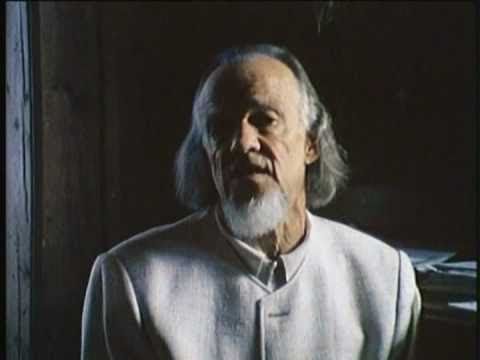


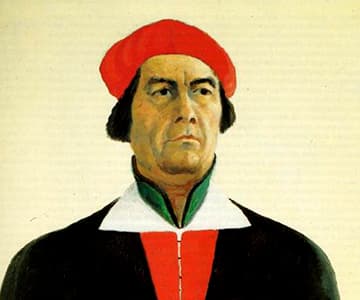
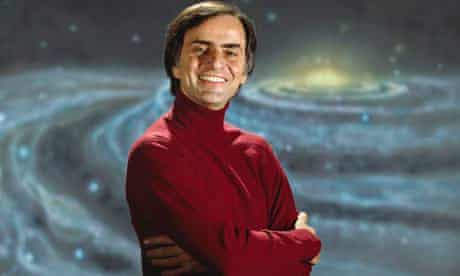 (Carl Sagan brought astronomy into popular culture. Photograph: Tony Korody/Corbis)
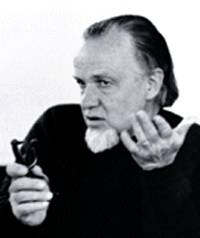

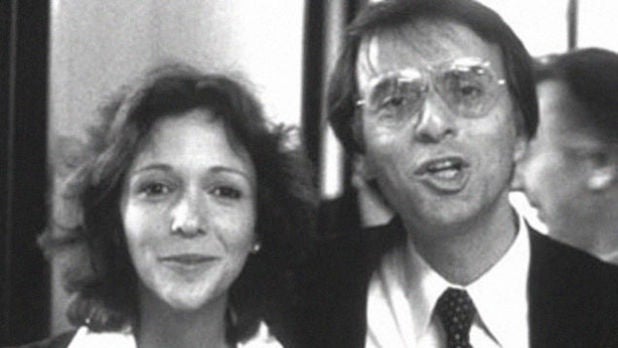


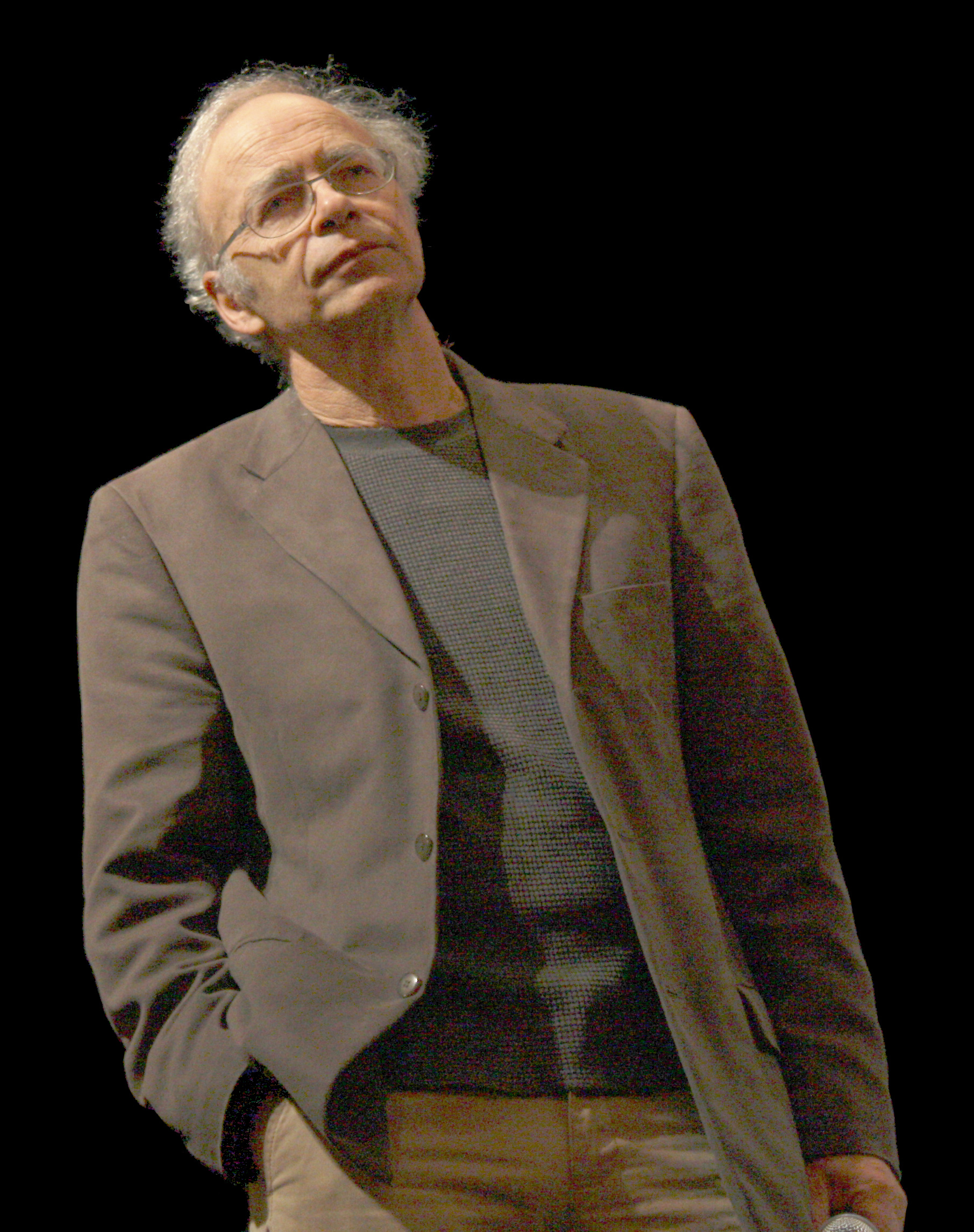

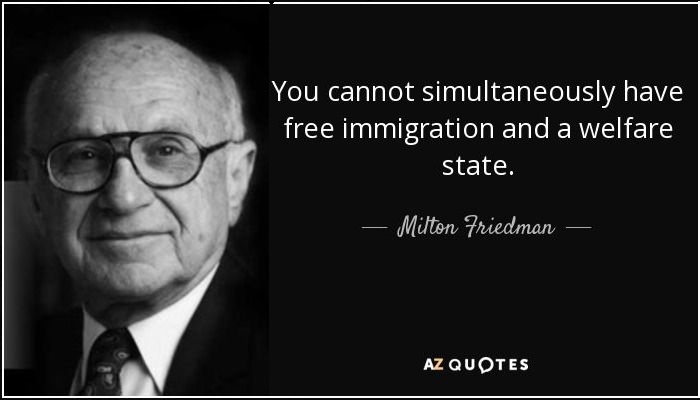





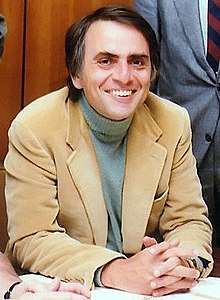
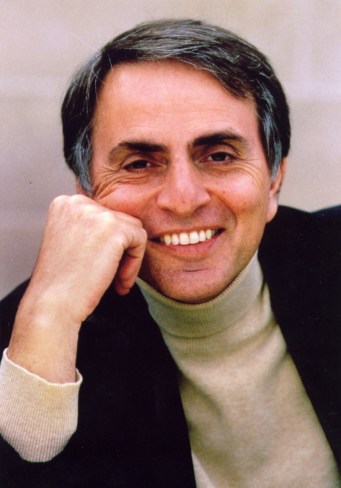









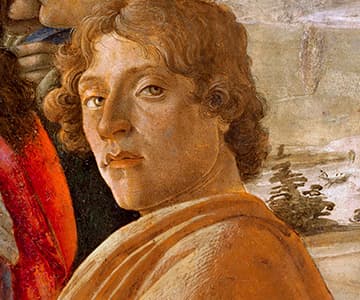


 The Daily Hatch