
______________
Francis Schaeffer has written extensively on art and culture spanning the last 2000years and here are some posts I have done on this subject before : Francis Schaeffer’s “How should we then live?” Video and outline of episode 10 “Final Choices” , episode 9 “The Age of Personal Peace and Affluence”, episode 8 “The Age of Fragmentation”, episode 7 “The Age of Non-Reason” , episode 6 “The Scientific Age” , episode 5 “The Revolutionary Age” , episode 4 “The Reformation”, episode 3 “The Renaissance”, episode 2 “The Middle Ages,”, and episode 1 “The Roman Age,” . My favorite episodes are number 7 and 8 since they deal with modern art and culture primarily.(Joe Carter rightly noted, “Schaeffer—who always claimed to be an evangelist and not aphilosopher—was often criticized for the way his work oversimplifiedintellectual history and philosophy.” To those critics I say take a chill pillbecause Schaeffer was introducing millions into the fields of art andculture!!!! !!! More people need to read his works and blog about thembecause they show how people’s worldviews affect their lives!
J.I.PACKER WROTE OF SCHAEFFER, “His communicative style was not that of acautious academic who labors for exhaustive coverage and dispassionate objectivity. It was rather that of an impassioned thinker who paints his vision of eternal truth in bold strokes and stark contrasts.Yet it is a fact that MANY YOUNG THINKERS AND ARTISTS…HAVE FOUND SCHAEFFER’S ANALYSES A LIFELINE TO SANITY WITHOUT WHICH THEY COULD NOT HAVE GONE ON LIVING.”
Francis Schaeffer’s works are the basis for a large portion of my blog posts andthey have stood the test of time. In fact, many people would say that many of the things he wrote in the 1960’s were right on in the sense he saw where ourwestern society was heading and he knew that abortion, infanticide and youthenthansia were moral boundaries we would be crossing in the coming decadesbecause of humanism and these are the discussions we are having now!)
There is evidence that points to the fact that the Bible is historically true asSchaeffer pointed out in episode 5 of WHATEVER HAPPENED TO THE HUMAN RACE? There is a basis then for faith in Christ alone for our eternal hope. This linkshows how to do that.
Francis Schaeffer in Art and the Bible noted, “Many modern artists, it seems to me, have forgotten the value that art has in itself. Much modern art is far too intellectual to be great art. Many modern artists seem not to see the distinction between man and non-man, and it is a part of the lostness of modern man that they no longer see value in the work of art as a work of art.”
Many modern artists are left in this point of desperation that Schaeffer points out and it reminds me of the despair that Solomon speaks of in Ecclesiastes. Christian scholar Ravi Zacharias has noted, “The key to understanding the Book of Ecclesiastes is the term ‘under the sun.’ What that literally means is you lock God out of a closed system, and you are left with only this world of time plus chance plus matter.” THIS IS EXACT POINT SCHAEFFER SAYS SECULAR ARTISTSARE PAINTING FROM TODAY BECAUSE THEY BELIEVED ARE A RESULTOF MINDLESS CHANCE.
Francis Schaeffer pictured below:

_____________
Francis Schaeffer at International Congress of World Evangelism, Lausanne, Switzerland, July 1974
https://www.youtube.com/watch?v=wMYEH435os0
Francis Schaeffer February 21, 1982 (Part 1)
Francis Schaeffer – February 21, 1982 (Part 2)
Dr. Francis Schaeffer – The Naturalistic, Materialistic, World View
_______________
A Christian Manifesto
by Dr. Francis A. Schaeffer
This address was delivered by the late Dr. Schaeffer in 1982 at the Coral Ridge Presbyterian Church, Fort Lauderdale, Florida. It is based on one of his books, which bears the same title.
Christians, in the last 80 years or so, have only been seeing things as bits and pieces which have gradually begun to trouble them and others, instead of understanding that they are the natural outcome of a change from aChristian World View to a Humanistic one; things such as overpermissiveness, pornography, the problem of the public schools, the breakdown of the family, abortion, infanticide (the killing of newborn babies), increased emphasis upon the euthanasia of the old and many, many other things.
All of these things and many more are only the results. We may be troubled with the individual thing, but in reality we are missing the whole thing if we do not see each of these things and many more as only symptoms of the deeper problem. And that is the change in our society, a change in our country, a change in the Western world from a Judeo-Christian consensus to a Humanistic one. That is, instead of the final reality that exists being the infinite creator God; instead of that which is the basis of all reality being such a creator God, now largely, all else is seen as only material or energy which has existed forever in some form, shaped into its present complex form only by pure chance.
I want to say to you, those of you who are Christians or even if you are not a Christian and you are troubled about the direction that our society is going in, that we must not concentrate merely on the bits and pieces. But we must understand that all of these dilemmas come on the basis of moving from the Judeo-Christian world view — that the final reality is an infinite creator God — over into this other reality which is that the final reality is only energy or material in some mixture or form which has existed forever and which has taken its present shape by pure chance.
The word Humanism should be carefully defined. We should not just use it as a flag, or what younger people might call a “buzz” word. We must understand what we are talking about when we use the word Humanism. Humanism means that the man is the measure of all things. Man is the measure of all things. If this other final reality of material or energy shaped by pure chance is the final reality, it gives no meaning to life. It gives no value system. It gives no basis for law, and therefore, in this case, man must be the measure of all things. So, Humanism properly defined, in contrast, let us say, to the humanities or humanitarianism, (which is something entirely different and which Christians should be in favor of) being the measure of all things, comes naturally, mathematically, inevitably, certainly. If indeed the final reality is silent about these values, then man must generate them from himself.
So, Humanism is the absolute certain result, if we choose this other final reality and say that is what it is. You must realize that when we speak of man being the measure of all things under the Humanist label, the first thing is that man has only knowledge from himself. That he, being finite, limited, very faulty in his observation of many things, yet nevertheless, has no possible source of knowledge except what man, beginning from himself, can find out from his own observation. Specifically, in this view, there is no place for any knowledge from God.
But it is not only that man must start from himself in the area of knowledge and learning, but any value system must come arbitrarily from man himself by arbitrary choice. More frightening still, in our country, at our own moment of history, is the fact that any basis of law then becomes arbitrary — merely certain people making decisions as to what is for the good of society at the given moment.
Now this is the real reason for the breakdown in morals in our country. It’s the real reason for the breakdown in values in our country, and it is the reason that our Supreme Court now functions so thoroughly upon the fact of arbitrary law. They have no basis for law that is fixed, therefore, like the young person who decides to live hedonistically upon their own chosen arbitrary values, society is now doing the same thing legally. Certain few people come together and decide what they arbitrarily believe is for the good of society at the given moment, and that becomes law.
The world view that the final reality is only material or energy shaped by pure chance, inevitably, (that’s the next word I would bring to you ) mathematically — with mathematical certainty — brings forth all these other results which are in our country and in our society which have led to the breakdown in the country — in society — and which are its present sorrows. So, if you hold this other world view, you must realize that it is inevitable that we will come to the very sorrows of relativity and all these other things that are so represented in our country at this moment of history.
It should be noticed that this new dominant world view is a view which is exactly opposite from that of the founding fathers of this country. Now, not all the founding fathers were individually, personally, Christians.
(PART 2 of speech from above video)
That certainly is true. But, nevertheless, they founded the country on the base that there is a God who is the Creator (now I come to the next central phrase) who gave the inalienable rights.
We must understand something very thoroughly. If society — if the state gives the rights, it can take them away — they’re not inalienable. If the states give the rights, they can change them and manipulate them. But this was not the view of the founding fathers of this country. They believed, although not all of them were individual Christians, that there was a Creator and that this Creator gave the inalienable rights — this upon which our country was founded and which has given us the freedoms which we still have — even the freedoms which are being used now to destroy the freedoms.
The reason that these freedoms were there is because they believed there was somebody who gave the inalienable rights. But if we have the view that the final reality is material or energy which has existed forever in some form, we must understand that this view never, never, never would have given the rights which we now know and which, unhappily, I say to you (those of you who are Christians) that too often you take all too much for granted. You forget that the freedoms which we have in northern Europe after the Reformation (and the United States is an extension of that, as would be Australia or Canada, New Zealand, etc.) are absolutely unique in the world.
Occasionally, some of you who have gone to universities have been taught that these freedoms are rooted in the Greek city-states. That is not the truth. All you have to do is read Plato’s Republic and you understand that the Greek city-states never had any concept of the freedoms that we have. Go back into history. The freedoms which we have (the form / freedom balance of government) are unique in history and they are also unique in the world at this day.
A fairly recent poll of the 150 some countries that now constitute the world shows that only 25 of these countries have any freedoms at all. What we have, and take so poorly for granted, is unique. It was brought forth by a specific world view and that specific world view was the Judeo-Christian world view especially as it was refined in the Reformation, putting the authority indeed at a central point — not in the Church and the state and the Word of God, but rather the Word of God alone. All the benefits which we know — I would repeat — which we have taken so easily and so much for granted, are unique. They have been grounded on the certain world view that there was a Creator there to give inalienable rights. And this other view over here, which has become increasingly dominant, of the material-energy final world view (shaped by pure chance) never would have, could not, has, no basis of values, in order to give such a balance of freedom that we have known so easily and which we unhappily, if we are not careful, take so for granted.
We are now losing those freedoms and we can expect to continue to lose them if this other world view continues to take increased force and power in our county. We can be sure of this. I would say it again — inevitably, mathematically, all of these things will come forth. There is no possible way to heal the relativistic thinking of our own day, if indeed all there is is a universe out there that is silent about any values. None, whatsoever! It is not possible. It is a loss of values and it is a loss of freedom which we may be sure will continually grow.
A good illustration is in the public schools. This view is taught in our public schools exclusively — by law. There is no other view that can be taught. I‘ll mention it a bit later, but by law there is no other view that can be taught. By law, in the public schools, the United States of America in 1982, legally there is only one view of reality that can be taught. I’ll mention it a bit later, but there is only one view of reality that can be taught, and that is that the final reality is only material or energy shaped by pure chance.
It is the same with the television programs. Public television gives us many things that many of us like culturally, but is also completely committed to a propaganda position that the last reality is only material / energy shaped by pure chance. Clark’s Civilization, Brunowski, The Ascent of Man, Carl Sagan’s Cosmos — they all say it. There is only one final view of reality that’s possible and that is that the final reality is material or energy shaped by pure chance.
_______________________________________
Carl Sagan pictured in 1954:

I have written a lot in the past about Carl Sagan on my blog and over and over again these posts have been some of my most popular because I believe Carl Sagan did a great job of articulating the naturalistic view that the world is a result of nothing more than impersonal matter, time and chance. Christians like me have to challenge those who hold this view and that is why I took it upon myself to read many of Sagan’s books and to watch his film series Cosmos.
The Dragons of Materialism
In his book The Dragons of Eden, the late Carl Sagan writes, “The reason we prohibit the killing of human beings must be because of some quality human beings possess, a quality we especially prize, that few or no other organisms on earth enjoy.”1 When I first read this, my heart started to beat a little faster. A dogmatic atheist, a dyed-in-the-wool materialist, was essentially agreeing with Christians that humans are more than molecules in motion! I wasn’t expecting him to go as far as to say that we are “special”, but he was dangerously close. However, I was quite disappointed as I read what Dr. Sagan thought this quality was: “This essential human quality, I believe, can only be our intelligence.” How could someone get so close to the truth yet end up so far from it? If we want to address this question, we must first examine why Sagan even thought that human life is valuable or worth protecting. We must ask why he thought that humans possess something that “few or no other organisms on earth enjoy.”Francis Schaeffer insightfully observed that the more a non-Christian stays consistent with his own presuppositions, the further he is from the real world; conversely, the closer he is to the real world, the more inconsistent he is with his own presuppositions. It’s quite a predicament for the unbeliever. Schaeffer says that “in reality no one can live logically according to his own non-Christian presuppositions, and consequently, because he is faced with the real world and himself, in practice you will find a place where you can talk.”2 This is a bold claim, but I find it to be the case with every God-substitute out there: materialism, naturalism, nihilism, communism, paganism, pantheism, and any “ism” you can name. Sagan and his atheistic materialism certainly fall into this arena. If we take Schaeffer’s claim (and the Bible) to be correct, then we know two things: first, that materialism is false and will prove itself illogical if held consistently; second, that we can find common ground with those held captive by this worldview. Many people who grew up during the 70s were influenced by Sagan’s Cosmos series, and many prominent scientists today point to him as an inspiration. Finding the issue with Sagan’s specific statement, as well as his broader worldview, can help us persuade those held captive to materialism.In essence, materialists or naturalists hold that the material universe is all that there is: everything can be explained in terms of matter and physical processes. Did you catch that keyword? Everything. This categorical statement, comprising the basis of materialism, is logically invalid since it requires the proof through only material that only material exists. When clearly stated, the circular argument shows that materialists are using unproven and unprovable assumptions about the nature of reality to justify their worldview. I would argue that you can’t use materialism to prove materialism unless you are inconsistent with materialism. You must be able to step outside, or transcend materialism if you are to evaluate it. This, then, is the problem with Sagan’s statement: his worldview is unsupportable. Sagan looked to his worldview–materialism, or the “box of things” Nancy Pearcey described–to explain his intuitive understanding that there is something special and unique about humans. Unfortunately for him, the answer was not in the box of things. Still, Sagan and other dedicated materialists are committed to this box and will not look elsewhere. Therefore, we need to gently and respectfully push them to accept the consequences of their beliefs or turn to the gospel.A consistently held materialist worldview claims that human rationality comes from non-rationality: all of humanity’s ability to reason comes from an irrational process. Sagan actually affirms this concept later in the same book when he states that “only through the deaths of an immense number of slightly maladapted organisms are we, brains and all, here today. [T]he accidents and errors and lucky happenstances of the past powerfully prefigure the present.”3 Why trust your conclusions or beliefs if they are rooted in luck? In God’s Undertaker: Has Science Buried God? Dr. John Lennox observes that “either human intelligence ultimately owes its origin to mindless matter; or there is a Creator. It is strange that some people claim that it is their intelligence that leads them to prefer the first to the second.”4 Indeed, it is strange! Trusting such convictions is not only irrational, but also requires a leap of faith. To make sense of life, logically consistent materialists have no choice but to step outside the confines of their worldview. Sagan could not understand why human life is special because the foundations of his worldview indicate that no molecule is more or less important than another molecule. Giving any sort of value to a particular atom or force would be completely arbitrary; matter is matter. Any belief to the contrary is a departure from the logically necessary tenets of materialism. Ironically, departing from materialism is also a step in the right direction–a step Sagan took when he realized that humans are different from other animals. Considering the limited set of explanations in the box of things for the “quality we especially prize,” he selected intelligence. Can this be falsified or proven scientifically? It cannot, because it is simply an arbitrary guess. Why not instead select our ability to walk upright, or our ability to lie? Consider, too, the consequences of holding to such an arbitrary decision. Do people of lower intelligence have less worth? What level of intelligence constitutes personhood? Who determines the threshold? Are we able to move that line around as we please? Once we accept such an arbitrary answer, the door is open to redefine what it means to be human, causing consequent redefinitions of sin, morality and all that constitutes life as we know it. I doubt that the materialist can live with such consequences. The box of things leaves us without a satisfactory answer for the uniqueness and specialness of humanity and robs life of any ultimate meaning. The Gospel, on the other hand, provides answers that are consistent with human experience and can satisfy both the heart and the mind.The Bible affirms that man is different in kind from animals because God created humans in His image. Genesis 1:26-27 tells us that we are made in His likeness; while there has been much debate over the centuries on the extent and nature of this Godlikeness, most would agree that this means we are spiritual, rational, and moral creatures. If the Biblical account is correct, we should expect to see evidence that humans are different from animals in both degree and kind. The materialist must argue that humans and animals are simply different in degree. Who is right? Obviously, there are similarities between humans and animals, and we should expect such similarities since we have a common Creator. Still, the differences will be significant if we truly are made in the likeness of a personal Creator. In A World of Difference, Ken Samples lists seven ways in which humans are drastically different from animals, revealing that the biblical Imago Dei, or image of God, better corresponds to and explains reality than the materialist worldview: 5
- Human beings have an inherent spiritual and religious nature.
- Human beings possess unique intellectual, cultural, and communicative abilities.
- Human beings are conscious of time, reality and truth.
- Human beings possess a conscience, identity a value system, and legislate moral laws for society.
- Human beings are uniquely inventive and technological.
- Human beings possess an intense curiosity to explore and understand the entire created realm.
- Human beings possess aesthetic taste and appreciation for more than just practical purposes.
Sagan and materialism stand in direct opposition to the Bible. Materialism is incapable of placing any value on human life despite attempts to arbitrarily elevate some human characteristic as a source for humanity’s intuitively observed uniqueness. However, since materialists bear the image of God, they cannot help seeking some explanation for their intuitive understanding of humanity’s inherent value. If we hold to Sagan’s and materialism’s tenet that everything is merely atoms of one form or another, then his words would have been no more valuable than the sound of the wind in the trees. His worldview would require him to deny the significance of human life as well as the ability of reason to determine truth, undermining his reason-dependent worldview at its most basic level. Sagan couldn’t stop wondering how the universe works and trying to explain life and reality – he was made in the image of God and knew that there was ultimate meaning to be found. On the other hand, the Bible tells us that human reason comes from ultimate reason and humanity is unique and valuable because it bears the image of God. The question of the uniqueness of humanity gives us a place to start a conversation. As Schaeffer put it, “Christian apologetics do not start somewhere beyond the stars. They begin with man and what he knows about himself.”6 The materialist knows in his heart that man is indeed special. He may not admit it, but he has no choice but to live it.
2. Francis Schaeffer, Francis A. Schaeffer Trilogy (Crossway, 1990), 137
3. Carl Sagan, The Dragons of Eden (New York: Random House, 1977), 6
4. John Lennox, God’s Undertaker: Has Science Buried God? (Lion Hudson, 2009)
5. Kenneth Samples, A World of Difference (Grand Rapids: Baker Books, 2007), 182-185
6. Francis Schaeffer, Francis A. Schaeffer Trilogy (Crossway, 1990), 133
______________
When I confronted Carl Sagan about his moral views concerning abortion and also about his views of the origin of the universe he responded with a letter, but the more important response came after his death when I viewed his movie CONTACT. He wanted to say there was no afterlife and we were all products of chance but then he wanted to jump back and grab words like “precious” to describe us as if we could attain lasting meaning to our lives without God in the picture.
Carl Sagan had no valid basis for his morality. He was borrowing from a Judeo-Christian basis.
I will give agnostics credit when they realize that without God in the picture everything is left to chance. I posted earlier. Neo-Darwinist Richard Dawkins recognized the purposelessness of such a system:
In a universe of blind physical forces and genetic replication some people are going to get hurt, other people are going to get lucky, and you won’t find any rhyme or reason in it, nor any justice. The universe we observe has precisely the properties we should expect if there is, at bottom, no design, no purpose, no evil and no good, nothing but blind, pitiless indifference.22
Without God in the picture life is meaningless ultimately. Also without God providing punishment in the afterlife for evil then there is no reason to do good without an enforcement factor.
I would love to hear from any atheist that would present a case for lasting meaning in life apart from God. It seems to me that H. J. Blackham was right in his accessment of the predictament that atheists face:
On humanist assumptions [the assumption that there is no God and life has evolved by time and chance alone], life leads to nothing, and every pretense that it does not is a deceit. If there is a bridge over a gorge which spans only half the distance and ends in mid-air, and if the bridge is crowded with human beings pressing on, one after another they fall into the abyss. The bridge leads to nowhere, and those who are pressing forward to cross it are going nowhere. . . It does not matter where they think they are going, what preparations for the journey they may have made, how much they may be enjoying it all . . . such a situation is a model of futility (H. J. Blackham et al., Objections to Humanism (Riverside, Connecticut: Greenwood Press, 1967).)
I do not accept evolution at all. Adrian Rogers noted three problems with evolution:
1. The fossil record. Not only is the so-called missing link still missing, all of the transitional life forms so crucial to evolutionary theory are missing from the fossil record. There are thousands of missing links, not one!
2. The second law of thermodynamics. This law states that energy is winding down and that matter left to itself tends toward chaos and randomness, not greater organization and complexity. Evolution demands exactly the opposite process, which is observed nowhere in nature.
3. The origin of life. Evolution offers no answers to the origin of life. It simply pushes the question farther back in time, back to some primordial event in space or an act of spontaneous generation in which life simply sprang from nothing.__________
The answer to find meaning in life is found in putting your faith and trust in Jesus Christ. The Bible is true from cover to cover and can be trusted.
Solomon is said to be the wisest man who ever lived.Solomon went to the extreme in his searching in the Book of Ecclesiastes for this something more, but he did not find any satisfaction in pleasure (2:1), education (2:3), work (2:4), wealth (2:8) or fame (2:9). All of his accomplishments would not be remembered (1:11) and who is to say that they had not already been done before by others (1:10)? Also Solomon’s upcoming death depressed him because both people and animals alike “go to the same place — they came from dust and they return to dust” (3:20).
In 1978 I heard the song “Dust in the Wind” by Kansas when it rose to #6 on the charts. That song told me thatKerry Livgren the writer of that song and a member of Kansas had come to the same conclusion that Solomon had. I remember mentioning to my friends at church that we may soon see some members of Kansas become Christians because their search for the meaning of life had obviously come up empty even though they had risen from being an unknown band to the top of the music business and had all the wealth and fame that came with that. Furthermore, Solomon realized death comes to everyone and there must be something more.
Livgren wrote:
“All we do, crumbles to the ground though we refuse to see, Dust in the Wind, All we are is dust in the wind, Don’t hang on, Nothing lasts forever but the Earth and Sky, It slips away, And all your money won’t another minute buy.”
Both Kerry Livgren and Dave Hope of Kansas became Christians eventually. Kerry Livgren first tried Eastern Religions and Dave Hope had to come out of a heavy drug addiction. I was shocked and elated to see their personal testimony on The 700 Club in 1981 and that same interview can be seen on youtube today. Livgren lives in Topeka, Kansas today where he teaches “Diggers,” a Sunday school class at Topeka Bible Church. Hope is the head of Worship, Evangelism and Outreach at Immanuel Anglican Church in Destin, Florida.
Solomon’s experiment was a search for meaning to life “under the sun.” Then in last few words in the Book of Ecclesiastes he looks above the sun and brings God back into the picture: “The conclusion, when all has been heard, is: Fear God and keep His commandments, because this applies to every person. For God will bring every act to judgment, everything which is hidden, whether it is good or evil.”
You can hear Kerry Livgren’s story from this youtube link:
(part 1 ten minutes)
(part 2 ten minutes)
________________________
Today’s feature is on the artist Paul Klee
KLEE
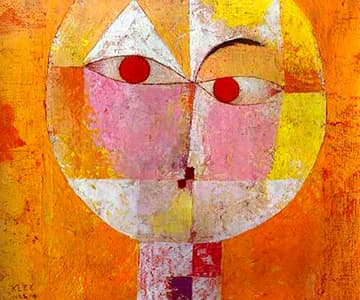
PAUL KLEE (1879-1940)
In a period of artistic revolutions and innovations, few artists were as crucial as Paul Klee. His studies of color, widely taught at the Bauhaus, are unique among all the artists of his time.
_
Taking on Ark Times Bloggers on various issues Part F “Carl Sagan’s views on how God should try and contact us” includes film “The Basis for Human Dignity”
I have gone back and forth and back and forth with many liberals on the Arkansas Times Blog on many issues such as abortion, human rights, welfare, poverty, gun control and issues dealing with popular culture. Here is another exchange I had with them a while back. My username at the Ark Times Blog is Saline […]
Carl Sagan v. Nancy Pearcey
On March 17, 2013 at our worship service at Fellowship Bible Church, Ben Parkinson who is one of our teaching pastors spoke on Genesis 1. He spoke about an issue that I was very interested in. Ben started the sermon by reading the following scripture: Genesis 1-2:3 English Standard Version (ESV) The Creation of the […]
Review of Carl Sagan book (Part 4 of series on Evolution)
Review of Carl Sagan book (Part 4 of series on Evolution) The Long War against God-Henry Morris, part 5 of 6 Uploaded by FLIPWORLDUPSIDEDOWN3 on Aug 30, 2010 http://www.icr.org/ http://store.icr.org/prodinfo.asp?number=BLOWA2http://store.icr.org/prodinfo.asp?number=BLOWASGhttp://www.fliptheworldupsidedown.com/blog _______________________ I got this from a blogger in April of 2008 concerning candidate Obama’s view on evolution: Q: York County was recently in the news […]
Review of Carl Sagan book (Part 3 of series on Evolution)
Review of Carl Sagan book (Part 3 of series on Evolution) The Long War against God-Henry Morris, part 4 of 6 Uploaded by FLIPWORLDUPSIDEDOWN3 on Aug 30, 2010 http://www.icr.org/ http://store.icr.org/prodinfo.asp?number=BLOWA2http://store.icr.org/prodinfo.asp?number=BLOWASGhttp://www.fliptheworldupsidedown.com/blog______________________________________ I got this from a blogger in April of 2008 concerning candidate Obama’s view on evolution: Q: York County was recently in the news […]
Carl Sagan versus RC Sproul
At the end of this post is a message by RC Sproul in which he discusses Sagan. Over the years I have confronted many atheists. Here is one story below: I really believe Hebrews 4:12 when it asserts: For the word of God is living and active and sharper than any two-edged sword, and piercing as far as the […]
Review of Carl Sagan book (Part 4 of series on Evolution)jh68
Review of Carl Sagan book (Part 4 of series on Evolution) The Long War against God-Henry Morris, part 5 of 6 Uploaded by FLIPWORLDUPSIDEDOWN3 on Aug 30, 2010 http://www.icr.org/ http://store.icr.org/prodinfo.asp?number=BLOWA2http://store.icr.org/prodinfo.asp?number=BLOWASGhttp://www.fliptheworldupsidedown.com/blog _______________________ This is a review I did a few years ago. THE DEMON-HAUNTED WORLD: Science as a Candle in the Dark by Carl […]
Review of Carl Sagan book (Part 3 of series on Evolution)
Review of Carl Sagan book (Part 3 of series on Evolution) The Long War against God-Henry Morris, part 4 of 6 Uploaded by FLIPWORLDUPSIDEDOWN3 on Aug 30, 2010 http://www.icr.org/ http://store.icr.org/prodinfo.asp?number=BLOWA2http://store.icr.org/prodinfo.asp?number=BLOWASGhttp://www.fliptheworldupsidedown.com/blog______________________________________ I was really enjoyed this review of Carl Sagan’s book “Pale Blue Dot.” Carl Sagan’s Pale Blue Dot by Larry Vardiman, Ph.D. […]
Atheists confronted: How I confronted Carl Sagan the year before he died jh47
In today’s news you will read about Kirk Cameron taking on the atheist Stephen Hawking over some recent assertions he made concerning the existence of heaven. Back in December of 1995 I had the opportunity to correspond with Carl Sagan about a year before his untimely death. Sarah Anne Hughes in her article,”Kirk Cameron criticizes […]
Was Antony Flew the most prominent atheist of the 20th century?
_________ Antony Flew on God and Atheism Published on Feb 11, 2013 Lee Strobel interviews philosopher and scholar Antony Flew on his conversion from atheism to deism. Much of it has to do with intelligent design. Flew was considered one of the most influential and important thinker for atheism during his time before his death […]
_____________


 The Daily Hatch