We got to stop spending so much money and start paying off our national debt or the future of our children and grandchildren will be very sad indeed. Everyone knows that entitlement spending must be cut but it seems we are not brave enough to do it.
TRUE CONSERVATIVES are not the problem because they voted AGAINST THE OMNIBUS SPENDING BILL THAT DEMOCRATS AND RINO REPUBLICANS LIKE YOU IN THE SENATE HAVE VOTED FOR!!! Why did you betray your conservative supporters back home?
What’s in the $1.7 trillion spending bill Congress wants to pass this week
WASHINGTON – What’s 4,155 pages long and spends $1.7 trillion of your money?
It’s the massive omnibus bill members of Congress are trying to ram through the House and Senate before a partial government shutdown would start at 11:59 p.m. Friday and potentially force lawmakers to spend Christmas at the Capitol to resolve the impasse.
House Republicans have pushed back on both the amount of spending and what the money is being spent on. On Wednesday, Rep. Dan Bishop (R-N.C.) pointed out what he called “some of the most egregious” provisions in the bill.
Among those Bishop cited were:
$524.4 million for the National Institutes of Health to fund a subdivision focused on “minority health and health disparities research.
$410 to reimburse Jordan, Lebanon, Egypt, Tunisia, and Oman for tighter border security.
$65 million “for necessary expenses associated with the restoration of Pacific salmon populations.”
$65 million for salmon?” Bishop tweeted. “Seems fishy.”
Senate Minority Leader Mitch McConnell (R-Ky.) insisted Wednesday that passing the omnibus before the holiday break remains the best option, especially to ensure the military receives critical funding as soon as possible.
President Ronald Reagan once said, “I have only one thing to say to the tax increasers: Go ahead, make my day.” ____________ Here below is a list of those 66 brave Republicans that voted against the debt ceiling increase listed below in August of 2011. The ones in blue are the ones that I have […]
_________________ President Ronald Reagan wisely said: “The federal government has taken too much tax money from the people, too much authority from the states, and too much liberty with the Constitution.” You would think that the Republicans who talk so much of cutting spending would try to get a plan that cuts spending 3 […]
(Emailed to White House on 12-21-12.) President Obama c/o The White House 1600 Pennsylvania Avenue NW Washington, DC 20500 Dear Mr. President, I know that you receive 20,000 letters a day and that you actually read 10 of them every day. I really do respect you for trying to get a pulse on […]
(Emailed to White House on 12-21-12.) President Obama c/o The White House 1600 Pennsylvania Avenue NW Washington, DC 20500 Dear Mr. President, I know that you receive 20,000 letters a day and that you actually read 10 of them every day. I really do respect you for trying to get a pulse on what is […]
(Emailed to White House on 12-21-12) President Obama c/o The White House 1600 Pennsylvania Avenue NW Washington, DC 20500 Dear Mr. President, I know that you receive 20,000 letters a day and that you actually read 10 of them every day. I really do respect you for trying to get a pulse on what is […]
The federal government has a spending problem and Milton Friedman came up with the negative income tax to help poor people get out of the welfare trap. It seems that the government screws up about everything. Then why is President Obama wanting more taxes? _______________ Milton Friedman – The Negative Income Tax Published on […]
I was sad to read that the Speaker John Boehner has been involved in punishing tea party republicans. Actually I have written letters to several of these same tea party heroes telling them that I have emailed Boehner encouraging him to listen to them. Rep. David Schweikert (R-AZ),Justin Amash (R-MI), and Tim Huelskamp (R-KS). have been contacted […]
Michael Tanner of the Cato Institute in his article, “Hitting the Ceiling,” National Review Online, March 7, 2012 noted: After all, despite all the sturm und drang about spending cuts as part of last year’s debt-ceiling deal, federal spending not only increased from 2011 to 2012, it rose faster than inflation and population growth combined. […]
Michael Tanner of the Cato Institute in his article, “Hitting the Ceiling,” National Review Online, March 7, 2012 noted: After all, despite all the sturm und drang about spending cuts as part of last year’s debt-ceiling deal, federal spending not only increased from 2011 to 2012, it rose faster than inflation and population growth combined. […]
Some of the heroes are Mo Brooks, Martha Roby, Jeff Flake, Trent Franks, Duncan Hunter, Tom Mcclintock, Devin Nunes, Scott Tipton, Bill Posey, Steve Southerland and those others below in the following posts. THEY VOTED AGAINST THE DEBT CEILING INCREASE IN 2011 AND WE NEED THAT TYPE OF LEADERSHIP NOW SINCE PRESIDENT OBAMA HAS BEEN […]
I hated to see that Allen West may be on the way out. ABC News reported: Nov 7, 2012 7:20am What Happened to the Tea Party (and the Blue Dogs?) Some of the Republican Party‘s most controversial House members are clinging to narrow leads in races where only a few votes are left to count. […]
Rep Himes and Rep Schweikert Discuss the Debt and Budget Deal Michael Tanner of the Cato Institute in his article, “Hitting the Ceiling,” National Review Online, March 7, 2012 noted: After all, despite all the sturm und drang about spending cuts as part of last year’s debt-ceiling deal, federal spending not only increased from 2011 […]
Michael Tanner of the Cato Institute in his article, “Hitting the Ceiling,” National Review Online, March 7, 2012 noted: After all, despite all the sturm und drang about spending cuts as part of last year’s debt-ceiling deal, federal spending not only increased from 2011 to 2012, it rose faster than inflation and population growth combined. […]
Here is a study done on the votes of the 87 incoming freshman republicans frm the Club for Growth. Freshman Vote Study In the 2010 election, 87 freshmen House Republicans came to Washington pledging fealty to the Tea Party movement and the ideals of limited government and economic freedom. The mainstream media likes to say […]
Stimulating the economy comes from giving the private sector incentive to grow or in other words cutting taxes for job creators and not class warfare. Sadly we have had too many RINOS out there. The Tea Party is the answer for that. The liberal Arkansas Times blog runned by Max Brantley is upset that the Tea […]
Tea Party Conservative Senator Mike Lee interview Here is an excellent interview above with Senator Lee with a fine article below from the Heritage Foundation. Sen. Mike Lee (R-UT) came to Washington as the a tea-party conservative with the goal of fixing the economy, addressing the debt crisis and curbing the growth of the federal […]
I feel so strongly about the evil practice of running up our national debt. I was so proud of Rep. Todd Rokita who voted against the Budget Control Act of 2011 on August 11, 2011. He made this comment: For decades now, we have spent too much money on ourselves and have intentionally allowed our […]
Rep. Quayle on Fox News with Neil Cavuto __________________ We have to get people realize that the most important issue is the debt!!! Recently I read a comment by Congressman Ben Quayle (R-AZ) made after voting against the amended Budget Control Act on August 1, 2011. He said it was important to compel “Congressional Democrats and […]
What future does our country have if we never even attempt to balance our budget. I read some wise words by Congressman Jeff Landry (R, LA-03) regarding the debt ceiling deal that was passed on August 1, 2011:”Throughout this debate, the American people have demanded a real cure to America’s spending addiction – a Balanced Budget […]
I read some wise comments by Idaho First District Congressman Raúl R. Labrador concerning the passage of the Budget Control Act on August 1, 2011 and I wanted to point them out: “The legislation lacks a rock solid commitment to passage of a balanced budget amendment, which I believe is necessary to saving our nation.” I just […]
Gun control arguments just don’t make any sense, but President Obama still supports gun control. Laughing at Obama’s Belly Flop on Gun Control April 23, 2013 by Dan Mitchell I’ve shared serious articles on gun control, featuring scholars such as John Lott and David Kopel. I also posted testimonials from gun experts and an honest liberal. […]
Gun Control explained Merry Christmas from the 2nd Amendment Buy a Shotgun Joe Biden Lying AR-15 Make your own Gun Free Zone PRK Arms on CBS 47 news, Fresno Suzanna Gratia Hupp explains meaning of 2nd Amendment! Penn and Teller – Gun Control and Columbine Somebody Picked the Wrong Girl 5 Facts About Guns, Schools, […]
22 Choose a good reputation over great riches; being held in high esteem is better than silver or gold.
2 The rich and poor have this in common: The Lord made them both.
3 A prudent person foresees danger and takes precautions. The simpleton goes blindly on and suffers the consequences.
4 True humility and fear of the Lord lead to riches, honor, and long life.
5 Corrupt people walk a thorny, treacherous road; whoever values life will avoid it.
6 Direct your children onto the right path, and when they are older, they will not leave it.
7 Just as the rich rule the poor, so the borrower is servant to the lender.
8 Those who plant injustice will harvest disaster, and their reign of terror will come to an end.[a]
9 Blessed are those who are generous, because they feed the poor.
10 Throw out the mocker, and fighting goes, too. Quarrels and insults will disappear.
11 Whoever loves a pure heart and gracious speech will have the king as a friend.
12 The Lord preserves those with knowledge, but he ruins the plans of the treacherous.
13 The lazy person claims, “There’s a lion out there! If I go outside, I might be killed!”
14 The mouth of an immoral woman is a dangerous trap; those who make the Lord angry will fall into it.
15 A youngster’s heart is filled with foolishness, but physical discipline will drive it far away.
16 A person who gets ahead by oppressing the poor or by showering gifts on the rich will end in poverty.
Sayings of the Wise
17 Listen to the words of the wise; apply your heart to my instruction. 18 For it is good to keep these sayings in your heart and always ready on your lips. 19 I am teaching you today—yes, you— so you will trust in the Lord. 20 I have written thirty sayings[b] for you, filled with advice and knowledge. 21 In this way, you may know the truth and take an accurate report to those who sent you.
22 Don’t rob the poor just because you can, or exploit the needy in court. 23 For the Lord is their defender. He will ruin anyone who ruins them.
24 Don’t befriend angry people or associate with hot-tempered people, 25 or you will learn to be like them and endanger your soul.
26 Don’t agree to guarantee another person’s debt or put up security for someone else. 27 If you can’t pay it, even your bed will be snatched from under you.
28 Don’t cheat your neighbor by moving the ancient boundary markers set up by previous generations.
29 Do you see any truly competent workers? They will serve kings rather than working for ordinary people.
Why do some children adore their dads and others hate their dads? What’s the difference in dads? I’ve observed dads, and there’s one characteristic I’ve found in almost all dads whose children love and follow them. I’m going to tell you what that characteristic is in a moment.
Sometimes children are caught up in the mistakes and mindset of fathers who won’t do what they should to guide those children into a safe, secure haven. Their own pride and arrogance make shipwreck both of their own lives and their children’s. It doesn’t have to be this way.
The book of Proverbs is a veritable owner’s manual on how to raise a wise child. In large part, that’s why the book was written. From the first chapter, it says:
2To know wisdom and instruction, to perceive the words of understanding; 3To receive the instruction of wisdom, justice, and judgment and equity. 4To give subtlety to the simple and to the young man, knowledge and discretion. 5A wise man will hear and will increase learning and a man of understanding shall attain unto wise counsels… 20Wisdom crieth without, she uttereth her voice in the streets. 21She crieth in the chief place of the concourse in the opening of the gates. In the city she uttereth her words saying, 22“How long ye simple ones, will ye love simplicity? And scorners delight in their scorning and fools hate knowledge?” (Proverbs 1)
Underscore three words in this passage: simple, scorners, and fools. A child isn’t born a scorner or a fool. Verse 22 reveals there’s a long road in the evolution of a fool.
THE IGNORANCE OF THE SIMPLE
The word “simple” in verse 22 means open and naïve; children’ minds and hearts are plastic—easily shaped, innocent.
They lack understanding. 22“How long ye simple ones will ye love simplicity?” There comes a time when the child must be guided out of his simplicity and into wisdom and maturity.
They are easily led into error. A child is an easy target for Madison Avenue, MTV, false religions, and sinful friends. Because they’re so open, they’ll believe anything. They’re like a sponge, you can trick them, flim-flam them, but they’re living in constant danger. “The simple believeth every word…” (14:15). “A prudent man forseeth the evil, and hideth himself: but the simple pass on and are punished” (22:3). The simple thinks he’s indestructible, never weighing the future, easy to lead to the slaughter.
THE DEFIANCE OF THE SCORNER
The scorner, however, has gone a step farther. Heads up, dads. If not guided by dad and mom, they take the next step down—they become the scorner. They get their jollies from being the teenage smart aleck, the cynic in business, the mocker at the university. It breaks my heart to say it, but most teenagers in America are now scorners.
They defy instruction because “scornersdelight in their scorning” (1:22) “A wise son heareth his father’s instruction, but a scorner heareth not rebuke (13:1). A scorner will fire back at you (9:8). They won’t listen. It’s like talking to a brick wall—they’ll tune you out.
They despise the good and godly. “A scorner loveth not the one that reproveth him” (15:12). They’ll never come and say, “Dad, I need help. Will you help me out?” When you try to correct the scorner, they’ll look at you and say with their eyes, “I hate your guts.”
They’re destined for destruction. “Whoso despiseth the Word shall be destroyed” (13:13). If they laugh at the Word of God, they may laugh their way right into Hell. The scorner isvery hard to reach, but there is yet hope; they can still be reclaimed.
THE DESTRUCTION OF THE FOOL
First there was the simple—naive, open, and carefree. But if he’s not taught, he becomes the scorner. Then the scorner becomes a fool. The scorner is insolent, but the fool is immovable— rebellious, arrogant, and wicked.
The fool rejects wisdom. 22“And fools hate knowledge.” “The heart of him that hath understanding seeketh knowledge, but the mouth of fools feedeth on foolishness” (15:14).
He ridicules righteousness. “Fools make a mock at sin” (14:9). This is why we have sitcoms that laugh at drunkenness, glorify adultery, mock marriage, promote homosexuality and relish perversion. Who does that? Fools.
He rejoices in iniquity. “Folly is a joy to him that is destitute of wisdom” (15:20-21). His moral sense has been so perverted, he calls good evil and evil good. His heart is hardened, conscience seared, mind defiled.
He rejects reproof. “Whom the Father loves, He chastens and scourges every son whom He receiveth.” God will chasten those who are His own, but “A reproof entereth more into a wise man than a hundred stripes into a fool” (17:10).Trying to reprove the fool will get you nowhere. Don’t even try. He won’t hear you. He is intransigent. If he were wise, when God chastised him, he would repent.
God gives us little children who begin life “simple”—innocent and open. But if you’re not careful, society will turn them into a smart aleck. If they’re not rescued, dad, when they becomes scorners or smart alecks, they’ll become fools. The fool is on the fast-track for Hell.
We are in serious trouble in America. In 1962, prayer in public schools was declared unconstitutional. In 1963, Bible reading in schools was deemed “unconstitutional” but the killing of pre-born children somehow became (1973) a Constitutional “right.” Then (1980) the Ten Commandments posted on school walls must be removed because—they said—“The child might be tempted to emulate them.”
Secular humanists have proven to be great strategists. They found the one segment of life almost every child will pass through—public education—and targeted it to become their “Sunday School” for humanist philosophy. To do that, they had to purge out any vestige of Christian influence.
To not to raise a fool, what can you do? With everything in modern culture fighting against you, you must gear up for this battle, dads.
1. Expound truth. Saturate them in the Proverbs. Emblazon the Ten Commandments onto their consciousness. Teach them the Beatitudes, that they might learn these simple, basic truths. The battle is for the mind. As the child thinks, so is he.
It’s your God-given responsibility (see Deuteronomy 6:6-9) is to teach these commandments to your sons and grandsons that your family will survive and your home endure.
2.Expose sin. The simple will learn by example when they see discipline falling upon the scorner. Children need to see what happens when sin is exposed and consequences are suffered. “When the scorner is punished, the simple is made wise” (21:11). The worst thing would be for your child to live in a sinful society where he never sees the repercussions of sin. Our children today are insulated; often they don’t see the result of sin. You need to help them understand. Don’t only expound truth, but expose sin. Take him down to skid row. Take him to the prisons. Let him see the end result of bad choices. “Smite a scorner, and the simple will beware” (Proverbs 19:25). They will learn. He thinks he’s indestructible. He does not know. You need to pull back the veil.
3. Expel scorners. Do not let your children hang around with scorners and fools. Just don’t do it. Help him select his friends. That means you may have to be firm and cast out the scorner. Why? Impressionable children will succumb to peer pressure.
Open up your house to your child’s friends. Make your home the headquarters for happiness. And while they’re there, you can monitor those friends. Peer pressure is not bad if the peers are good. If there’s a scorner, a smart aleck, or a fool, you say, “Son, there’s the sidewalk.” “Cast out the scorner and contention shall go out. Yea, strife and reproach shall cease.” (22:10). Moms and dads, underscore this: “He that walketh with wise men shall be wise. But a companion of fools shall be destroyed” (13 20).
4. Express love. Love your children! Delight in them. “For whom the Lord loveth He correcteth, even as a father the son in whom he delighteth” (3:12). Be positive! Don’t be negative. Words can hurt your children more than a slap in the face. Learn to listen. Try to see life from their point of view. They’re facing things you never faced.
5. Be gentle. This is that one characteristic I mentioned at the beginning, which I’ve seen in all dads whose children love and follow them: They are gentle. That’s what children want out of their dad. Yes, they want a dad they can look up to, who’s the strongest, wisest, smartest, fastest, best dad in the world…but they want him to be gentle! Touch them, hug them, give them non-verbal affection.
6. Be transparent. Let them know your fears, joys, disappointments, failures, and goals. They already know you’re not perfect; they don’t want you to be a phony.
7. Be available. Make it a priority that you’re going to be available to your child.
You say, “Pastor Rogers, very frankly, I’m not adequate.”
I know—I’m not either. None of us has what it takes to be this kind of dad or mom. That’s the reason we need Jesus isn’t it? We’ve got to have Christ in our hearts! Because the Christian life is not difficult, it’s impossible. Only one can do it, and that’s Jesus. But He will do it inus and through us if we’ll let Him. The best thing you can do for your children is to love God will all your heart. Give your heart to Jesus.
Ecclesiastes 8-10 | Still Searching After All These Years Published on Oct 9, 2012 Calvary Chapel Spring Valley | Sunday Evening | October 7, 2012 | Pastor Derek Neider _______________________ Ecclesiastes 11-12 | Solomon Finds His Way Published on Oct 30, 2012 Calvary Chapel Spring Valley | Sunday Evening | October 28, 2012 | Pastor Derek Neider […]By Everette Hatcher III | Posted in Current Events | Edit | Comments (0)
Over and over in Proverbs you hear the words “fear the Lord.” In fact, some of he references are Proverbs 1:7, 29; 2:5; 8:13; 9:10;14:26,27; 15:16 and many more. Below is a sermon by John MacArthur from the Book of Luke on 3 reasons we should fear the Lord. (I have posted John MacArthur’s amazing […]By Everette Hatcher III | Posted in Adrian Rogers, Current Events | Edit | Comments (0)
Over and over in Proverbs you hear the words “fear the Lord.” In fact, some of he references are Proverbs 1:7, 29; 2:5; 8:13; 9:10;14:26,27; 15:16 and many more. Below is a sermon by John MacArthur from the Book of Luke on 3 reasons we should fear the Lord. (I have posted John MacArthur’s amazing […]By Everette Hatcher III | Posted in Adrian Rogers, Current Events | Edit | Comments (0)
Over and over in Proverbs you hear the words “fear the Lord.” In fact, some of he references are Proverbs 1:7, 29; 2:5; 8:13; 9:10;14:26,27; 15:16 and many more. Below is a sermon by John MacArthur from the Book of Luke on 3 reasons we should fear the Lord. (I have posted John MacArthur’s amazing […]By Everette Hatcher III | Posted in Adrian Rogers, Current Events | Edit | Comments (0)
Over and over in Proverbs you hear the words “fear the Lord.” In fact, some of he references are Proverbs 1:7, 29; 2:5; 8:13; 9:10;14:26,27; 15:16 and many more. Below is a sermon by John MacArthur from the Book of Luke on 3 reasons we should fear the Lord. (I have posted John MacArthur’s amazing […]By Everette Hatcher III | Posted in Adrian Rogers, Current Events | Edit | Comments (0)
Over and over in Proverbs you hear the words “fear the Lord.” In fact, some of he references are Proverbs 1:7, 29; 2:5; 8:13; 9:10;14:26,27; 15:16 and many more. Below is a sermon by John MacArthur from the Book of Luke on 3 reasons we should fear the Lord. (I have posted John MacArthur’s amazing […]By Everette Hatcher III | Posted in Adrian Rogers, Current Events | Tagged Gene Bartow, John Wooden | Edit | Comments (0)
Over and over in Proverbs you hear the words “fear the Lord.” In fact, some of he references are Proverbs 1:7, 29; 2:5; 8:13; 9:10;14:26,27; 15:16 and many more. Below is a sermon by John MacArthur from the Book of Luke on 3 reasons we should fear the Lord. (I have posted John MacArthur’s amazing […]By Everette Hatcher III | Posted in Adrian Rogers, Current Events | Edit | Comments (0)
Over and over in Proverbs you hear the words “fear the Lord.” In fact, some of he references are Proverbs 1:7, 29; 2:5; 8:13; 9:10;14:26,27; 15:16 and many more. Below is a sermon by John MacArthur from the Book of Luke on 3 reasons we should fear the Lord. (I have posted John MacArthur’s amazing […]By Everette Hatcher III | Posted in Adrian Rogers, Current Events | Edit | Comments (0)
Over and over in Proverbs you hear the words “fear the Lord.” In fact, some of he references are Proverbs 1:7, 29; 2:5; 8:13; 9:10;14:26,27; 15:16 and many more. Below is a sermon by John MacArthur from the Book of Luke on 3 reasons we should fear the Lord. It is tough to guard your […]By Everette Hatcher III | Posted in Adrian Rogers, Current Events | Edit | Comments (0)
Over and over in Proverbs you hear the words “fear the Lord.” In fact, some of he references are Proverbs 1:7, 29; 2:5; 8:13; 9:10;14:26,27; 15:16 and many more. Below is a sermon by John MacArthur from the Book of Luke on 3 reasons we should fear the Lord. What does it mean to fear […]By Everette Hatcher III | Posted in Current Events, Uncategorized | Edit | Comments (0)
Ecclesiastes 6-8 | Solomon Turns Over a New Leaf Published on Oct 2, 2012 Calvary Chapel Spring Valley | Sunday Evening | September 30, 2012 | Pastor Derek Neider _____________________ I have written on the Book of Ecclesiastes and the subject of the meaning of our lives on several occasions on this blog. In this series on Ecclesiastes I […]By Everette Hatcher III | Posted in Current Events | Edit | Comments (0)
Ecclesiastes 1 Published on Sep 4, 2012 Calvary Chapel Spring Valley | Sunday Evening | September 2, 2012 | Pastor Derek Neider _____________________ I have written on the Book of Ecclesiastes and the subject of the meaning of our lives on several occasions on this blog. In this series on Ecclesiastes I hope to show how […]By Everette Hatcher III | Posted in Current Events | Edit | Comments (0)
Ecclesiastes 1 Published on Sep 4, 2012 Calvary Chapel Spring Valley | Sunday Evening | September 2, 2012 | Pastor Derek Neider _____________________ I have written on the Book of Ecclesiastes and the subject of the meaning of our lives on several occasions on this blog. In this series on Ecclesiastes I hope to show how […]By Everette Hatcher III | Posted in Current Events | Edit | Comments (0)
Ecclesiastes 8-10 | Still Searching After All These Years Published on Oct 9, 2012 Calvary Chapel Spring Valley | Sunday Evening | October 7, 2012 | Pastor Derek Neider _______________________ Ecclesiastes 11-12 | Solomon Finds His Way Published on Oct 30, 2012 Calvary Chapel Spring Valley | Sunday Evening | October 28, 2012 | Pastor Derek Neider […]By Everette Hatcher III | Posted in Current Events | Edit | Comments (0)
Ecclesiastes 6-8 | Solomon Turns Over a New Leaf Published on Oct 2, 2012 Calvary Chapel Spring Valley | Sunday Evening | September 30, 2012 | Pastor Derek Neider _____________________ I have written on the Book of Ecclesiastes and the subject of the meaning of our lives on several occasions on this blog. In this series […]By Everette Hatcher III | Posted in Current Events | Edit | Comments (0)
Ecclesiastes 4-6 | Solomon’s Dissatisfaction Published on Sep 24, 2012 Calvary Chapel Spring Valley | Sunday Evening | September 23, 2012 | Pastor Derek Neider ___________________ I have written on the Book of Ecclesiastes and the subject of the meaning of our lives on several occasions on this blog. In this series on Ecclesiastes I hope […]By Everette Hatcher III | Posted in Current Events | Edit | Comments (0)
Ecclesiastes 8-10 | Still Searching After All These Years Published on Oct 9, 2012 Calvary Chapel Spring Valley | Sunday Evening | October 7, 2012 | Pastor Derek Neider _______________________ Ecclesiastes 11-12 | Solomon Finds His Way Published on Oct 30, 2012 Calvary Chapel Spring Valley | Sunday Evening | October 28, 2012 | Pastor Derek Neider […]By Everette Hatcher III | Posted in Current Events | Edit | Comments (0)
Ecclesiastes 8-10 | Still Searching After All These Years Published on Oct 9, 2012 Calvary Chapel Spring Valley | Sunday Evening | October 7, 2012 | Pastor Derek Neider _______________________ Ecclesiastes 11-12 | Solomon Finds His Way Published on Oct 30, 2012 Calvary Chapel Spring Valley | Sunday Evening | October 28, 2012 | Pastor Derek Neider […]By Everette Hatcher III | Posted in Current Events | Edit | Comments (0)
Tom Brady “More than this…” Uploaded by EdenWorshipCenter on Jan 22, 2008 EWC sermon illustration showing a clip from the 2005 Tom Brady 60 minutes interview. _______________________ Tom Brady ESPN Interview Tom Brady has famous wife earned over 76 million dollars last year. However, has Brady found lasting satifaction in his life? It does not […]By Everette Hatcher III | Posted in Current Events | Edit | Comments (0)
Adrian Rogers: How to Be a Child of a Happy Mother Published on Nov 13, 2012 Series: Fortifying Your Family (To read along turn on the annotations.) Adrian Rogers looks at the 5th commandment and the relationship of motherhood in the commandment to honor your father and mother, because the faith that doesn’t begin at home, […]By Everette Hatcher III | Posted in Adrian Rogers, Current Events | Edit | Comments (0)
Ecclesiastes 1 Published on Sep 4, 2012 Calvary Chapel Spring Valley | Sunday Evening | September 2, 2012 | Pastor Derek Neider _____________________ I have written on the Book of Ecclesiastes and the subject of the meaning of our lives on several occasions on this blog. In this series on Ecclesiastes I hope to show how secular humanist man […]By Everette Hatcher III | Posted in Current Events | Edit | Comments (0)
Adrian Rogers – How to Cultivate a Marriage Another great article from Adrian Rogers. Are fathers necessary? “Artificial insemination is the ideal method of producing a pregnancy, and a lesbian partner should have the same parenting rights accorded historically to biological fathers.” Quoted from the United Nations Fourth World Conference on Women, summer of 1995. […]By Everette Hatcher III | Posted in Adrian Rogers, Current Events | Edit | Comments (0)
Tom Brady “More than this…” Uploaded by EdenWorshipCenter on Jan 22, 2008 EWC sermon illustration showing a clip from the 2005 Tom Brady 60 minutes interview. To Download this video copy the URL to http://www.vixy.net ________________ Obviously from the video clip above, Tom Brady has realized that even though he has won many Super Bowls […]
Senate Minority Leader Mitch McConnell, pictured Dec. 20 at the Capitol, could lead 40 other GOP senators, filibuster this trash, and demand a short-term continuing resolution until the GOP House arrives. But that would take courage. (Photo: Chip Somodevilla/Getty Images)
As if it were not painful enough for Republicans to watch the vaunted red wave merely ripple across their ankles, they now must endure 2022’s final insult: A red wave of deficit spending courtesy of lame-duck House Democrats, triumphant Senate Democrat leader Chuck Schumer of New York, and Senate GOP “leader” Mitch McConnell of Kentucky.
Fiscal responsibility be damned, Democrats are riding one whale of an omnibus spending bill. The $1.7 trillion Consolidated Appropriations Act, 2023 washed in on Monday at 11:48 p.m.
Its 4,155 pages are thrice as long as Leo Tolstoy’s classic doorstop, “War and Peace.” This averages $409,145,607.70 per page. Taxpayers should be seasick.
The omnibus’ 3,213 Democrat earmarks include “federal funds for LGBTQ+ museums in New York, community spaces for gender-expansive people in Ohio,” the Club for Growth discovered, “and $3.5 million to fund the Office of Diversity and Inclusion in Congress.”
It also allocates:
—$300,000 for a “Continuous Plankton Recorder survey.”
—$212.1 million available for federal prosecutionsrelated to Jan. 6 —essentially an anti-Trump slush fund.
—$410 million for “enhanced border security” —in Egypt, Jordan, Lebanon, Oman, and Tunisia.
—$575 million for family planning “in areas where population growth threatens biodiversity or endangered species.”
—$1,563,143,000 for “border management requirements” that shall not “be used to acquire, maintain, or extend border security technology and capabilities.” So, $0 to stop illegal-alien invaders but $1.56 billion to “process” and rush them into the homeland.
Want border security? Move to Egypt.
Even worse, the omnibus runs through fiscal year 2023. The American people just gave Republicans a House majority of 222 versus Nancy Pelosi’s 218. But the omnibus snatches the GOP’s power of the purse until Oct. 1.
Voters hired a Republican House to tell President Joe Biden: “No DHS money until you seal the border. No HHS funds until you demand China’s answers on COVID-19’s origins. No Pentagon budget until it stops its newfangled, gender-bending ways. No FBI outlays until it sings about pressuring Twitter to censor the New York Post’s Hunter Biden laptop story.”
McConnell is helping Democrats castrate House Republicans for 10 months. If they took control on, say, Aug. 1, waiting two months might be tolerable. But they take the gavel 13 days from this writing.
Jan. 3 is two Tuesdays hence, just 48 hours after the Times Square ball drop. The Revolutionary Army is at Yorktown’s city limits, and McConnell is surrendering to General Cornwallis.
Despicable.
Even worse, this is anti-democratic.
Democrats screamed all fall about “democracy!” Now—along with their jumped-up bootblack, McConnell—they grind the popular will into the garbage disposal. Rather than scream, “Bloody murder!” McConnell laughs with Democrats as the Republican House’s fiscal-restraint tools slide into the sewer for half of its two-year mandate.
McConnell could lead 40 other GOP senators, filibuster this trash, and demand a short-term continuing resolution until the GOP House arrives. But that would take courage.
A half-eaten plate of calamari could lead the Senate GOP more valiantly than the live squid who now fails this duty. As McConnell gurgled in a floor speech on Monday: “The Senate should pass this bill.”
McConnell has turned the Senate GOP minority into the Make a Wish Foundation for Democrats. From helping to raise the national debt limit twice (in exchange for nothing), pass a $1 trillion infrastructure bill, and adopt the $52 billion CHIPS corporate-welfare extravaganza, McConnell repeatedly recruits enough gelatinous Republicans to help Democrat dreams come true.
McConnell rarely gets anything in return. When he trades horses, Schumer scores two stallions, and McConnell wins a wheelbarrow of fertilizer.
This is revolting, repugnant, and reprehensible. And, as 2024 approaches, this fiasco will convince the already demoralized GOP base that there really is no point in knocking on doors, manning phone banks, or voting Republican.
Merry Christmas.
The Daily Signal publishes a variety of perspectives. Nothing written here is to be construed as representing the views of The Heritage Foundation.
Have an opinion about this article? To sound off, please email letters@DailySignal.com and we’ll consider publishing your edited remarks in our regular “We Hear You” feature. Remember to include the url or headline of the article plus your name and town and/or state.
Yesterday, the Congressional Budget Office released updated budget projections. The most important numbers in that report show what’s happening with the overall fiscal burden of government – measured by both taxes and spending.
As you can see, there’s a big one-time spike in coronavirus-related spending this year. That’s not good news, but more worrisome is the the longer-run trend of government spending gradually climbing as a share of economic output (and the numbers are significantly worse if you look at CBO’s 30-year projection).
Most reporters and fiscal wonks overlooked the spending data, however, and instead focused on the CBO’s projection for government debt.
That being said, Figure 3 from the CBO report shows that there’s also an upward-spike in federal debt.
And it is true (remember Greece) that high levels of debt can, by themselves, produce a crisis. This happens when investors suddenly stop buying government bonds because they think there’s a risk of default (which happens when a government is incapable or unwilling to make promised payments to lenders).
I think some nations are on the verge of having that kind of crisis, most notably Italy.
In other words, what nations are approaching a tipping point?
A new study from the European Central Bank may help answer these questions. Authored by Pablo Burriel, Cristina Checherita-Westphal, Pascal Jacquinot, Matthias Schön, and Nikolai Stähler, it uses several economic models to measure the downside risks of excessive debt.
The 2009 global financial and economic crisis left a legacy of historically high levels of public debt in advanced economies, at a scale unseen during modern peace time. …The coronavirus (COVID-19) pandemic is a different type of shock that has dramatically affected global economic activity… Fiscal positions are projected to be strongly hit by the crisis…once the crisis is over and the recovery firmly sets in, keeping public debt at high levels over the medium term is a source of vulnerability… The main objective of this paper is to contribute to the stabilisation vs. sustainability debate in the euro area by reviewing through the lens of large scale DSGE models the economic risks associated with regimes of high public debt.
Here’s what they found, none of which should be a surprise.
…we evaluate the economic consequences of high public debt using simulations with three DSGE models… Our DSGE simulations also suggest that high-debt economies…can lose more output in a crisis…have less scope for counter-cyclical fiscal policy and…are adversely affected in terms of potential (long-term) output, with a significant impairment in case of large sovereign risk premia reaction and use of most distortionary type of taxation to finance the additional public debt burden in the future.
Here’s a useful chart from the study. It shows some sort of shock on the left (2008 financial crisis or coronavirus being obvious examples), which then produces a recession (lower GDP) and rising debt.
That outcome isn’t good for nations with “low” levels of debt, but it can be really bad for nations with “high” debt burdens because they have to deal with much higher interest payments, much bigger tax increases, and much bigger reductions in economic output.
For what it’s worth, I don’t think the study actually gives us any way of determining which nations are near the tipping point. That’s because “low” and “high” are subjective. Japan has an enormous amount of debt, yet investors don’t think there’s any meaningful risk that Japan’s government will default, so it is a “low” debt nation for purposes of the above illustration.
By contrast, there’s a much lower level of debt in Argentina, but investors have almost no trust in that nation’s especially venal politicians, so it’s a “high” debt nation for purposes of this analysis.
The United States, in my humble opinion, is more like Japan. As I wrote last year, “We probably won’t even have a crisis in the next 10 years or 20 years.” And that’s still my view, even after all the spending and debt for coronavirus.
The study concludes with some common-sense advice about using spending restraint and pro-market reforms to create buffers (some people refer to this as “fiscal space“).
Overall, once the COVID-19 crisis is over and the economic recovery firmly re-established, further efforts to build fiscal buffers in good times and mitigate fiscal risks over the medium term are needed at the national level. Such efforts should be guided by risks to debt sustainability. High debt countries, in particular, should implement a mix of fiscal discipline and wide-ranging growth-enhancing reforms.
P.S. Here’s another chart from the ECB study that is worth sharing because it confirms that not all tax increases do the same amount of economic damage.
We see that consumption taxes (red line) are bad, but income taxes on workers (green line) are even worse.
P.P.P.S. There’s a related study from the IMF that shows how excessive spending is a major warning sign that nations will be vulnerable to fiscal crisis.
Back in 2017, I compared the welfare state vision of “positive rights” with the classical liberal vision of “negative rights.”
To elaborate, here’s a video from Learn Liberty that compares these visions.
—
For what it’s worth, I don’t like the terms “positive rights” and “negative rights” for the simple reason that an uninformed person understandably might conclude that “positive” is good and “negative” is bad.
Needless to say, I don’t think it’s good for people to think they have a right to other people’s money.
That’s why I prefer Professor Skoble’s use of the terms “liberties” and “entitlements,” which we also find in this slide from Professor Imran Ahmad Sajid of the University of Pakistan.
As you might expect, there are plenty of politicians who try to buy votes with an agenda of “positive rights.” Bernie Sanders, for instance, constantly argued that people have a “right” to all sorts of goodies.
But he wasn’t the first to make the case for unlimited entitlements.
Let’s see what some other people have to say about this topic.
In his National Reviewcolumn, Kevin Williamson looks at the logical fallacy of positive rights.
Positive rights run into some pretty obvious problems if you think about them for a minute, which is why so much of our political discourse is dedicated to moralistic thundering specifically designed to prevent such thinking. Consider, in the American context, the notion that health care is a right. Declaring a right in a scarce good such as health care is intellectually void, because moral declarations about rights do not change material facts.If you have five children and three apples and then declare that every child has a right to an apple of his own, then you have five children and three apples and some meaningless posturing — i.e., nothing in reality has changed, and you have added only rhetoric instead of adding apples. In the United States, we have so many doctors, so many hospitals and clinics, so many MRI machines, etc. This imposes real constraints on the provision of health care. If my doctor works 40 hours a week, does my right to health care mean that a judge can order him to work extra hours to accommodate my rights? For free? If I have a right to health care, how can a clinic or a physician charge me for exercising my right? If doctors and hospitals have rights of their own — for example, property rights in their labor and facilities — how is it that my rights supersede those rights?
And here’s what he says about “negative rights.”
A negative right is a right to not be constrained. The right to free speech, for example, implies only non-interference. The right to freedom of the press doesn’t mean the government has to give you a press. The good of negative freedom is, in the economic sense, not rivalrous — your exercise of free speech doesn’t leave less freedom of speech out there for others to enjoy
And Larry Reed opines on the issue for the Foundation for Economic Education.
America is a nation founded on the notion of rights. …Despite the centrality of rights in American history, it’s readily apparent todaythat Americans are of widely different views on what a right is, how many we have, where rights come from, or why we have any in the first place. …if you need something, does that mean you have a right to it? If I require a kidney, do I have a right to one of yours? Is a right something that can or should be granted or denied by majority vote?
He helpfully provides a list of negative rights (a.k.a., liberties).
And he argues that positive rights (a.k.a., entitlements) are not real rights.
The bottom line, he explains, is that so-called positive rights impose obligations on other people.
Indeed, they can only be provided by coercion.
The first list comprises what are often called both “natural rights” and “negative rights”—natural because they derive from our essential nature as unique, sensate individuals and negative because they don’t impose obligations on others beyond a commitment to not violate them. The items in the second are called “positive rights” because others must give them to you or be coerced into doing so if they decline. …while I believe neither you nor I have a right to any of those disparate things in the second list, I hasten to add that we certainly have the right to seek them, to create them, to receive them as gifts from willing benefactors, or to trade for them. We just don’t have a right to compel anyone to give them to us or pay for them.
There’s not much I can add to this issue, given the wisdom contained in the video and in the articles by Williamson and Reed.
So I’ll close with the should-be-obvious point that a system based on entitlements only works if there are enough people pulling the wagon to support all the people riding in the wagon.
Which means, as Margaret Thatcher warned us, that positive rights can’t be provided when politicians run out of other people’s money.
—
-_
Free-market economics meets free-market policies at The Heritage Foundation’s Tenth Anniversary dinner in 1983. Nobel Laureate Milton Friedman and his wife Rose with President Ronald Reagan and Heritage President Ed Feulner.
Since the passing of Milton Friedman who was my favorite economist, I have been reading the works of Daniel Mitchell and he quotes Milton Friedman a lot, and you can reach Dan’s website here.
Mitchell in February 2011.
Wikipedia noted concerning Dan:
Mitchell’s career as an economist began in the United States Senate, working for Oregon Senator Bob Packwood and the Senate Finance Committee. He also served on the transition team of President-Elect Bush and Vice President-Elect Quayle in 1988. In 1990, he began work at the Heritage Foundation. At Heritage, Mitchell worked on tax policy issues and began advocating for income tax reform.[1]
In 2007, Mitchell left the Heritage Foundation, and joined the Cato Institute as a Senior Fellow. Mitchell continues to work in tax policy, and deals with issues such as the flat tax and international tax competition.[2]
In addition to his Cato Institute responsibilities, Mitchell co-founded the Center for Freedom and Prosperity, an organization formed to protect international tax competition.[1]
January 29, 2020
President Biden, c/o The White House 1600 Pennsylvania Avenue NW Washington, DC 20500
Dear Mr. President,
The FOUNDERS never intended the government to get into the welfare business!!!!
One is the growing welfare state. I have posted an article below about what the welfare state is doing to England because we need to learn from their mistakes.
Milton Friedman The Power of the Market 5-5 How can we have personal freedom without economic freedom? That is why I don’t understand why socialists who value individual freedoms want to take away our economic freedoms. I wanted to share this info below with you from Milton Friedman who has influenced me greatly over the […]
Milton Friedman The Power of the Market 4-5 How can we have personal freedom without economic freedom? That is why I don’t understand why socialists who value individual freedoms want to take away our economic freedoms. I wanted to share this info below with you from Milton Friedman who has influenced me greatly over the […]
Milton Friedman The Power of the Market 3-5 How can we have personal freedom without economic freedom? That is why I don’t understand why socialists who value individual freedoms want to take away our economic freedoms. I wanted to share this info below with you from Milton Friedman who has influenced me greatly over the […]
Milton Friedman The Power of the Market 2-5 How can we have personal freedom without economic freedom? That is why I don’t understand why socialists who value individual freedoms want to take away our economic freedoms. I wanted to share this info below with you from Milton Friedman who has influenced me greatly over the […]
Milton Friedman The Power of the Market 1-5 How can we have personal freedom without economic freedom? That is why I don’t understand why socialists who value individual freedoms want to take away our economic freedoms. I wanted to share this info below with you from Milton Friedman who has influenced me greatly over the […]
Washington is lecturing us about eating too much when they are spending addicts!!!! Let’s Fix the Real Obesity Problem in Washington May 11, 2013 by Dan Mitchell Whenever someone proposes that we need more intervention from the federal government, I always go to the Constitution and check Article I, Section VIII. This is because I’m old fashioned and […]
You want a suggestion on how to cut the government then start at HUD. I would prefer to eliminate all of it. Here are Dan Mitchell’s thoughts below: Sequestration’s Impact on HUD: Just 358 More Days and Mission Accomplished March 12, 2013 by Dan Mitchell As part of my “Question of the Week” series, I had […]
Real Time with Bill Maher March 16 2012 – Alexandra Pelosi Interviews Welfare Recipients in NYC Published on Mar 18, 2012 by vclubscenedotcom Real Time with Bill Maher March 16 2012 – Alexandra Pelosi Interviews Welfare Recipients __________ President Obama c/o The White House 1600 Pennsylvania Avenue NW Washington, DC 20500 Dear Mr. President, I […]
Real Time with Bill Maher March 16 2012 – Alexandra Pelosi Interviews Welfare Recipients in NYC Published on Mar 18, 2012 by vclubscenedotcom Real Time with Bill Maher March 16 2012 – Alexandra Pelosi Interviews Welfare Recipients __________ Liberals like the idea of the welfare state while conservatives suggest charity through private organizations serve the […]
Washington Could Learn a Lot from a Drug Addict What kind of intervention does Congress need to get it to spend with its spending addiction? Back in 1982 Reagan was promised $3 in cuts for every $1 in tax increases but the cuts never came. In 1990 Bush was promised 2 for 1 but they […]
Senator Mark Pryor wants our ideas on how to cut federal spending. Take a look at this video clip below: Senator Pryor has asked us to send our ideas to him at cutspending@pryor.senate.gov and I have done so (at 4:04 pm CST on April 7th, 2011, and will continue to do so in the […]
Rep. James Comer, R-Ky., the incoming chairman of the House Oversight and Reform Committee, is urging his Senate counterparts to reject the $1.85 trillion omnibus spending bill in order to strengthen GOP’s oversight authority for the next Congress.
Comer will ascend to chairman of the powerful House committee Jan. 3 with a range of investigations planned. Before he’s even able to get started, however, Senate Republicans who support the omnibus spending bill could strip Comer of important leverage—the power of the purse.
With 20 Republican senators already votingTuesday on a procedural motion to advance the bill, Senate Majority Leader Chuck Schumer, D-N.Y., appears to have enough GOP support to get the bill done this week.
That hasn’t stopped Comer and other House Republicans from warning about the consequences.
“It’s imperative that we stop the massive omnibusso that Republicans can use our majority power next Congress to conduct oversight of the federal government, hold the Biden Administration accountable, and enact good government reforms,” Comer told The Daily Signal in a statement.
Withholding money from the Biden administration is one tool House Republicans can use to exercise effective oversight—particularly if federal agencies and government officials are uncooperative or not forthcoming with information in the new year.
“The primary method that Congress can use to hold federal agencies accountable is via appropriations,” said Paul Winfree, former budget policy director for President Donald Trump and a distinguished fellow at The Heritage Foundation. “They should not be appropriating until they’ve figured out just how to use their oversight powers.” (The Daily Signal is the multimedia news organization of The Heritage Foundation.)
Passage of the omnibus spending bill would insulate the Biden administration from a spending fight for the next year. The bill making its way through the Senate funds the president’s agenda from through Sept. 30, 2023.
Comer was first elected to Congress in 2016 and served as ranking member on the House Oversight and Reform Committee while Democrats had the majority. He’ll ascend to the top spot once the 118th Congress starts in less than two weeks.
He’s among a vocal group of House Republicans who are warning about implications of passing the massive spending bill during the current lame-duck Congress rather than waiting until next year when Republicans have control of the House.
“It’s no surprise that Democrats are racing to use their waning days of power to force through trillions of dollars in new spending and a host of bad policies that will weaken our country,” Comer told The Daily Signal. “Democrats’ unhinged, inflation-inducing spending binge over the last two years caused 40-year high inflation that’s harming the pocketbooks of Americans and has allowed rampant government waste.”
In addition to Comer, 13 House Republicans are promising to oppose and stymie the legislative priorities of any Republican senator who votes in favor of the omnibus spending bill this week. They have the support of likely incoming House Speaker Kevin McCarthy, R-Calif., as well.
Schumer already has the support of Senate Minority Leader Mitch McConnell, R-Ky., and Sens. Richard Shelby, R-Ala., vice chairman of the Senate Appropriations Committee. They were among the 20 Senate Republicans who voted to move forward on the bill Tuesday.
Earlier this year, House Republicans outlined an ambitious oversight agenda. It includes an investigation of Homeland Security Alejandro Mayorkas’ failures leading to the border crisis, the government’s collusion with Big Tech to censor speech, the origins of COVID-19, Hunter Biden’s corrupt business dealings, the disastrous withdrawal from Afghanistan, politicization of the FBI, the administration’s promotion of critical race theory, and many other topics.
Have an opinion about this article? To sound off, please email letters@DailySignal.com and we’ll consider publishing your edited remarks in our regular “We Hear You” feature. Remember to include the url or headline of the article plus your name and town and/or state.
—
Incoming House Oversight Chairman: ‘Imperative’ to Stop Omnibus Spending Bill
“It’s imperative that we stop the massive omnibus so that Republicans can use our majority power next Congress to conduct oversight of the federal government, hold the Biden Administration accountable, and enact good government reforms,” Rep. James Comer, incoming chairman of the House Oversight and Reform Committee, said in a statement. (Photo by Anna Moneymaker/Getty Images)
Rep. James Comer, R-Ky., the incoming chairman of the House Oversight and Reform Committee, is urging his Senate counterparts to reject the $1.85 trillion omnibus spending bill in order to strengthen GOP’s oversight authority for the next Congress.
Comer will ascend to chairman of the powerful House committee Jan. 3 with a range of investigations planned. Before he’s even able to get started, however, Senate Republicans who support the omnibus spending bill could strip Comer of important leverage—the power of the purse.
With 20 Republican senators already votingTuesday on a procedural motion to advance the bill, Senate Majority Leader Chuck Schumer, D-N.Y., appears to have enough GOP support to get the bill done this week.
That hasn’t stopped Comer and other House Republicans from warning about the consequences.
“It’s imperative that we stop the massive omnibusso that Republicans can use our majority power next Congress to conduct oversight of the federal government, hold the Biden Administration accountable, and enact good government reforms,” Comer told The Daily Signal in a statement.
Withholding money from the Biden administration is one tool House Republicans can use to exercise effective oversight—particularly if federal agencies and government officials are uncooperative or not forthcoming with information in the new year.
“The primary method that Congress can use to hold federal agencies accountable is via appropriations,” said Paul Winfree, former budget policy director for President Donald Trump and a distinguished fellow at The Heritage Foundation. “They should not be appropriating until they’ve figured out just how to use their oversight powers.” (The Daily Signal is the multimedia news organization of The Heritage Foundation.)
Passage of the omnibus spending bill would insulate the Biden administration from a spending fight for the next year. The bill making its way through the Senate funds the president’s agenda from through Sept. 30, 2023.
Comer was first elected to Congress in 2016 and served as ranking member on the House Oversight and Reform Committee while Democrats had the majority. He’ll ascend to the top spot once the 118th Congress starts in less than two weeks.
He’s among a vocal group of House Republicans who are warning about implications of passing the massive spending bill during the current lame-duck Congress rather than waiting until next year when Republicans have control of the House.
“It’s no surprise that Democrats are racing to use their waning days of power to force through trillions of dollars in new spending and a host of bad policies that will weaken our country,” Comer told The Daily Signal. “Democrats’ unhinged, inflation-inducing spending binge over the last two years caused 40-year high inflation that’s harming the pocketbooks of Americans and has allowed rampant government waste.”
In addition to Comer, 13 House Republicans are promising to oppose and stymie the legislative priorities of any Republican senator who votes in favor of the omnibus spending bill this week. They have the support of likely incoming House Speaker Kevin McCarthy, R-Calif., as well.
Schumer already has the support of Senate Minority Leader Mitch McConnell, R-Ky., and Sens. Richard Shelby, R-Ala., vice chairman of the Senate Appropriations Committee. They were among the 20 Senate Republicans who voted to move forward on the bill Tuesday.
Earlier this year, House Republicans outlined an ambitious oversight agenda. It includes an investigation of Homeland Security Alejandro Mayorkas’ failures leading to the border crisis, the government’s collusion with Big Tech to censor speech, the origins of COVID-19, Hunter Biden’s corrupt business dealings, the disastrous withdrawal from Afghanistan, politicization of the FBI, the administration’s promotion of critical race theory, and many other topics.
By voting for the $1.7 trillion spending bill, Senate Republicans would strip their House counterparts of the leverage they need on all those investigations and more by giving Biden and Democrats exactly what they want—money to continue on, unaffected, for another year.
Have an opinion about this article? To sound off, please email letters@DailySignal.com and we’ll consider publishing your edited remarks in our regular “We Hear You” feature. Remember to include the url or headline of the article plus your name and town and/or state.
March 31, 2021
President Biden c/o The White House 1600 Pennsylvania Avenue NW Washington, DC 20500
Dear Mr. President,
Please explain to me if you ever do plan to balance the budget while you are President? I have written these things below about you and I really do think that you don’t want to cut spending in order to balance the budget. It seems you ever are daring the Congress to stop you from spending more.
“The credit of the United States ‘is not a bargaining chip,’ Obama said on 1-14-13. However, President Obama keeps getting our country’s credit rating downgraded as he raises the debt ceiling higher and higher!!!!
Washington Could Learn a Lot from a Drug Addict
Just spend more, don’t know how to cut!!! Really!!! That is not living in the real world is it?
Making more dependent on government is not the way to go!!
Why is our government in over 16 trillion dollars in debt? There are many reasons for this but the biggest reason is people say “Let’s spend someone else’s money to solve our problems.” Liberals like Max Brantley have talked this way for years. Brantley will say that conservatives are being harsh when they don’t want the government out encouraging people to be dependent on the government. The Obama adminstration has even promoted a plan for young people to follow like Julia the Moocher.
Imagine standing a baby carrot up next to the 25-story Stephens building in Little Rock. That gives you a picture of the impact on the national debt that federal spending in Arkansas on Medicaid expansion would have, while here at home expansion would give coverage to more than 200,000 of our neediest citizens, create jobs, and save money for the state.
Here’s the thing: while more than a billion dollars a year in federal spending would represent a big-time stimulus for Arkansas, it’s not even a drop in the bucket when it comes to the national debt.
Currently, the national debt is around $16.4 trillion. In fiscal year 2015, the federal government would spend somewhere in the neighborhood of $1.2 billion to fund Medicaid expansion in Arkansas if we say yes. That’s about 1/13,700th of the debt.
It’s hard to get a handle on numbers that big, so to put that in perspective, let’s get back to the baby carrot. Imagine that the height of the Stephens building (365 feet) is the $16 trillion national debt. That $1.2 billion would be the length of a ladybug. Of course, we’re not just talking about one year if we expand. Between now and 2021, the federal government projects to contribute around $10 billion. The federal debt is projected to be around $25 trillion by then, so we’re talking about 1/2,500th of the debt. Compared to the Stephens building? That’s a baby carrot.
______________
Here is how it will all end if everyone feels they should be allowed to have their “baby carrot.”
How sad it is that liberals just don’t get this reality.
While living in Europe in the 1760s, Franklin observed: “in different countries … the more public provisions were made for the poor, the less they provided for themselves, and of course became poorer. And, on the contrary, the less was done for them, the more they did for themselves, and became richer.”
Alexander Fraser Tytler, Lord Woodhouselee(15 October 1747 – 5 January 1813) was a Scottish lawyer, writer, and professor. Tytler was also a historian, and he noted, “A democracy cannot exist as a permanent form of government. It can only exist until the majority discovers it can vote itself largess out of the public treasury. After that, the majority always votes for the candidate promising the most benefits with the result the democracy collapses because of the loose fiscal policy ensuing, always to be followed by a dictatorship, then a monarchy.”
[Jefferson affirms that the main purpose of society is to enable human beings to keep the fruits of their labor.— TGW]
To take from one, because it is thought that his own industry and that of his fathers has acquired too much, in order to spare to others, who, or whose fathers have not exercised equal industry and skill, is to violate arbitrarily the first principle of association, “the guarantee to every one of a free exercise of his industry, and the fruits acquired by it.” If the overgrown wealth of an individual be deemed dangerous to the State, the best corrective is the law of equal inheritance to all in equal degree; and the better, as this enforces a law of nature, while extra taxation violates it.
[From Writings of Thomas Jefferson, ed. Albert E. Bergh (Washington: Thomas Jefferson Memorial Association, 1904), 14:466.]
_______
Jefferson pointed out that to take from the rich and give to the poor through government is just wrong. Franklin knew the poor would have a better path upward without government welfare coming their way. Milton Friedman’s negative income tax is the best method for doing that and by taking away all welfare programs and letting them go to the churches for charity.
_____________
_________
Thank you so much for your time. I know how valuable it is. I also appreciate the fine family that you have and your commitment as a father and a husband.
Sincerely,
Everette Hatcher III, 13900 Cottontail Lane, Alexander, AR 72002, ph 501-920-5733
We got to act fast and get off this path of socialism. Morning Bell: Welfare Spending Shattering All-Time Highs Robert Rector and Amy Payne October 18, 2012 at 9:03 am It’s been a pretty big year for welfare—and a new report shows welfare is bigger than ever. The Obama Administration turned a giant spotlight […]
We need to cut Food Stamp program and not extend it. However, it seems that people tell the taxpayers back home they are going to Washington and cut government spending but once they get up there they just fall in line with everyone else that keeps spending our money. I am glad that at least […]
Government Must Cut Spending Uploaded by HeritageFoundation on Dec 2, 2010 The government can cut roughly $343 billion from the federal budget and they can do so immediately. __________ Liberals argue that the poor need more welfare programs, but I have always argued that these programs enslave the poor to the government. Food Stamps Growth […]
Milton Friedman – The Negative Income Tax Published on May 11, 2012 by LibertyPen In this 1968 interview, Milton Friedman explained the negative income tax, a proposal that at minimum would save taxpayers the 72 percent of our current welfare budget spent on administration. http://www.LibertyPen.com Source: Firing Line with William F Buckley Jr. ________________ Milton […]
Dan Mitchell Commenting on Obama’s Failure to Propose a Fiscal Plan Published on Aug 16, 2012 by danmitchellcato No description available. ___________ After the Welfare State Posted by David Boaz Cato senior fellow Tom G. Palmer, who is lecturing about freedom in Slovenia and Tbilisi this week, asked me to post this announcement of his […]
Is President Obama gutting the welfare reform that Bill Clinton signed into law? Morning Bell: Obama Denies Gutting Welfare Reform Amy Payne August 8, 2012 at 9:15 am The Obama Administration came out swinging against its critics on welfare reform yesterday, with Press Secretary Jay Carney saying the charge that the Administration gutted the successful […]
Thomas Sowell – Welfare Welfare reform was working so good. Why did we have to abandon it? Look at this article from 2003. The Continuing Good News About Welfare Reform By Robert Rector and Patrick Fagan, Ph.D. February 6, 2003 Six years ago, President Bill Clinton signed legislation overhauling part of the nation’s welfare system. […]
Uploaded by ForaTv on May 29, 2009 Complete video at: http://fora.tv/2009/05/18/James_Bartholomew_The_Welfare_State_Were_In Author James Bartholomew argues that welfare benefits actually increase government handouts by ‘ruining’ ambition. He compares welfare to a humane mousetrap. —– Welfare reform was working so good. Why did we have to abandon it? Look at this article from 2003. In the controversial […]
Thomas Sowell If the welfare reform law was successful then why change it? Wasn’t Bill Clinton the president that signed into law? Obama Guts Welfare Reform Robert Rector and Kiki Bradley July 12, 2012 at 4:10 pm Today, the Obama Department of Health and Human Services (HHS) released an official policy directive rewriting the welfare […]
I have been writing President Obama letters and have not received a personal response yet. (He reads 10 letters a day personally and responds to each of them.) However, I did receive a form letter in the form of an email on July 10, 2012. I don’t know which letter of mine generated this response so I have […]
Assuming courts are doing their job, it doesn’t matterif 90 percent of voters support restrictions on free speech.
Assuming courts are doing their job, it doesn’t matter if 90 percent of voters support gun confiscation.
Assuming courts are doing their job, it doesn’t matter if 90 percent of voters support warrantless searches.
That being said, a constitutional republic is a democratic form of government. And if government is staying within proper boundaries, political decisions should be based on majority rule, as expressed through elections.
In some cases, that will lead to decisions I don’t like. For instance, the (tragic) 16th Amendment gives the federal government the authority to impose an income tax and voters repeatedly have elected politicians who have opted to exercise that authority.
Needless to say, I will continue my efforts to educate voters and lawmakers in hopes that eventually there will be majorities that choose a different approach. That’s how things should work in a properly functioning democracy.
But not everyone agrees.
A report in the New York Times, authored by Elizabeth Harris and Alexandra Alter, discusses the controversy over which books should be in the libraries of government schools.
The Keller Independent School District, just outside of Dallas, passed a new rule in November: It banned books from its libraries that include the concept of gender fluidity. …recently, the issue has been supercharged by a rapidly growing and increasingly influential constellation of conservative groups.The organizations frequently describe themselves as defending parental rights. …“This is not about banning books, it’s about protecting the innocence of our children,” said Keith Flaugh, one of the founders of Florida Citizens Alliance, a conservative group focused on education… The restrictions, said Emerson Sykes, a First Amendment litigator for the American Civil Liberties Union, infringe on students’ “right to access a broad range of material without political censorship.” …In Florida, parents who oppose book banning formed the Freedom to Read Project.
As indicated by the excerpt, some people are very sloppy with language.
If a school decides not to buy a certain book for its library, that is not a “book ban.” Censorship only exists when the government uses coercion to prevent people from buying books with their own money.
As I wrote earlier this year, “The fight is not over which books to ban. It’s about which books to buy.”
And this brings us back to the issue of democracy.
School libraries obviously don’t have the space or funds to stock every book ever published, so somebody has to make choices. And voters have the ultimate power to make those choices since they elect school boards.
I’ll close by noting that democracy does not please everyone. Left-leaning parents in Alabama probably don’t always like the decisions of their school boards,just like right-leaning parents in Vermont presumably don’t always like the decisions of their school boards.
And the same thing happens with other contentious issues, such as teaching critical race theory.
Which is why school choice is the best outcome. Then, regardless of ideology, parents can choose schools that have the curriculum (and books) that they think will be best for their children.
P.S. If you want to peruse a genuine example of censorship, click here.
In a study published by the National Bureau of Economic Research, Professors David N. Figlio, Cassandra M.D. Hart & Krzysztof Karbownikfound that school choice led to benefits even for kids who remained stuck in government schools.
They enjoyed better academic outcomes, which is somewhat surprising, but even I was pleasantly shocked to see improved behavioral outcomes as well.
School choice programs have been growing in the United States and worldwide over the past two decades, and thus there is considerable interest in how these policies affect students remaining in public schools. …the evidence on the effects of these programs as they scale up is virtually non-existent. Here, we investigate this question using data from the state of Florida where, over the course of our sample period, the voucher program participation increased nearly seven-fold.We find consistent evidence that as the program grows in size, students in public schools that faced higher competitive pressure levels see greater gains from the program expansion than do those in locations with less competitive pressure. Importantly, we find that these positive externalities extend to behavioral outcomes— absenteeism and suspensions—that have not been well-explored in prior literature on school choice from either voucher or charter programs. Our preferred competition measure, the Competitive Pressure Index, produces estimates implying that a 10 percent increase in the number of students participating in the voucher program increases test scores by 0.3 to 0.7 percent of a standard deviation and reduces behavioral problems by 0.6 to 0.9 percent. …Finally, we find that public school students who are most positively affected come from comparatively lower socioeconomic background, which is the set of students that schools should be most concerned about losing under the Florida Tax Credit Scholarship program.
It’s good news that competition from the private sector produces better results in government schools.
But it’s great news that those from disadvantaged backgrounds disproportionately benefit when there is more school choice.
Wonkier readers will enjoy Figure A2, which shows the benefits to regular kids on the right and disadvantaged kids on the left.
Since the study looked at results in Florida, I’ll close by observing that Florida is ranked #1 for education freedom and ranked #3 for school choice.
P.S. Here’s a video explaining the benefits of school choice.
P.P.S. There’s international evidence from Sweden, Chile, Canada, and the Netherlands, all of which shows superior results when competition replaces government education monopolies.
———-
Milton Friedman chose the emphasis on school choice and school vouchers as his greatest legacy and hopefully the Supreme Court will help that dream see a chance!
Monopoly government school systems cost a lot of moneyand do a bad job.The interests of the education bureaucracy rank higherthan the educational needs of kids. Poor families are especially disadvantaged.
But 2022 may be a good year as well. That’s because the Supreme Court is considering whether to strike down state laws that restrict choice by discriminating against religious schools.
Michael Bindas of the Institute for Justice and Walter Womack of the Southern Christian Leadership Conference make the case for a level playing field in a column for the New York Times.
In 2002, the Supreme Court held that the Constitution allows school choice programs to include schools that provide religious instruction, so long as the voucher program also offers secular options. The question now before the court is whether a state may nevertheless exclude schools that provide religious instruction. The case, Carson v. Makin, …concerns Maine’s tuition assistance program. In that large and sparsely populated state, over half of the school districts have no public high schools. If a student lives in such a district, and it does not contract with another high school to educate its students, then the district must pay tuition for the student to attend the school of her or his parents’ choice. …But one type of school is off limits: a school that provides religious instruction. That may seem unconstitutional, and we argue that it is. Only last year, the Supreme Court, citing the free exercise clause of the Constitution, held that states cannot bar students in a school choice program from selecting religious schools when it allows them to choose other private schools. …The outcome will be enormously consequential for families in public schools that are failing them and will go a long way toward determining whether the most disadvantaged families can exercise the same control over the education of their children as wealthier citizens.
The Wall Street Journaleditorialized on this issue earlier this week.
Maine has one of the country’s oldest educational choice systems, a tuition program for students who live in areas that don’t run schools of their own. Instead these families get to pick a school, and public funds go toward enrollment. Religious schools are excluded, however, and on Wednesday the Supreme Court will hear from parents who have closely read the First Amendment.…Maine argues it isn’t denying funds based on the religious “status” of any school… The state claims, rather, that it is merely refusing to allocate money for a “religious use,” specifically, “an education designed to proselytize and inculcate children with a particular faith.” In practice, this distinction between “status” and “use” falls apart. Think about it: Maine is happy to fund tuition at an evangelical school, as long as nothing evangelical is taught. Hmmm. …A state can’t subsidize tuition only for private schools with government-approved values, and trying to define the product as “secular education” gives away the game. …America’s Founders knew what they were doing when they wrote the First Amendment to protect religious “free exercise.”
What does the other side say?
Rachel Laser, head of Americans United for Separation of Church and State, doesn’t want religious schools to be treated equally under school choice programs.
…two sets of parents in Maine claim that the Constitution’s promise of religious freedom actually requires the state to fund religious education at private schools with taxpayer dollars — as a substitute for public education. This interpretation flips the meaning of religious freedom on its head and threatens both true religious freedom and public education.…The problem here is even bigger than public funds paying for praying, as wrong as that is. Unlike public schools, private religious schools often do not honor civil rights protections, especially for LGBTQ people, women, students with disabilities, religious minorities and the nonreligious. …If the court were to agree with the parents, it would also be rejecting the will of three-quarters of the states, which long ago enacted clauses in their state constitutions and passed statutes specifically prohibiting public funding of religious education. …It is up to parents and religious communities to educate their children in their faith. Publicly funded schools should never serve that purpose.
These arguments are not persuasive.
The fact that many state constitutions include so-called Blaine amendments actually undermines her argument since those provisions were motivated by a desire to discriminate against parochial schools that provided education to Catholic immigrants.
And it’s definitely not clear why school choice shouldn’t include religious schools that follow religious teachings, unless she also wants to argue that student grants and loans shouldn’t go to students at Notre Dame, Brigham Young, Liberty, and other religiously affiliated colleges.
The good news is that Ms. Laser’s arguments don’t seem to be winning. Based on this report from yesterday’s Washington Post, authored by Robert Barnes, there are reasons to believe the Justices will make the right decision.
Conservatives on the Supreme Court seemed…critical of a Maine tuition program that does not allow public funds to go to schools that promote religious instruction. The case involves an unusual program in a small state that affects only a few thousand students. But it could have greater implications… The oral argument went on for nearly two hours and featured an array of hypotheticals. …But the session ended as most suspected it would, with the three liberal justices expressing support for Maine and the six conservatives skeptical that it protected religious parents from unconstitutional discrimination.
I can’t resist sharing this additional excerpt about President Biden deciding to side with teacher unions instead of students.
The Justice Department switched its position in the case after President Biden was inaugurated and now supports Maine.
Instead, let’s close with some uplifting thoughts about what might happen if we get a good decision from the Supreme Court when decisions are announced next year.
Maybe I’m overly optimistic, but I think we’re getting close to a tipping point. As more and more states and communities shift to choice, we will have more and more evidence that it’s a win-win for both families and taxpayers.
Which will lead to more choice programs, which will produce more helpful data.
Libertarians and others are often torn about school choice. They may wish to see the government schooling monopoly weakened, but they may resist supporting choice mechanisms, like vouchers and education savings accounts, because they don’t go far enough. Indeed, most current choice programs continue to rely on taxpayer funding of education and don’t address the underlying compulsory nature of elementary and secondary schooling.
Skeptics may also have legitimate fears that taxpayer-funded education choice programs will lead to over-regulation of previously independent and parochial schooling options, making all schooling mirror compulsory mass schooling, with no substantive variation.
Friedman Challenged Compulsory Schooling Laws
Milton Friedman had these same concerns. The Nobel prize-winning economist is widely considered to be the one to popularize the idea of vouchers and school choice beginning with his 1955 paper, “The Role of Government in Education.” His vision continues to be realized through the important work of EdChoice, formerly the Friedman Foundation for Education Choice, that Friedman and his economist wife, Rose, founded in 1996.
July 31 is Milton Friedman’s birthday. He died in 2006 at the age of 94, but his ideas continue to have an impact, particularly in education policy.
Friedman saw vouchers and other choice programs as half-measures. He recognized the larger problems of taxpayer funding and compulsion, but saw vouchers as an important starting point in allowing parents to regain control of their children’s education. In their popular book, Free To Choose, first published in 1980, the Friedmans wrote:
We regard the voucher plan as a partial solution because it affects neither the financing of schooling nor the compulsory attendance laws. We favor going much farther. (p.161)
They continued:
The compulsory attendance laws are the justification for government control over the standards of private schools. But it is far from clear that there is any justification for the compulsory attendance laws themselves. (p. 162)
The Friedmans admitted that their “own views on this have changed over time,” as they realized that “compulsory attendance at schools is not necessary to achieve that minimum standard of literacy and knowledge,” and that “schooling was well-nigh universal in the United States before either compulsory attendance or government financing of schooling existed. Like most laws, compulsory attendance laws have costs as well as benefits. We no longer believe the benefits justify the costs.” (pp. 162-3)
Still, they felt that vouchers would be the essential starting point toward chipping away at monopoly mass schooling by putting parents back in charge. School choice, in other words, would be a necessary but not sufficient policy approach toward addressing the underlying issue of government control of education.
Vouchers as a First Step
In their book, the Friedmans presented the potential outcomes of their proposed voucher plan, which would give parents access to some or all of the average per-pupil expenditures of a child enrolled in public school. They believed that vouchers would help create a more competitive education market, encouraging education entrepreneurship. They felt that parents would be more empowered with greater control over their children’s education and have a stronger desire to contribute some of their own money toward education. They asserted that in many places “the public school has fostered residential stratification, by tying the kind and cost of schooling to residential location” and suggested that voucher programs would lead to increased integration and heterogeneity. (pp. 166-7)
To the critics who said, and still say, that school choice programs would destroy the public schools, the Friedmans replied that these critics fail to
explain why, if the public school system is doing such a splendid job, it needs to fear competition from nongovernmental, competitive schools or, if it isn’t, why anyone should object to its “destruction.” (p. 170)
What I appreciate most about the Friedmans discussion of vouchers and the promise of school choice is their unrelenting support of parents. They believed that parents, not government bureaucrats and intellectuals, know what is best for their children’s education and well-being and are fully capable of choosing wisely for their children—when they have the opportunity to do so.
They wrote:
Parents generally have both greater interest in their children’s schooling and more intimate knowledge of their capacities and needs than anyone else. Social reformers, and educational reformers in particular, often self-righteously take for granted that parents, especially those who are poor and have little education themselves, have little interest in their children’s education and no competence to choose for them. That is a gratuitous insult. Such parents have frequently had limited opportunity to choose. However, U.S. history has demonstrated that, given the opportunity, they have often been willing to sacrifice a great deal, and have done so wisely, for their children’s welfare. (p. 160).
Today, school voucher programs exist in 15 states plus the District of Columbia. These programs have consistently shown that when parents are given the choice to opt-out of an assigned district school, many will take advantage of the opportunity. In Washington, D.C., low-income parents who win a voucher lottery send their children to private schools.
The most recent three-year federal evaluationof voucher program participants found that while student academic achievement was comparable to achievement for non-voucher students remaining in public schools, there were statistically significant improvements in other important areas. For instance, voucher participants had lower rates of chronic absenteeism than the control groups, as well as higher student satisfaction scores. There were also tremendous cost-savings.
In Wisconsin, the Milwaukee Parental Choice Program has served over 28,000 low-income students attending 129 participating private schools.
According to Corey DeAngelis, Director of School Choice at the Reason Foundation and a prolific researcher on the topic, the recent analysis of the D.C. voucher program “reveals that private schools produce the same academic outcomes for only a third of the cost of the public schools. In other words, school choice is a great investment.”
In Wisconsin, the Milwaukee Parental Choice Program was created in 1990 and is the nation’s oldest voucher program. It currently serves over 28,000 low-income students attending 129 participating private schools. Like the D.C. voucher program, data on test scores of Milwaukee voucher students show similar results to public school students, but non-academic results are promising.
Increased Access and Decreased Crime
Recent research found voucher recipients had lower crime rates and lower incidences of unplanned pregnancies in young adulthood. On his birthday, let’s celebrate Milton Friedman’s vision of enabling parents, not government, to be in control of a child’s education.
According to Howard Fuller, an education professor at Marquette University, founder of the Black Alliance for Educational Options, and one of the developers of the Milwaukee voucher program, the key is parent empowerment—particularly for low-income minority families.
In an interview with NPR, Fuller said: “What I’m saying to you is that there are thousands of black children whose lives are much better today because of the Milwaukee parental choice program,” he says. “They were able to access better schools than they would have without a voucher.”
Putting parents back in charge of their child’s education through school choice measures was Milton Friedman’s goal. It was not his ultimate goal, as it would not fully address the funding and compulsion components of government schooling; but it was, and remains, an important first step. As the Friedmans wrote in Free To Choose:
The strong American tradition of voluntary action has provided many excellent examples that demonstrate what can be done when parents have greater choice. (p. 159).
On his birthday, let’s celebrate Milton Friedman’s vision of enabling parents, not government, to be in control of a child’s education.
Michael Harrington: If you don’t have the expertise, the knowledge technology today, you’re out of the debate. And I think that we have to democratize information and government as well as the economy and society. FRIEDMAN: I am sorry to say Michael Harrington’s solution is not a solution to it. He wants minority rule, I […]
By Everette Hatcher III | Posted in Current Events, Milton Friedman | Edit | Comments (0)
PETERSON: Well, let me ask you how you would cope with this problem, Dr. Friedman. The people decided that they wanted cool air, and there was tremendous need, and so we built a huge industry, the air conditioning industry, hundreds of thousands of jobs, tremendous earnings opportunities and nearly all of us now have air […]
By Everette Hatcher III | Posted in Current Events, Milton Friedman | Edit | Comments (0)
Part 5 Milton Friedman: I do not believe it’s proper to put the situation in terms of industrialist versus government. On the contrary, one of the reasons why I am in favor of less government is because when you have more government industrialists take it over, and the two together form a coalition against the ordinary […]
By Everette Hatcher III | Posted in Current Events, Milton Friedman | Edit | Comments (0)
The fundamental principal of the free society is voluntary cooperation. The economic market, buying and selling, is one example. But it’s only one example. Voluntary cooperation is far broader than that. To take an example that at first sight seems about as far away as you can get __ the language we speak; the words […]
By Everette Hatcher III | Posted in Current Events, Milton Friedman | Edit | Comments (0)
_________________________ Pt3 Nowadays there’s a considerable amount of traffic at this border. People cross a little more freely than they use to. Many people from Hong Kong trade in China and the market has helped bring the two countries closer together, but the barriers between them are still very real. On this side […]
By Everette Hatcher III | Posted in Current Events, Milton Friedman | Edit | Comments (0)
Aside from its harbor, the only other important resource of Hong Kong is people __ over 4_ million of them. Like America a century ago, Hong Kong in the past few decades has been a haven for people who sought the freedom to make the most of their own abilities. Many of them are […]
By Everette Hatcher III | Posted in Current Events, Milton Friedman | Edit | Comments (0)
“FREE TO CHOOSE” 1: The Power of the Market (Milton Friedman) Free to Choose ^ | 1980 | Milton Friedman Posted on Monday, July 17, 2006 4:20:46 PM by Choose Ye This Day FREE TO CHOOSE: The Power of the Market Friedman: Once all of this was a swamp, covered with forest. The Canarce Indians […]
If you would like to see the first three episodes on inflation in Milton Friedman’s film series “Free to Choose” then go to a previous post I did. Ep. 9 – How to Cure Inflation [4/7]. Milton Friedman’s Free to Choose (1980) Uploaded by investbligurucom on Jun 16, 2010 While many people have a fairly […]
Charlie Rose interview of Milton Friedman My favorite economist: Milton Friedman : A Great Champion of Liberty by V. Sundaram Milton Friedman, the Nobel Prize-winning economist who advocated an unfettered free market and had the ear of three US Presidents – Nixon, Ford and Reagan – died last Thursday (16 November, 2006 ) in San Francisco […]
By Everette Hatcher III | Posted in Milton Friedman | Edit | Comments (0)
Stearns Speaks on House Floor in Support of Balanced Budget Amendment Uploaded by RepCliffStearns on Nov 18, 2011 Speaking on House floor in support of Balanced Budget Resolution, 11/18/2011 ___________ Below are some of the main proposals of Milton Friedman. I highly respected his work. David J. Theroux said this about Milton Friedman’s view concerning […]
By Everette Hatcher III | Posted in Milton Friedman | Edit | Comments (0)
Milton Friedman: Free To Choose – The Failure Of Socialism With Ronald Reagan (Full) Published on Mar 19, 2012 by NoNationalityNeeded Milton Friedman’s writings affected me greatly when I first discovered them and I wanted to share with you. We must not head down the path of socialism like Greece has done. Abstract: Ronald Reagan […]
By Everette Hatcher III | Posted in Milton Friedman, President Obama | Edit | Comments (1)
What a great defense of Milton Friedman!!!! Defaming Milton Friedman by Johan Norberg This article appeared in Reason Online on September 26, 2008 PRINT PAGE CITE THIS Sans Serif Serif Share with your friends: ShareThis In the future, if you tell a student or a journalist that you favor free markets and limited government, there is […]
“To continually attack high income earners when 51% of our taxes are paid by 2% of New Yorkers — this blows my mind when I hear people say ‘so what if they leave.’ No you leave! I want my high income earners right here in this city!”
I don’t know if the Mayor’s comments will actually translate into better policy, but it certainly seems like he has a better understanding of reality than his predecessor.
Now let’s shift to the state level.
The Wall Street Journalopines about a potential outbreak of rationality by the state’s governor.
’Tis the season for epiphanies, and what do you know? It’s finally dawning on some New York Democrats that the state’s steep income tax rates are driving away top earners who fund essential public services. …miracles of miracles, Gov. Kathy Hochul last week ruled out tax increases and said she planned to hold the line on spending next year. “I don’t believe that raising taxes…makes sense,” she said. …A New York City Independent Budget Office report this month showed that the number of taxpayers who earned between $1 million and $5 million plunged 11% in 2020 from the prior year. …The culprits are high taxes and Covid lockdowns. According to IRS data, New York County lost $14.5 billion in adjusted gross income from out-migration between 2019 and 2020. And this was before Democrats in Albany last spring raised income taxes on individuals making more than $1 million, jacking up the combined state and New York City top rate to 14.8% from 12.7%. Even New York Comptroller Thomas DiNapoli, who is no moderate, told Bloomberg News last week that the exodus of taxpayers at the upper end “should be a concern for everybody.” He added that “we might be getting near that tipping point where we do make it economically unsustainable for enough of those folks to stay here.”
For what it’s worth, I think New York already passed the tipping point. Thousand and thousands of well-to-do taxpayers have already escaped and moved to zero-income-tax Florida.
That means New York’s parasitical politicians have lost billions and billions of tax revenue. And I suspect that’s why we are seeing some semi-sensible comments from the Mayor and the Governor.
Let’s close with a depressing observation. The reason the comments from the Mayor and Governor are “semi-sensible” is that they are only saying there should be no more tax increases.
In other words, the “good news” from New York is that politicians want to freeze the current (very bad) policy in place. That’s better than galloping faster in the wrong direction, of course, but a far cry from what’s needed.
Dan Mitchell does a great job explaining the Laffer Curve
Free-market economics meets free-market policies at The Heritage Foundation’s Tenth Anniversary dinner in 1983. Nobel Laureate Milton Friedman and his wife Rose with President Ronald Reagan and Heritage President Ed Feulner.
Since the passing of Milton Friedman who was my favorite economist, I have been reading the works of Daniel Mitchell and he quotes Milton Friedman a lot, and you can reach Dan’s website here.
Mitchell in February 2011.
Wikipedia noted concerning Dan:
Mitchell’s career as an economist began in the United States Senate, working for Oregon Senator Bob Packwood and the Senate Finance Committee. He also served on the transition team of President-Elect Bush and Vice President-Elect Quayle in 1988. In 1990, he began work at the Heritage Foundation. At Heritage, Mitchell worked on tax policy issues and began advocating for income tax reform.[1]
In 2007, Mitchell left the Heritage Foundation, and joined the Cato Institute as a Senior Fellow. Mitchell continues to work in tax policy, and deals with issues such as the flat tax and international tax competition.[2]
In addition to his Cato Institute responsibilities, Mitchell co-founded the Center for Freedom and Prosperity, an organization formed to protect international tax competition.[1]
President Biden c/o The White House 1600 Pennsylvania Avenue NW Washington, DC 20500
Dear Mr. President,
I enjoyed this article below because it demonstrates that the Laffer Curve has been working for almost 100 years now when it is put to the test in the USA. I actually got to hear Arthur Laffer speak in person in 1981 and he told us in advance what was going to happen the 1980’s and it all came about as he said it would when Ronald Reagan’s tax cuts took place. I wish we would lower taxes now instead of looking for more revenue through raised taxes. We have to grow the economy:
Mitt Romney repeatedly said last night that he would not allow tax cuts to add to the deficit. He repeatedly said it because over and over again Obama blathered the liberal talking point that cutting taxes necessarily increased deficits.
Romney’s exact words: “I want to underline that — no tax cut that adds to the deficit.”
The fact of the matter is that we can go back to Calvin Coolidge who said very nearly THE EXACT SAME THING to his treasury secretary: he too would not allow any tax cuts that added to the debt. Andrew Mellon – quite possibly the most brilliant economic mind of his day – did a great deal of research and determined what he believed was the best tax rate. And the Coolidge administration DID cut income taxes and MASSIVELY increased revenues. Coolidge and Mellon cut the income tax rate 67.12 percent (from 73 to 24 percent); and revenues not only did not go down, but they went UP by at least 42.86 percent (from $700 billion to over $1 billion).
That’s something called a documented fact. But that wasn’t all that happened: another incredible thing was that the taxes and percentage of taxes paid actually went UP for the rich. Because as they were allowed to keep more of the profits that they earned by investing in successful business, they significantly increased their investments and therefore paid more in taxes than they otherwise would have had they continued sheltering their money to protect themselves from the higher tax rates. Liberals ignore reality, but it is simply true. It is a fact. It happened.
Then FDR came along and raised the tax rates again and the opposite happened: we collected less and less revenue while the burden of taxation fell increasingly on the poor and middle class again. Which is exactly what Obama wants to do.
People don’t realize that John F. Kennedy, one of the greatest Democrat presidents, was a TAX CUTTERwho believed the conservative economic philosophy that cutting tax rates would in fact increase tax revenues. He too cut taxes, and he too increased tax revenues.
So we get to Ronald Reagan, who famously cut taxes. And again, we find that Reagan cut that godawful liberal tax rate during an incredibly godawful liberal-caused economic recession, and he increased tax revenue by 20.71 percent (with revenues increasing from $956 billion to $1.154 trillion). And again, the taxes were paid primarily by the rich:
“The share of the income tax burden borne by the top 10 percent of taxpayers increased from 48.0 percent in 1981 to 57.2 percent in 1988. Meanwhile, the share of income taxes paid by the bottom 50 percent of taxpayers dropped from 7.5 percent in 1981 to 5.7 percent in 1988.”
So we get to George Bush and the Bush tax cuts that liberals and in particular Obama have just demonized up one side and demagogued down the other. And I can simply quote the New York Times AT the time:
WASHINGTON, July 12 – For the first time since President Bush took office, an unexpected leap in tax revenue is about to shrink the federal budget deficit this year, by nearly $100 billion.
A Jump in Corporate Payments On Wednesday, White House officials plan to announce that the deficit for the 2005 fiscal year, which ends in September, will be far smaller than the $427 billion they estimated in February.
Mr. Bush plans to hail the improvement at a cabinet meeting and to cite it as validation of his argument that tax cuts would stimulate the economy and ultimately help pay for themselves.
Based on revenue and spending data through June, the budget deficit for the first nine months of the fiscal year was $251 billion, $76 billion lower than the $327 billion gap recorded at the corresponding point a year earlier.
The Congressional Budget Office estimated last week that the deficit for the full fiscal year, which reached $412 billion in 2004, could be “significantly less than $350 billion, perhaps below $325 billion.” The big surprise has been in tax revenue, which is running nearly 15 percent higher than in 2004. Corporate tax revenue has soared about 40 percent, after languishing for four years, and individual tax revenue is up as well.
And of course the New York Times, as reliable liberals, use the adjective whenever something good happens under conservative policies and whenever something bad happens under liberal policies: ”unexpected.” But it WASN’T ”unexpected.” It was EXACTLY what Republicans had said would happen and in fact it was exactly what HAD IN FACT HAPPENED every single time we’ve EVER cut income tax rates.
The truth is that conservative tax policy has a perfect track record: every single time it has ever been tried, we have INCREASED tax revenues while not only exploding economic activity and creating more jobs, but encouraging the wealthy to pay more in taxes as well. And liberals simply dishonestly refuse to acknowledge documented history.
Now let’s take a look at the utterly fallacious view that tax cuts in general create higher deficits.
Let’s take a trip back in time, starting with the 1920s. From Burton Folsom’s book, New Deal or Raw Deal?:
In 1921, President Harding asked the sixty-five-year-old [Andrew] Mellon to be secretary of the treasury; the national debt [resulting from WWI] had surpassed $20 billion and unemployment had reached 11.7 percent, one of the highest rates in U.S. history. Harding invited Mellon to tinker with tax rates to encourage investment without incurring more debt. Mellon studied the problem carefully; his solution was what is today called “supply side economics,” the idea of cutting taxes to stimulate investment. High income tax rates, Mellon argued, “inevitably put pressure upon the taxpayer to withdraw this capital from productive business and invest it in tax-exempt securities. . . . The result is that the sources of taxation are drying up, wealth is failing to carry its share of the tax burden; and capital is being diverted into channels which yield neither revenue to the Government nor profit to the people” (page 128).
Mellon wrote, “It seems difficult for some to understand that high rates of taxation do not necessarily mean large revenue to the Government, and that more revenue may often be obtained by lower taxes.” And he compared the government setting tax rates on incomes to a businessman setting prices on products: “If a price is fixed too high, sales drop off and with them profits.”
And what happened?
“As secretary of the treasury, Mellon promoted, and Harding and Coolidge backed, a plan that eventually cut taxes on large incomes from 73 to 24 percent and on smaller incomes from 4 to 1/2 of 1 percent. These tax cuts helped produce an outpouring of economic development – from air conditioning to refrigerators to zippers, Scotch tape to radios and talking movies. Investors took more risks when they were allowed to keep more of their gains. President Coolidge, during his six years in office, averaged only 3.3 percent unemployment and 1 percent inflation – the lowest misery index of any president in the twentieth century.
Furthermore, Mellon was also vindicated in his astonishing predictions that cutting taxes across the board would generate more revenue. In the early 1920s, when the highest tax rate was 73 percent, the total income tax revenue to the U.S. government was a little over $700 million. In 1928 and 1929, when the top tax rate was slashed to 25 and 24 percent, the total revenue topped the $1 billion mark. Also remarkable, as Table 3 indicates, is that the burden of paying these taxes fell increasingly upon the wealthy” (page 129-130).
Now, that is incredible upon its face, but it becomes even more incredible when contrasted with FDR’s antibusiness and confiscatory tax policies, which both dramatically shrunk in terms of actual income tax revenues (from $1.096 billion in 1929 to $527 million in 1935), and dramatically shifted the tax burden to the backs of the poor by imposing huge new excise taxes (from $540 million in 1929 to $1.364 billion in 1935). See Table 1 on page 125 of New Deal or Raw Deal for that information.
FDR both collected far less taxes from the rich, while imposing a far more onerous tax burden upon the poor.
It is simply a matter of empirical fact that tax cuts create increased revenue, and that those [Democrats] who have refused to pay attention to that fact have ended up reducing government revenues even as they increased the burdens on the poorest whom they falsely claim to help.
Let’s move on to John F. Kennedy, one of the most popular Democrat presidents ever. Few realize that he was also a supply-side tax cutter.
“It is a paradoxical truth that tax rates are too high and tax revenues are too low and the soundest way to raise the revenues in the long run is to cut the rates now … Cutting taxes now is not to incur a budget deficit, but to achieve the more prosperous, expanding economy which can bring a budget surplus.”
– John F. Kennedy, Nov. 20, 1962, president’s news conference
“Lower rates of taxation will stimulate economic activity and so raise the levels of personal and corporate income as to yield within a few years an increased – not a reduced – flow of revenues to the federal government.”
– John F. Kennedy, Jan. 17, 1963, annual budget message to the Congress, fiscal year 1964
“In today’s economy, fiscal prudence and responsibility call for tax reduction even if it temporarily enlarges the federal deficit – why reducing taxes is the best way open to us to increase revenues.”
– John F. Kennedy, Jan. 21, 1963, annual message to the Congress: “The Economic Report Of The President”
“It is no contradiction – the most important single thing we can do to stimulate investment in today’s economy is to raise consumption by major reduction of individual income tax rates.”
– John F. Kennedy, Jan. 21, 1963, annual message to the Congress: “The Economic Report Of The President”
“Our tax system still siphons out of the private economy too large a share of personal and business purchasing power and reduces the incentive for risk, investment and effort – thereby aborting our recoveries and stifling our national growth rate.”
– John F. Kennedy, Jan. 24, 1963, message to Congress on tax reduction and reform, House Doc. 43, 88th Congress, 1st Session.
“A tax cut means higher family income and higher business profits and a balanced federal budget. Every taxpayer and his family will have more money left over after taxes for a new car, a new home, new conveniences, education and investment. Every businessman can keep a higher percentage of his profits in his cash register or put it to work expanding or improving his business, and as the national income grows, the federal government will ultimately end up with more revenues.”
– John F. Kennedy, Sept. 18, 1963, radio and television address to the nation on tax-reduction bill
Which is to say that modern Democrats are essentially calling one of their greatest presidents a liar when they demonize tax cuts as a means of increasing government revenues.
So let’s move on to Ronald Reagan. Reagan had two major tax cutting policies implemented: the Economic Recovery Tax Act (ERTA) of 1981, which was retroactive to 1981, and the Tax Reform Act of 1986.
Did Reagan’s tax cuts decrease federal revenues? Hardly:
We find that 8 of the following 10 years there was a surplus of revenue from 1980, prior to the Reagan tax cuts. And, following the Tax Reform Act of 1986, there was a MASSIVE INCREASEof revenue.
So Reagan’s tax cuts increased revenue. But who paid the increased tax revenue? The poor? Opponents of the Reagan tax cuts argued that his policy was a giveaway to the rich (ever heard that one before?) because their tax payments would fall. But that was exactly wrong. In reality:
“The share of the income tax burden borne by the top 10 percent of taxpayers increased from 48.0 percent in 1981 to 57.2 percent in 1988. Meanwhile, the share of income taxes paid by the bottom 50 percent of taxpayers dropped from 7.5 percent in 1981 to 5.7 percent in 1988.”
So Ronald Reagan a) collected more total revenue, b) collected more revenue from the rich, while c) reducing revenue collected by the bottom half of taxpayers, and d) generated an economic powerhouse that lasted – with only minor hiccups – for nearly three decades. Pretty good achievement considering that his predecessor was forced to describe his own economy as a “malaise,” suffering due to a “crisis of confidence.” Pretty good considering that President Jimmy Carter responded to a reporter’s question as to what he would do about the problem of inflation by answering,“It would be misleading for me to tell any of you that there is a solution to it.”
Reagan whipped inflation. Just as he whipped that malaise and that crisis of confidence.
________
Thank you so much for your time. I know how valuable it is. I also appreciate the fine family that you have and your commitment as a father and a husband.
Sincerely,
Everette Hatcher III, 13900 Cottontail Lane, Alexander, AR 72002, ph 501-920-5733
________
The Laffer Curve, Part III: Dynamic Scoring
Related posts:
Milton Friedman’s Free to Choose (1980), episode 3 – Anatomy of a Crisis. part 1
Milton Friedman The Power of the Market 5-5 How can we have personal freedom without economic freedom? That is why I don’t understand why socialists who value individual freedoms want to take away our economic freedoms. I wanted to share this info below with you from Milton Friedman who has influenced me greatly over the […]
Milton Friedman The Power of the Market 4-5 How can we have personal freedom without economic freedom? That is why I don’t understand why socialists who value individual freedoms want to take away our economic freedoms. I wanted to share this info below with you from Milton Friedman who has influenced me greatly over the […]
Milton Friedman The Power of the Market 3-5 How can we have personal freedom without economic freedom? That is why I don’t understand why socialists who value individual freedoms want to take away our economic freedoms. I wanted to share this info below with you from Milton Friedman who has influenced me greatly over the […]
Milton Friedman The Power of the Market 2-5 How can we have personal freedom without economic freedom? That is why I don’t understand why socialists who value individual freedoms want to take away our economic freedoms. I wanted to share this info below with you from Milton Friedman who has influenced me greatly over the […]
Milton Friedman The Power of the Market 1-5 How can we have personal freedom without economic freedom? That is why I don’t understand why socialists who value individual freedoms want to take away our economic freedoms. I wanted to share this info below with you from Milton Friedman who has influenced me greatly over the […]
Dan Mitchell does a great job explaining the Laffer Curve President Obama c/o The White House 1600 Pennsylvania Avenue NW Washington, DC 20500 Dear Mr. President, I know that you receive 20,000 letters a day and that you actually read 10 of them every day. I really do respect you for trying to get a […]
The Laffer Curve – Explained Uploaded by Eddie Stannard on Nov 14, 2011 This video explains the relationship between tax rates, taxable income, and tax revenue. The key lesson is that the Laffer Curve is not an all-or-nothing proposition, where we have to choose between the exaggerated claim that “all tax cuts pay for themselves” […]
I got to hear Arthur Laffer speak back in 1981 and he predicted what would happen in the next few years with the Reagan tax cuts and he was right with every prediction. The Laffer Curve Wreaks Havoc in the United Kingdom July 1, 2012 by Dan Mitchell Back in 2010, I excoriated the new […]
President Obama c/o The White House 1600 Pennsylvania Avenue NW Washington, DC 20500 Dear Mr. President, I know that you receive 20,000 letters a day and that you actually read 10 of them every day. I really do respect you for trying to get a pulse on what is going on out here. David […]
President Obama c/o The White House 1600 Pennsylvania Avenue NW Washington, DC 20500 Dear Mr. President, I know that you receive 20,000 letters a day and that you actually read 10 of them every day. I really do respect you for trying to get a pulse on what is going on out here. I got […]
President Obama c/o The White House 1600 Pennsylvania Avenue NW Washington, DC 20500 Dear Mr. President, I know that you receive 20,000 letters a day and that you actually read 10 of them every day. I really do respect you for trying to get a pulse on what is going on out here. If our […]
President Obama c/o The White House 1600 Pennsylvania Avenue NW Washington, DC 20500 Dear Mr. President, I know that you receive 20,000 letters a day and that you actually read 10 of them every day. I really do respect you for trying to get a pulse on what is going on out here. I personally […]
We got to lower taxes in order to encourage job growth and if we go down the road of higher taxes then we will go further into a recession. Debating Whether States Should Impose Class-Warfare Tax Policy June 4, 2012 by Dan Mitchell I wrote last week about the destructive and self-defeating impact of high state […]
If our country is the grow the economy and get our budget balanced it will not be by raising taxes!!! The recipe for success was followed by Ronald Reagan in the 1980′s when he cut taxes and limited spending. As far as limiting spending goes only Bill Clinton (with his Republican Congress) were ability to […]
I got to see Arthur Laffer speak in 1981 in Memphis and he predicted what would happen the next few years with tax revenue as a result of the Reagan Tax Cuts and he was right on every prediction. Alan Reynolds Dismantles the Silly Claim that Top Tax Rates Should be 70 Percent (or Higher!) May […]
The way to grow the economy is to cut taxes. Last night in the State of the Union address President Obama said he wanted to close tax loopholes which is another way of saying that he is not through raising taxes yet. The Laffer Curve Strikes Again: Revenues Falling in Spite of (or Perhaps Because […]
President Reagan and Nancy Reagan greeting Billy Graham at the National Prayer Breakfast held at the Washington Hilton Hotel. 2/5/81. HALT:HaltingArkansasLiberalswithTruth.com Recently on my series on Ronald Reagan (part 10), a gentleman by the name of Elwood who a regular on the Ark Times Blog site, rightly noted, “Ray-gun created the highest unemployment rate we […]
Good evening and welcome to Tucker Carlson Tonight. This past summer, with just a few months to go before the midterm elections, the Biden administration faced a huge problem called the economy. Most voters vote on the basis of the economy and how they feel they’re doing and how they feel their country is doing. And their country at the time was not doing well.
The US economy had just recorded two consecutive quarters of declining GDP. That’s not just an academic observation. That’s a technical definition of a recession. Two quarters. Declining GDP. Recession. We’re not making that up. You’ll find it in every economics textbook ever written. Go look up the one you used in college. But the Biden administration could not admit that. If they admitted that the US was in a recession, they would lose the Senate. They would lose control of both chambers of the Congress. So they had to lie about it.
But how do you lie about something that’s so easily defined, that everyone can see? Well, you just change the definition. And that’s what they did. They came up with a new definition of recession. So don’t look at GDP. That’s the old way, the racist way of assessing the economy. Look at holistic factors. Let’s look at the labor market, for example. The labor market.
Well, then, in June, the Bureau of Labor Statistics gave them ammunition for their case. The Bureau of Labor Statistics issued a report that showed the labor market was strong. They determined that the US economy had added more than a million jobs in the second quarter of this year, from March to June. A million jobs. That’s a big deal. It’s a big story. And of course, Joe Biden wasted no time in touting it. Watch.
[VIDEO]
JOE BIDEN: Our job market remains historically strong. Our economy created more than 9 million jobs since I came to office, in no small part because of the people on this stage. Our economy created more than 1 million jobs in the second quarter.
A million new jobs in the second quarter despite negative growth. Wait a second. How do you get a million new jobs with negative growth? That seems like magic. How is that possible? But no one in the media asked questions. Instead, they repeated the White House line, which was the BLS report — the Bureau of Labor Statistics report — showing a million new jobs proves we can’t be in a recession. They all said it, quote, “The jobs report suggests the Biden economy is not in a recession,” wrote The New York Times. And then, of course, there were other stories like that, too. So on the basis of that and other factors, they won. They now have control of the Senate.
And now we get to learn the truth. A million new jobs, really? The Philadelphia Fed decided to check those numbers and they found the US economy did not add more than a million jobs in the second quarter of this year. Instead, the net additional jobs was about 10,000. So that’s less than 1% of the job growth the administration claimed. That’s not a rounding error. That’s not a minor math mistake. This is a country that supposedly sent a man to the moon. We can do math, right? This isn’t like thinking you had 100 bucks in your pocket and finding out you had 85. This is like claiming you had $1,000,000 in your pocket and finding out you had $10,000. This is like claiming you were rich when you were actually bankrupt. This is a lie.
So how’d they get it wrong by more than a million jobs? How did they construct this lie? Well, as of tonight, we’re not really sure. We now know the BLS numbers didn’t just help Joe Biden, though. There was another purpose. These fake numbers also gave the chairman of the Federal Reserve, Jerome Powell, a justification to continue raising interest rates. On the basis of that report, they can raise rates. Here was Powell just a few days ago.
US Federal Reserve Chairman Jerome Powell testifies before the House Oversight And Government Reform Committee hearings on oversight of the Treasury Department’s and Federal Reserve’s Pandemic Response, on Capitol Hill in Washington, DC, September 30, 2021. (Photo by Al Drago / various sources / AFP) (Photo by AL DRAGO/AFP via Getty Images) (Photo by AL DRAGO/AFP via Getty Images)
[VIDEO]
JEROME POWELL: Today, the FOMC raised our policy interest rate by a half percentage point. We continue to anticipate that ongoing increases will be appropriate in order to attain a stance of monetary policy that is sufficiently restrictive, to return inflation to 2% over time. Despite the slowdown in growth, the labor market remains extremely tight, with the unemployment rate near a 50-year low. Job vacancy is still very high and wage growth elevated. Job gains have been robust.
Ooh. Every word of that a lie. The justification is a lie. And in fact, as Powell well knows, there are 7 million American men of working age who are not working. They’re watching the Internet all day. So why are they lying to us about this? Well, the effects are very obvious. Go try and take out a car loan or a home loan or any kind of loan. Or if you have a loan, it’s got an adjustable rate, watch how much more you’re paying per month. So why are they doing this? Well, the administration wants Powell to raise rates because they think it’ll offset the inflation that Joe Biden’s policies have caused.
But this is a huge problem for everyone else. Raising rates when the economy is faltering and people don’t have jobs. If you keep doing that, you could cause an actual collapse. That seems like the course they put us on. The Biden administration got the interest rate hike it wanted even when the labor market has been flatlining. William Beach runs the Bureau of Labor Statistics. Marty Walsh runs the Department of Labor. They need to explain why anyone should ever trust the most basic economic numbers the government issues ever again. And it’s one thing to get the numbers wrong, but then to base future policies on numbers you know are wrong, what is that? That’s what they’re doing. Jerome Powell should probably answer that question fairly soon. He won’t join us tonight either.
Tucker Carlson currently serves as the host of FOX News Channel’s (FNC) Tucker Carlson Tonight (weekdays 8PM/ET). He joined the network in 2009 as a contributor.
Government over-reported job growth numbers by 99% this year
Dwight Widaman
The government has been caught spiking job growth numbers. In investigative research by the Federal Reserve Bank of Philadelphia, job numbers released by the Bureau of Labor Statistics (BLS) were inflatedby over 1,000,000 when growth should have been just over 10,000 jobs.
That is an unmistakable departure from the true numbers according to the Federal Reserve. The grossly-inflated numbers were touted by the Biden administration ahead of the November mid-term elections.
“In the aggregate, 10,500 net new jobs were added during the period rather than the 1,121,500 jobs estimated by the sum of the states; the U.S. CES [Current Employment Survey] estimated net growth of 1,047,000 jobs for the period,” the report stated.
The discrepancy was reported in the Federal Reserve’s quarterly report and raises serious concerns about the politicization of job numbers by the BLS and the Biden administration. The discrepancies were not a one-off report but, rather, wrong in 33 states.
According to the regional central bank’s second-quarter “Early Benchmark Revisions of State Payroll Employment” report (pdf), researchers’ estimated employment changes that occurred between March and June were different in 33 states and the District of Columbia from data published by the Bureau of Labor Statistics (BLS).
During this period, Philadelphia Fed researchers found that there were higher adjustments in four states, lower changes in 29 states and the nation’s capital, and lesser revisions in the remaining 17 states. This included a 4.1 percent drop in payroll employment in Delaware and a 1.2 percent decrease in jobs in New Jersey.
As a result, employment gains might have been overcounted by more than 1.1 million.
This also means that payroll jobs were little changed in the March-to-June span. In addition, current estimates indicate that employment growth was 2.8 percent in the four months since June.
E.J. Antoni, a research fellow for Regional Economics in the Center for Data Analysis at The Heritage Foundation, says the government pushed “job growth” early on without actual facts to back it up.
“The Philly Fed data aligns well with the household survey that shows a flat job market since March, contra the robust growth from the establishment survey,” he said. “The seasonal adjustments to the monthly headline jobs numbers this year from BLS have been abnormally large to the upside. December’s number will have to be revised down 30% more than normal to essentially balance out the earlier large upward revisions. Job growth was technically ‘front loaded’ in 2022.”
Will this force the BLS to revise its figures lower in the coming months?
Government fudging the numbers
Critics say that there’s something wrong with the monthly jobs report.
The BLS report is comprised of two chief surveys: establishment (businesses) and household. The former has recorded stronger-than-expected growth for most of 2022, while the latter has been roughly flat. Since March, the divergence has skyrocketed to 2.7 million workers.
The main explanation for this gap is that the BLS allows double counting. This means it will count every extra job a person possesses as another payroll. The household component doesn’t permit this feature.
Because the number of people holding two or more jobs has risen by more than 8 percent since November 2021—to roughly 7.8 million—double counting has increased significantly over the last year.
Despite overcounting issues, federal government data in November suggest that the U.S. labor market is slowing. Full-time employment decreased from October to November, part-time job growth was flat, and the Department of Labor’s diffusion index—a metric that calculates the percentage of 256 industries adding jobs—slumped to 63.5, down from 74.8 last year.
Treasury Secretary Janet Yellen, pictured July 28 at a press conference, writes: “I direct that any additional resources—including any new personnel or auditors that are hired—shall not be used to increase the share of small business or households below the $400,000 threshold that are audited relative to historical levels.” (Photo: Win McNamee/Getty Images)
The Biden administration has promised not to raise taxes on anyone making under $400,000 a year. And despite estimates from official congressional scorekeepers that the Schumer-Manchin-Biden tax increase indeed would raise taxes on those Americans, the administration has doubled down on the claim as a final vote nears on Democrats’ bill.
Treasury Secretary Janet Yellen sent a letterWednesday to IRS Commissioner Charles P. Rettig that includes this statement:
Specifically, I direct that any additional resources—including any new personnel or auditors that are hired—shall not be used to increase the share of small business or households below the $400,000 threshold that are audited relative to historical levels.
Yellen’s directive follows Rettig’s Aug. 4 letter to U.S. senators declaring the same objective:
These resources are absolutely not about increasing audit scrutiny on small businesses or middle-income Americans. As we’ve been planning, our investment of these enforcement resources is designed around the Department of the Treasury’s directive that audit rates will not rise relative to recent years for households making under $400,000.
But considering the sheer magnitude of 87,000 new IRS agents and an estimated $204 billion in new revenues from enforcement, is it possible for all those new audits and revenues to involve only taxpayers making over $400,000?
—Returning to 2010 audit rates for all individuals making over $400,000 would generate only 28%, or $9.9 billion, out of the estimated $35.3 billion in new IRS enforcement revenues in 2031.
—Even increasing recent audit rates thirtyfold for taxpayers making over $400,000—including 100% audit rates on taxpayers with incomes over $10 million—still would fall more than 20% short of raising the estimated $35.3 billion in new revenues in 2031.
Note: This assumes a 98% increase in the number of tax filers making over $400,000 between 2019 and 2031, based on annual growth rates between 2014 and 2019. Audit rates from 2010 to 2019 by income group and additional tax per individual tax return audited for 2021 is available here from the nonpartisan Government Accountability Office.
Estimated revenues from a thirtyfold increase in audits almost certainly is overstated, since 30% to 40% of audits in these income groups result in no additional tax being owed, and audits already target returns with higher likelihoods of underpayments.
—Auditing every single taxpayer with annual income over $1 million would require only 25,000 new IRS enforcement agents, but Democrats’ bill calls for 87,000 new agents. What will all those extra agents be doing?
Calculations also assume that 8.9% of IRS enforcement agents would be assigned to corporate audits, based on the Congressional Budget Office’s estimate that corporations account for 8.9% of the tax gap. Enforcement agents are assumed to spend 75% of their paid time auditing tax returns.
Despite the Biden administration’s claims, it’s almost certain that households making less than $400,000 a year would face increased audits under Democrats’ bill.
And that seems to be the true intent of the IRS. According to a 2021 report from the Government Accountability Office, “From fiscal years 2010 to 2021, the majority of the additional taxes IRS recommended from audits came from taxpayers with incomes below $200,000.”
That recommendation is based on audits of lower-income tax returns producing more bang for the buck, as the report noted:
Audits of the lowest-income taxpayers, particularly those claiming the EITC [earned income tax credit], resulted in higher amounts of recommended additional tax per audit hour compared to all income groups except for the highest-income taxpayers.
The Treasury Department’s report on the proposed new funding includes a footnote highlighting the already-high prevalence of IRS audits among low-income households:
“Work by former IRS economist Kim Bloomquist points out that the five counties with the highest audit rates are predominantly African-American, rural counties in the South,” the report says.
High rates of return from auditing low-income households alongside the average large corporate tax filing totaling nearly 6,000 pages says that our current tax code is far too complex.
Instead of increasing taxpayer audits, policymakers should simplify taxes across the board. That way, it would be easier for everyone to pay the correct amount to the government.
Have an opinion about this article? To sound off, please email letters@DailySignal.com and we’ll consider publishing your edited remarks in our regular “We Hear You” feature. Remember to include the URL or headline of the article plus your name and town and/or state.
Want to keep up with the 24/7 news cycle? Want to know the most important stories of the day for conservatives? Need news you can trust? Subscribe to The Daily Signal’s email newsletter. Learn more >>
Several scholars have pointed out that Lois Lerner waived her right to invoke the 5th!!!! The Heritage Foundation, The Washington Post, and The Week, all have articles on this issue. Here is one below I found on Townhall.com:
There was no way Lois Lerner’s part in the IRS saga would end quietly, even as she invoked her right to remain silent.
Rep. Darrell Issa, chairman of the House Oversight and Government Reform Committee, boldly asserted this afternoon that Lerner “waived” her right to plead the Fifth Amendment when she made an opening statement at this morning’s hearing. From POLITICO:
The California Republican said Lerner’s Fifth Amendment right to avoid self-incrimination was voided when she gave an opening statement this morning denying any wrongdoing and professing pride in her government service.
“When I asked her her questions from the very beginning, I did so so she could assert her rights prior to any statement,” Issa told POLITICO. “She chose not to do so — so she waived.” …
“The precedents are clear that this is not something you can turn on and turn off,” he told POLITICO. “She made testimony after she was sworn in, asserted her innocence in a number of areas, even answered questions asserting that a document was true … So she gave partial testimony and then tried to revoke that.” …
“I understand from her counsel that there was a plan to assert her Fifth Amendment rights,” he continued. “She went ahead and made a statement, so counsel let her effectively under the precedent, waive — so we now have someone who no longer has that ability.”
Essentially, he argues, her opening statement, in which she proclaimed her innocence, constituted a forfeiture of Fifth Amendment protection because she spoke on her own behalf about her involvement in the matter. Issa intends to invite Lerner before the committee again in the hopes of conducting a proper grilling, and others–including Rep. Trey Gowdy–agree that she must now give testimony.
“Mr. Cummings just said we should run this hearing like a courtroom, and I agree with him,” Gowdy thundered. “[Lerner] just testified. She just waived her Fifth Amendment right. You don’t get to tell your side of the story and then not be subjected to cross examination — that’s not the way it works. She waived her right to Fifth Amendment privilege by issuing an opening statement. She ought to stand here and answer our questions.”
However, it’s not so simple as that. Legal scholars say that the Fifth Amendment works differently in Congressional fact-finding hearings than in a court of law–one cannot simply conflate the two, as they exist for different purposes. Fifth Amendment expert James Duane gave the following explanation (h/t to Allahpundit for the link):
First, unlike in a trial, where she could choose to take the stand or not, Lerner had no choice but to appear before the committee. Second, in a trial there would be a justifiable concern about compromising a judge or jury by providing them with “selective, partial presentation of the facts.” But Congress is merely pursuing information as part of an investigation, not making a definitive ruling on Lerner’s guilt or innocence.
“When somebody is in this situation,” says Duane, a Harvard Law graduate whose 2008 lecture on invoking the Fifth Amendment with police has been viewed on YouTube nearly 2.5 million times, “when they are involuntarily summoned before grand jury or before legislative body, it is well settled that they have a right to make a ‘selective invocation,’ as it’s called, with respect to questions that they think might raise a meaningful risk of incriminating themselves.”
In fact, Duane says, “even if Ms. Lerner had given answers to a few questions — five, ten, twenty questions — before she decided, ‘That’s where I draw the line, I’m not answering any more questions,’ she would be able to do that as well.” Such uses of selective invocation “happen all the time.”
Unfortunately for Issa and company, it seems Lerner was within her rights to make a statement and then clam up. Of course, drawing greater attention to her silence could, ultimately, help in the investigation of the IRS; if they ask her back and she stonewalls, the public might want to know why. Hopefully, in any event, someone–anyone–will bear some legitimate responsibility for the whole affair, and lose the job they clearly never should have had in the first place.
We got to lower the size of government so we don’t have these abuses like this in the IRS. Cartoonists v. the IRS May 23, 2013 by Dan Mitchell Call me perverse, but I’m enjoying this IRS scandal. It’s good to see them suffer a tiny fraction of the agony they impose on the American people. I’ve already […]
Dear Senator Pryor, Why not pass the Balanced Budget Amendment? As you know that federal deficit is at all time high (1.6 trillion deficit with revenues of 2.2 trillion and spending at 3.8 trillion). On my blog http://www.HaltingArkansasLiberalswithTruth.com I took you at your word and sent you over 100 emails with specific spending cut ideas. However, […]
Is the irs out of control? Here is the link from cato: MAY 22, 2013 8:47AM Can You Vague That Up for Me? By TREVOR BURRUS SHARE As the IRS scandal thickens, targeted groups are coming out to describe their ordeals in dealing with that most-reviled of government agencies. The Ohio Liberty Coalition was one of […]
Get Ready to Be Reamed May 17, 2013 by Dan Mitchell With so many scandals percolating, there are lots of good cartoons being produced. But I think this Chip Bok gem deserves special praise. It manages to weave together both the costly Obamacare boondoggle with the reprehensible politicization of the IRS. So BOHICA, my friends. If […]
You want to talk about irony then look at President Obama’s speech a few days ago when he joked about a potential audit of Ohio St by the IRS then a few days later the IRS scandal breaks!!!! The I.R.S. Abusing Americans Is Nothing New Published on May 15, 2013 The I.R.S. targeting of tea party […]
Dear Senator Pryor, Why not pass the Balanced Budget Amendment? As you know that federal deficit is at all time high (1.6 trillion deficit with revenues of 2.2 trillion and spending at 3.8 trillion). On my blog http://www.HaltingArkansasLiberalswithTruth.com I took you at your word and sent you over 100 emails with specific spending cut ideas. However, […]
We could put in a flat tax and it would enable us to cut billions out of the IRS budget!!!! May 14, 2013 2:34PM IRS Budget Soars By Chris Edwards Share The revelations of IRS officials targeting conservative and libertarian groups suggest that now is a good time for lawmakers to review a broad range […]
The IRS has thuggish employees and the President was right to condemn their latest actions. Let’s Thank President Obama for Reminding Americans that They Should Distrust the IRS May 14, 2013 by Dan Mitchell Last week, while writing about the latest IRS scandal, I noted that the IRS has a long record of abusive actions. It has thieving employees. […]
We somehow think that God is far removed from the political scene. That men just do what they want, and God is nowhere to be found. But we forget the record in Scripture of how God moved upon leaders of many nations to accomplish His purposes.
A GODLESS KING MAKES A GODLY DECISION
Cyrus, the King of Persia in Ezra, Chapter 1 is a prime example. The Israelites had been captured years before and taken into captivity in Babylon. Prior to their leaving, the prophet, Jeremiah, had prophesied that they would be taken into captivity because of their sin, but would return in 70 years. At the precise moment prophesied, God moved upon a pagan king to accomplish His purposes.
1 Now in the first year of Cyrus king of Persia, in order to fulfill the word of the Lord by the mouth of Jeremiah, the Lord stirred up the spirit of Cyrus king of Persia, so that he sent a proclamation throughout all his kingdom, and also put it in writing, saying:
2 “Thus says Cyrus king of Persia, ‘The Lord, the God of heaven, has given me all the kingdoms of the earth and He has appointed me to build Him a house in Jerusalem, which is in Judah.
3 ‘Whoever there is among you of all His people, may his God be with him! Let him go up to Jerusalem which is in Judah and rebuild the house of the Lord, the God of Israel; He is the God who is in Jerusalem.
4 ‘Every survivor, at whatever place he may live, let the men of that place support him with silver and gold, with goods and cattle, together with a freewill offering for the house of God which is in Jerusalem.’ ”
GOD’S SOVEREIGN HAND
Proverbs says that the “heart of the king is in the hands of the Lord and like rivers of water He turns it wherever He wills.” (Proverbs 21:1). God is not limited. He puts down one king and lifts up another for His purposes. Sometimes those purposes are for judgment, sometimes for mercy.
If you want to make a difference politically you should engage in the political process. But there is an even more powerful social tool: PRAYER! Jeremiah told the people when they were taken into captivity to “Seek the welfare of the city where I have sent you into exile and pray to the Lord on its behalf; for in its welfare you will have welfare” (Jeremiah 29:17).
Cry out to God with a humble repentant heart. Ask God for mercy on the land. Continually pray in faith that He would move the hearts and hands of leaders to accomplish the purposes of heaven. And at all times, be a channel through which Christ can be seen by a watching world.
King of heaven and earth, we pray for our nation today and for our state and national leaders. Raise up men who will lead with justice and mercy. Whether they are believers or unbelievers, overshadow their decisions with Your strong right arm. Direct them for Your purposes and glory. Give us the insight of Joseph to deal with our world wisely, the prophetic words of Jeremiah to speak boldly, and the courage of Daniel, to keep praying and serving You in spite of any opposition or cultural pressure. And lift our eyes to the soon-coming moment that we will be in Your physical presence in a Kingdom that has no end!
How to Be the Father of a Wise Child Proverbs 1:1-5, 20-22
HOW TO BE THE FATHER OF A WISE CHILD | PROVERBS 1:1-5, 20-22 | #1932 So what has happened in the last years? Well, prayer is out, policemen are in. Bibles are out, values clarification is in. The Ten Commandments are out, rape and armed robbery, gang warfare, murder and cheating are in. Instruction that tells us that we were created in the image of God is out, evolution is in. Corporal punishment is out, disrespect and rebellion is in. Traditional values are out and unwed motherhood is in. Abstinence is out and condoms and abortion are in. Learning is out and social engineering is in. History is out and revisionism is in. And the problem primarily, believe it or not, is with fathers. Arrogant fathers who fail to accept their responsibility. I want to talk to dads today, and I want to tell you how not to be the father of a fool. How to be the father of a wise child. Now go back to these three categories of persons that we looked at here in verse 22, and let me describe them more carefully and I think you’ll recognize some children that you know. First of all, let’s think of the ignorance of the simple. How is he described? Look if you will in Romans 1 verse 22, “How long ye simple ones will ye love simplicity?” That’s his first mark. He loves his simplicity. He enjoys being a child. He enjoys the carefree life. He doesn’t like any serious thoughts. One teenager said, “I am worried. My Dad slaves away at his job so I won’t have to need for a thing and so I can have a college education. My mom spends every day washing and ironing and picking up my things and looking after me. And she takes care of me when I’m sick.” His friend said, “You’re worried? What are you worried about?” He said, “I’m afraid they might try to escape.” The children just love having everything done for them, the carefree simple life. That’s the life of the simple.
HOW TO BE THE FATHER OF A WISE CHILD | PROVERBS 1:1-5, 20-22 | #1932 there, out there on the front porch is a guy 17 feet tall. You’re looking in his knee caps. And let’s say he has a voice like thunder. And he begins to talk to you and tell you what to do. My soul! Well, if he’s that big and sounds like that, one thing you sure do hope is that he’s gentle, don’t you? That’s what the children want out of their dad; somebody who’s gentle. Oh, they want a dad they can look up to. They want a dad who’s the strongest, wisest, smartest, fastest, richest, goodest dad. I know goodest is not a word. The best dad in all the world! But they want him to be gentle! Touch them, hug them, show other non-verbal language. Be transparent. Let them know of your fears, and your joys, and your disappointments, your failures, and your goals. They already know you’re not perfect; they just don’t want you to be a phony. And then, be available to them. Oh, l wish l had more time for that, but just take it as a priority that you’re going to be available to your child. You say, “Pastor Rogers, very frankly I’m not adequate for what you’ve just described.” I know you’re not. I’m not adequate. Listen to me, none of us has what it takes to be this kind of a dad or mom. That’s the reason we need Jesus isn’t it? That’s the reason we need the Lord. That’s the reason we’ve got to have Christ in our hearts! Because the Christian life is not difficult, it is impossible. So there’s only one who can do it and that’s Jesus. But He will do it in us and through us if we’ll let Him. So the best thing you can do for your children is to love God will all of your heart. Give your heart to Jesus. Let’s bow our heads in prayer. Heads are bowed and eyes are closed. If you would like to be saved today, to be a child of God, if you’d like to know that your sin is forgiven, if you would like to know that Heaven is your home, if you would like to have the power and wisdom that Jesus alone can give, I want to help you to invite Christ into your heart and trust Him. Would you pray like this? “Dear Lord, I need You. I need to be saved. I’m a sinner. My sin deserves judgment. But l need mercy, not judgment. I want You to forgive me, God. I want You to cleanse me. I want You to save me. Lord Jesus, You said if I would trust You, You would save me. I trust You right now, right this moment. I don’t ask for a sign. I don’t look for a feeling. I just stand on Your Word, and I receive You now as my Lord and Savior. Come into my heart, forgive my sin, save me Jesus.” Pray that prayer. Pray it. Pray it from your heart. “Save me, Jesus.” Pray it. Ask Him to save you. “Save me, Jesus.” Did you ask Him? By faith, pray this way, “Thank You for saving me, Lord Jesus. I receive it by faith, like a little child. You’re now my Lord and Savior. Give me the courage to make it public. In Your name I pray, Amen.”
Government over-reported job growth numbers by 99% this year
Dwight Widaman
The government has been caught spiking job growth numbers. In investigative research by the Federal Reserve Bank of Philadelphia, job numbers released by the Bureau of Labor Statistics (BLS) were inflatedby over 1,000,000 when growth should have been just over 10,000 jobs.
That is an unmistakable departure from the true numbers according to the Federal Reserve. The grossly-inflated numbers were touted by the Biden administration ahead of the November mid-term elections.
“In the aggregate, 10,500 net new jobs were added during the period rather than the 1,121,500 jobs estimated by the sum of the states; the U.S. CES [Current Employment Survey] estimated net growth of 1,047,000 jobs for the period,” the report stated.
The discrepancy was reported in the Federal Reserve’s quarterly report and raises serious concerns about the politicization of job numbers by the BLS and the Biden administration. The discrepancies were not a one-off report but, rather, wrong in 33 states.
According to the regional central bank’s second-quarter “Early Benchmark Revisions of State Payroll Employment” report (pdf), researchers’ estimated employment changes that occurred between March and June were different in 33 states and the District of Columbia from data published by the Bureau of Labor Statistics (BLS).
During this period, Philadelphia Fed researchers found that there were higher adjustments in four states, lower changes in 29 states and the nation’s capital, and lesser revisions in the remaining 17 states. This included a 4.1 percent drop in payroll employment in Delaware and a 1.2 percent decrease in jobs in New Jersey.
As a result, employment gains might have been overcounted by more than 1.1 million.
This also means that payroll jobs were little changed in the March-to-June span. In addition, current estimates indicate that employment growth was 2.8 percent in the four months since June.
E.J. Antoni, a research fellow for Regional Economics in the Center for Data Analysis at The Heritage Foundation, says the government pushed “job growth” early on without actual facts to back it up.
“The Philly Fed data aligns well with the household survey that shows a flat job market since March, contra the robust growth from the establishment survey,” he said. “The seasonal adjustments to the monthly headline jobs numbers this year from BLS have been abnormally large to the upside. December’s number will have to be revised down 30% more than normal to essentially balance out the earlier large upward revisions. Job growth was technically ‘front loaded’ in 2022.”
Will this force the BLS to revise its figures lower in the coming months?
Government fudging the numbers
Critics say that there’s something wrong with the monthly jobs report.
The BLS report is comprised of two chief surveys: establishment (businesses) and household. The former has recorded stronger-than-expected growth for most of 2022, while the latter has been roughly flat. Since March, the divergence has skyrocketed to 2.7 million workers.
The main explanation for this gap is that the BLS allows double counting. This means it will count every extra job a person possesses as another payroll. The household component doesn’t permit this feature.
Because the number of people holding two or more jobs has risen by more than 8 percent since November 2021—to roughly 7.8 million—double counting has increased significantly over the last year.
Despite overcounting issues, federal government data in November suggest that the U.S. labor market is slowing. Full-time employment decreased from October to November, part-time job growth was flat, and the Department of Labor’s diffusion index—a metric that calculates the percentage of 256 industries adding jobs—slumped to 63.5, down from 74.8 last year.
Treasury Secretary Janet Yellen, pictured July 28 at a press conference, writes: “I direct that any additional resources—including any new personnel or auditors that are hired—shall not be used to increase the share of small business or households below the $400,000 threshold that are audited relative to historical levels.” (Photo: Win McNamee/Getty Images)
The Biden administration has promised not to raise taxes on anyone making under $400,000 a year. And despite estimates from official congressional scorekeepers that the Schumer-Manchin-Biden tax increase indeed would raise taxes on those Americans, the administration has doubled down on the claim as a final vote nears on Democrats’ bill.
Treasury Secretary Janet Yellen sent a letterWednesday to IRS Commissioner Charles P. Rettig that includes this statement:
Specifically, I direct that any additional resources—including any new personnel or auditors that are hired—shall not be used to increase the share of small business or households below the $400,000 threshold that are audited relative to historical levels.
Yellen’s directive follows Rettig’s Aug. 4 letter to U.S. senators declaring the same objective:
These resources are absolutely not about increasing audit scrutiny on small businesses or middle-income Americans. As we’ve been planning, our investment of these enforcement resources is designed around the Department of the Treasury’s directive that audit rates will not rise relative to recent years for households making under $400,000.
But considering the sheer magnitude of 87,000 new IRS agents and an estimated $204 billion in new revenues from enforcement, is it possible for all those new audits and revenues to involve only taxpayers making over $400,000?
—Returning to 2010 audit rates for all individuals making over $400,000 would generate only 28%, or $9.9 billion, out of the estimated $35.3 billion in new IRS enforcement revenues in 2031.
—Even increasing recent audit rates thirtyfold for taxpayers making over $400,000—including 100% audit rates on taxpayers with incomes over $10 million—still would fall more than 20% short of raising the estimated $35.3 billion in new revenues in 2031.
Note: This assumes a 98% increase in the number of tax filers making over $400,000 between 2019 and 2031, based on annual growth rates between 2014 and 2019. Audit rates from 2010 to 2019 by income group and additional tax per individual tax return audited for 2021 is available here from the nonpartisan Government Accountability Office.
Estimated revenues from a thirtyfold increase in audits almost certainly is overstated, since 30% to 40% of audits in these income groups result in no additional tax being owed, and audits already target returns with higher likelihoods of underpayments.
—Auditing every single taxpayer with annual income over $1 million would require only 25,000 new IRS enforcement agents, but Democrats’ bill calls for 87,000 new agents. What will all those extra agents be doing?
Calculations also assume that 8.9% of IRS enforcement agents would be assigned to corporate audits, based on the Congressional Budget Office’s estimate that corporations account for 8.9% of the tax gap. Enforcement agents are assumed to spend 75% of their paid time auditing tax returns.
Despite the Biden administration’s claims, it’s almost certain that households making less than $400,000 a year would face increased audits under Democrats’ bill.
And that seems to be the true intent of the IRS. According to a 2021 report from the Government Accountability Office, “From fiscal years 2010 to 2021, the majority of the additional taxes IRS recommended from audits came from taxpayers with incomes below $200,000.”
That recommendation is based on audits of lower-income tax returns producing more bang for the buck, as the report noted:
Audits of the lowest-income taxpayers, particularly those claiming the EITC [earned income tax credit], resulted in higher amounts of recommended additional tax per audit hour compared to all income groups except for the highest-income taxpayers.
The Treasury Department’s report on the proposed new funding includes a footnote highlighting the already-high prevalence of IRS audits among low-income households:
“Work by former IRS economist Kim Bloomquist points out that the five counties with the highest audit rates are predominantly African-American, rural counties in the South,” the report says.
High rates of return from auditing low-income households alongside the average large corporate tax filing totaling nearly 6,000 pages says that our current tax code is far too complex.
Instead of increasing taxpayer audits, policymakers should simplify taxes across the board. That way, it would be easier for everyone to pay the correct amount to the government.
Have an opinion about this article? To sound off, please email letters@DailySignal.com and we’ll consider publishing your edited remarks in our regular “We Hear You” feature. Remember to include the URL or headline of the article plus your name and town and/or state.
Want to keep up with the 24/7 news cycle? Want to know the most important stories of the day for conservatives? Need news you can trust? Subscribe to The Daily Signal’s email newsletter. Learn more >>
Several scholars have pointed out that Lois Lerner waived her right to invoke the 5th!!!! The Heritage Foundation, The Washington Post, and The Week, all have articles on this issue. Here is one below I found on Townhall.com:
There was no way Lois Lerner’s part in the IRS saga would end quietly, even as she invoked her right to remain silent.
Rep. Darrell Issa, chairman of the House Oversight and Government Reform Committee, boldly asserted this afternoon that Lerner “waived” her right to plead the Fifth Amendment when she made an opening statement at this morning’s hearing. From POLITICO:
The California Republican said Lerner’s Fifth Amendment right to avoid self-incrimination was voided when she gave an opening statement this morning denying any wrongdoing and professing pride in her government service.
“When I asked her her questions from the very beginning, I did so so she could assert her rights prior to any statement,” Issa told POLITICO. “She chose not to do so — so she waived.” …
“The precedents are clear that this is not something you can turn on and turn off,” he told POLITICO. “She made testimony after she was sworn in, asserted her innocence in a number of areas, even answered questions asserting that a document was true … So she gave partial testimony and then tried to revoke that.” …
“I understand from her counsel that there was a plan to assert her Fifth Amendment rights,” he continued. “She went ahead and made a statement, so counsel let her effectively under the precedent, waive — so we now have someone who no longer has that ability.”
Essentially, he argues, her opening statement, in which she proclaimed her innocence, constituted a forfeiture of Fifth Amendment protection because she spoke on her own behalf about her involvement in the matter. Issa intends to invite Lerner before the committee again in the hopes of conducting a proper grilling, and others–including Rep. Trey Gowdy–agree that she must now give testimony.
“Mr. Cummings just said we should run this hearing like a courtroom, and I agree with him,” Gowdy thundered. “[Lerner] just testified. She just waived her Fifth Amendment right. You don’t get to tell your side of the story and then not be subjected to cross examination — that’s not the way it works. She waived her right to Fifth Amendment privilege by issuing an opening statement. She ought to stand here and answer our questions.”
However, it’s not so simple as that. Legal scholars say that the Fifth Amendment works differently in Congressional fact-finding hearings than in a court of law–one cannot simply conflate the two, as they exist for different purposes. Fifth Amendment expert James Duane gave the following explanation (h/t to Allahpundit for the link):
First, unlike in a trial, where she could choose to take the stand or not, Lerner had no choice but to appear before the committee. Second, in a trial there would be a justifiable concern about compromising a judge or jury by providing them with “selective, partial presentation of the facts.” But Congress is merely pursuing information as part of an investigation, not making a definitive ruling on Lerner’s guilt or innocence.
“When somebody is in this situation,” says Duane, a Harvard Law graduate whose 2008 lecture on invoking the Fifth Amendment with police has been viewed on YouTube nearly 2.5 million times, “when they are involuntarily summoned before grand jury or before legislative body, it is well settled that they have a right to make a ‘selective invocation,’ as it’s called, with respect to questions that they think might raise a meaningful risk of incriminating themselves.”
In fact, Duane says, “even if Ms. Lerner had given answers to a few questions — five, ten, twenty questions — before she decided, ‘That’s where I draw the line, I’m not answering any more questions,’ she would be able to do that as well.” Such uses of selective invocation “happen all the time.”
Unfortunately for Issa and company, it seems Lerner was within her rights to make a statement and then clam up. Of course, drawing greater attention to her silence could, ultimately, help in the investigation of the IRS; if they ask her back and she stonewalls, the public might want to know why. Hopefully, in any event, someone–anyone–will bear some legitimate responsibility for the whole affair, and lose the job they clearly never should have had in the first place.
We got to lower the size of government so we don’t have these abuses like this in the IRS. Cartoonists v. the IRS May 23, 2013 by Dan Mitchell Call me perverse, but I’m enjoying this IRS scandal. It’s good to see them suffer a tiny fraction of the agony they impose on the American people. I’ve already […]
Dear Senator Pryor, Why not pass the Balanced Budget Amendment? As you know that federal deficit is at all time high (1.6 trillion deficit with revenues of 2.2 trillion and spending at 3.8 trillion). On my blog http://www.HaltingArkansasLiberalswithTruth.com I took you at your word and sent you over 100 emails with specific spending cut ideas. However, […]
Is the irs out of control? Here is the link from cato: MAY 22, 2013 8:47AM Can You Vague That Up for Me? By TREVOR BURRUS SHARE As the IRS scandal thickens, targeted groups are coming out to describe their ordeals in dealing with that most-reviled of government agencies. The Ohio Liberty Coalition was one of […]
Get Ready to Be Reamed May 17, 2013 by Dan Mitchell With so many scandals percolating, there are lots of good cartoons being produced. But I think this Chip Bok gem deserves special praise. It manages to weave together both the costly Obamacare boondoggle with the reprehensible politicization of the IRS. So BOHICA, my friends. If […]
You want to talk about irony then look at President Obama’s speech a few days ago when he joked about a potential audit of Ohio St by the IRS then a few days later the IRS scandal breaks!!!! The I.R.S. Abusing Americans Is Nothing New Published on May 15, 2013 The I.R.S. targeting of tea party […]
Dear Senator Pryor, Why not pass the Balanced Budget Amendment? As you know that federal deficit is at all time high (1.6 trillion deficit with revenues of 2.2 trillion and spending at 3.8 trillion). On my blog http://www.HaltingArkansasLiberalswithTruth.com I took you at your word and sent you over 100 emails with specific spending cut ideas. However, […]
We could put in a flat tax and it would enable us to cut billions out of the IRS budget!!!! May 14, 2013 2:34PM IRS Budget Soars By Chris Edwards Share The revelations of IRS officials targeting conservative and libertarian groups suggest that now is a good time for lawmakers to review a broad range […]
The IRS has thuggish employees and the President was right to condemn their latest actions. Let’s Thank President Obama for Reminding Americans that They Should Distrust the IRS May 14, 2013 by Dan Mitchell Last week, while writing about the latest IRS scandal, I noted that the IRS has a long record of abusive actions. It has thieving employees. […]
House Republicans Declare War on GOP Senators Who Back Lame-Duck Spending Bill
Members of the media approach Rep. Chip Roy (R., Texas) as he leaves a forum on Capitol Hill in Washington, D.C., May 13, 2021. (Evelyn Hockstein/Reuters)
A group of 13 GOP House lawmakers on Monday vowed to retaliate against their Republican colleagues in the Senate who vote for a massive omnibus spending package before the lame duck Democratic Congress expires, rather than waiting until Republicans reclaim a House majority in the new year.
“We are obliged to inform you that if any omnibus passes in the remaining days of this Congress, we will oppose and whip opposition to any legislative priority of those senators who vote for this bill – including the Republican leader,” the legislators threatened in a statement. “We will oppose any rule, any consent request, suspension voice vote, or roll call vote of any such Senate bill, and will otherwise do anything in our power to thwart even the smallest legislative or policy efforts of those senators.”
Bipartisan negotiators have reportedly assembled a $1.7 trillion government funding bill, including many earmarks for special interests, to avoid a shutdown at the end of the week. This sum would be on top of the record $858 billion in annual military spending, which cleared the House and Senate last week.
“Senate Republicans have the 41 votes to necessary to stop this and should do so now and show the Americans who elected you that they weren’t wrong in doing so,” the letter read.
The letter’s signatories include many members of the House Freedom Caucus, such as Representatives Chip Roy and Byron Donalds, and some newly-elected members who will assume office in the next session, such as Anna Paulina Luna and Eli Crane. They blasted Republicans who have entertained the omnibus bill for charging through reckless spending at the eleventh hour amid record inflation and a national debt that is eclipsing the size of the economy.
Rushing through the spending would effectively reward an administration that the members allege has abused its power and neglected the American people, including via a politically weaponized FBI, border crisis, and “blank checks” to Ukraine.
Their ultimatum comes after Roy publicly urgedSenate minority leader Mitch McConnell to put the brakes on major spending packages until the GOP takes its majority in the House. The GOP majority will be sworn in for the 118th Congress in just two weeks.
“I’m looking at Mitch McConnell when I say this: do your job, Leader McConnell! Do your job and follow the wishes of the American people who gave a majority to Republicans in the House of Representatives,” he said. “And let’s STOP this bill”
“Our citizens across America are sick of this,” says Rep. Kevin Hern, R-Okla., pictured speaking March 1 during a town hall event hosted by House Republicans ahead of President Joe Biden’s first State of the Union address. (Photo: Samuel Corum/Getty Images)
As the clock ticks toward the new year, Congress is racing to pass funding for the government for the fiscal year that began Oct. 1
“Well, I was a no vote last week. I think we need to be doing our work. It’s amazing to me that the Democrats have been in control of the White House, the House, and the Senate,” Rep. Kevin Hern, R-Okla., says about the “omnibus” spending package.
The Senate and the House advanced a “stopgap bill” last week that continues to fund existing programs and would give Congress until Friday at midnight to finalize a spending bill. The measure passed 71-19 in the Senate; it passed 224-201 in the House.
“Since January of last year, they’ve not passed a budget,” Hern says. “They’ve not done appropriations in regular order. They have no one to blame but themselves for the almost $5 trillion in spending added to our debt in the last 23 months.
“Here we are at the very end of the funding, which was supposed to be done by Sept. 30, [and we] keep kicking the can down the road,” says Hern, who was unanimously elected last month as chairman of the Republican Study Committee.
Hern joins this episode of “The Daily Signal Podcast” to discuss the gigantic omnibus spending bill, some of the Republican Party’s top priorities for 2023, and how conservatives can navigate with slim control of only one chamber of Congress.
Samantha Aschieris: Rep. Kevin Hern is joining the podcast today. He represents Oklahoma’s 1st Congressional District, is a member of the House Ways and Means Committee, and was recently elected to chair the Republican Study Committee. Congressman, thanks so much for joining us.
Rep. Kevin Hern: It is so good to be with you today.
Aschieris: Well, let’s dive right into what’s going on right now in Congress. Last week, the House and the Senate advanced a stopgap bill to avoid a government shutdown. Congress has until this Friday to pass funding for next year. First and foremost, what do you think of the spending package?
Hern: Well, I was a no vote last week. I think we need to be doing our work. It’s amazing to me that the Democrats have been in control of the White House, the House, and the Senate. Since January of last year, they’ve not passed a budget. They’ve not done appropriations in regular order. They have no one to blame but themselves for the almost $5 trillion in spending added to our debt in the last 23 months.
Here we are at the very end of the funding, which was supposed to be done by Sept. 30, keep kicking the can down the road. Here we are now looking at a monstrous bill, otherwise known as the omnibus bill, that most are expecting to add another $500 billion to the national debt.
Our citizens across America are sick of this. They want us to get back to doing what we’re supposed to do, which is fund the government in regular order.
Aschieris: Can you speak a little bit more about what’s actually in the package? Do you have any concerns about it?
Hern: We’ve got to fund the 12 appropriations, which fund the government. Certainly, things like military, but all of our social welfare programs as well, our National Institutes of Health, and [Centers for Disease Control and Prevention], and all the programs there. Our federal government, funding people, making sure people have their payroll to keep the government moving.
But also, there are all these pet projects, all the earmarks that are in there, whether it’s with our senator friends, Republican senator friends, or Republican House friends who are wanting to spend money to take back to their districts. All of these are going to be lumped in.
That’s what they do when they put these bills together, is to try to entice people to vote for them by giving them special deals, earmarks, pork projects to take back to their home. Some are putting their names on buildings, projects, others are millions and millions of dollars to go to different arts centers in their districts and things like that.
Again, the federal taxpayers, the American taxpayers who fund the government, are sick and tired of this out-of-control spending.
Aschieris: Now, we are just a few weeks away from Republicans taking back control in the House. Why aren’t Republicans just saying no to this package? Why not push for a continuing resolution to get to the next Congress?
Hern: Well, certainly, the three options that we had on the table to look at were an omnibus bill, which would go all the way and fund until the end of the next fiscal year, which is Sept. 30, 2023. The thought there are from the Democrat Party and from the 12 or so Republicans that are going to vote for this and the Senate was to get out so that the president didn’t have to deal with the debt limit with the Republican House. To your point, we’re taking the majority here in just about two weeks.
Then also, there was the longer-term continuing resolution, which meant we would fund at the regular level that we’re currently at until the end of Sept. 30.
What we were pushing for in order to keep the government open was a shorter-term continued resolution that would get us, say, until March 1. And that way the House would get back the opportunity to pass appropriations bill—first pass budget appropriation bills and send them to the Senate to get us moved back in the right direction.
If you look across the country over the last two years, inflation has gone rampant, highest in 40 years. It’s been Democrat economists that have said it was because of spending. And even my Republican colleagues out there who love to spend are just not listening to what the American people are saying.
Aschieris: Yeah, it’s been really interesting to see the last couple of weeks leading up to this omnibus bill. And now, of course, we’re down to the final crunch before the House flips.
I want to talk just longer term with Republicans. As we’ve been talking about taking back the House, how can you, with the Republican Party, avoid landing in a similar situation next year when you’re negotiating the spending package for 2024?
Hern: Yeah, so, looking at what’s happened in the past, and future [House Speaker Kevin] McCarthy has spoken to this, is that Republicans in the House have kind of worked back and forth with the Senate and actually missed deadlines because they’re trying to put together a package on the House side that the senators, the Republican senators, will support, only to find out when they send the bill over there that it gets changed so much and it comes back to the House. And there’s just been total disgust with what we’ve seen.
So what Kevin McCarthy has said, and I totally agree, is we’re going to pass a budget out of the House that cuts discretionary spending, that looks at the opportunities we have out there to get our budgets balanced and put a balanced budget on the floor, and then send that and the appropriations bills to the senators and let them deal with it. And let them tell the American people, which will be a Democrat control, let them tell the American people why they don’t want to balance the budget just like our citizens do or states do. And then also, it’ll be upon the White House to say that they don’t want a balanced budget. But the House representatives will push out a balanced budget.
You mentioned in your opening that I’m the chair of the Republican Study Committee for the next two years. For the past two years I’ve been the budget chairman and we’ve created two balanced budgets. By the way, the only two budgets that have been done in Congress were done by the Republican Study Committee last year and this year.
Aschieris: And just along the lines of budgets, can you talk a little bit about how Congress is budgeting given that we’re already in $31 trillion worth of debt and rising?
Hern: Well, it’s really no different other than the numbers are just huge—it’s no different than what you have to do in your own household. You have to neutralize spending more than you earn first before you can actually start paying back your debt. That’s no different than in the federal government.
And that’s why we have to have a balanced budget. And it needs to balance sooner rather than later because what that means is at balance point, the House, the Republican Study Committees last year was about six years, this was about seven years, meaning it would take that long of trimming costs, cutting expenses, growing revenues to get us to a point where our outputs every year match what we were taking in.
And at that point, as those crossed, we would have excess dollars to start paying down our debt. Most Americans would say that’s impossible. As a matter of fact, that’s happened in all of our lifetimes. Back in ’97 through 2001, we actually had budget surpluses under President Bill Clinton, Newt Gingrich, and Trent Lott.
So when people come together—Republicans, Democrats, House, Senate, House, Senate, and the White House all come together—we can actually do the work. We just have to sit down at the table and make it happen.
Aschieris: And Congressman, we’ve heard in the news a lot that this budget for the next year, if it does pass, would be the Pelosi-Schumer-Biden agenda. How do you feel about locking in a Biden-Pelosi-Schumer agenda for the next year, even though Americans, as we’ve talked about, voted for Republicans to control the House?
Hern: Well, I’ll be voting against it. I think it’s wrong. I think the Democrats have lost the House. They should have funded the government back in September. At this point in time, forcing this late year-end spending at Christmastime is absolutely ridiculous.
We will go ahead and do our work underneath this. We will pass a budget on the House floor. We will work on the appropriations bills. We will do the work that we’re supposed to be doing on the House side.
It’ll be yet to see of what the Democrat-led Senate does or what the Democrat-led White House does. But coming through this year, we will have a budget starting on Oct. 1, 2023, going forward, that represents conservative ideas, which means not spending more than we earn and start getting us back to a fiscal-responsible nation.
Aschieris: Now, as we’ve been talking about, in just about two weeks, start of the new Congress with the GOP having the majority in the House. As we’ve also been talking about, as I mentioned at the top, and you also talked about you being the new chairman of the Republican Study Committee. What are some of your top priorities for the next Congress?
Hern: Yeah, I think it’s one of certainly economic security. If you look at national security that every American talks about every day, we know about our military and what it does around the world. But on the domestic side, when you look at national security, it really boils down to sort of a three-legged stool.
It’s border security. We see what’s happening right now with lifting a Title 42. What’s going on there in the next couple of days. Massive amounts of people coming across the southern border. You got Democrat mayors really up in arms, screaming at the White House, “We need to do something.”
When you look at what’s happening with energy security, this president, this White House, these Democrats have worked overtime to destroy our fossil fuel industry in our country, only now to go beg Iran and Venezuela to start up their oil production and for us to send literally billions of American taxpayer dollars to these rogue nations when we could be doing that work here.
And then, finally, going back to this economic security, we’ve got $31.5 trillion in debt and growing. There’s no end in sight with the current spending of the Democrats. We’ve got to fix that. We got to do it now.
So we’ll be working on those three areas—economic security, energy security, border security—looking at how we fix our national security stance and the posture in those areas. And holding the Republican leadership as well in the House to most conservative bills that can be brought out of the House in these particular areas, especially when it comes to spending.
Aschieris: And just along the same lines, what is a policy area that maybe Republicans haven’t focused on as much in the past that you would like to see them focus on next year?
Hern: Well, not just focus on, I think, as Republicans, we need to come together on the House side and really fix our immigration issue in America once and for all. It’s not difficult. It’s going to take hard work. It’s going to take people sitting down at the table to get this done.
But the folks on the border are correct in saying that it is a constitutional requirement job of Congress to fix it and for the White House to come alongside and make sure that it gets done as well. It’s not the responsibility of the states. Unfortunately, and sadly, they’ve had to take on a federal role in protecting their borders from a foreign nation. That sounds like back in the 1800s doing that, not now in the modern age. And Congress has really shirked its responsibilities of not fixing our border security issues. And we have to do that once and for all.
So I think we’ve kind of put that to the side.
We’re going to be talking about health care as we go forward, how we make it more affordable for the American people.
The Affordable Care Act, otherwise known as Obamacare, was supposed to be about lowering health care costs. It didn’t lower health care costs, it removed your ability to keep your doctor. Pharmaceutical costs are going through the roof. And so we’ve got a lot of work to do and we’ve got a short time to do it. So we need to get our speaker elected on Jan. 3 and we need to move forward.
Aschieris: And just one final question for you as we head into the new year, can conservatives get any wins, in your opinion, in the new Congress when the GOP doesn’t control the Senate? And if so, how?
Hern: Well, I think the way you get the wins is that you demonstrate that we can actually get our stuff together in the House and we can elect a leader and we can start on the policies that need to be pushed forward, like, again, economic policy.
But also, I think we have a Congress, not just Republican Congress, all of Congress has a responsibility of oversight on the executive branch of government. Just because the Democrats didn’t do it in the last two years doesn’t mean that it didn’t need to be done.
So you’re going to see the oversight action, the accountability action of Congress move forward and bring highlights to stuff that maybe it happened in the Department of Justice with the FBI, even with the White House. And when that takes place, you’re going to start having people look at lack of confidence in the leadership.
What you’re also going to find, I think, is the Democrats have gone so far left, so far progressive, so far toward the socialist democrat factions of their party that the American people that are moderate Democrats are going to start pulling the party back toward the center, which is what happened in the days of Bill Clinton.
They had moved to the Left and they realized in the modern day, New Democrats, they had to move back to the center. And Bill Clinton picked out some areas where he needed to work with Republicans to save the nation. And that’s when we’ve got the Welfare to Work to get people moved off of the social safety nets, back into jobs.
And I think you’re going to see the White House have to do some of that if they have any hopes for a Democrat to be in the White House starting in 2025.
Aschieris: Well, Rep. Kevin Hern, thank you so much for joining the podcast today. We really appreciate your insight and we’ll have to have you back on for any updates. Thank you so much.
Hern: Thank you. And Merry Christmas.
Have an opinion about this article? To sound off, please emailletters@DailySignal.com and we’ll consider publishing your edited remarks in our regular “We Hear You” feature. Remember to include the url or headline of the article plus your name and town and/or state.
Will Republicans Ever Stand Up to Democrats’ Government ‘Shutdown’ Scare Tactics? Probably Not.
Senate Majority Leader Chuck Schumer, D-N.Y.—seen here outside the Capitol on Aug. 4 touting the Democrats’ big-spending bill they dubbed the Inflation Reduction Act—can be counted on to browbeat Senate Republicans if they don’t agree to an omnibus spending bill to avoid a supposed government “shutdown.” (Photo: Drew Angerer/Getty Images)
There is little Republicans and Democrats in Congress agree on these days, but spending (and borrowing) money is as nonpartisan as it gets.
House Democrats apparently have decided to leave their majority with a spending spree. They’ll do it the way they usually do. In a script familiar to an extortionist, and to the public because we’ve seen it before, Democrats can be counted on to threaten a government “shutdown” if Republicans don’t go along with their plans to spend more money we don’t have.
Never mind that for the next few weeks Democrats still have a House majority. Republicans (and much of the major media) will still be blamed should a shutdown occur. Remember previous threats about retirees not getting their Social Security checks and closed signs at national parks? It’s all theatrics.
Dec. 16 is the “deadline” for the expiration of funding the government, and don’t you know that Democrats will be hauling out their “Scrooge” and “Grinch” metaphors if Republicans don’t do their bidding.
Not all GOP members have clean hands when it comes to spending and pork for their districts. A majority of their caucus voted last week to restore earmarks, which they once eliminated, but the temptation to succumb to these spending perks appears to have been too seductive. It always is when they’re spending other people’s money to perpetuate their careers.
A Wall Street Journal editorial notes, “Democrats want to stuff all 12 of Congress’s annual overdue spending bills into a giant ‘omnibus’ to finance the government through September 2023. According to their media note-takers, the failure to pass an omnibus bill will result in one of two scenarios: a government shutdown, or the ruin of federal agencies forced to maintain spending at current levels.”
Heaven forbid that the government should restrain itself when it comes to spending at current levels, which, of course, are raised nearly every year, giving us a $31 trillion debt and counting.
Where are the Republican leaders who will teach Americans we can’t go on like this? Ronald Reagan was the last Republican president to warn against debt. Since members of Congress can’t restrain themselves when it comes to spending, what is needed is an outside auditor to go through every federal program and recommend what should be cut or eliminated.
Because Congress would have to approve of such an approach and then approve spending reductions, that seems as unlikely to happen as their voting for term limits.
Warnings about overspending and high taxation are ignored. The Founders gave us a Constitution that established boundaries beyond which government cannot go. They repeatedly advised against excessive and ongoing debt. That government has long exceeded constitutional limits is why it has become so dysfunctional in so many areas.
The Founders understood human nature and its tendency to excess in the absence of controls. In 1793, George Washington said, “”No pecuniary consideration is more urgent, than the regular redemption and discharge of the public debt: on none can delay be more injurious, or an economy of time more valuable.”
John Adams put it more succinctly: “There are two ways to enslave a nation. One is by the sword. The other is by debt.”
The federal government is taking in a record amount of revenue, but spending more than it receives, and Democrats want to spend even more.
Why is Congress deaf to the warnings of the Founders? They aren’t deaf. They have covered their ears and eyes, and don’t want to hear it to their everlasting shame and the harm they are passing down to future generations.
COPYRIGHT 2022 TRIBUNE CONTENT AGENCY LLC
The Daily Signal publishes a variety of perspectives. Nothing written here is to be construed as representing the views of The Heritage Foundation.
Have an opinion about this article? To sound off, please email letters@DailySignal.com and we’ll consider publishing your edited remarks in our regular “We Hear You” feature. Remember to include the url or headline of the article plus your name and town and/or state.
Want to keep up with the 24/7 news cycle? Want to know the most important stories of the day for conservatives? Need news you can trust? Subscribe to The Daily Signal’s email newsletter. Learn more >>
Dan Mitchell testifies on the debt ceiling in front of the Joint Economi…
REMY: RAISE THE DEBT CEILING RAP
REMY: RAISE THE DEBT CEILING RAP (AGAIN)
TRY BORROWING AT A BANK WITH A FINANCIAL CONDITION LIKE THE USA HAS:
December 10, 2021
The Honorable Tom Tillis of North Carolina United States Senate Washington, D.C. 20510
Dear Senator Tillis
After reading all your views on self-professed conservative economics and cutting spending I was surprised to read your name in this article below that said you made a way for Democrats to raise the debt ceiling even though 72% of your Republican friends in the senate would have no part of it and only 1 out of 201 Republicans in the House voted to do so!!!
Lawmakers still need to pass separate debt ceiling increase by next week to avoid Treasury cash crunch
Senate Minority Leader Mitch McConnell speaks during the a news conference in the Capitol on Tuesday, Nov. 30, 2021. Behind McConnell, from left, are Sens. John Barrasso, R-Wyo., John Thune, R-S.D., and Joni Ernst, R-Iowa. (Bill Clark/CQ Roll Call)
Posted December 9, 2021 at 1:18pm, Updated at 6:27pm
The Senate broke a logjam over the statutory debt limit Thursday, clearing a measure that would allow Democrats to increase the nation’s borrowing capacity on their own without any Republican assistance necessary.
Final passage came after a critical procedural vote, in which 14 Republicans joined all Democrats on a cloture motion to limit debate. That bipartisan cooperation — on a deal brokered by Schumer and Minority Leader Mitch McConnell — cleared the way for Democrats to be able to increase the debt limit on their own and avoid a fiscal crisis.
Schumer thanked McConnell for the agreement in floor remarks Thursday, saying their talks were “fruitful, candid, productive.”
“The proposal I worked on with Leader McConnell will allow Democrats to do precisely what we’ve been seeking to do for months… provide a simple majority vote to fix the debt ceiling without having to resort to a convoluted, lengthy and ultimately risky process,” Schumer said.
McConnell began drawing battle lines over the debt limit this summer, alerting Democrats that Republicans didn’t intend to cooperate on any debt limit bill unless Democrats stopped work on their roughly $2 trillion climate and social spending reconciliation bill. If they continued to work on that package, he said, they should use the same fast-track budget reconciliation process to advance a debt limit bill.
Democrats vowed not to use the reconciliation process for the debt limit or to stop work on their tax and spending package. The intransigence placed Congress in a deadlock over the debt limit as the Treasury Department inched closer to running out of money to pay all of the country’s bills in October.
Nearly all House Republicans — with the exception of retiring Illinois Rep. Adam Kinzinger — voted against the measure Tuesday, railing against the agreement that McConnell brokered with Schumer.
Many Republicans argued that McConnell should have extracted some sort of concession from Democrats to help them advance a debt limit bill outside the reconciliation process, or forced them to use budget reconciliation.
Your vote to help the Democrats jump over the debt ceiling limit hurdle reminded me of this cartoon:
A.F. BRANCO December 10, 2021
—
DON’T YOU SEE THAT MAKING THE GOVERNMENT LIVE ON WHAT IT BRINGS IN WILL MAKE IT PRIORITIZE AND THE USA WILL NOT END UP AS GREECE? WHY GIVE THE DEMOCRATS A FREE PASS NOW?
I would love to get your reaction to this rap song which was recently written about you enabled the Democrats to do:
Ten years and another $15 trillion added to the debt since his original rap, Remy is back to make it rain.
Written and performed by Remy; video produced by Meredith & Austin Bragg; mastering by Ben Karlstrom.
LYRICS:
Raise the debt ceiling! Raise the debt ceiling! Raise the debt ceiling! Raise the debt ceiling again!
Thirty trillion in debt and yo we’re back again Still printing lots of money, telling all of your friends I told you this would happen but you were a doubting Thomas Thirty is the last trillion I’ll ever need—I swear, I promise
It’s like we’re spending junkies just getting the itch Can I have another trillion? I promised my district a bridge
It was a crisis before, we took the lesson to heart By spending so much money now we’re printing pressing the chart Spending billions and billions on sweet military gear Did any wind up with the enemy? What do you want to hear?
Raise the debt ceiling! Raise the debt ceiling! Raise the debt ceiling! Raise the debt ceiling again!
Back up in the Fed and we’re still super stoked Somehow printing lots of money while we’re working remote Still dropping IOUs in every fund yes sir Hamilton started this place—that’s why it only goes “BURR!!!”
Prices are rising at every venue it’s bad And for sure that dollar menu looks especially sad Gas prices are rising, it’s getting hard for the competent It costs an arm and a leg—where am I? The Saudi consulate?
Leaving IOUs you should give it a try son M1 used to sink your battleship, now it’s what you use to buy one Just say the magic word, I’ll set the printer abuzz Charmin might run out of paper son, but guess who never does?
Raise the debt ceiling! Raise the debt ceiling! Raise the debt ceiling! Raise the debt ceiling again!
Now if you examine the chart and you look close again We borrow more than 40 cents of every dollar we spend Nondiscretionary spending is at terrible paces! Do you have a response? Yes! You’re racist
We should spend most on children! We should spend most on patients! Okay—hear me out—why don’t we spend most on interest payments? We’re playing with fire we know the end of this story! How do you classify your incompetence? Transitory
Objects in the mirror are closer than they seem And to a man with a printer each problem looks like a ream But when I’m looking at the folks that we’ve elected to lead I’m guessing that it won’t be long till we’re back saying we need to
Raise the debt ceiling! Raise the debt ceiling! Raise the debt ceiling! Raise the debt ceiling again!
SADLY IT WAS JUST 10 YEARS AGO WHEN REMY WROTE ABOUT A 15 TRILLION DEBT:
LYRICS:
Raise da debt ceiling!Raise da debt ceiling!Raise da debt ceiling!Raise da debt ceiling!
14 trillion in debtbut yo we ain’t got no qualmsdroppin $100 billsand million dollar bombs
spending money we don’t havethat’s the name of the gamethey call me cumulo nimbusbecause you KNOW I make it rain
bail out all kind of carsgot all kind of whipsladies ask me how I get emI tell em STIMULUS
Social Security surplus?Oh, guess what? it’s goneI got my hands on everythinglike Dominique Strauss Kahn
ain’t got no Medicare trust fundson, that’s just absurdspending every single penny thatwe see, son, have you heard?
ain’t got no moral objectionsain’t got kind of complaintsain’t got no quantitativestatutory budget restraints
so…[CHORUS]
Yo, we up in the Fedand we living in styleSpending lots of moneywhile we sipping crystal
still making it rainand yeah it be so pleasingwait, not making it rain–we be “Quantitative Easing!”
QE1, QE2QE4, QE3Dropping IOU’sin every fund that I see
printing the cashinflating the moniescallin up China”a-yo we straight out of 20’s!”
in the clubwe be louding outwhile to the market, yeahwe be crowding out
on the beach getting tanand sipping Coronawe got a monetary plan–and it involves a lot of toner…
[CHORUS]
So if you look at the chartand examine the trendwe borrow 40 cents of everysingle dollar we spend
and non-discretionary spendingincreases every daydo you have a comment for Committee?I MAKE IT RAIN
Mr. Speaker, Mr. Speakerwould you beam me up?A Congressperson cutting spending?Couldn’t dream me up
We’re gonna defaultif we follow this road!I should have thought of this14 trillion dollars ago!
I’m the king of the linksI’m a menace at tennisI’m sticking spinnaz on my rimspicking winnaz in business
if you’re looking for some cashit’s about to get heavyI got some big ol’ piles of moneyand guess what–they shovel ready
[CHORUS]
I HAD AN OPPORTUNITY TO CORRESPOND WITH MILTON FRIEDMAN AND READ MANY OF HIS BOOKS AND HERE IS A GREAT ARTICLE I WISH YOU HAD READ EARLIER SO YOU WOULDN’T HAVE VOTED THE WAY YOU DID!!!
President Joe Biden has declared that his proposed $3.5 (or is it $5.5?) trillion “Build Back Better” social agenda will have a “zero” cost—as in $0.00! Why? Because the added expenditures will be covered by increased revenues drawn from businesses and the “rich.”
The President and other progressive Democrats, who have parroted the Biden claim, should reflect on the wisdom of the late Milton Friedman, who had a knack for crystallizing stark economic truths.
During the early 1980s, when supply-side economics was the rage, Reagan Republicans promoted tax-rate cuts as a means of reviving the economy (because the cuts would increase people’s incentives to work, save, and invest), which Friedman believed distracted them from concern about what was happening to government outlays, which continued to rise throughout the decade.
Friedman framed the fiscal issues of the day differently, and with far greater clarity than anyone else. He admonished everyone (including President Reagan’s advisors), to “Keep your eye on one thing and one thing only: how much government is spending, because that’s the true tax. . . If you’re not paying for it in the form of explicit taxes, you’re paying for it indirectly in the form of inflation or in the form of borrowing.”
And make no mistake, government outlays have risen substantially, especially lately, increasing from $3.9 trillion in 2016 to $6.6 trillion in 2020 (including Covid outlays). Even without passage of the reconciliation bill, the White House estimates that federal outlays will continue their upward march through 2026.
Friedman understood that the real taxes on the economy ultimately come in the form of government outlays siphoning off resources for public purposes that would otherwise be used in the private sector. If the government chooses to build a bridge or road, the concrete and steel could have been used to produce houses and office buildings.
How the added government outlays are financed—through taxes, newly printed dollars and inflation, or debt—is of secondary importance, perhaps only marginally affecting people’s incentives. The costs of expanded government outlays will be incurred through the shift of resources from private-directed uses to public-directed uses.
By declaring that his “Build Back Better” agenda has no costs, President Biden must be confused—if he truly means what he has been saying. He may think that the dollars expended for an expanded array of welfare recipients will come only at the expense of the “rich.” Not so at all. Those transferred dollars will enable the recipients to buy goods they could not otherwise buy, which means they can pull resources away from the production of the variety of goods that ordinary Walmart (and Home Depot and Kroger) shoppers, many with far less-than-privileged means, would have bought.
Richard McKenzie is an economics professor (emeritus) in the Merage Business School at the University of California, Irvine. His latest book is The Selfish Brain: A Layman’s Guide to a New Way of Economic Thinking (2021).
The following testimony was given by Mercatus Center Senior Research Fellow Veronique de Rugy to the House Subcommittee on Oversight and Investigations (Committee on Financial Services)during a hearing on federal spending and the debt limit held earlier today.
Chairman Duffy, Ranking Member Green, and members of the subcommittee: Thank you for the opportunity to testify today.
After offering a brief look at how we arrived at our current state, I would like to make the following points:
High and increasing debt has adverse consequences for our economy.
There are a number of institutional reforms that can be implemented to check the spending that drives this growth in debt.
Entitlement reform is essential, as rapidly burgeoning growth in entitlements is driving the growth in spending.
The latest increase in the debt ceiling gives us some time to reach an agreement that reflects real reform, and there are sufficient assets available that default is not a concern.
The Increasing Federal Debt
The origins of the federal government’s statutory debt limit can be traced back to 1917, when the country borrowed money to finance World War I.[i]Limitations on federal borrowing were intended to control congressional spending by limiting the amount of debt that the federal government could accumulate. Policymakers have routinely pushed the debt limit ever higher ever since. Indeed, the limit has been increased almost 20 times since 1993,[ii] and the federal debt has ballooned from less than $5 trillion to $19 trillion. That figure continues to rise, thanks to the Bipartisan Budget Act of 2015, which passed in October and suspended the debt limit until March 16, 2017.[iii]
It is ironic that the suspension of the debt limit was part of a deal to increase spending above the Budget Control Act of 2011’s intended spending caps (for the second time). Despite the popular perception of Republicans and Democrats caught in gridlock, the truth is that after the political dust settles, the end result is always the same: a bipartisan agreement on more spending and more debt.
This needs to change. According to the most recent 10-year fiscal forecast from the Congressional Budget Office (CBO), “federal outlays remain near 21 percent of GDP for the next few years—higher than their average of 20.2 percent over the past 50 years . . . [and] if current laws generally remained the same, growth in outlays would outstrip growth in the economy, and outlays would rise to 23 percent of GDP by 2026.”[iv]
CBO projections also show that federal debt held by the public will reach 76 percent of GDP by the end of 2016—a full two percentage points higher than 2014. It is also expected to grow from $14 trillion this year to $24 trillion by 2026.
That’s probably an underestimate since it is a projection based on the assumption that policymakers will keep their promises to cut spending and raise taxes. Based on Congress’s termination of the sequester years ahead of schedule and its historical propensity to spend more and more each year, such an assumption is unlikely to come true. The projections also assume that the economy will grow at current projected rates and without any recessions. This, too, is unlikely, since the country tends to go into recession every five to six years.
Deficits are also going to go up to $544 billion from last year’s $439 billion. Over the coming decade, the size of the federal deficit will double to reach an annual gap of almost 5 percent of GDP. CBO predicts that deficits will total $9.4 trillion. That’s up $1.5 trillion from its August report. It also notes that under the alternative scenario budget projection, spending will increase to 21.9 percent of GDP in 2020, to 25.8 percent in 2030, and to 30.4 percent in 2040.
The expansion of mandatory programs—such as Medicare, Medicaid, Affordable Care Act subsidies, and Social Security—is the driving force behind this spending growth and our exploding debt. These entitlements will trigger even higher levels of debt in the years outside the 10-year budget window.
Unfortunately, as the debt grows, the interest payments on that debt will grow as well. If the United States does not change course, interest on the debt will end up as one of its biggest budget items. Our unfunded liabilities keep going up, too. The net present value of the promises made to the American people for which the United States does not have the money to pay is roughly $75.5 trillion, according to the Treasury Department.
High debt levels are problematic. As CBO explained a few years ago:
Such high and rising debt later in the coming decade would have serious negative consequences: When interest rates return to higher (more typical) levels, federal spending on interest payments would increase substantially. Moreover, because federal borrowing reduces national saving, over time the capital stock would be smaller and total wages would be lower than they would be if the debt was reduced. In addition, lawmakers would have less flexibility than they would have if debt levels were lower to use tax and spending policy to respond to unexpected challenges. Finally, a large debt increases the risk of a fiscal crisis, during which investors would lose so much confidence in the government’s ability to manage its budget that the government would be unable to borrow at affordable rates.[v]
These numbers are important to keep in mind when discussing the next debt ceiling deadline. Indeed, when March 2017 comes around we can expect that Washington will once again have the same debate it has had for the last few years about whether or not to raise the debt ceiling and under what circumstances. On one side you will find those who want to raise the limit without questions asked. On the other side, you will find those who will demand reforms in exchange for yet another increase in the debt ceiling.
Continuing to pass debt ceiling increases without proper spending reforms would be irresponsible. It is also irresponsible to signal to the international community that the US government could possibly default on its debt obligations while Washington works through whether it will raise the debt limit before or after it formulates a plan to reduce government spending.
WHAT’S AT STAKE
To be sure, default should not be an option on the table. However, raising the debt ceiling without a commitment to improve our long-term debt problem has adverse consequences. In 2011, the rating agency Fitch warned the US government that while it supported raising the debt ceiling, it also wanted the government to come up with a credible medium-term deficit-reduction plan.[vi] Other rating agencies at the time also warned the United States of the negative consequences of not dealing with the country’s long-term debt.
If Congress does not address our debt problem before March 2017, the optimal outcome would then be to raise the debt limit while Congress and the president pass a credible plan to reduce near- and long-term spending at the same time.
Fortunately, if an agreement to control spending and raise the debt limit is not reached, the United States need not risk defaulting on its debt. The Treasury Department has the legal authority to prioritize interest payments on the debt above all other obligations, whether that means delaying payments to contractors or managing other obligations. But Congress should not be forced to raise the debt ceiling under false pretenses.
As was the case in 2011, the United States will have enough expected cash flow (tax revenue) and assets on hand to avoid either of these unattractive options. Managing payments in this manner is by no means optimal, and Treasury officials have indicated that this will be difficult owing to payment automation. That said, it is important to recognize the options that are available to prevent a default. While Washington has difficult choices to make, defaulting on its debt obligations should not be part of the discussion about how to handle the debt limit or reduce long-term government spending.
REAL INSTITUTIONAL REFORM
The heated rhetoric coming in March 2017 about whether Congress should raise the debt ceiling will obscure the federal government’s real problem: an unprecedented increase in government spending and the future explosion of entitlement spending has created a fiscal imbalance today and for the years to come. No matter what Congress decides to do about the debt ceiling, the United States must implement institutional reforms that constrain government spending and return the country to a sustainable fiscal position.
Real institutional reforms, as opposed to onetime cuts, would change the trajectory of fiscal policy and put the United States on a more sustainable path. Such reforms could include:
1. A constitutional amendment to limit spending. The inability of lawmakers to constrain their own spending makes spending limits enforced through the US Constitution preferable.[vii]
2. Meaningful budget reforms that limit lawmakers’ tendency to spend.In the absence of constitutional rules, budget rules should have broad scope, few and high-hurdle escape clauses, and minimal accounting discretion.[viii]
3. The end of budget gimmicks.Creative bookkeeping is at the center of many countries’ financial troubles. Congress should institute a transparent budget process and end abuse of the emergency spending rule, reliance on overly rosy scenarios, and all other gimmicks.[ix]
4. A strict cut-as-you-go system.This system should apply to the entire federal budget, not just to a small portion of it. There should be no new spending without offsetting cuts.[x]
5. A BRAC-like commission for discretionary spending.Commissions composed of independent experts often tackle intractable political problems successfully.[xi]
REAL ENTITLEMENT REFORMS
As mentioned earlier, the drivers of our future debt are spending on Medicare, Medicaid, Affordable Care Act subsidies, and Social Security. Without reforms today, vast tax increases will be needed to pay for the unfunded promises made to a steadily growing cohort of seniors.
While economists disagree when it comes to fiscal policy, a consensus has emerged that spending-based fiscal adjustments are not only more likely to reduce the debt-to-GDP ratio than tax-based ones but are also less likely to trigger a recession.[xii] In fact, if accompanied by the right type of policies (especially changes to public employees’ pay and public pension reforms), spending-based adjustments can actually be associated with economic growth.
Fortunately, numerous workable solutions are available to lawmakers, including adding a system of personal savings accounts to Social Security, liberalizing medical savings accounts, and making the latter permanent to reduce healthcare costs by increasing competition between providers and making consumers more responsive to tradeoffs.[xiii]
These options are supposed to encourage families to save more and also to use their money more responsibly and in a manner more consistent with their long-term needs. And since taxpayers remain in control of their cash, they can also pass it along if they don’t use it all before they die—giving the next generation a head start when it comes to building assets.
Better yet, we should free the healthcare supply from the many constraints imposed by federal and state governments and the special interests they serve.[xiv]The stakes are high: Bringing revolutionary innovation to this industry could mean not just bending the healthcare cost curve but breaking it to bits—making the need for health insurance much less important, if not moot, in many cases.
REVENUE AND ASSETS AVAILABLE TO FUND OUR COMMITMENT UNTIL AN AGREEMENT IS REACHED
With that in mind, let’s think about what happens in March 2017. At that time, the government will reach the debt ceiling, and the Treasury will no longer be able to issue federal debt. The federal government could reduce spending, increase federal revenues by a corresponding amount to cover the gap, or find other funding mechanisms. This would allow time for Congress and the president to reach an agreement to change the country’s financial path before raising the debt ceiling.
At that time, the Treasury Department will have several financial management options to continue paying the government’s obligations. These include (1) prioritizing payments;[xv] (2) taking financial steps, including permitting the suspension of investments in, and the redemption of securities held by, certain government trust funds or postponing the sale of nonmarketable debt;[xvi] (3) liquidating some assets to pay government bills;[xvii] and (4) using the Social Security Trust Fund to continue paying Social Security benefits.[xviii]
PRIORITIZING PAYMENTS
The Secretary of the Treasury has long-standing authority to prioritize payments and does not have to pay bills in the order in which they are received. The US Government Accountability Office found that
the Secretary of the Treasury has the authority to determine the order in which obligations are to be paid should the Congress fail to raise the statutory debt ceiling and revenues are inadequate to cover all required payments. There is no statute or other basis for concluding that the Treasury must pay outstanding obligations in the order they are presented for payment. Treasury is free to liquidate obligations in any order it determines will best serve the interests of the United States.[xix]
According to a report by the Treasury Department’s Inspector General (IG), during the 2011 debt ceiling crisis the Treasury “considered a range of options with respect to how Treasury would operate if the debt ceiling was not raised.” Further, the report notes that Treasury officials told the IG that “organizationally they viewed the option of delaying payments as the least harmful among the options under review” and that “the decision of how Treasury would have operated if the U.S. had exhausted its borrowing authority would have been made by the President in consultation with the Secretary of the Treasury.”[xx]
TEMPORARY MEASURES
During the last debt ceiling debate in 2011, my colleague Jason Fichtner and I listed all the assets that Treasury could tap into to avoid a default until an agreement between the president and Congress be reached.[xxi] We updated this report in 2013.[xxii] At the time we explained that Treasury was expected to collect $2.6 trillion in revenue. We wrote:
That alone would be enough to cover interest on the debt ($218 billion), thereby avoiding any technical default of the US government on its debt obligations to Social Security ($809 billion), Medicare ($581 billion), and Medicaid ($267 billion), and it would leave approximately $725 billion for other priorities.
In addition, we noted that the Treasury Department had financial measures at its disposal to fund government operations temporarily without having to issue new debt. To be clear, our list was only meant to present the range of possible options available to Congress. But, as we noted then, those may not be good or desirable options.
These assets totaled $1.9 trillion and included $50.2 billion in nonrestricted cash on hand,[xxiii] $121.1 billion in restricted cash and other monetary assets (gold, international monetary assets, foreign currency),[xxiv] and the redemption of existing investments in other trust funds.[xxv]
We also noted that the government could rely on the determination of a “debt issuance suspension period.” This determination would permit the redemption of existing, and the suspension of new, investments of the Civil Service Retirement and Disability Fund (CSRDF).[xxvi] Right now there is $858.7 billion intergovernmental holdings in the CSRDF.
In March 2017, the numbers will be different, but the same assets may be used to avoid a default. Relying on any of these sources of funds or increasing the debt ceiling without reducing existing budget commitments illustrates the irresponsible path the country is on and the urgent need for institutional spending reform. Nonetheless, these assets could be used as a temporary measure to allow Congress and the administration to negotiate spending reductions and institutional reforms to the budget process to ensure the nation is put back on a sound fiscal path.
Thank you. I am happy to take your questions.
[i] Congressional Research Service, “The Debt Limit: History and Recent Increases,” October 1, 2015, 5.
[iii] Veronique de Rugy, “Budget Deal Is Business-as-Usual in Washington,” Mercatus Center at George Mason University, November 18, 2015.
[iv] Congressional Budget Office, “The Budget and Economic Outlook: 2016 to 2026,” January 2016, 4.
[v] Congressional Budget Office, “Updated Budget Projections: Fiscal Years 2013 to 2023,” May 2013.
[vi] Veronique de Rugy, “Policy Implications of the S&P Warnings,” The Corner, National Review, July 22, 2011. Also see Jeannette Neumann, “Fitch Unveils Two Possible Routes to Downgrading US Debt Rating,” Wall Street Journal, January 15, 2013.
[vii] David M. Primo, “Constitution Is Only Way to Cut US Deficit,” Bloomberg Business, February 24, 2011.
[viii] David M. Primo, “Making Budget Rules Bite” (Mercatus on Policy, Mercatus Center at George Mason University, Arlington, VA, March 2010).
[ix] Veronique de Rugy, “Budget Gimmicks or the Destructive Art of Creative Accounting” (Mercatus Working Paper, Mercatus Center at George Mason University, Arlington, VA, June 2010).
[x] Veronique de Rugy and David Bieler, “Is PAYGO a No-Go?” (Mercatus on Policy, Mercatus Center at George Mason University, Arlington, VA, April 2010).
xi] Jerry Brito, “The BRAC Model for Spending Reform” (Mercatus on Policy, Mercatus Center at George Mason University, Arlington, VA, February 2010).
[xii] Veronique de Rugy, “The Effect of Tax Increases and Spending Cuts on Economic Growth” (Testimony before the Senate Committee on the Budget, Mercatus Center at George Mason University, Arlington, VA, May 22, 2013).
[xiii] Chris Edwards and Tad DeHaven, “War Between Generations: Federal Spending on the Elderly Set to Explode” (Policy Analysis No. 488, Cato Institute, Washington, DC, September 16, 2003).
[xiv] Robert Graboyes, “Fortress and Frontier in American Health Care” (Mercatus Research, Mercatus Center at George Mason University, Arlington, VA, October 2014).
[xv] Jason J. Fichtner and Veronique de Rugy, “The Debt Ceiling: What Is at Stake?” (Mercatus Research, Mercatus Center at George Mason University, Arlington, VA, April 2011).
[xvi] Veronique de Rugy and Jason J. Fichtner, “The Debt Limit Debate” (Mercatus on Policy, Mercatus Center at George Mason University, Arlington, VA, May 2011).
[xvii] Fichtner and de Rugy, “The Debt Ceiling: What Is at Stake?”
[xviii] The Social Security Trust Funds can only be used to pay Social Security benefits. See Glenn Kessler, “Can President Obama Keep Paying Social Security Benefits Even If the Debt Ceiling Is Reached?,” Washington Post, July 13, 2011; Contract with America Advancement Act of 1996, Pub. L. No. 104-121 (1996).
[xix] US Government Accountability Office, Letter to Senator Bob Packwood, October 9, 1985.
[xx] Department of the Treasury, Office of Inspector General, Letter to Senator Orrin G. Hatch, OIG-CA-12-006, August 24, 2012.
[xxi] Fichtner and de Rugy, “The Debt Ceiling: What Is at Stake?”
[xxii] Jason J. Fichtner and Veronique de Rugy, “The Debt Ceiling: Assets Available to Prevent Default” (Mercatus Research, Mercatus Center at George Mason University, Arlington, VA, January 2013).
[xxiii] Department of the Treasury, “Daily Treasury Statement,” January 14, 2013.
[xxiv] Department of the Treasury, 2012 Financial Report of the US Government, 65. At the time, the Treasury owned approximately 261.4 million ounces of gold and marked the value of its gold holdings at $42 per ounce, giving a reported value of $11.1 billion. At a spot market price of $1,500 per ounce, Treasury’s gold holdings could be valued near $400 billion.
[xxv] Department of the Treasury, “Monthly Statement of the Public Debt of the United States,” December 31, 2015.
[xxvi] In September 1985, the Treasury took the step of disinvesting the Civil Service Retirement and Disability Trust Fund, the Social Security Trust Funds, and several smaller trust funds.
I HAD THE OPPORTUNITY TO CORESPONDENT WITH WALTER WILLIAMS AND I LEARNED MUCH FROM HIM AND HE IS RIGHT THAT CONGRESS IS GOING AGAINST JAMES MADISON’S WARNING:
The largest threat to our prosperity is government spending that far exceeds the authority enumerated in Article 1, Section 8 of the U.S. Constitution. Federal spending in 2017 will top $4 trillion. Social Security, at $1 trillion, will take up most of it. Medicare ($582 billion) and Medicaid ($404 billion) are the next-largest expenditures. Other federal social spending includes food stamps, unemployment compensation, child nutrition, child tax credits, supplemental security income and student loans, all of which total roughly $550 billion. Social spending by Congress consumes about two-thirds of the federal budget.
Where do you think Congress gets the resources for such spending? It’s not the tooth fairy or Santa Claus. The only way Congress can give one American a dollar is to use threats, intimidation and coercion to confiscate that dollar from another American. Congress forcibly uses one American to serve the purposes of another American. We might ask ourselves: What standard of morality justifies the forcible use of one American to serve the purposes of another American? By the way, the forcible use of one person to serve the purposes of another is a fairly good working definition of slavery.
Today’s Americans have little appreciation for how their values reflect a contempt for those of our Founding Fathers. You ask, “Williams, what do you mean by such a statement?” In 1794, Congress appropriated $15,000 to help French refugees who had fled from insurrection in Saint-Domingue (now Haiti). James Madison, the “Father of the Constitution,” stood on the floor of the House to object, saying, “I cannot undertake to lay my finger on that article in the federal Constitution which granted a right to Congress of expending, on objects of benevolence, the money of their constituents.” Most federal spending today is on “objects of benevolence.” Madison also said, “Charity is no part of the legislative duty of the government.”
No doubt some congressmen, academics, hustlers and ignorant people will argue that the general welfare clause of the U.S. Constitution authorizes today’s spending. That is simply unadulterated nonsense. Thomas Jefferson wrote, “Congress (has) not unlimited powers to provide for the general welfare, but (is) restrained to those specifically enumerated.” Madison wrote that “if Congress can do whatever in their discretion can be done by money, and will promote the general welfare, the Government is no longer a limited one possessing enumerated powers, but an indefinite one.” In other words, the general welfare clause authorized Congress to spend money only to carry out the powers and duties specifically enumerated in Article 1, Section 8 and elsewhere in the Constitution, not to meet the infinite needs of the general welfare.
We cannot blame politicians for the spending that places our nation in peril. Politicians are doing precisely what the American people elect them to office to do — namely, use the power of their office to take the rightful property of other Americans and deliver it to them. It would be political suicide for a president or a congressman to argue as Madison did that Congress has no right to expend “on objects of benevolence” the money of its constituents and that “charity is no part of the legislative duty of the government.” It’s unreasonable of us to expect any politician to sabotage his career by living up to his oath of office to uphold and defend our Constitution. That means that if we are to save our nation from the economic and social chaos that awaits us, we the people must have a moral reawakening and eschew what is no less than legalized theft, the taking from one American for the benefit of another.
I know that some people will say, “Williams, I agree with most of what you say, but not when it comes to Social Security. Social Security is my money I had taken out of my pay for retirement.” If you think that, you’ve been duped. The only way you get a Social Security check is for Congress to take the earnings of a worker. Explanation of your duping can be found on my website, in a 2010 article I wrote titled “Washington’s Lies.”
Walter E. Williams is a professor of economics at George Mason University.
Graham Warns Senators: ‘If You’re Wondering Why There’s A Donald Trump,
Dan Mitchell, Cato Institute, Debt Ceiling
“Raise the Debt Ceiling” rap goes viral
Daniel J. Mitchell – USA: Drowning In Debt?
The problem in Washington is not lack of revenue but our lack of spending restraint. This video below makes that point. WASHINGTON IS A SPENDING ADDICT!!!
——-
—
I HAVE WRITTEN REPUBLICAN SENATORS AND REPRESENTATIVES ABOUT THE IMPORTANCE OF NOT RAISING THE DEBT CEILING FOR OVER AN DECADE NOW!!!! WHY DO THEY CONTINUE TO DO SO EVEN THOUGH THEY ALL SAY THEY ARE AGAINST BORROWING 40% OF WHAT THE GOVERNMENT SPENDS? Look at some of these previous letters below:
The Honorable Shelley Moore Capito United States Senate Washington, D.C. 20510
Dear Senator Capito,
On September 16, 2021 my post “46 REPUBLICAN SENATORS VOW NOT TO HELP DEMOCRATS RAISE THE DEBT CEILING (HERE WE GO AGAIN!!!!!)” and you were one of the 46 Senators who pledged not to raise the debt ceiling but you folded like a wet leaf just like I predicted:
I have written before about those heroes of mine that have resisted raising the debt ceiling but in the end I have always been disappointed and here we go again!
But first let me give you a taste of something I wrote about 10 years ago on this same issue!
What would happen if the debt ceiling was not increased? Yes President Obama would probably cancel White House tours and he would try to stop mail service or something else to get on our nerves but that is what the Republicans need to do.
All but four Republican senators have signed a pledge that they will not vote to raise the debt ceiling, sending another warning to Democrats that they are on their own on the pressing issue.
Sen. Ron Johnson (R-WI) circulated a letter during the chamber’s vote-a-rama on the $3.5 trillion budget resolution Wednesday, signing up a majority of his fellow Republicans in an effort to link the Democrats’ proposed spending package with the statutory debt limit imposed on the federal government by Congress, which covers spending that has already been approved and must be paid by the U.S. Treasury.
In the letter, which is addressed to “Our Fellow Americans,” the Republican signatories claim that Democrats are responsible for increased federal spending and so must be responsible for raising the debt limit. “We will not vote to increase the debt ceiling, whether that increase comes through a stand-alone bill, a continuing resolution, or any other vehicle,” the letter says. “Democrats, at any time, have the power through reconciliation to unilaterally raise the debt ceiling, and they should not be allowed to pretend otherwise.”
The Republicans who didn’t sign the letter are Sens. Susan Collins of Maine, John Kennedy of Louisiana, Lisa Murkowski of Alaska and Richard Shelby of Alabama.
Why now: A two-year suspension of the debt ceiling expired at the end of July, forcing the U.S. Treasury to begin taking “extraordinary measures” to keep paying its bills as it waits for Congress to either raise or suspend the limit before the country is forced to default. Democrats opted not to include an increase in the debt ceiling in their budget resolution, which would have made it possible to raise the limit without Republican support, though they still have the option of revising the resolution to include such a provision.
What Democrats say: Democrats point out that much of the increased debt in recent years was produced during former President Trump’s administration. “I cannot believe that Republicans would let the country default,” Senate Majority Leader Chuck Schumer (D-NY) said Wednesday. “It has always been bipartisan to deal with the debt ceiling. When Trump was president I believe the Democrats joined with him to raise it three times.”
President Biden told reporters Wednesday that trillions in debt were added “on the Republicans’ watch” but said he was confident that the GOP would act in time. “They are not going to let us default,” he said.
The bottom line: No one expects Congress to allow the U.S. to default, but it looks like we could be in for a high-stakes game of chicken in the coming weeks — and the markets are starting to notice. According to Reuters Wednesday, “Some U.S. Treasury bill yields are beginning to reflect concerns that lawmakers may wait until the last minute to increase or suspend the debt ceiling.”
Will you stand up against the Democrats in the future and make the Government ONLY SPEND WHAT IT BRINGS IN? We are becoming an entitlement society and we must stop this trend!!!!
PS: In 2010 we had a group of conservatives get elected in the House and many of them stood up to President Obama when he wanted to raise the debt limit and I praised these 66 heroes of mine on my blog in 2011 and Representative Andy Harris of Maryland was one of those. Here is what I wrote about him:
Sixty Six who resisted “Sugar-coated Satan Sandwich” Debt Deal (Part 37)
This post today is a part of a series I am doing on the 66 Republican Tea Party favorites that resisted eating the “Sugar-coated Satan Sandwich” Debt Deal. Actually that name did not originate from a representative who agrees with the Tea Party, but from a liberal.
Rep. Emanuel Clever (D-Mo.) called the newly agreed-upon bipartisan compromise deal to raise the debt limit “a sugar-coated satan sandwich.”
“This deal is a sugar-coated satan sandwich. If you lift the bun, you will not like what you see,” Clever tweeted on August 1, 2011.
Washington, DC – Today, Rep. Andy Harris voted against the debt ceiling increase. The plan did not require passage of a balanced budget amendment, which Rep. Harris feels is essential to bringing permanent common sense accountability to Washington.
“A balanced budget amendment is the only way to make sure the federal government spends what it takes in and lives within its means,” said Rep. Andy Harris. “Over the past few weeks I have repeatedly voted for reasonable proposals to raise the debt ceiling that included passage of a balanced budget amendment. But I didn’t come to Washington to continue writing blank checks. Maryland’s families and job creators sent me to Congress to permanently change the way Washington does business. I appreciate Speaker Boehner’s remarkable, historic efforts to craft a proposal to solve the debt ceiling issue. But today’s debt ceiling deal just doesn’t go far enough to build an environment for job creation by requiring passage of a balanced budget amendment to bring permanent common sense accountability to Washington.”
Currently, the U.S. Government has a national debt of $14.3 trillion and runs an annual deficit of $1.65 trillion.
Sixty Six who resisted “Sugar-coated Satan Sandwich” Debt Deal (Part 49) This post today is a part of a series I am doing on the 66 Republican Tea Party favorites that resisted eating the “Sugar-coated Satan Sandwich” Debt Deal. Actually that name did not originate from a representative who agrees with the Tea Party, but […]
Sixty Six who resisted “Sugar-coated Satan Sandwich” Debt Deal (Part 48) This post today is a part of a series I am doing on the 66 Republican Tea Party favorites that resisted eating the “Sugar-coated Satan Sandwich” Debt Deal. Actually that name did not originate from a representative who agrees with the Tea Party, but […]
Sixty Six who resisted “Sugar-coated Satan Sandwich” Debt Deal (Part 47) This post today is a part of a series I am doing on the 66 Republican Tea Party favorites that resisted eating the “Sugar-coated Satan Sandwich” Debt Deal. Actually that name did not originate from a representative who agrees with the Tea Party, but […]
Sixty Six who resisted “Sugar-coated Satan Sandwich” Debt Deal (Part 46) This post today is a part of a series I am doing on the 66 Republican Tea Party favorites that resisted eating the “Sugar-coated Satan Sandwich” Debt Deal. Actually that name did not originate from a representative who agrees with the Tea Party, […]
Sixty Six who resisted “Sugar-coated Satan Sandwich” Debt Deal (Part 45) This post today is a part of a series I am doing on the 66 Republican Tea Party favorites that resisted eating the “Sugar-coated Satan Sandwich” Debt Deal. Actually that name did not originate from a representative who agrees with the Tea Party, but […]
Sixty Six who resisted “Sugar-coated Satan Sandwich” Debt Deal (Part 44) This post today is a part of a series I am doing on the 66 Republican Tea Party favorites that resisted eating the “Sugar-coated Satan Sandwich” Debt Deal. Actually that name did not originate from a representative who agrees with the Tea Party, but […]
Sixty Six who resisted “Sugar-coated Satan Sandwich” Debt Deal (Part 43) This post today is a part of a series I am doing on the 66 Republican Tea Party favorites that resisted eating the “Sugar-coated Satan Sandwich” Debt Deal. Actually that name did not originate from a representative who agrees with the Tea Party, but […]
Sixty Six who resisted “Sugar-coated Satan Sandwich” Debt Deal (Part 42) This post today is a part of a series I am doing on the 66 Republican Tea Party favorites that resisted eating the “Sugar-coated Satan Sandwich” Debt Deal. Actually that name did not originate from a representative who agrees with the Tea Party, but […]
Sixty Six who resisted “Sugar-coated Satan Sandwich” Debt Deal (Part 41) This post today is a part of a series I am doing on the 66 Republican Tea Party favorites that resisted eating the “Sugar-coated Satan Sandwich” Debt Deal. Actually that name did not originate from a representative who agrees with the Tea Party, but […]
Sixty Six who resisted “Sugar-coated Satan Sandwich” Debt Deal (Part 40) This post today is a part of a series I am doing on the 66 Republican Tea Party favorites that resisted eating the “Sugar-coated Satan Sandwich” Debt Deal. Actually that name did not originate from a representative who agrees with the Tea Party, but […]
Sixty Six who resisted “Sugar-coated Satan Sandwich” Debt Deal (Part 39) This post today is a part of a series I am doing on the 66 Republican Tea Party favorites that resisted eating the “Sugar-coated Satan Sandwich” Debt Deal. Actually that name did not originate from a representative who agrees with the Tea Party, but […]
Sixty Six who resisted “Sugar-coated Satan Sandwich” Debt Deal (Part 38) This post today is a part of a series I am doing on the 66 Republican Tea Party favorites that resisted eating the “Sugar-coated Satan Sandwich” Debt Deal. Actually that name did not originate from a representative who agrees with the Tea Party, but […]
Sixty Six who resisted “Sugar-coated Satan Sandwich” Debt Deal (Part 37) This post today is a part of a series I am doing on the 66 Republican Tea Party favorites that resisted eating the “Sugar-coated Satan Sandwich” Debt Deal. Actually that name did not originate from a representative who agrees with the Tea Party, but […]
Sixty Six who resisted “Sugar-coated Satan Sandwich” Debt Deal (Part 36) This post today is a part of a series I am doing on the 66 Republican Tea Party favorites that resisted eating the “Sugar-coated Satan Sandwich” Debt Deal. Actually that name did not originate from a representative who agrees with the Tea Party, but […]
Sixty Six who resisted “Sugar-coated Satan Sandwich” Debt Deal (Part 35) This post today is a part of a series I am doing on the 66 Republican Tea Party favorites that resisted eating the “Sugar-coated Satan Sandwich” Debt Deal. Actually that name did not originate from a representative who agrees with the Tea Party, but […]
Sixty Six who resisted “Sugar-coated Satan Sandwich” Debt Deal (Part 34) This post today is a part of a series I am doing on the 66 Republican Tea Party favorites that resisted eating the “Sugar-coated Satan Sandwich” Debt Deal. Actually that name did not originate from a representative who agrees with the Tea Party, but […]
Sixty Six who resisted “Sugar-coated Satan Sandwich” Debt Deal (Part 33) This post today is a part of a series I am doing on the 66 Republican Tea Party favorites that resisted eating the “Sugar-coated Satan Sandwich” Debt Deal. Actually that name did not originate from a representative who agrees with the Tea Party, but […]
Sixty Six who resisted “Sugar-coated Satan Sandwich” Debt Deal (Part 32) This post today is a part of a series I am doing on the 66 Republican Tea Party favorites that resisted eating the “Sugar-coated Satan Sandwich” Debt Deal. Actually that name did not originate from a representative who agrees with the Tea Party, but […]
Congressmen Tim Huelskamp on the debt ceiling Sixty Six who resisted “Sugar-coated Satan Sandwich” Debt Deal (Part 31) This post today is a part of a series I am doing on the 66 Republican Tea Party favorites that resisted eating the “Sugar-coated Satan Sandwich” Debt Deal. Actually that name did not originate from a representative […]
Sixty Six who resisted “Sugar-coated Satan Sandwich” Debt Deal (Part 30) This post today is a part of a series I am doing on the 66 Republican Tea Party favorites that resisted eating the “Sugar-coated Satan Sandwich” Debt Deal. Actually that name did not originate from a representative who agrees with the Tea Party, but […]
Sixty Six who resisted “Sugar-coated Satan Sandwich” Debt Deal (Part 29) This post today is a part of a series I am doing on the 66 Republican Tea Party favorites that resisted eating the “Sugar-coated Satan Sandwich” Debt Deal. Actually that name did not originate from a representative who agrees with the Tea Party, but […]
The Sixty Six who resisted “Sugar-coated Satan Sandwich” Debt Deal (Part 28) This post today is a part of a series I am doing on the 66 Republican Tea Party favorites that resisted eating the “Sugar-coated Satan Sandwich” Debt Deal. Actually that name did not originate from a representative who agrees with the Tea Party, […]
The Sixty Six who resisted “Sugar-coated Satan Sandwich” Debt Deal (Part 27) This post today is a part of a series I am doing on the 66 Republican Tea Party favorites that resisted eating the “Sugar-coated Satan Sandwich” Debt Deal. Actually that name did not originate from a representative who agrees with the Tea Party, […]
The Sixty Six who resisted “Sugar-coated Satan Sandwich” Debt Deal (Part 26) This post today is a part of a series I am doing on the 66 Republican Tea Party favorites that resisted eating the “Sugar-coated Satan Sandwich” Debt Deal. Actually that name did not originate from a representative who agrees with the Tea Party, […]
Uploaded by RepJoeWalsh on Jun 14, 2011 Our country’s debt continues to grow — it’s eating away at the American Dream. We need to make real cuts now. We need Cut, Cap, and Balance. The Sixty Six who resisted “Sugar-coated Satan Sandwich” Debt Deal (Part 25) This post today is a part of a series […]
The Sixty Six who resisted “Sugar-coated Satan Sandwich” Debt Deal (Part 23) This post today is a part of a series I am doing on the 66 Republican Tea Party favorites that resisted eating the “Sugar-coated Satan Sandwich” Debt Deal. Actually that name did not originate from a representative who agrees with the Tea Party, […]
The Sixty Six who resisted “Sugar-coated Satan Sandwich” Debt Deal (Part 22) This post today is a part of a series I am doing on the 66 Republican Tea Party favorites that resisted eating the “Sugar-coated Satan Sandwich” Debt Deal. Actually that name did not originate from a representative who agrees with the Tea Party, […]
The Sixty Six who resisted “Sugar-coated Satan Sandwich” Debt Deal (Part 21) This post today is a part of a series I am doing on the 66 Republican Tea Party favorites that resisted eating the “Sugar-coated Satan Sandwich” Debt Deal. Actually that name did not originate from a representative who agrees with the Tea Party, […]
The Sixty Six who resisted “Sugar-coated Satan Sandwich” Debt Deal (Part 20) This post today is a part of a series I am doing on the 66 Republican Tea Party favorites that resisted eating the “Sugar-coated Satan Sandwich” Debt Deal. Actually that name did not originate from a representative who agrees with the Tea Party, […]
The Sixty Six who resisted “Sugar-coated Satan Sandwich” Debt Deal (Part 19) This post today is a part of a series I am doing on the 66 Republican Tea Party favorites that resisted eating the “Sugar-coated Satan Sandwich” Debt Deal. Actually that name did not originate from a representative who agrees with the Tea Party, […]
The Sixty Six who resisted “Sugar-coated Satan Sandwich” Debt Deal (Part 18) This post today is a part of a series I am doing on the 66 Republican Tea Party favorites that resisted eating the “Sugar-coated Satan Sandwich” Debt Deal. Actually that name did not originate from a representative who agrees with the Tea Party, […]
The Sixty Six who resisted “Sugar-coated Satan Sandwich” Debt Deal (Part 17) This post today is a part of a series I am doing on the 66 Republican Tea Party favorites that resisted eating the “Sugar-coated Satan Sandwich” Debt Deal. Actually that name did not originate from a representative who agrees with the Tea Party, […]
The Sixty Six who resisted “Sugar-coated Satan Sandwich” Debt Deal (Part 16) This post today is a part of a series I am doing on the 66 Republican Tea Party favorites that resisted eating the “Sugar-coated Satan Sandwich” Debt Deal. Actually that name did not originate from a representative who agrees with the Tea Party, […]


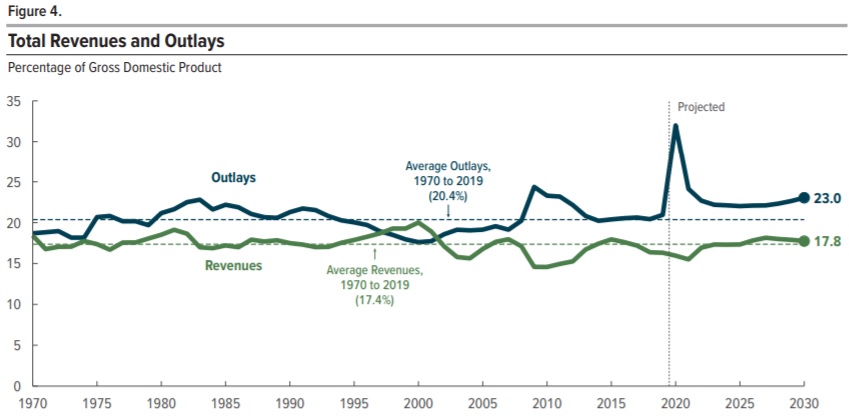

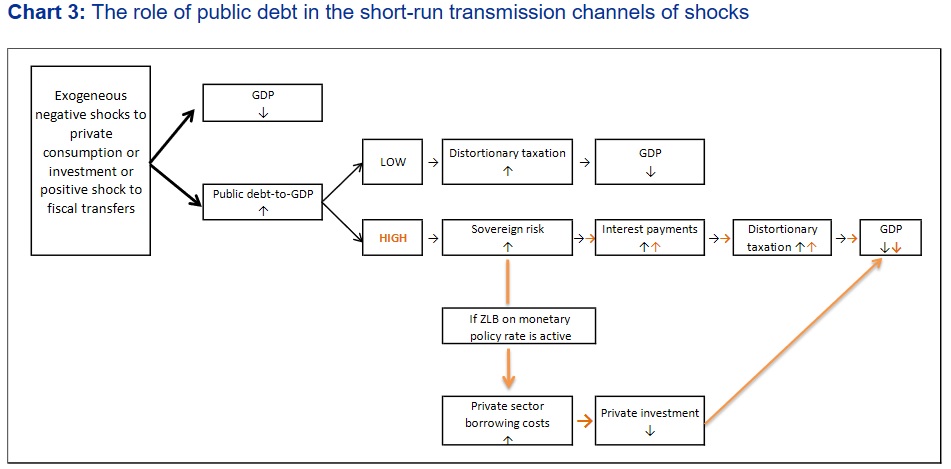
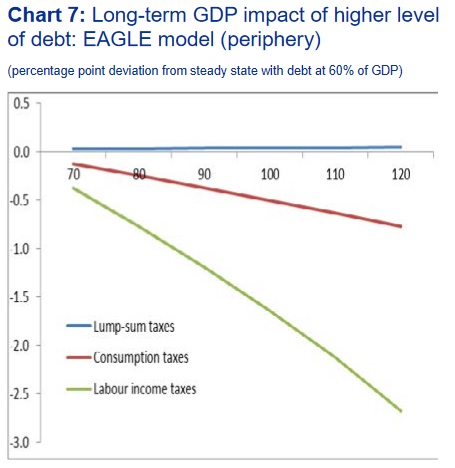
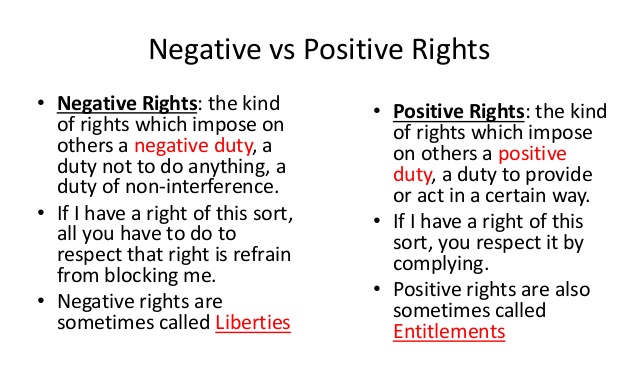

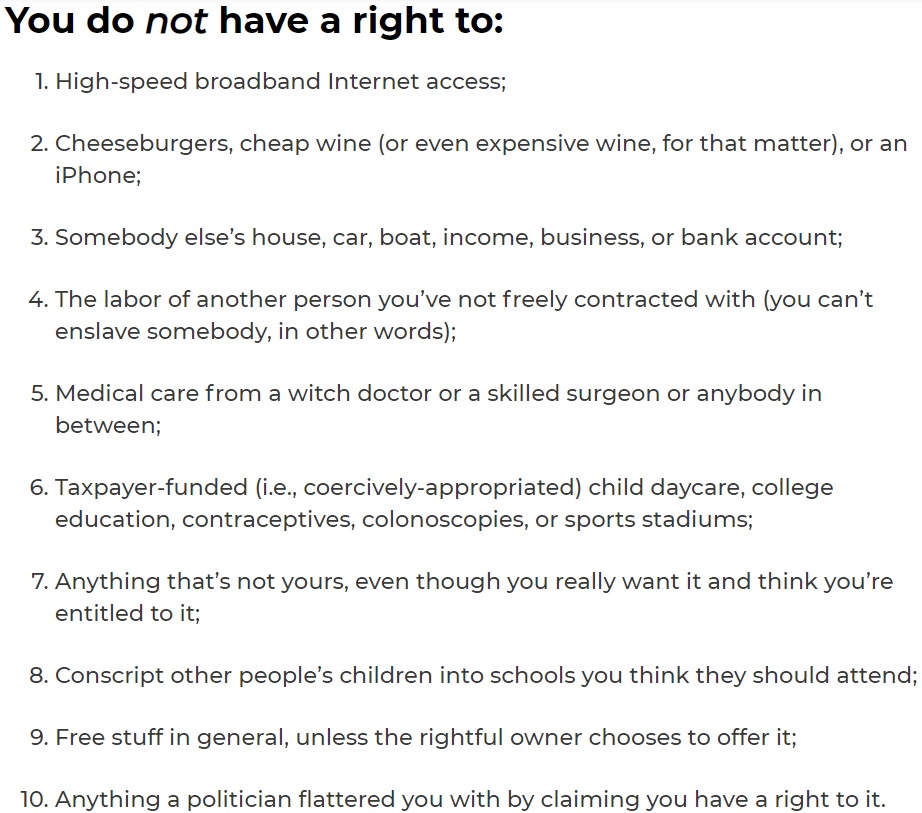


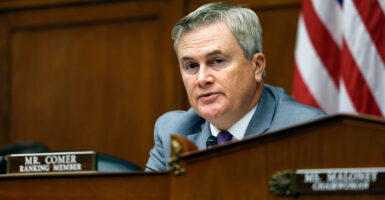


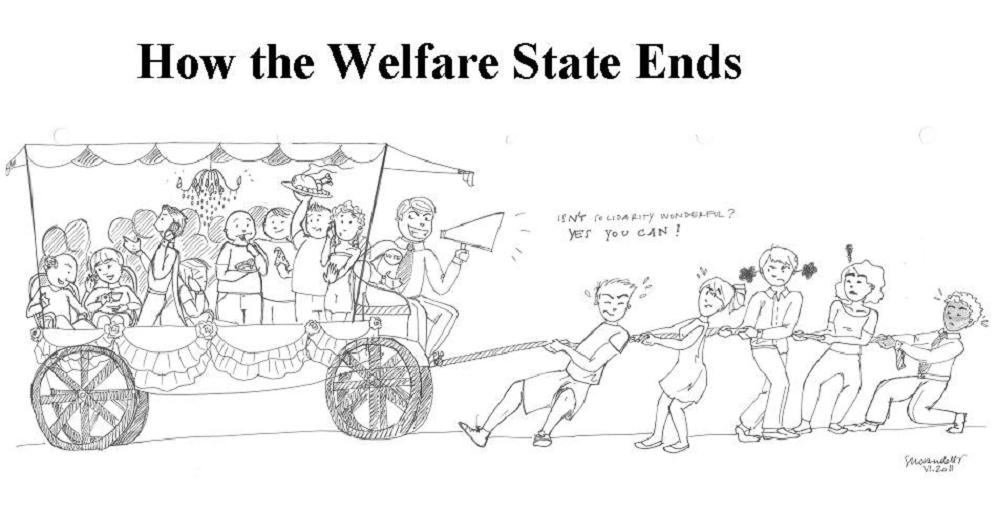



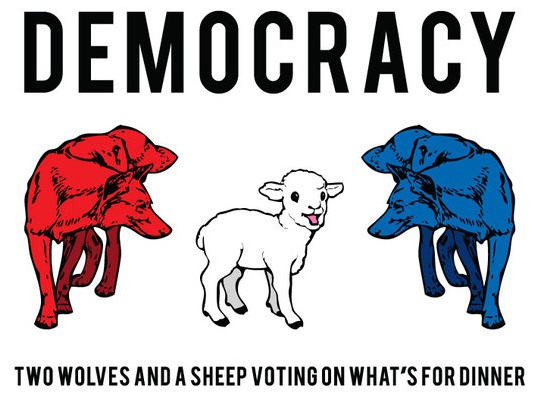



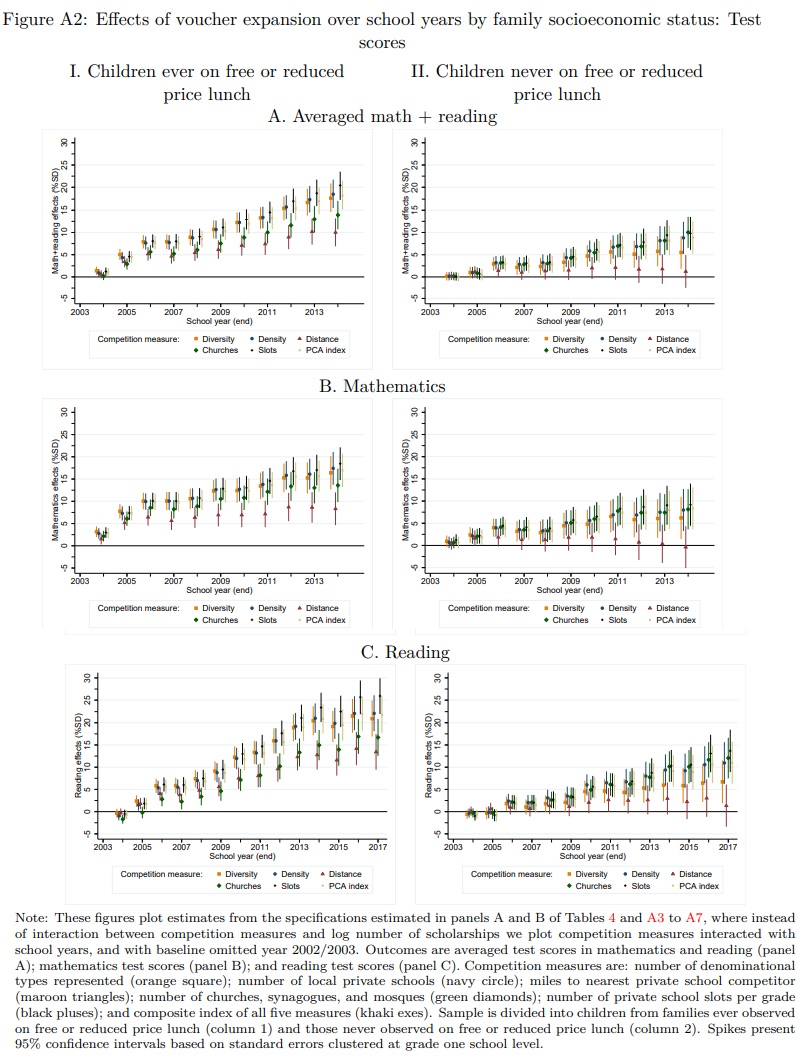





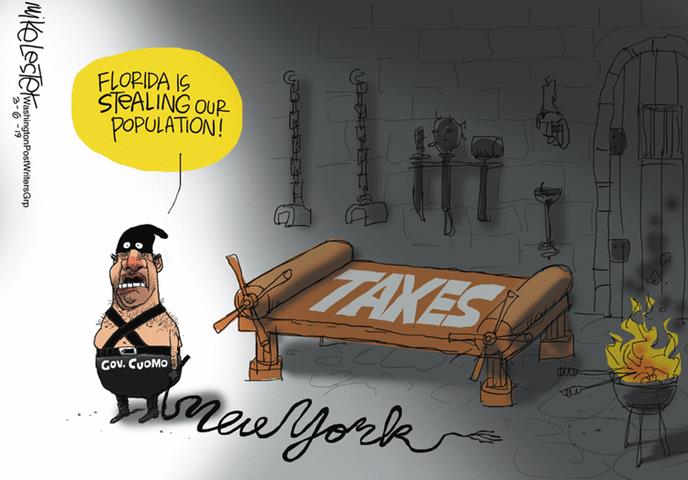

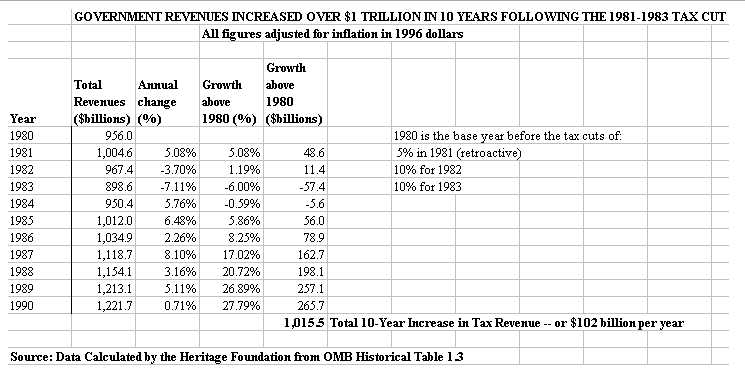


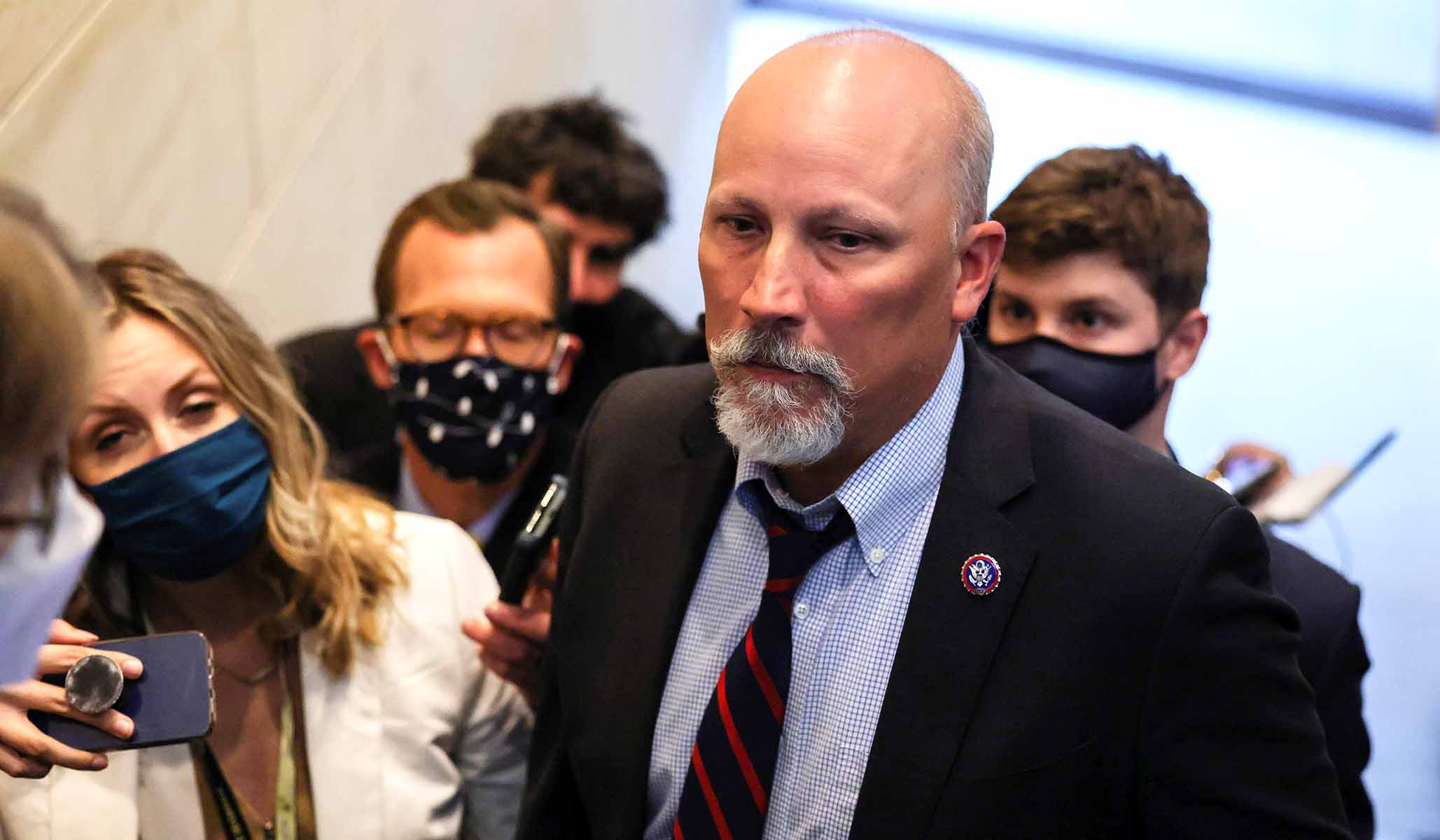




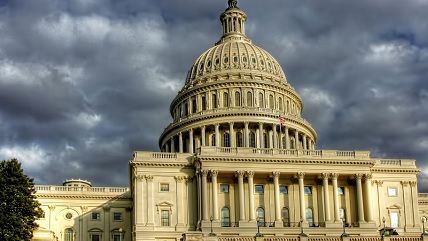


.jpg)


 The Daily Hatch