In the late 1940s, Milton Friedman was considered an important economist who had made significant technical contributions. At the beginning of the 1950s, however, he moved away from Keynesian economics and as a result was increasingly viewed as a bit of a nut. Two decades later, however, Friedman had become far and away the most important macroeconomist in the world. Much of the ongoing macro debate revolved around economists addressing Friedman’s ideas, pro or con. How did this happen?
Edward Nelson’s outstanding two volume study of Friedman provides the most complete answer that I have seen. During the 1960s, Friedman rejected 4 key tenets of Keynesian economics. And within less than a decade, all four of his critiques were shown to be correct. As a result, Keynesian economics absorbed much of monetarism, and this led to the creation of a new macroeconomic framework called New Keynesianism. Keep in mind that when I talk about “Keynesians”, I am not describing the views of J.M. Keynes or the views of modern Keynesians, I am describing the views of many of the most prominent Keynesian economists during the 1960s. (Samuelson, Tobin, Modigliani, Solow, Heller, etc.)
Here are the four Keynesian ideas that Friedman rejected:
1. Nominal interest rates are the correct indicator of the stance of monetary policy. The Fisher effect is not an important factor in the US.
2. Fiscal austerity (higher taxes) is the best way to reduce excessive aggregate demand.
3. There is a stable (negative) relationship between inflation and unemployment (the “Phillips Curve”).
4. Modern economies face an increasing problem of cost/push inflation, and hence wage/price controls are often the best way to control inflation.
Let’s take these one at a time.
In the mid-1960s, Friedman argued that nominal interest rates were rising because of increasing inflation expectations. Nelson points out that Keynesians like James Tobin rejected this claim (vol. 2, p. 113.) By the 1970s, inflation and nominal interest rates had increased much further, and there was almost universal agreement that Friedman was right and Tobin was wrong. Nominal interest rates are not a good indicator of the stance of monetary policy.
Thus the Keynesians were saying that if you want tight money to reduce inflation, you need high interest rates. Friedman basically said no, high interest rates are not the solution; you need to reduce growth in the money supply. By the late 1960s, the US had both high interest rates and a fast growing money supply, and inflation kept rising. It turned out that Friedman was right.
But Keynesians did not draw the correct inferences from this episode. Rather they decided that monetary policy must not be very effective, and instead advocated higher taxes as a way to reduce inflation (the MMT approach.) In 1968, LBJ raised income taxes so high that the US budget went into surplus, but inflation continued to increase.
Friedman had two reasons for doubting the efficacy of higher taxes. First, his permanent income theory suggested that temporary tax changes would be offset by changes in private saving, leaving aggregate demand almost unaffected. More importantly, he saw that a tax increase could only slow inflation by reducing velocity, which would have only a one-time effect. Even if velocity fell one or two percent, the contractionary effects (on M*V) would soon be overwhelmed by increasingly rapid growth in the money supply.
Thus Keynesians assumed that tax increases could slow inflation, while Friedman said no, you need to reduce the growth rate of the money supply.
When the tax increases failed to slow inflation, Keynesians began to focus on the Phillips curve, which suggested that there was an inverse relationship between inflation and unemployment. A policy of higher inflation would lead to lower unemployment, and vice versa. Friedman said this was wrong, as workers would eventually catch on to changes in the rate of inflation and demand compensating changes in nominal wage rates. In the long run, unemployment would return to the natural rate, regardless of the trend rate of inflation. By 1970, we had high inflation and high unemployment, which showed that Friedman was right. (Note that this was three years before the first oil shock.)
Thus the Keynesians thought that high unemployment was the solution to inflation. Friedman said no, you need to reduce the growth rate of the money supply.
When the high unemployment of 1970 did not work, Keynesian economists blamed inflation on “cost-push factors”, such as monopoly power or strong labor unions. They supported wage/price controls, which President Nixon implemented in August 1971. After a brief decline in inflation, the problem got much worse during the mid and late-1970s. Friedman saw that while wage/price controls might lead to a one-time drop in the price level of a few percentage points, as long as the money supply was growing rapidly, any gains from wage/price controls would be soon overwhelmed by a rising money supply.
Thus Keynesians said that the solution for high inflation is wage-price controls, whereas Friedman said no, these controls will not work; you need to reduce the growth rate of the money supply. See a pattern here?
In the early 1980s, the Fed finally began reducing the growth rate of the money supply, and inflation fell sharply.
Why isn’t the amazing success of Friedman’s ideas better understood? It’s partly because his preferred policy target—stable growth in a monetary aggregate such as M2—was not adopted due to concerns about unstable velocity. Even Friedman eventually accepted inflation targeting as a reasonable alternative. And the other four ideas discussed above all got incorporated in 1990s-era New Keynesianism. NKs accepted the importance of the Fisher effect, switching their focus from nominal to real interest rates. They accepted that monetary policy is the appropriate tool to control inflation, not fiscal policy. They accepted Friedman’s Natural Rate Hypothesis, the idea that higher inflation will not permanently reduce unemployment. And they accepted that a contractionary monetary policy, not wage/price controls, is the solution to inflation.
In one important respect, Friedman’s achievement is even more amazing than what I have outline here. In all four cases, Friedman’s claims were made at a time when they looked wrong. The Fisher effect had not been a very important factor in the setting of US interest rates when inflation expectation were near zero, including the period when the price of gold was pegged at $20.67/oz (1879-1933). And during 1934-68, when gold was $35/oz, inflation expectation were generally pretty low (even as actual inflation bounced around unpredictably.) During the early to mid-1960s, inflation expectations were probably not much more than 1%. The Fisher effect became a major factor afterFriedman began warning about the issue. Similarly, in the mid-1960s it was widely believed that tax changes had a big impact on aggregate demand, as the Kennedy tax cuts of 1964 were followed by a strong economy (albeit perhaps for supply-side reasons.) Keynesians were genuinely surprised when the big tax increase of 1968 failed to slow inflation. When Friedman gave famous AEA Presidential address outlining the Natural Rate Hypothesis in late 1967, a stable Phillips curve seemed quite plausible, indeed the 1960s fit the model better than almost any other decade. It was in the 1970s that the relationship completely broke down. And the Nixon wage/price controls seemed to work at first; it was only a few years later that they began to fall apart. Thus in all four cases Friedman rejected the orthodox view at a time when the orthodox approach seemed to be working fine, and in all four cases his views were eventually vindicated.
Milton Friedman’s achievements in the late 1960s and early 1970s were truly amazing, and deserve to be better known.
In a subsequent post, I’ll try to explain how Friedman was able to see the flaws in mainstream Keynesianism before most other economists. Why was his model better? We’ll see that all four of his successful critiques have something in common.
Milton Friedman’s FREE TO CHOOSE “Who protects the consumer?” Transcript and Video (60 Minutes)
In 1980 I read the book FREE TO CHOOSE by Milton Friedman and it really enlightened me a tremendous amount. I suggest checking out these episodes and transcripts of Milton Friedman’s film series FREE TO CHOOSE: “The Failure of Socialism” and “What is wrong with our schools?” and “Created Equal” and From Cradle to Grave, and – Power of the Market. From the original Free To Choose series Milton asks: “Who Protects the Consumer?”. Many government agencies have been created for this purpose, yet they do so by restricting freedom and stifling beneficial innovation, and eventually become agents for the groups they have been created to regulate.
Allowing the free market to work is the best thing for consumers. Milton Friedman noted, “Over a quarter of a century ago, I bought, second hand, a desk calculator for which I paid $300. One of these little calculators today which I can buy for $10 or so, will do everything that did and more besides. What produced this tremendous improvement in technology? It was self-interest or if your prefer, greed. The greed of producers who wanted it to produce something that they can made a dollar on. The greed of consumers who wanted to buy things as cheaply as they could. Did government play a role in this? Very little. Only by keeping the road clear for human greed and self-interest to promote the welfare of the consumer.”
Volume 7 – Who Protects the Consumer?
Abstract:
Do consumers need protection? Increasingly the public answer to this question has been “yes.” Increasingly, too, the Federal government has been identified as the source of this protection. Milton Friedman disputes the views that (1) consumers are in dire need of governmental protection against the wiles of the business community and that (2) governmental actions tend to make consumers better off. He argues that consumers’ problems more frequently than not can be attributed to failures of government rather than to failures of free markets. The best protection for the consumer, in Dr. Friedman’s view, is the free market. Despite popular mythology, business interests do not have the power to make people purchase something they do not want. Consider, for example, the failure of the highly touted Edsel, a product that was heavily promoted by the best advertising brains at the Ford Motor Company and its advertising agencies.When people have alternatives, they will not accept products they do not want. In a competitive market system, business people’s recognition that consumers have alternatives provides a powerful stimulus to keep product quality high. Fear of losing business to competitors provides a strong protective shield for the consumer. Armed with the protection offered by the free market, the consumer, says Dr. Friedman, really needs very little protection by the government. Indeed, many government attempts to protect consumers have made them worse off than they were beforehttp://www.youtube.com/watch?v=KgVvUz6mUkY
Volume 7 – Who Protects the Consumer?
Transcript:
Friedman: The 1960’s Corvair, condemned by Ralph Nader as unsafe at any speed. Since Nader’s attack it is being increasingly accepted that we need government protection in the marketplace. Today there are agencies all over Washington where bureaucrats decide what’s good for us. Agencies to control the prices we pay, the quality of goods we can buy, the choice of products available. It’s already costing us more than $5 billion a year. Since the attack on the Corvair the government has been spending more and more money in the name of protecting the consumer. This is hardly what the 3rd president of the United States, Thomas Jefferson, whose monument this is, had in mind when he defined a wise and frugal government as, one, which restrains men from injuring each other and leaves them otherwise free to regulate their own pursuits of industry and improvement. Ever since the Corvair affair the U.S. government has been increasingly been muscling in between buyer and seller in the marketplaces of America. By Thomas Jefferson’s standards, what we have today is not a wise and frugal government but a spendthrift and snooping government.
The federal regulations that govern our lives are available in many place. One set is here, in the Library of Congress in Washington, D.C. In 1936, the Federal Government established the Federal Register to record all of the regulations, hearings and other materials connected with the agencies in Washington. This is volume 1, number 1. In 1936 it took three volumes like this to record all these matters. In 1937 it took four and then it grew and grew and grew. At first rather slowly and gradually, but even so, year by year it took a bigger and bigger pile to hold all the regulations and hearings for that year. Then around 1970 came a veritable explosion so that one pile is no longer enough to hold the regulations for that year. It takes two and then three piles. Until on one day in 1977, September 28, the Federal Register had no fewer than 1,754 pages and these aren’t exactly what you’d call small pages either.
Many of those regulations come from this building.
Worker: Consumer Protection Safety hotline _ can you hold please?
Friedman: The Consumer Product Safety Commission is one of the newest agencies set up on our behalf. One of its jobs is to give advice to consumers.
Workers: The clue that gave it away….. What has been done about the flammability of children’s garments?
Friedman: But its main function is to produce rules and regulations. Hundreds and hundreds of them. Designed to assure safety of products on the market. It’s hard to escape the invisible hand of the Consumer Product Safety Commission except for food and drugs, ammunition and automobiles that are covered by other agencies. It has power to regulate just about anything you can imagine. Already it costs $41 million a year to test and regulate all these products on our behalf and that’s just the beginning. The Commission employees highly trained technicians to carry out tests like this, checking the brakes on a bike. But the fact is that 80% of bike accidents are caused by human error. These tests may one day lead to safer brakes, but even that isn’t sure. The one thing that is sure is that the regulations that come out of here will make bikes more expensive and will reduce the variety available. Yes, they really are testing how matches strike. And the tests are very precise. The pressure must be exactly one pound, the match exactly at right angles.
No matter how many tests are done, children’s swings are never going to be totally safe. You cannot outlaw accidents. If you try, you end up with ludicrous results. It hardly seems possible but they really do use highly skilled people to devise regulations that will prevent toy guns from making to big of a bang.
The Commission, in effect, is deciding what they think is good for us. They are taking away our freedom to choose.
Consumers don’t have to be hemmed in by rules and regulations. They’re protected by the market itself. They want the best possible products at the lowest price. And the self-interest of the producer leaves him to provide those products in order to keep customers satisfied. After all, if they bring goods of low quality here, your not going to keep coming back to buy. If they bring goods that don’t serve your needs, you’re not going to buy them. And therefore, they search out all over the world, the products that might meet your needs and might appeal to you. And they stand in back of them because if they don’t they’re going to go out of business. You see the difference between the market and the political action, the governmental agencies. Here nobody forces you, your free, you do what you want to. There’s no policemen to take money out of your pocket or to make sure that you do what you’re told to. Over a quarter of a century ago, I bought, second hand, a desk calculator for which I paid $300. One of these little calculators today which I can buy for $10 or so, will do everything that did and more besides. What produced this tremendous improvement in technology? It was self-interest or if your prefer, greed. The greed of producers who wanted it to produce something that they can made a dollar on. The greed of consumers who wanted to buy things as cheaply as they could. Did government play a role in this? Very little. Only by keeping the road clear for human greed and self-interest to promote the welfare of the consumer.
__________________________________
Milton Friedman noted how the government usually messes up things when they start regulating: “When governments do intervene in business, innovation is stifled. Railroads have been regulated for nearly a century and they are one of our most backward industries.”
Part 2
When governments do intervene in business, innovation is stifled. Railroads have been regulated for nearly a century and they are one of our most backward industries. The railroad story shows what so often results from the good intentions of consumer protection groups. In the 1860’s railroad rates were lower in the United States than anywhere else in the world. Yet many customers thought they were too high. They complained bitterly about the profits of the railroads.
Now the railway men of the time had their problems too. Problems that arose out of the fierce competitiveness among them. Many railroads all trying to get their share of the market, all trying to make a name for themselves. If you want to see what their problems were as they saw them, come and have a look at this.
From inside this private railroad car it may not look as if the people who ran the railroads had any real problems. Some, like the owner of this private car, had done very well. This was the equivalent of the private jet of today’s business tycoons. But for each one who succeeded, many didn’t survive the cutthroat competition.
What we have here is a railroad map of the United States for the year 1882. It shows every railroad then in existence. The country was literally crisscrossed with railroads going to every remote hamlet and covering the nation from coast to coast. Between points far distant like for example New York and Chicago, there might be a half a dozen lines that would be running between those two points. Each of the half dozen trying to get business would cut rates and rates would get very low. The people who benefited most from this competition were the customers shipping goods on a long trip.
On the other hand, between some segments of that trip, say for example, Harrisburg and Pittsburgh, there might be only a single line that was running and that line would take full advantage of its monopoly position. It would charge all that the traffic would bear. The result was that the sum of the fares charged for the short haul was typically larger than the total sum charged for the long haul between the two distant points. Of course, none of the consumers complained about the low price for the long haul, but the consumer certainly did complain about the higher prices for the short hauls. And that was one of the major sources of agitation leading ultimately to the establishment of the Interstate Commerce Commission.
The cartoonists of the day delighted in pointing out that railroads had tremendous political instinct. As indeed they did. They used the consumer’s complaints to get the government to establish a commission that would protect the railroad’s interest. It took about a decade to get the commission into full operation. By that time, needless to say, the consumer advocates had moved on to their next crusade. But the railway men were still there. They had soon learned how to use the commission to their own advantage. They solved the long haul/short haul problem, by raising the long haul rates. The customers ended up paying more, some protection. The first commissioner was Thomas Cooley, a lawyer who had represented the railroads for many years. The railroads continued to dominate the Commission.
In the 1920’s and 30’s when trucks emerged as serious competitors for long distance hauling, the railroads induced the Commission to extend control over trucking. Truckers, in their turn, learned how to use the Commission to protect themselves from competition. This firm carries freight to and from the Dayton, Ohio International Airport. Its the only one serving some routes and its customers depend on it. But Dayton Airfreight has real problems. Its ICC license only permits it to carry freight from Dayton to Detroit. To serve other routes it’s had to buy rights from other ICC license holders including one who doesn’t own a single truck. It’s paid as much as $100,000 a year for the privilege.
Secretary: Our company is in the process of trying to get rights to go there now. Yes, we’ll do that and thank you for calling sir.
The owners of the firm have been trying for years to get their license extended to cover more routes.
Air freight company: Now I don’t have any argument with the people who already have ICC permits except for the fact that this is a big country and since the inception of the ICC in 1936, there has been very few entrants into the business. They do not allow new entrants to come in and compete with those who are already in.
Unnamed individual: Of course, Dayton Airfreight suffers but so do the customers who pay higher freight charges. Quite frankly, I don’t know why the ICC is sitting on its hands doing nothing. This is the third time to my knowledge that we’ve support the application of Dayton Airfreight to help us save money, help free enterprise, help the country save energy, help, help, help. It all comes down to consumers ultimately going to pay for all of this and they are the blame. The ICC has to be the blame.
Friedman: Dayton Airfreight now has many of its trucks lying idle. Trucks that could be providing a valuable service. Far from protecting consumers, the ICC has ended up making them worse off.
As far as I’m concerned, there is no free enterprise in interstate commerce. It no longer exists in this country. You have to pay the price and you have to pay the price very dearly and I don’t mean we have to pay the price, it means that the consumer is paying that price.
The price consumers pay when it comes to medicine could be their lives. In the 19th Century pharmacies contained an impressive array of pills and potions. Most were ineffective and some were deadly. There was an outcry about drugs that maimed or killed. The Food and Drug Administration in response to consumer pressure succeeded in banning a whole range of medicines. The tonics and lotions with their excessive claims disappeared from the market. In 1962 the Kefauver Amendment gave the FDA power to regulate all drugs for effectiveness as well as for safety. Today, every drug marketed in the United States must pass the FDA. It’s clear that this has protected us from some drugs with horrific side effects like thalidomide. And we all know of people who have benefited from modern drugs. What we don’t hear much about however, are the beneficial drugs that the FDA has prohibited.
Well, if you examine the therapeutic benefits of significant drugs that haven’t arrived in the U.S. but are available somewhere in the rest of the world, such as in Britain, you can come across numerous examples where the patient has suffered. For example, there are one or two drugs called beta blockers which now can prevent death after heart attack, we call it secondary prevention of coronary death after myocardial infarction, which if available here, could be saving about 10,000 lives a year in the United States. In the ten years after the 1962 amendments no drug was approved for hypertension. That’s for the control the blood pressure in the United States, where as several were approve in Britain. In the entire cardiovascular area, only one drug was approved in the five year period from 67 to 72. And this can be correlated with known organizational problems at FDA.
These carts are taking to an FDA official the documents required to get just one drug approved.
Worker: Well, hi there, must be the new one they called me about.
Friedman: It took six years work by the drug company to get this drug passed.
Worker: This one right here, all 119 volumes.
_____________________________________
Milton Friedman noted, “The men and women who have fostered this movement… believe that we as consumers are not able to protect ourselves… But as so often happens the results have been very different from the intentions. Not only have our pockets been picked of billions of dollars, but also we are left less well protected than we were before.”
Part 3
Friedman: The implications for the patients are that therapeutic decisions that used to be the preserve of the doctor and the patient are increasingly becoming made at a national level by committees of experts. And these committees and the agencies for whom they are acting, FDA, are highly skewed to avoid risks. So there is a tendency for us to have drugs that are safer but not to have those that are effective. Now, I’ve heard some remarkable statement from these advisory committees in considering drugs. One has seen the statement, there are not enough patients with the disease of this severity to warrant marketing this drug for general use. Now that’s fine if what you are trying to do is to minimize drug toxicity for the whole population. But if you happen to be one of these “not enough patients” and you have a disease that’s of high severity or a disease that’s very rare than that’s just tough luck on you.
For ten years Mrs. Esther Usdane suffered from severe asthma. The medication she received had serious side effects. Her condition was getting worse. But the drug her doctor preferred is prohibited by the FDA. So, twice a year Mrs. Usdane had to set out on a journey.
Mrs. Usdane: I had been very sick. I had been in and out of the hospital several times and they couldn’t seem to find a way to control the asthma and I had to change my lifestyle once I was out even for a short time, mainly because the cortisone derivatives were softening the bones and causing a puffiness of the face and other changes in my body. The doctors were pretty anxious to get me off the cortisone derivative.
Friedman: The drug her doctor wanted her to have had been available for use for five years in Canada. Once across the boarder of Niagara Falls, Mrs. Usdane could make use of the prescription that she obtained from a Canadian doctor. All she had to do was go to any pharmacy. There she could buy the drug that was totally prohibited in her own country. The drug worked immediately.
Mrs. Usdane: This one made such a difference in my life both because of the shortness of breath being resolved and also because now we don’t have to worry so much about the softening of the bones. Fortunately, once I got that medicine, very quickly, everything sort of reverted back to a much more the normal lifestyle and I’m very grateful that I was able to find relief.
Friedman: It was easy for Mrs. Usdane to get around the FDA regulations because she happens to live near the Canadian boarder. Not everyone is so lucky. It’s no accident that despite the best of intentions, the Food and Drug Administration operates so as to discourage the development and prevent the marketing of new and potentially useful drugs. Put yourself in the position of a bureaucrat who works over there. Suppose you approve a drug that turns out to be dangerous, a thalidomide. Your name is going to be on the front page of every newspaper. You will be in deep disgrace. On the other hand, what if you make the mistake of failing to approve a drug that could have saved thousands of lives. Who will know? The people whose lives might have been saved will not be around. Their relatives are unlikely to know that there was something that could have saved their lives. A few doctors, a few research workers, they will be disgruntled, they will know. You or I, if we were in the position of that bureaucrat, we’d behave exactly the same way. Our own interests would demand that we take any chance, whatsoever, almost, of refusing to approve a good drug in order to be sure that we never approve a bad one.
Drug companies can no longer afford to develop new drugs in the United States for patients with rare diseases. Increasing, they must rely on drugs with high volume sales. Four drug firms have already gone out of business and the number of new drugs introduced is going down.
Where will it all lead? We simply haven’t learned from experience. Remember Prohibition? In a burst of moral righteousness at the end of the first world war, when many young men were oversees, the non-drinkers imposed on all of us prohibition of alcohol. They did it for our own good. And there is no doubt that alcohol is a dangerous substance. Unquestionably, more lives are lost each year through alcohol and also the smoking of cigarettes than through all the dangerous substances the FDA controls. But where did it lead?
This place is today a legitimate business. It’s the oldest bar in Chicago. But during Prohibition days it was a speakeasy. Al Capone, Buggs Moran, and many of the other gangsters of the day sat around this very bar planning the exploits that made them so notorious; murder, extortion, highjacking, bootlegging. Who were the customers who came here? They were people who regarded themselves as respectable individuals, who would never had approved of the activities that Al Capone and Moran were engaged in. They wanted a drink but in order to have a drink they had to break the law. Prohibition didn’t stop drinking, but it did convert a lot of otherwise law obedient citizens into law breakers. Fortunately, we’re a very long way from that today with the Prohibition on cyclamate and DDT. But make no mistake about it, there is already something of a gray market in drugs that are prohibited by the FDA. Many a conscientious physicians fees himself in a dilemma caught between what he regards as the welfare of his patient and strict obedience to the law. If we continue down this path, there is no doubt where it will end. After all, if it is appropriate for the government to protect us from using dangerous guns and bicycles for logic calls for prohibiting still more dangerous activities such as hand gliding, motorcycling, skiing. If the government is to protect us from ingesting dangerous substances, the logic calls for prohibiting alcohol and tobacco. Even the people who administered the regulatory agencies are appalled at this prospect and withdrawal from it. As for the rest of us, we want no part of it. Let the government give us information but let us decide for ourselves what chances we want to take with our own lives.
As you can see all sorts of silly things happen when government starts to regulate our lives. Setting up agencies to tell us what we can buy, what we can’t buy, what we can do.
Remember, we started out this program with a Corvair and on the bill that was castigated by Ralph Nader as unsafe at any speed. The reaction to his crusade led to the establishment of a whole series of agencies designed to protect us from ourselves. Well, some ten years later, one of the agencies that was set up in response to that, now finally got around to testing the Corvair that started the whole thing off. What do you suppose they found? They spent a year and a half comparing the performance of the Corvair with the performance of other comparable vehicles and they concluded and I quote “The 1960_63 Corvair compared favorably with the other contemporary vehicles used in the test.”
__________________________
Milton Friedman correctly noted, “It’s time all of us stopped being fooled by those well-meaning bureaucrats who claim to protect us because they say we can’t protect ourselves.”
Pt 4
Nowadays, there are Corvair fan clubs throughout the country. Corvair’s have become collector items. Consumers have given their verdict on Ralph Nader and the government regulations. As Abraham Lincoln said, you can’t fool all of the people all of the time. It’s time all of us stopped being fooled by those well-meaning bureaucrats who claim to protect us because they say we can’t protect ourselves. The men and women who have fostered this movement have been sincere. They believe that we as consumers are not able to protect ourselves. That we need the help of a wise and effervescent government. But as so often happens the results have been very different from the intentions. Not only have our pockets been picked of billions of dollars, but also we are left less well protected than we were before.
DISCUSSION
Participants: Robert McKenzie, Moderator; Milton Friedman; Kathleen O’Reilly, Consumer Federation of America; Richard Landau, Professor of Medicine, University of Chicago; Joan Claybrook, National Highway Traffic Safety Administration; Robert Crandall, Brookings Institute
MCKENZIE: Now back at the University of Chicago the consumerists, themselves, get their chance to argue their case.
O’REILLY: I agree with Mr. Friedman with respect to those agencies which have had the major purpose of economically propping up a certain industry which is why consumer advocates like myself advocate the elimination of the ICC, the CAB, the Maritime Commission. But when you’re talking about consumer protection in the marketplace and when you’re talking about government watchdog in competition, consumers need and as every poll is showing, they’re demanding more and more protection. And to give just two examples of how information is simply not enough to protect the consumer, five years ago I could not have bought a child’s crib in this country that would have had the slats sufficiently close together that I did not have to worry about the child strangling. Not until the government and the Consumer Product Safety Commission stepped in did consumers then have the choice to buy that type of a crib, strangulation’s down 50 percent. And in 1975, if I had wanted to lease a Xerox machine, I could not have done it. And not until the Federal Trade Commission antitrust stepped in and forced competition into that marketplace did I have that choice and in one year the price went from 14,000 dollars to 5,000 dollars. Those are dollars back in our pocketbooks to say nothing of minimized emotional trauma.
MCKENZIE: Well, before we ask Milton Friedman to come back on that, lets establish the viewpoint of our other participants and experts. Dr. Richard Landau, what’s your reaction?
LANDAU: Well I think the cost is certainly outrageously large and the benefits are trivial if any. I think that perhaps Milton overstates it slightly to make his point, but basically I would have to agree with it in the area that I know best, which is the regulation of new drug development.
MCKENZIE: And Joan Claybrook.
CLAYBROOK: Well in the auto safety field we’ve saved about 55,000 lives and millions of injuries because of auto safety regulations since the mid_1960s. I might also comment that the cost of auto crashes each year, the American public is 48 billion dollars a year, fairly substantial when you compare it to other things, much less, again, the human trauma.
MCKENZIE: Bob Crandall.
CRANDALL: Well I think it’s impossible to disagree with Milton Friedman on the effects of economic rate regulation of the sort that the railroads and the trucking industry have been through. The intent of that legislation was, of course, to protect the railroad and to protect the trucks, and the same thing is true for maritime regulation. What sustains regulation is sort of a populist theory that somehow through government we will redistribute wealth from people who own business firms to consumers. In fact it doesn’t work that way. It doesn’t work that way in economic regulation and there’s very little evidence that it works that way in any kind of regulation. As to whether we get any value from health and safety regulation, I think much of it is too new to know.
MCKENZIE: Well now that’s the area I want to start with because remember that was the first part of his argument. The whole idea of consumer product safety action by the state. Now, is that so far working? Very close to your interest I know. What’s your reaction, Kathleen O’Reilly?
O’REILLY: Well in product safety in the state of that, the lawnmower industry had said for twenty years they could not design a safe lawnmower. Only when the Consumer Product Safety Commission forced them with the new standard suddenly their creative genius was overnight. They came up with net whips that were made out of plastic and they came up with very innovative forces. Which is why __ where that government presence actually triggered innovation that otherwise would have been left uncovered.
FRIEDMAN: It’s very easy to see the good results. The bad result it’s very much harder to see. You haven’t mentioned the products that aren’t there because the extra cost imposed by Consumer Product Safety Commission have prevented them from existing. You haven’t mentioned the case of the triss (phonetic) problem on the flammable garments. Here you had a clear case where the __ regulation of the CPSC essentially had the effect of requiring all manufacturers of children’s sleepwear to impregnate them with triss.
O’REILLY: Oh, but that’s not true at all.
FRIEDMAN: Three years __ five years later the regulation required that garments to be nonflammable and as it happened, triss was the most readily available chemical which could do it.
MCKENZIE: Kathleen O’Reilly.
O’REILLY: It’s absolutely not true.
FRIEDMAN: But let me finish the story first. Because the second half of the story is the important part of it. It turned out that triss was a carcinogen. And five years later or three years later, I’m not sure the exact time, the same agency had to prohibit the use of those sleepwear garments forcing them to be disposed of at great cost to everybody concerned.
O’REILLY: All right, lets look at the real interesting history here. In 1968, when Congress passed the Flammable Fabric Act, they did not tell the CPSC what chemicals would comply with that and what would not. And so initially when industry said, “we’re going to use triss,” the Consumer Product Safety Commission, from their initial tests, were disturbed by it and had announced informally to industry that they were not going to allow triss to be used. Industry balked and said, “we’re gonna to take you to court because the Act only says it has to be flame retardant.” You, the government, cannot tell us how to comply. And it was the industry that forced the hand of CPSC away. And they don’t even deny that now.
FRIEDMAN: I’m not trying to defend the industry. Go slowly. I am not pro-industry. I am pro-consumer. I’m like you. I’m not pro-industry. and, of course, industry will do a lot of bad things. The whole question at issue is what mechanism is more effective in protecting the interests of the consumers, the disbursed, widespread forces of the market. Take the case of the flammable fabrics, suppose you had not had the requirements.
MCKENZIE: But you believe it was right to test them, don’t you? For a government agency to test it?
FRIEDMAN: No, not at all.
MCKENZIE: No, no.
FRIEDMAN: There are private consumer testing agencies. There’s the Consumers Research. There’s Consumers Union. You speak about a widespread demand for more protection, those agencies have never __ those organizations __
CLAYBROOK: Oh, of course, they have all these publications on cars __
FRIEDMAN: Of course.
CLAYBROOK:__ but what they do is they test the brakes and steering. They never crash test them and the most important thing to know about a car when you buy it is if the car crashes are you going to be killed unnecessarily?
FRIEDMAN: The reason they __
CLAYBROOK: You can’t even get that information.
FRIEDMAN: But the reason they don’t test __
CLAYBROOK: It’s too expensive, that’s the reason why.
FRIEDMAN: Of course. Anyway it is too expensive for them because the number of consumers who are willing to buy their service and take it is very, very small.
CLAYBROOK: That is not why. The reason why is because it’s enormously expensive.
FRIEDMAN: Of course, but if they had a large enough number of customers, if there were enough customers, enough consumers who wanted the __
CLAYBROOK: Yes, but that’s a chicken and egg situation which is ridiculous.
FRIEDMAN: It’s not a chicken and egg situation. The whole situation __
CLAYBROOK: If you believe that technological information is important for consumer to have, which is that basis ad the thesis of your argument, surely that you would say that one of the things that society does as it groups together to provide basic services to the public; police, traffic services, all sorts of basic kinds of things, the mail service and the fire service and all the rest of it. Why is that they shouldn’t even do testing of technological subjects which the public has no way of knowing?
MCKENZIE: Before you reply, I want one or two others in on this, Bob Crandall.
CRANDALL: It seems to me that Professor Friedman could give a little bit on this ground. Certainly in the dissemination of information there’s a free rider problem. And one of the problems is that while you and I might value the results from a Consumer Union rather highly, we don’t have to pay for it. We can look over the shoulder of someone else, borrow the magazine from the library and so forth. I wouldn’t go so far as to say that the government should not at all be in the business of generating information though I am concerned about exactly the same forces, this evil industry that Miss O’Reilly talks about, having its influence on how this information is prepared. I don’t see how we guard ourselves against that.
FRIEDMAN: We don’t
CRANDALL: But it seems to me that there is a case to be made that the market does not supply enough information.
FRIEDMAN: It may not. But the market supplies a great deal and there is also a free rider problem in the negative sense on government provision of information because people who have no use for that information are required to pay for it.
_____________________________________
Milton Friedman rightly noted, “The most anti-consumer measures on our statute books are restrictions on foreign trade.”
Pt 5
MCKENZIE: Milton, I don’t quite understand your position on this. Are you saying, though, that there’s no place for government to test consumer product safety at all?
FRIEDMAN: I am saying, lets separate issues. I am saying there is no place for government to prohibit consumers from buying products, the effect of which will be to harm themselves. There is, of course, a place __
MCKENZIE: But how do they know that effect?
FRIEDMAN: Well, for a moment I’m trying to separate the issues. There is a place for government to protect third parties. If we go to your automobile case __
CLAYBROOK: Well, how about children? Children don’t __ aren’t choosers.
FRIEDMAN: No, no.
CLAYBROOK: They don’t make choices because they ride in the cars.
FRIEDMAN: The parents make their choices. But let’s go __
O’REILLY: But if the industry has it there’s no choice.
FRIEDMAN: We can only take one issue at a time. We’re a little difficult to take them all at once. Let’s take one at a time. I say there is no place for government to require me to do something to protect myself.
(Applause)
FRIEDMAN: Now if government has information __
MCKENZIE: Has of obtains?
FRIEDMAN: __ for a moment, suppose it has information, then it should make that public and available. The next question is: are there circumstances under which it’s appropriate for government to collect information? There may be some such circumstances. They have to be considered one at a time. Sometimes there is and sometimes there isn’t. But you see, I want to get back. Take your area Miss Claybrook, you are now involved on the airbag problem.
CLAYBROOK: That’s right.
FRIEDMAN: If I understand the situation, I don’t know anything about the technical aspects of it, but the airbag, in a car, is there to protect me as a driver. It doesn’t prevent me from having an accident, hurting somebody else because it’s only activated by an accident. All right then, why shouldn’t I make that decision? Who are you to tell me that I have to spend whatever it is, two hundred, three hundred, four hundred dollars on that airbag.
CLAYBROOK: Well we don’t tell you that. What we say is that when a car crashes into a brick wall at 30 miles an hour, the front seat occupants have to have automatic protection built into that car.
FRIEDMAN: Have to, why have to?
CLAYBROOK: And it’s a very __ it’s a very minimal __
FRIEDMAN: Why have to? I don’t care whether it’s an airbag or a seatbelt.
CLAYBROOK: The reason why __ well, there are two reasons why. One is that the sanctity of life is a fairly precious entity in this country.
FRIEDMAN: It’s more precious to me than it is to you. My life is more precious to me than to you.
MCKENZIE: Well, you know.
CLAYBROOK: Do you wear you seatbelt?
FRIEDMAN: Sometimes I do and sometimes I don’t.
CLAYBROOK: I see. Well then it couldn’t be too precious to you because if it were you’d wear it all the time.
FRIEDMAN: I beg you pardon.
CLAYBROOK: Yes.
FRIEDMAN: Other things are precious too.
CLAYBROOK: Yes. Okay, but wearing your seatbelt is a relatively simple thing to go into.
FRIEDMAN: But now my question is __ but I want an answer, a direct answer.
CLAYBROOK: But there is a very __ there’s a very basic reason why.
FRIEDMAN: Yes.
CLAYBROOK: And it’s because a person does not know when they buy a car what that car is gonna do when it performs in various and sundry different ways. That’s number one. Number two, there’s a basic minimum standard, it’s performance standard. It’s not a requirement that you have certain pieces of products in your cars, but it’s a basic performance standard built into your car that when you buy it no one’s going to have less than that. So that you don’t have people needlessly injured on the highway, the cost to society, the cost to the individuals, the trauma to their families and so on. You’re suggesting theoretically that it’s much better to let people go out and kill themselves even though they really don’t know that that’s what’s gonna happen to them when they have that crash.
FRIEDMAN: Excuse me. You’re evading the fundamental issue. If you have the information, give it to them. The question is not a question of giving them the information. The question is what is your right to force somebody to spend money to protect his own life, not anybody else, but only himself and the next question I’m gonna ask you: do you doubt for a moment that prohibiting alcohol would save far more lives on the highways than an airbag, seatbelts and everything else, and on what grounds are you opposed to prohibition on grounds of principle or only because you don’t think you can get it by the legislature?
CLAYBROOK: I’m opposed to prohibition because I don’t think it’s gonna work. That’s the reason I’m opposed to it.
FRIEDMAN: But suppose it would work? I want to get to the __ I want to get to the principle.
CLAYBROOK: Can I answer you __ sure.
FRIEDMAN: I want to __ suppose you could believe it would work. Suppose you could believe__
MCKENZIE: Prohibition?
FRIEDMAN: Prohibition could work. Would you be in favor of it?
CLAYBROOK: No. What I am in favor of is building products __ I am in favor of building products so that at least they service the public.
FRIEDMAN: I was fascinated by some of the initial comments. Everybody agrees that the old agencies are bad, but the new agencies that we haven’t had a chance ___
MCKENZIE: No. You’re trying to sweep them into your net. They didn’t agree to that. But anyway __ hole on to your point.
O’REILLY: When you talk about __ the basic principle is: give me the information. Let me choose for myself. If that’s the ultimate goal, why is it that in any hearings that you’ve every gone to and I beg anyone to find me an exception, whether it’s airbags or DES, saccharine, whatever, you never; you never have the victims of the injury who lost their arm because of a lawnmower, standing up and saying “thank God that you gave me the right to become incapacitated.” Never do you hear a victim thanking the government for backing off. Never do you hear the victim of an anti-competitive action thanking the Justice Department for not bring a suit.
MCKENZIE: Dr. Landau, I promised you could make an observation on that without going into great detail.
LANDAU: Now, when DES was used to preserve pregnancies in women 25 and 30 years ago, there was absolutely zero evidence that it would cause cancer in anybody, certainly not in the children of the women who were pregnant and for you to say that it is __
O’REILLY: Then you’re ignoring the 1941 studies that show just that.
LANDAU: There is no 1941 study. This happens to be my area of expertise, I’m an endocrinologist. There was nothing.
O’REILLY: Well, there are a lot __
MCKENZIE: Now let’s not go any further down that road.
CRANDALL: Let me ask you __ yeah, let me ask Miss O’Reilly a question. I don’t see __ if the problem in drugs is that there is a lack of competition, there are a number of drug companies in the United States __
O’REILLY: That’s one of them.
CRANDALL: __ and around the world; and a lack of innovation, how regulation, which is designed to keep products off the market, that is further restrict the supply of drugs is going to enhance either competition or innovation; as a matter of fact, everything that I have learned in economics would tell me that that is likely to reduce innovation and reduce competition. And one of the great benefits of drug regulation is that if I’m a pharmaceutical company with an old tried and true drug on the market, I really want the FDA to keep new drugs off the market. It will enhance the market value of that drug. I think that’s the lesson that you learn from government regulation, whether it’s National Highway Traffic Safety Administration regulation of fuel economy standards, be it drugs, be it pollution controls, their effect is anti-competitive, it’s not pro-competitve at all.
FRIEDMAN: It I go on with Bob’s point for just a moment. He and I, I’m sure, and all economists would agree that the most effective way to stimulate competition would be to have complete free trade and eliminate tariffs. The most anti-consumer measures on our statute books are restrictions on foreign trade.
MCKENZIE: Milton __
FRIEDMAN: Has the Consumer Federation of America testified against tariffs?
O’REILLY: We haven’t even been asked to.
(Laughter)
___________________________________________
Milton Friedman noted, “I would agree with his general position that there is a role for government in pollution. I would agree secondly that the present techniques of controlling pollution are terrible and they are terrible and they are what they are for precisely the reasons he specifies because they are an effective way in which you could use the excuse of pollution to serve some very different objectives.”
Pt 6
MCKENZIE: Now the Food and Drug Administration, and here, Doctor, I know you’re keenly interested in this __ what was your reaction to Milton’s analysis of where it’s fallen down?
LANDAU: Well, I think it’s even worse than Milton’s analysis or Dr. Wordell’s (phonics) analysis of it. If one could look at the past 25 or 30 years of new drug innovation, one could see that most of the drugs that you all would regard as miracle drugs were developed before the Kefauver Amendments.
MCKENZIE: That’s the 1962 amendments __
LANDAU: The 1962 amendments.
MCKENZIE: Which ruled what now again, just a rundown.
LANDAU: Well, the 1962 amendments as Milton said, added efficacy to the regulation of safety. Actually it’s what the regulators did with this law that went haywire. I don’t see how one can object to the law in itself. What the regulators did was go mad with respect to safety. When the only thing that was added to the law was the point of efficacy.
MCKENZIE: Yeah.
LANDAU: After all the two are intertwined inextricably fir a very hazardous disease like cancer you will tolerate a very dangerous drug and for a headache it’s got to be very, very safe. Now this we’ve know all the time, but the regulators have gone to the point of utilizing some hysteria over thalidomide and new legislation which I think was originally designed by Kefauver to get himself to be president by lowering the cost of drugs, to make regulations which are absolutely obstructive. Now instead of 75 percent of the new drugs used in this country being developed in this country, less than 25 percent of them are. They’re being developed elsewhere.
MCKENZIE: Yeah, now could we just clarify this point, though. Are you saying there should not be government intervention in the food and drug field of that kind, or is it simply the policy adopted by the FDA or imposed on it by the Kefauver Amendment is where it went wrong?
LANDAU: I believe that certain guidelines are necessary and it’s possible to construct guidelines based upon the Kefauver Amendment taking the responsibility for decision making away from the bureaucrats in the Food and Drug Administration. You say, how? I would say by giving it to panels of impartial experts to make this decision.
MCKENZIE: Now, Milton, do you take that? Do you buy that?
FRIEDMAN: Nope. I’m not gonna buy that.
O’REILLY: Can I comment?
MCKENZIE: Why not?
FRIEDMAN: Because I have never seen __ have you ever seen a cat that barked?
MCKENZIE: Not especially, no.
FRIEDMAN: Well, governmental agencies and governmental laws follow their own laws just as the physical laws say that cats don’t bark. These laws of social science say that when you start and set up a regulatory agency with power, those powers are going to be used.
MCKENZIE: I want to move on, though, to the third area that Milton chose, the Interstate Commerce Commission as an illustration. Now this is closer to you line, Robert. What is your reaction, first to his analysis and what do you think needs doing about it?
CRANDALL: Well, you’re not going to get much dispute from, I don’t think anybody’s sitting around here as to what the benefits of __ or costs of rate regulation in transportation are. The only group that you will find now supporting continued regulation would be the American Trucking Association and they can’t even make a very persuasive case or one that is consistent from one day to the next. There simply is no good reason for continuing this type of regulation. If might continue longer then, say, airline regulation did because the number of people whose wealth has been enhanced by this regulation, that is people who drive trucks, people who won licenses to operate, to haul only hardbound books between Peoria and Springfield, Illinois or something of that sort. Those people are very numerous. And it’s going to very hard to o something about it.
MCKENZIE: Does this prove anything about the nature of government intervention and regulation or is it simply an example of where the thing was done extremely badly and not in the interest of the public.
CRANDALL: It proves _ _ I think it proves a great deal about government regulation and it is no different. I don’t think in the area of health and safety regulations. Let me give you one piece of information about one area of very important health and safety regulation which I think eve Milton Friedman would be in favor of in some form and that is the regulation of pollution control or at least the establishment of property rights, so as to somehow reduce pollutant levels from what they would be if we allowed unlimited pollution. In the case of environmental policy, the strongest proponents in the Congress for environmental policy come from the northeastern part of the United States and the weakest proponents, those with the worst voting records in the Congress come from the Southwest and Alaska. You might ask yourself why is that. And one possible answer I guess is that well the air’s dirty in New York City, but I don’t think you find many people really worried about the quality of the air in New York City. What they’re worried about is their future employment and the value of their assets in New York City. What would happen in the absence of environmental policy in this country is that more business would move to the southwest and the western part of the United States. As a result, eastern Congressmen are very much in favor of a policy which prohibits through pollution control regulations, prohibits a gravitation.
MCKENZIE: Do you favor that too?
CRANDALL: I don’t prohibit the form it takes, but they use this as an excuse, just as they will use various excuses, let’s say, before the __ Miss Claybrook’s agency, for a very tight standards in order to promote the value of their product.
MCKENZIE: Well before we go back to ICC and I want to do that; Milton, what’s your reaction to his pollution point because I know he’s very keenly interested in it.
FRIEDMAN: Well he and I would __ I would agree with his general position that there is a role for government in pollution. I would agree secondly that the present techniques of controlling pollution are terrible and they are terrible and they are what they are for precisely the reasons he specifies because they are an effective way in which you could use the excuse of pollution to serve some very different objectives. That’s part of the way in which governments meow, if I may go back to my cat. We’ve discussed this at greater lengths in a book that we’ve written to go along with this program on Free to Choose. The program itself was too short for us to be able to get much in about pollution, indeed, we really had to skip it because it’s such a complicated and difficult subject. But there is a real role for government because that is a case in which you’re protecting third parties. And every one of the valid cases, in my opinion, for government entering in has to do with third parties. There’s a case for requiring brakes because that’s to protect the person you might hit. That’s wholly different. There’s no case for requiring an airbag in my opinion, but there is a case for requiring good brakes.
MCKENZIE: Do you accept that distinction, by the way?
O’REILLY: No because when you’re injured because of a failure to us a passive restraint, I am in a sense going to have to help pick up part of your medical bills, part of your insurance rates __
FRIEDMAN: Absolutely.
O’REILLY: __ because they’re spread across.
FRIEDMAN: Absolutely.
O’REILLY: And so only on Gilligan’s Island, when you have six or nine people not interacting such that all of society is affected, does your distinction have any validity?
FRIEDMAN: Go slowly.
CRANDALL: The same thing is true in alcohol. When you’re sick from alcoholism, who pays for it?
O’REILLY: On the alcohol, the studies have only shown excessive amounts of alcohol to be injurious.
CRANDALL: I’m not speaking of accidents. What about cirrhosis of the liver, my dear, it’s a very common disease.
O’REILLY: All of the reasons why we need a stronger __
LANDAU: Because it’s a long and expensive disease.
MCKENZIE: Could we pause on __ Milton’s made a very interesting distinction here, that you can damage yourself, you’ve been saying. Or it’s up to you if you want to run the risk of damaging yourself, but if __ but can you make the distinction.
FRIEDMAN: But let me go back to her question because she says, “no, we mustn’t do that because the fellow who hurts himself is going to go to a government subsidized hospital.”
O’REILLY: Not just government, no, no.
CRANDALL: Oh, but it’s more than that. It’s all the parties and liability as well, answer that issue with it. Because my __
FRIEDMAN: Go slowly. Let me separate the two issues because I really want to get to this because you’re answer is a very favorite one and there is an element of validity to it. Of course. Well, it’s only because we’ve made two mistakes.
O’REILLY: But you don’t have to be in a government hospital for it to be valid because when you’re in traction __
FRIEDMAN: Excuse me. Hold on for a moment. Hold on for a moment. The problem with your answer is that you’re saying one wrong justifies another. I believe that we ought to have much less government intervention into those areas as well. And I don’t __ am not willing to follow a policy which implies saying, you __ that every person goes around with a sign on his back saying, “Property of the U.S. Government do not mutilate, spindle or bend.”
_______________________________
The best point Milton Friedman made below about the Consumer Protection Agency is this:
“When government intervenes into these affairs that harms third parties. It picks my pocket. It reduces my freedom.”
Pt 7
O’REILLY: Do you favor the government intervention in those areas where, for example, the bar associations and the eyeglass industry were not allowing their members to advertise and then the Federal Trade Commission stepped in and now consumers have the ability to make those kinds of comparisons?
FRIEDMAN: You’re getting into another area, but the answer, a brief answer because we oughtn’t to discuss this here. I am against those governmental measures which have enabled the organizations to have the power to prevent advertising.
O’REILLY: But they were no government __
MCKENZIE: Now, now look, Bob Crandall said __ Bob Crandall said that in an area like the Interstate Commerce Commission there is nothing really to be said in defense at all. Does anybody dissent from that or have we knocked them down flat?
FRIEDMAN: That happens to be the one area on which, so far as I know, you cannot find any dissent anywhere, even __ one of the most effective presentations of what was wrong with ICC was done by one of Ralph Nader’s groups, maybe you were associated with that group. That’s the thing that really baffles me. Fundamentally, here are people, like Ralph Nader and his groups who look at ICC and what is their solution to the problem? More of the same, a different kind of regulation __
CLAYBROOK: No.
FRIEDMAN: __ the only problem is that the wrong people were in there regulating.
CLAYBROOK: No, no, no. That’s not true. No, that’s a complete misrepresentation.
MCKENZIE: You work with Nader now, that’s __
CLAYBROOK: Yes.
FRIEDMAN: That’s Dr. Landau’s solution for the medical problem. Let’s have the right people doing the regulating.
CLAYBROOK: No, no, no. That’s a complete misnomer about the difference between ICC and Health and Safety regulation. There are a number of differences. One is, one involves the economic and the benefits of profits to industry and the other involves the sanctity of life in __ among people.
FRIEDMAN: Excuse me.
MCKENZIE: Now let her finish this point, Milton.
FRIEDMAN: Okay.
MCKENZIE: Yes.
CLAYBROOK: The second one and it deals with your third party relationship is that __ what you’re talking about there is brakes because they’re gonna affect somebody else, but there are also other third-party effects. For example, if you don’t have a helmet used by someone and you hit them with your motorcycle, you’re gonna have huge damage payments to make because they didn’t properly take proper precautions on the public highways. And the question is: Should the public highways be used so that they’re gonna harm somebody else, potentially?
FRIEDMAN: There is nothing that two people do in a world. No man is an island to himself, everything has third-party issues; but you’ve got to have a sense of proportion and the important thing is that government intervention has third-party issues. When government intervenes into these affairs that harms third parties. It picks my pocket. It reduces my freedom. It restricts many activities around the world.
CLAYBROOK: That’s what you question is: what are the benefits? And if the benefits in the auto field, for example, are 55,000 deaths saved, it means __
FRIEDMAN: That’s a very dubious statistic because once again every study has looked at the benefits and not looked at the costs.
CLAYBROOK: Oh no, that’s not true at all. Absolutely not that they haven’t looked at the costs.
FRIEDMAN: I mean the costs in life. You haven’t looked at the fact, for example __
MCKENZIE: Let me clarify this, Milton. I don’t quite follow you.
FRIEDMAN: Sure.
MCKENZIE: Would you explain what you mean exactly?
FRIEDMAN: Of course.
MCKENZIE: Yeah.
FRIEDMAN: Look, take the automobile, by making automobiles more expensive it makes it more profitable to keep older automobiles on the road. The increased age of the automobile is an anti-safety factor by making automobiles safer so people are __ can drive them, people drive them faster or more recklessly then they otherwise would. There are more pedestrian deaths.
CLAYBROOK: That’s a totally unproven and indeed fully rebutted theory. And, in fact, all the savings in lives could __
MCKENZIE: By whom? You or __
CLAYBROOK: Well, no, there are numerous studies, including from__
MCKENZIE: Yeah, I see.
CLAYBROOK: __ Yale and Cooper from Yale and so on, but the key issue has been shown by the regulation that’s been in in the last ten years, you’ve had a huge saving in lives, a decrease in the __ the vehicle deaths that have occurred, the rate of vehicle deaths occurred and so on.
FRIEDMAN: Let me go back again for a moment.
CLAYBROOK: Yes.
FRIEDMAN: You see, the major effect on the saving of life has been from 55_mile_an_hour speed limits.
CLAYBROOK: Oh no, that’s not true.
FRIEDMAN: Which is not after all in there __
CLAYBROOK: Well that is also a regulation.
FRIEDMAN: __ as a safety regulation. That primarily is a fuel regulation.
CLAYBROOK: Yeah, that’s right. It’s a regulation.
MCKENZIE: Yeah.
CLAYBROOK: But your statement’s not accurate.
FRIEDMAN: All right.
CLAYBROOK: That the savings in life have not been primarily __ they’ve been, they’re important from 55. But there have been 55,000 deaths saved by vehicle crash safety regulations.
FRIEDMAN: Excuse me.
CLAYBROOK: Uh_huh.
FRIEDMAN: There have been 55,000 deaths that you have estimated to have been saved by it. Other estimates __
CLAYBROOK: Not me, the General Accounting Office.
FRIEDMAN: Excuse me. Other estimates as well, the estimate by Professor Sam Peltzman (phonetic) of this university, a very, very serious study estimated that there were no lives saved in you took into account all of the indirect effects. Now maybe his study isn’t exactly right.
CLAYBROOK: I don’t think it is.
FRIEDMAN: I’m not going to try to __ but maybe the other study isn’t exactly right either.
CLAYBROOK: Yes, okay, right.
(Laughter)
O’REILLY: But if you’re somewhere in between. If you look at __ consumers have done well if it’s even in between.
FRIEDMAN: No, no. I beg your pardon. If people voluntarily want to risk their lives. Are you saying again you really would not be in favor of prohibiting hand gliding.
CLAYBROOK: We asked the auto __ we asked the auto industry if __
FRIEDMAN: That’s far more dangerous. Did you prohibit the 500_mile speedway?
CLAYBROOK: I think the __ let me answer this. We asked the auto industry if they would remove all the safety standards that have been in effect since 1968 and what would be the savings to the public if they did that. And the answer, sir, that they came back with was, “We couldn’t remove those, they expect them now.” The laminated windshields that don’t crack their head open and the collapsible steering assemblies and the padded dashboards. That __ why the public __ that is now the societal norm. Regulation has changed the thinking of the public and the understanding of what’s possible and so the, you know , what you’re suggesting is that government regulation is willy-nilly and it produces things the public doesn’t want, but you don’t have any__
FRIEDMAN: Excuse me for a moment. You can’t take credit for everything that’s happened in this area. Four-wheel brakes were introduced before there were safety regulations. Many of these developments would have __
MCKENZIE: Well, we leave the matter now for this week and we hope you’ll join us again for the next episode in a week’s time.
Milton Friedman The Power of the Market 1-5 How can we have personal freedom without economic freedom? That is why I don’t understand why socialists who value individual freedoms want to take away our economic freedoms. I wanted to share this info below with you from Milton Friedman who has influenced me greatly over the […]
Milton Friedman: Free To Choose – The Failure Of Socialism With Ronald Reagan (Full) Published on Mar 19, 2012 by NoNationalityNeeded Milton Friedman’s writings affected me greatly when I first discovered them and I wanted to share with you. We must not head down the path of socialism like Greece has done. Abstract: Ronald Reagan […]
Worse still, America’s depression was to become worldwide because of what lies behind these doors. This is the vault of the Federal Reserve Bank of New York. Inside is the largest horde of gold in the world. Because the world was on a gold standard in 1929, these vaults, where the U.S. gold was stored, […]
George Eccles: Well, then we called all our employees together. And we told them to be at the bank at their place at 8:00 a.m. and just act as if nothing was happening, just have a smile on their face, if they could, and me too. And we have four savings windows and we […]
Milton Friedman’s Free to Choose (1980), episode 3 – Anatomy of a Crisis. part 1 FREE TO CHOOSE: Anatomy of Crisis Friedman Delancy Street in New York’s lower east side, hardly one of the city’s best known sites, yet what happened in this street nearly 50 years ago continues to effect all of us today. […]
Friedman Friday” Free to Choose by Milton Friedman: Episode “What is wrong with our schools?” (Part 3 of transcript and video) Here is the video clip and transcript of the film series FREE TO CHOOSE episode “What is wrong with our schools?” Part 3 of 6. Volume 6 – What’s Wrong with our Schools Transcript: If it […]
Here is the video clip and transcript of the film series FREE TO CHOOSE episode “What is wrong with our schools?” Part 2 of 6. Volume 6 – What’s Wrong with our Schools Transcript: Groups of concerned parents and teachers decided to do something about it. They used private funds to take over empty stores and they […]
Here is the video clip and transcript of the film series FREE TO CHOOSE episode “What is wrong with our schools?” Part 1 of 6. Volume 6 – What’s Wrong with our Schools Transcript: Friedman: These youngsters are beginning another day at one of America’s public schools, Hyde Park High School in Boston. What happens when […]
Friedman Friday” Free to Choose by Milton Friedman: Episode “Created Equal” (Part 3 of transcript and video) Liberals like President Obama want to shoot for an equality of outcome. That system does not work. In fact, our free society allows for the closest gap between the wealthy and the poor. Unlike other countries where free enterprise and other […]
Free to Choose by Milton Friedman: Episode “Created Equal” (Part 2 of transcript and video) Liberals like President Obama want to shoot for an equality of outcome. That system does not work. In fact, our free society allows for the closest gap between the wealthy and the poor. Unlike other countries where free enterprise and other freedoms are […]
Milton Friedman and Ronald Reagan Liberals like President Obama (and John Brummett) want to shoot for an equality of outcome. That system does not work. In fact, our free society allows for the closest gap between the wealthy and the poor. Unlike other countries where free enterprise and other freedoms are not present. This is a seven part series. […]
I am currently going through his film series “Free to Choose” which is one the most powerful film series I have ever seen. PART 3 OF 7 Worse still, America’s depression was to become worldwide because of what lies behind these doors. This is the vault of the Federal Reserve Bank of New York. Inside […]
I am currently going through his film series “Free to Choose” which is one the most powerful film series I have ever seen. For the past 7 years Maureen Ramsey has had to buy food and clothes for her family out of a government handout. For the whole of that time, her husband, Steve, hasn’t […]
Friedman Friday:(“Free to Choose” episode 4 – From Cradle to Grave, Part 1 of 7) Volume 4 – From Cradle to Grave Abstract: Since the Depression years of the 1930s, there has been almost continuous expansion of governmental efforts to provide for people’s welfare. First, there was a tremendous expansion of public works. The Social Security Act […]
_________________________ Pt3 Nowadays there’s a considerable amount of traffic at this border. People cross a little more freely than they use to. Many people from Hong Kong trade in China and the market has helped bring the two countries closer together, but the barriers between them are still very real. On this side […]
Aside from its harbor, the only other important resource of Hong Kong is people __ over 4_ million of them. Like America a century ago, Hong Kong in the past few decades has been a haven for people who sought the freedom to make the most of their own abilities. Many of them are […]
“FREE TO CHOOSE” 1: The Power of the Market (Milton Friedman) Free to Choose ^ | 1980 | Milton Friedman Posted on Monday, July 17, 2006 4:20:46 PM by Choose Ye This Day FREE TO CHOOSE: The Power of the Market Friedman: Once all of this was a swamp, covered with forest. The Canarce Indians […]
Milton Friedman: Free To Choose – The Failure Of Socialism With Ronald Reagan (Full) Published on Mar 19, 2012 by NoNationalityNeeded Milton Friedman’s writings affected me greatly when I first discovered them and I wanted to share with you. We must not head down the path of socialism like Greece has done. Abstract: Ronald Reagan […]
Sens. Mike Lee, Ted Cruz, Rick Scott, and Mike Braun are warning Senate Minority Leader Mitch McConnell against greenlighting Democrats’ massive omnibus spending bill before the newly elected, GOP-controlled House of Representatives is officially sworn in.
The coalition of senators sent a letter on Wednesday urging the GOP head to ignore pleas to extend the government’s funding beyond when the new Congress takes office to encompass the entire 2023 fiscal year, including increased spending on Ukraine.
“We must not accept anything other than a short-term Continuing Resolution that funds the federal government until shortly after the 118th Congress is sworn in,” the senators wrote. “No additional spending, no additional policy priorities should be included. Any urgent items that require the Senate’s attention should be considered separately and under their own terms.”
If McConnell rushes to pass the omnibus bill without the new House’s input, the Republican senators say he will be guilty of directly contradicting voters’ wishes.
“On November 8, 2022, the American people made their voices heard at the ballot box. Using the Democratic process, millions of Americans sent a message – they want divided power in Washington to curb the worst excesses of both parties,” the lawmakers wrote.
Already, McConnell has signaled strong support for overruling his voters in favor of showering Washington with more taxpayer dollars.
“There’s widespread agreement that we’d be better off with an omnibus than a [continuing resolution],” McConnell saidTuesday, echoing Senate Majority Leader Chuck Schumer’s words.
Lee, Cruz, Scott, and Braun, however, explicitly state that they “stand with the voters” on this issue.
“We believe it would be both imprudent, and a reflection of poor leadership, for Republicans to ignore the will of the American people and rubber stamp an omnibus spending bill that funds ten more months of President Biden’s agenda without any check on his reckless policies that have led to a 40-year high in inflation,” the senators said.
Already, Americans across the nation are feeling the effects of excessive spending led by President Joe Biden and the Democrats. Their “$4.8 trillion increase in the national deficit,” the senators note, is weighing on Americans in the form of an average cost increase of $753 per month.
“It should be up to the new Congress to set spending priorities for the remainder of this fiscal year,” the senators wrote. “Now is the time for Republicans to get serious about leading America towards a better future.”
Jordan Boyd is a staff writer at The Federalist and co-producer of The Federalist Radio Hour. Her work has also been featured in The Daily Wire and Fox News. Jordan graduated from Baylor University where she majored in political science and minored in journalism. Follow her on Twitter @jordanboydtx.
Republicans’ Christmas Gift To Voters Is Helping Democrats Pass A Major Omnibus Spending Bill
Congressional Republican leaders are working in lockstep with their Democrat counterparts to pass a massive taxpayer-funded spending bill before the end of the year. The move comes immediately after a dozen Senate Republicans helped their Democrat colleagues advance a bill permitting radical leftists to wage legal war against religious Americans who value the true meaning of marriage.
After meeting with President Joe Biden at the White House on Tuesday, House and Senate leaders announced they had reached an agreement on the need for Congress to pass an omnibus spending package before the government’s current funding runs out on Dec. 16. Unlike a continuing resolution (CR), which would fund the federal government for a few months, an omnibus bill would provide funding for the entire 2023 fiscal year.
“The best option by far is for both parties to come to the table and work on a yearlong funding bill, not a continuing resolution,” said Senate Majority Leader Chuck Schumer, D-N.Y.
Senate Minority Leader Mitch McConnell, R-Ky., agreed, adding that “there’s widespread agreement that we’d be better off with an omnibus than a CR.”
Similarly to McConnell, House Minority Leader Kevin McCarthy, R-Calif., who is likely to become speaker when Republicans assume control of the House in January, also expressed a preference for an omnibus package, but noted that he has “no problem” advancing a CR and “coming back in January” to hash out a long-term bill that includes funding for Republican priorities.
Despite their consensus on the desire for a larger funding package, however, one of the remaining areas of contention among congressional leaders is the bill’s price tag and allocation of funds. While House Democrats are seeking to increase discretionary spending to $1.6 trillion, Senate Republican leaders are focused on raising defense spending and “providing more aid to Ukraine.”
If Congress passes the bill before the end of the year, any and all leverage an incoming Republican House majority would have in securing critical spending priorities would be shelved until the end of 2023.
“I think it makes absolutely no sense for a lame-duck Congress to pass Nancy Pelosi and Chuck Schumer’s appropriations bills,” said Texas GOP Sen. Ted Cruz. “[I]f a handful of Senate Republicans decide their outgoing act is to rubber-stamp Nancy Pelosi’s spending priorities, that would be a gross abdication of responsibility and also an affront to the voters who just voted to give Republicans a majority in the House.”
In addition to Cruz, Republican Sens. Mike Lee of Utah and Rick Scott of Florida have also publicly raised concerns over a potential omnibus.
The decision by Republican leadership to throw in with their Democrat colleagues’ spending shenanigans is the second slap in the face to conservative voters this week after 12 GOP senators crossed party lines on Tuesday to help Senate Democrats pass the wrongly named “Respect for Marriage Act,” which seeks to codify same-sex marriage into federal law. As The Federalist’s Jordan Boyd reported, the legislation would enable LGBT activists, as well as the highly political Department of Justice, to use the legal system as a weapon to target and harass religious Americans who believe firmly in God’s definition of marriage.
Among the Republicans who voted “yes” for the bill were Sens. Roy Blunt of Missouri, Richard Burr and Thom Tillis of North Carolina, Shelley Moore Capito of West Virginia, Susan Collins of Maine, Cynthia Lummis of Wyoming, Rob Portman of Ohio, Mitt Romney of Utah, Dan Sullivan and Lisa Murkowski of Alaska, Joni Ernst of Iowa, and Todd Young of Indiana.
Shawn Fleetwood is a Staff Writer for The Federalist and a graduate of the University of Mary Washington. He also serves as a state content writer for Convention of States Action and his work has been featured in numerous outlets, including RealClearPolitics, RealClearHealth, and Conservative Review. Follow him on Twitter @ShawnFleetwood
January 31, 2021
President Obama c/o The White House 1600 Pennsylvania Avenue NW Washington, DC 20500
Remember the debt? That $17 trillion problem? Some in Washington seem to think it’s gone away.
The Washington Post reported that “the national debt is no longer growing out of control.” Lawmakers and liberal inside-the-Beltway organizations are floating the notion that it’s not a high priority any more.
We beg to differ, so we came up with 17 reasons that $17 trillion in debt is still a big, bad deal.
Some families and businesses won’t be able to borrow money because of high interest rates on mortgages, car loans, and more – the dream of starting a business could be out of reach.
5.High debt and high spending won’t help the economy.
8. Jeopardizes the stability of Medicare, Social Security, and Medicaid.
Millions of people depend on Medicare, Medicaid, and Social Security, but these programs are also the main drivers of the growing debt. Congress has yet to take the steps needed to make these programs affordable and sustainable to preserve benefits for those who need them the most.
9. Washington collects a lot, and then spends a ton. Where are your tax dollars going?
In 2012, Washington collected $2.4 trillion in taxes—more than $20,000 per household. But it wasn’t enough for Washington’s spending habits. The federal government actually spent $3.5 trillion.
College students from all over the country got together in February at a “Millennial Meetup” to talk about how the national debt impacts their generation.
14. Makes us more vulnerable to the next economic crisis.
According to the Congressional Budget Office’s 2012 Long-Term Budget Outlook, “growing federal debt also would increase the probability of a sudden fiscal crisis.”
15. Washington racked up $300 billion in more debt in less than four months.
Read the Morning Bell and more en español every day at Heritage Libertad.
_____________
Thank you so much for your time. I know how valuable it is. I also appreciate the fine family that you have and your commitment as a father and a husband.
Sincerely,
Everette Hatcher III, 13900 Cottontail Lane, Alexander, AR 72002, ph 501-920-5733,
Related posts:
Milton Friedman’s Free to Choose (1980), episode 3 – Anatomy of a Crisis. part 1
Milton Friedman The Power of the Market 5-5 How can we have personal freedom without economic freedom? That is why I don’t understand why socialists who value individual freedoms want to take away our economic freedoms. I wanted to share this info below with you from Milton Friedman who has influenced me greatly over the […]
Milton Friedman The Power of the Market 4-5 How can we have personal freedom without economic freedom? That is why I don’t understand why socialists who value individual freedoms want to take away our economic freedoms. I wanted to share this info below with you from Milton Friedman who has influenced me greatly over the […]
Milton Friedman The Power of the Market 3-5 How can we have personal freedom without economic freedom? That is why I don’t understand why socialists who value individual freedoms want to take away our economic freedoms. I wanted to share this info below with you from Milton Friedman who has influenced me greatly over the […]
Milton Friedman The Power of the Market 2-5 How can we have personal freedom without economic freedom? That is why I don’t understand why socialists who value individual freedoms want to take away our economic freedoms. I wanted to share this info below with you from Milton Friedman who has influenced me greatly over the […]
Milton Friedman The Power of the Market 1-5 How can we have personal freedom without economic freedom? That is why I don’t understand why socialists who value individual freedoms want to take away our economic freedoms. I wanted to share this info below with you from Milton Friedman who has influenced me greatly over the […]
“The credit of the United States ‘is not a bargaining chip,’ Obama said on 1-14-13. However, President Obama keeps getting our country’s credit rating downgraded as he raises the debt ceiling higher and higher!!!! Washington Could Learn a Lot from a Drug Addict Just spend more, don’t know how to cut!!! Really!!! That is not […]
We got to stop all the red ink. New Video Is a Strong Indictment of Obama’s Dismal Record on Spending August 13, 2012 by Dan Mitchell The burden of federal spending in the United States was down to 18.2 percent of gross domestic product when Bill Clinton left office. But this progress didn’t last long. Thanks […]
In One Year, Spending on Interest on the National Debt Is Greater Than Funding for Most Programs Everyone wants to know more about the budget and here is some key information with a chart from the Heritage Foundation and a video from the Cato Institute. In 2010, the U.S. spent more on interest on the national debt than […]
National Debt Set to Skyrocket Everyone wants to know more about the budget and here is some key information with a chart from the Heritage Foundation and a video from the Cato Institute. In the past, wars and the Great Depression contributed to rapid but temporary increases in the national debt. Over the next few decades, runaway spending […]
Each American’s Share of National Debt Is Growing Everyone wants to know more about the budget and here is some key information with a chart from the Heritage Foundation and a video from the Cato Institute. As Washington continues to spend more than it can afford, future generations of taxpayers will be on the hook for increasing levels […]
I have been writing President Obama letters and have not received a personal response yet. (He reads 10 letters a day personally and responds to each of them.) However, I did receive a form letter in the form of an email on May 9, 2012. I don’t know which letter of mine generated this response so I have […]
Uploaded by PBS on Jan 4, 2008 Thousands of media outlets descended on Iowa, erecting a powerful wall of TV cameras and reporters between the voters and candidates. Bill Moyers talks with Ron Paul who knows well the power of the press to set expectations and transform the agenda. ____________________________ We should not be running […]
Liam Fox Issues a Warning to America Uploaded by HeritageFoundation on Feb 28, 2012 Britain’s Liam Fox has a warning for America: Fix the debt problem now or suffer the consequences of less power on the world stage. The former U.K. secretary of state for defense visited Heritage to explain why the America’s debt is […]
Liam Fox Issues a Warning to America Uploaded by HeritageFoundation on Feb 28, 2012 Britain’s Liam Fox has a warning for America: Fix the debt problem now or suffer the consequences of less power on the world stage. The former U.K. secretary of state for defense visited Heritage to explain why the America’s debt is […]
Each American’s Share of National Debt Is Growing Everyone wants to know more about the budget and here is some key information with a chart from the Heritage Foundation and a video from the Cato Institute. As Washington continues to spend more than it can afford, future generations of taxpayers will be on the hook for increasing levels […]
Sen. Sheldon Whitehouse, D-R.I., “is trying to take the 87,000 new IRS agents and put them to work investigating me and my friends because he doesn’t like their politics,” government watchdog Tom Jones says. Pictured: Whitehouse speaks March 22 during a hearing held by the Senate Judiciary Committee. (Photo: Tom Williams/CQ-Roll Call/Getty Images)
Sen. Sheldon Whitehouse, D-R.I., called for revoking a tax exemption for a conservative group for not masking up and socially distancing during the pandemic, insisted on a slew of investigations of other conservative groups, and pressed for the Internal Revenue Service to expand its reach.
A total of 176 pages of correspondence from and to Whitehouse was obtained from the IRS by the conservative watchdog group American Accountability Foundation through the Freedom of Information Act and shared with The Daily Signal.
“It’s abundantly clear that [Whitehouse] is trying to take the 87,000 new IRS agents and put them to work investigating me and my friends because he doesn’t like their politics,” Tom Jones, president and founder of the American Accountability Foundation, told The Daily Signal in a phone interview Tuesday.
The letters span from Jan. 19, 2021, the day before President Joe Biden took office, into May 2022.
‘Lois Lerner on Steroids’
Whitehouse long has been a critic of conservative, nonprofit organizations and uses an expansive definition of “dark money” groups, broadly defined as tax-exempt organizations that don’t disclose donors.
The Supreme Court, in 1958 and 2021 cases, has struck down compelled donor disclosure requirements at the state level.
The Rhode Island Democrat, first elected in 2006, has made “dark money” a central point of Senate floor speeches and often uses up his entire five-minute question period to make related speeches during hearings of the Senate’s Judiciary and Finance committees.
“It’s Lois Lerner on steroids,” Jones said of what’s in the Whitehouse correspondence, referring to the Internal Revenue Service official in the middle of the Obama-era IRS scandal over the targeting of tea party groups.
“The Lois Lerner stuff was a mid-level bureaucrat abusing [her] power to investigate conservative groups,” he said. “This is a U.S. senator basically trying to turn the heat up on investigations by the Internal Revenue Service.”
“So, if Sheldon Whitehouse had his way,” Jones said, “Lois Lerner would just look like a test run of what Sheldon Whitehouse has in mind.”
Jones’ nonprofit American Accountability Foundation describes itself as “a government oversight and research organization that uses investigative tools to educate the public on issues related to personnel, policy, and spending.”
Targeting Turning Point USA
In a letter dated Jan. 19, 2021, Whitehouse asked IRS Commissioner Charles Rettig to revoke the tax-exempt status of Turning Point USA because the conservative organization held an event at then-President Donald Trump’s Mar-a-Lago club without masking and social distancing.
Turning Point USA’s mission is to train and develop young Americans to become conservative leaders.
“Tax-exempt status provides a substantial benefit to charitable organizations and reflects the federal government’s endorsement of an organization’s activities,” Whitehouse wrote to the IRS chief. “Organizations that knowingly put in danger minors entrusted to their care should not enjoy the benefits of tax-exempt status. Accordingly, I urge the IRS to review whether it should revoke Turning Point USA’s tax-exempt status.”
Many of the documents provided by the IRS to meet the public records request were heavily redacted, but the Whitehouse letter referencing Turning Point USA also appears in full on Whitehouse’s Senate website.
Rettig’s response to Whitehouse, dated March 28, 2021, asserts that the IRS wouldn’t tell him if it were investigating or otherwise acting against the conservative youth organization. The reply was not available before the FOIA request.
“You shared your concern about reports that the organization hosted COVID-19 super-spreader events in violation of local regulations,” Rettig told Whitehouse. “You urged the IRS to review and consider whether we should revoke its tax-exempt status.”
A portion of Rettig’s response was redacted. The letter then goes on to say: “Section 6103 of the Internal Revenue Code protects the privacy of tax returns and tax return information of all taxpayers. Therefore, we cannot disclose any actions we may or may not take on this information.”
Whitehouse’s concern over “dark money” groups generally is one-sided, Jones noted. He referred to the billion-dollar Arabella Advisors network of liberal nonprofit groups.
“What’s important about these letters is it makes it very clear that a U.S. senator is attempting to essentially encourage the IRS to investigate his political opponents,” Jones said. “He never mentions there is a vast group of left-wing nonprofits whose funding I envy. … You don’t hear a peep from Sheldon Whitehouse about New Venture Fund, Arabella Advisors, Sixteen Thirty, a laundry list of folks on the Left.”
‘Fall Between the Infielders’
The final letter the IRS made available was an inquiry from Whitehouse to Rettig, Treasury Secretary Janet Yellen, and Attorney General Merrick Garland about why his concerns had not been investigated.
“I have described to you flagrant and persistent instances in which 501(c)(4) organizations engage in political activity—and report that political spending to the Federal Election Commission (FEC) or its state equivalents—while telling the Internal Revenue Service (IRS) that they did not engage in any political activity,” Whitehouse wrote in the letter dated May 5, 2022.
The Rhode Island Democrat referenced a 2012 report by the left-leaning investigative reporting website ProPublica, which found that 32 nonprofits reporting electioneering to the Federal Election Commission and state equivalents did not also report it to the IRS.
He said a 2022 report by Citizens for Responsibility and Ethics in Washington, a liberal watchdog group, found about two dozen nonprofits doing the same.
“This fact pattern, where tax-exempt organizations’ submissions under oath to different government entities are plainly inconsistent, should present straightforward cases for the IRS and the Department of Justice (DOJ) to pursue,” Whitehouse wrote. “Such facts present prima facie cases of noncompliance with IRS rules, and predicate ‘false statement’ investigations.”
However, Whitehouse noted that Rettig responded at a Senate Finance Committee hearing in April that the IRS never has referred a single case of inconsistent statements to the Justice Department and it doesn’t appear that the Justice Department investigated such statements.
“I request that IRS and DOJ together brief my office on this matter,” Whitehouse wrote. “I request both Commissioner Rettig and Attorney General Garland to clarify the referral policy between IRS and DOJ so that well-predicated investigations do not constantly fall between the infielders.”
The documents provided by the public records request to the IRS don’t show a response to Whitehouse’s request.
The IRS, Treasury Department, and Justice Department did not respond to inquiries from The Daily Signal for this report.
Whitehouse’s Senate press office also did not respond Tuesday or Wednesday.
Whitehouse is “taking a spaghetti-to-the-wall approach” in going after conservative groups, hoping to see what sticks, American Accountability Foundation’s Jones said.
“It’s simply wrong, an abuse of his position,” Jones said. “Thankfully, the IRS hasn’t indulged in what Whitehouse is asking them to do, but you have to remain vigilant. He is a United States senator, close with the [Biden] White House.”
“At some point, the dam could break on this and conservative nonprofits could get a knock on their door from IRS agents because a U.S. senator wants them to investigate his political opponents.”
Rettig’s Resistance
Whitehouse joined a letter led by Sen. Amy Klobuchar, D-Minn., along with 38 other Senate Democrats. Klobuchar’s April 27, 2021, letter to Rettig and Yellen urged executive action to reinstate disclosure requirements for some tax-exempt groups.
“We write to urge the Treasury Department and Internal Revenue Service (IRS) to reverse the Trump administration’s decision to eliminate disclosure requirements for certain tax-exempt organizations that engage in political activity,” the letter says. “As it stands, this policy weakens federal tax laws, campaign finance laws, and longstanding efforts to prevent foreign interference in U.S. elections.”
Rettig responded to the senators in a June 8, 2021, letter explaining that the IRS can’t help other agencies enforce campaign finance laws. The IRS commissioner wrote:
We determined it was not necessary to the efficient administration of the internal revenue laws for such tax-exempt organizations (those not described in Sections 501 (c)(3) or 527 of the Code) to report annually the names and addresses of substantial contributors; however, all tax-exempt organizations must continue to report the amounts of contributions from each substantial contributor, maintain the names and addresses of their substantial contributors in their own books and records, and provide such information upon request.
Rettig’s response letter goes on to say that unauthorized sharing of tax information could be illegal:
Congress has not authorized the IRS to enforce campaign finance laws. In addition, Section 6103 of the Code strictly limits the IRS’s ability to share tax information with other federal agencies. Accordingly, the IRS cannot disclose any names or addresses of substantial contributors to other federal agencies for non-tax investigations, including campaign finance matters, except in very narrowly prescribed circumstances. Unauthorized disclosures may lead to civil and criminal liability.
Expanding the IRS
Days after Senate passage of the so-called Inflation Reduction Act, which added 87,000 new IRS agents, Whitehouse joined Sens. Elizabeth Warren, D-Mass., and Bernie Sanders, I-Vt., to urge Rettig to take immediate action.
The Aug. 10, 2021, letter from the three New England senators said the IRS “needs to go after wealthy tax cheats.”
Whitehouse, Warren, and Sanders wrote:
Part of the reason for the massive tax gap is that more than a decade of politically motivated budget cuts have hampered the IRS’s ability to perform its core duties—especially enforcement focused on the ultra-rich and large corporations. … Without the necessary resources, audit rates for the very richest taxpayers, those with incomes over $10 million, are nearly 80% lower than they were a decade ago, and audits of the largest companies, those with over $20 billion in assets, declined by nearly 50%.
Rettig responded more positively to this letter about greater resources for his agency, providing detailed information about audits and tax collection in a response seven days later, on Aug. 27, 2021.
“Maintaining a flat budget will continue to deprive Americans of both the nature and quality of services they deserve, producing a continuing decline in fairness and service,” Rettig told the Democrat senators. “Adding substantial multi-year mandatory funding, however, provides an opportunity to greatly improve federal tax administration for all Americans. The gross revenue collected by the IRS is approximately $3.5 trillion per year, representing around 96% of the gross revenue of the United States.”
Rettig continued:
Investing in IRS technology, data analytics, and people will improve taxpayer services, restore base enforcement functions that have declined substantially over the last decade, improve the effectiveness of our existing enforcement workforce and programs, help us tackle key compliance priorities and emerging issues, and allow us to invest in programs essential to maintaining the broad compliance framework.
Have an opinion about this article? To sound off, please email letters@DailySignal.com and we’ll consider publishing your edited remarks in our regular “We Hear You” feature. Remember to include the url or headline of the article plus your name and town and/or state.
So let’s celebrate (or commiserate) this awful day by wading into the debate about whether the Internal Revenue Service should have a bigger budget.
Proponents usually claim the IRS is under-funded by comparing today’s budget to how much the bureaucracy received in 2011.
But that was a one-year spike because of all the money in Obama’s failed stimulus package. If you review long-run data, you can see that the IRS’s budget has increased significantly.
And these numbers are adjusted for inflation.
But perhaps proponents are right, even if they use deceptive numbers.
The Washington Post has a new editorial on this topic, arguing that the bureaucracy needs more money.
The IRS is currently limping along without enough staff or funding. Congress, especially Republicans, needs to face up to reality. …It’s not a mystery how the IRS deteriorated. …the core problem is that Republicans slashed the IRS budget about 18 percent in the past decade. That’s not belt-tightening, it’s gutting an agency. …The Biden administration is rightly asking for a big increase for 2023 (a request of $14.1 billion). This isn’t some Democratic wish list item; it’s about restoring the basic functions of America’s tax collection agency.
When this topic was being debated last year, Ryan Ellis explained that the IRS will target small businesses if it gets a bigger budget.
Here are some excerpts from his piece in National Review.
…the idea is that if taxpayers fund the IRS to the tune of $40 billion over the next decade, the IRS will step up audits and collect an additional $100 billion in tax revenue, penalties, and interest. This is lauded as a good because of the supposed “tax gap,”… Apparently, it doesn’t occur to anyone that the IRS, which is seeking this extra $40 billion in taxpayer funding, has every incentive in the world to exaggerate this “tax gap” and to make wild promises about the new money that additional enforcement will yield for the Treasury. …Giving money to IRS bureaucrats to conduct fishing expedition audits on millions of honest self-employed people? The same IRS behind the Lois Lerner scandal a decade ago, when the IRS inappropriately targeted conservative political groups during the 2012 election season, when Obama was running for reelection?
Ryan is right to point out that the IRS is undeserving because of bad behavior.
Advocates of more funding will argue that the bureaucracy’s malfeasance is a separate issue and that more employees and more audits are needed regardless of whether criminals at the IRS are caught and punished.
But this brings us to another important topic, which is whether it would be best to fix the underlying tax laws instead of throwing more money at the IRS.
In a column for the Louisville Courier-Times, we get this point of view from Richard Williams of George Mason University’s Mercatus Center.
…money won’t fix this problem. …Another approach would be drastically reducing the complexity of federal taxes. …The Tax Foundation estimates that we give up 3.24 billion hours and $37 billion to comply with federal taxes each year. Given the headaches and anxiety that come with this, Americans don’t need more IRS workers. We need a leaner agency…individual filers and small businesses represent a huge proportion of the public who would gain from simplification. …There is no need to hire more people to oversee a reformed system. What’s not to like?
And that’s just a brief list of the things that the IRS now does in addition to generating revenue.
Get rid of these added roles, ideally as part of a total replacement of the tax code with a flat tax, and the discussion would be about how much money could be saved by reducing the IRS’s budget.
But that means less power for politicians, so don’t hold your breath waiting for genuine tax reform.
That being said, supporters of good policy should feel no obligation to help prop up the current system by shoveling more money to the IRS.
An underfunded corrupt IRS administering a bad tax code is better than a well-funded corrupt IRS administering a bad tax code.
*April 15 may be the worst day of the year, but there’s an argument to be made that October 3 is the worst day in history.
P.S. From my archives, here are some examples of the bureaucrats who will benefit from a bigger IRS budget.
It is now well known that the IRS targeted tea party organizations. What is less well known, but perhaps even more scandalous, is that the IRS also targeted those who would educate their fellow citizens about the United States Constitution.
According to the inspector general’s report (pp. 30 & 38), this particular IRS targeting commenced on Jan. 25, 2012 — the beginning of the election year for President Obama’s second campaign. On that date: “the BOLO [‘be on the lookout’] criteria were again updated.” The revised criteria included “political action type organizations involved in … educating on the Constitution and Bill of Rights.”
Grass-roots organizations around the country, such as the Linchpins of Liberty (Tennessee), the Spirit of Freedom Institute (Wyoming), and the Constitutional Organization of Liberty (Pennsylvania), allege that they were singled out for special scrutiny at least in part for their work in constitutional education. There may have been many more.
The tea party is viewed with general suspicion in some quarters, and it is not difficult, alas, to imagine the mindset of the officials who decided to target tea party organizations for special scrutiny. But federal officers swear an oath to “support and defend the Constitution of the United States against all enemies, foreign and domestic.” It is chilling to think that these same officials who are suspicious of the tea party are equally suspicious of the Constitution itself.
What is most corrosive about this IRS tripwire is that it is triggered by a particular point of view; it is not, as First Amendment scholars say, viewpoint-neutral. It does not includeobfuscating or denigrating the Constitution; only those “involved in … educating on the Constitution” are captured by this criterion. This viewpoint targeting potentially skews every national debate about politics or government. And the skew in not strictly liberal; indeed, it should trouble liberals as much as conservatives. The ultimate checks on executive power are to be found in the United States Constitution. Insidiously, then, suppressing those “involved in … educating on the Constitution” actually skews national debate in favor of unchecked executive power.
For example, this IRS tripwire would not be triggered by arguing that the NSA should collect the phone records of every American citizen. But it would be triggered by teaching that the Fourth Amendment forbids “unreasonable searches and seizures.” This tripwire would not be triggered by arguing that the president should unilaterally suspend politically inconvenient provisions of federal law, like ObamaCare. But it would be triggered by teaching that, under Article II, section 3, the president “shall take care that the laws be faithfully executed.” This tripwire would not be triggered by arguing that the president should appoint NLRB members unilaterally. But it would be triggered by teaching that, under Article II, section 2, such appointments require “the Advice and Consent of the Senate.” This tripwire would not be triggered by arguing that the president should target and kill U.S. citizens abroad. But it would be triggered by teaching that, per the Fifth Amendment, no person shall “be deprived of life … without due process of law.” This tripwire would not be triggered by arguing that the president should declare war unilaterally. But it would be triggered by teaching that, under Article I, section 8, “Congress shall have Power … To declare War.” In short, the IRS was “on the lookout,” not for those who preach unlimited executive power, but for those who would teach about constitutional constraints.
Even more to the point, perhaps, this IRS tripwire would not be triggered by arguing that the IRS should discriminate against the tea party. But it would be triggered by teaching that such discrimination constitutes unfaithful execution of the tax laws. And thus, alas, there is a perverse logic to targeting constitutional educators alongside tea party organizations. Political discrimination in the administration of the tax laws is not merely “outrageous,” as President Obama has said; it is an assault on our constitutional structure itself. For an official who has chosen to go down this road and target the tea party, there is an Orwellian logic to targeting constitutional educators as well. After all, they are the ones who might shed light on this very point.
This is a new low for American government — targeting those who would teach others about its founding document. Forty years ago, President Richard Nixon went to great lengths to try to conceal the facts of his constitutional violations, but it never occurred to him to conceal the meaning of the Constitution itself, by targeting its teachers. Politicians have always been tempted to try to censor their political adversaries; but none has been so bold as to try to suppress constitutional education directly. Presidents have always sought to push against the constitutional limits of their power; but never have they targeted those who merely teach about such limits. In short, never before has the federal government singled out for special scrutiny those who would teach their fellow citizens about our magnificent Constitution. This is the new innovation of Obama’s IRS.
“We the People” do not yet know who first decided to target “political action type organizations involved in … educating on the Constitution and Bill of Rights.” But there is at least one person who does know. Ironically, though, Lois Lerner, former director of the Exempt Organizations Division of the IRS, is making full use of her own constitutional education: “I have been advised by my counsel to assert my constitutional right not to testify …. One of the basic functions of the Fifth Amendment is to protect innocent individuals, and that is the protection I’m invoking today.”
Five years ago, President Obama, our constitutional law professor-in-chief, presented his first, ringing Constitution Day proclamation: “To succeed, the democracy established in our Constitution requires the active participation of its citizenry. Each of us has a responsibility to learn about our Constitution and teach younger generations about its contents and history.” Quite so. Perhaps this year, Obama could explain why his IRS would target those who answered this call.
(Emailed to White House on 3-15-13.) President Obama c/o The White House 1600 Pennsylvania Avenue NW Washington, DC 20500 Dear Mr. President, I know that you receive 20,000 letters a day and that you actually read 10 of them every day. I really do respect you for trying to get a pulse on what is […]
(Emailed to White House on 3-15-13.) President Obama c/o The White House 1600 Pennsylvania Avenue NW Washington, DC 20500 Dear Mr. President, I know that you receive 20,000 letters a day and that you actually read 10 of them every day. I really do respect you for trying to get a pulse on what is […]
(Emailed to White House on 3-15-13.) President Obama c/o The White House 1600 Pennsylvania Avenue NW Washington, DC 20500 Dear Mr. President, I know that you receive 20,000 letters a day and that you actually read 10 of them every day. I really do respect you for trying to get a pulse on what is […]
(Emailed to White House on 3-15-13.) President Obama c/o The White House 1600 Pennsylvania Avenue NW Washington, DC 20500 Dear Mr. President, I know that you receive 20,000 letters a day and that you actually read 10 of them every day. I really do respect you for trying to get a pulse on what is […]
(Emailed to White House on 3-15-13.) President Obama c/o The White House 1600 Pennsylvania Avenue NW Washington, DC 20500 Dear Mr. President, I know that you receive 20,000 letters a day and that you actually read 10 of them every day. I really do respect you for trying to get a pulse on what is […]
(Emailed to White House on 3-15-13.) President Obama c/o The White House 1600 Pennsylvania Avenue NW Washington, DC 20500 Dear Mr. President, I know that you receive 20,000 letters a day and that you actually read 10 of them every day. I really do respect you for trying to get a pulse on what is […]
_ Dear Senator Pryor, here are some spending cut suggestions (“Thirsty Thursday”, Open letter to Senator Pryor) __________________ Senator Pryor pictured below: Why do I keep writing and emailing Senator Pryor suggestions on how to cut our budget? I gave him hundreds of ideas about how to cut spending and as far as I can […]
Open letter to President Obama (Part 644) (Emailed to White House on 6-10-13.) President Obama c/o The White House 1600 Pennsylvania Avenue NW Washington, DC 20500 Dear Mr. President, I know that you receive 20,000 letters a day and that you actually read 10 of them every day. I really do respect you for trying to get […]
___________________ Senator Pryor pictured below: Why do I keep writing and emailing Senator Pryor suggestions on how to cut our budget? I gave him hundreds of ideas about how to cut spending and as far as I can tell he has taken none of my suggestions. You can find some of my suggestions here, here, here, here, here, here, here, here, here, here, here, here, here, here, here, here, here, here, here, here, and here, and […]
________ ________________ Pres Obama talking to a youngster outside Arthur Bryant’s BBQ tonight in KC on July 29, 2013. What It’s Like To Get Invited By Obama For Dinner President Obama spends the night in downtown Kansas City Kansas City is ready to host President Obama President Obama has dinner at Arthur Bryant’s Raw: Obama […]
Some time after his death, an editor was going through the papers and books in J. R. R. Tolkien’s library when he came across an old copy of C. S. Lewis’s pamphlet “Christian Behavior,” which would later be re-published as one section in Lewis’s classic Mere Christianity. Folded inside the book was a letter Tolkien had written but apparently never sent to his long-time friend and fellow Oxford don. In it, Tolkien took issue with Lewis’s treatment of divorce in the pamphlet.
Briefly, Lewis argued for the creation of two separate marriage institutions within the United Kingdom. The former, church marriage, would be handled by the Church of England and defined by Christian conception of marriage while the latter, civil marriage, would be overseen by the state and would be governed by the moral norms in favor with British society. Through this, Lewis thought, British Christians could preserve Christian ideas of marriage, including the prohibition against divorce, while honoring civil laws that were far more permissive regarding divorce.
Tolkien objected strongly to the idea and wrote an aggressive letter to his friend saying so. “No item of Christian morality,” Tolkien said, “is valid only for Christians.”
In other words, Christian morality is human morality because Christianity is a true account of reality, including the human person. You can’t create bifurcations between a kind of privatized religious morality and the real public morality that governs our common life together. Tolkien continued,
The foundation is that (Christian morality) is the correct way of “running the human machine.” Your argument reduces it merely to a way of (perhaps?) getting extra mileage out of a few selected machines.
The horror of the Christians with whom you disagree (the great majority of all practicing Christians) at legal divorce is in the ultimate analysis precisely that: horror at seeing good machines ruined by misuse…. Toleration of divorce — if a Christian does tolerate it — is toleration of a human abuse, which it requires special local and temporary circumstances to justify (as does the toleration of usury) — if indeed either divorce or genuine usury should be tolerated at all, as a matter of expedient policy.
To be sure, sins and crimes are separate things. There are any number of sins that oughtn’t be made illegal and punishable by the government. But Tolkien here is not arguing for sectarianism or theocracy.
He is merely insisting that we flirt with disaster when we presuppose that the moral law and our nation’s civil laws have (basically) nothing to do with one another. If you can change civil laws in ways that make them explicitly contrary to God’s moral law, Tolkien thinks, you’re headed for trouble.
If this debate sounds familiar, there’s a reason for that: It closely mirrors the debate that has happened in recent weeks between David French, Carl Trueman, and Al Mohler regarding the Respect for Marriage Act (RFMA).
In short, French sounds strikingly like Andrew Sullivan these days, supporting a conservatism defined far more by its Burkean deference to custom and to a gradualist political method than by specific, positively stated moral content.
Trueman, meanwhile, thinks French is indicative of a shift in conservative Protestantism which he attributes to “evangelical elites,” and Mohler thinks French is a cautionary tale for political conservatives. All of them, I think, are focusing their attention on the wrong problems. Before getting to that, let’s deal directly with the Respect for Marriage Act. Then we can consider the more interesting questions lingering around the edges of this debate.
Essentially, the way we should approach the RFMA is this: There is a good prudential case for supporting it. If the choice put before us is the RFMA or the Equality Act, the RFMA is obviously preferable as it at least pretends to care about religious liberty and has some language included in it that may genuinely provide protection to religious conservatives. In the possible event that the contemporary SOGI regime is here to stay, we should take what protections we can get now. This is my friend Matt Anderson’s prudential argument for supporting it and I think it is a compelling case. (Tim Schultz has written a similar argument.)
There is also a good prudential case against it: The religious liberty language is extremely weak — Mark Joseph Stern makes this point in a recent piece — and the bill gives up an enormous amount from a social conservative perspective in exchange for very little. That, of course, has been the social conservative style for time untold.
As long as we’re reasoning on the grounds of what is prudentially best in this moment for our particular nation, I think a number of possible approaches are admissible and none should be cause for division or for Christian discord.
Where the problem arises, I think, is that most of the argument so far isn’t really about prudential political reasoning amidst challenging circumstance, but is instead a debate hopelessly constrained and conditioned by the culture war, such that the interesting questions get backgrounded while boring disputes largely propelled by personality are foregrounded.
For Mohler, there isn’t really a prudential case here at all. The RFMA must be categorically rejected, full stop, and anyone who says otherwise is clearly just a woke, weak, compromised fraud. There is no attempt to reason, no attempt to consider prudential questions that should obviously arise given the church’s weakened position in American life. There is only Mohler’s characteristically vain declamations.
Also, contra Trueman, the problem isn’t “evangelical elites.” If the past several years have shown us anything, it is that most of these “elites” have quite limited influence with many self-identified evangelicals. One also begins to wonder at what point a chaired Christian college professor and best-selling evangelical press author will, himself, become an “evangelical elite.”
Yet French’s acceptance of gay marriage as an inextricable part of the pluralist order which cannot be transgressed or challenged is no less a solution. The subtext to so much of French’s political writing is an under-developed doctrine of creation, which allows for Christian morality to exist at a remove from questions of public order and common life in precisely the ways Tolkien addressed in his rebuke to Lewis. For civic libertarians like French, and here I suspect you might also include figures like Paul Miller, Christian morality exists atop the world, as it were, and tells individual Christian people how to live in the world. It guides Christians in how to engage with the world when they step down into it. But it doesn’t itself shape the world in any sort of direct, tangible way; the world is governed by other laws. That Christian moral norms would supply the moral content that actually defines our common life in the world is to him anathema and to most in the historic church so obvious as to be banal.
Strikingly, it almost seems as if French and Mohler are vexed by slightly differing versions of the same basic problem, which is an over-estimation of America’s importance in God’s redemptive story and a potentially idolatrous tendency to privilege the concerns of their idea of America over the concerns of Christian faith.
For French, the post war American conception of civil liberties must be preserved, even if the cost is so high as enshrining in law what God’s Word calls wicked. Thus French’s argument for the RFMA goes well beyond the prudential reasoning of Anderson and strays into a more normative mode. Thus he ends up proposing a more extreme example of Lewis’s gambit: Give the culture what it wants via “civil marriage” while preserving “Christian marriage,” unstained from the world.
The fact that Lewis was arguing for more permissive divorce laws while French is arguing for the acceptance of gay marriage is perhaps all the commentary required to understand why this idea will not work. Indeed, it is entirely possible that ten years from now we’ll be redoing this argument yet again, only this time with state-sanctioned plural marriage in view. If we aren’t, I suspect it will have less to do with any principled and widely shared objection to plural marriage within our culture and more to do with the fact that marriage itself has almost altogether withered and died.
Meanwhile, for Mohler, the status of Christoamericanism is sacrosanct and the church must do all it can to preserve that failing regime, even if it means betraying one’s long-stated principles or, more to the point, taking up practices and postures that are antithetical to Christian piety.
Trueman at least gestures toward the idea that should be central to our thought in this moment, which is that the horizons of the kingdom of God stretch beyond the American regime, beyond the neo-liberal open society, beyond American notions of civil liberties (which often collapse down into political atheism), and beyond the American experiment itself. This is the direction in which we all ought to be thinking. The Christoamericanism of Mohler’s dreams is dead; the civic libertarian America favored by French has become incoherent and corrosive to the life of the church and Christian community in the ways T. S. Eliot predicted it would long ago in The Idea of a Christian Society.
The reality facing us is that a new moment in church history is beginning as is a new moment in American history. If we are to be writers of use to the church of today and the church of tomorrow, then we must reckon with these facts rather than trying to preserve a status quo that has already failed.
This is the situation we must confront: The Baby Boomers, who have provided the lion’s share of our financial and volunteer resources for 40 years, are retiring and dying. Their resources are going away. The rising generation won’t replace them, both because they lack the wealth and don’t give what wealth they do have to the same degree as their parents and because the past 25 years have seen 40 million people, predominantly younger people, leave the American church. So in the near future, the American church is going to get numerically smaller and dramatically less resourced in both its financial and volunteer capacities. Churches will close. Colleges and seminaries will collapse. Non-profits will disappear. Any serious political proposal must reckon with this fact.
This, of course, is the best prudential case for the RFMA: The American church is about to get far weaker and whatever civic protections we can build for ourselves now will be hugely important in ten years time. So let’s take what we can get while we can still get it. If we reject this proposal, the next time we come to the bargaining table our position will be even weaker and we may well be staring at the probable passage of the Equality Act, which would be far worse than the RFMA. That’s one account of the American church’s future and America’s future. But it is not the only plausible account.
Alongside this bleak reality facing the church is another reality facing America, which is no less bleak: Our fertility rate has fallen off a cliff. And as Germany, Russia, Ukraine, South Korea, Japan, and China are all discovering now, disastrously low fertility leads to other social disasters. But it isn’t just that we aren’t having kids in America; we are enormously dysfunctional when it comes to sex more generally. Whether it is the rise of the incels, the ubiquity of porn, or heartbreaking studies like this one which recently found that a quarter of all women at one university reported being choked during their last sexual encounter, it is clear that we have very little idea what sex is for.
This, in fact, is precisely as Tolkien predicted decades ago. Elsewhere in his letter to Lewis, he said that the disorders and abuses brought about by more permissive divorce laws would never be limited to more permissive divorce laws:
Wrong behavior (if it is really wrong on universal principles) is progressive, always: it never stops at being “not very good,” “second best” – it either reforms, or goes on to third-rate, bad, abominable.
Of course, an ignorance about the most basic human community in creation —the family — will inevitably manifest as more general confusion about human community writ large. And so here we are.
We live in a deeply unhealthy society marked by loneliness, rootlessness, and the dissolution of the family and most other forms of thick community. This has created a crisis of meaning and belonging for millions. Unsurprisingly, many are now turning to drugs, gambling, and alcohol to slake their thirst for something real. This, then, is the best prudential case against the RFMA: We are living in mad times marked by uniquely unhealthy and destructive beliefs about the body, sexuality, and marriage. It cannot go on forever. So why would we encode that madness even more explicitly and intractably into our nation’s laws?
Mark Sayers argues that in gray zone moments, such as our own, the dying era often becomes a gross, exaggerated caricature of itself before it finally passes away. Certainly one could consider current ideas about sexuality and gender to be an example of precisely those dynamics. In which case, we would do well to heed those suggesting we may be closer than we think to an era of “sex negativity.” Far better, than, to preserve the truth about marriage and the family as much as we can and to fight against the codification of lies into our nation’s law in order to make it all the easier to restore the truth to our political lives in the years to come.
The RFMA debate is significant for us in two ways: First, because it raises the interesting and vital questions that the post-boomer church in America will have to take seriously. Second, because most of our current leaders aren’t reckoning with the problems staring us down but are instead relitigating tired old debates whose relevance has long since passed.
If the church is to have a future in America — and I am quite convinced that we can actually have a very brightfuture in this country — then our leaders will need to stop adjudicating old disputes and reckon with the emerging shape of the post-boomer church.
Jake Meador is the editor-in-chief of Mere Orthodoxy. He is a 2010 graduate of the University of Nebraska-Lincoln where he studied English and History. He lives in Lincoln, NE with his wife Joie, their daughter Davy Joy, and sons Wendell, Austin, and Ambrose. Jake’s writing has appeared in Commonweal, Christianity Today, Fare Forward, the University Bookman, Books & Culture, First Things, National Review, Front Porch Republic, and The Run of Play and he has written or contributed to several books, including “In Search of the Common Good,” “What Are Christians For?” (both with InterVarsity Press), “A Protestant Christendom?” (with Davenant Press), and “Telling the Stories Right” (with the Front Porch Republic Press).
November 17, 2022
Cynthia Lummis of Wyoming, United States Senate Washington, D.C. 20510
This is an OPEN LETTER TO SENATOR Cynthia Lummis of Wyoming, on the NOVEMBER 16, 2022 CONCERNING THE SENATOR’S “YES” VOTE IN SENATE TO PASS BILL THAT “provides statutory authority for same-sex…marriages,” repealing provisions that define marriage as between a man and a woman!
I am familiar with your church and their traditional view on marriage. Here is a summary of it:
QUESTION: In light of all the recent publicity about same-sex marriage, where does The Lutheran Church—Missouri Synod stand on the issue?
ANSWER: God gave marriage as a picture of the relationship between Christ and His bride the Church (Eph. 5:32). Homosexual behavior is prohibited in the Old and New Testaments (Lev. 18:22, 24, 20:13; 1 Cor. 6:9–20; 1 Tim. 1:10) as contrary to the Creator’s design (Rom. 1:26–27).
The LCMS affirms that such behavior is “intrinsically sinful” and that, “on the basis of Scripture, marriage [is] the lifelong union of one man and one woman (Gen. 2:2-24; Matt. 19:5-6)” (2004 Res. 3-05A).
It has also urged its members “to give a public witness from Scripture against the social acceptance and legal recognition of homosexual ‘marriage’ ” (2004 Res. 3-05A).
At the same time, the Synod firmly believes “the redeeming love of Christ, which rescues humanity from sin, death, and the power of Satan, is offered to all through repentance and faith in Christ, regardless of the nature of their sinfulness” (1992 Res. 3-12A).
—-
Your church’s view is the view the Bible takes and I want to say that I am glad you belong to a Bible affirming church that respects the truth about what the Bible says about homosexuality. Maybe you don’t fully understand fully what the Bible says about homosexuality and that is why you voted the way you did on November 16th?
I heard Greg Koukl talk on this subject and he did a great job. Especially notice the section entitled, “Natural Desire or Natural Function?”
The first chapter of Paul’s letter to the Romans contains what most readers consider the Bible’s clearest condemnation of same-sex relations. Recent scholarship reads the same text and finds just the opposite. Who is right?
To most readers, the first chapter of Paul’s letter to the Romans contains the Bible’s clearest condemnation of same-sex relations–both male and female. Recent scholarship, though, reads the same text and finds just the opposite–that homosexuality is innate and therefore normal, moral, and biblical.
Reconstructing Romans
In Romans, Paul seems to use homosexuality as indicative of man’s deep seated rebellion against God and God’s proper condemnation of man. New interpretations cast a different light on the passage.
Paul, the religious Jew, is looking across the Mediterranean at life in the capital of Graeco-Roman culture. Homosexuality in itself is not the focus of condemnation. Rather, Paul’s opprobrium falls upon paganism’s refusal to acknowledge the true God.
It’s also possible Paul did not understand the physiological basis of genuine homosexuality. John Boswell, professor of history at Yale, is among those who differ with the classical interpretation. In Christianity, Social Tolerance, and Homosexualityhe writes:
The persons Paul condemns are manifestly not homosexual: what he derogates are homosexual acts committed by apparently heterosexual persons….It is not clear that Paul distinguished in his thoughts or writings between gay persons (in the sense of permanent sexual preference) and heterosexuals who simply engaged in periodic homosexual behavior. It is in fact unlikely that many Jews of his day recognized such a distinction, but it is quite apparent that–whether or not he was aware of their existence–Paul did not discuss gay persons but only homosexual acts committed by heterosexual persons.[1] [emphasis in the original]
Paul is speaking to those who violate their natural sexual orientation, Boswell contends, those who go against their own natural desire: “‘Nature’ in Romans 1:26, then, should be understood as the personal nature of the pagans in question.”[2] [emphasis in the original]
Since a homosexual’s natural desire is for the same sex, this verse doesn’t apply to him. He has not chosen to set aside heterosexuality for homosexuality; the orientation he was born with is homosexual. Demanding that he forsake his “sin” and become heterosexual is actually the kind of violation of one’s nature Paul condemns here.
Romans 1:18-27
Both views can’t be correct. Only a close look at the text itself will give us the answer. The details of this passage show why these new interpretations are impossible:[3]
For the wrath of God is revealed from heaven against all ungodliness and unrighteousness of men, who suppress the truth in unrighteousness, because that which is known about God is evident within them; for God made it evident to them.
For since the creation of the world His invisible attributes, His eternal power and divine nature, have been clearly seen, being understood through what has been made, so that they are without excuse. For even though they knew God, they did not honor Him as God, or give thanks; but they became futile in their speculations, and their foolish heart was darkened. Professing to be wise, they became fools, and exchanged the glory of the incorruptible God for an image in the form of corruptible man and of birds and four-footed animals and crawling creatures.
Therefore, God gave them over in the lusts of their hearts to impurity, that their bodies might be dishonored among them. For they exchanged the truth of God for a lie, and worshipped and served the creature rather than the Creator, who is blessed forever. Amen.
For this reason God gave them over to degrading passions; for their women exchanged the natural function for that which is unnatural, and in the same way also the men abandoned the natural function of the woman and burned in their desire toward one another, men with men committing indecent acts and receiving in their own persons the due penalty of their error.
Let me start by making two observations. First, this is about God being mad: “For the wrath of God [orge] is revealed from heaven against all ungodliness and unrighteousness of men….”
Second, there is a specific progression that leads to this “orgy” of anger. Men “suppress the truth in unrighteousness” (v. 18). They exchanged “the truth of God for a lie, and worshipped and served the creature rather than the Creator” (v. 25). Next, “God gave them over in the lusts of their hearts to impurity…” (v. 24). They “exchanged the natural [sexual] function for that which is unnatural (v. 26). Therefore, the wrath of God rightly falls on them (v. 18); they are without excuse (v. 20).
This text is a crystal clear condemnation of homosexuality by the Apostle Paul in the middle of his most brilliant discourse on general revelation. Paul is not speaking to a localized aberration of pedophilia or temple prostitution that’s part of life in the capital of Graeco-Roman culture. He is talking about a universal condition of man.
Regarding the same-sex behavior itself, here are the specific words Paul uses: a lust of the heart, an impurity and dishonoring to the body (v. 24); a degrading passion that’s unnatural (v. 29); an indecent act and an error (v. 27); not proper and the product of a depraved mind (v. 28).
There’s only one way the clear sense of this passage can be missed: if someone is in total revolt against God. According to Paul, homosexual behavior is evidence of active, persistent rebellion against one’s Creator. Verse 32 shows it’s rooted in direct, willful, aggressive sedition against God–true of all so-called Christians who are defending their own homosexuality. God’s response is explicit: “They are without excuse” (v. 20).
Born Gay?
What if one’s “natural” desire is for the same sex, though. What if his homosexuality is part of his physical constitution? There are four different reasons this is a bad argument. The first three are compelling; the fourth is unassailable.
First, this rejoinder assumes there is such a thing as innate homosexuality. The scientific data is far from conclusive, though. Contrary to the hasty claims of the press, there is no definitive evidence that homosexuality is determined by physiological factors (see “Just Doing What Comes Naturally,” Clear Thinking, Spring, 1997).
There’s a second problem. If all who have a desire for the same sex do so “naturally,” then to whom does this verse apply? If everybody is only following their natural sexual desires, then which particular individuals fall under this ban, those who are not aroused by their own gender, but have sex anyway? Generally, for men at least, if there is no arousal, there is no sex. And if there is arousal, according to Boswell et al, then the passion must be natural.
Third, this interpretation introduces a whole new concept–constitutional homosexuality–that is entirely foreign to the text. Boswell himself admits that it was “in fact unlikely that many Jews of [Paul’s] day recognized such a distinction,” and that possibly even Paul himself was in the dark.
If Paul did not understand genuine homosexuality, though, then how can one say he excepted constitutional homosexuals when he wrote that they “exchanged the natural function for that which is unnatural”? This argument self-destructs.
Further, if Paul spoke only to those violating their personal sexual orientation, then wouldn’t he also warn that some men burned unnaturally towards women, and some women towards men? Wouldn’t Paul warn against both types of violation–heterosexuals committing indecent acts with members of the same sex, and homosexuals committing indecent acts with members of the opposite sex?
What in the text allows us to distinguish between constitutional homosexuals and others? Only one word: “natural.” A close look at this word and what it modifies, though, leads to the most devastating critique of all.
Natural Desire or Natural Function?
Paul was not unclear about what he meant by “natural.” Homosexuals do not abandon natural desires; they abandon natural functions: “For this reason God gave them over to degrading passions; for their women exchanged the natural function for that which is unnatural, and in the same way also the men abandoned the natural function of the woman and burned in their desire toward one another…” (1:26-27)
The Greek word kreesis, translated “function” in this text, is used only these two times in the New Testament, but is found frequently in other literature of the time. According to the standard Greek language reference A Greek/English Lexicon of the New Testament and Other Early Christian Literature,[4] the word means “use, relations, function, especially of sexual intercourse.”
Paul is not talking about natural desires here, but natural functions. He is not talking about what one wants sexually, but how one is built to operatesexually. The body is built to function in a specific way. Men were not built to function sexually with men, but with women.
This conclusion becomes unmistakable when one notes what men abandon in verse 27, according to Paul. The modern argument depends on the text teaching that men abandoned their own natural desire for woman and burned toward one another. Men whose natural desire was for other men would then be exempted from Paul’s condemnation. Paul says nothing of the kind, though.
Paul says men forsake not their own natural desire (their constitutional make-up), but rather the “natural function of the woman..” They abandoned the female, who was built by God to be man’s sexual compliment.
The error has nothing to do with anything in the male’s own constitution that he’s denying. It is in the rejection of the proper sexual companion God has made for him–a woman: “The men abandoned the natural function of the woman and burned in their desire toward one another, men with men committing indecent acts….” (v. 27)
Natural desires go with natural functions. The passion that exchanges the natural function of sex between a man and a woman for the unnatural function of sex between a man and a man is what Paul calls a degrading passion.
Jesus clarified the natural, normal relationship: “Have you not read that He who created them from the beginning made them male and female and said ‘For this cause a man shall leave his father and mother and shall cleave to his wife and the two shall become one flesh [sexual intercourse].’?” (Matthew 19:4-5)
Homosexual desire is unnatural because it causes a man to abandon the natural sexual compliment God has ordained for him: a woman. That was Paul’s view. If it was Paul’s view recorded in the inspired text, then it is God’s view. And if it is God’s view, it should be ours if we call ourselves Christian.
[1]John Boswell, Christianity, Social Tolerance, and Homosexuality(Chicago: University of Chicago Press, 1980), p. 109.
[3]Citations are from the New American Standard Bible, copyright 1977, The Lockman Foundation.
[4]Bauer, Arndt and Gingrich (University of Chicago Press).
I want to object to your recent vote on November to do away with traditional marriage special position in our laws!!! Take a look at this letter I wrote to President Obama that applies to you!!!
Francis Schaeffer
December 28, 2020
Office of Barack and Michelle Obama P.O. Box 91000 Washington, DC 20066
Dear President Obama,
I wrote you over 700 letters while you were President and I mailed them to the White House and also published them on my blog http://www.thedailyhatch.org .I received several letters back from your staff and I wanted to thank you for those letters.
There are several issues raised in your book that I would like to discuss with you such as the minimum wage law, the liberal press, the cause of 2007 financial meltdown, and especially your pro-choice (what I call pro-abortion) view which I strongly object to on both religious and scientific grounds, Two of the most impressive things in your book were your dedication to both the National Prayer Breakfast (which spoke at 8 times and your many visits to the sides of wounded warriors!!
I have been reading your autobiography A PROMISED LAND and I have been enjoying it.
Let me make a few comments on it, and here is the first quote of yours I want to comment on:
On page 286 you talk about speaking at the 2009 National Prayer Breakfast and in fact you spoke at 2 of those in 2009 and one each February you were President!! Let me quote from one of those speeches of yours below!
June 19, 2009 REMARKS BY THE PRESIDENT AT THE ESPERANZA NATIONAL HISPANIC PRAYER BREAKFASTJ.W. Marriott Washington, D.C: “At a time when there’s no shortage of challenges to occupy our time, it’s even more important to step back, and to give thanks, and to seek guidance from each other — but most importantly, from God. That’s what we’ve come here to do.”
ARE YOU LOOKING FOR GUIDANCE FROM GOD’S WORD OR FROM OTHER SOURCES LIKE LIBERAL THEOLOGIANS DO?
As a Christian I accept that the Bible is the word of God and inerrant. I understand that you take a much more liberal view of the Bible. Your church denomination includes very liberal theologians and Paul Tillich is probably the most prominent in the past.
Schaeffer went on to analyze how neo-orthodoxy ultimately gives way to radical mysticism:
Karl Barth opened the door to the existentialistic leap in theology… He has been followed by many more, men like Reinhold Niebuhr, Paul Tillich, Bishop John Robinson, Alan Richardson and all the new theologians. They may differ in details, but their struggle is still the same—it is the struggle of modern man who has given up [rationality]. As far as the theologians are concerned … their new system is not open to verification, it must simply be believed.10
As Francis Schaeffer warned nearly thirty years ago in The God Who Is There, the church is following the irrationality of secular philosophy. Consequently, reckless faith has overrun the evangelical community. Many are discarding doctrine in favor of personal experience.
The United States Senate voted November 16, 2022 to advance the so-called Respect for Marriage Act.
HR 8404, which passed the House of Representatives in July, “provides statutory authority for same-sex…marriages,” repealing provisions that define marriage as between a man and a woman. YOU VOTED YES!!!!
Senator I bet don’t like to be compared to President Obama but why did you vote like he would have done on this vote!!!!
President Obama c/o The White House 1600 Pennsylvania Avenue NW Washington, DC 20500 Dear Mr. President, I know that you receive 20,000 letters a day and that you actually read 10 of them every day. I really do respect you for trying to get a pulse on what is going on out here. There have […]By Everette Hatcher III | Posted in David Barton, Founding Fathers, President Obama | Edit |Comments (0)
There have been many articles written by evangelicals like me who fear that our founding fathers would not recognize our country today because secular humanism has rid our nation of spiritual roots. I am deeply troubled by the secular agenda of those who are at war with religion in our public life. Lillian Kwon quoted somebody […]By Everette Hatcher III | Posted in David Barton, Founding Fathers | Edit | Comments (0)
There have been many articles written by evangelicals like me who fear that our founding fathers would not recognize our country today because secular humanism has rid our nation of spiritual roots. I am deeply troubled by the secular agenda of those who are at war with religion in our public life. Lillian Kwon quoted somebody […]By Everette Hatcher III | Posted in David Barton, Founding Fathers | Edit | Comments (0)
There have been many articles written by evangelicals like me who fear that our founding fathers would not recognize our country today because secular humanism has rid our nation of spiritual roots. I am deeply troubled by the secular agenda of those who are at war with religion in our public life. Lillian Kwon quoted somebody […]By Everette Hatcher III | Posted in David Barton, Founding Fathers | Edit | Comments (0)
There have been many articles written by evangelicals like me who fear that our founding fathers would not recognize our country today because secular humanism has rid our nation of spiritual roots. I am deeply troubled by the secular agenda of those who are at war with religion in our public life. Lillian Kwon quoted somebody […]By Everette Hatcher III | Posted in David Barton, Founding Fathers | Edit | Comments (0)
There have been many articles written by evangelicals like me who fear that our founding fathers would not recognize our country today because secular humanism has rid our nation of spiritual roots. I am deeply troubled by the secular agenda of those who are at war with religion in our public life. Lillian Kwon quoted somebody […]By Everette Hatcher III | Posted in Founding Fathers | Edit | Comments (0)
President Obama Speaks at The Ohio State University Commencement Ceremony Published on May 5, 2013 President Obama delivers the commencement address at The Ohio State University. May 5, 2013. You can learn a lot about what President Obama thinks the founding fathers were all about from his recent speech at Ohio State. May 7, 2013, […]By Everette Hatcher III | Posted in Founding Fathers, President Obama | Edit | Comments (0)
Dr. C. Everett Koop with Bill Graham. Francis Schaeffer: “Whatever Happened to the Human Race” (Episode 4) THE BASIS FOR HUMAN DIGNITY Published on Oct 7, 2012 by AdamMetropolis The 45 minute video above is from the film series created from Francis Schaeffer’s book “Whatever Happened to the Human Race?” with Dr. C. Everett Koop. This […]By Everette Hatcher III | Posted in Founding Fathers, Francis Schaeffer, Prolife | Edit |Comments (1)
America’s Founding Fathers Deist or Christian? – David Barton 4/6 There have been many articles written by evangelicals like me who fear that our founding fathers would not recognize our country today because secular humanism has rid our nation of spiritual roots. I am deeply troubled by the secular agenda of those who are at […]By Everette Hatcher III | Posted in David Barton, Founding Fathers | Tagged governor of connecticut, john witherspoon, jonathan trumbull | Edit | Comments (1)
3 Of 5 / The Bible’s Influence In America / American Heritage Series / David Barton There were 55 gentlemen who put together the constitution and their church affliation is of public record. Greg Koukl notes: Members of the Constitutional Convention, the most influential group of men shaping the political foundations of our nation, were […]By Everette Hatcher III | Posted in Founding Fathers | Edit | Comments (0)
I do not think that John Quincy Adams was a founding father in the same sense that his father was. However, I do think he was involved in the early days of our government working with many of the founding fathers. Michele Bachmann got into another history-related tussle on ABC’s “Good Morning America” today, standing […]By Everette Hatcher III | Posted in David Barton, Founding Fathers | Edit | Comments (0)
I have gone back and forth and back and forth with many liberals on the Arkansas Times Blog on many issues such as abortion, human rights, welfare, poverty, gun control and issues dealing with popular culture. Here is another exchange I had with them a while back. My username at the Ark Times Blog is Saline […]By Everette Hatcher III | Posted in Arkansas Times, Francis Schaeffer, Prolife | Edit |Comments (0)
I truly believe that many of the problems we have today in the USA are due to the advancement of humanism in the last few decades in our society. Ronald Reagan appointed the evangelical Dr. C. Everett Koop to the position of Surgeon General in his administration. He partnered with Dr. Francis Schaeffer in making the […]By Everette Hatcher III | Posted in Adrian Rogers, Francis Schaeffer | Edit | Comments (0)
Francis Schaeffer: “Whatever Happened to the Human Race” (Episode 4) THE BASIS FOR HUMAN DIGNITY Published on Oct 7, 2012 by AdamMetropolis ____________ The 45 minute video above is from the film series created from Francis Schaeffer’s book “Whatever Happened to the Human Race?” with Dr. C. Everett Koop. This book really helped develop my political […]By Everette Hatcher III | Posted in Francis Schaeffer | Edit | Comments (0)
3 My child,[a] never forget the things I have taught you. Store my commands in your heart. 2 If you do this, you will live many years, and your life will be satisfying. 3 Never let loyalty and kindness leave you! Tie them around your neck as a reminder. Write them deep within your heart. 4 Then you will find favor with both God and people, and you will earn a good reputation.
5 Trust in the Lord with all your heart; do not depend on your own understanding. 6 Seek his will in all you do, and he will show you which path to take.
7 Don’t be impressed with your own wisdom. Instead, fear the Lord and turn away from evil. 8 Then you will have healing for your body and strength for your bones.
9 Honor the Lord with your wealth and with the best part of everything you produce. 10 Then he will fill your barns with grain, and your vats will overflow with good wine.
11 My child, don’t reject the Lord’s discipline, and don’t be upset when he corrects you. 12 For the Lord corrects those he loves, just as a father corrects a child in whom he delights.[b]
13 Joyful is the person who finds wisdom, the one who gains understanding. 14 For wisdom is more profitable than silver, and her wages are better than gold. 15 Wisdom is more precious than rubies; nothing you desire can compare with her. 16 She offers you long life in her right hand, and riches and honor in her left. 17 She will guide you down delightful paths; all her ways are satisfying. 18 Wisdom is a tree of life to those who embrace her; happy are those who hold her tightly.
19 By wisdom the Lord founded the earth; by understanding he created the heavens. 20 By his knowledge the deep fountains of the earth burst forth, and the dew settles beneath the night sky.
21 My child, don’t lose sight of common sense and discernment. Hang on to them, 22 for they will refresh your soul. They are like jewels on a necklace. 23 They keep you safe on your way, and your feet will not stumble. 24 You can go to bed without fear; you will lie down and sleep soundly. 25 You need not be afraid of sudden disaster or the destruction that comes upon the wicked, 26 for the Lord is your security. He will keep your foot from being caught in a trap.
27 Do not withhold good from those who deserve it when it’s in your power to help them. 28 If you can help your neighbor now, don’t say, “Come back tomorrow, and then I’ll help you.”
29 Don’t plot harm against your neighbor, for those who live nearby trust you. 30 Don’t pick a fight without reason, when no one has done you harm.
31 Don’t envy violent people or copy their ways. 32 Such wicked people are detestable to the Lord, but he offers his friendship to the godly.
33 The Lord curses the house of the wicked, but he blesses the home of the upright.
34 The Lord mocks the mockers but is gracious to the humble.[c]
35 The wise inherit honor, but fools are put to shame!
How to Be the Father of a Wise Child Proverbs 1:1-5, 20-22
HOW TO BE THE FATHER OF A WISE CHILD | PROVERBS 1:1-5, 20-22 | #1932 So what has happened in the last years? Well, prayer is out, policemen are in. Bibles are out, values clarification is in. The Ten Commandments are out, rape and armed robbery, gang warfare, murder and cheating are in. Instruction that tells us that we were created in the image of God is out, evolution is in. Corporal punishment is out, disrespect and rebellion is in. Traditional values are out and unwed motherhood is in. Abstinence is out and condoms and abortion are in. Learning is out and social engineering is in. History is out and revisionism is in. And the problem primarily, believe it or not, is with fathers. Arrogant fathers who fail to accept their responsibility. I want to talk to dads today, and I want to tell you how not to be the father of a fool. How to be the father of a wise child. Now go back to these three categories of persons that we looked at here in verse 22, and let me describe them more carefully and I think you’ll recognize some children that you know. First of all, let’s think of the ignorance of the simple. How is he described? Look if you will in Romans 1 verse 22, “How long ye simple ones will ye love simplicity?” That’s his first mark. He loves his simplicity. He enjoys being a child. He enjoys the carefree life. He doesn’t like any serious thoughts. One teenager said, “I am worried. My Dad slaves away at his job so I won’t have to need for a thing and so I can have a college education. My mom spends every day washing and ironing and picking up my things and looking after me. And she takes care of me when I’m sick.” His friend said, “You’re worried? What are you worried about?” He said, “I’m afraid they might try to escape.” The children just love having everything done for them, the carefree simple life. That’s the life of the simple.
HOW TO BE THE FATHER OF A WISE CHILD | PROVERBS 1:1-5, 20-22 | #1932 there, out there on the front porch is a guy 17 feet tall. You’re looking in his knee caps. And let’s say he has a voice like thunder. And he begins to talk to you and tell you what to do. My soul! Well, if he’s that big and sounds like that, one thing you sure do hope is that he’s gentle, don’t you? That’s what the children want out of their dad; somebody who’s gentle. Oh, they want a dad they can look up to. They want a dad who’s the strongest, wisest, smartest, fastest, richest, goodest dad. I know goodest is not a word. The best dad in all the world! But they want him to be gentle! Touch them, hug them, show other non-verbal language. Be transparent. Let them know of your fears, and your joys, and your disappointments, your failures, and your goals. They already know you’re not perfect; they just don’t want you to be a phony. And then, be available to them. Oh, l wish l had more time for that, but just take it as a priority that you’re going to be available to your child. You say, “Pastor Rogers, very frankly I’m not adequate for what you’ve just described.” I know you’re not. I’m not adequate. Listen to me, none of us has what it takes to be this kind of a dad or mom. That’s the reason we need Jesus isn’t it? That’s the reason we need the Lord. That’s the reason we’ve got to have Christ in our hearts! Because the Christian life is not difficult, it is impossible. So there’s only one who can do it and that’s Jesus. But He will do it in us and through us if we’ll let Him. So the best thing you can do for your children is to love God will all of your heart. Give your heart to Jesus. Let’s bow our heads in prayer. Heads are bowed and eyes are closed. If you would like to be saved today, to be a child of God, if you’d like to know that your sin is forgiven, if you would like to know that Heaven is your home, if you would like to have the power and wisdom that Jesus alone can give, I want to help you to invite Christ into your heart and trust Him. Would you pray like this? “Dear Lord, I need You. I need to be saved. I’m a sinner. My sin deserves judgment. But l need mercy, not judgment. I want You to forgive me, God. I want You to cleanse me. I want You to save me. Lord Jesus, You said if I would trust You, You would save me. I trust You right now, right this moment. I don’t ask for a sign. I don’t look for a feeling. I just stand on Your Word, and I receive You now as my Lord and Savior. Come into my heart, forgive my sin, save me Jesus.” Pray that prayer. Pray it. Pray it from your heart. “Save me, Jesus.” Pray it. Ask Him to save you. “Save me, Jesus.” Did you ask Him? By faith, pray this way, “Thank You for saving me, Lord Jesus. I receive it by faith, like a little child. You’re now my Lord and Savior. Give me the courage to make it public. In Your name I pray, Amen.”


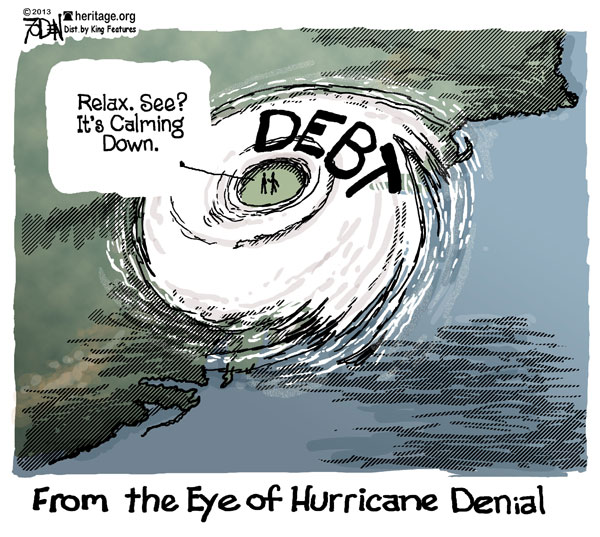
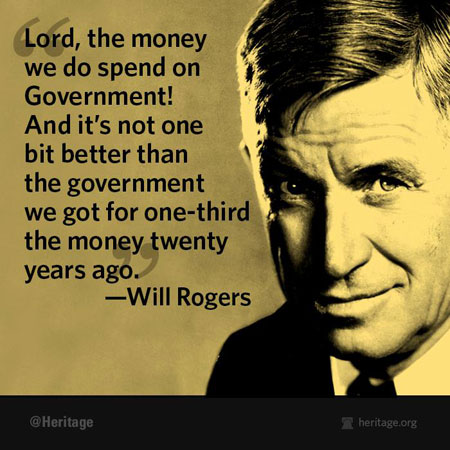







 True discernment has suffered a horrible setback in the past few decades because reason itself has been under attack within the church. As Francis Schaeffer warned nearly thirty years ago in The God Who Is There, the church is following the irrationality of secular philosophy. Consequently, reckless faith has overrun the evangelical community. Many are discarding doctrine in favor of personal experience. Others say they are willing to disregard crucial biblical distinctives in order to achieve external unity among all professing Christians. True Christianity marked by intelligent, biblical faith seems to be declining even among the most conservative evangelicals.THE ABANDONMENT OF OBJECTIVE TRUTHThe visible church in our generation has become astonishingly tolerant of aberrant teaching and outlandish ideas—and frighteningly intolerant of sound teaching. The popular evangelical conception of “truth” has become almost completely subjective. Truth is viewed as fluid, always relative, never absolute. To suggest that any objective criterion might be used to distinguish truth from error is to be egregiously out of step with the spirit of the age. In some circles, Scripture itself has been ruled out as a reliable test of truth. After all, the Bible can be interpreted in so many different ways—who can say which interpretation is right? And many believe there is truth beyond the Bible.All this relativity has had disastrous effects on the typical Christian’s ability to discern truth from error, right from wrong, good from evil. The plainest teachings of the Bible are being questioned among people who declare themselves believers in the Bible. For example, some Christians are no longer certain whether homosexuality should be classed as a sin. Others argue that the feminist agenda is compatible with biblical Christianity. “Christian” television, radio, books, and magazines serve up a preposterous smorgasbord of ideas from the merely capricious to the downright dangerous—and the average Christian is woefully ill-equipped to sort out the lies from the truth.Even to suggest that a sorting between lies and truth is necessary is viewed by many as perilously intolerant. There is a notion abroad that any dispute over doctrine is inherently evil. Concern for orthodoxy is regarded as incompatible with Christian unity. Doctrine itself is labeled divisive and those who make doctrine an issue are branded uncharitable. No one is permitted to criticize anyone else’s beliefs, no matter how unbiblical those beliefs seem to be. A recent article in Christianity Today exemplifies the trend. The article, titled “Hunting for Heresy,” profiled two well-known Christian leaders who had “come under withering attack for controversial writings.”1One is a popular speaker on the college lecture circuit and a bestselling author. He wrote a book in which he encouraged homosexuals to establish permanent live-together relationships (albeit celibate ones). He suggests the evangelical community suffers from “homophobia.” He is convinced that permanent living arrangements between homosexuals are the only alternative to loneliness for people he believes are “born with a homosexual orientation.” This man’s wife has published an article in a homosexual magazine in which she enthusiastically affirms” monogamous sexual relationships between homosexuals. The speaker-author says he has a “very, very strong” disagreement with his wife’s approval of homosexual sex, but his own view seems to allow homosexuals to engage in other kinds of physical intimacy short of actual intercourse.The other Christian leader profiled in the Christianity Today article is a woman who, with her husband, is a featured speaker for a popular, nationally-syndicated radio and television ministry. Their ministry is not a weird offshoot from some fringe cult, but an established, well-respected mainstay from the evangelical heartland. She also serves as chairperson of one of the largest evangelical student organizations in the world. This woman has written a book in which she chronicles some rather peculiar spiritual experiences. She dedicates the book to her male alter ego, an imaginary person named “Eddie Bishop” who romances her in her dreams. This woman says she also has visions of “the Christ child that is within” her. He appears to her as a drooling, emaciated, barefoot “idiot child” in a torn undershirt—”its head totally bald and lolled to one side.” The woman has engaged the services of a Catholic nun who serves as her “spiritual director,” helping to interpret her dreams and fantasies. The book mingles mysticism, Jungian psychology, out-of-body experiences, feminist ideas, subjective religious experience, and this woman’s romantic fantasies into an extraordinary amalgam. The book is frankly so bizarre that it is disturbing to read.The remarkable thing about the Christianity Today article is that the story was not written to expose the aberrant ideas being taught by these two leading evangelicals. Instead, what the magazine’s editors deemed newsworthy was the fact that these people were under attack for their views.In the world of modern evangelicalism, it is allowable to advocate the most unconventional, unbiblical doctrines—as long as you afford everyone else the same privilege. About the only thing that is taboo nowadays is the intolerance of those who dare to point out others’ errors. Anyone today who is bold enough to suggest that someone else’s ideas or doctrines are unsound or unbiblical is dismissed at once as contentious, divisive, unloving, or unchristian. It is all right toespouse any view you wish, but it is not all right to criticize another person’s views—no matter how patently unbiblical those views may be.When tolerance is valued over truth, the cause of truth always suffers. Church history shows this to be so. Only when the people of God have mounted a hardy defense of truth and sound doctrine has the church flourished and grown strong. The Reformation, the Puritan era, and the Great Awakenings are all examples of this. The times of decline in the history of the church have always been marked by an undue emphasis on tolerance—which leads inevitably to carelessness, worldliness, doctrinal compromise, and great confusion in the church.ADRIFT ON A SEA OF SUBJECTIVITYThat the church would lose her moorings in this particular age, however, poses greater dangers than ever. For in the past hundred years or so, the world has changed in a dramatic and very frightening way. People no longer look at truth the way they used to. In fact, we live under a prevailing philosophy that has become hostile to the very idea of absolute truth.From the beginning of recorded history until late last century, virtually all human philosophy assumed the necessity of absolute truth. Truth was universally understood as that which is true, not false; factual, not erroneous; correct, not incorrect; moral, not immoral; just, not unjust; right, not wrong. Practically all philosophers since the time of Plato assumed the objectivity of truth. Philosophy itself was a quest for the highest understanding of truth. Such a pursuit was presumed to be possible, even necessary, because truth was understood to be the same for every person. This did not mean that everyone agreed what truth was, of course. But virtually all agreed that whatever was true was true for everyone.That all changed in the nineteenth century with the birth of existentialism. Existentialism defies precise definition, but it includes the concept that the highest truth is subjective (having its source in the individual’s mind) rather than objective (something that actually exists outside the individual). Existentialism elevates individual experience and personal choice, minimizing or ruling out absolute standards of truth, goodness, morality, and such things. We might accurately characterize existentialism as the abandonment of objectivity. Existentialism is inherently anti-intellectual, against reason, irrational.Danish philosopher Søren Kierkegaard first used the term “existential.” Kierkegaard’s life and philosophy revolved around his experiences with Christianity. Christian ideas and biblical terminology reverberate in many of his writings. He wrote much about faith and certainly regarded himself as a Christian. Many of his ideas began as a legitimate reaction against the stale formalism of the Danish Lutheran state church. He was rightly offended at the barren ritualism of the church, properly outraged that people who had no love for God called themselves Christians just because they happened to be born in a “Christian” nation.But in his reaction against the lifeless state church, Kierkegaard set up a false antithesis. He decided that objectivity and truth were incompatible. To counter the passionless ritualism and lifeless doctrinal formulas he saw in Danish Lutheranism, Kierkegaard devised an approach to religion that was pure passion, altogether subjective. Faith, he suggested, means the rejection of reason and the exaltation of feeling and personal experience. It was Kierkegaard who coined the expression “leap of faith.” Faith to him was an irrational experience, above all a personal choice. He recorded these words in his journal on August 1, 1835: “The thing is to find a truth which is true for me, to find the idea for which I can live and die.”2Clearly, Kierkegaard had already rejected as inherently worthless the belief that truth is objective. His journal continues with these words:What would be the use of discovering so-called objective truth …. What good would it do me if truth stood before me, cold and naked, not caring whether I recognized her or not, and producing in me a shudder of fear rather than a trusting devotion? … I am left standing like a man who has rented a house and gathered all the furniture and household things together, but has not yet found the beloved with whom to share the joys and sorrows of his life…. It is this divine side of man, his inward action, which means everything—not a mass of [objective] information.3Having repudiated the objectivity of truth, Kierkegaard was left longing for an existential experience, which he believed would bring him a sense of personal fulfillment. He stood on the precipice, preparing to make his leap of faith. Ultimately, the idea he chose to live and die for was Christianity, but it was a characteristically subjective brand of Christianity that he embraced.Though Kierkegaard was virtually unknown during his lifetime, his writings have endured and have deeply influenced all subsequent philosophy. His idea of “truth that is true for me” infiltrated popular thought and set the tone for our generations radical rejection of all objective standards.Kierkegaard knew how to make irrationalism sound profound. “God does not exist; He is eternal,” he wrote. He believed Christianity was full of “existential paradoxes,” which he regarded as actual contradictions, proof that truth is irrational.Using the example of Abraham’s willingness to sacrifice Isaac (Gen. 22:1-19), Kierkegaard suggested that God called Abraham to violate moral law in slaying his son. For Kierkegaard, Abraham’s willingness to “suspend” his ethical convictions epitomized the leap of faith that is demanded of everyone. Kierkegaard believed the incident proved that “the single individual [Abraham] is higher than the universal [moral law].”4 Building on that conclusion, the Danish philosopher offered this observation: “Abraham represents faith…. He acts by virtue of the absurd, for it is precisely [by virtue of] the absurd that he as the single individual is higher than the universal.”5 “[I] cannot understand Abraham,” Kierkegaard declared, “even though in a certain demented sense I admire him more than all others.”6It is not difficult to see how such thinking thrusts all truth into the realm of pure subjectivity—even to the point of absurdity or dementia. Everything becomes relative. Absolutes dematerialize. The difference between truth and nonsense becomes meaningless. All that matters is personal experience.And one person’s experience is as valid as another’s—even if everyone’s experiences lead to contradictory conceptions of truth. “Truth that is true for me” might be different from someone else’s truth. In fact, our beliefs might be obviously contradictory, yet another person’s “truth” in no way invalidates mine. Because “truth”is authenticated by personal experience, its only relevance is for the individual who makes the leap of faith. That is existentialism.Existentialism caught on in a big way in secular philosophy. Friedrich Nietzsche, for example, also rejected reason and emphasized the will of the individual. Nietzsche probably knew nothing of Kierkegaard’s works, but their ideas paralleled at the key points. Unlike Kierkegaard, however, Nietzsche never made the leap of faith to Christianity. Instead, he leapt to the conclusion that God is dead. The truth that was “true for him,” it seems, turned out to be the opposite of the truth Kierkegaard chose. But their epistemology (the way they arrived at their ideas) was exactly the same.Later existentialists, such as Martin Heidegger and Jean-Paul Sartre, refined Kierkegaard’s ideas while following the atheism of Nietzsche. Heidegger and Sartre both believed that reason is futile and life basically meaningless. Those ideas have been a powerful force in twentieth-century thought. As the world continues to grow more atheistic, more secular, and more irrational, it helps to understand that it is being propelled in that direction by strong existentialist influences.EXISTENTIALISM INVADES THE CHURCH But don’t get the idea that existentialism’s influence is limited to the secular world. From the moment Kierkegaard wedded existentialist ideas with Christianity, neo-orthodox theology was the inevitable outcome.Neo-orthodoxy is the term used to identify an existentialist variety of Christianity. Because it denies the essential objective basis of truth—the absolute truth and authority of Scripture—neo-orthodoxy must be understood as pseudo-Christianity. Its heyday came in the middle of the twentieth century with the writings of Karl Barth, Emil Brunner, Paul Tillich, and Reinhold Niebuhr. Those men echoed the language and the thinking of Kierkegaard, speaking of the primacy of “personal authenticity,” while downplaying or denying the significance of objective truth. Barth, the father of neo-orthodoxy, explicitly acknowledged his debt to Kierkegaard.7Neo-orthodoxy’s attitude toward Scripture is a microcosm of the entire existentialist philosophy: the Bible itself is not objectively the Word of God, but it becomes the Word of God when it speaks to me individually. In neo-orthodoxy, that same subjectivism is imposed on all the doctrines of historic Christianity. Familiar terms are used, but are redefined or employed in a way that is purposely vague—not to convey objective meaning, but to communicate a subjective symbolism. After all, any “truth” theological terms convey is unique to the person who exercises faith. What the Bible means becomes unimportant. What it means to me is the relevant issue. All of this resoundingly echoes Kierkegaard’s concept of “truth that is true for me.”Thus while neo-orthodox theologians often sound as if they are affirming traditional beliefs, their actual system differs radically from the historic understanding of the Christian faith. By denying the objectivity of truth, they relegate all theology to the realm of subjective relativism. It is a theology perfectly suited for the age in which we live.And that is precisely why it is so deadly.Francis Schaeffer’s 1968 work The God Who Is There included a perceptive analysis of Kierkegaard’s influence on modern thought and modern theology.8 Schaeffer named the boundary between rationality and irrationality “the line of despair.” He noted that existentialism pushed secular thought below the line of despair sometime in the nineteenth century. Religious neo-orthodoxy was simply a johnny-come-lately response of theologians who were jumping on the existentialist bandwagon, following secular art, music, and general culture: “Neo-orthodoxy gave no new answer. What existential philosophy had already said in secular language, it now said in theological language…. [With the advent of neo-orthodoxy,] theology too has gone below the line of despair.”9Schaeffer went on to analyze how neo-orthodoxy ultimately gives way to radical mysticism:Karl Barth opened the door to the existentialistic leap in theology… He has been followed by many more, men like Reinhold Niebuhr, Paul Tillich, Bishop John Robinson, Alan Richardson and all the new theologians. They may differ in details, but their struggle is still the same—it is the struggle of modern man who has given up [rationality]. As far as the theologians are concerned … their new system is not open to verification, it must simply be believed.10Such a system, Schaeffer points out, has no integrity. Those who espouse it cannot live with the repercussions of their own illogic. “In practice a man cannot totally reject [rationality], however much his system leads him to it, unless he experiences … some form of mental breakdown.” Thus people have been forced to an even deeper level of despair: “a level of mysticism with nothing there.”11MYSTICISM: IRRATIONALITY GONE TO SEEDMysticism is the idea that spiritual reality is found by looking inward. Mysticism is perfectly suited for religious existentialism; indeed, it is its inevitable consequence. The mystic disdains rational understanding and seeks truth instead through the feelings, the imagination, personal visions, inner voices, private illumination, or other purely subjective means. Objective truth becomes practically superfluous. Mystical experiences are therefore self-authenticating; that is, they are not subject to any form of objective verification. They are unique to the person who experiences them. Since they do not arise from or depend upon any rational process, they are invulnerable to any refutation by rational means.Arthur L. Johnson writes,The experience convinces the mystic in such a way, and to such a degree, that lie simply cannot doubt its value and the correctness of what he believes it “says.”…In its crudest form this position says that believing something to be so makes it so. The idea is that ultimate reality is purely mental; therefore one is able to create whatever reality one wishes. Thus the mystic “creates” truth through his experience. In a less extreme form, the view seems to be that there are “alternate realities,” one as real as another, and that these “break in upon” the mystic in his experiences. Whatever form is taken, the criterion of truth is again a purely private and subjective experience that provides no means of verification and no safeguard against error. Nevertheless, it is seen by the mystic as being above question by others.The practical result of all this is that it is nearly impossible to reason with any convinced mystic. Such people are generally beyond the reach of reason.12Mysticism is therefore antithetical to discernment. It is an extreme form of reckless faith.Mysticism is the great melting pot into which neo-orthodoxy, the charismatic movement, anti-intellectual evangelicals, and even some segments of Roman Catholicism have been synthesized. It has produced movements like the Third Wave (a neo-charismatic movement with excessive emphasis on signs, wonders, and personal prophecies); Renovaré (an organization that blends teachings from monasticism, ancient Catholic mysticism, Eastern religion, and other mystical traditions); the spiritual warfare movement (which seeks to engage demonic powers in direct confrontation); and the modern prophecy movement (which encourages believers to seek private, extrabiblical revelation directly ftom God). The influx of mysticism has also opened evangelicalism to New-Age concepts like subliminal thought- control, inner healing, communication with angels, channeling, dream analysis, positive confession, and a host of other therapies andpractices coming directly from occult and Eastern religions. The face of evangelicalism has changed so dramatically in the past twenty years that what is called evangelicalism today is beginning to resemble what used to be called neo-orthodoxy. If anything, some segments of contemporary evangelicalism are even more subjective in their approach to truth than neo-orthodoxy ever was.It could be argued that evangelicalism never successfully resisted neo-orthodoxy. Twenty years ago evangelicals took a heroic stand against neo-orthodox influences on the issue of biblical inerrancy. But whatever victory was gained in that battle is now being sacrificed on the altar of mysticism. Mysticism renders biblical inerrancy irrelevant. After all, if the highest truth is subjective and comes from within us, then it doesn’t ultimately matter if the specifics of Scripture are true or not. If the content of faith is not the real issue, what does it really matter if the Bible has errors or not?In other words, neo-orthodoxy attacked the objective inspiration of Scripture. Evangelical mysticism attacks the objective interpretation of Scripture. The practical effect is the same. By embracing existential relativism, evangelicals are forfeiting the very riches they fought so hard to protect. If we can gain meaningful guidance from characters who appear in our fantasies, why should we bother ourselves with what the Bible says? If we are going to disregard or even reject the biblical verdict against homosexuality, what difference does it make if the historical and factual matter revealed in Scripture is accurate or inaccurate? If personal prophecies, visions, dreams, and angelic beings are available to give us up-to-the-minute spiritual direction—”fresh revelation” as it is often called—who cares if Scripture is without error in the whole or in the parts?Mysticism further nullifies Scripture by pointing people away from the sure Word of God as the only reliable object of faith. Warning of the dangers of mysticism, Schaeffer wrote,Probably the best way to describe this concept of modern theology is to say that it is faith in faith, rather than faith directed to an object which is actually there…. A modern man cannot talk about the object of his faith, only about the faith itself. So he can discuss the existence of his faith and its “size” as it exists against all reason, but that is all. Modern man’s faith turns inward…. Faith is introverted, because it has no certain object … it is rationally not open to discussion. This position, I would suggest, is actually a greater despair and darkness than the position of those modern men who commit suicide.“13The faith of mysticism is an illusion. “Truth that is true for me” is irrelevant to anyone else, because it lacks any objective basis. Ultimately, therefore, existential faith is impotent to lift anyone above the level of despair. All it can do is seek more experiences and more feelings. Multitudes are trapped in the desperate cycle of feeding off one experience while zealously seeking the next. Such people have no real concept of truth; they just believe. Theirs is a reckless faith.MEANWHILE, AT THE OTHER END OF THE SPECTRUM…Mysticism, however, is not the only form of reckless faith that threatens the contemporary church. A new movement has been gaining strength lately. Evangelicals are leaving the fold and moving into Eastern Orthodoxy, Roman Catholicism, and liturgical high-church Protestantism. Rejecting the ever-changing subjectivism of a free- wheeling existential Protestantism, they seek a religion with historical roots. Turned off by the shallow silliness that has overrun the evangelical movement, they desire a more magisterial approach. Perhaps sensing the dangers of a religion that points people inward, they choose instead a religion that emphasizes external ceremonies and dogmatic hierarchical authority.I listened to the taped testimony of one of these converts to Roman Catholicism, a former Protestant minister. He said he had graduated with highest honors from a leading Protestant seminary. He told his audience that as a student he was rabidly anti-Catholic and fully committed to Protestant Reformed doctrine (although he refuted this himself by admitting he had already rejected the crucial doctrine of justification by faith). After college he began to read Roman Catholic writings and found himself drawn to Catholic theology and liturgy. He described his initial resistance to the doctrines of purgatory, the perpetual virginity of Mary, transubstantiation, and prayers to Mary and the saints. All of those doctrines are easily disproved by the Bible.14 But this man—acknowledging that he could find no warrant anywhere in Scripture for praying to Mary—nevertheless completely changed his outlook on such matters after he tried praying the rosary and received an answer to a very specific prayer. He concluded that it must have been Mary who answered his prayer and immediately began praying regularly to her. Ultimately, he decided the Bible alone was not a sufficient rule of faith for believers, and he put his faith in papal authority and church tradition.That man’s leap of faith may not have been of the existential variety, but it was a blind leap nonetheless. He chose the other extreme of reckless faith, the kind that makes extrabiblical religious tradition the object of one’s faith.This kind of faith is reckless because it subjugates the written Word of God to oral tradition, church authority, or some other human criterion. It is an uncritical trust in an earthly religious authority—the pope, tradition, a self-styled prophet like David Koresh, or whatever. Such faith rarely jettisons Scripture altogether—but by forcing God’s Word into the mold of religious tradition, it invalidates the Word of God and renders it of no effect (cf. Matt. 15:6).The man whose taped testimony I heard is now an apologist for the Roman Catholic Church. He speaks to Catholic congregations and tells them how to counter biblical arguments against Catholicism. At the end of his testimony tape, he deals briefly with the official Catholic attitude toward Scripture. He is eager to assure his listeners that the modern Roman Catholic Church has no objection if Catholic people want to read Scripture for themselves. Even personal Bible study is all right, he says—but then hastens to add that it is not necessary to go overboard. “A verse or two a day is enough.” This man, a seminary graduate, surely should be aware that a comment like that seriously understates the importance of the written Word of God. We are commanded to meditate on Scripture day and night (Josh. 1:8; Ps. 1:2). We are to let it fill our hearts at all times (Deut. 6:6-9). We must study it diligently and handle it rightly (2 Tim. 2:15). The Bible alone is able to give us the wisdom that leads to salvation, then adequately equip us for every good work (2 Tim. 3:15-17).Discernment depends on a knowledge of Scripture. Those who are content to listen gullibly to some voice of human authority rather than hearing God’s Word and letting it speak for itself cannot be discerning. Theirs is a reckless, irrational faith.We identified the inward-looking extreme of reckless faith as mysticism. We could call this other variety rote tradition. In Isaiah 29:13, that is precisely how God Himself characterized it: “This people their lip service, but draw near with their words and honor Me with their lip service, but they remove their hearts far from Me, and their reverence for Me consists of tradition learned by rote” (emphasis added).Scripture has nothing but condemnation for rote tradition. Barren religious ritual, sacerdotal formalism, or liturgy out of a book are not the same as worship. Real worship, like faith, must engage the mind. Jesus said, “The true worshipers … worship the Father in spirit and truth; for such people the Father seeks to be His worshipers” (John 4:23).Did you realize that rote tradition was the very error for which Jesus condemned the Pharisees? He told them,“Rightly did Isaiah prophesy of you hypocrites, as it is written, ‘This people honors Me with their lips, but their heart is far away from Me. But in vain do they worship Me. teaching as doctrines the precepts of men.’ Neglecting the commandment of God, you hold to the tradition of men.”He was also saying to them, “You nicely set aside the commandment of God in order to keep your tradition” (Mark 7:6-9).Rote tradition is not unlike mysticism in that it also bypasses the mind. Paul said this of the Jews who were so absorbed in their empty religious traditions:I bear them witness that they have a zeal for God, but not in accordance with knowledge. For not knowing about God’s righteousness, and seeking to establish their own, they did not subject themselves to the righteousness of God. For Christ is the end of the law for righteousness to everyone who believes (Rom. 10:2-4).Their problem was not a lack of zeal. It was not that they were short on enthusiasm, emotionally flat, or slothful about religious observances. The issue was that the zeal they displayed was rote tradition, “not in accordance with knowledge.” They were not sufficiently discerning, and therefore their faith itself was deficient.Paul is specific in stating that their ignorance lay in trying to establish their own righteousness rather than submitting to the righteousness of God. This passage comes at the culmination of Paul’s doctrinal discussion in Romans. In context it is very clear that he was talking about the doctrine ofjustification by faith. He had thoroughly expounded this subject beginning in chapter 3. He said we are “justified as a gift by His grace through the redemption which is in Christ Jesus” (3:24). Justification is “by faith apart from works of the Law” (v.28). “God reckons righteousness apart from works” (Rom. 4:6).But instead of seeking the perfect righteousness of Christ, which God reckons to those who believe, the unbelieving Jews had set out to try to establish a righteousness of their own through works. That is where rote tradition always leads. It is a religion of works. Thus the ritualistic, unbelieving Pharisees are an exact parallel to Roman Catholicism, Eastern Orthodoxy, and most forms of ritual-laden Protestantism. All of them deny justification by faith.If the Pharisees or their followers had used the Scriptures as their standard of truth rather than rabbinical tradition, they would have known that God justifies sinners by faith. Repeatedly, Jesus said things to them like “Did you never read in the Scriptures . . . ?” (Matt. 21:42); “You are mistaken, not understanding the Scriptures, or the power of God” (22:29); and, “Are you the teacher of Israel, and do not understand these things?” (John 3:10). What He continually chided them for was their ignorance of the Scriptures. They had set rote tradition in place of the written Word of God (Matt. 15:6), and they were condemned for it.Contrast the way Luke commended the Bereans for their noblemindedness: “For they received the word [the New Testament gospel from the apostles] with great eagerness, examining the Scriptures [the Old Testament books] daily, to see whether these things were so” (Acts 17:1 1). What made the Bereans worthy of commendation? Their eagerness to be discerning. They rightly refused to blindly accept anyone’s teaching (even that of the apostles) without clear warrant from God’s Word.Spiritual discernment is, I believe, the only antidote to the existentialism of our age. Until’Christians regain the will to test everything by the rule of Scripture, reject what is false, and hold fast to what is true, the church will struggle and falter, and our testimony to a world in sin will be impaired.But if the church will rise up and stand for the truth of God’s Word against all the lies of this evil world, then we will begin to see the power of truth that sets people free (John 8:32).Endnotes1. John W. Kennedy, “Hunting for Heresy,” Christianity Today (16 May 1994).2. Robert Bretall, cd., A Kierkegaard Anthology (Princeton, N. J.: Princeton University Press, 1946), 5 (emphasis in original).3. Ibid.4. Søren Kierkegaard, Fear and Trembling, Howard V. Hong and Edna H. Hong, trans. (Princeton, N. J.: Princeton University Press, 1983), 55.5. Ibid.6. Ibid., 57.7. Karl Barth, The Epistle to the Romans, Edwyn C. Hoskyns, trans. (London: Oxford University Press, 1933). Barth cites Kierkegaard repeatedly in this, one of his earliest works.8. Francis Schaeffer, The God Who Is There, in The Complete Works of Francis A. Schaeffer, Volume I (Wheaton, Ill.: Crossway Books, 1982).9. Ibid., 53.10. Ibid., 55.11. Ibid., 58.12. Arthur L. Johnson, Faith Misguided: Exposing the Dangers of Mysticism (Chicago: Moody Press, 1988), 31-32.13. Schaeffer, 64-65, emphasis added.14. Purgatory: Luke 23:42-43 and 2 Cor. 5:8 indicate that believers go immediately to be with Christ at death. Perpetual Virginity of Mary: Matt. 1:25 states that Joseph kept Mary a virgin only until Jesus’ birth, and John 2:12 and Acts 1:14 reveal that Jesus had brothers. Transubstantiation: Heb. 7:27 and 10:12 teach that Christ made one sacrifice for sins forever; there is no need for the daily sacrifice of the Mass. Prayers to Mary and the saints: prayers, adoration, and spiritual veneration offered to anyone but God is expressly forbidden by the first commandment and elsewhere throughout Scripture (Ex. 20:3; Matt. 4:10; Acts 10:25-26; Rev. 19:10; Rev. 22:8-9).Excerpt from Reckless Faith: When the Church Loses Its Will to Discern, © 1994 by John MacArthur.We do pray this article has blessed you in some way. Our prayer is that you will use this message to better understand what is happening in our churches today.Blessings,


 The Daily Hatch