Monthly Archives: May 2021

FRANCIS SCHAEFFER ANALYZES ART AND CULTURE PART 370 (The Cure) I have lots of young people and older ones come to us from the ends of the earth. And as they come to us, they have gone to the end of this logically and they are not living in a romantic setting. They realize what the situation is. They can’t find any meaning to life. It’s the meaning to the black poetry. It’s the meaning of the black plays. It’s the meaning of all this. It’s the meaning of the words “punk rock.” Featured artist is Louise Despont

It doesn’t matter if we all die 
Ambition in the back of a black car 
In a high building there is so much to do 
Going home time 
A story on the radio 
Something small falls out of your mouth 
And we laugh 
A prayer for something better 
A prayer 
For something better Please love me 
Meet my mother 
But the fear takes hold 
Creeping up the stairs in the dark Waiting for the death blow 
Waiting for the death blow 
Stroking your hair as the patriots are shot 
Fighting for freedom on the television 
Sharing the world with slaughtered pigs 
Have we got everything? 
She struggles to get awayThe pain 
And the creeping feeling 
A little black haired girl 
Waiting for Saturday 
The death of her father pushing her 
Pushing her white face into the mirror 
Aching inside me 
And turn me round 
Just like the old days 
Just like the old days Caressing an old man 
And painting a lifeless face 
Just a piece of new meat in a clean room 
The soldiers close in under a yellow moon 
All shadows and deliverance 
Under a black flag 
A hundred years of blood 
Crimson 
The ribbon tightens round my throat 
I open my mouth 
And my head bursts open 
A sound like a tiger thrashing in the water 
Thrashing in the water 
Over and over 
We die one after the other 
Over and over 
We die one after the other 
One after the other 
One after the other 
One after the other 
One after the other It feels like a hundred years 
A hundred years 
A hundred years 
A hundred years 
A hundred years 
One hundred yearsSource: LyricFindSongwriters: Laurence Andrew Tolhurst / Robert James Smith / Simon Gallup

The Cure

The Cure are an English rock band formed in Crawley in 1976. The group has experienced continuous line-up changes over its lifespan, with vocalist, guitarist and principal songwriter Robert Smith being the only constant member. The band’s debut album was Three Imaginary Boys (1979) and this, along with several early singles, placed the band in the post-punk and new wave movements that had sprung up in the wake of the punk rockrevolution in the United Kingdom. During the early 1980s the band’s increasingly dark and tormented music, as well as Smith’s stage look, was a staple of the emerging style of music known as gothic rock.

—-

Ten musicians fueled by existentialism

JESSE LIVINGSTON | MAY 22, 2013 | 7:30AM

Music is filled with surprises. For every good-looking rebel working diligently to bring sexy back, there’s a bookish nerd sitting in a dim corner furiously scribbling esoteric poetry in a lyrics journal. Referencing literature is a surefire way to show the world that you’re a sensitive soul with important thoughts. Existentialism is clearly the most badass school of thought because it pits the individual (wearing black) against the absurdity of the uncaring cosmos (also wearing black). Keep reading for a look at ten existential musicians.

See also: – The Yawpers’ deep thoughts come through on Capon Crusade – The ten most noteworthy music publicity stunts – Review: They Might Be Giants at the Gothic Theatre, 11/5/09

10. The Classic Crime Nihilism and existentialism are certainly not the same, and the Classic Crime’s “The Happy Nihilist” illustrates the difference impeccably with its description of a lost soul who “used to read everything,” “used to need nothing” and now “can’t sleep ’cause I’m not happy.” Nihilism isn’t doing it for him; he needs something more. Existentialist thinkers would argue that it’s perfectly possible to be happy in a meaningless world, as long as you assign your own meaning to things (good news for the narrator of the song, and all of us). Speaking of nihilism, have you ever thought about just how brilliant the line “No, Donny. These men are nihilists. There’s nothing to be afraid of.” really is? Nothing to be afraid of. I see what you did there.

9. Cake Cake’s deliciously cryptic “Sheep Go to Heaven” is packed with obscure references. The chorus “Sheep go to Heaven, goats go to Hell” is an allusion to the Bible (often cited as the definitive record of who goes where). The line “And the gravedigger puts on the forceps” is a bit more perplexing. It’s taken directly from Samuel Beckett’s Waiting for Godot, widely considered a staple of existentialist theater: “Down in the hole, lingeringly, the grave digger puts on the forceps. We have time to grow old. The air is full of our cries. But habit is a great deadener.”


8. Janina Gavankar
 Speaking of Waiting for Godot, Janina Gavankar references the play in her 2012 single of the same name. Who is Janina Gavankar, you ask? She’s the actress who plays the mighty Shiva on The League and shapeshifting Luna Garza on True Blood. The video for her song shows two versions of her waiting together in a featureless white expanse. The song asks, “Friends may come, and friends may go/But if I wait for love, am I waiting for Godot?” The imagery is so over-the-top, it’s hard to tell if she’s serious. And isn’t that what existentialism is all about?

7. They Might Be Giants The godfathers of geek rock are no strangers to literary allusions. Perhaps the most existential of their songs is Apollo 18‘s “I Palindrome I.” It contains one of the best lines of all time: “Someday mother will die and I’ll get the money/Mom leans down and says ‘My sentiments exactly/You son of a bitch.” It’s a clear reference to the opening lines of Camus’ The Stranger: “Mother died today, or maybe yesterday; I can’t be sure.” We’re all snakes eating our own tails, but TMBG show us every day that the bleak wilderness of existence can be both fun and educational.

6. Tom “T-Bone” Stankus T-Bone’s “Existential Blues” — often mis-attributed to They Might Be Giants — was a big hit on the Dr. Dementoshow. A former public schoolteacher turned full-time entertainer, Stankus penned this rambling riff on philosophy and The Wizard of Oz while in the grip of a monumental opium/helium bender… at least that’s how it sounds. He was probably stone sober and just really weird. “Is it Plato’s heebie-jeebies or just existential blues?” he asks penetratingly. It’s both, T-Bone. It’s both.

5. As I Lay Dying This San Diego Christian metalcore band took their name from William Faulkner’s existential novel of Southern life gone horribly wrong. Considering that Faulkner won the Nobel Prize in Literature for his work, it’s somewhat distressing that As I Lay Dying’s lyrics sound like they came straight out of an online Goth poetry generator: “Emptiness running through me/Taking all that I am/Leaving me this blinding mask/Grasping for the wind/Everything I’ve done/Everything I’ve gained/It all means nothing.” On the other hand, frontman Tim Lambesis was recently arrested in an alleged murder-for-hire plot, and that’s something the characters in Faulkner’s novel could really get behind.

4. Tuxedomoon This experimental post-punk band from San Francisco prided themselves on their unique sound that Seattle Weeklydescribed as radiating “a discomfort that hints of existential hives.” The 1970s were chock-full of existential hives. Everyone knows that. The band’s song “Stranger” makes another reference to Camus’ landmark novel with the lines “Mother died today/Or maybe yesterday.” It also ends with the lines “I’m strange/I’m the stranger.” That’s the subtlety of poetic discourse that your high school English teacher used to tell you about.

3. The Yawpers Denver’s own Yawpers are deep into some existentialist reading. In a recent interview, the Yawpers told us about their album Capon Crusade and its not-infrequent references to Sartre and Camus. “They’re depressing as fuck,” said frontman Nate Cook, cutting to the heart of the philosophy. He then added, “Sartre and Camus are really poignant in pointing out just how flawed existence is in general, and sometimes that can be comforting when you’re trying to write some shitty song about getting fucked up because a girl left you.” That’s actually pretty astute. When misfortune befalls you, is it more or less reassuring to imagine that you deserve it? The great gift of the existentialist thinkers may be showing us that sometimes a lack of intrinsic meaning in the universe isn’t such a bad thing.

2. The Cure Robert Smith and company have made a career out of existential dread and despair — so much so that the early effort “Killing an Arab” now seems a little on-the-nose in its description of the pivotal scene from The Stranger. In fact, the song’s matter-of-fact lyrics have caused the band a good deal of grief over the years, as certain parties have tried to co-opt them as some kind of anti-Arab anthem. Re-releases have sported a sticker explaining that the song “decries the existence of all prejudice and consequent violence,” and Smith has taken to changing the lyrics in live performances to “killing another.” One shy English boy against a world of dull-witted savagery: what could be more existential than that?

1. The Eagles Don Henley’s vision of 1970s California as a fiendish hotel filled with earthly temptations takes its tone and setup from Jean-Paul Sartre’s No Exit. “Hell is other people,” says Sartre. Henley adds, “This could be Heaven, or this could be Hell,” implying that maybe they’re one and the same. “Hotel California” is one of those classic songs that deserves every bit of its fame. Listening to it, you feel a palpable desire to be somewhere warm and tropical where the livin’ is easy. You also feel a chill of recognition that you’d soon become bored, listless and depressed playing games with the wealthy and beautiful. “And still those voices are calling from far away.” Thanks, Henley. What an insightful, elegant bummer, man.

Robert Smith at the Southbank Centre: ‘I couldn’t understand how we could be so successful and still be honest.’

Show captionThe Cure

The Cure’s Robert Smith: ‘I was very optimistic when I was young – now I’m the opposite’

The singer and songwriter has been curating the Meltdown festival, and is planning to record the first Cure album in 10 years. But will it be fuelled by magic mushroom tea?Dorian LynskeyThu 7 Jun 2018 08.00 EDT

The first thing Robert Smith does is apologise for the makeup. He hasn’t worn it since his last concert with the Cure, in December 2016, but he has a photoshoot today at the Royal Festival Hall and thinks his features are too indistinct without it. To be honest, I would be disappointed if he wasn’t wearing it, along with his regulation baggy black clothes and silver jewellery. Since 1983, the sooty eyeliner, blood-smear lipstick and cobwebbed forest of hair have made him a human logo, transmuted, through the work of people such as Tim Burton and Neil Gaiman, into visual shorthand for the morbidly romantic. He looks like the Cure sound.

Even without the warpaint, Smith finds it hard to blend in. In 1989, at the height of his fame, he moved to the quiet south-coast village where he still lives with his wife, Mary, and gamely attended a meeting in the village hall. “It was pretty chaotic,” he sighs. “I was asked to leave, for no reason other than I wasn’t welcome. I thought, ‘I’ve made a terrible mistake.’” He clasps his hands over his face, just like he does in photographs.

For someone who once sang “It doesn’t matter if we all die”, Smith has an endearing relish for the bathetic comedy of life. Like the time, during the first Gulf war, when he held a press conference to explain that the Cure’s 1979 debut single Killing an Arab was a reference to L’Etranger and not, as some US radio DJs thought, an Islamophobic anthem. “It was totally surreal, explaining Camus to a sea of utterly bemused faces.” Or the time that he interviewed David Bowie for Xfm and arrived so drunk that he proceeded to talk over his hero for two hours. “I think my opening gambit was, ‘We can both agree you’ve never done anything good since 1982,’” he says, wincing.

For all his easy, blokeish charm, Smith means as much to millions of people as Bowie meant to him. This year, the Cure are marking the 40th anniversary of their first concert under that name (they started in 1976 as Malice) with a flurry of activity. Smith has been rummaging through boxes for a documentary directed by regular collaborator Tim Pope. “I knew a few people wanted to – what’s a nice way of saying exploit? – celebrate the 40th anniversary with projects,” he says. “I said no, but I knew that they would probably go ahead anyway unless I made it very obvious that we were doing something.” The Cure may even make their first album since 2008, but we will get to that.

The Cure in 1987.
The Cure in 1987.Photograph: Dave Hogan/Getty Images

First up, Smith is curating the Meltdown festivalat London’s Southbank Centre: a walloping 90 artists over 10 days. Smith will close the event under the name Cureation 25 – which promises a lineup of previous bandmates and more – shortly before the Cure headline a sold-out Hyde Park. “Meltdown’s going to be doom and gloom and Hyde Park’s going to be hands in the air,” he says. He sent a handwritten letter to each name on his wishlist and almost all of them said yes. It’s striking that everyone on the lineup, from the Manic Street Preachers to Mogwai, Nine Inch Nails to the Twilight Sad, has been influenced by the Cure in one way or another. Does Smith only like bands who like the Cure?

“I think you’d be hard-pressed to find many artists who don’t like the Cure,” he says. “I think people admire us, even if they don’t particularly get the music. It sounds very conceited, but it’s not about me, it’s about the band. We’ve stayed true to ourselves. If you’re in a band, you realise how hard that is. I think people admire our tenacity.”

The Cure’s position is certainly enviable: loved with cult-like fervour yet mainstream enough to be covered by Adele (Lovesong) and featured in Ant-Man (Plainsong). There’s even a Reese Witherspoon romcom named after their 1987 hit Just Like Heaven, not that Smith has seen it. They are the only band, Smith notes, who are routinely perceived as both suicidal and whimsical. And they have maintained their integrity. Currently without a record label, manager or publicist, they tour (often) or record (not so much) only when Smith feels like it. It’s not true that he’s the only Cure member who matters (if bassist Simon Gallup left, then “it wouldn’t be called the Cure”), but he has always been in the driving seat. When was the last time he did something he didn’t want to do? He points at my Dictaphone and laughs. “Sitting here.”

The Cure tore through the 80s the way the Beatles rushed through the 60s, or Bowie the 70s: wildly prolific, constantly changing. “It is weird looking back,” Smith says. “Everything was done at an incredibly fast pace. Life was whizzing by.” For a 19-year-old neophyte from the suburban West Sussex no-man’s land of Crawley, Smith seemed uncannily self-assured. “Where did that grotesque confidence come from?” he says drily. “Probably punk. Most of the punk bands were fucking awful. I thought we were all right and we were getting better. A lot of it was bluff and bluster at that age.”

Within a couple of years, the punk boy wonders had evolved into avatars of doom: 1981’s Faith sounded like inching through a chilly fog. “I thought, ‘How much bleaker can we get? Either we make very, very tiny noises at the end of a concrete bunker and I whisper over them, or we do something different.’” Hence 1982’s Pornography, a churning inferno of rage, nausea and despair. “There was a lot of tension in our personal lives,” he says. “The music’s always reflected, to a very large degree, how I am mentally.” Our drummer used to make a huge pot of magic mushroom tea at the start of every day and it just went on from there

The strain of playing emotionally crushing songs every night, in various states of narcotic disrepair, broke the band. Smith joined Siouxsie and the Banshees and planned to use the Cure as a vehicle for “sort of stupid” pop songs such as The Lovecats – until the stupid songs became hits. “I suddenly thought, ‘Well, actually, this is more attractive than slogging my way round the world with the Banshees!’ So I was never quite comfortable with my reasons.” Then again, he says, a cynical careerist would not have followed up with the queasy psychedelic splurge of The Top. Drummer Andy Anderson, he says, “used to make a huge pot of magic mushroom tea at the start of every day and it just went on from there”.

Only with 1985’s The Head on the Door did Smith decide to get “professional”, rearranging the studio for each song and pinning guidelines to the wall. “For the first time we were creating sounds as well as songs,” he says. The instructions for the desolate Sinking, for example, were: “We must cry by 6pm tonight.” The Cure became so big internationally that promoters began calling them the Pink Floyd of the 80s. Smith considered 1989’s exquisitely morose Disintegration his masterpiece; the record label thought it was commercial suicide – it sold 3m copies.

Whether in or out of the charts, the Cure occupied a bubble of their own, regularly anointing a symbolic nemesis. “It was generally Duran Duran,” Smith says, “which is really sad because they loved us and they used to come to our shows. But they represented everything we hated: the whole glamorous 80s, consumer bullshit; this horrorshow that we were up against.” Smith also had a long-running feud with Morrissey (“I never really understood it”), in which he has proven to be on the right side of history.

Robert Smith playing live in Santiago, Chile, in 2013.
Robert Smith playing live in Santiago, Chile, in 2013.Photograph: Zuma/Rex

The hothouse of success drove Smith to escape from the capital. “I survived; a lot of people that I left in London didn’t.” By the time of 1992’s Wish, with its jaunty hit Friday I’m in Love, the novelty of being huge had evaporated. “I was coping in a slightly disturbed way with what was going on,” he says. “I felt it was at odds with what I’d started out doing. I couldn’t understand how we could be so successful and still be honest. With hindsight we were, but I couldn’t see it.” So when the Cure were elbowed aside by Britpop, he was relieved. “I felt more comfortable being slightly outside of what was going on, because that’s how I’d felt from the very start. Had we kept pushing it, I don’t think I’d have survived it – not in one piece, anyway.”

These days, the Cure are predominately a live act, renowned for their epic, multi-encore shows. In Mexico City, as a 53rd-birthday treat, Smith tried to break Bruce Springsteen’s record of 4hr 6min, but miscalculated and fell three minutes short. “I was a bit crushed,” he says, “because we could have honestly kept going for another half an hour.” Friends, bandmates and critics have all suggested he leave the audience wanting more, but he keeps going because he enjoys it so much, and because he thinks he owes it to the fans. “I still think of that person who’s there thinking, ‘I wish they wouldn’t stop. I wish they wouldn’t stop.’” Hyde Park, he warns (or promises), will be a relatively brisk two hours.In Between Days: Robert Smith and the Cure – in pictures

It has been a decade since the last Cure album, 4:13 Dream. “I’ve hardly written any words since then,” Smith says glumly. “I think there’s only so many times you can sing certain emotions. I have tried to write songs about something other than how I felt but they’re dry, they’re intellectual, and that’s not me.” He wistfully quotes a line from the Cure’s The Last Day of Summer: “It used to be to so easy.” Would he be disappointed if he never made another album? “I would now, yeah. Because I’ve committed myself to going into the studio and creating songs for the band, which I haven’t done for 10 years. Meltdown has inspired me to do something new because I’m listening to new bands. I’m enthused by their enthusiasm. So if it doesn’t work, I’ll be pretty upset, because it will mean that the songs aren’t good enough.”

He has been revisiting old unused lyrics to see if he can repurpose any, but “some of them don’t make any sense to me any more. It would be weird if I felt the same as I did when I was in my 20s. I’d be mental!”

How has his outlook changed? “It’s slightly more cynical and slightly less optimistic, which is strange. I was very optimistic when I was young, even though I wrote very dismal songs, but now I’m kind of the opposite. I have a very dismal outlook on life.” I hate how things have ended up in the last 20 years – there’s a tone to this country that’s changed for the worse

Smith worries that, at 59, he has become a reactionary who scorns social media, smartphones and the like. “I’m at war with a lot of the modern world,” he says. “I really hate how things have ended up in the last 20 years. I don’t know how it’s happened. There’s a certain tone to this country that’s really changed for the worse.” He’s building a rant, but a melancholy one. “It’s weird how the 70s is often referred to as a period of great unrest and the three-day week, blah, blah. It’s bollocks. The period from the second world war to the 70s, we were on a great trajectory for equality and so forth. It’s only since the end of the 70s, Maggie and Ronnie, that things have inexorably gone wrong. It’s insane, people’s lust for technology and new things.” He sighs. “I’m just turning into a grumpy old man.”

Smith is feeling his age in other ways. He notes that Tom Petty’s last UK show before his death last year was also a 40th-anniversary concert in Hyde Park. “Last time we sold out places in America that we’d never sold out, even in the 80s,” he says. “A darker part of me thinks they like watching us because they think I’m going to fall over and they’re not going to get to see us again.” He shakes off the joke. “I’m just being silly. It will stop, of course it will. I do wake up on a day like today and think, ‘Am I really talking about this band, still?’ I’m honestly astonished at how much love there is for the band. If you’d told me when we started, I would have been quite shocked.” One more encore, then. Maybe two.

Meltdown festival runs from 15-24 June. The Cure play Hyde Park, London, on 7 July.

—-

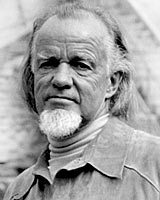
Francis Schaeffer taught young people at L Abri in Switzerland in the 1950’s till the 1980’s (pictured below)

Image result for francis schaeffer labri

Francis Schaeffer noted:

I have lots of young people and older ones come to us from the ends of the earth. And as they come to us, they have gone to the end of this logically and they are not living in a romantic setting. They realize what the situation is. They can’t find any meaning to life. It’s the meaning to the black poetry. It’s the meaning of the black plays. It’s the meaning of all this. It’s the meaning of the words “punk rock.”

Francis Schaeffer pictured below in 1971 at L Abri
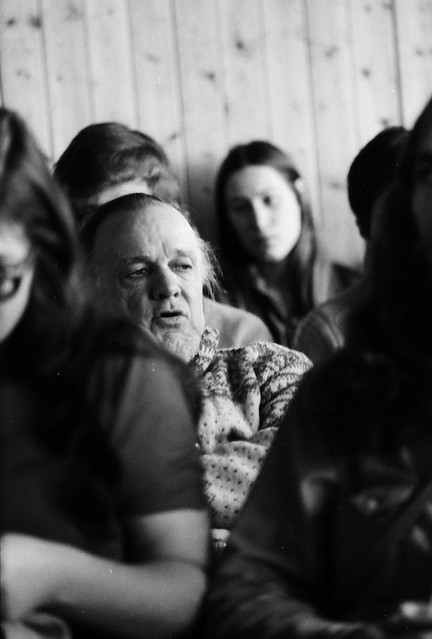
Image result for francis schaeffer labri

_

Image result for francis schaeffer labri

_

Image result for francis schaeffer labri

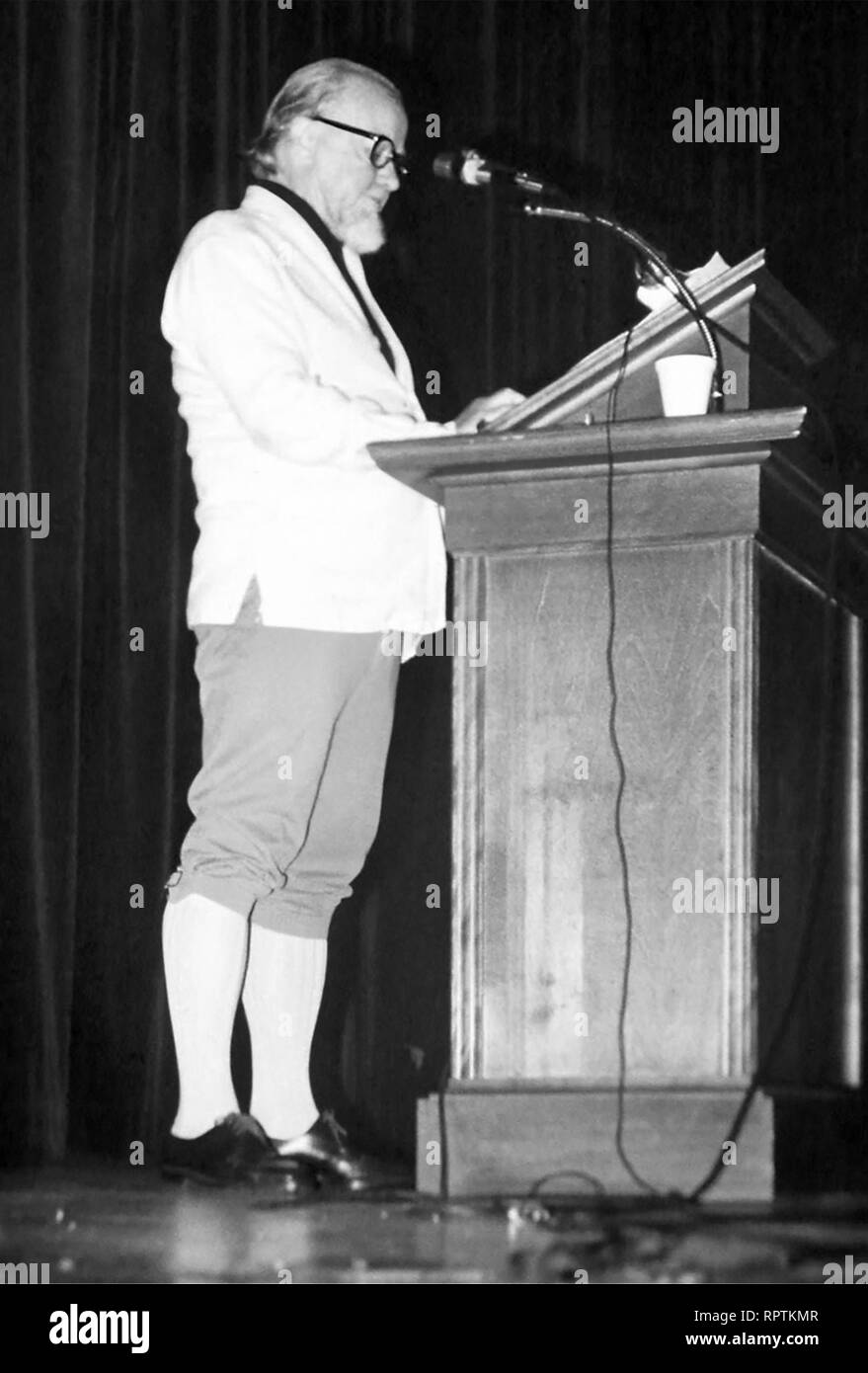
Dr. Francis Schaeffer at L’Abri Conference, Urbana, 1981
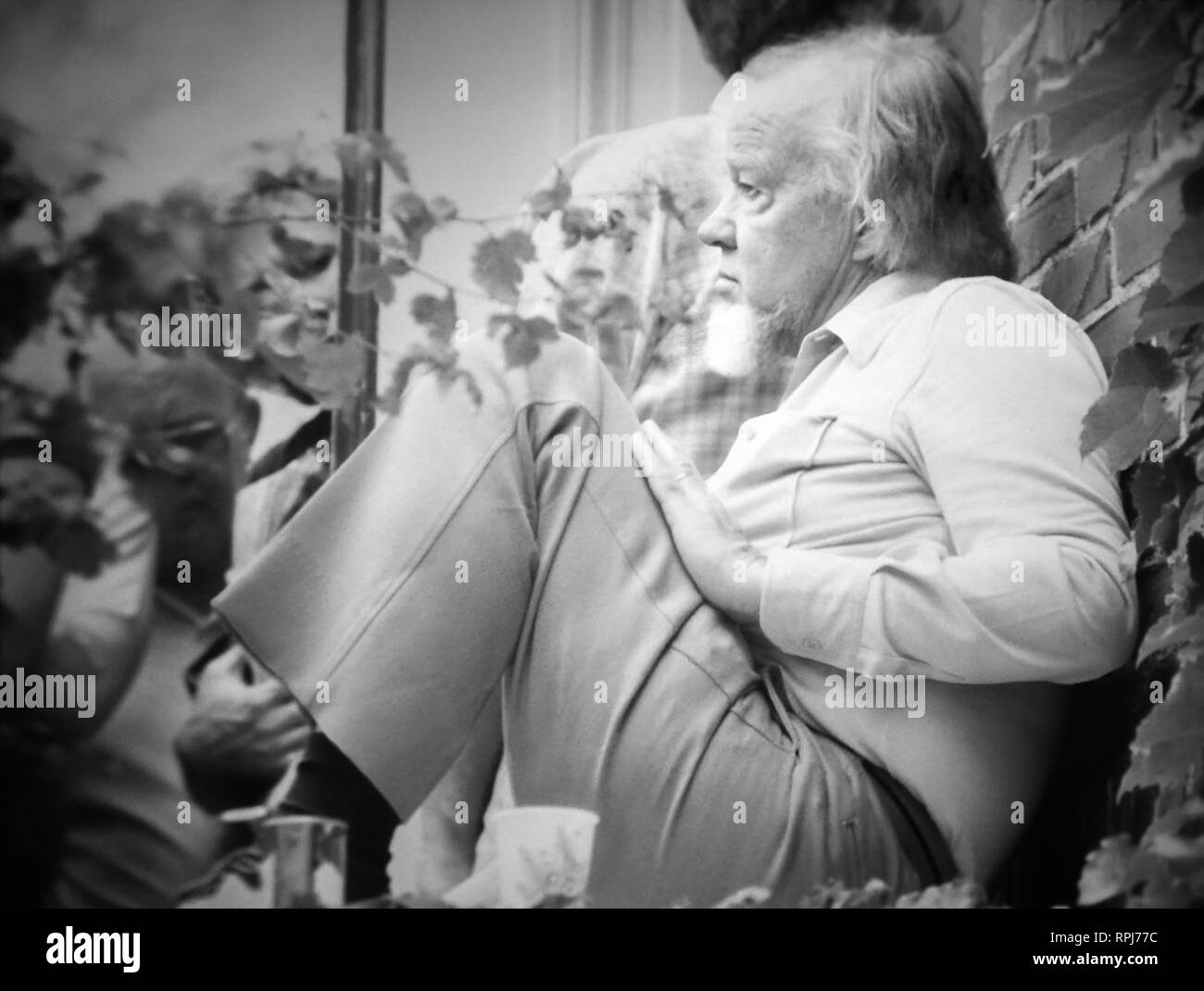
Image result for francis schaeffer labri

_

—-

 “They are the natural outcome of a change from a Christian World View to a Humanistic one…
The result is a relativistic value system. A lack of a final meaning to life — that’s first. Why does human life have any value at all, if that is all that reality is? Not only are you going to die individually, but the whole human race is going to die, someday. It may not take the falling of the atom bombs, but someday the world will grow too hot, too cold. That’s what we are told on this other final reality, and someday all you people not only will be individually dead, but the whole conscious life on this world will be dead, and nobody will see the birds fly. And there’s no meaning to life.

As you know, I don’t speak academically, shut off in some scholastic cubicle, as it were. I have lots of young people and older ones come to us from the ends of the earth. And as they come to us, they have gone to the end of this logically and they are not living in a romantic setting. They realize what the situation is. They can’t find any meaning to life. It’s the meaning to the black poetry. It’s the meaning of the black plays. It’s the meaning of all this. It’s the meaning of the words “punk rock.” And I must say, that on the basis of what they are being taught in school, that the final reality is only this material thing, they are not wrong. They’re right! On this other basis there is no meaning to life and not only is there no meaning to life, but there is no value system that is fixed, and we find that the law is based then only on a relativistic basis and that law becomes purely arbitrary.

—-

Here is a good review of the episode 016 HSWTL The Age of Non-Reason of HOW SHOULD WE THEN LIVE?, December 23, 2007:

Together with the advent of the “drug Age” was the increased interest in the West in  the religious experience of Hinduism and Buddhism. Schaeffer tells us that: “This grasping for a nonrational meaning to life and values is the central reason that these Eastern religions are so popular in the West today.”  Drugs and Eastern religions came like a flood into the Western world.  They became the way that people chose to find meaning and values in life.  By themselves or together, drugs and Eastern religion became the way that people searched inside themselves for ultimate truth.

Along with drugs and Eastern religions there has been a remarkable increase “of the occult appearing as an upper-story hope.”  As modern man searches for answers it “many moderns would rather have demons than be left with the idea that everything in the universe is only one big machine.”  For many people having the “occult in the upper story of nonreason in the hope of having meaning” is better than leaving the upper story of nonreason empty. For them horror or the macabre are more acceptable than the idea that they are just a machine.

Francis Schaeffer has correctly argued:

The universe was created by an infinite personal God and He brought it into existence by spoken word and made man in His own image. When man tries to reduce [philosophically in a materialistic point of view] himself to less than this [less than being made in the image of God] he will always fail and he will always be willing to make these impossible leaps into the area of nonreason even though they don’t give an answer simply because that isn’t what he is. He himself testifies that this infinite personal God, the God of the Old and New Testament is there. 

Instead of making a leap into the area of nonreason the better choice would be to investigate the claims that the Bible is a historically accurate book and that God created the universe and reached out to humankind with the Bible. Below is a piece of that evidence given by Francis Schaeffer concerning the accuracy of the Bible.

TRUTH AND HISTORY (chapter 5 of WHATEVER HAPPENED TO THE HUMAN RACE?, under footnote #94)

So the story goes on. We have stopped at only a few incidents in the sweep back to the year 1000 B.C. What we hope has emerged from this is a sense of the historical reliability of the Bible’s text. When the Bible refers to historical incidents, it is speaking about the same sort of “history” that historians examine elsewhere in other cultures and periods. This borne out by the fact that some of the incidents, some of the individuals, and some of the places have been confirmed by archaeological discoveries in the past hundred years has swept away the possibility of a naive skepticism about the Bible’s history. And what is particularly striking is that the tide has built up concerning the time before the year 1000 B.C. Our knowledge about the years 2500 B.C. to 1000 B.C. has vastly increased through discoveries sometimes of whole libraries and even of hitherto unknown people and languages.

There was a time, for example, when the Hittite people, referred to in the early parts of the Bible, were treated as fictitious by critical scholars. Then came the discoveries after 1906 at Boghaz Koi (Boghaz-koy) which not only gave us the certainty of their existence but stacks of details from their own archives!

Featured artist is Louise Despont

Related posts

Open Letter #102 to Ricky Gervais on comparison of the Tony of AFTER LIFE to the Solomon of ECCLESIASTES, Tony “We are chimps with brains the size of planets.” ARE WE ANIMALS OR EVEN JUST MACHINES CAUGHT IN A MEANINGLESS SITUATION? (The tweet announcing this post was liked by Ricky Gervais on 5/8/21!!)

—-

Tony’s Psychiatrist played by Paul Kaye seen below.

The sandy beach walk
Tony

In episode 2 of the second season of AFTER LIFE is the following discussion: 
Tony: I drink in times of trouble. I can’t help it the world is filled with trouble. It is a horrible place. Everyone is screwed up in someway. Everyone has worries like money or health or famine, war. We are chimps with brains the size of planets. No wonder we get drunk and try to kill each other. It is mental.

Matt: Always good to talk.

Tony: I was just explaining my new plan is to drink myself to death till I eventually implode in on my own evolution. 
Kath: Do you believe in all that? 
Tony: What? The proven fact that there is evolution? Yeah

Tony and his wife Lisa who died 6 months ago of cancer

It was interesting to me that Ricky had Tony say, “We are chimps with brains the size of planets.“ 

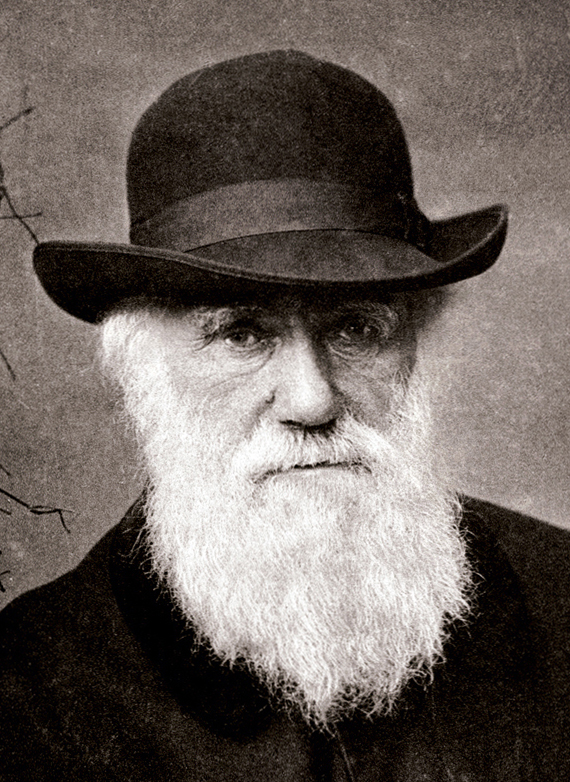
Charles Darwin resting against pillar covered with vines.

__
(Darwin wrote: But then with me the horrid doubt always arises whether the convictions of man’s mind, which has been developed from the mind of the lower animals, are of any value or at all trustworthy. Would any one trust in the convictions of a monkey’s mind…?)

Ricky Gervais in his interview with Russell Brand asserted, “We are machines. We are machines trying to understand ourselves and that is hard. Will there one day be a computer suffering from anxiety? I reckon so. We are chimps with brains the size of the planet….I don’t understand consciousness…”


Notice howWoody Allen’s character Mickey in HANNAH AND HER SISTERS also concluded that we are only animals or machines caught in a meaningless trap and he asserts, “Can you understand how meaningless

everything is? Everything! I’m

talking about nnnn–our lives, the

show…the whole world, it’s

meaningless.”

LOOK CLOSELY AT THE WORDS IN THIS SCENE BELOW!

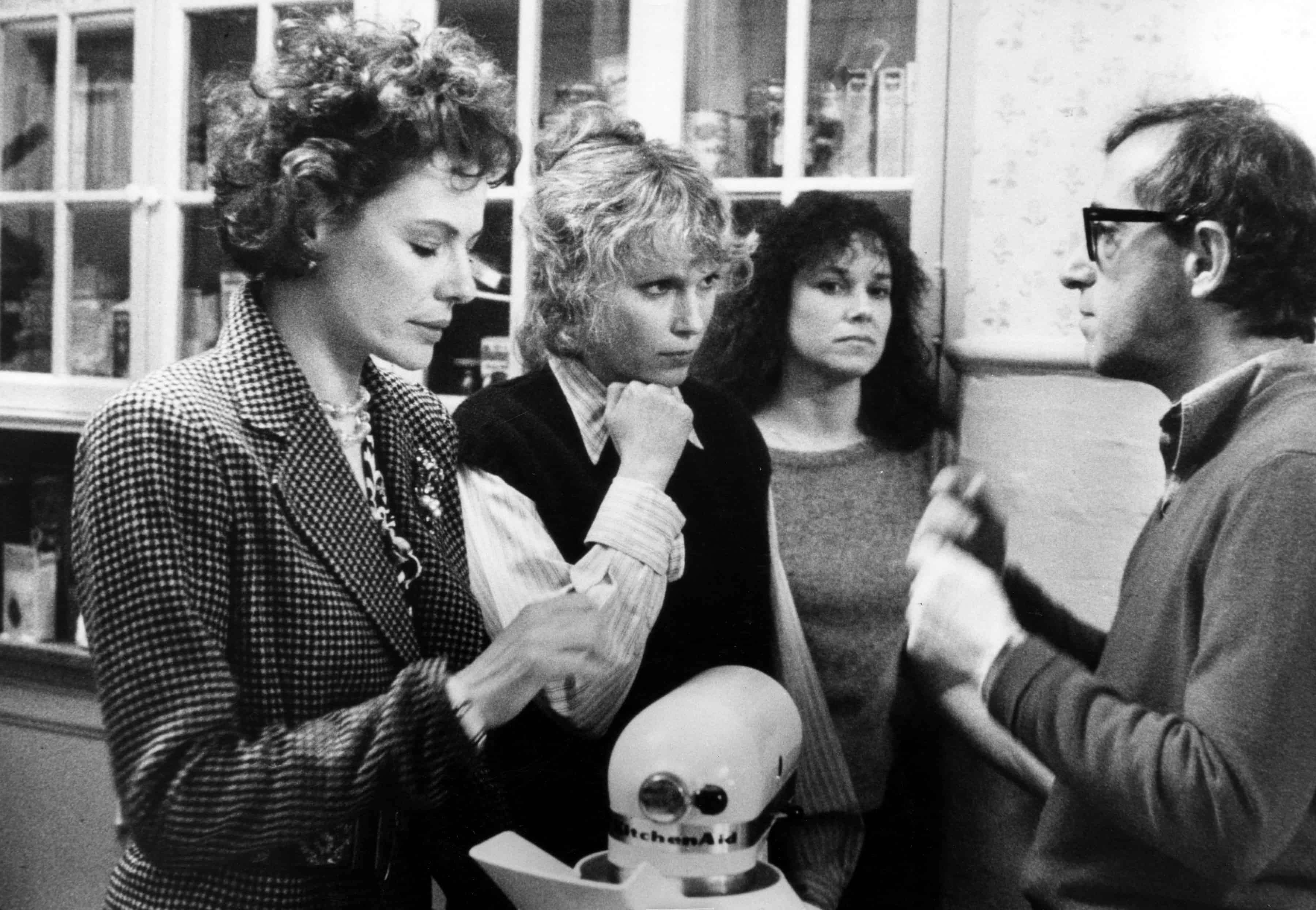
Hannah and Her Sisters - Publicity still of Woody Allen & Julie Kavner

My FAVORITE clip from HANNAH AND HER SISTERS


MICKEY
(sighing and gesturing)
If there’s nothing wrong with me
(pacing back to the
desk and Gail)
then why does he want me to come
back for tests?!
GAIL
(gesturing)
Well, he has to rule out certain
things.
(sighing)
MICKEY
Like what?! What?
GAIL
(shrugging)
I don’t know. Cancer, I–
MICKEY
(interrupting)
Don’t say that! I don’t want to
hear that word!
(gesturing)
Don’t mention that while I’m in the
building.
48.

                  GAIL
          (gesturing)
      But you don't have any symptoms!
                  MICKEY
          (gesturing)
      You--I got the classic symptoms of a
      brain tumor!

Mickey sighs.
GAIL
Two months ago, you thought you had
a malignant melanoma.
MICKEY
(gesturing)
Naturally, I, I–Do you know I–The
sudden appearance of a black spot on
my back!
GAIL
It was on your shirt!
MICKEY
(sighing)
I–How was I to know?!
(pointing to his back)
Everyone was pointing back here.
He sighs again as Gail, frustrated, gestures impatiently to
the papers on the desk.
GAIL
Come on, we’ve got to make some
booking decisions.
Mickey begins pacing around the room again. He wrings his
hands and blows on them.
MICKEY
I can’t. I can’t think of it.
This morning, I was so happy, you
know. Now I, I don’t know what went
wrong.
(sighing)
GAIL
Eh, you were miserable this morning!
We got bad reviews, terrible ratings,
the sponsors are furious…
49.

                  MICKEY
          (pacing back to the
           desk, still wringing
           his hands)
      No, I was happy, but I just didn't
      realize I was happy.

LATER IN HANNAH AND HER SOSTERS


MICKEY (V.O.)
It’s over. I’m face-to-face with
eternity.

DR. BROOKS
(offscreen)
…grown quite large without being
detected…
(trailing off
indistinctly as Mickey
continues his
anguished ramblings)
MICKEY (V.O.)
Not later, but now. I’m so frightened
I can’t move, speak, or breathe.
As Mickey finishes his speech, the “real” Dr. Brooks is seen
walking into the office. The previous scene had been a
figment of Mickey’s imagination, a nightmare fantasy only.
Holding Mickey’s X-rays, the “real” Dr. Brooks walks past
the same row of books to the light panel.
DR. BROOKS
Well, you’re just fine. There’s
absolutely nothing here at all.
And your tests are all fine.
(switching on the
light on the panel
and propping up the
X-rays)
I must admit, I was concerned, given
your symptoms.
(turning to look at
the offscreen Mickey)
What caused this hearing loss in one
ear, I guess we’ll never really know
for sure. But whatever it was, it’s
certainly not anything serious at
all.
(nodding)
I’m very relieved.
107.
CUT TO:

EXT. MOUNT SINAI HOSPITAL – DAY
Once again, Mickey is seen leaving the building, but this
time he bounds down the steps, jumping for joy. He runs
swirling down the street, clapping his hands, happy with
relief. Upbeat, uptempo jazz plays in the background.
Several cars pass as Mickey joyfully runs. Suddenly he stops,
his hand to his mouth, reflecting.
CUT TO:
INT. MICKEY’S OFFICE – DAY
Gail sits in a chair in front of a bookshelf. A sofa, a
coffee table holding periodicals, and an endtable with a
lamp complete the tableau. Gail’s hands are clasped on her
lap.
GAIL
What do you mean you’re quitting?
Why? The news is good! You don’t
have canc–the thing.
Mickey, standing behind his desk, his back to the camera,
his coat still on, looks out at the Manhattan skyline.
MICKEY
Do you realize what a thread we’re
all hanging by?

GAIL
(offscreen)
Mickey, you’re off the hook. You
should be celebrating.
MICKEY
(walking around to
the front of his
desk, gesturing)
Can you understand how meaningless
everything is? Everything! I’m
talking about nnnn–our lives, the
show…the whole world, it’s
meaningless.
GAIL
(gesturing)
Yeah…but you’re not dying!
MICKEY
No, I’m not dying now,
but, but
(MORE)
108.

                  MICKEY (CONT'D)
          (gesturing)
      you know, when I ran out of the
      hospital, I, I was so thrilled because
      they told me I was going to be all
      right.  And I'm running down the
      street, and suddenly I stop, 'cause
      it hit me, all right, so, you know,
      I'm not going to go today.
      I'm okay.  I'm not going to go
      tomorrow.
          (pointing)
      But eventually, I'm going to be in
      that position.

Gail gets up from her chair. She walks past Mickey to a
nearby cabinet. She opens a drawer, rummaging around for
something. The camera follows her, leaving Mickey briefly.
GAIL
You’re just realizing this now?
MICKEY
(offscreen)
Well, I don’t realize it now, I know
it all the time, but, but I managed
to stick it in the back of my mind…
As Mickey continues to talk offscreen, Gail closes the cabinet
drawer and walks to a file cabinet behind Mickey’s desk.
MICKEY
…because it-it’s a very horrible
thing to… think about!
Gail opens the file cabinet and takes out a pack of gum.
She slams it closed, distracted.
GAIL
(muttering)
Yeah. What?
MICKEY
(turning to Gail)
Can I tell you something? Can I
tell you a secret?
GAIL
(nodding impatiently
as she walks around
the desk)
Yes, please.
109.

                  MICKEY
          (pointing)
      A week ago, I bought a rifle.
                  GAIL
          (sitting on the arm
           of a chair near Mickey)
      No.
                  MICKEY
          (overlapping, nodding
           and gesturing)
      I went into a store, I bought a rifle.
      I was gonna... You know, if they
      told me that I had a tumor, I was
      going to kill myself.  The only thing
      that mighta stopped me, might've, is
      my parents would be devastated.  I
      would, I woulda had to shoot them,
      also, first.  And then, I have an
      aunt and uncle, I would have... You
      know, it would have been a bloodbath.
                  GAIL
          (shrugging, unwrapping
           a stick of gum)
      Tch, well, you know, eventually it,
      it is going to happen to all of us.
                  MICKEY
      Yes, but doesn't that ruin everything
      for you?  That makes everything...

Gail sighs. She pops a piece of gum into her mouth as Mickey
continues to speak.
MICKEY
(continuing)
…you know it, it just takes the
pleasure out of everything.
(gesturing, pointing)
I mean, you’re gonna die, I’m gonna
die, the audience is gonna die, the
network’s gonna– The sponsor.
Everything!
GAIL
(chewing)
I know, I know, and your hamster.
MICKEY
(nodding emphatically)
Yes!
110.

                  GAIL
          (chewing and pointing
           to Mickey)
      Listen, kid, I think you snapped
      your cap.

Mickey sighs.
GAIL
(continuing, chewing
loudly)
Maybe you need a few weeks in Bermuda,
or something. Or go to a whorehouse!
No?
MICKEY
(shaking his head,
his hand to his chest)
I can’t stay on this show. I gotta
get some answers.
Otherwise
(pausing and holding
his head)
I’m telling you, I’m going to do
something drastic

1984 SOUNDWORD LABRI CONFERENCE VIDEO – Q&A With Francis & Edith Schaeffer

I have spent alot of time talking about Woody Allen films on this blog and looking at his worldview. He has a hopelessmeaningless, nihilistic worldview that believes we are going to turn to dust and there is no afterlife. Even though he has this view he has taken the opportunity to look at the weaknessesof his own secular view. I salute him for doing that. That is why I have returned to his work over and over and presented my own Christian worldview as an alternative. Take a moment and read again a good article on Woody Allen below. There are some links below to some other posts about him.

Francis Schaeffer two months before he died made the following comments in Knoxville, TN in 1984 and he comments on Woody Allen:

I would emphasize and it grows on me always with intensified strength the older I live that there is only ONE REASON to be a Christian and that is because it is TRUTH. There is no other reason to be a Christian.

The reason to become a Christian is not because it gives you butterflies in your stomach on Sunday morning. The reason for being a Christian is because it is true.

We at L’Abri talk about it being TRUE TRUTH and we are talking about it not just being religiously true but true in all reality. In other words, if you don’t have the Bible and you don’t act upon it, it isn’t that you just don’t know how to escape hell and go to heaven, you do that too happily, but it also is true that without the Bible we won’t know who God is and we would know who people are.

That is what is wrong with our generation and that is why it accepted abortion and the infanticide and youth euthanasia came in quickly with such a flood because this generation doesn’t understand who people are.

I don’t know if you saw the TIME editorial a short time ago called THINKING ANIMAL THOUGHTS. It did so much better than most of our evangelical magazines did on dealing with this because what they said was (it was from a non-christian point of view) if you take away the biblical view of who God is and man being made in his image then there is no basis for a distinction between human life and other forms of life. You only have distinctions and that is life and non-life, and he carried it out quite properly to its extension. What right does the human race to perform experimentation’s on animals if the human race is good and the human race is only the same qualification of life? This author really understood the game much better than most Christians seem to understand it.

What I’m saying is without the Bible it isn’t just that you don’t know how to go to heaven, but without the Bible you don’t know who people are and you don’t know what this world is. When you watch the birds fly across the sky  if you really don’t have the Bible to tell you who created this world and what the world is even the birds flying across the sky is very different. We have many people that come to L’Abri that have thought this out to the very end properly and that is there is no meaning to life, no meaning to life, no meaning to human life. They are not wrong. They are right.

The younger generation who grab the needle and shoot it up because they can’t find any meaning to life, they are not wrong. They are right. if you take the Bible away it is not just that people are lost for eternity, but they are lost now. They have no meaning to life…. If I was talking to a gentleman I was sitting next  to on an airplane about Christ I wouldn’t necessarily start off quoting Bible verses. I would go back rather to their dilemma if they hold the modern worldview of the final reality only being energy, etc., I would start with that. I would begin as I stress in the book THE GOD WHO IS THERE about their own [humanist] prophets who really show where their view goes. For instance, Jacques Monod, Nobel Prize winner from France, in his book NECESSITY AND CHANCE said there is no way to tell the OUGHT from the IS. In other words, you live in a TOTALLY SILENT  universe. 


The men like Monod and Sartre or whoever the man might know that is his [humanist] prophet and they point out quite properly and conclusively what life is like, not just that there is no meaningfulness in life but everyone according to modern man is just living out some kind of game plan. It may be knocking 1/10th of a second off a downhill ski run or making one more million dollars. But all you are doing is making a game plan within the mix of a meaningless situation. WOODY ALLEN exploits this very strongly in his films. He really lives it. I feel for that man, and he has expressed it so thoroughly in ANNIE HALL and MANHATTAN and so on.

Seen below is the third episode of AFTERLIFE (season 1) when Matt takes Tony to a comedy club with front row seats to cheer him up but it turns into disaster!!!

——

—-

Part 1 “Why have integrity in Godless Darwinian Universe where Might makes Right?”

Part 2 “My April 14, 2016 Letter to Ricky mentioned Book of Ecclesiastes and the Meaninglessness of Life”

Part 3 Letter about Brandon Burlsworth concerning suffering and pain and evil in the world.  “Why didn’t Jesus save her [from cancer]?” (Tony’s 10 year old nephew George in episode 2)

Part 4 Letter on Solomon on Death Tony in episode one, “It should be everyone’s moral duty to kill themselves.”

Part 5 Letter on subject of Learning in Ecclesiastes “I don’t read books of fiction but mainly science and philosophy”

Part 6 Letter on Luxuries in Ecclesiastes Part 6, The Music of AFTERLIFE (Part A)

Part 7 Letter on Labor in Ecclesiastes My Letter to Ricky on Easter in 2017 concerning Book of Ecclesiastes and the legacy of a person’s life work

Part 8 Letter on Liquor in Ecclesiastes Tony’s late wife Lisa told him, “Don’t get drunk all the time alright? It will only make you feel worse in the log run!”

Part 9 Letter on Laughter in Ecclesiastes , I said of laughter, “It is foolishness;” and of mirth, “What does it accomplish?” Ecclesiastes 2:2

Part 10 Final letter to Ricky on Ladies in Ecclesiastes “I gathered a chorus of singers to entertain me with song, and—most exquisite of all pleasures— voluptuous maidens for my bed…behold, all was vanity and a striving after wind, and there was nothing to be gained under the sun” Ecclesiastes 2:8-11.

Part 11 Letter about Daniel Stanhope and optimistic humanism  “If man has been kicked up out of that which is only impersonal by chance , then those things that make him man-hope of purpose and significance, love, motions of morality and rationality, beauty and verbal communication-are ultimately unfulfillable and thus meaningless.” (Francis Schaeffer)

Part 12 Letter on how pursuit of God is only way to get Satisfaction Dan Jarrell “[In Ecclesiastes] if one seeks satisfaction they will never find it. In fact, every pleasure will be fleeting and can not be sustained, BUT IF ONE SEEKS GOD THEN ONE FINDS SATISFACTION”

Part 13 Letter to Stephen Hawking on Solomon realizing he will die just as a dog will die “For men and animals both breathe the same air, and both die. So mankind has no real advantage over the beasts; what an absurdity!” Ecclesiastes

Part 14 Letter to Stephen Hawking on 3 conclusions of humanism and Bertrand Russell destruction of optimistic humanism. “That Man is the product of causes which had no prevision of the end they were achieving; that his origin, his growth, his hopes and fears, his loves and his beliefs, are but the outcome of accidental collocations of atoms—no philosophy which rejects them can hope to stand. Only within the scaffolding of these truths, only on the firm foundation of unyielding despair, can the soul’s habitation henceforth be safely built.”(Bertrand Russell, Free Man’s Worship)

Part 15 Letter to Stephen Hawking on Leonardo da Vinci and Solomon and Meaningless of life “I hate life. As far as I can see, what happens on earth is a bad business. It’s smoke—and spitting into the wind” Ecclesiastes Book of Ecclesiastes Part 15 “I hate life. As far as I can see, what happens on earth is a bad business. It’s smoke—and spitting into the wind” Ecclesiastes 2:17

Part 16 Letter to Stephen Hawking on Solomon’s longing for death but still fear of death and 5 conclusions of humanism on life UNDER THE SUN. Francis Schaeffer “Life is just a series of continual and unending cycles and man is stuck in the middle of the cycle. Youth, old age, Death. Does Solomon at this point embrace nihilism? Yes!!! He exclaims that the hates life (Ecclesiastes 2:17), he longs for death (4:2-3) Yet he stills has a fear of death (2:14-16)”


Related posts:


I love Woody Allen’s latest movie “Midnight in Paris”
June 12, 2011 – 11:52 pm

“Woody Wednesday” A 2010 review of Woody Allen’s Annie Hall

February 27, 2013 – 7:34 am

I have spent alot of time talking about Woody Allen films on this blog and looking at his worldview. He has a hopeless, meaningless, nihilistic worldview that believes we are going to turn to dust and there is no afterlife. Even though he has this view he has taken the opportunity to look at the weaknesses of […]By Everette Hatcher III | Posted in Current Events | Edit | Comments (0)

“Woody Wednesday” In 2009 interview Woody Allen talks about the lack of meaning of life and the allure of younger women

February 20, 2013 – 1:58 am

I have spent alot of time talking about Woody Allen films on this blog and looking at his worldview. He has a hopeless, meaningless, nihilistic worldview that believes we are going to turn to dust and there is no afterlife. Even though he has this view he has taken the opportunity to look at the weaknesses of […]By Everette Hatcher III | Posted in Current Events | Edit | Comments (0)

Woody Allen video interview in France talk about making movies in Paris vs NY and other subjects like God, etc

February 20, 2013 – 12:49 am

Woody Allen video interview in France Related posts: “Woody Wednesdays” Woody Allen on God and Death June 6, 2012 – 6:00 am Good website on Woody Allen How can I believe in God when just last week I got my tongue caught in the roller of an electric typewriter? If Jesus Christ came back today and […]By Everette Hatcher III | Posted in Current Events | Edit | Comments (0)

“Woody Wednesday” Woody Allen on the Emptiness of Life by Toby Simmons

February 13, 2013 – 7:48 am

I have spent alot of time talking about Woody Allen films on this blog and looking at his worldview. He has a hopeless, meaningless, nihilistic worldview that believes we are going to turn to dust and there is no afterlife. Even though he has this view he has taken the opportunity to look at the weaknesses of […]By Everette Hatcher III | Posted in Current Events | Edit | Comments (0)

Woody Allen interviews Billy Graham (Woody Wednesday)

February 6, 2013 – 1:49 am

A surprisingly civil discussion between evangelical Billy Graham and agnostic comedian Woody Allen. Skip to 2:00 in the video to hear Graham discuss premarital sex, to 4:30 to hear him respond to Allen’s question about the worst sin and to 7:55 for the comparison between accepting Christ and taking LSD. ___________________ The Christian Post > […]By Everette Hatcher III | Posted in Current Events | Edit | Comments (0)

“Woody Allen Wednesdays” can be seen on the www.thedailyhatch.org

February 4, 2013 – 4:54 am

Crimes and Misdemeanors: A Discussion: Part 1 If you like Woody Allen films as much as I do then join me every Wednesday for another look the man and his movies. Below are some of the posts from the past: “Woody Wednesday” How Allen’s film “Crimes and Misdemeanors makes the point that hell is necessary […]By Everette Hatcher III | Posted in Current Events | Edit | Comments (0)

“Woody Wednesday” Great Documentary on Woody Allen

January 30, 2013 – 7:35 am

I really enjoyed this documentary on Woody Allen from PBS. Woody Allen: A Documentary, Part 1 Published on Mar 26, 2012 by NewVideoDigital Beginning with Allen’s childhood and his first professional gigs as a teen – furnishing jokes for comics and publicists – WOODY ALLEN: A DOCUMENTARY chronicles the trajectory and longevity of Allen’s career: […]By Everette Hatcher III | Posted in Current Events | Edit | Comments (0)

“Woody Wednesday” Discussion of Woody Allen’s 1989 movie “Crimes and Misdemeanors” (Part 6)

January 23, 2013 – 12:36 am

Crimes and Misdemeanors: A Discussion: Part 3 Uploaded by camdiscussion on Sep 23, 2007 Part 3 of 3: ‘Is Woody Allen A Romantic Or A Realist?’ A discussion of Woody Allen’s 1989 movie, Crimes and Misdemeanors, perhaps his finest. By Anton Scamvougeras. http://camdiscussion.blogspot.com/ antons@mail.ubc.ca______________ One of my favorite Woody Allen movies and I reviewed […]By Everette Hatcher III | Posted in Uncategorized | Edit | Comments (0)

“Woody Wednesday” Discussion of Woody Allen’s 1989 movie “Crimes and Misdemeanors” (Part 5)

January 16, 2013 – 12:35 am

Crimes and Misdemeanors: A Discussion: Part 2 Uploaded by camdiscussion on Sep 23, 2007 Part 2 of 3: ‘What Does The Movie Tell Us About Ourselves?’ A discussion of Woody Allen’s 1989 movie, perhaps his finest. By Anton Scamvougeras. http://camdiscussion.blogspot.com/ antons@mail.ubc.ca _________________- One of my favorite Woody Allen movies and I reviewed it earlier but […]By Everette Hatcher III | Posted in Current Events | Edit | Comments (0)

In 2009 interview Woody Allen talks about the lack of meaning of life and the allure of younger women

January 14, 2013 – 6:52 am

I have spent alot of time talking about Woody Allen films on this blog and looking at his worldview. He has a hopeless, meaningless, nihilistic worldview that believes we are going to turn to dust and there is no afterlife. Even though he has this view he has taken the opportunity to look at the weaknesses of […]By Everette Hatcher III | Posted in Current Events | Edit | Comments (0)

“Woody Allen Wednesdays” can be seen on the www.thedailyhatch.org

January 13, 2013 – 4:55 am

Crimes and Misdemeanors: A Discussion: Part 1 If you like Woody Allen films as much as I do then join me every Wednesday for another look the man and his movies. Below are some of the posts from the past: “Woody Wednesday” How Allen’s film “Crimes and Misdemeanors makes the point that hell is necessary […]By Everette Hatcher III | Posted in Current Events | Edit | Comments (0)

Woody Allen on the Emptiness of Life by Toby Simmons

January 10, 2013 – 2:48 pm

I have spent alot of time talking about Woody Allen films on this blog and looking at his worldview. He has a hopeless, meaningless, nihilistic worldview that believes we are going to turn to dust and there is no afterlife. Even though he has this view he has taken the opportunity to look at the weaknesses of […]By Everette Hatcher III | Posted in Current Events | Edit | Comments (0)

“Woody Wednesday” Discussion of Woody Allen’s 1989 movie “Crimes and Misdemeanors” (Part 4)

January 9, 2013 – 12:32 am

Crimes and Misdemeanors: A Discussion: Part 1 Uploaded by camdiscussion on Sep 23, 2007 Part 1 of 3: ‘What Does Judah Believe?’ A discussion of Woody Allen’s 1989 movie, perhaps his finest. By Anton Scamvougeras. http://camdiscussion.blogspot.com/ antons@mail.ubc.ca _____________ One of my favorite films is this gem by Woody Allen “Crimes and Misdemeanors”: Film Review By […]By Everette Hatcher III | Posted in Uncategorized | Edit | Comments (0)

“Woody Wednesday” Discussion of Woody Allen’s 1989 movie “Crimes and Misdemeanors” (Part 3)

January 2, 2013 – 12:30 am

Crimes and Misdemeanors: A Discussion: Part 3 Uploaded by camdiscussion on Sep 23, 2007 Part 3 of 3: ‘Is Woody Allen A Romantic Or A Realist?’ A discussion of Woody Allen’s 1989 movie, Crimes and Misdemeanors, perhaps his finest. By Anton Scamvougeras. http://camdiscussion.blogspot.com/ antons@mail.ubc.ca______________ One of my favorite Woody Allen movies and I reviewed […]By Everette Hatcher III | Posted in Current Events | Edit | Comments (0)

“Woody Wednesday” Discussion of Woody Allen’s 1989 movie “Crimes and Misdemeanors” (Part 2)

December 26, 2012 – 12:27 am

Crimes and Misdemeanors: A Discussion: Part 2 Uploaded by camdiscussion on Sep 23, 2007 Part 2 of 3: ‘What Does The Movie Tell Us About Ourselves?’ A discussion of Woody Allen’s 1989 movie, perhaps his finest. By Anton Scamvougeras. http://camdiscussion.blogspot.com/ antons@mail.ubc.ca _________________- One of my favorite Woody Allen movies and I reviewed it earlier but […]By Everette Hatcher III | Posted in Current Events | Edit | Comments (0)

“Woody Wednesday” Discussion of Woody Allen’s 1989 movie “Crimes and Misdemeanors” (Part 1)

December 19, 2012 – 7:05 am

Crimes and Misdemeanors: A Discussion: Part 1 Uploaded by camdiscussion on Sep 23, 2007 Part 1 of 3: ‘What Does Judah Believe?’ A discussion of Woody Allen’s 1989 movie, perhaps his finest. By Anton Scamvougeras. http://camdiscussion.blogspot.com/ antons@mail.ubc.ca _____________ Today I am starting a discusssion of the movie “Crimes and Misdemeanors” by Woody Allen. This 1989 […]By Everette Hatcher III | Posted in Current Events | Edit | Comments (0)

—-

Dan Mitchell, “Reagan successfully reduced the tax burden while also limiting the burden of government spending”

Sloppy or Dishonest Fiscal Analysis from the Washington Post

Good fiscal policy means low tax rates and spending restraint.

And that’s a big reason why I’m a fan of Reaganomics.

Unlike other modern presidents (including other Republicans), Reagan successfully reduced the tax burden while also limiting the burden of government spending.

President Biden wants to take the opposite approach.

A few days ago, Dan Balz of the Washington Post provided some “news analysis” about Biden’s fiscal agenda. Some of what he wrote was accurate, noting that the president wants to increase spending by an additional $6 trillion over the next 10 years.

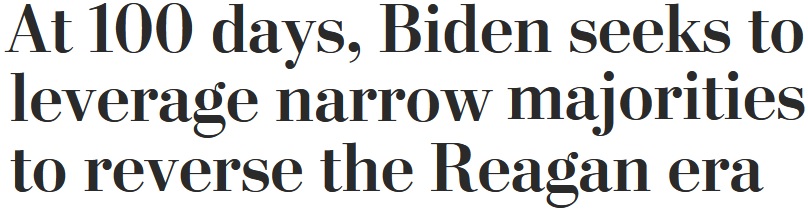
…the scope and implications of his domestic agenda have come sharply into focus. Together they represent the most dramatic shift in federal economic and social welfare policy since Ronald Reagan was elected 40 years ago.…The politics of redistribution, which are at the heart of what Biden is proposing, could test decades of assumptions that Democrats should be afraid of being tagged as the party of big government. …Together, the already approved coronavirus relief plan, the infrastructure proposal that was unveiled a few weeks ago and the newly proposed plan to invest in social welfare programs would total roughly $6 trillion.

But Mr. Balz then decided to be either sloppy or dishonest, writing that we’ve had decades of Reagan-style policies that have squeezed domestic spending and disproportionately lowered tax burden for rich people.

Reagan’s small-government philosophy resulted in a decades-long squeeze on the federal government, especially domestic spending, and on tax policies that mainly benefited the wealthiest Americans. …Government spending on social safety-net programs has been reduced compared with previous years.

Balz is wrong, wildly wrong.

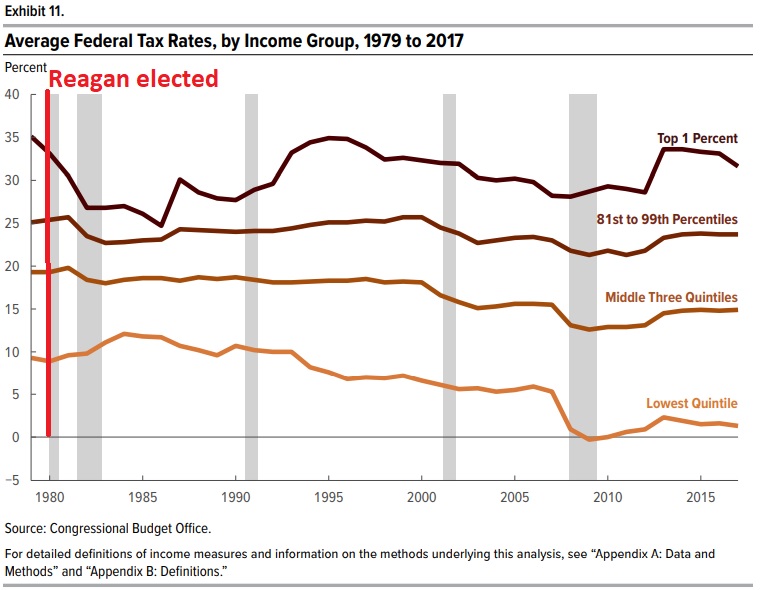
You don’t have to take my word for it. Here’s a chart, taken from an October 2020 report by the Congressional Budget Office. As you can see, people in the lowest income quintile have been the biggest winners,, with their average tax rate dropping from about 10 percent to about 2 percent..

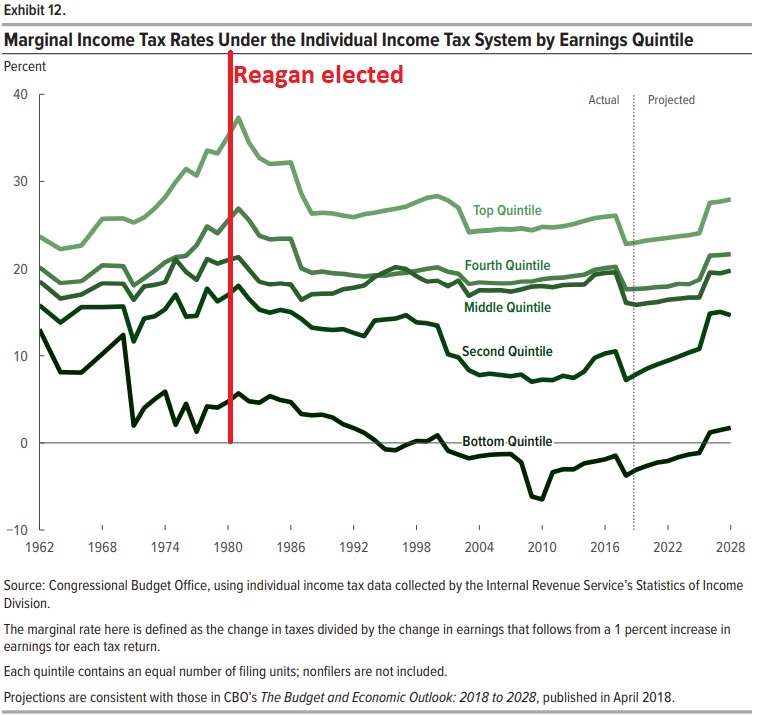
Here’s a chart showing marginal tax rates from a January 2019 CBO report. As you can see, Reagan lowered marginal tax rates for everyone, but Balz’s assertion that the rich got the lion’s share of the benefits is hard to justify considering that people in the bottom quintile now have negative marginal tax rates.

Balz’s mistakes on tax policy are significant.

But his biggest error (or worst dishonesty) occurred when he wrote about a “decades-long squeeze” on domestic spending and asserted that “spending on social safety-net programs has been reduced.”

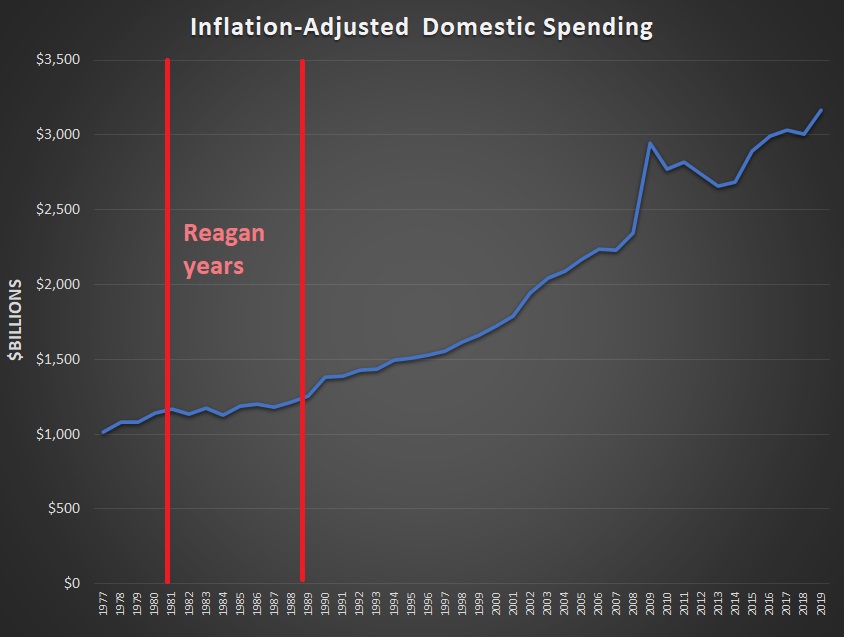
A quick visit to the Office of Management and Budget’s Historical Tables is all that’s needed to debunk this nonsense. Here’s a chart, based on Table 8.2, showing the inflation-adjusted growth of entitlements and domestic discretionary programs.

Call me crazy, but I’m seeing a rapid increase in domestic spending after Reagan left office.

P.S. There’s a pattern of lazy/dishonest fiscal reporting at the Washington Post.

P.P.S. I also can’t resist noting that Balz wrote how Biden wants to “invest” in social welfare programs, as if there’s some sort of positive return from creating more dependency. Reminds me of this Chuck Asay cartoon from the Obama years.

March 3, 2021

President Biden c/o The White House
1600 Pennsylvania Avenue NW
Washington, DC 20500

Dear Mr. President,

______________________________

Dan Mitchell shows how ignoring the Laffer Curve is like running a stop sign!!!!

I’m thinking of inventing a game, sort of a fiscal version of Pin the Tail on the Donkey.

Only the way it will work is that there will be a map of the world and the winner will be the blindfolded person who puts their pin closest to a nation such asAustralia or Switzerland that has a relatively low risk of long-run fiscal collapse.

That won’t be an easy game to win since we have data from the BISOECD, and IMF showing that government is growing far too fast in the vast majority of nations.

We also know that many states and cities suffer from the same problems.

A handful of local governments already have hit the fiscal brick wall, with many of them (gee, what a surprise) from California.

The most spectacular mess, though, is about to happen in Michigan.

The Washington Post reports that Detroit is on the verge of fiscal collapse.

After decades of sad and spectacular decline, it has come to this for Detroit: The city is $19 billion in debt and on the edge of becoming the nation’s largest municipal bankruptcy. An emergency manager says the city can make good on only a sliver of what it owes — in many cases just pennies on the dollar.

This is a dog-bites-man story. Detroit’s problems are the completely predictable result of excessive government. Just as statism explains the problems of Greece. And the problems of California. And the problems of Cyprus. And theproblems of Illinois.

I could continue with a long list of profligate governments, but you get the idea. Some of these governments are collapsing at a quicker pace and some at a slower pace. But all of them are in deep trouble because they don’t follow my Golden Rule about restraining the burden of government spending so that it grows slower than the private sector.

Detroit obviously is an example of a government that is collapsing sooner rather than later.

Why? Simply stated, as the size and scope of the public sector increased, that created very destructive economic and political dynamics.

More and more people got lured into the wagon of government dependency, which puts an ever-increasing burden on a shrinking pool of producers.

Meanwhile, organized interest groups such as government bureaucrats used their political muscle to extract absurdly excessive compensation packages, putting an even larger burden of the dwindling supply of taxpayers.

But that’s not the main focus of this post. Instead, I want to highlight a particular excerpt from the article and make a point about how too many people are blindly – perhaps willfully – ignorant of the Laffer Curve.

Check out this sentence.

Property tax collections are down 20 percent and income tax collections are down by more than a third in just the past five years — despite some of the highest tax rates in the state.

This is a classic “Fox Butterfield mistake,” which occurs when someone fails to recognize a cause-effect relationship. In this case, the reporter should have recognized that tax collections are down because Detroit has very high tax rates.

The city has a lot more problems than just high tax rates, of course, but can there be any doubt that productive people have very little incentive to earn and report taxable income in Detroit?

And that’s the essential insight of the Laffer Curve. Politicians can’t – or at least shouldn’t – assume that a 20 percent increase in tax rates will lead to a 20 percent increase in tax revenue. They also have to consider the degree to which a higher tax rate will cause a change in taxable income.

In some cases, higher tax rates will discourage people from earning more taxable income.

In some cases, higher tax rates will discourage people from reporting all the income they earn.

In some cases, higher tax rates will encourage people to utilize tax loopholes to shrink their taxable income.

In some cases, higher tax rates will encourage migration, thus causing taxable income to disappear.

Here’s my three-part video series on the Laffer Curve. Much of this is common sense, though it needs to be mandatory viewing for elected officials (as well as the bureaucrats at the Joint Committee on Taxation).

The Laffer Curve, Part I: Understanding the Theory

Uploaded by  on Jan 28, 2008

The Laffer Curve charts a relationship between tax rates and tax revenue. While the theory behind the Laffer Curve is widely accepted, the concept has become very controversial because politicians on both sides of the debate exaggerate. This video shows the middle ground between those who claim “all tax cuts pay for themselves” and those who claim tax policy has no impact on economic performance. This video, focusing on the theory of the Laffer Curve, is Part I of a three-part series. Part II reviews evidence of Laffer-Curve responses. Part III discusses how the revenue-estimating process in Washington can be improved. For more information please visit the Center for Freedom and Prosperity’s web site: http://www.freedomandprosperity.org

Part 2

Part 3

P.S. Just in case it’s not clear from the videos, we don’t want to be at the revenue-maximizing point on the Laffer Curve.

P.P.S. Amazingly, even the bureaucrats at the IMF recognize that there’s a point when taxes are so onerous that further increases don’t generate revenue.

P.P.P.S. At least CPAs understand the Laffer Curve, probably because they help their clients reduce their tax exposure to greedy governments.

P.P.P.P.S. I offered a Laffer Curve lesson to President Obama, but I doubt it had any impact.

___________________________

Thank you so much for your time. I know how valuable it is. I also appreciate the fine family that you have and your commitment as a father and a husband.

Sincerely,

Everette Hatcher III, 13900 Cottontail Lane, Alexander, AR 72002, ph 501-920-5733,

Williams with Sowell – Minimum Wage

Thomas Sowell

Thomas Sowell – Reducing Black Unemployment

By WALTER WILLIAMS

—-

Ronald Reagan with Milton Friedman
Milton Friedman The Power of the Market 2-5

Related posts:

Dan Mitchell: Question of the Week: Has the European Fiscal Crisis Ended?

We got to cut spending or we will be in a fiscal crisis like Greece!!! Question of the Week: Has the European Fiscal Crisis Ended? January 12, 2013 by Dan Mitchell I’ve frequently commented on Europe’s fiscal mess and argued that excessive government spending is responsible for both the sovereign debt crisis and the economic stagnation […]

Taxes made simple by Dan Mitchell of the Cato Institute

The Flat Tax: How it Works and Why it is Good for America Uploaded by afq2007 on Mar 29, 2010 This Center for Freedom and Prosperity Foundation video shows how the flat tax would benefit families and businesses, and also explains how this simple and fair system would boost economic growth and eliminate the special-interest […]

Cartoons from Dan Mitchell’s blog that demonstrate what Obama is doing to our economy (Obama’s out of control spending not helped by raising taxes on rich)

I have put up lots of cartoons from Dan Mitchell’s blog before and they have got lots of hits before. Many of them have dealt with the economy, eternal unemployment benefits, socialism,  Greece,  welfare state or on gun control. President Obama really does think that all his answers lie in raising taxes on the rich when the […]

Dan Mitchell of the Cato Institute gives overview of economic policy and he praises Clinton and Reagan

__________ President Reagan, Nancy Reagan, Tom Selleck, Dudley Moore, Lucille Ball at a Tribute to Bob Hope’s 80th birthday at the Kennedy Center. 5/20/83. __________________________ Dan Mitchell is very good at giving speeches and making it very simple to understand economic policy and how it affects a nation. Mitchell also talks about slowing the growth […]

Cartoons from Dan Mitchell’s blog that demonstrate what Obama is doing to our economy (cartoon on entitlements)

The Laffer Curve – Explained Uploaded by Eddie Stannard on Nov 14, 2011 This video explains the relationship between tax rates, taxable income, and tax revenue. The key lesson is that the Laffer Curve is not an all-or-nothing proposition, where we have to choose between the exaggerated claim that “all tax cuts pay for themselves” […]

Open letter to President Obama (Part 296) (Laffer curve strikes again!!)

President Obama c/o The White House 1600 Pennsylvania Avenue NW Washington, DC 20500 Dear Mr. President, I know that you receive 20,000 letters a day and that you actually read 10 of them every day. I really do respect you for trying to get a pulse on what is going on out here. The way […]

Open letter to President Obama (Part 282, How the Laffer Curve worked in the 20th century over and over again!!!)

Dan Mitchell does a great job explaining the Laffer Curve President Obama c/o The White House 1600 Pennsylvania Avenue NW Washington, DC 20500 Dear Mr. President, I know that you receive 20,000 letters a day and that you actually read 10 of them every day. I really do respect you for trying to get a […]

Laffer curve hits tax hikers pretty hard (includes cartoon)

I have put up lots of cartoons from Dan Mitchell’s blog before and they have got lots of hits before. Many of them have dealt with the economy, eternal unemployment benefits, socialism,  Greece,  welfare state or on gun control. Today’s cartoon deals with the Laffer curve. Revenge of the Laffer Curve…Again and Again and Again March 27, 2013 […]

Editorial cartoon from Dan Mitchell’s blog on California’s sorry state of affairs

I have put up lots of cartoons from Dan Mitchell’s blog before and they have got lots of hits before. Many of them have dealt with the sequester, economy, eternal unemployment benefits, socialism,  minimum wage laws, tax increases, social security, high taxes in California, Obamacare,  Greece,  welfare state or on gun control. President Obama’s favorite state must be California because […]

Portugal and the Laffer Curve

Class Warfare just don’t pay it seems. Why can’t we learn from other countries’ mistakes? Class Warfare Tax Policy Causes Portugal to Crash on the Laffer Curve, but Will Obama Learn from this Mistake? December 31, 2012 by Dan Mitchell Back in mid-2010, I wrote that Portugal was going to exacerbate its fiscal problems by raising […]

Political arguments against higher taxes from Dan Mitchell

Republicans would be stupid to raise taxes. Don’t Get Bamboozled by the Fiscal Cliff: Five Policy Reasons and Five Political Reasons Why Republicans Should Keep their No-Tax-Hike Promises December 6, 2012 by Dan Mitchell The politicians claim that they are negotiating about how best to reduce the deficit. That irks me because our fiscal problem is […]

President Obama ignores warnings about Laffer Curve

The Laffer Curve – Explained Uploaded by Eddie Stannard on Nov 14, 2011 This video explains the relationship between tax rates, taxable income, and tax revenue. The key lesson is that the Laffer Curve is not an all-or-nothing proposition, where we have to choose between the exaggerated claim that “all tax cuts pay for themselves” […]

Dan Mitchell looks at Obama’s tax record

Dan Mitchell’s article and the video from his organization takes a hard look at President Obama’s tax record. Dissecting Obama’s Record on Tax Policy October 30, 2012 by Dan Mitchell The folks at the Center for Freedom and Prosperity have been on a roll in the past few months, putting out an excellent series of videos […]

Dan Mitchell: “Romney is Right that You Can Lower Tax Rates and Reduce Tax Preferences without Hurting the Middle Class”

The Laffer Curve, Part I: Understanding the Theory Uploaded by afq2007 on Jan 28, 2008 The Laffer Curve charts a relationship between tax rates and tax revenue. While the theory behind the Laffer Curve is widely accepted, the concept has become very controversial because politicians on both sides of the debate exaggerate. This video shows […]

The Laffer Curve Wreaks Havoc in the United Kingdom

I got to hear Arthur Laffer speak back in 1981 and he predicted what would happen in the next few years with the Reagan tax cuts and he was right with every prediction. The Laffer Curve Wreaks Havoc in the United Kingdom July 1, 2012 by Dan Mitchell Back in 2010, I excoriated the new […]

By Everette Hatcher III | Posted in Cato Institute | Tagged  | Edit | Comments (0)

Dan Mitchell: Maryland to Texas, but Not Okay to Move from the United States to Singapore?

You can’t blame someone for leaving one state for another if they have a better an opportunity to make money. Maryland to Texas, but Not Okay to Move from the United States to Singapore? July 12, 2012 by Dan Mitchell I’ve commented before about entrepreneurs, investors, and small business owners migrating from high tax states such […]

Liberals act like the Laffer Curve does not exist.

Raising taxes will not work. Liberals act like the Laffer Curve does not exist. The Laffer Curve Shows that Tax Increases Are a Very Bad Idea – even if They Generate More Tax Revenue April 10, 2012 by Dan Mitchell The Laffer Curve is a graphical representation of the relationship between tax rates, tax revenue, and […]

Dan Mitchell shows why soak-the-rich tax policy does not work

Dan Mitchell of the Cato Institute shows why Obama’s plan to tax the rich will not solve our deficit problem.   Explaining in the New York Post Why Obama’s Soak-the-Rich Tax Policy Is Doomed to Failure April 17, 2012 by Dan Mitchell I think high tax rates on certain classes of citizens are immoral and discriminatory. If the […]

Dan Mitchell of the Cato Institute takes on liberals on PBS

You want the rich to pay more? Dan Mitchell observed:I explained that “rich” taxpayers declared much more income and paid much higher taxes after Reagan reduced the top tax rate from 70 percent to 28 percent. Liberals don’t understand good tax policies. Against 3-1 Odds, Promoting Good Tax Policy on Government TV April 12, 2012 by […]

Dan Mitchell of the Cato Institute takes on the Buffett Rule

Class warfare again from President Obama.  Rejecting the Buffett Rule and Fighting Obama’s Class Warfare on CNBC April 10, 2012 by Dan Mitchell I’ve already explained why Warren Buffett is either dishonest or clueless about tax policy. Today, on CNBC, I got to debate the tax scheme that President Obama has named after the Omaha investor. […]

By Everette Hatcher III | Posted in Cato InstituteTaxes | Edit | Comments (0)

FRANCIS SCHAEFFER versus RICHARD DAWKINS on Bach (OPEN LETTER TO DAWKINS)

XXXX

How Should We Then Live | Season 1 | Episode 4 | The Reformation | Franc…

How Should We Then Live – Episode 8 – The Age of Fragmentation

The Best of Bach

Johann Sebastian Bach.jpg

May 1, 2021

Richard Dawkins c/o Richard Dawkins Foundation, Washington, DC 20005

Dear Mr. Dawkins,

i have enjoyed reading about a dozen of your books and some of the most intriguing were The God DelusionAn Appetite for Wonder: The Making of a Scientist, and Brief Candle in the Dark: My Life in Science.


I recently read this article about your love of Bach’s music.

If any example proves this point, it is the confession of evolutionary biologist and self-professed “militant atheist,” Richard Dawkins. Dawkins recalls an appearance he had on Desert Island Discs, a British radio show. When asked to choose the eight records he would take with him on a desert island, he included “Mache dich mein Herze rein” from J. S. Bach’s St Matthew Passion. “The interviewer was unable to understand how I could choose religious music without being religious,” Dawkins recalls. “You might as well say, how can you enjoy Wuthering Heights when you know perfectly well that Cathy and Heathcliff never really existed?”

In your book The God Delusion on page 111 you stated:

I once was the guest of the week on a British radio show called Desert Island Discs. You have to choose the eight records you would take with you if marooned on a desert island. Among my choices was ‘Mache dich mein Herze rein’ from Bach’s St Matthew Passion. The interviewer was unable to understand how I could choose religious music without being religious. You might as well say, how can you enjoy Wuthering Heights when you know perfectly well that Cathy and Heathcliff never really existed?

But there is an additional point that I might have made, and which needs to be made whenever religion is given credit for, say, the Sistine Chapel or Raphael’s Annunciation. Even great artists have to earn a living, and they will take commissions where they are to be had. I have no reason to doubt that Raphael and Michelangelo were Christians – it was pretty much the only option in their time – but the fact is almost incidental. Its enormous wealth had made the Church the dominant patron of the arts. If history had worked out differently, and Michelangelo had been commissioned to paint a ceiling for a giant Museum of Science, mightn’t he have produced something at least as inspirational as the Sistine Chapel? How sad that we shall never hear Beethoven’s Mesozoic Symphony, or Mozart’s opera The Expanding Universe.

2 RESPONSES TO YOUR ASSERTION THAT AN EARLIER ACCEPTANCE OF EVOLUTION WOULD HAVE ENRICHED MUSIC AND THE ARTS.

First, we have the testimony of Charles Darwin himself concerning this.

Second, we have the actual details from Bach’s life.

Let us take a quick look at your idea of Mozart’s opera THE EXPANDING UNIVERSE. When I read the book  Charles Darwin: his life told in an autobiographical chapter, and in a selected series of his published lettersI also read  a commentary on it by Francis Schaeffer and I wanted to both  quote some of Charles Darwin’s own words to you and then include the comments of Francis Schaeffer on those words.

 CHARLES DARWIN’S AUTOBIOGRAPHY. Addendum. Written May 1st, 1881 [the year before his death].

I have said that in one respect my mind has changed during the last twenty or thirty years. Up to the age of thirty, or beyond it, poetry of many kinds, such as the works of Milton, Gray, Byron, Wordsworth, Coleridge, and Shelley, gave me great pleasure, and even as a schoolboy I took intense delight in Shakespeare, especially in the historical plays. I have also said that formerly pictures gave me considerable, and music very great delight. But now for many years I cannot endure to read a line of poetry: I have tried lately to read Shakespeare, and found it so intolerably dull that it nauseated me. I have also almost lost my taste for pictures or music. Music generally sets me thinking too energetically on what I have been at work on, instead of giving me pleasure. I retain some taste for fine scenery, but it does not cause me the exquisite delight which it formerly did…

This curious and lamentable loss of the higher æsthetic tastes is all the odder, as books on history, biographies, and travels (independently of any scientific facts which they may contain), and essays on all sorts of subjects interest me as much as ever they did. My mind seems to have become a kind of machine for grinding general laws out of large collections of facts, but why this should have caused the atrophy of that part of the brain alone, on which the higher tastes depend, I cannot conceive. A man with a mind more highly organised or better constituted than mine, would not, I suppose, have thus suffered; and if I had to live my life again, I would have made a rule to read some poetry and listen to some music at least once every week; for perhaps the parts of my brain now atrophied would thus have been kept active through use. The loss of these tastes is a loss of happiness, and may possibly be injurious to the intellect, and more probably to the moral character, by enfeebling the emotional part of our nature.

Francis Schaeffer commented:

This is the old man Darwin writing at the end of his life. What he is saying here is the further he has gone on with his studies the more he has seen himself reduced to a machine as far as aesthetic things are concerned. I think this is crucial because as we go through this we find that his struggles and my sincere conviction is that he never came to the logical conclusion of his own position, but he nevertheless in the death of the higher qualities as he calls them, art, music, poetry, and so on, what he had happen to him was his own theory was producing this in his own self just as his theories a hundred years later have produced this in our culture. I don’t think you can hold the evolutionary position as he held it without becoming a machine. What has happened to Darwin personally is merely a forerunner to what occurred to the whole culture as it has fallen in this world of pure material, pure chance and later determinism. Here he is in a situation where his mannishness has suffered in the midst of his own position.

Let’s take a closer look at the music by Bach that you call your favorite.

NO LUTHER, NO BACH

NOVEMBER 18, 20127 COMMENTS

From Francis Schaeffer’s How Should We Then Live? (p. 92):

Johann Sebastian Bach (1685 – 1750) was certainly the zenith of the composers coming out of the Reformation. His music was a direct result of the Reformation culture and the biblical Christianity of the time, which was so much a part of Bach himself. There would have been no Bach had there been no Luther. Bach wrote on his score initials representing such phrases as: “With the help of Jesus” – “To God alone be the glory” – “In the name of Jesus.” It was appropriate that the last thing Bach the Christian wrote was “Before Thy Throne I Now Appear.” Bach consciously related both the form and the words of his music to biblical truth. Out of the biblical context came a rich combination of music and words and a diversity of unity. This rested on the fact that the Bible gives unity to the universal and the particulars, and therefore the particulars have meaning. Expressed musically, there can be endless variety and diversity without chaos. There is variety yet resolution.

And this is why I love Bach.

In THE GOD WHO IS THERE Francis Schaeffer makes great point:

In a different but related way this is also true of a man like Bernard Berenson (1865-1959). He was the world’s greatest expert on Renaissance art during his lifetime. He graduated from Harvard and lived most of his later life in Florence. He was such an authority on his subject that when he dated and priced a picture, it was generally accepted as decisive. He was a truly “modern” man and accepted sexual amorality. Therefore when he took Mary Costelloe (sister of the American essayist Logan Pearsall Smith) away from her husband, he lived with her for a number of years until her husband died and then married her (the Costelloes’ marriage was Roman Catholic, and so a divorce could not be arranged). When Berenson eventually married her, they had an agreement that they would both be free to engage in extramarital affairs, and both took advantage of the agreement many times. They lived this way for forty-five years. When anyone chided Berenson, he would simply say, “You are forgetting the animal basis of our nature.” Thus he was perfectly willing in his private life to accept a completely animal situation. 

But in contrast to this, he expressed a completely different view where his real love and true integration point—Renaissance art—was concerned. “Bernard Berenson found that modern figure painting in general was not based on seeing, on observing, but on exasperation and on the preconceived assumption that the squalid, the sordid, the violent, the bestial, the misshapen, in short . . . low life was the only reality!”1 In the area of sexual morals he was perfectly willing to live consistently to his view of life as an animal. But in the area which had become his attempt to find an integration point, that of art, he was prepared to say that he disliked modern art because it is bestial! No man like Berenson can live with his system. Every truly modern man is forced to accept some sort of leap in theory or practice, because the pressure of his own humanity demands it. He can say what he will concerning what he himself is; but no matter what he says he is, he still is man. These kinds of leaps, produced in desperation as an act of blind faith, are totally different from the faith of historic Christianity. On the basis of biblical Christianity a rational discussion and consideration can take place, because it is fixed in the stuff of history. When Paul was asked whether Jesus was raised from the dead, he gave a completely nonreligious answer, in the twentieth-century sense. He said: “There are almost 500 living witnesses; go and ask them!”2 This is the faith that involves the whole man, including his reason; it does not ask for a belief into the void. As the twentieth-century mentality would understand the concept of religion, the Bible is a nonreligious book.

Richard you love talking about EVIDENCE!! You want some evidence that indicates that the Bible is true? Here is a good place to start and that is taking a closer look at the archaeology of the Old Testament times. Is the Bible historically accurate? Here are some of the posts I have done in the past on the subject: 1. The Babylonian Chronicleof Nebuchadnezzars Siege of Jerusalem, 2. Hezekiah’s Siloam Tunnel Inscription. 3. Taylor Prism (Sennacherib Hexagonal Prism), 4. Biblical Cities Attested Archaeologically. 5. The Discovery of the Hittites, 6.Shishak Smiting His Captives, 7. Moabite Stone, 8. Black Obelisk of Shalmaneser III9A Verification of places in Gospel of John and Book of Acts., 9B Discovery of Ebla Tablets10. Cyrus Cylinder11. Puru “The lot of Yahali” 9th Century B.C.E.12. The Uzziah Tablet Inscription13. The Pilate Inscription14. Caiaphas Ossuary14 B Pontius Pilate Part 214c. Three greatest American Archaeologists moved to accept Bible’s accuracy through archaeology.

The answer to find meaning in life is found in putting your faith and trust in Jesus Christ. The Bible is true from cover to cover and can be trusted.

Thank you again for your time and I know how busy you are.

Everette Hatcher, everettehatcher@gmail.com

http://www.thedailyhatch.org, cell ph 501-920-5733, 13900 Cottontail Lane, Alexander 72002


Related posts:


I love Woody Allen’s latest movie “Midnight in Paris”
June 12, 2011 – 11:52 pm

“Woody Wednesday” A 2010 review of Woody Allen’s Annie Hall

February 27, 2013 – 7:34 am

I have spent alot of time talking about Woody Allen films on this blog and looking at his worldview. He has a hopeless, meaningless, nihilistic worldview that believes we are going to turn to dust and there is no afterlife. Even though he has this view he has taken the opportunity to look at the weaknesses of […]By Everette Hatcher III | Posted in Current Events | Edit | Comments (0)

“Woody Wednesday” In 2009 interview Woody Allen talks about the lack of meaning of life and the allure of younger women

February 20, 2013 – 1:58 am

I have spent alot of time talking about Woody Allen films on this blog and looking at his worldview. He has a hopeless, meaningless, nihilistic worldview that believes we are going to turn to dust and there is no afterlife. Even though he has this view he has taken the opportunity to look at the weaknesses of […]By Everette Hatcher III | Posted in Current Events | Edit | Comments (0)

Woody Allen video interview in France talk about making movies in Paris vs NY and other subjects like God, etc

February 20, 2013 – 12:49 am

Woody Allen video interview in France Related posts: “Woody Wednesdays” Woody Allen on God and Death June 6, 2012 – 6:00 am Good website on Woody Allen How can I believe in God when just last week I got my tongue caught in the roller of an electric typewriter? If Jesus Christ came back today and […]By Everette Hatcher III | Posted in Current Events | Edit | Comments (0)

“Woody Wednesday” Woody Allen on the Emptiness of Life by Toby Simmons

February 13, 2013 – 7:48 am

I have spent alot of time talking about Woody Allen films on this blog and looking at his worldview. He has a hopeless, meaningless, nihilistic worldview that believes we are going to turn to dust and there is no afterlife. Even though he has this view he has taken the opportunity to look at the weaknesses of […]By Everette Hatcher III | Posted in Current Events | Edit | Comments (0)

Woody Allen interviews Billy Graham (Woody Wednesday)

February 6, 2013 – 1:49 am

A surprisingly civil discussion between evangelical Billy Graham and agnostic comedian Woody Allen. Skip to 2:00 in the video to hear Graham discuss premarital sex, to 4:30 to hear him respond to Allen’s question about the worst sin and to 7:55 for the comparison between accepting Christ and taking LSD. ___________________ The Christian Post > […]By Everette Hatcher III | Posted in Current Events | Edit | Comments (0)

“Woody Allen Wednesdays” can be seen on the www.thedailyhatch.org

February 4, 2013 – 4:54 am

Crimes and Misdemeanors: A Discussion: Part 1 If you like Woody Allen films as much as I do then join me every Wednesday for another look the man and his movies. Below are some of the posts from the past: “Woody Wednesday” How Allen’s film “Crimes and Misdemeanors makes the point that hell is necessary […]By Everette Hatcher III | Posted in Current Events | Edit | Comments (0)

“Woody Wednesday” Great Documentary on Woody Allen

January 30, 2013 – 7:35 am

I really enjoyed this documentary on Woody Allen from PBS. Woody Allen: A Documentary, Part 1 Published on Mar 26, 2012 by NewVideoDigital Beginning with Allen’s childhood and his first professional gigs as a teen – furnishing jokes for comics and publicists – WOODY ALLEN: A DOCUMENTARY chronicles the trajectory and longevity of Allen’s career: […]By Everette Hatcher III | Posted in Current Events | Edit | Comments (0)

“Woody Wednesday” Discussion of Woody Allen’s 1989 movie “Crimes and Misdemeanors” (Part 6)

January 23, 2013 – 12:36 am

Crimes and Misdemeanors: A Discussion: Part 3 Uploaded by camdiscussion on Sep 23, 2007 Part 3 of 3: ‘Is Woody Allen A Romantic Or A Realist?’ A discussion of Woody Allen’s 1989 movie, Crimes and Misdemeanors, perhaps his finest. By Anton Scamvougeras. http://camdiscussion.blogspot.com/ antons@mail.ubc.ca______________ One of my favorite Woody Allen movies and I reviewed […]By Everette Hatcher III | Posted in Uncategorized | Edit | Comments (0)

“Woody Wednesday” Discussion of Woody Allen’s 1989 movie “Crimes and Misdemeanors” (Part 5)

January 16, 2013 – 12:35 am

Crimes and Misdemeanors: A Discussion: Part 2 Uploaded by camdiscussion on Sep 23, 2007 Part 2 of 3: ‘What Does The Movie Tell Us About Ourselves?’ A discussion of Woody Allen’s 1989 movie, perhaps his finest. By Anton Scamvougeras. http://camdiscussion.blogspot.com/ antons@mail.ubc.ca _________________- One of my favorite Woody Allen movies and I reviewed it earlier but […]By Everette Hatcher III | Posted in Current Events | Edit | Comments (0)

In 2009 interview Woody Allen talks about the lack of meaning of life and the allure of younger women

January 14, 2013 – 6:52 am

I have spent alot of time talking about Woody Allen films on this blog and looking at his worldview. He has a hopeless, meaningless, nihilistic worldview that believes we are going to turn to dust and there is no afterlife. Even though he has this view he has taken the opportunity to look at the weaknesses of […]By Everette Hatcher III | Posted in Current Events | Edit | Comments (0)

“Woody Allen Wednesdays” can be seen on the www.thedailyhatch.org

January 13, 2013 – 4:55 am

Crimes and Misdemeanors: A Discussion: Part 1 If you like Woody Allen films as much as I do then join me every Wednesday for another look the man and his movies. Below are some of the posts from the past: “Woody Wednesday” How Allen’s film “Crimes and Misdemeanors makes the point that hell is necessary […]By Everette Hatcher III | Posted in Current Events | Edit | Comments (0)

Woody Allen on the Emptiness of Life by Toby Simmons

January 10, 2013 – 2:48 pm

I have spent alot of time talking about Woody Allen films on this blog and looking at his worldview. He has a hopeless, meaningless, nihilistic worldview that believes we are going to turn to dust and there is no afterlife. Even though he has this view he has taken the opportunity to look at the weaknesses of […]By Everette Hatcher III | Posted in Current Events | Edit | Comments (0)

“Woody Wednesday” Discussion of Woody Allen’s 1989 movie “Crimes and Misdemeanors” (Part 4)

January 9, 2013 – 12:32 am

Crimes and Misdemeanors: A Discussion: Part 1 Uploaded by camdiscussion on Sep 23, 2007 Part 1 of 3: ‘What Does Judah Believe?’ A discussion of Woody Allen’s 1989 movie, perhaps his finest. By Anton Scamvougeras. http://camdiscussion.blogspot.com/ antons@mail.ubc.ca _____________ One of my favorite films is this gem by Woody Allen “Crimes and Misdemeanors”: Film Review By […]By Everette Hatcher III | Posted in Uncategorized | Edit | Comments (0)

“Woody Wednesday” Discussion of Woody Allen’s 1989 movie “Crimes and Misdemeanors” (Part 3)

January 2, 2013 – 12:30 am

Crimes and Misdemeanors: A Discussion: Part 3 Uploaded by camdiscussion on Sep 23, 2007 Part 3 of 3: ‘Is Woody Allen A Romantic Or A Realist?’ A discussion of Woody Allen’s 1989 movie, Crimes and Misdemeanors, perhaps his finest. By Anton Scamvougeras. http://camdiscussion.blogspot.com/ antons@mail.ubc.ca______________ One of my favorite Woody Allen movies and I reviewed […]By Everette Hatcher III | Posted in Current Events | Edit | Comments (0)

“Woody Wednesday” Discussion of Woody Allen’s 1989 movie “Crimes and Misdemeanors” (Part 2)

December 26, 2012 – 12:27 am

Crimes and Misdemeanors: A Discussion: Part 2 Uploaded by camdiscussion on Sep 23, 2007 Part 2 of 3: ‘What Does The Movie Tell Us About Ourselves?’ A discussion of Woody Allen’s 1989 movie, perhaps his finest. By Anton Scamvougeras. http://camdiscussion.blogspot.com/ antons@mail.ubc.ca _________________- One of my favorite Woody Allen movies and I reviewed it earlier but […]By Everette Hatcher III | Posted in Current Events | Edit | Comments (0)

“Woody Wednesday” Discussion of Woody Allen’s 1989 movie “Crimes and Misdemeanors” (Part 1)

December 19, 2012 – 7:05 am

Crimes and Misdemeanors: A Discussion: Part 1 Uploaded by camdiscussion on Sep 23, 2007 Part 1 of 3: ‘What Does Judah Believe?’ A discussion of Woody Allen’s 1989 movie, perhaps his finest. By Anton Scamvougeras. http://camdiscussion.blogspot.com/ antons@mail.ubc.ca _____________ Today I am starting a discusssion of the movie “Crimes and Misdemeanors” by Woody Allen. This 1989 […]By Everette Hatcher III | Posted in Current Events | Edit | Comments (0)

OPEN LETTER TO BARACK OBAMA ON HIS AUTOBIOGRAPHY “A PROMISED LAND” Part 164 OBAMA’S VIEW ON MINIMUM WAGE “At every stop I made, in every city and small town, my message was the same. I promised to raise taxes on high-income Americans to pay for vital investments in education, research, and infrastructure. I promised to strengthen unions and raise the minimum wage as well as to deliver universal healthcare and make college more affordable”

Milton Friedman – A Conversation On Minimum Wage FREE TO CHOOSE

May 4, 2021

Office of Barack and Michelle Obama
P.O. Box 91000
Washington, DC 20066

Dear President Obama,

I wrote you over 700 letters while you were President and I mailed them to the White House and also published them on my blog http://www.thedailyhatch.org .I received several letters back from your staff and I wanted to thank you for those letters. 

There are several issues raised in your book that I would like to discuss with you such as the minimum wage law, the liberal press, the cause of 2007 financial meltdown, and especially your pro-choice (what I call pro-abortion) view which I strongly object to on both religious and scientific grounds, Two of the most impressive things in your book were your dedication to both the National Prayer Breakfast (which spoke at 8 times and your many visits to the sides of wounded warriors!!

I have been reading your autobiography A PROMISED LAND and I have been enjoying it. 

Let me make a few comments on it, and here is the first quote of yours I want to comment on:


     I was campaigning to push the country in the opposite direction. I didn’t think America could roll back automation or sever the global supply chain (though I did think we could negotiate stronger labor and environmental provisions in our trade agreements). But I was certain we could adapt our laws and institutions, just as we’d done in the past, to make sure that folks willing to work could get a fair shake. At every stop I made, in every city and small town, my message was the same. I promised to raise taxes on high-income Americans to pay for vital investments in education, research, and infrastructure. I promised to strengthen unions and raise the minimum wage as well as to deliver universal healthcare and make college more affordable.
     I wanted people to understand that there was a precedent for bold government action. FDR had saved capitalism from itself, laying the foundation for a post–World War II boom.

—-

The minimum wage has hurt young people as they seek to enter the job market and prove themselves and start heading up the financial ladder of opportunity and by cutting the bottom of the ladder off it is difficult for the most unskilled and disadvantaged to compete!


Minimum Wage Increases Are Bad News for Low-Skilled Workers in General, not Just for those Who Lose their Jobs

When I debate my leftist friends on the minimum wage, it’s often a strange experience. When other people are listening or watching, they’ll adopt a very extreme position and basically claim that politicians have the power to dramatically boost take-home pay by simply mandating higher levels of pay. And somehow there won’t be any noticeable negative impact on employment and labor markets, even though businesses only create jobs if they expect some net profit.

But when we talk privately, they have a more nuanced argument. They’ll confess that higher minimum wages will cause some low-skilled workers to become unemployed, but then justify that outcome using either or both of these arguments.

  • Amoral utilitarianism – A large number of people will get pay raises and only a small handful will lose their jobs, and this is okay if policy is based on some notion of greatest good for the greatest number. In other words, you can’t make an omelet without breaking a few eggs.
  • Keynesian stimulus – Some people will lose their jobs, but the income gains for those who keep their jobs will boost “aggregate demand” and thus provide a boost for the economy. Sort of like they also claim giving people unemployment benefits will somehow generate more economic activity.

I’ve always rejected the first argument because I believe in the individual right of contract. The government should not prevent an employer and employee from engaging in voluntary exchange.

And I’ve always rejected the second argument because there can’t be any net “stimulus” since any additional income for workers is automatically offset by less income for employers.

So who is right?

Well, the real world just kicked advocates of higher minimum wages in the teeth. Or maybe even someplace even more painful. A new study from the National Bureau of Economic Research looks at the impact of the $11 and $13 minimum wages in the city of Seattle and finds very bad results.

Let’s start by simply citing what the local government did.

This paper, using rich administrative data on employment, earnings and hours in Washington State, re-examines this prediction in the context of Seattle’s minimum wage increases from $9.47 to $11/hour in April 2015 and to $13/hour in January 2016.

And here’s a table from the study, showing details on the minimum-wage mandate.

And what’s been happening as a result of this intervention in the labor market?

Unsurprisingly, the jump to $13 has been much more damaging that the jump to $11.

…conclusion: employment losses associated with Seattle’s mandated wage increases are in fact large enough to have resulted in net reductions in payroll expenses – and total employee earnings – in the low-wage job market. …We show that the impact of Seattle’s minimum wage increase on wage levels is much smaller than the statutory increase, reflecting the fact that most affected low-wage workers were already earning more than the statutory minimum at baseline. Our estimates imply, then, that conventionally calculated elasticities are substantially underestimated. Our preferred estimates suggest that the rise from $9.47 to $11 produced disemployment effects that approximately offset wage effects, with elasticity estimates around -1. The subsequent increase to as much as $13 yielded more substantial disemployment effects, with net elasticity estimates closer to -3.

Here’s a chart from the study looking at the impact on hours worked.

If you want a healthy labor market, it’s not good to be below the line.

And here’s some of the explanatory text.

…Because the estimated magnitude of employment losses exceeds the magnitude of wage gains in the second phase-in period, we would expect a decline in total payroll for jobs paying under $13 per hour relative to baseline. Indeed, we observe this decline in first-differences when comparing “peak” calendar quarters, as shown in Table 3 above. …point estimates suggest payroll declines of 4.0% to 7.6% (averaging 5.8%) during the second phase-in period. This implies that the minimum wage increase to $13 from the baseline level of $9.47 reduced income paid to low-wage employees of single-location Seattle businesses by roughly $120 million on an annual basis. …Our preferred estimates suggest that the Seattle Minimum Wage Ordinance caused hours worked by low-skilled workers (i.e., those earning under $19 per hour) to fall by 9.4% during the three quarters when the minimum wage was $13 per hour, resulting in a loss of 3.5 million hours worked per calendar quarter. Alternative estimates show the number of low-wage jobs declined by 6.8%, which represents a loss of more than 5,000 jobs.

But the biggest takeaway from the report is that hours dropped so much that the average low-wage worker wound up with less income

The reduction in hours would cost the average employee $179 per month, while the wage increase would recoup only $54 of this loss, leaving a net loss of $125 per month (6.6%), which is sizable for a low-wage worker.

Here’s the relevant chart.

Once again, it’s not good to be below the line.

This data is remarkable because it shows that higher minimum wages are a bad idea, even according to the metrics of our friends on the left.

  • The amoral utlitarianism argument doesn’t apply because it’s no longer possible to claim that income gains for those keeping jobs will more than offset income losses for those who become unemployed.
  • The Keynesian aggregate-demand argument doesn’t apply because it’s no longer possible to assert macroeconomic benefits based on the assumption of a net increase in “spending power” in the economy.

Let’s close with a couple of observations from others who have looked at the new study.

Diana Furchtgott-Roth of the Manhattan Institute (and formerly Chief Economist at the Department of Labor) highlights the most relevant findings.

Raising the pay floor has led to net losses in payroll expenses and worker incomes for low-wage workers. …When hourly wages rose from $11 to $13 in 2016, hours of work and earnings for low-wage workers were reduced by 9 percent for the first three calendar quarters, resulting in 3.5 million fewer hours worked for each calendar quarter.  The number of jobs declined by 7 percent, with the result that 5,000 jobs were lost. …The evidence shows that in Seattle, low-wage workers got less money in their pockets, rather than more.

Some proponents of intervention and mandates may want to dismiss Diana’s analysis since of her reputation as a market-friendly scholar.

But even Ben Casselman and Kathryn Casteel of FiveThirtyEightbasically reach the same conclusion.

As cities across the country pushed their minimum wages to untested heights in recent years, some economists began to ask: How high is too high? Seattle, with its highest-in-the-country minimum wage, may have hit that limit. …New research released Monday by a team of economists at the University of Washington suggests the wage hike may have come at a significant cost: The increase led to steep declines in employment for low-wage workers, and a drop in hours for those who kept their jobs. Crucially, the negative impact of lost jobs and hours more than offset the benefits of higher wages — on average, low-wage workers earned $125 per month less because of the higher wage.

I’m amused to find more evidence that left-leaning economists admit that higher minimum wages cause damage, albeit never on the record.

Even some liberal economists have expressed concern, often privately, that employers might respond differently to a minimum wage of $12 or $15, which would affect a far broader swath of workers.

I’m wondering how they can look at themselves in the mirror. It seems very immoral (in other words, beyond amoral) to publicly defend a policy that you privately admit is bad.

I understand that this type of dishonesty happens all the time in the political world (for example, some Republicans are now supporting Trump’s plans for infrastructure boondoggles and parental leave when they would have been strongly opposed if the same policies had been proposed by Obama).

But what’s the point of being a tenured academic if you can’t at least be honest?

Though maybe there’s some sort of cognitive dissonance at play, where they feel the rules of honesty don’t apply in the political world. For instance, both Paul Krugman and Larry Summers have acknowledged in their academic work that unemployment benefits lead to more unemployment. But they pretend that’s not the case when commenting on the policy debate.

Sincerely,

Everette Hatcher III, 13900 Cottontail Lane, Alexander, AR 72002, ph 501-920-5733 everettehatcher@gmail.com

Related posts:

Open letter to President Obama (Part 293) (Founding Fathers’ view on Christianity, Elbridge Gerry of MA)

April 10, 2013 – 7:02 am

President Obama c/o The White House 1600 Pennsylvania Avenue NW Washington, DC 20500 Dear Mr. President, I know that you receive 20,000 letters a day and that you actually read 10 of them every day. I really do respect you for trying to get a pulse on what is going on out here. There have […]By Everette Hatcher III | Posted in David BartonFounding FathersPresident Obama | Edit |Comments (0)

The Founding Fathers views concerning Jesus, Christianity and the Bible (Part 5, John Hancock)

May 8, 2012 – 1:48 am

There have been many articles written by evangelicals like me who fear that our founding fathers would not recognize our country today because secular humanism has rid our nation of spiritual roots. I am deeply troubled by the secular agenda of those who are at war with religion in our public life. Lillian Kwon quoted somebody […]By Everette Hatcher III | Posted in David BartonFounding Fathers | Edit | Comments (0)

The Founding Fathers views concerning Jesus, Christianity and the Bible (Part 4, Elbridge Gerry)

May 7, 2012 – 1:46 am

There have been many articles written by evangelicals like me who fear that our founding fathers would not recognize our country today because secular humanism has rid our nation of spiritual roots. I am deeply troubled by the secular agenda of those who are at war with religion in our public life. Lillian Kwon quoted somebody […]By Everette Hatcher III | Posted in David BartonFounding Fathers | Edit | Comments (0)

The Founding Fathers views concerning Jesus, Christianity and the Bible (Part 3, Samuel Adams)

May 4, 2012 – 1:45 am

There have been many articles written by evangelicals like me who fear that our founding fathers would not recognize our country today because secular humanism has rid our nation of spiritual roots. I am deeply troubled by the secular agenda of those who are at war with religion in our public life. Lillian Kwon quoted somebody […]By Everette Hatcher III | Posted in David BartonFounding Fathers | Edit | Comments (0)

The Founding Fathers views concerning Jesus, Christianity and the Bible (Part 2, John Quincy Adams)

May 3, 2012 – 1:42 am

There have been many articles written by evangelicals like me who fear that our founding fathers would not recognize our country today because secular humanism has rid our nation of spiritual roots. I am deeply troubled by the secular agenda of those who are at war with religion in our public life. Lillian Kwon quoted somebody […]By Everette Hatcher III | Posted in David BartonFounding Fathers | Edit | Comments (0)

The Founding Fathers views concerning Jesus, Christianity and the Bible (Part 1, John Adams)

May 2, 2012 – 1:13 am

There have been many articles written by evangelicals like me who fear that our founding fathers would not recognize our country today because secular humanism has rid our nation of spiritual roots. I am deeply troubled by the secular agenda of those who are at war with religion in our public life. Lillian Kwon quoted somebody […]By Everette Hatcher III | Posted in Founding Fathers | Edit | Comments (0)

President Obama and the Founding Fathers

May 8, 2013 – 9:20 am

President Obama Speaks at The Ohio State University Commencement Ceremony Published on May 5, 2013 President Obama delivers the commencement address at The Ohio State University. May 5, 2013. You can learn a lot about what President Obama thinks the founding fathers were all about from his recent speech at Ohio State. May 7, 2013, […]By Everette Hatcher III | Posted in Founding FathersPresident Obama | Edit | Comments (0)

Francis Schaeffer’s own words concerning the founding fathers and their belief in inalienable rights

December 5, 2012 – 12:38 am

Dr. C. Everett Koop with Bill Graham. Francis Schaeffer: “Whatever Happened to the Human Race” (Episode 4) THE BASIS FOR HUMAN DIGNITY Published on Oct 7, 2012 by AdamMetropolis The 45 minute video above is from the film series created from Francis Schaeffer’s book “Whatever Happened to the Human Race?” with Dr. C. Everett Koop. This […]By Everette Hatcher III | Posted in Founding FathersFrancis SchaefferProlife | Edit |Comments (1)

David Barton: In their words, did the Founding Fathers put their faith in Christ? (Part 4)

May 30, 2012 – 1:35 am

America’s Founding Fathers Deist or Christian? – David Barton 4/6 There have been many articles written by evangelicals like me who fear that our founding fathers would not recognize our country today because secular humanism has rid our nation of spiritual roots. I am deeply troubled by the secular agenda of those who are at […]By Everette Hatcher III | Posted in David BartonFounding Fathers | Tagged governor of connecticutjohn witherspoonjonathan trumbull | Edit | Comments (1)

Were the founding fathers christian?

May 23, 2012 – 7:04 am

3 Of 5 / The Bible’s Influence In America / American Heritage Series / David Barton There were 55 gentlemen who put together the constitution and their church affliation is of public record. Greg Koukl notes: Members of the Constitutional Convention, the most influential group of men shaping the political foundations of our nation, were […]By Everette Hatcher III | Posted in Founding Fathers | Edit | Comments (0)

John Quincy Adams a founding father?

June 29, 2011 – 3:58 pm

I do  not think that John Quincy Adams was a founding father in the same sense that his  father was. However, I do think he was involved in the  early days of our government working with many of the founding fathers. Michele Bachmann got into another history-related tussle on ABC’s “Good  Morning America” today, standing […]By Everette Hatcher III | Posted in David BartonFounding Fathers | Edit | Comments (0)

“Sanctity of Life Saturday” Taking on Ark Times Bloggers on various issues Part E “Moral absolutes and abortion” Francis Schaeffer Quotes part 5(includes the film SLAUGHTER OF THE INNOCENTS) (editorial cartoon)

July 6, 2013 – 1:26 am

I have gone back and forth and back and forth with many liberals on the Arkansas Times Blog on many issues such as abortion, human rights, welfare, poverty, gun control  and issues dealing with popular culture. Here is another exchange I had with them a while back. My username at the Ark Times Blog is Saline […]By Everette Hatcher III | Posted in Arkansas TimesFrancis SchaefferProlife | Edit |Comments (0)

Article from Adrian Rogers, “Bring back the glory”

June 11, 2013 – 12:34 am

I truly believe that many of the problems we have today in the USA are due to the advancement of humanism in the last few decades in our society. Ronald Reagan appointed the evangelical Dr. C. Everett Koop to the position of Surgeon General in his administration. He partnered with Dr. Francis Schaeffer in making the […]By Everette Hatcher III | Posted in Adrian RogersFrancis Schaeffer | Edit | Comments (0)

“Schaeffer Sundays” Francis Schaeffer’s own words concerning the possibility that minorities may be mistreated under 51% rule

June 9, 2013 – 1:21 am

Francis Schaeffer: “Whatever Happened to the Human Race” (Episode 4) THE BASIS FOR HUMAN DIGNITY Published on Oct 7, 2012 by AdamMetropolis ____________ The 45 minute video above is from the film series created from Francis Schaeffer’s book “Whatever Happened to the Human Race?” with Dr. C. Everett Koop. This book  really helped develop my political […]By Everette Hatcher III | Posted in Francis Schaeffer | Edit | Comments (0)

—-

FRIEDMAN FRIDAY “What Chile Teaches Us About School Vouchers” January 19, 2018 by Richard Vegas

—-

What Chile Teaches Us About School Vouchers

Sound And FuryJanuary 19, 2018Richard MurnaneEmiliana Vegas

Education Secretary Betsy DeVos supports vouchers that allow parents to use taxpayer funds to help pay private-school tuition for their children. Like the noted economist Milton Friedman, she believes that parental choice and competition among schools to attract students in a voucher system would result in better education than that provided by public schools. A corollary of her and Friedman’s perspective is that detailed regulations governing the operation of schools hinder their performance.

While there are many small-scale voucher programs in the United States operated by local communities or states, none has sufficient scale to shed light on the consequences of a universal voucher system. For such evidence we must turn to Chile, a country that shares the U.S.’s strong support for the operation of markets and its high degree of income inequality.

The effects of a nationwide, universal voucher program there show that unregulated school choice led to flat test scores and greater achievement gaps among rich and poor. Only when regulation was added did private school choice begin to deliver on its promise.

[Read More: The Consequences of Educational Voucher Reform in Chile]

In 1981, Chile introduced a universal educational voucher system for students in both its elementary and secondary schools that was very similar to the model Friedman proposed in 1955. Parents could use government-provided vouchers either to pay for a year of education at a public school or to contribute to the tuition charged by a private not-for-profit or profit-seeking school.

The financial value of the voucher did not depend on family income. Private schools that participated in the voucher program could decide what tuition to charge and which students to admit. In contrast, public schools were required to admit any students and could not charge tuition. This basic design of the voucher system remained in effect through 2007.

A number of scholars have examined the consequences of the introduction of vouchers in Chile. The percentage of students enrolled in public schools declined markedly, from 78 percent in 1980 to less than 50 percent in 2007. Student achievement in mathematics and Spanish, as measured on national tests, stagnated, and the gap between the average achievement of children from low- and middle-income families increased.

So did segregation of students by socio-economic background. Students from low-income families ended up attending different schools from those attended by children from more affluent families. If this were the end of the story from Chile, the lesson would be that advocates for improving the education received by children from low-income families should strongly oppose the introduction of vouchers. However, new evidence presents a more complicated picture.

[Read More: Vouchers in D.C.: Choosing Not to Choose]

In January 2008, the Chilean national legislature passed the Preferential School Subsidy Law (SEP) that dramatically altered the regulations governing the nation’s educational voucher system. SEP recognized explicitly that it costs more to educate students from low-income families well, especially in schools serving large percentages of children living in poverty.

Under SEP, the vouchers provided to “Priority students,” basically those whose families were in the bottom 40 percent of the income distribution, were worth 50 percent more than those provided to other students. In addition to the higher-valued vouchers, schools serving large percentages of Priority students received per-student concentration bonuses, the size of which depended on the percentage of Priority students in the school’s student body.

To be eligible to receive the higher-valued vouchers and concentration bonuses, schools had to agree to three requirements of the SEP program. One was not to charge Priority students any tuition. A second was to agree not to select students based on their academic skills, nor expel them on academic grounds. A third requirement was that schools had to participate in a government-administered accountability system that, for the first time, made schools responsible for improving student test scores and for the use of financial resources.

Working with several colleagues, we examined the consequences of the change in the rules governing Chile’s voucher system. We learned that the majority of for-profit private schools found SEP requirements unacceptable and initially decided not to participate. Most not-for-profit private schools and virtually all public schools did choose to participate.

[Read More: What We Know–and What We Need to Know–About Private School Choice]

In the first five years after the passage of SEP, the average test scores of Chilean fourth grade students from both low- and higher-income families increased markedly and income-based gaps in those scores declined by one-third. We found that the key mechanism responsible for these gains was the combination of increased financial support of schools and the SEP accountability system.

We also found that the movement of students away from public schools and into private schools continued under SEP, and that this trend held for low-income as well as those from higher-income families. The segregation of low-income students into different schools from those attended by higher-income students did not decrease in the first five years after the passage of SEP.

Some private schools specialized in serving low-income students, just as had been the case before the passage of SEP. But under SEP, these schools had much more money to work with as well as pressure to improve student test scores. Other private schools specialized in serving students from middle-class families and served relatively few Priority students.

Chile’s long-term experience with universal voucher systems offers two lessons for policymakers concerned with improving the education of all American children, including those from low-income families. The first is that the rules governing the operation of a voucher system matter enormously.

[Read More: Managing School Choice…and the Hypocrisy Around It]

A voucher system that provides the same amount of money to every child and that relies solely on the operation of education markets to monitor the quality of schools is likely to result in more segregated schools and greater inequality of educational outcomes. In contrast, a voucher system that takes into account the especially high cost of educating well children from low-income families, especially when they are concentrated in particular schools, and that provides government monitoring of the performance of individual schools, may result in improved test scores for both low- and higher-income students and a closing of income-related achievement gaps.

The second lesson is that school choice is unlikely to reduce school segregation by income or race. School segregation by income increased in Chile under a voucher system that treated all students equally. It did not markedly decrease during the first five years of SEP, even though this voucher system provided significant financial incentives to schools to recruit students from low-income families. If reducing school segregation is a public policy goal, progress will require something other than providing parents with education vouchers.

Milton Friedman

Related posts:

“Friedman Friday” (“Free to Choose” episode 1 – Power of the Market. part 7 of 7)

March 16, 2012 – 12:25 am

  Michael Harrington:  If you don’t have the expertise, the knowledge technology today, you’re out of the debate. And I think that we have to democratize information and government as well as the economy and society. FRIEDMAN: I am sorry to say Michael Harrington’s solution is not a solution to it. He wants minority rule, I […] By Everette Hatcher III | Posted in Current Events, Milton Friedman | Edit | Comments (0)

“Friedman Friday” (“Free to Choose” episode 1 – Power of the Market. part 6 of 7)

March 9, 2012 – 12:29 am

PETERSON: Well, let me ask you how you would cope with this problem, Dr. Friedman. The people decided that they wanted cool air, and there was tremendous need, and so we built a huge industry, the air conditioning industry, hundreds of thousands of jobs, tremendous earnings opportunities and nearly all of us now have air […] By Everette Hatcher III | Posted in Current Events, Milton Friedman | Edit | Comments (0)

“Friedman Friday” (“Free to Choose” episode 1 – Power of the Market. part 5 of 7)

March 2, 2012 – 12:26 am

Part 5 Milton Friedman: I do not believe it’s proper to put the situation in terms of industrialist versus government. On the contrary, one of the reasons why I am in favor of less government is because when you have more government industrialists take it over, and the two together form a coalition against the ordinary […] By Everette Hatcher III | Posted in Current Events, Milton Friedman | Edit | Comments (0)
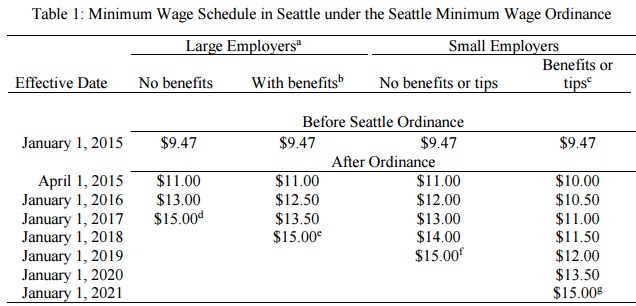
“Friedman Friday” (“Free to Choose” episode 1 – Power of the Market. part 4 of 7)

February 24, 2012 – 12:21 am

The fundamental principal of the free society is voluntary cooperation. The economic market, buying and selling, is one example. But it’s only one example. Voluntary cooperation is far broader than that. To take an example that at first sight seems about as far away as you can get __ the language we speak; the words […] By Everette Hatcher III | Posted in Current Events, Milton Friedman | Edit | Comments (0)

“Friedman Friday” (“Free to Choose” episode 1 – Power of the Market. part 3 of 7)

February 17, 2012 – 12:12 am

  _________________________   Pt3  Nowadays there’s a considerable amount of traffic at this border. People cross a little more freely than they use to. Many people from Hong Kong trade in China and the market has helped bring the two countries closer together, but the barriers between them are still very real. On this side […] By Everette Hatcher III | Posted in Current Events, Milton Friedman | Edit | Comments (0)
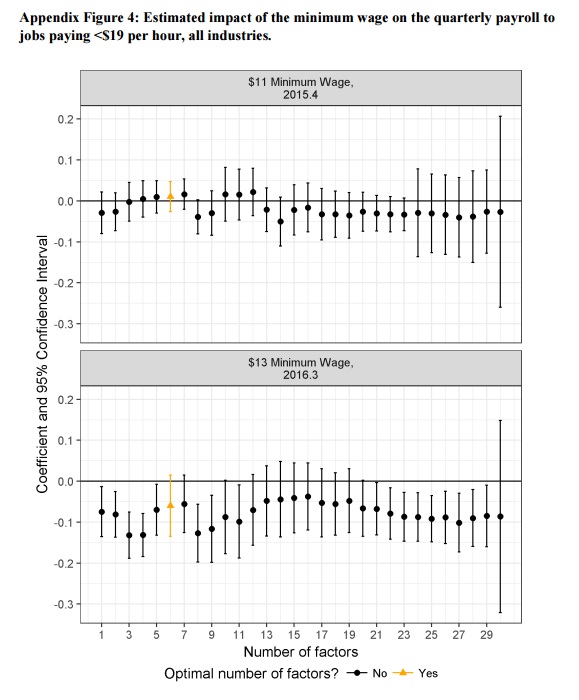
“Friedman Friday” (“Free to Choose” episode 1 – Power of the Market. part 2 of 7)

February 10, 2012 – 12:09 am

  Aside from its harbor, the only other important resource of Hong Kong is people __ over 4_ million of them. Like America a century ago, Hong Kong in the past few decades has been a haven for people who sought the freedom to make the most of their own abilities. Many of them are […] By Everette Hatcher III | Posted in Current Events, Milton Friedman | Edit | Comments (0)

“Friedman Friday” (“Free to Choose” episode 1 – Power of the Market. part 1of 7)

February 3, 2012 – 12:07 am

“FREE TO CHOOSE” 1: The Power of the Market (Milton Friedman) Free to Choose ^ | 1980 | Milton Friedman Posted on Monday, July 17, 2006 4:20:46 PM by Choose Ye This Day FREE TO CHOOSE: The Power of the Market Friedman: Once all of this was a swamp, covered with forest. The Canarce Indians […]

Milton Friedman The Power of the Market 1-5

Debate on Milton Friedman’s cure for inflation

September 29, 2011 – 7:24 am

If you would like to see the first three episodes on inflation in Milton Friedman’s film series “Free to Choose” then go to a previous post I did. Ep. 9 – How to Cure Inflation [4/7]. Milton Friedman’s Free to Choose (1980) Uploaded by investbligurucom on Jun 16, 2010 While many people have a fairly […]

By Everette Hatcher III | Also posted in Current Events | Tagged dr friedman, expansion history, income tax brackets, political courage, www youtube | Edit | Comments (0)

“Friedman Friday” Milton Friedman believed in liberty (Interview by Charlie Rose of Milton Friedman part 1)

April 19, 2013 – 1:14 am

Charlie Rose interview of Milton Friedman My favorite economist: Milton Friedman : A Great Champion of Liberty  by V. Sundaram   Milton Friedman, the Nobel Prize-winning economist who advocated an unfettered free market and had the ear of three US Presidents – Nixon, Ford and Reagan – died last Thursday (16 November, 2006 ) in San Francisco […] By Everette Hatcher III | Posted in Milton Friedman | Edit | Comments (0)

What were the main proposals of Milton Friedman?

February 21, 2013 – 1:01 am

Stearns Speaks on House Floor in Support of Balanced Budget Amendment Uploaded by RepCliffStearns on Nov 18, 2011 Speaking on House floor in support of Balanced Budget Resolution, 11/18/2011 ___________ Below are some of the main proposals of Milton Friedman. I highly respected his work. David J. Theroux said this about Milton Friedman’s view concerning […] By Everette Hatcher III | Posted in Milton Friedman | Edit | Comments (0)

“Friedman Friday,” EPISODE “The Failure of Socialism” of Free to Choose in 1990 by Milton Friedman (Part 1)

December 7, 2012 – 5:55 am

Milton Friedman: Free To Choose – The Failure Of Socialism With Ronald Reagan (Full) Published on Mar 19, 2012 by NoNationalityNeeded Milton Friedman’s writings affected me greatly when I first discovered them and I wanted to share with you. We must not head down the path of socialism like Greece has done. Abstract: Ronald Reagan […] By Everette Hatcher III | Posted in Milton FriedmanPresident Obama | Edit | Comments (1)

Defending Milton Friedman

July 31, 2012 – 6:45 am

What a great defense of Milton Friedman!!!!   Defaming Milton Friedman by Johan Norberg This article appeared in Reason Online on September 26, 2008  PRINT PAGE  CITE THIS      Sans Serif      Serif Share with your friends: ShareThis In the future, if you tell a student or a journalist that you favor free markets and limited government, there is […]

OPEN LETTER TO BARACK OBAMA ON HIS AUTOBIOGRAPHY “A PROMISED LAND” Part 161 Veteran politicians decided to step up despite active opposition in their conservative districts—folks like Baron Hill of southern Indiana, Earl Pomeroy of North Dakota, and Bart Stupak, a devout Catholic from Michigan’s Upper Peninsula who worked with me on getting the abortion funding language to a point where he could vote for it

May 1, 2021

Office of Barack and Michelle Obama
P.O. Box 91000
Washington, DC 20066

Dear President Obama,

I wrote you over 700 letters while you were President and I mailed them to the White House and also published them on my blog http://www.thedailyhatch.org .I received several letters back from your staff and I wanted to thank you for those letters. 

I have been reading your autobiography A PROMISED LAND and I have been enjoying it. 

Let me make a few comments on it, and here is the first quote of yours I want to comment on:

Veteran politicians decided to step up despite active opposition in their conservative districts—folks like Baron Hill of southern Indiana, Earl Pomeroy of North Dakota, and Bart Stupak, a devout Catholic from Michigan’s Upper Peninsula who worked with me on getting the abortion funding language to a point where he could vote for it. So did political neophytes like Betsy Markey of Colorado, or John Boccieri of Ohio and Patrick Murphy of Pennsylvania, both young Iraq War vets, all of them seen as rising stars in the party. In fact, it was often those with the most to lose who needed the least convincing. Tom Perriello, a thirty-five-year-old human rights lawyer turned congressman who’d eked out a victory in a majority-Republican district that covered a wide swath of Virginia, spoke for a lot of them when he explained his decision to vote for the bill.
     “There are things more important,” he told me, “than getting reelected.”

Matthew Clark has rightly noted:

ObamaCare requires every American to purchase health insurance, it requires every state to establish health insurance exchanges, and it dramatically expands Medicaid. Each of these – private health insurances programs, exchanges, and Medicaid – can, and in some case are required to, provide coverage for abortion. The result is hundreds of millions of dollars being funneled to the abortion industry every year and the greatest expansion of abortion since Roe v. Wade.

Pro-life atheist Nat Hentoff: With Obama you will get more abortions!!!

Nat Hentoff is an atheist, but he became a pro-life activist because of the scientific evidence that shows that the unborn child is a distinct and separate human being and even has a separate DNA. His perspective is a very intriguing one that I thought you would be interested in. I have shared before many   cases (Bernard NathansonDonald TrumpPaul GreenbergKathy Ireland)    when other high profile pro-choiceleaders have changed their views and this is just another case like those. I have contacted the White House over and over concerning this issue and have even received responses. I am hopeful that people will stop and look even in a secular way (if they are not believers) at this abortion debate and see that the unborn child is deserving of our protection.That is why the writings of Nat Hentoff of the Cato Institute are so crucial.

In the film series “WHATEVER HAPPENED TO THE HUMAN RACE?” the arguments are presented  against abortion (Episode 1),  infanticide (Episode 2),   euthanasia (Episode 3), and then there is a discussion of the Christian versus Humanist worldview concerning the issue of “the basis for human dignity” in Episode 4 and then in the last episode a close look at the truth claims of the Bible.

Francis Schaeffer

__________________________

I truly believe that many of the problems we have today in the USA are due to the advancement of humanism in the last few decades in our society. Ronald Reagan appointed the evangelical Dr. C. Everett Koop to the position of Surgeon General in his administration. He partnered with Dr. Francis Schaeffer in making the video below. It is very valuable information for Christians to have.  Actually I have included a video below that includes comments from him on this subject.

Nat Hentoff
The Washington Times – Washington, DC
11/24/2008
OP-ED:Our new president-elect has not equivocated in his reverence for abortion rights. Speaking at a Planned Parenthood event on July 17, 2007, Barack Obama pledged that his first act as president would be to sign the Freedom of Choice Act. It is the most radical attack yet on the deep beliefs of millions of American pro-lifers.As Democratic Sen. Barbara Boxer, a champion of the bill, exulted: “Women would have the absolute right to choose whether to continue or terminate their pregnancies before fetal viability, and that right would be protected by this legislation. The Freedom of Choice Act also supersedes any law, regulation or local ordinance that impinges on a woman’s right to choose,” she said. With regard to “fetal viability” – the ability to survive on his or her own – the ardent supporters of FOCA slide over the language in the surviving 2007 version of FOCA bill that, as Douglas Johnson of the National Right to Life Committee points out, “contains no objective criteria for ‘viability,’ but rather, requires that the judgment regarding ‘viability’ be left entirely in the hands of ‘the attending physician.’ “Guess who that would be? The abortionist! There’s more. The restrictions on “the absolute right to choose” would also apply even after “viability” if a woman wanted to abort what would undeniably be seen during pregnancy as a baby in ultrasound for reasons of her health.But the Supreme Court in 1973 (the same year as Roe v. Wade) in Doe v. Bolton defined very broadly “health” justification for aborting a viable human being, as “physical, emotional, psychological, familial and the woman’s age.” This was nearly a blank check to dispose of that aborted person.It’s no wonder that Mr. Obama opposed the Supreme Court decision that eventually ruled against the lawfulness of “partial-birth abortion,” which the late Democratic Sen. Daniel Patrick Moynihan (who was pro-choice) said was infanticide.The rabidly pro-abortion Freedom of Choice Act Mr. Obama supports would – unless there is an unlikely successful filibuster in the Democratic controlled Senate – invalidate parental-notification laws; any state’s requirement of full disclosure of the physical and emotional risks inherent in abortion; and (can you believe this?) all laws prohibiting medical personnel other than licensed physicians from performing abortions because such restrictions might “interfere” with access to this absolute right to abortion.This is respect for women? As of now, before our abortion president gets his wish, 26 states have informed-consent laws, 36 have parental-involvement laws and 34 states have restrictions on funding for abortions.Also disposed of will be the “conscience rights” in many states. They include, Mr. Johnson reminds us, “all laws allowing doctors, nurses or other state-licensed professionals, and hospitals or other health care providers, to decline to provide or pay for abortions.” What about religiously based hospitals and clinics that refuse to perform abortions? At presidential press conferences, can we depend on at least some members of the Washington press corps to ask Mr. Obama about that provision or the others I’ve cited? Sen. Dianne Feinstein, California Democrat, heralded the election of Mr. Obama as “a new birth of freedom.” Not, however, for the early-stage human beings – each with his or her own distinct DNA – who, under this law, could never become citizens.Matt Bowman, an attorney with the pro-life Alliance Defense Fund, projects that if FOCA is passed into law (Lifenews.com, Sept. 24), there will be an increase in abortion “by 125,000 per year” in the United States because of the abolition of laws in states that have parental involvement, informed-consent laws and funding restrictions. “Even with this minimum,” Mr. Bowman adds, “that’s 125,000 children that were not killed this year because we (still) have these laws, and 125,000 (added to the existing 1.3 million abortions) who will be killed in 2009” and beyond.On Jan. 22, 2008, the 35th anniversary of Roe v. Wade, Mr. Obama said with pride: “Throughout my career, I’ve been a consistent and strong supporter of reproductive justice and have consistently had a 100 percent pro-choice rating with Planned Parenthood and NARAL Pro-Choice America … To truly honor (Roe v. Wade), we need to update the social contract so that women can free themselves and their children from violent relationships.”What, Mr. President, can be more violent than murder by abortion? Alveda King, niece of Dr. Martin Luther King, said on Nov. 11 (Lifenews.com) that “his dream of full equality remains just a dream as long as unborn children continue to be treated no better than property. The elections are over. The pro-life battle begins anew.”Nat Hentoff’s column for The Washington Times appears on 

Sincerely,

Everette Hatcher III, 13900 Cottontail Lane, Alexander, AR 72002, ph 501-920-5733 everettehatcher@gmail.com

Related posts:

Open letter to President Obama (Part 293) (Founding Fathers’ view on Christianity, Elbridge Gerry of MA)

April 10, 2013 – 7:02 am

President Obama c/o The White House 1600 Pennsylvania Avenue NW Washington, DC 20500 Dear Mr. President, I know that you receive 20,000 letters a day and that you actually read 10 of them every day. I really do respect you for trying to get a pulse on what is going on out here. There have […]By Everette Hatcher III | Posted in David BartonFounding FathersPresident Obama | Edit |Comments (0)

The Founding Fathers views concerning Jesus, Christianity and the Bible (Part 5, John Hancock)

May 8, 2012 – 1:48 am

There have been many articles written by evangelicals like me who fear that our founding fathers would not recognize our country today because secular humanism has rid our nation of spiritual roots. I am deeply troubled by the secular agenda of those who are at war with religion in our public life. Lillian Kwon quoted somebody […]By Everette Hatcher III | Posted in David BartonFounding Fathers | Edit | Comments (0)

The Founding Fathers views concerning Jesus, Christianity and the Bible (Part 4, Elbridge Gerry)

May 7, 2012 – 1:46 am

There have been many articles written by evangelicals like me who fear that our founding fathers would not recognize our country today because secular humanism has rid our nation of spiritual roots. I am deeply troubled by the secular agenda of those who are at war with religion in our public life. Lillian Kwon quoted somebody […]By Everette Hatcher III | Posted in David BartonFounding Fathers | Edit | Comments (0)

The Founding Fathers views concerning Jesus, Christianity and the Bible (Part 3, Samuel Adams)

May 4, 2012 – 1:45 am

There have been many articles written by evangelicals like me who fear that our founding fathers would not recognize our country today because secular humanism has rid our nation of spiritual roots. I am deeply troubled by the secular agenda of those who are at war with religion in our public life. Lillian Kwon quoted somebody […]By Everette Hatcher III | Posted in David BartonFounding Fathers | Edit | Comments (0)

The Founding Fathers views concerning Jesus, Christianity and the Bible (Part 2, John Quincy Adams)

May 3, 2012 – 1:42 am

There have been many articles written by evangelicals like me who fear that our founding fathers would not recognize our country today because secular humanism has rid our nation of spiritual roots. I am deeply troubled by the secular agenda of those who are at war with religion in our public life. Lillian Kwon quoted somebody […]By Everette Hatcher III | Posted in David BartonFounding Fathers | Edit | Comments (0)

The Founding Fathers views concerning Jesus, Christianity and the Bible (Part 1, John Adams)

May 2, 2012 – 1:13 am

There have been many articles written by evangelicals like me who fear that our founding fathers would not recognize our country today because secular humanism has rid our nation of spiritual roots. I am deeply troubled by the secular agenda of those who are at war with religion in our public life. Lillian Kwon quoted somebody […]By Everette Hatcher III | Posted in Founding Fathers | Edit | Comments (0)

President Obama and the Founding Fathers

May 8, 2013 – 9:20 am

President Obama Speaks at The Ohio State University Commencement Ceremony Published on May 5, 2013 President Obama delivers the commencement address at The Ohio State University. May 5, 2013. You can learn a lot about what President Obama thinks the founding fathers were all about from his recent speech at Ohio State. May 7, 2013, […]By Everette Hatcher III | Posted in Founding FathersPresident Obama | Edit | Comments (0)

Francis Schaeffer’s own words concerning the founding fathers and their belief in inalienable rights

December 5, 2012 – 12:38 am

Dr. C. Everett Koop with Bill Graham. Francis Schaeffer: “Whatever Happened to the Human Race” (Episode 4) THE BASIS FOR HUMAN DIGNITY Published on Oct 7, 2012 by AdamMetropolis The 45 minute video above is from the film series created from Francis Schaeffer’s book “Whatever Happened to the Human Race?” with Dr. C. Everett Koop. This […]By Everette Hatcher III | Posted in Founding FathersFrancis SchaefferProlife | Edit |Comments (1)

David Barton: In their words, did the Founding Fathers put their faith in Christ? (Part 4)

May 30, 2012 – 1:35 am

America’s Founding Fathers Deist or Christian? – David Barton 4/6 There have been many articles written by evangelicals like me who fear that our founding fathers would not recognize our country today because secular humanism has rid our nation of spiritual roots. I am deeply troubled by the secular agenda of those who are at […]By Everette Hatcher III | Posted in David BartonFounding Fathers | Tagged governor of connecticutjohn witherspoonjonathan trumbull | Edit | Comments (1)

Were the founding fathers christian?

May 23, 2012 – 7:04 am

3 Of 5 / The Bible’s Influence In America / American Heritage Series / David Barton There were 55 gentlemen who put together the constitution and their church affliation is of public record. Greg Koukl notes: Members of the Constitutional Convention, the most influential group of men shaping the political foundations of our nation, were […]By Everette Hatcher III | Posted in Founding Fathers | Edit | Comments (0)

John Quincy Adams a founding father?

June 29, 2011 – 3:58 pm

I do  not think that John Quincy Adams was a founding father in the same sense that his  father was. However, I do think he was involved in the  early days of our government working with many of the founding fathers. Michele Bachmann got into another history-related tussle on ABC’s “Good  Morning America” today, standing […]By Everette Hatcher III | Posted in David BartonFounding Fathers | Edit | Comments (0)

“Sanctity of Life Saturday” Taking on Ark Times Bloggers on various issues Part E “Moral absolutes and abortion” Francis Schaeffer Quotes part 5(includes the film SLAUGHTER OF THE INNOCENTS) (editorial cartoon)

July 6, 2013 – 1:26 am

I have gone back and forth and back and forth with many liberals on the Arkansas Times Blog on many issues such as abortion, human rights, welfare, poverty, gun control  and issues dealing with popular culture. Here is another exchange I had with them a while back. My username at the Ark Times Blog is Saline […]By Everette Hatcher III | Posted in Arkansas TimesFrancis SchaefferProlife | Edit |Comments (0)

Article from Adrian Rogers, “Bring back the glory”

June 11, 2013 – 12:34 am

I truly believe that many of the problems we have today in the USA are due to the advancement of humanism in the last few decades in our society. Ronald Reagan appointed the evangelical Dr. C. Everett Koop to the position of Surgeon General in his administration. He partnered with Dr. Francis Schaeffer in making the […]By Everette Hatcher III | Posted in Adrian RogersFrancis Schaeffer | Edit | Comments (0)

“Schaeffer Sundays” Francis Schaeffer’s own words concerning the possibility that minorities may be mistreated under 51% rule

June 9, 2013 – 1:21 am

Francis Schaeffer: “Whatever Happened to the Human Race” (Episode 4) THE BASIS FOR HUMAN DIGNITY Published on Oct 7, 2012 by AdamMetropolis ____________ The 45 minute video above is from the film series created from Francis Schaeffer’s book “Whatever Happened to the Human Race?” with Dr. C. Everett Koop. This book  really helped develop my political […]By Everette Hatcher III | Posted in Francis Schaeffer | Edit | Comments (0)

—-