Monthly Archives: January 2021

Francis Schaeffer The Last POSTMODERNISM AND ART Great Modern Theologian by David Hopkins

_______________________

I love the works of Francis Schaeffer and I have been on the internet reading several blogs that talk about Schaeffer’s work and the work below  by David Hopkins  was really helpful. Schaeffer’s film series “How should we then live?  Wikipedia notes, “According to Schaeffer, How Should We Then Live traces Western history from Ancient Rome until the time of writing (1976) along three lines: the philosophic, scientific, and religious.[3] He also makes extensive references to art and architecture as a means of showing how these movements reflected changing patterns of thought through time. Schaeffer’s central premise is: when we base society on the Bible, on the infinite-personal God who is there and has spoken,[4] this provides an absolute by which we can conduct our lives and by which we can judge society.  Here are some posts I have done on this series: Francis Schaeffer’s “How should we then live?” Video and outline of episode 10 “Final Choices” episode 9 “The Age of Personal Peace and Affluence”episode 8 “The Age of Fragmentation”episode 7 “The Age of Non-Reason” episode 6 “The Scientific Age”  episode 5 “The Revolutionary Age” episode 4 “The Reformation” episode 3 “The Renaissance”episode 2 “The Middle Ages,”, and  episode 1 “The Roman Age,” .

In the film series “WHATEVER HAPPENED TO THE HUMAN RACE?” the arguments are presented  against abortion (Episode 1),  infanticide (Episode 2),   euthanasia (Episode 3), and then there is a discussion of the Christian versus Humanist worldview concerning the issue of “the basis for human dignity” in Episode 4 and then in the last episode a close look at the truth claims of the Bible.

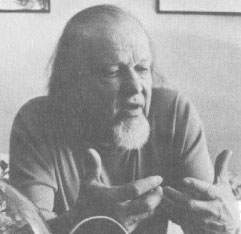
Francis Schaeffer


Francis Schaeffer
The Last Great Modern Theologian by David Hopkins

Standing at the melting point 
The reader may wonder why I would write an article about the “last great modern theologian” in a publication that so proudly dedicates itself to post -modern thought and inquiry. In truth, we should not be so arrogant about what the modern legacy has left to us. The contributions of faithful disciples and scholars from previous generations can be of great worth. I would go so far to say even a book review of Augustine’s The City of God or Aquinas’s Summa Theologica would fit nicely into what we are trying to accomplish at Next-Wave. The goal is to re-communicate the worth of our Christian tradition and experience to a postmodern culture. However, the work of Francis Schaeffer is so recent; it is questionably whether his thoughts even need to be re-communicated to a new culture.

I would like to persuade that Francis Schaeffer (1912-1984) stands at the melting point of the modern and postmodern discussion. In some ways, every “modern” theologian after him is increasingly out of date. And any “postmodern” theologian ahead of him was unfortunately out of place in discussing issues of spiritual importance. Why? Schaeffer was deeply concerned with a shift in epistemology (how we know what we know). He observed the shift during the 1960s. While he never labeled it as such, this shift is what we now call postmodernism . (Note: This term was already in existence when discussing art, architecture, philosophy, and literature; theology really didn’t jump into the discussion until postmodern thought proliferated in the 1980s, 3 years after Jean-Francois Lyotard’s The Postmodern Condition .)

Francis Schaeffer is the last of the modern theologians, but not the first of the postmodern theologians. He still strongly argued for rationalism in apologetics. By this, I mean Francis Schaeffer believed one had to be converted to the appropriate set of presuppositions, namely the law of non-contradiction (“A” cannot be “non-A”), first, in order to believe and experience the God of Christianity. The Bible is viewed as a propositional argument from God to His people, which can only be accepted by the correct presuppositional vantage point. Francis Schaeffer also was skeptical of the increase of Platonism in culture (identified with mysticism) and leaned more towards an Aristotelian view of reality (identified with rationalism). These ideas mark a clear modern thought pattern.

Despite his modern view, Schaeffer offers us many insights in ministering to any culture of believers. And a thorough study of his work would benefit any believer greatly.

How I met Francis Schaeffer 
When I first came to college, I experienced a massive faith crisis. Raised in a consumer friendly, experience crazed society, I doubted the reasonableness of the Christian system. My understanding of God did not find a home in rationality. I could not give my life to a system, just because someone told me if I say a prayer– God would come down from distant Heaven and have coffee with me (metaphorically speaking, of course). I needed answers. I read Josh McDowell’s More than a Carpenter and C.S. Lewis’s Mere Christianity . Both of these inspirational works satisfied my craving for common sense soundness. until I became a student of philosophy. Anyone who has studied philosophy knows that “common sense soundness” does not go very far. I needed more. I needed philosophical answers. Sorry, but Lewis and McDowell just do not cut it against thinkers like Nietzsche, Sartre, Schopenhauer, Russell, Husserl, and Heidegger. These philosophic heavy weights are playing different games and speaking a different language. Francis Schaeffer, however, knew the language; and I am convinced he could stand toe to toe with any of them.

My campus minister Keith Boone introduced me to the work of Francis Schaeffer. He encouraged me to read the trilogy: The God Who Is There , Escape From Reason , and He Is There And He Is Not Silent . These three books outline the basic premise of any arguments he would develop in later books. Schaeffer was culturally, philosophically, and scripturally informed. He wrote with compassion and fire. I often stayed up late in the night reading and pondering his ideas. Each sentence blowing my mind and causing me to re-evaluate my own hidden agendas for Christianity. He moved me to understand a deeper and truer Gospel than what I had known before.

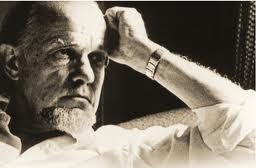
And in my own postmodern superficiality, I will admit, I also liked him because he just looked cool. Francis Schaeffer has the image of an eccentric academic freak. I really resonated with that– call it my personal image goal. Yes, he is the reason why I grew a goatee. (I can hear my friends, who know me too well, laughing out loud.)

All of his writings exist to prove a basic, and yet radical point, God is really there. He’s not just a concept or an idea. He really exists. But not only that, God is speaking to us. Schaeffer believed humankind was created with dignity and is still formed in the “image of God.” We all have worth and value which is innate with our standing in the universe. We are not just specks of dust on a larger speck of dust circling the sun. From this point, true restoration can take place in the souls of men and women.

Francis Schaeffer wrote to provide intellectual healing to a world in transition. He realized the old models were fading. There are some points we should observe in communicating Schaeffer’s timeless message to postmodernism.


Francis Schaeffer was concerned with being relevant to his time
Francis Schaeffer wrote because he saw the ideas of logical positivism and existentialism being introduced into popular culture in dangerous ways, displacing God from our understanding. Schaeffer noted in his article “How I Have Come to Write My Books” (Inter-Varsity Press 1974): “In my reading of philosophy, I saw that there were innumerable problems that nobody was giving answers for. the Bible, it struck me, dealt with man’s problems in a sweeping, all-encompassing thrust.” Schaeffer knew these philosophic problems affect the everyday life of believers. These ideas have a flow of influence from philosophy to art to music to general culture. Schaeffer wrote to get ahead of the ideas to positively affect general culture, replacing deceptive philosophy with the answers of scripture.

Schaeffer’s goal was not to become “modern,” but to minister to the modern person. Likewise, in an ever-changing society, we should be careful not to adopt postmodernism, but instead, give eternal hope to those people lost in the disparity of postmodernism. “Relevancy” has become a popular sell-word for churches nowadays. But this word has to imply more than just using movie clips in a sermon. Relevancy strikes to the heart of how we think and live.

Francis Schaeffer addresses the issue of a shift in epistemology
Epistemology may not be everyone’s favorite topic of discussion, but for Schaeffer this issue was of utmost importance. He recognized if our thinking is off, everything else will surely to follow. Schaeffer observed a shift in epistemology which involved a false belief that God is simply a concept or theory. We take an unfortunate existential “leap of faith” which is not rooted in the direct experience of God. We do not see God working in daily life. Schaeffer cited Thomas Aquinas (1225-1274) as the initial cause of this trend. According to Schaeffer, Aquinas separated nature from grace in theology. The spiritual world and the earthly world became separated. The earthly world became what was “real” and the spiritual world was the “hypothetical.”

Today we still encounter in the consequences of this shift, especially when referring to a secular versus spiritual society. We create a Christian sub-world that was never meant to exist. Instead of being in the world, we live the hypothetical faith world. We fail to realize that everything is spiritual. Everything is bathed in God’s touch and presence. “For you created all things, and by your will they were created and have their being.” (Revelation 4:11, quoted at the beginning of Schaeffer’s The God Who Is There .) Schaeffer hoped to give his readers understanding of a world in direct connection with a God who is really present.

Art and culture mattered to Francis Schaeffer
Francis Schaeffer was deeply concerned with how art impacted our thoughts and actions. In the trilogy, Schaeffer displays a thorough knowledge of art history. He shows how art has developed along a theme of separation between nature and grace. Schaeffer also is well versed on the contemporary arts, musicians, and filmmakers. He carefully analyzes these influences. Interesting footnote: He was quite possibly the first theologian to intelligently evaluate the punk revolution in Europe .

Schaeffer wrote passionately about the Christian’s ability to worship God through art. In the day of the great evangelical preachers, when such a strong emphasis was placed on teaching, Schaeffer ideas of art as worship reflected the wisdom of the ancients and were simultaneously revolutionary. Schaeffer’s book How Should We Then Live gives a good overview on his ideas about art.

Among postmodern pilgrims everywhere, the subject of art and worship is a very popular topic of conversation. Francis Schaeffer introduces this idea to a new generation of disciples, an invaluable resource to any community interested in created art with meaning and transcendence.

L’Abri: An example of the “community apologetic”
When Francis Schaeffer and his wife Edith moved to Switzerland , they decided to open their house to any believers traveling through. These travelers could come for healing, conversation, instruction, and service. They re-named their home L’Abri , French for “the Shelter.” People from all over came to be part of this transit community. Remember my campus minister Keith Boone?

L’Abri expanded to a number of branches throughout the world. Even today, L’Abri receives people. His wife Edith wrote the book L’Abri telling of this community’s development.

Francis Schaeffer did not just live as a hermit scholar. He worked daily with people, and frequently strangers, sharing with them God’s message of peace at L’Abri. He believed strongly that community is the place where God speaks. Not only that, but community is its own apologetic for the Gospel. People can live together in meaningful relationships, sharing, working together with the Spirit’s power.

What is community? How do we “get” it? Schaeffer’s L’Abri was a Christian response to the hippy communes that sought desperately to have community and meaning. L’Abri can also illustrate our own need to re-define church and the gathering of the saints. L’Abri was not just a Sunday morning institution. We need to carefully evaluate the condition of our own local churches from a programmatic institution to a community of believers.

The lasting impact of “The Last Great Modern Theologian”
In my opinion, Francis Schaeffer is the last of the relevant and the truly great modern theologians. He stood at the melting point between modern and postmodern. While he never addresses postmodernism, Schaeffer’s influence will be long lasting in the postmodern culture we minister in. A culture that looks longingly for heroes and role models, beyond the celebrities and pop stars.

This past summer I worked at a camp in Glen Rose, Texas . On the first day, I met a boy named “Schaeffer.” He wore a Cowboys cap to cover his blonde matted hair and his big grin revealed two missing teeth. As he was making his bunk, trying to smooth out the sheets while standing on the bed (a difficult task no doubt), I commented to his mother about Francis Schaeffer. She smiled and said, “I know about Francis, we named our son after him. Francis really influenced my husband and me, when we first met.” Imagine that? Schaeffer was my favorite camper for that week. Maybe it was his grin, maybe there is just something in a name.

For more information on Francis Schaeffer:
I believe The Shelter www.rationalpi/theshelter.com is the best Schaeffer site on the Internet. The site contains weekly quotes, a list of books and articles, biography, photos, and links. The Shelter also has an email list, which I am a part of. If you sign up, every week they send a Schaeffer quote, plus some links on web from all areas of interest.

          DAVID HOPKINS is program director at the Wesleyan Campus Ministry in the small college town of Commerce , Texas . He currently is part of the Axxess Community at Pantego Bible Churc

Related posts:

Francis Schaeffer’s wife Edith passes away on Easter weekend 2013 Part 7 (includes pro-life editorial cartoon)

The Francis and Edith Schaeffer Story Pt.1 – Today’s Christian Videos The Francis and Edith Schaeffer Story – Part 3 of 3 Francis Schaeffer: “Whatever Happened to the Human Race” (Episode 1) ABORTION OF THE HUMAN RACE Published on Oct 6, 2012 by AdamMetropolis ________________ Picture of Francis Schaeffer and his wife Edith from the […]

The Mark of the Christian by Francis Schaeffer Part 1

  THE MARK OF A CHRISTIAN – CLASS 1 – Introduction Published on Mar 7, 2012 This is the introductory class on “The Mark Of A Christian” by Francis Schaeffer. The class was originally taught at Redeemer Presbyterian Church in Overland Park, KS by Dan Guinn from FrancisSchaefferStudies.org as part of the adult Sunday School hour […]

Francis Schaeffer’s wife Edith passes away on Easter weekend 2013 Part 6 (includes pro-life editorial cartoon and tribute from son-in-law Ranald Macaulay)

The Francis and Edith Schaeffer Story Pt.1 – Today’s Christian Videos The Francis and Edith Schaeffer Story – Part 3 of 3 Francis Schaeffer: “Whatever Happened to the Human Race” (Episode 1) ABORTION OF THE HUMAN RACE Published on Oct 6, 2012 by AdamMetropolis ________________ Picture of Francis Schaeffer and his wife Edith from the […]

Francis Schaeffer’s wife Edith passes away on Easter weekend 2013 Part 5 (includes pro-life editorial cartoon)

The Francis and Edith Schaeffer Story Pt.1 – Today’s Christian Videos The Francis and Edith Schaeffer Story – Part 3 of 3 Francis Schaeffer: “Whatever Happened to the Human Race” (Episode 1) ABORTION OF THE HUMAN RACE Published on Oct 6, 2012 by AdamMetropolis ________________ Picture of Francis Schaeffer and his wife Edith from the […]

Francis Schaeffer’s wife Edith passes away on Easter weekend 2013 Part 4 (includes pro-life editorial cartoon)

The Francis and Edith Schaeffer Story Pt.1 – Today’s Christian Videos The Francis and Edith Schaeffer Story – Part 3 of 3 Francis Schaeffer: “Whatever Happened to the Human Race” (Episode 1) ABORTION OF THE HUMAN RACE Published on Oct 6, 2012 by AdamMetropolis ________________ Picture of Francis Schaeffer and his wife Edith from the […]

Francis Schaeffer’s wife Edith passes away on Easter weekend 2013 Part 3 (includes pro-life editorial cartoon)

The Francis and Edith Schaeffer Story Pt.1 – Today’s Christian Videos The Francis and Edith Schaeffer Story – Part 3 of 3 Francis Schaeffer: “Whatever Happened to the Human Race” (Episode 1) ABORTION OF THE HUMAN RACE Published on Oct 6, 2012 by AdamMetropolis ________________ Picture of Francis Schaeffer and his wife Edith from the […]

“Schaeffer Sundays” Francis Schaeffer’s own words concerning humanist dominated public schools in USA even though country was founded on a Christian base

Francis Schaeffer: “Whatever Happened to the Human Race?” (Episode 2) SLAUGHTER OF THE INNOCENTS Published on Oct 6, 2012 by AdamMetropolis The 45 minute video above is from the film series created from Francis Schaeffer’s book “Whatever Happened to the Human Race?” with Dr. C. Everett Koop. This book  really helped develop my political views concerning […]

“Schaeffer Sundays” Francis Schaeffer’s own words concerning where the Bible-believing Christians been the last few decades

Francis Schaeffer: “Whatever Happened to the Human Race” (Episode 1) ABORTION OF THE HUMAN RACE Published on Oct 6, 2012 by AdamMetropolis The 45 minute video above is from the film series created from Francis Schaeffer’s book “Whatever Happened to the Human Race?” with Dr. C. Everett Koop. This book  really helped develop my political views […]

Taking on Ark Times Bloggers on various issues Part E “Moral absolutes and abortion” Francis Schaeffer Quotes part 5(includes the film SLAUGHTER OF THE INNOCENTS) (editorial cartoon)

I have gone back and forth and back and forth with many liberals on the Arkansas Times Blog on many issues such as abortion, human rights, welfare, poverty, gun control  and issues dealing with popular culture. Here is another exchange I had with them a while back. My username at the Ark Times Blog is Saline […]

“Schaeffer Sundays” Francis Schaeffer’s own words concerning religious liberals and humanists

Francis Schaeffer: “Whatever Happened to the Human Race” (Episode 5) TRUTH AND HISTORY Published on Oct 7, 2012 by AdamMetropolis The 45 minute video above is from the film series created from Francis Schaeffer’s book “Whatever Happened to the Human Race?” with Dr. C. Everett Koop. This book  really helped develop my political views concerning abortion, […]

Francis Schaeffer “Christians under the Scripture”

____________

Christians Under the Scripture:
A Lecture by Dr. Francis Schaeffer
Notre Dame University, April 1981

Editor’s note: In a 1997 article in Christianity Today on the legacy of Francis August Schaeffer, Michael Hamilton wrote that “perhaps no intellectual save C.S. Lewis affected the thinking of [20th century] evangelicals more profoundly; perhaps no leader of the period save Billy Graham left a deeper stamp on the movement as a whole.”

The long shadow cast by Francis Schaeffer over today’s evangelicals is as complex as it is significant—his words and ideas have not dimmed in the two decades since his death at age 72 in 1984; rather, they have sharpened. Although the lecture at the center of the discussion that follows was delivered in 1981, it still serves nevertheless as a penetrating analysis of our culture’s competing worldviews and as a prophetic call to authentic Christian action.

The foundations for Schaeffer’s impact on worldwide Christianity were quietly laid in the years he and his family spent working among the youth of Switzerland, welcoming them into their home, which they called L’Abri, or “shelter,” to discuss philosophy and art along with Christianity. As Schaeffer and his wife, Edith, preached the gospel through hospitality along with words, he began to realize that the philosophical presuppositions of youths raised in secularist Europe were no longer compatible with those of Christianity. In the years that followed, he also began to understand that because modern Christian thought had divided religious and material truth into separate realities, Christianity had no coherent answer to the threat of secularism. By relegating God’s truth only to the realm of religion, modern Christians had surrendered the spheres of philosophy, art, science and politics, leaving the conception of reality to be defined by those who did not believe in God.

It was from this realized dilemma that Schaeffer published his first book, The God Who Is There, in 1968. The book grew out of a series of lectures delivered at Wheaton College and addressed the seismic shift in Western culture, which traded a foundationally Christian world-view for a foundationally atheistic concept of reality, beginning with the Enlightenment and culminating in the existential despair of the 20th century. In the face of this philosophical shift, Schaeffer first introduced the concept of “pre-evangelism,” arguing that true Christianity is impossible without first establishing a correct understanding of true reality:

Before a man is ready to become a Christian, he must have a proper understanding of truth…  All people, whether they realize it or not, function in the framework of some concept of truth.  Our concept of truth will radically affect our understanding of what it means to become a Christian.  We are concerned at this point, not with the content of truth, so much as with the concept of truth – what truth is.

Schaeffer’s new ideas became enormously influential in American evangelicalism, especially among college students and members of the post-World War II generation. His arguments helped break down the walls of the “Christian ghetto” and gave new importance to a Christian understanding of nonreligious vocations, affirming the significance of a Christian view of reality in every facet of life. Schaeffer’s impact widened to encompass widely ranging expressions of Christian thought. John W. Whitehead, founder and president of The Rutherford Institute, counts himself among those upon whom Schaeffer’s life and teachings have had a tremendous influence. Notable personalities who acknowledge the same include syndicated columnist Cal Thomas; songwriter Larry Norman; religio-political figures Jerry Falwell and Randall Terry; and scholars Os Guinness and Chuck Colson.

Though some complained that Schaeffer provided an oversimplified analysis of Western philosophy, history and art, he provided a stunning view of the large picture of ideas; a meta-narrative of Western thought for evangelicals who suddenly began to understand the radical claims of the truth of Christianity for their world. With the 1973 Roe v. Wade abortion decision, Schaeffer’s predictions about the implications of a society based on a material view of reality were realized in a horrific way. As he had argued, the importance of human life was foundationally connected to the concept of having been created in the image of God. And when that view of reality was rejected, the value of humanity itself became vulnerable to the pragmatic concerns of a culture consumed with its own hedonism. The abortion issue immediately became a focal point of Schaeffer’s call to Christian action as he encouraged the largely apathetic church to evangelize against it.

John W. Whitehead was present for Schaeffer’s lecture at Notre Dame in the spring of 1981. For this presentation of “Oldspeak,” staff writer Joshua Anderson and Rutherford Institute media coordinator Nisha Mohammed spoke with Whitehead. Their conversation frames a retrospective look at Schaeffer’s profoundly prescient observations on that evening 22 years ago in South Bend, Ind. The text of his address—with only minor edits—appears in italics and is interspersed throughout Whitehead’s interview. The first question and answer between “Oldspeak” and Whitehead introduces Schaeffer’s opening remarks. The questions and answers thereafter look back to that portion of his lecture printed immediately before them. Because of the size of this document we have provided the subtitles to assist with navigation. Click on any of them to visit the particular sections.

“True spirituality covers nothing less than the totality of life and the totality of reality.”

“Christianity is not a series of truths in the plural but, rather, truth spelled with a capital ‘T.’”

“What Is a Christian Lawyer?”

“We live in a secularized society and in a secularized sociological time of law.”

“Where have the Christian lawyers been?”

“We must stop seeing things in bits and pieces.”

“The issue is not abortion but the low view of human life.”

“There is a window that is open.”

“What is the Christian’s final relationship to the state?”

“Practicing the Christian alternatives will be costly.”

Does Darwinism Devalue Human Life? by Richard Weikart Professor of History California State Univ., Stanislaus

DoDo esDarwinDevalue Human Life?
by
Richard Weikart

Professor of History

California State Univ., Stanislaus

For more information on this topic, see my book From Darwin to Hitler: Evolutionary Ethics, Eugenics and Racism in Germany (Palgrave Macmillan, 2004).
[Note: This article first appeared in The Human Life Review 30, 2 (Spring 2004): 29-37.]


A number of years ago two intelligent students surprised me in a class discussion by defending the proposition that Hitler was neither good nor evil. Though I kept my composure, I was horrified. One of the worst mass murderers in history wasn’t evil? How could they believe this? How could they justify such a view?

They did it by appealing to Darwinism. Their pronouncement on Hitler occurred while we were discussing James Rachels’ book, Created from Animals: The Moral Implications of Darwinism (Oxford University Press, 1990). Darwinism, these students informed us, undermined all morality. This was not the first time I had heard such a view. In fact, at that time I was in the beginning phases of a research project on the history of evolutionary ethics, and I had already reviewed the work of some scientists and social scientists who believed that Darwinism undermined human rights and equality.

Before reading Rachels’ book, however, I hadn’t thought much about whether or not Darwinism devalued human life itself. Rachels, a philosopher at the University of Alabama, Birmingham, best known for his contributions to the euthanasia debate, argues that Darwinism undermines the Judeo-Christian belief in the sanctity of human life. The title of his book comes from an observation Darwin makes in his 1838 notebooks, “Man in his arrogance thinks himself a great work, worthy of the interposition of a deity. More humble and, I believe, true to consider him created from animals.” Rachels assumes the truth of Darwinism and uses it as a springboard to justify euthanasia, infanticide (for disabled babies), abortion, and animal rights. Stimulated by his book, I continued my research on evolutionary ethics, but now with two new questions in mind: Does Darwinism undermine the Judeo-Christian understanding of the sanctity of human life? Does it weaken traditional proscriptions against killing the sick and the weak?

As I read more about the development of evolutionary ethics, I discovered that many scientists, social thinkers, and especially physicians in late nineteenth and early twentieth-century Germany did indeed use Darwinian arguments to devalue human life. In the second edition of his popular book, The Natural History of Creation (1870), Ernst Haeckel, the leading Darwinist in Germany, became the first German scholar to seriously propose that disabled infants be killed at birth. Darwinists were in the forefront of the eugenics movement, which often taught that disabled people and non-Europeans were inferior to healthy Europeans. They argued that Darwinism implied human inequality, since biological variation has to occur to drive the process of evolution. Haeckel even suggested that Darwinism was an “aristocratic” process, favoring an aristocracy of talent (not the traditional landed aristocracy, for which Haeckel had no sympathy). Since Darwinism provided a naturalistic explanation for the origin of ethics, many of its adherents dismissed human rights as a chimera.
Darwin expressed incredulity when critics assailed him for undermining morality. In his Autobiography, however, Darwin rejected the idea of objective moral standards, stating that one “can have for his rule of life, as far as I can see, only to follow those impulses and instincts which are the strongest or which seem to him the best ones.” (1) Friedrich Hellwald, an influential ethnologist, promoted a Darwinian view of social evolution in his major work, The History of Culture (1875). Hellwald was quite radical in exalting the Darwinian process of the struggle for existence above all moral considerations. “The right of the stronger,” he insisted, “is a natural law.” (2) He clarified this idea further:

In nature only One Right rules, which is no right, the right of the stronger, or violence. But violence is also in fact the highest source of right, in that without it no legislation is thinkable. I will in the course of my portrayal easily prove that even in human history the right of the stronger has fundamentally retained its validity at all times. (3)

This Darwinian undermining of human rights would be fateful for the Judeo-Christian vision of the sanctity of human life.

Besides stressing human inequality, Haeckel and many of his fellow Darwinists devalued human life by criticizing Judeo-Christian conceptions of humanity as “anthropocentric.” Rather than being created in the image of God, they argued, humans were descended from simian ancestors. They blurred the distinctions between humans and animals, alleging that characteristics that had been traditionally considered uniquely human–rationality, morality, religion, etc.–were also present in animals to some degree. In Darwin’s own words, the difference between humans and animals is quantitative, not qualitative.

Darwin’s explanation that all human characteristics that previously had been associated with the human soul were not qualitatively distinct from animals also undermined the traditional Judeo-Christian conception of body-soul dualism, which endued humans with greater moral and spiritual significance than other organisms. (4) Many Darwinists understood the implications of this, including Haeckel, who founded the Monist League in 1906 specifically to combat all dualistic religions and philosophies, especially Christianity (but also Kantianism). One prominent member of the Monist League, August Forel, a world famous psychiatrist at the University of Zurich, described his initial encounter with Darwinism as a kind of conversion experience. He explained that Darwinism had convinced him that body-soul dualism was no longer tenable and that humans have no free will. Based on his view that heredity accounts for almost all character traits (and most mental illness), Forel became one of the most influential figures in the German eugenics movement, preaching the need to eliminate “inferior” races and handicapped infants, and recruiting Alfred Ploetz, who founded the world’s first eugenics organization and journal.

Another element of Darwinism that contributed to the devaluing of human life was its stress on the struggle for existence. Based on the Malthusian population principle, Darwin pointed out that offspring are produced at much higher levels than can survive. Therefore multitudes necessarily perish in the struggle for existence. While Malthus saw this tendency toward overpopulation as the cause of misery and poverty, Darwin explained that it was really beneficial. In the conclusion of The Origin of Species, Darwin wrote, “Thus, from the war of nature, from famine and death, the most exalted object which we are capable of conceiving, namely, the production of the higher animals, directly follows.” (5) For Darwin death–even mass death–was not only inevitable, necessary. As Adrian Desmond explained in his biography of T. H. Huxley (the foremost Darwinian biologist in late nineteenth-century Britain, who earned the nickname, “Darwin’s bulldog”), “only from death on a genocidal scale could the few progress.” (6) Hellwald expressed the same idea in The History of Culture, claiming that evolutionary progress would occur as the “fitter” humans “stride across the corpses of the vanquished; that is natural law.” (7)

Indeed, many leading Darwinists in the late nineteenth and early twentieth centuries claimed that in order to foster evolutionary progress, the less valuable elements of humanity, generally defined as the disabled and those of non-European races, had to be eliminated. They feared that Judeo-Christian and humanitarian ethics, together with the advances of modern civilization–especially medicine and hygiene–would produce biological degeneration, since the weak and sick would be allowed to reproduce. Though many focused on methods to restrict reproduction, a surprising number of leading Darwinists–and not only Haeckel and Forel–actually promoted killing the “unfit” as a means to bring biological progress. Racial extermination and infanticide were integral components of their Darwinian program for biological rejuvenation.

In retrospect, the connection between these Darwinian ideas and Hitler’s ideology are obvious. Interestingly, however, when I began my research on evolutionary ethics, Hitler was not even on my radar screen. I was wary of connecting Darwin and Hitler because of Daniel Gasman’s failed attempt to draw a direct line from Haeckel to Hitler in The Scientific Origins of National Socialism, a book with which most historians rightly find fault. However, the title of my book–From Darwin to Hitler: Evolutionary Ethics, Eugenics, and Racism in Germany (Palgrave Macmillan, 2004)–indicates that I made the connection nonetheless, though in quite a different manner from Gasman. Indeed, the more I studied books and articles on evolutionary ethics by German scientists, physicians, and social thinkers, the more I discovered that I could not avoid the parallels between German Darwinist discourse and Hitler’s ideology. This should not come as a complete surprise, however, since just about all of Hitler’s biographers have noted the strong social Darwinist elements in his ideology, as Ian Kershaw does recently in his magisterial two-volume biography.

Hitler was strongly influenced by the Darwinian ideology of the eugenics movement, and his writings and speeches clearly reflect it. In Mein Kampf Hitler asserted that his philosophy

by no means believes in the equality of races, but recognizes along with their differences their higher or lower value, and through this knowledge feels obliged, according to the ETERNAL WILL THAT RULES THIS UNIVERSE, to promote the victory of the better, the stronger, and to demand the submission of the worse and weaker. It embraces thereby in principle the aristocratic law of nature and believes in the validity of this law down to the last individual being. It recognizes not only the different value of races, but also the different value of individuals. . . . But by no means can it approve of the right of an ethical idea existing, if this idea is a danger for the racial life of the bearer of a higher ethic. (8)

Thus Hitler justified his racial views by appealing to Darwinian science. Because Hitler’s racial views were so obviously flawed, some scholars call Hitler’s views pseudo-scientific or a “vulgar” form of Darwinism. However, this is to judge Hitler by later standards of scientific thought. Many leading scientists and physicians embraced eugenics and scientific racism in Hitler’s day, and indeed Fritz Lenz, the first professor of eugenics at a German university, crowed in 1933 that he had formulated the essentials of Nazi ideology even before Hitler began his political career.

Hitler’s genocidal program was not the only adverse consequence of Darwinism’s devaluing of human life, and Germany was not the only country impacted. Much work on the history of the eugenics movement in the United States, Britain, and elsewhere suggests that scientific and medical elites in many parts of the world imbibed the Darwinian devaluing of human life. Though it did not lead to genocide in these countries, it did lead to other injustices, such as the compulsory sterilization of thousands of people classified as “less fit,” based on their hereditary condition (sometimes based on very tenuous evidence, leading to many cases of misdiagnosis). Social Darwinist and eugenics ideology also played an important role in the budding movement to legalize abortion in the early twentieth century.

Further, recent confirmation of my findings about the Darwinian devaluing of human life have come from Ian Dowbiggin’s and Nick Kemp’s important new studies on the history of the euthanasia movements in the United States and Britain, respectively. Both emphasize the role of Darwinism in paving the way ideologically for euthanasia. According to Dowbiggin, “The most pivotal turning point in the early history of the euthanasia movement was the coming of Darwinism to America.” (9) This held true in Britain, as well, for Kemp informs us: “While we should be wary of depicting Darwin as the man responsible for ushering in a secular age we should be similarly cautious of underestimating the importance of evolutionary thought in relation to the questioning of the sanctity of human life.” (10) The worldview of most early euthanasia advocates was saturated with Darwinian ideology, and they forthrightly used Darwinian ideas to combat the Judeo-Christian concept of the sanctity of human life.

Thus, historical evidence from the late nineteenth and early twentieth centuries overwhelmingly supports the thesis that Darwinism devalued human life. Whatever one thinks philosophically about this issue–and, of course, some Darwinists are embarrassed by the link and try to deny it–historically Darwinism has contributed to a devaluing of human life, thereby providing impetus for euthanasia, infanticide, and abortion.

The question now emerges: Is this all just of historical interest? Haven’t we learned a lesson from Nazism not to use social Darwinism to devalue humans? Haven’t we abandoned biological racism and rabid anti-Semitism, integral components of Nazi ideology?

Yes, indeed, we have learned much from the Nazi past, and I don’t think it is fair to compare our present situation with Nazi Germany, as though they are completely the same. We don’t live in a murderous dictatorship, and racism is on the defensive, at least in academic circles. For this we can be thankful. Still, in some respects, I wonder if we have learned enough, especially when I see big-name Darwinists, evolutionary psychologists, and bioethicists using Darwinism today to undermine the sanctity of human life. Whether Darwinism does actually devalue human life or not, there are certainly many people who think it does, and they are not intellectual featherweights.

First of all, the position that Rachels stakes out on issues of life and death are strikingly similar to that of the Australian bioethicist, Peter Singer, whose appointment a few years ago to a chair in bioethics at Princeton University stirred up vigorous controversy. Singer is renowned–or notorious, depending on one’s point of view–for promoting the legitimacy of infanticide for handicapped babies and voluntary euthanasia, as well as for defending animal rights. Darwinism plays a key role in Singer’s philosophy, underpinning his views on life and death. Singer claims that Darwin “undermined the foundations of the entire Western way of thinking on the place of our species in the universe.” It stripped humanity of the special status that Judeo-Christian thought had conferred upon it. Singer complains that even though Darwin “gave what ought to have been its final blow” to the “human-centred view of the universe,” the view that humans are special and sacred has not yet vanished. Singer is now laboring to give the sanctity-of-life ethic its deathblow. (11)

Singer and Rachels are not the only prominent philosophers arguing that Darwinism undermines the sanctity of human life. In Darwin’s Dangerous Idea the materialist philosopher Daniel Dennett argues that Darwinism functions like a “universal acid,” destroying traditional forms of religion and morality. In confronting the issue of biomedical ethics, Dennett asks, “At what ‘point’ does a human life begin or end? The Darwinian perspective lets us see with unmistakable clarity why there is no hope at all of discovering a telltale mark, a saltation in life’s processes, that ‘counts.'” Because of this, Dennett argues, there are “gradations of value in the ending of human lives,” implying that some human lives have more value than others. After using his Darwinian acid to dissolve the sanctity-of-life ethic, Dennett wonders, “Which is worse, taking ‘heroic’ measures to keep alive a severely deformed infant, or taking the equally ‘heroic’ (if unsung) step of seeing to it that such an infant dies as quickly and painlessly as possible?” Darwin’s Dangerous Idea is apparently especially toxic to disabled infants. (12)

The evolutionary psychologist Steven Pinker, a professor of psychology at Harvard University, also draws connections between Darwinism and infanticide. After some high-profile cases of infanticide occurred in 1997, Pinker wrote an article purporting to explain its evolutionary origins. Since Pinker believes “that nurturing an offspring that carries our genes is the whole point of our existence,” of course he tries to explain infanticide as a behavior that somehow confers reproductive advantage. He argues that a “new mother will first coolly assess the infant and her current situation and only in the next few days begin to see it as a unique and wonderful individual.” (This is outrageously speculative; no new mother I have ever met has “coolly assessed” her infant, and it seems to me that those who commit infanticide are not “coolly assessing” the survival prospects for their infant, either–more likely they are desperate). According to Pinker, the mother’s love for her infant will grow in relation to the “increasing biological value of a child (the chance that it will live to produce grandchildren).” Pinker specifically denies that infants have a “right to life,” so, even though he doesn’t completely condone infanticide, he thinks we should not be too harsh on mothers killing their children. (13) Pinker’s view of infanticide is by no means unusual among evolutionary psychologists. In a leading textbook on evolutionary psychology, Evolution and Human Behavior: Darwinian Perspectives on Human Nature (2000), John Cartwright provides basically the same Darwinian explanation for infanticide as Pinker’s.

What do Darwinian biologists have to say about all this? Some think Singer and company are on the right track. In 2001 Richard Dawkins, probably the most famous Darwinian biologist in the world today, made an impassioned plea for using genetic engineering to create an Australopithecine (whose fossil remains are allegedly an ancestor to the human species). Producing such a “missing link” would, according to Dawkins, provide “positive ethical benefits,” since it would demolish the “double standard” of those guilty of “speciesism.” Dawkins specifically claims that producing such an organism would demonstrate the poverty of the pro-life position, because it would show that humans are not different from animals. In the midst of this acerbic attack on the sanctity of human life, Dawkins expresses the hope that he will be euthanized if he is ever “past it,” whatever that means (some people already think that Dawkins is “past it,” but fortunately for Dawkins, I suspect that most of them still uphold the sanctity-of-life ethic that Dawkins rejects). (14)

Edward O. Wilson, the Pulitzer-Prize-winning pioneer of sociobiology and Harvard professor whose entire view of human nature revolves around Darwinism, also exemplifies this devaluing of human life, though he is more subtle about it. In his book Consilience (1998) he argues that his empiricist world view “has destroyed the giddying theory that we are special beings placed by a deity in the center of the universe in order to serve as the summit of Creation for the glory of the gods.” In one passage in his autobiography he compares humans to ants, informing us that we humans are too numerous on the globe, while ants are in a proper population balance. “If we were to vanish today,” Wilson explains, “the land environment would return to the fertile balance that existed before the human population explosion.” But if ants were to disappear, thousands of species would perish as a result. The implication seems to be: ants are more valuable than humans, and biodiversity takes precedence over human life.

Many biologists, of course, disagree with Singer and Dawkins. From the late nineteenth century to today they have assured us that Darwinism has no implications for morality. They allege that those trying to apply Darwinism to morality are committing the “naturalistic fallacy” by deriving “ought” from “is.” Darwin’s friend and defender, Thomas Henry Huxley, vigorously opposed the attempts of his contemporaries to seek ethical guidance in natural evolutionary processes. More recently, Steven Jay Gould often butted heads with evolutionary psychologists, arguing that morality was a separate realm from biology. In his view Darwinism has nothing to say about how humans should act.

Gould, However, did not really divorce science and morality as much as he claimed. While vociferously arguing that Darwinian science on the one hand and religion and morality on the other are “non-overlapping magisteria,” separated as far as the east is from the west, he persisted in drawing conclusions from his Darwinian science that are suspiciously laden with religious and moral implications. In Wonderful Life: The Burgess Shale and the Nature of History (1989), the whole point of his book is to use the Burgess Shale–a fossil-laden outcropping of rock in Canada teeming with many extinct, ancient forms of life–as an example of the contingency of history, to demonstrate that there is no real purpose to human existence. “Wind back the tape of life to the early days of the Burgess Shale; let it play again from an identical starting point, and the chance becomes vanishingly small that anything like human intelligence would grace the replay.” His view of the contingency of human creation in the evolutionary process clearly affects the way he views the nature and status of humanity, for he informs us that “biology shifted our status from a simulacrum of God to a naked, upright ape.” The closing words of this book are remarkable for someone who claims to keep science and religion in non-overlapping compartments:

And so, if you wish to ask the question of the ages-why do humans exist?-a major part of the answer, touching those aspects of the issue that science can treat at all, must be: because Pikaia [a Burgess shale chordate] survived the Burgess decimation. This response does not cite a single law of nature; it embodies no statement about predictable evolutionary pathways, no calculation of probabilities based on general rules of anatomy or ecology. The survival of Pikaia was a contingency of ‘just history.’ I do not think that any ‘higher’ answer can be given, and I cannot imagine that any resolution could be more fascinating. We are the offspring of history, and must establish our own paths in this most diverse and interesting of conceivable universes-one indifferent to our suffering, and therefore offering us maximal freedom to thrive, or to fail, in our own chosen way. (15)

Does Gould really think this conclusion has no religious or moral implications? Does he really believe that his claim that biology demotes humans from the image of God to a naked ape is a purely scientific statement that has no bearing on moral issues, such as abortion and euthanasia?

In light of all this, does Darwinism really devalue human life? I think I have shown conclusively that historically Darwinism has indeed devalued human life, leading to ideologies that promote the destruction of human lives deemed inferior to others. Those on the forefront in promoting abortion, infanticide, euthanasia, and racial extermination often overtly based their views on Darwinism. Also, as I have shown in this essay, those favoring a Darwinian dismantling of the sanctity-of-life ethic have a good deal of intellectual firepower, and the idea is becoming rather widespread in academic circles today. There are, of course, various religious and philosophical moves that one can make to evade these conclusions, and some Darwinists have in the past and will continue in the future vigorously to oppose such developments (for this we can be thankful), construing them as faulty extrapolations by overzealous Darwinian materialists. However, it seems to me that there is an inherent logic in the move by Darwinists to undermine the sanctity-of-life ethic, which makes it so alluring that I doubt it will ever disappear as long as Darwinism is ascendant. In any case, it is certainly safe to say that in modern society Darwinism has contributed mightily to the erosion of the sanctity-of-life ethic. Darwinism really is a matter of life and death.

ENDNOTES

1. Charles Darwin, Autobiography (NY: Norton, 1969), 94.
2. Friedrich Hellwald, Culturgeschichte in ihrer natürlichen Entwicklung bis zur Gegenwart (Augsburg, 1875), quote at 27, see also 278, 569.
3. Ibid, 44-45.
4. On the connection between dualism and bioethics, see J. P. Moreland and Scott Rae, Body and Soul: Human Nature and the Crisis in Ethics (Downers Grove, IL, 2000).
5. Darwin, The Origin of Species, (London: Penguin, 1968), 459.
6. Adrian Desmond, Huxley: From Devil’s Disciple to Evolution’s High Priest (Reading, MA, 1997), 271.
7. Hellwald, Culturgeschichte in ihrer natürlichen Entwicklung, 58, 27; “Der Kampf ums Dasein im Menschen- und Völkerleben,” Das Ausland 45 (1872): 105.
8. Adolf Hitler, Mein Kampf, 2 vols. in 1 (Munich, 1943), 420-1. Emphasis is mine.
9. Ian Dowbiggin, A Merciful End: The Euthanasia Movement in Modern America (Oxford, 2003), 8.
10. N. D. A. Kemp, ‘Merciful Release’: The History of the British Euthanasia Movement (Manchester, 2002), 19. For more information on Dowbiggin’s and Kemp’s works, see my review essay, “Killing Them Kindly: Lessons from the Euthanasia Movement,” in Books and Culture: A Christian Review (Jan./Feb. 2004), 30-31.
11. Peter Singer, Writings on an Ethical Life (New York, 2000), 77-78, 220-21.
12. Daniel Dennett, Darwin’s Dangerous Idea: Evolution and the Meanings of Life (NY, 1995), ch. 18.
13. Steven Pinker, “Why They Kill Their Newborns,” The New York Times Sunday Magazine (November 2, 1997).
14. Richard Dawkins, “The Word Made Flesh,” The Guardian (December 27, 2001).
15. Stephen Jay Gould, Wonderful Life: The Burgess Shale and the Nature of History (NY, 1989), quotes at 14, 323; for his views on the compartmentalization of science and religion, see “Nonoverlapping Magisteria,” Natural History106 (March 1997): 16-22.

Webpage last modified by Richard Weikart on 16 August 2004.

Related posts:

RESPONDING TO HARRY KROTO’S BRILLIANT RENOWNED ACADEMICS!! Part 57 Neil deGrasse Tyson is fretting because we are on “a one-way expanding universe as we wind down to oblivion!”

  On November 21, 2014 I received a letter from Nobel Laureate Harry Kroto and it said: …Please click on this URL http://vimeo.com/26991975 and you will hear what far smarter people than I have to say on this matter. I agree with them. Harry Kroto ____________________ Below you have picture of 1996 Chemistry Nobel Prize Winner […]

RESPONDING TO HARRY KROTO’S BRILLIANT RENOWNED ACADEMICS!! Part 56 Psychologist Bruce Hood on mind body dualism

  On November 21, 2014 I received a letter from Nobel Laureate Harry Kroto and it said: …Please click on this URL http://vimeo.com/26991975 and you will hear what far smarter people than I have to say on this matter. I agree with them. Harry Kroto _________________ Below you have picture of Dr. Harry Kroto: ____________ Dawkins […]

RESPONDING TO HARRY KROTO’S BRILLIANT RENOWNED ACADEMICS!! Part 55 Baroness Susan Greenfield “. Everything is rooted finally in our brain, if anything exists in a physical sense beyond that then I myself can not buy into that new kind of physics!”

On November 21, 2014 I received a letter from Nobel Laureate Harry Kroto and it said: …Please click on this URL http://vimeo.com/26991975 and you will hear what far smarter people than I have to say on this matter. I agree with them. Harry Kroto _________________ Fig 9. The Sussex team from left: (back) Ala’a Abdul Sada […]

RESPONDING TO HARRY KROTO’S BRILLIANT RENOWNED ACADEMICS!! Part 53 One politician who knows science responds to Lisa Randall of Harvard!

  On November 21, 2014 I received a letter from Nobel Laureate Harry Kroto and it said: …Please click on this URL http://vimeo.com/26991975 and you will hear what far smarter people than I have to say on this matter. I agree with them. Harry Kroto ____________________ Below you have picture of 1996 Chemistry Nobel Prize Winner […]

RESPONDING TO HARRY KROTO’S BRILLIANT RENOWNED ACADEMICS!! Part 49 Bart Ehrman “Why should one think that God performed the miracle of inspiring the words in the first place if He didn’t perform the miracle of preserving the words?”

On November 21, 2014 I received a letter from Nobel Laureate Harry Kroto and it said: …Please click on this URL http://vimeo.com/26991975 and you will hear what far smarter people than I have to say on this matter. I agree with them. Harry Kroto ____________________ Below you have picture of 1996 Chemistry Nobel Prize Winner Dr. […]

RESPONDING TO HARRY KROTO’S BRILLIANT RENOWNED ACADEMICS!! Part 48 Nobel Prize Winner and Global Warming Denier Ivar Giaever “I think religion is to blame for a lot of the ills in this world!”

  On November 21, 2014 I received a letter from Nobel Laureate Harry Kroto and it said: …Please click on this URL http://vimeo.com/26991975 and you will hear what far smarter people than I have to say on this matter. I agree with them. Harry Kroto _________________ Below you have picture of 1996 Chemistry Nobel Prize Winner […]

FRANCIS SCHAEFFER ANALYZES ART AND CULTURE PART 78 THE BEATLES (Breaking down the song TOMORROW NEVER KNOWS) Featured musical artist is Stuart Gerber

The Beatles were “inspired by the musique concrète of German composer and early electronic music pioneer Karlheinz Stockhausen…”  as SCOTT THILL has asserted. Francis Schaeffer noted that ideas of  “Non-resolution” and “Fragmentation” came down German and French streams with the influence of Beethoven’s last Quartets and then the influence of Debussy and later Schoenberg’s non-resolution which is in total contrast […]

RESPONDING TO HARRY KROTO’S BRILLIANT RENOWNED ACADEMICS!! Part 42 Peter Singer, Professor of Bioethics at Princeton University, THE PROBLEM OF EVIL

  _______ On November 21, 2014 I received a letter from Nobel Laureate Harry Kroto and it said: …Please click on this URL http://vimeo.com/26991975 and you will hear what far smarter people than I have to say on this matter. I agree with them. Harry Kroto _________________ Below you have picture of 1996 Chemistry Nobel Prize […]

RESPONDING TO HARRY KROTO’S BRILLIANT RENOWNED ACADEMICS!! Bart Ehrman “Why should one think that God performed the miracle of inspiring the words in the first place if He didn’t perform the miracle of preserving the words?”

On November 21, 2014 I received a letter from Nobel Laureate Harry Kroto and it said: …Please click on this URL http://vimeo.com/26991975 and you will hear what far smarter people than I have to say on this matter. I agree with them. Harry Kroto ____________________ Below you have picture of 1996 Chemistry Nobel Prize Winner Dr. […]

RESPONDING TO HARRY KROTO’S BRILLIANT RENOWNED ACADEMICS!! Peter Singer, Professor of Bioethics at Princeton University, THE PROBLEM OF EVIL

On November 21, 2014 I received a letter from Nobel Laureate Harry Kroto and it said: …Please click on this URL http://vimeo.com/26991975 and you will hear what far smarter people than I have to say on this matter. I agree with them. Harry Kroto _________________ Below you have picture of 1996 Chemistry Nobel Prize Winner Dr. […]

03/15/2012 by Patrick Review: Escape From Reason by Francis Schaeffer

______________

Review: Escape From Reason by Francis Schaeffer

As I hoped, this didn’t take me too long to read, and I won’t lie, much of it wasn’t exactly new material for me, but that’s okay. Schaeffer’s not writing to the theology student, but to the masses.

So, Escape From Reason can be considered a heavy book with rather simple writing.  The entire text functions as an explanation of man’s deviation from the thought patterns of the Reformation, beginning with Aquinas in what the author calls an allowance of the autonomy of Man’s thought, flourishing in the determinism and loss of freedom in Kant and Hegel, and ending with the philosophy of the sixties, dominated by men and women rebelling against Enlightenment thinking and its broken promises.  Schaeffer also levels his critical eye at modern and liberal theology, the likes of whom he sees (to some extent, rightly so) as forsaking foundational truths in favor of a god more compatible with the philosophies of the Enlightenment and Existentialism. He demonstrates rather well the failure of such systems to supply answers to the cosmos, and how their rejection of Scripture as the tipping point to tumble downhill into despair.

For 94 pages, there are LOTS that could be discussed from within this book, and I would love to someday do that, but that is not for today.  This is a day for review.  First, what I liked:

1) Schaeffer’s command of secular philosophy and thought is amazing.  He demonstrates himself as a man well educated, yet rooted in strong Reformed traditions. He does not follow the church with blind authority, but defends it with rigorous critical analysis and unflinching boldness that could only come from a man who has examined all his options and found all but one wanting.  He sets an example for Christians to do the same.

2) He has a respect for things that aren’t “Christian” in nature (secular), and demonstrates this when he says things like, “Man is fallen, but he is still man, made in the image of God.” This view is not held well amongst Christians even today (though it gets better as the years go by).  The need to see beauty even in things that do not praise God explicitly is a necessity.

Things I didn’t like so much…

1) His blatant contempt for Catholic writers.  It seems like whether it was Thomas Aquinas, author of the great Summa Theologicae, or Pierre Teilhard de Chardin, Jesuit Priest, author of The Phenomenon of Man and paleontologist who aided in the discovery of the Peking Man, Schaeffer places the root of modern thinking (and thus despair) in their very minds, as if their thinking was a symbol of defiance of God.  While I do think that many in the Catholic Church have softened Jesus into a symbol, made him some guy on a cross that you might see hanging in cathedrals or in homes, these two men in particular (and others, for that matter) are NOT those kinds of Catholics.  Their writings demonstrate an devout love for the creator, and an ability to see and understand His ways in all of Creation in a very real and personal way.  I do see perhaps where Schaeffer comes from with this, but I think it is ill-founded.

2) On a similar note, Schaeffer seems to disregard everything that happened in the church from the end of the Bible to the Reformation, missing out on centuries of great teaching and philosophy that could easily supplement his Reformed thinking, rather than antagonizing it.  This is common, however, amongst evangelicals even today, so I can’t exactly blame him for being a product of his own generation, even if he doesn’t know what he’s missing.

3) Not so much an objection as a wariness of his dependence of presuppositional apologetics.  As I said two days ago, I know little of this school of thought and aim to learn more about it, but I am wary of things that claim to be so absolute in how to understand God so clearly, though Schaeffer doesn’t fully fit this bill.  One of my favorite quotes from this book was, “God does not speak exhaustively about himself, but he does speak truly.” The willingness to abandon rationalism in favor of rationality (as he puts it) is something I can welcome, but most pre-suppers scare me with their certainty.  Again, I have much to learn on this thinking.

So, another book’s checked off as read. Stil in Pilgrim’s Progress right now, and I’ve put off  Piper for awhile. I’ll be coming back to him soon, perhaps, though a friend of mine wants to  delve into Kant’s Critique of Pure Reason together in the near future, something I am very grateful for, as Kant is one of those intimidating writers for me.  Anyway, see you Friday!

_______________

In the book WHATEVER HAPPENED TO THE HUMAN RACE by Francis Schaeffer and C. Everett Koop, the 4th chapter is called THE BASIS FOR HUMAN DIGNITY

____

______

In the book WHATEVER HAPPENED TO THE HUMAN RACE by Francis Schaeffer and C. Everett Koop, the 4th chapter is called THE BASIS FOR HUMAN DIGNITY and it includes these words below:

The Personal Origin of Man
The Scriptures tell us that the universe exists and has form and meaning because it was created purposefully by a personal Creator. This being the case, we see that, as we are personal, we are not something strange and out of line with an otherwise impersonal universe. Since we are made in the image of God, we are in line with God. There is continuity, in other words, between ourselves, though finite, and the infinite Creator who stands behind the universe as its Creator and its final source of meaning.
Unlike the evolutionary concept of an impersonal beginning plus time plus chance, the Bible gives an account of man’s origin as a finite person make in God’s image, that is, like God. We see then how man can have personality and dignity and value. Our uniqueness is guaranteed, something which is impossible in the materialistic system. If there is no qualitative distinction between man and other organic life (animals or plants), why should we feel greater concern over the death of a human being than over the death of a laboratory rat? Is man in the end any higher?
Though this is the logical end of the materialistic system, men and women still usually in practice assume that people have some real value. All the way back to the dawn of our investigations in history, we find that man is still man. Wherever we turn, to the caves of the Pyrenees, to the Sumerians in Mesopotamia, and even further back to Neanderthal man’s burying his dead in flower petals, it makes no difference: men everywhere show by their art and their accomplishments that they have been and have considered themselves to be unique. They were unique, and people today are unique. What is wrong is a world-view which fails to explain that uniqueness. All people are unique because they are made in the image of God.
The Bible tells us also, however, that man is flawed. We see this to be the case both within ourselves and in our societies throughout the world. People are noble and people are cruel; people have heights of moral achievement and depths of moral depravity.
But this is not simply an enigma, nor is it explained in terms of “the animal in man.” The Bible explains how man is flawed, without destroying the uniqueness and dignity of man. Man is evil and experiences the results of evil, not because man is non-man but because man is fallen and thus is abnormal.
This is the significance of the third chapter of Genesis. Some time after the original Creation (we do not know how long), man rebelled against God. Being made in the image of God as persons, Adam and Eve were able to make real choices. They had true creativity, not just in the area we call “art” but also in the area of choice. And they used this choice to turn from God as their true integration point. Their ability to choose would have been equally validated if they had chosen not to turn away from God, as their true integration point, but instead they used their choice to try to make themselves autonomous. In doing this, they were acting against the moral absolute of the universe, namely, God’s character – and thus evil among people was born.
The Fall brought not only moral evil but also the abnormality of (1) each person divided from himself or herself; (2) people divided from other people; (3) mankind divided from nature; and (4) nature divided from nature. This was the consequence of the choice made by Adam and Eve some time after the Creation. It was not any original deformity that made them choose in this way. God had not made them robots, and so they had real choice. It is man, therefore, and not God, who is responsible for evil.
We have to keep pointing out, because the idea is strange to a society by which the Bible has been neglected or distorted, that Christianity does not begin with a statement of Christ as Savior. That comes later in its proper setting. Genesis 1:1 says, “In the beginning God created….” Christianity begins with the personal and infinite God who is the Creator. It goes on to show that man is made in God’s image but then tells us that man is now fallen. It is the rebellion of man that has made the world abnormal. So there is a broken line as we look back to the creation of man by God. A chasm stands there near the beginning, the chasm which is the Fall, the choice to go against God and His Word.
What follows from this is that not everything that happens in the world is “natural.” Unlike modern materialistic thought on both sides of the Iron Curtain, Christianity does not see everything in history as equally “normal.” Because of the abnormality brought about by man, not everything which occurs in history should be there. Thus, not all that history brings forth is right just because it happens, and not all personal drives and motives are equally good. Here, then, is a marked difference between Christianity and almost all other philosophies. Most other philosophies do not have the concept of a present abnormality. Therefore, they hold that everything now is normal; things are now as they always have been.
By contrast, Christians do not see things as if they always have been this way. This is of immense importance in understanding evil in the world. It is possible for Christians to speak of things as absolutely wrong, for they are not original in human society. They are derived from the Fall; they are in that sense “abnormal.” It also means we can stand against what is wrong and cruel without standing against God, for He did not make the world as it now is.
This understanding of the chasm between what mankind and history are now and what they could have been – and should have been, from the way they were made – gives us a real moral framework for life, one which is compatible with our nature and aspirations. So there are “rules for life,’ like the signs on cliff tops which read: DANGER – KEEP OUT. The signs are there to help, not hinder us. God has put them there because to live in this way, according to His rules, is the way for both safety and fulfillment. The God who made us and knows what is for our best good is the same God who gives us His commands. When we break these, it is not only wrong, it is also not for our best good; it is not for our fulfillment as unique persons made in the image of God….

The Importance of Genesis
So the Bible is the key to understanding the universe and its form and the mannishness of man. Without this key our observations are out of perspective; we do not know what we are looking at. This being the case, our conclusions about what we are seeing can be massively in error.
Unless we are told about our beginnings, we cannot make sense of our present history. And secular study is incapable of doing that. This is not to say that the study of history and science is irrelevant or useless, but when secular study is finished, the most important questions are left unanswered. It can tell us much of patterns and statistics, but not the reason or meaning or significance of it all. Twentieth-century people know something exists, but have no way of saying what that something amounts to.
This is where the early chapters of Genesis are so important. These chapters give the history that comes before anything that secular historians have been able to ascertain, and it is this presecular history which gives meaning to mankind’s present history.
Some people mistakenly believe that one can “spiritualize” away the history of the first chapters of Genesis and that this will make no difference. They argue that these chapters are not history but something like parables. This type of thinking depreciates the factual content, which gives information about history and the cosmos. Those who do this sometimes imagine that doing this makes little or no difference. But it changes everything. For these chapters tell us the why (the significance and meaning) of all the subsequent history which historians can know through their investigations. These chapters tell us also the why of our own personal history.
For this reason we can say that in this sense the early chapters of Genesis are more important than anything else we could have. They are the very foundation on which all knowledge rests. So we learn from them that before the creation of the universe, the infinite-personal God existed and that He created the universe (the space-time continuum) by choice, out of nothing. The Creation was not without a cause.
The infinite-personal God was its cause. He chose to create, He willed to create, and “it was” – it came into being.

You are worthy, our Lord and God,
to receive glory and honor and power,
for you created all things,
and by your will they were created
and have their being.
Revelation 4:11

As we have seen already, we learn also about the fact that man was made “in the image of God,” a person, and that then there was a space-time Fall.
All the information given by the Bible flows out of the information given in the early chapters of Genesis. If we are to understand the world as it is and ourselves as we are, we must know the flow of history given in these chapters. Take this away and the flow of history is lost. Take this away and even the death of Christ has no meaning.
So the Bible tells us who we are and who other people are. It tells us how people are differentiated from all other things. We do not need to be confused, as is much of modern mankind, about people’s distinction from both animal life and the complicated machines of the second half of the twentieth century. Suddenly people have unique value, and we can understand how it is that each of us is different as a person.
Furthermore, we can see that all people are similarly to be distinguished from non-man and that therefore we ourselves must look on others as having great value. Anyone who kills a person is not killing just another member of the same biological species, but one of overwhelming value, one made in the image, the likeness, of God.
Any person, no matter who he or she is – a stranger or a friend, a fellow-believer or someone who is still in rebellion against God, anyone of any age, before or after birth – any and every person is made after the likeness of God.
Each man, woman, and child is of great value, not for some ulterior motive such as self-gratification or wealth or power or a sex object or “the good of society” or the maintenance of the gene pool – but simply because of his or her origin.
This flow of history that springs from Genesis has implications for every aspect of our lives. Each of us stands in the flow of history. We know our origin – a lineage more ancient than the Queen of England’s or the Pilgrim Fathers’. As we look at ourselves in the flow of space-time reality, we see our origin in Adam and Eve, and we know that God has created every human being in His own image.

_____________

Pro-life Pamphlet “CHILDREN THINGS WE THROW AWAY?” was influenced by Koop and Schaeffer

I read lots of Francis Schaeffer and Dr. C. Everett Koop’s books and watched their films in the late 1970’s and early 1980’s as did Keith and Melody Green. Below Melody Green quotes some of this same material that was used by Schaeffer and Koop in their film series WHATEVER HAPPENED TO HUMAN RACE?

Dr. Francis schaeffer – The flow of Materialism(from Part 4 of Whatever happened to human race?)

Dr. Francis Schaeffer – The Biblical flow of Truth & History (intro)

Francis Schaeffer – The Biblical Flow of History & Truth (1)

Dr. Francis Schaeffer – The Biblical Flow of Truth & History (part 2)

CHILDREN THINGS WE THROW AWAY? By Melody Green 

“Shall I give my firstborn for my transgression, the fruit of my body for the sin of my soul?”  Micah 6:7

Abortion has become the most common surgical procedure in America.* Over 99% of all U.S. abortions have nothing to do with the life or health of the woman—they are done simply because of her desire for convenience, absence of distress, and her so-called happiness. 1 Doctors perform over 1.3 million abortions per year in the United States alone… that’s one for every two live births. 2 Abortion has become so frequent, that population experts say that it has become, in effect, a new form of birth control. But abortion should not be confused with birth control, which prevents a new life from beginning—abortion destroys that new life once it has already begun. Of the women having them, 66% are unmarried, 20% are teenagers,3 and 47% are “repeat” customers.**4

Abortion…An Easy Alternative?

In this age of convenience, abortion is being presented as a “quick and easy” way to get rid of an annoying problem. When women seek advice, most professional abortion counselors just don’t tell them the truth concerning what they are about to do to their child and to themselves. First of all, abortion is a major surgical procedure which can result in serious complications­—it is not as “safe” as we are led to believe. Statistics show that after a legal abortion, a woman faces increased possibilities of future miscarriages, tubal pregnancies, premature births, sterility, and severe and long-lasting emotional disturbances.

I have personally received many letters from women who must face the fact that they will never be able to have children due to infections and complications from a supposedly safe abortion they have had in the past. Instead of being told this, their fears are made to seem silly—the whole procedure is whitewashed. “Why, it’s so simple, ” they say, “like removing an unsightly wart from your body. Now you’re pregnant . . .now you’re not! Just rest a day and you’ll feel fine!”

When Does Life Begin?

Just when does an unborn baby become a “real person”? Science tells us that when the 23 chromosomes of the sperm unite with the ovum’s 23 chromosomes, a new 46 chromosome cell is formed. When this process (fertilization) is complete, a new human being exists. This cell is a complete genetic package programmed for development into a mature adult. Nothing will be added except time and nutrition. It’s been medically proven that the baby’s heart starts beating from 14-28 days after conception (usually before the mother even knows she’s pregnant), and by the 30th day almost every organ has started to form! He moves his arms and legs by six weeks and by 43 days his brain waves can be read. By eight weeks the baby has his very own fingerprints, he can urinate, make a strong fist, and he can feel pain. Each stage of development from fertilization to old age is merely a maturing of what is entirely there at the start.

Abortion Techniques

The following are the most commonly known abortion techniques:

Dilation and Curettage (D & C)

The cervix is dilated with a series of instruments to allow the insertion of a curette, or sharp scraping instrument, into the uterus. The developing child is then cut into pieces and scraped from the uterine wall. Bleeding is usually profuse. A nurse must then reassemble the parts to make sure the uterus is empty, otherwise infection will set in.

Suction Curettage (Vacuum Aspiration)

The cervix is dilated as in a D & C, then a tube is inserted into the uterus and connected to a strong suction apparatus. The vacuum is so powerful that the baby is torn to bits and sucked into a jar.

Dilation and Evacuation (D & E)

At 12 to 20 weeks, a seaweed-based substance is inserted into the cervix causing dilation. The next day forceps with sharp metal teeth are inserted and parts of the baby’s body are torn away and removed piece by piece. At this age the head is usually too large to be removed whole, and must be crushed and drained before taken out. D & Es are promoted by abortion advocates because, unlike other second trimester methods, they insure the baby’s death.

Partial Birth Abortion

Performed  20 weeks and later, this procedure involves the breech delivery of the child.  When all but the head is delivered, “the surgeon then forces the scissors into the base of the skull.  Having safely entered the skull, he spreads the scissors to enlarge the opening. The surgeon removes the scissors and introduces a suction catheter into this hole and evacuates the skull contents.”***

Saline Injection

Used after 16 weeks (four months) when enough fluid has accumulated. A long needle is inserted through the mother’s abdomen into the baby’s sac. Some fluid is removed and a strong salt solution is injected. The helpless baby swallows this poison and suffers severely. He kicks and jerks violently as he is literally being burned alive. It takes over an hour for the baby to die­—his outer layer of skin is completely burned off. Within 24 hours, labor will usually set in and the mother will give birth to a dead baby. (Quite frequently these babies are born alive. They are usually left unattended to die. However, a few who have survived the ordeal—due to the mercy of the hospital staff—have later been adopted.)

Hysterotomy or Caesarean

Used mainly in the last three months of pregnancy, the womb is entered by surgery through the wall of the abdomen. The tiny baby is removed and allowed to die by neglect or sometimes killed by a direct act.

Prostaglandin Chemical

This form of abortion uses chemicals developed by the Upjohn Pharmaceutical Co. which cause the uterus to contract intensely, pushing out the developing baby. The contractions are so abnormally severe that babies have even been decapitated. Many, however, have also been born alive. The side effects to the mother are many—a number have even died from cardiac arrest when the compounds were injected.

Hypocritic Oath?

“I will give no deadly medicine to anyone if asked, nor suggest such counsel, and in like manner, I will not give to a woman a pessary to produce abortion.”

This statement is part of the Hippocratic Oath which doctors have taken for centuries as a moral standard governing their work as physicians. In recent years, it has been changed to read, “I will do nothing that is illegal.” (This new oath would have been appropriate in Nazi Germany, where the doctors who helped to kill Jews were well within the limits of the law.)

Dr. John Szenens, age 36, has this to say: “You have to become a bit schizophrenic. In one room you encourage the patient that the slight irregularity of the fetal heart is not important—that she is going to have a fine, healthy baby. Then in the next room you assure another woman, on whom you just did a saline abortion, that it’s good that the heart is already irregular . . .she has nothing to worry about, she is not going to have a live baby.” Dr. Szenens continues, “At the beginning we were doing abortions on smaller fetuses… and the kicking and heartbeat did not manifest itself as much. I think if I had started with 24-weekers right off the bat, I would have had a much greater conflict in my own mind if this was the same as murder or not. But since we started off slowly with 15-16 weekers, the fetus just never got consideration. Then gradually, the whole range of cases started to become larger. All of a sudden, one noticed that at the time of the saline infusion, there was a lot of activity in the uterus.

It wasn’t fluid currents. It was obviously the fetus being distressed by swallowing the salt solution and kicking violently through the death trauma. You can either face it, or turn around and say it’s uterine contractions. That, however, would be repressing, since as a doctor you obviously know that it is not. Now whether you admit this to the patient is another matter. Her distress by unwanted pregnancy is to me the primary consideration, ahead of any possible consideration for the fetus. We just have to face it. Somebody has to do it. And unfortunately, we are the executioners in this instance.”8

Susan Lindstrom, M.S.W., age 27, puts it this way: “I am having a lot of difficulty with my feelings about late abortions—and all the pain that’s there so much of the time after the baby is moving. So one day, in a need to arrive at a measure of clarity, I went into the room where they keep the fetuses before burning them. They were next to the garbage cans in paper buckets, like the take-home chicken kind. I looked inside the bucket in front of me. There was a small naked person in there, floating in a bloody liquid.

He was purple with bruises and his face had the agonized tautness of one forced to die too soon. I then took off the lids of all the buckets and with a pair of forceps lifted each fetus out by an arm or a leg—leaving, as I returned them, an additional bruise on their acid-soaked bodies. Finally, I lifted out a very large fetus and read the label—Mother’s name:  C. Atkins; Doctor’s name: Saul Marcus; Sex of the item: Male; Time of gestation: 24 weeks (six months). I remembered Miss Atkins. She was 17—a very pretty blond girl. So, this was Master Atkins—to be burned tomorrow—for the sake of his mother.”9

A Hardening Of The Heart

Then there’s the unnamed doctor who shared on a radio show that after he performed his first abortion, he became so violently ill that he thought he would die. He went through weeks of depression and thought of suicide. He said, “The first time I felt like a murderer, but I did it again and again and again, and now, 20 years later, I am facing what happened to me as a doctor and as a human being. Sure, I got hard. Sure, the money was important. And oh, it was an easy thing, once I had taken this step—to see these women as animals and these babies as just tissue.”10

It’s important to note that all three of these people, in spite of how distressed they were with what they were doing, did not stop. Why? The Bible explains it as a searing of the conscience —a hardening of the heart. It happens when you repeatedly refuse to listen to that small voice inside that keeps telling you “something isn’t right.” If you keep rationalizing and turning it off, one day you’ll wake up and guess what . . . it’s gone! Your first reaction may be to breathe a sigh of relief, but you should instead weep bitter tears of sorrow, because a part of your conscience, a part of your communication with God, has just died —and It may never come back again!

What Does God Have To Say?

God makes it clear that these tiny packages of humanity are fully human. “Now the word of the Lord came to me saying, ‘Before I formed you in the womb, I knew you, and before you were born I consecrated you; I have appointed you a prophet to the nations.'” (Jer. 1:4-5)

God knew Jeremiah when he was in his mother’s belly; God sanctified him and ordained him to be a prophet. If by an abortion, the baby should have been killed, it would have been Jeremiah who was killed. Jeremiah’s mother would not have known his name, but God had already named him. His mother would not have known he was potentially a mighty prophet of God, but God had so planned it, and would have felt the loss.

The Bible tells us that John the Baptist was: “filled with the Holy Spirit, while yet in his mother’s womb.” (Luke 1:15 ) God sent His angel to Zacharias to tell him that his wife would bear a son, and even told him what his name was to be. He was told that “. . .many will rejoice at his birth—for he will be great in the sight of the Lord.” (Luke 1:11-17 )

It seems like God knew John quite well and that He had a distinct purpose for his life on earth… a purpose for him and him alone to fulfill.

Last but certainly not least, the angel Gabriel announced to Mary,

“Behold, you will conceive in your womb and bear a son, and you shall name Him Jesus. He will be great, and will be called the Son of the Most High… and His Kingdom will have no end.” (Luke 1:31-33)

And so you see, God doesn’t wait until a baby moves or becomes completely ready for life outside his mother, before He knows him, loves him, and recognizes him as a tiny human being… so why should we?

Let’s Count The Cost

So where do we go from here? Nazi Germany enacted a law permitting the extermination of “useless” members of society. Now we have the same pattern emerging in which a whole category of people, unloved and unborn, are being senselessly slaughtered. What is the next class of humanity to be destroyed? Will it be the aged, the handicapped, the mentally retarded?

God defends the unborn, the innocent, the one who cannot speak for himself… that tiny individual who will never again be duplicated in all of human history!

Only God has the right to bring the innocent home to Himself. (Deut. 32:39) Only He has the right to open or close wombs. But man has taken matters into his own hands. Mothers with their selfish excuses and doctors with their sharp instruments are playing God!

I caution them to think twice because God is not pleased. In fact, He is grieved to the depths of His heart by the mutilation of these beloved children! He says in His word, “Do not kill the innocent… for I will not acquit the guilty.” (Exodus 23:7) We cannot break God’s laws without suffering the consequences! We deceive ourselves if we think He does not see.

“The eyes of the Lord are in every place, beholding the evil and the good.” (Proverbs 15:3)

The Myth Of The “Unwanted Child”

One of the most frequently heard excuses of the “pro-choice” groups is, “It would be unfair to bring another ‘unwanted child’ into the world.” Actually, there is no such thing. Once a baby is born it will never be unwanted because of the extreme shortage of newborn babies available for adoption. It is obviously not the child’s happiness and well-being that is of utmost concern here. . .but that of the parents.

If you are about to make the fatal mistake of ending a life given as a gift of God (Psalm 127:3), then I beg you to reconsider. Please don’t do something that you will regret for the rest of your life. Don’t destroy something that isn’t yours. That baby belongs to God, even though it may be in your womb. If you do not feel equipped to raise a baby at this time, I urge you to take another look at the situation… maybe there is a way… pray about it. If you still feel that this is an impossibility—then BE A GIVER, NOT A TAKER.

The Gift Of Life

There are many families who have been waiting and desperately praying for years for the chance to adopt a child. Your child may be the answer to their prayers! Adoption is a reasonable and caring thing to do if you don’t feel you can keep your baby. If you are unable to raise your child yourself, then you have the chance to give the greatest possible gift of all—the gift of life! In fact, you can give it twice… once to your baby and then, if you decide, again to a hopeful family somewhere. You can be a life-giver, or you can commit a crime that will remain on your conscience for the rest of your life! ABORTION IS MURDER—and no matter what anyone tells you, you will not “just forget about it”

You may feel cornered… like things are hopeless, and I want you to know that I am in no way insensitive to your situation or think that your problems are trivial. I simply say that abortion is not the answer. God commands us not to murder (Exodus 20:13), and going against Him will only make matters much worse. Everyone you know may be telling you you’d be a fool to have this baby—but they don’t have to live with the guilt and pain of murder… you do. That baby is half yours no matter who the father is. The choice is yours. But don’t forget, you are responsible to God for your actions—and after reading this, you certainly are not ignorant of the facts. You will be held accountable for your decision… I earnestly pray that you make the right one. Even though I don’t know you, Jesus does, and we both love you (and your baby) very, very much!

Your friend,

If you are pregnant and need help, please call CareNet at 1-800-395-HELP. Remember… God loves you and your baby too!

To share pamphlets with others.

Click here to read other articles and find a local pregnancy center.

*          Warren M. Hern, Abortion Practices, Preface
**        Alan Guttmacher, Institute http://www.agi-usa.org

***      Dr. Martin Haskell, M.D. “Dilation and Extraction for Late Second Trimester  Abortion, “ Presented at the National Abortion Federation Risk Seminar,  September 13, 1992.

  1. Irvin M. Cushner, M.D., M.P.H., testimony, U.S. Senate Committee on the Judiciary (The Hatch Hearings), 97th Congress, First Session, 1983, p. 158.
  2. Scientific American, June 1981, p. 88; Jet, March 19, 1981. p. 6.
  3. Newsweek, Jan 14, 1985, p. 24.
  4. Newsweek, June 5, 1978, p. 39.
  5. Handbook on Abortion, Dr. and Mrs. J.C. Wilke, Hayes Publishing Co.,   Cincinnati, Oh.©1979, pp. 89-97.  Also visit David Reardon and the Elliott Institute, 222.afterabortion.org.
  6. Voice for the Unborn, Fremont, CA, June-Aug, 1979.  Also Handbook on Abortion.
  7. Abortion in America, Gary Bergel with C. Everett Coop, M.D. Surgeon General of the U.S., p.11, published by Intercesssors for America, Box 4477, Leesburg, VA 20177
  8. Dr. Magda Denes, “Performing Abortions,” Commentary, Oct 1976, pp. 35-7.
  9. Ibid.
  10. The Murder of the Helpless Unborn…Abortion, by John Rice, D.D., Litt., D., Murfreesboro, TN. Sword of the Lord Publishers, p. 31.

©1979, 2001 Last Days Ministries. All rights reserved.

Melody Green is President and co-founder of Last Days Ministries.  She is

probably most loved for the songs she’s written. “There Is A Redeemer” is found in church hymn books around the world, and reports of it being sung in villages in Africa and Asia are plentiful. She has also composed many other standards including, “Make My Life A Prayer To You,” “You Are The One,” Rushing Wind,” and “The Lord Is My Shepherd.”

Melody ‘s life is an adventure that just keeps unfolding. Besides writing songs she is also known internationally as an author and a minister. She is fearless when it comes to tackling difficult issues and bold in her travels. She has been to over 30 nations to speak at retreats, conferences, and church services… as well ministering to men and women in prisons, refugee camps, remote villages, leper colonies, underground churches, and those living in war zones.

Her best selling book, “No Compromise. The Life Story of Keith Green” has become a must-read classic, translated into numerous languages. Melody’s “ministry articles” are distributed as LDM WiseTracts by the multi-millions, especially her groundbreaking Pro-Life message, “Children Things We Throw Away” which at last count, 10 years ago, over 20 million had been distributed.

Melody Green, 3/20/2012

Related posts:

“Schaeffer Sunday” Abortion debating with Ark Times Bloggers Part 12 “Is there a biological reason to be pro-life?” and the article “How Francis Schaeffer shaped Michele Bachman’s pro-life views” (includes the film TRUTH AND HISTORY and editorial cartoon)

I have debated with Ark Times Bloggers many times in the past on many different subjects. Abortion is probably the most often debated subject and I have noticed that many pro-life individuals are now surfacing on the Arkansas Times Blog.  Here are some examples. Arhogfan501 asserted: This is the beginning of the end for recreational abortion […]

“Schaeffer Sunday” Abortion debating with Ark Times Bloggers Part 9 “Remembering Francis Schaeffer: On The Occasion of His 100th Birthday of Jan 30, 2012 by Don Sweeting” (includes video THE BASIS FOR HUMAN DIGNITY and editorial cartoon)

I have debated with Ark Times Bloggers many times in the past on many different subjects. Abortion is probably the most often debated subject and I have noticed that many pro-life individuals are now surfacing on the Arkansas Times Blog.  Here are some examples. Arhogfan501 asserted: This is the beginning of the end for recreational abortion […]

“Sanctity of Life Saturday” Abortion debating with Ark Times Bloggers Part 12 “Is there a biological reason to be pro-life?” and the article “How Francis Schaeffer shaped Michele Bachman’s pro-life views” (includes the film TRUTH AND HISTORY and editorial cartoon)

  I have debated with Ark Times Bloggers many times in the past on many different subjects. Abortion is probably the most often debated subject and I have noticed that many pro-life individuals are now surfacing on the Arkansas Times Blog.  Here are some examples. Arhogfan501 asserted: This is the beginning of the end for recreational […]

“Sanctity of Life Saturday” Abortion debating with Ark Times Bloggers Part 9 “Remembering Francis Schaeffer: On The Occasion of His 100th Birthday of Jan 30, 2012 by Don Sweeting” (includes video THE BASIS FOR HUMAN DIGNITY and editorial cartoon)

I have debated with Ark Times Bloggers many times in the past on many different subjects. Abortion is probably the most often debated subject and I have noticed that many pro-life individuals are now surfacing on the Arkansas Times Blog.  Here are some examples. Arhogfan501 asserted: This is the beginning of the end for recreational abortion […]

“Schaeffer Sunday” Francis Schaeffer and Dr. C. Everett Koop asked Reagan to issue pro-life proclamation in 1983 (includes video ABORTION OF THE HUMAN RACE)

In the film series “WHATEVER HAPPENED TO THE HUMAN RACE?” the arguments are presented  against abortion (Episode 1),  infanticide (Episode 2),   euthenasia (Episode 3), and then there is a discussion of the Christian versus Humanist worldview concerning the issue of “the basis for human dignity” in Episode 4 and then in the last episode a close […]

Abortion debating with Ark Times Bloggers Part 12 “Is there a biological reason to be pro-life?” and the article “How Francis Schaeffer shaped Michele Bachman’s pro-life views” (includes the film TRUTH AND HISTORY and editorial cartoon)

I have debated with Ark Times Bloggers many times in the past on many different subjects. Abortion is probably the most often debated subject and I have noticed that many pro-life individuals are now surfacing on the Arkansas Times Blog.  Here are some examples. Arhogfan501 asserted: This is the beginning of the end for recreational abortion […]

Abortion debating with Ark Times Bloggers Part 9 “Remembering Francis Schaeffer: On The Occasion of His 100th Birthday of Jan 30, 2012 by Don Sweeting” (includes video THE BASIS FOR HUMAN DIGNITY and editorial cartoon)

I have debated with Ark Times Bloggers many times in the past on many different subjects. Abortion is probably the most often debated subject and I have noticed that many pro-life individuals are now surfacing on the Arkansas Times Blog.  Here are some examples. Arhogfan501 asserted: This is the beginning of the end for recreational abortion […]

Open letter to President Obama (Part 437) Taking on Ark Times Bloggers on various issues Part E “Moral absolutes and abortion” Francis Schaeffer Quotes part 5(includes the film SLAUGHTER OF THE INNOCENTS) (editorial cartoon)

The Secular Humanistic World View versus the Christian World View and The Biblical Perspectives on Military Preparedness Part 2 by Francis Schaeffer

_______________

The Secular Humanistic World View
versus the Christian World View
and
The Biblical Perspectives on Military Preparedness.

First of all, we must be very careful to define what we mean by humanism. By humanism we are not talking about humanitarianism. Humanitarianism means being kind to people, and as Christians we should be humanitarian even more than anyone else. We must be equally careful not to bring into confusion the difference between humanism and the Humanities. A study of the Humanities is the study of human creativity – often related to classical learning, but also to the whole of human creativeness. And as such Christians above everyone should be interested in the Humanities. Many of my books, films, etc. deal with a Christian consideration of the Humanities – being thankful for the creativity which is a natural part of Man because people are made in the image of God.

Then we must ask what humanism is, which we must contrast with great clarity to the Christian world view. We must realize that the contrast goes back to two different views of final reality. What is final reality? In the Judeo- Christian world view, the final reality is the infinite-personal God who truly is there objectively whether we think He is there or not. He is not there just because we think He is there. He is there objectively. And He is the Creator. He is the Creator of everything else. And we must never forget that one of the distinguishing marks of the Judeo-Christian God is that not everything is the same to Him. He has a character, and some things agree to His character and some things conflict with that character. To this God (in contrast to Buddhism and Hinduism for example) not everything is the same, and, therefore, there are absolutes, right and wrong, in the world.

As we come on the humanist side – to the final reality which is being taught in our schools and which is much of the framework of the thinking and writing of our day – the final reality is thought of as material or energy which has existed in some form forever and which has its present configuration by pure chance.

The real issue is the question of final reality. The difference lies in what the final reality is: Either the infinite-personal God to whom not everything is the same, or merely material or energy which is impersonal, totally neutral to any value system or any interest in man as man. In this view, the final reality gives no value system, no basis for law, and no basis for man as unique and important.

Beginning about eighty years ago, we began to move from a Judeo-Christian consensus in this country to a humanist consensus, and it has come to a special climax in the last forty years… And today… the consensus in our country and the western world, is no longer Judeo-Christian, but the general consensus is humanist.

All the things that have come into our country which have troubled us are only the inevitable results of this world view. If you hold this world view, you must realize there is no source of knowledge except what man can find for himselt all revelation is ruled out. Knowledge never can be certain; and there can be no value system except that which is totally arbitrary.

And more serious than the personal arbitrary value systems is the fact that it leaves us only with arbitrary law. There is no basis for law. Law becomes only the decision of a small group of people, and what they decide at a given moment is for the good of society. And that is all because the final reality gives no clue as to what law should be, and it is left up to a group of people, the Supreme Court, or whoever they are, to make their own decision as to what is good for society at the moment. So you have relative personal values and arbitrary law, and you will also have the loss of any intrinsic value of the individual person. This is the reason that today in this country we accept what would have been an abomination just ten years ago, and that is abortion growing on into infanticide, the killing of babies after they are born if they do not come up to someone’s standard of value, and on into the drift toward euthanasia of the aged. This is all a natural result of the accendance of this other view concerning final reality and the lowering, therefore, of any view of human life. In their view, the final reality has nothing to say about any real value, any unique value to human life. In our country, this shows itself in many ways, but it most clearly shows itself in the syndrome of abortion leading to infanticide, leading to the euthanasia of the aged. .

The First Amendment, of course, has been stood on its head. The First Amendment was that there should be no national state church for the thirteen colonies, and that the federal government should never interfere with the free expression of religion. Today it has been turned over by the humanistic society, the American Civil Liberties Union, and so on, and the First Amendment is made to say the very opposite, that Christian values are not allowed to be brought into contact with the governmental process.

The terror is, that in the last forty years, civil government and especially the courts, has increasingly been the vehicle to force this other world view on the total population. It is government that has done it by its laws and court rulings…

And then, we must say with sobriety that the United States does not have an autonomous “manifest destiny.” Consequently. if we continue to insist in walking down this road, at some point, as God is God and not all things are the same to God, we who have trampled so completely on all those amazing things that God has given us in this country, can we expect that God does not care? So we must not feel that we are only playing intellectual and political games. lfthis God exists and not all things are the same to Him we must realize as we read through the Scriptures that those who trample upon the great gifts of God one day will know His judgment.

Editor’s Note: This is the first of two parts of Dr. Schaeffer’s address. Part II, dealing with the biblical perspectives on military preparedness (disarmament and pacifism) will appear in the next issue of the CSSH Quarterly. v06n4p17.htm

The Biblical Perspective on Military Preparedness
Francis A. SchaefferCopyright by Francis A. Schaeffer, 1982, “The Secular Humanistic World View versus the Christian World View and The Biblical Perspectives on Military Preparedness” A speech given at the Mayflower Hotel, Washington, D.C., June 22,1982. Reprinted withpermission. *
The first part of our topic was the secular humanistic world view versus the Christian world view, and I have dealt largely with our own country. The second half is “The Biblical Perspective on Military Preparedness.” This is related to what I have lust been speaking about; they are really not two divergent subjects at all. You must realize that the Soviet Union and the Soviet bloc and all of the Marx-Engels-Lenin Communism all of it also has at its base that the final reality is only material, or energy shaped by pure chance. This is the central thing. The economics of Marxianism really 15 not that which is central. It is a dialectical materialism -you have heard the term all your life, I am sure. “Dialectical,” and then comes the word “materialism.” In other words, the final reality is only material, or energy shaped by chance, exactly the same idea that is a plague in our own country under the term of humanism. It leads in the Marxist bloc inevitably to a devaluation of human life. As in our country, humanism leads to abortion, infanticide, euthanasia, and a loss of compassion; this view of final reality does so more totally in the Communist bloc because it is totally committed to this view. There is a total emphasis that there are no fixed values. Therefore, there is a total emphasis that there is only arbitrary law.

You will notice that we have a parallel here to what is happening in our country where this ideology and its effects are not total. In Communist countries it has become total. This idea of the final reality has come to its total conclusion, so there is no fixed value; there is totally arbitrary law, and there is the total loss of the value of the individual person, and only the State has come to matter. There is an elite which sets the laws, which says arbitrarily what the laws are, and which sets forth these things as arbitrary absolutes. So we find in the Soviet bloc a natural direction toward an elite that has more total power in an arbitrary fashion than any of the old kings.

We find that on the basis of their world view, they have a low view of human life concerning the individual person. This takes two forms: First, domestic oppression, from Lenin onward… You must understand that oppression is not an incidental thing in their system. From Lenin onward, oppression was logical on their own population, as an integral part of their system.

The second result is external and that is international expansion and oppression. But I beg you to understand that this is not a fluke of one moment of their history. It is also a part of the integral system which they hold. As naturally as humanism in our country leads to abortion, infanticide, and euthanasia, in the more total expression in the Soviet system humanism leads to internal oppression and external expansion and oppression.

In the light of this natural expansion and oppression wherever they go, what should be our Biblical perspectives on military preparedness? That is the second half of our talk for tonight. I would say that from my study of the Scripture, not to do what can be done for those in the power of those who automatically and logically oppress is nothing less than lack of Christian love. This is why lam not a pacifist.l am not a pacifist, because pacifism in this poor world in which we live, this lost world, means that we desert the people who need our greatest help. As an illustration: lam walking down the street. I see a great big burly man that is beating a little tiny tot to death beating this little girl, beating her, beating her. I come up and I plead with him to stop. If he won’t stop, what does love mean? Love means I stop him in any way I can including. quite frankly, hitting him, and to me this is necessary Christian love in a fallen world. What about the little girl? If I desert the little girl to the bully, I have deserted the true meaning of Christian love. and responsibility to my neighbor.

And we have in the last war the clearest illustration you could have with Hitler’s terrorism. That is, there was no possible way to stop that awful terror that was occurring in Hitler’s Germany except by the use of force. There was no way. As far as I’m concerned, this is the necessary outworking of Christian love. The world is an abnormal world, because of the Fall it is not the way God meant it to be. There are lots of things in this world which grieve us, and yet we must face them…

Unilateral disarmament in this fallen world, and with the Soviet’s materialistic, anti-God base, would be totally utopian and romantic and lead, as utopianisms always do in a fallen world, to disaster. Further, it may sound reasonable to talk of a freeze at the present level or “we won’t ever use atomic weapons first,” but thinking it through, either of these equals practical unilateral disarmament. The atomic deterrent is removed and Europe stands at the absolute mercy of the overwhelmingly superior Soviet forces.

The world quite properly looks back to the church in Germany during the early days of Hitler’s rise and curses it for not doing something when something could have been done… I do not always agree with the French theologian-philosopher. Jacques Ellul, but he certainly is correct when he writes in his book, False Presence of the Kingdom.-

It was in 1934 (the occupation of the Ruhr) or in 1935 (the war in Abyssinial, that Christians should have foretold the inevitable war against Nazism. That was when clarity of vision was essential. After 1937 it was too late. The fate of the world was already sealed for thirty years or more. But in those years the Christians, full of good intentions. were thinking only of peace and loudly proclaiming pacifism. In matters of that kind, Christians’ good intentions are often disastrous.
I am convinced that if the Bible-believing people now go along with the concept of “peace in our time” under the plausible concern and fear of atomic warfare (which we all certainly feel). our children and grandchildren will curse us quite properly for not doing something at this moment to restrain the drift toward the loss of Western Europe and other places to the Soviet expansion. It is not a bare theoretical concept. It means more of the world living in the horrible conditions of our brothers and Sisters under the Soviet Union. with their not only lack of general freedom, but lack of freedom to teach their own children about truth and about Christ. I do not want that for my children and my grandchildren..

In conclusion then… The question comes down to who really is for peace and who really is for war. And the conclusion on the base of the Bible’s realism and in the light of even recent history, is that those who say they are not for unilateral disarmament, but whose position equals unilateral disarmament, are those who, like Chamberlain (at Munich), will bring war.

Editor’s Note: Part I of this address, v06n3p11.htm “The Secular Humanistic World View versus the Christian World View” appeared in VoL VI, No. 3. (Spring 1984) of the CSSH Quarterly.

______________

Francis Schaeffer’s A CHRISTIAN MANIFESTO Chapter 1 “The Abolition of Truth and Morality”

______________

A Christian Manifesto – Francis Schaeffer (How Should Christians Respond…

The Abolition of Truth and Morality – Francis A. Schaeffer

June 24, 2010

Francis Schaeffer

The evangelical Protestant Francis Schaeffer (1912-1984) and the evangelical Roman Catholic Karol Wojtyla (1920- 2005) never met. Francis Schaeffer, founder of L’Abri Fellowship in Switzerland, was a Christian intellectual and cultural critic, practical theologian, author, noted speaker, and evangelist, whose ministry in the last half of the twentieth century incited worldwide study and discipleship centers. He has been credited with the founding of the evangelical Christian right in the United States.Karol Wojtyla is a philosopher, university professor, theologian, priest, bishop, cardinal, author, noted speaker, evangelist, and, last but not least, the man who became Pope John Paul II ago.

These two great Christian pastors probably would have liked each other as well as deeply appreciated each other’s vision of the Christian life, each marked by intellectual vigor, theological substance, doctrinal orthodoxy, compassion, and a love for people. For them, Christian spirituality is based on the biblical affirmation that “Jesus Christ is Lord” (Philemon 2:11) over the whole of life, including culture, and that the whole of life is under God’s blessing, judgment, and redeeming purposes. Both Michael Novak and James I. Packer have made comparisons between Schaeffer and Wojtyla and picking up on some of these comments I found this essay by Reverend Schaeffer prescient.

The basic problem of the Christians in this country in the last eighty years or so, in regard to society and in regard to government, is that they have seen things in bits and pieces instead of totals.

They have very gradually become disturbed over permissiveness, pornography, the public schools, the breakdown of the family, and finally abortion. But they have not seen this as a totality — each thing being a part, a symptom, of a much larger problem. They have failed to see that all of this has come about due to a shift in world view — that is, through a fundamental change in the overall way people think and view the world and life as a whole. This shift has been away from a world view that was at least vaguely Christian in people’s memory (even if they were not individually Christian) toward something completely different — toward a world view based upon the idea that the final reality is impersonal matter or energy shaped into its present form by impersonal chance. They have not seen that this world view has taken the place of the one that had previously dominated Northern European culture, including the United States, which was at least Christian in memory, even if the individuals were not individually Christian.

These two world views stand as totals in complete antithesis to each other in content and also in their natural results—including sociological and governmental results, and specifically including law.

It is not that these two world views are different only in how they understand the nature of reality and existence. They also inevitably produce totally different results, The operative word here is inevitably. It is not just that they happen to bring forth different results, but it is absolutely inevitable that they will bring forth different results.

Why have the Christians been so slow to understand this? There are various reasons but the central one is a defective view of Christianity. This has its roots in the Pietist movement under the leadership of P. J. Spener in the seventeenth century. Pietism began as a healthy protest against formalism and a too abstract Christianity. But it had a deficient, “platonic” spirituality. It was platonic in the sense that Pietism made a sharp division between the “spiritual” and the “material” world — giving little, or no, importance to the “material” world. The totality of human existence was not afforded a proper place. In particular it neglected the intellectual dimension of Christianity.

Christianity and spirituality were shut up to a small, isolated part of life. The totality of reality was ignored by the pietistic thinking. Let me quickly say that in one sense Christians should be pietists in that Christianity is not just a set of doctrines, even the right doctrines. Every doctrine is in some way to have an effect upon our lives. But the poor side of Pietism and its resulting platonic outlook has really been a tragedy not only in many people’s individual lives, but in our total culture.

True spirituality covers all of reality. There are things the Bible tells us as absolutes which are sinful — which do not conform to the character of God. But aside from these the Lordship of Christ covers all of life and all of life equally. It is not only that true spirituality covers all of life, but it covers all parts of the spectrum of life equally. In this sense there is nothing concerning reality that is not spiritual.

Related to this, it seems to me, is the fact that many Christians do not mean what I mean when I say Christianity is true, or Truth. They are Christians and they believe in, let us say, the truth of creation, the truth of the virgin birth, the truth of Christ’s miracles, Christ’s substitutionary death, and His coming again. But they stop there with these and other individual truths.

When I say Christianity is true I mean it is true to total reality — the total of what is, beginning with the central reality, the objective existence of the personal-infinite God. Christianity is not just a series of truths but Truth — Truth about all of reality. And the holding to that Truth intellectually — and then in some poor way living upon that Truth, the Truth of what is — brings forth not only certain personal results, but also governmental and legal results.

Now let’s go over to the other side — to those who hold the materialistic final reality concept. They saw the complete and total difference between the two positions more quickly than Christians. There were the Huxleys, George Bernard Shaw (1856-1950), and many others who understood a long time ago that there are two total concepts of reality and that it was one total reality against the other and not just a set of isolated and separated differences, The Humanist Manifesto published in 1933, showed with crystal clarity their comprehension of the totality of what is involved. It was to our shame that Julian (1887-1975) and Aldous Huxley (1894-1963), and the others like them, understood much earlier than Christians that these two world views are two total concepts of reality standing in antithesis to each other. We should be utterly ashamed that this is the fact.

They understood not only that there were two totally different concepts but that they would bring forth two totally different conclusions, both for individuals and for society. What we must understand is that the two world views really do bring forth with inevitable certainty not only personal differences, but also total differences in regard to society, government, and law.

There is no way to mix these two total world views. They are separate entities that cannot be synthesized. Yet we must say that liberal theology, the very essence of it from its beginning, is an attempt to mix the two. Liberal theology tried to bring forth a mixture soon after the Enlightenment and has tried to synthesize these two views right up to our own day. But in each case when the chips are down these liberal theologians have always come down, as naturally as a ship coming into home port, on the side of the nonreligious humanist. They do this with certainty because what their liberal theology really is is humanism expressed in theological terms instead of philosophic or other terms.

An example of this coming down naturally on the side of the nonreligious humanists is the article by Charles Hartshorne in the January 21, 1981, issue of The Christian Century, pages 42-45. Its title is, “Concerning Abortion, an Attempt at a Rational View.” He begins by equating the fact that the human fetus is alive with the fact that mosquitoes and bacteria are also alive. That is, he begins by assuming that human life is not unique. He then continues by saying that even after the baby is born it is not fully human until its social relations develop (though he says the infant does have some primitive social relations an unborn fetus does not have).

His conclusion is, “Nevertheless, I have little sympathy with the idea that infanticide is just another form of murder, Persons who are already functionally persons in the full sense have more important rights even than infants.” He then, logically, takes the next step: “Does this distinction apply to the killing of a hopelessly senile person or one in a permanent coma? For me it does.” No atheistic humanist could say it with greater clarity. It is significant at this point to note that many of the denominations controlled by liberal theology have come out, publicly and strongly, in favor of abortion.

Dr. Martin E. Marty is one of the respected, theologically liberal spokesmen. He is an associate editor of The Christian Century and Fairfax M. Cone distinguished service professor at the University of Chicago divinity school. He is often quoted in the secular press as the spokesman for “mainstream” Christianity. In a Christian Century article in the January 7-14, 1981, issue (pages 13-17 with an addition on page 31), he has an article entitled: “Dear Republicans: A Letter on Humanisms.” In it he brilliantly confuses the terms “being human,” humanism, the humanities and being “in love with humanity.” Why does he do this? As a historian he knows the distinctions of those words, but when one is done with these pages the poor reader who knows no better is left with the eradication of the total distinction between the Christian position and the humanist one.

I admire the cleverness of the article but I regret that in it Dr. Marty has come down on the non-religious humanist side, by confusing the issues so totally it would be well at this point to stress that we should not confuse the very different things which Dr. Marty did confuse. Humanitarianisrn is being kind and helpful to people, treating people humanly. The humanities are the studies of literature, art, music, etc. — those things which are the products of human creativity. Humanism is the placing of Man at the center of all things and making him the measure of all things.

Thus, Christians should be the most humanitarian of all people. And Christians certainly should be interested in the humanities as the product of human creativity, made possible because people are uniquely made in the image of the great Creator. in this sense of being interested in the humanities it would be proper to speak of a Christian humanist, This is especially so in the past usage of that term. This would then mean that such a Christian is interested (as we all should be) in the product of people’s creativity. In this sense, for example, Calvin could be called a Christian humanist because he knew the works of the Roman writer Seneca so very well. John Milton and many other Christian poets could also be so called because of their knowledge not only of their own day but also of antiquity.

But in contrast to being humanitarian and being interested in the humanities Christians should be inalterably opposed to the false and destructive humanism, which is false to the Bible and equally false to what Man is.

Along with this we must keep distinct the “humanist world view” of which we have been speaking and such a thing as the “Humanist Society,” which produced the Humanist Manifestos I and 11(1933 and 1973). The Humanist Society is made up of a relatively small group of people (some of whom, however, have been influential — John Dewey, Sir Julian Huxley, Jacques Monod, B. F. Skinner, etc.). By way of contrast, the humanist world view includes many thousands of adherents and today controls the consensus in society, much of the media, much of what is taught in our schools, and much of the arbitrary law being produced by the various departments of government.

The term humanism used in this wider, more prevalent way means Man beginning from himself, with no knowledge except what he himself can discover and no standards outside of himself. In this view Man is the measure of all things, as the Enlightenment expressed it.

Nowhere have the divergent results of the two total concepts of reality, the Judeo-Christian and the humanist world view, been more open to observation than in government and law.

We of Northern Europe (and we must remember that the United States, Canada, Australia, New Zealand and so on are extensions of Northern Europe) take our form-freedom balance in government for granted as though it were natural. There is form in acknowledging the obligations in society, and there is freedom in acknowledging the rights of the individual. We have form, we have freedom; there is freedom, there is form. There is a balance here which we have come to take as natural in the world. It is not natural in the world. We are utterly foolish if we look at the long span of history and read the daily newspapers giving today’s history and do not understand that the form-freedom balance in government which we have had in Northern Europe since the Reformation and in the countries extended from it is unique in the world, past and present.

That is not to say that no one wrestled with these questions before the Reformation nor that no one produced anything worthwhile. One can think, for example, of the Conciliar Movement in the late medieval church and the early medieval parliaments. Especially one must consider the ancient English Common Law. And in relation to that Common Law (and all English Law) there is Henry De Bracton. I will mention more about him in a moment.

Those who hold the material-energy, chance concept of reality, whether they are Marxist or non-Marxist, not only do not know the truth of the final reality, God, they do not know who Man is. Their concept of Man is what Man is not, just as their concept of the final reality is what final reality is not. Since their concept of Man is mistaken, their concept of society and of law is mistaken, and they have no sufficient base for either society or law.

They have reduced Man to even less than his natural finiteness by seeing him only as a complex arrangement of molecules, made complex by blind chance. Instead of seeing him as something great who is significant even in his sinning, they see Man in his essence only as an intrinsically competitive animal, that has no other basic operating principle than natural selection brought about by the strongest, the fittest, ending on top. And they see Man as acting in this way both individually and collectively as society.

Even on the basis of Man’s finiteness having people sweat in court in the name of humanity, as some have advocated, saying something like, “We pledge our honor before all mankind” would be insufficient enough. But reduced to the materialistic view of Man, it is even less. Although many nice words may be used, in reality law constituted on this basis can only mean brute force,

In this setting Jeremy Bentham’s (1748-1842) Utilitarianism can be and must be all that law means. And this must inevitably lead to the conclusion of Oliver Wendell Holmes Jr. (1841-1935): “The life of the law has not been logic: it has been experience.” That is, there is no basis for law except Man’s limited, finite experience. And especially with the Darwinian, survival-of-the-fittest concept of Man (which Holmes held) that must, and will, lead to Holmes’ final conclusion: law is “the majority vote of that nation that could lick all others.”

The problem always was, and is, What is an adequate base for law? What is adequate so that the human aspiration for freedom can exist without anarchy, and yet provides a form that will not become arbitrary tyranny?

In contrast to the materialistic concept, Man in reality is made in the image of God and has real humanness. This humanness has produced varying degrees of success in government, bringing forth governments that were more than only the dominance of brute force.

And those in the stream of the Judeo-Christian world view have had something more. The influence of the Judeo-Christian world view can be perhaps most readily observed in Henry De Bracton’s influence on British Law. An English judge living in the thirteenth century, he wrote De Legibus et Consuetudinibus (c.1250). Bracton, in the stream of the Judeo-Christian world view, said:

And that he [the King] ought to be under the law appears clearly in the analogy of Jesus Christ, whose vice-regent on earth he is, for though many ways were open to Him for His ineffable redemption of the human race, the true mercy of God chose this most powerful way to destroy the devil’s work, he would not use the power of force but the reason of justice.

In other words, God in His sheer power could have crushed Satan in his revolt by the use of that sufficient power. But because of God’s character, justice came before the use of power alone. Therefore Christ died that justice, rooted in what God is, would be the solution. Bracton codified this: Christ’s example, because of who He is, is our standard, our rule, our measure. Therefore power is not first, but justice is first in society and law. The prince may have the power to control and to rule, but he does not have the right to do so without justice. This was the basis of English Common Law. The Magna Charta (1215) was written within thirty-five years (or less) of Bracton’s De Legibus and in the midst of the same universal thinking in England at that time.

The Reformation (300 years after Bracton) refined and clarified this further. It got rid of the encrustations that had been added to the .Judeo-Christian world view and clarified the point of authority — with authority resting in the Scripture rather than church and Scripture, or state and Scripture. This not only had meaning in regard to doctrine but clarified the base for law.

That base was God’s written Law, back through the New Testament to Moses’ written Law; and the content and authority of that written Law is rooted back to Him who is the final reality. Thus, neither church nor state were equal to, let alone above, that Law. The base for law is not divided, and no one has the right to place anything, including king, state or church, above the content of God’s Law.

What the Reformation did was to return most clearly and consistently to the origins, to the final reality, God; but equally to the reality of Man — not only Man’s personal needs (such as salvation), but also Man’s social needs.

What we have had for four hundred years, produced from this clarity, is unique in contrast to the situation that has existed in the world in forms of government. Some of you have been taught that the Greek city states had our concepts in government. It simply is not true. All one has to do is read Plato’s Republic to have this come across with tremendous force.

When the men of our State Department, especially after World War II, went all over the world trying to implant our form-freedom balance in government downward on cultures whose philosophy and religion would never have produced it, it has, in almost every case, ended in some form of totalitarianism or authoritarianism.

The humanists push for “freedom,” but having no Christian consensus to contain it, that “freedom” leads to chaos or to slavery under the state (or under an elite), Humanism, with its lack of any final base for values or law, always leads to chaos. It then naturally leads to some form of authoritarianism to control the chaos. Having produced the sickness, humanism gives more of the same kind of medicine for a cure. With its mistaken concept of final reality, it has no intrinsic reason to be interested in the individual, the human being. Its natural interest is the two collectives: the state and society.

_______________

Wednesday, January 21, 2009 The God Who Is There–Ch.1 Summary — “The Line of Despair”

______________

Wednesday, January 21, 2009

The God Who Is There–Ch.1 Summary — “The Line of Despair”

I finished the God Who Is There last night, and as tempted as I was to go on to something else, I decided to read it again because I believe it was this book that largely set a tone for Christian apologetics today. Schaeffer died in ’84, and I’m not sure what year the book was written in, but many of the things I read in this book, I hear echoed in the lectures and sermons of Ravi Zacharias. And, to RZ’s credit, he says that any and all apologetics starts with Francis Schaeffer and C.S. Lewis.This book was included in Volume 1 Book 1 of “The Complete Works of Francis A. Schaeffer” and the subtitle for Volume 1 is “A Christian View of Philosophy and Culture.” I’m going to summarize the book chapter by chapter, starting today with Chapter One, “The Gulf Is Fixed.”
———————-
Schaeffer says that the present chasm between the generations has been brought out by a total change in the concept of truth.

Above the “Line of Despair” (which he dates in the U.S. between 1913-1940) everyone in society today would understand, work, and talk from the same presuppositions* which were the Christian’s own presuppositions.

The most important and basic presupposition that American society worked from was that there were such things as absolutes (which finds its opposite in “relativism”). They accepted the possibility of an absolute in the area of Being (or knowledge), and in the area of morals. Therefore, because they accepted the possibility of absolutes, though people might have disagreed as to what these were, nevertheless, they could reason together on the classical basis of antithesis**. People above the line of despair (or before 1913-1940) took for granted that if anything was true, its opposite was false. (i.e., A is A, and A is not non-A). But it was later when society went under the line of despair that people began thinking in terms of relativity which leads to a culture and society of “anything goes,” or “everything is permitted.”

The upshot is that historic Christianity stands on a basis of antithesis (i.e., absolutes), and that without that antithesis historic Christianity is meaningless. And as antithesis dwindled and people did not operate from traditional presuppositions, they became intolerant and irreverent towards the messageo f Christian antithesis (or absolutes). Ultimately, we are left with an apathetic culture that is not sympathetic to the concept of Orthodox Christianity.

The Line of Despair and Expansion

Schaeffer spends most of his time in Chapter One explaining cultural malaise, how it happened, and the way in which it spread.

First, the line of despair spread geographically. It started in Germany, spread outwards throughout the continent, then toward England and later towards the United States. (Schaeffer dates the “line of despair” as being crossed in Europe about 50 years before that of the United States).

Secondly, the line of despair expanded throughout society from the real intellectual to the more educated, down to the workers, reaching the middle class last of all.

Thirdly, it spread across disciplines. In almost chronological fashion it started with the academic discipline of Philosophy; Art; Music; General Culture; Theology.

If Christians try to talk to people as though they were above the line when in reality they are this side of it, we will only beat the air.

Unity and Disunity in Rationalism.

The unity in non-Christian thought can be called “rationalism,” or “humanism.” This is the system whereby men and women, beginning absolutely by themselves, try rationally to build out from themselves, having only Man as their integration point, to find all knowledge, meaning and value.
————————–
*Presupposition– a belief or theory which is accepted before the next step in logic is developed. Such a prior postulate often consciously or unconsciously affects the way a person subsequently reasons.
**Antithesis– direct opposition of contrast between two things. (As in “joy” which is the antithesis of “sorrow.”)
————————–

Opinion: Not to be lost in the summary of chapter 1 is Schaeffer’s belief that if the Evangelical and Orthodox Christian church had only seen the “line of despair” coming prior to 1913 (which he later explains that date) presuppositional apologetics could have saved the day in the United States. Instead, intelligentsia embraced non-Christian thought as the Orthodox church was unprepared to defend the Christian faith as they hadn’t sured up their presuppositional apologetics, and simply took it for granted that people would always operate from the starting assumption of absolutes and not relativism. Once the social intellectual, and moral rebellion occurred it was too late.

The upshot of all this is the public perception that Christianity is not for the “thinking man,” and reason and faith are mutually exclusive. Unfortunately, the Church still today doesn’t appeal to the intellect to equip the next generation of believers, but only appeals to the emotional senses in worship service etc.

The later generations who suffered were those who were being taught at home by their parents or others above the “line of despair,” and went to school and studied with classmates and professors who taught and thought below the “line of despair.” Many were ill-equipped to engage their unbelieving or hostile adversaries, and were convinced their Christianity was not for the educated, and as Ravi Zacharias frequently says that the Church has lost an entire generation of believers.

I’ll try to summarize Ch. 2 tomorrow “The First Step in the Line of Despair: Philosophy.”

_______________

Review of Francis Schaeffer’s work by Robbie Grayson

Review of Francis Schaeffer’s work by Robbie Grayson

_______________

In the film series “WHATEVER HAPPENED TO THE HUMAN RACE?” the arguments are presented  against abortion (Episode 1),  infanticide (Episode 2),   euthanasia (Episode 3), and then there is a discussion of the Christian versus Humanist worldview concerning the issue of “the basis for human dignity” in Episode 4 and then in the last episode a close look at the truth claims of the Bible.


Part 1 on abortion runs from 00:00 to 39:50, Part 2 on Infanticide runs from 39:50 to 1:21:30, Part 3 on Youth Euthanasia runs from 1:21:30 to 1:45:40, Part 4 on the basis of human dignity runs from 1:45:40 to 2:24:45 and Part 5 on the basis of truth runs from 2:24:45 to 3:00:04

Tuesday, August 30, 2011

INTERPRETING FRANCIS SCHAEFFER FOR THE POMO


My first encounter with Francis Schaeffer was in the bathroom at a fundamentalist college. Inspecting the cleanliness of rooms on my hall one Saturday morning (a daily job that sophomore year), I came across a seditious-looking, oversized hardback, lying on the back of a bathroom toilet. In ridiculously large Courier font on the front cover of the white dust jacket it read Whatever Happened to the Human Race?


Feeling the aesthetic sensation that I was being shouted at, I picked up the book and turned it over. On the back were photos of two, interesting-looking characters (Amish versions of the founding fathers, I thought) whom I learned to be C. Everitt Koop (U.S. Surgeon General under Ronald Reagan) and an intriguing character simply named Francis A. Schaeffer. 


Not sure whether or not I would find history or nudity between its covers, I opened it to find the continuation of Courier font. I forgot about room inspections.


A theological argument that read like a Modern history book, I inquired of the owner to explain the meaning of it to me. In short order I left his room with a copy of an antiquated paperback of Schaeffer’s He is There and He Is Not Silent, spending the rest of that morning in my dorm room, lying on my back, trying to cipher his complicated arguments, tears streaming down my face.


Having read most of Schaeffer’s written work (and many of his books several times), having watched his popular documentary series dozens of times, and having listened to the high-pitched whine of his voice on cassette lectures for literally hundreds of hours over the past twenty years, I have developed a basic familiarity with Francis Schaeffer’s theological mindset and cultural perspective, albeit a basic one.


I later learned that the Calvinism I had been taught in Europe had been filtered through the influence of Francis Schaeffer and that some of his ideas for which I immediately felt a powerful affinity during my first readings had been taught to me in the little village of Mehlingen, Germany. However, years later I have learned that I learned about Francis Schaeffer in a backwards fashion. While many people were light years ahead of me in his documentary series How Should We Then Live (what I like to term “Commercial Schaeffer”), I wrestled with the abstraction of his thoughts before I ever knew about the motion flicks. That has resulted in my own emphasis on Schaeffer.


I am struck by how many times Schaeffer’s name comes up among evangelicals and the politically conservative, a group largely influenced by a smattering of Schaeffer. Usually citing Schaeffer’s political concerns in How Should We Then Live, I find discussion with many from these groups to be generic (they focus on the anti-Christian sentiment from American government) and short-lived (“Schaeffer was the greatest evangelical figure of the 20th century.” Period.) as well as disappointing (“Mmm, yes, Francis Schaeffer was a GREAT man of God.”). I have often wondered if we have been reading the same books. 


Much of Schaeffer’s overt legacy is his intellectual contribution to the anti-abortion movement and the consequent rallying together of the Moral Majority under his ideas. He is also known for the popular Schaefferism “All truth is God’s truth” which has in practice meant that playing John Lennon in church is allowable or that creating cheap, Christian facsimiles of “secular” originals is obligatory (I was recently in both a fundamentalist and a charismatic church, respectively, which parodied Schaeffer’s ideology, complete with a coffee shop, skate park, and a Border’s bookstore look-alike). Francis Schaeffer’s name is a talisman, a relic, a stamp of approval for religious, political action. His ideas have not changed much in the almost 30 years since his passing.


Were Schaeffer present in 2011, I am sure he would have already re-framed or rebranded himself in light of the new dominant world spirit (Call it what you may. Just don’t wrongly associate it with the Old Modernism). I would like to highlight a few ideas of Schaeffer’s (in no particular order) that I think relevant to the POMO (aka, post-modern).


1. Schaeffer was not a professional theologian; Schaeffer was an evangelist. Each of his works are best understood with this truth in mind. While Schaeffer used a theological framework and theological ideas, he did not see his main contribution to the world to be a theological one. He saw his main contribution to be cultural, aka, conversational. Schaeffer created a language unique to describing the anomaly of “Modern man.” That is one of the reasons Schaeffer’s influence (pre-Religious Right) was widely influential in the Woodstock community as well as in the university (each on either extreme spectrum of the “Evangelical” Schaeffer helped to shape). 


Using orthodox, theological constructs, Schaeffer created new categories that were culturally-specific and language-specific for the Modern. For example, Schaeffer describes Adam as an “unprogrammed man.” Elsewhere he describes the distinction between existential and orthodox theological expressions to hinge upon whether or not that individual believed in “Adam’s bones” (belief in the Bible’s Adam demanded a belief that the remains of his bones lay somewhere on or in the earth). 


Schaeffer even uses Einstein’s relativity language when he speaks of a literal creation “in space and time.” To distinguish Adam as human without the modern connotation of determinism, Schaeffer used the term “mannishness”, the sum of all that it means to be human.


Schaeffer did not create language for ivory tower enjoyment. He sought to encapsulate the ideas of a scientifically-infatuated culture in imagery that correlated to ancient Biblical truths and he tried to represent them in as Modern a way as possible. In The Church at the End of the 20th century, Schaeffer explains the schizophrenia of the Modern’s intellectual touting of an ideology the consequences of which he or she revolts against in areas of actual meaning. “Cage directed some of his own chance music and when it was over he thought he heard steam escaping from the steam pipes. Then he realized that the musicians were hissing…. They were hissing because they did not like the results of their own teaching when they heard it in the medium to which they were sensitive. They were hissing themselves.” (italics added) 

Dr. Francis schaeffer – The flow of Materialism(from Part 4 of Whatever happened to human race?)


2. Schaeffer did not parrot the traditional expression of a harsh Calvinism, and this caused him problems with his mentors. One need only to read of Van Til’s reprimanding Schaeffer’s cultural approach to Modern man to understand that while Schaeffer borrowed heavily from the Calvinistic greats, he made a distinction between what he considered a Modern, Calvinistic view of determinism (variants on fatalism at least in expression) and the “dynamic equivalence” of a true freedom of the will. 


Schaeffer makes it clear that God gave Adam the “unprogrammed man” an unprogrammed choice. The Old Calvinists flinched at this expression because they had no category to which they could popularly appeal save for the Modern concept of determinism: that man is “predestined” (read “determined”) to “this” or “that.” Schaeffer revolted against the modern concept of man’s will as robotic because man was made in the image of God and God is not programmed. Man is not a “machine.”


In his book How Should We Then Live, Schaeffer uses the analogy of ripples (as in ripples caused by a stone dropped into water). He says that the ripples are “real” and that these ripples move in ever-widening, concentric circles, referencing real causes and having real effects in the world around us.  Schaeffer’s emphasis on this latent Calvinistic view severed a great many relationships he had. For some, Schaeffer was seen to have crossed over to the very Aristotelian side against which he was speaking (Thomas Aquinas’ view of grace and nature).

Dr. Francis Schaeffer – The Biblical flow of Truth & History (intro)


3. Schaeffer advocated a serious “earthy” consideration of matter versus the exclusive “Platonic” idealization of the soul. In Pollution and the Death of Man, Schaeffer explains a critical aspect of his theology upon which the development of his entire cultural conversation hinged, explaining a lot of the reasons behind his interest in and commendation of the study of pop culture and other contemporary interests deemed useless by most of his peers. Schaeffer calls this idea the “covenant of creation.”


In this view Schaeffer says that all “covenants” (aka, relationships) are “fixed” because God entered into a relationship or a covenant with the “stuff’ (actual matter) that He created. In other words God swore to respect the material integrity of the things he created. So God will always deal with a tree like the tree that it is and not like, say, a man. Schaeffer uses the example of Moses and the burning bush. God suspended the normal, relational combination of a bush (wood) + fire = smoke for a specific reason: God was relating to Moses on the basis of his humanity. 


In other words, God, having created Moses as a man who aspires to reason, created an anomaly (a miracle) that He designed would lure Moses to the burning bush because Moses as a man had the aspiration that a bush on fire would result in smoke and ash. And this bush didn’t. Further, Schaeffer tells us that God kept the integrity of the bush and the fire because they were both recognizable as such to Moses.


We can go on further to say that when Moses threw down his staff in the pharaoh’s palace and it turned into a snake that it was a miracle (because snakes are not wood). However, when Moses picked it back up, it became wood once more. Had it remained a snake and slithered into the desert and died, that would have been magic and a breach of the material integrity. Further yet, Moses’ snake eats up the other magicians’ snakes when they performed the same miracle that Moses did. 


But there is no contradiction here either, because Moses’ snake ate up the other snakes (staffs) which became wood once more. Though Schaeffer does not say it, I guarantee you that he would argue that Moses’ staff was much larger after it “ate up” the magicians’ snakes than before simply because the material that now made up Moses’s staff was quantitatively larger. In this covenant of creation, Schaeffer was very careful to consider the minutest of details of the physical world around him as well as the details of historical events expressed through ideas.

Francis Schaeffer – The Biblical Flow of History & Truth (1)


4. In all of Schaeffer’s works, he mainly gave us a model for how to communicate to a culture. His focus was not merely on the facts of his generation. He taught us a cultural method of how to arrange facts. Schaeffer self-consciously lived in a transient world where things change, says he, because they are not the Infinite-Personal God Who does not change. So the more that the body of scientific knowledge grows, certain facts will “change.”


This “Infinite-finite” distinction led Schaeffer to believe in the fraternity of created things or matter. That is to say, Schaeffer believed that on the basis of ontology (the area of being) there is no qualitative differentiation of matter. On the basis of ontology you have the Infinite-Creator God and then you have everything else.  


In other words, he really believed that on the basis of ontology man was related to every other created thing. However, as man being made in the image of God (at God’s prerogative), Schaeffer believed that man was arbitrarily special and different than all other matter (Schaeffer calls this the “arbitrary” will of God because God chose to do so because He wanted to do it and not because he Had to do it. God is not programmed and did not have to refer to that which was greater than Himself). 


As touching man being made in the image of God, Schaeffer held no qualitative distinction between the genders, races, or even popular, modern cultural preferences like sexuality or religion. None whatsoever. You can read Schaeffer’s letters to members of the homosexual community, and you are amazed at the dignity with which he treated them and the seriousness with which he treated their emotions.

In Schaeffer’s Whatever Happened to the Human Race he clearly links the plight of the unborn child to the plight of the African-American slave. He speaks of how slavery and the sub-human view of race eventually morphed into the lawful extermination of unborn children of every race. Actually, one of the last things for which he was remembered was his becoming the apologist for the Religious Right and intellectual father of the anti-abortion movement.

Dr. Francis Schaeffer – The Biblical Flow of Truth & History (part 2)


It has been almost thirty years since Schaeffer passed, and still there is no significant reinterpretation of Schaeffer’s ideas to address the framework of our very own post-Cold War or post-modern era (or whatever you may wish to call it). What you often hear from the evangelical corner are the sound-bytes of Schaeffer from the early 1980’s largely leveled to bolster political interests. Schaeffer-loving is often times merely an addendum to the political resume.


I have the sneaking suspicion that, perhaps, many who use Schaeffer on their resume are probably a little confused about his fundamental beliefs that long preceded the abortion issue. For example, few people understand that Schaeffer’s theology drastically developed when he was sent abroad to study the state of the Christian Church in Europe following World War II. Europe was already despairing of Modernism and entering into the European post-modern blahs. Schaeffer’s ideology, then, can be understood to be the cultural differential of his trying to reconcile what was happening on both the European and American continents. But the simplistic analysis we hear in the States is the same intransigent idea of Schaeffer that offers no fresh perspective and no enlightening guidance about present times.


I am certain that Schaeffer would, were he alive, empathize with the POMO, ciphering his hard core, gangsta rap, and world music, sobbing at the hopelessness of Indie films, walking the aisles of Bonnaroo chatting with drifters. I cannot imagine him ridiculing the documentaries of Michael Moore (not that he would necessarily agree with him), or encouraging the disparagement of Ellen Degeneres (not that he would necessarily agree with her). 


He would have wept over the death of Kurt Cobain, rallied all Americans with steely resolve at 9/11, been an honorary member of the U.N, and been present at the inauguration of President Barack Obama. He would have taken time to fall asleep on the beach, babysit his grandchildren, and watch old reruns of The Cosby Show. He would have a smartphone (probably the iphone 4 and researching the iphone 5). I think he would have even had the Mac Air versus a Dell.


What is for certain is that he would not be lobbying in the ranks of the neo-cons, libertarians or progressives. He would not appreciate his name being used as political endorsement. He probably would not be writing political books, and he probably would not be taking interviews from neo-Christian radio personalities. For all I know he might have retreated to the hills of Switzerland once more (if they would have him) to a quiet chalet, reading the Harry Potter series for the fifth time, savoring tea, or snoring in his rocking chair. 


In only the way Schaeffer could, he would have created one hundred new conceptual amalgamations, one hundred new terms, and sixteen new perspectives about our current world situation that would allow us fresh enlightenment and even give us an edge on our ability to problem-solve new problems we don’t yet recognize because we are in love with the old ones.

7 comments:

  1. Insighful, practical reliving of a titan, who was unpackaged and committed to being the best Bible-believing Christian he could be. One concerned with making the big things, big things if you would. I’ve been shaped in many ways by his influence and stand committed to having a relevant, impactful faith as he lived.

    Reply

  2. Robbie….funny you thot u would find nudies in the book…HA. I have wrestled with Schaeffer for a long time. Part because I disagreed with him and God forbid you did that…it’s down right sacrilegious… like not liking C.S. Lewis’s writings. I am not a big fan of Tolkien either. Is there any hope for me?? The other reason I struggle is because of my peanut brain. I am glad you pointed out he was an evangelist. He has allot to say, allot to ponder and meditate on. I like writer that make you think. May you reason why you believe this or that…why you follow him or her. What you believe and why. I think you have challenged me to pick up the books again….no nudies in mine…and give him another opportunity to help me think. Well written my friend. I look forward to more insight.

    Reply

  3. @Dave What I like about Schaeffer is that he considered himself to be Modern, too. He wrestled with depression for a good part of his life, even considering suicide while a missionary. But he came through.

    @Pege Haha, both men looked like eclectic artists for which I had no reference. I remember browsing through second-hand bookstores in Europe with odd-looking books like Schaeffer’s, only to open them up to “surprises.” The way people speak about Schaeffer nowadays, he is criticized as a political figure. He realized well before he passed that he was being used. One of his last works THE GREAT EVANGELICAL DISASTER demonstrated his understanding that the people he helped to create got him all wrong. On the front cover the artist has drawn a picture of a traditional church with only a slither of an earthy foundation below it. Schaeffer speaks of such an ideology as having your feet planted firmly in midair. He is a good read!

    Reply

  4. Robbie, just read this… great synopsis. Helped my understanding of him more.

    Love the Muggeridge / Schaeffer sketch at the top. I first saw that on the over of Touchstone when I was working on Muggeridge for my graduate work.

    Reply

  5. Dale, thanks. Send me a brief on Muggeridge. I am curious.

    Reply

  6. Thanks for the analysis of Schaeffer and his work. I do somewhat disagree with your finishing paragraphs (perhaps because I am in my 70’s and have little regard for this age and its proclivities.) I consider Schaeffer my main mentor, having set under his teaching when first I became a Christian. Before my conversion, I was a militant atheist and Schaeffer’s historical sketch on how Western Society emerged into the “modern modern” helped me immensely. Thanks again for your work, I found it intriguing.

    Reply

  7. @JackLawrence Thank you, sir. I think my conclusion was somewhat cynical of the current political sentiment of Schaeffer (“commercial Schaeffer”, as I like to call it). I am surprised at times to hear Schaeffer’s ideas reduced to sound-bytes for political action. One part of Schaeffer’s intrigue to me is that he created a niche for theological conversation unlike any other figure of his day and that he displayed a toleration for long-term conversations he anticipated would take years to develop. I just turned 40, and no one like Schaeffer has ever caught my philosophical attention… ever.

____________

Dr. Francis Schaeffer – The Biblical Flow of Truth & History (part 2)


_


__

__

__

__

__

__
<h1 class=”title style-scope ytd-video-primary-info-renderer”>How Should We Then Live – Episode Seven – 07 – Portuguese Subtitles</h1>

___

_
<h1 class=”title style-scope ytd-video-primary-info-renderer”>Dr Francis Schaeffer – Whatever Happened to the Human Race – Episode 1</h1>

_
<h1 class=”title style-scope ytd-video-primary-info-renderer”>Francis Schaeffer “BASIS FOR HUMAN DIGNITY” Whatever…HTTHR</h1>

_
<h1 class=”title style-scope ytd-video-primary-info-renderer”>1984 SOUNDWORD LABRI CONFERENCE VIDEO – Q&amp;A With Francis &amp; Edith Schaeffer</h1>

_
<h1 class=”title style-scope ytd-video-primary-info-renderer”>A 700 Club Special! ~ Francis Schaeffer 1982</h1>

Related posts:.

Taking on Ark Times bloggers about abortion on the 40th anniversary date of Roe v. Wade (Part 7) “Poverty not good reason for abortion, why not give up for adoption?”

Dr Richard Land discusses abortion and slavery – 10/14/2004 – part 3 The best pro-life film I have ever seen below by Francis Schaeffer and Dr. C. Everett Koop “Whatever happened to the human race?” Over the years I have taken on the Ark Times liberal bloggers over and over and over concerning the issue […]

Taking on Ark Times bloggers about abortion on the 40th anniversary date of Roe v. Wade (Part 6) For many pro-abortionists ” …the problem is not determining when actual human life begins, but when the value of that life begins to out weigh other considerations”

The best pro-life film I have ever seen below by Francis Schaeffer and Dr. C. Everett Koop “Whatever happened to the human race?” Francis Schaeffer pictured above._________ The 45 minute video above is from the film series created from Francis Schaeffer’s book “Whatever Happened to the Human Race?” with Dr. C. Everett Koop. This book  really […]

Taking on Ark Times bloggers about abortion on the 40th anniversary date of Roe v. Wade (Part 5) “Slavery issue compared to rights of unborn child”

The best pro-life film I have ever seen below by Francis Schaeffer and Dr. C. Everett Koop “Whatever happened to the human race?” Over the years I have taken on the Ark Times liberal bloggers over and over and over concerning the issue of abortion. I asked over and over again for one liberal blogger […]

Taking on Ark Times bloggers about abortion on the 40th anniversary date of Roe v. Wade (Part 4) “How do pro-lifers react to the movie THE CIDER HOUSE RULES?”

Francis Schaeffer pictured above._________ The best pro-life film I have ever seen below by Francis Schaeffer and Dr. C. Everett Koop “Whatever happened to the human race?” Over the years I have taken on the Ark Times liberal bloggers over and over and over concerning the issue of abortion. I asked over and over again […]

Taking on Ark Times bloggers about abortion on the 40th anniversary date of Roe v. Wade (Part 3) “What should be the punishment for abortion doctors?”

The best pro-life film I have ever seen below by Francis Schaeffer and Dr. C. Everett Koop “Whatever happened to the human race?” On 1-24-13 I took on the child abuse argument put forth by Ark Times Blogger “Deathbyinches,” and the day before I pointed out that because the unborn baby has all the genetic code […]

Taking on Ark Times bloggers about abortion on the 40th anniversary date of Roe v. Wade (Part 2) “The pro-abortion child abuse argument destroyed here”

PHOTO BY STATON BREIDENTHAL from Pro-life march in Little Rock on 1-20-13. Tim Tebow on pro-life super bowl commercial. Over the years I have taken on the Ark Times liberal bloggers over and over and over concerning the issue of abortion. Here is another encounter below. On January 22, 2013 (on the 40th anniversary of the […]

Taking on Ark Times bloggers about abortion on the 40th anniversary date of Roe v. Wade (Part 1)

Dr Richard Land discusses abortion and slavery – 10/14/2004 – part 3 The best pro-life film I have ever seen below by Francis Schaeffer and Dr. C. Everett Koop “Whatever happened to the human race?” Over the years I have taken on the Ark Times liberal bloggers over and over and over concerning the issue […]

By Everette Hatcher III | Posted in Arkansas Times, Francis Schaeffer, Prolife | Edit | Comments (0)