Monthly Archives: March 2015

The idol of Humanism, the betrayal of the ages by Dr. George Yancey

________________

The idol of Humanism, the betrayal of the ages

13 May

Humanism is the betrayal of the ages (Paris Reidhead, “Ten Shekels and a shirt”)

Christians are dumb (Dr. George Yancey lectures on anti-Christian bias in academia, and beyond)

Introduction

On 2 April, Adrian Leftwich of the Department of Politics at the University of York died at the age of 73 of lung cancer. He was a South African student leader at the University of Cape Town, and very committed to the anti-Apartheid struggle. I was at the University of Cape Town at the same time doing my degree in philosophy (1960-1963). Although, I did not know him personally, he was very visible. Here is an excerpt from his obituary, which describes him having the finest qualities of “humanism.”

“[He had an] extraordinary and genuine interest in and support for others. Adrian was above all a humanist (my italics), wanting to know and understand the people he met and worked with – important leaders and charismatic taxi-drivers alike. Adrian wanted to understand the ‘inner’ and ‘outer’ weft and weave of the person, and in doing so invariably left an enduring impression on people. As a mentor Adrian was deeply valued and respected by DLP [Development Leadership Program] researchers and the whole team. He educated and enthused us, had the unique ability to shine a search-light and illuminate complex issues, but also the skill to encourage and bring out the ideas and thoughts of others. There were so many times where I witnessed Adrian’s endless generosity in intellect and time, but what stands out is that, on the day he was diagnosed with cancer, he somehow took time to provide detailed feedback on the draft manuscript of an AusAID [Australian Agency for International Development] colleague. In a word, selfless. To a person DLP friends and former colleagues have said that it was an honour and privilege to have worked with Adrian and that they truly valued his shared wisdom.”

What is Humanism

There exist various definitions of humanism, Here is one:

“…a commitment to the perspective, interests and centrality of human persons; a belief in reason and autonomy as foundational aspects of human existence; a belief that reason, scepticism and the scientific method are the only appropriate instruments for discovering truth and structuring the human community; a belief that the foundations for ethics and society are to be found in autonomy and moral equality (Concise Routledge Encyclopedia of Philosophy).”

Paganism and humanism

In ancient Judaism other religions are described as goyim (the nations). In modern Judaism a non-Jew is a goy. Early and Middle-Ages Christianity referred to religions other than itself and Judaism as paganism (from “rural,” “peasant”). In early Christianity, “paganism” comprised the Greco-Roman religions, neoplatonism and gnosticism, and the mystery cults, while in the Middle-Ages there was Germanic and Slavic paganism.

“Seventy-five years ago, writes J Gresham Machen, Western civilization, despite inconsistencies, was still predominantly Christian; today it is predominantly pagan. In speaking of ‘paganism,’ we are not using a term of reproach. Ancient Greece was pagan, but it was glorious, and the modern world has not even begun to equal its achievements. What, then, is paganism? The answer is not really difficult. Paganism is that view of life which finds the highest goal of human existence in the healthy and harmonious and joyous development of existing human faculties” (my italics). And that exactly describes humanism.

The nobler qualities of humanism also have the above qualities as the highest human goal. “Very different , continues Machen, is the Christian ideal. Paganism is optimistic with regard to unaided human nature whereas Christianity is the religion of the broken heart [by which is not meant] continual beating on the breast or a continual crying of ‘Woe is me.’ Christianity begins with the broken heart and the consciousness of sin and ends with its final reality, God in Christ.”

The measure of all things, the pleasure of all things

In humanism “man is the measure of all things.” Plato attributes this saying to Protagoras. Briefly, it means that truth – moral and intellectual – is not something out there, but is the product of individual human minds. Human minds differ, therefore, my truth may not be your truth. A problem: when it comes to water boiling at sea-level, surely all beach-lovers would have to agree that the 100 degrees centigrade they see on their individual pocket thermometers is not a product of their minds. In the philosophy of humanism, many other areas of human life such as the “humanities” – politics, economics, art and ethics – the rigid belief “your truth, my truth” is regarded as the natural order of things.

In humanism, says Francis Schaeffer, “the material or energy shaped by pure chance is the final reality.” In 1982, the United States of America legislated that the only view of reality that can be taught is that matter and energy are the product of chance. This philosophy says Schaeffer, “gives no meaning to life. It gives no value system. It gives no basis for law, and therefore, in this case, man must be the measure of all things. So, Humanism properly defined, in contrast, let us say, to the humanities or humanitarianism, (which is something entirely different and which Christians should be in favor of) being the measure of all things, comes naturally, mathematically, inevitably, certainly. If indeed the final reality is silent about these values, then man must generate them from himself.” So, those in power get together and decide what is good for society in a given place and at a given time, and that becomes law. “TYRANNY! Exclaims Schaeffer (his emphasis); that’s what we face! We face a world view which never would have given us our freedoms. It has been forced upon us by the courts and the government — the men holding this other world view, whether we want it or not, even though it’s destroying the very freedoms which give the freedoms for the excesses and for the things which are wrong.”

Man is not only the measure of all things, but all things are measured for his pleasure, his enjoyment. For the natural man, joy means enjoyment, lots of it – enjoyment of freedom, enjoyment of job, of family, of friends, of sex, of sport, of holidays, of gadgets – and enjoyment of church! “Enjoyment” here does not merely mean amusements, thrills and diversions (French divertissement “entertainment”) but has to do with such things as the relationship between lifestyles and happiness. (See “Enjoyment of life lengthens life: Findings and consequences’” by R. Veenhoven).

All is permitted unless it interferes with someone else’s enjoyment. If there is no God, all is permissible (Dostoevsky’s “The Brothers Karamazov – free ebook). Here are two excerpts (the pagination is of the ebook) :

“Only five days ago, in a gathering here, principally of ladies, he solemnly declared in argument that there was nothing in the whole world to make men love their neighbours. That there was no law of nature that man should love mankind, and that, if there had been any love on earth hitherto, it was not owing to a natural law, but simply because men have believed in immortality. Ivan Fyodorovitch added in parenthesis that the whole natural law lies in that faith, and that if you were to destroy in mankind the belief in immortality, not only love but every living force maintaining the life of the world would at once be dried up. Moreover, nothing then would be immoral, everything would be lawful, even cannibalism.” (p. 134). Immortality implies belief in God. Also from “The Brothers Karamazov:

“But God will save Russia, for though the peasants are corrupted and cannot renounce their filthy sin, yet they know it is cursed by God and that they do wrong in sinning. So that our people still believe in righteousness, have faith in God and weep tears of devotion. It is different with the upper classes. They, following science, want to base justice on reason alone, but not with Christ, as before, and they have already proclaimed that there is no crime, that there is no sin. And that’s consistent, for if you have no God what is the meaning of crime? (pp. 649-50).

The idols of the tribe

In his “The principles of psychology, Chapter 21, “The perception of reality” William James, distinguishes seven “sub-universes” of reality:

1. The world of sense, of physical things, as we apprehend them.

2. The world of science, of physical things, as the learned conceive them.

3. The world of ideal relations and abstract truths believable by all – logical mathematical, ethical, metaphysical propositions.

4. The world of “idols of the tribe”, illusions or prejudices common to all.

5. The various supernatural worlds.

6. The various worlds of individual opinion.

7. The various (and numerous) worlds of “sheer madness”.

James distinguishes between the “idols” of illusions and prejudices and the ” various supernatural worlds.” The three Abrahamic religions – Judaism, Christianity and Islam – also distinguish between idols and the supernatural world. Idols in these religions, in contrast to William James, do not refer to illusions and prejudices but to anything that one loves above God. John Calvin, in his preface to the Olivat translation of the New Testament writes:

It is true enough that the Gentiles, astonished and convinced by so many goods and benefits which they saw with their own eyes, have been forced to recognize the hidden Benefactor from whom came so much goodness. But instead of giving the true God the glory which they owed him, they forged a god to their own liking, one dreamt up by their foolish fantasy in its vanity and deceit; and not one god only, but as many as their temerity and conceit enabled them to forge and cast (feindre et fondre); so that there was not a people or place which did not make new gods as seemed good to them. Thus it is that idolatry, that perfidious panderer, was able to exercise dominion, to turn men away from God, and to amuse them with a whole crowd of phantoms to which they themselves had given shape, name, and being itself.

Idols are not only images and statues as described in Romans 1:

21 For although they knew God, they neither glorified him as God nor gave thanks to him, but their thinking became futile and their foolish hearts were darkened. 22 Although they claimed to be wise, they became fools 23 and exchanged the glory of the immortal God for images made to look like a mortal human being and birds and animals and reptiles.24 Therefore God gave them over in the sinful desires of their hearts to sexual impurity for the degrading of their bodies with one another. 25 They exchanged the truth about God for a lie, and worshiped and served created things rather than the Creator—who is forever praised. Amen.

Anything you love more than Jesus the Christ is idolatry. In one culture, the family is an idol; in another culture – Western culture – the individual is an idol. In Western culture it is not polite to hurt someone’s feelings, for example, telling them that they are wrong. When it comes to religion, no one, says the humanist, is wrong.

Your idol may be money or art or your moral rectitude, even your good works, if not done mainly for God. Idols, then, are anything that takes precedence over your Creator; in Christianity, anything that you covet more than Christ is idolatry. John Piper defines covetousness as “desiring something so much that you lose your contentment in God” (“Future Grace,” 221). Thus the opposite of covetousness is resting satisfied with God. Covetousness is idolatry “because the contentment that the heart should be getting from God, it starts to get from something else” (221). Covetousness, simply put, “is a heart divided between two gods” (221).”

There is also the idolatry of human reason. The “Enlightenment” made reason an ultimate thing. When it came to the Bible, it threw out anything it could not explain. Our brains, it says, can’t operate without patterns and order. We have to make some order out of what we see and hear. It says, patterns create music, language and thought. We need stories, it says, because they are part of our make-up. Some people, it says, are content with fiction, while others have a need for their stories to be true. It says, some people believe that absolute truth will always elude us, others believe that they know the Truth.

For example, here is a comment someone wrote to me about the Suffering Servant” passage in Isaiah 53; the book of Isaiah was written 700 years before Christ was born. “The Old Testament tells of the coming of the Messiah. The Book of Isaiah is not a prophecy. Of course a Messiah, whether Jesus or not, would be spurned, persecuted and martyred. To predict this, all you need is to witness human behaviour. It is the humanist opinion that the bible stems from our longing for order and understanding. We need a beginning, a middle and an end. In the humanist view, the bible story of Adam and Eve is a dramatic, fictional explanation for human nature, suffering and death.”

“Critics of biblical Christianity, writes Michael Kruger have roundly argued that Christians have no rational basis for holding such a belief about the canon. Christians can believe such a thing if they want to, it is argued, but it is irrational and intellectually unjustifiable. It must be taken on “blind faith,”(Michael Kruger, Introduction to Canon revisited Canon Revisited: Establishing the Origins and Authority of the New Testament Books). This, of course, is silly. This is not the place to say why.

Gotthold Ephraim Lessing ( 1729- 1781) is famous for his metaphor of the “ugly broad ditch” (der garstige breite Graben) between the “accidental truths of history” and “the proof for necessary truths of reason.” For Lessing, religion belongs to the “accidental truths of history.” Christians, Jews and Muslims should not consider one another’s “accidental” beliefs as wrong. Why is this silly? Because, (most) Jews believe that Jesus is not the Messiah and was crucified, Christians also believe jesus was crucified but is indeed the Messiah, while Muslims also believe that Jesus is the Messiah but that he did not die on the cross, indeed, he did not die at all but was taken up into heaven while still alive. Lessing wished that they could look past the “accidents” of religion to the “necessary truths of reason.”

Our modern cultural elite think that science and education, not the Bible, will improve the world. This view has had devastating results. In 1920, H.G. Wells, in his “Outline of history,” praised human progress, which he maintained was due to advances in science and education. Human reason was going from strength to strength, to the end of all war. In his “Shape of things to come” (1933), Wells described how appalled he was by the selfishness of nations. In his last book, at the end of World War II, “Mind at the end of its tether (1945), he wrote ‘Homo sapiens is spent, this is the end.” Homo Sapiens lost all its sap; result you end up a sap.

Here is the problem, which Wells, the great humanist, either ignored or was ignorant of: He had put his great hope in humanity to solve all its problems. Alas, he was forced to face the reality of the inherent depravity of man. He knew nothing of the grace and power of God to change lives.

The inevitable outcome of humanism

What does this individualist autonomy of humanism lead to? Often not to the fine humanistic qualities described in Adrian Leftwich’s obituary but, says Francis Schaeffer, to “things such as over-permissiveness, pornography, the problem of the public schools, the breakdown of the family, abortion, infanticide (the killing of newborn babies), increased emphasis upon the euthanasia of the old and many, many other things…whatever compassion there has ever been, it is rooted in the fact that our culture knows that man is unique, is made in the image of God. Take it away, and I just say gently, the stopper is out of the bathtub for all human life.” (See the recent case of the killing of botched aborted babies). (F. Schaeffer, “A Christian Manifesto”).

It indeed possible for the generosity and empathy of a humanist to exist side by side with some or all of the evils mentioned by Schaeffer. The above evils (that is what they are) mentioned by Schaeffer are symptoms of the deeper problem of a change in the Western world from a Judeo-Christian standard to a humanistic one. Not only a departure from the Judeo-Christian world view but, says Bavinck, from the “religious supra-naturalistic worldview [which] has universally prevailed among all peoples and in all ages down to our own day, and only in the last hundred and fifty years has given way in some circles to the empirico-scientific” (Herman Bavinck, “The philosophy of Revelation,” 1908). So, for most of human history, East and West, there existed a close connection between religion and civilization, between the world and the other-wordly. Indeed religion was the very foundation of the family and social life.

The Christian should destroy his idols. How to do it? The Bible is ambivalent about the power of idols. In one sense they are nothing, they are not real, because there is, the Bible says, only one God. In another sense, through these idols, the powers and principalities insinuate your soul. How does a Christian disarm these evil powers – the devil and his demons? The only sure way is to be prepared to lose one’s life. The Apostle Paul was prepared to do it, and Jesus actually did it. This is what happened at the cross:

“When you [ believers] were dead in your sins and in the uncircumcision of your flesh, God made you alive with Christ. He forgave us all our sins, having canceled the charge of our legal indebtedness, which stood against us and condemned us; he has taken it away, nailing it to the cross. And having disarmed the powers and authorities, he made a public spectacle of them, triumphing over them by the cross” (Colossians 2:13-15). When Jesus bowed his head and died, he totally triumphed over the idols. Your career, your wife, your children, your CV cannot die for your sins, only Christ can.

How can God punish those who hate him – a just punishment – and yet bring them back to him. How does Jesus’ objective triumph over idols (at the cross) help one to leave one’s idols? If the reality of who Jesus is and what he has done breaks through to you, it will free you. The only way to understand why Jesus is more important is through the guidance of the Holy Spirit in prayer and meditation (not of the “transcendental” kind”). When you look into the coffin of a loved one, the real question, says Tim Keller, is: “Is Jesus there in that coffin with you?” (Tim Keller, “The Gospel and Idolatry”).

The Church, of course, has also been infected with the idolatry of humanism. Here is Paris Reidhead:

“Now religion [in the 19th century] then had to exist because there were so many people that made their living at it, so they had to find some way to justify their existence. So back about the time, in 1850, the church divided into two groups. The one group was the liberals, who accepted the philosophy of the humanism and tried to find some relevance by saying something like this to their generation, “Ha, ha, we don’t know there’s a heaven. We don’t know there’s a hell. But we do know this, that you’ve got to live for 70 years! We know there’s a great deal of benefit from poetry, from high thoughts and noble aspirations. Therefore it’s important for you to come to church on Sunday, so that we can read some poetry, that we can give you some little adages and axioms and rules to live by. We can’t say anything about what’s going to happen when you die, but we’ll tell you this, if you’ll come every week and pay and help and stay with us, we’ll put springs on your wagon and your trip will be more comfortable. We can’t guarantee anything about what’s going to happen when you die, but we say that if you come along with us, we’ll make you happier while you’re alive.” And so this became the essence of liberalism. It has simply nothing more than to try and put a little sugar in the bitter coffee of their journey and sweeten it up for a time. This is all that it could say.”

“Well now the philosophy of the atmosphere is humanism; the chief end of being is the happiness of man. There’s another group of people that have taken umbrage with the liberals, this group are my people, the fundamentalists. They say, “We believe in the inspiration of the Bible! We believe in the deity of Jesus Christ! We believe in hell! We believe in heaven! We believe in the death, burial, and resurrection of Christ!” But remember the atmosphere is that of humanism. And humanism says the chief end of being is the happiness of man. Humanism is like a miasma out of a pit, it just permeates everyplace. Humanism is like an infection, an epidemic, it just goes everywhere.” (Paris Reidhead, “Ten shekels and a shirt.”

Be careful; it all depends what one means by “happiness.” Here is John Brown: “‘Life,’ in the language of our Lord, implies happiness. When he calls himself, then, the “life-giving bread,” he intimates that he is the author of true happiness; that he, that he alone, can make men truly and permanently happy” (John Brown, “True happiness and the way to secure it: Conversational discourse to the Jews – John 6:26-65″).

Betrayal, forgiveness and redemption

Sin and forgiveness are central motifs in all religions. One of the worst sins is betrayal, especially by those who say they love you. Judas’ betrayal of and Peter’s denial of Jesus are well known. “Even my close friend, someone I trusted, one who shared my bread, has turned against me” (Psalm 41:9). I return to Adrian Leftwich. The “Daily Maverick” (11 May, 2013) carries an article entitled, “Adrian Leftwich, the Unforgiven” with the following rubric:

Adrian Leftwich, who died earlier this month, ended his life as a respected politics professor at the University of York, in England. But as a young man in his native South Africa, Leftwich was an anti-Apartheid activist who sold out some of his closest friends and comrades in exchange for his own freedom. Even after almost 50 years, some would never forgive him. Rebecca Davis looks back on a haunting South African story.” The article quotes an excerpt from Leftwich “I gave the names”: “In July 1964, when I was 24, my life in South Africa came to a sudden end. The events which brought this about were of my own making. No one else was to blame.” Davis continues:

“In this slightly abrupt fashion, Adrian Leftwich begins his 2002 essay “I Gave the Names”. It was the first time in 40 years that Leftwich, by that time a successful UK academic, would break his silence in public on the events that had condemned him to a life lived in exile from his home country. It was said later that he had been writing the essay for 15 years. Leftwich, looking back at events which occurred more than 40 years earlier, still revealed traces of bemusement: ‘For reasons which I still do not fully understand, I tried to do things which were far beyond me, and I failed. I tried to help change the world around me but in the process I destroyed my own, I betrayed my friends and colleagues and I damaged the cause which I believed in and had worked for,’ he wrote.”

From the “humanistic” standpoint (as defined in this article), Leftwich, in his student days, did a heinous crime, which resulted in torture and long prison sentences for his associates and close friends. Some eventually forgave him, some half-forgave him, and others could never forgive him. I mentioned earlier, how his later life took an “extraordinary and genuine interest in and support for others. Adrian was above all a humanist (my italics), wanting to know and understand the people he met and worked with – important leaders and charismatic taxi-drivers alike. Adrian wanted to understand the ‘inner’ and ‘outer’ weft and weave of the person, and in doing so invariably left an enduring impression on people.” (His obituary at the beginning of this article).

Oh the contrast! The traitor seeking redemption (for surely there must be truth in this inference) in humanistic virtue. Christ, in contrast, teaches that redemption can never be found in turning over a new leaf, or even in turning your body over to be burned for any reason, even for Christ’s sake, if not done without faith in Him, without faith in His sacrifice on the cross. It was on the cross that he was made sin for those who were to believe in Him. Humanists can’t understand how faith can save you. They, like Pontius Pilate, ask, “What is truth? They are asking, if there is no Truth – which they believe is true!– in what truth can they believe? (All knowledge and action is based on belief).

Both the humanist and the Christian agree with the Apostle James:

14 What good is it, my brothers and sisters, if someone claims to have faith but has no deeds? Can such faith save them? 15 Suppose a brother or a sister is without clothes and daily food. 16 If one of you says to them, “Go in peace; keep warm and well fed,” but does nothing about their physical needs, what good is it? 17 In the same way, faith by itself, if it is not accompanied by action, is dead (James 2).

Adrian Leftwich, in human eyes, did far more good than evil; yet, the Bible says without faith in (trust in) Christ there is no redemption – in this world and the world to come. I say this with great sadness.

I have been crucified with Christ and I no longer live, but Christ lives in me. The life I now live in the body, I live by faith in the Son of God, who loved me and gave himself for me. I do not set aside the grace of God, for if righteousness could be gained through the law, Christ died for nothing!” (Galatians 2:20-21)

Related posts: Pantheism, the Enlightenment and Materialism

Finding God in a world full of so many gods

_________________

______________

Crimes and Misdemeanors: A Discussion: Part 1

Crimes and Misdemeanors: A Discussion: Part 2

Crimes and Misdemeanors: A Discussion: Part 3


Related posts:

FRANCIS SCHAEFFER ANALYZES ART AND CULTURE Part 35 Robert M. Pirsig (Feature on artist Kerry James Marshall)

_____________________________ Francis Schaeffer pictured below: __________ Francis Schaeffer has written extensively on art and culture spanning the last 2000years and here are some posts I have done on this subject before : Francis Schaeffer’s “How should we then live?” Video and outline of episode 10 “Final Choices” , episode 9 “The Age of Personal Peace and Affluence”, episode 8 […]

Truth Tuesday: Francis Schaeffer: An Introduction to his Apologetics by Jim Leffel

_____________ Francis Schaeffer: An Introduction to his Apologetics by Jim Leffel Episode VII – The Age of Non Reason ____________________ Episode 8: The Age Of Fragmentation Published on Jul 24, 2012 Dr. Schaeffer’s sweeping epic on the rise and decline of Western thought and Culture _______________________ I love the works of Francis Schaeffer and I […]

“Woody Wednesday” Discussing Woody Allen’s movie “Crimes and Misdemeanors” and various other subjects with Ark Times Bloggers (Part 1) “Does might make right?”

Crimes and Misdemeanors: A Discussion: Part 1 Uploaded by camdiscussion on Sep 23, 2007 Part 1 of 3: ‘What Does Judah Believe?’ A discussion of Woody Allen’s 1989 movie, perhaps his finest. By Anton Scamvougeras.http://camdiscussion.blogspot.com/ antons@mail.ubc.ca________________________ I have gone back and forth and back and forth with many liberals on the Arkansas Times Blog on many issues such as abortion, human rights, welfare, poverty, gun control  and […]

Discussing Woody Allen’s movie “Crimes and Misdemeanors” and various other subjects with Ark Times Bloggers (Part 1) “Does might make right?”

Crimes and Misdemeanors: A Discussion: Part 1 Uploaded by camdiscussion on Sep 23, 2007 Part 1 of 3: ‘What Does Judah Believe?’ A discussion of Woody Allen’s 1989 movie, perhaps his finest. By Anton Scamvougeras.http://camdiscussion.blogspot.com/ antons@mail.ubc.ca________________________ I have gone back and forth and back and forth with many liberals on the Arkansas Times Blog on many issues such as abortion, human rights, welfare, poverty, gun control  and […]

The Humanist has no hope to find lasting meaning in life apart from God

Ecclesiastes 8-10 | Still Searching After All These Years Published on Oct 9, 2012 Calvary Chapel Spring Valley | Sunday Evening | October 7, 2012 | Pastor Derek Neider _______________________ Ecclesiastes 11-12 | Solomon Finds His Way Published on Oct 30, 2012 Calvary Chapel Spring Valley | Sunday Evening | October 28, 2012 | Pastor Derek Neider […]

Francis Schaeffer: An Introduction to his Apologetics by Jim Leffel

Francis Schaeffer: An Introduction to his Apologetics by Jim Leffel Episode VII – The Age of Non Reason ____________________ Episode 8: The Age Of Fragmentation Published on Jul 24, 2012 Dr. Schaeffer’s sweeping epic on the rise and decline of Western thought and Culture _______________________ I love the works of Francis Schaeffer and I have […]

Truth Tuesday:Crash course on existentialism with Sartre by Wes Widner

_______________ Episode VII – The Age of Non Reason ____________________ Episode 8: The Age Of Fragmentation Published on Jul 24, 2012 Dr. Schaeffer’s sweeping epic on the rise and decline of Western thought and Culture _______________________ I love the works of Francis Schaeffer and I have been on the internet reading several blogs that talk […]

Francis Bacon: Humanist artist who believed life “is meaningless” (Part 4)

John Whitehead in an article noted: Bacon, however, clearly expressed his atheistic pessimism: “Man now realizes that he is an accident, that he is a completely futile being, that he has to play out the game without purpose, other than of his own choosing.” On another occasion, he remarked: “We are born and we die […]

Francis Bacon: Humanist artist who believed life “is meaningless” (Part 3)

I first read about Bacon in a book by Francis Schaeffer. John Whitehead in an article noted: Bacon’s work epitomizes the spirit of twentieth century man—a grasping for meaning and dignity within an environment of dehumanization and meaninglessness. He once said: “Nietzsche forecast our future for us—he was the Cassandra of the nineteenth century—he told […]

Francis Bacon: Humanist artist who believed life “is meaningless” (Part 4)

John Whitehead in an article noted: Bacon, however, clearly expressed his atheistic pessimism: “Man now realizes that he is an accident, that he is a completely futile being, that he has to play out the game without purpose, other than of his own choosing.” On another occasion, he remarked: “We are born and we die […]

____________

Details about Woody Allen’s new movie IRRATIONAL MAN

__________________

Irrational Man (2015)

(voting begins after release)

On a small town college campus, a philosophy professor in existential crisis gives his life new purpose when he enters into a relationship with his student.

Director:

Woody Allen

Writer:

Woody Allen

Share…

Editors’ Spotlight

Oscars: Our Favorite Fashions

Check out our favorite fashion moments from The 87th Annual Academy Awards.

See Our Favorite Fashions

View our Oscars Fashion Photos

User Lists

Related lists from IMDb users

list image
a list of 47 titles
created 11 Dec 2013
list image
a list of 31 titles
created 1 month ago
list image
a list of 27 titles
created 1 month ago
list image
a list of 23 titles
created 23 hours ago
list image
a list of 22 titles
created 18 hours ago

Related Items

Search for "Irrational Man" on Amazon.com

Search for “Irrational Man” onAmazon.com

Take The Quiz!

Test your knowledge of Irrational Man.

Production Notes from IMDbPro

Status: Post-production | See complete list of in-production titles »
Updated: 24 August 2014
More Info: See more production information about this title on IMDbPro.

Learn more

People who liked this also liked… 

Untitled Will Gluck/Emma Stone Project
Untitled Woody Allen Project
Aloha (2015)
Comedy | Drama | Romance

A celebrated military contractor returns to the site of his greatest career triumphs and re-connects with a long-ago love while unexpectedly falling for the hard-charging Air Force watchdog assigned to him.

Director: Cameron Crowe
Stars: Emma Stone, Bradley Cooper, Rachel McAdams
Edit

Cast

Credited cast, sorted by IMDb STARmeter:
Emma Stone Emma Stone
Joaquin Phoenix Joaquin Phoenix
Abe
Jamie Blackley Jamie Blackley
Parker Posey Parker Posey
Meredith Hagner Meredith Hagner
Sandy
Ethan Phillips Ethan Phillips
Dad
Ben Rosenfield Ben Rosenfield
Danny
Julie Ann Dawson Julie Ann Dawson
David Aaron Baker David Aaron Baker
Biff
Tamara Hickey Tamara Hickey
Ms. Leonard
Pamela Figueiredo Wilcox Pamela Figueiredo Wilcox
Susan Pourfar Susan Pourfar
Carol
J.P. Valenti J.P. Valenti
Restaurant Server
Tom Kemp Tom Kemp
Judge Spangler
Nancy Ellen Shore Nancy Ellen Shore
Faculty member
Edit

Storyline

On a small town college campus, a philosophy professor in existential crisis gives his life new purpose when he enters into a relationship with his student.

Plot Summary | Add Synopsis

Edit

Details

Country:

USA

Language:

English

Release Date:

24 July 2015 (USA) See more »

Also Known As:

Untitled Woody Allen Project See more »

Filming Locations:

Rhode Island, USA See more »


Company Credits

Production Co:

Gravier Productions See more »


Technical Specs

Color:

Color

See full technical specs »

Edit

Did You Know?

Trivia

Woody Allen’s second movie in a row working with actress Emma Stone. See more »

Frequently Asked Questions

This FAQ is empty. Add the first question.

Message Boards

Recent Posts

Is this Woody’s 50th? andrew-gillespie5000
Emma Stone The Next ‘Annie’ pilotridge101
Parker character related to Emma? quetee2
So, is Jared Leto in this? JustusAnkka
Filming in RI matthewk1313
Title: “Irrational Man”, SPC handles North American distribution zelig539
Discuss Irrational Man (2015) on the IMDb message boards »

_____

Sony Acquires Woody Allen’s IRRATIONAL MAN – AMCi

https://www.youtube.com/watch?v=RgTdo-wCJ6I

Published on Feb 5, 2015

Sony Pictures Classics has acquired the North American rights to Woody Allen’s next film “Irrational Man”. This marks the eight collaboration between Allen and the studio. Few details are known about the film to date but it is said that it may focus around a University Professor and his student, whose entanglement may turn deadly. The film stars Joaquin Phoenix, Emma Stone and Parker Posey.

Related posts:

WOODY WEDNESDAY “after a while, you start to realise that – I’m talking the big picture here – eventually you die, and eventually the sun burns out and the earth is gone”

Woody Allen about meaning and truth of life on Earth Transcript: You start to think, when you’re younger, how important everything is and how things have to go right—your job, your career, your life, your choices, and all of that. Then, after a while, you start to realise that – I’m talking the big picture […]

WOODY WEDNESDAY Video Review of the movie “Blue Jasmine”

Woody Allen Interview on NPR About the movie “Whatever works!!!” _________________________ Two Jews On Blue Jasmine Published on Jul 24, 2013 ‘Blue Jasmine’ Movie Review By Joan Alperin Schwartz There are many reasons to see ‘Blue Jasmine’ written and directed by Woody Allen, but the main one is…the stunning, complex, Oscar worthy performance by, Miss Cate […]

WOODY WEDNESDAY Woody Allen: “the whole thing is tragic” July 20, 2012

______________________ Woody Allen: “the whole thing is tragic” July 20, 2012 Mr. Allen, do you truly believe that happiness in life is impossible? This is my perspective and has always been my perspective on life. I have a very grim, pessimistic view of it. I always have since I was a little boy; it hasn’t […]

WOODY WEDNESDAY Francis Schaeffer’s term the “Mannishness of Man” and how it relates to Woody Allen and Charles Darwin!!!

___________ Dr. Francis Schaeffer – The Naturalistic, Materialistic, World View Francis Schaeffer and  Gospel of Christ in the pages of the Bible   Francis Schaeffer’s term the “Mannishness of Man” and how it relates to Woody Allen and Charles Darwin!!! Schaeffer noted that everyone has these two things constantly pulling at them. First, it is […]

WOODY WEDNESDAY Woody Allen’s past movies and the subject of the Meaning of Life examined by Kyle Turner

____ Woody Allen’s past movies and the subject of the Meaning of Life examined!!! Out of the Past: Woody Allen, Nostalgia, the Meaning of Life, and Radio Days Kyle Turner Jul 25, 2014 Film, Twilight Time 1 Comment “I firmly believe, and I don’t say this as a criticism, that life is meaningless.” – Woody […]

WOODY WEDNESDAY Woody Allen said that “80% of success is showing up,” By that standard, President Obama is a failure when it comes to fighting jihadists!!!!

__________ I wrote on this yesterday and will continue to write on it for a while. Below is a very fine article by Mike Huckabee on the subject. American people have to take up the slack for absentee president. (Photo: Philippe Wojazer, AFP/Getty Images) 3237CONNECT 21TWEETLINKEDIN 35COMMENTEMAILMORE Woody Allen said that “80% of success is […]

WOODY WEDNESDAY 40 songs from Past Woody Films plus song I suggested for Woody Allen’s new film from Pee Wee Spitelera (Clarinetist at Al Hirts’ Club, New Orleans)

40 songs from Past Woody Films plus song I suggested for Woody Allen’s new film from Pee Wee Spitelera (Clarinetist at Al Hirts’ Club, New Orleans) ___________ Woody Allen – Songs from Woody Allen’s Films Published on Oct 7, 2013 Woody Allen – Songs from Woody Allen’s Films Upload the album here :http://bit.ly/17BenPD iTunes […]

WOODY WEDNESDAY Everything You Always Wanted To Know About Woody Allen’s 2015 Film September 26, 2014 · by William Miller

____________ Everything You Always Wanted To Know About Woody Allen’s 2015 Film September 26, 2014 · by William Miller · in Actors, Everything You Always Wanted To Know, Films In keeping with his decades old habit of a film a year, there will be a 2015 Film written and directed by Woody Allen. With production […]

WOODY WEDNESDAY Woody Allen’s recent films have done very well!!!

_______ Woody Allen’s recent films have done very well!!! Below Allen discusses them. 12 Questions for Woody Allen Woody Allen: American Master The reluctant auteur opens up By Roger Friedman | 07/30/14 11:13am Would it kill you to know that Woody Allen is just like us? He’s got two teenage girls who listen to pop […]

WOODY WEDNESDAY God and Carpeting: The Theology of Woody Allen Details Written by David M. of the group “Jews for Jesus”

______________________ God and Carpeting: The Theology of Woody Allen Details Written by David M. of the group “Jews for Jesus” Woody Allen about meaning and truth of life on Earth Dick & Woody get semi-metaphysical Woody Allen interview 1971 PART 2/4 Woody Allen interview 1971 PART 1/4 God and Carpeting: The Theology of Woody Allen […]


____________

MUSIC MONDAY Al Hirt’s Clarinet player “Pee Wee Spitelera”

My friend Sean Michel had an uncle named Pee Wee Spitelera and you will notice Pee Wee at the 4 minute mark take off on his  clarinet in this video below on the Dinah Shore Show in 1960.Trumpeter Al Hirt performing with clarinetist Pee Wee Spitelera at FSU homecoming in Tallahassee.

Al Hirt on the Dinah Shore Chevy Show 1960

Blue Clarinet-Pee Wee Spitelera

Uploaded on Aug 16, 2010

Clarinetist at Al Hirts’ Club, New Orleans

__________________________

Wabash Cannonball & Detour-Pee Wee Spitelera

Uploaded on Aug 16, 2010

Clarinetist at Al Hirts’ Club, New Orleans

When The Saints Go Marching In – Al Hirt jazz trumpet solo Bb version

https://www.youtube.com/watch?v=j2KTnG-rjy0

From the album “Our Man in New Orleans” released from RCA Victor in 1963  here the transcription of the Al Hirt solo on one of the most known gospel hymn: “When the Saints go marching in” interpretated in the traditional New Orleans style. Al Hirt trumpet, Pee Wee Spitelera clarinet, Jerry Hirt trombone, Ronnie Dupont piano, Lowell Miller double bass, Frank Hudec drums.

____________

Al Hirt – trumpet
Pee Wee Spitelera – clarinet
Joe Prejean – trombone
Ellis Marsalis – piano
Rodrigo Sines – bass
Mike Oshetski – saxophone
Paul Ferrera – drums

At the peak of his celebrity, from the late ’50s through the 70s, New Orleans native Al Hirt gained a national reputation for his crisp, catchy trumpet work on simple pop confections like “Java,” “Cotton Candy” and “Sugar Lips.” Affectionately known by his friends as “Jumbo,” the hulking trumpeter considered himself more an entertainer than a jazz musician, though his ebullient brand of Dixieland was imbued with swing and dazzling improvisations. At the time of his appearance at the inaugural New Orleans Jazz Festival in 1970, Hirt owned his own Bourbon Street club where he regularly performed. Fronting a professional crew consisting of pianist Ellis Marsalis (father of Wynton Marsalis, whom Hirt is said to have given his first trumpet), clarinetist Pee Wee Spitelera, trombonist Joe Prejean, saxophonist Mike Oshetski, former Louis Prima drummer Paul Ferrera and bassist Rodrigo Sines, Hirt delivered an entertaining set (with some brusque, humorous and frequently politically incorrect banter between songs).

A generous bandleader, Hirt individually features each of his sidemen during this set at the Municipal Auditorium. They open with a pyrotechnic take on Jelly Roll Morton’s “Royal Garden Blues” that makes the classic Bix Beiderbecke & The Wolverines version from 1924 sound like it’s standing still. Every one in the band gets a solo taste here, with clarinetist Spitelera and saxophonist Oshetski making the strongest contributions. At the end of this bristling opener, they each trade rapid-fire eight-bar phrases with drummer Ferrera before bringing the piece to an exhilarating conclusion. They next downshift into the ballad “Paula’s Theme,” a Hirt original from the soundtrack to Viva Max! a madcap satirical film from 1970 starring Peter Ustinov and Jonathan Winters. Clarinetist Spitelera showcases his most expressive playing on “Danny Boy,” jumping up to the high register at the conclusion of this poignant Irish anthem while trombonist Prejean delivers a lovely, lyrical reading of the Tommy Dorsey theme song, “I’m Getting Sentimental Over You.” Tenor saxophonist Oshetski, whom Hirt calls “the greatest jazz player in the band,” is then featured on a mellow bossa nova rendition of the 1967 Herman’s Hermits hit tune “There’s a Kind of Hush,” sounding a touch like tenor great Stan Getz with his warm tone and fluid lines.

Pianist Marsalis, whose own modern jazz quartet was featured on the New Orleans Jazz Festival bill the previous night, is next featured on a swinging piano trio rendition of the ballad “Secret Love,” which is underscored by Ferrera’s brisk brushwork and creatively syncopated playing on the kit. Bassist Sines, a native of Costa Rica who was attending Loyola University at the time of this concert, carries the melody on the jazz standard “Body And Soul,” which also has him improvising freely throughout the piece. Hirt steps up to the plate on the swinging set-closer, a syncopated Dixieland version of Stephen Foster’s “Old Folks at Home (Swanee River).” And dig his quote at the tag from “Way Down Yonder in New Orleans.”

Born Alois Maxwell Hirt (on November 7, 1922) in New Orleans, he picked up his first trumpet at age six. By age 16, he began playing professionally at the local Fair Grounds Racetrack. In 1940, Hirt enrolled at the Cincinnati Conservatory of Music, where he studied with Dr. Frank Simon, a former soloist with the John Philip Sousa Orchestra. Following a stint in the Army, he broke in with various big bands during the Swing era, making his mark as a featured soloist with the Tommy Dorsey Orchestra. In 1950, Hirt became first trumpet and soloist with Horace Heidt’s Orchestra and by 1955 he began playing with fellow New Orleanian, clarinetist Pete Fountain. He recorded some regional albums as a leader in the late ’50s before signing a lucrative contract with RCA, debuting with 1961’s The Greatest Horn in the World. Subsequent albums like Cotton Candy and Honey in the Horn were Top 10 best sellers, but it was his million-selling, Grammy-winning hit single from 1963, “Java,” that brought Hirt international stardom. He flashed his technical prowess on the frenetic theme to the 1966 TV show The Green Hornet starring Van Williams and Bruce Lee. The following year, Hirt became a minority owner in the NFL expansion New Orleans Saints football team.

On February 8, 1970, Hirt was injured while riding on a Mardi Gras float. He claims to have been struck in the mouth by a brick thrown from the crowd, and he makes a joking reference to it in his 1970 New Orleans Jazz Festival performance. Hirt continued performing and recording for various labels through the ’80s and ’90s. He died at his home in New Orleans on April 27, 1999, at age 76. (Bill Milkowski)

Related posts:

Tribute to Keith Green who died 32 years ago today!!!

This is a tribute to Keith Green who died 32 years ago today!!! On July 28, 1983 I was sitting by the radio when CBS radio news came on and gave the shocking news that Keith Green had been killed by an airplane crash in Texas with two of his children. 7 months later I […]

People in the Johnny Cash video “God’s Gonna Cut You Down”

Wikipedia noted: Johnny Cash recorded a version of “God’s Gonna Cut You Down” on American V: A Hundred Highways in 2003, with an arrangement quite different from most known gospel versions of the song. A music video, directed by Tony Kaye,[1] was made for this version in late 2006. It featured a number of celebrities, […]

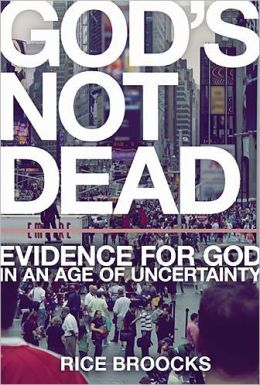
Book Review: God’s Not Dead by Rice Broocks

______________

Crimes and Misdemeanors: A Discussion: Part 1

Crimes and Misdemeanors: A Discussion: Part 2

Crimes and Misdemeanors: A Discussion: Part 3

Saturday, September 14, 2013

Book Review: God’s Not Dead by Rice Broocks

“There is evidence for an intelligent Creator everywhere you look. To say there is no evidence for this Creator is like saying the thousands of paintings in an art museum couldn’t have been painted because there are no artists visible in the gallery.”

After making this statement in the preface of his book, God’s Not Dead, Pastor/Apologist Rice Broocks proceeds to present the evidence in a clear, straightforward, readable fashion. He begins with a look at atheism, remarking on its irrationalism and its failure as a viable worldview. He then moves quickly into the issue of faith, quoting C.S Lewis’ statement that “faith is actually holding on to what your reason has led you to conclude despite your changing moods” (28). He outlines three key ingredients in faith – knowledge, assent and trust. He then explores the function and reliability of science, noting that science and religion are not at odds. The conflict, he says, lies between faith and naturalism.

Broocks then tackles the issue of evil. He discusses the sources of morality, whether humanity is capable of being good apart from the Lord, Kant’s categorical imperative, and Darwinian ethics, concluding with Dostoevsky’s statement that, without God, everything is permissible.

The author then explores the origins of humanity and the universe, starting with the statement that “there was a beginning” (66). He looks at the implications of the big bang and the lengths to which some skeptics have gone to redefine the word ‘nothing’ to make it mean ‘something’, focusing on the statements of atheists Lawrence Krauss, Victor Stenger and Michael Shermer in particular. He also discusses the fine-tuning of the universe and gives his views on the multiverse hypothesis.

In a chapter entitled Life is No Accident, Broocks notes that Darwin, in his Origin of the Species, presented his theory about just that – the origin of different species, not the origin of life itself. Distinguishing between microevolution and macroevolution, the author discusses the issues of irreducible complexity, using the examples of bacterial flagellum and the human eye. He then offers his thoughts on the “God of the gaps” and the Cambrian explosion, two common subjects for debate.

Broocks concludes that life has meaning and purpose, noting that humans long for “a solid sense” of both (119). Man is “not just another animal” (124). The author explores what this means, concentrating on issues such as metacognition, aesthetic values, language, creativity, morality and spirituality. Ultimately, he asserts that “a pointless beginning points to a pointless existence” and, without the Creator God, we would not have any ultimate meaning or purpose beyond the self-centred, arbitrary individual goals we set for ourselves.

Broocks then makes a case for the reality of Jesus and his resurrection, assessing the nonbiblical sources that attest to his life. He notes that even critic Bart Ehrman, no fan of Christianity, recognizes that Jesus did walk this earth. He then lists Lee Strobel’s “five Es” – execution, empty tomb, eyewitnesses, early records and emergence of the church – which “represent the events that history points to as factual” (153).

The author also assesses the reliability of Scripture. He discusses the significance of the Dead Sea Scrolls and notes the historical accuracy of the Bible, commenting on such aspects as its many fulfilled prophecies and the careful transmission of the text. In sitting down with preeminent Textual Critic Scholar Dan Wallace, he says he came away with three distinct principles – that the Bible is true in what it tells, true in what it teaches and true in what it touches – all of which “point definitively to the truth that the Bible is a divinely inspired work that serves as a trustworthy witness to the existence of God” (184).

In a chapter entitled The Grace Effect, Broocks outlines how the grace of God has positively impacted the world, listing examples of how Christians have worked to emphasize the dignity of life, to protect children and elevate the status of women, to promote better education and health-care, and to end slavery as they have attempted to live out the love of God in their lives.

Lastly, the author presents examples of God at work in a variety of places around the world. He includes the stories of several ex-atheists and how they came to the Lord – stories such as that of Ming Wang, one of the world’s foremost laser eye surgeons, Physicist Brian Miller and Professional Illusionist Jim Munroe who says that unbelief is the real illusion in life.

Those who have been studying apologetics in depth for some time will not find anything new in Broocks’ book. Indeed, some may wish that he had spent more time on the individual topics as he just touches the surface of many. However, he makes it clear that he is presenting an overview only. He quotes many scholars including William Lane Craig, Ravi Zacharias, Alvin Plantiga, J. P. Moreland, Hugh Ross and others. The reader has only to check out the footnotes to discover material that deals with all the subjects more thoroughly.

Broocks himself notes that he wrote God’s Not Dead for three types of people – the seeker who is attempting to believe but faces doubts about whether God is real, the believer who knows God is real subjectively but cannot easily articulate this faith to the unbeliever, and the skeptic with the pre-determined mindset that there is no God.

People just beginning their studies in apologetics will find this book most helpful. Broocks has a way of taking the complex and writing about it simply so that the information is accessible to all. Therefore, it is recommended.


Apologetics 315 Book Reviewer Mary Lou is a Canadian journalist who has just completed her Masters in Theological Studies. She writes fiction, poetry and plays as well as non-fiction.


Related posts:

FRANCIS SCHAEFFER ANALYZES ART AND CULTURE Part 35 Robert M. Pirsig (Feature on artist Kerry James Marshall)

_____________________________ Francis Schaeffer pictured below: __________ Francis Schaeffer has written extensively on art and culture spanning the last 2000years and here are some posts I have done on this subject before : Francis Schaeffer’s “How should we then live?” Video and outline of episode 10 “Final Choices” , episode 9 “The Age of Personal Peace and Affluence”, episode 8 […]

Truth Tuesday: Francis Schaeffer: An Introduction to his Apologetics by Jim Leffel

_____________ Francis Schaeffer: An Introduction to his Apologetics by Jim Leffel Episode VII – The Age of Non Reason ____________________ Episode 8: The Age Of Fragmentation Published on Jul 24, 2012 Dr. Schaeffer’s sweeping epic on the rise and decline of Western thought and Culture _______________________ I love the works of Francis Schaeffer and I […]

“Woody Wednesday” Discussing Woody Allen’s movie “Crimes and Misdemeanors” and various other subjects with Ark Times Bloggers (Part 1) “Does might make right?”

Crimes and Misdemeanors: A Discussion: Part 1 Uploaded by camdiscussion on Sep 23, 2007 Part 1 of 3: ‘What Does Judah Believe?’ A discussion of Woody Allen’s 1989 movie, perhaps his finest. By Anton Scamvougeras.http://camdiscussion.blogspot.com/ antons@mail.ubc.ca________________________ I have gone back and forth and back and forth with many liberals on the Arkansas Times Blog on many issues such as abortion, human rights, welfare, poverty, gun control  and […]

Discussing Woody Allen’s movie “Crimes and Misdemeanors” and various other subjects with Ark Times Bloggers (Part 1) “Does might make right?”

Crimes and Misdemeanors: A Discussion: Part 1 Uploaded by camdiscussion on Sep 23, 2007 Part 1 of 3: ‘What Does Judah Believe?’ A discussion of Woody Allen’s 1989 movie, perhaps his finest. By Anton Scamvougeras.http://camdiscussion.blogspot.com/ antons@mail.ubc.ca________________________ I have gone back and forth and back and forth with many liberals on the Arkansas Times Blog on many issues such as abortion, human rights, welfare, poverty, gun control  and […]

The Humanist has no hope to find lasting meaning in life apart from God

Ecclesiastes 8-10 | Still Searching After All These Years Published on Oct 9, 2012 Calvary Chapel Spring Valley | Sunday Evening | October 7, 2012 | Pastor Derek Neider _______________________ Ecclesiastes 11-12 | Solomon Finds His Way Published on Oct 30, 2012 Calvary Chapel Spring Valley | Sunday Evening | October 28, 2012 | Pastor Derek Neider […]

Francis Schaeffer: An Introduction to his Apologetics by Jim Leffel

Francis Schaeffer: An Introduction to his Apologetics by Jim Leffel Episode VII – The Age of Non Reason ____________________ Episode 8: The Age Of Fragmentation Published on Jul 24, 2012 Dr. Schaeffer’s sweeping epic on the rise and decline of Western thought and Culture _______________________ I love the works of Francis Schaeffer and I have […]

Truth Tuesday:Crash course on existentialism with Sartre by Wes Widner

_______________ Episode VII – The Age of Non Reason ____________________ Episode 8: The Age Of Fragmentation Published on Jul 24, 2012 Dr. Schaeffer’s sweeping epic on the rise and decline of Western thought and Culture _______________________ I love the works of Francis Schaeffer and I have been on the internet reading several blogs that talk […]

Francis Bacon: Humanist artist who believed life “is meaningless” (Part 4)

John Whitehead in an article noted: Bacon, however, clearly expressed his atheistic pessimism: “Man now realizes that he is an accident, that he is a completely futile being, that he has to play out the game without purpose, other than of his own choosing.” On another occasion, he remarked: “We are born and we die […]

Francis Bacon: Humanist artist who believed life “is meaningless” (Part 3)

I first read about Bacon in a book by Francis Schaeffer. John Whitehead in an article noted: Bacon’s work epitomizes the spirit of twentieth century man—a grasping for meaning and dignity within an environment of dehumanization and meaninglessness. He once said: “Nietzsche forecast our future for us—he was the Cassandra of the nineteenth century—he told […]

Francis Bacon: Humanist artist who believed life “is meaningless” (Part 4)

John Whitehead in an article noted: Bacon, however, clearly expressed his atheistic pessimism: “Man now realizes that he is an accident, that he is a completely futile being, that he has to play out the game without purpose, other than of his own choosing.” On another occasion, he remarked: “We are born and we die […]

____________

“Schaeffer Sunday” Taking on Ark Times Bloggers on the “Absurdity of Life without God!!” Part 23 (The atheist without a moral lawgiver can not base his or her moral views on anything but moral relativism)

Is the Bible historically accurate? Here are some of the posts I have done in the past on the subject: 1. The Babylonian Chronicleof Nebuchadnezzars Siege of Jerusalem2. Hezekiah’s Siloam Tunnel Inscription. 3. Taylor Prism (Sennacherib Hexagonal Prism)4. Biblical Cities Attested Archaeologically. 5. The Discovery of the Hittites6.Shishak Smiting His Captives7. Moabite Stone8Black Obelisk of Shalmaneser III9A Verification of places in Gospel of John and Book of Acts., 9B Discovery of Ebla Tablets10. Cyrus Cylinder11. Puru “The lot of Yahali” 9th Century B.C.E.12. The Uzziah Tablet Inscription13. The Pilate Inscription14. Caiaphas Ossuary14 B Pontius Pilate Part 214c. Three greatest American Archaeologists moved to accept Bible’s accuracy through archaeology.

The Bible and Archaeology – Is the Bible from God? (Kyle Butt 42 min)

There Is A Difference Between Absolute and Objective Moral Values

Published on Dec 6, 2012

For more resources visit: http://www.reasonablefaith.org

The Bethinking National Apologetics Day Conference: “Countering the New Atheism” took place during the UK Reasonable Faith Tour in October 2011. Christian academics William Lane Craig, John Lennox, Peter J Williams and Gary Habermas lead 600 people in training on how to defend and proclaim the credibility of Christianity against the growing tide of secularism and New Atheist popular thought in western society.

In this session, William Lane Craig delivers his critique of Richard Dawkins’ objections to arguments for the existence of God, followed by questions and answers from the audience. In this clip, Dr Craig addresses a question about objective moral values and distinguishes them from absolute moral values.

Dr. Francis Schaeffer – The Biblical Flow of Truth & History (part 2)

Francis Schaeffer pictured below:

______________________________

_________________
Life without God in the picture is absurdity!!!. That was the view of King Solomon when he wrote the Book of Ecclesiastes 3000 years ago and it is the view of many of the modern philosophers todayModern man has tried to come up with a lasting meaning for life without God in the picture (life under the sun), but it is not possible. Without the infinite-personal God of the Bible to reveal moral absolutes then man is left to embrace moral relativism. In a time plus chance universe man is reduced to a machine and can not find a place for values such as love. Both of Francis Schaeffer’s film series have tackled these subjects and he shows how this is reflected in the arts.

Here are some posts I have done on the series “HOW SHOULD WE THEN LIVE? : Francis Schaeffer’s “How should we then live?” Video and outline of episode 10 “Final Choices” episode 9 “The Age of Personal Peace and Affluence”episode 8 “The Age of Fragmentation”episode 7 “The Age of Non-Reason” episode 6 “The Scientific Age”  episode 5 “The Revolutionary Age” episode 4 “The Reformation” episode 3 “The Renaissance”episode 2 “The Middle Ages,”, and  episode 1 “The Roman Age,” .

In the film series “WHATEVER HAPPENED TO THE HUMAN RACE?” the arguments are presented  against abortion (Episode 1),  infanticide (Episode 2),   euthenasia (Episode 3), and then there is a discussion of the Christian versus Humanist worldview concerning the issue of “the basis for human dignity” in Episode 4 and then in the last episode a close look at the truth claims of the Bible.

I have discussed many subjects with my liberal friends over at the Ark Times Blog in the past and I have taken them on now on the subject of the absurdity of life without God in the picture. Most of my responses included quotes from William Lane Craig’s book THE ABSURDITY OF LIFE WITHOUT GOD.  Here is the result of one of those encounters from June of 2013:

I wrote:

Vanessa, thank you for your thoughts. You wrote, “The afterlife: there’s good and there’s evil. Most people fall on one side or the other. The part of you that’s left when your earthly body turns to dust, or begins to turn to dust, becomes one with good or one with evil. The force. The force has nothing to do with the bible, which is still a decent history book and an outline for living a good life if you don’t get too literal with it.”
___________

Your view of the afterlife is a very popular view that is spreading to more parts of the world than ever before, but is it right? I have defended the truthfulness of the Bible and have given evidence to show that it is the revealed word of God. On what basis do you make your claims? WHAT IS EVIL AND WHAT IS GOOD ACCORDING TO YOU AND ON WHAT BASIS CAN YOU MAKE THOSE CLAIMS?

Evidently you do not believe in the infinite-personal God of the Bible. It sounds like to me that you are similar in your religious views to Steve Jobs. His views were based on evolution and he did not believe in a personal God. I have written about his views many times in the past.

https://thedailyhatch.org/2011/10/31/steve-…

The sad fact is that without a moral lawgiver then you can not base your moral views on anything but moral relativism. An atheistic religion just doesn’t cut it.

William Lane Craig noted:

The dilemma of modern man is thus truly terrible. The atheistic worldview is insufficient to maintain a happy and consistent life. Man cannot live consistently and happily as though life were ultimately without meaning, value, or purpose. If we try to live consistently within the framework of the atheistic worldview, we shall find ourselves profoundly unhappy. If instead we manage to live happily, it is only by giving the lie to our worldview.

Confronted with this dilemma, modern man flounders pathetically for some means of escape. In a remarkable address to the American Academy for the Advancement of Science in 1991, Dr. L. D. Rue, confronted with the predicament of modern man, boldly advocated that we deceive ourselves by means of some “Noble Lie” into thinking that we and the universe still have value.28 Claiming that “the lesson of the past two centuries is that intellectual and moral relativism is profoundly the case,” Dr. Rue muses that the consequence of such a realization is that one’s quest for personal wholeness (or self-fulfillment) and the quest for social coherence become independent from one another. This is because on the view of relativism the search for self-fulfillment becomes radically privatized: each person chooses his own set of values and meaning. “There is no final, objective reading on the world or the self. There is no universal vocabulary for integrating cosmology and morality.” If we are to avoid “the madhouse option,” where self-fulfillment is pursued regardless of social coherence, and “the totalitarian option,” where social coherence is imposed at the expense of personal wholeness, then we have no choice but to embrace some Noble Lie that will inspire us to live beyond selfish interests and so achieve social coherence. A Noble Lie “is one that deceives us, tricks us, compels us beyond self-interest, beyond ego, beyond family, nation, [and] race.” It is a lie, because it tells us that the universe is infused with value (which is a great fiction), because it makes a claim to universal truth (when there is none), and because it tells me not to live for self-interest (which is evidently false). “But without such lies, we cannot live.”

This is the dreadful verdict pronounced over modern man. In order to survive, he must live in self-deception. But even the Noble Lie option is in the end unworkable. For if what I have said thus far is correct, belief in a Noble Lie would not only be necessary to achieve social coherence and personal wholeness for the masses, but it would also be necessary to achieve one’s own personal wholeness. For one cannot live happily and consistently on an atheistic worldview. In order to be happy, one must believe in objective meaning, value, and purpose. But how can one believe in those Noble Lies while at the same time believing in atheism and relativism? The more convinced you are of the necessity of a Noble Lie, the less you are able to believe in it. Like a placebo, a Noble Lie works only on those who believe it is the truth. Once we have seen through the fiction, then the Lie has lost its power over us. Thus, ironically, the Noble Lie cannot solve the human predicament for anyone who has come to see that predicament.

The Noble Lie option therefore leads at best to a society in which an elitist group of illuminati deceive the masses for their own good by perpetuating the Noble Lie. But then why should those of us who are enlightened follow the masses in their deception? Why should we sacrifice self-interest for a fiction? If the great lesson of the past two centuries is moral and intellectual relativism, then why (if we could) pretend that we do not know this truth and live a lie instead? If one answers, “for the sake of social coherence,” one may legitimately ask why I should sacrifice my self-interest for the sake of social coherence. The only answer the relativist can give is that social coherence is in my self-interest—but the problem with this answer is that self-interest and the interest of the herd do not always coincide. Besides, if (out of self-interest) I do care about social coherence, the totalitarian option is always open to me: forget the Noble Lie and maintain social coherence (as well as my self-fulfillment) at the expense of the personal wholeness of the masses. Generations of Soviet leaders who extolled proletarian virtues while they rode in limousines and dined on caviar in their country dachas found this alternative quite workable. Rue would undoubtedly regard such an option as repugnant. But therein lies the rub. Rue’s dilemma is that he obviously values deeply both social coherence and personal wholeness for their own sakes; in other words, they are objective values, which according to his philosophy do not exist. He has already leapt to the upper story. The Noble Lie option thus affirms what it denies and so refutes itself.

Related posts:

Francis Schaeffer’s “How should we then live?” Video and outline of episode 10 “Final Choices” (Schaeffer Sundays)

E P I S O D E 1 0   Dr. Francis Schaeffer – Episode X – Final Choices 27 min FINAL CHOICES I. Authoritarianism the Only Humanistic Social Option One man or an elite giving authoritative arbitrary absolutes. A. Society is sole absolute in absence of other absolutes. B. But society has to be […]

Francis Schaeffer’s “How should we then live?” Video and outline of episode 9 “The Age of Personal Peace and Affluence” (Schaeffer Sundays)

E P I S O D E 9 Dr. Francis Schaeffer – Episode IX – The Age of Personal Peace and Affluence 27 min T h e Age of Personal Peace and Afflunce I. By the Early 1960s People Were Bombarded From Every Side by Modern Man’s Humanistic Thought II. Modern Form of Humanistic Thought Leads […]

Francis Schaeffer’s “How should we then live?” Video and outline of episode 8 “The Age of Fragmentation” (Schaeffer Sundays)

E P I S O D E 8 Dr. Francis Schaeffer – Episode VIII – The Age of Fragmentation 27 min I saw this film series in 1979 and it had a major impact on me. T h e Age of FRAGMENTATION I. Art As a Vehicle Of Modern Thought A. Impressionism (Monet, Renoir, Pissarro, Sisley, […]

Francis Schaeffer’s “How should we then live?” Video and outline of episode 7 “The Age of Non-Reason” (Schaeffer Sundays)

E P I S O D E 7 Dr. Francis Schaeffer – Episode VII – The Age of Non Reason I am thrilled to get this film series with you. I saw it first in 1979 and it had such a big impact on me. Today’s episode is where we see modern humanist man act […]

Francis Schaeffer’s “How should we then live?” Video and outline of episode 6 “The Scientific Age” (Schaeffer Sundays)

E P I S O D E 6 How Should We Then Live 6#1 Uploaded by NoMirrorHDDHrorriMoN on Oct 3, 2011 How Should We Then Live? Episode 6 of 12 ________ I am sharing with you a film series that I saw in 1979. In this film Francis Schaeffer asserted that was a shift in […]

Francis Schaeffer’s “How should we then live?” Video and outline of episode 5 “The Revolutionary Age” (Schaeffer Sundays)

E P I S O D E 5 How Should We Then Live? Episode 5: The Revolutionary Age I was impacted by this film series by Francis Schaeffer back in the 1970′s and I wanted to share it with you. Francis Schaeffer noted, “Reformation Did Not Bring Perfection. But gradually on basis of biblical teaching there […]

Francis Schaeffer’s “How should we then live?” Video and outline of episode 4 “The Reformation” (Schaeffer Sundays)

Dr. Francis Schaeffer – Episode IV – The Reformation 27 min I was impacted by this film series by Francis Schaeffer back in the 1970′s and I wanted to share it with you. Schaeffer makes three key points concerning the Reformation: “1. Erasmian Christian humanism rejected by Farel. 2. Bible gives needed answers not only as to […]

“Schaeffer Sundays” Francis Schaeffer’s “How should we then live?” Video and outline of episode 3 “The Renaissance”

Francis Schaeffer’s “How should we then live?” Video and outline of episode 3 “The Renaissance” Francis Schaeffer: “How Should We Then Live?” (Episode 3) THE RENAISSANCE I was impacted by this film series by Francis Schaeffer back in the 1970′s and I wanted to share it with you. Schaeffer really shows why we have so […]

Francis Schaeffer’s “How should we then live?” Video and outline of episode 2 “The Middle Ages” (Schaeffer Sundays)

  Francis Schaeffer: “How Should We Then Live?” (Episode 2) THE MIDDLE AGES I was impacted by this film series by Francis Schaeffer back in the 1970′s and I wanted to share it with you. Schaeffer points out that during this time period unfortunately we have the “Church’s deviation from early church’s teaching in regard […]

Francis Schaeffer’s “How should we then live?” Video and outline of episode 1 “The Roman Age” (Schaeffer Sundays)

Francis Schaeffer: “How Should We Then Live?” (Episode 1) THE ROMAN AGE   Today I am starting a series that really had a big impact on my life back in the 1970′s when I first saw it. There are ten parts and today is the first. Francis Schaeffer takes a look at Rome and why […]

Francis Schaeffer: “Whatever Happened to the Human Race” (Episode 5) TRUTH AND HISTORY

Francis Schaeffer: “Whatever Happened to the Human Race” (Episode 5) TRUTH AND HISTORY Published on Oct 7, 2012 by AdamMetropolis This crucial series is narrated by the late Dr. Francis Schaeffer and former Surgeon General Dr. C. Everett Koop. Today, choices are being made that undermine human rights at their most basic level. Practices once […]

Francis Schaeffer: “Whatever Happened to the Human Race” (Episode 4) THE BASIS FOR HUMAN DIGNITY

The opening song at the beginning of this episode is very insightful. Francis Schaeffer: “Whatever Happened to the Human Race” (Episode 4) THE BASIS FOR HUMAN DIGNITY Published on Oct 7, 2012 by AdamMetropolis This crucial series is narrated by the late Dr. Francis Schaeffer and former Surgeon General Dr. C. Everett Koop. Today, choices […]

Francis Schaeffer: “Whatever Happened to the Human Race” (Episode 3) DEATH BY SOMEONE’S CHOICE

Francis Schaeffer: “Whatever Happened to the Human Race” (Episode 3) DEATH BY SOMEONE’S CHOICE Published on Oct 6, 2012 by AdamMetropolis This crucial series is narrated by the late Dr. Francis Schaeffer and former Surgeon General Dr. C. Everett Koop. Today, choices are being made that undermine human rights at their most basic level. Practices […]

Francis Schaeffer: “Whatever Happened to the Human Race?” (Episode 2) SLAUGHTER OF THE INNOCENTS

Francis Schaeffer: “Whatever Happened to the Human Race?” (Episode 2) SLAUGHTER OF THE INNOCENTS Published on Oct 6, 2012 by AdamMetropolis This crucial series is narrated by the late Dr. Francis Schaeffer and former Surgeon General Dr. C. Everett Koop. Today, choices are being made that undermine human rights at their most basic level. Practices […]

Francis Schaeffer: “Whatever Happened to the Human Race” (Episode 1) ABORTION OF THE HUMAN RACE

It is not possible to know where the pro-life evangelicals are coming from unless you look at the work of the person who inspired them the most. That person was Francis Schaeffer.  I do care about economic issues but the pro-life issue is the most important to me. Several years ago Adrian Rogers (past president of […]

Ecclesiastes, Purpose, Meaning, and the Necessity of God by Suiwen Liang (Quotes Will Durant, Madalyn Murray O’Hair, Stephen Jay Gould,Richard Dawkins, Jean-Paul Sartre,Bertrand Russell, Leo Tolstoy, Loren Eiseley,Aldous Huxley, G.K. Chesterton, Ravi Zacharias, and C.S. Lewis.)

Ecclesiastes 2-3 Published on Sep 19, 2012 Calvary Chapel Spring Valley | Sunday Evening | September 16, 2012 | Derek Neider _____________________________ I have written on the Book of Ecclesiastes and the subject of the meaning of our lives on several occasions on this blog. In this series on Ecclesiastes I hope to show how secular […]

Robert Leroe on Ecclesiastes (Mentions Thomas Aquinas, Princess Diana, Mother Teresa, King Solomon, King Rehoboam, Eugene Peterson, Chuck Swindoll, and John Newton.)

Ecclesiastes 1 Published on Sep 4, 2012 Calvary Chapel Spring Valley | Sunday Evening | September 2, 2012 | Pastor Derek Neider _____________________ I have written on the Book of Ecclesiastes and the subject of the meaning of our lives on several occasions on this blog. In this series on Ecclesiastes I hope to show how […]

Super Bowl, Black Eyed Peas, and the Meaning of Life and Ecclesiastes

Ecclesiastes 8-10 | Still Searching After All These Years Published on Oct 9, 2012 Calvary Chapel Spring Valley | Sunday Evening | October 7, 2012 | Pastor Derek Neider _______________________ Ecclesiastes 11-12 | Solomon Finds His Way Published on Oct 30, 2012 Calvary Chapel Spring Valley | Sunday Evening | October 28, 2012 | Pastor Derek Neider […]