When I think about Bobby Petrino and what an unbelievable job he did at Arkansas with talent that was not as good as Georgia, Florida, LSU and Alabama then it leads me to believe that he can get the most out of his players. When he was at Arkansas he won 5 games the first year with a victory over a ranked LSU team to finish 2008. Then in 2009 the Hogs won 8 games and then in 2010 they made it to a BCS bowl and that included a victory along the way over a top 10 LSU team and a heartbreaking loss in the fourth quarter to #1 ranked Alabama. Finally in 2011 the Razorbacks won 11 games for the first time since 1977 and finished ranked #5 in last poll of the year.
Who can question Bobby Petrino’s coaching record? However, at Western Kentucky he has inherited another coach’s players and I doubt very seriously he can pull off a miracle against Tennessee in Knoxville. I do predict that if his team has a good year that he will jump ship and go to a big time program like Gus Malzahn did last year!!!! Actually many teams on this level lose coaches like this all the time. Ask Ark State about that.
Posted August 4, 2013 at 5:56 p.m., updated August 4, 2013 at 8:08 p.m.
New Western Kentucky head coach Bobby Petrino smiles during an NCAA college football news conference, Monday, Dec. 10, 2012, in Bowling Green, Ky. The 51-year-old was fired by Arkansas in April for a “pattern of misleading” behavior following an accident in which the coach was injured while riding a motorcycle with his mistress as a passenger but now wants to make the most of his second chance. (AP Photo/The Daily News, Joe Imel)
Poll
Which would be Tennessee’s “worst” loss of the season?
If you asked Tennessee fans which team they would most like to beat this season, the consensus answer would be obvious.
How could they pick anyone else other than Alabama?
Imagine what an upset over the defending national champions would do for UT’s image.
While that’s an obvious choice for the best victory, the worst possible loss would spark more debate.
You might pick Vanderbilt since the Vols haven’t lost back-to-back games to their in-state rival since 1926. Or maybe you would choose Kentucky, which hasn’t won consecutive games against UT in Lexington since 1959.
But my pick for the worst loss would be Western Kentucky.
UT isn’t physically capable of losing its opener to Austin Peay or at the end of September to South Alabama. So I eliminated them from consideration.
Maybe you regard Western Kentucky in Week 2 as a sure thing as well. It’s not.
UT should be a solid favorite against the Hilltoppers. However, the gap between the two programs has narrowed since Tennessee beat them 63-7 four years ago.
The image gap is just as significant, though. It’s still the Sun Belt vs. the SEC.
That’s not the only reason a loss would be devastating to new coach Butch Jones’ program.
Western Kentucky also has a new coach — a more famous new coach, in fact.
If not for an ill-advised motorcycle ride with a questionable blonde passenger, Bobby Petrino would still be the coach at Arkansas.
No one questions Petrino’s coaching ability. He had great success at both Louisville and Arkansas. He’s one of the best offensive coaches in the country.
And he clearly makes Western Kentucky a more dangerous team than it might have been with a lesser coach.
Petrino won’t have nearly as much to work with offensively this season at Western Kentucky as he did with his last Arkansas team in 2011.
But he didn’t have many offensive weapons in 2008 when he took over the Razorbacks. Nonetheless, an offense severely lacking in talent averaged better than 25 points during the last seven games.
His first Western Kentucky team has to find a new quarterback, but returns three starters on the offensive line and has an exceptional all-around running back in Antonio Andrews.
Defensively, the Hilltoppers must replace their front four, but their starting secondary and linebacking corps return intact.
And they will play UT right before the Vols play back-to-back road games against nationally ranked Oregon and Florida.
No matter what looms ahead, the Vols would be foolish to overlook anyone after three consecutive seven-loss seasons. If they compare scores from last season and add the Petrino factor, Western Kentucky should hold their attention.
The Hilltoppers were good enough to beat Kentucky in Lexington in overtime last season. Tennessee downed Kentucky by 20 at Neyland Stadium.
Western Kentucky defeated conference-rival Troy 31-26 on the road. Tennessee topped Troy 55-48 at Neyland Stadium.
Almost losing to a Sun Belt team was bad enough. Losing to one would constitute a new low.
Alabama last year had to play Tennessee and Kentucky from the East and their conference record was 1-15 while LSU had to play Florida and Georgia and their record was 14-2. Doesn’t seem fair does it? In the old days Tennessee would have been a top 10 team almost every year and playing them as […]
SEC has proved how good we are, but it doesn’t mean every team in the SEC could win a national title in 2013. David Climer: Titles can’t erase SEC football’s weaknesses Alabama players celebrates after their 32-28 win in the Southeastern Conference championship NCAA college football game against Georgia, Saturday, Dec. 1, 2012, in Atlanta. (AP […]
ESPN’s final recruiting rankings are not as good as others as I have seen. I do have a hard time with Missouri (38) having such a good ranking when other services had the tigers tanking their class this year compared to other SEC schools. However, Kentucky (36) is almost as bad when there is vast […]
Nick Saban Streeter Lecka We finally found a Top 25 in which the SEC is more dominant than the USA Today Coaches’ Poll: the post-Signing Day recruiting class rankings. ________ I have to say the SEC is really doing well these days. Everyone expects Alabama is going to be on top on most years […]
I am not so mad anymore about Arkansas being ranked number 64 in recruiting this year while Auburn is #20 and Tennessee is #30 and even Kentucky is doing better than us. That is because they racked up lots of players when they had coaches during the year while we had John L. Smith. What […]
It is no surprise that John L. Smith and Derek Dooley may be heading out the door at the end of this season. That was expected by most people that watch SEC football. However, could Gene Chizik of Auburn being out the door too? If that happens then I must admit that I did not […]
I am very happy with the new football schedules that the SEC released for next year. It is a stand alone schedule that will not affect the final decision that make concerning the rotation in the 2014 schedule and beyond. 2013 Georgia Bulldogs Football Schedule Date Opponent Time/TV Tickets Saturday 04/06/13 G-Day Spring Game […]
Arkansas defensive tackle Jared Green (57) and linebackers Alonzo Highsmith (45), and Tenarius Wright (43) attempt to tackle Alabama running back Eddie Lacy (42) as offensive lineman Barrett Jones (75) looks on during second quarter action of an NCAA college football game in Fayetteville, Ark., Saturday, Sept. 15, 2012. (AP Photo/David Quinn) ___________ When you […]
Free-market economics meets free-market policies at The Heritage Foundation’s Tenth Anniversary dinner in 1983. Nobel Laureate Milton Friedman and his wife Rose with President Ronald Reagan and Heritage President Ed Feulner.
Today, on what would have been Milton Friedman’s 101st birthday, we celebrate the enduring insights of an economist and thinker whose ideas have served as the guiding light for visionary leaders around the world.
The practical policies inspired by Friedman have allowed countless individuals to realize their dreams through participation in the free-market capitalist system. Friedman advocated for “the role of competitive capitalism—the organization of the bulk of economic activity through private enterprise operating in a free market—as a system of economic freedom.”
Indeed, many around the world are indebted to Friedman’s role in championing economic freedom. That effort lives on in The Heritage Foundation/Wall Street Journal’s annual Index of Economic Freedom.
Friedman’s monumental Capitalism and Freedom was highlighted in The Economist magazine as “ideal reading for politicians of either party in this country, not because it would convince them, but because it challenges the reader to sort out his own ideas more fundamentally.”
Friedman’s legacy will only endure as long as we as a people remain committed “to build an America where freedom, opportunity, prosperity, and civil society flourish.” As Heritage Foundation President Jim DeMint has reminded us:
It is our job to make [conservative] ideas…irresistible to the politicians.… Milton Friedman explained it this way when he said: “I do not believe that the solution to our problem is simply to elect the right people. The important thing is to establish a political climate of opinion which will make it politically profitable for the wrong people to do the right thing. Unless it is politically profitable for the wrong people to do the right thing, the right people will not do the right thing either, or, if they try, they will shortly be out of office.”
As we celebrate Friedman’s 101st birthday, it is time to renew America’s commitment to the principles of economic freedom that have been, throughout our history, the proven path to prosperity.
On the Arkansas Times Blog the person using the username “Jake da Snake” noted, “Friedman also railed long and hard for school vouchers to be adopted, to little avail…” (June 11, 2011). Milton Friedman firmly believed, “competition is a way in which both public and private schools can be required to satisfy their customers.” Here […]
Johan Norberg – Free or Equal – Free to Choose 30 years later 4/5 Published on Jun 10, 2012 by BasicEconomics In 1980 economist and Nobel laureate Milton Friedman inspired market reform in the West and revolutions in the East with his celebrated television series “Free To Choose.” Thirty years later, in this one-hour documentary, […]
Johan Norberg – Free or Equal – Free to Choose 30 years later 3/5 Published on Jun 10, 2012 by BasicEconomics In 1980 economist and Nobel laureate Milton Friedman inspired market reform in the West and revolutions in the East with his celebrated television series “Free To Choose.” Thirty years later, in this one-hour documentary, […]
Johan Norberg – Free or Equal – Free to Choose 30 years later 2/5 Published on Jun 10, 2012 by BasicEconomics In 1980 economist and Nobel laureate Milton Friedman inspired market reform in the West and revolutions in the East with his celebrated television series “Free To Choose.” Thirty years later, in this one-hour documentary, […]
_____________________________________ Milton Friedman On Charlie Rose (Part One) The late Milton Friedman discusses economics and otherwise with Charlie Rose. _________________________________________ Milton Friedman: Life and ideas – Part 01 Milton Friedman: Life and ideas A brief biography of Milton Friedman _____________________________________ Stossel – “Free to Choose” (Milton Friedman) 1/6 6-10-10. pt.1 of 6. Stossel discusses Milton […]
Free or Equal?: Johan Norberg Updates Milton & Rose Friedman’s Free to Choose I got this below from Reason Magazine: Swedish economist Johan Norberg is the host of the new documentary Free or Equal, which retraces and updates the 1980 classic Free to Choose, featuring Milton and Rose Friedman. Like the Friedmans, Norberg travels the globe […]
______________________________________ Milton Friedman On Charlie Rose (Part One) The late Milton Friedman discusses economics and otherwise with Charlie Rose. _________________________________________ Milton Friedman: Life and ideas – Part 01 Milton Friedman: Life and ideas A brief biography of Milton Friedman _____________________________________ Stossel – “Free to Choose” (Milton Friedman) 1/6 6-10-10. pt.1 of 6. Stossel discusses Milton […]
Milton Friedman and Chile – The Power of Choice Uploaded on May 13, 2011 In this excerpt from Free To Choose Network’s “The Power of Choice (2006)”, we set the record straight on Milton Friedman’s dealings with Chile — including training the Chicago Boys and his meeting with Augusto Pinochet. Was the tremendous prosperity unleashed […]
Milton Friedman was a great economist and a fine speaker. ___________________ I have written before about Milton Friedman’s influence on the economy of Chile. Now I saw this fine article below from http://www.heritage.org and below that article I have included an article from the Wall Street Journal that talks about Milton Friedman’s influence on Chile. I […]
Biography Part 2 In 1977, when I reached the age of 65, I retired from teaching at the University of Chicago. At the invitation of Glenn Campbell, Director of the Hoover Institution at Stanford University, I shifted my scholarly work to Hoover where I remain a Senior Research Fellow. We moved to San Francisco, purchasing […]
In this first episode Milton Friedman asserts, “Adam Smith’s flash of genius was to see how prices that emerged in the market, the prices of goods, the wages of labor, the cost of transport, could coordinate the activities of millions of independent people, strangers to one another, without anybody telling them what to do. His key idea was that self-interest could produce an orderly society benefiting everybody. It was as though there were an invisible hand at work. The invisible hand is a phrase that was introduced by Adam Smith in his great book, The Wealth of Nations, in which he talked about the way in which individuals, who intended only to pursue their own interests, were led by an invisible hand to promote the public welfare which was no part of their intention. He was talking about the economic market. About the market in which people buy and sell. He was pointing out that in order for a butcher or a baker or a candlestick maker to make an income, he had to produce something that somebody wanted to buy. Therefore, in the process of promoting his own interests and looking to his own profit, he ended up serving the interests of his customers.”
Milton Friedman’s Free to Choose – Ep.2 (1/7) – The Tyranny of Control
Last week in this film series the distinguished economist Milton Friedman took us to Hong Kong to see a free market system in which he had a great deal of confidence and faith. This week he takes us traveling again to India, Japan and to Europe to see what happens in his view when governments think they can plan and control the economic activities of their peoples.
FREE TO CHOOSE 2: “Tyranny of Control” (Milton Friedman)Free to Choose ^ | 1980 | Milton Friedman
Posted on Tuesday, July 18, 2006 3:02:09 PM by Choose Ye This Day
FREE TO CHOOSE: Tyranny of Control
Friedman: It is harvest time and Japanese farmers gather their crops for the rice market in Kyoto. Of course, they will try to get as much for it as possible and the buyer’s will try to buy it as cheaply as possible. That is how markets are supposed to work. That is what Adam Smith, the Scotsman who turned economics into a modern science, observed 200 years ago. He observed something else too.
Adam Smith: In every country it is always and must be in the interest of the great body of people to buy whatever they want of those who set it cheapest. The proposition is so very manifest that it seems ridiculous to take any pains to prove it. Nor could it ever have been called in question had not the interested sophistry of merchants and manufacturers, confounded common sense of mankind. Their interest is, in this respect, directly opposite to that of the great body of people.
Friedman: Adam Smith’s flash of genius was to see how prices that emerged in the market, the prices of goods, the wages of labor, the cost of transport, could coordinate the activities of millions of independent people, strangers to one another, without anybody telling them what to do.
His key idea was that self-interest could produce an orderly society benefiting everybody. It was as though there were an invisible hand at work.
The invisible hand is a phrase that was introduced by Adam Smith in his great book, The Wealth of Nations, in which he talked about the way in which individuals, who intended only to pursue their own interests, were led by an invisible hand to promote the public welfare which was no part of their intention. He was talking about the economic market. About the market in which people buy and sell. He was pointing out that in order for a butcher or a baker or a candlestick maker to make an income, he had to produce something that somebody wanted to buy. Therefore, in the process of promoting his own interests and looking to his own profit, he ended up serving the interests of his customers.
When Adam Smith published The Wealth Of Nations, Britain was still a largely rural and placid place. But the Industrial Revolution was already getting started and standards of life were beginning to rise. One obstacle was that trade with other nations was still tightly controlled. Merchants in the home market had persuaded the government of the day to impose heavy duties and taxes on all foreign imports in order to insure themselves a protected market.
One of the results was to turn Britain into a nation of lawbreakers. Smuggling was a national past time: brandy, wines, tobacco, anything with a heavy customs duty on it. For years, the revenue men fought a losing battle along the shores and inlets of the British Isles.
In 1846, after years of argument and partial success, the followers of Adam Smith finally persuaded the British Parliament to remove all duties on goods imported from abroad. Britain embarked on complete free trade, giving a further push to the rising standard of life.
What happened in Britain as a consequence of releasing the tremendous force of self-interest, had the unintended effect of benefiting millions of people all over the world, and by 1851 the evidence was proudly on show at the great Crystal Palace Exhibition.
Free trade enabled Britain to become the work place of the world. But was it all an accident? I don’t think it was. Consider what happened in 1868 on the other side of the world in Japan. For the preceding 300 years, the Japanese had lived in almost complete isolation. They had discouraged visitors from other nations, especially from the West. The result was that by the standards of the West, Japan was backward. It was a feudal society with lords and serfs and woe betide anyone who tried to change the order of things. Women were third class citizens.
In 1868, a new generation of rulers decided that the time had come for Japan to make contact with the outside world. And with the arrival of the first foreign traders from the West, things began to change. The Japanese followed the British trading pattern because Britain was a leading nation of the world. So free trade came to Japan. Japan became a magnet for other people’s ideas and developments.
One of the first traditional industries to feel the effects was weaving. From Europe, the Japanese imported the jacquard method __ a way of programming a loom to control the accuracy of the weave, and so the standardized output. Workers did well in the new atmosphere and so did their employers. The adoption of mass production techniques meant that workers were able to move out of the traditional industries and into the new industries, which all added to the trade boom. None of us can help being effected by the intellectual atmosphere that we breathe. In the middle of the 19th century, when Japan ended her self-imposed isolation and entered the modern age, it never occurred to her leaders to follow any other course than that of free enterprise and free markets. That was the intellectual atmosphere of the time, created by Britain’s success in applying the principles of Adam Smith.
In 1948, when India achieved independence, her leaders had all been trained in Great Britain. They had sat at the feet of Harold Laski and his associates at the London School of Economics, or of their counterparts at Oxford and Cambridge. It never occurred to them to follow any other course than that of central planning and government control. That was the intellectual atmosphere of the time. The intellectual seed took root. As it grew, it needed to be honored, even worshiped.
Every year on the anniversary of Gandhi’s birth, people all over India do just that __ in homage to the great Mahatma, they sit and spin using methods handed down through the centuries.
_________________
In this episode Milton Friedman asserted, “Central planning, in practice, has condemned India’s masses to poverty and misery. We know what has happened in Japan. Free trade set off a process that revolutionized Japan and the lives of its people. Improvements in material well-being went hand in hand with the elimination of the rigid social structure of a century ago. It’s no accident. As always, economic freedom promotes human freedom.”
Milton Friedman’s Free to Choose – Ep.2 (2/7) – The Tyranny of Control
But it is more than just a symbol of honoring the past. It typifies the policy that they are actually following.
The new government in 1948 decided that India’s traditional weaving industry and its workers should be protected from 20th century industrialization. What were the consequences of that policy? This is India today, 30 years after winning independence. These are scenes of a very typical Indian community __ one of thousands. It is called “Anicaputar” and it is about 1,000 miles south of the capital, New Delhi. This is not the kind of life the government intended to perpetuate. But it is one result of their policy. By subsidizing the cotton that the villagers spin and the cloth that they weave, they made it difficult for modern industry to develop.
This is sizing. It’s an essential technique in cloth production where the yarn is smoothed clean. A modern machine could do the same thing in a hundredth of the time. The result of government planning to modernize industry is that the number of hand looms roughly doubled in the first thirty years after India’s independence. Today, in thousands of villages throughout India, the sound of hand looms can be heard from early in the morning until late at night. In this village alone, there are more than 3,000 hand looms in operation.
Since 1948, three generations of villagers have sat at these looms making cloth with patterns that never vary, using methods that never change. There is nothing wrong with this activity, provided it survives the test of the market, provided it is the way in which these people can use their abilities and their energies most effectively. After all, in Japan, where the government has not specially encouraged the hand loom industry, there remains a very small, but very productive hand loom segment. The trouble here is that this industry exists only because the government has subsidized and supported it because it has in effect imposed taxes, direct and indirect, on the rest of the people of India, people who are no better off than these people are in order to enable this activity to continue.
Other industries, both textile industries and industries of a variety of kinds, have been restricted, explicitly kept back, prevented from providing more productive employment in order to make room for this industry. The effect has been to inhibit the development, to prevent the growth, to prevent the dynamic activity that could otherwise develop out of the energies and the abilities to the people of India. This looks like a factory, but it is also home for the people who work here. When they are not sitting at their looms, they eat and sleep in a corner of this hut.
Throughout the world, governments always profess to be forward-looking. In practice, they are always backward-looking. Either protecting the industries that exist, or making sure that whatever ventures they have decided to undertake, are encouraged and developed. This occurs at the expense of the kind of healthy development of new, dynamic, adapted industries that would surely occur if the market were allowed to operate freely. If it were allowed to separate out the unsuccessful ventures from the successful ones. Discouraging the unsuccessful and encouraging the successful.
India has tremendous economic and human potential, every bit as much as Japan had a century ago. The human tragedy is that in India, that potential has been stifled by the straightjacket imposed by an all-wise and paternalistic government.
Central planning, in practice, has condemned India’s masses to poverty and misery. We know what has happened in Japan. Free trade set off a process that revolutionized Japan and the lives of its people. Improvements in material wellbeing went hand in hand with the elimination of the rigid social structure of a century ago. It’s no accident. As always, economic freedom promotes human freedom.
And in the meantime, what has happened to the Japanese weaving industry? This is how textiles start life in a Japanese weaving shed today. A design for cloth is placed on a drum. As it revolves, it is scanned by an electric eye. Each color, each variation in the pattern and texture is transmitted faithfully to a computer. It’s all that the modern loom of Japan requires. This loom is fitted with electronics that make it one of the most sophisticated of its sort in the world. The fabric that it produces is the best silk of its kind.
Thanks to the speed and efficiency of these machines, the price of the silk is competitive. The workers are highly skilled and well paid. With the new technology, there is very little __ a loom like this cannot produce. This piece will become the sash of a traditional bridal gown. These are machine-made products. But by any standards, they are beautiful. They can stand comparison with the very finest work of the hand loom. And it’s not merely the end product itself that is remarkable. The sophisticated technology which was developed to make all of this possible, has been adapted to other processes. Part of the self-generating development under free enterprise, and it all stems from an ancient, traditional industry __ weaving __ that imported a new method for controlling its looms when Japan turned to free trade more than a century ago.
Yet, believe it or not, many still maintain today that markets cannot be left to operate freely. That they must be controlled by government. This dockside is in Scotland, a British government, a socialist government decided that its role was to protect the workers here from competition. So down there in governed shipyards, they are building these vessels for the Polish government. To get the order, the British government is using the money of British taxpayers to subsidize the work. In other words, British people are making these ships in order to sell them at a loss to the Poles. Not only the Poles, but we also in America benefit from this kind of philanthropy.
The steel industry in the United States makes a fine profit. Other countries do too. And their steel is often cheaper, sometimes because their taxpayers subsidize it. So, why shouldn’t the American consumer buy steel wherever he can get it cheapest __ at home or abroad. The American steel industry works very hard trying to persuade us that it’s not in our self-interest to buy in the cheapest market. They urge the government to restrict what they call unfair competition, though, of course, they recognize that there are dangers in this.
_______________________
In this episode Milton Friedman asserts, “When anyone complains about unfair competition, consumers beware. That is really a cry for special privilege always at the expense of the consumer. What we needed in this country is free competition. As consumers, buying in an international market, the more unfair the competition the better. That means lower prices and better quality for us. If foreign governments want to use their taxpayers money to sell people in the United States goods below cost, why should we complain? Their own taxpayers will complain soon enough and it will not last for very long.”
_______________________________________
Milton Friedman’s Free to Choose – Ep.2 (3/7) – The Tyranny of Control
Richard P. Simmons, Industry Specializing Steel Committee: The dilemma of asking our government for assistance in this problem of unfair competition bothers many of us because the sword does cut both ways. But we believe that what we have attempted to do is far different than the kinds of direct government involvement that occur in many of the foreign nations around the world where the governments provide direct financial assistance in the form of either ownership or loans or subsidies in some fashion or another.
What we have attempted to do is simply to get our government to enforce the United States laws against unfair competition that have been on the United States’ books. We draw clear distinction between that and, for example, the several hundred million dollars that the French government has granted to the French steel companies, or that the British Steel Corporation has received $1.3 billion for capital investment this year. So that while we are uneasy in any way interfacing with our government in what we traditionally believe are the free enterprise prerogatives, yet what we are only asking for is that the government enforce the laws that our Congress has passed. I’m not sure that’s really any different than asking someone to arrest someone that commits a crime. I don’t think we would be accused of being reactionary if we reported somebody who was stealing, to the police if it were in violation of a U.S. law. We think that we’re doing exactly the same thing when we bring cases against foreign producers who we believe are violating U.S. laws.
Friedman: The fallacy with that argument is that it begs the real question. Why should there be laws that in effect prevent you and me from buying in the cheapest market?
When anyone complains about unfair competition, consumers beware. That is really a cry for special privilege always at the expense of the consumer. What we needed in this country is free competition. As consumers, buying in an international market, the more unfair the competition the better. That means lower prices and better quality for us. If foreign governments want to use their taxpayers money to sell people in the United States goods below cost, why should we complain? Their own taxpayers will complain soon enough and it will not last for very long.
History provides lots of evidence on what happens when government protected industries compete with industries who have the operate in an open and free market. It’s almost always the government protected industries that come out second best.
Ask Sir Freddy Laker, the Englishman who introduced low cost air traffic across the Atlantic. Who were his chief competitors? They were all government protected, government financed, government regulated airlines. He came out very well, made a mint of money. And you and I have gotten cheaper travel across the Atlantic.
Nothing would promote the long run health of the steel industry, make it into a more efficient, profitable and productive industry than for the U.S. government to keep its hands off, neither providing special privileges, nor imposing special restraints. And what is true for the steel industry is true for every other industry in the country.
These women work in an industry that so far hasn’t asked for special protection __ the silicon chip industry. Every one of these small squares on this disk is a highly complicated and integrated micro circuit. An American technician examines them for defects. It is highly skilled work and she’s had a lot of training. When she has done her job, the rejects will be separated from the rest and the good circuits will be packed up and sent half way around the world to Malaysia. The product of American technological skills returns looking like this. Each micro circuit has been enclosed in ceramic by a Malaysian worker who is highly productive at this sort of work. But, the Malaysians are not able to test their product so back they come here to America to be fed into these machines.
American engineers are good at producing sophisticated machines. In an operation that lasts a fraction of a second, these machines can test every circuit, can grade it for quality, and then can sort it into one of six different categories of reliability. The invisible hand in this free market has done wonders for both the American girls and their Malaysian counterparts. And that’s not the end yet because American silicon chips are exported to many countries where foreign workers assemble them. The final product is then returned to our stores so that you and I, the consumers, can benefit from $10.00 calculators, as well as from a lot of other electronic devices that not long ago simply did not exist. When this Hi-Fi equipment first came on the market, only the rich could afford it.
But even when the international market and labor seem to work to everyone’s advantage, people still put up arguments against it. The usual argument against complete free trade is that cheap labor from abroad will take jobs away from workers at home. Well, what is cheap? A Japanese worker is paid in yen and American workers paid in dollars. How do we compare the yen with the dollars? We need some way of transforming the one into the other. That is where the exchange rate enters in __ the price of yen in terms of the dollar.
Suppose that some exchange rate, Japanese goods are in general cheaper than American goods, and we will be buying much from Japan and selling little to them. But what will the Japanese do with the extra dollars they earn? They don’t want to buy American goods. By assumption, those are all dear. They want to buy Japanese goods. But to buy Japanese goods, they need yen. Calls will come in from all over the world to places like this, offering to buy yen for dollars. But there will be more offers to buy yen than to sell yen. In order to get customers, those offering to buy will have to raise the price. The price of yen in terms of dollars will go up.
As you remember, that is what happened in 1977 and 1978. By late 1978, it took 50% more dollars to buy a given amount of yen than it had taken a year earlier. But what happens when the price of yen in terms of dollars goes up? Japanese labor is no longer so cheap. Japanese goods are no longer so attractive to American consumers. On the other hand, American labor is no longer so dear to Japanese. American goods are more attractive to the Japanese. We will export more to them. We will import less from them. New jobs will be created in export industries to replace any jobs that might have been lost in industries competing with imports. That is how a free market and foreign exchange balances trade around the world when it is permitted to operate. The problem is that more often than not free market is not permitted to operate. For reasons that seem to make sense if you don’t examine them carefully, government insists on interfering, but when they do it’s not possible to hide the harmful effects for very long.
________________
In this episode Milton Friedman asserts, ” What we need are constitutional restraints on the power of government to interfere with free markets in foreign exchange, in foreign trade, and in many other aspects of our lives.”
Milton Friedman’s Free to Choose – Ep.2 (4/7) – The Tyranny of Control
The main reason why the Japanese yen went up so sharply in price in 1977 and 1978 was because the Japanese government had been trying to prevent the yen from going up in price. In the process what might have been small disturbances were allowed to accumulate into a major gap in trade. As a result when market forces were finally permitted to operate, as sooner or later they must be, it took a major change in the yen exchange rate to bring things back into life. Why don’t governments learn, because governments never learn, only people learn, and the people who learn today may not be the people in charge of economic policy tomorrow.
As you contemplate this, you may come to agree with me, that what we need are constitutional restraints on the power of government to interfere with free markets in foreign exchange, in foreign trade, and in many other aspects of our lives.
DISCUSSION
Participants: Robert McKenzie, Moderator; Milton Friedman; Richard Deason, International Brotherhood of Electrical Workers; Donald Rumsfeld, President, G.D. Searle & Company; Helen Hughes, Director of Economic Studies, World Bank; Jagdish Bhagwati, Professor of Economics, MIT
McKENZIE: Now, here in Chicago, the special guests who have been watching that film have their say.
DEASON: This film has set me on edge. There is political, social, ethical considerations which do not reflect in the economic philosophy put out. There is a pervading feeling in this that the individual worker is to be totally sacrificed for the overall good of society. I see __ I don’t see how possibly you can sacrifice individuals’ for overall good of society because society is nothing but those millions and millions of individuals, put together. And nowhere is there any consideration given to the social and the ethical aspects of the free trade formula that you advocate.
McKENZIE: Let’s get other views now, around the group. What’s your reaction, Don Rumsfeld, as a businessman, to the idea that Milton Friedman’s advanced, that America ought to buy in the cheapest markets, the cheapest goods, without protecting against them?
RUMSFELD: I swore I would never even try to defend Milton Friedman. And I won’t. But let me comment, first, on Dick’s comment. It bothers me to hear social and moral arguments invoked in an issue like this, because it seems to me the measure is what actually happens to human beings. Each individual ought to be concerned about humanity. For a single individual who is unemployed, that’s a hundred percent unemployment.
DEASON: Absolutely.
RUMSFELD: And we recognize that. I recognize that. But the real world is, if you, as the film did, go to India, if you want to see things that one can describe as inhumane, and poverty, and problems of human beings, they exist. And the test ought to be, what works? What, in fact, will provide a circumstance that will be more than dynamic, and more productive in the world?
HUGHES: It is true that in the long run we would all be better off with free trade. I agree with Milton. But it’s the short run that matters, and in the short run there are serious adjustment problems. Now there’s no question that the developing countries need access to markets such as American markets. And America needs them to export so that they can export more to developing countries. American exports to developing countries have moved from something like twenty percent of total exports to thirty percent over the last ten years. But the adjustment is important, because what is happening at present is that it’s not just a random group of workers that is affected by this trade, it’s the most disadvantaged and underprivileged workers in America which are being affected; and they are, by and large, women, and members of minorities; in garments, in electronics. And I think that the adjustment consists of action on both the developing and the developed country sides. From the __ let’s take the American side. On the American side, the unions and industry, I think, have to get off discussion about moral issues and get their act in order.
BHAGWATI: I couldn’t agree more with Helen. I think there is a very valid income distributional problem involved here. Certainly society gets better off, consumers get better off as a result of cheaper imports, and I’m all for that, and there I agree completely with Milton. But if the incidence of the adjustment falls on disadvantaged groups, then you would want to do something about it, if this really becomes an ethical issue. But the other thing which I think Milton does bring up, which I disagree sharply with is: Suppose the foreign governments do subsidize and actively promote exports to you. Should you just sit back and just say, “Well, we’re going to be better off as a result of this”? I don’t think that takes into account the fact of the whole international system can break down as a result of what people perceive in pluralist economics as unfair competition emerging. And I think this is really what you’re beginning to see. So we do need some sanctions. I mean, I may receive stolen property, and I’m better off. Of course I’m better off. But if, as a result of this, I encourage theft, I think few people would agree that was something one did want to worry about.
McKENZIE: Before I call in Milton Friedman on this, a reaction to the comments?
DEASON: Yes. Really to Don and to Helen. Don, you choose to set aside, or you appear to choose to set aside the social and the ethical considerations. And __
RUMSFELD: Not at all, what I said was: You have to put the fact on a scale, that there are social and ethical considerations with a free market or without one. And the tendency is for people to invoke morality only on their side, and not to recognize that there are problems of human beings in this world that are going to occur in each case. And the measure, or the test ought to be, what actually happens out there and address that question.
DEASON: But you must, you must also very much consider the social aspect of this situation. Helen’s comment, the short-term displacement. I have a question for Milton at this point: How long do you put as a timetable on the displacement of these people, of these workers? Five years, ten years, a generation? How long will it be before overall society, you know, balances itself out and the individual is no longer hurt?
FRIEDMAN: Let me take your first __ your last question first and then go to your basic question. I have always been in favor of phasing out tariffs over a five year period, a twenty percent reduction a year for five years to give people time to adjust. Now to your fundamental issue. I thought I had heard every objection to my views imaginable, but you are the first one who has ever accused me of putting the interests of society as a whole ahead of the interests of individuals. If there is one element in my social philosophy, in my ethical philosophy that’s predominant, it is that the ultimate unit is the human being, the individual, and that society is a means whereby we jointly achieve our objectives. I would argue that the social and moral issues are all on the side of free trade, that it is you, and people like you, who introduce protection, who are the ones who are violating fundamental social and moral issues. Tell me, what trade union represents the workers who are displaced because high tariffs reduce exports from this country? Because high tariffs make steel, for example, or other goods, more expensive, as a result, those industries which use steel have fewer __ have to charge higher prices, they have fewer employees, the export industries that would grow up to balance the imports __ tell me, what union represents them? What moral and ethical view do you have about their interests?
McKENZIE: Richard Deason.
DEASON: You still haven’t answered my basic question: How long of a time period, how long of a frame __ five years, ten years, a generation? You still haven’t answered it.
FRIEDMAN: I said __ I said five years.
DEASON: Five years __
McKENZIE: Could we be clear, Milton, on this point. You’re saying, though, that tariffs should be phased out over five years regardless of the action of other countries. It’s not a sort of negotiation or anything else?
FRIEDMAN: Regardless. Regardless of the actions of other countries. So far, obviously, I would prefer to have other countries reduce their tariffs __
McKENZIE: But if they don’t move, America should move?
FRIEDMAN: Absolutely.
McKENZIE: Do you go along with that, Don Rumsfeld?
RUMSFELD: In others words, you’re against reciprocal __
FRIEDMAN: I’m not against __
RUMSFELD: __ you favor getting to truly reciprocal trade, but you’re willing to get there unilaterally?
FRIEDMAN: Yeah.
RUMSFELD: Yeah. It seems to me that it’s probably worth moving in that direction. I don’t know where I would stop. I am not __
McKENZIE: Well, it’s a five year program. Will you buy that?
RUMSFELD: Well, it seems to me that you get action, reaction. To the extent you’re doing something that makes sense for human beings, presumably, that would be persuasive with others. Presumably there would be a logical sequence where other countries would begin to sense that had a certain degree of validity in the world.
McKENZIE: Will that happen, Helen Hughes?
HUGHES: Providing you do something for the displaced workers in the country in which they’re displaced. Because if you don’t do something, if you don’t take some action, and it’s generally got to be government action, you will get such a backlash that you’ll be back in the thirties with the sort of thing that happened with high unemployment.”
_____________________________
In this episode Milton Friedman asserts, “The best way to limit the control of a few is free trade on a worldwide basis. There is no measure whatsoever that would do more to prevent private monopoly development than complete free trade. It would do __ be far more effective than all the antitrust suite in the world.
Milton Friedman’s Free to Choose – Ep.2 (5/7) – The Tyranny of Control
McKENZIE: Could we go __ Milton. There’s a direct challenge. What would you do about displaced workers, or let the slack be taken up by other __
FRIEDMAN: I believe that you have to separate, and should separate sharply the issue of what you do about people in distress, from how you handle the industrial system. I do not believe you ought to have a special program for displaced workers. What you ought to have, and what all societies do have, is some mechanism, voluntary or governmental, which will assist people in distress. We have another program in this series which deals with exactly that issue, in which I come out, as you know, in favor of a negative income tax as a way to do it. But I think it’s a great mistake to try to link it directly with tariffs. And the reason is that many people who are displaced are not in trouble. Many of those have good alternatives. Some of them will benefit from it. There are some who will be in distress, of course, but there are always people who are in distress for all sorts of reasons. In a dynamic society, demands are going up here, demands are going up there, there is no more reason in my opinion to have a special program for those who are displaced because of the changes in demand and supply in the international scene, than because of the changes on the domestic scene.
McKENZIE: A quick reaction to that __
DEASON: Why would you want to return to a concept that this country exists, you know, had in 1900? Why would you want to return to where a few control the economic destiny of every working man and woman?
FRIEDMAN: It’s exactly the other way, Mr. Deason. The best way to limit the control of a few is free trade on a worldwide basis. There is no measure whatsoever that would do more to prevent private monopoly development than complete free trade. It would do __ be far more effective than all the antitrust suite in the world.
DEASON: I totally disagree. You would wind up with a situation like in the movie Rollerball, where corporations carved out their spheres of economic influence throughout the world, and controlled everything. It would be controlled by corporations __
FRIEDMAN: You saw the __
DEASON: __ in its entirety.
FRIEDMAN: Excuse me. You saw the picture of Hong Kong, didn’t you?
DEASON: Yes.
FRIEDMAN: Where are those corporations there?
McKENZIE: We might get down that alley and have difficulty in finding our way out of it. Could we move to another big theme in the film: that is, that the third world countries have, broadly speaking, made a very serious error in moving into planned economies, from beginning to end, and you use a phrase in the case of India, “Central planning has condemned the Indian masses to poverty and misery.” Now, what’s your reaction to that, sir?
BHAGWATI: I partly agree with Milton as well as I largely disagree with him. I think it is true that the invisible hand ought to be seen more in the poor countries, (Laughter) than it is, and I would like to see the iron fist disappear. Unfortunately, it’s the other way around. On the other hand, I think it cannot be maintained that laissez faire is the answer, either that it’s a necessary or a sufficient condition for development. Let me go to Milton’s examples and, you know, refer to Japan. Japan is a prime example, actually, of where the visible hand is invisible to everybody who is outside of Japan. But it’s writ large on the wall for the Japanese. The Japanese government, right from the major restoration, has taken a very active interest in the development of the country. It has regulated technology and imports. Even to this date the government and business have a strong symbiotic relationship. I think it’s just __
McKENZIE: Highly paternalistic.
BHAGWATI: __ and business is highly paternalistic. I don’t think it’s a valid example at all of what I believe was the implication of Milton’s program.
McKENZIE: Let’s bring in Helen Hughes. On this theme, has the third world made a disastrous mistake in almost unanimously moving into planned economies rather than the free market?
HUGHES: Well, first of all, it hasn’t almost unanimously moved into planned economies.
McKENZIE: Overwhelmingly so.
HUGHES: Not even overwhelmingly. I mean, India is a large country, but the majority of developing countries are not centrally planned. They have some sort of planning, and secondly, some of the countries which have been most successful have had the highest government intervention. The best examples are Taiwan, Korea, Brazil, Singapore. And even in Hong Kong, which is often held up as an example of no government intervention, I mean this is just not true. The Hong Kong government has provided the infrastructure. It has provided the roads and the ports and schools. And it’s been very important. But when you move to a country like Malawi or Papua New Guinea, you can’t do without government intervention. There is nothing there. There are no entrepreneurs in place, and the American entrepreneurs are not interested in small places like that.
FRIEDMAN: I’m not in favor of no government intervention. I never have been. I point out in the film that what the government did in Hong Kong was very important. The question is: What kind of intervention? And in the states you’ve described, in the places you have described where you’ve had success, governmental intervention has been of a rather special kind. It has provided infrastructure. It has not tried to determine the outline of industrial production, the areas in which industry should go, exactly what the allocation of __ it has not gone in for central planning.
HUGHES: Well that’s just not true in Korea. I mean, you are factually wrong because in Korea the government has actually __
FRIEDMAN: Oh, it is true in Taiwan.
HUGHES: It’s fairly true in Taiwan, but not in Korea, which has grown faster than any other country. Where Korean exports have been determined to a very large extent, by direct government intervention. I think your point is, what sort of government intervention, what for, and what are the tradeoffs between government intervention and the free market. These are the relevant issues.
McKENZIE: What is the role of government in relation to the market economy? How do you see it performing, Don Rumsfeld, do you want to see government, as it were, enforcing competition by chasing down monopoly, restrictive practices, and all the rest of it in the society?
RUMSFELD: The record’s clear that they don’t do it well. They can’t manage the __
McKENZIE: But does that mean they shouldn’t do it at all, or do it better?
RUMSFELD: Take the wage price controls in the United States of America, I happen to have been involved, and I don’t say it with any great pride. The real world is __ I don’t care about good intentions, I don’t care about brains, I don’t care about integrity, the fact of the matter is they’re not smart enough to manage the wages and prices of every American, 215 million strong. They can’t do it well. They do it poorly. And the weight of that is harmful. It’s graphically shown in every document issued by the Council of Economic Advisors in the United States.
McKENZIE: But what about the additional question, though, does the government properly, in this or elsewhere, insure competition by other devices. I’m not talking now about price control, wage control, but insuring competition rather than permitting price fixing or agreements and monopoly. What do you feel about it?
DEASON: I feel the government properly acts in that area. It must __ the government must be there to insure competition.
RUMSFELD: The government’s not smart enough __ look at the Antitrust Law. You talk about a patch __ the implementation of antitrust regulations in the United States, between the Department of Justice and the FTC. It’s a __ it’s a patchwork mess. There isn’t any logic to it. People don’t know what to do. They don’t __ they can’t get answers. They’re inhibited from mergers and consolidations that would make a lot of sense from the standpoint of the consumer.
DEASON: And would make even more sense from the point of multinational corporations.
HUGHES: I think that one of the points you’re making is that it’s very hard for the government to intervene in a very large country, like India or the United States. But compare government intervention in some of the small, homogenous countries of Europe or Singapore, and I think that’s very important. Switzerland has a great deal of government intervention. Sweden, Denmark, Norway __ I’ve just quoted you the four highest income countries in the world. They do have intervention to try and protect the functioning of the market system, and to make it more efficient.
BHAGWATI: Milton is absolutely right, that if you’re talking about central planning that has been disastrous. Absolutely, in terms of having targeted industrial allocations and so on; I mean there’s absolutely no doubt in anybody’s mind who has studied the problem over the last twenty years.
McKENZIE: Disasters in India, too.
BHAGWATI: In India as well, very definitely.
McKENZIE: You advised on that, didn’t you?
BHAGWATI: No, not on centralized planning, no. (Laughing)
RUMSFELD: That wasn’t a clear question anyway. (Laughter)
FRIEDMAN: That’s all right. I was over there as an advisor, too.
BHAGWATI: I’m on the side of the angels on that. For a number of years __ I’m supposed to be a friend of Milton’s there, which is disastrous. (Laughing)
DEASON: To give advice is one thing. To have it taken is a different one.
FRIEDMAN: I agree very much with what Helen Hughes has said, that the more homogenous the country, the less harm the government will do by intervening. I don’t believe it does positive good. I just simply believe it does less harm. But, as to antitrust __
McKENZIE: Yeah.
FRIEDMAN: I am in favor of the laws which make agreements and restraint of trade illegal.
McKENZIE: Yes.
FRIEDMAN: Most of the rest of the antitrust apparatus has promoted monopoly instead of hindered monopoly. If you look at where there are monopolistic elements in the world, and in the United States, including the multinationals you want to refer to, in almost every case that monopoly derived from a special grant by government. And therefore, the problem is not how does government enforce competition, how do you keep government from setting up monopolies? That’s the real problem, if you look at the real world, and not at the preamble, the language, of antitrust measures and similar laws.
___________________-
In this episode Milton Friedman asserts:
I think the United States would prosper in a way that is hardly imaginable today. It would be an example and a beacon to the rest of the world. What kind of sense does it make, here we are supposedly the leaders of the world. We are the ones who promote freedom, and free enterprise, and individual initiative. And what do we do? We force puny little Hong Kong to impose limits, restrictions on its exports at tariffs, in order to protect our textile workers. We go to Japan, and we say to Japan, “For God sakes, you got to limit the number of television sets you come out.” Instead of doing that, we ought to be setting an example to the world, and if we set the kind of an example to the world that Great Britain set to the world in the 19th century, it would be a tremendous __ it would have a tremendous impact, it would strengthen our moral position in the world, it would strengthen our ethical position in the world.
________________________________
Milton Friedman’s Free to Choose – Ep.2 (6/7) – The Tyranny of Control
McKENZIE: How close are you to what Deason was saying a moment ago in this area? He would seem to be arguing with you that there was a responsibility to make competition work.
FRIEDMAN: The responsibility is to set up a framework of laws and of arrangements, under which competition will flourish. And the most __
McKENZIE: Inevitably flourish? I mean, or __
FRIEDMAN: Well, so far as I know, I don’t know of any case in history in which monopolies have been able to maintain themselves for very long without having government assistance directly come in on their side. The trade union monopolies that Mr. Deason represents would never have the kind of power they do now if it weren’t for the special privileges which government has granted to them. I can perfectly well understand his being in favor of such action, of antitrust action by the government, because it really is pro-monopoly action, in the main.
DEASON: Why were those exemptions to monopoly laws given to unions?
FRIEDMAN: Because of the political power of unions, of course. I’m not questioning that.
DEASON: and because __ and because of the tremendous imbalance of power of companies at the time that unions were getting their start.
McKENZIE: There’s one concluding idea toward the end of your script that I’d like to look at, because it seemed to me to be most provocative. You talked about the need for constitutional restraints on governments to prevent them interfering in foreign exchange free markets, and in foreign trade. Now what have you in mind, Milton, when you say “constitutional restraints”?
FRIEDMAN: I __ no doubt what I have in mind if I, if I could persuade the public, I would like it to adopt a constitutional amendment strictly parallel to the constitutional prohibition in the text of the constitution, against the central government __ I’m sorry, against state governments imposing tariffs on imports. I would like to have a constitutional amendment which would read, “The Congress shall not impose any taxes, any taxes on imports, or give any subsidies to exports, except such as may be necessary,” I think the wording of the constitution is that the states are permitted to do it if it’s necessary for inspection. That’s the excuse under which California inspects you every time you drive past to see whether you’re carrying any plants or fruits or vegetables.
DEASON: Milton, let me ask you a question: How long do you think that the United States would survive if the United States enacted what you would like to have?
FRIEDMAN: I think the United States would prosper in a way that is hardly imaginable today. It would be an example and a beacon to the rest of the world. What kind of sense does it make, here we are supposedly the leaders of the world. We are the ones who promote freedom, and free enterprise, and individual initiative. And what do we do? We force puny little Hong Kong to impose limits, restrictions on its exports at tariffs, in order to protect our textile workers. We go to Japan, and we say to Japan, “For God sakes, you got to limit the number of television sets you come out.” Instead of doing that, we ought to be setting an example to the world, and if we set the kind of an example to the world that Great Britain set to the world in the 19th century, it would be a tremendous __ it would have a tremendous impact, it would strengthen our moral position in the world, it would strengthen our ethical position in the world. Instead of giving money to underdeveloped countries to produce products which we then refuse to buy and don’t let them export to us, we would be saying to the rest of the world, “If you produce anything, if you can produce anything and have a market here, come, we’re delighted to buy it, and we’ll produce things for you to buy.” That’s the kind of a pattern I would like to see the United States establish.
McKENZIE: Would your members buy that?
DEASON: Never. That’s a __
FRIEDMAN: Never is a long word, sir.
DEASON: Yes, you’re right.
FRIEDMAN: __ and you must distinguish between __
DEASON: And one should never say never.
FRIEDMAN: Your union officials would not buy it. But I am not sure your members wouldn’t.
DEASON: My members would not. No. My members would never buy it either. I cannot conceive of the United States setting itself up to become a target for the rest of the world.
FRIEDMAN: It’s not a target.
DEASON: There would be absolutely nothing that would require or compel any other country to enact any reciprocal agreements relative to tariffs__
FRIEDMAN: That’s right.
DEASON: __ and until such time as they have succeeded in dumping in the United States __ and I used dumping in the broadest sense of the word __ any and every product, either government subsidized by a foreign government, either put there because of multinational corporations manufacturing facilities in a foreign country, until they have succeeded in absolutely draining us dry __
FRIEDMAN: Draining us dry of what?
DEASON: Of every __ of every asset.
FRIEDMAN: How?
DEASON: Of every __
FRIEDMAN: What would they do with the dollars they got?
DEASON: They’d probably buy up, as they are now, as they __
FRIEDMAN: If they bought up __
RUMSFELD: The choice farmland.
FRIEDMAN: Yes. Yes.
McKENZIE: Let’s broaden this. On this very argument, now and a constitutional amendment argument. We’ve learned from our union friend he would __ can’t sell it and won’t sell it. Would business buy it?
RUMSFELD: Oh, no! They __ speaking __ (Several people talking at once.)
RUMSFELD: I’m not saying whether I’d buy it. No, no, but if business would help, which is the question. No, when I __ I speak not as a businessman, but as an ex-government employee, whenever proposals like that came up, one of the first things people see happen is government __ business and labor come in in lockstep, saying, “Horrors, horrors, the sky is falling.” There’s a commonality of interests there and people get used to what is, they get terribly conservative, and they know how to work the system the way it exists, and particularly the big unions and the big business, and they get very satisfied with it, they can manage it pretty well, and any time you try to unravel any kind of regulation or restriction or government intrusion, they’re philosophically for it, but in the practical world, they don’t want you to change the drill, they just figured out how to work this. Why should you then change it and make it all the more complicated. No, I think you’d get a good deal of reaction, just like you did out of the steel company in your television show.
McKENZIE: And what would the international reaction, do you think, as an international economist. Supposing Milton got his amendment, constitutional amendment, which had that effect, how would other countries react to it?
_____________________________
In this episode Milton Friedman asserts, “I’m not pro business. I’m pro free enterprise, which is a very different thing, and the reason I’m pro free enterprise.”
Milton Friedman’s Free to Choose – Ep.2 (7/7) – The Tyranny of Control
HUGHES: Well, I think Milton’s fundamental example of why not be like Britain in the 19th century is wrong. Britain in the 19th century was THE industrialized country; it was well ahead of everybody else __
McKENZIE: Many decades ahead.
HUGHES: __ many decades ahead of everybody else, and it was making larger profits, larger economic rents on its production, and it was doing it at very great cost to the workers in Britain. The workers in Britain were greatly exploited under those circumstances, and we don’t want to go back to that. The international situation is much more complex, and countries __ there are countries at different levels of development, countries with different social systems, and countries with different social objectives, so I think that the solution, you know, is wrongly founded, and it’s millenarian, it’s utopian. I think that we have to think of a much more realistic process of discussions, negotiation, such as has taken place through that, to get to where we’re going, without hurting the people who pay for the adjustment, and that is basically the workers, not the economists.
RUMSFELD: Could I just comment briefly?
McKENZIE: Yeah.
RUMSFELD: I worry about the argument that because of the complexities of international relations, that therefore they must be planned and managed. By definition, we’re not capable of managing the world economy. Each instance when we try to do it, it doesn’t work out quite the way we intended.
FRIEDMAN: I don’t apologize for a moment for setting __ for being millenarian; because I think unless we know where we want to go, the timid steps that we take in that direction will go in the wrong direction. And if we’re gonna go in the right direction, we ought to have a view. But I want to be sure to get down on the record a very strong objection to the statement of fact by Helen Hughes about 19th century Britain. I believe it is simply wrong. The workers were not exploited. The studies that have been done recently have shown over and over again that the 19th century was a period in which the ordinary English worker experienced a very rapid and very substantial rise in his standard of life. England did not stand alone. Japan had complete free trade for thirty years after the major restoration. Japan in more recent years has not. Japan in more recent years is not an example I would cite. But in its early years it had complete free trade. So I don’t believe England stands alone. Now on the more __
McKENZIE: Politics of it.
FRIEDMAN: On the politics of it, of course it’s not politically feasible, why? Because it’s only in the general interest and in nobody’s special interest. Each of us is fundamentally __ has more concern with our role as a producer of one product than we have as a consumer of a thousand and one products. The benefits of a tariff are visible. Mr. Deason can see that his workers are quote “protected.” The harm which a tariff does is invisible. It’s spread widely. There are people who don’t have jobs because of the tariff, but they don’t know they don’t have jobs. There’s nobody who can organize them. Consumers all over are paying a little more for this, that and the other thing. They don’t recognize that the reason they’re paying for it is because of the tariff. The businessmen? I have never been in __ I’m not pro business. I’m pro free enterprise, which is a very different thing, and the reason I’m pro free enterprise __
RUMSFELD: Don’t point at me when you say that. (Laughter)
FRIEDMAN: No, no. I don’t mean to point to you, Don. I point to the business community, because you are an exception. Because that __
McKENZIE: But he conceded there was a tacit alliance because that way __
FRIEDMAN: Oh there’s __
McKENZIE: __to prevent you from achieving your purpose.
FRIEDMAN: Oh, there’s no doubt that there’s such an alliance. In my opinion, the strongest argument for free enterprise is that it prevents anybody from having too much power. Whether that person is a government official, a trade union official, or a business executive. It forces them to put up or shut up. They either have to deliver the goods, produce something that people are willing to pay for, willing to buy, or else they have to go into a different business.
McKENZIE: Well, there we must leave the argument for this week, and I hope you’ll join us again for the next episode of Free to Choose.
Milton Friedman The Power of the Market 1-5 How can we have personal freedom without economic freedom? That is why I don’t understand why socialists who value individual freedoms want to take away our economic freedoms. I wanted to share this info below with you from Milton Friedman who has influenced me greatly over the […]
Milton Friedman: Free To Choose – The Failure Of Socialism With Ronald Reagan (Full) Published on Mar 19, 2012 by NoNationalityNeeded Milton Friedman’s writings affected me greatly when I first discovered them and I wanted to share with you. We must not head down the path of socialism like Greece has done. Abstract: Ronald Reagan […]
Worse still, America’s depression was to become worldwide because of what lies behind these doors. This is the vault of the Federal Reserve Bank of New York. Inside is the largest horde of gold in the world. Because the world was on a gold standard in 1929, these vaults, where the U.S. gold was stored, […]
George Eccles: Well, then we called all our employees together. And we told them to be at the bank at their place at 8:00 a.m. and just act as if nothing was happening, just have a smile on their face, if they could, and me too. And we have four savings windows and we […]
Milton Friedman’s Free to Choose (1980), episode 3 – Anatomy of a Crisis. part 1 FREE TO CHOOSE: Anatomy of Crisis Friedman Delancy Street in New York’s lower east side, hardly one of the city’s best known sites, yet what happened in this street nearly 50 years ago continues to effect all of us today. […]
Friedman Friday” Free to Choose by Milton Friedman: Episode “What is wrong with our schools?” (Part 3 of transcript and video) Here is the video clip and transcript of the film series FREE TO CHOOSE episode “What is wrong with our schools?” Part 3 of 6. Volume 6 – What’s Wrong with our Schools Transcript: If it […]
Here is the video clip and transcript of the film series FREE TO CHOOSE episode “What is wrong with our schools?” Part 2 of 6. Volume 6 – What’s Wrong with our Schools Transcript: Groups of concerned parents and teachers decided to do something about it. They used private funds to take over empty stores and they […]
Here is the video clip and transcript of the film series FREE TO CHOOSE episode “What is wrong with our schools?” Part 1 of 6. Volume 6 – What’s Wrong with our Schools Transcript: Friedman: These youngsters are beginning another day at one of America’s public schools, Hyde Park High School in Boston. What happens when […]
Friedman Friday” Free to Choose by Milton Friedman: Episode “Created Equal” (Part 3 of transcript and video) Liberals like President Obama want to shoot for an equality of outcome. That system does not work. In fact, our free society allows for the closest gap between the wealthy and the poor. Unlike other countries where free enterprise and other […]
Free to Choose by Milton Friedman: Episode “Created Equal” (Part 2 of transcript and video) Liberals like President Obama want to shoot for an equality of outcome. That system does not work. In fact, our free society allows for the closest gap between the wealthy and the poor. Unlike other countries where free enterprise and other freedoms are […]
Milton Friedman and Ronald Reagan Liberals like President Obama (and John Brummett) want to shoot for an equality of outcome. That system does not work. In fact, our free society allows for the closest gap between the wealthy and the poor. Unlike other countries where free enterprise and other freedoms are not present. This is a seven part series. […]
I am currently going through his film series “Free to Choose” which is one the most powerful film series I have ever seen. PART 3 OF 7 Worse still, America’s depression was to become worldwide because of what lies behind these doors. This is the vault of the Federal Reserve Bank of New York. Inside […]
I am currently going through his film series “Free to Choose” which is one the most powerful film series I have ever seen. For the past 7 years Maureen Ramsey has had to buy food and clothes for her family out of a government handout. For the whole of that time, her husband, Steve, hasn’t […]
Friedman Friday:(“Free to Choose” episode 4 – From Cradle to Grave, Part 1 of 7) Volume 4 – From Cradle to Grave Abstract: Since the Depression years of the 1930s, there has been almost continuous expansion of governmental efforts to provide for people’s welfare. First, there was a tremendous expansion of public works. The Social Security Act […]
_________________________ Pt3 Nowadays there’s a considerable amount of traffic at this border. People cross a little more freely than they use to. Many people from Hong Kong trade in China and the market has helped bring the two countries closer together, but the barriers between them are still very real. On this side […]
Aside from its harbor, the only other important resource of Hong Kong is people __ over 4_ million of them. Like America a century ago, Hong Kong in the past few decades has been a haven for people who sought the freedom to make the most of their own abilities. Many of them are […]
“FREE TO CHOOSE” 1: The Power of the Market (Milton Friedman) Free to Choose ^ | 1980 | Milton Friedman Posted on Monday, July 17, 2006 4:20:46 PM by Choose Ye This Day FREE TO CHOOSE: The Power of the Market Friedman: Once all of this was a swamp, covered with forest. The Canarce Indians […]
Milton Friedman: Free To Choose – The Failure Of Socialism With Ronald Reagan (Full) Published on Mar 19, 2012 by NoNationalityNeeded Milton Friedman’s writings affected me greatly when I first discovered them and I wanted to share with you. We must not head down the path of socialism like Greece has done. Abstract: Ronald Reagan […]
Review of Woody Allen’s latest movie “Blue Jasmine” Part 5
I have spent alot of time talking about Woody Allen films on this blog and looking at his worldview. He has a hopeless, meaningless, nihilistic worldview that believes we are going to turn to dust and there is no afterlife. Even though he has this view he has taken the opportunity to look at the weaknesses of his own secular view. I salute him for doing that. That is why I have returned to his work over and over and presented my own Christian worldview as an alternative.
Film Info: With Cate Blanchett, Bobby Cannavale, Alec Baldwin A woman has a breakdown while visiting her sister. Director: Woody Allen (1:38). PG-13: Language. Angelika, BAM, Lincoln Plaza, City Cinemas 1 2 3.
Artists can get their inspiration from anywhere — including, of course, from other great works. So it is with Woody Allen’s dazzling tightrope-walk of a drama, “Blue Jasmine,” which seemingly riffs on Tennessee Williams’ “A Streetcar Named Desire” while finding grace notes of its own.
Cate Blanchett is Jasmine, first seen jabbering to a stranger on a plane. Jasmine is in the midst of a dialogue with herself and with the ghosts of her past, turning what soon becomes clear is inner turmoil into a stream of words trailing behind her.
Jasmine is arriving in San Francisco, where her sister Ginger (Sally Hawkins) lives. The siblings, both of whom were adopted, are totally dissimilar. Lower middle-class Ginger works proudly as a grocery-store clerk, and has a construction worker ex-husband (Andrew Dice Clay). Jasmine is — was — well-tended-to, a New York socialite with her nose, and her attitude, in the air.
Sally Hawkins and Bobby Cannavale in “Blue Jasmine”
Until things came crashing down. In a series of flashbacks, Jasmine’s investment broker ex-husband Hal (Alec Baldwin) is revealed as a philandering sneak. His Hamptons home and Park Avenue life were paid for via Bernie Madoff-style schemes.
After Hal commits suicide in prison, Jasmine, who’s been wandering the streets, winds up at Ginger’s. But Ginger’s fiancé Chili (Bobby Cannavale), a speak-the-truth mechanic with a rough persona, sees Jasmine for what she is, throwing her even deeper into her mental crisis.
A lot could have gone wrong with “Blue Jasmine,” especially given Allen’s late-era tendency to have actors adhere to an unrealistic style. Yet the Brooklyn-born filmmaker can still produce work that’s terrifically entertaining (“Midnight in Paris”) or catnip for the right performers (like Javier Bardem and Penelope Cruz in “Vicky Cristina Barcelona”).
Cate Blanchett and Alec Baldwin in “Blue Jasmine”
This one works, and in spades. While Allen’s female actresses are often heralded, the men of “Jasmine” are worth praising. Cannavale, a sparkplug whether on Broadway or in bit roles (including the upcoming “Lovelace”), keeps Chili, a Stanley Kowalski homage, from ever tipping into parody. You believe this guy. He embodies Allen’s appreciation for, and satire of, class differences, making up for Hawkins’ slight overreach.
Clay is, amazingly, also terrific in his brief scenes, nailing the kind of turn that echoes the ones Danny Aiello and Nick Apollo Forte gave in Allen’s “Purple Rose of Cairo” and “Broadway Danny Rose,” respectively. And Baldwin — who first worked for Allen in 1990’s underseen “Alice” — gives his usual funny-gruff gloss to a puffed-up financial wolf.
Equally impressive, and doing a lot in small roles, are Louis C.K., Peter Sarsgaard and Alden Ehrenreich, as Jasmine and Hal’s grown son.
While “Jasmine” is spiced with light comedy, and splinters some of Williams’ characters into two, Blanchett has the toughest task: making Blanche Dubois into a modern Woody Allen heroine. The Australian Oscar-winner knows the terrain — she’s led a “Streetcar” production in the U.S. and Down Under — and as her twitchiness turns to anger and panic, what seems like a sketch becomes a mosaic. The way she anchors this superb dramedy is a thing of beauty.
Catch “Joe Neumaier’s Movie Minute” throughout the day Thurs.-Sun. on New York’s WOR 710-AM, and at wor710.com
I love the movie “Midnight in Paris” by Woody Allen and I have done over 30 posts on the historical characters mentioned in the film. Take a look below:
I have spent alot of time talking about Woody Allen films on this blog and looking at his worldview. He has a hopeless, meaningless, nihilistic worldview that believes we are going to turn to dust and there is no afterlife. Even though he has this view he has taken the opportunity to look at the weaknesses of […]
I have spent alot of time talking about Woody Allen films on this blog and looking at his worldview. He has a hopeless, meaningless, nihilistic worldview that believes we are going to turn to dust and there is no afterlife. Even though he has this view he has taken the opportunity to look at the weaknesses of […]
Woody Allen video interview in France Related posts: “Woody Wednesdays” Woody Allen on God and Death June 6, 2012 – 6:00 am Good website on Woody Allen How can I believe in God when just last week I got my tongue caught in the roller of an electric typewriter? If Jesus Christ came back today and […]
I have spent alot of time talking about Woody Allen films on this blog and looking at his worldview. He has a hopeless, meaningless, nihilistic worldview that believes we are going to turn to dust and there is no afterlife. Even though he has this view he has taken the opportunity to look at the weaknesses of […]
A surprisingly civil discussion between evangelical Billy Graham and agnostic comedian Woody Allen. Skip to 2:00 in the video to hear Graham discuss premarital sex, to 4:30 to hear him respond to Allen’s question about the worst sin and to 7:55 for the comparison between accepting Christ and taking LSD. ___________________ The Christian Post > […]
Crimes and Misdemeanors: A Discussion: Part 1 If you like Woody Allen films as much as I do then join me every Wednesday for another look the man and his movies. Below are some of the posts from the past: “Woody Wednesday” How Allen’s film “Crimes and Misdemeanors makes the point that hell is necessary […]
I really enjoyed this documentary on Woody Allen from PBS. Woody Allen: A Documentary, Part 1 Published on Mar 26, 2012 by NewVideoDigital Beginning with Allen’s childhood and his first professional gigs as a teen – furnishing jokes for comics and publicists – WOODY ALLEN: A DOCUMENTARY chronicles the trajectory and longevity of Allen’s career: […]
Crimes and Misdemeanors: A Discussion: Part 3 Uploaded by camdiscussion on Sep 23, 2007 Part 3 of 3: ‘Is Woody Allen A Romantic Or A Realist?’ A discussion of Woody Allen’s 1989 movie, Crimes and Misdemeanors, perhaps his finest. By Anton Scamvougeras. http://camdiscussion.blogspot.com/antons@mail.ubc.ca ______________ One of my favorite Woody Allen movies and I reviewed […]
Crimes and Misdemeanors: A Discussion: Part 2 Uploaded by camdiscussion on Sep 23, 2007 Part 2 of 3: ‘What Does The Movie Tell Us About Ourselves?’ A discussion of Woody Allen’s 1989 movie, perhaps his finest. By Anton Scamvougeras. http://camdiscussion.blogspot.com/antons@mail.ubc.ca _________________- One of my favorite Woody Allen movies and I reviewed it earlier but […]
I have spent alot of time talking about Woody Allen films on this blog and looking at his worldview. He has a hopeless, meaningless, nihilistic worldview that believes we are going to turn to dust and there is no afterlife. Even though he has this view he has taken the opportunity to look at the weaknesses of […]
Crimes and Misdemeanors: A Discussion: Part 1 If you like Woody Allen films as much as I do then join me every Wednesday for another look the man and his movies. Below are some of the posts from the past: “Woody Wednesday” How Allen’s film “Crimes and Misdemeanors makes the point that hell is necessary […]
I have spent alot of time talking about Woody Allen films on this blog and looking at his worldview. He has a hopeless, meaningless, nihilistic worldview that believes we are going to turn to dust and there is no afterlife. Even though he has this view he has taken the opportunity to look at the weaknesses of […]
Crimes and Misdemeanors: A Discussion: Part 1 Uploaded by camdiscussion on Sep 23, 2007 Part 1 of 3: ‘What Does Judah Believe?’ A discussion of Woody Allen’s 1989 movie, perhaps his finest. By Anton Scamvougeras. http://camdiscussion.blogspot.com/antons@mail.ubc.ca _____________ One of my favorite films is this gem by Woody Allen “Crimes and Misdemeanors”: Film Review By […]
Crimes and Misdemeanors: A Discussion: Part 3 Uploaded by camdiscussion on Sep 23, 2007 Part 3 of 3: ‘Is Woody Allen A Romantic Or A Realist?’ A discussion of Woody Allen’s 1989 movie, Crimes and Misdemeanors, perhaps his finest. By Anton Scamvougeras. http://camdiscussion.blogspot.com/antons@mail.ubc.ca ______________ One of my favorite Woody Allen movies and I reviewed […]
Crimes and Misdemeanors: A Discussion: Part 2 Uploaded by camdiscussion on Sep 23, 2007 Part 2 of 3: ‘What Does The Movie Tell Us About Ourselves?’ A discussion of Woody Allen’s 1989 movie, perhaps his finest. By Anton Scamvougeras. http://camdiscussion.blogspot.com/antons@mail.ubc.ca _________________- One of my favorite Woody Allen movies and I reviewed it earlier but […]
Crimes and Misdemeanors: A Discussion: Part 1 Uploaded by camdiscussion on Sep 23, 2007 Part 1 of 3: ‘What Does Judah Believe?’ A discussion of Woody Allen’s 1989 movie, perhaps his finest. By Anton Scamvougeras. http://camdiscussion.blogspot.com/antons@mail.ubc.ca _____________ Today I am starting a discusssion of the movie “Crimes and Misdemeanors” by Woody Allen. This 1989 […]
A good friend of our family told us back in the 1990’s that her cousin was part of a new group called Skillet and we had no idea that the group would grow into such a big national hit. The song “monster has about 50 million hits on you tube.
Skillet’s recent lineup included guitarist Ben Kasica, keyboardist/guitarist Korey Cooper, singer/bassist John Cooper and drummer Jen Ledger. Kasica has been replaced by Seth Morrison.
Posted: Thursday, January 26, 2012 12:05 am | Updated: 5:26 pm, Wed Jan 25, 2012.
In a world dominated by Bieber Fever (it’s a DISEASE!), Katy Perry (are all of her songs about … um … adult stuff?), Lady Gaga (I prefer my meat as a steak, not a dress) and too many curse-word-littered artists for me to name, I sometimes wonder if there is any hope whatsoever for the music industry.
“Blah, blah, blah. My heart is broken. This new boy LOVES me! No, he left me. Whatever. I DON’T NEED HIM! Party. Beer. Drinking! A catchy tune for marketing this at 7-year-olds!”
Really! Why is this stuff even popular? Sometimes, I fear that music is slowly dying.
Then I go listen to Skillet, and my iPod becomes my best friend once again.
The band started with a more electronic sound in its early albums, “Invincible” and “Alien Youth,” but it has transitioned and evolved into a solid rock group with awesome tunes and strong messages. Skillet took a leap of faith with “Collide,” which it followed with the unbeatable “Comatose.”
And most recently, the band gave us “Awake” — which only left us wanting more.
From the darker “Sometimes,” “Monster,” “Forsaken” and “Open Wounds” to the meaningful “Believe,” “Those Nights” and “A Little More,” Skillet’s musical history spans a broad range of emotions and styles that are relatable to just about anyone.
Not to mention, its remixes are just plain cool.
That’s why I can hardly wait to see Skillet live at Winter Jam at the Sovereign Center in Reading Thursday.
I’ll be writing about the experience, but for now, I’ll just give you a taste of Skillet’s awesomeness. I had the chance to interview them via email (fan-girl shriek!), and here are the answers provided by lead singer/band founder John Cooper.
Q:As teenagers, did you always know that you wanted to be in a rock band, or did it become a goal later in life?
A: In high school, I loved music. I started out in band. I didn’t know I would be able to do music professionally one day, but I thought it would be cool to do that. I started writing music when I was 16, though it was not until college that I thought I would give it a shot professionally.
Q:How has your music evolved in its message and style since “Invincible” and “Alien Youth” to the more-recent “Awake”?
A: I think the way our music has changed the most is in the lyrics. Our first few records, we were writing songs to a Christian audience, and in my 2003 release of “Collide,” I began writing to a broader audience. I began writing songs that all kinds of people could relate to — songs about love, fear, heartbreak, relationships, etc.
Q:What musical artists have inspired you and/or influenced Skillet?
A: When I was growing up, I listened to Christian music only at my house, bands like Petra and Stryper, but all my friends were listening to metal, so I was more (influenced) by bands like Bon Jovi, Motley Crue and Metallica. As I got older I began to be influenced by U2 and Bono; the way he has used his platform to have a message greatly influences Skillet.
Q:How does your faith in Christianity affect your music?
A: All of my music is written through my Christian worldview; you could not have Skillet without Christianity.
Q:What message and/or messages do you want teenagers to take away from your music?
A: In general, a message of hope in a dark world, and specifically, that their lives matter even when they don’t feel worthy or good enough or like a letdown to their parents, etc. I want teens to know that they are worth something to God, and God loves them anyways.
Q:What are some of your favorite songs that you’ve recorded, whether old or new?
A: My favorite is probably “Rebirthing.” I think that song has all of the best aspects of Skillet, musically and lyrically. I also love “Monster.”
Q:Which of your songs do you think drew the most from your personal experiences — and how?
A: Probably “Hero” because I wrote that song based on a time when I was wondering who my own children would look up to when they get older. Who is left to believe in? I was hit hard by all the Catholic priest accusations during that time, and I thought, “Man, these are supposed to be heroes to kids.” That is why I wrote that song; it’s about all the people who we believe in the past that have let us down. And secondly, the song “One Day Too Late” I wrote in reference to spending more time with my kids and my wife (band mate Korey Cooper) instead of getting busy with natural responsibilities and other things in life.
Q:Where do you intend to take Skillet in the future? Do you have plans to release a new album some time soon?
A: I definitely hope 2012 has a new Skillet release, and in terms of the future, I’d say we are going to stay on the path we are on now. We garnered respect for the current album in the mainstream market, including mainstream rock radio. I’d like to hit pop radio for the first time and keep the same standard Skillet has set about being vocal about our faith, pushing that envelope, if you will.
Q:What are some of the highlights and/or downsides of touring and playing at events like Winter Jam in Reading?
A: The highlights are getting to play in front of a lot of people in general, and out of those people, there are usually a lot of new fans, maybe people who wouldn’t see Skillet play but would come to an event of that size, so we end up winning over new fans. I like the idea of different genres, different ethnicities and different bands coming together for a big event; it’s special. There really is not a downside to it.
Q:Your catchphrase: “I am a peanut!” Is there a story behind this?
A: This is a very dumb story. One night, we were recording, and it was approaching the hours where you are so tired, everything is funny. I was eating some trail mix that was a generic brand called “Peanut Melody,” and I started making up a melody of peanut songs.
Q:You explain on your podcasts that your fans send you all sorts of interesting things in the mail. What is one of the most memorable things that you received from a fan?
A: We get a lot of duct tape items, whether it’s wallets, handbags, etc. One time, someone gave me a big eight-inch duct tape skillet, like a pendant on a duct tape necklace, like something MC Hammer would wear if it were gold. We get a lot of weird stuff! People make artwork, photo albums of themselves wearing Skillet shirts, and so many other weird things that we end up doing a segment on the podcast called “Cool Stuff People Give Us.”
David Hodges is a graduate of Arkansas Baptist High School in Little Rock and he co-wrote the song “A Thousand Years,”with Christina Perri. It was featured in the movie “Breaking Dawn Part 2.” David is one of the three founding members of Evanescence and he has written for Kelly Clarkson, Celine Dion, Reba McEntire, Carrie Underwood, […]
I’m In A Rock ‘N’ Roll Band – The Singer (Part 1) Jim Morrison – books on tape – w subtitles Light My Fire – The Doors The Rolling Stones – Satisfaction ________________________ The Rolling Stones – The Breakthrough The Rolling Stones – Brian Jones The Rolling Stones- Paint it Black Nirvana – Smells Like […]
It was so sad to lose these people so soon. The Curse of 27 This page is in response to my most frequently asked questions – is there really a Curse of 27, how many musicians actually died at that age, and who are they. When legendary Blues man, Robert Johnson, was killed at the age […]
Amy Winehouse died last week and she joined the “27 club.” Pete de Freitas of Echo and the Bunnymen is also a member of the “27 Club.” This is group of rockers that have died at age 27. A tribute to the amazing drummer of one of our biggest influences, Echo & The Bunnymen. We […]
cc ‘Janis Joplin’ 2/5 from True Hollywood Story (Janis was having affair with Pigpen) Jerry Garcia (guitar, vocals), Ron “Pigpen” McKernan (vocals, harmonica), Bob Weir (guitar, vocals), Phil Lesh (bass), Mickey Hart (drums), Bill Kreutzman (drums). Grateful Dead “Don’t Ease Me In” Live @ Canadian National Exhibition Hall Toronto, CA June 27th, 1970 Grateful Dead […]
Amy Winehouse died last week and joined the “27 club” which is a group of rockers that died at age 27. Gary Thain also joined that same group long ago and I wanted to look at his life today. Uriah Heep – Wizard bb By Sean Nelson, Special to MSN Music , July 23, 2011 […]
Recently Amy Winehouse joined the “27 Club” when she died of a drug overdose. The “27 Club” is a group of rockers that died at age 27. Unfortunately Jimi Hendrix died at age 27 in 1970 and Janis Joplin did the same three weeks later. Today we are going to look at her life and […]
JIMI HENDRIX : FINAL INTERVIEW . The other day when Amy Winehouse died she joined the “27 Club” which includes other famous rockers who died at age 27. Most of them died because of drugs. Unfortunately Jimi Hendrix joined the club for the same reason. Something special for all music and Beat Club-Lovers on YouTube: […]
Amy Winehouse died at age 27 and unfornately joined the “27 club” which is made of famous rockers that died at age 27. Pete Ham was a member of Bad Finger which was one of my favorite groups that I followed. “Come and get it” was my favorite song of theirs. ___________________________________ Badfinger perform a […]
Brian’s Blues, Brian Jones on guitar in the early stones years. unreleased track Brian Jones died at age 27 just like Amy Winehouse did. I remember like yesterday when I first heard the song “I can’t get no satisfaction” by the Rolling Stones. I immediately thought about Solomon’s search for satisfaction in the Book of […]
Jim Morrison – Feast Of Friends – (The Doors Documentary) (1969) (Paul Ferrara) 1/4 I was saddened by the recent death of Amy Winehouse and her inclusion into the “27 Club.” This series I am starting today looks at the search that each one of these entertainers were on during their lives. Today I look […]
What is the true cost of public education? According to a new study by the Cato Institute, some of the nation’s largest public school districts are underreporting the true cost of government-run education programs.
Cato Education Analyst Adam B. Schaeffer explains that the nations five largest metro areas and the District of Columbia are blurring the numbers on education costs. On average, per-pupil spending in these areas is 44 percent higher than officially reported. Districts on average spent nearly $18,000 per student and yet claimed to spend just $12,500 last year.
It is impossible to have a public debate about education policy if public schools can’t be straight forward about their spending.
______________
President Obama c/o The White House
1600 Pennsylvania Avenue NW
Washington, DC 20500
I watched the video by the Democrat National Convention on 9-6-12 that showed your beautiful wife saying about your family: “We sit around the dinner table (with our kids) and he is he last to be asked, ‘Oh yeah, how was your day Dad?’ You know really he is an afterthought.”
As a father and a husband I want to thank you for demonstrating to others that men need to keep their priorities straight.
If we want the best education possible at the lowest cost for the inner city youth then we need to install the voucher system.
Four years ago, I wrote an op-ed for the Washington Post revealing that DC spent nearly $25,000 per pupil during the 2007-08 school year. I calculated this figure from the public budget documents of the District of Columbia, which I subsequently summarized and linked on this blog.
No education reporter followed up on my findings, and much lower per pupil figures continue to be reported to this day. My $25,000 figure was even greeted with skepticism by analysts at free market think tanks. One state education policy analyst wrote to say that my figure was “out of line with credible information,” and that I gave my critics “too much ammunition with this clearly questionable set of statistics.”
Indeed, the Census Bureau figures for DC’s total K-12 expenditures were substantially lower than mine. I made a note to track down the discrepancy, but other projects intervened. When I updated my calculation to use DC budget estimates for the 2008-09 school year, I found that District spending had risen to over $28,000 / pupil. The comparable number for that year reported by the Bureau of the Census was just $18,181 (which you get by dividing the total expenditure figure in Table 1 by the enrollment figure in Table 15).
So you can see why most folks were skeptical. Skeptical, but wrong.
Back in March of this year I asked my then research intern to contact the Census Bureau and ask where they got their total spending data. It turns out, they got them from a DCPS official. We presented evidence to the Bureau that that DCPS official had missed a few line items when completing the Census Bureau’s forms—to the tune of about $400 million. The Census Bureau agreed and is in the process of obtaining corrected data for the 2008-09 year. In the meantime, they made sure to ask DC officials to include all relevant items when filling out their forms for the 2009-10 school year. The result: Census Bureau data now show DC spent a total of $29,409 per pupil (obtained by dividing total expenditures in Table 1 by enrollment in Table 15). This is just a bit higher than my calculation for the preceding year.
Kudos to the Census Bureau for taking the initiative and getting DC to accurately report its public school expenditures. Now that education reporters can simply open a Census Bureau .pdf file and divide one number by another, I wonder if any will report what DC really spends per pupil? I suspect that they still will not, continuing to mislead the general public, but I would be delighted to be proven wrong.
Oh, and, BTW, this spending figure is about triple what the DC voucher program spends per pupil—and the voucher students have a much higher graduation rate and perform as well or better academically.
Thank you so much for your time. I know how valuable it is. I also appreciate the fine family that you have and your commitment as a father and a husband.
Sincerely,
Everette Hatcher III, 13900 Cottontail Lane, Alexander, AR 72002, ph 501-920-5733, lowcostsqueegees@yahoo.com
Calvary Chapel Spring Valley | Sunday Evening | September 23, 2012 | Pastor Derek Neider
___________________
Debating with Ark Times Bloggers on “The Meaning of Life” Part 4 “Without God in the picture is there any relief for those who have been oppressed?”
I have enjoyed going back and forth with the Arkansas Times Bloggers on many subjects over the years. Now I have discussed the subject of “The Meaning of Life” with them recently and I wanted to share some of this with you.
I have written on the Book of Ecclesiastes and the subject of the meaning of our lives on several occasions on this blog. In this series on Ecclesiastes I hope to show how secular humanist man can not hope to find a lasting meaning to his life in a closed system without bringing God back into the picture. This is the same exact case with Solomon in the Book of Ecclesiastes. Three thousand years ago, Solomon took a look at life “under the sun” in his book of Ecclesiastes. Christian scholar Ravi Zacharias has noted, “The key to understanding the Book of Ecclesiastes is the term ‘under the sun.’ What that literally means is you lock God out of a closed system, and you are left with only this world of time plus chance plus matter.”
Chris Martin of Coldplay revealed in his interview with Howard Stern that he was raised an evangelical Christian but he has left the church. I believe that many words that he puts in his songs today are generated from the deep seated Christian beliefs from his childhood that find their way out in his songs. The fact Coldplay’s songs deal so much with death and the search for meaning and purpose of life (similar to Solomon’s search in Ecclesiastes), and that our actions are being watched, and Chris describes different ways God tries to reveal himself to us, and many songs deal with trying to find a way to an afterlife and heaven, and he stills uses Christian terms like being “blessed” and “grateful.”
People are looking for a purpose for their lives even if they have millions in the bank and have the world at their finger tips.
Saline–I don’t know what the heck Chris Martin’s religious beliefs have to do with anything but you sure know how to copy and paste. Do you even know who Chris Martin is or anything about his music?
All you have proven again Saline is that you can copy and paste from the “Daily Hatch”. I bet you have never even listened to Coldplay or formed your own ideas of what the lyrics mean. And again I ask, what do Chris Martin’s beliefs and how he got them have to do with anything?
I guess that Chris Martin’s views matter because we can see how closely then compared to Solomon’s 3000 years ago when he wrote the book of Ecclesiastes. When Solomon looked at life “under the sun” without God in the picture he concluded in Ecclesiastes 4:1 “Again I looked and saw all the oppression that was taking place under the sun:I saw the tears of the oppressed— and they have no comforter;power was on the side of their oppressors—and they have no comforter.” IN OTHER WORDS WITHOUT GOD IN THE PICTURE THE WICKED GET OF SCOTT FREE!!!!
Chris Martin was raised as an evangelical but he left the faith in his teenage years and he writes all of the songs for the rock band Coldplay and he does write a bunch of lyrics dealing with various subjects that suggest that he is searching for a lasting meaing to his life. It is my belief that he just can’t get away from his deep seated childhood religious beliefs that he keeps coming back to. Let me give you a great example.
Here is the paradox you will find in Chris Martin’s life concerning the issue of hell because he told Howard Stern on November 9, 2011 that he left Christianity because of their belief in hell and then he sends the evil king in his #1 hit song “Viva La Vida” to an everlasting hell.
In this song, Martin is discussing an evil king that has been disposed. “I used to rule the world…Feel the fear in my enemy’s eyes…there was never an honest word and that was when I ruled the world, It was the wicked and wild wind, Blew down the doors to let me in, Shattered windows and the sound of drums, People couldn’t believe what I’d become…For some reason I can’t explain, I know Saint Peter won’t call my name, Never an honest word, But that was when I ruled the world.”
Q Magazine asked Chris Martin about the lyric in this song “I know Saint Peter won’t call my name.” Martin replied, “It’s about…You’re not on the list. I was a naughty boy. Its always fascinated me that idea of finishing your life and then being analyzed on it…That is the most frightening thing you could possibly say to somebody. Eternal damnation. I know about this stuff because I studied it. I was into it all. I know it. It’s mildly terrifying to me. And this is serious.”
CHRIS MARTIN SEES THAT HE CAN NOT BELIEVE IN A SYSTEM THAT LETS HITLER OFF SCOTT FREE, AND THAT IS WHY HE CAME BACK TO HIS CHILDHOOD CHRISTIAN BELIEFS AND SENT THE EVIL KING TO HELL IN HIS BEST SELLING #1 HIT SONG “VIVA LA VIDA.”
Chris Martin was brought up as an evangelical Christian but he left the faith once he left his childhood home. However, there are been some actions in his life in the last few years that demonstrate that he still is grappling with his childhood Chistian beliefs. This is the third part of a series I am starting on this subject. Today we will look at how the Bible has influenced the lyrics of Viva La Vida. (There are many interpretations of this song on the web.)
On June 23, 2012 my son Wilson and I got to attend a Coldplay Concert in Dallas. It was great. We drove down from our home in Little Rock, Arkansas earlier in the day. Viva La Vida was one of our favorite songs that did that night.
Here is an article I wrote a couple of years ago about Chris Martin’s view of hell. He says he does not believe in it but for some reason he writes a song that teaches that it exists:
Belief of Eternal Punishment in Grammy Winning Song
By Everette Hatcher
Chris Martin of the rock group Coldplay wrote the song Viva La Vida, and the song just won both the grammy for the “Song of the Year” and “Best Pop Performance by a duo or Group with Vocals.”
In this song, Martin is discussing an evil king that has been disposed. “I used to rule the world…Feel the fear in my enemy’s eyes…there was never an honest word and that was when I ruled the world, It was the wicked and wild wind, Blew down the doors to let me in, Shattered windows and the sound of drums, People couldn’t believe what I’d become…For some reason I can’t explain, I know Saint Peter won’t call my name, Never an honest word, But that was when I ruled the world.”
Q Magazine asked Chris Martin about the lyric in this song “I know Saint Peter won’t call my name.” Martin replied, “It’s about…You’re not on the list. I was a naughty boy. Its always fascinated me that idea of finishing your life and then being analyzed on it…That is the most frightening thing you could possibly say to somebody. Eternal damnation. I know about this stuff because I studied it. I was into it all. I know it. It’s mildly terrifying to me. And this is serious.”
I have been following the career of Chris Martin for the last decade. He grew up in a Christian home that believed in Heaven and Hell, but made it clear several years ago that he actually resents those who hold to those same religious dogmatic views he did as a youth. Yet it seems his view on the possibility of an afterlife has changed again.
Chris Martin is a big Woody Allen movie fan like I am and no other movie better demonstrates the need for an afterlife than Allen’s 1989 film Crimes and Misdemeanors. It is about a eye doctor who hires a killer to murder his mistress because she continually threatens to blow the whistle on his past questionable, probably illegal, business activities. Afterward he is haunted by guilt. His Jewish father had taught him that God sees all and will surely punish the evildoer.
But the doctor’s crime is never discovered. Later in the film, Judah reflects on the conversation his father had with Judah’s unbelieving Aunt May during a Jewish Sedar dinner many years ago:
“Come on Sol, open your eyes. Six million Jews burned to death by the Nazi’s, and they got away with it because might makes right,” says Aunt May.
Sol replies, “May, how did they get away with it?”
Judah asks, “If a man kills, then what?”
Sol responds to his son, “Then in one way or another he will be punished.”
Aunt May comments, “I say if he can do it and get away with it and he chooses not to be bothered by the ethics, then he is home free.”
Judah’s final conclusion was that might did make right. He observed that one day, because of this conclusion, he woke up and the cloud of guilt was gone. He was, as his aunt said, “home free.”
The basic question Woody Allen is presenting to his own agnostic humanistic worldview is: If you really believe there is no God there to punish you in an afterlife, then why not murder if you can get away with it? The secular humanist worldview that modern man has adopted does not work in the real world that God has created. God “has planted eternity in the human heart…” (Ecclesiastes 3:11). This is a direct result of our God-given conscience. The apostle Paul said it best in Romans 1:19, “For that which is known about God is evident to them and made plain in their inner consciousness, because God has shown it to them” (Amplified Version).
It’s no wonder, then, that one of Allen’s fellow humanists would comment, “Certain moral truths — such as do not kill, do not steal, and do not lie — do have a special status of being not just ‘mere opinion’ but bulwarks of humanitarian action. I have no intention of saying, ‘I think Hitler was wrong.’ Hitler WAS wrong.” (Gloria Leitner, “A Perspective on Belief,” The Humanist, May/June 1997, pp.38-39). Here Leitner is reasoning from her God-givne conscience and not from humanist philosophy. It wasn’t long before she received criticism. Humanist Abigail Ann Martin responded, “Neither am I an advocate of Hitler; however, by whose criteria is he evil?” (The Humanist, September/October 1997, p. 2.). Humanists don’t really have an intellectual basis for saying that Hitler was wrong, but their God-given conscience tells them that they are wrong on this issue.
Evidently Chris Martin who said he resented dogmatic religious views a few years ago, has now written a grammy winning song that pictures an evil king being punished in an afterlife. Could it be that his God-given conscience prompted him to put that line in? Or do men like Hitler get off home free as Woody Allen suggested in Crimes and Misdemeanors?
________
Even though Chris Martin says he does not believe in hell in this discussion below with Howard Stern he writes Viva La Vida (seen in clip at beginning of this post) where the bad king goes to hell. Again his childhood biblical views are coming out again.
On the Howard Stern Show Chris Martin was questioned about his religious beliefs on November 9, 2011:
CM: I was raised very religious.
HS: I know that. What religion?
CM: I am not really sure. People kept asking me that.
HS: You were studying religion but you don’t know what it was.
CM: It was Christian, but there are so many branches of that now. I don’t know which branch we were on.
HS: Are you a religious man?
CM: Not any more religious. I believe I am a spiritual guy I guess.
HS: Do you believe there is a heaven and a hell.
CM:There definately is not a hell. That is what made me stop being religious.
HS: Would you take your children to church or do you want them to get religious training?
CM: No. I think it is important to show that there is all these kinds of religions and this person believes that and you can believe whatever you want.
HS: What do you do if you want your children to get religious training and you want them to embrace all religions and get the concept of God? Where would take your kids to learn that?
CM:That is a good question. I have been doing it in the nihilist approach and I haven’t been taking them anywhere.
HS: So they are not going to be raised in any religious way.
CM: Not in any strict religious way, no…. Religion is not the same as having faith is it. Faith is different right. I am not saying I don’t believe in anything. I not saying that it has to be this and if you believe something else then the other person is going to hell and all that crap.
Ecclesiastes 1 Published on Sep 4, 2012 Calvary Chapel Spring Valley | Sunday Evening | September 2, 2012 | Pastor Derek Neider _____________________ I have written on the Book of Ecclesiastes and the subject of the meaning of our lives on several occasions on this blog. In this series on Ecclesiastes I hope to show how […]
Ecclesiastes 6-8 | Solomon Turns Over a New Leaf Published on Oct 2, 2012 Calvary Chapel Spring Valley | Sunday Evening | September 30, 2012 | Pastor Derek Neider _____________________ I have written on the Book of Ecclesiastes and the subject of the meaning of our lives on several occasions on this blog. In this series […]
Ecclesiastes 4-6 | Solomon’s Dissatisfaction Published on Sep 24, 2012 Calvary Chapel Spring Valley | Sunday Evening | September 23, 2012 | Pastor Derek Neider ___________________ Ecclesiastes 6-8 | Solomon Turns Over a New Leaf Published on Oct 2, 2012 Calvary Chapel Spring Valley | Sunday Evening | September 30, 2012 | Pastor Derek Neider _____________________ I […]
Ecclesiastes 1 Published on Sep 4, 2012 Calvary Chapel Spring Valley | Sunday Evening | September 2, 2012 | Pastor Derek Neider _____________________ Ecclesiastes 2-3 Published on Sep 19, 2012 Calvary Chapel Spring Valley | Sunday Evening | September 16, 2012 | Derek Neider _____________________________ I have written on the Book of Ecclesiastes and the subject of […]
Ecclesiastes 8-10 | Still Searching After All These Years Published on Oct 9, 2012 Calvary Chapel Spring Valley | Sunday Evening | October 7, 2012 | Pastor Derek Neider _______________________ Ecclesiastes 11-12 | Solomon Finds His Way Published on Oct 30, 2012 Calvary Chapel Spring Valley | Sunday Evening | October 28, 2012 | Pastor Derek Neider […]
Ecclesiastes 8-10 | Still Searching After All These Years Published on Oct 9, 2012 Calvary Chapel Spring Valley | Sunday Evening | October 7, 2012 | Pastor Derek Neider _______________________ Ecclesiastes 11-12 | Solomon Finds His Way Published on Oct 30, 2012 Calvary Chapel Spring Valley | Sunday Evening | October 28, 2012 | Pastor Derek Neider […]
Ecclesiastes 8-10 | Still Searching After All These Years Published on Oct 9, 2012 Calvary Chapel Spring Valley | Sunday Evening | October 7, 2012 | Pastor Derek Neider _______________________ Ecclesiastes 11-12 | Solomon Finds His Way Published on Oct 30, 2012 Calvary Chapel Spring Valley | Sunday Evening | October 28, 2012 | Pastor Derek Neider […]
Tampa Bay Rays apologize for Avril Lavigne TMZ reported: According to local reports, Avril’s mic didn’t work at the start of her show … and she responded to the cavalcade of boos by yelling obscenities at crowd. Rays rep Rick Vaughn tells TMZ, “The Rays demand profanity-free performances from all of our concert performers and […]
These are some of the most popular posts in the last 30 days about the spiritual quest of Chris Martin of Coldplay that can be found on http://www.thedailyhatch.org: Chris Martin of Coldplay unknowingly lives out his childhood Christian beliefs (Part 3 of notes from June 23, 2012 Dallas Coldplay Concert, Martin left Christianity because of […]
This crucial series is narrated by the late Dr. Francis Schaeffer and former Surgeon General Dr. C. Everett Koop. Today, choices are being made that undermine human rights at their most basic level. Practices once considered unthinkable are now acceptable – abortion, infanticide and euthanasia. The destruction of human life, young and old, is being sanctioned on an ever-increasing scale by the medical profession, by the courts, by parents and by silent Christians. The five episodes in this series examine the sanctity of life as a social, moral and spiritual issue which the Christian must not ignore. The conclusion presents the Christian alternative as the only real solution to man’s problems.
Calvary Chapel Spring Valley | Sunday Evening | September 30, 2012 | Pastor Derek Neider
_____________________
Debating with Ark Times Bloggers on “The Meaning of Life” Part 3 “Is Chris Martin of Coldplay trying to find a lasting meaning to his life?”
I have enjoyed going back and forth with the Arkansas Times Bloggers on many subjects over the years. Now I have discussed the subject of “The Meaning of Life” with them recently and I wanted to share some of this with you.
I have written on the Book of Ecclesiastes and the subject of the meaning of our lives on several occasions on this blog. In this series on Ecclesiastes I hope to show how secular humanist man can not hope to find a lasting meaning to his life in a closed system without bringing God back into the picture. This is the same exact case with Solomon in the Book of Ecclesiastes. Three thousand years ago, Solomon took a look at life “under the sun” in his book of Ecclesiastes. Christian scholar Ravi Zacharias has noted, “The key to understanding the Book of Ecclesiastes is the term ‘under the sun.’ What that literally means is you lock God out of a closed system, and you are left with only this world of time plus chance plus matter.”
Chris Martin of Coldplay revealed in his interview with Howard Stern that he was raised an evangelical Christian but he has left the church. I believe that many words that he puts in his songs today are generated from the deep seated Christian beliefs from his childhood that find their way out in his songs. The fact Coldplay’s songs deal so much with death and the search for meaning and purpose of life (similar to Solomon’s search in Ecclesiastes), and that our actions are being watched, and Chris describes different ways God tries to reveal himself to us, and many songs deal with trying to find a way to an afterlife and heaven, and he stills uses Christian terms like being “blessed” and “grateful.”
People are looking for a purpose for their lives even if they have millions in the bank and have the world at their finger tips.
Saline–I don’t know what the heck Chris Martin’s religious beliefs have to do with anything but you sure know how to copy and paste. Do you even know who Chris Martin is or anything about his music?
Chris Martin was raised as an evangelical but he left the faith in his teenage years and he writes all of the songs for the rock band Coldplay and he does write a bunch of lyrics dealing with various subjects that suggest that he is searching for a lasting meaing to his life. It is my belief that he just can’t get away from his deepseated childhood religious beliefs that he keeps coming back to. Let me give you a few examples.
Coldplay performing “Glass of Water.”
Back in 2008 I wrote a paper on the spiritual themes of Coldplay’s album Viva La Vida and I predicted this spiritual search would continue in the future. Below is the first part of the paper, “Coldplay’s latest musical lyrics indicate a Spiritual Search for the Afterlife.”
Coldplay’s latest musical lyrics indicate a Spiritual Search for the Afterlife
In Coldplay’s latest songs you can see that something has changed about the focus of the band’s song writing. What is going on? The internet has been full of speculation concerning the radical lyrical change in the latest Coldplay work compared to the previous 3 albums.
Russ Briemeier of Christianity Today: “What does it all mean? With so many questions posed, a single interpretation of this album is virtually impossible…
Yet taken collectively, there is no ignoring the fact that spiritual themes are prevalent throughout the album. Viva La Vidaseems to be about coping with death in a world corrupted by sin, temptation, and war. Though it never goes deeper than mentioning God or referencing a specific theology, the lyrics often yearn with hope and love for a better world—utopia or heaven, it’s up to your interpretation… Viva La Vida is often provocative, spiritual, and seemingly on the verge of identifying a greater Truth, asking and inspiring many questions without providing the answers.”
The Spiritual Search for the Afterlife
Many of Coldplay’s latest songs mention God and other Biblical themes such as dealing with death, and the afterlife and the shortness of life. It seems to me that Coldplay has focused on spiritual issues in their lyrics but they are still in the process of working out all the answers and still formulating their religious belief systems. Here is a sample of their latest works:
In the song “Glass of Water”:
Oh he said you could see a future,
inside a glass of water,
With riddles and the rhymes
He asked ‘Will I see heaven in mine’
Ooooh, oooh, ooooh …
Possibly searching for the path to Heaven or hoping after death heaven is the destination. It reminds me also of the song “42” that says, “You thought you might be a ghost, You didn’t get to heaven but you made it close.”
(Coldplay performs “42”)
In the song “Now my feet won’t touch the ground”:
Now my head won’t stop
You wait a lifetime to be found
Here someone maybe searching for you instead of you searching for someone else? Could it be a way of saying that God is searching for you in a sense? In the context of the rest of the album that may not be such a bad interpretation.
The song “42” states,
Those who are dead are not dead
They’re just living my head
And since I fell for that spell
I am living there as well
Oh…
Time is so short and I’m sure
There must be something more
This is the same question that Solomon asked 3000 years ago in the Book of Ecclesiastes. He knew there was something more. The Christian Philosopher Francis Schaeffer noted that Solomon took a look at the meaning of life on the basis of human life standing alone between birth and death “under the sun.” This phrase UNDER THE SUN appears over and over in Ecclesiastes. The Christian Scholar Ravi Zacharias noted, “The key to understanding the Book of Ecclesiastes is the term UNDER THE SUN — What that literally means is you lock God out of a closed system and you are left with only this world of Time plus Chance plus matter.”
Solomon had all the resources in the world and he found himself searching for meaning in life and trying to come up with answers concerning the afterlife. However, it seems every door he tries to open is locked. Solomon found no lasting satisfaction in riches (Ecclesiastes 2:8-11), pleasure (2:1), education (2:3) and his work (2:4). None of those were able to “fill the God-sized vacuum in his heart” (quote from famous mathematician and philosopher Blaise Pascal). That reminds of the Coldplay’s words in the song “Lost”: “Every river that I tried to cross, Every door I ever tried was locked.”
Moreover, what looms over Solomon’s search for meaningful answers is his upcoming death. It seems that Chris Martin has thought a lot about this point too. Martin said in an interview shortly after the release of the album Viva La Vida or Death and All His Friends that the title came from the band’s life experiences which included some losses of life of close family members. Martin has also said that his favorite song is about this same subject and it is called “Bitter Sweet Symphony” by the Verve.
Solomon rightly noted, (in Ecclesiastes 7:2-4) “It is better to spend your time at funerals than at festivals. For you are going to die, and you should think about it while there is still time. Sorrow is better than laughter; it may sadden your face, but it sharpens your understanding. A wise person thinks a lot about death, while a fool thinks only about having a good time.” In the song, “The Escapist,” which shares tract 10 with the song “Death and all his Friends,” Coldplay notes:
And in the end
We lie awake
And we dream
We’ll make an escape
Is this an escape from Death? Since this song follows the song “Death and all his Friends,” it seems that would be the case.
Death and all his friends
This is a tribute to Queen…
Coldplay – Death and all his friends from the album Viva la Vida ..
Ecclesiastes 1
Published on Sep 4, 2012
Calvary Chapel Spring Valley | Sunday Evening | September 2, 2012 | Pastor Derek Neider
_____________________
Ecclesiastes 2-3
Published on Sep 19, 2012
Calvary Chapel Spring Valley | Sunday Evening | September 16, 2012 | Derek Neider
Ecclesiastes 1 Published on Sep 4, 2012 Calvary Chapel Spring Valley | Sunday Evening | September 2, 2012 | Pastor Derek Neider _____________________ I have written on the Book of Ecclesiastes and the subject of the meaning of our lives on several occasions on this blog. In this series on Ecclesiastes I hope to show how […]
Ecclesiastes 6-8 | Solomon Turns Over a New Leaf Published on Oct 2, 2012 Calvary Chapel Spring Valley | Sunday Evening | September 30, 2012 | Pastor Derek Neider _____________________ I have written on the Book of Ecclesiastes and the subject of the meaning of our lives on several occasions on this blog. In this series […]
Ecclesiastes 4-6 | Solomon’s Dissatisfaction Published on Sep 24, 2012 Calvary Chapel Spring Valley | Sunday Evening | September 23, 2012 | Pastor Derek Neider ___________________ Ecclesiastes 6-8 | Solomon Turns Over a New Leaf Published on Oct 2, 2012 Calvary Chapel Spring Valley | Sunday Evening | September 30, 2012 | Pastor Derek Neider _____________________ I […]
Ecclesiastes 1 Published on Sep 4, 2012 Calvary Chapel Spring Valley | Sunday Evening | September 2, 2012 | Pastor Derek Neider _____________________ Ecclesiastes 2-3 Published on Sep 19, 2012 Calvary Chapel Spring Valley | Sunday Evening | September 16, 2012 | Derek Neider _____________________________ I have written on the Book of Ecclesiastes and the subject of […]
Ecclesiastes 8-10 | Still Searching After All These Years Published on Oct 9, 2012 Calvary Chapel Spring Valley | Sunday Evening | October 7, 2012 | Pastor Derek Neider _______________________ Ecclesiastes 11-12 | Solomon Finds His Way Published on Oct 30, 2012 Calvary Chapel Spring Valley | Sunday Evening | October 28, 2012 | Pastor Derek Neider […]
Ecclesiastes 8-10 | Still Searching After All These Years Published on Oct 9, 2012 Calvary Chapel Spring Valley | Sunday Evening | October 7, 2012 | Pastor Derek Neider _______________________ Ecclesiastes 11-12 | Solomon Finds His Way Published on Oct 30, 2012 Calvary Chapel Spring Valley | Sunday Evening | October 28, 2012 | Pastor Derek Neider […]
Ecclesiastes 8-10 | Still Searching After All These Years Published on Oct 9, 2012 Calvary Chapel Spring Valley | Sunday Evening | October 7, 2012 | Pastor Derek Neider _______________________ Ecclesiastes 11-12 | Solomon Finds His Way Published on Oct 30, 2012 Calvary Chapel Spring Valley | Sunday Evening | October 28, 2012 | Pastor Derek Neider […]
Tampa Bay Rays apologize for Avril Lavigne TMZ reported: According to local reports, Avril’s mic didn’t work at the start of her show … and she responded to the cavalcade of boos by yelling obscenities at crowd. Rays rep Rick Vaughn tells TMZ, “The Rays demand profanity-free performances from all of our concert performers and […]
These are some of the most popular posts in the last 30 days about the spiritual quest of Chris Martin of Coldplay that can be found on http://www.thedailyhatch.org: Chris Martin of Coldplay unknowingly lives out his childhood Christian beliefs (Part 3 of notes from June 23, 2012 Dallas Coldplay Concert, Martin left Christianity because of […]
Newsmaker Interview with Surgeon General C. Everett Koop
Published on Feb 25, 2013
The PBS NewsHour interviewed former Surgeon General, Dr. C. Everett Koop, on the anniversary of the first surgeon general’s report on smoking. Jim Lehrer interviewed Koop for a newsmaker conversation for the The MacNeil/Lehrer NewsHour from the surgeon general’s office in Washington on Jan. 11, 1989. Koop died Monday at the age of 96.
Dr. C. Everett Koop was appointed to the Reagan administration but was held up in the Senate in his confirmation hearings by Ted Kennedy because of his work in pro-life causes.
On 2-25-13 we lost a great man when we lost Dr. C. Everett Koop. I have written over and over the last few years quoting Dr. C. Everett Koop and his good friend Francis Schaeffer. They both came together for the first time in 1973 when Dr. Koop operated on Schaeffer’s daughter and as a result they became close friends. That led to their involvement together in the book and film series “WHATEVER HAPPENED TO THE HUMAN RACE?” in 1979.
Six evangelical scholars–including C. Everett Koop–in a panel discussion on technology and bioethics.
Carl F. H. Henry
[ posted 2/25/2013 8:01PM ]
AP
This conversation originally appeared in Christianity Today’s May 25, 1973, issue. We’re republishing it today because it was our magazine’s first significant interview with C. Everett Koop, who would later become Surgeon General of the United States. (Koop died today at age 96.) But the issues discussed here—including the environment, abortion, euthanasia, the dehumanizing effects of technology, genetic testing, and other concerns—remain highly relevant 40 years later.
Meeting in Philadelphia for a semi-annual board meeting, directors of the Institute for Advanced Christian Studies gathered in Tenth Presbyterian Church for an informal discussion on “Christianity and Scientific Concerns.” Taking part were V. Elving Anderson, professor of genetics and cell biology, University of Minnesota; Martin Buerger, institute professor emeritus, Massachusetts Institute of Technology, and university professor, University of Connecticut; C. Everett Koop, professor of pediatric surgery, School of Medicine, University of Pennsylvania; Gordon Van Wylen, formerly dean of the School of Engineering, University of Michigan, and now president of Hope College; and Orville S. Walters, professor of health science and lecturer in psychology, University of Illinois. The moderator was Carl F. H. Henry, professor-at-large at Eastern Baptist Theological Seminary, president of the IFACS directors, and CT’s first editor.
Henry: Others say that the real problem facing us is not solely technology: man himself is the problem. The thought of the population explosion provides an opportunity to invite Dr. Koop to speak.
Dr. Koop: The population explosion is certainly an overwhelming problem and a Christian concern; we cannot turn our backs on it. I am convinced that abortion is not the answer. I have spent more than twenty-five years of my life preserving the lives of newborn babies, many of whom are defective, and since I have found this to be a rewarding scientific and Christian endeavor, I am not likely to succumb easily to propaganda that the way to stop producing too many people is to kill some just before they are born. From cover to cover the Word of God seems to me to say that life is precious to God. Now, we can argue about when life begins; I do not think it can be settled. Neither a sperm nor an egg can reproduce itself, but once an egg and a sperm have united and there is the proper number of chromosomes, it seems to me that there will be a human being with God-consciousness unless somebody interferes with that developing zygote. Now, I would not think of killing a baby that was born horribly defective, because it is murder, even if it is but one minute old. If I were to go back just one minute, to the actual moment of birth, I would not kill it then. If I were to go back one minute before that, I would not kill it then or one minute before that, or before that, or before that, right on back to the fertilized egg. Looking at life as though it were a cheap commodity will infiltrate other aspects of our attitude toward people, and eventually we might get to the point where we try to evaluate life on the basis of quality. There are a number of people in this audience who have a quality of life that other people would not consider up to their standard. If the day comes when we do not have enough food, you might be eliminated. If abortion had been practiced when your mothers were pregnant the way it is advocated now, at least 25 percent of you would not be here.
Koop: Dr. Buerger’s comment about wisdom brings up the dilemma of what might be called biological schizophrenia that a surgical specialist often faces, with respect to not only the right to life, which has already been mentioned, but also the right to die. There comes a place in my kind of a physician’s life where strict adherence to the sanctity of life conflicts with Christian compassion. Here the spiritually sensitive person who has to make decisions, is driven to seek answers in prayer. Life magazine recently published four case histories of people who would rather be dead than alive, or whose families would rather have them dead than alive; I think one now is dead because he chose to shut off his kidney dialysis machine. Just as some people are talking about the right of the newborn to live and the family’s right to condemn him to die, so some people are looking at the other end of the human lifespan and are discussing euthanasia. This word means different things to different people; to me euthanasia means terminating the life of someone whose quality of life does not come up to your standard of life. I do think that there is an area in Christian medicine where the withholding of extraordinary care is an act of Christian compassion. For example, if someone under my care lay dying of a malignant tumor and in great pain, yet could have his life preserved by the heroic measures of blood transfusion and X-ray therapy but without any hope of the preservation of productive or even half-productive life, I think the Christian physician has the right to withhold that kind of therapy. If I might classify it this way, I think there are several ways that you can approach the care of a medical patient. If I get appendicitis tonight, I hope that someone takes me to a good hospital and that I have a good anesthesiologist and a good surgeon and that my appendix is removed and that I recover. Now, if under anesthesia something were to go wrong, and I were deprived of oxygen for sufficient time to render me anoxic, so that when I recovered from anesthesia I would have to look forward to a life as a vegetable, then I would not want anyone to take the extraordinary measure of keeping my carcass artificially alive with a respirator and with blood transfusions just to say, “Koop did not die on the table or within thirty days of the operative procedure and therefore is not an ‘operative mortality.'” I do not think that is good medicine; it certainly is not Christian medicine.
__________
Over and over again you hear the argument that it is the woman’s body and she can do with it as she wishes. That is the issue touched on by the editorial cartoon below.
Dr. Koop Gary Brookings of the Richmond Times Dispatch did a very funny editorial cartoon about the time in 1988 when Dr. C. Everett Koop sent the unapproved mail piece out to millions of homes about AIDS. There were many such cartoons at the time since everyone knew Dr. Koop got the mail piece out […]
Dr. Koop with Hillary Clinton In 1980 I really was influenced at my highschool by a teacher of mine named Mark Brink. He introduced me to the film series “Whatever happened to the human race?” by Francis Schaeffer and Dr. C. Everett Koop. In this film series that came out in 1979 they dealt with […]
Dr. Koop On 2-25-13 we lost a great man when we lost Dr. C. Everett Koop. I have written over and over the last few years quoting Dr. C. Everett Koop and his good friend Francis Schaeffer. They both came together for the first time in 1973 when Dr. Koop operated on Schaeffer’s daughter and […]
Dr. C. Everett Koop is pictured above. Francis Schaeffer: “Whatever Happened to the Human Race” (Episode 1) ABORTION OF THE HUMAN RACE Published on Oct 6, 2012 by AdamMetropolis Dr. Koop On 2-25-13 we lost a great man when we lost Dr. C. Everett Koop. I have written over and over the last few years […]
Dr. C. Everett Koop with Ronald Reagan. Dr. Koop was delayed in his confirmation by Ted Kennedy because of his film Whatever Happened to the Human Race? President Obama c/o The White House 1600 Pennsylvania Avenue NW Washington, DC 20500 Dear Mr. President, I know that you receive 20,000 letters a day and that you […]
In the film series “WHATEVER HAPPENED TO THE HUMAN RACE?” the arguments are presented against abortion (Episode 1), infanticide (Episode 2), euthenasia (Episode 3), and then there is a discussion of the Christian versus Humanist worldview concerning the issue of “the basis for human dignity” in Episode 4 and then in the last episode a close […]
Dr. C. Everett Koop with Ronald Reagan. Dr. Koop was delayed in his confirmation by Ted Kennedy because of his film Whatever Happened to the Human Race? Watch the film below starting at the 19 minute mark and that will lead into a powerful question from Dr. C. Everett Koop. This 1979 film is WHATEVER […]
Dr. Koop was delayed in his confirmation by Ted Kennedy because of his film Whatever Happened to the Human Race? Francis Schaeffer February 21, 1982 (Part 1) Uploaded by DeBunker7 on Feb 21, 2008 READ THIS FIRST: In decline of all civilizations we first see a war against the freedom of ideas. Discussion is limited […]
Dr. C. Everett Koop was appointed to the Reagan administration but was held up in the Senate in his confirmation hearings by Ted Kennedy because of his work in pro-life causes. I was thinking about the March for Life that is coming up on Jan 20, 2013 and that is why I posted this today […]
High resolution version (11,426,583 Bytes) Description: The photograph is signed by President Ronald Reagan with the inscription “To Chick Koop, With Best Wishes.” Chick, from chicken coop, was the nickname Koop gained will attending Dartmouth College in the mid-1930s. Koop maintained a cordial relationship with President Reagan, despite his disappointment over Reagan’s refusal to address […]
Francis Schaeffer and C. Everett Koop were prophetic (jh29) What Ever Happened to the Human Race? I recently heard this Breakpoint Commentary by Chuck Colson and it just reminded me of how prophetic Francis Schaeffer and C. Everett Koop were in the late 1970′s with their book and film series “Whatever happened to the human […]
Dr. C. Everett Koop I was thinking about the March for Life that is coming up on Jan 20, 2013 and that is why I posted this today Secular leaps of faith 39 Comments Written by Janie B. Cheaney August 15, 2011, 2:17 PM I’m willing to cut Ryan Lizza some slack. His profile […]
Francis Schaeffer: “Whatever Happened to the Human Race?” (Episode 2) SLAUGHTER OF THE INNOCENTS Published on Oct 6, 2012 by AdamMetropolis The 45 minute video above is from the film series created from Francis Schaeffer’s book “Whatever Happened to the Human Race?” with Dr. C. Everett Koop. This book really helped develop my political views concerning […]
I truly believe that many of the problems we have today in the USA are due to the advancement of humanism in the last few decades in our society. Ronald Reagan appointed the evangelical Dr. C. Everett Koop to the position of Surgeon General in his administration. He partnered with Dr. Francis Schaeffer in making […]
The best pro-life film I have ever seen below by Francis Schaeffer and Dr. C. Everett Koop “Whatever happened to the human race?” Over the years I have taken on the Ark Times liberal bloggers over and over and over concerning the issue of abortion. I asked over and over again for one liberal blogger […]
Francis Schaeffer pictured above._________ The best pro-life film I have ever seen below by Francis Schaeffer and Dr. C. Everett Koop “Whatever happened to the human race?” Over the years I have taken on the Ark Times liberal bloggers over and over and over concerning the issue of abortion. I asked over and over again […]
The best pro-life film I have ever seen below by Francis Schaeffer and Dr. C. Everett Koop “Whatever happened to the human race?” On 1-24-13 I took on the child abuse argument put forth by Ark Times Blogger “Deathbyinches,” and the day before I pointed out that because the unborn baby has all the genetic code […]
PHOTO BY STATON BREIDENTHAL from Pro-life march in Little Rock on 1-20-13. Tim Tebow on pro-life super bowl commercial. Over the years I have taken on the Ark Times liberal bloggers over and over and over concerning the issue of abortion. Here is another encounter below. On January 22, 2013 (on the 40th anniversary of the […]
The best pro-life film I have ever seen below by Francis Schaeffer and Dr. C. Everett Koop “Whatever happened to the human race?” Francis Schaeffer pictured above._________ The 45 minute video above is from the film series created from Francis Schaeffer’s book “Whatever Happened to the Human Race?” with Dr. C. Everett Koop. This book really […]
Dr Richard Land discusses abortion and slavery – 10/14/2004 – part 3 The best pro-life film I have ever seen below by Francis Schaeffer and Dr. C. Everett Koop “Whatever happened to the human race?” Over the years I have taken on the Ark Times liberal bloggers over and over and over concerning the issue […]
Dr Richard Land discusses abortion and slavery – 10/14/2004 – part 3 The best pro-life film I have ever seen below by Francis Schaeffer and Dr. C. Everett Koop “Whatever happened to the human race?” Over the years I have taken on the Ark Times liberal bloggers over and over and over concerning the issue […]
On January 20, 2013 I heard Paul Greenberg talk about the words of Thomas Jefferson that we are all “endowed with certain unalienable rights” and the most important one is the right to life. He mentioned this also in this speech below from 2011: Paul Greenberg Dinner Speech 2011 Fall 2011 Issue Some of you […]
It is not possible to know where the pro-life evangelicals are coming from unless you look at the work of the person who inspired them the most. That person was Francis Schaeffer. I do care about economic issues but the pro-life issue is the most important to me. Several years ago Adrian Rogers (past president of […]


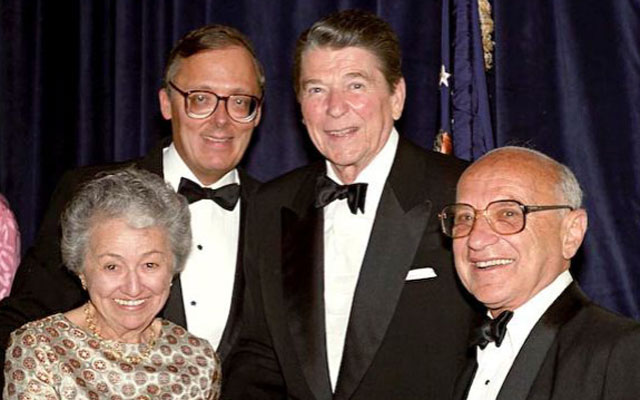







 The Daily Hatch