Monthly Archives: May 2013

John MacArthur on Proverbs (Part 3) “Guard your mind and obey your parents!!” John MacArthur: Chapter 4, would you notice verse 23? “Watch over your heart with all diligence,” the father says to his son, “for from it flow the springs of life.” Guard your mind diligently because everything in life comes out of it. Out of it comes your conduct

Over and over in Proverbs you hear the words “fear the Lord.” In fact, some of he references are Proverbs 1:7, 29; 2:5; 8:13; 9:10;14:26,27; 15:16 and many more. Below is a sermon by John MacArthur from the Book of Luke on 3 reasons we should fear the Lord.

It is tough to guard your mind with all the distractions in the world today. Think about how much the world has changed in the last few years. I remember sitting on the couch in my grandparents house in 1980 talking to my grandfather Hatcher about the changes that had occurred in his lifetime. (The same could be said about my Grandfather Murphey too.) My Grandfather Hather was  born in 1903 and he remembers riding on horses and his father was a postal delivery man and he  had a route he did with his horse and buggy near Franklin, Tennessee. (My grandfather actually remembered seeing  Halley’s Comet coming in 1911.)

Then in 1980 we had computers coming on strong and not to mention that we had been to the moon in 1969 and it seemed that many families in the USA had several cars. What a dramatic change from 1903. However, there is another big change now with FaceBook, cell phones, and other social media. Guarding your mind can be very difficult these days.

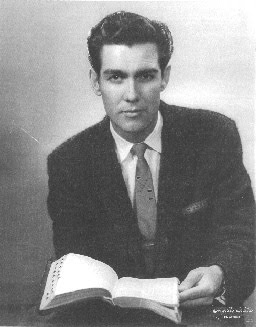
John MacArthur

I remember hearing Dr. Adrian Rogers say that if he had to do it over again he would read from Proverbs every day to his kids. They turned out to be great kids and they were raised right. Nevertheless, if he had to do it over again he thought a more emphasis on Proverbs is the way to go. That is why I am spending so much time in Proverbs with my kids today.

John MacArthur does a great job on Proverbs and here is a portion of his sermon on Proverbs.

Lesson number two. Son, not only fear your God but guard your mind…guard your mind. Chapter 3 verse 3, among many, introduces the heart here. And the writer mentions kindness, chesed(?), that beautiful word that means love, loyalty, faithfulness, fidelity, kindness. And then the word met(?) which means truth or accuracy, reliability or dependability. Take that, those two marvelous things, loyalty, faithfulness, fidelity and all of that, along with reliable, dependable, accurate truth and bind them around your neck and write them on the tablet of your heart, chisel, as it would be in the stone of your mind. Heart has reference to mind, the seat of thought and emotion and will.

In other words, teach your son to guard his mind. You are responsible as a father for the mind of your child. Boy, what a tremendous responsibility today. When the assault on the human mind is at such a level as it is today through the media, the job of guarding the mind of your young person and teaching him how to guard it is indeed a formidable task. Chapter 4, would you notice verse 23? “Watch over your heart with all diligence,” the father says to his son, “for from it flow the springs of life.” Guard your mind diligently because everything in life comes out of it. Out of it comes your conduct. It’s not what goes into a man, Jesus said in Matthew, it’s what comes out of a man that defiles him. And so what goes in is not the issue. What starts in and comes out is. And so the heart must be right. The father then has the task of assuring the son’s mind is programmed with truth with virtue, with faithfulness, with honesty, with integrity, with loyalty, with love, with all that those two words in chapter 3 can sum up. Father, you have a responsibility to teach your son to guard his mind.

All the way through this passage and I wish we had time to just kind of wander through the ten chapters, you see this. Back in verse 9 of chapter 1 he talks about the fact that good instruction is a graceful wreath to your head, and ornaments around your neck. They…when a son wears the truth in his heart, it graces him. In chapter 2 and verse 10 He wants wisdom to enter your heart and knowledge be pleasant to your soul so that discretion will guard you and understanding will watch over you to deliver you from the way of evil. In chapter 3 verse 1, “Let your heart keep My commandments.” Chapter 4 verse 4, “Let your heart hold fast My words, keep My commandments and live.” And that is the issue that the mind, or the heart as it’s called, be guarded carefully. Father, you are the guardian of your child’s mind. You must keep the right stuff going in and the wrong stuff out, that is your duty before God to guard your son’s mind, your children as well. What a tremendous responsibility we have. That means we have to protect our children from what they are exposed to. That’s the negative. The positive, we must make sure that they exposed to what we want to fill their mind, therein lies the benefit of a godly education, of Christian training, of exposure to the teaching of the Word of God. That is the duty of the father. Teach your son…fear your God, son, and guard your mind for out of it comes your conduct.

Third great lesson, a father must teach his son…obey your parents…obey your parents. All through this entire section these statements about “hear, my son, your father’s instruction,” are repeated…chapter 1 verse 8, chapter 2 verse 1, 3 verse 1, 4 verse 1 and then again in chapter 4 it’s repeated again and again. Look at verse 10, “Hear, my son, accept my sayings.” Verse 11, “I have directed you in the way of wisdom, I have led you in upright paths.” Do what I say, is what he’s saying. Verse 20, “My son, give attention to my words, incline your ear to my sayings, do not let them depart from your sight, keep them in the midst of your heart, or your mind.” We’re reinforcing here the first commandment with promise which is, “Children, obey your parents in the Lord.” That’s the first commandment with promise. Teach your sons to obey what you say.

Now that means discipline. Go back to chapter 3 verse 11. “My son, do not reject the discipline of the Lord, nor loathe His reproof, for whom the Lord loves He reproves, even as a father the son in whom he delights.” If you love your son you discipline him, you reprove him, you rebuke him. Here is discipline. And if we are to have dutiful faithful sons who carry on a righteous pattern, they must learn to obey their parents and discipline is part of that. Chapter 10 verse 13, “A rod is for the back of him who lacks understanding.” When your son doesn’t do what you want him to do, you use a rod. Later on in Proverbs it says he has rebellion in his heart, drive it far from him with a rod. This is discipline not done in anger but done in love. Whom the Father loves He disciplines. And this discipline is done for the purpose of conforming your son to wisdom, for the purpose of breaking self‑will, for the purpose of removing foolishness, for the purpose of delivering the child from spiritual death and for the purpose of making him a delight to his parents. All of those things are taught in Proverbs. Teach your children to obey and use a rod to reinforce because God says physical punishment done in love is a strong corrective. That way your children learn to obey their parents. And if they learn to obey their parents and their parents are advocating the law of God, they will learn to obey the law of God. And if they learn to obey their parents, they will learn to submit to the parents’ authority and later on when they’re living in society they will learn to submit to societal authority in any form. A disobedient child, you see, makes not only a spiritual disaster but an anti‑social personality and very often a criminal adult.

You have a task, father, to say to your son you must learn to fear your God, guard your mind and obey your parents. You must learn how to submit to authority and since we represent the authority of God and are teaching you the wisdom of God, you must obey…you must obey. I do not believe there’s any excuse for a rebellious child. I believe that children can be under control if they’re properly taught by their fathers to obey.

_____________

FINAL QUESTION: WHAT DOES PROVERBS 4:23-27 MEAN?

Keep vigilant watch over your heart;
that’s where life starts.
Don’t talk out of both sides of your mouth;
avoid careless banter, white lies, and gossip.
Keep your eyes straight ahead;
ignore all sideshow distractions.
Watch your step,
and the road will stretch out smooth before you.
Look neither right nor left;
leave evil in the dust.

Truth Tuesday: Why Schaeffer? by J.E. Schaitel

How Should We Then Live? Episode 5: The Revolutionary Age

I love the works of Francis Schaeffer and I have been on the internet reading several blogs that talk about Schaeffer’s work and the work below was really helpful. Schaeffer’s film series “How should we then live?  Wikipedia notes, “According to Schaeffer, How Should We Then Live traces Western history from Ancient Rome until the time of writing (1976) along three lines: the philosophic, scientific, and religious.[3] He also makes extensive references to art and architecture as a means of showing how these movements reflected changing patterns of thought through time. Schaeffer’s central premise is: when we base society on the Bible, on the infinite-personal God who is there and has spoken,[4] this provides an absolute by which we can conduct our lives and by which we can judge society.  Here are some posts I have done on this series: Francis Schaeffer’s “How should we then live?” Video and outline of episode 10 “Final Choices” , episode 9 “The Age of Personal Peace and Affluence”, episode 8 “The Age of Fragmentation”, episode 7 “The Age of Non-Reason” , episode 6 “The Scientific Age”  episode 5 “The Revolutionary Age” , episode 4 “The Reformation” episode 3 “The Renaissance”, episode 2 “The Middle Ages,”, and  episode 1 “The Roman Age,” .

In the film series “WHATEVER HAPPENED TO THE HUMAN RACE?” the arguments are presented  against abortion (Episode 1),  infanticide (Episode 2),   euthanasia (Episode 3), and then there is a discussion of the Christian versus Humanist worldview concerning the issue of “the basis for human dignity” in Episode 4 and then in the last episode a close look at the truth claims of the Bible.

Francis Schaeffer

01/27/2011

Why Schaeffer?

image from francis-schaeffer.ns01.us

Why study the works of Francis Schaeffer?

That is a question Dan Guinn (founder of FSS) and I have discussed alot over the last year or so. I think it is definitely a fair question. With great contemporary teachers like R.C. Sproul and John MacArthur; and former teachers like C. H. Spurgeon, James Montgomery Boice, and Martin Lloyd-Jones, why Francis Schaeffer?

Each member of our team at www.francisschaefferstudies.org will have a different answer to that question. I can only speak for myself here when I answer that key question “why Schaeffer?”.

I am drawn to Schaeffer because he is unapologetically orthodox, comprehensive, caring and transparent. Sure, there are more reasons I could come up with other than these four, but these are what I guess you would call my top four. I believe Schaeffer had a unique combination of these qualities.

A Little Background

Before I elaborate on those four points I should first recount how I ever became aware of Francis Schaeffer. I was raised in the Evangelical Free denomination and since 19 years old have been a Baptist. Francis Schaeffer was a Presbyterian, and people like him were so far off my radar that they never even registered, until recently of course.

I became aware of Francis Schaeffer around the middle of 2008. At the time, I was reading widely, trying to sort out alot of questions I had about life and Christianity. I kept noticing time and again the name of Francis Schaeffer pop-up. I would see quotes by him or references to him (or L’Abri) in various magazine articles, internet blogs and books I was reading. No matter where I turned, whether fundamentalist or evangelical, whether Reformed or non-Reformed, whether contemporary or decades old material, all these sources I valued and trusted were using the ideas and example of Schaeffer. Eventually I became aware of the DVD How Should We Then Live and I purchased it and watched it with my wife Karey.  The rest is history, as they say.

Unapologetically Orthodox

I was raised in a sound evangelical church from birth through high-school, but for whatever reason, I came out of 18 years as a Christian knowing alot of Bible stories and biblical morality, but little doctrine. I knew the basics of the gospel, that we are sinners without hope of saving ourselves and Christ’s death on the cross was a sacrifice that would cover my sins and restore me to God so that I could be with God in heaven if I trusted Christ’s work and accepted his gracious gift by faith. Beyond that I was clueless. I had heard the word “Trinity” and knew that is what our church believed and was important, but never heard about Modalism. I had no idea about Christ’s nature, the hypostatic union or any of the heresies concerning the nature of Christ. I did accept the virgin birth, even though I was sketchy on why that was necessary. Mostly I believed orthodox Nicene Christianity because that is what everyone at our church believed. I couldn’t necessarily explain why I believed everything I believed.

To make a long story short I soon became wrapped up in a cult. I knew I was biblically illiterate and was trying to study the Bible and found this late night TV preacher and got sucked in. This isn’t the place to go into all the details, but needless to say, once I got out of that I was terribly embarrassed, totally confused and knew then that I was not only biblically illiterate but extremely gullible. On top of all that, several years later I found out my friend and pastor was a total fraud. He was having an affair and left Christianity to become a Wiccan Priest. This was a good friend who introduced us to Doug Wilson books, did our marriage counselling when Karey and I were engaged, officiated our wedding, signed our marriage certificate and baptized my daughter. I could not believe the rumors about his affair and defended him thinking everyone was being ridiculous. Once again I had been duped.

I am extremely sensitive about orthodox Christian doctrine to this day. I have wasted too many years believing things that turned out to be false. I have spent alot of time wondering “what is true?”, “what is real and what is a sham?”. Life is short, I don’t have time to believe fairy tales. Francis Schaeffer knew alot of young people like me and he wrote alot about Truth, Reality and how all those philosophical questions apply to day to day living. Schaeffer said “There is only one good reason to be a Christian. Because it is true.”I get that. If Christianity is not true then forget it, it is a waste of time! Schaeffer also would talk about “True Truth”. In our Post-Modern culture where people talk about personal truth, it is refreshing to hear someone else talk about True Truth, that Truth that is universal for all time and for all people, a truth that describes reality. My generation plays too many games, especially when it comes to authority, morality and truth.

Schaeffer took people like me seriously, he took questions like mine seriously. He wrote many of his books for people just like me. He went through alot of the same struggles I have gone through.

Schaeffer knew what it was to mark out, stand up for, and defend orthodox historic Christianity. He lived through the famous Modernist-Fundamentalist Controversy of the first half of the twentieth century. Schaeffer expended much ink in writing against theological liberalism, Neo-Orthodoxy and Existentialism. He was courteous with his opponents but he would not compromise truth. Francis Schaeffer unapologetically held to the doctrine of the Protestant Reformers, the Westminster Confession of Faith and the historic creeds such as the Apostles Creed and Nicene Creed. While at Westminster Theological Seminary he studied under great men such as J. Gresham Machen and Cornelius Van Til.

Comprehensive

When I went to college I arrived with a love of history. I wanted to be a history professor. I took a year of World History, a year of History of Western Music, a course on the history of languages and linguistics, a year of Church History, a semester of History of Western Art, and a semester of Constitutional Law (which was alot of US History). I loved these classes, even 17 years later I still have my text books and class notes. Back then I wanted to understand how history fit together.

If you have every seen or read Schaeffer’s How Should We Then Liveyou will understand how much of a treat it was for me to encounter an unapologetically orthodox Christian who valued all aspects of life and culture. He not only talks about the Classical, Medieval, Renaissance, Reformation, Enlightenment and Modern periods, and the literature, music, art and architecture of these periods, but also what the philosophical and theological developments of these periods have to do with us here and now in our post-modern society. He engages these topics as well as environmentalism, law, ethics, government, technology, and commerce.

Schaeffer was the first person I had ever encountered who demonstrated that Christianity was not just a religion that dealt with the afterlife (and morality), but that Christianity also had the answers for every aspect of life on earth here and now. Up until this time I had seen Christianity as a religion that dealt in the realm of relationships, morality, sin and redemption. Never before had I seen that Christianity not only had something to contribute in the area of science, art, law, commerce, government and philosophy, but that it was the only worldview or religious or philosophical system that had answers in every area of human existence. Only Christianity has a coherent, comprehensive and consistent worldview that answers all of the big questions mankind asks. Only Christianity can account for personality, purpose, beauty, sin, evil, charity, laws of logic, laws of nature, science and language.

Other authors, philosophers and historians can certainly go deeper than Schaeffer in their respective field, but no one I know of has the breadth and command of all these subjects or has written over thirty books covering these varied topics.

Caring

I found Jerram Barrs  iTunes University classes on Francis and Edith Schaeffer back in 2009. Karey and I both listened to the MP3 lectures and we were struck by how caring these two people were. Both Francis and Edith opened their home for over 30 years to anyone who wanted to come live with them. This was not a conference center with an apartment attached or a dorm with a dorm master apartment. This was their home. Strangers from all over the world slept in their living-room, their hallway, used their bathroom, ate at their table. They raised their kids around all this. Example after example demonstrates that the Schaeffers were normal people like me and cared about people like me. Sure Schaeffer had been to seminary and been a pastor, but he didn’t think of himself as above anyone. He was the one who preached the sermons and later wrote the book No Little People. Schaeffer believed that all men and women were made in the image of God, deserved respect and would give attention to them whether they were the cleaning staff at a hotel, a university student, or a drugged out hippie. Schaeffer genuinely, actually, consistently cared about people.He didn’t pay attention to people as a tactic for growing a ministry or as an evangelistic technique. No, he actually cared about people.

All truly great Christians have a gentleness and tenderness about them, a gentleness and tenderness that is manifest in the delight they take in spending time with little children and the energy they gladly expend on “little people”… The Lord has time for every one of his people – no matter how insignificant they may seem to the Christian leader who has his own big agenda in mind.

Schaeffer, True Spirituality pg xxi

I never met Schaeffer, he died when I was 11 years old, but I honestly believe had I met him he would have treated me just how Larry Snyder treats me when I visit Rochester – genuinely interested in me and how I am doing. In our day and in our culture we know that we are very disconnected. Social media sites like Facebook would be nothing if we all felt satisfied with our relationships and if our local communities were satisfying our longing for sincere relationships. Our families are many times spread out across states or across the country. Everyone is busy and our typical communication is truncated, superficial and at times trite. We aren’t dummies, we know that most people don’t really care about us. When we do find a few people who genuinely care about us we feel like we have discovered buried treasure.

We are naturally cynical because our pop-culture is all about selling us stuff. Advertising is everywhere. We have to constantly be on guard for people who are trying to sneak around the back door to our wallets through seeming friendly and seeming to care. Multi-level marketing is notorious for this. Need I even mention televangelists?

In an age of bait and switch, slick talking hustlers it is rare to find people who actually care about a stranger simply because they are fellow humans who God cares about. I have been inspired by both Edith and Francis Schaeffer in how they demonstrated compassion and love for ordinary people. Karey and I have become foster parents as means of trying to follow the example of the Schaeffers.

Transparent

As a person who has gone through a few times where I have had periods of crisis, I appreciate Schaeffer for sharing his struggles and doubts. He was very real, very authentic in his life. He didn’t try to put himself off as having it all together, he knew he had faults. He was very candid about his crisis of faith in 1951 and I believe because he had been through that experience he was able to empathize with those who came to L’Abri with the same struggles and the same questions. Like I was saying above, we live in a culture fully of phony people who tailor their image to what they want to project, regardless of whether that image reflects reality. We are hungry for authentic people, especially in our teachers and leaders.

Conclusion

Francis Schaeffer wasn’t a great larger than life Christian celebrity. He was an ordinary person who simply dedicated his life to the service of his Lord and his fellow man. He wasn’t a guru, he wasn’t a prophet, he wasn’t some sort of upper-tier Christian; he was simply a man that God in His providence chose to use.

I believe my generation can benefit and learn from both Francis and Edith Schaeffer. We can learn not only from their numerous books, but also from their lives and their work in L’Abri.  Schaeffer put decades of time and effort into talking to people, listening, debating, reading, and writing. The fruits of his labor are readily available to us. There is no sense in recreating the wheel.

These are some of the reasons why I believe we should study Schaeffer.

Posted at 02:27 AM in Francis Schaeffer | Permalink

Related posts:

Francis Schaeffer’s wife Edith passes away on Easter weekend 2013 Part 7 (includes pro-life editorial cartoon)

The Francis and Edith Schaeffer Story Pt.1 – Today’s Christian Videos The Francis and Edith Schaeffer Story – Part 3 of 3 Francis Schaeffer: “Whatever Happened to the Human Race” (Episode 1) ABORTION OF THE HUMAN RACE Published on Oct 6, 2012 by AdamMetropolis ________________ Picture of Francis Schaeffer and his wife Edith from the […]

The Mark of the Christian by Francis Schaeffer Part 1

  THE MARK OF A CHRISTIAN – CLASS 1 – Introduction Published on Mar 7, 2012 This is the introductory class on “The Mark Of A Christian” by Francis Schaeffer. The class was originally taught at Redeemer Presbyterian Church in Overland Park, KS by Dan Guinn from FrancisSchaefferStudies.org as part of the adult Sunday School hour […]

Francis Schaeffer’s wife Edith passes away on Easter weekend 2013 Part 6 (includes pro-life editorial cartoon and tribute from son-in-law Ranald Macaulay)

The Francis and Edith Schaeffer Story Pt.1 – Today’s Christian Videos The Francis and Edith Schaeffer Story – Part 3 of 3 Francis Schaeffer: “Whatever Happened to the Human Race” (Episode 1) ABORTION OF THE HUMAN RACE Published on Oct 6, 2012 by AdamMetropolis ________________ Picture of Francis Schaeffer and his wife Edith from the […]

Francis Schaeffer’s wife Edith passes away on Easter weekend 2013 Part 5 (includes pro-life editorial cartoon)

The Francis and Edith Schaeffer Story Pt.1 – Today’s Christian Videos The Francis and Edith Schaeffer Story – Part 3 of 3 Francis Schaeffer: “Whatever Happened to the Human Race” (Episode 1) ABORTION OF THE HUMAN RACE Published on Oct 6, 2012 by AdamMetropolis ________________ Picture of Francis Schaeffer and his wife Edith from the […]

Francis Schaeffer’s wife Edith passes away on Easter weekend 2013 Part 4 (includes pro-life editorial cartoon)

The Francis and Edith Schaeffer Story Pt.1 – Today’s Christian Videos The Francis and Edith Schaeffer Story – Part 3 of 3 Francis Schaeffer: “Whatever Happened to the Human Race” (Episode 1) ABORTION OF THE HUMAN RACE Published on Oct 6, 2012 by AdamMetropolis ________________ Picture of Francis Schaeffer and his wife Edith from the […]

Francis Schaeffer’s wife Edith passes away on Easter weekend 2013 Part 3 (includes pro-life editorial cartoon)

The Francis and Edith Schaeffer Story Pt.1 – Today’s Christian Videos The Francis and Edith Schaeffer Story – Part 3 of 3 Francis Schaeffer: “Whatever Happened to the Human Race” (Episode 1) ABORTION OF THE HUMAN RACE Published on Oct 6, 2012 by AdamMetropolis ________________ Picture of Francis Schaeffer and his wife Edith from the […]

“Schaeffer Sundays” Francis Schaeffer’s own words concerning humanist dominated public schools in USA even though country was founded on a Christian base

Francis Schaeffer: “Whatever Happened to the Human Race?” (Episode 2) SLAUGHTER OF THE INNOCENTS Published on Oct 6, 2012 by AdamMetropolis The 45 minute video above is from the film series created from Francis Schaeffer’s book “Whatever Happened to the Human Race?” with Dr. C. Everett Koop. This book  really helped develop my political views concerning […]

“Schaeffer Sundays” Francis Schaeffer’s own words concerning where the Bible-believing Christians been the last few decades

Francis Schaeffer: “Whatever Happened to the Human Race” (Episode 1) ABORTION OF THE HUMAN RACE Published on Oct 6, 2012 by AdamMetropolis The 45 minute video above is from the film series created from Francis Schaeffer’s book “Whatever Happened to the Human Race?” with Dr. C. Everett Koop. This book  really helped develop my political views […]

Taking on Ark Times Bloggers on various issues Part E “Moral absolutes and abortion” Francis Schaeffer Quotes part 5(includes the film SLAUGHTER OF THE INNOCENTS) (editorial cartoon)

I have gone back and forth and back and forth with many liberals on the Arkansas Times Blog on many issues such as abortion, human rights, welfare, poverty, gun control  and issues dealing with popular culture. Here is another exchange I had with them a while back. My username at the Ark Times Blog is Saline […]

“Schaeffer Sundays” Francis Schaeffer’s own words concerning religious liberals and humanists

Francis Schaeffer: “Whatever Happened to the Human Race” (Episode 5) TRUTH AND HISTORY Published on Oct 7, 2012 by AdamMetropolis The 45 minute video above is from the film series created from Francis Schaeffer’s book “Whatever Happened to the Human Race?” with Dr. C. Everett Koop. This book  really helped develop my political views concerning abortion, […]

Cato Institute on privatizing the post office

Should we junk the mail and privatize the USPS? w/ Tad DeHaven

Uploaded by on Aug 10, 2009

With a deficit of almost 16 billion in 2011 the post office must be closed and private firms can take over. This is a complete joke now.

Privatizing the U.S. Postal Service

PrintPrint

by Tad DeHaven

November 2010

Overview
Background
Declining Revenues
Bloated Costs
Postal Unions
Lessons from Abroad
Conclusions

Overview

The U.S. Postal Service is a branch of the federal government. It is headed by a Postmaster General and a Board of Governors, with further oversight provided by the Postal Regulatory Commission. However, ultimate authority over the USPS rests with Congress.

The USPS is structured like a business in that revenues from the sale of postal products generally cover costs, and it receives virtually no federal appropriations.1 The organization is the second-largest civilian employer in the United States—after Wal-Mart—with about 600,000 workers. If the USPS were a private company, it would rank about 28th on the Fortune 500 list of largest companies.

While the USPS is structured like a business, Congress often prevents it from actually operating like a private company, such as taking actions to reduce costs, improve efficiency, or innovate in other ways. The agency is also obligated by statute to provide mail services to all Americans, irrespective of where they live and the cost of serving them. Furthermore, it is required to deliver first-class mail at a uniform price throughout the nation.

While Congress imposes various costs and obligations on the USPS, it also protects it from competition. The USPS has a legal monopoly over first-class mail and standard mail (formerly called third-class mail). Thus, we have a postal system that encourages high costs and inefficiency, while preventing entrepreneurs from trying to improve postal services for Americans.

The USPS is in deep financial trouble as a result of declining mail volume, bloated operating expenses, a costly and inflexible unionized workforce, and constant congressional meddling. At the same time, electronic communications and other technological advances are making physical mail delivery less relevant.

America’s postal system needs a radical overhaul. This essay discusses the problems of the USPS and looks at some recent postal reforms abroad.2 It concludes that taxpayers, consumers, and the broader economy would stand to gain with reforms to privatize the USPS and open U.S. mail delivery up to competition.

Background

Article 1, Section 8 of the Constitution says that Congress shall have the power “to establish Post Offices and post Roads.” Thus, the Constitution allows the government to get involved in postal services, but that doesn’t mean that the government has to be involved, let alone be granted a monopoly over mail.

Prior to the Postal Act of 1863, intercity letters were either held at the destination post office for pick-up or delivered by an independent contractor. The Postal Code of 1872 extended the postal monopoly to the delivery of local letters, banning intracity private carriers. These private carriers, which numbered 147 at one time, had been innovative: for example, they introduced stamps before the Post Office did.3

Prior to 1971 the government provided postal services through its U.S. Post Office Department, an agency that received annual appropriations and heavy subsidies from Congress. Members of Congress influenced many aspects of the Post Office Department’s operations, such as the pricing of postal products and the selection of managers.

The Postal Reorganization Act of 1970 replaced the Post Office Department with the U.S. Postal Service. The USPS was made an independent agency of the executive branch and designed to be financially self-sufficient, relying on the sale of postage, mail products, and services for revenue. The USPS is required by law to cover its costs, but can borrow from the U.S. Treasury subject to a limitation of $3 billion per year and a total debt ceiling of $15 billion.

As a federal organization, the USPS benefits from numerous other privileges. The USPS is exempt from vehicle licensing requirements, sales taxes, and local property taxes. It doesn’t have to pay parking tickets, and it has eminent domain powers. It pays to itself the income taxes that it would owe if it were a private business.

The USPS is mandated by Congress to provide the American public with “universal service,” which includes uniform prices, access to services, and six-day delivery nationwide. To ensure financial support for these obligations, Congress grants the USPS a statutory monopoly on the delivery of first-class and standard mail and restricts mailbox access to mail delivered by the USPS.4

The USPS’s express mail and package delivery services are subject to competition, which comes chiefly from FedEx and the United Parcel Service (UPS). However, the USPS’s monopoly prevents other companies from delivering first-class and standard mail, with an exception for urgent mail, and private companies are not allowed to place their deliveries in mail boxes.

The USPS does face increasing competition from correspondence sent via a variety of electronic alternatives. While the USPS may have a statutory monopoly over a portion of physical mail, new technologies are allowing Americans to bypass the organization on all of its lines of business.

Declining Revenues

Although the USPS is structured to operate like a self-supporting business, this model is on borrowed time.

From 2007 to 2010, the USPS lost $20 billion, and its debt increased from $2.1 billion to $12 billion. The USPS expects to hit its $15 billion legal borrowing ceiling in 2011. As a result, the Government Accountability Office placed the USPS on its “high risk” list of troubled federal agencies in 2009.5 These financial problems are not temporary. Postal experts expect a future of stagnant-to-declining revenue for the USPS with stable-to-increasing expenses unless Congress makes major reforms.

In 2009, USPS revenues totaled $68 billion, or $7 billion lower than 2008. About 88 percent of the revenue was generated by “market-dominant” products including first-class mail and standard mail (bulk advertising and direct-mail solicitations). First-class mail, which is the most profitable, accounted for 52 percent of those revenues. The remaining 12 percent of the USPS’s revenue came from competitive products including Express Mail, Priority Mail, bulk parcel post, and bulk international mail.6

The decline in USPS revenues has been driven by a large drop in mail volume, particularly for profitable first-class mail. The recent recession has hurt USPS finances, but the demand for mail delivered by the USPS has been steadily falling as consumers and businesses have shifted to electronic alternatives.

First-class mail volume has fallen 19 percent since 2001, and it is projected to fall another 37 percent by 2020.7 From 2006 to 2009 total mail volume dropped from 213 billion to 177 billion items, a 17 percent decrease.8 By 2020 the USPS estimates further volume declines of about 15 percent, to 150 billion pieces, which would be the lowest level since 1986.9

The 2006 Postal Accountability and Enhancement Act terminated a cumbersome rate‑setting structure and gave the USPS more flexibility to set prices. But the law required that average rates in each market-dominant mail class not increase faster than the consumer price index.

The USPS can request that the Postal Regulatory Commission approve a rate increase above the price cap on the basis of extraordinary or exceptional circumstances. The PRC recently rejected a USPS request for an exigent rate increase. Although it acknowledged that the recession has led to a substantial decline in mail volume, the PRC turned down the request because the rate adjustments represented “an attempt to address long-term structural problems not caused by the recent recession.”10

Looking forward, increasing postal rates may boost revenue in the short run, but would risk depressing mail volume and revenue in the long run, in part by accelerating the diversion of mail to competing electronic alternatives. Higher rates would also damage millions of businesses dependent on mailing and currently stuck with a monopoly provider of those services.

The USPS has asked Congress for permission to offer new nonpostal products and services (such as banking and insurance) to generate additional revenue. However, the USPS has a poor track record when it comes to introducing new products, and allowing a government entity to compete with the private sector in nonpostal markets would be unfair and unwise.11

Bloated Costs

Despite the USPS’s ability to achieve $10 billion in cost savings from 2007 to 2009, it has not been enough to offset the recent rapid decline in revenue.12 It also hasn’t been enough to prevent the upward trend in the organization’s cost per piece of mail, which rose from 34 cents in 2006 to 41 cents in 2009.13 If mail volume continues to decrease and the number of postal addresses increases, the cost to deliver each piece of mail will continue to rise while revenue per delivery point falls.

A key driver of mail delivery costs is the congressionally mandated obligation to serve virtually every mailing address, regardless of volume, six days a week. Fulfilling this “universal service” obligation results in the USPS having large fixed costs, including the costs of more than 36,000 postal outlets, 215,000 vehicles, and 600 processing facilities.

However, even given the universal service obligation, the Government Accountability Office and USPS officials believe that more than half of these processing facilities aren’t needed.14 Why aren’t they closed down to save money? The GAO notes that the USPS faces “formidable resistance” from members of Congress and postal unions when attempting to close or consolidate facilities.15

The USPS is required to provide services to all communities, including areas where post offices have low traffic and are not cost effective. Before closing a post office, the USPS must provide customers with at least 60 days of notice before the proposed closure date, and any person served by the post office may appeal its closure to the Postal Regulatory Commission. The USPS cannot close a post office “solely for operating at a deficit.”16

Members of Congress whose districts would be affected by a post office closure often raise a big fuss. Last year, for example, the USPS proposed consolidating 3,200 postal outlets, but following a congressional outcry, the number under consideration was reduced to a paltry 162.17 That is no way to run a business.

Full post offices are more costly to operate than other means of serving customers. The average post office transaction cost 23 cents per dollar of revenue in 2009 while the average transaction at a contract postal unit cost just 13 cents.18 Post offices used to generate almost all postal retail revenue, but 29 percent is now generated online through usps.com and other alternative channels.19

In 2009 post offices recorded 117 million fewer transactions than in 2008.20 Four out of five post offices are operating at a loss.21 However, the postal network’s overcapacity has drawn little corrective action from Congress. In fact, legislation introduced in the House with 102 cosponsors would apply the burdensome procedures for closing post offices to other postal outlets as well.22 Congress is actively working against the modernization of the U.S. postal system.

Excessive labor costs are another major problem. While the USPS has been able to eliminate a substantial number of employees through attrition, the USPS’s predominantly unionized workforce continues to account for 80 percent of the agency’s costs despite increased automation. The USPS estimates that, in the absence of changes, its total workforce costs will soar from $53 billion in 2009 to $77 billion in 2020.23

As of 2009 the USPS had financial liabilities and unfunded obligations of $88 billion.24 Unfunded obligations for retiree health benefits accounted for $52 billion of the total. The 2006 Postal Accountability and Enhancement Act addressed this unfunded liability by requiring the USPS to make a special payment of more than $5 billion annually from 2007 through 2016 to build up a retirement fund. This was a good idea to reduce possible liabilities on future taxpayers.

However, USPS revenues began plummeting shortly after the PAEA’s enactment. In 2009 Congress relieved the USPS by allowing it to defer $4 billion of its scheduled $5.4 billion retirement payment for the year. Facing the same situation this year, Congress adjourned without providing the USPS with similar relief. As a result, the USPS could soon run out of operating funds.

Critics argue that the pre-funding payment schedule is too aggressive, particularly in light of the USPS’s current financial struggles. However, the USPS faces a bleak future regardless of the payments. As the GAO notes, allowing the USPS to continue deferring the payments will “increase the risk that in the future USPS will not be able to pay these obligations as its core business continues to decline and if sufficient actions are not taken to restructure operations and reduce costs.”25

Opponents of pre-funding USPS retiree health benefits argue that private companies and the rest of the federal government are not legally required to do so. That is largely irrelevant. Retiree health care coverage is an increasingly rare perk in the private sector, and the federal government’s financial management is nothing to emulate. In 2008, only 17 percent of private sector workers were employed at a business that offered health benefits to Medicare-eligible retirees, down from 28 percent in 1997.26

Postal Unions

More than 85 percent of USPS employees are covered by collective-bargaining agreements. Among other provisions, these agreements include regular raises based on cost-of-living allowances. The other 15 percent of employees receive regular pay increases through a pay-for-performance program.

While the Postal Service negotiates with its unions to structure compensation, federal statutes hamper the USPS’s ability to craft market-based pay and benefits packages.27 The potential for mandatory arbitration gives the unions a big advantage in negotiations with management. When unions demand higher wages, more generous benefits, and added work rules, arbitrators usually give them part of what they want. And when weighing a decision on union contracts, arbitrators do not have to take the USPS’s financial situation into consideration. Not surprisingly, unions have been able to extract lucrative compensation packages from the USPS over the decades.

The Government Accountability Office notes that the USPS covers a higher proportion of employee premiums for health care and life insurance than other federal agencies.28 USPS workers participate in the federal workers’ compensation program, which generally provides larger benefits than the private sector. Also, instead of retiring when eligible, USPS workers can stay on the “more generous” workers’ compensation rolls.29

In 2009 the average postal employee received about $79,000 in total compensation.30 This compares to $61,000 in wages and benefits received by the average private sector worker that year.31 A recent study by labor economist James Sherk found that postal workers earn 15 to 20 percent more per hour than comparable workers in the private sector.32

Postal expert Michael Schuyler reviewed the studies on postal compensation and found the following:

Although the law says that postal employees should receive wages and benefits comparable to what they could earn in the private sector, the majority of economic studies examining the issue have concluded that a postal pay premium of 20%– 25% exists if just wages are counted and about 35% if the Service’s very generous benefits are also included.33

Another factor that reduces postal service efficiency is that union contracts inhibit the flexibility of USPS leaders in managing their workforce. For example, most postal workers are protected by “no-layoff” provisions, and the USPS must let go lower-cost part-time and temporary employees before it can lay off a full-time worker not covered by such provisions.

Collective bargaining agreements also make it difficult for the USPS to hire part-time workers, which would help to reduce labor costs. Hiring workers who can work less than eight-hour shifts would also give managers needed flexibility to address seasonal and weekly fluctuations in workload.

The USPS inspector general recently pointed out that the USPS’s utilization of part-time workers is less than that of UPS, FedEx, and postal systems in other countries.34 While only 13 percent of the USPS’s workforce is part-time, the figures for UPS and FedEx are a respective 53 and 40 percent. Germany’s Deutsche Post, which has been privatized, employs a workforce that is 40 percent part-time.35 The story is similar at many other foreign posts, such as the Netherlands’ postal service, TNT, which has also been privatized. TNT recently told its union that it would be “migrating towards an organization that employs mainly part‑time staff.”36

Unfortunately, already generous compensation combined with the USPS’s poor financial condition hasn’t stopped the postal unions from demanding more money and opposing greater flexibility. The American Postal Workers Union, which represents more than 200,000 workers, recently entered collective bargaining negotiations for a new contract. In an interview, APWU president William Burrus called a pay increase for his members an “entitlement” and stated that his union wants “more control over activities at work, more money, better benefits—we want more.”37 Burrus also called the sensible suggestion that arbitrators should be required to consider the USPS’s financial position “antidemocratic.”38

Lessons from Abroad

Declining demand and an inability to cut costs are not unique to the USPS, as government postal services in other countries have experienced similar problems. However, numerous countries have responded by shifting away from a government-run postal monopoly toward market liberalization, including privatizing the government postal agency and opening postal markets to entrepreneurs. The United States has lagged behind many countries on postal reforms. As a result, the U.S. rates near the bottom of the Consumer Postal Union’s 23-country “Index of Postal Freedom.”39

For some people, the idea of liberalization conjures up fears of a decline in the quality or universality of postal service. However, those things have not happened in the countries that have introduced pro-market postal reforms. Rather, these liberalizing countries have shown the ability to offer affordable, reliable, universal, and more efficient postal-delivery services.

In many countries, reforms have been pursued through the commercialization and corporatization of the postal service. Under such reforms, the government retains full or partial ownership but introduces modern practices involving management, labor compensation, finance, marketing, and capital investment.

In some countries the private sector has taken large ownership stakes. For example, 69 percent of Germany’s formerly government post office Deutsche Post is now privately owned.40 In the Netherlands, 100 percent of its formerly government post office is privately owned as TNT Post.41 The British government is considering selling off to private investors its ownership of the Royal Mail. At least 10 percent of the shares may be reserved for postal employees, which would have the benefit of reducing the unions’ incentive to take actions negatively affecting the company’s bottom line.42

While some nations have partly or fully privatized their post offices, a parallel trend is for countries to reduce or eliminate postal monopolies and allow for entrepreneurs to offer competitive services. New Zealand and Sweden repealed their postal monopolies in 1998 and 2003, respectively, and Germany and the Netherlands followed suit in 2008 and 2009, respectively. In 2008, the European Union announced a plan to eliminate the national monopolies of all EU member states by 2013.

Postal liberalization has produced more efficient services in many countries, but governments continue to impose unwarranted postal regulations in even the most reformed markets. For example, governments still typically mandate that universal service obligations be met, and they often also mandate certain service standards and pricing.

In New Zealand, for example, the government has a “deed of understanding” with the New Zealand Post under which it must maintain a specified number of post offices, keep the price of a stamp below a certain level, and refrain from implementing a rural service fee. Also, New Zealand Post must provide 95 percent of households with letter-delivery service six days per week in addition to other minimum service standards.43

Some patterns have emerged regarding the outcome of postal liberalization. Productivity has increased, costs have decreased, the universal service obligation continues to be met, service quality measured by on-time delivery has not dropped, and overall customer satisfaction seems to have increased.44

Another common result of postal liberalization is diversification of postal organizations into nonpostal activities. Consultants at Accenture have found that diversification not only has a measurable impact on the performance of international posts, but that it is what ultimately distinguishes high performers from low performers.45 America’s relatively dynamic economy is particularly suited for the diversification opportunities that would arise under postal liberalization.

Germany’s former postal monopoly, Deutsche Post, illustrates the type of transformation possible by liberalization. Today, the private Deutsche Post World Net has changed its compensation structure, imported managers from other industries, modernized the mail and parcels network within Germany, and developed new products such as hybrid mail and e-commerce. The company now has interests in not only the traditional mail and parcels business but also express mail logistics, banking, and more.46

Opening up America’s postal markets to new competitors promises great benefits for consumers because entrepreneurs have strong incentives to innovate, improve quality, and reduce costs. The universal service mandate could become less of an issue as entrepreneurs figure out cheaper and better ways to deliver mail to rural areas. Sam Walton, Henry Ford, and other great entrepreneurs made their fortunes by bringing affordable products and services to the masses. We need these sorts of innovators in the postal business.

Former Postmaster General William J. Henderson (1998–2001) stated in a Washington Post op-ed following his retirement that “what the Postal Service needs now is nothing short of privatization.” Henderson noted that while privatizing the USPS might sound radical, “it’s a concept the rest of the world has been taking seriously for years.”47

Conclusions

The USPS is in a financial death spiral because of the myriad factors discussed. It faces a projected $238 billion in losses over the next 10 years under the status quo. To avoid a large and growing burden from being foisted on taxpayers in coming years, the USPS should be privatized and postal markets open for competition from FedEx, UPS, and upstart entrepreneurs.

With privatization, Congress should end its micromanagement of the nation’s postal services. It should rescind the complex laws and regulations on delivery schedules, price caps, restrictions of facility shut-downs, and other business decisions. Such congressional meddling ultimately hurts the consumers that any postal business is supposed to serve by pushing up costs.

Consider the USPS’s recent request that Congress allow it to end Saturday mail delivery.48 Congress has blocked that move, which will raise USPS costs and ultimately result in higher stamp prices. The Saturday mail delivery issue also highlights the lack of consumer choice in the current system. If the USPS decides not to provide Saturday service, customers should be free to contract with other commercial entities to provide Saturday service, or service for any day of the week for that matter.

Policymakers resistant to reform often depict the USPS as a “national asset” that “binds the nation together.” But these days, it’s the Internet and our telecommunications networks that bind families and businesses together across the nation. It’s time to let go of the nostalgia for the USPS and bring America’s postal services into the 21st century with privatization, open competition, and entrepreneurial innovation.


1 The USPS receives a small annual appropriation from Congress of about $100 million as compensation for the revenue it forgoes in providing, at congressional mandate, free mailing privileges for the blind and absentee-ballot mailing for overseas military personnel.

2 I benefited greatly from the discussion of postal reforms in Robert Carbaugh and Thomas Tenerelli, “Restructuring the U.S. Postal Service,” forthcoming in Cato Journal.

3 Edward L. Hudgins, ed. The Last Monopoly: Privatizing the Postal Service for the Information Age (Washington: Cato Institute, 1996), p. 14.

4 The U.S. Supreme Court has confirmed this privilege by ruling that it is illegal in the United States for anyone other than the employees and agents of the Postal Service to deliver mail pieces to letter boxes marked “U.S. Mail.”

5 U.S. Government Accountability Office, “High Risk Series: Restructuring the U.S. Postal Service to Achieve Sustainable Financial Viability,” July 2009.

6 Government Accountability Office, “U.S. Postal Service: Financial Challenges Continue, with Relatively Limited Results from Recent Revenue-Generation Efforts,” GAO-10-191T, November 5, 2009, p. 4.

7 Government Accountability Office, “U.S. Postal Service: Strategies and Options to Facilitate Progress toward Financial Viability,” GAO-10-455, April 2010, p. 8.

8 United States Postal Service, “Ensuring a Viable Postal Service for America: An Action Plan for the Future,” March 2010, p. 3.

9 Government Accountability Office, “U.S. Postal Service: Strategies and Options to Facilitate Progress toward Financial Viability,” GAO-10-455, April 2010, p. 8.

10 Postal Regulatory Commission, Statement of Chairman Ruth Y. Goldway, Decision of the Commission in Docket R2010-4, “Rate Adjustment Due to Extraordinary or Exceptional Circumstances,” September 30, 2010.

11 Michael Schuyler, “The Postal Service Asks Congress to Eliminate Saturday Service; Congress Still Has Questions,” Institute for Research on the Economics of Taxation Advisory no. 267, July 7, 2010, p. 11.

12 Government Accountability Office, “U.S. Postal Service: Strategies and Options to Facilitate Progress toward Financial Viability,” GAO-10-455, April 2010, p. 11.

13 United States Postal Service, “Ensuring a Viable Postal Service for America: An Action Plan for the Future,” March 2010, p. 5.

14 Government Accountability Office, “U.S. Postal Service: Strategies and Options to Facilitate Progress toward Financial Viability,” GAO-10-455, April 2010, p. 29.

15 Government Accountability Office, “U.S. Postal Service: Strategies and Options to Facilitate Progress toward Financial Viability,” GAO-10-455, April 2010, p. 29.

16 Government Accountability Office, “U.S. Postal Service: Strategies and Options to Facilitate Progress toward Financial Viability,” GAO-10-455, April 2010, p. 30.

17 Sean Reilly, “80% of Post Offices Losing Money,” FederalTimes.com, October 10, 2010.

18 United States Postal Service, “Ensuring a Viable Postal Service for America: An Action Plan for the Future,” March 2010, p. 8.

19 United States Postal Service, “Ensuring a Viable Postal Service for America: An Action Plan for the Future,” March 2010, p. 8.

20 United States Postal Service, “Ensuring a Viable Postal Service for America: An Action Plan for the Future,” March 2010, p. 9.

21 Sean Reilly, “80% of Post Offices Losing Money,” FederalTimes.com, October 10, 2010.

22 Sean Reilly, “80% of Post Offices Losing Money,” FederalTimes.com, October 10, 2010.

23 United States Postal Service, “Ensuring a Viable Postal Service for America: An Action Plan for the Future,” March 2010, p. 9.

24 Government Accountability Office, “U.S. Postal Service: Strategies and Options to Facilitate Progress toward Financial Viability,” GAO-10-455, April 2010, p. 12.

25 Government Accountability Office, “U.S. Postal Service: Strategies and Options to Facilitate Progress toward Financial Viability,” GAO-10-455, April 2010, p. 22.

26 Paul Fronstin, “Implications of Health Reform for Retiree Health Benefits,” Employee Benefit Research Institute Issue Brief no. 338, January 2010, p. 4.

27 United States Postal Service, “Ensuring a Viable Postal Service for America: An Action Plan for the Future,” March 2010, p. 9.

28 Government Accountability Office, “U.S. Postal Service: Strategies and Options to Facilitate Progress toward Financial Viability,” GAO-10-455, April 2010, p. 28.

29 Government Accountability Office, “U.S. Postal Service: Strategies and Options to Facilitate Progress toward Financial Viability,” GAO-10-455, April 2010, pp. 15–16.

30 Budget of the U.S. Government, Fiscal Year 2011, Analytical Perspectives, Tables 10.2 and 10.3, pp. 108–109.

31 Chris Edwards, “Overpaid Federal Workers,” Cato Institute, June 2010, www.downsizinggovernment.org/overpaid-federal-workers.

32 James Sherk, “Inflated Federal Pay: How Americans are Overtaxed to Overpay the Civil Service,” Heritage Foundation, Center for Data Analysis, CDA10-05, July 7, 2010, p. 30.

33 Michael Schuyler, “Union Demands Hurt Postal Service Reforms,” Institute for Research on the Economics of Taxation Advisory no. 210, October 11, 2006, p. 6.

34 U.S. Postal Service, Office of Inspector General, “Workforce Flexibility—Would it Work for the Postal Service?” http://blog.uspsoig.gov/?p=3603.

35 U.S. Postal Service, Office of Inspector General, “Workforce Flexibility—Would it Work for the Postal Service?” http://blog.uspsoig.gov/?p=3603.

36 TNT Post letter issued to the trade unions, October 14, 2010, http://group.tnt.com/Images/Attachment_letter_to_the_trade_unions_tcm177-526206.pdf.

37 Emily Long, “Postal Service Looks for Ways to Reduce Labor Costs,” GovExec.com, September 1, 2010.

38 Emily Long, “Postal Service Looks for Ways to Reduce Labor Costs,” GovExec.com, September 1, 2010.

40 Deutsche Post DHL, www.dp-dhl.com/en.

41 TNT Post, www.tntpost.com.

42 Brian Groom, “Royal Mail Employees to be Offered Shares,” Financial Times, September 22, 2010.

43 Rick Geddes, “Reform of the U.S. Postal Service,” Journal of Economic Perspectives 19 no. 3 (2005): 217–32.

44 See, for example, Unites States Postal Service, “Transformation Plan,” Appendix H, April 2002, http://www.usps.com/strategicplanning/_pdf/2002TransformationPlan.pdf.

45 See Accenture, “Is Diversification the Answer to Mail Woes? The Experience of International Posts,” February 2010, www.usps.com/strategicplanning/_pdf/Accenture_Presentation.pdf.

46 See Michael Crew and Paul Kleindorfer eds., Competitive Transformation of the Postal and Delivery Sector (Norwell, MA: Kluwer Academic Publishers, 2003).

47 William J. Henderson, “End of the Route: I Ran the Postal Service—It Should be Privatized,” Washington Post, September 2, 2001, p. B1.

48 For more on the issue of eliminating Saturday mail delivery, see Michael Schuyler, “The Postal Service Asks Congress to Eliminate Saturday Service; Congress Still Has Questions,” Institute for Research on the Economics of Taxation Advisory no. 267, July 7, 2010.

From the desk of Michael Catt from Sept 26, 2004

This is from the desk of the pastor of Sherwood Baptist:

On the Changing of the Guard

From the Cluttered Desk… September 26, 2004 Volume 50, Edition 39


THE TIMES they are changing. To be honest, it’s a sad time for me as a pastor. The reality of these changes has hit me today. Although I am one that has no problem with change, there are changes I don’t always like.


TO BE HONEST, it started for me when Vance Havner died. Since 1985, there’s been no prophetic voice traveling the country, calling the church to repentance and revival. Vance Havner was the last of the 20th century prophets. Although not Southern Baptist, A.W. Tozer’s ministry, along with Havner’s and a few others, reminded us that we’re not as good as we think we are.


AS DR. HAVNER said about Bertha Smith praying at the Southern Baptist Convention, “She told God things about Southern Baptists that we didn’t want God to know.” So it is with the prophetic voice. Now we parade shields of brass where gold was once displayed. The tall timbers have been replaced by seedlings and saplings.


ALTHOUGH I ASKED GOD to let me be that voice when I was younger, it is obvious to me that He had different plans for me. Over the years, I’ve accepted that, but still believe that one day, I’d like to spend the last days of my ministry in a Bible Conference Ministry with an emphasis on revival and awakening.


WITH THE DEATH of Manley Beasley, we lost the voice of faith in our convention. No one could challenge Baptists to live by faith and believe God for the impossible like Manley. No one had been through more and come out on top more often than Manley. He was a living example to us of walking by faith.


WITH THE DEATH of Ron Dunn, we lost the last great Bible Conference teacher in Southern Baptist life. No one could wrestle with a text and make it more alive than Ron. The fact that he preached a dozen conferences here makes us blessed and accountable.


WITH WARREN WIERSBE ending his Conference Ministry, we have another change. To have had the privilege of getting to know Warren at a time when I had lost Ron was a blessing I could not measure. Having him preach here was a dream come true. Working on the web site, www.2prophetu.com with his blessings and encouragement has been a humbling experience. Our two Bridge Builder’s conferences were an encouragement to pastors in this region in ways that will not be known for years to come.


MOST OF MY FRIENDS in ministry are older than me. John Bisagno has now moved on from First Baptist Church of Houston. Dr. Bisagno did for FBC Houston what few pastors have ever been able to do. That church would have died years ago without his visionary, mission minded leadership. I’ll always treasure the privilege I had of preaching for him in the late 1980’s.


GEORGE HARRIS has passed the torch at Castle Hills. George has been a friend for a long time. He entrusted me to preach a revival for him in the 1980’s and he is one of the men who always encouraged me in ministry. We hit it off from day one and I count him as a dear brother and counselor.


BILL STAFFORD will one day have to slow down. He is the last one standing of Ron, Manley and Miss Bertha from those “Deeper Life” Conference days. We are privileged that we get to hear his heart every year.


JIMMY DRAPER is one of the hero’s in my ministry. Jimmy was the consummate pastor and has been one of the pillars of Southern Baptist life for decades. He has recognized the problem we have in our denomination in raising up new leaders and is spending his time helping us face our problem. I don’t meet many young Jimmy Drapers in my goings and comings.


NOW, ADRIAN ROGERS has announced his retirement. Effective in the Spring of 2005, Bellevue Baptist Church will have a new pastor for the first time in 32 years. They’ve only had three pastors for most of the last 75 years. That’s hard for me to even comprehend.


ADRIAN’S PULPIT MINISTRY is legendary. His sermons have been preached by more preachers than are willing to admit it. Love Worth Finding is viewed around the world. Since going to Bellevue, the church has grown from 9,000 – 29,000 members. It is one of the great churches of the world. The name Adrian Rogers and Bellevue have become synonymous.


IN HIS LETTER of resignation, Adrian said the three greatest qualities any pastor could hope for were evident at Bellevue. First, they believed the Bible and loved Jesus. Secondly, they loved one another and had a spirit of unity. Lastly, they believed the pastor was God’s anointed and appointed leader of the church. There you have it – a great pastor and a great church because they have all the right ingredients.


THESE ARE SAD DAYS for me. I count every one of these men as my friends. They have advised me, rebuked me, prayed for me, encouraged me, loved me and helped me. I’m not worthy to stand in their shadows or even whisper their names. They are men of whom the world was not worthy. Yet, God blessed us and continues to bless us because of their faithfulness to the Lord.


I AM, of all men, blessed. To have talked, prayed and eaten with these men is more than I could have ever imagined as a dumb kid growing up in Mississippi. The baton is being passed. The torch is being handed off. Elijah is leaving the field, but I wonder, where is the Elisha who will take their place? Where are the men who are committed to the study of the Word, the love of the church and an uncompromising gospel?


WITH THE CHANGING of the guard over the last few years and in the coming years, I pray we won’t replace Rangers, Seals and Marines with Draft dodgers. These men have paid the price. My generation is only interested in the perks. God help us if we don’t raise up a new generation that is better than my generation.


The Friar   ©   Click for copyright information
Related posts:

Part 4 Adrian Rogers on Proverbs “How To Be The Father Of A Wise Child” (video too)

Picture of Adrian Rogers above from 1970′s while pastor of Bellevue Baptist of Memphis, and president of Southern Baptist Convention. (Little known fact, Rogers was the starting quarterback his senior year of the Palm Beach High School football team that won the state title and a hero to a 7th grader at the same school named […]

Part 3 Adrian Rogers on Proverbs “How To Be The Father Of A Wise Child” (video too)

I have been reading Proverbs almost every day for many years with my family in the evening and there is lots of wisdom in it. Take a look at the third part of this message from Adrian Rogers. How to Be the Father of a Wise Child Another great sermon outline from Adrian Rogers. Adrian Rogers […]

Part 2 Adrian Rogers on Proverbs “How To Be The Father Of A Wise Child” (video too)

I have been reading Proverbs almost every day for many years with my family in the evening and there is lots of wisdom in it. Take a look at the second part of this message from Adrian Rogers. How to Be the Father of a Wise Child Another great sermon outline from Adrian Rogers. Adrian Rogers […]

Part 1 Adrian Rogers on Proverbs “How To Be The Father Of A Wise Child” (video too)

Picture of Adrian Rogers above from 1970′s while pastor of Bellevue Baptist of Memphis, and president of Southern Baptist Convention. (Little known fact, Rogers was the starting quarterback his senior year of the Palm Beach High School football team that won the state title and a hero to a 7th grader at the same school named […]

What Adrian Rogers said to pro-abortion activist at the U.S. Senate in the 1990′s

Leadership Crisis in America Published on Jul 11, 2012 Picture of Adrian Rogers above from 1970′s while pastor of Bellevue Baptist of Memphis, and president of Southern Baptist Convention. (Little known fact, Rogers was the starting quarterback his senior year of the Palm Beach High School football team that won the state title and a hero […]

John McArthur and Adrian Rogers on Proverbs and Alcohol (Eddie Sutton and Ryan Dunn used as examples)

Same old story it seems. Kentucky pulls out another close victory over the Vols. This is not the only story I am talking about today. Kentucky’s Alex Poythress (22) shoots between Tennessee’s Josh Richardson, left, and Yemi Makanjuola during the first half of an NCAA college basketball game at Rupp Arena in Lexington, Ky., Tuesday, […]

The Life and Ministry of Adrian Rogers (Part 3)

7 years ago on November 15, 2005 Adrian Rogers passed away. This is a series of posts about the life and ministry of Adrian Rogers. Adrian Rogers Memorial – Come To Jesus Uploaded by jonwhisner on Jan 20, 2011 This video is from Adrian Roger’s Memorial Service held at Bellevue Baptist Church in Memphis, TN in […]

Adrian Rogers and John MacArthur on wisdom from Proverbs on alcohol

(My pastor growing up was Adrian Rogers and he died 7 years ago today. He would have been 82 if he was still living. ) I love the Book of Proverbs and every day I read one chapter of Proverbs. Since there are 31 chapters, I start the 1st of ever month and read chapter […]

Adrian Rogers on evolution

  Picture of Adrian Rogers above from 1970′s while pastor of Bellevue Baptist of Memphis, and president of Southern Baptist Convention. (Little known fact, Rogers was the starting quarterback his senior year of the Palm Beach High School football team that won the state title and a hero to a 7th grader at the same school […]

The Life and Ministry of Adrian Rogers (Part 2)

7 years ago on November 15, 2005 Adrian Rogers passed away. This is a series of posts about the life and ministry of Adrian Rogers. Adrian Rogers Memorial – Come To Jesus Uploaded by jonwhisner on Jan 20, 2011 This video is from Adrian Roger’s Memorial Service held at Bellevue Baptist Church in Memphis, TN in […]

Manley Beasley

I grew up in Memphis while a member of Bellevue Baptist from 1975 to 1983 and I hear Manley Beasley speak many times. Actually I got to hear him speak one last time in 1990 at Bellevue at the Nationwide Bible Conference hosted by Adrian Rogers. Actually Dr. Rogers preached Manley Beasley’s funeral later that year.

What a great man was Manley Beasley and Ed Litton of North Mobile Baptist Church does a great job in this article below:

Death is a Process

Manley Beasley preached his last message to the Southern Baptist Convention in June of 1990 in New Orleans. In that powerful and prophetic message he made this statement: “Long before we have a funeral, death sets in. We seem to have the idea that death only occurs when we have a funeral.” Manley was right; we miss the fact that death is a long-term process in the life of an individual, a church or a denomination.
How can we as Southern Baptists make needed corrections if we keep missing this point? Our denomination is in a state of death and decay. Must we, as some suggest, ignore the signs of dying in the Southern Baptist family? Must we wait until the funeral to admit we are in the throes of death? Please do not say that our problem need only be solved with money. Our deepest need cannot be fixed by money. Money is one of the leading symptoms of our dying. Other symptoms are disunity, character assassination of brothers who don’t toe the line, control and cynicism, to name a few. Dying is our process but revival is the sovereign work of God. Who among us will

Where the USA’s economic success come from?

Where the USA’s economic success come from?

An Amazing Story of Economic Success

I’ve written before about the remarkable vitality of Hong Kong and Singapore, two jurisdictions that deserve praise for small government and free markets.

Monaco T

Pretending to be a jet-setter in Monaco

I have also praised Switzerland because of policies such as genuine federalism and financial privacy, and it goes without saying that I admire tax havens such asBermuda, Monaco, and the Cayman Islands

I’m a big fan of Estonia, which has made big strides thanks to the flat tax and other free market reforms.

Australia also is one of my favorite nations, in part because of its privatized Social Security system.

Even Canada and Sweden have earned my praise for recent economic reforms.

But here’s a video, produced by the folks at The Fund for American Studies, that identifies an even more impressive economic miracle.

How Nations Succeed: What’s the Secret to Ending Poverty?

Published on May 1, 2013

http://www.TFAS.org/HowNationsSucceed Find out how one nation rose from poverty to unprecedented wealth in just a few generations in this eye-opening web video from The Fund for American Studies. The video raises the question: Will the United States continue to progress and innovate, or will big government stifle economic growth and innovation? Narrated by economist Michael Cox, the video comes during a time of economic uncertainty and calls on viewers like you to decide which path is best for the country.

______________

I did guess the country in the video, but only a few seconds before the narrator spilled the beans. My excuse is that I watched early on Sunday morning, when civilized people should still be asleep.

But allow me to atone for my slowness by adding a very important point about growth. The country in the video became successful because it enjoyed a very long period of decent growth. But that has recently changed for the worse.

And things got worse when statists were in power, as even the Washington Post has acknowledged.

The lesson to be learned is that even small differences in growthcan make a big difference over time.

By some measures, Hong Kong and Singapore are now richer than the United States. The simple reason is that those jurisdictions have been enjoying 5 percent-plus growth for decades while the United States economy has struggled to achieve 3 percent growth.

Then again, the United States is more prosperous than most European nations, though that may be an example of damning with faint praise.

Related posts:

Dan Mitchell explains what happened in Cyprus

Dan Mitchell explains what happened in Cyprus.   What Really Happened in Cyprus? April 14, 2013 by Dan Mitchell Did Cyprus become an economic basket case because it is a tax haven, as some leftists have implied? Did it get in trouble because the government overspent, which I have suggested? The answers to those questions are […]

Dan Mitchell on Obamacare (includes cartoons on Obamacare)

Some very good points by Dan Mitchell of the Cato Institute on Obamacare: Why We Should Be Optimistic about Repealing Obamacare and Fixing the Healthcare System April 10, 2013 by Dan Mitchell I’m going to make an assertion that seems utterly absurd. The enactment of Obamacare may have been good news. Before sending a team of medical […]

Dan Mitchell’s blog has great cartoon that demonstrates what President Obama has been doing the last 4 years!!!

I have put up lots of cartoons from Dan Mitchell’s blog before and they have got lots of hits before. Many of them have dealt with the economy, eternal unemployment benefits, socialism,  Greece,  welfare state or on gun control.     I’ve Obtained a Secret Pre-Release Copy of Obama’s Budget April 9, 2013 by Dan Mitchell The President is supposed to release […]

Dan Mitchell’s tribute to Margaret Thatcher

Very well said by Dan Mitchell. A Tribute to Margaret Thatcher April 8, 2013 by Dan Mitchell The woman who saved the United Kingdom has died. A Great Woman I got to meet Margaret Thatcher a couple of times and felt lucky each time that I was in the presence of someone who put her nation’s […]

Dan Mitchell, Ron Paul, and Milton Friedman on Immigration Debate (includes editorial cartoon)

I like Milton Friedman’s comments on this issue of immigration   and Ron Paul and Dan Mitchell do well on the issue too. Question of the Week: What’s Your Take on the Immigration Debate? April 7, 2013 by Dan Mitchell A reader from overseas wonders about my views on immigration, particularly amnesty. I confess that this is one of […]

Dan Mitchell on Texas v. California (includes editorial cartoon)

We should lower federal taxes because jobs are going to states like Texas that have low taxes. What Can We Learn by Comparing the Employment Situation in Texas vs. California? April 3, 2013 by Dan Mitchell One of the great things about federalism, above and beyond the fact that it both constrains the power of governments […]

Cartoons from Dan Mitchell’s blog on Obamacare

Third-Party Payer is the Biggest Economic Problem With America’s Health Care System Published on Jul 10, 2012 This mini-documentary from the Center for Freedom and Prosperity Foundation explains that “third-party payer” is the main problem with America’s health care system. This is why undoing Obamacare, while desirable, is just a small first step if we […]

Obamacare cartoons from Dan Mitchell’s blog

I have put up lots of cartoons from Dan Mitchell’s blog before and they have got lots of hits before. Many of them have dealt with the economy, eternal unemployment benefits, socialism,  Greece,  welfare state or on gun control. The funniest cartoon is the one with “Nurse Sebelius” stuffing the huge capsule down the kid’s throat!!! Obamacare […]

Editorial cartoon from Dan Mitchell’s blog on California’s sorry state of affairs

I have put up lots of cartoons from Dan Mitchell’s blog before and they have got lots of hits before. Many of them have dealt with the sequester, economy, eternal unemployment benefits, socialism,  minimum wage laws, tax increases, social security, high taxes in California, Obamacare,  Greece,  welfare state or on gun control. President Obama’s favorite state must be California because […]

Dan Mitchell of the Cato Institute:HUD has to go!!!! (includes political cartoon)

You want a suggestion on how to cut the government then start at HUD. I would prefer to eliminate all of it. Here are Dan Mitchell’s thoughts below: Sequestration’s Impact on HUD: Just 358 More Days and Mission Accomplished March 12, 2013 by Dan Mitchell As part of my “Question of the Week” series, I had […]

Amy Grant

AMY GRANT tekstovi

800 x 533 | 127KB | tekstovi-pesama.com

Michael W. Smith & Amy Grant – El Shaddai – (Live)

Uploaded on Feb 15, 2011

MICHAEL W. SMITH with AMY GRANT – EL SHADDAI – (LIVE) — From the album “LIVE IN CONCERT – A 20 YEAR CELEBRATION 2004” —

The View Chatting with Amy Grant in 97

Amy Grant – Sing Your Praise To The Lord

Michael W. Smith & Amy Grant – Thy Word – [Live]

Amy Grant – What a difference You’ve made

Amy Grant – Faith Walkin’ People

Amy Grant – Always

Uploaded on Jan 11, 2008

Beautiful duet with Gary Chapman

Amy Grant – Father’s Eyes

Uploaded on Sep 25, 2011

Amy Grant – Father’s Eyes

TVNZ Day One documentatary on CCM (VHS, 1985)

Published on Mar 1, 2013

This is a documentary that aired on the TVNZ programme “Day One” in 1985 as CCM was starting to get noticed. This copy has had the content blocked by Sony and Universal edited out, so please excuse the gaps in the programme. EMI also claimed the use of Amy Grant but released their claim for fair use – good on you EMI!

More on her bio:

Quicklinks

overviewby typeby yearby ratingsby votesby TV seriesawardsby genreby keywordbiographyother workspublicityphoto galleryNewsDeskmessage boardofficial sitesmiscellaneousphotographs

Top Links

biographyby votesawardsNewsDeskmessage board

Filmographies

overviewby typeby yearby ratingsby votesby TV seriesawardsby genreby keyword

Biographical

biographyother workspublicityphoto galleryTwitterblogNewsDeskmessage board

External Links

official sitesmiscellaneousphotographssound clipsvideo clips

Biography for
Amy Grant (I) More at IMDbPro »

Date of Birth

25 November 1960, Augusta, Georgia, USA

Birth Name

Amy Lee Grant

Height

5′ 7″ (1.70 m)

Mini Biography

Amy Grant was on November 25, 1960, in Augusta, Georgia, U.S.A., the youngest of four daughters to Dr. Burton Paine Grant and his wife Gloria. She recorded her first album, a Christian album called, “Amy Grant” in 1977. It initially sold 250,000 copies, eventually selling over a million copies. Her big break came in 1991, when she released the album “Heart in Motion.” The song, “Baby Baby” went to number one on the Radio & Records Chart for three weeks. The album eventually sold over four million copies in the United States alone.

IMDb Mini Biography By: Anonymous

Spouse
Vince Gill (10 March 2000 – present) 1 child
Gary Chapman (19 June 1982 – June 1999) (divorced) 3 children

Trivia

Avid golfer

She has won five Grammy Awards in her pop/gospel music career.

Graduated from Harpeth Hall, an all girls private school. She was elected Lady Of The Hall.

She named her daughter “Sarah Cannon” after Minnie Pearl‘s real name.

Singer

1992: Chosen by “People” magazine as one of the 50 most beautiful people in the world.

3/12/01: Daughter Corrina Grant Gill born, weighing 7 lb. 9 oz.

Started career with Myrrh Records in Nashville at age 15.

Has sold over 22 million albums.

Her 2003 release, “Simple Things”, took 3 years to complete.

9/19/06: Received a star on the Hollywood Walk of Fame.

Her 1988 album, “Lead Me On”, was voted the #1 contemporary Christian music album of all time in a poll taken by CCM Magazine in their March issue of 2002.

Mother of Millie Chapman, Sarah Chapman and Matt Chapman.

9/78: Did her first ticketed show at the Will Rogers Auditorium in Fort Worth, TX.

Is good friends with Michael W. Smith.

She was awarded a Star on the Hollywood Walk of Fame for Recording at 6901 Hollywood Boulevard in Hollywood, California.

Stepmother of Jenny Gill.

Personal Quotes

[1985] I’ll tell ya, singin’ isn’t any good unless you have something good to sing about.

What I find in life is that it’s not so much about good and bad people, but about good and bad combinations.

I guess a part of being deceived, is that you wouldn’t know it.

Just growing up some, and encountering experiences that proved beyond a shadow of a doubt that I do not understand God’s plan.

You can still cut loose and have a great time, but part of you has to say, “I will take life with open eyes and a thinking mind, and not as self-centered as I was as a child”. When you start looking at life that way you realize that issues on every level on every continent do have an effect on your life.

On marriage: The more time you invest in a marriage, the more valuable it becomes.

I was a Bush supporter, but I was bowled over with President Clinton’s personal magnetism when I met him. I was so not expecting that. He has amazing charisma. His charisma can stop a room. And it’s everything, it’s male… He’s just bigger than life. Very embracing, very warm.

The toughest thing, as a believer, is to see how Christianity is pigeonholed into this one did-you-get-the-memo-on-how-to-vote kind of thing. I am somebody who feels very spiritually alive, and prayer is an integral part of my daily life, along with confession, worship – all those things. But I see how all that’s been quantified, and made a caricature of, and I don’t want to add to a cultural experience that turns people off.

[Of Rich Mullins]: Rich Mullins was the uneasy conscience of Christian music. He didn’t live like a star. He’d taken a vow of poverty so that what he earned could be used to help others.

[on one of ‘Rich Mullins’ (qv}’s music videos]: I think about the shoeless man taken to an extreme. You know, most of us love the first spring day that you can kick your shoes off. But nobody had calluses on their feet like he did. And he was that way with spiritual things too. Most of us, we kinda have a brush with God, and we’re enamored and frightened. But it’s always kinda that barely leaning in. And Rich just had a way of running headlong into the unknown that was frightening to most of us. But in his own unique way, it seemed he always was able to find the edge and look into the abyss and come back and write a song about it and tell us what he’d seen.

Where Are They Now

(2007) Release of her book, “Mosaic: The Pieces of My Life So Far”.

(2008) Hostess of an infomercial for the “Philosophy” skin care system.

Francis Schaeffer’s wife Edith passes away on Easter weekend 2013 Part 13 (includes pro-life editorial cartoon)

The Francis and Edith Schaeffer Story Pt.1 – Today’s Christian Videos

The Francis and Edith Schaeffer Story – Part 3 of 3

Francis Schaeffer: “Whatever Happened to the Human Race” (Episode 1) ABORTION OF THE HUMAN RACE

Published on Oct 6, 2012 by

________________

Picture of Francis Schaeffer and his wife Edith from the 1930′s above. I was sad to read about Edith passing away on Easter weekend in 2013. I wanted to pass along this fine article below.

From Daniel Silliman’s blog.

Edith Schaeffer, 1914 – 2013

Edith Schaeffer has died at the age of 98.
Schaeffer co-founded L’Abri with her husband Francis, and was a monumental figure in late twentieth century American evangelicalism. She taught that homemaking and hospitality were important Christian ministries, and that art and beauty should have a cherished place in contemporary Christian life. According to Schaeffer, God was creative and brought beauty into the world and Christian women, through feminine service to their families, could do the same.
Tim Challies, pastor of a Baptist Church in Toronto, writes a brief history of L’Abri, and Schaeffer’s role in that work:

In 1948 the Independent Board for Presbyterian Foreign Missions sent the Schaeffers to Switzerland as missionaries. In 1955, after identifying significant disagreements with IBPFM and subsequently withdrawing from that organization, they decided to simply open up their home and make it available as a place to demonstrate God’s love and provide a forum for discussing God and the meaning of life. They called it L’Abri after the French word for “shelter.” By the mid-1950’s up to 30 people each week were visiting.

Edith had an integral role in maintaining the home and mentoring those who visited. She wrote or co-wrote twenty books, including Affliction, a book on suffering, and the autobiographical The Tapestry: the Life and Times of Francis and Edith Schaeffer, each of which received the Gold Medallion Award from the Evangelical Christian Publishers Association (in 1979 and 1982 respectively).

Os Guinness once called Schaeffer “the secret of L’Abri.”

World Magazine explains that for Schaeffer, Christianity could be expressed through hospitality, since “hospitality meant a real love for strangers, and having time for them when she didn’t have time for them: ‘Sit at our dinner table, have a meal with us, sleep in our beds, under our roof.'”

Schaeffer’s son, Frank, who has been very critical of his parents, notably in a book titled, Sex, Mom and God, writes that his mother was a paradox, embodying both the best and worst of Christian fundamentalism:

I trust my mother’s hope-filled view of death because of the way Mom lived her life. Mom first introduced me to a non-retributive loving Lord who did not come to “die for us” to “satisfy” an angry God but came as a friend who ended all cycles of retribution and violence. Mom made this introduction to Jesus through her life example.

Mom was a wonderful paradox: an evangelical conservative fundamentalist who treated people as if she was an all-forgiving progressive liberal of the most tolerant variety.

Mom’s daily life was a rebuke and contradiction to people who see everything as black and white. Liberals and secularists alike who make smug disparaging declarations about “all those evangelicals” would see their fondest prejudices founder upon the reality of my mother’s compassion, cultural literacy and loving energy.

For a sense of Schaeffer’s impact on evangelical women, one only has to look at the many reader reviews of her work on Goodreads and Amazon.com.

Of her book, The Hidden Art of Homemaking, for example:

  • I read this book when I was a young wife 26 years ago and it still inspires me today. All of Edith Schaeffer’s books have had a huge impact on my life. Expressing beauty everyday where ever you are is one of her ideas that I think about all the time.
  • it’s light, but inspiring, and makes you feel like cleaning up at home, baking a loaf of bread, and inviting friends over for coffee and conversation.
  • My pastor’s wife gave this book to me when I graduated from high school, w-a-y back in 1974. I’ve read quite a few books about homemaking since then, but this one is timeless. It remains, hands-down, the best book on home arts that I’ve ever read. Filling a home with beauty does not require a lot of money, it requires a lot of love. Edith knows how to stimulate creativity by sharing examples from her own life such as creating makeshift furniture, feeding people, filling a home with music, welcoming guests, incorporating art in the home, caring for a sick family member.
  • When I first picked up this book, I wasn’t to excited to begin reading… But as soon as I cracked the cover, I was hooked. And not only that, but I found myself being inspired to use my talents to enrich myself and others. Even though I’m not really ‘artistic’ I was encouraged to use whatever talents I have to their fullest extent and enjoy the process.
  • She was my mentor by books…. If your husband brings someone home unexpectedly for dinner and all you can do is dump tuna on a plate in the shape of a can, she has help for you.
At the end of her life, Schaeffer lived with her daughter and son-in-law in a small southern Swiss village called Gryon.

Here is another great pro-life editorial cartoon:

(Francis did a great job in his film series “How Should we then live?” in looking at how humanism has affected art and culture in the Western World in the last 2000 years. My favorite episodes include his study of the Renaissance, the Revolutionary age, the age of Nonreason, and the age of Fragmentation.)

Related posts:

Francis Schaeffer’s “How should we then live?” Video and outline of episode 10 “Final Choices” (Schaeffer Sundays)

E P I S O D E 1 0   Dr. Francis Schaeffer – Episode X – Final Choices 27 min FINAL CHOICES I. Authoritarianism the Only Humanistic Social Option One man or an elite giving authoritative arbitrary absolutes. A. Society is sole absolute in absence of other absolutes. B. But society has to be […]

Francis Schaeffer’s “How should we then live?” Video and outline of episode 9 “The Age of Personal Peace and Affluence” (Schaeffer Sundays)

E P I S O D E 9 Dr. Francis Schaeffer – Episode IX – The Age of Personal Peace and Affluence 27 min T h e Age of Personal Peace and Afflunce I. By the Early 1960s People Were Bombarded From Every Side by Modern Man’s Humanistic Thought II. Modern Form of Humanistic Thought Leads […]

Francis Schaeffer’s “How should we then live?” Video and outline of episode 8 “The Age of Fragmentation” (Schaeffer Sundays)

E P I S O D E 8 Dr. Francis Schaeffer – Episode VIII – The Age of Fragmentation 27 min I saw this film series in 1979 and it had a major impact on me. T h e Age of FRAGMENTATION I. Art As a Vehicle Of Modern Thought A. Impressionism (Monet, Renoir, Pissarro, Sisley, […]

Francis Schaeffer’s “How should we then live?” Video and outline of episode 7 “The Age of Non-Reason” (Schaeffer Sundays)

E P I S O D E 7 Dr. Francis Schaeffer – Episode VII – The Age of Non Reason I am thrilled to get this film series with you. I saw it first in 1979 and it had such a big impact on me. Today’s episode is where we see modern humanist man act […]

Francis Schaeffer’s “How should we then live?” Video and outline of episode 6 “The Scientific Age” (Schaeffer Sundays)

E P I S O D E 6 How Should We Then Live 6#1 Uploaded by NoMirrorHDDHrorriMoN on Oct 3, 2011 How Should We Then Live? Episode 6 of 12 ________ I am sharing with you a film series that I saw in 1979. In this film Francis Schaeffer asserted that was a shift in […]

Francis Schaeffer’s “How should we then live?” Video and outline of episode 5 “The Revolutionary Age” (Schaeffer Sundays)

E P I S O D E 5 How Should We Then Live? Episode 5: The Revolutionary Age I was impacted by this film series by Francis Schaeffer back in the 1970′s and I wanted to share it with you. Francis Schaeffer noted, “Reformation Did Not Bring Perfection. But gradually on basis of biblical teaching there […]

Francis Schaeffer’s “How should we then live?” Video and outline of episode 4 “The Reformation” (Schaeffer Sundays)

Dr. Francis Schaeffer – Episode IV – The Reformation 27 min I was impacted by this film series by Francis Schaeffer back in the 1970′s and I wanted to share it with you. Schaeffer makes three key points concerning the Reformation: “1. Erasmian Christian humanism rejected by Farel. 2. Bible gives needed answers not only as to […]

“Schaeffer Sundays” Francis Schaeffer’s “How should we then live?” Video and outline of episode 3 “The Renaissance”

Francis Schaeffer’s “How should we then live?” Video and outline of episode 3 “The Renaissance” Francis Schaeffer: “How Should We Then Live?” (Episode 3) THE RENAISSANCE I was impacted by this film series by Francis Schaeffer back in the 1970′s and I wanted to share it with you. Schaeffer really shows why we have so […]

Francis Schaeffer’s “How should we then live?” Video and outline of episode 2 “The Middle Ages” (Schaeffer Sundays)

  Francis Schaeffer: “How Should We Then Live?” (Episode 2) THE MIDDLE AGES I was impacted by this film series by Francis Schaeffer back in the 1970′s and I wanted to share it with you. Schaeffer points out that during this time period unfortunately we have the “Church’s deviation from early church’s teaching in regard […]

Francis Schaeffer’s “How should we then live?” Video and outline of episode 1 “The Roman Age” (Schaeffer Sundays)

Francis Schaeffer: “How Should We Then Live?” (Episode 1) THE ROMAN AGE   Today I am starting a series that really had a big impact on my life back in the 1970′s when I first saw it. There are ten parts and today is the first. Francis Schaeffer takes a look at Rome and why […]

Chuck Colson two minute warnings

Chuck Colson: 2 minute warning – The Big Lie

The lie of communism and the lie of atheism

____________________

Colson on Schaeffer

Uploaded by on Jan 31, 2012

Under Francis Schaeffer’s tutelage, Evangelicals like Chuck Colson learned to see life through the lens of a Christian worldview. Join Chuck as he celebrates a life well lived.

__________________

Impending Collapse of the American Economy?

Uploaded by on Sep 1, 2010

Niall Ferguson, a Harvard University professor, said that America is on the edge of chaos. American preeminence, power, and global influence is threatened by our unsustainable spending. As Chuck Colson says, “Eventually the bill comes due.” We must relearn the Christian virtues of prudence, responsibility, and avoiding debt. Watch Chuck Colson for more about how a Christian Worldview can change the way we spend and save.

______________________________

4-23-12 Civil Disobedience and Christians

Uploaded by on Jul 20, 2010

Chuck Colson talks about civil disobedience and cases where Christians may need to practice it. Drawing on the Manhattan Declaration, which refers to civil disobedience as a possibility (if government encroaches too much on religious freedom), Colson also brings in Dr. Timothy George, a co-drafter of that document. Mr. Colson also highly recommends you read T.M. Moore’s,

__________________________

Two-Minute Warning: Atlas Shrugged and So Should You

Uploaded by on May 10, 2011

A “silly” and “bumptious” novel can have destructive and last power…and then it finds new life as a movie. Viewers beware, Colson warns, because the new movie Atlas Shrugged is an adaptation of Ayn Rand’s same named novel, which peddles a starkly anti-christian philosophy.

___________________

Two-Minute Warning: Crippled Without Creed

Uploaded by on May 17, 2011

Shockingly, a secular Jew understands a vital truth the church doesn’t: the “warm-fuzzy” approach to the Gospel doesn’t work. Chuck Colson declares that without its creeds and dogma, the church is becoming increasingly irrelevant.

___________________

Two-Minute Warning: Watergate and the Risen Christ

Uploaded by on Apr 20, 2011

Under threat of torture and death, the disciples maintained that Christ has risen. Detractors scoff, declaring that the disciples were a bunch of liars. But from personal experience, Colson says the eyewitness accounts are true. Find out why.

__________________

4-23-12 Chuck Colson: 35 Years of Faith — CBN.com

Uploaded by on Apr 4, 2008

The Christian author and apologist shares his conversion to Christ following the Watergate scandal, his ministry with Prison Fellowship, and insights on the importance of a Christian worldview today.

See more from The 700 Club at CBN.com

_________________

Two-Minute Warning: Conscience: A Blank Check

Uploaded by on Jul 19, 2011

Most people believe the conscience is regulated by feelings. Chuck Colson disagrees. Conscience must be informed by objective moral truth. But our conscience needs to be trained, and failing to do so results in dire consequences. To see the cost, open today’s newspaper.

____________________

Two-Minute Warning: Read a GOOD book

Uploaded by on Jul 5, 2011

Go ahead and grab a glass of iced tea, kick back in a lawn chair, and read a good book. There is no better way to recharge our batteries than reading. Chuck Colson has some ideas for you.

___________________

4-23-12 Two-Minute Warning: Moral Laws, Real Consequences

Uploaded by on Jun 1, 2011

Most people can identify a number of the physical laws of the universe, but these same people would be stumped to identify the moral laws which also govern the universe. Colson is at his finest as he explains the reality of moral laws.

________________________

The National Day of Prayer and Religious Freedom

Uploaded by on May 5, 2010

For Recommended Resources: http://ht.ly/1HH3r

What would you think if the National Day of Prayer was found unconstitutional, even thought the President of the United States plocaimed how we are “Blessed to live in a Nation that counts freedom of conscience and free exercise of religion among its most fundamental principles?” Well, it happened. Watch this week’s Two-Minute Warning by Chuck Colson where he teaches that when religious liberty erodes, so do all other rights.

____________________

Health Care and Ideology

Uploaded by on Mar 15, 2010

Russel Kirk outlined 10 conservative principles that were vital to public policy, first of which was the necessity of preserving the moral order. These principles are consistent with the Gospel and should be a guiding light for all politicians considering a vote for the current healthcare bill. Watch Chuck Colson as he provides a case for the need to check government power and restore a sense of the proper moral order to popular healthcare reform measures.

________________

You Can’t Teach Character

Uploaded by on Jun 15, 2010

Character is not one of those things you can teach. Character is developed. Parents and leaders can help someone understand what character is, but developing character requires training. Listen to Chuck Colson as he describes this training, and offers you a wonderful resource on character building by Donovan Campbell.

_________________

Why You Think the Way You Do

Uploaded by on Apr 13, 2010

Christianity has been the most powerful force in shaping Western culture. When the Church is marginalized, we will see a decline in freedom, human rights, life, liberty, and the pursuit of happiness. The light of Christianity changes the hearts and minds of every culture it touches, because it is a radical belief that elevates the value of every human life. Read more about this topic in a book, written by history professor Dr. Glenn Sunshine

___________________

Understanding Your Faith

____________________

Charles Colson on Politics & the Christian Faith DVD

Uploaded by on Sep 23, 2008

Preview of Charles Colson on Politics & the Christian Faith DVD. The curriculum contains four sessions on why Christians must live out their faith, promote freedom, and be good citizens. More info at http://www.breakpoint.org

SKEPTICS ANSWERED

SKEPTICS ANSWERED by D. James Kennedy. Sisters, OR: Multnomah Publishers Inc., 1997. 203 pages. Hardcover; $18.99.

 Kennedy, pastor of Coral Ridge Presbyterian Church in Fort Lauderdale, Florida, has written more than thirty books, including Why I Believe, Evangelism Explosion, and What if Jesus Had Never Been Born? Kennedy earned a doctorate in Skeptics Answered:comparative religions at New York University.

In this book, Kennedy attempts to answer common questions put forth by skeptics: “Why should I believe the Bibleóisn’t it just a bunch of myths?” (pp.19ñ30), “How do we know Jesus really lived?” (pp.71ñ8), “Why do Christians insist Jesus is the only way to God?” (pp.101ñ10), and “If God is good and all-powerful, why does evil exist?” (pp.111ñ36).

This last question also covers human suffering as a result of natural catastrophes. Kennedy comments:

All of these terrible events ultimately are a consequence of human sin as well. In the beginning, God’s creation was good. Humankind lived in paradise, but Adam and Eve traded it all away in a poor exchange with the devil. They were expelled from paradise. Furthermore, a curse is manifest in nature, which is now “red in tooth and claw,” to quote Alfred Tennyson, but it wasn’t that way in the beginning, and it won’t be that way later when Christ returns (Rom. 8:21ñ22). Meanwhile, we live on a planet that writhes under God’s curse (p.133).

Kennedy tackles the most difficult questions put forth by skeptics with solid answers. However, the best strength of this book may be the revealing quotes from the skeptics themselves: Carl Sagan (p.60), John Stuart Mill (p.92), Thomas Huxley (pp.93ñ4), H.G. Wells (p.95), H.L. Mencken (p.96), Bernard Russell (p.138), Robert Ingersoll (p.151), and Julian Huxley (p.154).

For instance, Kennedy quotes Will Durant concerning Christ. Durant writes:

The contradictions [in the gospels] are of minutiae, not substance; in essentials the synoptic gospels agree remarkably well, and form a consistent portrait of Christ. In the enthusiasm of its discoveries Higher Criticism has applied to the New Testament tests of authenticity so severe that by them a hundred ancient worthiesóe.g., Hammurabi, David, Socratesówould fade into legend (p.78).

Durant was a historian whom skeptics respected. In fact, he received the 1976 Humanist Pioneer Award. Yet he admitted what most skeptics today would deny. Many of the quotes in Skeptics Answered are excellent and well documented with primary sources. However, this strong point does have some weak spots. For instance, Kennedy fails to give any source but attributes the following quote to Voltaire: “O Christ, O Lord Jesus I must die abandoned by God and man” (p.145). John George is author of They Never Said It! and an expert on fake quotes. Concerning this quote he comments: “Voltaire died rather peacefully and, indeed, when asked `Do you recognize the divinity of Jesus Christ?’ the life-long deist replied: `In name of God, let me die in peace.'” George cites two sources: Jonathan Green, Famous Last Words (London: Omnibus Press, 1979), p.203; and Joseph McCabe, Biographical Dictionary of Ancient, Medieval, and Modern Freethinkers (Girard; KS: Haldeman-Julius, 1945).

Also Kennedy relates the story told about “a man in 1895 who survived a day and a half in a whale’s belly” (p. 33). However, Edward B. Davis, professor of science and history at Messiah College, Pennsylvania, completely exposed this story as a tall tale in his article, “A Whale of a Tale: Fundamentalist Fish Stories,” (PSCF, Vol. 43, no. 4 [December 1991]: 224ñ35).

Skeptics Answered is a good book for those who want short, easy-to-understand answers to difficult questions. I used the study guide in the back of the book for a lesson series with my ten- and eleven-year-old sons. They found it very interesting. Skeptics Answered has a few bad quotes, but the vast majority of the book equips Christians with intelligent answers for the questions skeptics may ask.

Reviewed by Everette Hatcher III, P.O. Box 23416, Little Rock, AR 72221.