Monthly Archives: April 2013

Taking on Ark Times Bloggers on various issues Part A “The Pro-life Issue” (Francis Schaeffer Quotes Part 1 includes the film SLAUGHTER OF THE INNOCENTS) (editorial cartoon)

I have gone back and forth and back and forth with many liberals on the Arkansas Times Blog on many issues such as abortion, human rights, welfare, poverty, gun control  and issues dealing with popular culture. Here is another exchange I had with them a while back. My username at the Ark Times Blog is Saline Republican.

On 2-19-13 I asserted on the Ark Times Blog, “Abortion should be illegal.”

On 2-19-13 “the Outlier” responded on the Ark Times Blog :

Since Saline can never walk in a pregnant woman’s shoes (and neither can any of these portly politicians), maybe he should just keep his nose and vaginal probes out of their business. Unless the fetus is his, he should never have a say.

On 2-19-13 “the HardHeadWoman” asserted on the Ark Times Blog :

Saline appears to have a very bad case of ‘anti-choice Tourettes’.
Just can’t help himself. He can’t go 5 minutes without blurting out some ridiculous abortion talking point.

On 2-19-13 “Norma Bates” asked on the Ark Times Blog :

I’ll bite. WHY, exactly, should abortion be illegal, Saline? This is the place to share your reasoning.

On 2-19-13 I responded to what Norma had asked on the Ark Times Blog :

Norma the answer is that genetics tells us that the unborn baby has the same genetic code that a full grown human has. Here is all the quotes from scientists including my atheist friend Dr Kevin Henke. https://thedailyhatch.org/2011/06/23/ark-ti…

I was also moved by David Sanders interview with the abortionist Dr William F Harrison concerning advice he gave to abort about 25 years ago to a 16 yr old pregnant girl. The you girl did not abort and her daughter is now graduating with a masters because her mother rejected Dr Harrison’s advice. Dr Harrison admitted that sent a cold chill down his spine when thinks of his advice.

Dr. C. Everett Koop said that everyone that advocates abortion has the benefit of already being born. What if you were to ask that lady today if her mother should have taken Dr Harrison’s advice?

_________

Actually I used to write  a lot of letters to the editor in the 1990’s about pro-life issues and I found that a Mr. William F. Harrison from Fayetteville was constantly taking the other side and being critical of my letters with his letters to the editor. I found out many years later that he ran the biggest abortion clinic in the state of Arkansas.

I truly believe that many of the problems we have today in the USA are due to the advancement of humanism in the last few decades in our society. Ronald Reagan appointed the evangelical Dr. C. Everett Koop to the position of Surgeon General in his administration. He partnered with Dr. Francis Schaeffer in making the video below. It is very valuable information for Christians to have.  Actually I have included a video below that includes comments from him on this subject.

In the film series “WHATEVER HAPPENED TO THE HUMAN RACE?” the arguments are presented  against abortion (Episode 1),  infanticide (Episode 2),   euthenasia (Episode 3), and then there is a discussion of the Christian versus Humanist worldview concerning the issue of “the basis for human dignity” in Episode 4 and then in the last episode a close look at the truth claims of the Bible

Francis Schaeffer and his wife Edith pictured below.

Francis Schaeffer: “Whatever Happened to the Human Race?” (Episode 2) SLAUGHTER OF THE INNOCENTS

Published on Oct 6, 2012 by

___________

What happens to a society that has no basis for values? Francis Schaeffer knew where that would lead:

“Humanism, man beginning only from himself, had destroyed the old basis of values, and could find no way to generate with certainty any new values. In the resulting vacuum the impoverished values of personal peace and affluence had come to stand supreme.”


Francis Schaeffer Quotes

Posted by Matt on March 6, 2012

Francis Schaeffer would have celebrated his 100th birthday in January. I’m obviously a couple months late with this, but here are a few quotes in remembrance of a life well lived.

Francis Schaeffer

“Think of this great flaming phrase: “certain inalienable rights.” Who gives the rights? The state? Then they are not inalienable because the state can change them and take them away. Where do the rights come from? [Jefferson and others] understood that they were founding the country upon the concept that goes back into the Judeo-Christian thinking that there is Someone there who gave the inalienable rights.”

“In passing, we should note this curious mark of our own age: the only absolute allowed is the absolute insistence that there is no absolute.”

“Humanism, man beginning only from himself, had destroyed the old basis of values, and could find no way to generate with certainty any new values. In the resulting vacuum the impoverished values of personal peace and affluence had come to stand supreme.”

Biblical orthodoxy without compassion is surely the ugliest thing in the world.”

“But if I live in a world of nonabsolutes and would fight social injustice on the mood of the moment, how can I establish what social justice is? What criterion do I have to distinguish between right and wrong so that I can know what I should be fighting? Is it not possible that I could in fact acquiesce in evil and stamp out good? The word love cannot tell me how to discern, for within the humanistic framework love can have no defined meaning.”

“There is no place for love in a totally closed cause and effect system.”

Here is a great pro-life cartoon:

Related posts:

Francis Schaeffer’s prayer for us in USA

 Francis Schaeffer: “Whatever Happened to the Human Race” (Episode 1) ABORTION OF THE HUMAN RACE Published on Oct 6, 2012 by AdamMetropolis The 45 minute video above is from the film series created from Francis Schaeffer’s book “Whatever Happened to the Human Race?” with Dr. C. Everett Koop. This book  really helped develop my political views […]


Francis Schaeffer’s “How should we then live?” Video and outline of episode 10 “Final Choices” (Schaeffer Sundays)

E P I S O D E 1 0   Dr. Francis Schaeffer – Episode X – Final Choices 27 min FINAL CHOICES I. Authoritarianism the Only Humanistic Social Option One man or an elite giving authoritative arbitrary absolutes. A. Society is sole absolute in absence of other absolutes. B. But society has to be […]

Francis Schaeffer’s “How should we then live?” Video and outline of episode 9 “The Age of Personal Peace and Affluence” (Schaeffer Sundays)

E P I S O D E 9 Dr. Francis Schaeffer – Episode IX – The Age of Personal Peace and Affluence 27 min T h e Age of Personal Peace and Afflunce I. By the Early 1960s People Were Bombarded From Every Side by Modern Man’s Humanistic Thought II. Modern Form of Humanistic Thought Leads […]

Francis Schaeffer’s “How should we then live?” Video and outline of episode 8 “The Age of Fragmentation” (Schaeffer Sundays)

E P I S O D E 8 Dr. Francis Schaeffer – Episode VIII – The Age of Fragmentation 27 min I saw this film series in 1979 and it had a major impact on me. T h e Age of FRAGMENTATION I. Art As a Vehicle Of Modern Thought A. Impressionism (Monet, Renoir, Pissarro, Sisley, […]

Francis Schaeffer’s “How should we then live?” Video and outline of episode 7 “The Age of Non-Reason” (Schaeffer Sundays)

E P I S O D E 7 Dr. Francis Schaeffer – Episode VII – The Age of Non Reason I am thrilled to get this film series with you. I saw it first in 1979 and it had such a big impact on me. Today’s episode is where we see modern humanist man act […]

Francis Schaeffer’s “How should we then live?” Video and outline of episode 6 “The Scientific Age” (Schaeffer Sundays)

E P I S O D E 6 How Should We Then Live 6#1 Uploaded by NoMirrorHDDHrorriMoN on Oct 3, 2011 How Should We Then Live? Episode 6 of 12 ________ I am sharing with you a film series that I saw in 1979. In this film Francis Schaeffer asserted that was a shift in […]

Francis Schaeffer’s “How should we then live?” Video and outline of episode 5 “The Revolutionary Age” (Schaeffer Sundays)

E P I S O D E 5 How Should We Then Live? Episode 5: The Revolutionary Age I was impacted by this film series by Francis Schaeffer back in the 1970′s and I wanted to share it with you. Francis Schaeffer noted, “Reformation Did Not Bring Perfection. But gradually on basis of biblical teaching there […]

Francis Schaeffer’s “How should we then live?” Video and outline of episode 4 “The Reformation” (Schaeffer Sundays)

Dr. Francis Schaeffer – Episode IV – The Reformation 27 min I was impacted by this film series by Francis Schaeffer back in the 1970′s and I wanted to share it with you. Schaeffer makes three key points concerning the Reformation: “1. Erasmian Christian humanism rejected by Farel. 2. Bible gives needed answers not only as to […]

“Schaeffer Sundays” Francis Schaeffer’s “How should we then live?” Video and outline of episode 3 “The Renaissance”

Francis Schaeffer’s “How should we then live?” Video and outline of episode 3 “The Renaissance” Francis Schaeffer: “How Should We Then Live?” (Episode 3) THE RENAISSANCE I was impacted by this film series by Francis Schaeffer back in the 1970′s and I wanted to share it with you. Schaeffer really shows why we have so […]

Francis Schaeffer’s “How should we then live?” Video and outline of episode 2 “The Middle Ages” (Schaeffer Sundays)

  Francis Schaeffer: “How Should We Then Live?” (Episode 2) THE MIDDLE AGES I was impacted by this film series by Francis Schaeffer back in the 1970′s and I wanted to share it with you. Schaeffer points out that during this time period unfortunately we have the “Church’s deviation from early church’s teaching in regard […]

Francis Schaeffer’s “How should we then live?” Video and outline of episode 1 “The Roman Age” (Schaeffer Sundays)

Francis Schaeffer: “How Should We Then Live?” (Episode 1) THE ROMAN AGE   Today I am starting a series that really had a big impact on my life back in the 1970′s when I first saw it. There are ten parts and today is the first. Francis Schaeffer takes a look at Rome and why […]

Francis Schaeffer: “Whatever Happened to the Human Race” (Episode 5) TRUTH AND HISTORY

Francis Schaeffer: “Whatever Happened to the Human Race” (Episode 5) TRUTH AND HISTORY Published on Oct 7, 2012 by AdamMetropolis This crucial series is narrated by the late Dr. Francis Schaeffer and former Surgeon General Dr. C. Everett Koop. Today, choices are being made that undermine human rights at their most basic level. Practices once […]

Francis Schaeffer: “Whatever Happened to the Human Race” (Episode 4) THE BASIS FOR HUMAN DIGNITY

The opening song at the beginning of this episode is very insightful. Francis Schaeffer: “Whatever Happened to the Human Race” (Episode 4) THE BASIS FOR HUMAN DIGNITY Published on Oct 7, 2012 by AdamMetropolis This crucial series is narrated by the late Dr. Francis Schaeffer and former Surgeon General Dr. C. Everett Koop. Today, choices […]

Francis Schaeffer: “Whatever Happened to the Human Race” (Episode 3) DEATH BY SOMEONE’S CHOICE

Francis Schaeffer: “Whatever Happened to the Human Race” (Episode 3) DEATH BY SOMEONE’S CHOICE Published on Oct 6, 2012 by AdamMetropolis This crucial series is narrated by the late Dr. Francis Schaeffer and former Surgeon General Dr. C. Everett Koop. Today, choices are being made that undermine human rights at their most basic level. Practices […]

Francis Schaeffer: “Whatever Happened to the Human Race?” (Episode 2) SLAUGHTER OF THE INNOCENTS

Francis Schaeffer: “Whatever Happened to the Human Race?” (Episode 2) SLAUGHTER OF THE INNOCENTS Published on Oct 6, 2012 by AdamMetropolis This crucial series is narrated by the late Dr. Francis Schaeffer and former Surgeon General Dr. C. Everett Koop. Today, choices are being made that undermine human rights at their most basic level. Practices […]


Francis Schaeffer: “Whatever Happened to the Human Race” (Episode 1) ABORTION OF THE HUMAN RACE

It is not possible to know where the pro-life evangelicals are coming from unless you look at the work of the person who inspired them the most. That person was Francis Schaeffer.  I do care about economic issues but the pro-life issue is the most important to me. Several years ago Adrian Rogers (past president of […]

The following essay explores the role that Francis Schaeffer played in the rise of the pro-life movement. It examines the place of How Should We Then Live?, Whatever Happened to the Human Race?, and A Christian Manifesto in that process.

This essay below is worth the read. Schaeffer, Francis – “Francis Schaeffer and the Pro-Life Movement” [How Should We Then Live?, Whatever Happened to the Human Race?, A Christian Manifesto] Editor note: <p> </p> [The following essay explores the role that Francis Schaeffer played in the rise of the pro-life movement.  It examines the place of […]

Who was Francis Schaeffer? by Udo Middelmann

Great article on Schaeffer. Who was Dr. Francis A. Schaeffer? By Francis Schaeffer The unique contribution of Dr. Francis Schaeffer on a whole generation was the ability to communicate the truth of historic Biblical Christianity in a way that combined intellectual integrity with practical, loving care. This grew out of his extensive understanding of the Bible […]
 

Open letter to President Obama (Part 284)


President Obama c/o The White House
1600 Pennsylvania Avenue NW
Washington, DC 20500

Dear Mr. President,

I know that you receive 20,000 letters a day and that you actually read 10 of them every day. I really do respect you for trying to get a pulse on what is going on out here.

On October 15, 1992 in the Presidential Debate this question was asked:

The focus of my work as a domestic mediator is meeting the needs of the children that I work with, by way of their parents, and not the wants of their parents. And I ask the three of you, how can we, as symbolically the children of the future president, expect the two of you, the three of you to meet our needs, the needs in housing and in crime and you name it, as opposed to the wants of your political spin doctors and your political parties?

I wish one of the three candidates would have  given a blunt answer. We don’t need more government but we need less. Why does anyone think that the government should try meet everyone’s needs? Why does anyone think that equality at the finish line is what we are seeking? We need the federal government to stop spending almost 25% of GDP. The people should be allowed to spend more of their own money.

Take a look at this fine article below and the great quote by Barry Goldwater:

In this modern era where we’re all supposed to share our innermost thoughts, I’ve openly discussed my fantasies.

I confessed to the world, for instance, that I have a fantasy that involves about one-half of the adults in America. And I’ve also admitted to a fantasy involving Gov. Rick Perry of Texas.

Now I’m fantasizing about something new, and it’s all the fault of the Cato Institute. In a violation of the Constitution’s prohibition against cruel and unusual punishment, I have to watch tonight’s presidential debate in order to add my two cents to Cato’s live-blogging of the clash between Obama and Romney.

That got me thinking about some of my least-favorite episodes from past debates, and this moment from 1992 is high on my list (I had to watch that debate because my then-wife worked for the Bush Administration and I had to offer some insincere moral support).

The clip is a bit over three minutes, but it will only take a minute or so to see why this was such an unpleasant segment.

Here’s my latest fantasy. If there’s a similar question tonight, I hope either Romney or Obama gives the following response:

I’m not your daddy and you’re not my child. I’m running to be the President of the United States in order to oversee the legitimate executive branch responsibilities of the federal government. And I hope to reduce the burden of government to give you opportunities, not to take care of your needs. You’re an able-bodied adult. Take responsibility for your own life and provide for your own needs.

But I don’t expect my fantasy to get fulfilled. If a question like this is asked, both Obama and Romney almost surely will express sympathy and support.

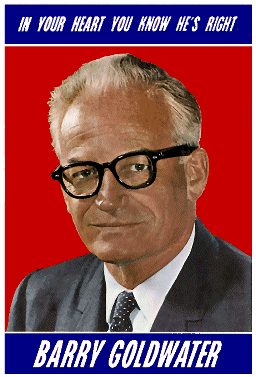
The good news is that there have been a few politicians in American’s history who have been willing to say the right thing. Here’s a quote from Barry Goldwater that warms my heart.

I have little interest in streamlining government or in making it more efficient, for I mean to reduce its size. I do not undertake to promote welfare, for I propose to extend freedom. My aim is not to pass laws, but to repeal them. …I will not attempt to discover whether legislation is “needed” before I have first determined whether it is constitutionally permissible. And if I should later be attacked for neglecting my constituents’ “interests,” I shall reply that I was informed that their main interest is liberty and that in that cause I am doing the very best I can.

The bad news is that he got his you-know-what kicked in the 1964 election.

On the other hand, America did elect a President who said during his inauguration that “government is not the solution to our problem, government is the problem.”

And a 2011 poll showed that Americans – unlike their European counterparts – do not believe it is government’s job to guarantee that “nobody is in need.”

In other words, Julia, the fictional moocher woman created by the Obama campaign, is not representative of America. At least not yet.

____________

Thank you so much for your time. I know how valuable it is. I also appreciate the fine family that you have and your commitment as a father and a husband.

Sincerely,

Everette Hatcher III, 13900 Cottontail Lane, Alexander, AR 72002, ph 501-920-5733, lowcostsqueegees@yahoo.com

“Music Monday” All-American Rejects Part 3 (Lessons from Tyson Ritter and the path of sexual impurity)

The Poison – The All-American Rejects

Avril Lavigne and Tyson Ritter from All American Rejects Talk Almost Alice

The All-American Rejects – Dirty Little Secret

Tyson Ritter, the leadsinger of the All-American Rejects has admitted that he was a jerk for the last couple of years when he lived a sexually impure life by sleeping with several different ladies during his years in LA. Ritter says he has learned from his mistakes of his past and was glad his fellow band members rescued him from that lifestyle and got him back working with the band. I wonder if Tyson knows how serious the consequences can be if someone takes the path of sexual impurity?

Brandon Barnard in his message on sexual purity at Fellowship Bible Church on July 24, 2011 makes much of this issue. He points out THE PATHWAY OF IMPURITY IS PROMISING BUT DECEIVING. Then he read these scriptures below:

Proverbs 5:4

English Standard Version (ESV)

4but in the end she is bitter as wormwood,
    sharp as a two-edged sword.

Proverbs 7:18-20

English Standard Version (ESV)

18Come, let us take our fill of love till morning;
   let us delight ourselves with love.
19For my husband is not at home;
   he has gone on a long journey;
20he took a bag of money with him;
   at full moon he will come home.”

Billboard TMI EPISODE 20 INTERVIEW WITH THE ALL AMERICAN REJECTS

The All-American Rejects – The Wind Blows (Version)

http://okgazette.com/oklahoma/article-14860-giving-them-hell.html

Although The All-American Rejects long ago traded Stillwater for Los Angeles, their Midwestern sensibilities help them ‘Move Along’ the path of global greatness.

Matt Carney April 4th, 2012  

The All-American Rejects with A Rocket to the Moon
7 p.m. Friday
Diamond Ballroom
8001 S. Eastern
diamondballroom.net
677-9169
$22-$24

Credits: Lauren Dukoff

You’ve heard The All-American Rejects’ mythology before.Talented small-town Stillwater high schoolers’ album gets scooped from the trash by a record label intern: music videos, hit singles, major-label deals, high-grossing worldwide tours and dalliances with celebrities ensue. In short, all the stuff that constitutes the first half of an episode of VH1’s Behind the Music: you know, before the heroin problems and velvet capes.

But the band of scruffy, powerpopping teens that originated in 1999 and blew up nationally when catchy pop-punk was all the rage (Sum 41, anyone?) has managed to avoid the squabbles and noxious drama that have disintegrated the infrastructure of so many groups struggling with the weight and pressure of fame.

“We’ve never fought,” said lead singer and bassist Tyson Ritter, all of 27 years old. “I’m not completely sure why, but it may be that we have two things in common: the fact that we’re from Oklahoma, and the fact that we want to stay in this band.”

Now, little more than a week since the release of the Rejects’ fourth studio album, Kids in the Street, Ritter and company — whose lineup has remained intact since DreamWorks Records released their 2003 debut — look more like a perennial pop contender than some short-lived upstart.

“We didn’t buy into the hype of running and chasing success,” Ritter said. “Regardless of label pressure — regardless of anything — we always take our time to craft our next record. Because not only do we want to tour for a long time, we want to be proud of it, to share it. The bands that haven’t survived, they haven’t for a reason: You hear the falseness in the music they put out. And when you don’t believe a band you love, you quit listening.”
‘Raised them right’

This dedication to preservation has kept audiences’ ears. Ritter shrewdly has guarded against the usual offers and requests to invite collaborators into the Rejects’ fold.

“That stuff’s been an option,” he said. “People throw that shit at you.”

One such opportunity manifested during the recording of Kids, after the Rejects heard the work of a fellow Oklahoman in Los Angeles, a gifted singer named Audra Mae.

“Her voice was so massive and soulful,” Ritter said. “We got in touch with her management because we loved her voice and that she was from Oklahoma. You meet Okies out here and they’re always kindhearted, sweet people. We hit it off like ham and eggs.”

Mae, who was born at Tinker Air Force Base, raised in Edmond, and attended Putnam City High School, sings backup on three Kids tracks, including the first single, “Beekeeper’s Daughter,” a playful pop number that’s cracked the Top 40 on three Billboard charts since its Jan. 31 release.

“Their mamas obviously raised them right,” said Mae, an LA resident for nearly a decade. “You get used to bands where the lead singer’s just a bullheaded idiot — it’s not like that with them. They’re really brothers and they love each other so much, it was so nice to be around. We hung out, talked about cars, Oklahoma, and Tyson filled up my gas tank and washed the windows on my car ’cause he’s the sweetest man alive.”

Step up to the Street

After enjoying worldwide success with hit singles like “Dirty Little Secret” and “Move Along” (a finalist for Oklahoma’s official state rock song), Ritter found himself hardened with cynicism after years of “living in front of a tape recorder.” After a break in the band he described as a ninemonth “lost weekend in LA,” he felt the need to channel his “quarter-life crisis” into a record.

Instead of dialing up a DJ to take advantage of mainstream pop’s dubstep craze or bringing Katy Perry in to hatch a hit single, the Rejects did what they usually do when they need to write songs: They fled.

In this case, to a cabin in Maine. “We go up there for the windows, ’cause we stay inside the whole time, but the windows sure show a nice picture,” Ritter said. “We found some really cool moments for the record, like ‘Walk Over Me,’ which I remember was one of those songs you write in 10 minutes. Those are the ones that weren’t compromised by thought.”

The Rejects are a throwback-type band that’s unforgiving in its commitment to the classic-rock era’s idea of unforced, “pure” songwriting. At its best, this process captures gushing, earnest moments of gleeful puppy love (“Swing, Swing”), dramatic breakups (“It Ends Tonight”) and when-all-else-fails optimism (“Move Along”). It’s unique to the modern pop landscape.

“There’s a difference between being a mainstream band and being a mainstream band that really floods itself into the mainstream,” Ritter said. “When you’re contriving collaborations and doing something that didn’t actually happen…

_______________

Remembering Dr. C. Everett Koop with pictures and quotes Part 25 (includes editorial cartoon)

Newsmaker Interview with Surgeon General C. Everett Koop

Published on Feb 25, 2013

The PBS NewsHour interviewed former Surgeon General, Dr. C. Everett Koop, on the anniversary of the first surgeon general’s report on smoking. Jim Lehrer interviewed Koop for a newsmaker conversation for the The MacNeil/Lehrer NewsHour from the surgeon general’s office in Washington on Jan. 11, 1989. Koop died Monday at the age of 96.

Dr. C. Everett Koop was appointed to the Reagan administration but was held up in the Senate in his confirmation hearings by Ted Kennedy because of his work in pro-life causes.

Memorial Tribute Former Surgeon General C.Everett Koop © A Genuine G-Shot.wmv

On 2-25-13 we lost a great man when we lost Dr. C. Everett Koop. I have written over and over the last few years quoting Dr. C. Everett Koop and his good friend Francis Schaeffer. They both came together for the first time in 1973 when Dr. Koop operated on Schaeffer’s daughter and as a result they became close friends. That led to their involvement together in the book and film series “WHATEVER HAPPENED TO THE HUMAN RACE?” in 1979.

The C. Everett Koop Papers

Biographical Information

[The C. Everett Koop family]. 1960.
 
Documents Jump to Chronology Visuals
 

After a 35-year career as an internationally acclaimed pediatric surgeon, during the 1980s C. Everett Koop turned a federal office with a minimal budget and staff, the office of the U.S. Surgeon General, into the most authoritative platform from which to educate the nation on matters of health promotion, disease prevention, and emerging health threats. Guided by his evangelical Christian faith and his professional commitment to saving the lives of newborns, Koop became an outspoken opponent of abortion and, as such, a favorite of political conservatives; yet the positions he took as U.S. Surgeon General on smoking, domestic violence, disability rights, and, most urgently, AIDS, alienated him from his conservative supporters and demonstrated that the politics of public health in the 1980s followed a long-standing pattern of controversy over government authority and individual liberty.

In the fall of 1933, Koop left home for Dartmouth College on a football scholarship, majoring in zoology. He developed a life-long affection for the institution, not least because he met there the woman who would be his wife of over six decades, Betty Flanagan. There, he also acquired his nickname, “Chick.” He soon decided to forego football after sustaining an eye injury and receiving a warning from the school ophthalmologist that he was endangering his future as a surgeon.

Koop returned to New York City in 1937 to enter Cornell University Medical College. A year later Betty and he married, in defiance of a prevailing prejudice against married students among medical school faculty. Betty, a doctor’s daughter herself, was the couple’s main breadwinner as a hospital secretary until Koop graduated from medical school in 1941. They eventually had four children, Allen, born in 1944, Norman, born in 1945, David, born in 1947, and Betsy, born in 1951.

In the summer of 1941 Koop took up a year-long internship at the Pennsylvania Hospital in Philadelphia, the city that became his home for the next forty years. In 1942 he began his surgical residency at the University of Pennsylvania Hospital. Taking account both of the demand for surgeons created by World War II and of Koop’s natural operating skills, his adviser, Isidor S. Ravdin, allowed him to complete his surgical training in half the allotted nine years. Koop spent days at a time at the hospital. “[M]y happiest hours were those in the operating room,” he recalled. “I love surgery because I have an abiding reverence for the human body, reverence for the ways in which its anatomical details allow it to function.”

At the end of Koop’s residency in 1945 Ravdin suggested that he accept an appointment as the first surgeon-in-chief at Children’s Hospital of Philadelphia, an honor for the 29-year-old and a recognition of his surgical skills, but also a challenge at a time when pediatric surgery was not yet a recognized medical specialty. Moreover, like most physicians he had received very little training in pediatrics: only six classes in medical school and none during his abbreviated internship, followed by an occasional operation on a child–but never on a newborn–during his residency. Yet he felt drawn to the field because it promised the opportunity to perform a wide range of surgeries on patients who were particularly vulnerable and underserved by specialized surgeons. He made up for his deficit in pediatric training during a one-year internship with the founders of pediatric surgery in the United States, William E. Ladd and Robert E. Gross, at Children’s Hospital in Boston. When he returned to Philadelphia late in 1946, he faced initial resistance from some pediatricians and general surgeons at his new institution who did not agree that the hospital needed a specialist in pediatric surgery. He soon convinced them of his skills, and over the next three decades helped to establish the field of pediatric surgery on the basis that children’s bodies are not adult bodies in miniature, but are anatomically and physiologically different and so require special surgical procedures.

This approach allowed Koop to greatly improve the surgical care of children, especially infants. In addition to his invention in anesthesia, Koop made the single most common operation on children, the correction of a hernia, less painful and disfiguring by using a shorter incision and by placing stitches in, not through, the skin. He developed a technique to correct esophageal atresia, a congenital birth defect where the esophagus is detached from the stomach. Over the course of his career he saved nearly 500 such patients. He showed that other once-terminal conditions were correctable, including hydrocephalus–the accumulation of cerebrospinal fluid within the skull–and diaphragmatic hernias, in which the abdominal organs push up into the chest through a hole in the child’s diaphragm. In 1977 he gained international attention when he became the first surgeon to separate Siamese twins joined at the heart, and saved the life of one of them. To perform these operations that he pioneered, Koop established the nation’s first neonatal surgical intensive care unit in 1956.

Operating on newborns with life-threatening birth defects, spending nights at the bedside of a sick or dying child, and consoling bereaved parents gained Koop acclaim as a pioneering surgeon and empathic healer, and led him to reexamine his Christian faith and the ethical implications of medical procedures, above all abortion and euthanasia. Raised in a church-going family but initially not overtly devout himself, Koop underwent a spiritual awakening in 1948 after he joined the Tenth Presbyterian Church of Philadelphia. “As a person whose training and experience put full faith in science, I came to see an even higher truth. From then on, I saw a coexistence between science and God,” he wrote in his autobiography, Koop: The Memoirs of America’s Family Doctor, published in 1991. Betty and he found solace in their faith when their son David died in a climbing accident in 1968, a loss they grappled with in a jointly-written book, Sometimes Mountains Move. In the wake of the U.S. Supreme Court’s 1973 decision in Roe v. Wade legalizing abortion, Koop began to speak publicly about his fears that abortion devalued human life and would help loosen the moral strictures against the infanticide and euthanasia of other care-dependent members of society, from newborns with birth defects, to persons with disabilities, to the elderly. He expressed his concerns in The Right to Live, The Right to Die, published in 1976, and in Whatever Happened to the Human Race?, a multimedia project, produced in cooperation with the noted theologian Francis Schaeffer in 1978, that included five films and accompanying lectures and seminars.

Through his speeches, publications, and films Koop rose to prominence among anti-abortion activists, and eventually came to the attention of newly-elected president and abortion foe Ronald Reagan, who nominated Koop as U.S. Surgeon General in March 1981. During eight months of controversy and congressional hearings, critics and supporters debated his stance on abortion as well as the question whether Koop, who had devoted his career to treating individual patients, was qualified to address the health needs of the nation as a whole. He was confirmed as U.S. Surgeon General in November 1981.

During his two terms as Surgeon General, Koop made himself the most prominent government spokesman on issues affecting the health of the American public, despite having little statutory authority and a small budget. He infused a renewed sense of confidence and purpose into the Commissioned Corps of the U.S. Public Health Service (PHS), a federal service of public health professionals that the Surgeon General commands and that had been suffering from low morale after the closing of PHS hospitals and the cut-back in personnel in the early 1980s. He examined medical ethics, health care costs, and the problem of the uninsured in a health care system that faced financial challenges at a time of inflation followed by recession in the early 1980s. Koop warned tirelessly against the health hazards of smoking for both active and passive smokers, and launched a campaign for a smoke-free America by the year 2000. He championed the rights of infants with birth defects to receive medical treatment, and the rights of persons with disabilities to have access to public facilities and to employment. He recast issues of law and private morality, namely domestic violence and pornography, as matters of public health, emphasizing their long-term psychological and health effects.

Above all, Koop helped the nation face the most fearsome new pandemic of the century, AIDS. He educated the public on prevention and protection, argued against mandatory testing and quarantine of the infected, and denounced discrimination against AIDS sufferers in schools, the workplace, and housing. He represented the United States at World Health Organization meetings and other international health forums, which during the 1980s became increasingly concerned with the AIDS epidemic. On this and other issues he often surprised supporters and critics alike. He distanced himself from conservatives by declaring that abortion was a moral issue, not one of public health, and thus lay outside the responsibilities of his office. At the same time he found common ground with liberals in stressing the importance of freely available health information, taking on the tobacco industry, and calling for a larger government role in fighting AIDS. Throughout these controversies, Koop saw himself as faithful to the professional principles and religious beliefs that had guided him throughout his career.

Koop resigned in October 1989, a month before the official end of his second term, to become chairman of the National Safe Kids Campaign, an effort to reduce accidents among children, which carried on his final initiative as Surgeon General. During the 1990s Koop continued to speak widely on health care reform, and promoted the use of the Internet for disseminating health information. On April 17, 2010, Dr. Koop married Cora Hogue from Philadelphia. Dr. Koop died at the age of 96 on February 25, 2013 at his home in Hanover, New Hampshire.

Brief Chronology

  • 1916 –Born in Brooklyn, New York (October 14)
  • 1937 –Receives BS degree in zoology from Dartmouth College
  • 1938 –Marries Elizabeth “Betty” Flanagan (d. 2007); they eventually have four children
  • 1941 –Receives MD degree from Cornell Medical College
  • 1941-42 –Medical internship at the Pennsylvania Hospital in Philadelphia
  • 1942-47 –Harrison Fellow in General Surgery and Research Surgery, University of Pennsylvania University School of Medicine
  • 1945-46 –Internship in pediatric surgery with William E. Ladd and Robert E. Gross at Children’s Hospital in Boston
  • 1947 –Receives the Doctor of Science degree from the University of Pennsylvania School of Medicine
  • 1948-81 –Surgeon-in-Chief, Children’s Hospital of Philadelphia
  • 1948 –Joins the Tenth Street Presbyterian Church in Philadelphia
  • 1949 –Assistant professor of surgery, University of Pennsylvania School of Medicine; associate professor of pediatric surgery, 1952; professor of pediatric surgery, 1959
  • 1956 –Establishes the nation’s first neonatal surgical intensive care unit
  • 1971-72 –President of the American Pediatric Surgical Association
  • 1976 –Publishes The Right to Live, The Right to Die, an exposition of his antiabortion views
  • 1977 –Gains international attention when he becomes the first surgeon to separate Siamese twins joined at the heart, saving the life of one of them
  • 1981 –Confirmed as the thirteenth U.S. Surgeon General
  • 1981 –The Centers for Disease Control report the first cases of a new infectious immune disease, named AIDS two years later
  • 1982-83 –Becomes involved in the “Baby Doe” controversy over the medical rights of newborns with congenital birth defects
  • 1984 –Launches Campaign for a Smoke-Free America by the Year 2000, emphasizing the health effects of second-hand smoke and the rights of non-smokers
  • 1986 –Publishes Surgeon General’s Report on Acquired Immune Deficiency Syndrome, becoming the first federal authority to provide explicit advice to Americans on how to protect themselves from AIDS
  • 1989 –Resigns as U.S. Surgeon General; becomes chairman of the National Safe Kids Campaign
  • 1990s –Lectures widely on health care reform and medical informatics, especially the dissemination of health information through digital media
  • 1991 –Publishes Koop: The Memoirs of America’s Family Doctor
  • 1991-2013 –Senior Scholar at the C. Everett Koop Institute at Dartmouth College, an educational and outreach facility devoted to health promotion and preventive medicine, and Elizabeth DeCamp McInerny Professor of Surgery at Dartmouth Medical School
  • 2013 –Dies at home in Hanover, New Hampshire at the age of 96 (February 25)

In the film series “WHATEVER HAPPENED TO THE HUMAN RACE?” the arguments are presented  against abortion (Episode 1),  infanticide (Episode 2),   euthenasia (Episode 3), and then there is a discussion of the Christian versus Humanist worldview concerning the issue of “the basis for human dignity” in Episode 4 and then in the last episode a close look at the truth claims of the Bible

In this 1979 film series they dealt with the big social issues and predicted what social problems we have in the future because of humanism. For instance, they knew that the Jack Kevorkians of the world would be coming down the pike. They predicted that there was a slippery slope from abortion to infanticide to youth euthanasia brought on by the materialistic worldview.

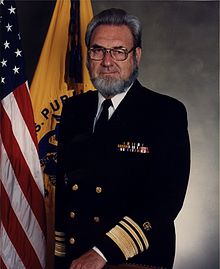
Dr. C. Everett Koop is pictured above.

Francis Schaeffer: “Whatever Happened to the Human Race” (Episode 1) ABORTION OF THE HUMAN RACE

Published on Oct 6, 2012 by

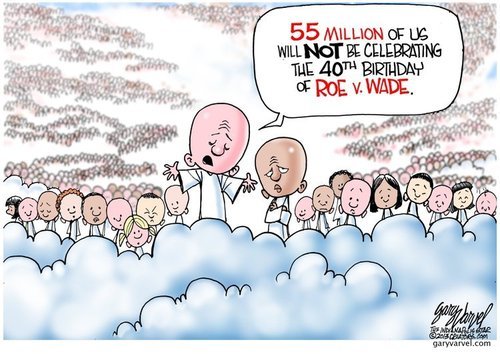
Many in the press made a big deal about the 40th birthday of Roe v Wade but there are over 55 million aborted unborn babies in heaven wishing they had at least one birthday as this wonderful editorial cartoon illustrates.

Dr. Koop

Christianity and Scientific Concerns


AP

C. Everett Koop

Related posts:

Remembering Dr. C. Everett Koop with pictures and quotes Part 12 (with editorial cartoon)

Dr. C. Everett Koop on Baby Doe, euthanasia, abortion Uploaded on Nov 3, 2008 Dr. Koop answers questions on Baby Doe, euthanasia and abortion during interview at Wheaton College, Wheaton, IL http://www.christianethics.org Dr. Koop   On 2-25-13 we lost a great man when we lost Dr. C. Everett Koop. I have written over and over […]

Remembering Dr. C. Everett Koop with pictures and quotes Part 11 (including editorial cartoon on abortion)

Dr. Koop Memorial Tribute Former Surgeon General C.Everett Koop © A Genuine G-Shot.wmv On 2-25-13 we lost a great man when we lost Dr. C. Everett Koop. I have written over and over the last few years quoting Dr. C. Everett Koop and his good friend Francis Schaeffer. They both came together for the first […]

Remembering Dr. C. Everett Koop with pictures and quotes Part 10 (includes editorial cartoon about abortion)

Newsmaker Interview with Surgeon General C. Everett Koop Published on Feb 25, 2013 The PBS NewsHour interviewed former Surgeon General, Dr. C. Everett Koop, on the anniversary of the first surgeon general’s report on smoking. Jim Lehrer interviewed Koop for a newsmaker conversation for the The MacNeil/Lehrer NewsHour from the surgeon general’s office in Washington […]

Remembering Dr. C. Everett Koop with pictures and quotes Part 9 (Picture of Joycelyn Elders with Koop)

Dr. C. Everett Koop on Baby Doe, euthanasia, abortion Uploaded on Nov 3, 2008 Dr. Koop answers questions on Baby Doe, euthanasia and abortion during interview at Wheaton College, Wheaton, IL http://www.christianethics.org Dr. Koop   Joycelyn Elders was the first black Surgeon General of the USA and I have a picture of her with Dr. C. […]

Remembering Dr. C. Everett Koop with pictures and quotes Part 8 (editorial picture about Surgeon General)

Memorial Tribute Former Surgeon General C.Everett Koop © A Genuine G-Shot.wmv Dr. Koop. C. Everett Koop Before Dr. C. Everett Koop arrived in 1981 as Surgeon General could anybody ever name who the Surgeon General was? Koop also caused lots of editorial cartoons to be drawn about him because of his positions he took on […]

Remembering Dr. C. Everett Koop with pictures and quotes Part 7 (Public Health poster)

Newsmaker Interview with Surgeon General C. Everett Koop Published on Feb 25, 2013 The PBS NewsHour interviewed former Surgeon General, Dr. C. Everett Koop, on the anniversary of the first surgeon general’s report on smoking. Jim Lehrer interviewed Koop for a newsmaker conversation for the The MacNeil/Lehrer NewsHour from the surgeon general’s office in Washington […]

Remembering Dr. C. Everett Koop with pictures and quotes Part 6 (includes funniest cartoon ever during Koop’s tenure)

Dr. C. Everett Koop on Baby Doe, euthanasia, abortion Uploaded on Nov 3, 2008 Dr. Koop answers questions on Baby Doe, euthanasia and abortion during interview at Wheaton College, Wheaton, IL http://www.christianethics.org Dr. Koop. C. Everett Koop On June 8, 1988 Ralph Dunagin of the LA Times came out with the funniest editorial cartoon I […]

Remembering Dr. C. Everett Koop with pictures and quotes Part 5 (Public Health poster developed under Koop)

Memorial Tribute Former Surgeon General C.Everett Koop © A Genuine G-Shot.wmv Dr. C. Everett Koop was active on getting the word out about how people could catch AIDS. Public Health officials during the second half of the 1980s became concerned about the spread of AIDS particularly among minorities, a disproportionate number of whom were intravenous […]

Remembering Dr. C. Everett Koop with pictures and quotes Part 4 (funny editorial cartoon too)

Dr. Koop Gary Brookings of the Richmond Times Dispatch did a very funny editorial cartoon about the time in 1988 when Dr. C. Everett Koop sent the unapproved mail  piece out to millions of homes about AIDS. There were many such cartoons at the time since everyone knew Dr. Koop got the mail piece out […]

Remembering Dr. C. Everett Koop with pictures and quotes Part 3 ( three more editorial cartoons too)

Dr. Koop with Hillary Clinton In 1980 I really was influenced at my highschool by a teacher of mine named Mark Brink. He introduced me to the film series “Whatever happened to the human race?” by Francis Schaeffer and Dr. C. Everett Koop. In this  film series that came out in 1979 they dealt with […]

Remembering Dr. C. Everett Koop with pictures and quotes Part 2 (Doonesbury cartoon by Gary Trudeau included)

Dr. Koop On 2-25-13 we lost a great man when we lost Dr. C. Everett Koop. I have written over and over the last few years quoting Dr. C. Everett Koop and his good friend Francis Schaeffer. They both came together for the first time in 1973 when Dr. Koop operated on Schaeffer’s daughter and […]

Remembering Dr. C. Everett Koop with pictures and quotes Part 1

Dr. C. Everett Koop is pictured above. Francis Schaeffer: “Whatever Happened to the Human Race” (Episode 1) ABORTION OF THE HUMAN RACE Published on Oct 6, 2012 by AdamMetropolis Dr. Koop On 2-25-13 we lost a great man when we lost Dr. C. Everett Koop. I have written over and over the last few years […]


Open letter to President Obama (Part 232 B) Dr. C. Everett Koop and Reagan pictured together

Dr. C. Everett Koop with Ronald Reagan. Dr. Koop was delayed in his confirmation by Ted Kennedy because of his film Whatever Happened to the Human Race? President Obama c/o The White House 1600 Pennsylvania Avenue NW Washington, DC 20500 Dear Mr. President, I know that you receive 20,000 letters a day and that you […]

“Sanctity of Life Saturday” Francis Schaeffer and Dr. C. Everett Koop asked Reagan to issue pro-life proclamation in 1983 (includes video ABORTION OF THE HUMAN RACE)

In the film series “WHATEVER HAPPENED TO THE HUMAN RACE?” the arguments are presented  against abortion (Episode 1),  infanticide (Episode 2),   euthenasia (Episode 3), and then there is a discussion of the Christian versus Humanist worldview concerning the issue of “the basis for human dignity” in Episode 4 and then in the last episode a close […]

Dr. C. Everett Koop on abortion’s 1973 Roe v. Wade impact on child abuse

Dr. C. Everett Koop with Ronald Reagan. Dr. Koop was delayed in his confirmation by Ted Kennedy because of his film Whatever Happened to the Human Race? Watch the film below starting at the 19 minute mark and that will lead into a powerful question from Dr. C. Everett Koop. This 1979 film is WHATEVER […]

Open letter to President Obama (Part 221 B) Dr. C. Everett Koop and Francis Schaeffer rightly called abortion “the watershed issue of our era”

 Dr. Koop was delayed in his confirmation by Ted Kennedy because of his film Whatever Happened to the Human Race? Francis Schaeffer February 21, 1982 (Part 1) Uploaded by DeBunker7 on Feb 21, 2008 READ THIS FIRST: In decline of all civilizations we first see a war against the freedom of ideas. Discussion is limited […]

Francis Schaeffer and C. Everette Koop on the Hippocratic oath (March for Life January 20, 2013)

Dr. C. Everett Koop was appointed to the Reagan administration but was held up in the Senate in his confirmation hearings by Ted Kennedy because of his work in pro-life causes. I was thinking about the March for Life that is coming up on Jan 20, 2013  and that is why I posted this today […]

Ronald Wilson Reagan pictured with Dr. C. Everett Koop

High resolution version (11,426,583 Bytes) Description: The photograph is signed by President Ronald Reagan with the inscription “To Chick Koop, With Best Wishes.” Chick, from chicken coop, was the nickname Koop gained will attending Dartmouth College in the mid-1930s. Koop maintained a cordial relationship with President Reagan, despite his disappointment over Reagan’s refusal to address […]

Francis Schaeffer and C. Everett Koop were prophetic (jh29)

Francis Schaeffer and C. Everett Koop were prophetic (jh29) What Ever Happened to the Human Race? I recently heard this Breakpoint Commentary by Chuck Colson and it just reminded me of how prophetic Francis Schaeffer and C. Everett Koop were in the late 1970′s with their book and film series “Whatever happened to the human […]

Should Michele Bachmann be punished for taking pro-life views from Schaeffer and Koop? (March for Life January 20, 2013)

  Dr. C. Everett Koop I was thinking about the March for Life that is coming up on Jan 20, 2013  and that is why I posted this today Secular leaps of faith 39 Comments Written by Janie B. Cheaney August 15, 2011, 2:17 PM I’m willing to cut Ryan Lizza some slack. His profile […]

“Schaeffer Sundays” Francis Schaeffer’s own words concerning humanism and its bad results

Francis Schaeffer: “Whatever Happened to the Human Race?” (Episode 2) SLAUGHTER OF THE INNOCENTS Published on Oct 6, 2012 by AdamMetropolis The 45 minute video above is from the film series created from Francis Schaeffer’s book “Whatever Happened to the Human Race?” with Dr. C. Everett Koop. This book  really helped develop my political views concerning […]

“Sanctity of Life Saturday”:Derek Melleby’s review of the book “Francis Schaeffer: An Authentic Life” (includes film THE BASIS FOR HUMAN DIGNITY)

  I truly believe that many of the problems we have today in the USA are due to the advancement of humanism in the last few decades in our society. Ronald Reagan appointed the evangelical Dr. C. Everett Koop to the position of Surgeon General in his administration. He partnered with Dr. Francis Schaeffer in making […]

Taking on Ark Times bloggers about abortion on the 40th anniversary date of Roe v. Wade (Part 5) “Slavery issue compared to rights of unborn child”

The best pro-life film I have ever seen below by Francis Schaeffer and Dr. C. Everett Koop “Whatever happened to the human race?” Over the years I have taken on the Ark Times liberal bloggers over and over and over concerning the issue of abortion. I asked over and over again for one liberal blogger […]

Taking on Ark Times bloggers about abortion on the 40th anniversary date of Roe v. Wade (Part 4) “How do pro-lifers react to the movie THE CIDER HOUSE RULES?”

Francis Schaeffer pictured above._________ The best pro-life film I have ever seen below by Francis Schaeffer and Dr. C. Everett Koop “Whatever happened to the human race?” Over the years I have taken on the Ark Times liberal bloggers over and over and over concerning the issue of abortion. I asked over and over again […]

Taking on Ark Times bloggers about abortion on the 40th anniversary date of Roe v. Wade (Part 3) “What should be the punishment for abortion doctors?”

The best pro-life film I have ever seen below by Francis Schaeffer and Dr. C. Everett Koop “Whatever happened to the human race?” On 1-24-13 I took on the child abuse argument put forth by Ark Times Blogger “Deathbyinches,” and the day before I pointed out that because the unborn baby has all the genetic code […]

Taking on Ark Times bloggers about abortion on the 40th anniversary date of Roe v. Wade (Part 2) “The pro-abortion child abuse argument destroyed here”

PHOTO BY STATON BREIDENTHAL from Pro-life march in Little Rock on 1-20-13. Tim Tebow on pro-life super bowl commercial. Over the years I have taken on the Ark Times liberal bloggers over and over and over concerning the issue of abortion. Here is another encounter below. On January 22, 2013 (on the 40th anniversary of the […]

Taking on Ark Times bloggers about abortion on the 40th anniversary date of Roe v. Wade (Part 6) For many pro-abortionists ” …the problem is not determining when actual human life begins, but when the value of that life begins to out weigh other considerations”

The best pro-life film I have ever seen below by Francis Schaeffer and Dr. C. Everett Koop “Whatever happened to the human race?” Francis Schaeffer pictured above._________ The 45 minute video above is from the film series created from Francis Schaeffer’s book “Whatever Happened to the Human Race?” with Dr. C. Everett Koop. This book  really […]

Taking on Ark Times bloggers about abortion on the 40th anniversary date of Roe v. Wade (Part 7) “Poverty not good reason for abortion, why not give up for adoption?”

Dr Richard Land discusses abortion and slavery – 10/14/2004 – part 3 The best pro-life film I have ever seen below by Francis Schaeffer and Dr. C. Everett Koop “Whatever happened to the human race?” Over the years I have taken on the Ark Times liberal bloggers over and over and over concerning the issue […]

Taking on Ark Times bloggers about abortion on the 40th anniversary date of Roe v. Wade (Part 1)

Dr Richard Land discusses abortion and slavery – 10/14/2004 – part 3 The best pro-life film I have ever seen below by Francis Schaeffer and Dr. C. Everett Koop “Whatever happened to the human race?” Over the years I have taken on the Ark Times liberal bloggers over and over and over concerning the issue […]

Paul Greenberg became pro-life because we are all “endowed with certain unalienable rights”

On January 20, 2013 I heard Paul Greenberg talk about the words of Thomas Jefferson that we are all “endowed with certain unalienable rights” and the most important one is the right to life. He mentioned this also in this speech below from 2011: Paul Greenberg Dinner Speech 2011 Fall 2011 Issue Some of you […]

How Pulitzer Prize-winning Paul Greenberg, one of the most respected and honored commentators in America, changed his mind about abortion and endorses now the pro-life view

It is not possible to know where the pro-life evangelicals are coming from unless you look at the work of the person who inspired them the most. That person was Francis Schaeffer.  I do care about economic issues but the pro-life issue is the most important to me. Several years ago Adrian Rogers (past president of […]


Open letter to President Obama (Part 283)

Bob Chitester Discusses Milton Friedman and ‘Free to Choose’

Published on Jul 30, 2012 by

“There are very few people over the generations who have ideas that are sufficiently original to materially alter the direction of civilization. Milton is one of those very few people.”

That is how former Federal Reserve Chairman Alan Greenspan described the Nobel laureate economist Milton Friedman. But it is not for his technical work in monetary economics that Friedman is best known. Like mathematician Jacob Bronowski and astronomer Carl Sagan, Friedman had a gift for communicating complex ideas to a general audience.

It was this gift that brought him to the attention of filmmaker Bob Chitester. At Chitester’s urging, Friedman agreed to make a 10 part documentary series explaining the power of economic freedom. It was called “Free to Choose,” and became one of the most watched documentaries in history.

The series not only reached audiences in liberal democracies, but was smuggled behind the iron curtain where it played, in secret, to large audiences. Reflecting on its impact, Czech president Vaclav Klaus has said: “For us, who lived in the communist world, Milton Friedman was the greatest champion of freedom, of limited and unobtrusive government and of free markets. Because of him I became a true believer in the unrestricted market economy.”

July 31st, 2012 is the 100th anniversary of Friedman’s birth. To commemorate that occasion, we’d like to share an interview with “Free to Choose” producer Bob Chitester. Like this interview, the entire series can now be viewed on-line at no cost at http://www.freetochoose.tv/, thanks to the incredible technological progress brought about by the economic freedom that Milton Friedman celebrated.

Produced by Andrew Coulson, Caleb O. Brown, Austin Bragg, and Lou Richards, with help from the Free to Choose Network.

_____________


President Obama c/o The White House
1600 Pennsylvania Avenue NW
Washington, DC 20500

Dear Mr. President,

I know that you receive 20,000 letters a day and that you actually read 10 of them every day. I really do respect you for trying to get a pulse on what is going on out here.

We got to stop spending so much money on the federal level. It will bankrupt us. I remember back in 1980 when I really started getting into the material of Milton Friedman as a result of reading his articles in Newsweek and reading his book “Free to Choose,” I really did get facts and figures to back on the view that we need more freedom giving back to us and the government needs to spend less.

As a result of Friedman’s writings I was able to discuss these issues with my fellow students at the university and by the time the 1980 election came around I had been attending political rallies and went out and worked hard for Ronald Reagan’s election. In this article below Dr. Thomas Sowell (who was featured twice in the film “Free to Choose”) notes how much influence Milton Friedman had on the election outcome in 1980:

Milton Friedman at 90

by Thomas Sowell

Thomas Sowell is a senior fellow at the Hoover Institute in Stanford, California.

Added to cato.org on July 25, 2002

This article originally appeared on TownHall.com, July 25, 2002.

Milton Friedman’s 90th birthday on July 31st provides an occasion to think back on his role as the pre-eminent economist of the 20th century. To those of us who were privileged to be his students, he also stands out as a great teacher.

When I was a graduate student at the University of Chicago, back in 1959, one day I was waiting outside Professor Friedman’s office when another graduate student passed by. He noticed my exam paper on my lap and exclaimed: “You got a B?”

“Yes,” I said. “Is that bad?”

Thomas Sowell is a senior fellow at the Hoover Institute in Stanford, California.


“There were only two B’s in the whole class,” he replied.

“How many A’s?” I asked.

“There were no A’s!”

Today, this kind of grading might be considered to represent a “tough love” philosophy of teaching. I don’t know about love, but it was certainly tough.

Professor Friedman also did not let students arrive late at his lectures and distract the class by their entrance. Once I arrived a couple of minutes late for class and had to turn around and go back to the dormitory.

All the way back, I thought about the fact that I would be held responsible for what was said in that lecture, even though I never heard it. Thereafter, I was always in my seat when Milton Friedman walked in to give his lecture.

On a term paper, I wrote that either (a) this would happen or (b) that would happen. Professor Friedman wrote in the margin: “Or (c) your analysis is wrong.”

“Where was my analysis wrong?” I asked him.

“I didn’t say your analysis was wrong,” he replied. “I just wanted you to keep that possibility in mind.”

Perhaps the best way to summarize all this is to say that Milton Friedman is a wonderful human being — especially outside the classroom. It has been a much greater pleasure to listen to his lectures in later years, after I was no longer going to be quizzed on them, and a special pleasure to appear on a couple of television programs with him and to meet him on social occasions.

Milton Friedman’s enduring legacy will long outlast the memories of his students and extends beyond the field of economics. John Maynard Keynes was the reigning demi-god among economists when Friedman’s career began, and Friedman himself was at first a follower of Keynesian doctrines and liberal politics.

Yet no one did more to dismantle both Keynesian economics and liberal welfare-state thinking. As late as the 1950s, those with the prevailing Keynesian orthodoxy were still able to depict Milton Friedman as a fringe figure, clinging to an outmoded way of thinking. But the intellectual power of his ideas, the fortitude with which he persevered, and the ever more apparent failures of Keynesian analyses and policies, began to change all that, even before Professor Friedman was awarded the Nobel Prize in economics in 1976.

A towering intellect seldom goes together with practical wisdom, or perhaps even common sense. However, Milton Friedman not only excelled in the scholarly journals but also on the television screen, presenting the basics of economics in a way that the general public could understand.

His mini-series “Free to Choose” was a classic that made economic principles clear to all with living examples. His good nature and good humor also came through in a way that attracted and held an audience.

Although Friedrich Hayek launched the first major challenge to the prevailing thinking behind the welfare state and socialism with his 1944 book “The Road to Serfdom,” Milton Friedman became the dominant intellectual force among those who turned back the leftward tide in what had seemed to be the wave of the future.

Without Milton Friedman’s role in changing the minds of so many Americans, it is hard to imagine how Ronald Reagan could have been elected president.

Nor was Friedman’s influence confined to the United States. His ideas reached around the world, not only among economists, but also in political circles which began to understand why left-wing ideas that sounded so good produced results that were so bad.

Milton Friedman rates a 21-gun salute on his birthday. Or perhaps a 90-gun salute would be more appropriate.

________

Thank you so much for your time. I know how valuable it is. I also appreciate the fine family that you have and your commitment as a father and a husband.

Sincerely,

Everette Hatcher III, 13900 Cottontail Lane, Alexander, AR 72002, ph 501-920-5733, lowcostsqueegees@yahoo.com

James Madison: “If men were angels, no government would be necessary”

1 Of 5 / The Bible’s Influence In America / American Heritage Series / David Barton

_________________

Our founding fathers had some wise things to say about government. They realized that angels don’t govern us.

Because Angels Don’t Govern Us

by Michael D. Tanner

Michael Tanner is a senior fellow at the Cato Institute and author of Leviathan on the Right: How Big-Government Conservatism Brought Down the Republican Revolution.

Added to cato.org on May 2, 2012

This article appeared in National Review (Online) on May 2, 2012.

Now that the first round of spin has passed, we can take a second look at the lessons to be learned from the recent GSA and Secret Service scandals.

First, it really is a bit unfair to blame them on President Obama. The president is not directly involved in the day-to-day management of these agencies. Nor should he be. Moreover, misbehavior by government employees predates the Obama administration by quite a bit. In 460b.c., for example, the Greek Delian League put nine government administrators to death for misusing public funds.

However, none of that lets President Obama entirely off the hook.

Too many on both the left and the right believe that government intervention in the economy or in the lives of individual citizens is necessary because only government can see the larger picture and act in a disinterested way for the benefit of the greater good. Businesses can be corrupt or self-seeking, and individuals may be myopic or make choices that others see as either morally or economically wrong. No doubt this view is correct, at least in some cases. In one way or another, we are all imperfect.

The Obama administration persists in believing that government is wiser than and morally superior to the average American.

President Obama believes that government is different.

Given our flaws as individuals, the Obama administration believes that government should run our health-care system. Left to our own devices, we might fail to buy health insurance or buy insurance that doesn’t include the right package of benefits. Government needs to subsidize “green energy,” because we might decide to buy fuel-inefficient cars. Government needs to oversee the banking industry and housing markets, because banks made loans to people who couldn’t afford to pay them back.

People are prejudiced and selfish. Government is altruistic and “fair.” Markets fail, but not government. As President Obama sees it, government can make us better and lead us to the promised land.

But, as the GSA and Secret Service scandals should remind us, government is made up not of philosopher-economist-saints but of men and women like the rest of us — afflicted by failures, corruption, short-sightedness, and self-interest. The difference is that government gives those imperfect individuals the power to impose their views and desires on the rest of us.

The Founding Fathers understood this. They knew that some government is necessary to protect our rights to “life, liberty, and the pursuit of happiness.” For this reason, they noted in the Declaration of Independence, “governments are instituted among men.” But they also understood that government needs to be carefully limited in its scope and power.

As James Madison wrote in Federalist 51:

If men were angels, no government would be necessary. If angels were to govern men, neither external nor internal controls on government would be necessary. In framing a government which is to be administered by men over men, the great difficulty lies in this: you must first enable the government to control the governed; and in the next place oblige it to control itself.

Indeed, the damage that government can do is far greater than the damage that can be done by business or individuals, because ultimately the state holds a monopoly on the use of force. If I make a mistake, it affects my life and perhaps the lives of my family and a few others. If a business makes a mistake, it can affect thousands more. But if government makes a mistake, it can affect everyone. That is what makes the growing reach of government so dangerous.

That means that, necessary though some restraint on the freedom of individuals and businesses may be, it is even more important to have internal and external controls on the power of government.

The Obama administration’s failure, therefore, is not that it neglected to micromanage the GSA’s expenses or that it couldn’t keep Secret Service agents out of brothels. It is that it wants the practical equivalent of GSA employees and Secret Service agents to run our lives. The Obama administration persists in believing that government is wiser than and morally superior to the average American.

That is a real scandal.

Johnny Cash (Part 3)

I got to hear Johnny Cash sing in person back in 1978.  Here is a portion of an article about his Christian Testimony.

 
A Walking Contradiction
Cash’s daughter, singer-songwriter Rosanne Cash, once pointed out that “my father was raised a Baptist, but he has the soul of a mystic. He’s a profoundly spiritual man, but he readily admits to a continual attraction for all seven deadly sins.””There’s nothing hypocritical about it,” Johnny Cash told Rolling Stonescribe Anthony DeCurtis. “There is a spiritual side to me that goes real deep, but I confess right up front that I’m the biggest sinner of them all.” To Cash, even his near deadly bout with drug addiction contained a crucial spiritual element. “I used drugs to escape, and they worked pretty well when I was younger. But they devastated me physically and emotionally—and spiritually … [they put me] in such a low state that I couldn’t communicate with God. There’s no lonelier place to be. I was separated from God, and I wasn’t even trying to call on him. I knew that there was no line of communication. But he came back. And I came back.”Years after his return to the land of the living, Cash once got a visit from U2 members Bono and Adam Clayton who were driving across the U.S., taking in the local colors. The three of them sat around a table before their meal, and Cash floored the two Irishmen with an incredible prayer of thanksgiving to God. Then, without skipping a beat, he raised his head and quipped, “Sure miss the drugs, though.”Cash sums up his soul’s murky landscape—if that’s possible—better than anybody else: “I’m still a Christian, as I have been all my life. Beyond that I get complicated. I endorse Kris Kristofferson’s line about me: ‘He’s a walking contradiction, partly truth and partly fiction.’ I also like Rosanne’s line: ‘He believes what he says, but that don’t make him a saint.’ I dobelieve what I say. There are levels of honesty, though.”Sigh.At this juncture, you may be asking why the book you’re holding is attempting to figure out the spiritual nature of this man. A puzzling personality who once implored, “Please don’t tell anybody how I feel about anything … unless I told you in the last few days.”The answer? It’s attempting nothing of the sort. The sole purpose of this book is to focus on the wild, incredible ups and downs of Cash’s spiritual journey. It’s a chronicle of his highs and lows, a record of the ebb and flow of his soul’s story.And like many such journeys, Cash’s was a roller coaster experience—though his twists and turns and plunges have been more intense than the average person’s … and, well, there were a lot more of them.Cash began life close to church, close to the earth, and close to gospel music; but his earliest singles for Sun Records hit the secular path rather than the gospel road he hoped Sam Phillips would let him follow; Phillips’ preference for the former led to big hits from Cash right from the start, and he immediately became a slave to the road, soon making millions of dollars and winning over millions of fans; he battled through a lot of death through the years—including his big brother Jack’s, his parents’, his longtime guitarist Luther Perkins’, and especially his wife of 35 years, June Carter Cash’s—but Cash somehow eluded the Grim Reaper’s snares despite feeding his frame with truckloads of uppers and downers over the better part of the 1960s; he enjoyed a creative and spiritual renaissance in the late ’60s and early ’70s, a run that not only sealed his status as the father of American music but proved a blueprint for what would soon become contemporary Christian music; and then, just when it appeared his career was sputtering to a halt in the late ’80s and early ’90s, Cash confounded everyone by becoming the “it” artist once again, boldly interpreting eclectic song mixtures that mined alternative rock and bygone standards.

And while his body suffered recently under the strain wrought by years of abuse, Cash’s mind stayed strong … and his spirit stayed stronger.