On my blog www.thedailyhatch.org I have an extensive list of posts that have both videos and transcripts of MiltonFriedman’s interviews and speeches. Here below is just small list of those and more can be accessed by clicking on “Milton Friedman” on the side of this page or searching for Milton Friedman also.
Milton Friedman videos and transcripts Part 3 On my blog http://www.thedailyhatch.org I have an extensive list of posts that have both videos and transcripts of MiltonFriedman’s interviews and speeches. Here below is just small list of those and more can be accessed by clicking on “Milton Friedman” on the side of this page or searching […]
Milton Friedman videos and transcripts Part 2 On my blog http://www.thedailyhatch.org I have an extensive list of posts that have both videos and transcripts of MiltonFriedman’s interviews and speeches. Here below is just small list of those and more can be accessed by clicking on “Milton Friedman” on the side of this page or searching […]
Milton Friedman videos and transcripts Part 1 On my blog http://www.thedailyhatch.org I have an extensive list of posts that have both videos and transcripts of MiltonFriedman’s interviews and speeches. Here below is just small list of those and more can be accessed by clicking on “Milton Friedman” on the side of this page or searching […]
Ep. 9 – How to Cure Inflation [1/7]. Milton Friedman’s Free to Choose (1980) Cochrane’s Kinky Curves Posted by Jim Powell The doctrine that inflation can cure unemployment, implicit in the Obama administration’s spending blowout, goes way back. The modern version originated with William Phillips, a New Zealand-born economist who, in 1958, wrote a paper […]
I am currently going through his film series “Free to Choose” which is one the most powerful film series I have ever seen. PART 3 OF 7 Worse still, America’s depression was to become worldwide because of what lies behind these doors. This is the vault of the Federal Reserve Bank of New York. Inside […]
Milton Friedman and Ronald Reagan Liberals like President Obama (and John Brummett) want to shoot for an equality of outcome. That system does not work. In fact, our free society allows for the closest gap between the wealthy and the poor. Unlike other countries where free enterprise and other freedoms are not present. This is a seven part series. […]
I am currently going through his film series “Free to Choose” which is one the most powerful film series I have ever seen. For the past 7 years Maureen Ramsey has had to buy food and clothes for her family out of a government handout. For the whole of that time, her husband, Steve, hasn’t […]
I love Milton Friedman’s film series “Free to Choose.” In that film series over and over it is shown that the ability to move from poor to rich is more abundant here than any other country in the world. This article below reminded me of that that. Are Poor Really Helpless Without Government? By Michael […]
Social Security is a Ponzi scheme (Part 1) Governor Rick Perry got in trouble for calling Social Security a Ponzi scheme and I totally agree with that. Max Brantley wants to keep insisting that this will be Perry’s downfall but think that truth will win out this time around. This is a series of articles […]
Friedman Friday:(“Free to Choose” episode 4 – From Cradle to Grave, Part 1 of 7) Volume 4 – From Cradle to Grave Abstract: Since the Depression years of the 1930s, there has been almost continuous expansion of governmental efforts to provide for people’s welfare. First, there was a tremendous expansion of public works. The Social Security Act […]
Milton Friedman: Life and ideas – Part 05 99th anniversary of Milton Friedman’s birth (Part 13) Milton Friedman was born on July 31, 1912 and he died November 16, 2006. I started posting tributes of him on July 31 and I hope to continue them until his 100th birthday. Here is another tribute below: Sheldon […]
Uploaded by LibertyPen on Jan 8, 2009 Professor Williams explains what’s ahead for Social Security Dan Mitchell on Social Security I have said that Social Security is a Ponzi scheme and sometimes you will hear someone in the public say the same thing. Yes, It Is a Ponzi Scheme by Michael D. Tanner Michael Tanner […]
Milton Friedman on the Causes of Inflation (“Friedman Friday” Part 4) FRIEDMAN FRIDAY APPEARS EVERY FRIDAY AND IS HONOR OF THE NOBEL PRIZE WINNING ECONOMIST MILTON FRIEDMAN Famous Friedman Quotes By John Beagle Milton Friedman – University of Chicago School of Economics Professor As I read the comments by Milton Friedman, I can’t help but think […]
One hundred years ago today, the most powerful defender of economic liberty in American history was born in Brooklyn to poor Jewish immigrants.
Though he stood barely five feet tall, Dr. Milton Friedman was a giant in the field of economics and the most important friend of freedom America has seen in the past century — perhaps even since the Founding Fathers.
A 1976 Nobel-prize winner for his research on monetary policy, he is best remembered for eloquently dismantling economic falsehoods. Because of Friedman, most Americans know that government can’t spend its way out of economic trouble or create economic prosperity.
Well, most Americans except our current president, anyway.
At a time when half of the world’s people were economically enslaved by communism, Friedman’s writings laid the groundwork for the small government ideas of Barry Goldwater and, later, the Reagan Revolution.
Friedman’s book “Capitalism and Freedom” is to free market principles what “The Communist Manifesto” is to communism. The biggest difference is that Marx and Engels’ ideas are responsible for the deaths of more than 100 million people, while the free market philosophies championed by Friedman and others have resulted in worldwide improvements in quality and quantity of life.
With local, state and federal governments all dipping deeper into taxpayers’ pockets and spending more money on less justifiable programs, it is a particularly worthwhile time to reflect on one of Dr. Friedman’s most legendary statements.
“There are four ways in which you can spend money,” Friedman said. “You can spend your own money on yourself. When you do that, why then, you really watch out what you’re doing, and you try to get the most for your money.
“Then you can spend your own money on somebody else. For example, I buy a birthday present for someone. Well, then I’m not so careful about the content of the present, but I’m very careful about the cost.”
“Then,” he continued, “I can spend somebody else’s money on myself. And if I spend somebody else’s money on myself, then I’m sure going to have a good lunch! Finally, I can spend somebody else’s money on somebody else. And if I spend somebody else’s money on somebody else, I’m not concerned about how much it is, and I’m not concerned about what I get. And that’s government. And that’s close to 40 percent of our national income.”
Let’s hope a few bureaucrats and elected officials read those words and show a little more concern for the people who furnish all of those dollars.
Though Friedman died in 2006, his birthday should be celebrated by every person who believes that people — not government — are the reason why we live in the richest, healthiest, safest, most prosperous time in the history of the world.
Milton Friedman’s 100th: Exploring His Wisdom for the Ages (Part I: Worldview) by Robert Bradley Jr. July 31, 2012 [Ed. note: Milton Friedman’s views will be further explored in Part II on energy and Part III on political capitalism.] “Our central theme in public advocacy has been the promotion of human freedom … [It] underlies […]
I was impacted in 1980 by the film series “Free to Choose” and I was very impressed by the performance by Thomas Sowell. Today he remembers his former teacher Milton Friedman. Friedman could be a help today By Thomas Sowell Creators Syndicate Tuesday July 31, 2012 7:00 AM If Milton Friedman were alive […]
In the video above Milton Friedman takes on some liberal students with their challenges to capitalism. Secretary of Defense Donald H. Rumsfeld speaking at Tribute to Milton Friedman (transcript) As Delivered by Secretary of Defense Donald H. Rumsfeld, White House, Washington, D.C., Thursday, May 09, 2002 Mr. President (George W. Bush), Rose and Milton […]
Every Friday you need to click on http://www.theDailyHatch.org if you would like to see a video clip of Milton Friedman as he shares his common sense conservative economic views. Many of his articles are posted too. I remember growing up and reading those great articles every week in Newsweek. They are just as relevant today as […]
Milton Friedman videos and transcripts Part 12 On my blog http://www.thedailyhatch.org I have an extensive list of posts that have both videos and transcripts of MiltonFriedman’s interviews and speeches. Here below is just small list of those and more can be accessed by clicking on “Milton Friedman” on the side of this page or searching […]
published Tuesday, July 31st, 2012 Chattanooga Times Free Press Milton Friedman at 100 Milton Friedman Photo by Associated Press /Chattanooga Times Free Press. enlarge photo One hundred years ago today, the most powerful defender of economic liberty in American history was born in Brooklyn to poor Jewish immigrants. Though he stood barely […]
No one did more to advance the cause of school vouchers than Milton and Rose Friedman. Friedman made it clear in his film series “Free to Choose” how sad he was that young people who live in the inner cities did not have good education opportunities available to them. Remembering Milton Friedman’s School Choice Legacy […]
Testing Milton Friedman – Preview Uploaded by FreeToChooseNetwork on Feb 21, 2012 2012 is the 100th anniversary of Milton Friedman’s birth. His work and ideas continue to make the world a better place. As part of Milton Friedman’s Century, a revival of the ideas featured in the landmark television series Free To Choose are being […]
What a great defense of Milton Friedman!!!! Defaming Milton Friedman by Johan Norberg This article appeared in Reason Online on September 26, 2008 PRINT PAGE CITE THIS Sans Serif Serif Share with your friends: ShareThis In the future, if you tell a student or a journalist that you favor free markets and limited government, there is […]
Milton Friedman on Hayek’s “Road to Serfdom” 1994 Interview 2 of 2 Uploaded by PenguinProseMedia on Oct 26, 2011 2nd half of 1994 interview. ________________ I have a lot of respect for the Friedmans.Two Lucky People by Milton and Rose Friedman reviewed by David Frum — October 1998. However, I liked this review below better. It […]
America’s public education system is failing. We’re spending more money on education but not getting better results for our children.
That’s because the machine that runs the K-12 education system isn’t designed to produce better schools. It’s designed to produce more money for unions and more donations for politicians.
For decades, teachers’ unions have been among our nation’s largest political donors. As Reason Foundation’s Lisa Snell has noted, the National Education Association (NEA) alone spent $40 million on the 2010 election cycle (source: http://reason.org/news/printer/big-education-and-big-labor-electio). As the country’s largest teachers union, the NEA is only one cog in the infernal machine that robs parents of their tax dollars and students of their futures.
Students, teachers, parents, and hardworking Americans are all victims of this political machine–a system that takes money out of taxpayers’ wallets and gives it to union bosses, who put it in the pockets of politicians.
No one did more to advance the cause of school vouchers than Milton and Rose Friedman. Friedman made it clear in his film series “Free to Choose” how sad he was that young people who live in the inner cities did not have good education opportunities available to them.
Let us imagine we have the power to rebuild our education system from the ground up—an appropriate mental exercise as we remember the late Nobel Prize–winning economist Milton Friedman on his 100th birthday tomorrow.
If we could rebuild our education system from scratch, it’s unlikely we would create a system that assigns children to government-run schools based on their parents’ zip codes. After all, geography and income shouldn’t determine a child’s educational opportunity. If we rebuilt our education system to reflect Friedman’s philosophy, parents would be free to choose an education that best met their children’s needs, with money following the children to any schools of their choice: public, private, charter, virtual, or home school.
Friedman pioneered the idea of educational vouchers, and more than a half century later, that vision is taking hold at a rapid pace. State leaders across the country are making school choice a reality for hundreds of thousands of American families. In 2011 alone, 13 states enacted or expanded school choice programs, prompting The Wall Street Journalto deem 2011 “The Year of School Choice.”
While school choice momentum has been building dramatically in the last two years, most children still attend assigned public schools. For too many families, school choice remains out of reach.
Poor families are most affected by this lack of choice. As Friedman noted, “There is no respect in which inhabitants of a low-income neighborhood are so disadvantaged as in the kind of schooling they can get for their children.” It is a sad statement quantified by data on low levels of academic achievement and attainment.
In Denver, just 44 percent of students graduate. In Philadelphia, a mere 46 percent of students complete high school. And in Detroit, just 33 percent of children graduate.
And if they are persistent enough to graduate, what have they learned? Nine percent of Baltimore fourth-graders are proficient in reading. Just 11 percent of their eighth-grade peers can read proficiently. A devastating 7 percent of Cleveland fourth-graders are proficient in reading. In Detroit, just 6 percent can read proficiently.
These low levels of academic achievement and attainment aren’t confined to low-income students or urban school districts. Across the country, for all children, just one-third can read proficiently. Graduation rates have hovered around 74 percent since the 1970s, and math and reading achievement has been virtually flat over the same time period. On international assessments, American students rank in the middle of the pack, outperformed in math by the Czech Republic, Slovakia, and Estonia.
Friedman had a strong belief in the power of markets to improve education, and he didn’t mince words about school choice: We will only see improvements in education, he said, “by privatizing a major segment of the educational system—i.e., by enabling a private, for-profit industry to develop that will provide a wide variety of learning opportunities and offer effective competition to public schools.”
That’s certainly going big on school choice. But what exactly did Friedman mean by “privatizing a major segment of the educational system”? Just because we have agreed to the public financing of education does not mean government should be the sole provider of that education and dictate where children go to school.
As we remember Friedman on his 100th birthday, we need to rethink what “public” education means, thinking instead in terms of educating the public, not in terms of government-run schools—that is, as publicly financed but operated by many different providers. If we consider public education in those terms, we can start to think through funding mechanisms at the state level that will bring about widespread school choice.
Today, we have a growing number of innovative school choice options—charters, vouchers, tax credits, online learning, and education savings accounts, to name a few. These options were conceived in the mind of Friedman and are being brought to life by reform-oriented governors and legislators across the country.
While these reforms have been a long time in the making, Friedman would no doubt be proud of the progress that has been made on school choice over the past few years. And thanks to his formational work, children across the country are increasingly gaining access to customized education that meets their unique needs.
I ran across this very interesting article about Milton Friedman from 2002: Friedman: Market offers poor better learningBy Tamara Henry, USA TODAY By Doug Mills, AP President Bush honors influential economist Milton Friedman for his 90th birthday earlier this month. About an economist Name:Milton FriedmanAge: 90Background: Winner of the 1976 Nobel Prize for economic science; […]
Milton Friedman videos and transcripts Part 11 On my blog http://www.thedailyhatch.org I have an extensive list of posts that have both videos and transcripts of MiltonFriedman’s interviews and speeches. Here below is just small list of those and more can be accessed by clicking on “Milton Friedman” on the side of this page or searching […]
Milton Friedman videos and transcripts Part 10 On my blog http://www.thedailyhatch.org I have an extensive list of posts that have both videos and transcripts of MiltonFriedman’s interviews and speeches. Here below is just small list of those and more can be accessed by clicking on “Milton Friedman” on the side of this page or searching […]
Milton Friedman videos and transcripts Part 9 On my blog http://www.thedailyhatch.org I have an extensive list of posts that have both videos and transcripts of MiltonFriedman’s interviews and speeches. Here below is just small list of those and more can be accessed by clicking on “Milton Friedman” on the side of this page or searching […]
Biography Part 2 In 1977, when I reached the age of 65, I retired from teaching at the University of Chicago. At the invitation of Glenn Campbell, Director of the Hoover Institution at Stanford University, I shifted my scholarly work to Hoover where I remain a Senior Research Fellow. We moved to San Francisco, purchasing […]
Milton Friedman at Hillsdale College 2006 July 2006 Free to Choose: A Conversation with Milton Friedman Milton Friedman Economist Milton Friedman is a senior research fellow at the Hoover Institution at Stanford University and a professor emeritus of economics at the University of Chicago, where he taught from 1946-1976. Dr. Friedman received the Nobel Memorial […]
Milton Friedman videos and transcripts Part 8 On my blog http://www.thedailyhatch.org I have an extensive list of posts that have both videos and transcripts of MiltonFriedman’s interviews and speeches. Here below is just small list of those and more can be accessed by clicking on “Milton Friedman” on the side of this page or searching […]
Testing Milton Friedman – Preview Uploaded by FreeToChooseNetwork on Feb 21, 2012 2012 is the 100th anniversary of Milton Friedman’s birth. His work and ideas continue to make the world a better place. As part of Milton Friedman’s Century, a revival of the ideas featured in the landmark television series Free To Choose are being […]
Charlie Rose interview of Milton Friedman My favorite economist: Milton Friedman : A Great Champion of Liberty by V. Sundaram Milton Friedman, the Nobel Prize-winning economist who advocated an unfettered free market and had the ear of three US Presidents – Nixon, Ford and Reagan – died last Thursday (16 November, 2006 ) in San Francisco […]
Free or Equal?: Johan Norberg Updates Milton & Rose Friedman’s Free to Choose I got this below from Reason Magazine: Swedish economist Johan Norberg is the host of the new documentary Free or Equal, which retraces and updates the 1980 classic Free to Choose, featuring Milton and Rose Friedman. Like the Friedmans, Norberg travels the globe […]
I must say that I have lots of respect for Reason Magazine and for their admiration of Milton Friedman. However, I do disagree with one phrase below. At the end of this post I will tell you what sentence it is. Uploaded by ReasonTV on Jul 28, 2011 There’s no way to appreciate fully the […]
Milton Friedman on Hayek’s “Road to Serfdom” 1994 Interview 1 of 2 Uploaded by PenguinProseMedia on Oct 25, 2011 Says Federal Reserve should be abolished, criticizes Keynes. One of Friedman’s best interviews, discussion spans Friedman’s career and his view of numerous political figures and public policy issues. ___________________ Two Lucky People by Milton and Rose Friedman […]
What a great man Milton Friedman was. The Legacy of Milton Friedman November 18, 2006 Alexander Tabarrok Great economist by day and crusading public intellectual by night, Milton Friedman was my hero. Friedman’s contributions to economics are profound, the permanent income hypothesis, the resurrection of the quantity theory of money, and his magnum opus with […]
Milton Friedman videos and transcripts Part 7 On my blog http://www.thedailyhatch.org I have an extensive list of posts that have both videos and transcripts of MiltonFriedman’s interviews and speeches. Here below is just small list of those and more can be accessed by clicking on “Milton Friedman” on the side of this page or searching […]
Below is a discussion from Milton Friedman on Bill Clinton and Ronald Reagan. February 10, 1999 | Recorded on February 10, 1999 audio, video, and blogs » uncommon knowledge PRESIDENTIAL REPORT CARD: Milton Friedman on the State of the Union with guest Milton Friedman Milton Friedman, Senior Research Fellow, Hoover Institution and Nobel Laureate in […]
Milton Friedman and Chile – The Power of Choice Uploaded by FreeToChooseNetwork on May 13, 2011 In this excerpt from Free To Choose Network’s “The Power of Choice (2006)”, we set the record straight on Milton Friedman’s dealings with Chile — including training the Chicago Boys and his meeting with Augusto Pinochet. Was the tremendous […]
2012 is the 100th anniversary of Milton Friedman’s birth. His work and ideas continue to make the world a better place. As part of Milton Friedman’s Century, a revival of the ideas featured in the landmark television series Free To Choose are being revisited in a new 3-part PBS broadcast.
To learn more visit: miltonfriedmanscentury(dot)org
Milton Friedman and his wife Rose, the pair of them — diminutive octogenarians from Chicago — were like a couple of fresh-fallen teen-aged lovers, doting and inseparable, often holding hands. Even in their mid-eighties, they left an impression of guileless youth.
Rose and Milton Friedman
After Friedrich Hayek, I think he was the 20th-century economist in whom I reposed most trust: one of the few who rise above the surface noise of economic events to see a large, essentially moral, landscape.
He was part of our inheritance from Adam Smith and the Scottish Enlightenment; for if you consult The Wealth of Nations (a book more praised and damned than read), you will be reminded that the man who “discovered” the first principles of capitalism did so out of a native curiosity about why human societies work at all. Adam Smith, and his legitimate descendents, were men capable of bold, and very acute, generalizations; not mere statistical wizards. See especially the earlier sections in Book V of The Wealth of Nations, which deal with defence, justice, education — on e.g. the need to inculcate such virtues as courage in the body politic.
Friedman was a man in that tradition, and like his ultimate intellectual master, never an ideologist, nor a front man. He followed an argument wherever it led, and spent more of his time lobbying against the old military draft in the U.S., or later in favour of school-voucher programmes, than he ever spent advising three Presidents on the macroeconomic facts of life. Friedman held, for instance, that anti-drug laws were effectively a government subsidy on organized crime. He was hardly a Republican party hack.
He espoused, to my mind, the sort of libertarianism that is worth engaging, the kind that insists on looking at the evidence from human affairs, and analysing real institutions, rather than prescribing by rote from principle. He had no lasting interest in grand theory, made all his own preferences and assumptions perfectly plain, and never wrote the sort of chef-d’oeuvre by which we remember most dead white males.
To my taste, Friedman took this insistence on what I’ll pretentiously call “the priority of the visible” a little too far — and I prefer Hayek’s more European sense of things under, as well as on, the table. Hayek, though he rejected the label “conservative”, had the old Tory’s indulgence for long-established customs, that may answer to the deepest needs in men and women. He appreciated things that remain invisible in daylight, but whose shapes become apparent in the dark. Friedman, an American optimist, didn’t believe in goblins.
The pair of them — diminutive octogenarians from Chicago — were like a couple of fresh-fallen teen-aged lovers, doting and inseparable, often holding hands. Even in their mid-eighties, they left an impression of guileless youth.
I spent an afternoon with Milton Friedman, and his wife Rose, and Michael Walker (the founder of the Fraser Institute), in a tea shop in Whistler, B.C., almost a decade ago. The pair of them — diminutive octogenarians from Chicago — were like a couple of fresh-fallen teen-aged lovers, doting and inseparable, often holding hands. Even in their mid-eighties, they left an impression of guileless youth. Both were economists, both passionate, seemingly naive idealists for free markets and free men. But with a wonderful ability to pull paradoxical ideas out of the air, that followed from the simple ones they started with.
Incredibly generous with their time, and humour; humble to a fault. Happy people. When Michael or I would mention something horrible happening in the world, there’d be a moment of hesitation, then one or the other of them would pipe up to mention all the new and positive opportunities created by that latest disaster — in the course of which they’d show they had already discussed between them in detail, and from alternative angles, something we had only spotted in a newspaper. They also seemed to know almost everything there was to know about Canada, and about Whistler, B.C. But wanted to know the rest.
When I would come up with one of my more fanciful suggestions for turning the world inside out, they would praise it before charitably ripping it to pieces, quoting statistics by the yard. They would make excuses for their worst enemies; they would explain the intellectual milieux from which each idiot had emerged; and always accept the idiot’s right to an opinion. They were just the most cheerful, decent people you could imagine, tingling with alert intelligence.
And exemplars of the broadest “family values”: maternal and paternal, respectively, towards even the servers replenishing our tea. Rose had one of the waitresses showing her pictures of her family. Americans, in the most beautiful way. And Jewish: wonderfully Jewish.
A very great man and his very great wife. One thinks at such times of the human dimension; and I think of Rose. She will have a million messages from well-wishers, but no Milton to share them with.
ACKNOWLEDGEMENT
David Warren. “A great man.” Ottawa Citizen(November 19, 2006).
This article reprinted with permission from David Warren.
THE AUTHOR
David Warren, once editor of the Idler Magazine, is widely travelled — especially in the Middle and Far East. He has been writing for the Ottawa Citizen since 1996. His commentaries on international affairs appear Wednesdays & Saturdays; on Sundays he writes a general essay on the editorial page. Read more from David Warren at David Warren Online.
Milton Friedman on the American Economy (4 of 6) Uploaded by donotswallow on Aug 9, 2009 THE OPEN MIND Host: Richard D. Heffner Guest: Milton Friedman Title: A Nobel Laureate on the American Economy VTR: 5/31/77 _____________________________________ Below is a transcipt from a portion of an interview that Milton Friedman gave on 5-31-77: Friedman: […]
Milton Friedman’s negative income tax explained by Friedman in 1968: We need to cut back on the Food Stamp program and not try to increase it. What really upsets me is that when the government gets involved in welfare there is a welfare trap created for those who become dependent on the program. Once they […]
Milton Friedman on the American Economy (3 of 6) Uploaded by donotswallow on Aug 9, 2009 THE OPEN MIND Host: Richard D. Heffner Guest: Milton Friedman Title: A Nobel Laureate on the American Economy VTR: 5/31/77 _____________________________________ Below is a transcipt from a portion of an interview that Milton Friedman gave on 5-31-77: Friedman: Now […]
Milton Friedman The Power of the Market 5-5 How can we have personal freedom without economic freedom? That is why I don’t understand why socialists who value individual freedoms want to take away our economic freedoms. I wanted to share this info below with you from Milton Friedman who has influenced me greatly over the […]
Milton Friedman The Power of the Market 4-5 How can we have personal freedom without economic freedom? That is why I don’t understand why socialists who value individual freedoms want to take away our economic freedoms. I wanted to share this info below with you from Milton Friedman who has influenced me greatly over the […]
Milton Friedman on the American Economy (2 of 6) Uploaded by donotswallow on Aug 9, 2009 THE OPEN MIND Host: Richard D. Heffner Guest: Milton Friedman Title: A Nobel Laureate on the American Economy VTR: 5/31/77 _____________________________________ Below is a transcipt from a portion of an interview that Milton Friedman gave on 5-31-77: Friedman: General […]
Milton Friedman The Power of the Market 3-5 How can we have personal freedom without economic freedom? That is why I don’t understand why socialists who value individual freedoms want to take away our economic freedoms. I wanted to share this info below with you from Milton Friedman who has influenced me greatly over the […]
Milton Friedman The Power of the Market 2-5 How can we have personal freedom without economic freedom? That is why I don’t understand why socialists who value individual freedoms want to take away our economic freedoms. I wanted to share this info below with you from Milton Friedman who has influenced me greatly over the […]
Milton Friedman on the American Economy (1 of 6) Uploaded by donotswallow on Aug 9, 2009 THE OPEN MIND Host: Richard D. Heffner Guest: Milton Friedman Title: A Nobel Laureate on the American Economy VTR: 5/31/77 _____________________________________ Below is a transcipt from a portion of an interview that Milton Friedman gave on 5-31-77: THE OPEN […]
Milton Friedman The Power of the Market 1-5 How can we have personal freedom without economic freedom? That is why I don’t understand why socialists who value individual freedoms want to take away our economic freedoms. I wanted to share this info below with you from Milton Friedman who has influenced me greatly over the […]
Milton Friedman – Public Housing Uploaded by LibertyPen on May 6, 2011 Professor Friedman looks at the destination of another road paved with good intentions. _______________ 10 great quotes from Milton Friedman below: Nov 29, 2011 10 Of The Best Economics Quotes From Milton Friedman John Hawkins John Hawkins is a professional blogger who runs […]
Myth:Conservative Herbert Hoover responsible for Depression When I grew up I always heard that the conservative Herbert Hoover was responsible for the depression. Is that true? The Hoover Myth Marches On Posted by David Boaz In the New York Times today, columnist Joseph Nocera quotes a book published in 1940 on Herbert Hoover and the Great Depression: […]
Milton Friedman: Free To Choose – The Failure Of Socialism With Ronald Reagan (Full) Published on Mar 19, 2012 by NoNationalityNeeded Milton Friedman’s writings affected me greatly when I first discovered them and I wanted to share with you. Abstract: Ronald Reagan introduces this program, and traces a line from Adam Smith’s “The Wealth of […]
Milton Friedman – Redistribution of Wealth Uploaded by LibertyPen on Feb 12, 2010 Milton Friedman clears up misconceptions about wealth redistribution, in general, and inheritance tax, in particular. http://www.LibertyPen.com _______________________________ Many times in the past our government has tried to even the playing field but the rich and poor will always be with us as […]
In the future, if you tell a student or a journalist that you favor free markets and limited government, there is a risk that they will ask you why you support dictatorships, torture, and corporate welfare. The reason for the confusion will be Naomi Klein’s book The Shock Doctrine: The Rise of Disaster Capitalism.
In a very short time, the book has become a 21st-century bible for anticapitalists. It has also drawn praise from mainstream reviewers: “There are very few books that really help us understand the present,” gushed The Guardian.“The Shock Doctrine is one of those books.” Writing in The New York Times, the Nobel-winning economist Joseph Stiglitz called it “a rich description of the political machinations required to force unsavory economic policies on resisting countries.”
Klein’s basic argument is that economic liberalization is so unpopular that it can only win through deception or coercion. In particular, it relies on crises. During a natural disaster, a war, or a military coup, people are disoriented, confused, and preoccupied with their own immediate survival, allowing regimes to liberalize trade, to privatize, and to reduce public spending with little opposition. According to Klein, “neoliberal” economists have welcomed Hurricane Katrina, the Southeast Asian tsunami, the Iraq war, and the South American military coups of the 1970s as opportunities to introduce radical free market policies. The chief villain in her story is Milton Friedman, the economist who did more than anyone in the 20th century to popularize free market ideas.
To make her case, Klein exaggerates the market reforms in question, often ignoring central events and rewriting chronologies. She confuses libertarianism with the quite different concepts of corporatism and neoconservatism. And she subjects Milton Friedman to one of the most malevolent distortions of a thinker’s ideas in recent history.
Exhibit A against Friedman is a quote from what Klein calls “one of his most influential essays”: “Only a crisis-actual or perceived-produces real change. When that crisis occurs, the actions that are taken depend on the ideas that are lying around. That, I believe, is our basic function: to develop alternatives to existing policies, to keep them alive and available until the politically impossible becomes politically inevitable.” This, says Klein, is “the shock doctrine.” In a not-very-subtle short film based on the book, the quote appears over images of prisoners being tortured.
The quote is not, in fact, from one of Friedman’s most influential essays; it’s from a very brief introduction to a reprint of his book Capitalism and Freedom. And it is not a rationale for welcoming disasters; it’s about the uncontroversial fact that people change their minds when the old ways seem to fail. Friedman provides a telling example, which Klein neglects to quote: Young Americans joined him in opposing the military draft after the Vietnam War forced them to risk their lives on another continent.
She also distorts other Friedman quotes to support her case. She pretends that Friedman’s concept of “the tyranny of the status quo” refers the tyranny of voters, and that he believed crises were needed to bypass the democratic process. But for Friedman, the tyranny was something entirely different: an iron triangle of politicians, bureaucrats, and special interest groups (businesses, for example) that deceive voters.
Discussing Friedman’s proposal to reduce inflation through sweeping market reforms, Klein writes, “Friedman predicted that the speed, suddenness and scope of the economic shifts would provoke psychological reactions in the public that ‘facilitate the adjustment.'” This gives the impression that Friedman wanted to disorient people through pain in order to push through his reforms. But the quote in its entirety shows that Friedman had something very different in mind. If a government chooses to attack inflation in this way, he wrote, “it should be announced publicly in great detail….The more fully the public is informed, the more will its reactions facilitate the adjustment.” In other words, if voters are not ignorant and not disoriented, but fully informed of the reform steps, they will facilitate the adjustment by changing their saving, consuming, and bargaining behavior. Friedman’s view was the opposite of what Klein claims.
Not content to misrepresent Friedman’s opinions, Klein blames him for various crimes committed around the world. Most notably, she links him to Augusto Pinochet’s brutal military dictatorship in Chile in the 1970s, writing that Friedman acted as “adviser to the Chilean dictator.”
In fact, Friedman never worked as an adviser to, and never accepted a penny from, the Chilean regime. He even turned down two honorary degrees from Chilean universities that received government funding, because he did not want to be seen as endorsing a dictatorship he considered “terrible” and “despicable.” He did spend six days in Chile in March 1975 to give public lectures, at the invitation of a private foundation. When he was there he met with Pinochet for about 45 minutes and wrote him a letter afterward, arguing for a plan to end hyperinflation and liberalize the economy. He gave the same kind of advice to communist dictatorships as well, including the Soviet Union, China, and Yugoslavia.
Klein twists this relationship beyond recognition, claiming Pinochet’s 1973 coup was executed to allow free market economists (“the Chicago Boys,” as the economists from Friedman’s University of Chicago were called) to enact their reforms. This false link is crucial for giving the impression that the Friedmanites have blood on their hands, since the most violent period of the regime came right after the coup. But Friedman’s visit, which Klein claims started the real transformation, came two years later. Klein insists on having it both ways.
The reality was that Chile’s military officials were initially in charge of the economy. They were corporatist and paternalist, and they opposed the Chicago Boys’ ideas. The air force controlled social policy, for example, and it blocked market reforms until 1979. It wasn’t until this approach led to runaway inflation that Pinochet belatedly threw his weight behind liberalization and gave civilians ministerial positions. Their success in fighting inflation impressed Pinochet, so they were given a larger role.
Klein could have used the real chronology to attack Friedman for visiting a dictatorship that tortured its opponents — a commonly heard criticism of the economist — but that’s not enough for her. To find support for her central thesis that economic liberalism requires violence, she has to make it look like torture and violence were the direct outcome of Friedman’s ideas.
Klein also blames Friedmanite economics for the Iraq war, for the International Monetary Fund’s actions during the Asian economic crisis of the late 1990s, and for the Sri Lankan government’s confiscation of fishermen’s property to build luxury hotels after the deadly tsunami of 2005. In a 576-page book about such evils, why wasn’t there room to mention that Milton Friedman opposed the Iraq war, thought the IMF shouldn’t be involved in Asia, and believed governments should be prohibited from expropriating property to give it to private developers? Klein quotes from some interviews in which Friedman voiced these views, but she declines to mention Friedman’s long held positions that directly undermine her thesis.
Even though Klein is dead wrong about Friedman, she may well be right in her broader thesis that it’s easier to liberalize in times of crisis, and that there is a close connection between economic liberalization and political violence. It’s true that several dictators have liberalized their economies in recent years and that some of them have tortured their opponents.
But how strong is this connection? If we look at the Economic Freedom of the World statistics assembled by the Fraser Institute, a Canadian free market think tank, we find only four economies on the planet that haven’t liberalized at all since 1980, so obviously reform has taken place in all sorts of countries. But the statistics clearly show that most classical liberal reforms happen in democracies, not dictatorships. Klein never talks about such rapidly liberalizing democracies as Iceland, Ireland, Estonia, or Australia, where reforms were given renewed support in several elections. Presumably these countries just aren’t undemocratic and brutal enough. She does discuss Britain under Margaret Thatcher, but only to argue that Thatcher too relied on shocks and violence.
The Iron Lady won re-election in 1983, Klein says, because of the boost she got from the Falklands War. She doesn’t mention another reason for Thatcher’s growing popularity: The British economy was improving rapidly at the time. A 1987 study in the British Journal of Political Science looked in detail at the timing of events and British voters’ perception of them, and made a strong case that the Tories gained only three percentage points from the war; the vast majority of the gain came from improved economic prospects. And the Falklands War certainly cannot explain why Tories won two more elections after that, nor why Tony Blair’s New Labour had to dress itself in Thatcherite clothes to be elected.
Naomi Klein usually exaggerates the economic liberalization that has been carried out by brutal dictators. She needs to demonstrate that Pinochet’s interest in market reforms was typical of authoritarian regimes — otherwise, her arch-villain Friedman might have been right when he said that the surprising thing in Chile was not that the market worked but that the generals allowed it to work. So Klein ropes in the Argentinean dictatorship of 1976-1983. Based on those two examples, she claims the southern part of Latin America is where “contemporary capitalism was born.” She even calls the countries “Chicago School juntas.”
There were indeed advisers from the University of Chicago in Argentina; since there is strong global demand for Chicago economists, they have visited many countries. But their influence in Argentina was barely noticeable. In the Fraser Institute index of economic freedom, which gives scores from 1 (the least free) to 10 (the most), Argentina moved from 3.25 in 1975 to 3.86 in 1985. Compare this with the countries Klein mentions as superior alternatives to the Chicago Boys’ brutal “neoliberal” models: Sweden went from 5.62 in 1975 to 6.63 in 1985; Malaysia, one of the “mixed, managed economies” Klein prefers, went from 6.43 to 7.13. In 1985, after Argentina allegedly applied Friedman’s ideas, the country’s economy was less market oriented than all the Eastern European communist economies tracked by Fraser, including Poland, Hungary, and Romania. But Argentina tortured people, so in Klein’s mind it must have been on the fast track to free markets.
By Klein’s account, China is another country that violently imposed Friedmanite reforms. To make this case, she rewrites the history of the Tiananmen Square massacre of 1989, claiming the protesters were primarily opposed to economic liberalization, instead of one-party dictatorship. According to Klein, the Communist Party, led by Deng Xiaoping, attacked them to save its free market program and advance yet more sweeping reforms while people were still in shock.
If the students were indeed protesting economic reform, they seldom expressed that grievance at the time. Instead, they demonstrated in favor of democracy, government transparency, and equality before the law, and against bureaucracy and violence. The protesters first gathered to mourn former Secretary General Hu Yaobang, one of China’s most important economic reformers. The protests soon grew to include everybody who wanted liberal democracy — both those who wanted more economic reform and those who wanted less. Klein equates the second element with the whole protest.
Chinese officials suppressed the demonstrations because they wanted to protect the party’s power, not because they wanted to liberalize the economy. The majority were economic conservatives who were skeptical of markets; some even refused to visit Chinese free trade zones on principle. And the economic reforms did not accelerate after the massacre, as Klein claims. For the first time since their inception, they stalled.
The most consistent free marketeer in the leadership, General Secretary Zhao Ziyang, was purged because he supported the protesters, and he spent the rest of his life under house arrest. (Friedman had met him in Beijing in 1988 and wrote him a letter of advice. For Klein, this is yet another meeting with a tyrant.) Zhao’s rivals — including Premier Li Peng, who was pushing for a violent crackdown on the protesters — then tried to roll the market reforms back and reintroduce economic controls. The conservatives blamed the unrest on the openness associated with economic liberalization, and Deng’s position in the party was weakened. Far from being the start of “shock therapy,” Tiananmen Square was almost the end of China’s economic liberalization. Klein writes that “Tiananmen paved the way for a radical transformation free from fear of rebellion,” but according to the Fraser statistics, China was actually less economically open in 1990 than it was in 1985.
Klein writes that Deng opened the Chinese economy “in the three years immediately following the bloodbath.” This is true only if “immediately” means “three years later.” Reform faltered so much in the years following the crackdown that Deng felt he needed to go outside normal channels and jump-start liberalization in the spring of 1992, even though he was 87 years old and had formally retired. His “southern tour” was a trip filled with speeches and networking aimed at saving the reform program. The tour was not initially reported in the national media, since they were controlled by Deng’s rivals. Deng even found himself forced to write articles supporting his agenda under a pen name to get access. But he was eventually successful in winning local support and building alliances with provincial governors who favored liberalization. Only then did President Jiang Zemin reluctantly support Deng’s reforms.
To show that radical economic liberalization can happen only in dictatorships, Klein compares China to democratic Poland in the late 1980s and early ’90s: “In China, where the state used the gloves-off method of terror, torture and assassination, the result was, from a market perspective, an unqualified success. In Poland, where only the shock of economic crisis and rapid change was harnessed — and there was no overt violence — the effects of the shock eventually wore off, and the results were far more ambiguous.” Once again, the statistics tell a different story. According to the Fraser data, Poland actually took reform farther and faster. In 1985 its economy was much less open, with a score of 3.93 versus China’s 5.11. In 1995, both scored 5.3. In 2005 Poland was way ahead, with 6.83 to China’s 5.9.
Klein also exaggerates the free market elements in anything she can associate with a crisis. She writes that politicians used Hurricane Katrina to introduce “a fundamentalist version of capitalism” in New Orleans. The “fundamentalist” reform in question? The introduction of more charter schools. Not satisfied to exaggerate just the nature of the change, Klein also stretches its extent: She writes that the school board used to run 123 public schools but after the hurricane ran only four, whereas the number of charter schools increased from seven to 31. She doesn’t mention that these figures date to the period immediately after the hurricane, when the school board was much slower to reopen its schools. As of September 2007, ordinary public schools again outnumbered charter schools, 47 to 44.
The strangest thing about Klein’s suggestion that crises benefit free markets and limited government is that there is such a long record of the exact opposite. World War I led to communism in Russia; economic depression gave us Nazi Germany. Wars and other disasters are rarely friends of freedom. On the contrary, politicians and government officials often use crises as an opportunity to increase their budgets and powers. As one prominent economist put it while explaining his opposition to war in Iraq: “War is a friend of the state….In time of war, government will take powers and do things that it would not ordinarily do.” The economist? Milton Friedman.
Friedman was right about the Iraq war: The Bush administration has used that conflict and the larger War on Terror to dramatically expand the federal government’s powers and expenditures. Bizarrely, Klein points to the U.S. after 9/11 as a major illustration of her thesis. She claims the terrorist attacks gave the Bush administration an opportunity to implement Friedman’s ideas by benefiting friends in the defense and security industries with new contracts and unprecedented sums of money. Klein never clearly explains how this could possibly be Friedmanite. In the real world, Friedman “had always emphasized waste in defense spending and the danger to political freedom posed by militarism,” in the words of his biographer Lanny Ebenstein. Somehow, Klein has confused Friedman’s limited-government liberalism with corporatism.
As Klein sees it, in Bush’s America “you have corporatism: big business and big government combining their formidable power to regulate and control the citizenry.” This sounds like a healthy libertarian critique of the administration — something Friedman himself might say. But Klein thinks that Bush-style corporatism is the “pinnacle of the counterrevolution launched by Friedman” and that the team that implemented it is “Friedmanite to the core.”
So even when the U.S. government breaks all the rules in Milton Friedman’s book, Klein blames Friedman. At one point she writes about the lack of openness in the Iraqi economy: “All the…U.S. corporations that were in Iraq to take advantage of the reconstruction were part of a vast protectionist racket whereby the U.S. government had created their markets with war, barred their competitors from even entering the race, then paid them to do the work, while guaranteeing them a profit to boot — all at taxpayer expense.” This would be an excellent Friedmanite critique of how governments enrich their friends at the expense of competitors and taxpayers — if it weren’t for the conclusion to the paragraph: “The Chicago School crusade…had finally reached its zenith in this corporate New Deal.”
For Klein, tax-funded corporate welfare is the zenith of Chicago’s free market revolution. The idea seems to be that Milton Friedman likes corporations, so if governments give corporations contracts, subsidies, protection, and privileges, that must be Friedmanite. At times it seems like Klein thinks any policy is Friedmanite if private companies are involved. But you would have a hard time finding an economist more persistent than Friedman in warning how corporations and capitalists conspire against the public to obtain special privileges. As Friedman wrote inReason in 1978: “Business corporations in general are not defenders of free enterprise. On the contrary, they are one of the chief sources of danger….Every businessman is in favor of freedom for everybody else, but when it comes to himself that’s a different question. We have to have that tariff to protect us against competition from abroad. We have to have that specialprovision in the tax code. We have to have that subsidy.”
In the absence of serious arguments against free markets, we are left with Klein’s reasonable critiques of torture, dictatorships, corruption, and corporate welfare. In essence, her book says that Milton Friedman’s limited government ideals are bad because governments are incompetent, corrupt, and cruel. If there is a disaster here, it is not one of Friedman’s making.
I have a lot of respect for the Friedmans.Two Lucky People by Milton and Rose Friedman reviewed by David Frum — October 1998. However, I liked this review below better. It is pointed out that Milton and Rose became known by the common man after their book and film series “Free to Choose” came out. In that book the Friedman’s demonstrate that the free market and not socialism is the answer to our problems in the USA and around the world. No wonder we now have such a large budget deficit in the USA and Europe is having so many problems since we have allowed government to spend so much of our money.
When interviewing student candidates for prestigious national scholarships, my favorite question runs something like: “If you had unlimited funds for planning the perfect dinner party consisting of any ten people you choose, whom would you invite? And why?” Their responses tell me volumes about the students’ range of interests, knowledge, verbal talent, and ability to think on their feet.
Like solitaire, the “ideal dinner party” game can be played alone, and I often play it when I am bored. Although my guest list changes slightly from time to time, depending on my mood and current interests, invariably at the very top of my roster are Milton and Rose Friedman. The Friedmans are my automatic selection not only for my perfect dinner party but as the persons I would most like to accompany on a long journey. Reading their revealing and stimulating memoirs is the next best thing to taking that voyage. They place the reader in the company of two of the most remarkable people of our time.
The memoirs extend from the Friedmans’ early years to 1997. The earliest times are recounted in separate voices by Rose and Milton, each telling her or his own story seriatim. For the later years, their narrative voices are presented sometimes jointly and sometimes in tandem. This method adds a great deal to the readability and interest of their story. It allows the reader to get different impressions of the same people and places and brings out the (rare) disagreements between the two authors. It provides more information and presents a more vivid picture than is typically the case in memoirs by a single author.
Rarely and after a long interval there emerges an economist whose name is destined to become associated with a whole epoch of economic thought and policy. In the period since 1930 only two such names have surfaced: John Maynard Keynes is one of them. His ideas about the causes and cures of unemployment dominated the teaching and research of economists during the period roughly from 1936 to 1970.
Milton Friedman is the other name in the pantheon of recent greats for whom epochs are designated. By one empirical measure he is by far the most influential economist in America, as John Huston and I have shown (“Reputation versus Influence: The Evidence from Textbook References,” Eastern Economic Journal 23 [Fall 1997]: 451–56). But how did he reach this pinnacle? And by what criteria might we judge his achievement? There are two major rubrics under which one might place Friedman’s most important work.
First are the contributions he made to the development of economic theory, what Alfred Marshall, in an earlier century, referred to as the “engine of analysis.” The committee that selected Friedman for the Nobel Memorial Prize in Economic Science in 1976 placed great emphasis on that aspect of his output.
The second criterion is harder to characterize and yet is of paramount importance. It might be referred to as the influence Friedman had in affecting the intellectual and social currents of his era. That influence would include not only his impact on economic and social policy by inspiring legislation and court decisions, but his role in determining the very issues that would be debated.
Of course the two categories are not mutually exclusive and often are so intertwined as to be inseparable. Keynes, for instance, developed a new “box of tools” (in Joan Robinson’s phrase)consisting of such technical arcana as the consumption function, the investment multiplier, the liquidity-preference function, and the marginal efficiency of capital, among othersthat changed the vocabulary and way of thinking of economists who deal with aggregate income and employment problems. But Keynes did more than provide a new arsenal of weapons to be used in what later came to be called macroeconomics. For his ideas had enormous consequences for the practical policy debates of his time. Without his ability to impress his fellow economists with his talents for theoretical abstraction, it is highly unlikely that Keynes would have had much impact on the economics profession and ultimately on public officials.
Like Keynes, Friedman developed new theories (and ingenious ways of testing old ones). His work led to an exhaustive reevaluation of the efficacy of fiscal and monetary policy and to a revisionist view of America’s monetary history, especially in relation to the Great Depression. His statistical testing of Keynes’s consumption function resulted in an alternative view of the relation between consumption and income; and his famous Workshop in Money and Banking at the University of Chicago eventuated in a more sophisticated version of the quantity theory of money, a theory that in its more naive formulation had led Keynes and his disciples to underestimate the potency of monetary factors in economic change. These contributions have become part of the modern economist’s vocabulary and way of dealing with economic issues. One chapter of the memoirs is devoted to a lucid discussion of Milton’s scientific scholarly work in a manner that laymen should be able to follow without difficulty. In this illuminating discussion Friedman commands a very simple and straightforward style of saying very complicated things.
But far more important than his abstract theorizing and statistical techniques has been his impact on the agenda of economic debate. There is hardly a major controversy among economists in the post–World War II period that hasn’t taken Friedman’s work as its point of departure: fixed versus flexible exchange rates; the relationship between political and economic freedom; an all-volunteer army versus a conscripted army; positive versus normative economics; the deregulation of industry; fixed rules versus fine-tuning in economic policy; the causes of the Great Depression; a flat tax versus a progressive income tax; the legalization of drugs versus prohibition; a voucher system versus socialized schoolsall of these debates were initiated by a provocative article or book by Friedman. No other economist in his day, or perhaps in the twentieth century, has broken ground in so many areas later tilled by others.
Many of these ideas were developed in collaboration with Rose Director Friedman, his co-thinker and wife, whom he met when both were graduate students at the University of Chicago in the 1930s. One of their professors seated the students alphabetically so that Milton and Rose found themselves next to each otherjust one example of the good luck they have enjoyed throughout their lives, which gave their joint autobiography its title. A friendship developed between Rose and Milton, eventually leading to marriage in 1938. Although a well-trained economist herself, Rose decided from the beginning that Milton’s career should come first. She would be a mother first and an economist second. In Rose’s words, “I have never had the desire to compete with Milton professionally (perhaps because I was smart enough to recognize that I couldn’t). On the other hand, he has always made me feel that his achievement is my achievement” (p. 87). And with good reason. After her children were grown, Rose began collaborating with Milton on some of his most important projects.
The fruit of their first collaboration was published in 1962 (Capitalism and Freedom [Chicago: University of Chicago Press]). It contains the essence of Milton Friedman’s economic policy counsel and shows the interconnection between much of his earlier work in pure theory and his espousal of a coherent classical liberal philosophy that holds individual freedom to be paramount. Because Friedman’s ideas were out of keeping with the left-liberal dominance of economics and politics at the time, the book was not reviewed by any major national publication. Eventually, however, it sold over a half-million copies, was translated into eighteen languages, and became one of a small handful of books that “along with books and writings by Ludwig von Mises and Friedrich Hayek played a major role in spreading and keeping alive an understanding of the meaning of a free society” (p. 340). In the fullness of time the royalties from the book paid for the Friedmans’ hexagonal dream house in rural Vermont, which they named “Capitaf.” (Some of the most delightful parts of their memoirs are descriptions of their life in that idyllic setting).
The academic year 1962–63 gave evidence of astonishing industry on Friedman’s part. In addition to Capitalism and Freedom, he published Price Theory: A Provisional Text (Chicago: Aldine, 1962) and his magnum opus, co-authored with Anna Jacobson Schwartz, A Monetary History of the United States, 1867–1960 (Princeton, N.J.: Princeton University Press, 1963). Those works and the output of the previous decade were beginning to bear fruit all over the world. Consequently he began to have an impact on politics, which changed his life from the relative simple one of a typical academic to that of an international celebrity. He was the subject of a Time cover story in late 1969, and the New York Times Magazine followed with a Friedman cover soon afterward. He became a columnist for Newsweek, was the subject of an interview in Playboy, and appeared regularly on television talk shows. Eventually he hosted his own ten-part TV series called “Free to Choose.” The book that accompanied that project was co-authored with Rose and became a best-seller. Milton’s name and face became instantly recognizable by large segments of the general public.
In 1976 Milton Friedman was awarded the Nobel prize in economics. His fame was to carry the Friedmans around the globe many times. Milton lectured, studied, met with top-notch scholars and high-level government officials the world over, all the while working on material for articles and books.
But the Friedmans always seemed to find time for sight-seeing and recording their impressions in lengthy informative letters to family and friends. Because neither kept a diary, they found those letters invaluable for refreshing their memories for their joint autobiography. Large segments of the book consist of their reactions to many of the people and places they visited. Here the reader will be grateful for the authors’ perceptiveness, their shrewd insights, and their acute generalizations based on keen powers of observation. They record their impressions in a way that makes vivid almost everything of interest that they encountered. Thus, the reader will be treated to fascinating accounts of politicians for whom Milton became an unofficial adviser: Barry Goldwater, Richard Nixon, and Ronald Reagan. Friedman also consulted with foreign leaders, including Margaret Thatcher and Menachem Begin, among others. On a visit to China in 1988 he engaged in a lengthy dialogue with Zhao Ziyang, at the time the general secretary of the Communist Party. That dialogue, along with a memorandum Friedman sent to Zhao, appears as an appendix (pp. 607–16).
The self-confidence that Friedman displayed in his meetings with powerful world leaders helps explain his amazing career. To this factor I would add his seemingly unlimited energy, uncommon brilliance, creative mind, andas he and Rose would insistluck.
To read Two Lucky People is to get on intimate terms with a wholly delightful and wholly admirable couple. Here is a book to savor. Instructive and endlessly entertaining, it brings to life a whole era from the Great Depression to the present day.
Eight Reasons Why Big Government Hurts Economic Growth
We got to cut these welfare programs before everyone stops working and wants to get the free stuff. The Bible says if you don’t work then you should not eat. It also says that churches should help the poor but it doesn’t say that the government should step in and do that.
How many Americans depend on a government program for a basic (or not so basic) need? According to recently released Census Bureau data and Heritage Foundation calculations, the number is 128.8 million. That is the number of individuals directly receiving aid that they depend on for their daily consumption of things such as rent, prescription drugs, and higher education.
That is 41.3 percent of theU.S.population as of July 2011.
TheWall Street Journal puts the number of people living in a household where at least one member receives help at an even higher 49.1 percent.
The 41.3 percent number is surely undercounting. It is based on survey responses to the Census Bureau’s Current Population Survey (CPS) of March 2011. These responses are well known to undercount the number of people receiving Medicaid, Medicare, Social Security, State Children’s Health Insurance, and Temporary Assistance to Needy Families. Heritage research shows that the undercount in higher education subsidies may be the most dramatic.
The calculations that Heritage ran on the Census Bureau data do not, however, double-count individuals. So if someone receives Medicare and Social Security, he is counted only once. Therefore, the dramatic undercounting in higher education subsidy beneficiaries makes the biggest difference, because recipients of education subsidies are generally younger and not likely to be on other dependency-creating programs.
Those subsidized by the government for their higher education are generally dependent only on that government program. Heritage research shows that of the small number of people in the March CPS survey who admitted that they received higher education subsidies—about 2 million—less than one-half of 1 percent relied on Social Security retirement income; only 1.5 percent were on Medicare in 2011; and only 16 percent were on food stamps. The 2 million admitting they received higher education subsidies is assuredly a vast undercount, because the number of people receiving Pell grants in 2011 was 9.7 million, according to the Department of Education.
Just counting true Pell grant recipients would add millions to the lowball estimate of 128.8 million government dependents.
Sixteen years after President Bill Clinton erroneously declared “the era of big government” over, it’s not over; it’s still with us and growing. Unless something is done,Americaas we have known it will cease to exist.
There is a way out of the dependence-on-government trap. Steps are laid out in Heritage’s Saving the American Dream plan. If this plan were implemented, the economy would grow, government expenses would be held in check, and more Americans would support themselves. Some of the good results for individuals and the country would be:
More Americans climbing the prosperity ladder.
Fewer Americans stuck in the rut of “just getting by.”
Those who currently receive more from the government than they pay in taxes could become contributing taxpayers.
Catastrophe averted by shrinking the runaway national debt.
More happiness as the intergenerational cycle of government dependence would be shattered and replaced by an intergenerational cycle of self-reliance and private-sector opportunities for all.
In this 1968 interview, Milton Friedman explained the negative income tax, a proposal that at minimum would save taxpayers the 72 percent of our current welfare budget spent on administration. http://www.LibertyPen.com
In 1980 economist and Nobel laureate Milton Friedman inspired market reform in the West and revolutions in the East with his celebrated television series “Free To Choose.”
Thirty years later, in this one-hour documentary, the young Swedish writer, analyst and Cato Institute Fellow Johan Norberg travels in Friedman’s footsteps to see what has
actually happened in the places Friedman’s ideas helped transform. In location after location Norberg examines the contemporary relevance of Friedman’s ideas in the 2011 world of globalization and financial crisis. Central to his examination are the perennial questions concerning power and prosperity, and the trade-offs between individual liberty and income equality.
___________
I have enjoyed reading this series of reviews by T. Kurt Jaros on Milton and Rose Friedman’s book “Free to Choose.” I hope you enjoy it as much as I did.
T. Kurt Jaros is currently a Master’s student studying Systematic Theology at King’s College in London. He holds a B.A. in Philosophy and Political Science cum laude and an M.A. in Christian Apologetics high honors from Biola University, an evangelical Christian university outside of Los Angeles.
He enjoys learning and thinking about theology, specifically historical theology, philosophical theology and philosophy of religion, and issues pertaining to monergism and synergism. Additionally, he enjoys learning and thinking about political philosophy, economics, American political history, and campaigns.
This is part of a series on Milton Friedman’s “Free to Choose.”
A couple weeks ago I wrote about the introduction to Free to Choose by Milton and Rose Friedman. In this post, I will explore some of the points from the first chapter, “The Power of the Market.”
Friedman begins the chapter by explaining the difference between a command and a voluntary economy. Like a military, there is a chain of commands that take place. Yet the general cannot be entirely accountable for everything that a private does. That is why “commands must be supplemented by voluntary cooperation,” which is a more fundamental technique of coordinating activities. Friedman argues that there is no society that operates entirely on the command method or the voluntary method. Even in the Soviet Union there were moonlighters who would take extra pay to fix a household problem same day than for the homeowner to wait months for the government.
The market functions in not-so-obvious ways. Leonard E. Read wrote a story about how a pencil is made, from the forests of northwestern America to the factories in Indonesia. Yet at the store, we exchange some of our money for some pencils. Astoundingly, “no one sitting in a central office gave orders to these thousands of people” and “no military police enforced the orders that were not given.” How could this be? Adam Smith understood this clearly: “if an exchange between two parties is voluntary, it will not take place unless both believe they will benefit from it.” Smith observed that in a free market, buyers and sellers would coordinate together voluntarily to make everyone better off. Economic order emerges from individuals seeking their own interest.
The price system that forms helps to naturally regulate the market in three ways: transmits information, incentivizes price efficiency and distributes income.
1. Transmits information: Only necessary information is transmitted between buyer and sellers. This includes information of changes in demand and supply but not causes of the changes. “A major problem in transmitting information efficiently is to make sure that everyone who can use the information gets it without clogging the ‘in’ baskets of those who have no use for it.” The price system naturally solves the problem because the people who are looking for the information search it out to better their situation. From the consumer’s perspective, this explains why I spend so much time looking for good deals between different grocery stores! However, the government can also me a major source of interference with the natural market when it sets tariffs on international trade, fixes wages and prices, regulates certain industries, and produces erratic inflation.
2. Incentivizes price efficiency: Understanding incentives was the easiest of the three natural regulations for me to grasp. As consumers, if there is a high price for an item, we tend to economize as much as we can to get our money’s worth. My wife is always getting on to me for trying to penny-pinch, and that’s more true for the larger purchases we make. But producers also have incentives when it comes to running a business. They want to run a business as cheaply as possible to maximize their profit. Additionally, workers consider incentives. “Satisfaction in a job may compensate for low wages. On the other hand, higher wages may compensate for a disagreeable job.”
3. Distributes income: Lastly, the market redistributes wealth in a natural way. Some people are unhappy with the distribution of wealth and so look to where they think the grass is greener. “In a command system envy and dissatisfaction are directed at the rulers. In a free market system they are directed at the markets.” However, “fixing” the free market causes disincentives and leads to inefficiencies of wealth growth. The command system is worse. Workers are unhappy when bureaucracies tell them what to do and when the government builds things, nobody takes responsibility for them: “when everybody owns something, nobody owns it, and nobody has a direct interest in maintaining or improving its condition.” The command system does not transmit information or incentivize as efficiently as the free market, and it distorts the incentives for various income distributions.
Next time I’ll explain the role of a government in a free market.
Johan Norberg vs. Naomi Klein and The Shock Doctrine
Swedish author Johan Norberg sits down with reason.tv’s Michael C. Moynihan to discuss Naomi Klein’s diastrous yet popular polemic against the great free market economist Milton Friedman.
I must say that I have lots of respect for Reason Magazine and for their admiration of Milton Friedman. However, I do disagree with one phrase below. At the end of this post I will tell you what sentence it is. Uploaded by ReasonTV on Jul 28, 2011 There’s no way to appreciate fully the […]
Milton Friedman on Hayek’s “Road to Serfdom” 1994 Interview 1 of 2 Uploaded by PenguinProseMedia on Oct 25, 2011 Says Federal Reserve should be abolished, criticizes Keynes. One of Friedman’s best interviews, discussion spans Friedman’s career and his view of numerous political figures and public policy issues. ___________________ Two Lucky People by Milton and Rose Friedman […]
What a great man Milton Friedman was. The Legacy of Milton Friedman November 18, 2006 Alexander Tabarrok Great economist by day and crusading public intellectual by night, Milton Friedman was my hero. Friedman’s contributions to economics are profound, the permanent income hypothesis, the resurrection of the quantity theory of money, and his magnum opus with […]
Milton Friedman videos and transcripts Part 7 On my blog http://www.thedailyhatch.org I have an extensive list of posts that have both videos and transcripts of MiltonFriedman’s interviews and speeches. Here below is just small list of those and more can be accessed by clicking on “Milton Friedman” on the side of this page or searching […]
Milton Friedman at Hillsdale College 2006 July 2006 Free to Choose: A Conversation with Milton Friedman Milton Friedman Economist Milton Friedman is a senior research fellow at the Hoover Institution at Stanford University and a professor emeritus of economics at the University of Chicago, where he taught from 1946-1976. Dr. Friedman received the Nobel Memorial […]
Milton Friedman said that getting George Bush I to be his vice president was his biggest mistake because he knew that Bush was not a true conservative and sure enough George Bush did raise taxes when he later became President. Below is a speech by George W. Bush honoring Milton Friedman: Milton Friedman Honored for […]
Below is a discussion from Milton Friedman on Bill Clinton and Ronald Reagan. February 10, 1999 | Recorded on February 10, 1999 audio, video, and blogs » uncommon knowledge PRESIDENTIAL REPORT CARD: Milton Friedman on the State of the Union with guest Milton Friedman Milton Friedman, Senior Research Fellow, Hoover Institution and Nobel Laureate in […]
Milton Friedman and Chile – The Power of Choice Uploaded by FreeToChooseNetwork on May 13, 2011 In this excerpt from Free To Choose Network’s “The Power of Choice (2006)”, we set the record straight on Milton Friedman’s dealings with Chile — including training the Chicago Boys and his meeting with Augusto Pinochet. Was the tremendous […]
Milton Friedman’s negative income tax explained by Friedman in 1968: President Obama c/o The White House 1600 Pennsylvania Avenue NW Washington, DC 20500 Dear Mr. President, I know that you receive 20,000 letters a day and that you actually read 10 of them every day. I really do respect you for trying to get a […]
Milton Friedman on the American Economy (5 of 6) Uploaded by donotswallow on Aug 9, 2009 THE OPEN MIND Host: Richard D. Heffner Guest: Milton Friedman Title: A Nobel Laureate on the American Economy VTR: 5/31/77 _____________________________________ Below is a transcipt from a portion of an interview that Milton Friedman gave on 5-31-77: Friedman: […]
Milton Friedman is a superb economist. There are not, and never have been, many.— William R. Allen, Professor of Economics, UCLA
The true test of a scholar’s work is the judgment that is made, not at the time his work is being done, but twenty-five or fifty years later. — Milton Friedman on ‘Meet the Press’ in October, 1976
Today is the centenary anniversary of the birth of Milton Friedman. Born of humble origin in Brooklyn, New York to two Carpatho-Ruthenian (Hungarian/Ukrainian) immigrants on July 31, 1912, Friedman would go on to become a world-famous economist, the 1976 Nobel Laureate, and perhaps second only to John Maynard Keynes in global influence during the 20th century. Like Keynes, Friedman was famous for being a public intellectual as much as he was technical economist, and in fact with his prodigious output across an active career spanning six decades, he far surpassed the master in the latter capacity. As the 20th century economist most associated with notions of free enterprise, classical liberalism, and limited government, Friedman’s life is worth remembering today for whom he was, what he accomplished, and how he might regard the present challenges in the global economy.
As a testament to the broad-based research agenda that undergirded his prolific writings, Friedman’s technical work was as impressive as it was wide-ranging; he made notable contributions in monetary theory and policy, price theory, the consumption function and permanent-income hypothesis, Friedman-Phelps Phillips Curve-related macro-policy theorizing and findings, international finance and exchange rate policy, empirical methodology, and statistical theory and its applications. As a policy intellectual, he made his mark as a founder of the Mont Pelerin Society, with time spent at the American Enterprise Institute, the Hoover Institution at Stanford, associations with the Cato Institute and Heritage Foundation, and as a key advisor to President Reagan for all eight years of Reagan’s term of office. And as a writer and speaker in the popular literature and media, Friedman’s considerable influence stemmed from his 17-year stint as a columnist for Newsweek (often opposite Paul Samuelson), as the author, creator, and narrator of the wildly successful PBS TV-documentary series known as Free to Choose, and as author of several books and monographs written for popular consumption (his two most popular books, Capitalism and Freedom and Free to Choose, were best-sellers and remain in print and widely read).
Among the many policy changes his positions influenced were those pertaining to lower marginal taxation on capital and income, the military draft, flexible exchange rates, monetary policy rules and Federal Reserve behavior, federal spending trajectory, and educational choice (much to his later regret, Friedman also played an important part in the wartime shift of health care delivery to its centering in the tax-advantaged employer-based insurance scheme that became embedded in the U.S. economy after 1943).
At the University of Chicago, Friedman was an inheritor and then keeper of the long tradition in economic theory of what has come to be known as the Chicago School, built by the likes of Frank Knight, Lloyd Mints, Henry Simons, Ronald Coase, and more recently in addition to Friedman, George Stigler, Gary Becker, and Robert Lucas. The Chicago School is notable for rigorous “neoclassical price theory” (which is a fancy way of saying how supply and demand affect prices and output in individual markets) and its policy concomitant, a commitment to a laissez-faire regime and minimal government interference in markets. While Friedman eschewed intellectual or partisan labels, famously saying once that there was only “good” economics and “bad” economics, he nonetheless was, as an outgrowth of his Chicago association and opposition to Keynesian policies, grouped together with those who adhered to the monetarist label.
The monetarists were key figures on the scene in 20th century economics, as they were the first group of researchers to systematically oppose what became the dominant orthodoxy in theory and policy, Keynesianism. In the landmark Monetary History of the United States: 1867-1960, written with his longtime collaborator Anna Schwartz, Friedman showed conclusively that changes in the quantity of money led to shifts in nominal income, and at least in the short run, often in real incomes and output as well. That the line of causality runs from the money stock to impacting nominal GDP – and not the other way around – is now conventional wisdom in economics, but it had enormous policy implications at the time, in the 1960s and ‘70s.
At the time, Keynesian policy-makers felt that shifts in aggregate spending drove changes in the money stock, monetary policy was often ineffective as a policy tool and neutral even in the short run, and that therefore activist fiscal policy should be the predominant tool to use in “managing” the market economy through slumps. Indeed, this view was precursory to the core paradigm of Keynes’ instability thesis regarding the market economy: wild shifts in business investment, driven by changing whims as manifested in investor sentiment, caused the boom-bust business cycle that seemed to be an inherent feature of a modern capitalist economy. Keynesian theory of course borrows the capitalist instability hypothesis directly from Marx, and prior to Friedman there had been no effective post-war rebuttal of its logic.
This gets to the heart of the contributions Friedman made as a public intellectual and highly influential policy advocate. By showing the nature of monetary/output causality in a conclusive way, Friedman not only proved that inflation was a monetary phenomenon, “anywhere and everywhere,” but more broadly he showed that monetary instability, and not the crazy whims of investors and their animal spirits, was the main source of economic downturns and depressions. As such, Friedman advocated a “rules-based” Federal Reserve for much of his career, in which increases in the quantity of money would be pre-set at a certain growth level (say, 3-5% per year, in line with income and output growth), as opposed to a Fed which engaged in discretionary activism.
This debate about “rules versus discretion” in turn permeated most all else about his pursuits in public policy, and Friedman was in the end so successful because his policy prescriptions were rooted in both rigorous theory as well as significant empirical observations. That a capitalist economy was inherently unstable and in need of activist (viz., discretionary) government intervention was disproven by neoclassical price theory, in which prices shift to clear markets and quickly move resources to their highest and best use, based on changing consumer preferences and production technologies. And one of Friedman’s great talents was to so cogently explain this in an extemporaneous and audience-friendly way, often mixing in “empirical observations” to confirm his point, that his ideas about the superiority of markets and limits of activist government – indeed, to the point where he was able to illustrate the harm caused by government intervention – were manifestly influential in the rise of Reaganism after 1980.
That is to say, in the years running up to the advent of Mr. Reagan, Friedman had a material impact in changing the climate of opinion in the United States in favor of market-oriented solutions to policy challenges (or to say it differently, Friedman was able to show that it was government failure that led to an unstable economy, not market failure). In the dominating era of Keynes, Friedman’s ability to articulate clear explanations of market phenomena, often on the fly in public forums, and in a way “common men” could apprehend his thinking and logic, was instrumental in paving the way for Reagan. Would there have been a Reagan in 1980, and eventual recovery and prosperity, if there had been no Friedman? Probably, but to apprehend the necessity of considering the question is to understand how important Friedman’s impact was on recent U.S. history.
What would Friedman make of the present global torpor? He would of course have been saddened by the debacle led by Fannie and Freddie, both of which he long railed against as corrupt government-sponsored enterprises, and how it was fueled by a hyper-activist Federal Reserve, which poured gas on a global fire. For him the Great Recession would have been confirmation of many of the sub-texts of all his work: the folly of government interventionism in the face of insoluble problems with information and incentives; the waste and corruption endemic to big government programs, even those with the most charitable of intentions; the critical importance of a dependably-valued currency that does not distort asset prices in financial markets any more than it does consumer prices; and the importance of avoiding burdensome government spending and regulations that strangle entrepreneurial initiative and “crowd out” productive private investment.
Professor Friedman would likely approach the challenge of convincing the American public of the folly of current policy in the same manner as he did in so many other policy controversies: paint a convincing picture grounded in both theory and empirical reality – but happily, in a way most people would easily understand. He was fond of pointing out “natural experiments” in public policy, for example, such as the different outcomes in economic performance between East and West Germany, the People’s Republic of China and Taiwan, or North and South Korea, where “all else” could be held constant except the political regime and the associated policy mix. His central point was always the same: the larger the government’s activist footprint in the economy, the smaller is the capacity of the economy to grow, and hence the slower the standard of living can progress. In spite of government’s best intentions, this is an ironclad law of economics, bearing repeating in the current moment.
Mr. Friedman was not perfectly consistent in his advocacy of laissez-faire: for most of his career he was in favor of central banks running fiat currencies, mediated by international freely-floating exchange rates. And he agreed with Keynes’ critique of gold as a “relic.” But even here, at the end of his life, he questioned the efficacy of central banking and any sort of activist monetary policy, and spoke not unfavorably of a role for gold or return to some form of commodity money. And he had great respect for the emerging Austrian school of economists, notably Lawrence White of George Mason University and George Selgin of the University of Georgia, both of whom argue in favor of the abolition of both the Fed and deposit insurance, and a return to commodity money as it arises in a system of freely competitive banking firms. He clearly had come to recognize the folly of too-big-to-fail moral hazard wrought by the Fed and modern policy, and was sympathetic to White’s and Selgin’s scheme to eliminate this with market-generated monetary and banking institutions.
All in all, however, the venerable philosophy that underlies the free market economy has never had a better friend or more articulate spokesman than Milton Friedman. One hopes that the great cause to which he devoted his life, the liberalism of the 19th century, is not yet an historical artifact. RIP at age 100.
John Chapman is an economist with Alhambra Partners, a Miami-based investment management firm, and an analyst at Hill & Cutler Co., an economic research firm based in Washington, D.C. He can be reached at john.chapman@hill-cutler.com.
They’re right, though they probably don’t realize the seriousness of that looming crisis.
Here’s what you need to know: America’s fiscal crisis is actually a spending crisis, and that spending crisis is driven by entitlements.
More specifically, the vast majority of the problem is the result of Medicaid, Medicare, and Social Security, programs that are poorly designed and unsustainable.
The Medicaid program imposes high costs while generating poor results. This Center for Freedom and Prosperity Foundation video explains how block grants, such as the one proposed by Congressman Paul Ryan, will save money and improve healthcare by giving states the freedom to innovate and compete.
This Center for Freedom and Prosperity Foundation video explains how a “premium-support” plan would solve Medicare’s fiscal crisis and improve the overall healthcare system. This voucher-based system also would protect seniors from bureaucratic rationing. http://www.freedomandprosperity.org
There are two crises facing Social Security. First the program has a gigantic unfunded liability, largely thanks to demographics. Second, the program is a very bad deal for younger workers, making them pay record amounts of tax in exchange for comparatively meager benefits. This video explains how personal accounts can solve both problems, and also notes that nations as varied as Australia, Chile, Sweden, and Hong Kong have implemented this pro-growth reform. www.freedomandprosperity.org
_______________________
Regular readers know I’m fairly gloomy about the future of liberty, but this is one area where there is a glimmer of hope.
The Chairman of the House Budget Committee actually put together a plan that addresses the two biggest problems (Medicare and Medicaid) and the House of Representatives actually adopted the proposal.
The Senate didn’t act, of course, and Obama would veto any good legislation anyhow, so I don’t want to be crazy optimistic. Depending on how things play out politically in the next six years, I’ll say there’s actually a 20 percent chance to save America.


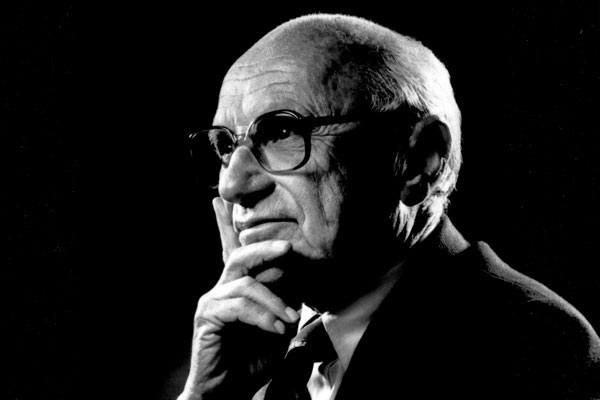


 PRINT PAGE
 CITE THIS


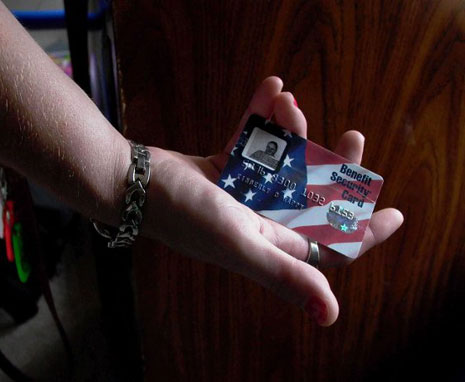


 The Daily Hatch