Yearly Archives: 2012

“Woody Wednesday” Allen on the meaning of life (part 2)

Ecclesiastes 1

Published on Sep 4, 2012

Calvary Chapel Spring Valley | Sunday Evening | September 2, 2012 | Pastor Derek Neider

_____________________

Ecclesiastes 2-3

Published on Sep 19, 2012

Calvary Chapel Spring Valley | Sunday Evening | September 16, 2012 | Derek Neider

_____________________________

September 3, 2011 · 5:16 PM

Woody Allen on the Emptiness of Life

In the final scene of Manhattan, Woody Allen’s character, Isaac, is lying on the sofa with a microphone and a tape-recorder, dictating to himself an idea for a short story. It will be about “people in Manhattan,” he says, “who are constantly creating these real unnecessary, neurotic problems for themselves” because they cannot bear to confront the “more unsolvable, terrible problems about the universe.” In an attempt to keep it optimistic, he begins by asking himself the question, “Why is life worth living?” He gives it some thought. “That’s a very good question,” he says, “There are certain things, I guess, that make it worthwhile.” And then the list begins: Groucho Marx, Willie Mays, the second movement of Mozart’s ‘Jupiter Symphony,’ Louis Armstrong’s recording of Potato Head Blues, “Swedish movies, naturally,” Flaubert’s Sentimental Education, Marlon Brando, Frank Sinatra, “those incredible apples and pears by Cézanne, the crabs at Sam Wo’s . . . Tracy’s face.”

This list acts as an important hinge in the film’s narrative, the point at which Isaac suddenly becomes aware of his feelings for Tracy and resolves to go after her. But within this list there is also something greater being communicated, something which, I believe, can be described as the central subject of nearly every Woody Allen film, or, perhaps, what compels him to make films in the first place. Isaac is conveying here a belief in the sheer power of art, its ability to provide a sense of worth to an otherwise empty existence. Art, Woody Allen seems to be saying, is the only valuable response – or the only conceivable response – to the dreadful human predicament as he sees it.

~ ~ ~

“My relationship with death remains the same: I’m strongly against it.”

~ ~ ~

Recently, at the Cannes Film Festival, Woody Allen was asked about what motivates him. He simply laughed and said, “Fear is what drives me.” Work, for Allen, is a wonderful distraction from the “terrible truth” – the ostensible meaninglessness of life, the apparent futility of all human endeavour, the inevitability of sickness, the unescapable prognosis of death. Film-making, like the “unnecessay, neurotic problems” dreamt up by the characters in Isaac’s short story, diverts Allen’s attention away from this reality, from the fear that presents itself when he stops to think about the fact that eventually everybody dies, “the sun burns out, and the earth is gone, and . . . all the stars, all the planets, the entire universe, goes, disappears.” So this fear is the reason for his prolificity, the impulse behind all of his artistic achievements. Manhattan, Annie Hall, Hannah and Her Sisters, Sleeper all came about, first of all, as distractions, projects that prevented him from having to “sit in a chair and think about what a terrible situation all human beings are in.”

I believe that there is a lot of truth in Woody Allen’s perspective. We distract ourselves constantly, we refuse to think about the meaning of our existence, we skirt around the inevitable. Certainly – and he acknowledges this – Allen is not the first person to have hit upon this truth. It has been recognised by such thinkers as Kierkegaard, Nietzsche, Freud, Sartre, the Buddha and the writer of Ecclesiastes. And Allen knows, too, that one cannot live in perpetual awareness of this fact. Such a life would be crippling torment. Indeed, it is this very torment that Tolstoy found himself in after having realised that there was “nothing ahead other than deception of life and of happiness, and the reality of suffering and death: of complete annihilation.” After realising, in other words, the sheer absurdness of human existence, the meaninglessness of life without God. In his Confession he writes:

My life came to a standstill. I could breathe, eat, drink and sleep and I could not help breathing, eating, drinking and sleeping; but there was no life in me because I had no desires whose gratification I would have deemed it reasonable to fulfil. If I wanted something I knew in advance that whether or not I satisfied my desire nothing would come of it.

One cannot live like this, says Woody Allen. One must provide oneself with necessary delusions in order to carry oneself through life. He remarks that it is in fact only those people whom he calls “self-deluded” that seem to find any kind of real satisfaction in living, any peace or enjoyment. These people can say, “Well, my priest, or my rabbi tells me everthing’s going to be all right,” and they find their answers in what he calls “magical solutions.” This recourse to the “magical” he dismisses as nonsense.

It is worth comparing Woody Allen’s pessimistic agnosticism with the utopian atheism of someone like Richard Dawkins. Evidently, the former worldview is entirely consistent with non-belief in God, whereas the latter is not. In fact, it is unfounded, false. Dawkins removes God from the picture entirely, yet clings persistently to a belief in life’s meaning, grounding this meaning, it appears, in natural selection. There is a contradiction in Dawkins’ thought: on the one hand, he claims that science “can tell us why we are here, tell us the purpose of human existence,” yet, on the other, he insists on characterising natural selection itself as a blind mechanism, containing “no design, no purpose, no evil, no good, nothing but pointless indifference.”

Whilst I do not share Woody Allen’s agnostic belief, I can respect his consistency, his willingness to acknowledge an existence without God for what it really is: “a grim, painful, nightmarish, meaningless experience.” His worldview follows naturally from what Heidegger termed the state of human “abandonment,” the absence of God in all human affairs. Dawkins’ worldview, on the other hand, does not . . . It is an embarrassing mishmash of strict empricist and naturalistic belief with what really amounts to a kind of foggy mysticism, a belief system according to which human beings can create for themselves an objective purpose. What he fails to realise is that this purpose is nothing more than a delusion, a mere appearance of purpose. It might get us up in the morning, but, once again, it is no more real than the manufactured neurotic problems of Isaac’s characters.

~ ~ ~

“It is impossible to experience one’s death objectively and still carry a tune.”

~ ~ ~

Let us return to Woody Allen’s seemingly affirmative opinion of art, as exemplified in the final scene of Manhattan. Given his lifelong insistence on the belief that human existence is “a big, meaningless thing,” how are we to make sense of Isaac’s list? Is it really possible to reconcile Woody Allen’s adament nihilism with his invocation of the power of art, its ability to stand firm in the face of such a terrible truth? The point to be made, I believe, is a very subtle one. In that same interview at Cannes, Woody Allen talks about the role of the artist as he sees it. The artist, essentially, must respond to the question that Isaac poses, “Why is life worth living?” Faced with the emptiness of life, she must try to “figure out – knowing that it’s true . . . knowing the worst – why it’s still worthwhile.” Allen is not, I believe, claiming that art can provide objective meaning to life. Such an assertion would conflict with his unswerving pessimism. Instead, he is saying that the essence of art, what animates it, what inspires it to flourish, is a courageous struggle against this “terrible truth.” The artist, he says, must confront the futility of life, look at it in the face, embrace it in all of its hopelessness and despair, and provide humanity with an honest reply. The question, then, is not, ‘Can Woody Allen justify his belief in an objective meaning as embodied in art?’ I do not think that he believes in an objective meaning, a necessary purpose for human existence. Rather, the question becomes, ‘Is it possible for the artist to look squarely at the human predicament and supply humanity with a worthwhile answer?’

This, I want to say, is still not possible. As we have seen with the example of Tolstoy, one cannot live one’s life in a full awareness of its futility, of the imminence of death, of the falsity of one’s happiness, and yet carry on as normal. One would end up utterly debilitated. And if this is indeed how artists have been living for centuries, confronting the inevitable, facing the dismal truth, then art itself becomes an inexplicable phenomenon.

~ ~ ~

“On the plus side, death is one of the few things that can be done just as easily lying down.”

~ ~ ~

The answer is not to appeal to art as something that can provide human existence with objective meaning. Such a ‘faith in art’ would merely beg the question, ‘But why is art so special?’ How can art, if viewed as just another custom, an event within the world, give purpose and value to human life? It remains to be explained how that which is within the world can provide meaning for that which is within the world. Meaning, I believe, can only come from without, from that which transcends the world, and yet instills human existence with significance and worth. It is the purpose of art to direct us to this very transcendence, the ground of being itself. The same higher power, in fact, that Woody Allen – perhaps rightly! – dismisses as “nonsense” in its rigid, institutional form.

Related posts:

“Woody Wednesday” Will Allen and Martin follow same path as Kansas to Christ?

Several members of the 70′s band Kansas became committed Christians after they realized that the world had nothing but meaningless to offer. It seems through the writings of both Woody Allen and Chris Martin of Coldplay that they both are wrestling with the issue of death and what meaning does life bring. Kansas went through […]

Francis Schaeffer and C. Everett Koop were prophetic (jh29)

Francis Schaeffer and C. Everett Koop were prophetic (jh29) What Ever Happened to the Human Race? I recently heard this Breakpoint Commentary by Chuck Colson and it just reminded me of how prophetic Francis Schaeffer and C. Everett Koop were in the late 1970′s with their book and film series “Whatever happened to the human […]

“Woody Wednesday” Allen is searching for satisfaction in wrong place jh17

Coldplay – 42 Live Coldplay perform on the french television channel W9. In 1992 Woody Allen took up with one of his adopted kids and lived in with her. He was given over to the pursuit of pleasure. Actually he has made that a major focus of his life. In the latter part of his […]

“Woody Wednesday” Allen realizes if God doesn’t exist then all is meaningless (jh 15)

The Bible and Archaeology (1/5) The Bible maintains several characteristics that prove it is from God. One of those is the fact that the Bible is accurate in every one of its details. The field of archaeology brings to light this amazing accuracy. _________________________- I want to make two points today. 1. There is no […]

“Woody Wednesday” How Allen’s film “Crimes and Misdemeanors makes the point that hell is necessary (jh 14)

Crimes and Misdemeanors: A Discussion: Part 1 Adrian Rogers – Crossing God’s Deadline Part 2 Jason Tolbert provided this recent video from Mike Huckabee: John Brummett in his article “Huckabee speaks for bad guy below,” Arkansas News Bureau, May 5, 2011 had to say: Are we supposed to understand and accept that Mike Huckabee is […]

Agnostic Allen notes, “The people who successfully delude themselves seem happier than the people who can’t” (Woody Wednesday Part 5)

Woody Allen interviews Billy Graham on Religion This article below makes we think of the lady tied to the Railroad in the Schaeffer video. Dr. Francis schaeffer – The flow of Materialism (Modern man sees no hope for the future and has deluded himself by appealing to nonreason to stay sane. Look at the example […]

A review of Woody Allen’s latest movie “Midnight in Paris” (Woody Wednesday Part 4)

Midnight in Paris Not Dove Family Approved Theatrical Release: 6/10/2011 Reviewer: Edwin L. Carpenter Source: Theater Writer: Woody Allen Producer: Letty Aronson Director: Woody Allen Genre: Comedy Runtime: 100 min. MPAA Rating: PG-13 Starring: Owen Wilson, Rachel McAdams, Kurt Fuller, Kathy Bates Synopsis: Midnight in Paris is a romantic comedy that follows a family travelling […]

Woody Allen films and the issue of guilt (Woody Wednesday Part 3)

Woody Allen and the Abandonment of Guilt Dr. Marc T. Newman : AgapePress Print In considering filmmaking as a pure visual art form, Woody Allen would have to be considered a master of the medium. From his humble beginnings as a comedy writer and filmmaker, he has emerged as a major influential force in Hollywood. […]

According to Woody Allen Life is meaningless (Woody Wednesday Part 2)

Woody Allen, the film writer, director, and actor, has consistently populated his scripts with characters who exchange dialogue concerning meaning and purpose. In Hannah and Her Sisters a character named Mickey says, “Do you realize what a thread were all hanging by? Can you understand how meaningless everything is? Everything. I gotta get some answers.”{7} […]

“Woody Wednesday” Part 1 starts today, Complete listing of all posts on the historical people mentioned in “Midnight in Paris”

I have gone to see Woody Allen’s latest movie “Midnight in Paris” three times and taken lots of notes during the films. I have attempted since June 12th when I first started posting to give a historical rundown on every person mentioned in the film. Below are the results of my study. I welcome any […]

Milton Friedman videos and transcripts Part 13

Milton Friedman videos and transcripts Part 13

On my blog www.thedailyhatch.org I have an extensive list of posts that have both videos and transcripts of MiltonFriedman’s interviews and speeches. Here below is just small list of those and more can be accessed by clicking on “Milton Friedman” on the side of this page or searching for Milton Friedman also.

Related posts:

Milton Friedman videos and transcripts Part 3

Milton Friedman videos and transcripts Part 3 On my blog http://www.thedailyhatch.org I have an extensive list of posts that have both videos and transcripts of MiltonFriedman’s interviews and speeches. Here below is just small list of those and more can be accessed by clicking on “Milton Friedman” on the side of this page or searching […]

Milton Friedman videos and transcripts Part 2

Milton Friedman videos and transcripts Part 2 On my blog http://www.thedailyhatch.org I have an extensive list of posts that have both videos and transcripts of MiltonFriedman’s interviews and speeches. Here below is just small list of those and more can be accessed by clicking on “Milton Friedman” on the side of this page or searching […]

Milton Friedman videos and transcripts Part 1

Milton Friedman videos and transcripts Part 1 On my blog http://www.thedailyhatch.org I have an extensive list of posts that have both videos and transcripts of MiltonFriedman’s interviews and speeches. Here below is just small list of those and more can be accessed by clicking on “Milton Friedman” on the side of this page or searching […]

99th anniversary of Milton Friedman’s birth (Part 12)

Milton Friedman: Life and ideas – Part 04 99th anniversary of Milton Friedman’s birth (Part 12) Milton Friedman was born on July 31, 1912 and he died November 16, 2006. I started posting tributes of him on July 31 and I hope to continue them until his 100th birthday. Here is another tribute below:  Perspective […]

Milton Friedman on the power of choice (“Friedman Friday” Part 3)

FRIEDMAN FRIDAY APPEARS EVERY FRIDAY AND IS HONOR OF THE NOBEL PRIZE WINNING ECONOMIST MILTON FRIEDMAN. The Power Of Choice By John Beagle An interesting compilation of Milton Freeman as an economic freedom philosopher. Milton makes the case for economic freedom as a precondition for political freedom. The title of this video, The Power of Choice […]

99th anniversary of Milton Friedman’s birth (Part 11)

 Milton Friedman: Life and ideas – Part 03 99th anniversary of Milton Friedman’s birth (Part 11) Milton Friedman was born on July 31, 1912 and he died November 16, 2006. I started posting tributes of him on July 31 and I hope to continue them until his 100th birthday. Here is another tribute below:  About […]

99th anniversary of Milton Friedman’s birth (Part 10)

Milton Friedman was born on July 31, 1912 and he died November 16, 2006. I started posting tributes of him on July 31 and I hope to continue them until his 100th birthday. Milton Friedman – University of Chicago School of Economics ProfessorHere is an essay written to honor the 99th anniversary of Milton Friedman’s […]

99th anniversary of Milton Friedman’s birth (Part 9)

Milton Friedman was born on July 31, 1912 and he died November 16, 2006. I started posting tributes of him on July 31 and I hope to continue them until his 100th birthday. Milton Friedman – University of Chicago School of Economics ProfessorHere is an essay written to honor the 99th anniversary of Milton Friedman’s […]

99th anniversary of Milton Friedman’s birth (Part 8)

Milton Friedman was born on July 31, 1912 and he died November 16, 2006. I started posting tributes of him on July 31 and I hope to continue them until his 100th birthday. Milton Friedman – University of Chicago School of Economics ProfessorHere is an essay written to honor the 99th anniversary of Milton Friedman’s […]

The stimulus did not work, Milton Friedman knew that 40 yrs ago (“Friedman Friday” Part 2)

Happy Birthday, Milton Friedman! Author: Jonathan Wood Milton Friedman, one of the greatest minds of the 20th century, would have turned 99 on Sunday.  Though few individuals have been as deserving of praise, Milton Friedman was “much more interested in having people thinking about the ideas” than the person having them.  In that spirit, we […]

99th anniversary of Milton Friedman’s birth (Part 7)

  Milton Friedman was born on July 31, 1912 and he died November 16, 2006. I started posting tributes of him on July 31 and I hope to continue them until his 100th birthday. Milton Friedman – University of Chicago School of Economics ProfessorHere is an essay written to honor the 99th anniversary of Milton […]

99th anniversary of Milton Friedman’s birth (Part 6)

  Milton Friedman was born on July 31, 1912 and he died November 16, 2006. I started posting tributes of him on July 31 and I hope to continue them until his 100th birthday. Milton Friedman – University of Chicago School of Economics ProfessorHere is an essay written to honor the 99th anniversary of Milton […]

“There is no free lunch” said Milton Friedman (“Friedman Friday” Part 1)

“There is no free lunch” said Milton Friedman (“Friedman Friday” Part 1) Today is the beginning of a new series I am starting: FRIEDMAN FRIDAY APPEARS EVERY FRIDAY AND IS HONOR OF THE NOBEL PRIZE WINNING ECONOMIST MILTON FRIEDMAN. Milton Friedman – The Free Lunch Myth No Free Lunch, Now We have to Pay January 23, […]

Hillary Clinton :Take from Rich and give to Poor

HALT: Halting Arkansas Liberals with Truth Back in 2004 at a democratic fundraiser, Senator Hillary Clinton told several hundred supporters – some of whom had ponied up as much as $10,000 to attend – to expect to lose some of the tax cuts passed by President Bush if Democrats win the White House and control […]

Pat Lynch: Criticizes Social Security Privatization

HALT: Halting Arkansas Liberals with Truth (Milton Friedman: The People did not want the Social Security Program) Pat Lynch in his September 3, 2010 article in the Democrat Gazette article  notes that “Congressman John Boozman’s plan to privatize Social Security is similar to what President Bush proposed in 2005 and what Congressman Paul Ryan is […]

Inner city kids suffer the most when there is no School Choice: Charter Series pt 2

(Milton Friedman shows in this 9 minute video below how inner city parents have lost their freedom to choose concerning schools and they have suffered because of it) The Arkansas Times has always been on the warpath when the subject of school choice comes up. Paul Hewitt in the Ark Times April 22, 2010 wrote: […]

Mark Pryor supported Failed Stimulus

HALT: Halting Arkansas Liberals with Truth (Paul Ryan outlines what has happened since the stimulus has been passed) Senator Mark Pryor voted for the American Recovery and Reinvestment Act of 2009 which was signed into law by President Obama on February 17, 2009. Both Pryor and Obama thought the economy could be jump started by […]

Max Brantley, Pat Lynch, Gene Lyons and other Liberals refuted here!

HALT: Halting Arkansas Liberals with Truth Opening Post December 13, 2010 11:36 am My name is Everette Hatcher III.  I am a businessman in Little Rock and have been living in Bryant since 1993. My wife Jill and I have four kids (Rett 24, Hunter 22, Murphey 16, and Wilson 14). I have been a […]

Open letter to President Obama (Part 117)

President Obama c/o The White House
1600 Pennsylvania Avenue NW
Washington, DC 20500

Dear Mr. President,

I know that you receive 20,000 letters a day and that you actually read 10 of them every day. I really do respect you for trying to get a pulse on what is going on out here.

The stimulus was a huge failure and I hope everyone who voted for it will be defeated in their re-election attempts. Dan Mitchell of the Cato Institute predicted it would be a failure back in January of 2009!!!!

President Obama imposed a big-spending faux stimulus program on the economy back in 2009, claiming that the government needed to squander about $800 billion to keep the unemployment rate from rising above 8 percent.

How did that work out? One possible description is that the so-called stimulus became a festering pile of manure. About three years have passed, and the joblessness rate hasn’t dropped below 8 percent. But the White House has been sprinkling perfume on that pile of you-know-what and claiming that the Keynesian spending binge was good policy.

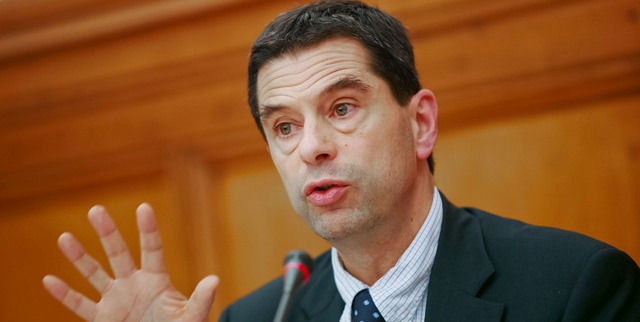
But not every politician is blindly ideological like Obama. Vitor Gaspar, Portugal’s Finance Minister, is willing to admit error. Here are some relevant excerpts from a New York Times report.

Unlike Obama, willing to admit mistakes

Mr. Gaspar, speaking to The New York Times last week, has a message for observers who say Europe needs to substantially relax its austerity approach: We tried stimulus and it backfired. Like some other European countries, Portugal tried what Mr. Gaspar called “a Keynesian style expansion” in 2008, referring to a theory by economist John Maynard Keynes. But it didn’t turn things around, and may have made things worse.

Why does the Portuguese Finance Minister have this view? Well, for the simple reason that the economy got worse and more spending put his country in a deeper fiscal ditch.

The yield on Portuguese government bonds – more than 11 percent on longer-term bonds — is substantially higher than the yields on debt issued by Ireland, Spain or Italy. …The main fear among investors is that Portugal is going to have to ask for a second bailout from the International Monetary Fund and the European Union, which committed $103 billion of financial aid in 2011.

Maybe the big spenders in Portugal should import some of the statist bureaucrats at Congressional Budget Office. The CBO folks could then regurgitate the moving-goalposts argument that they’ve used in the United States and claim that the economy would be even weaker if the government hadn’t wasted more money.

But perhaps the Portuguese left doesn’t think that will pass the laugh test.

Amazingly, the Germans, who have a disturbing affinity for powerful government, decided against Keynesianism and that’s paid dividends for their economy.

In any event, some of us can say we were right from the beginning about this issue.

_________________

Obama’s So-Called Stimulus: Good For Government, Bad For the Economy

Uploaded by on Jan 26, 2009

President Obama wants Congress to dramatically expand the burden of government spending. This CF&P Foundation mini-documentary explains why such a policy, based on the discredited Keynesian theory of economics, will not be successful. Indeed, the video demonstrates that Obama is proposing – for all intents and purposes – to repeat Bush’s mistakes. Government will be bigger, even though global evidence shows that nations with small governments are more prosperous.

_________________

Not that being right required any keen insight. Keynesian policies failed for Hoover and Roosevelt in the 1930s. So-called stimulus policies also failed for Japan in 1990s. And Keynesian proposals failed for Bush in 2001 and 2008.

Just in case any politicians are reading this post, I’ll make a point that normally goes without saying: Borrowing money from one group of people and giving it to another group of people does not increase prosperity.

But since politicians probably aren’t capable of dealing with a substantive argument, let’s keep it simple and offer three very insightful cartoons: here, here, and here.

_________________

Thank you so much for your time. I know how valuable it is. I also appreciate the fine family that you have and your commitment as a father and a husband.

Sincerely,

Everette Hatcher III, 13900 Cottontail Lane, Alexander, AR 72002, ph 501-920-5733, lowcostsqueegees@yahoo.com

Commemorating Milton Friedman’s 100th Birthday with the Index of Economic Freedom

Milton Friedman was all about freedom until the day he died.

Commemorating Milton Friedman’s 100th Birthday with the Index of Economic Freedom

By and
July 31, 2012


Abstract: July 31, 2012, is the one hundredth anniversary of the birth of the great economist and thinker Milton Friedman. It was Friedman who first suggested that the economic freedom of countries be measured and monitored, and The Heritage Foundation has been doing so since 1995 in its Index of Economic Freedom. Friedman’s most important legacy is unquestionably the improvement in living standards of hundreds of millions of people around the world thanks to the implementation of his theories. Unfortunately, the policies of an increasingly leviathan government have placed America on a path that diverges sharply from its historical quest for greater freedom. At Milton Friedman’s centennial, Americans should renew their commitment to economic freedom, as well as their confidence that a people who are free to choose will ensure their own future well-being.

July 31, 2012, is the one hundredth anniversary of Milton Friedman’s birth. Friedman, “the most influential economist of the second half of the 20th century, possibly all of it,”[1] was the champion of the powerful idea that free markets and individual choice lead society to ultimate prosperity and overall well-being. His contributions to economic theory, and the conviction with which he espoused them, made him truly an extraordinary giant among political and economic thinkers.

Friedman’s ideas and writings earned him the Nobel Prize in economics, but his greatest legacy is unquestionably the improvement in living standards of people around the globe who have benefited from the implementation of his theories, even though they may have never read one of his books, attended one of his lectures, or even heard his name. As Friedman’s ideas have been translated into public policy in countries around the globe, they have served as the invisible hand guiding—no, allowing—millions to pursue their individual dreams, endowed with greater economic and political freedom. In reviewing Friedman’s monumental Capitalism and Freedom five decades ago, The Economist magazine called the book “ideal reading for politicians of either party in this country, not because it would convince them, but because it challenges the reader to sort out his own ideas more fundamentally.”[2]

The Heritage Foundation, whose policy vision is “to build an America where freedom, opportunity, prosperity, and civil society flourish,” is proud and honored to cherish and spread the legacy of Friedman’s powerful ideas for innovative policy solutions. As Dr. Edwin Feulner, president of The Heritage Foundation, pointed out in a tribute to Friedman in 2006:

Over the last 30 years, Friedman enjoyed a close relationship with The Heritage Foundation. He was the featured speaker at the 1979 dedication of our headquarters building, our 1983 10th anniversary “Heritage 10” celebration, and other occasions. In 1998, I awarded Rose and Milton Friedman The Heritage Foundation’s Clare Boothe Luce Award, our most distinguished honor. Friedman and Heritage have been closely linked in the policy arena for a very long time.[3]

Indeed, many of Friedman’s perspectives and policy ideas are not only far-reaching, but truly enduring throughout generations via his own publications, as well as through others’ countless scholarly researches, whose underlying theses trace back to Friedman’s insights.

The Heritage Foundation’s numerous innovative research publications are no exception. Friedman’s economic, philosophical, and political writing has inspired decades of Heritage work in such diverse areas as welfare reform, competition in education, budget reform, and free trade.

The Index of Economic Freedom: Friedman’s Wisdom Around the World

People across the globe are particularly indebted to Milton Friedman for his role in championing economic freedom, and that effort lives on in The Heritage Foundation’s annual Index of Economic Freedom. Friedman elaborated “the role of competitive capitalism—the organization of the bulk of economic activity through private enterprise operating in a free market—as a system of economic freedom.” Indeed, it was Friedman who first suggested that economic freedom of countries around the world be measured and monitored.[4]

The Index,a data-driven policy guide that empirically evaluates countries’ economic policies and demonstrates why economic freedom matters, was first published in 1995. Since then, the Index has continued to echo many of Friedman’s insights on the power of freedom, documenting reform efforts, and monitoring ups and downs of economic freedom around the world. Dr. Kim Holmes, the founding editor of the Index of Economic Freedom, observed that the Index is “not only the first comprehensive economic freedom index, but one that has continued to grow in importance ever since,” offering “many examples of what economic freedom can do.”[5]

To many who have long tracked economic freedom, the years since 2008 have served as a vivid reminder of the continuing struggle between the state and the free market. In times of uncertainty, it may be natural that people will look to their governments for answers. Yet the long-term solutions to our current economic problems do not lie in more government controls and regulations. They lie in a return to free-market principles.

Perhaps the most critical lesson of the past four years of ever-growing government intrusion into America’s free-market system is that the fundamental superiority and value of economic liberty must be steadfastly reiterated, or even re-taught, to many political leaders and policymakers.

The Index offers plenty of evidence of the lasting values of freedom that Milton Friedman so keenly articulated and advocated.

Greater Prosperity. Friedman told an interviewer in 1979:

In the only cases in which the masses have escaped from the kind of grinding poverty you’re talking about…they have had capitalism and largely free trade…. So that the record of history is absolutely crystal clear: that there is no alternative way so far discovered of improving the lot of the ordinary people that can hold a candle to the productive activities that are unleashed by a free enterprise system.[6]

As the Index has repeatedly illustrated over the past 18 years, the relationship between economic freedom and prosperity is strongly positive. Gross domestic product (GDP) per capita is much higher in countries with greater economic freedom. On average, economies rated “free” or “mostly free” enjoy incomes that are more than double the average levels in all other countries, and more than seven times higher than the incomes of “repressed” economies (see Chart 1).

Greater Economic Freedom, Greater Prosperity

Economic Freedom and Economic Growth

More important, a sustained commitment to economic freedom is critical to ensuring economic growth and prosperity. Not only is a higher level of economic freedom clearly associated with a higher level of per capita income, but countries’ improvements in economic freedom also increase their income growth rates, ensuring economic and social progress (see Chart 2).

Free Trade Drives Prosperity

Also notably, as Friedman suggested, true economic freedom requires free markets at home and free trade around the world. Trade drives prosperity, providing greater economic opportunity in countries that choose to embrace free-trade policies. On average, economies with the most trade freedom have the highest per capita GDP (see Chart 3).

Promoting Well-Being. Of course, life is not just about money or wealth. As Friedman observed:“It is in the free societies that there has been a far greater development of the nonmaterial, spiritual, artistic aspects of well-being.[7]

In case after case, Friedman keenly observed that government interventions in free markets are not only futile, but tend to generate the exact opposite outcomes of their intended purpose. He called this unseen force that makes things go terribly and perversely wrong with government social programs the “invisible foot.”[8]

It is economic freedom that effectively improves overall well-being for a greater number of people. The Index has documented various tangible non-materialistic benefits of living in freer societies administrated by limited government.

Economic Freedom promotes Overall Well-Being

As Friedman witnessed again and again, not only are higher levels of economic freedom associated with higher material prosperity, greater economic freedom also strongly correlates with overall well-being, which takes into account such factors as health, education, and personal safety (see Chart 4).

Achieving Political Freedom. As Friedman wrote:

Economic freedom plays a dual role in the promotion of a free society. On the one hand, freedom in economic arrangements is itself a component of freedom broadly understood, so economic freedom is an end in itself. In the second place, economic freedom is also an indispensable means toward the achievement of political freedom.”[9]

The Index has empirically explored this critical relationship between economic freedom and political freedom or democratic governance. As illustrated in Chart 5, there is a strongly positive correlation between the two, and little doubt that higher levels in either generally have a positive impact on the other.

Economic Freedom and Democratic Governance

Entrepreneurial Dynamism. Economic freedom makes it possible for independent sources of wealth to counterbalance political power and to cultivate a pluralistic society. In other words, economic freedom underpins and reinforces political liberty and market-based democracy.As Friedman stated, “The greatest advances of civilization, whether in architecture or painting, in science and literature, in industry or agriculture, have never come from centralized government.[10]

As the Index has demonstrated, economic freedom is highly correlated with entrepreneurial activity in the private sector, creating new jobs and increasing opportunities and choices for individuals in advancing their own well-being (see Chart 6). When individuals are allowed to decide themselves how best to pursue their dreams and aspirations, their collective achievements driven by individual choices, not by government mandates, add up to a better society for all.

Economic Freedom Propels Entrepreneurial Dynamism

Economic Freedom and Innovation

To put it differently, economic freedom is positively linked to innovation that is often nurtured by free enterprise, not by central planning (see Chart 7). The proven path to revitalizing economic growth is to advance economic freedom by promoting policies that generate a virtuous cycle of innovation, job creation, and productivity growth that, in turn, helps to advance social and economic evolution.

Time to Renew Commitment to Greater Economic Freedom

Milton Friedman was confident that freedom would prevail, as indicated in the conclusion of Free to Choose,a powerful restatement of his beliefs co-authored with his wife Rose:

Fortunately, we are waking up. We are again recognizing the dangers of an over-governed society, coming to understand that good objectives can be perverted by bad means, that reliance on the freedom of people to control their own lives in accordance with their own values is the surest way to achieve the full potential of a great society. Fortunately, also, we are as a people still free to choose which way we should go—whether to continue along the road we have been following to ever bigger government, or to call a halt and change direction.[11]

Though stated three decades ago, the Friedmans’ keen observations are shockingly relevant to today’s challenging time for America. The reckless and populist policy choices of an increasingly leviathan government have placed the United States on a path that diverges sharply from its historical quest for greater freedom. Worse, the system of competitive capitalism that is responsible for America’s unprecedented prosperity is being replaced by a crony capitalism that encourages the concentration of power that Friedman warned was one of the greatest threats to freedom.

Still, there are signs that, as in Friedman’s day, the American public is waking up, and maybe—just maybe—one can be optimistic that freedom will again prevail in America.

As Dr. Feulner and Heritage Foundation trustee Brian Tracy pointed out in their recent book, The American Spirit, “Our inherent optimism is alive and well in every man, woman, and child in the country, to one degree or another. That optimism is a key component of our future success as individuals and as a nation.”[12]

So, at Milton Friedman’s centennial birthday, Americans should renew this country’s commitment to economic freedom, as well as their confidence that a people who are free to choose will make the right decisions to ensure their future prosperity and happiness.

Anthony B. Kim is a Senior Policy Analyst in the Center for International Trade and Economics (CITE), and Ambassador Terry Miller is Director of CITE, and the Mark A. Kolokotrones Fellow in Economic Freedom, at The Heritage Foundation.

Quotes from Milton Friedman on his 100th birthday

Milton Friedman’s 100th: Exploring His Wisdom for the Ages (Part I: Worldview)

by Robert Bradley Jr.
July 31, 2012

[Ed. note: Milton Friedman’s views will be further explored in Part II on energy and Part III on political capitalism.]

“Our central theme in public advocacy has been the promotion of human freedom … [It] underlies our opposition to rent control and general wage and price controls, our support for educational choice, privatizing radio and television channels, an all-volunteer army, limitation of government spending, legalization of drugs, privatizing social security, free trade, and the deregulation of industry and private life to the fullest extent possible.”

– Milton and Rose Friedman, Two Lucky People (1998), p. 588.

Today some 150 events are taking place in the U.S. and internationally to commemorate the 100th anniversary of the birth of Milton Friedman (1912–2006). I will be hosting a Houston event this evening with presentations by myself and University of Houston economist Thomas Mayor on Friedman’s many contributions that, in sum, opened the door for libertarian thought in academia and within the wider public.

The Wikipedia entry for Friedman begins as follows:

Milton Friedman (July 31, 1912 – November 16, 2006) was an American economist, statistician, and author who taught at the University of Chicago for more than three decades. He was a recipient of the Nobel Memorial Prize in Economic Sciences, and is known for his research on consumption analysis, monetary history and theory, and the complexity of stabilization policy.

As a leader of the Chicago school of economics, he influenced the research agenda of the economics profession. A survey of economists ranked Friedman as the second most popular economist of the twentieth century behind John Maynard Keynes, and The Economist described him as “the most influential economist of the second half of the 20th century…possibly of all of it.”

Many other biographies can be accessed on Friedman; this post will continue with some Friedman quotations of import on various topics except for those to come in Part II (energy) and Part III (political and special-interest capitalism).

The Case for Liberty

“The strongest argument for free enterprise is that it prevents anybody from having too much power. Whether that person is a government official, a trade union official, or a business executive. If forces them to put up or shut up. They either have to deliver the goods, produce something that people are willing to pay for, are willing to buy, or else they have to go into a different business.”

“A major source of objection to a free economy is precisely that it … gives people what they want instead of what a particular group thinks they ought to want. Underlying most arguments against the free market is a lack of belief in freedom itself.”

“The great virtue of a free market system is that it does not care what color people are; it does not care what their religion is; it only cares whether they can produce something you want to buy. It is the most effective system we have discovered to enable people who hate one another to deal with one another and help one another.”

“I start from a belief in individual freedom and that derives fundamentally from a belief in the limitations of our knowledge [and] from a belief—that nobody can be sure that what he believes is really right. So the most attractive position—is putting individual freedom first.

Results, Not Intentions

“One of the great mistakes is to judge policies and programs by their intentions rather than by their results.”

“Concentrated power is not rendered harmless by the good intentions of those who create it.”

“The contrast between the ostensible objectives of government programs and their actual results—a contrast that has been a persistent theme of earlier chapters—is so pervasive, so widespread, that even many of the strongest supporters of big government have had to acknowledged government failure—though their solution almost always turns out to be still bigger government.”

Forced Equality

“A society that puts equality before freedom will get neither. A society that puts freedom before equality will get a high degree of both.”

Tyranny of the Status Quo

“There is enormous inertia—a tyranny of the status quo—in private and especially governmental arrangements. Only a crisis—actual or perceived—produces real change. When that crisis occurs, the actions that are taken depend on the ideas that are lying around. That, I believe, is our basic function: to develop alternatives to existing policies, to keep them alive and available until the politically impossible becomes politically inevitable.”

Business Behavior

“Competition does not protect the consumer because businessman are more soft-hearted than the bureaucrats or because they are more altruistic or generous, or even because they are more competent, but only because it is in the self-interest of the businessman to serve the consumer.”

“What about the danger of monopoly that led to the antitrust laws? …. The most effective way to counter it is … through removing existing barriers to international trade.”

Bureaucracy

“The first law of bureaucracy—the only feasible way of doing anything is the way it is being done.”

“The period … spent in Washington was … my first involvement in the actual making of government policy…. I came to understand firsthand the pull that Washington has for so many intellectuals … and also experienced the manipulation, dishonestly, and self-seeking that are an intrinsic part of the process. The disinterested pursuer of the public interest and the interested promoter of self are not always easy to distinguish.”

“When you stand before a civil servant, is there any real doubt who is the servant and who is the master.”

“Nobody spends somebody else’s money as carefully as he spends his own. Nobody uses somebody else’s resources as carefully as he uses his own.”

On Government Inefficiency

“I say thank God for government waste. If government is doing bad things, it’s only the waste that prevents the harm from being greater.”

Government: More or Less?

“A government program seems the solution only because government has been blocking at every turn the effective free market solution.”

On Scholarship

“[These] standards of scholarship—attention to detail, concern with scrupulous accuracy, checking of sources, and above all, openness to criticism—… have affected the whole of my scholarship.”

“I have a single rule. What I say to one person, I say to everyone. I never say anything off the record.”

“Sloppy writing reflects sloppy thinking.”

“All learning is ultimately self-learning.”

“The true test of any scholar’s work is not what his contemporaries say, but what happens to his work in the next 25 or 50 years. And the thing that I will really be proud of is if some of the work I have done is still cited in the text books long after I am gone.”

Thomas Sowell remembers his former teacher Milton Friedman 100 years later

I was impacted in 1980 by the film series “Free to Choose” and I was very impressed by the performance by Thomas Sowell. Today he remembers his former teacher Milton Friedman.  

Friedman could be a help today


    By  Thomas Sowell Creators Syndicate Tuesday July 31, 2012 7:00 AM

    If Milton Friedman were alive today — and there was never a time when he was more needed — he would be 100 years old. He was born on July 31, 1912. But professor Friedman’s death at age 94 deprived the nation of one of those rare thinkers who had both genius and common sense.

    Most people would not be able to understand the complex economic analysis that won him a Nobel Prize, but people with no knowledge of economics had no trouble understanding his books such as Free to Choose or the TV series of the same name.

    In being able to express himself at the highest level of his profession but also at a level that the average person could readily understand, Milton Friedman was like the economist whose theories and persona were most different from his own — John Maynard Keynes.

    Like many, if not most, people who became prominent as opponents of the left, professor Friedman began on the left. Decades later, looking back at a statement of his own from his early years, he said, “The most striking feature of this statement is how thoroughly Keynesian it is.”

    No one converted Milton Friedman, either in economics or in his views on social policy. His own research, analysis and experience converted him.

    As a professor, he did not attempt to convert students to his political views. I made no secret of the fact that I was a Marxist when I was a student in professor Friedman’s course, but he made no effort to change my views. He once said that anybody who was easily converted was not worth converting.

    I was still a Marxist after taking professor Friedman’s class. Working as an economist in the government converted me.

    What Milton Friedman is best known for as an economist was his opposition to Keynesian economics, which had largely swept the economics profession on both sides of the Atlantic, with the notable exception of the University of Chicago, where Friedman was trained as a student and later taught.

    In the heyday of Keynesian economics, many economists believed that inflationary government policies could reduce unemployment, and early empirical data seemed to support that view. The inference was that the government could make careful trade-offs between inflation and unemployment, and thus “fine-tune” the economy.

    Milton Friedman challenged this view with both facts and analysis. He showed that the relationship between inflation and unemployment held only in the short run, when the inflation was unexpected. But, after everyone got used to inflation, unemployment could be just as high with high inflation as it had been with low inflation.

    When both unemployment and inflation rose at the same time in the 1970s — “stagflation,” as it was called — the idea of the government “fine-tuning” the economy faded away. There still are some die-hard Keynesians today who keep insisting that the government’s stimulus spending would have worked, if only it was bigger and lasted longer.

    This is one of those heads-I-win-and-tails-you-lose arguments. Even if the government spends itself into bankruptcy and the economy still does not recover, Keynesians can always say that it would have worked if only the government had spent more.

    Although Milton Friedman became a conservative icon, he considered himself a liberal in the original sense of the word — someone who believes in the liberty of the individual, free of government intrusions. Far from trying to conserve things as they are, he wrote a book titled Tyranny of the Status Quo.

    Milton Friedman proposed radical changes in policies and institutions ranging from the public schools to the Federal Reserve. It is liberals who want to conserve and expand the welfare state.

    As a student of Friedman back in 1960, I was struck by two things — his tough grading standards and the fact that he had a black secretary. This was years before affirmative action. People on the left exhibit blacks as mascots. But I never heard Milton Friedman say that he had a black secretary, though she was with him for decades. Both his grading standards and his refusal to try to be politically correct increased my respect for him.

    Thomas Sowell is a senior fellow at Stanford University’s Hoover Institution.

    Celebration of Milton Friedman’s life on his 100th birthday

    Today it is 100 years from the birth of Milton Friedmon (July 31, 1912). Below are all the links to posts today celebrating his life. There are lots of videos, transcripts and articles about his life. Enjoy!!!

    Quotes from Milton Friedman on his 100th birthday

    Milton Friedman’s 100th: Exploring His Wisdom for the Ages (Part I: Worldview) by Robert Bradley Jr. July 31, 2012 [Ed. note: Milton Friedman’s views will be further explored in Part II on energy and Part III on political capitalism.] “Our central theme in public advocacy has been the promotion of human freedom … [It] underlies […]

    Thomas Sowell remembers his former teacher Milton Friedman 100 years later

    I was impacted in 1980 by the film series “Free to Choose” and I was very impressed by the performance by Thomas Sowell. Today he remembers his former teacher Milton Friedman.   Friedman could be a help today     By  Thomas Sowell Creators Syndicate Tuesday July 31, 2012 7:00 AM If Milton Friedman were alive […]

    Milton Friedman destroys liberal student challenges

    In the video above Milton Friedman takes on some liberal students with their challenges to capitalism.   Secretary of Defense Donald H. Rumsfeld speaking at Tribute to Milton Friedman (transcript) As Delivered by Secretary of Defense Donald H. Rumsfeld, White House, Washington, D.C., Thursday, May 09, 2002 Mr. President (George W. Bush), Rose and Milton […]

    Every Friday you need to click on www.theDailyHatch.org for “Friedman Friday”

    Every Friday you need to click on http://www.theDailyHatch.org if you would like to see a video clip of Milton Friedman as he shares his common sense conservative economic views. Many of his articles are posted too. I remember growing up and reading those great articles every week in Newsweek. They are just as relevant today as […]

    Milton Friedman videos and transcripts Part 12

    Milton Friedman videos and transcripts Part 12 On my blog http://www.thedailyhatch.org I have an extensive list of posts that have both videos and transcripts of MiltonFriedman’s interviews and speeches. Here below is just small list of those and more can be accessed by clicking on “Milton Friedman” on the side of this page or searching […]

    Chattanooga Times Free Press comments on 100th year since Milton Friedman’s birth

    published Tuesday, July 31st, 2012  Chattanooga Times Free Press Milton Friedman at 100   Milton Friedman Photo by Associated Press /Chattanooga Times Free Press.   enlarge photo   One hundred years ago today, the most powerful defender of economic liberty in American history was born in Brooklyn to poor Jewish immigrants. Though he stood barely […]

    Milton Friedman’s passion was to make a difference in the lives of young people

    No one did more to advance the cause of school vouchers than Milton and Rose Friedman. Friedman made it clear in his film series “Free to Choose” how sad he was that young people who live in the inner cities did not have good education opportunities available to them. Remembering Milton Friedman’s School Choice Legacy […]

    Milton Friedman remembered at 100 years from his birth (Part 5)

    Testing Milton Friedman – Preview Uploaded by FreeToChooseNetwork on Feb 21, 2012 2012 is the 100th anniversary of Milton Friedman’s birth. His work and ideas continue to make the world a better place. As part of Milton Friedman’s Century, a revival of the ideas featured in the landmark television series Free To Choose are being […]

    Defending Milton Friedman

    What a great defense of Milton Friedman!!!!   Defaming Milton Friedman by Johan Norberg This article appeared in Reason Online on September 26, 2008  PRINT PAGE  CITE THIS      Sans Serif      Serif Share with your friends: ShareThis In the future, if you tell a student or a journalist that you favor free markets and limited government, there is […]

    Milton and Rose Friedman “Two Lucky People”

    Milton Friedman on Hayek’s “Road to Serfdom” 1994 Interview 2 of 2 Uploaded by PenguinProseMedia on Oct 26, 2011 2nd half of 1994 interview. ________________ I have a lot of respect for the Friedmans.Two Lucky People by Milton and Rose Friedman reviewed by David Frum — October 1998. However, I liked this review below better. It […]

    Milton Friedman destroys liberal student challenges

    In the video above Milton Friedman takes on some liberal students with their challenges to capitalism.
    _____________
    I went to the Capitol several years ago and just walked around Congress and sat in and listened to the speeches. When I was leaving I walked near an elevator and when it opened I noticed that Donald Rumfeld got off and then all these flashes went off and I realized that all these cameras were filming him. I got to my hotel that night and I saw my ear on national tv news that night. All three networks too. Too bad my 15 minutes of fame might just be reduced to 2 seconds and to my ear only.
     
    As Delivered by Secretary of Defense Donald H. Rumsfeld, White House, Washington, D.C., Thursday, May 09, 2002

    Mr. President (George W. Bush), Rose and Milton (Friedman), Minister of Defense of Italy (Antonio) Martino, a student of Milton’s, colleagues and friends, it’s good to see you all.

    I am delighted to join in celebrating the life and work of a good friend, and a rare talent-indeed, a talent to be treasured.

    Last year, I was disappointed to miss the birthday lunch that Ed Feulner hosts every year at some fish house on the road to Bohemian Grove in July. It’s nice of the President to bring us all together for an early celebration here in the EEOB (Eisenhower Executive Office Building).

    And Milton, what an impact you have had. Precious few people live long enough to witness the rise and fall of empires. Even fewer can see that their work has had a profound effect on those truly momentous events.

    Milton is the embodiment of the truth that “ideas have consequences.” Over the course of his career, he has turned down offers of influential posts, in and out of government, preferring to fight the battle of ideas, trusting that reasoned argument could change the course of history. And indeed, as we heard from Gary Becker, Ed Meese and Alan Greenspan, it has changed the course of history.

    Of course, we cannot honor Milton without also honoring Rose. I’m told they met in Economics 301 at the University of Chicago… how appropriate. Rose, as has been indicated, has been the intellectual collaborator ever since, to his and our great benefit.

    They were creators of the television series, “Free to Choose.” Several decades ago I had the good fortune to participate on occasion on their television shows. There is something about Milton that when I am around him, and talking to him, I feel smarter. (laughter)… So I felt very fortunate to do that.

    More recently, their book, a joint-memoir, “Two Lucky People,” as Alan has indicated – really should be reversed, because we indeed are the lucky ones and have benefited from that lifetime of collaboration.

    I’m told that when Capitalism and Freedom came out in 1963, it was almost ignored by the mainstream press. The ideas were seen as so unorthodox – so unusual – that no major newspaper bothered to do a book review.

    What a difference forty years makes. Today, many of those ideas, which seemed outrageous and so unorthodox to some in the 1960s, are now the law of the land, and many of them have been mentioned – airline deregulation has not, trucking deregulation has not, and-heaven forbid-private competition for the Post Office. (laughter)

    In fact, for all his books and lectures, I suspect that when it’s all over, maybe that Milton will be best remembered as the “godfather of overnight delivery.” (laughter)

    As a young Congressman in the 1960s, I used to go to seminars at the University of Chicago. Bob Goldman was the Director of the Center for Continuing Education there, He would gather a cluster of geniuses, and then allow a few young pups to come in and learn at their feet. As a then young pup, I was so privileged, and participated on a number of occasions.

    I remember well the conference on the “all-volunteer” Army-Milton was persuasive that I became an early advocate- as a young congressman, introducing legislation, testifying before the House and Senate Armed Services Committees, and then, as a young Cabinet officer in the Nixon Administration working to help achieve the all-volunteer service.

    Later, life turned down, and George Shultz came to me and asked me if I would run the wage price controls for the United States of America. (laughter) It was the country’s first peacetime experiment. As I recall, it was not Milton Friedman, but H. L. Mencken who once said, “For every human problem there is a solution that is simple, neat and wrong.” Richard Nixon found it.

    (laughter and applause)

    Early on, I figured out that the key to success was not to even try to manage wages and prices. Senator Proxmire’s law, I think written on the back of an envelope, was only a paragraph or two, and it embarrassed the President because inflation was coming along and the President wasn’t stopping it. So he passed a law saying that the president shall have the right to control wages and prices. I put the law on the floor in my office, next to my desk. And then every time The Wage Board, or The Price Commission, or The Health Services Board, or The Rent Board, or The Construction Stabilization Industries Board, any one of those alphabet boards that were spawned by this Economic Stabilization Act – every time they issued a regulation, we stuck on top. Before too long it started working its way up to the ceiling. As a reminder for everybody for the potential damage we were doing.

    He’s not here and I hate to talk behind people’s back, but I think the record should show that Vice President (Richard) Cheney, of course, was part of that operation, (laughter) and I have never once seen it on his resume. (laughter) But he was there.

    There was one other thing we did early on was to get agreement that any employee of the wage price controls could be fired within 30 days. The goal was to not allow a permanent bureaucracy to self-perpetuate, and it worked. So we worked and we worked we kept letting out everybody, we kept freeing up all of these categories. We had tiers and we would let this group free at wages and controls, and this group free at price controls, because it was an option or because of something else, or because it was food and the answer to (inaudible) prices is high prices.

    And after a while, Milton Friedman called me up and he said, “You have got to stop doing what you are doing.” And I said, “Why? Inflation used to be up at around 6 or 7, it’s now down to about 4 or 5. We’re freeing up all kinds of activities. We’re not doing much damage the economy.” He said, “I know, I know that. But you’re not the reason inflation is coming down, and YOU know that! (laughter) I said “That’s true.” And he said the problem is that people are going to think that you’re doing it, and you’re not – you’re letting everybody out and Inflation’s coming down and they’re going to learn the going to learn the wrong lesson. And it’s important he did not quite go as far as to say that I should start damaging the economy, but that was right underneath what he was telling me. (laughter) And of course he was correct.

    Of course, the central theme of Milton’s work in public policy has been the defense and promotion of human freedom-and the critical link between political and economic freedom.

    “Government,” he has told us, “has three primary functions: It should provide for the military defense of the nation. It should enforce contracts between individuals. And it should protect citizens against crimes against themselves or their property.” Milton, I’m relieved Defense made the cut. (laughter)

    You know, what’s remarkable about this man is that he was making these arguments in the heyday of the Great Society-a time when the Federal government was growing in unprecedented size and scope. Against the rising concentration of federal power, he stood as an often lonesome voice. “If government is to exercise power,” he declared, “better in the county than in the state, better in the state than in Washington, D.C. because if I do not like what my local community does, I can move to another community… and if I do not like what my state does, I can move to another. But if I do not like what Washington D.C. imposes, I have few alternatives in this world of jealous nations.” I’ve heard President Bush express similar sentiments.

    Building a truly great society requires not the power of government, but unleashing the power of human freedom — creating a climate in which millions of individuals can think, speak, create and build.

    People behind the Iron Curtain were listening — the dissidents and intellectuals of the captive nations, who were later to become the Presidents and Prime Ministers of free nations.

    One such Prime Minister was recounting the steps his country was taking to build a free market society out of the rubble of communism. Dick Armey asked where the government got the ideas for their reforms. The Prime Minister replied: “We read Milton Friedman and F. A. Hayek’.”

    So, yes, he has changed the course of history.

    So today, Milton, as we say when we are visiting our troops around the world – the men and women who defend what you have helped to build, “Thank you for what you do for our country.” Thank You. (applause)

    Every Friday you need to click on www.theDailyHatch.org for “Friedman Friday”

    Every Friday you need to click on www.theDailyHatch.org if you would like to see a video clip of Milton Friedman as he shares his common sense conservative economic views. Many of his articles are posted too. I remember growing up and reading those great articles every week in Newsweek. They are just as relevant today as they were then.

    So many points brought up by liberals sound so good at first but really are easy to answer logically. Take the example below.

    I remember like yesterday when I saw Milton Friedman on the Phil Donahue Show. Donahue had thrown up one of those liberal accusations against the free enterprise system. Below is the exchange that I saw that day:

    Phil Donahue: When you see around the globe, the mal-distribution of wealth, a desperate plight of millions of people in underdeveloped countries. When you see so few “haves” and so many “have-nots.” When you see the greed and the concentration of power. Did you ever have a moment of doubt about capitalism and whether greed is a good idea to run on?

    Milton Friedman: Well first of all tell me is there some society you know that doesn’t run on Greed? You think Russia doesn’t run on greed? You think China doesn’t run on greed? What is greed? Of course none of us are greedy, it’s only the other fellow who is greedy. The world runs on individuals pursuing their separate interests.

    The great achievements of civilization have not come from government bureaus. Einstein didn’t construct his theory under order from a bureaucrat. Henry Ford didn’t revolutionize the automobile industry that way.

    In the only cases in which the masses have escaped from the kind of grinding poverty you’re talking about – the only cases in recorded history – are where they have had capitalism and largely free trade.

    If you want to know where the masses are worst off, it’s exactly in the kinds of societies that depart from that. So that the record of history is absolutely crystal clear that there is no alternative way so far discovered of improving the lot of the ordinary people that can hold a candle to the productive activities that are unleashed by a free enterprise system.

    Donahue: But it seems to reward not virtue as much as ability to manipulate the system…

    Friedman: And what does reward virtue? You think the Communist commissar rewarded virtue? You think a Hitler rewarded virtue? You think – excuse me – if you’ll pardon me – do you think American Presidents reward virtue ?

    Do they choose their appointees on the basis of the virtue of the people appointed or on the basis of their political clout ?

    Is it really true that political self-interest is nobler somehow than economic self-interest ? You know, I think you’re taking a lot of things for granted. Just tell me where in the world you find these angels who are going to organize society for us ? Well, I don’t even trust you to do that.

    Below are links to some of the past posts:

    Discussion on Equality from Milton Friedman and Bradley Gitz

    Milton Friedman – Redistribution of Wealth Uploaded by LibertyPen on Feb 12, 2010 Milton Friedman clears up misconceptions about wealth redistribution, in general, and inheritance tax, in particular. http://www.LibertyPen.com __________________ Check out this excellent article below on equality from today’s Arkansas Democrat-Gazette (paywall): What is equality? By Bradley Gitz This article was published today at 3:00 […]

    “Friedman Friday” Tribute to Milton Friedman (Part 5)

     Milton Friedman: Life and ideas – Part 05 99th anniversary of Milton Friedman’s birth (Part 13) Milton Friedman was born on July 31, 1912 and he died November 16, 2006. I started posting tributes of him on July 31 and I hope to continue them until his 100th birthday. Here is another tribute below: Sheldon […]

    Famous Milton Friedman Quotes(“Friedman Friday” Part 4)

    Milton Friedman on the Causes of Inflation (“Friedman Friday” Part 4) FRIEDMAN FRIDAY APPEARS EVERY FRIDAY AND IS HONOR OF THE NOBEL PRIZE WINNING ECONOMIST MILTON FRIEDMAN Famous Friedman Quotes By John Beagle Milton Friedman – University of Chicago School of Economics Professor As I read the comments by Milton Friedman, I can’t help but think […]

    Milton Friedman on the power of choice (“Friedman Friday” Part 3)

    FRIEDMAN FRIDAY APPEARS EVERY FRIDAY AND IS HONOR OF THE NOBEL PRIZE WINNING ECONOMIST MILTON FRIEDMAN. The Power Of Choice By John Beagle An interesting compilation of Milton Freeman as an economic freedom philosopher. Milton makes the case for economic freedom as a precondition for political freedom. The title of this video, The Power of Choice […]

    The stimulus did not work, Milton Friedman knew that 40 yrs ago (“Friedman Friday” Part 2)

    Happy Birthday, Milton Friedman! Author: Jonathan Wood Milton Friedman, one of the greatest minds of the 20th century, would have turned 99 on Sunday.  Though few individuals have been as deserving of praise, Milton Friedman was “much more interested in having people thinking about the ideas” than the person having them.  In that spirit, we […]

    John Fund’s talk in Little Rock 4-27-11(Part 2):Arkansas is a right to work state and gets new businesses because of it, Obama does not get that, but Milton Friedman does!!!(Royal Wedding Part 18)

    Ep. 8 – Who Protects the Worker [1/7]. Milton Friedman’s Free to Choose (1980) Speakers at the First Richmond Tea Party, October 8-9, 2010 John Fund   John Fund is a columnist for The Wall Street Journal and its OpinionJournal.com and an on-air contributor to 24-hour cable news networks CNBC and MSNBC. He is the […]

    Balanced Budget Amendment the answer? Boozman says yes, Pryor no (Part 13, Milton Friedman’s view is yes)(The Conspirator Part 18, Lewis Powell Part A)

    Dallas Fed president and CEO Richard W. Fisher sat down with economist Milton Friedman on October 19, 2005, as part of ongoing discussions with the Nobel Prize winner. In this clip, Friedman argues for a reduction in government spending. I really wish that Senator Pryor would see the wisdom of supporting the Balanced Budget amendment. […]

    Senator Pryor asks for Spending Cut Suggestions! Here are a few!(Part 14)(“The Conspirator” movie, part 1)

      Senator Mark Pryor wants our ideas on how to cut federal spending. Take a look at this video clip below: Senator Pryor has asked us to send our ideas to him at cutspending@pryor.senate.gov and I have done so in the past and will continue to do so in the future. Here are a few […]


    Toughest schedules in the SEC? (Part 2)

    Arkansas was going to play Tennessee in 2012 but that got taken off the schedule. Tennessee has to play a Missouri team that in my view is unpredicable. Alabama and LSU play tough schedules every year. Tennessee usually plays a top 10 like Oregon to start off the year but they play NC State instead this year.

    2012 SEC Schedule Analysis

    Ranking the SEC Schedules (from easiest to toughest):

    1. Georgia Bulldogs
    Face Ole Miss and Auburn in crossover and play only three true road games in weaker East.

    2. Vanderbilt Commodores
    Face Ole Miss and Auburn in crossover with Florida, South Carolina and Tennessee at home.

    3. Mississippi State Bulldogs
    LSU and Bama are losses anyway and both on the road, but five of other six are winnable games.

    4. Arkansas Razorbacks
    Plays managable road slate; gets Bama and LSU at home and Kentucky in crossover.

    5. Missouri Tigers
    Four of first five are at home with winnable road trips to Tennessee and Texas A&M.

    6. Tennessee Volunteers
    No LSU or Arkansas in crossover helps with Florida and Mizzou at home.

    7. Alabama Crimson Tide
    Brutal road slate – at LSU, Arkansas and Missouri — with a much easier home schedule.

    8. Kentucky Wildcats
    At Hogs and Mississippi State at home in crossover. Trips to Mizzou, Florida and Tennessee.

    9. Florida Gators
    At Texas A&M and LSU at home is tough crossover. But only three true road games

    10. Auburn Tigers
    Toughest games at home and trip to Bama. Winnable road games at Ole Miss, Vandy and Mississippi State.

    11. South Carolina Gamecocks
    LSU (road) and Arkansas (home) in crossover, with trips to Florida and Vandy in division.

    12. LSU Tigers
    Florida (road) and South Carolina (home) is a tough crossover. Visits A&M, Auburn and Arkansas as well.

    13. Ole Miss Rebels
    Hmmm: At Bama, at Arkansas, at Georgia, at LSU?

    14. Texas A&M Aggies
    Will play five of the top seven teams in the league — and Auburn, Mississippi State.

    2012 SEC Conference Schedules:

    ALABAMA
    Sept. 15: at Arkansas
    Sept. 29: OLE MISS
    Oct. 13: at Missouri
    Oct. 20: at Tennessee
    Oct. 27: MISSISSIPPI STATE
    Nov. 3: at LSU
    Nov. 10: TEXAS A&M
    Nov. 24: AUBURN

    ARKANSAS
    Sept. 15: ALABAMA
    Sept. 29: vs. Texas A&M
    Oct. 6: at Auburn
    Oct. 13: KENTUCKY
    Oct. 27: OLE MISS
    Nov. 10: at South Carolina
    Nov. 17: at Mississippi State
    Nov. 24: LSU

    AUBURN
    Sept. 8: at Mississippi State
    Sept. 22: LSU
    Oct. 6: ARKANSAS
    Oct. 13: at Ole Miss
    Oct. 20: at Vanderbilt
    Oct. 27: TEXAS A&M
    Nov. 10: GEORGIA
    Nov. 24: at Alabama

    FLORIDA
    Sept. 8: at Texas A&M
    Sept. 15: at Tennessee
    Sept. 22: KENTUCKY
    Oct. 6: LSU
    Oct. 13: at Vanderbilt
    Oct. 20: SOUTH CAROLINA
    Oct. 27: vs. Georgia (Jacksonville)
    Nov. 3: MISSOURI

    GEORGIA
    Sept. 8: at Missouri
    Sept. 22: VANDERBILT
    Sept. 29: TENNESSEE
    Oct. 6: at South Carolina
    Oct. 20: at Kentucky
    Oct. 27: vs. Florida (Jacksonville)
    Nov. 3: OLE MISS
    Nov. 10: at Auburn

    KENTUCKY
    Sept. 22: at Florida
    Sept. 29: SOUTH CAROLINA
    Oct. 6: MISSISSIPPI STATE
    Oct. 13: at Arkansas
    Oct. 20: GEORGIA
    Oct. 27: at Missouri
    Nov. 3: VANDERBILT
    Nov. 24: at Tennessee

    LSU
    Sept. 22: at Auburn
    Oct. 6: at Florida
    Oct. 13: SOUTH CAROLINA
    Oct. 20: at Texas A&M
    Nov. 3: ALABAMA
    Nov. 10: MISSISSIPPI STATE
    Nov. 17: OLE MISS
    Nov. 24: at Arkansas

    OLE MISS
    Sept. 29: at Alabama
    Oct. 6: TEXAS A&M
    Oct. 13: AUBURN
    Oct. 27: at Arkansas
    Nov. 3: at Georgia
    Nov. 10: VANDERBILT
    Nov. 17: at LSU
    Nov. 24: MISSISSIPPI STATE

    MISSISSIPPI STATE
    Sept. 8: AUBURN
    Oct. 6: at Kentucky
    Oct. 13: TENNESSEE
    Oct. 27: at Alabama
    Nov. 3: TEXAS A&M
    Nov. 10: at LSU
    Nov. 17: ARKANSAS
    Nov. 24: at Ole Miss

    MISSOURI
    Sept. 8: GEORGIA
    Sept. 22: at South Carolina
    Oct. 6: VANDERBILT
    Oct. 13: ALABAMA
    Oct. 27: KENTUCKY
    Nov. 3: at Florida
    Nov. 10: at Tennessee
    Nov. 24: at Texas A&M

    SOUTH CAROLINA
    Aug. 30: at Vanderbilt
    Sept. 22: MISSOURI
    Sept. 29: at Kentucky
    Oct. 6: GEORGIA
    Oct. 13: at LSU
    Oct. 20: at Florida
    Oct. 27: TENNESSEE
    Nov. 10: ARKANSAS

    TENNESSEE
    Sept. 15: FLORIDA
    Sept. 29: at Georgia
    Oct. 13: at Mississippi State
    Oct. 20: ALABAMA
    Oct. 27: at South Carolina
    Nov. 10: MISSOURI
    Nov. 17: at Vanderbilt
    Nov. 24: KENTUCKY

    TEXAS A&M
    Sept. 8: FLORIDA
    Sept. 29: vs. Arkansas
    Oct. 6: at Ole Miss
    Oct. 20: LSU
    Oct. 27: at Auburn
    Nov. 3: at Mississippi State
    Nov. 10: at Alabama
    Nov. 24: MISSOURI

    VANDERBILT
    Aug. 30: SOUTH CAROLINA
    Sept. 22: at Georgia
    Oct. 6: at Missouri
    Oct. 13: FLORIDA
    Oct. 20: AUBURN
    Nov. 3: at Kentucky
    Nov. 10: at Ole Miss
    Nov. 17: TENNESSEE