NCAA Championship game, March 26, 1973 — The box score of UCLA’s 87-66 victory over Memphis seems like a misprint. Bill Walton, 21-of-22 from the field, 13 rebounds, 44 points. He shrugged off foul trouble and Tiger triple-teams to turn in a game for the ages. “We tried everything on him – we had players double-teaming him, we even put players in front and in back of him,” said Memphis coach Gene Bartow. “But somehow they always found a way to get the ball to him.”
(Picture from the Ronald Reagan Library)
Ronald Reagan and Nancy Reagan aboard a boat in California. (August 1964)
1980 Presidential Debate Carter v Reagan
Governor Reagan.
GOVERNOR REAGAN
Yes. Mr. President, once again, I happen to be against the amendment, because I think the amendment will take this problem out of the hands of elected legislators and put it in the hands of unelected judges. I am for equal rights, and while you have been in office for 4 years, and not one single State — and most of them have a majority of Democratic legislators — has added to the ratification or voted to ratify the equal rights amendment.
While I was Governor, more than 8 years ago, I found 14 separate instances where women were discriminated against in the body of California law, and I had passed and signed into law 14 statutes that eliminated those discriminations, including the economic ones that you have just mentioned, equal pay and so forth. I believe that if in all these years that we’ve spent trying to get the amendment, that we’d spent as much time correcting these laws, as we did in California — and we were the first to do it.
If I were President, I would also now take a look at the hundreds of Federal regulations which discriminate against women and which go right on while everyone is looking for an amendment. I would have someone ride herd on those regulations, and we’d start eliminating those discriminations in the Federal Government against women.
_____________________________________________
It has been 150 years since the beginning of the Civil War that started in April of 1861 at Ft Sumter.
Will Rogers has a great quote that I love. He noted, “Lord, the money we do spend on Government and it’s not one bit better than the government we got for one-third the money twenty years ago”(Paula McSpadden Love,The Will Rogers Book,(1972) p. 20.)
Senator Mark Pryor wants our ideas on how to cut federal spending. Take a look at this video clip below:
Senator Pryor has asked us to send our ideas to him at cutspending@pryor.senate.gov and I have done so in the past and will continue to do so in the future. Here are a few more I just emailed to him myself at 6:59 am CST on April 18th, 2011.
Halve federal program payment errors by 2012, especially by reducing Medicare errors and earned income tax credit errors.
Tighten oversight by spending $5 billion on new resources, such as updated computer systems, and then recover $49 billion in payment errors.
$20,000
Rescind unobligated balances after 36 months.
$12,500
Halve the $25 billion spent to maintain vacant federal properties.
$10,000
Cut the federal employee travel budget to $4 billion (half of FY 2000 spending).
$3,000
Freeze federal pay until it can be reformed.
$1,000
Suspend acquisition of federal office space.
$600
Trim the federal vehicle fleet by 20 percent (a reduction of 100,000 vehicles).
$300
Cut the House and Senate budgets back to the 2008 level of $2.2 billion.
$215
Eliminate the Presidential Election Campaign Fund.
$100
Tighten controls on federal employee credit cards and cut down on delinquencies.
$70
Require federal employees to fly coach on domestic flights.
Targeting programs more precisely. Corporate welfare programs benefit those who do not need assistance in the American free enterprise system. Other programs often fail to enforce their own eligibility requirements.
(b. 1957) – A Fayetteville native, he started his career by leaving a lucrative job singing jingles to take a $150-a-week songwriting gig. RCA made the 25-year-old Belmont graduate the then-youngest executive at a major label. That confidence saw Wright co-produce Clint Black’s “Killin’ Time,” the 1989 record that spawned five number ones. Wright now has to his credit more than 26 million units in sales and over 40 number one singles that he’s written, published or produced. As songwriter, he’s had 12 BMI Awards – seven of them Million-Airs – including Mark Chesnutt’s “Goin’ Through The Big D,” Oak Ridge Boys’ “Lucky Moon,” and “Today My World Slipped Away,” cut by both George Strait and Vern Gosdin. His latest accomplishment is an Album of the Year Grammy for Lee Ann Womack’s dazzling “I Hope You Dance,” which has already earned him the 2000 CMA Single of the Year honors. www.allmusic.com
Politicians and interest groups claim higher taxes are necessary because it would be impossible to cut spending by enough to get rid of red ink. This Center for Freedom and Prosperity video shows that these assertions are nonsense. The budget can be balanced very quickly by simply limiting the annual growth of federal spending.
The disagreement is over the solutions — on what spending to cut; what taxes to raise (basically none ever, according to Boozman); whether or not to enact a balanced budget amendment (Boozman says yes; Pryor no); and on what policies would promote the kind of economic growth that would make this a little easier.
Over the next few days I want to take a closer look a Cato Policy Report from July/August 1996 called “Seven Reforms to Balance the Budget” by Stephen Moore. Stephen Moore was the Cato Institute’s director of fiscal policy studies, and afterwards, a Cato senior fellow. This article is based on testimony he delivered before the House Committee on Government Reform and Oversight on March 27, 1996. Moore commented:
2.) A Supermajority Requirement to Raise Taxes
Americans have been hit with 12 tax hikes in the past 20 years; each one has succeeded in further expanding the size of government rather than reducing the debt. Requiring a three-fifths or two-thirds majority in both the House and the Senate to pass a tax increase would allow Congress to pass tax hikes in cases of national emergency but would make it very difficult for Uncle Sam to continue the annual ritual of peacetime tax hikes. Several states, including Arizona, California, and Oklahoma, have enacted such measures; they have stopped tax increases dead in their tracks. As one Arizona taxpayer advocate of the supermajority requirement recently told me, “Now the legislature doesn’t even bother to propose new taxes.”
Congress passed the part of the “Contract with America” that promised new rules requiring a 60 percent vote to raise income taxes. That was a good start. But now that hurdle should be made to apply to all revenue-raising bills.
___________________________________________
Another famous Arkansan.
A weary gunfighter attempts to settle down with a homestead family, but a smoldering settler/rancher conflict forces him to act in this classic Oscar winning western.
(1913-1964) – Born in Hot Springs and raised in California, he worked a variety of jobs before landing bit parts in films and theatrical productions. His big break came when he was cast as the psychotic paid killer, Philip Raven, in “This Gun for Hire” (1942). With a career consisting primarily of westerns and adventure films, he is perhaps best known as the mysterious stranger in “Shane” (1954). He appeared in 150 films. www.cmgww.com/starts/ladd
Gene Lyons in his article “Sure, the government is just like your family,” Nov 24, 2010 commented, “The current deficit’s almost entirely a product of two things: the Bush tax cuts and the recession.”
I don’t accept Lyons assertion that the Bush tax cuts have anything to do with the deficit. In fact, the revenue went up after the tax cuts.
Riedl’s budget research has been featured in front-page stories and editorials in The New York Times, The Wall Street Journal, The Washington Post and The Los Angeles Times. He has discussed budget policy on NBC, CBS, PBS, CNN, FOX News, MSNBC, and C-SPAN. He also participates in the bipartisan “Fiscal Wake-Up Tour,” which holds town hall meetings across America focusing on the looming crisis in Social Security, Medicare, and Medicaid.
Myth #3: Declining revenues are driving future deficits.
Fact: Rapidly increasing entitlement spending will cause nearly 100 percent of rising long-term deficits.
The proper way to diagnose the cause of long-term deficits is to measure taxes and spending against their historical averages. This identifies the moving variable that is causing the rising deficits. In this instance, it shows that runaway entitlement spending is overwhelmingly driving long-term deficits.
Over the past 50 years, Washington has collected an average of 18.0 percent of GDP in revenue, spent 20.3 percent of GDP, running a sustainable deficit of 2.3 percent of GDP. Annual figures have not deviated much from these averages. Even as tax rates fluctuated, tax revenues rarely deviated by more than 1 percentage point from 18.0 percent of GDP. The composition of spending has shifted dramatically from defense to entitlements, yet total spending has nearly always remained within 2 percentage points of 20.3 percent of GDP. Total spending and revenues have remained remarkably stable for the past 50 years.
Revenue stability should continue. Using CBO data, the current-policy budget baseline shows that tax revenues—currently down due to the recession—are projected to rebound to their historical average as the economy recovers. In fact, 2020 tax revenues are projected at 18.2 percent of GDP—slightly above the historical average.[13] This estimate assumes that the 2001 and 2003 tax cuts will be extended and the alternative minimum tax patched.
Yet spending stability has ended. Baseline spending is projected to leap to 23.7 percent of GDP by 2015 and to 26.5 percent by 2020—levels not seen since World War II. (See Chart 4.)
Thus, the 2020 budget deficit is projected at 8.3 percent of GDP—6.0 percentage points above the historical average. This will be the net effect of spending rising to 6.2 percentage points above the historical average, compared to tax revenues rising to 0.2 percentage point above the historical average.
The discrepancy is projected to grow over time. The CBO’s long-term budget projects that tax revenues will continue growing over the next 75 years, reaching a record 22 percent of GDP. However, spending will rise to an unfathomable 67 percent of GDP.[14]
Simply put, higher spending, not declining tax revenues, are causing the rising long-term budget deficits. Even if the 2001 and 2003 tax cuts and the AMT fix are extended, revenues will remain above the historical average and eventually reach record levels. This is true by any measure—nominal dollars, inflation-adjusted dollars, and percentage of the GDP.
_______________________________________
This is another part of my series on famous Arkansans. This is part 3 on Wayne Jackson who grew up in West Memphis.
Elvis Presley “If I can dream”
(Right: The Memphis Horns at EP’s Beale Street, 2002.)EIN – When, as a musician, did you first become aware of Elvis in Memphis?W.J – When we were the Mar-Keys and had the first record Elvis would sometimes come out & see us ‘cos he loved the horns. He would come to some clubs we worked at and he’d sometimes park out the back behind the Rainbow Room.
EIN – Did you spend any time with Elvis at Graceland?
W.J – Once in a while we’d go out to Graceland. At times we went to the movies late at night with him where we would have a caravan of cars and we’d all go to the Memphian. And sometimes we’d troop out to the Fairgrounds with him – which was a lot of fun. Elvis would want to ride that roller-coaster Zippin’ Pippin and so we’d all go ride the Pippin. Then when he tired of that we would all go to the bumper cars and everybody would ride them for a while. It was real fun, and it allowed everyone to relax much more than they could if we were all at his Graceland house.
I remember one time waiting for Elvis to come down, sitting in an old gnarly Jungle Room chair and the damn thing nearly swallowed me up! We would sit around drinking Cokes, may be 15 or 20 of us, and sometimes he might not come downstairs ’til one O’clock in the morning. So eventually we’d get back around 5 or 6 in the morning but I would have to beg out as I’d have to be back in the recording studio at noon. Of course in retrospect now I wish I hadn’t! But we were working really hard making hit records and I needed more than three or four hours sleep!
EIN – How did you get to see so many of Elvis’ performances in Las Vegas.
W.J – It just happened that I am a qualified pilot. Elvis’ cousin Bobbie Ayers was married to a wealthy real estate developer and I was the co-pilot of his Lear jet. So when Elvis would open in Las Vegas I would fly their Lear jet down there and we’d all go and see Elvis’ opening show. We would all sit in the big booth right in the front and we’d end up going back stage after every show for the whole week! We went every time Elvis opened. Since I had played on all the records, and Elvis had known me since I was a kid, we had a natural connection for talking and he’d also like to see Bobbie, so we would just party for the week. That went on once or twice a year for several years – they were the best times.
EIN – Eventually you decided to move to Nashville.
W.J – I moved to this home in 1977 – and I like it in Nashville. I like the hills and the way it feels and almost anywhere you go you run into songwriters. A swirling cauldron of musical people! Sadly it is not that way in Memphis anymore.
In fact I was moving down to Nashville when I learned that Elvis was dead. I was shocked and suddenly thought that I was the last Memphis hold-out. American Studios was gone, Stax was gone, Hi studios was gone. Al Green wasn’t making pop records any more and Steve Cropper had left town. All the people from American had left town, Reggie Young, Bobby Wood, Bobby Emmons and Chips Moman. They could have turned the lights out. It seemed to be all over. Otis Redding was dead – and now Elvis was dead. I was the last guy leaving Memphis. It was over, it really was the end of this era.
EIN – Booker T & the MGs along with the Mar-keys was a great mixture of soulful black & white musicians. What do you think the black Memphians thought of Elvis?
W.J – I sincerely believe that the black people respected Elvis’ success. Even if they didn’t respect all the songs that he sang, especially in those sixties movies, they respected his success. You have to. When you look back at the great songs that he sang, like ‘In The Ghetto’ and ‘If I Can Dream’ he was a truly great singer. Elvis was also a great gospel singer because he loved it and truly believed it.
You know even in those movies I admire him for being “Elvis” no matter what his costume or his name was. I only wish that he had gotten a good movie role where he could have proved himself just one time. I honestly think he could have if he had lived long enough. One day someone would have finally let Elvis play a legitimate acting role!
EIN – Sadly Elvis never got the chance.
W.J – Yeah, in later years Elvis fell into bad habits. Those things he fell into will destroy and distort anyone. I don’t care how strong you are, drugs are bad.
But deep down Elvis was a great example of what a Southern person was like. Elvis held his family values highly. He loved Mother – a typical Southern boy – He loved his Mother and his Daddy and God and the United States. And why not? Elvis came from Tupelo and turned into the “King of Rock’n’Roll” – It was the American Dream.
The disagreement is over the solutions — on what spending to cut; what taxes to raise (basically none ever, according to Boozman); whether or not to enact a balanced budget amendment (Boozman says yes; Pryor no); and on what policies would promote the kind of economic growth that would make this a little easier.
Over the next few days I want to take a closer look a Cato Policy Report from July/August 1996 called “Seven Reforms to Balance the Budget” by Stephen Moore. Stephen Moore was the Cato Institute’s director of fiscal policy studies, and afterwards, a Cato senior fellow. This article is based on testimony he delivered before the House Committee on Government Reform and Oversight on March 27, 1996. Moore observed:
I would urge that a new budget act contain the following seven provisions, which are discussed in order of priority.
1.) An Enforceable Legislative Balanced-Budget Requirement
Don’t wait for a balanced-budget amendment. Act now. The most urgent reform for this Congress to undertake is passage of a balanced-budget law that enforces the deficit targets established in the House budget resolution.
What I have in mind is a new Gramm-Rudman-Hollings formula that establishes iron-clad enforceable deficit targets. One of the great myths in Washington is that Gramm-Rudman was repealed because it wasn’t working. Gramm-Rudman was repealed by the pro-spending constituencies in Congress precisely because it was working too well.
Gramm-Rudman was enacted in 1985, when Congress was under intense public pressure to immediately reform the budget and reduce the $200 billion budget deficit. The controversial law required Congress to balance the budget by 1991 by meeting a series of annual deficit reduction targets. If Congress missed those targets, the law would trigger automatic spending cuts–a process called “sequestration”–to reduce the deficit to the mandated level.
Critics charge that the act was a dismal failure because Congress continually veered off the balanced-budget track. It is true that Congress routinely missed the deficit targets. Actual deficits under Gramm-Rudman were, on average, about $30 billion per year above maximum deficit targets.
Still, Gramm-Rudman had a positive effect on the federal budget. The best way to measure its impact is to compare the actual deficits recorded during the five years the act was in effect with what the deficit was projected to be by the Congressional Budget Office without Gramm-Rudman. The 1989 deficit was about $100 billion lower than had been expected in 1985 without Gramm-Rudman. The deficit fell from 6 to 3 percent of GDP under Gramm-Rudman.
The most dramatic effect of Gramm-Rudman was to curb government expenditures. Government spending in the five years before the act grew at a rate of 8.7 percent, but it slowed to only 3.2 percent in the five years Gramm-Rudman was in effect. Even entitlement spending was curtailed under Gramm-Rudman to a 5 percent growth rate, because Congress realized that if it allowed programs like Medicare and Medicaid to rise uncontrollably, that would eat up the rest of the budget and cause painful automatic cuts in discretionary spending.
Sen. Phil Gramm (R-Tex.) and House Majority Leader Dick Armey have introduced legislation to restore many of the features of Gramm-Rudman. The most vital reform is a series of deficit reduction targets that, if missed, would trigger automatic across-the-board spending cuts–a sequester. I would urge that any new sequester process include all federal outlays except interest payments and Social Security benefits. That would impose a much-needed dose of discipline on the budget process.
(b. 1942) – Holyfield is from Little Rock and has written 15 number one country songs for many Nashville recording artists, such as Ronnie Millsap, Randy Travis, Reba McEntire, the Judds, Julio Iglesias, Don Williams and Waylon Jennings. “I am proudest of the song “Could I Have This Dance” because it is used in so many weddings (listed as one of the top 5 wedding songs). Touching people’s lives is what songwriting is really about. I am proud to be able to say that I am a professional songwriter and that my music has had an impact in some small way on those who have heard it. What a wonderful legacy.” Holyfield received the NSAI Presidential Award in 1979, has received 14 BMI performance awards, and also received 16 ASCAP performance awards. He wrote and recorded the song “Arkansas, You Run Deep in Me” for the Arkansas Sesquicentennial in 1986. He is quoted as saying “I live in Tennessee,” I work in Nashville, but Arkansas is always home and I wrote this song from my heart.” www.nashvillesongwritersfoundation.com/fame/holyfld
The Life and Work of Award Wining Songwriter, Wayland Holyfield (1/2), Songs By: Williams, Gilley
Wayland Holyfield is the writer and performer of “Arkansas (You Run Deep in Me),” which was named one of Arkansas’s official state songs in 1987. Grammy-nominated Holyfield, a prolific songwriter has written more than forty top-ten hits, including fourteen that claimed Billboard’s number one spot. Wayland composed a huge cache of songs of which one hundred — thirty – four of his compositions have been published and recorded by an array of successful and popular artists from the country music arena.
Wayland Holyfield was born on March 15, 1942, northeast of Little Rock, Arkansas,USA in the town of Mallettown. Wayland attended the University of Arkansas (1961-1965) earning a BA degree in marketing. In 1972, he moved to Nashville, Tennessee, to pursue a songwriting career. Holyfield had his first major hit when Johnny Russell charted “Rednecks, White Socks and Blue Ribbon Beer” (No.4, 1973), just nine months after Wayland signed a publishing contract with Jack Clement. In 1975, Wayland achieved his first solo number one composition, You’re My Best Friend (No. 1, 1975), recorded by Don Williams. In addition to Williams, Holyfield’s songs have been recorded by numerous Nashville luminaries including George Strait, Reba McEntire, Tammy Wynette, Conway Twitty, Charley Pride, Mark Chesnutt, John Anderson, Mel Street, The Oak Ridge Boys and Anne Murray.
For nearly two decades, Holyfield supplied the Nashville recording industry with a steady supply of chart toppers such as “Till The Rivers All Run Dry” (Don Williams, No. 1, 1976), “Some Broken Hearts Never Mend” (Don Williams, No. 1, 1977), “I’ll Do It All Over Again” (Crystal Gayle, No. 2, 1977) and “If I Had a Cheating Heart (Mel Street, No 9, 1978). In 1980, Wayland received a Grammy nomination for “Could I Have This Dance” (Anne Murray, No. 1, 1980), which was featured in the movie, Urban Cowboy starring John Travolta. Wayland has long been active in protecting songwriters’ rights and was the first writer member from Nashville to serve on the board of ASCAP, the performance rights association.
Other popular Holyfield compositions include, I’m Getting Good at Missing You (Solitaire) (Rex Allen Jr., No. 10, 1977), “Nobody Likes Sad Songs” (Ronnie Millsap, No. 1, 1979), “Tears of the Lonely” (Mickey Gilley, No. 3, 1982), Ed Bruce’s biggest chart single, You’re the Best Break This Old Heart Ever Had “(No. 1, 1981) and “Down In Tennessee” (John Anderson, No. 12, 1985).
Throughout his career, Wayland accumulated several awards, including ASCAP\Country Writer of the Year\co-winner (1983) and NSAI Presidential Award (1979). Wayland’s songwriting skills earned him sixteen ASCAP performance awards and fourteen BMI performance awards. Holyfield is the current chairman of the Nashville Songwriters Foundation. He has been a member of the board of directors of the Nashville Songwriters Association International, (NSAI) for almost 25 years. In 1990, Holyfield was elected to the ASCAP Board of Directors, the first Nashville writer so honored. Holyfield was elected to the Nashville Songwriters Hall of Fame in 1992. “Most of us go to our grave with our music still inside us”. ….. Wayland Holyfield. ~RJB: Country Music Historian, 9/2010.
Dr. Bernard N. Nathanson, a leading pro-life advocate and convert to Catholicism, died at the age of 84 on Monday a week ago in his New York home, after a long struggle with cancer.
Chapter 12 is titled To The Thanatoriums, an allusion the Walker Percy’s terrific book Thanatos.
Nathanson explains the reason for the acrimonious debate continuing still over abortion: It was decided by the courts and not through the public opinion in a public vote. Judges were legislating from the bench,
Like Dred Scott, Roe v. Wade…attempted to remove the abortion decision from politics and thus effectively radicalized the debate, discouraging compromise, political half-measures, or even edifying discussion. In particular it denied to pro-life forces the ordinary tools of politics…They were left with only two options, one largely illusory.
Politically, they could pursue a constitutional amendment banning abortion…But…in the absence of a national moral consensus on the issue, it is simply too large a step to be the first step. An America capable of passing a pro-life amendment would not need one; an America that needs one cannot possibly pass it. Emphasis mine. p. 178
Nathanson suggests another, [A]lternative that seemed open to pro-lifers was to wage a war of conscience, to educate, advocate, and nonviolently protest the horror until the nation was moved to reconsider. Meanwhile, if the protesters, advocates, educators, and pamphleteers could not move the nation at least they might save individual mothers and children from the monster. p. 178
“Resistance to the injustice [of abortion] may take many forms. Henry David Thoreau wrote the following in his monumental treatise “Civil Disobedience”:
_____________________________________________
Free-lance columnist Rex Nelson is the president of Arkansas’ Independent Colleges and Universities. He’s also the author of the Southern Fried blog at rexnelsonsouthernfried. com.
1. Drive the Pig Trail to Fayetteville when the leaves are changing colors in the fall. (I have done that and it is very beautiful especially if the red leaves are out in big numbers.)
2. Attend the all-tomato luncheon during the Bradley County Pink Tomato Festival at Warren. (My friend Sherwood Haisty Jr. grew up in Grady, Arkansas and his parents are from the Warren area and he has told me all about the festival.)
I have started a series on the differences of Mark Pryor and John Boozman on the issue of a balanced budget amendment. I have also spent a lot of time talking about the prospects of Mark Pryor’s re-election in 2014. Today I am looking at the difference between the conservatism of every member of our delegation versus Pryor’s values (which seem to be very liberal). How long can he survive in Arkansas as the state turns red?
One vote would have stopped federal fund to Planned Parenthood while the other would have defunded the Patient Protection and Affordable Care Act (ObamaCare).
Both measure passed the House with the full support of all four Arkansas Congressman including Democratic Rep. Mike Ross (votes here andhere.) However both measure failed to pass the Senate with Arkansas Senators split their votes – Sen. John Boozman voting for defunding and Sen. Mark Pryor voting against it (votes here and here).
Pence gave a speech on the House floor on why this organization, which is the largest provider taxpayer funding for abortion, should not be granted federal funds.
Not only is abortion morally wrong, but it is also morally wrong for taxpayers to provide hundreds of millions of dollars to subsidize the largest abortion provider in America.
In his speech on the House floor, Pence reminded all that his amendment will not cut one penny from Title X women’s health services, just to Planned Parenthood.
“Today, thanks to the leadership of Speaker John Boehner, Congress will do something about that.
“Planned Parenthood is the largest abortion provider in America.
“In 2009, Planned Parenthood made a meager 977 adoption referrals, saw 7,021 prenatal clients, and performed an unprecedented 332,278 abortions.
“During that time Planned Parenthood received $363.2 million in taxpayer dollars.
“Planned Parenthood received $1 million a day and performed nearly 1,000 abortions a day.
“H.Con.Res. 36 will put an end to the taxpayer subsidy of Planned Parenthood once and for all.
“Despite the hyperbolic rhetoric of the Left, H.Con.Res. 36 will not cut one penny from Title X women’s health services, it merely denies those funds to the largest abortion provider in the land.
“Thanks to the leadership of Speaker of the House John Boehner, the American people will be able to see who stands with taxpayers and who stands with Big Abortion.
_______________________________________
House Passes H.R. 1473 (FY 2011 CR); H. Con. Res. 35 Defunding Obamacare; H. Con. Res. 36 Defunding Planned Parenthood
The House of Representatives had quite a busy day passing H.R. 1473, the FY 2011 CR; H. Con. Res. 35, defunding Obamacare implementation; and H. Con. Res. 36, defunding Planned Parenthood.
After debate, H.R. 1473 passed the House 260 to 167. 179 Republicans and 81 Democrats voted for the resolution while 59 Republicans and 108 Democrats voted against it. Bipartisan support was needed. Some Conservatives did not feel they could support legislation that did not fulfill their campaign promise to cut a total of $100B from FY 2011. The total cuts were $78.9B. Other Conservatives felt the Republicans were not cutting enough. (Congressmen, we are attempting to change the direction of a huge ocean liner. She is beginning to turn. Get behind the tug boat.) Rep. Jeff Landry (R-LA) made a great common sense statement regarding HR 1473 on the House floor this morning… “Sometimes you have the wring to mop out once or twice to clean up the mess.”
The House proceeded to H Con. Res. 35 and 36 which according to the deal cut in forming H.R. 1473 are to be allowed up or down votes on the Senate floor. The House proceeded to debate and passed both resolutions. The final vote for H. Con. Res. 35 was 240 to 185. Final vote on H. Con. Res. 36 was 241 to 185 with one present vote.
_______________________________________________
It has been 150 years since the beginning of the Civil War that started in April of 1861 at Ft Sumter.
The Old Trinity Church with the United States Capitol Dome under construction behind it.
I am still upset with Congressman Mike Pence for saying that he was going to stick to his guns concerning the removal of federal funding of Planned Parenthood before he would vote to increase the debt ceiling on April 8th and then he went and voted yes on that day anyway.
Pundits and politicians are all in agreement: Those were some big budget cuts in Friday night’s deal. “The largest annual spending cut in our history,” President Obamasaid. Speaker of the House John Boehnercalled it the “largest real dollar spending cut in American history.” Saturday’s front-page, upper-right headline in the Washington Post proclaimed:
BIGGEST CUTS IN U.S. HISTORY
The story went on to say that Obama “said the cuts would be painful but necessary.”
NPR’s Andrea Seabrook reported, “The Republicans got big, big cuts.” “Slashing government,” agreed the Los Angeles Times. The Washington Post added the big picture:
an ascendant Republican Party has managed to impose its small-government agenda on a town still largely controlled by Democrats.
Obama and his party felt pressure to show they heard the message that many Americans believe the government spends too much and that deficits are unsustainable.
Republican conservatives were the chief winners in the budget deal that forced Democrats to accept historic spending cuts they strongly opposed. Emboldened by last fall’s election victories, fiscal conservatives have changed the debate in Washington. The question no longer is whether to cut spending, but how deeply.
Please. It’s a cut of $38 billion in a budget of $3,819 billion. That’s 1 percent. That’s a rounding error in federal budgeting.
Have you ever seen people so self-congratulatory over such a minor accomplishment? Here’s one graphic representation of the budget cuts—showing the House’s original proposed cut of $61 billion—compared to annual spending and the annual deficit. Here’s another, depicting the $61 billion cut in the context of the rapid growth of spending over the past decade. In fiscal year 2001, which ended in September 2001 but was mostly set in place before President Bush took office, the federal government spent $1,863 billion. After seven years of Bush and a Republican Congress, spending was more than a trillion dollars higher—$2,983 billion in FY2008. Then the financial crisis, TARP, the stimulus, and the omnibus spending bill came along, and FY2011 spending is estimated at $3,819 billion—$836 billion more than just three years earlier, and $1,956 billion more than when Bush took office a decade ago.
So this cut—not of $61 billion but of $38 billion—is a lot of money anywhere except Washington. In Washington, it’s 1 percent of what the federal government will spend this year. It’s less than 5 percent of the three-year spending increase. It’s 10 percent of this year’s spending increase, the increase from 2010 to 2011.
Is it nevertheless the “the largest annual spending cut in our history,” as President Obama says? Not hardly. My Cato Institute colleague Chris Edwards notes:
This federal budget table shows total federal spending since 1901. Total spending fell in 22 years out of the last 110 years. In 19 of those 22 years, spending was cut by more than 1 percent.
And what about the downsizing of the federal government after World War II? That same budget table shows that federal spending fell from $92.7 billion in 1945 to $55.2 billion in 1946, to $34.5 billion in 1947, and to $29.8 billion in 1948 (and all without any of the job losses that we’re told would result from modest reductions today). Check out also the drop in spending from 1919 to 1922, even larger in percentage terms.
The president might be technically correct in this sense: In none of those years did federal spending fall by as much as $38 billion in nominal dollars. But any real comparison would use inflation-adjusted dollars or percentage of the budget, and by those standards there are no “big, big cuts” here. (Boehner specifically called it the “largest real [that is, inflation-adjusted] dollar spending cut in American history,” which is so clearly wrong that it must surely have been a misstatement.)
The fundamental point here is that federal spending rose by more than a trillion dollars during Bush’s first seven years, and then by almost another trillion in barely three fiscal years. And then we had a titanic battle over whether to trim $38 billion.
These figures above have really got me mad. It is true though that Mike Pence at least did not vote for this new budget. Below is the role call.
All States Alabama Alaska Arizona Arkansas California Colorado Connecticut Delaware Florida Georgia Hawaii Idaho Illinois Indiana Iowa Kansas Kentucky Louisiana Maine Maryland Massachusetts Michigan Minnesota Mississippi Missouri Montana Nebraska Nevada New Hampshire New Jersey New Mexico New York North Carolina North Dakota Ohio Oklahoma Oregon Pennsylvania Rhode Island South Carolina South Dakota Tennessee Texas Utah Vermont Virginia Washington West Virginia Wisconsin Wyoming All PartiesDemocratsIndependentsRepublicans
Jason Tolbert points out today that even though it seemed like it took forever to get this process of redistricting done, Arkansas still may be the first state in the country to finish the process.
One thing I noticed about the new congressional map is that there are 75 counties and District 3 only has 6 full counties and District 2 only has 6 full counties. That leaves all or part of 63 counties to the other two districts. Below is a portion of an article that ran in the Democrat-Gazettte on April 14, 2011.
Our first reaction to the latest version of congressional redistricting was: It’s not perfect. Far from it. (The resemblance of the new Third District and a dog a child might make of blocks leapt at us like a bull terrier.) Our second reaction to this plan that isn’t perfect: There’s not another plan that is. The Third District was going to lose counties no matter what. That was a given. Northwest Arkansas has become a people magnet. But the congressman from Northwest Arkansas can’t represent twice as many people as the one from Northeast Arkansas. The courts won’t have it. One man, one vote. That’s the (entirely fair) law of the land. The Third District was just going to have to shrink if its population wasn’t going to dwarf that of the other districts. How accomplish that? It was the question of the month in Arkansas. After a couple of false starts, and after wisely giving up on the Fayetteville Finger, aka The Pig Trail Plan, the honorables at the Ledge came up with the best, fairest compromise they could fashion. It does happen on occasion. See the map above. The state’s Fourth District—the one that’s historically been represented by a congressman from South Arkansas—will shoot way up into Madison County for the next election. So it’s possible that one day, if a U.S. representative comes out of Madison County, there won’t be a single member of the state’s congressional delegation with roots in South Arkansas. That’s not a good thing. But the El Dorados and Texarkanas, the Magnolias and Arkadelphias, would still have a powerful advantage if they really wanted somebody in Congress from their part of the state. Besides, any congressman from Madison County who neglected his brothers and sisters below the river wouldn’t be a congressman very long. (Editor’s note: Never underestimate little Madison County, which produced a vote-getter named Orval Eugene Faubus who swept this state like a broom time and again. Some of us editorial writers can remember the bad old days when the Eternal Incumbent beat us like a drum every two years.) Yes, the congressional district representing most of eastern Arkansas, The First, will have to take in a few more Delta counties. And it looks as though the Second will lose Yell County, home of Mattie Ross, who by now is as much a part of Arkansas legend as Hattie Caraway. Will these proposed changes on the congressional map help the Democrats in the next election or the Republicans? We can answer that question. At the end of November 2012. YOU WANT predictions? Here’s one: If Arkansas keeps on growing this decade as it’s done in the last, the state might actually pick up a fifth district after the 2020 Census. It depends on how much we grow, and how much other states do, too. Or don’t. States gain and lose congressional seats all the time, or at least after every Census. (At one time, Arkansas was big enough in proportion to the rest of the country to have seven—count ’em seven—United States representatives.) New York and Ohio lost two congressmen each this year. Florida picked up two. Texas picked up four. South of the (Arkansas) border, Louisiana lost one. To our north, Missouri lost one, too.
______________________________________
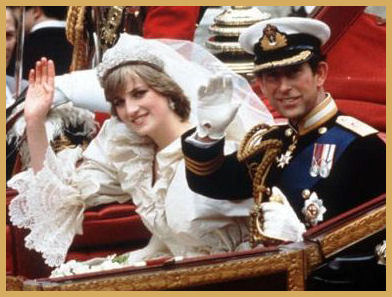
On April 29, 2011 we have another royal wedding coming up.
The wedding of the 20th century, Prince Charles and Princess Diana seemed a fulfillment of a fairytale stuff that goes..and they lived happily ever after, but destiny decreed otherwise.
It has been 150 years since the beginning of the Civil War that started in April of 1861 at Ft Sumter.
Federal encampment on the Pamunkey River in Virginia
15. 1990 Loyola Marymount
Playing just two weeks after the death of All-American Hank Gathers during the West Coast Conference Tournament, the Loyola Marymount Lions make an emotional and heartwarming run to the Elite Eight.
The Lions entered the tournament as a #11 seed in the West Regional and faced New Mexico in their first round matchup.
When Bo Kimble, Gathers’ best friend and teammate since high school, went to the free throw line for the first time in the game, he shot his first free throw left-handed, the way Gathers shot free throws, in his friend’s memory.
The free throw was good and Kimble went on to score 45 points in a 111-92 win over New Mexico.
Kimble would repeat this act in the Lions’ second round matchup with #3 seed Michigan as the Lions defeated the Wolverines 149-115 in the highest scoring game in NCAA tournament history.
Kimble did not go to the foul line in the Lions’ Sweet Sixteen game with the Alabama Crimson Tide, but Loyola Marymount came away with a 62-60 win to advance to the Elite Eight where Kimble would make his left-handed free throw for the third time in a 131-101 loss to eventual national champion UNLV.
1980 Presidential Debate Reagan v Carter
Yes, thank you. Realizing that you may be equally reluctant to speak ill of your opponent, may I ask why people should not vote for your opponent, why his Presidency could be harmful to the Nation? And having examined both your opponent’s record and the man himself, could, you tell us his greatest weakness?
GOVERNOR REAGAN
Well, Barbara, I believe that there is a fundamental difference — and I think it has been evident in most of the answers that Mr. Carter has given tonight — that he seeks the solution to anything as another opportunity for a Federal Government program. I happen to believe that the Federal Government has usurped powers and autonomy and authority that belongs back at the State and local level — it has imposed on the individual freedoms of the people — and that there are more of these things that could be solved by the people themselves, if they were given a chance, or by the levels of government that were closer to them.
Now, as to why I should be and he shouldn’t be, when he was a candidate in 1976, President Carter invented a thing he called the misery index. He added the rate of unemployment and the rate of inflation, and it came, at that time, to 12.5 under President Ford. And he said that no man with that size misery index had a right to seek reelection to the Presidency. Today, by his own decision, the misery index is in excess of 20 percent, and I think this must suggest something.
But when I have quoted it Democrat President, as the President says, I was a Democrat. I said many foolish things back in those days. [Laughter] But the President that I quoted had made a promise, a Democrat promise, and I quoted him because it was never kept. And today, you would find that that promise is at the very heart of what Republicanism represents in this country today. And that’s why I believe there are going to be millions of Democrats that are going to vote with us this time around, because they too want that promise kept. It was a promise for less government and less taxes and more freedom for the people.
MR. SMITH
Japan begins the clear-up and buries victims of the earthquake and tsunami
School bags recovered from Okawa primary school in Ishinomaki are seen. Only 24 of 84 schoolchildren and 13 teachers have been confirmed as alive by the school.
_____________________________________________
Free-lance columnist Rex Nelson is the president of Arkansas’ Independent Colleges and Universities. He’s also the author of the Southern Fried blog at rexnelsonsouthernfried. com.
1. Listen to live music one Saturday night on the courthouse lawn at Mountain View.
2. Go to the infield at Oaklawn on Arkansas Derby day and then eat anOaklawn burger at a table under a crab apple tree.
3. Descend deep below the ground at Blanchard Springs Caverns to cool off on a hot summer day. (I really enjoyed my visit to Blanchard Springs Caverns. Here is a picture below.)






 The Daily Hatch