Francis Schaeffer affected pro-life movement (Part 3) “Schaeffer Sunday”

On the Arkansas Times blog in the comment section the person using username “Hackett” asserted:

Life begins when the fetus is viable outside the womb, prior to that it is parasitical and lives at the discretion of the host.

I responded with this post:

It seems to me the real argument lies in the personhood of the unborn baby. (The best evidence pointing to unborn baby being human was given by my atheist friend Dr. Kevin Henke.) If it is just a piece of material that is lifeless then the pro-life crowd has no argument. However, if it is a person then the pro-choice crowd has no argument. (A great article on the Biblical passages against abortion are found in this link.)

My pro-life evidence lies in the lives of two of the most abortion supporters of the 1970’s. Why did they change to the pro-life view? Check out the links below for the answers.

“Jane Roe” or Roe v Wade is now a prolife Christian. She’s recently has done a commercial about it.

_______________________________

I have often wondered why we got to this point in our country’s life and we allow abortion. The answer is found in the words of Schaeffer.
Philosopher and Theologian, Francis A. Schaeffer has argued, “If there are no absolutes by which to judge society, then society is absolute.” Francis Schaeffer, How Shall We Then Live? (Old Tappan NJ: Fleming H Revell Company, 1976), p. 224.

Below is a clip from the film series “How Then Shall We Live?”

The Hand of God-Selected Quotes from Bernard N. Nathanson, M.D.,
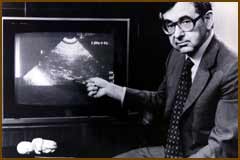
Reasoned Audacity

Bernard Nathanson, M.D.

Silent Scream, The Hand of God is “semi-autobiographical…for the study of…the…demise of one system of morality…and the painful acquisition of another more coherent, more reliable [morality]…[with] the backdrop …of abortion. p. 3.

“We live in an age of fulsome nihilism; an age of death; an age in which, as author Walker Percy (a fellow physician, a pathologist who specializes in autopsying Western civilization) argued, “compassion leads to the gas chamber,” or the abortion clinic, or the euthanist’s office.” p. 4.

“I worked hard to make abortion legal, affordable, and available on demand. In 1968, I was one of the three founders of the National Abortion Rights Action League. I ran the largest abortion clinic …and oversaw tens of thousands of abortions. I have performed thousands myself.” p. 5.

“The Hippocratic Oath states the following,

I will give no deadly medicine to anyone if asked, nor suggest any such counsel; and in like manner, I will not give to a woman a pessary [a device inserted in the vagina, thought erroneously to initiate an abortion] to produce an abortion.

The oath is unambiguous on these matters.” p. 48.

“The World Medical Association meeting at Geneva, in 1948, in the aftermath of the revelations of the Nazi medical experiments, revised the oath marginally to include the pledge, “I will retain the utmost respect for Human Life from conception.”…in 1964 restated the theme : “The health of my patient will be my first consideration.” p.50. The unborn baby in an abortion procedure is not considered a patient.

A Ronald Reagan radio address from 1975 addresses the topics of abortion and adoption. This comes from a collection of audio commentaries titled “Reagan in His Own Voice.”

I just wanted to share with you one of the finest prolife papers I have ever read, and it is by President Ronald Wilson Reagan.

I have a son named Wilson Daniel Hatcher and he is named after two of the most respected men I have ever read about : Daniel from the Old Testament and Ronald Wilson Reagan. I have studied that book of Daniel for years and have come to respect that author who was a saint who worked in two pagan governments but he never compromised. My favorite record was the album “No Compromise” by Keith Green and on the cover was a picture from the Book of Daniel.

One of the thrills of my life was getting to hear President Reagan speak in the beginning of November of 1984 at the State House Convention Center in Little Rock.  Immediately after that program I was standing outside on Markham with my girlfriend Jill Sawyer (now wife of 25 years) and we were alone on a corner and President was driven by and he waved at us and we waved back.

My former pastor from Memphis, Adrian Rogers, got the opportunity to visit with President Ronald Reagan on several occasions and my St Senator Jeremy Hutchinson got to meet him too. I am very jealous.

Take time to read this below and comment below and let me know what you thought of his words.

June 10, 2004, 10:30 a.m.
Abortion and the Conscience of the Nation
Ronald Reagan’s pro-life tract.

EDITOR’S NOTE: While president, Ronald Reagan penned this article for The Human Life Review, unsolicited. It ran in the Review‘s Spring 1983, issue and is reprinted here with permission.

The 10th anniversary of the Supreme Court decision in Roe v. Wade. Our nationwide policy of abortion-on-demand through all nine months of pregnancy was neither voted for by our people nor enacted by our legislators — not a single state had such unrestricted abortion before the Supreme Court decreed it to be national policy in 1973 is a good time for us to pause and reflect. But the consequences of this judicial decision are now obvious: since 1973, more than 15 million unborn children have had their lives snuffed out by legalized abortions. That is over ten times the number of Americans lost in all our nation’s wars.

Make no mistake, abortion-on-demand is not a right granted by the Constitution. No serious scholar, including one disposed to agree with the Court’s result, has argued that the framers of the Constitution intended to create such a right. Shortly after the Roe v. Wade decision, Professor John Hart Ely, now Dean of Stanford Law School, wrote that the opinion “is not constitutional law and gives almost no sense of an obligation to try to be.” Nowhere do the plain words of the Constitution even hint at a “right” so sweeping as to permit abortion up to the time the child is ready to be born. Yet that is what the Court ruled.

As an act of “raw judicial power” (to use Justice White’s biting phrase), the decision by the seven-man majority inRoe v. Wade has so far been made to stick. But the Court’s decision has by no means settled the debate. Instead,Roe v. Wade has become a continuing prod to the conscience of the nation.

Abortion concerns not just the unborn child, it concerns every one of us. The English poet, John Donne, wrote: “. . . any man’s death diminishes me, because I am involved in mankind; and therefore never send to know for whom the bell tolls; it tolls for thee.”

We cannot diminish the value of one category of human life — the unborn — without diminishing the value of all human life. We saw tragic proof of this truism last year when the Indiana courts allowed the starvation death of “Baby Doe” in Bloomington because the child had Down’s Syndrome.

Many of our fellow citizens grieve over the loss of life that has followed Roe v. Wade. Margaret Heckler, soon after being nominated to head the largest department of our government, Health and Human Services, told an audience that she believed abortion to be the greatest moral crisis facing our country today. And the revered Mother Teresa, who works in the streets of Calcutta ministering to dying people in her world-famous mission of mercy, has said that “the greatest misery of our time is the generalized abortion of children.”

Over the first two years of my Administration I have closely followed and assisted efforts in Congress to reverse the tide of abortion — efforts of Congressmen, Senators and citizens responding to an urgent moral crisis. Regrettably, I have also seen the massive efforts of those who, under the banner of “freedom of choice,” have so far blocked every effort to reverse nationwide abortion-on-demand.

Despite the formidable obstacles before us, we must not lose heart. This is not the first time our country has been divided by a Supreme Court decision that denied the value of certain human lives. The Dred Scott decision of 1857 was not overturned in a day, or a year, or even a decade. At first, only a minority of Americans recognized and deplored the moral crisis brought about by denying the full humanity of our black brothers and sisters; but that minority persisted in their vision and finally prevailed. They did it by appealing to the hearts and minds of their countrymen, to the truth of human dignity under God. From their example, we know that respect for the sacred value of human life is too deeply engrained in the hearts of our people to remain forever suppressed. But the great majority of the American people have not yet made their voices heard, and we cannot expect them to — any more than the public voice arose against slavery — until the issue is clearly framed and presented.

What, then, is the real issue? I have often said that when we talk about abortion, we are talking about two lives — the life of the mother and the life of the unborn child. Why else do we call a pregnant woman a mother? I have also said that anyone who doesn’t feel sure whether we are talking about a second human life should clearly give life the benefit of the doubt. If you don’t know whether a body is alive or dead, you would never bury it. I think this consideration itself should be enough for all of us to insist on protecting the unborn.

________________________________________________

I remember when President Carter and candidate Reagan debated in 1980 and the subject of abortion came up. Reagan said that if you were on a dusty area and you found someone laying down would you bury him without knowing for sure if he is alive or not? It is the same with the case of abortion.

Related Posts:

Abortionist Bernard Nathanson turned pro-life activist (part 11)

ABORTION – THE SILENT SCREAM 1 / Extended, High-Resolution Version (with permission from APF). Republished with Permission from Roy Tidwell of American Portrait Films as long as the following credits are shown: VHS/DVDs Available American Portrait Films Call 1-800-736-4567 http://www.amport.com The Hand of God-Selected Quotes from Bernard N. Nathanson, M.D., Unjust laws exist. Shall we […]

Abortionist Bernard Nathanson turned pro-life activist (part 10)

Dr. Bernard N. Nathanson, a leading pro-life advocate and convert to Catholicism, died at the age of 84 on Monday a week ago in his New York home, after a long struggle with cancer. The Hand of God-Selected Quotes from Bernard N. Nathanson, M.D., Chapter 12 is titled To The Thanatoriums, an allusion the Walker […]

On eve of Shutdown Republicans cave on demand concerning eliminating Planned Parenthood Funding

The pro-life position is very important to a great many of the freshmen members of the House of Representatives. As you can see above in the clip from the film series Whatever Happened to the Human Race? by Francis Schaeffer and C. Everett Koop, the unborn baby is a child, but we are treating many […]

Abortionist Bernard Nathanson turned pro-life activist (part 9)(Donald Trump changes to pro-life view)

When I think of the things that make me sad concerning this country, the first thing that pops into my mind is our treatment of unborn children. Donald Trump is probably going to run for president of the United States. Tony Perkins of the Family Research Council recently had a conversation with him concerning the […]

By Everette Hatcher III | Posted in Prolife | Edit | Comments (0)

Listing of transcripts and videos of “Free to Choose” episode 3 – Anatomy of a Crisis on www.theDailyHatch.org


Milton Friedman in his series “Free to Choose” used a pencil as a simple example to should have the “invisible hand” of the freemarket works (phrase originally used by Adam Smith).

“How grateful I have been over the years for the cogency of Friedman’s ideas which have influenced me. Cherishers of freedom will be indebted to him for generations to come.”
—Alan Greenspan, former Chairman, Federal Reserve System

“Right at this moment there are people all over the land, I could put dots on the map, who are trying to prove Milton wrong. At some point, somebody else is trying to prove he’s right That’s what I call influence.”
—Paul Samuelson, Nobel Laureate in Economic Science

In 1980 when I first sat down and read the book “Free to Choose” I was involved in Ronald Reagan’s campaign for president and excited about the race. Milton Friedman’s books and film series really helped form my conservative views. Take a look at one of my favorite films of his and if you take time to watch these episodes on inflation then you see how Ronald Reagan was able to bring inflation under control in the 1980’s with the help of Paul Volker of the Federal Reserve:

Milton Friedman’s Free to Choose (1980), episode 3 – Anatomy of a Crisis. part 1

FREE TO CHOOSE: Anatomy of Crisis
Friedman Delancy Street in New York’s lower east side, hardly one of the city’s best known sites, yet what happened in this street nearly 50 years ago continues to effect all of us today. Wall Street. Most of us know what happened here 50 years ago. Inside the Stock Exchange on October 29, 1929, the market collapsed. It came to be known as Black Thursday. The Wall Street crash was followed by the worst depression in American history. That depression has been blamed on the failure of capitalism. It was no such thing but the myth lives on. What really happened was very different.
Although things looked healthy on the surface, business had begun to turn down in mid 1929. The crash intensified the recession. So did continuing bank failures in the south and Midwest. But the recession only became a crisis when these failures spread to New York and in particular to this building, then the headquarters of the Bank of United States. The failure of this bank had far reaching effects and need never have happened.
It was something of a historical accident that this particular bank played the role it did. Why did it fail? It was a perfectly good bank. Banks that were in far worse financial shape had come under difficulties before it did and had, through the cooperation of other banks, been saved. The reason why it wasn’t saved has to do with its rather special character. First its name, Bank of United States, a name that made immigrants believe it was an official governmental bank although in fact it was an ordinary commercial bank. Second its ownership, Jewish, both its name and the character of its ownership which had so much to do with attracting the large number of depositors from the many Jewish businessmen in the city of New York. Both of them also had the effect of alienating other bankers who did not like the special advantage of the name and did not like the character of the ownership. As a result, other banks were all too ready to spread rumors, to help promote an atmosphere in which runs got started on the bank and which it came into difficulty. And they were less then usually willing to cooperate in the efforts that were made to save it.
Only a few blocks away is the Federal Reserve Bank of New York. It was here that the Bank of United States could have been saved. Indeed, the Federal Reserve System had been set up 17 years earlier precisely to prevent the worst consequences of bank failures.
The Federal Reserve Bank of New York, whose directors today meet in this room, devised a plan in cooperation with the superintendent of banking of the State of New York to save the Bank of United States. Their plan called for merging the Bank of United States with several other banks and also providing a guarantee fund to be subscribed to by still other bankers to assure the depositors that the assets of the Bank of United States were safe and sound. The Reserve Bank called meeting after meeting to try to put the plan into effect. It was on again, off again. But finally, after an all night meeting on December 10, 1930, the other bankers, including in particular John Pierpont Morgan, refused to subscribe to the guarantee fund and the plan was off. The next day the Bank of United States closed its doors, never again to open for business. For its depositors who saw their savings tied up and their businesses destroyed, the closing was tragic. Yet when the bank was finally liquidated, in the worst years of the depression, it paid back 92.5 cents on the dollar. Had the other banks cooperated to save it, no one would have lost a penny.
For the other New York banks, they thought closing the Bank of United States would have purely local effects. They were wrong. Partly because it had so many depositors, partly because so many of the depositors were small businessmen, partly because it was the largest bank that had ever been permitted to fail in the United States up to this time, the effects were far reaching. Depositors all over the country were frightened about the safety of their funds and rushed to withdraw them. There were runs. There were failures of banks by the droves. And all the time the Federal Reserve System stood idly by when it had the power and the duty and the responsibility to provide the cash that would have enabled the banks to meet the insistent demands of their depositors without closing their doors.
The way runs on banks can spread and can be stopped is a consequence of the way our bank system works. You may think that when you take some cash to a bank and deposit it, the bank takes that money and sticks it in a vault somewhere to wait until you need it again to turn it back over to you.
Bank teller: Okay, how would you like this? Two tens, one five and five ones. Okay.
Friedman: The bank does no such thing with it. It immediately takes a large part of what you put in and lends it out to somebody else. How do you suppose it earns interest, to pay its expenses, or pay you something for the use of your money? The result is that if all depositors in all the banks tried all at once to convert their deposits into cash, there wouldn’t be anything like enough cash in the banks of the country to meet their demands. In order to prevent such an outcome, in order to cut short a run, it is necessary to have some way either to stop people from asking for it, or to have some additional source from which cash can be obtained. That was intended to be the purpose of the Federal Reserve System. It was to provide the additional cash to meet the demands of the depositors when a run arose.
A classic example of how this system could and did work properly can be found over 2,000 miles from New York near the great Salt Lake in Utah.
In the early 30’s some banks in Salt Lake City and surrounding towns began to get into difficulties. The owners of one them were smart enough to see what had to be done to keep their banks open and courageous enough to do it. When fearful depositors began to clamor to withdraw all their money, one of George Eccles jobs was to brief his cashiers on how to handle the run.

Links to other segments:

“Friedman Friday” (“Free to Choose” episode 3 – Anatomy of a Crisis. part 7of 7)

TEMIN: We don’t think the big capital arose before the government did? VON HOFFMAN: Listen, what are we doing here? I mean __ defending big government is like defending death and taxes. When was the last time you met anybody that was in favor of big government? FRIEDMAN: Today, today I met Bob Lekachman, I […]

“Friedman Friday” (“Free to Choose” episode 3 – Anatomy of a Crisis. part 6of 7)

worked pretty well for a whole generation. Now anything that works well for a whole generation isn’t entirely bad. From the fact __ from that fact, and the undeniable fact that things are working poorly now, are we to conclude that the Keynesian sort of mixed regulation was wrong __ FRIEDMAN: Yes. LEKACHMAN: __ or […]

“Friedman Friday” (“Free to Choose” episode 3 – Anatomy of a Crisis. part 5 of 7)

MCKENZIE: Ah, well, that’s not on our agenda actually. (Laughter) VOICE OFF SCREEN: Why not? MCKENZIE: I boldly repeat the question, though, the expectation having been __ having been raised in the public mind, can you reverse this process where government is expected to produce the happy result? LEKACHMAN: Oh, no way. And it would […]

“Friedman Friday” (“Free to Choose” episode 3 – Anatomy of a Crisis. part 4 of 7)

The massive growth of central government that started after the depression has continued ever since. If anything, it has even speeded up in recent years. Each year there are more buildings in Washington occupied by more bureaucrats administering more laws. The Great Depression persuaded the public that private enterprise was a fundamentally unstable system. That […]

“Friedman Friday” (“Free to Choose” episode 3 – Anatomy of a Crisis. part 3 of 7)

Worse still, America’s depression was to become worldwide because of what lies behind these doors. This is the vault of the Federal Reserve Bank of New York. Inside is the largest horde of gold in the world. Because the world was on a gold standard in 1929, these vaults, where the U.S. gold was stored, […]

“Friedman Friday” (Part 16) (“Free to Choose” episode 3 – Anatomy of a Crisis. part 2 of 7)

  George Eccles: Well, then we called all our employees together. And we told them to be at the bank at their place at 8:00 a.m. and just act as if nothing was happening, just have a smile on their face, if they could, and me too. And we have four savings windows and we […]

“Friedman Friday” (“Free to Choose” episode 3 – Anatomy of a Crisis. part 1of 7)

Milton Friedman’s Free to Choose (1980), episode 3 – Anatomy of a Crisis. part 1 FREE TO CHOOSE: Anatomy of Crisis Friedman Delancy Street in New York’s lower east side, hardly one of the city’s best known sites, yet what happened in this street nearly 50 years ago continues to effect all of us today. […]


Outland Trophy winner Barrett Jones comes to Fayetteville for second time

Two years ago Barrett Jones and his Alabama Crimson Tide teammates came to Fayetteville and left town with a hard fought come from behind victory. This year things look a little easier on the front end at least. I wrote an article last year about Barrett and I just wrote one today and they both were published in the Saline Courier and can be found on that website. 

I have put a list of the posts I have done on Barrett below. You can tell from the titles that he is an evangelical Christian like Tim Tebow who believes in sharing his faith.


 Barrett Jones grew up under the ministry of Adrian Rogers at Bellevue. Below is a clip from the Memorial Service for Dr. Rogers.

Barrett Jones of Alabama Crimson Tide has spent time the last two years ministering to earthquake victims in Haiti. Actually I wrote about Barrett’s faith in Christ and you can read my article at this link.

Heart of an Athlete
Aug/Sept 2010

Q&A with Barrett Jones
University of Alabama
Offensive Lineman
 

Last season, sophomore offensive lineman Barrett Jones helped the University of Alabama football team win their 13th national championship. The right guard blocked his way to Freshman All-American honors after spending his Saturdays opening holes for Heisman Trophy-winning running back Mark Ingram. Jones also stayed active off the gridiron as a member of both the Crimson Tide’s FCA Huddle and Campus Crusade for Christ; spent his spring break caring for earthquake survivors in Haiti; and maintained a 4.0 GPA in the classroom.

STV: Tell us what it’s like to win a national championship.
BJ: It was amazing because it was the culmination of all the hard work our team had put in. Winning the national championship fulfilled all my athletic dreams on the biggest stage.

STV: Do they let the linemen hold the crystal football from the BCS Championship trophy?
BJ: Yeah, I got to hold it, kiss it, and get my picture taken with it. I don’t know the official weight of real crystal, but it was heavy. I was kind of freaking out when I held it, and I was the last person who got to hold it before the coaches took it away. I don’t think they wanted it to get messed up.

STV: What did your individual honors mean to you?
BJ:I was just happy to be a part of such a great team. Individual honors follow successful teams. It was an honor to be named a Freshman All-American, but I was actually more proud of being named an Academic All-American because of how difficult it was to perform well in the classroom while playing sports.

 “I held the crystal football, but it didn’t compare to having a relationship with Jesus.”

STV: You are also involved with FCA at Alabama. In your opinion, why is it important for there to be athletic ministries on a college campus?
BJ: Ministries keep athletes focused on what is important. With all the other things going on, ministries are important in helping us stay focused on Jesus.

STV: Have you been able to share your faith with your teammates?
BJ: Yeah, I’ve had the opportunity to share with them, but it’s something I could do more often. I feel very blessed to have a relationship with the Lord and the testimony of understanding that earthly trophies are only temporary. I mean, there I was on the national championship team—the pinnacle of the college football world—holding the crystal trophy, but I still knew it didn’t have any eternal value. I held the crystal football, but it didn’t compare to having a relationship with Jesus.

STV: Athletes will be so encouraged by your message and inspired by the fact that you spent your spring break in Haiti. What was that experience like?
BJ: I don’t know if I can sum it up in words. I’d wanted to do something like that for a long time, and God showed me that it was where I should be. We worked at a refugee camp outside of Port-Au-Prince with kids who had lost everything. It was amazing to listen to their stories of how they survived the earthquake. We worry about so many things, and yet these kids have nothing but are still so happy. It really put my life and blessings in perspective. 

Barrett Jones and Tim Tebow are very similar

For   Barrett Jones is a Tim Tebow type of person and I am glad that people like Jones and Tebow are not ashamed of their Savior Jesus Christ. They don’t try to live two lives, one in church and one that is different in the lockerroom. Barrett Jones is the 2011 Outland Trophy winner […]

Sound off on Tebow

Denver quarterback Tim Tebow reacts after Broncos running back Lance Ball scored a touchdown against the New England Patriots on Sunday, Dec. 18, 2011. (Associated Press/Jack Dempsey) I think Tebow is fine Christian man who believes in telling others about Christ and he lives a morally pure life unlike many others in our society. Therefore, […]

Barrett Jones wins Outland Trophy

Knoxnews.com reports: LAKE BUENA VISTA, Fla. (AP) — Alabama’s Barrett Jones has won the Outland Trophy as the nation’s most outstanding interior lineman. The announcement was made during the College Football Awards show at Disney World. Stanford’s David DeCastro and Penn State’s Devon Still were the other finalists. Jones is the third Alabama player to […]

Aaron Douglas played for Vols and Bama before dying because of drugs jh39

Aaron Douglas played for Vols and Bama before dying because of drugs jh39 Aaron Douglas was a lineman for Alabama and I have already written about another Bama lineman by the name of Barrett Jones who was a teammate of Aaron’s. Here are the two links below: Barrett Jones of Alabama Crimson Tide (Part 1 […]

Barrett Jones of Alabama Crimson Tide (Part 1 of series “Christians in Athletics”)

Today I am starting a new series called “Christians in Athletics.”  Barrett Jones grew up under the ministry of Adrian Rogers at Bellevue. Below is a clip from the Memorial Service for Dr. Rogers.   Barrett Jones of Alabama Crimson Tide has spent time the last two years ministering to earthquake victims in Haiti. Actually […]

Bama’s star lineman Barrett Jones puts ministry first

Barrett Jones of Alabama Crimson Tide has spent time the last two years ministering to earthquake victims in Haiti. (Barrett grew up and went to ECS where I graduated and to Bellevue Baptist where I was a member while growing up. Adrian Rogers was the pastor from 1972 to 2004.) Actually I wrote about Barrett’s […]

Hogs, Vols or Rebels have best chance to win against ranked opponents?

In this photo taken Sept. 8, 2012, Arkansas coach John L. Smith, center, meets with safetys Defonta Lowe (3), Eric Bennett and the rest of the team during a time out in an NCAA college football game against Louisiana Monroe in Little Rock, Ark. After a 34-31 overtime loss to the Warhawks, the pressure is on Smith as the suddenly unranked Razorbacks prepare for No. 1 Alabama on Saturday, Sept. 15. (AP Photo/Danny Johnston)<br />

Photo by Daniel Johnston, AP2012

In this photo taken Sept. 8, 2012, Arkansas coach John L. Smith, center, meets with safetys Defonta Lowe (3), Eric Bennett and the rest of the team during a time out in an NCAA college football game against Louisiana Monroe in Little Rock, Ark. After a 34-31 overtime loss to the Warhawks, the pressure is on Smith as the suddenly unranked Razorbacks prepare for No. 1 Alabama on Saturday, Sept. 15. (AP Photo/Danny Johnston)

_______________

I would love to think that my Hogs with their highpowered offense would have a great chance to knock of top ranked Bama this Saturday, but I don’t even know if our starting quarterback will be back.

I think it is probably a long shot for Ole Miss to win this weekend either. They face a Texas team loaded with talent. The best bet for a winner in the midsouth area this Saturday is probably the Tennessee Vols. Florida is not the Florida of the past under the old ball coach or Urban Meyer. That is why I am picking Tennessee to win that matchup.

Tough competition coming to call on Ole Miss, Tennessee, Arkansas

Top-shelf competition comes calling on Ole Miss, UT, Arkansas

  • By Ron Higgins
  • Memphis Commercial Appeal
  • Posted September 12, 2012 at 3 a.m., updated September 12, 2012 at 12:06 a.m.

So which Mid-South Southeastern Conference football team would you want or not want to be heading into the third Saturday of the season, with each squad about to battle Top 25 competition?

Maybe green and growing, 2-0 Ole Miss, which will likely discover this weekend in Oxford that the differences in last week’s opponent, Texas-El Paso, and this week’s, No. 14 Texas, are no hyphen, no El Paso and four national championships.

Maybe 2-0 and No. 23 Tennessee, stepping up in class to face No. 18 Florida in the Vols’ SEC opener in Knoxville after the Gators won at Texas A & M, 20-17, in their first league game last weekend.

Or maybe 1-1 Arkansas, having to welcome No. 1 ranked and defending national champion Alabama to Fayetteville for an SEC opener after the Razorbacks were upset 34-31 in overtime by Louisiana-Monroe last Saturday in Little Rock.

On the surface, the biggest talent disparity this weekend is between Ole Miss, where first-year coach Hugh Freeze has already played 16 redshirt or true freshmen, and Texas, where Mack Brown, 13th winningest coach in NCAA history, returns 16 starters including one of the best defensive fronts in the nation.

“This is a prep of what we’re about to see these next few weeks when we get into our conference games,” Ole Miss junior rover Charles Sawyer said of the Longhorns of the Big 12. “It’s going to show us where we are and where we need to go. If we win, we’re still going to have room for improvement.”

Las Vegas oddsmakers have the Longhorns just a 10½-point favorite. Freeze will never admit it and shouldn’t, but losing by two TDs or fewer to Texas and getting none of his players hurt would be a victory of sorts.

“We wish we had more depth and we wish we were more talent at certain spots,” said Freeze, whose team has taken baby steps in wins over Central Arkansas (49-27) and UTEP (28-10). “Our kids have played with great effort, but we’re heading into this game knowing we’ve not played a complete game, not played four great quarters.”

Though quarterback Tyler Bray is averaging 321.5 yards passing for a team averaging 43 points after handling North Carolina State (35-21) and Georgia State (51-13), third-year Tennessee coach Derek Dooley isn’t ecstatic.

Yes, he’s happy that his team has played well and gained confidence. And isn’t it wonderful that ESPN’s “GameDay” will set up shop outside Neyland Stadium for Saturday’s game as the Vols try to break a seven-game losing streak to the Gators? And that Tennessee is a 3-point favorite?

“At this point last year, we were 2-0, thought we were playing pretty good and chunking the ball around,” Dooley said. “Then, we went down there (to Florida) and got our tails whipped (33-23, the first of seven SEC losses for the Vols).

“(North Carolina State) was a good early test, but this is going to be a different test. It’s going to be against a level of personnel who we haven’t beaten in a long time and against one of the best (defensive) fronts in the country. There is more to come down the road. You look at these games and it sums up what this league is.”

“GameDay” might have been heading to Fayetteville this weekend, but took a detour when then-No. 8 Arkansas plummeted all the way out of the top 25 rankings with the OT loss to Louisiana-Monroe of the Sun Belt Conference. The fact that Hogs’ quarterback Tyler Wilson might not play against Alabama after being knocked out of the ULM loss with a head injury has made the Crimson Tide a stunning 21-point road favorite.

Hogs interim coach John L. Smith has been trying to frame the ULM loss as hurtful, but not a season-killer since it was in nonconference play.

“We’re 0-0 in the SEC and we still feel like we’re a top 10 team,” said Arkansas tight end Chris Gragg, tied for second in the league in receptions.

© 2012 Memphis Commercial Appeal. All rights reserved. This material may not be published, broadcast, rewritten or redistributed.

Wade Payne /Associated Press<br /><br />
Tennessee wide receiver Justin Hunter (11) celebrates with teammate Mychal Rivera (81) during third quarter of its 51-13 rout of Georgia State last Saturday in Knoxville. This week's Neyland Stadium visitor, Florida, has beaten the Vols seven straight times.<br /><br />

Photo by Wade Payne, AP2012

Wade Payne /Associated Press
Tennessee wide receiver Justin Hunter (11) celebrates with teammate Mychal Rivera (81) during third quarter of its 51-13 rout of Georgia State last Saturday in Knoxville. This week’s Neyland Stadium visitor, Florida, has beaten the Vols seven straight times.

Open letter to Republican Presidential Candidate Mitt Romney on our pro-life views (Part 12)

To Mitt Romney, Box 96861, Washington, DC 20090-6861,  From Everette Hatcher of www.thedailyhatch.org 13900 Cottontail Lane, Alexander, AR 72002

Did we forgive George Bush in 1988 for being pro-choice originally in 1980? We sure did. In fact, my former pastor, Adrian Rogers, had a chance to visit with Bush several times. He told him that the Religious Right did not have enough votes to get him elected on their own, but if he ever went against the pro-life view then they could definately derail his election bid.

Today I am writing you to remind you of the same thing. We in the pro-life movement are firmly behind you but we want to know some of the reasons are passionately pro-life.

If you want to understand why the evangelical pro-life movement then you need to read the material from Francis Schaeffer. That is what I did.

Francis Schaeffer and C. Everett Koop’s Invaluable Impact on Pro-Life Evangelicalism

By Dr. Richard Land

It is difficult to overestimate the incredible impact that Francis Schaeffer and Dr. C. Everett Koop made on evangelical Christians in the latter third of the 20th century. First Schaeffer, and then Dr. Koop, helped inform and energize a whole generation of evangelical Christians to engagement with a culture that had veered dangerously off course from its Judeo-Christian foundations. The pro-life movement owes them an enormous debt.

This culture’s collective loss of its moral compass was nowhere more dramatically revealed than in the rapid implosion of its historic pro-life consensus in the late 1960s culminating in the infamous Roe v. Wade Supreme Court decision in January 1973, and the pro-death culture of moral relativism it both symbolized and facilitated.

Francis Schaeffer exploded on the evangelical world in the 1960s. Having interacted from an evangelical theological foundation with the European world of modern philosophy through his and his wife’s ministry at their L’Abri home and retreat center in Switzerland, Schaeffer was well-prepared to lead evangelicals to a new and deeper understanding of the titanic clash of differing world views swirling around them.

Returning to the United States in the mid-1960s, Schaeffer electrified evangelical students with his lectures and books (largely based on the lectures) such as The God Who Is There (1968), Escape From Reason (1968), He is There and He is Not Silent (1972) and Back to Freedom and Dignity (1973), which was a stirring refutation of behavioral psychologist B.F. Skinner’s Beyond Freedom and Dignity.

As an evangelical Princeton University undergraduate in the late 1960s, I, like so many in my generation, was electrified and galvanized by Schaeffer’s challenge to rejoin the contemporary cultural and philosophical debate armed with what he called “true truth” that was true not only in our personal and church lives, but in every area of our existence 24 hours a day, 7 days a week.

Armed with Schaeffer’s guide and atlas of the intellectual terrain, tens of thousands of evangelical students felt called to a life of ministry in the intellectual world of scholarship and cultural discourse. Schaeffer gave us a cultural grid for both understanding and interacting with a culture increasingly hostile to Christian presuppositions of truth and moral absolutes.

Francis Schaeffer has often been criticized in recent years for “oversimplifying” and for “simplistic generalizations.” These criticisms miss the point of Schaeffer’s significance.

Schaeffer was a “thinker” more than a “scholar.” Where the “scholar” is haunted by the exception, the “thinker” is comfortable with the general rule and is more concerned with the big picture rather than the particulars of every case. The scholar sees the world largely through the microscope of his particular field of study, while the thinker views the world through a telescope that enables one to see general trends and seismic shifts in cultures and civilizations. Francis Schaeffer was the premier evangelical Christian “thinker” of the last half-century.

Nowhere did Francis Schaeffer see the big picture more clearly than on the issue of abortion and the brutalizing and dehumanizing impact of the pro-abortion movement and the philosophical presupposition upon which it was based.

Schaeffer had always opposed abortion, but the issue took on a new urgency for him in the wake of the Supreme Court’s declaration of abortion as a constitutional right in Roe v. Wade. With the help and encouragement of his son, Franky, Schaeffer produced a 10-part documentary film series and an accompanying book entitled How Should We Then Live? The Rise and Decline of Western Thought and Culture (1976).

Intended in part as a response to Kenneth Clark’s very popular Civilization series, How Should We Then Live? was an extended look at how Western Civilization’s rejection of Judeo-Christian moral values had led to the neo-pagan devaluing of human life as symbolized in the pro-abortion movement. The book, film series and accompanying 18-city seminar tour were a huge success and electrified the general evangelical public in much the same way his earlier work had stirred the evangelical university and seminary world.

Schaeffer increasingly devoted himself to the pro-life issue and almost immediately began work on a five-part film series and accompanying book and lecture tour with old family friend and world-renowned pediatric surgeon Dr. C. Everett Koop. The resulting Whatever Happened to the Human Race? (1979) combined Schaeffer’s trenchant and powerful explanation of secular humanism’s inexorable devaluation of human life with Dr. Koop’s medically expert testimony to the horror that was abortion and its inevitable path to infanticide and euthanasia.

Once again, Schaeffer and Koop galvanized the evangelical general public and challenged them to become actively involved at every level of the pro-life movement. The combination of Schaeffer’s theological and philosophical critique with Dr. Koop’s medical expertise and international reputation as a surgeon and scientist had a powerful impact on evangelicalism from coast to coast.

They asked the questions that moved hundreds of thousands of evangelicals from the sidelines into the arena of the pro-life struggle: “If not you, then whom?” “If not this outrage, then what?” “If not now, then when?”

Dr. Koop went on to become President Reagan’s Surgeon-General, elevating both that office and the pro-life issue in an unprecedented way in the eight years of his service. It is impossible to imagine an overwhelmingly pro-life American evangelicalism, and its unprecedented involvement in public policy on that issue, without the impact and leadership of these two towering figures.

Everyone devoted to the pro-life cause owes an incalculable debt of gratitude to Francis Schaeffer and to Dr. C. Everett Koop.

Open letter to President Obama (Part 141)

Milton Friedman  discusses collectivism

Uploaded by on Aug 20, 2010

Despite its dismal track record, collectivism continues to hold appeal for some. Professor Friedman discusses this dynamic.

____________

President Obama c/o The White House
1600 Pennsylvania Avenue NW
Washington, DC 20500

Dear Mr. President,

I know that you receive 20,000 letters a day and that you actually read 10 of them every day. I really do respect you for trying to get a pulse on what is going on out here.

People should have more of their own money to spend than they do now. We have gone from the federal government spending less than 5% of our money 80 years ago to spending 24.8% of GDP today.

Here are some quotes from Milton Friedman that I thought you would enjoy:

  • I think the government solution to a problem is usually as bad as the problem and very often makes the problem worse.
    • An Economist’s Protest (1975), p. 6; often quoted as “The government solution to a problem is usually as bad as the problem.”
  • I want people to take thought about their condition and to recognize that the maintenance of a free society is a very difficult and complicated thing and it requires a self-denying ordinance of the most extreme kind.It requires a willingness to put up with temporary evils on the basis of the subtle and sophisticated understanding that if you step in to do something about them you not only may make them worse, you will spread your tentacles and get bad results elsewhere.
  • I say thank God for government waste. If government is doing bad things, it’s only the waste that prevents the harm from being greater.
    • Interview with Richard Heffner on The Open Mind (7 December 1975)
  • One of the great mistakes is to judge policies and programs by their intentions rather than their results.
    • Interview with Richard Heffner on The Open Mind (7 December 1975)
  • In this day and age, we need to revise the old saying to read, “Hell hath no fury like a bureaucrat scorned.”
    • “Bureaucracy Scorned” in Newsweek (29 December 1975), later published in Bright Promises, Dismal Performance : An Economist’s Protest (1983)
  • Industrial progress, mechanical improvement, all of the great wonders of the modern era have meant little to the wealthy. The rich in ancient Greece would have benefited hardly at all from modern plumbing — running servants replaced running water. Television and radio — the patricians of Rome could enjoy the leading musicians and actors in their home, could have the leading artists as domestic retainers. Ready-to-wear clothing, supermarkets — all these and many other modern developments would have added little to their life. They would have welcomed the improvements in transportation and in medicine, but for the rest, the great achievements of western capitalism have rebounded primarily to the benefit of the ordinary person. These achievements have made available to the masses conveniences and amenities that were previously the exclusive prerogative of the rich and powerful.
    • Free to Choose (1980) p.148

______________

Thank you so much for your time. I know how valuable it is. I also appreciate the fine family that you have and your commitment as a father and a husband.

Sincerely,

Everette Hatcher III, 13900 Cottontail Lane, Alexander, AR 72002, ph 501-920-5733, lowcostsqueegees@yahoo.com

USA must rein in entitlement spending or we will have our own European financial crisis here

6/6/12 Republican Leadership Press Conference

Published on Jun 6, 2012 by

Today House Republican leaders, joined by Senate Republican Leader Mitch McConnell, discussed the importance of preventing any tax increase to provide certainty to America’s job creators. Even President Bill Clinton and Larry Summers agree — taxes should not be raised on anyone in the Obama economy. House Republicans continue to work to cut spending, reduce regulations, and provide an environment for small businesses to hire and grow.

__________

In the USA we need to learn some lessons from the European financial crisis and avoid their fate. We must rein in our entitlement spending and cut welfare programs and balance our budget or we too will have a financial crisis.

Crisis in Europe: Time for a Tough U.S. Response

By and
June 15, 2012


Three years on, through half measures and a fantastical faith in their own abilities, Europe’s leaders have led the continent into an extended economic crisis. Indeed, by delaying decisive action for so long, Europe has managed to make matters substantially worse for the continent first, and for the rest of the global economy.

While the U.S. economy could never entirely avoid the distresses emanating from Europe, the magnitude of the domestic injury early on appeared modest. The U.S. response was correspondingly muted, with expressions of concern, sympathy, and a desire to help except by contributing to further bailouts. As the European crisis deepens, the U.S. should acknowledge the growing threat and respond accordingly.

First, America’s national leaders, beginning with President Obama, need to set aside their political agendas and act to strengthen America’s economy for whatever shocks come from Europe. Second, it is time the U.S. demanded that Europe cease temporizing and take decisive, conclusive action to restore Europe’s economy and finances. This will likely require that Europe take painful and unpleasant steps.

Europe Goes from Bad to Worse

With roots going back to the adoption of the euro in 1999, the European crisis first broke into the open some 10 years later. In April 2009, the European Union told France, Spain, Ireland, and Greece to reduce their budget deficits in the wake of the credit crisis. What has since followed has been a steady stream of summits, conferences, grand announcements, protests, denials, finance mechanisms, and bailouts.

In short, what has followed has been damage control. The latest example is the drama surrounding the Spanish banking system. The cycle was a familiar one. First, the Spanish government insisted that its banks were fine and that it would never ask for nor accept a bailout. Then, the government acknowledged that some banks might need just a little help for a little while and tried to arrange to provide capital to Spanish banks through Spanish government borrowing.

That flopped. Then the government acknowledged that it would need a real bailout, and Europe responded with about 100 billion euros ($125 billion) cash. But some reports suggest that this is less than half of what will be needed to stabilize the Spanish banking system.[1]

Nor was the drama over with the announcement of the bailout. No doubt worried about Spanish sensibilities, Spanish Prime Minister Mariano Rajoy insisted that the bailout had “nothing to do” with the procedures imposed on Greece, Ireland, and Portugal when they were bailed out.

“Nicht wahr,” insisted Germany and the European Union (EU), who confirmed that the “troika” of the International Monetary Fund, the European Commission, and the European Central Bank would oversee the funds. “Of course there will be conditions” was the EU response. German Finance Minister Wolfgang Schaeuble pointed out, “The Spanish state is taking the loans, Spain will be responsible for them.… There will likewise be a troika.”[2]

The Spanish example of too-late half measures is, unfortunately, not unique. Consequently, since the crisis began Europe has clearly and substantially weakened its banking system, which is propped up only by the ephemeral elixirs of central bank cash and shaky bailouts. The periphery has sent their economies into a deflationary spiral. Many have paved a fiscal path of ever-higher debt to the point where default on sovereigns is a distinct possibility. And having long dismissed the need for fast growth in favor of public-sector intervention and distribution, governments have now discovered the need for fast growth, but they conveniently again see public-sector spending as the means.

The Threat to the U.S. from Europe

The obvious threat to the U.S. from Europe’s many crises is from a reduction in U.S. exports. According to the Department of Commerce, U.S. exports to Europe may have begun to slide as early as October 2011, as the widespread slowdown in Europe was only beginning to take hold.[3] In 2011, U.S. exports to Europe totaled $329 billion, representing about 22 percent of all U.S. exports.[4] While substantial, in a $15 trillion economy even a collapse in U.S. exports to Europe would have limited direct consequences.

The greater issue involves the effect of a deep recession and financial crisis in Europe on U.S. financial firms and markets. The 2008–2009 global financial crisis taught many important lessons about the state of modern finance. One lesson is that the global and interconnected nature of financial markets and firms means that financial shocks of a critical mass will spread far and wide.

This interconnectedness is made even more relevant because of a second lesson: No one—not the regulators, not the policymakers, and not those who run the firms themselves—fully knows the extent of the exposures and especially the structural weaknesses until the shockwave hits. In short, no one knows what no one knows—or how expensive that lack of knowledge will prove to be. Given the magnitude of the crisis in Europe, the potential threat to the U.S. is cause for real concern.

The U.S. Domestic Response: Politics Must Give Way to Growth

The U.S. domestic policy response to the building threat from Europe should be to make every possible effort to strengthen the U.S. economy and financial system in anticipation of whatever shockwaves may come from across the Atlantic.

To strengthen the economy, Congress and the President should immediately stop their posturing and politicking and disarm Taxmageddon. The threat of massively higher taxes in 2013 is already depressing economic activity and job growth. Facing the greater uncertainty about their own tax liability and about the state of the economy in 2013 if Taxmageddon strikes, firms are prudently holding back on the investments and other actions needed to propel the economy forward.[5]

The U.S. budget deficit is projected to exceed $1 trillion for the fourth straight year, adding to economic uncertainty. Congress and President Obama should defy conventional wisdom, set aside their political differences, and rein in federal spending immediately by choice rather than being eventually forced to do so, as countries across Europe have been.

Even more important, policymakers should adopt some common-sense steps that are necessary to rein in entitlement spending for the medium to long term.[6] The basic policies needed to stabilize the finances in the Medicare and Social Security programs in particular are well-understood, in many cases already tested in law, and entirely evolutionary.[7]

Finally, the uncertainty plaguing the U.S. economy is also due in part to the flood of regulations pouring or about to pour out of Washington from, among other causes, Obamacare and the Dodd–Frank financial market reforms. Even the threat of new regulations causes businesses to hesitate to make new investments, because those investments may be made obsolete or unprofitable by an unfavorable regulation.[8] Congress and President Obama should declare a regulatory cease-fire, at least until the European crisis passes and the U.S. unemployment rate approaches full employment.

The U.S. External Response: Europe Needs Credible Reform Now

Externally, the U.S. needs to change the tone and content of its message to Europe. President Obama has been urging European governments to spend more now, even as their borrowing costs and debt far exceed sustainable levels. That might save one of the continent’s tottering governments in the short run, but it would only exacerbate the economic crisis.

Europe needs structural reforms—most acutely in its labor markets—and credible plans to restore fiscal discipline. Past U.S. expressions of sympathy and goodwill should, in light of the continued, unaddressed economic threat, grow into strong urgings and demands that Europe undertake the fundamental reforms needed to restore confidence that growth can again be sustained.

Europe faces choices that are economically complex and politically difficult. It has for a decade operated under an unstable hybrid system whereby some economic and political elements have been unified across the continent, such as the euro, while others have not, such as fiscal and banking policy in addition to a patchwork political structure. This cannot continue, as European officials have come to recognize. As Europe considers its options, it is important for the U.S. to support national sovereignty and economic freedom in Europe, as these principles are ultimately in the best interests of Europe and the U.S.[9]

It is not for the U.S. to tell Europe what path to take. The people of Europe themselves, and not unelected technocrats, must decide their future. However, it is incumbent on America’s leaders to take the steps at home that are necessary to ensure that America is in as strong a position as possible to withstand any coming storm and to demand that Europe act decisively to put itself back on a path of sustainable economic growth.

J. D. Foster, PhD , is Norman B. Ture Senior Fellow in the Economics of Fiscal Policy in the Thomas A. Roe Institute for Economic Policy Studies, and Derek Scissors, PhD, is Senior Research Fellow in Asia Economic Policy in the Asian Studies Center at The Heritage Foundation.


Send this report to a friend

Your Information Yes, I’d like to receive news about Heritage via email Your Friend’s Information
Your Message

Show references in this report


[1]See Nouriel Roubini and Megan Greene, “Get Ready for the Spanish Bailout,” EconomistMeg.com, May 14, 2012, http://economistmeg.com/2012/05/14/get-ready-for-the-spanish-bailout/#more-1841 (accessed June 15, 2012).

[2]See Sonya Dowsett and Gareth Jones, “Market Euphoria over Spanish Bank Bailout Fizzles,” Reuters, May 11, 2012, http://www.reuters.com/article/2012/06/11/us-eurozone-spain-idUSBRE85908Z20120611 (accessed June 15, 2012).

[3]See U.S. Department of Commerce, Economic Statistics Agency, “Economic Indicator: The European Economy and U.S. Exports—A Seasonally Adjusted View,” December 9, 2011, http://www.esa.doc.gov/Blog/2011/12/09/economic-indicator-foreign-trade-european-economy-and-us-exports-seasonally-adjusted (accessed June 15, 2012).

[4]News release, “U.S. International Trade in Goods and Services Annual Revision for 2011,” Exhibit 13, U.S. Department of Commerce, U.S. Census Bureau, June 8, 2012, http://www.esa.doc.gov/sites/default/files/ei/documents/2012/June/usinternationaltradeingoodsandservices28annualrevisionfor201129.pdf (accessed June 15, 2012).

[5]See Curtis S. Dubay, “Taxmageddon: Massive Tax Increase Coming in 2013,” Heritage Foundation Issue Brief No. 3558, April 4, 2012, http://www.heritage.org/research/reports/2012/04/taxmageddon-massive-tax-increase-coming-in-2013.

[6]See David S. Addington, “Federal Budget: What Congress Must Do to Control Spending and Create Jobs,” Heritage Foundation Issue Brief No. 3538, March 14, 2012, http://www.heritage.org/research/reports/2012/03/federal-budget-control-spending-and-create-jobs.

[7]See J. D. Foster, “Premium Support Is Incremental, Not Radical Medicare Reform,” Heritage Foundation Backgrounder No. 2649, February 7, 2012, http://www.heritage.org/research/reports/2012/02/premium-support-is-incremental-not-radical-medicare-reform; and David C. John, “Fix Social Security to Give Better Future for Our Kids,” Heritage Foundation Commentary, July 12, 2011, http://www.heritage.org/research/commentary/2011/07/fix-social-security-to-give-better-future-to-our-kids.

[8]See James L. Gattuso and Diane Katz, “Red Tape Rising: Obama-Era Regulation at the Three-Year Mark,” Heritage Foundation Backgrounder No. 2663, March 13, 2012, http://www.heritage.org/research/reports/2012/03/red-tape-rising-obama-era-regulation-at-the-three-year-mark.

[9]See Nile Gardner and Ted Bromund, “Five Conservative Principles That Should Guide U.S. Policy on Europe,” Heritage Foundation Issue Brief No. 3524, March 1, 2012, http://www.heritage.org/research/reports/2012/03/5-conservative-principles-that-should-guide-us-policy-on-europe.

Open letter to President Obama (Part 140 B)

1 Of 5 / The Bible’s Influence In America / American Heritage Series / David Barton

_________________

President Obama c/o The White House
1600 Pennsylvania Avenue NW
Washington, DC 20500

Dear Mr. President,

I know that you receive 20,000 letters a day and that you actually read 10 of them every day. I really do respect you for trying to get a pulse on what is going on out here.

Our founding fathers had some wise things to say about government. They realized that angels don’t govern us.

Because Angels Don’t Govern Us

by Michael D. Tanner

Michael Tanner is a senior fellow at the Cato Institute and author of Leviathan on the Right: How Big-Government Conservatism Brought Down the Republican Revolution.

Added to cato.org on May 2, 2012

This article appeared in National Review (Online) on May 2, 2012.

Now that the first round of spin has passed, we can take a second look at the lessons to be learned from the recent GSA and Secret Service scandals.

First, it really is a bit unfair to blame them on President Obama. The president is not directly involved in the day-to-day management of these agencies. Nor should he be. Moreover, misbehavior by government employees predates the Obama administration by quite a bit. In 460b.c., for example, the Greek Delian League put nine government administrators to death for misusing public funds.

However, none of that lets President Obama entirely off the hook.

Too many on both the left and the right believe that government intervention in the economy or in the lives of individual citizens is necessary because only government can see the larger picture and act in a disinterested way for the benefit of the greater good. Businesses can be corrupt or self-seeking, and individuals may be myopic or make choices that others see as either morally or economically wrong. No doubt this view is correct, at least in some cases. In one way or another, we are all imperfect.

The Obama administration persists in believing that government is wiser than and morally superior to the average American.

President Obama believes that government is different.

Given our flaws as individuals, the Obama administration believes that government should run our health-care system. Left to our own devices, we might fail to buy health insurance or buy insurance that doesn’t include the right package of benefits. Government needs to subsidize “green energy,” because we might decide to buy fuel-inefficient cars. Government needs to oversee the banking industry and housing markets, because banks made loans to people who couldn’t afford to pay them back.

People are prejudiced and selfish. Government is altruistic and “fair.” Markets fail, but not government. As President Obama sees it, government can make us better and lead us to the promised land.

But, as the GSA and Secret Service scandals should remind us, government is made up not of philosopher-economist-saints but of men and women like the rest of us — afflicted by failures, corruption, short-sightedness, and self-interest. The difference is that government gives those imperfect individuals the power to impose their views and desires on the rest of us.

The Founding Fathers understood this. They knew that some government is necessary to protect our rights to “life, liberty, and the pursuit of happiness.” For this reason, they noted in the Declaration of Independence, “governments are instituted among men.” But they also understood that government needs to be carefully limited in its scope and power.

As James Madison wrote in Federalist 51:

If men were angels, no government would be necessary. If angels were to govern men, neither external nor internal controls on government would be necessary. In framing a government which is to be administered by men over men, the great difficulty lies in this: you must first enable the government to control the governed; and in the next place oblige it to control itself.

Indeed, the damage that government can do is far greater than the damage that can be done by business or individuals, because ultimately the state holds a monopoly on the use of force. If I make a mistake, it affects my life and perhaps the lives of my family and a few others. If a business makes a mistake, it can affect thousands more. But if government makes a mistake, it can affect everyone. That is what makes the growing reach of government so dangerous.

That means that, necessary though some restraint on the freedom of individuals and businesses may be, it is even more important to have internal and external controls on the power of government.

The Obama administration’s failure, therefore, is not that it neglected to micromanage the GSA’s expenses or that it couldn’t keep Secret Service agents out of brothels. It is that it wants the practical equivalent of GSA employees and Secret Service agents to run our lives. The Obama administration persists in believing that government is wiser than and morally superior to the average American.

That is a real scandal.

___________

Thank you so much for your time. I know how valuable it is. I also appreciate the fine family that you have and your committment as a father and a husband.

Sincerely,

Everette Hatcher III, 13900 Cottontail Lane, Alexander, AR 72002, ph 501-920-5733, lowcostsqueegees@yahoo.com

Why do the liberals want to increase unemployment more by increasing minimum wage?

Williams with Sowell – Minimum Wage

Why do the liberals want to increase unemployment more by increasing minimum wage?

The unemployment rate has been stuck above 8 percent ever since Obama pushed through his ill-fated stimulus scheme to increase the burden of government spending.

This high level of joblessness presumably reduces Obama’s chances of getting reelected, so you would think that Democrats would be very leery of proposals that increase the cost of job creation.

Yet they’ve relentlessly pushed to subsidize unemployment, even though Paul Krugman and Larry Summers have acknowledged that unemployment insurance reduces the incentive to find a job.

Now there’s talk of pushing for a higher minimum wage. Here are some details from a report in The Hill.

Advocates pushing for a minimum wage increase are looking to turn it into an election-year issue as the campaign season heats up this fall. Such a hike is expected to be included in the Democrats’ 2012 platform — which will be presented to delegates at the party’s convention in Charlotte, N.C., next week — a member of the drafting committee told The Hill. …In the eyes of labor unions, consumer advocates and liberal Democrats, the strategy is a no-brainer in an election season that’s featured the birth of the Occupy Wall St. movement, questions about Mitt Romney’s financial practices and a highly partisan debate over which class of workers deserve an extended tax break next year. …A minimum wage hike is not without political risks, however, as Republicans and business groups are warning that such a move would burden small businesses amid an employment crisis when Congress is urging them to hire.

Regarding the last sentence in the excerpt, I agree that a minimum wage hike entails risk, but I fear those risks are to the economy rather than to politicians. Much to my dismay, a majority of voters generally support this misguided policy.

In my attempts to educate these misguided souls, I try to figure out why they favor certain policies. In the case of the minimum wage, this is my rough-draft list of why some people support this perverse form of government intervention.

1. They understand low-income people will suffer if the minimum wage is increased, but that is acceptable collateral damage in the quest for political power.

2. They understand low-income people will suffer in the short run, but they rationalize this harm because there will be more redistribution in the long run if they obtain political power.

3. They understand low-income people will suffer, but that is an acceptable price to pay since it means unions will have more negotiating leverage once low-income workers are priced out of the market.

4. They think low-income people will benefit because the economy is a fixed pie and a mandate to pay more to low-income workers will merely result in less income for the rich.

5. They think low-income people will benefit because of the magic of Keynesian economics – i.e., beneficiaries will have more income, which will then get spent, thus stimulating the economy.

6. They are impervious to evidence and instead are motivated solely by a sense that there should be a minimum income in a “fair” and “compassionate” society.

It’s quite possible, of course, for someone to support higher minimum wages for more than just one reason. Indeed, I suspect  supporters of the minimum wage can be divided into two groups. The politicians and union bosses tend to believe in higher minimum wages for reasons 1, 2, and 3, while ordinary people are likely to support intervention for reasons 4, 5, and 6.

But regardless of what they believe, they’re wrong. This Cato study has all the evidence you could possibly want. But if you don’t have time to read the paper, this video is well worth a few minutes of your time.

Uploaded by on Jun 14, 2010

Minimum wage laws seem like a good idea, but arbitrarily mandating a certain wage can have terrible consequences. This CF&P Foundation mini-documentary reveals that business are not charities, so if the minimum wage is set above the market level, this eliminates job opportunities — particularly for the less fortunate members of society. Since employees and employers should have freedom of contract, the right minimum wage is zero. http://www.freedomandprosperity.org

____________

Walter Williams also has weighed in on this issue, noting specifically the negative impact of higher minimum wages on minorities.

Sadly, this is one of those issues where it might not make a difference which party wins in November. Romney already has said he favors not only an increase in the minimum wage, but also indexing, which means automatic increases in the future.

P.S. Here’s a very good cartoon showing the impact of raising the minimum wage.

Thomas Sowell – Reducing Black Unemployment

“Friedman Friday” : Jewish tradition is so akin to capitalism but many Jews are socialists, what a paradox (Part 7)

Milton Friedman on the American Economy (5 of 6)

Uploaded by on Aug 9, 2009

THE OPEN MIND
Host: Richard D. Heffner
Guest: Milton Friedman
Title: A Nobel Laureate on the American Economy VTR: 5/31/77

__________________

Below is a part of the series on an article by Milton Friedman called “Capitalism and the Jews” published in 1972. 

Capitalism and the Jews

October 1988 • Volume: 38 • Issue: 10 • Print This Post • 11 comments

Milton Friedman, recipient of the 1976 Nobel Memorial Prize in Economic Science, is a Senior Research Fellow at the Hoover Institution. This article is reprinted with the permission of Encounter and The Fraser Institute.

“Capitalism and the Jews” was originally presented as a lecture before the Mont Pelerin Society in 1972. It subsequently was published in England and Canada and appears here without significant revision.

Israel as a Diasporal Reaction

I was first led to this explanation of the anti-capitalist mentality of the Jews by my experience in Israel. After several months there, I came to the conclusion that the quickest way to reach a generalization in any area about values in Israel was to ask what was true of the Jews in the Diaspora and reverse it.

Jews in the Diaspora were urban dwellers engaged in commercial pursuits and almost never in agriculture; in Israel, agriculture has much higher prestige than commerce.

Jews in the Diaspora shunned every aspect of military service; Israelis value the military highly and have demonstrated extraordinary competence.

These two reversals are readily explained as the children of necessity, but let me continue.

Yiddish or Ladino was the language of the Jews in the Diaspora; both are looked down on in Israel, where Hebrew is the language.

Jews in the Diaspora stressed intellectual pursuits and rather looked down on athletics. There is tremendous emphasis on athletics in Israel.

And for what may seem like an irrelevant clincher: Jews in the Diaspora were reputed to be excellent cooks; cooking in Israel is generally terrible, in homes, hotels, and restaurants.

Can this record not be interpreted as an attempt, no doubt wholly subconscious, to demonstrate to the world that the commonly accepted stereotype of the Jews is false?

I interpret in the same way the evidence assembled by James Wilson and Edward Banfield that Jews (and “Yankees”) tend to adopt a “community-serving conception” of the public interest, and to vote against their own immediate self-interest, in larger proportions than most other groups.[15]

I interpret also in this way the attempt by Fuchs to trace Jewish “liberalism” to Jewish values and the negative reaction of Jewish critics to Sombart’s book. If, like me, you regard competitive capitalism as the economic system that is most favorable to individual freedom, to creative accomplishments in technology and the arts, and to the widest possible opportunities for the ordinary man, then you will regard Sombart’s assignment to the Jews of a key role in the development of capitalism as high praise. You will, as I do, regard his book as philo-Semitic. On the other hand, if you are trying your level best to demonstrate that Jews are dedicated to selfless public service in a socialist state, that commerce and money-lending were activities forced on them by their unfortunate circumstances and were wholly foreign to their natural bent, then you will regard Sombart as an anti-Semite simply reinforcing the stereotype against which you are battling. In this vein, the Universal Jewish Encyclopaedia says in its article on Sombart: “He accused the Jews of having created capitalism” (my italics).

The complementary character of the final two explanations is, I trust, clear. Whence comes the value structure that puts service to the general public above concern for oneself and one’s close• family; government employment above private business; political activity above commercial activity; love of mankind in general above concern for men in particular; social responsibility above individual responsibility? Very largely from the collectivist trend of thought to which Jews contributed so much for the reasons advanced by Cohn.

Consider, for a moment, the reaction to the anti-Semitic stereotype by a nineteenth-century English Philosophical radical steeped in Benthamite utilitarianism—by a David Ricardo, James Mill, even Thomas Malthus. Could one of them ever have termed the allegation that Jews created capitalism an accusation? They would have termed it high praise. They would have regarded widespread emphasis on rational profit calculation as just what was needed to promote “the greatest good of the greatest number,” emphasis on the individual rather than the society as a corollary of belief in freedom, and so on.

I conclude then that the chief explanations for the anti-capitalist mentality of the Jews are the special circumstances of nineteenth-century Europe which linked pro-market parties with established religions and so drove Jews to the Left, and the subconscious attempts by Jews to demonstrate to themselves and the world the fallacy of the anti-Semitic stereotype. No doubt these two main forces were reinforced, and the view of the Jews altered in detail, by their historical and cultural heritage, which made them specially sensitive to injustice and specially committed to charity. They were reinforced also by whatever the forces are that predispose intellectuals towards the Left.

Whether or not this explanation is a satisfactory resolution of the paradox which was my starting point, it remains true that the ideology of the Jews has been and still is opposed to their self-interest. Except behind the iron Curtain, this conflict has been mostly potential rather than real. In the West, so long as a large measure of laissez-faire capitalism prevailed, the economic drive of the Jews to improve their lot, to move upward in the economic and social scale, was in no way hindered by the preaching of socialism as an ideal. They could enjoy the luxury of reacting against the anti-Semitic stereotype, yet benefit from the characteristics that that stereotype caricatured. On a much more subtle and sophisticated level, they were in the position of the rich parlor socialists—of all ethnic and religious backgrounds—who bask in self-righteous virtue by condemning capitalism while enjoying the luxuries paid for by their capitalist inheritance.

As the scope of government has grown, as the collectivist ideas have achieved acceptance and affected the structure of society, the conflict has become very real. I have already stressed the conflict in Israel that has led to giving a far greater role to market forces than the ideology of the early leaders envisioned. I have been struck in the United States with the emergence of the conflict in reaction to some of the proposals by Senator George McGovern. His early proposal, later rescinded, to set a top limit on inheritances produced an immediate reaction from some of those who might have been expected to be and were his strongest sup-porters. It came home to them that his measures—completely consistent with their professed ideology—would greatly hamper the upward social and economic mobility of which they had been the beneficiaries.

Perhaps the reality of the conflict will end or at least weaken the paradox that has been the subject of my talk. If so, it will be a minor silver lining in the dark cloud of encroaching collectivism. []


15.   James Q. Wilson and Edward C, Banfield, “Public-Regar-dingness as a Value Premise in Voting Behavior,” American Political Science Review, LVIII, 4 (Dec., 1964), pp. 876-887; “Political Ethos Revisited,” American Political Science Review, LXV, 4 (Dec., 1971), pp. 1048-1062. The similarity between the Jews and the Yankees in some of the characteristics examined by Wilson and Banfield is some evidence, if rather weak evidence, for the influence of religion and culture in view of the connection between Puritanism and Judaism.