Open letter to Congressman Griffin: “Milton Friedman: “If taxes are raised in order to keep down the deficit, the result is likely to be a higher norm for government spending” (Charlie Rose interview pt 4)”


December 17, 2012

Congressman Tim Griffin, c/o Little Rock Office, 1501 N. University, Suite 150, Little Rock, AR 72207

Dear Congressman Griffin,

This is the second time  I have written you on this subject. I have met you several times and I have always enjoyed visiting with you. I got to hear you speak at a town meeting at Shannon Hills about a year ago and I must say that you did a great job showing how our country is heading to Greece if we do not tackle entitlement reform in a serious way or we will not control our spending. The issue of runaway spending is one of the issues that I wanted to talk to you about today. 

It is obvious to me that if President Obama gets his hands on more money then he will continue to spend away our children’s future. He has already taken the national debt from 11 trillion to 16 trillion in just 4 years. Over, and over, and over, and over, and over and over I have written Speaker Boehner and written every Republican that represents Arkansans in Arkansas before (Griffin, Womack, Crawford, and only Senator Boozman got a chance to respond) concerning this. I am hoping they will stand up against this reckless spending that our federal government has done and will continue to do if given the chance.

I have written and emailed Senator Pryor over, and over again with spending cut suggestions but he has ignored all of these good ideas in favor of keeping the printing presses going as we plunge our future generations further in debt. I am convinced if he does not change his liberal voting record that he will no longer be our senator in 2014.

I have written hundreds of letters and emails to President Obama and I must say that I have been impressed that he has had the White House staff answer so many of my letters. However, his policies have not changed. He is committed to cutting nothing from the budget that I can tell.

Evidently the Republicans have proposed raising tax rates as a possible compromise to avoid going over the fiscal cliff. Let me make a few comments about that.

First, if raising the debt ceiling is part of this agreement then we are losing our leverage over President Obama. We have enough votes to block a debt ceiling increase. We want a balanced budget but if President Obama does not get a debt ceiling increase then he will have to balance the budget immediately.

Second, spending is our problem and it is not tax revenue. The problem in Washington is not lack of revenue but our lack of spending restraint. We almost had a balanced budget in 2007 and if we had frozen spending at 2007 levels then we would be close to a balanced budget now. Instead of controlling spending our spending has gone from 2.7 trillion to 3.8 trillion in just 5 short years!!!

Third, my blog has exploded the last few days with clicks on past posts I have done like the one below. Take a look at this post below and see why it is one of my most popular.

Fourth, I have included some wise words from a fellow Tea Party favorite like you below. Mo Brooks’ words are true now like they were in August of 2011 when he voted against the debt ceiling increase then.

Fifth, let me share these two videos with you that make very good points concerning this issue:

This video belows shows how silly the federal government is when they pass “spending cuts.”

The problem in Washington is not lack of revenue but our lack of spending restraint. This video below makes that point.

Please take the time to read Mo Brooks’ words and respond to me and tell me if you will vote against the debt ceiling increase. It is the only leverage we have on President Obama. Others have responded to me in the past and for that I am very grateful.

Thank you for your time.

Sincerely,

Everette Hatcher, 13900 Cottontail Lane, Alexander, AR 72002, cell ph 501-920-5733, lowcostsqueegees@yahoo.com, www.thedailyhatch.org


MILTON FRIEDMAN: THE MIND BEHIND THE REPUBLICAN TAX REVOLT

| Jul 22, 2011 | 0 comments

The on-going debate over raising the debt ceiling has focused on many areas of disagreement between Democrats and Republicans but none bigger than the Republican determination not to raise taxes.  Many pundits credit this to the political power of Grover Norquist and his Americans for Tax Reform who have spent years collecting “No Tax Increase” pledges from Republican candidates.  Others attribute Republican intransigence on taxes to a near religious belief in supply side economics, a school of thought founded by economist Arthur Laffer and journalist Jude Wanniski in the late 1970s.

The true seeds of this attitude toward tax increases, in my view, actually go back farther and can be traced to an even nobler pedigree.  The real inspiration for this conviction comes from the late Nobel prize-winning economist, Milton Friedman.  It is only by understanding Friedman’s reasoning and his values that one can fully understand why Republican refuse to see spending cuts and tax increases as simply two sides of the same budget-balancing coin.

This was not always the Republican, or even the conservative, position.  During the 1950s, it was Democrats who advocated tax cuts to stimulate the economy and President Eisenhower who insisted “we can never justify going further into debt to give ourselves a tax cut at the expense of our children.”

In 1964, the eventual Republican nominee for president, Senator Barry Goldwater, voted against the so-called Kennedy tax cuts (actually passed after Kennedy’s assassination the previous year) because he was convinced the resulting deficits would be inflationary.  Even after losing the presidential election to President Lyndon Johnson in a landslide later that year, Goldwater predicted a Republican comeback, telling U.S. News & World Report that a no-win war in Vietnam and high inflation would prompt a backlash against the Democrats two years later (he was right on both counts).

So if Eisenhower and Goldwater represented Republican orthodoxy in the 1950s and ‘60s, what happened?  In large part, it was an intellectual revolution in conservative/libertarian thought prompted by economist Milton Friedman.  While Friedman rejected the simplistic Keynesian (and later supply-side) notion that tax cuts automatically stimulate the economy, he believed that higher taxes were bad because they led to more and bigger government, which he was convinced at best led to waste and at worse to greater government control over our economy, our lives and our freedoms.

In 1967, three year’s after the Kennedy tax cuts, the Johnson Administration was already running huge deficits thanks to the a combination of Great Society social programs and the Vietnam War.  Writing in his regular Newsweek column on August 7, 1967, Friedman expresseded his concern that this would soon lead to higher taxes, using an analysis that would become familiar to his readers over the years:

“.If we adopt such programs, does not fiscal responsibility at least call for imposing taxes to pay for them?  The answer is that postwar experience has demonstrated two things. First, that Congress will spend whatever the tax system will raise—plus a little (and recently, a lot) more.  Second, that, surprising as it seems, it has proved difficult to get taxes down once they are raised.  The special interests created by government spending have proved more potent than the general interest in tax reduction.

“If taxes are raised in order to keep down the deficit, the result is likely to be a higher norm for government spending. Deficits will again mount and the process will be repeated.”

Sure enough, a year later a 10% income tax surcharge was enacted by Congress to cut the deficit and fight inflation.  His prediction having been confirmed, Friedman returned to the subject in another Newsweek column dated July 15, 1968.  He now described a familiar pattern of how Democrats used the traditional view of fiscal conservatism to convince Republicans to help pay for the Democrats’ own profligate spending:

“The standard scenario has been that the Democrats—in the name of the New Deal, the Fair Deal, or the Great Society—push through large spending programs . . . generally against the opposition of the Republican leadership.  The spending programs not only absorb the increased tax yield generated by the ‘fiscal drag,’ they go farther and produce deficits.

“The Democrats then appeal to the Republicans’ sense of fiscal responsibility to refrain from cutting tax rates or, as in this case, to raise them.  The Republicans cooperate, thereby establishing a new higher revenue base for further spending.  The Democrats get the ‘credit’ for the spending; the Republicans, the ‘blame’ for the taxes; and you and I pay the bill.”

Fast forward seven years, when Republican President Gerald Ford was proposing a tax cut to stimulate the economy during a brief recession.  As an economist who believed monetary, not fiscal, policy was the best way to keep the economy on a stable path to growth, Friedman did not believe the proposed tax cut would have its intended stimulatory effect.  He explained why in another Newseek column on July 15, 1975 but went on to say:

“Yet I must confess that I favor tax cuts—not as a cure for recession but for a very different reason.  Our basic long-term need is to stop the explosive growth in government spending.  I am persuaded that the only effective way to do so is by cutting taxes—at any time for any excuse in any way.

“The reason is that government will spend whatever the tax system raises plus a good deal more—but not an indefinite amount more.  The most effective way to force each of us to economize is to reduce our income.  The restraint is less rigid on government, but it is there and seems to be the only one we have.

“So hail the tax cut—but let’s do it for the right reason.”

Another six years went by and now it was the newly-elected president, Ronald Reagan, who was proposing a large, multi-year tax cut to get the economy moving. At the time, he was also proposing off-setting spending cuts (which we all know didn’t happen).  Friedman wrote yet another Newsweek column dated July 27, 1981, refuting objections to the plan by liberal economists while also discounting many of the claims of supply-siders in the Reagan Administration.  Friedman still supported the tax cuts, of course, and explained why liberals were suddenly worried about deficits:

“The analysis so far treats government spending and taxes as if they were two independent entities.  They clearly are not.  We know full well that Congress will spend every penny—and more—that is yielded by taxes.  A cut in taxes will mean a cut in government spending.  And there is no other way to get a cut in spending.

“That is the real reason why the big spenders and the big inflationists of the past have suddenly been converted to fiscal conservatism and to preaching the virtues of fighting inflation.  They know that a multi-year tax cut will force multi-year spending reductions.  They hope that a one-year tax cut will quiet public agitation and allow them to revert next year to their high-spending ways.”

Taken as a whole, these excerpts from columns written for a popular magazine by a Nobel laureate economist between 1967 and 1981—44 to 30 years ago—spell out precisely the philosophy that today motivates many Republicans in and out of Congress to firmly oppose any tax increase as part of a deficit reduction or budget-balancing plan proposed by Democrats.

Like Milton Friedman, they are firmly convinced that any taxes they raise will ultimately result in increased government spending.  They believe government spending necessarily translates into more and bigger government.  They believe the federal government is already too big, threatening not just the health of the economy but their freedom and way of life as well.

One can argue with Friedman’s assumptions as well as the conclusions he draws from them.  But until those on the other side—including the President, Democratic congressional leaders and the media—understand the reasoning and motivations behind the anti-tax sentiments of Republicans from Capitol Hill to the Tea Party activists, it’s hard to imagine anything more than a temporary truce in the battle being waged over the budget.

____________

Here is another Tea Party hero you need to listen to:
Rep. Brooks on Fox Business: BBA and the Debt Ceiling Vote

Print

Share


Rep. Mo Brooks To Vote No On Obama-Reid-Boehner Debt Ceiling Bill

08/01/11

Washington, D.C. – Today Congressman Mo Brooks (R-AL) made the following statement concerning his vote on the Budget Control Act of 2011:

Summary

The Obama-Reid-Boehner Debt Ceiling Bill is bad for America, bad political process, bad for national defense, does not prevent unsustainable budget deficits, kicks the debt ceiling crises down the road to 2013 (when America will have more debt and less financial strength with which to fix the problem), and fails to satisfactorily decrease the risk of an American credit rating downgrade.

Overview

America must, and will, raise the debt ceiling.  The question is not whether Congress will raise the debt ceiling; the question is when and how.  Regardless of when the debt ceiling is raised, every bill and obligation of America to its citizens and creditors will be paid in full (albeit, with the exception of creditors, some payments may be delayed).

I have voted to raise the debt ceiling provided the debt ceiling bill makes America’s financial condition better, not worse.

I voted to raise the debt ceiling on July 22, 2011, when I voted for the Cut, Cap and Balance Plan (cutting FY 2012 expenditures by a modest $111 billion in the context of a $1.5 trillion deficit; capping federal government expenditures within historically justifiable 18-20% ranges; and passing a Balanced Budget Constitutional Amendment that protect future generations of Americans from revisiting the financial mess we face).

I voted to raise the debt ceiling on July 29, 2011, when I voted for the Boehner Plan (which included a Balanced Budget Constitutional Amendment requirement).

I will not vote for the Obama-Reid-Boehner Debt Bill (herein the “Debt Bill”) because it is not up to the financial challenges America faces. 

Background:  The Problem

Years of spending binges by the federal government have come home to roost.  America’s debt exceeds $14 trillion.  America has suffered three consecutive years of trillion dollar deficits (and faces trillion dollar deficits into the foreseeable future).

Annual deficits and accumulated debt force America to confront two major financial threats, both with one common cause: unsustainable budget deficits.

In the short term, America faces a debt ceiling crisis.  Over the longer term, America faces a debt crisis. 

If trillion dollar deficits continue indefinitely, America’s insolvency and bankruptcy is certain, thereby risking America’s national defense, Social Security, Medicare, Medicaid, NASA, and everything else the federal government does.

Debt Bill Deficiencies That Compel a “No” Vote

The accumulative deficiencies in the Debt Bill compel me to vote “No.”  The deficiencies are:

1. Minimal Time for Consideration and Deliberation.

The Debt Bill is 74 pages of interwoven, complicated legal and budgetary terms.  I have read and studied the Debt Bill in the limited time available.  The Debt Bill forces onto our children and grandchildren another $2.4 trillion in debt burden, yet we are expected to vote on it with less than 24 hours notice.

This is insufficient time to thoroughly understand the Debt Bill’s nuances, for budget experts to digest the Debt Bill and offer their insights, for the public to analyze the legislation and share their insight, and for Congress to make a wise and deliberative decision.

While some argue the Debt Bill must pass by the White House’s August 2 deadline; I believe it is better to act wisely than in haste.  The economy will be much worse if Congress, in haste, makes a $2.4 trillion error. 

2. Significant Defense Cuts in FY 2012 & 2013.

In FY 2012, the Debt Bill cuts national defense by $2 to $17 billion (the variance is due to different Debt Bill interpretations by the House Armed Services Committee).

The Debt Bill creates a 12-member Joint Select Committee (six Senators and six Congressmen; six Republicans and six Democrats).  By November 23, the Committee must recommend $1.2 trillion in deficit reduction measures (spending cuts and/or tax increases).  If the Committee makes a recommendation, Congress must vote on the recommendation on or before January 15. 

If the Committee splits 6-6 and makes no recommendation, or if either House of Congress rejects the Committee’s recommendation, then the Debt Bill mandates that the Defense budget be cut $60 Billion in FY 2013 (i.e. – in the fiscal year beginning 14 months from now, on October 1, 2013).

National defense is the top priority of the federal government.  If the Debt Bill passes, there is an unnecessary and substantial risk that it will trigger risky defense cuts in just 14 months that undermine the defense capabilities of America.

3. The Bill Does Not Fix the Underlying Problem.

The Bill makes America’s financial challenges worse by inadequately addressing unsustainable deficits that threaten America with insolvency and bankruptcy and force debt ceiling increases.

The Debt Bill’s “cuts” bind no future Congresses.  Hence, the only “cuts” that count are those for Fiscal Years 2012 and 2013.

In FY 2012, the Debt Bill cuts discretionary federal government spending by only $7 billion (versus FY 2011 levels), while overall federal government spending actually increases (“discretionary spending” is less than 30% of total federal government spending). 

In FY 2013, the Debt Bill increases discretionary federal government spending by $4 billion (over FY 2012 levels).  Overall federal government spending again increases significantly.

Hence, in both FY 2012 and 2013, the federal government deficit is estimated to exceed $1 trillion/year if the Debt Bill passes and, under the best of scenarios, the Debt Bill’s “solution” increases America’s debt by $2.4 trillion in less than two years, which makes America’s debt problem much worse, not better.

4. Balanced Budget Constitutional Amendment. 

The Debt Bill requires a vote of Congress on a Balanced Budget Constitutional Amendment but does not require that Congress pass a Balanced Budget Amendment. 

The July 29 Boehner Bill required passage of a Balanced Budget Amendment before the Phase II debt ceiling increase would occur.  The Debt Bill eliminates the requirement for a Balanced Budget Amendment, thereby eliminating the only long-term fix to America’s unsustainable deficits. 

5. Punting the Debt Ceiling Crisis to 2013. 

Because of 2012 election considerations, the Debt Bill “kicks the can down the road” to 2013, when a financially weaker America will be less capable of facing yet another debt ceiling crisis. 

America will be weaker because debt service burdens will be $2.4 trillion more and the total debt of $16.7 trillion will likely be subject to higher interest rates and more onerous payment obligations.

America must face its unsustainable deficit issue while it is stronger, not weaker.  The longer America waits, the worse the economic outcome will be.

6. Credit Rating Cuts.

In my judgment, the Debt Bill substantially increases the long-term risk of a cut in America’s credit rating. 

Standard & Poor stated on July 14, 2011, that America’s credit rating is at risk if Washington has “not achieved a credible solution to the rising U.S. government debt burden and [is] not likely to achieve one in the foreseeable future.”  Standard & Poor president Deven Sharma reiterated this concern on July 27, 2011 when he testified before the House Financial Services Committee that, “The more important issue is really the long-term growth rate of the debt… that is the more important issue at hand.”

Similarly, Moody’s stated on July 13, 2011 that, if the debt ceiling is raised, America’s credit rating outlook “would very likely be changed to negative… unless [there is a] substantial and credible agreement [on] long-term deficit reduction.”

The Debt Bill does not cut America’s short or long-term deficits enough to minimize the risk of downgrade in America’s credit rating… a downgrade that will, in turn, drive up America’s debt service cost and reduce funding for all other federal government programs.  To make matters worse, if America’s interest rates go up; state, local and private interest rates are likely to also go up… thereby hurting all Americans at every level.

The Solution

The best solution that protects America from the short term debt ceiling and long term insolvency threats is a debt ceiling increase coupled with a Balanced Budget Constitutional Amendment that is phased in over a 5 year period.

Inasmuch as constitutional amendments often take years to pass, time that America may not have, the debt ceiling should be raised in a two-step process.  The first step partially raises the debt ceiling when Congress passes a substantive and effective Balanced Budget Amendment.  If the Senate and House concur, this can be done in as little as a week.

The second step raises the rest of the debt ceiling requirement when the states ratify the proposed Balanced Budget Amendment.  This process gives the states an incentive to ratify the Balanced Budget Amendment in less than one year (or trigger the effects of not raising the debt ceiling).

Related posts:

Milton Friedman videos and transcripts Part 11

Milton Friedman videos and transcripts Part 11 On my blog http://www.thedailyhatch.org I have an extensive list of posts that have both videos and transcripts of MiltonFriedman’s interviews and speeches. Here below is just small list of those and more can be accessed by clicking on “Milton Friedman” on the side of this page or searching […]

Milton Friedman honored by George Bush at White House Tribute (2002)

Milton Friedman – White House Tribute (2002) Published on May 31, 2012 by BasicEconomics President Bush spoke about the life and career of Milton Friedman at a ceremony honoring him for his work and impact in the field of economics. Friedman was awarded a Nobel Prize in 1976 ___________ Milton Friedman – Biography From Milton […]

Milton Friedman: “If taxes are raised in order to keep down the deficit, the result is likely to be a higher norm for government spending” (Charlie Rose interview pt 4)

  MILTON FRIEDMAN: THE MIND BEHIND THE REPUBLICAN TAX REVOLT Jack Roberts | Jul 22, 2011 | 0 comments The on-going debate over raising the debt ceiling has focused on many areas of disagreement between Democrats and Republicans but none bigger than the Republican determination not to raise taxes.  Many pundits credit this to the […]

Milton Friedman videos and transcripts Part 10

Milton Friedman videos and transcripts Part 10 On my blog http://www.thedailyhatch.org I have an extensive list of posts that have both videos and transcripts of MiltonFriedman’s interviews and speeches. Here below is just small list of those and more can be accessed by clicking on “Milton Friedman” on the side of this page or searching […]

Milton Friedman – Power of Choice (Biography) Part 3

Milton Friedman – Power of Choice (Biography) Part 3 Published on May 21, 2012 by BasicEconomics Tribute to Milton Friedman English Pages, 8. 9. 2008 Dear colleagues, dear friends, (1) It is a great honor for me to be asked to say a few words to this distinguished and very knowledgeable audience about one of our greatest […]

“Friedman Friday” :“A Nobel Laureate on the American Economy” VTR: 5/31/77 Transcript and video clip (Part 6)

Milton Friedman on the American Economy (6 of 6)   Uploaded by donotswallow on Aug 9, 2009 THE OPEN MIND Host: Richard D. Heffner Guest: Milton Friedman Title: A Nobel Laureate on the American Economy VTR: 5/31/77 _____________________________________ Below is a transcipt from a portion of an interview that Milton Friedman gave on 5-31-77: Friedman: […]

Milton Friedman videos and transcripts Part 9

Milton Friedman videos and transcripts Part 9 On my blog http://www.thedailyhatch.org I have an extensive list of posts that have both videos and transcripts of MiltonFriedman’s interviews and speeches. Here below is just small list of those and more can be accessed by clicking on “Milton Friedman” on the side of this page or searching […]

Transcript and video of Milton Friedman on Bill Clinton and Ronald Reagan (Part 2)

Below is a discussion from Milton Friedman on Bill Clinton and Ronald Reagan. February 10, 1999 | Recorded on February 10, 1999 audio, video, and blogs » uncommon knowledge PRESIDENTIAL REPORT CARD: Milton Friedman on the State of the Union with guest Milton Friedman Milton Friedman, Senior Research Fellow, Hoover Institution and Nobel Laureate in […]

Milton Friedman’s biography (Part 2)(Interview by Charlie Rose of Milton Friedman part 3)

Biography Part 2 In 1977, when I reached the age of 65, I retired from teaching at the University of Chicago. At the invitation of Glenn Campbell, Director of the Hoover Institution at Stanford University, I shifted my scholarly work to Hoover where I remain a Senior Research Fellow. We moved to San Francisco, purchasing […]

Milton Friedman remembered at 100 years from his birth (Part 3)

Milton Friedman was a great economist and a great american. A Tribute to Milton Friedman by Mark Skousen on November 28, 2006 Mark Skousen and Milton Friedman at lunch I was at the New Orleans Investment Conference when I learned that free-market economist extraordinaire Milton Friedman, died on November 16. He was a dear friend. […]
Open letter to Speaker of the House John Boehner (Part 55)

Open letter to Speaker of the House John Boehner (Part 55)

John Boehner, Speaker of the House

H-232, The Capital, Washington, DC 20515

Dear Mr. Speaker,

I know that you will have to meet with newly re-elected President Obama soon and he will probably be anxious for you to raise taxes and  federal spending, but he will want you to leave runaway entitlement programs alone. When that happens then you have one thing you can hold over his head and that is the debt ceiling.

You must stand up to him and tell him that you can not raise it. In December of 2012 or January of 2013 at the latest we will be shutting down the government if we don’t increase the debt limit according to the LA Times. You got to listen to the Tea Party heroes like Rep. Todd Rokita, Ben Quayle (R-AZ), Jeff Landry (R, LA-03), Raúl R. Labrador , Tim Huelskamp,  Rep. Justin Amash (R-MI),  , Brooks, Mo (AL – 5), Buerkle, Ann Marie (NY – 25),Chabot, Steven (OH – 1),Duncan, Jeff (SC – 3), Fleischmann, Chuck (TN – 3) ,Gowdy, Trey (SC – 4) ,Griffith, H. Morgan (VA – 9) , Harris, Andy (MD – 1) ,Huizenga, Bill (MI – 2) , Mulvaney, Mick (SC – 5) , Pompeo, Mike (KS – 4) , Ribble, Reid (WI – 8), Rigell, E. Scott (VA – 2) , Ross, Dennis (FL – 12) ,Schweikert, David (AZ – 5), Scott, Austin (GA – 8) , Scott, Tim (SC – 1) , Southerland, Steve (FL – 2) , Stutzman, Marlin (IN – 3) , Walberg, Timothy (MI – 7) , Walsh, Joe (IL – 8),and Woodall, Rob (GA – 7) .

__________

Here is another Tea Party hero you need to listen to:
Rep. Brooks on Fox Business: BBA and the Debt Ceiling Vote

Print

Share


Rep. Mo Brooks To Vote No On Obama-Reid-Boehner Debt Ceiling Bill

08/01/11

Washington, D.C. – Today Congressman Mo Brooks (R-AL) made the following statement concerning his vote on the Budget Control Act of 2011:

Summary

The Obama-Reid-Boehner Debt Ceiling Bill is bad for America, bad political process, bad for national defense, does not prevent unsustainable budget deficits, kicks the debt ceiling crises down the road to 2013 (when America will have more debt and less financial strength with which to fix the problem), and fails to satisfactorily decrease the risk of an American credit rating downgrade.

Overview

America must, and will, raise the debt ceiling.  The question is not whether Congress will raise the debt ceiling; the question is when and how.  Regardless of when the debt ceiling is raised, every bill and obligation of America to its citizens and creditors will be paid in full (albeit, with the exception of creditors, some payments may be delayed).

I have voted to raise the debt ceiling provided the debt ceiling bill makes America’s financial condition better, not worse.

I voted to raise the debt ceiling on July 22, 2011, when I voted for the Cut, Cap and Balance Plan (cutting FY 2012 expenditures by a modest $111 billion in the context of a $1.5 trillion deficit; capping federal government expenditures within historically justifiable 18-20% ranges; and passing a Balanced Budget Constitutional Amendment that protect future generations of Americans from revisiting the financial mess we face).

I voted to raise the debt ceiling on July 29, 2011, when I voted for the Boehner Plan (which included a Balanced Budget Constitutional Amendment requirement).

I will not vote for the Obama-Reid-Boehner Debt Bill (herein the “Debt Bill”) because it is not up to the financial challenges America faces. 

Background:  The Problem

Years of spending binges by the federal government have come home to roost.  America’s debt exceeds $14 trillion.  America has suffered three consecutive years of trillion dollar deficits (and faces trillion dollar deficits into the foreseeable future).

Annual deficits and accumulated debt force America to confront two major financial threats, both with one common cause: unsustainable budget deficits.

In the short term, America faces a debt ceiling crisis.  Over the longer term, America faces a debt crisis. 

If trillion dollar deficits continue indefinitely, America’s insolvency and bankruptcy is certain, thereby risking America’s national defense, Social Security, Medicare, Medicaid, NASA, and everything else the federal government does.

Debt Bill Deficiencies That Compel a “No” Vote

The accumulative deficiencies in the Debt Bill compel me to vote “No.”  The deficiencies are:

1. Minimal Time for Consideration and Deliberation.

The Debt Bill is 74 pages of interwoven, complicated legal and budgetary terms.  I have read and studied the Debt Bill in the limited time available.  The Debt Bill forces onto our children and grandchildren another $2.4 trillion in debt burden, yet we are expected to vote on it with less than 24 hours notice.

This is insufficient time to thoroughly understand the Debt Bill’s nuances, for budget experts to digest the Debt Bill and offer their insights, for the public to analyze the legislation and share their insight, and for Congress to make a wise and deliberative decision.

While some argue the Debt Bill must pass by the White House’s August 2 deadline; I believe it is better to act wisely than in haste.  The economy will be much worse if Congress, in haste, makes a $2.4 trillion error. 

2. Significant Defense Cuts in FY 2012 & 2013.

In FY 2012, the Debt Bill cuts national defense by $2 to $17 billion (the variance is due to different Debt Bill interpretations by the House Armed Services Committee).

The Debt Bill creates a 12-member Joint Select Committee (six Senators and six Congressmen; six Republicans and six Democrats).  By November 23, the Committee must recommend $1.2 trillion in deficit reduction measures (spending cuts and/or tax increases).  If the Committee makes a recommendation, Congress must vote on the recommendation on or before January 15. 

If the Committee splits 6-6 and makes no recommendation, or if either House of Congress rejects the Committee’s recommendation, then the Debt Bill mandates that the Defense budget be cut $60 Billion in FY 2013 (i.e. – in the fiscal year beginning 14 months from now, on October 1, 2013).

National defense is the top priority of the federal government.  If the Debt Bill passes, there is an unnecessary and substantial risk that it will trigger risky defense cuts in just 14 months that undermine the defense capabilities of America.

3. The Bill Does Not Fix the Underlying Problem.

The Bill makes America’s financial challenges worse by inadequately addressing unsustainable deficits that threaten America with insolvency and bankruptcy and force debt ceiling increases.

The Debt Bill’s “cuts” bind no future Congresses.  Hence, the only “cuts” that count are those for Fiscal Years 2012 and 2013.

In FY 2012, the Debt Bill cuts discretionary federal government spending by only $7 billion (versus FY 2011 levels), while overall federal government spending actually increases (“discretionary spending” is less than 30% of total federal government spending). 

In FY 2013, the Debt Bill increases discretionary federal government spending by $4 billion (over FY 2012 levels).  Overall federal government spending again increases significantly.

Hence, in both FY 2012 and 2013, the federal government deficit is estimated to exceed $1 trillion/year if the Debt Bill passes and, under the best of scenarios, the Debt Bill’s “solution” increases America’s debt by $2.4 trillion in less than two years, which makes America’s debt problem much worse, not better.

4. Balanced Budget Constitutional Amendment. 

The Debt Bill requires a vote of Congress on a Balanced Budget Constitutional Amendment but does not require that Congress pass a Balanced Budget Amendment. 

The July 29 Boehner Bill required passage of a Balanced Budget Amendment before the Phase II debt ceiling increase would occur.  The Debt Bill eliminates the requirement for a Balanced Budget Amendment, thereby eliminating the only long-term fix to America’s unsustainable deficits. 

5. Punting the Debt Ceiling Crisis to 2013. 

Because of 2012 election considerations, the Debt Bill “kicks the can down the road” to 2013, when a financially weaker America will be less capable of facing yet another debt ceiling crisis. 

America will be weaker because debt service burdens will be $2.4 trillion more and the total debt of $16.7 trillion will likely be subject to higher interest rates and more onerous payment obligations.

America must face its unsustainable deficit issue while it is stronger, not weaker.  The longer America waits, the worse the economic outcome will be.

6. Credit Rating Cuts.

In my judgment, the Debt Bill substantially increases the long-term risk of a cut in America’s credit rating. 

Standard & Poor stated on July 14, 2011, that America’s credit rating is at risk if Washington has “not achieved a credible solution to the rising U.S. government debt burden and [is] not likely to achieve one in the foreseeable future.”  Standard & Poor president Deven Sharma reiterated this concern on July 27, 2011 when he testified before the House Financial Services Committee that, “The more important issue is really the long-term growth rate of the debt… that is the more important issue at hand.”

Similarly, Moody’s stated on July 13, 2011 that, if the debt ceiling is raised, America’s credit rating outlook “would very likely be changed to negative… unless [there is a] substantial and credible agreement [on] long-term deficit reduction.”

The Debt Bill does not cut America’s short or long-term deficits enough to minimize the risk of downgrade in America’s credit rating… a downgrade that will, in turn, drive up America’s debt service cost and reduce funding for all other federal government programs.  To make matters worse, if America’s interest rates go up; state, local and private interest rates are likely to also go up… thereby hurting all Americans at every level.

The Solution

The best solution that protects America from the short term debt ceiling and long term insolvency threats is a debt ceiling increase coupled with a Balanced Budget Constitutional Amendment that is phased in over a 5 year period.

Inasmuch as constitutional amendments often take years to pass, time that America may not have, the debt ceiling should be raised in a two-step process.  The first step partially raises the debt ceiling when Congress passes a substantive and effective Balanced Budget Amendment.  If the Senate and House concur, this can be done in as little as a week.

The second step raises the rest of the debt ceiling requirement when the states ratify the proposed Balanced Budget Amendment.  This process gives the states an incentive to ratify the Balanced Budget Amendment in less than one year (or trigger the effects of not raising the debt ceiling).

Sincerely,

Everette Hatcher, 13900 Cottontail Lane, Alexander, AR 72002, lowcostsqueegees@yahoo.com, www.thedailyhatch.org, ph 501-920-5733

___________

Related posts:

Government shutdown coming, will there be any tea party heroes available to stand up to Obama?

DEBT LIMIT – A GUIDE TO AMERICAN FEDERAL DEBT MADE EASY. Uploaded by debtlimitusa on Nov 4, 2011 A satirical short film taking a look at the national debt and how it applies to just one family. Watch the guy from the Ferris Bueller Superbowl Spot! Produced by Seth William Meier, DP/Edited by Craig Evans, […]

Some Tea Party heroes (Part 1)

DEBT LIMIT – A GUIDE TO AMERICAN FEDERAL DEBT MADE EASY. Uploaded by debtlimitusa on Nov 4, 2011 A satirical short film taking a look at the national debt and how it applies to just one family. Watch the guy from the Ferris Bueller Superbowl Spot! Produced by Seth William Meier, DP/Edited by Craig Evans, […]

Some Tea Party heroes (Part 8)

Rep Himes and Rep Schweikert Discuss the Debt and Budget Deal Michael Tanner of the Cato Institute in his article, “Hitting the Ceiling,” National Review Online, March 7, 2012 noted: After all, despite all the sturm und drang about spending cuts as part of last year’s debt-ceiling deal, federal spending not only increased from 2011 […]

Some Tea Party heroes (Part 7)

Michael Tanner of the Cato Institute in his article, “Hitting the Ceiling,” National Review Online, March 7, 2012 noted: After all, despite all the sturm und drang about spending cuts as part of last year’s debt-ceiling deal, federal spending not only increased from 2011 to 2012, it rose faster than inflation and population growth combined. […]

Who are the Tea Party Heroes from the 87 Freshmen Republicans?

Here is a study done on the votes of the 87 incoming freshman republicans frm the Club for Growth. Freshman Vote Study In the 2010 election, 87 freshmen House Republicans came to Washington pledging fealty to the Tea Party movement and the ideals of limited government and economic freedom. The mainstream media likes to say […]

Tea Party Conservative Senator Mike Lee interview

Tea Party Conservative Senator Mike Lee interview Here is an excellent interview above with Senator Lee with a fine article below from the Heritage Foundation. Sen. Mike Lee (R-UT) came to Washington as the a tea-party conservative with the goal of fixing the economy, addressing the debt crisis and curbing the growth of the federal […]

Some Tea Party heroes (Part 6)

I feel so strongly about the evil practice of running up our national debt. I was so proud of Rep. Todd Rokita who voted against the Budget Control Act of 2011 on August 11, 2011. He made this comment:   For decades now, we have spent too much money on ourselves and have intentionally allowed our […]

Some Tea Party heroes (Part 5)

Rep. Quayle on Fox News with Neil Cavuto __________________ We have to get people realize that the most important issue is the debt!!! Recently I read a comment by Congressman Ben Quayle (R-AZ) made  after voting against the amended Budget Control Act on August 1, 2011. He said it was important to compel “Congressional Democrats and […]

Some Tea Party heroes (Part 4)

What future does our country have if we never even attempt to balance our budget. I read some wise words by Congressman Jeff Landry (R, LA-03) regarding the  debt ceiling deal that was passed on August 1, 2011:”Throughout this debate, the American people have demanded a real cure to America’s spending addiction – a Balanced Budget […]

Some Tea Party heroes (Part 3)

I read some wise comments by Idaho First District Congressman Raúl R. Labrador concerning the passage of the Budget Control Act on August 1, 2011 and I wanted to point them out: “The legislation  lacks a rock solid commitment to passage of a balanced budget amendment, which I believe is necessary to saving our nation.” I just […]

Some Tea Party heroes (Part 2)

Congressmen Tim Huelskamp on the debt ceiling I just don’t understand why people think we can go on and act like everything is okay when we have a trillion dollar deficit. Sometimes you run across some very wise words like I did the other day. Kansas Congressman Tim Huelskamp made the following comment on the […]

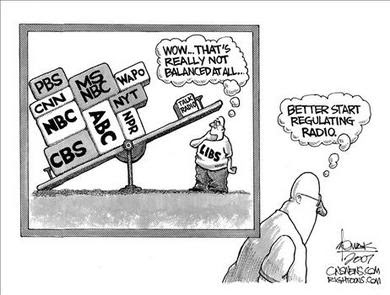
Dan Mitchell answers the question “Is the media biased?”

I enjoy reading Dan’s answers every week.


Most of the questions I received were in the past couple of days and almost all of them dealt with gun control. But I think what I wrote earlier today is a good response to those queries.

So let’s deal with a question (actually two questions) from Minnesota, both of which are very simple and direct: “You deal with reporters a lot. Is the media biased? Or are people on the right just whining?”

First, I’m glad that someone else posed the question, because I wouldn’t be sure whether to ask “Are the media biased” or “Is the media biased.” I’m sure there’s a Grammar Nazi out there who knows the answer.

But back to the point of this post, I think the answer to both questions is yes. Conservatives and libertarians are whining, but that’s very understandable because the press does try to help the other side. And I have several examples.

But I want to emphasize a key point. Media bias very rarely involves dishonesty. Deception yes, but not inaccuracies. It’s almost always about story selection and what gets emphasized.

Even when there’s a clear-cut mistake, such as the jaw-dropping New York Times assertion about lower education spending, I suspect it’s the result of group-think rather than a deliberate decision to lie.

But there often are deliberate decisions to steer the debate in a certain direction, and I there’s a very good example in a new expose by the Daily Caller. They caught the folks at Bloomberg highlighting poll data that helped Obama and burying the results that might give aid and comfort to the GOP.

A poll conducted last week by an Iowa-based firm showed Americans are conflicted about whether or not to support raising tax rates on wealthy Americans to avert the so-called “fiscal cliff.” But that’s not how Bloomberg News, which commissioned the poll, reported the results Thursday. In a story headlined “Americans Back Obama Tax-Rate Boost Tied to Entitlements,” Bloomberg emphasized only that the poll showed most Americans support President Barack Obama’s insistence on increasing taxes for high-income earners. “A majority of Americans say President Barack Obama is right to demand that tax-rate increases for the highest earners be a precondition for a budget deal that cuts U.S. entitlement programs,” the story, written by reporter Julie Hirschfeld Davis, began. …But in the same poll, American adults were asked “whether it is better to raise the top tax rate the wealthy pay, or to limit the amount people can claim in tax breaks, such as mortgage interest and charitable contributions, so they end up paying tax on a bigger share of their income.” Fifty-two percent responded that they preferred limited tax breaks to a tax-rate hike. Only 39 percent said they would rather see tax rates on the wealthy increase. Nine percent indicated they weren’t sure. …Bloomberg mentioned the second question in the story’s 20th paragraph, and gave no indication that the results suggested support for Boehner or House Republicans.

Kudos to the Daily Caller for catching the folks at Bloomberg with the hands in the cookie jar.

Notice, though, that there are (presumably) no falsehoods or fabrications in the Bloomberg report. The bias shows up in terms of what gets prominent coverage and what gets buried.

You’ll be happy to know, by the way, that “Bloomberg News editor and political reporter Jeanne Cummings conceded to The Daily Caller that the poll’s results are apparently contradictory.”

Gee, what a big concession to fairness.

P.S. You can see a couple of good cartoons about media bias in this post, and another good one at the bottom of this post.

Charlie Collins versus Max Brantley on Gun Control

John Stossel report “Myth: Gun Control Reduces Crime

After this horrible shooting in the school the other day it seems the gun control debate has fired up again.  Max Brantley of the Arkansas Times jumped on Charlie Collins concerning his position on concealed weapons but I think that would lower gun crimes and not raise them.

Charlie Collins will again try to expand legal guns on campus


Posted by on Mon, Dec 17, 2012 at 1:04 PM

MORE GUNS: Collins will try again on college staff carry bill.

  • MORE GUNS: Collins will try again on college staff carry bill.

Seemed a good time to ask Republican Rep. Charlie Collins of Fayetteville whether he’d any change of heart/plans regarding his plan to again introduce legislation to allow college staff to carry guns on campus. His response: 

As I tweeted in response to a comment by @mervinj earlier today, I will be happy to reengage on this issue after we allow some time for mourning. I believe there are funerals scheduled for some of the children this week. This senseless tragedy leaves all of us heartsick for the families that have lost their loved ones.

The direct answer to your question is that yes, I will reintroduce my professor carry bill (it was HB1479 in the last session). I believe the legislation can help deter some crazy killers from attacking people on our college campuses and/or reduce the loss of life in those situations that do occur, since the potential exists under my bill for full time employees and faculty who have a concealed carry permit to act in self defense against a killer while they are at work on their college campus. There is no provision for student carry on campus in my legislation. I will be happy to engage with you on this later.

Both John Brummett and Max Brantley have made it clear that they support gun control. I am going to start a series today debunking popular myths about guns and gun control.

During this series on gun control, I will be quoting from an article “Gun Control:Myths and Realities” by David Lampo of the Cato Institute.

4. States that allow registered citizens to carry concealed weapons have lower crime rates than those that don’t.

This happens to be true. The 31 states that have “shall issue” laws allowing private citizens to carry concealed weapons have, on average, a 24 percent lower violent crime rate, a 19 percent lower murder rate and a 39 percent lower robbery rate than states that forbid concealed weapons. In fact, the nine states with the lowest violent crime rates are all right-to-carry states. Remarkably, guns are used for self-defense more than 2 million times a year, three to five times the estimated number of violent crimes committed with guns.

All-American Rejects Part 2 (“Finding Satisfaction in Life”)

The All-American Rejects Music Interview Tyson Ritter Full Band only on The Artist Spotlight

The All-American Rejects – The Last Song

The All-American Rejects – It Ends Tonight

I got to go hear the All-American Rejects in Little Rock on 12-13-12. Here are some of my reactions.

Tyson Ritter admitted that he lost his way after the 2008 cd came out and he spent a couple of years in LA searching for happiness through multiple relationships with women but that didn’t work out and he found no satisfaction. Let me suggest finding your satisfaction through Christ. Below are some very popular songs on this same subject.

I Still Haven’t Found What I’m Looking For / U2

The Rolling Stones Satisfaction (rare)


If you want to see the path that Kerry Livgren and Dave Hope of the rock group Kansas took to find true satisfaction then listen to their song “Dust in the Wind” and then read their testimony at this link Tom Brady , Coldplay, Kansas, Solomon and the search for satisfaction (part 3) .

Kansas – Dust In The Wind

Uploaded by on Nov 7, 2009

Music video by Kansas performing Dust In The Wind. (c) 2004 Sony Music Entertainment Inc.

______________

This sermon can be listened to online at http://www.fellowshiponline.com/resources/sermons/

Concerning Philippians 4:10-23 Brandon comments:

Paul is reminding us that in every circumstance and in everything he has gone through that his satisfaction is found deeply in Christ. You think about this guy who is writing from prison. He is in this prison cell and it is a hardship in his life, but him of all people is saying that “I am writing to you but I am content and I am satisfied.” That is a statement you don’t hear from a lot of people these days… A lot of people are discontent and dissatisfied… Think about the poets from your generation or the generation before us. How about the deep theologians called “The Rolling Stones.” Remember them. They wrote this song “I can’t get no satisfaction.” And you what they say after that phrase? “And I try and I try and I try.” I am not sure how deep most of their lyrics are, but they voice the cry of many people. “I can’t get no satisfaction and I try and I am trying and I am trying.”

What about one of those other poets by the name of Bono who wrote a song called, “I still haven’t found what I am looking for.” It is interesting. “I still haven’t found what I am looking for.” It has a nice melody to it but there is probably a reason why it is so popular because there is a lot of people deep down in their soul feel like they haven’t found what they are looking for.

It is true. What is so funny to me is that what is so desired is so elusive. What is so longed for, people want to be content and satisfied, you want to be content with who you are and what you have and where you live but the reality of it is THAT IS NOT THE CASE IN YOUR LIFE. THAT IS NOT THE CASE FOR A LOT OF PEOPLE. A matter of fact in our notes I ask this question: WHY ARE MOST PEOPLE DISATISFIED AND DISCONTENT IN THIS LIFE? It is running rampant. People are longing for, desiring for and chasing after, they want so desperately to be content, to be satisfied with what they have, with who they are, with where they are. Yet the reality is for a lot of people who is not happening and it creates frustration in us and anger in us and sadness in us and loneliness in us.

Why? Some people say they are not compensated enough or not treated fairly enough, or not talented enough, or not attractive enough, or not rewarded enough, or not recognized enough. The list goes on and on and on.

The interesting thing is that even when you feel like you get some contentment in your life there is always a desire for more. It is never enough. Quite frankly some people achieve the american dream and they still want more!!!

TRUE CONTENTMENT FLOWS FROM CONFIDENCE IN GOD AND STAYS REGARDLESS OF CIRCUMSTANCES AND COMES FROM STRENGTH IN CHRIST AND BREEDS GENEROSITY.

Our deepest satisfaction is found in Christ.

Today’s scripture reading was:

Philippians 4:10-23

New American Standard Bible (NASB)

God’s Provisions

 10 But I rejoiced in the Lord greatly, that now at last you have revived your concern for me; indeed, you were concerned before, but you lacked opportunity. 11 Not that I speak [a]from want, for I have learned to be [b]content in whatever circumstances I am. 12 I know how to get along with humble means, and I also know how to live in prosperity; in any and every circumstance I have learned the secret of being filled and going hungry, both of having abundance and suffering need. 13 I can do all things [c]through Him who strengthens me. 14 Nevertheless, you have done well to share with mein my affliction. 15 You yourselves also know, Philippians, that at the [d]first preaching of the gospel, after I left Macedonia, no church shared with me in the matter of giving and receiving but you alone; 16 for even in Thessalonica you sent a gift more than once for my needs. 17 Not that I seek the gift itself, but I seek for the [e]profit which increases to your account. 18 But I have received everything in full and have an abundance; I am [f]amply supplied, having received from Epaphroditus [g]what you have sent, [h]a fragrant aroma, an acceptable sacrifice, well-pleasing to God. 19 And my God will supply [i]all your needs according to His riches in glory in Christ Jesus. 20 Now to our God and Father be the glory [j]forever and ever. Amen.

 21 Greet every [k]saint in Christ Jesus. The brethren who are with me greet you. 22 All the [l]saints greet you, especially those of Caesar’s household.

 23The grace of the Lord Jesus Christbe with your spirit.


Band members

Ritter in 2006

Tyson Ritter – lead vocals, bass guitar, piano (1999–present)

  • Tyson Jay Ritter, born April 24, 1984 in Stillwater, Oklahoma, is co-founder of The All-American Rejects. Ritter splits his time between his homes in New York, California and Florida. While he considers Santa Rosa Beach, Florida to be his primary residence, business requires he spend the majority of his time at his LA-area home. Aside from his role in the band, Ritter has worked as a film and television actor. He performed as himself in the American television medical drama House M.D., appearing in the episode “Fetal Position” which aired April 3, 2007 on the Fox Network.[36] He also appeared with his other band members in television series Smallville season six episode 3, titled “Wither”, performing “It Ends Tonight“. He also appeared in his first film, The House Bunny, in 2008. In June 2010, Tyson Ritter sung a duet with R&B singer Timbaland with the song “I’m in Love With You”. The song features as a bonus track on Timbaland’s EP Shock Value II: The Singles.Tyson Ritter and Nick Wheeler also cowrote “Put Me Back Together” for Weezer’s 2010 “Raditude” Album. Tyson Ritter started his own charity called “Don’t Hate On Haiti” to raise money to get water to the people in Haiti, by designing a t-shirt. He is very passionate about Haiti, as he has stated in many interviews and on his personal Twitter account. At Warped Tour 2010, he “sold his body” to raise money, by taking pictures, giving autographs, sidestage passes and even kisses for donating money. In June 2011 he began a campaign for Haiti that entails him keeping silent for 30 days. Many people have began to sponsor his silence by giving money for every day he keeps quiet.[37] “In the end, we’re just a band, close friends, who care deeply about what we do,” says Tyson.

Nick Wheeler – lead guitar, backing vocals (1999–present)

  • Nickolas (Don) Von Wheeler was born on March 20, 1982 in Stillwater, Oklahoma, and lived there until moving to his current residence in Destin, Florida. He is a co-founder of The All-American Rejects and is the lead guitarist and backing vocals for the band.

Mike Kennerty – rhythm guitar, backing vocals (2002–present)

  • Michael Brian Kennerty, born on July 20, 1980, in Houston, Texas, grew up and lives in Edmond, Oklahoma. He joined the All-American Rejects in 2002 after The All-American Rejects had been completed. Kennerty is a founding member and guitarist of the punk band “These Enzymes”, along with bandmate and drummer, Chris Gaylor. The side project was started after a 2003 tour in England, and includes other members Neil Rubenstein and Andrew Palmer.[38] He produced and played guitar on Ben Weasel‘s album These Ones Are Bitter. He is also the owner of Edmond Records, which specializes in colored vinyl pressings, including Ben Weasel’s latest album.

Chris Gaylor – drums, percussion (2002–present)

  • Christopher James Gaylor, born April 11, 1979, lives in Edmond, Oklahoma. After joining the band in 2002, Gaylor has added a muscular edge to the band’s drums. Gaylor is a co-founding member and drummer of “These Enzymes”, and played drums on the Ben Weasel album These Ones Are Bitter.

[edit] Touring members

  • Timothy Jordan II – keyboards, guitar, backing vocals (2005)
  • Nick Foxer – keyboards, guitar, backing vocals (2006)
  • Kevin Saulnier – keyboards, guitar, percussion, backing vocals (2006-2011)
  • Butch Walker – bass guitar, backing vocals (2006)
  • Ethan Novak – bass guitar, backing vocals (2008-2011)
  • Matt Rubano – bass guitar, keyboards, backing vocals (2011–present)
  • Scott Chesak – keyboards, backing vocals (2011–present)

[edit] Equipment

Using mainly Fender and Gibson guitars, The All-American Rejects use numerous models. The band uses Sennheiser microphones, Ernie Ball guitar strings, and Dunlop Picks.

Lead singer and bassist Tyson Ritter uses two models of Fender; one is a Black P-Bass, and the other model is the recently discontinued Jaguar Bass. Ritter also uses Gibson models, including the Gibson Thunderbird and the Epiphone Flying V.[39]

The lead guitarist of The All-American Rejects, Nick Wheeler, primarily uses Gibson guitars. Wheeler’s main guitar is the Gibson Firebird. He primarily uses a Vintage Sunburst Firebird V. Wheeler owns a rare cherry Firebird VII, which he no longer uses for live shows, as well as a custom Firebird, which is painted in blue glitter. He owns eight Firebirds overall. He also uses a Classic Gibson Firebird. Wheeler frequently uses a Gibson ES-335. This guitar is notably used live for the intro of “Top of the World”, taking the place of the classical guitar originally used in the “Top of the World” recording. It is also commonly used in the songs “It Ends Tonight”, “Real World”, “Stab My Back”, “My Paper Heart”, “Gives You Hell” and “Dance Inside”. Another guitar that Wheeler favors is the Gibson EDS-1275 doubleneck guitar, which he uses live on “The Wind Blows”. He has also been known to occasionally use the Gibson Flying V, namely for the performing “The Last Song” live.[40][41]

Rhythm guitarist Mike Kennerty has used the Gibson SG since joining the band, and also uses Washburn Guitars. Another guitar that Kennerty favors is the PRS Guitars Mira X which came out in early 2009.[42][43]

Chris Gaylor, drummer for the band, uses Remo heads for his drums. Gaylor used to endorse Tama drums, but now he endorses C&C drums. He has a set with a Rootbeer Sparkle wood finish, as well as an acrylic kit. Gaylor’s most-current set-up contains seven drums. He uses a 12×7 rack tom, 14×10, 16×12, and 18×14 floor toms, a 14×6.5 Nickel-Over-Brass snare, a 12×7 effects snare, and a 24×16 bass drum. Gaylor uses Tama hardware.

Also, Gaylor uses Vater Universal drumsticks, and his cymbals are Sabian. His hi-hats are Sabian 14-inch HHX Evolution. His 3 crashes he uses are an 18 inch HHXplosion crash, a 19 inch AAXplosion crash, and a 20-inch HHX stage crash. Gaylor also uses 22-inch HH Power Bell ride cymbal. Gaylor also includes an LP cowbell in his set. The drummer also uses an Alesis ADAT HD24 for recording purposes.[12][44]

[edit] Discography

Studio albums

[edit] Awards and nominations


[edit] External links

Wikimedia Commons has media related to: The All-American Rejects
[hide]

The All-American Rejects
 
  • Tyson Ritter ·
  • Nick Wheeler ·
  • Mike Kennerty ·
  • Chris Gaylor
 
Studio albums
and singles
 
The All-American Rejects
 
Move Along
 
When the World Comes Down
 
Kids in the Street
 
Extended plays
 
DVDs
 
Labels
 
Lists
 

Related posts:

Jeremy Lin’s Christian Faith

Jeremy Lin 4th quarter highlights vs Raptors (GW 3pts.) || 2.14.12 || HD Uploaded by geraldd39 on Feb 14, 2012 Jeremy Lin hits the game-winner to lift Knicks over Raptors for their sixth straight win. _____________________ (Here are some links to other fine articles on Jeremy’s faith.) Another article on Jeremy Lin’s faith: The God […]

The movie “The Grey” and the answer to nihilism

Uploaded by gwain30 on Jan 29, 2012 A review of the new Liam Neeson film, the grey, as iI say there may be some minor spoilers but nothing too drastic, enjoy and dont forget to comment, rate and subscribe ________________ Uploaded by ClevverMovies on Dec 5, 2011 http://bit.ly/clevvermovies – Click to Subscribe! http://Facebook.com/ClevverMovies – Become […]

Danny Woodhead has found satisfaction in his Christian faith, Brady still looking for satisfaction despite 3 Super Bowl rings (Part 3)

Tom Brady “More than this…” Uploaded by EdenWorshipCenter on Jan 22, 2008 EWC sermon illustration showing a clip from the 2005 Tom Brady 60 minutes interview. To Download this video copy the URL to www.vixy.net Below you will see several video clips. Evidently despite all the super bowl rings Brady is still looking for true satisfaction, and Danny […]

Tom Brady has learned what does not bring satisfaction (part 4)

Tom Brady “More than this…” Uploaded by EdenWorshipCenter on Jan 22, 2008 EWC sermon illustration showing a clip from the 2005 Tom Brady 60 minutes interview. To Download this video copy the URL to http://www.vixy.net ___________________ Tom Brady has it all, but he does not have true satisfaction. He has put an enormous amount of […]

Tom Brady , Coldplay, Kansas, Solomon and the search for satisfaction (part 3)

Tom Brady “More than this…” Uploaded by EdenWorshipCenter on Jan 22, 2008 EWC sermon illustration showing a clip from the 2005 Tom Brady 60 minutes interview. _______________________ Tom Brady ESPN Interview Tom Brady has famous wife earned over 76 million dollars last year. However, has Brady found lasting satifaction in his life? It does not […]

Tom Brady, Coldplay, Kansas, Solomon and the search for satisfaction (part 2)

Tom Brady “More than this…” Uploaded by EdenWorshipCenter on Jan 22, 2008 EWC sermon illustration showing a clip from the 2005 Tom Brady 60 minutes interview. To Download this video copy the URL to http://www.vixy.net ________________ Obviously from the video clip above, Tom Brady has realized that even though he has won many Super Bowls […]

Tom Brady, Coldplay, Solomon and the search for satisfaction (part 1)

Tom Brady “More than this…” Uploaded by EdenWorshipCenter on Jan 22, 2008 EWC sermon illustration showing a clip from the 2005 Tom Brady 60 minutes interview. To Download this video copy the URL to http://www.vixy.net Tom Brady is still searching for satisfaction in his life. Over the years I wanted bands like Kansas and Coldplay […]

“True Satisfaction,” Tebow has it, Brady would like to have it

Tom Brady “More than this…” Uploaded by EdenWorshipCenter on Jan 22, 2008 EWC sermon illustration showing a clip from the 2005 Tom Brady 60 minutes interview. To Download this video copy the URL to http://www.vixy.net Below you will see several video clips of both Tom Brady and Tim Tebow. Evidently despite all the super bowl […]

What is God doing with Tim Tebow? Fellowship Bible pastor of Little Rock ponders…

Everyone is wondering if this amazing fourth quarter comeback streak will end for the Denver Broncos and their quarterback Tim Tebow. At the December 11, 2011 early service at Fellowship Bible Church, pastor Mark Henry noted: How many of you have been watching the drama behind Tim Tebow. Tim Tebow is the starting quarterback for […]

“Tip Tuesday” Advice to Gene Simmons (Part 19) Fellowship Bible Church Service July 24th

On the show Gene Simmons Family Jewels, Shannon Tweed, 54 yrs old, is the mother of Gene’s two kids and she has been with Gene for 28 yrs but now she is looking for more committment from Gene. She wants him to stop cheating on her. In the July 19th episode  Nick said to his […]

“Tip Tuesday” Advice for Gene Simmons (Part 11) Fellowship Bible Church July 24th

Gene Simmons and his son Nick (Refer to end of post for more on Nick and Gene) 28 July 2011 Gene Simmons has proposed to long-term girlfriend Shannon Tweed. The Kiss bassist – who claims to have slept with over 2,000 women and has for a long time vowed never to marry – popped the question […]

“Tip Tuesday,” Advice to Gene Simmons Part 9, Fellowship Bible Church July 24th

Gene Simmons and Shannon Tweed John McArthur The Truth About Divorce, #2 (Mark 10:1-12) On the show Gene Simmons has been arguing the point that he admits that he is selfish, but he still feels he has the right to be selfish. In the conclusion of the final episode of the year on July 24th […]

Park Street Church Boston, MA (Part 1)

Uploaded by OBrasilo on Nov 18, 2006 This is the “Nearer My God To Thee” scene from the movie “A Night To Remember” (1958). _____________________________________ The Arkansas Times asked what are some of our favorite hymns. One of my favorites is “Near My God to Thee” which was written played on the Titanic while the […]

Advice to Gene Simmons Part 4, Fellowship Bible Church sermon on purity jh14a

Gene Simmons Proposes To Shannon Tweed Kiss singer/bassist Gene Simmons proposed to his longtime girlfriend Shannon Tweed in Belize recently, TMZ reports. The couple has been together 28 years and share two children, 22-year-old son Nicholas and 18-year-old daughter Sophie. Simmons popped the question on the A&E reality show ‘Gene Simmons Family Jewels,’ which has followed the life of the Simmons brood since […]

Advice to Gene Simmons Part 3, Fellowship Bible Service July 24, 2011

Last Tuesday night I watched Gene Simmons Family Jewels and I commented how I  was struck by the good advice that his son Nick gave him. He told him that he grew up thinking that his father was the best. However, now that the marital infidility has come out, it has made Nick think long and hard […]

Devotional – Fellowship Bible Church – Brandon Barnard

Uploaded by on Feb 25, 2010

Weekly Bible devotional from the pastors of Fellowship Bible Church in Little Rock, Arkansas.

Clinton-Era Spending Levels is what we need

Will Taxing the Rich Fix the Deficit?

Published on Jul 2, 2012

The government’s budget deficit in 2009 was $1.5 trillion. Many have suggested raising taxes on the rich to cover the difference between what the government collected in revenue and what it spent. Is that a realistic solution? Economics professor Antony Davies uses data to demonstrate why taxing the rich will not be sufficient to make the budget deficit disappear. He says, “The budget deficit is so large that there simply aren’t enough rich people to tax to raise enough to balance the budget.” Instead, it’s time to work on legitimate solutions, like cutting spending.

___________

President Clinton is the favorite president that the Democrats want to talk about today but it seems they forget some of the details of what he actually did in office.


Fiscal Cliff: Clinton-Era Spending Levels, Anyone?


Romina Boccia

December 12, 2012 at 12:00 pm

Many are proposing that tax rates for upper-income earners go back to their levels during the Clinton Administration. What you don’t hear is how we can return to Clinton-era spending levels. That would be a real solution to the upcoming fiscal crisis, and the President could lead the way.

The President says he wants Clinton-era marginal tax levels for families and small businesses earning more than $250,000 a year ($200,000 for individuals). However, tax rates for these earners would actually go up much more because of Obamacare tax hikes already signed into law.

Never mind that this would slow growth and hurt job creation. And no, these tax hikes won’t balance the budget—not next year, not the year after, not ever. Under Obama’s budget, federal debt would continue growing by $7.7 trillion even if the President gets his favorite tax hikes.

The debate over tax hikes is just a distraction from what is really going on: Washington has a spending problem, not a revenue problem, and President Obama is at the helm. According to the White House Office of Management and Budget, President Obama’s two-term average spending level is projected at 23.4 percent of gross domestic product (GDP).

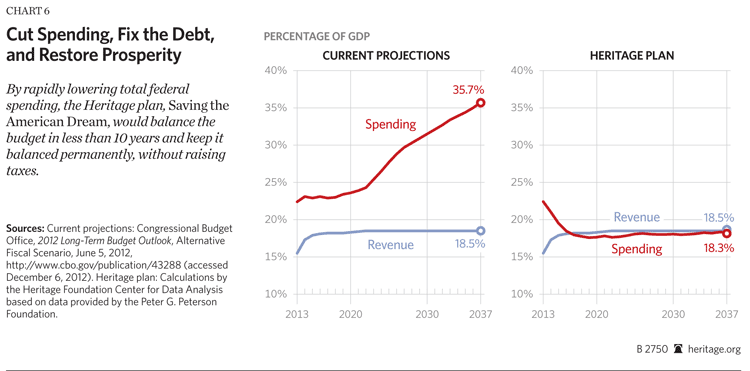
In comparison, President Clinton’s historical spending average was 19.9 percent of GDP. While revenues are set to return to historical average levels of over 18.1 percent as the economy slowly recovers, spending under current policy is projected to remain well above the historical average of 20.2 percent.

The solution to America’s spending-driven debt crisis is as clear as daylight: Lawmakers must cut spending today and in the future. The Heritage Foundation has a plan, Saving the American Dream, which shows how lawmakers can balance the budget in less than 10 years and reduce the debt by tackling the main drivers of federal spending—entitlements.

A recent paper by Heritage’s J. D. Foster and Alison Fraser draws upon the Heritage plan to present the President with some simple but profound common-sense reforms to programs such as Social Security and Medicare that he could pursue today:

[T]he President must adopt the mantle of leadership, rather than brinksmanship, to steer the nation away from the fiscal cliff and all that is set to follow, and he must start with spending. However, the critical silver lining is that simple, commonsense, and thoroughly vetted solutions…constitute a strong start on the journey to more complete programmatic reforms remedying acknowledged flaws in these programs, and they already enjoy broad support across the political spectrum.

Click here to see the full list of proposals to avoid the fiscal cliff and avert the upcoming fiscal crisis.

Francis Schaeffer’s own words concerning humanist dominated public schools in USA even though country was founded on a Christian base

Francis Schaeffer pictured above with his wife Edith.

Pt 1 of 2 Listen to this Important Message by Francis Schaeffer

Published on Sep 30, 2013

This message “A Christian Manifesto” was given in 1982 by the late Christian Philosopher Francis Schaeffer when he was age 70 at D. James Kennedy’s Corral Ridge Presbyterian Church.
Listen to this important message where Dr. Schaeffer says it is the duty of Christians to disobey the government when it comes in conflict with God’s laws. So many have misinterpreted Romans 13 to mean unconditional obedience to the state. When the state promotes an evil agenda and anti-Christian statues we must obey God rather than men. Acts
I use to watch James Kennedy preach from his TV pulpit with great delight in the 1980’s. Both of these men are gone to be with the Lord now. We need new Christian leaders to rise up in their stead.
To view Part 2 See Francis Schaeffer Lecture- Christian Manifesto Pt 2 of 2 video
The religious and political freedom’s we enjoy as Americans was based on the Bible and the legacy of the Reformation according to Francis Schaeffer. These freedoms will continue to diminish as we cast off the authority of Holy Scripture.
In public schools there is no other view of reality but that final reality is shaped by chance.
Likewise, public television gives us many things that we like culturally but so much of it is mere propaganda shaped by a humanistic world and life view.

_____________________________

Pt 2 -Listen to this Important Message by Francis Schaeffer

I was able to watch Francis Schaeffer deliver a speech on a book he wrote called “A Christian Manifesto” and I heard him in several interviews on it in 1981 and 1982. I listened with great interest since I also read that book over and over again. Below is a portion of one of Schaeffer’s talks  on a crucial subject that is very important today too.
A Christian Manifesto
by Dr. Francis A. Schaeffer
This address was delivered by the late Dr. Schaeffer in 1982 at the Coral Ridge Presbyterian Church, Fort Lauderdale, Florida. It is based on one of his books, which bears the same title.

——–

USA was founded on Christian base but  has humanist dominated public schools

——

This country was founded on a Christian base with all its freedom for everybody. Let me stress that. This country was founded on a Christian base with all its freedom for everybody, not just Christians, but all its freedom for everyone. And now, this is being largely lost. We live not ten years from now, but tonight, in a Humanistic culture and we are rapidly moving at express train speed into a totally Humanistic culture. We’re close to it. We are in a Humanistic culture, as I point out in the public schools and these other things, but we are moving toward a TOTALLY Humanistic culture and moving very quickly.
I would repeat at this place about our public schools because it’s worth saying. Most people don’t realize something. Communism, you know, is not basically an economic theory. It’s materialistic communism, which means that at the very heart of the Marx, Engels, Lenin kind of communism (because you have to put all three together to really understand) is the materialistic concept of the final reality. That is the base for all that occurs in the communist countries.
I am wearing a Solidarity pin — in case you wonder what this is on my lapel. We had two young men from L’Abri take in an 8 ton truck of food into Poland — very bad weather — they almost were killed on the roads. They got in just three days before the crackdown. We, of L’Abri, have taken care of small numbers of each successive wave of Europeans who have been persecuted in the communist nations, the Hungarians, Czechoslovakians, now the Poles. A dear wonderful Christian schoolteacher that we love very much (she’s a wonderful, wonderful Christian young woman, brilliant as brilliant, and she studied at L’Abri for a long time and she was one of the contact points for the destination of the food) — thought that the crackdown might come. So she sent me out this Solidarity pin. This wasn’t made in Newark! This came from Poland. I have a hope. I hope I can wear it until I can hand it back to her and she can wear it again in Poland. That’s my hope! But all the oppression you have ever heard of in Mao’s China, Stalin’s day, Poland, Czechoslovakia — any place that you can name it — Afghanistan — all the oppression is the automatic, the mechanical certainty, that comes from having this other world view of the final reality only being material or energy shaped by pure chance. That’s where it comes from.
And what about our schools? I think I should stress again! By law, you are no more allowed to teach religious values and religious views in our public schools than you are in the schools of Russia tonight. We don’t teach Marxism over here in most of our schools, but as far as all religious teaching (except the religion of Humanism, which is a different kind of a thing) it is just as banned by law from our schools, and our schools are just as secular as the schools in Soviet Russia — just exactly! Not ten years from now. Tonight!
Congress opens with prayer. Why? Because Congress always is opened with prayer. Back there, the founding fathers didn’t consider the 13 provincial congresses that sent representatives to form our country in Philadelphia really open until there was prayer. The Congress in Washington, where Edith and I have just been, speaking to various men in political areas and circles — that Congress is not open until there is prayer. It’s illegal, in many places, for youngsters to merely meet and pray on the geographical location of the public schools. I would repeat, we are not only immoral, we’re stupid. I mean that. I don’t know which is the worst: being immoral or stupid on such an issue. We are not only immoral, we are stupid for the place we have allowed ourselves to come to without noticing.
___________
Related posts:

Francis Schaeffer’s own words concerning religious liberals and humanists

Francis Schaeffer: “Whatever Happened to the Human Race” (Episode 5) TRUTH AND HISTORY Published on Oct 7, 2012 by AdamMetropolis The 45 minute video above is from the film series created from Francis Schaeffer’s book “Whatever Happened to the Human Race?” with Dr. C. Everett Koop. This book  really helped develop my political views concerning abortion, […]

Francis Schaeffer’s own words concerning the possibility that minorities may be mistreated under 51% rule

Francis Schaeffer: “Whatever Happened to the Human Race” (Episode 4) THE BASIS FOR HUMAN DIGNITY Published on Oct 7, 2012 by AdamMetropolis ____________ The 45 minute video above is from the film series created from Francis Schaeffer’s book “Whatever Happened to the Human Race?” with Dr. C. Everett Koop. This book  really helped develop my political […]

Francis Schaeffer’s own words concerning our view of acceptable killing versus Stalin, Mao and Hitler

Francis Schaeffer: “Whatever Happened to the Human Race” (Episode 3) DEATH BY SOMEONE’S CHOICE Published on Oct 6, 2012 by AdamMetropolis _________ The 45 minute video above is from the film series created from Francis Schaeffer’s book “Whatever Happened to the Human Race?” with Dr. C. Everett Koop. This book  really helped develop my political views […]

Francis Schaeffer’s own words concerning infanticide and youth enthansia

Francis Schaeffer: “Whatever Happened to the Human Race?” (Episode 2) SLAUGHTER OF THE INNOCENTS Published on Oct 6, 2012 by AdamMetropolis ___________ The 45 minute video above is from the film series created from Francis Schaeffer’s book “Whatever Happened to the Human Race?” with Dr. C. Everett Koop. This book  really helped develop my political views […]

Francis Schaeffer’s own words concerning tyranny as anti-God agenda pushed through courts

Francis Schaeffer: “Whatever Happened to the Human Race” (Episode 1) ABORTION OF THE HUMAN RACE Published on Oct 6, 2012 by AdamMetropolis ________ The 45 minute video above is from the film series created from Francis Schaeffer’s book “Whatever Happened to the Human Race?” with Dr. C. Everett Koop. This book  really helped develop my political […]

Francis Schaeffer’s own words concerning secular humanism and the public schools in the USA

Francis Schaeffer: “Whatever Happened to the Human Race” (Episode 5) TRUTH AND HISTORY Published on Oct 7, 2012 by AdamMetropolis The 45 minute video above is from the film series created from Francis Schaeffer’s book “Whatever Happened to the Human Race?” with Dr. C. Everett Koop. This book  really helped develop my political views concerning abortion, […]

Francis Schaeffer’s own words concerning the founding fathers and their belief in inalienable rights

Francis Schaeffer: “Whatever Happened to the Human Race” (Episode 4) THE BASIS FOR HUMAN DIGNITY Published on Oct 7, 2012 by AdamMetropolis The 45 minute video above is from the film series created from Francis Schaeffer’s book “Whatever Happened to the Human Race?” with Dr. C. Everett Koop. This book  really helped develop my political views […]

Francis Schaeffer’s own words concerning humanism and its arbitrary laws

Francis Schaeffer: “Whatever Happened to the Human Race” (Episode 3) DEATH BY SOMEONE’S CHOICE Published on Oct 6, 2012 by AdamMetropolis The 45 minute video above is from the film series created from Francis Schaeffer’s book “Whatever Happened to the Human Race?” with Dr. C. Everett Koop. This book  really helped develop my political views concerning […]

Francis Schaeffer’s own words concerning humanism and its bad results

Francis Schaeffer: “Whatever Happened to the Human Race?” (Episode 2) SLAUGHTER OF THE INNOCENTS Published on Oct 6, 2012 by AdamMetropolis The 45 minute video above is from the film series created from Francis Schaeffer’s book “Whatever Happened to the Human Race?” with Dr. C. Everett Koop. This book  really helped develop my political views concerning […]

 Francis Schaeffer’s prayer for us in USA

 Francis Schaeffer: “Whatever Happened to the Human Race” (Episode 1) ABORTION OF THE HUMAN RACE Published on Oct 6, 2012 by AdamMetropolis The 45 minute video above is from the film series created from Francis Schaeffer’s book “Whatever Happened to the Human Race?” with Dr. C. Everett Koop. This book  really helped develop my political views […]

Francis Schaeffer’s “How should we then live?” Video and outline of episode 10 “Final Choices” (Schaeffer Sundays)

E P I S O D E 1 0   Dr. Francis Schaeffer – Episode X – Final Choices 27 min FINAL CHOICES I. Authoritarianism the Only Humanistic Social Option One man or an elite giving authoritative arbitrary absolutes. A. Society is sole absolute in absence of other absolutes. B. But society has to be […]

Francis Schaeffer’s “How should we then live?” Video and outline of episode 9 “The Age of Personal Peace and Affluence” (Schaeffer Sundays)

E P I S O D E 9 Dr. Francis Schaeffer – Episode IX – The Age of Personal Peace and Affluence 27 min T h e Age of Personal Peace and Afflunce I. By the Early 1960s People Were Bombarded From Every Side by Modern Man’s Humanistic Thought II. Modern Form of Humanistic Thought Leads […]

Francis Schaeffer’s “How should we then live?” Video and outline of episode 8 “The Age of Fragmentation” (Schaeffer Sundays)

E P I S O D E 8 Dr. Francis Schaeffer – Episode VIII – The Age of Fragmentation 27 min I saw this film series in 1979 and it had a major impact on me. T h e Age of FRAGMENTATION I. Art As a Vehicle Of Modern Thought A. Impressionism (Monet, Renoir, Pissarro, Sisley, […]

Francis Schaeffer’s “How should we then live?” Video and outline of episode 7 “The Age of Non-Reason” (Schaeffer Sundays)

E P I S O D E 7 Dr. Francis Schaeffer – Episode VII – The Age of Non Reason I am thrilled to get this film series with you. I saw it first in 1979 and it had such a big impact on me. Today’s episode is where we see modern humanist man act […]

Francis Schaeffer’s “How should we then live?” Video and outline of episode 6 “The Scientific Age” (Schaeffer Sundays)

E P I S O D E 6 How Should We Then Live 6#1 Uploaded by NoMirrorHDDHrorriMoN on Oct 3, 2011 How Should We Then Live? Episode 6 of 12 ________ I am sharing with you a film series that I saw in 1979. In this film Francis Schaeffer asserted that was a shift in […]

Francis Schaeffer’s “How should we then live?” Video and outline of episode 5 “The Revolutionary Age” (Schaeffer Sundays)

E P I S O D E 5 How Should We Then Live? Episode 5: The Revolutionary Age I was impacted by this film series by Francis Schaeffer back in the 1970′s and I wanted to share it with you. Francis Schaeffer noted, “Reformation Did Not Bring Perfection. But gradually on basis of biblical teaching there […]

Francis Schaeffer’s “How should we then live?” Video and outline of episode 4 “The Reformation” (Schaeffer Sundays)

Dr. Francis Schaeffer – Episode IV – The Reformation 27 min I was impacted by this film series by Francis Schaeffer back in the 1970′s and I wanted to share it with you. Schaeffer makes three key points concerning the Reformation: “1. Erasmian Christian humanism rejected by Farel. 2. Bible gives needed answers not only as to […]

“Schaeffer Sundays” Francis Schaeffer’s “How should we then live?” Video and outline of episode 3 “The Renaissance”

Francis Schaeffer’s “How should we then live?” Video and outline of episode 3 “The Renaissance” Francis Schaeffer: “How Should We Then Live?” (Episode 3) THE RENAISSANCE I was impacted by this film series by Francis Schaeffer back in the 1970′s and I wanted to share it with you. Schaeffer really shows why we have so […]

Francis Schaeffer’s “How should we then live?” Video and outline of episode 2 “The Middle Ages” (Schaeffer Sundays)

  Francis Schaeffer: “How Should We Then Live?” (Episode 2) THE MIDDLE AGES I was impacted by this film series by Francis Schaeffer back in the 1970′s and I wanted to share it with you. Schaeffer points out that during this time period unfortunately we have the “Church’s deviation from early church’s teaching in regard […]

Francis Schaeffer’s “How should we then live?” Video and outline of episode 1 “The Roman Age” (Schaeffer Sundays)

Francis Schaeffer: “How Should We Then Live?” (Episode 1) THE ROMAN AGE   Today I am starting a series that really had a big impact on my life back in the 1970′s when I first saw it. There are ten parts and today is the first. Francis Schaeffer takes a look at Rome and why […]

Francis Schaeffer: “Whatever Happened to the Human Race” (Episode 5) TRUTH AND HISTORY

Francis Schaeffer: “Whatever Happened to the Human Race” (Episode 5) TRUTH AND HISTORY Published on Oct 7, 2012 by AdamMetropolis This crucial series is narrated by the late Dr. Francis Schaeffer and former Surgeon General Dr. C. Everett Koop. Today, choices are being made that undermine human rights at their most basic level. Practices once […]

Francis Schaeffer: “Whatever Happened to the Human Race” (Episode 4) THE BASIS FOR HUMAN DIGNITY

The opening song at the beginning of this episode is very insightful. Francis Schaeffer: “Whatever Happened to the Human Race” (Episode 4) THE BASIS FOR HUMAN DIGNITY Published on Oct 7, 2012 by AdamMetropolis This crucial series is narrated by the late Dr. Francis Schaeffer and former Surgeon General Dr. C. Everett Koop. Today, choices […]

Francis Schaeffer: “Whatever Happened to the Human Race” (Episode 3) DEATH BY SOMEONE’S CHOICE

Francis Schaeffer: “Whatever Happened to the Human Race” (Episode 3) DEATH BY SOMEONE’S CHOICE Published on Oct 6, 2012 by AdamMetropolis This crucial series is narrated by the late Dr. Francis Schaeffer and former Surgeon General Dr. C. Everett Koop. Today, choices are being made that undermine human rights at their most basic level. Practices […]

Francis Schaeffer: “Whatever Happened to the Human Race?” (Episode 2) SLAUGHTER OF THE INNOCENTS

Francis Schaeffer: “Whatever Happened to the Human Race?” (Episode 2) SLAUGHTER OF THE INNOCENTS Published on Oct 6, 2012 by AdamMetropolis This crucial series is narrated by the late Dr. Francis Schaeffer and former Surgeon General Dr. C. Everett Koop. Today, choices are being made that undermine human rights at their most basic level. Practices […]

Francis Schaeffer: “Whatever Happened to the Human Race” (Episode 1) ABORTION OF THE HUMAN RACE

It is not possible to know where the pro-life evangelicals are coming from unless you look at the work of the person who inspired them the most. That person was Francis Schaeffer.  I do care about economic issues but the pro-life issue is the most important to me. Several years ago Adrian Rogers (past president of […]

The following essay explores the role that Francis Schaeffer played in the rise of the pro-life movement. It examines the place of How Should We Then Live?, Whatever Happened to the Human Race?, and A Christian Manifesto in that process.

This essay below is worth the read. Schaeffer, Francis – “Francis Schaeffer and the Pro-Life Movement” [How Should We Then Live?, Whatever Happened to the Human Race?, A Christian Manifesto] Editor note: <p> </p> [The following essay explores the role that Francis Schaeffer played in the rise of the pro-life movement.  It examines the place of […]

Who was Francis Schaeffer? by Udo Middelmann

Great article on Schaeffer. Who was Dr. Francis A. Schaeffer? By Francis Schaeffer The unique contribution of Dr. Francis Schaeffer on a whole generation was the ability to communicate the truth of historic Biblical Christianity in a way that combined intellectual integrity with practical, loving care. This grew out of his extensive understanding of the Bible […]

Open letter to President Obama (Part 195.1)

Johan Norberg on the Impact of Milton Friedman

Uploaded by on Jun 14, 2010

6/10/10

_________


President Obama c/o The White House
1600 Pennsylvania Avenue NW
Washington, DC 20500

Dear Mr. President,

I know that you receive 20,000 letters a day and that you actually read 10 of them every day. I really do respect you for trying to get a pulse on what is going on out here.

I do not believe the federal government should be in the welfare business. It actually creates a welfare trap that poor people get caught in and hurts their ability to advance up the economic ladder.

I have enjoyed reading this series of reviews by T. Kurt Jaros on Milton and Rose Friedman’s book “Free to Choose.” I hope you enjoy it as much as I did.

I have posted several transcripts and videos of the FREE TO CHOOSE film series on my blog. My favorite episodes are the “Failure of Socialism” and  “Power of the Market.” (This is the 1990 version but the 1980 version is good too.) Today with the increase of the welfare state maybe people should take a long look again at the episode “From Cradle to Grave.” 

Milton Friedman’s  view on vouchers for the schools needs to be heeded now more than ever too. “Created Equal” is probably the episode that I want  you to see the most and I wrote several letters to you suggesting that.

T. Kurt Jaros is currently a Master’s student studying Systematic Theology at King’s College in London.  He holds a B.A. in Philosophy and Political Science cum laude and an M.A. in Christian Apologetics high honors from Biola University, an evangelical Christian university outside of Los Angeles.

He enjoys learning and thinking about theology, specifically historical theology, philosophical theology and philosophy of religion, and issues pertaining to monergism and synergism.  Additionally, he enjoys learning and thinking about political philosophy, economics, American political history, and campaigns.

Cradle to Grave

T. Kurt Jaros on Economics

This is part of a series on Milton Friedman’s “Free to Choose.”

In my previous post, I summarized Friedman’s beliefs about the Federal Reserve, its proper role, and how its failure is what leads us to economic problems (not capitalism). In his following chapter, “Cradle to Grave,” Friedman explains how the welfare state began to take off during the FDR administration.

FDR’s first election “marked a major change in both the public’s perception of the role of government and the actual role assigned to government.” This is clearly seen in the amount of national income spent by the government (national, state and local). For the federal government, FDR’s administration and Congress began to fundamentally change the way our economy had worked. They passed into law a nationwide minimum wage, the Securities and Exchange Commission, the National Labor Relations Board and more. Some of his damage to our economy (such as the National Recovery Administration and the Agricultural Adjustment Administration) was, thankfully, ruled unconstitutional by the Supreme Court.

WWII led to massive budgets and power within the federal government, and because the government was able to employ lots of people for the single purpose, unemployment shrunk and people began to believe in Keynesian principles. However, Friedman explains the problem with this thinking, which is worthy to quote at length:

It is one thing for government to exercise great control temporarily for a single overriding purpose shared by almost all citizens and for which almost all citizens are willing to make heavy sacrifices; it is a very different thing for government to control the economy permanently to promote a vaguely defined ‘public interest’ shaped by the enormously varied and diverse objectives of its citizens.

He thinks it mistaken to believe that Keynesian economics works for something broad and diverse like an economy. WWII had a specific objective for which people could be unified to join together in (which led to people’s willingness to make sacrifices). Yet the public perception was that the government should begin to take care of us. This perception led to the welfare state being inflated by LBJ and his supposed “War on Poverty” (creation of Medicare and Medicaid). Examples such as Jimmy Carter’s Department of Education and Barack Obama’s Patient Protection and Affordable Care Act (better known as “Obamacare”) provide us epitomes of socialism.

The present day examples of central economic planning are not the perfect description of socialism, which is best described as the means of production being planned by the government. But rather, it is a masked version of socialism because it transfers the results of production. And this masking of socialism still has the same consequences, albeit ones that take longer to witness (and perhaps easier to hide or to deceive people into thinking that such results are good). Consider this recent news article which seeks to show that Mitt Romney’s budget would mean guns over butter.

What seems to be more necessary and helpful to a person, a gun or butter? The deception is in the unsaid assumption: “Government should provide butter.” It tugs at our heartstrings that people should have butter (or food), but it duplicitously avoids the truth about how wealth is created or what the role of government ought to be.

In my next post, I’ll provide some examples of how the welfare state is uncontrollable and what Friedman thinks we should do to solve the problems.

__________

Thank you so much for your time. I know how valuable it is. I also appreciate the fine family that you have and your commitment as a father and a husband.

Sincerely,

Everette Hatcher III, 13900 Cottontail Lane, Alexander, AR 72002, ph 501-920-5733, lowcostsqueegees@yahoo.com

Open letter to President Obama (Part 195)


President Obama c/o The White House
1600 Pennsylvania Avenue NW
Washington, DC 20500

Dear Mr. President,

I know that you receive 20,000 letters a day and that you actually read 10 of them every day. I really do respect you for trying to get a pulse on what is going on out here.

We need to make a good effort to cut spending.


Spending Cut Goal: 10% in Two Years

Posted by Chris Edwards

The new issue of International Economy has an article by Canada’s Liberal finance minister from the 1990s, Paul Martin, who succeeded in shrinking that country’s federal government. If a new President Mitt Romney wants to cut spending in Washington, Martin has some tips for him, such as cutting spending broadly, forecasting conservatively, and aiming to eliminate the deficit in a fixed time frame and sticking to it. (I’d also advise President Obama to follow the Canadian example, but he’s issued four budgets so far and seems to be more interested in following the Greek fiscal approach).

Paul Martin says:

I tabled the 1995 Budget in the House of Commons. No department of government escaped untouched. Transfers to the provinces for healthcare and education were reduced, public sector employment was cut by 20 percent, the Department of Transport was cut deeply, historic subsidies in the Department of Agriculture were eliminated, and spending in the Department of Industry was cut by 65 percent.

These were massive cuts, far greater than anything Canada had ever seen. Nor were the cuts simply reduction in the growth of future spending as is so often the case. These were absolute cuts in existing spending, such that by the end of the process the federal government’s expenditures as a percentage of GDP were lower than they had been at anytime in the previous fifty years.

From a libertarian perspective, Canada’s cuts weren’t actually “massive,” but for a Liberal government in a country with a population that had gotten used to government coddling, it was pretty impressive. As I noted in my recent article on Canada, Martin and his team cut the budget by 10 percent in just two years.

So my suggested goal for Romney and team if elected this Fall: at least match the Canadians and push for $380 billion of cuts out of otherwise expected spending in 2015 of $3.8 trillion. And do what the Canadians did: cut everything, including entitlements, aid to subnational governments, defense, business subsidies, farm subsidies, and much more in one big push. Many in Congress will resist of course, but presidents have their most leverage in the first year. Mitt will have nothing to lose but the country into a vortex of debt and economic despair if he doesn’t at least try.

___________

Thank you so much for your time. I know how valuable it is. I also appreciate the fine family that you have and your commitment as a father and a husband.

Sincerely,

Everette Hatcher III, 13900 Cottontail Lane, Alexander, AR 72002, ph 501-920-5733, lowcostsqueegees@yahoo.com

“Music Monday” Video interviews of Gwyneth Paltrow and Chris Martin (Part 2)

As far as I know they have never done an interview together. Therefore, I have included separate interviews that they have done below and I have some links to past posts I have done on them too.

Gwyneth Paltrow & Robert Downey Jr. on Jonathan Ross 2010.04.23 (Part 1)

Coldplay: Chris Martin and Jonny Buckland talk about Mylo Xyloto

Published on Oct 18, 2011 by

Chris Martin and Jonny Buckland from Coldplay talk about Mylo Xyloto, their 5th studio album. Questions in English below.

The interview was conducted by Kirsten Lemaire for Belgian television channel Canvas, and it took place in The Bakery, Coldplay’s very own studio. On the day of the interview they were still working on Xylo Myloto, in that same studio.

0:22 What was the very first plan for this 5th record?

2:25 We were at The Bakery, Coldplay’s main studio. But they also have another studio, The Beehive, just across the street. I wondered if they recorded everything in those two studios.

3:21 I did hear 6 new tracks from Xylo Myloto in advance. Some songs were about love, some songs were about addiction. But I also read that another theme was obsessive-compulsive behaviour. So I asked Chris Martin: is that true?

5:26 The current Coldplay single is Paradise, which definitely has some R’n’B influences. Hence my next question: did they listen to a lot of R’n’B during the making of the new record?

6:40 Last summer, Coldplay premiered some new songs on really big festivals like Rock Werchter. How nervous are they when they’re roadtesting unreleased music in front of 60.000 people or more?

8:37 The interview took place on the day they were actually finishing Mylo Xyloto. Last day in the studio. Must be quite thrilling, because fans have extremely high expectations. But how do the band members feel at such a moment?

10:41 Coldplay is a great live band. But at a certain moment, you have to introduce the new songs to your audience. Do they make more mistakes on stage when they try out new songs?

Chris Martin of Coldplay unknowingly lives out his childhood Christian beliefs (Part 5 of notes from June 23, 2012 Dallas Coldplay Concert)

Coldplay “paradise” Dallas Texas 6/22/12 ( Floor View ) Published on Jun 23, 2012 by ccam cher Awesome concert Coldplay brought confetti, lights and thousands of fans to the American Airlines Center; see photos from their colorful show Photo Gallery News Sports Lifestyles   Comments (0)   9/11 Chris Martin was brought up as an […]


“Music Monday” Countdown of Coldplay’s best albums (part 1)

I like this CD a lot mainly because of it rhythm and how it is the most relaxing of Coldplay’s albums. “YELLOW” “SHIVER” “DON’T PANIC” “TROUBLE” “SPARKS” are all great songs. I would have to say that Parachutes was a good song but it was too short. Altogether I would give this album a 9/10! However, this […]

Tom Brady , Coldplay, Kansas, Solomon and the search for satisfaction (part 3)

Tom Brady “More than this…” Uploaded by EdenWorshipCenter on Jan 22, 2008 EWC sermon illustration showing a clip from the 2005 Tom Brady 60 minutes interview. _______________________ Tom Brady ESPN Interview Tom Brady has famous wife earned over 76 million dollars last year. However, has Brady found lasting satifaction in his life? It does not […]


Coldplay in Madrid concert October 26, 2011

From today. I wonder if Coldplay will continue to be on a spiritual search. Part one of Madrid Concert Look at their latest song and the lyrics: They got one eye on what you knew And one eye on what you do So be careful who it is you’re talking to They got one eye […]

Coldplay gave NPR interview on Oct 22, 2011

Coldplay – Every Teardrop Is A Waterfall Published on Jun 28, 2011 by ColdplayVEVO The new single, taken from Every Teardrop Is A Waterfall EP (featuring two more new tracks). Download it fromhttp://cldp.ly/itunescp Music video by Coldplay performing Every Teardrop Is A Waterfall. (P) 2011 The copyright in this audiovisual recording is owned by EMI Records Ltd […]