But you probably don’t realize how far America has traveled in the wrong direction.
In today’s Wall Street Journal, Nicholas Eberstadt of the American Enterprise Institute rips apart President Obama’s empty assertion that the welfare state is desirable.
…the president is tired of listening to critics of America’s entitlement programs, and as far as he is concerned, the discussion is now over. It is not over—and won’t be anytime soon, because the country’s social-welfare spending is generating severe and mounting hazards for the nation. These hazards are not only fiscal but moral.
Eberstadt shares a bunch of bullet points that should worry anybody who cares about the future of the nation, starting with an inverse version of Mitchell’s Golden Rule. Handouts have been growing twice as fast as overall personal income!
• Over the 50-plus years since 1960, according to the Bureau of Economic Analysis, entitlement transfers—government payments of cash, goods and services to citizens—have been growing twice as fast as overall personal income. Government transfers now account for nearly 18% of all personal income in America—up from 6% in 1960.
• According to the BEA, America’s myriad social-welfare programs (the federal bureaucracy apparently cannot determine exactly how many of these there are) currently dispense entitlement benefits of more than $2.3 trillion annually. Since those entitlements must be paid for—either through taxes or borrowing—the burden of entitlement spending now amounts to over $7,400 per American man, woman and child.
• According to the latest data from the U.S. Census Bureau, nearly half (49%) of Americans today live in homes receiving one or more government transfer benefits. That percentage is up almost 20 points from the early 1980s. And contrary to what the Obama White House team suggested during the election campaign, this leap is not due to the aging of the population. In fact, only about one-tenth of the increase is due to upticks in old-age pensions and health-care programs for seniors.
A big problem is that many working-age people have decided not to work.
• As entitlement outlays have risen, there has been flight of men from the work force. According to the Bureau of Labor Statistics, the proportion of adult men 20 and older working or seeking work dropped by 13 percentage points between 1948 and 2008. …In December 2012, more than 8.8 million working-age men and women took such disability payments from the government—nearly three times as many as in December 1990. For every 17 people in the labor force, there is now one recipient of Social Security disability program payments.
But that’s just part of the answer. We also need to change the culture. If people decide it is okay to live off the government, even leftists have begun to admit that it is very hard to re-create a system of self reliance.
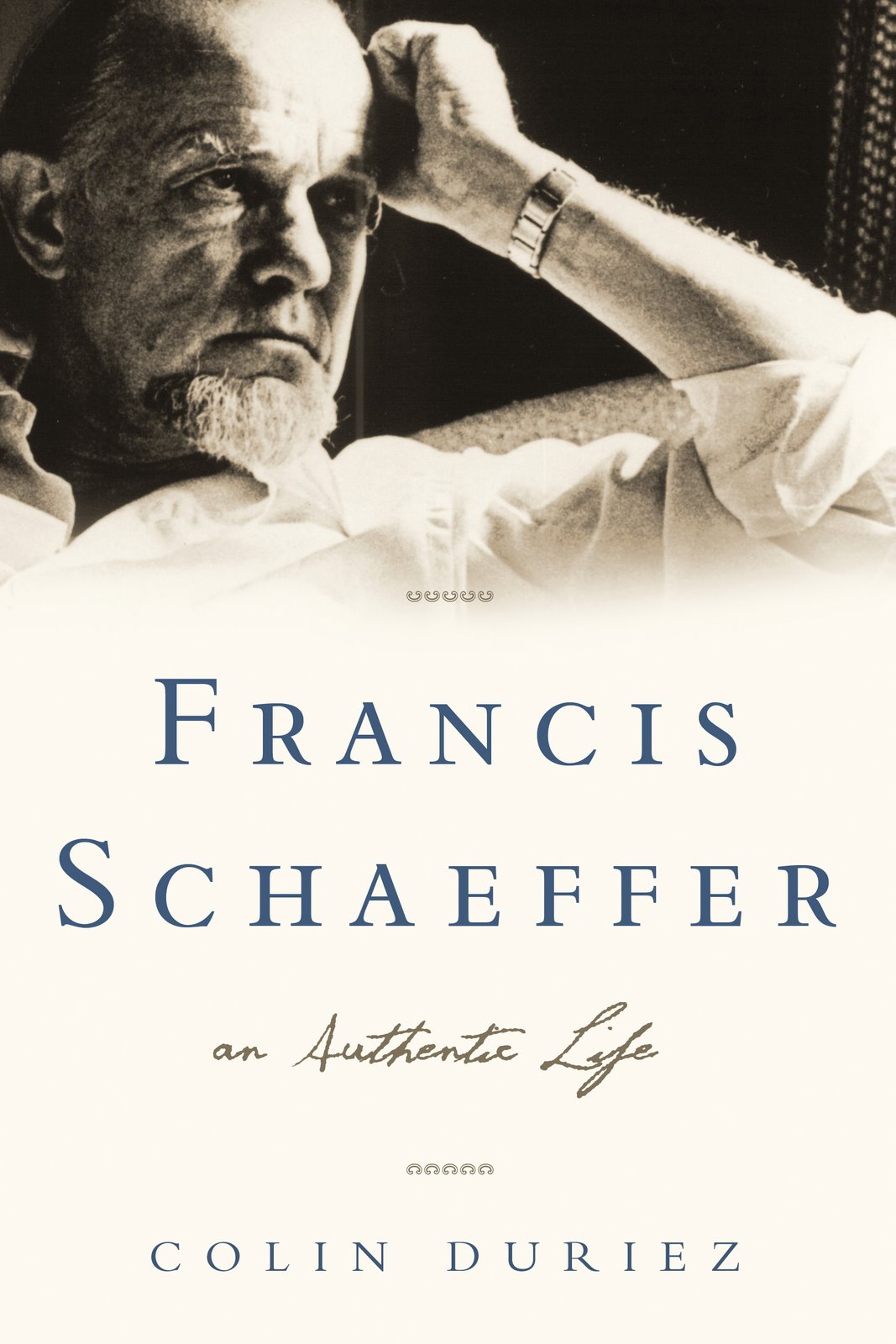
First published in 1981, Francis Schaeffer’s A Christian Manifestois increasingly relevant today in 2010. The book, penned as a Christian response to the Communist and Humanist Manifestos, describes how the United States is being systematically torn apart by secular humanism and its “material-energy, chance world view.” The second half of the book details what actions the Christian should take in defending one’s self and country.In explaining civil disobedience, Schaeffer uses Samuel Rutherford’smodel of “three appropriate levels of resistance.”“First, he must defend himself by protest (in contemporary society this would most often be by legal action); second, he must flee if at all possible; and, third, he may use force, if necessary, to defend himself (Schaeffer 103).”Schaeffer then goes on to provide an example that would be worthy of Rutherford’s first level of resistance.“In our day an illustration for the need of protest is tax money used for abortion. After all the normal constitutional means of protest had been exhausted, then what could be done? At some point protest could lead some Christians to refuse to pay some portion of their tax money. Of course, this would mean a trial. Such a move would have to be the individual’s choice under God. No one should decide for another. But somewhere along the way, such a decision might easily have to be faced. Happily, at the present time in the United States the Hyde Amendment has removed the use of national tax money for abortions, but that does not change the possibility that in some cases such a protest would be the only way to be heard (Schaeffer 108).”Fastforward 19 years. Today, the concern for pro-lifers is no longer the Hyde Amendment. The United States now has a tax-funded federal healthcare program that, according to a new Congressional Research Service report, allows federal tax dollars to fund elective abortions.What should be the Christian response? If the legal challenges fail and our government does indeed choose to use federal tax money to fund the killing of unborn babies, how will God’s people respond?It is interesting just how prophetic Francis Schaeffer’s thoughts and concerns were. This is the first of his writings I have read and I look forward to reading more of his work. The abortion fight is no different than any other war in the sense that individual battles will decide victory. But the battles involved have so much more at stake than I often realize. There is certainly a “war of world views” going on in this country and the preservation or destruction of the U.S. Constitution will surely determine if liberty is for all or none.Schaeffer, Francis A. A Christian Manifesto. Westchester: Crossway, 1982
________
Thank you so much for your time. I know how valuable it is. I also appreciate the fine family that you have and your commitment as a father and a husband.
Sincerely,
Everette Hatcher III, 13900 Cottontail Lane, Alexander, AR 72002, ph 501-920-5733, lowcostsqueegees@yahoo.com
The Bible maintains several characteristics that prove it is from God. One of those is the fact that the Bible is accurate in every one of its details. The field of archaeology brings to light this amazing accuracy.
_________________________-
Many people have questioned the accuracy of the Bible, but I have posted many videos and articles with evidence pointing out that the Bible has many pieces of evidence from archaeology supporting the view that the Bible is historically accurate. Take a look at the video above and below.
The Bible and Archaeology (2/5)
There are some unbelievable stories in the Bible that have evidence backing them up too. Take at the evidence given by John MacArthur concerning the city of Tyre. At the end of this post I have several links to other posts concerning Biblical Archaeology.
A short summary of the prophecy about Tyre and it’s precise fulfillment. Go to this link and watch the whole series for the amazing fulfillment from secular sources. http://www.youtube.com/watch?v=qvt4mDZUefo
________________
John MacArthur on the amazing fulfilled prophecy on Tyre and how it was fulfilled by historical events.
a) That King Nebuchadnezzar of Babylon would destroy the mainland city of Tyre (26:7-8).
b) That many nations would rise up against Tyre. These nations would come like waves of the sea, one after another (26:3- 4).
c) That Tyre will be made like a flat rock (26:4, 14).
d) That fisherman will dry their nets there (26:5, 14).
e) That the rubble of the city would be cast into the sea (26:12).
f) That Tyre would never be rebuilt (26:14).
2. The setting
Tyre was a great city. It was one of the largest and most powerful cities of Phoenicia, which is modern day Lebanon.
It was well fortified. A great wall protected the city from land attacks while their world-renowned fleet protected them from attack by sea.
Tyre was a flourishing city during the time when Joshua led Israel into the Promised Land. King Hiram, who began his reign during the rule of David, offered David cedars from Tyre to build his palace. He also loaned David his artisans to craft parts of the great palace (1 Chron. 14:1). Hiram also helped Solomon build the Temple by floating cedars down the shoreline to be picked up and hauled to Jerusalem (2 Chron. 2:16). So Tyre was a great city, and both David and Solomon looked to it for aid.
B. The Fulfillment
1. The prophetic call
a) To Nebuchadnezzar
Not long after the prophecy given by Ezekiel, Nebuchadnezzar did exactly what had been predicted–he laid siege against the city in 585 B.C. For thirteen years Nebuchadnezzar cut off the flow of supplies into the city. In 537 B.C. he finally succeeded in breaking the gates down, but found the city almost empty.
During the thirteen-year siege, the people of Tyre moved all their possessions by ship to an island one-half mile offshore. So Nebuchadnezzar gained no plunder (Ezek. 29:17- 20). Although he destroyed the mainland city (Ezek. 26:8), the new city offshore continued to flourish for 250 years. The prophecy of Ezekiel 26:12–“they shall lay thy stones and thy timber and thy dust in the midst of the water”–remained unfulfilled.
b) To Alexander the Great
At age twenty-two, Alexander the Great came east conquering the known world with an army of between thirty and forty thousand men. Having defeated the Persians under Darius III, Alexander was on the march toward Egypt.
(1) The dilemma
Alexander arrived in the Phoenician territory and demanded that the cities open their gates to him. The citizens of Tyre refused, feeling they were secure on their island with their superior fleet.
(2) The decision
Realizing he did not have a fleet that could match Tyre’s, Alexander decided to build a causeway to the island using the ruins from the mainland city. It was about two hundred feet wide. The prophet said that the city would be thrown into the water, and that’s exactly what happened.
(3) The details
Arrian, a Greek historian, wrote about the overthrow of Tyre and how it was accomplished (The Campaigns of Alexander [New York: Penquin, 1958], pp. 132-43). The fortification of Tyre resembled Alcatraz. The city sat offshore like a rock with walls that came down to the edge of the water. Alexander set out to build the only means to approach the city–a land peninsula. Soldiers started pitching rubble into the water, leveling it off as they went so they could march on it. The water got deeper as they approached the island, and to make their task even more difficult, the people of Tyre bombarded them with missiles.
Werner Keller in The Bible as History tells us that to safeguard the operation, Alexander built mobile shields called “tortoises” (New York: Bantam, 1956], p. 361). Knowing that when they reached the city they would have to scale the walls, Alexander built “Hele-poleis,” which were mobile siege towers 160 foot high. The idea was to roll these structures across the causeway and push them up against the walls. A drawbridge on the front of the towers enabled the soldiers to march across the top of the walls and into the city.
Alexander’s men were under constant attack from people within the city and from the Tyrian navy. Realizing that he needed ships to defend his flanks, Alexander returned to the cities he had conquered and demanded their assistance. That fulfilled the prophecy that God “will cause many nations to come up against thee, as the sea causeth its waves to come up” (Ezek. 26:3).
(4) The destruction
Alexander’s plan succeeded. Eight thousand people were slain and thirty thousand were sold into slavery. It took Alexander seven months to conquer Tyre. The causeway he built can be seen to this day.
2. The prophetic result
How did Ezekiel know all those things would happen? The only explanation is he expressed the mind of God. Historian Philip Myers said, “Alexander the Great reduced it [Tyre] to ruins (332 B.C.). She recovered in a measure from this blow, but never regained the place she had previously held in the world. The larger part of the site … is now as bare as the top of a rock–a place where the fishermen that still frequent the spot spread their nets to dry” (General History for Colleges and High Schools [Boston: Ginn and Co., 1889], p. 55). That fulfills the prophecies of Ezekiel 26:4-5, 14. The island city was repopulated, later to be destroyed by the Moslems in A.D. 1281. However, God said the mainland city would never be rebuilt–and it never has. Jerusalem has been rebuilt many times but Tyre will never be rebuilt because a prophet in Babylon said twenty-five centuries ago, “Thou shalt be built no more” (Ezek. 26:14).
Prophecy–Alexander The Great Siege of Tyre 6of6.flv
This video by secular sources fulfills in amazing detail the prophecies made about Tyre by the Bible centuries in advance. Go here to see the Bible’s prophecies: http://www.youtube.com/watch?v=K24uwdc-ato
The Bible and Archaeology (1/5) The Bible maintains several characteristics that prove it is from God. One of those is the fact that the Bible is accurate in every one of its details. The field of archaeology brings to light this amazing accuracy. _________________________- I want to make two points today. 1. There is no […]
The Book of Mormon vs The Bible, Part 6 of an indepth study of Latter Day Saints Archeology The Book of Mormon verses The Bible, Part 6 of an indepth study With the great vast amounts of evidence we find in the Bible through archeology, why is there no evidence for anything writte in the Book […]
The Book of Mormon vs The Bible, Part 5 of an indepth study of Latter Day Saints Archeology The Book of Mormon verses The Bible, Part 5 of an indepth study With the great vast amounts of evidence we find in the Bible through archeology, why is there no evidence for anything writte in the […]
The Book of Mormon vs The Bible, Part 3 of an indepth study of Latter Day Saints Archeology The Book of Mormon verses The Bible, Part 1 of an indepth study With the great vast amounts of evidence we find in the Bible through archeology, why is there no evidence for anything writte in the […]
The Book of Mormon vs The Bible, Part 2 of an indepth study of Latter Day Saints Archeology The Book of Mormon verses The Bible, Part 2 of an indepth study With the great vast amounts of evidence we find in the Bible through archeology, why is there no evidence for anything writte in the […]
“In Christ Alone” music video featuring scenes from “The Passion of the Christ”. It is sung by Lou Fellingham of Phatfish and the writer of the hymn is Stuart Townend. On this Easter Morning April 24, 2011 there is no other better time to take a look at the truth and accuracy of the Bible. […]
Critics – Part 1 By Dr In my ongoing debate with other bloggers on the Arkansas Times Blog, I had an interesting response from Dobert: You can’t have it both ways. If the Gospel writers were allowed to adapt their message to a particular audience then it can’t be claimed that God literally took their […]
The Institute for Creation Research equips believers with evidences of the Bible’s accuracy and authority through scientific research, educational programs, and media presentations, all conducted within a thoroughly biblical framework. info@icr.orghttp://www.icr.org Last night I had the opportunity to go back and forth with a couple of bloggers on the Arkansas Times Blog and this […]
This is a quick summary of the Bible’s reliability by a famous and well-respected former atheist. Please check out his website (http://www.leestrobel.com) for hundreds of FREE high quality videos investigating the critical aspects of our faith. Todd Tyszka http://www.toddtyszka.com On April 19, 2011 on the Arkansas Blog an entry of mine got this response from […]
Many Kings and important people in the Bible are also verified by secular documents. From time to time you will read articles in the Arkansas press by such writers as John Brummett, Max Brantley and Gene Lyons that poke fun at those that actually believe the Bible is historically accurate when in fact the Bible […]
Dr Price, who directs excavations at the Qumran plateau in Israel, the site of the community that produced the dead sea scrolls some 2,000 years ago, expertly guides you through the latest archaeological finds that have changed the way we understand the world of the bible. (Part 6 of 6 in the film series The Stones […]
My sons Wilson and Hunter went to California and visited Yosemite National Park with our friend Sherwood Haisty Jr. (Sherwood on left) March 21-27. Here you can see all the snow they had to deal with. Dr Price, who directs excavations at the Qumran plateau in Israel, the site of the community that produced the […]
Dr Price, who directs excavations at the Qumran plateau in Israel, the site of the community that produced the dead sea scrolls some 2,000 years ago, expertly guides you through the latest archaeological finds that have changed the way we understand the world of the bible. (Part 4 of 6 in the film series The Stones […]
It is really troubling to me that my Arkansas Razorbacks are 14th in the SEC in football recruiting this year and there are only a couple of days left till signing day. Alabama came in and got our best running back from North Little Rock high and I was told yesterday that Hunter Henry of Pulaski Academy has confirmed that Tenpenny is definately firm on his committment to Bama. I am very glad that we hired Bielema but I know it will take time to build a program and he came in late this year.
I was not surprised at all to see that the SEC had 7 of the top 12 teams in the nation according to Rivals.com. However, I was disappointed that my razorbacks did come last in the SEC. Where is faithful programs like Vandy and Kentucky that traditionally only play basketball? At least Tennessee and Kentucky are number 33 and 34 which is in our neighborhood (at 44).
It is true that Arkansas, Tennessee, Kentucky and Auburn had to recruit when everyone knew at the end of the year the head coaches were going to replaced. Nevertheless, I am not surprised that Auburn with Gus Malzahn jumped into the 11th position in recruiting according to Rivals. This is a huge jump from back in the twenties where Auburn was ranked a few weeks ago.
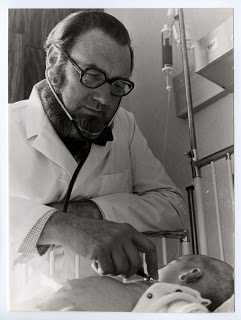
I truly believe that many of the problems we have today in the USA are due to the advancement of humanism in the last few decades in our society. Ronald Reagan appointed the evangelical Dr. C. Everett Koop to the position of Surgeon General in his administration. He partnered with Dr. Francis Schaeffer in making the video below. It is very valuable information for Christians to have. Actually I have included a video below that includes comments from him on this subject.
Francis Schaeffer: “Whatever Happened to the Human Race” (Episode 1) ABORTION OF THE HUMAN RACE
Though the pall of death loomed over America’s unborn with the Roe decision, the Evangelical Church was not quick to wake from its slumber. While Roman Catholics were faster on point in the battle over the sanctity of human life, Protestants throughout the ’70s largely stayed on the sidelines.
Many longstanding leaders in the pro-life movement who are still active today credit Francis Schaeffer as a key prod who prompted Protestants to enter the fight. Dr. George Grant notes the significance of Schaeffer’s 1979 book and accompanying video, Whatever Happened to the Human Race?, which confronted the issues of abortion, euthanasia, and infanticide; as well as Schaeffer’s best-selling book,A Christian Manifesto, released in 1981, as works that spurred many Evangelicals to engage the arena in defense of life.
Dan Becker of Georgia Right to Life offers these comments:
Francis Schaeffer was the one who brought most of the evangelical church to the pro-life movement itself back in the early ’80s. It was totally absent from the culture completely, prior to anything having to do with the sanctity of life. It wasn’t on the radar of [most] churches [until Schaeffer brought it to their attention].
Jim Zes, a Reformed Baptist who has been fighting for the sanctity of life for many years in the St. Louis area, remembers a billboard Schaeffer took out in a major Florida city that said, in essence, “Abortions clinics are open with permission by the Church of Jesus Christ.”
Schaeffer’s salvo on the Church’s lethargy is a theme that has motivated Zes to remain engaged in this battle for the long haul.
Francis Schaeffer: “Whatever Happened to the Human Race” (Episode 1) ABORTION OF THE HUMAN RACE Published on Oct 6, 2012 by AdamMetropolis The 45 minute video above is from the film series created from Francis Schaeffer’s book “Whatever Happened to the Human Race?” with Dr. C. Everett Koop. This book really helped develop my political views […]
E P I S O D E 1 0 Dr. Francis Schaeffer – Episode X – Final Choices 27 min FINAL CHOICES I. Authoritarianism the Only Humanistic Social Option One man or an elite giving authoritative arbitrary absolutes. A. Society is sole absolute in absence of other absolutes. B. But society has to be […]
E P I S O D E 9 Dr. Francis Schaeffer – Episode IX – The Age of Personal Peace and Affluence 27 min T h e Age of Personal Peace and Afflunce I. By the Early 1960s People Were Bombarded From Every Side by Modern Man’s Humanistic Thought II. Modern Form of Humanistic Thought Leads […]
E P I S O D E 8 Dr. Francis Schaeffer – Episode VIII – The Age of Fragmentation 27 min I saw this film series in 1979 and it had a major impact on me. T h e Age of FRAGMENTATION I. Art As a Vehicle Of Modern Thought A. Impressionism (Monet, Renoir, Pissarro, Sisley, […]
E P I S O D E 7 Dr. Francis Schaeffer – Episode VII – The Age of Non Reason I am thrilled to get this film series with you. I saw it first in 1979 and it had such a big impact on me. Today’s episode is where we see modern humanist man act […]
E P I S O D E 6 How Should We Then Live 6#1 Uploaded by NoMirrorHDDHrorriMoN on Oct 3, 2011 How Should We Then Live? Episode 6 of 12 ________ I am sharing with you a film series that I saw in 1979. In this film Francis Schaeffer asserted that was a shift in […]
E P I S O D E 5 How Should We Then Live? Episode 5: The Revolutionary Age I was impacted by this film series by Francis Schaeffer back in the 1970′s and I wanted to share it with you. Francis Schaeffer noted, “Reformation Did Not Bring Perfection. But gradually on basis of biblical teaching there […]
Dr. Francis Schaeffer – Episode IV – The Reformation 27 min I was impacted by this film series by Francis Schaeffer back in the 1970′s and I wanted to share it with you. Schaeffer makes three key points concerning the Reformation: “1. Erasmian Christian humanism rejected by Farel. 2. Bible gives needed answers not only as to […]
Francis Schaeffer’s “How should we then live?” Video and outline of episode 3 “The Renaissance” Francis Schaeffer: “How Should We Then Live?” (Episode 3) THE RENAISSANCE I was impacted by this film series by Francis Schaeffer back in the 1970′s and I wanted to share it with you. Schaeffer really shows why we have so […]
Francis Schaeffer: “How Should We Then Live?” (Episode 2) THE MIDDLE AGES I was impacted by this film series by Francis Schaeffer back in the 1970′s and I wanted to share it with you. Schaeffer points out that during this time period unfortunately we have the “Church’s deviation from early church’s teaching in regard […]
Francis Schaeffer: “How Should We Then Live?” (Episode 1) THE ROMAN AGE Today I am starting a series that really had a big impact on my life back in the 1970′s when I first saw it. There are ten parts and today is the first. Francis Schaeffer takes a look at Rome and why […]
Francis Schaeffer: “Whatever Happened to the Human Race” (Episode 5) TRUTH AND HISTORY Published on Oct 7, 2012 by AdamMetropolis This crucial series is narrated by the late Dr. Francis Schaeffer and former Surgeon General Dr. C. Everett Koop. Today, choices are being made that undermine human rights at their most basic level. Practices once […]
The opening song at the beginning of this episode is very insightful. Francis Schaeffer: “Whatever Happened to the Human Race” (Episode 4) THE BASIS FOR HUMAN DIGNITY Published on Oct 7, 2012 by AdamMetropolis This crucial series is narrated by the late Dr. Francis Schaeffer and former Surgeon General Dr. C. Everett Koop. Today, choices […]
Francis Schaeffer: “Whatever Happened to the Human Race” (Episode 3) DEATH BY SOMEONE’S CHOICE Published on Oct 6, 2012 by AdamMetropolis This crucial series is narrated by the late Dr. Francis Schaeffer and former Surgeon General Dr. C. Everett Koop. Today, choices are being made that undermine human rights at their most basic level. Practices […]
Francis Schaeffer: “Whatever Happened to the Human Race?” (Episode 2) SLAUGHTER OF THE INNOCENTS Published on Oct 6, 2012 by AdamMetropolis This crucial series is narrated by the late Dr. Francis Schaeffer and former Surgeon General Dr. C. Everett Koop. Today, choices are being made that undermine human rights at their most basic level. Practices […]
It is not possible to know where the pro-life evangelicals are coming from unless you look at the work of the person who inspired them the most. That person was Francis Schaeffer. I do care about economic issues but the pro-life issue is the most important to me. Several years ago Adrian Rogers (past president of […]
This essay below is worth the read. Schaeffer, Francis – “Francis Schaeffer and the Pro-Life Movement” [How Should We Then Live?, Whatever Happened to the Human Race?, A Christian Manifesto] Editor note: <p> </p> [The following essay explores the role that Francis Schaeffer played in the rise of the pro-life movement. It examines the place of […]
Great article on Schaeffer. Who was Dr. Francis A. Schaeffer? By Francis Schaeffer The unique contribution of Dr. Francis Schaeffer on a whole generation was the ability to communicate the truth of historic Biblical Christianity in a way that combined intellectual integrity with practical, loving care. This grew out of his extensive understanding of the Bible […]
Robert Dick Wilson at the Grove City Bible Conference in 1909.
Several years ago I listened to a lengthy series of messages by Dr. Francis Schaeffer on the Book of Daniel. In this series he quoted Robert Dick Wilson several times. Since then I have had the opportunity to look up some very interesting information of the amazing Dr. Robert Dick Wilson. Below is some of that information.
Robert Dick Wilson was truly a remarkable gentleman. Bible students are indebted to him for the masterful work he did in helping to confirm the credibility of the Old Testament.
Robert Wilson was born in 1856; he graduated from Princeton University at the age of twenty. He went on to earn both a Masters degree and a PhD. He then did further post-graduate work in Germany for two years. He was a brilliant language student; when he was still in college he could read his New Testament in nine languages.
Wilson was but twenty-five years of age when he determined that he would invest years of careful study in the text of the Old Testament so that he could speak with authority as to whether or not it has been preserved in an accurate format.
The body of Old Testament literature was completed by 400 B.C., and yet prior to 1946 (when the Dead Sea Scrolls were discovered), the oldest copies of the Old Testament Scriptures we possessed dated to about the tenth century A.D. There was, therefore, a gap of some twelve hundred years between the last of the Old Testament books and the extant manuscripts.
Could we be sure that the writings at our disposal had been faithfully preserved? After all, even if one is confident that the original Scriptures were inspired of God, that would amount to little if they have been grossly corrupted across the centuries. This was the task, therefore, to which young Wilson dedicated himself. And he was a wonderfully disciplined person.
Based upon the longevity of his immediate ancestors, Robert Wilson estimated that he might live to about seventy years of age. Since he was twenty-five at the time, that would give him about forty-five years remaining to accomplish his goal. Accordingly, he divided his projected remaining years into three periods of fifteen years each. Here is how he would pursue his plan:
For the first fifteen years, he would study every language that had a bearing on the text of the Old Testament. He set himself to the task. During that time he mastered forty-five languages! He not only became an expert in Hebrew and its kindred tongues, but he learned all the languages into which the Scriptures had been translated down to the year A.D. 600.
During the next fifteen years Wilson dedicated himself to studying the text of the Old Testament itself. He looked at every consonant in the Old Testament text (the Hebrew Old Testament has no vowels)—about one and a quarter million of them. He made a thorough scientific investigation of the Old Testament text, as compared to other writings of antiquity.
Wilson noted that there are twenty-nine ancient, pagan kings of various nations which are mentioned in the Bible. Their names are also found in the writings of their own lands. The names of these kings consist of 195 consonants. He discovered that in the Old Testament there are only two or three letters—of the entire 195—that are in question as to spelling. By way of contrast, in the secular literature of the same period, the names of those rulers frequently are so garbled that one can scarcely identify the person.
For example, Ptolemy, an ancient writer, drew up a list of eighteen Babylonian kings, and not a one of them is spelled correctly. The text of the Bible was amazingly precise.
Wilson then spent his remaining years writing down the results of his long research. He authored a marvelous book titled, A Scientific Investigation of the Old Testament, in which he confidently affirmed “we are scientifically certain that we have substantially the same [Old Testament] text that was in the possession of Christ and the apostles and, so far as anybody knows, the same as that written by the original composers of the Old Testament documents.”
We ought to be grateful for those who have gone before us, and who have provided us with evidence for the integrity of the biblical text. By the way, Wilson died at the age of seventy-four.
About the Author
Wayne Jackson has written for and edited the Christian Courier since its inception in 1965. He has also written several books on a variety of biblical topics including The Bible and Science, Creation, Evolution, and the Age of the Earth, The Bible on Trial, and a number of commentaries. He lives in Stockton, California with his dear wife, and life-long partner, Betty.
The Bible and Archaeology (1/5)
The Bible maintains several characteristics that prove it is from God. One of those is the fact that the Bible is accurate in every one of its details. The field of archaeology brings to light this amazing accuracy.
_________________________-
Many people have questioned the accuracy of the Bible, but I have posted many videos and articles with evidence pointing out that the Bible has many pieces of evidence from archaeology supporting the view that the Bible is historically accurate. Take a look at the video above and below.
“As man is interested in his roses, and doesn’t think of the thorns,” so he studied language. That was Professor Wilson’s answer to my query, when I expressed amazement at the range of his linguistic explorations, covering some forty-five languages and dialects. His answer helped me to understand.
And as we sat by the fire in his study at Princeton, with the signs of his labors all around us, on shelves, and tables, and desk––yes, and on the floor, I came to understand still better the stories I had heard of his learning, and of his masterly methods in the defense of the Scriptures.
When he was a little chap, four years old, son of a leading merchant in the little town of Indiana, Pa., he could read. He began to go to school at five, and at eight he had read, among other books, Rawlinson’s “Ancient Monarchies.”
That merchant father was a man of sound culture and good sense. He was president of the Board of Trade of his county, and president of the local school board––with ten children in his own home.
When Robert was nine years old he and a brother were taken by their father on a journey to Philadelphia. One of the exciting and memorable experiences of the trip was the visit to a bookstore on Chestnut Street, where the father left the boys for a little while, so that they might select a number of books of their own choosing. When he returned they had gathered about fifty volumes, including Prescott, Robertson, J. S. C. Abbott, and similar standard works,––examples of the “light reading” that these children enjoyed.
Robert prepared for college in the Indiana public school, and was ready for the sophomore class at Princeton when he was fourteen years old. However, he did not enter his class–the class of 1876–until he was at the advanced age of seventeen, for as he naïvely and rather apologetically remarked: “I had a good deal of headache between my fourteenth and twentieth years, and then typhoid. After that my headache disappeared. I really couldn’t half do my work before that.”
In college young Wilson specialized in language, psychology, and mathematics. In such Bible courses as he then studied he says that he got “a very low grade of 90, which pulled down my average.”
To him language was the gateway into alluring fields that drew him strongly. He prepared himself for college in French, German, and Greek, learned Hebrew by himself, and took a hundred dollar prize in Hebrew when he entered the seminary.
“But how did you ever do it?” I asked. The professor’s eyes twinkled, and he smiled at my surprise.
“Well, you see,” he replied, “I used my spare time. When I went out for a walk I would take a grammar with me, and when I sat down to rest, I would take out the book, study it a little, and learn what I could. I made up my mind that I wanted to read the great classics in the originals, so I just learned the languages in order to do that.
“I would read a grammar through, look up the examples, making notes as I went along, and I wouldn’t pass by anything until I could explain it. I never learned long lists of words, but I would read a page through, recall the words I didn’t know, and then look them up. I read anything that I thought would be interesting to me if it were in English. I got so interested in the story that I was unconscious of the labor,––as a man is interested in his roses, and doesn’t think of the thorns. So I learned Greek, Latin, French, German, Hebrew, Italian, Spanish, Portuguese, Biblical Aramaic, Syriac, Arabic, and so on.”
Now Robert Dick Wilson in all these crowded years was not clear concerning his true calling in life. Before he went to the seminary, he and a brother of his gave much time to evangelism. At Indiana they were in such work for a year and a half, and with ample evidence of God’s blessings upon their labors in great numbers of souls led to Christ. That work was particularly attractive to young Wilson, on fire as he was, and is today, for the furtherance of the Gospel.
But his seminary studies caused him to feel that there was a great need for a type of Biblical scholarship that was not so subjective as much of the teaching he heard, but objective and thorough in dealing with facts that could be known only by exhaustive research over the whole range of the ancient languages related to the Bible. He faced the question seriously,––should he go on in the highly attractive and necessary work preaching in which he had been so greatly blessed, or was God calling him to years of toil in comparative obscurity and seclusion, in order to let his life count for the defense of the Scriptures on the basis of linguistic and historical facts, which only arduous and patient toil could reveal? He chose under God’s guiding hand the life of the scholar, and thousands have thanked God, and oth
What Robert Dick Wilson then believed, and now believes with all his heart is this: that textual and historical Biblical controversies should be taken out of the region of subjective personal opinion, into the region of objective, clearly attested fact. It was to this task that he set himself, and no labor was to be too long or too tedious or exacting to enable him to reach that goal.
He could not at that time learn Babylonian in America, so he went to Heidelberg, determined to learn every language that would enable him the better to understand the Scriptures, and to make his investigations in original documents.
So to Babylonian he added Ethiopic, Phoenician, all the Aramaic dialects, and Egyptian, Coptic, Persian, and Armenian. He studied in Berlin with Schrader, who was Delitzsch’s teacher, called the father of Assyriology. He studied his Arabic and Syriac under Sachau, and Arabic under Jahn and Dieterichi; Hebrew under Dillmann and Strack, and Egyptian under Brugsch. He became conversant with some twenty six languages in these years devoted to language acquisition.
For Professor Wilson had a plan, carefully worked out during his student days in Germany, under which he proposed to spend fifteen years in language study, fifteen years in Biblical textual study in the light of the findings of his studies in philology, and then, God willing, fifteen years of writing out his findings, so that others might share them with him. And now it is our privilege in this booklet to read, in terms that we all can understand, some of the gloriously reassuring facts that he has found in his long pilgrimage through ancient days.
Just a single glimpse of how long it has been startles the superficial and the scholarly student as well, when either learns that in order to answer a single sentence of a noted destructive critic, Professor Wilson read all the extant ancient literature of the period under discussion in numerous languages, and collated no less than one hundred found showed that the critic was wrong. It was largely a case of superior scholarship—accordance with a good definition of the scholarly temperament—”that rare combination
Professor Wilson’s productive work has been presented hitherto almost entirely to his students, some two thousand of whom have been in his seminary classes through the years; in scholarly journals of restricted circulation; and in a few books, one of the most remarkable of which is his “Studies in the Book of Daniel.”
“Professor,” I asked, “what do you try to do for your students?”
Instantly he replied, with quiet earnestness, “I try to give them such an intelligent faith in the Old Testament Scriptures that they will never doubt them as long as they live. I try to give them
evidence. I try to show them that there is a reasonable ground for belief in the history of the Old Testament.” (He has not specialized on the New
“I’ve seen the day,” he went on, “when I’ve just trembled at undertaking a new investigation, but I’ve gotten over that. I have come now to the conviction that
no man knows enough to assail the truthfulness of the Old Testament. Whenever there is sufficient documentary evidence to make an invest
That is a significant statement from one who does not have to trust to hearsay in matters of criticism, and who has worked for so many years in devout self-denying study of the sources and the text of the Old Testament. “When a man says to me, ‘I don’t believe the Old Testament,’” exclaimed Dr. Wilson, “he makes no impression upon me. When he points out something there that he doesn’t believe, he makes no impression
in the original texts, have stood the test.” gation, the statements of the Bible, i Testament.) great historian.” coverer or the disinterested pursuit of truth, which characterizes the great scientific disof profound insight, sustained attention, microscopic accuracy, iron tenacity, and in sand citations from that literature in order to get at the basic facts, which when thou upon me. But if he comes to me and says, ‘I’ve got the evidence here to show that the Old Testament is wrong at this or that point’—then that’s where my work begins! I’m ready for him!” And the professor laughed in his hearty way, in evident enjoyment of the prospect of such an encounter.
I think perhaps one reason why I have been so stirred by many personal talks with this stalwart scholar is the habit he has of putting proof before you as he goes, and not standing on his dignity as though no one had a right to ask questions of him about his findings. But when a
scholar challenges him, then the Professor is a roused lion,—no, an aroused attorney for the defense, massing his facts so overwhelmingly, proving them, driving them home, and disclosing the weakness of his opponent’s case so convincingly, that I should think the attorney for the plaintiff in the attack on the Old Testament would wish for the sake of his reputation that he had not ventured on ground where his own ignorance would be so manifest to the court. For it is made very evident by a study of any of Professor Wilson’s keen critiques of the destructive critics’ work that much of the material so often called by the critics “the assured results of modern scholarship” is nothing more than the quicksand footsteps of a really inexcusable, downright ignorance. “Criticism,” says Dr. Wilson, “is not a matter of brains, but a matter of knowledge.”
But let Professor Wilson lay before you his findings. He is concerned only with evidence, and it will gladden your heart to know even a little of what he has found, as he unfolds some of his experiences in the following studies.
PHILIP E. HOWARD,
Former Publisher of The Sunday School times.
IS THE HIGHER CRITICISM
SCHOLARLY?
Robert Dick Wilson
The history of the preparation of the world for the Gospel as set forth in the Old Testament is simple and clear, and in the light of the New Testament eminently reasonable. In fact, it has been considered so reasonable, so harmonious with what was to have been expected, that Christ and the apostles seem never to have doubted its veracity, and the Christian Church which they founded has up to our times accepted it as fully consonant with the facts. Within the last two centuries, however, largely as a the so-called critical method, there has arisen a widespread doubt of the truthfulness of the Old Testament records. To such doubt many have
Countering With Proof, Defensive and Offensive
But there are many whose faith in the veracity of the Scriptures has been shaken; and the best, and in some cases the only, way to re-establish their faith is to show them that the charges which are brought against the Bible are untrue and unwarranted.
The attempt to show this may be made along two lines. We may take the purely defensive line and endeavor to show that the general and particular attacks upon the truthfulness of the Old Testament narratives are unsupported by facts. Or, we may take the offensive and show that the Old Testament narratives are in harmony with all that is really known of the history of the world in the times described in the Old Testament records, and that these records themselves contain the ineffaceable evidence that the time and place of their origin agree with the facts recorded. The best method, perhaps, will be to make an offensive-defensive, showing not merely that the attacks are futile, but that the events recorded and the persons and things described are true to history,—that is, that they harmonize in general with what we learn from the contemporaneous
This is true of the very earliest narratives of the Old Testament. Even when we look at the two great events occurring before the time of Abraham—the Creation and the Flood—we find that these events are the same that are emphasized among the Babylonians, from the midst of whom Abraham went out. For it is certain, that, however we may account for the difference between the Babylonian and Hebrew accounts of the Creation and of the Deluge, there is sufficient resemblance between them to point to a common origin antedating the time of Abraham’s departure from Ur of the Chaldees.
1
The Old Testament Derived From Written Sources Based on Contemporary Documents
From this time downward there is no good reason for doubting that the Biblical narrative is derived from
written sources based on contemporaneous documents. For, first, Abraham came out of that part of Babylonia in which writing had been in use for hundreds of years; and he lived during the time of Hammurapi, from whose reign we
Babylonische Mythen und Epen – syrisckAs
and Jensen, The Seven Tablets of Creation; See King, 1 documents of other nations. all those who have no doubts. refused to listen, and blessed are result of the Deistical movement in England and of the application to sacred history of 2 have scores of letters, contracts, and other records, of which by far the most important is the so-called code of laws which bears his name.
2Besides, writing had been in existence in Egypt already for two thousand years or more, so that we can well believe that the family of Abraham, traveling from Babylonia to Egypt and at last settling in Palestine, in between these two great literary peoples, had also formed the habit of conducting business and keeping records in writing.3 Abraham would naturally use the cuneiform system of writing, since this is known to have existed in Western Asia long before the time of Hammurapi, and the Amarna letters show clearly that Hebrew was sometimes written in that script.4
But not only do we know that there was a script in which to write; we know, also, that the Hebrew language was used in Palestine before the time of Moses. This is clear not merely from more than a hundred common words embedded in the Amarna letters but from the fact that the names of the places mentioned in them are largely Hebrew.
5In the geographical lists of the Egyptian king, Thothmes III, and of other kings of Egypt we find more than thirty good Hebrew words as the names of the cities of Palestine and Syria that they conquered.
6 From these facts we conclude that books may have been written in Hebrew at that early period. Further, we see that the sons of Abraham, Isaac, and Jacob may have been called by Hebrew names, as the Biblical record assures us.7
In “Bible Student and Teacher” for 1905.
Was Abraham a Myth? See article 7 iste thutmoses III. Die PalastinalSee Max Muller, 6 1545f. p. loc. cit., Knudtzon, 5 Tafeln. -Amarna-Die EIand Knudtzon, Amarna Letters; -eI-TelSee Winckler, 4 Rechts. -und ProzessUrkunden des altbabylonischen ZivilSee especially Schorr, 3 The Code of Hammurabi and Harper, The Letters and Inscriptions of Hammurobi; See King, 2
We need to pass a Balanced Budget Amendment!!!! It is obvious to me that if President Obama gets his hands on more money then he will continue to spend away our children’s future. He has already taken the national debt from 11 trillion to 16 trillion in just 4 years. Over, and over, and over, and over, and over and over I have written Speaker Boehner and the Congressmen (Griffin, Womack, Crawford) in Arkansas concerning this. I am hoping they will stand up against this reckless spending that our federal government has done and will continue to do if given the chance.
Lacy Hunt, executive director at Hoisington Investment Management, believes the debt problem in the United States and the other major economies is far worse than most realize, and he thinks an amendment to the constitution mandating a balanced Federal budget may be the only thing that can save us from a disastrous outcome.
“The ‘Keynesian Endgame’ that is increasingly part of the lexicon refers to a government becoming so excessively indebted that it loses access to credit,” he said at the Fixed-Income Management 2012 conference in San Francisco.
While historically low yields on US Treasury debt would seem to indicate that losing access to credit markets is not an imminent prospect for the United States, Hunt warned that debt accumulation trends in the United States are having increasingly negative economic effects that could take a long time to reverse.
Worse, interest rates won’t provide the early warning system many expect, a consequence of financially repressive Fed policies. By the time rates signal a problem, it may be too late to do anything about it, according to Hunt, who previously served as the chief economist for HSBC and a senior economist for the Federal Reserve Bank of Dallas.
Hunt traced the roots of the US debt problems to the election of 1960, when both major political parties favored greater government involvement in the economy, a policy advocated at the time by Yale economist James Tobin. But contrary to what many believe, deficit spending has not improved the economic outcome.
“Physical investment must equal savings and income over the long term,” Hunt said, citing two studies that suggest that debt accumulation beyond certain thresholds negatively impacts economic growth. In a 2011 study published in the Journal of Economic Surveys, Andreas Bergh of Lund University and Magnus Henrekson of the Research Institute of Industrial Economics found “an increase in government size by 10 percentage points is associated with a 0.5% to 1% lower annual growth rate.” This reinforced the findings of a study commissioned by the ECB, which concluded that the “negative growth rate effect of high debt may start from levels of around 70–80% of GDP.”
US aggregate public and private debt is now upwards of 350% of GDP (not including unfunded liabilities, which would bring debt-to-GDP to 750%), and Hunt noted that much of this is what he called “unproductive debt,” taken on to fuel consumption rather than generate lasting economic benefit.
“We’re in way over our head, and the mix is wrong,” he said, referring to the amount of US debt. According to Hunt, consumptive debt crowds out productive investment and weakens the overall economy over time, as the velocity of money falls despite increasing government spending. This is happening now.
“The business cycle is no longer really operating, and GDP growth is being misinterpreted. GDP measures spending, not prosperity,” Hunt said. “While GDP has gone up, real incomes have declined,” and the symptoms of economic dysfunction in the United States are becoming all too apparent:
In the first 12 quarters of the current US expansion, the Misery Index has averaged 11.5%, compared with 9.7% in the first three years of all previous post-war expansions.
The way out of this mess? The solution, according to Hunt, is a sustained increase in savings, sometimes referred to as “austerity.”
“The way you reverse over-indebtedness is by living within your means,” he said, suggesting that economist David Hume was correct when he wrote in 1752 that “the normal course of government activity should be to run a surplus.”
Japan, meanwhile, presents an example of what not to do, according to Hunt. “Japan has reduced the savings rate, trying to reduce indebtedness,” and over two decades has failed to generate sustainable economic growth, he said. The United States is “now on that path.”
Please note that the content of this site should not be construed as investment advice, nor do the opinions expressed necessarily reflect the views of CFA Institute.
HITLER JUST WANTED TO TAKE THE GUNS AWAY FROM THOSE PEOPLE WHO WERE NOT SUPPORTERS OF HIS!!!! Of course, those people happened to be groups of people that he threw in jail and later killed mostly. I guess he wanted to make sure that those friendly to him had the ability to subdue those traitors that he wanted to question before throwing them in jail. By the way that list was a pretty big list. Therefore, I would say that Hitler was one of the most fanatical gun control supporters of all time. I think that everyone should have guns (excluding just a small list of people).
InfamousAmos, here is another good article that challenges your assertions about Hitler and his support of gun rights.
A Salon.com article by Alex Seitz-Wald called “The Hitler Gun Control Lie” is making the rounds, purporting to challenge a myth Second Amendment enthusiasts spread that blames the Holocaust on Hitler’s policies of civilian disarmament. The thrust of the argument is that Hitler’s 1938 firearms law indeed ratcheted back restrictions from the Weimar era. But here is the most telling paragraph:
The law did prohibit Jews and other persecuted classes from owning guns, but this should not be an indictment of gun control in general. Does the fact that Nazis forced Jews into horrendous ghettos indict urban planning? Should we eliminate all police officers because the Nazis used police officers to oppress and kill the Jews? What about public works — Hitler loved public works projects? Of course not. These are merely implements that can be used for good or ill, much as gun advocates like to argue about guns themselves. If guns don’t kill people, then neither does gun control cause genocide (genocidal regimes cause genocide).
As a libertarian, I actually would argue that the violence of Hitler’s statism can be seen in such areas as his militarized police forces, and the totalitarian potential of a heavily policed society is one reason I’ve been so critical of America’s police.
Honing in on the gun rights issue, we see a most curious argument: Hitler was actually pro-gun rights—except for the minor issue of the Jews. We can get the same nuanced information from Wikipedia, which cites work by Stephen Halbrook and sums up Hitler’s gun control policy in this seemingly important area:
On November 11, 1938, the Minister of the Interior, Wilhelm Frick, passed Regulations Against Jews’ Possession of Weapons. This regulation effectively deprived all Jews of the right to possess firearms or other weapons.
Yes, Hitler did loosen some restrictions on firearms—except for the people he exterminated! The Seitz-Wald pieces relies heavily on a University of Chicago working paper by Bernard Harcourt, which includes this seemingly cursory dismissal of Hitler’s disarming of the Jews in the context of the Holocaust:
How to characterize their treatment of Jewish persons for purposes of gun control—banning the possession of dangerous weapons, including guns, in 1938, and subsequently exterminating Jewish persons—is, in truth, an absurd question. The Nazis sought to disarm and kill Jews, and their treatment of Jews is, for all intents and purposes, orthogonal to their gun-control tendencies.
Even if you don’t accept the standard “gun control = genocide” line coming from gun-rights advocates, this passage is just bizarre. If the question being debated is whether Hitler enacted gun control that enabled his murderous policies, it seems rather odd to me to concede that the “Nazis sought to disarm and kill Jews” yet assert in passing that genocide was “orthogonal to their gun-control tendencies.” Within a couple days of Kristalnacht, Hitler disarmed the very group he was most determined to eliminate. Even if this correlation is not causal, there is a relationship here. It is not random. It is not “orthogonal.”
Harcourt continues, writing that “if forced to weigh in, it actually seems, somewhat surprisingly, that the white supremacist Pierce may have the better of the argument: the Nazis were probably more pro-gun than their predecessors.”
He’s referring to one of the primary scholars behind the thesis that Hitler was pro-gun—William L. Pierce, “a pro-gun white supremacist” whose ”ideological commitments are so flagrant” that he cannot be “trusted entirely in these historical and statutory debates.” Harcourt says the same about Halbrook, “a pro-gun litigator.”
This raises interesting questions. Surely we could expect someone with a soft-spot for white supremacy to be at least as biased as a pro-gun lawyer like Halbrook. This is not to say that a writer with extreme views is incapable of producing useful scholarship. Yet I would suspect that Pierce’s efforts to vindicate Hitler as a gun-rights champion in Gun Control in Germany, 1928–1945 might suffer from a fatal flaw, if indeed the gravamen that has made its way from that book to the Harcourt piece to the Salon.com article is: Hitler supported the right to bear arms. . . except for the Jews and other people he wanted to kill, but that’s a minor detail.
Harcourt weighs the evidence and argues that Pierce’s account is more accurate than Halbrook’s, but I think this all turns on a question of emphasis. Consider this revealing paragraph:
To be sure, the Nazis were intent on killing Jewish persons and used the gun laws and regulations to further the genocide. But it appears that the Nazis aspired to a certain relaxation of gun laws for the “ordinary” or “law-abiding” German citizen, for those who were not, in their minds, “enemies of the National Socialist state.” Stephen Halbrook, in fact, seems to acknowledges as much.
Yes, Halbrook does admit it—because Halbrook’s point isn’t that Hitler disarmed everybody; it’s that he disarmed the people he wanted to exterminate. We can glean this from the very title of his paper: “Nazi Firearms Law and the Disarming of the German Jews.”
I hate seeing poor history used in defense of liberty, and I hate seeing the false Nazi and Hitler quotes floating around. On the other hand, it seems to me that disarming Jews was indeed clearly one of the precursors to the Final Solution, as Harcourt admits, and as Seitz-Wald mysteriously ignores by dismissing the importance of Hitler’s prohibition of “Jews and other persecuted classes from owning guns.” If the only revisionist response to the core thesis that disarming the Jews facilitated the Holocaust is something like “Hitler only disarmed the Jews and his enemies,” one wonders what the policy implication is, especially considering that most people happily citing the Salon.com piece without reading it carefully or digging deeper seem to want to go even further and disarm the general population.
Poster for November 2008 benefit for Pressly family, held at Peabody Hotel in Little Rock. ______________ Max Brantley of the Ark Times Blog often attacks those on my side of the gun control debate and that makes me argue even harder for the 2nd amendment. Several months ago Lindsey Miller and Max Brantley were talking […]
I have posted some cartoons featured on Dan Mitchell’s blog before and they are very funny. An Amusing Look at Gun-Free Zones September 26, 2012 by Dan Mitchell I’ve shared a very clever Chuck Asay cartoon about gun-free zones, so let’s now enjoy four posters on the topic. Let’s begin with a good jab at one […]
The recent killing by a mad gunman in CT is not indicating a trend. School killings have gone down and probably peaked in 1929. Nick Gillespie reported in the below video, “Across the board, schools are less dangerous than they used be. Over the past 20 years, the rate of theft per 1,000 students dropped […]
Pretty shocking admissions from the liberal Jeffrey Goldberg on gun control. An Honest Liberal Writes about Gun Control December 16, 2012 by Dan Mitchell I wrote earlier this month about an honest liberal who acknowledged the problems created by government dependency. Well, it happened again. First, some background. Like every other decent person, I was horrified […]
Despite what Max Brantley of the Arkansas Times Blog (1-9-13) would have you believe gun control does not make since unless you suspend your reasoning ability. There are so many examples that show how silly gun control is. Mocking Gun Control Fanatics October 18, 2012 by Dan Mitchell Last month, I shared some very amusing images […]
It seems to me that most of the gun control arguments I have heard are not very logical. Deciphering How Statists Think about Gun Control September 9, 2012 by Dan Mitchell Even though I don’t own that many guns, I’m an unyielding supporter of the 2nd Amendment. Indeed, I use gun control as a quick and […]
John Stossel report “Myth: Gun Control Reduces Crime After this horrible shooting in the school the other day it seems the gun control debate has fired up again. Max Brantley of the Arkansas Times jumped on Charlie Collins concerning his position on concealed weapons but I think that would lower gun crimes and not raise […]
Liberals love to talk a lot about taking up all the guns and how the world would be such a better place. Even Bob Costas jumped in yesterday and got into the mix. An IQ Test for Criminals and Liberals November 8, 2012 by Dan Mitchell A lot of people say Obama is anti-business, but there’s […]
I can understand national publications like the Huffington Post, NY Magazine, and other liberal blogs being mislead by this hack job on Jason Rapert done by The Nation, but it is truly amazing to me that Max Brantley of the Arkansas Times Blog who prides himself in always being completely honest would buy into this hack job on Jason Rapert, but my conclusion is very simple: MAX BRANTLEY WILL DO WHATEVER IT TAKES TO HELP THE PROCHOICE FORCES AND IF THAT MEANS MISLEAD HIS FLOCK TO BELIEVE THAT PRO-LIFE STATE SENATOR JASON RAPERT IS RACIST THEN HE WILL EVEN DO THAT. In his weekly podcast on 2-1-13 at the 7 min mark Brantley said he listened to Rapert’s comment in context and contends it was a racial comment. Brantley said that Tea Party speakers like to talk about the “negro black” President Obama, but Rapert no comment concerning the president’s race in his talk to the Tea Party in 2011 at the Capitol. Furthermore on his blog Brantley asserted, “Rapert defenders contend he was talking about minority political interests, not minorities, references to the Obama birth certificate, Muslims and a Ramadan event notwithstanding.”
But the truth always does come out eventually. John Lyon of Stephens Media did have a balanced article that included an explantion from Jason Rapert and Jason Tolbert also gave both sidesand it is obvious that Rapert was talking about minority political interests and not different people’s races!!!!
Did that cause pro-choice supporters like Michael Cook and Max Brantley to apologize? No way, but they led the flock to continue the party line!!!
There are many lessons in Bernard Nathanson’s life for those of us who recognize the worth and dignity of all human lives and who seek to win hearts and change laws. Two in particular stand out for me.
First is the luminous power of truth. As I have written elsewhere, and as Nathanson’s own testimony confirms, the edifice of abortion is built on a foundation of lies. Nathanson told those lies; indeed, he helped to invent them. But others witnessed to truth. And when he was exposed to their bold, un-intimidated, self-sacrificial witness, the truth overcame the darkness in Nathanson’s heart and convicted him in the court of his own conscience.
Bernie and I became friends in the early 1990s, shortly after my own pro-life writings came to his attention. Once during the question-and-answer session following a speech he gave at Princeton, I asked him: “When you were promoting abortion, you were willing to lie in what you regarded as a good cause. Now that you have been converted to the cause of life, would you be willing to lie to save babies? How do those who hear your speeches and read your books and articles know that you are not lying now?” It was, I confess, an impertinently phrased question, but also, I believe, an important one. He seemed a bit stunned by it, and after a moment said, very quietly, “No, I wouldn’t lie, even to save babies.” At the dinner he and I had with students afterward, he explained himself further: “You said that I was converted to the cause of life; and that’s true. But you must remember that I was converted to the cause of life only because I was converted to the cause of truth. That’s why I wouldn’t lie, even in a good cause.”
The second lesson is this: We in the pro-life movement have no enemies to destroy. Our weapons are chaste weapons of the spirit: truth and love. Our task is less to defeat our opponents than to win them to the cause of life. To be sure, we must oppose the culture and politics of death resolutely and with a determination to win. But there is no one–no one–whose heart is so hard that he or she cannot be won over. Let us not lose faith in the power of our weapons to transform even the most resolute abortion advocates. The most dedicated abortion supporters are potential allies in the cause of life. It is the loving, prayerful, self-sacrificing witness of Joan Bell Andrews and so many other dedicated pro-life activists that softens the hearts and changes the lives of people like Dr. Bernard Nathanson.
May he rest in peace.
LifeNews.com Note: Robert P. George is McCormick Professor of Jurisprudence and Director of the James Madison Program in American Ideals and Institutions at Princeton University. He is a member of the President’s Council on Bioethics and previously served on the United States Commission on Civil Rights. This article previously appeared in Public Discourse.
Francis Schaeffer: How Should We Then Live? (Full-Length Documentary)
Francis Schaeffer Whatever Happened to the Human Race (Episode 1) ABORTION
Francis Schaeffer: What Ever Happened to the Human Race? (Full-Length Documentary)
Part 1 on abortion runs from 00:00 to 39:50, Part 2 on Infanticide runs from 39:50 to 1:21:30, Part 3 on Youth Euthanasia runs from 1:21:30 to 1:45:40, Part 4 on the basis of human dignity runs from 1:45:40 to 2:24:45 and Part 5 on the basis of truth runs from 2:24:45 to 3:00:04
Dr. Francis schaeffer – The flow of Materialism(from Part 4 of Whatever happened to human race?)
Dr. Francis Schaeffer – The Biblical flow of Truth & History (intro)
Francis Schaeffer – The Biblical Flow of History & Truth (1)
Dr. Francis Schaeffer – The Biblical Flow of Truth & History (part 2)
56 Days Old (8 weeks)
The heart has been beating for more than a month, the stomach produces digestive juices and the kidneys have begun to function. Forty muscle sets begin to operate in conjunction with the nervous system. The fetus’ body responds to touch, although the mother will not feel movement yet.
91 Days Old (13 weeks)
The fetus now sleeps awakens and exercises its muscles energetically– turning its head, curling its toes, and opening and closing its mouth. The fetus breathes amniotic fluid to develop its respiratory system. Fine hair has begun to grow on head and sexual differentiation has become apparent.
142 Days Old (19 weeks)
Half the pregnancy has past, and the fetus is about 12 inches long. The mother has definitely begun to feel movement by now. If a sound is especially loud or startling the fetus may jump in reaction to it.
2/3 of all abortions take place between 6 and 8 weeks
Abortion is now legal for any reason up until birth!
Dr Richard Land discusses abortion and slavery – 10/14/2004 – part 3 The best pro-life film I have ever seen below by Francis Schaeffer and Dr. C. Everett Koop “Whatever happened to the human race?” Over the years I have taken on the Ark Times liberal bloggers over and over and over concerning the issue […]
The best pro-life film I have ever seen below by Francis Schaeffer and Dr. C. Everett Koop “Whatever happened to the human race?” Francis Schaeffer pictured above._________ The 45 minute video above is from the film series created from Francis Schaeffer’s book “Whatever Happened to the Human Race?” with Dr. C. Everett Koop. This book really […]
The best pro-life film I have ever seen below by Francis Schaeffer and Dr. C. Everett Koop “Whatever happened to the human race?” Over the years I have taken on the Ark Times liberal bloggers over and over and over concerning the issue of abortion. I asked over and over again for one liberal blogger […]
Francis Schaeffer pictured above._________ The best pro-life film I have ever seen below by Francis Schaeffer and Dr. C. Everett Koop “Whatever happened to the human race?” Over the years I have taken on the Ark Times liberal bloggers over and over and over concerning the issue of abortion. I asked over and over again […]
The best pro-life film I have ever seen below by Francis Schaeffer and Dr. C. Everett Koop “Whatever happened to the human race?” On 1-24-13 I took on the child abuse argument put forth by Ark Times Blogger “Deathbyinches,” and the day before I pointed out that because the unborn baby has all the genetic code […]
PHOTO BY STATON BREIDENTHAL from Pro-life march in Little Rock on 1-20-13. Tim Tebow on pro-life super bowl commercial. Over the years I have taken on the Ark Times liberal bloggers over and over and over concerning the issue of abortion. Here is another encounter below. On January 22, 2013 (on the 40th anniversary of the […]
Dr Richard Land discusses abortion and slavery – 10/14/2004 – part 3 The best pro-life film I have ever seen below by Francis Schaeffer and Dr. C. Everett Koop “Whatever happened to the human race?” Over the years I have taken on the Ark Times liberal bloggers over and over and over concerning the issue […]
I enjoyed watching the game since I was pulling for the Hogs but I must admit that neither team looked any good. Maybe next year both teams will be better.
Somebody has got to win: Hogs take down Vols in basketball 73-60. I think both teams were 0-5 on the road and both had looks pitiful in the SEC this year even though the SEC is the worst I can remember it and I have been following games since around 1970.
Florida and Missouri are the only sure things to get in the NCAA tournament at this point and some people think that Missouri may start stumbling eventually.
Back when Bruce Pearl was at Tennessee the question every year was how high a seed they would get in the tournament. In fact, Pearl was just one tip away from the final four in his next to last year in Knoxville.
“As a guard you have to be able to handle the pressure, make plays,” Tennessee’s men’s coach said. “If they’re pressuring you, then attack the rim. The best way to relieve pressure is to get to the rim.”
B.J. Young got to the rim Saturday. Made a handful of 3-pointers, too.
Martin’s guards? Not so much.
Despite serving as Beelzebub in Arkansas’s frantic “40 Minutes of Hell,” Young followed Martin’s golden rule. He torched Tennessee for 25 points on 9-of-15 shooting to lead his Razorbacks to a 73-60 win.
Then there were Martin’s six guards. Each suffered from whiplash. They left Bud Walton Arena with a combined 28 points on 9-of-33 shooting and 11 turnovers.
“Turnovers,” UT guard Josh Richardson said. “We had way too many.”
“There was pressure, a lot of it,” added backcourt mate
Tennessee didn’t have the horses to keep up with Arkansas’ Hogs. The Vols committed 20 turnovers leading to 27 Arkansas points and were outscored by 14 in transition.
Ballgame, right there. Tennessee (11-9, 3-5 SEC) fell to 0-6 on the road.
After 12 lead changes highlighted the game’s opening 12 minutes, the Razorbacks sped away. The Vols never trailed by less than seven in the second half.
“Winning road games, it’s mental,” Martin said.
After leading 35-25 at halftime, Arkansas (13-8, 4-4) built its largest lead of the day just 2 minutes, 35 seconds into the second half. Four straight turnovers by the Vols aided a quick 6-0 spurt by the host.
Tennessee forwards Kenny Hall and Jarnell Stokes scored 12 and 10 second-half points, respectively, to keep the Vols alive. Defensive stops, though, were hard to come by.
And perimeter shooting was nowhere to be found.
McRae, the SEC’s second-leading scorer at 18.9 points per game, finished 2-for-11 from the field for six points. He was face-guarded much of the day and bothered by Arkansas’ smaller, quicker guards. Only Richardson (11 points) reached double-figures from the Vols’ backcourt.
“I’ve got to do a better job of not letting them speed me up so much and taking better shots,” McRae said.
Eight different UT players, McRae and Richardson included, committed at least two turnovers.
Stokes notched his third straight double-double with 16 points and 10 rebounds, while Hall played his best game of the season with 14 points and five rebounds.
“I was in the flow of the game, feeling pretty good out there,” Hall said.
In nearly matching the UT frontline, Arkansas’ Marshawn Powell, who finished with 12 points and five rebounds, was joined by fellow forward Hunter Mickelson (10 points, five rebounds).
Martin said late last week he wanted his offense to attack the Arkansas press. Instead, it was eaten.
The Razorbacks scored 14 fast-break points. The Vols scored zero.
After the game, Arkansas coach Mike Anderson said he wanted his team to take get up “60 or 70” field-goal attempts against UT. He got 60 and 29 went in. Seventeen came off assists.
UT finished with eight assists.
It didn’t help that Trae Golden (strained hamstring) watched the game out of uniform, sitting at the end of the UT bench.
Arkansas built it’s 10-point halftime lead by scoring 16 points off 12 Tennessee turnovers. The Razorbacks outscored UT 18-7 to close the half after the Vols built an 18-17 lead with 7:47 to go.
Like they will in any game, all those turnovers ultimately weighed UT down.
FAYETTEVILLE
“Against the press you have to be smart, you have to be patient,” said Vols guard Derek Reese, who scored six points to go with eight rebounds. “The way (Arkansas) plays, they try to make you play fast. You have to be smart.”
Young played smart despite entering the game having missed 19 of his last 51 shots and all of his previous 13 3-point attempts. He started out on the bench as a result.
Seemed to work. His 25 points helped Anderson’s reserves outscore Martin’s bench, 46-9.
“It’s all about confidence,” Anderson said of Young. “He played with that swag.”
Brendan F. Quinn covers Tennessee men’s basketball. Follow him at Twitter.com/BFQuinn

 And even though I’ve written about the 49 percent figure, I had no idea that such a small portion was due to the aging population.
 Florida
 Notre Dame
 Alabama
 Ohio State
 LSU
LSU Michigan
 USC
USC Texas A&M
 UCLA
UCLA Georgia
 Auburn
 Mississippi
 Oklahoma
 Washington
 Nebraska
 South Carolina
 Virginia Tech
 Florida State
 Vanderbilt
 Clemson
 Texas
Texas Oregon
 Virginia
 Mississippi State
 Oklahoma State
 West Virginia
 California
 Pittsburgh
 Arizona
 TCU
TCU Arizona State
 North Carolina
 Tennessee
 Kentucky
 Utah
Utah Baylor
 Michigan State
 Illinois
 Oregon State
 Rutgers
 Missouri
 Penn State
 Kansas
 Arkansas