Christian music from the 1970’s and 80’s

Keith Green – Asleep In The Light (live)

Uploaded on May 25, 2008

Keith Green performing “Asleep In The Light” live from Estes Park ’78

Russ Taff – Praise The Lord 1983 (Live)


For Those Tears I Died – Children of the Day

Uploaded on Apr 22, 2007

Children of the Day singing For Those Tears I Died written by Marsha Stevens on the Kathryn Kuhlman Show in 1971

_______________

2nd Chapter Of Acts Mansion Builder

_____________

Keith Green – Your Love Broke Through

Chuck Girard and Love Song sing “Sometimes Alleluia” CCCM, July11,2009

Uploaded on Sep 3, 2009

Chuck Girard and Love Song sing “Sometimes Alleluia”
Morning service, Calvary Chapel, Costa Mesa, CA July 11, 2009

_____________

Larry Norman 1980 “Closet Tapes”#5

Uploaded on Dec 11, 2011

Larry’s music set the tone for the lwgear.com videos I produced over the next 30+ years.

___________________

David Meece shares about his alcoholic abusive father

David Meece shares about his alcoholic abusive father

Uploaded on Aug 19, 2010

Recording Artist David Meece shares his testimony about his abusive father and how he walked down the road of forgiveness

“We were the reason” David Meece

Uploaded on Sep 16, 2009

The gospel to music is what this famous song is written and recorded by so many Christian artists is still today a blessing whenever it is heard. http://www.DavidMeece.com

___________

David meece – Forgiven

This is from his website:

DAVID MEECE
Much of David Meece’s musical success can be credited to his widespread appeal. His fans still range from pre-teens to retirees, with musical tastes that vary from classical to pop.  His ability to connect with a broad public is rooted in his childhood: Growing up in the small town of Humble, Texas, David distinguished himself as a child prodigy and began touring as a concert pianist at the age of ten.  By fourteen, he performed the Mozart Piano Concerto in F Major with the Houston Chamber Orchestra.  He won a nationwide talent show at the age of fifteen and toured England, Germany, France, Switzerland and Holland.  When he was sixteen, he was the featured soloist with the Houston Symphony, performing the difficult Khachaturian Piano Concerto, 45 minutes in length under the direction of renowned conductor, Andre Previn.

David received a full scholarship to study at the famous Peabody Conservatory in Baltimore, Maryland.  It was there that he fully surrendered his life to Christ.  He found his goals changing from his intended career as a classical pianist as he began to pen songs of his relationship with the Lord and sing them.

Immediately upon graduating from the Peabody Conservatory, he became a worship/youth pastor.  In 1976, he married his college sweetheart, Debbie Pearce, a viola major. That same year, he was discovered by the executives of Word Records and his first album, self-titled, “David” was released on the Myrrh label.  He went on to record a dozen more of his own collections of original songs and contributed his gifted works of inspiration to many other projects. Over 30 of his compositions have reached the top of the charts, some titles sharing the #1 place simultaneously in more than one genre.  Favorites such as his signature song, “We Are the Reason” have been recorded by well over 200 other artists and sung in several languages.

His songs caught on internationally and so did his travels as he became a favorite in Australia, Canada, throughout Asia, Europe and South Africa. He was called upon to guesDavid Meece AGMF_6.jpgt in Billy Graham Crusades among other outreaches and television broadcasts. He has participated in festivals that introduced Contemporary Christian Music to the masses.  Though memories of many are of his packed out stadium concerts with his band, he has truly enjoyed the opportunity to endear himself with just a piano to the smaller congregations tucked away here and there.

Life has not always been easy for the gifted artist.  David grew up in a house dominated by an abusive, alcoholic father, crippling his self worth and confidence. In 1986, at the height of his career, his father passed away, bringing deep unresolved hurts to the surface. He was in the middle of a 70 City Tour entitled, “Seventy Times Seven,” when he received a phone call from his brother telling him of his father’s death.  After the funeral, he resumed his tour.  While standing up in front of thousands each night, singing about forgiveness, he found himself in desperate need of forgiving his own dad. Because of David’s courage to transparently share his powerful testimony of this process, countless individuals have been brought to a place of healing in their own lives!

David was inducted into the Christian Music Hall of Fame and received the 2009 Visionary Award for the Inspirational Male Soloist category. His life continues to impact millions worldwide and his passion for excellence in the field of Contemporary Christian Music will leave a powerful legacy for generations to come.

Here is some info on David Meece from Wikipedia:

David Meece

From Wikipedia, the free encyclopedia
Jump to: navigation, search
David Meece
Born (1952-05-26) May 26, 1952 (age 60)
Origin Humble, Texas
Genres Gospel music, Inspirational
Occupations Christian music singer, songwriter
Instruments Keyboards, Piano
Years active 1980–present

David Meece (born May 26, 1952) is a Contemporary Christian musician who enjoyed success in the mid 80s throughout the early 2000s with more than 30 Top 10 hits (several reaching #1).

Growing up in Humble, Texas, with an abusive, alcoholic father, David found solace in playing the piano. By his mid-teens he was touring in Europe and the USA. He went on to study music at the Peabody Conservatory of Music where he met his wife, Debbie, who plays the viola. David and his wife currently live in Franklin, Tennessee.[1]

David worked with Canadian songwriter/producer and Juno Award winner Gino Vanelli for his albums Chronology and Candle In The Rain. Meece is perhaps best known for his songs “We Are The Reason” (which has been recorded by well over 200 other artists and sung in several languages according to Meece’s website),[2] “One Small Child”[3] and “Seventy-Times-Seven”.[4]

Meece was called upon to guest appear in Billy Graham Crusades, among other outreach groups and television broadcasts. He was inducted into the Christian Music Hall of Fame on June 14, 2008 [5] and received the 2009 Visionary Award for the Inspirational Male Soloist category.[6]In November 2012, Meece was given a Lifetime Achievement Award for his body of work by the Artists Music Guild.[1]

Contents

 [hide] 

[edit] Discography

[edit] Music styles and use

Possibly due to his conservatory training, David uses pieces of classical piano works as intros or settings for some of his songs. For example, in the song “This Time” from the album Learning to Trust, the opening section of the song (as well as the bridge and ending tag) is from Frédéric Chopin‘s “Revolutionary Etude” (Op. 10, No. 12) in C minor. The introductory melody for “You Can Go”, from the album 7, is taken from the Two-Part Invention No. 13 in A Minor (BWV 784) by Johann Sebastian Bach. (Because of the prevalent use of synthesizers, “You Can Go” is sometimes incorrectly connected to an advertisement in the early 1980s for Commodore 64 which used the Bach Invention played by a synthesizer.) Also, “Falling Down” from Count the Cost is based on a sonata by Mozart.

In 2012 Meece co-wrote the piece Hands of Hope with fellow performers, David L Cook and Bruce Carroll. The song was a current day remake of “We Are the World” which featured many famous voices from the music industry. The song was recorded by the Charlotte Civic Orchestra and featured the voices of: Babbie Mason, Christy Sutherland, David L Cook, Caroline Keller, Fantasia Barrino, Gayla Earlene, Joshua Cobb, Paul Zeaman and many of the former PTL Singers from the Jim and Tammy Faye Bakker show. The song went number one on the charts and remained there for two weeks.[3] The song was used as the theme song for Turning Point Centers for Domestic Violence.[4] On May 5, 2012 NATAS announced that the song Hands of Hope garnered Meece, Cook and Carroll the Emmy nomination for best Arrangement/Composer of a television theme song.[5]

[edit] References

  1. ^ Meece, David. “Meece receives 2012 AMG Lifetime Achievement Award”. Artists Music Guild. Retrieved 27 April 2013. 
  2. ^ Meece, David. “Hands of Hope”. Charles Brady. SoGospel Network. Retrieved 20 April 2012. 
  3. ^ Meece, David. “Hands of Hope Charts”. Charles Brady. Radio Active Airplay. Retrieved 20 April 2012. 
  4. ^ Meece, David. “Hands of Hope”. Charles Brady. Radio Active Airplay. Retrieved 20 April 2012. 
  5. ^ Meece, David. “Cook, Carroll and Meece garner Emmy Nomination”. Canyouhearmenow. NATAS. Retrieved 10 May 2012. 

[edit] External links

Taking on Ark Times Bloggers on various issues Part S “Who gave the unborn the inalienable right to life?” (includes video “Slaughter of the Innocents” and an editorial cartoon)

I have gone back and forth and back and forth with many liberals on the Arkansas Times Blog on many issues such as abortion, human rights, welfare, poverty, gun control  and issues dealing with popular culture. Here is another exchange I had with them a while back. My username at the Ark Times Blog is Saline Republican.

On 3-4-13 Elwood the liberal blogger on the Ark Times Blog asserted:

>>he looked at the 1973 ruling in some detail. He talked about the decline of absolutes in American law, and how this decision was completely arbitrary.<

Just to pull you out the rainbow cloud for brief moment of time
there have never been “absolutes” in American law. Once you experience the game of law you realize for every rule there’s an exception or an overrule. Slaves were absolutely property until they weren’t. Corporations were limited purpose organizations until they weren’t.

Absolutes are for belief systems like religion. In religions it doesn’t matter how absolute you want to be because it’s (1)made up and (2) strictly based upon faith, not knowledge.

I responded:

Elwood asserted, “Absolutes are for belief systems like religion. In religions it doesn’t matter how absolute you want to be because it’s (1)made up and (2) strictly based upon faith, not knowledge.”

Elwood says this belongs in religion but what did our Founding fathers mean by the phrase “certain inalienable rights?”

Francis Schaeffer noted, “Think of this great flaming phrase: “certain inalienable rights.” Who gives the rights? The state? Then they are not inalienable because the state can change them and take them away. Where do the rights come from? [Jefferson and others] understood that they were founding the country upon the concept that goes back into the Judeo-Christian thinking that there is Someone there who gave the inalienable rights.”

You have to have a lawgiver and the God of the Bible is the lawgiver that the Founding Fathers recognized.

Schaeffer notes where we are today, “Humanism, man beginning only from himself, had destroyed the old basis of values, and could find no way to generate with certainty any new values. In the resulting vacuum the impoverished values of personal peace and affluence had come to stand supreme.”

Elwood you can try as you hard as you can but you can’t answer my simple questions I posed about morality questions because you have no absolute basis of revealed truth to justify your morality decisions. Olphart was brave enough to answer the questions but made no attempt to give a reasonable and rational explanation for why murder is wrong.

Schaeffer sums up the secular humanist’s problem when he observed, “But if I live in a world of nonabsolutes and would fight social injustice on the mood of the moment, how can I establish what social justice is? What criterion do I have to distinguish between right and wrong so that I can know what I should be fighting? Is it not possible that I could in fact acquiesce in evil and stamp out good? The word love cannot tell me how to discern, for within the humanistic framework love can have no defined meaning.”

 ____________

I truly believe that many of the problems we have today in the USA are due to the advancement of humanism in the last few decades in our society. Ronald Reagan appointed the evangelical Dr. C. Everett Koop to the position of Surgeon General in his administration. He partnered with Dr. Francis Schaeffer in making the video below. It is very valuable information for Christians to have.  Actually I have included a video below that includes comments from him on this subject.

In the film series “WHATEVER HAPPENED TO THE HUMAN RACE?” the arguments are presented  against abortion (Episode 1),  infanticide (Episode 2),   euthenasia (Episode 3), and then there is a discussion of the Christian versus Humanist worldview concerning the issue of “the basis for human dignity” in Episode 4 and then in the last episode a close look at the truth claims of the Bible. 

Much more could be said if we had time. There are other biblical arguments against abortion. There is mounting evidence that many women who choose abortion suffer severe long-term emotional and physical problems.

I want to conclude by suggesting some action points. Some of these are things that every Christian can and should do. Others are things that only some will be called to do. But at some level, all of us need to come to the defense of unborn children.

(1) We can pray about the situation. It is ultimately a spiritual battle (Eph. 6:10-12). Pray for pro-life judges to receive Senate confirmation, especially to the Supreme Court. Pray for the horrors of abortion to become obvious to our self-centered culture. Pray for Christians to get involved in the pro-life cause.

(2) We can vote for pro-life candidates. Don’t vote for pro-abortion candidates. You ask, “Are you a one-issue voter?” I grant that being pro-life does not qualify a person as a good political leader. But being pro-abortion should disqualify anyone from public office. For example, if a candidate said, “I believe that black people should not hold public office,” that one issue should disqualify the candidate from office. Why doesn’t favoring killing babies disqualify a candidate? The person who favors abortion is an immoral person!

(3) We can write our legislators and the newspaper to support the pro-life cause. Hold them accountable!

(4) We can support the pro-life cause with our money and time. Godly women are needed to counsel young women with problem pregnancies, so that they choose life for their babies. Godly families that are able should consider taking in such young women and helping them carry their babies to term. There are many ways to get involved.

(5) Our church should discipline any members who advocate abortion, perform abortions, or obtain abortions in disobedience to being counseled about God’s truth on the matter. It is a national tragedy that two of our former Presidents, Jimmy Carter and Bill Clinton, both claimed to be Southern Baptists, but were pro-abortion. Their churches should have disciplined them publicly.

In conclusion, I want to speak to any who may already have had an abortion or who may have urged someone else to have an abortion. Perhaps you did it in ignorance, but now you realize that you committed a serious sin in God’s sight. The great news of God’s Word is that “Christ Jesus came into the world to save sinners” (1 Tim. 1:15). The apostle Paul, who persecuted the church and was responsible for the deaths of many innocent people, wrote that, and then claimed, “among whom I am foremost of all.” Paul found God’s forgiveness and mercy at the cross. No matter how great your guilt, if you will turn from your sin and trust Jesus Christ as the one who bore your sin on the cross, God will pardon all of your sin and credit the righteousness of Jesus to your account (Rom. 4:4-5).

Francis Schaeffer and his wife Edith pictured below.

Francis Schaeffer: “Whatever Happened to the Human Race?” (Episode 2) SLAUGHTER OF THE INNOCENTS

Published on Oct 6, 2012 by

___________

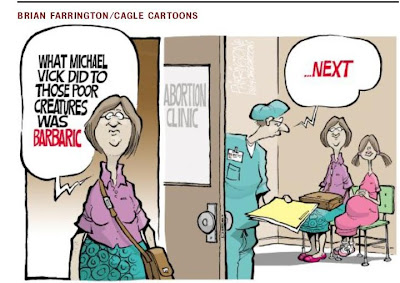
Here is an editorial cartoon on the sensitive issue of abortion:

Related posts:

Francis Schaeffer’s prayer for us in USA

 Francis Schaeffer: “Whatever Happened to the Human Race” (Episode 1) ABORTION OF THE HUMAN RACE Published on Oct 6, 2012 by AdamMetropolis The 45 minute video above is from the film series created from Francis Schaeffer’s book “Whatever Happened to the Human Race?” with Dr. C. Everett Koop. This book  really helped develop my political views […]


Francis Schaeffer’s “How should we then live?” Video and outline of episode 10 “Final Choices” (Schaeffer Sundays)

E P I S O D E 1 0   Dr. Francis Schaeffer – Episode X – Final Choices 27 min FINAL CHOICES I. Authoritarianism the Only Humanistic Social Option One man or an elite giving authoritative arbitrary absolutes. A. Society is sole absolute in absence of other absolutes. B. But society has to be […]

Francis Schaeffer’s “How should we then live?” Video and outline of episode 9 “The Age of Personal Peace and Affluence” (Schaeffer Sundays)

E P I S O D E 9 Dr. Francis Schaeffer – Episode IX – The Age of Personal Peace and Affluence 27 min T h e Age of Personal Peace and Afflunce I. By the Early 1960s People Were Bombarded From Every Side by Modern Man’s Humanistic Thought II. Modern Form of Humanistic Thought Leads […]

Francis Schaeffer’s “How should we then live?” Video and outline of episode 8 “The Age of Fragmentation” (Schaeffer Sundays)

E P I S O D E 8 Dr. Francis Schaeffer – Episode VIII – The Age of Fragmentation 27 min I saw this film series in 1979 and it had a major impact on me. T h e Age of FRAGMENTATION I. Art As a Vehicle Of Modern Thought A. Impressionism (Monet, Renoir, Pissarro, Sisley, […]

Francis Schaeffer’s “How should we then live?” Video and outline of episode 7 “The Age of Non-Reason” (Schaeffer Sundays)

E P I S O D E 7 Dr. Francis Schaeffer – Episode VII – The Age of Non Reason I am thrilled to get this film series with you. I saw it first in 1979 and it had such a big impact on me. Today’s episode is where we see modern humanist man act […]

Francis Schaeffer’s “How should we then live?” Video and outline of episode 6 “The Scientific Age” (Schaeffer Sundays)

E P I S O D E 6 How Should We Then Live 6#1 Uploaded by NoMirrorHDDHrorriMoN on Oct 3, 2011 How Should We Then Live? Episode 6 of 12 ________ I am sharing with you a film series that I saw in 1979. In this film Francis Schaeffer asserted that was a shift in […]

Francis Schaeffer’s “How should we then live?” Video and outline of episode 5 “The Revolutionary Age” (Schaeffer Sundays)

E P I S O D E 5 How Should We Then Live? Episode 5: The Revolutionary Age I was impacted by this film series by Francis Schaeffer back in the 1970′s and I wanted to share it with you. Francis Schaeffer noted, “Reformation Did Not Bring Perfection. But gradually on basis of biblical teaching there […]

Francis Schaeffer’s “How should we then live?” Video and outline of episode 4 “The Reformation” (Schaeffer Sundays)

Dr. Francis Schaeffer – Episode IV – The Reformation 27 min I was impacted by this film series by Francis Schaeffer back in the 1970′s and I wanted to share it with you. Schaeffer makes three key points concerning the Reformation: “1. Erasmian Christian humanism rejected by Farel. 2. Bible gives needed answers not only as to […]

“Schaeffer Sundays” Francis Schaeffer’s “How should we then live?” Video and outline of episode 3 “The Renaissance”

Francis Schaeffer’s “How should we then live?” Video and outline of episode 3 “The Renaissance” Francis Schaeffer: “How Should We Then Live?” (Episode 3) THE RENAISSANCE I was impacted by this film series by Francis Schaeffer back in the 1970′s and I wanted to share it with you. Schaeffer really shows why we have so […]

Francis Schaeffer’s “How should we then live?” Video and outline of episode 2 “The Middle Ages” (Schaeffer Sundays)

  Francis Schaeffer: “How Should We Then Live?” (Episode 2) THE MIDDLE AGES I was impacted by this film series by Francis Schaeffer back in the 1970′s and I wanted to share it with you. Schaeffer points out that during this time period unfortunately we have the “Church’s deviation from early church’s teaching in regard […]

Francis Schaeffer’s “How should we then live?” Video and outline of episode 1 “The Roman Age” (Schaeffer Sundays)

Francis Schaeffer: “How Should We Then Live?” (Episode 1) THE ROMAN AGE   Today I am starting a series that really had a big impact on my life back in the 1970′s when I first saw it. There are ten parts and today is the first. Francis Schaeffer takes a look at Rome and why […]

Francis Schaeffer: “Whatever Happened to the Human Race” (Episode 5) TRUTH AND HISTORY

Francis Schaeffer: “Whatever Happened to the Human Race” (Episode 5) TRUTH AND HISTORY Published on Oct 7, 2012 by AdamMetropolis This crucial series is narrated by the late Dr. Francis Schaeffer and former Surgeon General Dr. C. Everett Koop. Today, choices are being made that undermine human rights at their most basic level. Practices once […]

Francis Schaeffer: “Whatever Happened to the Human Race” (Episode 4) THE BASIS FOR HUMAN DIGNITY

The opening song at the beginning of this episode is very insightful. Francis Schaeffer: “Whatever Happened to the Human Race” (Episode 4) THE BASIS FOR HUMAN DIGNITY Published on Oct 7, 2012 by AdamMetropolis This crucial series is narrated by the late Dr. Francis Schaeffer and former Surgeon General Dr. C. Everett Koop. Today, choices […]

Francis Schaeffer: “Whatever Happened to the Human Race” (Episode 3) DEATH BY SOMEONE’S CHOICE

Francis Schaeffer: “Whatever Happened to the Human Race” (Episode 3) DEATH BY SOMEONE’S CHOICE Published on Oct 6, 2012 by AdamMetropolis This crucial series is narrated by the late Dr. Francis Schaeffer and former Surgeon General Dr. C. Everett Koop. Today, choices are being made that undermine human rights at their most basic level. Practices […]

Francis Schaeffer: “Whatever Happened to the Human Race?” (Episode 2) SLAUGHTER OF THE INNOCENTS

Francis Schaeffer: “Whatever Happened to the Human Race?” (Episode 2) SLAUGHTER OF THE INNOCENTS Published on Oct 6, 2012 by AdamMetropolis This crucial series is narrated by the late Dr. Francis Schaeffer and former Surgeon General Dr. C. Everett Koop. Today, choices are being made that undermine human rights at their most basic level. Practices […]


Francis Schaeffer: “Whatever Happened to the Human Race” (Episode 1) ABORTION OF THE HUMAN RACE

It is not possible to know where the pro-life evangelicals are coming from unless you look at the work of the person who inspired them the most. That person was Francis Schaeffer.  I do care about economic issues but the pro-life issue is the most important to me. Several years ago Adrian Rogers (past president of […]

The following essay explores the role that Francis Schaeffer played in the rise of the pro-life movement. It examines the place of How Should We Then Live?, Whatever Happened to the Human Race?, and A Christian Manifesto in that process.

This essay below is worth the read. Schaeffer, Francis – “Francis Schaeffer and the Pro-Life Movement” [How Should We Then Live?, Whatever Happened to the Human Race?, A Christian Manifesto] Editor note: <p> </p> [The following essay explores the role that Francis Schaeffer played in the rise of the pro-life movement.  It examines the place of […]

Who was Francis Schaeffer? by Udo Middelmann

Great article on Schaeffer. Who was Dr. Francis A. Schaeffer? By Francis Schaeffer The unique contribution of Dr. Francis Schaeffer on a whole generation was the ability to communicate the truth of historic Biblical Christianity in a way that combined intellectual integrity with practical, loving care. This grew out of his extensive understanding of the Bible […]


My favorite Christian music artist of all time is Keith Green.

My favorite Christian music artist of all time is Keith Green.

Sunday, May 5, 2013

Keith Green – (talks about) Jesus Commands Us To Go! (live)

Uploaded on May 26, 2008

Keith Green talks about “Jesus Commands Us To Go!” live at Jesus West Coast ’82

You can find more info on http://www.keithgreen.com

If you want to buy this DVD go to the online shop on his website.

And if you want to know more about this man and why he followed Jesus look at my profile for the video about his life.

______________________________________________________

You are called to go
Keith’s concerts were evangelistic and exhortational. He was the Lecrae of the 70’s. Here is what he has to say about the great commission:

“The world isn’t being won today because we’re not doing it. It’s our fault. This generation of Christians is responsible for this generation of souls on the earth. And no where in the world is the gospel so plentiful as here in the United States. No where. And I don’t want to see us stand before God on that day ans say, ‘but God I didn’t hear you call me.’ Here is something for all you to chew on, you don’t need to hear a call, you’re already called. In fact, if you stay home from going into all nations you had better be able to say to God, ‘You called me to stay home God, I know that as a fact.'”

Keith Green – Asleep In The Light (live)

Uploaded on May 26, 2008

Keith Green performing “Asleep In The Light” live at Jesus West Coast ’82

You can find more info on http://www.keithgreen.com

_________________________

Keith wasn’t messing around, watch his biography and see how he backed up what he said with his life:

The Keith Green Story (FULL)

Uploaded on May 14, 2009

Keith Green was an intense and radical man of God. He was taken from this Earth at a relatively young age. His legacy lives on through his music and his sermons. This video is about his life.

Related posts:

My favorite Christian music artist of all time is Keith Green.

My favorite Christian music artist of all time is Keith Green. Sunday, May 5, 2013 You Are Celled To Go – Keith Green Keith Green – (talks about) Jesus Commands Us To Go! (live) Uploaded on May 26, 2008 Keith Green talks about “Jesus Commands Us To Go!” live at Jesus West Coast ’82 You can find […]

Keith Green’s article “Grumbling and Complaining–So You Wanna Go Back to Egypt?” (Part 4)

Keith Green – So You Wanna Go Back To Egypt (live) Uploaded by monum on May 25, 2008 Keith Green performing “So You Wanna Go Back To Egypt” live at West Coast 1980 ____________ This song really shows Keith’s humor, but it really has great message. Keith also had a great newsletter that went out […]

Keith Green’s article “Grumbling and Complaining–So You Wanna Go Back to Egypt?” (Part 3)

Keith Green – So You Wanna Go Back To Egypt (live) Uploaded by monum on May 25, 2008 Keith Green performing “So You Wanna Go Back To Egypt” live at West Coast 1980 ____________ This song really shows Keith’s humor, but it really has great message. Keith also had a great newsletter that went out […]

Keith Green’s article “Grumbling and Complaining–So You Wanna Go Back to Egypt?” (Part 2)

Keith Green – So You Wanna Go Back To Egypt (live) Uploaded by monum on May 25, 2008 Keith Green performing “So You Wanna Go Back To Egypt” live at West Coast 1980 ____________ This song really shows Keith’s humor, but it really has great message. Keith also had a great newsletter that went out […]

Keith Green’s article “Grumbling and Complaining–So You Wanna Go Back to Egypt?” (Part 1)

Keith Green – So You Wanna Go Back To Egypt (live) Uploaded by monum on May 25, 2008 Keith Green performing “So You Wanna Go Back To Egypt” live at West Coast 1980 ____________ This song really shows Keith’s humor, but it really has great message. Keith also had a great newsletter that went out […]

Keith Green Story (Part 9)

Keith Green – Easter Song (live) Uploaded by monum on May 25, 2008 Keith Green performing “Easter Song” live from The Daisy Club — LA (1982) ____________________________ Keith Green was a great song writer and performer.  Here is his story below: The Lord had taken Keith from concerts of 20 or less — to stadiums […]

Keith Green Story, includes my favorite song (Part 8)

Keith Green – Asleep In The Light Uploaded by keithyhuntington on Jul 23, 2006 keith green performing Asleep In The Light at Jesus West Coast 1982 __________________________ Keith Green was a great song writer and performer and the video clip above includes my favorite Keith Green song. Here is his story below: “I repent of […]

Keith Green Story (Part 7)

Keith Green – Your Love Broke Through Here is something I got off the internet and this website has lots of Keith’s great songs: Keith Green: His Music, Ministry, and Legacy My mom hung up the phone and broke into tears. She had just heard the news of Keith Green’s death. I was only ten […]

Keith Green Story (Part 6)

The Keith Green Story pt 7/7 I remember when I first Keith Green. He had a great impact on me. Below are some quotes on Keith: Quotes   “It’s time to quit playing church and start being the Church (Matt. 18:20)” — Keith Green, as quoted by Melody Green in the introduction to A Cry […]

Keith Green Story (Part 5)

The Keith Green Story pt 6/7 When I first heard Keith Green in 1978 it had a major impact on my life. Below is his story: LEGEND   Keith Green CBN.com – When musician Keith Green died in a plane crash on July 28, 1982, the world lost a special man whose heart was aflame […]

Open letter to President Obama (Part 313)

Deficits are Bad, but the Real Problem is Spending

Bill Clinton nominating Obama 9-5-12 in Charlotte


President Obama c/o The White House
1600 Pennsylvania Avenue NW
Washington, DC 20500

Dear Mr. President,

I know that you receive 20,000 letters a day and that you actually read 10 of them every day. I really do respect you for trying to get a pulse on what is going on out here.

Steve Hanke points out, “When President Clinton took office in 1993, government expenditures were 22.1% of GDP, and when he departed in 2000, the federal government’s share of the economy had been squeezed to a low of 18.2%.”

That is not what has happened the last four years!!!! We have got to cut federal government spending  back to the level it was under Clinton in 2000.

Clinton and Obama, Polar Opposites

Posted by Steve H. Hanke

Last night, Bill Clinton introduced President Barack Obama as the Democratic nominee. He went to great lengths to stress their similarities, but failed to mention their divergent views on the appropriate size of government.

When President Clinton took office in 1993, government expenditures were 22.1% of GDP, and when he departed in 2000, the federal government’s share of the economy had been squeezed to a low of 18.2%. As the accompanying table shows, during the Clinton years, federal government expenditures as a percent of GDP fell by 3.9 percentage points. No other modern president has come close.

And, that’s not all. During the final three years of the former President’s second term, the federal government was generating fiscal surpluses. Clinton was even confident enough to boldly claim, in his January 1996 State of the Union address, that “the era of big government is over.”

When it comes to the appropriate size of government, Clinton and Obama are polar opposites.

_____

Thank you so much for your time. I know how valuable it is. I also appreciate the fine family that you have and your commitment as a father and a husband.

Sincerely,

Everette Hatcher III, 13900 Cottontail Lane, Alexander, AR 72002, ph 501-920-5733, lowcostsqueegees@yahoo.com

On Courage, Existential Philosophy, and the Audacity of Truth by Jeremy Livermore

On Courage, Existential Philosophy, and the Audacity of Truth  by Jeremy Livermore

The Scientific Age

Uploaded by  on Oct 3, 2011

_______________

Episode VII – The Age of Non Reason

____________________

Episode 8: The Age Of Fragmentation

Published on Jul 24, 2012

Dr. Schaeffer’s sweeping epic on the rise and decline of Western thought and Culture

_______________________

I love the works of Francis Schaeffer and I have been on the internet reading several blogs that talk about Schaeffer’s work and the work below   was really helpful. Schaeffer’s film series “How should we then live?  Wikipedia notes, “According to Schaeffer, How Should We Then Live traces Western history from Ancient Rome until the time of writing (1976) along three lines: the philosophic, scientific, and religious.[3] He also makes extensive references to art and architecture as a means of showing how these movements reflected changing patterns of thought through time. Schaeffer’s central premise is: when we base society on the Bible, on the infinite-personal God who is there and has spoken,[4] this provides an absolute by which we can conduct our lives and by which we can judge society.  Here are some posts I have done on this series: Francis Schaeffer’s “How should we then live?” Video and outline of episode 10 “Final Choices” , episode 9 “The Age of Personal Peace and Affluence”, episode 8 “The Age of Fragmentation”, episode 7 “The Age of Non-Reason” , episode 6 “The Scientific Age” ,  episode 5 “The Revolutionary Age” , episode 4 “The Reformation”,  episode 3 “The Renaissance”, episode 2 “The Middle Ages,”, and  episode 1 “The Roman Age,” .

In the film series “WHATEVER HAPPENED TO THE HUMAN RACE?” the arguments are presented  against abortion (Episode 1),  infanticide (Episode 2),   euthanasia (Episode 3), and then there is a discussion of the Christian versus Humanist worldview concerning the issue of “the basis for human dignity” in Episode 4 and then in the last episode a close look at the truth claims of the Bible.

Francis Schaeffer

On Courage, Existential Philosophy, and the Audacity of Truth

Written by Jeremy Livermore on 14 February 2009. Posted in Blogs – Jeremy Livermore

“I love the man that can smile in trouble, that can gather strength from distress, and grow brave by reflection. ‘Tis the business of little minds to shrink; but he whose heart is firm, and whose conscience approves his conduct, will pursue his principles unto death.” – Thomas Paine, The Crisis

What the deist Thomas Paine wrote better describes the measure of Biblical courage– the ability to advance what one reasonably knows is true when doubt weighs heavy and there is seemingly only hopelessness to embrace. To have this courage is essential to a mature Christian faith. It takes courage-to-be a Christian thinker while the world moves in and out of philosophical belief systems. Courage is necessary to face the onslaught of non-Christian worldviews and philosophies that pop-up again and again in everyday conversations. Moreover, because philosophy changes culture like nothing else can, I believe that the courage-to-be Christian in spite of the philosophical pluralism that abounds today is necessary for cultural change.

Just realizing that we live in a post-modern Western world is too shallow of an analyses. The truth is that there is a plethora of worldviews from strong philosophical systems of ages ago still to grapple with in the public square today. That is, Obama is half-black and president. But this does not mean we are in a post-racial world where racism is triumphed because a half-black man is the highest public office. No racism still abounds today. Likewise, Western societies are still negotiating with existential anxiety, lostness, and dread. We may not be living in such a post-existential world just yet. Among the many philosophical systems that abound today, it seems that there is a lurking existentialism that persists, virtually shadowed by other worldviews. Taken down to the individual level, the existential worldview for a non-believer seems to be the crux of the matter for a person to live for Jesus. After much truth is conveyed in an appropriate apologetic fashion, he/she typically contends “Even if Jesus is not a fairytale, what will he do for me? I already have sufficient reasons for my existence in this world!”

Additionally, one of the ultimate tasks of apologetics is to help remove the intellectual barriers and road blocks that a person has which keeps them from coming face to face with Jesus. At the heart of apologetics is Jesus. Once the struggles of doubt, competing worldviews, and falsities are removed, the soul has nowhere to hide. Light encounters darkness. A decision must be made. Apologetical truth and diplomacy can do nothing efficient at this point because this is where the pure and unadulterated gospel (good news) is timely and poignant. This is the point of conversion or rejection. The soul needs at this moment courage to face the truth of his existential lostness. It is at this moment a person can introspectively turn towards Jesus for healing & the satisfying meaning for his existence or continue to subjectively search for his existential meaning elsewhere.

This persistent existential search is comfortable for the rejecting soul and makes sense when one considers the humanistic backdrop of mankind’s history without God. People from the tower of Babel till now subjectively and objectively acknowledge that life apart from an ultimate higher purpose tends towards abstraction and hedonism. So where does that lead one to? – anxiety, despair, loneliness, dread, fear, and hopelessness. So man must have an alternate meaning to live for, a reason for being that is Godless but necessarily courageous. So man tends to get creative and build. Societies, infrastructure, and development begin. Man is in control of his own fate. Man creates meaning for his being.

About the middle of the last century, the existentialist movement of Western philosophy was flourishing. Thinkers such as Nietzsche, Jon Paul Sartre, Albert Camus, and others courageously led the dreadful charge into the realms of death, nothingness, and absurdity. Man’s existence was wrought with tragedy, purposelessness, and hopelessness because man is alone in the universe and there is nothing else like him in it. But out of this nothingness and lostness, man creates something and goes somewhere. Existential hope emerges. There can be courage to live another day. Perhaps, in another blog more existentialist points of view can be developed.

While some of this train of thought eventually morphed and declined away into other philosophical genres during the latter part of the century, much remains at the heart of our current cultural milieu. Now, interestingly, the writings of Paul Tillich, a notable theologian during the 1950’s who responded to the governing voices of humanist existential thinkers, influenced President Obama. Obama’s book, The Audacity of Hope, is undergirded by the courage-to-be that Tillich resolutely declares is necessary for hopelessness. Hope without courage is unsavory and useless.

But more importantly, and I think Obama knows this, hope without truth is dangerous. Although it can lead to powerful optimism, when tried repeatedly, it will fatigue. Hope needs substance beyond the subject – a transcendent reality in which hope is grounded.

For the soul who rejects Jesus after truths are provided, it is clear that truth is more audacious than Obama’s audacious hope. In response to this existential rejection, Francis Schaeffer contended that “Man cannot make his own universe and then live in it.” There is a house bigger and better than the fort in the backyard. The audacious truth is: a habited un-lonely mansion awaits us post-death.

Overall, in terms of academic philosophy, existentialism has been tried and found wanting. Most of academia does not interact with it. But how existentialism was so and is still so courageously embraced (sometimes unknowingly) by many average persons and great thinkers alike fascinates me. And this is the point – even secular thinkers displayed great courage to think well and advance their humanist thought, even if that thought has to do with hope in spite of nothingness and creating one’s own existential meaning in the universe.

Unfortunately, Christian courage-to-be and think cogently about Christianity is what I find sadly missing from most Western Christians. As so many Christian young people lose their faith due to questions that seem to have no answers, I stagger in disbelief and shake my head in frustration.

Moreover, the pervasive decline in general intellectualism by many adult believers is just as surprising. Christians struggle to have any courage-to-be smart in a world pluralized with strange existentialist meanings & worldviews. This is a heartbreaking reality of our present church. Why do most Christians not even know what apologetics is? And where is the Christian courage to advance our hope? For the most part, courage just is appallingly lacking in many Christians. Courage to share one’s faith with a non-believer, courage to face one’s family of origin issues with a professional counselor, or courage to learn some apologetic type truth and exercise those brain muscles is at best dormant in many believers.

But the Bible is full of heroes who lived lives with courage. There were many heroes like Moses, David, Gideon, Daniel, Nehemiah, & Paul who experienced and exhibited the power and the boldness of the Holy Spirit. But more importantly, they were not just action heroes, they were people of fortitude and being. They were heroes “who, contrary to hope, in hope believed.” (Romans 4:18) These heroes had what Paul Tillich called the “courage-to-be.” This is a type of courage that is rooted in a reasoned filled faith which allowed them to look into the face of the anxiety and despair to find God’s purpose. It came from “being” in-spite of “non-being” –living in spite of death. The courage I am advocating is that which attacks on offense in spite of life’s failures and fears.

I’m reminded of playing quarterback in high school. Because my team was small in numbers, I had to play both offense and defense. Also, because my school had a small student body, in both numbers and size, my offensive line could only amount to an average 5’-5” tall 200 lb each. So needless to say, due to the onslaught of the defense, I scrambled and was sacked often. It forced me to learn the hard way how to have poise in the pocket and see down field to complete a pass when several hungry linebackers wanted to eat a quarterback sandwich. This is the kind of courage-to-be that Tillich is talking about. It’s the ability to look the world of despair straight in the eye and in spite of it, still be.

When thinking about the dread, despair, and loneliness that Sarte, Camus, and others wrote of, the competitiveness in me is fired up. If they can find a way to achieve meaning and hope, we ought to be able to do it and do it better. It is the Christian who has a better hope in the midst of hopelessness and has a better courage in the midst of fear, dread, and anxiety. “Where O death where is your victory?” Where O death where is your sting?” (1 Cor 15:55 & Hosea 13:14)

The striking, blinding, and deafening hope of a Christian is that Jesus is the hero of existentialism. He accounted for the anxiety, fear, and despair of the abyss. “He is not a refuge from reality, but a way into its depths.” (Brennan Manning, Abba’s Child) “Death has been swallowed up in Victory?” (1 Cor 15:54) Jesus did as it was prophesied, “He will swallow up death forever. The Sovereign Lord will wipe away the tears from all faces.” (Isaiah 25:8) Deep in the heart of man’s lostness and loneliness, Jesus appears.

The courage we need to face the demands of our intellectual drought & the dread of our own existential journey is not elated passion or desperate clinging to Jesus during a trial or tribulation. It’s not the highs that come from an intense worship song or a spiritual retreat. This courage is the existential aliveness, awakening, and awareness of the present risenness of Jesus. Courage that is grounded in His presence and His rock solid systematic theological belief system of truths continually built – plateau over plateau by the illuminating power of the Holy Spirit.

Moreover, in terms of our need for rediscovering Christian intellectualism, it is not dull or passive. The insightful Brennan Manning states that “In this decade of much empty religious talk and proliferating Bible studies, idle intellectual curiosity, and pretensions of importance, intelligence without courage is bankrupt. The truth of faith has little value when it is not also the life of the heart.” This truth really needs a courageous heart. This is the intelligence that pursues truth for one’s own meaning sake, which is a worthy task, as Jesus says, “The truth shall set you free.”

Lastly, Christians must be thinkers who stand firm with courage emerging from the inside out. Francis Schaeffer further responded to this cultural drama saying “If it is true that evil is evil, that God hates it to the point of the cross and that there is a moral law fixed in what God is in Himself, then Christians should be the first into the field against what is wrong – including man’s inhumanity to man.” Paul says in 1 Corinthians 16:13 “Be on your guard; stand firm in the faith; be men of courage; be strong.” These are strong words, but we can do it Paul, maybe one day as you did, when you literally did face death for your beliefs. We can have the courage to “fight the good fight” and “contend for the faith” even in spite of fear, anxiety, and despair.

By remaining true to Truth and advancing with such courage, the better Hope will last unto death.

Related posts:

Francis Schaeffer’s wife Edith passes away on Easter weekend 2013 Part 7 (includes pro-life editorial cartoon)

The Francis and Edith Schaeffer Story Pt.1 – Today’s Christian Videos The Francis and Edith Schaeffer Story – Part 3 of 3 Francis Schaeffer: “Whatever Happened to the Human Race” (Episode 1) ABORTION OF THE HUMAN RACE Published on Oct 6, 2012 by AdamMetropolis ________________ Picture of Francis Schaeffer and his wife Edith from the […]

The Mark of the Christian by Francis Schaeffer Part 1

  THE MARK OF A CHRISTIAN – CLASS 1 – Introduction Published on Mar 7, 2012 This is the introductory class on “The Mark Of A Christian” by Francis Schaeffer. The class was originally taught at Redeemer Presbyterian Church in Overland Park, KS by Dan Guinn from FrancisSchaefferStudies.org as part of the adult Sunday School hour […]

Francis Schaeffer’s wife Edith passes away on Easter weekend 2013 Part 6 (includes pro-life editorial cartoon and tribute from son-in-law Ranald Macaulay)

The Francis and Edith Schaeffer Story Pt.1 – Today’s Christian Videos The Francis and Edith Schaeffer Story – Part 3 of 3 Francis Schaeffer: “Whatever Happened to the Human Race” (Episode 1) ABORTION OF THE HUMAN RACE Published on Oct 6, 2012 by AdamMetropolis ________________ Picture of Francis Schaeffer and his wife Edith from the […]

Francis Schaeffer’s wife Edith passes away on Easter weekend 2013 Part 5 (includes pro-life editorial cartoon)

The Francis and Edith Schaeffer Story Pt.1 – Today’s Christian Videos The Francis and Edith Schaeffer Story – Part 3 of 3 Francis Schaeffer: “Whatever Happened to the Human Race” (Episode 1) ABORTION OF THE HUMAN RACE Published on Oct 6, 2012 by AdamMetropolis ________________ Picture of Francis Schaeffer and his wife Edith from the […]

Francis Schaeffer’s wife Edith passes away on Easter weekend 2013 Part 4 (includes pro-life editorial cartoon)

The Francis and Edith Schaeffer Story Pt.1 – Today’s Christian Videos The Francis and Edith Schaeffer Story – Part 3 of 3 Francis Schaeffer: “Whatever Happened to the Human Race” (Episode 1) ABORTION OF THE HUMAN RACE Published on Oct 6, 2012 by AdamMetropolis ________________ Picture of Francis Schaeffer and his wife Edith from the […]

Francis Schaeffer’s wife Edith passes away on Easter weekend 2013 Part 3 (includes pro-life editorial cartoon)

The Francis and Edith Schaeffer Story Pt.1 – Today’s Christian Videos The Francis and Edith Schaeffer Story – Part 3 of 3 Francis Schaeffer: “Whatever Happened to the Human Race” (Episode 1) ABORTION OF THE HUMAN RACE Published on Oct 6, 2012 by AdamMetropolis ________________ Picture of Francis Schaeffer and his wife Edith from the […]

“Schaeffer Sundays” Francis Schaeffer’s own words concerning humanist dominated public schools in USA even though country was founded on a Christian base

Francis Schaeffer: “Whatever Happened to the Human Race?” (Episode 2) SLAUGHTER OF THE INNOCENTS Published on Oct 6, 2012 by AdamMetropolis The 45 minute video above is from the film series created from Francis Schaeffer’s book “Whatever Happened to the Human Race?” with Dr. C. Everett Koop. This book  really helped develop my political views concerning […]

“Schaeffer Sundays” Francis Schaeffer’s own words concerning where the Bible-believing Christians been the last few decades

Francis Schaeffer: “Whatever Happened to the Human Race” (Episode 1) ABORTION OF THE HUMAN RACE Published on Oct 6, 2012 by AdamMetropolis The 45 minute video above is from the film series created from Francis Schaeffer’s book “Whatever Happened to the Human Race?” with Dr. C. Everett Koop. This book  really helped develop my political views […]

Taking on Ark Times Bloggers on various issues Part E “Moral absolutes and abortion” Francis Schaeffer Quotes part 5(includes the film SLAUGHTER OF THE INNOCENTS) (editorial cartoon)

I have gone back and forth and back and forth with many liberals on the Arkansas Times Blog on many issues such as abortion, human rights, welfare, poverty, gun control  and issues dealing with popular culture. Here is another exchange I had with them a while back. My username at the Ark Times Blog is Saline […]

“Schaeffer Sundays” Francis Schaeffer’s own words concerning religious liberals and humanists

Francis Schaeffer: “Whatever Happened to the Human Race” (Episode 5) TRUTH AND HISTORY Published on Oct 7, 2012 by AdamMetropolis The 45 minute video above is from the film series created from Francis Schaeffer’s book “Whatever Happened to the Human Race?” with Dr. C. Everett Koop. This book  really helped develop my political views concerning abortion, […]

Francis Schaeffer’s wife Edith passes away on Easter weekend 2013 Part 14 (includes pro-life editorial cartoon)

The Francis and Edith Schaeffer Story Pt.1 – Today’s Christian Videos

The Francis and Edith Schaeffer Story – Part 3 of 3

Francis Schaeffer: “Whatever Happened to the Human Race” (Episode 1) ABORTION OF THE HUMAN RACE

Published on Oct 6, 2012 by

________________

Picture of Francis Schaeffer and his wife Edith from the 1930′s above. I was sad to read about Edith passing away on Easter weekend in 2013. I wanted to pass along this fine article below.

In Memory of Edith Schaeffer (1914-2013)

Francis and Edith Schaeffer are now together in paradise with their Lord and Savior, Jesus.  Edith died today and you can read the details here: Edith Schaeffer 1914-2013.

Francis and Edith Schaeffer

Pastor John Stoos of Church of the King Sacramento had the following to say,
“As most of you know, her husband Francis had a tremendous influence on my life as a young Christian and I have benefited from his discipleship down through these many years.  The writings and teaching of Edith were especially important and dear to my wife Linda!  We are now blessed to see her influence in the second and third generations of our family.  We miss them both very much and yet rejoice that they are now together with their Lord in paradise!”
Her work will continue to bless generation after generation of Christians who, like her, find shelter (French: l’abri) in the Lord.
Francis and Edith Schaeffer
I’ve posted a few quotes that you should share around on your blog, Twitter, Facebook, and in conversations to memorialize the life of a true Proverbs 31 woman.
Tradition as the Best Gift:

“There is something about saying, ‘We always do this,’ which helps keep the years together. Time is such an elusive thing that if we keep on meaning to do something interesting, but never do it, year would follow year with no special thoughtfulness being expressed in making gifts, surprises, charming table settings, and familiar, favorite food. Tradition is a good gift intended to guard the best gifts.”
The Homemaker:
“There needs to be a homemaker exercising some measure of skill, imagination, creativity, desire to fulfill needs and give pleasure to others in the family. How precious a thing is the human family. It it not worth some sacrifice in time, energy, safety, discomfort, work? Does anything come forth without work?”

From What is Family?

Made In the Image of God

“A Christian, who realizes he has been made in the image of the Creator God and is therefore meant to be creative on a finite level, should certainly have more understanding of his responsibility to treat God’s creation with sensitivity, and should develop his talents to do something to beautify his little spot on the earth’s surface.”

From The Hidden Art of Homemaking

On Prayer:

“We need to remind ourselves that although prayer is a very personal and private communication with God, pouring out our repentance and sorrow for sin, it is also to be a constant connection with God, an unbroken communication, a means of receiving assurance as to how to go on in this next hour in our work, and our means of receiving guidance. Prayer is also to be our means of receiving sufficient grace and strength to do what we are being guided to do. This reality is to be handed to the next generation, not to end when we die.”

From The Life Of Prayer

On Marriage:

“There is a mystical oneness God has made possible in the sexual relationship which belongs not to promiscuousness, but to a continuity in marriage, because it parallels the eternal oneness we have when we are united with the Lord.”

From A Celebration Of Marriage

God’s Children:

“God does not promise to treat each of his children the same in this life. God does not say that each one of his children will have the same pattern of living or follow the same plan. God is a God of diversity. God can make trees—but among the trees are hundreds of kinds of trees. God can make apples trees, but among the apples on that tree no two look identically alike. God is able to make snowflakes, and make each snowflake differently. God has a different plan for each of his children—but it all fits together.”

From Everyone Can Know: Family Devotions from the Gospel of Luke

Dr. Koop said, “We live in a schizophrenic society” and that makes me think of this cartoon:

(Francis did a great job in his film series “How Should we then live?” in looking at how humanism has affected art and culture in the Western World in the last 2000 years. My favorite episodes include his study of the Renaissance, the Revolutionary age, the age of Nonreason, and the age of Fragmentation.)

Related posts:

Francis Schaeffer’s “How should we then live?” Video and outline of episode 10 “Final Choices” (Schaeffer Sundays)

E P I S O D E 1 0   Dr. Francis Schaeffer – Episode X – Final Choices 27 min FINAL CHOICES I. Authoritarianism the Only Humanistic Social Option One man or an elite giving authoritative arbitrary absolutes. A. Society is sole absolute in absence of other absolutes. B. But society has to be […]

Francis Schaeffer’s “How should we then live?” Video and outline of episode 9 “The Age of Personal Peace and Affluence” (Schaeffer Sundays)

E P I S O D E 9 Dr. Francis Schaeffer – Episode IX – The Age of Personal Peace and Affluence 27 min T h e Age of Personal Peace and Afflunce I. By the Early 1960s People Were Bombarded From Every Side by Modern Man’s Humanistic Thought II. Modern Form of Humanistic Thought Leads […]

Francis Schaeffer’s “How should we then live?” Video and outline of episode 8 “The Age of Fragmentation” (Schaeffer Sundays)

E P I S O D E 8 Dr. Francis Schaeffer – Episode VIII – The Age of Fragmentation 27 min I saw this film series in 1979 and it had a major impact on me. T h e Age of FRAGMENTATION I. Art As a Vehicle Of Modern Thought A. Impressionism (Monet, Renoir, Pissarro, Sisley, […]

Francis Schaeffer’s “How should we then live?” Video and outline of episode 7 “The Age of Non-Reason” (Schaeffer Sundays)

E P I S O D E 7 Dr. Francis Schaeffer – Episode VII – The Age of Non Reason I am thrilled to get this film series with you. I saw it first in 1979 and it had such a big impact on me. Today’s episode is where we see modern humanist man act […]

Francis Schaeffer’s “How should we then live?” Video and outline of episode 6 “The Scientific Age” (Schaeffer Sundays)

E P I S O D E 6 How Should We Then Live 6#1 Uploaded by NoMirrorHDDHrorriMoN on Oct 3, 2011 How Should We Then Live? Episode 6 of 12 ________ I am sharing with you a film series that I saw in 1979. In this film Francis Schaeffer asserted that was a shift in […]

Francis Schaeffer’s “How should we then live?” Video and outline of episode 5 “The Revolutionary Age” (Schaeffer Sundays)

E P I S O D E 5 How Should We Then Live? Episode 5: The Revolutionary Age I was impacted by this film series by Francis Schaeffer back in the 1970′s and I wanted to share it with you. Francis Schaeffer noted, “Reformation Did Not Bring Perfection. But gradually on basis of biblical teaching there […]

Francis Schaeffer’s “How should we then live?” Video and outline of episode 4 “The Reformation” (Schaeffer Sundays)

Dr. Francis Schaeffer – Episode IV – The Reformation 27 min I was impacted by this film series by Francis Schaeffer back in the 1970′s and I wanted to share it with you. Schaeffer makes three key points concerning the Reformation: “1. Erasmian Christian humanism rejected by Farel. 2. Bible gives needed answers not only as to […]

“Schaeffer Sundays” Francis Schaeffer’s “How should we then live?” Video and outline of episode 3 “The Renaissance”

Francis Schaeffer’s “How should we then live?” Video and outline of episode 3 “The Renaissance” Francis Schaeffer: “How Should We Then Live?” (Episode 3) THE RENAISSANCE I was impacted by this film series by Francis Schaeffer back in the 1970′s and I wanted to share it with you. Schaeffer really shows why we have so […]

Francis Schaeffer’s “How should we then live?” Video and outline of episode 2 “The Middle Ages” (Schaeffer Sundays)

  Francis Schaeffer: “How Should We Then Live?” (Episode 2) THE MIDDLE AGES I was impacted by this film series by Francis Schaeffer back in the 1970′s and I wanted to share it with you. Schaeffer points out that during this time period unfortunately we have the “Church’s deviation from early church’s teaching in regard […]

Francis Schaeffer’s “How should we then live?” Video and outline of episode 1 “The Roman Age” (Schaeffer Sundays)

Francis Schaeffer: “How Should We Then Live?” (Episode 1) THE ROMAN AGE   Today I am starting a series that really had a big impact on my life back in the 1970′s when I first saw it. There are ten parts and today is the first. Francis Schaeffer takes a look at Rome and why […]

John MacArthur on Proverbs (Part 3) “Guard your mind and obey your parents!!” John MacArthur: Chapter 4, would you notice verse 23? “Watch over your heart with all diligence,” the father says to his son, “for from it flow the springs of life.” Guard your mind diligently because everything in life comes out of it. Out of it comes your conduct

Over and over in Proverbs you hear the words “fear the Lord.” In fact, some of he references are Proverbs 1:7, 29; 2:5; 8:13; 9:10;14:26,27; 15:16 and many more. Below is a sermon by John MacArthur from the Book of Luke on 3 reasons we should fear the Lord.

It is tough to guard your mind with all the distractions in the world today. Think about how much the world has changed in the last few years. I remember sitting on the couch in my grandparents house in 1980 talking to my grandfather Hatcher about the changes that had occurred in his lifetime. (The same could be said about my Grandfather Murphey too.) My Grandfather Hather was  born in 1903 and he remembers riding on horses and his father was a postal delivery man and he  had a route he did with his horse and buggy near Franklin, Tennessee. (My grandfather actually remembered seeing  Halley’s Comet coming in 1911.)

Then in 1980 we had computers coming on strong and not to mention that we had been to the moon in 1969 and it seemed that many families in the USA had several cars. What a dramatic change from 1903. However, there is another big change now with FaceBook, cell phones, and other social media. Guarding your mind can be very difficult these days.

John MacArthur

I remember hearing Dr. Adrian Rogers say that if he had to do it over again he would read from Proverbs every day to his kids. They turned out to be great kids and they were raised right. Nevertheless, if he had to do it over again he thought a more emphasis on Proverbs is the way to go. That is why I am spending so much time in Proverbs with my kids today.

John MacArthur does a great job on Proverbs and here is a portion of his sermon on Proverbs.

Lesson number two. Son, not only fear your God but guard your mind…guard your mind. Chapter 3 verse 3, among many, introduces the heart here. And the writer mentions kindness, chesed(?), that beautiful word that means love, loyalty, faithfulness, fidelity, kindness. And then the word met(?) which means truth or accuracy, reliability or dependability. Take that, those two marvelous things, loyalty, faithfulness, fidelity and all of that, along with reliable, dependable, accurate truth and bind them around your neck and write them on the tablet of your heart, chisel, as it would be in the stone of your mind. Heart has reference to mind, the seat of thought and emotion and will.

In other words, teach your son to guard his mind. You are responsible as a father for the mind of your child. Boy, what a tremendous responsibility today. When the assault on the human mind is at such a level as it is today through the media, the job of guarding the mind of your young person and teaching him how to guard it is indeed a formidable task. Chapter 4, would you notice verse 23? “Watch over your heart with all diligence,” the father says to his son, “for from it flow the springs of life.” Guard your mind diligently because everything in life comes out of it. Out of it comes your conduct. It’s not what goes into a man, Jesus said in Matthew, it’s what comes out of a man that defiles him. And so what goes in is not the issue. What starts in and comes out is. And so the heart must be right. The father then has the task of assuring the son’s mind is programmed with truth with virtue, with faithfulness, with honesty, with integrity, with loyalty, with love, with all that those two words in chapter 3 can sum up. Father, you have a responsibility to teach your son to guard his mind.

All the way through this passage and I wish we had time to just kind of wander through the ten chapters, you see this. Back in verse 9 of chapter 1 he talks about the fact that good instruction is a graceful wreath to your head, and ornaments around your neck. They…when a son wears the truth in his heart, it graces him. In chapter 2 and verse 10 He wants wisdom to enter your heart and knowledge be pleasant to your soul so that discretion will guard you and understanding will watch over you to deliver you from the way of evil. In chapter 3 verse 1, “Let your heart keep My commandments.” Chapter 4 verse 4, “Let your heart hold fast My words, keep My commandments and live.” And that is the issue that the mind, or the heart as it’s called, be guarded carefully. Father, you are the guardian of your child’s mind. You must keep the right stuff going in and the wrong stuff out, that is your duty before God to guard your son’s mind, your children as well. What a tremendous responsibility we have. That means we have to protect our children from what they are exposed to. That’s the negative. The positive, we must make sure that they exposed to what we want to fill their mind, therein lies the benefit of a godly education, of Christian training, of exposure to the teaching of the Word of God. That is the duty of the father. Teach your son…fear your God, son, and guard your mind for out of it comes your conduct.

Third great lesson, a father must teach his son…obey your parents…obey your parents. All through this entire section these statements about “hear, my son, your father’s instruction,” are repeated…chapter 1 verse 8, chapter 2 verse 1, 3 verse 1, 4 verse 1 and then again in chapter 4 it’s repeated again and again. Look at verse 10, “Hear, my son, accept my sayings.” Verse 11, “I have directed you in the way of wisdom, I have led you in upright paths.” Do what I say, is what he’s saying. Verse 20, “My son, give attention to my words, incline your ear to my sayings, do not let them depart from your sight, keep them in the midst of your heart, or your mind.” We’re reinforcing here the first commandment with promise which is, “Children, obey your parents in the Lord.” That’s the first commandment with promise. Teach your sons to obey what you say.

Now that means discipline. Go back to chapter 3 verse 11. “My son, do not reject the discipline of the Lord, nor loathe His reproof, for whom the Lord loves He reproves, even as a father the son in whom he delights.” If you love your son you discipline him, you reprove him, you rebuke him. Here is discipline. And if we are to have dutiful faithful sons who carry on a righteous pattern, they must learn to obey their parents and discipline is part of that. Chapter 10 verse 13, “A rod is for the back of him who lacks understanding.” When your son doesn’t do what you want him to do, you use a rod. Later on in Proverbs it says he has rebellion in his heart, drive it far from him with a rod. This is discipline not done in anger but done in love. Whom the Father loves He disciplines. And this discipline is done for the purpose of conforming your son to wisdom, for the purpose of breaking self‑will, for the purpose of removing foolishness, for the purpose of delivering the child from spiritual death and for the purpose of making him a delight to his parents. All of those things are taught in Proverbs. Teach your children to obey and use a rod to reinforce because God says physical punishment done in love is a strong corrective. That way your children learn to obey their parents. And if they learn to obey their parents and their parents are advocating the law of God, they will learn to obey the law of God. And if they learn to obey their parents, they will learn to submit to the parents’ authority and later on when they’re living in society they will learn to submit to societal authority in any form. A disobedient child, you see, makes not only a spiritual disaster but an anti‑social personality and very often a criminal adult.

You have a task, father, to say to your son you must learn to fear your God, guard your mind and obey your parents. You must learn how to submit to authority and since we represent the authority of God and are teaching you the wisdom of God, you must obey…you must obey. I do not believe there’s any excuse for a rebellious child. I believe that children can be under control if they’re properly taught by their fathers to obey.

_____________

FINAL QUESTION: WHAT DOES PROVERBS 4:23-27 MEAN?

Keep vigilant watch over your heart;
that’s where life starts.
Don’t talk out of both sides of your mouth;
avoid careless banter, white lies, and gossip.
Keep your eyes straight ahead;
ignore all sideshow distractions.
Watch your step,
and the road will stretch out smooth before you.
Look neither right nor left;
leave evil in the dust.

Truth Tuesday: Why Schaeffer? by J.E. Schaitel

How Should We Then Live? Episode 5: The Revolutionary Age

I love the works of Francis Schaeffer and I have been on the internet reading several blogs that talk about Schaeffer’s work and the work below was really helpful. Schaeffer’s film series “How should we then live?  Wikipedia notes, “According to Schaeffer, How Should We Then Live traces Western history from Ancient Rome until the time of writing (1976) along three lines: the philosophic, scientific, and religious.[3] He also makes extensive references to art and architecture as a means of showing how these movements reflected changing patterns of thought through time. Schaeffer’s central premise is: when we base society on the Bible, on the infinite-personal God who is there and has spoken,[4] this provides an absolute by which we can conduct our lives and by which we can judge society.  Here are some posts I have done on this series: Francis Schaeffer’s “How should we then live?” Video and outline of episode 10 “Final Choices” , episode 9 “The Age of Personal Peace and Affluence”, episode 8 “The Age of Fragmentation”, episode 7 “The Age of Non-Reason” , episode 6 “The Scientific Age” ,  episode 5 “The Revolutionary Age” , episode 4 “The Reformation”,  episode 3 “The Renaissance”, episode 2 “The Middle Ages,”, and  episode 1 “The Roman Age,” .

In the film series “WHATEVER HAPPENED TO THE HUMAN RACE?” the arguments are presented  against abortion (Episode 1),  infanticide (Episode 2),   euthanasia (Episode 3), and then there is a discussion of the Christian versus Humanist worldview concerning the issue of “the basis for human dignity” in Episode 4 and then in the last episode a close look at the truth claims of the Bible.

Francis Schaeffer

01/27/2011

Why Schaeffer?

image from francis-schaeffer.ns01.us

Why study the works of Francis Schaeffer?

That is a question Dan Guinn (founder of FSS) and I have discussed alot over the last year or so. I think it is definitely a fair question. With great contemporary teachers like R.C. Sproul and John MacArthur; and former teachers like C. H. Spurgeon, James Montgomery Boice, and Martin Lloyd-Jones, why Francis Schaeffer?

Each member of our team at www.francisschaefferstudies.org will have a different answer to that question. I can only speak for myself here when I answer that key question “why Schaeffer?”.

I am drawn to Schaeffer because he is unapologetically orthodox, comprehensive, caring and transparent. Sure, there are more reasons I could come up with other than these four, but these are what I guess you would call my top four. I believe Schaeffer had a unique combination of these qualities.

A Little Background

Before I elaborate on those four points I should first recount how I ever became aware of Francis Schaeffer. I was raised in the Evangelical Free denomination and since 19 years old have been a Baptist. Francis Schaeffer was a Presbyterian, and people like him were so far off my radar that they never even registered, until recently of course.

I became aware of Francis Schaeffer around the middle of 2008. At the time, I was reading widely, trying to sort out alot of questions I had about life and Christianity. I kept noticing time and again the name of Francis Schaeffer pop-up. I would see quotes by him or references to him (or L’Abri) in various magazine articles, internet blogs and books I was reading. No matter where I turned, whether fundamentalist or evangelical, whether Reformed or non-Reformed, whether contemporary or decades old material, all these sources I valued and trusted were using the ideas and example of Schaeffer. Eventually I became aware of the DVD How Should We Then Live and I purchased it and watched it with my wife Karey.  The rest is history, as they say.

Unapologetically Orthodox

I was raised in a sound evangelical church from birth through high-school, but for whatever reason, I came out of 18 years as a Christian knowing alot of Bible stories and biblical morality, but little doctrine. I knew the basics of the gospel, that we are sinners without hope of saving ourselves and Christ’s death on the cross was a sacrifice that would cover my sins and restore me to God so that I could be with God in heaven if I trusted Christ’s work and accepted his gracious gift by faith. Beyond that I was clueless. I had heard the word “Trinity” and knew that is what our church believed and was important, but never heard about Modalism. I had no idea about Christ’s nature, the hypostatic union or any of the heresies concerning the nature of Christ. I did accept the virgin birth, even though I was sketchy on why that was necessary. Mostly I believed orthodox Nicene Christianity because that is what everyone at our church believed. I couldn’t necessarily explain why I believed everything I believed.

To make a long story short I soon became wrapped up in a cult. I knew I was biblically illiterate and was trying to study the Bible and found this late night TV preacher and got sucked in. This isn’t the place to go into all the details, but needless to say, once I got out of that I was terribly embarrassed, totally confused and knew then that I was not only biblically illiterate but extremely gullible. On top of all that, several years later I found out my friend and pastor was a total fraud. He was having an affair and left Christianity to become a Wiccan Priest. This was a good friend who introduced us to Doug Wilson books, did our marriage counselling when Karey and I were engaged, officiated our wedding, signed our marriage certificate and baptized my daughter. I could not believe the rumors about his affair and defended him thinking everyone was being ridiculous. Once again I had been duped.

I am extremely sensitive about orthodox Christian doctrine to this day. I have wasted too many years believing things that turned out to be false. I have spent alot of time wondering “what is true?”, “what is real and what is a sham?”. Life is short, I don’t have time to believe fairy tales. Francis Schaeffer knew alot of young people like me and he wrote alot about Truth, Reality and how all those philosophical questions apply to day to day living. Schaeffer said “There is only one good reason to be a Christian. Because it is true.”I get that. If Christianity is not true then forget it, it is a waste of time! Schaeffer also would talk about “True Truth”. In our Post-Modern culture where people talk about personal truth, it is refreshing to hear someone else talk about True Truth, that Truth that is universal for all time and for all people, a truth that describes reality. My generation plays too many games, especially when it comes to authority, morality and truth.

Schaeffer took people like me seriously, he took questions like mine seriously. He wrote many of his books for people just like me. He went through alot of the same struggles I have gone through.

Schaeffer knew what it was to mark out, stand up for, and defend orthodox historic Christianity. He lived through the famous Modernist-Fundamentalist Controversy of the first half of the twentieth century. Schaeffer expended much ink in writing against theological liberalism, Neo-Orthodoxy and Existentialism. He was courteous with his opponents but he would not compromise truth. Francis Schaeffer unapologetically held to the doctrine of the Protestant Reformers, the Westminster Confession of Faith and the historic creeds such as the Apostles Creed and Nicene Creed. While at Westminster Theological Seminary he studied under great men such as J. Gresham Machen and Cornelius Van Til.

Comprehensive

When I went to college I arrived with a love of history. I wanted to be a history professor. I took a year of World History, a year of History of Western Music, a course on the history of languages and linguistics, a year of Church History, a semester of History of Western Art, and a semester of Constitutional Law (which was alot of US History). I loved these classes, even 17 years later I still have my text books and class notes. Back then I wanted to understand how history fit together.

If you have every seen or read Schaeffer’s How Should We Then Liveyou will understand how much of a treat it was for me to encounter an unapologetically orthodox Christian who valued all aspects of life and culture. He not only talks about the Classical, Medieval, Renaissance, Reformation, Enlightenment and Modern periods, and the literature, music, art and architecture of these periods, but also what the philosophical and theological developments of these periods have to do with us here and now in our post-modern society. He engages these topics as well as environmentalism, law, ethics, government, technology, and commerce.

Schaeffer was the first person I had ever encountered who demonstrated that Christianity was not just a religion that dealt with the afterlife (and morality), but that Christianity also had the answers for every aspect of life on earth here and now. Up until this time I had seen Christianity as a religion that dealt in the realm of relationships, morality, sin and redemption. Never before had I seen that Christianity not only had something to contribute in the area of science, art, law, commerce, government and philosophy, but that it was the only worldview or religious or philosophical system that had answers in every area of human existence. Only Christianity has a coherent, comprehensive and consistent worldview that answers all of the big questions mankind asks. Only Christianity can account for personality, purpose, beauty, sin, evil, charity, laws of logic, laws of nature, science and language.

Other authors, philosophers and historians can certainly go deeper than Schaeffer in their respective field, but no one I know of has the breadth and command of all these subjects or has written over thirty books covering these varied topics.

Caring

I found Jerram Barrs  iTunes University classes on Francis and Edith Schaeffer back in 2009. Karey and I both listened to the MP3 lectures and we were struck by how caring these two people were. Both Francis and Edith opened their home for over 30 years to anyone who wanted to come live with them. This was not a conference center with an apartment attached or a dorm with a dorm master apartment. This was their home. Strangers from all over the world slept in their living-room, their hallway, used their bathroom, ate at their table. They raised their kids around all this. Example after example demonstrates that the Schaeffers were normal people like me and cared about people like me. Sure Schaeffer had been to seminary and been a pastor, but he didn’t think of himself as above anyone. He was the one who preached the sermons and later wrote the book No Little People. Schaeffer believed that all men and women were made in the image of God, deserved respect and would give attention to them whether they were the cleaning staff at a hotel, a university student, or a drugged out hippie. Schaeffer genuinely, actually, consistently cared about people.He didn’t pay attention to people as a tactic for growing a ministry or as an evangelistic technique. No, he actually cared about people.

All truly great Christians have a gentleness and tenderness about them, a gentleness and tenderness that is manifest in the delight they take in spending time with little children and the energy they gladly expend on “little people”… The Lord has time for every one of his people – no matter how insignificant they may seem to the Christian leader who has his own big agenda in mind.

Schaeffer, True Spirituality pg xxi

I never met Schaeffer, he died when I was 11 years old, but I honestly believe had I met him he would have treated me just how Larry Snyder treats me when I visit Rochester – genuinely interested in me and how I am doing. In our day and in our culture we know that we are very disconnected. Social media sites like Facebook would be nothing if we all felt satisfied with our relationships and if our local communities were satisfying our longing for sincere relationships. Our families are many times spread out across states or across the country. Everyone is busy and our typical communication is truncated, superficial and at times trite. We aren’t dummies, we know that most people don’t really care about us. When we do find a few people who genuinely care about us we feel like we have discovered buried treasure.

We are naturally cynical because our pop-culture is all about selling us stuff. Advertising is everywhere. We have to constantly be on guard for people who are trying to sneak around the back door to our wallets through seeming friendly and seeming to care. Multi-level marketing is notorious for this. Need I even mention televangelists?

In an age of bait and switch, slick talking hustlers it is rare to find people who actually care about a stranger simply because they are fellow humans who God cares about. I have been inspired by both Edith and Francis Schaeffer in how they demonstrated compassion and love for ordinary people. Karey and I have become foster parents as means of trying to follow the example of the Schaeffers.

Transparent

As a person who has gone through a few times where I have had periods of crisis, I appreciate Schaeffer for sharing his struggles and doubts. He was very real, very authentic in his life. He didn’t try to put himself off as having it all together, he knew he had faults. He was very candid about his crisis of faith in 1951 and I believe because he had been through that experience he was able to empathize with those who came to L’Abri with the same struggles and the same questions. Like I was saying above, we live in a culture fully of phony people who tailor their image to what they want to project, regardless of whether that image reflects reality. We are hungry for authentic people, especially in our teachers and leaders.

Conclusion

Francis Schaeffer wasn’t a great larger than life Christian celebrity. He was an ordinary person who simply dedicated his life to the service of his Lord and his fellow man. He wasn’t a guru, he wasn’t a prophet, he wasn’t some sort of upper-tier Christian; he was simply a man that God in His providence chose to use.

I believe my generation can benefit and learn from both Francis and Edith Schaeffer. We can learn not only from their numerous books, but also from their lives and their work in L’Abri.  Schaeffer put decades of time and effort into talking to people, listening, debating, reading, and writing. The fruits of his labor are readily available to us. There is no sense in recreating the wheel.

These are some of the reasons why I believe we should study Schaeffer.

Posted at 02:27 AM in Francis Schaeffer | Permalink

Related posts:

Francis Schaeffer’s wife Edith passes away on Easter weekend 2013 Part 7 (includes pro-life editorial cartoon)

The Francis and Edith Schaeffer Story Pt.1 – Today’s Christian Videos The Francis and Edith Schaeffer Story – Part 3 of 3 Francis Schaeffer: “Whatever Happened to the Human Race” (Episode 1) ABORTION OF THE HUMAN RACE Published on Oct 6, 2012 by AdamMetropolis ________________ Picture of Francis Schaeffer and his wife Edith from the […]

The Mark of the Christian by Francis Schaeffer Part 1

  THE MARK OF A CHRISTIAN – CLASS 1 – Introduction Published on Mar 7, 2012 This is the introductory class on “The Mark Of A Christian” by Francis Schaeffer. The class was originally taught at Redeemer Presbyterian Church in Overland Park, KS by Dan Guinn from FrancisSchaefferStudies.org as part of the adult Sunday School hour […]

Francis Schaeffer’s wife Edith passes away on Easter weekend 2013 Part 6 (includes pro-life editorial cartoon and tribute from son-in-law Ranald Macaulay)

The Francis and Edith Schaeffer Story Pt.1 – Today’s Christian Videos The Francis and Edith Schaeffer Story – Part 3 of 3 Francis Schaeffer: “Whatever Happened to the Human Race” (Episode 1) ABORTION OF THE HUMAN RACE Published on Oct 6, 2012 by AdamMetropolis ________________ Picture of Francis Schaeffer and his wife Edith from the […]

Francis Schaeffer’s wife Edith passes away on Easter weekend 2013 Part 5 (includes pro-life editorial cartoon)

The Francis and Edith Schaeffer Story Pt.1 – Today’s Christian Videos The Francis and Edith Schaeffer Story – Part 3 of 3 Francis Schaeffer: “Whatever Happened to the Human Race” (Episode 1) ABORTION OF THE HUMAN RACE Published on Oct 6, 2012 by AdamMetropolis ________________ Picture of Francis Schaeffer and his wife Edith from the […]

Francis Schaeffer’s wife Edith passes away on Easter weekend 2013 Part 4 (includes pro-life editorial cartoon)

The Francis and Edith Schaeffer Story Pt.1 – Today’s Christian Videos The Francis and Edith Schaeffer Story – Part 3 of 3 Francis Schaeffer: “Whatever Happened to the Human Race” (Episode 1) ABORTION OF THE HUMAN RACE Published on Oct 6, 2012 by AdamMetropolis ________________ Picture of Francis Schaeffer and his wife Edith from the […]

Francis Schaeffer’s wife Edith passes away on Easter weekend 2013 Part 3 (includes pro-life editorial cartoon)

The Francis and Edith Schaeffer Story Pt.1 – Today’s Christian Videos The Francis and Edith Schaeffer Story – Part 3 of 3 Francis Schaeffer: “Whatever Happened to the Human Race” (Episode 1) ABORTION OF THE HUMAN RACE Published on Oct 6, 2012 by AdamMetropolis ________________ Picture of Francis Schaeffer and his wife Edith from the […]

“Schaeffer Sundays” Francis Schaeffer’s own words concerning humanist dominated public schools in USA even though country was founded on a Christian base

Francis Schaeffer: “Whatever Happened to the Human Race?” (Episode 2) SLAUGHTER OF THE INNOCENTS Published on Oct 6, 2012 by AdamMetropolis The 45 minute video above is from the film series created from Francis Schaeffer’s book “Whatever Happened to the Human Race?” with Dr. C. Everett Koop. This book  really helped develop my political views concerning […]

“Schaeffer Sundays” Francis Schaeffer’s own words concerning where the Bible-believing Christians been the last few decades

Francis Schaeffer: “Whatever Happened to the Human Race” (Episode 1) ABORTION OF THE HUMAN RACE Published on Oct 6, 2012 by AdamMetropolis The 45 minute video above is from the film series created from Francis Schaeffer’s book “Whatever Happened to the Human Race?” with Dr. C. Everett Koop. This book  really helped develop my political views […]

Taking on Ark Times Bloggers on various issues Part E “Moral absolutes and abortion” Francis Schaeffer Quotes part 5(includes the film SLAUGHTER OF THE INNOCENTS) (editorial cartoon)

I have gone back and forth and back and forth with many liberals on the Arkansas Times Blog on many issues such as abortion, human rights, welfare, poverty, gun control  and issues dealing with popular culture. Here is another exchange I had with them a while back. My username at the Ark Times Blog is Saline […]

“Schaeffer Sundays” Francis Schaeffer’s own words concerning religious liberals and humanists

Francis Schaeffer: “Whatever Happened to the Human Race” (Episode 5) TRUTH AND HISTORY Published on Oct 7, 2012 by AdamMetropolis The 45 minute video above is from the film series created from Francis Schaeffer’s book “Whatever Happened to the Human Race?” with Dr. C. Everett Koop. This book  really helped develop my political views concerning abortion, […]

Cato Institute on privatizing the post office

Should we junk the mail and privatize the USPS? w/ Tad DeHaven

Uploaded by on Aug 10, 2009

With a deficit of almost 16 billion in 2011 the post office must be closed and private firms can take over. This is a complete joke now.

Privatizing the U.S. Postal Service

PrintPrint

by Tad DeHaven

November 2010

Overview
Background
Declining Revenues
Bloated Costs
Postal Unions
Lessons from Abroad
Conclusions

Overview

The U.S. Postal Service is a branch of the federal government. It is headed by a Postmaster General and a Board of Governors, with further oversight provided by the Postal Regulatory Commission. However, ultimate authority over the USPS rests with Congress.

The USPS is structured like a business in that revenues from the sale of postal products generally cover costs, and it receives virtually no federal appropriations.1 The organization is the second-largest civilian employer in the United States—after Wal-Mart—with about 600,000 workers. If the USPS were a private company, it would rank about 28th on the Fortune 500 list of largest companies.

While the USPS is structured like a business, Congress often prevents it from actually operating like a private company, such as taking actions to reduce costs, improve efficiency, or innovate in other ways. The agency is also obligated by statute to provide mail services to all Americans, irrespective of where they live and the cost of serving them. Furthermore, it is required to deliver first-class mail at a uniform price throughout the nation.

While Congress imposes various costs and obligations on the USPS, it also protects it from competition. The USPS has a legal monopoly over first-class mail and standard mail (formerly called third-class mail). Thus, we have a postal system that encourages high costs and inefficiency, while preventing entrepreneurs from trying to improve postal services for Americans.

The USPS is in deep financial trouble as a result of declining mail volume, bloated operating expenses, a costly and inflexible unionized workforce, and constant congressional meddling. At the same time, electronic communications and other technological advances are making physical mail delivery less relevant.

America’s postal system needs a radical overhaul. This essay discusses the problems of the USPS and looks at some recent postal reforms abroad.2 It concludes that taxpayers, consumers, and the broader economy would stand to gain with reforms to privatize the USPS and open U.S. mail delivery up to competition.

Background

Article 1, Section 8 of the Constitution says that Congress shall have the power “to establish Post Offices and post Roads.” Thus, the Constitution allows the government to get involved in postal services, but that doesn’t mean that the government has to be involved, let alone be granted a monopoly over mail.

Prior to the Postal Act of 1863, intercity letters were either held at the destination post office for pick-up or delivered by an independent contractor. The Postal Code of 1872 extended the postal monopoly to the delivery of local letters, banning intracity private carriers. These private carriers, which numbered 147 at one time, had been innovative: for example, they introduced stamps before the Post Office did.3

Prior to 1971 the government provided postal services through its U.S. Post Office Department, an agency that received annual appropriations and heavy subsidies from Congress. Members of Congress influenced many aspects of the Post Office Department’s operations, such as the pricing of postal products and the selection of managers.

The Postal Reorganization Act of 1970 replaced the Post Office Department with the U.S. Postal Service. The USPS was made an independent agency of the executive branch and designed to be financially self-sufficient, relying on the sale of postage, mail products, and services for revenue. The USPS is required by law to cover its costs, but can borrow from the U.S. Treasury subject to a limitation of $3 billion per year and a total debt ceiling of $15 billion.

As a federal organization, the USPS benefits from numerous other privileges. The USPS is exempt from vehicle licensing requirements, sales taxes, and local property taxes. It doesn’t have to pay parking tickets, and it has eminent domain powers. It pays to itself the income taxes that it would owe if it were a private business.

The USPS is mandated by Congress to provide the American public with “universal service,” which includes uniform prices, access to services, and six-day delivery nationwide. To ensure financial support for these obligations, Congress grants the USPS a statutory monopoly on the delivery of first-class and standard mail and restricts mailbox access to mail delivered by the USPS.4

The USPS’s express mail and package delivery services are subject to competition, which comes chiefly from FedEx and the United Parcel Service (UPS). However, the USPS’s monopoly prevents other companies from delivering first-class and standard mail, with an exception for urgent mail, and private companies are not allowed to place their deliveries in mail boxes.

The USPS does face increasing competition from correspondence sent via a variety of electronic alternatives. While the USPS may have a statutory monopoly over a portion of physical mail, new technologies are allowing Americans to bypass the organization on all of its lines of business.

Declining Revenues

Although the USPS is structured to operate like a self-supporting business, this model is on borrowed time.

From 2007 to 2010, the USPS lost $20 billion, and its debt increased from $2.1 billion to $12 billion. The USPS expects to hit its $15 billion legal borrowing ceiling in 2011. As a result, the Government Accountability Office placed the USPS on its “high risk” list of troubled federal agencies in 2009.5 These financial problems are not temporary. Postal experts expect a future of stagnant-to-declining revenue for the USPS with stable-to-increasing expenses unless Congress makes major reforms.

In 2009, USPS revenues totaled $68 billion, or $7 billion lower than 2008. About 88 percent of the revenue was generated by “market-dominant” products including first-class mail and standard mail (bulk advertising and direct-mail solicitations). First-class mail, which is the most profitable, accounted for 52 percent of those revenues. The remaining 12 percent of the USPS’s revenue came from competitive products including Express Mail, Priority Mail, bulk parcel post, and bulk international mail.6

The decline in USPS revenues has been driven by a large drop in mail volume, particularly for profitable first-class mail. The recent recession has hurt USPS finances, but the demand for mail delivered by the USPS has been steadily falling as consumers and businesses have shifted to electronic alternatives.

First-class mail volume has fallen 19 percent since 2001, and it is projected to fall another 37 percent by 2020.7 From 2006 to 2009 total mail volume dropped from 213 billion to 177 billion items, a 17 percent decrease.8 By 2020 the USPS estimates further volume declines of about 15 percent, to 150 billion pieces, which would be the lowest level since 1986.9

The 2006 Postal Accountability and Enhancement Act terminated a cumbersome rate‑setting structure and gave the USPS more flexibility to set prices. But the law required that average rates in each market-dominant mail class not increase faster than the consumer price index.

The USPS can request that the Postal Regulatory Commission approve a rate increase above the price cap on the basis of extraordinary or exceptional circumstances. The PRC recently rejected a USPS request for an exigent rate increase. Although it acknowledged that the recession has led to a substantial decline in mail volume, the PRC turned down the request because the rate adjustments represented “an attempt to address long-term structural problems not caused by the recent recession.”10

Looking forward, increasing postal rates may boost revenue in the short run, but would risk depressing mail volume and revenue in the long run, in part by accelerating the diversion of mail to competing electronic alternatives. Higher rates would also damage millions of businesses dependent on mailing and currently stuck with a monopoly provider of those services.

The USPS has asked Congress for permission to offer new nonpostal products and services (such as banking and insurance) to generate additional revenue. However, the USPS has a poor track record when it comes to introducing new products, and allowing a government entity to compete with the private sector in nonpostal markets would be unfair and unwise.11

Bloated Costs

Despite the USPS’s ability to achieve $10 billion in cost savings from 2007 to 2009, it has not been enough to offset the recent rapid decline in revenue.12 It also hasn’t been enough to prevent the upward trend in the organization’s cost per piece of mail, which rose from 34 cents in 2006 to 41 cents in 2009.13 If mail volume continues to decrease and the number of postal addresses increases, the cost to deliver each piece of mail will continue to rise while revenue per delivery point falls.

A key driver of mail delivery costs is the congressionally mandated obligation to serve virtually every mailing address, regardless of volume, six days a week. Fulfilling this “universal service” obligation results in the USPS having large fixed costs, including the costs of more than 36,000 postal outlets, 215,000 vehicles, and 600 processing facilities.

However, even given the universal service obligation, the Government Accountability Office and USPS officials believe that more than half of these processing facilities aren’t needed.14 Why aren’t they closed down to save money? The GAO notes that the USPS faces “formidable resistance” from members of Congress and postal unions when attempting to close or consolidate facilities.15

The USPS is required to provide services to all communities, including areas where post offices have low traffic and are not cost effective. Before closing a post office, the USPS must provide customers with at least 60 days of notice before the proposed closure date, and any person served by the post office may appeal its closure to the Postal Regulatory Commission. The USPS cannot close a post office “solely for operating at a deficit.”16

Members of Congress whose districts would be affected by a post office closure often raise a big fuss. Last year, for example, the USPS proposed consolidating 3,200 postal outlets, but following a congressional outcry, the number under consideration was reduced to a paltry 162.17 That is no way to run a business.

Full post offices are more costly to operate than other means of serving customers. The average post office transaction cost 23 cents per dollar of revenue in 2009 while the average transaction at a contract postal unit cost just 13 cents.18 Post offices used to generate almost all postal retail revenue, but 29 percent is now generated online through usps.com and other alternative channels.19

In 2009 post offices recorded 117 million fewer transactions than in 2008.20 Four out of five post offices are operating at a loss.21 However, the postal network’s overcapacity has drawn little corrective action from Congress. In fact, legislation introduced in the House with 102 cosponsors would apply the burdensome procedures for closing post offices to other postal outlets as well.22 Congress is actively working against the modernization of the U.S. postal system.

Excessive labor costs are another major problem. While the USPS has been able to eliminate a substantial number of employees through attrition, the USPS’s predominantly unionized workforce continues to account for 80 percent of the agency’s costs despite increased automation. The USPS estimates that, in the absence of changes, its total workforce costs will soar from $53 billion in 2009 to $77 billion in 2020.23

As of 2009 the USPS had financial liabilities and unfunded obligations of $88 billion.24 Unfunded obligations for retiree health benefits accounted for $52 billion of the total. The 2006 Postal Accountability and Enhancement Act addressed this unfunded liability by requiring the USPS to make a special payment of more than $5 billion annually from 2007 through 2016 to build up a retirement fund. This was a good idea to reduce possible liabilities on future taxpayers.

However, USPS revenues began plummeting shortly after the PAEA’s enactment. In 2009 Congress relieved the USPS by allowing it to defer $4 billion of its scheduled $5.4 billion retirement payment for the year. Facing the same situation this year, Congress adjourned without providing the USPS with similar relief. As a result, the USPS could soon run out of operating funds.

Critics argue that the pre-funding payment schedule is too aggressive, particularly in light of the USPS’s current financial struggles. However, the USPS faces a bleak future regardless of the payments. As the GAO notes, allowing the USPS to continue deferring the payments will “increase the risk that in the future USPS will not be able to pay these obligations as its core business continues to decline and if sufficient actions are not taken to restructure operations and reduce costs.”25

Opponents of pre-funding USPS retiree health benefits argue that private companies and the rest of the federal government are not legally required to do so. That is largely irrelevant. Retiree health care coverage is an increasingly rare perk in the private sector, and the federal government’s financial management is nothing to emulate. In 2008, only 17 percent of private sector workers were employed at a business that offered health benefits to Medicare-eligible retirees, down from 28 percent in 1997.26

Postal Unions

More than 85 percent of USPS employees are covered by collective-bargaining agreements. Among other provisions, these agreements include regular raises based on cost-of-living allowances. The other 15 percent of employees receive regular pay increases through a pay-for-performance program.

While the Postal Service negotiates with its unions to structure compensation, federal statutes hamper the USPS’s ability to craft market-based pay and benefits packages.27 The potential for mandatory arbitration gives the unions a big advantage in negotiations with management. When unions demand higher wages, more generous benefits, and added work rules, arbitrators usually give them part of what they want. And when weighing a decision on union contracts, arbitrators do not have to take the USPS’s financial situation into consideration. Not surprisingly, unions have been able to extract lucrative compensation packages from the USPS over the decades.

The Government Accountability Office notes that the USPS covers a higher proportion of employee premiums for health care and life insurance than other federal agencies.28 USPS workers participate in the federal workers’ compensation program, which generally provides larger benefits than the private sector. Also, instead of retiring when eligible, USPS workers can stay on the “more generous” workers’ compensation rolls.29

In 2009 the average postal employee received about $79,000 in total compensation.30 This compares to $61,000 in wages and benefits received by the average private sector worker that year.31 A recent study by labor economist James Sherk found that postal workers earn 15 to 20 percent more per hour than comparable workers in the private sector.32

Postal expert Michael Schuyler reviewed the studies on postal compensation and found the following:

Although the law says that postal employees should receive wages and benefits comparable to what they could earn in the private sector, the majority of economic studies examining the issue have concluded that a postal pay premium of 20%– 25% exists if just wages are counted and about 35% if the Service’s very generous benefits are also included.33

Another factor that reduces postal service efficiency is that union contracts inhibit the flexibility of USPS leaders in managing their workforce. For example, most postal workers are protected by “no-layoff” provisions, and the USPS must let go lower-cost part-time and temporary employees before it can lay off a full-time worker not covered by such provisions.

Collective bargaining agreements also make it difficult for the USPS to hire part-time workers, which would help to reduce labor costs. Hiring workers who can work less than eight-hour shifts would also give managers needed flexibility to address seasonal and weekly fluctuations in workload.

The USPS inspector general recently pointed out that the USPS’s utilization of part-time workers is less than that of UPS, FedEx, and postal systems in other countries.34 While only 13 percent of the USPS’s workforce is part-time, the figures for UPS and FedEx are a respective 53 and 40 percent. Germany’s Deutsche Post, which has been privatized, employs a workforce that is 40 percent part-time.35 The story is similar at many other foreign posts, such as the Netherlands’ postal service, TNT, which has also been privatized. TNT recently told its union that it would be “migrating towards an organization that employs mainly part‑time staff.”36

Unfortunately, already generous compensation combined with the USPS’s poor financial condition hasn’t stopped the postal unions from demanding more money and opposing greater flexibility. The American Postal Workers Union, which represents more than 200,000 workers, recently entered collective bargaining negotiations for a new contract. In an interview, APWU president William Burrus called a pay increase for his members an “entitlement” and stated that his union wants “more control over activities at work, more money, better benefits—we want more.”37 Burrus also called the sensible suggestion that arbitrators should be required to consider the USPS’s financial position “antidemocratic.”38

Lessons from Abroad

Declining demand and an inability to cut costs are not unique to the USPS, as government postal services in other countries have experienced similar problems. However, numerous countries have responded by shifting away from a government-run postal monopoly toward market liberalization, including privatizing the government postal agency and opening postal markets to entrepreneurs. The United States has lagged behind many countries on postal reforms. As a result, the U.S. rates near the bottom of the Consumer Postal Union’s 23-country “Index of Postal Freedom.”39

For some people, the idea of liberalization conjures up fears of a decline in the quality or universality of postal service. However, those things have not happened in the countries that have introduced pro-market postal reforms. Rather, these liberalizing countries have shown the ability to offer affordable, reliable, universal, and more efficient postal-delivery services.

In many countries, reforms have been pursued through the commercialization and corporatization of the postal service. Under such reforms, the government retains full or partial ownership but introduces modern practices involving management, labor compensation, finance, marketing, and capital investment.

In some countries the private sector has taken large ownership stakes. For example, 69 percent of Germany’s formerly government post office Deutsche Post is now privately owned.40 In the Netherlands, 100 percent of its formerly government post office is privately owned as TNT Post.41 The British government is considering selling off to private investors its ownership of the Royal Mail. At least 10 percent of the shares may be reserved for postal employees, which would have the benefit of reducing the unions’ incentive to take actions negatively affecting the company’s bottom line.42

While some nations have partly or fully privatized their post offices, a parallel trend is for countries to reduce or eliminate postal monopolies and allow for entrepreneurs to offer competitive services. New Zealand and Sweden repealed their postal monopolies in 1998 and 2003, respectively, and Germany and the Netherlands followed suit in 2008 and 2009, respectively. In 2008, the European Union announced a plan to eliminate the national monopolies of all EU member states by 2013.

Postal liberalization has produced more efficient services in many countries, but governments continue to impose unwarranted postal regulations in even the most reformed markets. For example, governments still typically mandate that universal service obligations be met, and they often also mandate certain service standards and pricing.

In New Zealand, for example, the government has a “deed of understanding” with the New Zealand Post under which it must maintain a specified number of post offices, keep the price of a stamp below a certain level, and refrain from implementing a rural service fee. Also, New Zealand Post must provide 95 percent of households with letter-delivery service six days per week in addition to other minimum service standards.43

Some patterns have emerged regarding the outcome of postal liberalization. Productivity has increased, costs have decreased, the universal service obligation continues to be met, service quality measured by on-time delivery has not dropped, and overall customer satisfaction seems to have increased.44

Another common result of postal liberalization is diversification of postal organizations into nonpostal activities. Consultants at Accenture have found that diversification not only has a measurable impact on the performance of international posts, but that it is what ultimately distinguishes high performers from low performers.45 America’s relatively dynamic economy is particularly suited for the diversification opportunities that would arise under postal liberalization.

Germany’s former postal monopoly, Deutsche Post, illustrates the type of transformation possible by liberalization. Today, the private Deutsche Post World Net has changed its compensation structure, imported managers from other industries, modernized the mail and parcels network within Germany, and developed new products such as hybrid mail and e-commerce. The company now has interests in not only the traditional mail and parcels business but also express mail logistics, banking, and more.46

Opening up America’s postal markets to new competitors promises great benefits for consumers because entrepreneurs have strong incentives to innovate, improve quality, and reduce costs. The universal service mandate could become less of an issue as entrepreneurs figure out cheaper and better ways to deliver mail to rural areas. Sam Walton, Henry Ford, and other great entrepreneurs made their fortunes by bringing affordable products and services to the masses. We need these sorts of innovators in the postal business.

Former Postmaster General William J. Henderson (1998–2001) stated in a Washington Post op-ed following his retirement that “what the Postal Service needs now is nothing short of privatization.” Henderson noted that while privatizing the USPS might sound radical, “it’s a concept the rest of the world has been taking seriously for years.”47

Conclusions

The USPS is in a financial death spiral because of the myriad factors discussed. It faces a projected $238 billion in losses over the next 10 years under the status quo. To avoid a large and growing burden from being foisted on taxpayers in coming years, the USPS should be privatized and postal markets open for competition from FedEx, UPS, and upstart entrepreneurs.

With privatization, Congress should end its micromanagement of the nation’s postal services. It should rescind the complex laws and regulations on delivery schedules, price caps, restrictions of facility shut-downs, and other business decisions. Such congressional meddling ultimately hurts the consumers that any postal business is supposed to serve by pushing up costs.

Consider the USPS’s recent request that Congress allow it to end Saturday mail delivery.48 Congress has blocked that move, which will raise USPS costs and ultimately result in higher stamp prices. The Saturday mail delivery issue also highlights the lack of consumer choice in the current system. If the USPS decides not to provide Saturday service, customers should be free to contract with other commercial entities to provide Saturday service, or service for any day of the week for that matter.

Policymakers resistant to reform often depict the USPS as a “national asset” that “binds the nation together.” But these days, it’s the Internet and our telecommunications networks that bind families and businesses together across the nation. It’s time to let go of the nostalgia for the USPS and bring America’s postal services into the 21st century with privatization, open competition, and entrepreneurial innovation.


1 The USPS receives a small annual appropriation from Congress of about $100 million as compensation for the revenue it forgoes in providing, at congressional mandate, free mailing privileges for the blind and absentee-ballot mailing for overseas military personnel.

2 I benefited greatly from the discussion of postal reforms in Robert Carbaugh and Thomas Tenerelli, “Restructuring the U.S. Postal Service,” forthcoming in Cato Journal.

3 Edward L. Hudgins, ed. The Last Monopoly: Privatizing the Postal Service for the Information Age (Washington: Cato Institute, 1996), p. 14.

4 The U.S. Supreme Court has confirmed this privilege by ruling that it is illegal in the United States for anyone other than the employees and agents of the Postal Service to deliver mail pieces to letter boxes marked “U.S. Mail.”

5 U.S. Government Accountability Office, “High Risk Series: Restructuring the U.S. Postal Service to Achieve Sustainable Financial Viability,” July 2009.

6 Government Accountability Office, “U.S. Postal Service: Financial Challenges Continue, with Relatively Limited Results from Recent Revenue-Generation Efforts,” GAO-10-191T, November 5, 2009, p. 4.

7 Government Accountability Office, “U.S. Postal Service: Strategies and Options to Facilitate Progress toward Financial Viability,” GAO-10-455, April 2010, p. 8.

8 United States Postal Service, “Ensuring a Viable Postal Service for America: An Action Plan for the Future,” March 2010, p. 3.

9 Government Accountability Office, “U.S. Postal Service: Strategies and Options to Facilitate Progress toward Financial Viability,” GAO-10-455, April 2010, p. 8.

10 Postal Regulatory Commission, Statement of Chairman Ruth Y. Goldway, Decision of the Commission in Docket R2010-4, “Rate Adjustment Due to Extraordinary or Exceptional Circumstances,” September 30, 2010.

11 Michael Schuyler, “The Postal Service Asks Congress to Eliminate Saturday Service; Congress Still Has Questions,” Institute for Research on the Economics of Taxation Advisory no. 267, July 7, 2010, p. 11.

12 Government Accountability Office, “U.S. Postal Service: Strategies and Options to Facilitate Progress toward Financial Viability,” GAO-10-455, April 2010, p. 11.

13 United States Postal Service, “Ensuring a Viable Postal Service for America: An Action Plan for the Future,” March 2010, p. 5.

14 Government Accountability Office, “U.S. Postal Service: Strategies and Options to Facilitate Progress toward Financial Viability,” GAO-10-455, April 2010, p. 29.

15 Government Accountability Office, “U.S. Postal Service: Strategies and Options to Facilitate Progress toward Financial Viability,” GAO-10-455, April 2010, p. 29.

16 Government Accountability Office, “U.S. Postal Service: Strategies and Options to Facilitate Progress toward Financial Viability,” GAO-10-455, April 2010, p. 30.

17 Sean Reilly, “80% of Post Offices Losing Money,” FederalTimes.com, October 10, 2010.

18 United States Postal Service, “Ensuring a Viable Postal Service for America: An Action Plan for the Future,” March 2010, p. 8.

19 United States Postal Service, “Ensuring a Viable Postal Service for America: An Action Plan for the Future,” March 2010, p. 8.

20 United States Postal Service, “Ensuring a Viable Postal Service for America: An Action Plan for the Future,” March 2010, p. 9.

21 Sean Reilly, “80% of Post Offices Losing Money,” FederalTimes.com, October 10, 2010.

22 Sean Reilly, “80% of Post Offices Losing Money,” FederalTimes.com, October 10, 2010.

23 United States Postal Service, “Ensuring a Viable Postal Service for America: An Action Plan for the Future,” March 2010, p. 9.

24 Government Accountability Office, “U.S. Postal Service: Strategies and Options to Facilitate Progress toward Financial Viability,” GAO-10-455, April 2010, p. 12.

25 Government Accountability Office, “U.S. Postal Service: Strategies and Options to Facilitate Progress toward Financial Viability,” GAO-10-455, April 2010, p. 22.

26 Paul Fronstin, “Implications of Health Reform for Retiree Health Benefits,” Employee Benefit Research Institute Issue Brief no. 338, January 2010, p. 4.

27 United States Postal Service, “Ensuring a Viable Postal Service for America: An Action Plan for the Future,” March 2010, p. 9.

28 Government Accountability Office, “U.S. Postal Service: Strategies and Options to Facilitate Progress toward Financial Viability,” GAO-10-455, April 2010, p. 28.

29 Government Accountability Office, “U.S. Postal Service: Strategies and Options to Facilitate Progress toward Financial Viability,” GAO-10-455, April 2010, pp. 15–16.

30 Budget of the U.S. Government, Fiscal Year 2011, Analytical Perspectives, Tables 10.2 and 10.3, pp. 108–109.

31 Chris Edwards, “Overpaid Federal Workers,” Cato Institute, June 2010, www.downsizinggovernment.org/overpaid-federal-workers.

32 James Sherk, “Inflated Federal Pay: How Americans are Overtaxed to Overpay the Civil Service,” Heritage Foundation, Center for Data Analysis, CDA10-05, July 7, 2010, p. 30.

33 Michael Schuyler, “Union Demands Hurt Postal Service Reforms,” Institute for Research on the Economics of Taxation Advisory no. 210, October 11, 2006, p. 6.

34 U.S. Postal Service, Office of Inspector General, “Workforce Flexibility—Would it Work for the Postal Service?” http://blog.uspsoig.gov/?p=3603.

35 U.S. Postal Service, Office of Inspector General, “Workforce Flexibility—Would it Work for the Postal Service?” http://blog.uspsoig.gov/?p=3603.

36 TNT Post letter issued to the trade unions, October 14, 2010, http://group.tnt.com/Images/Attachment_letter_to_the_trade_unions_tcm177-526206.pdf.

37 Emily Long, “Postal Service Looks for Ways to Reduce Labor Costs,” GovExec.com, September 1, 2010.

38 Emily Long, “Postal Service Looks for Ways to Reduce Labor Costs,” GovExec.com, September 1, 2010.

40 Deutsche Post DHL, www.dp-dhl.com/en.

41 TNT Post, www.tntpost.com.

42 Brian Groom, “Royal Mail Employees to be Offered Shares,” Financial Times, September 22, 2010.

43 Rick Geddes, “Reform of the U.S. Postal Service,” Journal of Economic Perspectives 19 no. 3 (2005): 217–32.

44 See, for example, Unites States Postal Service, “Transformation Plan,” Appendix H, April 2002, http://www.usps.com/strategicplanning/_pdf/2002TransformationPlan.pdf.

45 See Accenture, “Is Diversification the Answer to Mail Woes? The Experience of International Posts,” February 2010, www.usps.com/strategicplanning/_pdf/Accenture_Presentation.pdf.

46 See Michael Crew and Paul Kleindorfer eds., Competitive Transformation of the Postal and Delivery Sector (Norwell, MA: Kluwer Academic Publishers, 2003).

47 William J. Henderson, “End of the Route: I Ran the Postal Service—It Should be Privatized,” Washington Post, September 2, 2001, p. B1.

48 For more on the issue of eliminating Saturday mail delivery, see Michael Schuyler, “The Postal Service Asks Congress to Eliminate Saturday Service; Congress Still Has Questions,” Institute for Research on the Economics of Taxation Advisory no. 267, July 7, 2010.