President Obama is constantly saying that the rich are not paying their fair share. However, the figures actually show something else. Take a look at this article by Patrick Tyrrell of the Heritage Foundation.
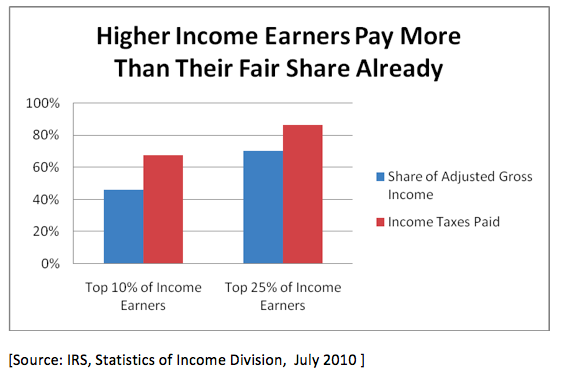
In the debate about raising the debt ceiling, the reality is often lost that the top 10 percent of income earners—those making more than $113,799 in 2008 (the latest year available from the IRS)—already pay 69.9 percent of the income taxes. The same top 10 percent, however, earn only 45.8 percent of the income.
The IRS also reports that in 2008, the top 25 percent of income earners—those earning $67,280 or more—pay 86.34 percent of the income taxes, yet earn only 67.38 percent of all income in the U.S. (See chart below)
In addition to their large and some would say “unfair” share of income taxes paid, the “rich” also are scheduled to pay more taxes starting in 2013 as a result of changes to Medicare made in the Patient Protection and Affordable Care Act (PPACA). This change will add an additional .9 percent tax on incomes above $200,000 for an unmarried person and $250,000 for a couple. People making under those limits already pay 1.45 percent of their wages for the Medicare tax, and their employers pay another 1.45 percent, which in effect is a tax on their income of 2.9 percent for Medicare. Those who have to pay the added .9 percent of income tax will be paying 3.8 percent of their income for Medicare beginning in 2013.
So taxes on the “rich” are already scheduled to go up under PPACA in 2013, which translates into less money available for new hires and less business growth. Those are businesses that would make investments in capital and people, likely boosting economic performance and helping everyone.
The bottom line is that the next time President Obama or someone in Washington says, “We just want the rich to pay their fair share,” he should think about how much the top 25 percent of income earners already pay. Making them pay more to increase the debt ceiling won’t control Washington’s spending problem, but it will translate into fewer jobs, lower wages, and diminished opportunities for all.
Treasury Secretary Timothy Geithner warns us that the federal government will no longer be able to meet its obligations if the debt ceiling is not raised by August 2. The result: default, with financial chaos to follow. Despite that stark warning, the debate over spending cuts versus revenue enhancements persists. Political compromise remains elusive.
Enter a handful of imaginative lawyers who promise to save us from economic ruination — not by spending less or taxing more, but by applying the Public Debt Clause in Section 4 of the 14th Amendment. Essentially, they claim the Constitution forbids default and, consequently, a debt ceiling that triggers default is itself unconstitutional.
The Public Debt Clause says “The validity of the public debt of the United States, authorized by law … shall not be questioned.” That 1868 provision was intended primarily to prevent repudiation of Civil War debts. But the Supreme Court in Perry v. United States (1935) held that all federal debt is covered: The constitutional text “indicates a broader connotation. … [It] applies as well to the government bonds in question, and to others duly authorized by the Congress.” Still, that leaves several unanswered questions: First, what constitutes “public debt … authorized by law”? Second, is default comparable to repudiation in its effect on the debt’s “validity”? Third, even if default is unconstitutional, does that mean a debt ceiling is also unconstitutional?
Robert A. Levy is chairman of the Cato Institute and a constitutional lawyer.
Perry plainly states that authorized and existing public debt must be paid. But proponents of the debt ceiling argue that Perry is irrelevant because the ceiling refers to new obligations that haven’t yet been authorized or issued. The counter-argument, to which I subscribe, is that Congress’s appropriation of funds for subsequent expenditure is equivalent to authorizing debt that would finance the expenditure. Note that the Impoundment Control Act of 1974 bars the president from rescinding spending. In other words, Congress has implicitly authorized the executive branch to borrow; and a statutory ceiling on that borrowing — even though signed by the executive — cannot be harmonized with the spending directive.
Debt ceiling advocates also assert that Perry involves repudiation, which is more draconian than merely defaulting. Repudiation is a declaration that the money is not owed. A default, by contrast, declares inability to pay, which may even be accompanied by an acknowledgment that the debt remains valid. As long as the debt is not formally repudiated, so the argument goes, default does not automatically render one’s debt invalid.
Once again, I subscribe to the counter-argument: If a friend refused to repay my loan when due, while assuring me that he would get around to it at an indefinite future date, I would be hard-pressed to intuit that his default — although not a repudiation — left me with a debt of unquestioned validity. A default undeniably affects the integrity of public obligations. And that, said the Supreme Court in Perry, is not permissible under the 14th Amendment: “[T]he expression ‘the validity of the public debt’ [embraces] whatever concerns the integrity of the public obligations.”
If that logic were extended, however, Section 4 of the 14th Amendment might also mandate higher taxes, sales of public property and budget cuts. Without those funding sources, the validity of the public debt might also be called into question. Yet, clearly, enactment of those policies is not constitutionally decreed. Instead, consider this more plausible interpretation: Congress is precluded from capping all sources of funds that could be used to pay the debt, but not from capping some sources. Accordingly, a debt ceiling is constitutional as long as other funding is not statutorily barred. That means, of course, Congress and the president would be compelled either to reduce spending, raise taxes, sell the Treasury’s mortgage-backed securities ($100 billion) or gold ($389 billion), delay principal and interest on debt held by the Federal Reserve (16% of total debt) or simply revalue the Treasury’s gold certificates at the current market price (a gain of $378 billion) by amending the Par Value Modification Act. The choices to avoid default are numerous, notwithstanding a debt ceiling.
So, to recap, here are my conclusions, tempered by awareness that legal authorities across the ideological spectrum have wide-ranging views: First, duly enacted appropriations are legally the counterpart of “public debt … authorized by law.” Second, default on public debt, like repudiation, casts doubt on the debt’s “validity,” and therefore is unconstitutional under the Public Debt Clause. Third, a congressional ban on all funding sources to pay principal and interest would lead ineluctably to default, and is thus unconstitutional as well. But fourth, a debt ceiling that forecloses only one source of funding, leaving open several alternative sources, passes constitutional muster.
As a practical matter, I suspect no one has legal standing to challenge an executive decision to borrow in excess of the ceiling. Standing to sue entails a showing of imminent, concrete and particularized injury to the plaintiff — distinct from injury to the broader public. Perhaps Congress as a whole could claim such injury, but that would require a joint resolution, which would never pass the Democratic-controlled Senate. Moreover, even if someone had standing, the Supreme Court would likely treat the debt ceiling dispute as non-justiciable — that is, as a political question lacking legal criteria by which a court can resolve the impasse.
Finally, there is one subject on which legal scholars seem to agree: Nothing good can come from an attempt to invoke the Public Debt Clause. The constitutional implications for separation-of-powers, the effect on capital markets, the not-so-farfetched prospect of another divisive and ultimately futile bid to impeach a president — those considerations should convince the Obama administration and Congress that they, not the courts, must restore fiscal sanity.
The Republicans are unified. They won’t approve an increase in the debt ceiling for any plan that puts additional taxes on millionaires, not even if Democrats trade off important cost savings in Medicare, Medicaid and Social Security.
Republicans would wreck the country to win a political point. Period.
The Republican idea of compromise is that they’ll allow the country to avoid a calamitous default as long as they get their way on everything.
_______________________________
I really don’t know if the Republicans are as united as it appears now. We will have to wait and see. However, I can tell you that if you put the Social Security and Medicare unfunded liabilities on the table then the USA is in far worse shape than Greece. Maybe the Democrats need to wake up and look at how important it is now to make deep cuts. Is it the Republicans or the Democrats who are leading us down the path to Greece? I learned a lot from this article by Michael Tanner, “What the Debt Ceiling Really Means.”
Michael D. Tanner, a Cato Institute senior fellow, is the author of Leviathan on the Right: How Big-Government Conservatism Brought Down the Republican Revolution.
Added to cato.org on July 11, 2011
This article appeared in The Politico on July 11, 2011.
The clock is slowly ticking toward Aug. 2, the date on which the U.S. faces “fiscal Armageddon” — according to the Obama administration — unless Congress agrees to raise the debt ceiling. But would we?
The Obama administration, as well as much of the media and many economists, tend to equate failure to raise the debt limit with default. That’s not precisely true.
The Treasury Department estimates that the federal government will collect a bit more than $203 billion in taxes during August — roughly $36 billion just in the first three days. But, during August, the federal government is expected to spend $307 billion. That is why we have a problem.
If the government is not able to borrow more money after Aug. 2, spending will have to be reduced to the amount of revenue that the government has. That would require roughly a 44 percent cut in federal spending.
The real fiscal Armageddon that this country faces comes not from a delay in raising the debt ceiling, but from out-of-control federal spending and government debt.
This will almost certainly hurt. But it’s not the same as default. During August, interest payments on the federal debt will total roughly $29 billion, meaning that there will be sufficient revenue to meet our obligations to creditors. If the Obama administration is truly worried that we might not do so, they could always support legislation by Sen. Pat Toomey (R-Penn.) that would require the Treasury Department to pay our creditors first.
In addition, some $467 billion in government bonds is expected to come due during August, and will have to be rolled over. Though this rollover requires Treasury to enter the debt markets to purchase new securities, it is not technically “new” debt, and so does not run afoul of the debt limit.
The concern is that the U.S. would end up having to pay higher interest rates on this rolled over debt. That’s not a trivial concern: A 1 percent increase in interest rates could cost taxpayers more than $100 billion per year.
Still, we should keep that in perspective — it’s less than the amount that the government expects to borrow this month. And that is sort of worst case scenario. In 1979, the federal government actually did briefly default on its debt as the result of a debt ceiling impasse (as well as technical problems). That resulted in just a 60-basis-point increase in interest rates.
If we are really worried about a hike in interest rates, what about the hike we can expect if we fail to get federal borrowing under control? Both our deficit and total liabilities are already higher as a percentage of gross domestic product than Greece — or any of the other failing welfare states of Europe.
Despite this, creditors have been willing to lend us money at very low interest rates, simply because they trust the U.S. economy over the long-term. If we don’t get our budgetary house in order, however, that won’t be the case forever. Eventually, we will have to hike interest rates to ensure that the Chinese and others keep buying our bonds.
Former Federal Reserve governor Lawrence Lindsey estimates that if interest rates simply return to their historic average, it is likely to cost taxpayers $420 billion in higher payments in 2014, and $700 billion by 2020. The $100 billion or so that we might have to pay if we miss the debt ceiling looks good by comparison.
And what about that 44 percent cut in spending? That would require the federal government to cut spending all the way back to what it spent in 2003 — a year not notable for mass starvation and economic collapse. In fact, the revenue we will collect in August would more than cover Social Security payments, Medicare and military salaries, in addition to interest payments on the debt.
Obviously, the longer the impasse goes on, the more the inability to borrow will hurt. We will face a super version of the government shutdowns that we’ve endured before. But, eventually, the debt ceiling is going to be increased and government operations will return to more or less normal.
The real fiscal Armageddon that this country faces comes not from a delay in raising the debt ceiling, but from out-of-control federal spending and government debt.
If a little pain now helps solve that problem for the long term, it may well be worth it.
Cezanne’s work & debussy, with a quote or three thrown in.
___________________
Paul Cézanne Origins of Modern Art I.3 – Bathers Motif, Renaissance pyramid
Published on Jul 20, 2013
See my playlist on art: https://www.youtube.com/playlist?list…
Paintings: 00:12 Paul Cézanne 1872 – Hortense Breast Feeding. Private Collection 00:32 Paul Cézanne c1870 – Bathers, 33 × 40 cm. Private collection 00:57 Paul Cézanne 1877-78 – Four Bathers, 38 × 46 cm. Private collection 01:12 François Clouet 1558 – The Bath of Diana 133 x 192 (52.4 x 75.6 in). Musée des beaux-arts de Rouen, France 01:29 Paul Cézanne 1885-87 – Five Bathers. Kunstmuseum Basel, Switzerland 01:57 Pierre-Auguste Renoir 1887 – The Large Bathers, 115 × 170 cm (45.3 × 66.9 in). Museum of Art, Philadelphia, US. 02:18 Paul Cézanne c1890 – Four Bathers, 73 x 92 cm. New Carlsberg Glyptotek, Copenhagen, Denmark 02:28 Pierre-Auguste Renoir 1918 – Bathers, 80 × 65 cm (31.5 × 25.6 in). Barnes Foundation, Merion Pennsylvania, US 02:56 Paul Cézanne 1894/1906 – The Large Bathers (“Les Grandes Baigneuses”), 132.4 x 219.1 cm. The Barnes Foundation, Merion, Pennsylvania, US 04:40 Paul Cézanne 1894/1906 – The Large Bathers, 127 × 196 cm. National Gallery, London 05:13 Paul Cézanne 1894/1906 – The Large Bathers, 210.5 ×250.8cm (82 7⁄8 × 98 3⁄4 in). Philadelphia Museum of Art, Philadelphia 07:14 Leonardo da Vinci 1483-86 — Virgin of the Rocks, oil on panel (transferred to canvas), 199 × 122 cm (78.3 × 48.0 in). Musée du Louvre, Paris 08:05 Michelangelo 1498-99 – Pietà (sculpture), 174 × 195 cm (68.5 × 76.8 in). St. Peter’s Basilica, Vatican City
08;29 Raphael 1505 – The Madonna of the Meadow, 113 × 88 cm (44 × 35 in). Kunsthistorisches Museum, Vienna 09:01 Titian 1556-59 – Diana and Callisto, 187 x 204.5 cm (73.6 x 80.5 in). National Gallery of Scotland, Edinburgh 10:42 Nicolas Poussin c1627 – Bacchic Scene, 96 x 75 cm (37.80 x 29.53 in). Staatliche Museen zu Berlin, Gemäldegalerie, Berlin, Germany // Scène bachique 11:59 Jean-Louis André Théodore Géricault 1819 – The Raft of the Medusa, 491 × 716 cm (193.3 × 282.3 in). Musée du Louvre, Paris 13:28 Paul Cézanne 1879-82 – Three Bathers, 55 x 52 cm (. 21 7/16 x 20 5/16 in). Petit Palais, Musée des Beaux-Arts de la Ville de Paris. 14:14 Paul Cézanne c1902 — Bathers with Mont Sainte-Victoire in the background, watercolor over pencil on paper. Private Collection
_____________________
I really don’t know if Cezanne is in “Midnight in Paris or not but this below review says that he was. Therefore, I will discuss this great french painter today.
The last time Woody Allen opened a film with such a loving tribute to a city was in “Manhattan” (1979), shot by Gordon Willis. “Midnight In Paris,” shot by Darius Khondji, opens with another breathtaking urban overview, this time of the French capital. Visiting Paris is Gil Pender (Owen Wilson), a hack film writer trying to write a novel; his fiancé Inez (Rachel McAdams); and his materialistic future in-laws. None of them understand Gil’s literary ambitions or his desire to stay in Paris. That desire is in part due to the city’s legendary status in the 1920s as a place where American writers, artists and musicians discovered their artistic potential.
In taking midnight walks alone, Gil finds an antique cab that regularly stops at a corner and whisks him off to his golden age, Paris in the 1920s, populated by members of the Lost Generation following World War I. Arriving at a lively party featuring Cole Porter at the piano, Gil eventually encounters Scott Fitzgerald (Tom Hiddelston) and his unstable wife, Zelda (Allison Pill), Ernest Hemingway (Corey Stoll), Pablo Picasso (Marcial Di Fonzo Bo), Salvador Dali (Adrien Brody) and other creative geniuses. Gertrude Stein (Kathy Bates), American expatriate and novelist who maintained a salon, reads and critiques his novel, focused, appropriately enough, on nostalgia.
Gil also meets and courts Adriana (Marion Cotillard), who has had affairs with Hemingway, Picasso and Modigliani and is also afflicted with nostalgia for a different period, the Belle Epoque of the 1880’s. Ironically, they meet painters Cezanne and Degas, who want to go back to the Renaissance. Gil doesn’t share Adriana’s desire to stay in the 1880s and begins to gain wise perspective on the temptations and inadequacies of nostalgia. While his forays around in Paris with some of the 20th century’s greatest artists is presented most entertainingly in this charming film, Gil comes to realize that it is only in the present that he can find creative and personal fulfillment.
________________________
Assuming that he was, I have chosen to discuss him next.
Cézanne was born in the southern French town of Aix-en-Provence, January 19, 1839, the son of a wealthy banker. His boyhood companion was émile Zola, who later gained fame as a novelist and man of letters. As did Zola, Cézanne developed artistic interests at an early age, much to the dismay of his father. In 1862, after a number of bitter family disputes, the aspiring artist was given a small allowance and sent to study art in Paris, where Zola had already gone. From the start he was drawn to the more radical elements of the Parisian art world. He especially admired the romantic painter Eugène Delacroix and, among the younger masters, Gustave Courbet and the notorious Edouard Manet, who exhibited realist paintings that were shocking in both style and subject matter to most of their contemporaries.
Many of Cézanne’s early works were painted in dark tones applied with heavy, fluid pigment, suggesting the moody, romantic expressionism of previous generations. Just as Zola pursued his interest in the realist novel, however, Cézanne also gradually developed a commitment to the representation of contemporary life, painting the world he observed without concern for thematic idealization or stylistic affectation.
The most significant influence on the work of his early maturity proved to be Camille Pissarro, an older but as yet unrecognized painter who lived with his large family in a rural area outside Paris. Pissarro not only provided the moral encouragement that the insecure Cézanne required, but he also introduced him to the new impressionist technique for rendering outdoor light.
Along with the painters Claude Monet, Auguste Renoir, and a few others, Pissarro had developed a painting style that involved working outdoors (en plein air) rapidly and on a reduced scale, employing small touches of pure color, generally without the use of preparatory sketches or linear outlines. In such a manner Pissarro and the others hoped to capture the most transient natural effects as well as their own passing emotional states as the artists stood before nature. Under Pissarro’s tutelage, and within a very short time during 1872-73, Cézanne shifted from dark tones to bright hues and began to concentrate on scenes of farmland and rural villages.
Although he seemed less technically accomplished than the other impressionists, Cézanne was accepted by the group and exhibited with them in 1874 and 1877. In general the impressionists did not have much commercial success, and Cézanne’s works received the harshest critical commentary. He drifted away from many of his Parisian contacts during the late 1870s and ’80s and spent much of his time in his native Aix. After 1882, he did not work closely again with Pissarro. In 1886, Cézanne became embittered over what he took to be thinly disguised references to his own failures in one of Zola’s novels. As a result he broke off relations with his oldest supporter. In the same year, he inherited his father’s wealth and finally, at the age of 47, became financially independent, but socially he remained quite isolated.
Cézanne’s goal was, in his own mind, never fully attained. He left most of his works unfinished and destroyed many others. He complained of his failure at rendering the human figure, and indeed the great figural works of his last years—such as the Large Bathers(circa 1899-1906, Museum of Art, Philadelphia)—reveal curious distortions that seem to have been dictated by the rigor of the system of color modulation he imposed on his own representations. The succeeding generation of painters, however, eventually came to be receptive to nearly all of Cézanne’s idiosyncrasies. Cézanne’s heirs felt that the naturalistic painting of impressionism had become formularized, and a new and original style, however difficult it might be, was needed to return a sense of sincerity and commitment to modern art.
For many years Cézanne was known only to his old impressionist colleagues and to a few younger radical postimpressionist artists, including the Dutch painter Vincent van Gogh and the French painter Paul Gauguin. In 1895, however, Ambroise Vollard, an ambitious Paris art dealer, arranged a show of Cézanne’s works and over the next few years promoted them successfully. By 1904, Cézanne was featured in a major official exhibition, and by the time of his death (in Aix on October 22, 1906) he had attained the status of a legendary figure. During his last years many younger artists traveled to Aix to observe him at work and to receive any words of wisdom he might offer. Both his style and his theory remained mysterious and cryptic; he seemed to some a naive primitive, while to others he was a sophisticated master of technical procedure. The intensity of his color, coupled with the apparent rigor of his compositional organization, signaled to most that, despite the artist’s own frequent despair, he had synthesized the basic expressive and representational elements of painting in a highly original manner.
Francis Schaeffer in the episode, “The Age of Fragmentation,” Episode 8 of HOW SHOULD WE THEN LIVE? noted:
Monet, Renoir, Pissaro, Sisley, Degas were following nature as it has been called in their painting they were impressionists.They painted only what their eyes brought them. But was there reality behind the light waves reaching their eyes? After 1885 Monet carried this to its conclusion and reality tended to become a dream. With impressionism the door was open for art to become the vehicle for modern thought. As reality became a dream, impressionism began to fall apart. These men Cezanne, Van Gogh, Gauguin, Seurat, all great post Impressionists felt the problem, felt the loss of meaning. They set out to solve the problem, to find the way back to reality, to the absolute behind the individual things, behind the particulars, ultimately they failed.
I am not saying that these painters were always consciously painting their philosophy of life, but rather in their work as a whole their worldview was often reflected. Cezanne reduced nature to what he considered its basic geometric forms. In this he was searching for an universal which would tie all kinds of individual things in nature together, but this gave a broken fragmented appearance to his pictures.
In his bathers there is much freshness, much vitality. An absolute wonder in the balance of the picture as a whole, but he portrayed not only nature but also man himself in fragmented form. I want to stress that I am not minimizing these men as men. To read van Gogh’s letters is to weep for the pain of this sensitive man. Nor do I minimize their talent as painters. Their work often has great beauty indeed. But their art did become the vehicle of modern man’s view of fractured truth and light. As philosophy had moved from unity to fragmentation so did painting. In 1912 Kaczynski wrote an article saying that in so far as the old harmony, that is an unity of knowledge have been lost, that only two possibilities remained: extreme abstraction or extreme naturalism, both he said were equal.
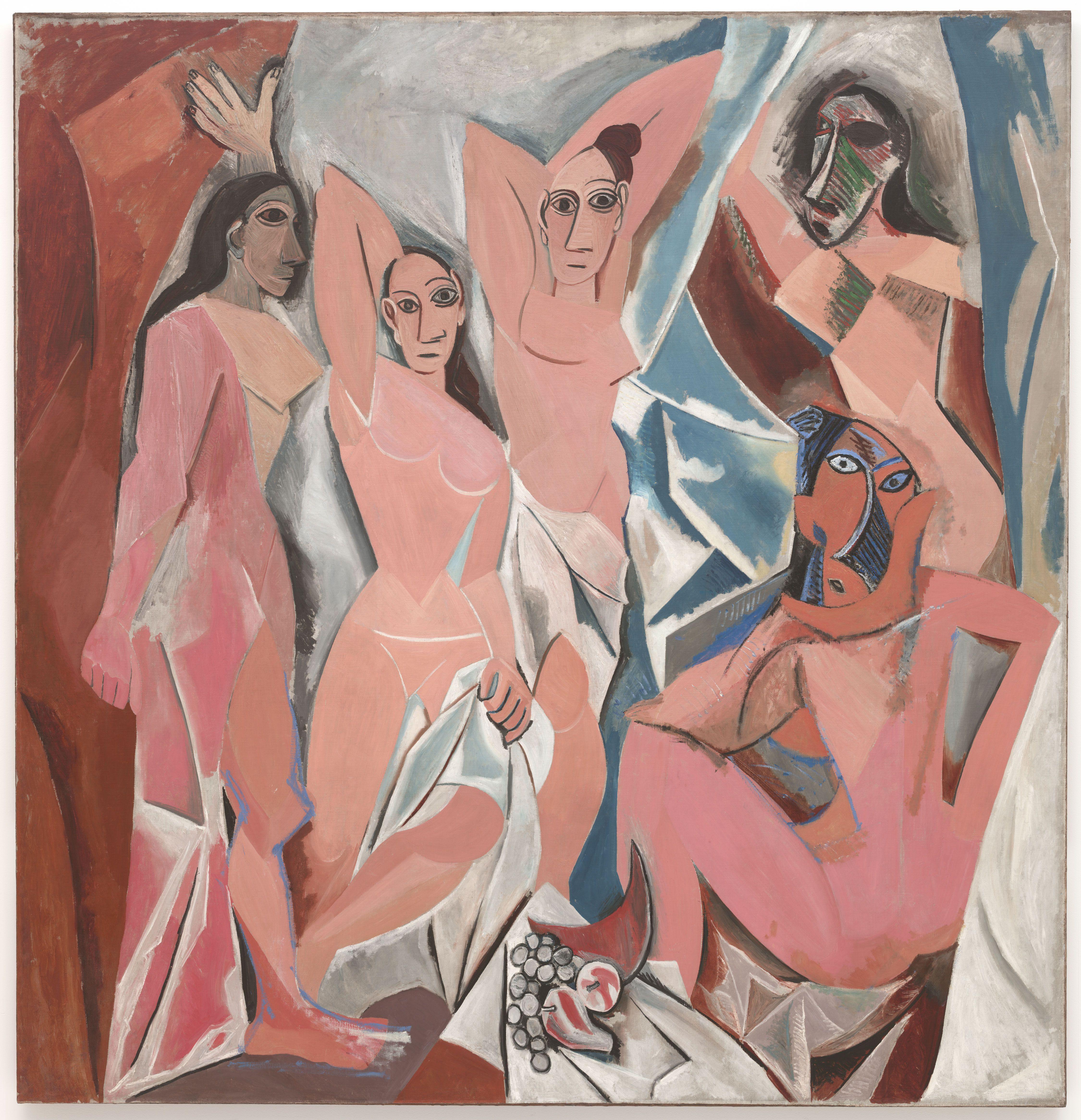
With this painting modern art was born. Picasso painted it in 1907 and called it Les Demoiselles d’Avignon. It unites Cezzanne’s fragmentation with Gauguin’s concept of the nobel savage using the form of the african mask which was popular with Parisian art circle of that time. In great art technique is united with worldview and the technique of fragmentation works well with the worldview of modern man. A view of a fragmented world and a fragmented man and a complete break with the art of the Renaissance which was founded on man’s humanist hopes.
Here man is made to be less than man. Humanity is lost. Speaking of a part of Picasso’s private collection of his own works David Douglas Duncan says “Of course, not one of these pictures was actually a portrait, but his prophecy of a ruined world.”
But Picasso himself could not live with this loss of the human. When he was in love with Olga and later Jacqueline he did not consistently paint them in a fragmented way. At crucial points of their relationship he painted them as they really were with all his genius, with all their humanity. When he was painting his own young children he did not use fragmented techniques and presentation. I want you to understand that I am not saying that gentleness and humanness is not present in modern art, but as the techniques of modern art advanced, humanity was increasingly fragmented.
The opposite of fragmentation would be unity, and the old philosophic thinkers thought they could bring forth this unity from the humanist base and then they gave this up.
How Should We Then Live? Episode 8: The Age Of Fragmentation
Published on Jul 24, 2012
Dr. Schaeffer’s sweeping epic on the rise and decline of Western thought and Culture
E P I S O D E 1 0 Dr. Francis Schaeffer – Episode X – Final Choices 27 min FINAL CHOICES I. Authoritarianism the Only Humanistic Social Option One man or an elite giving authoritative arbitrary absolutes. A. Society is sole absolute in absence of other absolutes. B. But society has to be […]
E P I S O D E 9 Dr. Francis Schaeffer – Episode IX – The Age of Personal Peace and Affluence 27 min T h e Age of Personal Peace and Afflunce I. By the Early 1960s People Were Bombarded From Every Side by Modern Man’s Humanistic Thought II. Modern Form of Humanistic Thought Leads […]
E P I S O D E 8 Dr. Francis Schaeffer – Episode VIII – The Age of Fragmentation 27 min I saw this film series in 1979 and it had a major impact on me. T h e Age of FRAGMENTATION I. Art As a Vehicle Of Modern Thought A. Impressionism (Monet, Renoir, Pissarro, Sisley, […]
E P I S O D E 7 Dr. Francis Schaeffer – Episode VII – The Age of Non Reason I am thrilled to get this film series with you. I saw it first in 1979 and it had such a big impact on me. Today’s episode is where we see modern humanist man act […]
E P I S O D E 6 How Should We Then Live 6#1 Uploaded by NoMirrorHDDHrorriMoN on Oct 3, 2011 How Should We Then Live? Episode 6 of 12 ________ I am sharing with you a film series that I saw in 1979. In this film Francis Schaeffer asserted that was a shift in […]
E P I S O D E 5 How Should We Then Live? Episode 5: The Revolutionary Age I was impacted by this film series by Francis Schaeffer back in the 1970′s and I wanted to share it with you. Francis Schaeffer noted, “Reformation Did Not Bring Perfection. But gradually on basis of biblical teaching there […]
Dr. Francis Schaeffer – Episode IV – The Reformation 27 min I was impacted by this film series by Francis Schaeffer back in the 1970′s and I wanted to share it with you. Schaeffer makes three key points concerning the Reformation: “1. Erasmian Christian humanism rejected by Farel. 2. Bible gives needed answers not only as to […]
Francis Schaeffer’s “How should we then live?” Video and outline of episode 3 “The Renaissance” Francis Schaeffer: “How Should We Then Live?” (Episode 3) THE RENAISSANCE I was impacted by this film series by Francis Schaeffer back in the 1970′s and I wanted to share it with you. Schaeffer really shows why we have so […]
Francis Schaeffer: “How Should We Then Live?” (Episode 2) THE MIDDLE AGES I was impacted by this film series by Francis Schaeffer back in the 1970′s and I wanted to share it with you. Schaeffer points out that during this time period unfortunately we have the “Church’s deviation from early church’s teaching in regard […]
Francis Schaeffer: “How Should We Then Live?” (Episode 1) THE ROMAN AGE Today I am starting a series that really had a big impact on my life back in the 1970′s when I first saw it. There are ten parts and today is the first. Francis Schaeffer takes a look at Rome and why […]
Francis Schaeffer: “Whatever Happened to the Human Race” (Episode 5) TRUTH AND HISTORY Published on Oct 7, 2012 by AdamMetropolis This crucial series is narrated by the late Dr. Francis Schaeffer and former Surgeon General Dr. C. Everett Koop. Today, choices are being made that undermine human rights at their most basic level. Practices once […]
The opening song at the beginning of this episode is very insightful. Francis Schaeffer: “Whatever Happened to the Human Race” (Episode 4) THE BASIS FOR HUMAN DIGNITY Published on Oct 7, 2012 by AdamMetropolis This crucial series is narrated by the late Dr. Francis Schaeffer and former Surgeon General Dr. C. Everett Koop. Today, choices […]
Francis Schaeffer: “Whatever Happened to the Human Race” (Episode 3) DEATH BY SOMEONE’S CHOICE Published on Oct 6, 2012 by AdamMetropolis This crucial series is narrated by the late Dr. Francis Schaeffer and former Surgeon General Dr. C. Everett Koop. Today, choices are being made that undermine human rights at their most basic level. Practices […]
Francis Schaeffer: “Whatever Happened to the Human Race?” (Episode 2) SLAUGHTER OF THE INNOCENTS Published on Oct 6, 2012 by AdamMetropolis This crucial series is narrated by the late Dr. Francis Schaeffer and former Surgeon General Dr. C. Everett Koop. Today, choices are being made that undermine human rights at their most basic level. Practices […]
It is not possible to know where the pro-life evangelicals are coming from unless you look at the work of the person who inspired them the most. That person was Francis Schaeffer. I do care about economic issues but the pro-life issue is the most important to me. Several years ago Adrian Rogers (past president of […]
In his weekly opinion piece, Andy Rooney shares his views on public art. I have really enjoyed this series on the characters referenced in the film “Midnight in Paris.” I can’t express how much I have learned during this series on the characters referenced in Woody Allen’s latest movie “Midnight in Paris.” Today I am looking […]
Pablo Picasso, ‘The acrobat,’ January 18, 1930 Picasso Dreamed About Limbs by DAVE SEGAL The Acrobat (1930) is a simple, surreal cartoon, almost comical in its minimalism. It’s practically a one-line drawing that was seemingly slapdashed off in a few minutes, offering a barely feasible depiction of the body’s pliability. With utmost economy (a black […]
(UPDATE: A reader that used the username “therealchirpy” notes, “Although any affair with Picasso may be fictional, isn’t the ‘Adriana’ referred to in Allen’s ‘Midnight in Paris’ based on Hemingway’s mistress Adriana Ivancich.” I have found some evidence for that. I read a review that draws that same conclusion although some have said that Hemingway […]
Woody Allen’s film “Crimes and Misdemeanors” makes the top 100 list!!! I have written about this movie over and over and over and I have even discussed this movie on the Arkansas Times Blog. Here is a list of the top 100 most Spiritually Significant films and Woody Allen’s movie “Crimes and Misdemeanors” made the […]
A fine review of a good Woody Allen movie. Another Woman An unfairly overlooked semi-classic that improves on Allen’s Bergmanesque dramas, thanks to a formidable cast that includes Gena Rowlands. 2011-09-12 Woody Allen Trevor Gilks 1988 Another Woman, like September, looks like an inessential Woody Allen film. It is yet another unpopular, moderately reviewed movie […]
I enjoyed this review from the 1970′s of Woody Allen movies from John Dart. Woody Allen, Theologian by John Dart Formerly religion religion writer for the Los Angeles Times, John Dart is news editor of the Christian Century magazine. This article appeared in the Christian Century June 22-29, 1977, p. 585. Copyright by the Christian […]
A review of the movie “Whatever Works” by an Evangelical. Woody Allen’s nihilist liberalism goes activist Echoing a remark by Malcolm Muggeridge, Mark Richardson at Oz Conservative writes that liberalism is the last surviving extreme ideology, and he gives several example of what he means by this extremism. I added to the thread my own […]
A very interesting review. Eileen A. Joy Southern Illinois University Edwardsville Dept. of English Language and Literature ejoy@siue.edu College of Arts & Sciences Spring Colloquium “Thinking About the University” 9 – 11 April, 2007 Session 2 (Friday, Apr. 11): Staring Back in the Mirror: Professors Consider Their Depiction in Literature and Film “You Must Change […]
People just don’t understand how wasteful government can be and how giving government more control of our lives destroys much of the freedom that we should have. This series on the stimulus demostrates these points. This whole series started because of a post I did on July 6, 2011 about an post in the Arkansas Times Blog.
Tim Griffin spoke in Central Arkansas recently at a townhall meeting and mentioned that a couple of million of stimulus money went to build the walking bridge in Little Rock that will be opening this summer. Then he went on to show how it was silly for our government to try to stimulate the economy with our national credit card. Steve Chapman rightly noted in his article “Stimulus to Nowhere” noted:
The federal government took out loans that it will have to cover with future tax increases … so states don’t have to. It’s like paying your Visa bill with your MasterCard.
Bridge = good stuff for Central Arkansas. Not sure why it is a bad thing. It is your money at work here being used for your benefit. I applaud this type of government activity. This is the type of project and progress you can see, touch, smell, hear.
That being said, Saline Republican, is this a waste of your money? You can use it as you wish.
__________________________________________
The stimulus came about because politicians believed they had to stimulate the economy by flooding the economy with stimulus dollars and President Obama is forcing one of his cabinet ministers to come down here to Little Rock to get credit for the walking bridge, but I guarantee you the fact that unemployment has risen from 8.1 % to 9.2 % today since the stimulus was passed will never be brought up. I found an article from Milton Friedman from 2000 that shows why a stimulus like this will not work. Here below is a portion of the article. I have also posted some video clips by Friedman discussing the proper role of government.
An increase in government spending clearly benefits the individuals who receive the additional spending. Considered by itself, it looks as if the additional spending is a stimulus to the economy.
.
■Additional taxation. In this situation, the dollar cost to the persons who pay the taxes is exactly equal to the dollar gain to the persons who receive the spending. It looks like a washout.
Getting the extra taxes, however, requires raising the rate of taxation. As a result, the taxpayer gets to keep less of each dollar earned or received as a return on investment, which reduces his or her incentive to work and to save. The resulting reduction in effort or in savings is a hidden cost of the extra spending. Far from being a stimulus to the economy, extra spending financed through higher taxes is a drag on the economy.
This does not mean that the extra spending can never be justified. However, it can only be justified on the ground that the benefit to the people who receive the spending, or to the community from the activity to be financed by the spending, is greater than the direct harm to the taxpayers plus the hidden cost. It cannot be justified as a way to stimulate the overall economy.
■ Government spending financed by borrowing from the public. Individuals who purchase the securities that finance the additional expenditure would have done something else with the money. If they had not purchased the government securities, they presumably would have purchased private securities that would have financed private investment. In other words, government spending crowds out private investment. At this level, it is again a washout: those who receive the extra government spending benefit, but the private investors, who are deprived of the same amount of funds, lose.
But again, that is too simple a story. The overall effect is an increase in the demand for loanable funds, which tends to raise interest rates. The rise in interest rates discourages private demand for funds to make way for the increased government demand. Thus, there is a hidden cost in the form of a lowered stock of productive capital and lower future income.
The Keynesian view that the spending is stimulative assumes that the funds the government borrows would not otherwise have been invested in the private capital market, but came simply from cash held in hoards by individuals from under the mattress, as it were. In addition, it assumes that there are unemployed resources that can readily be brought into the work force by activating the excess funds held by individuals, without raising prices or wages.
That is a possibility in some special cases, such as the Great Depression in the 1930s, when there had been a major reduction in total output and prices were very far from their equilibrium level. More generally, however, theory suggests and experience confirms that government spending financed by borrowing from the public does not provide a stimulus to the economy.
Japan provides a dramatic recent example. During the 1990s, the Japanese economy was depressed. The government tried repeated fiscals stimulus packages, each involving increases in government spending financed by borrowing. Yet — or maybe therefore — the Japanese economy remained depressed.
Senator Mark Pryor wants our ideas on how to cut federal spending. Take a look at this video clip below:
Senator Pryor has asked us to send our ideas to him at cutspending@pryor.senate.gov and I have done so in the past and will continue to do so in the future.
On May 11, 2011, I emailed to this above address and I got this email back from Senator Pryor’s office:
Please note, this is not a monitored email account. Due to the sheer volume of correspondence I receive, I ask that constituents please contact me via my website with any responses or additional concerns. If you would like a specific reply to your message, please visit http://pryor.senate.gov/contact. This system ensures that I will continue to keep Arkansas First by allowing me to better organize the thousands of emails I get from Arkansans each week and ensuring that I have all the information I need to respond to your particular communication in timely manner. I appreciate you writing. I always welcome your input and suggestions. Please do not hesitate to contact me on any issue of concern to you in the future.
GUIDELINE #9: Terminate programs rather than trimming them or phasing them out.
Budget cutters often commit the tactical error of settling for small reductions or lengthy phaseouts of obsolete programs instead of immediately terminating them. They mistakenly believe that securing small program reductions now will allow them to come back and cut the program more next time.
But leaving obsolete programs in place simply creates an opportunity for future Congresses to restore funding. Furthermore, retaining the programs leaves the bureaucracy in place and allows it to enlist interest groups in a counteroffensive against spending reductions. The old line that “those attacking the throne had better kill the king on the first shot” applies to government programs as well.
In the 1980s, President Reagan successfully terminated only 12 of the 94 programs he proposed be eliminated. Congress would often block the terminations by negotiating slight reductions and lengthy phaseouts, waiting a few years for the President’s focus to shift elsewhere and then restoring the programs to their original funding.30 Similarly, Members of the 104th Congress who proposed ending federal subsidies to programs such as AmeriCorps and the Corporation for Public Broadcasting were persuaded to settle for slight spending reductions and a promise to cut more later, and the budgets of those programs have since rebounded to all-time highs.
One must never assume that spending reductions today will be followed up with additional reductions later. Retaining a program means retaining a bureaucracy dedicated to self-preservation, interest groups dedicated to aiding the bureaucracy, and a budget line item to which Congress can easily attach a larger number next year.
Rising spending—not low revenues—is driving the long-term budget deficits. By 2020, spending is projected to be 6.2 percent of GDP above the historical average, while projected 2020 revenues are 0.2 percent of GDP above the historical average. Thus, the entire expanded budget deficit will be caused by rising spending, rather than by falling revenues—even if the 2001 and 2003 tax cuts are extended.
Between 2008 and 2020, the cost of Social Security, Medicare, Medicaid, and net interest is projected to rise from 10.2 percent of GDP to 15.6 percent of GDP—making them responsible for nearly the entire rising budget deficit.
A Defined Contribution Adjusted by Income. Five years after enactment,
all newretirees receive a contribution (premium support) from the
government, just as federal employees and retirees do today. They can use this
contribution to choose Medicare’s premium-based FFS plan or one of the other
health plans. After one year of operation, Medicare enrollees in the traditional
Medicare FFS program are free to join the new Medicare premium-support program.
They can then choose a premium-based FFS plan or an alternative.
During the first five years of the premium-support program, the government’s
contribution is based on the weighted average premium of the regional bids of
competing health plans. After the first five years, the government contribution
is based on the lowest bid of competing plans in a region. The bidding system
will be phased in and will include the bids of the competing managed care plans,
other private plans, and the Medicare premium-based FFS plans offering an
approved range and quality of services.
Under the Heritage plan, low-income enrollees receive the full Medicare
defined contribution. The amount of the defined contribution starts to phase out
for Medicare enrollees with annual non–Social Security incomes between $55,000
and $110,000 and couples with incomes between $110,000 and $165,000. Enrollees
with incomes over $110,000 and couples with incomes over $165,000 receive no
government contribution and pay full, unsubsidized premiums. As with Social
Security, married couples can decide whether they want to qualify for benefits
as individuals or jointly as a couple. The phaseout income levels will be
inflation-indexed. However, Medicare remains a valuable program for
higher-income seniors because they retain access to a guaranteed-issue and
community-rated insurance program.
Under the Heritage plan over 90 percent of seniors would receive the full
defined contribution. Only just over 3.5 percent have such high incomes that
they would pay the entire premium without any contribution from the
government.
This income-adjustment of Medicare is not new. Today, for instance, Medicare
Part B and Part D premiums are changed significantly according to income. For
single retirees, Part B premiums can range widely, from $96.40 per month to as
much as $369.10 per month, depending on their income. Upper-income retirees can
pay as much as $69.10 per month more for the same Part D coverage as a
lower-income senior. What the Heritage plan does is rationalize the income
adjustment of Medicare so that it fulfills the true insurance purpose of the
program while assuring that the program will be available for future
generations.
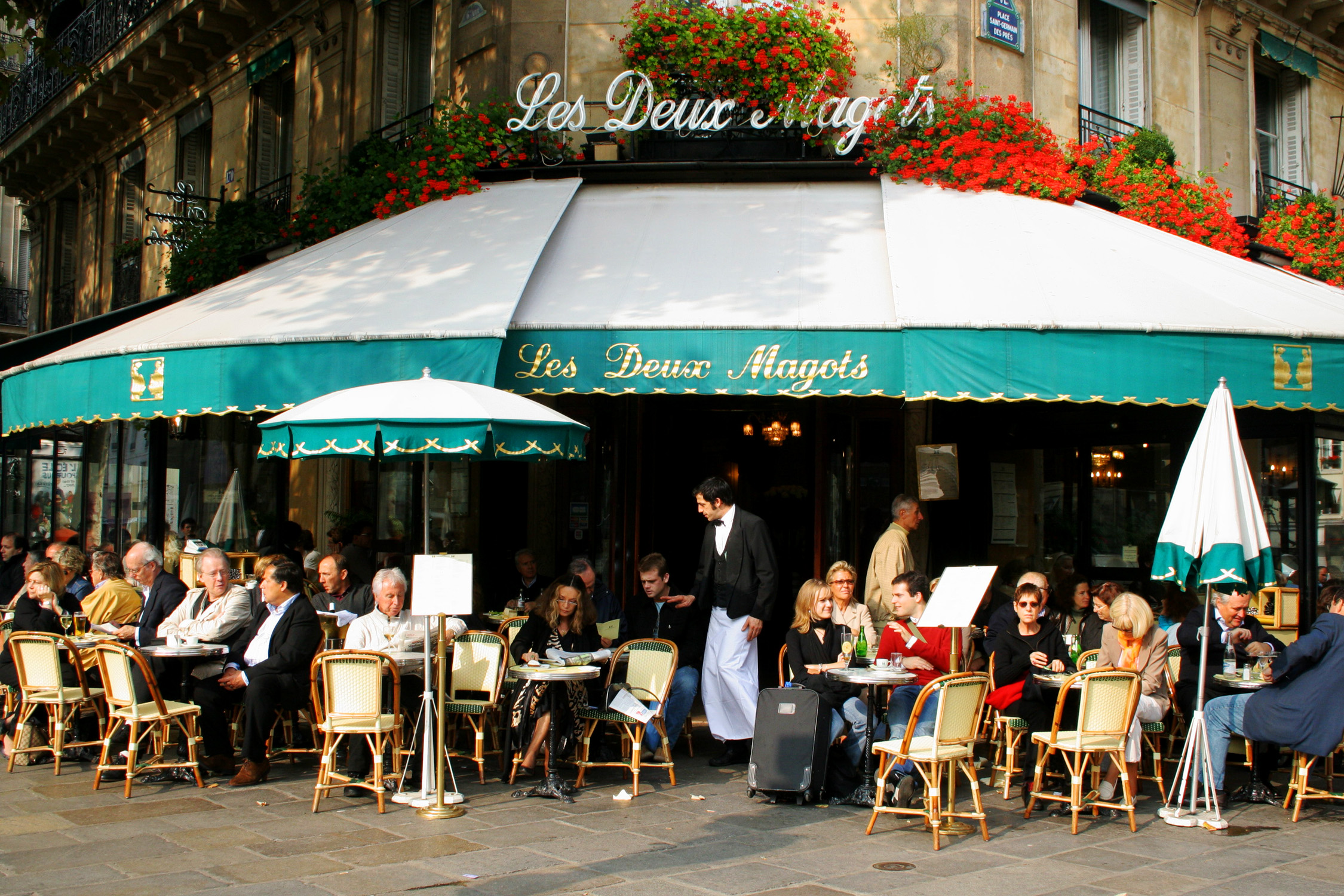
I am really reaching at this point. Up until this point I have really been trying to only talk about the characters that Woody Allen referenced in his latest movie “Midnight in Paris.” However, now I am stepping over the line and talking about famous philosophers who ate regularly at Les Deux Magots which is featured in the movie. So be it.
The Deux Magots literary prize has been awarded to a French novel every year since 1933.
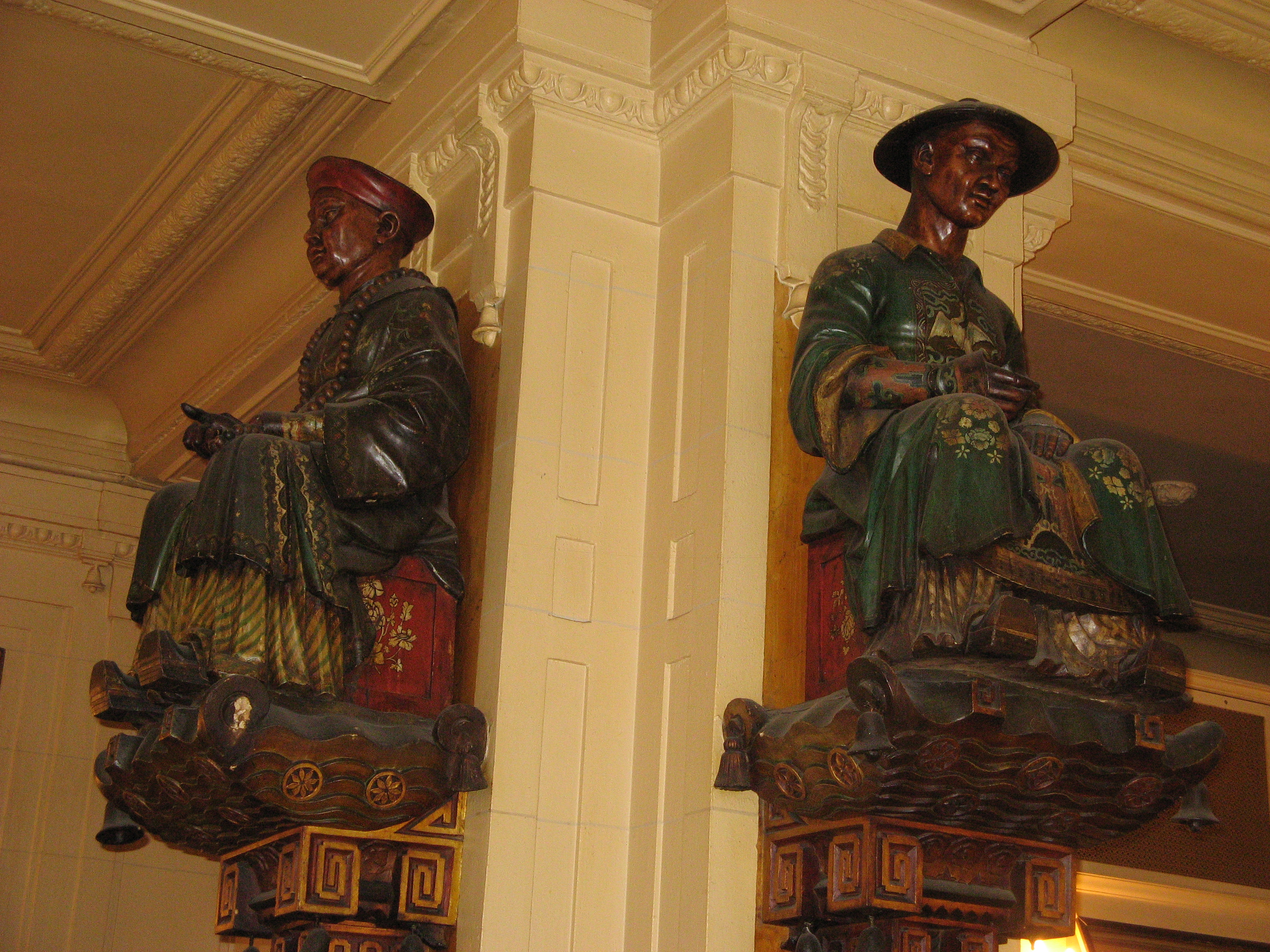
The name originally belonged to a fabric and novelty shop at nearby 23 Rue de Buci. The shop sold silk lingerie and took its name from a popular play of the moment (1800s) entitled Les Deux Magots de la Chine (Two Figurines from China.)[2] In 1873 the business transferred to its current location in the Place Saint-Germain-des-Prés. In 1884 the business changed to a café and liquoriste, keeping the name.
Auguste Boulay bought the business in 1914, when it was on the brink of bankruptcy, for 400,000 francs (anciens). The present manager, Catherine Mathivat, is his great-great-granddaughter.
Sartre’s worldview is discussed in the film series “How should we then live?” by Francis Schaeffer below.
Transcript from “How Should we then live?”:
Humanist man beginning only from himself has concluded that he is only a machine. Humanist man has no place for a personal God, but there is also no place for man’s significance as man and no place for love, no place for freedom.
Man is only a machine, but the men who hold this position could not and can not live like machines. If they could then modern man would not have his tensions either in his intellectual position or in his life, but he can’t. So they leap away from reason to try to find something that gives meaning to their lives, to life itself, even though to do so they deny their reason.
Once this is done any type of thing could be put there. Because in the area of nonreason, reason gives no basis for a choice. This is the hallmark of modern man. How did it happen? It happened because proud humanist man, though he was finite, insisted in beginning only from himself and only from what he could learn and not from other knowledge, he did not succeed. Perhaps the best known of existentialist philosophers was Jean Paul Sartre. He used to spend much of his time here in Paris at the Les Deux Magots.
Sartre’s position is in the area of reason everything is absurd, but one can authenticate himself, that is give validity to his existence by an act of the will. In Sartre’s position one could equally help an old woman across the street or run her down.
Reason was not involved, and there was nothing to show the direction this authentication by an act of the will should take. But Sartre himself could live consistantly with his own position. At a certain point he signed the Algerian Manifesto which declared that the Algerian war was a dirty war. This action meant that man could use his reason to decide that some things were right and some things were wrong and so he destroyed his own system.
How Should We then Live Episode 7 small (Age of Nonreason)
#02 How Should We Then Live? (Promo Clip) Dr. Francis Schaeffer
10 Worldview and Truth
Two Minute Warning: How Then Should We Live?: Francis Schaeffer at 100
Francis Schaeffer Whatever Happened to the Human Race (Episode 1) ABORTION
Francis Schaeffer “BASIS FOR HUMAN DIGNITY” Whatever…HTTHR
The unity and true knowledge of reality defined as starting from Man alone.
II. Shift in Modern Philosophy
A. Eighteenth century as the vital watershed.
B. Rousseau: ideas and influence.
1. Rousseau and autonomous freedom.
2. Personal freedom and social necessity clash in Rousseau.
3. Rousseau’s influence.
a) Robespierre and the ideology of the Terror.
b) Gauguin, natural freedom, and disillusionment.
C. DeSade: If nature is the absolute, cruelty equals non-cruelty.
D. Impossible tension between autonomous freedom and autonomous reasons conclusion that the universe and people are a part of the total cosmic machine.
E. Kant, Hegel, and Kierkegaard and their followers sought for a unity but they did not solve the problem.
1. After these men and their followers, there came an absolute break between the area of meaning and values, and the area of reason.
2. Now humanistic philosophy sees reason as always leading to pessimism; any hope of optimism lies in non-reason.
III. Existentialism and Non-Reason
A. French existentialism.
1. Total separation of reason and will: Sartre.
2. Not possible to live consistently with this position.
B. German existentialism.
1. Jaspers and the “final experience.”
2. Heidegger and angst.
C. Influence of existentialism.
1. As a formal philosophy it is declining.
2. As a generalized attitude it dominates modern thought.
IV. Forms of Popularization of Nonrational Experience
A. Drug experience.
1. Aldous Huxley and “truth inside one’s head.”
2. Influence of rock groups in spreading the drug culture; psychedelic rock.
B. Eastern religious experience: from the drug trip to the Eastern religious trip.
C. The occult as a basis for “hope” in the area of non-reason.
V. Theological Liberalism and Existentialism
A. Preparation for theological existentialism.
1. Renaissance’s attempt to “synthesize” Greek philosophers and Christianity; religious liberals’ attempt to “synthesize” Enlightenment and Christianity.
2. Religious liberals denied supernatural but accepted reason.
3. Schweitzer’s demolition of liberal aim to separate the natural from the supernatural in the New Testament.
B. Theological existentialism.
1. Intellectual failure of rationalist theology opened door to theological existentialism.
2. Barth brought the existential methodology into theology.
a) Barth’s teaching led to theologians who said that the Bible is not true in the areas of science and history, but they nevertheless look for a religious experience from it.
b) For many adherents of this theology, the Bible does not give absolutes in regard to what is right or wrong in human behavior.
3. Theological existentialism as a cul-de-sac.
a) If Bible is divorced from its teaching concerning the cosmos and history, its values can’t be applied to a historic situation in either morals or law; theological pronouncements
about morals or law are arbitrary.
b) No way to explain evil or distinguish good from evil. Therefore, these theologians are in same position as Hindu philosophers (as illustrated by Kali).
c) Tillich, prayer as reflection, and the deadness of “god.”
d) Religious words used for manipulation of society.
VI. Conclusion
With what Christ and the Bible teach, Man can have life instead of death—in having knowledge that is more than finite Man can have from himself.
Questions
1. What is the difference between theologians and philosophers of the rationalist tradition and those of the existentialist tradition?
2. “If the early church had embraced an existentialist theology, it would have been absorbed into the Roman pantheon.” It didn’t. Why not?
3. “It is true that existentialist theology is foreign to biblical religion. But biblical religion was the product of a particular culture and, though useful for societies in the same cultural stream, it is no longer suitable for an age in which an entire range of world cultures requires a common religious denominator. Religious existentialism provides that, without losing the universal instinct for the holy.” Study this statement carefully. What assumptions are betrayed by it?
4. Can you isolate attitudes and tendencies in yourself, your church, and your community which reflect the “existentialist methodology” described by Dr. Schaeffer?
Key Events and Persons
Rousseau: 1712-1778
Kant: 1724-1804
Marquis de Sade: 1740-1814
The Social Contract: 1762
Hegel: 1770-1831
Kierkegaard: 1813-1855
Paul Gauguin: 1848-1903
Whence, What Whither?: 1897-1898
Albert Schweitzer: 1875-1965
Quest for the Historical Jesus: 1906
Karl Jaspers: 1883-1969
Paul Tillich: 1886-1965
Karl Barth: 1886-1968
Martin Heidegger: 1889-1976
Aldous Huxley: 1894-1963
J.P. Sartre: 1905-1980
Beatles’ Sergeant Pepper: 1967
Further Study
Unless already familiar with them, take time to listen to the Beatles’ records, as well as to discs put out by other groups at the time.
Albert Camus, The Stranger (1942).
Aldous Huxley, The Doors of Perception (1954).
Rousseau, The Social Contract (1762).
J.P. Sartre, Nausea (1938).
Paul Tillich, The Courage to Be (1952).
Following Rousseau, the exaggeration of the delights and the pathos of nature and experience which marks Romanticism may be sampled in, for example, Wordsworth’s poems, Casper David Friedrich’s paintings, and Schubert’s songs.
J.G. Fichte, Addresses to the German Nation (1968).
J.W. von Goethe, The Sorrows of Young Werther (1962).
Erich Heller, The Disinherited Mind (1952).
______________________________________
Jean-Paul Sartre, (1905-1980) born in Paris in 1905, studied at the École Normale Supérieure from 1924 to 1929 and became Professor of Philosophy at Le Havre in 1931. With the help of a stipend from the Institut Français he studied in Berlin (1932) the philosophies of Edmund Husserl and Martin Heidegger. After further teaching at Le Havre, and then in Laon, he taught at the Lycée Pasteur in Paris from 1937 to 1939. Since the end of the Second World War, Sartre has been living as an independent writer.
Sartre is one of those writers for whom a determined philosophical position is the centre of their artistic being. Although drawn from many sources, for example, Husserl’s idea of a free, fully intentional consciousness and Heidegger’s existentialism, the existentialism Sartre formulated and popularized is profoundly original. Its popularity and that of its author reached a climax in the forties, and Sartre’s theoretical writings as well as his novels and plays constitute one of the main inspirational sources of modern literature. In his philosophical view atheism is taken for granted; the “loss of God” is not mourned. Man is condemned to freedom, a freedom from all authority, which he may seek to evade, distort, and deny but which he will have to face if he is to become a moral being. The meaning of man’s life is not established before his existence. Once the terrible freedom is acknowledged, man has to make this meaning himself, has to commit himself to a role in this world, has to commit his freedom. And this attempt to make oneself is futile without the “solidarity” of others.
The conclusions a writer must draw from this position were set forth in “Qu’est-ce que la littérature?” (What Is Literature?), 1948: literature is no longer an activity for itself, nor primarily descriptive of characters and situations, but is concerned with human freedom and its (and the author’s) commitment. Literature is committed; artistic creation is a moral activity.
While the publication of his early, largely psychological studies, L’Imagination (1936), Esquisse d’une théorie des émotions (Outline of a Theory of the Emotions), 1939, and L’Imaginaire: psychologie phénoménologique de l’imagination (The Psychology of Imagination), 1940, remained relatively unnoticed, Sartre’s first novel, La Nausée (Nausea), 1938, and the collection of stories Le Mur (The Wall and other Stories), 1938, brought him immediate recognition and success. They dramatically express Sartre’s early existentialist themes of alienation and commitment, and of salvation through art.
His central philosophical work, L’Etre et le néant (Being and Nothingness), 1943, is a massive structuralization of his concept of being, from which much of modern existentialism derives. The existentialist humanism which Sartre propagates in his popular essay L’Existentialisme est un humanisme (Existentialism is a Humanism), 1946, can be glimpsed in the series of novels, Les Chemins de la Liberté (The Roads to Freedom), 1945-49.
Sartre is perhaps best known as a playwright. In Les Mouches (The Flies), 1943, the young killer’s committed freedom is pitted against the powerless Jupiter, while in Huis Clos (No Exit), 1947, hell emerges as the togetherness of people.
Sartre has engaged extensively in literary critisicm and has written studies on Baudelaire (1947) and Jean Genet (1952). A biography of his childhood, Les Mots (The Words), appeared in 1964.
Roger Arpajou/Versitil Cinema & Gravier Productions, Courtesy of Sony Pictures Classics
Owen Wilson, left, is Gil, who travels back in time to 1920s Paris, and Marion Cotillard is Adriana, a fictional mistress of Picasso’s who catches Gil’s eye. More Photos »
He runs into Scott and Zelda Fitzgerald at an elegant soiree, where he hears Cole Porter crooning “Let’s Do It (Let’s Fall in Love).” He gets writing advice from a laconic Hemingway, persuades Gertrude Stein to read the manuscript of his novel, and falls in love with Picasso’s mistress. He meets Salvador Dalí, T. S. Eliot, Djuna Barnes, Josephine Baker, Luis Buñuel, Man Ray and others in the enormously talented cast of expatriates and bohemians that peopled Jazz Age Paris. Reeling from the folly of World War I and so offering fodder for novels and paintings dripping with disillusionment, Paris was the center of the artistic universe then, and those legends really did converge on Paris around the same time.
“If you are lucky enough to have lived in Paris as a young man then wherever you go for the rest of your life, it stays with you, for Paris is a moveable feast,” Hemingway wrote in “A Moveable Feast,” his memoir that was posthumously published in 1964.
The movie sometimes assumes viewers know the details of these luminous lives, so it may be helpful to understand some of the complicated relationships that made Paris in that era both a dream and often something less.
In 1922 Hemingway and his first wife, Hadley, took a two-room flat near the Sorbonne that had no hot water and no indoor toilet. He also rented a room around the corner to write, something like the “attic with a skylight” Gil craves. It had a view of the smokestacks and rooftops that Mr. Allen captures in worshipful shots of the city.
Hemingway also discovered Shakespeare & Company, a bookstore near the Jardin du Luxembourg owned by Sylvia Beach that became a crossroads for Americans in Paris. It’s where he borrowed books by Turgenev and Tolstoy, and it makes a cameo in the film.
Gil meets Hemingway in a run-down cafe not unlike the legendary Dingo, where Hemingway’s less than beautiful friendship with Fitzgerald began with the latter’s drunken near-blackout. Hemingway, who is parodied in the film with dialogue like “no subject is terrible if the story is true and if the prose is clean and honest,” was envious of the seemingly effortless lyricism of Fitzgerald’s writing in works like “The Great Gatsby.” In “Midnight in Paris,” Hemingway tells Fitzgerald that Zelda, a writer herself, sees her husband as a competitor. But “A Moveable Feast” offers a more full-throated account. Hemingway grew to despise Zelda, partly because she had betrayed Fitzgerald with a French aviator and partly because he blamed her decadent tempestuousness for ruining her husband’s productivity.
Picasso and Matisse, who appear in the film, also had a rivalry, barely acknowledged in the film, with the two artists echoing — some critics say swiping — each other’s themes. Both gained the attention of the art collector Leo Stein and his sister, Gertrude. In the film Gil hears that Gertrude Stein has bought a Matisse for 500 francs and, in the hope of making a time-bending killing, asks her if he could pick up “six or seven” Matisses as well. The twice-married Picasso was famous for mistresses, and in the film Marion Cotillard plays Adriana, a capricious, if melancholy stand-in for all of Picasso’s lovers, models and muses. She claims to have been the lover of Modigliani and Braque as well. In actuality, Picasso’s mistresses were relatively constant. Marie-Thérèse Walter, who was 17 when she met Picasso, was with him for eight years, bearing him a daughter, Maya. Dora Maar, whom he met around 1935, was his lover for at least eight years as well.
The Indiana-born Cole Porter maintained an elegant apartment, where he gave hedonistic parties that were daring for their mingling of gay and straight friends. Porter met and married Linda Lee Thomas, a divorcée from Louisville who was eight years older and aware that Porter was gay. They set up an even more lavish apartment — walls covered in zebra hide — near Les Invalides, a home that seems like the setting for the on-screen party where Porter entertains his guests at the piano.
The film recounts how many Porter songs were hommages to Paris —“I Love Paris” and “C’est Magnifique,” among them — and indeed Porter wrote a musical, “Paris,” for the chanteuse Irene Bordoni. One of the show’s songs was “Let’s Do It,” with teasingly suggestive lines including: “In shallow shoals English soles do it./Goldfish in the privacy of bowls do it.”
When Gil sits down in a cafe with Dalí and Man Ray, he confides to those artists his shock at being catapulted back in time. Man Ray is delighted with the idea, but Gil tells him that’s because “you’re a Surrealist and I’m a normal guy.”
Dalí, played here by Adrien Brody, first visited Paris in 1926, grew the mustache that would become his trademark, and met his idol and fellow Spaniard, Picasso. Experimenting with many forms, Dalí fell in with a circle of Surrealists in Montparnasse whose members were probing the Freudian depths of their psyches for what they regarded as a new expressive frontier. He met his future wife, Gala, who was inconveniently married to a Surrealist poet.
Dalí collaborated with Buñuel on the short avant-garde film “Un Chien Andalou.” In “Midnight in Paris,” Gil suggests to Buñuel that he make a film about a dinner party gone haywire. Buñuel, of course, took up the suggestion. The film was “The Exterminating Angel,” released in 1962.
This article has been revised to reflect the following correction:
Correction: May 31, 2011
An earlier version of this article omitted the final paragraph.
This article has been revised to reflect the following correction:
Correction: June 1, 2011
An article on Saturday about figures from the Paris arts scene in the 1920s who appear in the new Woody Allen movie, “Midnight in Paris,” including the filmmaker Luis Buñuel, misidentified a film by Buñuel that the Allen movie’s protagonist urges him to make some day. It is “The Exterminating Angel,”
The Reformed System. When the changes are fully phased in, seniors
will enroll in the health plans of their choice and receive a defined
contribution (known as premium support) toward the cost of their plans, much as
Members of Congress and millions of federal employees and retirees do through
the FEHBP. Unlike today, all plans will include catastrophic protection. Thanks
to the structure and insurance rules in Medicare, the premium support will be
sufficient for seniors to afford an adequate level of benefits, regardless of
age or health care condition.
The range of choices in the transformed system includes Medicare
premium-based fee-for-service insurance as well as other fee-for-service plans,
Medicare Advantage plans, managed care plans, association plans, and
Taft–Hartley Act and employer-based plans. Existing health savings accounts
(HSAs) can also be carried into retirement.
Medicare’s basic rules for insurance are retained, together with an improved
risk-adjustment mechanism to offset the impact of any adverse selection.
Underthe reformed system, Medicare’s Center for Drug and Health Plan
Choice, whose mission today is to identify abuse and oversee marketing rules for
Medicare Advantage and Medicare drug plans, carries out that function for all
plans.
Beyond retaining the Medicare insurance rules, the reform provides for fiscal
solvency and reserve requirements for all health plans to ensure that plans have
the financial resources to pay insurance claims. It also provides marketing
rules to protect consumers against fraud and a requirement that benefits be
described in plain English without surprises or denials in fine print. By
increasing choice and competition, the reformed Medicare program will deliver
better care and provide true health care security for less money than under
current projections.
The cash value of premium support is reduced for upper-income seniors and
eventually phased out for those with the highest incomes. However, all seniors
will have access to the same Medicare system with no need to buy a separate plan
to cover catastrophic expenses. Poor seniors remain eligible for Medicaid
assistance. Like the Social Security adjustments in retirement age, Medicare’s
eligibility age becomes 68 in 10 years and is indexed thereafter for increases
in longevity.
During the five-year transition period, Medicare’s traditional
fee-for-service system also changes. Part A costs are offset by a new premium
payment system for upper-income retirees. The premiums for Parts B and D rise
according to income. The highest-income seniors pay an unsubsidized premium for
Parts B and D during the transition.
Medicare must be reformed to solve this huge financing problem, to improve
access to quality care, and to ensure that health care will be available for
younger Americans when they retire.
The Heritage plan accomplishes this by transforming Medicare from an
open-ended and unsustainable defined-benefit entitlement into a properly
budgeted program that focuses Medicare subsidies on those who need them most.
The new Medicare program would look much more like the Federal Employees Health
Benefits Program (FEHBP), the health care system for Members of Congress and
federal employees.
Over a five-year period, the plan transforms Medicare into a
defined-contribution system, with stronger health security for the poor and less
healthy, and guarantees new protections against catastrophic costs for all
enrollees. Today’s traditional fee-for-service Medicare program provides no such
protections. Because of this gap, nine out of 10 seniors feel compelled to buy
supplemental private health insurance, including Medigap, to cover themselves
against the financial devastation of catastrophic illness. This means that
seniors pay an extra set of premiums and often incur high out-of-pocket costs
for both premium and non-premium medical expenses.
Finally, the plan establishes a true long-term budget for Medicare.





 Jean-Paul Sartre, (1905-1980) born in Paris in

 Slide Show


