An open letter to President Obama (Part 49, A response to your budget)

On Bloomberg, Sessions Discusses Astounding Gimmicks In President’s Budget

Uploaded by on Feb 13, 2012

__________________

Rep. James Lankford Responds to President Obama’s $3.8 Trillion Budget

Uploaded by on Feb 13, 2012

Rep. James Lankford (R-OK) responded to President Obama’s FY 2013 budget proposal that fails to cut the deficit in half by the end of his first term as promised. The budget also delayed the tough decisions to cut spending and reform entitlements that are needed to avoid a debt crisis.

_______________________

Senator Blunt Participates in Press Conference in Response to President Obama’s Budget 2/13/2012

Uploaded by on Feb 13, 2012

U.S. Senator Roy Blunt (Mo.) participated in a press conference with GOP Senators in response to President Obama’s budget proposal on February 13, 2012.

_________________________

Corker Says President’s 2012 Budget Proposal Shows “Lack of Urgency” on Spending

Uploaded by on Feb 14, 2011

In remarks on the Senate floor today, U.S. Senator Bob Corker, R-Tenn., expressed disappointment in President Obama’s 2012 budget proposal, saying it displayed a “lack of urgency” to get federal spending under control. Corker has introduced the CAP Act to dramatically cut federal spending over the next decade.

President Obama c/o The White House
1600 Pennsylvania Avenue NW
Washington, DC 20500

Dear Mr. President,

I know that you receive 20,000 letters a day and that you actually read 10 of them every day. I really do respect you for trying to get a pulse on what is going on out here.

Below is a portion of an article from the group “Americans for Prosperity” and I wanted to share it with you since it agrees with the principles that I believe in.

AFP Responds to President Obama’s Budget


President Obama’s Fiscal Year 2013 Budget

Just another Tax-and-Spend Proposal

On February 13, President Obama released his budget proposal for the fiscal year starting October 1, 2012.  Just like every budget he has offered, this proposal spends too much, taxes too much, uses budget and accounting gimmicks, and fails to address the nation’s biggest challenges.  Last year, the President’s budget was so unserious that the Senate rejected it 97-0; not even a single member of his own party supported the plan.  This year he hasn’t done much better.

Budget Tricks and Accounting Gimmicks: The President claims over $4 trillion in deficit reduction in his budget based on either budget tricks or policies that he had nothing to do with.  A few of the gimmicks include:

  • $1.2 trillion in spending reductions from the 2011 debt ceiling debate. However, it was conservatives and House Republicans that pushed and pushed for spending reductions during this debate; the President wanted a debt ceiling increase with no cuts at all.
  • $617 billion in so-called “war savings” from slowing U.S. involvement in Iraq and Afghanistan.  Counting money we never planned to spend as savings is disingenuous at best.
  • $1.9 trillion in tax hikes.  No surprise here, he’s just another tax-and-spend politician.
  • $429 in spending on the Medicare doctors fix is buried in the baseline, covering up this additional spending without paying for it with other cuts.

No Leadership on Nation’s Biggest Budget Challenges: The three big entitlement programs are the main drivers of the nation’s budget woes. The President has once again failed to offer a serious proposal to address these programs.

  • The President has already installed his vision to try to control Medicare costs.  In his health care takeover, the President empowered 15 unelected, unaccountable bureaucrats at the so-called Independent Payment Advisory Board (IPAB) to cut provider reimbursements.  This plan will have the predictable effect of putting bureaucrats between patients and doctors, and creating shortages as even more doctors refuse to take Medicare patients.
  • Enrollment in Medicaid was greatly expanded under the President’s health care law with no plan to control costs.  More than 15 million people will be added to the welfare medicine rolls starting in 2014.  Instead of block granting the program to states so they can use proven cost control mechanisms, the President didn’t offer any serious proposal to rein in spending.
  • The President clung to the failed pay-as-you-go Social Security system that is currently a terrible deal for workers.  Higher taxes, lower benefits or a later retirement age will all make Social Security an even worse bargain for workers. Instead, we should move to an optional private accounts system that will restore the solvency of the system, increase individuals’ rate of return and encourage a personal ownership mentality in a program that is currently at the whim of politicians.
  • _____________________
  • Thank you so much for your time. I know how valuable it is. I also appreciate the fine family that you have and your committment as a father and a husband.Sincerely,Everette Hatcher III, 13900 Cottontail Lane, Alexander, AR 72002, ph 501-920-5733, lowcostsqueegees@yahoo.com
Are there brave conservatives out there?

I wish there were more like those 66 brave conservatives that voted against the compromise that kept the government going (see links below). Now it seems that the Republicans could also stop this excessive regulations if they wanted to, but do they have the will power? I wish we had more like those 66!!!!

No More GOP Whining about Overregulation

by Richard W. Rahn

Richard W. Rahn is a senior fellow at the Cato Institute and chairman of the Institute for Global Economic Growth.

Added to cato.org on March 27, 2012

This article appeared in Washington Times on March 27, 2012

The Supreme Court last week ruled against the Environmental Protection Agency (EPA) in a unanimous decision. The EPA had charged a couple with violating the Clean Water Act. It claimed their property was a “wetland” and said it would fine them up to $75,000 per day — but there was no water on the property and there had been no judicial review of the charge. Where are the members of Congress whose funding enables the EPA to engage in this tyranny?

We are used to various government agencies overreaching and then seeing members of Congress go on TV and complain about what the government agencies are doing. The fact is, Congress (both parties are guilty) has failed in its oversight responsibilities and continues to fund agencies that ignore both the Constitution and the law.

Republicans whine that they cannot control spending because they only control one half of Congress. But the plain fact is that the Constitution is very specific. Any spending bill must be passed by both houses of Congress and signed into law by the president. Setting aside for the moment the budget agreements that House Republicans, Senate Democrats and the president made about the overall level of spending and funding of the entitlements, there is still much House Republicans can do through the appropriations process to prevent many of the excesses of government.

Richard W. Rahn is a senior fellow at the Cato Institute and chairman of the Institute for Global Economic Growth.


More by Richard W. Rahn


For instance, there is nothing to prevent the House Republicans from refusing to fund the EPA’s desired budget until the agency puts procedures in place to guarantee the basic constitutional rights of all Americans, including independent judicial review, before any fines or criminal charges are levied. These same rules also should apply to the Securities and Exchange Commission (well-known for its incompetence and overreaching), the Internal Revenue Service (IRS) and other agencies that have a record of abusing citizens.

Most federal agencies are required to do a cost-benefit analysis before issuing any major rule or regulation, normally defined as having an impact of $100 million. Many agencies only pay lip service to the requirement, rarely having truly independent and competent staff to do the required analysis. Another stunt used by bureaucrats to avoid doing cost-benefit studies is always to assume that the cost of the proposed regulation is under the $100 million threshold by ignoring many of the indirect costs of the regulation.

Some agencies claim they are not required to comply with the cost-benefit requirements — the IRS being one example. The IRS is now writing rules for the Foreign Account Tax Compliance Act (FATCA). The rules could drive out much of the more than $10 trillion foreign portfolio investment in the United States, which would cost millions of jobs. Has the IRS done an independent cost-benefit analysis of the regulation? No. Has the IRS looked at the impact of the regulation on Americans living abroad? No. Has the IRS done an assessment of the impact of the regulation on our relations with friendly foreign countries? No. Has the Republican House banned the IRS from spending funds on enforcing what is likely to be a very destructive regulation until a thorough and independent cost-benefit study on the regulation is done? No.

Wake up, congressional Republicans. When the foreign investments stop flowing freely next year and millions of Americans are losing jobs as a result, you are going to be blamed — and properly so — because you did nothing to stop it. You have the power to stop it and many other outrages. You don’t need Senate Majority Leader Harry Reid and Senate Democrats or the president to give you permission to stop this.

House Republicans, when are you going to find the guts to stop funding National Public Radio (NPR)? Much of its taxpayer-funded but liberally biased programming attacks only you and your base, but you sit there just waiting to be hit. The folks at NPR know that you are all talk and no action so they continue to misuse public funds to promote a Democrat-only agenda.

Many Republicans continue to vote for appropriations for international outfits such as the Organization for Economic Co-operation and Development, which has an anti-tax competition agenda and global minimum-tax agenda, and the International Monetary Fund, which indirectly helped fund the Greek bailout. Both organizations damage American interests. Members of Congress, please explain why U.S. taxpayers should have some of their hard-earned money spent to help the Greeks. The administration and members of Congress argue that no U.S. taxpayer money was directly used, but money is fungible. Just because it goes through several pockets does not mean that U.S. taxpayers did not contribute.

Tea Partyers and others who are concerned about the growth of abusive government need to pay attention and make it clear they will oppose those, including Republicans who call themselves fiscal conservatives, who vote to fund these abusive agencies and activities.

The Sixty Six who resisted “Sugar-coated Satan Sandwich” Debt Deal (Part 26)

The Sixty Six who resisted “Sugar-coated Satan Sandwich” Debt Deal (Part 26) This post today is a part of a series I am doing on the 66 Republican Tea Party favorites that resisted eating the “Sugar-coated Satan Sandwich” Debt Deal. Actually that name did not originate from a representative who agrees with the Tea Party, […]

The Sixty Six who resisted “Sugar-coated Satan Sandwich” Debt Deal (Part 25)

Uploaded by RepJoeWalsh on Jun 14, 2011 Our country’s debt continues to grow — it’s eating away at the American Dream. We need to make real cuts now. We need Cut, Cap, and Balance. The Sixty Six who resisted “Sugar-coated Satan Sandwich” Debt Deal (Part 25) This post today is a part of a series […]

The Sixty Six who resisted “Sugar-coated Satan Sandwich” Debt Deal (Part 23)

The Sixty Six who resisted “Sugar-coated Satan Sandwich” Debt Deal (Part 23) This post today is a part of a series I am doing on the 66 Republican Tea Party favorites that resisted eating the “Sugar-coated Satan Sandwich” Debt Deal. Actually that name did not originate from a representative who agrees with the Tea Party, […]

The Sixty Six who resisted “Sugar-coated Satan Sandwich” Debt Deal (Part 22)

The Sixty Six who resisted “Sugar-coated Satan Sandwich” Debt Deal (Part 22) This post today is a part of a series I am doing on the 66 Republican Tea Party favorites that resisted eating the “Sugar-coated Satan Sandwich” Debt Deal. Actually that name did not originate from a representative who agrees with the Tea Party, […]


Bill Clinton getting praise from Cato Institute

Spending Restraint, Part I: Lessons from Ronald Reagan and Bill Clinton

Uploaded by on Feb 14, 2011

Ronald Reagan and Bill Clinton both reduced the relative burden of government, largely because they were able to restrain the growth of domestic spending. The mini-documentary from the Center for Freedom and Prosperity uses data from the Historical Tables of the Budget to show how Reagan and Clinton succeeded and compares their record to the fiscal profligacy of the Bush-Obama years.

______________

I wish we could get a budget that did not spend away our children’s future. Dan Mitchell of the Cato Institute feels the same way about this issue and he actually praises Democratic President Bill Clinton from Arkansas for his efforts to keep spending down in the 1990’s. Take a look:

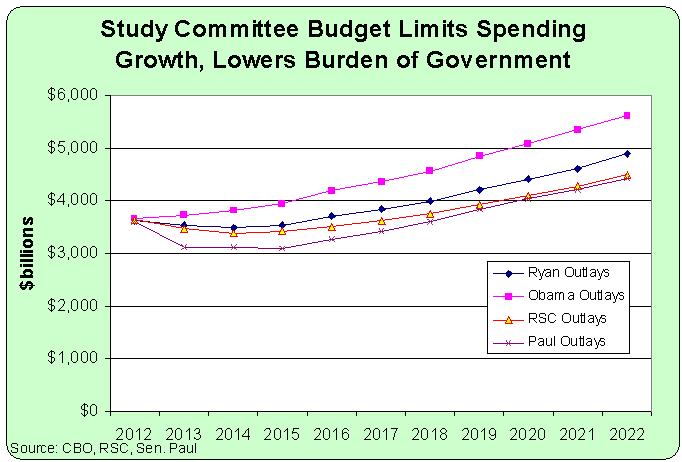
A couple of weeks ago, I offered some guarded praise for Paul Ryan’s budget, pointing out that it satisfies the most important requirement of fiscal policy by restraining spending – to an average of 3.1 percent per year over the next 10 years – so that government grows slower than the productive sector of the economy (I call this my Golden Rule).

I was more effusive in my comments about Senator Rand Paul’s budget, which limited the growth of the federal budget over the next 10 years to an average of 2.2 percent each year.

Now the Republican Study Committee from the House of Representatives has put forth a plan that also deserves considerable applause. Like Senator Paul, the RSC plan would impose immediate significant fiscal discipline such that spending in 2017 would be about the same level as it is this year.

Think of this as being similar to the very successful fiscal reforms of New Zealand and Canada in the 1990s.

After the initial period of spending restraint, the budget would be allowed to grow, but only about as fast as the private economy. This chart shows spending levels for the Obama budget, the Paul Ryan budget, the Rand Paul budget, and the RSC budget.

A couple of final points.

1. For all the whining and complaining from the pro-spending lobbies, the RSC budget is hardly draconian. Federal spending, measured as a share of GDP, would only drop to where it was when Bill Clinton left office.

2. One preferable feature of the Rand Paul budget is that the Kentucky Senator eliminates four needless and wasteful federal departments – Commerce, Education, Energy, and Housing and Urban Development. As far as I can tell, no departments are eliminated in the RSC plan. Also, Senator Paul’s plan is bolder on tax reform, scrapping the corrupt internal revenue code and replacing it with a simple and fair flat tax.

3. The RSC comes perilously close to winning a Bob Dole Award. The first chapter of their proposal fixates on symptoms of debt and deficits rather than the real problem of excessive government spending. Indeed, the first six charts all relate to deficits and debt, creating an easy opening for leftists to say they can solve the mis-defined problem with higher taxes.

There are lots of other details worth exploring, but the main lesson is that restraining spending is the key to good fiscal policy.

And that’s what’s happening.  Indeed, the good news is that policymakers have proposed several budget plans that would shrink the burden of spending as a share of GDP. It’s refreshing to debate the features of several good plans (rather than comparing the warts in the competing plans during the big-government Bush years).

The bad news is that Harry Reid and Barack Obama will succeed in blocking any progress this year, so America will move ever closer to becoming another Greece.

____________

Spending Restraint, Part II: Lessons from Canada, Ireland, Slovakia, and New Zealand

Uploaded by on Feb 22, 2011

Nations can make remarkable fiscal progress if policy makers simply limit the growth of government spending. This video, which is Part II of a series, uses examples from recent history in Canada, Ireland, Slovakia, and New Zealand to demonstrate how it is possible to achieve rapid improvements in fiscal policy by restraining the burden of government spending. Part I of the series examined how Ronald Reagan and Bill Clinton were successful in controlling government outlays — particularly the burden of domestic spending programs. www.freedomandprosperity.org

______________

Dan Mitchell of the Cato Institute takes on entitlement reform

It is the elephant in the room that nobody wants to talk about. Here Dan Mitchell takes it on.

Most people have a vague understanding that America has a huge long-run fiscal problem.

They’re right, though they probably don’t realize the seriousness of that looming crisis.

Here’s what you need to know: America’s fiscal crisis is actually a spending crisis, and that spending crisis is driven by entitlements.

More specifically, the vast majority of the problem is the result of Medicaid, Medicare, and Social Security, programs that are poorly designed and unsustainable.

America needs to fix these programs…or eventually become another Greece.

Fortunately, all of the problems can be solved, as these three videos demonstrate.

The first video explains how to fix Medicaid.

Promote Federalism and Replicate the Success of Welfare Reform with Medicaid Block Grants

Uploaded by on Jun 26, 2011

The Medicaid program imposes high costs while generating poor results. This Center for Freedom and Prosperity Foundation video explains how block grants, such as the one proposed by Congressman Paul Ryan, will save money and improve healthcare by giving states the freedom to innovate and compete.

The second video shows how to fix Medicare.

Saving Medicare: Free Market Reforms Are Better than Bureaucratic Rationing

Uploaded by on May 17, 2011

This Center for Freedom and Prosperity Foundation video explains how a “premium-support” plan would solve Medicare’s fiscal crisis and improve the overall healthcare system. This voucher-based system also would protect seniors from bureaucratic rationing. http://www.freedomandprosperity.org

And the final video shows how to fix Social Security.

Saving Social Security with Personal Retirement Accounts

Uploaded by on Jan 10, 2011

There are two crises facing Social Security. First the program has a gigantic unfunded liability, largely thanks to demographics. Second, the program is a very bad deal for younger workers, making them pay record amounts of tax in exchange for comparatively meager benefits. This video explains how personal accounts can solve both problems, and also notes that nations as varied as Australia, Chile, Sweden, and Hong Kong have implemented this pro-growth reform. www.freedomandprosperity.org

_______________________

Regular readers know I’m fairly gloomy about the future of liberty, but this is one area where there is a glimmer of hope.

The Chairman of the House Budget Committee actually put together a plan that addresses the two biggest problems (Medicare and Medicaid) and the House of Representatives actually adopted the proposal.

The Senate didn’t act, of course, and Obama would veto any good legislation anyhow, so I don’t want to be crazy optimistic. Depending on how things play out politically in the next six years, I’ll say there’s actually a 20 percent chance to save America.

What were the values of George W. Bush? (Part 2)

Recently heard Timothy Goeglein on American Family Radio and he shared this story that is in the video clip above.

Below is a review of Goeglein’s book which on Bush’s values.

The Man in the Middle by Timothy S. Goeglein

An Inside Account of Faith and Politics in the George W. Bush Era

Timothy Goeglein spent nearly eight years in the White House as President George W. Bush’s key point of contact to American conservatives and the faith-based world and was frequently profiled in the national news media. But when a plagiarism scandal prompted his resignation, Goeglein chose not to dodge it but confront it, and was shown remarkable grace by the president. In fact, Bush showed more concern for Goeglein and his family than any personal political standing.So begins The Man in the Middle, Goeglein’s unique insider account of why he believes most of the 43rd president’s in-office decisions were made for the greater good, and how many of those decisions could serve as a blueprint for the emergence of a thoughtful, confident conservatism. From a fresh perspective, Goeglein gives behind-the-scenes accounts of key events during that historic two-term administration, reflecting on what was right and best about the Bush years. He was in Florida for the 2000 election recount, at the White House on 9/11, and watched Bush become a reluctant but effective wartime president.Goeglein, now the vice president with Focus on the Family, also looks back at how Bush handled matters like stem cell research, faith-based initiatives, the emergence of the Values Voters, the nominations of both Chief Justice John Roberts and Associate Justice Samuel Alito-in which Goeglein had a direct role-and debates over the definition of marriage.In all, The Man in the Middle backs historians who view the legacy of President George W. Bush in a favorable light, recognizing his conservative ideas worth upholding in order to better shape our nation and change the world.

 
Related posts:

Democrats lied about spending cuts in 1982 and 1990

Washington Could Learn a Lot from a Drug Addict What kind of intervention does Congress need to get it to spend with its spending addiction? Back in 1982 Reagan was promised $3 in cuts for every $1 in tax increases but the cuts never came. In 1990 Bush was promised 2 for 1 but they […]

David Boaz of Cato Institute: “Is Obama worse than Carter and Bush?

    Is Obama Worse Than Carter and Bush? Posted by David Boaz Conservatives have become so furious with President Obama that they forget just how bad some of his predecessors were. One Jeffrey Kuhner, whose over-the-top op-eds in the Washington Times belie the sober and judicious conservatism you might expect from the president of the […]

What is the cause of the U.S. credit downgrade? (Part 1)

Movie Clip Canadian Bacon Prt 1 What is the cause of the U.S. credit downgrade? (Part 1)   7 January 2011 © 1995 Metro-Goldwyn-Mayer Studios Inc. All Rights Reserved. Titles: Canadian Bacon Names: Alan Alda, John Candy, Kevin Pollak, Rip Torn, Michael Moore, Rhea Perlman Still of Alan Alda, John Candy, Kevin Pollak, Rip Torn, […]

US credit rating downgraded

U.S. Credit Rating Downgraded: Now They’ve Done It By J.D. Foster, Ph.D. August 6, 2011 Late on Friday, August 5, Standard & Poor’s (S&P) downgraded the United States credit rating from AAA, and really best in class, to AA+. In one fell swoop, S&P sent two separate and powerful messages. First, as The Heritage Foundation and […]

Dear Senator Pryor, why not pass the Balanced Budget Amendment? (Part 1 Thirsty Thursday, Open letter to Senator Pryor)

On August 4, 2011 John Brummett wrote: The point is that we don’t need to choke our government — or, more to the point, ourselves — with such simplistic devices as balanced budget amendments. The point is that we need to make our often-essential deficit and debt more sustainable, more manageable, more responsible and less […]

Arkansas Media Watch accuses Reagan of increasing spending

Did Ronald Reagan explode federal spending? On the Arkansas Times Blog on July 21, 2011, the link by Arkansas Media Watch to an article that was critical of Ronald Wilson Reagan (who by the way I named my son Wilson after). In the article “Arkansas Democrat Gazette editors make fun of Ronald Reagan” by arkansasmediawatch on […]

Brantley: Republicans will pay for opposing tax increases

Today on the Arkansas Times Blog Max Brantley asserted:  A growing number of polls show Republican voters think their representatives in Congress are too extreme — opposing any tax increases — and have not done enough to work out the debt ceiling problem. Tim Griffin, Rick Crawford and Steve Womack don’t need no stinkin’ polls. […]

President Obama’s press conference June 29, 2011, a Conservative Response Part 3

President Obama Press Conference pt.4 The Stimulus was a stupid idea, but President Obama wants to keep going down that  path. Steve Chapman  rightly noted in his article “Stimulus to Nowhere” noted: Mired in excruciating negotiations over the budget and the debt ceiling, President Barack Obama might reflect that things didn’t have to turn out […]

President Obama’s press conference June 29, 2011, a Conservative Response Part 2

President Obama Press Conference pt.2 Will President Obama have the will power to make the tough spending cuts? The answer  is clear. He will not, but he will be willing to promise that he will. The Democrats promised Ronald Reagan that they would cut 3 dollars for every 1 dollar of tax increase, but it […]

HERITAGE FOUNDATION INTERVIEW:Sen. Mitch McConnell: Americans Don’t Approve of Anything Obama Has Done

Sen. Mitch McConnell: Americans Don’t Approve of Anything Obama Has Done

Uploaded by on Dec 8, 2011

In an exclusive interview at The Heritage Foundation, Senate Minority Leader Mitch McConnell (R-KY) sharply criticized President Obama for engaging in class warfare and accused him of shifting the focus away from his own failed policies in advance of next year’s election.

“My view is he’ll have a hard time convincing Americans he deserves four more years of this,” McConnell said. “There’s nothing he’s done the American people approve of, so of course, he’s trying to change the subject.”

“Tennis Tuesday” David Wheaton (Part 4)

Testimony David Wheaton Tennis

Uploaded by on Sep 23, 2011

Testimony David Wheaton Tennis

David Wheaton

WIMBLEDON : Grass Doesn’t Agree With Lendl Again

July 02, 1991|BILL DWYRE | TIMES SPORTS EDITOR
WIMBLEDON, England — Ivan Lendl, who crawled out of the coffin on Wimbledon’s graveyard court, No. 2, Sunday, succumbed on Centre Court Monday. Lendl, 31, was victim of the same affliction that has finished him every time he has played here–acute grass-courtitis.Lendl, who came back from two sets down Sunday to beat MaliVai Washington, lost to David Wheaton in the third round, 6-3, 3-6, 7-6 (8-6), 6-3.

As always, Lendl worked hard and never quit but never quite got the knack of the serve-and-volley game that is necessary for winning on grass. He is most comfortable on a tennis court when he is standing at the baseline, slugging away, and getting his socks dirty from clay.

His loss took out the third-seeded men’s player, the highest in either the men’s or women’s bracket to date and left the men’s tournament clearly in the hands of Nos. 1 and 2, Stefan Edberg and Boris Becker, each of whom has been coasting through almost unnoticed.

Edberg won his 15th consecutive grass-court match Sunday, a streak that goes all the way back to last year’s Wimbledon, which he won. And Becker beat qualifier Andrei Olhovskiy, 6-1, 6-4, 3-6, 6-3.

Lendl’s exit was his earliest at Wimbledon since 1981, when he lost in the first round to Charlie Fancutt.

“He’s still tough on this surface,” Wheaton said, “even though he’s not comfortable serving and volleying on first and second serves.”

That doesn’t leave much.

“Obviously, it’s better for me to play him on grass than on clay,” Wheaton said.

David Wheaton has an excellent show and website at www.Christianworldview.org Below is some material from his website:

CONCLUSION

Every human being has sinned and thus created a conflict with God — you, me, Mother Theresa, the Pope, Martin Luther King, Nelson Mandela, the apostle Paul, everyone.  You have only two choices in dealing with your sin:

1.) You can choose to accept God’s gracious offer of reconciliation by repenting of your sin and placing your faith in Jesus Christ’s sinless life and atoning death on your behalf as the only way that God’s justice can be satisfied for your sin.

Or…

2.)  You can choose to pay the penalty for your sin yourself by ignoring or rejecting or altering God’s offer of reconciliation through Jesus Christ which will result in someday your being judged guilty by God and sentenced to hell for eternity.

AND FORGET BEING GOOD, YOU MUST BE PERFECT … OR MORE PRECISELY, DECLARED SO BY GOD

No matter how good of a person you think you are right now or how good of a person you plan to be in the future, you can never be good enough to go to heaven because God’s standard is perfect righteousness and you have already failed that standard (and will again).

“For whoever keeps the whole law and yet stumbles in one point, he has become guilty of all” (James 2:10).

“Therefore you are to be perfect, as your heavenly Father is perfect” – Jesus (Matthew 5:48).

“For I say to you that unless your righteousness surpasses that of the scribes and Pharisees [those who were thought to be righteous], you will not enter the kingdom of heaven” – Jesus (Matthew 5:20).

How can anyone ever be perfectly righteous?  No one can … except if God declares you so.

To be forgiven and spend eternity with a sinless God in a sinless place (heaven), you will need to be declared righteous (justified) by God, even though you haven’t been righteous and never will be.  That can only occur when God declares that your past, present, and future sin be credited to Jesus’ account and Jesus’ perfect righteousness be credited to your account.  This “swap” (your sin paid for by Christ and His righteousness credited to you) is how God can judicially declare you righteous and allow you into heaven.

“Therefore if anyone is in Christ, he is a new creature; the old things passed away; behold, new things have come.  Now all these things are from God, who reconciled us to Himself through Christ and gave us the ministry of reconciliation, namely, that God was in Christ reconciling the world to Himself, not counting their trespasses against them, and He has committed to us the word of reconciliation.  Therefore, we are ambassadors for Christ, as though God were making an appeal through us; we beg you on behalf of Christ, be reconciled to God.  He made Him who knew no sin to be sin on our behalf, so that we might become the righteousness of God in Him” (2 Corinthians 5:17-21).

“For if by the transgression of the one [Adam, the first sinner], death reigned through the one, much more those who receive the abundance of grace and of the gift of righteousness will reign in life through the One, Jesus Christ.  So then as through one transgression [Adam’s] there resulted condemnation to all men, even so through one act of righteousness [Christ’s] there resulted justification of life to all men.  For as through the one man’s disobedience the many were made sinners, even so through the obedience of the One the many will be made righteous” (Romans 5:17-19).

A BEFORE AND AFTER PICTURE

The following passage from the New Testament letter to the Ephesians gives a before and after picture of one who believes in Jesus Christ and is saved.

Before picture: dead in sin

“And you were dead in your trespasses and sins, in which you formerly walked according to the course of this world, according to the prince of the power of the air, of the spirit that is now working in the sons of disobedience.  Among them we too all formerly lived in the lusts of our flesh, indulging the desires of the flesh and of the mind, and were by nature children of wrath, even as the rest.

God changes the picture…

But God, being rich in mercy, because of His great love with which He loved us, even when we were dead in our transgressions, made us alive together with Christ (by grace you have been saved), and raised us up with Him, and seated us with Him in the heavenly places in Christ Jesus, so that in the ages to come He might show the surpassing riches of His grace in kindness toward us in Christ Jesus.

After picture: saved through faith for good works

For by grace you have been saved through faith; and that not of yourselves, it is the gift of God; not as a result of works, so that no one may boast.  For we are His workmanship, created in Christ Jesus for good works, which God prepared beforehand so that we would walk in them” (Ephesians 2:1-10).

This passage gives the complete picture: you are dead in sin, God intervenes to save you because of His love and mercy (not giving you what you do deserve – judgment), He brings your salvation to pass by His grace (giving you what you don’t deserve – Christ’s righteousness), and you are called to receive this offer of reconciliation with God by faith alone, not trusting in any righteousness of your own.  Good works will be the evidence — not the means — of your salvation (James 2:26)

Being “saved” or “born again” (John 3:1-8) doesn’t mean your life will become easier.  In fact, you can count on being misunderstood, ostracized, persecuted, and maybe even killed for your faith in Christ.  If the unbelieving world hated Christ, it follows that they will hate His followers (John 15:18-25).  You need to count the cost of being a follower of Jesus.

But having your sins forgiven, being declared righteous, fulfilling the purpose for which you were created (to serve and glorify God), experiencing joy in the midst of turmoil, and inheriting eternal life in heaven far outweigh any temporal trouble.

Now you know the answer to the question: “What must I do to be saved?”  The final question for you is: Will you respond to God’s call in your heart today and receive his loving, merciful, and gracious offer to save you?

Remember, you are sinful and stand condemned before God, the just Judge.  Yet God loves you and desires to save you through His Son Jesus Christ, who is the only One who can mediate the dispute you have created with God.  I’m pleading with you: be reconciled to God today through repenting of your sin and placing your faith for salvation in Jesus Christ.  When you do, God will forgive your sin, He will credit you with Christ’s righteousness, He will indwell you with His Holy Spirit, and He will give you eternal life in heaven.  What could be better and more important than that?!

“Seek the LORD while He may be found; call upon Him while He is near.  Let the wicked forsake his way and the unrighteous man his thoughts; and let him return to the LORD, and He will have compassion on him, and to our God, for He will abundantly pardon” (Isaiah 55:6-7).

Genuine saving faith in Jesus Christ is the only way to be right with God.  If by God’s grace you have received this gift of faith, you must now spend the rest of your life striving to become more like your Savior and Lord Jesus Christ in thought, word, and deed (Romans 8:28-30).  That may sound like a daunting task — and it is — but God promises to give you the power and desire to do so (Philippians 2:12-13) as you draw near to God in prayer and studying His Word.  It will also be important that you become a part of a fellowship of other believers (a church) where God is reverently worshiped and His Word faithfully taught.

Please call or email us with any questions or comments you might have or to share with us your new faith in Jesus Christ.  We would look forward to talking with you more about such things as believer’s baptism, the gift of the Holy Spirit, and a plan to help you grow in your new life following Christ.

All for God’s glory,

David Wheaton
The Christian Worldview

Phone:  1-888-646-2233 toll-free
Email:  feedback@TheChristianWorldview.org

HERITAGE FOUNDATION INTERVIEW:Sen. Rand Paul on Occupy Wall Street, Repealing No Child Left Behind

Sen. Rand Paul on Occupy Wall Street, Repealing No Child Left Behind

Uploaded by on Oct 18, 2011

The latest iteration of No Child Left Behind comes before a Senate committee tomorrow with bipartisan support. But if Sen. Rand Paul (R-KY) has anything to say about it, the bill won’t go anywhere fast.

Paul also addressed the ongoing Occupy Wall Street protest in New York and similar demonstrations taking place across America. He warned of the “mob mentality” on display and the “lurking danger” of the movement.

Paul, the Tea Party favorite who won election last November, has promised to introduce 100 amendments to No Child Left Behind which comes before a Senate committee tomorrow, including a complete repeal of the legislation.

What were the values of George W. Bush?

What’s It Like to be the “Man in the Middle” in the George W Bush White House?

Uploaded by LibertyCounsel on Dec 6, 2011

Uploaded by on Dec 6, 2011

Faith & Freedom: Tuesday December 13, 2011

Matt Barber and Special Guest Tim Goeglein, former special assistant to President George W. Bush, former deputy of the White House Office of Public Liaison & former aide to Karl Rove, define grace & mercy personified, love & forgiveness at the most personal level!

When the United States Congress votes on a law to make it the law of the land, President Obama does not have authority to pick & choose what is law & what is not … he cannot unilaterally declare any law unconstitutional.

______________________

Recently I heard  Tim Goeglein on American Family Radio and I wanted to share some things that he said. Some of them are in this article below:

‘The Man in the Middle’ Testifies to the Faith of George W. Bush

by Sarah Saunders
10/12/2011

Timothy Goeglein’s political memoir  The Man in the Middle is an intimate account of nearly a decade of working for former president George W. Bush.  From director of media coalitions for the 2000 Bush-Cheney campaign to deputy director of the White House Office of Public Liaison, Goeglein was in the President’s inner circle for key events such as the Florida ballot recount, 9/11, and the nomination of two Supreme Court justices.

In his role in the Office of Public Liaison, Goeglein’s stated job was “communicating and conveying the President’s key agenda items with crystal clarity to people of influence,” as well as being the middleman between the President and conservative and faith-based communities.  In doing so, Goeglein consistently observed Bush’s strong character, moral fortitude and Christian faith, not just in his personal life, but in his decisions as President of the United States.

“His Christian faith, he believed, was relevant to good public policy, and from that principle, he would not, and could not, waver.”

Goeglein shares a poignant moment during a difficult week of a troop surge in Iraq, when he informed Bush that many people wanted to tell the President that they were praying for him.  Bush responded, “Tim, that is the most important thing I have heard this week.  Please thank them and tell them their prayers mean a lot to me.”

Goeglein describes the President’s composure in crisis situations, unwavering confidence in his controversial policy decisions, such as banning new stem-cell research and supporting a constitutional amendment defining marriage as between one man and one woman, and his commitment to securing the trust and respect of the developing “values voters” community.

George W. Bush was not just a political machine, Goeglein relates, but a loving and devoted family man.  Some of the most touching parts of the book are his accounts of visits to the White House, where he was privileged to witness the first family outside the public spotlight.

“Laura and George W. Bush just go together, and it is wonderful to see them together, as I often did, in private settings.  They are the same in private as they are in public—able verbally to poke and prod each other in a loving, playful manner … able to tenderly hug or kiss each other in a way that was respectful and appropriate but sincerely felt.  The President’s love of family—and most especially his wonderful and tender relationships with his “girls,” as he always called his daughters—was real.”

The Man in the Middle is more than just a tribute to a man whom the author is proud to call “his favorite President.”  It provides delightful anecdotes of relationships and interactions with high-profile individuals such as Karl Rove, Russell Kirk and Condoleezza Rice, and a fascinating personal peek into the complicated internal workings of the White House staff from a man who dealt with every branch.

Goeglein remembers his naiveté in his early years at the White House, asking a Secret Service agent whether it would be possible for the President to make it on time to a dinner engagement in Maryland, in 30 minutes, during D.C. rush-hour traffic.  The agent responded, “You’re new here, aren’t  you?”  And almost exactly 30 minutes later, Goeglein arrived at the dinner in the President’s motorcade.

While it doesn’t contain any groundbreaking revelations about George W. Bush behind closed doors,  The Man in the Middleprovides a glimpse of the real man, away from microphones and cameras.  Goeglein shows that the man in private was the same as the man in public, dealing with crises big and small with the same compassion and confidence, both in himself and in his God.


Sarah Saunders is an intern at Human Events through the National Journalism Center. She is a senior journalism major at Patrick Henry College.


Related posts:

Democrats lied about spending cuts in 1982 and 1990

Washington Could Learn a Lot from a Drug Addict What kind of intervention does Congress need to get it to spend with its spending addiction? Back in 1982 Reagan was promised $3 in cuts for every $1 in tax increases but the cuts never came. In 1990 Bush was promised 2 for 1 but they […]

David Boaz of Cato Institute: “Is Obama worse than Carter and Bush?

    Is Obama Worse Than Carter and Bush? Posted by David Boaz Conservatives have become so furious with President Obama that they forget just how bad some of his predecessors were. One Jeffrey Kuhner, whose over-the-top op-eds in the Washington Times belie the sober and judicious conservatism you might expect from the president of the […]

What is the cause of the U.S. credit downgrade? (Part 1)

Movie Clip Canadian Bacon Prt 1 What is the cause of the U.S. credit downgrade? (Part 1)   7 January 2011 © 1995 Metro-Goldwyn-Mayer Studios Inc. All Rights Reserved. Titles: Canadian Bacon Names: Alan Alda, John Candy, Kevin Pollak, Rip Torn, Michael Moore, Rhea Perlman Still of Alan Alda, John Candy, Kevin Pollak, Rip Torn, […]

US credit rating downgraded

U.S. Credit Rating Downgraded: Now They’ve Done It By J.D. Foster, Ph.D. August 6, 2011 Late on Friday, August 5, Standard & Poor’s (S&P) downgraded the United States credit rating from AAA, and really best in class, to AA+. In one fell swoop, S&P sent two separate and powerful messages. First, as The Heritage Foundation and […]

Dear Senator Pryor, why not pass the Balanced Budget Amendment? (Part 1 Thirsty Thursday, Open letter to Senator Pryor)

On August 4, 2011 John Brummett wrote: The point is that we don’t need to choke our government — or, more to the point, ourselves — with such simplistic devices as balanced budget amendments. The point is that we need to make our often-essential deficit and debt more sustainable, more manageable, more responsible and less […]

Arkansas Media Watch accuses Reagan of increasing spending

Did Ronald Reagan explode federal spending? On the Arkansas Times Blog on July 21, 2011, the link by Arkansas Media Watch to an article that was critical of Ronald Wilson Reagan (who by the way I named my son Wilson after). In the article “Arkansas Democrat Gazette editors make fun of Ronald Reagan” by arkansasmediawatch on […]

Brantley: Republicans will pay for opposing tax increases

Today on the Arkansas Times Blog Max Brantley asserted:  A growing number of polls show Republican voters think their representatives in Congress are too extreme — opposing any tax increases — and have not done enough to work out the debt ceiling problem. Tim Griffin, Rick Crawford and Steve Womack don’t need no stinkin’ polls. […]

President Obama’s press conference June 29, 2011, a Conservative Response Part 3

President Obama Press Conference pt.4 The Stimulus was a stupid idea, but President Obama wants to keep going down that  path. Steve Chapman  rightly noted in his article “Stimulus to Nowhere” noted: Mired in excruciating negotiations over the budget and the debt ceiling, President Barack Obama might reflect that things didn’t have to turn out […]

President Obama’s press conference June 29, 2011, a Conservative Response Part 2

President Obama Press Conference pt.2 Will President Obama have the will power to make the tough spending cuts? The answer  is clear. He will not, but he will be willing to promise that he will. The Democrats promised Ronald Reagan that they would cut 3 dollars for every 1 dollar of tax increase, but it […]

HERITAGE FOUNDATION VIDEO:What is School Choice?

What is School Choice?

Uploaded by on Aug 2, 2011

School choice offers families the opportunity to select schools that meet their child’s needs. Watch the video from Heritage Foundation explaining school choice, how it benefits parents and children and why school choice is needed.