Category Archives: Woody Allen

“Woody Wednesday” ECCLESIASTES AND WOODY ALLEN’S FILMS: SOLOMON “WOULD GOT ALONG WELL WITH WOODY!” (Part 4 MIDNIGHT IN PARIS Part C, IS THE ANSWER TO FINDING SATISFACTION FOUND IN WINE, WOMEN AND SONG?)

Ernest Hemingway and Scott Fitzgerald left the prohibitionist America for wet Paris in the 1920’s and they both drank a lot. WINE, WOMEN AND SONG  was their motto and I am afraid ultimately wine got the best of Fitzgerald and shortened his career. Woody Allen pictures this culture in the first few clips in the movie MIDNIGHT IN PARIS. Solomon also tried  this solution of WINE, WOMEN AND SONG in his life. In his talk on ECCLESIASTES Francis Schaeffer commented:

PAPA HEMINGWAY CAN FIND THE CHAMPAGNE OF PARIS SUFFICIENT FOR A TIME, BUT ONCE HE LEFT HIS YOUTH HE NEVER FOUND IT SUFFICIENT AGAIN. HE HAD A LIFETIME SPENT LOOKING BACK TO PARIS AND THAT CHAMPAGNE AND NEVER FINDING IT ENOUGH.

____

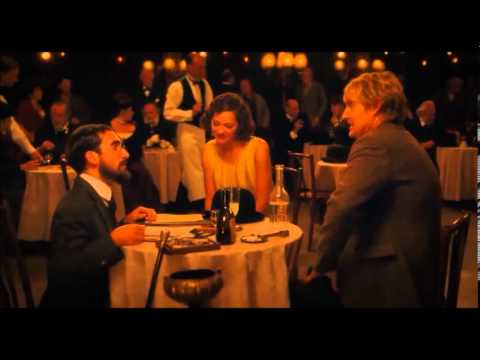
In MIDNIGHT IN PARIS Gil becomes good friends with a few of these people, including Ernest Hemingway (Corey Stoll), an interesting representation of the man pictured below.

________
Midnight in Paris clip

Let’s go in. Paris, the city of lights.- Relax! Have some champagne. I do like champagne, yeah.Cheers! Cheers!  The night is young. Drink up!- I’m drinking!- Have a drink!Yeah, drink up! (Cole Porter sings “Let’s Do It, Let’s Fallin Love”) Let’s fall in love… In Spain, the best upper-sets do it… Lithuanians and Lets do it. Let’s do it. Let’s fall in love. The Dutch in old Amsterdam do it.  Not to mention the Finns Folks in Siam do it- think of Siamese twins..Some Argentines without means do it. People say in Boston even beans do it  Let’s do it- Let’s fall in love..Romantic sponges, they say do it… Oysters down in Oyster Bay do it.. Let’s do it- Let’s fall in love…
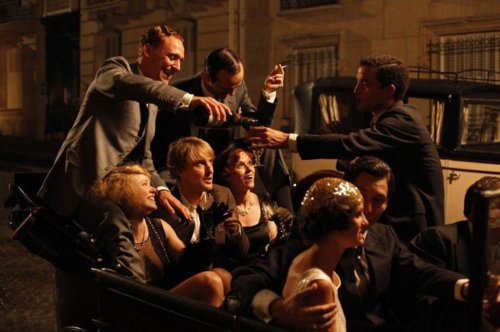
midnight in paris – Fitzgeralds and Hemingway

ZELDA FITZGERALD: You look lost!-

GIL PENDER: Oh, yeah!-You’re an American?-

ZELDA FITZGERALD:If you count Alabama as America, which I do.I miss the bathtub gin. What do you do?-

GIL PENDER: Me? I’m a writer.-

ZELDA FITZGERALD:Who do you write?-

GIL PENDER: Oh, right now I’m working on a novel.

ZELDA FITZGERALD:- Oh, yes?I’m Zelda, by the way. Oh, Scott! Scott!-

SCOTT FITZGERALD:Yes, what it is, sweetheart?-

ZELDA FITZGERALD:Here’s a writer, from, um… where?- California.

SCOTT FITZGERALD:Scott Fitzgerald, and who are you, old sport?

GIL PENDER: Gil…the… You havethe same names as…

SCOTT FITZGERALD:As what?Scott Fitzgerald and…

GIL PENDER: Scott and Zelda Fitzgerald.

SCOTT FITZGERALD:TheFitzgeralds. Isn’t she beautiful?

GIL PENDER: Yes. Yes! Yeah, that’s… that’sa coincidence…like….uh…

ZELDA FITZGERALD:You have a glazed look in your eye. Stunned.Stupefied. Anesthetized. Lobotomized.

GIL PENDER: .I...I…keep looking at the man playing piano, and Ibelieve it or not, recognize hisface from some old sheet music.

ZELDA FITZGERALD:I know I can be one of the great writers of musical lyrics- not that I can write melodies, and I try,and then I hear the songs he writes, and then I realize: I’ll never write a great lyric,- and my talent really lies in drinking.-

SCOTT FITZGERALD: Sure does.

GIL PENDER: Yeah, but, he didn’twrite the music, did he?That’s not possible…

SCOTT FITZGERALD:So…um…- What kind of books do you write?-

GIL PENDER: I…I…I’m working on a…um…Where am I?

SCOTT FITZGERALD:Oh, I’m sorry. Don’t you know the host?Some friends have gotten togethera little party for Jean Cocteau.

GIL PENDER: Hey, lady. What… Are you kiddding me?

ZELDA FITZGERALD:I know what you’re thinking.This is boring. I agree!I’m ready to move on.Let’s do Bricktop’s!- Bricktop’s?- I’m bored! He’s bored! We’re all bored.

SCOTT FITZGERALD:We. Are. All. Bored. Let’s do Bricktop’s.Why don’t you tell Cole and Linda to come with, and…um…uh…Gil? You coming?

[Cole Porter’s”You’ve Got That Thing”] You got that thing- You got that thing  The thing that makes birds forget to sing Yes, you’ve got that thing, that certain thing You’ve got that charm,that subtle charm  that makes young farmers desert the farm [Joséphine Baker’s “LaConga Blicoti”]


______

______

SCOTT FITZGERALD:This is one of the finest establishments in Paris. They do a diamond whiskey sour.Bon soir, tous le monde!(Good evening, everyone!)Un peu tir de bourbon, s’il vous plaît.(A small shot of bourbon, please.)Greetings and salutations.You’ll forgive me. I’ve been mixing grain and grape.Now, this a writer. uh…Gil. Yes?- Gil…

GIL PENDER: Gil Pender.- Gil Pender.

Hemingway & Fitzgerald Clip – Midnight in Paris

ERNEST HEMINGWAY: Hemingway.

GIL PENDER: Hemingway?

ERNEST HEMINGWAY:You liked my book?

GIL PENDER: Liked? I loved! All your work.

ERNEST HEMINGWAY:Yes, it was a good book,because it was an honest book,and that’s what war does to men.And there’s nothing fine and noble about dying in the mud,unless you die gracefully,and then it’s not only noble, but brave.

ZELDA FITZGERALD:Did you read my story? What’d you think?

ERNEST HEMINGWAY:There was some fine writing in it, but it was unfulfilled.-

ZELDA FITZGERALD: I might’ve known you’d hate it.-

SCOTT FITZGERALD:But darling, you’re too sensitive.

ZELDA FITZGERALD:You liked my story, but he hates me!

SCOTT FITZGERALD:Please, old sport, you makematters extremely difficult.

ZELDA FITZGERALD:I’m jumpy. Suddenly I don’tlike the atmosphere here any more. Ah! Where’re you going?

BULL FIGHTER: Para reunirse con mis amigos en Saint-Germain.(To meet some friends on Saint-Germain.)-

ZELDA FITZGERALD:He’s going to Saint-Germain. I’mgoing with him. –

SCOTT FITZGERALD:Zelda, sweetheart…

ZELDA FITZGERALD:If you’re going to stay here and drink with him, I’m going with the toreador.

SCOTT FITZGERALD:Would you bring her back at a reasonable time?-

ERNEST HEMINGWAY:She’ll drive you crazy, this woman.-

SCOTT FITZGERALD:She’s exciting,and she has talent.

ERNEST HEMINGWAY:This month it’s writing. Lastmonth it was something else.You’re a writer. You need time to write.Not all this fooling around.She’s wasting you because she’sreally a competitor.

___________________

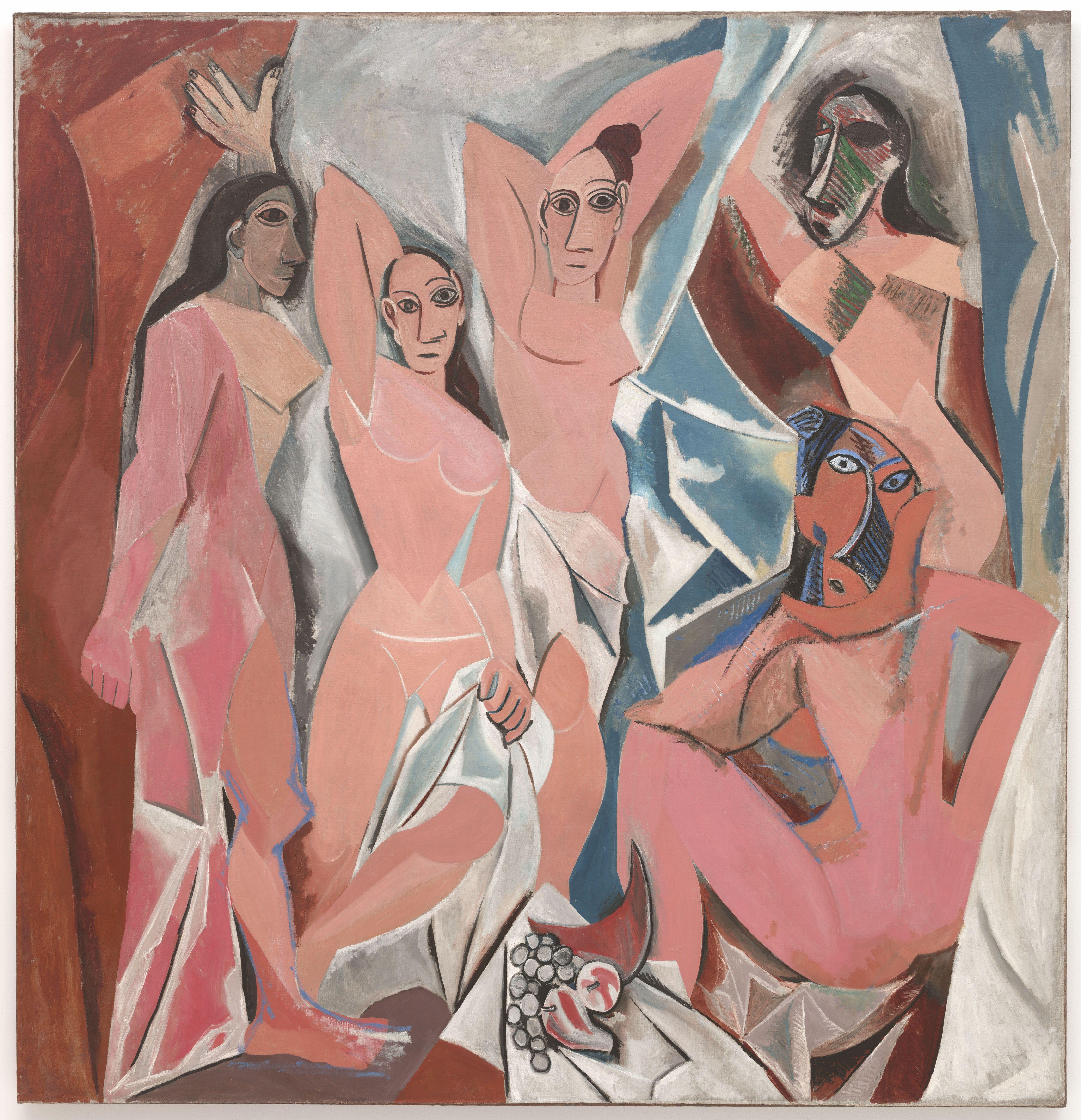
Touring Scott and Zelda Fitzgerald, Cole Porter, Ernst Hemingway, Pablo Picasso, Gertrude Stein and Alice Toklas, Henri Matisse, Salvador Dali, TS Eliot, Djuna Barnes, Josephine Baker, Man Ray and Luis Buñuel – the latter gets a tip for the argument of The Exterminating Angel a brilliant scene


Woody Allen made it known that his pessimistic view on life started at a young age when he learned about man’s mortality. But in the Bible Solomon’s first book was the SONG OF SOLOMON which was written in his early 20’s and is very upbeat. The Book of PROVERBS was written probably when he was in the middle of his life. Finally,  the Book of ECCLESIASTES was written at the end of his life and is extremely pessimistic!!

Today we look at Solomon’s views on  wine, women and song as presented in the Book of ECCLESIASTES.  Solomon knew these very well. He filled his home with the best wine (Eccl 2:3), and like Hugh Hefner he slept with over 1000 women ( Eccl 2:8, I Kings 11:3), and he filled his palace with song (Eccl 2:8).

I will parallel Solomon’s views to those of Woody Allen and some of the characters in the movie MIDNIGHT IN PARIS. The first post  I did in this series dealt with MAGIC IN THE MOONLIGHT, but the second post   and third post  moved on to the movie MIDNIGHT IN PARIS as does the fourth post today.

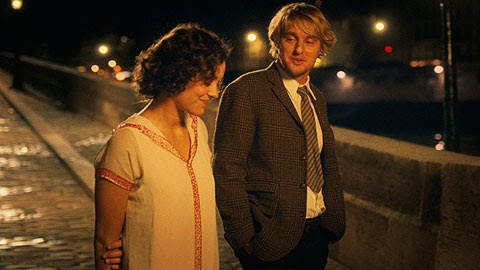
(In the movie MIDNIGHT IN PARIS you have the may character Gil Pender very interested in Picasso’s mistress Adriana,  played by Marion Cotillard. PICTURED ABOVE.)

Francis Schaeffer pictured below:
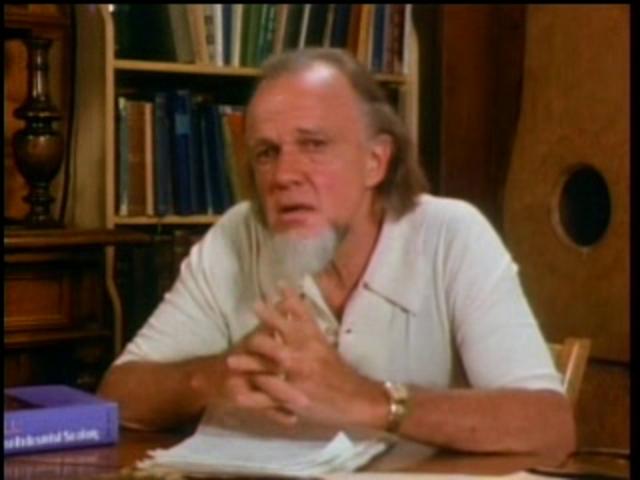
Concerning the Book of Ecclesiastes Francis Schaeffer noted: 

Solomon was searching for a meaning in the midst of the details of life. His struggle was to find the meaning of life. Not just plans in life. Anybody can find plans in life. A child can fill up his time with plans of building tomorrow’s sand castle when today’s has been washed away. There is  a difference between finding plans in life and purpose in life. Humanism since the Renaissance and onward has never found it and it has never found it. Modern man has not found it and it has always got worse and darker in a very real way.

Ecclesiastes is the only pessimistic book in the Bible and that is because of the place where Solomon limits himself. He limits himself to the question of human life, life under the sun between birth and death and the answers this would give.

In Ecclesiastes 1:8 he drives this home when he states, “All things are wearisome; Man is not able to tell it. THE EYE IS NOT SATISFIED WITH SEEING. NOR IS THE EAR FILLED WITH HEARING.”  Solomon is stating here the fact that there is no final satisfaction because you don’t get to the end of the thing.

What do you do and the answer is to get drunk and this was not thought of in the RUBAIYAT OF OMAR KAHAYYAM:

Ecclesiastes 2:1-3

I said to myself, “Come now, I will test you with pleasure. So enjoy yourself.” And behold, it too was futility. I said of laughter, “It is madness,” and of pleasure, “What does it accomplish?” I explored with my mind how to stimulate my body with wine while my mind was guiding me wisely, and how to take hold of folly, until I could see what good there is for the sons of men to do under heaven the few years of their lives.

The Daughter of the Vine:

You know, my Friends, with what a brave Carouse
I made a Second Marriage in my house;
Divorced old barren Reason from my Bed,
And took the Daughter of the Vine to Spouse.

from the Rubaiyat of Omar Khayyam (Translation by Edward Fitzgerald)

A perfectly good philosophy coming out of Islam, but Solomon is not the first man that thought of it nor the last. In light of what has been presented by Solomon is the solution just to get intoxicated and black the think out? So many people have taken to alcohol and the dope which so often follows in our day. This approach is incomplete, temporary and immature. PAPA HEMINGWAY CAN FIND THE CHAMPAGNE OF PARIS SUFFICIENT FOR A TIME, BUT ONCE HE LEFT HIS YOUTH HE NEVER FOUND IT SUFFICIENT AGAIN. HE HAD A LIFETIME SPENT LOOKING BACK TO PARIS AND THAT CHAMPAGNE AND NEVER FINDING IT ENOUGH.  It is no solution and Solomon says so too.

Ecclesiastes 2:4-11

I enlarged my works: I built houses for myself, I planted vineyards for myself; I made gardens and parks for myself and I planted in them all kinds of fruit trees; I made ponds of water for myself from which to irrigate a forest of growing trees. I bought male and female slaves and I had homeborn slaves. Also I possessed flocks and herds larger than all who preceded me in Jerusalem. Also, I collected for myself silver and gold and the treasure of kings and provinces. I provided for myself MALE AND  FEMALE SINGERS AND THE PLEASURES OF MEN–MANY CONCUBINES.

Then I became great and increased more than all who preceded me in Jerusalem. My wisdom also stood by me. 10 All that my eyes desired I did not refuse them. I did not withhold my heart from any pleasure…

If one would flee to alcohol, then surely one may choose sexual pursuits to flee to. Solomon looks in this area too.

Ecclesiastes 7:25-28

25 I directed my mind to know, to investigate and to seek wisdom and an explanation, and to know the evil of folly and the foolishness of madness. 26 And I discovered more bitter than death the woman whose heart is snares and nets, whose hands are chains. One who is pleasing to God will escape from her, but the sinner will be captured by her.

27 “Behold, I have discovered this,” says the Preacher, “adding one thing to another to find an explanation, 28 I have looked for other answers but have found none. I found one man in a thousand that I could respect, but not one woman. (Good News Translation on verse 28)

One can understand both Solomon’s expertness in this field and his bitterness.

I Kings 11:1-3 (New American Standard Bible) 

11 Now King Solomon loved many foreign women along with the daughter of Pharaoh: Moabite, Ammonite, Edomite, Sidonian, and Hittite women, from the nations concerning which the Lord had said to the sons of Israel, “You shall not associate with them, nor shall they associate with you, for they will surely turn your heart away after their gods.” Solomon held fast to these in love. He had seven hundred wives, princesses, and three hundred concubines, and his wives turned his heart away.

An expert but also the reason for his bitterness. Certainly there have been many men over the centuries who have daydreamed of Solomon’s wealth in this area [of women], but at the end it was sorry, not only sorry but nothing and less than nothing. The simple fact is that one can not know woman in the real sense by pursuing 1000 women. It is not possible. Woman is not found this way. All that is left in this setting if one were to pursue the meaning of life in this direction is this most bitter word found in Ecclesiastes 7:28, “I have looked for other answers but have found none. I found one man in a thousand that I could respect, but not one woman.” (Good News Translation on verse 28) He was searching in the wrong way. He was searching for the answer to life in the limited circle of that which is beautiful in itself but not an answer finally in sexual life. More than that he finally tried to find it in variety and he didn’t even touch one woman at the end.

(Francis Schaeffer on right and his wife Edith pictured below on left)

Ecclesiastes 2:24-25

24 There is nothing better for a person than that he should eat and drink and find enjoyment in his toil. This also, I saw, is from the hand of God, 25 for apart from him who can eat or who can have enjoyment?

The best translation is “should eat and drink and delight his senses.” Also with the phrase “from the hand of God” Solomon doesn’t really mean this is from God but this is just an expression. This is statement of desperation when he says that one “should eat and drink and delight his senses.”

But interestingly enough the story of Ecclesiastes does not end its message here because in two places in the New Testament it is picked up and carried along and put in its proper perspective.

Luke 12:16-21

16 And he told them a parable, saying, “The land of a rich man produced plentifully, 17 and he thought to himself, ‘What shall I do, for I have nowhere to store my crops?’ 18 And he said, ‘I will do this: I will tear down my barns and build larger ones, and there I will store all my grain and my goods. 19 And I will say to my soul, “Soul, you have ample goods laid up for many years; relax,eat, drink, be merry.”’ [ALMOST EVERYONE WHO HAS PROCEEDED HERE HAS FELT CERTAINLY THAT JESUS IS DELIBERATELY REFERRING TO SOLOMON’S SOLUTION.]20 But God said to him, ‘Fool! This night your soul is required of you, and the things you have prepared, whose will they be?’ 21 So is the one who lays up treasure for himself and is not rich toward God.”

Christ here points out the reason for the failure of the logic that is involved. He points out why it fails in logic and then why it fails in reality. This view of Solomon must end in failure philosophically and also in emotional desperation.

We are not made to live in the shortened environment of UNDER THE SUN in this life only!!! Neither are we made to live only in the environment of a bare concept of afterlife [ignoring trying to make this life better]. We are made to live in the environment of a God who exists and who is the judge. This is the difference and that is what Jesus is setting forth here.

I Corinthians 15:32

32 What do I gain if, humanly speaking, I fought with beasts at Ephesus? If the dead are not raised, “Let us eat and drink, for tomorrow we die.

There is no doubt here he is reaching back to Solomon again and he is just saying if there isn’t a resurrection of the dead then let’s just follow Solomon and let’s just eat and drink for tomorrow we die!!!! If there isn’t this full structure [including the resurrection of the dead] then just have the courage to follow Solomon and we can eat and drink because tomorrow we die and that is all we have. If the full structure isn’t there then pick up the cup and drink it dry! You can say it a different way in the 20th century: If the full structure is not there then go ahead and be an EXISTENTIALIST, but don’t cheat. Drink the cup to the end. Drink it dry! That is what Paul says. Paul  the educated man. Paul the man who knew his Greek philosophy. Paul the man who understood Solomon and the dilemma. Paul said it one way or the other. There is no room for a middle ground. IF CHRISTIANS AREN’T RAISED FROM THE DEAD THEN SOLOMON IS RIGHT IN ECCLESIASTES, BUT ONLY THEN. But if he is right then you should accept all of Solomon’s despair and his conclusions.

_________

Brandon Barnard, teaching pastor at Fellowship Bible Church in Little Rock, Arkansas in his July 5, 2015 message noted:

Why does the resurrection matter? Let’s dive into the scriptures and see what Paul has to say about it in I Corinthians 15:12-22:

12 Now if Christ is proclaimed as raised from the dead, how can some of you say that there is no resurrection of the dead? 13 But if there is no resurrection of the dead, then not even Christ has been raised. 14 And if Christ has not been raised, then our preaching is in vain and your faith is in vain. 15 We are even found to be misrepresenting God, because we testified about God that he raised Christ, whom he did not raise if it is true that the dead are not raised.16 For if the dead are not raised, not even Christ has been raised. 17 And if Christ has not been raised, your faith is futile and you are still in your sins.18 Then those also who have fallen asleep in Christ have perished. 19 If in Christ we have hope[b] in this life only, we are of all people most to be pitied.

20 But in fact Christ has been raised from the dead, the firstfruits of those who have fallen asleep. 21 For as by a man came death, by a man has come also the resurrection of the dead. 22 For as in Adam all die, so also in Christ shall all be made alive.

Paul lays it out. If Christ was not raised from the dead then my preaching is in vain and your faith is useless and you have been wasting your days. If Christ is not raised from the dead then people should pity you. However, Paul steps in here and says Christ has been raised from the dead. There is proof and evidence. And because Jesus has been raised from the dead no one should pity us!!!

The Bible and Archaeology – Is the Bible from God? (Kyle Butt 42 min)

You want some evidence that indicates that the Bible is true? Here is a good place to start and that is taking a closer look at the archaeology of the Old Testament times. Is the Bible historically accurate? Here are some of the posts I have done in the past on the subject: 1. The Babylonian Chronicleof Nebuchadnezzars Siege of Jerusalem2. Hezekiah’s Siloam Tunnel Inscription. 3. Taylor Prism (Sennacherib Hexagonal Prism)4. Biblical Cities Attested Archaeologically. 5. The Discovery of the Hittites6.Shishak Smiting His Captives7. Moabite Stone8Black Obelisk of Shalmaneser III9A Verification of places in Gospel of John and Book of Acts., 9B Discovery of Ebla Tablets10. Cyrus Cylinder11. Puru “The lot of Yahali” 9th Century B.C.E.12. The Uzziah Tablet Inscription13. The Pilate Inscription14. Caiaphas Ossuary14 B Pontius Pilate Part 214c. Three greatest American Archaeologists moved to accept Bible’s accuracy through archaeology.

______________

The movie MIDNIGHT IN PARIS is filled with music.     It seems Woody Allen has had a lifetime long love for music and in the

article, HEAR 2.5 HOURS OF GREAT JAZZ SONGS FEATURED IN WOODY ALLEN FILMS posted on the blog  Film, Music on  November 16th, 2015, you can hear a lot of those songs.


Woody Allen – Songs from Woody Allen’s Films

Published on Oct 7, 2013

Woody Allen – Songs from Woody Allen’s Films
Upload the album here : http://bit.ly/17BenPD
iTunes : http://bit.ly/1jIwUiu
Amazon : http://amzn.to/1xNVh5r

From “Blue Jasmine” to “Stardust Memories”, from “Midnight in Paris” to “Hannah and her sisters”, from “Radio Days” to “Mighty Aphrodite”, from “Annie Hall” to “Bullets over Broadway”, Woody Allen has always used jazz in his films. The music underlines the storyline and merges beautifully with each scene. Some of the greatest names in jazz and many of the greatest big bands have featured in his creations: Tommy Dorsey, Billie Holiday, Harry James, Django Reinhardt, Glenn Miller, Bix Beiderbecke, Ben Webster, Sidney Bechet, Louis Armstrong, Chick Webb, Lester Young, Erroll Garner, Artie Shaw, King Oliver, Red Garland, Jelly Roll Morton, and many more …

https://play.google.com/store/music/a…

http://www.emusic.com/album/-/-/12856…

1 – Sidney Bechet “Si tu vois ma mère” (from Midnight in Paris)
2 – Josephine Baker “La Conga Blicoti” (from Midnight in Paris)
3 – Lizzie Miles “A Good Man Is Hard to Find” (from Blue Jasmine)
4 – King Oliver “West End Blues” (from Blue Jasmine)
5 – Louis Armstrong “Back O’ Town Blues (from Blue Jasmine)
6 – The Ink Spots “If I Didn’t Care (from Radio Days) 7 – The Mairy Macs “Mairzy Doats” (from Radio Days)
8 – Tommy Dorsey “I’m Getting Sentimental Over You” (from Radio Days)
9 – Glenn Miller “In the Mood” (from Radio Days)
10- Red Garland “Spring Will Be a Little Late This Year” (from Whatever Works)
11 – Chick Webb “If Dreams Come True” (from Stardust Memories)
12 – Louis Armstrong “Stardust” (from Stardust Memories)
13 – Harry James & Helen Forrest “I’ve Heard That Song Before” (from Hannah & Her Sisters)
14 – Harry James “You Made Me Love You” (from Hannah & Her Sisters)
15 – Artie Shaw “Moonglow” (from Annie Hall)
16 – Fred Astaire “Cheek to Cheek” (from The Purple Rose of Cairo)
17 – Tommy Dorsey “Keepin’ Out of Mischief Now” (from Interiors)
18 – Jelly Roll Morton “Wolverine Blues” (from Interiors)
19 – Benny Goodman “Whispering” (from Mighty Aphrodite)
20 – Erroll Garner “Penthouse Serenade” (from Mighty Aphrodite)
21 – Dooley Wilson “As Time Goes By” (from Play It Again Sam)
22 – Lester Young “I Can’t Get Started” (from Anything Else)
23 – Billie Holiday “Easy to Love” (from Anything Else)
24 – Django Reinhardt “Nagasaki” (from Bullets Over Broadway)
25 – Bix Beiderbecke “At the Jazz Band Ball” (from Bullets Over Broadway)
26 – Glenn Miller “Sunrise Serenade” (from the Curse of the Jade Scorpion)
27 – Duke Ellington “Sophisticated Lady” (from the Curse of the Jade Scorpion)
28 – Django Reinhardt & Stephane Grappelli “Liebstraum # 3” (from Sweet & Lowdown)
29- Ben Webster “My Ideal” (from September)
30 -Teddy Wilson “I Got Rhythm” (from Celebrity)
31 – Coleman Hawkins “Out of Nowhere” (from Deconstructing Harry)
32 – Benny Goodman “Sing Sing Sing” (from Deconstructing Harry)
33 – Benny Goodman “If I Had You” (from You’ll Meet a Tall Dark Stranger)
34 – Duke Ellington “I let a Song Out of My Heart” (Melinda &Melinda)
35 – Artie Shaw “Moonglow” (from Alice)
36 – Erroll Garner “The Way You Look Tonight” (from Alice)
37 – Tommy Dorsey “Opus n°1” (from Radio Days)
38 – Glenn Miller “American Patrol (from Radio Days)
39 – Artie Shaw “Frenesi” (from Radio Days)
40 – The Mills Brothers “Paper Doll” (from Radio Days) – JazzAndBluesExperience – SUBSCRIBE HERE : http://bit.ly/10VoH4l (Re)Discover the Jazz and Blues greatest hits – JazznBluesExperience is your channel for all the best jazz and blues music. Find your favorite songs and artists and experience the best of jazz music and blues music. Subscribe for free to stay connected to our channel and easily access our video updates! – Facebook FanPage: http://www.facebook.com/JazznBluesExp…

______________

It takes no great research pains to find out that Woody Allen loves jazz. He scores most of his movies with the music, never failing to include it at least under their signature simple black-and-white opening titles. He has worked jazz as a theme into some of the films themselves, most notably Sweet and Lowdown, the story of a dissolute 1930s jazz guitarist who heads for Hollywood. He plays the clarinet himself, touring with his jazz band as seen in the documentary Wild Man Blues. He makes no secret of his admiration for fellow clarinetist (and also saxophonist) Sidney Bechet, after whom he named one of his daughters.

Woody Allen’s Stardust Memories

Uploaded on Jun 16, 2009

These scenes make up the ending of Woody Allen’s ‘Stardust Memories’.

It’s a beautiful film, and a wonderful American tribute to Fellini’s 8 1/2. Plus Louis Armstrong’s version of ‘Stardust’ is one of the greatest you’ll ever hear.

It’s hard for a filmmaker to capture the joys of “just sort of sitting around” with someone you’re in love with, and he does it beautifully here. That long, unbroken shot conveys it all.

And then I couldn’t go uploading this without leaving in the train scene, too.

Help us caption & translate this video!

http://amara.org/v/DW9o/

Allen has publicly discussed a dream project called American Blues, a movie about the very beginning of jazz in New Orleans seen through the careers of Bechet and Louis Armstrong. He acknowledges that a story of that scale would require a far larger budget than the more modest films he makes just about every year, and so, in light of the unlikelihood of his commanding that budget, he has evidently contented himself with infusing the work that does come out with as much jazz as possible. You can hear almost two and a half hours of it in the Youtube playlist at the top of this post, which includes cuts from not just Bechet and Armstrong but from Tommy Dorsey, Billie Holiday, Django Reinhardt, Glenn Miller, Lester Young, Jelly Roll Morton, and many other respected players from prewar and wartime America. You can find a list of the songs featured in the jazz playlist, complete with timestamps, in the blurb beneath this YouTube clip.

Midnight in Paris Jazz Score Sidney Bechet Si Tu Vois Ma Mere.

Even apart from what film scholars would call the non-diegetic jazz in Allen’s pictures (i.e., the jazz we hear on the score, but the characters themselves presumably don’t) he also includes some diegetic jazz, as in the ending of Stardust Memories, when Allen’s character puts on a Louis Armstrong record. And isn’t now just the right time to revisit the sequence from Midnight in Paris just above, a montage celebrating life in the City of Lights set to Sidney Bechet’s “Si tu vois ma mère”? After that, have a look at the clip below, in which the man himself plays with the Woody Allen and Eddy Davis New Orleans Jazz Band at New York’s Cafe Carlyle — where you can catch them every Monday night through December 14th.

Woody Allen & Eddy Davis New Orleans Jazz Band no Café Carlyle

Woody Allen Tells a Classic Joke About Hemingway, Fitzgerald & Gertrude Stein in 1965: A Precursor to Midnight in Paris

Woody Allen Lists the Greatest Films of All Time: Includes Classics by Bergman, Truffaut & Fellini

Watch an Exuberant, Young Woody Allen Do Live Stand Up on British TV (1965)

Watch a 44-Minute Supercut of Every Woody Allen Stammer, From Every Woody Allen Film

Haruki Murakami’s Passion for Jazz: Discover the Novelist’s Jazz Playlist, Jazz Essay & Jazz Bar

1959: The Year that Changed Jazz

Colin Marshall writes elsewhere on cities, language, Asia, and men’s style. He’s at work on a book about Los Angeles, A Los Angeles Primer, the video series The City in Cinemaand the crowdfunded journalism project Where Is the City of the Future? Follow him on Twitter at @colinmarshall or on Facebook.

__________


Related posts:

A list of the most viewed posts on the historical characters mentioned in the movie “Midnight in Paris”

Characters referenced in Woody Allen’s movie “Midnight in Paris” (Part 38,Alcoholism and great writers and artists)

The characters referenced in Woody Allen’s movie “Midnight in Paris” (Part 36, Alice B. Toklas, Woody Allen on the meaning of life)

Characters referenced in Woody Allen’s movie “Midnight in Paris” (Part 35, Recap of historical figures, Notre Dame Cathedral and Cult of Reason)

The characters referenced in Woody Allen’s movie “Midnight in Paris” (Part 34, Simone de Beauvoir)

The characters referenced in Woody Allen’s movie “Midnight in Paris” (Part 33,Cezanne)

The characters referenced in Woody Allen’s movie “Midnight in Paris” (Part 32, Jean-Paul Sartre)

The characters referenced in Woody Allen’s movie “Midnight in Paris” (Part 31, Jean Cocteau)

The characters referenced in Woody Allen’s movie “Midnight in Paris” (Part 30, Albert Camus)

The Characters referenced in Woody Allen’s “Midnight in Paris” (Part 29, Pablo Picasso)

The Characters referenced in Woody Allen’s “Midnight in Paris” (Part 8, Henri Toulouse Lautrec)

The Characters referenced in Woody Allen’s “Midnight in Paris” (Part 7 Paul Gauguin)

The Characters referenced in Woody Allen’s “Midnight in Paris” (Part 6 Gertrude Stein)

The Characters referenced in Woody Allen’s “Midnight in Paris” (Part 5 Juan Belmonte)

The Characters referenced in Woody Allen’s “Midnight in Paris” (Part 4 Ernest Hemingway)

The Characters referenced in Woody Allen’s “Midnight in Paris” (Part 3 Scott and Zelda Fitzgerald)

The Characters referenced in Woody Allen’s “Midnight in Paris” (Part 2 Cole Porter)

The Characters referenced in Woody Allen’s “Midnight in Paris” (Part 1 William Faulkner)

MUSIC MONDAY Cole Porter “Let’s Do it, Let’s Fall in Love” in the movie MIDNIGHT IN PARIS

_____________


_____________

The Surrealists, Woody Allen, Ecclesiastes, Chance and Absurdity!!!


Woody Allen believes that we live in a cold, violent and meaningless universe and it seems that his main character (Gil Pender, played by Owen Wilson) in the movie MIDNIGHT IN PARIS shares that view. Pender’s meeting with the Surrealists is by far the best scene in the movie because they are ones who can understand his predicament concerning the absurdity of life UNDER THE SUN (as Solomon used to phrase it.) If we are here as a result of chance then what lasting purpose can be found? The Surrealists truly grasped the problem and it seems that Gil does too realize the full weight of the predicament.

In the movie Gertrude Stein says to Gil, “Now, about your book,it’s very unusual, indeed.I mean, in a way, it’s almost like science fiction.We all fear death, and question our place in the universe.The artist’s job is not to succumb to DESPAIR,but to find an antidote for the emptiness of existence.You have a clear and lively voice. Don’t be such a defeatist.”

Also in the film we find this exchange.

ADRIANA: Tell me more about your book.

GIL PENDER: My book is kind of a…You know what? I couldn’t careless about my book tonight.I just want to walk around Paris with you.

ADRIANA: I keep forgetting you’re just a tourist.

GIL PENDER: That’s putting it mildly.

ADRIANA: I can never decide whether Paris is more beautiful by day or by night.

GIL PENDER: No, you can’t. You couldn’t pick one. I mean,I can give you a checkmate argument for each side.You know, I sometimes think,”How’s anyone gonna come up with a book, or a painting, or a symphony or a sculpture that can compete with a great city?”You can’t, ’cause, like,you look around, every…every street, every boulevardis its own special art form.And when you think that in the cold,violent, meaningless universe,that Paris exists, these lights…I mean, come on, there’s nothing happening on Jupiter or Neptune,but from way out in space you can see these lights, the cafe’s, people drinking, and singing…I mean, for all we know, Paris is the hottest spot in the universe.-

ADRIANA: Vous êtes un poète.(You are a poet.)-

GIL PENDER:Aw, come on.It’s just… You’re very kind, butI wouldn’t call my babbling poetic.Although I was on a pretty good roll there.

Woody Allen’s main character GIL PENDER in the movie MIDNIGHT IN PARIS firmly believes that we live in a cold, violent, and meaningless universe brought to us by Darwinism chance plus time. 

Let’s see what King Solomon had to say about that. Solomon said in Ecclesiastes 9:11-13 “I have seen something else UNDER THE SUN:  The race is not to the swift or the battle to the strong, nor does food come to the wise or wealth to the brilliant  or favor to the learned; but time and chance happen to them all.  Moreover, no one knows when their hour will come: As fish are caught in a cruel net, or birds are taken in a snare, so people are trapped by evil times  that fall unexpectedly upon them.”

WHY IS SOLOMON CAUGHT IN DESPAIR IN THE BOOK OF ECCLESIASTES?  Christian scholar Ravi Zacharias has noted, “The key to understanding the Book of Ecclesiastes is the term ‘UNDER THE SUN.’ What that literally means is you lock God out of a closed system, and you are left with only this world of time plus chance plus matter.” THIS IS EXACT POINT SCHAEFFER SAYS SECULAR ARTISTS ARE PAINTING FROM TODAY BECAUSE THEY BELIEVED ARE A RESULT OF MINDLESS CHANCE.

By the way, the final chapter of Ecclesiastes finishes with Solomon emphasizing that serving God is the only proper response of man. Solomon LOOKS ABOVE THE SUN AND BRINGS GOD BACK INTO THE PICTURE in the final chapter of the book in Ecclesiastes 12:13-14, “ Now all has been heard; here is the conclusion of the matter: Fear God and keep his commandments, for this is the whole duty of man.  For God will bring every deed into judgment, including every hidden thing, whether it is good or evil.”

(Francis Schaeffer pictured below)

Francis Schaeffer in Art and the Bible noted, “Many modern artists, it seems to me, have forgotten the value that art has in itself. Much modern art is far too intellectual to be great art. Many modern artists seem not to see the DISTINCTION BETWEEN MAN AND NON-MAN, and it is a part of the lostness of modern man that they no longer see value in the work of art as a work of art.” 

Many modern artists are left in this point of desperation that Schaeffer points out and it reminds me of the despair that Solomon speaks of in Ecclesiastes as you looks at life UNDER THE SUN.  Another group of artists reached this point of desperation and it is those involved in the Dada movement and then the later Surrealist movement.

Francis Schaeffer noted:

Dada was started in Zurich and came along in modern art. Dada means nothing. The word “Dada” means rocking horse, but it was chosen by chance. The whole concept of Dada is everything means nothing. [In this materialistic mindset Chance and Time have determined the past, and they will determine the future according to Solomon in life UNDER THE SUN]…  Dada carried to its logical conclusion the notion of all having come about by chance; the result was the final absurdity of everything, including humanity.

(Surrealists: Man Ray, Jean Arp, Yves Tanguy, André Breton; Tristan Tzara, Salvador Dalí, Paul Eluard, Max Ernst and Rene Clevel, 1930.)

Jean Arp below.

Below is a portion from the Francis Schaeffer book HOW SHOULD WE THEN LIVE?:

Hans (Jean) Arp (1887-1966), an Alsatian sculptor, wrote a poem which appeared in the final issue of the magazine De Stijl (The Style) which was published by the De Stijl group of artists led by Piet Mondrian and Theo van Doesburg. Mondrian (1872-1944) was the best-known artist of this school. He was not of the Dada school which accepted and portrayed absurdity. Rather, Mondrian was hoping to paint the absolute. Hand Arp, however, was a Dadaist artist connected with De Stijl. His power “Für Theo Van Doesburg,” translated from German reads:

the head downward
the legs upward
he tumbles into the bottomless
from whence he came

he has no more honour in his body
he bites no more bite of any short meal
he answers no greeting
and is not proud when being adored

the head downward
the legs upward
he tumbles into the bottomless
from whence he came

like a dish covered with hair
like a four-legged sucking chair
like a deaf echotrunk
half full half empty

the head downward
the legs upward
he tumbles into the bottomless
from whence he came

Jean Arp (Hans Arp)
Jean Arp is associated with the DADA movement. His collages were of torn pieces of paper dropped and affixed where they would land. His use of chance is intended to create free of human intervention. “Dada,” wrote Arp, “wished to destroy the hoaxes of reason and to discover an unreasoned order.”


Collage with Squares Arranged According to the Laws of Chance


Random Collage


Torn Paper and Gouache

Dada carried to its logical conclusion the notion of all having come about by chance; the result was the final absurdity of everything, including humanity.

Pictured below: Salvador Dalí (lower center) and Marcel Duchamp (upper left) attending a bullfight.

_____

Nude Descending a Staircase (1912) by Marcel Duchamp

Francis Schaeffer continues: 

The man who perhaps most clearly and consciously showed this understanding of the resulting absurdity fo all things was Marcel Duchamp (1887-1969). He carried the concept of fragmentation further in Nude Descending a Staircase (1912), one version of which is now in the Philadelphia Museum of Art–a painting in which the human disappeared completely. The chance and fragmented concept of what is led to the devaluation and absurdity of all things. All one was left with was a fragmented view of a life which is absurd in all its parts. Duchamp realized that the absurdity of all things includes the absurdity of art itself. His “ready-mades” were any object near at hand, which he simply signed. It could be a bicycle wheel or a urinal. Thus art itself was declared absurd.

_____

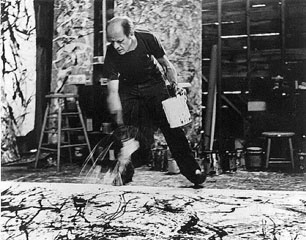
(Jackson Pollock pictured below dripping his paint)

Francis Schaeffer in his book HOW SHOULD WE THEN LIVE? noted on pages 200-203:

Jackson Pollock (1912-1956) is perhaps the clearest example in the United States of painting deliberately in order to make the statements that all is chance. He placed canvases horizontally on the floor and dripped paint on them from suspended cans swinging over them. Thus, his paintings were a product of chance. But wait a minute! Is there not an order in the lines of paint on his canvases? Yes, because it was not really chance shaping his canvases! The universe is not a random universe; it has order. Therefore, as the dripping paint from the swinging cans moved over the canvases, the lines of paint were following the order of the universe itself. The universe is not what these painters said it is.

(John Cage pictured above)

(Woody Allen, Peter O’Toole and Capucine)

________

(Marcel Duchamp plays white, John Cage plays black, on a chessboard modified to generate tones depending on where the chess pieces are. Toronto, 1968. Teeny Duchamp at far left, camerman in the background.  This was a performance.)

John Cage provides perhaps the clearest example of what is involved in the shift of music. Cage believed the universe is a universe of chance. He tried carrying this out with great consistency. For example, at times he flipped coins to decide what the music should be. At other times he erected a machine that led an orchestra by chance motions so that the orchestra would not know what was coming next. Thus there was no order. Or again, he placed two conductors leading the same orchestra, separated from each other by a partition, so that what resulted was utter confusion. There is a close tie-in again to painting; in 1947 Cage made a composition he called MUSIC FOR MARCEL DUCHAMP. But the sound produced by his music was composed only of silence (interrupted only by random environmental sounds), but as soon as he used his chance methods sheer noise was the outcome.

But Cage also showed that one cannot live on such a base, that the chance concept of the universe does not fit the universe as it is. Cage is an expert in mycology, the science of mushrooms. And he himself said, “I became aware that if I approached mushrooms in the spirit of my chance operation, I would die shortly.” Mushroom picking must be carefully discriminative. His theory of the universe does not fit the universe that exists.

All of this music by chance, which results in noise, makes a strange contrast to the airplanes sitting in our airports or slicing through our skies. An airplane is carefully formed; it is orderly (and many would also think it beautiful). This is in sharp contrast to the intellectualized art which states that the universe is chance. Why is the airplane carefully formed and orderly, and what Cage produced utter noise? Simply because an airplane must fit the orderly flow lines of the universe if it is to fly!

!Midnight in the Paris-best scene of the movie Salvador Dali, Man Ray and Woody Allen

published on Dec 18, 2012

Woody Allen talking with Salvador Dali and Man Ray and Luis Bunuel. 

This is the transcript of

DALI: We met, earlier tonight…At the party! Dali.

GIL: I remember!-

DALI: A bottle of red wine!

GIL: It can’t be… Yeah….So?

DALI: Another glass for this man, please. I love the language!The French! The waiters? No.You like the shape of the rhinoceros?

GIL: The rhinoceros? Uh…Haven’t really thought about it.I paint the rhinoceros.

DALI: I paint you. Your sad eyes.Your big lips, melting over the hot sand,with one tear.Yes! And in your tear, another face.The Christ’s face!Yes, in the rhinoceros.

GIL: Yeah. I mean, I probably do look sad. I’m in…a very perplexing situation.

DALI: Diablo…Luis! Oye, Luis!(Damn. Luis! Hey, Luis!)My friends.This… is Luis Bunuel…and…Mr. Man Ray.-

GIL: Man Ray? My Gosh!- How ’bout that?

DALI: This is Pen-der. Pen-der. Pender!- Yes. And I am Dalí!- Dalí. Yes.You have to remember. Pender is in a perplexing situation.

GIL: It sounds so crazy to say.You guys are going tothink I’m drunk, but I have to tell someone. I’m…from a…a different time. Another era.The future. OK? I come…from the 2000th millenium to here.I get in a car, and I slide through time.

MAN RAY: Exactly correct.You inhabit two worlds.- So far, I see nothing strange.- Why?

GIL: Yeah, you’re surrealists!But I’m a normal guy. See, in one life,I‘m engaged to marry a woman I love.At least, I think I love her.Christ! I better love her! I’m marrying her!

DALI: The rhinoceros makes love by mounting the female.But…is there a difference in the beauty between two rhinoceroses?

MAN RAY: There is another woman?Adriana. Yes, and I’m…very drawn to her.I find her extremely alluring.The problem is that other men,great artists – geniuses- also find her alluring,and she finds them. So, there’s that…

MAN RAY: A man in love with a woman from a different era.I see a photograph.

LUIS BUNUEL: I see a film.I see an insurmountable problem.I see……a rhinoceros.

Let me make a few points here. We see that Gil Pender’s perplexing problem is that he is in love and this goes against his views that we are not put here for a purpose, but by mindless chance. God created us so we can’t deny that we are created for a purpose and when a person falls truly in love with another person then they have a hard time maintaining  this is only just a product of evolution and has no lasting significance.

Solomon wisely noted in Ecclesiastes 3:11 “God has planted eternity in the heart of men…” (Living Bible). No wonder Bertrand Russell wrote in his autobiography, “It is odd, isn’t it? I feel passionately for this world and many things and people in it, and yet…what is it all? There must be something more important, one feels, though I don’t believe there is. I am haunted. Some ghosts, for some extra mundane regions, seem always trying to tell me something that I am to repeat to the world, but I cannot understand that message.”

Bertrand Russell playing chess with his son (1940).

The Bible teaches that we all know that God exists and has made us in his image and if we deny that then we are suppressing the knowledge of our conscience in unrighteousness.  Romans 1:18-19 (Amplified Bible) ” For God’s wrath and indignation are revealed from heaven against all ungodliness and unrighteousness of men, who in their wickedness REPRESS and HINDER the truth and make it inoperative. For that which is KNOWN about God is EVIDENT to them and MADE PLAIN IN THEIR INNER CONSCIOUSNESS, because God  has SHOWN IT TO THEM,”(emphasis mine).

I wanted to share a portion of a review of MIDNIGHT IN PARIS that caught my attention by   , “The Charms of a Pessimistic Workaholic,”  February 11, 2012:

Being in Woody’s shoes is not the most cheerful place to be: he sees the universe as a cold place, with no ultimate meaning; transient, unsatisfying; with nothing to hold onto other than temporary distractions from these cold truths. Allen’s favorite distraction is getting absorbed in work (which explains the volume of his creative output). Another distraction we fall into are relationships with other people.

Woody is keenly aware why the life feels unsatisfactory, and he is good at unmasking the fallacies of the usual ‘coping strategies’ (such as hoping to achieve satisfaction by leaving something behind which would outlast oneself, or even his self-prescribed absorption in work). Because of this, our life and Allen’s films are full of illusions that we build like walls between ourselves and the reality….At the end, the protagonist gets the point: “That’s what the present is. It’s a little unsatisfying because life is unsatisfying.” The problem is not in the when or where we live, but it is inherent in the experience of living. Allen’s films are moving because there is the realization of the distraction being just that, a distraction, but embracing it never-the-less because it is the best thing we have.

I am grateful for having Allen’s movies as beautiful distractions. It is hard for me to distinguish whether Allen’s worldview happens to coincide with mine, or whether my views were shaped so much by watching and admiring his films since my early teenage years. Where we differ is that I also hope that when we face the cold universe – as we do from time to time whether we want to or not – we can wait a while before blocking it out again, and perhaps discern something that has a real value amidst the fleeting time. But Paris might still be the preferred place for this.

I know that there are many people like  out there who do not accept the existence of the supernatural and if there are correct then I would agree with them that all we have left is the “cold universe.” But let me respond further with the words of Francis Schaeffer from his book HE IS THERE AND HE IS NOT SILENT (the chapter is entitled, “Is Propositional Revelation Nonsense?”

Of course, if the infinite uncreated Personal communicated to the finite created personal, he would not exhaust himself in his communication; but two things are clear here:
 
1. Even communication between once created person and another is not exhaustive, but that does not mean that for that reason it is not true. 
 
2. If the uncreated Personal really cared for the created personal, it could not be thought unexpected for him to tell the created personal things of a propositional nature; otherwise as a finite being the created personal would have numerous things he could not know if he just began with himself as a limited, finite reference point. In such a case, there is no intrinsic reason why the uncreated Personal could communicate some vaguely true things, but could not communicate propositional truth concerning the world surrounding the created personal – for fun, let’s call that science. Or why he could not communicate propositional truth to the created personal concerning the sequence that followed the uncreated Personal making everything he made – let’s call that history. There is no reason we could think of why he could not tell these two types of propositional things truly. They would not be exhaustive; but could we think of any reason why they would not be true? The above is, of course, what the Bible claims for itself in regard to propositional revelation.
(Francis Schaeffer pictured below)
DOES THE BIBLE ERR IN THE AREA OF SCIENCE AND HISTORY? The Bible is true from cover to cover and can be trusted. Charles Darwin himself longed for evidence to come forward from the area of  Biblical Archaeology  but so much has  advanced  since Darwin wrote these words in the 19th century! Here are some of the posts I have done in the past on the subject and if you like you could just google these subjects: 1. The Babylonian Chronicleof Nebuchadnezzars Siege of Jerusalem, 2. Hezekiah’s Siloam Tunnel Inscription.13. The Pilate Inscription14. Caiaphas Ossuary14 B Pontius Pilate Part 214c. Three greatest American Archaeologists moved to accept Bible’s accuracy through archaeology.
The only alternative to believing that we were made for a purpose by God is to embrace the chance universe that Woody Allen has demonstrated so well in his films. Below is such a scene from the movie PLAY IT AGAIN SAM.
The Best Art References in Woody Allen Films Image via Complex / APJAC Productions

Film: Play It Again, Sam (1972)

In 1972’s Play It Again, Sam, Allen plays a film critic trying to get over his wife’s leaving him by dating again. In one scene, Allen tries to pick up a depressive woman in front of the early Jackson Pollock work. This painting, because of its elusive title, has been the subject of much debate as to what it portrays. This makes for a nifty gag when Allen strolls up and asks the suicidal belle, “What does it say to you?”

______________

Woody Allen in Play It Again Sam

Uploaded on May 20, 2009

Scene from ‘Play it Again Sam’ (1972)

____________

Allan: That’s quite a lovely Jackson Pollock, isn’t it?

Museum Girl: Yes, it is.

Allan: What does it say to you?

Museum Girl: It restates the negativeness of the universe. The hideous lonely emptiness of existence. Nothingness. The predicament of Man forced to live in a barren, Godless eternity like a tiny flame flickering in an immense void with nothing but waste, horror and degradation, forming a useless bleak straitjacket in a black absurd cosmos.

Allan: What are you doing Saturday night?

Museum Girl: Committing suicide.

Allan: What about Friday night?

(Below: Jackson Pollock, Guardians of the Secret, 1943)

 ____

Francis Schaeffer pictured below:

Related posts:

_____________


____________

“Woody Wednesday” ECCLESIASTES AND WOODY ALLEN’S FILMS: SOLOMON “WOULD GOT ALONG WELL WITH WOODY!” (Part 3 MIDNIGHT IN PARIS Part B, THE SURREALISTS Salvador Dali, Man Ray, and Luis Bunuel try to break out of cycle!!!)

In the film MIDNIGHT IN PARIS the best scene of the movie is when Gil Pender encounters the SURREALISTS!!! 

This series deals with the Book of Ecclesiastes and Woody Allen films.  The first post  dealt with MAGIC IN THE MOONLIGHT and it dealt with the fact that in the Book of Ecclesiastes Solomon does contend like Hobbes  and Stanley that life is “nasty, brutish and short” and as a result has no meaning UNDER THE SUN.

The movie MIDNIGHT IN PARIS offers many of the same themes we see in Ecclesiastes.

The second post looked at the question: WAS THERE EVER A GOLDEN AGE AND DID THE MOST TALENTED UNIVERSAL MEN OF THAT TIME FIND TRUE SATISFACTION DURING IT?

In the third post in this series we discover in Ecclesiastes that man UNDER THE SUN finds himself caught in the never ending cycle of birth and death. The SURREALISTS make a leap into the area of nonreason in order to get out of this cycle and that is why the scene in MIDNIGHT IN PARIS with Salvador Dali, Man Ray, and Luis Bunuel works so well!!!! These surrealists look to the area of their dreams to find a meaning for their lives and their break with reality is  only because they know that they can’t find a rational meaning in life without God in the picture.

As Francis Bacon (a noted British artist) has put it: “I think that even when Velasquez was painting, even when Rembrandt was painting, they were still, whatever their attitude to life, slightly conditioned by certain types of religious possibilities, which man now, you could say, has had cancelled out for him.”

(Francis Bacon pictured in  Vogue, 1962)

Francis Schaeffer has put it like this: “The tragedy is not only that these talented men [artists] have reached the point of despair, but that so many who look on and admire really do not understand. They are influenced by the concepts, and yet they have never analyzed what it all means.”

Schaeffer noted that Solomon took a look at the meaning of life on the basis of human life standing alone between birth and death “under the sun.” This phrase UNDER THE SUN appears over and over in Ecclesiastes. The Christian Scholar Ravi Zacharias noted, “The key to understanding the Book of Ecclesiastes is the term UNDER THE SUN — What that literally means is you lock God out of a closed system and you are left with only this world of Time plus Chance plus matter.” 

Ecclesiastes 1:1-11:

The words of the Preacher, the son of David, king in Jerusalem.

Vanity of vanities, says the Preacher,
    vanity of vanities! All is vanity.
What does man gain by all the toil
    at which he toils under the sun?
A generation goes, and a generation comes,
    but the earth remains forever.
The sun rises, and the sun goes down,
    and hastens to the place where it rises.
The wind blows to the south
    and goes around to the north;
around and around goes the wind,
    and on its circuits the wind returns.
All streams run to the sea,
    but the sea is not full;
to the place where the streams flow,
    there they flow again.

All things are full of weariness;
    a man cannot utter it;
the eye is not satisfied with seeing,
    nor the ear filled with hearing.
What has been is what will be,
    and what has been done is what will be done,
    and there is nothing new under the sun.
10 Is there a thing of which it is said,
    “See, this is new”?
It has been already
    in the ages before us.

(Below the Queen of Sheba meets King Solomon, Tiepolo)

Francis Schaeffer noted:

Solomon is showing a high degree of comprehension of evaporation and the results of it. Seeing also in reality nothing changes. There is change but always in a set framework and that is cycle. You can relate this to the concepts of modern man. Ecclesiastes is the only pessimistic book in the Bible and that is because of the place where Solomon limits himself. He limits himself to the question of human life, life under the sun between birth and death and the answers this would give.

Ecclesiastes 1:4

English Standard Version (ESV)

A generation goes, and a generation comes,
    but the earth remains forever.

___________________
Ecclesiastes 4:16

English Standard Version (ESV)

16 There was no end of all the people, all of whom he led. Yet those who come later will not rejoice in him. Surely this also is vanity and a striving after wind.

__________________________

In verses 1:4 and 4:16 Solomon places man in the cycle. He doesn’t place man outside of the cycle. Man doesn’t escape the cycle. Man is only cycle. Birth and death and youth and old age. With this in mind Solomon makes this statement.

Ecclesiastes 6:12

12 For who knows what is good for a man during his lifetime, during the few years of his futile life? He will spend them like a shadow. For who can tell a man what will be after him under the sun?

____________________
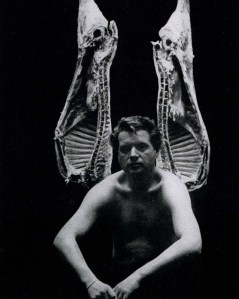
There is no doubt in my mind that Solomon had the same experience in his life that I had as a younger man. I remember standing by the sea and the moon arose and it was copper and beauty. Then the moon did not look like a flat dish but a globe or a sphere since it was close to the horizon. One could feel the global shape of the earth too. Then it occurred to me that I could contemplate the interplay of the spheres and I was exalted because I thought I can look upon them with all their power, might, and size, but they could contempt nothing and I felt as man as God. Then came upon me a horror of great darkness because it suddenly occurred to me that although I could contemplate them and they could contemplate nothing yet they would continue to turn in ongoing cycles when I saw no more forever and I was crushed.

THIS IS SOLOMON’S FEELING TOO. The universal man, Solomon, beyond our intelligence with an empire at his disposal with the opportunity of observation so he could recite these words here in Ecclesiastes 6:12, “For who knows what is good for a man during his lifetime, during the few years of his futile life? He will spend them like a shadow. For who can tell a man what will be after him under the sun?”

_________

How do the surrealists attempt to break out of this cycle that man finds himself trapped in? They attempt to do in part by looking to their dreams. Surrealism is a 20th-century avant-garde movement in art and literature that sought to release the creative potential of the unconscious mind, for example by the irrational juxtaposition of images.


SALVADOR DALI – SPELLBOUND PAINTING

Hitchcock – Spellbound dream sequence

Uploaded on Oct 2, 2010

This excerpt includes the Salvador Dali dream sequence but puts it in context: Gregory Peck’s character suffers from amnesia, and Ingrid Bergman has brought him to her own analyst and mentor. “JB” (Peck) recounts a dream which the two analysts examine for clues to a murder mystery. The film as a whole makes an appealing but illegitimate analogy between psychoanalysis and solving a mystery which proved to be central to the appeal of psychoanalysis in popular culture.

La colaboración de Hitchcock y Dalí en “Recuerda” (Hitchock and Dali “Spellbound”)

Alfred Hitchcock about his collaboration with Dali on Spellbound

______

Francis Schaeffer pictured below:

the surrealists 1930 Salvador Dali, Paul Eluard, Max Earnst ,Man Ray,Luis Bunuel ,Joan Miro,Marcel Duchamp

________

Tom Cordier as Man Ray with Oscar Winner Adrian Brody as Salvador Dali alongside the two friends in real life.

Midnight in the Paris-best scene of the movie Salvador Dali, Man Ray and Woody Allen

published on Dec 18, 2012

Woody Allen talking with Salvador Dali and Man Ray and Luis Bunuel. 

This is the transcript of

DALI: We met, earlier tonight…At the party! Dali.

GIL: I remember!-

DALI: A bottle of red wine!

GIL: It can’t be… Yeah….So?

DALI: Another glass for this man, please. I love the language!The French! The waiters? No.You like the shape of the rhinoceros?

GIL: The rhinoceros? Uh…Haven’t really thought about it.I paint the rhinoceros.

DALI: I paint you. Your sad eyes.Your big lips, meltingover the hot sand,with one tear.Yes! And in your tear, another face.The Christ’s face!Yes, in the rhinoceros.

GIL: Yeah. I mean, I probably do look sad. I’m in…a very perplexing situation.

DALI: Diablo…Luis! Oye, Luis!(Damn. Luis! Hey, Luis!)My friends.This… is Luis Bunuel…and…Mr. Man Ray.-

GIL: Man Ray? My Gosh!- How ’bout that?

DALI: This is Pen-der. Pen-der. Pender!- Yes. And I am Dalí!- Dalí. Yes.You have to remember. Pender is in a perplexing situation.

GIL: It sounds so crazy to say.You guys are going tothink I’m drunk, but I have to tell someone. I’m…from a…a different time. Another era.The future. OK? I come…from the 2000th millenium to here.I get in a car, and I slide through time.

MAN RAY: Exactly correct.You inhabit two worlds.- So far, I see nothing strange.- Why?

GIL: Yeah, you’re surrealists!But I’m a normal guy. See, in one life,I‘m engaged to marry a woman I love.At least, I think I love her.Christ! I better love her! I’m marrying her!

DALI: The rhinoceros makes love by mounting the female.But…is there a difference in the beauty between two rhinoceroses?

MAN RAY: There is another woman?Adriana. Yes, and I’m…very drawn to her.I find her extremely alluring.The problem is that other men,great artists – geniuses- also find her alluring,and she finds them. So, there’s that…

MAN RAY: A man in love with a woman from a different era.I see a photograph.

LUIS BUNUEL: I see a film.I see an insurmountable problem.I see……a rhinoceros.

Let me make a few points here.

1. Surrealists like Salvador Dali, Man Ray and Luis Bunuel had accepted that life without God in the picture is absurd with no meaning or purpose.

2. In the movie MIDNIGHT IN PARIS Gil Pender is from the year 2010 but he is struck with love for Adriana who lives in 1925 and he asks the surrealists about this PERPLEXING PROBLEM. There are two elements to this perplexing problem.

A. God created us so we can’t deny that we are created for a purpose and when a person falls truly in love with another person then they have a hard time maintaining  this is only just a product of evolution and has no lasting significance. Solomon wisely noted in Ecclesiastes 3:11 “God has planted eternity in the heart of men…” (Living Bible). No wonder Bertrand Russell wrote in his autobiography, “It is odd, isn’t it? I feel passionately for this world and many things and people in it, and yet…what is it all? There must be something more important, one feels, though I don’t believe there is. I am haunted. Some ghosts, for some extra mundane regions, seem always trying to tell me something that I am to repeat to the world, but I cannot understand that message.”

B. Gil Pender explains that he has traveled through time and the Surrealists accept this because they are used to leaping into the area of nonreason in order to find a meaning for their lives. The Atheist can only come to the conclusion of despair according to Ecclesiastes,but humans many times try to go to the area of non-reason for meaning in their lives instead of turning to God!

Dustin Shramek in his article, Atheism and Death: Why the atheist must face death with despair, notes:

Francis Schaeffer illustrates this problem well. He says that we live in a two story universe. On the first story the world is finite without God. This is what Sartre, Russell, and Nietzsche describe. Life here is absurd, with no meaning or purpose. On the second story life has meaning, value, and purpose. This is the story with God. Modern man resides on the first floor because he believes there is no God. But as we have shown, he cannot live there happily, so he makes a leap of faith to the second story where there is meaning and purpose. The problem is that this leap is unjustified because of his disbelief in God. Man cannot live consistently and happily knowing life is meaningless.

Francis Schaeffer pictured below:

We can see that later in both the lives of Luis Bunuel and Salvador Dali that they struggled to find a rational source of values and purpose. Schaeffer noted that in Bunuel’s film BELLE DE JOUR  (1967), Bunuel showed pictorially (and with great force) what it is like if man is a machine and also what it is like if man tries to live in the area of non-reason. In the area of non-reason man is left without categories. He has no way to distinguish between right and wrong, or even between what is objectively true as opposed to illusion or fantasy….One could view these films a hundred times and there still would be no way to be sure what was portrayed as objectively true and what was part of a character’s imagination. If people begin only from themselves and really live in a universe in which there is no personal God to speak, they have no final way to be sure of the difference between reality and fantasy or illusion (pp. 201-203).

PORTRAIT DE LUIS BUNUEL By Man Ray 1937

Belle de Jour Presentation

Adrien de Van and filmmaker Luis Buñuel.

(You will notice in the last part of the 14 minute clip above, it shows how the movie “Belle de Jour” ends. Even though her husband has been shot three times which was the result of the horrible friends she had associated with, he is pictured in her dreams as recovering from his wheel chair and blindness and he gladly kisses her. Francis Schaeffer below in his film series shows how this film was appealing to “nonreason” to answer our problems.)

_______

On November 20th, 1972, George Cukor hosted a lunch in honor of Luis Buñuel. Attendees included Robert Mulligan, William Wyler, Robert Wise, Jean-Claude Carriere, Serge Silberman, Billy Wilder, George Stevens, Alfred Hitchcock,

(Basket of Bread. Date: 1926 above)

From the book  THE GOD WHO IS THERE written in 1968 by Francis Schaeffer pages 70-72.

In his earlier days Salvador Dali (1904-1989) was a surrealist. As such he united the teaching of Dada with the concept of the Freudian unconscious, because this is what surrealism is. But at a certain point he could stand this no longer, and so he changed.

One day he painted his wife and called the picture THE BASKET OF BREAD, final title was Portrait of Galarina (1940–45)It is obvious from looking at the picture that on the day he really loved her. It is the same kind of situation as when Picasso wrote on his canvas, “I love Eva.” Before I had heard of any change in Dali, I saw a reproduction of this picture, and it was obvious that there was something different being produced. It is significant that his wife has kept this painting in her private collection.

So on this particular day Dali gave up his surrealism and began his new series of mystical paintings. He had, in fact, already painted two other pictures with the title A BASKET OF BREAD, one in 1926 and one in 1945. These just showed baskets of coarse Spanish bread. But third picture, also painted in 1945, was of his wife Galarina, and shows her with one breast exposed. Her name is written on the picture, and the wedding ring is prominent on her finger.

The second painting in his new style was called CHRIST OF SAINT JOHN OF THE CROSS, painted in 1951, which now hangs in the Glasgow Art Gallery. Salvador Dali has written about this painting in a little folder on sale in the museum: “In artistic texture and technique I painted the CHRIST OF SAINT JOHN OF THE CROSS in the manner in which I had already painted my BASKET OF BREAD which even then, more or less unconsciously, represented the Eucharist to me.

File:Christ of Saint John of the Cross.jpg

No higher resolution available.
Christ_of_Saint_John_of_the_Cross.jpg ‎(332 × 599 pixels, file size: 31 KB, MIME type: image/jpeg)

What does he mean? He means that when he looks at his wife one day, really loving her, and paints here with one breast exposed, that is equated by him to the Eucharist, not in the sense that anything really happened back there in Palestine 2000 years ago, but his love jarred him into a modern type of mysticism.

In this painting he differed from Picasso’s J’aime Eva. As far as we know, Picasso never really went beyond the problems of his individual loves; but to Dali it became the key to mysticism. In order to express the leap that he felt forced to take, he picked up Christian symbols, not to express Christian concepts, but a non-rational mysticism. 

File:Dali – The Sacrament of the Last Supper – lowres.jpg

No higher resolution available.
Dali_-_The_Sacrament_of_the_Last_Supper_-_lowres.jpg ‎(362 × 240 pixels, file size: 46 KB, MIME type: image/jpeg)

Retrieved from http://www.dali-gallery.com/images/works/1955_01.jpg on 13 Sep 2009. Resolution lowered for illustration purposes.

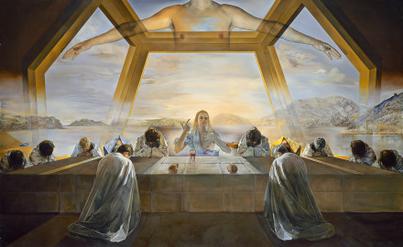
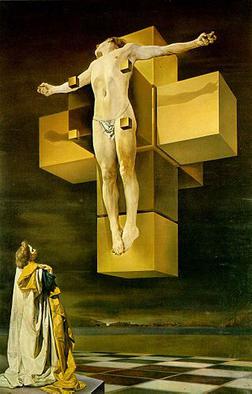
After these two  painting his next crucifixion was called CORPUS HYPEROULUS, now in the Metropolitan Museum of Art in NY and then later THE SACRAMENT OF THE LAST SUPPER, which is in the National Gallery of Art in Washington. This later painting expresses his thought vividly. As the viewer looks at Jesus he can see the background showing through him; he is a mist.

File:Dali Crucifixion hypercube.jpg

File:Dali Crucifixion hypercube.jpg

No higher resolution available.
Dali_Crucifixion_hypercube.jpg ‎(319 × 500 pixels, file size: 35 KB, MIME type: image/jpeg)

This is no Christ of history. Above him stands a great human figure with arms outspread, it’s head cut off by the top edge of the picture. No one is sure what this figure is. However, it is stranger reminiscent of the “Yakso” which in Hindu art and architecture often stands behind the “saviors” (“savior” here bearing no relation to the Christian idea). Yakes and Yaksi connect vegetable life with man on one side and the complete concept of pantheism on the other. I think this is what Dali is also saying by this cut-off figure in the painting. Whether this is so or not, the symbolism of the form of the “room” is clear because it is constructed by means of the ancient Greek symbol of the universe.

In an interview Dali connects this religious interest of his later life with science’s reduction of matter to energy. “…the discoveries in quantum physics of the nature of energy, that matter becomes energy, a state of dematerialization. I realized that science is moving toward a spiritual state. It is absolutely astonishing, the eminent scientists: the declaration of Max Planck and the views of Pierre Teilhard de Chardin (1881-1955), a great Jesuit scientist: that man in his constant evolution is coming closer to an oneness with God.”


Here he relates his own mysticism and the religious mysticism of Teilhard de Chardin to impersonal dematerialization rather than to anything personal. He is quite correct and need not have confined himself to modern liberal Roman Catholicism, but could also have included the Protestant forms of the new theology as well.

It is perfectly possible to pick up no defined Christian symbols on words and use them in this new mysticism, while giving them opposite meanings. Their use does not necessarily imply that they have Christian meanings. Dali’s secular mysticism, like the new theology, gives the philosophic other or impersonal “everything” a personal name in order to get relief by connotation from meaningless. 

SALVADOR-DALI-AND-WIFE-GALA

__________

Matt Chandler in his sermon on ECCLESIASTES CHAPTER ONE finishes up with this paragraph:

So this circular silliness that we find ourselves caught up in, it needs someone from BEYOND THE SUN to come break it. So the Scriptures tell us that Christ comes, John 10:10 said, to give us life to the full. You want to hear a really good translation of what’s going on in John 10:10, “I came that they may have life and have it abundantly.” He’s basically saying this, “You’re living and you’re breathing, but you’re not alive. You’re just existing. In Me, there’s life. You’re existing, but you’re not living. I have come so that you might have life, what you were created for.” Now all of a sudden, these things do have meaning. Now all of a sudden, when this happens, money can just be money. Like, money no longer becomes our master. We don’t have to have to have some kind of social status. It just becomes money. So, we can give it away or buy a house and it doesn’t own us. Christ removes the futility and vanity from the soul and brings about the purpose that you and I are dying for. Everything else under the sun is running on a treadmill. My hope is that you’ll start to honestly evaluate life and that that might lead you to look BEYOND THE SUN.

_________

The answer to find meaning in life is found in putting your faith and trust in Jesus Christ. The Bible is true from cover to cover and can be trusted. GOD HAS SPOKEN AND HAS NOT BEEN SILENT, BUT YOU CAN’T JUST CONTINUE TO LOOK FOR ANSWERS JUST “UNDER THE SUN.” You want some evidence that indicates that the Bible is true? Here is a good place to start and that is taking a closer look at the archaeology of the Old Testament times. Is the Bible historically accurate? Here are some of the posts I have done in the past on the subject: 1. The Babylonian Chronicleof Nebuchadnezzars Siege of Jerusalem2. Hezekiah’s Siloam Tunnel Inscription. 3. Taylor Prism (Sennacherib Hexagonal Prism)4. Biblical Cities Attested Archaeologically. 5. The Discovery of the Hittites6.Shishak Smiting His Captives7. Moabite Stone8Black Obelisk of Shalmaneser III9A Verification of places in Gospel of John and Book of Acts., 9B Discovery of Ebla Tablets10. Cyrus Cylinder11. Puru “The lot of Yahali” 9th Century B.C.E.12. The Uzziah Tablet Inscription13. The Pilate Inscription14. Caiaphas Ossuary14 B Pontius Pilate Part 214c. Three greatest American Archaeologists moved to accept Bible’s accuracy through archaeology.
(GALA’s daughter Cécile  Éluard is pictured below)

Photo taken in 1944 after a reading of Picasso’s play El deseo pillado por la cola: Standing from left to right: Jacques Lacan, Cécile  Éluard, Pierre Reverdy, Louise Leiris, Pablo Picasso, Zanie de Campan, Valentine Hugo, Simone de Beauvoir, Brassaï. Sitting, from left to right: Jean-Paul Sartre, Albert Camus, Michel Leiris, Jean Aubier. Photo by Brassaï. –

Paul Eluard, Gala et leur fille Cécile à la fin des années 1920.

Paris: The Luminous Years

gala dali

“A Friends’ Reunion” by Max Ernst. Seated L to R: Rene Crevel, Max Ernst, Dostoyevsky, Theodore Fraenkel, Jean Paulhan, Benjamin Peret, Johannes T. Baargeld, Robert Desnos. Standing: Philippe Soupault, Jean Arp, Max Morise, Raphael, Paul Eluard, Louis Aragon, Andre Breton, Giorgio de Chirico, Gala Eluard. Photo Credit: Wikipedia

Man Ray : Nusch Eluard, Valentine Penrose, Roland Penrose, Paul Eluard, Pablo Picasso, Cécile Eluard vers 1937

__________________

Related posts:

A list of the most viewed posts on the historical characters mentioned in the movie “Midnight in Paris”

Characters referenced in Woody Allen’s movie “Midnight in Paris” (Part 38,Alcoholism and great writers and artists)

The characters referenced in Woody Allen’s movie “Midnight in Paris” (Part 36, Alice B. Toklas, Woody Allen on the meaning of life)

Characters referenced in Woody Allen’s movie “Midnight in Paris” (Part 35, Recap of historical figures, Notre Dame Cathedral and Cult of Reason)

The characters referenced in Woody Allen’s movie “Midnight in Paris” (Part 34, Simone de Beauvoir)

The characters referenced in Woody Allen’s movie “Midnight in Paris” (Part 33,Cezanne)

The characters referenced in Woody Allen’s movie “Midnight in Paris” (Part 32, Jean-Paul Sartre)

The characters referenced in Woody Allen’s movie “Midnight in Paris” (Part 31, Jean Cocteau)

The characters referenced in Woody Allen’s movie “Midnight in Paris” (Part 30, Albert Camus)

The Characters referenced in Woody Allen’s “Midnight in Paris” (Part 29, Pablo Picasso)

_____________
Midnight in Paris: TAP’s Movie of the Month for June 2015 JUNE 1, 2015 by TAP Adventures

Midnight in Paris: TAP’s Movie of the Month for June 2015

JUNE 1, 2015

midnight-in-paris-movie-poster-2011-1020695872Each month in TAP, we select a Movie of the Month to help prepare our students for their overseas trip. This month we’re starting to prepare for our 2016 adventure in France and the Benelux countries, so we’ve selected the Woody Allen film,Midnight in Paris, to watch first.  The big question, of course, is what is this movie about?

Well, this is one of those movies that is just about so much.  First, it’s about the idea that being somewhere else is better than being here.  That’s an idea that’s near and dear to TAP’s heart, and it’s one of the reason why we’ve continued to travel the world with students for the ten years now.  It’s not that home is a bad place, it’s that home isn’t the only place, and history books aren’t the only way to learn.  In the movie, an American author named Gil Pender (played by Owen Wilson), who is vacationing in Paris while trying to complete his novel.  In the movie he visits a bunch of places that we’ll see on our trip (the Palace of Versailles, Monet’s gardens in Giverny, the used book stalls along the Seine River, Notre Dame, and the Eiffel Tower) and many places we could visit during our free time (The Musee de l’Orangerie, the Rodin Museum gardens, and the Moulin Rouge).

Gil’s trouble is that creatively he’s stuck, but suddenly he’s magically transported back in time to the 1920s in Paris.  In TAP, we’re lucky enough to travel the world, but how amazing would it be to travel the world and visit different time periods too?  That’s what Gil gets to experience.

It’s also sort of about the famous question, “If you could have dinner with any three people from history, living or dead, who would you choose?”  Gil gets to experience that.  The 1920s in Paris was a time in between WWI and WWII when authors and artists from all over the world settled in the City of Lights, forming an incredibly creative community we call The Lost Generation. Gil gets to meet authors like Fitzgerald, Hemingway, Stein, Faulkner, Barnes, and Eliot along with artists and musicians like Dali, Cole Porter, Picasso, and Matisse, who hung out and talked about art and literature while sitting in cafes, drinking in bars, and dancing the night away in Paris’ hottest clubs.  What better place for Gil to get transported to?

It’s also about the very simple idea that there’s just something magical about Paris.  I’ve been lucky enough to travel to a lot of places, but there is no place that has quite the same magic as Paris.  You guys will know that soon.  There’s just something unbelievably special about Paris, and I’d be a fool to try and put into words what that is.  Far greater writers than me have made that effort and have failed, so you’re just going to have to wait and see what that feeling is like first hand next year.

For the time being, though, you can watch Gil travel back in time, meet his idols, and stroll through the magical streets of Paris.  Every time I’ve been to Paris since seeing this movie, I can not help but hope a magical limo will transport me to different times in Paris’ past.  This movie, unlike any other, captures a little bit of that magic that you feel what strolling through the City of Lights.

While you’re watching the movie, here’s a little Lost Generation guidebook to help you better understand and connect with what’s going on.

The Lost Generation

The term “Lost Generation” refers to the generation that grew up and became adults during World War I.  The phrase was popularized by the American author Ernest Hemingway in his novel The Sun Also Rises, which was written about the group of “lost” artists (writers, painters, actors, musicians…) who found one another in 1920s Paris.  Hemingway claims the phrase actually comes from his mentor, another American author living in Paris during that time, Gertrude Stein.

Hemingway kept journals during the time he was living in Paris, and after his death, those thoughts were published as a memoir called A Moveable Feast.  If you really want to know what it was like to be Hemingway or one of his friends, that book would give you incredible insight into their lives.  Some of the cafes and bars that Hemingway talks about in the book are still there today, and, if you do your research, maybe you can have lunch where Hemingway ate.

In A Moveable Feast, Hemingway explains that Stein heard an auto mechanic call that generation a “generation perdue,” or a lost generation.  Stein, who was a great deal older than the younger authors and artists she mentored, said to Hemingway, “That is what you are.  That is what you all are… all of you young people who served in the war.  You are a lost generation.  In this context, lost doesn’t mean missing, but disoriented, wandering, aimless, or directionless – which is recognizing the fact that there was a great deal of confusion and lack of direction among the young men (and women) who served in WWI in the years following the war.

Below is a very good video that explains the existence and influence of this Lost Generation.

Corey Stoll in Midnight in Paris alongside the real Papa Hemingway.

Corey Stoll in Midnight in Paris alongside the real Papa Hemingway.  Interestingly enough, Stoll is set to play the villain, Yellowjacket, in the next Marvel movie – Ant-Man.

Ernest Hemingway

Hemingway, who is originally from Oak Park, Illinois (near the Brookfield Zoo – and you can still visit two of the houses he lived in there), plays a key role in the movie, and is probably the most famous member of this “lost generation” of artists.

During his lifetime, Hemingway wrote seven novels, six collections of short stories, and two nonfiction books.  Several more pieces (like A Moveable Feast) were published after his death.  He won the Nobel Prize in Literature in 1954 and is considered one of the greatest American writers ever.

He was born and raised right here in Illinois, and soon after graduating high school, he enlisted in the military to help in WWI.  Working as an ambulance driver near the front lines, Hemingway was seriously injured.  These experiences became his novel, A Farewell to Arms.

Shortly after the war, he married and moved to Paris.  He worked as a journalist, but also found himself amongst other American, British, and Irish authors and artist known as the “lost generation.”  During this time, he wrote and published The Sun Also Rises.  Later, living up to the concept of being “lost” he found himself reporting (and on some levels) participating in the Spanish Civil War.  He turned that experience into For Whom the Bell Tolls (Mr. Curtis’ favorite Hemingway book).  He made his way to London, then back to France.  Acting as a reporter, he was there for both the D-Day landings at Normandy and later, the liberation of Paris.

Later he became a big game hunter in Africa, lived in Cuba and in Key West, Florida, eventually retiring to Idaho, where he committed suicide in 1961, just weeks before his 62nd birthday.  Throughout his life, four marriages, and countless adventures, he always appeared to be “lost.”

If you’re anything like me, and I imagine a lot of you are, you’ll want to check out some of Hemingway’s (and the other members of the Lost Generation’s) favorite spots while we’re in Paris. Many of them still exist.

Of course, this isn’t required viewing, but you might want to know a bit more about Hemingway.  This biography should get you ready for your trips, and have you wishing, just like Gil (from the movie) you could travel back to Paris of the 1920s too.

Yves Heck from the film and Cole Porter.

Yves Heck from the film and Cole Porter.

Cole Porter

Cole Porter appears in Midnight in Paris for only a few moments, but his music is heard throughout and plays an important role.

Despite the wishes of his wealthy family in Indiana, Cole Porter was an American musician, composer, and songwriter.  He began writing for Broadway in the 1920s, and by the 1930s he was one of the most successful composers around.

Before that, in 1917, when the United States entered WWI, Porter moved to Paris to work with the relief organizations.  He joined the French Foreign Legion and served in the war in North Africa.  During his military service, he had a portable piano that he could carry on his back so that he could entertain the troops.

After the war, Porter lived in a luxurious apartment in Paris, where he held extravagant and scandalous parties.  Porter’s “lost”-ness was part the artistic lifestyle his family did not want him to pursue, part the aftereffects of the war, and part the fact that he was homosexual in an era where his lifestyle was not widely accepted here at home.

Porter eventually married Linda Lee Thomas, a rich American divorcee.  She was well aware of his homosexuality, but his success and status in society gave her better social position, and she enabled him to hide his true self publically, where his lifestyle was not accepted.

He was very successful in the 1930s and 40s, but a horseback riding accident in the late 30s left him severely crippled.  After the deaths of his wife and mother in the early 50s, Porter’s injury became too much for him.  His leg was amputated in 1958, and he never wrote music again.  He died six years later, having been isolated from all but his few closest friends for those final years.

For a little bit more about Porter, check out the video below – his life in Paris begins at about the 10:30 mark, and it continues into the first few minutes of part two of the video (which will have a link at the end of this video).  Be sure to watch long enough into part two to hear some of Porter’s timeless show tunes like Anything Goes, I Get a Kick out of You, and Let’s Fall in Love.

Allison Pill & Tom Hiddleston and Zelda & Scott Fitzgerald

Allison Pill & Tom Hiddleston and Zelda & Scott Fitzgerald.  Does Hiddleston look familiar to you?  He’s Loki in several of the Marvel movies – one of two actors that play famous authors in this film and villains in a Marvel movie.

F. Scott Fitzgerald

Scott Fitzgerald was an American author, from Minnesota, who wrote both novels and short stories.   He is considered by many to be one of the greatest American authors of all time. He and Hemingway formed a close friendship during their years in Paris.

Fitzgerald, along with his wife, Zelda, spent a great deal of time in Paris in the 1920s.  He befriended Hemingway and several other members of the American expatriate (means citizens of one country living in another) community.  During his time in Paris, Fitzgerald wrote countless short stories for American magazines and also worked on his novels The Great Gatsby (which Hemingway read an early draft of) and Tender is the Night (which is partially about his time in Paris with Zelda).

Although he is now considered one of the greatest authors of the 20th century, Fitzgerald’s his first novel was the only one that sold well enough to support the extravagant lifestyle that he and Zelda lived. The Great Gatsby, now considered his masterpiece, did not become popular until after Fitzgerald died.

Because he lived beyond his means, and due to the medical care that Zelda later needed, Fitzgerald was constantly in money trouble.  He often took loans from his agent and friends.  The financial mess, his wife’s mental illnesses, his own alcoholism, and the fact that his work was poorly received by critics of the time and did not sell well, all took it’s toll on Fitzgerald.

Zelda Fitzgerald

Scott Fitzgerald’s wife, Zelda, was also an author.  Zelda was brought up in the American south in a wealthy family who felt Scott was not successful enough for her.  This motivated him to move forward from selling short stories to magazines to writing his first novel.  However, Scott’s friend, Ernest Hemingway, felt that while the couple lived in France, Zelda intentionally sabotaged Scott’s writing by luring him away from work with parties and alcohol.

Their marriage suffered greatly under the weight of financial troubles, his alcoholism, and her mental illness.  For much of the 1920s, the two lived unhappily, Scott focused on his writing, but not progressing as much as he’d like with Zelda distracting him – and Zelda bored.  They both mined their relationship for writing material and Zelda’s 1932 novel Save Me the Waltz was a semi-autobiographical look at their declining relationship.  The book itself didn’t help matters, as it touched on many of the themes and incidents Scott was drawing from for Tender is the Night, which he worked on for years and finally published in 1934.

Scott Fitzgerald died of a heart attack in 1940.  He hadn’t seen Zelda, who was in and out of mental health facilities for several years.  She died in a fire in a mental hospital in 1948.

Academy Award winner Kathy Bates and Gertrude Stein.

Academy Award winner Kathy Bates and Gertrude Stein.

Gertrude Stein

Gertrude Stein was an American author, poet, and playwright. She served as sort of the matriarch for the lost generation of American expatriate artists living in Paris in the 1920s.  She hosted salons (small parties for artists and writers to discuss art, music, literature, and culture) at her home and Paris every Saturday.  Many of the younger writers and artists living in Paris at the time saw Stein as a mentor of sorts, so the regular Saturday salons were an effort to make sure she had the rest of the week to work on her own writing instead of being constantly interrupted.  Regular attendees of the salons (which are shown in the movie) included Picasso, Hemingway, Fitzgerald, Sinclair Lewis, Ezra Pound, Thornton Wilder, and Henri Matisse – among many others.

Stein’s most famous work is The Autobiography of Alice B. Toklas, which isn’t really an autobiography at all.  Alice B. Toklas was Stein’s long time romantic partner.  The two lived together in Paris for almost forty years.  During Stein’s salons, Toklas would act as hostess and entertain the wives and girlfriends of the authors and artists Stein would work with.  The book is a look at the years the couple spent in Paris told through Alice’s eyes.

Stein is arguably the most important person in all of this.  Here’s a mini-biography of her.

Sonia Rolland and Josephine Baker.

Sonia Rolland and Josephine Baker.

Josephine Baker

Josephine Baker was an American-born actress, singer, and dancer.  She was sometimes known as the Black Pearl or the Bronze Venus.  Baker, who was African-American, refused to perform for segregated audiences in America, so she moved to France, became a French citizen, and became incredibly famous and successful in Paris.  She was considered to be the most successful American entertainer working in Paris.  Not only were the French more tolerant of homosexuals (like Cole Porter, Gertrude Stein, and Oscar Wilde) in the 1920s than Americans were, but there wasn’t the racial segregation that we had here in the States.

Baker’s act, which was unique and quite risque, became the talk of Paris.  She began starring in movies, as well as dancing on stage, and she became a muse of sorts to other artists like Picasso, Hemingway, Fitzgerald, Langston Hughes, and Christian Dior.  In the movie, Gil sees her for just a few moments dancing at Chez Bricktop’s, a nightclub.

Marcial Di Fonzo Bo and the real Pablo Picasso.

Marcial Di Fonzo Bo and the real Pablo Picasso.

Pablo Picasso

One of Spain’s most successful painters and sculptors, Pablo Picasso spent most of his adult life living in France.  He is considered one of the best and most influential artists of the 20th century.  Known for helping found the cubist style, the collage, and many other artistic movements, Picasso achieved international fame.

During the 1920s, Picasso was living in Paris with his wife, who introduced him to the high society and social life of wealthy Paris.  This wasn’t Picasso’s style, he preferred to live a more isolated life, so a wedge was driven between the two.  Eventually, Picasso started an affair with a younger woman and his marriage fell apart.  This was just the first in a series of affairs, as Picasso had four children with three different women.  He never divorced his wife, though, as it would have been too expensive for him to do so.  Their marriage ended when she died in the 1950s.   He eventually remarried and continued to work until his death in 1973.  Gil meets Picasson at Gertrude Stein’s house while he is showing Stein a new piece of art, and his mistress, the fictional Adrianna looks on.

Here’s a video about Picasso, his time in France, and some of the works you can see while we’re in Paris.  The modern art museums aren’t in the itinerary, though, so you’ll have to plan to see it during free time if it’s something you want to see.   That’s definitely something you can do, you just have to plan ahead.

Tom Cordier as Man Ray with Oscar Winner Adrian Brody as Salvador Dali alongside the two friends in real life.

Tom Cordier as Man Ray with Oscar Winner Adrian Brody as Salvador Dali alongside the two friends in real life.

Salvador Dali

Another Spanish artist living in Paris at the time was Salvador Dali.  Dali had achieved a small amount of success in Spain, but in the late 20s he traveled to Paris where he was introduced to Picasso, whom he idolized.  Picasso had heard of Dali through mutual friends and took the younger artist under his wing.

Dali is best known for his surrealistic work, like The Persistence of Memory (which you probably know as the painting with the melting clocks), but he was also a sculptor, a filmmaker, and a photographer.  The movie portrays his collaboration with filmmaker Luis Bunuel, and it was during the making of that film that Dali met his future wife, Gala.  The two of them lived in Paris, as the surrealist movement grew and Dali became more and more famous, until WWII broke out, then the two moved to the United States.

The Dali scene in Midnight in Paris is one of my favorite’s in the movie.  It perfectly shows you that Dali was a weird dude.  There’s a museum of his work in the Monmartre neighborhood of Paris, and that’s another option for your free time.  The video below gives you a sneak preview of that museum.

Man Ray

Emmanuel Radnitzky, known better as Man Ray, was an American artist who lived much of his life in France.  He was an important contributor to the surrealist movements (like Dali), and considered himself a painter and photographer.  He moved to Paris in 1921, eventually meeting (and photographing) James Joyce, Gertrude Stein, and other important figures.  He befriended Picasso and soon became a regular figure at Stein’s Saturday salons.

Actor David Lowe and poet T.S. Eliot.

T.S. Eliot

An American poet, considered one of the most influential poets of the 20th century, T.S. Eliot spent most of his adult life living in Europe.  He spent a year in Paris in the early 1900s, near the end of his college years, and returned often.  His time in Paris influenced his writing a great deal, even his most famous poem, which is often considered the best poem of the 20th century,The Waste Lands.  

During one trip in 1920, Eliot met another writer, the Irishman James Joyce (another writer who lived in Paris).  It’s said that Eliot didn’t like Joyce at first, and that Joyce didn’t think much of Eliot’s poetry – however, the two eventually became very close friends, and Eliot visited Joyce everytime he went to Paris.  Joyce, for whatever reason, is not included in the movie.

Gil meets him one night while getting into the magical limo, and Gil gushes about one of Eliot’s most famous works, The Love Song of J. Alfred Prufrock.

Shop owner Sylvia Beach and writer James Joyce in the doorway of the original Shakespeare and Co. bookstore in Paris.

James Joyce

Okay, I just said James Joyce isn’t in the movie, Midnight in Paris, but he is mentioned by Gil (Owen Wilson) in a key scene. Joyce was an Irish novelist and poet, considered to be one of the most influential writers of the 20th century.  He is best known for his novels , Ulysses, A Portrait of an Artist as a Young Man, and Finnegans Wake.

Joyce finished writing Ulysses while living in Paris.  He was just starting to gain a bit of fame, so he was able to stay in Paris and socialize with the other literary figures living in the city – he spent a great deal of time at the bookshop, Shakespeare and Company (more on the bookshop below) to meet other writers.  Many people consider Ulysses among the greatest novels ever written, but it was banned in England, Ireland, and America and no company would publish it.  Instead, Sylvia Beach, owner of Shakespeare and Company published the first edition of the classic.

Joyce left Paris in the early 40s when the Nazi occupation of France began.  Beach also closed the shop during the occupation (don’t worry, it’s back).

Apparently Henry Matisse is blurry in real life and in film. On the left is actor Yves-Antoine Spoto, on the right the real Matisse.

Henri Matisse

French artist, Henri Matisse, was known primarily as a painter, but also worked as draughtsman, a printmaker, and a sculptor.  Along with Picasso, he is thought to be one of the one of the most influential artists of his time.

Gertrude Stein, along with her brothers and sister-in-law, was a great supporter of Matisse and bought a lot of his work to display in her home. In some ways, it was Matisse who was responsible for starting the regular salons.  Matisse was so proud of his work being displayed at Stein’s home that he would bring people to see it regularly.  It became somewhat of a nuisance, and Stein was unable to get any of her own work done, so she started the Saturday salons to give everyone a chance to socialize and share on her schedule.

In the early 1900s, Matisse met Picasso at one of the Saturday salons (he also meets Gil at Stein’s house).  The two artists quickly became great friends and rivals.  Matisse’s style was much more realistic and detailed than Picasso’s but the two men, along with other artists they socialized with at Stein’s salons, were a great influence to one another.

Some of Matisse’s work is on display at the Pompidou Centre in Paris, another free time option.  Here’s a brief video someone took of some of his work.

Djuna Barnes

Djuna Barnes was an American poet, playwright, journalist, artist, and short-story writer.  Today, she is best known for her novelNightwood, but in the time period Midnight in Paris takes place in, she was more known as a journalist. In the early 20s, an assignment from an American magazine took her to Paris, where she lived for the next decade.  During this time she interviewed numerous artists and authors living in Paris, which led to a close friendship with James Joyce. During this time she also published a novel, a collection of poetry, and numerous short stories.  Gil dances with her briefly in one scene in the movie.

Adrien de Van and filmmaker Luis Buñuel.

Luis Buñuel

Luis Buñuel was a Spanish filmmaker who worked in Spain, Mexico and France. He is thought to be a huge influence on the art of filmmaking, especially short film.  Critic Roger Ebert called Buñuel’s first film “the most famous short film ever made.”  It was a piece that he co-wrote and co-directed with Salvador Dali.  In the movie, when Gil meets Buñuel, he makes some suggestions about a future film about a dinner party that the director should make – eventually the filmmaker did make that movie.

The video below is the movie, Un Chien Andalou, that Bunuel and Dali made together.  It is probably the weirdest movie I’ve ever watched, and I understood almost none of it.  Enjoy.

More Famous Names

If you pay close attention, you’ll hear a few more famous names tossed out during the movie.  Jean Cocteau was a French writer and filmmaker, Archibald MacLeish was an American poet, Juan Belmonte was a Spanish bullfighter, Jack Turner was an abstract painter, H.M. Brock was a British painter, Amedeo Modigliani was an Italian painter, Coco Chanel was a French fashion designer, and William Faulkner was an American novelist.

Shakespeare and Co.

Shakespeare and Company is the name of an independent bookstores on Paris’ Left Bank, near the Notre Dame Cathedral.  It was owned by Sylvia Beach, an American living in Paris, and opened in 1919.  During the 1920s, it was a hangout for writers and artists like Ezra Pound, Hemingway, Joyce, Ford Madox Ford, Fitzgerald, Stein, and Man Ray.

Customers could buy or borrow books, and often young authors could live/sleep in the store in exchange for stocking the shelves and working on their own writing.  Beach supported writers, and she offered many books that were banned in the US and UK.  In fact, Joyce’s biggest book, Ulysses, was originally published by Beach, because it was banned everywhere else.  The store plays a big part in Hemingway’s A Moveable Feast.

The store closed in 1940, during the German occupation, and (at least this version of it) never re-opened.

In 1951 a former American soldier named George Whitman opened another English-language bookstore on Paris’s Left Bank.  The store was named Le Mistral.  Much like Shakespeare and Company, the store became a hangout for American and British poets and writers living in Paris, writers like Allen Ginsberg and William S. Burroughs.  When he opened, Whitman had intentionally modeled his shop after Beach’s and, in 1964, after Beach’s death, Whitman renamed his store “Shakespeare and Company” in tribute to the original (it’s okay, he had Beach’s blessing – they had become close friends).

Now run by Whitman’s daughter, Sylvia Beach Whitman (yes, she was named after the original owner), the bookstore is still there today. Sylvia Whitman runs the store the same way as her father – it still has sleeping facilities, with thirteen beds for young writers, and there are regular poetry readings, writer’s meetings, and other activities.  The bookstore does play a small roll in Midnight in Paris, and it is one of Mr. Curtis’ favorite spots in the city.

More Famous Places

One of the first places Gil visits in the 1920s (where he saw Josephine Baker dancing), was Chez Bricktop’s, owned by an America woman named Ada “Bricktop” Smith from 1924-1961.  Bricktop’s was an iconic club and one of the most important cultural hotspots of the 20th century.  Sadly, Chez Bricktop is long gone.

The scene where Gil first meets Hemingway was set at  Crémerie-Restaurant Polidor, a historic restaurant in the Latin Quarter of Paris.  The restaurant’s interior looks almost the same as it did 100 years ago, and the menu has been virtually unchanged for longer than that.  Back in the ’20s, Hemingway really did hang out there, as did Joyce, and later Henry Miller and Jack Kerouac.  Polidor is still there, and perhaps you could have lunch or coffee where Hemingway and Fitzgerald debated and argued about their work and about Zelda.

The Church of St Etienne du Mont is a real Parisian church where Gil was picked up each night at midnight by the magical limo.  The church can be visited during our free time, and maybe Mr. Curtis will take a select group of literature enthusiasts to be there for the chime of midnight just in case something magical happens.

Gil, Inez, and their friends tour the Musee Rodin early in the movie.  Interestingly enough, the tour guide in those scenes was played by Carla Bruni, an Italian/French actress who just happened to be the French First Lady at the time of the filming.  She married French president Nicolas Sarkozy in 2008.  The museum, however, was originally the Hotel Biron, where Rodin lived and worked.  When he died, he left his work to the French people, on the condition that it be displayed at the Hotel Biron.  You can visit the Rodin Museum during free time, but there is an admission charge.  The gardens Gil walked through are accessible also – admission to Rodin’s gardens is just €1.

Gertrude Stein’s scenes take place at the writer’s real home, 27 rue de Fleurus. It’s here that Gil also meetsPicasso and Adriana.  Unfortunately, the house isn’t open to tours, but there is a plaque above the door that commemorates the Stein’s time in Paris.

Free time can be spent at the Musee de l’Orangerie, where Gil sees several of Monet’s water lily paintings. The museum is also home to works by Paul Cézanne, Henri Matisse, Renoir, and Picasso.

____

Late in the movie, Gil is able to travel further back in time to a time known as La Belle Epoque (The Beautiful Era). There, he meets three more artists from Paris’ past – this time the 1890s.  

Near the end of the movie, Gil meets Vincent Menjou Cortes as Henri de Toulouse-Lautrec, François Rostain as Edgar Degas, and Olivier Rabourdin as Paul Gauguin.

Henri de Toulouse-Lautrec

Henri de Toulouse-Lautrec was a French painter who was drawn to the colorful life of Parisian theatre and music, including places like the famous Moulin Rouge.  He painted exciting and provocative pictures of the life of that time period.  He is among the most famous of the post-impressionist painters (along with Cezanne, Van Gogh, and Gauguin).

Paul Gauguin

Gauguin was a French artist who was not well recognized until after his death. Today we appreciate his experimental use of color and  style that were very unique to the time period.  His work heavily influenced later artists like Picasso and Matisse.

Edgar Degas

Degas was a French artist famous for his paintings, sculptures, and drawings. Many of his most famous works deal the subject of dance.  He is also thought to be one of the founders of the impressionist style, but he preferred the term realist.  His portraits of people are most famous for the realistic looks on their faces, indicating a psychological complexity.

_______________

I hope you all enjoy Midnight in Paris as much as I did the first time I saw it.  I hope it makes you dream about strolling down the quiet streets of Paris.  I hope it makes you want to travel back in time.  I hope it gets you excited about visiting Paris in just over a year.  It’s a fun movie that gives a unique insight into a different time in Paris, and, if you’re anything like me, you’ll be quietly hoping that somehow our plane takes us to 1920s Paris by mistake.

Each of the movies we select are chosen for that very reason, to give you different perspectives on the people, history, and culture of the places we’re visiting.  This movie is definitely well worth a few hours of your time before we fly to Europe.


So, sit back, relax, grab some macarons and a croque monsieur, and watch our Movie of the Month,Midnight in Paris, along with the other videos we’ve posted today.  You can find Midnight in Paris free at some online streaming sites, or check the local libraries or video stores if you prefer.  If it costs money to rent, we suggest you team up and watch it with a few other students in the group.

We ask that all of our France/Benelux travelers take the time to watch our Movies of the Month, then come back here to discuss the movie, the history, and the impact this story had on the people and places we’ll visit.  In your response, we’d like you to tell us first what you thought of the movie and why.  Second, tell us three specific things you learned from watching this movie (and reading this post) that you think will make your experience in Paris even better than it would have been.  The longer and more in depth our discussion gets, the better it is for all of us.  

Keep in mind, also, that several books written by the Lost Generation authors are on your Around the World in 80 Books assignment, including Hemingway’s The Sun Also Rises and A Moveable Feast and Fitzgerald’s Tender is the Night.  If there are different books, poems, plays, or short story collections you heard about while reading this post or watching the videos that you’d like to read, please go for it.  Those will count towards your Around the World in 80 books assignment too. 

Related posts:

Midnight in Paris: TAP’s Movie of the Month for June 2015 JUNE 1, 2015 by TAP Adventures

Midnight in Paris: TAP’s Movie of the Month for June 2015 JUNE 1, 2015 by TAP Adventures Each month in TAP, we select a Movie of the Month to help prepare our students for their overseas trip. This month we’re starting to prepare for our 2016 adventure in France and the Benelux countries, so we’ve selected […]

“Woody Wednesday” ECCLESIASTES AND WOODY ALLEN’S FILMS: SOLOMON “WOULD GOT ALONG WELL WITH WOODY!” (Part 2 MIDNIGHT IN PARIS Part A, When was the greatest time to live in Paris? 1920’s or La Belle Époque [1873-1914] )

In the film MIDNIGHT IN PARIS Woody Allen is really looking at one main question through the pursuits of his main character GIL PENDER. That question is WAS THERE EVER A GOLDEN AGE AND DID THE MOST TALENTED UNIVERSAL MEN OF THAT TIME FIND TRUE SATISFACTION DURING IT? This is the second post I have […]

MUSIC MONDAY Cole Porter “Let’s Do it, Let’s Fall in Love” in the movie MIDNIGHT IN PARIS

Cole Porter “Let’s Do it, Let’s Fall in Love” in the movie MIDNIGHT IN PARIS Midnight in Paris – Let’s Do It Let’s do it : Cole Porter.( Midnight in Paris ) Celebrate Wikipedia Loves Libraries at your institution in October/November. Let’s Do It, Let’s Fall in Love From Wikipedia, the free encyclopedia Jump to: […]

Cole Porter “Let’s Do it, Let’s Fall in Love” in the movie MIDNIGHT IN PARIS

Cole Porter “Let’s Do it, Let’s Fall in Love” in the movie MIDNIGHT IN PARIS Midnight in Paris – Let’s Do It Let’s do it : Cole Porter.( Midnight in Paris ) Celebrate Wikipedia Loves Libraries at your institution in October/November. Let’s Do It, Let’s Fall in Love From Wikipedia, the free encyclopedia Jump to: […]

“Woody Wednesday” The second best website ever on Woody Allen “Midnight in Paris”

I have spent alot of time talking about Woody Allen films on this blog and looking at his worldview. He has a hopeless, meaningless, nihilistic worldview that believes we are going to turn to dust and there is no afterlife. Even though he has this view he has taken the opportunity to look at the weaknesses of his own secular view. I […]

Blue Jasmine has huge opening for Woody Allen film but I doubt it will top “Midnight in Paris” overall performance!!!!!!

Blue Jasmine — Movie Review Published on Jul 25, 2013 Blue Jasmine directed by Woody Allen and starring Cate Blanchett , Alex Baldwin, and Louis C.K. is reviewed by Ben Mankiewicz (host of Turner Classic Movies), Grae Drake (Senior Editor of Rotten Tomatoes), Alonso Duralde (TheWrap.com and Linoleum Knife podcast) and Christy Lemire (Movie critic). ___________________ […]

A list of the most viewed posts on the historical characters mentioned in the movie “Midnight in Paris”

I have spent alot of time talking about Woody Allen films on this blog and looking at his worldview. He has a hopeless, meaningless, nihilistic worldview that believes we are going to turn to dust and there is no afterlife. Even though he has this view he has taken the opportunity to look at the weaknesses of his own secular view. I […]

“Woody Wednesday” Woody Allen, ‘To Rome With Love’ Director, Talks ‘Midnight In Paris’ Success, Acting Career

How To Recover From a Break Up With Greta Gerwig Published on May 16, 2012 by younghollywood Young Hollywood is hanging out in NYC during the Tribeca film festival, where we chat with rising star Greta Gerwig about her hip slice-of-life movie, ‘Lola Versus’. Greta offers up some advice on how to get over a […]

Woody Allen, ‘To Rome With Love’ Director, Talks ‘Midnight In Paris’ Success, Acting Career

How To Recover From a Break Up With Greta Gerwig Published on May 16, 2012 by younghollywood Young Hollywood is hanging out in NYC during the Tribeca film festival, where we chat with rising star Greta Gerwig about her hip slice-of-life movie, ‘Lola Versus’. Greta offers up some advice on how to get over a […]

“Midnight in Paris” almost did not get made in Paris “Woody Wednesday”

Manhattan (1979) The director and actress (pictured in front of the Queensboro Bridge in NYC) ended their years-long collaboration after this film, about an eccentric New Yorker who falls for the mistress of his best friend. Allen was nominated for a best writing Oscar.    Amazing story. January 25, 2012, 10:33 am <!– — Updated: 12:57 […]

______

“Woody Wednesday” ECCLESIASTES AND WOODY ALLEN’S FILMS: SOLOMON “WOULD GOT ALONG WELL WITH WOODY!” (Part 2 MIDNIGHT IN PARIS Part A, When was the greatest time to live in Paris? 1920’s or La Belle Époque [1873-1914] )

In the film MIDNIGHT IN PARIS Woody Allen is really looking at one main question through the pursuits of his main character GIL PENDER. That question is WAS THERE EVER A GOLDEN AGE AND DID THE MOST TALENTED UNIVERSAL MEN OF THAT TIME FIND TRUE SATISFACTION DURING IT? This is the second post I have done in this series and the first one dealt with MAGIC IN THE MOONLIGHT.

ECCLESIASTES 7:10 Do not say, “Why were the old days better than these?” For it is not wise to ask such questions.

Edgar Degas – 

___

_______________
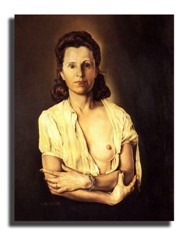
Henri de Toulouse-Lautrec

paul gauguin march 1891 ,

___________


A case could be made that the greatest explosion of art came out of Paris in the last few decades of the 1800’s and a case could also be made that it was in the 1920’s in Paris. I am not going to give a direct answer to that but I will discuss both periods of time. In the film MIDNIGHT IN PARIS Woody Allen is looking long and hard at this issue of a “Golden Age” in which the best and brightest of the time tried to find meaning and satisfaction in life. I will compare this to Solomon’s search later in this post.

MIDNIGHT AT PARIS starts with Gil Pender picking his favorite time and his favorite people of that time, “Imagine this town in the 20s. Paris in the ’20s,in the rain; the artists and writers.”

Gil’s girlfriend Inez tries to talk him out of moving to Paris to live and write his novel and her friend Paul agrees with her.

Paul: And just which era would you have preferred to live in, Miniver Cheevy?

Inez: Paris in the ’20s, in the rain.- Wouldn’t have been bad.-

Paul : And no global warming,no TV and suicide bombing,and nuclear weapons, drug cartels!Usual menu of  horror stories.You know, nostalgia is denial.- Denial of the painful present.- Oh, whoa!

Inez: Gil is a complete romantic.I mean, he would bemore than happy living in acomplete state of perpetual denial.

Paul: Really?- And the name for this fallacy is called “golden-age thinking.”– Yeah, the erroneous notion that a different time period is better than the one one’s living in.It’s a flaw in the Romantic imagination of those people who…who find it difficult to cope with the depressive.- 

(Solomon would agree with Paul on this point and in Ecclesiastes 1:8-10 Solomon states: All things are wearisome and all words are frail; Man cannot express it. The eye is not satisfied with seeing, Nor is the ear filled with hearing. 9  That which has been is that which will be [again], And that which has been done is that which will be done again. So there is nothing new under the sun10  Is there anything of which it can be said, “See this, it is new”? It has already existed for [the vast] ages [of time recorded or unrecorded] Which were before us.)

Midnight in Paris Beat Sheet: Gil, Inez, Paul and Carol

Gil is thrilled later in the film that Gertrude Stein is willing to read a draft of his book and the first line goes like this: OUT OF THE PAST was the name of the store, and its products consisted of memories.What was prosaic and even vulgar to one generation, had been transmuted by the mere passing of years to a status at once magical and also camp.

Picasso’s mistress Adriana was impressed. “I love it.I’m already hooked. Hooked!”

GIL: So were you really hookedwith those opening lines?

ADRIANA: Oh, the past has always had a great charisma for me.

GIL: Oh, me, too. Great charisma for me.I always say that I was born too late.

ADRIANA: Mmm. Moi aussi. (Mmm. Me, too.)For me, La Belle Époque Paris (1873-1914) would have been perfect.-

GIL: Really? Better than now?-

ADRIANA: Yes.Another whole sensibility,the street lamps, the kiosques,the…horse and carriages,and Maxim’s then.

The film concludes with Gil finally coming to a realization that life is a little unsatisfying no matter when you live and no matter who you are.

After living in 2011 and wishing to visit Paris in the 1920’s he is transported to Paris in the last decade of the 1800’s to La Belle Époque Paris (1873-1914) which was Adriana’s favorite golden age and he meets Lautrec, Gaugin and Degas and low and behold they are saying that “this generation is empty, and is missing imagination. Better to have lived during the Renaissance.No! This is the golden age.”

Gil: Yeah, but about the’20s, and the Charleston,and the Fitzgeralds, and the Hemingways? I mean, I love those guys.

Adriana: But it’s the present. It’s dull.Dull?

Gil: It’s not my present.I’m from 2010.

Adriana: What do you mean?

Gil: I dropped in on you the same way we’re dropping in on the 1890s. I was trying to escape my present thesame way you’re trying to escape yours,to a golden age.

Adriana:Surely you don’t think the ’20s are a golden age!

Gil: Well, yeah. To me they are.

Adriana: But I’m from the ’20s, and I’m telling you the golden age is La Belle Époque Paris (1873-1914).

Gil: And look at these guys. I mean, to them,their golden age was the Renaissance.You know, they’re trade La Belle Époque Paris  to be painting alongside Titian and Michelango. And those guys probably imagined life was a lot better when Kublai Khan was around.You see, I’m having an insightright now. It’s a minor one, but it explains the anxiety in my dream that I had.- I had a dream the other night, where it was like a nightmare,where I ran out of Zithromax. And then I went to the dentist,and he didn’t have any Novocaine.You see what I’m saying?These people don’t have any antibiotics. Adriana, if you stay here,and this becomes your present,then, pretty soon, you’ll start imagining another time was really your,you know, was really the golden time.That’s what the present is.That it’s a little unsatisfying,because life’s a little unsatisfying.

(Below a picture of Gil and Adriana visiting the 1880’s)

____________

Picasso with Gertrude Stein below:

___________


_________

Gil Pender in the movie MIDNIGHT IN PARIS regards these gentlemen of the 1920’s as geniuses and they could be compared to what Francis Schaeffer calls the “universal man” of many talents. Francis Schaeffer explains:

Solomon is the author of Ecclesiastes and he is truly an universal man like Leonardo da Vinci.

Two men of the Renaissance stand above all others – Michelangelo and Leonardo da Vinci and it is in them that one can perhaps grasp a view of the ultimate conclusion of humanism for man. Michelangelo was unequaled as a sculptor in the Renaissance and arguably no one has ever matched his talents.

The other giant of the Renaissance period was Leonardo da Vinci – the perfect Renaissance Man, the man who could do almost anything and does it better than most anyone else. As an inventor, an engineer, an anatomist, an architect, an artist, a chemist, a mathematician, he was almost without equal. It was perhaps his mathematics that lead da Vinci to come to his understanding of the ultimate meaning of Humanism. Leonardo is generally accepted as the first modern mathematician. He not only knew mathematics abstractly but applied it in his Notebooks to all manner of engineering problems. He was one of the unique geniuses of history, and in his brilliance he perceived that beginning humanistically with mathematics one only had particulars. He understood that man beginning from himself would never be able to come to meaning on the basis of mathematics. And he knew that having only individual things, particulars, one never could come to universals or meaning and thus one only ends with mechanics. In this he saw ahead to where our generation has come: everything, including man, is the machine.

Leonardo da Vinci compares well to Solomon and they  both were universal men searching for the meaning in life. Solomon was searching for a meaning in the midst of the details of life. His struggle was to find the meaning of life. Not just plans in life. Anybody can find plans in life. A child can fill up his time with plans of building tomorrow’s sand castle when today’s has been washed away. There is  a difference between finding plans in life and purpose in life. Humanism since the Renaissance and onward has never found it and it has never found it. Modern man has not found it and it has always got worse and darker in a very real way.

We have here the declaration of Solomon’s universality in I Kings 4:34, “ And people of all nations came to hear the wisdom of Solomon, and from all the kings of the earth, who had heard of his wisdom.” 

Here is the universal man and his genius. Solomon is the universal man with a empire at his disposal. Solomon had it all.

Ecclesiastes 1:3

English Standard Version (ESV)

What does man gain by all the toil
    at which he toils under the sun?

Schaeffer noted that Solomon took a look at the meaning of life on the basis of human life standing alone between birth and death “under the sun.” This phrase UNDER THE SUN appears over and over in Ecclesiastes. The Christian Scholar Ravi Zacharias noted, “The key to understanding the Book of Ecclesiastes is the term UNDER THE SUN — What that literally means is you lock God out of a closed system and you are left with only this world of Time plus Chance plus matter.” 

Francis Schaeffer asserted:

The universal man, Solomon, beyond our intelligence with an empire at his disposal with the opportunity of observation so he could recite these words here in Ecclesiastes 6:12, “For who knows what is good for a man during his lifetime, during the few years of his futile life? He will spend them like a shadow. For who can tell a man what will be after him under the sun?”

In Ecclesiastes 1:8 he drives this home when he states, “All things are wearisome; Man is not able to tell it. The eye is not satisfied with seeing, Nor is the ear filled with hearing.” Solomon is stating here the fact that there is no final satisfaction because you don’t get to the end of the thing. THERE IS NO FINAL SATISFACTION. This is related to Leonardo da Vinci’s similar search for universals and then meaning in life. 

In the film MIDNIGHT IN PARIS we have Gil meeting Gertrude Stein in her studio where at separate times both Pablo Picasso, and Henri Matisse are present in the 1920’s and Gil regards these artists as the greatest artistic geniuses of all time. However, Adriana sees things differently and she regards Paris in the 1880’s as the best time and she idolizes artists such as Henri de Toulouse-LautrecPaul Gauguin, and Edgar Degas, but when they meet them later in the film Gauguin and Degas are arguing that the Renaissance was the greatest time.

The Lost Generation A&E Biography. I DO NOT OWN THIS MATERIAL.

Francis Schaeffer pictured below:

Monet “Poplars on the River”

File:Monet Poplars on the River Epte.jpg

Francis Schaeffer in the episode, “The Age of Fragmentation,” Episode 8 of HOW SHOULD WE THEN  LIVE? noted:

Monet, Renoir, Camille Pissarro, SisleyDegas were following nature as it has been called in their painting they were impressionists.They painted only what their eyes brought them. But was there reality behind the light waves reaching their eyes? After 1885 Monet carried this to its conclusion and reality tended to become a dream. With impressionism the door was open for art to become the vehicle for modern thought. As reality became a dream, impressionism began to fall apart. These men Cezanne, Van Gogh, Gauguin, Seurat, all great post Impressionists felt the problem, felt the loss of meaning. They set out to solve the problem, to find the way back to reality, to the absolute behind the individual things, behind the particulars, ultimately they failed.
I am not saying that these painters were always consciously painting their philosophy of life, but rather in their work as a whole their worldview was often reflected. Cezanne reduced nature to what he considered its basic geometric forms. In this he was searching for an universal which would tie all kinds of individual things in nature together, but this gave a broken fragmented appearance to his pictures.
File:Paul Cézanne 047.jpg
Les Grandes Baigneuses, 1898–1905: the triumph of Poussinesque stability and geometric balance.
________________________________
In his bathers there is much freshness, much vitality. An absolute wonder in the balance of the picture as a whole, but he portrayed not only nature but also man himself in fragmented form. 
I want to stress that I am not minimizing these men as men. To read van Gogh’s letters is to weep for the pain of this sensitive man. Nor do I minimize their talent as painters. Their work often has great beauty indeed. But their art did become the vehicle of modern man’s view of fractured truth and light. As philosophy had moved from unity to fragmentation so did painting. In 1912 Kaczynski wrote an article saying that in so far as the old harmony, that is an unity of knowledge have been lost, that only two possibilities remained: extreme abstraction or extreme naturalism, both he said were equal.
File:Les Demoiselles d'Avignon.jpg
With this painting modern art was born. Picasso painted it in 1907 and called it Les Demoiselles d’Avignon. It unites Cezzanne’s fragmentation with Gauguin’s concept of the noble savage using the form of the African mask which was popular with Parisian art circle of that time. In great art technique is united with worldview and the technique of fragmentation works well with the worldview of modern man. A view of a fragmented world and a fragmented man and a complete break with the art of the Renaissance which was founded on man’s humanist hopes.
Here man is made to be less than man. Humanity is lost. Speaking of a part of Picasso’s private collection of his own works David Douglas Duncan says “Of course, not one of these pictures  was actually a portrait, but his prophecy of a ruined world.”
________
Now lets sum up the answer to Woody Allen’s question: WAS THERE EVER A GOLDEN AGE AND DID THE MOST TALENTED UNIVERSAL MEN OF THAT TIME FIND TRUE SATISFACTION DURING IT?
We have looked at art in this post starting from 1880 onward and Francis Schaeffer has correctly pointed out that the artistic geniuses that Gil Pender looked up headed towards abstraction in their art.
Schaeffer observed:
Their work often has great beauty indeed. But their art did become the vehicle of modern man’s view of fractured truth and light. As philosophy had moved from unity to fragmentation so did painting. In 1912 Kaczynski wrote an article saying that in so far as the old harmony, that is an unity of knowledge have been lost, that only two possibilities remained: extreme abstraction or extreme naturalism, both he said were equal.
But Picasso himself could not  live  with this loss of the human. When he was in love with Olga and later Jacqueline he did not consistently paint them in a fragmented way. At crucial  points of their relationship he painted them as they really were with all his genius, with all their humanity. When he was painting his own young children he did not use fragmented techniques and presentation….The modern thinking has accepted fragmentation as a defeat really, a defeat that human mentality beginning from itself can’t bring forth an unity of thought and of life. By unity what we mean is that which would include all of thought and all of life. It can achieved IF INDEED GOD HAS SPOKEN AND HAS NOT BEEN SILENT, and in giving us the facts that man could not find for himself, there is an unity inside of which all that marvelous diversity then man can study, has an unified place whether it is knowledge, or in values, and in life.
THEREFORE, IT DOES NOT MATTER HOW SMART YOU ARE AND WHEN YOU LIVE BECAUSE YOU WILL NEVER FIND SATISFACTION WITHOUT A RELATIONSHIP WITH GOD. The answer to find meaning in life is found in putting your faith and trust in Jesus Christ. The Bible is true from cover to cover and can be trusted. GOD HAS SPOKEN AND HAS NOT BEEN SILENT, BUT YOU CAN’T JUST CONTINUE TO LOOK FOR ANSWERS JUST “UNDER THE SUN.” 

Photo taken in 1944 after a reading of Picasso’s play El deseo pillado por la cola: Standing from left to right: Jacques Lacan, Cécile  Éluard, Pierre Reverdy, Louise Leiris, Pablo Picasso, Zanie de Campan, Valentine Hugo, Simone de Beauvoir, Brassaï. Sitting, from left to right: Jean-Paul Sartre, Albert Camus, Michel Leiris, Jean Aubier. Photo by Brassaï. –

__________________

Related posts:

A list of the most viewed posts on the historical characters mentioned in the movie “Midnight in Paris”

Characters referenced in Woody Allen’s movie “Midnight in Paris” (Part 38,Alcoholism and great writers and artists)

The characters referenced in Woody Allen’s movie “Midnight in Paris” (Part 36, Alice B. Toklas, Woody Allen on the meaning of life)

Characters referenced in Woody Allen’s movie “Midnight in Paris” (Part 35, Recap of historical figures, Notre Dame Cathedral and Cult of Reason)

The characters referenced in Woody Allen’s movie “Midnight in Paris” (Part 34, Simone de Beauvoir)

The characters referenced in Woody Allen’s movie “Midnight in Paris” (Part 33,Cezanne)

The characters referenced in Woody Allen’s movie “Midnight in Paris” (Part 32, Jean-Paul Sartre)

The characters referenced in Woody Allen’s movie “Midnight in Paris” (Part 31, Jean Cocteau)

The characters referenced in Woody Allen’s movie “Midnight in Paris” (Part 30, Albert Camus)

The Characters referenced in Woody Allen’s “Midnight in Paris” (Part 29, Pablo Picasso)

The Characters referenced in Woody Allen’s “Midnight in Paris” (Part 8, Henri Toulouse Lautrec)

The Characters referenced in Woody Allen’s “Midnight in Paris” (Part 7 Paul Gauguin)

The Characters referenced in Woody Allen’s “Midnight in Paris” (Part 6 Gertrude Stein)

The Characters referenced in Woody Allen’s “Midnight in Paris” (Part 5 Juan Belmonte)

The Characters referenced in Woody Allen’s “Midnight in Paris” (Part 4 Ernest Hemingway)

The Characters referenced in Woody Allen’s “Midnight in Paris” (Part 3 Scott and Zelda Fitzgerald)

The Characters referenced in Woody Allen’s “Midnight in Paris” (Part 2 Cole Porter)

The Characters referenced in Woody Allen’s “Midnight in Paris” (Part 1 William Faulkner)

MUSIC MONDAY Cole Porter “Let’s Do it, Let’s Fall in Love” in the movie MIDNIGHT IN PARIS

_____________

___________________

“Woody Wednesday” ECCLESIASTES AND WOODY ALLEN’S FILMS: SOLOMON “WOULD GOT ALONG WELL WITH WOODY!” (Part 1 MAGIC IN THE MOONLIGHT)

I am starting a series of posts called ECCLESIASTES AND WOODY ALLEN’S FILMS: SOLOMON “WOULD GOT ALONG WELL WITH WOODY!”

The quote from the title is actually taken from the film MAGIC IN THE MOONLIGHT where Stanley derides the belief that life has meaning, saying it’s instead “nasty, brutish, and short. Is that Hobbes? I would have got along well with Hobbes.” (Review of MAGIC IN THE MOONLIGHT by FREDERICA MATHEWES-GREEN July 25, 2014 4:00 AM in NATIONAL REVIEW which is a publication started by William F. Buckley).

Woody Allen in 1967 said to William F. Buckley, “I will certainly be willing to come on your show and debate major issues…” Buckley responded, “Some people don’t like to exchange opinions with people who disagree with them sharply because they get so used to not being disagreed with. It is such an unpleasant sensation to come face to face with people who analyze situations differently.”
In the film MAGIC IN THE MOONLIGHT Stanley says at the beginning of the film “There is of course no spirit world…I’m a rational man who believes in a rational world….I think Mr. Nietzsche has disposed of the God matter rather convincingly.” Stanley was right to expose Sophie for her deception and false evidence but will Woody be able to recognize legitimate logical evidence when he sees it when it comes in the form of historical evidence that can researched?

Basically the plot of this movie says that there is no logical evidence that supports the existence of the supernatural and the world  has no meaning as a result. I personally disagree with the first part of this assertion and will be providing logical evidence to the contrary in this series of posts. In the Book of Ecclesiastes Solomon does contend like Hobbes  and Stanley that life is “nasty, brutish and short” and as a result has no meaning UNDER THE SUN.

The Christian Scholar Ravi Zacharias noted, “The key to understanding the Book of Ecclesiastes is the term UNDER THE SUN — What that literally means is you lock God out of a closed system and you are left with only this world of Time plus Chance plus matter.”

Ecclesiastes 2:17: “So I hated life, because the work that is done under the sun was grievous to me. All of it is meaningless, a chasing after the wind.”

The answer to find meaning in life is found in putting your faith and trust in Jesus Christ. The Bible is true from cover to cover and can be trusted.

Existentialism and the Meaningful Life [The Common Room]

Published on Jul 7, 2015

Torrey Common Room Discussion with Janelle Aijian, Matt Jenson, and Diane Vincent

______________

Dr. C. Everett Koop pictured pictured below with Francis Schaeffer in picture below that.

_____________

_______________

___________

U.S. Surgeon General C. Everett Koop addresses a AIDS rally in Boston on June 4, 1989. (AP Photo/Mark Garfinkel)

THE FIRST STEP TO FINDING OUT IF THE BIBLE IS TRUE IS TO  INVESTIGATE ITS HISTORICAL CLAIMS. God created the universe and reached out to humankind with the Bible. Below is a piece of that evidence given by Francis Schaeffer and Dr. C. Everett Koop in their book WHATEVER HAPPENED TO THE HUMAN RACE? Chapter 5 concerning the accuracy of the Bible:

Perhaps you remember the story of how Jesus healed a blind man and told him to go and wash in the Pool of Siloam. It is the same place known by King Hezekiah, approximately 700 years earlier. One of the remarkable things about the flow of the Bible is that historical events separated by hundreds of years took place in the same geographic spots, and standing in these places today, we can feel that flow of history about us. The crucial archaeological discovery which relates the Pool of Siloam is the tunnel which lies behind it.

One day in 1880 a small Arab boy was playing with his friend and fell into the pool. When he clambered out, he found a small opening about two feet wide and five feet high. On examination, it turned out to be a tunnel reaching  back into the rock. But that was not all. On the side of the tunnel an inscribed stone (now kept in the museum in Istanbul) was discovered, which told how the tunnel had been built originally. The inscription in classical Hebrew reads as follows:

The boring through is completed. And this is the story of the boring: while yet they plied the pick, each toward his fellow, and while there were yet three cubits [4 14 feet] to be bored through, there was heard the voice of one calling to the other that there was a hole in the rock on the right hand and on the left hand. And on the day of the boring through the workers on the tunnel struck each to meet his fellow, pick upon pick. Then the water poured from the source to the Pool 1,200 cubits [about 600 yards] and a 100 cubits was the height of the rock above the heads of the workers in the tunnel. 

We know this as Hezekiah’s Tunnel. The Bible tells us how Hezekiah made provision for a better water supply to the city:Now the rest of the acts of Hezekiah and all his might, and how he made the pool and the conduit and brought water into the city, are they not written in the Book of the Chronicles of the Kings of Judah?(II Kings 20:20). We know here three things: the biblical account, the tunnel itself of which the Bible speaks, and the original stone with its inscription in classical Hebrew.

From the Assyrian side, there is additional confirmation of the incidents mentioned in the Bible. There is a clay prism in the British Museum called the Taylor Prism (British Museum, Ref. 91032). It is only fifteen inches high and was discovered in the Assyrian palace at Nineveh. This particular prism dates from about 691 B.C. and tells about Sennacherib’s exploits. A section from the prism reads, “As for Hezekiah,  the Jew, who did not submit to my yoke, forty-six of his strong walled cities, as well as small cities  in their neighborhood I have besieged and took…himself like a caged bird, I shut up in Jerusalem, his royal city. Earthworks I threw up against him,” Thus, there is a three-way confirmation concerning Hezekiah’s tunnel from the Hebrew side and this amazing confirmation from the Assyrian side.

Hezekiah's Tunnel


Related posts:

Review of Woody Allen’s latest movie IRRATIONAL MAN Part 7

Irrational Man Official Trailer #1 (2015) – Emma Stone, Joaquin Phoenix Movie HD Woody Allen, Emma Stone and the cast of Irrational Man in Cannes Cannes Update: The Lobster, Irrational Man ‘Irrational Man’ Review ‘Irrational Man’ Review: Woody Allen & Joaquin Phoenix Make Perfect Pair by Pete Hammond May 19, 2015 6:29pm I am here at […]

Review of Woody Allen’s latest movie IRRATIONAL MAN Part 6

 Review of Woody Allen’s latest movie IRRATIONAL MAN Part 6 Irrational Man Official Trailer #1 (2015) – Emma Stone, Joaquin Phoenix Movie HD Woody Allen, Emma Stone and the cast of Irrational Man in Cannes Cannes Update: The Lobster, Irrational Man Cannes review: Woody Allen’s ‘Irrational Man’ taps into a main vein BY JORDAN HOFFMANMay […]

WOODY WEDNESDAY Review of Woody Allen’s latest movie IRRATIONAL MAN Part 1

Irrational Man Official Trailer #1 (2015) – Emma Stone, Joaquin Phoenix Movie HD Cannes 2015 – IRRATIONAL MAN by Woody ALLEN (Press conference) Irrational Man: Woody Allen’s Tale of Existentialism and Perfect Murder June 29, 2015 by EmanuelLevy Leave a Comment In his 45th feature, Woody Allen joins a long list of distinguished filmmakers, headed […]

Review of Woody Allen’s latest movie IRRATIONAL MAN Part 5

Irrational Man Official Trailer #1 (2015) – Emma Stone, Joaquin Phoenix Movie HD Woody Allen, Emma Stone and the cast of Irrational Man in Cannes ‘Irrational Man’ Review Cannes Review: Woody Allen’s ‘Irrational Man’ Will Keep Fans Happy By Eric Kohn | IndiewireMay 15, 2015 at 7:15AM Joaquin Phoenix and Emma Stone star in Allen’s […]

Review of Woody Allen’s latest movie IRRATIONAL MAN Part 4

Irrational Man Official Trailer #1 (2015) – Emma Stone, Joaquin Phoenix Movie HD Woody Allen, Emma Stone and the cast of Irrational Man in Cannes CANNES FILM FESTIVAL MAY 15, 2015 1:13 PM Emma Stone Shines in Woody Allen’s Surprising Irrational Man Courtesy of the Cannes Film Festival It’s not the icky professor-student romantic comedy […]

Review of Woody Allen’s latest movie IRRATIONAL MAN Part 3

Irrational Man Official Trailer #1 (2015) – Emma Stone, Joaquin Phoenix Movie HD Irrational Man: Is It Any Good? (Cannes 2015) The Existential Classic Behind Woody Allen’s “Irrational Man” by Matthew Becklo Filed under Movies 42 Comments Irrational Man, the 45th film from the prolific Woody Allen, starts Joaquin Phoenix as Abe Lucas, a philosophy […]

Review of Woody Allen’s latest movie IRRATIONAL MAN Part 2

Irrational Man Official Trailer #1 (2015) – Emma Stone, Joaquin Phoenix Movie HD Cannes 2015 – IRRATIONAL MAN by Woody ALLEN (Press conference) Cannes presents: Woody Allen’s ‘Irrational Man’ (Red Carpet) Cannes Review: An Irrational Man MAY 15TH, 2015 SASHA STONE BEST DIRECTOR, BEST PICTURE, CANNES FILM FESTIVAL, FEATURED, REVIEWS Woody Allen in Familiar Territory […]

Review of Woody Allen’s latest movie IRRATIONAL MAN Part 1

Irrational Man Official Trailer #1 (2015) – Emma Stone, Joaquin Phoenix Movie HD Cannes 2015 – IRRATIONAL MAN by Woody ALLEN (Press conference) Irrational Man: Woody Allen’s Tale of Existentialism and Perfect Murder June 29, 2015 by EmanuelLevy Leave a Comment In his 45th feature, Woody Allen joins a long list of distinguished filmmakers, headed […]

WOODY WEDNESDAY Woody Allen: The Stand-Up Years 1964-1968 (Part 10)

  Woody Allen Stand Up Comic 1964 1968 12 European Trip A Conversation with Woody Allen Expert Robert Weide Mike Ragogna: So what is this fascination you’ve got with comedians? Robert Weide: I remember being a kid and seeing the last couple of years of The Ed Sullivan Show, the Johnny Carson era of The […]

WOODY WEDNESDAY Woody Allen: The Stand-Up Years 1964-1968 (Part 9)

  Woody Allen Stand Up Comic 1964 1968 24 Down South Woody Allen’s Stand-Up Memories New album is most complete anthology yet of the comedian’s nightclub performances ENLARGE Woody Allen in the 1965 Variety show ‘The Woody Allen Show,’ above. The new album, right. REX FEATURES/ASSOCIATED PRESS By DON STEINBERG Jan. 8, 2015 3:10 p.m. […]

New bio reassesses Woody Allen at 80 James Endrst , Special for USA TODAY2:03 p.m. EST November 7, 2015

Woody Allen & Parker Posey Red-Carpet Interviews for ‘Irrational Man’

New bio reassesses Woody Allen at 80

USA TODAY Rating

Woody Allen turns 80 on Dec. 1 and David Evanier has a present waiting for him in Woody: The Biography.

Anyone looking for jaw-dropping revelations about the director/actor/ screenwriter/playwright/comedian’s personal life — and, in particular, his marriage to Soon-Yi Previn, his extended war of words with Mia Farrow and allegations of child abuse by his adopted daughter Dylan Farrow — will be disappointed.

“This is not a blow-by-blow or a standard critical biography,” writes Evanier. “I want to add what has been missed about his work while sketching in some essential brushstrokes of his life and career.” And in that respect, with the addition of new material including interviews with artistic collaborators as well as friends and family, Evanier (a former fiction editor of The Paris Review) succeeds.

It’s the first biography in more than 15 years of the Oscar-winning artist who has given us more than 45 films, from such classics as Annie HallManhattan and Broadway Danny Rose to the 21st century hits Midnight in Paris and Blue Jasmine. And the Woody Allen seen here is, more than anything else, a man whose work is his lifeline.

“Even when he was in relative limbo,” says Evanier, “his productivity never flagged.”

Evanier necessarily examines the central themes of Allen’s work and connections to his life: Judaism, psychology, sex and infidelity, Manhattan (forever idealized) and Hollywood (forever demonized), unspooling scene after scene to make his case alongside reviews and commentary from such critical titans as Pauline Kael and John Simon. (Evanier often quibbles with them and even with Woody.)

Still, the author’s tendency to fawn and go easy on Allen in uncomfortable ways detract from the work overall. (“He managed to get an enviable marriage,” he concludes of Allen’s controversial union with Soon-Yi, Mia Farrow’s adopted daughter.)

It’s safe to say Evanier doubts the accusations leveled by Farrow, Allen’s one-time partner. “While the story Mia Farrow told of his molesting Dylan was never proved, there were many who believed it was true,” he writes. “Inferring from the ample evidence of his protagonists’ fondness for young girls in his films, they overlooked the right of the artist to fantasize in his art and chose unfairly to conclude that he was therefore capable of monstrous acts in his private life.”

Evanier does add some valuable color and insight in particular to Allen’s early life in Brooklyn, where the mischievous icon-to-be practiced magic, pulled a few less than ethical slight of hands, and did what he had to do to get the girl (including “bird-dogging” or stealing his friend’s dates).

To his credit, Evanier makes it clear that Allen (bornAllan Stewart Konigsberg) “has absolutely not cooperated with or authorized this book.” In fact, in a September 2013 email to Evanier, Allen wonders how “yet another book about me would serve any constructive purpose,” adding, “If I am wrong…tell me what I am missing.”

You can’t blame Woody for wondering.

But Evanier’s intent, clearly, is to ensure that Woody Allen, whatever our discomfort and lingering questions about him, gets his due.

“If Allen,” concludes Evanier, “did not have one transcendent work, as he contends — and I think he has many — his record of consistent memorable films would accord him a permanent place as one of the great directors of all time.”

Point taken.

Woody: The Biography

By David Evanier

St. Martin’s Press, 400 pp.

2.5 out of 4 stars

Woody Allen – The Atheist

Interview Woody Allen vs reverend Billy Graham

Woody Allen entrevista a Billy Graham 2

Related posts:

WOODY WEDNESDAY Why should an evangelical watch the atheistic films of Woody Allen?

In my opinion Woody Allen’s best movie is CRIMES AND MISDEMEANORS and he really does take a tough look at the atheistic world that he believes is the case!!!! Crimes and Misdemeanors 1989 Woody Allen Woody Allen Crimes and Misdemeanors Nihilism Nietzsche’s Death of God Why should an evangelical watch the atheistic films of Woody […]

WOODY WEDNESDAY John Piippo makes the case that Bertrand Russell would have loved Woody Allen because they both were atheists who don’t deny the ramifications of atheism!!!

Top 10 Woody Allen Movies __________ John Piippo makes the case that Bertrand Russell would have loved Woody Allen because they both were  atheists who don’t deny the ramifications of atheism!!! Monday, August 06, 2012 (More On) Woody Allen’s Atheism As I wrote in a previous post, I like Woody Allen. I have long admired his […]

WOODY WEDNESDAY Woody Allen: The Honest Atheist by MIKE DURAN

This post by Mike Duran on his blog was very insightful and it reminded me of Woody Allen’s best movie of all time which is  CRIMES AND MISDEMEANORS!!!! Crimes and Misdemeanors 1989 Woody Allen Woody Allen Crimes and Misdemeanors Nihilism Nietzsche’s Death of God Woody Allen: The Honest Atheist by MIKE DURAN · 157 COMMENTS […]

WOODY WEDNESDAY Woody Allen Says Life is Meaningless Jul 26, 2014 by Gary DeMar

_____ Woody Allen Says Life is Meaningless Jul 26, 2014 by Gary DeMar 1 Comment An atheist post on Facebook got me thinking about the meaning of life. The post was about how beef production is ten times more damaging to the environment than automobiles. Putting aside the factual basis of the study and who […]

WOODY WEDNESDAY Woody Allen’s Bleak Vision by REV. ROBERT BARRON August 12, 2014

___ Woody Allen’s Bleak Vision by REV. ROBERT BARRON August 12, 2014 12:46 PM I was chagrined, but not entirely surprised, when I read Woody Allen’s recent ruminations on ultimate things. To state it bluntly, Woody could not be any bleaker in regard to the issue of meaning in the universe. We live, he said, […]

WOODY WEDNESDAY Woody Allen’s New Movie Has A Really Stacked Cast BY MIKE REYES

___ The article needs to be updated at one point and that is Steve Carell has replaced Bruce Willis. Woody Allen’s New Movie Has A Really Stacked Cast BY MIKE REYES 1 MONTH AGO 1 COMMENT When it comes to his work, Woody Allen is a man of secrets. He has a history of revealing the […]

An Interview with Woody Allen Woody Allen’s World: Whatever Works Robert E. Lauder April 15, 2010 – 2:31pm

  __________ This interview   below reveals Woody Allen’s nihilistic views and reminds me of his best movie which is  CRIMES AND MISDEMEANORS!!!! Crimes and Misdemeanors 1989 Woody Allen Woody Allen Crimes and Misdemeanors Nihilism Nietzsche’s Death of God An Interview with Woody Allen Woody Allen’s World: Whatever Works Robert E. Lauder April 15, 2010 – […]

Why should an evangelical watch the atheistic films of Woody Allen?

  __________ In my opinion Woody Allen’s best movie is CRIMES AND MISDEMEANORS and he really does take a tough look at the atheistic world that he believes is the case!!!! Crimes and Misdemeanors 1989 Woody Allen Woody Allen Crimes and Misdemeanors Nihilism Nietzsche’s Death of God Why should an evangelical watch the atheistic films […]

John Piippo makes the case that Bertrand Russell would have loved Woody Allen because they both were two atheists who don’t deny the ramifications of atheism!!!

______ Top 10 Woody Allen Movies PBS American Masters – Woody Allen A Documentary 01 PBS American Masters – Woody Allen A Documentary 02 __________ John Piippo makes the case that Bertrand Russell would have loved Woody Allen because they both were two atheists who don’t deny the ramifications of atheism!!! Monday, August 06, 2012 […]

WOODY WEDNESDAY Why do A-list actors still work for Woody Allen? By Sara Stewart August 28, 2015

Why do A-list actors still work for Woody Allen? By Sara Stewart August 28, 2015 | 4:09pm Modal Trigger Emma Stone, Scarlett Johansson and Kristen Stewart.Photo: Weinstein Company/ Sony Pictures Classics / AP The latest, as-yet-untitled Woody Allen movie is in production, with a cast featuring Kristen Stewart, Jesse Eisenberg, Parker Posey, Blake Lively, Corey Stoll […]

At 79, Woody Allen Says There’s Still Time To Do His Best Work JULY 29, 2015 5:03 PM ET

_____________

Woody Allen – The Atheist

JULY 29, 2015 5:03 PM ET
When asked about his major shortcomings, filmmaker Woody Allen says, "I'm lazy and an imperfectionist."

When asked about his major shortcomings, filmmaker Woody Allen says, “I’m lazy and an imperfectionist.”

Thibault Camus/AP

Woody Allen is a prolific filmmaker — he’s been releasing films pretty much every year since the mid-1960s. (His latest, Irrational Man, is now in theaters.) But Allen isn’t exactly prolific as an interview subject. When film critic Sam Fragoso sat down with Allen in Chicago, the filmmaker revealed his insecurities (well, not so much revealed as reiterated), and discussed why actors like to work with him and what he regrets.

Allen also discussed his relationship with his wife, Soon-Yi Previn, whom he met when he was in a relationship with actress Mia Farrow. Previn is Farrow’s adopted daughter and is 35 years younger than Allen.


Sam Fragoso: You’re more prolific than most people.

Woody Allen: But prolific is a thing that’s not a big deal. It’s not the quantity of the stuff you do; it’s the quality. A guy like James Joyce will do just a couple of things, but they resonate way beyond anything I’ve ever done or ever could dream of doing.

Would you say your quality, in spots, dipped because of the quantity?

It always [has]. When you start out to make a film, you have very big expectations and sometimes you come close. When I did Match Point, I felt I came very close. But you never get that thing that you want. You always set out to make Citizen Kane or to makeThe Bicycle Thief and it doesn’t happen. You can’t set out to make something great head-on; you just have to make films and hope you get lucky.

Have you considered scaling back, making a film every few years?

It wouldn’t help. It’s not that I feel, “Oh, if I had more time or more money, I could make this better.” It’s coming to terms with the shortcomings in one’s own gift and one’s own personality.

What are your major shortcomings?

I’m lazy and an imperfectionist. Steven Spielberg and Martin Scorsese will work on the details until midnight and sweat it out, whereas for me, come 6 o’clock, I want to go home, I want to have dinner, I want to watch the ballgame. Filmmaking is not [the] end-all be-all of my existence. Another shortcoming is that I don’t have the intellect or the depth or the natural gift. The greatness is not in me. When you see scenes in [Akira] Kurosawa films … you know he’s a madman on the set. There would be 100 horses and everything had to be perfect. He was crazy. I don’t have any of that.

You wouldn’t consider yourself crazy?

No, no. My problem is that I’m middle-class. If I was crazy I might be better. That probably accounts for my output. I lead a very sensible life: I get up in the morning, I work, I get the kids off to school, do the treadmill, play the clarinet, take a walk with my wife. It’s usually the same walk every day. If I were crazy, it would help. If I shrieked on the set and demanded, it may be better, but I don’t. I say, “Good enough!” It’s a middle-class quality, which does make for productivity.

You’re never bored.

Look, we all have to make a living in life and do something. Making films, by the general standard of jobs, is a very good one. You work with very gifted people. I work with beautiful women and good men.

Most performers want to work with you.

There are two factors:

1) I give them good parts to play and they are artists and they don’t want to keep doing blockbuster movies. They want to act in something.

2) But they want to work with me when the blockbuster movie hasn’t offered them anything. If I offer them something and then Jurassic Park offers them something, they take Jurassic Park because of the money.

The way you describe filmmaking, it comes across as a job first, passion second, so where do you find happiness?

It’s not a tedious chore; it’s a pleasant way to make a living. I like playing music, I like being with the family, but I don’t have any ecstatic highs. I’m not like Samuel Taylor Coleridge. I enjoy working. If it’s 7 in the morning and you’re on the set and there’s Scarlett Johansson or Emma Stone, and you’re dealing for a year with costumes and music … it’s like arts and crafts, you’re making a collage. But I’m not someone who does heroin.

Have you experimented with drugs recreationally or for creative purposes?

I’ve never done any drugs whatsoever. I’ve never taken a puff of marijuana. I’ve never taken a recreational pill of any sort. I can barely bring myself to take two Extra Strength Excedrin.

Not once?

No, and I don’t even have the curiosity. People say all the time, “Aren’t you curious?” But I’m not a curious person. I’m not curious to travel, but I do because my wife likes it. I’m not curious to see other places, I’m not curious to try new things. I go to the same restaurants all the time, and my wife is always saying, “Let’s try something new!” I don’t enjoy that. When Elaine’s was open in New York, I ate every dinner, seven nights a week, for 10 [to] 12 years.

I’m still surprised you’ve never taken a hit from a joint.

And I was right in the thick of it. I would play [the Chicago nightclub] Mr. Kelly’s and the [San Francisco nightclub] Hungry I and college concerts in the ’60s, and afterwards everyone would be doing it. All the folk acts, the rock acts. The subject of drugs never interests me. There are a lot of subjects that don’t hold my attention. I’m not interested in technology. I don’t have a computer. I’m not interested in traveling, popular music. I can’t bring myself to get motivated.

And yet you’re making a series for an online audience with Amazon.

Right, I’ve never seen one. I think they’re going to be embarrassed. They’re going to regret that they started up with me. I’m doing my best. I’m working a six-episode series.

They’re no good?

I have grave doubts about them. I thought it was going to be an easy score. Movies are not easy, but it’s not a cinch. I don’t want to disappoint them.

After all these years of making movies about death (the fear of it, how to beat it, etc.), do you feel, at 79, any better about it all?

You don’t beat that anxiety. You don’t mellow when you get older and gain a Buddhist acceptance.

Is it worse now?

It’s not worse; it’s the same. If you wake up in the middle of the night, at 20, contemplating your extinction, you have the same feeling at 60 and 80. You’re hardwired to fight to live. You can’t give logical reasons why, but you’re hardwired to survive. You would prefer not to. You would prefer that the life story was a different scenario, but it’s not.

How long have you been seeing an analyst?

Well, not continually. I was in analysis when I was 20 and then stopped for a while, then saw a shrink when I was a little older. I’ve been in and out. Now I check in once a week just to charge the batteries.

Has it helped?

It’s funny, it’s helped, but not as much as I’ve wanted. Years ago, I remember, I brought my clarinet into the repair shop, and the guy took two weeks and put new pads on and everything. When I went in, I said, “Thank you, but am I going to sound better?” And he said, “Yes, you will sound better, but not as much as you’d like to.” The truth is you can’t get what you want.

Are you suggesting people can’t get better?

I do think you get better to a certain degree. Every case is different. It depends how close you are to getting better by yourself. If someone is close to it, the shrink can give you that little push and they make it.

Where/when have you experienced that push?

When I first started to be a comedian, I used to have the fantasy all the time that they’d hate me. I’m going to get on stage and they’re not going to like me. The problem was — psychologically, but unbeknownst to me — I was worried I was not going to like them. And that was causing me anxiety, which I transferred to, “They’re not going to like me.” That was a significant contribution of relieving the anxiety of going on stage.

Also, when I was 19 I was married.

What was that?

It was fine! It got me out of my parent’s house and got me into New York City and reality. My wife was a nice, smart person, but I would sometimes become nauseated during the night and I kept thinking it was the food. “Oh, I shouldn’t have eaten at the Chinese restaurant, the Italian food.” It was anxiety, and when someone finally pointed it out to me that it wasn’t the food causing me those stomach problems, it was a big help.

You didn’t like the people.

I never liked people.

What’s your problem with people?

I think some of them are wonderful, but they are so many of them that are not. I was one of the few guys rooting for the comet to hit the Earth. Statistically, more people that deserved to go would go.

Would you consider yourself a good person?

I would consider myself … decent as I got older. When I was younger I was less sensitive, in my 20s. But as I got older and began to see how difficult life was for everybody, I had more compassion for other people. I tried to act nicer, more decent, more honorable. I couldn’t always do it. When I was in my 20s, even in my early 30s, I didn’t care about other people that much. I was selfish and I was ambitious and insensitive to the women that I dated. Not cruel or nasty, but not sufficiently sensitive.

You viewed women as temporary fixtures?

Yes, temporary, but as I got older and they were humans suffering like I was … I changed. I learned empathy over the years.

Do you have any major regrets?

Oh! My biggest regret — I have so many, trivial ones and big ones — is that I didn’t finish college. I allowed myself to get thrown out. I couldn’t care less about it at the time. I regret that I didn’t have a more serious life; that my films were too entertaining when I started. I wanted to be [Ingmar] Bergman.

But you contributed joy to the world through laughter.

Yes, that’s what got me by. It saved me. But it was the easy road when I started, and I did it. If I had it to do over again, I would be a more dedicated artist. I would’ve been more serious right from the start. People could look at that and say, “You’re nuts. Those are the only movies of yours that we enjoyed. Whenever you’ve tried to be serious or tried to be meaningful, we walk out.”

That’s dialogue from [your film] Stardust Memories.

You’re right, and it may just be that the amount of depth I have, and the talent to amuse that I have, goes up to three, and that’s where it is and I did very nicely with it.

You make it sound like your life is over.

Well, I am 80 in a few months. Who knows what I can count on? My parents lived long, but that’s not guarantee of anything. It’s too late to really reinvent oneself. All I can do is try to do good work so that people can say, “In his later years, in his last years, he did some of his best work.” Great.

Since you are nearing 80, I’m curious: Do you still believe “love fades,” as Annie Hall claims?

It fades almost all the time. Once in a while you get lucky and get into a relationship that lasts a very long time. Even a lifetime. But it does fade. Relationships are the most difficult thing people deal with. They deal with loneliness, meeting people, sustaining relationships. You always hear from people, “Well, if you want to have a good relationship you have to work at it.” But there’s nothing else in your life that you really love and enjoy that you have to work at. I love music, but I don’t have to work at it. A guy likes to go out boating on the weekends, he doesn’t think, “Oh, I have to work at it.” He can’t wait to leave work to get to it. That’s the way you have to feel about your relationship. If you feel that you have to work at it — a constant business of looking the other way, sweeping stuff under the rug, compromising — it’s not working.

Do you feel that way now with [your wife] Soon-Yi Previn?

I lucked out in my last relationship. I’ve been married now for 20 years, and it’s been good. I think that was probably the odd factor that I’m so much older than the girl I married. I’m 35 years older, and somehow, through no fault of mine or hers, the dynamic worked. I was paternal. She responded to someone paternal. I liked her youth and energy. She deferred to me, and I was happy to give her an enormous amount of decision-making just as a gift and let her take charge of so many things. She flourished. It was just a good-luck thing.

Luck is something you play with in your movies often.

Yes, I’m a big believer in that.

But when you found Soon-Yi, when did you know that this relationship worked? I must say from afar — to the general public — it’s a bit harder to understand.

I thought it was ridiculous.

So run me through your thought process back in late ’80s.

I started the relationship with her and I thought it would just be a fling, it wouldn’t be serious. But it had a life of its own. And I never thought it would be anything more. Then we started going together, then we started living together, and we were enjoying it. And the age difference didn’t seem to matter. It seemed to work in our favor, actually.

She enjoyed being introduced to many, many things that I knew from experience, and I enjoyed showing her those things. She took them, and outstripped me in certain areas that I showed her. That’s why I’m a big believer in luck. I feel that you can’t orchestrate those things. Two people come along, and they have a trillion exquisite needs and neuroses and nuances, and they have to mesh. And if one of them doesn’t mesh, it causes a lot of trouble. It’s like the trace vitamin not being in your body. It’s a tiny little thing, but if you don’t have it, you die.

The separation between church and state, artists and their personal lives — do you think the allegations [that you sexually abused your adopted daughter, Dylan Farrow] have affected how people approach your movies?

I would say no. I always had a small audience. People did not come in great abundance, and they still don’t, and I’ve maintained the same audience over the years. If the reviews are bad, they don’t come. If the reviews are good, they probably come.

You really don’t believe they carry that external baggage into the theater?

Not for a second. It has no meaning in the way I make movies, too. I never see any evidence of anything in my private life resonating in film. If I come out with a film people want to see, they flock to see it, which means they see it to the degree of Manhattan or Annie Hall or Midnight in Paris. That’s my outer limits. If I come out with a film they don’t want to see, they don’t come.

At the end of it all, what do you want to be remembered for?

People always ask me this now that I’m turning 80, but I don’t really care. It wouldn’t matter to me, aside from the royalties to my kids, if they took all my films and dumped them. You and I could be standing over [William] Shakespeare’s grave, singing his praises, and it doesn’t mean a thing. You’re extinct.

Sam Fragoso is a writer and editor whose work has appeared in The Atlantic, Vanity Fair, Playboy and elsewhere. A book of his interviews with emerging filmmakers, titled Talk Easy, will be published by The Critical Press in 2016.

Woody Allen & Parker Posey Red-Carpet Interviews for ‘Irrational Man’

Interview Woody Allen vs reverend Billy Graham

Woody Allen entrevista a Billy Graham 2

Related posts:

WOODY WEDNESDAY Why should an evangelical watch the atheistic films of Woody Allen?

In my opinion Woody Allen’s best movie is CRIMES AND MISDEMEANORS and he really does take a tough look at the atheistic world that he believes is the case!!!! Crimes and Misdemeanors 1989 Woody Allen Woody Allen Crimes and Misdemeanors Nihilism Nietzsche’s Death of God Why should an evangelical watch the atheistic films of Woody […]

WOODY WEDNESDAY John Piippo makes the case that Bertrand Russell would have loved Woody Allen because they both were atheists who don’t deny the ramifications of atheism!!!

Top 10 Woody Allen Movies __________ John Piippo makes the case that Bertrand Russell would have loved Woody Allen because they both were  atheists who don’t deny the ramifications of atheism!!! Monday, August 06, 2012 (More On) Woody Allen’s Atheism As I wrote in a previous post, I like Woody Allen. I have long admired his […]

WOODY WEDNESDAY Woody Allen: The Honest Atheist by MIKE DURAN

This post by Mike Duran on his blog was very insightful and it reminded me of Woody Allen’s best movie of all time which is  CRIMES AND MISDEMEANORS!!!! Crimes and Misdemeanors 1989 Woody Allen Woody Allen Crimes and Misdemeanors Nihilism Nietzsche’s Death of God Woody Allen: The Honest Atheist by MIKE DURAN · 157 COMMENTS […]

WOODY WEDNESDAY Woody Allen Says Life is Meaningless Jul 26, 2014 by Gary DeMar

_____ Woody Allen Says Life is Meaningless Jul 26, 2014 by Gary DeMar 1 Comment An atheist post on Facebook got me thinking about the meaning of life. The post was about how beef production is ten times more damaging to the environment than automobiles. Putting aside the factual basis of the study and who […]

WOODY WEDNESDAY Woody Allen’s Bleak Vision by REV. ROBERT BARRON August 12, 2014

___ Woody Allen’s Bleak Vision by REV. ROBERT BARRON August 12, 2014 12:46 PM I was chagrined, but not entirely surprised, when I read Woody Allen’s recent ruminations on ultimate things. To state it bluntly, Woody could not be any bleaker in regard to the issue of meaning in the universe. We live, he said, […]

WOODY WEDNESDAY Woody Allen’s New Movie Has A Really Stacked Cast BY MIKE REYES

___ The article needs to be updated at one point and that is Steve Carell has replaced Bruce Willis. Woody Allen’s New Movie Has A Really Stacked Cast BY MIKE REYES 1 MONTH AGO 1 COMMENT When it comes to his work, Woody Allen is a man of secrets. He has a history of revealing the […]

An Interview with Woody Allen Woody Allen’s World: Whatever Works Robert E. Lauder April 15, 2010 – 2:31pm

  __________ This interview   below reveals Woody Allen’s nihilistic views and reminds me of his best movie which is  CRIMES AND MISDEMEANORS!!!! Crimes and Misdemeanors 1989 Woody Allen Woody Allen Crimes and Misdemeanors Nihilism Nietzsche’s Death of God An Interview with Woody Allen Woody Allen’s World: Whatever Works Robert E. Lauder April 15, 2010 – […]

Why should an evangelical watch the atheistic films of Woody Allen?

  __________ In my opinion Woody Allen’s best movie is CRIMES AND MISDEMEANORS and he really does take a tough look at the atheistic world that he believes is the case!!!! Crimes and Misdemeanors 1989 Woody Allen Woody Allen Crimes and Misdemeanors Nihilism Nietzsche’s Death of God Why should an evangelical watch the atheistic films […]

John Piippo makes the case that Bertrand Russell would have loved Woody Allen because they both were two atheists who don’t deny the ramifications of atheism!!!

______ Top 10 Woody Allen Movies PBS American Masters – Woody Allen A Documentary 01 PBS American Masters – Woody Allen A Documentary 02 __________ John Piippo makes the case that Bertrand Russell would have loved Woody Allen because they both were two atheists who don’t deny the ramifications of atheism!!! Monday, August 06, 2012 […]

WOODY WEDNESDAY Why do A-list actors still work for Woody Allen? By Sara Stewart August 28, 2015

Why do A-list actors still work for Woody Allen? By Sara Stewart August 28, 2015 | 4:09pm Modal Trigger Emma Stone, Scarlett Johansson and Kristen Stewart.Photo: Weinstein Company/ Sony Pictures Classics / AP The latest, as-yet-untitled Woody Allen movie is in production, with a cast featuring Kristen Stewart, Jesse Eisenberg, Parker Posey, Blake Lively, Corey Stoll […]

WOODY WEDNESDAY Why should an evangelical watch the atheistic films of Woody Allen?


In my opinion Woody Allen’s best movie is CRIMES AND MISDEMEANORS and he really does take a tough look at the atheistic world that he believes is the case!!!!

Crimes and Misdemeanors 1989 Woody Allen

Existentialism and the Meaningful Life [The Common Room]

Published on Jul 7, 2015

Torrey Common Room Discussion with Janelle Aijian, Matt Jenson, and Diane Vincent

Woody Allen Crimes and Misdemeanors Nihilism Nietzsche’s Death of God

Why should an evangelical watch the atheistic films of Woody Allen? I think John Piippo has touched on some of the answers to that question in this blog post below and the number one reason is that Woody Allen tackles the biggest questions in life while others seem to ignore them.

Sunday, August 05, 2012

Woody Allen’s Atheism

Linda and I have enjoyed, over the years, watching every movie Woody Allen ever made. He is so intrinsically funny and clever, and he brings to his movies a pervading existentialist dread that is philosophical and psychological.

I’m pointed to Allen this afternoon, as I’m sitting on our back deck reading more of Jim Holt’s Why Does the World Exist?: An Existential Detective Story. Holt’s very fun book is a quest to find some answer to THE BIG QUESTION, which is: Why is there something rather than nothing? This question is one of the few that has lit my path since encountering its force in the early 1970s, as a young philosophy major.

I just finished Chapter 11 – “The Ethical Requiredness of There Being Something.” It’s on philosopher John Leslie’s theory of “axiarchism.” And what might that be? The Greek word “axiology” is “the study of value. Goodness, in a Platonic sense, is responsible for there being something rather than nothing. This is axiarchism’s answer to the BIG QUESTION.

Holt writes:

“To take axiarchism seriously, you have to believe three things. First, you have to believe that goodness is an objective value— that there are facts about what is good and evil, and that these facts are timelessly and necessarily true, independently of human concerns, and that they would be true even in the absence of all existent things. Second, you have to believe that the ethical needs that arise from such facts about goodness can be creatively effective— that they can bring things into existence and maintain those things in existence without the aid of any intermediary agent or force or mechanism. Third, you have to believe that the actual world— the world that we ourselves are a part of, even if we can only see a very tiny region of it— is the sort of reality that abstract goodness would bring into being. In other words, you have to believe that (1) value is objective, (2) value is creative, and (3) the world is good. If you buy into all three of these propositions, you’ve got your resolution to the mystery of existence.” (pp. 209-210)

In discussing 3 Holt brings in philosophers who doubt that the world is good. And, he mentions Woody Allen. Allen expresses his doubts that this world is good in an interview in Commonweal, in 2010. So, sitting on my back deck, I again discover some of the delightful goodness of our world which no longer needs to drive miles to a library, locate the edition of Commonweal in the periodicals section, and read. It’s all online. I’m so historically interested in the filmmaking of Allen that I pull it up, while taking another sip of my Tim Horton’s coffee (more evidence that our world is good).

Allen says that he makes films to give him “some kind of relief from the agony and terror of human existence.”

He continues:

“Human existence is a brutal experience to me…it’s a brutal, meaningless experience—an agonizing, meaningless experience with some oases, delight, some charm and peace, but these are just small oases. Overall, it is a brutal, brutal, terrible experience, and so it’s what can you do to alleviate the agony of the human condition, the human predicament? That is what interests me the most. I continue to make the films because the problem obsesses me all the time and it’s consistently on my mind and I’m consistently trying to alleviate the problem, and I think by making films as frequently as I do I get a chance to vent the problems. There is some relief. I have said this before in a facetious way, but it is not so facetious: I am a whiner. I do get a certain amount of solace from whining.”

This world, Allen believes, is “overwhelmingly bleak.” His films grant him and maybe some viewers a speck of relief in the vast darkness. Ultimately, his movies don’t help at all. Life is “horrible,” with a few “oases” here and there, like listening to a Mozart symphony. “Everybody knows how awful the world is and what a terrible situation it is and each person distorts it in a certain way that enables him to get through. Some people distort it with religious things. Some people distort it with sports, with money, with love, with art, and they all have their own nonsense about what makes it meaningful, and all but nothing makes it meaningful. These things definitely serve a certain function, but in the end they all fail to give life meaning and everyone goes to his grave in a meaningless way.”

As much as I disagree with Allen’s worldview, this is why I like him as well. He’s dealing with the big questions, foremost among which is: What is the meaning of my life? Though I’m not an atheist, I admire his logic of atheism, which concludes that life has no meaning, ultimately, and that the shadow of this conclusion is cast over all of life and its ultimately trivial ways of unconsciously coping with this.

In Allen’s movie “Whatever Works,” the protagonist “murders his pregnant mistress and a bystander whose death he views as “collateral damage.” He explains to their ghosts that there is no justice in the universe because there is no Intelligence directing it. If there were no God, surely Allen’s extreme pessimism—and the extreme language in which he expresses it—would be right on target.” (See “Woody’s Cold Comforts,” by Robert Lauder)

“Everyone,” says Allen the thoughtful atheist, “goes to his grave in a meaningless way.” (In Holt, 213) So true, if there is no God.

Related posts:

Review of Woody Allen’s latest movie IRRATIONAL MAN Part 7

Irrational Man Official Trailer #1 (2015) – Emma Stone, Joaquin Phoenix Movie HD Woody Allen, Emma Stone and the cast of Irrational Man in Cannes Cannes Update: The Lobster, Irrational Man ‘Irrational Man’ Review ‘Irrational Man’ Review: Woody Allen & Joaquin Phoenix Make Perfect Pair by Pete Hammond May 19, 2015 6:29pm I am here at […]

Review of Woody Allen’s latest movie IRRATIONAL MAN Part 6

 Review of Woody Allen’s latest movie IRRATIONAL MAN Part 6 Irrational Man Official Trailer #1 (2015) – Emma Stone, Joaquin Phoenix Movie HD Woody Allen, Emma Stone and the cast of Irrational Man in Cannes Cannes Update: The Lobster, Irrational Man Cannes review: Woody Allen’s ‘Irrational Man’ taps into a main vein BY JORDAN HOFFMANMay […]

WOODY WEDNESDAY Review of Woody Allen’s latest movie IRRATIONAL MAN Part 1

Irrational Man Official Trailer #1 (2015) – Emma Stone, Joaquin Phoenix Movie HD Cannes 2015 – IRRATIONAL MAN by Woody ALLEN (Press conference) Irrational Man: Woody Allen’s Tale of Existentialism and Perfect Murder June 29, 2015 by EmanuelLevy Leave a Comment In his 45th feature, Woody Allen joins a long list of distinguished filmmakers, headed […]

Review of Woody Allen’s latest movie IRRATIONAL MAN Part 5

Irrational Man Official Trailer #1 (2015) – Emma Stone, Joaquin Phoenix Movie HD Woody Allen, Emma Stone and the cast of Irrational Man in Cannes ‘Irrational Man’ Review Cannes Review: Woody Allen’s ‘Irrational Man’ Will Keep Fans Happy By Eric Kohn | IndiewireMay 15, 2015 at 7:15AM Joaquin Phoenix and Emma Stone star in Allen’s […]

Review of Woody Allen’s latest movie IRRATIONAL MAN Part 4

Irrational Man Official Trailer #1 (2015) – Emma Stone, Joaquin Phoenix Movie HD Woody Allen, Emma Stone and the cast of Irrational Man in Cannes CANNES FILM FESTIVAL MAY 15, 2015 1:13 PM Emma Stone Shines in Woody Allen’s Surprising Irrational Man Courtesy of the Cannes Film Festival It’s not the icky professor-student romantic comedy […]

Review of Woody Allen’s latest movie IRRATIONAL MAN Part 3

Irrational Man Official Trailer #1 (2015) – Emma Stone, Joaquin Phoenix Movie HD Irrational Man: Is It Any Good? (Cannes 2015) The Existential Classic Behind Woody Allen’s “Irrational Man” by Matthew Becklo Filed under Movies 42 Comments Irrational Man, the 45th film from the prolific Woody Allen, starts Joaquin Phoenix as Abe Lucas, a philosophy […]

Review of Woody Allen’s latest movie IRRATIONAL MAN Part 2

Irrational Man Official Trailer #1 (2015) – Emma Stone, Joaquin Phoenix Movie HD Cannes 2015 – IRRATIONAL MAN by Woody ALLEN (Press conference) Cannes presents: Woody Allen’s ‘Irrational Man’ (Red Carpet) Cannes Review: An Irrational Man MAY 15TH, 2015 SASHA STONE BEST DIRECTOR, BEST PICTURE, CANNES FILM FESTIVAL, FEATURED, REVIEWS Woody Allen in Familiar Territory […]

Review of Woody Allen’s latest movie IRRATIONAL MAN Part 1

Irrational Man Official Trailer #1 (2015) – Emma Stone, Joaquin Phoenix Movie HD Cannes 2015 – IRRATIONAL MAN by Woody ALLEN (Press conference) Irrational Man: Woody Allen’s Tale of Existentialism and Perfect Murder June 29, 2015 by EmanuelLevy Leave a Comment In his 45th feature, Woody Allen joins a long list of distinguished filmmakers, headed […]

WOODY WEDNESDAY Woody Allen: The Stand-Up Years 1964-1968 (Part 10)

  Woody Allen Stand Up Comic 1964 1968 12 European Trip A Conversation with Woody Allen Expert Robert Weide Mike Ragogna: So what is this fascination you’ve got with comedians? Robert Weide: I remember being a kid and seeing the last couple of years of The Ed Sullivan Show, the Johnny Carson era of The […]

WOODY WEDNESDAY Woody Allen: The Stand-Up Years 1964-1968 (Part 9)

  Woody Allen Stand Up Comic 1964 1968 24 Down South Woody Allen’s Stand-Up Memories New album is most complete anthology yet of the comedian’s nightclub performances ENLARGE Woody Allen in the 1965 Variety show ‘The Woody Allen Show,’ above. The new album, right. REX FEATURES/ASSOCIATED PRESS By DON STEINBERG Jan. 8, 2015 3:10 p.m. […]

WOODY WEDNESDAY John Piippo makes the case that Bertrand Russell would have loved Woody Allen because they both were atheists who don’t deny the ramifications of atheism!!!

Top 10 Woody Allen Movies

__________

John Piippo makes the case that Bertrand Russell would have loved Woody Allen because they both were  atheists who don’t deny the ramifications of atheism!!!

Monday, August 06, 2012

(More On) Woody Allen’s Atheism

As I wrote in a previous post, I like Woody Allen. I have long admired his films. I’m an Ingmar Bergmann fan, too, and Allen is indebted to Bergmann. (See “Ingmar Bergman Slips Into the Darkness…”)

Allen is (as Bergmann was) an atheist. He brings (as did Bergmann) his atheism into his films, overtly and covertly. Allen is not hiding the fact that: God does not exist (for Allen, not for me); therefore life is absurd, pointless. But of course. Any atheist who thinks otherwise is just another village atheist in denial. I find Allen’s atheism honest and lived-out.

The Wall Street Journal recently interviewed Woody (“Older, Mellower, but Still Woody”).
Allen is asked:

Some say your view is that life is pointless, and others say you’re a romantic realist who believes in being true to yourself. Which is it?

Allen: “I think that’s the best you can do, but the true situation is a hopeless one because nothing does last. If we reduce it absurdly for a moment, you know the sun will burn out. You know the universe is falling apart at a fantastically accelerating rate and that at some point there won’t be anything at all. So whether you are Shakespeare or Beethoven or Michelangelo, your stuff’s not going to last. So, given that, even if you were immortal, that time is going to come. Of course, you have to deal with a much more critical problem, which is that you’re not going to last microscopically close to that. So, nothing does last. You do your things. One day some guy wakes up and gets the Times and says, “Hey, Woody Allen died. He keeled over in the shower singing. So, where do you want to have lunch today?””

Allen is correct on the following points:

  • With no God, our true situation is hopeless. Why? Because “nothing does last.” “The sun will burn out.” “The universe is falling apart.” “At some point there won’t be anything at all.”
  • Your stuff, your little creations, are not going to last.
  • When you die, not only will there be no “you,” but no one or nothing is going to care (relatively speaking, in a massive sense).

Philosopher-atheist Bertrand Russell, in his famous “A Free Man’s Worship,” concluded the same things. (See “Bertrand Russell – A Free Man’s Worship & the Logic of Atheism”)
Russell wrote:

“Such, in outline, but even more purposeless, more void of meaning, is the world which Science presents for our belief. Amid such a world, if anywhere, our ideals henceforward must find a home. That man is the product of causes which had no prevision of the end they were achieving; that his origin, his growth, his hopes and fears, his loves and his beliefs, are but the outcome of accidental collocations of atoms; that no fire, no heroism, no intensity of thought and feeling, can preserve an individual life beyond the grave; that all the labours of the ages, all the devotion, all the inspiration, all the noonday brightness of human genius, are destined to extinction in the vast death of the solar system, and that the whole temple of Man’s achievement must inevitably be buried beneath the debris of a universe in ruins — all these things, if not quite beyond dispute, are yet so nearly certain, that no philosophy which rejects them can hope to stand. Only within the scaffolding of these truths, only on the firm foundation of unyielding despair, can the soul’s habitation henceforth be safely built.”

In my opinion Woody Allen’s best movie is CRIMES AND MISDEMEANORS!!!!

Crimes and Misdemeanors 1989 Woody Allen

Existentialism and the Meaningful Life [The Common Room]

Published on Jul 7, 2015

Torrey Common Room Discussion with Janelle Aijian, Matt Jenson, and Diane Vincent

Woody Allen Crimes and Misdemeanors Nihilism Nietzsche’s Death of God

Related posts:

Review of Woody Allen’s latest movie IRRATIONAL MAN Part 7

Irrational Man Official Trailer #1 (2015) – Emma Stone, Joaquin Phoenix Movie HD Woody Allen, Emma Stone and the cast of Irrational Man in Cannes Cannes Update: The Lobster, Irrational Man ‘Irrational Man’ Review ‘Irrational Man’ Review: Woody Allen & Joaquin Phoenix Make Perfect Pair by Pete Hammond May 19, 2015 6:29pm I am here at […]

Review of Woody Allen’s latest movie IRRATIONAL MAN Part 6

 Review of Woody Allen’s latest movie IRRATIONAL MAN Part 6 Irrational Man Official Trailer #1 (2015) – Emma Stone, Joaquin Phoenix Movie HD Woody Allen, Emma Stone and the cast of Irrational Man in Cannes Cannes Update: The Lobster, Irrational Man Cannes review: Woody Allen’s ‘Irrational Man’ taps into a main vein BY JORDAN HOFFMANMay […]

WOODY WEDNESDAY Review of Woody Allen’s latest movie IRRATIONAL MAN Part 1

Irrational Man Official Trailer #1 (2015) – Emma Stone, Joaquin Phoenix Movie HD Cannes 2015 – IRRATIONAL MAN by Woody ALLEN (Press conference) Irrational Man: Woody Allen’s Tale of Existentialism and Perfect Murder June 29, 2015 by EmanuelLevy Leave a Comment In his 45th feature, Woody Allen joins a long list of distinguished filmmakers, headed […]

Review of Woody Allen’s latest movie IRRATIONAL MAN Part 5

Irrational Man Official Trailer #1 (2015) – Emma Stone, Joaquin Phoenix Movie HD Woody Allen, Emma Stone and the cast of Irrational Man in Cannes ‘Irrational Man’ Review Cannes Review: Woody Allen’s ‘Irrational Man’ Will Keep Fans Happy By Eric Kohn | IndiewireMay 15, 2015 at 7:15AM Joaquin Phoenix and Emma Stone star in Allen’s […]

Review of Woody Allen’s latest movie IRRATIONAL MAN Part 4

Irrational Man Official Trailer #1 (2015) – Emma Stone, Joaquin Phoenix Movie HD Woody Allen, Emma Stone and the cast of Irrational Man in Cannes CANNES FILM FESTIVAL MAY 15, 2015 1:13 PM Emma Stone Shines in Woody Allen’s Surprising Irrational Man Courtesy of the Cannes Film Festival It’s not the icky professor-student romantic comedy […]

Review of Woody Allen’s latest movie IRRATIONAL MAN Part 3

Irrational Man Official Trailer #1 (2015) – Emma Stone, Joaquin Phoenix Movie HD Irrational Man: Is It Any Good? (Cannes 2015) The Existential Classic Behind Woody Allen’s “Irrational Man” by Matthew Becklo Filed under Movies 42 Comments Irrational Man, the 45th film from the prolific Woody Allen, starts Joaquin Phoenix as Abe Lucas, a philosophy […]

Review of Woody Allen’s latest movie IRRATIONAL MAN Part 2

Irrational Man Official Trailer #1 (2015) – Emma Stone, Joaquin Phoenix Movie HD Cannes 2015 – IRRATIONAL MAN by Woody ALLEN (Press conference) Cannes presents: Woody Allen’s ‘Irrational Man’ (Red Carpet) Cannes Review: An Irrational Man MAY 15TH, 2015 SASHA STONE BEST DIRECTOR, BEST PICTURE, CANNES FILM FESTIVAL, FEATURED, REVIEWS Woody Allen in Familiar Territory […]

Review of Woody Allen’s latest movie IRRATIONAL MAN Part 1

Irrational Man Official Trailer #1 (2015) – Emma Stone, Joaquin Phoenix Movie HD Cannes 2015 – IRRATIONAL MAN by Woody ALLEN (Press conference) Irrational Man: Woody Allen’s Tale of Existentialism and Perfect Murder June 29, 2015 by EmanuelLevy Leave a Comment In his 45th feature, Woody Allen joins a long list of distinguished filmmakers, headed […]

WOODY WEDNESDAY Woody Allen: The Stand-Up Years 1964-1968 (Part 10)

  Woody Allen Stand Up Comic 1964 1968 12 European Trip A Conversation with Woody Allen Expert Robert Weide Mike Ragogna: So what is this fascination you’ve got with comedians? Robert Weide: I remember being a kid and seeing the last couple of years of The Ed Sullivan Show, the Johnny Carson era of The […]

WOODY WEDNESDAY Woody Allen: The Stand-Up Years 1964-1968 (Part 9)

  Woody Allen Stand Up Comic 1964 1968 24 Down South Woody Allen’s Stand-Up Memories New album is most complete anthology yet of the comedian’s nightclub performances ENLARGE Woody Allen in the 1965 Variety show ‘The Woody Allen Show,’ above. The new album, right. REX FEATURES/ASSOCIATED PRESS By DON STEINBERG Jan. 8, 2015 3:10 p.m. […]