Category Archives: Woody Allen

“Woody Wednesday” ECCLESIASTES AND WOODY ALLEN’S FILMS: SOLOMON “WOULD GOT ALONG WELL WITH WOODY!” (Part 13 MIDNIGHT IN PARIS Part L Ernest Hemingway 1st part “Declare yourself the best writer!!!”)

Woody Allen talks ‘Midnight in Paris’

AT THE 27 MIN MARK Woody Allen says:

I have never gotten to the point where I can give an optimistic view of anything. I have these ideas for stories that I hope are entertaining and I am always criticized for being pessimistic or nihilistic. To me this is just a realistic appraisal of life. There are these little Oasis’s these little distractions you get. Last night I was caught up in the Bulls and Heat basketball game on television and for the time being I was thinking about who was going to win. I wasn’t thinking about my mortality or the fact that I am finite and aging. That was not on my mind. Labron James was on my mind and the game. That is the best you can do is get a little  detraction. What I have learned over the years is that there is no other solution to it. There is no satisfying answer. There is no optimistic answer I can give anybody.

The outcome of that basketball game is no less meaningful or no more meaningful than human life if you take the long view of it. You could look at the earth and say who cares about those creatures running around there and just brush it. Ernest Hemingway in one of his stories ( A FAREWELL TO ARMS) is looking at a burning log with ants running on it. This is the kind of thinking that has over powered me over the years and slips into my stories.

I have always been an odd mixture, completely accidentally, I was a nightclub comic joke writer whose two biggest influences were Groucho Marx, who I have always adored and he still makes me laugh  and Igmar Bergman. I have always had a morbid streak in my work and I when I do something that works , it works to my advantage because it gives some substance and depth to the story, but I when I fail the thing could be too grim or too moralizing or not interesting enough. Then someone will say we only like you when you are funny.

I love sleep.  My life has the tendency to fall apart when I’m awake, you know? — Ernest Hemingway

In the film MIDNIGHT IN PARIS Hemingway says that he is very competitive in his writing and he wanted to be the best. However, later in his life he embraced a very pessimistic view of life and of his work.

HEMINGWAY:Writers are competitive.

GIL PENDER:I’m not gonna be competitive with you.

HEMINGWAY:You’re too self-effacing.It’s not manly.If you’re a writer, declare yourself the best writer!But you’re not, as long as I’m around. Unless you want to put the gloves on and settle it?

MIDNIGHT IN PARIS correctly notes what Hemingway’s outlook on life was in the 1920’s but later in life he seems to agree with Ecclesiastes outlook.

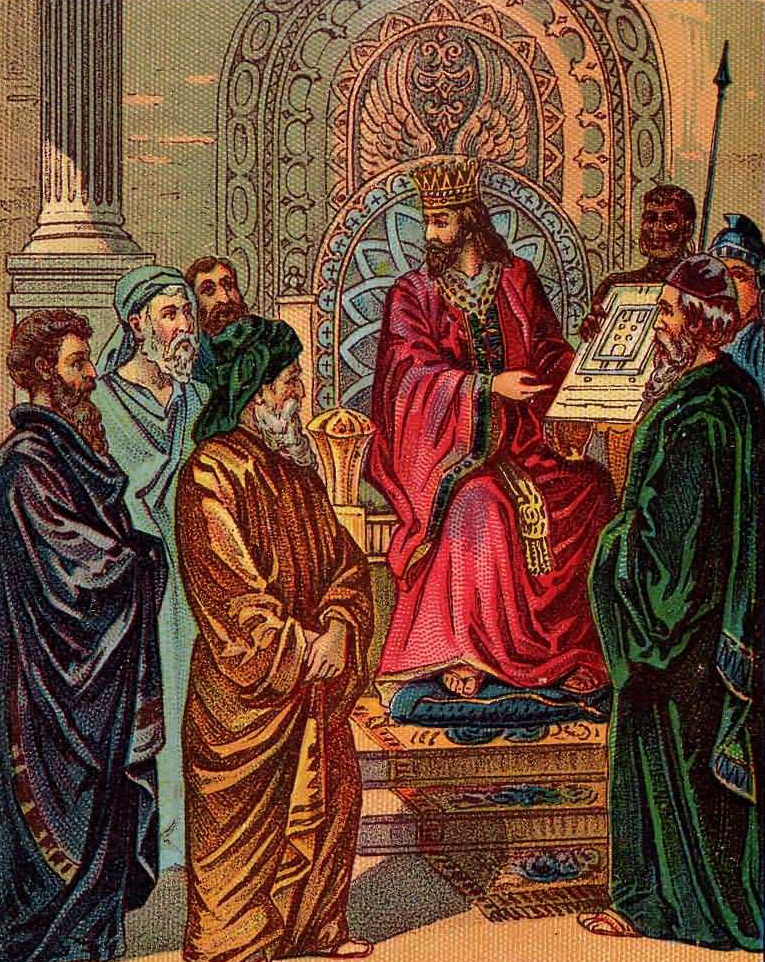
Keith Porter has rightly noted that Solomon takes the view in Ecclesiastes that The materialistic, naturalistic, secularist world-view of life under the sun is futile...I believe Solomon is merely telling us what he himself concluded when God became absent from his life.  That life without God is futile, meaningless and empty.   As a wise man, inspired by God, Solomon is attempting to get us to think about what life would be like without God in our lives.   Because most of us enjoy an awareness of the God-image which all humans possess, our thinking tends to default in terms of the eternal, life ABOVE THE SUN, or with eternity in our hearts.   I believe Solomon is attempting to get us to think about life without an overwhelming God-presence so we might be more grateful and motivated to enjoy life UNDER THE SON and follow God with all of our hearts, mind, soul and strength.”

Famed Author Ernest Hemingway Experienced World War II From the Caribbean to D-day’s Normandy

___________

Matadors Luis Miguel Dominguin and Antonio Ordonez, with American Writer Ernest Hemingway

_________

Scott F. Fitzgerald, Gertrude Stein, Ezra Pound, Pablo Picasso, James Joyce, Joan Miro and John Gris meet and mingle.


___

Description: Nancy “Slim” Hawks Hayward, Ernest Hemingway, and Lauren Bacall sitting and laughing outside a café, probably in Pamplona, Spain. Summer, 1959.


This series deals with the Book of Ecclesiastes and Woody Allen films.  The first post  dealt with MAGIC IN THE MOONLIGHT and it dealt with the fact that in the Book of Ecclesiastes Solomon does contend like Hobbes  and Stanley that life is “nasty, brutish and short” and as a result has no meaning UNDER THE SUN.

The movie MIDNIGHT IN PARIS offers many of the same themes we see in Ecclesiastes. The second post looked at the question: WAS THERE EVER A GOLDEN AGE AND DID THE MOST TALENTED UNIVERSAL MEN OF THAT TIME FIND TRUE SATISFACTION DURING IT?

In the third post in this series we discover in Ecclesiastes that man UNDER THE SUN finds himself caught in the never ending cycle of birth and death. The SURREALISTS make a leap into the area of nonreason in order to get out of this cycle and that is why the scene in MIDNIGHT IN PARIS with Salvador Dali, Man Ray, and Luis Bunuel works so well!!!! These surrealists look to the area of their dreams to find a meaning for their lives and their break with reality is  only because they know that they can’t find a rational meaning in life without God in the picture.

The fourth post looks at the solution of WINE, WOMEN AND SONG and the fifth and sixth posts look at the solution T.S.Eliot found in the Christian Faith and how he left his fragmented message of pessimism behind. In the seventh post the SURREALISTS say that time and chance is all we have but how can that explain love or art and the hunger for God? The eighth  post looks at the subject of DEATH both in Ecclesiastes and MIDNIGHT IN PARIS. In the ninth post we look at the nihilistic worldview of Woody Allen and why he keeps putting suicides into his films.

In the tenth post I show how Woody Allen pokes fun at the brilliant thinkers of this world and how King Solomon did the same thing 3000 years ago. In the eleventh post I point out how many of Woody Allen’s liberal political views come a lack of understanding of the sinful nature of man and where it originated. In the twelfth post I look at the mannishness of man and vacuum in his heart that can only be satisfied by a relationship with God.

In the thirteenth post we look at the life of Ernest Hemingway as pictured in MIDNIGHT AND PARIS and relate it to the change of outlook he had on life as the years passed.

Paris: The Luminous Years

A love letter affair: A personal and rather racy letter Ernest Hemingway wrote to actress Marlene Dietrich (pictured together in 1938) in 1955 is expected to fetch $50,000 at an upcoming auction

The Lost Generation A&E Biography. I DO NOT OWN THIS MATERIAL.

___

SCOTT FITZGERALD: Greetings and salutations.You’ll forgive me. I’ve been mixing grain and grape.Now, this a writer. uh…Gil. Yes?- Gil…

GIL PENDER: Gil Pender.- Gil Pender.

Hemingway & Fitzgerald Clip – Midnight in Paris

HEMINGWAY:Hemingway.

GIL PENDER:Hemingway?

HEMINGWAY:You liked my book?

GIL PENDER:Liked? I loved! All your work.

HEMINGWAY:Yes, it was a good book,because it was an honest book,and that’s what war does to men.And there’s nothing fine and noble about dying in the mud,unless you die gracefully,and then it’s not only noble, but brave.

ZELDA FITZGERALD:Did you read my story? What’d you think?

HEMINGWAY:There was some fine writingin it, but it was unfulfilled.-

ZELDA FITZGERALD: I might’ve known you’d hate it.-

SCOTT FITZGERALD:But darling, you’re too sensitive.

ZELDA FITZGERALD:You liked my story, but he hates me!

SCOTT FITZGERALD:Please, old sport, you make matters extremely difficult.

ZELDA FITZGERALD:I’m jumpy. Suddenly I don’tlike the atmosphere here any more.Ah! Where’re you going?

JUAN BELMONTE:Para reunirse con mis amigos en Saint-Germain.(To meet some friends on Saint-Germain.)-

ZELDA FITZGERALD:He’s going to Saint-Germain. I’mgoing with him. –

SCOTT FITZGERALD: Zelda, sweetheart…

ZELDA FITZGERALD:If you’re going to stay here and drink with him, I’m going with the toreador.

SCOTT FITZGERALD:Would you bring her back at a reasonable time?-

HEMINGWAY:She’ll drive you crazy, this woman.-

SCOTT FITZGERALD: She’s exciting,and she has talent.

HEMINGWAY:This month it’s writing. Last month it was something else.You’re a writer. You need time to write. Not all this fooling around.She’s wasting you because she’s really a competitor. Don’t you agree?

GIL PENDER:Me?

HEMINGWAY:Speak up, for Christ’s sake! I’m asking ifyou think my friend is making a tragic mistake.

GIL PENDER: Actually, I don’t know the Fitzgeralds that well.

HEMINGWAY:You’re a writer. You make observations.You were with them all night!

SCOTT FITZGERALD: Could we not discuss my personal life in public?

HEMINGWAY:She’s jealous of his gift, and it’s a fine gift. It’s rare.- You like his work? You can speak for it.-

SCOTT FITZGERALD: Stop it! Stop it.

HEMINGWAY:You like Mark Twain?

SCOTT FITZGERALD: I’m going to find Zelda. I don’t like the thought of her with that Spaniard.

GIL PENDER: May I?

HEMINGWAY:Yeah,

Midnight in Paris (2011) Scene: “What are you writing?”/’Hemingway’

Published on Jul 15, 2015

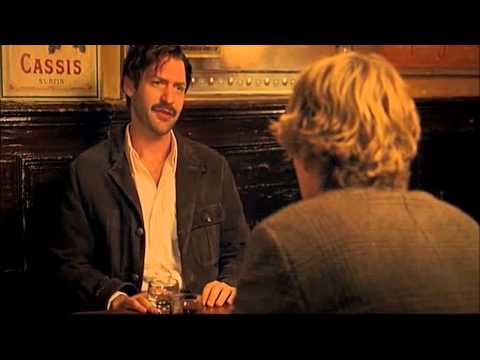
Gil (Owen Wilson) sits down and has a chat with Ernest Hemingway (Corey Stoll) about his unfinished novel.

‘Midnight in Paris’; A film by Woody Allen.

Starring: Owen Wilson, Rachel McAdams, Tom Hiddleston, Marion Cotillard, Corey Stoll, Alison Pill, Adrien Brody & Kathy Bates.

______________________________________

GIL PENDER:I’m actually ahuge Mark Twain fan.I think you can even make the casethat all modern American literaturecomes from Huckleberry Finn.-

HEMINGWAY:You box?-

GIL PENDER:No. Not really. No.

HEMINGWAY:What’re you writing?-

GIL PENDER:A novel.-

HEMINGWAY:’Bout what?

GIL PENDER:It’s about a man who works in a nostalgia shop.

HEMINGWAY:What the hell is a nostalgia shop?

GIL PENDER:A place where they sell old things. Memorabilia.and… Does that sound terrible?

HEMINGWAY:No subject is terribleif the story is true.If the prose is clean and honest, and ifit affirms grace and courage under pressure.

GIL PENDER:No good.Can I ask you the biggestfavor in the world?-

HEMINGWAY:What is it?-

GIL PENDER:Would you read it?-

HEMINGWAY:Your novel?-

GIL PENDER:Yeah, it’s like 400 pages long, and I’m just looking for, you know, an opinion.

HEMINGWAY:My opinion is I hate it.

HEMINGWAY:GIL PENDER:I mean, you haven’t even read it.

HEMINGWAY:If it’s bad, I’ll hate it because I hate bad writing,and if it’s good, I’ll be envious and hate it all themore. You don’t want the opinion of another writer.

GIL PENDER:Yeah.You know, it’s just… You know what it is?I’m having a hard time,you know, trusting somebody to evaluate it.

HEMINGWAY:Writers are competitive.

GIL PENDER:I’m not gonna be competitive with you.

HEMINGWAY:You’re too self-effacing.It’s not manly.If you’re a writer, declare yourself the best writer!But you’re not, as long as I’m around. Unless you want to put the gloves on and settle it?

GIL PENDER:No, I don’t.

HEMINGWAY:Hey, I’m not gonna read your novel,but I’ll tell you what I’ll do.

GIL PENDER:Yes?

HEMINGWAY:I’ll bring it to Gertrude Stein’s.She’s the only one I trust with my writing.

GIL PENDER:You’ll show my novel to Gertrude Stein?-

HEMINGWAY: Give it to me.-

GIL PENDER:I’ll bring it to you.-

HEMINGWAY:And she gets back from Spain tomorrow.-

GIL PENDER:Great.I’m gonna go get it. I’m gonna…I can’t tell you how excited I am! This is gonna be such a lift!My heart is just racing right now!I’m gonna get it, and I’ll be back.Whoa, whoa, Gil! Take it easy!You had a big night.Fitzgerald. Hemingway!Papa! You gotta…OK, we never said where we were gonna meet.

___

Futility — Ecclesiastes 1:1-11

Keith Porter pastor of Hillsdale Free Methodist Church

Solomon went through the process of thinking what life would be like without God, to discover that and then you will really appreciate life with God. Solomon wants you to know that the only way you can have real life is to recognize God in it. Eccl 1:1-11

The words of the Preacher, the son of David, king in Jerusalem.

[a]Vanity of vanities,” says the Preacher,
[b]Vanity of vanities! All is [c]vanity.”

What advantage does man have in all his work
Which he does under the sun?
A generation goes and a generation comes,
But the earth [d]remains forever.
Also, the sun rises and the sun sets;
And [e]hastening to its place it rises there again.
[f]Blowing toward the south,
Then turning toward the north,
The wind continues [g]swirling along;
And on its circular courses the wind returns.
All the rivers [h]flow into the sea,
Yet the sea is not full.
To the place where the rivers [i]flow,
There they [j]flow again.
All things are wearisome;
Man is not able to tell it.
The eye is not satisfied with seeing,
Nor is the ear filled with hearing.
That which has been is that which will be,
And that which has been done is that which will be done.
So there is nothing new under the sun.
10 Is there anything of which one might say,
“See this, it is new”?
Already it has existed for ages
Which were before us.
11 There is no remembrance of [k]earlier things;
And also of the [l]later things which will occur,
There will be for them no remembrance
Among those who will come [m]later still.

September 15th, 2013

Ecclesiastes 1:1-11

“Futility”

Most men would rather die, than think. Most men do.  —Bertrand Russell

That God does not exist, I cannot deny; That my whole being cries out for God I cannot forget.  — Jean-Paul Sartre

Life has no meaning the moment you lose the illusion of being eternal. — Jean-Paul Sartre

Everything has been figured out, except how to live — Jean-Paul Sartre

Life has no meaning a priori.  Before you come alive, life is nothing; it’s up to you to give it a meaning and value is nothing else but the meaning that you choose — Jean-Paul Sartre

No finite point has meaning without an infinite reference point — Jean-Paul Sartre

Man is a useless passion. — Jean-Paul Sartre

I love sleep.  My life has the tendency to fall apart when I’m awake, you know? — Ernest Hemingway

Happiness in intelligent people is the rarest thing I know. — Ernest Hemingway

But man is not made for defeat.  A man can be destroyed but not defeated. —  Ernest Hemingway

I know only that what is moral is what you feel good after and what is immoral is what you feel bad after. — Ernest Hemingway

More than any other time in history, mankind faces a crossroads.  One path leads to despair and utter hopelessness.  The other, to total extinction.  Let us pray we have the wisdom to choose correctly. — Woody Allen


The question to be answered is . . . Why does Solomon promote such a futile, meaningless and empty perspective of life while writing the book of Ecclesiastes?


Answer: I believe Solomon is merely telling us what he himself concluded when God became absent from his life.  That life without God is futile, meaningless and empty.   As a wise man, inspired by God, Solomon is attempting to get us to think about what life would be like without God in our lives.   Because most of us enjoy an awareness of the God-image which all humans possess, our thinking tends to default in terms of the eternal, life ABOVE THE SUN, or with eternity in our hearts.   I believe Solomon is attempting to get us to think about life without an overwhelming God-presence so we might be more grateful and motivated to enjoy life UNDER THE SON and follow God with all of our hearts, mind, soul and strength.

The Word for the Day is . . . Futile


What is Solomon trying to get us to see in the prologue of Ecclesiastes?:

I.  The materialistic, naturalistic, secularist world-view of life under the sun is futile.  (Eccl 1:2-11)

(GET EXACT QUOTE AT 17 MIN MARK) This is what so crazy about so many of these atheistic philosophers and that is they wanted God to be in their life but they did not find him because they thought that the existence of evil in the world proves he doesn’t exist and it is funny that many of them such as Nietzsche, Hemingway, Bertrand Russell and Sartre had bad childhoods.

Life on planet Earth is not a bowl full of cherries; it’s the pits.  Instead of enrichment and joy, we find emptiness and sorrow.  (Charles R. Swindoll, Living on the Ragged Edge, 7)

We must see one thing right from the beginning: this book is an examination of secular wisdom and knowledge.  The book clearly states at the outset that it limits itself primarily to things that are apparent to the natural mind.  One of its key phrases is the continual repetition, under the sun.  (Ray Stedman, Is This All There Is to Life?, 9)

Ecclesiastes, then, is a summation of what man is able to discern under the sun–that is, in the visible world.  The book does consider revelation that comes from beyond man’s powers of observation and reason, but only as a contrast to what the natural mind observes.  (Ray Stedman, Is This All There Is to Life?, 10)

Vanity characterizes all human activity (1:14; 2:11): joy (2:1) and frustration (4:4, 7-8; 5:10) alike, life (2:17; 6:12; 9:9), youth (2:15, 19), diligent and idle (2:21, 23, 26).

All is literally “the whole.”  All earthly experience, seen as a unit, is “subject to vanity” (cf. Rom 8:20).  The same expression occurs in the Hebrew of 1:14; 2:11, 17; 3:1, 19; 12:8.  A qualification is found in v. 3 (“under the sun”), repeated in 1:14; 2:11, 17; and, with variation, 3:1.  It is only to one seeking satisfaction in disregard of God that the Preacher’s message stops at “All is vanity.”  For any who adopt his total world-view he has a note of encouragement.  When a perspective of faith is introduced “All is vanity” is still true, but it is not the whole picture; “under the sun” it is the whole truth.  When, in 2:24-3:22 and intermittently thereafter, new factors are brought in (the generosity of God, divine providence, divine judgment), the “vanity” of life is not obliterated or forgotten; but the new factors transform the perspective and turn pessimism into faith.  This prefigures the NT perspective in which the believer is “outwardly…wasting away” (2 Cor 4:16), is “subjected to vanity” and “groans” with creation “right up to the present time” (Rom 8:20-22).  Yet he “knows’ what is happening (Rom 8:22), “gazes” at a different perspective (2 Cor 4:18), “waits” for something different (Rom 8:25).  The new perspective does not cancel out the old, the believer is living in an overlap.  But the new perspective revolutionizes his outlook.  (Michael A. Eaton, Tyndale OT Commentaries: Ecclesiastes, 56-57)

If his resources are entirely this-worldly, “No profit” is the motto over all he does.  There is another realm altogether, the Preacher will contend later (5:2), when he will speak of God who may be approached and worshiped (5:1-7).  Meanwhile the abyss of pessimism has to be explored.  (Michael A. Eaton, Tyndale OT Commentaries: Ecclesiastes, 58)

Ecclesiastes is a testament to the spiritual insights of its author, Solomon.  It comes from his deep seeing into the nature of reality.  Solomon looked and saw that all is empty of permanence; he also saw that human energies are largely invested in a pursuit of permanence–a pursuit that is doomed from the start.  Ecclesiastes is his report of his journey to the heart of reality and his insights into how we should live, given the fact of life’s impermanence.  (Rami Shapiro, The Way of Solomon, 2)

Related posts:

A list of the most viewed posts on the historical characters mentioned in the movie “Midnight in Paris”

Characters referenced in Woody Allen’s movie “Midnight in Paris” (Part 38,Alcoholism and great writers and artists)

The characters referenced in Woody Allen’s movie “Midnight in Paris” (Part 36, Alice B. Toklas, Woody Allen on the meaning of life)

Characters referenced in Woody Allen’s movie “Midnight in Paris” (Part 35, Recap of historical figures, Notre Dame Cathedral and Cult of Reason)

The characters referenced in Woody Allen’s movie “Midnight in Paris” (Part 34, Simone de Beauvoir)

The characters referenced in Woody Allen’s movie “Midnight in Paris” (Part 33,Cezanne)

The characters referenced in Woody Allen’s movie “Midnight in Paris” (Part 32, Jean-Paul Sartre)

The characters referenced in Woody Allen’s movie “Midnight in Paris” (Part 31, Jean Cocteau)

The characters referenced in Woody Allen’s movie “Midnight in Paris” (Part 30, Albert Camus)

The Characters referenced in Woody Allen’s “Midnight in Paris” (Part 29, Pablo Picasso)

The Characters referenced in Woody Allen’s “Midnight in Paris” (Part 8, Henri Toulouse Lautrec)

The Characters referenced in Woody Allen’s “Midnight in Paris” (Part 7 Paul Gauguin)

The Characters referenced in Woody Allen’s “Midnight in Paris” (Part 6 Gertrude Stein)

The Characters referenced in Woody Allen’s “Midnight in Paris” (Part 5 Juan Belmonte)

The Characters referenced in Woody Allen’s “Midnight in Paris” (Part 4 Ernest Hemingway)

The Characters referenced in Woody Allen’s “Midnight in Paris” (Part 3 Scott and Zelda Fitzgerald)

The Characters referenced in Woody Allen’s “Midnight in Paris” (Part 2 Cole Porter)

The Characters referenced in Woody Allen’s “Midnight in Paris” (Part 1 William Faulkner)

MUSIC MONDAY Cole Porter “Let’s Do it, Let’s Fall in Love” in the movie MIDNIGHT IN PARIS

_____________

__

Comparing Hemingway’s statement, “Happiness in intelligent people is the rarest thing I know…” with Ecclesiastes 2:18 “For in much wisdom is much vexation, and he who increases knowledge increases sorrow.”

We know that Hemingway read Ecclesiastes and his title THE SUN ALSO RISES is taken from it.

One generation passeth away, and another generation cometh; but the earth abideth forever… The sun also ariseth, and the sun goeth down, and hasteth to the place where he arose… The wind goeth toward the south, and turneth about unto the north; it whirleth about continually, and the wind returneth again according to its circuits… All the rivers run into the sea; yet the sea is not full; unto the place from whence the rivers come thither they return again.
– Ecclesiastes

I think he also took note of Ecclesiastes 2;18: “For in much wisdom is much vexation, and he who increases knowledge increases sorrow.” No wonder he later said, “Happiness in intelligent people is the rarest thing I know…” This seems to be the same conclusion that Jeffrey Fisher comes up with in his article, “Don’t Worry, Be Happy.” I will take a look at that later in this post.

Ernest Hemingway was arguably the greatest American writer of all time although some would say William Faulkner or  Mark Twain.  He was very brilliant. Notice in MIDNIGHT IN PARIS the awe Gil Pender has for Hemingway.

Hemingway & Fitzgerald Clip – Midnight in Paris

HEMINGWAY:Hemingway.

GIL PENDER:Hemingway?

HEMINGWAY:You liked my book?

GIL PENDER:Liked? I loved! All your work.

HEMINGWAY:Yes, it was a good book,because it was an honest book,and that’s what war does to men.And there’s nothing fine and noble about dying in the mud,unless you die gracefully,and then it’s not only noble, but brave.

ZELDA FITZGERALD:Did you read my story? What’d you think?

HEMINGWAY:There was some fine writing in it, but it was unfulfilled.-

___________

Later in the film Gil Pender asked Hemingway to read and criticize his own manuscript and give him some pointers:

GIL PENDER:I’m not gonna be competitive with you.

HEMINGWAY:You’re too self-effacing.It’s not manly.If you’re a writer, declare yourself the best writer!But you’re not, as long as I’m around. Unless you want to put the gloves on and settle it?

___

The next morning he tells his girlfriend of his night before with Hemingway and Fitzgerald.

___________

INEZ: Good thing you didn’t go last night. You would’ve hated the music, and the crowd,but I had fun.What’re you thinking about?You seem like you’re in a daze.

GIL PENDER: If I was to tell you that I spent last night with Ernest Hemingway and Scott Fitzgerald,- what would you say?-

INEZ: Is that what you were dreaming about?Your literary idols?

GIL PENDER:  Yeah, but if I wasn’t dreaming…What does that mean?If I was with Hemingway, and Fitzgerald,and Cole Porter.

INEZ:I’d be thinking brain tumor.

GIL PENDER: And when I tell you,Zelda Fitzgerald is exactlyas we’ve come to know her througheverything we’ve read in books and articles.You know, charming,but all over the map.You know, she does notlike Hemingway one bit.and Scott knows Hemingway is right about her, butyou can see how conflicted he is because he loves her!

INEZ: Come on! Get up! We should quit the idle chatter,because we’re gonna be late.

GIL PENDER: You know, I’m not gonna…I think I’m gonna stay here and do some work on my novel,’cause there’s a little polishing I wanna do.

INEZ: No. You can do that later. Mom said we can use her decorator’s discount. Get up!

Midnight in Paris OST – 03 – Recado

___

Midnight in Paris Beat Sheet End of Act One Turn

Parlez-moi d’amour – Midnight in Paris Soundtrack

___________

Ecclesiastes, Education, and the Pursuit of Meaning

July 08, 2015 | By

This post is adapted from a sermon delivered by Pastor Dave Gustavsen at Jacksonville Chapel on June 7, 2015. A previous sermon by Pastor Gustavsen was published by us this February, and can be found here.

Ecclesiastes is part of the Hebrew wisdom literature. It is traditionally ascribed to King Solomon of Israel, who lived and ruled in the 9th century BC. Yet the questions with which the writer wrestled are still relevant, 3,000 years later. It’s the same stuff that college students, songwriters, philosophers, and lay people still wrestle with today.

There’s a word that’s repeated all through the book—some translations use the word “meaningless”; some translations use the word “vanity”; but the most literal translation of the Hebrew word is “vapor”—like your breath on a winter day. Which means at least two things: First of all, everything in life is very temporary. Like your breath—you see it, and then it’s gone. And then also, it means that just like you can’t grasp your breath, there is a universal tendency to try to grasp and understand life, and yet every time we try to do that, it seems to elude us. So listen for that concept today.

Solomon was passionate to find meaning and happiness in life, and in today’s passage he talks about one way that he tried to do that. So let’s look at this passage. Actually it’s two passages—Ecclesiastes 1:12-18 and chapter 2:12-17. Here’s what Solomon wrote…

12 I, the Teacher, was king over Israel in Jerusalem. 13 I applied my mind to study and to explore by wisdom all that is done under the heavens. What a heavy burden God has laid on mankind! 14 I have seen all the things that are done under the sun; all of them are meaningless, a chasing after the wind.

15 What is crooked cannot be straightened;
    what is lacking cannot be counted.

16 I said to myself, “Look, I have increased in wisdom more than anyone who has ruled over Jerusalem before me; I have experienced much of wisdom and knowledge.” 17 Then I applied myself to the understanding of wisdom, and also of madness and folly, but I learned that this, too, is a chasing after the wind.

18 For with much wisdom comes much sorrow;
    the more knowledge, the more grief.

And then in chapter two, he picks up this same theme:

12 Then I turned my thoughts to consider wisdom,
    and also madness and folly.
What more can the king’s successor do
    than what has already been done?
13 I saw that wisdom is better than folly,
    just as light is better than darkness.
14 The wise have eyes in their heads,
    while the fool walks in the darkness;
but I came to realize
    that the same fate overtakes them both.

15 Then I said to myself,

“The fate of the fool will overtake me also.
    What then do I gain by being wise?”
I said to myself,
    “This too is meaningless.”
16 For the wise, like the fool, will not be long remembered;
    the days have already come when both have been forgotten.
Like the fool, the wise too must die!

17 So I hated life, because the work that is done under the sun was grievous to me. All of it is meaningless, a chasing after the wind.

The two main ideas I want to address are  Pursuing Wisdom and Redefining Wisdom.

First: Pursuing Wisdom. In all of the Bible, the person who’s most famous for his wisdom is Solomon. This is his claim to fame! The most famous example of that is in 1 Kings chapter 3. Two young women who lived in the same house and who both had an infant son came to Solomon for help. One of the women claimed that the other woman accidentally smothered her own son while they were sleeping and then switched the two babies to make it look like the living child was hers. The other woman said, “No—the living baby is mine—I did not swap the babies.” And they brought their case before Solomon.

So he called for a sword. And he said, “There’s only one fair solution: we’ll cut the baby in half, and each of you gets half.” And the boy’s true mother said, “No! Give the baby to her, just don’t kill him!” And the other woman said, “No—it shouldn’t belong to either of us. Go ahead and split it.” And Solomon said, “This is the real mother. Because the true mother would never let her child be hurt.” And the case was solved. That’s pretty good, right?

Solomon was a street-smart, savvy person. He was also well-educated because he grew up in the home of a king. The point is that he was highly qualified—probably as qualified as anyone has been—to understand life from an intellectual perspective.

And under this first point of Pursuing Wisdom, he talks about three things. First, Its Scope. In verse 13, Solomon specifically defines the realm, or the scope of his search—look what he says: “I applied my mind to study and to explore by wisdom all that is done under the heavens.” And then in verse 14 he says “I have seen all the things that are done under the sun.” Solomon uses that phrase “under the sun” over and over in this book—and here’s what he’s saying, “I limited my search to what I could see with my eyes and perceive with my senses. So I’m talking about things that are empirically provable.”

And maybe you’re thinking, “Wait a minute—are you telling me King Solomon of Israel didn’t have God as part of his worldview?” And I think the answer is, in Ecclesiastes, he’s talking about a time in his life when he was either doubting deeply (which can happen to anyone); or possibly, he was so confident in his intellectual ability that he tried to make life work without any assistance from God.

And because of that, Solomon is a great example of where our culture is rapidly moving. Did you see the Pew Research report that came out a couple of weeks ago? There is a growing group of Americans who say, “I don’t identify with any faith; I reject the concept of faith.” And many of those same people say that the only source of really reliable knowledge is science. Peter Atkins, who was a chemistry professor at Oxford, represents this view well—he said, “There is no reason to believe that science cannot deal with every aspect of existence.”

So even though Solomon lived well before the age of modern science, this is basically the approach he took. He says, “I’m not going to rely on some outside, supernatural source. I’m going to leverage my mind and my education and the power of human reasoning to find happiness and meaning in life.”

But when he threw himself into that, he found out that approach has its limits. And he expresses that in two ways. The first way is in chapter one verse 15. He says: “What is crooked cannot be straightened…” Which is a very poetic way to say: Life is confusing—it’s crooked; messed up; twisted …and there are questions in this life that even a brilliant person like me can’t get straight. And then he says “what is lacking cannot be counted.” In other words, “This thing I was searching for—meaning in life—was still lacking. And you can’t count or add up or build anything when you’re starting with nothing.

He also expresses the limits of this search in chapter two, verse 16: “For the wise, like the fool, will not be long remembered; the days have already come when both have been forgotten. Like the fool, the wise too must die!” This is depressing, isn’t it? He says, “Look—consider a guy who gets an elite education and devotes himself to lifelong learning and then consider another guy who watches reality television all day, and both of them will wind up the same in the end: dead.” Right? No matter how wise you are, you’re going to die. They’re going to put you in a box or burn you up, and after a few generations no one will even know you existed. Unless they’re doing some genealogical family tree project for school, and my great, great, great grandchildren are going to ask their parents, “Who was this Dave Gustavsen?” And their parents will say, “I have no idea. Just do your homework.”

The most brilliant thinking will not unravel life’s biggest questions, and it won’t help us avoid death.

And therefore, when that’s the realm we function in, here’s how that affects us personally—let’s talk about its End Result. We’re looking at these two passages today, and the last verse in each passage is really a summary of each passage. So look at the last verse in chapter one—verse 18: “For with much wisdom comes much sorrow; the more knowledge, the more grief.” What a poignant thing to say! In some ways, the more we learn about the world, the more sadness we will have. So if this is true, that means the most brilliant, educated people might be some of the least happy people. It’s like they know too much. Ernest Hemingway once said, “Happiness in intelligent people is the rarest thing I know.”

And then at the end of the second passage—look at Ecclesiastes 2:17,“So I hated life, because the work that is done under the sun was grievous to me. All of it is meaningless, a chasing after the wind.” Like a vapor that you just can’t grab. And I hated life.

There was a really interesting opinion piece written in the Harvard student newspaper a couple of years ago, in February 2013. And the author, who was an economics major, was trying to figure out why Harvard students have higher-than-average rates of depression and suicide. And his theory was: it’s because they’re so smart. And he quotes something that Woody Allen said: “It’s very hard to keep your spirits up. You’ve got to keep selling yourself a bill of goods, and some people are better at lying to themselves than others. If you face reality too much, it kills you.” And then this Harvard student writes: “My hunch is that being intelligent makes it harder to sell yourself a bill of goods.” Do you see what he’s saying? Less intelligent people can kind of deceive themselves and convince themselves that life has some meaning. But really smart people know better. They look at the universe, and they know in their gut that it has no meaning. And that realization is terrifying and so empty that it can lead to depression, and sometimes to suicide. With much wisdom comes much sorrow; the more knowledge, the more grief.

We have a little terrier/cockapoo mix named Maggie. And Maggie is a great dog, but just really not smart. A couple of years ago, we put in a little doggie door, right next to the sliding glass door that leads to our backyard. So Maggie can go in and out without us having to open a door for her—it’s great. The problem is, about once a day, Maggie stands in front of the sliding glass door and waits to be let out or let in. And her doggie door is right next to it; but she forgets. She’s like Dory—remember on Finding Nemo? Every day she forgets everything she ever knew. And every time we have to say, “Maggie—use your door!” And she tilts her head, like, “What?” And then finally she goes over, like, “Hey—there’s a little dog-size door right here!” So you see my point, right? She’s low on the IQ scale. But…she’s so happy. I mean, she’s always wagging her tail and licking people and chasing squirrels. She loves life!

And there is a part of me—and I think there was a part of Solomon—that thought this: I’d rather be dumb and happy—like my dog—rather than being smart and miserable. Because that way, I just wouldn’t know any better, and I could live out my life in blissful ignorance. So when all my Ivy League friends are worrying about global warming and world peace and the emptiness of life, I would just say, “Whatever, dude. It’s happy hour!”

So maybe that’s the answer: wisdom is overrated; stop thinking so much; and you’ll be happy!

But as tempting as that is, I don’t like that answer. Because in my heart, I know wisdom is not a bad thing. I know knowledge is a good thing. And we Christians need to be very careful here. Because sometimes Christians have a reputation—and sometimes we deserve it—for being anti-intellectual. When we say, “I don’t care what science has discovered; I’m going to stick with the Bible.” That’s a dangerous and foolish attitude. Because if we’re really interested in pursuing truth, we should be grateful for biology and chemistry and physics and all the other beautiful tools for understanding our world. And if we believe Scripture is true, we should have no fear of exploring truth through science and other scholarly pursuits. Our friend, Jennifer Wiseman, is such a great example of this spirit—because she is a brilliant astronomer with an advanced education and all of her learning hasn’t weakened her faith; it’s strengthened it.

If you read Ecclesiastes carefully, Solomon is not saying that knowledge and learning are bad; he’s saying they’re incomplete. So maybe if my wisdom and knowledge are leading me to depression, there’s something I’m missing. So let’s talk about Redefining Wisdom.

Remember the way Solomon defined his search? He limited it to things you can experience and prove with your natural perception, with human reason, under the sun. But something huge happened in history: God chose to enter into our closed system, in the flesh of Jesus Christ. And in the teaching of Jesus, and in the pages of the Bible, we are invited into this larger reality.

Specifically, the New Testament defines wisdom much differently than Solomon did in Ecclesiastes. And the classic place that’s explained is in 1 Corinthians, chapter one, starting in verse 20. Listen to this:

20 Where is the wise person? Where is the scholar? Where is the philosopher of this age? Has not God made foolish the wisdom of the world? 21 For since in the wisdom of God the world through its wisdom did not know him, God was pleased through the foolishness of what was preached to save those who believe. 22 Jews demand signs and Greeks look for wisdom, 23 but we preach Christ crucified: a stumbling block to Jews and foolishness to Gentiles, 24 but to those whom God has called, both Jews and Greeks, Christ the power of God and the wisdom of God.

See, according to the Christian faith, the essence of wisdom is not how much you know; it’s Whom you know. The essence of wisdom is not a philosophical system; it’s a Person. So Paul, who wrote this, says, “We preach Christ crucified.” That’s the center of our message. That’s the core of wisdom. Jesus, giving up his life on the cross. When you see that—when you make that personal and make that the center of your life, you’ll become truly wise.”

Why? What does “Christ crucified” have to do with being wise? That’s a whole sermon series in itself. But let me just give you a few quick thoughts.

When I realize that Jesus came to do that for me, I realize there’s a God who loves me, and so my life must have value and meaning. It’s not just an empty vapor.

When I realize that my problem was so serious that someone needed to die for me, it makes me profoundly humble and aware of my own capacity for darkness.

When I realize that God was satisfied with the death of Jesus in my place, and based on that he forgave me of all the ways I’ve offended him, it makes me quick to forgive people who offend me.

When I realize that Jesus didn’t stay dead, but rose again on the third day, it gives me hope for the future—because even though I will physically die, just like Solomon reminded me, I know that’s not the end.

Do you see how “Christ crucified” has the power to change the way we think about life? And Paul says that message is so simple that it’s offensive to people. It’s sounds foolish and dumb. Some people will say, “That’s it? That’s all you’ve got?” But it’s the essence of real wisdom.

Now I’m going to be completely honest: what I just said, I can’t prove. I can’t scientifically or logically prove that Jesus is the missing piece that we need in our lives. I can show you evidence for the life of Jesus. I can give you historical support for the reliability of the New Testament documents. I can talk about the unlikely growth and survival of the early church within the Roman Empire in the first couple of centuries A.D. I can point to the ways I’ve seen Jesus affect the lives of people I know in extremely positive ways. But I can’t prove it.

Ultimately, there’s a step of faith required. Not a blind leap. But a step of faith.

Some of you have read Yann Martel’s book, Life of Pi. About a boy who survives a shipwreck and winds up on a little life boat with a tiger and some other animals. And in the book, the main character, Pi, says there are really two ways you can look at life. You can view it as a closed system—with no supernatural involvement—everything’s limited to what we can prove and verify. Or you can choose to embrace what he calls “the better story.” You can recognize that life just doesn’t make sense without a larger perspective, where God is behind it and involved in it. That’s the better story. And even though he doesn’t land on a purely Christian view of reality, he makes a valid point: the nature of life is that all of us have to choose which story of reality we’ll embrace.

Now, does that mean that if we embrace Jesus Christ all the mysteries of life will be solved? All our questions will be answered? No. But they look different. I like the way C.S. Lewis said it: “I believe in Christianity as I believe that the sun has risen: not only because I see it, but because by it I see everything else.” When Christ is at the center, life just looks different. You don’t have all the answers, but you have value and self-knowledge and forgiveness and hope, to name just a few things. And best of all, you have a relationship with the living God.

So, please hear the warning of Solomon, even if you have an elite education and an intimidating level of intelligence: apart from God it will not make you happy or satisfied. In fact, it might lead to misery. So if you’re feeling some of that emptiness, maybe it’s God calling you to consider the better story of Jesus Christ, crucified for you.

__

Dave Gustavsen is the Senior Pastor at Jacksonville Chapel in Lincoln Park, NJ. He is committed to grace-oriented, gospel-centered ministry that resonates with skeptical, educated people in the New York City area. He blogs atdavegustavsen.com, tweets at @pastordavegus, and is excited about the recent launch of Acts 17, an organization that offers the hope of Christ in the public square by promoting intelligent conversations about key cultural issues. – See more at: http://biologos.org/blogs/archive/ecclesiastes-education-and-the-pursuit-of-meaning#sthash.LW9MN2ea.dpuf

– See more at: http://biologos.org/blogs/archive/ecclesiastes-education-and-the-pursuit-of-meaning#sthash.LW9MN2ea.dpuf

__

Midnight in Paris OST – 02 – Je Suis Seul Ce Soir

______

When I think about Gil Pender, Woody Allen’s lead character in MIDNIGHT IN PARIS, it reminds me of all the atheists that try their best to come to grips with the fact that without God in the picture more knowledge does bring more worries. Jeffrey Fisher’s article below is a perfect example. Here is a portion of his article below:

“For in much wisdom is much grief: and he that increaseth knowledge increaseth sorrow.” -Ecclesiastes 1:18

tl;dr – Don’t worry, be happy. Eat, drink, and be merry, for tomorrow we’ll die. Or, whatever flavor you choose. Whatever variation of that theme suits you best…

For as long as I can remember, I’ve wanted to ‘know.’ I’ve wanted to know how things work, where things come from, how they get there, why we’re here, what it all means… and it has lead me to become a non-believer; an atheist. Not because I have anything against religions necessarily, and definitely not because I ‘set out to prove religions wrong’ or any other such thing. I simply wanted to know the truth, and the stories religions told me didn’t make sense. They didn’t provide meaningful answers.

But in finding the truth, I have also found an answer that I have a hard time dealing with. The truth is, there is no meaning. There is no purpose. We’re all just here because certain chemicals under certain circumstances react to each other in ways that ultimately leads to once inanimate objects thinking about how they’re thinking. Of course, a higher power could have pushed that original domino but then who created that higher power that pushed that first domino? There are no answers there, and I don’t think it really matters either way.

Ernest Hemingway said, “Happiness in intelligent people is the rarest thing I know.” I’m not claiming to be ‘intelligent’ by any means (there are some smart people out there!), but I do believe that my understanding of the universe is correct in the sense that life has no ultimate meaning; thereby knowing this fact elicits a level of inherit hopelessness and/or depression. I’ve been through much inner turmoil for many years now as I’ve tried to find ways of coping with that knowledge. I’ve been forced, as many others have before me, to find my own meaning and purpose in this meaningless existence – which I have. My meaning basically boils down to being a good friend and neighbor, husband and father; to love as much as I can and to be as happy as possible in this limited time I have here on this tiny ball of dust in the vastness of eternity. Easier said than done…

I’ve only recently began to really devote substantial time and energy into the idea of ‘being happy.’ It sounds counter-intuitive right? I mean, why would you have to work to be happy? Why not just be happy? Well, for me I can’t, so I have to work at it. I’ve begun to really try and let things go, to not worry so much about what I’m not accomplishing, to accept the fact that I do only have a limited time here and that fretting about what standards I’m not living up to shouldn’t count. We should only compare ourselves to ourselves, not others, and improve ourselves today from what we were yesterday. And don’t forget about the Joneses, be happy for the Joneses! They are finding their way through this thing just like you and me. We are not to judge…

In doing this, I’ve been able to let a lot of little things go that would normally get to me on a regular basis. You know when you’re an adult when you can be right without the other person being wrong. I’m still working on that, but I’m getting better. Walking away from certain situations can be very foreign and uncomfortable when you first try but after a while, a deeper fulfillment can emerge from such confrontations that you could never get from engaging in a winnerless battle….

__

Let me just take a few moments and challenge the atheists to come to grips to several facts.

1. Woody Allen correctly noted in his movie CRIMES AND MISDEMEANORS that without God in the picture there is no good reason why Judah should not have his troublesome mistress killed since his brother was a mob hit man and Judah could get away with it.

2.  Francis Schaeffer in his book “HOW SHOULD WE THEN LIVE?” stated that according to Alfred North Whitehead and J. Robert Oppenheimer, both renowned philosophers and scientists of our era (but not Christians themselves), modern science was born out of the Christian world view.

3. According to Romans 1 there is no such thing as an atheist but all people know in their hearts that God exists.

4. The song DUST IN THE WIND released by KANSAS in 1978 correctly notes humanist man’s nihilistic outlook on life and 3 years later Kerry Livgren and Dave Hope from KANSAS admitted the message of the song was from ECCLESIASTES and they both put their faith in Christ.

Livgren wrote:

All we do, crumbles to the ground though we refuse to see, Dust in the Wind, All we are is dust in the wind, Don’t hang on, Nothing lasts forever but the Earth and Sky, It slips away, And all your money won’t another minute buy.”

5. There is evidence that indicates the Bible is accurate and can be trusted. Here are some of the posts I have done in the past on the subject: 1. The Babylonian Chronicleof Nebuchadnezzars Siege of Jerusalem2. Hezekiah’s Siloam Tunnel Inscription. 3. Taylor Prism (Sennacherib Hexagonal Prism)4. Biblical Cities Attested Archaeologically. 5. The Discovery of the Hittites6.Shishak Smiting His Captives7. Moabite Stone8Black Obelisk of Shalmaneser III9A Verification of places in Gospel of John and Book of Acts., 9B Discovery of Ebla Tablets10. Cyrus Cylinder11. Puru “The lot of Yahali” 9th Century B.C.E.12. The Uzziah Tablet Inscription13. The Pilate Inscription14. Caiaphas Ossuary14 B Pontius Pilate Part 214c. Three greatest American Archaeologists moved to accept Bible’s accuracy through archaeology.

___________

Midnight in Paris OST – 16 – Le Parc De Plaisir

Ernest Hemingway Quotes: On His Birthday, 14 Memorable Sayings, Photos To Remember Author Born In 1898

RTXJ2TO
Ernest Hemingway (center) posed with his family in this file photo from 1918 at his boyhood home at 339 N. Oak Park Place Ave in Oak Park, Illinois. The Hemingway family with Ernest are (from left to right) his father, Dr. Clarence; his mother, Mrs. Grace, Ernest; Madeliane; Ursula; Marcelline and Leicester and Carol in front.PHOTO: REUTERS

Nobel Prize-winning author Ernest Hemingway was born exactly 116 years ago on Tuesday. The author known for his terse, matter-of-fact prose was born July 21, 1899 in Oak Park, Illinois.

Hemingway — who served as a volunteer ambulance driver for Italy on the front lines of World War I — began his career as a journalist and eventually ventured into fiction, often addressing war in his writing. Hemingway also often wrote detailed descriptions of hunting, bull-fighting, fishing and eating/drinking.

He wrote the classic novels “The Sun Also Rises,” “A Farewell to Arms” and “For Whom the Bell Tolls,” and later wrote the popular short story, “The Old Man and the Sea.” Along with his successful novels, Hemingway also wrote a number of short stories that were well-received, such as “Hills Like White Elephants,” “A Clean Well-Lighted Place,” and a series about a character named Nick Adams.

Hemingway, also known for his hard-drinking and bullish nature, was an adventurer who traveled about the world. He suffered in his later years from a number of injuries and mental health struggles. Hemingway took his own life in Ketchum, Idaho on July 2, 1961.

His writing has remained popular, punctuated by simple sentences and a direct style often referenced and imitated. His story structure, in which he often added to the story through the omission of key details, has been praised, as well. Below are pictures of the writer and quotes from Hemingway on the anniversary of his birthday. The quotes, which were either spoken or written, were compiled from Brainy Quote and Goodreads.

RTXJ2TPErnest Hemingway posed with fish that he caught in Wallon Lake in Michigan, 1916.PHOTO: REUTERS

1. “Courage is grace under pressure.”

2. “There is nothing to writing. All you do is sit down at a typewriter and bleed.”

3. “There is no friend as loyal as a book.”

4. “Always do sober what you said you’d do drunk. That will teach you to keep your mouth shut.”

5. “All you have to do is write one true sentence. Write the truest sentence that you know.”

6. “Every day is a new day. It is better to be lucky. But I would rather be exact. Then when luck comes you are ready.”

7. “Courage is grace under pressure.”

8. “If people bring so much courage to this world the world has to kill them to break them, so of course it kills them. The world breaks every one and afterward many are strong at the broken places. But those that will not break it kills. It kills the very good and the very gentle and the very brave impartially. If you are none of these you can be sure it will kill you too but there will be no special hurry.”

9. “If a writer knows enough about what he is writing about, he may omit things that he knows. The dignity of movement of an iceberg is due to only one ninth of it being above water.”

10. “Never confuse movement with action.”

11. “Every man’s life ends the same way. It is only the details of how he lived and how he died that distinguish one man from another.”

12. “There’s no one thing that’s true. It’s all true.”

13. “Happiness in intelligent people is the rarest thing I know.”

14. “But man is not made for defeat. A man can be destroyed but not defeated.”

______

Gertrude Stein with Jack “Bumby” Hemingway, Paris

_____

Hemingway en 1928 devant la librairie Shakespeare and Company,

_____________

Ernest Hemingway compared Paris to a moveable feast because no matter what time it is, Paris is always the magnificent city of lights.

___

_____

This series deals with the Book of Ecclesiastes and Woody Allen films.  The first post  dealt with MAGIC IN THE MOONLIGHT and it dealt with the fact that in the Book of Ecclesiastes Solomon does contend like Hobbes  and Stanley that life is “nasty, brutish and short” and as a result has no meaning UNDER THE SUN.

The movie MIDNIGHT IN PARIS offers many of the same themes we see in Ecclesiastes. The second post looked at the question: WAS THERE EVER A GOLDEN AGE AND DID THE MOST TALENTED UNIVERSAL MEN OF THAT TIME FIND TRUE SATISFACTION DURING IT?

In the third post in this series we discover in Ecclesiastes that man UNDER THE SUN finds himself caught in the never ending cycle of birth and death. The SURREALISTS make a leap into the area of nonreason in order to get out of this cycle and that is why the scene in MIDNIGHT IN PARIS with Salvador Dali, Man Ray, and Luis Bunuel works so well!!!! These surrealists look to the area of their dreams to find a meaning for their lives and their break with reality is  only because they know that they can’t find a rational meaning in life without God in the picture.

The fourth post looks at the solution of WINE, WOMEN AND SONG and the fifth and sixth posts look at the solution T.S.Eliot found in the Christian Faith and how he left his fragmented message of pessimism behind. In the seventh post the SURREALISTS say that time and chance is all we have but how can that explain love or art and the hunger for God? The eighth  post looks at the subject of DEATH both in Ecclesiastes and MIDNIGHT IN PARIS. In the ninth post we look at the nihilistic worldview of Woody Allen and why he keeps putting suicides into his films.

In the tenth post I show how Woody Allen pokes fun at the brilliant thinkers of this world and how King Solomon did the same thing 3000 years ago. In the eleventh post I point out how many of Woody Allen’s liberal political views come a lack of understanding of the sinful nature of man and where it originated. In the twelfth post I look at the mannishness of man and vacuum in his heart that can only be satisfied by a relationship with God.

In the thirteenth post we look at the life of Ernest Hemingway as pictured in MIDNIGHT AND PARIS and relate it to the change of outlook he had on life as the years passed. In the fourteenth post we look at Hemingway’s idea of Paris being a movable  feast. The fifteenth and sixteenth posts both compare Hemingway’s statement, “Happiness in intelligent people is the rarest thing I know…”  with Ecclesiastes 2:18 “For in much wisdom is much vexation, and he who increases knowledge increases sorrow.”

Related posts:

A list of the most viewed posts on the historical characters mentioned in the movie “Midnight in Paris”

Characters referenced in Woody Allen’s movie “Midnight in Paris” (Part 38,Alcoholism and great writers and artists)

The characters referenced in Woody Allen’s movie “Midnight in Paris” (Part 36, Alice B. Toklas, Woody Allen on the meaning of life)

Characters referenced in Woody Allen’s movie “Midnight in Paris” (Part 35, Recap of historical figures, Notre Dame Cathedral and Cult of Reason)

The characters referenced in Woody Allen’s movie “Midnight in Paris” (Part 34, Simone de Beauvoir)

The characters referenced in Woody Allen’s movie “Midnight in Paris” (Part 33,Cezanne)

The characters referenced in Woody Allen’s movie “Midnight in Paris” (Part 32, Jean-Paul Sartre)

The characters referenced in Woody Allen’s movie “Midnight in Paris” (Part 31, Jean Cocteau)

The characters referenced in Woody Allen’s movie “Midnight in Paris” (Part 30, Albert Camus)

The Characters referenced in Woody Allen’s “Midnight in Paris” (Part 29, Pablo Picasso)

The Characters referenced in Woody Allen’s “Midnight in Paris” (Part 8, Henri Toulouse Lautrec)

The Characters referenced in Woody Allen’s “Midnight in Paris” (Part 7 Paul Gauguin)

The Characters referenced in Woody Allen’s “Midnight in Paris” (Part 6 Gertrude Stein)

The Characters referenced in Woody Allen’s “Midnight in Paris” (Part 5 Juan Belmonte)

The Characters referenced in Woody Allen’s “Midnight in Paris” (Part 4 Ernest Hemingway)

The Characters referenced in Woody Allen’s “Midnight in Paris” (Part 3 Scott and Zelda Fitzgerald)

The Characters referenced in Woody Allen’s “Midnight in Paris” (Part 2 Cole Porter)

The Characters referenced in Woody Allen’s “Midnight in Paris” (Part 1 William Faulkner)

MUSIC MONDAY Cole Porter “Let’s Do it, Let’s Fall in Love” in the movie MIDNIGHT IN PARIS

_____________

“Woody Wednesday” ECCLESIASTES AND WOODY ALLEN’S FILMS: SOLOMON “WOULD GOT ALONG WELL WITH WOODY!” (Part 12 MIDNIGHT IN PARIS Part K, Ecclesiastes 3:11 “God has put eternity in their hearts”)

In MIDNIGHT IN PARIS Gil Pender concludes there is no GOLDEN AGE, but people dream of a GOLDEN AGE because they find the PRESENT AGE unsatisfying. Actually Solomon said a long time ago,  “[God]has placed eternity on the hearts of men.” Scientist Blaise Pascal put it this way,  “There is a God-shaped vacuum in the heart of every man which cannot be filled by any created thing, but only by God the Creator, made known through Jesus Christ.” No wonder life is unsatisfying to Gil since he is an agnostic that is not seeking a relationship with God. King Solomon wrote 3,000 years ago in the Book of Ecclesiastes that attempting to find satisfaction in life UNDER THE SUN is equal to CHASING THE WIND.

This series deals with the Book of Ecclesiastes and Woody Allen films.  The first post  dealt with MAGIC IN THE MOONLIGHT and it dealt with the fact that in the Book of Ecclesiastes Solomon does contend like Hobbes  and Stanley that life is “nasty, brutish and short” and as a result has no meaning UNDER THE SUN.

The movie MIDNIGHT IN PARIS offers many of the same themes we see in Ecclesiastes. The second post looked at the question: WAS THERE EVER A GOLDEN AGE AND DID THE MOST TALENTED UNIVERSAL MEN OF THAT TIME FIND TRUE SATISFACTION DURING IT?

In the third post in this series we discover in Ecclesiastes that man UNDER THE SUN finds himself caught in the never ending cycle of birth and death. The SURREALISTS make a leap into the area of nonreason in order to get out of this cycle and that is why the scene in MIDNIGHT IN PARIS with Salvador Dali, Man Ray, and Luis Bunuel works so well!!!! These surrealists look to the area of their dreams to find a meaning for their lives and their break with reality is  only because they know that they can’t find a rational meaning in life without God in the picture.

The fourth post looks at the solution of WINE, WOMEN AND SONG and the fifth and sixth posts look at the solution T.S.Eliot found in the Christian Faith and how he left his fragmented message of pessimism behind. In the seventh post the SURREALISTS say that time and chance is all we have but how can that explain love or art and the hunger for God? The eighth  post looks at the subject of DEATH both in Ecclesiastes and MIDNIGHT IN PARIS. In the ninth post we look at the nihilistic worldview of Woody Allen and why he keeps putting suicides into his films.

In the tenth post I show how Woody Allen pokes fun at the brilliant thinkers of this world and how King Solomon did the same thing 3000 years ago. In the eleventh post I point out how many of Woody Allen’s liberal political views come a lack of understanding of the sinful nature of man and where it originated. In the twelfth post I look at the mannishness of man and vacuum in his heart that can only be satisfied by a relationship with God.

Owen Wilson plays Gil, a Hollywood screenwriter on vacation in Paris who wishes he could escape back to the 1920s. David Edelstein says his performance is one of the finest by a lead in a Woody Allen film — and rivals many of Allen's performances, too.
Roger Arpajou /Sony Picture Classics Owen Wilson plays Gil, a Hollywood screenwriter on vacation in Paris who wishes he could escape back to the 1920s. David Edelstein says his performance is one of the finest by a lead in a Woody Allen film — and rivals many of Allen’s performances, too.

In MIDNIGHT IN PARIS Gil Pender concludes there is no GOLDEN AGE, but people dream of a GOLDEN AGE because they find the PRESENT AGE unsatisfying. Actually Solomon said a long time ago,  “[God]has placed eternity on the hearts of men.” Scientist Blaise Pascal put it this way,  “There is a God-shaped vacuum in the heart of every man which cannot be filled by any created thing, but only by God the Creator, made known through Jesus Christ.”

Midnight in Paris – The Golden Age – greek and italian subs

__
Midnight in Paris by Woody Allen Henri de Toulouse-Lautrec (by Vincent Menjou Cortes)
Edgar Degas
Paul Gauguin

GIL PENDER: Wow, it didn’t take Gauguin long to start steaming in.

ADRIANA:Let’s never go back to the ’20s!-

GIL PENDER: What are you talking about?-

ADRIANA:We should stay here.It’s the start of La Belle Époque ! It’s the greatest, most beautifulera Paris has ever known.

GIL PENDER: Yeah, but about the 20s, and the Charleston,and the Fitzgeralds, and the Hemingways? I mean, I love those guys.

ADRIANA:But it’s the present. It’s dull.

GIL PENDER: Dull?It’s not my present.I’m from 2010.

ADRIANA:What do you mean?

GIL PENDER: I dropped in on you the same way we’re dropping in on the 1890s.

ADRIANA:You did?

GIL PENDER: I was trying to escape my present the same way you’re trying to escape yours,to a golden age.

Surely you don’t think the 20’s are a golden age!

GIL PENDER: Well, yeah. To me they are.

ADRIANA:But I’m from the ’20s, and I’m telling you the golden age is La Belle Époque.

GIL PENDER: And look at these guys. I mean, to them,their golden age was the Renaissance.You know, they’re trade La Belle Époque  to be painting alongside Titian and Michelangelo. And those guys probably imaginedlife was a lot better when Kublai Khan was around.You see, I’m having an insightright now. It’s a minor one, but it explains the anxiety in my dream that I had.-

ADRIANA:What dream?-

GIL PENDER:  I had a dream the other night, whereit was like a nightmare,where I ran out of Zithromax. And then I went to the dentist,and he didn’t have any Novocaine.You see what I’m saying?These people don’t have any antibiotics.

ADRIANA:What are you talking about?

GIL PENDER: Adriana, if you stay here,and this becomes your present,then, pretty soon, you’ll start imagining another time was really your,you know, was really the golden time.That’s what the present is.That it’s a little unsatisfying, because life’s a little unsatisfying.

ADRIANA:That’s the problem with writers.You are so full of words.But I am more emotional,and I’m going stay,and live in Paris’ most glorious time.You made a choice to leave Paris once, and you regretted it.

GIL PENDER: Yeah, I did regret it.It was a bad decision,but at least it was a choice.I mean, it was a realchoice. This way, I think, is,I don’t know, crazy.It doesn’t really work.If I ever want to writesomething worthwhile, I have to,you know, get rid of my illusions, and then I’d be happier in the past,as where I want a home.

So…Goodbye, Gil?

GIL PENDER: Goodbye.

Eternity In Paris

midnight in paris top post-thumb-600x400-53668

I have this new theory. It’s not based in anything really, but tell me if you agree. This post is going to be rather extensive in its scope, as I attempt to critique a Woody Allen film, present a theory on memories, and include a Biblical basis for all of it.

The theory is this: Every time you think back to a memory from your own past, you are not thinking directly back to the event itself; you are thinking of the last time you thought of it. You are recalling the feelings, emotions, and colors present the last time you thought of the previous memory. For example, the summer of 2007 was the greatest time of my life. Every day was painted with scenes from the best romantic comedies, mixed with endless East coast adventures, and wrapped in the blanket of my three best friends and I doing everything together.

Now, for the sake of explanation, let’s say I have thought of this summer five times since it happened. By that, I mean I really thought about it and everything that happened over those three months. So, whenever my mind glances in the rearview mirror to that time period, I have to access it through the tunnels of the previous five times I thought of it. In other words, my mind must take a detour through all the times I have recalled it before, rather than taking a highway directly to the events themselves. When this occurs, I also see the summer of ’07 through the fog of all the emotions I had the other five times I thought of it. In this situation, the typical emotion held toward that summer is nostalgia and a longing to go back. In reality,I am sure that there were parts of the summer that were not so great, but because of the detours through my other memories, I can’t see them now. I am convinced that there were things happening in my life that were not enjoyable, or decisions that did not turn out my way, or some other longings I was entertaining at the time. In this way, the memories only get blurrier and blurrier as an icon from my life of a time when things were perfect.

Woody Allen explored this phenomena in his film Midnight in Paris, and dubbed the occurrence ‘Golden Age Thinking.’ Now some readers of my blog may see this review as an excuse to talk once more about the dazzling Marion Cotillard.  You would not be wrong. However, Allen presents a few compelling ideas in this piece. Owen Wilson plays Gil; a romantic screenwriter who daydreams about seeing Paris in the 1920’s when it is raining. Somehow, he gets his wish when on a walk one night in Paris and a cab full of old-timey people pulls up and invites him in. He enters and is taken back to the time of Hemingway, Dali, Picasso, and Cole Porter. He is in love with the time. Every night, he returns to the enchanted time of the 20’s, and every morning returns to his drag of a fiancee. Soon after the time travels begin, he meets the mysteriously beautiful Adriana (Cotillard), the supposed muse of Picasso and Hemingway, and is smitten. After a couple nights spent  wandering in and out of parties and the streets of Paris in the 1920’s, Adriana reveals that she would much rather live in the time of la Belle Epoque; about a century earlier. They travel back in time even further, this time by magical horse drawn carriage, to the 1890’s. Adriana is overjoyed and wants to stay there rather than in her own time; the 1920’s.

One of the main ideas Allen is conveying here is that everyone has a time they view as the ‘Golden Age;’ the time when nothing was wrong and everything was perfect and alive and beautiful.  Even people living in our own personal golden ages. I’m sure that the Ethan living in the summer of 2007 was longing for some time other than the one he was in then, just as the Ethan writing this now does.

Someone else took note of this empty yearning that every human has, several millennia prior to Woody. The wisest man alive, in fact. I know I have used this scripture before, but that’s because I find it so central to the human experience that to overlook it is pure foolishness. Ecclesiastes 3:11 says that “He has placed eternity on the hearts of men.” How many of you long for THAT? How many of you have ever said to yourself, “Boy, I wish I could just go back to forever, when everything was good and okay?” We can’t even fathom eternity, therefore, we cannot even comprehend longing for it. C.S. Lewis is famously quoted in his short piece “The Weight of Glory” for writing,  “It would seem that our Lord finds our desires, not too strong, but too weak.” The kind of desire that each one of us has is placed in us for a reason–not to bring us to satisfaction in the promising, yet empty, objects of the world, but in Him [Jesus] alone! There’s a reason that every human being has an unquenchable thirst for another time period, place, or group of friends. We have eternity planted in our hearts. We wants things we can’t even comprehend.This is why the past looks perfect to us only from one side, hindsight, and the present is always left unsatisfied…

____

Blaise Pascal, a famous French mathematician and philosopher, put it like this: “There is a God-shaped vacuum in the heart of every man which cannot be filled by any created thing, but only by God the Creator, made known through Jesus Christ.” That ties in nicely with with Ecclesiastes 3:11  “He has placed eternity on the hearts of men.”  Furthermore we read in Romans Chapter 1 and 2 about that the God-given conscience that everyone has. In his book  DEATH IN THE CITY Francis Schaeffer discusses these passages in Romans in chapter 7:

File:Francis Schaeffer.jpg

Chapter 7

THE MAN WITHOUT THE BIBLE

In three different places Paul speaks solely to men without the Bible. The first is in Lystra (Acts 14:15-17) where the message is fragmentary because it was interrupted. The second is on Mars Hill (Acts 17:16-32), where he has a longer speech but one that was also broken off. Third is Romans 1:18-2:16, where he can develop his argument at ease. We can see here what he was really saying in all these places, for the other two conform to this early section in Romans….

(Lystra area, Turkey. Paul visited on his First and Second Missionary Journeys)

But the Bible is clear: there is a moral law of the universe. And that basic law is the character of God Himself. There is no law behind God that binds God. Rather God Himself is the law because He is not a contentless God but a God with a character. His character is the law of the universe. When He reveals this character to us in verbalized, propositional form, we have the commands of God for men. Thus there are absolutes and categories; the law which God has revealed and which is based upon His character is final. This is the biblical position.

Therefore, when men break these commands, they are guilty, guilty in the same way as a man is guilty when he breaks the law of the state. When a man sins, he sins against the character of God, and he has moral guilt in the presence of the Great Judge. I know very well that people no longer talk very much in these terms. But it is to our loss. You may wonder if one can say such things to the far-out twentieth-century people with whom I come into contact. I would tell you with all my heart that I could not talk with them if I did not say these things. For in contrast to left-wing or right-wing totalitarianism with its changing arbitrary absolutes and in contrast to modern man’s relativistic chaos, the Bible’s teaching alone gives moral answers to men.

(page 268)

We are told in this eighteenth verse that the man without the Bible holds the truth in unrighteousness. Or if you choose, you can say, he ‘hinders’ or ‘suppresses’ the truth. I will deal later with the difference between ?hold’ and ‘hinder’. For the moment I will use the word ‘suppress’, which is used in most modern translations.

What truth then does the man without the Bible suppress? Formerly we talked about apostasy in a generation which knew the gospel and turned away from it. The Jews of Jeremiah’s day suppressed the truth of the Bible which they had. But what truth does man suppress if he does not have the Bible? We read in verses 19 and 20, ‘Because that which may be known of God is manifest in them; for God hath manifested it unto them. For the invisible things of him since the creation of the world are clearly seen, being perceived by the things that are made.’

Paul divides the truth which they suppress into two parts. It is interesting that it is the same two things that Carl Gustav Jung  says cut across man’s will: first of all, the external world; and secondly, those things that well up from inside himself. Jung, though he has no real solution, exactly identifies the two basic things that confront man – man himself, and the external universe. And Paul said long ago, these are the two truths which man, even the man without the Bible, suppresses. As we have seen, Paul preached in other places to the Gentiles without Jews present, in Lystra and on Mars Hill. There too he used exactly the same approach to the man without the Bible.

(Mars Hill in Athens, Greece pictured below)

(Carl Gustav Jung  below)

Jung, c. 1935

We should look in more detail at the truth about man which those without the Bible suppress. The list is fairly long, for man is distinguished from both animals and machines on the basis of his moral motions, his need for love, his fear of non-being and his longings for beauty and for meaning. Only the biblical system has a way of explaining these factors which make man unique.

In Romans 2:15 Paul put special emphasis upon the moral nature of man: ‘Which shew the work of the law written in their hearts, their conscience bearing witness, and their thoughts one with another accusing or else excusing.’

(page 269)

God through Paul is saying here exactly what I feel we should say to modern man. Despite what a man may say in theory, he cannot escape being a moral creature. The man who says morals do not exist is not amoral in the sense that he has no moral motions. Men may have different mores, but one never finds men without a moral nature.
Take a girl from the streets of London, for example. She may seem absolutely amoral. But if you get her alone and talk to her, you find that she does have her own moral standards. They may be different; they may be very poor. But she is not just a machine. Modern man, as I have said, sees himself in the deterministic situation where morals indeed have no meaning, but he cannot live this way.

(Francis Schaeffer pictured below)

We have a startling illustration of this in the Marquis de Sade, who was not only a pornographer, but a real philosopher. Those who are materialists have something to wrestle with in the Marquis de Sade’s formulation, something that no determinist has ever been able to answer. The Marquis de Sade says that since everything is chemically determined, then whatever is, is right. Think about that for six months. The simple fact is that, if you are a determinist, there is no way around that conclusion. De Sade is right. And sadism is then the perfectly logical result.
Obviously nature made man stronger than the woman: therefore, a man has the right to do anything he wants to a woman. That was de Sade’s particular form of sadism. Nobody who holds any concept of determinism, either chemical or psychological, can explain why the Marquis de Sade is wrong. Determinism leads in the direction of cruelty and inhumanity, whether it takes the specific form of de Sade’s sadism or not.

But even the Marquis de Sade, who indeed would have claimed that all men were merely determined, could not live this way. If you read carefully from his words and his history, you find that at the end of his life he was in an asylum for the insane, at Charenton. What he was doing hardly seems possible. He was spending his time grumbling about the way he was being treated by the jailors, and he was reading the letters of his wife with meticulous care, having worked out some sort of system whereby he thought he could figure out from the number of letters in the lines the day he was going to get out. Figure it out for yourself.
The simple fact is that men, even a Marquis de Sade, may say there is no such thing as morality, and that all is a fixed system, but in their own actions, in their own writing, they demonstrate what they deny.

(Geoffrey Rush plays the Marquis de Sade and Kate Winslet as Madeleine in the film ‘Quills’. Source: AP)

fun!

Quills_poster.JPG

(page 270)

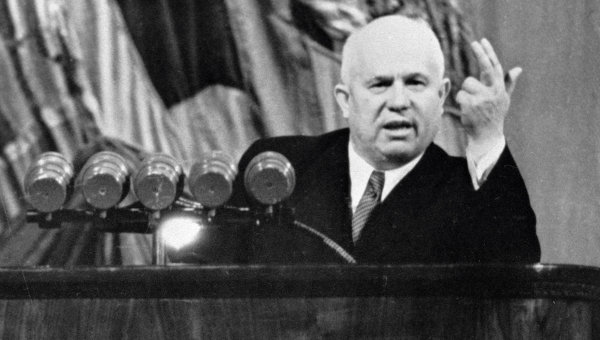
I have always enjoyed the thought of Khrushchev sitting at the United Nations, pounding on the table with his shoe and shouting, ‘It’s wrong. It’s wrong.’ Isn’t that an interesting thing for a materialist to say? He did not mean that something was merely counter to the best interests of the Soviet Union. He was saying something was wrong.


Moral motions distinguish man from non-man, but so does the need for love. Man feels the necessity of a love that means more than a sexual relationship. Many of the same people who say that love is only sexual go through marriage after marriage, hoping to find something more than physical satisfaction. Even when they say love is only sexual, they are looking for something to make ?love’ mean what the heart of man longs to have it mean. They simply cannot live consistently with their own view.

___________

For a few men the need for beauty is the point at which the ‘mannishness’ of man most clearly shows through, even though on the basis of their own concept of man as a chance configuration of atoms in an impersonal universe, the very meaning of the word ‘beauty’ is open to question.


All men, however, have a deep longing for significance, a longing for meaning. I was struck just recently by the opening to Will and Ariel Durant’sThe Lessons of History. In the first paragraph they meditate on the cosmic dimensions of the universe, on the fact that the planets will remain not only when individual men are gone but even after the whole race of man is gone. They were impressed with man’s transience much as Proust was when he said that the dust of death is on everything human. But as to man’s significance all the Durants can point to is a kind of dignity that man has because he can observe the planets and they cannot observe him. It is quite clear: no man – no matter what his philosophy is, no matter what his era or his age – is able to escape the longing to be more than merely a stream of consciousness or a chance configuration of atoms now observing itself by chance.

Valentin Louis Georges Eugène Marcel Proust (/prst/;[1] French: [maʁsɛl pʁust]; 10 July 1871 – 18 November 1922) was a French novelist, critic, and essayist.

In an extreme form the longing for significance expresses itself most clearly in the fear of non-being. It has been obvious for centuries that men fear death, but depth psychologists tell us that such a fear, while not found in animals, is for man a basic psychosis: no man, regardless of his theoretical system, is content to look at himself as a finally meaningless machine which can and will be discarded totally and for ever. Even those who seek death and cry for the fulfillment of the death-wish still have a fear of non-being somewhere inside them. I am struck that when you talk to men contemplating suicide, somewhere inside they see themselves as a continuing spectator.

(page 271)

If you go back in art as far as you can go, you find that wherever man is, his essential mannishness is there too. Recently archaeologists unearthed a man that they claim lived something like 30 thousand years ago. They found him buried in a grave of flower petals. Now that’s intriguing. You do not find animals burying their dead in flower petals. Or, examine the cave paintings – the largest early work of art which gives us extended content. (I would accept the date of about 20,000 BC for these.) The paintings reveal that those cave dwellers had the same human longings we have. Right there in the midst of the painting are indications that a man is crying out, ‘I know within myself that I am more than the dust that surrounds me.’ As a matter of fact, there is a theory that explains the cave paintings in southern France and northern Spain as a symbol system speaking out the longings of man. Although it is open to discussion, I think it is probably right, and even if that theory proves not to be correct, still they do show man considering himself as uniquely distinguished from that which is non-man.

We may also mention the testimony of the scholar Levi-Strauss. Though his theories are highly controversial, Levi-Strauss is one of the most important anthropologists in the world today. This French scientist has put forward a notion that has shaken the world of anthropology. No matter where you go, he says, into the past, into the present, to primitive peoples or cultured societies, you find that all men think in the same fashion. Man’s thinking has not basically changed along the way. Thus, although primitive tribes may not make high-level, analysed antitheses, there is in tribal thinking a clear antithesis between ‘tribe’ and ‘non-tribe’, ‘hot’ and ‘cold’, and so forth. The mannishness of man is evident as far back as anybody has been able penetrate.

Claude Lévi-Strauss,  (born Nov. 28, 1908, Brussels, Belg.—died Oct. 30, 2009, Paris, France),

Lévi-Strauss in 2005

Michael Polanyi’s arguments concerning the DNA template show much the same thing. Without going into details let me say simply that Polanyi specifically rejects the chemical determinism of Francis Crick. The chemical and physical properties of the DNA template do not give an explanation of what man is merely on the basis of those chemical and physical properties.

Michael Polanyi below

Polanyi in England, 1933

James Watson and Francis Crick (right), co-originators of the double-helix model, with Maclyn McCarty (left).


So Levi-Strauss says to look at the thinking of man; wherever you go into the past, into the present, man is man. Polanyi says the DNA template alone does not explain those peculiar things which man is. Mortimer Adler also testifies to the problem of man’s uniqueness in “The Difference of Man and the Difference It Makes”. He does not have an answer, but he says there is something different in man and we had better identify it or we will start to treat people as non-human and even more tragedy will result. No matter what his theoretical system is, man knows within himself that he cannot be equated with non-man.

Mortimer Jerome Adler (December 28, 1902 – June 28, 2001)

(page 272)

What Paul says in Romans is as up-to-date as the present ticking of the clock – men, even men without the Bible, suppress the truth of what they themselves are. Primitive man, cultured man, ancient man, modern man, Eastern man, Western man: all have a testimony that says that man is more than their own theories explain.

(Jean-Paul Sartre pictured below)

Paul then turns to the second area in which men suppress the truth. In Romans 1:20 he says, ‘For the invisible things of him since the creation of the world are clearly seen, being perceived by the things that are made.’ So the second testimony man suppresses is the truth of the external world. Jean-Paul Sartre has said that the basic philosophical question of all questions is this: Why is it that something is there rather than nothing? He is correct. The great mystery to the materialist is that there is anything there at all.

EINSTEIN AND OPPENHEIMER BELOW (IMAGE: ALFRED EISENSTAEDT, LIFE MAGAZINE)

Albert Einstein and Robert Oppenheimer, 1947: Flickr, James Vaughn

However, it is not only that something chaotic is there but that something orderly is there. Einstein understood this very well at the end of his life. According to his friend Oppenheimer and what we know from his own writing, Einstein at the end of his life became a modern mystic. He did not have the answer, he did not return to the Judeo-Christian position or the Bible, but he understood that there had to be a bigger answer because he saw in the universe an order that is indisputable. Einstein worded it beautifully when he said the world is like a well-constructed crossword puzzle; you can suggest any number of words, but only one will fit all the facts. And so Sartre says, ‘There’s something there,’ and Einstein adds, ‘Yes. Look at the marvel of its form.’ Let us put it another way: there is a distinction between science and science-fiction. In science-fiction you may imagine any kind of universe, but in science you must deal with the universe that is there.

For several years Murray Eden at the Massachusetts Institute of Technology has been using high-speed computers to calculate the possibility of whether on the basis of chance there could be so much complexity in the universe within any acceptable amount of time. His conclusion is that the possibility is zero.
We find the same thing in Charles Darwin himself in his autobiography and his letters. It is amazing that this old man toward the very end of his life keeps saying, ‘I cannot believe with my mind that all this was produced by chance.’ Not his emotions, but his mind. And he has to excuse the testimony of his intelligence by saying that his mind has just come by evolution from a monkey mind, and who can trust that? But, of course, there is a trick in this. If he could not trust his mind on such a crucial point, how could he trust it to formulate the evolutionary hypothesis itself? ( end of page 272)

(page 275)

…Romans 1:28: ‘And even as they did not like to retain God in their knowledge, God gave them over [or God gave them up] to a mind void of judgment.’ The Authorized Version ‘a reprobate mind’ misses the point. It is a mind void of judgment, a phrase referring back to verses 21 and 22, ‘they became vain in their reasoning’, religiously but also intellectually foolish. These people do not understand what the universe is, and they do not understand who they themselves are. That sounds very modern indeed.

(Painting of Paul Gauguin below)

_

Paul Gauguin, the French painter, brilliant as he was, provides an excellent example. Following Jean-Jacques Rousseau’s idea that man is (or ought to be) autonomous, completely free, he said that what troubled him was that 2 and 2 always equaled 4. He wanted to be so free that on a Tuesday morning at eight o’clock he could say 2+2=4.5.
What Paul is stressing here is that when you turn away from God and follow other presuppositions, the more consistent you are to your presuppositions, the further you get away from reality itself. So you see Gauguin trying to paint an autonomous freedom, a primitive simplicity, and, as it were, stamping his feet and saying, ‘If my system is right, somehow or other 2+2 should not always equal 4.’

(PAINTING SCHAEFFER IS REFERRING TO ABOVE IS Paul Gauguin, Where do we come from? What are we? Where are we going?, 1897-98, oil on canvas, 139.1 x 374.6 cm [Museum of Fine Arts, Boston] )

Let us summarize briefly the course of the argument in this chapter. We began by noticing that Paul speaks in a special way to the man without the Bible, for he has not suppressed the special revelation, that is, the revelation in the Bible, but the general revelation given by the mannishness of man and by the external world. It is then plain that the man without the Bible holds the truth in unrighteousness, he holds some of the truth about himself and the universe, but he does not follow it to its reasonable conclusions. Thereafter, a breakdown in morality occurs. God says to man in this position: You are under my judgment. And so the questions arise, how is man without the Bible going to be judged? Is this just?

 
_—
————

Related posts:

I love the movie “Midnight in Paris” by Woody Allen and I have done over 30 posts on the historical characters mentioned in the film. Take a look below:

“Midnight in Paris” one of Woody Allen’s biggest movie hits in recent years, July 18, 2011 – 6:00 am

(Part 32, Jean-Paul Sartre)July 10, 2011 – 5:53 am

 (Part 29, Pablo Picasso) July 7, 2011 – 4:33 am

(Part 28,Van Gogh) July 6, 2011 – 4:03 am

(Part 27, Man Ray) July 5, 2011 – 4:49 am

(Part 26,James Joyce) July 4, 2011 – 5:55 am

(Part 25, T.S.Elliot) July 3, 2011 – 4:46 am

(Part 24, Djuna Barnes) July 2, 2011 – 7:28 am

(Part 23,Adriana, fictional mistress of Picasso) July 1, 2011 – 12:28 am

(Part 22, Silvia Beach and the Shakespeare and Company Bookstore) June 30, 2011 – 12:58 am

(Part 21,Versailles and the French Revolution) June 29, 2011 – 5:34 am

(Part 16, Josephine Baker) June 24, 2011 – 5:18 am

(Part 15, Luis Bunuel) June 23, 2011 – 5:37 am

Related posts:

A list of the most viewed posts on the historical characters mentioned in the movie “Midnight in Paris”

Characters referenced in Woody Allen’s movie “Midnight in Paris” (Part 38,Alcoholism and great writers and artists)

The characters referenced in Woody Allen’s movie “Midnight in Paris” (Part 36, Alice B. Toklas, Woody Allen on the meaning of life)

Characters referenced in Woody Allen’s movie “Midnight in Paris” (Part 35, Recap of historical figures, Notre Dame Cathedral and Cult of Reason)

The characters referenced in Woody Allen’s movie “Midnight in Paris” (Part 34, Simone de Beauvoir)

The characters referenced in Woody Allen’s movie “Midnight in Paris” (Part 33,Cezanne)

The characters referenced in Woody Allen’s movie “Midnight in Paris” (Part 32, Jean-Paul Sartre)

The characters referenced in Woody Allen’s movie “Midnight in Paris” (Part 31, Jean Cocteau)

The characters referenced in Woody Allen’s movie “Midnight in Paris” (Part 30, Albert Camus)

The Characters referenced in Woody Allen’s “Midnight in Paris” (Part 29, Pablo Picasso)

The Characters referenced in Woody Allen’s “Midnight in Paris” (Part 8, Henri Toulouse Lautrec)

The Characters referenced in Woody Allen’s “Midnight in Paris” (Part 7 Paul Gauguin)

The Characters referenced in Woody Allen’s “Midnight in Paris” (Part 6 Gertrude Stein)

The Characters referenced in Woody Allen’s “Midnight in Paris” (Part 5 Juan Belmonte)

The Characters referenced in Woody Allen’s “Midnight in Paris” (Part 4 Ernest Hemingway)

The Characters referenced in Woody Allen’s “Midnight in Paris” (Part 3 Scott and Zelda Fitzgerald)

The Characters referenced in Woody Allen’s “Midnight in Paris” (Part 2 Cole Porter)

The Characters referenced in Woody Allen’s “Midnight in Paris” (Part 1 William Faulkner)

MUSIC MONDAY Cole Porter “Let’s Do it, Let’s Fall in Love” in the movie MIDNIGHT IN PARIS

_____________

“Woody Wednesday” ECCLESIASTES AND WOODY ALLEN’S FILMS: SOLOMON “WOULD GOT ALONG WELL WITH WOODY!” (Part 11 MIDNIGHT IN PARIS Part J, WOODY’S LIBERAL POLITICAL VIEWS come from a lack of understanding man’s SINFUL NATURE and where it originated )

Woody Allen’s liberal political views come out in man of his films and his solution for peace is not realistic since he doesn’t recognize the Bible’s view of mankind’s fallen nature. With a correct view of man’s condition then subjects like war and abortion can be confronted and not ignored as many liberals. Appeasement is their rally cry when evil men seek to expand their kingdoms and “abortion rights of women” are advanced at the expense of the right to life rights of unborn female babies. All of this stems from an insufficient view of the sinfulness of man and where it originated from which was Adam’s rebellion against God in the Garden of Eden many years ago.

___

In the movie BANANAS Woody Allen befriends a liberal student who gets him involved in liberal war protests. Later he goes to a Central America country and gets mixed up in what later becomes a coup by military group that says they want to return the rights to the people but they really are just the same as the previous regime.


__

____

In the movie MIDNIGHT IN PARIS we also see these same liberal views come out of the mouth of GIL PENDER.

INEZ: We should get back to town. We’re meeting Mom and Dad for dinner.

GIL PENDER: Let’s meet ’em.

HELEN (INEZ’ MOM): There are our sightseers.

INEZ:If I never see another charming boulevard or bistro again, I…-

GIL PENDER: What a town!- Yes. To visit.I could see myself living here!I feel like the Parisians kind of “get me.”I can see myself just strolling along the Left Bank with a,you know, baguette under my arm,headed to Café de Floreto scribble away on my book.What did Hemingway say? He called it a “moveable feast.”

HELEN:In this traffic, nothing moves.Well, a toast to John’s new business venture here!- Cheers!- Cheers!-

GIL PENDER: Congratulations.-

JOHN (INEZ’ DAD) : Thank you.Well, I’ll be perfectly frank.I’m excited about this corporate merger between our folks and the French company, but otherwise,I’m not a big Francophile.-

HELEN: John hates their politics.-

JOHN: Certainly been no friend to the United States.

GIL PENDER: Well, I mean, you can’t exactly blame them for not following us down that rabbit’s hole in Iraq.- The whole Bush, you know,…-

INEZ: Oh, please. Let’s not get into this- bad discussion again and again. –

GIL PENDER: Honey,honey. We’re not getting into– By the way, it’s fine for your father and I to disagree.That’s what a democracy is.Your father defends the right-wing of the Republican party,and I happen to think you almost got to be- like, a demented lunatic, but it’s like…- Okay. Okay!But it doesn’t mean we don’t respect each other’s views, am I right?-

__


(Bill Wellons pictured above)

Bill Wellons (teaching pastor at FELLOWSHIP BIBLE CHURCH in Little Rock from 1977 to 2009) in his sermon on Ecclesiastes MAKING THE MOST OF YOUR TIME (04-28-96) made these comments:

Ecclesiastes 3:7 says, “There is a time to be silent and a time to speak.” I wish I had learned this a long time ago.

James 1:19   “Know this, my beloved brothers: let every person be quick to hear, slow to speak, slow to anger…”

Proverbs 10:19 “When words are many, transgression is not lacking,  but whoever restrains his lips is prudent.” 

My interpretation of this verse is “a closed mouth gathers no feet.” THERE IS A TIME TO SPEAK TOO. Those in attendance at the 1994 National Prayer Breakfast held in conjunction with the National Religious Broadcasters witnessed a time for speaking. Mother Teresa took the podium and pleaded for the lives of unborn children. This tiny nun  began her address by reading a portion of scripture. Then she stunned the assembled dignitaries which included President Clinton and the first lady and the Vice President and his wife by saying “The greatest destroyer of peace today is abortion.” Then she asked a great question. “For if we accept that a mother can kill even her own child how can we tell people they can’t kill each other?”

Chuck Colson wrote that Mother Teresa was polite and respectful yet she did not flinch in speaking the truth. She demonstrated civility wedded to bold conviction confronting world leaders with the message of biblical righteousness. Clearly she viewed the breakfast as a time to speak.

She continued, “Please don’t kill the child. I want the child. Please give me the child.” After her speech she approached President Bill Clinton and pointed her finger at him and said, “Stop killing babies.”

Bl. Mother Teresa: “every abortion is the denial of receiving Jesus”


__


Former US President Bill Clinton talks to a nun from Mother Teresa’s Missionaries of Charity in Kolkata on Saturday.
— Reuters photo


_

Woody Allen’s liberal political views come out in his films and his solution for peace is not realistic since he doesn’t recognize the Bible’s view of mankind’s fallen nature.

Mother Teresa said, “For if we accept that a mother can kill even her own child how can we tell people they can’t kill each other?” This demonstrated Mother Teresa’s understanding of what the Bible has to say about our sin nature since the fall in Genesis Chapter 3. Francis Schaeffer in his fine book about modern man ESCAPE FROM REASON  states,

“the True Christian position is that, in space and time and history, there was an unprogrammed man who made a choice, and actually rebelled against God…without Christianity’s answer that God made a significant man in a significant history with evil being the result of Satan’s and then man’s historic space-time revolt, there is no answer but to accept Baudelaire’s answer [‘If there is a God, He is the devil’] with tears. Once the historic Christian answer is put away, all we can do is to leap upstairs and say that against all reason God is good.”(pg. 81)

(Francis Schaeffer pictured below)

Christian scholar Ravi Zacharias has noted, “The key to understanding the Book of Ecclesiastes is the term ‘UNDER THE SUN.’ What that literally means is you lock God out of a closed system, and you are left with only this world of time plus chance plus matter.”

Woody Allen as an atheist could not hope to find a lasting meaning to his life in a closed system without bringing God back into the picture. This is the same exact case with Solomon in the Book of Ecclesiastes. Three thousand years ago, Solomon took a look at life “under the sun” in his book of Ecclesiastes.

Ecclesiastes 4:1 English Standard Version (ESV)

Evil Under the Sun

Again I saw all the oppressions that are done under the sun. And behold, the tears of the oppressed, and they had no one to comfort them! On the side of their oppressors there was power, and there was no one to comfort them.

Let me make three points concerning the problem of evil and suffering. First, the problem of evil and suffering hit this world in a big way because of Adam and what happened in Genesis Chapter 3. Second, if there is no God then there is no way to distinguish good from evil and there will be no ultimate punishment for Hitler and Josef Mengele. (By the way Mengele never faced punishment and lived his long life out in peace.) Third. Christ came and suffered and will destroy all evil from this world eventually forever.


Ecclesiastes 3: 1-8 English Standard Version (ESV)

A Time for Everything

For everything there is a season, and a time for every matter under heaven:

a time to be born, and a time to die;
a time to plant, and a time to pluck up what is planted;
a time to kill, and a time to heal;
a time to break down, and a time to build up;
a time to weep, and a time to laugh;
a time to mourn, and a time to dance;
a time to cast away stones, and a time to gather stones together;
a time to embrace, and a time to refrain from embracing;
a time to seek, and a time to lose;
a time to keep, and a time to cast away;
a time to tear, and a time to sew;
a time to keep silence, and a time to speak;
a time to love, and a time to hate;
a time for war, and a time for peace.

(The Byrds rock band below)

The Byrds – Turn, Turn, Turn

The Byrds – Turn! Turn! Turn! Lyrics

To everything, turn, turn, turn.
There is a season, turn, turn, turn.
And a time to every purpose under heaven.
A time to be born, a time to die.
A time to plant, a time to reap.
A time to kill, a time to heal.
A time to laugh, a time to weep.To everything, turn, turn, turn.
There is a season, turn, turn, turn.
And a time to every purpose under heaven.
A time to build up, a time to break down.
A time to dance, a time to mourn.
A time to cast away stones.
A time to gather stones together.To everything, turn, turn, turn.
There is a season, turn, turn, turn.
And a time to every purpose under heaven.
A time of love, a time of hate.
A time of war, a time of peace.
A time you may embrace.
A time to refrain from embracing.To everything, turn, turn, turn.
There is a season, turn, turn, turn.
And a time to every purpose under heaven.
A time to gain, a time to lose.
A time to rend, a time to sew.
A time for love, a time for hate.
A time for peace, I swear it’s not too late.

This series deals with the Book of Ecclesiastes and Woody Allen films.  The first post  dealt with MAGIC IN THE MOONLIGHT and it dealt with the fact that in the Book of Ecclesiastes Solomon does contend like Hobbes  and Stanley that life is “nasty, brutish and short” and as a result has no meaning UNDER THE SUN.

The movie MIDNIGHT IN PARIS offers many of the same themes we see in Ecclesiastes. The second post looked at the question: WAS THERE EVER A GOLDEN AGE AND DID THE MOST TALENTED UNIVERSAL MEN OF THAT TIME FIND TRUE SATISFACTION DURING IT?

In the third post in this series we discover in Ecclesiastes that man UNDER THE SUN finds himself caught in the never ending cycle of birth and death. The SURREALISTS make a leap into the area of nonreason in order to get out of this cycle and that is why the scene in MIDNIGHT IN PARIS with Salvador Dali, Man Ray, and Luis Bunuel works so well!!!! These surrealists look to the area of their dreams to find a meaning for their lives and their break with reality is  only because they know that they can’t find a rational meaning in life without God in the picture.

The fourth post looks at the solution of WINE, WOMEN AND SONG and the fifth and sixth posts look at the solution T.S.Eliot found in the Christian Faith and how he left his fragmented message of pessimism behind. In the seventh post the SURREALISTS say that time and chance is all we have but how can that explain love or art and the hunger for God? The eighth  post looks at the subject of DEATH both in Ecclesiastes and MIDNIGHT IN PARIS. In the ninth post we look at the nihilistic worldview of Woody Allen and why he keeps putting suicides into his films.

In the tenth post I show how Woody Allen pokes fun at the brilliant thinkers of this world and how King Solomon did the same thing 3000 years ago. In the eleventh post I point out how many of Woody Allen’s liberal political views come a lack of understanding of the sinful nature of man and where it originated.

Related posts:

“Woody Wednesday” ECCLESIASTES AND WOODY ALLEN’S FILMS: SOLOMON “WOULD GOT ALONG WELL WITH WOODY!” (Part 7 MIDNIGHT IN PARIS Part F, SURREALISTS AND THE IDEA OF ABSURDITY AND CHANCE)

Woody Allen believes that we live in a cold, violent and meaningless universe and it seems that his main character (Gil Pender, played by Owen Wilson) in the movie MIDNIGHT IN PARIS shares that view. Pender’s meeting with the Surrealists is by far the best scene in the movie because they are ones who can […]

“Woody Wednesday” ECCLESIASTES AND WOODY ALLEN’S FILMS: SOLOMON “WOULD GOT ALONG WELL WITH WOODY!” (Part 6 MIDNIGHT IN PARIS Part E, A FURTHER LOOK AT T.S. Eliot’s DESPAIR AND THEN HIS SOLUTION)

In the last post I pointed out how King Solomon in Ecclesiastes painted a dismal situation for modern man in life UNDER THE SUN  and that Bertrand Russell, and T.S. Eliot and  other modern writers had agreed with Solomon’s view. However, T.S. Eliot had found a solution to this problem and put his faith in […]

“Woody Wednesday” ECCLESIASTES AND WOODY ALLEN’S FILMS: SOLOMON “WOULD GOT ALONG WELL WITH WOODY!” (Part 5 MIDNIGHT IN PARIS Part D, A LOOK AT T.S. Eliot’s DESPAIR AND THEN HIS SOLUTION)

In MIDNIGHT IN PARIS Gil Pender ponders the advice he gets from his literary heroes from the 1920’s. King Solomon in Ecclesiastes painted a dismal situation for modern man in life UNDER THE SUN  and many modern artists, poets, and philosophers have agreed. In the 1920’s T.S.Eliot and his  house guest Bertrand Russell were two of […]

“Woody Wednesday” ECCLESIASTES AND WOODY ALLEN’S FILMS: SOLOMON “WOULD GOT ALONG WELL WITH WOODY!” (Part 4 MIDNIGHT IN PARIS Part C, IS THE ANSWER TO FINDING SATISFACTION FOUND IN WINE, WOMEN AND SONG?)

Ernest Hemingway and Scott Fitzgerald left the prohibitionist America for wet Paris in the 1920’s and they both drank a lot. WINE, WOMEN AND SONG  was their motto and I am afraid ultimately wine got the best of Fitzgerald and shortened his career. Woody Allen pictures this culture in the first few clips in the […]

“Woody Wednesday” ECCLESIASTES AND WOODY ALLEN’S FILMS: SOLOMON “WOULD GOT ALONG WELL WITH WOODY!” (Part 3 MIDNIGHT IN PARIS Part B, THE SURREALISTS Salvador Dali, Man Ray, and Luis Bunuel try to break out of cycle!!!)

In the film MIDNIGHT IN PARIS Woody Allen the best scene of the movie is when Gil Pender encounters the SURREALISTS!!!  This series deals with the Book of Ecclesiastes and Woody Allen films.  The first post  dealt with MAGIC IN THE MOONLIGHT and it dealt with the fact that in the Book of Ecclesiastes Solomon does contend […]

“Woody Wednesday” ECCLESIASTES AND WOODY ALLEN’S FILMS: SOLOMON “WOULD GOT ALONG WELL WITH WOODY!” (Part 2 MIDNIGHT IN PARIS Part A, When was the greatest time to live in Paris? 1920’s or La Belle Époque [1873-1914] )

In the film MIDNIGHT IN PARIS Woody Allen is really looking at one main question through the pursuits of his main character GIL PENDER. That question is WAS THERE EVER A GOLDEN AGE AND DID THE MOST TALENTED UNIVERSAL MEN OF THAT TIME FIND TRUE SATISFACTION DURING IT? This is the second post I have […]

“Woody Wednesday” ECCLESIASTES AND WOODY ALLEN’S FILMS: SOLOMON “WOULD GOT ALONG WELL WITH WOODY!” (Part 1 MAGIC IN THE MOONLIGHT)

I am starting a series of posts called ECCLESIASTES AND WOODY ALLEN’S FILMS: SOLOMON “WOULD GOT ALONG WELL WITH WOODY!” The quote from the title is actually taken from the film MAGIC IN THE MOONLIGHT where Stanley derides the belief that life has meaning, saying it’s instead “nasty, brutish, and short. Is that Hobbes? I would have […]

_____________

“Woody Wednesday” ECCLESIASTES AND WOODY ALLEN’S FILMS: SOLOMON “WOULD GOT ALONG WELL WITH WOODY!” (Part 10 MIDNIGHT IN PARIS Part I, IS “LEARNING” or “GREAT KNOWLEDGE” THE ANSWER? )

__

The Thinker in The Gates of Hell at theMusée Rodin

Woody Allen brings us to Rodin’s most famous work THE THINKER for a reason and that is where his character Paul shows how brilliant he is but yet Gil Pender pokes fun at Paul when he gets a detail wrong. This reminds me of what Solomon had to say about earthly wisdom in the Book of Ecclesiastes and he points out it has severe limits in this life UNDER THE SUN.

(Francis Schaeffer pictured below)

Francis Schaeffer noted that Solomon took a look at the meaning of life on the basis of human life standing alone between birth and death “under the sun.” This phrase UNDER THE SUN appears over and over in Ecclesiastes. The Christian Scholar Ravi Zacharias noted, “The key to understanding the Book of Ecclesiastes is the term UNDER THE SUN — What that literally means is you lock God out of a closed system and you are left with only this world of Time plus Chance plus matter.” THIS IS EXACTLY WHAT MODERN DAY EVOLUTIONISTS TELL US WHAT HAS DETERMINED THE PAST AND WILL DETERMINE THE FUTURE AND THAT IS “Time plus Chance plus Matter.”

https://i0.wp.com/www.awardsdaily.com/wp-content/uploads/2011/06/8.jpg

https://i0.wp.com/www.awardsdaily.com/wp-content/uploads/2011/06/9.jpg

__

Paul argues with the tour guide (Carla Bruni) about Rodin’s wife – Rodin Museum, 79 Rue de Varenne, Paris, France

Rodin and Woody

Published on Nov 11, 2012

Me? Why would I read a biography of Rodin?


MUSEUM GUIDE: This is, of course,Rodin’s most famous statue.A cast of this work was placed next to his tomb.Rodin wished it to serve as his headstone and epitaph.-

CAROL:Is that true?-

PAUL: It would be in Moudon. He died of the flu,if I’m not mistaken. In 1917, I believe.-

MUSEUM GUIDE:Very good, sir.-

INEZ:He’s so knowledgeable, isn’t he?

GIL PENDER: Yeah.

PAUL: So much of Rodin’s work was influenced by his wife, Camille.

MUSEUM GUIDE: Yes, she was an influence, though Camille was not the wife, but his mistress.-

PAUL: Camille? No.-

MUSEUM GUIDE: Yes.- Yes. Rose was the wife.-

PAUL:No, he was never married to Rose.

MUSEUM GUIDE: Yes, he did marry Rose,- in the last year their lives.-

PAUL:I think you’re mistaken.

CAROL: Are you arguing with the guide?-

PAUL:Yes, I am.- Yeah.

MUSEUM GUIDE: No, I’m certain, monsieur.

GIL PENDER: Yeah, actually, she’s right.I recently read a two-volumebiography on Rodin, and Rose was definitely the wife. Camille, the mistress.- Yeah.

INEZ: You read that? Where did you…-

GIL PENDER: Yeah, I just read it. I was surprised because I mistakenly thought,like you, that it was, yeah,the other way around.It’s an easy mistake.

INEZ: So, Dad invited youguys for a wine-tasting.- Oh, it’ll be so French!- Yeah, yeah.

CAROL: Paul is an expert on French wine.-

GIL PENDER: You’re joking. Really?- Yes, of course.

INEZ: When did you read the biography on Rodin?

GIL PENDER: Me? Why would I read a biography on Rodin?


_

HOW  BRILLIANT WAS KING SOLOMON?

1 Kings 4:30-34 

29-34 God gave Solomon wisdom—the deepest of understanding and the largest of hearts. There was nothing beyond him, nothing he couldn’t handle.Solomon’s wisdom outclassed the vaunted wisdom of wise men of the East, outshone the famous wisdom of Egypt. He was wiser than anyone—wiser than Ethan the Ezrahite, wiser than Heman, wiser than Calcol and Darda the sons of Mahol. He became famous among all the surrounding nations. He created 3,000 proverbs; his songs added up to 1,005. He knew all about plants, from the huge cedar that grows in Lebanon to the tiny hyssop that grows in the cracks of a wall. He understood everything about animals and birds, reptiles and fish. Sent by kings from all over the earth who had heard of his reputation, people came from far and near to listen to the wisdom of Solomon.

As you know Solomon was searching for  for meaning in life in what I call the 6 big L words in the Book of Ecclesiastes. He looked into LEARNING (1:12-18, 2:12-17), laughter, ladies, luxuries, and liquor (2:1-2, 8, 10, 11), and labor (2:4-6, 18-20).

Here is his final conclusion concerning LEARNING:

ECCLESIASTES 1:12-18, 2:12-17 LEARNING

12 I the Preacher have been king over Israel in Jerusalem. 13 And I applied my heart to seek and to search out by wisdom all that is done under heaven. It is an unhappy business that God has given to the children of man to be busy with. 14 I have seen everything that is done UNDER THE SUN, and behold, all is vanity[g] and a striving after wind.[h]

15 What is crooked cannot be made straight,
    and what is lacking cannot be counted.

16 I said in my heart, “I have acquired great wisdom, surpassing all who were over Jerusalem before me, and my heart has had great experience of wisdom and knowledge. 17 And I applied my heart to know wisdom and to know madness and folly. I perceived that this also is but a striving after wind.

18 For in much wisdom is much vexation,
    and he who increases knowledge increases sorrow.

12 So I turned to consider wisdom and madness and folly. For what can the man do who comes after the king? Only what has already been done. 13 Then I saw that there is more gain in wisdom than in folly, as there is more gain in light than in darkness. 14 The wise person has his eyes in his head, but the fool walks in darkness. And yet I perceived that the same event happens to all of them. 15 Then I said in my heart, “What happens to the fool will happen to me also. Why then have I been so very wise?” And I said in my heart that this also is vanity. 16 For of the wise as of the fool there is no enduring remembrance, seeing that in the days to come all will have been long forgotten. How the wise dies just like the fool! 1So I hated life, because what is done UNDER THE SUN was grievous to me, for all is vanity and a striving after wind.

Ben Parkinson in his message on ECCLESIASTES on 1-10-16 made the following points.

Solomon says that wisdom is better than foolishness and here is an example of foolishness in the story of Larry Walters. Wikipedia noted:

Origin of his plan

Walters had often dreamed of flying, but was unable to become a pilot in the United States Air Force because of his poor eyesight. He first thought of using weather balloons to fly at age 13 and 14, after seeing them hanging from the ceiling of a military surplus store. Twenty years later, he decided to try it. His intention was to attach a few helium-filled weather balloons to his lawn chair, cut the anchor, and then float above his backyard at a height of about 30 feet (9.1 m) for several hours. He planned to use a pellet gun to burst balloons to float gently to the ground.

Preparation and launch

In mid-1982, Walters and his girlfriend, Carol Van Deusen, purchased 45 eight-foot weather balloons and obtained helium tanks from California Toy Time Balloons. They used a forged requisition from his employer, FilmFair Studios, saying the balloons were for a television commercial. Walters attached the balloons to his lawn chair, filled them with helium, put on a parachute, and strapped himself into the chair in the backyard of a home at 1633 W. 7th St. in San Pedro. He took his pellet gun, a CB radio, sandwiches, beer, and a camera.[citation needed] When his friends cut the cord that tied his lawn chair to his Jeep, Walters’s lawn chair rose rapidly to a height of about 15,000 feet (4,600 m). At first, he did not dare shoot any balloons, fearing that he might unbalance the load and cause himself to spill out. He slowly drifted over Long Beach and crossed the primary approach corridor of Long Beach Airport.

He was in contact with REACT, a Citizen band radio monitoring organization, who recorded their conversation:

REACT: What information do you wish me to tell [the airport] at this time as to your location and your difficulty?
Larry: Ah, the difficulty is, ah, this was an unauthorized balloon launch, and, uh, I know I’m in a federal airspace, and, uh, I’m sure my ground crew has alerted the proper authority. But, uh, just call them and tell them I’m okay.

After 45 minutes in the sky, he shot several balloons, and then accidentally dropped his pellet gun overboard. He descended slowly, until the balloons’ dangling cables got caught in a power line, causing a 20-minute electricity blackout in a Long Beach neighborhood. Walters was able to climb to the ground.

BUT SEEING EARTHLY WISDOM AS THE ANSWER TO EVERYTHING ULTIMATELY LETS US DOWN.

  1. Wisdom can’t give us eternal life. 

 Ecclesiastes 2:14-16English Standard Version (ESV)

14 The wise person has his eyes in his head, but the fool walks in darkness. And yet I perceived that the same event happens to all of them.  16 B How the wise dies just like the fool!

Ecclesiastes 9:1-6English Standard Version (ESV)

Death Comes to All

But all this I laid to heart, examining it all, how the righteous and the wise and their deeds are in the hand of God. Whether it is love or hate, man does not know; both are before him. It is the same for all, since the same event happens to the righteous and the wicked, to the good and the evil,[a] to the clean and the unclean, to him who sacrifices and him who does not sacrifice. As the good one is, so is the sinner, and he who swears is as he who shuns an oath. This is an evil in all that is done under the sun, that the same event happens to all. Also, the hearts of the children of man are full of evil, andmadness is in their hearts while they live, and after that they go to the dead.But he who is joined with all the living has hope, for a living dog is better than a dead lion. For the living know that they will die, but the dead know nothing, and they have no more reward, for the memory of them is forgotten. Their love and their hate and their envy have already perished, and forever they have no more share in all that is done under the sun.

2. Wisdom can’t guarantee us a better life.

Ecclesiastes 2:15English Standard Version (ESV)

15 Then I said in my heart, “What happens to the fool will happen to me also. Why then have I been so very wise?” And I said in my heart that this also is vanity.

Ecclesiastes 9:11-12English Standard Version (ESV)

Wisdom Better than Folly

11 Again I saw that under the sun the race is not to the swift, nor the battle to the strong, nor bread to the wise, nor riches to the intelligent, nor favor to those with knowledge, but time and chance happen to them all. 12 For mandoes not know his time. Like fish that are taken in an evil net, and like birds that are caught in a snare, so the children of man are snared at an evil time, when it suddenly falls upon them.

3. Wisdom can’t secure us a lasting legacy.

Ecclesiastes 2:16 A

16 For of the wise as of the fool there is no enduring remembrance, seeing that in the days to come all will have been long forgotten.

4. Wisdom can’t be mastered.

Ecclesiastes 12:11-12English Standard Version (ESV)

11 The words of the wise are like goads, and like nails firmly fixed are the collected sayings; they are given by one Shepherd. 12 My son, beware of anything beyond these. Of making many books there is no end, and much study is a weariness of the flesh.

SO WHAT DO WE DO?

Pursue wisdom and knowledge, because it’s better than living without it. 

Submit your wisdom to God because heavenly wisdom is greater then earthly wisdom. 

Ecclesiastes 12:11-12English Standard Version (ESV)

11 The words of the wise are like goads, and like nails firmly fixed are the collected sayings; they are given by one Shepherd. 12 My son, beware of anything beyond these. Of making many books there is no end, and much study is a weariness of the flesh.

Let wisdom point us to the ultimate wisdom….JESUS! (Solomon points to God and life ABOVE THE SUN in Ecclesiastes 12:13-14)

1 Corinthians 1:18-25English Standard Version (ESV)

Christ the Wisdom and Power of God

18 For the word of the cross is folly to those who are perishing, but to us who are being saved it is the power of God. 19 For it is written,

“I will destroy the wisdom of the wise,
    and the discernment of the discerning I will thwart.”

20 Where is the one who is wise? Where is the scribe? Where is the debater of this age? Has not God made foolish the wisdom of the world? 21 For since, in the wisdom of God, the world did not know God through wisdom, it pleased God through the folly of what we preach[a] to save those who believe. 22 ForJews demand signs and Greeks seek wisdom, 23 but we preach Christ crucified, a stumbling block to Jews and folly to Gentiles, 24 but to those who are called, both Jews and Greeks, Christ the power of God and the wisdom of God. 25 For the foolishness of God is wiser than men, and the weakness of God is stronger than men.

1 Corinthians 2:6-9English Standard Version (ESV)

Wisdom from the Spirit

Yet among the mature we do impart wisdom, although it is not a wisdom of this age or of the rulers of this age, who are doomed to pass away. But we impart a secret and hidden wisdom of God, which God decreed before the ages for our glory. None of the rulers of this age understood this, for if they had, they would not have crucified the Lord of glory. But, as it is written,

“What no eye has seen, nor ear heard,
    nor the heart of man imagined,
what God has prepared for those who love him”—

____

Earlier I talked about the issue of suicide in my post last week and it is sad that Larry Walters later took his own life. Ecclesiastes teaches us that apart from God there is no way to finding true lasting meaning for one’s life.

Larry Walters’ fly

This series deals with the Book of Ecclesiastes and Woody Allen films.  The first post  dealt with MAGIC IN THE MOONLIGHT and it dealt with the fact that in the Book of Ecclesiastes Solomon does contend like Hobbes  and Stanley that life is “nasty, brutish and short” and as a result has no meaning UNDER THE SUN.

The movie MIDNIGHT IN PARIS offers many of the same themes we see in Ecclesiastes. The second post looked at the question: WAS THERE EVER A GOLDEN AGE AND DID THE MOST TALENTED UNIVERSAL MEN OF THAT TIME FIND TRUE SATISFACTION DURING IT?

In the third post in this series we discover in Ecclesiastes that man UNDER THE SUN finds himself caught in the never ending cycle of birth and death. The SURREALISTS make a leap into the area of nonreason in order to get out of this cycle and that is why the scene in MIDNIGHT IN PARIS with Salvador Dali, Man Ray, and Luis Bunuel works so well!!!! These surrealists look to the area of their dreams to find a meaning for their lives and their break with reality is  only because they know that they can’t find a rational meaning in life without God in the picture.

The fourth post looks at the solution of WINE, WOMEN AND SONG and the fifth and sixth posts look at the solution T.S.Eliot found in the Christian Faith and how he left his fragmented message of pessimism behind. In the seventh post the SURREALISTS say that time and chance is all we have but how can that explain love or art and the hunger for God? The eighth  post looks at the subject of DEATH both in Ecclesiastes and MIDNIGHT IN PARIS. In the ninth post we look at the nihilistic worldview of Woody Allen and why he keeps putting suicides into his films.

In the tenth post I show how Woody Allen pokes fun at the brilliant thinkers of this world and how King Solomon did the same thing 3000 years ago.

It was only a little over a month ago that my wife and I made our first visit to Paris, France. Obviously this amazing city has tons of history and culture to offer and its sheer beauty, natural vibrancy, and great food make it a destination that shouldn’t be missed. But as a movie fan, and in this case a huge fan of Woody Allen’s “Midnight in Paris”, I saw our visit as an opportunity to see some of the locations he chose for his film (as well as several other Paris movies). We wandered all over the city from Montmartre to the Latin Quarter, from the upscale 7th arrondissement to Les Marais, and along the way I ran into several of Allen’s spots. So I thought it would be cool to share them here, not just as another way to drool over Paris (something I could easily do), but as a chance to share the great experience I had as a movie fan.

MUSEE RODIN

Early in the film we get our first real glimpse into Paul’s true pseudo-intellectual self absorption as they visit The Rodin Museum. As the four are admiring Rodin’s popular sculpture “The Thinker”, Paul flexes his faux knowledge of Rodin until he is corrected by the guide as well as Gil. Paul will have none of it and goes as far as to argue with the guide. Gil later returns to ask the guide for a favor.

I loved our visit to Musee Rodin. The inside collection was fabulous but for me the true treasures were in the beautiful gardens and wonderfully placed sculptures none better than “The Thinker”. While much smaller in scale than the Louvre or the Orsay, the Rodin Museum still managed to be a favorite spot of mine in all of Paris.

PLACE DAUPHINE

In one of the most romantic scenes in the movie, Gil and Adriana take a nighttime stroll and end up on the terrace at Restaurant Paul’s in Place Dauphine. It’s here that Gil gives her the earrings and then pours his heart out to her before a carriage comes to transport them back even further in time.

The cool thing is that Restaurant Paul isn’t a fictional place. It sits right in the cozy Place Dauphine. Unfortunately due to the time of day the restaurant was closed but we did get a chance to take pictures and admire the cool setting for what was one of my favorite scenes in the film.

SHAKESPEARE AND COMPANY

There’s a brief scene in “Midnight in Paris” that shows Gil walking out of Shakespeare and Company. It’s certainly not a pivotal scene but it shows Gil on one of his strolls admiring the city that he truly loves.

I loved Shakespeare and Company! We stumbled on it after walking around the Latin Quarter. There is such a great feel of history as you approach the cool English bookstore. The narrow aisles inside house an amazing assortment of titles and going upstairs takes you right back to the days of Hemingway, Joyce, and Sylvia Beach. I bought a copy of “The Great Gatsby” and got my Shakespeare and Company stamp on the inside. I left one happy traveler.

QUAI DE BOURBON

After Gil is picked up by the old-time classic car, it takes him back in time to a  lively party on Quai de Bourbon. It’s at this party that Gil notices Cole Porter singing and playing the piano. It’s here that he also meets Zelda and F. Scott Fitzgerald. In the film we see the street as the car drives up and this was Gil’s first taste of the Roaring Twenties.

Quai de Bourbon winds around the tip of Ile Saint-Louis. We crossed over from the Notre Dame cathedral and came across the street by mistake. In fact at the time I didn’t remember the name but I most certainly recognized it from the film. It was a great moment of discovery and I couldn’t help but reflect back on the film as we walked down the street.

QUAI DES ORFEVRES

Quai des Orfevres appears in the movie on two different occasions. One of the scenes has Gil walking along the Seine clearing his mind and soaking up the city. Later in the movie it’s here that Gil and Adriana comes across a distraught Zelda threatening to jump into the Seine.

We came across this lovely location on a number of occasions. It was a gorgeous cobblestone walk along the river lined with trees and featuring some beautiful views of Paris. When you see it, it’s so easy to see why Woody Allen chose to include this particular location in his film.

SQUARE JEAN XXII

After buying an old book written by Adriana at a riverside book seller, Gil convinces the guide from the Rodin Museum the translate it for him. The two sit on a bench at Square Jean XXIII with Notre Dame standing tall in the background. It’s here that Gil finds out that there is a true connection between him and Adriana.

After visiting Notre Dame we spent a little time in the lovely Square Saint Jean. It’s here that you get the best views of Notre Dame’s buttresses and really highlights the Gothic architecture. The park is lined with benches, trees, and play areas for children. They also have bathrooms that you have to pay to use! No thanks.

PONT ALEXANDRE III

While it also appears in Woody Allen’s opening montage, the bridge known as Pont Alexandre III is also in the final scene of the film. Gil has broken up with Inez and is wandering around the city when he bumps into Gabrielle again on Pont Alexandre III. It’s here he tells her he’s staying and Paris. He offers to walk her home just as the rain starts to fall. It’s a wonderful ending.

After leaving Les Invalides we made our way to Pont Alexandre III. The beautiful ornate bridge was a sight. Tourists were snapping photos and brides were having wedding pictures made. We walked under it and over it admiring the River Seine and the wonderful architecture of the bridge itself.

There are so many wonderful locations in the city of Paris and Woody Allen takes advantage of so many. We visited several other places that you can see in the movie and missed out on some as well. Looks like we already have our excuse to head back to what I believe may be the world’s greatest city. I truly love this city!


Interesting article I wanted to pass on. I have written about Rodin’s “The Thinker”myself in the past.

It’s official: Everyone on the planet has an opinion on Tim Tebow. By now we’ve heard from everyone from Rick Perry to Bill Maher to the folks at Saturday Night Live. And of course those opinions result in even more opinions, so much so that Tim Tebow the human being is almost irrelevant next to Tim Tebow the idea. What Tebow represents can be almost anything to anyone, but the person we’re all talking about has faded away.

And that brings us to the atheist community.

They are certainly in the minority on Tim Tebow. In a recent nationwide poll, 43 percent of those who knew of Tebow said they believed divine intervention was at least partly responsible for his success. Atheists, obviously, disagree. They also dislike how Tebow is using his fame to promote Christianity. No surprise there.

But what is surprising is that one leading atheist makes an argument against Tebow that also serves as a roundabout defense of Tebow. And to illustrate that point, we begin with the president of American Atheists, Dave Silverman, Tebowing:

Silverman, 45, has added a clever twist to the fad. He is genuflecting like Tebow does when he prays, but he’s also mimicking Rodin’s The Thinker. This is a nod to the atheist or humanistic belief that it is man — not a higher power — who is purely in control of his fate. Silverman is Tebowing to his fellow man.

“The universe has a trillion stars,” he says. “Ninety five percent of it is dark matter. It’s hubris to think the Creator of all that wants the Broncos to win a football game.”

(Another atheist, Blair Scott, says if God wants Tebow to win, the quarterback would have a higher completion percentage. Scott, ironically, is a Saints fan.)

So Silverman calls Tebow a “victim” because of the quarterback’s belief that “he’s not doing it — God is doing it through him.” Therefore, according to Silverman, Tebow is “brainwashing himself.”

According to this line of reasoning, however, Tebow deserves more credit, not less. Silverman argues that the religious talk from and around Tebow is not only taking away from the performance of his Denver Broncos teammates, but also the quarterback’s own ability. From this perspective, the way Tebow has won games this season — through miraculous and seemingly predestined comebacks; what Chicago Bears general manager Jerry Angelo called “some divine intervention associated with what’s taking place” — undermines the true worth of Tebow the person.

He has a point. Tebow’s uniqueness is not in how frequently and openly he prays. Many athletes do that. And many quarterbacks lead amazing comebacks that strain reason and understanding. (Seen Matt Stafford this season?)

What Tebow does, better than just about any other quarterback, is approach danger. Embrace danger. Plenty of quarterbacks accept imminent danger, like Tom Brady waiting until the last possible moment to throw before getting decked. Plenty of quarterbacks deftly avoid danger, like Michael Vick.

Tebow seeks it. He plows right into the line, like a fullback, and he seems to cherish the role. In fact, he seems to miss doing it more. His rushes were unstoppable at Florida — so much so that his jump pass was a revelation because everyone in the stadium expected him to barrel into the end zone instead of leaping and tossing the ball to Aaron Hernandez or some other wide-open Gator.

The word “throwback” is used too often, but Tebow stands out in an era where quarterbacks are not to be touched and skill players are treated like china dolls. Some people shout that Tebow is beloved for his race, or for his religion, or even for his looks. Maybe so. But all those God-given — or DNA-given, depending on your perspective — factors can overshadow something he’s done on his own: train himself physically and mentally to seek and withstand some of the most terrifying physical contact known to man, the NFL gang-tackle.

ThePostGame brings you the most interesting sports stories on the web.
Follow us on Facebook and Twitter to read them first!

This is not to say other quarterbacks aren’t tough. Every NFL quarterback is tough. But the way Tebow plays is a special brand of tough, because he could easily shy away from brutality based on his name, his reputation, his income, or his position. Tebow does none of that.

Instead, Tebow displays that most human of attributes, the one at the core of pro football’s enduring appeal. Courage.

Is his courage bolstered by his faith? Probably so. Tebow would likely say the credit for his style of play goes to God, just like everything else. Fair enough.

But there is something distinctly human about a man’s willingness to risk pain. It’s been admirable as long as we’ve walked the Earth, really. Americans love football the most for the bravery and physicality of the players, and Tebow represents this well — even without a single mention of Jesus.

So although the atheists’ disdain for Tebow’s religiosity can be off-putting and offensive to people of faith, there’s something to their larger argument. When Marion Barber fumbles or when Matt Prater hits a long field goal, we all wonder (or joke or scoff) about divine intervention. Even Ravens defender Terrell Suggs ripped Tebow for needing God to bail him out. Is Jesus involved in the Broncos’ playoff run? That’s not for this site to discuss. But is Tebow involved in this improbable season-long journey? Absolutely. And that’s one thing everyone — Rick Perry and Bill Maher, believers and non-believers alike — can agree on. You don’t have to believe in God to believe in Tim Tebow.

Related posts:

Tim Tebow and John 3:16

Very interesting article below: The NFL bans eye-black messagers. Tebow’s numbers did the preaching on Sunday. (Lynn Sladky/AP)   You ever feel like there’s too much Tim Tebow news? Neither do I. Here’s a roundup of some of the most interesting Timbits from the aftermath of the Denver Broncos 29-23 overtime victory over the Pittsburgh […]

Barrett Jones and Tim Tebow are very similar

For   Barrett Jones is a Tim Tebow type of person and I am glad that people like Jones and Tebow are not ashamed of their Savior Jesus Christ. They don’t try to live two lives, one in church and one that is different in the lockerroom. Barrett Jones is the 2011 Outland Trophy winner […]

Tebow does it again

He did it again. Tebow does it again. It is simply amazing. With all the odds against him he comes through. I guess that will ruin Bill Maher’s jokes for the week. Can Tebow rally the team for another unlikely victory? The Steelers were 8 point favorites and I am sure the Patriots will be […]

Prolife quotes

Bill O’Reilly Interviews Jehmu Greene About Pro-Life Super Bowl Ad about Tim Tebow I got these quotes from someone off the internet that lives in England. The funny thing is the video is put to music and the song they picked won a grammy for an Arkansas band that lives in Little Rock. Here is […]

Max Brantley and Ark Times bloggers poke fun at Tebow after 3rd straight loss

Arkansas Times Blogger who goes by the name “Elwood” remarked (The New Year line | Arkansas Blog ): I tuned in late to the KC v Denver Bronco game, just the last few minutes to see CBS giving adequate coverage to Tebow on his knees at his team’s bench in deep prayer. He seemed so isolated. Other […]

Tim Tebow attacked by Bill Maher

  Tebow attacked by Bill Maher: Even in defeat, Tim Tebow creates controversy — this time in Tinseltown. HBO’s Bill Maher created a firestorm over the Christmas weekend with a scathing reaction to Tebow’s subpar performance in Buffalo. Shortly after Tebow threw four interceptions in the Broncos’ lopsided defeat to the Bills, Maher turned to […]

Why We Love Tim Tebow

I really enjoyed this article and wanted to share it with you. Why We Love Tim Tebow posted by Linda Mintle | 7:33am Wednesday December 14, 2011   Yesterday I was asked to do a TV interview on Tim Tebow. This time the focus was positive. Tebow is very polarizing. People either love or hate him […]

Tim Tebow: Bestselling religious author of 2011

Tim Tebow seems to win at everything he tries. The Good Book: Tim Tebow A No. 1 Author Monday, December 26, 2011 12:45 pm Written by: Ben Maller Sports experts go crazy debating whether Tim Tebow can win NFL games, but there’s no question he can win over readers. Tebow’s Christian life story, “Through My […]

10 Reasons for Tim Tebow Hate

I enjoyed this article below: 10 Reasons for Tim Tebow Hate posted by Linda Mintle | 7:25am Tuesday December 6, 2011   I walked in to a radio station focused on doing an interview totally unrelated to football and the producer starts ranting about how much he hates Tim Tebow. This was a day after Tebow […]

“Woody Wednesday” ECCLESIASTES AND WOODY ALLEN’S FILMS: SOLOMON “WOULD GOT ALONG WELL WITH WOODY!” (Part 7 MIDNIGHT IN PARIS Part F, SURREALISTS AND THE IDEA OF ABSURDITY AND CHANCE)

Woody Allen believes that we live in a cold, violent and meaningless universe and it seems that his main character (Gil Pender, played by Owen Wilson) in the movie MIDNIGHT IN PARIS shares that view. Pender’s meeting with the Surrealists is by far the best scene in the movie because they are ones who can […]

“Woody Wednesday” ECCLESIASTES AND WOODY ALLEN’S FILMS: SOLOMON “WOULD GOT ALONG WELL WITH WOODY!” (Part 6 MIDNIGHT IN PARIS Part E, A FURTHER LOOK AT T.S. Eliot’s DESPAIR AND THEN HIS SOLUTION)

In the last post I pointed out how King Solomon in Ecclesiastes painted a dismal situation for modern man in life UNDER THE SUN  and that Bertrand Russell, and T.S. Eliot and  other modern writers had agreed with Solomon’s view. However, T.S. Eliot had found a solution to this problem and put his faith in […]

“Woody Wednesday” ECCLESIASTES AND WOODY ALLEN’S FILMS: SOLOMON “WOULD GOT ALONG WELL WITH WOODY!” (Part 5 MIDNIGHT IN PARIS Part D, A LOOK AT T.S. Eliot’s DESPAIR AND THEN HIS SOLUTION)

In MIDNIGHT IN PARIS Gil Pender ponders the advice he gets from his literary heroes from the 1920’s. King Solomon in Ecclesiastes painted a dismal situation for modern man in life UNDER THE SUN  and many modern artists, poets, and philosophers have agreed. In the 1920’s T.S.Eliot and his  house guest Bertrand Russell were two of […]

“Woody Wednesday” ECCLESIASTES AND WOODY ALLEN’S FILMS: SOLOMON “WOULD GOT ALONG WELL WITH WOODY!” (Part 4 MIDNIGHT IN PARIS Part C, IS THE ANSWER TO FINDING SATISFACTION FOUND IN WINE, WOMEN AND SONG?)

Ernest Hemingway and Scott Fitzgerald left the prohibitionist America for wet Paris in the 1920’s and they both drank a lot. WINE, WOMEN AND SONG  was their motto and I am afraid ultimately wine got the best of Fitzgerald and shortened his career. Woody Allen pictures this culture in the first few clips in the […]

“Woody Wednesday” ECCLESIASTES AND WOODY ALLEN’S FILMS: SOLOMON “WOULD GOT ALONG WELL WITH WOODY!” (Part 3 MIDNIGHT IN PARIS Part B, THE SURREALISTS Salvador Dali, Man Ray, and Luis Bunuel try to break out of cycle!!!)

In the film MIDNIGHT IN PARIS Woody Allen the best scene of the movie is when Gil Pender encounters the SURREALISTS!!!  This series deals with the Book of Ecclesiastes and Woody Allen films.  The first post  dealt with MAGIC IN THE MOONLIGHT and it dealt with the fact that in the Book of Ecclesiastes Solomon does contend […]

“Woody Wednesday” ECCLESIASTES AND WOODY ALLEN’S FILMS: SOLOMON “WOULD GOT ALONG WELL WITH WOODY!” (Part 2 MIDNIGHT IN PARIS Part A, When was the greatest time to live in Paris? 1920’s or La Belle Époque [1873-1914] )

In the film MIDNIGHT IN PARIS Woody Allen is really looking at one main question through the pursuits of his main character GIL PENDER. That question is WAS THERE EVER A GOLDEN AGE AND DID THE MOST TALENTED UNIVERSAL MEN OF THAT TIME FIND TRUE SATISFACTION DURING IT? This is the second post I have […]

“Woody Wednesday” ECCLESIASTES AND WOODY ALLEN’S FILMS: SOLOMON “WOULD GOT ALONG WELL WITH WOODY!” (Part 1 MAGIC IN THE MOONLIGHT)

I am starting a series of posts called ECCLESIASTES AND WOODY ALLEN’S FILMS: SOLOMON “WOULD GOT ALONG WELL WITH WOODY!” The quote from the title is actually taken from the film MAGIC IN THE MOONLIGHT where Stanley derides the belief that life has meaning, saying it’s instead “nasty, brutish, and short. Is that Hobbes? I would have […]

_____________

“Woody Wednesday” ECCLESIASTES AND WOODY ALLEN’S FILMS: SOLOMON “WOULD GOT ALONG WELL WITH WOODY!” (Part 9 MIDNIGHT IN PARIS Part H, IS SUICIDE THE ANSWER? )

_

_

_

A suicide attempt appears in MIDNIGHT IN PARIS when Zelda Fitzgerald goes to the Seine River with the intention of jumping and Gil Pender stops her. It seems the nihilist worldview of Woody Allen keeps him putting suicides into his films.

Remember Professor Levy from the movie CRIMES AND MISDEMEANOR? After addressing the question  IS IT POSSIBLE TO BE AN OPTIMISTIC SECULAR HUMANIST THAT DOES NOT BELIEVE IN GOD OR AN AFTERLIFE? Levy jumps out a window!!!

After Levy committed suicide, Cliff reviewed a clip from the documentary footage in which Levy states: “But we must always remember that when we are born we need a great deal of love to persuade us to stay in life. Once we get that love, it usually lasts us. But the universe is a pretty cold place. It’s we who invest it with our feelings. And under certain conditions, we feel that the thing isn’t worth it anymore.”

Hearing the news of Levy’s death, Halley says, “No matter how elaborate a philosophical system you work out, in the end it’s got to be incomplete.”

Professor Levy seen below:

Crimes e Pecados

What is Woody Allen’s main outlook on life? Francis Schaeffer described it as existentialism. 

______________

__________

     
  Materialistic Humanism: The World-View of Our Era

So some humanists act as if they have a great advantage over Christians. They act as if the advance of science and technology and a better understanding of history (through such concepts as the evolutionary theory) have all made the idea of God and Creation quite ridiculous.
This superior attitude, however, is strange because one of the most striking developments in the last half-century is the growth of a profound pessimism among both the well-educated and less-educated people. The thinkers in our society have been admitting for a long time that they have no final answers at all.
Take Woody Allen, for example. Most people know his as a comedian, but he has thought through where mankind stands after the “religious answers” have been abandoned. In an article in Esquire (May 1977), he says that man is left with:
… alienation, loneliness [and] emptiness verging on madness…. The fundamental thing behind all motivation and all activity is the constant struggle against annihilation and against death. It’s absolutely stupefying in its terror, and it renders anyone’s accomplishments meaningless. As Camus wrote, it’s not only that he (the individual) dies, or that man (as a whole) dies, but that you struggle to do a work of art that will last and then you realize that the universe itself is not going to exist after a period of time. Until those issues are resolved within each person – religiously or psychologically or existentially – the social and political issues will never be resolved, except in a slapdash way.
Allen sums up his view in his film Annie Hall with these words: “Life is divided into the horrible and the miserable.”


  Reason Is Dead

However, our intention here is neither to go into the history of irrationalism, nor to examine the proponents of existentialism in our own century, but rather to concentrate on its main thesis. It is this that confronts us on all sides today, and it is impossible to understand modern man without understanding this concept.
Because we shall be using several terms a great deal now, we would ask the reader to attend carefully. When we speak of irrationalism or existentialism or the existential methodology, we are pointing to a quite simple idea. It may have been expressed in a variety of complicated ways by philosophers, but it is not a difficult concept.
Imagine that you are at the movies watching a suspense film. As the story unfolds, the tension increases until finally the hero is trapped in some impossible situation and everyone is groaning inwardly, wondering how he is going to get out of the mess. The suspense is heightened by the knowledge (of the audience, not the hero) that help is on the way in the form of the good guys. The only question is: will the good guys arrive in time?
Now imagine for a moment that the audience is slipped the information that there are no good guys, that the situation of the hero is not just desperate, but completely hopeless. Obviously, the first thing that would happen is that the suspense would be gone. You and the entire audience would simply be waiting for the axe to fall.
If the hero faced the end with courage, this would be morally edifying, but the situation itself would be tragic. If, however, the hero acted as if help were around the corner and kept buoying himself up with this thought (“Someone is on the way!” – “Help is at hand!”), all you could feel for him would be pity. It would be a means to keep hope alive within a hopeless situation. The hero’s hope would change nothing on the outside; it would be unable to manufacture, out of nothing, good guys coming to the rescue. All it would achieve would the hero’s own mental state of hopefulness rather than hopelessness.
The hopefulness itself would rest on a lie or an illusion and thus, viewed objectively, would be finally absurd. And if the hero really knew what the situation was, but consciously used the falsehood to buoy up his feelings and go whistling along, we would either say, “Poor guy!” or “He’s a fool.” It is this kind of conscious deceit that someone like Woody Allen has looked full in the face and will have none of.
Now this is what the existential methodology is about. If the universe we are living in is what the materialistic humanists say it is, then with our reason (when we stop to think about it) we could find absolutely no way to have meaning or morality or hope or beauty. This would plunge us into despair. We would have to take seriously the challenge of Albert Camus (1913-1960) in the first sentence of The Myth of Sisyphus: “There is but one truly serious philosophical problem, and that is suicide.”92 Why stay alive in an absurd universe? Ah! But that is not where we stop. We say to ourselves – “There is hope!” (even though there is no help). “We shall overcome!” (even though nothing is more certain than that we shall be destroyed, both individually at death and cosmically with the end of all conscious life). This is what confronts us on all sides today: the modern irrational-ism.

(Scott and Zelda pictured below)

This series deals with the Book of Ecclesiastes and Woody Allen films.  The first post  dealt with MAGIC IN THE MOONLIGHT and it dealt with the fact that in the Book of Ecclesiastes Solomon does contend like Hobbes  and Stanley that life is “nasty, brutish and short” and as a result has no meaning UNDER THE SUN.

The movie MIDNIGHT IN PARIS offers many of the same themes we see in Ecclesiastes. The second post looked at the question: WAS THERE EVER A GOLDEN AGE AND DID THE MOST TALENTED UNIVERSAL MEN OF THAT TIME FIND TRUE SATISFACTION DURING IT?

In the third post in this series we discover in Ecclesiastes that man UNDER THE SUN finds himself caught in the never ending cycle of birth and death. The SURREALISTS make a leap into the area of nonreason in order to get out of this cycle and that is why the scene in MIDNIGHT IN PARIS with Salvador Dali, Man Ray, and Luis Bunuel works so well!!!! These surrealists look to the area of their dreams to find a meaning for their lives and their break with reality is  only because they know that they can’t find a rational meaning in life without God in the picture.

(Pictured below Scott, Scottie and Zelda Fitzgerald, 1922.)

__

The Fitzgerald’s vacationing on the French Riviera, May 1924. Scott, Zelda

Zelda and Scottie Fitzgerald, 1933

The fourth post looks at the solution of WINE, WOMEN AND SONG and the fifth and sixth posts look at the solution T.S.Eliot found in the Christian Faith and how he left his fragmented message of pessimism behind. In the seventh post the SURREALISTS say that time and chance is all we have but how can that explain love or art and the hunger for God? The eighth  post looks at the subject of DEATH both in Ecclesiastes and MIDNIGHT IN PARIS. In the ninth post we look at the nihilistic worldview of Woody Allen and why he keeps putting suicides into his films.

Dr. Francis Schaeffer – The Biblical flow of Truth & History (intro)

Francis Schaeffer – The Biblical Flow of History & Truth (1)

Dr. Francis Schaeffer – The Biblical Flow of Truth & History (part 2)

Ernest Hemingway and  both his good friend Scott Fitzgerald and Scott’s wife Zelda tried to blot it all out with alcohol and later in the film MIDNIGHT IN PARIS we see Zelda trying to commit suicide.  She actually was in different stages of mental distress the last 15 years of her life which ended at age 48 when a fire killed 9 people at Highland Hospital in Asheville, North Carolina (according to Wikipedia). Unfortunately her husband F. Scott Fitzgerald died 8 years earlier in 1940 from alcoholism.  Ernest Hemingway ended his life on  July 2, 1961 by shooting himself with his favorite shotgun.
(An older Zelda in 1942 seen below)
__
(Francis Scott Key Fitzgerald with friend Ernest Hemingway, left)
 

midnight in paris – Fitzgeralds and Hemingway

______________

ZELDA FITZGERALD: You look lost!-

GIL PENDER: Oh, yeah!- You’re an American?-

ZELDA FITZGERALD: If you count Alabama as America, which I do.I miss the bathtub gin. What do you do?-

GIL PENDER: Me? I’m a writer.-

ZELDA FITZGERALD: Who do you write?-

GIL PENDER: Oh, right now I’m working on a novel.- Oh, yes?

ZELDA FITZGERALD: I’m Zelda, by the way. Oh, Scott! Scott!- Yes, what it is, sweetheart?- Here’s a writer, from, um… where?-

GIL PENDER: California.

SCOTT FITZGERALD: Scott Fitzgerald, and who are you, old sport?

GIL PENDER: Gil…the… You havethe same names as…As what? Scott Fitzgerald and…Scott and Zelda Fitzgerald.

SCOTT FITZGERALD:The Fitzgeralds. Isn’t she beautiful?

GIL PENDER: Yes. Yes! Yeah, that’s… that’sa coincidence…like….uh…

ZELDA FITZGERALD: You have a glazed look in your eye. Stunned.Stupefied. Anesthetized. Lobotomized

GIL PENDER: I…I…keep looking at the man playing piano, and I believe it or not, recognize hisface from some old sheet music.

ZELDA FITZGERALD: I know I can be one of the great writers of musical lyrics- not that I can write melodies, and I try,and then I hear the songs he writes, and then I realize: I’ll never write a great lyric,- and MY TALENT REALLY LIES IN DRINKING.-

SCOTT FITZGERALD: Sure does.

Later in MIDNIGHT IN PARIS we find Zelda attempting to jump in the Seine river and end her life.
 GIL PENDER:God, is that who I think it is?
ADRIANA: What is she doing here,staring into the water?Oh my God! Zelda, what are you doing?!- Please?
ZELDA: I don’t want to live!-
ADRIANA: Stop!- What is it?-
ZELDA: Scott and that beautiful countess.They were– It was so obvious they were whispering about me,and the more they drank, the more he fell in love with her!
GIL PENDER: He…Scott loves only you.- I can tell you that with absolute certainty.-
ZELDA: No.- He’s tired of me!-
GIL PENDER: You’re wrong. You’re wrong. I know.-
ZELDA: How?-
GIL PENDER: Trust me. I know.- Sometimes you get a feel for people, and I get…-
ZELDA: My skin hurts!-
ADRIANA: What do you mean?-
ZELDA: I don’t wanna…I hate the way I look!
ADRIANA:Don’t do that!-
GIL PENDER: Here. Take this.-
ZELDA:What is this?
GIL PENDER: It’s a Valium. It’llmake you feel better.-
ADRIANA:You carry medicine?-
GIL PENDER: No, not normally.It’s just since I’vebeen engaged to Inez,I’ve been having panic attacks, but I’msure they’ll subside after the wedding.
ADRIANA: I’ve never heard of Valium. What is this?
GIL PENDER:It’s the…pill of the future.
 __
I have posted this article below earlier but I wanted to include a portion of it today.

Tuesday, 13 September 2011

Philosophical Atheist, Before you Commit Suicide Read Ecclesiastes

People interested in truth often look to philosophy for answers. However, atheist philosophies offer more questions than answers, and this has serious consequences. Statistics show that atheists end up more prone to suicide than people who have a spiritual foundation.[1] One woman, Sharon Rocha, ended up committing suicide after reading an article at the Raving Atheists blog. In her suicide note, Rocha stated “I have been stripped of my delusions… The universe is a cold, uncaring place in which life is short, meaningless and full of suffering.”[2] If you are an atheist thinking of suicide or just seriously interested in the meaning of life, I recommend reading Solomon’s book Ecclesiastes. The book outlines the deceptions of a false perception of reality and the delight of knowing the God who created the universe for a good purpose.

The name Ecclesiastes is translated from Latin into The Preacher. So what exactly is the connection between philosophy and a preacher preaching the gospel? Well, as I’ve written various articles on Christianity, I’ve found that few atheists are interested in reading them. However, when I’ve pointedly challenged the philosophical roots of atheism, I’ve found some atheists eager to step up and defend their beliefs through dialogue and debate. Philosophical questions and challenges are at the core of the book of Ecclesiastes and there is an undertone of evangelism. There’s a saying “You can attract more bees with honey than with vinegar.” But, as we’ll see in Ecclesiastes, you can attract even more bees by prodding the beehive. But you’d better be prepared for what you’re getting into.

Ecclesiastes 12.11 states: “The words of the wise are like goads, their collected sayings like firmly embedded nails–given by one Shepherd.” (NIV)

Goads are pointed prods that are used to help direct cattle and sheep. Words of truth prick the conscience and help to guide people towards moral and ethical reason. The firmly embedded nails signify the fixed principles of logic and the reality of absolute truth. Words of logic help to pin down people who have developed a false paradigm and a false view of reality. Logic helps people to see that their beliefs are not in harmony with reality.

Dr. Francis schaeffer – The flow of Materialism(from Part 4 of Whatever happened to human race?)

Meaninglessness and Materialism

There is a wealth of insight in the book of Ecclesiastes, but you can break down the main philosophical aspects into three main points:

1. The Emptiness of Worldly Pre-occupations – Eccl. 2:1-11

2. The Brevity of Life – Eccl. 12:1-8

3. The Only Logical Purpose in Life – Eccl. 12:13-14[9]

Solomon begins Ecclesiastes 1.2-3 announcing “‘Meaningless! Meaningless!’ says the Teacher. ‘Utterly meaningless! Everything is meaningless.’ What do people gain from all their labors at which they toil under the sun?” How discouraging can you get? The key to understanding the book of Ecclesiastes is to understand that he makes many false statements based upon a materialist perspective, in viewing everything “under the sun” as meaningless. Solomon addresses common materialist idols in society and shows why these are meaningless and empty pursuits. Solomon tries learning, laughter an liquor in an attempt to find satisfaction, but he’s left empty.

Solomon was the perfect candidate to dispel the illusion that wealth and physical pleasure can bring the kind of deep fulfillment we’re searching for in life. As the wealthiest man in history he had everything available at his fingertips. Whatever he desired, he could have. But time after time he was struck by the emptiness of all these material allurements.

Common folks don’t have the money to be able to fulfill whatever whim we may have. In society we are led to believe that if we just had a bigger house, a better job, a more pleasant husband or wife, or whatever it may be, then we would be happy. For us common folks, happiness may seem as though it’s always just around the corner. If only… then I’d be happy. But Solomon became the ultimate object lesson in this regard because he was able to try anything and everything he wanted and he finding out first-hand that materialism represents a sad and vacuous existence compared to theism.

King Solomon of Israel wrote the book of Ecclesiastes after he had backslidden to a certain degree. He had known what was right, but disobeyed God in his life and took on many wives, horse stables and wealth, though these things were forbidden for a king of Israel. Deuteronomy 17:16-17 outlines:

“Only he shall not multiply horses to himself, nor cause the people to return to Egypt, to the end that he may multiply horses; because Yahweh has said to you, You shall henceforth return no more that way. Neither shall he multiply wives to himself, that his heart not turn away: neither shall he greatly multiply to himself silver and gold.”

It seems Solomon allowed his great wisdom get to his head, so to speak, and to fill him with pride. His heart gradually became dulled to God’s presence and purpose. But, nevertheless, God disciplined him and allowed him to see his folly. Though he had made mistakes, Solomon offers that truth is still truth and a person should continue to teach the truth as God guides:

“And moreover, because the preacher was wise, he still taught the people knowledge; yea, he gave good heed, and sought out, and set in order many proverbs.”[10]

Though he learned lessons the hard way, Solomon gave “good heed” to present the truths that he learned and to help teach people his wisdom. It seems he may have been the first “life coach.” In the United States the “pursuit of happiness” is considered a fundamental right from the Declaration of Independence. But this pursuit, in and of itself, can become destructive when relativism rules. A 2011 study shows the 10 countries with the highest suicide rates tend to be countries where atheism has predominated. Most on the list are countries of the former Soviet Union where atheism was enforced by the state for over 70 years.[11] Other statistics bear out the fact that atheists are more prone to suicide than theists. The American Journal of Psychiatry published an article December 2004, Religious Affiliation and Suicide Attempt, with some basic conclusions:

“CONCLUSIONS: Religious affiliation is associated with less suicidal behavior in depressed inpatients. After other factors were controlled, it was found that greater moral objections to suicide and lower aggression level in religiously affiliated subjects may function as protective factors against suicide attempts. Further study about the influence of religious affiliation on aggressive behavior and how moral objections can reduce the probability of acting on suicidal thoughts may offer new therapeutic strategies in suicide prevention.”[12]

Two key aspects were cited in the AJP article: less aggressive behavior and a moral objection to suicide. The decrease of aggression in spiritual people may have to do with the knowledge that there is in-fact deep meaning in life. Sometimes intellectuals are prone to suicide. Solomon confirmed that materialist knowledge without spiritual truth brings grief: “For with much wisdom comes much sorrow; the more knowledge, the more grief.”[13]

(Alan Sandage below)

Like Solomon, people who have large IQs can tend to have inflated egos. In 2010, in an exclusive interview with the Guardian, Stephen Hawking declared that heaven is a “fairy tale” for fearful people.[14] He is correct in one sense that Christians are fearful in that we fear God with a sense of awe and wonder at his majestic wisdom and power. In contrast to Hawking, the Jewish physicist Alan Sandage was an atheist most of his life but simply could not dispel all the evidence he had seen in the cosmos pointing to God’s necessary existence. He became a Christian at age 60, explaining, “I could not live a life full of cynicism. I chose to believe, and a peace of mind came over me.”[15] One of the reasons Sandage believed was the complexity of the universe: “The world is too complicated in all its parts and interconnections to be due to chance alone.”[16]

(Stephen Hawking below in black and white and then a picture from recent movie about Hawking)

It doesn’t take a great mind to understand what Solomon and Sandage knew, it only takes an open mind. Three decades ago, Stephen Hawking declared humanity was on the verge of discovering the “theory of everything”with a 50 per cent chance of knowing it by 2000. But by 2010 Hawking had given up hope.[17] If only Hawking had read the book of Ecclesiastes, he could have saved a lot of wasted time: “He has also set eternity in the hearts of men; yet they cannot fathom what God has done from beginning to end.”[18] Hawking is a good example showing that intelligence and wisdom are two very distinct things.

(King Solomon author of Ecclesiastes below

The “one shepherd” mentioned in Ecclesiastes 12.9 seems to portray Jesus. In John 10.11, Jesus is quoted as saying “I am the good shepherd. The good shepherd lays down his life for the sheep.” NIV Jesus is also referred to as the “word made flesh.” In this sense Jesus is the source of all truth and spiritual satisfaction, as implied by Psalm 81:16. “I would satisfy you with wild honey from the rock”, Jesus being the rock of our salvation.The Logical Conclusions             One of the conclusions of Ecclesiastes is that we can live a live of true joy when God is the foundation of our lives:“It is good and fitting for one to eat and drink, and to enjoy the good of all his labor in which he toils under the sun all the days of his life which God gives him; for it is his heritage. As for every man to whom God has given riches and wealth, and given him power to eat of it, to receive his heritage and rejoice in his labor—this is the gift of God. For he will not dwell unduly on the days of his life, because God keeps him busy with the joy of his heart.”[19]Another conclusion is that there is ultimate justice in the world and this knowledge has ramifications for a healthy personal life and for a healthy society:

“Now all has been heard; here is the conclusion of the matter: Fear God and keep his commandments, for this is the duty of all mankind. For God will bring every deed into judgment, including every hidden thing, whether it is good or evil.”[20]

We will be less prone to bitterness when we realize God will address all injustice in the future. And we understand why corruption is rampant today in society because many people do not believe there is any kind of accountability to our Creator. People assume that they can do anything they can get away with. Hopefully more people will recognize that atheism neither works as a personal philosophy nor as a good basis for society.

Even Communist China sees that theism is pragmatically more effective and beneficial than an atheistic model of society: “The officially atheist Chinese government is surprisingly open to Christianity, at least partially, because it sees a link between the faith and economic success, said a sought after scholar who has relations with governments in Asia.”[21] Dr. William Jeynes, senior fellow of The Witherspoon Institute in Princeton, N.J., outlined this fact. But the truth is a dangerous thing and has a way of shaking up deceptive paradigms: “Jeynes concluded by saying that the key message he wants to convey is that China is both open to Christianity and nervous about the religion because of the potential problems it could bring to the communist government.”[22]

Endnotes

[1] American Journal of Psychiatry, Religious Affiliation and Suicide Attempt, Kanita Dervic, M.D., Maria A. Oquendo, M.D., et al., Am J Psychiatry 161:2303-2308, December 2004 (http://ajp.psychiatryonline.org/cgi/content/abstract/161/12/2303)
[2] Raving Theist, Peterson Mother Commits Suicide After Reading Atheist Blog, (http://ravingatheist.com/2003/05/peterson-mother-commits-suicide-after-reading-atheist-blog/)
[3] Proverbs 24.13, NIV
[4] IN DEFENSE OF NON-NATURAL, NON-THEISTIC MORAL REALISM” Erik Wielenberg FAITH AND PHILOSOPHY, Vol. 26 No. 1 January 2009 (http://philpapers.org/archive/WIEIDO.1.pdf)
[5] Ibid.
[6] Ibid.
[7] Ecclesiastes 6.7 (NIV)
[8] Ecclesiastes 1.8b, KJV
[9] Ecclesiastes: Guide to Evangelism (http://www.discoveret.org/lcoc/news/01n0606.htm)
[10] Ecclesiastes 12.9, KJV
[11] Top 10 Countries With Highest Suicide Rates – 2011, (http://www.top-10lists.com/2011/05/top-10-countries-with-highest-suicide.html)
[12] See American Journal of Psychiatry 
[13] Ecclesiastes 1.18 
[14] The Guardian, Stephen Hawking: ‘There is no heaven; it’s a fairy story’, (http://www.guardian.co.uk/science/2011/may/15/stephen-hawking-interview-there-is-no-heaven)
[15] The Telegraph, Allan Sandage (http://www.telegraph.co.uk/news/obituaries/science-obituaries/8150004/Allan-Sandage.html)
[16] Leadership U, A Scientist Reflects on Religious Belief (http://www.leaderu.com/truth/1truth15.html)
[17] New Scientist, Stephen Hawking says there’s no theory of everything,  September 2, 2010,
 (http://www.newscientist.com/blogs/culturelab/2010/09/stephen-hawking-says-theres-no-theory-of-everything.html)
[18]  Ecclesiastes 3.11b, NIV
[19] Ecclesiastes. 5:18-20
[20] Ecclesiastes 12:13-14, NIV
[21] The Christian Post, Scholar: China Notices Link Between Christianity, U.S. Economic Success (http://www.christianpost.com/news/scholar-china-notices-link-between-christianity-us-economic-success-50287/)
[22] Ibid.

Related posts:

“Woody Wednesday” ECCLESIASTES AND WOODY ALLEN’S FILMS: SOLOMON “WOULD GOT ALONG WELL WITH WOODY!” (Part 7 MIDNIGHT IN PARIS Part F, SURREALISTS AND THE IDEA OF ABSURDITY AND CHANCE)

Woody Allen believes that we live in a cold, violent and meaningless universe and it seems that his main character (Gil Pender, played by Owen Wilson) in the movie MIDNIGHT IN PARIS shares that view. Pender’s meeting with the Surrealists is by far the best scene in the movie because they are ones who can […]

“Woody Wednesday” ECCLESIASTES AND WOODY ALLEN’S FILMS: SOLOMON “WOULD GOT ALONG WELL WITH WOODY!” (Part 6 MIDNIGHT IN PARIS Part E, A FURTHER LOOK AT T.S. Eliot’s DESPAIR AND THEN HIS SOLUTION)

In the last post I pointed out how King Solomon in Ecclesiastes painted a dismal situation for modern man in life UNDER THE SUN  and that Bertrand Russell, and T.S. Eliot and  other modern writers had agreed with Solomon’s view. However, T.S. Eliot had found a solution to this problem and put his faith in […]

“Woody Wednesday” ECCLESIASTES AND WOODY ALLEN’S FILMS: SOLOMON “WOULD GOT ALONG WELL WITH WOODY!” (Part 5 MIDNIGHT IN PARIS Part D, A LOOK AT T.S. Eliot’s DESPAIR AND THEN HIS SOLUTION)

In MIDNIGHT IN PARIS Gil Pender ponders the advice he gets from his literary heroes from the 1920’s. King Solomon in Ecclesiastes painted a dismal situation for modern man in life UNDER THE SUN  and many modern artists, poets, and philosophers have agreed. In the 1920’s T.S.Eliot and his  house guest Bertrand Russell were two of […]

“Woody Wednesday” ECCLESIASTES AND WOODY ALLEN’S FILMS: SOLOMON “WOULD GOT ALONG WELL WITH WOODY!” (Part 4 MIDNIGHT IN PARIS Part C, IS THE ANSWER TO FINDING SATISFACTION FOUND IN WINE, WOMEN AND SONG?)

Ernest Hemingway and Scott Fitzgerald left the prohibitionist America for wet Paris in the 1920’s and they both drank a lot. WINE, WOMEN AND SONG  was their motto and I am afraid ultimately wine got the best of Fitzgerald and shortened his career. Woody Allen pictures this culture in the first few clips in the […]

“Woody Wednesday” ECCLESIASTES AND WOODY ALLEN’S FILMS: SOLOMON “WOULD GOT ALONG WELL WITH WOODY!” (Part 3 MIDNIGHT IN PARIS Part B, THE SURREALISTS Salvador Dali, Man Ray, and Luis Bunuel try to break out of cycle!!!)

In the film MIDNIGHT IN PARIS Woody Allen the best scene of the movie is when Gil Pender encounters the SURREALISTS!!!  This series deals with the Book of Ecclesiastes and Woody Allen films.  The first post  dealt with MAGIC IN THE MOONLIGHT and it dealt with the fact that in the Book of Ecclesiastes Solomon does contend […]

“Woody Wednesday” ECCLESIASTES AND WOODY ALLEN’S FILMS: SOLOMON “WOULD GOT ALONG WELL WITH WOODY!” (Part 2 MIDNIGHT IN PARIS Part A, When was the greatest time to live in Paris? 1920’s or La Belle Époque [1873-1914] )

In the film MIDNIGHT IN PARIS Woody Allen is really looking at one main question through the pursuits of his main character GIL PENDER. That question is WAS THERE EVER A GOLDEN AGE AND DID THE MOST TALENTED UNIVERSAL MEN OF THAT TIME FIND TRUE SATISFACTION DURING IT? This is the second post I have […]

“Woody Wednesday” ECCLESIASTES AND WOODY ALLEN’S FILMS: SOLOMON “WOULD GOT ALONG WELL WITH WOODY!” (Part 1 MAGIC IN THE MOONLIGHT)

I am starting a series of posts called ECCLESIASTES AND WOODY ALLEN’S FILMS: SOLOMON “WOULD GOT ALONG WELL WITH WOODY!” The quote from the title is actually taken from the film MAGIC IN THE MOONLIGHT where Stanley derides the belief that life has meaning, saying it’s instead “nasty, brutish, and short. Is that Hobbes? I would have […]

The Surrealists, Woody Allen, Ecclesiastes, Chance and Absurdity!!!

Bright Lights, Brilliant Minds A Tale of Three Cities Episode:2 Paris 1928 BBC Documentary 2014

Published on Aug 28, 2014

Bright Lights, Brilliant Minds A Tale of Three Cities Episode:2 Paris 1928 BBC Documentary 2014

Dr James Fox tells the story of Paris in 1928. It was a city that attracted people dreaming of a better world after World War I. This was the year when the surrealists Magritte, Dali and Bunuel brought their bizarre new vision to the people, and when emigre writers and musicians such as Ernest Hemingway and George Gershwin came looking for inspiration.

Paris in 1928 was where black musicians and dancers like Josephine Baker found adulation, where Cole Porter took time off from partying to write Let’s Do it, and where radical architect Le Corbusier planned a modernist utopia that involved pulling down much of Paris itself.

Midnight In Paris: A Review

In Film, Reviews on June 16, 2011 at 10:16 am by ERIC PLAAG AND MATT SMITH

Gil, who once lived in Paris briefly, longs for the era of great writing that was the 1920s, when the city was populated by great artists intermingling and collaborating and drinking, like Hemingway, Picasso, Fitzgerald, Dali, and so on. One night after having suffered through another one of Inez’s pseudo-intellectual friend Paul’s (a squirmingly awkward and hilarious turn by Michael Sheen) speeches about art, instead of going dancing with the group, Gil decides to walk back to the hotel and wander the streets at night, gathering some fresh and air and inspiration. He gets lost during this sojourn, and picked up, half drunk, by a couple in an old Peugeot. The people are Zelda and F. Scott Fitzgerald, and soon Gil is hobnobbing with everyone from Ernest Hemingway and Pablo Picasso to Salvador Dali and Luis Bunuel, and having his novel read and critiqued by Gertrude Stein.

__________

The wine, women and song of Paris

Gil Pender (Owen Wilson) is a successful screenwriter who wants more from life. While on holiday in Paris with his fiancée Inez (Rachel McAdams) and her stuffy, conservative parents, Gil’s finds himself at a creative impasse, working on his novel about nostalgia. Goaded by Inez to stick to money-making movies, Gil separates himself from the group one night – lost and drunk – and at the stroke of twelve, finds himself back in 1920′s Paris. There, he runs into all the greats including Cole Porter, F. Scott Fitzgerald, Ernest Hemingway, Gertrude Stein and Alice B. Toklas. When he meets Picasso’s girlfriend Adriana (Marion Cotillard), Gil’s got to choose between the past and present.

GAC_MidnightInParis

__________

“Woody Wednesday” ECCLESIASTES AND WOODY ALLEN’S FILMS: SOLOMON “WOULD GOT ALONG WELL WITH WOODY!” (Part 8 MIDNIGHT IN PARIS Part G, THE SUBJECT OF DEATH)

_


In the film MIDNIGHT IN PARIS Gertrude Stein tells Gil Pender what she thinks about his book, “Now, about your book,it’s very unusual, indeed.I mean, in a way, it’s almost like science fiction.We all fear death, and question our place in the universe.The artist’s job is not to succumb to despair,but to find an antidote for the emptiness of existence.You have a clear and lively voice. Don’t be such a defeatist.”

This series deals with the Book of Ecclesiastes and Woody Allen films.  The first post  dealt with MAGIC IN THE MOONLIGHT and it dealt with the fact that in the Book of Ecclesiastes Solomon does contend like Hobbes  and Stanley that life is “nasty, brutish and short” and as a result has no meaning UNDER THE SUN.

The movie MIDNIGHT IN PARIS offers many of the same themes we see in Ecclesiastes. The second post looked at the question: WAS THERE EVER A GOLDEN AGE AND DID THE MOST TALENTED UNIVERSAL MEN OF THAT TIME FIND TRUE SATISFACTION DURING IT?

In the third post in this series we discover in Ecclesiastes that man UNDER THE SUN finds himself caught in the never ending cycle of birth and death. The SURREALISTS make a leap into the area of nonreason in order to get out of this cycle and that is why the scene in MIDNIGHT IN PARIS with Salvador Dali, Man Ray, and Luis Bunuel works so well!!!! These surrealists look to the area of their dreams to find a meaning for their lives and their break with reality is  only because they know that they can’t find a rational meaning in life without God in the picture.

The fourth post looks at the solution of WINE, WOMEN AND SONG and the fifth and sixth posts look at the solution T.S.Eliot found in the Christian Faith and how he left his fragmented message of pessimism behind. In the seventh post the SURREALISTS say that time and chance is all we have but how can that explain love or art and the hunger for God? The eighth  post looks at the subject of DEATH both in Ecclesiastes and MIDNIGHT IN PARIS.

Steve Jobs noted:

Remembering that I’ll be dead soon is the most important tool I’ve ever encountered to help me make the big choices in life. Because almost everything — all external expectations, all pride, all fear of embarrassment or failure — these things just fall away in the face of death, leaving only what is truly important. Remembering that you are going to die is the best way I know to avoid the trap of thinking you have something to lose. You are already naked. There is no reason not to follow your heart. — Steve Jobs, speaking at Stanford University’s commencement, June 2005.

Three thousand years ago, Solomon took a look at life “under the sun” in his book of Ecclesiastes. Christian scholar Ravi Zacharias has noted, “The key to understanding the Book of Ecclesiastes is the term ‘under the sun.’ What that literally means is you lock God out of a closed system, and you are left with only this world of time plus chance plus matter.”

(Pictured below: Tolerance Under Fire – Ravi Zacharias at Dartmouth College)


Let me show you some inescapable conclusions if you choose to live without God in the picture. Solomon came to these same conclusions when he looked at life “under the sun.”

  1. Death is the great equalizer (Eccl 3:20, “All go to the same place; all come from dust, and to dust all return.”)
  2. Chance and time have determined the past, and they will determine the future.  (Ecclesiastes 9:11-13 “I have seen something else under the sun:  The race is not to the swift
    or the battle to the strong, nor does food come to the wise
    or wealth to the brilliant  or favor to the learned; but time and chance happen to them all.  Moreover, no one knows when their hour will come: As fish are caught in a cruel net,
    or birds are taken in a snare, so people are trapped by evil times  that fall unexpectedly upon them.”)

The Message (MSG)

Ecclesiastes 9

v 2-3 It’s one fate for everybody—righteous and wicked, good people, bad people, the nice and the nasty, worshipers and non-worshipers, committed and uncommitted. I find this outrageous—the worst thing about living on this earth—that everyone’s lumped together in one fate. Is it any wonder that so many people are obsessed with evil? Is it any wonder that people go crazy right and left? Life leads to death. That’s it.

4-6 Still, anyone selected out for life has hope, for, as they say, “A living dog is better than a dead lion.” The living at least know something, even if it’s only that they’re going to die. But the dead know nothing and get nothing. They’re a minus that no one remembers. Their loves, their hates, yes, even their dreams, are long gone. There’s not a trace of them left in the affairs of this earth.

Hemingway talking to Pender in MIDNIGHT IN PARIS

Midnight In Paris (2011) – Gil Pender meets young Ernest Hemingway (2).

GIL PENDER: Hello!Oh, hi, Mr. Hemingway. Here.Let me just jump in.

HEMINGWAY: The assignment was to take the hill. There were 4 of us.5 if you counted Vicente, but he hadlost his hand when a grenade went off and couldn’t fight as he could when I first met him.And he was young, and brave.And the hill was soggy from days of rain,and the hill sloped down toward a road,and there were many German soldiers on the road.And the idea was to aim for the first group,and if our aim was true,we could delay them.-

GIL PENDER: Were you scared?-

HEMINGWAY: Of what?

GIL PENDER: Getting killed?

HEMINGWAY:You’ll never write well if you’re afraid of dying.- Do you?-

GIL PENDER:Yeah, I do. I’d say it’s probably…maybe my greatest fear, actually.

HEMINGWAY:Well, that’s something all men before you have done. All men will do.-

GIL PENDER:I know. I know.-

HEMINGWAY:Have you ever made love to a truly great woman?

GIL PENDER:Actually, my fiance is pretty sexy.

HEMINGWAY: And when you make love to her,you feel true, and beautiful passion, and you, for at least that moment, lose your fear of death.

GIL PENDER:No. That doesn’t happen.

HEMINGWAY: I believe that love that is true and real creates a respite from death. All cowardice comes from not loving, ornot loving well, which is the same thing.And when the man who is brave and true looks Death squarely in the face like some rhino-hunters I know,or Belmonte,who’s truly brave.It is because they love with sufficientpassion, to push death out of their minds,until it returns, as it does, to all men.And then you must make really good love again.Think about it.-

Ecclesiastes: The Voice of Experience

Solomon then sought pleasure in wine, women and song. He experienced every physical sensation he could: “I denied myself nothing my eyes desired; I refused my heart no pleasure” (Ecclesiastes 2:10). But pleasure did not bring him happiness either: “Everything was meaningless, a chasing after the wind; nothing was gained under the sun” (verse 11)….Solomon was bitter that, having had every advantage in life, he had no advantage in death. This bitterness increased until he ended up hating even life itself (verse 17).

(Francis Schaeffer pictured below)

Francis Schaeffer comments on the Book of Ecclesiastes and the subject of death:

Ecclesiastes 9:11

11 Again I saw that under the sun the race is not to the swift, nor the battle to the strong, nor bread to the wise, nor riches to the intelligent, nor favor to those with knowledge, but time and chance happen to them all.

Chance rules. If a man starts out only from himself and works outward it must eventually if he is consistent seem so that only chance rules and naturally in such a setting you can not expect him to have anything else but finally a hate of life.

Ecclesiastes 2:17-18a

17 So I hated life, because what is done under the sun was grievous to me, for all is vanity and a striving after wind. 18 I hated all my toil in which I toil under the sun…

That first great cry “So I hated life.” Naturally if you hate life you long for death and you find him saying this in Ecclesiastes 4:2-3:

And I thought the dead who are already dead more fortunate than the living who are still alive. But better than both is he who has not yet been and has not seen the evil deeds that are done under the sun.

He lays down an order. It is best never have to been. It is better to be dead, and worse to be alive. But like all men and one could think of the face of Vincent Van Gogh in his final paintings as he came to hate life and you watch something die in his self portraits, the dilemma is double because as one is consistent and one sees life as a game of chance, one must come in a way to hate life. Yet at the same time men never get beyond the fear to die. Solomon didn’t either. So you find him in saying this.

Ecclesiastes 2:14-15

14 The wise person has his eyes in his head, but the fool walks in darkness. And yet I perceived that the same event happens to all of them. 15 Then I said in my heart, “What happens to the fool will happen to me also. Why then have I been so very wise?” And I said in my heart that this also is vanity.

The Hebrew is stronger than this and it says “it happens EVEN TO ME,” Solomon on the throne, Solomon the universal man. EVEN TO ME, even to Solomon.

Ecclesiastes 3:18-21

18 I said in my heart with regard to the children of man that God is testing them that they may see that they themselves are but beasts. 19 For what happens to the children of man and what happens to the beasts is the same; as one dies, so dies the other. They all have the same breath, and man has no advantage over the beasts, for all is vanity.[n] 20 All go to one place. All are from the dust, and to dust all return.21 Who knows whether the spirit of man goes upward and the spirit of the beast goes down into the earth?

What he is saying is as far as the eyes are concerned everything grinds to a stop at death.

Ecclesiastes 4:16

16 There was no end of all the people, all of whom he led. Yet those who come later will not rejoice in him. Surely this also is vanity and a striving after wind.

That is true. There is no place better to feel this than here in Switzerland. You can walk over these hills and men have walked over these hills for at least 4000 years and when do you know when you have passed their graves or who cares? It doesn’t have to be 4000 years ago. Visit a cemetery and look at the tombstones from 40 years ago. Just feel it. IS THIS ALL THERE IS? You can almost see Solomon shrugging his shoulders.

Ecclesiastes 8:8

There is no man that hath power over the spirit to retain the spirit; neither hath he power in the day of death: and there is no discharge in that war; neither shall wickedness deliver those that are given to it. (King James Version)

A remarkable two phrase. THERE IS NO DISCHARGE IN THAT WAR or you can translate it “no casting of weapons in that war.” Some wars they come to the end. Even the THIRTY YEARS WAR (1618-1648) finally finished, but this is a war where there is no casting of weapons and putting down the shield because all men fight this battle and one day lose. But more than this he adds, WICKEDNESS WON’T DELIVER YOU FROM THAT FIGHT. Wickedness delivers men from many things, from tedium in a strange city for example. But wickedness won’t deliver you from this war. It isn’t that kind of war. More than this he finally casts death in the world of chance.

Ecclesiastes 9:12

12 For man does not know his time. Like fish that are taken in an evil net, and like birds that are caught in a snare, so the children of man are snared at an evil time, when it suddenly falls upon them.

Death can come at anytime. Death seen merely by the eye of man between birth and death and UNDER THE SUN. Death too is a thing of chance. Albert Camus speeding in a car with a pretty girl at his side and then Camus dead. Lawrence of Arabia coming up over a crest of a hill 100 miles per hour on his motorcycle and some boys are standing in the road and Lawrence turns aside and dies.

 Surely between birth and death these things are chance. Modern man adds something on top of this and that is the understanding that as the individual man will dies by chance so one day the human race will die by chance!!! It is the death of the human race that lands in the hand of chance and that is why men grew sad when they read Nevil Shute’s book ON THE BEACH. 

____

__

By the way, the final chapter of Ecclesiastes finishes with Solomon emphasizing that serving God is the only proper response of man. Solomon looks above the sun and brings God back into the picture.  I am hoping that Woody Allen will also come to that same conclusion that Solomon came to concerning the meaning of life and man’s proper place in the universe in Ecclesiastes 12:13-14:
13 Now all has been heard;
here is the conclusion of the matter:
Fear God and keep his commandments,
for this is the whole duty of man.

14 For God will bring every deed into judgment,
including every hidden thing,
whether it is good or evil

(Woody Allen and Owen Wilson who plays Gil Pender on the set of MIDNIGHT IN PARIS)

Related posts:

“Woody Wednesday” ECCLESIASTES AND WOODY ALLEN’S FILMS: SOLOMON “WOULD GOT ALONG WELL WITH WOODY!” (Part 7 MIDNIGHT IN PARIS Part F, SURREALISTS AND THE IDEA OF ABSURDITY AND CHANCE)

Woody Allen believes that we live in a cold, violent and meaningless universe and it seems that his main character (Gil Pender, played by Owen Wilson) in the movie MIDNIGHT IN PARIS shares that view. Pender’s meeting with the Surrealists is by far the best scene in the movie because they are ones who can […]

“Woody Wednesday” ECCLESIASTES AND WOODY ALLEN’S FILMS: SOLOMON “WOULD GOT ALONG WELL WITH WOODY!” (Part 6 MIDNIGHT IN PARIS Part E, A FURTHER LOOK AT T.S. Eliot’s DESPAIR AND THEN HIS SOLUTION)

In the last post I pointed out how King Solomon in Ecclesiastes painted a dismal situation for modern man in life UNDER THE SUN  and that Bertrand Russell, and T.S. Eliot and  other modern writers had agreed with Solomon’s view. However, T.S. Eliot had found a solution to this problem and put his faith in […]

“Woody Wednesday” ECCLESIASTES AND WOODY ALLEN’S FILMS: SOLOMON “WOULD GOT ALONG WELL WITH WOODY!” (Part 5 MIDNIGHT IN PARIS Part D, A LOOK AT T.S. Eliot’s DESPAIR AND THEN HIS SOLUTION)

In MIDNIGHT IN PARIS Gil Pender ponders the advice he gets from his literary heroes from the 1920’s. King Solomon in Ecclesiastes painted a dismal situation for modern man in life UNDER THE SUN  and many modern artists, poets, and philosophers have agreed. In the 1920’s T.S.Eliot and his  house guest Bertrand Russell were two of […]

“Woody Wednesday” ECCLESIASTES AND WOODY ALLEN’S FILMS: SOLOMON “WOULD GOT ALONG WELL WITH WOODY!” (Part 4 MIDNIGHT IN PARIS Part C, IS THE ANSWER TO FINDING SATISFACTION FOUND IN WINE, WOMEN AND SONG?)

Ernest Hemingway and Scott Fitzgerald left the prohibitionist America for wet Paris in the 1920’s and they both drank a lot. WINE, WOMEN AND SONG  was their motto and I am afraid ultimately wine got the best of Fitzgerald and shortened his career. Woody Allen pictures this culture in the first few clips in the […]

“Woody Wednesday” ECCLESIASTES AND WOODY ALLEN’S FILMS: SOLOMON “WOULD GOT ALONG WELL WITH WOODY!” (Part 3 MIDNIGHT IN PARIS Part B, THE SURREALISTS Salvador Dali, Man Ray, and Luis Bunuel try to break out of cycle!!!)

In the film MIDNIGHT IN PARIS Woody Allen the best scene of the movie is when Gil Pender encounters the SURREALISTS!!!  This series deals with the Book of Ecclesiastes and Woody Allen films.  The first post  dealt with MAGIC IN THE MOONLIGHT and it dealt with the fact that in the Book of Ecclesiastes Solomon does contend […]

“Woody Wednesday” ECCLESIASTES AND WOODY ALLEN’S FILMS: SOLOMON “WOULD GOT ALONG WELL WITH WOODY!” (Part 2 MIDNIGHT IN PARIS Part A, When was the greatest time to live in Paris? 1920’s or La Belle Époque [1873-1914] )

In the film MIDNIGHT IN PARIS Woody Allen is really looking at one main question through the pursuits of his main character GIL PENDER. That question is WAS THERE EVER A GOLDEN AGE AND DID THE MOST TALENTED UNIVERSAL MEN OF THAT TIME FIND TRUE SATISFACTION DURING IT? This is the second post I have […]

“Woody Wednesday” ECCLESIASTES AND WOODY ALLEN’S FILMS: SOLOMON “WOULD GOT ALONG WELL WITH WOODY!” (Part 1 MAGIC IN THE MOONLIGHT)

I am starting a series of posts called ECCLESIASTES AND WOODY ALLEN’S FILMS: SOLOMON “WOULD GOT ALONG WELL WITH WOODY!” The quote from the title is actually taken from the film MAGIC IN THE MOONLIGHT where Stanley derides the belief that life has meaning, saying it’s instead “nasty, brutish, and short. Is that Hobbes? I would have […]

_____________


________

“Woody Wednesday” ECCLESIASTES AND WOODY ALLEN’S FILMS: SOLOMON “WOULD GOT ALONG WELL WITH WOODY!” (Part 7 MIDNIGHT IN PARIS Part F, SURREALISTS AND THE IDEA OF ABSURDITY AND CHANCE AND THE EXISTENCE OF LOVE)

Woody Allen believes that we live in a cold, violent and meaningless universe and it seems that his main character (Gil Pender, played by Owen Wilson) in the movie MIDNIGHT IN PARIS shares that view. Pender’s meeting with the Surrealists is by far the best scene in the movie because they are ones who can understand his predicament concerning the absurdity of life UNDER THE SUN (as Solomon used to phrase it.) If we are here as a result of chance then what lasting purpose can be found? The Surrealists truly grasped the problem and it seems that Gil does too realize the full weight of the predicament. HOWEVER, DOES THE UNIVERSE MATCH UP WITH THIS IDEA OF TIME AND CHANCE OR IS IT COMPATIBLE WITH A DESIGNER? (John Cage and Jackson Pollock attempted to live their lives according to time and change and how did that turn out? How the existence of love explained by time and chance?)

Woody Allen’s main character GIL PENDER in the movie MIDNIGHT IN PARIS firmly believes that we live in a cold, violent, and meaningless universe brought to us by Darwinism chance plus time. 

Let’s see what King Solomon had to say about that. Solomon said in Ecclesiastes 9:11-13 “I have seen something else UNDER THE SUN:  The race is not to the swift or the battle to the strong, nor does food come to the wise or wealth to the brilliant  or favor to the learned; but time and chance happen to them all.  Moreover, no one knows when their hour will come: As fish are caught in a cruel net, or birds are taken in a snare, so people are trapped by evil times  that fall unexpectedly upon them.”

WHY IS SOLOMON CAUGHT IN DESPAIR IN THE BOOK OF ECCLESIASTES?  Christian scholar Ravi Zacharias has noted, “The key to understanding the Book of Ecclesiastes is the term ‘UNDER THE SUN.’ What that literally means is you lock God out of a closed system, and you are left with only this world of time plus chance plus matter.” THIS IS EXACT POINT SCHAEFFER SAYS SECULAR ARTISTS ARE PAINTING FROM TODAY BECAUSE THEY BELIEVED ARE A RESULT OF MINDLESS CHANCE.

By the way, the final chapter of Ecclesiastes finishes with Solomon emphasizing that serving God is the only proper response of man. Solomon LOOKS ABOVE THE SUN AND BRINGS GOD BACK INTO THE PICTURE in the final chapter of the book in Ecclesiastes 12:13-14, “ Now all has been heard; here is the conclusion of the matter: Fear God and keep his commandments, for this is the whole duty of man.  For God will bring every deed into judgment, including every hidden thing, whether it is good or evil.”

(Francis Schaeffer pictured below)

Francis Schaeffer in Art and the Bible noted, “Many modern artists, it seems to me, have forgotten the value that art has in itself. Much modern art is far too intellectual to be great art. Many modern artists seem not to see the DISTINCTION BETWEEN MAN AND NON-MAN, and it is a part of the lostness of modern man that they no longer see value in the work of art as a work of art.” 

Many modern artists are left in this point of desperation that Schaeffer points out and it reminds me of the despair that Solomon speaks of in Ecclesiastes as you looks at life UNDER THE SUN.  Another group of artists reached this point of desperation and it is those involved in the Dada movement and then the later Surrealist movement.

Francis Schaeffer noted:

Dada was started in Zurich and came along in modern art. Dada means nothing. The word “Dada” means rocking horse, but it was chosen by chance. The whole concept of Dada is everything means nothing. [In this materialistic mindset Chance and Time have determined the past, and they will determine the future according to Solomon in life UNDER THE SUN]…  Dada carried to its logical conclusion the notion of all having come about by chance; the result was the final absurdity of everything, including humanity.

(Surrealists: Man Ray, Jean Arp, Yves Tanguy, André Breton; Tristan Tzara, Salvador Dalí, Paul Eluard, Max Ernst and Rene Clevel, 1930.)

Jean Arp below.

Below is a portion from the Francis Schaeffer book HOW SHOULD WE THEN LIVE?:

Hans (Jean) Arp (1887-1966), an Alsatian sculptor, wrote a poem which appeared in the final issue of the magazine De Stijl (The Style) which was published by the De Stijl group of artists led by Piet Mondrian and Theo van Doesburg. Mondrian (1872-1944) was the best-known artist of this school. He was not of the Dada school which accepted and portrayed absurdity. Rather, Mondrian was hoping to paint the absolute. Hand Arp, however, was a Dadaist artist connected with De Stijl. His power “Für Theo Van Doesburg,” translated from German reads:

the head downward
the legs upward
he tumbles into the bottomless
from whence he came

he has no more honour in his body
he bites no more bite of any short meal
he answers no greeting
and is not proud when being adored

the head downward
the legs upward
he tumbles into the bottomless
from whence he came

like a dish covered with hair
like a four-legged sucking chair
like a deaf echotrunk
half full half empty

the head downward
the legs upward
he tumbles into the bottomless
from whence he came

Jean Arp (Hans Arp)
Jean Arp is associated with the DADA movement. His collages were of torn pieces of paper dropped and affixed where they would land. His use of chance is intended to create free of human intervention. “Dada,” wrote Arp, “wished to destroy the hoaxes of reason and to discover an unreasoned order.”


Collage with Squares Arranged According to the Laws of Chance


Random Collage


Torn Paper and Gouache

Dada carried to its logical conclusion the notion of all having come about by chance; the result was the final absurdity of everything, including humanity.

Pictured below: Salvador Dalí (lower center) and Marcel Duchamp (upper left) attending a bullfight.

_____

Nude Descending a Staircase (1912) by Marcel Duchamp

Francis Schaeffer continues: 

The man who perhaps most clearly and consciously showed this understanding of the resulting absurdity fo all things was Marcel Duchamp (1887-1969). He carried the concept of fragmentation further in Nude Descending a Staircase (1912), one version of which is now in the Philadelphia Museum of Art–a painting in which the human disappeared completely. The chance and fragmented concept of what is led to the devaluation and absurdity of all things. All one was left with was a fragmented view of a life which is absurd in all its parts. Duchamp realized that the absurdity of all things includes the absurdity of art itself. His “ready-mades” were any object near at hand, which he simply signed. It could be a bicycle wheel or a urinal. Thus art itself was declared absurd.

_____

(Jackson Pollock pictured below dripping his paint)

Francis Schaeffer in his book HOW SHOULD WE THEN LIVE? noted on pages 200-203:

Jackson Pollock (1912-1956) is perhaps the clearest example in the United States of painting deliberately in order to make the statements that all is chance. He placed canvases horizontally on the floor and dripped paint on them from suspended cans swinging over them. Thus, his paintings were a product of chance. But wait a minute! Is there not an order in the lines of paint on his canvases? Yes, because it was not really chance shaping his canvases! The universe is not a random universe; it has order. Therefore, as the dripping paint from the swinging cans moved over the canvases, the lines of paint were following the order of the universe itself. The universe is not what these painters said it is.

(John Cage pictured above)

(Woody Allen, Peter O’Toole and Capucine)

________

(Marcel Duchamp plays white, John Cage plays black, on a chessboard modified to generate tones depending on where the chess pieces are. Toronto, 1968. Teeny Duchamp at far left, camerman in the background.  This was a performance.)


John Cage provides perhaps the clearest example of what is involved in the shift of music. Cage believed the universe is a universe of chance. He tried carrying this out with great consistency. For example, at times he flipped coins to decide what the music should be. At other times he erected a machine that led an orchestra by chance motions so that the orchestra would not know what was coming next. Thus there was no order. Or again, he placed two conductors leading the same orchestra, separated from each other by a partition, so that what resulted was utter confusion. There is a close tie-in again to painting; in 1947 Cage made a composition he called MUSIC FOR MARCEL DUCHAMP. But the sound produced by his music was composed only of silence (interrupted only by random environmental sounds), but as soon as he used his chance methods sheer noise was the outcome.

But Cage also showed that one cannot live on such a base, that the chance concept of the universe does not fit the universe as it is. Cage is an expert in mycology, the science of mushrooms. And he himself said, “I became aware that if I approached mushrooms in the spirit of my chance operation, I would die shortly.” Mushroom picking must be carefully discriminative. His theory of the universe does not fit the universe that exists.

All of this music by chance, which results in noise, makes a strange contrast to the airplanes sitting in our airports or slicing through our skies. An airplane is carefully formed; it is orderly (and many would also think it beautiful). This is in sharp contrast to the intellectualized art which states that the universe is chance. Why is the airplane carefully formed and orderly, and what Cage produced utter noise? Simply because an airplane must fit the orderly flow lines of the universe if it is to fly!

!Midnight in the Paris-best scene of the movie Salvador Dali, Man Ray and Woody Allen

published on Dec 18, 2012

Woody Allen talking with Salvador Dali and Man Ray and Luis Bunuel. 

This is the transcript of

DALI: We met, earlier tonight…At the party! Dali.

GIL: I remember!-

DALI: A bottle of red wine!

GIL: It can’t be… Yeah….So?

DALI: Another glass for this man, please. I love the language!The French! The waiters? No.You like the shape of the rhinoceros?

GIL: The rhinoceros? Uh…Haven’t really thought about it.I paint the rhinoceros.

DALI: I paint you. Your sad eyes.Your big lips, melting over the hot sand,with one tear.Yes! And in your tear, another face.The Christ’s face!Yes, in the rhinoceros.

GIL: Yeah. I mean, I probably do look sad. I’m in…a very perplexing situation.

DALI: Diablo…Luis! Oye, Luis!(Damn. Luis! Hey, Luis!)My friends.This… is Luis Bunuel…and…Mr. Man Ray.-

GIL: Man Ray? My Gosh!- How ’bout that?

DALI: This is Pen-der. Pen-der. Pender!- Yes. And I am Dalí!- Dalí. Yes.You have to remember. Pender is in a perplexing situation.

GIL: It sounds so crazy to say.You guys are going to think I’m drunk, but I have to tell someone. I’m…from a…a different time. Another era.The future. OK? I come…from the 2000th millennium to here.I get in a car, and I slide through time.

MAN RAY: Exactly correct.You inhabit two worlds.- So far, I see nothing strange.- Why?

GIL: Yeah, you’re surrealists!But I’m a normal guy. See, in one life,I‘m engaged to marry a woman I love.At least, I think I love her.Christ! I better love her! I’m marrying her!

DALI: The rhinoceros makes love by mounting the female.But…is there a difference in the beauty between two rhinoceroses?

MAN RAY: There is another woman?Adriana. Yes, and I’m…very drawn to her.I find her extremely alluring.The problem is that other men,great artists – geniuses- also find her alluring,and she finds them. So, there’s that…

MAN RAY: A man in love with a woman from a different era.I see a photograph.

LUIS BUNUEL: I see a film.I see an insurmountable problem.I see……a rhinoceros.

Let me make a few points here. We see that Gil Pender’s perplexing problem is that he is in love and this goes against his views that we are not put here for a purpose, but by mindless chance. God created us so we can’t deny that we are created for a purpose and when a person falls truly in love with another person then they have a hard time maintaining  this is only just a product of evolution and has no lasting significance.

Solomon wisely noted in Ecclesiastes 3:11 “God has planted eternity in the heart of men…” (Living Bible). No wonder Bertrand Russell wrote in his autobiography, “It is odd, isn’t it? I feel passionately for this world and many things and people in it, and yet…what is it all? There must be something more important, one feels, though I don’t believe there is. I am haunted. Some ghosts, for some extra mundane regions, seem always trying to tell me something that I am to repeat to the world, but I cannot understand that message.”

Bertrand Russell playing chess with his son (1940).

The Bible teaches that we all know that God exists and has made us in his image and if we deny that then we are suppressing the knowledge of our conscience in unrighteousness.  Romans 1:18-19 (Amplified Bible) ” For God’s wrath and indignation are revealed from heaven against all ungodliness and unrighteousness of men, who in their wickedness REPRESS and HINDER the truth and make it inoperative. For that which is KNOWN about God is EVIDENT to them and MADE PLAIN IN THEIR INNER CONSCIOUSNESS, because God  has SHOWN IT TO THEM,”(emphasis mine).

I wanted to share a portion of a review of MIDNIGHT IN PARIS that caught my attention by   , “The Charms of a Pessimistic Workaholic,”  February 11, 2012:

Being in Woody’s shoes is not the most cheerful place to be: he sees the universe as a cold place, with no ultimate meaning; transient, unsatisfying; with nothing to hold onto other than temporary distractions from these cold truths. Allen’s favorite distraction is getting absorbed in work (which explains the volume of his creative output). Another distraction we fall into are relationships with other people.

Woody is keenly aware why the life feels unsatisfactory, and he is good at unmasking the fallacies of the usual ‘coping strategies’ (such as hoping to achieve satisfaction by leaving something behind which would outlast oneself, or even his self-prescribed absorption in work). Because of this, our life and Allen’s films are full of illusions that we build like walls between ourselves and the reality….At the end, the protagonist gets the point: “That’s what the present is. It’s a little unsatisfying because life is unsatisfying.” The problem is not in the when or where we live, but it is inherent in the experience of living. Allen’s films are moving because there is the realization of the distraction being just that, a distraction, but embracing it never-the-less because it is the best thing we have.

I am grateful for having Allen’s movies as beautiful distractions. It is hard for me to distinguish whether Allen’s worldview happens to coincide with mine, or whether my views were shaped so much by watching and admiring his films since my early teenage years. Where we differ is that I also hope that when we face the cold universe – as we do from time to time whether we want to or not – we can wait a while before blocking it out again, and perhaps discern something that has a real value amidst the fleeting time. But Paris might still be the preferred place for this.

I know that there are many people like  out there who do not accept the existence of the supernatural and if there are correct then I would agree with them that all we have left is the “cold universe.” But let me respond further with the words of Francis Schaeffer from his book HE IS THERE AND HE IS NOT SILENT (the chapter is entitled, “Is Propositional Revelation Nonsense?”

Of course, if the infinite uncreated Personal communicated to the finite created personal, he would not exhaust himself in his communication; but two things are clear here:
 
1. Even communication between once created person and another is not exhaustive, but that does not mean that for that reason it is not true. 
 
2. If the uncreated Personal really cared for the created personal, it could not be thought unexpected for him to tell the created personal things of a propositional nature; otherwise as a finite being the created personal would have numerous things he could not know if he just began with himself as a limited, finite reference point. In such a case, there is no intrinsic reason why the uncreated Personal could communicate some vaguely true things, but could not communicate propositional truth concerning the world surrounding the created personal – for fun, let’s call that science. Or why he could not communicate propositional truth to the created personal concerning the sequence that followed the uncreated Personal making everything he made – let’s call that history. There is no reason we could think of why he could not tell these two types of propositional things truly. They would not be exhaustive; but could we think of any reason why they would not be true? The above is, of course, what the Bible claims for itself in regard to propositional revelation.
(Francis Schaeffer pictured below)
DOES THE BIBLE ERR IN THE AREA OF SCIENCE AND HISTORY? The Bible is true from cover to cover and can be trusted. Charles Darwin himself longed for evidence to come forward from the area of  Biblical Archaeology  but so much has  advanced  since Darwin wrote these words in the 19th century! Here are some of the posts I have done in the past on the subject and if you like you could just google these subjects: 1. The Babylonian Chronicleof Nebuchadnezzars Siege of Jerusalem, 2. Hezekiah’s Siloam Tunnel Inscription.13. The Pilate Inscription14. Caiaphas Ossuary14 B Pontius Pilate Part 214c. Three greatest American Archaeologists moved to accept Bible’s accuracy through archaeology.
The only alternative to believing that we were made for a purpose by God is to embrace the chance universe that Woody Allen has demonstrated so well in his films. Below is such a scene from the movie PLAY IT AGAIN SAM.
The Best Art References in Woody Allen Films Image via Complex / APJAC Productions

Film: Play It Again, Sam (1972)

In 1972’s Play It Again, Sam, Allen plays a film critic trying to get over his wife’s leaving him by dating again. In one scene, Allen tries to pick up a depressive woman in front of the early Jackson Pollock work. This painting, because of its elusive title, has been the subject of much debate as to what it portrays. This makes for a nifty gag when Allen strolls up and asks the suicidal belle, “What does it say to you?”

______________

Woody Allen in Play It Again Sam

Uploaded on May 20, 2009

Scene from ‘Play it Again Sam’ (1972)

____________

Allan: That’s quite a lovely Jackson Pollock, isn’t it?

Museum Girl: Yes, it is.

Allan: What does it say to you?

Museum Girl: It restates the negativeness of the universe. The hideous lonely emptiness of existence. Nothingness. The predicament of Man forced to live in a barren, Godless eternity like a tiny flame flickering in an immense void with nothing but waste, horror and degradation, forming a useless bleak straitjacket in a black absurd cosmos.

Allan: What are you doing Saturday night?

Museum Girl: Committing suicide.

Allan: What about Friday night?

(Below: Jackson Pollock, Guardians of the Secret, 1943)

 ____

Francis Schaeffer pictured below:


Related posts:

_____________

__________

“Woody Wednesday” ECCLESIASTES AND WOODY ALLEN’S FILMS: SOLOMON “WOULD GOT ALONG WELL WITH WOODY!” (Part 6 MIDNIGHT IN PARIS Part E, A FURTHER LOOK AT T.S. Eliot’s DESPAIR AND THEN HIS SOLUTION)

In the last post I pointed out how King Solomon in Ecclesiastes painted a dismal situation for modern man in life UNDER THE SUN  and that Bertrand Russell, and T.S. Eliot and  other modern writers had agreed with Solomon’s view. However, T.S. Eliot had found a solution to this problem and put his faith in Christ. We will take a further look at Eliot’s faith in this post.

In the film MIDNIGHT IN PARIS the main character has this short encounter with T.S. Eliot and he tells Eliot of his admiration for the poem “The Love Song of J. Alfred Prufrock,” and Gil Pender also comments on Californians inclination to take drugs. 

GIL PENDER WHILE GETTING INTO CAR: Gil Pender.-

T.S.EILIOT: Tom Eliot.

GIL PENDER: Tom Eliot? Tom Stearns Eliot? T.S Eliot?  T.S. Eliot?

T.S.EILIOT: – Pender.-

GIL PENDER: PRUFROCK’S like my mantra! OK. Sorry. Sorry. Listen. Where I come from,people measure out their lives with COKE SPOONS.

In June of 2011 Betty Casey wrote in her article, “I’ll Take Paris,” these words:

At one point, Gil tells T.S. Eliot that Californians measure out their lives in cocaine spoons, an allusion, of course, to “The Lovesong of J. Alfred Prufrock.”

Californians  were also caught in this predicament because they were looking for lasting meaning in their lives and they were doing it in the same 6 areas that King Solomon did in what I call the 6 big L words. He looked into  learning (1:16-18), laughter, ladies, luxuries,  and liquor (2:1-3, 8, 10, 11), and labor (2:4-6, 18-20). They didn’t have drugs 3000 years ago but liquor was the closest thing they had to it.

Solomon exclaims in Ecclesiastes 2:3, “I searched in my mind how to cheer my body with wine…” Later in this chapter Solomon came to the same conclusion that T.S. Eliot did earlier in his life and that conclusion is that LIFE WAS USELESS AND UNPRODUCTIVE. Solomon asserted in Ecclesiastes 2:17, “ So I hated life, because what is done under the sun was grievous to me; for all is vanity and a striving after the wind.”

Solomon’s experiment was a search for meaning to life “UNDER THE SUN.” Then in last few words in the Book of Ecclesiastes he looks ABOVE THE SUN and brings God back into the picture: “The conclusion, when all has been heard, is: Fear God and keep His commandments, because this applies to every person. For God will bring every act to judgment, everything which is hidden, whether it is good or evil.” THIS TOO IS THE CONCLUSION THAT T.S. ELIOT COMES TO IN HIS LATER LIFE.

Also in the movie MIDNIGHT IN PARIS we see the foreshadowing of how alcohol abuse would later ruin the lives of the Fitzgerald family:

ZELDA FITZGERALD: You look lost!-

GIL PENDER: Oh, yeah!- You’re an American?-

ZELDA FITZGERALD: If you count Alabama as America, which I do.I miss the bathtub gin. What do you do?-

GIL PENDER: Me? I’m a writer.-

ZELDA FITZGERALD: Who do you write?-

GIL PENDER: Oh, right now I’m working on a novel.- Oh, yes?

ZELDA FITZGERALD: I’m Zelda, by the way. Oh, Scott! Scott!- Yes, what it is, sweetheart?- Here’s a writer, from, um… where?-

GIL PENDER: California.

SCOTT FITZGERALD: Scott Fitzgerald, and who are you, old sport?

GIL PENDER: Gil…the… You havethe same names as…As what? Scott Fitzgerald and…Scott and Zelda Fitzgerald.

SCOTT FITZGERALD:The Fitzgeralds. Isn’t she beautiful?

GIL PENDER: Yes. Yes! Yeah, that’s… that’sa coincidence…like….uh…

ZELDA FITZGERALD: You have a glazed look in your eye. Stunned.Stupefied. Anesthetized. Lobotomized

GIL PENDER: I…I…keep looking at the man playing piano, and I believe it or not, recognize hisface from some old sheet music.

ZELDA FITZGERALD: I know I can be one of the great writers of musical lyrics- not that I can write melodies, and I try,and then I hear the songs he writes, and thenI realize: I’ll never write a great lyric,- and my talent really lies in drinking.-

SCOTT FITZGERALD: Sure does.

GIL PENDER: Yeah, but, he didn’twrite the music, did he?That’s not possible…

SCOTT FITZGERALD: So…um…- What kind of books do you write?- I…I…I’m working on a…um…Where am I?

SCOTT FITZGERALD:Oh, I’m sorry. Don’t you know the host?Some friends have gotten together a little party for Jean Cocteau.

GIL PENDER: Hey, lady. What… Are you kiddding me?

ZELDA FITZGERALD: I know what you’re thinking.This is boring. I agree!I’m ready to move on.Let’s do Bricktop’s!- Bricktop’s?-

SCOTT FITZGERALD: I’m bored! He’s bored! We’re all bored.We. Are. All. Bored.Let’s do Bricktop’s.Why don’t you tell Cole and Linda to come with, and…um…uh…Gil? You coming?

(Francis Schaeffer pictured below)

Francis Schaeffer in his book HOW SHOULD WE THEN LIVE? noted:

The fourth vehicle for these ideas is what I will call general culture. By this, I mean poetry, the novel, drama, and cinema. In the Anglo-Saxon world, the introduction in poetry came with T.S.Eliot’s (1888-1965) “The Waste Land,” which was published in 1922. Here he matched a fragmented message to a fragmented form of poetry. The end of the fifth (and last) section of “The Waste Land” reads:

Le Prince d’Aquitaine à la tour abolie
These fragments I have shored against my ruins
Why then Ile fit you. Hieronymo’s mad againe.
Datta. Dayadhvam. Damyata.
                  Shantih     shantih     shantih
In this poem he opened the door to modern poetry the way Picasso opened the way to a fragmented concept of life in his painting LES DEMOISELLES D’AVIGNON. It is interesting that later when Eliot became a Christian, his form of writing, although it did not become “old-fashioned,” did change. We will pick up elements of general culture later in this chapter, especially the uniquely twentieth-century art form–the cinema. Popular music, such as some elements of rock, brought to the young people of the entire world the concept of a fragmented world–and optimism only in the area of nonreason. And poetry, drama, the novel, and especially films carried these ideas to the mass of people in a way that went beyond the other vehicles we have considered.


T.S. Eliot
Modernist poet
Friday, August 8, 2008

“The only hope, or else despair
Lies in the choice of pyre or pyre—
To be redeemed from fire by fire.”

The man who wrote the most despairing poem of the twentieth century is today mostly remembered as the author of doggerel verse made popular in the hit musical Cats. Besides his poetry (the serious, the light, and the profoundly Christian), he produced literary criticism and drama so fine he was awarded the 1948 Nobel Prize for Literature and the British Order of Merit.

Timeline
1867 The Dominion of Canada is Established
1876 Alexander Grahm Bell invents the telephone
1882 Formation of Standard Oil Company
1888 T.S. Eliot born
1965 T.S. Eliot dies
1966 Chinese Cultural Revolution

Brooding masterpiece
Thomas Stearns Eliot was born in St. Louis to a family descended from New England stock. There was no smoking or drinking in the Eliot household, and the literary-minded family—Tom, his brother, five sisters, and mother—would gather around his father, a wholesale grocer, as he read Dickens aloud. In fact, frail Tom spent much of his childhood curled up in a big leather armchair reading.

He was sent to New England to private schools and was accepted at Harvard University, where he studied under the likes of philosopher and poet George Santayana and completed his degree in three years. Though naturally shy, he gained a reputation as a dancer and party-goer, and when he decided he was too puny, he took boxing lessons.

Eliot won a traveling fellowship to Germany in 1914; he barely escaped getting caught by the war and made his way to Britain. It turned out to be a long stay. He never returned to take his oral examination, which was all that stood between him and a Harvard Ph.D.

After a year at Oxford University, then a stint at teaching history, Latin, French, German, arithmetic, drawing, and swimming in English schools, he became a banker with Lloyds of London. Later he became an editor with Faber and Faber (where he eventually became known as a prolific writer of blurbs for book jackets).

Meanwhile he brooded over the crumbling of European civilization.

His first masterpiece, the first “modernist” poem in English, was “The Love Song of J. Alfred Prufrock,” a portrait of an aging man reviewing a life frittered away between timid hopes and lost opportunities:

For I have known them all already, known them all
Have known the evenings, mornings, afternoons
I have measured out my life with coffee spoons …

With the publication of “The Waste Land” in 1922, he came to international attention. The poem begins,

April is the cruelest month, breeding
Lilacs out of the dead land, mixing
Memory and desire, stirring
Dull roots with spring rain.

It expresses the disillusionment and disgust after World War I, portraying a fearful world pursuing barren lusts, yearning desperately for any sign of redemption. It is considered by many to be the most influential poem of the twentieth century.

Redeemed from fire
Eliot’s despair, however, was short-lived. After reading agnostic Bertrand Russell’s essay “A Free Man’s Worship,” essentially an argument that man must worship man, Eliot decided its reasoning was shallow. He moved in the opposite direction and in 1927 was confirmed in the Church of England. The same year, he also gave up his American citizenship and became a British subject.

His faith became more widely known with the publication of “Ash Wednesday” in 1930, a poem showing the difficult search for truth (“Where shall the word be found, where will the word / Resound? Not here, there is not enough silence”) and the discovery of a faith that will last, expressed in the repeated phrase, “Because I do not hope to turn again.” Though criticized sharply by the literati for his turn to Christianity, he continued to express his faith in his poetry.

Eliot believed his finest achievement was writing the broadly religious poem “Four Quartets” (1943). It deals with the themes of incarnation, time and eternity, spiritual insight and revelation, culminating in an allusion to Pentecost:

The dove descending breaks the air
With flame of incandescent terror
Of which the tongues declare
The one discharge from sin and error.
The only hope, or else despair
Lies in the choice of pyre or pyre—
To be redeemed from fire by fire.

In The Idea of a Christian Society (1939), as well as other works, Eliot argued that the humanist attempt to form a non-Christian, “rational” civilization was doomed. “The experiment will fail,” he wrote, “but we must be very patient in awaiting its collapse; meanwhile redeeming the time: so that the Faith may be preserved alive through the dark ages before us; to renew and rebuild civilization, and save the world from suicide.”

He didn’t believe society should be ruled by the church, only by Christian principles, with Christians being “the conscious mind and the conscience of the nation.”

Eliot turned to writing plays in the 1930s and ’40s because he believed drama attracts people who unconsciously seek a religion. The year 1935 saw the premiere of Murder in the Cathedral, a play based on the martyrdom of Thomas Becket, in which Eliot reiterates that faith can live only if the faithful are ready to die for it. It was followed by The Family Reunion (1939) and The Cocktail Party(1949), his greatest theatrical success. In his plays, he managed to handle complex moral and religious themes while entertaining audiences with farcical plots and keen social satire.

Verse to the postman
More personally, Eliot’s first marriage was a disaster: his wife became increasingly unstable until she had to spend her last days in a mental institution. He then shared a flat with writer-critic John Hayward (who was almost completely paralyzed) until he married again in 1957.

Eliot enjoyed children, was a fan of Sherlock Holmes detective stories, addressed letters in verse (“Postman, propel thy feet / And take this note to greet / The Mrs. Hutchinson / Who lives on Charlotte Street … “), and made up rhymes about cats, which turned into his Old Possum’s Book of Practical Cats (1939). He was an Anglican of Anglo-Catholic persuasion and served for a time as church warden at his local parish.

_______________________________________

What Became of T.S. Eliot? [The Common Room]

Published on Aug 4, 2015

Torrey Common Room discussion with Joe Henderson, Matt Jenson, and Melissa Schubert

The impact of T.S. Eliot’s Christianity on his poetry

By Barry Spurr
ABC Religion and Ethics | 16 Aug 2010

By the time that T.S. Eliot, aged 39, was baptised and confirmed in the Church of England in 1927, his reputation as the leading Modernist poet had been secured by the publication of the revolutionary collection, Prufrock and Other Observations (1917) and The Waste Land in (1922).

These presented confronting analyses of the human condition in contemporary Western society which was emerging from the bloodbath of the Great War, in which the opposing sides had claimed the support of God.

Eliot focused on individual lives (in the monologues of such despairing figures as Prufrock, in his ironically-titled “Love Song,” and Gerontion, the little old man in the poem of that name). But he also criticised civilisation at large in the epic range of The Waste Land, where the title introduces the principal metaphor of the hopelessness it describes.

Eliot presented a post-Christian world, despairing of human and divine love or redemption from its despair. The best expression of this diagnosis, in his verse, came in “The Hollow Men” (1925), where Eliot’s speakers are discovered hopelessly – but, paradoxically, with an extraordinary lyrical beauty – on the brink of Hell.

Here was a poet, according to Eliot’s contemporaries, who had evoked the nihilism of modern lives and societies. Phrases from these poems still resonate powerfully, nearly a century later: “I have measured out my life with coffee spoons,” “This is the way the world ends / Not with a bang but a whimper,” “After such knowledge, what forgiveness?” and so on.

It might have been expected, after Eliot’s conversion a few years later, that his recognition of the promise of salvation which Christianity proposes would have been reflected in revolutionary changes in his poetic subjects and techniques.

Instead, it is the consistency of Eliot’s poetry, from 1927 onwards, with what he had been writing before that most often strikes us.

Several powerful metaphors remain, such as, for example, that of the journey (which we encounter, for instance, in “Prufrock” and in the quest-motif in The Waste Land).

Indeed, Eliot’s first “Christian” poem is called “Journey of the Magi” (1927). What is notable about this work is the perilousness of the undertaking (“A cold coming we had of it”), underlined by the contingency of the outcome and the lack of final resolution as a single Magus meditates upon the journey at the end.

These wise men, while recalling the biblical figures who were drawn to the Christ-child, are more tellingly interpreted as the worldly-wise men of modern life – people much like Eliot himself – who must struggle to reclaim the experience of faith and cannot even be sure of the character or implications of that experience when they have had it.

His Magi travel backwards through time, past the scene of suffering at the crucifixion (dimly represented as “three trees on the low sky”), to the baby at Bethlehem.

It is an encounter with the source of faith – “it was (you may say) satisfactory,” they note flatly – apprehended after intense and protracted personal and universal suffering and attended by the ever-present temptations of worldliness (“silken girls bringing sherbet”) and in the face of contemporary, irreligious derision – “with the voices ringing in our ears, saying / That this was all folly.”

This was precisely how Eliot’s conversion was regarded by many of his friends and literary associates in these years.

The Magi return from their encounter with the Incarnation to a now-alien people, “clutching their gods.” Incompleteness closes the poem as one of them yearns for a further dying to worldliness – “I should be glad of another death.”

For all its negativity, the poem is rich in Christian symbolism and, for the first time, there is at least the sense that the journey is not absolutely pointless, but, rather, a challenging experience.

Moreover, as it is undeniably focused on the Lord’s birth, it presents, in Eliot’s first recognizably Christian poem, that emphasis on the Word made flesh – the doctrine of the Incarnation – which is central to Anglo-Catholic theological, liturgical and spiritual life.

From this still point of “intersection of the timeless / With time” (as Eliot was later to put it, in Four Quartets) was derived the richly sacramental rule and practice of faith which dominated the rest of Eliot’s life, particularly in the Mass and in recourse to the sacrament of penance.

In “Journey of the Magi,” there is the symbol of a “water-mill beating the darkness.” It speaks of rejuvenation, conquering the darkness of sin and, sacramentally, of baptism. It has the potential to revive the desert landscape of The Waste Land where there “is no water.”

In 1930, in his most liturgical poem, Ash-Wednesday, Eliot presents an extended meditation on that aspect of spirituality which inspired his own quest for transcendence of the world of the wastelanders and the hollow men, and which had its source in his own abiding sense of unworthiness. This is his preoccupation with sin and purification.

In the liturgical calendar, Ash Wednesday is the first day of the penitential season of Lent. So, in this Lenten poem, Eliot’s speaker embarks on yet another journey – but this time, of renunciation and penitence.

Again, in its six sections, there is the dominant sense of the difficulty of the process, in the midst of worldliness, a condition characterised here as a “time of tension between dying and birth.”

One of the reasons that Eliot’s poetry of his “Christian” period speaks as strongly to the contemporary world as his earlier nihilistic works – which seem more aligned to its values – is that he never imagines that religious belief, or the behaviour which that belief entails, makes life or the acceptance of oneself, with all its demons, easier.

On the contrary, it is a more difficult journey. In Ash-Wednesday, scepticism about faith and lack of faith in the penitent’s own ability to rise to the demands of belief dramatically bedevil him as he makes his painful way through those several weeks to Easter and the mystery of the resurrection.

Typically, the poem only looks forward to this theological resolution, finding its centre, rather, in “this brief transit where the dreams cross,” the temporal dispensation of past, present and future which the speaker aspires to transcend now that he has recognized a higher reality beyond that dream-time.

His glimpses of the beatific vision – Ash-Wednesday is much indebted to Dante for several of its references – encourage the speaker at the end, in quotation from the old prayer, Anima Christi, to plead, “Suffer me not to be separated / And let my cry come unto Thee.”

This “cry” is a prayer coming out of suffering. Such was Eliot’s faith.

Barry Spurr is Associate Professor in the Department of English at the University of Sydney. His most recent book is “Anglo-Catholic in Religion”: T.S. Eliot and Christianity (Lutterworth, 2010).

Below is an excellent article from Breakpoint.org:

A Costly Journey Print
threekings

By Diane Singer|Published Date: November 29, 2010

Now after Jesus was born in Bethlehem of Judea in the days of Herod the king, behold, wise men from the east came to Jerusalem, saying, “Where is he who has been born king of the Jews? For we saw his star when it rose and have come to worship him.”
-–Matthew 2:1-2

Before he became a Christian in 1927, Nobel laureate T.S. Eliot wrote poems – such as The Waste Land and “The Love Song of J. Alfred Prufrock”– which characterized the despair, disillusionment, and nihilist spirit of the post-World War I period. But not long after his conversion and his confirmation in the Anglican Church, Eliot published “Journey of the Magi” [1] – a poem which imagines events from the viewpoint of one of wise men who followed the Christmas star in search of the king of the Jews. Eliot used the form of a dramatic monologue to reveal what the magi endured as they made the arduous journey toJudea, and how their encounter with the Christ child impacted their lives.

In the first twenty lines, the speaker is remembering – and not fondly – the difficult trek from their home in the east (tradition says they came from Persia) to Bethlehem. It’s a litany of complaints about the cold, the long distance, the stubbornness of the camels, the unreliability and crudeness of the camel drivers, and the filth and corruption they found in every village and town they passed through. On too many nights and days, they had good reason to regret their decision to undertake the journey, and reason enough to call themselves every kind of fool for leaving “the summer palaces” and “silken girls bringing sherbet” back home.

In the second stanza (lines 21-31), the speaker describes their disappointing arrival in Bethlehem. Despite the warmer climate, their mood is somber and puzzled because none of the locals seemed aware that something momentous has just occurred, the arrival of their long-awaited Messiah (Genesis 3:15; Jeremiah 23:5-6; Micah 5:2; Daniel 9:25).

Significantly, Eliot packs this section with images that foreshadow not the birth of Christ, but the agony of His death, such as “three trees on the low sky” and “[s]ix hands at an open door dicing for pieces of silver” – images which remind readers that Jesus was a newborn destined for a very particular kind of death (Psalm 22:17-18). And it is this juxtaposition of birth and death which leaves the speaker, decades after he sees the baby Jesus, longing for his own death.

In the last stanza (lines 32 -43), the setting shifts from the distant past to the aged speaker’s present as he mulls over the journey and tries to puzzle out what it meant. Rather than glowing words expressing joy, as we might expect, his words are uncertain, tentative, even pained. They found this infant’s birth “[h]ard and bitter agony for us, like Death, our death” (ll. 38-39). Though they left their gifts and returned to their homeland, they never again felt at home: “We returned to our places, these Kingdoms, / But no longer at ease here, in the old dispensation, / With an alien people clutching their gods” (ll. 40-42). He then ends his musings on a sigh, a longing: “I should be glad of another death” (l. 43).

“The Journey of the Magi” is an unusual Christmas poem in that it lacks the seasonal cheerfulness and celebratory mood that we generally expect from such fare. Instead, Eliot’s poem reveals the paradoxical nature of our Lord and of our own faith journey. While Jesus is the Prince of Peace (Isaiah 9:6) who came to reconcile God and man through His death on the Cross (Colossians 1:19-20), He is also the One who brought “a sword” (Matthew 10:34-39) that inevitably divides families, friends, and peers – as Eliot discovered when he converted, much to the disdain of his fellow members of the intelligentsia.

While Jesus offers His disciples abundant life, it comes at the cost of our old life, our old way of thinking, and our old values. And while He guarantees us a heavenly home, He leaves us with a nagging sense of alienation in our earthly ones. Therefore, like the magi, we may one day look back on our journey of faith and see much that disappoints and confuses us. But also like the magi, we can anticipate the day we will die and come face to face with our Lord. Then, we will understand that though it was a costly journey, it was well worth the price.

at_the_cross
For more insight to this topic, get the book,
Christians at the Cross, by N. T. Wright, from our online store. Or read the article, “The Humanity of Christmas: The Nativity Story,” by Charles Colson.


[1] The poem may be found at http://www.poetryarchive.org/poetryarchive/singlePoem.do?poemId=7070 where you can both read the text and hear Eliot reading the poem.

Comments: All comments are approved before posting.

Copyright © 2011 Prison Fellowship. All Rights Reserved

Lea Seydoux as Gabrielle and Owen Wilson as Gil in "Midnight in Paris." 2011 Roger Arpajou / Sony Pictures Classics

Lea Seydoux as Gabrielle and Owen Wilson as Gil in “Midnight in Paris.”

Owen Wilson portrays Gil Pender, a Hollywood screenwriter on holiday in Paris with his fiancée, Inez (Rachel McAdams) and her parents.  Gil is on vacation from being a Hollywood Hack and in the process of writing his “Great American Novel;” the theme of which is being enamored of the past.  You can tell from the beginning that he is not happy with either his life or his fiancé and wishes to be part of a better generation and era.

Inez, the direct opposite of Gil, is a materialistic ambitious character who is pretty much unlikable from the beginning.  Her mother is such a bitch that you cannot help but expect the same of her.  Her father is portrayed as a right-wing “tea bagger” who is constantly getting into arguments with the liberal Gil, mostly over politics.  There is never a point in the film when you feel the slightest sympathy for anyone in Inez’s family.  You just simply know that Inez will do something during the course of the film that will allow Gil to get out of the engagement and relationship.

There is not much more I can say without giving the major plot twist away.  However, I will say that the majority of  jokes and dialogue require the viewer to have a strong background in the material.  Anything short of that will leave the viewer perplexed and completely out of touch with the plot.  In fact, when I saw the film, there were many jokes where only about five people in the audience were laughing hysterically.  The remainder of the sold-out crowd just didn’t get it.

This is where the elitism and self-indulgent nature of Woody Allen shines.  If you are not part of the inside joke and well aware of the literary and artistic references throughout, you will be lost.  And, this, unfortunately, will be what kills this film commercially.  It will play very well in intellectual centers and areas where elitism shines.  But the mass general public throughout the world will almost definitely never see it.  In fact, I was mentioning this film to a Thai friend this morning and we were both sure that it will never see the light of day there.

As is always the case in Woody Allen films, the acting is outstanding.  Although, in my opinion, Owen Wilson tries a little too hard to play the nebbish character that Woody Allen himself has portrayed in all of his movies prior to the turn of the Century.

The Paris locales shine under the cinematography of Darius Khondji.  The use of rain and earth tones gives this film the feel needed to transport the viewer to another world.  The Costume and Set Design is also outstanding.

Three stars out of five.

____________________________________

How Should We Then Live – Episode 8 – The Age of Fragmentation

Published on Aug 6, 2015

Francis Shaeffer

__________

The above clip is from the film series by Francis Schaeffer “How should we then live?” Below is an outline of the 8th episode on the Impressionists and the age of Fragmentation and he spends some time on T.S. Eliot’s “The Wasteland.”

AGE OF FRAGMENTATION

I. Art As a Vehicle Of Modern Thought

A. Impressionism (Monet, Renoir, Pissarro, Sisley, Degas) and Post-Impressionism (Cézanne, Van Gogh, Gauguin, Seurat): appearance and reality.

1. Problem of reality in Impressionism: no universal.

2. Post-Impression seeks the universal behind appearances.

3. Painting expresses an idea in its own terms as a work of art; to discuss the idea in a painting is not to intellectualize art.

4. Parallel search for universal in art and philosophy; Cézanne.

B. Fragmentation.

1. Extremes of ultra-naturalism or abstraction: Wassily Kandinsky.

2. Picasso leads choice for abstraction: relevance of this choice.

3. Failure of Picasso (like Sartre, and for similar reasons) to be fully consistent with his choice.

C. Retreat to absurdity.

1. Dada , and Marcel Duchamp: art as absurd. (Dada gave birth to Surrealism).

2. Art followed philosophy but came sooner to logical end.

3. Chance in his art technique as an art theory impossible to practice: Pollock.

II. Music As a Vehicle of Modern Thought

A. Non-resolution and fragmentation: German and French streams.

1. Influence of Beethoven’s last Quartets.

2. Direction and influence of Debussy.

3. Schoenberg’s non-resolution; contrast with Bach.

4. Stockhausen: electronic music and concern with the element of change.

B. Cage: a case study in confusion.

1. Deliberate chance and confusion in Cage’s music.

2. Cage’s inability to live the philosophy of his music.

C. Contrast of music-by-chance and the world around us.

1. Inconsistency of indulging in expression of chaos when we acknowledge order for practical matters like airplane design.

2. Art as anti-art when it is mere intellectual statement, divorced from reality of who people are and the fullness of what the universe is.

III. General Culture As the Vehicle of Modern Thought

A. Propagation of idea of fragmentation in literature.

1. Effect of Eliot’s Wasteland and Picasso’s Demoiselles d’ Avignon

compared; the drift of general culture.

2. Eliot’s change in his form of writing when he became a Christian.

3. Philosophic popularization by novel: Sartre, Camus, de Beauvoir.

B. Cinema as advanced medium of philosophy.

1. Cinema in the 1960s used to express Man’s destruction: e.g. Blow-up.

2. Cinema and the leap into fantasy:

The Hour of the Wolf, Belle de Jour, Juliet of the Spirits, The Last Year at Marienbad.

3. Bergman’s inability to live out his philosophy (see Cage):

Silence and The Hour of the Wolf.

IV. Only on Christian Base Can Reality Be Faced Squarely

Related posts:

The Characters referenced in Woody Allen’s “Midnight in Paris” (Part 8, Henri Toulouse Lautrec)

The Characters referenced in Woody Allen’s “Midnight in Paris” (Part 7 Paul Gauguin)

The Characters referenced in Woody Allen’s “Midnight in Paris” (Part 6 Gertrude Stein)

The Characters referenced in Woody Allen’s “Midnight in Paris” (Part 5 Juan Belmonte)

The Characters referenced in Woody Allen’s “Midnight in Paris” (Part 4 Ernest Hemingway)

The Characters referenced in Woody Allen’s “Midnight in Paris” (Part 3 Scott and Zelda Fitzgerald)

The Characters referenced in Woody Allen’s “Midnight in Paris” (Part 2 Cole Porter)

The Characters referenced in Woody Allen’s “Midnight in Paris” (Part 1 William Faulkner)

“Woody Wednesday” ECCLESIASTES AND WOODY ALLEN’S FILMS: SOLOMON “WOULD GOT ALONG WELL WITH WOODY!” (Part 5 MIDNIGHT IN PARIS Part D, A LOOK AT T.S. Eliot’s DESPAIR AND THEN HIS SOLUTION)

In MIDNIGHT IN PARIS Gil Pender ponders the advice he gets from his literary heroes from the 1920’s.

King Solomon in Ecclesiastes painted a dismal situation for modern man in life UNDER THE SUN  and many modern artists, poets, and philosophers have agreed. In the 1920’s T.S.Eliot and his  house guest Bertrand Russell were two of them. Russell remained a pessimistic atheist the rest of his life but T.S. Eliot  found a solution to his pessimism  and put his faith in Christ. Later Kerry Livgren of the rock group KANSAS wrote the  hit song DUST IN THE WIND in 1978 and like T.S.Eliot Livgren put his faith in Christ.

(Kerry Livgren)

In 2006 in the publication CROSSWALK Livgren noted:

Dust In the Wind” was certainly the most well-known song, and the message was out of Ecclesiastes. I never ceased to be amazed at how the message resonates with people, from the time it came out through now. The message is true and we have to deal with it, plus the melody is memorable and very powerful. It disturbs me that there’s only part of the [Christian] story told in that song. It’s about someone yearning for some solution, but if you look at the entire body of my work, there’s a solution to the dilemma.

From the book ART AND THE BIBLE by Francis Schaeffer:

In our own day, men like Picasso and T. S. Eliot developed new styles in order to speak a new message…. Think, for example, of T. S. Eliot’s form of poetry in The Waste Land. The fragmented form matches the vision of fragmented man. But it is intriguing that after T. S. Eliot became a Christian — for example, in The Journey of the Magi — he did not use quite this same form. Rather, he adapted it for the message he was now giving — a message with a Christian character. But he didn’t entirely give up the form; he didn’t go back to Tennyson. Rather, he adapted the form that he used in The Waste Land, changing it to fit the message that he was now giving. In other words, T. S. Eliot the Christian wrote somewhat differently than T. S. Eliot the “modern man.” Therefore, while we must use twentieth-century styles, we must not use them in such a way as to be dominated by the world-views out of which they have arisen.

What Became of T.S. Eliot? [The Common Room]

Published on Aug 4, 2015

Torrey Common Room discussion with Joe Henderson, Matt Jenson, and Melissa Schubert

Actor David Lowe and poet T.S. Eliot.

In the film MIDNIGHT IN PARIS the main character has this short encounter with T.S. Eliot and he tells Eliot of his admiration for the poem “The Love Song of J. Alfred Prufrock.”

GIL PENDER WHILE GETTING INTO CAR: Gil Pender.-

T.S.EILIOT: Tom Eliot.

GIL PENDER: Tom Eliot? Tom Stearns Eliot? T.S Eliot?  T.S. Eliot?

T.S.EILIOT: – Pender.-

GIL PENDER: PRUFROCK’S like my mantra! OK. Sorry. Sorry. Listen. Where I come from,people measure out their lives with coke spoons.-

July 27, 2011


_______