Category Archives: Uncategorized

Senator Pryor asks for Spending Cut Suggestions! Here are a few!(Part 22)(The Conspirator Part 22)

Senator Mark Pryor wants our ideas on how to cut federal spending. Take a look at this video clip below:

Senator Pryor has asked us to send our ideas to him at cutspending@pryor.senate.gov and I have done so in the past and will continue to do so in the future. Here are a few more I just emailed to him myself at 8:24 am CST.

I just read Paul Greenberg’s article “The dance of politics,” Arkansas Democrat Gazette, April 17, 2011 and in it he stated:

    .
    Campaigning isn’t separate from the political process but part of it. No doubt Mark Pryor will recognize as much when he himself comes up for reelection in 2014. Some of us can hardly wait. When he holds his first press conference of that campaign, it would be good to remember—and quote—his attack this past week on politicians who hold press conferences to blame others when they themselves are more to blame for today’s problems.
    Senator, in a democracy, appealing to the Demos is a way to resolve issues. Through open, public, robust debate. You might want to try it instead of damning both sides with fine impartiality.
    Partisanship gets a bad rap. This republic had parties—they were called factions then—even before it had a Constitution. Indeed, it might be said that the Constitution, and whether it should be ratified, was the reason the first, inchoate American parties were formed.
    Those old Federalists and Anti-Federalists, through a series of shifting alliances and metamorphoses, would become the ancestors of today’s Republicans and Democrats, Lord bless ’em both. Because they give the American people a well-organized choice instead of just having a blob of names out there to blame or credit. Parties give politics structure. They can be held accountable, and even negotiate reasonable compromises with each other.
    Our two major, much criticized parties give American politics discipline, traction and responsibility. Don’t like what the Democrats are doing? Then vote Republican. Or vice-versa, mutatis mutandis, change places, and dosiedo. It’s the dance of politics. And it’s the dance that’s the important thing, not the dancers. No matter who winds up at the head of the line this go-’round. Factions are not just inevitable in the politics of a republic, they are useful. Even those who say both parties are worthless find they need a party of their own to say so, like the Tea Party.
    Here endeth the (civics) lesson.
    Paul Greenberg is editorial page editor of the Arkansas Democrat-Gazette.

Political views are worth standing up for and that is why we have more than one party. Hopefully, Senator Pryor can look pass the fact that I am a Republican and can take the suggestions I have put below.

In my past posts I could have been accused of giving just general ideas of where to cut. Now I am starting in with specifics that are taken from the article “How to cut $343 Billion from the federal budget,” by Brian Riedl, Heritage Foundation, October 28, 2010(Spending cuts in millions of dollars:

Treasury

$26,646

Eliminate the additional child refundable credit.

$103

Eliminate the Community Development Financial Institutions Fund.

Veterans

$2,500

Cap increases in Department of Veterans Affairs health care spending.

$1,930

Reduce Veterans’ Disability Compensation to account for Social Security Disability Insurance payments.

____________________________________

Related

The Conspirator is the first in a roster of historically based films to be produced by The American Film Company, launched by Ameritrade founder Joe Ricketts, whose family owns the Chicago Cubs. Redford insists that his first objective as an actor and filmmaker is to entertain. Yet his works have compelled audiences, sometimes uncomfortably, to examine the American experience — personally and politically. In films such as The Naturaland The Horse Whisperer he explored the complexity of relationships; inThe Milagro Beanfield War and Quiz Show he tackled inequality and injustice. The stories he tells have roots in his own experience.

Charles Robert Redford Jr., of English, Scottish, and Irish ancestry, grew up as an only child in a mostly Hispanic neighborhood in Santa Monica, where his father, Charles Sr., worked as a milkman. One of his earliest memories is from third grade, at the end of World War II. “This dark current started running through our school about Jews,” Redford recalls. “I didn’t know what a Jew was. But suddenly people were whispering about who was a Jew and who wasn’t. One day, Lois Levinson — she was a pal, really smart — stands up in class and says, ‘My name is Lois Levinson. I am a Jew, and I’m very proud of it.’ The class gasped.”

That night at dinner, Redford told his father about Lois and asked: “What am I? If she’s a Jew, what am I?”

“You’re a Jew — and be proud of it,” Redford Sr. said.

“I was never a good student … It was hard to sit and listen to somebody talk. I wanted to be out, educated by experience and adventure, and I didn’t know how to express that.” — Robert Redford

The boy ran to his room, bawling. “I thought, ‘I’m screwed,’ ” Redford laughs. “I heard my mom say, ‘Charlie, go explain.’ My dad came in and gave me a lecture about how what happened was unfair. He said, ‘We’re all alike.’ ”

It was an early turning point. “Any time I saw people treated unfairly because of race, creed, whatever — it struck a nerve,” Redford says. A natural athlete, he often captained his school football and baseball squads. “The look on the face of the kid who was uncoordinated broke my heart,” he says. “I would choose him. ” He was empathetic but also driven, sometimes to a fault. “Then I’d get angry when he couldn’t perform,” he ruefully admits.

Redford was guided as much by frustration as compassion. “I was never a good student,” he says. “I had to be dragged into kindergarten. It was hard to sit and listen to somebody talk. I wanted to be out, educated by experience and adventure, and I didn’t know how to express that.”

He finished high school but flirted with trouble. “Messing around with friends, pushing the envelope, stealing Cadillac hubcaps for $16, was a release,” Redford says. “I was seen in earlier years by family members and people of authority as somebody wasting his time. I had trouble with the restrictions of conformity. It made me edgy.”

Redford won a baseball scholarship to the University of Colorado but soon lost it, reportedly due to drinking. “There was a lot of that,” he concedes. After a year the school asked him not to return. About the same time, Redford’s mother, Martha, died at age 40. “She had a hemorrhage tied to a blood disorder she got after losing twin girls at birth 10 years after I was born,” he says quietly. His own birth was difficult, and doctors had advised his mother to stop having children. “She wanted a family so badly she got pregnant again,” Redford says. Her death was a shock. “It seemed so unfair. But, in an odd way, it freed me to go off on my own, which I’d wanted to do for a long time.”

By then Redford’s father had landed a job in the accounting department at the Standard Oil refinery in El Segundo. Redford went to work there in the shipping yard, driving a forklift and cleaning tanks. The experience planted the seeds for his environmental activism years later. “I saw the oil seeping into the sand dunes. Now all that [oil] sits underneath the big buildings they’ve built there.”

Clip of the new movie of Robert Redford.

Starring: James McAvoy, Robin Wright, Kevin Kline, Evan Rachel Wood, Justin Long, Alexis Bledel, Tom Wilkinson, Danny Huston, Toby Kebbel


Senator Pryor asks for Spending Cut Suggestions! Here are a few!(Part 21)

Senator Mark Pryor wants our ideas on how to cut federal spending. Take a look at this video clip below:

My son Wilson experienced victory for the first time this year as his soccer team won 4 to 2 over the the Little Rock Football Club at the soccer fields off of Cantrell and Riverfront Road. The weather looked threatening but it turned out okay. Go team!!!!

Senator Pryor has asked us to send our ideas to him at cutspending@pryor.senate.gov and I have done so in the past and will continue to do so in the future. Here are a few more I just emailed to him myself at 3:30 CST today April 22, 2011.

I just read Paul Greenberg’s article “The dance of politics,” Arkansas Democrat Gazette, April 17, 2011 and in it he stated:

    The other day Mark Pryor took to the floor of the Senate to badmouth those politicians who, he said, were practicing the ”blame game.” No names mentioned, of course. That’s how Mark Pryor operates. He prefers not to attack those he’s criticizing openly; that would be entirely too direct and responsible.
    The senator did express his indignation, which we’re supposed to believe is righteous, at some length. “How in the world,” he demanded, “does having press conferences and pointing fingers at others resolve anything? One of the tests I use when I look at politicians is the louder they are, the more often they have press conferences to blame other people, that probably means they are more to blame for the problems we have today.”
    Goodness. That’s a little harsh on the president, isn’t it? Barack Obama is not only entitled to address the press in the White House briefing room in the midst of budget negotiations, even in the middle of the night, but he needs to. The public deserves an explanation from our leaders even if it can’t get leadership.
    If the president merits criticism on the basis of his press conferences, it’s for not having more of them to warn against the danger of federal deficits long before they triggered this year’s showdown over the national debt and almost-shutdown of the federal government. Which soon enough, like everything in Washington, became a political crisis.
    A chief executive should be exercising leadership all along, not just stepping in when the government of the United States is about to be shut down. Not for the first time, Mark Pryor has got things exactly backwards: There’s nothing wrong with a politician’s taking his case to the people. It’s the quality of his case that’s matters, not his daring to make it. Even a president should be able to speak his mind in a free country.
    Nor is there anything wrong with the leader of a political party making a partisan appeal to the faithful, or even trying to add to their number. Barack Obama needn’t apologize for going to New York in the midst of negotiations over the budget to make common political cause with the likes of Al Sharpton, dean of America’s race hustlers. The country’s No. 1 Democrat has every right, even a duty, to appeal to his party’s base, just as the Republicans have every right to appeal to theirs. That’s how a two-party system works, or at least should.
    But the junior senator from Arkansas now has come out foursquare against the partisan atmosphere in Washington.
    That’s not only an atmosphere, Senator, it’s how things get done, and have been getting done even before there was a Capitol in which to get them done. For the American two-party system goes back a ways. 
     Paul Greenberg is editorial page editor of the Arkansas Democrat-Gazette.

Since Senator Pryor is against playing politics then maybe he will take some spending cuts suggestions from a Republican like me.

In my past posts I could have been accused of giving just general ideas of where to cut. Now I am starting in with specifics that are taken from the article “How to cut $343 Billion from the federal budget,” by Brian Riedl, Heritage Foundation, October 28, 2010(Spending cuts in millions of dollars:

National Science Foundation

$1,700

Reduce National Science Foundation funding to 2008 levels.

$86

Eliminate National Science Foundation spending on elementary and secondary education.

Transportation

$45,000

Devolve the federal highway program and most transit spending to the rates.

$1,900

Privatize Amtrak.

$1,009

Eliminate grants to large and medium-sized hub airports.

$554

Eliminate the Maritime Administration.

$125

Eliminate the Essential Air Service Program.

Senator Pryor asks for Spending Cut Suggestions! Here are a few!(Part 20)(The Conspirator, Part 19, Lewis Powell Part B)


Senator Mark Pryor wants our ideas on how to cut federal spending. Take a look at this video clip below:

Senator Pryor has asked us to send our ideas to him at cutspending@pryor.senate.gov and I have done so in the past and will continue to do so in the future. Here are a few more I just emailed to him myself at 10 am CST on April 21, 2011.

I just read Paul Greenberg’s article “The dance of politics,” Arkansas Democrat Gazette, April 17, 2011 and in it he stated:

  Mark Pryor, who is now our senior U.S. senator, is seldom so amusing, if unintentionally, as when he poses as being above the partisan fray. That is, when he’s not wading deep into it, as when he torpedoed the nomination of Miguel Estrada to the federal bench. That name from the past needs to be recalled every time Senator Pryor tries to paint himself as some kind of paragon of nonpartisan idealism.
    Miguel Estrada may have been the most promising nominee for the federal judiciary since the late Richard S. Arnold of Arkansas was being nominated to preside over ever higher federal courts.
    But the Estrada nomination never even got to the floor of the Senate thanks to partisan intrigues. For he was undeniably guilty of being (a) a conservative, (b) a Republican, (c) Hispanic, (d) intelligent and accomplished, and (e) all of the above—a grand slam that tends to drive Democrats bats. See their reaction to Marco Rubio, the new senator from Florida and the GOP’s Great Hispanic Hope. If only he weren’t so from-the-heart eloquent, he’d be a lot easier for Democrats to take.
    It’s the best of the best, like Miguel Estrada, who reduce the opposition to parliamentary maneuvers—because there was no attacking his qualifications, which were outstanding. So they resorted to low tricks, which is just what Senator Pryor and his happily former colleague, Blanche Lincoln, employed to bottle up Mr. Estrada’s much deserved nomination. Month after month after month after . . .
    In the end, the nominee withdrew his good name from consideration, realizing he would never get an even break from Mark Pryor, Blanche Lincoln and partisan company.
    But that was then. Now the no longer junior senator from Arkansas has decided to pose as some kind of statesman. He’s come out against partisanship, at least when he’s not practicing it. 
     
    Paul Greenberg is editorial page editor of the Arkansas Democrat-Gazette.

_________________

Here is a chance for Senator Pryor to look across party lines and take suggestions from a conservative Republican like me. He wants to get wasteful spending down and I am for that too.

In my past posts I could have been accused of giving just general ideas of where to cut. Now I am starting in with specifics that are taken from the article “How to cut $343 Billion from the federal budget,” by Brian Riedl, Heritage Foundation, October 28, 2010(Spending cuts in millions of dollars:         

Labor


 $4,300

 Eliminate failed federal job training programs.

 $2,000

 Eliminate the ineffective Job Corps.

 $576

 Eliminate the Senior Community Service Employment Program.

Name: The Conspirator
Release date: April 15, 2011
Director(s): Robert Redford
Cast: James McAvoy, Robin Wright, Justin Long, Evan Rachel Wood, Tom Wilkinson, Alexis Bledel, Kevin Kline, Jonathan Groff and Norman Reedus
Genre(s): Drama

I love the movie “The Conspirator” and I wanted to take a closer look at the people involved.

Powell was charged with conspiracy and attempted murder and was tried along with the others who had been charged by the government. Powell maintained that Mary Surratt was innocent. He was relaxed during the trial and slept well at night. According to The Abraham Lincoln Encyclopedia (p. 245), he didn’t have a bowel movement for 35 straight days. He was a stoic prisoner who handled his precarious situation with manliness. His lawyer, William E. Doster, argued in vain that Powell “at the time had no will of his own, but had surrendered his will completely to Booth.” He was found guilty and sentenced to hang.

Early in the afternoon of July 7, 1865, along with Mary Surratt, George Atzerodt, and David Herold, Powell walked to the scaffold. The executioner, after checking the noose on Powell’s neck, said, “Paine, I want you to die quick.” Powell replied, “You know best, Captain.” After a hood was placed over Powell’s head, he muttered, “I thank you. Good-bye.” Those were the last words Lewis Powell ever spoke. No one from Powell’s family in Florida ever came to Washington during the trial.

Until recently historians didn’t know what happened to Powell’s remains. They were not claimed by his family and were buried in Washington’s Holmead Cemetery in 1869. The cemetery was disbanded in the mid-1870’s, and there is no record of what happened with Powell’s body. However, his skull was discovered in 1992 in a collection of the Smithsonian Institution. The FBI confirmed the skull as Powell’s. On November 11, 1994, Powell’s skull was buried next to his mother’s grave in Geneva, Florida. Lincoln assassination experts Betty Ownsbey and Michael Kauffman participated in the burial. Pastor Daryl Permenter of the First Baptist Church of Geneva performed the services. The Geneva Cemetery is a very quaint cemetery.

Pictured below is a photo of Michael Kauffman and the skull of Lewis Powell. The photo was taken by anthropologist Stuart Speaker who made the discovery. The photo is presented exclusively on this web page with the permission of Michael Kauffman. It is not in the public domain.

The headstones of Lewis and his mother (who was born in 1811) are in a semi-shaded area. The headstones are pictured below the photo of Michael Kauffman and the skull.

NOTE: The first three photographs at the top of the page came from Alias “Paine” Lewis Thornton Powell, the Mystery Man of the Lincoln Conspiracy by Betty J. Ownsbey. Betty obtained the photos courtesy of Rufus Yent, a Powell relative. The fourth photo is from the Library of Congress. Anyone wishing to read the fascinating details of Powell’s military career can do so in Betty’s article entitled “The Military Career of An Assassin” in the November 1998 edition of North & South magazine.

** Verifying information about Booth’s March 17 kidnap plans was told by the late Lincoln assassination scholar, Dr. James O. Hall, during an interview published in the April, 1990, edition of the Journal of the Lincoln Assassination. Dr. Hall said that E.L. Davenport, an actor in the play at Campbell Hospital, recalled how Booth had arrived at the hospital and asked about Lincoln’s whereabouts on the afternoon of March 17.

WHY DID BOOTH WANT SEWARD ASSASSINATED? If Andrew Johnson had also been assassinated as Booth planned, Senate President Pro Tempore Lafayette S. Foster of Connecticut would have become acting president pending an election of a new president. The process of electing a new president could only be set in motion by the secretary of state; thus Booth felt Seward’s assassination would throw the Union government into “electoral chaos.” A Presidential Succession law passed on March 1, 1792, was still in effect in 1865. It provided that the president pro tempore of the Senate was third in line to the presidency and the Speaker of the House was fourth. This law didn’t make any succession provisions beyond the Speaker. For much more information see the article entitled “Why Seward?” by Michael Maione and James O. Hall in the Spring 1998 edition of the Lincoln Herald.

HIGHLY RECOMMENDED: There is an extremely detailed description of Powell’s attack at the Seward residence in the October 2010 edition of the Surratt Courier. Barry Cauchon and John Elliott, who are working on the upcoming book Inside The Walls, found Private George Foster Robinson’s account of the tragedy housed at the Pearce Museum at Navarro College in Corsicana, Texas. It is published in the Surratt Courier for the first time with permission from the college.

NOTE: Betty J. Ownsbey’s Alias “Paine” Lewis Thornton Powell, the Mystery Man of the Lincoln Conspiracy is an extremely well researched biography. Betty spent 17 years researching the man. CLICK HERE if you are interested in purchasing Betty’s book on Powell. To listen to an interview with Betty please CLICK HERE.

undefined

THE EXECUTION – JULY 7, 1865, AT 1:26 P.M.
Left to right: Mary Surratt, Lewis Powell, David Herold, and George Atzerodt

Senator Pryor asks for Spending Cut Suggestions! Here are a few!(Part 19)(The Conspirator Part 17)


Senator Mark Pryor wants our ideas on how to cut federal spending. Take a look at this video clip below:

Senator Pryor has asked us to send our ideas to him at cutspending@pryor.senate.gov and I have done so in the past and will continue to do so in the future. Here are a few more I just emailed to him myself at 2pm CST on April 21, 2011.

In my past posts I could have been accused of giving just general ideas of where to cut. Now I am starting in with specifics that are taken from the article “How to cut $343 Billion from the federal budget,” by Brian Riedl, Heritage Foundation, October 28, 2010(Spending cuts in millions of dollars:        

Justice 

$7,334 

Eliminate all Justice Department grants except those from the Bureau of Justice Statistics and the National Institute of Justice,
thereby empowering states to finance their own justice programs. 

$398 

Eliminate the Legal Services Corporation. 

$32 

Eliminate the Justice Department’s Community Relations Service. 

$30 

Eliminate the duplicative Office of National Drug Control Policy. 

$26 

Reduce funding for the Justice Department’s Civil Rights Division by 20 percent
because of its policy against race-neutral enforcement of the law. 

$4 

Eliminate the State Justice Institute.

CBSNews.com’s Karina Mitchell speaks with James McAvoy, Robin Wright, Tom Wilkinson, and Kevin Kline about their new film, “The Conspirator,” directed by Robert Redford.

I loved the movie “The Conspirator” and here is a person from that movie:

Samuel Arnold

LEFT: Library of Congress photograph taken in 1865; RIGHT: photograph taken in 1902. Source: Samuel Bland Arnold: Memoirs of a Lincoln Conspirator edited by Michael W. Kauffman.
Samuel Arnold was born in the Georgetown section of Washington, D.C. on September 6, 1834. Later his family moved to Baltimore, and Samuel attended St. Timothy’s Hall, a military academy. He and John Wilkes Booth were schoolmates. Arnold joined the Confederate Army during the Civil War but was discharged for health reasons. He returned to Baltimore, and in the late summer of 1864, was recruited by Booth to be part of the plot to kidnap President Lincoln.
Being unemployed and bored, Arnold eagerly accepted the plan. On the night of Wednesday, March 15, 1865, Arnold met with Booth and other conspirators at Gautier’s Restaurant on Pennsylvania Avenue to discuss the possible abduction of the president. Two days later Arnold was involved in a plan to kidnap Lincoln on the road to the Campbell Hospital. There the president had planned to attend a performance of the play Still Waters Run Deep. Lincoln changed plans at the last minute, and this plan fell through. (It is likely John Surratt embellished the story of this kidnapping attempt in his 1870 lecture. In reality Lincoln remained in Washington to speak to the 140th Indiana Regiment from the balcony of the National Hotel.) After this failure, Arnold returned to Baltimore but ended up taking a clerk’s job in Old Point Comfort, Virginia. On March 27, he wrote Booth a letterrequesting that Booth desist from his plans and indicating, at least temporarily, he (Arnold) would be separating himself from Booth’s gang.Arnold was working at this job in Virginia when he was arrested on April 17, 1865. He admitted his part in the plot to kidnap Lincoln. However, his co-workers supported Arnold’s contention that he was in Virginia at the time of the assassination. Still, the U.S. Government charged him with conspiracy, and he went to trial along with Mary Surratt, Lewis Powell, David Herold, George Atzerodt, Edman ‘Ned’ Spangler, Dr. Samuel Mudd, and Michael O’Laughlen.Arnold was found guilty by the Military Commission and sentenced to life. With Mudd, Spangler, and O’Laughlen, he was sent to Ft. Jefferson in the Dry Tortugas.

Photograph of the conspirators’ cell at Fort Jefferson. Source: Samuel Bland Arnold: Memoirs of a Lincoln Conspirator edited by Michael W. Kauffman.

Arnold was pardoned by President Andrew Johnson on March 1, 1869. Arnold’s petition for release was signed by Maryland Governor Oden Bowie as well as Baltimore’s mayor, police commissioner and many others. In all over 200 people signed the request. Nowadays a copy of Arnold’s pardon is in the Maryland Historical Society.

After his release he wrote a long statement admitting his role in the plot to kidnap Lincoln. However, he denied playing any role whatsoever in the plot to assassinate him.

On September 21, 1906, Samuel Arnold died of pulmonary tuberculosis (at the time called “galloping consumption”). Arnold was 72 years old when he passed away. He had undergone surgery at Johns Hopkins Hospital but died two days later. Arnold was buried in Greenmount Cemetery in Baltimore. John Wilkes Booth and Michael O’Laughlen were also buried in the same cemetery.

For much more information on Samuel Arnold see the fascinating book Samuel Bland Arnold: Memoirs of a Lincoln Conspirator edited by Michael W. Kauffman.

Will Senator Pryor be re-elected in 2014? Part 3 (The Conspirator Part 16)

U.S. Sen. Mark Pryor at the 2009 Democratic Party Jefferson Jackson Dinner, Arkansas’s largest annual political event.

Mark Pryor is up for re-election to the Senate in 2014. It is my opinion that the only reason he did not have an opponent in 2008 was because the Republicans in Arkansas did not want to go up against him when the thought at the time was that Hillary Clinton would be the Democratic Presidential Candidate on the same ballot. Of course, what happened instead was Obama was the candidate and John McCain beat him badly in Arkansas. (President Obama received less than than 39% of the vote in Arkansas.)

Now Senator Pryor faces the prospect of being for the first time in the minority of the Arkansas delegation to Washington. In 2010 four Repubicans were elected and only one Democrat.

Peter Tucci wrote in his article for The Daily Caller, March 3, 2011:

In November, the GOP made major inroads into the South — a region the party already dominated. Republicans now control 9 of the South’s 11 governor’s mansions and 131 of its 155 Senate and House seats.(Original 11 Southern States from Confederacy)

In the article “Southern Democrat much closer to extinction after GOP wave,” (Washington Times, Nov 4, 2010), Ben Evans notes:

After this week’s elections, the Democratic Party barely holds a presence in the region outside of majority-black urban areas such as Atlanta and Memphis. The carnage for the party was particularly brutal in the Deep South, where just one white Democrat survived across Louisiana, Mississippi, Alabama, Georgia and South Carolina…

“Right now in most of Dixie it is culturally unacceptable to be a Democrat. It’s a damn shame, but that’s the way it is,” said Dave “Mudcat” Saunders, a campaign strategist for conservative Democrats such as Jim Webb of Virginia, one of the few remaining Southern Democratic senators.

What could save his job? The only thing I can think of is a change of his position concerning healthcare and his position on federal spending.

Above you see the clip above that Senator Pryor is a big fan of President Obama even though less than 39% of the people of Arkansas voted for the President. After President Obama’s liberal agenda passed in the first two years of his administration, I venture to guess that President Obama would be hard pressed to get 35% of the vote in 2012 in Arkansas. I wonder if Democrats like Pryor will line up to campaign for him like they did in 2008(see clip below).

The crowd freaks out as Bill Clinton arrives, and then Arkansas Senator Mark Pryor speaks at an Obama rally in North Little Rock on 10/24/08.

In a earlier post I noted that Mark Pryor said on Arkansas Week in Review which was broadcast on AETN on Dec 24th, “We owe the American people good government and to try and be productive. I think one reason why you saw the elections turn out the way they turned this November was because I think people all across America feel like the folks inside the beltway are  not listening. I try to listen and to be home as much as I possibly can.”

I take it as a hopeful sign that Senator Pryor is willing to be a part of a deal that includes a plan of meaningful cuts to the federal budget before he will will agree to vote for an increase in the debt ceiling.  That is a result of listening to what the people of Arkansas have to say on the matter!!!! His position on Obamacare is still a regrettable one.

The makeup of the Arkansas State Legislature has changed dramatically in the last few months. This  has been true of the states around Arkansas too. The number of Republican State Representatives in surrounding states outnumbers the Democrats 540 to 319 (MO, TN, TX, OK, MS, LA, and KS) while the Republican State Senators are 178 to 99. Only Mississippi’s State House of Representatives is controlled by the Democrats while the other 13 bodies are controlled by the Republicans.

What are the chances that Senator Pryor will be elected? They have greatly improved from 2% to about 40% since he now appears willing to work on the most serious out of control spending problem our federal government has ever had.

The Conspirator – Starring James McAvoy, Kevin Kline, Tom Wilkinson, Robin Wright, Evan Rachel Wood, Alexis Bledel, Justin Long, Norman Reedus, and Danny Huston

Release Date: April 15, 2011

I got so much out of the movie “The Conspirator” and I wanted to look at some of the people in the movie.

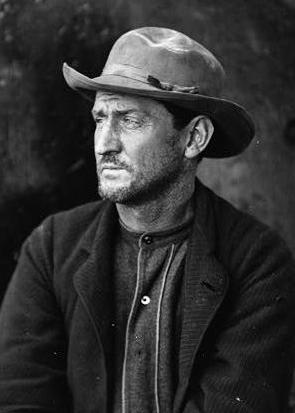
EDMAN SPANGLER


Library of Congress Photograph
Edman (Ned) Spangler was born on August 10, 1825. He was originally from York, Pennsylvania, but he spent the majority of his life in the Baltimore area. At one time he worked at the Booth family estate at Bel Air, Maryland. During the Civil War, he came to Washington and began working as a carpenter and sceneshifter at Ford’s Theatre. He was acquainted with John Wilkes Booth and often took care of Booth’s horse when he was at the theater. While working there, Spangler often slept in the theater itself or in a stable in back of the theater.
During the afternoon of Lincoln’s assassination, Spangler was asked by Harry Clay Ford to help prepare the State Box for the president. It was alleged at the conspiracy trial that Spangler talked negatively about Lincoln while working in the box. He helped bring in furniture and remove the partition that converted Boxes 7 and 8 into a single box. Later Booth showed up at the theater and invited Spangler and other Ford’s stagehands out for a drink. Booth indicated to the employees that he might come back for the evening’s performance.
About 9:30 P.M. Booth again appeared at the theater. He dismounted in the alley to the rear of Ford’s and shouted for Spangler. When Spangler came out, Booth asked him to hold his horse. Spangler explained he had work to do and asked Joseph Burroughs, another Ford’s employee, to do so. Burroughs, whose nickname was “Johnny Peanut,” agreed.Immediately after the assassination, there was a lot of commotion backstage. Jake Rittersback (spelled Jacob Ritterspaugh in many sources), who also worked at Ford’s, said he tried to chase after Booth, but that Spangler hit him in the face and said, “Don’t say which way he went.”Spangler was arrested on April 17 and booked as an accomplice to John Wilkes Booth. He was tried along with the other charged co-conspirators. Although the evidence against him was questionable, Spangler was found guilty and sentenced to six years in prison. Along with Dr. Samuel Mudd, Samuel Arnold, and Michael O’Laughlen, Spangler was sent to Ft. Jefferson in the Dry Tortugas off Key West, Florida.
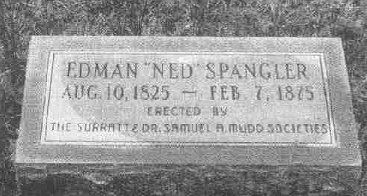
In 1869 Spangler was pardoned by President Andrew Johnson. Eventually Spangler traveled to Dr. Mudd’s home. The two men had become friends in prison. Mudd took Spangler in and gave him five acres of land to farm. Spangler performed carpentry chores in the neighborhood. However, Spangler was not in good health and died on February 7, 1875. He was buried in a graveyard connected with St. Peter’s Church that was about two miles from Dr. Mudd’s home. A grave marker was placed on his gravesite in 1983. (The photograph is from His name Was Mudd by Elden C. Weckesser.)

Nettie Mudd, daughter of Dr. Mudd, said of Spangler:

“He was a quiet, genial man, greatly respected by the members of our family and the people of the neighborhood. His greatest pleasure seemed to be found in extending kindness to others, and particularly to children, of whom he was very fond.”

Note: As Dr. Edward Steers, Jr. states on Page 328 of his book entitled Blood on the Moon: The Assassination of Abraham Lincoln there is confusion in many Lincoln assassination books about Spangler’s whereabouts from 1869-1875. It could be that Spangler returned to work for John Ford from 1869-1873 and then went to live at Dr. Mudd’s until his death in 1875. I also have a book that indicates Spangler probably spent the entire 1869-1875 period with the Mudds; yet another book indicates Spangler worked at several theaters between Baltimore and Richmond from 1869-1871, and then went to live with the Mudds in 1871.

Writing in American Brutus: John Wilkes Booth and the Lincoln Conspiracies author Michael W. Kauffman notes that many years later Harry Hawk, the actor on stage when Lincoln was shot, admitted in an interview that he actually said the words Rittersback (Ritterspaugh) attributed to Spangler. Hawk said that he was scared, dazed, and confused during the uproar and simply wanted to keep out of any trouble.

Regarding Spangler’s whereabouts during the 1869-1875 period, Kauffman states that Spangler worked at the Holliday Street Theatre in Baltimore from 1869-1873 before going to live at Dr. Mudd’s house after the theater burned down.

Shortly after Spangler’s death, Dr. Mudd found a statement in Spangler’s tool chest. It was a brief description of Spangler’s relationship with Booth. In it, he said he never heard Booth speak of politics, hatred of Lincoln, or Southern pride. He said he heard the shot when it was fired in the theater, and that a man he didn’t immediately recognize as Booth run across the stage. He denied aiding Booth in any manner whatsoever. The entire text of Spangler’s statement is as follows:

I was born in York County, Pennsylvania, and am about forty-three years of age, I am a house carpenter by trade, and became acquainted with J. Wilkes Booth when a boy. I worked for his father in building a cottage in Harford County, Maryland, in 1854. Since A. D. 1853, I have done carpenter work for the different theaters in the cities of Baltimore and Washington, to wit: The Holiday Street Theater and the Front Street Theater of Baltimore, and Ford’s Theater in the City of Washington. I have acted also as scene shifter in all the above named theaters, and had a favorable opportunity to become acquainted with the different actors. I have acted as scene shifter in Ford’s Theater, ever since it was first opened up, to the night of the assassination of President Lincoln. During the winter of A. D. 1862 and 1863, J. Wilkes Booth played a star engagement at Ford’s Theater for two weeks. At that time I saw him and conversed with him quite frequently. After completing his engagement he left Washington and I did not see him again until the winters of A. D. 1864 and 1865. I then saw him at various times in and about Ford’s Theater.Booth had free access to the theater at all times, and made himself very familiar with all persons connected with it. He had a stable in the rear of the theater where he kept his horses. A boy, Joseph Burroughs, commonly called “Peanut John,” took care of them whenever Booth was absent from the city. I looked after his horses, which I did at his request, and saw that they were properly cared for. Booth promised to pay me for my trouble, but he never did. I frequently had the horses exercised, during Booth’s absence from the city, by “Peanut John,” walking them up and down the alley. “Peanut John” kept the key to the stable in the theater, hanging upon a nail behind the small door, which opened into the alley at the rear of the theater. Booth usually rode out on horseback every afternoon and evening, but seldom remained out later than eight or nine o’clock. He always went and returned alone. I never knew of his riding out on horseback and staying out all night, or of any person coming to the stable with him, or calling there for him. He had two horses at the stable, only a short time. He brought them there some time in the month of December. A man called George and myself repaired and fixed the stable for him. I usually saddled the horse for him when “Peanut John” was absent. About the first of March Booth brought another horse and a buggy and harness to the stable, but in what manner I do not know; after that he used to ride out with his horse and buggy, and I frequently harnessed them up for him. I never saw any person ride out with him or return with him from these rides.On the Monday evening previous to the assassination, Booth requested me to sell the horse, harness, and buggy, as he said he should leave the city soon. I took them the next morning to the horse market, and had them put up at auction, with the instruction not to sell unless they would net two hundred and sixty dollars; this was in accordance with Booth’s orders to me. As no person bid sufficient to make them net that amount, they were not sold, and I took them back to the stable. I informed Booth of the result that same evening in front of the theater. He replied that he must then try and have them sold at private sale, and asked me if I would help him. I replied, “Yes.” This was about six o’clock in the evening, and the conversation took place in the presence of John F. Sleichman and others. The next day I sold them for two hundred and sixty dollars. The purchaser accompanied me to the theater. Booth was not in, and the money was paid to James J. Gifford, who receipted for it. I did not see Booth to speak to him, after the sale, until the evening of the assassination.Upon the afternoon of April 14 I was told by “Peanut John” that the President and General Grant were coming to the theater that night, and that I must take out the partition in the President’s box. It was my business to do all such work. I was assisted in doing it by Rittespaugh and “Peanut John.”In the evening, between five and six o’clock, Booth came into the theater and asked me for a halter. I was very busy at work at the time on the stage preparatory to the evening performance, and Rittespaugh went upstairs and brought one down. I went out to the stable with Booth and put the halter upon the horse. I commenced to take off the saddle when Booth said, “Never mind, I do not want it off, but let it and the bridle remain.” He afterward took the saddle off himself, locked the stable, and went back to the theater.Booth, Maddox, “Peanut John,” and myself immediately went out of the theater to the adjoining restaurant next door, and took a drink at Booth’s expense. I then went immediately back to the theatre, and Rittespaugh and myself went to supper. I did not see Booth again until between nine and ten o’clock. About that time Deboney called to me, and said Booth wanted me to hold his horse as soon as I could be spared. I went to the back door and Booth was standing in the alley holding a horse by the bridle rein, and requested me to hold it. I took the rein, but told him I could not remain, as Gifford was gone, and that all of the responsibility rested on me. Booth then passed into the theater. I called to Deboney to send ‘Peanut John’ to hold the horse. He came, and took the horse, and I went back to my proper place.In about a half hour afterward I heard a shot fired, and immediately saw a man run across the stage. I saw him as he passed by the center door of the scenery, behind which I then stood; this door is usually termed the center chamber door. I did not recognize the man as he crossed the stage as being Booth. I then heard some one say that the President was shot. Immediately all was confusion. I shoved the scenes back as quickly as possible in order to clear the stage, as many were rushing upon it. I was very much frightened, as I heard persons halloo, “Burn the theater!” I did not see Booth pass out; my situation was such that I could not see any person pass out of the back door. The back door has a spring attached to it, and would not shut of its own accord. I usually slept in the theater, but I did not upon the night of the assassination; I was fearful the theater would be burned, and I slept in a carpenter’s shop adjoining.I never heard Booth express himself in favor of the rebellion, or opposed to the Government, or converse upon political subjects; and I have no recollection of his mentioning the name of President Lincoln in any connection whatever. I know nothing of the mortise hole said to be in the wall behind the door of the President’s box, or of any wooden bar to fasten or hold the door being there, or of the lock being out of order. I did not notice any hole in the door. Gifford usually attended to the carpentering in the front part of the theater, while I did the work about the stage. Mr. Gifford was the boss carpenter, and I was under him.
SOURCE OF SPANGLER’S STATEMENT: pp. 322-326 of The Life of Dr. Samuel A. Mudd by Nettie Mudd (Linden, Tennessee, Continental Book Company, 1975).

Senator Pryor asks for Spending Cut Suggestions! Here are a few!(Part 18)(The Conspirator Part 14)


Senator Mark Pryor wants our ideas on how to cut federal spending. Take a look at this video clip below:

Senator Pryor has asked us to send our ideas to him at cutspending@pryor.senate.gov and I have done so in the past and will continue to do so in the future. Here are a few more I just emailed to him myself at 10:15 am CST on April 21, 2011.

In my past posts I could have been accused of giving just general ideas of where to cut. Now I am starting in with specifics that are taken from the article “How to cut $343 Billion from the federal budget,” by Brian Riedl, Heritage Foundation, October 28, 2010(Spending cuts in millions of dollars:       

International 

$2,636

 Eliminate the Development Assistance Program.

 $625

 Eliminate the State Department’s education and cultural exchange programs.

$321

Eliminate the International Trade Administration’s trade promotion activities or charge the beneficiaries.

$183

Eliminate the Democracy Fund.

$68

Eliminate the International Trade Commission and transfer oversight of intellectual property rights to the Treasury Department.

$56

Eliminate the Trade and Development Agency.

$29

Eliminate the Overseas Private Investment Corporation.

$19

Eliminate the East–West Center.

$17

Eliminate the United States Institute of Peace.

$2

Eliminate the Japan–United States Friendship Commission.

Robert Redford’s new film, “The Conspirator” began shooting in Savannah on October 12, 2009. The movie stars James McAvoy and Robin Wright Penn. The movie is based on the story of Mary Surrat and other conspirators who plotted to kill President Abraham Lincoln after the Civil War. Filming should wrap up in December.

I love watching historical movies like “The Conspirator” and I wanted to take a look at a person involved in the film:

MICHAEL O’LAUGHLEN
undefined
Library of Congress Photograph
Michael O’Laughlen was born in June 1840 in Baltimore, Maryland. He was one of John Wilkes Booth’s earliest friends as the Booth family lived across the street from the O’Laughlens. O’Laughlen learned the trade of manufacturing ornamental plasterwork. He also learned the art of engraving. At the outbreak of the Civil War O’Laughlen joined the Confederate Army but was discharged in June 1862. He returned to Baltimore and joined his brother in the feed and produce business.
O’Laughlen was one of Booth’s first recruits. In the fall of 1864 O’Laughlen agreed to become a co-conspirator in the plot to kidnap Abraham Lincoln. O’Laughlen began spending time in Washington with Booth picking up his expenses. On the night of March 15, 1865, O’Laughlen met with Booth and other conspirators at Gautier’s Restaurant on Pennsylvania Avenue to discuss the possible abduction of the president. Basically, the plan was to abduct Lincoln and take him to Richmond for the purpose of making the Union government exchange prisoners with the Confederacy.

Booth learned that Lincoln was scheduled to attend a matinee performance of the play Still Waters Run Deep at the Campbell Hospital on the outskirts of Washington on March 17, 1865. Booth, O’Laughlen, and the other co-conspirators planned on intercepting the president’s carriage. However, Lincoln changed plans at the last minute, and this plan fell through. O’Laughlen returned to Baltimore.

Late in March Booth proposed another kidnap plan. This time Lincoln was to be captured at Ford’s Theatre, handcuffed, and lowered by rope to the stage. Then the president would be taken to Richmond. O’Laughlen was assigned to put the gas lights out at the theatre. However, Booth was not able to convince his co-conspirators that this plan was feasible.

According to O’Laughlen, this was the end of his plotting with Booth. However, O’Laughlen did return to Washington, D.C. the day before the assassination. It is unclear whether this was due to the conspiracy or simply to spend time with friends in Washington which was in the midst of a large celebration due to the Union victory. At the trial, there was conflicting testimony about O’Laughlen’s movements on the day of the assassination. Whatever the case, O’Laughlen voluntarily surrendered on Monday, April 17th.

O’Laughlen was tried along with Mary Surratt, Lewis Powell, George Atzerodt, David Herold, Samuel Arnold, Edman ‘Ned’ Spangler, and Dr. Samuel Mudd. The government attempted to prove he had stalked Ulysses S. Grant on the nights of April 13 and April 14 with the intent to kill and murder. This was not proven, but there was no doubt O’Laughlen was a willing conspirator through late March. He was found guilty and sentenced to life in prison.

O’Laughlen was sent to Ft. Jefferson in the Dry Tortugas with Spangler, Arnold, and Mudd. He contracted yellow fever on September 19, 1867. Four days later, he seemed to be feeling better. He was up and about. But suddenly he collapsed, and Dr. Mudd tended to him most of the night. Dr. Mudd tried his best to save him, but O’Laughlen became yet another victim of the yellow fever outbreak that swept through the prison.

The photograph to the left is the conspirators’ cell at Fort Jefferson.

On February 13, 1869, President Andrew Johnson issued an order that O’Laughlen’s remains be turned over to his mother. His body was then sent north to Baltimore. He was buried in Baltimore in Greenmount Cemetery. John Wilkes Booth and Samuel Arnold were also buried in the same cemetery.

The photograph of the conspirators’ cell came from Samuel Bland Arnold: Memoirs of a Lincoln Conspirator edited by Michael W. Kauffman.

Senator Pryor asks for Spending Cut Suggestions! Here are a few!(Part 17)(The Conspirator, Part 12, Mary Surratt part C)


Senator Mark Pryor wants our ideas on how to cut federal spending. Take a look at this video clip below:

Senator Pryor has asked us to send our ideas to him at cutspending@pryor.senate.gov and I have done so in the past and will continue to do so in the future. Here are a few more I just emailed to him myself at 8:38 am CST on Thursday April 21, 2011.

In my past posts I could have been accused of giving just general ideas of where to cut. Now I am starting in with specifics that are taken from the article “How to cut $343 Billion from the federal budget,” by Brian Riedl, Heritage Foundation, October 28, 2010(Spending cuts in millions of dollars:       

Interior 

$1,500

Open the coastal plain of the Arctic National Wildlife Refuge to leasing.
(The savings are leasing revenues, which are classified as negative spending in the federal budget.)

$200

 Suspend federal land purchases.

Almost all of the proposed cuts in federal spending will provoke strong objections from constituencies that benefit from having Members of Congress give them taxpayer money taken from someone else. Yet the difficulties caused by each of these cuts should be measured against the status quo option of doubling the national debt over the next decade, risking an economic crisis, and drowning future generations in taxes.
Governing involves difficult choices, and Congress simply cannot continue to court long-term disaster for all merely to avoid short-term difficulties for some.

Clip of the new movie of Robert Redford.

Starring: James McAvoy, Robin Wright, Kevin Kline, Evan Rachel Wood, Justin Long, Alexis Bledel, Tom Wilkinson, Danny Huston, Toby Kebbel

The film “The Conspirator” is an excellent film and I have been studying up on Mary Surratt ever since then (Part C):

President Andrew Johnson maintained that he never was shown the plea for mercy. Judge Advocate Joseph Holt said he had been in Johnson’s presence when the president read the plea. Johnson was quoted as saying that Mary Surratt “kept the nest that hatched the egg.” Anna Surratt tried in vain to meet with the president. Thus, along with Lewis Powell, David Herold, and George Atzerodt, Mary Surratt was executed by hanging on July 7, 1865. She wore a black dress and black veil. Her last words on the scaffold were “Don’t let me fall.”

Even Captain Christian Rath, the hangman, did not expect Mrs. Surratt to be executed. In his personal account of the hanging he stated, “The night before the execution I took the rope to my room and there made the nooses. I preserved the piece of rope intended for Mrs. Surratt for the last. By the time I got at this I was tired, and I admit that I rather slighted the job. Instead of putting seven turns to the knot – as a regulation hangman’s knot has seven turns – I put only five in this one. I really did not think Mrs. Surratt would be swung from the end of it, but she was, and it was demonstrated to my satisfaction, at least, that a five-turn knot will perform as successful a job as a seven-turn knot.”

Four years later Anna Surratt made a successful plea to the government for her mother’s remains. Today, Mary Surratt is buried in Mount Olivet Cemetery in Washington, D.C. The address of the cemetery is 1300 Bladensburg Road, NE. Her headstone reads simply “MRS. SURRATT.” (The photograph is from Mary Surratt: An American Tragedy by Elizabeth Steger Trindal.) Anna Surratt and Isaac Surratt were buried on each side of their mother. John Surratt was buried in Baltimore. Strangely, John Lloyd, whose testimony was so damaging to Mary, was buried less than 100 yards south of her in the same cemetery. His simple tombstone is marked John M. Lloyd.Elizabeth “Bessie” Jenkins, Mary Surratt’s mother, passed away in June 1878 at age 84. She was buried at St. Ignatius Church on Brinkley Road in Oxon Hill, Maryland. She never made a public comment about her daughter’s execution.Historical opinion is divided on the subject of Mary Surratt’s guilt or innocence. In 1977 a “Lost Confession” of George Atzerodt surfaced. Regarding Mary Surratt, Atzerodt stated, “Booth told me that Mrs. Surratt went to Surrattsville to get out the guns (Two Carbines) which had been taken to that place by Herold. This was Friday.” On the face of it, this statement by Atzerodt would certainly seem to point towards Mary Surratt’s complicity with John Wilkes Booth. (For the full text of Atzerodt’s lost confession, CLICK HERE.) Although no one knows for certain, it seems at least possible that Mary knew about the plot to kidnap the president, but may not have known about the plan to assassinate him. Several good arguments for Mary’s innocence are made by Elizabeth Steger Trindal in her article entitled The Two Men Who Held The Noosein the July 2003 edition of the Surratt Courier.

Senator Pryor asks for Spending Cut Suggestions! Here are a few!(Part 16)(The Conspirator Part 10, Mary Surratt part A)

Here is clip from the new movie “The Conspirator” by Robert Redford about Mary Surratt. More on the movie below.

Senator Mark Pryor wants our ideas on how to cut federal spending. Take a look at this video clip below:

Senator Pryor has asked us to send our ideas to him at cutspending@pryor.senate.gov and I have done so in the past and will continue to do so in the future. Here are a few more I just emailed to him myself at 7am CST on April 21, 2011.

In my past posts I could have been accused of giving just general ideas of where to cut. Now I am starting in with specifics that are taken from the article “How to cut $343 Billion from the federal budget,” by Brian Riedl, Heritage Foundation, October 28, 2010(Spending cuts in millions of dollars:     

Income Security 

$500 

Better enforce eligibility requirements for food stamps.
Implementing the $343 billion in recommended cuts listed in Table 1 would reduce the deficit by somewhat less than $343 billion because some recommendations would also reduce tax revenues. For example, devolving the federal highway program to states would also mean devolving the gas tax, and repealing the Patient Protection and Affordable Care Act (Obamacare)[6] would repeal its tax increases.
____________________________________________________
 
Release Date: 15 April 2011
Genre: Drama
Cast: Robin Wright, James McAvoy, Tom Wilkinson
Directors: Robert Redford
Writer: James D. Solomon,
MPAA: PG-13
Studio: Roadside Attractions
 

Plot:
Mary Surratt is the lone female charged as a co-conspirator in the assassination trial of Abraham Lincoln. As the whole nation turns against her, she is forced to rely on her reluctant lawyer to uncover the truth and save her life.


Mary Surratt part A

The film “The Conspirator” is an excellent film and I have been studying up on Mary Surratt ever since then:

MARY SURRATT
undefined
Surratt House Museum Photograph

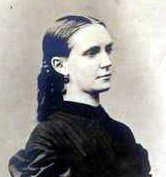
Mary Elizabeth Jenkins Surratt was born in May or June of 1823 near Waterloo, Maryland. Her birthplace now lies within the grounds of Andrews Air Force Base, home of Air Force One. In 1840, at age 17, she married 28-year-old John H. Surratt. The couple went to live on lands that John had inherited from his foster parents, the Neales, in what is now a section of Washington known as Congress Heights. John and Mary had three children.  Isaac was born on June 2, 1841. Anna was born on January 1, 1843, and John Jr. was born on April 13, 1844.

undefined undefined 
Mary’s children: Isaac, Anna, and John Jr.In 1851 fire destroyed the Surratt home. John Surratt decided not to rebuild the home at that location. He chose to build a combination home/tavern, and the couple bought a farm not far from Mary’s place of birth and near where her family still lived. They established a tavern and later a post office. The tavern was in operation by the fall of 1852, and by 1853 the family was living in the newly constructed Surratt House and Tavern. On December 6, 1853, John Surratt Sr. bought the Washington D.C. property on H Street that would later become Mary’s ill-fated boardinghouse. The price was $4000. Mr. Surratt was appointed postmaster on October 6, 1854, and the surrounding area was henceforth called Surrattsville, Maryland. When John Sr. died in 1862 John Jr. briefly served as Surrattsville’s postmaster. (On May 3, 1865, the Post Office Department changed the town’s name to Robeystown, after the postmaster Andrew V. Robey, and subsequently to Clinton on October 10, 1878.)

On October 1, 1864, along with her daughter, Anna, Mary moved to the Washington D.C. property previously purchased by her husband. She rented the Surrattsville tavern to a man named John Minchin Lloyd.

To make money, Mary started renting rooms in her Washington, D.C. residence located at 541 H Street. (The photo to the left is a Library of Congress photograph of Mary Surratt’s boardinghouse taken during the nineteenth century.)  During the Civil War, Mary’s son, John, became a Confederate spy and messenger. John Jr. met John Wilkes Booth, and early in 1865, Booth became a frequent visitor to the boardinghouse. Other people, later identified as co-conspirators, also frequented the boardinghouse. It is unclear if Mary Surratt knew what all the “activity” was about.

Booth originally planned to kidnap Abraham Lincoln. In connection with that plot some of Booth’s co-conspirators hid two Spencer carbines in the joists of an unfinished loft in John Lloyd’s leased tavern. Apparently Lloyd had misgivings over the hiding of weapons in the building, but he allowed it to happen.

On April 11, 1865, Mrs. Surratt made a trip to Surrattsville. She traveled with Louis J. Weichmann, one of her boarders (pictured to the right). During the trip, they met John Lloyd on the road at Uniontown. According to Lloyd, Mrs. Surratt told him the “shooting irons” would be needed soon. This was a reference to the rifles which had been hidden in the tavern by Booth’s co-conspirators.

Three days later, on the day of the assassination, Mrs. Surratt made another trip to Surrattsville. Again Weichmann accompanied her in a hired buggy. This time, according to Lloyd, she delivered Booth’s French field glasses and reminded him to ready the weapons hidden at the tavern he leased from her. Lloyd testified Mary “told me to have those shooting-irons ready that night, there would be some parties who would call for them.”It was likely that Lloyd, a heavy drinker, was drunk during this conversation with Mary Surratt. At midnight, after the assassination, Booth and David Herold stopped at the tavern to collect these items.

Nowadays the boardinghouse is the Wok and Roll Restaurant (left), and the tavern (pictured below) is the Surratt House Museum. TheSurratt House Museum complex is owned and operated by a government agency, the Maryland-National Capital Park and Planning Commission, Department of Parks and Recreation, Prince George’s County, Natural and Historical Resources Division. The volunteerSurratt Society, among many wonderful things, assists with the interpretation of the site. It has been a very productive joint effort between public and private support for over 30 years.

Within hours of President Lincoln’s assassination detectives arrived at the Surratt boardinghouse. They searched the house and questioned all 13 people they found. On the night of April 17, 1865, officers arrested Mrs. Surratt. She was charged with conspiracy and with aiding the assassins and assisting their escape. The fact that Lewis Powell (alias Paine or Payne), a definite conspirator, had come to her boardinghouse just as she was being arrested didn’t help her cause.

Senator Pryor asks for Spending Cut Suggestions! Here are a few!(Part 15)(Conspirator Part 8)

Senator Mark Pryor wants our ideas on how to cut federal spending. Take a look at this video clip below:

Senator Pryor has asked us to send our ideas to him at cutspending@pryor.senate.gov and I have done so in the past and will continue to do so in the future. Here are a few more I just emailed to him myself at 10pm CST on April 20, 2011.

In my past posts I could have been accused of giving just general ideas of where to cut. Now I am starting in with specifics that are taken from the article “How to cut $343 Billion from the federal budget,” by Brian Riedl, Heritage Foundation, October 28, 2010(Spending cuts in millions of dollars:

Homeland Security

$2,700

Eliminate most homeland security grants to states and allow states to finance their own programs.
  • Eliminating waste, fraud, and abuse. Taxpayers will never trust the federal government to reform major entitlements if they believe that the savings will go toward “bridges to nowhere,” vacant government buildings, and Grateful Dead archives.[5]
  • o 10 of 14
    Photo #10

    Robert Redford

    I went to see the movie “The Conspirator” the other night and I really enjoyed it. Since then I have been digging up facts about the trial and the people involved in the trial.

    Richard Roeper reviews The Conspirator

    Review of “The Conspirator” from the Huffington Post:

    As he did with Lions for Lambs, Robert Redford uses The Conspirator to construct a conscience-pricking drama that tells one story while commenting (not all that obliquely) on something else.

    In the case of Lions for Lambs, it was the rush to war in Iraq, for reasons that were murky at best, outright lies at worst.

    The Conspirator has a comparable “ripped from the headlines” feel. In this case, it’s the situation at Guantanamo Bay and the recent crumbling by the Obama administration on the issue of military tribunals for suspected terrorists, rather than a trial by jury in a civilian court.

    What’s amazing is the way the James Solomon’s script – about the trial of a boarding-house owner for her part in the assassination of Abraham Lincoln – captures the kind of us-vs.-them, might-makes-right approach that seemed to dominate the discourse from the Bush administration after 9/11. In this case, it’s that sense of incipient post-war panic after Lincoln is murdered: We have to crack down RIGHT NOW or all hell is going to break loose.

    So, yeah, let’s suspend the inconvenient parts of the Constitution. Then let’s rush to judgment so we can have closure.

    In this story, the one gnashing his teeth for blood and not worried about the niceties – is U.S. Secretary of War Edwin Stanton (Kevin Kline). He leaps into action after Lincoln is shot, rounding up all the conspirators – and casting his net wide enough to include Mary Surratt (Robin Wright), whose son was involved with Booth’s plot, which was planned at her boarding house.

    But was Mary Surratt herself complicit? Theoretically, that should be the job of a prosecutor to prove. But Civil War hero Frederick Aiken (James McAvoy), an attorney who is drafted to handle Surratt’s defense, discovers that the deck is stacked against her by Stanton, who wants all of the conspirators hanged, buried and forgotten.

    Aiken has no interest in defending her. He is importuned by a friend, Sen. Reverdy Johnson (Tom Wilkinson) of Maryland, to help in her defense. No matter his feelings about her guilt, Johnson says, she’s entitled to a defense. But the government has made defending her difficult, by having her tried in front of a military tribunal.

    She and her lawyers have no opportunity to discover the evidence against her or interview the witnesses the government will bring into court. The military will try her and she is presumed guilty before she starts.

Balance Budget Amendment the answer? Boozman says yes, Pryor no, Part 10 (The Conspirator part 6)


Photo detail

Steve Brawner in his article “Safer roads and balanced budgets,” Arkansas News Bureau, April 13, 2011, noted:

The disagreement is over the solutions — on what spending to cut; what taxes to raise (basically none ever, according to Boozman); whether or not to enact a balanced budget amendment (Boozman says yes; Pryor no); and on what policies would promote the kind of economic growth that would make this a little easier.

Marco Rubio published the following op-ed on Townhall.com earlier this week (cross-posted on his Facebook page):

Townhall | Marco Rubio | “Washington Needs a Balanced Budget Amendment”

In my two short months in office, it has become clear to me that the spending problem in Washington is far worse than many of us feared. For years, politicians have blindly poured more and more borrowed money into ineffective government programs, leaving us with trillion dollar deficits and a crippling debt burden that threatens prosperity and economic growth.

In the Florida House of Representatives, where a balanced budget is a requirement, we had to make the tough choices to cut spending where necessary because it was required by state law. By no means was this an easy process, but it was our duty as elected officials to be accountable to our constituents and to future generations of Floridians. In Washington, a balanced budget amendment is not just a fiscally-responsible proposal, it’s a necessary step to curb politicians’ decades-long penchant for overspending.

Several senators have proposed balanced budget amendments that ensure Congress will not spend a penny more than we take in, while setting a high hurdle for future tax hikes. I am a co-sponsor of two balanced budget amendments, since it is clear that these measures would go a long way to reversing the spending gusher we’ve seen from Washington in recent years.

During my Senate campaign, while surrounded by the employees of Jacksonville’s Meridian Technologies, I proposed 12 simple ways to cut spending in Washington. That company, founded 13 years ago, has grown into a 200-employee, high-tech business, and the ideas I proposed would help ensure that similar companies have the opportunity to start or expand just like Meridian did.

To be clear, our unsustainable debt and deficits are threatening companies like Meridian and impeding job creation. In addition to proposing a balanced budget amendment, I recommended canceling unspent “stimulus” funds, banning all earmarks and returning discretionary spending to 2008 levels.

Fortunately, some of my ideas have found their way to the Senate chamber. The first bill I co-sponsored in the Senate was to repeal ObamaCare, the costly overhaul of our nation’s health care system that destroys jobs and impedes our economic recovery. Democratic leaders in the Senate have expressed their willingness to ban earmarks for two years after the Senate Republican conference adopted a moratorium. I have also co-sponsored the REINS Act, a common-sense measure that would increase accountability and transparency in our outdated and burdensome regulatory process. These bills, along with a balanced budget amendment, would help get our country back on a sustainable path and provide certainty to job creators.

While Republicans are proposing a variety of ideas to rein in Washington’s out-of-control spending, unfortunately, President Obama’s budget for the upcoming fiscal year proposes to spend $46 trillion, and even in its best year, the deficit would remain above $600 billion. Worst of all, the President’s budget completely avoids addressing the biggest drivers of our long-term debt – Social Security, Medicare and Medicaid.

Rather than tackle these tough, serious issues, President Obama is proposing a litany of tax hikes on small businesses and entrepreneurs, to the tune of more than $1.6 trillion. These tax increases destroy jobs, make us less competitive internationally and hurt our efforts to grow the economy and get our fiscal house in order.

 
______________________________________

I went to see the movie “The Conspirator” the other night and I really enjoyed it. Since then I have been digging up facts about the trial and the people involved in the trial.

by Dr. Ted Baehr, http://movieguide.org

Peter Rainer’s review of “The Conspirator”:

Robert Redford’s workmanlike “The Conspirator” is about Mary Surratt (Robin Wright), a Confederate sympathizer who was executed for her complicity, which she denied, in the plot to assassinate Abraham Lincoln. Tried in a military court as a civilian along with eight other alleged conspirators, she became the first woman to be executed by the United States federal government.

When we are first introduced to Mary, her lawyer, Union war hero Frederick Aiken (James McAvoy), believing she is guilty, is reluctant to take her case. As the proprietor of a boarding house where John Wilkes Booth and his other collaborators, including her son John (Johnny Simmons), met regularly, her claims of innocence initially ring hollow.

But Frederick delves deeper and doubts are raised, as are his hackles when he discovers that Mary, at the instigation of Secretary of War Edwin Stanton (Kevin Kline), is being railroaded. (At the time of her trial, her son had not yet been captured, and she was, among things, a convenient scapegoat.)

Mary is unmistakably being utilized by Redford and his screenwriter James Solomon as a stand-in for post-9/11 victimization. He makes it clear that the post-Civil War mood, inflamed by the assassination, was ripe for rabble-rousing and the suspension of civil liberties – the liberties that soldiers like Frederick fought and died for. The images of the conspirators in the courthouse with their heads hooded in canvas bags summons up Abu Ghraib. Stanton is placed in the same strongman continuum as Dick Cheney.

The supposed contemporaneity of Surratt’s story – the equating of Booth’s cronies with Gitmo prisoners – is more than a bit of a stretch, and Redford doesn’t give enough credence to the justifiable hysteria that ordinary Americans felt at the time. Essentially “The Conspirator” is a courtroom drama with occasional bulletins from the outside world. It plays out to its predictable end with the doggedness, if not the verve, of a “Law and Order” episode.

Still, the nightmare of Lincoln’s assassination, and its immediate aftermath, is effectively delivered, and Wright, shrouded in black, her face a mask of indomitable sorrow, gives great gravity to what might otherwise have been a waxworks historical reenactment. Grade: B- (Rated PG-13 for some violent content.)

A balanced budget amendment would be a necessary step in reversing Washington’s tax-borrow-spend mantra. It would force Congress to balance its budget each year – not allow it to pass our problems on to the next generation any longer.