Category Archives: Taxes

Open letter to Speaker of the House John Boehner (Part 9)

John Boehner, Speaker of the House

H-232, The Capital, Washington, DC 20515

Dear Mr. Speaker,

I know that you will have to meet with newly re-elected President Obama soon and he will probably be anxious for you to raise taxes and  federal spending, but he will want you to leave runaway entitlement programs alone. When that happens then you have one thing you can hold over his head and that is the debt ceiling.

You must stand up to him and tell him that you can not raise it. In December of 2012 or January of 2013 at the latest we will be shutting down the government if we don’t increase the debt limit according to the LA Times. You got to listen to the Tea Party heroes like Rep. Todd Rokita,  Ben Quayle (R-AZ), Jeff Landry (R, LA-03),  Raúl R. Labrador , Tim HuelskampRep. Justin Amash (R-MI),  , Brooks, Mo (AL – 5), Buerkle, Ann Marie (NY – 25),Chabot, Steven (OH – 1),Duncan, Jeff (SC – 3), Fleischmann, Chuck (TN – 3) ,Gowdy, Trey (SC – 4) ,Griffith, H. Morgan (VA – 9) , Harris, Andy (MD – 1) ,Huizenga, Bill (MI – 2) , Mulvaney, Mick (SC – 5) , Pompeo, Mike (KS – 4) , Ribble, Reid (WI – 8), Rigell, E. Scott (VA – 2) , Ross, Dennis (FL – 12) ,Schweikert, David (AZ – 5), Scott, Austin (GA – 8) , Scott, Tim (SC – 1) , Southerland, Steve (FL – 2) , Stutzman, Marlin (IN – 3) , Walberg, Timothy (MI – 7) , Walsh, Joe (IL – 8),and Woodall, Rob (GA – 7) .

Rep. Quayle on Fox News with Neil Cavuto

__________________

We have to get people realize that the most important issue is the debt!!! Recently I read a comment by Congressman Ben Quayle (R-AZ) made  after voting against the amended Budget Control Act on August 1, 2011. He said it was important to compel “Congressional Democrats and the Obama Administration to finally recognize how central America’s debt problem truly is.”

I can not agree more. I am glad that Rep. Quayle was brave enough to vote against this bill and I wish more were brave like him.

Michael Tanner of the Cato Institute in his article, “Hitting the Ceiling,” National Review Online, March 7, 2012 noted:

After all, despite all the sturm und drang about spending cuts as part of last year’s debt-ceiling deal, federal spending not only increased from 2011 to 2012, it rose faster than inflation and population growth combined.

We need some national statesmen (and ladies) who are willing to stop running up the nation’s credit card.

Ted DeHaven noted his his article, “Freshman Republicans switch from Tea to Kool-Aid,”  Cato Institute Blog, May 17, 2012:

This week the Club for Growth released a study of votes cast in 2011 by the 87 Republicans elected to the House in November 2010. The Club found that “In many cases, the rhetoric of the so-called “Tea Party” freshmen simply didn’t match their records.” Particularly disconcerting is the fact that so many GOP newcomers cast votes against spending cuts.

The study comes on the heels of three telling votes taken last week in the House that should have been slam-dunks for members who possess the slightest regard for limited government and free markets. Alas, only 26 of the 87 members of the “Tea Party class” voted to defund both the Economic Development Administration and the president’s new Advanced Manufacturing Technology Consortia program (see my previous discussion of these votes here) and against reauthorizing the Export-Import Bank (see my colleague Sallie James’s excoriation of that vote here).

One of those Tea Party heroes was Congressman Ben Quayle of Arizona. Last year I posted this below concerning his conservative views and his willingness to vote against the debt ceiling increase:

Rep. Quayle Votes No on Final Debt Ceiling Deal

Monday August 01, 2011

FOR IMMEDIATE RELEASE

Contact: Richard Cullen

202-225-3361

WASHINGTON (DC) Congressman Ben Quayle (R-AZ) released the following statement Monday after voting against the amended Budget Control Act:  

 “Last week I voted for the Boehner plan because— while imperfect—it made adequate strides to get our fiscal House in order. The final debt-ceiling bill, however, goes in a direction that I cannot support. Due to the design of the bill’s trigger mechanism, I am concerned that President Obama will be able to use the threat of tax hikes and drastic defense cuts to continue to amass record levels of spending.

 “Though I didn’t support today’s bill, I want to commend Speaker Boehner and the House Republican Leadership for changing the culture in Washington and compelling Congressional Democrats and the Obama Administration to finally recognize how central America’s debt problem truly is.

 “On another note, it was a very special moment seeing Congresswoman Gabby Giffords cast her vote on the House Floor tonight. Both sides of the aisle greeted her with a loud standing ovation. It was a nice way to end what has been a very tense few days in the House.”

___________

__________

Sincerely,

Everette Hatcher, 13900 Cottontail Lane, Alexander, AR 72002, lowcostsqueegees@yahoo.com, www.thedailyhatch.org, ph 501-920-5733

___________

Related posts:

Government shutdown coming, will there be any tea party heroes available to stand up to Obama?

DEBT LIMIT – A GUIDE TO AMERICAN FEDERAL DEBT MADE EASY. Uploaded by debtlimitusa on Nov 4, 2011 A satirical short film taking a look at the national debt and how it applies to just one family. Watch the guy from the Ferris Bueller Superbowl Spot! Produced by Seth William Meier, DP/Edited by Craig Evans, […]

Some Tea Party heroes (Part 1)

DEBT LIMIT – A GUIDE TO AMERICAN FEDERAL DEBT MADE EASY. Uploaded by debtlimitusa on Nov 4, 2011 A satirical short film taking a look at the national debt and how it applies to just one family. Watch the guy from the Ferris Bueller Superbowl Spot! Produced by Seth William Meier, DP/Edited by Craig Evans, […]

Some Tea Party heroes (Part 8)

Rep Himes and Rep Schweikert Discuss the Debt and Budget Deal Michael Tanner of the Cato Institute in his article, “Hitting the Ceiling,” National Review Online, March 7, 2012 noted: After all, despite all the sturm und drang about spending cuts as part of last year’s debt-ceiling deal, federal spending not only increased from 2011 […]

Some Tea Party heroes (Part 7)

Michael Tanner of the Cato Institute in his article, “Hitting the Ceiling,” National Review Online, March 7, 2012 noted: After all, despite all the sturm und drang about spending cuts as part of last year’s debt-ceiling deal, federal spending not only increased from 2011 to 2012, it rose faster than inflation and population growth combined. […]

Who are the Tea Party Heroes from the 87 Freshmen Republicans?

Here is a study done on the votes of the 87 incoming freshman republicans frm the Club for Growth. Freshman Vote Study In the 2010 election, 87 freshmen House Republicans came to Washington pledging fealty to the Tea Party movement and the ideals of limited government and economic freedom. The mainstream media likes to say […]

Tea Party Conservative Senator Mike Lee interview

Tea Party Conservative Senator Mike Lee interview Here is an excellent interview above with Senator Lee with a fine article below from the Heritage Foundation. Sen. Mike Lee (R-UT) came to Washington as the a tea-party conservative with the goal of fixing the economy, addressing the debt crisis and curbing the growth of the federal […]

Some Tea Party heroes (Part 6)

I feel so strongly about the evil practice of running up our national debt. I was so proud of Rep. Todd Rokita who voted against the Budget Control Act of 2011 on August 11, 2011. He made this comment:   For decades now, we have spent too much money on ourselves and have intentionally allowed our […]

Some Tea Party heroes (Part 5)

Rep. Quayle on Fox News with Neil Cavuto __________________ We have to get people realize that the most important issue is the debt!!! Recently I read a comment by Congressman Ben Quayle (R-AZ) made  after voting against the amended Budget Control Act on August 1, 2011. He said it was important to compel “Congressional Democrats and […]

Some Tea Party heroes (Part 4)

What future does our country have if we never even attempt to balance our budget. I read some wise words by Congressman Jeff Landry (R, LA-03) regarding the  debt ceiling deal that was passed on August 1, 2011:”Throughout this debate, the American people have demanded a real cure to America’s spending addiction – a Balanced Budget […]

Some Tea Party heroes (Part 3)

I read some wise comments by Idaho First District Congressman Raúl R. Labrador concerning the passage of the Budget Control Act on August 1, 2011 and I wanted to point them out: “The legislation  lacks a rock solid commitment to passage of a balanced budget amendment, which I believe is necessary to saving our nation.” I just […]

Some Tea Party heroes (Part 2)

Congressmen Tim Huelskamp on the debt ceiling I just don’t understand why people think we can go on and act like everything is okay when we have a trillion dollar deficit. Sometimes you run across some very wise words like I did the other day. Kansas Congressman Tim Huelskamp made the following comment on the […]

If we just capped spending in 2007 we would have balanced budget now!!!

Look at the figures from 2007 and compare them to now and you will see that if had held spending at 2007 levels we would have a balanced budget now (or very close to it). The problem is that spending has skyrocketed. Why then do we want to get more revenue in when obviously the problem is spending. I have posted on this before and even given more figures.

Wikipedia reports:

2007 (2007) Budget of the United States federal government
2006 ·  · 2008
Submitted by George W. Bush
Submitted to 109th Congress
Total revenue $2.57 trillion
Total expenditures $2.73 trillion
Deficit $161 billion
Debt $8.95 trillion
Website Congressional Budget Office

The budget of the United States government for fiscal year 2007 was produced through a budget process involving both the legislative and executive branches of the federal government. While the Congress has the constitutional “power of the purse,” the President and his appointees play a major role in budget deliberations. Since 1976, the federal fiscal year has started on October 1 of each year.

Contents

 [hide

[edit] Total receipts

Receipts for fiscal year 2007 were $2.4 trillion. FY2007 on-budget receipts were $1.7 trillion. FY2007 off-budget receipts were $608 billion. Off-budget receipts include Social Security and Medicare payroll taxes, as well as the net profit or loss of the U.S. Postal Service.

Source: preliminary FY2007 year-end estimate from the U.S. Treasury Dept.

The IRS estimated that there were about $345 billion in uncollected taxes, which is sometimes referred to as the “tax gap.”.[1]

[edit] Total spending

A pie chart representing spending by category for the US budget for 2007

The President’s actual budget for 2007 totals $2.8 trillion. Percentages in parentheses indicate percentage change compared to 2006. This budget request is broken down by the following expenditures:

  • $586.1 billion (+7.0%) – Social Security
  • $548.8 billion (+9.0%) – Defense[2]
  • $394.5 billion (+12.4%) – Medicare
  • $294.0 billion (+2.0%) – Unemployment and welfare
  • $276.4 billion (+2.9%) – Medicaid and other health related
  • $243.7 billion (+13.4%) – Interest on debt
  • $89.9 billion (+1.3%) – Education and training
  • $76.9 billion (+8.1%) – Transportation
  • $72.6 billion (+5.8%) – Veterans’ benefits
  • $43.5 billion (+9.2%) – Administration of justice
  • $33.1 billion (+5.7%) – Natural resources and environment
  • $32.5 billion (+15.4%) – Foreign affairs
  • $27.0 billion (+3.7%) – Agriculture
  • $26.8 billion (+28.7%) – Community and regional development
  • $25.0 billion (+4.0%) – Science and technology
  • $20.5 billion (+0.8%) – Energy
  • $20.1 billion (+11.4%) – General government
  • 2011 United States federal budget

    From Wikipedia, the free encyclopedia

    Jump to: navigation, search

    2011 (2011) Budget of the United States federal government
    2010 ·  · 2012
    Submitted February 1, 2010
    Submitted by Barack Obama
    Submitted to 111th Congress
    Passed April 15, 2011 (Pub.L. 112-10)
    Total revenue $2.567 trillion (requested)[1]
    $2.314 trillion (enacted)[2]
    Total expenditures $3.834 trillion (requested)[1]
    $3.630 trillion (enacted)[2]
    Debt payment $0.25 trillion (requested)
    Deficit $1.56 trillion (requested)
    Website Library of Congress

    The 2011 United States federal budget is the United States federal budget to fund government operations for the fiscal year 2011, which is October 2010 – September 2011. The budget is the subject of a spending request by President Barack Obama.[3][4] The actual appropriations for Fiscal Year 2011 had to be authorized by the full Congress before it could take effect, according to the United States budget process.

    No budget was passed by the September 30 deadline, and the government was funded by a series of seven continuing resolutions continuing funding at or near 2010 levels. The budget negotiations culminated in early April 2011, with a tense legislative standoff leading to speculation that the nation would face its first government shutdown since 1995. However, a deal containing $38.5 billion in cuts from 2010 funding levels was reached with just hours remaining before the deadline. The 2011 budget was enacted on April 15, 2011, as Public Law 112-10, the Department of Defense and Full-Year Continuing Appropriations Act, 2011.[5]

    Contents

     [hide

    [edit] History

    President Barack Obama proposed his 2011 budget during February 2010. He has indicated that jobs, health care, clean energy, education, and infrastructure will be priorities. Total requested spending is $3.83 trillion and the federal deficit is forecast to be $1.56 trillion in 2010 and $1.27 trillion in 2011. Total debt is budgeted to increase from $11.9 trillion in FY2009, to $13.8 trillion in FY2010, and $15.1 trillion in FY2011.[6][7]

    It was widely anticipated that a government shutdown on April 8, 2011 was possible if a budget resolution or a seventh continuing resolution was not passed by the expiration of the sixth continuing resolution on April 8, 2011,[8] which would have caused the furlough of 800,000 out of 2 million civilian federal employees.[9][10] However, a deal was reached with just hours remaining before the deadline, averting the shutdown. The deal included $38.5 billion in cuts from what had been budgeted for 2010, in addition to another $10 billion in cuts that had been imposed in some of the continuing resolutions.[11][12] However, the April 13 Congressional Budget Office estimate showed that, compared with then-current spending rates, the spending bill would cut federal outlays from non-war accounts by just $352 million through Sept. 30. About $8 billion in immediate cuts to domestic programs and foreign aid were offset by nearly equal increases in defense spending.[13]

    [edit] Continuing resolutions

    Beginning in September 2010, Congress passed a series of continuing resolutions to fund the government.[14]

    • 1st Continuing Resolution, funding from October 1, 2010 through December 3, 2010, passed on September 29, 2010. (Pub.L. 111-242)
    • 2nd Continuing Resolution, funding through December 18, 2010, passed on December 2, 2010. (Pub.L. 111-290)[15]
    • 3rd Continuing Resolution, funding through December 21, 2010, passed on December 17, 2010. (Pub.L. 111-317)
    • 4th Continuing Resolution, funding through March 4, 2011, passed on December 21, 2010. (Pub.L. 111-322)[16]
    • 5th Continuing Resolution, funding through March 18, 2011, passed on March 2, 2011. (Pub.L. 112-4) This resolution cut $4 billion from 2010 spending levels.[17]
    • 6th Continuing Resolution, funding through April 8, 2011, passed on March 16, 2011. (Pub.L. 112-6) This resolution cut an additional $6 billion from 2010 spending levels.[18]
    • 7th Continuing Resolution, funding through April 15, 2011, passed on April 9, 2011. (Pub.L. 112-8) This continuing resolution followed a deal on the full annual budget which was made with just hours remaining before a government shutdown.[11] It itself contains an additional $2 billion in cuts.[12] Democrats had previously rejected a Republican-backed resolution passed by the House before the deal, which would have funded the government for another week and cut an additional $12 billion from 2010 levels.[19]

    [edit] Major initiatives

    The following initiatives were enacted in the final budget legislation:

    The following major changes were proposed to federal programs, but not necessarily enacted:

    • The proposed budget contains $4 billion for the creation of a national infrastructure bank called the “National Infrastructure Innovation and Finance Fund.”[23] This proposal is similar to the National Infrastructure Reinvestment Bank initiative previously proposed by Congress.
    • The budget would cut $40 billion of tax subsidies for oil, gas and coal companies over the next decade.[24]
    • Banks would face a $90 billion tax in total over 10 years.[citation needed]
    • The Research & Experimentation Tax Credit would be made permanent.[25]
    • Appropriates $36 billion to the Department of Energy to distribute in loan guarantees for construction of new nuclear power plants and reactors. As part of the Energy Policy Act of 2005, this appropriation is to provide funding for 80% of the total cost of construction at approved nuclear sites in the coming years www.world-nuclear.org.[26]

    [edit] Total revenues and spending

    In the Obama administration’s initial spending request, the federal budget for 2011 was originally projected at $3.83 trillion in total spending.[27]

    The projected 2011 gross domestic product is listed at $13.519 trillion (in 2005 dollars).[28]

    As of January 2011, the Congressional Budget Office (CBO) projected that if current laws remain unchanged, the federal budget will show a deficit of close to $1.5 trillion, or 9.8 percent of GDP. The CBO projects total revenues of $2.228 trillion and total outlays of $3.708 trillion for a deficit of $1.48 trillion for 2011. The deficits in CBO’s baseline projections drop markedly over the next few years as a share of output and average 3.1 percent of GDP from 2014 to 2021. Those projections, however, are based on the assumption that tax and spending policies unfold as specified in current law. Consequently, they understate the budget deficits that would occur if many policies currently in place were continued, rather than allowed to expire as scheduled under current law.[29]

    On February 14, 2011, President Obama released his 2012 federal budget request. The report updated the projected 2011 deficit to $1.590 trillion. This is based on estimated revenues of $2.228 trillion and outlays of $3.818 trillion.[30]

    The enacted 2011 budget called for $2.314 trillion in receipts and $3.630 trillion in outlays, according to the September 1, 2011 Mid-Session Review.[2]

    The 2011 Financial Report of the United States Government was released on December 23, 2011, showing a net operating cost and cash-based budget deficit for the year of $1.3 trillion.[31] According to the Government Accountability Office, the ‘accrual deficit provides more information on the longer-term implications of the government’s annual operations’.[32] Gross costs fell from $4,472 billion in 2010 to $3,998 billion, largely due to the release of accounting provisions (estimates of future liabilities), while total taxes and other revenues rose from $2,217 billion to $2,364 billion.[33] The GAO was unable to provide an audit opinion on the 2011 financial statements due to ‘widespread material internal control weaknesses, significant uncertainties, and other limitations’.[34] As in 2010, the GAO cited as the principal obstacle to its provision of an audit opinion ‘serious financial management problems at the Department of Defense that made its financial statements unauditable’, highlighting also recurrent issues at the Department of Homeland Security.[34][35]

Charts on 2012 Federal Budget from Heritage Foundation

If you want an overall view of the federal budget then here it is.

Federal Spending by the Numbers – 2012

By
October 16, 2012

Introduction

The federal government has closed out its fourth straight year of trillion-dollar-plus deficits, and the imperative to rein in spending has never been greater. Because all government spending gets paid for through either taxes or borrowing—both of which burden the economy—spending reduction is an essential condition for promoting economic growth.

As this 2012 edition of Federal Spending by the Numbers shows, total federal spending for fiscal year 2012[1] reached $3.6 trillion, or 22.9 percent the size of the entire U.S. economy. In the past 20 years, federal outlays have grown 71 percent faster than inflation. The average American household’s share of this spending is $29,691, roughly two-thirds of median household income. This relentless growth is projected to continue, pushing total government outlays to $5.5 trillion a decade from now, and to about 36 percent of gross domestic product (GDP) in the next 25 years.

Federal entitlements are driving this spending growth, having increased from less than half of total federal outlays just 20 years ago to nearly 62 percent in 2012. Three major programs—Medicare, Medicaid, and Social Security—dominate in size and growth, soaking up about 44 percent of the budget. All three programs are growing faster than inflation, and—when joined with $1.7 trillion in new Obamacare spending—will drain about 18.5 percent of the nation’s total economic output by mid-century. Because that is about the historical annual average of total federal tax revenue, it means all other government programs—national defense, veterans health care, transportation, federal law enforcement, and others—would effectively have to be financed on borrowed money.

Other entitlements continue growing as well. Anti-poverty programs have surged by 49 percent in just the past decade, even after adjusting for inflation. Spending for food stamps alone has more than tripled since 2002. Health programs, including Medicaid, have increased by 38 percent, and housing assistance by 48 percent.

Although these entitlement programs have dominated the government’s spending growth, discretionary spending—spending authorized by annual appropriations bills—also has grown by 40 percent more than inflation, to $1.289 trillion. Spending on non-defense programs has grown 29 percent. These outlays peaked in 2010 due to the stimulus bill, but remain 7 percent higher than their pre-stimulus level of 2008.

The result of this increasing deficit spending—which is financed by borrowing—is growing debt. If current policies continue, debt held by the public will approach 90 percent of total economic output by 2022, and will be twice the size of the entire economy 25 years from now.

There is still time to change course—but that time is growing short. The Heritage Foundation’s budget plan, Saving the American Dream,[2] reforms entitlements to make them affordable and sustainable, reins in other spending while adequately funding defense, and balances the budget in 10 years. The budget can be put on a stable, sustainable course if policymakers act soon.


Overall Budget Trends

  • Over the past 20 years, federal spending grew 71 percent faster than inflation.
  • Entitlement spending more than doubled over the past 20 years, growing by 110 percent (after adjusting for inflation). Discretionary spending grew by 60 percent.
  • Deficits have pushed up the debt each year since 2002 as federal spending exceeded revenue. Fiscal year 2012 marked the fourth consecutive year of $1 trillion deficits.
  • Although debt held by the public surged from 33.6 percent of gross domestic product in 2002 to 73 percent in 2012, net interest costs have held below 2 percent of GDP because interest rates have fallen to all-time lows.
  • In 1962, defense spending was nearly half the total federal budget (49 percent); Social Security and other mandatory programs were less than one-third of the budget (31 percent). Two major entitlement programs, Medicaid and Medicare, were signed into law by President Johnson in 1965.
  • In 2012 entitlements were nearly 62 percent of total spending, while defense dropped to less than one-fifth (18.7 percent) of the budget.

Overall Spending Trends

  • Federal spending per household reached $29,691 in 2012, a 29 percent increase (adjusted for inflation) from $23,010 in 2002. The government collected $20,293 per household in taxes in 2012.
  • The excess of spending over taxes produced a budget deficit of $9,398 per household in 2012.
  • For every $6.80 the federal government collected in taxes in 2012, it spent $10. Consequently, $3.20 out of every $10 spent was borrowed.
  • Major entitlements (Social Security, Medicare, Medicaid, Children’s Health Insurance Program, Obamacare) will increase from 44 percent of federal spending in 2012 to 57 percent in 2022.
  • Entitlement programs and net interest costs will reach 67 percent of federal spending in 2022, crowding out spending on national defense and all other programs.

Where the Money Goes

  • Total federal spending has grown 43 percent faster than inflation in just the past 10 years.
  • Some of the largest growth in federal spending has been in K–12 education, a state and local priority.
  • Food stamps and other nutrition programs also have more than doubled in the past 10 years. Food stamp participation rates also more than doubled, growing from 19.096 million recipients in 2002 to 44.709 million by 2011.
  • In 1993, Social Security surpassed national defense as the largest federal spending category, and remains first today.
  • Federal energy spending has increased steadily over the past decade with the government increasingly subsidizing activities like energy efficiency, energy supply, and technology commercialization. An unprecedented $42 billion was spent in 2009 as part of the stimulus, a nine-fold increase over the 2008 spending level.
  • Interest on the debt is the fifth largest federal spending category, even at today’s low interest rates.

Spending Is Causing Damaging, Structural Budget Deficits

  • The budget deficit results from the government spending more than it collects in taxes during a given year. The government must borrow to cover the excess spending.
  • The $1.1 trillion deficit in 2012 marked the fourth consecutive year the deficit exceeded $1 trillion.
  • The 2012 $1.1 trillion deficit was $953 billion (in inflation-adjusted dollars), or 547 percent, greater than the pre-recession and financial contagion deficit in 2007 of $174 billion.
  • The 2012 deficit was an estimated 7.3 percent of GDP; the historical average is 2.1 percent of GDP.
  • Deficits will not fall below $760 billion (in inflation-adjusted dollars) over the next 10 years and have only been higher in the period immediately after World War II.

Spending Increases Driving Debt Growth

  • Structural budget deficits—driven largely by increased spending—are causing increasingly high levels of debt, which will threaten the economy.
  • Debt held by the public reached 73 percent of GDP in Fiscal Year 2012. The historical average is 37 percent of GDP.
  • Debt will reach nearly 90 percent of GDP by 2022. Levels this high damage the economy.
  • Debt will surge to 200 percent of GDP in 25 years.
  • Debt at the end of Fiscal Year 2012 was twice its 2007 pre-recession and pre-stimulus level of 36 percent of GDP.
  • Debt in 2022 will be 90 percent of GDP. The highest level recorded previously—96.2 percent of GDP—was in 1947.
  • Debt climbed from just over half of GDP in 2009 to nearly three-fourths in 2012.

Discretionary Spending

  • Discretionary spending is set annually by Congress through appropriations. Today, it constitutes about one-third of total federal spending.
  • Since 2002, discretionary outlays surged 40 percent faster than inflation.
  • In 2012, the federal government spent $1.289 trillion on discretionary programs. Of that amount, $669 billion went to national defense (including operations in Iraq and Afghanistan) and the remaining $620 billion funded nearly all other federal programs including education and transportation.
  • Stimulus spending caused discretionary spending to peak in 2010. It is still 7 percent higher than its pre-stimulus level of $1,205 billion in 2008.
  • Budget surpluses in the late 1990s were fed largely by deep defense cuts that gutted the military, while non-defense discretionary spending continued growing.
  • After 9/11, the Bush Administration began replenishing base defense spending, as well as funding the war against terrorism.
  • Recent declines in defense spending are due to reductions in war spending and cuts to the core defense budget.

Base Spending Continues Growing

  • In 2009, Washington spent $440 billion on temporary measures, such as the financial bailouts, the economic stimulus, and the global war on terrorism.
  • In 2012, this temporary spending fell to $211 billion as the stimulus and financial bailouts waned.
  • Base spending was 13 percent higher, adjusted for inflation, in 2012 than in 2008, before the financial bailouts and the stimulus.
  • Even after the temporary spending ends, base spending (excluding the war on terrorism) will grow by 33 percent, adjusted for inflation, over the next decade.

The Major Entitlement Programs

  • Entitlements run on autopilot, with annual spending determined by benefit formulas, caseloads, and economic factors. They are not budgeted annually, which makes entitlement spending difficult to control.
  • All entitlements (excluding net interest) total nearly 62 percent of all federal spending today.
  • Spending on the largest, Social Security, Medicare, and Medicaid, will leap from 10.4 percent of GDP in 2012 to 18.2 percent by 2048.
  • The big three entitlements alone will absorb all tax revenues by 2048. Other spending, such as national defense or interest on the debt would have to be financed completely on borrowed money.
  • Medicare is the fastest-growing major entitlement, growing 68 percent since 2002. Medicaid grew 38 percent and Social Security 37 percent.

Obamacare’s Spending

  • Obamacare will spend $1.7 trillion (over 10 years) on its coverage expansion provisions alone, including a massive expansion of Medicaid and federal subsidies for the new health insurance exchanges.
  • Obamacare will increase federal health spending by 15 percent, bringing it to 44 percent of all mandatory spending.
  • Obamacare’s 18 new or increased taxes and penalties raise $836 billion in new taxes between 2013 and 2022.
  • Obamacare also includes $716 billion in spending cuts to Medicare, which are used to help offset new spending on non-Medicare provisions.
  • The Medicare chief actuary warns that these cuts are unrealistic and unsustainable. Therefore, Obamacare will likely add billions to the budget deficit.
  • Under Obamacare, all government health spending (including state and local) is projected to be nearly 50 percent of all health spending by 2021. Federal spending will account for two-thirds of total government health care spending.

Anti-poverty Spending

  • Anti-poverty spending provides benefits to poor and low-income individuals and families in the form of income, health aid, food stamps, and housing assistance.
  • Anti-poverty spending surged by 49 percent, inflation-adjusted, since 2002.
  • Support Payments to States and Temporary Assistance for Needy Families (TANF) dropped by 28 percent. TANF is a block grant and is not adjusted for inflation or caseload changes.
  • Spending for food stamps— the Supplemental Nutrition Assistance Program—has more than tripled since 2002, when the program was expanded.
  • Spending on food stamps doubled in inflation-adjusted terms from $42 billion in 2008 to $85 billion in 2012.
  • The Children’s Health Insurance Program (CHIP) grew 115 percent since 2002, adjusted for inflation.

Other Popular Programs Continue to Grow Rapidly

Congress has overseen unsustainable spending increases on programs such as education, veterans benefits, and transportation, demonstrating its failure to set budget priorities and rein in federal spending.

  • In fiscal year 2012, Washington spent $88 billion on K–12 and vocational education, nearly triple the amount of just 10 years ago, after adjusting for inflation. Yet these huge infusions of federal funds to these state and local priorities have failed to improve educational performance.
  • Veterans spending, which totaled about $130 billion in fiscal year 2012, has more than doubled over the past 10 years. It includes programs such as income security, housing aid, education and training services, and veterans health care. Under President Obama’s Fiscal Year 2013 budget, this spending would rise 18.5 percent from 2012 to 2015 and surpass the $150 billion mark.
  • Transportation outlays have risen by $25 billion, or 33 percent, over the past 10 years. Budget authority, which takes several years to spend out, increased by $53 billion, or 61 percent over 10 years. Costly transit projects and low-value transportation enhancement programs for bicycle and horse trails and roadside transportation museums are fueling the increased spending, even though they do not improve mobility or relieve traffic congestion.

The Long-Term Budget Outlook

  • The principal drivers of spending growth are Social Security, Medicare, Medicaid, the Children’s Health Insurance Program (CHIP), and Obamacare. By 2037, these entitlements will consume nearly 70 percent of all non-interest spending, and nearly 17 percent of GDP.
  • Entitlements (Social Security, Medicare, Medicaid, CHIP, and Obamacare) and net interest will reach 18.5 percent of GDP in 2025, devouring all tax revenues at the historical average level. Total federal spending, including interest on the debt, will exceed 35 percent of GDP.
  • Excluding interest payments, spending will reach a post–World-War II record 26 percent of GDP in 2037 and continue growing thereafter.
  • Debt held by the public will grow rapidly to twice the size of the entire U.S. economy by 2037.

The Budget Control Act

  • The Budget Control Act of 2011 (BCA) increased the debt limit by $2.1 trillion, with an equal amount in spending reductions to take place over 10 years.
  • The BCA first established caps on discretionary spending, saving $917 billion over 10 years, and then tasked a Joint Select Committee on Deficit Reduction—the Supercommittee with finding at least $1.2 trillion more in savings.
  • The Supercommittee failed to reach agreement, which triggered sequestration—automatic budget cuts—totaling $1.2 trillion including interest savings over nine years. Sequestration begins on January 2, 2013.
  • In 2012, the first year of the BCA, Congress spent $11 billion on “disasters” and program increases, and $127 billion on overseas contingency operations, which are exempt from the caps. Congress further evaded the BCA cap by $18 billion using an accounting gimmick.

Sequestration

  • When the Supercommittee failed to reach agreement on $1.2 trillion in additional cuts required in the Budget Control Act of 2011, this triggered sequestration.
  • Sequestration is a series of automatic budget cuts totaling $1.2 trillion, including interest savings, over nine years, beginning on January 2, 2013.
  • Sequestration imposes 50 percent of its reductions on defense, which represents only 17 percent of fed- eral spending in 2013.
  • Mandatory spending accounts for 64 percent of the budget in 2013, but receives only 15 percent of the sequestration cuts.
  • Two of the largest spending programs, Social Security and Medicaid, are exempt from sequester savings, as is all but 2 percent of Medicare.

Nowhere to Cut?

  • In 2011, the federal government wasted $115.3 billion of taxpayers’ money in improper payments: money paid in the wrong amount, to the wrong person, or for the wrong reason. Most of these excess payments—$107 billion, or 93 percent—were in just 10 programs, including Medicare fee-for-service ($28.8 billion), Medicaid ($21.9 billion), the Earned Income Tax Credit ($15.2 billion), and Unemployment Insurance ($13.7 billion). Implementation of updated computer systems and fraud detection methods and stricter documentation requirements would reduce payment errors.
  • Federally subsidized Amtrak lost $84.5 million on its food and beverage services in 2011, and $833.8 million over the past 10 years. It has never broken even on these services.
  • The Government Accountability Office (GAO) identified 34 areasin which federal agencies or initiatives have overlapping goals or duplicative services, which cost taxpayers billions of dollars each year. There are:
  • More than 80 economic development programs operating out of four different agencies: the Departments of Agriculture, Commerce, and Housing and Urban Development, and the Small Business Administration;
  • More than 100 economic development programs spread across five agencies within the Department of Transportation;
  • Seven federal agencies, including the Departments of Education, Health and Human Services, and Housing and Urban Development, which have more than 20 programs addressing homelessness;
  • 44 employment and training programs in the Departments of Education, Health and Human Services, and Labor; and
  • 82 programs on teacher quality run through the Departments of Defense, Education, and Energy, as well as NASA and the National Science Foundation.
  • In 2008 and 2009 alone, the Department of Justice spent (DOJ)$121 million to host or participate in 1,832conferences.
  • At one conference, petite Beef Wellington made the hors d’oeuvres menu, at a cost of $7.32 per serving.
  • An internal audit found DOJ did not keep costs to a minimum, despite federal guidelines. The most expensive conference reviewed in the audit was held in Istanbul, Turkey, and cost $1.18 million.
  • The General Services Administration (GSA), which is responsible for managing federal buildings and helping to cut costs, held a conference costing $822,751 in Las Vegas. At more than $2,500 per employee, it included $44-per-person breakfasts and commemorative coins for conference participants that cost $6,325.
  • In fiscal year 2010, the federal government spent nearly $1.7 billion to maintain 77,700 underused or unused buildings.
  • Eliminating both the New Starts and Small Starts transit grants programs would save taxpayers $5.6 billion over the next five years and $16.3 billion over 10 years. It would get the federal government out of the business of subsidizing high-cost, low-value local transit projects, such as $900 million for a 10-mile extension of the Bay Area rail system in San Jose and a $1.6 billion grant to construct a Honolulu rail line.
  • The Department of Agriculture’s Office of the Chief Information Officer funded a $2 million intern program. Only one intern was hired full time as a result.
  • Fifteen federal agencies are involved in administering 30 food safety laws, resulting in fragmented food safety oversight.
  • The U.S. Navy bought 450,000 gallons of biofuels for $12 million, or almost $27 per gallon, to conduct exercises to showcase the fuel and bring it closer toward commercialization. It is the largest biofuel purchase ever made by the government.
  • The Internal Revenue Service stored 22,486 items of unused furniture in a warehouse at an annual cost of $862,000.
  • An Inspector General audit found that the Department of Energy cannot locate $500,000 worth of “green energy” manufacturing equipment that was bought with stimulus money.
  • The Bureau of Indian Affairs funded a fish hatchery that never saw a fish hatch for fourteen years, continuing funding even after the land had been converted to office space. Taxpayers spent $46.1 million in fiscal year 2012 to operate the national fish hatchery system.
  • The Department of Agriculture endorsed the “Meatless Monday” initiative and then a few weeks later announced plans to purchase $170 million worth of meat from drought-stricken livestock producers.
  • The Labor Department spent $495,000 in stimulus money on 100 television commercials to advertise the Obama Administration’s Jobs Corps Initiative for green jobs.
  • The Department of Veterans Affairs spent $6.1 million, or $3,389 for each of the 1,800 employees that attended two training conferences last year in Orlando, Florida. The agency Inspector General’s office is investigating the conference organizers for possible ethics rules violations. The department also spent nearly $50,000 to make a video parodying General Patton that was shown at the conferences and $98,000 on promotional items. The items included pens, highlighters, hand sanitizers, and USB flash drives with VA’s logo.
  • The State Department began a Diplomatic Culinary Partnership program in 2012. Over 80 American chefs have been inducted into the American Chefs Corps and will support the State Department by preparing food for visiting officials and traveling around the world to engage in “culinary diplomacy.”
  • The Department of Veterans Affairs spent $221,540 on an 11-day conference at a resort—enough to pay annual disability compensation for six totally disabled combat veterans.
  • Department of Agriculture and Department of Energy officials approved a $76 million grant for a wood-to-ethanol plant in Soperton, Georgia, despite concerns among the project’s researchers and other officials. The plant closed within a year of receiving the loan guarantee, without producing any ethanol.
  • The Rural Business Enterprise Grant Program gave $55,660 to a New York State dairy farm to package its butter in smaller, eight-ounce containers.
  • A grant totaling $25,000 was used to transcribe a Maldivian love ballad.
  • Taxpayers funded a National Institutes of Health study costing $55,382 in 2011, and $170,000 over three years, to study the hookah smoking habits of Jordanian university students.
  • The Department of Agriculture’s Market Access Program spends $200 million a year to help U.S. agricultural trade associations and cooperatives advertise their products in foreign markets. In 2011, it funded a reality TV show in India that advertised U.S. cotton.
  • The Environmental Protection Agency awarded a $141,450 grant under the Clean Air Act to fund a Chinese study on swine manure and a $1.2 million grant to the United Nations for clean fuel promotion.
  • The Government Accountability Office (GAO) found that some people are double-dipping from unemployment and disability benefits programs. This lack of coordination among government agencies is costing taxpayers $850 million annually. GAO found one individual who drew $62,000 from unemployment insurance and disability insurance at the same time she was working and earning an additional $7,000 in income.
  • In 2011, the top 20 percent of farm subsidy recipients received almost 80 percent of all premium subsidies. Twenty-six farm businesses each collected over $1 million worth of subsidies.
  • Taxpayer losses from the failed solar cell manufacturing company Solyndra, which received a federal loan guarantee, totaled $528 million. Beacon Power and Abound Solar, two other failed alternative energy companies, cost taxpayers $46.5 million and $73.1 million, respectively.
  • A Congressional Research Service report revealed that among individuals earning $1 million or more, 2,840 received unemployment benefits in 2008 and 2,362 received the benefits in 2009.
  • The Conservation Reserve Program pays farmers $2.1 billion annually not to farm their land for a period of at least ten years.

Sources include Congressional Budget Office and Government Accountability Office reports, Wastebook 2011 from the Office of Senator Tom Coburn (R-OK), and news articles from various media outlets, all of which are on file at The Heritage Foundation.

Obama will have to go after middle class if he wants meaningful revenue increases

President Obama will have to go after middle class if he wants meaningful revenue increases.

Obama has staked out a very dogmatic and inflexible position on class-warfare tax hikes and he obviously wants all of us to think only the “rich” will be impacted.

I think it’s foolish to penalize investors, entrepreneurs, small business owners and other upper-income taxpayers. What nation, after all, has ever prospered by placing obstacles in front of those who create jobs? France? Don’t make me laugh.

But I’m also amazed that anyone believes Obama isn’t going to screw the middle class as well. The simple reality is that there aren’t enough rich people to finance big government.

There are some honest folks on the left who admit that they want ordinary people on the chopping block.

Now we can add another honest statist to the list. I debated some guy from a left-wing think tank and he wants Obama to push all of us off the fiscal cliff.

Dan Mitchell Talking about the Fiscal Cliff and Tax HIkes on CNBC

I think this was a civilized debate, by the way. We both got equal time, and we both had a chance to make our points.

I’m hoping that viewers heard – and understood – these two points.

  1. We don’t need higher taxes since we can balance the budget merely by restraining government spending so that it grows by an average of 2.5 percent per year.
  2. The only budget deal that succeeded (as the New York Times accidentally admitted) was the one in 1997 that cut taxes rather than increasing them.

P.S. If I had to guess, I would say that Obama’s ultimate goal for hurting the middle class is a value-added tax. Notwithstanding the fiscal crisis in Europe, he actually said the VAT is “something that has worked for other countries.”

Open letter to Congressman Rick Crawford

Congresssman Rick Crawford

2400 Highland Drive, Suite 300
Jonesboro, AR 72401

Dear Congressman Crawford,

I have enjoyed getting your weekly emails this last year and I can’t thank you enough because of your strong pro-life voting record. There is another pressing issue that I wanted to write you about today and it is the fact that President Obama will be soon wanting to raise the debt ceiling again. You have 66 friends in Congress who I have posted about that have stood against Obama on this. My efforts to get Senator Pryor to see the light have failed though.

I just got finished writing my Congressman Tim Griffin of Little Rock, but since I have a lot of close friends in your district  I thought I would write you too. The time you were elected you joined 87 Freshman lawmakers in Washington and I have been watching closely to see how conservative all of you voted. I must say that I was extremely proud that many in this Freshman class of 2010 voted against the debt ceiling increase deal of August 2011. I just got finished writing Jeff Landry of Louisiana, Idaho First District Congressman Raúl R. Labrador, Kansas Congressman Tim Huelskamp, Rep. Justin Amash (R-MI), and telling that I wrote several letters to Speaker John Boehner quoting their exact words why they voted against the debt ceiling increase in 2011!!!! I AM HOPING THAT YOU WILL JOIN THEM NOW IN OPPOSING A DEBT CEILING INCREASE UNLESS WE GETA BALANCED BUDGET AMENDMENT PASSED FIRST.

I have written a lot on the blog in the last year about the debt ceiling argument. It has been one of the top issues I have dedicated my time to and as result of coming up with interesting issues like that I have experienced over 300,000 hits in the last 12 months on my blog.

Basically on my blog I have spent most of my time on budget issues and the pro-life issues but I also deal with popular culture and sports.

I mentioned earlier that I have written lots of your Tea Party friends in Congress too about this issue of the debt ceiling issue, and I have written a series of letters to the Speaker of the House John Boehner. Here is how I start out in some of those letters:

I know that you will have to meet with newly re-elected President Obama soon and he will probably be anxious for you to raise taxes and  federal spending, but he will want you to leave runaway entitlement programs alone. When that happens then you have one thing you can hold over his head and that is the debt ceiling.

You must stand up to him and tell him that you can not raise it. In December of 2012 or January of 2013 at the latest we will be shutting down the government if we don’t increase the debt limit according to the LA Times. You got to listen to the Tea Party heroes like Rep. Todd Rokita,  Ben Quayle (R-AZ), Jeff Landry (R, LA-03),  Raúl R. Labrador , Tim HuelskampRep. Justin Amash (R-MI),  , Brooks, Mo (AL – 5), Buerkle, Ann Marie (NY – 25),Chabot, Steven (OH – 1),Duncan, Jeff (SC – 3), Fleischmann, Chuck (TN – 3) ,Gowdy, Trey (SC – 4) ,Griffith, H. Morgan (VA – 9) , Harris, Andy (MD – 1) ,Huizenga, Bill (MI – 2) , Mulvaney, Mick (SC – 5) , Pompeo, Mike (KS – 4) , Ribble, Reid (WI – 8), Rigell, E. Scott (VA – 2) , Ross, Dennis (FL – 12) ,Schweikert, David (AZ – 5), Scott, Austin (GA – 8) , Scott, Tim (SC – 1) , Southerland, Steve (FL – 2) , Stutzman, Marlin (IN – 3) , Walberg, Timothy (MI – 7) , Walsh, Joe (IL – 8),and Woodall, Rob (GA – 7) .

Thank you for your time.

Sincerely,

Everette Hatcher, 13900 Cottontail Lane, Alexander, AR 72002, cell ph 501-920-5733, lowcostsqueegees@yahoo.com, www.thedailyhatch.org

Related posts:

Open letter to Speaker of the House John Boehner (Part 7)

John Boehner, Speaker of the House H-232, The Capital, Washington, DC 20515 Dear Mr. Speaker, I know that you will have to meet with newly re-elected President Obama soon and he will probably be anxious for you to raise taxes and  federal spending, but he will want you to leave runaway entitlement programs alone. When that happens then you […]

Open letter to Speaker of the House John Boehner (Part 6)

John Boehner, Speaker of the House H-232, The Capital, Washington, DC 20515 Dear Mr. Speaker, I know that you will have to meet with newly re-elected President Obama soon and he will probably be anxious for you to raise taxes and  federal spending, but he will want you to leave runaway entitlement programs alone. DON’T LET THEM RAISE THAT […]

Open letter to Speaker of the House John Boehner (Part 5 on debt ceiling)

John Boehner, Speaker of the House H-232, The Capital, Washington, DC 20515 Dear Mr. Speaker, I know that you will have to meet with newly re-elected President Obama soon and he will probably be anxious for you to raise taxes and  federal spending, but he will want you to leave runaway entitlement programs alone. When that happens then you […]

Open letter to Speaker of the House John Boehner (Part 4 on ‘TEFRA Debacle of 1982′)

  John Boehner, Speaker of the House H-232, The Capital, Washington, DC 20515 Dear Mr. Speaker, I know that you will have to meet with newly re-elected President Obama soon and he will probably be anxious for you to raise taxes and  federal spending, but he will want you to leave runaway entitlement programs alone. DO NOT TAKE THE […]

Open letter to Speaker of the House John Boehner (Part 3 on debt ceiling)

John Boehner, Speaker of the House H-232, The Capital, Washington, DC 20515 Dear Mr. Speaker, I know that you will have to meet with newly re-elected President Obama soon and he will probably be anxious for you to raise taxes and  federal spending, but he will want you to leave runaway entitlement programs alone. When that happens then you […]

Open letter to Speaker of the House John Boehner (Part 2 on raising taxes)

 Open letter to Speaker of the House John Boehner (Part 2 on raising taxes) John Boehner, Speaker of the House H-232, The Capital, Washington, DC 20515 Dear Mr. Speaker, I know that you will have to meet with newly re-elected President Obama soon and he will probably be anxious for you to raise taxes and  federal spending, but […]

Open letter to Speaker of the House John Boehner (Part 1 on debt ceiling)

John Boehner, Speaker of the House H-232, The Capital, Washington, DC 20515 Dear Mr. Speaker, I know that you will have to meet with newly re-elected President Obama soon and he will probably be anxious for you to raise taxes and  federal spending, but he will want you to leave runaway entitlement programs alone. When that happens then you […]

John Boehner in Little Rock, I wish he would propose real spending cuts!!!!

Max Brantley of the Arkansas Times noted: House Speaker John Boehner was spotted in Little Rock yesterday — lunch at Whole Hog Cafe and at Cajun’s Wharf during the evening hours. My spin on John Boehner is very simple. He needs to be brave enough to join those conservatives in the House that really do […]

Democrats punt the ball on real spending cuts and Boehner doesn’t do much better

The Arkansas Times Blog reported today: Debt ceiling non-compromise updates BOEHNER: Screaming “Hell no you can’t!” Ah, the good old days. Slate has a running update of the debt ceiling debate in Washington. So far it looks like Speaker of the House John Boehner will have the votes in the House to pass his plan. […]

Open letter to President Obama (Part 168.7)

President Obama c/o The White House
1600 Pennsylvania Avenue NW
Washington, DC 20500

Dear Mr. President,

I know that you receive 20,000 letters a day and that you actually read 10 of them every day. I really do respect you for trying to get a pulse on what is going on out here.

As a leader you got to make good decisions and raising taxes may be hurtful for the nation at times.

I’m not a big fan of government conspiracy theories, largely because the people in Washington are too bloody incompetent to do anything effectively. Heck, sometimes they can’t even waste money properly even though they have lots of practice.

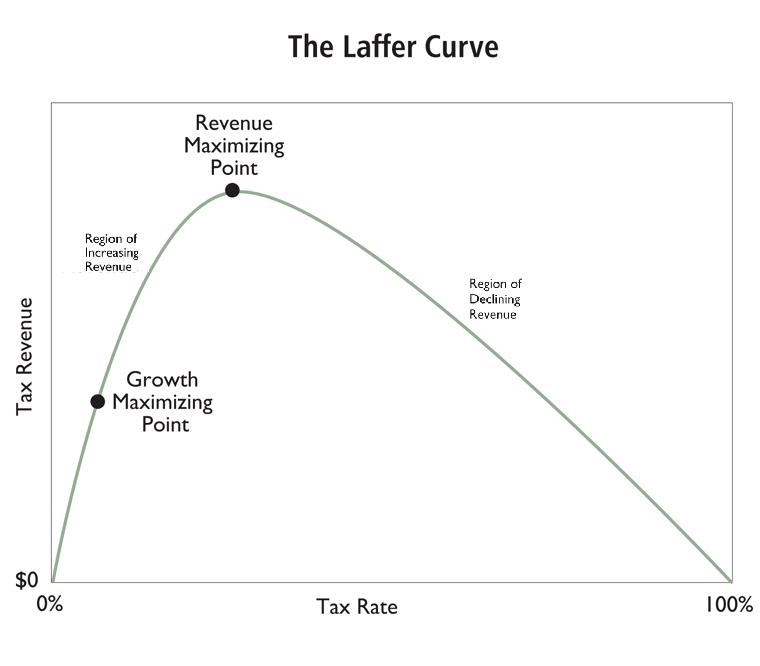
But it recently crossed my mind that maybe President Obama was born in Denmark. Not in a serious way, of course, but you’ll understand my thought process when you read this passage from a report by the government-appointed Danish Economic Council. It doesn’t mention the Laffer Curve, but the report openly states that an increase in the top tax rate would lose revenue because of changes in taxpayer behavior.

…increased taxation on high income earners in Denmark at best is revenue neutral, and may even reduce total tax revenue. This result applies whether one considers the top 10, the top 5 or the top 1 per cent income group. …Using the base estimate of the elasticity of taxable labour income of 0.2, the conclusion is thus that the existing Danish tax system implies an effective tax rate on high income earners that is above – though close to – the tax rate that generates the highest tax revenue. …As an example, the revenue effect of an increase in the marginal tax rate by 6 percentage points for high-income earners is calculated. Using the base estimate of the behavioural response to taxation, this leads to a revenue loss of about ½ billion DKK. …Overall, the scope for acquiring extra tax revenue from high income earners in Denmark is very limited.

Yet there are some politicians in Denmark who want to raise tax rates, even though the damage to the economy will be so significant that the government loses revenue!

If you’re thinking this sounds familiar, you probably remember President Obama’s infamous statement during the 2008 campaign that he wanted to raise the capital gains tax rate for reasons of “fairness” regardless of whether tax revenues decreased (if you think I’m somehow exaggerating or distorting his words, just go to the 4:20 mark of this video).

By the way, the Danish study probably understates how much revenue the government would lose. Their base estimate about the elasticity of taxable labor income (economist jargon for how sensitive labor income is to changes in tax rates) is much lower than Alan Reynolds reported in his recent Wall Street Journal column.

Rich people, unlike the rest of us, have tremendous ability to change the timing, composition, and level of their income, which is a big reason why upper-income taxpayers paid much more to the IRS in the 1980s after President Reagan slashed the top tax rate from 70 percent to 28 percent.

I’m constantly amazed – in a bad way – that politicians and bureaucrats have been so successful in resisting the insights of the Laffer Curve. The U.S. Treasury Department, for instance, is to the left of the Danish Economic Council and basically assumes that tax policy has no impact on economic performance. The same can be said about the Joint Committee on Taxation on Capitol Hill.

This has to be a case of leftist ideology trumping reality, because the evidence for the Laffer Curve is quite powerful – some of it even being produced by international bureaucracies.

None of this is to suggest that “all tax cuts pay for themselves.” That only happens in unusual cases where a group of taxpayers – such as wealthy entrepreneurs and investors – have considerable flexibility in their economic affairs.

In most cases, the government will collect more revenue when tax rates increase. This is because the impact of the change in the tax rate is larger than the impact of the change in taxable income.

But the real question is whether it is ever a good idea to reduce private economic output in order to give politicians more money to spend. To sensible people, that’s the most important insight of the Laffer Curve.

P.S. While this discussion has focused on the foolishness of setting tax rates so high that the government loses revenue, this does not mean politicians should seek the revenue-maximizing tax rate. The ideal point on the Laffer Curve is the growth-maximizing tax rate.

________

Thank you so much for your time. I know how valuable it is. I also appreciate the fine family that you have and your commitment as a father and a husband.

Sincerely,

Everette Hatcher III, 13900 Cottontail Lane, Alexander, AR 72002, ph 501-920-5733, lowcostsqueegees@yahoo.com

Open letter to Speaker of the House John Boehner (Part 7)

John Boehner, Speaker of the House

H-232, The Capital, Washington, DC 20515

Dear Mr. Speaker,

I know that you will have to meet with newly re-elected President Obama soon and he will probably be anxious for you to raise taxes and  federal spending, but he will want you to leave runaway entitlement programs alone. When that happens then you have one thing you can hold over his head and that is the debt ceiling.

You must stand up to him and tell him that you can not raise it. In December of 2012 or January of 2013 at the latest we will be shutting down the government if we don’t increase the debt limit according to the LA Times. You got to listen to the Tea Party heroes like Rep. Todd Rokita,  Ben Quayle (R-AZ), Jeff Landry (R, LA-03),  Raúl R. Labrador , Tim HuelskampRep. Justin Amash (R-MI),  , Brooks, Mo (AL – 5), Buerkle, Ann Marie (NY – 25),Chabot, Steven (OH – 1),Duncan, Jeff (SC – 3), Fleischmann, Chuck (TN – 3) ,Gowdy, Trey (SC – 4) ,Griffith, H. Morgan (VA – 9) , Harris, Andy (MD – 1) ,Huizenga, Bill (MI – 2) , Mulvaney, Mick (SC – 5) , Pompeo, Mike (KS – 4) , Ribble, Reid (WI – 8), Rigell, E. Scott (VA – 2) , Ross, Dennis (FL – 12) ,Schweikert, David (AZ – 5), Scott, Austin (GA – 8) , Scott, Tim (SC – 1) , Southerland, Steve (FL – 2) , Stutzman, Marlin (IN – 3) , Walberg, Timothy (MI – 7) , Walsh, Joe (IL – 8),and Woodall, Rob (GA – 7) .

What future does our country have if we never even attempt to balance our budget. I read some wise words by Congressman Jeff Landry (R, LA-03) regarding the  debt ceiling deal that was passed on August 1, 2011:”Throughout this debate, the American people have demanded a real cure to America’s spending addiction – a Balanced Budget Amendment to the U.S. Constitution. Unfortunately, today’s Washington deal transforms last week’s strong Balanced Budget requirement into a toothless suggestion.”

If we are going to get the budget to balance it will take a Balanced Budget Amendment to force us to do so. There is no other way around that fact!!!

Ted DeHaven noted his his article, “Freshman Republicans switch from Tea to Kool-Aid,”  Cato Institute Blog, May 17, 2012:

This week the Club for Growth released a study of votes cast in 2011 by the 87 Republicans elected to the House in November 2010. The Club found that “In many cases, the rhetoric of the so-called “Tea Party” freshmen simply didn’t match their records.” Particularly disconcerting is the fact that so many GOP newcomers cast votes against spending cuts.

The study comes on the heels of three telling votes taken last week in the House that should have been slam-dunks for members who possess the slightest regard for limited government and free markets. Alas, only 26 of the 87 members of the “Tea Party class” voted to defund both the Economic Development Administration and the president’s new Advanced Manufacturing Technology Consortia program (see my previous discussion of these votes here) and against reauthorizing the Export-Import Bank (see my colleague Sallie James’s excoriation of that vote here).

One of those Tea Party heroes was Congressman Jeff Landry (R, LA-03). Last year I posted this below concerning his conservative views and his willingness to vote against the debt ceiling increase:

Congressman Landry’s Statement on Today’s Debt Ceiling Deal

Millard Mulé
 

WASHINGTON, DC – Congressman Jeff Landry (R, LA-03) issued the following statement regarding today’s debt ceiling deal:

“I’m sure by Washington standards, today’s deal is a great accomplishment; but by American standards, it comes up short. Throughout this debate, the American people have demanded a real cure to America’s spending addiction – a Balanced Budget Amendment to the U.S. Constitution. Unfortunately, today’s Washington deal transforms last week’s strong Balanced Budget requirement into a toothless suggestion. And today’s Washington deal puts at risk the security and pay of our brave men and women in uniform. It’s disheartening that Washington continues skirting the problem, instead of passing long-term solutions to end it. As evident by my decision today, I stand with the American people and choose to put the next generation above my next election.”

__________

__________

Sincerely,

Everette Hatcher, 13900 Cottontail Lane, Alexander, AR 72002, lowcostsqueegees@yahoo.com, www.thedailyhatch.org, ph 501-920-5733

___________

Related posts:

Government shutdown coming, will there be any tea party heroes available to stand up to Obama?

DEBT LIMIT – A GUIDE TO AMERICAN FEDERAL DEBT MADE EASY. Uploaded by debtlimitusa on Nov 4, 2011 A satirical short film taking a look at the national debt and how it applies to just one family. Watch the guy from the Ferris Bueller Superbowl Spot! Produced by Seth William Meier, DP/Edited by Craig Evans, […]

Some Tea Party heroes (Part 1)

DEBT LIMIT – A GUIDE TO AMERICAN FEDERAL DEBT MADE EASY. Uploaded by debtlimitusa on Nov 4, 2011 A satirical short film taking a look at the national debt and how it applies to just one family. Watch the guy from the Ferris Bueller Superbowl Spot! Produced by Seth William Meier, DP/Edited by Craig Evans, […]

Some Tea Party heroes (Part 8)

Rep Himes and Rep Schweikert Discuss the Debt and Budget Deal Michael Tanner of the Cato Institute in his article, “Hitting the Ceiling,” National Review Online, March 7, 2012 noted: After all, despite all the sturm und drang about spending cuts as part of last year’s debt-ceiling deal, federal spending not only increased from 2011 […]

Some Tea Party heroes (Part 7)

Michael Tanner of the Cato Institute in his article, “Hitting the Ceiling,” National Review Online, March 7, 2012 noted: After all, despite all the sturm und drang about spending cuts as part of last year’s debt-ceiling deal, federal spending not only increased from 2011 to 2012, it rose faster than inflation and population growth combined. […]

Who are the Tea Party Heroes from the 87 Freshmen Republicans?

Here is a study done on the votes of the 87 incoming freshman republicans frm the Club for Growth. Freshman Vote Study In the 2010 election, 87 freshmen House Republicans came to Washington pledging fealty to the Tea Party movement and the ideals of limited government and economic freedom. The mainstream media likes to say […]

Tea Party Conservative Senator Mike Lee interview

Tea Party Conservative Senator Mike Lee interview Here is an excellent interview above with Senator Lee with a fine article below from the Heritage Foundation. Sen. Mike Lee (R-UT) came to Washington as the a tea-party conservative with the goal of fixing the economy, addressing the debt crisis and curbing the growth of the federal […]

Some Tea Party heroes (Part 6)

I feel so strongly about the evil practice of running up our national debt. I was so proud of Rep. Todd Rokita who voted against the Budget Control Act of 2011 on August 11, 2011. He made this comment:   For decades now, we have spent too much money on ourselves and have intentionally allowed our […]

Some Tea Party heroes (Part 5)

Rep. Quayle on Fox News with Neil Cavuto __________________ We have to get people realize that the most important issue is the debt!!! Recently I read a comment by Congressman Ben Quayle (R-AZ) made  after voting against the amended Budget Control Act on August 1, 2011. He said it was important to compel “Congressional Democrats and […]

Some Tea Party heroes (Part 4)

What future does our country have if we never even attempt to balance our budget. I read some wise words by Congressman Jeff Landry (R, LA-03) regarding the  debt ceiling deal that was passed on August 1, 2011:”Throughout this debate, the American people have demanded a real cure to America’s spending addiction – a Balanced Budget […]

Some Tea Party heroes (Part 3)

I read some wise comments by Idaho First District Congressman Raúl R. Labrador concerning the passage of the Budget Control Act on August 1, 2011 and I wanted to point them out: “The legislation  lacks a rock solid commitment to passage of a balanced budget amendment, which I believe is necessary to saving our nation.” I just […]

Some Tea Party heroes (Part 2)

Congressmen Tim Huelskamp on the debt ceiling I just don’t understand why people think we can go on and act like everything is okay when we have a trillion dollar deficit. Sometimes you run across some very wise words like I did the other day. Kansas Congressman Tim Huelskamp made the following comment on the […]

Open letter to Speaker of the House John Boehner (Part 6)

John Boehner, Speaker of the House

H-232, The Capital, Washington, DC 20515

Dear Mr. Speaker,

I know that you will have to meet with newly re-elected President Obama soon and he will probably be anxious for you to raise taxes and  federal spending, but he will want you to leave runaway entitlement programs alone. DON’T LET THEM RAISE THAT TOP TAX BRACKET ANY HIGHER!!!

If you want the rich to pay a bigger percentage of the nation’s tax revenues then keep their tax rates low!!!

Evidence from England Shows that If You Want to “Soak the Rich,” Keep Tax Rates Low

September 26, 2012 by Dan Mitchell

I’ve pulled evidence from IRS publications to show that rich people paid a lot more to Uncle Sam after Reagan reduced the top tax rate from 70 percent to 28 percent.

The good ol’ days

But the Gipper wasn’t the only one to unleash the Laffer Curve. The United Kingdom saw similar dramatic results when Margaret Thatcher lowered the top tax rate from 83 percent to 40 percent. Allister Heath explains.

During the 1970s, when the tax system specialised in inflicting pain, the top one per cent of earners contributed 11pc of income tax. By 1986-87, with the top rate down to 60pc, that had increased to 14pc. After the top rate fell to 40pc in 1988, the top 1pc’s share jumped, reaching 21.3pc by 1999-2000, 24.4pc in 2007-08 and 26.5pc in 2009-10. Lower taxes fuelled a hard-work culture and an entrepreneurial revolution. Combined with globalisation and the much greater rewards available for skilled workers, Britain’s most successful individuals earned a lot and paid a lot in tax.

In other words, Margaret Thatcher’s supply-side tax rate reductions paid big dividends, both for the economy and for the Treasury.

Unfortunately, just as American politicians have forgotten (or decided to ignore) the lessons of the Reagan era, British politicians also have gravitated to a class-warfare approach. Allister points out that this is having a negative impact.

Yet times are changing, and not just because of the recession. HMRC recently slashed its forecasts for revenues from the top 1pc. It now believes the number of people expected to report £500,000 or more in earnings will fall by a tenth this year; those on £2m are set to drop by a third.

Why have the numbers headed in the wrong direction? There are almost certainly lots of factors, but tax policy has moved in the wrong direction and presumably deserves part of the blame. The top income tax rate is now 45 percent. The value-added tax has jumped to 20 percent. Allister provides more details.

Capital gains tax is too high. Luxury homes transactions are falling because of higher stamp duty. Britain is now a high tax economy; this is distorting work and investment decisions, gradually shifting talent and capital overseas. The overwhelming majority of high earners are already contributing disproportionately to the exchequer; tightening the screws further will be disastrously counter-productive. The lesson of the past 30 years is clear: the best way to entice the rich to pay even more tax is to keep rates low and allow them to get even richer.

I have to admit that I don’t want anyone to pay more tax, but I’m even less happy about punitively high tax rates. So I’m reluctantly willing to let the clowns in government have more money in exchange for a tax system that is more conducive to economic growth.

Here’s my Laffer Curve video, which explains more about the relationship of tax rates, taxable income, and tax revenue.

The ultimate goal, of course, is to shrink the central government so that the legitimate functions of the state can be financed at very low tax rates. Heck, if the United States and the United Kingdom had the kind of limited governments that existed 100 years ago, neither nation would even need a flat tax. A few user fees and excise taxes would suffice. Now that’s hope and change.

P.S. I periodically share two great Reagan videos, which can be seen here and here, but I also have a couple of inspiring videos of Thatcher in action, which can be viewed here and here.

__________

Sincerely,

Everette Hatcher, 13900 Cottontail Lane, Alexander, AR 72002, lowcostsqueegees@yahoo.com, www.thedailyhatch.org, ph 501-920-5733

___________

Related posts:

Government shutdown coming, will there be any tea party heroes available to stand up to Obama?

DEBT LIMIT – A GUIDE TO AMERICAN FEDERAL DEBT MADE EASY. Uploaded by debtlimitusa on Nov 4, 2011 A satirical short film taking a look at the national debt and how it applies to just one family. Watch the guy from the Ferris Bueller Superbowl Spot! Produced by Seth William Meier, DP/Edited by Craig Evans, […]

Some Tea Party heroes (Part 1)

DEBT LIMIT – A GUIDE TO AMERICAN FEDERAL DEBT MADE EASY. Uploaded by debtlimitusa on Nov 4, 2011 A satirical short film taking a look at the national debt and how it applies to just one family. Watch the guy from the Ferris Bueller Superbowl Spot! Produced by Seth William Meier, DP/Edited by Craig Evans, […]

Some Tea Party heroes (Part 8)

Rep Himes and Rep Schweikert Discuss the Debt and Budget Deal Michael Tanner of the Cato Institute in his article, “Hitting the Ceiling,” National Review Online, March 7, 2012 noted: After all, despite all the sturm und drang about spending cuts as part of last year’s debt-ceiling deal, federal spending not only increased from 2011 […]

Some Tea Party heroes (Part 7)

Michael Tanner of the Cato Institute in his article, “Hitting the Ceiling,” National Review Online, March 7, 2012 noted: After all, despite all the sturm und drang about spending cuts as part of last year’s debt-ceiling deal, federal spending not only increased from 2011 to 2012, it rose faster than inflation and population growth combined. […]

Who are the Tea Party Heroes from the 87 Freshmen Republicans?

Here is a study done on the votes of the 87 incoming freshman republicans frm the Club for Growth. Freshman Vote Study In the 2010 election, 87 freshmen House Republicans came to Washington pledging fealty to the Tea Party movement and the ideals of limited government and economic freedom. The mainstream media likes to say […]

Tea Party Conservative Senator Mike Lee interview

Tea Party Conservative Senator Mike Lee interview Here is an excellent interview above with Senator Lee with a fine article below from the Heritage Foundation. Sen. Mike Lee (R-UT) came to Washington as the a tea-party conservative with the goal of fixing the economy, addressing the debt crisis and curbing the growth of the federal […]

Some Tea Party heroes (Part 6)

I feel so strongly about the evil practice of running up our national debt. I was so proud of Rep. Todd Rokita who voted against the Budget Control Act of 2011 on August 11, 2011. He made this comment:   For decades now, we have spent too much money on ourselves and have intentionally allowed our […]

Some Tea Party heroes (Part 5)

Rep. Quayle on Fox News with Neil Cavuto __________________ We have to get people realize that the most important issue is the debt!!! Recently I read a comment by Congressman Ben Quayle (R-AZ) made  after voting against the amended Budget Control Act on August 1, 2011. He said it was important to compel “Congressional Democrats and […]

Some Tea Party heroes (Part 4)

What future does our country have if we never even attempt to balance our budget. I read some wise words by Congressman Jeff Landry (R, LA-03) regarding the  debt ceiling deal that was passed on August 1, 2011:”Throughout this debate, the American people have demanded a real cure to America’s spending addiction – a Balanced Budget […]

Some Tea Party heroes (Part 3)

I read some wise comments by Idaho First District Congressman Raúl R. Labrador concerning the passage of the Budget Control Act on August 1, 2011 and I wanted to point them out: “The legislation  lacks a rock solid commitment to passage of a balanced budget amendment, which I believe is necessary to saving our nation.” I just […]

Some Tea Party heroes (Part 2)

Congressmen Tim Huelskamp on the debt ceiling I just don’t understand why people think we can go on and act like everything is okay when we have a trillion dollar deficit. Sometimes you run across some very wise words like I did the other day. Kansas Congressman Tim Huelskamp made the following comment on the […]

Open letter to Speaker of the House John Boehner (Part 5 on debt ceiling)

John Boehner, Speaker of the House

H-232, The Capital, Washington, DC 20515

Dear Mr. Speaker,

I know that you will have to meet with newly re-elected President Obama soon and he will probably be anxious for you to raise taxes and  federal spending, but he will want you to leave runaway entitlement programs alone. When that happens then you have one thing you can hold over his head and that is the debt ceiling.

You must stand up to him and tell him that you can not raise it. In December of 2012 or January of 2013 at the latest we will be shutting down the government if we don’t increase the debt limit according to the LA Times. You got to listen to the Tea Party heroes like Rep. Todd Rokita,  Ben Quayle (R-AZ), Jeff Landry (R, LA-03),  Raúl R. Labrador , Tim HuelskampRep. Justin Amash (R-MI),  , Brooks, Mo (AL – 5), Buerkle, Ann Marie (NY – 25),Chabot, Steven (OH – 1),Duncan, Jeff (SC – 3), Fleischmann, Chuck (TN – 3) ,Gowdy, Trey (SC – 4) ,Griffith, H. Morgan (VA – 9) , Harris, Andy (MD – 1) ,Huizenga, Bill (MI – 2) , Mulvaney, Mick (SC – 5) , Pompeo, Mike (KS – 4) , Ribble, Reid (WI – 8), Rigell, E. Scott (VA – 2) , Ross, Dennis (FL – 12) ,Schweikert, David (AZ – 5), Scott, Austin (GA – 8) , Scott, Tim (SC – 1) , Southerland, Steve (FL – 2) , Stutzman, Marlin (IN – 3) , Walberg, Timothy (MI – 7) , Walsh, Joe (IL – 8),and Woodall, Rob (GA – 7) .

I read some wise comments by Idaho First District Congressman Raúl R. Labrador concerning the passage of the Budget Control Act on August 1, 2011 and I wanted to point them out: “The legislation  lacks a rock solid commitment to passage of a balanced budget amendment, which I believe is necessary to saving our nation.”

I just don’t understand why we don’t have a Balanced Budget Amendment in this country. In Arkansas we have balanced our budget every year because we have a Balanced Budget Law!!!

Michael Tanner of the Cato Institute in his article, “Hitting the Ceiling,” National Review Online, March 7, 2012 noted:

After all, despite all the sturm und drang about spending cuts as part of last year’s debt-ceiling deal, federal spending not only increased from 2011 to 2012, it rose faster than inflation and population growth combined.

We need some national statesmen (and ladies) who are willing to stop running up the nation’s credit card.

Ted DeHaven noted his his article, “Freshman Republicans switch from Tea to Kool-Aid,”  Cato Institute Blog, May 17, 2012:

This week the Club for Growth released a study of votes cast in 2011 by the 87 Republicans elected to the House in November 2010. The Club found that “In many cases, the rhetoric of the so-called “Tea Party” freshmen simply didn’t match their records.” Particularly disconcerting is the fact that so many GOP newcomers cast votes against spending cuts.

The study comes on the heels of three telling votes taken last week in the House that should have been slam-dunks for members who possess the slightest regard for limited government and free markets. Alas, only 26 of the 87 members of the “Tea Party class” voted to defund both the Economic Development Administration and the president’s new Advanced Manufacturing Technology Consortia program (see my previous discussion of these votes here) and against reauthorizing the Export-Import Bank (see my colleague Sallie James’s excoriation of that vote here).

One of those Tea Party heroes was Congressman Labrodor of Idaho. Last year I posted this below concerning his conservative views and his willingness to vote against the debt ceiling increase:

Labrador Statement on Budget Control Act

Aug 1, 2011 Issues: Budget and Spending


Washington, D.C.—Idaho First District Congressman Raúl R. Labrador today issued the following statement following the passage of the Budget Control Act of 2011.

“The debt ceiling agreement that was considered by Congress today represents a good plan to resolve the uncertainty surrounding the debt ceiling debate.  It immediately cuts federal spending and implements new spending caps to prevent government expansion when our economy begins to recover.  While this bill has the potential to reduce the size of our budget and the trajectory of government spending, this bill doesn’t go far enough to make the changes necessary to get us out of our fiscal mess.

“I promised my constituents that I would come to Congress to fundamentally change the way the federal government operates. While this legislation is a good first step towards that goal, it also relies on the time honored Washington tradition of delegating problems to commissions instead of solving them ourselves. It places more confidence in its Super Commission than is warranted.  The legislation also lacks a rock solid commitment to passage of a balanced budget amendment, which I believe is necessary to saving our nation. With the help of the new members of Congress, the standard operating procedure in Washington has begun to change from spending recklessly to cutting spending sensibly, but there is a lot more that needs to change.  ”

__________

Sincerely,

Everette Hatcher, 13900 Cottontail Lane, Alexander, AR 72002, lowcostsqueegees@yahoo.com, www.thedailyhatch.org, ph 501-920-5733

___________

Related posts:

Government shutdown coming, will there be any tea party heroes available to stand up to Obama?

DEBT LIMIT – A GUIDE TO AMERICAN FEDERAL DEBT MADE EASY. Uploaded by debtlimitusa on Nov 4, 2011 A satirical short film taking a look at the national debt and how it applies to just one family. Watch the guy from the Ferris Bueller Superbowl Spot! Produced by Seth William Meier, DP/Edited by Craig Evans, […]

Some Tea Party heroes (Part 1)

DEBT LIMIT – A GUIDE TO AMERICAN FEDERAL DEBT MADE EASY. Uploaded by debtlimitusa on Nov 4, 2011 A satirical short film taking a look at the national debt and how it applies to just one family. Watch the guy from the Ferris Bueller Superbowl Spot! Produced by Seth William Meier, DP/Edited by Craig Evans, […]

Some Tea Party heroes (Part 8)

Rep Himes and Rep Schweikert Discuss the Debt and Budget Deal Michael Tanner of the Cato Institute in his article, “Hitting the Ceiling,” National Review Online, March 7, 2012 noted: After all, despite all the sturm und drang about spending cuts as part of last year’s debt-ceiling deal, federal spending not only increased from 2011 […]

Some Tea Party heroes (Part 7)

Michael Tanner of the Cato Institute in his article, “Hitting the Ceiling,” National Review Online, March 7, 2012 noted: After all, despite all the sturm und drang about spending cuts as part of last year’s debt-ceiling deal, federal spending not only increased from 2011 to 2012, it rose faster than inflation and population growth combined. […]

Who are the Tea Party Heroes from the 87 Freshmen Republicans?

Here is a study done on the votes of the 87 incoming freshman republicans frm the Club for Growth. Freshman Vote Study In the 2010 election, 87 freshmen House Republicans came to Washington pledging fealty to the Tea Party movement and the ideals of limited government and economic freedom. The mainstream media likes to say […]

Tea Party Conservative Senator Mike Lee interview

Tea Party Conservative Senator Mike Lee interview Here is an excellent interview above with Senator Lee with a fine article below from the Heritage Foundation. Sen. Mike Lee (R-UT) came to Washington as the a tea-party conservative with the goal of fixing the economy, addressing the debt crisis and curbing the growth of the federal […]

Some Tea Party heroes (Part 6)

I feel so strongly about the evil practice of running up our national debt. I was so proud of Rep. Todd Rokita who voted against the Budget Control Act of 2011 on August 11, 2011. He made this comment:   For decades now, we have spent too much money on ourselves and have intentionally allowed our […]

Some Tea Party heroes (Part 5)

Rep. Quayle on Fox News with Neil Cavuto __________________ We have to get people realize that the most important issue is the debt!!! Recently I read a comment by Congressman Ben Quayle (R-AZ) made  after voting against the amended Budget Control Act on August 1, 2011. He said it was important to compel “Congressional Democrats and […]

Some Tea Party heroes (Part 4)

What future does our country have if we never even attempt to balance our budget. I read some wise words by Congressman Jeff Landry (R, LA-03) regarding the  debt ceiling deal that was passed on August 1, 2011:”Throughout this debate, the American people have demanded a real cure to America’s spending addiction – a Balanced Budget […]

Some Tea Party heroes (Part 3)

I read some wise comments by Idaho First District Congressman Raúl R. Labrador concerning the passage of the Budget Control Act on August 1, 2011 and I wanted to point them out: “The legislation  lacks a rock solid commitment to passage of a balanced budget amendment, which I believe is necessary to saving our nation.” I just […]

Some Tea Party heroes (Part 2)

Congressmen Tim Huelskamp on the debt ceiling I just don’t understand why people think we can go on and act like everything is okay when we have a trillion dollar deficit. Sometimes you run across some very wise words like I did the other day. Kansas Congressman Tim Huelskamp made the following comment on the […]

Open letter to my congressman Tim Griffin

November 12, 2012

Congressman Tim Griffin, c/o Little Rock Office, 1501 N. University, Suite 150, Little Rock, AR 72207

Dear Congressman Griffin,

I have met you several times and I have always enjoyed visiting with you. I got to hear you speak at a town meeting at Shannon Hills about a year ago and I must say that you did a great job showing how our country is heading to Greece if we do not tackle entitlement reform in a serious way or we will not control our spending. The issue of runaway spending is one of the issues that I wanted to talk to you about today. 

We got to stand up to President Obama on two issues this week. On the fiscal cliff we need to tell him four things that I got from Dan Mitchell of the Cato Institute:

I have written a lot on the blog in the last year about the debt ceiling argument. It has been one of the top issues I have dedicated my time to and as result of coming up with interesting issues like that I have experienced over 300,000 hits in the last 12 months on my blog.

Basically on my blog I have spent most of my time on budget issues and the pro-life issues but I also deal with popular culture and sports.

I have written lots of your Tea Party friends in Congress too about this issue of the debt ceiling issue, andI have written a series of letters to the Speaker of the House John Boehner. Here is how I start out in some of those letters:

I know that you will have to meet with newly re-elected President Obama soon and he will probably be anxious for you to raise taxes and  federal spending, but he will want you to leave runaway entitlement programs alone. When that happens then you have one thing you can hold over his head and that is the debt ceiling.

You must stand up to him and tell him that you can not raise it. In December of 2012 or January of 2013 at the latest we will be shutting down the government if we don’t increase the debt limit according to the LA Times. You got to listen to the Tea Party heroes like Rep. Todd Rokita,  Ben Quayle (R-AZ), Jeff Landry (R, LA-03),  Raúl R. Labrador , Tim HuelskampRep. Justin Amash (R-MI),  , Brooks, Mo (AL – 5), Buerkle, Ann Marie (NY – 25),Chabot, Steven (OH – 1),Duncan, Jeff (SC – 3), Fleischmann, Chuck (TN – 3) ,Gowdy, Trey (SC – 4) ,Griffith, H. Morgan (VA – 9) , Harris, Andy (MD – 1) ,Huizenga, Bill (MI – 2) , Mulvaney, Mick (SC – 5) , Pompeo, Mike (KS – 4) , Ribble, Reid (WI – 8), Rigell, E. Scott (VA – 2) , Ross, Dennis (FL – 12) ,Schweikert, David (AZ – 5), Scott, Austin (GA – 8) , Scott, Tim (SC – 1) , Southerland, Steve (FL – 2) , Stutzman, Marlin (IN – 3) , Walberg, Timothy (MI – 7) , Walsh, Joe (IL – 8),and Woodall, Rob (GA – 7) .

_____________

Mr. Griffin, I have a lot of respect for you because of your conservative views and your defense of the unborn. Now, will you join that group of 66 brave Republicans that voted against the debt ceiling  and oppose it this time around? We must require the passing of the Balanced Budget Amendment before we okay an increase the debt ceiling!!! If not then we will continue to have our credit level downgraded.  Last time you voted for the debt ceiling increase because you said if we did not do it then our credit level would be downgraded but three days later our credit level was downgraded anyway.

Thank you for your time.

Sincerely,

Everette Hatcher, 13900 Cottontail Lane, Alexander, AR 72002, cell ph 501-920-5733, lowcostsqueegees@yahoo.com, www.thedailyhatch.org

_________

Related posts:

Letters I have written to Congress about the debt ceiling debate

There were 66 brave Republicans that voted against the debt ceiling increase in August of 2011 and I have written posts about 49 of them. Again today we have newly re-elected President Obama coming back for another debt ceiling increase and we need more brave Republicans who will not give in.  I have corresponded with […]

Roll Call of 66 Republicans who voted against debt ceiling increase in 2011

Dan Mitchell of the Cato Institute wrote a very good article and I agree with most of it. However, I do take exception to just one part. He is right to get on to USA Today for calling this current Congress the most unproductive since they only passed 61 bills. Dan rightly pointed out that […]

Mark Pryor responds to me concerning Debt Ceiling email (Part 1)

The problem with the debt ceiling is very clear to me. We need to get serious about cutting federal spending. I am so upset about it that I have emailed over 100 emails to Senator Pryor concerning specific spending suggestions. I get emails from back from Senator Pryor like the one below. This means that […]

Hitting Debt Ceiling soon

There were 66 brave Republicans who voted against the debt ceiling increase last time in the House and I am hoping more will jump on board this time around. Columbia Tribune reported: U.S. on track to hit debt limit, Treasury says Associated PressThursday, November 1, 2012 WASHINGTON (AP) — U.S. Treasury officials said yesterday they […]

Open letter to Speaker of the House John Boehner (Part 3 on debt ceiling)

John Boehner, Speaker of the House H-232, The Capital, Washington, DC 20515 Dear Mr. Speaker, I know that you will have to meet with newly re-elected President Obama soon and he will probably be anxious for you to raise taxes and  federal spending, but he will want you to leave runaway entitlement programs alone. When that happens then you […]

Open letter to Speaker of the House John Boehner (Part 1 on debt ceiling)

John Boehner, Speaker of the House H-232, The Capital, Washington, DC 20515 Dear Mr. Speaker, I know that you will have to meet with newly re-elected President Obama soon and he will probably be anxious for you to raise taxes and  federal spending, but he will want you to leave runaway entitlement programs alone. When that happens then you […]

Obama’s March 16, 2006 speech against raising debt ceiling

Obama’s March 16, 2006 speech against raising the debt ceiling is here: The fact that we are here today to debate raising America’s debt limit is a sign of leadership failure. It is a sign that the U.S. Government can’t pay its own bills. It is a sign that we now depend on ongoing financial assistance from […]

Raising the debt ceiling again so fast?

It seems to me that we should stop raising the debt ceiling so much or we will end up like Greece. Below is some great information from Reason Magazine: Uploaded by ReasonTV on Mar 1, 2011 [Editor’s Note: Go to http://reason.com/blog/2011/03/01/raising-the-debt-limit-it-just for details, charts, and links] Some say the world will end in fire and […]

Federal government spending money so fast they will pass debt ceiling before election

Sen Obama in 2006 Against Raising Debt Ceiling Uploaded by RepCliffStearns on Jun 20, 2011 Rep. Stearns on the House Floor cites Sen. Obama’s opposition in 2006 to increasing the debt ceiling, 6-14-11 ________________________ It has greatly troubled me for sometime that the federal government spends so much over their budget every year. That is […]

China calls U.S. debt a “ticking time bomb” while the Congress keeps raising the debt ceiling

US Vice President Joe Biden (L) and his granddaughter Ashley arrive in Beijing for his visit to China and Mongolia. China is the biggest foreign holder of US debt and the country’s state run media have delivered a barrage of criticism of Washington’s handling of its near-default crisis, which it has described as a “ticking […]