President Biden c/o The White House
1600 Pennsylvania Avenue NW
Washington, DC 20500
Dear Mr. President,
Ronald Reagan was a firm believer in the Balanced Budget Amendment and Milton Friedman was a key advisor to Reagan. Friedman’s 1980 film series taught the lesson of restraining growth of the federal budget.
Vital changes needed to keep road to further reforms open
There is a problem brewing in the House of Representatives of which most conservatives in and outside Congress are largely unaware. It has to do with H.J. Res. 1 – the balanced budget amendment – soon to be voted on per the debt-ceiling “deal” struck by Congress and the president. While H.J. Res. 1 is a solid first effort – and we have urged support for it as a symbolic vote – it is possibly fatally flawed and should be revised.
After years of indifference to constitutional fiscal discipline, Congress is once again stirring. In 1982, then-President Ronald Reagan, convened a federal amendment drafting committee led by Milton Friedman, Jim Buchanan, Bill Niskanen, Walter Williams and many others, and fashioned Senate Joint Resolution 58, a tax limitation-balanced budget amendment, which garnered 67 votes in the Senate under the able leadership of Sen. Orrin G. Hatch, Utah Republican. After a successful discharge petition forced a House vote, the amendment failed to achieve the two-thirds vote necessary in a Tip O’Neill-Jim Wright-controlled House. In 1996, Newt Gingrich and company came within one vote of passing a fiscal amendment in the House.
Currently, H.J. Res. 1 is designed as a classic balanced budget amendment in which outlays can be as great as, but no more than, receipts for that year. However, it requires an estimate of receipts, which is notoriously faulty, and it does not necessarily produce surpluses with which to pay down our massive debt. Furthermore, it contains a second limit on outlays – “not more than 18 percent of the economic output of the United States” – without defining such output or resolving the inevitable conflict between the outlay calculations in the two provisions.
This could be fixed by restructuring the amendment as a spending or outlay limit based on prior year receipts or outlays (known numbers), adjusted only for inflation and population changes. This will produce surpluses in most years with which to pay down debts and will reduce government spending as a share of gross domestic product over time, right-sizing government and increasing the rate of economic growth for the benefit of all citizens, especially those least able to compete.
Section 4 of H.J. Res. 1 might best be described as a supreme example of the law of unintended consequences. This section imposes on the president a constitutional responsibility to present a balanced budget. Surely, the drafters were saying to themselves “We’ll fix that guy in the White House. Now he will have to fess up and either propose specific tax increases or specific spending cuts. He won’t be able to duck reality any longer.” The only problem is that this section is at odds with our Constitution in that it gives the president a constitutional power over fiscal matters never intended by the Founders.
For much of our history, the president did not propose a budget. In the Budget and Accounting Act of 1921, which established the Bureau of the Budget, now the Office of Management and Budget and the General Accounting Office, the president was statutorily authorized to propose a budget. Presidents have always shaped the budget and spending using their negotiating opportunities and veto pen. Wearing their chief administrator hat, earlier presidents sought to save money from the amounts appropriated by Congress, getting things done for less, impounding funds they did not think essential to spend. Congress‘ ceiling on an appropriation was not also the spending floor for the president, as it is now.
Section 4 appears to give the president co-equal power with Congress not only to present a budget but to shape it, in conflict with congressional budget authority. At a minimum, it is likely to create a conflict over the amount of allowed annual spending. The president surely will be guided by his own Office of Management and Budget, whose budget and receipts calculations will undoubtedly differ from the Congressional Budget Office’s numbers that will direct Congress. We should not start the budget process each year with this kind of conflict.
It would be better to restore the historic role of the president to impound and otherwise reduce expenditures by repealing and revising appropriate portions of the Congressional Budget and Impoundment Control Act of 1974 so a fiscally conservative president is a revitalized partner in cutting the size of government.
Section 5 requires a supermajority vote for “a bill to increase revenues.” Whether one agrees or disagrees with making tax increases more difficult, this language is troublesome because it requires some government bureaucrat or bureaucracy to make a calculation or estimate of the effect of tax law changes on revenues. Proponents of a bill to increase cash flow to the government will argue that their tax law changes are “revenue neutral” and will likely persuade the Joint Committee on Taxation or Congressional Budget Office to back them up. Once again, estimators would be in control.
If we ever expect to convert our income-based tax system to a consumption tax, better not to require a two-thirds vote as liberals will use such a supermajority voting rule to stymie tax system reform.
There are other issues, as well, with debt limit and national emergency supermajority votes and definitions. While this balanced budget amendment – H.J. Res. 1 – has deserved a “yes” vote as a demonstration of commitment to constitutional fiscal discipline, it can and must be revised before the showdown vote in the House this fall.
Lewis K. Uhler is president of the National Tax Limitation Committee.
_________________
Thank you so much for your time. I know how valuable it is. I also appreciate the fine family that you have and your commitment as a father and a husband.
Sincerely,
Everette Hatcher III, 13900 Cottontail Lane, Alexander, AR 72002, ph 501-920-5733
Raphael Warnock: (35:05)
If you want to know who informs me and my sense of how we engage as people in the economic system you need look no further than Matthew 25, I’m a Matthew 25 Christian, that’s what I am. I was hungry and you fed me, I was thirsty and you gave me something to drink. I was sick and you visited me. Love your neighbor, and for me that means you don’t get rid of your neighbors healthcare particularly in the middle of a pandemic.
If you are in favor of building a wall on America’s southern border, will you go to hell? It seems some within the evangelical community believe that.
There appears to be a growing movement among evangelicals to embrace a leftist interpretation of the Bible when it comes to “progressive” issues like immigration reform. This is clearly the case with a new video, titled “I was a stranger.” It features various Christian women reading Matthew 25:31-46, where Jesus speaks of the separation of the sheep and the goats.
The video was produced by World Relief, in partnership with the National Immigration Forum, an organization funded by globalist George Soros. According to the Capital Research Center, World Relief is a “refugee contractor” that is paid taxpayer dollars to re-settle refugees and asylum-seekers inside the U.S. The CRC documents how foundations and other nonprofits often raise money for charitable causes but then use it to “get involved in politics and advocacy, often in ways that donors never intended and would find abhorrent.”
According to the CRC, these groups, including World Relief, discuss issues like immigration and the plight of refugees “in terms of pure altruism, generosity, and welcoming the stranger.” But World Relief and others fail to mention in their fundraising efforts that, “by generously welcoming strangers to our land, [World Relief] can receive bountiful subsidies of tax dollars that underwrite hefty salaries for persons who claim to act only from the most selfless motives.”
As I have already dealt with a biblical approach to the immigration issue here, let me get to the actual issue that led to this blog:
The World Relief video promotes an unbiblical view of salvation as works-based, rather than as based on faith in Jesus Christ.
The clear message of Matthew 25:31-46, according to the video and leftist evangelicals, is that people who do not feed the hungry, give water to the thirsty, clothe the naked, visit those who are sick or in prison, and especially welcome immigrants and refugees to America are going to hell. Why? They argue that, because Jesus lives in the suffering people of the world, if you do not care for these people, you’re not caring for Jesus. The result is an eternity in flame-filled torment.
Burn in hell, conservative Christian
If you think I am exaggerating, I’ll let the leftists speak for themselves. Shane Claiborne, a Christian social activist who is co-director of Red Letter Christians, said about this passage: “the goats who did not care for the poor, hungry, homeless, imprisoned are sent off to endure an agony akin to that experienced by the ones that they neglected on this earth…We build up walls to keep immigrants from entering our country…And the more walls and gates and fences we have, the closer we are to hell.”
In a screed against President Donald Trump and those who supported him in the 2016 election, Jim Wallis, founder of Sojourners, wrote about Matthew 25 and said this: “In this text, Jesus is literally saying to us: How you treat the most vulnerable is how you treat me. He is saying I will know how much you love me by how you respond — or don’t respond to them.”
How should Christians respond to the “vulnerable”? Wallis says we should (1) act to “block and obstruct” the deportation of illegal immigrants; (2) hold accountable all efforts to promote “racial policing” by law enforcement; and (3) resist efforts to restrict immigration from Muslim countries – even from nations that have no way of sifting out jihadists.
Micah Bales, a Bible teacher who was formerly an organizer with the radical Occupy movement, blogged about Matthew 25 on the Red Letter Christian site: “When Jesus judges the world, according to this passage, he won’t care what you think about him.” Instead, all that will matter is how we answer questions like, “Did you care for the stranger?” Turning to the issue of Syrian refugees after Trump was elected, Bales stunningly insisted: “If we turn our backs on the Syrian refugees, we reject as irrelevant the claims of Jesus. We deny the truthfulness of the Bible. We renounce the Christian faith altogether…Let me be clear: You cannot ignore these refugees and be a follower of Jesus in any real sense.”
Charity = heaven?
I’ve seen leftist evangelical tripe before, so I’m not shocked the video exists (or that Claiborne, Wallis, and their ilk blog about it). Instead, I am stunned that some of the women in the “I was a stranger” video are well-known, otherwise conservative evangelicals who should know better. I’m talking about Bible teacher Beth Moore, author Joni Eareckson Tada, and Kay Warren, wife of Saddleback Church pastor and author Rick Warren.
These evangelicals are twisting Matthew 25 and doing nothing less than endangering the very gospel they claim to uphold. Does Beth Moore actually believe that Christians are going to hell if they don’t feed the hungry, clothe the naked, or if they try to limit illegal immigration into America? Does Kay Warren?
Hear me, please: true Christians absolutely will care for suffering people in this world. I believe that is what the Bible teaches. Where we find those in need, loving our neighbor means helping the person in the ditch (Luke 10:30-37). I will even go so far as to insist that our actions toward needy and suffering Christians can indicate whether or not we ourselves are actually in the faith (James 2:14-17; 1 John 3:17).
But Matthew 25 does not link a generalized ethic of charity work to the eternal destiny of those who claim to be Christian.
The Day of Destiny
So what does Matthew 25:31-46 actually teach? Let’s start with the judgment and work backward. We see two groups of people, designated by the symbols of sheep and goats, which hear the declaration of their eternal destinies. The sheep are “the righteous” (vv. 37, 46) and “blessed of My Father” (vs. 34); the goats are called “accursed ones” (vs. 41). Where does each group end up? The sheep “inherit the kingdom” (vs. 34) and are granted “eternal life” (vs. 46); the goats are sent “into the eternal fire” (vs. 41) and “eternal punishment” (vs. 46).
This is obviously serious stuff, so the follow-up question is clearly of eternal importance: What are the criteria for the separation? Upon what bases are some people designated righteous and others accursed?
How did they treat Jesus?
First, the basis for determining the eternal destiny of the sheep and goats is how people treated Jesus Christ. The line of separation is Jesus Himself, and the teaching in Matthew 25 clearly focuses on Him.
Jesus mentions the following categories of general and basic need, although it’s probably not exhaustive:
“I was hungry” (vv. 35, 42) – Did they feed Him?
“I was thirsty” (vv. 35, 42) – Did they give Him a drink?
“I was a stranger” (vv. 35, 43) – Did they invite Him in?
“I was naked” (vv. 36, 43) – Did they clothe Him?
“I was sick” and “in prison” (vv. 36, 43) – Did they visit Him?
Both groups (sheep and goats) are surprised at this standard, although there is no indication that these 2 groups were surprised concerning their eternal destinies. The standard is how they treated Jesus, but both groups question the King in identical fashion: “When did we see You” in need?
When did we see Jesus?
Let’s remember that the answer to this question is of eternal importance – people enter the kingdom of heaven or the torment of hell based on it.
To the righteous – the sheep – Jesus says this: “Truly I say to you, to the extent that you did it to one of these brothers of Mine, even the least of them, you did it to Me” (vs. 40). People have the opportunity to help Jesus when they help “these brothers of Mine.” If they help, Jesus welcomes them into the kingdom.
To the wicked – the goats – He makes a similar pronouncement, except it is the negative side of the coin. Jesus says, “Truly I say to you, to the extent that you did not do it to one of the least of these, you did not do it to Me” (vs. 45). People refuse to help Jesus when they do not help “one of the least of these.” Because they are unhelpful, they are banished to hell.
Who are these people that need help? Jesus clearly identifies them as “these brothers of Mine, even the least of them.” Leftist evangelicals claim that these people are all needy individuals.
How did you treat Christians?
They are wrong. There is nothing imprecise about Jesus’s words in this passage. These are His disciples – Christians – especially those engaged in doing kingdom work. Earlier in this very same gospel, Jesus was speaking to a large group of people, and he was told His mother and brothers were standing outside, wanting to speak with Him (Matthew 12:46-50). Matthew recounts His response:
“But Jesus answered the one who was telling Him and said, ‘Who is My mother and who are My brothers?’ And stretching out His hand toward His disciples, He said, ‘Behold My mother and My brothers! For whoever does the will of My Father who is in heaven, he is my brother and my sister and mother’” (vv. 48-50).
There it is – “His disciples.” His brothers are those who do “the will of My Father who is in heaven.” His brothers are Christians. The brothers of Jesus are notevery person on the face of the planet – although they are nevertheless precious to God. Every person on earth is made in His image, but not every person is a son or daughter. Those who have repented of their sins and put their trust in Jesus are children of God. The unrepentant are “illegitimate children” (Hebrews 12:8). If they are not children of God by faith, then they are not the brothers and sisters of Jesus Christ (Hebrews 2:10-12).
Does this make sense in the context of Matthew 25? Absolutely. There is a consistent message in the New Testament that the way people treat His disciples, as they go about preaching the gospel, reflects how they are actually treating Jesus:
“The one who listens to you listens to Me, and the one who rejects you rejects Me; and he who rejects Me rejects the One who sent Me” (Luke 10:16; cf. Matthew 10:25, 40; John 13:20).
This explains the surprise of both the sheep and the goats in Matthew 25. That people will go to heaven for receiving Jesus Christ would not surprise the sheep; that people would go to hell for rejecting Jesus Christ would not surprise the goats. However, the fact that eternal destiny is determined, in part, by how Christians are treated – that would be surprising.
Remember, there are other parables in which this theme is played out. In Matthew 22:1-14, a king (representing God the Father) invited people to a wedding feast. But the messengers were mistreated and even killed. This was interpreted as an act of intolerable disdain for the one who sent the messengers – the king himself. (See also Matthew 21:33-41.)
In Matthew 25, what does the phrase, “even the least of these,” mean? Simply this: Not everyone who loves and serves Jesus is an apostle. God even cares about the obscure saints. For those who hurt or disregard them when they are in need, those unbelievers are in for a rude awakening on the day of judgment.
The bitter fruit of fear
It is not an exaggeration to say that the leftist misinterpretation of Matthew 25 undermines the gospel message of salvation by faith alone. According to them, if people go to hell for not feeding the poor, then the opposite must also be true – people go to heaven if they do. Even people who are not Christians would be welcomed into heaven based on their good works. On the basis of Matthew 25, I’m not sure how you could avoid this conclusion.
Ask yourself this: How many hungry people must I feed in order to be considered among the sheep? How many must I clothe? How many must I visit in the hospital? In addressing World Relief’s self-serving video – and teachers like Beth Moore who promoted it – how many illegal immigrants must I be in favor of letting into America in order to fulfill charity to “the stranger”?
Does this leftist interpretation of Matthew 25 create fear in your heart or promote a desire to do good to all because of gratefulness for one’s salvation? I think it is clear: Fear is the bitter fruit of a doctrine of salvation by works because there is never any assurance or peace.
I don’t expect a whole lot from evangelicals named Claiborne or Wallis. They are twisting this passage in order to push political agendas, like amnesty for illegal aliens. But well-known Bible teachers like Beth Moore should know better – and they should be ashamed.
—-
Milton Friedman’s Free to Choose – Ep.4 (1/7) – From Cradle to Grave
January 21, 2021
President Biden c/o The White House
1600 Pennsylvania Avenue NW
Washington, DC 20500
Dear Mr. President,
With the national debt increasing faster than ever we must make the hard decisions to balance the budget now. If we wait another decade to balance the budget then we will surely risk our economic collapse.
The first step is to remove all welfare programs and replace them with the negative income tax program that Milton Friedman first suggested.
Milton Friedman points out that though many government welfare programs are well intentioned, they tend to have pernicious side effects. In Dr. Friedman’s view, perhaps the most serious shortcoming of governmental welfare activities is their tendency to strip away individual independence and dignity. This is because bureaucrats in welfare agencies are placed in positions of tremendous power over welfare recipients, exercising great influence over their lives. In addition, welfare programs tend to be self-perpetuating because they destroy work incentives. Dr. Friedman suggests a negative income tax as a way of helping the poor. The government would pay money to people falling below a certain income level. As they obtained jobs and earned money, they would continue to receive some payments from the government until their outside income reached a certain ceiling. This system would make people better off who sought work and earned income.
Here is a transcript of a portion of the “Free to Choose” program called “From Cradle to Grave” (program #4 in the 10 part series):
Friedman: After the 2nd World War, New York City authorities retained rent control supposedly to help their poorer citizens. The intentions were good. This in the Bronx was one result.
By the 50′s the same authorities were taxing their citizens. Including those who lived in the Bronx and other devastated areas beyond the East River to subsidize public housing. Another idea with good intentions yet poor people are paying for this, subsidized apartments for the well-to-do. When government at city or federal level spends our money to help us, strange things happen.
The idea that government had to protect us came to be accepted during the terrible years of the Depression. Capitalism was said to have failed. And politicians were looking for a new approach.
Franklin Delano Roosevelt was a candidate for the presidency. He was governor of New York State. At the governor’s mansion in Albany, he met repeatedly with friends and colleagues to try to find some way out of the Depression. The problems of the day were to be solved by government action and government spending. The measures that FDR and his associates discussed here derived from a long line of past experience. Some of the roots of these measures go back to Bismark’s Germany at the end of the 19th Century. The first modern state to institute old age pensions and other similar measures on the part of government. In the early 20th Century Great Britain followed suit under Lloyd George and Churchill. It too instituted old age pensions and similar plans.
These precursors of the modern welfare state had little effect on practice in the United States. But they did have a very great effect on the intellectuals on the campus like those who gathered here with FDR. The people who met here had little personal experience of the horrors of the Depression but they were confident that they had the solution. In their long discussions as they sat around this fireplace trying to design programs to meet the problems raised by the worst Depression in the history of the United States, they quite naturally drew upon the ideas that were prevalent at the time. The intellectual climate had become one in which it was taken for granted that government had to play a major role in solving the problems in providing what came later to be called Security from Cradle to Grave.
Roosevelt’s first priority after his election was to deal with massive unemployment. A Public Works program was started. The government financed projects to build highways, bridges and dams. The National Recovery Administration was set up to revitalize industry. Roosevelt wanted to see America move into a new era. The Social Security Act was passed and other measures followed. Unemployment benefits, welfare payments, distribution of surplus food. With these measures, of course, came rules, regulations and red tape as familiar today as they were novel then. The government bureaucracy began to grow and it’s been growing ever since.
This is just a small part of the Social Security empire today. Their headquarters in Baltimore has 16 rooms this size. All these people are dispensing our money with the best possible intentions. But at what cost?
In the 50 years since the Albany meetings, we have given government more and more control over our lives and our income. In New York State alone, these government buildings house 11,000 bureaucrats. Administering government programs that cost New York taxpayers 22 billion dollars. At the federal level, the Department of Health, Education and Welfare alone has a budget larger than any government in the world except only Russia and the United States.
Yet these government measures often do not help the people they are supposed to. Richard Brown’s daughter, Helema, needs constant medical attention. She has a throat defect and has to be connected to a breathing machine so that she’ll survive the nights. It’s expensive treatment and you might expect the family to qualify for a Medicaid grant.
Richard Brown: No, I don’t get it, cause I’m not eligible for it. I make a few dollars too much and the salary that I make I can’t afford to really live and to save anything is out of the question. And I mean, I live, we live from payday to payday. I mean literally from payday to payday.
Friedman: His struggle isn’t made any easier by the fact that Mr. Brown knows that if he gave up his job as an orderly at the Harlem Hospital, he would qualify for a government handout. And he’d be better off financially.
Hospital Worker: Mr. Brown, do me a favor please? There is a section patient.
Friedman: It’s a terrible pressure on him. But he is proud of the work that he does here and he’s strong enough to resist the pressure.
Richard Brown: I’m Mr. Brown. Your fully dilated and I’m here to take you to the delivery. Try not to push, please. We want to have a nice sterile delivery.
Friedman: Mr. Brown has found out the hard way that welfare programs destroy an individual’s independence.
Richard Brown: We’ve considered welfare. We went to see, to apply for welfare but, we were told that we were only eligible for $5.00 a month. And, to receive this $5.00 we would have to cash in our son’s savings bonds. And that’s not even worth it. I don’t believe in something for nothing anyway.
Mrs. Brown: I think a lot of people are capable of working and are willing to work, but it’s just the way it is set up. It, the mother and the children are better off if the husband isn’t working or if the husband isn’t there. And this breaks up so many poor families.
Friedman: One of the saddest things is that many of the children whose parents are on welfare will in their turn end up in the welfare trap when they grow up. In this public housing project in the Bronx, New York, 3/4′s of the families are now receiving welfare payments.
Well Mr. Brown wanted to keep away from this kind of thing for a very good reason. The people who get on welfare lose their human independence and feeling of dignity. They become subject to the dictates and whims of their welfare supervisor who can tell them whether they can live here or there, whether they may put in a telephone, what they may do with their lives. They are treated like children, not like responsible adults and they are trapped in the system. Maybe a job comes up which looks better than welfare but they are afraid to take it because if they lose it after a few months it maybe six months or nine months before they can get back onto welfare. And as a result, this becomes a self-perpetuating cycle rather than simply a temporary state of affairs.
Things have gone even further elsewhere. This is a huge mistake. A public housing project in Manchester, England.
Well we’re 3,000 miles away from the Bronx here but you’d never know it just by looking around. It looks as if we are at the same place. It’s the same kind of flats, the same kind of massive housing units, decrepit even though they were only built 7 or 8 years ago. Vandalism, graffiti, the same feeling about the place. Of people who don’t have a great deal of drive and energy because somebody else is taking care of their day to day needs because the state has deprived them of an incentive to find jobs to become responsible people to be the real support for themselves and their families.
_______________
Thank you so much for your time. I know how valuable it is. I also appreciate the fine family that you have and your commitment as a father and a husband.
Sincerely,
Everette Hatcher III, 13900 Cottontail Lane, Alexander, AR 72002, ph 501-920-5733
Washington is lecturing us about eating too much when they are spending addicts!!!! Let’s Fix the Real Obesity Problem in Washington May 11, 2013 by Dan Mitchell Whenever someone proposes that we need more intervention from the federal government, I always go to the Constitution and check Article I, Section VIII. This is because I’m old fashioned and […]
You want a suggestion on how to cut the government then start at HUD. I would prefer to eliminate all of it. Here are Dan Mitchell’s thoughts below: Sequestration’s Impact on HUD: Just 358 More Days and Mission Accomplished March 12, 2013 by Dan Mitchell As part of my “Question of the Week” series, I had […]
Coldplay Max Masters – Part 7 of 7 Chris Martin revealed in his interview with Howard Stern that he was rasied an evangelical Christian but he has left the church. I believe that many words that he puts in his songs today are generated from the deep seated Christian beliefs from his childhood that find […]
Real Time with Bill Maher March 16 2012 – Alexandra Pelosi Interviews Welfare Recipients in NYC Published on Mar 18, 2012 by vclubscenedotcom Real Time with Bill Maher March 16 2012 – Alexandra Pelosi Interviews Welfare Recipients __________ President Obama c/o The White House 1600 Pennsylvania Avenue NW Washington, DC 20500 Dear Mr. President, I […]
Real Time with Bill Maher March 16 2012 – Alexandra Pelosi Interviews Welfare Recipients in NYC Published on Mar 18, 2012 by vclubscenedotcom Real Time with Bill Maher March 16 2012 – Alexandra Pelosi Interviews Welfare Recipients __________ Liberals like the idea of the welfare state while conservatives suggest charity through private organizations serve the […]
Washington Could Learn a Lot from a Drug Addict What kind of intervention does Congress need to get it to spend with its spending addiction? Back in 1982 Reagan was promised $3 in cuts for every $1 in tax increases but the cuts never came. In 1990 Bush was promised 2 for 1 but they […]
Republican Presidential Debate In New Hampshire pt.4 Rep. Ron Paul, R-Texas gestures as he answers a question as former Massachusetts Gov. Mitt Romney, left, and former Minnesota Gov. Tim Pawlenty, listen during the first New Hampshire Republican presidential debate at St. Anselm College in Manchester, N.H., Monday, June 13, 2011. (AP Photo/Jim Cole) KING: Welcome […]
Senator Mark Pryor wants our ideas on how to cut federal spending. Take a look at this video clip below: Senator Pryor has asked us to send our ideas to him at cutspending@pryor.senate.gov and I have done so (at 4:04 pm CST on April 7th, 2011, and will continue to do so in the […]
I found this article very interesting. The Kennedy-Reagan Truth vs. the Obama Delusion by Jim Denney In his book The New Reagan Revolution, Michael Reagan examined six great economic crossroads of the 20th and 21st centuries. These six critical junctures in the history of the United States serve as economic laboratories to test two contrasting economic […]
HALT:HaltingArkansasLiberalswithTruth.com This video clip gives 6 reasons why the Capital Gains Tax should be abolished Ernest Dumas in his article “Tax work not wealth,” (Arkansas Times, Nov 25, 2010) asserts, “The (capital gains) tax rate was raised in 1976 under President Gerald Ford and economic growth accelerated. President Jimmy Carter cut the top rate from 39 […]
Joe Biden said Thursday that paying more in taxes is the patriotic thing to do for wealthier Americans. …Biden said: “It’s time to be patriotic … time to jump in, time to be part of the deal, time to help get America out of the rut.”
I’m not sure how America’s Founding Fathers would have reacted to that statement, but I suspect that Washington, Jefferson, Franklin, Mason, and Paine would have had a different perspective.
But I’m not surprised that the Socialist candidate for President in France has the same mentality (and I’m referring to the official candidate of the Socialist Party, not the socialist currently running the country). Here’s a blurb from the BBC.
The Socialist favourite in France’s presidential election, Francois Hollande, has said top earners should pay 75% of their income in tax. …Mr Hollande himself renewed his call on Tuesday, saying the 75% rate on people earning more than one million euros a year was “a patriotic act”. …”It is patriotic to agree to pay a supplementary tax to get the country back on its feet.”
Isn’t this wonderful that politicians of different nationalities and from different continents can be united in the idea that it is “patriotic” to give the world’s least competent people more money?
Given their overt statism, I’ve mostly focused on the misguided policies being advocated by Bernie Sanders and Elizabeth Warren.
But that doesn’t mean Joe Biden’s platform is reasonable or moderate.
Ezra Klein of Vox unabashedly states that the former Vice President’s policies are “far to Obama’s left.”
This is an issue where folks on both ends of the spectrum agree.
In a column for the right-leaning American Spectator, George Neumayr also says Biden is not a moderate.
Biden likes to feed the mythology that he is still a moderate. …This is, after all, a pol who giddily whispered in Barack Obama’s ear that a massive government takeover of health care “was a big f—ing deal,”…and now pronouncing Obamacare only a baby step toward a more progressive future. It can’t be repeated enough that “Climate Change” Joe doesn’t give a damn about the ruinous consequences of extreme environmentalism for Rust Belt industries. His Climate Change plans read like something Al Gore might have scribbled to him in a note. …On issue after issue, Biden is taking hardline liberal stances. …“I have the most progressive record of anybody running.” …He is far more comfortable on the Ellen show than on the streets of Scranton. He has given up Amtrak for private jets, and, like his lobbyist brother and grifter son, has cashed in on his last name.
If you want policy details, the Wall Street Journalopined on his fiscal plan.
Mr. Biden has previously promised to spend $1.7 trillion over 10 years on a Green New Deal, $750 billion on health care, and $750 billion on higher education. To pay for it all, he’s set out $3.4 trillion in tax increases. This is more aggressive, for the record, than Hillary Clinton’s proposed tax increases in 2016, which totaled $1.4 trillion, per an analysis at the time from the left-of-center Tax Policy Center. In 2008 Barack Obama pledged to raise taxes on the rich while cutting them on net by $2.9 trillion. Twice as many tax increases as the last presidential nominee: That’s now the “moderate” Democratic position. …raising the top rate for residents of all states. …a huge increase on today’s top capital-gains rate of 23.8%… This would put rates on long-term capital gains at their highest since the 1970s. …Raise the corporate tax rate to 28% from 21%. This would…vault the U.S. corporate rate back to near the top in the developed world. …the bottom line is big tax increases on people, capital and businesses. There’s nothing pro-growth in the mix.
And the ever-rigorous Peter Suderman of Reason wrote about Biden’s statist agenda.
Biden released a proposal to raise a slew of new taxes, mostly on corporations and high earners. He would increase tax rates on capital gains, increase the tax rate for households earning more than $510,000 annually, double the minimum tax rate for multinational corporations,impose a minimum tax on large companies whose tax filings don’t show them paying a certain percentage of their earnings, and undo many of the tax cuts included in the 2017 tax law. …as The New York Times reports, Biden’s proposed tax hikes are more than double what Hillary Clinton called for during the 2016 campaign. …Hillary Clinton…pushed the party gently to the left. Four years later, before the campaign is even over, the party’s supposed moderates are proposing double or even quadruple the new taxes she proposed.
The former Veep isn’t just a fan of higher taxes and more spending.
Joe Biden says he is 100% in favor of banning plastic bags in the U.S. …let’s take a quick walk through the facts about single-use plastic bags at the retail level. …the plastic bags typically handed out by retailers make up only 0.6% of visible litter. Or put another way, for every 1,000 pieces of litter, only six are plastic bags. …They make up less than 1% of landfills by weight… 90% of the plastic bags found at sea streamed in from eight rivers in Asia and two in Africa. Only about 1% of all plastic in the ocean is from America. …Thicker plastic bags have to be used at least 11 times before they yield any environmental benefits. This is much longer than their typical lifespans. …Though it might seem almost innocuous, Biden’s support for a bag ban is symptom of a greater sickness in the Democratic Party. It craves unfettered political power.
Here are some excerpts from a Peter Schweizer column in the New York Post.
Political figures have long used their families to route power and benefits for their own self-enrichment. …one particular politician — Joe Biden — emerges as the king of the sweetheart deal, with no less than five family members benefiting from his largesse, favorable access and powerful position for commercial gain. …Joe Biden’s younger brother, James, has been an integral part of the family political machine…HillStone announced that James Biden would be joining the firm as an executive vice president. James appeared to have little or no background in housing construction, but…the firm was starting negotiations to win a massive contract in war-torn Iraq. Six months later, the firm announced a contract to build 100,000 homes. …A group of minority partners, including James Biden, stood to split about $735 million. …With the election of his father as vice president, Hunter Biden launched businesses fused to his father’s power that led him to lucrative deals with a rogue’s gallery of governments and oligarchs around the world. …Hunter’s involvement with an entity called Burnham Financial Group…Burnham became the center of a federal investigation involving a $60 million fraud scheme against one of the poorest Indian tribes in America, the Oglala Sioux. …the firm relied on his father’s name and political status as a means of both recruiting pension money into the scheme.
I only excerpted sections about Biden’s brother and son. You should read the entire article.
And even the left-leaning U.K.-based Guardian has the same perspective on Biden’s oleaginous behavior.
Biden has a big corruption problem and it makes him a weak candidate. …I can already hear the howls: But look at Trump! Trump is 1,000 times worse! You don’t need to convince me. …But here’s the thing: nominating a candidate like Biden will make it far more difficult to defeat Trump. It will allow Trump to muddy the water, to once again pretend he is the one “draining the swamp”, running against Washington culture. …With Biden, we are basically handing Trump a whataboutism playbook. …his record represents the transactional, grossly corrupt culture in Washington that long precedes Trump.
I’ll close by simply sharing some objective data about Biden’s voting behavior when he was a Senator.
According to the National Taxpayers Union, he finished his time on Capitol Hill with eleven-consecutive “F” scores (hey, at least he was consistent!).
And he also was the only Senator who got a lifetime rating of zero from the Club for Growth.
Though if you want to be generous, his lifetime rating was actually 0.025 percent.
Regardless, that was still worse than Barack Obama, Bernie Sanders, and Elizabeth Warren.
But I doubt anyone cares about that. Let’s instead look at what happened last night (and, in some cases, what is still happening).
President
It appears that Biden will prevail in the battle for the White House when the dust settles, but you can see from this Washington Post map that the race was much closer than most people expected (Pennsylvania is expected to shift to Biden as mail-in votes are counted, and perhaps Georgia as well).
If that’s the final result, here are two obvious takeaways based on where a president has a lot of unilateral power.
Other policy areas generally require agreement between the executive branch and the legislative branch, so we can’t know the impact of a Biden presidency without perusing congressional results.
Senate
In my humble opinion, the big news of the night is that Republicans appear to have retained control of the Senate.
If true, that means some left-wing goals are now very unlikely.
There won’t be any court packing. There won’t be any serious effort to increase the number of Democratic senators by granting statehood to Washington, DC, and Puerto Rico.
But let’s focus on the economic issues. Here are some quick takeaways.
There will be another “stimulus,” but it won’t be nearly as profligate as would have been the case if Democrats had total control of Congress and the White House.
There won’t be any serious effort for forced unionization in right-to-work states.
The corporate tax rate will stay 21 percent (the best fiscal achievement of Trump’s presidency).
House of Representatives
It appears that Republicans will gain seats, which is contrary to all expectations.
That being said, there’s zero possibility of a GOP takeover, so Nancy Pelosi will remain in charge.
Ballot Initiatives
I wrote two weeks ago about this election’s six most important ballot initiatives.
The great news is that taxpayers scored a big victory by defeating the effort to get rid of the flat tax in Illinois an replace it with a so-called progressive tax. Winning that battle probably won’t rescue the Prairie State, but at least it will slow down its march to bankruptcy.
The other five battles mostly were decided correctly – at least based on the latest vote margins.
California voters rejected an initiative that would allow the state to engage in racial discrimination.
The California initiative to weaken limits on property taxes is trailing.
The Colorado initiative to lower the state’s flat tax appears prevailed.
The Colorado initiative to strengthen TABOR (the state’s spending cap) is leading.
The one clear piece of bad news is that an Arizona initiative to impose a big increase in the top income tax rate appears likely to prevail.
What’s the future for Trump and Trumpism?
Regular readers know I want the GOP to be the Party of Reaganrather than the Party of Trump.
So I will be very interested to see whether Trump’s apparent defeat means Republicans go back to (at least pretending to favor) conventional small-government conservatism.
That will have the be the topic of a future column.
A Silver Lining for Republicans
The party controlling the White House usually loses mid-term elections. For recent examples, Democrats won the House in 2018 and there were big victories for the GOP in 2010 and 2014during the Obama years.
In all likelihood, Republicans will now do much better in the 2022 midterm election with Biden in the White House instead of Trump.
A Silver Lining for Taxpayers
It’s not something that can be quantified, but congressional Republicans will now become much better on spending issues. They’ll no longer face pressure to go along with Trump’s profligacy and they’ll have a partisan incentive to oppose Biden’s profligate agenda.
P.S. Whether you’re happy or sad about the election results, remember that it’s always appropriate to laugh at the clowns and crooks in Washington.
President Reagan, Nancy Reagan, Tom Selleck, Dudley Moore, Lucille Ball at a Tribute to Bob Hope’s 80th birthday at the Kennedy Center. 5/20/83.
Below is a fine article and video from Dan Mitchell.
(R Row, from front to rear) Milton Friedman, George Shultz, Pres. Ronald Reagan, Arthur Burns, William Simon and Walter Wriston & unknown at a meeting of White House economic
But that video is only six minutes long, so I only skim the surface. For those of you who feel that you’re missing out, you can listen to me pontificate on public policy and growth for more than sixty minutes in this video of a class I taught at the Citadel in South Carolina (and if you’re a glutton for punishment, there’s also nearly an hour of Q&A).
Cato Institute Senior Fellow Daniel J. Mitchell
Published on Apr 2, 2012
Cato Institute Senior Fellow Daniel J. Mitchell speaks to cadets economics and conservatism. This is the 10th lecture in the seminar series titled “The Conservative Intellectual Tradition in America.”
_______________
There are two points that are worth some additional attention.
1. In my discussion of regulation, I mention that health and safety rules can actually cause needless deaths by undermining economic performance. Ielaborated on this topic when I waded into the election-season debateabout whether Obama supporters were right to accuse Romney of causing a worker’s premature death.
2. In my discussion of deficits and debt, I criticize the Congressional Budget Office for assuming that government fiscal balance is the key determinant of economic growth. And since CBO assumes you maximize growth by somehow having large surpluses, the bureaucrats actually argue that higher taxes are good for growth andtheir analysis implies that the growth-maximizing tax rate is 100 percent.
P.S. If you prefer much shorter doses of Dan Mitchell, you can watch myone-minute videos on tax reformthat were produced by the Heartland Institute.
What did we learn from the Laffer Curve in the 1980′s? Lowering top tax rate from 70% to 28% from 1980 to 1988 and those earning over $200,000 paid 99 billion in taxes instead of 19 billion!!!! A Lesson on the Laffer Curve for Barack Obama November 6, 2011 by Dan Mitchell One of my frustrating missions […]
Will Rogers has a great quote that I love. He noted, “Lord, the money we do spend on Government and it’s not one bit better than the government we got for one-third the money twenty years ago”(Paula McSpadden Love, The Will Rogers Book, (1972) p. 20.) Dan Mitchell praises Calvin Coolidge for keeping the federal government small. […]
President Obama c/o The White House 1600 Pennsylvania Avenue NW Washington, DC 20500 Dear Mr. President, I know that you receive 20,000 letters a day and that you actually read 10 of them every day. I really do respect you for trying to get a pulse on what is going on out here. The way […]
Dan Mitchell does a great job explaining the Laffer Curve President Obama c/o The White House 1600 Pennsylvania Avenue NW Washington, DC 20500 Dear Mr. President, I know that you receive 20,000 letters a day and that you actually read 10 of them every day. I really do respect you for trying to get a […]
I have put up lots of cartoons from Dan Mitchell’s blog before and they have got lots of hits before. Many of them have dealt with the economy, eternal unemployment benefits, socialism, Greece, welfare state or on gun control. Today’s cartoon deals with the Laffer curve. Revenge of the Laffer Curve…Again and Again and Again March 27, 2013 […]
Class Warfare just don’t pay it seems. Why can’t we learn from other countries’ mistakes? Class Warfare Tax Policy Causes Portugal to Crash on the Laffer Curve, but Will Obama Learn from this Mistake? December 31, 2012 by Dan Mitchell Back in mid-2010, I wrote that Portugal was going to exacerbate its fiscal problems by raising […]
The Laffer Curve – Explained Uploaded by Eddie Stannard on Nov 14, 2011 This video explains the relationship between tax rates, taxable income, and tax revenue. The key lesson is that the Laffer Curve is not an all-or-nothing proposition, where we have to choose between the exaggerated claim that “all tax cuts pay for themselves” […]
I enjoyed this article below because it demonstrates that the Laffer Curve has been working for almost 100 years now when it is put to the test in the USA. I actually got to hear Arthur Laffer speak in person in 1981 and he told us in advance what was going to happen the 1980′s […]
I got to hear Arthur Laffer speak back in 1981 and he predicted what would happen in the next few years with the Reagan tax cuts and he was right with every prediction. The Laffer Curve Wreaks Havoc in the United Kingdom July 1, 2012 by Dan Mitchell Back in 2010, I excoriated the new […]
Raising taxes will not work. Liberals act like the Laffer Curve does not exist. The Laffer Curve Shows that Tax Increases Are a Very Bad Idea – even if They Generate More Tax Revenue April 10, 2012 by Dan Mitchell The Laffer Curve is a graphical representation of the relationship between tax rates, tax revenue, and […]
Food stamps were a popular topic of conversation last month as Congress debated the farm bill. This decades-old Great Society program is in much need of reform for at least seven reasons:
Food stamp spending has surged.Costs have been climbing since the program began in the 1960s, recession or not. Over roughly the past decade, food stamp spending jumped from $19.8 billion in 2000 to $84.6 billion in 2011.
Food stamp rolls have also been climbing for decades, regardless of the economic situation. Today, food stamp use is at an all-time high, with the most recent data showing that about one in seven people participate in the program. This is a 140 percent increase since 1990.
Government has vastly expanded food stamp eligibility. “Broad-based categorical eligibility,” put in place under the Clinton Administration and heavily pushed by the Obama Administration, loosens income and asset limits. That the number of households receiving food stamps has increased faster than households near the poverty line indicates that changes in food stamp policy helped boost the rolls.
States are spending taxpayer money to “recruit” food stamp participants who might not otherwise choose to use them. From advertisements, aggressive tactics, and enrollment quotas used by recruitment agents, it seems like Uncle Sam wants you on food stamps.
Despite what the left claims, food stamps don’t stimulate the economy. Every dollar spent on food stamps is a dollar that would otherwise be spent elsewhere. Therefore, it simply shuffles resources rather than adding economic growth.
Even in good economic times, many food stamp recipients don’t work. In 2010, among the roughly 10.5 million households receiving food stamps that contained an able-bodied, non-elderly adult, 5.5 million did not perform any work. Of those who did work, 1.5 million to 2 million worked less than 30 hours per week.
Food stamps discourage work and self-sufficiency. “The more income that a person receives when not working, the less is the reward to working,” University of Chicago Professor Casey Mulligan testified before Congress earlier this year. “In such cases, a person might have more resources available to use or save as a consequence of working less.” Because food stamp benefits are reduced by 30 cents for each dollar of net income a recipient earns, the program behaves like an income tax paid by recipients via reduced benefits. Thus, food stamps can often act as a disincentive to work. Mulligan estimates that this disincentive has actually prolonged the weak labor market recovery.
Policymakers should reform food stamps to promote self-sufficiency through work and roll back food stamp spending when employment rates improve. These changes would promote not only fiscal responsibility but, more importantly, personal responsibility and human dignity.
___________________________
Thank you so much for your time. I know how valuable it is. I also appreciate the fine family that you have and your commitment as a father and a husband.
Sincerely,
Everette Hatcher III, 13900 Cottontail Lane, Alexander, AR 72002, ph 501-920-5733, in
Related posts:
Milton Friedman’s Free to Choose (1980), episode 3 – Anatomy of a Crisis. part 1
Milton Friedman The Power of the Market 5-5 How can we have personal freedom without economic freedom? That is why I don’t understand why socialists who value individual freedoms want to take away our economic freedoms. I wanted to share this info below with you from Milton Friedman who has influenced me greatly over the […]
Milton Friedman The Power of the Market 4-5 How can we have personal freedom without economic freedom? That is why I don’t understand why socialists who value individual freedoms want to take away our economic freedoms. I wanted to share this info below with you from Milton Friedman who has influenced me greatly over the […]
Milton Friedman The Power of the Market 3-5 How can we have personal freedom without economic freedom? That is why I don’t understand why socialists who value individual freedoms want to take away our economic freedoms. I wanted to share this info below with you from Milton Friedman who has influenced me greatly over the […]
Milton Friedman The Power of the Market 2-5 How can we have personal freedom without economic freedom? That is why I don’t understand why socialists who value individual freedoms want to take away our economic freedoms. I wanted to share this info below with you from Milton Friedman who has influenced me greatly over the […]
Milton Friedman The Power of the Market 1-5 How can we have personal freedom without economic freedom? That is why I don’t understand why socialists who value individual freedoms want to take away our economic freedoms. I wanted to share this info below with you from Milton Friedman who has influenced me greatly over the […]
If the increase in food stamps was just because of the recession then why did the spending go from $19.8 billion in 2000 to $37.9 billion in 2007? The Facts about Food Stamps Everyone Should Hear Rachel Sheffield and T. Elliot Gaiser May 27, 2013 at 12:00 pm (7) Newscom A recent US News & […]
Welfare Can And Must Be Reformed Uploaded on Jun 29, 2010 If America does not get welfare reform under control, it will bankrupt America. But the Heritage Foundation’s Robert Rector has a five-step plan to reform welfare while protecting our most vulnerable. __________________________ We got to slow down the growth of Food Stamps. One […]
Eight Reasons Why Big Government Hurts Economic Growth __________________ We got to cut spending and we must first start with food stamp program and we need some Senators that are willing to make the tough cuts. Food Stamp Republicans Posted by Chris Edwards Newt Gingrich had fun calling President Obama the “food stamp president,” but […]
Milton Friedman’s negative income tax explained by Friedman in 1968: We need to cut back on the Food Stamp program and not try to increase it. What really upsets me is that when the government gets involved in welfare there is a welfare trap created for those who become dependent on the program. Once they […]
Welfare Can And Must Be Reformed Uploaded by HeritageFoundation on Jun 29, 2010 If America does not get welfare reform under control, it will bankrupt America. But the Heritage Foundation’s Robert Rector has a five-step plan to reform welfare while protecting our most vulnerable. __________________________ If welfare increases as much as it has in the […]
Why can’t we cut the Food Stamp budget? Should Food Stamps Be in Farm Bill? Congressman Seeks to Split Legislation Kelsey Harris June 17, 2013 at 10:38 pm Bill Clark/Roll Call Photos/Newscom Representative Marlin Stutzman (R-IN), a fourth-generation farmer, is asking his House colleagues to separate the food stamp program from the “farm” bill. Stutzman […]
The sad fact is that Food stamp spending has doubled under the Obama Administration. A Bumper Crop of Food Stamps Amy Payne May 21, 2013 at 7:01 am Tweet this Where do food stamps come from? They come from taxpayers—certainly not from family farms. Yet the “farm” bill, a recurring subsidy-fest in Congress, is actually […]
I am glad that my state of Arkansas is not the leader in food stamps!!! Mirror, Mirror, on the Wall, Which State Has the Highest Food Stamp Usage of All? March 19, 2013 by Dan Mitchell The food stamp program seems to be a breeding ground of waste, fraud, and abuse. Some of the horror stories […]
Government Must Cut Spending Uploaded by HeritageFoundation on Dec 2, 2010 The government can cut roughly $343 billion from the federal budget and they can do so immediately. __________ We are becoming a country filled with people that dependent on the federal government when we should be growing our economy by lowering taxes and putting […]
Uploaded by oversightandreform on Mar 6, 2012 Learn More at http://oversight.house.gov The Oversight Committee is examining reports of food stamp merchants previously disqualified who continue to defraud the program. According to a Scripps Howard News Service report, food stamp fraud costs taxpayers hundreds of millions every year. Watch the Oversight hearing live tomorrow at 930 […]
Today, the Obama Department of Health and Human Services (HHS) released an official policy directive rewriting the welfare reform law of 1996. The new policy guts the federal work requirements that were the foundation of the reform law. The Obama directive bludgeons the letter and intent of the actual reform legislation.
Welfare Reform under Clinton
Welfare reform replaced the old Aid to Families with Dependent Children with a new program, Temporary Assistance for Needy Families (TANF). The underlying concept of welfare reform was that able-bodied adults should be required to work or prepare for work as a condition of receiving welfare aid.
The welfare reform law is often characterized as simply giving state governments more flexibility in operating welfare programs. This is a serious misunderstanding. While new law (the Personal Responsibility and Work Opportunity Reconciliation Act of 1996) did grants states more flexibility in some respects, the core of the act was the creation of rigorous new federal work standards that state governments were required to implement.
The welfare reform law was very successful. In the four decades prior to welfare reform, the welfare caseload never experienced a significant decline. But, in the four years after welfare reform, the caseload dropped by nearly half. Employment surged and child poverty among affected groups plummeted. The driving force behind these improvements was the rigorous new federal work requirements contained in the TANF law.
Obama’s Trick to Get Around Work Requirements
Today the Obama Administration issued a new directive stating that the traditional TANF work requirements can be waived or overridden by a legal device called the section 1115 waiver authority under the Social Security law (42 U.S.C. 1315).
Section 1115 states that “the Secretary may waive compliance with any of the requirements” of specified parts of various laws. But this is not an open-ended authority: Any provision of law that can be waived under section 1115 must be listed in section 1115 itself. The work provisions of the TANF program are contained in section 407 (entitled, appropriately, “mandatory work requirements”). Critically, this section, as well as most other TANF requirements, are deliberately not listed in section 1115; they are not waiveable.
In establishing TANF, Congress deliberately exempted or shielded nearly all of the TANF program from the section 1115 waiver authority. They did not want the law to be rewritten at the whim of Health and Human Services (HHS) bureaucrats. Of the roughly 35 sections of the TANF law, only one is listed as waiveable under section 1115. This is section 402.
Section 402 describes state plans—reports that state governments must file to HHS describing the actions they will undertake to comply with the many requirements established in the other sections of the TANF law. The authority to waive section 402 provides the option to waive state reporting requirements only, not to overturn the core requirements of the TANF program contained in the other sections of the TANF law.
The new Obama dictate asserts that because the work requirements, established in section 407, are mentioned as an item that state governments must report about in section 402, all the work requirements can be waived. This removes the core of the TANF program; TANF becomes a blank slate that HHS bureaucrats and liberal state bureaucrats can rewrite at will.
Congressional Research Service: “There Are No TANF Waivers”
In a December 2001 document, “Welfare Reform Waivers and TANF,” the non-partisan Congressional Research Service clarified that the limited authority to waive state reporting requirement in section 402 does not grant authority to override work and other major requirements in the other sections of the TANF law (sections that were deliberately not listed under the section 1115 waiver authority):
Technically, there is waiver authority for TANF state plan requirement; however, [the] major TANF requirements are not in state plans. Effectively, there are no TANF waivers.
Obviously, if the Congress had wanted HHS to be able to waive the TANF work requirements laid out in section 407, it would have listed that section as waiveable under section 1115. It did not do that.
Define “Work”…
In the past, state bureaucrats have attempted to define activities such as hula dancing, attending Weight Watchers, and bed rest as “work.” These dodges were blocked by the federal work standards. Now that the Obama Administration has abolished those standards, we can expect “work” in the TANF program to mean anything but work.
The new welfare dictate issued by the Obama Administration clearly guts the law. The Administration tramples on the actual legislation passed by Congress and seeks to impose its own policy choices—a pattern that has become all too common in this Administration.
The result is the end of welfare reform.
_______________
Thank you so much for your time. I know how valuable it is. I also appreciate the fine family that you have and your commitment as a father and a husband.
Sincerely,
Everette Hatcher III, 13900 Cottontail Lane, Alexander, AR 72002, ph 501-920-5733
Does Government Have a Revenue or Spending Problem?
People say the government has a debt problem. Debt is caused by deficits, which is the difference between what the government collects in tax revenue and the amount of government spending. Every time the government runs a deficit, the government debt increases. So what’s to blame: too much spending, or too little tax revenue? Economics professor Antony Davies examines the data and concludes that the root cause of the debt is too much government spending.
____________
April 10, 2021
President Biden c/o The White House
1600 Pennsylvania Avenue NW
Washington, DC 20500
Dear Mr. President,
When you try and tax and spend too much then the business community will try and relocate to another state. That is exactly what is happening in California today. We need to lower taxes if we want to grow the economy.
The $822,000-per-Year Bureaucrat and the Death of California
Hopefully we’re all disgusted when insiders rig the system to rip off taxpayers. And I suspect you’re not surprised to see that the worst example on that list comes from California, which is in a race with Illinois to see which state can become the Greece of America.
The numbers are even larger in California, where a state psychiatrist was paid $822,000, a highway patrol officer collected $484,000 in pay and pension benefits and 17 employees got checks of more than $200,000 for unused vacation and leave. The best-paid staff in other states earned far less for the same work, according to the data.
Wow, $822,000 for a state psychiatrist. Not bad for government work. So what is Governor Jerry Brown doing to fix the mess? As you might expect, he’s part of the problem.
…the state’s highest-paid employees make far more than comparable workers elsewhere in almost all job and wage categories, from public safety to health care, base pay to overtime. …California has set a pattern of lax management, inefficient operations and out-of-control costs. …In California, Governor Jerry Brown hasn’t curbed overtime expenses that lead the 12 largest states or limited payments for accumulated vacation time that allowed one employee to collect $609,000 at retirement in 2011. …Last year, Brown waived a cap on accrued leave for prison guards while granting them additional paid days off. California’s liability for the unused leave of its state workers has more than doubled in eight years, to $3.9 billion in 2011, from $1.4 billion in 2003, according to the state’s annual financial reports. …The per-worker costs of delivering services in California vastly exceed those even in New York, New Jersey, Illinois and Ohio.
I suppose the silver lining to that dark cloud is that many bureaucrats now rank as part of the top 1 percent, so they’ll have to recycle some of their loot back to the political vultures in Sacramento.
But the biggest impact of the tax hike – as shown in the Ramirez cartoon – will be to accelerate the shift of entrepreneurs, investors, and small business owners to states that don’t steal as much. Indeed, a study from the Manhattan Institute looks at the exodus to lower-tax states.
The data also reveal the motives that drive individuals and businesses to leave California. One of these, of course, is work. …Taxation also appears to be a factor, especially as it contributes to the business climate and, in turn, jobs. Most of the destination states favored by Californians have lower taxes. States that have gained the most at California’s expense are rated as having better business climates. The data suggest that many cost drivers—taxes, regulations, the high price of housing and commercial real estate, costly electricity, union power, and high labor costs—are prompting businesses to locate outside California, thus helping to drive the exodus.
Thank you so much for your time. I know how valuable it is. I also appreciate the fine family that you have and your commitment as a father and a husband.
Sincerely,
Everette Hatcher III, 13900 Cottontail Lane, Alexander, AR 72002, ph 501-920-5733
Given their overt statism, I’ve mostly focused on the misguided policies being advocated by Bernie Sanders and Elizabeth Warren.
But that doesn’t mean Joe Biden’s platform is reasonable or moderate.
Ezra Klein of Vox unabashedly states that the former Vice President’s policies are “far to Obama’s left.”
This is an issue where folks on both ends of the spectrum agree.
In a column for the right-leaning American Spectator, George Neumayr also says Biden is not a moderate.
Biden likes to feed the mythology that he is still a moderate. …This is, after all, a pol who giddily whispered in Barack Obama’s ear that a massive government takeover of health care “was a big f—ing deal,”…and now pronouncing Obamacare only a baby step toward a more progressive future. It can’t be repeated enough that “Climate Change” Joe doesn’t give a damn about the ruinous consequences of extreme environmentalism for Rust Belt industries. His Climate Change plans read like something Al Gore might have scribbled to him in a note. …On issue after issue, Biden is taking hardline liberal stances. …“I have the most progressive record of anybody running.” …He is far more comfortable on the Ellen show than on the streets of Scranton. He has given up Amtrak for private jets, and, like his lobbyist brother and grifter son, has cashed in on his last name.
If you want policy details, the Wall Street Journalopined on his fiscal plan.
Mr. Biden has previously promised to spend $1.7 trillion over 10 years on a Green New Deal, $750 billion on health care, and $750 billion on higher education. To pay for it all, he’s set out $3.4 trillion in tax increases. This is more aggressive, for the record, than Hillary Clinton’s proposed tax increases in 2016, which totaled $1.4 trillion, per an analysis at the time from the left-of-center Tax Policy Center. In 2008 Barack Obama pledged to raise taxes on the rich while cutting them on net by $2.9 trillion. Twice as many tax increases as the last presidential nominee: That’s now the “moderate” Democratic position. …raising the top rate for residents of all states. …a huge increase on today’s top capital-gains rate of 23.8%… This would put rates on long-term capital gains at their highest since the 1970s. …Raise the corporate tax rate to 28% from 21%. This would…vault the U.S. corporate rate back to near the top in the developed world. …the bottom line is big tax increases on people, capital and businesses. There’s nothing pro-growth in the mix.
And the ever-rigorous Peter Suderman of Reason wrote about Biden’s statist agenda.
Biden released a proposal to raise a slew of new taxes, mostly on corporations and high earners. He would increase tax rates on capital gains, increase the tax rate for households earning more than $510,000 annually, double the minimum tax rate for multinational corporations,impose a minimum tax on large companies whose tax filings don’t show them paying a certain percentage of their earnings, and undo many of the tax cuts included in the 2017 tax law. …as The New York Times reports, Biden’s proposed tax hikes are more than double what Hillary Clinton called for during the 2016 campaign. …Hillary Clinton…pushed the party gently to the left. Four years later, before the campaign is even over, the party’s supposed moderates are proposing double or even quadruple the new taxes she proposed.
The former Veep isn’t just a fan of higher taxes and more spending.
Joe Biden says he is 100% in favor of banning plastic bags in the U.S. …let’s take a quick walk through the facts about single-use plastic bags at the retail level. …the plastic bags typically handed out by retailers make up only 0.6% of visible litter. Or put another way, for every 1,000 pieces of litter, only six are plastic bags. …They make up less than 1% of landfills by weight… 90% of the plastic bags found at sea streamed in from eight rivers in Asia and two in Africa. Only about 1% of all plastic in the ocean is from America. …Thicker plastic bags have to be used at least 11 times before they yield any environmental benefits. This is much longer than their typical lifespans. …Though it might seem almost innocuous, Biden’s support for a bag ban is symptom of a greater sickness in the Democratic Party. It craves unfettered political power.
Here are some excerpts from a Peter Schweizer column in the New York Post.
Political figures have long used their families to route power and benefits for their own self-enrichment. …one particular politician — Joe Biden — emerges as the king of the sweetheart deal, with no less than five family members benefiting from his largesse, favorable access and powerful position for commercial gain. …Joe Biden’s younger brother, James, has been an integral part of the family political machine…HillStone announced that James Biden would be joining the firm as an executive vice president. James appeared to have little or no background in housing construction, but…the firm was starting negotiations to win a massive contract in war-torn Iraq. Six months later, the firm announced a contract to build 100,000 homes. …A group of minority partners, including James Biden, stood to split about $735 million. …With the election of his father as vice president, Hunter Biden launched businesses fused to his father’s power that led him to lucrative deals with a rogue’s gallery of governments and oligarchs around the world. …Hunter’s involvement with an entity called Burnham Financial Group…Burnham became the center of a federal investigation involving a $60 million fraud scheme against one of the poorest Indian tribes in America, the Oglala Sioux. …the firm relied on his father’s name and political status as a means of both recruiting pension money into the scheme.
I only excerpted sections about Biden’s brother and son. You should read the entire article.
And even the left-leaning U.K.-based Guardian has the same perspective on Biden’s oleaginous behavior.
Biden has a big corruption problem and it makes him a weak candidate. …I can already hear the howls: But look at Trump! Trump is 1,000 times worse! You don’t need to convince me. …But here’s the thing: nominating a candidate like Biden will make it far more difficult to defeat Trump. It will allow Trump to muddy the water, to once again pretend he is the one “draining the swamp”, running against Washington culture. …With Biden, we are basically handing Trump a whataboutism playbook. …his record represents the transactional, grossly corrupt culture in Washington that long precedes Trump.
I’ll close by simply sharing some objective data about Biden’s voting behavior when he was a Senator.
According to the National Taxpayers Union, he finished his time on Capitol Hill with eleven-consecutive “F” scores (hey, at least he was consistent!).
And he also was the only Senator who got a lifetime rating of zero from the Club for Growth.
Though if you want to be generous, his lifetime rating was actually 0.025 percent.
Regardless, that was still worse than Barack Obama, Bernie Sanders, and Elizabeth Warren.
But I doubt anyone cares about that. Let’s instead look at what happened last night (and, in some cases, what is still happening).
President
It appears that Biden will prevail in the battle for the White House when the dust settles, but you can see from this Washington Post map that the race was much closer than most people expected (Pennsylvania is expected to shift to Biden as mail-in votes are counted, and perhaps Georgia as well).
If that’s the final result, here are two obvious takeaways based on where a president has a lot of unilateral power.
Other policy areas generally require agreement between the executive branch and the legislative branch, so we can’t know the impact of a Biden presidency without perusing congressional results.
Senate
In my humble opinion, the big news of the night is that Republicans appear to have retained control of the Senate.
If true, that means some left-wing goals are now very unlikely.
There won’t be any court packing. There won’t be any serious effort to increase the number of Democratic senators by granting statehood to Washington, DC, and Puerto Rico.
But let’s focus on the economic issues. Here are some quick takeaways.
There will be another “stimulus,” but it won’t be nearly as profligate as would have been the case if Democrats had total control of Congress and the White House.
There won’t be any serious effort for forced unionization in right-to-work states.
The corporate tax rate will stay 21 percent (the best fiscal achievement of Trump’s presidency).
House of Representatives
It appears that Republicans will gain seats, which is contrary to all expectations.
That being said, there’s zero possibility of a GOP takeover, so Nancy Pelosi will remain in charge.
Ballot Initiatives
I wrote two weeks ago about this election’s six most important ballot initiatives.
The great news is that taxpayers scored a big victory by defeating the effort to get rid of the flat tax in Illinois an replace it with a so-called progressive tax. Winning that battle probably won’t rescue the Prairie State, but at least it will slow down its march to bankruptcy.
The other five battles mostly were decided correctly – at least based on the latest vote margins.
California voters rejected an initiative that would allow the state to engage in racial discrimination.
The California initiative to weaken limits on property taxes is trailing.
The Colorado initiative to lower the state’s flat tax appears prevailed.
The Colorado initiative to strengthen TABOR (the state’s spending cap) is leading.
The one clear piece of bad news is that an Arizona initiative to impose a big increase in the top income tax rate appears likely to prevail.
What’s the future for Trump and Trumpism?
Regular readers know I want the GOP to be the Party of Reaganrather than the Party of Trump.
So I will be very interested to see whether Trump’s apparent defeat means Republicans go back to (at least pretending to favor) conventional small-government conservatism.
That will have the be the topic of a future column.
A Silver Lining for Republicans
The party controlling the White House usually loses mid-term elections. For recent examples, Democrats won the House in 2018 and there were big victories for the GOP in 2010 and 2014during the Obama years.
In all likelihood, Republicans will now do much better in the 2022 midterm election with Biden in the White House instead of Trump.
A Silver Lining for Taxpayers
It’s not something that can be quantified, but congressional Republicans will now become much better on spending issues. They’ll no longer face pressure to go along with Trump’s profligacy and they’ll have a partisan incentive to oppose Biden’s profligate agenda.
P.S. Whether you’re happy or sad about the election results, remember that it’s always appropriate to laugh at the clowns and crooks in Washington.
President Reagan, Nancy Reagan, Tom Selleck, Dudley Moore, Lucille Ball at a Tribute to Bob Hope’s 80th birthday at the Kennedy Center. 5/20/83.
Below is a fine article and video from Dan Mitchell.
(R Row, from front to rear) Milton Friedman, George Shultz, Pres. Ronald Reagan, Arthur Burns, William Simon and Walter Wriston & unknown at a meeting of White House economic
But that video is only six minutes long, so I only skim the surface. For those of you who feel that you’re missing out, you can listen to me pontificate on public policy and growth for more than sixty minutes in this video of a class I taught at the Citadel in South Carolina (and if you’re a glutton for punishment, there’s also nearly an hour of Q&A).
Cato Institute Senior Fellow Daniel J. Mitchell
Published on Apr 2, 2012
Cato Institute Senior Fellow Daniel J. Mitchell speaks to cadets economics and conservatism. This is the 10th lecture in the seminar series titled “The Conservative Intellectual Tradition in America.”
_______________
There are two points that are worth some additional attention.
1. In my discussion of regulation, I mention that health and safety rules can actually cause needless deaths by undermining economic performance. Ielaborated on this topic when I waded into the election-season debateabout whether Obama supporters were right to accuse Romney of causing a worker’s premature death.
2. In my discussion of deficits and debt, I criticize the Congressional Budget Office for assuming that government fiscal balance is the key determinant of economic growth. And since CBO assumes you maximize growth by somehow having large surpluses, the bureaucrats actually argue that higher taxes are good for growth andtheir analysis implies that the growth-maximizing tax rate is 100 percent.
P.S. If you prefer much shorter doses of Dan Mitchell, you can watch myone-minute videos on tax reformthat were produced by the Heartland Institute.
What did we learn from the Laffer Curve in the 1980′s? Lowering top tax rate from 70% to 28% from 1980 to 1988 and those earning over $200,000 paid 99 billion in taxes instead of 19 billion!!!! A Lesson on the Laffer Curve for Barack Obama November 6, 2011 by Dan Mitchell One of my frustrating missions […]
Will Rogers has a great quote that I love. He noted, “Lord, the money we do spend on Government and it’s not one bit better than the government we got for one-third the money twenty years ago”(Paula McSpadden Love, The Will Rogers Book, (1972) p. 20.) Dan Mitchell praises Calvin Coolidge for keeping the federal government small. […]
President Obama c/o The White House 1600 Pennsylvania Avenue NW Washington, DC 20500 Dear Mr. President, I know that you receive 20,000 letters a day and that you actually read 10 of them every day. I really do respect you for trying to get a pulse on what is going on out here. The way […]
Dan Mitchell does a great job explaining the Laffer Curve President Obama c/o The White House 1600 Pennsylvania Avenue NW Washington, DC 20500 Dear Mr. President, I know that you receive 20,000 letters a day and that you actually read 10 of them every day. I really do respect you for trying to get a […]
I have put up lots of cartoons from Dan Mitchell’s blog before and they have got lots of hits before. Many of them have dealt with the economy, eternal unemployment benefits, socialism, Greece, welfare state or on gun control. Today’s cartoon deals with the Laffer curve. Revenge of the Laffer Curve…Again and Again and Again March 27, 2013 […]
Class Warfare just don’t pay it seems. Why can’t we learn from other countries’ mistakes? Class Warfare Tax Policy Causes Portugal to Crash on the Laffer Curve, but Will Obama Learn from this Mistake? December 31, 2012 by Dan Mitchell Back in mid-2010, I wrote that Portugal was going to exacerbate its fiscal problems by raising […]
The Laffer Curve – Explained Uploaded by Eddie Stannard on Nov 14, 2011 This video explains the relationship between tax rates, taxable income, and tax revenue. The key lesson is that the Laffer Curve is not an all-or-nothing proposition, where we have to choose between the exaggerated claim that “all tax cuts pay for themselves” […]
I enjoyed this article below because it demonstrates that the Laffer Curve has been working for almost 100 years now when it is put to the test in the USA. I actually got to hear Arthur Laffer speak in person in 1981 and he told us in advance what was going to happen the 1980′s […]
I got to hear Arthur Laffer speak back in 1981 and he predicted what would happen in the next few years with the Reagan tax cuts and he was right with every prediction. The Laffer Curve Wreaks Havoc in the United Kingdom July 1, 2012 by Dan Mitchell Back in 2010, I excoriated the new […]
Raising taxes will not work. Liberals act like the Laffer Curve does not exist. The Laffer Curve Shows that Tax Increases Are a Very Bad Idea – even if They Generate More Tax Revenue April 10, 2012 by Dan Mitchell The Laffer Curve is a graphical representation of the relationship between tax rates, tax revenue, and […]
Milton Friedman’s Free to Choose – Ep.4 (1/7) – From Cradle to Grave
January 21, 2021
President Biden c/o The White House
1600 Pennsylvania Avenue NW
Washington, DC 20500
Dear Mr. President,
With the national debt increasing faster than ever we must make the hard decisions to balance the budget now. If we wait another decade to balance the budget then we will surely risk our economic collapse.
The first step is to remove all welfare programs and replace them with the negative income tax program that Milton Friedman first suggested.
Milton Friedman points out that though many government welfare programs are well intentioned, they tend to have pernicious side effects. In Dr. Friedman’s view, perhaps the most serious shortcoming of governmental welfare activities is their tendency to strip away individual independence and dignity. This is because bureaucrats in welfare agencies are placed in positions of tremendous power over welfare recipients, exercising great influence over their lives. In addition, welfare programs tend to be self-perpetuating because they destroy work incentives. Dr. Friedman suggests a negative income tax as a way of helping the poor. The government would pay money to people falling below a certain income level. As they obtained jobs and earned money, they would continue to receive some payments from the government until their outside income reached a certain ceiling. This system would make people better off who sought work and earned income.
Here is a transcript of a portion of the “Free to Choose” program called “From Cradle to Grave” (program #4 in the 10 part series):
Friedman: After the 2nd World War, New York City authorities retained rent control supposedly to help their poorer citizens. The intentions were good. This in the Bronx was one result.
By the 50′s the same authorities were taxing their citizens. Including those who lived in the Bronx and other devastated areas beyond the East River to subsidize public housing. Another idea with good intentions yet poor people are paying for this, subsidized apartments for the well-to-do. When government at city or federal level spends our money to help us, strange things happen.
The idea that government had to protect us came to be accepted during the terrible years of the Depression. Capitalism was said to have failed. And politicians were looking for a new approach.
Franklin Delano Roosevelt was a candidate for the presidency. He was governor of New York State. At the governor’s mansion in Albany, he met repeatedly with friends and colleagues to try to find some way out of the Depression. The problems of the day were to be solved by government action and government spending. The measures that FDR and his associates discussed here derived from a long line of past experience. Some of the roots of these measures go back to Bismark’s Germany at the end of the 19th Century. The first modern state to institute old age pensions and other similar measures on the part of government. In the early 20th Century Great Britain followed suit under Lloyd George and Churchill. It too instituted old age pensions and similar plans.
These precursors of the modern welfare state had little effect on practice in the United States. But they did have a very great effect on the intellectuals on the campus like those who gathered here with FDR. The people who met here had little personal experience of the horrors of the Depression but they were confident that they had the solution. In their long discussions as they sat around this fireplace trying to design programs to meet the problems raised by the worst Depression in the history of the United States, they quite naturally drew upon the ideas that were prevalent at the time. The intellectual climate had become one in which it was taken for granted that government had to play a major role in solving the problems in providing what came later to be called Security from Cradle to Grave.
Roosevelt’s first priority after his election was to deal with massive unemployment. A Public Works program was started. The government financed projects to build highways, bridges and dams. The National Recovery Administration was set up to revitalize industry. Roosevelt wanted to see America move into a new era. The Social Security Act was passed and other measures followed. Unemployment benefits, welfare payments, distribution of surplus food. With these measures, of course, came rules, regulations and red tape as familiar today as they were novel then. The government bureaucracy began to grow and it’s been growing ever since.
This is just a small part of the Social Security empire today. Their headquarters in Baltimore has 16 rooms this size. All these people are dispensing our money with the best possible intentions. But at what cost?
In the 50 years since the Albany meetings, we have given government more and more control over our lives and our income. In New York State alone, these government buildings house 11,000 bureaucrats. Administering government programs that cost New York taxpayers 22 billion dollars. At the federal level, the Department of Health, Education and Welfare alone has a budget larger than any government in the world except only Russia and the United States.
Yet these government measures often do not help the people they are supposed to. Richard Brown’s daughter, Helema, needs constant medical attention. She has a throat defect and has to be connected to a breathing machine so that she’ll survive the nights. It’s expensive treatment and you might expect the family to qualify for a Medicaid grant.
Richard Brown: No, I don’t get it, cause I’m not eligible for it. I make a few dollars too much and the salary that I make I can’t afford to really live and to save anything is out of the question. And I mean, I live, we live from payday to payday. I mean literally from payday to payday.
Friedman: His struggle isn’t made any easier by the fact that Mr. Brown knows that if he gave up his job as an orderly at the Harlem Hospital, he would qualify for a government handout. And he’d be better off financially.
Hospital Worker: Mr. Brown, do me a favor please? There is a section patient.
Friedman: It’s a terrible pressure on him. But he is proud of the work that he does here and he’s strong enough to resist the pressure.
Richard Brown: I’m Mr. Brown. Your fully dilated and I’m here to take you to the delivery. Try not to push, please. We want to have a nice sterile delivery.
Friedman: Mr. Brown has found out the hard way that welfare programs destroy an individual’s independence.
Richard Brown: We’ve considered welfare. We went to see, to apply for welfare but, we were told that we were only eligible for $5.00 a month. And, to receive this $5.00 we would have to cash in our son’s savings bonds. And that’s not even worth it. I don’t believe in something for nothing anyway.
Mrs. Brown: I think a lot of people are capable of working and are willing to work, but it’s just the way it is set up. It, the mother and the children are better off if the husband isn’t working or if the husband isn’t there. And this breaks up so many poor families.
Friedman: One of the saddest things is that many of the children whose parents are on welfare will in their turn end up in the welfare trap when they grow up. In this public housing project in the Bronx, New York, 3/4′s of the families are now receiving welfare payments.
Well Mr. Brown wanted to keep away from this kind of thing for a very good reason. The people who get on welfare lose their human independence and feeling of dignity. They become subject to the dictates and whims of their welfare supervisor who can tell them whether they can live here or there, whether they may put in a telephone, what they may do with their lives. They are treated like children, not like responsible adults and they are trapped in the system. Maybe a job comes up which looks better than welfare but they are afraid to take it because if they lose it after a few months it maybe six months or nine months before they can get back onto welfare. And as a result, this becomes a self-perpetuating cycle rather than simply a temporary state of affairs.
Things have gone even further elsewhere. This is a huge mistake. A public housing project in Manchester, England.
Well we’re 3,000 miles away from the Bronx here but you’d never know it just by looking around. It looks as if we are at the same place. It’s the same kind of flats, the same kind of massive housing units, decrepit even though they were only built 7 or 8 years ago. Vandalism, graffiti, the same feeling about the place. Of people who don’t have a great deal of drive and energy because somebody else is taking care of their day to day needs because the state has deprived them of an incentive to find jobs to become responsible people to be the real support for themselves and their families.
_______________
Thank you so much for your time. I know how valuable it is. I also appreciate the fine family that you have and your commitment as a father and a husband.
Sincerely,
Everette Hatcher III, 13900 Cottontail Lane, Alexander, AR 72002, ph 501-920-5733
Washington is lecturing us about eating too much when they are spending addicts!!!! Let’s Fix the Real Obesity Problem in Washington May 11, 2013 by Dan Mitchell Whenever someone proposes that we need more intervention from the federal government, I always go to the Constitution and check Article I, Section VIII. This is because I’m old fashioned and […]
You want a suggestion on how to cut the government then start at HUD. I would prefer to eliminate all of it. Here are Dan Mitchell’s thoughts below: Sequestration’s Impact on HUD: Just 358 More Days and Mission Accomplished March 12, 2013 by Dan Mitchell As part of my “Question of the Week” series, I had […]
Coldplay Max Masters – Part 7 of 7 Chris Martin revealed in his interview with Howard Stern that he was rasied an evangelical Christian but he has left the church. I believe that many words that he puts in his songs today are generated from the deep seated Christian beliefs from his childhood that find […]
Real Time with Bill Maher March 16 2012 – Alexandra Pelosi Interviews Welfare Recipients in NYC Published on Mar 18, 2012 by vclubscenedotcom Real Time with Bill Maher March 16 2012 – Alexandra Pelosi Interviews Welfare Recipients __________ President Obama c/o The White House 1600 Pennsylvania Avenue NW Washington, DC 20500 Dear Mr. President, I […]
Real Time with Bill Maher March 16 2012 – Alexandra Pelosi Interviews Welfare Recipients in NYC Published on Mar 18, 2012 by vclubscenedotcom Real Time with Bill Maher March 16 2012 – Alexandra Pelosi Interviews Welfare Recipients __________ Liberals like the idea of the welfare state while conservatives suggest charity through private organizations serve the […]
Washington Could Learn a Lot from a Drug Addict What kind of intervention does Congress need to get it to spend with its spending addiction? Back in 1982 Reagan was promised $3 in cuts for every $1 in tax increases but the cuts never came. In 1990 Bush was promised 2 for 1 but they […]
Republican Presidential Debate In New Hampshire pt.4 Rep. Ron Paul, R-Texas gestures as he answers a question as former Massachusetts Gov. Mitt Romney, left, and former Minnesota Gov. Tim Pawlenty, listen during the first New Hampshire Republican presidential debate at St. Anselm College in Manchester, N.H., Monday, June 13, 2011. (AP Photo/Jim Cole) KING: Welcome […]
Senator Mark Pryor wants our ideas on how to cut federal spending. Take a look at this video clip below: Senator Pryor has asked us to send our ideas to him at cutspending@pryor.senate.gov and I have done so (at 4:04 pm CST on April 7th, 2011, and will continue to do so in the […]
I found this article very interesting. The Kennedy-Reagan Truth vs. the Obama Delusion by Jim Denney In his book The New Reagan Revolution, Michael Reagan examined six great economic crossroads of the 20th and 21st centuries. These six critical junctures in the history of the United States serve as economic laboratories to test two contrasting economic […]
HALT:HaltingArkansasLiberalswithTruth.com This video clip gives 6 reasons why the Capital Gains Tax should be abolished Ernest Dumas in his article “Tax work not wealth,” (Arkansas Times, Nov 25, 2010) asserts, “The (capital gains) tax rate was raised in 1976 under President Gerald Ford and economic growth accelerated. President Jimmy Carter cut the top rate from 39 […]
The Texas State Capitol remains under tight Republican control.Photo: Joe Ybarra/EyeEm/Getty Images
Often the returns for state legislative races are slow to come in, and they are understandably overshadowed by presidential and congressional results. But of all the disappointments Democrats suffered on and immediately after November 3, a pattern of failure in expensive and ambitious efforts to flip state legislative chambers may have the most long-lasting effects. As Politico reports, it seems to have gone pretty badly for the Donkey Party way down ballot:
An abysmal showing by Democrats in state legislative races on Tuesday not only denied them victories in Sun Belt and Rust Belt states that would have positioned them to advance their policy agenda — it also put the party at a disadvantage ahead of the redistricting that will determine the balance of power for the next decade …
By Wednesday night, Democrats had not flipped a single statehouse chamber in its favor. And it remained completely blocked from the map-making process in several key states — including Texas, North Carolina and Florida, which could have a combined 82 congressional seats by 2022 — where the GOP retained control of the state legislatures.
After months of record-breaking fundraising by their candidates and a constellation of outside groups, Democrats fell far short of their goals and failed to build upon their 2018 successes to capture state chambers they had been targeting for years.
It will take a while to sort through the debris, but it appears that the same disappointing suburban results that hurt Democrats in U.S. House races kept them from making the expected gains in state legislative contests as well. Indeed, as the National Conference of State Legislatures reports, the power dynamics in state governments in 2021 are likely to be the same as those in place right now:
[O]f the chambers we can call, we have zero changes so far. In other words, this appears to be a remarkably status quo election in the U.S. states.
It looks like this will be the least party control changes on Election Day since at least 1944 when only four chambers changed hands. It’s still possible that there could be even fewer than four flips as a result of Tuesday’s voting. In the 1926 and 1928 elections, only one chamber changed hands. And 2020 could conceivably match that.
There were only 11 gubernatorial elections this year, and most of them were completely noncompetitive. Just one state changed hands: Montana, where Republican congressman Greg Gianforte easily defeated Lieutenant Governor Mike Cooney for the position of two-term Democratic governor Steve Bullock (who himself ran unsuccessfully for the U.S. Senate).
But the really bitter setbacks for Democrats were in state legislative races in states where redistricting could have a significant impact on drawing new and favorable congressional districts with the 2020 Census results, as Politico notes:
Votes are still being tallied, but it appears Democrats missed nearly all of their top targets — though there’s a slight chance they could gain control in the Arizona House and Senate. Party operatives concede they are not on track to win the Michigan or the Iowa houses, either chamber in Pennsylvania or the Minnesota state Senate, which was their most promising target this cycle.
Democrats did not flip the two seats needed to claim the majority in Minnesota’s upper chamber, which would have given them trifecta control of both chambers and the governor’s office. That outcome gives them less of an opening to protect some of the Democratic incumbents clustered around the Twin Cities next year when Minnesota is likely to lose a seat in the next redistricting.
The biggest disappointment came in the seat-rich state of Texas, Democrats needed nine seats to reclaim the majority after flipping a dozen in the midterms. Though some races remain uncalled, so far Democrats were able to unseat one incumbent and Republicans offset that with another pickup.
Georgia and North Carolina were additional states with large U.S. House delegations where Democrats had high hopes of busting up Republican control. It’s true that a trend toward bipartisan or nonpartisan redistricting commissions will curb gerrymandering in this next decennial cycle, but not in most Republican-controlled states. And it’s worth remembering that last year, the U.S. Supreme Court made it clear federal courts would no longer even consider interfering with state legislatures engaged in partisan gerrymandering.
Demographic trends will help Democrats in some of their target states in the future. But in many, for the next decade, they will be struggling uphill as Republicans succeed in retrenching their power in the crucial state legislative election years ending in zeroes.
But I doubt anyone cares about that. Let’s instead look at what happened last night (and, in some cases, what is still happening).
President
It appears that Biden will prevail in the battle for the White House when the dust settles, but you can see from this Washington Post map that the race was much closer than most people expected (Pennsylvania is expected to shift to Biden as mail-in votes are counted, and perhaps Georgia as well).
If that’s the final result, here are two obvious takeaways based on where a president has a lot of unilateral power.
Other policy areas generally require agreement between the executive branch and the legislative branch, so we can’t know the impact of a Biden presidency without perusing congressional results.
Senate
In my humble opinion, the big news of the night is that Republicans appear to have retained control of the Senate.
If true, that means some left-wing goals are now very unlikely.
There won’t be any court packing. There won’t be any serious effort to increase the number of Democratic senators by granting statehood to Washington, DC, and Puerto Rico.
But let’s focus on the economic issues. Here are some quick takeaways.
There will be another “stimulus,” but it won’t be nearly as profligate as would have been the case if Democrats had total control of Congress and the White House.
There won’t be any serious effort for forced unionization in right-to-work states.
The corporate tax rate will stay 21 percent (the best fiscal achievement of Trump’s presidency).
House of Representatives
It appears that Republicans will gain seats, which is contrary to all expectations.
That being said, there’s zero possibility of a GOP takeover, so Nancy Pelosi will remain in charge.
Ballot Initiatives
I wrote two weeks ago about this election’s six most important ballot initiatives.
The great news is that taxpayers scored a big victory by defeating the effort to get rid of the flat tax in Illinois an replace it with a so-called progressive tax. Winning that battle probably won’t rescue the Prairie State, but at least it will slow down its march to bankruptcy.
The other five battles mostly were decided correctly – at least based on the latest vote margins.
California voters rejected an initiative that would allow the state to engage in racial discrimination.
The California initiative to weaken limits on property taxes is trailing.
The Colorado initiative to lower the state’s flat tax appears prevailed.
The Colorado initiative to strengthen TABOR (the state’s spending cap) is leading.
The one clear piece of bad news is that an Arizona initiative to impose a big increase in the top income tax rate appears likely to prevail.
What’s the future for Trump and Trumpism?
Regular readers know I want the GOP to be the Party of Reaganrather than the Party of Trump.
So I will be very interested to see whether Trump’s apparent defeat means Republicans go back to (at least pretending to favor) conventional small-government conservatism.
That will have the be the topic of a future column.
A Silver Lining for Republicans
The party controlling the White House usually loses mid-term elections. For recent examples, Democrats won the House in 2018 and there were big victories for the GOP in 2010 and 2014during the Obama years.
In all likelihood, Republicans will now do much better in the 2022 midterm election with Biden in the White House instead of Trump.
A Silver Lining for Taxpayers
It’s not something that can be quantified, but congressional Republicans will now become much better on spending issues. They’ll no longer face pressure to go along with Trump’s profligacy and they’ll have a partisan incentive to oppose Biden’s profligate agenda.
P.S. Whether you’re happy or sad about the election results, remember that it’s always appropriate to laugh at the clowns and crooks in Washington.
President Reagan, Nancy Reagan, Tom Selleck, Dudley Moore, Lucille Ball at a Tribute to Bob Hope’s 80th birthday at the Kennedy Center. 5/20/83.
Below is a fine article and video from Dan Mitchell.
(R Row, from front to rear) Milton Friedman, George Shultz, Pres. Ronald Reagan, Arthur Burns, William Simon and Walter Wriston & unknown at a meeting of White House economic
But that video is only six minutes long, so I only skim the surface. For those of you who feel that you’re missing out, you can listen to me pontificate on public policy and growth for more than sixty minutes in this video of a class I taught at the Citadel in South Carolina (and if you’re a glutton for punishment, there’s also nearly an hour of Q&A).
Cato Institute Senior Fellow Daniel J. Mitchell
Published on Apr 2, 2012
Cato Institute Senior Fellow Daniel J. Mitchell speaks to cadets economics and conservatism. This is the 10th lecture in the seminar series titled “The Conservative Intellectual Tradition in America.”
_______________
There are two points that are worth some additional attention.
1. In my discussion of regulation, I mention that health and safety rules can actually cause needless deaths by undermining economic performance. Ielaborated on this topic when I waded into the election-season debateabout whether Obama supporters were right to accuse Romney of causing a worker’s premature death.
2. In my discussion of deficits and debt, I criticize the Congressional Budget Office for assuming that government fiscal balance is the key determinant of economic growth. And since CBO assumes you maximize growth by somehow having large surpluses, the bureaucrats actually argue that higher taxes are good for growth andtheir analysis implies that the growth-maximizing tax rate is 100 percent.
P.S. If you prefer much shorter doses of Dan Mitchell, you can watch myone-minute videos on tax reformthat were produced by the Heartland Institute.
What did we learn from the Laffer Curve in the 1980′s? Lowering top tax rate from 70% to 28% from 1980 to 1988 and those earning over $200,000 paid 99 billion in taxes instead of 19 billion!!!! A Lesson on the Laffer Curve for Barack Obama November 6, 2011 by Dan Mitchell One of my frustrating missions […]
Will Rogers has a great quote that I love. He noted, “Lord, the money we do spend on Government and it’s not one bit better than the government we got for one-third the money twenty years ago”(Paula McSpadden Love, The Will Rogers Book, (1972) p. 20.) Dan Mitchell praises Calvin Coolidge for keeping the federal government small. […]
President Obama c/o The White House 1600 Pennsylvania Avenue NW Washington, DC 20500 Dear Mr. President, I know that you receive 20,000 letters a day and that you actually read 10 of them every day. I really do respect you for trying to get a pulse on what is going on out here. The way […]
Dan Mitchell does a great job explaining the Laffer Curve President Obama c/o The White House 1600 Pennsylvania Avenue NW Washington, DC 20500 Dear Mr. President, I know that you receive 20,000 letters a day and that you actually read 10 of them every day. I really do respect you for trying to get a […]
I have put up lots of cartoons from Dan Mitchell’s blog before and they have got lots of hits before. Many of them have dealt with the economy, eternal unemployment benefits, socialism, Greece, welfare state or on gun control. Today’s cartoon deals with the Laffer curve. Revenge of the Laffer Curve…Again and Again and Again March 27, 2013 […]
Class Warfare just don’t pay it seems. Why can’t we learn from other countries’ mistakes? Class Warfare Tax Policy Causes Portugal to Crash on the Laffer Curve, but Will Obama Learn from this Mistake? December 31, 2012 by Dan Mitchell Back in mid-2010, I wrote that Portugal was going to exacerbate its fiscal problems by raising […]
The Laffer Curve – Explained Uploaded by Eddie Stannard on Nov 14, 2011 This video explains the relationship between tax rates, taxable income, and tax revenue. The key lesson is that the Laffer Curve is not an all-or-nothing proposition, where we have to choose between the exaggerated claim that “all tax cuts pay for themselves” […]
I enjoyed this article below because it demonstrates that the Laffer Curve has been working for almost 100 years now when it is put to the test in the USA. I actually got to hear Arthur Laffer speak in person in 1981 and he told us in advance what was going to happen the 1980′s […]
I got to hear Arthur Laffer speak back in 1981 and he predicted what would happen in the next few years with the Reagan tax cuts and he was right with every prediction. The Laffer Curve Wreaks Havoc in the United Kingdom July 1, 2012 by Dan Mitchell Back in 2010, I excoriated the new […]
Raising taxes will not work. Liberals act like the Laffer Curve does not exist. The Laffer Curve Shows that Tax Increases Are a Very Bad Idea – even if They Generate More Tax Revenue April 10, 2012 by Dan Mitchell The Laffer Curve is a graphical representation of the relationship between tax rates, tax revenue, and […]
But I doubt anyone cares about that. Let’s instead look at what happened last night (and, in some cases, what is still happening).
President
It appears that Biden will prevail in the battle for the White House when the dust settles, but you can see from this Washington Post map that the race was much closer than most people expected (Pennsylvania is expected to shift to Biden as mail-in votes are counted, and perhaps Georgia as well).
If that’s the final result, here are two obvious takeaways based on where a president has a lot of unilateral power.
Other policy areas generally require agreement between the executive branch and the legislative branch, so we can’t know the impact of a Biden presidency without perusing congressional results.
Senate
In my humble opinion, the big news of the night is that Republicans appear to have retained control of the Senate.
If true, that means some left-wing goals are now very unlikely.
There won’t be any court packing. There won’t be any serious effort to increase the number of Democratic senators by granting statehood to Washington, DC, and Puerto Rico.
But let’s focus on the economic issues. Here are some quick takeaways.
There will be another “stimulus,” but it won’t be nearly as profligate as would have been the case if Democrats had total control of Congress and the White House.
There won’t be any serious effort for forced unionization in right-to-work states.
The corporate tax rate will stay 21 percent (the best fiscal achievement of Trump’s presidency).
House of Representatives
It appears that Republicans will gain seats, which is contrary to all expectations.
That being said, there’s zero possibility of a GOP takeover, so Nancy Pelosi will remain in charge.
Ballot Initiatives
I wrote two weeks ago about this election’s six most important ballot initiatives.
The great news is that taxpayers scored a big victory by defeating the effort to get rid of the flat tax in Illinois an replace it with a so-called progressive tax. Winning that battle probably won’t rescue the Prairie State, but at least it will slow down its march to bankruptcy.
The other five battles mostly were decided correctly – at least based on the latest vote margins.
California voters rejected an initiative that would allow the state to engage in racial discrimination.
The California initiative to weaken limits on property taxes is trailing.
The Colorado initiative to lower the state’s flat tax appears prevailed.
The Colorado initiative to strengthen TABOR (the state’s spending cap) is leading.
The one clear piece of bad news is that an Arizona initiative to impose a big increase in the top income tax rate appears likely to prevail.
What’s the future for Trump and Trumpism?
Regular readers know I want the GOP to be the Party of Reaganrather than the Party of Trump.
So I will be very interested to see whether Trump’s apparent defeat means Republicans go back to (at least pretending to favor) conventional small-government conservatism.
That will have the be the topic of a future column.
A Silver Lining for Republicans
The party controlling the White House usually loses mid-term elections. For recent examples, Democrats won the House in 2018 and there were big victories for the GOP in 2010 and 2014during the Obama years.
In all likelihood, Republicans will now do much better in the 2022 midterm election with Biden in the White House instead of Trump.
A Silver Lining for Taxpayers
It’s not something that can be quantified, but congressional Republicans will now become much better on spending issues. They’ll no longer face pressure to go along with Trump’s profligacy and they’ll have a partisan incentive to oppose Biden’s profligate agenda.
P.S. Whether you’re happy or sad about the election results, remember that it’s always appropriate to laugh at the clowns and crooks in Washington.
President Reagan, Nancy Reagan, Tom Selleck, Dudley Moore, Lucille Ball at a Tribute to Bob Hope’s 80th birthday at the Kennedy Center. 5/20/83.
Below is a fine article and video from Dan Mitchell.
(R Row, from front to rear) Milton Friedman, George Shultz, Pres. Ronald Reagan, Arthur Burns, William Simon and Walter Wriston & unknown at a meeting of White House economic
But that video is only six minutes long, so I only skim the surface. For those of you who feel that you’re missing out, you can listen to me pontificate on public policy and growth for more than sixty minutes in this video of a class I taught at the Citadel in South Carolina (and if you’re a glutton for punishment, there’s also nearly an hour of Q&A).
Cato Institute Senior Fellow Daniel J. Mitchell
Published on Apr 2, 2012
Cato Institute Senior Fellow Daniel J. Mitchell speaks to cadets economics and conservatism. This is the 10th lecture in the seminar series titled “The Conservative Intellectual Tradition in America.”
_______________
There are two points that are worth some additional attention.
1. In my discussion of regulation, I mention that health and safety rules can actually cause needless deaths by undermining economic performance. Ielaborated on this topic when I waded into the election-season debateabout whether Obama supporters were right to accuse Romney of causing a worker’s premature death.
2. In my discussion of deficits and debt, I criticize the Congressional Budget Office for assuming that government fiscal balance is the key determinant of economic growth. And since CBO assumes you maximize growth by somehow having large surpluses, the bureaucrats actually argue that higher taxes are good for growth andtheir analysis implies that the growth-maximizing tax rate is 100 percent.
P.S. If you prefer much shorter doses of Dan Mitchell, you can watch myone-minute videos on tax reformthat were produced by the Heartland Institute.
What did we learn from the Laffer Curve in the 1980′s? Lowering top tax rate from 70% to 28% from 1980 to 1988 and those earning over $200,000 paid 99 billion in taxes instead of 19 billion!!!! A Lesson on the Laffer Curve for Barack Obama November 6, 2011 by Dan Mitchell One of my frustrating missions […]
Will Rogers has a great quote that I love. He noted, “Lord, the money we do spend on Government and it’s not one bit better than the government we got for one-third the money twenty years ago”(Paula McSpadden Love, The Will Rogers Book, (1972) p. 20.) Dan Mitchell praises Calvin Coolidge for keeping the federal government small. […]
President Obama c/o The White House 1600 Pennsylvania Avenue NW Washington, DC 20500 Dear Mr. President, I know that you receive 20,000 letters a day and that you actually read 10 of them every day. I really do respect you for trying to get a pulse on what is going on out here. The way […]
Dan Mitchell does a great job explaining the Laffer Curve President Obama c/o The White House 1600 Pennsylvania Avenue NW Washington, DC 20500 Dear Mr. President, I know that you receive 20,000 letters a day and that you actually read 10 of them every day. I really do respect you for trying to get a […]
I have put up lots of cartoons from Dan Mitchell’s blog before and they have got lots of hits before. Many of them have dealt with the economy, eternal unemployment benefits, socialism, Greece, welfare state or on gun control. Today’s cartoon deals with the Laffer curve. Revenge of the Laffer Curve…Again and Again and Again March 27, 2013 […]
Class Warfare just don’t pay it seems. Why can’t we learn from other countries’ mistakes? Class Warfare Tax Policy Causes Portugal to Crash on the Laffer Curve, but Will Obama Learn from this Mistake? December 31, 2012 by Dan Mitchell Back in mid-2010, I wrote that Portugal was going to exacerbate its fiscal problems by raising […]
The Laffer Curve – Explained Uploaded by Eddie Stannard on Nov 14, 2011 This video explains the relationship between tax rates, taxable income, and tax revenue. The key lesson is that the Laffer Curve is not an all-or-nothing proposition, where we have to choose between the exaggerated claim that “all tax cuts pay for themselves” […]
I enjoyed this article below because it demonstrates that the Laffer Curve has been working for almost 100 years now when it is put to the test in the USA. I actually got to hear Arthur Laffer speak in person in 1981 and he told us in advance what was going to happen the 1980′s […]
I got to hear Arthur Laffer speak back in 1981 and he predicted what would happen in the next few years with the Reagan tax cuts and he was right with every prediction. The Laffer Curve Wreaks Havoc in the United Kingdom July 1, 2012 by Dan Mitchell Back in 2010, I excoriated the new […]
Raising taxes will not work. Liberals act like the Laffer Curve does not exist. The Laffer Curve Shows that Tax Increases Are a Very Bad Idea – even if They Generate More Tax Revenue April 10, 2012 by Dan Mitchell The Laffer Curve is a graphical representation of the relationship between tax rates, tax revenue, and […]

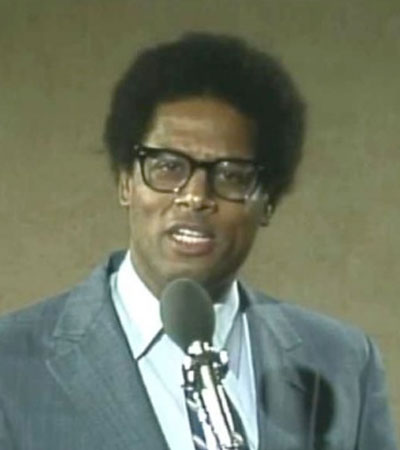


 ED VITAGLIANOEXECUTIVE VICE-PRESIDENT
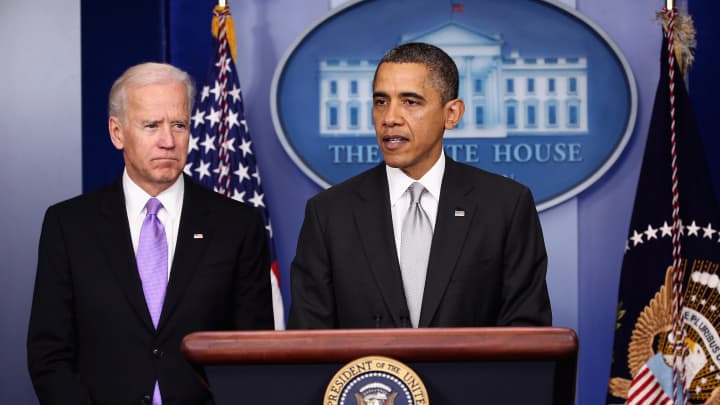



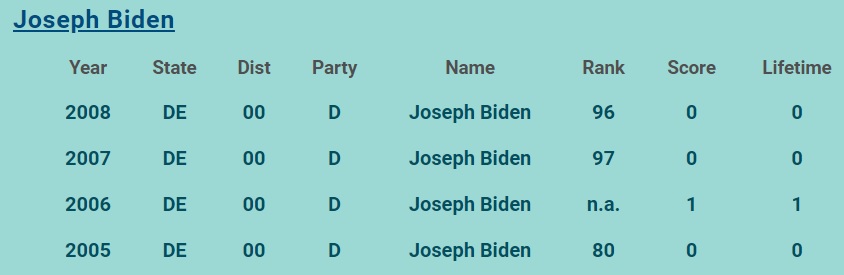






 The Daily Hatch