Category Archives: President Obama

Dumas:Herman Cain’s 9-9-9 plan will not work

Senator Obama’s Social Security Tax Plan

Uploaded by on Jul 23, 2008

In addition to several other tax increases, Senator Barack Obama wants to increase the Social Security payroll tax burden by imposing the tax on income above $250,000. This would be a sharp departure from current law, which only requires that the tax be imposed on the amount of income needed to “pay for” promised benefits. But more important, at least from an economic perspective, the Senator’s initiative would increase the top tax rate on productive behavior by as much as 12 percentage points – and this would be in addition to his proposal to kill the 2003 tax rate reductions and further boost the top rate by 4.6 percentage points. This mini-documentary explains why a big tax rate increase on highly productive people would be very damaging to America’s prosperity, especially in a competitive global economy. Simply stated, pushing top tax rates in the United States to French and German levels means at least some degree of French-style and German-style economic stagnation. Visit http://www.freedomandprosperity.org for more information.

___________________________________________

Max Brantley wrote on the Arkansas Times Blog:

Dumas exposes Herman Cain’s 9-9-9 plan

Herman Cain is the hot Republican candidate at the moment, so Ernest Dumas’ examination of some of his ideas is timely. His easy 9-9-9 tax plan? The details aren’t so hot. More like appalling. 

He would replace all federal taxes—individual and corporate income taxes, and social security, Medicare, disability, unemployment, gasoline, cigarette and all other excise taxes—with three simple tax rates: 9 percent on personal income, 9 percent on business income and a 9 percent sales tax on all commercial activity. That sounds fair enough. There would be no exemptions and deductions. Well, only a few. Investment income—capital gains, interest and dividends, the income of the leisure class—wouldn’t be taxed at all. Your social security? Yes, tax it. As for the 9 percent business tax, it would apply only to the share of a company’s revenue that was spent on wages.It would be a mammoth tax cut for the rich and corporations and a giant tax increase for the middle class, the elderly and disabled.

_________________

I have to say that I am not able to go along with the sales tax portion myself. My views are closer to those of the Cato Institute below:

Herman Cain: How About 15-15-15?

 
PrintPresidential candidate Herman Cain has made a splash with his 9-9-9 tax reform plan. I love his 9 percent income tax, but the skunk at the tax reform picnic is his 9 percent retail sales tax. Mr. Cain is an articulate advocate of free enterprise and I wish him well in the contest, but he should ditch the sales tax.Adding a retail sales tax to the federal government’s powerful tax armada would be a terrible idea from a small-government perspective. Democrats are desperate to find ways to fund soaring entitlement costs, so it’s dangerous to give them conservative political cover to add a new federal funding source.Cain’s 9 percent business tax is also a problem. It is similar to a value-added tax (VAT) because would it disallow a business deduction for wages, which would make the base much broader than the corporate income tax base. And like a VAT, Cain’s business tax would apparently be imposed on all businesses, not just those currently paying the corporate income tax.The result would be that American businesses would be collecting a large tax on workers’ wages — but workers wouldn’t see this major government grab. One caveat is that the Cain business tax would allow a deduction for dividends paid, which would narrow the base compared to the standard VAT.

In sum, two of Cain’s three 9’s are bad ideas. His advocacy of lower marginal rates and reduced taxes on savings and investment are great, but he should drop the 9-9-9 plan.

Instead, Cain and other candidates should consider a 15-15-15 plan. At first blush, that doesn’t sound very appealing because the rates are higher than Cain’s. But the business tax base would be much smaller than Cain’s, and the plan would make existing revenue sources more visible and efficient. Here’s the 15-15-15 plan:

  • 15 Percent Payroll Tax. Cain would abolish the current 15.3 percent payroll tax that funds Social Security and Medicare. That’s odd because Cain — to his credit — is proposing a Chilean-style Social Security system with personal accounts. I’d keep the current payroll tax, but move to a Chilean-style system by allowing workers to put 6 percentage points or more of the tax into a personal account. That would feel like a tax cut for workers because they would retain ownership of the money. I would also require that all 15.3 percent of the tax be listed on employee pay stubs so that the burden is highly visible. Currently, workers only see half of the payroll tax, and thus might be unaware of the high cost of these retirement programs.
  • 15 Percent Personal Income Tax. Like Cain, I’d get rid of just about all deductions and other breaks under the income tax, except pro-savings features such as the 401(k) rules. It’s also reasonable to retain a substantial basic exemption for low-income filers, as under the Dick Armey/Steve Forbes “flat tax” plans. The Armey/Forbes plans had rates in the range of 17 to 20 percent, but they only taxed labor income at the individual level, not capital income. Technically, that is the right way to go under a flat tax, but as a bow to today’s political realities, we might want to tax wages, dividends, interest and capital gains all at 15 percent.
  • 15 Percent Corporate Income Tax. We should cut the 35 percent corporate income tax rate to 15 percent. People say we should trade a rate cut for loophole closing, but loophole closing is not worth the effort. Corporate loopholes are far smaller than loopholes in the individual code, and trying to scrap them just creates a blockade of business opposition to reform. Also, if we dropped the rate to 15 percent, the base would automatically broaden as businesses reduced their tax avoidance and evasion. Corporate profits parked offshore would flood back into the United States, and capital investment would get a huge boost. In the long-run, policymakers should consider switching to the simpler cash-flow business base under the Armey/Forbes flat tax, but if we cut the rate to 15 percent, the distortions caused by the current base would be greatly reduced anyway.

How much revenue would 15-15-15 raise? You could probably make it revenue-neutral by adjusting the basic exemption amount under the individual income tax. Dick Armey’s flat tax exemption was huge at about $35,000 for a family of four. A lower exemption amount makes more sense, but this is a variable that could be fine-tuned.

Of course, tax reform would be much easier if it created an overall tax cut. And that would be much easier to achieve if Congress cut spending. So I’d encourage Mr. Cain and the other candidates to roll up their sleeves and give us their detailed spending-cut plans. As a modest first step, how about a 9-9-9-9-9-9-9-9 plan to slice 9 percent off the budget of every federal agency?

This article appeared on The Daily Caller on October 14, 2011.

Related posts:

Social Security is a Ponzi scheme (part 13)

Saving Social Security with Personal Retirement Accounts Uploaded by afq2007 on Jan 10, 2011 There are two crises facing Social Security. First the program has a gigantic unfunded liability, largely thanks to demographics. Second, the program is a very bad deal for younger workers, making them pay record amounts of tax in exchange for comparatively meager benefits. This […]

Milton Friedman:Republicans are wrong to oppose payroll tax reduction (Part 2 of Friedman interview with John Hawkins)

 Milton Friedman and Ronald Reagan John Brummett is critical of Republicans for opposing the payroll tax reduction and I have to agree with him on this. In an interview shortly after the Bush Tax Cuts passed Milton Friedman was asked: John Hawkins:Do you think George Bush, with the economy being as it was, did the […]

John Hawkins interview with Milton Friedman (Part 1)

Uploaded by YAFTV on Aug 19, 2009 Here is the first part  of the interview: Written By : John Hawkins   Yesterday, I did a twenty minute interview by phone with Milton Friedman. Of course, Mr. Friedman has an INCREDIBLE resume. He won the 1976 Nobel Memorial Prize for economic science, won the “Presidential Medal of […]

Social Security is a Ponzi scheme (Part 12)

U.S. Senator Rand Paul Speaks at Cato University 2011 Uploaded by catoinstitutevideo on Sep 6, 2011 http://www.cato.org/multimedia/subscribe.php U.S. Senator Rand Paul (R-KY) spoke at this year’s Cato University on everything from national healthcare and the commerce clause to spending cuts and social security reform. Cato University is the Cato Institute’s premier educational event of the […]

Social Security is a Ponzi scheme (Part 11)

Dan Mitchell on Social Security Uploaded by catoinstitutevideo on Aug 19, 2010 Discussing the troubles facing social security, with Mark Walsh, Left Jab host and Dan Mitchell, Cato Institute. Social Security is a Ponzi scheme (Part 4) Governor Rick Perry got in trouble for calling Social Security a Ponzi scheme and I totally agree with […]

Milton Friedman discusses Reagan and Reagan discusses Friedman

Uploaded by YAFTV on Aug 19, 2009 Nobel Laureate Dr. Milton Friedman discusses the principles of Ronald Reagan during this talk for students at Young America’s Foundation’s 25th annual National Conservative Student Conference MILTON FRIEDMAN ON RONALD REAGAN In Friday’s WSJ, Milton Friedman reflectedon Ronald Reagan’s legacy. (The link should work for a few more […]

Social Security is a Ponzi scheme (Part 10)

Milton Friedman – The Social Security Myth Uploaded by LibertyPen on Mar 5, 2010 Using Social Security as his prime example, Professor Friedman explodes the myth that the major expansions in government resulted from popular demand. In a speech delivered more than 30 years ago, he directly relates this dynamic to today’s health care debate. […]
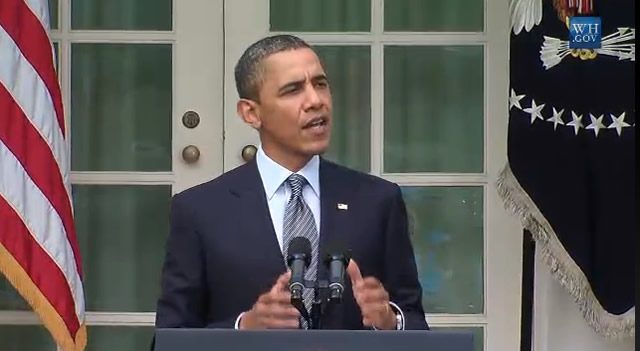
 

President Obama is wrong about atms hurting employment

I have a great article below from the Cato Institute that refutes this claim. Automation does not hurt employment in the long run. I read this incorrect claim all the time. 
Here is a portion of  interview by NBC’s Ann Curry with President Obama:

Q: Why, at a time of record profits, have you been unable to convince businesses to hire more people Mr. President?

A: [….] the other thing that happened, though, and this goes to the point you were just making: there are some structural issues with our economy, where a lot of businesses have learned to be a lot more efficient with a lot fewer workers. You see it when you go to a bank and there’s an ATM, you don’t go to a bank teller. Or you go to the airport, and you’re using a kiosk instead of checking in at the gate.

_______

 President Obama blames America’s current unemployment problem on… automation. ATMs and airport kiosks are singled out.

These words could only be uttered by someone who knows very little about economics or the history of human progress. In fact, they could only be uttered by someone who has never reflected on this question before in his  life. Because if you reflect for one moment, you come up with this glaringly obvious counterfactual: we use a lot more  labor-saving technology today than in previous generations, and yet we also employ far more people. Therefore, increased automation does not lead to decreased national employment.

If you do more than just think for a second — if you read an economic history book, for instance — you discover that increased automation doesn’t even necessarily lead to decreased employment in the industry being automated! The classic example is the 19th century British textile industry. The so-called “Luddites” smashed automated looms fearing that they would lead to rampant unemployment in their industry. But, as the new technology proliferated, textile industry employment rose. Among other reasons, increased efficiency drastically lowered the prices of textile goods, that shot demand through the roof, and to meet the new demand new workers were required to operate and maintain the new machinery.

There are other examples, of course, and the president will save the American people a great deal of hardship, and himself further embarrassment,  if he familiarizes himself with them. Here’s a good brief introduction from the British Secretary of State… under Margaret Thatcher.


Heritage Foundation Scholars respond to Obama debt reduction proposal (Part 4)

Ernest Istook at the Saint Paul Tea Party Rally 4/16/2011 Part 1

Ernest Istook, US Congressman, Heritage Foundation, http://www.heritage.org, spoke at the Saint Paul Tea Party Rally 4/16/2011. Hosted by North Star Tea Party Patriots, and Sue Jeffers.

I love going to the Heritage Foundation website for articles like this:

Obama’s Debt Reduction and Tax Proposal

Heritage Responds to Obama’s Debt Reduction and Tax Proposal

Mike Brownfield

September 19, 2011 at 11:16 am

Heritage’s experts watched President Barack Obama’s debt reduction and tax increase proposal. Here are their immediate reactions:

_______________

Who Really Is Paying Obama’s Latest Tax Hikes

Over half of President Obama’s deficit reduction plan announced today would come from tax increases – to the tune of $1.5 trillion – on families and businesses earning over $250,000 a year.

His plan singles out both industries and individuals, such as oil companies and corporate-jet owners. This is a worn out, faulty proposal for a tax system that needs major restructuring rather than a few fine-sounding flourishes. Taxing those who Obama calls the wealthiest of Americans won’t solve our deficit problem – and it certainly won’t solve our spending problem. The top 10 percent of earners in America already pay about 70 percent of federal income taxes. And adopting the flawed deficit reduction proposal of taxing the wealthiest Americans would require mathematically unfeasible tax rates.

How ironic for this speech – specifically its tax hikes component – to come on the heels of Obama’s speech on job creation? Never mind the President’s flawed assumption that the federal government can and should be in the business of creating jobs. But to propose taxing further the very Americans who should be the ones creating jobs in our economy flies in the face of logic. Rep. Paul Ryan (R-WI) summed up the situation well over the weekend:

If you tax job creators more, you get less job creation. If you tax investment more, you get less investment.”

Mr. President, America needs more investment and it needs more job creation. It needs Washington to get out of the way.

Emily Goff

This is not Tax Reform Mr. President

President Obama’s says he wants to debt committee to reform the tax code but raise taxes by $1.5 trillion at the same time. That isn’t tax reform. It is dressing up tax hikes in tax reform’s robes.

Tax Reform entails fixing the tax base so it does not favor certain economic behaviors or deter others. This is done by closing so-called “loopholes.” The revenue raised from eliminating those credits, deductions, and exemptions is then used to lower income tax rates and eliminate taxation on saving and investing to encourage more productive activity. The new and improved tax code should raise the same amount of revenue as the old code.

The new revenue would come from allowing the Bush tax cuts to expire for families and small businesses earning more than $250,000 a year, limiting deductions their deductions, and the President’s new “Buffett Rule” that would further raise these job creator’s taxes in some way which the President has not defined. He also wants to eliminate deductions, credits, and exemptions. This is a war the President is waging on success – as if so-called fat cats were the root of our spending problems.

The $1.5 trillion in higher taxes would grow the already bloated federal government by that amount. Congress never uses tax hikes for deficit reduction. It always uses the extra revenue to pay for new programs.

The brunt of these tax hikes would fall on job creators – businesses that employ workers and investors – that the economy desperately needs to start adding new jobs. Raising their taxes will only cause them to cut further back on their hiring plans or scrap them altogether. And without seriously tackling spending, taxes will have to rise perpetually.

The economy and the American people cannot afford the President’s government-growing, job-killing conception of tax reform.

Curtis Dubay


Brantley and Obama want to go after the big bad wealthy again but they happen to be the job creators

President Obama and other politicians are advocating higher taxes, with a particular emphasis on class-warfare taxes targeting the so-called rich. This Center for Freedom and Prosperity Foundation video explains why fiscal policy based on hate and envy is fundamentally misguided. For more information please visit our web page: www.freedomandprosperity.org.

_________________

President Obama really does stick to his view that the wealthy need to rescue the rest of us on everything, but that view does not work. There are not enough rich people out there to solve our budget woes. Actually what has happened in the past when the government wants more money it starts off going after the rich, but when that does not bring in much money then the only alternative is to go after the rest of us.

Max Brantley argues on the Arkansas Times Blog that most of us are taxed too much so we must tax the rich more but that will not come close to bringing us to a balanced budget. However, it will destroy job creation.

The Millionaire Tax: Yet Another Job-Killing Tax Hike

By Curtis Dubay
October 11, 2011

Like the villain in a horror movie, the many-lived millionaire tax is once again back from the dead. Senate Majority Leader Harry Reid (D–NV) dusted off this economically frightening tax hike that has repeatedly failed to pass Congress to pay for President Obama’s jobs plan (American Jobs Act of 2011, S. 1660) after Senate Democrats rejected the tax hikes the President proposed to pay for his bill.

This is the third time in the past two years that congressional Democrats have proposed a millionaire tax. The first time it was a 5.4 percent surtax to pay for health care reform. The second time was in “the People’s Budget” released by the Congressional Progressive Caucus. It failed to garner much support either time.

If the third time is the charm for the millionaire tax to become law, the economy would suffer lasting damage and reduced international competitiveness. And American workers would bear the brunt of the pain.

Permanent Tax Hike on Job Creators

The millionaire’s tax would be a 5.6 percent surtax on incomes of married filers earning over $1 million starting on January 1, 2013. The surtax would kick in at $500,000 for individual filers, so it cannot be called a true millionaire tax. It would take the place of several tax hikes President Obama proposed to pay for his jobs plan, the biggest of which was capping the deductions of high-income earners.[1] It would raise approximately $450 billion over 10 years.

The millionaire surtax is contradictory to the stated aim of the President’s jobs plan, which is to create jobs. The tax hike would fall squarely on the very job creators that the President wants to add jobs and reduce their incentive to add new workers.

Taxpayers earning more than $1 million per year are investors and businesses that are directly responsible for creating jobs. Investors provide the capital to existing businesses and startups so they can expand and add new workers. Raising their taxes would deprive them of resources they could invest in promising businesses that are looking to add employees. Raising their tax rate would deter them from taking the risk to invest.

The President and his allies say often that only a few businesses would pay higher taxes under their soak-the-rich policies. But a recent study from President Obama’s own Treasury Department shows that 50 percent of the income earned by businesses that pay their taxes through the individual income tax code and employ workers would pay the millionaire tax.[2]

The millionaire tax is a direct blow to the pass-through businesses that employ the most workers. Higher taxes would deprive these important job creators of resources they could use to add new workers or pay their workers higher wages, and it would reduce their incentive for adding new workers. These impediments to economic growth and job creation would plague the economy permanently, while the questionable jobs policies the millionaire tax would pay for are temporary.

More Job Destruction

The millionaire surtax would also apply to capital gains and dividends. This would be yet another surtax on investment income, as Obamacare already applied an extra 3.8 percent tax. Combined with that surtax and the President’s policy of increasing the capital gains and dividends rate to 20 percent from the current 15 percent rate, the millionaire surtax would raise the total rate to 29.4 percent—a 96 percent increase over the current rate.

Higher capital gains taxes would further impede job creation because it would increase the cost of new capital for businesses looking to grow or replace worn-out capital. This would make it more expensive for businesses to buy the equipment, tools, and other things they need to employ more workers and make their current workers more productive. The end result would be fewer jobs and lower wages for American workers.

The President frequently calls his tax hike plans “tax reform.” But one of the goals of tax reform is to lower the cost of capital to improve economic growth and enhance job creation. Higher taxes on capital are opposed to the aims of true tax reform.

Highest Tax Rates in the World

The U.S. is generally regarded as a low-tax nation compared to other industrialized countries. This is one of the main factors that has allowed the U.S. economy to grow at a faster rate than other developed countries for decades and has made it the envy of the world. If the millionaire surtax becomes law, the U.S. would no longer enjoy the advantages of being a low-tax country.

After adding state and local income tax rates, the 39.6 percent top federal income tax rate long fought for by President Obama and his congressional allies, the higher Medicare surtax from Obamacare, and the new millionaire surtax, the average top marginal income tax rate in the U.S. would be 55 percent. A rate at that level would leave the average U.S. rate as the third highest among developed nations in the 30-member Organization for Economic Cooperation and Development (OECD). It would be behind only Sweden and Denmark.

Taxpayers in states with above-average top marginal income tax rates would compare even worse. In fact, taxpayers in Oregon, Hawaii, and New York would pay the highest tax rates in the developed world. Taxpayers in California, Iowa, New Jersey, Vermont, Maine, Maryland, Minnesota, Idaho, North Carolina, Wisconsin, and Ohio would pay higher rates than every developed country except Denmark.

Taxpayers in the nine states without state income taxes—and therefore with the lowest income tax rates in the U.S.—would still be taxed at a higher rate than in all but seven other developed countries. Their rates would be higher than traditional high-tax countries such as France, Germany, Italy, and Spain.

In the global race for investment and capital, the millionaire tax would make almost every other developed country more competitive than the U.S.

Real Reform

The millionaire tax would end up costing the U.S. economy more jobs than the President’s jobs plan it is supposed to pay for would ever create. It would ruin American competitiveness among other developed countries.

The President and his congressional allies are better off spending their time pursuing true tax reform, which would repair the tax base and lower marginal tax rates. That would mean dropping their class warfare policies for the good of the economy and the country.

Curtis S. Dubay is a Senior Analyst in Tax Policy in the Thomas A. Roe Institute for Economic Policy Studies at The Heritage Foundation.

Social Security is a Ponzi scheme (Part 11)

Dan Mitchell on Social Security

Uploaded by on Aug 19, 2010

Discussing the troubles facing social security, with Mark Walsh, Left Jab host and Dan Mitchell, Cato Institute.

Social Security is a Ponzi scheme (Part 4)

Governor Rick Perry got in trouble for calling Social Security a Ponzi scheme and I totally agree with that. This is a series of articles that look at this issue.

Fixing Social Security

by Michael D. Tanner

This article appeared on National Review (Online) on August 18, 2010.

So, President Obama believes that Republican leaders are “pushing to make privatizing Social Security a key part of their legislative agenda if they win a majority in Congress this fall.”

To which one responds, “If only!”

There is no doubt that Social Security desperately needs reform. Social Security is already running a temporary deficit, and that deficit will turn permanent in just five years. In theory, the Social Security Trust Fund will pay benefits until 2037. That’s not much comfort to today’s 35-year-olds, who will face a 27 percent cut in benefits unless the program is reformed before they retire. But even that figure is misleading, because the trust fund contains no actual assets. The government bonds it holds are simply IOUs, a measure of how much money the government owes the system. It says nothing about where the government will get the $2.6 trillion to pay off those IOUs.

Even if Congress can find a way to redeem the bonds, the trust-fund surplus will be completely exhausted by 2037. At that point, Social Security will have to rely solely on revenue from the payroll tax — and that won’t be sufficient to pay all the promised benefits. Overall, the amount the system has promised beyond what it can actually pay now totals $18.7 trillion.

Moreover, Social Security taxes are already so high, relative to benefits, that Social Security has simply become a bad deal for younger workers, providing a below-market rate of return. In fact, many young workers will end up paying more in taxes than they receive in benefits. And most important, workers have no ownership of their benefits. This means that they are left totally dependent on the goodwill of 535 politicians to determine what they’ll receive in retirement.

Benefits are not inheritable, and the program is a barrier to wealth accumulation. Lower-income families, African-Americans, and working women suffer disproportionately.

But Republican leaders, battered by the failure of President Bush’s reform initiative and years of Democratic demagoguery, show no signs of venturing back into this issue. In fact, the only senior Republican willing to support personal accounts these days appears to be Rep. Paul Ryan, who has included in his “roadmap” a plan to allow younger workers the option of investing slightly less than half of their Social Security taxes. However, it is telling that Ryan’s roadmap has just 13 co-sponsors, none of whom are among the Republican leadership.

Given their large lead in current polls, it is perhaps understandable that Republicans don’t want to risk offending voters, particularly seniors, by wading back into the Social Security thicket. But they are making a mistake.

From a purely political standpoint, if Republicans think that remaining silent on the issue will protect them from Democratic attacks, they are the stupid party indeed. The president’s comments should serve clear notice that Democrats are not going to let a simple thing like Republicans’ actual position to get in the way of a good political weapon. Senate Majority Leader Harry Reid has run television ads attacking his opponent, Sharron Angle, for wanting “to wipe the program out,” even though she’s made clear she wants to keep it. In Kentucky, Republican senatorial candidate Rand Paul is being criticized for remarks he made in favor of Social Security privatization — in 1998. There isn’t any escape.

Even worse, as a matter of policy, by taking personal accounts off the table, Republicans may be boxing themselves into a very bad corner. There are, after all, only three options for Social Security reform: raise taxes, cut benefits, or switch to personal accounts. While benefit cuts are defensible economically, they are not likely to prove any more politically popular than personal accounts, probably less so. Democrats are already organizing to fight any reductions. And, if Republican opposition to the Medicare cuts under Obamacare is any indication, no one should expect an overabundance of courage in fighting to cut Social Security benefits.

Therefore, if Republicans are not willing to embrace personal accounts, they will be left with … tax hikes, which has been the Democrats’ goal all along.

One reason the Democrats have been so successful in expanding the government year after year is that they have the courage of their convictions. They lose on an issue time after time, but they keep coming back until they win. Take national health care: After Hillarycare went down to defeat in 1993, the Left didn’t give up. And today we have Obamacare. Republicans lost on Social Security and curled up into a fetal position, begging for mercy.

Factcheck.org rates the president’s statement that Republicans want to privatize Social Security as “mostly false.” Before too long, we may come to wish that this time he had been telling the truth.

Heritage Foundation Scholars respond to Obama debt reduction proposal (Part 3)


I love going to the Heritage Foundation website for articles like this:

Obama’s Debt Reduction and Tax Proposal

Heritage Responds to Obama’s Debt Reduction and Tax Proposal

Mike Brownfield

September 19, 2011 at 11:16 am

Heritage’s experts watched President Barack Obama’s debt reduction and tax increase proposal. Here are their immediate reactions:

_______________

Raising Investment Uncertainty Will Prolong Economic Stagnation

One of the pillars of the President’s deficit reduction plan unveiled this morning is a new minimum tax rate for millionaires. Targeting American earners whose income often comes from investment profits, the President is proposing a special tax, the “Buffett Rule,” to increase the tax burden on investors.

Investment drives productivity and economic growth. Already, many investors are shying away from markets at this uncertain time, choosing instead to preserve their principal wealth in bonds and commodities such as gold. Proposing higher taxes on investment only increases uncertainty for investors and means that even less investment will occur. Even a little less investment leads to lower productivity, slower economic growth, weaker wages and salaries, and lower household wealth. This is the exact opposite of a jobs plan. It’s a plan to prolong the economic stagnation.

Holding necessary entitlement reforms hostage to higher taxation undermines debt reduction and economic recovery. According to the Heritage Foundation,

While it is currently popular to target high-income individuals for higher taxation, it is economic folly to target investment income. Raising the tax burden on investment income further damages the economy and ultimately affects all members of society. Investment income is highly elusive, as individuals and businesses can alter the timing of investment income and forego investment altogether if their returns fall below required levels. The current economic uncertainty, which increases risk premiums, is already causing many investments to be delayed or foregone. Policymakers are scrambling to encourage businesses and entrepreneurs to start investing again. Why they would then threaten to tax the income from these investments to pay for new entitlements is not clear.  […] Taxing investment income would […] reduce investment in the economy, which is dangerous during a period of recovery.

The President is correct in that our tax system is too complex. However, the President’s proposal to increase taxes on investors is the wrong way to reform our tax system.

Romina Boccia

Want to Tackle Spending? Obamacare Has Got to Go.

President Obama pointed to changes already enacted into law under Obamacare to reduce federal health spending, but the fact is, Obamacare will increase deficit spending significantly. To fix the health care system and restore fiscal responsibility in Washington, Obamacare has got to go.

The new health law relies on tax hikes and dubious savings from broken programs to cover the cost of a major Medicaid expansion and new health entitlement spending, despite the fact that serious reform is needed to rein in the cost of the health entitlements we already struggle to pay for (which the President rejected in his speech). New Obamacare entitlement spending includes a generous taxpayer-funded subsidy to offset the cost of coverage for several million Americans, and a new, government-run long-term care insurance program already acknowledged by independent experts to be unworkable and likely to require a taxpayer bailout (in other words, more deficit spending). Obamacare originally received a favorable CBO score only because of the budget gimmicks included in the legislation. Looking beyond the smoke and mirrors shows that not only will Obamacare fail to fix our health care system, but we simply cannot afford it. Repeal is the only solution.

The President also pointed to his signature health care legislation to control the cost of health, but the new law does not tackle the main drivers of runaway health care spending and will not control costs or make health care more affordable. It leaves in place a flawed system which insulates patients from the cost of their health care decisions and encourages unnecessary spending. It keeps health care consumers from choosing the health plan that best suits their needs and from seeking the best available value for the medical goods and services they require. Obamacare increases the role of government in every corner of the health care system and grows dependency on flawed government health care programs.

Kathryn Nix


Romney attacked in Republican debate of October 11, 2011 (with video clip)

I am not too pleased with Mitt Romney and the article below shows one good reason to oppose him.

Can Mitt Romney Escape His Romneycare Albatross?

by Doug Bandow

Doug Bandow is a senior fellow at the Cato Institute. A former special assistant to Ronald Reagan, he is the author of Foreign Follies: America’s New Global Empire (Xulon).

Added to cato.org on August 29, 2011

his article appeared in Forbes on August 29, 201

Health care remains one of President Barack Obama’s greatest political weaknesses. The issue remains an equally serious problem for Republican Mitt Romney.

President Obama’s program to centralize medical decision-making in Washington remains as unpopular as ever. Insurers are raising premiums and canceling policies. The president’s promise that Americans can keep their existing coverage has turned out to be void. Health care providers and insurers are cutting back operations and dropping jobs to comply with the new law. Washington has been forced to issue temporary waivers — over 1400, as of mid-June — to moderate the legislation’s impact.

Moreover, ObamaCare has bent the cost curve upward by reinforcing the underlying third party payment problem. The administration even double counted its imagined cost savings, causing Medicare’s chief actuary to warn that the program’s latest estimates were essentially fraudulent.  Future Congresses will have to reduce promised benefits or public subsidies, or hike spending.

Doug Bandow is a senior fellow at the Cato Institute. A former special assistant to Ronald Reagan, he is the author of Foreign Follies: America’s New Global Empire (Xulon).


More by Doug Bandow

No GOP presidential contender officially supported the administration legislation. However, Mitt Romney instituted an early variant of the Obama program.

As part of his liberal phase when governor of Massachusetts — political principles have been ever-flexible for Romney — he orchestrated passage of legislation with eerie similarities to ObamaCare. Massachusetts mandates purchase of insurance, decides what benefits must be offered, and maintains a complex system of subsidies and penalties. Declared Boston Globe columnist Adrian Walker, the two programs are “not identical, but they’re certainly close kin.” MIT economist Jonathan Gruber, who advised both Gov. Romney and President Obama on health care, asserted: “Basically, it’s the same thing.”

Out of either policy pride or political calculation, Romney continues to defend his approach as “a model that works.” But he probably could not escape the legacy even if he wanted to. Walker wrote: “Health care was Romney’s greatest achievement by so wide a margin that it’s hard to know what to compare it to.”

However, Romney has grown increasingly desperate to distinguish his legislation from that of Obama. The best the former can say is that his program was constitutional, since states possess the so-called “police power,” allowing them to regulate most anything within their jurisdiction. In contrast, the federal government was created with only limited, enumerated powers. The Founders would never have imagined that Washington could force people to purchase health insurance under the guise of regulating “commerce among the states.” (So far the federal courts have split on the issue.)

Alas, even the former governor’s constitutional scruples are suspect. In 1994 he backed a federal mandate. His concern about the overweening federal government apparently was not so finely developed then.

In any case, the fact that RomneyCare is constitutional does not mean that it is wise.   Americans want their president to exercise good judgment and common sense, as well as respect the office’s constitutional limits. RomneyCare fails the first two standards.

Yet so far Romney has gotten off easy in the Republican contest. In the first debate former Minnesota Gov. Tim Pawlenty failed to criticize Romney on the issue of “ObamneyCare,” as Pawlenty termed it, when given the opportunity. Pawlenty’s belated attempt to toughen his message highlighted his political weaknesses, and he soon departed the race. (In fact, Pawlenty as well as former Utah Gov. Jon Huntsman both supported a mandate, though their respective state legislatures eventually passed more limited legislation.)

Texas Gov. Rick Perry’s entry may end Romney’s easy ride. Perry already has gone after Romney, observing: “I think Mitt is finally recognizing that the Massachusetts healthcare plan that he passed is a huge problem for him, and yeah, it was not almost perfect.” This is likely only the first of many hits.

“ObamneyCare” was not a revolutionary attempt to overturn the status quo. Rather, the usual special interests did quite well. The American Prospect’s Robert Kuttner observed: “In Massachusetts, Romney needed and got buy-in from the powerful hospital, insurance, and corporate lobbies. To win that support, he could not fundamentally change the way they did business. Instead, private insurance companies got more customers thanks to the individual mandate, hospitals kept their beds full, and corporations that failed to insure employees paid only a token penalty of $295 per worker.”

Romney’s legislation sought to extend insurance coverage. About 95% to 96% — the state claims 98.1%, but the actual rate appears to be lower — of Massachusetts residents now are insured. That is a genuine achievement but still not universal coverage. Moreover, as Peter Suderman of Reason observed, “the state’s insurance coverage rates were already unusually high to begin with: About 90% of the state’s population had health coverage prior to the law’s passage.” In short, Gov. Romney’s accomplishment actually was rather modest.

Moreover, at what cost? Defenders of RomneyCare argue that its goal was to expand coverage, not to cut expenditures, but Gov. Romney was not alone in promising “affordable” health care. Anyway, the legislation certainly was not supposed to drive costs skyward.

However, paying for more benefits for more people inevitably makes medicine more expensive. Costs for Commonwealth Care, the Massachusetts government’s subsidized insurance program alone are up a fifth over initial projections. Last year State Treasurer Timothy P. Cahill wrote: “The universal insurance coverage we adopted in 2006 was projected to cost taxpayers $88 million a year. However, since this program was adopted in 2006, our health-care costs have in total exceeded $4 billion. The cost of Massachusetts’ plan has blown a hole in the Commonwealth’s budget.”

State finances have not collapsed only because RomneyCare spread the costs widely, forcing virtually everyone in and out of the state to share the pain. Cahill cited federal subsidies as keeping the state afloat financially. Indeed, a June study from the Beacon Hill Institute concluded that “The state has been able to shift the majority of the costs to the federal government.” The Institute pointed to higher costs of $8.6 billion since the law was implemented. Just $414 million was paid by Massachusetts. Medicaid (federal payments) covered $2.4 billion. Medicare took care of $1.4 billion.

But even more costs, $4.3 billion, have been imposed on the private sector — employers, insurers, and residents. This estimate is in line with an earlier study by the Massachusetts Taxpayers Foundation, which figured that 60% of the new costs fell on individuals and businesses.

As expenses have risen, so have premiums. Noted Kuttner, “because serious cost containment was not part of the original package, premium costs in the commonwealth have risen far faster than nationally — by 10.3%, the most recent year available.” Economists John F. Cogan, Glenn Hubbard, and Daniel Kessler figured that RomneyCare inflated premiums by 6% from 2006 to 2008. This at a time where the state-subsidized Commonwealth Care was displacing private insurance for many people, thereby reducing demand, which should have reduced cost pressures.

Unfortunately, noted the Beacon Hill Institute, “private companies have no choice but to pass the higher costs onto the insured. Some of these costs fall in the double-digit range.” That naturally displeased public officials, since it undercut their claim to have solved Massachusetts’ health care problems.

Gov. Deval Patrick responded like King Canute: he insisted that premiums not rise. Predictably, his rejection of proposed rate hikes required insurers to operate at a loss and placed several in financial jeopardy.

Robert Dynan, the career insurance commissioner tasked with maintaining insurer solvency, wrote that the state “implemented artificial price caps on HMO rates. The rates, by design, have no actuarial support.”  Last year Sandy Praeger, Kansas’ insurance Commissioner, observed: “Right now, premium increase have never been more political. If there is any way to justify not granting the increase, commissioners are looking for them.”

Thankfully, Gov. Patrick’s price controls did not fare well when challenged in court and his administration eventually negotiated reduced rate hikes. But the governor then came up with a new legislative program to arbitrarily reduce medical costs.

Even weaker restrictions would be counterproductive. The Beacon Hill Institute warned that “Controlling costs will translate into capping services provided by physicians and other caregivers. These are, in effect, price controls that will dampen the incentive to provide services and lead to longer wait times and the rationing of healthcare.”

Even worse, bankrupt insurance carriers would mean either no health care coverage or expensive government bail-outs. Yet John Graham of the Pacific Research Institute detailed shrinking margins and pervasive losses for Massachusetts health insurers. He warned “that if politicians refuse to allow health plans to increase their premiums at a rate commensurate with the increase in medical costs, health plans will plunge into financial crisis within a remarkably short period of time.” Indeed, carriers “will stand at the precipice of insolvency if the political class in Massachusetts insists on continuing to follow the path that it has chosen.”

Unfortunately, worse is likely to come. The Rand Corporation concluded that “in the absence of policy change, health care spending in Massachusetts is projected to nearly double to $123 billion in 2020, increasing 8% faster than the state’s” GDP. Added Rand, continued cost increases of this magnitude “threaten the long-term viability of the initiative.” Nor can the state count on an increasingly strapped federal government to continue its generous subsidies. Moreover, at some point people and businesses will flee the state rather than pay ever more to underwrite the state’s health care program.

Finally, RomneyCare inflated demand for medical services without increasing the corresponding supply. The Beacon Hill Institute concluded: “The vast number of the newly insured residents in Massachusetts is responsible for bottlenecks in the primary care system that forces residents to utilize emergency room care at a significantly higher than expected rate.”

A fifth of adults report difficulty in finding a physician to treat them. Earlier this year the Massachusetts Medical Society discovered “more than half of primary care practices closed to new patients, longer wait times to get appointments with primary and specialty physicians, and significant variations in physician acceptance of government and government-related insurance products.”

New York internist Marc Siegel observed: “The wait time for an appointment is now routinely over a month for primary-care doctors and specialists … . Internists and family practitioners report being so overwhelmed — too many patients, too much time pressure — that more than half are closing their practices to new patients.” You’d think Massachusetts was a province of Canada.

The state’s subsidized programs effectively drive away doctors. Explained Siegel: “More than half of primary-care docs in Massachusetts find themselves unable to work with Medicaid or Commonwealth Care (state-subsidized insurance), which both pay providers poorly.” Acceptance rates are far lower than even for Medicare, and one Massachusetts legislator has proposed making medical licensure contingent upon acceptance of state-subsidized plans.

Although the expansion of insurance was supposed to reduce emergency room use, visits rose 9% from 2004 to 2008. Ironically, noted Grace-Marie Turner of the Galen Institute, “difficulties in getting primary care have led to an increasing number of patients who rely on emergency rooms for basic medical services.” Thus, uncompensated care still costs more than $400 million annually.

The state also encouraged adverse selection, as predicted. Many healthy people chose to remain uninsured and pay the fine (or lie about having purchased coverage). They then bought insurance when sick, and dropped the policy when it was no longer necessary. Massachusetts was forced to institute an open enrollment period, limiting when people could sign up for insurance — an otherwise bizarre restriction when the objective is to increase the number of people insured.

ObamneyCare is bad policy. Gov. Romney’s signature policy achievement, no less than President Obama’s principal legislative victory, is a bust.

At least Mitt Romney did not compound bad policy with unconstitutionality, but his health care failure inevitably taints his presidential bid. He rightly faces an uphill task in convincing Republican primary voters that he is the best choice to be their nominee.

President Obama will hurt charities if he is given the chance

President Obama will hurt charities if he is given the chance

Is there any common sense with the Obama administration?

Ryan Messmore

September 14, 2011 at 11:45 am

President Barack Obama proposes to pay for his $447 billion jobs bill mainly by limiting tax deductions for wealthy Americans. Unfortunately, if enacted, this policy will likely dampen charitable giving and further shift perceived responsibility for social welfare from individual donors to the state.

The President’s plan calls for lowering the rate at which wealthy taxpayers can take itemized deductions—from the current rate of 35 percent down to 28 percent, beginning in 2013. The change would affect individuals making more than $200,000 (and families making more than $250,000) per year.

This isn’t the first time President Obama has suggested this approach. He did so in his proposed 2011 and 2012 federal budgets and in 2009 attempted it as a way to pay for his health care plan.

The result of President Obama’s proposal will likely be several billion dollars in decreased revenue each year for hospitals, educational institutions, and nonprofits that help the poor. While giving would probably drop only a small percentage, the anticipated amount would total more than the combined annual operating budgets of the Ameri­can Cancer Society, World Vision, St. Jude Chil­dren’s Research Hospital, Habitat for Humanity, and the American Heart Association.

Those who are served by these institutions aren’t the only ones who would be hurt by decreased giving. Many people’s jobs would also be threatened.

“If charities have less resources, they’ll be forced to choose between laying off employees or cutting needed services,” argues William C. Daroff of the Jewish Federations of North America. “Nonprofits employ almost 10 percent of the work force nationwide, and in many states nonprofits are the largest employers. In our view, cutting the deduction is like cutting your nose to spite your face.”

While it’s true that most donors don’t make gifts based solely on the charitable deduction, experts suggest that the deduction sometimes alters the manner and timing of giving as well as the number and size of gifts. This is especially true concerning large gifts from high-income Americans, the very taxpayers Obama’s plan targets. These high earners make up only a small percentage of total American households, but they contribute almost half of the donations claimed each year as charitable deductions.

Perhaps most importantly, Obama’s proposal sends the message that federal bureaucracy can deploy the resources of the wealthy more effectively than civil society can. Decreasing an incentive for charitable giving implies that the state should assume responsibility for people’s needs, even at the expense of vital nonprofit organizations. Churches, ministries, and other community-based institutions, however, are often better equipped to serve people in need. And they often do so at reduced costs.

At a time when charities most need resources to care for the hurting and hire more employees, President Obama should seek ways to encourage voluntary giving and protect nonprofit groups. Instead, his proposed jobs bill moves the dial of social responsibility one more notch in the direction of the state.

Taxes are going up if Bush tax cuts are not made permanent

Total Tax Burden Is Rising to Highest Level in History

Everyone wants to know more about the budget and here is some key information with a chart from the Heritage Foundation and a video from the Cato Institute about the Laffer Curve. In a year and half (end of 2012) the Bush Tax Cuts will expire. However, is that wise? Not if you understand the Laffer Curve.

Taxes are projected to increase rapidly under various policy scenarios. If the 2001 and 2003 tax cuts expire and more middle-class Americans are required to pay the alternative minimum tax (AMT), taxes will reach unprecedented levels. The tax burden will climb even if those tax breaks are extended. President Obama’s budget, which cuts some taxes and raises others, also increases the overall tax burden.

PERCENTAGE OF GDP

Receive Information on Federal Budget Data
Download

Total Tax Burden Is Rising to Highest Level in History

Source: Heritage Foundation calculations based on Congressional Budget Office and White House Office of Management and Budget data.

Chart 19 of 42

In Depth

  • Policy Papers for Researchers

  • Technical Notes

    The charts in this book are based primarily on data available as of March 2011 from the Office of Management and Budget (OMB) and the Congressional Budget Office (CBO). The charts using OMB data display the historical growth of the federal government to 2010 while the charts using CBO data display both historical and projected growth from as early as 1940 to 2084. Projections based on OMB data are taken from the White House Fiscal Year 2012 budget. The charts provide data on an annual basis except… Read More

  • Authors

    Emily GoffResearch Assistant
    Thomas A. Roe Institute for Economic Policy StudiesKathryn NixPolicy Analyst
    Center for Health Policy StudiesJohn FlemingSenior Data Graphics Editor

Bono has the wrong answer for the poor of the world (Part 4)

Bono has the wrong answer for the poor of the world (Part 4)

Bono praises the election of President Obama!!!

_________________________

This is a series of posts that show that Bono (who I have been listening to since 1983) has the wrong solution to the problem of worldwide hunger.

Max Brantley wrote on the Arkansas Times Blog:

Politico reports here that a group of celebrities, including former Baptist pastor Mike Huckabee, shouted a four-letter obscenity for cameras in a promotion to speak up against famine. Bleeps and labels to cover mouths obscure the actual word.

ONE, the Bono-founded organization, says: 

In the PSA, our celebrity supporters shout out one four letter word that the majority of viewers will find offensive, in order to shine a light on something only a minority seems to be offended by. I know the tone is a bit rough for ONE — that’s no accident. If it feels like a punch in the face, then good — mission accomplished. It’s time for a wakeup call and here’s the alarm. Love it? Great. Hate it? OK. Just don’t ignore it.

 I’m not sure I believe Huck did precisely as described.

Economic freedom and free trade need to be major pieces of the puzzle to solve this problem but President Obama and Bono do not get that.

Here is a link to a great article on Africa and the problem of hunger by Greg Mills. The article appeared on April 23, 2009 in the NY Times and it mentions Bono and below is a portion of an article about Greg Mills and what he had to say to the Cato Institute.

Why Africa Is Poor and What Africans Can Do about It

Published October 15, 2010 Africa , Foreign Aid 2 Comments
Tags: ,


Cato recently held a book launch for South African development expert Greg Mills (you can pre-order at Amazon). This is a very smart book by a man who has spent his professional life in the thick of the problem (bad governments making bad policy choices).

Economic growth does not require a secret formula. While countries from Asia to Latin America have emerged from poverty, Africa has failed to realize its potential in the 50 years since independence. Greg Mills, the former director of the South African Institute of International Affairs and one of South Africa’s most respected commentators, confronts the myths surrounding African development. He shows that African poverty was not caused by poor infrastructure, lack of market access or insufficient financial resources. Instead, the main reason Africans are poor is because their leaders have made bad policy choices. Please join us to hear why a growing number of African opinion makers and ordinary citizens believe that to emerge from poverty, Africa must embrace a far greater degree of political and economic freedom.

I recommend the podcast of the event (download MP3). Excellent comments by Marian L. Tupy, a policy analyst with the Center for Global Liberty and Prosperity.

One of my favorite development economists wrote the lead blurb

“Poverty is now optional” is Greg Mills’ invigorating message’, Paul Collier, Oxford University, Author of The Bottom Billion and The Plundered Planet

African poverty has been optional for fifty years — just keep in mind that the African elites do just fine under the status quo. And so do the NGOs, who effectively get a commission cut of the western aid budgets (as does the consulting industry housed around the DC beltway).

Good job Cato! Now, if we can just inject some sanity into the NGOs and OECD aid agencies. The billowing aid continues to insulate the African leaders from the consequences of their policies (and of course insulates them from their own populations).

On aid, I was pleased to hear Greg Mills respond to questions, with, paraphrasing:

Obama said his Africa policy was to “double the aid”. In fact that is a clear signal that there is no Africa policy. An effective, Africa policy is far more nuanced and complex than “double the aid”. What is the point of aid if you do not have tools for measuring the effectiveness of that aid?

While we are at it, let’s measure the effective of NGOs! I would be perfectly happy to have the organization that I run measured. Also, measure the effectiveness of consultants.

(…) The average age of African leaders is 75. The average age of Africans is 25. The numbers for Europe are about 55, 45. I am stupified by how passive African electorates are. How long would Robert Mugabe have lasted in Serbia?