Category Archives: President Obama

Open letter to President Obama (Part 135)

President Obama c/o The White House
1600 Pennsylvania Avenue NW
Washington, DC 20500

Dear Mr. President,

I know that you receive 20,000 letters a day and that you actually read 10 of them every day. I really do respect you for trying to get a pulse on what is going on out here.

We have spent over 19 trillion on welfare since LBJ started the war on poverty and it has only brought us several generations who are dependent on the government.

Rachel Sheffield

April 20, 2012 at 2:45 pm

Multiple reports of welfare abuse have hit the headlines in recent weeks, from a million-dollar lottery winner receiving food stamps to a Massachusetts drug dealer attempting to use welfare cash to post bail and an Alabama nightclub advertising a “Food Stamp Friday” party.

These examples highlight the need to reform a welfare system that is contributing to a culture of entitlement. A crucial element of reform is tackling the ballooning costs of the welfare state, which has become the fastest growing part of government spending.

In a hearing on Tuesday headed by House Budget Committee chairman Paul Ryan (R–WI), Heritage senior fellow Robert Rector discussed the major growth in welfare costs and how to get spending under control.

First, Rector dispelled the myth that the 1996 welfare reforms ended “welfare as we know it.” In fact, he noted, since 1996 the U.S “spends 50 percent more on means-tested cash, food and housing than it did when Bill Clinton entered office on a promise to ‘end welfare as we know it.’”

The reforms have been significantly watered down over the last several years, and as Rector explained on Tuesday, they touched only one of dozens of federal welfare programs:

The public is almost totally unaware of the size and scope of government spending on the poor. This is because Congress and the mainstream media always discuss welfare in a fragmented, piecemeal basis. Each of the 79 programs is debated in isolation as if it were the only program affecting the poor. This piecemeal approach to welfare spending perpetuates the myth that spending on the poor is meager and grows little, if at all.

In reality, welfare programs are costing taxpayers hundreds of billions of dollars each year. In fiscal year 2011, total welfare costs equaled $927 billion ($717 billion from the federal government and $210 billion from states).

From a historical perspective, since the War on Poverty began in the 1960s, the government has spent $19.8 trillion (inflation-adjusted) to fund a growing list of welfare programs. As Rector points out, this is nearly three times “the cost of all military wars in U.S. history from the Revolutionary War through the current war in Afghanistan.”

Yet, despite current annual welfare costs already twice the amount necessary “to lift all Americans out of poverty,” as Rector noted, President Obama plans to increase welfare spending. Welfare costs have already grown by a third since he came to office in 2009. And this isn’t temporary spending due to the recession. President Obama plans to grow welfare such that by 2022 costs will reach $1.56 trillion. Based on President Obama’s plan, in the next decade U.S. taxpayers will fork out roughly $12.7 trillion on welfare.

To control the burgeoning costs, Rector explained that Congress must put a cap on aggregate welfare spending. Once the current recession ends or by 2013 at the latest, welfare funding should be rolled back to pre-recession levels (adjusted for inflation) and then allowed to grow thereafter only at the rate of inflation. This would save U.S. taxpayers more than $2.7 trillion over 10 years. In addition to the spending cap, Congress should tackle the causes of poverty by promoting self-reliance through work requirements and time limits as well as efforts to strengthen marriage in low-income communities.

Pouring more federal dollars into welfare is creating a burden on taxpayers and promoting a system of government dependence. Reforming welfare by getting costs under control and promoting personal responsibility is an approach that not only respects American taxpayers but also benefits individuals in need.

_____________

Thank you so much for your time. I know how valuable it is. I also appreciate the fine family that you have and your commitment as a father and a husband.

Sincerely,

Everette Hatcher III, 13900 Cottontail Lane, Alexander, AR 72002, ph 501-920-5733, lowcostsqueegees@yahoo.com

Open letter to President Obama (Part 134 B)

President Obama c/o The White House
1600 Pennsylvania Avenue NW
Washington, DC 20500

Dear Mr. President,

I know that you receive 20,000 letters a day and that you actually read 10 of them every day. I really do respect you for trying to get a pulse on what is going on out here.

I feel so strongly about the evil practice of running up our national debt. I was so proud of Rep. Todd Rokita who voted against the Budget Control Act of 2011 on August 11, 2011. He made this comment: 

 For decades now, we have spent too much money on ourselves and have intentionally allowed our kids and grandkids to pay for it.  It is intergenerational theft—literally stealing from our best asset, our posterity.  The correct course of action, as I have said from the beginning, is to enact permanent and structural reform as the price for raising the debt ceiling.  Today’s bill does not do that.

Here he has called it for what it is: THEFT!!!

Ted DeHaven noted his his article, “Freshman Republicans switch from Tea to Kool-Aid,”  Cato Institute Blog, May 17, 2012:

This week the Club for Growth released a study of votes cast in 2011 by the 87 Republicans elected to the House in November 2010. The Club found that “In many cases, the rhetoric of the so-called “Tea Party” freshmen simply didn’t match their records.” Particularly disconcerting is the fact that so many GOP newcomers cast votes against spending cuts.

The study comes on the heels of three telling votes taken last week in the House that should have been slam-dunks for members who possess the slightest regard for limited government and free markets. Alas, only 26 of the 87 members of the “Tea Party class” voted to defund both the Economic Development Administration and the president’s new Advanced Manufacturing Technology Consortia program (see my previous discussion of these votes here) and against reauthorizing the Export-Import Bank (see my colleague Sallie James’s excoriation of that vote here).

One of those Tea Party heroes was Congressman Todd Rokita of Indiana. Last year I posted this below concerning his conservative views and his willingness to vote against the debt ceiling increase:

Rokita Votes Against Debt Ceiling Increase

Aug 1, 2011 Issues: Spending Cuts and Debt


Rep. Todd Rokita voted against the Budget Control Act of 2011 because it fails to implement the long-term permanent and structural reforms necessary to put the nation back on a fiscally sustainable trajectory:

“I have heard a couple different definitions of leadership today.  Let me add mine: leadership is effectively persuading others of the proper course of action.  It is also about standing up for those who have no voice. For decades now, we have spent too much money on ourselves and have intentionally allowed our kids and grandkids to pay for it.  It is intergenerational theft—literally stealing from our best asset, our posterity.  The correct course of action, as I have said from the beginning, is to enact permanent and structural reform as the price for raising the debt ceiling.  Today’s bill does not do that.

This legislation is a Washington deal, and it barely begins to address our long-term spending problem. Our debt crisis is driven by mandatory spending on entitlement programs and this plan fails to address such spending.  Also, this plan only reduces the future debt we will pile on the backs of our kids from $10 trillion to around $7 trillion over the next decade.  It does not begin to reduce our $14 trillion in current debt. 

However, this legislation could eventually lead to the best permanent solution, a balanced budget amendment.  This is certainly worth fighting for and I will lead on that front.  But a vote alone is not worth the $2.5 trillion price tag, again to be paid by future generations. For that price, we should have required passage of a balanced budget amendment for state ratification.

I will continue to fight for a balanced budget amendment, lead our nation to live within its means and tackle out-of-control entitlement spending. It will be a long fight, but the enactment of a balanced budget amendment is the only way to fix the broken system that created this mess, both addressing our long-term fiscal health and giving Americans long-term peace of mind.”  

_______________

Thank you so much for your time. I know how valuable it is. I also appreciate the fine family that you have and your commitment as a father and a husband.

Sincerely,

Everette Hatcher III, 13900 Cottontail Lane, Alexander, AR 72002, ph 501-920-5733, lowcostsqueegees@yahoo.com

The real truth about Obamacare can be seen on the www.thedailyhatch.org

Michael Cannon on Medicare and Healthcare

You want to know the real truth about Obamacare then check out these videos and articles linked below:

American people do not want Obamacare and the regulations that go with it

In this article below you will see that the American people do not want Obamacare but yet it is being crammed down their throats and all the regulations that go with that too. Sickening Regulation by Michael D. Tanner Michael Tanner is a senior fellow at the Cato Institute and author of Leviathan on the […]

Arkansas Times praises good results of Obamacare

Gerard Matthews wrote on March 21, 2012 in the Arkansas Times: Children cannot be denied coverage because of a pre-existing condition. Young people can stay on their parents’ health insurance plan until they are 26 years old. Preventive services, which will ultimately help control health care costs, have been added to some plans at no […]

Brummett is arguing over the chairs on the Titanic as Obamacare will surely bankrupt state

Michael Cannon on Medicare and Healthcare In his article, “Medicaid and the consequences,” Arkansas Democrat-Gazette, March 20, 2012, (paywall), Brummett admits, “Medicaid will break the bank of state government if we don’t do something.” However, he never gets around to saying that Obamacare is going to ruin the state financially. It will expand this failing […]

If the Democrats want to back Obamacare then let them go down with the ship

On March 19, 2012 Jason Tolbert pointed out that the Democrats in Little Rock were using Obama’s talking points concerning Obamacare, but it appears to me that they go down with the ship according to the mood in the country. Take a look at this fine article from the Cato Institute. In this article below […]

Setting Biden Straight on Obamacare’s Anti-Conscience Mandate

Setting Biden Straight on Obamacare’s Anti-Conscience Mandate Uploaded by HeritageFoundation on Mar 3, 2012 Vice President Biden didn’t get the story quite straight. As the Obama Administration reels from the backlash for Obamacare’s anti-conscience mandate that forces religious employers to provide coverage and pay for abortion-inducing drugs, Biden yesterday set out to convince America that […]

Obama’s affordable lightbulb

It seems that government was in control of the desert then we would have a shortage of sand as Milton Friedman used to quip. You Keep Using the Word ‘Affordable.’ I Do Not Think It Means What You Think It Means. Posted by Michael F. Cannon The federal government gave a $10 million “affordability” prize […]

Brummett misses the boat on Obamacare again

Uploaded by HarrysRetroArchive on Aug 7, 2010 The stooges join the “Women Haters” club and vow to have nothing to do with the fair sex. Larry marries a girl anyway and attempts to hide the fact from Moe and Curly as they take a train trip. Director: Archie Gottler Cast: Marjorie White, A.R. Haysel, Monte […]

Brantley is wrong about Republicans losing debate on Obamacare and conscience

Religious Liberty: Obamacare’s First Casualty Uploaded by HeritageFoundation on Feb 22, 2012 http://blog.heritage.org/2012/02/22/morning-bell-religious-liberty-under-attack/ | The controversy over the Obama Administration’s anti-conscience mandate and the fight for religious liberty only serves to highlight the inherent flaws in Obamacare. This conflict is a natural result of the centralization laid out under Obamacare and will only continue until […]

“War on Women?”

Religious Liberty: Obamacare’s First Casualty Uploaded by HeritageFoundation on Feb 22, 2012 http://blog.heritage.org/2012/02/22/morning-bell-religious-liberty-under-attack/ | The controversy over the Obama Administration’s anti-conscience mandate and the fight for religious liberty only serves to highlight the inherent flaws in Obamacare. This conflict is a natural result of the centralization laid out under Obamacare and will only continue until […]

Is anything “free?”: According to Obama there is

Somebody will pay. You can bet on that. Obama’s Political Prophylactic Posted by Roger Pilon “White House compromise still guarantees contraceptive coverage for women,” reads theWashington Post headline coming out of President Obama’s press conference this afternoon. Trying to tamp down the escalating political storm his administration created three weeks ago when it ruled that, under Obamacare, employers with […]

Single-Payer healthcare system work? (Free Market response, Part 2)

_____________________________________________________ I would like to respond the idea of a single payer healthcare system by quoting from David Hogberg’s article “Free Market Cure – The Myths of Single-Payer Health Care.” He notes: A single-payer health care system is one in which a single-entity — the government — collects almost all of the revenue for and pays almost all of […]


Open letter to President Obama (Part 133 B)

Michael Savage May 17 2012 hr 3 segment 3.wmv

Published on May 17, 2012 by

The Savage Nation

Savage guest Mark Calabria from the Cato Institute discusses J P Morgan in this segment.

www.cato.org

_________________

President Obama c/o The White House
1600 Pennsylvania Avenue NW
Washington, DC 20500

Dear Mr. President,

I know that you receive 20,000 letters a day and that you actually read 10 of them every day. I really do respect you for trying to get a pulse on what is going on out here.

The free market works much better than federal officials do. Take a look at how how our money is managed every year by the federal government. The federal government has 2.1 trillion coming in and 3.6 trillion going out!! I sincerely hope the federal government will stay out of Wall Street business!!! TARP was a joke and it ended up with a government takeover of GM.

Mike Brownfield

May 15, 2012 at 8:55 am

The lingering headline on the front pages this week is that JP Morgan Chase suffered a massive loss on a hedging strategy, costing them $2 billion. That’s no small mistake, and it’s an example of how bad decisions in the free market can cost big money. But just because mistakes have consequences doesn’t mean that the mighty hand of government needs to step in to save us from ourselves. However, that’s what some on the left are now calling for.

The news of this blunder hit last week when JP Morgan CEO Jamie Dimon revealed that the bank took a $2 billion loss over the past six weeks in a strategy intended to hedge against risks to the bank’s assets that could come from market volatility caused by the Euro crisis. On Sunday’s Meet the Press, Dimon admitted, “In hindsight, we took far too much risk. The strategy we had was badly vetted. It was badly monitored. It should never have happened.”

The company is certainly paying the price in losses, as are those responsible for the bad decision making. The Los Angeles Times reports that the bank’s stock fell 12% since it disclosed the loss last week, the executive who oversaw the department responsible for the loss retired on Monday, and JP Morgan’s reputation as an extremely well managed bank has been damaged.

But does the flawed strategy and the resulting loss mean that Washington should step in with more regulation of Wall Street? Yesterday, White House press secretary Jay Carney used the news of JP Morgan’s loss to call for more regulations, remarking, “The president fought very hard against Republicans and Wall Street lobbyists to get Wall Street reform passed . . . I think that this event merely reinforces why the President was right to take on this fight and why we still need to make sure it’s implemented.”

Likewise, former Obama adviser Elizabeth Warren called for Dimon to resign from the New York Federal Reserve Board and slammed Wall Street. “What happened here is not just about JP Morgan case, it’s about the kind of attitudes, that the bank should be regulating themselves instead of having real oversight,” Warren said. “We have to say as a country, no, the banks cannot regulate themselves.”

What’s needed is some perspective, not more regulation from Washington. Heritage’s David C. John explains that while JP Morgan’s loss represents a clear failure of management, it’s not a systemic problem that requires or would be fixed by additional regulation. For starters, JP Morgan is a $2.3 trillion bank with a net worth of $189 billion, meaning that this loss reduced the bank’s capital ratio from 8.4 percent to 8.2 percent. In other words, the bank can absorb the loss, and it’s nowhere close to needing any form of federal intervention.

Some more perspective could be gleaned by examining the $3.2 billion loss the U.S. Post Office experienced in the most recent quarter, or the billions lost on risky green energy bets made by President Obama and Energy Secretary Steven Chu. Only those losses weren’t incurred by private investors, but by you the taxpayer.

What’s more, John explains, the regulations that are now being called for — particularly the so-called Volcker Rule — would not have prevented the losses since it would not have affected this transaction. Finally, John writes, the system worked as is. “JPMorgan Chase losses were not discovered by regulators; they were discovered by the bank itself conducting its own management reviews.”

What America is witnessing is the left using the news of JP Morgan’s bad judgment as an excuse for more government regulation. But as even Carney acknowledged, regulations “can’t prevent bad decisions from being made on Wall Street.”

For all the wrangling over JP Morgan’s loss, John points out that the bank is still expected to make a healthy profit for all of 2012. Yes, it made a mistake, and yes, that mistake cost a lot of money. But risks, mistakes and costs are part of capitalism. They’re the price we pay for all the benefits that a free market affords us.

____________

Thank you so much for your time. I know how valuable it is. I also appreciate the fine family that you have and your commitment as a father and a husband.

Sincerely,

Everette Hatcher III, 13900 Cottontail Lane, Alexander, AR 72002, ph 501-920-5733, lowcostsqueegees@yahoo.com

Open letter to President Obama (Part 134)

President Obama c/o The White House
1600 Pennsylvania Avenue NW
Washington, DC 20500

Dear Mr. President,

I know that you receive 20,000 letters a day and that you actually read 10 of them every day. I really do respect you for trying to get a pulse on what is going on out here. Below is an article from the Heritage Foundation:

Washington also misuses taxpayer dollars in less blatant ways. Take the 47 federal job training programs the federal government runs, for example. Or the 15 agencies involved in food safety and inspection. Congress ought to identify areas of program duplication and fragmentation and then consolidate or eliminate unnecessary ones. This recent Government Accountability Office report offers a myriad of programs to cut, combine, or restructure.

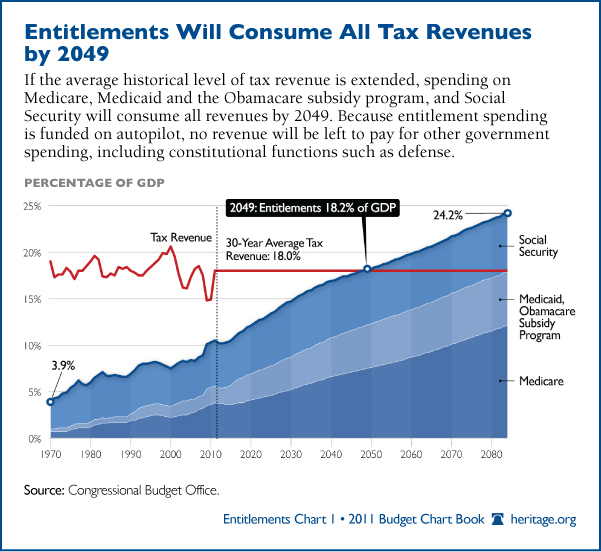
Don’t be fooled, though, by thinking that tackling waste alone or combining a handful of programs will solve the country’s twin crises of spending and debt. Waste is deplorable and unacceptable, yet it is small in comparison to the trillion-dollar-plus deficits recorded in recent years. More importantly, it is not the main contributor to Washington’s spending problem. The three major entitlement programs—Medicare, Medicaid, and Social Security—constitute the lion’s share of current spending.

The future portends an even more oppressive burden from entitlement spending. The first baby boomers have reached retirement already, and millions more will become eligible for Medicare and Social Security benefits. Entitlement spending is on track to eclipse all tax revenues, meaning at that point the federal government would have to tax or borrow money to fund all other programs.

Congress and the President are expected to spend today’s taxpayer dollars wisely. They can accomplish this by rooting out waste, eliminating duplicative programs, and returning to a more limited government at the federal level. All of this will help restore Americans’ trust in their government. But to assure Americans that their children can have an even more prosperous future than they had, Congress should do the hard work of proposing entitlement program reforms—reforms that will get spending under control and unshackle future generations from crushing levels of taxes and debt.

____________

Thank you so much for your time. I know how valuable it is. I also appreciate the fine family that you have and your commitment as a father and a husband.

Sincerely,

Everette Hatcher III, 13900 Cottontail Lane, Alexander, AR 72002, ph 501-920-5733, lowcostsqueegees@yahoo.com

Videos by Cato Institute on failed stimulus plans

In this post I have gathered several videos from the Cato Institute concerning the subject of failed stimulus plans.

_____

Government Spending Doesn’t Create Jobs

Uploaded by on Sep 7, 2011

Share this on Facebook: http://on.fb.me/qnjkn9 Tweet it: http://tiny.cc/o9v9t

In the debate of job creation and how best to pursue it as a policy goal, one point is forgotten: Government doesn’t create jobs. Government only diverts resources from one use to another, which doesn’t create new employment.

Video produced by Caleb Brown and Austin Bragg.

___________________________

Keynesian Catastrophe: Big Money, Big Government & Big Lies

Uploaded by on Jan 19, 2012

The Cato Institute’s Dan Mitchell explains why Obama’s stimulus was a flop! With Glenn Reynolds.

See more at http://www.pjtv.com and http://www.cato.org

___________________

Keynesian Economics Is Wrong: Bigger Gov’t Is Not Stimulus

Uploaded by on Dec 15, 2008

Based on a theory known as Keynesianism, politicians are resuscitating the notion that more government spending can stimulate an economy. This mini-documentary produced by the Center for Freedom and Prosperity Foundation examines both theory and evidence and finds that allowing politicians to spend more money is not a recipe for better economic performance.

___________________

Obama’s So-Called Stimulus: Good For Government, Bad For the Economy

Uploaded by on Jan 26, 2009

President Obama wants Congress to dramatically expand the burden of government spending. This CF&P Foundation mini-documentary explains why such a policy, based on the discredited Keynesian theory of economics, will not be successful. Indeed, the video demonstrates that Obama is proposing – for all intents and purposes – to repeat Bush’s mistakes. Government will be bigger, even though global evidence shows that nations with small governments are more prosperous.

____________

Big Government Is Not Stimulus: Why Keynes Was Wrong (The Condensed Version)

Uploaded by on Jan 13, 2009

The CF&P Foundation has released a condensed version of our successful mini-documentary explaining why so-called stimulus schemes do not work. Based on a theory known as Keynesianism, politicians are resuscitating the notion that more government spending can stimulate an economy. This mini-documentary produced by the Center for Freedom and Prosperity Foundation examines both theory and evidence and finds that allowing politicians to spend more money is not a recipe for better economic performance.

_________________

Eight Reasons Why Big Government Hurts Economic Growth

Uploaded by on Aug 17, 2009

This Center for Freedom and Prosperity Foundation video analyzes how excessive government spending undermines economic performance. While acknowledging that a very modest level of government spending on things such as “public goods” can facilitate growth, the video outlines eight different ways that that big government hinders prosperity. This video focuses on theory and will be augmented by a second video looking at the empirical evidence favoring smaller government.

___________________

Keynesian Economics Is Wrong: Economic Growth Causes Consumer Spending, Not the Other Way

Uploaded by on Nov 29, 2010

Politicians and journalists who fixate on consumer spending are putting the cart before the horse. Consumer spending generally is a consequence of growth, not the cause of growth. This Center for Freedom and Prosperity video helps explain how to achieve more prosperity by looking at the differences between gross domestic product and gross domestic income. www.freedomandprosperity.org

_____________

Deficits, Debts and Unfunded Liabilities: The Consequences of Excessive Government Spending

Uploaded by on May 10, 2010

Huge budget deficits and record levels of national debt are getting a lot of attention, but this video explains that unfunded liabilities for entitlement programs are Americas real red-ink challenge. More important, this CF&P mini-documentary reveals that deficits and debt are symptoms of the real problem of an excessive burden of government spending. www.freedomandprosperity.org

___________

Now that I have been critical of the Democrat President, I wanted to show that I am not concerned about taking up for Republicans but looking at the facts. President Clinton did increase government spending at a slower rate than many other presidents. Here are two  videos that praise both Reagan and Clinton for both accomplished this feat.

Spending Restraint, Part I: Lessons from Ronald Reagan and Bill Clinton

Uploaded by on Feb 14, 2011

Ronald Reagan and Bill Clinton both reduced the relative burden of government, largely because they were able to restrain the growth of domestic spending. The mini-documentary from the Center for Freedom and Prosperity uses data from the Historical Tables of the Budget to show how Reagan and Clinton succeeded and compares their record to the fiscal profligacy of the Bush-Obama years.

______________

Spending Restraint, Part II: Lessons from Canada, Ireland, Slovakia, and New Zealand

Uploaded by on Feb 22, 2011

Nations can make remarkable fiscal progress if policy makers simply limit the growth of government spending. This video, which is Part II of a series, uses examples from recent history in Canada, Ireland, Slovakia, and New Zealand to demonstrate how it is possible to achieve rapid improvements in fiscal policy by restraining the burden of government spending. Part I of the series examined how Ronald Reagan and Bill Clinton were successful in controlling government outlays — particularly the burden of domestic spending programs. www.freedomandprosperity.org

______________

It seems that liberals will never wake up. On 3-8-12 a Arkansas Times blogger pointed out that Obama’s stimulus in 2009 was not made up of just increased but also tax cuts. That is true but the real truth is that there have been about 1/2 dozen stimulus efforts by President Obama and all of them have failed.  Over and over they have tried stimulus plans but they don’t work. Take a look at this excellent article from the Cato Institute:

Keynesian Policies Have Failed

by Chris Edwards

Chris Edwards is the director of tax policy studies at the Cato Institute and the editor of Downsizing Government.org.

Added to cato.org on December 2, 2011

This article appeared on U.S. News & World Report Online on December 2, 2011

Lawmakers are considering extending temporary payroll tax cuts. But the policy is based on faulty Keynesian theories and misplaced confidence in the government’s ability to micromanage short-run growth.

In textbook Keynesian terms, federal deficits stimulate growth by goosing “aggregate demand,” or consumer spending. Since the recession began, we’ve had a lot of goosing — deficits were $459 billion in 2008, $1.4 trillion in 2009, $1.3 trillion in 2010, and $1.3 trillion in 2011. Despite that huge supposed stimulus, unemployment remains remarkably high and the recovery has been the slowest since World War II.

Policymakers should ignore the Keynesians and their faulty models, and instead focus on reforms to aid long-run growth…

Yet supporters of extending payroll tax cuts think that adding another $265 billion to the deficit next year will somehow spur growth. That “stimulus” would be on top of the $1 trillion in deficit spending that is already expected in 2012. Far from helping the economy, all this deficit spending is destabilizing financial markets, scaring businesses away from investing, and imposing crushing debt burdens on young people.

For three years, policymakers have tried to manipulate short-run economic growth, and they have failed. They have put too much trust in macroeconomists, who are frankly lousy at modeling the complex workings of the short-run economy. In early 2008, the Congressional Budget Office projected that economic growth would strengthen in subsequent years, and thus completely missed the deep recession that had already begun. And then there was the infamously bad projection by Obama’s macroeconomists that unemployment would peak at 8 percent and then fall steadily if the 2009 stimulus plan was passed.

Chris Edwards is the director of tax policy studies at the Cato Institute and the editor of Downsizing Government.org.


More by Chris Edwards

Some of the same Keynesian macroeconomists who got it wrong on the recession and stimulus are now claiming that a temporary payroll tax break would boost growth. But as Stanford University economist John Taylor has argued, the supposed benefits of government stimulus have been “built in” or predetermined by the underlying assumptions of the Keynesian models.

Policymakers should ignore the Keynesians and their faulty models, and instead focus on reforms to aid long-run growth, which economists know a lot more about. Cutting the corporate tax rate, for example, is an overdue reform with bipartisan support that would enhance America’s long-run productivity and competitiveness.

If Congress is intent on cutting payroll taxes, it should do so within the context of long-run fiscal reforms. One idea is to allow workers to steer a portion of their payroll taxes into personal retirement accounts, as Chile and other nations have done. That reform would feel like a tax cut to workers because they would retain ownership of the funds, and it would begin solving the long-term budget crisis that looms over the economy.

Related posts:

Stimulus plans do not work (part 2)

Dan Mitchell discusses the effectiveness of the stimulus Uploaded by catoinstitutevideo on Nov 3, 2009 11-2-09 When I think of all our hard earned money that has been wasted on stimulus programs it makes me sad. It has never worked and will not in the future too. Take a look at a few thoughts from […]

Stimulus plans do not work (Part 1)

Government Spending Doesn’t Create Jobs Uploaded by catoinstitutevideo on Sep 7, 2011 Share this on Facebook: http://on.fb.me/qnjkn9 Tweet it: http://tiny.cc/o9v9t In the debate of job creation and how best to pursue it as a policy goal, one point is forgotten: Government doesn’t create jobs. Government only diverts resources from one use to another, which doesn’t […]

Dumas thinks we don’t need Balanced Budget Amendment but should balance it on our own

In his recent article Ernie Dumas sticks to his guns that we should balance the budget without being forced to with a “Balanced Budget Amendment,” but I wonder how well that has worked so far? I have made this a key issue for this blog in the past as you can tell below: Dear Senator […]

Maybe the “Occupy Wall Street” crowd should be angry at Obama

(Picture from Arkansas Times Blog) When I think about all the anger and hate coming from the Occupy Wall Street crowd, I wonder if they have read this story below? Solyndra: Crooked Politics or Just Bad Economics? Posted by David Boaz Amy Harder has a good take on the Solyndra issue in National Journal Daily […]

Dear Senator Pryor, why not pass the Balanced Budget Amendment? (Part 13 Thirsty Thursday, Open letter to Senator Pryor)

Dear Senator Pryor, why not pass the Balanced Budget Amendment? (Part 13 Thirsty Thursday, Open letter to Senator Pryor) Office of the Majority Whip | Balanced Budget Amendment Video In 1995, Congress nearly passed a constitutional amendment mandating a balanced budget. The Balanced Budget Amendment would have forced the federal government to live within its […]

Mark Pryor not for President’s job bill even though he voted for it

Andrew Demillo pointed this out  and also Jason Tolbert noted: PRYOR OPPOSES THE OBAMA JOBS BILL THAT HE VOTED TO ADVANCE  Sen. Mark Pryor has been traveling around the state touting a six-part jobs plan that he says “includes a number of bipartisan initiatives, is aimed at creating jobs by setting the table for growth, encouraging new […]

Is a lack of money the problem for our public schools?

Is a lack of money the problem for our public schools? Everything You Need to Know About Public School Spending in Less Than 2½ Minutes Posted by Adam Schaeffer Neal McCluskey gutted the President’s new “Save the Teachers” American Jobs Act sales pitch a good while back, as did Andrew Coulson here. Thankfully, it seems […]

Open letter to President Obama (Part 133)

President Obama c/o The White House
1600 Pennsylvania Avenue NW
Washington, DC 20500

Dear Mr. President,

I know that you receive 20,000 letters a day and that you actually read 10 of them every day. I really do respect you for trying to get a pulse on what is going on out here.

I wish the federal government would go back to spending less than 5% of GDP like they did the first 150 years of our country’s history. We could cut down on a lot of wasteful spending if we did that.

Mike Brownfield

April 19, 2012 at 8:57 am

In a speech yesterday in Elyria, Ohio — a small town just outside Cleveland sitting at the forks of the Black River — President Barack Obama delivered a politically charged speech in which he hearkened back to the country’s roots, saying that his opponents “don’t seem to remember how America was built.” In his view, taxpayers want their money spent in ways that will help further “the larger project we call America.” In other words, more spending and bigger government paid for with higher taxes.

In a city quite unlike Elyria, thousands of miles west, sprawling forth from the desert just east of Death Valley, officials from this federal government provided the latest example of what happens when the president’s philosophy succeeds — when layer upon layer of government grows so big that it begins to serve the interests of a ruling class, rather than the people from whom it derives its power. Two years ago in Las Vegas, the General Services Administration (GSA) — a little-known federal agency that helps manage other federal agencies — blew through $820,000 in taxpayer funds for a lavish, booze-fueled conference for 300 employees, complete with magic shows, margaritas, and a self-produced rap video making fun of the spending. (It’s worth mentioning that in 2009, Senate Majority Leader Harry Reid (D-NV) asked White House Chief of Staff Rahm Emanuel for help in encouraging government meetings to be held in Nevada.)

That’s just the giant tip of the iceberg for this wasteful behemoth, as reports have emerged of other taxpayer-financed “business trips,” including junkets to Hawaii, South Pacific islands, California’s Napa Valley and Palm Springs. A hotline has been set up for employee tips on wrongdoing, and this week the House is conducting hearings on the GSA’s gross abuse of taxpayer funds.

Sadly, government waste, fraud and abuse isn’t limited to just one agency. Look no further than the Department of Energy (DOE) whose inspector general said yesterday that he’s overseeing 250 to 300 open criminal investigations into the “entire spectrum of DOE activities,” including 100 reviews involving more than $35 billion in stimulus dollars, according to Politico. In addition, it was reported that the investigators are looking into the “use of thousands of outside contractors, federal money being diverted for personal use, false data in grant and loan applications, conflicts of interest and incomplete and inferior work from DOE weatherization grant winners.” To date, those investigations have led to eight criminal prosecutions and the recovery of $2.3 million.

How commonplace is this waste? Given the sheer size and scope of the government — which is set to spend $6.3 trillion this year — it’s impossible to say. But just as pernicious as the countless billions that have been squandered is the cancerous attitude that has taken hold in Washington and that is metastasizing across the land. It’s one of thoughtless entitlement in which individuals who live off the bureaucratic beast reflexively take and spend more all while doing less, giving no consideration to those who fuel their appetites.

Of course, that mindset is not exclusive to the federal level, and examples abound of government employees taking from the public coffers. Just this week in our nation’s capital, 90 city employees were suspended for receiving unemployment benefits while still holding city jobs, and 40 former city workers cashed unemployment checks that they weren’t entitled to. All told, the city paid out some $800,000 in illegitimate benefits. But it’s not just about outright theft. It’s also about out-of-whack expectations that one is entitled to receive without doing. In Michigan, for example, a public school teacher is advising her students not to become teachers because under a new state law, she won’t be able to retire at age 47 as she hoped.

Contrary to what those on the left might believe, this swollen government is not what was intended.

Flowing from the  Declaration of Independence and embodied in the Constitution, the federal government was designed on the principle that the ultimate authority of a legitimate government depends on the consent of a free people. As Former Attorney General Edwin Meese III writes in The Heritage Guide to the Constitution, “Nature does not single out who is to govern and who is to be governed; there is no divine right of kings. Nor are rights a matter of legal privilege or the benevolence of some ruling class.” Yet in this government, a privileged few are acting outside those bounds with the expectation that they have the right to do as they please, unfettered by any obligation to the people.

Under the Obama Administration, the situation has gotten worse. The president turns to bigger government and higher taxes as a solution to every problem. On health care, unemployment, education and energy, Obama has reflexively pursued a policy of more is more — more spending paid for with more taxes. This week served up another prime example when the president called for increased regulations and $52 million in spending to combat high gas prices — even though he admitted that the measures wouldn’t have any immediate impact on the price at the pump.

As the people lose control over this unrestrained government, those with the most cash are the ones with a voice. In an interview last week with The New York Times, former Democratic congressman Patrick Kennedy revealed that access to the Obama White House is a “quid pro quo” based on how much money one contributes to the president’s campaign. That news, though, likely is not a shock to an American people who have come to expect the worst, not the best, from Washington. However, that is not how America was built, it’s not the government we must have, nor is it the one that the Founders envisioned.

_____________

Thank you so much for your time. I know how valuable it is. I also appreciate the fine family that you have and your commitment as a father and a husband.

Sincerely,

Everette Hatcher III, 13900 Cottontail Lane, Alexander, AR 72002, ph 501-920-5733, lowcostsqueegees@yahoo.com

Open letter to President Obama (Part 132 B)

Rep. Quayle on Fox News with Neil Cavuto

__________________

President Obama c/o The White House
1600 Pennsylvania Avenue NW
Washington, DC 20500

Dear Mr. President,

I know that you receive 20,000 letters a day and that you actually read 10 of them every day. I really do respect you for trying to get a pulse on what is going on out here.

We have to get people to realize that the most important issue is the debt!!! Recently I read a comment by Congressman Ben Quayle (R-AZ) made  after voting against the amended Budget Control Act on August 1, 2011. He said it was important to compel “Congressional Democrats and the Obama Administration to finally recognize how central America’s debt problem truly is.”

I can not agree more. I am glad that Rep. Quayle was brave enough to vote against this bill and I wish more were brave like him.

Michael Tanner of the Cato Institute in his article, “Hitting the Ceiling,” National Review Online, March 7, 2012 noted:

After all, despite all the sturm und drang about spending cuts as part of last year’s debt-ceiling deal, federal spending not only increased from 2011 to 2012, it rose faster than inflation and population growth combined.

We need some national statesmen (and ladies) who are willing to stop running up the nation’s credit card.

Ted DeHaven noted his his article, “Freshman Republicans switch from Tea to Kool-Aid,”  Cato Institute Blog, May 17, 2012:

This week the Club for Growth released a study of votes cast in 2011 by the 87 Republicans elected to the House in November 2010. The Club found that “In many cases, the rhetoric of the so-called “Tea Party” freshmen simply didn’t match their records.” Particularly disconcerting is the fact that so many GOP newcomers cast votes against spending cuts.

The study comes on the heels of three telling votes taken last week in the House that should have been slam-dunks for members who possess the slightest regard for limited government and free markets. Alas, only 26 of the 87 members of the “Tea Party class” voted to defund both the Economic Development Administration and the president’s new Advanced Manufacturing Technology Consortia program (see my previous discussion of these votes here) and against reauthorizing the Export-Import Bank (see my colleague Sallie James’s excoriation of that vote here).

One of those Tea Party heroes was Congressman Ben Quayle of Arizona. Last year I posted this below concerning his conservative views and his willingness to vote against the debt ceiling increase:

Rep. Quayle Votes No on Final Debt Ceiling Deal

Monday August 01, 2011

FOR IMMEDIATE RELEASE

Contact: Richard Cullen

202-225-3361

WASHINGTON (DC) Congressman Ben Quayle (R-AZ) released the following statement Monday after voting against the amended Budget Control Act:  

 “Last week I voted for the Boehner plan because— while imperfect—it made adequate strides to get our fiscal House in order. The final debt-ceiling bill, however, goes in a direction that I cannot support. Due to the design of the bill’s trigger mechanism, I am concerned that President Obama will be able to use the threat of tax hikes and drastic defense cuts to continue to amass record levels of spending.

 “Though I didn’t support today’s bill, I want to commend Speaker Boehner and the House Republican Leadership for changing the culture in Washington and compelling Congressional Democrats and the Obama Administration to finally recognize how central America’s debt problem truly is.

 “On another note, it was a very special moment seeing Congresswoman Gabby Giffords cast her vote on the House Floor tonight. Both sides of the aisle greeted her with a loud standing ovation. It was a nice way to end what has been a very tense few days in the House.”

_________________

Thank you so much for your time. I know how valuable it is. I also appreciate the fine family that you have and your commitment as a father and a husband.

Sincerely,

Everette Hatcher III, 13900 Cottontail Lane, Alexander, AR 72002, ph 501-920-5733, lowcostsqueegees@yahoo.com


Dan Mitchell of the Cato Institute takes on entitlement reform

It is the elephant in the room that nobody wants to talk about. Here Dan Mitchell takes it on.

Most people have a vague understanding that America has a huge long-run fiscal problem.

They’re right, though they probably don’t realize the seriousness of that looming crisis.

Here’s what you need to know: America’s fiscal crisis is actually a spending crisis, and that spending crisis is driven by entitlements.

More specifically, the vast majority of the problem is the result of Medicaid, Medicare, and Social Security, programs that are poorly designed and unsustainable.

America needs to fix these programs…or eventually become another Greece.

Fortunately, all of the problems can be solved, as these three videos demonstrate.

The first video explains how to fix Medicaid.

Promote Federalism and Replicate the Success of Welfare Reform with Medicaid Block Grants

Uploaded by on Jun 26, 2011

The Medicaid program imposes high costs while generating poor results. This Center for Freedom and Prosperity Foundation video explains how block grants, such as the one proposed by Congressman Paul Ryan, will save money and improve healthcare by giving states the freedom to innovate and compete.

The second video shows how to fix Medicare.

Saving Medicare: Free Market Reforms Are Better than Bureaucratic Rationing

Uploaded by on May 17, 2011

This Center for Freedom and Prosperity Foundation video explains how a “premium-support” plan would solve Medicare’s fiscal crisis and improve the overall healthcare system. This voucher-based system also would protect seniors from bureaucratic rationing. http://www.freedomandprosperity.org

And the final video shows how to fix Social Security.

Saving Social Security with Personal Retirement Accounts

Uploaded by on Jan 10, 2011

There are two crises facing Social Security. First the program has a gigantic unfunded liability, largely thanks to demographics. Second, the program is a very bad deal for younger workers, making them pay record amounts of tax in exchange for comparatively meager benefits. This video explains how personal accounts can solve both problems, and also notes that nations as varied as Australia, Chile, Sweden, and Hong Kong have implemented this pro-growth reform. www.freedomandprosperity.org

_______________________

Regular readers know I’m fairly gloomy about the future of liberty, but this is one area where there is a glimmer of hope.

The Chairman of the House Budget Committee actually put together a plan that addresses the two biggest problems (Medicare and Medicaid) and the House of Representatives actually adopted the proposal.

The Senate didn’t act, of course, and Obama would veto any good legislation anyhow, so I don’t want to be crazy optimistic. Depending on how things play out politically in the next six years, I’ll say there’s actually a 20 percent chance to save America.

Open letter to President Obama (Part 132)

President Obama c/o The White House
1600 Pennsylvania Avenue NW
Washington, DC 20500

Dear Mr. President,

I know that you receive 20,000 letters a day and that you actually read 10 of them every day. I really do respect you for trying to get a pulse on what is going on out here.

If you look at the first 150 years of our nation’s history you will find practically no welfare or assistance to the poor coming from the government. In fact, most of the help came from local churches. During the last few decades the government had created the welfare trap that robs people of responsibility to better themselves. Many in the welfare trap feel they are being treated like children.

With all that in mind I found this article below very helpful.

U.S. Conference of Catholic Bishops and Spending Cuts

Posted by Tad DeHaven

House Budget Committee chairman Paul Ryan (R-WI) and Speaker John Boehner (R-OH) are pushing back against criticism from the U.S. Conference of Catholic Bishops over the GOP’s proposed cuts to domestic spending programs. They should.

The USCCB’s criticism comes at a time when it’s appropriately fighting the Obama administration’s mandate that Church-affiliated employers must provide health insurance that covers birth control. As a Catholic, it pains me that the bishops apparently do not recognize that a central government that is big and powerful enough to spend billions of other people’s dollars on housing, food, and health care programs, which the bishops support, is inevitably going to shove its tentacles into areas where they’re not wanted. In other words, if you play with fire, there’s a good chance you’re going to get burnt.

The bishops have now sent four letters to Congress that call on policymakers to “create a ‘circle of protection’ around poor and vulnerable people and programs that meet their basic needs and protect their lives and dignity.” Oh please. Even if it were the proper role of the federal government to fund such programs, the government’s efforts have been inefficient and often counterproductive. If anything, the massive federal welfare state that has sprung up over the past five decades has stripped countless Americans of their dignity by making them reliant on the cold hand of the bureaucrat.

Note this paragraph from a USCCB letter that argues against cuts to housing programs:

As bishops, we see firsthand the pain and suffering in our communities and in our parishes caused by homelessness and lack of affordable housing. The Catholic community is one of the largest private providers of housing services for the poor and vulnerable in the country. We shelter the homeless, develop affordable housing for families and people with disabilities, counsel families at risk of foreclosure, and provide housing and care for those at the end of life. At a time when the need for assistance from HUD programs is growing, cutting funds for them could cause thousands of individuals and families to lose their housing and worsen the hardship of thousands more in need of affordable housing. 

The responsibility for addressing such concerns properly belongs to the Church and other organizations that possess that “firsthand” view of the struggles many people face. I won’t get into a discussion on Catholic social teaching, but it’s impossible for me to imagine that the perpetual mess that is the Department of Housing & Urban Development comports with the principles of subsidiarity.

The Catholic Church could do a lot more for the poor if its parishioners were able to put more into the collection plate instead of rendering it unto Caesar. Thus, it’s pretty sad that the bishops see this as a “time when the need for assistance from HUD programs is growing” rather than a time for the Church to reassert its traditional role in taking care of those in need—a role that is hindered by the welfare state that the bishops embrace.

_______________

Thank you so much for your time. I know how valuable it is. I also appreciate the fine family that you have and your commitment as a father and a husband.

Sincerely,

Everette Hatcher III, 13900 Cottontail Lane, Alexander, AR 72002, ph 501-920-5733, lowcostsqueegees@yahoo.com