Margaret Thatcher was right about socialism when she said, “The problem with socialism is that you eventually run out of other people’s money.” That is exactly what we are seeing in Europe now and it will happen to the USA too if we don’t cut back on excessive government spending.
Her greatness as a political leader aside, and her penetrating moral critique of socialism and communism (so closely intertwined with that greatness) also aside, Margaret Thatcher was almost infinitely quotable. On the economic folly she fought so tenaciously: “The problem with socialism is that you eventually run out of other people’s money.” On popularity: “If you just set out to be liked, you would be prepared to compromise on anything at any time, and you would achieve nothing.” On productiveness and the charitable instinct: “No one would remember the Good Samaritan if he’d only had good intentions; he had money as well.” On the hostile press: “If my critics saw me walking over the Thames they would say it was because I couldn’t swim.” And many others, some of the best collected at the U.K. Spectator.
If you have time to read only one longer Thatcher article today, you could do worse than this terrific, anecdote-filled 2011 Vanity Fair piece by her biographer Charles Moore. Like so many others, Moore is fascinated by Thatcher’s force of personality, which so often drew adjectives like “steely” and “indomitable.” Thatcher, like Ronald Reagan, was entirely willing to reinvent herself on a personal level more than once, in the “self-made” manner that is often seen as particularly American. Thus as she approached the world stage, she studied how to dress and speak the part, taking lessons (at the suggestion of Sir Laurence Olivier) from the speech coach at the National Theater.
Pro-intellectual, Thatcher was one of the first to spot the potential of think tanks:
Her greatest political mentor, Sir Keith Joseph, was almost perfect in her eyes, being intellectual, good-looking, Jewish, and upper-class [four categories she approved of]. … He diagnosed — and blamed himself for — a British postwar disease of socialism, state intervention, debauched currency, weakened incentives, and overly powerful trade unions. The Tories, he declared, had been complicit in all of this… They must devise a new strategy, he said, and he set up a think tank, called the Centre for Policy Studies, to do so. Margaret Thatcher became its vice chairman and his disciple.
Thatcher made many mistakes, but often learned from them and eventually revised her views, as when she concluded that she had been too enthusiastic about the project of European integration: “We have not successfully rolled back the frontiers of the state in Britain only to see them re-imposed at a European level, with a European super-state exercising a new dominance from Brussels.”
“I am extraordinarily patient, provided I get my own way in the end,” Thatcher memorably remarked. And mostly she did, to the benefit of Britain and the world.
_________________
Thank you so much for your time. I know how valuable it is. I also appreciate the fine family that you have and your commitment as a father and a husband.
Sincerely,
Everette Hatcher III, 13900 Cottontail Lane, Alexander, AR 72002, ph 501-920-5733, lowcostsqueegees@yahoo.com
Great speech by Margaret Thatcher on socialism. It was not helpful to the people of eastern europe and it will not be helpful to us today. Defining Socialism Marion Smith December 10, 2012 at 5:25 pm Margaret Thatcher on Socialism For those who failed to recognize the ideological stakes of the recent election, […]
Uploaded by mynameiswhatever on Jan 18, 2009 Margaret Thatcher’s last House of Commons Speech on November 22, 1990. ________________ Prime Minister Margaret Thatcher: People on all levels of income are better off than they were in 1979. The hon. Gentleman is saying that he would rather that the poor were poorer, provided that the rich […]
Unfortunately Hollywood has their own agenda many times. Great article from the Heritage Foundation. Morning Bell: The Real ‘Iron Lady’ Theodore Bromund January 11, 2012 at 9:24 am Streep referred to the challenge of portraying Lady Thatcher as “daunting and exciting,” and as requiring “as much zeal, fervour and attention to detail as the real […]
Margaret Thatcher is one of my heroes and I have a three part series on her I am posting. “What We Can Learn from Margaret Thatcher,”By Sir Rhodes Boyson and Antonio Martino, Heritage Foundation, November 24, 1999, is an excellent article and here is a portion of it below: What Can We Learn from Thatcher? […]
Margaret Thatcher is one of my heroes and I have a three part series on her I am posting. “What We Can Learn from Margaret Thatcher,”By Sir Rhodes Boyson and Antonio Martino, Heritage Foundation, November 24, 1999, is an excellent article and here is a portion of it below: Thatcher This was the background […]
Margaret Thatcher is one of my heroes and I have a three part series on her I am posting. “What We Can Learn from Margaret Thatcher,”By Sir Rhodes Boyson and Antonio Martino, Heritage Foundation, November 24, 1999, is an excellent article and here is a portion of it below: The Role of Ideas 6 The […]
Margaret Thatcher (Part 2) Margaret Thatcher is one of my heroes and I have a three part series on her I am posting. “What We Can Learn from Margaret Thatcher,”By Sir Rhodes Boyson and Antonio Martino, Heritage Foundation, November 24, 1999, is an excellent article and here is a portion of it below: Foreign Policy […]
Margaret Thatcher (Part 1) Margaret Thatcher is one of my heroes and I have a three part series on her I am posting. “What We Can Learn from Margaret Thatcher,”By Sir Rhodes Boyson and Antonio Martino, Heritage Foundation, November 24, 1999, is an excellent article and here is a portion of it below: Margaret Thatcher […]
House and Senate farm subsidy supporters are pushing to enact the first big farm bill since 2008. Democratic and Republican supporters say that this year’s legislation will be a reform bill that cuts spending. Hogwash.
Last year, House farm subsidy supporters proposed a bill that would spend $950 billion over the next 10 years, while the Senate proposed a bill that would spend $963 billion. By contrast, when the 2008 farm bill passed, it was projected to spend $640 billion over 10 years. Thus, the proposed House bill would represent a 48 percent spending increase over the last farm bill, while the Senate bill would represent a 50 percent increase.
A new estimate of the House bill finds that it would spend $940 billion over 10 years, which would be a 47 percent increase over the 2008 farm bill. This new estimate is shown in the chart alongside the estimate of the 2008 farm bill.
Since the 2008 farm bill, we’ve had five years of moderate inflation, which has eroded the value of dollars by about 8 percent. Thus, the 2013 House farm bill would increase real spending by 39 percent compared to the 2008 farm bill.
The Republican-controlled House Agriculture Committee says that its bill “saves taxpayer’s money,” “reduces deficit spending,” and “repeals outdated government programs.” That sounds good, and the GOP bill is officially scored to “save” $33 billion over 10 years. But that savings is against the CBO baseline of $973 billion in farm bill spending over 10 years, so the House bill can be said to “cut” spending by 3 percent.
Given today’s huge federal deficits, a 3 percent “cut” by Republicans is a joke in itself. But that’s only a cut against baseline, and since baseline spending has soared in recent years it’s no cut at all.
Consider, for example, that in 2008 CBO estimated that farm bill spending in 2014 would be $67 billion. But CBO is now estimating that farm bill spending in 2014 will be $99 billion. Thus, spending in this single year is $32 billion or 48 percent higher than the politicians promised it would be back in 2008. So you can see that the proposed GOP “cut” of $33 billion over 10 years is incredibly lame.
Despite the fact that politicians are claiming that the proposed new farm bill cuts spending, it’s just a mirage created by rising baselines. The truth is that the House farm bill would spend 47 percent more over 10 years than the last farm bill, or 39 percent more in inflation-adjusted dollars.
For background, see this new study by Sallie James and this essay on the history and failures of farm subsidies. Also note that three-quarters of “farm bill” spending is for food subsidies, which you can read about here. And if you’re in D.C., come and hear about the farm bill at our Capitol Hill event at noon Thursday.
_______________________
Thank you so much for your time. I know how valuable it is. I also appreciate the fine family that you have and your commitment as a father and a husband.
Sincerely,
Everette Hatcher III, 13900 Cottontail Lane, Alexander, AR 72002, ph 501-920-5733, lowcostsqueegees@yahoo.com
States should vote down federal spending on farm bill and return more control to states!!!! Some say here in Arkansas that we have to do whatever it takes to support Riceland Foods, but in other states they try to protect federal government handouts to their biggest companies. We need politicians to stop looking out for […]
Congress needs to remove subsidies from the farm bill, not expand them Farm Bill Wastes More Taxpayer Money on Green Subsidies Nicolas Loris May 13, 2013 at 11:27 am Design Pics / Dave Reede/Dave Reede/Newscom Slapping the word rural in front of a bunch of green subsidies does not mean they’re not subsidies. But that’s […]
If the increase in food stamps was just because of the recession then why did the spending go from $19.8 billion in 2000 to $37.9 billion in 2007? The Facts about Food Stamps Everyone Should Hear Rachel Sheffield and T. Elliot Gaiser May 27, 2013 at 12:00 pm (7) Newscom A recent US News & […]
Memphis Tigers John Calipari Interview 2008 Basketball Final Kansas vs. Memphis – 2008 NCAA Title Game Highlights (HD) Knoxnews.com reported: Calipari (and Kentucky) get Kansas again for title NANCY ARMOUR – AP National Writer (AP) Posted April 1, 2012 at 12:18 a.m., updated April 1, 2012 at 3:04 a.m NEW ORLEANS (AP) — Well, this […]
I certainly hope there are some alternatives to the Fayetteville Finger out there. Jason Tolbert reported that there seems to be an impasse. As predicted, the House State Agencies rejected both the Senate compromise map (linked here) passed yesterday with 20 votes and the so called “Luker Amendment” (linked here) named after its author Sen. […]
The sad fact is that Food stamp spending has doubled under the Obama Administration. A Bumper Crop of Food Stamps Amy Payne May 21, 2013 at 7:01 am Tweet this Where do food stamps come from? They come from taxpayers—certainly not from family farms. Yet the “farm” bill, a recurring subsidy-fest in Congress, is actually […]
Agriculture: Downsizing The Federal Government Uploaded on Dec 19, 2008 Agriculture is easily the most distorted sector, with high tariffs and, in developed countries at least, large amounts of government subsidies through price supports and direct payments. On the other hand, developing countries, who have a comparative advantage in these products, cannot afford to subsidize […]
I am glad that my state of Arkansas is not the leader in food stamps!!! Mirror, Mirror, on the Wall, Which State Has the Highest Food Stamp Usage of All? March 19, 2013 by Dan Mitchell The food stamp program seems to be a breeding ground of waste, fraud, and abuse. Some of the horror stories […]
Government Must Cut Spending Uploaded by HeritageFoundation on Dec 2, 2010 The government can cut roughly $343 billion from the federal budget and they can do so immediately. __________ President Obama c/o The White House 1600 Pennsylvania Avenue NW Washington, DC 20500 Dear Mr. President, I know that you receive 20,000 letters a day […]
How can we have personal freedom without economic freedom? That is why I don’t understand why socialists who value individual freedoms want to take away our economic freedoms. I wanted to share this info below with you from Milton Friedman who has influenced me greatly over the last 30 plus years. Here is part two.
Friedman: Of course she didn’t stay here a long time, she stayed here while she learned the language, while she developed some feeling for the country, and gradually she was able to make a better life for herself.Similarly, the people who are here now, they are like my mother. Most of the immigrants from the distant countries __ they came here because they liked it here better and had more opportunities. A place like this gives them a chance to get started. They are not going to stay here very long or forever. On the contrary, they and their children will make a better life for themselves as they take advantage of the opportunities that a free market provides to them.The irony is that this place violates many of the standards that we now regard as every worker’s right. It is poorly ventilated, it is overcrowded, the workers accept less than union rate __ it breaks every rule in the book. But if it were closed down, who would benefit? Certainly not the people here. Their life may seem pretty tough compared to our own, but that is only because our parents or grandparents went through that stage for us. We have been able to start at a higher point.Frank Visalli’s father was 12 years old when he arrived all alone in the United States. He had come from Sicily. That was 53 years ago. Frank is a successful dentist with a wife and family. They live in Lexington, Massachusetts. There is no doubt in Frank’s mind what freedom combined with opportunity meant to his father and then to him, or what his Italian grandparents would think if they could see how he lives now.Frank Visalli: They would not believe what they would see __ that a person could immigrate from a small island and make such success out of their life because to them they were mostly related to the fields, working in the field as a peasant. My father came over, he made something for himself and then he tried to build a family structure. Whatever he did was for his family. It was for a better life for his family. And I can always remember him telling me that the number one thing in life is that you should get an education to become a professional person.
Friedman: The Visalli family, like all of us who live in the United States today, owe much to the climate of freedom we inherited from the founders of our country. The climate that gave full scope to the poor from other lands who came here and were able to make better lives for themselves and their children.
But in the past 50 years, we’ve been squandering that inheritance by allowing government to control more and more of our lives, instead of relying on ourselves. We need to rediscover the old truths that the immigrants knew in their bones; what economic freedom is and the role it plays in preserving personal freedom.
That’s why I came here to the South China Sea. It’s a place where there is an almost laboratory experiment in what happens when government is limited to its proper function and leaves people free to pursue their own objectives. If you want to see how the free market really works this is the place to come. Hong Kong, a place with hardly any natural resources. About the only one you can name is a great harbor, yet the absence of natural resources hasn’t prevented rapid economic development. Ships from all nations come here to trade because there are no duties, no tariffs on imports or exports. The power of the free market has enabled the industrious people of Hong Kong to transform what was once barren rock into one of the most thriving and successful places in Asia. Aside from its harbor, the only other important resource of Hong Kong is people __ over 4_ million of them.
Like America a century ago, Hong Kong in the past few decades has been a haven for people who sought the freedom to make the most of their own abilities. Many of them are refugees from countries that don’t allow the economic and political freedom that is taken for granted in Hong Kong.
Despite rapid population growth, despite the lack of natural resources, the standard of living is one of the highest in all of Asia. People work hard, but Hong Kong’s success is not based on the exploitation of workers. Wages in Hong Kong have gone up fourfold since the War, and that’s after allowing for inflation. The workers are free. Free to work what hours they choose, free to move to other jobs if they wish. The market gives them that choice. It also determines what they make. You can be sure that somebody somewhere is willing to pay for these cheap, plastic toys. Otherwise they simply wouldn’t be made.
Competition from places like South Korea and Taiwan has made cheap products less profitable, so Hong Kong businessmen have been adapting. They have been developing more sophisticated products and new technology that can match anything in the West or East and their employees have been developing new skills.
Hong Kong never stops. There’s always some business to be done, some opportunity to be seized. Its long been a tourist center and a shoppers paradise and it’s now one of the business centers of the East. It’s the ordinary people of Hong Kong who benefit from all this effort and enterprise.
This thriving, bustling, dynamic city, has been made possible by the free market __ indeed the freest market in the world. The free market enables people to go into any industry that they want; to trade with whomever they want; to buy in the cheapest market around the world; to sell in the dearest around the world. But most important of all, if they fail, they bear the cost. If they succeed, they get the benefit and it’s that atmosphere of incentive that has induced them to work, to adjust, to save, to produce a miracle. This miracle hasn’t been achieved by government action __ by someone sitting in one of those tall buildings and telling people what to do. It’s been achieved by allowing the market to work. Walk down any street in Hong Kong and you will see the impersonal forces of the market in operation.
Mr. Chung makes metal containers. Nobody has ordered him to. He does it because he has found that he can do better for himself that way than by making anything else. But if demand for metal containers went down, or somebody found a way of making them cheaper, Mr. Chung would soon get that message.
A few doors away, Mr. Yu’s firm has been making traditional Cantonese wedding gowns for 42 years. But the demand for these elaborate garments is falling. The firm has already gotten that message and is now looking for another product. The market tells producers not only what to produce, but how best to produce it through another set of prices __ the cost of materials, the wages of labor, and so on. For example, if these workers could earn more doing something else, Mr. Ho would soon find a way to mechanize his picture frame production.
Inside this Chinese medicine shop, a market transaction is going on. The customer’s confidence that this painful looking ordeal will help him doesn’t rest on any official certification of the bone doctor’s qualifications __ it comes from experience __ his own or his friends. In his turn, the doctor treats him not because he has been ordered to, but because he gets paid. The transaction is voluntary so both parties must expect to benefit or it will not take place.
Believe it or not, this backyard is an entrance to a factory. The workers here are some of the best paid in Hong Kong. It’s hot, sticky, and extremely noisy. The workers are highly skilled so they can command high wages. They could induce their employer to improve working conditions by offering to work for less, but they would rather accept the conditions, take the high wages, and spend them as they wish. That’s their choice. The best known statement of the principles of a free market, the kind of free market that operates in Hong Kong, was written on the other side of the world.
From the original Free To Choose series Milton asks: “Who Protects the Consumer?”. Many government agencies have been created for this purpose, yet they do so by restricting freedom and stifling beneficial innovation, and eventually become agents for the groups they have been created to regulate.
Milton Friedman correctly noted, “It’s time all of us stopped being fooled by those well-meaning bureaucrats who claim to protect us because they say we can’t protect ourselves.”
Pt 4
Nowadays, there are Corvair fan clubs throughout the country. Corvair’s have become collector items. Consumers have given their verdict on Ralph Nader and the government regulations. As Abraham Lincoln said, you can’t fool all of the people all of the time. It’s time all of us stopped being fooled by those well-meaning bureaucrats who claim to protect us because they say we can’t protect ourselves. The men and women who have fostered this movement have been sincere. They believe that we as consumers are not able to protect ourselves. That we need the help of a wise and effervescent government. But as so often happens the results have been very different from the intentions. Not only have our pockets been picked of billions of dollars, but also we are left less well protected than we were before.
DISCUSSION
Participants: Robert McKenzie, Moderator; Milton Friedman; Kathleen O’Reilly, Consumer Federation of America; Richard Landau, Professor of Medicine, University of Chicago; Joan Claybrook, National Highway Traffic Safety Administration; Robert Crandall, Brookings Institute
MCKENZIE: Now back at the University of Chicago the consumerists, themselves, get their chance to argue their case.
O’REILLY: I agree with Mr. Friedman with respect to those agencies which have had the major purpose of economically propping up a certain industry which is why consumer advocates like myself advocate the elimination of the ICC, the CAB, the Maritime Commission. But when you’re talking about consumer protection in the marketplace and when you’re talking about government watchdog in competition, consumers need and as every poll is showing, they’re demanding more and more protection. And to give just two examples of how information is simply not enough to protect the consumer, five years ago I could not have bought a child’s crib in this country that would have had the slats sufficiently close together that I did not have to worry about the child strangling. Not until the government and the Consumer Product Safety Commission stepped in did consumers then have the choice to buy that type of a crib, strangulation’s down 50 percent. And in 1975, if I had wanted to lease a Xerox machine, I could not have done it. And not until the Federal Trade Commission antitrust stepped in and forced competition into that marketplace did I have that choice and in one year the price went from 14,000 dollars to 5,000 dollars. Those are dollars back in our pocketbooks to say nothing of minimized emotional trauma.
MCKENZIE: Well, before we ask Milton Friedman to come back on that, lets establish the viewpoint of our other participants and experts. Dr. Richard Landau, what’s your reaction?
LANDAU: Well I think the cost is certainly outrageously large and the benefits are trivial if any. I think that perhaps Milton overstates it slightly to make his point, but basically I would have to agree with it in the area that I know best, which is the regulation of new drug development.
MCKENZIE: And Joan Claybrook.
CLAYBROOK: Well in the auto safety field we’ve saved about 55,000 lives and millions of injuries because of auto safety regulations since the mid_1960s. I might also comment that the cost of auto crashes each year, the American public is 48 billion dollars a year, fairly substantial when you compare it to other things, much less, again, the human trauma.
MCKENZIE: Bob Crandall.
CRANDALL: Well I think it’s impossible to disagree with Milton Friedman on the effects of economic rate regulation of the sort that the railroads and the trucking industry have been through. The intent of that legislation was, of course, to protect the railroad and to protect the trucks, and the same thing is true for maritime regulation. What sustains regulation is sort of a populist theory that somehow through government we will redistribute wealth from people who own business firms to consumers. In fact it doesn’t work that way. It doesn’t work that way in economic regulation and there’s very little evidence that it works that way in any kind of regulation. As to whether we get any value from health and safety regulation, I think much of it is too new to know.
MCKENZIE: Well now that’s the area I want to start with because remember that was the first part of his argument. The whole idea of consumer product safety action by the state. Now, is that so far working? Very close to your interest I know. What’s your reaction, Kathleen O’Reilly?
O’REILLY: Well in product safety in the state of that, the lawnmower industry had said for twenty years they could not design a safe lawnmower. Only when the Consumer Product Safety Commission forced them with the new standard suddenly their creative genius was overnight. They came up with net whips that were made out of plastic and they came up with very innovative forces. Which is why __ where that government presence actually triggered innovation that otherwise would have been left uncovered.
FRIEDMAN: It’s very easy to see the good results. The bad result it’s very much harder to see. You haven’t mentioned the products that aren’t there because the extra cost imposed by Consumer Product Safety Commission have prevented them from existing. You haven’t mentioned the case of the triss (phonetic) problem on the flammable garments. Here you had a clear case where the __ regulation of the CPSC essentially had the effect of requiring all manufacturers of children’s sleepwear to impregnate them with triss.
O’REILLY: Oh, but that’s not true at all.
FRIEDMAN: Three years __ five years later the regulation required that garments to be nonflammable and as it happened, triss was the most readily available chemical which could do it.
MCKENZIE: Kathleen O’Reilly.
O’REILLY: It’s absolutely not true.
FRIEDMAN: But let me finish the story first. Because the second half of the story is the important part of it. It turned out that triss was a carcinogen. And five years later or three years later, I’m not sure the exact time, the same agency had to prohibit the use of those sleepwear garments forcing them to be disposed of at great cost to everybody concerned.
O’REILLY: All right, lets look at the real interesting history here. In 1968, when Congress passed the Flammable Fabric Act, they did not tell the CPSC what chemicals would comply with that and what would not. And so initially when industry said, “we’re going to use triss,” the Consumer Product Safety Commission, from their initial tests, were disturbed by it and had announced informally to industry that they were not going to allow triss to be used. Industry balked and said, “we’re gonna to take you to court because the Act only says it has to be flame retardant.” You, the government, cannot tell us how to comply. And it was the industry that forced the hand of CPSC away. And they don’t even deny that now.
FRIEDMAN: I’m not trying to defend the industry. Go slowly. I am not pro-industry. I am pro-consumer. I’m like you. I’m not pro-industry. and, of course, industry will do a lot of bad things. The whole question at issue is what mechanism is more effective in protecting the interests of the consumers, the disbursed, widespread forces of the market. Take the case of the flammable fabrics, suppose you had not had the requirements.
MCKENZIE: But you believe it was right to test them, don’t you? For a government agency to test it?
FRIEDMAN: No, not at all.
MCKENZIE: No, no.
FRIEDMAN: There are private consumer testing agencies. There’s the Consumers Research. There’s Consumers Union. You speak about a widespread demand for more protection, those agencies have never __ those organizations __
CLAYBROOK: Oh, of course, they have all these publications on cars __
FRIEDMAN: Of course.
CLAYBROOK:__ but what they do is they test the brakes and steering. They never crash test them and the most important thing to know about a car when you buy it is if the car crashes are you going to be killed unnecessarily?
FRIEDMAN: The reason they __
CLAYBROOK: You can’t even get that information.
FRIEDMAN: But the reason they don’t test __
CLAYBROOK: It’s too expensive, that’s the reason why.
FRIEDMAN: Of course. Anyway it is too expensive for them because the number of consumers who are willing to buy their service and take it is very, very small.
CLAYBROOK: That is not why. The reason why is because it’s enormously expensive.
FRIEDMAN: Of course, but if they had a large enough number of customers, if there were enough customers, enough consumers who wanted the __
CLAYBROOK: Yes, but that’s a chicken and egg situation which is ridiculous.
FRIEDMAN: It’s not a chicken and egg situation. The whole situation __
CLAYBROOK: If you believe that technological information is important for consumer to have, which is that basis ad the thesis of your argument, surely that you would say that one of the things that society does as it groups together to provide basic services to the public; police, traffic services, all sorts of basic kinds of things, the mail service and the fire service and all the rest of it. Why is that they shouldn’t even do testing of technological subjects which the public has no way of knowing?
MCKENZIE: Before you reply, I want one or two others in on this, Bob Crandall.
CRANDALL: It seems to me that Professor Friedman could give a little bit on this ground. Certainly in the dissemination of information there’s a free rider problem. And one of the problems is that while you and I might value the results from a Consumer Union rather highly, we don’t have to pay for it. We can look over the shoulder of someone else, borrow the magazine from the library and so forth. I wouldn’t go so far as to say that the government should not at all be in the business of generating information though I am concerned about exactly the same forces, this evil industry that Miss O’Reilly talks about, having its influence on how this information is prepared. I don’t see how we guard ourselves against that.
FRIEDMAN: We don’t
CRANDALL: But it seems to me that there is a case to be made that the market does not supply enough information.
FRIEDMAN: It may not. But the market supplies a great deal and there is also a free rider problem in the negative sense on government provision of information because people who have no use for that information are required to pay for it.
________________
Thank you so much for your time. I know how valuable it is. I also appreciate the fine family that you have and your commitment as a father and a husband.
Sincerely,
Everette Hatcher III, 13900 Cottontail Lane, Alexander, AR 72002, ph 501-920-5733, lowcostsqueegees@yahoo.com
Milton Friedman The Power of the Market 1-5 How can we have personal freedom without economic freedom? That is why I don’t understand why socialists who value individual freedoms want to take away our economic freedoms. I wanted to share this info below with you from Milton Friedman who has influenced me greatly over the […]
Milton Friedman: Free To Choose – The Failure Of Socialism With Ronald Reagan (Full) Published on Mar 19, 2012 by NoNationalityNeeded Milton Friedman’s writings affected me greatly when I first discovered them and I wanted to share with you. We must not head down the path of socialism like Greece has done. Abstract: Ronald Reagan […]
Worse still, America’s depression was to become worldwide because of what lies behind these doors. This is the vault of the Federal Reserve Bank of New York. Inside is the largest horde of gold in the world. Because the world was on a gold standard in 1929, these vaults, where the U.S. gold was stored, […]
George Eccles: Well, then we called all our employees together. And we told them to be at the bank at their place at 8:00 a.m. and just act as if nothing was happening, just have a smile on their face, if they could, and me too. And we have four savings windows and we […]
Milton Friedman’s Free to Choose (1980), episode 3 – Anatomy of a Crisis. part 1 FREE TO CHOOSE: Anatomy of Crisis Friedman Delancy Street in New York’s lower east side, hardly one of the city’s best known sites, yet what happened in this street nearly 50 years ago continues to effect all of us today. […]
Friedman Friday” Free to Choose by Milton Friedman: Episode “What is wrong with our schools?” (Part 3 of transcript and video) Here is the video clip and transcript of the film series FREE TO CHOOSE episode “What is wrong with our schools?” Part 3 of 6. Volume 6 – What’s Wrong with our Schools Transcript: If it […]
Here is the video clip and transcript of the film series FREE TO CHOOSE episode “What is wrong with our schools?” Part 2 of 6. Volume 6 – What’s Wrong with our Schools Transcript: Groups of concerned parents and teachers decided to do something about it. They used private funds to take over empty stores and they […]
Here is the video clip and transcript of the film series FREE TO CHOOSE episode “What is wrong with our schools?” Part 1 of 6. Volume 6 – What’s Wrong with our Schools Transcript: Friedman: These youngsters are beginning another day at one of America’s public schools, Hyde Park High School in Boston. What happens when […]
Friedman Friday” Free to Choose by Milton Friedman: Episode “Created Equal” (Part 3 of transcript and video) Liberals like President Obama want to shoot for an equality of outcome. That system does not work. In fact, our free society allows for the closest gap between the wealthy and the poor. Unlike other countries where free enterprise and other […]
Free to Choose by Milton Friedman: Episode “Created Equal” (Part 2 of transcript and video) Liberals like President Obama want to shoot for an equality of outcome. That system does not work. In fact, our free society allows for the closest gap between the wealthy and the poor. Unlike other countries where free enterprise and other freedoms are […]
Milton Friedman and Ronald Reagan Liberals like President Obama (and John Brummett) want to shoot for an equality of outcome. That system does not work. In fact, our free society allows for the closest gap between the wealthy and the poor. Unlike other countries where free enterprise and other freedoms are not present. This is a seven part series. […]
I am currently going through his film series “Free to Choose” which is one the most powerful film series I have ever seen. PART 3 OF 7 Worse still, America’s depression was to become worldwide because of what lies behind these doors. This is the vault of the Federal Reserve Bank of New York. Inside […]
I am currently going through his film series “Free to Choose” which is one the most powerful film series I have ever seen. For the past 7 years Maureen Ramsey has had to buy food and clothes for her family out of a government handout. For the whole of that time, her husband, Steve, hasn’t […]
Friedman Friday:(“Free to Choose” episode 4 – From Cradle to Grave, Part 1 of 7) Volume 4 – From Cradle to Grave Abstract: Since the Depression years of the 1930s, there has been almost continuous expansion of governmental efforts to provide for people’s welfare. First, there was a tremendous expansion of public works. The Social Security Act […]
_________________________ Pt3 Nowadays there’s a considerable amount of traffic at this border. People cross a little more freely than they use to. Many people from Hong Kong trade in China and the market has helped bring the two countries closer together, but the barriers between them are still very real. On this side […]
Aside from its harbor, the only other important resource of Hong Kong is people __ over 4_ million of them. Like America a century ago, Hong Kong in the past few decades has been a haven for people who sought the freedom to make the most of their own abilities. Many of them are […]
“FREE TO CHOOSE” 1: The Power of the Market (Milton Friedman) Free to Choose ^ | 1980 | Milton Friedman Posted on Monday, July 17, 2006 4:20:46 PM by Choose Ye This Day FREE TO CHOOSE: The Power of the Market Friedman: Once all of this was a swamp, covered with forest. The Canarce Indians […]
Milton Friedman: Free To Choose – The Failure Of Socialism With Ronald Reagan (Full) Published on Mar 19, 2012 by NoNationalityNeeded Milton Friedman’s writings affected me greatly when I first discovered them and I wanted to share with you. We must not head down the path of socialism like Greece has done. Abstract: Ronald Reagan […]
Milton Friedman: Free To Choose – The Failure Of Socialism With Ronald Reagan (Full) Published on Mar 19, 2012 by NoNationalityNeeded Milton Friedman’s writings affected me greatly when I first discovered them and I wanted to share with you. We must not head down the path of socialism like Greece has done. Abstract: Ronald Reagan […]
How can we have personal freedom without economic freedom? That is why I don’t understand why socialists who value individual freedoms want to take away our economic freedoms. I wanted to share this info below with you from Milton Friedman who has influenced me greatly over the last 30 plus years. Here is part one.
Volume 1 – The Power of the Market
Abstract:
Finding examples in his visits to Hong Kong, the U.S. and Scotland, Dr. Friedman says that free markets are the fundamental engines of economic progress. In free markets, individuals can go into any business they want, trade with whomever they want, buy as cheap as they can, and sell at the highest price they can get. In truly free markets, governments do not interfere with any of these privileges. Individuals are free to enter the marketplace to do business, and they, and they alone, enjoy the fruits of their successes and the consequences of their failures. In free markets, producers of goods and services respond to signals they receive from buyers in the marketplace. They key production to their understanding of what people are buying and, apparently, wish to continue to buy. Using this information, they decide what to produce and in what quantity. Competitive forces in free markets promote efficiency. Because there is free entry of new producers into the market, individual producers must keep costs down in order to price their products at competitive levels. This means the resources they consume tend to be used efficiently. If they are not, costs of production rise, selling prices go up, and the producer may not be able to sell his product because it is not priced competitively. Free markets promote voluntary cooperation among a great diversity of people. As Milton Friedman points out, even making something as simple as a pencil requires the cooperation of thousands of people largely unknown to one another. Because the pencil manufacturer needs paint, graphite, wood, glue, and other components, widely separated groups of individuals have an incentive to produce these items and ship them to the pencil plant. This cooperation is not accomplished by any government. Individual freedom and economic freedom are tightly linked. It is difficult to conceive of personal freedom existing in isolation from economic freedom. Thus, the free market system not only promotes economic progress, but also buttresses our cherished individual freedoms.
Hi, I am Arnold Schwarzenegger. I would like a moment of your time because I wanted you to know something. I wanted you to know about Dr. Milton Friedman’s TV series, Free to Choose. I truly believe that the series has changed my life. When you have such a powerful experience as that, I think you shouldn’t keep it to yourself, I wanted to share it with you.
Being free to choose for me means being free to make your own decisions; free to live your own life; pursue your own goals; chase your own rainbow; without the government breathing down on your neck or standing on your shoes. For me that meant coming here to America. Because I came from a socialistic country in which the government controls the economy. It is a place where you can hear 18 year old kids already talking about their pension. But me __ I wanted more. I wanted to be the best __ individualism like that is incompatible with socialism. So I felt I had to come to America. I had no money in my pocket, but here I had the freedom to get it. I have been able to parlay my big muscles into big business and a big movie career. Along the way I was able to save and invest and I watched America change and I noticed this __ that the more the government interfered and intervened and inserted itself into the free market, the worse the country did. But when the government stepped back and let the free enterprise system do its work, then the better we did, the more robust our economy grew, the better I did, and the better my business grew, and the more I was able to hire and help others.
Okay. So there I was in Palm Springs, waiting for Maria to get ready so we could go out for a game of mixed doubles. I started flipping through the television dial and I caught a glimpse of Nobel Prize winner, Economist Dr. Milton Friedman. I recognized him from the studying of my own degree of economics in business, but I didn’t know I was watching Free to Choose __ it knocked me out. Dr. Friedman expressed, validated and explained everything I ever thought or experienced or observed about the way the economy works. I guess I was really ready to hear it. He said, the economic race should not be arranged so that everyone ends at the finish line at the same time, but so that everyone starts at the starting line at the same time. Wow! I would like to write that one home to Austria. He said, that society that puts equality before freedom winds up with neither, but that society puts freedom before equality, we will end up with a great measure of both. Boy, if I would have come up with that one myself, I maybe wouldn’t have had to get into body building.
When I did beef up my body building, at business school, of course it started with what Thomas Jefferson believed and what Adam Smith thought, even what Milton Friedman had to say __ I would be free to choose __ it all came together. Their economic thought with my own personal experience, and in a way I felt that I had come home. I sought out Dr. Friedman and had great pleasure and privilege of meeting him and his economist wife, Rose, and we have all become friends, and now I call him Milton. Then I became a big pain in the neck about Free to Choose.
All my friends and acquaintances got the tapes and the books for Christmas after Christmas, all the way through the Reagan years when I was able to tell them all __ you see, Milton is right. And I think it’s crucial that we all keep moving in the same direction, away from socialism and to its greater freedom and opportunity. That is why I am so excited that Milton Friedman is updating Free to Choose, bringing it into the 90’s by discussing how to deal with the drug disaster, the chabain phenomenon, and of course, the miserable failure of communism. By the way, there are plans now to translate Free to Choose into the languages of the Soviet Union and Eastern Europe. And you know, they really need it to guide them through it __ to take the first walk toward freedom. But we need it too.
I commend to you the new television series Free to Choose and encourage you to walk into the 21st century in freedom, in opportunity and in success, with Dr. Milton Friedman.
Thanks for listening.
Friedman: Once all of this was a swamp, covered with forest. The Canarce Indians who lived here traded the 22 square miles of soggy Manhattan Island to the Dutch for $24.00 worth of cloth and trinkets. The newcomers founded a city, New Amsterdam at the edge of an empty continent. In the years that followed, it proved a magnet for millions of people from across the Atlantic; people who were driven by fear and poverty; who were attracted by the promise of freedom and plenty. They fanned out over the continent and built a new nation with their sweat, their enterprise and their vision of a better future.For the first time in their lives, many were truly free to pursue their own objectives. That freedom released the human energies which created the United States. For the immigrants who were welcomed by this statue, America was truly a land of opportunity.They poured ashore in their best clothes, eager and expectant, carrying what little they owned. They were poor, but they all had a great deal of hope. Once they arrived, they found, as my parents did, not an easy life, but a very hard life. But for many there were friends and relatives to help them get started __ to help them make a home, get a job, settle down in the new country. There were many rewards for hard work, enterprise and ability. Life was hard, but opportunity was real. There were few government programs to turn to and nobody expected them. But also, there were few rules and regulations. There were no licenses, no permits, no red tape to restrict them. They found in fact, a free market, and most of them thrived on it.Many people still come to the United States driven by the same pressures and attracted by the same promise. You can find them in places like this. It’s China Town in New York, one of the centers of the garment industry __ a place where hundreds of thousands of newcomers have had their first taste of life in the new country. The people who live and work here are like the early settlers. They want to better their lot and they are prepared to work hard to do so.Although I haven’t often been in factories like this, it’s all very familiar to me because this is exactly the same kind of a factory that my mother worked in when she came to this country for the first time at the age of 14, almost 90 years ago. And if there had not been factories like this here then at which she could have started to work and earn a little money, she wouldn’t have been able to come. And if I existed at all, I’d be a Russian or Hungarian today, instead of an American.
I got to meet Margaret Thatcher a couple of times and felt lucky each time that I was in the presence of someone who put her nation’s interests first and was not guided by political expediency.
Such a rare trait for someone in public life.
The best tribute I can offer is to share some of her remarks that capture both her strong principles and her effective communication skills.
And here’s her powerful performance in the House of Commons exposing the left for being willing to impoverish the poor if it meant those with higher incomes suffered even more.
P.P.S. Let’s not forget that Thatcher was an indispensable ally with Reagan in the fight against the barbarity of communism.
______________
Thank you so much for your time. I know how valuable it is. I also appreciate the fine family that you have and your commitment as a father and a husband.
Sincerely,
Everette Hatcher III, 13900 Cottontail Lane, Alexander, AR 72002, ph 501-920-5733, lowcostsqueegees@yahoo.com
Great speech by Margaret Thatcher on socialism. It was not helpful to the people of eastern europe and it will not be helpful to us today. Defining Socialism Marion Smith December 10, 2012 at 5:25 pm Margaret Thatcher on Socialism For those who failed to recognize the ideological stakes of the recent election, […]
Uploaded by mynameiswhatever on Jan 18, 2009 Margaret Thatcher’s last House of Commons Speech on November 22, 1990. ________________ Prime Minister Margaret Thatcher: People on all levels of income are better off than they were in 1979. The hon. Gentleman is saying that he would rather that the poor were poorer, provided that the rich […]
Unfortunately Hollywood has their own agenda many times. Great article from the Heritage Foundation. Morning Bell: The Real ‘Iron Lady’ Theodore Bromund January 11, 2012 at 9:24 am Streep referred to the challenge of portraying Lady Thatcher as “daunting and exciting,” and as requiring “as much zeal, fervour and attention to detail as the real […]
Margaret Thatcher is one of my heroes and I have a three part series on her I am posting. “What We Can Learn from Margaret Thatcher,”By Sir Rhodes Boyson and Antonio Martino, Heritage Foundation, November 24, 1999, is an excellent article and here is a portion of it below: What Can We Learn from Thatcher? […]
Margaret Thatcher is one of my heroes and I have a three part series on her I am posting. “What We Can Learn from Margaret Thatcher,”By Sir Rhodes Boyson and Antonio Martino, Heritage Foundation, November 24, 1999, is an excellent article and here is a portion of it below: Thatcher This was the background […]
Margaret Thatcher is one of my heroes and I have a three part series on her I am posting. “What We Can Learn from Margaret Thatcher,”By Sir Rhodes Boyson and Antonio Martino, Heritage Foundation, November 24, 1999, is an excellent article and here is a portion of it below: The Role of Ideas 6 The […]
Margaret Thatcher (Part 2) Margaret Thatcher is one of my heroes and I have a three part series on her I am posting. “What We Can Learn from Margaret Thatcher,”By Sir Rhodes Boyson and Antonio Martino, Heritage Foundation, November 24, 1999, is an excellent article and here is a portion of it below: Foreign Policy […]
Margaret Thatcher (Part 1) Margaret Thatcher is one of my heroes and I have a three part series on her I am posting. “What We Can Learn from Margaret Thatcher,”By Sir Rhodes Boyson and Antonio Martino, Heritage Foundation, November 24, 1999, is an excellent article and here is a portion of it below: Margaret Thatcher […]
Whenever Congress throws too much into one bill, special interests profit. The massive farm bill—which is already 80 percent food stamps—is no exception.
So what about the rest of the bill—the farm-related part? Heritage’s Diane Katz reports that it includes subsidies for more than a few surprising recipients. SHARE our infographic to spread the word.
Read the Morning Bell and more en español every day at Heritage Libertad.
_______________________
Thank you so much for your time. I know how valuable it is. I also appreciate the fine family that you have and your commitment as a father and a husband.
Sincerely,
Everette Hatcher III, 13900 Cottontail Lane, Alexander, AR 72002, ph 501-920-5733, lowcostsqueegees@yahoo.com
Congress needs to remove subsidies from the farm bill, not expand them Farm Bill Wastes More Taxpayer Money on Green Subsidies Nicolas Loris May 13, 2013 at 11:27 am Design Pics / Dave Reede/Dave Reede/Newscom Slapping the word rural in front of a bunch of green subsidies does not mean they’re not subsidies. But that’s […]
If the increase in food stamps was just because of the recession then why did the spending go from $19.8 billion in 2000 to $37.9 billion in 2007? The Facts about Food Stamps Everyone Should Hear Rachel Sheffield and T. Elliot Gaiser May 27, 2013 at 12:00 pm (7) Newscom A recent US News & […]
The sad fact is that Food stamp spending has doubled under the Obama Administration. A Bumper Crop of Food Stamps Amy Payne May 21, 2013 at 7:01 am Tweet this Where do food stamps come from? They come from taxpayers—certainly not from family farms. Yet the “farm” bill, a recurring subsidy-fest in Congress, is actually […]
Agriculture: Downsizing The Federal Government Uploaded on Dec 19, 2008 Agriculture is easily the most distorted sector, with high tariffs and, in developed countries at least, large amounts of government subsidies through price supports and direct payments. On the other hand, developing countries, who have a comparative advantage in these products, cannot afford to subsidize […]
I am glad that my state of Arkansas is not the leader in food stamps!!! Mirror, Mirror, on the Wall, Which State Has the Highest Food Stamp Usage of All? March 19, 2013 by Dan Mitchell The food stamp program seems to be a breeding ground of waste, fraud, and abuse. Some of the horror stories […]
Government Must Cut Spending Uploaded by HeritageFoundation on Dec 2, 2010 The government can cut roughly $343 billion from the federal budget and they can do so immediately. __________ President Obama c/o The White House 1600 Pennsylvania Avenue NW Washington, DC 20500 Dear Mr. President, I know that you receive 20,000 letters a day […]
_________________ President Ronald Reagan wisely said: “The federal government has taken too much tax money from the people, too much authority from the states, and too much liberty with the Constitution.” You would think that the Republicans who talk so much of cutting spending would try to get a plan that cuts spending 3 […]
I recently wrote an open letter to Congressman Rick Crawford and I put it on his facebook page. I personally do not have a facebook page so I used my son Wilson’s facebook page and here is what Congressman Crawford said: Wilson- I agree with you that we have a spending problem and not […]
Ronald Reagan introduces this program, and traces a line from Adam Smith’s “The Wealth of Nations” to Milton Friedman’s work, describing Free to Choose as “a survival kit for you, for our nation and for freedom.” Dr. Friedman travels to Hungary and Czechoslovakia to learn how Eastern Europeans are rebuilding their collapsed economies. His conclusion: they must accept the verdict of history that governments create no wealth. Economic freedom is the only source of prosperity. That means free, private markets. Attempts to find a “third way” between socialism and free markets are doomed from the start. If the people of Eastern Europe are given the chance to make their own choices they will achieve a high level of prosperity. Friedman tells us individual stories about how small businesses struggle to survive against the remains of extensive government control. Friedman says, “Everybody knows what needs to be done. The property that is now in the hands of the state, needs to be gotten into the hands of private people who can use it in accordance with their own interests and values.” Eastern Europe has observed the history of free markets in the United States and wants to copy our success. After the documentary, Dr. Friedman talks further about government and the economy with Gary Becker of the University of Chicago and Samuel Bowles of the University of Massachusetts. In a wide-ranging discussion, they disagree about the results of economic controls in countries around the world, with Friedman defending his thesis that the best government role is the smallest one.
___________
Below is a portion of the transcript of the program and above you will find the complete video of the program:
Hello, I am Linda Chavez and welcome to Free to Choose. Joining Dr. Friedman for a discussion of the failure of socialism are Gary Becker from the University of Chicago and Samuel Bowles of the University of Massachusetts. Dr. Bowles, I think we can all agree that socialism has failed Eastern Europe. Dr. Friedman believes that the path out of that is the free market and I think he thinks there are lessons for the United States. What do you think?
Bowles: The homeless people are homeless because they are poor and they are out of work. They are not homeless because of rent control.
Friedman: I beg your pardon. All of them aren’t. Of course there are some like that, but the existence of rent control has certainly increased the number of homeless.
Becker: Many people are homeless because they are mentally ill. But the homeless is a tiny fraction. Housing policy in the United States should not be oriented around the homeless because that is a tiny part of the problem in any major city, and certainly outside of major cities. If you look at the bulk of housing in the United States, I see no evidence that it cannot be adequately provided by the private sector.
Bowles: Let’s talk about incentives because I know both of you like to talk about incentives a lot. I think incentives are terribly important. Milton says in the show, and I agree with him, that we have to choose between taking orders from the top down, or incentives at the bottom. Now Milton’s idea of how do you get the incentives down at the bottom is essentially a view of an economy in which individuals, through their ownership of property, can own the results of their hard work and their innovation. It is a great idea. It doesn’t exist anywhere and it can’t exist. When I read your stuff Milton and when I watch you on TV, I think, you know, Milton has this idea of, Charlie Brown and Linus are going to have a lemonade stand and Lucy is going to have another lemonade stand and that is your idea of capitalism. But that is a myth. That is not what capitalism is. We don’t have thousands and millions of little firms competing on a level playing field. We have giant industrial corporations that use their power to their own advantage and to the disadvantage of others. That is what you have to be able to deal with you if you want to be relevant to the modern world. That is what the countries that I talked about, Sweden, Korea, Norway, Japan, are very good at doing __ dealing with the problem of economic power so that the power of those institutions can be used by and large for public good. If you ignore them with this lemonade stand capitalism myth, you are simply giving those powerful spenders of wealth and affluence free rein.
Friedman: Gary, it is a strange thing that not a single one of the countries that you have described has a standard of living as high as that of the United States with respect to the bulk of its population.
Bowles: Yes and the United States got its standard of living through precisely the policies that you have opposed such as protecting our industrial base from . . . . . .
Becker: I would be very happy to go back to the 19th century U.S. policy. It was a tiny part. The government, sure they did some things, but as a tiny part of the economy and let’s go back to a resource that went through the government at that time what was it? Ten percent of the maximum. The largest employer of the government was the postal system. That is the main thing the government was doing. Some tariff policies probably hurt us and a few other activities. Let me come back to the other issue raised then. There are millions and millions of companies in the United States. It is true that in some sectors these are very large companies like in manufacturing. But what I think has happened, particularly in the modern world, is these large companies are now having to compete with large countries from elsewhere. It is not capitalism. It is the political sector that is limiting that competition, partly at the behest of these companies, but also at the behest of the employees of these companies to limit the competition from abroad, but most industries, it would be hard put for you to argue now that even the large companies aren’t facing significant competition in the United States markets, not only from domestic companies, but from large companies based abroad.
Bowles: Oh, I agree with that completely. But what I am concerned about is this. If you work at General Motors or IBM and you are a secretary or you are a production worker, what you are getting there is you are getting orders from the top down. You don’t own your work. You don’t own the results of your work. When you talk about incentives from the bottom, if you want to get incentives from the bottom, you have to get the people who work at the bottom to own the results of their work and to have a say in how their work is going to be used. You can do that if you . . . like employee ownership and employee control. That is what made Wierton Steel from almost bankruptcy to one of the most successful steel companies in the United States __ employee ownership and control. The same with Columbia Aluminum, one of the most efficient aluminum companies in the United States. It went from shutdown to being a very successful company through employee ownership and employee control over their production processes. That is what I call putting incentives at the bottom where they belong, but you never advocate that.
Becker: I am not against employee ownership, but you have to permit employee ownership to compete on a level playing field against other forms. We permitted that in the United States, up until 1975, when you had trivial employee ownership in the United States. That to me suggests that workers didn’t want it.
Chavez: Dr. Friedman, who owns companies now? Are these in the hands of a small number of people or is it stockholders?
Friedman: No, it is the stockholders who own it and a very large fraction of that is owned in pension plans which are for the benefit of the employees. But of course, Gary is right, what produced the spate of employee ownership was government subsidy through ESOP’s since 1975.
Friedman: I think that is disgraceful.
Becker: That is the only reason you have gotten the growth of employee ownership in the United States. We have 5,000 or 6,000 employee owned companies now in the United States, and you take away these subsidies and they think that would go down to 1,000 or so, and let them be there, that is fine. Let the market determine which form is most desired and which form is most efficient.
Chavez: Gentlemen, obviously we have not exhausted this subject, but we are out of time. Thank you for watching Free to Choose. Next week we will be discussing the failure of our schools. We send our kids to school hoping that they will receive something that will benefit them in the future for when they go out here and compete in the job market. Unfortunately, none of that is taking place out of Hyde Park.
From the original Free To Choose series Milton asks: “Who Protects the Consumer?”. Many government agencies have been created for this purpose, yet they do so by restricting freedom and stifling beneficial innovation, and eventually become agents for the groups they have been created to regulate.
Milton Friedman noted, “The men and women who have fostered this movement… believe that we as consumers are not able to protect ourselves… But as so often happens the results have been very different from the intentions. Not only have our pockets been picked of billions of dollars, but also we are left less well protected than we were before.”
Part 3
Friedman: The implications for the patients are that therapeutic decisions that used to be the preserve of the doctor and the patient are increasingly becoming made at a national level by committees of experts. And these committees and the agencies for whom they are acting, FDA, are highly skewed to avoid risks. So there is a tendency for us to have drugs that are safer but not to have those that are effective. Now, I’ve heard some remarkable statement from these advisory committees in considering drugs. One has seen the statement, there are not enough patients with the disease of this severity to warrant marketing this drug for general use. Now that’s fine if what you are trying to do is to minimize drug toxicity for the whole population. But if you happen to be one of these “not enough patients” and you have a disease that’s of high severity or a disease that’s very rare than that’s just tough luck on you.
For ten years Mrs. Esther Usdane suffered from severe asthma. The medication she received had serious side effects. Her condition was getting worse. But the drug her doctor preferred is prohibited by the FDA. So, twice a year Mrs. Usdane had to set out on a journey.
Mrs. Usdane: I had been very sick. I had been in and out of the hospital several times and they couldn’t seem to find a way to control the asthma and I had to change my lifestyle once I was out even for a short time, mainly because the cortisone derivatives were softening the bones and causing a puffiness of the face and other changes in my body. The doctors were pretty anxious to get me off the cortisone derivative.
Friedman: The drug her doctor wanted her to have had been available for use for five years in Canada. Once across the boarder of Niagara Falls, Mrs. Usdane could make use of the prescription that she obtained from a Canadian doctor. All she had to do was go to any pharmacy. There she could buy the drug that was totally prohibited in her own country. The drug worked immediately.
Mrs. Usdane: This one made such a difference in my life both because of the shortness of breath being resolved and also because now we don’t have to worry so much about the softening of the bones. Fortunately, once I got that medicine, very quickly, everything sort of reverted back to a much more the normal lifestyle and I’m very grateful that I was able to find relief.
Friedman: It was easy for Mrs. Usdane to get around the FDA regulations because she happens to live near the Canadian boarder. Not everyone is so lucky. It’s no accident that despite the best of intentions, the Food and Drug Administration operates so as to discourage the development and prevent the marketing of new and potentially useful drugs. Put yourself in the position of a bureaucrat who works over there. Suppose you approve a drug that turns out to be dangerous, a thalidomide. Your name is going to be on the front page of every newspaper. You will be in deep disgrace. On the other hand, what if you make the mistake of failing to approve a drug that could have saved thousands of lives. Who will know? The people whose lives might have been saved will not be around. Their relatives are unlikely to know that there was something that could have saved their lives. A few doctors, a few research workers, they will be disgruntled, they will know. You or I, if we were in the position of that bureaucrat, we’d behave exactly the same way. Our own interests would demand that we take any chance, whatsoever, almost, of refusing to approve a good drug in order to be sure that we never approve a bad one.
Drug companies can no longer afford to develop new drugs in the United States for patients with rare diseases. Increasing, they must rely on drugs with high volume sales. Four drug firms have already gone out of business and the number of new drugs introduced is going down.
Where will it all lead? We simply haven’t learned from experience. Remember Prohibition? In a burst of moral righteousness at the end of the first world war, when many young men were oversees, the non-drinkers imposed on all of us prohibition of alcohol. They did it for our own good. And there is no doubt that alcohol is a dangerous substance. Unquestionably, more lives are lost each year through alcohol and also the smoking of cigarettes than through all the dangerous substances the FDA controls. But where did it lead?
This place is today a legitimate business. It’s the oldest bar in Chicago. But during Prohibition days it was a speakeasy. Al Capone, Buggs Moran, and many of the other gangsters of the day sat around this very bar planning the exploits that made them so notorious; murder, extortion, highjacking, bootlegging. Who were the customers who came here? They were people who regarded themselves as respectable individuals, who would never had approved of the activities that Al Capone and Moran were engaged in. They wanted a drink but in order to have a drink they had to break the law. Prohibition didn’t stop drinking, but it did convert a lot of otherwise law obedient citizens into law breakers. Fortunately, we’re a very long way from that today with the Prohibition on cyclamate and DDT. But make no mistake about it, there is already something of a gray market in drugs that are prohibited by the FDA. Many a conscientious physicians fees himself in a dilemma caught between what he regards as the welfare of his patient and strict obedience to the law. If we continue down this path, there is no doubt where it will end. After all, if it is appropriate for the government to protect us from using dangerous guns and bicycles for logic calls for prohibiting still more dangerous activities such as hand gliding, motorcycling, skiing. If the government is to protect us from ingesting dangerous substances, the logic calls for prohibiting alcohol and tobacco. Even the people who administered the regulatory agencies are appalled at this prospect and withdrawal from it. As for the rest of us, we want no part of it. Let the government give us information but let us decide for ourselves what chances we want to take with our own lives.
As you can see all sorts of silly things happen when government starts to regulate our lives. Setting up agencies to tell us what we can buy, what we can’t buy, what we can do.
Remember, we started out this program with a Corvair and on the bill that was castigated by Ralph Nader as unsafe at any speed. The reaction to his crusade led to the establishment of a whole series of agencies designed to protect us from ourselves. Well, some ten years later, one of the agencies that was set up in response to that, now finally got around to testing the Corvair that started the whole thing off. What do you suppose they found? They spent a year and a half comparing the performance of the Corvair with the performance of other comparable vehicles and they concluded and I quote “The 1960_63 Corvair compared favorably with the other contemporary vehicles used in the test.”
From the original Free To Choose series Milton asks: “Who Protects the Consumer?”. Many government agencies have been created for this purpose, yet they do so by restricting freedom and stifling beneficial innovation, and eventually become agents for the groups they have been created to regulate.
Milton Friedman noted, “The men and women who have fostered this movement… believe that we as consumers are not able to protect ourselves… But as so often happens the results have been very different from the intentions. Not only have our pockets been picked of billions of dollars, but also we are left less well protected than we were before.”
Part 3
Friedman: The implications for the patients are that therapeutic decisions that used to be the preserve of the doctor and the patient are increasingly becoming made at a national level by committees of experts. And these committees and the agencies for whom they are acting, FDA, are highly skewed to avoid risks. So there is a tendency for us to have drugs that are safer but not to have those that are effective. Now, I’ve heard some remarkable statement from these advisory committees in considering drugs. One has seen the statement, there are not enough patients with the disease of this severity to warrant marketing this drug for general use. Now that’s fine if what you are trying to do is to minimize drug toxicity for the whole population. But if you happen to be one of these “not enough patients” and you have a disease that’s of high severity or a disease that’s very rare than that’s just tough luck on you.
For ten years Mrs. Esther Usdane suffered from severe asthma. The medication she received had serious side effects. Her condition was getting worse. But the drug her doctor preferred is prohibited by the FDA. So, twice a year Mrs. Usdane had to set out on a journey.
Mrs. Usdane: I had been very sick. I had been in and out of the hospital several times and they couldn’t seem to find a way to control the asthma and I had to change my lifestyle once I was out even for a short time, mainly because the cortisone derivatives were softening the bones and causing a puffiness of the face and other changes in my body. The doctors were pretty anxious to get me off the cortisone derivative.
Friedman: The drug her doctor wanted her to have had been available for use for five years in Canada. Once across the boarder of Niagara Falls, Mrs. Usdane could make use of the prescription that she obtained from a Canadian doctor. All she had to do was go to any pharmacy. There she could buy the drug that was totally prohibited in her own country. The drug worked immediately.
Mrs. Usdane: This one made such a difference in my life both because of the shortness of breath being resolved and also because now we don’t have to worry so much about the softening of the bones. Fortunately, once I got that medicine, very quickly, everything sort of reverted back to a much more the normal lifestyle and I’m very grateful that I was able to find relief.
Friedman: It was easy for Mrs. Usdane to get around the FDA regulations because she happens to live near the Canadian boarder. Not everyone is so lucky. It’s no accident that despite the best of intentions, the Food and Drug Administration operates so as to discourage the development and prevent the marketing of new and potentially useful drugs. Put yourself in the position of a bureaucrat who works over there. Suppose you approve a drug that turns out to be dangerous, a thalidomide. Your name is going to be on the front page of every newspaper. You will be in deep disgrace. On the other hand, what if you make the mistake of failing to approve a drug that could have saved thousands of lives. Who will know? The people whose lives might have been saved will not be around. Their relatives are unlikely to know that there was something that could have saved their lives. A few doctors, a few research workers, they will be disgruntled, they will know. You or I, if we were in the position of that bureaucrat, we’d behave exactly the same way. Our own interests would demand that we take any chance, whatsoever, almost, of refusing to approve a good drug in order to be sure that we never approve a bad one.
Drug companies can no longer afford to develop new drugs in the United States for patients with rare diseases. Increasing, they must rely on drugs with high volume sales. Four drug firms have already gone out of business and the number of new drugs introduced is going down.
Where will it all lead? We simply haven’t learned from experience. Remember Prohibition? In a burst of moral righteousness at the end of the first world war, when many young men were oversees, the non-drinkers imposed on all of us prohibition of alcohol. They did it for our own good. And there is no doubt that alcohol is a dangerous substance. Unquestionably, more lives are lost each year through alcohol and also the smoking of cigarettes than through all the dangerous substances the FDA controls. But where did it lead?
This place is today a legitimate business. It’s the oldest bar in Chicago. But during Prohibition days it was a speakeasy. Al Capone, Buggs Moran, and many of the other gangsters of the day sat around this very bar planning the exploits that made them so notorious; murder, extortion, highjacking, bootlegging. Who were the customers who came here? They were people who regarded themselves as respectable individuals, who would never had approved of the activities that Al Capone and Moran were engaged in. They wanted a drink but in order to have a drink they had to break the law. Prohibition didn’t stop drinking, but it did convert a lot of otherwise law obedient citizens into law breakers. Fortunately, we’re a very long way from that today with the Prohibition on cyclamate and DDT. But make no mistake about it, there is already something of a gray market in drugs that are prohibited by the FDA. Many a conscientious physicians fees himself in a dilemma caught between what he regards as the welfare of his patient and strict obedience to the law. If we continue down this path, there is no doubt where it will end. After all, if it is appropriate for the government to protect us from using dangerous guns and bicycles for logic calls for prohibiting still more dangerous activities such as hand gliding, motorcycling, skiing. If the government is to protect us from ingesting dangerous substances, the logic calls for prohibiting alcohol and tobacco. Even the people who administered the regulatory agencies are appalled at this prospect and withdrawal from it. As for the rest of us, we want no part of it. Let the government give us information but let us decide for ourselves what chances we want to take with our own lives.
As you can see all sorts of silly things happen when government starts to regulate our lives. Setting up agencies to tell us what we can buy, what we can’t buy, what we can do.
Remember, we started out this program with a Corvair and on the bill that was castigated by Ralph Nader as unsafe at any speed. The reaction to his crusade led to the establishment of a whole series of agencies designed to protect us from ourselves. Well, some ten years later, one of the agencies that was set up in response to that, now finally got around to testing the Corvair that started the whole thing off. What do you suppose they found? They spent a year and a half comparing the performance of the Corvair with the performance of other comparable vehicles and they concluded and I quote “The 1960_63 Corvair compared favorably with the other contemporary vehicles used in the test.”
Thank you so much for your time. I know how valuable it is. I also appreciate the fine family that you have and your commitment as a father and a husband.
Sincerely,
Everette Hatcher III, 13900 Cottontail Lane, Alexander, AR 72002, ph 501-920-5733,lowcostsqueegees@yahoo.com
Milton Friedman The Power of the Market 1-5 How can we have personal freedom without economic freedom? That is why I don’t understand why socialists who value individual freedoms want to take away our economic freedoms. I wanted to share this info below with you from Milton Friedman who has influenced me greatly over the […]
Milton Friedman: Free To Choose – The Failure Of Socialism With Ronald Reagan (Full) Published on Mar 19, 2012 by NoNationalityNeeded Milton Friedman’s writings affected me greatly when I first discovered them and I wanted to share with you. We must not head down the path of socialism like Greece has done. Abstract: Ronald Reagan […]
Worse still, America’s depression was to become worldwide because of what lies behind these doors. This is the vault of the Federal Reserve Bank of New York. Inside is the largest horde of gold in the world. Because the world was on a gold standard in 1929, these vaults, where the U.S. gold was stored, […]
George Eccles: Well, then we called all our employees together. And we told them to be at the bank at their place at 8:00 a.m. and just act as if nothing was happening, just have a smile on their face, if they could, and me too. And we have four savings windows and we […]
Milton Friedman’s Free to Choose (1980), episode 3 – Anatomy of a Crisis. part 1 FREE TO CHOOSE: Anatomy of Crisis Friedman Delancy Street in New York’s lower east side, hardly one of the city’s best known sites, yet what happened in this street nearly 50 years ago continues to effect all of us today. […]
Friedman Friday” Free to Choose by Milton Friedman: Episode “What is wrong with our schools?” (Part 3 of transcript and video) Here is the video clip and transcript of the film series FREE TO CHOOSE episode “What is wrong with our schools?” Part 3 of 6. Volume 6 – What’s Wrong with our Schools Transcript: If it […]
Here is the video clip and transcript of the film series FREE TO CHOOSE episode “What is wrong with our schools?” Part 2 of 6. Volume 6 – What’s Wrong with our Schools Transcript: Groups of concerned parents and teachers decided to do something about it. They used private funds to take over empty stores and they […]
Here is the video clip and transcript of the film series FREE TO CHOOSE episode “What is wrong with our schools?” Part 1 of 6. Volume 6 – What’s Wrong with our Schools Transcript: Friedman: These youngsters are beginning another day at one of America’s public schools, Hyde Park High School in Boston. What happens when […]
Friedman Friday” Free to Choose by Milton Friedman: Episode “Created Equal” (Part 3 of transcript and video) Liberals like President Obama want to shoot for an equality of outcome. That system does not work. In fact, our free society allows for the closest gap between the wealthy and the poor. Unlike other countries where free enterprise and other […]
Free to Choose by Milton Friedman: Episode “Created Equal” (Part 2 of transcript and video) Liberals like President Obama want to shoot for an equality of outcome. That system does not work. In fact, our free society allows for the closest gap between the wealthy and the poor. Unlike other countries where free enterprise and other freedoms are […]
Milton Friedman and Ronald Reagan Liberals like President Obama (and John Brummett) want to shoot for an equality of outcome. That system does not work. In fact, our free society allows for the closest gap between the wealthy and the poor. Unlike other countries where free enterprise and other freedoms are not present. This is a seven part series. […]
I am currently going through his film series “Free to Choose” which is one the most powerful film series I have ever seen. PART 3 OF 7 Worse still, America’s depression was to become worldwide because of what lies behind these doors. This is the vault of the Federal Reserve Bank of New York. Inside […]
I am currently going through his film series “Free to Choose” which is one the most powerful film series I have ever seen. For the past 7 years Maureen Ramsey has had to buy food and clothes for her family out of a government handout. For the whole of that time, her husband, Steve, hasn’t […]
Friedman Friday:(“Free to Choose” episode 4 – From Cradle to Grave, Part 1 of 7) Volume 4 – From Cradle to Grave Abstract: Since the Depression years of the 1930s, there has been almost continuous expansion of governmental efforts to provide for people’s welfare. First, there was a tremendous expansion of public works. The Social Security Act […]
_________________________ Pt3 Nowadays there’s a considerable amount of traffic at this border. People cross a little more freely than they use to. Many people from Hong Kong trade in China and the market has helped bring the two countries closer together, but the barriers between them are still very real. On this side […]
Aside from its harbor, the only other important resource of Hong Kong is people __ over 4_ million of them. Like America a century ago, Hong Kong in the past few decades has been a haven for people who sought the freedom to make the most of their own abilities. Many of them are […]
“FREE TO CHOOSE” 1: The Power of the Market (Milton Friedman) Free to Choose ^ | 1980 | Milton Friedman Posted on Monday, July 17, 2006 4:20:46 PM by Choose Ye This Day FREE TO CHOOSE: The Power of the Market Friedman: Once all of this was a swamp, covered with forest. The Canarce Indians […]
Milton Friedman: Free To Choose – The Failure Of Socialism With Ronald Reagan (Full) Published on Mar 19, 2012 by NoNationalityNeeded Milton Friedman’s writings affected me greatly when I first discovered them and I wanted to share with you. We must not head down the path of socialism like Greece has done. Abstract: Ronald Reagan […]
Milton Friedman: Free To Choose – The Failure Of Socialism With Ronald Reagan (Full) Published on Mar 19, 2012 by NoNationalityNeeded Milton Friedman’s writings affected me greatly when I first discovered them and I wanted to share with you. We must not head down the path of socialism like Greece has done. Abstract: Ronald Reagan […]
Ronald Reagan introduces this program, and traces a line from Adam Smith’s “The Wealth of Nations” to Milton Friedman’s work, describing Free to Choose as “a survival kit for you, for our nation and for freedom.” Dr. Friedman travels to Hungary and Czechoslovakia to learn how Eastern Europeans are rebuilding their collapsed economies. His conclusion: they must accept the verdict of history that governments create no wealth. Economic freedom is the only source of prosperity. That means free, private markets. Attempts to find a “third way” between socialism and free markets are doomed from the start. If the people of Eastern Europe are given the chance to make their own choices they will achieve a high level of prosperity. Friedman tells us individual stories about how small businesses struggle to survive against the remains of extensive government control. Friedman says, “Everybody knows what needs to be done. The property that is now in the hands of the state, needs to be gotten into the hands of private people who can use it in accordance with their own interests and values.” Eastern Europe has observed the history of free markets in the United States and wants to copy our success. After the documentary, Dr. Friedman talks further about government and the economy with Gary Becker of the University of Chicago and Samuel Bowles of the University of Massachusetts. In a wide-ranging discussion, they disagree about the results of economic controls in countries around the world, with Friedman defending his thesis that the best government role is the smallest one.
___________
Below is a portion of the transcript of the program and above you will find the complete video of the program:
Hello, I am Linda Chavez and welcome to Free to Choose. Joining Dr. Friedman for a discussion of the failure of socialism are Gary Becker from the University of Chicago and Samuel Bowles of the University of Massachusetts. Dr. Bowles, I think we can all agree that socialism has failed Eastern Europe. Dr. Friedman believes that the path out of that is the free market and I think he thinks there are lessons for the United States.
Chavez: I would like to bring this discussion back to the United States for a moment. What about socialism in the United States. There has been one area where we have tried to redistribute wealth. We have done that through our welfare policies and social security. Has that worked?
Friedman: For some people, it benefited, but taken as a whole, I think it has been a failure.
Becker: I agree with that. I think the big problem in the United States has been, of course, some of the welfare programs have been successful. But by trying to do too many things, the government is no longer doing the things that it should be doing. We all agree there are many things government should be doing. I agree with Milton __ he is a strong man to be say this is an issue between no government and 100% government. The question is what are the tasks that government should be doing. I believe the tasks are, of course, defense against outside aggression, internal protection, some infrastructure, protection of the people can’t make it. In every one of these areas, we are not doing very well. I think we are not doing well mainly because we are trying to do a lot of things we shouldn’t be doing. They can’t do all of them.
Chavez: I couldn’t help but think, Dr. Bowles, as I watched that film that the public housing area that we saw in Eastern Europe and the problems that we have here in the United States. Aren’t there some lessons to be learned?
Bowles: There is absolutely no reason why housing shouldn’t be privately owned. That does not mean that the government has no role in housing. It seems to me that housing is precisely something that ought to be a matter of private property. But we also know, from the experience of this country, that the market itself doesn’t provide housing that the rest of the public thinks is adequate for the vast majority of poor people in this country. Now that doesn’t mean it has to be done by government building the houses, but it certainly does mean that something has to be done or we are going to have the kind of homeless crisis that we have in this country and they are getting one in Eastern Europe too.
Becker: The homeless crisis is a tiny fraction of the population of the United States. Let’s not make that a major part of the housing problem in the United States. I am not at all convinced that there is any evidence suggesting that the private system cannot provide adequate housing. I think there is a good case to be made that there are poor people in this country and the government obviously has to help them out. We all agree on that. But should they be doing it by building housing or by giving them income and permitting them to spend as they see fit. I see no evidence from the U.S. or any other country who were better off when then government takes a major role in housing or any of these other particular activities that allocate resources.
Friedman: What role has been played in the difficulty of getting housing by government interventions? By rent control? By excessive building code regulations, many of which are designed to protect the interests of special groups. Government played a very large role.


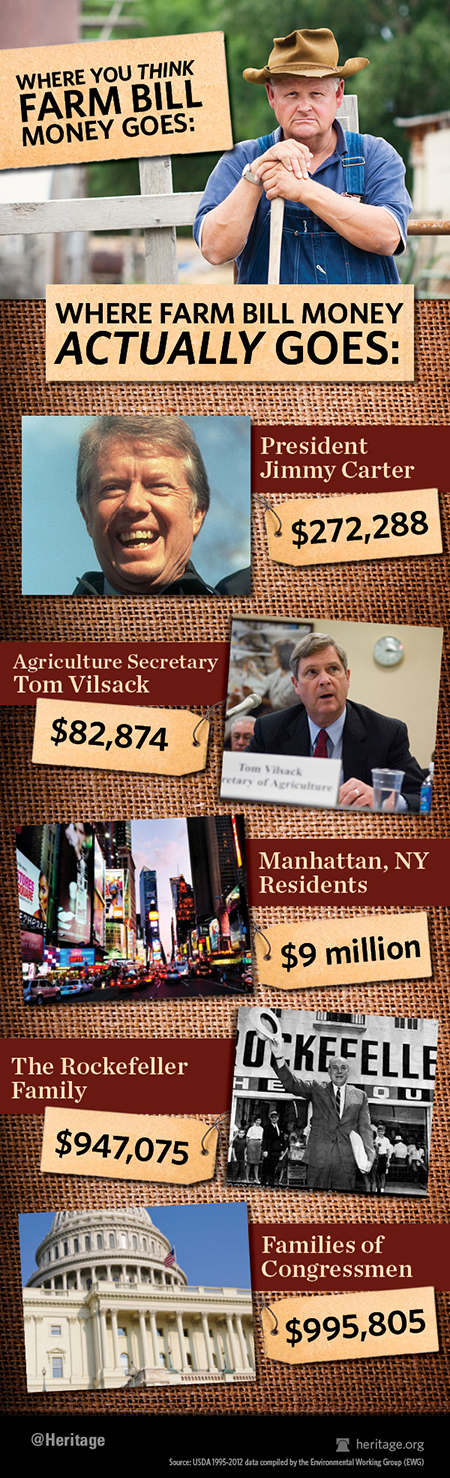


 The Daily Hatch