Category Archives: Milton Friedman

99th anniversary of Milton Friedman’s birth (Part 4)

99th anniversary of Milton Friedman’s birth (Part 4)

Stossel – “Free to Choose” (Milton Friedman) 1/6

Milton Friedman was born on July 31, 1912 and he died November 16, 2006. I started posting tributes of him on July 31 and I hope to continue them until his 100th birthday.

Here is another tribute actually written shortly after his death:

How Milton Friedman Influenced Michigan and the World

By Michael D. LaFaive | Nov. 20, 2006
 

(Note: This commentary appeared in The Detroit News on Nov. 16, 2006, just hours after it was announced that Milton Friedman had died).

Nobel Prize-winning economist Milton Friedman died today at the age of 94. He was an intellectual giant — helping mightily to shift policy and thought away from state economic intervention and toward free people and free-market alternatives.

Friedman’s many books, scholarly papers, speeches and television appearances inspired countless people to rigorously debate and articulate a vision of a truly free society. It was Friedman’s best-selling book and Public Broadcasting Service program, “Free to Choose,” that inspired me to earn two economics degrees and join the Mackinac Center.

Friedman was born to immigrant parents in Brooklyn, N.Y., in July 1912. He would earn degrees at Rutgers, the University of Chicago and Columbia. Friedman later said the Great Depression helped influence his decision to become an economist because he was intrigued by the causes and consequences of such economic misery. He would later answer one of the most important questions of all: Why had it occurred?

Friedman cut his professional teeth in 1945 when he co-published a paper arguing that government licensing laws for doctors artificially raise the cost of becoming one, restricting supply and raising prices for consumers.

He would continue to publish scholarly papers but began to make a name for himself in wider circles by publishing his book “Capitalism and Freedom” in 1962. Friedman persuasively argued for market competition in education, an all-volunteer army and greater trade among nations.

In 1963, Friedman and co-author Anna Schwartz published “A Monetary History of the United States,” which showed that the Great Depression was caused by flawed monetary policy by the Federal Reserve. According to the Fortune Encyclopedia of Economics, Federal Reserve officials were so unnerved by Friedman’s work that they “discontinued their policy of releasing minutes from the board’s meetings to the public.” They also hired a scholar to write a rebuttal, but it had little impact. Friedman’s analysis remains the standard on America’s monetary history.

Friedman was in Michigan on Oct. 14, 1976, when he learned he had won the Nobel Prize in Economics. Friedman was traveling from Chicago to a press conference at the Detroit Athletic Club to tout Proposal C, a ballot initiative to cap what the state of Michigan could spend in a given year, when the announcement was made from Stockholm, Sweden.

“When we got to the press center, I was surprised by the number of photographers and reporters in the parking lot,” Friedman wrote later. “I knew that Proposal C was important but didn’t think my campaigning for it deserved that much attention.” Friedman quickly learned of the honor from the reporters in attendance.

Proposal C would fail that year, but a version of it would later pass as the Headlee Amendment, which restricts state revenue to 9.49 percent of personal income from all state sources.

Throughout his life, Friedman advanced his ideas with both intelligence and wit. When addressing a crowd of academics, he spoke as a professor would speak to fellow scholars. When speaking to the public, he simplified his arguments. His ability to link abstract theory with concrete detail and wrap both in velvet for his audience made the man an irresistible draw.

Reportedly, while traveling by car during one of his many overseas travels, Friedman spotted scores of road builders moving earth with shovels. When he asked why powerful equipment wasn’t used instead of so many laborers, his host told him it was to keep unemployment low. If they used tractors, fewer people would have jobs was his host’s logic.

“Then why don’t you give them spoons?” Friedman inquired. It was quintessential Friedman: Employment doesn’t make us wealthy — production does.

Milton Friedman, a great friend of freedom, rewrote the way economists and others look at economics and the world around them. He will be missed.

#####

Michael D. LaFaive is director of the Morey Fiscal Policy Initiative at the Mackinac Center for Public Policy. Permission to reprint in whole or in part is hereby granted, provided that the author and the Center are properly cited.
99th anniversary of Milton Friedman’s birth (Part 3)

99th anniversary of Milton Friedman’s birth (Part 3)

Liberty and Equality?

Milton Friedman was born on July 31, 1912 and he died November 16, 2006. I started posting tributes of him on July 31 and I hope to continue them until his 100th birthday.

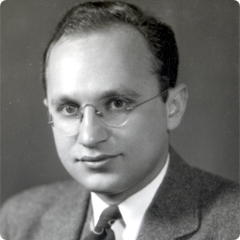
Milton Friedman – University of Chicago School of Economics ProfessorHere is an essay written to honor the 99th anniversary of Milton Friedman’s birth:

Friedman: The Influence of Ideas

By Shelli Camenga

On the bookshelf of an average American patriot, it would be more common to see a collection of Ronald Reagan biographies than books on the life of Milton Friedman. Ask a person on the street who they think holds the most power in America and you have a good chance of hearing “the president.” However, the president is a single man whose power is limited by checks, balances, and, depending on his character, his personal desire for re-election. One free man with an idea can prove influential and limitless without holding public office. Milton Friedman was that man.

Behind every great success lies a great inspiration. For the millions of conservatives who venerate Reagan, they are also (wittingly or unwittingly) admiring the impact Friedman made on the mentality of his times and on Reagan himself. That the political climate even allowed a man with Reagan’s platform to be elected was due in part to Friedman’s work, starting as early as the failed Barry Goldwater presidential campaign, which began calling for a return to laissez-faire economic principles when the position was considered extreme. This movement gained momentum, culminating in Reagan’s election.

In 1980, Reagan appointed Friedman to the select Economic Policy Coordinating Committee. As a team they applied Adam Smith’s concepts, and the economy became a freer and more prosperous place; regulations were limited, inflation was brought under control, taxes were cut, and government began to find its place — on the sidelines. Reagan’s policies are widely recognized as bringing about the second-longest peacetime economic expansion in the history of the United States. The key to bringing this prosperity was the wisdom of those advisors who, like Friedman, truly understood economic policy. Later, Friedman was given the Presidential Medal of Freedom, the nation’s highest civilian honor.

Friedman didn’t only have an influence at home in America; his ideas brought significant changes around the world. Former prime minister of Estonia, Mart Laar, who is credited with bringing about Estonia’s rapid economic development in the 1990s, said that the only book on economics he read before his election was Milton Friedman’s “Free to Choose.” Under Laar, Estonia became the first country to institute a flat tax, which was very successful. While speaking about Friedman’s “Free to Chose” TV series, Reagan mentioned that the principles Friedman expressed had also helped inspire the Polish drive for freedom.

Although politicians come and go and their ideas can change with the political winds, the protection and presentation of sound economic ideas remains a vital tenant of freedom. Politicians are only in power for a few terms at most, but influencing the electorate and swaying public opinion toward freedom is a full time job with no term limit. This position in the cause of freedom is taken today by think tanks like the Mackinac Center. They, like Friedman, publish articles, give lectures and research responsible policy changes, sharing their findings publicly.

As an intern at a think tank, I am inspired by Milton Friedman. Looking at his example, I know that as a responsible citizen, I can live an influential life of loving and sharing liberty without needing to be elected. My job is to provide, present and protect the principles which will bring about the next age of prosperity.

_____


_____

99th anniversary of Milton Friedman’s birth (Part 2)

Milton Friedman on Fairness vs Freedom

99th anniversary of Milton Friedman’s birth (Part 2)

Milton Friedman was born on July 31, 1912 and he died November 16, 2006. I started posting tributes of him on July 31 and I hope to continue them until his 100th birthday.

Here is another tribute:

Happy 99th Birthday, Milton Friedman

by Don Boudreaux on July 31, 2011

in Civil Society, Dinner Table Economics, Economics

During the second semester of my freshman year of college (Spring 1977) – the semester in which I was first exposed to economics – Bill Field (then a professor of economics at my alma mater, Nicholls State University in Thibodaux, LA) recommended that I read the writings of Milton Friedman.  Of course, as an 18-year old who’d read very little of anything beyond the sports pages of the Times-Picayune (and, back then, also the sports pages of the States-Item), I’d never heard of Milton Friedman.

“Dr. Field” – as I’d called Bill for many years – loaned me his copy of Friedman’s collection of Newsweek columns, An Economist’s Protest.  I was blown away by the logic, the sensibleness, and the passion channeled toward the goal of maximum human dignity.

That summer, I subscribed to Newsweek simply to get Friedman’s columns (which, if I recall correctly, appeared in every third issue).  (I read Paul Samuelson’s Newsweek columns, too, of course; they left me cold.)  I believe that the first column of Friedman’s that I read from an actual issue of Newsweek was the one in the July 4, 1977 issue.  Its title is “Fair versus Free.”  (Here’s a reprint.)  It remains today just I recall it from 34 years ago: powerful and compelling.  From it I extract today’s Quotation of the Day:

When “fairness” replaces “freedom,” all our liberties are in danger. In Walden, Thoreau says: “If I knew for a certainty that a man was coming to my house with the conscious design of doing me good, I should run for my life.” That is the way I feel when I hear my “servants” in Washington assuring me of the “fairness” of their edicts.

99th anniversary of Milton Friedman’s birthday (Part 1)

Happy 99th Birthday, Milton Friedman! A tribute to the late, great economist

If you know anything about this blog then you know that I quote Milton Friedman about as much as anybody. Growing up I was deeply affected by the book “Free to Choose” (also the film series) by Milton Friedman and the two film series by Francis Schaeffer (also his books).

The first political candidate I got excited about was Ronald Reagan in 1976 and Milton Friedman was the main economist that influenced him. Reagan also hired C. Everett Koop into his administration and Koop had co-authored the book and film series “Whatever happened to the human race?” with Francis Schaeffer. As you can see at the time I really felt that my political, economic and social views covered by the written views of these individuals.

Now all these individuals did not agree on everything. Concerning religious view, Friedman was an atheist, and  Schaeffer was an evangelical and Reagan was somewhere in the middle.

Here is a tribute below to Milton Friedman by Nick Gillespie:

There’s no way to appreciate fully the contributions of Nobel Prize-winning economist Milton Friedman (1912-2006), who would have turned 99 years old this weekend, to the growth of libertarian ideas and a free society.

This is the man, after all, who introduced the concept of school vouchers, documented the role of government monopolies on money in creating inflation, provided the intellectual arguments that ended the military draft in America, co-founded the Mont Pelerin Society, and so much more. In popular books such as Capitalism and Freedom and Free to Choose, written with his wife and longtime collaborator Rose, he masterfully drew a through-line between economic freedom and political and cultural freedom.

Yet his ultimate contribution to freedom and liberty is found less in any of the specific argument he made and more in the ways he made them. Friedman provided an all-too-rare example of a public intellectual who was scrupulously honest, forthright, and fair in every debate he entered. Whether he was duking it out with fellow Nobel Prize winners and other high-profile economists or making the case for the morality of capitalism with TV hosts such as Phil Donahue and angry students, he always argued in good faith, admitted when he was wrong, and enlarged the circle of debate. 

Long after some of his technical points and social insights have been superseded, that commitment to relentless inquiry and search for truth wherever it takes us will survive.

Written and narrated by Nick Gillespie. Produced and edited by Jim Epstein, with help from Jack Gillespie.

About 2.30 minutes.

For Reason’s coverage of and interviews with Milton Friedman over the years, go here now.

Go to Reason.tv for downloadable versions, and subscribe to Reason.tv’s YouTube channel to receive automatic updates when new material goes live.

Milton Friedman on why the Stimulus will fail, (Part 4), Do you want your grandchildren to pay for your walking bridge?

Milton Friedman – Government’s Role 1/4

TWO RIVERS BRIDGE: Opening nears.

People just don’t understand how wasteful government can be and how giving government more control of our lives destroys much of the freedom that we should have. This series on the stimulus demostrates these points. This whole series started because of a post I did on July 6, 2011 about an post in the Arkansas Times Blog.

On July 6, 2011 on the Arkansas Times Blog I posted concerning the walking bridge in Little Rock that stimulus funds help build:

Tim Griffin spoke in Central Arkansas recently at a townhall meeting and mentioned that a couple of million of stimulus money went to build the walking bridge in Little Rock that will be opening this summer. Then he went on to show how it was silly for our government to try to stimulate the economy with our national credit card.
Steve Chapman rightly noted in his article “Stimulus to Nowhere” noted:

The federal government took out loans that it will have to cover with future tax increases … so states don’t have to. It’s like paying your Visa bill with your MasterCard.

The person using the username “Arkansas Panic Fan” responded:

Bridge = good stuff for Central Arkansas. Not sure why it is a bad thing. It is your money at work here being used for your benefit. I applaud this type of government activity. This is the type of project and progress you can see, touch, smell, hear.

That being said, Saline Republican, is this a waste of your money? You can use it as you wish.

__________________________________________

The stimulus came about because politicians believed they had to stimulate the economy by flooding the economy with stimulus dollars and President Obama is forcing one of his cabinet ministers to come down here to Little Rock to get credit for the walking bridge, but I guarantee you the fact that unemployment has risen from 8.1 % to 9.2 % today since the stimulus was passed will never be brought up. I found an article from Milton Friedman from 2000 that shows why a stimulus like this will not work. Here below is a portion of the article. I have also posted some video clips by Friedman discussing the proper role of government.

An increase in government spending clearly benefits the individuals who receive the additional spending. Considered by itself, it looks as if the additional spending is a stimulus to the economy.
 
.

■Additional taxation. In this situation, the dollar cost to the persons who pay the taxes is exactly equal to the dollar gain to the persons who receive the spending. It looks like a washout.

Getting the extra taxes, however, requires raising the rate of taxation. As a result, the taxpayer gets to keep less of each dollar earned or received as a return on investment, which reduces his or her incentive to work and to save. The resulting reduction in effort or in savings is a hidden cost of the extra spending. Far from being a stimulus to the economy, extra spending financed through higher taxes is a drag on the economy.

This does not mean that the extra spending can never be justified. However, it can only be justified on the ground that the benefit to the people who receive the spending, or to the community from the activity to be financed by the spending, is greater than the direct harm to the taxpayers plus the hidden cost. It cannot be justified as a way to stimulate the overall economy.

■ Government spending financed by borrowing from the public. Individuals who purchase the securities that finance the additional expenditure would have done something else with the money. If they had not purchased the government securities, they presumably would have purchased private securities that would have financed private investment. In other words, government spending crowds out private investment. At this level, it is again a washout: those who receive the extra government spending benefit, but the private investors, who are deprived of the same amount of funds, lose.

But again, that is too simple a story. The overall effect is an increase in the demand for loanable funds, which tends to raise interest rates. The rise in interest rates discourages private demand for funds to make way for the increased government demand. Thus, there is a hidden cost in the form of a lowered stock of productive capital and lower future income.

The Keynesian view that the spending is stimulative assumes that the funds the government borrows would not otherwise have been invested in the private capital market, but came simply from cash held in hoards by individuals   from under the mattress, as it were. In addition, it assumes that there are unemployed resources that can readily be brought into the work force by activating the excess funds held by individuals, without raising prices or wages.

That is a possibility in some special cases, such as the Great Depression in the 1930s, when there had been a major reduction in total output and prices were very far from their equilibrium level. More generally, however, theory suggests and experience confirms that government spending financed by borrowing from the public does not provide a stimulus to the economy.

Japan provides a dramatic recent example. During the 1990s, the Japanese economy was depressed. The government tried repeated fiscals stimulus packages, each involving increases in government spending financed by borrowing. Yet — or maybe therefore — the Japanese economy remained depressed.


The Stimulus Failed, (Part 2), Do you want your grandchildren to pay for your walking bridge?

Milton Friedman – The Proper Role of Government

TWO RIVERS BRIDGE: Opening nears.

People just don’t understand how wasteful government can be and how giving government more control of our lives destroys much of the freedom that we should have. This series on the stimulus demostrates these points. This whole series started because of a post I did on July 6, 2011 about an post in the Arkansas Times Blog.

On July 6, 2011 on the Arkansas Times Blog I posted concerning the walking bridge in Little Rock that stimulus funds help build:

Tim Griffin spoke in Central Arkansas recently at a townhall meeting and mentioned that a couple of million of stimulus money went to build the walking bridge in Little Rock that will be opening this summer. Then he went on to show how it was silly for our government to try to stimulate the economy with our national credit card.
Steve Chapman rightly noted in his article “Stimulus to Nowhere” noted:

The federal government took out loans that it will have to cover with future tax increases … so states don’t have to. It’s like paying your Visa bill with your MasterCard.

The person using the username “Arkansas Panic Fan” responded:

Bridge = good stuff for Central Arkansas. Not sure why it is a bad thing. It is your money at work here being used for your benefit. I applaud this type of government activity. This is the type of project and progress you can see, touch, smell, hear.

That being said, Saline Republican, is this a waste of your money? You can use it as you wish.

________________________________________

Today I am responding to “Arkansas Panic Fan” with a few comments from Milton Friedman. Is this bridge a “waste of your money?” I have to say yes it is. Many people will look at it and say that their taxes have not gone up recently and they will assume that it is free in that sense. However, Friedman makes it clear that “to spend is to tax.”

Brad DeLong noted:

His (Milton Friedman’s) worldview began with a bedrock belief in people and their ability to make judgments for themselves, and thus an imperative to maximize individual freedom. On top of that was layered a trust in free markets as almost always the best and most magical way of coordinating every conceivable task. On top of that was layered a powerful conviction that a look at the empirical facts — a comparison, or a “marking to market,” of one’s beliefs with reality — would generate the right conclusions. And crowning that was a fear and suspicion of government as an easily captured tool for the enrichment of cynical and selfish interests. Suffusing all was a faith in the power of argument and the primacy of reason. Friedman was an optimist. He was convinced people could be taught the truths of economics, and if people were properly taught, then institutions could be built to protect society as a whole against the corruption and overreach of the government.

And he did fear the government. He was a conservative of the old, libertarian school, from the days before the scolds had captured the levers of power in the conservative movement. He hated any government intrusion into people’s private business. And he interpreted “people’s private business” extremely widely… He scorned government licensing of professionals — especially doctors, who heard over and over again about how their incomes were boosted by restrictions on the number of doctors that made Americans sicker. He abhorred deficit spending — again, he was a conservative from another era. He feared that cynical politicians could pretend that the costs of government were less than they were by pushing the raising of taxes to pay for spending off into the future. He sought to inoculate citizens against such political games of three-card monte. “Remember,” he would say, “to spend is to tax.

This did not mean that government had no role to play. He endorsed the enforcement of property rights, adjudication of contract disputes — the standard and powerful rule-of-law underpinnings of the market — plus a host of other government interventions when empirical circumstances made them appropriate.

Sweden’s Voucher Program Part 8

HALT:HaltingArkansasLiberalswithTruth.com

Milton Friedman’s film series “Free to Choose” Episode on Education part 6. It was Friedman’s voucher plan that was put into practice in Sweden in 1993.

I read an excellent article called “School Choice in Sweden: An Interview with Thomas Idergard of Timbro,” (March 8, 2010) by Dan Lips and I wanted to share some of his answers with you below:

DL: Some express concerns that choice and competition would undermine the traditional public or government school system. How have traditional public schools responded to widespread choice?
TI: They have improved because they have been forced to—by competition.
Two major studies—one from the Institute for Future Studies (an NGO) and one from the National Board of Education (the highest governmental education authority)—have examined the public schools’ response to increased competition where independent schools were established. Both showed that public schools in these cities were more efficient and successful—both in using given resources and attaining higher student results—than the national average.
Why? Because they needed to improve in order to compete with the independent schools. Otherwise they would lose students and thus revenues, because the public schools’ funding from the local school boards is also paid as an amount per student.
Sweden’s school voucher program shows that competition truly works!

Sweden’s Voucher Program Part 7

HALT:HaltingArkansasLiberalswithTruth.com

Milton Friedman’s film series “Free to Choose” Episode on Education part 5. It was Friedman’s voucher plan that was put into practice in Sweden in 1993.

I read an excellent article called “School Choice in Sweden: An Interview with Thomas Idergard of Timbro,” (March 8, 2010) by Dan Lips and I wanted to share some of his answers with you below:

DL: What do parents and students think of the voucher system?
TI: On a general level, most parents and students don’t specifically choose between one independent and one public school—people tend to choose the schools that fit their needs and requirements best, regardless of whether they are independent or public. In all cities and municipalities with widespread opportunities to choose, parents and students are more and more active in comparing different schools out of a wide range of quality and personal variables. This was also the main point in establishing an education market: People are different and have different needs and ways to reach their goals.
But when you ask people about their satisfaction with their choice or with their school as a whole, you can see that the independent schools outperform the public schools quite massively.
The latest national survey on parental satisfaction was undertaken in October 2009 and showed that parents with their children in independent schools are much more satisfied than parents with their children in public schools regarding all surveyed areas—such as, for example:
  • The school’s closeness to the parents’ “ideal school” ;
  • The stimulation and support of every single student;
  • The level of resources that are being spent on education, teacher engagement, the quality of teaching materials, information, and cooperation with parents;  and
  • The sense of value of taxpayer money spent on education and trust for school management.
For every surveyed area there is at least a 10 percent higher satisfaction rate among independent school parents!
And regarding the voucher system itself, different surveys show that a majority of people view the right to choose school as almost a “natural” right. Some technical details might still be controversial among politicians (such as aspects of the profit-dividend issue), but among ordinary people, the right to choose is well rooted.
A clear majority of all parents, no matter if their kids go to independent or public schools, agree on that the independent school owners have right to show profits and to dispose of them at their own discretion!

Balanced Budget Amendment the answer? Boozman says yes, Pryor no, Part 36 (Input from Dan Mitchell of the Cato Institute Part 8)

From a lecture given by Dr. Milton Friedman in Erie, Pennsylvania (1978).

Photo detail

Steve Brawner in his article “Safer roads and balanced budgets,” Arkansas News Bureau, April 13, 2011, noted:

The disagreement is over the solutions — on what spending to cut; what taxes to raise (basically none ever, according to Boozman); whether or not to enact a balanced budget amendment (Boozman says yes; Pryor no); and on what policies would promote the kind of economic growth that would make this a little easier.

Dan Mitchell wrote a great article called “Why a Tax Limitation/Balanced Budget Amendment is Needed to Control Spending,” Cato Institute, Feb 19, 1997. I will be posted portions of that article the next few days. Here is the eighth portion:

Would the Amendment Make it More Difficult to Cut Taxes?

Because of existing budget rules and antiquated revenue-estimating techniques, it already is extremely difficult to cut taxes. It is hard to imagine how enactment of a balanced budget amendment could make tax cuts even less likely. Under current law, legislation that is estimated to increase the deficit faces procedural hurdles, including a three-fifths supermajority requirement in the Senate. In other words, tax cuts need to be accompanied by offsetting savings from the spending side of the budget.

If a balanced budget amendment is ratified by the states, the obstacles to tax cuts should remain unchanged. If anything, existing budget rules probably would be strengthened to ensure compliance with the amendment. It is almost certain that supporters of tax cuts would continue to be obliged to “pay for” their proposals with spending savings.

Conclusion

Excessive government spending is shackling the U.S. economy. A balanced budget amendment, however, should help limit the future growth of government by making it more difficult for politicians to finance additional spending with government borrowing. It is important to recognize that all the benefits of a balanced budget amendment depend on reducing the size of government. If, as many fear, politicians simply replace debt-financed spending with tax-financed spending, faster economic growth will not materialize. A strong tax limitation provision is the key to achieving a pro-growth balanced budget amendment.

Who was Milton Friedman and what did he say about Social Security Reform? (Part 7) (Friedman v. Bill Clinton Part B)

Milton Friedman congratulated by President Ronald Reagan. © 2008 Free To Choose Media, courtesy of the Power of Choice press kit

The government solution to a problem is usually as bad as the problem.
Milton Friedman

The Debt Bomb: A Decade of DC Spending is Driving America Closer to an Economic Apocalypse

Alexis Garcia reports on America’s exploding debt. Experts blame entitlements like Social Security and government spending. But what is the solution? Can we raise taxes without crushing the economy and the middle class? Does Obama really want to lower the debt, or does he support continued deficit spending? See interviews with Douglas Holtz-Eakin, Brian Riedl, Jason Peuquet and former Congressman Ernest Istook (R-OK).

__________________________________________

 Milton Friedman (Милтон Фридман)

In this series I want to both look  closely at who Milton Friedman was and what his views were about Social Security reform. Here is the sixth portion of an autobiography from Nobelprize.org:

As Rose wrote in our memoirs, “As we look back at the events chronicled in this chapter, it all seems like something of a fairy tale. Who would have dreamed that after retiring from teaching, Milton would be able to preach the doctrine of human freedom to many millions of people in countries around the globe through television, millions more through our book based on the television program, and countless others through videocassettes” (p. 503).

Monetary Trends in the United States and the United Kingdom, published in 1982, was the final major product of a collaboration with Anna J. Schwartz under the auspices of the National Bureau of Economic Research that lasted more than three decades. Money Mischief (Harcourt Brace Jovanovich, 1992) collects assorted pieces of monetary history, some of which I had published elsewhere, some of which appear first in this book.

I have continued to be active in public policy since 1977. I continued my tri-weekly column in Newsweek until it was terminated in 1983. Since then, I have published numerous op-eds in major newspapers. I served as an unofficial adviser to Ronald Reagan during his candidacy for the presidency in 1980, and as a member of the President’s Economic Policy Advisory Board during his presidency. In 1988, President Reagan awarded me the Presidential Medal of Freedom and in the same year I was awarded the National Medal of Science.

We have traveled extensively since 1977, including a trip through Eastern Europe in 1990, where we filmed a documentary on former Soviet satellites. The documentary was included in a shortened reissue of Free to Choose.

Perhaps the most notable foreign travel consisted of three trips to China: one in 1980 when I gave a series of lectures under the auspices of the Chinese government; one in 1988 when I attended a conference in Shanghai on Chinese economic development and had a fascinating session in Beijing with Zhao Ziyang, at the time, the General Secretary of the Communist Party, deposed a few months later for his unwillingness to approve the use of force on Tiananmen Square; and one in 1993 when I traveled with a group of Chinese friends from Hong Kong throughout the country. The three visits covered a period of revolutionary economic growth and development, the first stage of a shift from an authoritarian, centrally planned economy to a largely free market economy.

Ever since the 1950s, Rose and I have been interested in the promotion of parental choice in schooling through the use of vouchers. Finally, in 1996, when it became clear that our personal involvement would have to be limited, we established a foundation, The Milton and Rose D. Friedman Foundation devoted to promoting parental choice in schooling. We were fortunate in being able to persuade Gordon St. Angelo to serve as president. He has done an outstanding job. Progress toward our objective of universal vouchers has been distressingly slow, but there has been progress. The pace of progress shows every sign of speeding up, and our foundation has made a significant contribution to that progress.

In 1998, the University of Chicago Press published our memoirs, Milton and Rose D. Friedman, Two Lucky People.

Milton Friedman died on November 16, 2006.

Investing Social Security funds in the stock market would be a fine idea, wouldn’t it? President Clinton thinks so. Nobel laureate and Hoover fellow Milton Friedman thinks not.


President Clinton has proposed that a quarter of the funds set aside for Social Security be invested in the stock market—a truly radical plan…

Suppose the president’s proposed policy had been followed in its most extreme form from the outset of Social Security in 1937 (i.e., that the whole excess of Social Security tax receipts over Social Security benefit payments, not just one-quarter, had been invested in the stock market). Offhand, it looks as if the trust fund would own only about 5 percent of all domestic corporations ($656 billion out of $13 trillion).

But that is too simple. Most of the accruing funds would have been invested at far lower stock prices than those that prevailed at the end of 1997. Suppose that stock prices, dividend yields, Social Security tax receipts, and Social Security benefit payments had all been what they were—that is, not affected by the investment of Social Security funds in stocks instead of government bonds. On that assumption, the trust fund at the end of 1997 would have totaled not $656 billion but more than ten times as much, approximately $7 trillion. In that case, the Social Security trust fund would own more than half of all domestic corporations! To return to my socialist fantasy, full funding would long since have brought complete socialism.

That too is too simple. Neither stock prices nor other economic magnitudes could have behaved as they actually did, with so much extra money flowing into the market. But what this calculation demonstrates is (1) the widely recognized fact of how much better equity stocks are as an investment than government bonds and (2) how seriously the government purchase of private securities would threaten our freedom.

Have we not learned from the experience of the past century that private property is the key bulwark of personal freedom? Has that experience not shown how dangerous it is to transfer a larger and larger fraction of the productive assets of the country into the hands of a government bureaucracy?

If the corresponding sums had been accumulated by private individuals and not used to finance government spending, they would have been a real addition to the nation’s capital and not just a bookkeeping entry. Those sums would have been invested in ways citizens or their advisers chose. The end result would have been more productive investment, a larger stream of income, and a freer, more responsible, more productive society.


Milton Friedman, recipient of the 1976 Nobel Memorial Prize for economic science, was a senior research fellow at the Hoover Institution from 1977 to 2006. He passed away on Nov. 16, 2006. He was also the Paul Snowden Russell Distinguished Service Professor Emeritus of Economics at the University of Chicago, where he taught from 1946 to 1976, and a member of the research staff of the National Bureau of Economic Research from 1937 to 1981.


Reprinted with minor editorial changes from the Wall Street Journal, January 26, 1999, from an article entitled “Social Security Socialism.” Reprinted with permission of the Wall Street Journal. © 1999 Dow Jones & Company, Inc. All rights reserved.

Available from the Hoover Press is the videotape “Social Insecurity: Reforming Social Security,” an episode of the weekly television program Uncommon Knowledge, jointly produced by the Hoover Institution and the San Jose PBS affiliate KTEH.