Category Archives: Francis Schaeffer

The characters referenced in Woody Allen’s movie “Midnight in Paris” (Part 28,Van Gogh)

I have been going through the characters referenced in Woody Allen’s latest film “Midnight in Paris.” I only have a few characters left. Today is Vincent van Gogh who actually is not mentioned but his painting “The Starry Night” is featured in the poster to promote the movie.

The Starry Night

Vincent van Gogh (Dutch, 1853-1890)

Saint Rémy, June 1889. Oil on canvas, 29 x 36 1/4″ (73.7 x 92.1 cm). Acquired through the Lillie P. Bliss Bequest

Vincent van Gogh. The Starry Night. Saint Rémy, June 1889

Van Gogh Brings Color to Woody Allen’s ‘Midnight in Paris’ Poster

March 17, 2011
Source: Yahoo
by Alex Billington

Woody Allen's Midnight in Paris

While I’ve been covering Woody Allen films these last few years, I haven’t been that impressed by any of the posters. His last film, You Will Meet a Tall Dark Stranger, had a rather boring poster and Whatever Works’ was bland, too. Now we finally have a poster that is at least colorful, though it borrows from the brilliance of another artist. Yahoo has debuted the poster for Woody Allen’s Midnight in Paris, his new rom-com with a cast of: Owen Wilson, seen strolling the streets below, Rachel McAdams, Marion Cotillard, Kathy Bates, Adrien Brody and Léa Seydoux. And if you don’t know, that’s Vincent van Gogh’s Starry Night they’re using.

Woody Allen's Midnight in Paris Poster

Midnight in Paris is a wonderful love letter to Paris“, declared Festival director Thierry Frémaux in the press release. “It’s a film in which Woody Allen takes a deeper look at the issues raised in his last films: our relationship with history, art, pleasure and life. His 41st feature reveals once again his inspiration.” You may also remember it was officially announced that Woody Allen’s Midnight in Paris will be the opening film of the upcoming 64th Cannes Film Festival this summer. As always, I’m not sure what to expect with every new Woody Allen movie, but at least they’re starting off quite well.

Review: Midnight in Paris

Notre Dame. Montmatre. Sacre Coeur. It would be unfair to say that the streets of Paris serve as a backdrop for Woody Allen’s latest romantic comedy Midnight in Paris. Rather, the city itself takes center stage, playing the role of life-changer to Owen Wilson’s neurotic screenwriter/novelist/lovable doofus/youthful Woody Allen-substitute. Paris walks into the protagonist’s life, overwhelms the screen, and tricks the audience into believing that Midnight in Paris is Woody Allen’s return to his 1970s heyday (it’s not). Nevertheless, I’ll be the first to admit that I am more than happy to be tricked by Allen’s magical characterization of the City of Lights in Midnight in Paris.

Early on in the film, Owen Wilson’s character Gil and his fiance Inez (played by Rachel McAdams) visit the Versailles Palace on a sunny afternoon. They are accompanied by Inez’s former professor Paul (Michael Sheen) and his girlfriend Wendy (Mimi Kennedy). Inez flirts with Paul, who pedantically serves as unofficial tour guide. It’s all so familiar to Allen fans. Meanwhile, Gil, a successful screenwriter working unsuccessfully on his first novel, takes in the palace with a warm sentimentality that drives the film through the heart of Paris marked by nostalgia and the romantic past.

The same adulterous entanglements that occupy much of Allen’s filmography are at work here, and McAdams’ Inez is the “obnoxious shrew” at her worst (and I don’t mean that in a complimentary, Penelope Cruz in Vicky Cristina Barcelona kind of way). Paris’s female actors struggle with their surface-only, flat characters, and the adultery is worthy of an eye roll among tired audiences.

Shortly after the scene at Versailles, Midnight in Paris picks up the pace when Gil finds himself wandering the Parisian streets at midnight. He whimsically joins a friendly party in their vintage car and soon discovers that he is now in 1920s Jazz Age Paris, carousing with artists and expatriates including Scott and Zelda Fitzgerald, Ernest Hemingway, Gertrude Stein, Pablo Picasso, and Salvidor Dali. In the wrong hands, such a scenario would never have worked, but Allen lets the campy atmosphere simmer and the absurdity never seems unreasonable. Gil takes the advice of his new friends and revisits the problematic novel he’s been working on. The more Allen pushes the boundaries into 1920s Paris, the more enchanting and endearing Midnight in Paris becomes.

Despite grating flaws in the female characters and a frustratingly contrived ending, all is forgiven for Midnight in Paris due to its nostalgic energy and the overwhelming charm of the main character—the city of Paris. Allen has proved time and again that he thrives in character studies about tourists in his favorite cities, and it’s safe to assume that he truly loves Paris.

_________________________________________________

Vincent van Gogh Biography

Vincent van Gogh (March 30, 1853 – July 29, 1890) is generally considered the greatest Dutch painter after Rembrandt, though he had little success during his lifetime. Van Gogh produced all of his work (some 900 paintings and 1100 drawings) during a period of only 10 years before he succumbed to mental illness (possibly bipolar disorder) and committed suicide. His fame grew rapidly after his death especially following a showing of 71 of van Gogh’s paintings in Paris on March 17, 1901 (11 years after his death).

(Properly the name rhymes with loch, but it is also pronounced ‘goph’, ‘go’ and ‘goe’.)

Van Gogh’s influence on expressionism, fauvism and early abstraction was enormous, and can be seen in many other aspects of 20th-century art. The Van Gogh Museum in Amsterdam is dedicated to Van Gogh’s work and that of his contemporaries.

Several paintings by Van Gogh rank among the most expensive paintings in the world. On March 30, 1987 Van Gogh’s painting Irises was sold for a record $53.9 million at Southeby’s, New York. On May 15, 1990 his Portrait of Doctor Gachet was sold for $82.5 million at Christie’s, thus establishing a new price record (see also List of most expensive paintings).

Life and Work

Vincent was born in Zundert, The Netherlands; his father was a protestant minister, a profession that Vincent found appealing and to which he would be drawn to a certain extent later in his life. His sister described him as a serious and introspective child.

Vincent van Gogh Grave

At age 16 Vincent started to work for the art dealer Goupil & Co. in The Hague. His four years younger brother Theo, with whom Vincent cherished a life long friendship, would join the company later. This friendship is amply documented in a vast amount of letters they sent each other. These letters have been preserved and were published in 1914. They provide a lot of insight into the life of the painter, and show him to be a talented writer with a keen mind. Theo would support Vincent financially throughout his life.

In 1873, his firm transferred him to London, then to Paris. He became increasingly interested in religion; in 1876 Goupil dismissed him for lack of motivation. He became a teaching assistant in Ramsgate near London, then returned to Amsterdam to study theology in 1877.

After dropping out in 1878, he became a layman preacher in Belgium in a poor mining region known as the Borinage. He even preached down in the mines and was extremely concerned with the lot of the workers. He was dismissed after 6 months and continued without pay. During this period he started to produce charcoal sketches.

In 1880, Vincent van Gogh followed the suggestion of his brother Theo and took up painting in earnest. For a brief period Vincent took painting lessons from Anton Mauve at The Hague. Although Vicent and Anton soon split over divergence of artistic views, influences of the Hague School of painting would remain in Vincents work, notably in the way he played with light and in the looseness of his brush strokes. However his usage of colours, favouring dark tones, set him apart from his teacher.

In 1881 he declared his love to his widowed cousin Kee Vos, who rejected him. Later he would move in with the prostitute Sien Hoornik and her children and considered marrying her; his father was strictly against this relationship and even his brother Theo advised against it. They later separated.

Impressed and influenced by Jean-Francois Millet, van Gogh focussed on painting peasants and rural scenes. He moved to the Dutch province Drenthe, later to Nuenen, North Brabant, also in The Netherlands. Here he painted in 1885.

In the winter of 1885-1886 Van Gogh attended the art academy of Antwerp, Belgium. This proved a disappointment as he was dismissed after a few months by his Professor. Van Gogh did however get in touch with Japanese art during this period, which he started to collect eagerly. He admired its bright colors, use of canvas space and the role lines played in the picture. These impressions would influence him strongly. Van Gogh made some painting in Japanese style. Also some of the portraits he painted are set against a background which shows Japanese art.

In spring 1886 Vincent van Gogh went to Paris, where he moved in with his brother Theo; they shared a house on Montmartre. Here he met the painters met Edgar Degas, Camille Pissarro, Bernard, Henri de Toulouse-Lautrec and Paul Gauguin. He discovered impressionism and liked its use of light and color, more than its lack of social engagement (as he saw it). Especially the technique known as pointillism (where many small dots are applied to the canvas that blend into rich colors only in the eye of the beholder, seeing it from a distance) made its mark on Van Goghs own style. It should be noted that Van Gogh is regarded as a post-impressionist, rather than an impressionist.

In 1888, when city life and living with his brothers proved too much, Van Gogh left Paris and went to Arles, Bouches-du-Rh, France. He was impressed with the local landscape and hoped to found an art colony. He decorated a “yellow house” and created a celebrated series of yellow sunflower paintings for this purpose. Only Paul Gauguin, whose simplified colour schemes and forms (known as synthetism) attracted van Gogh, followed his invitation. The admiration was mutual, and Gauguin painted van Gogh painting sunflowers. However their encounter ended in a quarrel. Van Gogh suffered a mental breakdown and cut off part of his left ear, which he gave to a startled prostitute friend. Gauguin left in December 1888.

The only painting he sold during his lifetime, The Red Vineyard, was created in 1888. It is now on display in the Pushkin Museum in Moscow, Russia.

Vincent van Gogh now exchanged painting dots for small stripes. He suffered from depression, and in 1889 on his own request Van Gogh was admitted to the psychiatric center at Monastery Saint-Paul de Mausole in Saint Remy de Provence, Bouches-du-Rh, France. During his stay here the clinic and its garden became his main subject. Pencil strokes changed again, now into spiral curves.

In May 1890 Vincent van Gogh left the clinic and went to the physician Paul Gachet, in Auvers-sur-Oise near Paris, where he was closer to his brother Theo, who had recently married. Gachet had been recommended to him by Pissarro; he had treated several artists before. Here van Gogh created his only etching: a portrait of the melancholic doctor Gachet. His depression aggravated. On July 27 of the same year, at the age of 37, after a fit of painting activity, van Gogh shot himself in the chest. He died two days later, with Theo at his side, who reported his last words as “La tristesse durera toujours” (French: “The sadness will last forever”). He was buried at the cemetery of Auvers-sur-Oise; Theo unable to come to terms with his brother’s death died 6 months later and was buried next to him. It would not take long before his fame grew higher and higher. Large exhibitions were organized soon: Paris 1901, Amsterdam 1905, Cologne 1912, New York 1913 and Berlin 1914.

Vincent van Gogh’s mother threw away quite a number of his paintings during Vincent’s life and even after his death.  But she would live long enough to see her son become a world famous painter.

___________________________________________________________

How Should We Then Live? Episode 8: The Age Of Fragmentation

Published on Jul 24, 2012

Dr. Schaeffer’s sweeping epic on the rise and decline of Western thought and Culture

__________

The above clip is from the film series by Francis Schaeffer “How should we then live?” Below is an outline of the 8th episode on the Impressionists and the age of Fragmentation. Vincent van Gogh was a post-impressionist and he is mentioned in this film series by Schaeffer

AGE OF FRAGMENTATION

I. Art As a Vehicle Of Modern Thought

A. Impressionism (Monet, Renoir, Pissarro, Sisley, Degas) and Post-Impressionism (Cézanne, Van Gogh, Gauguin, Seurat): appearance and reality.

1. Problem of reality in Impressionism: no universal.

2. Post-Impression seeks the universal behind appearances.

3. Painting expresses an idea in its own terms as a work of art; to discuss the idea in a painting is not to intellectualize art.

4. Parallel search for universal in art and philosophy; Cézanne.

B. Fragmentation.

1. Extremes of ultra-naturalism or abstraction: Wassily Kandinsky.

2. Picasso leads choice for abstraction: relevance of this choice.

3. Failure of Picasso (like Sartre, and for similar reasons) to be fully consistent with his choice.

C. Retreat to absurdity.

1. Dada , and Marcel Duchamp: art as absurd. (Dada gave birth to Surrealism).

2. Art followed philosophy but came sooner to logical end.

3. Chance in his art technique as an art theory impossible to practice: Pollock.


II. Music As a Vehicle of Modern Thought

A. Non-resolution and fragmentation: German and French streams.

1. Influence of Beethoven’s last Quartets.

2. Direction and influence of Debussy.

3. Schoenberg’s non-resolution; contrast with Bach.

4. Stockhausen: electronic music and concern with the element of change.

B. Cage: a case study in confusion.

1. Deliberate chance and confusion in Cage’s music.

2. Cage’s inability to live the philosophy of his music.

C. Contrast of music-by-chance and the world around us.

1. Inconsistency of indulging in expression of chaos when we acknowledge order for practical matters like airplane design.

2. Art as anti-art when it is mere intellectual statement, divorced from reality of who people are and the fullness of what the universe is.

III. General Culture As the Vehicle of Modern Thought

A. Propagation of idea of fragmentation in literature.

1. Effect of Eliot’s Wasteland and Picasso’s Demoiselles d’ Avignon

compared; the drift of general culture.

2. Eliot’s change in his form of writing when he became a Christian.

3. Philosophic popularization by novel: Sartre, Camus, de Beauvoir.

B. Cinema as advanced medium of philosophy.

1. Cinema in the 1960s used to express Man’s destruction: e.g. Blow-up.

2. Cinema and the leap into fantasy:


The Hour of the WolfBelle de JourJuliet of the Spirits,

The Last Year at Marienbad.

3. Bergman’s inability to live out his philosophy (see Cage):

Silence and The Hour of the Wolf.

IV. Only on Christian Base Can Reality Be Faced Squarely

The Characters referenced in Woody Allen’s “Midnight in Paris” (Part 27, Man Ray)

I just got finished watching Woody Allen’s latest movie “Midnight in Paris” and I loved it. In that movie there are several famous writers and artists that appear in the film. I am doing a series of posts that takes a look at this great writers and artists. There is a scene when Salvador Dali, Luis Bunuel and Man Ray all get to visit with Gil in the film “Midnight and Paris.” He tells them that he traveled through time and they all believed him!!!

File:Man Ray Salvador Dali.jpg
Size of this preview: 800 × 523 pixels Salvador Dalí and Man Ray in Paris, on June 16, 1934 making “wild eyes” for photographer Carl Van Vecht

Man Ray (August 27, 1890 – November 18, 1976), born Emmanuel Radnitzky, was an American artist who spent most of his career inParis, France. Perhaps best described simply as a modernist, he was a significant contributor to both the Dada and Surrealist movements, although his ties to each were informal. Best known in the art world for his avant-garde photography, Man Ray produced major works in a variety of media and considered himself a painter above all. He was also a renowned fashion and portrait photographer. He is noted for hisphotograms, which he renamed “rayographs” after himself.[1]

While appreciation for Man Ray’s work beyond his fashion and portrait photography was slow in coming during his lifetime, especially in his native United States, his reputation has grown steadily in the decades since.

In 1999, ARTnews magazine named him one of the 25 most influential artists of the 20th century, citing his groundbreaking photography as well as “his explorations of film, paintingsculpturecollageassemblage, and prototypes of what would eventually be called performance artand conceptual art” and saying “Man Ray offered artists in all media an example of a creative intelligence that, in its ‘pursuit of pleasure and liberty,'”—Man Ray’s stated guiding principles—”unlocked every door it came to and walked freely where it would.”[2]

[edit]Life and career

[edit]Background and early life

From the time he began attracting attention as an artist until his death more than sixty years later, Man Ray allowed little of his early life or family background to be known to the public, even refusing to acknowledge that he ever had a name other than Man Ray.[3]

Man Ray was born Emmanuel Radnitzky in South PhiladelphiaPennsylvania, USA in 1890, the eldest child of recent Russian Jewish immigrants. The family would eventually include another son and two daughters, the youngest born shortly after they settled in the Williamsburg section of BrooklynNew York, in 1897. In early 1912, the Radnitzky family changed their surname to Ray, a name selected by Man Ray’s brother, in reaction to the ethnic discrimination and anti-Semitism prevalent at that time. Emmanuel, who was called “Manny” as a nickname, changed his first name to Man at this time, and gradually began to use Man Ray as his combined single name.[3][4]

Man Ray’s father was a garment factory worker who also ran a small tailoring business out of the family home, enlisting his children from an early age. Man Ray’s mother enjoyed making the family’s clothes from her own designs and inventing patchwork items from scraps of fabric.[3] Despite Man Ray’s desire to disassociate himself from his family background, this experience left an enduring mark on his art. Tailor’s dummies, flat irons, sewing machines, needles, pins, threads, swatches of fabric, and other items related to clothing and sewing appear at every stage of his work and in almost every medium.[5] Art historians have also noted similarity in his collage and painting techniques to those used in making clothing.[4]

Mason Klein, curator of an exhibition of Man Ray’s work at the Jewish Museum entitled “Alias Man Ray: The Art of Reinvention,” suggests that Man Ray may have been “the first Jewish avant-garde artist.”[6]

[edit]First artistic endeavors

The Misunderstood (1938). Collection of the Man Ray Estate.

Man Ray displayed artistic and mechanical ability from childhood. His education at Boys’ High School from 1904 to 1908 provided him with a solid grounding in drafting and other basic art techniques. At the same time, he educated himself with frequent visits to the local art museums, where he studied the works of the Old Masters. After graduation from high school, he was offered a scholarship to study architecture but chose to pursue a career as an artist instead. However much this decision disappointed his parents’ aspirations to upward mobility and assimilation, they nevertheless rearranged the family’s modest living quarters so that Man Ray could use a room as his studio. He stayed for the next four years, working steadily toward being a professional painter, while earning money as a commercial artist and technical illustrator at severalManhattan companies.[3][4]

From the surviving examples of his work from this period, it appears he attempted mostly paintings and drawings in 19th-century styles. He was already an avid admirer of avant-garde art of the time, such as the European modernists he saw at Alfred Stieglitz‘s “291” gallery and works by the Ashcan School, but, with a few exceptions, was not yet able to integrate these new trends into his own work. The art classes he sporadically attended—including stints at the National Academy of Design and the Art Students League—were of little apparent benefit to him, until he enrolled in the Ferrer School in the autumn of 1912, thus beginning a period of intense and rapid artistic development.[4]

[edit]New York

Living in New York City, influenced by what he saw at the 1913 Armory Show and in galleries showing contemporary works from Europe, Man Ray’s early paintings display facets of cubism. Upon befriending Marcel Duchamp who was interested in showing movement in static paintings, his works begin to depict movement of the figures, for example in the repetitive positions of the skirts of the dancer in The Rope Dancer Accompanies Herself with Shadows (1916).[7]

In 1915, Man Ray had his first solo show of paintings and drawings. His first proto-Dada object, an assemblage titled Self-Portrait, was exhibited the following year. He produced his first significant photographs in 1918.

A Night at Saint Jean-de- Luz (1929).
Collection of the Modern Art Museum of the City of Paris

Abandoning conventional painting, Man Ray involved himself with Dada, a radical anti-art movement, started making objects, and developed unique mechanical and photographic methods of making images. For the 1918 version of Rope Dancer he combined a spray-gun technique with a pen drawing. Again, like Duchamp, he made “readymades“—objects selected by the artist, sometimes modified and presented as art. His Gift readymade (1921) is a flatiron with metal tacks attached to the bottom, and Enigma of Isidore Ducasse is an unseen object (a sewing machine) wrapped in cloth and tied with cord. Another work from this period, Aerograph (1919), was done with airbrush on glass.[7]

In 1920 Ray helped Duchamp make his first machine and one of the earliest examples of kinetic art, the Rotary Glass Plates composed of glass plates turned by a motor. That same year Man Ray, Katherine Dreier and Duchamp founded the Société Anonyme, an itinerant collection which in effect was the first museum of modern art in the U.S.

Ray teamed up with Duchamp to publish the one issue of New York Dada in 1920. Man Ray expressed that “dada’s experimentation was no match for the wild and chaotic streets of New York, and he wrote “Dada cannot live in New York. All New York is dada, and will not tolerate a rival.”[8] Man Ray moved to Paris in 1921.

Man Ray met his first wife, the Belgian poet Adon Lacroix, in 1913 in New York. They married in 1914, separated in 1919, and were formally divorced in 1937.[9]

[edit]Paris

In July 1921, Man Ray went to live and work in Paris, France, and soon settled in the Montparnasse quarter favored by many artists. Shortly after arriving in Paris, he met and fell in love with Kiki de Montparnasse (Alice Prin), an artists’ model and celebrated character in Paris bohemian circles. Kiki was Man Ray’s companion for most of the 1920s. She became the subject of some of his most famous photographic images and starred in his experimental films. In 1929 he began a love affair with the Surrealist photographer Lee Miller.

Salvador Dalí and Man Ray in Paris, on June 16, 1934 making “wild eyes” for photographer Carl Van Vechten

For the next 20 years in Montparnasse, Man Ray made his mark on the art ofphotography. Significant members of the art world, such as James JoyceGertrude SteinJean CocteauBridget Bate Tichenor,[10] and Antonin Artaud posed for his camera.

With Jean ArpMax ErnstAndré MassonJoan Miró, and Pablo Picasso, Man Ray was represented in the first Surrealistexhibition at the Galerie Pierre in Paris in 1925. Works from this period include a metronome with an eye, originally titled Object to Be Destroyed. Another important work from this part of Man Ray’s life is the Violon d’Ingres,[11] a stunning photograph of Kiki de Montparnasse,[12] styled after the painter/musician, Ingres. This work is a popular example of how Man Ray could juxtapose disparate elements in his photography in order to generate meaning.[13]

In 1934, surrealist artist Méret Oppenheim, known for her fur-covered teacup, posed nude for Man Ray in what became a well-known series of photographs depicting her standing next to a printing press.

Together with Lee Miller, who was his photography assistant and lover, Man Ray reinvented the photographic technique ofsolarization. He also created a technique using photograms he called rayographs, which he described as “pure dadaism”.

Man Ray directed a number of influential avant-garde short films, known as Cinéma Pur, such as Le Retour à la Raison (2 mins, 1923); Emak-Bakia (16 mins, 1926); L’Étoile de Mer (15 mins, 1928); and Les Mystères du Château de Dé (27 mins, 1929). Man Ray also assisted Marcel Duchamp with the cinematography of his film Anemic Cinema (1926), and personally manned the camera on Fernand Léger‘s Ballet Mécanique (1924). Man Ray also appeared in René Clair‘s film Entr’acte(1924), in a brief scene playing chess with Duchamp.

Duchamp, Man Ray, and Francis Picabia were friends as well as collaborators, connected by their experimental, entertaining, and innovative art.[14][15]

[edit]Later life

Man Ray portrayed by Lothar Wolleh, Paris, 1975

Later in life, Man Ray returned to the United States, having been forced to leave Paris due to the dislocations of the Second World War. He lived in Los Angeles, California from 1940 until 1951. A few days after arriving in Los Angeles, Man Ray met Juliet Browner, a first generation American of Rumanian-Jewish lineage; a trained dancer and experienced artists’ model.[16] They began living together almost immediately, and married in 1946 in a double wedding with their friends Max Ernst and Dorothea Tanning. However, he called Montparnasse home and he returned there.

In 1963 he published his autobiography, Self-Portrait, which was republished in 1999 (ISBN 0-8212-2474-3).

He died in Paris on November 18, 1976 of a lung infection, and was interred in the Cimetière du Montparnasse, Paris. His epitaph reads:unconcerned, but not indifferent. When Juliet Browner died in 1991, she was interred in the same tomb. Her epitaph reads, together again. Juliet set up a trust for his work and made many donations of his work to museums.

[edit]Quotations

[edit]By Man Ray

  • “It has never been my object to record my dreams, just the determination to realize them.” (Julien Levy exhibition catalog, April 1945.)
  • “There is no progress in art, any more than there is progress in making love. There are simply different ways of doing it.” (1948 essay, “To Be Continued, Unnoticed”.)
  • “To create is divine, to reproduce is human.” (“Originals Graphic Multiples”, circa 1968; published in Objets de Mon Affection, 1983.)
  • “I paint what cannot be photographed, that which comes from the imagination or from dreams, or from an unconscious drive. I photograph the things that I do not wish to paint, the things which already have an existence.” (Undated interview, circa 1970s; published in Man Ray: Photographer, 1981.)
  • “I have been accused of being a joker. But the most successful art to me involves humor.” (Undated interview, circa 1970s; published in Man Ray: Photographer, 1981.)
  • “An original is a creation motivated by desire. Any reproduction of an originals motivated by necessity. It is marvelous that we are the only species that creates gratuitous forms. To create is divine, to reproduce is human.”
  • “Of course, there will always be those who look only at technique, who ask ‘how’, while others of a more curious nature will ask ‘why’. Personally, I have always preferred inspiration to information.”
  • “I do not photograph nature. I photograph my visions.” [8]

[edit]About Man Ray

  • “MAN RAY, n.m. synon. de Joie jouer jouir.” (Translation: “MAN RAY, masculine noun, synonymous with joy, to play, to enjoy.”) — Marcel Duchamp, as the opening epigram for Man Ray’s memoir Self-Portrait, 1963.
  • “With him you could try anything—there was nothing you were told not to do, except spill the chemicals. With Man Ray, you were free to do what your imagination conjured, and that kind of encouragement was wonderful.” — Artist and photographer, Naomi Savage, Man Ray’s niece and protégée, in a 2000 newspaper interview.
  • “Man Ray is a youthful alchemist forever in quest of the painter’s philosopher’s stone. May he never find it, as that would bring an end to his experimentations which are the very condition of living art expression.” — Adolf Wolff, “Art Notes”, International 8, no. 1 (January 1914), p. 21.
  • “[Man Ray was] a kind of short man who looked a little like Mr. Peepers, spoke slowly with a slight Brooklynese accent, and talked so you could never tell when he was kidding.” — Brother-in-law Joseph Browner on his first impression of the artist; quoted in the Fresno Bee, August 26, 1990.

[edit]Selected books by Man Ray

  • Man Ray and Tristan Tzara (1922). Champs délicieux: album de photographies. Paris: [Société générale d’imprimerie et d’édition].
  • Man Ray (1926). Revolving doors, 1916-1917: 10 planches. Paris: Éditions Surrealistes.
  • Man Ray (1934). Man Ray: photographs, 1920–1934, Paris. Hartford, CT: James Thrall Soby.
  • Éluard, Paul, and Man Ray (1935). Facile. Paris: Éditions G.L.M.
  • Man Ray and André Breton (1937). La photographie n’est pas l’art. Paris: Éditions G.L.M.
  • Man Ray and Paul Éluard (1937). Les mains libres: dessins. Paris: Éditions Jeanne Bucher.
  • Man Ray (1948). Alphabet for adults. Beverly Hills, CA: Copley Galleries.
  • Man Ray (1963). Self portrait. London: Andre Deutsch.
  • Man Ray and L. Fritz Gruber (1963). Portraits. Gütersloh, Germany: Sigbert Mohn Verlag.

[edit]

File:Man Ray by Wolleh.jpg

Man Ray portrayed by Lothar Wolleh, Paris, 1975

_____________________________________

A Christian Manifesto Francis Schaeffer

Published on Dec 18, 2012

A video important to today. The man was very wise in the ways of God. And of government. Hope you enjoy a good solis teaching from the past. The truth never gets old.

The Roots of the Emergent Church by Francis Schaeffer

How Should We then Live Episode 7 small (Age of Nonreason)

#02 How Should We Then Live? (Promo Clip) Dr. Francis Schaeffer

10 Worldview and Truth

Two Minute Warning: How Then Should We Live?: Francis Schaeffer at 100

Francis Schaeffer Whatever Happened to the Human Race (Episode 1) ABORTION

Francis Schaeffer “BASIS FOR HUMAN DIGNITY” Whatever…HTTHR

__________

The above clip is from the film series by Francis Schaeffer “How should we then live?” Below is an outline of the 8th episode on the Impressionists and the age of Fragmentation. Attention is also given to Surrealism which is what Man Ray was involved in. Also he spent a lot of time working with Marcel Duchamp and Dali who are also mentioned in this film series. 

AGE OF FRAGMENTATION

I. Art As a Vehicle Of Modern Thought

A. Impressionism (Monet, Renoir, Pissarro, Sisley, Degas) and Post-Impressionism (Cézanne, Van Gogh, Gauguin, Seurat): appearance and reality.

1. Problem of reality in Impressionism: no universal.

2. Post-Impression seeks the universal behind appearances.

3. Painting expresses an idea in its own terms as a work of art; to discuss the idea in a painting is not to intellectualize art.

4. Parallel search for universal in art and philosophy; Cézanne.

B. Fragmentation.

1. Extremes of ultra-naturalism or abstraction: Wassily Kandinsky.

2. Picasso leads choice for abstraction: relevance of this choice.

3. Failure of Picasso (like Sartre, and for similar reasons) to be fully consistent with his choice.

C. Retreat to absurdity.

1. Dada , and Marcel Duchamp: art as absurd. (Dada gave birth to Surrealism).

2. Art followed philosophy but came sooner to logical end.

3. Chance in his art technique as an art theory impossible to practice: Pollock.

II. Music As a Vehicle of Modern Thought

A. Non-resolution and fragmentation: German and French streams.

1. Influence of Beethoven’s last Quartets.

2. Direction and influence of Debussy.

3. Schoenberg’s non-resolution; contrast with Bach.

4. Stockhausen: electronic music and concern with the element of change.

B. Cage: a case study in confusion.

1. Deliberate chance and confusion in Cage’s music.

2. Cage’s inability to live the philosophy of his music.

C. Contrast of music-by-chance and the world around us.

1. Inconsistency of indulging in expression of chaos when we acknowledge order for practical matters like airplane design.

2. Art as anti-art when it is mere intellectual statement, divorced from reality of who people are and the fullness of what the universe is.

III. General Culture As the Vehicle of Modern Thought

A. Propagation of idea of fragmentation in literature.

1. Effect of Eliot’s Wasteland and Picasso’s Demoiselles d’ Avignon

compared; the drift of general culture.

2. Eliot’s change in his form of writing when he became a Christian.

3. Philosophic popularization by novel: Sartre, Camus, de Beauvoir.

B. Cinema as advanced medium of philosophy.

1. Cinema in the 1960s used to express Man’s destruction: e.g. Blow-up.

2. Cinema and the leap into fantasy:


The Hour of the WolfBelle de JourJuliet of the Spirits,

The Last Year at Marienbad.

3. Bergman’s inability to live out his philosophy (see Cage):

Silence and The Hour of the Wolf.

IV. Only on Christian Base Can Reality Be Faced Squarely

Well, Mr. Allen, it would appear you still have the ability to surprise and delight me.

Don’t get me wrong, I’ve enjoyed plenty of your recent movies, particularly the ones with Scarlett Johansson. And it’s not just because I love Scarlett Johansson–though I suspect we have some very similar thoughts on the lady (and not just the obvious ones that most people think; my readers can be so bourgeois!) You’ve had several very good films in the last six years, and a few merely okay ones. Even the good ones, though, are what they are. They hit a certain predictable level, they never took me unaware. Not like Midnight in Paris.

Now, granted, I maybe walked into those movies armed with a little more foreknowledge as to their plot. How I managed to avoid learning what Midnight in Paris was really about is beyond me, particularly given my affinity for some of the details you include in your love letter to the legendary city. I knew it starred Owen Wilson as a man engaged to Rachel McAdams, and that Wilson’s character, Gil Pender, was more romanced by Paris than his fiancée. I also picked up that Michael Sheen represented a kind of threat to this young couple, that he was, shall we say, more intellectual and sophisticated, than his neurotic rival. At the same time, Gil’s head would be turned by more than architecture, and likely, the whole thing would be a criss-crossing examination of commitment and dreams and the reasons couples go together in the first place.

Again, this is Woody Allen territory. No surprise there. You can get that from just a cursory glace at the trailer. Sharp viewers might even be able to figure it out from the poster. That poster also promotes the fact that Adrien Brody, Kathy Bates, and Marion Cotillard are in the film, and had I been pushed to guess, honestly, Marion Cotillard would have to be Owen Wilson’s temptation (and I’d have been right). The funny thing is, those three aren’t in the first fifteen or twenty minutes of Midnight in Paris, which is exactly how long my uninformed impressions of the film held true.

And then…whammo! Here comes the curveball.

I feel like I should say “spoiler alert” here, but that seems kind of silly since I am faking a conversation with the guy who wrote and directed Midnight in Paris, to whom none of what I am about to say should be a surprise. I also have a feeling that later trailers must have given this stuff away. I mean, how long did you keep it a secret that Jeff Daniels steps out of the movie screen in Purple Rose of Cairo? That’s what the movie is about! And given how similar the flights of fancy are between your older movie and this new one, and how this fictional conceit ends up informing the life of the character to whom it happens, comparisons between Purple Rose of Cairo and Midnight in Paris are inevitable. That should be on the poster. “From Woody Allen, the man who brought you Purple Rose of Cairo.”

Regardless, SPOILER!

As it goes, I’m just sitting there watching Owen Wilson be sad because Rachel McAdams wants to hang out with annoying people and fails to see the magic in the rich creative history of Paris–or, for that matter, the creative present of her husband-to-be. Gil is a writer who has wasted his talent on cheap Hollywood screenplays and is now trying to complete his first novel. It’s a book about a man who runs a “nostalgia shop,” named Out of the Past, presumably after the old Robert Mitchum and Jane Greer movie, because that’s just what a guy who sells memorabilia from eras long gone would do. Obviously Gil’s protagonist is just an analogue for Gil, a man who believes he was born in the wrong time, who longs for an idealized past, which is exactly what Gil is thinking about when a classic Peugeot turns the corner and stops in front of him. The people in the car motion Gil over, convince him to jump in, give him champagne, and take him to a party.

And, oh, what a party it is! Cole Porter music, conversation about the work of F. Scott Fitzgerald, the works. The catch is, that’s really Cole Porter at the piano, and that’s really Scott and Zelda Fitzgerald (Tom Hiddleston and Alison Pill) that Gil is talking to. He has been transported back in time! The rest of the movie is Gil taking full advantage of whatever temporal anomaly he has stumbled into. At midnight, he climbs into the car and goes back in time to meet his idols; in the morning, he returns to his disappointing present. In between, Gil must sort out what is happening to him, relating it to the themes that he is exploring in his novel, and then relating that further to what it means to him as a person. It’s a scenario too good to be true, every one of his literary and artistic heroes turns out to be exactly as he expected them to be–but then, this is his fantasy, isn’t it? You wouldn’t travel back in time to meet Muhammad Ali just to sit on the couch and watch him eat potato chips. You’d want him to talk in rhyme and shadow box right in front of you! Likewise, you’d want Ernest Hemingway (Corey Stoll for Law & Order: Los Angeles) to talk in clipped prose about bullfighters and give you writing tips.

I mean, that’s what I’d want, Mr. Allen, and that’s what you deliver. Midnight in Paris is a delightful, witty movie. It even gets poignant in its final scenes. Owen Wilson is surprisingly good playing the motormouthed stand-in for yourself, and all of your supporting actors are so perfectly cast. They latch onto these bygone personalities and refuse to let go. All the performers are clearly having fun. Alison Pill is absolutely train-wreck charming as Zelda Fitzgerald–though, the implications of Gil giving her valium are a little weird–and Corey Stoll attacks the Hemingway material like an unstoppable elephant. Maybe the most fun, though, is Adrien Brody, who only has one full scene, but he pretty much steals the whole movie. “Dali!”

Marion Cotillard is also extremely charming and she is easy to buy in the role of the ineffable muse. If I had one complaint, it’s that I wish there had been just a tad more romance here. The scenes with her and Wilson play it safe, and we never get to see her be the volcano she is once described as being. There is no agony in the choice Gil must make, it’s pretty obvious how it’s going to go–that’s the lesson he must learn, after all–and if you learned anything from the writers you are portraying, it’s that the drama comes out of the choice being too difficult. Rachel McAdams is adorable, but let’s be honest, the character she plays is rotten, start to finish.

It’s not enough of a complaint to have ruined the warm glow I had after watching Midnight in Paris. I just don’t want to overdo and pretend it’s a perfect movie–even if it is perfectly wonderful to watch. Like the myths of the city it depicts, Midnight in Paris is its own inscrutable thing. It couldn’t happen anywhere else, and it could happen with anyone but you, Mr. Allen. My hat is doffed in your direction.

Jamie S. Rich is a novelist and comic book writer. He is best known for his collaborations with Joëlle Jones, including the hardboiled crime comic book You Have Killed Me, the challenging romance 12 Reasons Why I Love Her, and the 2007 prose novel Have You Seen the Horizon Lately?, for which Jones did the cover. All three were published by Oni Press. His most recent project is the comedy series Spell Checkers, again with Jones and artist Nicolas Hitori de. Follow Rich’s blog at Confessions123.com.

The characters referenced in Woody Allen’s movie “Midnight in Paris” (Part 25, T.S.Elliot)

I have really enjoyed going through the characters referenced in Woody Allen’s latest movie “Midnight in Paris.” Today I am going to discusss T.S. Eliot.

T.S. Eliot
Modernist poet
Friday, August 8, 2008

“The only hope, or else despair
Lies in the choice of pyre or pyre—
To be redeemed from fire by fire.”

The man who wrote the most despairing poem of the twentieth century is today mostly remembered as the author of doggerel verse made popular in the hit musical Cats. Besides his poetry (the serious, the light, and the profoundly Christian), he produced literary criticism and drama so fine he was awarded the 1948 Nobel Prize for Literature and the British Order of Merit.

Timeline
1867 The Dominion of Canada is Established
1876 Alexander Grahm Bell invents the telephone
1882 Formation of Standard Oil Company
1888 T.S. Eliot born
1965 T.S. Eliot dies
1966 Chinese Cultural Revolution

Brooding masterpiece
Thomas Stearns Eliot was born in St. Louis to a family descended from New England stock. There was no smoking or drinking in the Eliot household, and the literary-minded family—Tom, his brother, five sisters, and mother—would gather around his father, a wholesale grocer, as he read Dickens aloud. In fact, frail Tom spent much of his childhood curled up in a big leather armchair reading.

He was sent to New England to private schools and was accepted at Harvard University, where he studied under the likes of philosopher and poet George Santayana and completed his degree in three years. Though naturally shy, he gained a reputation as a dancer and party-goer, and when he decided he was too puny, he took boxing lessons.

Eliot won a traveling fellowship to Germany in 1914; he barely escaped getting caught by the war and made his way to Britain. It turned out to be a long stay. He never returned to take his oral examination, which was all that stood between him and a Harvard Ph.D.

After a year at Oxford University, then a stint at teaching history, Latin, French, German, arithmetic, drawing, and swimming in English schools, he became a banker with Lloyds of London. Later he became an editor with Faber and Faber (where he eventually became known as a prolific writer of blurbs for book jackets).

Meanwhile he brooded over the crumbling of European civilization.

His first masterpiece, the first “modernist” poem in English, was “The Love Song of J. Alfred Prufrock,” a portrait of an aging man reviewing a life frittered away between timid hopes and lost opportunities:

For I have known them all already, known them all
Have known the evenings, mornings, afternoons
I have measured out my life with coffee spoons …

With the publication of “The Waste Land” in 1922, he came to international attention. The poem begins,

April is the cruelest month, breeding
Lilacs out of the dead land, mixing
Memory and desire, stirring
Dull roots with spring rain.

It expresses the disillusionment and disgust after World War I, portraying a fearful world pursuing barren lusts, yearning desperately for any sign of redemption. It is considered by many to be the most influential poem of the twentieth century.

Redeemed from fire
Eliot’s despair, however, was short-lived. After reading agnostic Bertrand Russell’s essay “A Free Man’s Worship,” essentially an argument that man must worship man, Eliot decided its reasoning was shallow. He moved in the opposite direction and in 1927 was confirmed in the Church of England. The same year, he also gave up his American citizenship and became a British subject.

His faith became more widely known with the publication of “Ash Wednesday” in 1930, a poem showing the difficult search for truth (“Where shall the word be found, where will the word / Resound? Not here, there is not enough silence”) and the discovery of a faith that will last, expressed in the repeated phrase, “Because I do not hope to turn again.” Though criticized sharply by the literati for his turn to Christianity, he continued to express his faith in his poetry.

Eliot believed his finest achievement was writing the broadly religious poem “Four Quartets” (1943). It deals with the themes of incarnation, time and eternity, spiritual insight and revelation, culminating in an allusion to Pentecost:

The dove descending breaks the air
With flame of incandescent terror
Of which the tongues declare
The one discharge from sin and error.
The only hope, or else despair
Lies in the choice of pyre or pyre—
To be redeemed from fire by fire.

In The Idea of a Christian Society (1939), as well as other works, Eliot argued that the humanist attempt to form a non-Christian, “rational” civilization was doomed. “The experiment will fail,” he wrote, “but we must be very patient in awaiting its collapse; meanwhile redeeming the time: so that the Faith may be preserved alive through the dark ages before us; to renew and rebuild civilization, and save the world from suicide.”

He didn’t believe society should be ruled by the church, only by Christian principles, with Christians being “the conscious mind and the conscience of the nation.”

Eliot turned to writing plays in the 1930s and ’40s because he believed drama attracts people who unconsciously seek a religion. The year 1935 saw the premiere of Murder in the Cathedral, a play based on the martyrdom of Thomas Becket, in which Eliot reiterates that faith can live only if the faithful are ready to die for it. It was followed by The Family Reunion (1939) and The Cocktail Party(1949), his greatest theatrical success. In his plays, he managed to handle complex moral and religious themes while entertaining audiences with farcical plots and keen social satire.

Verse to the postman
More personally, Eliot’s first marriage was a disaster: his wife became increasingly unstable until she had to spend her last days in a mental institution. He then shared a flat with writer-critic John Hayward (who was almost completely paralyzed) until he married again in 1957.

Eliot enjoyed children, was a fan of Sherlock Holmes detective stories, addressed letters in verse (“Postman, propel thy feet / And take this note to greet / The Mrs. Hutchinson / Who lives on Charlotte Street … “), and made up rhymes about cats, which turned into his Old Possum’s Book of Practical Cats (1939). He was an Anglican of Anglo-Catholic persuasion and served for a time as church warden at his local parish.

_______________________________________

The impact of T.S. Eliot’s Christianity on his poetry

By Barry Spurr
ABC Religion and Ethics | 16 Aug 2010

By the time that T.S. Eliot, aged 39, was baptised and confirmed in the Church of England in 1927, his reputation as the leading Modernist poet had been secured by the publication of the revolutionary collection, Prufrock and Other Observations (1917) and The Waste Land in (1922).

These presented confronting analyses of the human condition in contemporary Western society which was emerging from the bloodbath of the Great War, in which the opposing sides had claimed the support of God.

Eliot focused on individual lives (in the monologues of such despairing figures as Prufrock, in his ironically-titled “Love Song,” and Gerontion, the little old man in the poem of that name). But he also criticised civilisation at large in the epic range of The Waste Land, where the title introduces the principal metaphor of the hopelessness it describes.

Eliot presented a post-Christian world, despairing of human and divine love or redemption from its despair. The best expression of this diagnosis, in his verse, came in “The Hollow Men” (1925), where Eliot’s speakers are discovered hopelessly – but, paradoxically, with an extraordinary lyrical beauty – on the brink of Hell.

Here was a poet, according to Eliot’s contemporaries, who had evoked the nihilism of modern lives and societies. Phrases from these poems still resonate powerfully, nearly a century later: “I have measured out my life with coffee spoons,” “This is the way the world ends / Not with a bang but a whimper,” “After such knowledge, what forgiveness?” and so on.

It might have been expected, after Eliot’s conversion a few years later, that his recognition of the promise of salvation which Christianity proposes would have been reflected in revolutionary changes in his poetic subjects and techniques.

Instead, it is the consistency of Eliot’s poetry, from 1927 onwards, with what he had been writing before that most often strikes us.

Several powerful metaphors remain, such as, for example, that of the journey (which we encounter, for instance, in “Prufrock” and in the quest-motif in The Waste Land).

Indeed, Eliot’s first “Christian” poem is called “Journey of the Magi” (1927). What is notable about this work is the perilousness of the undertaking (“A cold coming we had of it”), underlined by the contingency of the outcome and the lack of final resolution as a single Magus meditates upon the journey at the end.

These wise men, while recalling the biblical figures who were drawn to the Christ-child, are more tellingly interpreted as the worldly-wise men of modern life – people much like Eliot himself – who must struggle to reclaim the experience of faith and cannot even be sure of the character or implications of that experience when they have had it.

His Magi travel backwards through time, past the scene of suffering at the crucifixion (dimly represented as “three trees on the low sky”), to the baby at Bethlehem.

It is an encounter with the source of faith – “it was (you may say) satisfactory,” they note flatly – apprehended after intense and protracted personal and universal suffering and attended by the ever-present temptations of worldliness (“silken girls bringing sherbet”) and in the face of contemporary, irreligious derision – “with the voices ringing in our ears, saying / That this was all folly.”

This was precisely how Eliot’s conversion was regarded by many of his friends and literary associates in these years.

The Magi return from their encounter with the Incarnation to a now-alien people, “clutching their gods.” Incompleteness closes the poem as one of them yearns for a further dying to worldliness – “I should be glad of another death.”

For all its negativity, the poem is rich in Christian symbolism and, for the first time, there is at least the sense that the journey is not absolutely pointless, but, rather, a challenging experience.

Moreover, as it is undeniably focused on the Lord’s birth, it presents, in Eliot’s first recognisably Christian poem, that emphasis on the Word made flesh – the doctrine of the Incarnation – which is central to Anglo-Catholic theological, liturgical and spiritual life.

From this still point of “intersection of the timeless / With time” (as Eliot was later to put it, in Four Quartets) was derived the richly sacramental rule and practice of faith which dominated the rest of Eliot’s life, particularly in the Mass and in recourse to the sacrament of penance.

In “Journey of the Magi,” there is the symbol of a “water-mill beating the darkness.” It speaks of rejuvenation, conquering the darkness of sin and, sacramentally, of baptism. It has the potential to revive the desert landscape of The Waste Land where there “is no water.”

In 1930, in his most liturgical poem, Ash-Wednesday, Eliot presents an extended meditation on that aspect of spirituality which inspired his own quest for transcendence of the world of the wastelanders and the hollow men, and which had its source in his own abiding sense of unworthiness. This is his preoccupation with sin and purification.

In the liturgical calendar, Ash Wednesday is the first day of the penitential season of Lent. So, in this Lenten poem, Eliot’s speaker embarks on yet another journey – but this time, of renunciation and penitence.

Again, in its six sections, there is the dominant sense of the difficulty of the process, in the midst of worldliness, a condition characterised here as a “time of tension between dying and birth.”

One of the reasons that Eliot’s poetry of his “Christian” period speaks as strongly to the contemporary world as his earlier nihilistic works – which seem more aligned to its values – is that he never imagines that religious belief, or the behaviour which that belief entails, makes life or the acceptance of oneself, with all its demons, easier.

On the contrary, it is a more difficult journey. In Ash-Wednesday, scepticism about faith and lack of faith in the penitent’s own ability to rise to the demands of belief dramatically bedevil him as he makes his painful way through those several weeks to Easter and the mystery of the resurrection.

Typically, the poem only looks forward to this theological resolution, finding its centre, rather, in “this brief transit where the dreams cross,” the temporal dispensation of past, present and future which the speaker aspires to transcend now that he has recognised a higher reality beyond that dreamtime.

His glimpses of the beatific vision – Ash-Wednesday is much indebted to Dante for several of its references – encourage the speaker at the end, in quotation from the old prayer, Anima Christi, to plead, “Suffer me not to be separated / And let my cry come unto Thee.”

This “cry” is a prayer coming out of suffering. Such was Eliot’s faith.

Barry Spurr is Associate Professor in the Department of English at the University of Sydney. His most recent book is “Anglo-Catholic in Religion”: T.S. Eliot and Christianity (Lutterworth, 2010).

Below is an excellent article from Breakpoint.org:

A Costly Journey Print
threekings

By Diane Singer|Published Date: November 29, 2010

Now after Jesus was born in Bethlehem of Judea in the days of Herod the king, behold, wise men from the east came to Jerusalem, saying, “Where is he who has been born king of the Jews? For we saw his star when it rose and have come to worship him.”
-–Matthew 2:1-2

Before he became a Christian in 1927, Nobel laureate T.S. Eliot wrote poems – such as The Waste Land and “The Love Song of J. Alfred Prufrock”– which characterized the despair, disillusionment, and nihilist spirit of the post-World War I period. But not long after his conversion and his confirmation in the Anglican Church, Eliot published “Journey of the Magi” [1] – a poem which imagines events from the viewpoint of one of wise men who followed the Christmas star in search of the king of the Jews. Eliot used the form of a dramatic monologue to reveal what the magi endured as they made the arduous journey toJudea, and how their encounter with the Christ child impacted their lives.

In the first twenty lines, the speaker is remembering – and not fondly – the difficult trek from their home in the east (tradition says they came from Persia) to Bethlehem. It’s a litany of complaints about the cold, the long distance, the stubbornness of the camels, the unreliability and crudeness of the camel drivers, and the filth and corruption they found in every village and town they passed through. On too many nights and days, they had good reason to regret their decision to undertake the journey, and reason enough to call themselves every kind of fool for leaving “the summer palaces” and “silken girls bringing sherbet” back home.

In the second stanza (lines 21-31), the speaker describes their disappointing arrival in Bethlehem. Despite the warmer climate, their mood is somber and puzzled because none of the locals seemed aware that something momentous has just occurred, the arrival of their long-awaited Messiah (Genesis 3:15; Jeremiah 23:5-6; Micah 5:2; Daniel 9:25).

Significantly, Eliot packs this section with images that foreshadow not the birth of Christ, but the agony of His death, such as “three trees on the low sky” and “[s]ix hands at an open door dicing for pieces of silver” – images which remind readers that Jesus was a newborn destined for a very particular kind of death (Psalm 22:17-18). And it is this juxtaposition of birth and death which leaves the speaker, decades after he sees the baby Jesus, longing for his own death.

In the last stanza (lines 32 -43), the setting shifts from the distant past to the aged speaker’s present as he mulls over the journey and tries to puzzle out what it meant. Rather than glowing words expressing joy, as we might expect, his words are uncertain, tentative, even pained. They found this infant’s birth “[h]ard and bitter agony for us, like Death, our death” (ll. 38-39). Though they left their gifts and returned to their homeland, they never again felt at home: “We returned to our places, these Kingdoms, / But no longer at ease here, in the old dispensation, / With an alien people clutching their gods” (ll. 40-42). He then ends his musings on a sigh, a longing: “I should be glad of another death” (l. 43).

“The Journey of the Magi” is an unusual Christmas poem in that it lacks the seasonal cheerfulness and celebratory mood that we generally expect from such fare. Instead, Eliot’s poem reveals the paradoxical nature of our Lord and of our own faith journey. While Jesus is the Prince of Peace (Isaiah 9:6) who came to reconcile God and man through His death on the Cross (Colossians 1:19-20), He is also the One who brought “a sword” (Matthew 10:34-39) that inevitably divides families, friends, and peers – as Eliot discovered when he converted, much to the disdain of his fellow members of the intelligentsia.

While Jesus offers His disciples abundant life, it comes at the cost of our old life, our old way of thinking, and our old values. And while He guarantees us a heavenly home, He leaves us with a nagging sense of alienation in our earthly ones. Therefore, like the magi, we may one day look back on our journey of faith and see much that disappoints and confuses us. But also like the magi, we can anticipate the day we will die and come face to face with our Lord. Then, we will understand that though it was a costly journey, it was well worth the price.

at_the_cross
For more insight to this topic, get the book,
Christians at the Cross, by N. T. Wright, from our online store. Or read the article, “The Humanity of Christmas: The Nativity Story,” by Charles Colson.


[1] The poem may be found at http://www.poetryarchive.org/poetryarchive/singlePoem.do?poemId=7070 where you can both read the text and hear Eliot reading the poem.

Comments: All comments are approved before posting.

Copyright © 2011 Prison Fellowship. All Rights Reserved

Lea Seydoux as Gabrielle and Owen Wilson as Gil in "Midnight in Paris." 2011 Roger Arpajou / Sony Pictures Classics

Lea Seydoux as Gabrielle and Owen Wilson as Gil in “Midnight in Paris.”

Owen Wilson portrays Gil Pender, a Hollywood screenwriter on holiday in Paris with his fiancée, Inez (Rachel McAdams) and her parents.  Gil is on vacation from being a Hollywood Hack and in the process of writing his “Great American Novel;” the theme of which is being enamored of the past.  You can tell from the beginning that he is not happy with either his life or his fiancé and wishes to be part of a better generation and era.

Inez, the direct opposite of Gil, is a materialistic ambitious character who is pretty much unlikable from the beginning.  Her mother is such a bitch that you cannot help but expect the same of her.  Her father is portrayed as a right-wing “tea bagger” who is constantly getting into arguments with the liberal Gil, mostly over politics.  There is never a point in the film when you feel the slightest sympathy for anyone in Inez’s family.  You just simply know that Inez will do something during the course of the film that will allow Gil to get out of the engagement and relationship.

There is not much more I can say without giving the major plot twist away.  However, I will say that the majority of  jokes and dialogue require the viewer to have a strong background in the material.  Anything short of that will leave the viewer perplexed and completely out of touch with the plot.  In fact, when I saw the film, there were many jokes where only about five people in the audience were laughing hysterically.  The remainder of the sold-out crowd just didn’t get it.

This is where the elitism and self-indulgent nature of Woody Allen shines.  If you are not part of the inside joke and well aware of the literary and artistic references throughout, you will be lost.  And, this, unfortunately, will be what kills this film commercially.  It will play very well in intellectual centers and areas where elitism shines.  But the mass general public throughout the world will almost definitely never see it.  In fact, I was mentioning this film to a Thai friend this morning and we were both sure that it will never see the light of day there.

As is always the case in Woody Allen films, the acting is outstanding.  Although, in my opinion, Owen Wilson tries a little too hard to play the nebbish character that Woody Allen himself has portrayed in all of his movies prior to the turn of the Century.

The Paris locales shine under the cinematography of Darius Khondji.  The use of rain and earth tones gives this film the feel needed to transport the viewer to another world.  The Costume and Set Design is also outstanding.

Three stars out of five.

____________________________________

How Should We Then Live – Episode 8 – The Age of Fragmentation

Published on Aug 6, 2015

Francis Shaeffer

__________

The above clip is from the film series by Francis Schaeffer “How should we then live?” Below is an outline of the 8th episode on the Impressionists and the age of Fragmentation and he spends some time on T.S. Eliot’s “The Wasteland.”

AGE OF FRAGMENTATION

I. Art As a Vehicle Of Modern Thought

A. Impressionism (Monet, Renoir, Pissarro, Sisley, Degas) and Post-Impressionism (Cézanne, Van Gogh, Gauguin, Seurat): appearance and reality.

1. Problem of reality in Impressionism: no universal.

2. Post-Impression seeks the universal behind appearances.

3. Painting expresses an idea in its own terms as a work of art; to discuss the idea in a painting is not to intellectualize art.

4. Parallel search for universal in art and philosophy; Cézanne.

B. Fragmentation.

1. Extremes of ultra-naturalism or abstraction: Wassily Kandinsky.

2. Picasso leads choice for abstraction: relevance of this choice.

3. Failure of Picasso (like Sartre, and for similar reasons) to be fully consistent with his choice.

C. Retreat to absurdity.

1. Dada , and Marcel Duchamp: art as absurd. (Dada gave birth to Surrealism).

2. Art followed philosophy but came sooner to logical end.

3. Chance in his art technique as an art theory impossible to practice: Pollock.

II. Music As a Vehicle of Modern Thought

A. Non-resolution and fragmentation: German and French streams.

1. Influence of Beethoven’s last Quartets.

2. Direction and influence of Debussy.

3. Schoenberg’s non-resolution; contrast with Bach.

4. Stockhausen: electronic music and concern with the element of change.

B. Cage: a case study in confusion.

1. Deliberate chance and confusion in Cage’s music.

2. Cage’s inability to live the philosophy of his music.

C. Contrast of music-by-chance and the world around us.

1. Inconsistency of indulging in expression of chaos when we acknowledge order for practical matters like airplane design.

2. Art as anti-art when it is mere intellectual statement, divorced from reality of who people are and the fullness of what the universe is.

III. General Culture As the Vehicle of Modern Thought

A. Propagation of idea of fragmentation in literature.

1. Effect of Eliot’s Wasteland and Picasso’s Demoiselles d’ Avignon

compared; the drift of general culture.

2. Eliot’s change in his form of writing when he became a Christian.

3. Philosophic popularization by novel: Sartre, Camus, de Beauvoir.

B. Cinema as advanced medium of philosophy.

1. Cinema in the 1960s used to express Man’s destruction: e.g. Blow-up.

2. Cinema and the leap into fantasy:

The Hour of the Wolf, Belle de Jour, Juliet of the Spirits, The Last Year at Marienbad.

3. Bergman’s inability to live out his philosophy (see Cage):

Silence and The Hour of the Wolf.

IV. Only on Christian Base Can Reality Be Faced Squarely

The characters referenced in Woody Allen’s movie “Midnight in Paris” (Part 23,Adriana, fictional mistress of Picasso)

(UPDATE: A reader that used the username “therealchirpy” notes, “Although any affair with Picasso may be fictional, isn’t the ‘Adriana’ referred to in Allen’s ‘Midnight in Paris’ based on Hemingway’s mistress Adriana Ivancich.” I have found some evidence for that. I read a review that draws that same conclusion although some have said that Hemingway just had a crush on her. )

I can’t express how much I have learned during this series on the characters referenced in Woody Allen’s latest movie “Midnight  in Paris.” Today’s is one of my favorites because she allows us to look at all of the women in Picasso’s life and in the process we get to take a closer look at how Picasso’s worldview was expressed in his paintings.
The character Adriana in “Midnight in Paris” is a fictional character but she exposes the fact that Picasso was constantly possessive of his mistresses and hateful at times to the women in his life. Francis Schaeffer in his film series “How should we then live?” has some very insightful commentary on Picasso and the loss of humanity pictured in his paintings. However, Picasso could not be consistent because when it came to painting Olga, Jacqueline and his children, Picasso would use  all of abilities to show them the way God made them and not in a fragmented way.
Les Demoiselles d'Avignon.jpg
Artist Pablo Picasso
Year 1907
Type Oil on canvas
Dimensions 243.9 cm × 233.7 cm (96 in × 92 in)
Location Museum of Modern Art. Acquired through the Lillie P. Bliss Bequest, New York City[1]
Les Demoiselles d'Avignon.jpg

Above is Picasso’s greatest masterpiece, Les Desmoiselles d ’Avignon (1907).

Francis Schaeffer in the episode, “The Age of Fragmentation,” Episode 8 of HOW SHOULD WE THEN  LIVE? noted:

Monet, Renoir, Pissaro, Sisley,
Degas were following nature as it has been called in their painting they were
impressionists.They painted only what their eyes brought them. But was there
reality behind the light waves reaching their eyes? After 1885 Monet carried
this to its conclusion and reality tended to become a dream. With impressionism
the door was open for art to become the vehicle for modern thought. As reality
became a dream, impressionism began to fall apart. These men Cezanne, Van Gogh,
Gauguin, Seurat, all great post Impressionists felt the problem, felt the loss
of meaning. They set out to solve the problem, to find the way back to reality,
to the absolute behind the individual things, behind the particulars, ultimately
they failed.
I am not saying that these
painters were always consciously painting their philosophy of life, but rather
in their work as a whole their worldview was often reflected. Cezanne reduced
nature to what he considered its basic geometric forms. In this he was searching
for an universal which would tie all kinds of individual things in nature
together, but this gave a broken fragmented appearance to his pictures.
In his bathers there is much
freshness, much vitality. An absolute wonder in the balance of the picture as a
whole, but he portrayed not only nature but also man himself in fragmented form.
I want to stress that I am not minimizing these men as men. To read van Gogh’s
letters is to weep for the pain of this sensitive man. Nor do I minimize their
talent as painters. Their work often has great beauty indeed. But their art did
become the vehicle of modern man’s view of fractured truth and light. As
philosophy had moved from unity to fragmentation so did painting. In 1912 
Kaczynski wrote an article saying that in so far as the old harmony, that is an
unity of knowledge have been lost, that only two possibilities remained: extreme
abstraction or extreme naturalism, both he said were equal.
With this painting modern art
was born. Picasso painted it in 1907 and called it Les Demoiselles d’Avignon. It
unites Cezzanne’s fragmentation with Gauguin’s concept of the nobel savage using
the form of the african mask which was popular with Parisian art circle of that
time. In great art technique is united with worldview and the technique of
fragmentation works well with the worldview of modern man. A view of a
fragmented world and a fragmented man and a complete break with the art of the
Renaissance which was founded on man’s humanist hopes.
Here man is made to be less
than man. Humanity is lost. Speaking of a part of Picasso’s private collection
of his own works David Douglas Duncan says “Of course, not one of these pictures
was actually a portrait, but his prophecy of a ruined world.”
But Picasso himself could not
live  with this loss of the human. When he was in love with Olga and later 
Jacqueline he did not consistently paint them in a fragmented way. At crucial
points of their relationship he painted them as they really were with all his
genius, with all their humanity. When he was painting his own young children he
did not use fragmented techniques and presentation. I want you to understand
that I am not saying that gentleness and humanness is not present in modern art,
but as the techniques of modern art advanced, humanity was increasingly
fragmented.
The opposite of fragmentation
would be unity, and the old philosophic thinkers thought they could bring forth
this unity from  the humanist base and then they gave this up.

How Should We Then Live – Episode 8 – The Age of Fragmentation

__________

Olga Khokhlova and Picasso (1917-1927)

Picasso-and-ballerina Olga Khokhlova-web-art-academy

In 1917 ballerina Olga Khokhlova (1891-1955) met Picasso while the artist was designing the ballet “Parade” in Rome, to be performed by the Ballet Russe.

olga-khokhlova-and-picasso

They married in the Russian Orthodox church in Paris in 1918 and lived a life of conflict.

picasso_olga-kokhlova-web-art-academy

Olga Khokhlova by Picasso

pablo picasso Olga Khokhlova webartacademy

She was of high society and enjoyed formal events while Picasso was more bohemian in his interests and pursuits.

Picasso and Olga Khokhlova

Their son Paulo (Paul) was born in 1921 (and died in 1975), influencing Picasso’s imagery to turn to mother and child themes.  Paul’s three children are Pablito (1949-1973), Marina (born in 1951), and Bernard (1959).  Some of the Picassos in this Saper Galleries exhibition are from Marina and Bernard’s  personal Picasso collection.

Pablo Picasso. Portrait of Paul Picasso as a Child.

Portrait of Paul Picasso as a Child. 1923. Oil on canvas.
Collection of Paul Picasso, Paris, France.

________________________
Most of the art displayed in the Saper Galleries exhibition of original graphics and ceramics revolves around  Picasso’s relations with his various mistresses and wives, sometimes overlapping, sometimes, private, and sometimes public.  It has been said that Picasso changed his companions as often as he changed painting styles.  Many of his portraits are of his wives, mistresses and children.  Click herefor a genealogical picture of these relationships. Picasso had two wives (Olga and Jacqueline) and four children by three women.  We have assembled this summary below to provide you a better understanding of eight of Picasso’s major relationships.
https://i0.wp.com/www.sapergalleries.com/PicassoPhoto1953.jpg
1904-1912

Artist model Fernande Olivier (1881-1966) was Picasso’s first long term relation and subject of many of Picasso’s Rose Period paintings (1905-07).   Picasso met her after settling in Paris in 1904.  Although Fernande was married, she stayed with Picasso for 7 years.  Fernande modeled for other artists between 1900 and 1905 after which she moved in with “the Spanish artist”, Picasso, who then prevented her from modeling for others.  Fernande’s having published selections from the memoirs of her life with Picasso infuriated the artist but eventually, at age 70, Picasso paid the ailing and bedridden Fernande a small pension.  The full memoir was not published until 1988, “Loving Picasso”.  In early 2004 the National Gallery in Washington, D.C. had an exhibition of 60 portraits of Fernande that Picasso painted in a few months of 1909.

https://i0.wp.com/www.sapergalleries.com/PicassoFernandePhoto.jpg

https://i0.wp.com/www.sapergalleries.com/PicassoFernande.jpg

1912-1915

Fernande left Picasso in 1912, months after Picasso took an interest in Marcelle Humbert, known as Eva Gouel (1885-1915).  Picasso was devastated by her early death due to tuberculosis or cancer in 1915.   Picasso professed his love to Eva by painting “I Love Eva” in some of his paintings.   Still, during Eva’s sickness Picasso managed a  relationship with Gaby Lespinasse.  (Picasso’s father died in May, 1913 at the time that Eva moved in with him.)

https://i0.wp.com/www.sapergalleries.com/PicassoEvaPhoto.jpg

https://i0.wp.com/www.sapergalleries.com/PicassoEva.jpg

1917-1927

In 1917 ballerina Olga Khokhlova (1891-1955) met Picasso while the artist was designing the ballet “Parade” in Rome, to be performed by the Ballet Russe.  They married in the Russian Orthodox church in Paris in 1918 and lived a life of conflict.  She was of high society and enjoyed formal events while Picasso was more bohemian in his interests and pursuits.  Their son Paulo (Paul) was born in 1921 (and died in 1975), influencing Picasso’s imagery to turn to mother and child themes.  Paul’s three children are Pablito (1949-1973), Marina (born in 1951), and Bernard (1959).  Some of the Picassos in this Saper Galleries exhibition are from Marina and Bernard’s  personal Picasso collection.

https://i0.wp.com/www.sapergalleries.com/PicassoOlga.jpg

https://i0.wp.com/www.sapergalleries.com/PicassoOlgaPhoto.jpg

1927-1936

In 1927 Picasso met Marie-Thérèse Walter (1909-1977), a 17 year old who Picasso then lived with in a flat across the street from his marital home (while still married to Olga).  Marie-Thérèse and  Picasso had a daughter, Maya (Maria de la Concepcion) on October 5, 1935.  (Picasso and Olga later separated although they remained married so Olga would not receive half of Picasso’s wealth — until she died in 1955. )   Picasso’s relation with Marie was kept from Olga until Olga was told of Marie’s pregnancy.   Marie understandably became jealous when Picasso started to fall in love with Dora Maar in 1936, a year after Maya was born.  It was Marie-Thérèse who was the inspiration for many of Picasso’s famous Vollard Suite etchings.  Marie-Thérèse died by hanging herself in 1977, four years after Picasso died.  Maya’s son, Olivier Widmaier wrote “Picasso: The Real Family Story” about his artist grandfather, in 2004.

https://i0.wp.com/www.sapergalleries.com/PicassoMarieTheresePhoto.jpg

https://i0.wp.com/www.sapergalleries.com/PicassoMarieTherese.jpg

1936-1944

In 1936 54-year old Picasso met Yugoslavian Dora Maar (1907 -1997), the photographer who documented Picasso’s painting of Guernica, the 1937 painting of Picasso’s depiction of the German’s having bombed the Basque city of Guernica, Spain during the Spanish Civil War.   She became Picasso’s constant companion and lover from 1936 through April, 1944.  Maar went back to painting and exhibited in Paris soon after Picasso left her for Françoise.  Picasso referred to Dora as his “private muse”.  In later years she became a recluse, dying poor and alone.

https://i0.wp.com/www.sapergalleries.com/PicassoDoraMaarPhoto.jpg

https://i0.wp.com/www.sapergalleries.com/PicassoDoraMaar.jpg

1943-1953

In 1943 Picasso (age 62) then kept company with young art student Françoise Gilot (born in 1921).  Their two children were Claude (1947) and Paloma (1949) who was named for the dove of peace that Picasso painted in support of the peace movement post World War II.  Gilot, frustrated with Picasso’s relationships with other woman and his abusive nature left him in 1953.   Gilot’s book “Life with Picasso” was published 11 years after their separation.  In 1970 she married American physician-researcher Jonas Salk (who later died in 1995).

https://i0.wp.com/www.sapergalleries.com/PicassofrancoiseGilotPhoto.jpg

https://i0.wp.com/www.sapergalleries.com/PicassoFrancoiseGilot.jpg

1951-1953

In 1944 17-year old Genevieve Laporte (born in 1927) interviewed Picasso for a school newspaper.   Years later in May,1951 Picasso began an affair with the then-24 year old.  The relationship started when Laporte visited the 70-year old Picasso at his studio while he was still living with Françoise Gilot.  That summer of 1951 Picasso took Laporte to St Tropez, leaving Françoise behind.  After declining Picasso’s invitation to move in with him in St. Tropez, she left him in 1953 at the same time that Françoise left the artist.

In 1972 she went public with the affair and stored the art that Picasso created of her in a safe.   In 2005, at age 79, the poet Laporte auctioned 20 drawings of her that Picasso created during their secret affair.  Picasso’s time with Laporte has been referred to as Picasso’s “tender period”.

https://i0.wp.com/www.sapergalleries.com/PicassoLaportePhoto.jpg

https://i0.wp.com/www.sapergalleries.com/PicassoLaporteDrawing.jpg

1953-1973

Dejected and alone, in 1953 Picasso met Jacqueline Roque (1926 -1986) at the Madoura Pottery where Picasso created his ceramics.  In 1961 (when Picasso was 79) she became his second wife.   Picasso created more works of art based on Jacqueline than any of his other loves, in one year painting over 70 portraits of her.

When Picasso died on April 8, 1973, Jacqueline, who had been with Picasso for 20 years, prevented Picasso’s children Claude and Paloma from attending his funeral.  Jacqueline died from shooting herself in 1986.

https://i0.wp.com/www.sapergalleries.com/PicassoJacquelinePhoto.jpg

https://i0.wp.com/www.sapergalleries.com/PicassoJacqueline.jpg

______________________________________________________________________________

May 26, 2011

Sex and Salvation according to Picasso

Seeing the huge Picasso exhibit now touring the world reminded me of why Christians should make time for the fine arts.

Karen Swallow Prior

Amid the press of daily demands, most of us think we don’t have time for enjoying the fine arts. A recent visit to a Picasso exhibit reminded me why Christians especially should make time for it.

Les Demoiselles d'Avignon.jpg

If Horace’s adage is correct, that good art both “teaches and delights” (a description that certainly applies to the works of the Creator), then Pablo Picasso has rightly earned his reputation as one of the great artists of the modern age.

Picasso: Masterpieces from the Musee National Picasso, Paris,” an exhibit touring worldwide during renovation of its permanent home in Paris, proved Picasso’s ability to delight even before gaining admission to the show. On the day I attended, traffic was gridlocked, the parking garage was full, and those like me with pre-paid reservations for an appointed time found out our tickets granted a place in line with hundreds of other ticket holders. And no wonder: During its three-month run at the Virginia Museum of Fine Arts (one of only three U.S. stops), a whopping 229,729 people made time for Picasso.

Of course, just because something is popular doesn’t mean it’s good. But Picasso really is good. Known for his place in the avant-garde as one of the originators of cubism, Picasso also produced works in the schools of naturalism and classicism. This exhibit of 176 pieces from among those Picasso selected himself for his personal collection featured a breathtaking array of mediums, styles, genres, and techniques: chalk drawings, classical portraits, sculptures, collages, bronze busts, and photographs.

To dismiss Picasso’s more abstract paintings as mere child’s play, as some do, is a great error. This was a serious artist. To prepare for the creation of his greatest masterpiece, Les Desmoiselles d ’Avignon (1907), Picasso produced 1,000 sketches and studies. Although the eleven-room exhibit represented a fraction of the works produced over a lifetime (Picasso began painting as a teenager and didn’t stop until his death in 1973, at age 92) from it, a worldview clearly emerges. So, too, does the reminder that Christians who wish to have significant influence in the culture ignore the arts at their peril.

In How Should We Then Live?, Francis Schaeffer explains, “In great art the technique fits the worldview being presented.” On this test alone, Picasso passes with flying colors. Les Desmoiselles d ‘Avignon was shocking both for its content (nude prostitutes) and its form (human figures reduced to geometric angles representing multiple perspectives).

Literature professor Gene Edward Veith describes how Picasso’s efforts to depict reality “as it is” resulted, ironically, in an extreme version of classical formalism that turns in on itself. In the “attempt to pin down objective form,” Picasso “reduces human beings to objects,” mere “grotesque caricatures or mathematical patterns.” Picasso’s work marked a watershed in art history, Veith says, ushering in a kind of art that’s “cut off from ordinary perception and dependent upon theory. The work of art no longer can stand alone; it needs an explanation.”

The worldview expressed by Les Desmoiselles d ‘Avignon and the body of Picasso’s works is one in which the “real” or “nature” exists underneath the surfaces; reality cannot be singularly or finally captured or represented, so is analyzed and dissected beyond recognition. With Les Desmoiselles d ‘Avignon, Schaeffer claims, came the age of modern art, a period characterized by the same experimentation, subjectivity, and rejection of tradition that defines the modern worldview.

Take just one issue, one at the center of the culture wars and the focus of Picassos’ masterpiece: sex. The experimentation, subjectivity, and rejection of tradition that define modern art also describe Picasso’s approach to sex in both his life and his art.

Picasso was married twice and had numerous affairs, mistresses, and girlfriends. He depicted many of these women in his paintings. The various styles, colors, moods, and techniques of these works reveal the fragmentation of his relationships and his skewed perspective on sexual relationships. His depictions of women range from classical to naturalistic to cubist. His most characteristic feature — uneven faces in which one eye is higher than the other — reflects a disjointed worldview based on two ways of seeing the world: the way of nature (the lower) and the way of grace (the higher). Schaeffer describes these realms of grace and nature as those dealing with the things of God, universals, and meaning (grace), and the created order of humanity, particularities, and individual experience (nature). Both realms are evident in the body of Picasso’s works, but are rarely in harmony, tending instead to reflect a dichotomized view of nature and grace at war with one another.

Thus Picasso’s portrayals of sexual liaisons frequently resort to abstraction: discombobulated human figures intertwine, limbs arranged helter-skelter, recognizable as isolated parts but not as organic wholes. One mother who brought her young daughter to the exhibit stood before the surrealist painting Figures at the Seashore (1931), explaining to her child, “See? Here are arms . . . boobs . . . and legs.” When nature and grace are dissevered, so too is everything else. Schaeffer says that in the early modern age when nature was separated from God, nature began to “eat up” grace. One can see this phenomenon at work in Picasso’s paintings and personal life.

One of Picasso’s mistresses, Marie-Thérèse Walter, was only 17 when the then-married 45-year-old first seduced her. She later bore him a daughter but eventually found herself replaced by a new mistress. A few years after Picasso’s death, Marie-Thérèse hanged herself.

Just as Christians can and should critique the worldviews expressed by the world’s great artists, so too is our worldview displayed through our creative works. What worldview does the world see in the artistry of Christians today?

______________________-

Midnight in Paris
Sony Pictures

The Bottom Line

Woody’s in good form and Paris looks glorious in this droll time-traveling fantasy.

Venue:

Cannes Film Festival (Opening night, Out of Competition)

Opens:

May 20 (Sony Pictures Classics)

Cast:

Owen Wilson, Rachel McAdams, Marion Cotillard, Michael Sheen

Director-screenwriter:

Woody Allen

Literary giants of the 1920s and Owen Wilson interact in Woody Allen’s love letter to the City of Light.

As beguiling as a stroll around Paris on a warm spring evening — something that Owen Wilson’s character here becomes very fond of himself — Midnight in Paris represents Woody Allen’s companion piece to his The Purple Rose of Cairo, a fanciful time machine that allows him to indulge playfully in the artistic Paris of his, and many other people’s, dreams.  A sure-fire source of gentle amusement to Allen’s core audience but unlikely to connect with those with no knowledge of or feel for the Paris of the Fitzgeralds, Hemingway, Gertrude Stein and Picasso, this love letter to the City of Light looks to do better-than-average business for the writer-director in the U.S. upon its May 20 release, and expectations in certain foreign territories could be even higher.

As has happened before when Allen has filmed in photogenic foreign locales — London in Match Point, Barcelona in Vicki Cristina Barcelona — the director seems stimulated by discovering the possibilities of a new environment. In fact, Allen has worked in Paris before, as a writer and actor in What’s New Pussycat? 46 years ago and in one section of Everyone Says I Love You, but this is the first time he’s given the city the royal treatment.

Granted, it’s mostly a touristic view of the city, as witness the voluptuously photographed opening montage of famous sites, but that’s entirely acceptable given that the leading characters are well-off Americans on vacation. Playing Allen’s alter ego this time around is Owen Wilson as Gil, a highly successful hack Hollywood screenwriter still young enough to feel pangs over not having seriously tested himself as a novelist.

That things may not be entirely right between Gil and his pushy fiancée Inez (Rachel McAdams) becomes clear early on, as the couple tours around with Inez’s friends Carol (Nina Arianda) and Paul (Michael Sheen), the latter an insufferable expert on all things cultural (that Inez’s parents are right-wingers also allows Allen to sneak in some Tea Party jokes).  “Nostalgia is denial,” Paul intones to Gil, who is keen to break off on his own to indulge his own reveries of the literary Paris that fuels his creative imagination.

Lo and behold, that night, while wandering through a quiet part of the city, Gil is invited into an elegant old car carrying some inebriated revelers. Arriving at an even more elegant party, Gil shortly finds that he’s in the company of F. Scott and Zelda Fitzgerald and that it’s Cole Porter playing the piano. Later, they end up at a bar with Ernest Hemingway, who promises to show Gil’s unfinished novel to Gertrude Stein.

And so begins a flight of fancy that allows Gil to circulate with, and receive a measure of approval from, his lifelong literary heroes, not to mention such other giants as Dali (a vastly amusing Adrien Brody), Picasso, Man Ray, T.S. Eliot and Luis Bunuel, to whom the young American gives the premise of The Exterminating Angel. If not more important, he also meets the beauteous Adriana (Marion Cotillard), the former lover of Braque and Modigliani who’s now involved with Picasso, will shortly go off with Hemingway but is also curiously receptive to Gil, who seems somehow different than everyone else.

After trying but failing to bring the balky Inez along through the midnight portal along with him, Gil keeps returning to the 1920s night after night, getting pertinent advice from Stein about his novel and becoming seriously distracted by Adriana, who herself would prefer to have lived during La Belle Epoque. Although it’s all done glibly in traditional Allen one-liner style, the format nonetheless allows the writer, who has never been shy about honoring his idols in his work, to reflect on the way people have always idealized earlier periods and cultural moments, as if they were automatically superior to whatever exists at the time.  “Surely you don’t think the ‘20s is a Golden Age?” Adriana asks a bewildered Gil, who has always been so certain of it. “It’s the present. It’s dull,” she insists.

For anyone whose historical and cultural fantasies run anywhere near those that Allen toys with here, Midnight in Paris will be a pretty constant delight. As Allen surrogates go, Wilson is a pretty good one, being so different from the author physically and vocally that there’s little possibility of the annoying traces of imitation that have sometimes afflicted other actors in such roles. Cotillard is the perfect object of Gil’s romantic and creative dreams; Kathy Bates, speaking English, French and Spanish, makes Stein into a wonderfully appealing straight-shooter, Sheen has fun with his fatuous walking encyclopedia role and McAdams is a bundle of argumentative energy in a role one is meant to find a bit off-putting. French first lady Carla Bruni is perfectly acceptable in her three scenes as a tour guide at the Rodin Museum, while Corey Stoll very nicely pulls off the trick of both sending up Hemingway’s manly pretentions and honestly conveying his core artistic values.

Darius Khondji’s cinematography evokes to the hilt the gorgeously inviting Paris of so many people’s imaginations (while conveniently ignoring the rest), and the film has the concision and snappy pace of Allen’s best work.

Venue: Cannes Film Festival (Opening night, Out of Competition)
Opens: May 20 (Sony Pictures Classics)
Production: Mediapro, Versatil Cinema, Gravier Prods., Pontchartrain Prods.)
Cast: Owen Wilson, Rachel McAdams, Marion Cotillard, Michael Sheen, Kathy Bates, Adrien Brody, Carla Bruni, Nina Arianda, Kurt Fuller, Tom Hiddleston, Alison Pill, Lea Seydoux, Corey Stoll
Director-screenwriter: Woody Allen
Producers: Letty Aronson, Stephen Tenenbaum, Jaume Roures
Executive producers: Javier Mendez
Director of photography: Darius Khondji
Production designer: Anne Seibel
Costume designer: Sonia Grande
Editor: Alisa Lepselter
Rated PG-13, 94 minutes

The Characters referenced in Woody Allen’s “Midnight in Paris” (Part 21,Versailles and the French Revolution)

In Woody Allen’s movie “Midnight in Paris” Gil and his friends take a tour of Versailles (pictured below). In a comical scene from that movie the detective that is following Gil finds himself at Versailles back at the time of the French Revolution and he intrudes in on the king and queen of France. Then he runs for his life because the king sends the guards after him with the instruction “Off with his head.”

What actually happened in the French Revolution? Did you know that Robespierre, who was the leader of the French Revolution, was himself executed? He was held in the same containment chamber where Marie Antoinette, the wife of King Louis XVI, had been held.  On July 28, 1794, Robespierre was guillotined without trial in the Place de la Révolution. Why did the French Revolution include 40,000 executed – many of them peasants? It could be traced back to philosophical origins of the French Revolution and the rejection of what Francis Schaeffer calls the Reformation base.

Robespierre was a follower of Jean-Jacques Rousseau (1712-1778) and Rousseau advocated the idea of autonomous freedom: that “man was born free,” but that “everywhere he is in chains.” What man must do, therefore, is to throw off the fetters of culture and religion. Therefore, there was no Reformation base (which the Bible gives) to make moral judgements concerning society. Schaeffer notes, “If there is no moral absolute by which to judge society, then society is absolute.” One is only left with what is, and as Marquis de Sade recognized, this leads to the conclusion that what is is right (cruelty to women for instance according to Marquis de Sade).

allen_woody

I am a big Woody Allen movie fan and no other movie better demonstrates man’s need for God more  than Allen’s 1989 film  Crimes and Misdemeanors. This film also brought up the view that Hitler believed that “might made right.” How can an atheist argue against that?  Basically Woody Allen is attacking the weaknesses in his own agnostic point of view!! Take a look at the video clip below when he says in the absence of God, man has to do the right thing. What chance is there that will happen?

Crimes and Misdemeanors is  about a eye doctor who hires a killer to murder his mistress because she continually threatens to blow the whistle on his past questionable, probably illegal, business activities. Afterward he is haunted by guilt. His Jewish father had taught him that God sees all and will surely punish the evildoer.

But the doctor’s crime is never discovered. Later in the film, Judah reflects on the conversation his father had with Judah’s unbelieving Aunt May during a Jewish Sedar dinner  many years ago:

“Come on Sol, open your eyes. Six million Jews burned to death by the Nazi’s, and they got away with it because might makes right,” says Aunt May.

Sol replies, “May, how did they get away with it?”

Judah asks, “If a man kills, then what?”

Sol responds to his son, “Then in one way or another he will be punished.”

Aunt May comments, “I say if he can do it and get away with it and he chooses not to be bothered by the ethics, then he is home free.”

Judah’s final conclusion was that might did make right. He observed that one day, because of this conclusion, he woke up and the cloud of guilt was gone. He was, as his aunt said, “home free.”

The basic question Woody Allen is presenting to his own agnostic humanistic worldview is: If you really believe there is no God there to punish you in an afterlife, then why not murder if you can get away with it?  The secular humanist worldview that modern man has adopted does not work in the real world that God has created. God “has planted eternity in the human heart…” (Ecclesiastes 3:11). This is a direct result of our God-given conscience. The apostle Paul said it best in Romans 1:19, “For that which is known about God is evident to them and made plain in their inner consciousness, because God  has shown it to them” (Amplified Version).

Crimes and Misdemeanors (Woody Allen – 1989) – Final scenes

It’s no wonder, then, that one of Allen’s fellow humanists would comment, “Certain moral truths — such as do not kill, do not steal, and do not lie — do have a special status of being not just ‘mere opinion’ but bulwarks of humanitarian action. I have no intention of saying, ‘I think Hitler was wrong.’ Hitler WAS wrong.” (Gloria Leitner, “A Perspective on Belief,” The Humanist, May/June 1997, pp.38-39). Here Leitner is reasoning from her God-given conscience and not from humanist philosophy. It wasn’t long before she received criticism.

Humanist Abigail Ann Martin responded, “Neither am I an advocate of Hitler; however, by whose criteria is he evil?” (The Humanist, September/October 1997, p. 2.). Humanists don’t really have an intellectual basis for saying that Hitler was wrong, but their God-given conscience tells them that they are wrong on this issue.

Below is a study by Francis Schaeffer that makes the point that the French Revolution and the Communist Revolution in Russia should be compared.

E P I S O D E 5

How Should We Then Live Pt 5

T h e

REVOLUTIONARY AGE

I. Bible as Absolute Base for Law

A. Paul Robert’s mural in Lausanne.

B. Rutherford’s Lex Rex  (Law Is King): Freedom without chaos; government by law rather than arbitrary government by men.

C. Impact of biblical political principles in America.

1. Rutherford’s influence on U.S. Constitution: directly through Witherspoon; indirectly through Locke’s secularized version of biblical politics.

2. Locke’s ideas inconsistent when divorced from Christianity.

3. One can be personally non-Christian, yet benefit from Christian foundations: e.g. Jefferson and other founders.

II. The Reformation and Checks and Balances

A. Humanist and Reformation views of politics contrasted.

B. Sin is reason for checks and balances in Reformed view: Calvin’s position at Geneva examined.

C. Checks and balances in Protestant lands prevented bloody resolution of tensions.

D. Elsewhere, without this biblically rooted principle, tensions had to be resolved violently.

III. Contrast Between English and French Political Experience

A. Voltaire’s admiration of English conditions.

B. Peaceful nature of the Bloodless Revolution of 1688 in England related to Reformation base.

C. Attempt to achieve political change in France on English lines, but on Enlightenment base, produced a bloodbath and a dictatorship.

1. Constructive change impossible on finite human base.

2. Declaration of Rights of Man, the rush to extremes, and the Goddess of Reason.

3. Anarchy or repression: massacres, Robespierre, the Terror.

4. Idea of perfectibility of Man maintained even during the Terror.

IV. Anglo-American Experience Versus Franco-Russian

A. Reformation experience of freedom without chaos contrasts with that of Marxist-Leninist Russia.

B. Logic of Marxist-Leninism.

1. Marxism not a source of freedom.

2. 1917 Revolution taken over, not begun, by Bolsheviks.

3. Logic of communism: elite dictatorship, suppression of freedoms, coercion of allies.

V. Reformation Christianity and Humanism: Fruits Compared

A. Reformation gave absolutes to counter injustices; where Christians failed they were untrue to their principles.

B. Humanism has no absolute way of determining values consistently.

C. Differences practical, not just theoretical: Christian absolutes give limited government; denial of absolutes gives arbitrary rule.

VI. Weaknesses Which Developed Later in Reformation Countries

A. Slavery and race prejudice.

1. Failure to live up to biblical belief produces cruelty.

2. Hypocritical exploitation of other races.

3. Church’s failure to speak out sufficiently against this hypocrisy.

B. Noncompassionate use of accumulated wealth.

1. Industrialism not evil in itself, but only through greed and lack of compassion.

2. Labor exploitation and gap in living standards.

3. Church’s failure to testify enough against abuses.

C. Positive face of Reformation Christianity toward social evil.

1. Christianity not the only influence on consensus.

a) Church’s silence betrayed; did not reflect what it said it believed.

b) Non-Christian influences also important at that time; and many so-called Christians were “social” Christians only.

2. Contributions of Christians to social reform.

a) Varied efforts in slave trade, prisons, factories.

(1) Wesley, Newton, Clarkson, Wilberforce, and abolition of slavery.

(2) Howard, Elizabeth Fry, and prison reforms.

(3) Lord Shaftesbury and reform in the factories.

b) Impact of Whitefield-Wesley revivals on society.

VII. Reformation Did Not Bring Perfection

But gradually on basis of biblical teaching there was a unique improvement.

A. With Bible the ordinary citizen could say that majority was wrong.

B. Tremendous freedom without chaos because Bible gives a base for law.

Questions

1. What has been the role of biblical principles in the legal and political history of the countries studied?

2. Is it true that lands influenced by the Reformation escaped political violence because biblical concepts were acted upon?

3. What are the core distinctions, in terms of ideology and results, between English and American Revolutions on the one hand, and the French and Russian on the other hand?

4. What were the weaknesses which developed at a later date in countries which had a Reformation history?

5. Dr. Schaeffer believes that basic to action is an idea, and that the history of the West in the last two or three centuries has been marked by a humanism pressed to its tragic conclusions and by a Christianity insufficiently applied to the totality of life. How should Christians then approach participation in social and political affairs?

Key Events and Persons

Calvin: 1509-1564

Samuel Rutherford: 1600-1661

Rutherford’s Lex Rex: 1644

John Locke: 1631-1704

John Wesley: 1703-1791

Voltaire: 1694-1778

Letters on the English Nation: 1733

George Whitefield: 1714-1770

John Witherspoon: 1723-1794

John Newton: 1725-1807

John Howard: 1726-1790

Jefferson: 1743-1826

Robespierre: 1758-1794

Wilberforce: 1759-1833

Clarkson: 1760-1846

Napoleon: 1769-1821

Elizabeth Fry: 1780-1845

Declaration of Rights of Man: 1789

National Constituent Assembly: 1789-1791

Second French Revolution and Revolutionary Calendar: 1792

The Reign of Terror: 1792-1794

Lord Shaftesbury: 1801-1855

English slave trade ended: 1807

Slavery ended in Great Britain and Empire: 1833

Karl Marx: 1818-1883

Lenin: 1870-1924

Trotsky: 1879-1940

Stalin: 1879-1953

February and October Russian Revolutions: 1917

Berlin Wall: 1961

Czechoslovakian repression: 1968

Further Study

Charles Breunig, The Age of Revolution and Reaction: 1789-1850 (1970).

R.N. Carew Hunt, The Theory and Practice of Communism (1963).

Charles Dickens, A Tale of Two Cities (1957).

Peter Gay, ed., Deism: An Anthology (1968).

John McManners, The French Revolution and the Church (1970).

Karl Marx and Friedrich Engels, Manifesto of the Communist Party (1957).

Louis L. Snyder, ed., The Age of Reason (1955).

David B. Davis, The Problem of Slavery in Western Culture (1975).

J. Kuczynski, The Rise of the Working Class (1971).

Edmund S. Morgan, The Puritan Dilemma (1958).

John Newton, Out of the Depths. An Autobiography.

John Wesley, Journal (1 vol. abridge).

C. Woodham-Smith, The Great Hunger, Ireland, 1845-1849 (1964).

Some may argue that Paris is one of the most beautiful cities in the world. Midnight in Paris takes you on a magical tour of the city in this Twilight Zone style.

Gil (Owen Wilson) is a screenwriter feverishly working on his first novel while in Paris with his fiancée Inez (played by the stunning Rachel McAdams). After leaving a wine tasting, Gil stumbles into an old fashioned cab and is transported into 1920’s Paris. While in this strange time portal Gil comes face to face with some of the great minds of our culture like Gerald and F. Scott Fitzgerald, Ernest Hemingway, Pablo Picasso, and Inception’s Marion Cotillard as Adriana. Each character Gil runs into allows him to develop his novel even further. He begins to travel each night to continue writing and soak up more of the Parisian culture.

Midnight in Paris may look and feel like a 100 minute postcard for Paris most of the film, but underneath it all, Woody Allen snuck in a thought provoking concept on how we view nostalgia. Allen questions the concept of nostalgia and how we view it. It was so nicely woven into the story that you don’t even realize it.

I’ve watched enough sci-fi to know the time travel logistics don’t really make sense. The film doesn’t even bother explaining it. I’m sure Woody Allen could take time to tell us, but who really cares? Any reason to visit 1920’s Paris was good enough. The characters were poorly developed – that didn’t matter either. All that matters is we watched the characters walked the beautiful streets at night. The most entertaining character is Corey Stoll as Ernest Hemingway. He plays Hemingway as a hilarious blend of Don Draper and Indiana Jones. It’s not how I pictured Hemingway nevertheless I did enjoy it.

My Grade B-

If you’ve been to Paris, this film will make you want to go back. If you’ve never been, it will make you want book a flight immediately. The shots of the city are amazing. The two-minute intro doesn’t even seem that long because the shots are so breathtaking. Midnight in Paris may not be the summer’s best movie, but it’s the cheapest vacation to Paris you’re ever going to get.

Other posts on “Midnight in Paris”:”

The Characters referenced in Woody Allen’s “Midnight in Paris” (Part 21,Versailles and the French Revolution)

In Woody Allen’s movie “Midnight in Paris” Gil and his friends take a tour of Versailles (pictured below). In a comical scene from that movie the detective that is following Gil finds himself at Versailles back at the time of the French Revolution and he intrudes in on the king and queen of France. Then […]

The Characters referenced in Woody Allen’s “Midnight in Paris” (Part 20, King Louis XVI of France)

  I am presently going through all the historical figures that are mentioned in the Woody Allen movie “Midnight in Paris.” Today I am discussing Marie Antoinette’s husband King Louis XVI of France. Pictured above you can see Gil and Inez on their visit to tour Versailles with their snobby friend Paul. Paul goes on to […]

The Characters referenced in Woody Allen’s “Midnight in Paris” (Part 19,Marie Antoinette)

Marie Antoinette: The Last Queen of France (part1/12) I am presently going through all the historical figures that are mentioned in the Woody Allen movie “Midnight in Paris.” Today I am discussing Marie Antoinette. In the movie you can see Gil and Inez on their visit to tour Versailles with their snobby friend Paul. Paul goes on […]

The Characters referenced in Woody Allen’s “Midnight in Paris” (Part 18, Claude Monet)

The British gardener who’s taking care of Monet’s water lilies   By John Lichfield in Paris Thursday, 5 May 2011 PA/ REX FEATURES James Priest, the new head gardener at Giverny. Monet’s White Water Lilies, 1899, right British gardener is to take over one of the most venerated plots of ground in the world: the […]

The Characters referenced in Woody Allen’s “Midnight in Paris” (Part 17, J. M. W. Turner)

J. M. W. Turner Biography   View Larger Image > ( 1775 – 1851 ) I have enjoyed going through the artists referenced in Woody Allen’s movie “Midnight in Paris.” Paul is the snobby expert on impressionist art that talks about Monet at the museum but he notes that Turner was actually really the author […]

The characters referenced in Woody Allen’s “Midnight in Paris” (Part 16, Josephine Baker)

I have been going through the characters in Woody Allen’s movie “Midnight in Paris,” and now I am posting about Josephine Baker. By the way, I know that some of you are wondering how many posts I will have before I am finished. Right now I have plans to look at Van Gogh, Picasso, Man […]

The Characters referenced in Woody Allen’s “Midnight in Paris” (Part 18, Claude Monet)

The British gardener who’s taking care of Monet’s water lilies

By John Lichfield in Paris

Thursday, 5 May 2011

James Priest, the new head gardener at Giverny. Monet's White Water Lilies, 1899, right PA/ REX FEATURESJames Priest, the new head gardener at Giverny. Monet’s White Water Lilies, 1899, right British gardener is to take over one of the most venerated plots of ground in the world: the garden created more than a century ago by the French Impressionist painter Claude Monet.

From next month, James Priest, 53, will become head gardener at Giverny in Normandy, Monet’s home for 43 years and the inspiration for some of his most admired paintings, including his famed water lily canvases.

Mr Priest, who was trained at the Royal Botanic Gardens in Kew, becomes a successor to Monet himself, who designed and shaped the five acres of flower beds and water lily ponds until his death, aged 86, in 1926

“This is an enormous honour and I’m only just beginning to realise how daunting a task it will be,” Mr Priest told The Independent yesterday. “The garden seems very simple but the more you look at it you see that it is a very rich garden, a very profound garden. On top of that, there is the enormous public and media interest in what goes on here. I have just been interviewed for the French television news. That never happened in my previous jobs.”

Mr Priest, who comes from Maghull, north of Liverpool, has worked in France for 26 years, looking after the grounds of a succession of large estates, including 17 years working for Baron Elie de Rothschild at Royaumont near Chantilly. At Giverny, he succeeds Gilbert Vahé who restored the garden in the late 1970s from an overgrown wilderness to the glory of its Monet days. Mr Vahé, who is retiring after 35 years, will retain a consultancy role.

One of the best known features of the garden, the hump-backed Japanese bridge over a lily pond, features in the Woody Allen movie Midnight in Paris which will open the Cannes film festival next week.

Mr Priest, who will head a team of eight gardeners , said his intention was to preserve the “unique identity and character” of Giverny. “This is not an English garden, although it has some English features. It is not exactly a French garden either,” he said. “It is an artist’s garden, which parallels in some respects the way that Monet painted. He built up his canvasses in layers of paint, to catch the light in different ways. In the same way, you realise that the flower beds here have been conceived in layers of height and colour to catch the light.”

Monet’s house and garden at Giverny, run by the Fondation Claude Monet, attract 500,000 visitors a year from all over the world. The artist moved to Giverny, 60 miles west of Paris, in 1883. He started the garden initially as a source of cut flowers which he could paint indoors on dull or rainy days. “He seems rapidly to have succumbed to the obsession, the disease, which is love of gardening,” Mr Priest said. Some of Monet’s most loved late paintings show Giverny, including large canvasses of water lilies on the pond straddled by is green footbridge in the Japanese style.

Monet once wrote: “Apart from painting and gardening, I am no good at anything.”

After his death, his house and garden fell into disrepair. The site was restored between 1977 and 1980 using the records of local plant nurseries as well as the Monet’s letters, photographs and paintings.

The dry, sunny weather this year means that Monet’s garden is several weeks ahead of its normal schedule. “If the dry weather continues, we may have to consider using some plants which need less water,” Mr Priest said. “Someone asked me if I intended to plant cactuses at Giverny, but I don’t think we are there yet.”

Claude Monet: Inventing Impressionism

I have enjoyed going through the artists referenced in Woody Allen’s movie “Midnight in Paris.” Paul is the snobby expert on impressionist art that talks about Monet at the museum in Paris. Also Gil talks about Monet in the opening scene of the movie when he says he wishes he could move to Paris where Monet painted.

Recently I visited the “Impressionism Art Exhibit” at the Arkansas Arts Center in Little Rock presented by Harriet and Warren Stephens.  It had lots of paintings by Monet and my favorite is the one below:

Autumn on the Seine at Argenteuil 1873    
26”
 
   
    36”    
enlarge Enlarge PaintingPainting Name: Autumn on the Seine at Argenteuil 1873
Painting Size: 36”inches wide by 26”inches high

By the way, I know that some of you are wondering how many posts I will have before I am finished. Right now I have plans to look at Van Gogh, Picasso, Man Ray, T.S. Elliot and several more.

Impressionists live

From Sacha Guitry’s film Ceux de chez nous 1914-15. Auguste Renoir and Claude Monet painting, Edgar Degas walking.

________________________________________

Take a look at this biography below:

Monet is recognized to be one of the founders of Impressionism, and he was the most constant and convinced of all.Since his beginnings as an artist, he was encouraged to always listen and transmit his perceptions, and all criticisms which he had to undergo never did move him away from this search.Claude Monet was born in Paris on November 14, 1840 but all his impressions as a child and teenager are related to the city of Le Havre where his family moved in 1845. There his father held a trade of colonial articles .  


Self-portrait with a beret
1886

Private Collection

The HEIR to BOUDIN and JONGKIND

Whereas he was still at college, he gained a certain notoriety while drawing caricatures which he showed in a store of drawing supplies with which Eugene Boudin worked at the time. Finally Boudin convinced the young Monet, at first very reticent, to paint with him in the open air. Monet will say later: “by the only example of this artist fond of his art and of his independence, my destiny as a painter had opened”.

His family was not opposed that he became a painter, but his independent ideas, his criticism of academic painting and his refusal to follow a good Art School repeatedly caused arguments within his family. Finally, Monet started to paint in Paris at the Charles Suisse Academy where he will meet Pissarro in 1859, and Cézanne in 1861, before having to carry out his military obligations.

His military service in Algeria (1860-1861) was stopped by a typhoid which brought him back to France, where he started again to work in the summer of 1862 in Le Havre with Boudin and the Dutch landscape-painter Jongkind. He will say speaking of Jongkind : “…by there completing the teaching which I had received from Boudin, he was from this moment my true Master, and it is to him that I owe the final education of my eye”.


La Bavolle street, Honfleur
1864
Stadische Kunsthalle Mannheim ,
Germany

  Released by his aunt of the rest of his military service, he resumed more serious studies at the School of Fine Art of Paris, and particularly he integrated the Workshop of one of the professors of the School, Swiss painter Charles Gleyre, where he was going to bind friendship with Bazille, Renoir and Sisley.In the years 1860, these young artists attended the Café Guerbois, a place where Edouard Manet and Emile Zola often went.

The SALON and the BIRTH OF THE IMPRESSIONIST MOVEMENT

The history of Impressionism cannot be dissociated of that of the Official Salon.

The social, economic and cultural evolution of XIXth century will have as a consequence that, from now on, art works would be created mainly by independent artists (rather than by painters at the service of some prince or corporation).

For these artists, finding possibilities of exhibition was an existential concern. Although art dealers and their galleries were going to take an increasing importance, in France, the most important and impossible to circumvent possibility of exhibition was the Official “Salon of Paris”.

  From 1863 on, the Salon will be held on an annual basis and a jury made up of members of the Academy of Fine Arts and of preceding medal-holders of the Salon will select works to be presented. For the only year 1863, 4000 works were refused on the 5000 requests coming from some 3000 artists, which led to the creation in 1863 of the “Salon des Refusés” (Salon of the Refused ones) .For Monet and his friends, Renoir, Bazille, Sisley… years between the “Salon des Refusés” and the War of 1870 were going to be placed under the sign of an anxious research of their artistic personality and of a fast alternation of successes and failures. If they were, except for Cézanne, selected at the Salon at their first attempt (in 1865 for Monet), they will afterwards experience frequent refusals.  


Regattas at Sainte-Adresse
1867
Metropolitan Museum of Art
New York

During all this period, these young painters consolidated the links existing between them and developed new relationships, seeking for new inspirations and pictorial means. Except for those who had a comfortable financial situation (Degas, Caillebotte, Bazille), they will face periods of bitter poverty, and especially Monet – whom Bazille helped financially – when he had to assume alone his household. They painted in the open air, in the surroundings of Paris or on the Norman Coast, where the experiment of the optical phenomena of light and color which passioned them was more intense

An important crossroads of the evolution of Monet was when he painted in 1869 with Renoir a series of paintings in a place of leisures and meeting in Bougival called “the Grenouillère”, very appreciated by the Parisian middle-class, with bathing, canoeing and a floating restaurant. The paintings which they made while working with fast and vigorous brushstrokes loaded with pure color, corresponding to the turbulent animation of the small world which pressed there, mark the emergence of a new artistic style dominated by the impression , rather than details, inaugurating what was going five years later to be called “Impressionism”.

LAST WORKS AT GIVERNY

Monet was to live from 1883 until its death in 1926, that is to say more than forty years, in his property in Giverny, of which he will gradually transform the garden in a decorative set.

Monet removes bad grasses and hedges, then digs, sows grass, plants decorative trees and creates series of various flower beds. He also produces a kitchen garden to nourish his family. In the evening, the children often weed and water.


(Opening scene of “Midnight in Paris”)What was in the beginning only a Norman orchard with only grass and apple trees becomes, with the contribution of all the family, an historical garden . It is a work of patience, which Monet continues with love. Even when the task becomes too bigt so that he cannot assume it alone, he supervises his team of gardeners (1 garden chief and six assistants).

Monet buys seeds and plants everywhere he goes, concludes exchanges with other gardeners. It is him who searches the catalogues and places the orders, that they be for seeds, pots, melon bells…

In 1893, he begins the installation of his famous “water garden” with the pond with the nymphea.

In 1899, Monet studied for the first time the subject of the nymphea (species of water lilies): The nymphea white (1899). The Japanese bridge (1899), Nymphea (1914), (1917), were the principal topics of its last works.


The Japanese bridge
over the water-lilies pond
at Giverny
1899
Princeton University Art Museum
New Jersey


Monet leaves a considerable work as much in quantity (more than 2000 indexed works), as by his impressionist research, expression of which he is the most typical representative. The father of Impressionism will write on this subject little time before his death:


Photo of the japanese bridge
over the water-lilies pond
at Giverny
“I always had horror of theories… I only had the merit to paint directly in front of nature, trying to translate its most fugitive effects, and I remain sorry to have been the cause of the name given to a group of which the majority did not have anything impressionist

Photo of the garden
and the house of Monet
at Giverny

Monet’s estate at Giverny is now opened for public visits. It is maintained by the “Claude Monet Foundation


Photo of Monet‘s house
at Giverny
Monet bequeathed to the State fourteen large paintings of his nymphea, which were placed in 1927, little after his death, in two oval rooms of the Museum of the Orangery in the Tuileries Garden.


Photo of the water-lilies pond
at Giverny

How Should We Then Live? Episode 8: The Age Of Fragmentation

Published on Jul 24, 2012

Dr. Schaeffer’s sweeping epic on the rise and decline of Western thought and Culture

__________

The above clip is from the film series by Francis Schaeffer “How should we then live?” Below is an outline of the 8th episode on the Impressionists and the age of Fragmentation.

AGE OF FRAGMENTATION

I. Art As a Vehicle Of Modern Thought

A. Impressionism (Monet, Renoir, Pissarro, Sisley, Degas) and Post-Impressionism (Cézanne, Van Gogh, Gauguin, Seurat): appearance and reality.

1. Problem of reality in Impressionism: no universal.

2. Post-Impression seeks the universal behind appearances.

3. Painting expresses an idea in its own terms as a work of art; to discuss the idea in a painting is not to intellectualize art.

4. Parallel search for universal in art and philosophy; Cézanne.

B. Fragmentation.

1. Extremes of ultra-naturalism or abstraction: Wassily Kandinsky.

2. Picasso leads choice for abstraction: relevance of this choice.

3. Failure of Picasso (like Sartre, and for similar reasons) to be fully consistent with his choice.

C. Retreat to absurdity.

1. Dada , and Marcel Duchamp: art as absurd. (Dada gave birth to Surrealism).

2. Art followed philosophy but came sooner to logical end.

3. Chance in his art technique as an art theory impossible to practice: Pollock.


II. Music As a Vehicle of Modern Thought

A. Non-resolution and fragmentation: German and French streams.

1. Influence of Beethoven’s last Quartets.

2. Direction and influence of Debussy.

3. Schoenberg’s non-resolution; contrast with Bach.

4. Stockhausen: electronic music and concern with the element of change.

B. Cage: a case study in confusion.

1. Deliberate chance and confusion in Cage’s music.

2. Cage’s inability to live the philosophy of his music.

C. Contrast of music-by-chance and the world around us.

1. Inconsistency of indulging in expression of chaos when we acknowledge order for practical matters like airplane design.

2. Art as anti-art when it is mere intellectual statement, divorced from reality of who people are and the fullness of what the universe is.

III. General Culture As the Vehicle of Modern Thought

A. Propagation of idea of fragmentation in literature.

1. Effect of Eliot’s Wasteland and Picasso’s Demoiselles d’ Avignon compared; the drift of general culture.

2. Eliot’s change in his form of writing when he became a Christian.

3. Philosophic popularization by novel: Sartre, Camus, de Beauvoir.

B. Cinema as advanced medium of philosophy.

1. Cinema in the 1960s used to express Man’s destruction: e.g. Blow-up.

2. Cinema and the leap into fantasy:


The Hour of the Wolf, Belle de Jour, Juliet of the Spirits,

The Last Year at Marienbad.

3. Bergman’s inability to live out his philosophy (see Cage):

Silence and The Hour of the Wolf.

IV. Only on Christian Base Can Reality Be Faced Squarely

LUNDI 20 JUIN 2011

“Midnight in Paris”: A Magical Walk Through the City of Light

Going to the movies is a favorite American pastime. Though a trip to the movie theater might not be high on the priority  list of most visitors to France, going to the cinéma is a fantastic way to get a whole new sense of modern French culture. Most movie theaters offer several American films at any given time, all of which are in English and subtitled in French.  Woody Allen’s new romantic comedy “Midnight in Paris” (called Minuit à Paris” here in France) has caught the attention of French and American spectators alike and is the perfect film for anyone who loves the City of Light. Seeing “Midnight in Paris” while actually in Paris is a special treat, as one recognizes almost all of the beautiful settings Woody Allen features throughout the film.
The French movie theater experience is fundamentally different from that of America. Most theaters are smaller, thus it’s a good idea to buy your tickets in advance or allow a little extra time at the theater to ensure that you have a seat. At just €5.90 for a student, French movie tickets are certainly less expensive than the $11 to $12 fares one often sees in the States. With those savings, one can indulge in a big tub of popcorn, which is typically much less buttery than the salty stuff Americans are accustomed to. Some French movie theaters even feature macaroons, wine and beer for their more discerning patrons!
After getting situated with tickets and refreshments, settling into the theater’s ultra-plush seats for a showing of “Midnight in Paris” was a very comfortable way to enjoy a virtual walking tour of the city. In the film, a young Hollywood screenwriter named Gil (played by Owen Wilson) accompanies the family of his fiancée Ines (played by Rachel McAdams) on a business trip to Paris before their wedding. While Ines and her parents remain totally absorbed in the material aspects of Paris and are quick to judge the French and their lifestyle, Gil revels in the rich cultural offerings of the City of Light. Each night, he explores the city on foot and is magically swept away to 1920s-era Paris, where he meets legendary figures of the past such as F. Scott Fitzgerald, Ernest Hemingway, Gertrude Stein and Pablo Picasso.Through these imaginary encounters with decades past in Paris, Gil gains an entirely new perspective on his own modern life and his love of the city itself. Woody Allen shows his audience some of the most beautiful vistas in Paris and demonstrates his own adoration for the city throughout the film, leaving spectators charmed by the movie’s visual aspects if nothing else. He also brings to light many of the stereotypes that Americans hold of the French and vice versa, prompting his audiences to reflect on their own cultural perceptions of both countries.“Midnight in Paris” features a host of well-known American and French faces (French first lady Carla Bruni even makes a cameo!) and has been well-received by critics in both countries. A.O. Scott of The New York Times called the film “charming” as well as “modest and lighthearted” and movie critics in the French press lauded Allen for his portrayal of Paris comme une carte postale (like a postcard). Whether you’re vacationing in Paris or simply dreaming of the City of Light from home, making a trip to see “Midnight in Paris” is a magical way to experience France’s capital. Bon voyage!

Other posts on “Midnight in Paris”:”

The Characters referenced in Woody Allen’s “Midnight in Paris” (Part 21,Versailles and the French Revolution)

In Woody Allen’s movie “Midnight in Paris” Gil and his friends take a tour of Versailles (pictured below). In a comical scene from that movie the detective that is following Gil finds himself at Versailles back at the time of the French Revolution and he intrudes in on the king and queen of France. Then […]

The Characters referenced in Woody Allen’s “Midnight in Paris” (Part 20, King Louis XVI of France)

  I am presently going through all the historical figures that are mentioned in the Woody Allen movie “Midnight in Paris.” Today I am discussing Marie Antoinette’s husband King Louis XVI of France. Pictured above you can see Gil and Inez on their visit to tour Versailles with their snobby friend Paul. Paul goes on to […]

The Characters referenced in Woody Allen’s “Midnight in Paris” (Part 19,Marie Antoinette)

Marie Antoinette: The Last Queen of France (part1/12) I am presently going through all the historical figures that are mentioned in the Woody Allen movie “Midnight in Paris.” Today I am discussing Marie Antoinette. In the movie you can see Gil and Inez on their visit to tour Versailles with their snobby friend Paul. Paul goes on […]

The Characters referenced in Woody Allen’s “Midnight in Paris” (Part 18, Claude Monet)

The British gardener who’s taking care of Monet’s water lilies   By John Lichfield in Paris Thursday, 5 May 2011 PA/ REX FEATURES James Priest, the new head gardener at Giverny. Monet’s White Water Lilies, 1899, right British gardener is to take over one of the most venerated plots of ground in the world: the […]

The Characters referenced in Woody Allen’s “Midnight in Paris” (Part 17, J. M. W. Turner)

J. M. W. Turner Biography   View Larger Image > ( 1775 – 1851 ) I have enjoyed going through the artists referenced in Woody Allen’s movie “Midnight in Paris.” Paul is the snobby expert on impressionist art that talks about Monet at the museum but he notes that Turner was actually really the author […]

The characters referenced in Woody Allen’s “Midnight in Paris” (Part 16, Josephine Baker)

I have been going through the characters in Woody Allen’s movie “Midnight in Paris,” and now I am posting about Josephine Baker. By the way, I know that some of you are wondering how many posts I will have before I am finished. Right now I have plans to look at Van Gogh, Picasso, Man […]

The Characters referenced in Woody Allen’s “Midnight in Paris” (Part 15, Luis Bunuel)

Midnight In Paris Scene – “I See a rhinoceros”

surrealism definition. A movement in art and literature that flourished in the early twentieth century.Surrealism aimed at expressing imaginative dreams and visions free from conscious rational control. Salvador Dali was an influential surrealist painter; Jean Cocteau was a master of surrealist film.

Wikipedia says concerning Bunuel:

After this apprenticeship, Buñuel shot and directed a 16-minute short, Un Chien Andalou, with Salvador Dalí. The film, financed by Buñuel’s mother,[42] consists of a series of startling images of a Freudian nature,[43] starting with a woman’s eyeball being sliced open with a razor blade. Un Chien Andalou was enthusiastically received by the burgeoning French surrealist movement of the time[44] and continues to be shown regularly in film societies to this day.[45]

The script was written in six days at Dalí’s home in Cadaqués. In a letter to a friend written in February 1929, Buñuel described the writing process: “We had to look for the plot line. Dalí said to me, ‘I dreamed last night of ants swarming around in my hands’, and I said, ‘Good Lord, and I dreamed that I had sliced somebody or other’s eye. There’s the film, let’s go and make it.'”[46]

….When his first film (Un Chien Andalou) was released, Buñuel became the first filmmaker to be officially welcomed into the ranks of the Surrealists by the movement’s leader André Breton, an event recalled by film historian Georges Sadoul: “Breton had convoked the creators to our usual venue [the Café Radio]… one summer’s evening. Dalí had the large eyes, grace, and timidity of a gazelle. To us, Buñuel, big and athletic, his black eyes protruding a little, seemed exactly like he always is in Un Chien Andalou, meticulously honing the razor that will slice the open eye in two.”

The SURREALISTS were the same men who started the “Dada Movement” and Francis Schaeffer noted concerning that movement: 

Dada was started in Zurich and came along in modern art. Dada means nothing. The word “Dada” means rocking horse, but it was chosen by chance. The whole concept of Dada is everything means nothing. [In this materialistic mindset Chance and Time have determined the past, and they will determine the future according to Solomon in life UNDER THE SUN (Ecclesiastes 9:11 says this)]…  Dada carried to its logical conclusion the notion of all having come about by chance; the result was the final absurdity of everything, including humanity.

(Surrealists: Man Ray, Jean Arp, Yves Tanguy, André Breton; Tristan Tzara, Salvador Dalí, Paul Eluard, Max Ernst and Rene Clevel, 1930.)

Francis Schaeffer in his book THE GOD WHO IS THERE noted:

“It is often said that Søren Kierkegaard, the Dane (1813-55)… is the father of modern secular thinking and of the new theological thinking…. Why is it that Kierkegaard can so aptly be thought of as the father of both? What proposition did he add to Hegel’s thought that made the difference? Kierkegaard came to the conclusion that you could not arrive at synthesis by reason. Instead, you achieved everything of real importance by a leap of faith. So he separated absolutely the rational and logical from faith…...from that time on, if rationalistic man wants to deal with the real things of human life (such as purpose, significance, the validity of love) he must discard rational thought about them and MAKE A GIGANTIC, NON-RATIONAL LEAP OF FAITH. The rationalistic framework had FAILED TO PRODUCE AN ANSWER ON THE BASIS OF REASON, and so all hope of a uniform field of knowledge had to be abandoned.”

Image result for Søren Kierkegaard

(Francis Schaeffer pictured below)

Image result for francis schaeffer

(Luis Bunuel, Man Ray, Salvador Dali visit with Gil Pender in the movie MIDNIGHT IN PARIS)

Image result for midnight in paris dali

(Luis Buñuel & Salvador Dali, circa 1930 pictured below)

Image result for salvador dali luis bunuel

_-

Image result for midnight in paris luis bunuel

(Pictured above Adrien de Van in MIDNIGHT IN PARIS and filmmaker Luis Buñuel and below Tom Cordier as Man Ray)

Image result for midnight in paris luis bunuel

The principle of making A GIGANTIC, NON-RATIONAL LEAP OF FAITH is demonstrated by the Surrealists in a  scene in MIDNIGHT IN PARIS  when Salvador Dali introduces his friends Luis Bunuel and Man Ray to Gil Pender and then comments to them “Pender is in a perplexing situation.”

Gil Pender tells the SURREALISTS, “It sounds so crazy to say. You guys are going to think I’m drunk, but I have to tell someone. I’m…from a…a different time. Another era.The future. OK? I come…from the 2000th millennium to here.I get in a car, and I slide through time.”

When they accept this then Gil responds, “Yeah, you’re surrealists!But I’m a normal guy.” In other words the SURREALISTS understand Gil’s predicament and realize that they too have attempted to escape from reason in their own lives (sometimes probing their own dreams in an attempt to find meaning). That is the reason Gil suddenly realizes that  he is getting no where with them. Luis Bunuel did this often in his movies.

I am presently going through the characters referenced in Woody Allen’s film “Midnight in Paris.”  Luis Bunuel is a surrealist film director that is responsible for the film “Belle de Jour” which Francis Schaeffer discusses below.

In the book HOW SHOULD WE THEN LIVE? Schaeffer notes:

Especially in the sixties the major philosophic statements which received a wide hearing were made through films. These philosophic movies reached many more people than philosophic writings or even painting and literature. Among these films were THE LAST YEAR AT MARIENBAD by Alain Resnais (1961), THE SILENCE by Ingmar Bergman (1967), JULIET OF THE SPIRITS by Federico Fellini (1965), BLOW UP by Michelangelo Antonioni (1966), BELLE DE JOUR by Luis Bunuel (1967), and THE HOUR OF THE WOLF by Ingmar Bergman (1967).

They showed pictorially (and with great force) what it is like if man is a machine and also what it is like if man tries to live in the area of non-reason. In the area of non-reason man is left without categories. He has no way to distinguish between right and wrong, or even between what is objectively true as opposed to illusion or fantasy….One could view these films a hundred times and there still would be no way to be sure what was portrayed as objectively true and what was part of a character’s imagination. if people begin only from themselves and really live in a universe in which there is no personal God to speak, they have no final way to be sure of the difference between reality and fantasy or illusion (pp. 201-203).

Belle de Jour Presentation

Uploaded on Jul 19, 2006 (run time 14:43)

(You will notice in the last part of the 14 minute clip above, it shows how the movie “Belle de Jour” ends. Even though her husband has been shot three times which was the result of the horrible friends she had associated with, he is pictured in her dreams as recovering from his wheel chair and blindness and he gladly kisses her. Francis Schaeffer  in his film series shows how this film was appealing to “nonreason” to answer our problems.)

(I got this clip from youtube and below is the paragraph by the author of the youtube clip.)

In a film class my partner and I did a video presentation on the film Belle de Jour and the filmmaker Luis Bunuel. Bunuel was a surrealist, so if the video doesn’t quite makes sense, its not supposed to.

photo

Catherine Deneuve, “Belle de Jour”, 1967

Francis Schaeffer and C. Everett Koop in their book WHATEVER HAPPENED TO THE HUMAN RACE? asserted concerning Woody Allen:

The thinkers in our society have been admitting for a long time that they have no final answers at all.
Take Woody Allen, for example. Most people know his as a comedian, but he has thought through where mankind stands after the “religious answers” have been abandoned. In an article in Esquire (May 1977), he says that man is left with:
… alienation, loneliness [and] emptiness verging on madness…. The fundamental thing behind all motivation and all activity is the constant struggle against annihilation and against death. It’s absolutely stupefying in its terror, and it renders anyone’s accomplishments meaningless. As Camus wrote, it’s not only that he (the individual) dies, or that man (as a whole) dies, but that you struggle to do a work of art that will last and then you realize that the universe itself is not going to exist after a period of time. Until those issues are resolved within each person – religiously or psychologically or existentially – the social and political issues will never be resolved, except in a slapdash way.
Allen sums up his view in his film Annie Hall with these words: “Life is divided into the horrible and the miserable.”
Many would like to dismiss this sort of statement as coming from one who is merely a pessimist by temperament, one who sees life without the benefit of a sense of humor. Woody Allen does not allow us that luxury. He speaks as a human being who has simply looked life in the face and has the courage to say what he sees. If there is no personal God, nothing beyond what our eyes can see and our hands can touch, then Woody Allen is right: life is both meaningless and terrifying. As the famous artist Paul Gauguin wrote on his last painting shortly before he tried to commit suicide: “Whence come we? What are we? Whither do we go?” The answers are nowhere, nothing, and nowhere.

PEOPLE MIGHT EVEN WONDER WHY WOODY ALLEN KEEPS MAKING FILMS IF HE TRULY HAS A NIHILISTIC OUTLOOK ON LIFE? Woody tells us:

It’s just an accident that we happen to be on earth, enjoying our silly little moments, distracting ourselves as often as possible so we don’t have to really face up to the fact that, you know, we’re just temporary people with a very short time in a universe that will eventually be completely gone. And everything that you value, whether it’s Shakespeare, Beethoven, da Vinci, or whatever, will be gone. The earth will be gone. The sun will be gone. There’ll be nothing. The best you can do to get through life is distraction. Love works as a distraction. And work works as a distraction. You can distract yourself a billion different ways. But the key is to distract yourself.

LET ME OFFER UP ANOTHER REASON WHY WOODY ALLEN KEEPS PRODUCING MOVIES ABOUT LOVE!!!! God created us so we can’t deny that we are created for a purpose and when a person falls truly in love with another person then they have a hard time maintaining  we are only just a product of evolution and our lives have no lasting significance.

Solomon wisely noted in Ecclesiastes 3:11 “God has planted eternity in the heart of men…” (Living Bible). No wonder Bertrand Russell wrote in his autobiography, “It is odd, isn’t it? I feel passionately for this world and many things and people in it, and yet…what is it all? There must be something more important, one feels, though I don’t believe there is. I am haunted. Some ghosts, for some extra mundane regions, seem always trying to tell me something that I am to repeat to the world, but I cannot understand that message.”

Mark Twain admitted:

It is the strangest thing, that the world is not full of books that scoff at the pitiful world, and the useless universe and the vile and contemptible race–books that laugh at the whole paltry scheme and deride it…Why don’t I write such a book? Because I have a family. There is no other reason.
Notebook #29, 10 November 1895

The Clemens family from left to right: Clara, Livy, Jean, Sam, and Susy. Photo courtesy of the The Mark Twain House

__

Big time director Woody Allen and wife Soon-Yi Previn along with daughters Bechet and Manzie Tio were at the Beverly Wilshire hotel in Beverly Hills, CA on June 15th, 2012

Francis Schaeffer noted in his book HE IS THERE AND HE IS NOT SILENT:

So just as all men love even if they say love does not exist, and all men have moral motions even though they say moral motions do not exit, so all men act as though they there is a correlation between the external and the internal world, even if they have no basis for that correlation…Let me draw the parallel again. Modern men say there is no love, there is only sex, but they fall in love. Men say there are no moral motions, everything is behavioristic, but they all have moral motions. Even in the more profound area of epistemology, no matter what a man says he believes, actually–every moment of his life–he is acting as though Christianity were true, and it is only the Christian system that tells him why he can, must, and does act the way he does (Chapter 4, HE IS THERE AND HE IS NOT SILENT ).

WOODY ALLEN LOVES HIS FAMILY AND DEEP DOWN HE KNOWS THAT HE WAS PUT ON THIS EARTH FOR A PURPOSE!!!! The surrealists knew it too and they could not accept that life had no meaning and that is why they kept looking for meaning.

____________

In the film “Midnight in Paris” the character Gil discusses the future movie “The Exterminating Angel” by Bunuel with Bunuel. Below is a review of that movie.

Review of The Exterminating Angel by Augusta DaytonIf you think you’ve seen it all in cinema—wait. The Exterminating Angel by Luis Buñuel will confuse and surprise you.

The loose plot is this: during a formal dinner party, the guests and hosts realize they can’t leave the room they’re in. This may suddenly spark many questions for you, but the true talent of the movie is its ability to stick with its perplexing plot.

Buñuel is a surrealist, making the dream sequences in this film a treat for the eye. Eventually the guests take morphine which adds more surrealism to the film.

I was recently reminded of this movie in Midnight In Paris, when Owen Wilson talks to Buñuel and gives him an idea of what later becomes the Exterminating Angel. In Woody Allen’s scene, even Buñuel is confused why they can’t leave the room.

The ending is shocking and open to interpretation. I’d recommend watching this movie with a group of people to discuss the significance or lack thereof with everything that happens. If I ever had a dinner party, I’d probably project The Exterminating Angel on a wall not only for its relevance but for its interesting visuals. Did I mention there’s a pet Grizzly Bear at the party?

I really wish there was more to say about this film, but it leaves you a little speechless.

You can see the trailer here!

*There are so many cool posters for this movie so I put more than one in.

Luis Buñuel was born in Span in 1900. In studied first with Jesuits before enrolling in the University of Madrid, majoring in science. At the University he met Salvador Dali and Federico Garcia Lorca. Inspired by Fritz Lang’s film, Destiny , Buñuel went to Paris to study film during the 1920’s amidst a flourish of avant-garde experimentation. There he became an assistant to the experimental filmmaker Jean Epstein, and in 1928 collaborated with some friends including Salvador Dali on Un Chien andalou , which became a surrealist classic. It provoked a scandal, but Buñuel went on to film L’Age d’Or in 1930, creating another scandal. L’Age d’Or would also be the last time Salvador Dali would collaborate with Buñuel as he fought with Buñuel over the film’s anti-Catholicism. After L’Age d’Or , Buñuel further pursued his interests in anti-clericalism when he turned his attentions to making a documentary called Land Without Bread . (1932), studying the contrast between the poverty, disease, and death of the Spanish people and the lush, jewel-filled world of the Spanish Catholic Church. Buñuel went on to work for the foreign branches of major Hollywood studios, dubbing for Paramount in Paris and supervising co-productions for Warner Brothers in Spain. He produced several more Spanish pictures before leaving Spain for the United States during the Spanish Civil War.While in the United States, he was director of documentaries at the Museum of Modern Art in New York. He also found himself working for major Hollywood studios again as well as the U. S. government, supervising Spanish-language versions of films for MGM, making documentaries for the U. S. Army, and dubbing for Warner Brothers. Buñuel began to direct films again after a creative hiatus of almost 15 years when he went to Mexico.In association with producer Oscar Dancigers, Buñuel made a series of films, including Los olvidados (1950), El (1952), and Criminal Life of Archibaldo de la Cruz (1955). The best of these films brought Buñuel once more to international acclaim. It was with his Mexican films that Buñuel began to fully develop his unique mix of surrealist humor and social melancholy, combining a documentary sense with surrealist qualities into a loose, discontinuous form of narrative that his films would continue to follow as his career would progress. With his Mexican films, he paid especially close attention to the details of average Mexican life. Buñuel would continue to make films in Mexico, most notably Nazarin (1958), even after leaving the continent.Buñuel returned to France in 1955 to begin three co-productions that placed him in the center of cinematic art. His first opportunity to work and live in Spain came when he made Viridiana in 1961. Though his script was initially approved, the film was banned upon release due to its anticlerical images, notably Buñuel’s famous parodical shot of Leonardo Da Vinci’s painting, The Last Supper . Nevertheless the film achieved international recognition. Controversy and problems with either distribution or censorship continued to appear throughout his career, as in his French film, Belle de Jour (1967), which would later go out of distribution for many years until Martin Scorsese rereleased it in 1996. Despite the complications Buñuel continued to be one of the most creative and productive of all film directors.
 Rear Window: Buñuelian Dreams: Jean-Claude Carrière Interview

Published on Jan 20, 2016

Luis Buñuel was one of the greatest filmmakers of the 20th century. Screenwriters Emilie Bickerton and Jean-Claude Carrière discuss his 50 year career, dreams, brothels and terrorism. http://multimedia.telesurtv.net/v/rea…

Francis Schaeffer was a Christian philosopher who studied culture and made observations about people’s worldview. Below we will see three short clips from his film series “How Should we then live?” and I have included an outline. If you enjoy this work of Schaeffer then you might want to refer back to posts I did on Paul Gauguin and Henri de Toulouse Lautrec who are also in the film “Midnight in Paris.” Both Gauguin and Lautrec are from the 1890’s and they believed the golden period was not the 1890’s, but the Renaissance according to a scene in the movie “Midnight in Paris.”

A Christian Manifesto Francis Schaeffer

Published on Dec 18, 2012

A video important to today. The man was very wise in the ways of God. And of government. Hope you enjoy a good solis teaching from the past. The truth never gets old.

The Roots of the Emergent Church by Francis Schaeffer

How Should We then Live Episode 7 small (Age of Nonreason)

#02 How Should We Then Live? (Promo Clip) Dr. Francis Schaeffer

10 Worldview and Truth

Two Minute Warning: How Then Should We Live?: Francis Schaeffer at 100

Francis Schaeffer Whatever Happened to the Human Race (Episode 1) ABORTION

Francis Schaeffer “BASIS FOR HUMAN DIGNITY” Whatever…HTTHR

__________

The above clip is from the film series by Francis Schaeffer “How should we then live?” Below is an outline of the 8th episode on the Impressionists and the age of Fragmentation. The third part discusses surrealist films like Belle de Jour that mixes our reality with our day dreams.

You will notice in the last part of the 14 minute clip above, it shows how the movie “Belle de Jour” ends. Even though her husband has been shot three times which was the result of the horrible friends she had associated with, he is pictured in her dreams as recovering from his wheel chair and blindness and he gladly kisses her.

AGE OF FRAGMENTATION

I. Art As a Vehicle Of Modern Thought

A. Impressionism (Monet, Renoir, Pissarro, Sisley, Degas) and Post-Impressionism (Cézanne, Van Gogh, Gauguin, Seurat): appearance and reality.

1. Problem of reality in Impressionism: no universal.

2. Post-Impression seeks the universal behind appearances.

3. Painting expresses an idea in its own terms as a work of art; to discuss the idea in a painting is not to intellectualize art.

4. Parallel search for universal in art and philosophy; Cézanne.

B. Fragmentation.

1. Extremes of ultra-naturalism or abstraction: Wassily Kandinsky.

2. Picasso leads choice for abstraction: relevance of this choice.

3. Failure of Picasso (like Sartre, and for similar reasons) to be fully consistent with his choice.

C. Retreat to absurdity.

1. Dada , and Marcel Duchamp: art as absurd. (Dada gave birth to Surrealism).

2. Art followed philosophy but came sooner to logical end.

3. Chance in his art technique as an art theory impossible to practice: Pollock.

II. Music As a Vehicle of Modern Thought

A. Non-resolution and fragmentation: German and French streams.

1. Influence of Beethoven’s last Quartets.

2. Direction and influence of Debussy.

3. Schoenberg’s non-resolution; contrast with Bach.

4. Stockhausen: electronic music and concern with the element of change.

B. Cage: a case study in confusion.

1. Deliberate chance and confusion in Cage’s music.

2. Cage’s inability to live the philosophy of his music.

C. Contrast of music-by-chance and the world around us.

1. Inconsistency of indulging in expression of chaos when we acknowledge order for practical matters like airplane design.

2. Art as anti-art when it is mere intellectual statement, divorced from reality of who people are and the fullness of what the universe is.

III. General Culture As the Vehicle of Modern Thought

A. Propagation of idea of fragmentation in literature.

1. Effect of Eliot’s Wasteland and Picasso’s Demoiselles d’ Avignon

compared; the drift of general culture.

2. Eliot’s change in his form of writing when he became a Christian.

3. Philosophic popularization by novel: Sartre, Camus, de Beauvoir.

B. Cinema as advanced medium of philosophy.

1. Cinema in the 1960s used to express Man’s destruction: e.g. Blow-up.

2. Cinema and the leap into fantasy:


The Hour of the Wolf, Belle de Jour, Juliet of the Spirits,

The Last Year at Marienbad.

3. Bergman’s inability to live out his philosophy (see Cage):

Silence and The Hour of the Wolf.

IV. Only on Christian Base Can Reality Be Faced Squarely

I looked up the definition of Surrealism and here it is:

(1920s-1930s)  Surrealism was both a art and literary movement that stressed the significance of letting one’s imagination rule through the use of the sub-conscious without the hindrances of logic and normal standards.  The anti-rationalist characteristic that stemmed from the Dadaist movement was a part of Surrealism.  However, Surrealism involved more playful and spontaneous in spirit.  Ways of thinking about how a viewer perceives the world around himself helped to shape the movement.  The movement was begun in 1924 in the city Paris by Andre Breton, the author of the ‘Manifeste du surrealisme.’  His writings encouraged the expression of one’s imagination through the use of dreams.  His writings attracted many artists of the Dadaist movement.  The Surrealist movement was helped along in its development during the 1920s and 1930s with the famous artist Salvador Dali.

_____________________________________________

Director Woody Allen and Owen Wilson on the set of "Midnight in Paris." 2011 Roger Arpajou / Sony Pictures Classics

Director Woody Allen and Owen Wilson on the set of “Midnight in Paris.”

As beguiling as a stroll around Paris on a warm spring evening — something that Owen Wilson’s character here becomes very fond of himself — Midnight in Paris represents Woody Allen’s companion piece to his The Purple Rose of Cairo, a fanciful time machine that allows him to indulge playfully in the artistic Paris of his, and many other people’s, dreams.  A sure-fire source of gentle amusement to Allen’s core audience but unlikely to connect with those with no knowledge of or feel for the Paris of the Fitzgeralds, Hemingway, Gertrude Stein and Picasso, this love letter to the City of Light looks to do better-than-average business for the writer-director in the U.S. upon its May 20 release, and expectations in certain foreign territories could be even higher.

As has happened before when Allen has filmed in photogenic foreign locales — London in Match Point, Barcelona in Vicki Cristina Barcelona — the director seems stimulated by discovering the possibilities of a new environment. In fact, Allen has worked in Paris before, as a writer and actor in What’s New Pussycat? 46 years ago and in one section of Everyone Says I Love You, but this is the first time he’s given the city the royal treatment.

Granted, it’s mostly a touristic view of the city, as witness the voluptuously photographed opening montage of famous sites, but that’s entirely acceptable given that the leading characters are well-off Americans on vacation. Playing Allen’s alter ego this time around is Owen Wilson as Gil, a highly successful hack Hollywood screenwriter still young enough to feel pangs over not having seriously tested himself as a novelist.

That things may not be entirely right between Gil and his pushy fiancée Inez (Rachel McAdams) becomes clear early on, as the couple tours around with Inez’s friends Carol (Nina Arianda) and Paul (Michael Sheen), the latter an insufferable expert on all things cultural (that Inez’s parents are right-wingers also allows Allen to sneak in some Tea Party jokes).  “Nostalgia is denial,” Paul intones to Gil, who is keen to break off on his own to indulge his own reveries of the literary Paris that fuels his creative imagination.

Lo and behold, that night, while wandering through a quiet part of the city, Gil is invited into an elegant old car carrying some inebriated revelers. Arriving at an even more elegant party, Gil shortly finds that he’s in the company of F. Scott and Zelda Fitzgerald and that it’s Cole Porter playing the piano. Later, they end up at a bar with Ernest Hemingway, who promises to show Gil’s unfinished novel to Gertrude Stein.

And so begins a flight of fancy that allows Gil to circulate with, and receive a measure of approval from, his lifelong literary heroes, not to mention such other giants as Dali (a vastly amusing Adrien Brody), Picasso, Man Ray, T.S. Eliot and Luis Bunuel, to whom the young American gives the premise of The Exterminating Angel. If not more important, he also meets the beauteous Adriana (Marion Cotillard), the former lover of Braque and Modigliani who’s now involved with Picasso, will shortly go off with Hemingway but is also curiously receptive to Gil, who seems somehow different than everyone else.

After trying but failing to bring the balky Inez along through the midnight portal along with him, Gil keeps returning to the 1920s night after night, getting pertinent advice from Stein about his novel and becoming seriously distracted by Adriana, who herself would prefer to have lived during La Belle Epoque. Although it’s all done glibly in traditional Allen one-liner style, the format nonetheless allows the writer, who has never been shy about honoring his idols in his work, to reflect on the way people have always idealized earlier periods and cultural moments, as if they were automatically superior to whatever exists at the time.  “Surely you don’t think the ‘20s is a Golden Age?” Adriana asks a bewildered Gil, who has always been so certain of it. “It’s the present. It’s dull,” she insists.

For anyone whose historical and cultural fantasies run anywhere near those that Allen toys with here, Midnight in Paris will be a pretty constant delight. As Allen surrogates go, Wilson is a pretty good one, being so different from the author physically and vocally that there’s little possibility of the annoying traces of imitation that have sometimes afflicted other actors in such roles. Cotillard is the perfect object of Gil’s romantic and creative dreams; Kathy Bates, speaking English, French and Spanish, makes Stein into a wonderfully appealing straight-shooter, Sheen has fun with his fatuous walking encyclopedia role and McAdams is a bundle of argumentative energy in a role one is meant to find a bit off-putting. French first lady Carla Bruni is perfectly acceptable in her three scenes as a tour guide at the Rodin Museum, while Corey Stoll very nicely pulls off the trick of both sending up Hemingway’s manly pretentions and honestly conveying his core artistic values.

Darius Khondji’s cinematography evokes to the hilt the gorgeously inviting Paris of so many people’s imaginations (while conveniently ignoring the rest), and the film has the concision and snappy pace of Allen’s best work.

Venue: Cannes Film Festival (Opening night, Out of Competition)
Opens: May 20 (Sony Pictures Classics)
Production: Mediapro, Versatil Cinema, Gravier Prods., Pontchartrain Prods.)
Cast: Owen Wilson, Rachel McAdams, Marion Cotillard, Michael Sheen, Kathy Bates, Adrien Brody, Carla Bruni, Nina Arianda, Kurt Fuller, Tom Hiddleston, Alison Pill, Lea Seydoux, Corey Stoll
Director-screenwriter: Woody Allen
Producers: Letty Aronson, Stephen Tenenbaum, Jaume Roures
Executive producers: Javier Mendez
Director of photography: Darius Khondji
Production designer: Anne Seibel
Costume designer: Sonia Grande
Editor: Alisa Lepselter
Rated PG-13, 94 minutes

Other posts with Woody Allen:

The Characters referenced in Woody Allen’s “Midnight in Paris” (Part 15, Luis Bunuel)

Belle de Jour Presentation In a film class my partner and I did a video presentation on the film Belle de Jour and the filmmaker Luis Bunuel. Bunuel was a surrealist, so if the video doesn’t quite makes sense, its not supposed to. ___________________________________________________ I am presently going through the characters referenced in Woody Allen’s […]

The Characters referenced in Woody Allen’s “Midnight in Paris” (Part 14, Henri Matisse)

I am currently going through the characters referenced in the Woody Allen movie “Midnight in Paris.” Today I am looking at Henri Matisse. Below is a press release from a museum in San Francisco:  the steins were known for their saturday evening salons, where artists, writers, musicians, intellectuals, and collectors gathered to discuss contemporary art, […]

The Characters referenced in Woody Allen’s “Midnight in Paris” (Part 13, Amedeo Modigliani)

Adriana and Gil are seen above walking together in the movie “Midnight in Paris.” Adriana was a fictional character who was Picasso’s mistress in the film. Earlier she had been Modigliani’s mistress and later Georges Braque’s mistress before moving on to Picasso according to the film story line. Actually Picasso had taken girls from others […]

The characters referenced in Woody Allen’s “Midnight in Paris” (Part 12, Gabrielle “Coco” Chanel)

An article from Biography.com below. I am currently going through all the personalities mentioned in Woody Allen’s movie “Midnight in Paris.” Today I am spending time on Coco Chanel. By the way, I know that some of you are wondering how many posts I will have before I am finished. Right now I have plans […]

The characters referenced in Woody Allen’s “Midnight in Paris” (Part 11, Rodin)

The Thinker (1879–1889) is among the most recognized works in all of sculpture. In fact, below you can see Paul who constantly is showing up Gil with his knowledge about these pieces of art. He shows off while describing Rodin’s life story when all four of them are taking in “The Thinker.” However, he is […]

The Characters referenced in Woody Allen’s “Midnight in Paris” (Part 10 Salvador Dali)

Artists and bohemians inspired Woody Allen for ‘Midnight in Paris I love the movie “Midnight in Paris” by Woody Allen and I am going through the whole list of famous writers and artists that he included in the movie. Today we will look at Salvador Dali. In this clip below you will see when Picasso […]

The Characters referenced in Woody Allen’s “Midnight in Paris” (Part 9, Georges Braque)

2011 Roger Arpajou / Sony Pictures Classics Lea Seydoux as Gabrielle in “Midnight in Paris.” Adriana and Gil are seen above walking together in the movie “Midnight in Paris.” Adriana was a fictional character who was Picasso’s mistress in the film. Earlier she had been Georges Braque’s mistress before moving on to Picasso according to […]

The Characters referenced in Woody Allen’s “Midnight in Paris” (Part 8, Henri Toulouse Lautrec)

How Should We Then Live 7#3 2011 Roger Arpajou / Sony Pictures Classics Owen Wilson as Gil in “Midnight in Paris.” Paul Gauguin and Henri Toulouse Lautrec were the greatest painters of the post-impressionists. They are pictured together in 1890 in Paris in Woody Allen’s new movie “Midnight in Paris.” My favorite philosopher Francis Schaeffer […]

The Characters referenced in Woody Allen’s “Midnight in Paris” (Part 7 Paul Gauguin)

How Should We Then Live 7#1 Dr. Francis Schaeffer examines the Age of Non-Reason and he mentions the work of Paul Gauguin. 2011 Roger Arpajou / Sony Pictures Classics Kurt Fuller as John and Mimi Kennedy as Helen in “Midnight in Paris.” I love the movie “Midnight in Paris” by Woody Allen and I am […]

The Characters referenced in Woody Allen’s “Midnight in Paris” (Part 6 Gertrude Stein)

Midnight In Paris – SPOILER Discussion by What The Flick?! Associated Press Gertrude Stein and Alice B. Toklas in 1934 This video clip below discusses Gertrude Stein’s friendship with Pablo Picasso: I love the movie “Midnight in Paris” by Woody Allen and I am going through the whole list of famous writers and artists that […]

The Characters referenced in Woody Allen’s “Midnight in Paris” (Part 5 Juan Belmonte)

2011 Roger Arpajou / Sony Pictures Classics Gad Elmaleh as Detective Tisserant in “Midnight in Paris.” I love the movie “Midnight in Paris” by Woody Allen and I am going through the whole list of famous writers and artists that he included in the movie. Juan Belmonte was the most famous bullfighter of the time […]

The Characters referenced in Woody Allen’s “Midnight in Paris” (Part 4 Ernest Heminingway)

  Woody Allen explores fantasy world with “Midnight in Paris” 2011 Roger Arpajou / Sony Pictures Classics Corey Stoll as Ernest Hemingway in “Midnight in Paris.” The New York Times Ernest Hemingway, around 1937 I love the movie “Midnight in Paris” by Woody Allen and I am going through the whole list of famous writers […]

The Characters referenced in Woody Allen’s “Midnight in Paris” (Part 3 Scott and Zelda Fitzgerald)

What The Flick?!: Midnight In Paris – Review by What The Flick?! 2011 Roger Arpajou / Sony Pictures Classics Alison Pill as Zelda Fitzgerald and Tom Hiddleston as F. Scott Fitzgerald in “Midnight in Paris.” 2011 Roger Arpajou / Sony Pictures Classics Owen Wilson as Gil in “Midnight in Paris.” 2011 Roger Arpajou / Sony […]

The Characters referenced in Woody Allen’s “Midnight in Paris” (Part 2 Cole Porter)

The song used in “Midnight in Paris” I am going through the famous characters that Woody Allen presents in his excellent movie “Midnight in Paris.” This series may be a long one since there are so many great characters. De-Lovely – Movie Trailer De-Lovely – So in Love – Kevin Kline, Ashley Judd & Others […]

The Characters referenced in Woody Allen’s “Midnight in Paris” (Part 1 William Faulkner)

Photo by Phill Mullen The only known photograph of William Faulkner (right) with his eldest brother, John, was taken in 1949. Like his brother, John Faulkner was also a writer, though their writing styles differed considerably. My grandfather, John Murphey, (born 1910) grew up in Oxford, Mississippi and knew both Johncy and “Bill” Faulkner. He […]

I love Woody Allen’s latest movie “Midnight in Paris”

I love the movie “Midnight in Paris” was so good that I will be doing a series on it. My favorite Woody Allen movie is Crimes and Misdemeanors and I will provide links to my earlier posts on that great movie. Movie Guide the Christian website had the following review: MIDNIGHT IN PARIS is the […]

Solomon, Woody Allen, Coldplay and Kansas (Coldplay’s spiritual search Part 6)

Here is an article I wrote a couple of years ago: Solomon, Woody Allen, Coldplay and Kansas What does King Solomon, the movie director Woody Allen and the modern rock bands Coldplay and Kansas have in common? All four took on the issues surrounding death, the meaning of life and a possible afterlife, although they all came up with their own conclusions on […]

Insight into what Coldplay meant by “St. Peter won’t call my name” (Series on Coldplay’s spiritual search, Part 3)

Coldplay seeks to corner the market on earnest and expressive rock music that currently appeals to wide audiences Here is an article I wrote a couple of years ago about Chris Martin’s view of hell. He says he does not believe in it but for some reason he writes a song that teaches that it […]

The Characters referenced in Woody Allen’s “Midnight in Paris” (Part 10 Salvador Dali)

Artists and bohemians inspired Woody Allen for ‘Midnight in Paris

I love the movie “Midnight in Paris” by Woody Allen and I am going through the whole list of famous writers and artists that he included in the movie. Today we will look at Salvador Dali.  By the way, I know that some of you are wondering how many posts I will have before I am finished. Right now I have plans to look at Rodin,Coco Chanel, Modigliani, Matisse, Luis Bunuel, Josephine Baker, Van Gogh, Picasso, Man Ray, T.S. Elliot and several more.

In this clip below you will see when Picasso first met Dali.

Adrien Brody plays Salvador Dali in “Midnight in Paris.”

Adrien Brody 3

Associated Press

Salvador Dalí in 1971

Dalí, Salvador (1904-89): Spanish painter, sculptor, graphic artist, and designer. After passing through phases of Cubism, Futurism and Metaphysical painting, he joined the Surrealists in 1929 and his talent for self-publicity rapidly made him the most famous representative of the movement. Throughout his life he cultivated eccentricity and exhibitionism (one of his most famous acts was appearing in a diving suit at the opening of the London Surrealist exhibition in 1936), claiming that this was the source of his creative energy. He took over the Surrealist theory of automatism but transformed it into a more positive method which he named `critical paranoia’. According to this theory one should cultivate genuine delusion as in clinical paranoia while remaining residually aware at the back of one’s mind that the control of the reason and will has been deliberately suspended. He claimed that this method should be used not only in artistic and poetical creation but also in the affairs of daily life. His paintings employed a meticulous academic technique that was contradicted by the unreal `dream’ space he depicted and by the strangely hallucinatory characters of his imagery. He described his pictures as `hand-painted dream photographs’ and had certain favorite and recurring images, such as the human figure with half-open drawers protruding from it, burning giraffes, and watches bent and flowing as if made from melting wax (The Persistence of Memory, MOMA, New York; 1931).

(My wife and I saw the Alfred Hitchcock film “Spellbound” in 1985 at the University of Arkansas at Little Rock and we saw this dream that Dali contributed as seen in clip below.)

In 1937 Dalí visited Italy and adopted a more traditional style; this together with his political views (he was a supporter of General Franco) led Breton to expel him from the Surrealist ranks. He moved to the USA in 1940 and remained there until 1955. During this time he devoted himself largely to self-publicity; his paintings were often on religious themes (The Crucifixion of St John of the Cross, Glasgow Art Gallery, 1951), although sexual subjects and pictures centring on his wife Gala were also continuing preoccupations. In 1955 he returned to Spain and in old age became a recluse.

Apart from painting, Dalí’s output included sculpture, book illustration, jewellery design, and work for the theatre. In collaboration with the director Luis Buñuel he also made the first Surrealist films—Un chien andalou (1929) and L’Age d’or (1930)—and he contributed a dream sequence to Alfred Hitchcock’s Spellbound (1945). He also wrote a novel, Hidden Faces (1944) and several volumes of flamboyant autobiography. Although he is undoubtedly one of the most famous artists of the 20th century, his status is controversial; many critics consider that he did little if anything of consequence after his classic Surrealist works of the 1930s. There are museums devoted to Dalí’s work in Figueras, his home town in Spain, and in St Petersburg in Florida.

Dali

1904: Salvador Felipe Jacinto Dalí was born on May, 11th in Figueras, Catalonia, Spain.

1917: He started to visit the School of Art. First paintings.

1918: First small exhibition in the Theatre.

1921-25: Went to Academy of Arts in Madrid. Conflicts with his teachers.

1925: First stand-alone exibition of Dalí at the Galery of Dalmau.

1926-28: Early explorations of the Surrealism. Dalí in Cadaqués 1927

1929: Gala went into his life. Joined the group of Surrealists in 1930 Gala 1927, and Dalí 1929

1934-37: Dalí had his paranoid-critic-epoch. Dalí and Gala in 1937

1941-44: “Avida Dollars” in America.

1945-49: Dalí the Classic. Dalí and his Daddy in Cadaqués 1948

1950-65: His mystic period. He wrote several books (The secret life of Salvador Dalí).

1963-78: Dalí the Divine – Dalí and the Science.

1979-83: Theory of Disaster.

1982: Gala died.

1989: Dalí, Jan. 23th, died.

_______________________________________________

The above clip is from the film series by Francis Schaeffer “How should we then live?” Below is an outline of the 8th episode on the Impressionists and the age of Fragmentation.

AGE OF FRAGMENTATION

I. Art As a Vehicle Of Modern Thought

A. Impressionism (Monet, Renoir, Pissarro, Sisley, Degas) and Post-Impressionism (Cézanne, Van Gogh, Gauguin, Seurat): appearance and reality.

1. Problem of reality in Impressionism: no universal.

2. Post-Impression seeks the universal behind appearances.

3. Painting expresses an idea in its own terms as a work of art; to discuss the idea in a painting is not to intellectualize art.

4. Parallel search for universal in art and philosophy; Cézanne.

B. Fragmentation.

1. Extremes of ultra-naturalism or abstraction: Wassily Kandinsky.

2. Picasso leads choice for abstraction: relevance of this choice.

3. Failure of Picasso (like Sartre, and for similar reasons) to be fully consistent with his choice.

C. Retreat to absurdity.

1. Dada , and Marcel Duchamp: art as absurd. (Dada gave birth to Surrealism).

2. Art followed philosophy but came sooner to logical end.

3. Chance in his art technique as an art theory impossible to practice: Pollock.

II. Music As a Vehicle of Modern Thought

A. Non-resolution and fragmentation: German and French streams.

1. Influence of Beethoven’s last Quartets.

2. Direction and influence of Debussy.

3. Schoenberg’s non-resolution; contrast with Bach.

4. Stockhausen: electronic music and concern with the element of change.

B. Cage: a case study in confusion.

1. Deliberate chance and confusion in Cage’s music.

2. Cage’s inability to live the philosophy of his music.

C. Contrast of music-by-chance and the world around us.

1. Inconsistency of indulging in expression of chaos when we acknowledge order for practical matters like airplane design.

2. Art as anti-art when it is mere intellectual statement, divorced from reality of who people are and the fullness of what the universe is.

III. General Culture As the Vehicle of Modern Thought

A. Propagation of idea of fragmentation in literature.

1. Effect of Eliot’s Wasteland and Picasso’s Demoiselles d’ Avignon

compared; the drift of general culture.

2. Eliot’s change in his form of writing when he became a Christian.

3. Philosophic popularization by novel: Sartre, Camus, de Beauvoir.

B. Cinema as advanced medium of philosophy.

1. Cinema in the 1960s used to express Man’s destruction: e.g. Blow-up.

2. Cinema and the leap into fantasy:


The Hour of the Wolf, Belle de Jour, Juliet of the Spirits,

The Last Year at Marienbad.

3. Bergman’s inability to live out his philosophy (see Cage):

Silence and The Hour of the Wolf.

IV. Only on Christian Base Can Reality Be Faced Squarely

I looked up the definition of Surrealism and here it is:

(1920s-1930s)  Surrealism was both a art and literary movement that stressed the significance of letting one’s imagination rule through the use of the sub-conscious without the hindrances of logic and normal standards.  The anti-rationalist characteristic that stemmed from the Dadaist movement was a part of Surrealism.  However, Surrealism involved more playful and spontaneous in spirit.  Ways of thinking about how a viewer perceives the world around himself helped to shape the movement.  The movement was begun in 1924 in the city Paris by Andre Breton, the author of the ‘Manifeste du surrealisme.’  His writings encouraged the expression of one’s imagination through the use of dreams.  His writings attracted many artists of the Dadaist movement.  The Surrealist movement was helped along in its development during the 1920s and 1930s with the famous artist Salvador Dali.

From left to right: Tristan Tzara, Paul Eluard, Andre Breton, (Hans) Jean Arp, Salvador Dali, Yves Tanguy, Max Ernst, Rene Crevel, Man Ray

Jean Arp (Hans Arp)
Jean Arp is associated with the DADA movement. His collages were of torn pieces of paper dropped and affixed where they would land. His use of chance is intended to create free of human intervention. “Dada,” wrote Arp, “wished to destroy the hoaxes of reason and to discover an unreasoned order.”


Collage with Squares Arranged According to the Laws of Chance


Random Collage


Torn Paper and Gouache

Dada carried to its logical conclusion the notion of all having come about by chance; the result was the final absurdity of everything, including humanity.

Pictured below: Salvador Dalí (lower center) and Marcel Duchamp (upper left) attending a bullfight.

Nude Descending a Staircase (1912) by Marcel Duchamp

Francis Schaeffer continues: 

The man who perhaps most clearly and consciously showed this understanding of the resulting absurdity fo all things was Marcel Duchamp (1887-1969). He carried the concept of fragmentation further in Nude Descending a Staircase (1912), one version of which is now in the Philadelphia Museum of Art–a painting in which the human disappeared completely. The chance and fragmented concept of what is led to the devaluation and absurdity of all things. All one was left with was a fragmented view of a life which is absurd in all its parts. Duchamp realized that the absurdity of all things includes the absurdity of art itself. His “ready-mades” were any object near at hand, which he simply signed. It could be a bicycle wheel or a urinal. Thus art itself was declared absurd.

_____

(Jackson Pollock pictured below dripping his paint)

Francis Schaeffer in his book HOW SHOULD WE THEN LIVE? noted on pages 200-203:

Jackson Pollock (1912-1956) is perhaps the clearest example in the United States of painting deliberately in order to make the statements that all is chance. He placed canvases horizontally on the floor and dripped paint on them from suspended cans swinging over them. Thus, his paintings were a product of chance. But wait a minute! Is there not an order in the lines of paint on his canvases? Yes, because it was not really chance shaping his canvases! The universe is not a random universe; it has order. Therefore, as the dripping paint from the swinging cans moved over the canvases, the lines of paint were following the order of the universe itself. The universe is not what these painters said it is.

(John Cage pictured above)

(Woody Allen, Peter O’Toole and Capucine)

________

(Marcel Duchamp plays white, John Cage plays black, on a chessboard modified to generate tones depending on where the chess pieces are. Toronto, 1968. Teeny Duchamp at far left, camerman in the background.  This was a performance.)

John Cage provides perhaps the clearest example of what is involved in the shift of music. Cage believed the universe is a universe of chance. He tried carrying this out with great consistency. For example, at times he flipped coins to decide what the music should be. At other times he erected a machine that led an orchestra by chance motions so that the orchestra would not know what was coming next. Thus there was no order. Or again, he placed two conductors leading the same orchestra, separated from each other by a partition, so that what resulted was utter confusion. There is a close tie-in again to painting; in 1947 Cage made a composition he called MUSIC FOR MARCEL DUCHAMP. But the sound produced by his music was composed only of silence (interrupted only by random environmental sounds), but as soon as he used his chance methods sheer noise was the outcome.

But Cage also showed that one cannot live on such a base, that the chance concept of the universe does not fit the universe as it is. Cage is an expert in mycology, the science of mushrooms. And he himself said, “I became aware that if I approached mushrooms in the spirit of my chance operation, I would die shortly.” Mushroom picking must be carefully discriminative. His theory of the universe does not fit the universe that exists.

All of this music by chance, which results in noise, makes a strange contrast to the airplanes sitting in our airports or slicing through our skies. An airplane is carefully formed; it is orderly (and many would also think it beautiful). This is in sharp contrast to the intellectualized art which states that the universe is chance. Why is the airplane carefully formed and orderly, and what Cage produced utter noise? Simply because an airplane must fit the orderly flow lines of the universe if it is to fly!

!Midnight in the Paris-best scene of the movie Salvador Dali, Man Ray and Woody Allen

published on Dec 18, 2012

Woody Allen talking with Salvador Dali and Man Ray and Luis Bunuel. 

This is the transcript of

DALI: We met, earlier tonight…At the party! Dali.

GIL: I remember!-

DALI: A bottle of red wine!

GIL: It can’t be… Yeah….So?

DALI: Another glass for this man, please. I love the language!The French! The waiters? No.You like the shape of the rhinoceros?

GIL: The rhinoceros? Uh…Haven’t really thought about it.I paint the rhinoceros.

DALI: I paint you. Your sad eyes.Your big lips, melting over the hot sand,with one tear.Yes! And in your tear, another face.The Christ’s face!Yes, in the rhinoceros.

GIL: Yeah. I mean, I probably do look sad. I’m in…a very perplexing situation.

DALI: Diablo…Luis! Oye, Luis!(Damn. Luis! Hey, Luis!)My friends.This… is Luis Bunuel…and…Mr. Man Ray.-

GIL: Man Ray? My Gosh!- How ’bout that?

DALI: This is Pen-der. Pen-der. Pender!- Yes. And I am Dalí!- Dalí. Yes.You have to remember. Pender is in a perplexing situation.

GIL: It sounds so crazy to say.You guys are going to think I’m drunk, but I have to tell someone. I’m…from a…a different time. Another era.The future. OK? I come…from the 2000th millennium to here.I get in a car, and I slide through time.

MAN RAY: Exactly correct.You inhabit two worlds.- So far, I see nothing strange.- Why?

GIL: Yeah, you’re surrealists!But I’m a normal guy. See, in one life,I‘m engaged to marry a woman I love.At least, I think I love her.Christ! I better love her! I’m marrying her!

DALI: The rhinoceros makes love by mounting the female.But…is there a difference in the beauty between two rhinoceroses?

MAN RAY: There is another woman?Adriana. Yes, and I’m…very drawn to her.I find her extremely alluring.The problem is that other men,great artists – geniuses- also find her alluring,and she finds them. So, there’s that…

MAN RAY: A man in love with a woman from a different era.I see a photograph.

LUIS BUNUEL: I see a film.I see an insurmountable problem.I see……a rhinoceros.

Let me make a few points here. We see that Gil Pender’s perplexing problem is that he is in love and this goes against his views that we are not put here for a purpose, but by mindless chance. God created us so we can’t deny that we are created for a purpose and when a person falls truly in love with another person then they have a hard time maintaining  this is only just a product of evolution and has no lasting significance.

Solomon wisely noted in Ecclesiastes 3:11 “God has planted eternity in the heart of men…” (Living Bible). No wonder Bertrand Russell wrote in his autobiography, “It is odd, isn’t it? I feel passionately for this world and many things and people in it, and yet…what is it all? There must be something more important, one feels, though I don’t believe there is. I am haunted. Some ghosts, for some extra mundane regions, seem always trying to tell me something that I am to repeat to the world, but I cannot understand that message.”

Bertrand Russell playing chess with his son (1940).

The Bible teaches that we all know that God exists and has made us in his image and if we deny that then we are suppressing the knowledge of our conscience in unrighteousness.  Romans 1:18-19 (Amplified Bible) ” For God’s wrath and indignation are revealed from heaven against all ungodliness and unrighteousness of men, who in their wickedness REPRESS and HINDER the truth and make it inoperative. For that which is KNOWN about God is EVIDENT to them and MADE PLAIN IN THEIR INNER CONSCIOUSNESS, because God  has SHOWN IT TO THEM,”(emphasis mine).

But let me respond further with the words of Francis Schaeffer from his book HE IS THERE AND HE IS NOT SILENT (the chapter is entitled, “Is Propositional Revelation Nonsense?”

Of course, if the infinite uncreated Personal communicated to the finite created personal, he would not exhaust himself in his communication; but two things are clear here:
 
1. Even communication between once created person and another is not exhaustive, but that does not mean that for that reason it is not true. 
 
2. If the uncreated Personal really cared for the created personal, it could not be thought unexpected for him to tell the created personal things of a propositional nature;otherwise as a finite being the created personal would have numerous things he could not know if he just began with himself as a limited, finite reference point. In such a case, there is no intrinsic reason why the uncreated Personal could communicate some vaguely true things, but could not communicate propositional truth concerning the world surrounding the created personal – for fun, let’s call that science. Or why he could not communicate propositional truth to the created personal concerning the sequence that followed the uncreated Personal making everything he made – let’s call that history. There is no reason we could think of why he could not tell these two types of propositional things truly. They would not be exhaustive; but could we think of any reason why they would not be true? The above is, of course, what the Bible claims for itself in regard to propositional revelation.
(Francis Schaeffer pictured below)
DOES THE BIBLE ERR IN THE AREA OF SCIENCE AND HISTORY? The Bible is true from cover to cover and can be trusted. Charles Darwin himself longed for evidence to come forward from the area of  Biblical Archaeology  but so much has  advanced  since Darwin wrote these words in the 19th century! Here are some of the posts I have done in the past on the subject and if you like you could just google these subjects: 1. The Babylonian Chronicleof Nebuchadnezzars Siege of Jerusalem, 2. Hezekiah’s Siloam Tunnel Inscription.13. The Pilate Inscription14. Caiaphas Ossuary14 B Pontius Pilate Part 214c. Three greatest American Archaeologists moved to accept Bible’s accuracy through archaeology.

________________________________

A Christian Manifesto Francis Schaeffer

Published on Dec 18, 2012

A video important to today. The man was very wise in the ways of God. And of government. Hope you enjoy a good solis teaching from the past. The truth never gets old.

The Roots of the Emergent Church by Francis Schaeffer

Francis Shaeffer – The early church (part1)

Francis Shaeffer – The early church (part 2)

Francis Shaeffer – The early church (part 3)

Francis Shaeffer – The early church (part 4)

Francis Shaeffer – The early church (part 5)

How Should We then Live Episode 7 small (Age of Nonreason)

#02 How Should We Then Live? (Promo Clip) Dr. Francis Schaeffer

10 Worldview and Truth

Two Minute Warning: How Then Should We Live?: Francis Schaeffer at 100

Francis Schaeffer “BASIS FOR HUMAN DIGNITY” Whatever…HTTHR

Below is a review I got off the internet:

Cannes (France), 12 May (EFE).- Woody Allen’s ‘Midnight in Paris’ was chosen to open the 64th Cannes Film Festival, a film partly set in Paris the 1920s, a point in time that fascinated the American director

Owen Wilson as Gil and Rachel McAdams as Inez in "Midnight in Paris." 2011 Sony Pictures Classics.

Owen Wilson as Gil and Rachel McAdams as Inez in “Midnight in Paris.”

Paul Walker-Vin Diesel’s FAST FIVE Biggest 2011 Worldwide Blockbuster: Box Office

Woody Allen‘s latest, Midnight in Paris, is doing remarkably well in limited release. Starring Owen Wilson, Rachel McAdams, Marion Cotillard, Michael Sheen, Adrien Brody, Kathy Bates, Léa Seydoux, and Tom Hiddleston, Midnight in Paris collected $599k at six theaters, averaging an outstanding $99,834 per location.

That’s not only the best per-theater average of 2011, but also the best debut-weekend average of a Woody Allen movie since time immemorial, i.e., B.M — or before Manhattan (1979), as that’s where Box Office Mojo’s opening-weekend list ends.

Even adjusting for inflation (using Box Office Mojo’s chart), back in 1985 The Purple Rose of Cairo, one of Allen’s best-received efforts, averaged $84,205 at 3 locations. In 1995, Mighty Aphrodite, which would earn Mira Sorvino a Best Supporting Actress Oscar, collected $31,049 per site at 19 locations. Manhattanaveraged $52,450 at 29 locations. (Note: All things being equal, the higher the number of theaters, the lower the per-theater average.)

A few more comparisons: Midnight in Paris earned nearly four times more than You’ll Meet a Tall Dark Stranger‘s $160k — also at six sites — on its debut weekend in September last year. At four theaters, The King’s Speech averaged $88,863 in November last year.

According to Box Office Mojo, Midnight in Paris boasted the 16th highest weekend per-theater average among movies in limited release since 1982. (Most of those on the top-ten list are costlier, special screenings of Disney movies.)

Dreamgirls, Brokeback Mountain, Precious, and Red State (at a single location) are the four non-Disney, non-animated releases ahead of Midnight in Paris. The list, of course, hasn’t been adjusted for inflation.

Other posts with Woody Allen:

The Characters referenced in Woody Allen’s “Midnight in Paris” (Part 10 Salvador Dali)

Artists and bohemians inspired Woody Allen for ‘Midnight in Paris I love the movie “Midnight in Paris” by Woody Allen and I am going through the whole list of famous writers and artists that he included in the movie. Today we will look at Salvador Dali. In this clip below you will see when Picasso […]

The Characters referenced in Woody Allen’s “Midnight in Paris” (Part 9, Georges Braque)

2011 Roger Arpajou / Sony Pictures Classics Lea Seydoux as Gabrielle in “Midnight in Paris.” Adriana and Gil are seen above walking together in the movie “Midnight in Paris.” Adriana was a fictional character who was Picasso’s mistress in the film. Earlier she had been Georges Braque’s mistress before moving on to Picasso according to […]

The Characters referenced in Woody Allen’s “Midnight in Paris” (Part 8, Henri Toulouse Lautrec)

How Should We Then Live 7#3 2011 Roger Arpajou / Sony Pictures Classics Owen Wilson as Gil in “Midnight in Paris.” Paul Gauguin and Henri Toulouse Lautrec were the greatest painters of the post-impressionists. They are pictured together in 1890 in Paris in Woody Allen’s new movie “Midnight in Paris.” My favorite philosopher Francis Schaeffer […]
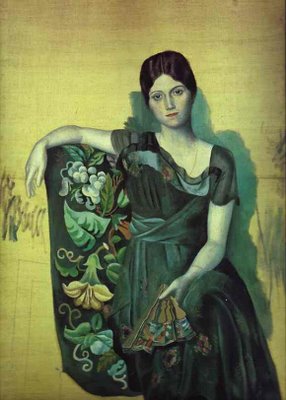
The Characters referenced in Woody Allen’s “Midnight in Paris” (Part 7 Paul Gauguin)

How Should We Then Live 7#1 Dr. Francis Schaeffer examines the Age of Non-Reason and he mentions the work of Paul Gauguin. 2011 Roger Arpajou / Sony Pictures Classics Kurt Fuller as John and Mimi Kennedy as Helen in “Midnight in Paris.” I love the movie “Midnight in Paris” by Woody Allen and I am […]

The Characters referenced in Woody Allen’s “Midnight in Paris” (Part 6 Gertrude Stein)

Midnight In Paris – SPOILER Discussion by What The Flick?! Associated Press Gertrude Stein and Alice B. Toklas in 1934 This video clip below discusses Gertrude Stein’s friendship with Pablo Picasso: I love the movie “Midnight in Paris” by Woody Allen and I am going through the whole list of famous writers and artists that […]

The Characters referenced in Woody Allen’s “Midnight in Paris” (Part 5 Juan Belmonte)

2011 Roger Arpajou / Sony Pictures Classics Gad Elmaleh as Detective Tisserant in “Midnight in Paris.” I love the movie “Midnight in Paris” by Woody Allen and I am going through the whole list of famous writers and artists that he included in the movie. Juan Belmonte was the most famous bullfighter of the time […]
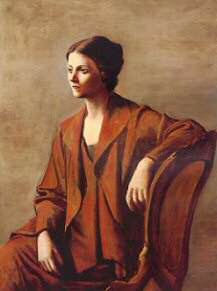
The Characters referenced in Woody Allen’s “Midnight in Paris” (Part 4 Ernest Heminingway)

  Woody Allen explores fantasy world with “Midnight in Paris” 2011 Roger Arpajou / Sony Pictures Classics Corey Stoll as Ernest Hemingway in “Midnight in Paris.” The New York Times Ernest Hemingway, around 1937 I love the movie “Midnight in Paris” by Woody Allen and I am going through the whole list of famous writers […]
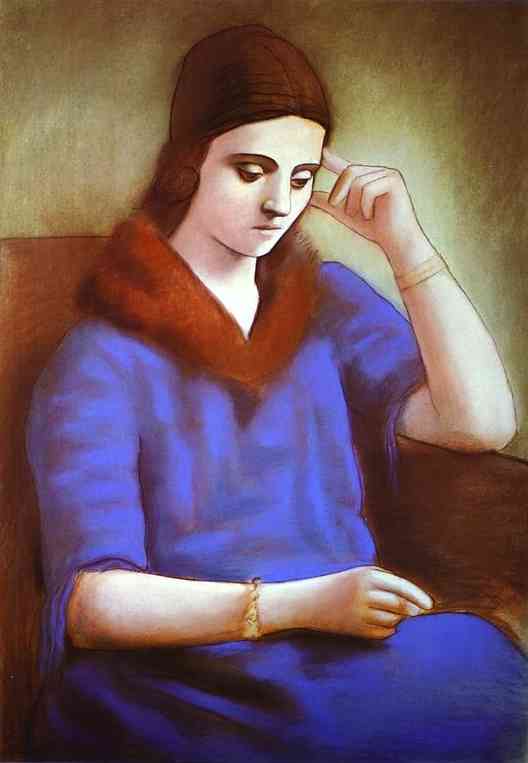
The Characters referenced in Woody Allen’s “Midnight in Paris” (Part 3 Scott and Zelda Fitzgerald)

What The Flick?!: Midnight In Paris – Review by What The Flick?! 2011 Roger Arpajou / Sony Pictures Classics Alison Pill as Zelda Fitzgerald and Tom Hiddleston as F. Scott Fitzgerald in “Midnight in Paris.” 2011 Roger Arpajou / Sony Pictures Classics Owen Wilson as Gil in “Midnight in Paris.” 2011 Roger Arpajou / Sony […]
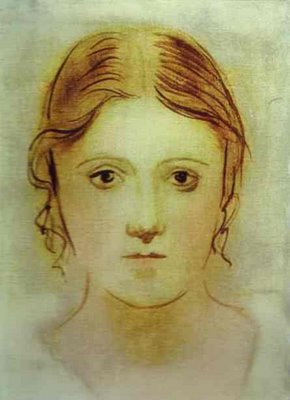
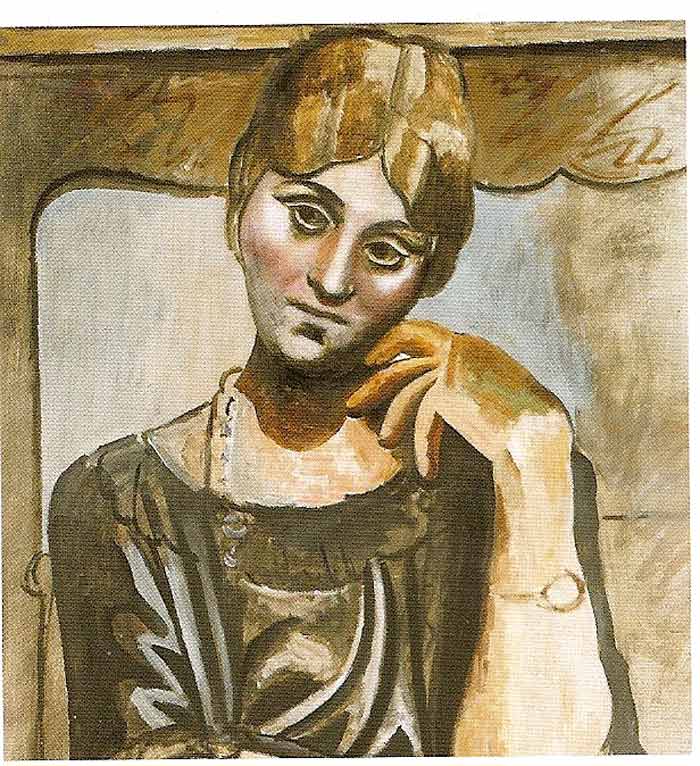
The Characters referenced in Woody Allen’s “Midnight in Paris” (Part 2 Cole Porter)

The song used in “Midnight in Paris” I am going through the famous characters that Woody Allen presents in his excellent movie “Midnight in Paris.” This series may be a long one since there are so many great characters. De-Lovely – Movie Trailer De-Lovely – So in Love – Kevin Kline, Ashley Judd & Others […]

The Characters referenced in Woody Allen’s “Midnight in Paris” (Part 1 William Faulkner)

Photo by Phill Mullen The only known photograph of William Faulkner (right) with his eldest brother, John, was taken in 1949. Like his brother, John Faulkner was also a writer, though their writing styles differed considerably. My grandfather, John Murphey, (born 1910) grew up in Oxford, Mississippi and knew both Johncy and “Bill” Faulkner. He […]

I love Woody Allen’s latest movie “Midnight in Paris”

I love the movie “Midnight in Paris” was so good that I will be doing a series on it. My favorite Woody Allen movie is Crimes and Misdemeanors and I will provide links to my earlier posts on that great movie. Movie Guide the Christian website had the following review: MIDNIGHT IN PARIS is the […]

  The Associated Press reported today:   The signature under the typewritten words on yellowing sheets of nearly century-old paper is unmistakable: Adolf Hitler, with the last few scribbled letters drooping downward. The date is 1919 and, decades before the Holocaust, the 30-year-old German soldier — born in Austria — penned what are believed to be […]

Solomon, Woody Allen, Coldplay and Kansas (Coldplay’s spiritual search Part 6)

Here is an article I wrote a couple of years ago: Solomon, Woody Allen, Coldplay and Kansas What does King Solomon, the movie director Woody Allen and the modern rock bands Coldplay and Kansas have in common? All four took on the issues surrounding death, the meaning of life and a possible afterlife, although they all came up with their own conclusions on […]

Insight into what Coldplay meant by “St. Peter won’t call my name” (Series on Coldplay’s spiritual search, Part 3)

Coldplay seeks to corner the market on earnest and expressive rock music that currently appeals to wide audiences Here is an article I wrote a couple of years ago about Chris Martin’s view of hell. He says he does not believe in it but for some reason he writes a song that teaches that it […]

The Characters referenced in Woody Allen’s “Midnight in Paris” (Part 8, Henri Toulouse Lautrec)

Owen Wilson as Gil in "Midnight in Paris." 2011 Roger Arpajou / Sony Pictures Classics

Owen Wilson as Gil in “Midnight in Paris.”

I am currently going through all the characters referenced in Woody Allen’s film “Midnight in Paris.” Today I will be discussing Henri de Toulouse Lautrec.  By the way, I know that some of you are wondering how many posts I will have before I am finished. Right now I have plans to look at Geores Brague, Dali, Rodin,Coco Chanel, Modigliani, Matisse, Luis Bunuel, Josephine Baker, Van Gogh, Picasso, Man Ray, T.S. Elliot and several more.

Vincent Van Gogh and Henri de Toulouse-Lautrec

Very early when he arrived in Paris, Vincent met him at the Cormon workshop and they quickly became friends.
Toulouse-Lautrec will introduce him to many painters and merchants during the weekly afternoons that he organizes at home. He will take him to the Mirliton, Aristide Bruant’s cabaret, for the first time.
He wants to challenge the painter de Groult to a duel, as the latter criticized Vincent’s paintings at an exhibition.
The duel won’t take place because de Groult will apologize to him.
Toulouse-Lautrec is deeply affected and sad when he learns about Vincent’s suicide and he will come to his funeral.

Paul Gauguin and Henri Toulouse Lautrec were the greatest painters of the post-impressionists. They are pictured together in 1890 in Paris in Woody Allen’s new movie “Midnight in Paris.” My favorite philosopher Francis Schaeffer did a great job in his film series “How should we then live?” looking at the artists of this period and I wanted to share a couple clips from that film and a portion of the written outline. First, here is a brief biography of Lautrec’s life.

Henri de Toulouse-Lautrec was born on November 24, 1864, in southern France. Son and heir of Comte Alphonse-Charles de Toulouse, he was the last in the line of an aristocratic family that dated back a thousand years. Today, the family estate houses the Musée Toulouse-Lautrec. As a child, Henri was weak and often sick. But by the time he was ten years old he had begun to draw and paint.

At age twelve Toulouse-Lautrec broke his left leg and at fourteen his right leg. The bones did not heal properly, and his legs ceased to grow. He reached maturity with a body trunk of normal size but with abnormally short legs. He was only 4 1/2 feet (1.5 meters) tall.

Deprived of the physical life that a normal body would have permitted, Toulouse-Lautrec lived completely for his art. He dwelt in the Montmartre section of Paris, the center of the cabaret entertainment and bohemian life that he loved to depict in his work. Dance halls and nightclubs, racetracks, prostitutes – all these were memorialized on canvas or made into lithographs.

Toulouse-Lautrec was very much an active part of this community. He would sit at a crowded nightclub table, laughing and drinking, meanwhile making swift sketches. The next morning in his studio he would expand the sketches into brightly colored paintings.

(Currently in Little Rock the exhibit “The Impressionists” presented by Harriet and Warren Stephens has the “Study of a Woman” by Henri Toulouse Lautrec. I saw the exhibit and enjoyed it very much.)

view

Henri de Toulouse-Lautrec. Study of a Woman (Etude de femme). (1893)

In order to join in the Montmartre life – as well as to fortify himself against the crowd’s ridicule of his appearance – Toulouse-Lautrec began to drink heavily. By the 1890s the drinking was affecting his health. He was confined first to a sanatorium and then to his mother’s care at home, but he could not stay away from alcohol. Toulouse-Lautrec died on September 9, 1901, at the family chateau of Malrome.

https://i0.wp.com/www.awardsdaily.com/wp-content/uploads/2011/06/6.jpg

How Should We Then Live Pt 7

AGE OF NON-REASON

I. Optimism Of Older Humanist Philosophers:

The unity and true knowledge of reality defined as starting from Man alone.

II. Shift in Modern Philosophy

A. Eighteenth century as the vital watershed.

B. Rousseau: ideas and influence.

1. Rousseau and autonomous freedom.

2. Personal freedom and social necessity clash in Rousseau.

3. Rousseau’s influence.

a) Robespierre and the ideology of the Terror.

b) Gauguin, natural freedom, and disillusionment.

C. DeSade: If nature is the absolute, cruelty equals non-cruelty.

D. Impossible tension between autonomous freedom and autonomous reasons conclusion that the

universe and people are a part of the total cosmic machine.

E. Kant, Hegel, and Kierkegaard and their followers sought for a unity but they did not solve the problem.

1. After these men and their followers, there came an absolute break between the area of meaning and values, and the area of reason.

2. Now humanistic philosophy sees reason as always leading to pessimism; any hope of optimism lies in non-reason.

III. Existentialism and Non-Reason

A. French existentialism.

1. Total separation of reason and will: Sartre.

2. Not possible to live consistently with this position.

B. German existentialism.

1. Jaspers and the “final experience.”

2. Heidegger and angst.


C. Influence of existentialism.


1. As a formal philosophy it is declining.

2. As a generalized attitude it dominates modern thought.

IV. Forms of Popularization of Nonrational Experience

A. Drug experience.

1. Aldous Huxley and “truth inside one’s head.”

2. Influence of rock groups in spreading the drug culture; psychedelic rock.

B. Eastern religious experience: from the drug trip to the Eastern religious trip.

C. The occult as a basis for “hope” in the area of non-reason.

V. Theological Liberalism and Existentialism

A. Preparation for theological existentialism.

1. Renaissance’s attempt to “synthesize” Greek philosophers and Christianity; religious liberals’ attempt to “synthesize” Enlightenment and Christianity.

2. Religious liberals denied supernatural but accepted reason.

3. Schweitzer’s demolition of liberal aim to separate the natural from the supernatural in the New Testament.

B. Theological existentialism.

1. Intellectual failure of rationalist theology opened door to theological existentialism.

2. Barth brought the existential methodology into theology.

a) Barth’s teaching led to theologians who said that the Bible is not true in the areas of science and history, but they nevertheless look for a religious experience from it.

b) For many adherents of this theology, the Bible does not give absolutes in regard to what is right or wrong in human behavior.

3. Theological existentialism as a cul-de-sac.

a) If Bible is divorced from its teaching concerning the cosmos and history, its values can’t be applied to a historic situation in either morals or law; theological pronouncements about morals or law are arbitrary.

b) No way to explain evil or distinguish good from evil. Therefore, these theologians are in same position as Hindu philosophers (as illustrated by Kali).

c) Tillich, prayer as reflection, and the deadness of “god.”

d) Religious words used for manipulation of society.

VI. Conclusion

With what Christ and the Bible teach, Man can have life instead of death—in having knowledge that is more than finite Man can have from himself.

_____________________________________

Comedy. Starring Owen Wilson, Marion Cotillard, Rachel Mc-Adams, Kathy Bates. Directed by Woody Allen. (PG-13. 100 minutes. At Bay Area theaters.)

Was there ever really a golden age? And if so, did people know it at the time? Are people even capable of recognizing a golden age when they’re in the midst of one? For Woody Allen, whose musical and cultural tastes run to the 1920s and ’30s, these questions have probably fueled countless daydreams. And now out of all that rumination comes “Midnight in Paris,” a movie that’s loving and wistful and often hysterically funny.

Romance is built into the design. A screenwriter, who has always been nostalgic, visits modern-day Paris and falls through a ripple in time: On a Paris street, a clock strikes midnight, and a 1920s taxicab drives up. F. Scott and Zelda Fitzgerald are inside, and they take him to a party. Though at first the writer thinks these are faux Fitzgeralds and that he’s at a costume party, he soon realizes that this is the real deal. He is surrounded by the music and styles he loves and is mingling with his idols and artistic heroes.

Our hero’s dislocation keeps the movie as light as it needs to be. Meeting celebrities can be awkward enough, but meeting legends of the past – the eagerness to please would be overwhelming. Yet always there is an edge of poignancy, too, because you are looking at the ’20s through the eyes of a modern person, as a world that is, by definition, past. The past is always romantic because it’s gone, just as the future is always frightening because you’regone.There’s an idea about Paris at work here, as well. Allen takes the notion of streets alive with the past and makes it literal in “Midnight in Paris,” so that everything that has ever happened in this city never goes away. It’s alive with parallel worlds – which is sometimes how we feel when we visit great cities like Paris, Rome or New York.Gil (Wilson) finds himself able to go back and forth between his own time and the ’20s, and so we keep feeling the contrast. In the 21st century, he is engaged to an awful spoiled brat played without compromise by Rachel Mc-Adams. Meanwhile, in his nightly ’20s rambles, he is falling in love with Adriana (Marion Cotillard), who is having an affair with Picasso. As was the case with Penélope Cruz in “Vicky Cristina Barcelona,” Woody Allen brings out, for the first time in an American film, the fire and allure Cotillard has shown in her European work.In the meantime, in between all the longing and wistfulness, this movie is sidesplitting because Allen gets to tap into an inexhaustible source of comedy: Whenever he wants a laugh, or 10 laughs, he just introduces another writer or painter and plays to our expectations. Every scene, for example, involving Ernest Hemingway (Corey Stoll) is a scream, because Allen has him talk the way Hemingway wrote. There is even a Man Ray joke here. And if you know Luis Buñuel’s “The Exterminating Angel,” you’ll fall out of your chair when Gil starts feeding him movie ideas.Adrien Brody shows up as the young Salvador Dalí – good casting. Alison Pill looks very much like Zelda, though Tom Hiddleston is too tall for Scott Fitzgerald, who was just a little bigger than Woody Allen. But Kathy Bates is just right as Gertrude Stein, as businesslike and motherly as you’d want her to be.— Advisory: Lots of smoking – they didn’t know better in those days.E-mail Mick LaSalle at mlasalle@sfchronicle.com.

Other posts with Woody Allen:

The Characters referenced in Woody Allen’s “Midnight in Paris” (Part 10 Salvador Dali)

Artists and bohemians inspired Woody Allen for ‘Midnight in Paris I love the movie “Midnight in Paris” by Woody Allen and I am going through the whole list of famous writers and artists that he included in the movie. Today we will look at Salvador Dali. In this clip below you will see when Picasso […]

The Characters referenced in Woody Allen’s “Midnight in Paris” (Part 9, Georges Braque)

2011 Roger Arpajou / Sony Pictures Classics Lea Seydoux as Gabrielle in “Midnight in Paris.” Adriana and Gil are seen above walking together in the movie “Midnight in Paris.” Adriana was a fictional character who was Picasso’s mistress in the film. Earlier she had been Georges Braque’s mistress before moving on to Picasso according to […]

The Characters referenced in Woody Allen’s “Midnight in Paris” (Part 8, Henri Toulouse Lautrec)

How Should We Then Live 7#3 2011 Roger Arpajou / Sony Pictures Classics Owen Wilson as Gil in “Midnight in Paris.” Paul Gauguin and Henri Toulouse Lautrec were the greatest painters of the post-impressionists. They are pictured together in 1890 in Paris in Woody Allen’s new movie “Midnight in Paris.” My favorite philosopher Francis Schaeffer […]

The Characters referenced in Woody Allen’s “Midnight in Paris” (Part 7 Paul Gauguin)

How Should We Then Live 7#1 Dr. Francis Schaeffer examines the Age of Non-Reason and he mentions the work of Paul Gauguin. 2011 Roger Arpajou / Sony Pictures Classics Kurt Fuller as John and Mimi Kennedy as Helen in “Midnight in Paris.” I love the movie “Midnight in Paris” by Woody Allen and I am […]

The Characters referenced in Woody Allen’s “Midnight in Paris” (Part 6 Gertrude Stein)

Midnight In Paris – SPOILER Discussion by What The Flick?! Associated Press Gertrude Stein and Alice B. Toklas in 1934 This video clip below discusses Gertrude Stein’s friendship with Pablo Picasso: I love the movie “Midnight in Paris” by Woody Allen and I am going through the whole list of famous writers and artists that […]

The Characters referenced in Woody Allen’s “Midnight in Paris” (Part 5 Juan Belmonte)

2011 Roger Arpajou / Sony Pictures Classics Gad Elmaleh as Detective Tisserant in “Midnight in Paris.” I love the movie “Midnight in Paris” by Woody Allen and I am going through the whole list of famous writers and artists that he included in the movie. Juan Belmonte was the most famous bullfighter of the time […]

The Characters referenced in Woody Allen’s “Midnight in Paris” (Part 4 Ernest Heminingway)

  Woody Allen explores fantasy world with “Midnight in Paris” 2011 Roger Arpajou / Sony Pictures Classics Corey Stoll as Ernest Hemingway in “Midnight in Paris.” The New York Times Ernest Hemingway, around 1937 I love the movie “Midnight in Paris” by Woody Allen and I am going through the whole list of famous writers […]

The Characters referenced in Woody Allen’s “Midnight in Paris” (Part 3 Scott and Zelda Fitzgerald)

What The Flick?!: Midnight In Paris – Review by What The Flick?! 2011 Roger Arpajou / Sony Pictures Classics Alison Pill as Zelda Fitzgerald and Tom Hiddleston as F. Scott Fitzgerald in “Midnight in Paris.” 2011 Roger Arpajou / Sony Pictures Classics Owen Wilson as Gil in “Midnight in Paris.” 2011 Roger Arpajou / Sony […]

The Characters referenced in Woody Allen’s “Midnight in Paris” (Part 2 Cole Porter)

The song used in “Midnight in Paris” I am going through the famous characters that Woody Allen presents in his excellent movie “Midnight in Paris.” This series may be a long one since there are so many great characters. De-Lovely – Movie Trailer De-Lovely – So in Love – Kevin Kline, Ashley Judd & Others […]

The Characters referenced in Woody Allen’s “Midnight in Paris” (Part 1 William Faulkner)

Photo by Phill Mullen The only known photograph of William Faulkner (right) with his eldest brother, John, was taken in 1949. Like his brother, John Faulkner was also a writer, though their writing styles differed considerably. My grandfather, John Murphey, (born 1910) grew up in Oxford, Mississippi and knew both Johncy and “Bill” Faulkner. He […]

I love Woody Allen’s latest movie “Midnight in Paris”

I love the movie “Midnight in Paris” was so good that I will be doing a series on it. My favorite Woody Allen movie is Crimes and Misdemeanors and I will provide links to my earlier posts on that great movie. Movie Guide the Christian website had the following review: MIDNIGHT IN PARIS is the […]

  The Associated Press reported today:   The signature under the typewritten words on yellowing sheets of nearly century-old paper is unmistakable: Adolf Hitler, with the last few scribbled letters drooping downward. The date is 1919 and, decades before the Holocaust, the 30-year-old German soldier — born in Austria — penned what are believed to be […]

Solomon, Woody Allen, Coldplay and Kansas (Coldplay’s spiritual search Part 6)

Here is an article I wrote a couple of years ago: Solomon, Woody Allen, Coldplay and Kansas What does King Solomon, the movie director Woody Allen and the modern rock bands Coldplay and Kansas have in common? All four took on the issues surrounding death, the meaning of life and a possible afterlife, although they all came up with their own conclusions on […]

Insight into what Coldplay meant by “St. Peter won’t call my name” (Series on Coldplay’s spiritual search, Part 3)

Coldplay seeks to corner the market on earnest and expressive rock music that currently appeals to wide audiences Here is an article I wrote a couple of years ago about Chris Martin’s view of hell. He says he does not believe in it but for some reason he writes a song that teaches that it […]

Humanist asserts: “Neither am I an advocate of Hitler; however, by whose criteria is he evil?” (Hitler’s letter from 1919 revealed)


The Associated Press reported today: 

 The signature under the typewritten words on yellowing sheets of nearly century-old paper is unmistakable: Adolf Hitler, with the last few scribbled letters drooping downward.

The date is 1919 and, decades before the Holocaust, the 30-year-old German soldier — born in Austria — penned what are believed to be Hitler’s first written comments calling for the annihilation of Jews.

Hitler “set the gold standard about man’s inhumanity to man,” said Rabbi Marvin Hier of the Simon Wiesenthal Center, named after the late Nazi hunter.

Ziegler is said to have found the four typed pages in a Nazi archive near Nuremberg, Germany, in the final months of World War II.

“The danger posed by Jewry for our people today finds expression in the undeniable aversion of wide sections of our people,” Hitler wrote in German. “The cause of this aversion … arises mostly from personal contact and from the personal impression that the individual Jew leaves — almost always an unfavorable one.”

In one section, Hitler said that a powerful government could curtail the so-called “Jewish threat” by denying their rights. But “its final aim, however, must be the uncompromising removal of the Jews altogether.”

At the time, Hitler was serving in the German army, and had taken to riling up the troops with his anti-Semitic rants. A superior officer urged Hitler to put his ideas on paper.


Adolf Hitler (shown left-under x) during World War I with fellow German soldiers. The dog
had the name Fuchsl and was actually Hitler’s pet during the war until it was stolen from him.

______________________________________________

Known as the Gemlich letter, the document was certified as authentic in 1988 by handwriting expert Charles Hamilton, who had revealed the infamous “Hitler Diaries” to be forgeries.

Adolf Gemlich created propaganda for the German army. Hitler wrote the letter to him at the suggestion of Captain Ulrich Mayr, to help popularize the notion that someone was responsible for Germany’s defeat in World War I.

Hitler signed his letter, “Mit vorzueglicher Hochachtung,” meaning with deepest esteem.

“This is a seminal document that belongs to future generations,” said the rabbi.

Early in his career Hitler was popular and many of the German people bought into his anti-semetic views. Does the atheist have an intellectual basis to condemn Hitler’s actions?

____________________________________ 

 Francis Schaeffer
Francis Schaeffer pictured above.
 
Humanist Abigail Ann Martin asserted, “Neither am I an advocate of Hitler; however, by whose criteria is he evil?” (The Humanist, September/October 1997, p. 2.). 
 
I am simply amazed at such a hateful statement!!! However, we know from the above letter that Hitler was popular with the army in 1919, and had “taken to riling up the troops with his anti-Semitic rants. A superior officer urged Hitler to put his ideas on paper.”
View Image
 
I personally met someone who was part of the Hitler youth movement in Germany in the 1930’s and until his dying day he believed that Hitler was right. I had a basis for knowing that Hitler was wrong and here it is below.
 
It is my view that according the Bible all men are created by God and are valuable.  However, the atheist has no basis for coming to this same conclusion. Francis Schaeffer put it this way:
 
We cannot deal with people like human beings, we cannot deal with them on the high level of true humanity, unless we really know their origin—who they are. God tells man who he is. God tells us that He created man in His image. So man is some- thing wonderful.
 
Francis Schaeffer died in 1984, but there is a website dedicated to his works. In 1972 he wrote the book “He is There and He is Not Silent.” Here is the statement that sums up that book: 

One of philosophy’s biggest problems is that anything exists at all and has the form that it does. Another is that man exists as a personal being and makes true choices and has moral responsibility. The Bible gives sufficient answers to these problems. In fact, the only sufficient answer is that the infinite-personal triune God is there and He is not silent. He has spoken to man in the Bible.

I am a big Woody Allen movie fan and no other movie better demonstrates the need for an afterlife  than Allen’s 1989 film  Crimes and Misdemeanors. This film also brought up the view that Hitler believed that “might made right.” How can an atheist argue against that?  Basically Woody Allen is attacking the weaknesses in his own agnostic point of view!! Take a look at the video clip below when he says in the absence of God, man has to do the right thing. What chance is there that will happen?

Crimes and Misdemeanors is  about a eye doctor who hires a killer to murder his mistress because she continually threatens to blow the whistle on his past questionable, probably illegal, business activities. Afterward he is haunted by guilt. His Jewish father had taught him that God sees all and will surely punish the evildoer.

But the doctor’s crime is never discovered. Later in the film, Judah reflects on the conversation his father had with Judah’s unbelieving Aunt May during a Jewish Sedar dinner  many years ago:

“Come on Sol, open your eyes. Six million Jews burned to death by the Nazi’s, and they got away with it because might makes right,” says Aunt May.

Sol replies, “May, how did they get away with it?”

Judah asks, “If a man kills, then what?”

Sol responds to his son, “Then in one way or another he will be punished.”

Aunt May comments, “I say if he can do it and get away with it and he chooses not to be bothered by the ethics, then he is home free.”

Judah’s final conclusion was that might did make right. He observed that one day, because of this conclusion, he woke up and the cloud of guilt was gone. He was, as his aunt said, “home free.”

The basic question Woody Allen is presenting to his own agnostic humanistic worldview is: If you really believe there is no God there to punish you in an afterlife, then why not murder if you can get away with it?  The secular humanist worldview that modern man has adopted does not work in the real world that God has created. God “has planted eternity in the human heart…” (Ecclesiastes 3:11). This is a direct result of our God-given conscience. The apostle Paul said it best in Romans 1:19, “For that which is known about God is evident to them and made plain in their inner consciousness, because God  has shown it to them” (Amplified Version).

It’s no wonder, then, that one of Allen’s fellow humanists would comment, “Certain moral truths — such as do not kill, do not steal, and do not lie — do have a special status of being not just ‘mere opinion’ but bulwarks of humanitarian action. I have no intention of saying, ‘I think Hitler was wrong.’ Hitler WAS wrong.” (Gloria Leitner, “A Perspective on Belief,” The Humanist, May/June 1997, pp.38-39). Here Leitner is reasoning from her God-given conscience and not from humanist philosophy. It wasn’t long before she received criticism.

Humanist Abigail Ann Martin responded, “Neither am I an advocate of Hitler; however, by whose criteria is he evil?” (The Humanist, September/October 1997, p. 2.). Humanists don’t really have an intellectual basis for saying that Hitler was wrong, but their God-given conscience tells them that they are wrong on this issue.

Crimes and Misdemeanors (Woody Allen – 1989) – Final scenes

Another example of how a God-given conscience is affecting a very popular singer can be found in Chris Martin of Coldplay Evidently  Chris Martin who said he resented dogmatic religious views a few years ago, has now written a grammy winning song that pictures an evil king being punished in an afterlife. (Check out earlier post.) Could it be that his God-given conscience prompted him to put that line in? Or do men like Hitler get off home free as Woody Allen suggested in Crimes and Misdemeanors?

Other posts that deal with Coldplay:

Three things that do not bring lasting Satisfaction, (Coldplay’s spiritual search Part 5)

Coldplay – 42 Live Coldplay perform on the french television channel W9. I wrote this article a couple of years ago: The Spiritual Search for the Afterlife Russ Breimeier rightly noted that it seems that Coldplay is “on the verge of identifying a great Truth” and their latest CD is very provocative. Many songs mention […]

Are Gwyneth Paltrow and Chris Martin looking for Spiritual Answers? (Coldplay’s spiritual search Part 4)

  CP I wrote this article a couple of years ago. Are Gwyneth Paltrow and Chris Martin looking for Spiritual Answers? Just like King Solomon’s predicament in the Book of Ecclesiastes, both of these individuals are very wealthy, famous, and successful, but they still are seeking satisfying answers to life’s greatest questions even though it […]

Insight into what Coldplay meant by “St. Peter won’t call my name” (Series on Coldplay’s spiritual search, Part 3)

Coldplay seeks to corner the market on earnest and expressive rock music that currently appeals to wide audiences Here is an article I wrote a couple of years ago about Chris Martin’s view of hell. He says he does not believe in it but for some reason he writes a song that teaches that it […]

Will Coldplay’s 2011 album continue on spiritual themes found in 2008 Viva La Vida? (Series on Coldplay’s spiritual search, Part 2)

Views:2 By waymedia Coldplay Coldplay – Life In Technicolor ii Back in 2008 I wrote a paper on the spiritual themes of Coldplay’s album Viva La Vida and I predicted this spiritual search would continue in the future. Below is the second part of the paper, “Coldplay’s latest musical lyrics indicate a Spiritual Search for the […]

Will Coldplay’s 2011 album continue on spiritual themes found in 2008 Viva La Vida? (Series on Coldplay’s spiritual search, Part 1)

Coldplay performing “Glass of Water.” Back in 2008 I wrote a paper on the spiritual themes of Coldplay’s album Viva La Vida and I predicted this spiritual search would continue in the future. Below is the first part of the paper, “Coldplay’s latest musical lyrics indicate a Spiritual Search for the Afterlife.” Coldplay’s latest musical […]

The wait is over, Coldplay single “Every Teardrop is a waterfall”

Coldplay – Every Teardrop Is A Waterfall (Official) The new single – download it now from iTunes at http://cldp.ly/itunescp (except in the UK, where it will be released to download stores at 12.01am on Sunday June 5th). Written by Berryman / Buckland / Champion / Martin / Allen / Anderson. Produced by Markus Dravs, Dan […]

 
By Everette Hatcher III, on June 4, 2011 at 1:43 pm, under Current Events. No Comment