I was impacted by this film series by Francis Schaeffer back in the 1970’s and I wanted to share it with you. Schaeffer makes three key points concerning the Reformation: “1. Erasmian Christian humanism rejected by Farel. 2. Bible gives needed answers not only as to how to be right with God, but concerning the meaning of life and what is right and what is wrong, and concerning mankind and nature. 3. The people of the Reformation did not have humanism’s problem, because the Bible gives a unity between God—as the ultimate universal—and the individual things.” What a great difference this made in the world!!!
E P I S O D E 4
T h e
REFORMATION
I. The Reformation as a Reaction Against Medieval Religious Distortions of the Biblical and Early Christian Church’s Teaching
A. Illustration from Luther.
B. Luther—German; Zwingli—Zürich; Thomas Cromwell—England; Calvin—Geneva.
C. Biblical view of salvation (grace only) and its effect on certain aspects of church construction.
D. Real meaning of destruction of artwork in Reformation.
E. The Reformation rejected.
1. Medieval distortion of Church’s having made its authority equal to the authority of the Bible.
2. Medieval distortion of Church’s having added human works to the finished work of Christ for salvation.
3. Medieval distortion introduced by Aquinas: mixture of biblical thinking and pagan thought.
F. Summary of humanistic influence in church.
1. Illustrated by Raphael’s School of Athens and Disputà.
2. Illustrated by Michelangelo’s making pagan prophetesses equal to Old Testament prophets in Sistine Chapel.
G. For William Farel and the other Reformers it was the Scriptures only.
1. Erasmian Christian humanism rejected by Farel.
2. Bible gives needed answers not only as to how to be right with God, but concerning the meaning of life and what is right and what is wrong, and concerning mankind and nature.
3. The people of the Reformation did not have humanism’s problem, because the Bible gives a unity between God—as the ultimate universal—and the individual things.
4. The Reformation was no golden age, but it did aspire to depend on the Bible in all of life.
II. The Reformation and the Arts
A. German Reformation music tradition peaks in Bach.
B. Significance of Cranach’s and Luther’s friendship.
C. Dürer’s identification with Luther evidenced in his diary; significance of his work.
D. Rembrandt’s paintings show that he understood that his sins had sent Christ to the cross, and that Christ is the Lord of all of life.
E. Point is not to romanticize Reformation art but refute view that reformation was either hostile to art and culture, or did not produce art and culture.
F.Wittenberg Gesangbuch , Geneva Psalter, and revival of congregational singing.
III. Comparison of Renaissance and Reformation.
Both sought freedom. In the South license resulted from lack of absolutes; in the North freedom lasted through absolutes.
Questions
1. Can you clearly differentiate between the key ideas of the Renaissance and the Reformation, respectively?
2. “The Reformation is simply the last gasp of medieval Christianity. Once exhausted, the truly modern and humane force of the Renaissance dominated the West.” Comment.
3. “As a man thinketh, so is he”—the renewed emphasis upon the Bible’s teaching in the Reformation had practical results. If some of these results are no longer common among us, how far may this be attributed to a de-emphasis upon biblical teaching today?
I was impacted by this film series by Francis Schaeffer back in the 1970’s and I wanted to share it with you. Schaeffer really shows why we have so many problems today with this excellent episode. He noted, “Could have gone either way—with emphasis on real people living in a real world which God had made, or humanism could take over with its emphasis on the individual things being autonomous…Humanism’s problem: What is the meaning of individual things, including Man, if there is no final thing to relate them to? And how do we know what is right or wrong if there is no absolute to give us certainty? Humanism ends with only statistical averages.” That is exactly where we are today in 2011. Just left with no final answers, but just wtih statistical averages.
E P I S O D E 3
T h e RENAISSANCE
I. The Art of the Renaissance Is One of Mankind’s Glories
A. The artists reflect their culture.
B. The artists often provide the way for the next step in culture.
1. Positive emphasis on nature in Giotto’s art.
2. Significance of work of Masaccio.
3. Perspective as a form of humanism.
4. Parallel and supportive developments in Low Countries. Van Eyck’s Adoration of the Lamb, the substitutionary work of the crucified and risen Christ. Also an example of landscape naturalism.
5. Dante’s life and work.
a) Following Aquinas, he mixed Christian and classical elements.
b) Dichotomy in Dante and other writers between sensual and idealized, spiritual love.
6. Brunelleschi’s architecture and the conquest of space.
7. Trend to autobiography and self-portraiture a mark of emphasis on Man.
C. Italian Renaissance music.
1. Invention of orchestration.
2. Invention of movable type for music.
II. Increased Drift Toward a Total Humanism
A. Could have gone either way—with emphasis on real people living in a real world which God had made, orhumanism could take over with its emphasis on the individual things being autonomous.
B. The die was cast: Man tried to make himself independent, autonomous.
C. A growing humanism sees what preceded the Renaissance as the “Dark Ages.”
D. Idea of a “Dark Age” and a “rebirth” in Renaissance.
E. Aquinas had opened the door for that which is the problem of humanism.
1. Illustrated by Raphael’s fresco in the Vatican:
The School of Athens.
2. Humanism’s problem: What is the meaning of individual things, including Man, if there is no final thing to relate them to? And how do we know what is right or wrong if there is no absolute to give us certainty? Humanism ends with only statistical averages.
F. Fouguet’s Red Virgin as an example.
1. At first, only religious values seemed threatened.
2. But gradually the threat spread to all of knowledge and all of life.
G. Man as hero: Michelangelo’s Prisoners and David . Change in his later work, however.
H. Leonardo da Vinci and the dilemma of humanism.
1. Logical conclusion of humanism as perceived by Leonardo.
2. Final pessimism of Leonardo an expression of inevitable progression of humanism towards pessimism.
III. Christianity’s Answer to Humanism’s Problem
Questions
1. In what ways is this treatment of the Renaissance different from other treatments with which you are familiar?
2. Attitudes toward nature and Man seem to be crucial to understanding the Renaissance. How far were these attitudes Christian and how far non-Christian?
3. Can you see any parallels between the evolution of humanism in the Renaissance—from hopeful dawn to ominous sunset–and the changing outlook on human and world problems during your own lifetime?
Key Events and Persons
Dante: 1265-1321
The Divine Comedy: 1300-1321
Giotto: c. 1267-1337
Brunelleschi: 1377-1446
Jan van Eyck: 1380-1441
Masaccio: 1401-1428
Fouquet: 1416-1480
Duomo, Cathedral of Florence: 1434
Leonardo da Vinci: 1452-1519
Michelangelo: 1475-1564
Michelangelo’s David: 1504
Francis I of France: 1494-1547
Further Study
There are so many good picture books of Renaissance art and architecture that, rather than try to select one or two, I will simply urge the importance of consulting some. With profit, one might also listen to
Renaissance music, such as the selection in The Seraphim Guide to Renaissance Music.
J. Burckhardt, The Civilization of the Renaissance in Italy, 2 vols. (1958).
Benvenuto Cellini, Autobiography (1966).
E. Gorin, Italian Humanism (1966).
E. Panofsky, Studies in Iconology (1962).
Georgio Vasari, The Lives of the Painters, Sculptors and Architects, 4 vols. (1963).
W.H.Woodward, Vittorino da Feltre and Other Humanist Educators (1963).
Communism catches the attention of the young at heart but it has always brought repression wherever it is tried (“Schaeffer Sundays” Part 1)
Francis Schaeffer is a hero of mine and I want to honor him with a series of posts on Sundays called “Schaeffer Sundays” which will include his writings and clips from his film series. I have posted many times in the past using his material.
Communism has never been tried is something I was told just a few months ago by a well meaning young person who was impressed with the ideas of Karl Marx. I responded that there are only 5 communist countries in the world today and they lack political, economic and religious freedom.
Communism has always failed because of its materialist base. Francis Schaeffer does a great job of showing that in this clip below. Also Schaeffer shows that there were lots of similar things about the basis for both the French and Russia revolutions and he exposes the materialist and humanist basis of both revolutions.
HowShouldWeThenLive Episode 5
_____
HowShouldweThenLive Episode 6
________________
Similarities between French Revolution and Communist Revolution
Schaeffer compares communism with French Revolution and Napoleon.
1. Lenin took charge in Russia much as Napoleon took charge in France – when people get desperate enough, they’ll take a dictator.
Other examples: Hitler, Julius Caesar. It could happen again.
2. Communism is very repressive, stifling political and artistic freedom. Even allies have to be coerced. (Poland).
Communists say repression is temporary until utopia can be reached – yet there is no evidence of progress in that direction. Dictatorship appears to be permanent.
3. No ultimate basis for morality (right and wrong) – materialist base of communism is just as humanistic as French. Only have “arbitrary absolutes” no final basis for right and wrong.
How is Christianity different from both French Revolution and Communism?
Contrast N.T. Christianity – very positive government reform and great strides against injustice. (especially under Wesleyan revival).
Bible gives absolutes – standards of right and wrong. It shows the problems and why they exist (man’s fall and rebellion against God).
Is Christianity at all like Communism?
Sometimes Communism sounds very “Christian” – desirable goals of equality, justice, etc. Schaeffer elsewhere explains by saying Marxism is a Christian heresy – Karl Marx
borrowed some of the ideals of N.T.
Below is a great article. Free-lance columnist Bradley R. Gitz, who lives and teaches in Batesville, received his Ph.D. in political science from the University of Illinois.
This article was published January 30, 2011 at 2:28 a.m. Here is a portion of that article below:
A final advantage is the mutation of socialism into so many variants over the past century or so. Precisely because Karl Marx was unclear as to how it would work in practice, socialism has always been something of an empty vessel into which would be revolutionaries seeking personal meaning and utopian causes to support can pour pretty much anything.
A desire to increase state power, soak the rich and expand the welfare state is about all that is left of the original vision. Socialism for young lefties these days means “social justice” and compassion for the poor, not the gulag and the NKVD.
In the end, the one argument that will never wash is that communismcan’t be said to have failed because it was never actually tried. This is a transparent intellectual dodge that ignores the fact that “people’s democracies” were established all over the place in the first three decades after World War II.
Such sophistry is resorted to only because communism in all of those places produced hell on earth rather than heaven.
That the attempts to build communism in a remarkable variety of different geographical regions led to only tyranny and mass bloodshed tells us only that it was never feasible in the first place, and that societies built on the socialist principle ironically suffer from the kind of “inner contradictions” that Marx mistakenly predicted would destroy capitalism.
Yes, all economies are mixed in nature, and one could plausibly argue that the socialist impulse took the rough edges off of capitalism by sponsoring the creation of welfare-state programs that command considerable public support.
But the fact remains that no society in history has been able to achieve sustained prosperity without respect for private property and market forces of supply and demand. Nations, therefore, retain their economic dynamism only to the extent that they resist the temptation to travel too far down the socialist road.
I was impacted by this film series by Francis Schaeffer back in the 1970’s and I wanted to share it with you. Schaeffer points out that during this time period unfortunately we have the “Church’s deviation from early church’s teaching in regard to authority and the approach to God.” In my view we see a move from more conservative evangelicalism of the early church to the Catholic Church.
A. Social, political, and intellectual uncertainty.
B. General decline in learning, but monasteries were a depository for classical and Christian documents.
C. The original pristine Christianity of the New Testament gradually became distorted.
D. Decline of vital naturalism in art parallels decline of vital Christianity: positive and negative aspects of Byzantine art.
E. Music at time of Ambrose, later Gregorian chants.
II. The Church in the World: Economic, Social, Political.
How to be in the world but not of it.
A. Generosity of early church.
B. Ambivalence in Middle Ages about material goods; asceticism and luxury.
C. Economic controls to protect the weak.
D. Emphasis on work well done.
E. Care for social needs: e.g. hospitals.
F. Meaning of Christendom; attendant problems. Lorenzetti’s Allegory of Good and Bad Government.
III. Artistic Achievements
A. Close relation between church and society in art and life: e.g. reign of Charlemagne.
B. Basis of unified European culture laid by Charlemagne.
C. Birth and flowering of Romanesque architecture.
D. Birth and flowering of Gothic architecture.
IV. Links Between Philosophical, Theological, and Spiritual Developments on Eve of Renaissance
A. Aquinas’ emphasis on Aristotle.
1. Negative aspect: individual things, the particulars, tended to be made independent, autonomous.
2. With this came the loss of adequate meaning for the individual things, including Man, morals, values, and law.
B. Church’s deviation from early church’s teaching in regard to authority and the approach to God.
C. Reaction of Wycliffe and Hus to theological distortions is prophetic of Reformation.
Questions
1. Summarize the negative and positive aspects of church influence in the Middle Ages.
2. “To speak of distortions of belief in the Middle Ages is to pretend that the church should have stood still when the apostles died. But we have to adapt to new circumstances and ideas. The medieval church did.” Comment.
3. Apply the particulars-universals discussion to modern circumstances. How do people repeat the same mistakes nowadays? Be specific.
Key Events and Persons
Aristotle: 384-322 B.C.
Ambrose: 339-397
Alcuin of York: 735-804
Charlemagne reign: c. 768-814
Crowned Emperor: 800
Romanesque style: 1000-1150
Gothic style: 1150-1250
St. Denis: 1140-
St. Francis: c. 1181-1226
Chartres: 1194-
Aquinas: 1225-1274
John Wycliffe: c. 1320-1384
John Hus: 1369-1415
Further Study
H. Fichtenau, The Carolingian Empire (1954).
Gordon Leff, Medieval Thought (1958).
C.S. Lewis, The Discarded Image (1964).
E.K. Rand, Founders of the Middle Ages (1954).
O. vonSimson, The Gothic Cathedral (1964).
R.W. Southern, The Making of the Middle Ages (1953).
The Roots of the Emergent Church by Francis Schaeffer
Francis Shaeffer – The early church (part1)
Francis Shaeffer – The early church (part 2)
Francis Shaeffer – The early church (part 3)
Francis Shaeffer – The early church (part 4)
Francis Shaeffer – The early church (part 5)
How Should We then Live Episode 7 small (Age of Nonreason)
#02 How Should We Then Live? (Promo Clip) Dr. Francis Schaeffer
10 Worldview and Truth
Two Minute Warning: How Then Should We Live?: Francis Schaeffer at 100
Francis Schaeffer Whatever Happened to the Human Race (Episode 1) ABORTION
Francis Schaeffer “BASIS FOR HUMAN DIGNITY” Whatever…HTTHR
Today I am starting a series that really had a big impact on my life back in the 1970’s when I first saw it. There are ten parts and today is the first.
Francis Schaeffer takes a look at Rome and why it fell. It fell because of inward problems. We have many of these same problems today in the USA.
There is a flow to history and culture. This flow is rooted and has its wellspring in the thoughts of people. People are unique in the inner life of the mind—what they are in their thought world determines how they act. This is true of their value systems and it is true of their creativity …
People have presuppositions, and they will live more consistently on the basis of these presuppositions than even they themselves may realize. By presuppositions we mean the basic way an individual looks at life, his basic world view, the grid through which he sees the world. Presuppositions rest upon that which a person considers to be the truth of what exists. People’s presuppositions lay a grid for all they bring forth into the external world. Their presuppositions also provide the basis for their values and their basis for their decisions.
“As a man thinketh, so is he,” is really most profound. An individual is not just the product of the forces around him. He has a mind, an inner world …
Most people catch their presuppositions from their family and surrounding society the way a child catches measles. But people with more understanding realize that their presuppositions should be chosen after a careful consideration of what world view is true …
It is important to realize what a difference a people’s world view makes in their strength as they are exposed to the pressure of life. That it was the Christians who were able to resist religious mixtures, syncretism, and the effects of the weakness of Roman culture speaks of the strength of the Christian world view. This strength rested on God’s being an infinite-personal God and his speaking in the Old Testament, in the life and teaching of Jesus Christ, and in the gradually growing New Testament. He had spoken in ways people could understand. Thus the Christians not only had knowledge about the universe and mankind that people cannot find out by themselves, but they had absolute, universal values by which to live and by which to judge the society and the political state in which they lived …1
Apathy was the chief mark of the late Empire. One of the ways the apathy showed itself was in a lack of creativity in the arts. One easily observed example of the decadence of officially sponsored art is that the fourth-century work on the Arch of Constantine in Rome stands’ in poor contrast to its second-century sculptures which were borrowed from monuments from the period of Emperor Trajan. The elite abandoned their intellectual pursuits for social life. Officially sponsored art was decadent, and music was increasingly bombastic. Even the portraits on the coins became of poor quality. All of life was marked by the predominant apathy.
As the Roman economy slumped lower and lower, burdened with an aggravated inflation and a costly government, authoritarianism increased to counter the apathy. Since work was no longer done voluntarily, it was brought increasingly under the authority of the state, and freedoms were lost. For example, laws were passed binding small farmers to their land. So, because of the general apathy and its results, and because of oppressive control, few thought the old civilization worth saving.
Rome did not fall because of external forces such as the invasion by the barbarians. Rome had no sufficient inward base; the’ barbarians only completed the breakdown — and Rome gradually became a ruin.
It is important to realize what a difference a people’s world view makes in their strength as they are exposed to the pressure of life. That it was the Christians who were able to resist religious mixtures, syncretism, and the effects of the weaknesses of Roman culture speaks of the strength of the Christian world view. This strength rested on God’s being an infinite-personal God and his speaking in the Old Testament, in the life and teaching of Jesus Christ, and in the gradually growing New Testament. He had spoken in ways people could understand. Thus the Christians not only had knowledge about the universe and mankind that people cannot find out by themselves, but they had absolute, universal values by which to live and by which to judge the society and the political state in which they lived. And they had grounds for the basic dignity and value of the individual as unique in being made in the image of God.
Perhaps no one has presented more vividly to our generation the inner weakness of imperial Rome than has Fellini (1920-) in his film Satyricon. He reminds us that the classical world is not to be romanticized, but that it was both cruel and decadent as it came to the logical conclusion of its world view.
A culture or an individual with a weak base can stand only when the pressure on it is not too great. As an illustration, let us think of a Roman bridge. The Romans built little humpbacked bridges over many of the streams of Europe. People and wagons went over these structures safely for centuries, for two millennia. But if people today drove heavily loaded trucks over these bridges, they would break. It is this way with the lives and value systems of individuals and cultures when they have nothing stronger to build on than their own limitedness, their own finiteness. They can stand when pressures are not too great, but when pressures mount, if then they do not have a sufficient base, they crash-just as a Roman bridge would cave in under the weight of a modern six-wheeled truck. Culture and the freedoms of people are fragile. Without a sufficient base, when such pressures come only time is needed and often not a great deal of time-before there is a collapse.
C. Answer approached through consideration of the past.
D. Any starting point in history would be good; we start with Rome because it is direct ancestor of modern West.
II. Rome: The Empire Triumphant
A. Size and military strength of Empire.
B. Imperial sway evoked by Aventicum (Avenches), Switzerland.
III. Rome: Cultural Analysis
A. Greece and Rome: cultural influences and parallels.
1. Society as the absolute, to give meaning to life.
2. Finite gods as ground of accepted values.
B. Problems arising from Roman culture.
1. No infinite reference point as base for values and society.
2. Collapse of civic ideals therefore inevitable.
C. Results of collapse of ideals.
1. Dictatorship of Julius Caesar a response to civil disorder.
2. Firmly established authoritarian rule of Augustus.
D. Characteristics of regime introduced by Augustus.
1. Claim to give peace and the fruits of civilization.
2. Care to maintain facade of republican constitution.
3. People ready to accept absolute power in return for peace and prosperity.
4. Religious sanction for emperor-dictators: the emperor as God.
E. Christian persecution
1. Religious toleration in the Empire.
2. Christians persecuted because they would worship only the infinite-personal God and not Caesar also. They had an absolute whereby to judge the Roman state and its actions.
F. Viability of presuppositions facing social and political tension.
1. Christians had infinite reference point in God and His revelation in the Old Testament, the revelation through Christ, and the growing New Testament.
2. Christians could confront Roman culture and be untouched by its inner weakness, including its relativism and syncretism.
3. Roman hump-backed bridge, like Roman culture, could only stand if not subjected to overwhelming pressures.
IV. Rome: Eventual Decline and Fall
A. Growth of taste for cruelty.
B. Decadence seen in rampant sexuality and lust for violence.
C. General apathy, as seen in decline in artistic creativity.
D. Economic decline, more expensive government, and tighter centralization.
E. Successful barbarian invasions because of internal rot.
V. Conclusion
There is no foundation strong enough for society or the individual life within the realm of finiteness and beginning from Man alone as autonomous.
Questions
1. Dr. Schaeffer claims that, through looking at history, we can see how presuppositions determine events. Does his discussion bear this out and, if so, how?
2. How can a survey of Roman history in one-half hour be either useful or responsible? Discuss.
3. “History does not repeat itself.” —The parallels between the history of Rome and the twentieth century West are many and obvious.” How may these statements be reconciled?
Key Events and Persons
Julius Caesar: 100-44 B.C.
Augustus Caesar (Octavian): 63 B.C.-A.D. 14
Declared Pontifex Maximus: 12 B.C.
Diocletian: (Emperor) A.D. 284-305
Further Study
Here, as in succeeding suggestions for further study, it will be assumed that if you want to devote a great deal of time to a topic you can consult a library or a good bookstore. Suggestions given below are made on the basis of relevance to the text, readability, and availability.
Not all the books will necessarily agree at all—or in all details—with Dr. Schaeffer’s presentation. But as in the general conduct of life, so in matters of the mind, one must learn to discriminate. If you avoid reading things with which you disagree, you will be naive about what most of the world thinks. On the other hand, if you read everything—but without a critical mind—you will end up accepting by default all that the world (and especially your own moment of history) thinks.
J.P.V.D. Balsdon, Life and Leisure in Ancient Rome (1969).
E.M. Blaiklock, The Christian in Pagean Society (1956).
Samuel Dill, Roman Society in the Last Century of the Western Empire (1962).
E.M.B. Green, Evangelism in the Early Church (1970).
Plutarch, Lives of the Noble Greeks and Romans: A Selection (1972).
Virgil, The Aeneid (1965).
Film: Fellini, Satyricon (1969).
In about A.D. 60, a Jew who was a Christian and who also knew the Greek and Roman thinking of his day wrote a letter to those who lived in Rome. Previously, he had said the same things to Greek thinkers while speaking on Mars Hill in Athens. He had spoken with the Acropolis above him and the ancient marketplace below him, in the place wherethe thinkers of Athens met for discussion. A plaque marks that spot today and gives his talk in the common Greek spoken in his day. He was interrupted in his talk in Athens, but his Letter to the Romans gives us without interruption what he had to say to the thinking people of that period.
He said that the integration points of the Greek and Roman world view were not enough to answer the questions posed either by the existence of the universe and its form, or by the uniqueness of man. He said that they deserved judgment because they knew that they did not have an adequate answer to the questions raised by the universe or by the existence of man, and yet they refused, they suppressed, that which is the answer. To quote his letter:
The retribution of God is revealed from heaven against all ungodliness and unrighteousness of men, who suppress the truth in unrighteousness. Because that which is known of God is evident within them [that is, the uniqueness of man in contrast to non-man], for God made it evident to them. For the invisible things of him since the creation of the world are clearly seen, being perceived by the things that are made [that is, the existence of the universe and its form], even his eternal power and divinity; so that they are without excuse. [Roman 1:18ff.]
Here he is saying that the universe and its form and the mannishness of man speak the same truth that the Bible gives in greater detail. That this God exists and that he has not been silent but has spoken to people in the Bible and through Christ was the basis for the return to a more fully biblical Christianity in the days of the Reformers. It was a message of the possibility that people could return to God on the basis of the death of Christ alone. But with it came many other realities, including form and freedom in the culture and society built on that more biblical Christianity. The freedom brought forth was titanic, and yet, with the forms given in the Scripture, the freedoms did not lead to chaos. And it is this which can give us hope for the future. It is either this or an imposed order.
As I have said in the first chapter, people function on the basis of their world view more consistently than even they themselves may realize. The problem is not outward things. The problem is having, and then acting upon, the right world view — the world view which gives men and women the truth of what is.
Happy 99th Birthday, Milton Friedman! A tribute to the late, great economist
If you know anything about this blog then you know that I quote Milton Friedman about as much as anybody. Growing up I was deeply affected by the book “Free to Choose” (also the film series) by Milton Friedman and the two film series by Francis Schaeffer (also his books).
The first political candidate I got excited about was Ronald Reagan in 1976 and Milton Friedman was the main economist that influenced him. Reagan also hired C. Everett Koop into his administration and Koop had co-authored the book and film series “Whatever happened to the human race?” with Francis Schaeffer. As you can see at the time I really felt that my political, economic and social views covered by the written views of these individuals.
Now all these individuals did not agree on everything. Concerning religious view, Friedman was an atheist, and Schaeffer was an evangelical and Reagan was somewhere in the middle.
There’s no way to appreciate fully the contributions of Nobel Prize-winning economist Milton Friedman (1912-2006), who would have turned 99 years old this weekend, to the growth of libertarian ideas and a free society.
This is the man, after all, who introduced the concept of school vouchers, documented the role of government monopolies on money in creating inflation, provided the intellectual arguments that ended the military draft in America, co-founded the Mont Pelerin Society, and so much more. In popular books such as Capitalism and Freedom and Free to Choose, written with his wife and longtime collaborator Rose, he masterfully drew a through-line between economic freedom and political and cultural freedom.
Yet his ultimate contribution to freedom and liberty is found less in any of the specific argument he made and more in the ways he made them. Friedman provided an all-too-rare example of a public intellectual who was scrupulously honest, forthright, and fair in every debate he entered. Whether he was duking it out with fellow Nobel Prize winners and other high-profile economists or making the case for the morality of capitalism with TV hosts such as Phil Donahue and angry students, he always argued in good faith, admitted when he was wrong, and enlarged the circle of debate.
Long after some of his technical points and social insights have been superseded, that commitment to relentless inquiry and search for truth wherever it takes us will survive.
Written and narrated by Nick Gillespie. Produced and edited by Jim Epstein, with help from Jack Gillespie.
About 2.30 minutes.
For Reason’s coverage of and interviews with Milton Friedman over the years, go here now.
Go to Reason.tv for downloadable versions, and subscribe to Reason.tv’s YouTube channel to receive automatic updates when new material goes live.
Norma Bates noted on the Arkansas Times Blog yesterday
The most common justification throughout history – the elephant in everybody’s living room – is religion. “God is on our side.” “We are the chosen people.” “God gave us this land.” “God said to — .”
Judaism, Christianity, or that relative Johnny-come-lately – Islam – are all exactly alike despite their man-behind-the-curtain smoke-and-mirrors fright shows of Truth and Superiority to the others.
As Richard Dawkins says in “The God Delusion,” “Religion is an evil precisely because it requires no justification and brooks no discussion.”
________________
HERE IS A GOOD ANSWER TO DAWKINS:
When I asked Ravi Zacharias about religion causing violence as Dawkins claims, Zacharias unapologetically said, “Dawkins is pathetic at this point. He is either ignoring political fact or is misusing numbers to convey something that he is predisposed to want to convey.”
The biggest point Dawkins is missing, Ravi Zacharias said, is “irreligion and atheism have killed infinitely more than all religious wars of any kind cumulatively put together … Joseph Stalin’s violence and eradication of 15 million of his own people was a result of his stepping away from God and into a rabid kind of atheistic thinking.”
By the same token, in their zeal to enforce an atheistic communism, “Mao Tse-tung and Pol Pot caused the extermination of tens of millions of people,” Zacharias said.
Norma Bates noted on the Arkansas Times Blog yesterday, “Communism was a comprehensive, all-embracing religion and not simply a political party, political system or philosophy. This fact is illustrated by the numerous ways in which Communism embraced and attemped to promulgate peculiar quasi-religious (and often clearly anti-scientific) beliefs which had nothing all to do with politics or government. Although Communism typically touted itself as anti-religious and pro-science, it was, in fact, deeply anti-scientific and clearly a religion. One of Communism’s hallmarks in the Soviet Union and China was its aggressive and violent suppression of other religions. Communism was ‘anti-religious’ only in the sense that it forcibly suppressed all religions other than itself.”
If it walks like a duck . . . .
____________________________
Francis Schaeffer in the episode “The Revolutionary Age” in his film series “How should we then live?” which is available on youtube, made the point that Communism is atheistic and has NEVER EXISTED WITHOUT BRINGING REPRESSION. A few months ago a young person said to me, “I think that Marx was misunderstood and that true communism has not been really tried yet.” I responded that there are a hand full of Communist countries today and they all have several similar conditions: NO FREEDOM OF PRESS, NO POLITICAL FREEDOM, NO FREEDOM OF RELIGION AND NO ECONOMIC FREEDOM. I noted that Schaeffer has rightly said that Communism is basically based on materialism and a result it must fail. It does not have a Reformation base.
I have corresponded on several occasions with the humanist Paul Kurtz. I must say that he is one of the finest gentlemen on the face of the earth. I have had dinner with several other secular humanist who have signed the Humanist Manifesto II and had very civil discussions with them. None of them ever suggested that the Communists were not atheistic. They just simply thought that these particular men murdered to suit their own purposes but were not following logic which would have led them to treat others with respect. However, this idea that humanists and atheists can come up with a logical moral system that rules out murder is not realistic. Rationally they can not do it. Without God in the picture then you only have this world of time and chance. If evolution teaches us the survival of the fittest then why would “might makes right” ever be wrong?
The movie maker and atheist Woody Allen knows this best.
I am a big Woody Allen movie fan and no other movie better demonstrates man’s need for God more than Allen’s 1989 film Crimes and Misdemeanors. This film also brought up the view that Hitler believed that “might made right.” How can an atheist argue against that? Basically Woody Allen is attacking the weaknesses in his own agnostic point of view!! Take a look at the video clip below when he says in the absence of God, man has to do the right thing. What chance is there that will happen?
Crimes and Misdemeanors is about a eye doctor who hires a killer to murder his mistress because she continually threatens to blow the whistle on his past questionable, probably illegal, business activities. Afterward he is haunted by guilt. His Jewish father had taught him that God sees all and will surely punish the evildoer.
But the doctor’s crime is never discovered. Later in the film, Judah reflects on the conversation his father had with Judah’s unbelieving Aunt May during a Jewish Sedar dinner many years ago:
“Come on Sol, open your eyes. Six million Jews burned to death by the Nazi’s, and they got away with it because might makes right,” says Aunt May.
Sol replies, “May, how did they get away with it?”
Judah asks, “If a man kills, then what?”
Sol responds to his son, “Then in one way or another he will be punished.”
Aunt May comments, “I say if he can do it and get away with it and he chooses not to be bothered by the ethics, then he is home free.”
Judah’s final conclusion was that might did make right. He observed that one day, because of this conclusion, he woke up and the cloud of guilt was gone. He was, as his aunt said, “home free.”
The basic question Woody Allen is presenting to his own agnostic humanistic worldview is: If you really believe there is no God there to punish you in an afterlife, then why not murder if you can get away with it? The secular humanist worldview that modern man has adopted does not work in the real world that God has created. God “has planted eternity in the human heart…” (Ecclesiastes 3:11). This is a direct result of our God-given conscience. The apostle Paul said it best in Romans 1:19, “For that which is known about God is evident to them and made plain in their inner consciousness, because God has shown it to them” (Amplified Version).
Crimes and Misdemeanors (Woody Allen – 1989) – Final scenes
It’s no wonder, then, that one of Allen’s fellow humanists would comment, “Certain moral truths — such as do not kill, do not steal, and do not lie — do have a special status of being not just ‘mere opinion’ but bulwarks of humanitarian action. I have no intention of saying, ‘I think Hitler was wrong.’ Hitler WAS wrong.” (Gloria Leitner, “A Perspective on Belief,” The Humanist, May/June 1997, pp.38-39). Here Leitner is reasoning from her God-given conscience and not from humanist philosophy. It wasn’t long before she received criticism.
Humanist Abigail Ann Martin responded, “Neither am I an advocate of Hitler; however, by whose criteria is he evil?” (The Humanist, September/October 1997, p. 2.). Humanists don’t really have an intellectual basis for saying that Hitler was wrong, but their God-given conscience tells them that they are wrong on this issue.
Below is a study by Francis Schaeffer that makes the point that the French Revolution and the Communist Revolution in Russia should be compared.
E P I S O D E 5
How Should We Then Live 5-1
T h e
REVOLUTIONARY AGE
I. Bible as Absolute Base for Law
A. Paul Robert’s mural in Lausanne.
B. Rutherford’s Lex Rex (Law Is King): Freedom without chaos; government by law rather than arbitrary government by men.
C. Impact of biblical political principles in America.
1. Rutherford’s influence on U.S. Constitution: directly through Witherspoon; indirectly through Locke’s secularized version of biblical politics.
2. Locke’s ideas inconsistent when divorced from Christianity.
3. One can be personally non-Christian, yet benefit from Christian foundations: e.g. Jefferson and other founders.
II. The Reformation and Checks and Balances
A. Humanist and Reformation views of politics contrasted.
B. Sin is reason for checks and balances in Reformed view: Calvin’s position at Geneva examined.
C. Checks and balances in Protestant lands prevented bloody resolution of tensions.
D. Elsewhere, without this biblically rooted principle, tensions had to be resolved violently.
III. Contrast Between English and French Political Experience
A. Voltaire’s admiration of English conditions.
B. Peaceful nature of the Bloodless Revolution of 1688 in England related to Reformation base.
C. Attempt to achieve political change in France on English lines, but on Enlightenment base, produced a bloodbath and a dictatorship.
1. Constructive change impossible on finite human base.
2. Declaration of Rights of Man, the rush to extremes, and the Goddess of Reason.
3. Anarchy or repression: massacres, Robespierre, the Terror.
4. Idea of perfectibility of Man maintained even during the Terror.
IV. Anglo-American Experience Versus Franco-Russian
A. Reformation experience of freedom without chaos contrasts with that of Marxist-Leninist Russia.
B. Logic of Marxist-Leninism.
1. Marxism not a source of freedom.
2. 1917 Revolution taken over, not begun, by Bolsheviks.
3. Logic of communism: elite dictatorship, suppression of freedoms, coercion of allies.
V. Reformation Christianity and Humanism: Fruits Compared
A. Reformation gave absolutes to counter injustices; where Christians failed they were untrue to their principles.
B. Humanism has no absolute way of determining values consistently.
C. Differences practical, not just theoretical: Christian absolutes give limited government; denial of absolutes gives arbitrary rule.
VI. Weaknesses Which Developed Later in Reformation Countries
A. Slavery and race prejudice.
1. Failure to live up to biblical belief produces cruelty.
2. Hypocritical exploitation of other races.
3. Church’s failure to speak out sufficiently against this hypocrisy.
B. Noncompassionate use of accumulated wealth.
1. Industrialism not evil in itself, but only through greed and lack of compassion.
2. Labor exploitation and gap in living standards.
3. Church’s failure to testify enough against abuses.
C. Positive face of Reformation Christianity toward social evil.
1. Christianity not the only influence on consensus.
a) Church’s silence betrayed; did not reflect what it said it believed.
b) Non-Christian influences also important at that time; and many so-called Christians were “social” Christians only.
2. Contributions of Christians to social reform.
a) Varied efforts in slave trade, prisons, factories.
(1) Wesley, Newton, Clarkson, Wilberforce, and abolition of slavery.
(2) Howard, Elizabeth Fry, and prison reforms.
(3) Lord Shaftesbury and reform in the factories.
b) Impact of Whitefield-Wesley revivals on society.
VII. Reformation Did Not Bring Perfection
But gradually on basis of biblical teaching there was a unique improvement.
A. With Bible the ordinary citizen could say that majority was wrong.
B. Tremendous freedom without chaos because Bible gives a base for law.
Questions
1. What has been the role of biblical principles in the legal and political history of the countries studied?
2. Is it true that lands influenced by the Reformation escaped political violence because biblical concepts were acted upon?
3. What are the core distinctions, in terms of ideology and results, between English and American Revolutions on the one hand, and the French and Russian on the other hand?
4. What were the weaknesses which developed at a later date in countries which had a Reformation history?
5. Dr. Schaeffer believes that basic to action is an idea, and that the history of the West in the last two or three centuries has been marked by a humanism pressed to its tragic conclusions and by a Christianity insufficiently applied to the totality of life. How should Christians then approach participation in social and political affairs?
Key Events and Persons
Calvin: 1509-1564
Samuel Rutherford: 1600-1661
Rutherford’s Lex Rex: 1644
John Locke: 1631-1704
John Wesley: 1703-1791
Voltaire: 1694-1778
Letters on the English Nation: 1733
George Whitefield: 1714-1770
John Witherspoon: 1723-1794
John Newton: 1725-1807
John Howard: 1726-1790
Jefferson: 1743-1826
Robespierre: 1758-1794
Wilberforce: 1759-1833
Clarkson: 1760-1846
Napoleon: 1769-1821
Elizabeth Fry: 1780-1845
Declaration of Rights of Man: 1789
National Constituent Assembly: 1789-1791
Second French Revolution and Revolutionary Calendar: 1792
The Reign of Terror: 1792-1794
Lord Shaftesbury: 1801-1855
English slave trade ended: 1807
Slavery ended in Great Britain and Empire: 1833
Karl Marx: 1818-1883
Lenin: 1870-1924
Trotsky: 1879-1940
Stalin: 1879-1953
February and October Russian Revolutions: 1917
Berlin Wall: 1961
Czechoslovakian repression: 1968
Further Study
Charles Breunig, The Age of Revolution and Reaction: 1789-1850 (1970).
R.N. Carew Hunt, The Theory and Practice of Communism (1963).
Charles Dickens, A Tale of Two Cities (1957).
Peter Gay, ed., Deism: An Anthology (1968).
John McManners, The French Revolution and the Church (1970).
Karl Marx and Friedrich Engels, Manifesto of the Communist Party (1957).
Louis L. Snyder, ed., The Age of Reason (1955).
David B. Davis, The Problem of Slavery in Western Culture (1975).
J. Kuczynski, The Rise of the Working Class (1971).
Edmund S. Morgan, The Puritan Dilemma (1958).
John Newton, Out of the Depths. An Autobiography.
John Wesley, Journal (1 vol. abridge).
C. Woodham-Smith, The Great Hunger, Ireland, 1845-1849 (1964).
Cezanne’s work & debussy, with a quote or three thrown in.
___________________
Paul Cézanne Origins of Modern Art I.3 – Bathers Motif, Renaissance pyramid
Published on Jul 20, 2013
See my playlist on art: https://www.youtube.com/playlist?list…
Paintings: 00:12 Paul Cézanne 1872 – Hortense Breast Feeding. Private Collection 00:32 Paul Cézanne c1870 – Bathers, 33 × 40 cm. Private collection 00:57 Paul Cézanne 1877-78 – Four Bathers, 38 × 46 cm. Private collection 01:12 François Clouet 1558 – The Bath of Diana 133 x 192 (52.4 x 75.6 in). Musée des beaux-arts de Rouen, France 01:29 Paul Cézanne 1885-87 – Five Bathers. Kunstmuseum Basel, Switzerland 01:57 Pierre-Auguste Renoir 1887 – The Large Bathers, 115 × 170 cm (45.3 × 66.9 in). Museum of Art, Philadelphia, US. 02:18 Paul Cézanne c1890 – Four Bathers, 73 x 92 cm. New Carlsberg Glyptotek, Copenhagen, Denmark 02:28 Pierre-Auguste Renoir 1918 – Bathers, 80 × 65 cm (31.5 × 25.6 in). Barnes Foundation, Merion Pennsylvania, US 02:56 Paul Cézanne 1894/1906 – The Large Bathers (“Les Grandes Baigneuses”), 132.4 x 219.1 cm. The Barnes Foundation, Merion, Pennsylvania, US 04:40 Paul Cézanne 1894/1906 – The Large Bathers, 127 × 196 cm. National Gallery, London 05:13 Paul Cézanne 1894/1906 – The Large Bathers, 210.5 ×250.8cm (82 7⁄8 × 98 3⁄4 in). Philadelphia Museum of Art, Philadelphia 07:14 Leonardo da Vinci 1483-86 — Virgin of the Rocks, oil on panel (transferred to canvas), 199 × 122 cm (78.3 × 48.0 in). Musée du Louvre, Paris 08:05 Michelangelo 1498-99 – Pietà (sculpture), 174 × 195 cm (68.5 × 76.8 in). St. Peter’s Basilica, Vatican City
08;29 Raphael 1505 – The Madonna of the Meadow, 113 × 88 cm (44 × 35 in). Kunsthistorisches Museum, Vienna 09:01 Titian 1556-59 – Diana and Callisto, 187 x 204.5 cm (73.6 x 80.5 in). National Gallery of Scotland, Edinburgh 10:42 Nicolas Poussin c1627 – Bacchic Scene, 96 x 75 cm (37.80 x 29.53 in). Staatliche Museen zu Berlin, Gemäldegalerie, Berlin, Germany // Scène bachique 11:59 Jean-Louis André Théodore Géricault 1819 – The Raft of the Medusa, 491 × 716 cm (193.3 × 282.3 in). Musée du Louvre, Paris 13:28 Paul Cézanne 1879-82 – Three Bathers, 55 x 52 cm (. 21 7/16 x 20 5/16 in). Petit Palais, Musée des Beaux-Arts de la Ville de Paris. 14:14 Paul Cézanne c1902 — Bathers with Mont Sainte-Victoire in the background, watercolor over pencil on paper. Private Collection
_____________________
I really don’t know if Cezanne is in “Midnight in Paris or not but this below review says that he was. Therefore, I will discuss this great french painter today.
The last time Woody Allen opened a film with such a loving tribute to a city was in “Manhattan” (1979), shot by Gordon Willis. “Midnight In Paris,” shot by Darius Khondji, opens with another breathtaking urban overview, this time of the French capital. Visiting Paris is Gil Pender (Owen Wilson), a hack film writer trying to write a novel; his fiancé Inez (Rachel McAdams); and his materialistic future in-laws. None of them understand Gil’s literary ambitions or his desire to stay in Paris. That desire is in part due to the city’s legendary status in the 1920s as a place where American writers, artists and musicians discovered their artistic potential.
In taking midnight walks alone, Gil finds an antique cab that regularly stops at a corner and whisks him off to his golden age, Paris in the 1920s, populated by members of the Lost Generation following World War I. Arriving at a lively party featuring Cole Porter at the piano, Gil eventually encounters Scott Fitzgerald (Tom Hiddelston) and his unstable wife, Zelda (Allison Pill), Ernest Hemingway (Corey Stoll), Pablo Picasso (Marcial Di Fonzo Bo), Salvador Dali (Adrien Brody) and other creative geniuses. Gertrude Stein (Kathy Bates), American expatriate and novelist who maintained a salon, reads and critiques his novel, focused, appropriately enough, on nostalgia.
Gil also meets and courts Adriana (Marion Cotillard), who has had affairs with Hemingway, Picasso and Modigliani and is also afflicted with nostalgia for a different period, the Belle Epoque of the 1880’s. Ironically, they meet painters Cezanne and Degas, who want to go back to the Renaissance. Gil doesn’t share Adriana’s desire to stay in the 1880s and begins to gain wise perspective on the temptations and inadequacies of nostalgia. While his forays around in Paris with some of the 20th century’s greatest artists is presented most entertainingly in this charming film, Gil comes to realize that it is only in the present that he can find creative and personal fulfillment.
________________________
Assuming that he was, I have chosen to discuss him next.
Cézanne was born in the southern French town of Aix-en-Provence, January 19, 1839, the son of a wealthy banker. His boyhood companion was émile Zola, who later gained fame as a novelist and man of letters. As did Zola, Cézanne developed artistic interests at an early age, much to the dismay of his father. In 1862, after a number of bitter family disputes, the aspiring artist was given a small allowance and sent to study art in Paris, where Zola had already gone. From the start he was drawn to the more radical elements of the Parisian art world. He especially admired the romantic painter Eugène Delacroix and, among the younger masters, Gustave Courbet and the notorious Edouard Manet, who exhibited realist paintings that were shocking in both style and subject matter to most of their contemporaries.
Many of Cézanne’s early works were painted in dark tones applied with heavy, fluid pigment, suggesting the moody, romantic expressionism of previous generations. Just as Zola pursued his interest in the realist novel, however, Cézanne also gradually developed a commitment to the representation of contemporary life, painting the world he observed without concern for thematic idealization or stylistic affectation.
The most significant influence on the work of his early maturity proved to be Camille Pissarro, an older but as yet unrecognized painter who lived with his large family in a rural area outside Paris. Pissarro not only provided the moral encouragement that the insecure Cézanne required, but he also introduced him to the new impressionist technique for rendering outdoor light.
Along with the painters Claude Monet, Auguste Renoir, and a few others, Pissarro had developed a painting style that involved working outdoors (en plein air) rapidly and on a reduced scale, employing small touches of pure color, generally without the use of preparatory sketches or linear outlines. In such a manner Pissarro and the others hoped to capture the most transient natural effects as well as their own passing emotional states as the artists stood before nature. Under Pissarro’s tutelage, and within a very short time during 1872-73, Cézanne shifted from dark tones to bright hues and began to concentrate on scenes of farmland and rural villages.
Although he seemed less technically accomplished than the other impressionists, Cézanne was accepted by the group and exhibited with them in 1874 and 1877. In general the impressionists did not have much commercial success, and Cézanne’s works received the harshest critical commentary. He drifted away from many of his Parisian contacts during the late 1870s and ’80s and spent much of his time in his native Aix. After 1882, he did not work closely again with Pissarro. In 1886, Cézanne became embittered over what he took to be thinly disguised references to his own failures in one of Zola’s novels. As a result he broke off relations with his oldest supporter. In the same year, he inherited his father’s wealth and finally, at the age of 47, became financially independent, but socially he remained quite isolated.
Cézanne’s goal was, in his own mind, never fully attained. He left most of his works unfinished and destroyed many others. He complained of his failure at rendering the human figure, and indeed the great figural works of his last years—such as the Large Bathers(circa 1899-1906, Museum of Art, Philadelphia)—reveal curious distortions that seem to have been dictated by the rigor of the system of color modulation he imposed on his own representations. The succeeding generation of painters, however, eventually came to be receptive to nearly all of Cézanne’s idiosyncrasies. Cézanne’s heirs felt that the naturalistic painting of impressionism had become formularized, and a new and original style, however difficult it might be, was needed to return a sense of sincerity and commitment to modern art.
For many years Cézanne was known only to his old impressionist colleagues and to a few younger radical postimpressionist artists, including the Dutch painter Vincent van Gogh and the French painter Paul Gauguin. In 1895, however, Ambroise Vollard, an ambitious Paris art dealer, arranged a show of Cézanne’s works and over the next few years promoted them successfully. By 1904, Cézanne was featured in a major official exhibition, and by the time of his death (in Aix on October 22, 1906) he had attained the status of a legendary figure. During his last years many younger artists traveled to Aix to observe him at work and to receive any words of wisdom he might offer. Both his style and his theory remained mysterious and cryptic; he seemed to some a naive primitive, while to others he was a sophisticated master of technical procedure. The intensity of his color, coupled with the apparent rigor of his compositional organization, signaled to most that, despite the artist’s own frequent despair, he had synthesized the basic expressive and representational elements of painting in a highly original manner.
Francis Schaeffer in the episode, “The Age of Fragmentation,” Episode 8 of HOW SHOULD WE THEN LIVE? noted:
Monet, Renoir, Pissaro, Sisley, Degas were following nature as it has been called in their painting they were impressionists.They painted only what their eyes brought them. But was there reality behind the light waves reaching their eyes? After 1885 Monet carried this to its conclusion and reality tended to become a dream. With impressionism the door was open for art to become the vehicle for modern thought. As reality became a dream, impressionism began to fall apart. These men Cezanne, Van Gogh, Gauguin, Seurat, all great post Impressionists felt the problem, felt the loss of meaning. They set out to solve the problem, to find the way back to reality, to the absolute behind the individual things, behind the particulars, ultimately they failed.
I am not saying that these painters were always consciously painting their philosophy of life, but rather in their work as a whole their worldview was often reflected. Cezanne reduced nature to what he considered its basic geometric forms. In this he was searching for an universal which would tie all kinds of individual things in nature together, but this gave a broken fragmented appearance to his pictures.
In his bathers there is much freshness, much vitality. An absolute wonder in the balance of the picture as a whole, but he portrayed not only nature but also man himself in fragmented form. I want to stress that I am not minimizing these men as men. To read van Gogh’s letters is to weep for the pain of this sensitive man. Nor do I minimize their talent as painters. Their work often has great beauty indeed. But their art did become the vehicle of modern man’s view of fractured truth and light. As philosophy had moved from unity to fragmentation so did painting. In 1912 Kaczynski wrote an article saying that in so far as the old harmony, that is an unity of knowledge have been lost, that only two possibilities remained: extreme abstraction or extreme naturalism, both he said were equal.
With this painting modern art was born. Picasso painted it in 1907 and called it Les Demoiselles d’Avignon. It unites Cezzanne’s fragmentation with Gauguin’s concept of the nobel savage using the form of the african mask which was popular with Parisian art circle of that time. In great art technique is united with worldview and the technique of fragmentation works well with the worldview of modern man. A view of a fragmented world and a fragmented man and a complete break with the art of the Renaissance which was founded on man’s humanist hopes.
Here man is made to be less than man. Humanity is lost. Speaking of a part of Picasso’s private collection of his own works David Douglas Duncan says “Of course, not one of these pictures was actually a portrait, but his prophecy of a ruined world.”
But Picasso himself could not live with this loss of the human. When he was in love with Olga and later Jacqueline he did not consistently paint them in a fragmented way. At crucial points of their relationship he painted them as they really were with all his genius, with all their humanity. When he was painting his own young children he did not use fragmented techniques and presentation. I want you to understand that I am not saying that gentleness and humanness is not present in modern art, but as the techniques of modern art advanced, humanity was increasingly fragmented.
The opposite of fragmentation would be unity, and the old philosophic thinkers thought they could bring forth this unity from the humanist base and then they gave this up.
How Should We Then Live? Episode 8: The Age Of Fragmentation
Published on Jul 24, 2012
Dr. Schaeffer’s sweeping epic on the rise and decline of Western thought and Culture
E P I S O D E 1 0 Dr. Francis Schaeffer – Episode X – Final Choices 27 min FINAL CHOICES I. Authoritarianism the Only Humanistic Social Option One man or an elite giving authoritative arbitrary absolutes. A. Society is sole absolute in absence of other absolutes. B. But society has to be […]
E P I S O D E 9 Dr. Francis Schaeffer – Episode IX – The Age of Personal Peace and Affluence 27 min T h e Age of Personal Peace and Afflunce I. By the Early 1960s People Were Bombarded From Every Side by Modern Man’s Humanistic Thought II. Modern Form of Humanistic Thought Leads […]
E P I S O D E 8 Dr. Francis Schaeffer – Episode VIII – The Age of Fragmentation 27 min I saw this film series in 1979 and it had a major impact on me. T h e Age of FRAGMENTATION I. Art As a Vehicle Of Modern Thought A. Impressionism (Monet, Renoir, Pissarro, Sisley, […]
E P I S O D E 7 Dr. Francis Schaeffer – Episode VII – The Age of Non Reason I am thrilled to get this film series with you. I saw it first in 1979 and it had such a big impact on me. Today’s episode is where we see modern humanist man act […]
E P I S O D E 6 How Should We Then Live 6#1 Uploaded by NoMirrorHDDHrorriMoN on Oct 3, 2011 How Should We Then Live? Episode 6 of 12 ________ I am sharing with you a film series that I saw in 1979. In this film Francis Schaeffer asserted that was a shift in […]
E P I S O D E 5 How Should We Then Live? Episode 5: The Revolutionary Age I was impacted by this film series by Francis Schaeffer back in the 1970′s and I wanted to share it with you. Francis Schaeffer noted, “Reformation Did Not Bring Perfection. But gradually on basis of biblical teaching there […]
Dr. Francis Schaeffer – Episode IV – The Reformation 27 min I was impacted by this film series by Francis Schaeffer back in the 1970′s and I wanted to share it with you. Schaeffer makes three key points concerning the Reformation: “1. Erasmian Christian humanism rejected by Farel. 2. Bible gives needed answers not only as to […]
Francis Schaeffer’s “How should we then live?” Video and outline of episode 3 “The Renaissance” Francis Schaeffer: “How Should We Then Live?” (Episode 3) THE RENAISSANCE I was impacted by this film series by Francis Schaeffer back in the 1970′s and I wanted to share it with you. Schaeffer really shows why we have so […]
Francis Schaeffer: “How Should We Then Live?” (Episode 2) THE MIDDLE AGES I was impacted by this film series by Francis Schaeffer back in the 1970′s and I wanted to share it with you. Schaeffer points out that during this time period unfortunately we have the “Church’s deviation from early church’s teaching in regard […]
Francis Schaeffer: “How Should We Then Live?” (Episode 1) THE ROMAN AGE Today I am starting a series that really had a big impact on my life back in the 1970′s when I first saw it. There are ten parts and today is the first. Francis Schaeffer takes a look at Rome and why […]
Francis Schaeffer: “Whatever Happened to the Human Race” (Episode 5) TRUTH AND HISTORY Published on Oct 7, 2012 by AdamMetropolis This crucial series is narrated by the late Dr. Francis Schaeffer and former Surgeon General Dr. C. Everett Koop. Today, choices are being made that undermine human rights at their most basic level. Practices once […]
The opening song at the beginning of this episode is very insightful. Francis Schaeffer: “Whatever Happened to the Human Race” (Episode 4) THE BASIS FOR HUMAN DIGNITY Published on Oct 7, 2012 by AdamMetropolis This crucial series is narrated by the late Dr. Francis Schaeffer and former Surgeon General Dr. C. Everett Koop. Today, choices […]
Francis Schaeffer: “Whatever Happened to the Human Race” (Episode 3) DEATH BY SOMEONE’S CHOICE Published on Oct 6, 2012 by AdamMetropolis This crucial series is narrated by the late Dr. Francis Schaeffer and former Surgeon General Dr. C. Everett Koop. Today, choices are being made that undermine human rights at their most basic level. Practices […]
Francis Schaeffer: “Whatever Happened to the Human Race?” (Episode 2) SLAUGHTER OF THE INNOCENTS Published on Oct 6, 2012 by AdamMetropolis This crucial series is narrated by the late Dr. Francis Schaeffer and former Surgeon General Dr. C. Everett Koop. Today, choices are being made that undermine human rights at their most basic level. Practices […]
It is not possible to know where the pro-life evangelicals are coming from unless you look at the work of the person who inspired them the most. That person was Francis Schaeffer. I do care about economic issues but the pro-life issue is the most important to me. Several years ago Adrian Rogers (past president of […]
In his weekly opinion piece, Andy Rooney shares his views on public art. I have really enjoyed this series on the characters referenced in the film “Midnight in Paris.” I can’t express how much I have learned during this series on the characters referenced in Woody Allen’s latest movie “Midnight in Paris.” Today I am looking […]
Pablo Picasso, ‘The acrobat,’ January 18, 1930 Picasso Dreamed About Limbs by DAVE SEGAL The Acrobat (1930) is a simple, surreal cartoon, almost comical in its minimalism. It’s practically a one-line drawing that was seemingly slapdashed off in a few minutes, offering a barely feasible depiction of the body’s pliability. With utmost economy (a black […]
(UPDATE: A reader that used the username “therealchirpy” notes, “Although any affair with Picasso may be fictional, isn’t the ‘Adriana’ referred to in Allen’s ‘Midnight in Paris’ based on Hemingway’s mistress Adriana Ivancich.” I have found some evidence for that. I read a review that draws that same conclusion although some have said that Hemingway […]
Woody Allen’s film “Crimes and Misdemeanors” makes the top 100 list!!! I have written about this movie over and over and over and I have even discussed this movie on the Arkansas Times Blog. Here is a list of the top 100 most Spiritually Significant films and Woody Allen’s movie “Crimes and Misdemeanors” made the […]
A fine review of a good Woody Allen movie. Another Woman An unfairly overlooked semi-classic that improves on Allen’s Bergmanesque dramas, thanks to a formidable cast that includes Gena Rowlands. 2011-09-12 Woody Allen Trevor Gilks 1988 Another Woman, like September, looks like an inessential Woody Allen film. It is yet another unpopular, moderately reviewed movie […]
I enjoyed this review from the 1970′s of Woody Allen movies from John Dart. Woody Allen, Theologian by John Dart Formerly religion religion writer for the Los Angeles Times, John Dart is news editor of the Christian Century magazine. This article appeared in the Christian Century June 22-29, 1977, p. 585. Copyright by the Christian […]
A review of the movie “Whatever Works” by an Evangelical. Woody Allen’s nihilist liberalism goes activist Echoing a remark by Malcolm Muggeridge, Mark Richardson at Oz Conservative writes that liberalism is the last surviving extreme ideology, and he gives several example of what he means by this extremism. I added to the thread my own […]
A very interesting review. Eileen A. Joy Southern Illinois University Edwardsville Dept. of English Language and Literature ejoy@siue.edu College of Arts & Sciences Spring Colloquium “Thinking About the University” 9 – 11 April, 2007 Session 2 (Friday, Apr. 11): Staring Back in the Mirror: Professors Consider Their Depiction in Literature and Film “You Must Change […]
I am really reaching at this point. Up until this point I have really been trying to only talk about the characters that Woody Allen referenced in his latest movie “Midnight in Paris.” However, now I am stepping over the line and talking about famous philosophers who ate regularly at Les Deux Magots which is featured in the movie. So be it.
The Deux Magots literary prize has been awarded to a French novel every year since 1933.
The name originally belonged to a fabric and novelty shop at nearby 23 Rue de Buci. The shop sold silk lingerie and took its name from a popular play of the moment (1800s) entitled Les Deux Magots de la Chine (Two Figurines from China.)[2] In 1873 the business transferred to its current location in the Place Saint-Germain-des-Prés. In 1884 the business changed to a café and liquoriste, keeping the name.
Auguste Boulay bought the business in 1914, when it was on the brink of bankruptcy, for 400,000 francs (anciens). The present manager, Catherine Mathivat, is his great-great-granddaughter.
__________________________________
Albert Camus, (1913-60)
Life in AlgeriaAlthough born in extreme poverty, Camus attended the lycee and university in Algiers, where he developed an abiding interest in sports and the theater. His university career was cut short by a severe attack of tuberculosis, an illness from which he suffered periodically throughout his life. The themes of poverty, sport, and the horror of human mortality all figure prominently in his volumes of so-called Algerian essays: L’Envers et l’endroit (The Wrong Side and the Right Side, 1937), Noces (Nuptials, 1938), and L’Ete (Summer, 1954). In 1938 he became a journalist with Alger-Republicain, an anticolonialist newspaper. While working for this daily he wrote detailed reports on the condition of poor Arabs in the Kabyles region. These reports were later published in abridged form in Actuelles III (1958).
The War YearsSuch journalistic experience proved invaluable when Camus went to France during World War II. There he worked for the Combat resistance network and undertook the editorship of the Parisian daily Combat, which first appeared clandestinely in 1943. His editorials, both before and after the liberation, showed a deep desire to combine political action with strict adherence to moral principles.During the war Camus published the main works associated with his doctrine of the absurd–his view that human life is rendered ultimately meaningless by the fact of death and that the individual cannot make rational sense of his experience. These works include the novel The Stranger (1942; Eng. trans., 1946), perhaps his finest work of fiction, which memorably embodies the 20th-century theme of the alienated stranger or outsider; a long essay on the absurd, The Myth of Sysiphysus (1942; Eng. trans., 1955); and two plays published in 1944, Cross Purpose (Eng. trans., 1948) and Caligula (Eng. trans., 1948). In these works Camus explored contemporary nihilism with considerable sympathy, but his own attitude toward the “absurd” remained ambivalent. In theory, philosophical absurdism logically entails total moral indifference. Camus found, however, that neither his own temperament nor his experiences in occupied France allowed him to be satisfied with such total moral neutrality. The growth of his ideas on moral responsibility is partly sketched in the four Letters to a German Friend (1945) included, with a number of other political essays, in Resistance, Rebellion, and Death (1960).
RebellionFrom this point on, Camus was concerned mainly with exploring avenues of rebellion against the absurd as he strove to create something like a humane stoicism. The Plague (1947; Eng. trans., 1948) is a symbolic novel in which the important achievement of those who fight bubonic plague in Oran lies not in the little success they have but in their assertion of human dignity and endurance. In the controversial essay The Rebel (1951; Eng. trans., 1954), he criticized what he regarded as the deceptive doctrines of “absolutist” philosophies–the vertical (eternal) transcendence of Christianity and the horizontal (historical) transcendence of Marxism. He argued in favor of Mediterranean humanism, advocating nature and moderation rather than historicism and violence. He subsequently became involved in a bitter controversy with Jean Paul Sartre over the issues raised in this essay.Camus wrote two overtly political plays, the satirical State of Siege (1948; Eng. trans., 1958) and The Just Assassins (1950; Eng. trans., 1958). It can be argued, however, that Camus scored his major theatrical success with stage adaptations of such novels as William Faulkner’s Requiem for a Nun (1956) and Dostoyevsky’s The Possessed (1959). He also published a third novel, The Fall (1956; Eng. trans., 1957), which some critics read as a flirtation with Christian ideas, and a collection of short stories noteworthy for their technical virtuosity,Exile and the Kingdom (1957; Eng. trans., 1958). Posthumous publications include two sets of Notebooks covering the period 1935-51, an early novel, A Happy Death (1971; Eng. trans., 1972), and a collection of essays, Youthful Writings (1973; Eng. trans., 1976 and 1977)John Cruickshank
The unity and true knowledge of reality defined as starting from Man alone.
II. Shift in Modern Philosophy
A. Eighteenth century as the vital watershed.
B. Rousseau: ideas and influence.
1. Rousseau and autonomous freedom.
2. Personal freedom and social necessity clash in Rousseau.
3. Rousseau’s influence.
a) Robespierre and the ideology of the Terror.
b) Gauguin, natural freedom, and disillusionment.
C. DeSade: If nature is the absolute, cruelty equals non-cruelty.
D. Impossible tension between autonomous freedom and autonomous reasons conclusion that the universe and people are a part of the total cosmic machine.
E. Kant, Hegel, and Kierkegaard and their followers sought for a unity but they did not solve the problem.
1. After these men and their followers, there came an absolute break between the area of meaning and values, and the area of reason.
2. Now humanistic philosophy sees reason as always leading to pessimism; any hope of optimism lies in non-reason.
III. Existentialism and Non-Reason
A. French existentialism.
1. Total separation of reason and will: Sartre.
2. Not possible to live consistently with this position.
B. German existentialism.
1. Jaspers and the “final experience.”
2. Heidegger and angst.
C. Influence of existentialism.
1. As a formal philosophy it is declining.
2. As a generalized attitude it dominates modern thought.
IV. Forms of Popularization of Nonrational Experience
A. Drug experience.
1. Aldous Huxley and “truth inside one’s head.”
2. Influence of rock groups in spreading the drug culture; psychedelic rock.
B. Eastern religious experience: from the drug trip to the Eastern religious trip.
C. The occult as a basis for “hope” in the area of non-reason.
V. Theological Liberalism and Existentialism
A. Preparation for theological existentialism.
1. Renaissance’s attempt to “synthesize” Greek philosophers and Christianity; religious liberals’ attempt to “synthesize” Enlightenment and Christianity.
2. Religious liberals denied supernatural but accepted reason.
3. Schweitzer’s demolition of liberal aim to separate the natural from the supernatural in the New Testament.
B. Theological existentialism.
1. Intellectual failure of rationalist theology opened door to theological existentialism.
2. Barth brought the existential methodology into theology.
a) Barth’s teaching led to theologians who said that the Bible is not true in the areas of science and history, but they nevertheless look for a religious experience from it.
b) For many adherents of this theology, the Bible does not give absolutes in regard to what is right or wrong in human behavior.
3. Theological existentialism as a cul-de-sac.
a) If Bible is divorced from its teaching concerning the cosmos and history, its values can’t be applied to a historic situation in either morals or law; theological pronouncements
about morals or law are arbitrary.
b) No way to explain evil or distinguish good from evil. Therefore, these theologians are in same position as Hindu philosophers (as illustrated by Kali).
c) Tillich, prayer as reflection, and the deadness of “god.”
d) Religious words used for manipulation of society.
VI. Conclusion
With what Christ and the Bible teach, Man can have life instead of death—in having knowledge that is more than finite Man can have from himself.
Questions
1. What is the difference between theologians and philosophers of the rationalist tradition and those of the existentialist tradition?
2. “If the early church had embraced an existentialist theology, it would have been absorbed into the Roman pantheon.” It didn’t. Why not?
3. “It is true that existentialist theology is foreign to biblical religion. But biblical religion was the product of a particular culture and, though useful for societies in the same cultural stream, it is no longer suitable for an age in which an entire range of world cultures requires a common religious denominator. Religious existentialism provides that, without losing the universal instinct for the holy.” Study this statement carefully. What assumptions are betrayed by it?
4. Can you isolate attitudes and tendencies in yourself, your church, and your community which reflect the “existentialist methodology” described by Dr. Schaeffer?
Key Events and Persons
Rousseau: 1712-1778
Kant: 1724-1804
Marquis de Sade: 1740-1814
The Social Contract: 1762
Hegel: 1770-1831
Kierkegaard: 1813-1855
Paul Gauguin: 1848-1903
Whence, What Whither?: 1897-1898
Albert Schweitzer: 1875-1965
Quest for the Historical Jesus: 1906
Karl Jaspers: 1883-1969
Paul Tillich: 1886-1965
Karl Barth: 1886-1968
Martin Heidegger: 1889-1976
Aldous Huxley: 1894-1963
J.P. Sartre: 1905-1980
Beatles’ Sergeant Pepper: 1967
Further Study
Unless already familiar with them, take time to listen to the Beatles’ records, as well as to discs put out by other groups at the time.
Albert Camus, The Stranger (1942).
Aldous Huxley, The Doors of Perception (1954).
Rousseau, The Social Contract (1762).
J.P. Sartre, Nausea (1938).
Paul Tillich, The Courage to Be (1952).
Following Rousseau, the exaggeration of the delights and the pathos of nature and experience which marks Romanticism may be sampled in, for example, Wordsworth’s poems, Casper David Friedrich’s paintings, and Schubert’s songs.
J.G. Fichte, Addresses to the German Nation (1968).
J.W. von Goethe, The Sorrows of Young Werther (1962).
The Fall is a work absolutely drenched in Christian, particularly Catholic, symbolism. The title is an obvious reference to the Biblical story of Adam and Eve; the novel’s setting of Amsterdam is a stand-in for Dante’s Nine Circles of Hell; and the work is structured as an extended confession of the narrator’s sins, with the reader playing the role of the priest. Yet the novel was written by Albert Camus, a man generally considered a leading light of the atheistic French existentialist movement of the mid-twentieth century. By taking a closer look at Camus’ life and thought, we may discover that there really is no contradiction here. The literary establishment has a constant tendency to lump thinkers together into easily digestable categories. I believe that Camus was, at least partially, a victim of this lust for simplicity.
Camus never expressed the same contempt toward religion as Jean-Paul Sartre and other prominent existentialists. This marked lack, so unfashionable in the French literary circle in which Camus traveled, was perhaps partially due to the fact that Camus never had a religious upbringing to rebel against. Although the young Albert went through certain polite motions of Catholicism, such as first communion, the religion was not taken particularly seriously by anyone within his extended family. Biographer Oliver Todd notes that Albert’s grandmother’s typical response upon learning of someone’s death was, “Well, he’s farted his last” (12). With no family coercion to react emotionally against, Camus exhibited an intellectual, if not spiritual, interest in Christianity from a young age. Indeed, his first work to attract attention in the world of letters was entitled “Christian Metaphysics and Neoplatonism: Plotinus and Saint Augustine.”
Lack of hostility toward Christianity does not of course imply acceptance. Camus throughout his life was very much a secular philosopher. One is thus left wondering what to make of The Fall, steeped as it is in Christian imagery and thought, and positively crying out for the sort of spiritual redemption that Catholics would say can only be found in the confessional. Perhaps as he reached middle age Camus was questioning the relentlessly amoral, self-centered worldview of the existentialists, along with their notion of an essentially meaningless universe devoid of absolutes. To paraphrase Nietzsche, the existentialists had killed God, yet they offered nothing to replace Him, thus leaving a guilt-ridden man like Jean-Baptiste Clamence with nowhere to turn. Clamence desperately wants to confess his sins to a higher power, but the intelligentsia, with their pseudo-sophisticated chattering about relativity and modernity, have taken that option away from him. And so he turns to his only alternative, his fellow man. The Fall documents the sick results of Clamence’s compulsion. He talks and talks to us, confessing sin after sin over the course of several long evenings, yet never achieves the redemption he craves. He is left exhausted but not redeemed, able to take satisfaction only in the notion that he may have dragged the reader down to his own level of empty spiritual misery. Clamence seeks redemption, yet redemption is not something that mortal man can provide.
The issue that Clamence, and by extension Camus, is wrestling with here is hardly unknown to those who have rejected metaphysics. The problem is implicit in our language itself. When it comes to the really important matters, to life and death and love, the secular man finds that words fail him. The old words, much as he would love to dismiss them as outmoded, superstitious nonsense, are the only ones that fit. Faced with a death, the atheist has no alternative that resonates in the same way as the “God rest his soul” of the man of faith. Similarly, a guilt-wracked secularist like Clamence can find no solace in confession, because he does not believe anyone is qualified to hear him and wash him clean. And so the stain remains, and devours him. Religion remains such a potent force in society, against all the evidence of science and rational thought, because it offers something those things cannot. If one would discredit religion, one should perhaps be required to offer something other than empty rationalizations to replace it. I do not know what that something might be, of course, and, for all of his intellectual brilliance, neither did Camus. His novel provides no answers, only painful, almost desperate questions.
The Fall has the feeling of a deeply personal book. One senses somehow that the questions that torment Clamence are the questions that also torment the author. Certainly many commentators at the time of the book’s publication took it as direct description of Camus’ state of mind, circa 1956. Its note of questioning dissatisfaction led many to conclude that Camus was himself on the verge of embracing Christianity, not just intellectually but also spiritually. Speculation on this point is now rather pointless, of course. Camus may just as likely have been casting about for some new value system that could fill the void of traditional religion. Most likely, he had little idea of his own future. We certainly cannot know where Camus’ thoughts would eventually have taken him had he not died so soon after The Fall’s publication, but we do know that he was growing increasingly critical of the existential philosophies of Sartre and others. He wrote shortly after completing the novel that “far from leading to a decent solution of the problem of freedom versus authority, [existentialism can only lead] to servitude” (Oliver 346).
Up to this point, I have been equating Camus very closely with his novel’s protagonist, Clamence. One might question the wisdom of doing so. It is after all a truism in literary criticism that a novel is not a work of autobiography. In the case of The Fall, however, I believe that drawing a close parallel between the author and his protagonist is justified. Certainly there is much circumstantial evidence supporting my case. Clamence is forty years old; Camus was forty-three at the time of the novel’s publication. Both men were socially adept, both were notably polite and patient, and both were quite generous with their money. Both seduced women seemingly effortlessly, but shied away from serious involvement with their conquests. Todd notes in his biography that “when he slept with a woman, and she insisted on further involvement, Camus would explain that his real attachments were elsewhere. …brief sexual adventures posed no problem for him” (345). The similarities are rather striking.
That is not to say that Camus is Clamence, or vice versa. While Camus seems to have drawn from his own psyche in constructing the character, there is no reason to believe that he ever reached the state of bitter despair that marked Clamence. One proof of this might be the fact that the novel exists at all. If one accepts the premise that the creation of art, even deeply tragic art, is fundamentally life-affirming, one has to conclude that by the very act of writing The Fall Camus has transcended Clamence’s existential nihilism. Certainly Camus denied, repeatedly and vehemently, that he and Clamence were one. Some of this may have been self-serving, for no one would want to be too closely associated in the public mind with such an unpleasant character as Clamence, but nevertheless those who remember Camus generally describe him as a fundamentally gentle person, a far cry from the reprobate Clamence has become by the end of the novel. We are on much firmer ground in saying that Clamence, while an individual distinctly separate from his creator, represents the consequence of certain aspects of Camus’ psyche taken to their extremes.
The Fall feels like a transitional work to this reader. Unfortunately, we never got to see where that transition would eventually lead Camus, for his life was cut short in the middle of his stream of thought. Having rejected Christianity, at least as a workable belief system for himself personally, very early in his career, and now having rejected Sartre’s brand of existential atheism, he seems to be searching for some third, better path. If he found it, he never had the chance to share it with us. This gives The Fall an unsettled feeling of incompletion. We are left in limbo, waiting for some sort of answer to the dilemmas it poses, an answer that will of course never arrive. There are no happy endings, and certainly no redemption. We have only some of the most difficult questions one can ask, accompanied by a protagonist who is the very definition of existential angst. Clamence is a martyr for the modern, smugly sophisticated, secular man embodied by thinkers like Sartre, and, yes, his sometimes friend and sometimes enemy Albert Camus himself.
A pastor describes how the great existentialist atheist asked him late in life, Do you perform baptisms?
James W. Sire | posted 10/23/2000 12:00AM
Albert Camus and the Ministerby Howard Mumma
Paraclete, 217 pages, $15.95When Albert Camus’s The Fall was published in 1956, “numerous pious souls” thought the famous atheist, existentialist novelist, and philosopher was nearing conversion—so says French critic Alain Costes. Methodist pastor Howard Mumma was one of those pious souls and for good reason.Mumma is no wishful thinker, no pious Christian admirer who imagines reasons to list Camus among the saints. Over several summers, as he served as guest minister at the American Church in Paris, Mumma was sought out by Camus. Sworn to secrecy at the time, Mumma now reconstructs the “irregular and occasional” dialogues that took place before Camus’s tragic death in a car accident on January 4, 1960. These dialogues climaxed with Camus’s request to be baptized privately.To me and, I imagine, to many not quite so pious readers of Camus, the conversations this book describes come as a stunning revelation—but not one lacking credibility. Still, some readers will surely find this revelation a serious challenge to Camus’s intellectual stature and will refuse to believe it.There is, of course, little way for readers now to verify whether these dialogues took place, or to verify the accuracy of Mumma’s memory then or now, 40 years later, when he is in his 90s. Still, the details of the setting for the dialogues and the reconstructed interchanges have the ring of truth.The problem of painCamus had long dealt with religious issues: the meaning of life, the problem of evil, the feelings of guilt, the foundation for morality, the longing for eternal life.Though, as Camus tells Mumma, “The silence of the universe has led me to conclude that the world is without meaning,” he had already confessed in an essay written in 1950 that he had made his whole life an attempt to “transcend nihilism.” His three major novels—The Stranger (1942), The Plague (1947), and The Fall (1956)—deal with profound moral and spiritual issues. Still, none of them—nor any of his short stories, dramas or essays—gives any indication that he was seriously considering conversion to Christianity.
Camus rejected both Marxism, his constant enemy, and Christianity, his frequent sparring partner. His main sticking point was the problem of suffering and evil. Camus refused to believe in the existence of a God who is both omnipotent and good. The world taken on its own is meaningless. If there were a God, then there might be a meaning to the world. But the profound suffering of the innocent is universal. God—if there is a God—does nothing to prevent it or alleviate it. Therefore he either does not exist or he is not omnipotent and not worth believing in. Worse, he may be evil himself.
Camus’s response to this meaningless world is to rebel, to launch an attack on suffering. In the image of his novel, it is to fight the plague.
What attracts all morally sensitive readers to Camus’s philosophy is its honesty, its openness to the reality of suffering, his refusal to accept any cheap answers, but at the same time his passion to act positively, not only to have compassion on the suffering but, as an intellectual with stellar gifts as a writer, to encourage others to do so as well. Without believing in anything “transcendent,” he calls us to “transcend” nihilism by our actions, to make meaning where there is no meaning.
What Mumma shows us, however, is a Camus who had doubts about his own solution and premonitions that genuine meaning did in fact exist in God as understood by traditional Christianity. “I am searching for something I do not have, something I’m not sure I can define,” he tells Mumma in their first encounter. The world is not rational, it does not fit human needs and desire. “In a word, our very existence is absurd.” Suicide seems the only logical response.
Mumma does not hasten to counter Camus’s charge; rather, he sympathizes with Camus’s frustration and confesses his own inability to make sense of the world. This at first seems like strange behavior for a pastor. In fact, however, it mirrors the behavior of Job’s friends—the one thing they got right. They sat with Job for seven days and seven nights without speaking. Camus returns for a second visit and the dialogue resumes.
As the conversations continue, Camus begins to read the Bible, something he confesses not to have done before. In fact he does not even own one; so Mumma gets one for him, and Camus starts with Genesis. This raises the issue of the whether the Bible is to be taken literally, especially the story of Adam and Eve. When Mumma interprets it as a parable of the origin of the conscience, in short, a tale putting the origin of human evil in the attempt of human beings to make themselves gods, Camus finds the story to ring true.
While Mumma’s answers are broadly speaking neo-orthodox, not quite those an evangelical would likely give, the theology is traditional at heart, and it is in line with Camus’s own understanding of human nature.
Sartre the blusterer.
Mumma then mentions the well-known relationship between Jean-Paul Sartre and Camus. Mumma has already had two significant encounters with Sartre; these become a springboard for further dialogue with Camus. In his conversation with Mumma, Sartre held that there is no god of any kind. Human beings alone have a nonmaterial dimension; from that, they are able to break free of their material constraints and create their own nature, their own character.
When Mumma asks where this nonmaterial nature comes from, Sartre has no explanation. He merely blusters, “I have no answers to this question, but I emphatically deny any natural or biological origin for the spiritual freedom with which man is cursed or blessed. … Let us drop the subject.” Still, a bit dejected, he asks Mumma to explain the Christian view of the question. When Mumma replies, Sartre says, “I have not heard this reasoning before and will have to think on it further.”
The conversation with Sartre then moves to morality. According to Sartre, free individuals create by their choices both their own character and the moral principles by which they live. They are obligated only to themselves. But if they are obligated to no one else, how can ethics be anything but relative? In short, how can there be a morality—an ought in a world of contrary notions of what is good, none of which has a claim on any other? Mumma has only two encounters with Sartre, neither of which stirs Sartre from his commitment to atheism.
Private baptism?
Mumma is no novelist; he does not try to picture the movement of Camus’s mind. What he does is to shock us as he himself is shocked by what Camus suddenly asks: “Howard, do you perform baptisms?” What does “You must be born again” mean? After being told that “baptism is a symbolic commitment to God” and being born again means “to enter anew or afresh into the process of spiritual growth … to receive forgiveness because you have asked God to forgive you of all your sins,” Camus says, “Howard, I am ready. I want this.”
Then came the dilemma for Mumma. Camus had already been baptized in the Roman Catholic Church. According to Methodist belief and that of many other denominations, once is enough. Moreover, baptism is a public affair. It means becoming a part of the visible community of faith. It is the latter that now becomes the sticking point. Camus is a very public figure.
But Mumma would not agree to a private baptism. Instead, he counseled Camus to continue his study of the faith and to postpone baptism till the two of them could reach the same persuasion. Camus accompanied Mumma to the airport as he prepared to return to the States, expecting to see Camus again the next year. “My friend, mon ché;ri, thank you. … I am going to keep striving for the Faith!” Suddenly Mumma has second thoughts. Should he have baptized and confirmed him?
But it is too late. A few months later, Mumma hears of Camus’s sudden death. Although he wonders if he had made a mistake, Mumma writes:
I had implied that baptism was an event that usually only happens once, and I certainly wasn’t worried for his soul. God had set aside a special place for him, I was sure.
Apologetic questions
For any Christian interested in apologetics, this book raises a host of questions.
What if Mumma had answered Camus’s questions in a more evangelical way, arguing for the historicity of Adam and Eve and a less exclusively theological reading of the Bible? Camus could see the power of the theological understanding of evil, one with which most evangelicals would be in basic agreement. Would he have been so ready to proceed if Mumma insisted that he accept a more literal understanding of the Old Testament?
What if Mumma had directed Camus to the Gospels first? Would that have raised a different set of questions in Camus’s mind? Camus has shown some sympathy with Jesus in his writing. Would his fresh and direct encounter with him in the New Testament have given a different focus to his struggle with the problem of evil?
When a seeker asks for baptism, how much must be believed? Given Camus’s status as a celebrity, how important is the public aspect of baptism? We know, for example, the strain on public figures who are converted. Already in the limelight, they are prone to overconfidence and too often fade from overexposure. Worse, the Christian community often parades them before the public as arguments for the faith.
This book is an important addition to apologetic literature—not because of the details of the argument, for there is nothing new here—but because of who Sartre and Camus were and continue to be in the intellectual world. If Sartre could only bluster when a key weakness of his philosophy is pointed out by an ordinary pastor, how solid is the intellectual foundation of atheism? If Camus, more honest and open than Sartre to the flaws of his own system, could finally see the truth of Christianity, how optimistic could we be about the conversion of honest atheists?
James W. Sire, author of The Universe Next Door, has recently published Habits of the Mind: Intellectual Life as a Christian Calling (InterVarsity Press).
In October’s The New Republic James Wood’s ” The Sickness Unto Life” examines why Camus, and thinkers who question God most rigorously, often arrive at highly orthodox conclusions.
Roger Arpajou/Versitil Cinema & Gravier Productions, Courtesy of Sony Pictures Classics
Owen Wilson, left, is Gil, who travels back in time to 1920s Paris, and Marion Cotillard is Adriana, a fictional mistress of Picasso’s who catches Gil’s eye. More Photos »
He runs into Scott and Zelda Fitzgerald at an elegant soiree, where he hears Cole Porter crooning “Let’s Do It (Let’s Fall in Love).” He gets writing advice from a laconic Hemingway, persuades Gertrude Stein to read the manuscript of his novel, and falls in love with Picasso’s mistress. He meets Salvador Dalí, T. S. Eliot, Djuna Barnes, Josephine Baker, Luis Buñuel, Man Ray and others in the enormously talented cast of expatriates and bohemians that peopled Jazz Age Paris. Reeling from the folly of World War I and so offering fodder for novels and paintings dripping with disillusionment, Paris was the center of the artistic universe then, and those legends really did converge on Paris around the same time.
“If you are lucky enough to have lived in Paris as a young man then wherever you go for the rest of your life, it stays with you, for Paris is a moveable feast,” Hemingway wrote in “A Moveable Feast,” his memoir that was posthumously published in 1964.
The movie sometimes assumes viewers know the details of these luminous lives, so it may be helpful to understand some of the complicated relationships that made Paris in that era both a dream and often something less.
In 1922 Hemingway and his first wife, Hadley, took a two-room flat near the Sorbonne that had no hot water and no indoor toilet. He also rented a room around the corner to write, something like the “attic with a skylight” Gil craves. It had a view of the smokestacks and rooftops that Mr. Allen captures in worshipful shots of the city.
Hemingway also discovered Shakespeare & Company, a bookstore near the Jardin du Luxembourg owned by Sylvia Beach that became a crossroads for Americans in Paris. It’s where he borrowed books by Turgenev and Tolstoy, and it makes a cameo in the film.
Gil meets Hemingway in a run-down cafe not unlike the legendary Dingo, where Hemingway’s less than beautiful friendship with Fitzgerald began with the latter’s drunken near-blackout. Hemingway, who is parodied in the film with dialogue like “no subject is terrible if the story is true and if the prose is clean and honest,” was envious of the seemingly effortless lyricism of Fitzgerald’s writing in works like “The Great Gatsby.” In “Midnight in Paris,” Hemingway tells Fitzgerald that Zelda, a writer herself, sees her husband as a competitor. But “A Moveable Feast” offers a more full-throated account. Hemingway grew to despise Zelda, partly because she had betrayed Fitzgerald with a French aviator and partly because he blamed her decadent tempestuousness for ruining her husband’s productivity.
Picasso and Matisse, who appear in the film, also had a rivalry, barely acknowledged in the film, with the two artists echoing — some critics say swiping — each other’s themes. Both gained the attention of the art collector Leo Stein and his sister, Gertrude. In the film Gil hears that Gertrude Stein has bought a Matisse for 500 francs and, in the hope of making a time-bending killing, asks her if he could pick up “six or seven” Matisses as well. The twice-married Picasso was famous for mistresses, and in the film Marion Cotillard plays Adriana, a capricious, if melancholy stand-in for all of Picasso’s lovers, models and muses. She claims to have been the lover of Modigliani and Braque as well. In actuality, Picasso’s mistresses were relatively constant. Marie-Thérèse Walter, who was 17 when she met Picasso, was with him for eight years, bearing him a daughter, Maya. Dora Maar, whom he met around 1935, was his lover for at least eight years as well.
The Indiana-born Cole Porter maintained an elegant apartment, where he gave hedonistic parties that were daring for their mingling of gay and straight friends. Porter met and married Linda Lee Thomas, a divorcée from Louisville who was eight years older and aware that Porter was gay. They set up an even more lavish apartment — walls covered in zebra hide — near Les Invalides, a home that seems like the setting for the on-screen party where Porter entertains his guests at the piano.
The film recounts how many Porter songs were hommages to Paris —“I Love Paris” and “C’est Magnifique,” among them — and indeed Porter wrote a musical, “Paris,” for the chanteuse Irene Bordoni. One of the show’s songs was “Let’s Do It,” with teasingly suggestive lines including: “In shallow shoals English soles do it./Goldfish in the privacy of bowls do it.”
When Gil sits down in a cafe with Dalí and Man Ray, he confides to those artists his shock at being catapulted back in time. Man Ray is delighted with the idea, but Gil tells him that’s because “you’re a Surrealist and I’m a normal guy.”
Dalí, played here by Adrien Brody, first visited Paris in 1926, grew the mustache that would become his trademark, and met his idol and fellow Spaniard, Picasso. Experimenting with many forms, Dalí fell in with a circle of Surrealists in Montparnasse whose members were probing the Freudian depths of their psyches for what they regarded as a new expressive frontier. He met his future wife, Gala, who was inconveniently married to a Surrealist poet.
Dalí collaborated with Buñuel on the short avant-garde film “Un Chien Andalou.” In “Midnight in Paris,” Gil suggests to Buñuel that he make a film about a dinner party gone haywire. Buñuel, of course, took up the suggestion. The film was “The Exterminating Angel,” released in 1962.
This article has been revised to reflect the following correction:
Correction: May 31, 2011
An earlier version of this article omitted the final paragraph.
This article has been revised to reflect the following correction:
Correction: June 1, 2011
An article on Saturday about figures from the Paris arts scene in the 1920s who appear in the new Woody Allen movie, “Midnight in Paris,” including the filmmaker Luis Buñuel, misidentified a film by Buñuel that the Allen movie’s protagonist urges him to make some day. It is “The Exterminating Angel,”
In his weekly opinion piece, Andy Rooney shares his views on public art.
I have really enjoyed this series on the characters referenced in the film “Midnight in Paris.” I can’t express how much I have learned during this series on the characters referenced in Woody Allen’s latest movie “Midnight in Paris.” Today I am looking at Pablo Picasso. We are going to explore the life and worldview of Picasso too.
The character Adriana in “Midnight in Paris” is a fictional character but she exposes the fact that Picasso was constantly possessive of his mistresses and hateful at times to the women in his life. Francis Schaeffer in his film series “How should we then live?” has some very insightful commentary on Picasso and the loss of humanity pictured in his paintings. However, Picasso could not be consistent because when it came to painting Olga, Jacqueline and his children, Picasso would use all of abilities to show them the way God made them and not in a fragmented way.
In 1943 Picasso (age 62) then kept company with young art student Françoise Gilot (born in 1921). Their two children were Claude (1947) and Paloma (1949) who was named for the dove of peace that Picasso painted in support of the peace movement post World War II. Gilot, frustrated with Picasso’s relationships with other woman and his abusive nature left him in 1953. Gilot’s book “Life with Picasso” was published 11 years after their separation. In 1970 she married American physician-researcher Jonas Salk (who later died in 1995).
_______________________________
Picasso and Françoise with their two children were Claude (1947) and Paloma (1949) pictured below in the early 1950’s.
Picasso’s drawing, Portrait of Francoise, from 1946:
Francis Schaeffer in the episode, “The Age of Fragmentation,” Episode 8 of HOW SHOULD WE THEN LIVE? noted:
Monet, Renoir, Pissaro, Sisley, Degas were following nature as it has been called in their painting they were impressionists.They painted only what their eyes brought them. But was there reality behind the light waves reaching their eyes? After 1885 Monet carried this to its conclusion and reality tended to become a dream. With impressionism the door was open for art to become the vehicle for modern thought. As reality became a dream, impressionism began to fall apart. These men Cezanne, Van Gogh, Gauguin, Seurat, all great post Impressionists felt the problem, felt the loss of meaning. They set out to solve the problem, to find the way back to reality, to the absolute behind the individual things, behind the particulars, ultimately they failed. I am not saying that these painters were always consciously painting their philosophy of life, but rather in their work as a whole their worldview was often reflected. Cezanne reduced nature to what he considered its basic geometric forms. In this he was searching for an universal which would tie all kinds of individual things in nature together, but this gave a broken fragmented appearance to his pictures. In his bathers there is much freshness, much vitality. An absolute wonder in the balance of the picture as a whole, but he portrayed not only nature but also man himself in fragmented form. I want to stress that I am not minimizing these men as men. To read van Gogh’s letters is to weep for the pain of this sensitive man. Nor do I minimize their talent as painters. Their work often has great beauty indeed. But their art did become the vehicle of modern man’s view of fractured truth and light. As philosophy had moved from unity to fragmentation so did painting. In 1912 Kaczynski wrote an article saying that in so far as the old harmony, that is an unity of knowledge have been lost, that only two possibilities remained: extreme abstraction or extreme naturalism, both he said were equal.
With this painting modern art was born. Picasso painted it in 1907 and called it Les Demoiselles d’Avignon. It unites Cezzanne’s fragmentation with Gauguin’s concept of the nobel savage using the form of the african mask which was popular with Parisian art circle of that time. In great art technique is united with worldview and the technique of fragmentation works well with the worldview of modern man. A view of a fragmented world and a fragmented man and a complete break with the art of the Renaissance which was founded on man’s humanist hopes.
Here man is made to be less than man. Humanity is lost. Speaking of a part of Picasso’s private collection of his own works David Douglas Duncan says “Of course, not one of these pictures was actually a portrait, but his prophecy of a ruined world.”
But Picasso himself could not live with this loss of the human. When he was in love with Olga and later Jacqueline he did not consistently paint them in a fragmented way. At crucial points of their relationship he painted them as they really were with all his genius, with all their humanity. When he was painting his own young children he did not use fragmented techniques and presentation. I want you to understand that I am not saying that gentleness and humanness is not present in modern art, but as the techniques of modern art advanced, humanity was increasingly fragmented. The opposite of fragmentation would be unity, and the old philosophic thinkers thought they could bring forth this unity from the humanist base and then they gave this up.
__________
Olga Khokhlova and Picasso (1917-1927)
In 1917 ballerina Olga Khokhlova (1891-1955) met Picasso while the artist was designing the ballet “Parade” in Rome, to be performed by the Ballet Russe.
They married in the Russian Orthodox church in Paris in 1918 and lived a life of conflict.
She was of high society and enjoyed formal events while Picasso was more bohemian in his interests and pursuits.
Their son Paulo (Paul) was born in 1921 (and died in 1975), influencing Picasso’s imagery to turn to mother and child themes. Paul’s three children are Pablito (1949-1973), Marina (born in 1951), and Bernard (1959). Some of the Picassos in this Saper Galleries exhibition are from Marina and Bernard’s personal Picasso collection.
Portrait of Paul Picasso as a Child. 1923. Oil on canvas.
Collection of Paul Picasso, Paris, France.
Full Name: Pablo Diego José Francisco de Paula Juan Nepomuceno María de los Remedios Cipriano de la Santísima Trinidad Clito Ruiz y Picasso
Born October 25, 1881 – Died April 8, 1973.
“Everyone wants to understand art. Why don’t we try to understand the song of a bird? Why do we love the night, the flowers, everything around us, without trying to understand them? But in the case of a painting, people think they have to understand. If only they would realize above all that an artist works of necessity, that he himself is only an insignificant part of the world, and that no more importance should be attached to him than to plenty of other things which please us in the world though we can’t explain them; people who try to explain pictures are usually barking up the wrong tree.” – Picasso
The Beginning, Childhood and Youth: 1881-1901
Pablo Ruiz Picasso was born on October 25, 1881 to Don José Ruiz Blasco (1838-1939) and Doña Maria Picasso y Lopez (1855-1939). The family at the time resided in Málaga, Spain, where Don José, a painter himself, taught drawing at the local school of Fine Arts and Crafts. Pablo spent the first ten years of his life there. The family was far from rich, and when 2 other children were born — Dolorès (“Lola”) in 1884 and Concepción (“Conchita”) in 1887 — it was often difficult to make ends meet. When Don José was offered a better-paid job, he accepted it immediately, and the Picassos moved to the provincial capital of La Coruna, where they lived for the next four years. In 1892, Pablo entered the School of Fine Arts there, but it was mostly his father who taught him painting. By 1894 Pablo’s works were so well executed for a boy of his age that his father recognized Pablo’s amazing talent, and, handing Pablo his brush and palette, declared that he would never paint again.
The Blue and Rose periods: 1901-1906
In February 1901 Picasso’s friend Casagemas committed suicide: he shot himself in a Parisian café because a girl he loved had refused him. His death was a great shock to Picasso, and the painter would return to it again and again in his art: he painted the Death of Casagemas in color, the Death of Casagemas again in blue and then “Evocation – The Burial of Casagemas”. In this latter canvas the compositional and stylistic influence of El Greco’s “The Burial of Count Orgaz” can be traced. Picasso began to use blue and green almost exclusively. “I began to paint in blue, when I realized that Casademas had died” Picasso later wrote.
Restless and lonely, the arist moved constantly between Paris and Barcelona, depicting isolation, unhappiness, despair, misery of physical weakness, old age, and poverty; all of it in shades of blue. In the allegorical La Vie (1903), in monochrome blue, the man has the face of his deceased friend.
In 1904 Picasso finally settled in Paris, at 13 Rue Ravignan, called “Bateau-Lavoir”. He met Fernande Olivier, a model, who would be his mistress for the next seven years. He even proposed to her, but she had to refuse because she was already married. They paid frequent visits to the Circus Médrano, whose bright pink tent at the foot of the Montmartre shone for miles and was quite close to his studio. There, Picasso got ideas for his pictures of circus actors. The pub Le Lapin Agile (The Agile Rabbit) was a meeting place of young artists and authors. In the pub, Picasso got acquainted with the poets Guillaume Apollinaire and Max Jacob. The landlord, Frédé, accepted pictures as payment, and this made his café attractive for the artists and he acquired a splendid collection of paintings, including, of course, one by Picasso “At the Lapin Agile”, with Picasso as a harlequin and Frédé as a guitar player. The picture “Woman with a Crow” shows Frédé’s daughter.
By 1905, Picasso lightened his palette, relieving it with pink and rose, yellow-ochre and gray. His circus performers, harlequins and acrobats became more graceful, delicate and sensuous. In 1906 the art dealer Ambroise Vollard bought most of Picasso’s “Rose” pictures. This marked the beginning of Picasso’s prosperity: he would never again experience financial worries. Accompanied by Fernande the painter traveled to Barcelona, then to Gosol in the north of Catalonia, where he painted “La Toilette”. Deeply impressed by the Iberian sculptures at the Louvre, he began to think over and experiment with geometrical forms.
Cubism: 1907-1917
“Cubism is no different from any other school of painting. The same principles and the same elements are common to all. The fact that for a long time cubism has not been understood and that even today there are people who cannot see anything in it, means nothing. I do not read English, and an English book is a blank to me. This does not mean that the English language does not exist, and why should I blame anyone but myself if I cannot understand what I know nothing about?” – Picasso
African Period
In 1907, after numerous studies and variations Picasso painted his first Cubist picture – “Les demoiselles d’Avignon”. Impressed with African sculptures at an ethnographic museum he tried to combine the angular structures of the “primitive art” and his new ideas about cubism. The critics immediately dubbed this stage in his work the African Period, seeing in it only an imitation of African ethnic art.
“In the Demoiselles d’Avignon I painted a profile nose into a frontal view of a face. I had to depict it sideways so that I could give it a name, so that I could call it ‘nose’. And so they started talking about Negro art. Have you ever seen a single African sculpture — just one — where a face mask has a profile nose in it?”Picasso wrote.
Picasso’s new experiments were received very differently by his friends, some of whom were sincerely disappointed, and even horrified, while others were interested. The art dealer Kahnweiler loved the Demoiselles and took it for sale. Picasso’s new friend, the artist Georges Braque (1882-1963), was so enthusiastic about Picasso’s new works that the two painters came together to explore the possibilities of cubism over several of the following years. In the summer of 1908, the two began their experiments by going on holidays in the countryside. Afterwards, they found that they had painted very similar pictures completely independently of each other.
Analytical Cubism
Bread and Fruit Dish on a Table (1909) marks the beginning of Picasso’s “Analytical” Cubism: he gives up a central perspective and splits forms up into facet-like stereo-metric shapes. The famous portraits of Fernande, Woman with Pears, and of the art dealers Vollard and Kahnweiller are fulfilled in the analytical cubist style .
By 1911, Picasso’s relationship with Fernande went through a crisis. He broke up with her and started a liaison with Eva Gouel (Marcelle Humbert), whom he called “Ma Jolie”.
Synthetic or Collage Cubism
By 1912 the possibilities of analytical cubism seemed to be exhausted. Picasso and Braque began new experiments. Within a year they were composing still lifes of cut-and-pasted scraps of material, with only a few lines added to complete the design, such as Still-Life with Chair Caning. These collages led to synthetic cubism — paintings with large, schematic patterning, such as The Guitar.
“Cubism has remained within the limits and limitations of painting, never pretending to go beyond. Drawing, design and color are understood and practiced in cubism in the spirit and manner that are understood and practiced in other schools. Our subjects might be different, because we have introduced into painting objects and forms that used to be ignored. We look at our surroundings with open eyes, and also open minds. We give each form and color its own significance, as we see it; in our subjects, we keep the joy of discovery, the pleasure of the unexpected; our subject itself must be a source of interest. But why tell you what we are doing when everybody can see it if they want to?” wrote Picasso.
World War I (1914-18) changed the life, mood, state of mind, and, of course, art of Picasso. His fellow French artists, Braque and Derain, were called up into the army at the beginning of the war. The art dealer Kahnweiler, a German, had to go to Italy, and his gallery was confiscated. Picasso’s pictures became somber, showing realistic more often, for example Pierrot.
“When I paint a bowl, I want to show you that it is round, of course. But the general rhythm of the picture, its composition framework, may compel me to show the round shape as a square. When you come to think of it, I am probably a painter without style. ‘Style’ is often something that ties the artist down and makes him look at things in one particular way, the same technique, the same formulas, year after year, sometimes for a whole lifetime. You recognize him immediately, for he is always in the same suit, or a suit of the same cut. There are, of course, great painters who have a certain style. However, I always thrash about rather wildly. I am a bit of a tramp. You can see me at this moment, but I have already changed, I am already somewhere else. I can never be tied down, and that is why I have no style,” Picasso wrote.
In 1916, the young poet Jean Cocteau brought the Russian ballet impresario Diaghilev and the composer Erik Satie to meet Picasso in his studio. They asked him to design the décor for their ballet “Parade”, which was to be performed by Diaghilev’s Ballet Russe. The meeting and Picasso’s affirmative answer would bring major changes to his life in the followng years. In 1917, he traveled to Rome with Cocteau and spent time with Diaghilev’s ballet company, working on décor for “Parade”. There, Picasso met Igor Stravinsky and fell in love with the dancer Olga Khokhlova. He accompanied the ballet group to Madrid and Barcelona because of Olga, and eventually persuaded her to stay with him.
Between Wars, Classicism and Surrealism: 1918-1936
In 1918, Olga and Picasso got married. The young couple moved to an apartment that occupied two floors at 23 Rue La Boétie, acquired servants, a chauffeur, and began to move in different social circles, no doubt due to Olga’s influence. The chaotic get-togethers Picasso had with his artist friends gradually changed into formal receptions. Picasso’s image of himself changed as well, and this was reflected in the more conventional style he adopted in his art and the way in which he consciously made use of artistic traditions and ceased to be provocative.
After cubism, Picasso returned to more traditional patterns — if not exactly classical ones — and this period is thus known as his Classicist period. A typical example of this new style is The Lovers. From time to time, he would return to cubism. His collaboration with the Ballet Russe went on: he worked on décor for “Le Tricorne” and drew portraits of the dancers. In 1920, he began to work on the décor for Stravinsky’s ballet Pulcinella. With the birth of his son Paul (Paolo) (1921), he returned to the Mother and Child theme again and again: Mother and Child.
In 1921, he painted his Cubist Three Musicians, in which he used a group of people as a cubist subject for the first time. The three figures are characters from the Italian Commedia dell’Arte (Pierrot, Harlequin and a monk). Though created after his Cubist period, the picture came to be regarded as a masterpiece of cubism. “Those who set out to explain a picture are setting out on the wrong foot. A short time ago Gertrude Stein elatedly informed me that at last she understood what my painting ‘Three Musicians’ represented. It was a still life!” wrote Picasso.
In 1923, Picasso painted The Pipes of Pan, which is regarded as the most important work of his “classicist period”. Other interesting works include The Seated Harlequin and Women Running on the Beach.
“Of all the misfortunes – hunger, misery, being misunderstood by the public – fame is by far the worst. This is how God chastises the artist. It is sad. It is true,” wrote Picasso
God had chastised Picasso. By the mid-twenties he became so popular that he “had to suffer a public that was gradually suppressing his individuality by blindly applauding every single picture he produced.” In addition to this, the artist was having marital problems. His wife Olga, a former ballet dancer, for whom the attention and admiration of the public was necessary, vital, and natural, could not understand Picasso’s discomfort with his fame.
Picasso tried to preserve his independence by taking an interest in the unknown and the unfamiliar. He set up a sculptor’s studio near Paris and began to experiment with this new artistic medium. He produced a series of assemblies with a Guitar theme, using objects such as shirts, floor-rags, nails and string, as well as sculptures. In 1927, Picasso began an affair with seventeen-year old Marie-Thérèse Walter, his son Paolo’s nurse.
Much of his work after 1927 is fantastic and visionary in character. His Woman with Flower (1932) is a portrait of Marie-Thérèse, distorted and deformed in the manner of Surrealism. The Surrealism movement was growing in strength and popularity at the time, and even Picasso could not really avoid being influenced by this group of Parisian artists, although they, conversely, regarded him as their artistic stepfather.
“I keep doing my best not to lose sight of nature. I want to aim at similarity, a profound similarity which is more real than reality, thus becoming surrealist,” Picasso wrote.
The worst time of his life, according to Picasso himself, began in June 1935. Marie-Thérèse was pregnant with his child, and his divorce from Olga had to be postponed again and again: their common wealth had become a target for lawyers. During this time of personal financial crisis, Picasso would add the bull, either dying or snorting furiously and threatening both man and animal alike, to his artistic arsenal. Being Spanish, Picasso had always been fascinated by bullfights, the so-called “tauromachia”. On October 5th of that year, his second child, a daughter, Maria de la Concepcion, called Maya, was born.
In 1936, he met Dora Maar, a Yugoslavian photographer. Later, during the war, she became his constant companion. See Portrait of Dora.
Wartime Experience: 1937-1945
“Guernica, the oldest town of the Basque provinces and the center of their cultural traditions, was almost completely destroyed by the rebels in an air attack yesterday afternoon. The bombing of the undefended town far behind the front line took exactly three quarters of an hour. During this time and without interruption a group of German aircraft – Junker and Heinkel bombers as well as Heinkel fighters – dropped bombs weighing up to 500 kilogrammes on the town. At the same time low-flying fighter planes fired machine-guns at the inhabitants who had taken refuge in the fields. The whole of Guernica was in flames in a very short time.” – The Times, April 27, 1937.
The Spanish government had asked Picasso to paint a mural for the Spanish pavilion at the Paris World Exhibition. He planned to depict the subject “a painter in his studio”, but when he heard about the events in Guernica, he changed his original plans. After numerous sketches and studies, Picasso gave his own personal view of the tragedy. His gigantic mural Guernica has remained part of the collective consciousness of the twentieth century, a forceful reminder of the event. Though painted for the Spanish government, it wasn’t until 1981, after forty years of exile in New York, that the picture found its way to Spain. This was because Picasso had decreed that it should not become Spanish property until the end of fascism. In October 1937, Picasso also painted the “Weeping Woman” as a kind of postscript to “Guernica”.
In 1940, when Paris was occupied by the Nazis, he handed out prints of his painting to German officers. When they asked asked him “Did you do this?” (referring to the pictures), he replied, “No, you did”. Whether those world-reknowned military brains were simply unable to perceive the symbolism of the picture, or whether it was Picasso’s fame that stopped them from taking any action, the painter was not arrested and went on working. During the war, he met a young female painter, Françoise Gillot, who would later become his third official wife.
With his Charnel House of 1945, Picasso concluded the series of pictures that he had started with “Guernica”. The connection between the paintings becomes immediately obvious when we consider the rigidly limited color scheme and the triangular composition of the center. However, in the latter painting, the nightmare had been superceded by reality. The Charnel House was painted under the impact of reports from the Nazi concentration camps which had been discovered and liberated. It wasn’t until then, that people realized the atrociousness of the Second World War. It was a time when the lives of millions of people had been literally pushed aside, a turn of phase which Picasso expressed rather vividly in the pile of dead bodies in his Charnel House.
After WWII, The Late Works: 1946-1973
In 1944, after the liberation of Paris, Picasso joined the Communist Party and became an active participant of the Peace Movement. In 1949, the Paris World Peace Conference adopted a dove created by Picasso as the official symbol of the various peace movements. The USSR awarded Picasso the International Stalin Peace Prize twice, once in 1950 and for the second time in 1961 (by this time, the award had been renamed the International Lenin Peace Prize, as a result of destalinization) . He protested against the American intervention in Korea and against the Soviet occupation of Hungary. In his public life, he always expressed humanitarian views.
After WWII, Françoise gave birth to two children: Claude (1947) and Paloma (1949). Paloma is the Spanish word for “dove” — the girl was named after the peace symbol.
Picasso would not settle down, and more women would come into his life, some coming and going, like Sylvette David; and some staying longer, like Jacqueline Rogue. Picasso would remain sexually active and seeking throughout most of his life; it wasn’t that he was looking for something better than what he had had previously; the artist had a passion for the new and untried, evident in his travels, his art and, of course, his women. For him, it was a way of staying young.
In the summer of 1955, Picasso bought “La Californie”, a large villa near Cannes. From his studio, he had a view of the enormous garden, which he filled with his sculptures. The south and the Mediterranean were just right for his mentality; they reminded of Barcelona, his childhood and youth. There, he painted “Studio ‘La Californie’ at Cannes” (1956) and Jacqueline in the Studio (1956). By 1958, however “La Californie” had become a tourist attraction. There had been a constantly increasing stream of admirers and of people trying to catch a glimpse of the painter at his work, and Picasso, who disliked public attention, chose to move house. Picasso bought the Chateau Vauvenargues, near Aix-en-Provence, and this was reflected in his art with an increasing reduction of his range of colors to black, white and green.
The mass media turned Picasso into a celebrity, and the public deprived him of privacy and wanted to know his every step, but his later art was given very little attention and was regarded as no more than the hobby of an aging genius who could do nothing but talk about himself in his pictures. Picasso’s late works are an expression of his final refusal to fit into categories. He did whatever he wanted in art and did not arouse a word of criticism.
With his adaptation of “Las Meninas” by Velászquez and his experiments with Manet’s Luncheon on the Grass, was Picasso still trying to discover something new, or was he just laughing at the public, its stupidity and its inability to see the obvious.
A number of elements had become characteristic in his art of this period: Picasso’s use of simplified imagery, the way he let the unpainted canvas shine through, his emphatic use of lines, and the vagueness of the subject. In 1956, the artist would comment, referring to some schoolchildren: “When I was as old as these children, I could draw like Raphael, but it took me a lifetime to learn to draw like them.”
In the last years of his life, painting became an obsession with Picasso, and he would date each picture with absolute precision, thus creating a vast amount of similar paintings — as if attempting to crystallize individual moments of time, but knowing that, in the end, everything would be in vain.
Pablo Picasso passed away at last on April 8, 1973, at the age of 92. He was buried on the grounds of his Chateau Vauvenargues.
“The different styles I have been using in my art must not be seen as an evolution, or as steps towards an unknown ideal of painting. Everything I have ever made was made for the present and with the hope that it would always remain in the present. I have never had time for the idea of searching. Whenever I wanted to express something, I did so without thinking of the past or the future. I have never made radically different experiments. Whenever I wanted to say something, I said it the way I believed I should. Different themes inevitably require different methods of expression. This does not imply either evolution or progress; it is a matter of following the idea one wants to express and the way in which one wants to express it.” – Picasso
A Christian Manifesto Francis Schaeffer
Published on Dec 18, 2012
A video important to today. The man was very wise in the ways of God. And of government. Hope you enjoy a good solis teaching from the past. The truth never gets old.
The Roots of the Emergent Church by Francis Schaeffer
How Should We then Live Episode 7 small (Age of Nonreason)
#02 How Should We Then Live? (Promo Clip) Dr. Francis Schaeffer
10 Worldview and Truth
Two Minute Warning: How Then Should We Live?: Francis Schaeffer at 100
Francis Schaeffer Whatever Happened to the Human Race (Episode 1) ABORTION
Francis Schaeffer “BASIS FOR HUMAN DIGNITY” Whatever…HTTHR
2011 Roger Arpajou / Sony Pictures Classics
Rachel McAdams as Inez and Owen Wilson as Gil in “Midnight in Paris.”
2011 Roger Arpajou / Sony Pictures Classics
Owen Wilson as Gil and Marion Cotillard as Adriana in “Midnight in Paris.”
“Midnight in Paris” is, without question, the best Woody Allen film I’ve seen in the past decade.And, I should stop right there. As I was setting out to catch the screening of “Midnight in Paris”, it occurred to me that it has actually been some time since I last saw a Woody Allen film when it was new. It sure didn’t feel that way, as I’ve been keeping up the director vicariously, but the last one I saw in the theater was “Small Time Crooks”, in 2000. Sheesh, that is a while ago.
In the meantime, Allen has, for better or for worse, continued to churn out movie after movie at his standard clip of one per year. Obviously, with a regiment like that, particularly at this point in ones career, we cannot expect every effort to be a masterpiece. And although it seems that for almost every new Allen film, there’s at least a small contingent of critics who shrug and say, “well, it’s the best he’s done in the past decade”, it occurs to me that “Midnight in Paris” must be different. Different in a good way. Naturally, with my dismal recent Allen track record, I cannot say for sure, not by a long shot. But I do know this – “Midnight in Paris” has a little bit of magic in it.”Midnight in Paris” has been most compared to Allen’s 1986 classic “The Purple Rose of Cairo”, an apt comparison if not a perfect one. The melancholy comedic tone fused with the protagonist’s longing to escape to a more lush, romantic time (and then doing so) are the greatest common bonds, although both films also stand close in terms of overall quality (the edge of course going to “Purple Rose”, a perennial favorite of mine). Also, Allen himself does not appear in either film. (Consider that fact however you will.)Unlike Mia Farrow’s desired “Purple Rose” escapism from the Great Depression of 1930s America, this time, for Gil – Owen Wilson’s frustrated-but-successful screenwriter of Hollywood schlock – his depression is now. And who can blame him, as his vacation in Paris is comprised of either being dragged from one high-end shop to the next by his steamroller of a fiancée (Rachel McAdams) and her staunchly conservative parents, or being condescended to in various museums and galleries by her insufferable know-it-all friends. Even as he finds himself in the most wonderful and romantic of cities, he is all the more pained by the fact that he’s there in the wrong decade, with the wrong people. Paris in the 1920s. Now THAT was a time. Pablo Picasso, on the cusp on his painterly brilliance. Ernest Hemingway, hunting wild beasts and churning out prose of inner bravado. Gertrude Stein, at the hub of it all. And the surrealists – Dali, Bunuel, and Man Ray – striving valiantly to live life in the non sequitur. Right city, wrong time. If only…And then it happens. One night as Gil is out for a midnight stroll, an extended vintage motor carriage comes by and picks him up. This is his magical ride to the Paris of yore, the Paris he’s been pining for, the Paris he’s been utterly romanticizing. All the luminaries are there. He takes this trip each night, developing relationships with them, and realizing their own human neuroses. Pablo Picasso, the uncertain lover. Ernest Hemingway, the unblinking blowhard. Gertrude Stein, enduring mother hen. And the surrealists – Dali, Bunuel, and Man Ray – striving ridiculously to live life in the non sequitur. This abrupt humanization of these icons of the art and literature is as amusing to Gil as it is to us. The electricity of the time is felt as he makes not just priceless connections and contacts, but friendships. The magic and charm of 1920s Paris is right out in front of everything, but at the same time, the imperfections begin to show, and not just the contrasts, but the comparisons to his present-time situation grow all the more evident.Allen does a remarkable job of putting a fresh and fun spin on the well-worn time travel story device. One must bear in mind Allen’s age, as the pacing and flow of the film veers into that fascinatingly tempered category of “old man cinema”, a type of film that although it’s in no hurry, does not have to lack spark or wisdom for years. Heck, Allen even has the audacity to begin his film with a five-minute travelogue pictorial of modern day Paris, in all its charm. Wilson, as one-note as his performances can be, here proves to be yet another quality Woody Allen surrogate protagonist – watchable, witty and yes, neurotic. For those even a little familiar with the luminaries met in vintage Paris, this will prove to be an engaging and rewarding trip.Nostalgia for a past time is a theme not only of this film, but of the film career of Woody Allen (as many continue to pine away for his “older, funnier movies”). But of the several things that “Midnight in Paris” tells us, one big one is that for fans of its filmmaker, 2011 is a perfectly fine time to be in.


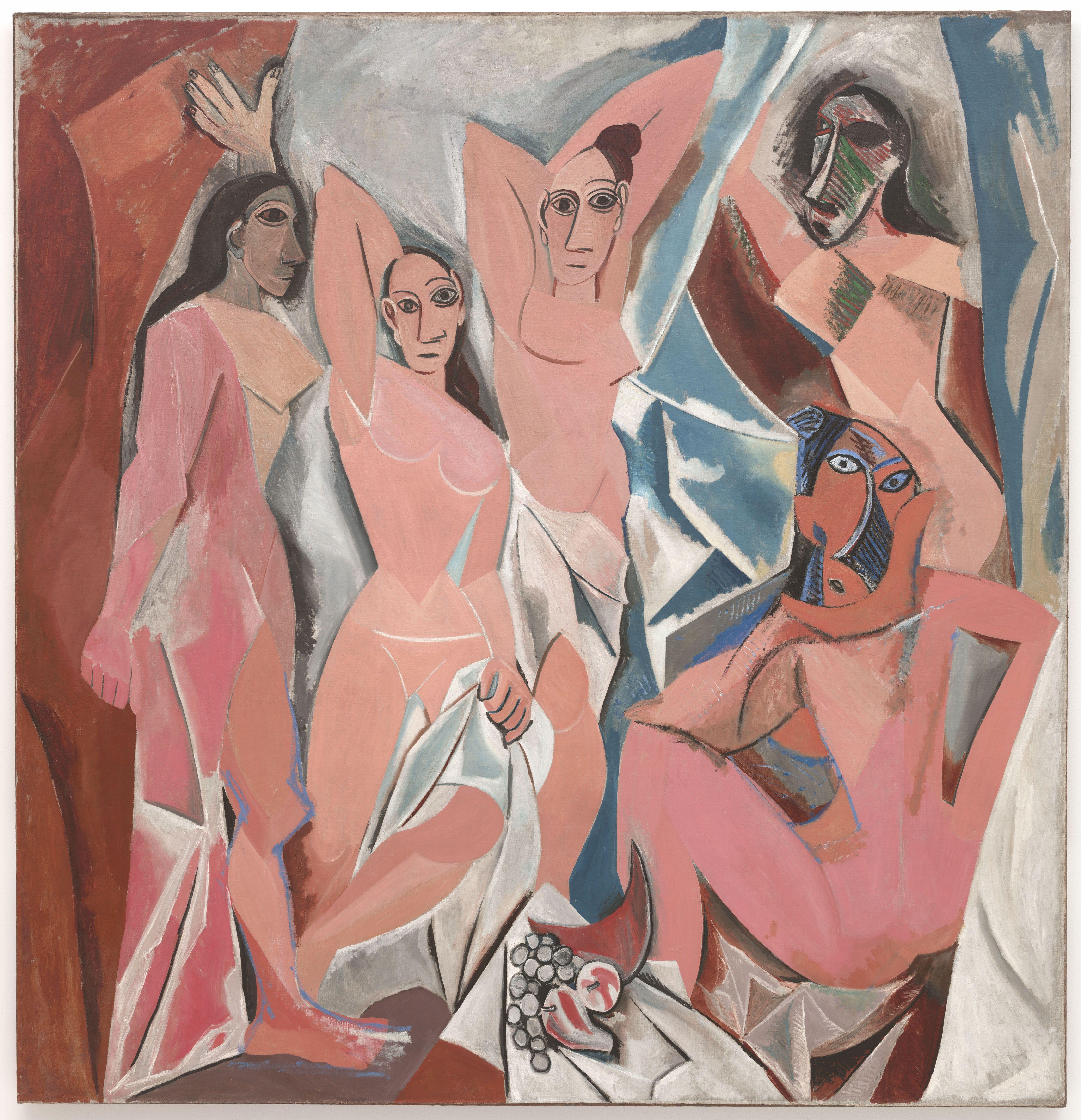
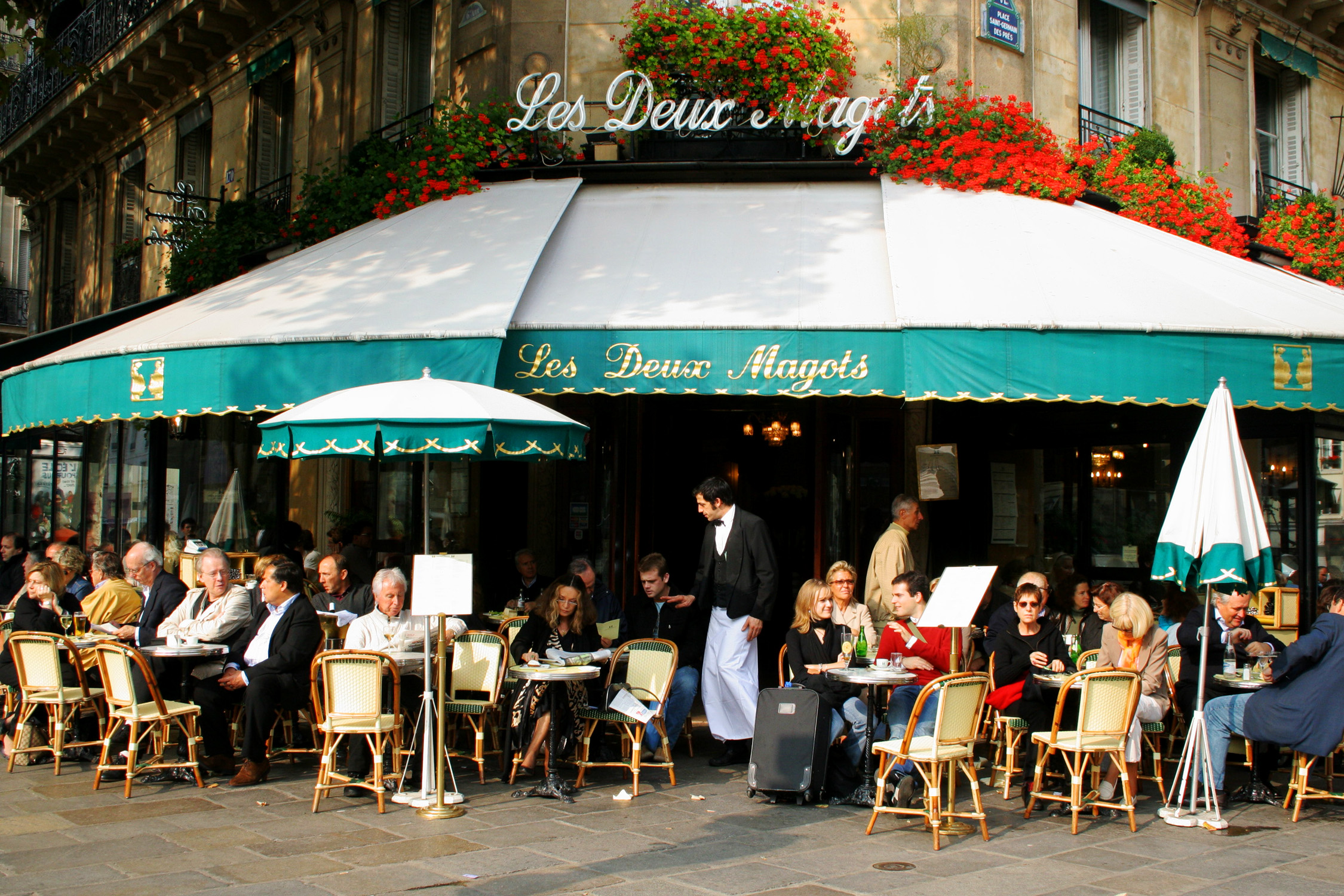
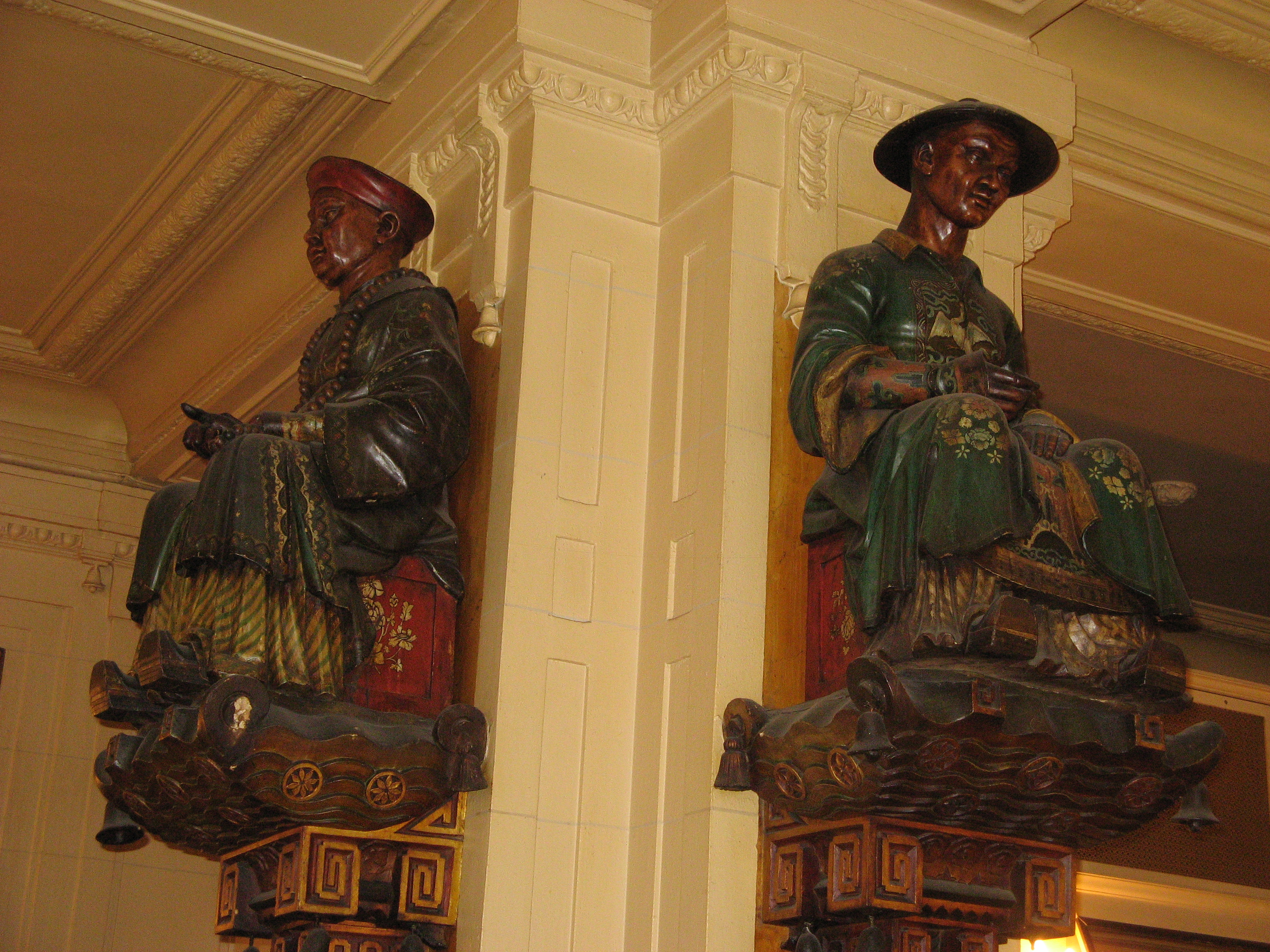
 Although born in extreme poverty, Camus attended the lycee and university in Algiers, where he developed an abiding interest in sports and the theater. His university career was cut short by a severe attack of tuberculosis, an illness from which he suffered periodically throughout his life. The themes of poverty, sport, and the horror of human mortality all figure prominently in his volumes of so-called Algerian essays: L’Envers et l’endroit (The Wrong Side and the Right Side, 1937), Noces (Nuptials, 1938), and L’Ete (Summer, 1954). In 1938 he became a journalist with Alger-Republicain, an anticolonialist newspaper. While working for this daily he wrote detailed reports on the condition of poor Arabs in the Kabyles region. These reports were later published in abridged form in Actuelles III (1958).
 From this point on, Camus was concerned mainly with exploring avenues of rebellion against the absurd as he strove to create something like a humane stoicism. The Plague (1947; Eng. trans., 1948) is a symbolic novel in which the important achievement of those who fight bubonic plague in Oran lies not in the little success they have but in their assertion of human dignity and endurance. In the controversial essay The Rebel (1951; Eng. trans., 1954), he criticized what he regarded as the deceptive doctrines of “absolutist” philosophies–the vertical (eternal) transcendence of Christianity and the horizontal (historical) transcendence of Marxism. He argued in favor of Mediterranean humanism, advocating nature and moderation rather than historicism and violence. He subsequently became involved in a bitter controversy with Jean Paul Sartre over the issues raised in this essay.Camus wrote two overtly political plays, the satirical State of Siege (1948; Eng. trans., 1958) and The Just Assassins (1950; Eng. trans., 1958). It can be argued, however, that Camus scored his major theatrical success with stage adaptations of such novels as William Faulkner’s Requiem for a Nun (1956) and Dostoyevsky’s The Possessed (1959). He also published a third novel, The Fall (1956; Eng. trans., 1957), which some critics read as a flirtation with Christian ideas, and a collection of short stories noteworthy for their technical virtuosity,Exile and the Kingdom (1957; Eng. trans., 1958). Posthumous publications include two sets of Notebooks covering the period 1935-51, an early novel, A Happy Death (1971; Eng. trans., 1972), and a collection of essays, Youthful Writings (1973; Eng. trans., 1976 and 1977)John Cruickshank
 Slide Show


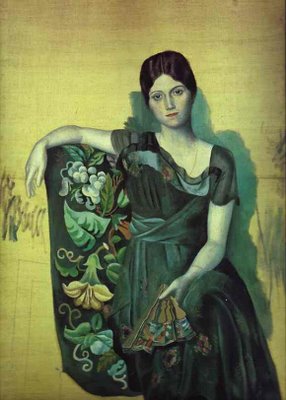

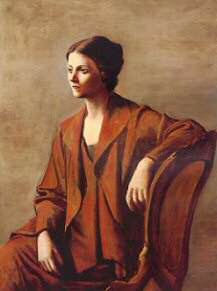
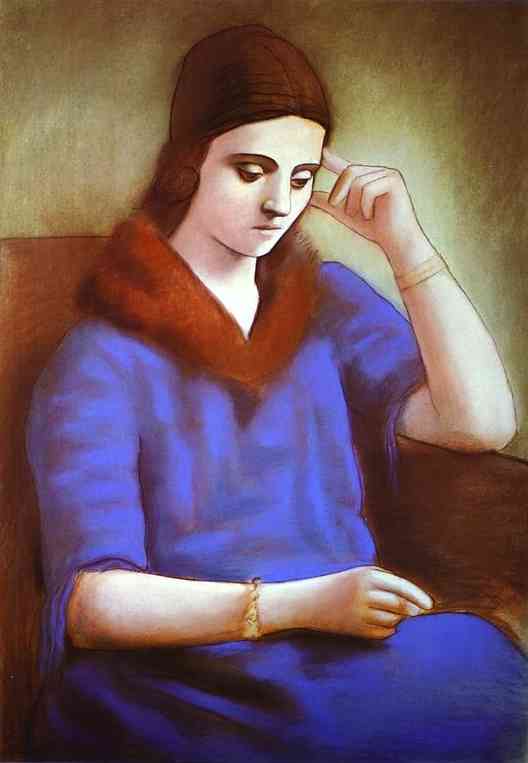
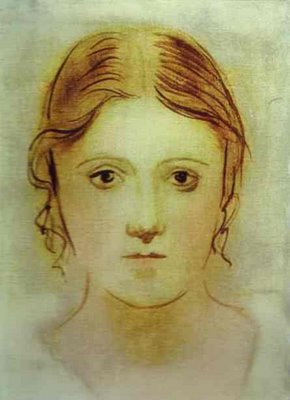
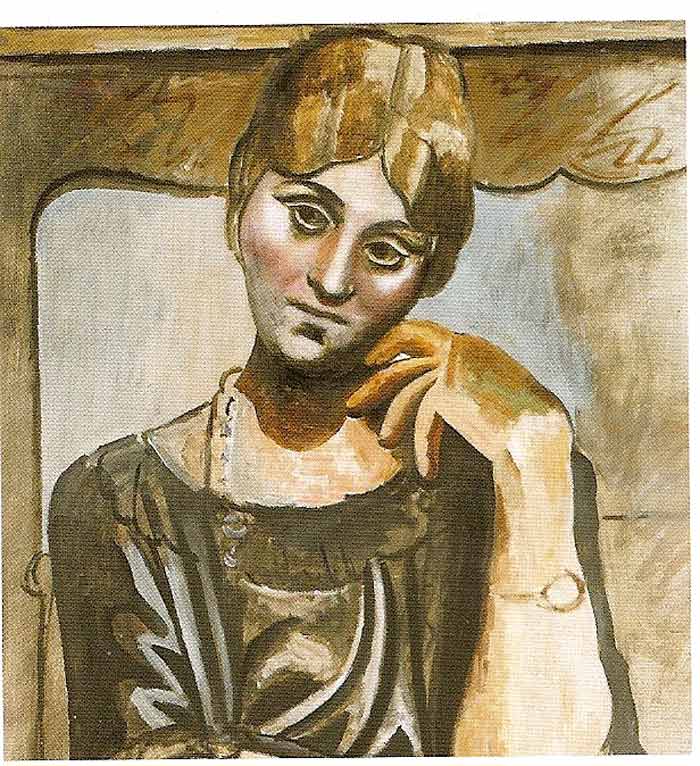


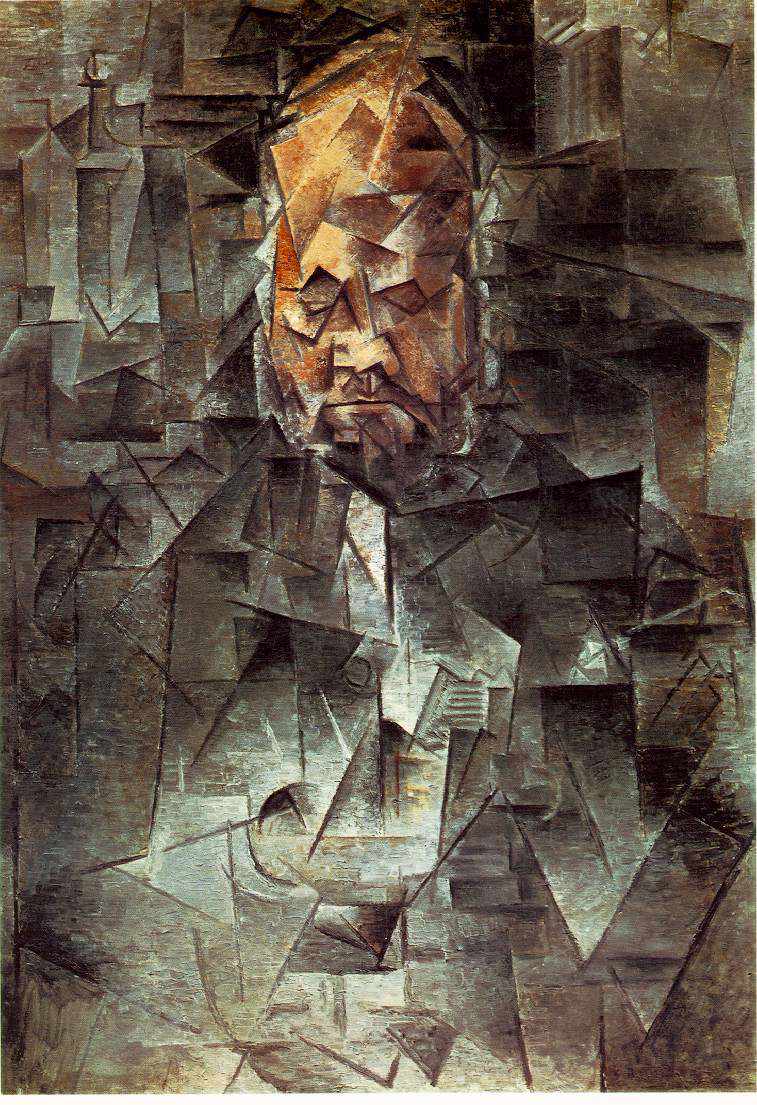
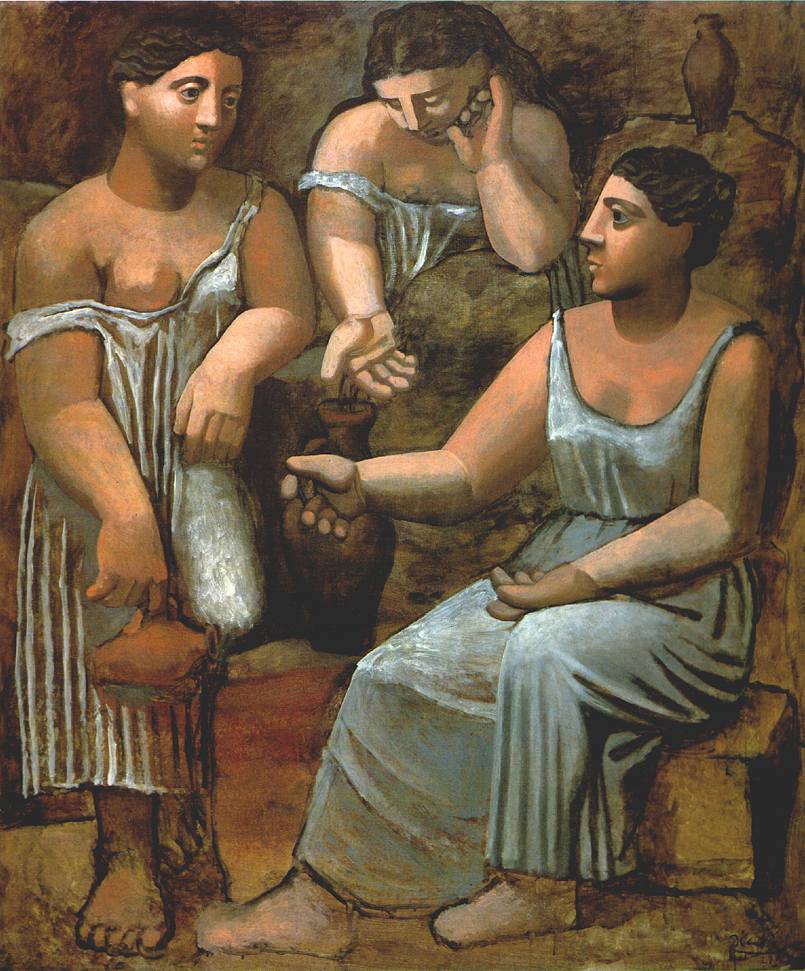
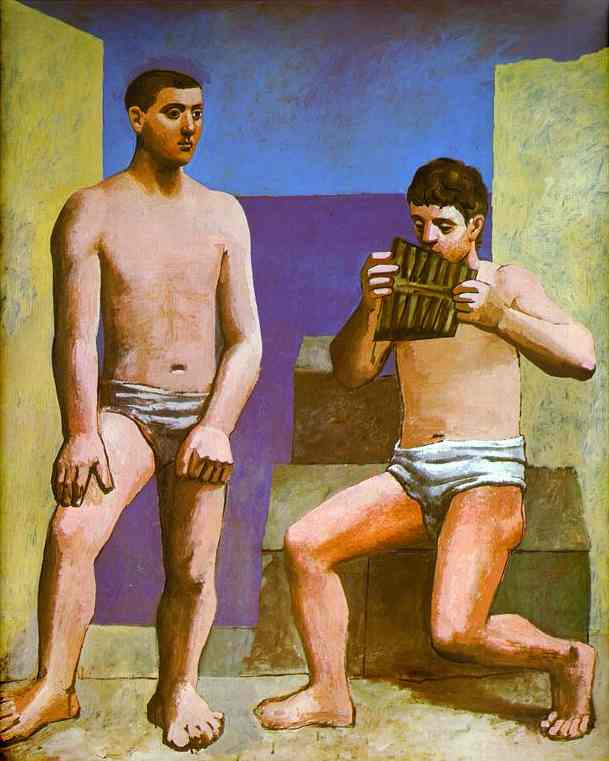
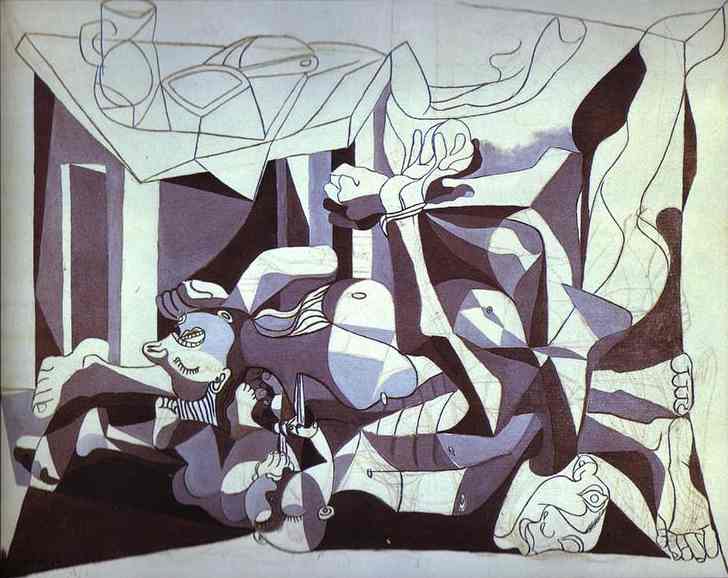
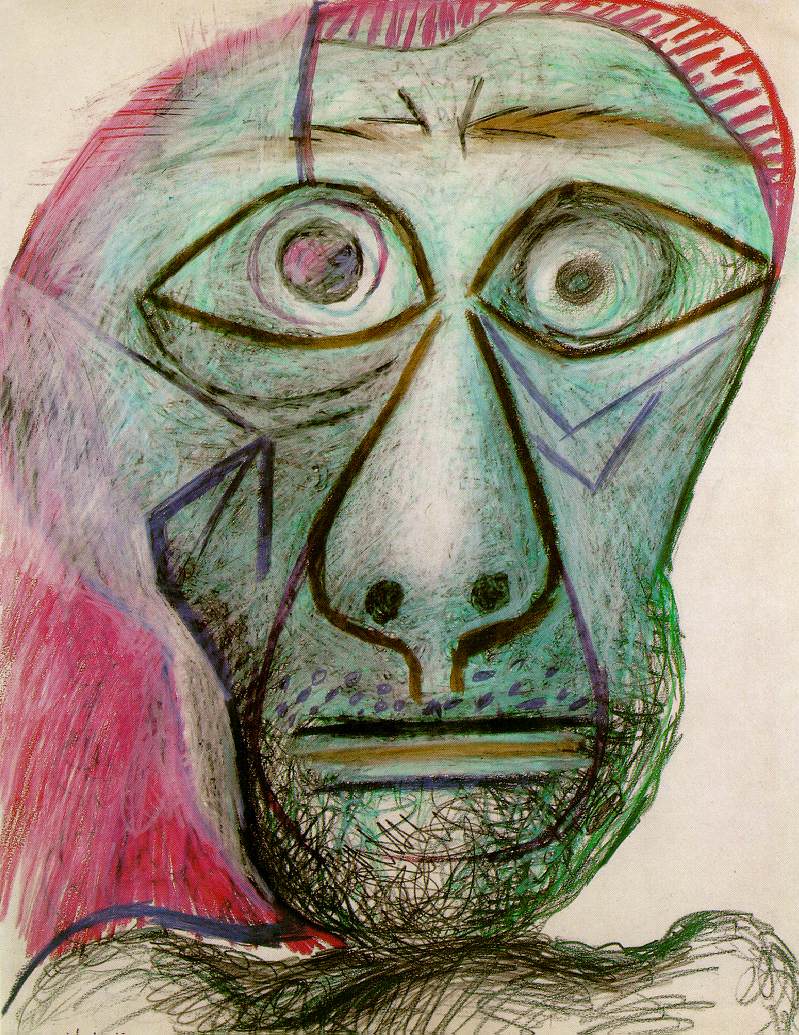
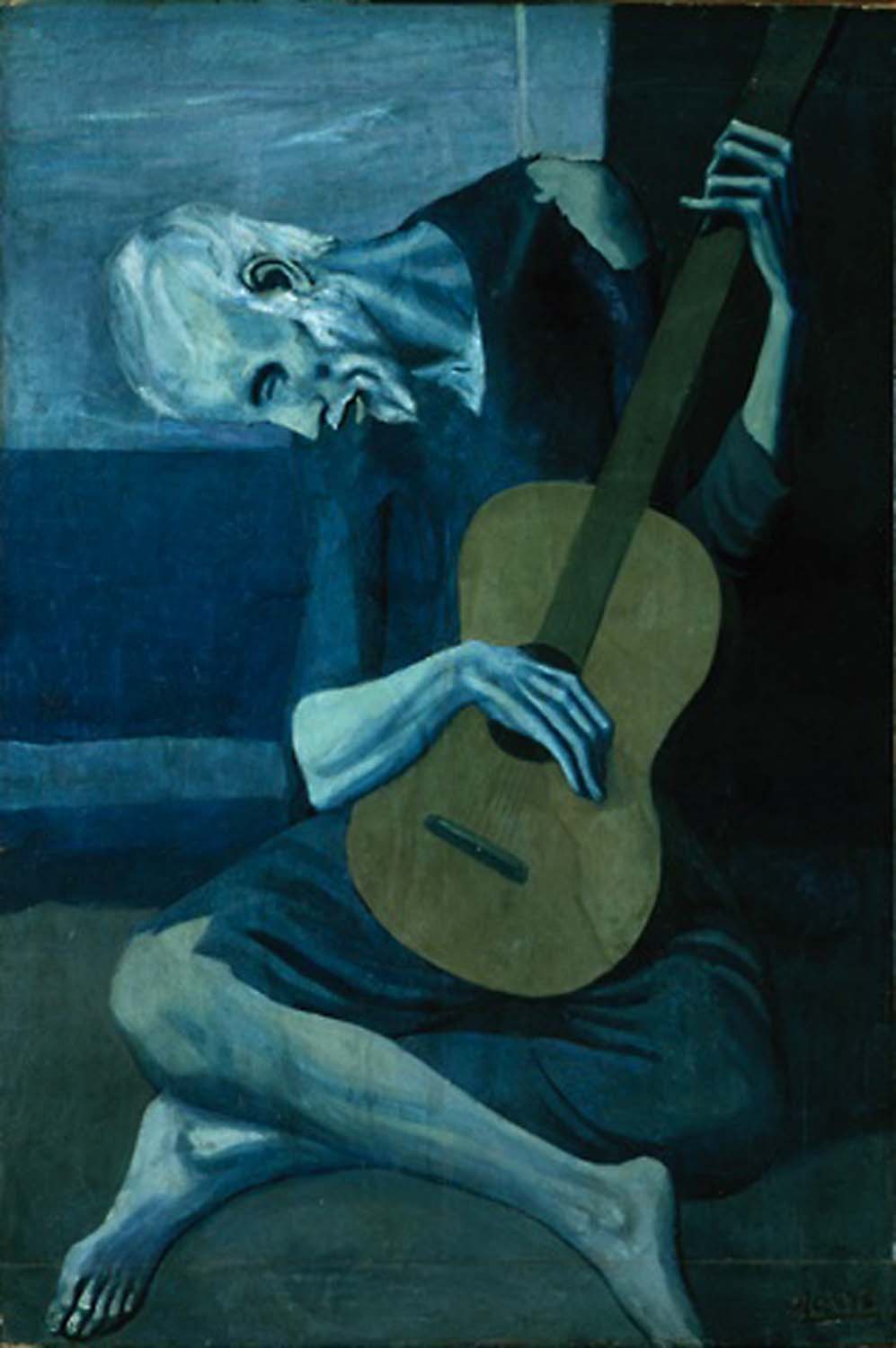
 2011 Roger Arpajou / Sony Pictures Classics
 2011 Roger Arpajou / Sony Pictures Classics


 The Daily Hatch