Category Archives: Francis Schaeffer

Taking on Ark Times Bloggers on the “Absurdity of Life without God!!” Part 11(Conversation between Evolutionist Michael Ruse and William Lane Craig)

The Fruits of Atheism (Part 1)

Uploaded on Apr 10, 2009

Examining the Creation/Evolution Controversy in Light of Reason and Revelation

The Bible and Science (Part 03)

There Is A Difference Between Absolute and Objective Moral Values

Published on Dec 6, 2012

For more resources visit: http://www.reasonablefaith.org

The Bethinking National Apologetics Day Conference: “Countering the New Atheism” took place during the UK Reasonable Faith Tour in October 2011. Christian academics William Lane Craig, John Lennox, Peter J Williams and Gary Habermas lead 600 people in training on how to defend and proclaim the credibility of Christianity against the growing tide of secularism and New Atheist popular thought in western society.

In this session, William Lane Craig delivers his critique of Richard Dawkins’ objections to arguments for the existence of God, followed by questions and answers from the audience. In this clip, Dr Craig addresses a question about objective moral values and distinguishes them from absolute moral values.

Dr. Francis Schaeffer – The Biblical Flow of Truth & History (part 2)

Francis Schaeffer holding prolife sign

________________

_________________

Life without God in the picture is absurdity!!!. That was the view of King Solomon when he wrote the Book of Ecclesiastes 3000 years ago and it is the view of many of the modern philosophers today. Modern man has tried to come up with a lasting meaning for life without God in the picture (life under the sun), but it is not possible. Without the infinite-personal God of the Bible to reveal moral absolutes then man is left to embrace moral relativism. In a time plus chance universe man is reduced to a machine and can not find a place for values such as love. Both of Francis Schaeffer’s film series have tackled these subjects and he shows how this is reflected in the arts.

Here are some posts I have done on the series “HOW SHOULD WE THEN LIVE? : Francis Schaeffer’s “How should we then live?” Video and outline of episode 10 “Final Choices” episode 9 “The Age of Personal Peace and Affluence”episode 8 “The Age of Fragmentation”episode 7 “The Age of Non-Reason” episode 6 “The Scientific Age”  episode 5 “The Revolutionary Age” episode 4 “The Reformation” episode 3 “The Renaissance”episode 2 “The Middle Ages,”, and  episode 1 “The Roman Age,” .

In the film series “WHATEVER HAPPENED TO THE HUMAN RACE?” the arguments are presented  against abortion (Episode 1),  infanticide (Episode 2),   euthenasia (Episode 3), and then there is a discussion of the Christian versus Humanist worldview concerning the issue of “the basis for human dignity” in Episode 4 and then in the last episode a close look at the truth claims of the Bible.

I have discussed many subjects with my liberal friends over at the Ark Times Blog in the past and I have taken them on now on the subject of the absurdity of life without God in the picture. Most of my responses included quotes from William Lane Craig’s book THE ABSURDITY OF LIFE WITHOUT GOD.  Here is the result of one of those encounters from June of 2013:

Doigotta wrote, “Oh heck, let’s keep the nonsense rolling. Why not?”

I will tell you why not and it is because if you are an atheist or a secularist then you are in a no win situation on the subject of finding lasting meaning for your life unless you let God into the picture. William Craig Lane related a conversation he had with a noted evolutionist that I thought you would be interested in:

While participating in a conference on Intelligent Design two years ago, I had the opportunity to have dinner with the agnostic philosopher of science MICHAEL RUSE one evening at an Atlanta steakhouse. During the course of the meal, Michael asked me, “Bill, are you satisfied with where you are in your career as a philosopher?’’ I was rather surprised by the question and said, “Well, yes, basically, I guess I am—how about you?” He then related to me that when he was just starting out as a philosopher of science, he was faced with the choice of vigorously pursuing his career or just taking it rather easy. He said that he then thought of the anguished words of the character played by Marlin Brando at the close of the film On the Waterfront: “I coulda been a contender!” Michael told me that he decided he didn’t want to reach the end of his life and look back in regret and say, “I coulda been a contender!” I was struck by those words. As a Christian I am commanded by the Lord “to contend for the faith that was once for all delivered to the saints” (Jude 3 ESV). BUT WHAT POINT IS THERE FOR AN ATHEIST OR AGNOSTIC TO BE A CONTENDER — A CONTENDER FOR WHAT? SINCE THERE IS NO OBJECTIVE PURPOSE IN LIFE, THE ONLY ANSWER CAN BE TO CONTEND FOR ONE’S OWN MADE-UP PURPOSES–ENCE, THE IRRESISTIBLE TENDENCY TO TREAT CAREER ADVANCEMENT AND fame as though they really were objectively important ends, when in fact they are nothing.

Related posts:

Francis Schaeffer’s “How should we then live?” Video and outline of episode 10 “Final Choices” (Schaeffer Sundays)

E P I S O D E 1 0   Dr. Francis Schaeffer – Episode X – Final Choices 27 min FINAL CHOICES I. Authoritarianism the Only Humanistic Social Option One man or an elite giving authoritative arbitrary absolutes. A. Society is sole absolute in absence of other absolutes. B. But society has to be […]

Francis Schaeffer’s “How should we then live?” Video and outline of episode 9 “The Age of Personal Peace and Affluence” (Schaeffer Sundays)

E P I S O D E 9 Dr. Francis Schaeffer – Episode IX – The Age of Personal Peace and Affluence 27 min T h e Age of Personal Peace and Afflunce I. By the Early 1960s People Were Bombarded From Every Side by Modern Man’s Humanistic Thought II. Modern Form of Humanistic Thought Leads […]

Francis Schaeffer’s “How should we then live?” Video and outline of episode 8 “The Age of Fragmentation” (Schaeffer Sundays)

E P I S O D E 8 Dr. Francis Schaeffer – Episode VIII – The Age of Fragmentation 27 min I saw this film series in 1979 and it had a major impact on me. T h e Age of FRAGMENTATION I. Art As a Vehicle Of Modern Thought A. Impressionism (Monet, Renoir, Pissarro, Sisley, […]

Francis Schaeffer’s “How should we then live?” Video and outline of episode 7 “The Age of Non-Reason” (Schaeffer Sundays)

E P I S O D E 7 Dr. Francis Schaeffer – Episode VII – The Age of Non Reason I am thrilled to get this film series with you. I saw it first in 1979 and it had such a big impact on me. Today’s episode is where we see modern humanist man act […]

Francis Schaeffer’s “How should we then live?” Video and outline of episode 6 “The Scientific Age” (Schaeffer Sundays)

E P I S O D E 6 How Should We Then Live 6#1 Uploaded by NoMirrorHDDHrorriMoN on Oct 3, 2011 How Should We Then Live? Episode 6 of 12 ________ I am sharing with you a film series that I saw in 1979. In this film Francis Schaeffer asserted that was a shift in […]

Francis Schaeffer’s “How should we then live?” Video and outline of episode 5 “The Revolutionary Age” (Schaeffer Sundays)

E P I S O D E 5 How Should We Then Live? Episode 5: The Revolutionary Age I was impacted by this film series by Francis Schaeffer back in the 1970′s and I wanted to share it with you. Francis Schaeffer noted, “Reformation Did Not Bring Perfection. But gradually on basis of biblical teaching there […]

Francis Schaeffer’s “How should we then live?” Video and outline of episode 4 “The Reformation” (Schaeffer Sundays)

Dr. Francis Schaeffer – Episode IV – The Reformation 27 min I was impacted by this film series by Francis Schaeffer back in the 1970′s and I wanted to share it with you. Schaeffer makes three key points concerning the Reformation: “1. Erasmian Christian humanism rejected by Farel. 2. Bible gives needed answers not only as to […]

“Schaeffer Sundays” Francis Schaeffer’s “How should we then live?” Video and outline of episode 3 “The Renaissance”

Francis Schaeffer’s “How should we then live?” Video and outline of episode 3 “The Renaissance” Francis Schaeffer: “How Should We Then Live?” (Episode 3) THE RENAISSANCE I was impacted by this film series by Francis Schaeffer back in the 1970′s and I wanted to share it with you. Schaeffer really shows why we have so […]

Francis Schaeffer’s “How should we then live?” Video and outline of episode 2 “The Middle Ages” (Schaeffer Sundays)

  Francis Schaeffer: “How Should We Then Live?” (Episode 2) THE MIDDLE AGES I was impacted by this film series by Francis Schaeffer back in the 1970′s and I wanted to share it with you. Schaeffer points out that during this time period unfortunately we have the “Church’s deviation from early church’s teaching in regard […]

Francis Schaeffer’s “How should we then live?” Video and outline of episode 1 “The Roman Age” (Schaeffer Sundays)

Francis Schaeffer: “How Should We Then Live?” (Episode 1) THE ROMAN AGE   Today I am starting a series that really had a big impact on my life back in the 1970′s when I first saw it. There are ten parts and today is the first. Francis Schaeffer takes a look at Rome and why […]

Francis Schaeffer: “Whatever Happened to the Human Race” (Episode 5) TRUTH AND HISTORY

Francis Schaeffer: “Whatever Happened to the Human Race” (Episode 5) TRUTH AND HISTORY Published on Oct 7, 2012 by AdamMetropolis This crucial series is narrated by the late Dr. Francis Schaeffer and former Surgeon General Dr. C. Everett Koop. Today, choices are being made that undermine human rights at their most basic level. Practices once […]

Francis Schaeffer: “Whatever Happened to the Human Race” (Episode 4) THE BASIS FOR HUMAN DIGNITY

The opening song at the beginning of this episode is very insightful. Francis Schaeffer: “Whatever Happened to the Human Race” (Episode 4) THE BASIS FOR HUMAN DIGNITY Published on Oct 7, 2012 by AdamMetropolis This crucial series is narrated by the late Dr. Francis Schaeffer and former Surgeon General Dr. C. Everett Koop. Today, choices […]

Francis Schaeffer: “Whatever Happened to the Human Race” (Episode 3) DEATH BY SOMEONE’S CHOICE

Francis Schaeffer: “Whatever Happened to the Human Race” (Episode 3) DEATH BY SOMEONE’S CHOICE Published on Oct 6, 2012 by AdamMetropolis This crucial series is narrated by the late Dr. Francis Schaeffer and former Surgeon General Dr. C. Everett Koop. Today, choices are being made that undermine human rights at their most basic level. Practices […]

Francis Schaeffer: “Whatever Happened to the Human Race?” (Episode 2) SLAUGHTER OF THE INNOCENTS

Francis Schaeffer: “Whatever Happened to the Human Race?” (Episode 2) SLAUGHTER OF THE INNOCENTS Published on Oct 6, 2012 by AdamMetropolis This crucial series is narrated by the late Dr. Francis Schaeffer and former Surgeon General Dr. C. Everett Koop. Today, choices are being made that undermine human rights at their most basic level. Practices […]

Francis Schaeffer: “Whatever Happened to the Human Race” (Episode 1) ABORTION OF THE HUMAN RACE

It is not possible to know where the pro-life evangelicals are coming from unless you look at the work of the person who inspired them the most. That person was Francis Schaeffer.  I do care about economic issues but the pro-life issue is the most important to me. Several years ago Adrian Rogers (past president of […]

Ecclesiastes, Purpose, Meaning, and the Necessity of God by Suiwen Liang (Quotes Will Durant, Madalyn Murray O’Hair, Stephen Jay Gould,Richard Dawkins, Jean-Paul Sartre,Bertrand Russell, Leo Tolstoy, Loren Eiseley,Aldous Huxley, G.K. Chesterton, Ravi Zacharias, and C.S. Lewis.)

Ecclesiastes 2-3 Published on Sep 19, 2012 Calvary Chapel Spring Valley | Sunday Evening | September 16, 2012 | Derek Neider _____________________________ I have written on the Book of Ecclesiastes and the subject of the meaning of our lives on several occasions on this blog. In this series on Ecclesiastes I hope to show how secular […]

Robert Leroe on Ecclesiastes (Mentions Thomas Aquinas, Princess Diana, Mother Teresa, King Solomon, King Rehoboam, Eugene Peterson, Chuck Swindoll, and John Newton.)

Ecclesiastes 1 Published on Sep 4, 2012 Calvary Chapel Spring Valley | Sunday Evening | September 2, 2012 | Pastor Derek Neider _____________________ I have written on the Book of Ecclesiastes and the subject of the meaning of our lives on several occasions on this blog. In this series on Ecclesiastes I hope to show how […]

Super Bowl, Black Eyed Peas, and the Meaning of Life and Ecclesiastes

Ecclesiastes 8-10 | Still Searching After All These Years Published on Oct 9, 2012 Calvary Chapel Spring Valley | Sunday Evening | October 7, 2012 | Pastor Derek Neider _______________________ Ecclesiastes 11-12 | Solomon Finds His Way Published on Oct 30, 2012 Calvary Chapel Spring Valley | Sunday Evening | October 28, 2012 | Pastor Derek Neider […]

Brian LePort on Ecclesiastes

Ecclesiastes 6-8 | Solomon Turns Over a New Leaf Published on Oct 2, 2012 Calvary Chapel Spring Valley | Sunday Evening | September 30, 2012 | Pastor Derek Neider _____________________ I have written on the Book of Ecclesiastes and the subject of the meaning of our lives on several occasions on this blog. In this series […]

J.W. Wartick on Ecclesiastes

Ecclesiastes 4-6 | Solomon’s Dissatisfaction Published on Sep 24, 2012 Calvary Chapel Spring Valley | Sunday Evening | September 23, 2012 | Pastor Derek Neider ___________________ I have written on the Book of Ecclesiastes and the subject of the meaning of our lives on several occasions on this blog. In this series on Ecclesiastes I hope […]

Overview of the Book of Ecclesiastes

Overview of the Book of Ecclesiastes Overview of the Book of EcclesiastesAuthor: Solomon or an unknown sage in the royal courtPurpose: To demonstrate that life viewed merely from a realistic human perspective must result in pessimism, and to offer hope through humble obedience and faithfulness to God until the final judgment.Date: 930-586 B.C. Ecclesiastes 2-3 Published on Sep 19, […]

Doy Moyer on the Book of Ecclesiastes and Apologetics

Ecclesiastes 1 Published on Sep 4, 2012 Calvary Chapel Spring Valley | Sunday Evening | September 2, 2012 | Pastor Derek Neider _____________________ I have written on the Book of Ecclesiastes and the subject of the meaning of our lives on several occasions on this blog. In this series on Ecclesiastes I hope to show how […]

Solomon was the author of Ecclesiastes

Ecclesiastes 8-10 | Still Searching After All These Years Published on Oct 9, 2012 Calvary Chapel Spring Valley | Sunday Evening | October 7, 2012 | Pastor Derek Neider _______________________ Ecclesiastes 11-12 | Solomon Finds His Way Published on Oct 30, 2012 Calvary Chapel Spring Valley | Sunday Evening | October 28, 2012 | Pastor Derek Neider […]

By Everette Hatcher III | Posted in Current Events | Edit | Comments (0)

Open letter to President Obama (Part 405) Francis Schaeffer and Dr. C. Everett Koop asked Reagan to issue pro-life proclamation in 1983 (includes video ABORTION OF THE HUMAN RACE)

(Emailed to White House on 2-1-13.)

President Obama c/o The White House
1600 Pennsylvania Avenue NW
Washington, DC 20500

Dear Mr. President,

I know that you receive 20,000 letters a day and that you actually read 10 of them every day. I really do respect you for trying to get a pulse on what is going on out here.

In the film series “WHATEVER HAPPENED TO THE HUMAN RACE?” the arguments are presented  against abortion (Episode 1),  infanticide (Episode 2),   euthenasia (Episode 3), and then there is a discussion of the Christian versus Humanist worldview concerning the issue of “the basis for human dignity” in Episode 4 and then in the last episode a close look at the truth claims of the Bible.

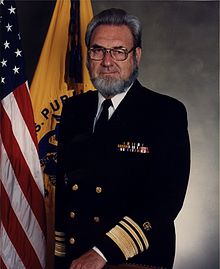
I truly believe that many of the problems we have today in the USA are due to the advancement of humanism in the last few decades in our society. Ronald Reagan appointed the evangelical Dr. C. Everett Koop to the position of Surgeon General in his administration. He partnered with Dr. Francis Schaeffer in making the video below. It is very valuable information for Christians to have.  Actually I have included a video below that includes comments from him on this subject.

Francis Schaeffer: “Whatever Happened to the Human Race” (Episode 1) ABORTION OF THE HUMAN RACE

Published on Oct 6, 2012 by

Did you know that Francis Schaeffer and Dr. C. Everett Koop asked President Reagan in 1983 to make a pro-life proclamation?

Every Life is Precious

Thus says the LORD, “A voice is heard in Ramah, Lamentation and bitter weeping. Rachel is weeping for her children; She refuses to be comforted for her children, Because they are no more.”

Jeremiah 31:14-16

Sanctity of Human Life Sunday is held on the Sunday in January that falls closest to the day on which the Roe v. Wade and Doe v. Bolton decisions were handed down by the U.S. Supreme Court on January 22, 1973.

Sanctity of Life Sunday began in 1983 when the Christian Action Council (now known as Care Net), founded with the help of Francis Schaeffer and former Surgeon General C. Everett Koop, “asked President Ronald Reagan to create a special day to focus on the intrinsic value of human life.” [Source]

President Reagan issued this proclamation:

Since 1973, however, more than 15 million unborn children have died in legalized abortions — a tragedy of stunning dimensions that stands in sad contrast to our belief that each life is sacred. These children, over tenfold the number of Americans lost in all our Nation’s wars, will never laugh, never sing, never experience the joy of human love; nor will they strive to heal the sick, or feed the poor, or make peace among nations. Abortion has denied them the first and most basic of human rights, and we are infinitely poorer for their loss.

We are poorer not simply for lives not led and for contributions not made, but also for the erosion of our sense of the worth and dignity of every individual. To diminish the value of one category of human life is to diminish us all. Slavery, which treated Blacks as something less than human, to be bought and sold if convenient, cheapened human life and mocked our dedication to the freedom and equality of all men and women. Can we say that abortion — which treats the unborn as something less than human, to be destroyed if convenient — will be less corrosive to the values we hold dear?

It has now been 40 years since the Supreme Court Roe v. Wade decision that made abortion on demand legal in all 50 states. Since that time, the 15 million babies referred to by President Reagan has become 55 million babies.

Abortion is the greatest evil in American history and dwarfs the genocide of many other nations throughout history.

And served their idols,
Which became a snare to them.
They even sacrificed their sons and their daughters to the demons,
And shed innocent blood,
The blood of their sons and their daughters,
Whom they sacrificed to the idols of Canaan;
And the land was polluted with the blood.
Psalm 106:36–38

___________

Thank you so much for your time. I know how valuable it is. I also appreciate the fine family that you have and your commitment as a father and a husband.

Sincerely,

Everette Hatcher III, 13900 Cottontail Lane, Alexander, AR 72002, ph 501-920-5733, lowcostsqueegees@yahoo.com

Related posts:

Francis Schaeffer’s prayer for us in USA

 Francis Schaeffer: “Whatever Happened to the Human Race” (Episode 1) ABORTION OF THE HUMAN RACE Published on Oct 6, 2012 by AdamMetropolis The 45 minute video above is from the film series created from Francis Schaeffer’s book “Whatever Happened to the Human Race?” with Dr. C. Everett Koop. This book  really helped develop my political views […]

Francis Schaeffer’s “How should we then live?” Video and outline of episode 10 “Final Choices” (Schaeffer Sundays)

E P I S O D E 1 0   Dr. Francis Schaeffer – Episode X – Final Choices 27 min FINAL CHOICES I. Authoritarianism the Only Humanistic Social Option One man or an elite giving authoritative arbitrary absolutes. A. Society is sole absolute in absence of other absolutes. B. But society has to be […]

Francis Schaeffer’s “How should we then live?” Video and outline of episode 9 “The Age of Personal Peace and Affluence” (Schaeffer Sundays)

E P I S O D E 9 Dr. Francis Schaeffer – Episode IX – The Age of Personal Peace and Affluence 27 min T h e Age of Personal Peace and Afflunce I. By the Early 1960s People Were Bombarded From Every Side by Modern Man’s Humanistic Thought II. Modern Form of Humanistic Thought Leads […]

Francis Schaeffer’s “How should we then live?” Video and outline of episode 8 “The Age of Fragmentation” (Schaeffer Sundays)

E P I S O D E 8 Dr. Francis Schaeffer – Episode VIII – The Age of Fragmentation 27 min I saw this film series in 1979 and it had a major impact on me. T h e Age of FRAGMENTATION I. Art As a Vehicle Of Modern Thought A. Impressionism (Monet, Renoir, Pissarro, Sisley, […]

Francis Schaeffer’s “How should we then live?” Video and outline of episode 7 “The Age of Non-Reason” (Schaeffer Sundays)

E P I S O D E 7 Dr. Francis Schaeffer – Episode VII – The Age of Non Reason I am thrilled to get this film series with you. I saw it first in 1979 and it had such a big impact on me. Today’s episode is where we see modern humanist man act […]

Francis Schaeffer’s “How should we then live?” Video and outline of episode 6 “The Scientific Age” (Schaeffer Sundays)

E P I S O D E 6 How Should We Then Live 6#1 Uploaded by NoMirrorHDDHrorriMoN on Oct 3, 2011 How Should We Then Live? Episode 6 of 12 ________ I am sharing with you a film series that I saw in 1979. In this film Francis Schaeffer asserted that was a shift in […]

Francis Schaeffer’s “How should we then live?” Video and outline of episode 5 “The Revolutionary Age” (Schaeffer Sundays)

E P I S O D E 5 How Should We Then Live? Episode 5: The Revolutionary Age I was impacted by this film series by Francis Schaeffer back in the 1970′s and I wanted to share it with you. Francis Schaeffer noted, “Reformation Did Not Bring Perfection. But gradually on basis of biblical teaching there […]

Francis Schaeffer’s “How should we then live?” Video and outline of episode 4 “The Reformation” (Schaeffer Sundays)

Dr. Francis Schaeffer – Episode IV – The Reformation 27 min I was impacted by this film series by Francis Schaeffer back in the 1970′s and I wanted to share it with you. Schaeffer makes three key points concerning the Reformation: “1. Erasmian Christian humanism rejected by Farel. 2. Bible gives needed answers not only as to […]

“Schaeffer Sundays” Francis Schaeffer’s “How should we then live?” Video and outline of episode 3 “The Renaissance”

Francis Schaeffer’s “How should we then live?” Video and outline of episode 3 “The Renaissance” Francis Schaeffer: “How Should We Then Live?” (Episode 3) THE RENAISSANCE I was impacted by this film series by Francis Schaeffer back in the 1970′s and I wanted to share it with you. Schaeffer really shows why we have so […]

Francis Schaeffer’s “How should we then live?” Video and outline of episode 2 “The Middle Ages” (Schaeffer Sundays)

  Francis Schaeffer: “How Should We Then Live?” (Episode 2) THE MIDDLE AGES I was impacted by this film series by Francis Schaeffer back in the 1970′s and I wanted to share it with you. Schaeffer points out that during this time period unfortunately we have the “Church’s deviation from early church’s teaching in regard […]

Francis Schaeffer’s “How should we then live?” Video and outline of episode 1 “The Roman Age” (Schaeffer Sundays)

Francis Schaeffer: “How Should We Then Live?” (Episode 1) THE ROMAN AGE   Today I am starting a series that really had a big impact on my life back in the 1970′s when I first saw it. There are ten parts and today is the first. Francis Schaeffer takes a look at Rome and why […]

Francis Schaeffer: “Whatever Happened to the Human Race” (Episode 5) TRUTH AND HISTORY

Francis Schaeffer: “Whatever Happened to the Human Race” (Episode 5) TRUTH AND HISTORY Published on Oct 7, 2012 by AdamMetropolis This crucial series is narrated by the late Dr. Francis Schaeffer and former Surgeon General Dr. C. Everett Koop. Today, choices are being made that undermine human rights at their most basic level. Practices once […]

Francis Schaeffer: “Whatever Happened to the Human Race” (Episode 4) THE BASIS FOR HUMAN DIGNITY

The opening song at the beginning of this episode is very insightful. Francis Schaeffer: “Whatever Happened to the Human Race” (Episode 4) THE BASIS FOR HUMAN DIGNITY Published on Oct 7, 2012 by AdamMetropolis This crucial series is narrated by the late Dr. Francis Schaeffer and former Surgeon General Dr. C. Everett Koop. Today, choices […]

Francis Schaeffer: “Whatever Happened to the Human Race” (Episode 3) DEATH BY SOMEONE’S CHOICE

Francis Schaeffer: “Whatever Happened to the Human Race” (Episode 3) DEATH BY SOMEONE’S CHOICE Published on Oct 6, 2012 by AdamMetropolis This crucial series is narrated by the late Dr. Francis Schaeffer and former Surgeon General Dr. C. Everett Koop. Today, choices are being made that undermine human rights at their most basic level. Practices […]

Francis Schaeffer: “Whatever Happened to the Human Race?” (Episode 2) SLAUGHTER OF THE INNOCENTS

Francis Schaeffer: “Whatever Happened to the Human Race?” (Episode 2) SLAUGHTER OF THE INNOCENTS Published on Oct 6, 2012 by AdamMetropolis This crucial series is narrated by the late Dr. Francis Schaeffer and former Surgeon General Dr. C. Everett Koop. Today, choices are being made that undermine human rights at their most basic level. Practices […]

Francis Schaeffer: “Whatever Happened to the Human Race” (Episode 1) ABORTION OF THE HUMAN RACE

It is not possible to know where the pro-life evangelicals are coming from unless you look at the work of the person who inspired them the most. That person was Francis Schaeffer.  I do care about economic issues but the pro-life issue is the most important to me. Several years ago Adrian Rogers (past president of […]

The following essay explores the role that Francis Schaeffer played in the rise of the pro-life movement. It examines the place of How Should We Then Live?, Whatever Happened to the Human Race?, and A Christian Manifesto in that process.

This essay below is worth the read. Schaeffer, Francis – “Francis Schaeffer and the Pro-Life Movement” [How Should We Then Live?, Whatever Happened to the Human Race?, A Christian Manifesto] Editor note: <p> </p> [The following essay explores the role that Francis Schaeffer played in the rise of the pro-life movement.  It examines the place of […]

Who was Francis Schaeffer? by Udo Middelmann

Great article on Schaeffer. Who was Dr. Francis A. Schaeffer? By Francis Schaeffer The unique contribution of Dr. Francis Schaeffer on a whole generation was the ability to communicate the truth of historic Biblical Christianity in a way that combined intellectual integrity with practical, loving care. This grew out of his extensive understanding of the Bible […]

.

New Van Gogh identified!!!! (Also a look at the impressionists from a Christian perspective)

New Van Gogh identified!!!! (Also a look at the impressionists from a Christian perspective)

Art of Love – Part 1.flv

Uploaded on Apr 14, 2011

Stars: James Garner, Dick Van Dyke and Elke Sommer ; Paintings & Drawings: Don Cincone; (July 1965) A Struggling artist fakes his own death so his works will increase in value.

____________

Part 3

Part 4

Part 5

I was excited to read about a Van Gogh being found recently. Vincent Van Gogh was broke his whole life and then after he died his paintings sold very well. I love the movie “The Art of Love” which stars: James Garner, Dick Van Dyke and Elke Sommer from  July of 1965 and it is about a struggling artist that fakes his own death so his works will increase in value.  Today I am posting links to all the posts I have done on Van Gogh and posting clips both from the movie “Art of Love” and the film series HOW SHOULD WE THEN LIVE? from Francis Schaeffer that discusses Van Gogh and the other impressionist painters.

Van Gogh Museum: new Van Gogh identified

Museum identifies long-lost Van Gogh painting that lingered in Norwegian attic for decades

  • Dislike

Long-lost painting by Van Gogh is identified
.

View gallery

“Sunset at Montmajour” by Dutch painter Vincent van Gogh is seen during a press conference at the Van Gogh Museum in Amsterdam, Netherlands, Monday Sept. 9, 2013. The museum has identified the long-lost painting which was painted by the Dutch mater in 1888, the discovery is the first full size canvas that has been found since 1928 and will be on display from Sept. 24. (AP Photo/Peter Dejong)

Associated Press

AMSTERDAM (AP) — The first full-size Vincent Van Gogh painting to be discovered in 85 years has been authenticated as a genuine long-lost work of the Dutch master after an odyssey that included lingering for six decades in the attic of a Norwegian industrialist who had been told it was a fake.

“Sunset at Montmajour” depicts a dry landscape of twisting oak trees, bushes and sky, and it was done during the period when Van Gogh was increasingly adopting the thick brush strokes that became typical of his work in the final years of his short life, experts at the Van Gogh Museum in Amsterdam said Monday.

It can be dated to the exact day it was painted because Vincent described it in a letter to his brother, Theo, and said he had painted it the previous day — July 4, 1888.

“At sunset I was on a stony heath where very small, twisted oaks grow, in the background a ruin on the hill and wheat fields in the valley,” Van Gogh wrote.

“It was romantic…the sun was pouring its very yellow rays over the bushes and the ground, absolutely a shower of gold.”

But then Vincent confessed that the painting was “well below what I’d wished to do,” and later he sent it to Theo to keep.

Museum director Axel Rueger, at an unveiling ceremony in the museum, described the discovery as a “once-in-a-lifetime experience”.

“This is a great painting from what many see as the high point of his artistic achievement, his period in Arles, in southern France,” he said. “In the same period he painted works such as ‘Sunflowers,’ ‘The Yellow House’ and ‘The Bedroom’.”

Van Gogh struggled with bouts of mental distress throughout his life, and died of a self-inflicted gun wound in 1890. He sold only one painting while he was alive, though his work was just beginning to win acclaim when he died.

According to a reconstruction published in The Burlington Magazine by three researchers, the painting was recorded as number 180 in Theo’s collection, and given the title “Sun Setting at Arles.” It was sold to French art dealer Maurice Fabre in 1901.

Fabre never recorded selling the work, and the painting disappeared from history until it reappeared in 1970 in the estate of Norwegian industrialist Christian Nicolai Mustad.

The Mustad family said that Christian had purchased the work in 1908 as a young man in one of his first forays into art collecting, but he had soon after been told by the French ambassador to Sweden that it was a fake. Embarrassed, Mustad banished it to the attic.

After Mustad’s death in 1970, art dealer Daniel Wildenstein said he thought the painting was either a fake Van Gogh or possibly the work of a less-known German painter, and the painting was sold to a collector. The museum said it will not disclose who purchased it, or whether it has been resold since then.

In 1991 the museum itself declined to authenticate the painting.

“That may be a painful admission, given that the same museum is now attributing it to Van Gogh, but it is understandable” as experts had no information about what the painting depicted, the Burlington Magazine article said.

Teio Meedendorp, one of three experts who worked on the project, said his predecessors might also have been confused because the painting was done at a “transitional” moment in Van Gogh’s style.

“From then on, Van Gogh increasingly felt the need to paint with more and more impasto (thick strokes using lots of paint) and more and more layers,” he said.

The painting was unsigned. Some parts of the foreground were not “as well-observed as usual.” And part of the right side of the painting used a different style of brush strokes — possibly the same reasons Van Gogh himself considered the painting a failure.

But when the museum took a fresh look at the work in 2011, they had the advantage of a newly edited and published compendium of all Van Gogh’s letters, and were able for the first time to identify the exact location “Sunset” depicts: Monmajour hill, near Arles, France. The ruins of Monmajour abbey can be seen in the background on the left side of the painting.

Van Gogh mentioned the painting in two other letters the same summer.

The number 180 on the back of the canvas was an important clue, and new techniques of chemical analysis of the pigments showing they were identical to others Van Gogh used on his palette at Arles — including typical discolorations.

Meanwhile, an X-ray examination of the canvas showed it was of the same type Van Gogh used on other paintings from the period, such as “The Rocks,” which hangs in Houston’s Museum of Fine Arts.

Rueger described “Sunset” as ambitious, because the canvas is relatively large, at 93.3 by 73.3 centimeters (36.7 by 28.9 inches) — and because Van Gogh himself felt the result didn’t live up to his imagination of what it was meant to be.

The artist made similar remarks about some of his most famous paintings, including the 1889 “Starry Night” that hangs in the Museum of Modern Art in New York.

Meedendorp said that “Sunset” belongs “to a special group of experimental works that Van Gogh at times esteemed of lesser value than we tend to do nowadays.”

Meedendorp said it’s not impossible that another unknown or lost Van Gogh could be found someday. The artist destroyed some works himself when he wasn’t satisfied with the results, but others that are mentioned in his letters or early collection of his work have since disappeared. He is believed to have completed more than 800 works, painting at an accelerating pace before his death aged 37.

The Van Gogh Museum, which houses 140 paintings, receives more than a million visitors annually. Van Gogh paintings are among the most valuable in the world, selling for tens of millions of dollars on the rare occasions one is sold at an auction.

_____

Follow Toby Sterling on Twitter http://www.twitter.com/lbsterling

______________

Here below is episode 8 called “The Age of Fragmentation” from Francis Schaeffer’s film series HOW SHOULD WE THEN LIVE? and it talks about the impressionist painters at the beginning of the episode.

Schaeffer’s film series “How should we then live?  Wikipedia notes, “According to Schaeffer, How Should We Then Live traces Western history from Ancient Rome until the time of writing (1976) along three lines: the philosophic, scientific, and religious.[3] He also makes extensive references to art and architecture as a means of showing how these movements reflected changing patterns of thought through time. Schaeffer’s central premise is: when we base society on the Bible, on the infinite-personal God who is there and has spoken,[4] this provides an absolute by which we can conduct our lives and by which we can judge society.  Here are some posts I have done on this series: Francis Schaeffer’s “How should we then live?” Video and outline of episode 10 “Final Choices” episode 9 “The Age of Personal Peace and Affluence”episode 8 “The Age of Fragmentation”episode 7 “The Age of Non-Reason” episode 6 “The Scientific Age”  episode 5 “The Revolutionary Age” episode 4 “The Reformation” episode 3 “The Renaissance”episode 2 “The Middle Ages,”, and  episode 1 “The Roman Age,” .

E P I S O D E 8

How Should We Then Live? Episode 8: The Age Of Fragmentation

Published on Jul 24, 2012

Dr. Schaeffer’s sweeping epic on the rise and decline of Western thought and Culture

__________

I saw this film series in 1979 and it had a major impact on me.

T h e Age of FRAGMENTATION

I. Art As a Vehicle Of Modern Thought

A. Impressionism (Monet, Renoir, Pissarro, Sisley, Degas) and Post-Impressionism (Cézanne, Van Gogh, Gauguin, Seurat): appearance and reality.

1. Problem of reality in Impressionism: no universal.

2. Post-Impression seeks the universal behind appearances.

3. Painting expresses an idea in its own terms as a work of art; to discuss the idea in a painting is not to intellectualize art.

4. Parallel search for universal in art and philosophy; Cézanne.

B. Fragmentation.

1. Extremes of ultra-naturalism or abstraction: Wassily Kandinsky.

2. Picasso leads choice for abstraction: relevance of this choice.

3. Failure of Picasso (like Sartre, and for similar reasons) to be fully consistent with his choice.

C. Retreat to absurdity.

1. Dada , and Marcel Duchamp: art as absurd.

2. Art followed philosophy but came sooner to logical end.

3. Chance in his art technique as an art theory impossible to practice: Pollock.

II. Music As a Vehicle of Modern Thought

A. Non-resolution and fragmentation: German and French streams.

1. Influence of Beethoven’s last Quartets.

2. Direction and influence of Debussy.

3. Schoenberg’s non-resolution; contrast with Bach.

4. Stockhausen: electronic music and concern with the element of change.

B. Cage: a case study in confusion.

1. Deliberate chance and confusion in Cage’s music.

2. Cage’s inability to live the philosophy of his music.

C. Contrast of music-by-chance and the world around us.

1. Inconsistency of indulging in expression of chaos when we acknowledge order for practical matters like airplane design.

2. Art as anti-art when it is mere intellectual statement, divorced from reality of who people are and the fullness of what the universe is.

III. General Culture As the Vehicle of Modern Thought

A. Propagation of idea of fragmentation in literature.

1. Effect of Eliot’s Wasteland and Picasso’s Demoiselles d’ Avignon

compared; the drift of general culture.

2. Eliot’s change in his form of writing when he became a Christian.

3. Philosophic popularization by novel: Sartre, Camus, de Beauvoir.

B. Cinema as advanced medium of philosophy.

1. Cinema in the 1960s used to express Man’s destruction: e.g. Blow-up.

2. Cinema and the leap into fantasy:

The Hour of the Wolf, Belle de Jour, Juliet of the Spirits, The Last Year at Marienbad.

3. Bergman’s inability to live out his philosophy (see Cage): Silence and The Hour of the Wolf.

IV. Only on Christian Base Can Reality Be Faced Squarely

Questions

1. Explain what “fragmentation” means, as discussed by Dr. Schaeffer. What does it result from? Give examples of it.

2. Apart from the fact that modern printing and recording processes made the art and music of the past more accessible than ever before, do you think that the preference of many people for the art and music of the past is related to the matters discussed by Dr. Schaeffer? If so, how?

3. “A foolish consistency is the hobgoblin of little minds… With consistency a great soul has simply nothing to do.” Emerson wrote this over a century ago. Debate.

4. How far do you think that the opinion of some Christians that one should have nothing to do with philosophy, art and novels is a manifestation of the very fragmentation which is characteristic of modern secular thought? Discuss.

Key Events and Persons

Beethoven’s last Quartets: 1825-26

Claude Monet: 1840-1926

Poplars at Giverny, Sunrise: 1885

Paul Cézanne: 1839-1906

The Bathers: c.1905

Claude Debussy: 1862-1918

Wassily Kandinsky: 1866-1944

Arnold Schoenberg: 1874-1951

Picasso: 1881-1973

Les Demoiselles d’Avignon: 1906-7

Marcel Duchamp: 1887-1969

Nude Descending a Staircase: 1912

T.S. Eliot: 1888-1965

The Wasteland: 1922

John Cage: 1912-1992

Music for Marcel Duchamp: 1947

Jackson Pollock: 1912-1956

Karlheinz Stockhausen: 1928-

Sartre’s Nausea: 1938

Beauvoir’s L’Invitée: 1943

Camus’ The Stranger: 1942

Camus’ The Plague: 1947

Resnais’ The Last Year at Marienbad: 1961

Bergman’s The Silence: 1963

Fellini’s Juliet of the Spirits: 1965

Antonioni’s Blow-Up: 1966

Bergman’s The Hour of the Wolf: 1967

Buñel’s Belle de Jour: 1967

Further Study

Perhaps you have seen some of the films mentioned. You should try to see them if you haven’t.Watch for them in local art-film festivals, on TV, or in campus film series. They rarely return nowadays to the commercial circuit. The sex and violence which they treated philosophically have now taken over the screen in a more popular and crude form! Easier of access are the philosophic novels of Sartre, Camus and de Beauvoir. Read the titles Dr. Schaeffer mentions. Again, for the artwork and music mentioned, consult libraries and record shops. But spend time here—let the visual images and the musical sounds sink in.

Listening patiently to Cage and Webern, for example, will tell you more than volumes of musicology.

T.S. Eliot, The Wasteland (many editions, usually in collections of his verse).

Joseph Machlis, Introduction to Contemporary Music (1961).

H.R. Rookmaaker, Modern Art and the Death of a Culture (1970).

Donald J. Drew, Images of Man (1974).

Colin Wilson, The Outsider (1956).

_____________

Related posts:

Van Gogh Portrait Purchased for a Mere $3,000

Van Gogh Portrait Purchased for a Mere $3,000   The art world is buzzing after news broke that a British couple reportedly purchased the only full-length Vincent Van Gogh portrait in existence for a mere 1,500 pounds ($3,000). The potentially priceless picture was originally listed on an auction website as simply ‘portrait of a man,’ but after […]

The characters referenced in Woody Allen’s movie “Midnight in Paris” (Part 28,Van Gogh)

I have been going through the characters referenced in Woody Allen’s latest film “Midnight in Paris.” I only have a few characters left. Today is Vincent van Gogh who actually is not mentioned but his painting “The Starry Night” is featured in the poster to promote the movie. The Starry Night Vincent van Gogh (Dutch, […]

Oldest person in the world cursed? Jeanne Calment wasn’t, she lived to 122 yrs and told of meeting Van Gogh

Season 32, episode of Saturday Night Live, December 9th, 2006, Justin Timberlake hosting. During the news segment: Seth Meyers: Elizabeth “Lizzie” Bolden, the world’s oldest person, died Monday in a Memphis nursing home at the age of 116. Man, it’s like that title, “World’s Oldest Person”, is cursed or something. _____________________________________ Jeanne Calment was not […]

Kirk Douglas is turning 95, video clips of movies and interviews

You can’t  get more American than Kirk Douglas who turns 95 on Dec 9, 2011. President Reagan posing with Kirk Douglas and his wife Anne Buydens at a private dinner at Eldorado Country Club in Rancho Mirage, California. 12/30/87. I have a story to tell about Kirk Douglas. A good friend of mine was the […]


Truth Tuesday:Why Francis Schaeffer still matters by John Fischer

Episode 8: The Age Of Fragmentation

Published on Jul 24, 2012

Dr. Schaeffer’s sweeping epic on the rise and decline of Western thought and Culture

_______________________

I love the works of Francis Schaeffer and I have been on the internet reading several blogs that talk about Schaeffer’s work and the work below by John Fischer was really helpful. Schaeffer’s film series “How should we then live?  Wikipedia notes, “According to Schaeffer, How Should We Then Live traces Western history from Ancient Rome until the time of writing (1976) along three lines: the philosophic, scientific, and religious.[3] He also makes extensive references to art and architecture as a means of showing how these movements reflected changing patterns of thought through time. Schaeffer’s central premise is: when we base society on the Bible, on the infinite-personal God who is there and has spoken,[4] this provides an absolute by which we can conduct our lives and by which we can judge society.  Here are some posts I have done on this series: Francis Schaeffer’s “How should we then live?” Video and outline of episode 10 “Final Choices” episode 9 “The Age of Personal Peace and Affluence”episode 8 “The Age of Fragmentation”episode 7 “The Age of Non-Reason” episode 6 “The Scientific Age”  episode 5 “The Revolutionary Age” episode 4 “The Reformation” episode 3 “The Renaissance”episode 2 “The Middle Ages,”, and  episode 1 “The Roman Age,” .

In the film series “WHATEVER HAPPENED TO THE HUMAN RACE?” the arguments are presented  against abortion (Episode 1),  infanticide (Episode 2),   euthanasia (Episode 3), and then there is a discussion of the Christian versus Humanist worldview concerning the issue of “the basis for human dignity” in Episode 4 and then in the last episode a close look at the truth claims of the Bible.

Francis Schaeffer

__________________________

Here is the link:

Why Francis Schaeffer still matters

A few years ago I wrote an article in Christianity Today about the late Francis Schaeffer. Today’s Catch is edited from that article because I believe the sensitivity he modeled is much needed today in this mean-spirited, take-sides culture that only stands to get worse in America as a Presidential election approaches. True followers of Christ need to avoid joining in the bashing, and here is a good reason why.

He was a small man — barely five feet in his knickers, knee socks, and ballooning white shirts. For two weeks, first as a freshman, and then again as a senior, I sat in my assigned seat at Wheaton College chapel and heard him cry. He was the evangelical conscience at the end of the 20th century, weeping over a world that most of his peers dismissed as not worth saving, except to rescue a few souls in the doomed planet’s waning hours.

Francis Schaeffer was hard to listen to. His voice grated. It was a high-pitched scream, and when mixed with his eastern Pennsylvania accent, resulted in something like Elmer Fudd on speed. As freshmen, unfamiliar with the thought and works of modern man, we thought it was funny. As seniors, it wasn’t funny any more. After we had studied Kant, Hegel, Sartre, and Camus, the voice was now more like an existential shriek. If Edvard Munch’s The Scream had a voice, it would sound like Francis Schaeffer. Schaeffer, who died in 1984, understood the existential cry of a humanity trapped in a prison of its own making.

Schaeffer was the closest thing to a “man of sorrows” I have seen. He could not allow himself to be happy when most of the world was desperately lost and he knew why. He was the first Christian I found who could embrace faith and the despair of a lost humanity all at the same time. Though he had been found, he still knew what it was to be lost.

Schaeffer was the first Christian leader who taught me to weep over the world instead of judging it. Schaeffer modeled a caring and thoughtful engagement in the history of philosophy and its influence through movies, novels, plays, music, and art. Here was Schaeffer, teaching at Wheaton College about the existential dilemma expressed in Michelangelo Antonioni’s 1966 film, Blowup, when movies were still forbidden to students. He didn’t bat an eye. He ignored our legalism and went on teaching because he had been personally gripped by the desperation of such cultural statements.

Schaeffer taught his followers not to sneer at or dismiss the dissonance in modern art. He showed how these artists were merely expressing the outcome of the presuppositions of the modern era that did away with God and put all conclusions on a strictly human, rational level. Instead of shaking our heads at a depressing, dark, abstract work of art, the true Christian reaction should be to weep for the lost person who created it. Schaeffer was a rare Christian leader who advocated understanding and empathizing with non-Christians instead of taking issue with them.

The normal human reaction is to hate what we don’t understand. This is the stuff of prejudice and the cause of hate crimes and escalating culture wars. It is much more Christ-like to identify with those we don’t understand — to discover why people do what they do, because we care about them, even if they are our ideological enemies.

Anyway, Jesus asked us to love our enemies. Part of loving is learning to understand. Too few Christians today seek to understand why their enemies think in ways they find abhorrent. Too many of us are too busy bashing feminists, secular humanists, gay activists, and political liberals to consider why they believe what they do. It’s difficult to sympathize with people you see as threats to your children and your neighborhood. It’s hard to weep over those whom you have declared as your enemies.

Perhaps a good beginning would be to more fully grasp the depravity of our own souls, and the depth to which God’s grace had to go to reach us. I don’t think you can cry over the world if you’ve never cried over yourself.

To be sure, Francis Schaeffer’s influence has declined in recent years,as postmodernism has supplanted the modernity he dissected for so long. Schaeffer is not without critics, even among Christians. But perhaps, in the end, his greatest influence on the church will not be his words as much as his cry. The same things that made Francis Schaeffer cry in his day need to make us cry in ours.

Related posts:

Taking on Ark Times Bloggers on various issues Part A “The Pro-life Issue” (Francis Schaeffer Quotes Part 1 includes the film SLAUGHTER OF THE INNOCENTS) (editorial cartoon)

I have gone back and forth and back and forth with many liberals on the Arkansas Times Blog on many issues such as abortion, human rights, welfare, poverty, gun control  and issues dealing with popular culture. Here is another exchange I had with them a while back. My username at the Ark Times Blog is Saline […]

“Schaeffer Sunday” Francis Schaeffer: “Whatever Happened to the Human Race” (Episode 1) ABORTION OF THE HUMAN RACE

It is not possible to know where the pro-life evangelicals are coming from unless you look at the work of the person who inspired them the most. That person was Francis Schaeffer.  I do care about economic issues but the pro-life issue is the most important to me. Several years ago Adrian Rogers (past president of […]

The movie “Les Miserables” and Francis Schaeffer

I got this off a Christian blog spot. This person makes some good points and quotes my favorite Christian philosopher Francis Schaeffer too. Prostitution, Chaos, and Christian Art The newest theatrical release of Victor Hugo’s 1862 novel “Les Miserables” was released on Christmas, but many Christians are refusing to see the movie. The reason simple — […]

“Schaeffer Sunday” Francis Schaeffer is one of the great evangelical theologians of our modern day

Francis Schaeffer was truly a great man and I enjoyed reading his books. A theologian #2: Rev. Francis Schaeffer Duriez, Colin. Francis Schaeffer: An Authentic Life. Wheaton, IL: Crossway Books, 2008. Pp. 240. Francis Schaeffer is one of the great evangelical theologians of our modern day. I was already familiar with some of his books and his […]

“Schaeffer Sundays” Francis Schaeffer’s own words concerning infanticide and youth enthansia

Francis Schaeffer: “Whatever Happened to the Human Race?” (Episode 2) SLAUGHTER OF THE INNOCENTS Published on Oct 6, 2012 by AdamMetropolis ___________ The 45 minute video above is from the film series created from Francis Schaeffer’s book “Whatever Happened to the Human Race?” with Dr. C. Everett Koop. This book  really helped develop my political views […]

Francis Schaeffer’s wife Edith passes away on Easter weekend 2013 Part 7 (includes pro-life editorial cartoon)

The Francis and Edith Schaeffer Story Pt.1 – Today’s Christian Videos The Francis and Edith Schaeffer Story – Part 3 of 3 Francis Schaeffer: “Whatever Happened to the Human Race” (Episode 1) ABORTION OF THE HUMAN RACE Published on Oct 6, 2012 by AdamMetropolis ________________ Picture of Francis Schaeffer and his wife Edith from the […]

The Mark of the Christian by Francis Schaeffer Part 1

  THE MARK OF A CHRISTIAN – CLASS 1 – Introduction Published on Mar 7, 2012 This is the introductory class on “The Mark Of A Christian” by Francis Schaeffer. The class was originally taught at Redeemer Presbyterian Church in Overland Park, KS by Dan Guinn from FrancisSchaefferStudies.org as part of the adult Sunday School hour […]

“Schaeffer Sundays” Francis Schaeffer’s own words concerning humanist dominated public schools in USA even though country was founded on a Christian base

Francis Schaeffer: “Whatever Happened to the Human Race?” (Episode 2) SLAUGHTER OF THE INNOCENTS Published on Oct 6, 2012 by AdamMetropolis The 45 minute video above is from the film series created from Francis Schaeffer’s book “Whatever Happened to the Human Race?” with Dr. C. Everett Koop. This book  really helped develop my political views concerning […]

“Schaeffer Sundays” Francis Schaeffer’s own words concerning where the Bible-believing Christians been the last few decades

Francis Schaeffer: “Whatever Happened to the Human Race” (Episode 1) ABORTION OF THE HUMAN RACE Published on Oct 6, 2012 by AdamMetropolis The 45 minute video above is from the film series created from Francis Schaeffer’s book “Whatever Happened to the Human Race?” with Dr. C. Everett Koop. This book  really helped develop my political views […]

Taking on Ark Times Bloggers on various issues Part E “Moral absolutes and abortion” Francis Schaeffer Quotes part 5(includes the film SLAUGHTER OF THE INNOCENTS) (editorial cartoon)

I have gone back and forth and back and forth with many liberals on the Arkansas Times Blog on many issues such as abortion, human rights, welfare, poverty, gun control  and issues dealing with popular culture. Here is another exchange I had with them a while back. My username at the Ark Times Blog is Saline […]

“Schaeffer Sundays” Francis Schaeffer’s own words concerning religious liberals and humanists

Francis Schaeffer: “Whatever Happened to the Human Race” (Episode 5) TRUTH AND HISTORY Published on Oct 7, 2012 by AdamMetropolis The 45 minute video above is from the film series created from Francis Schaeffer’s book “Whatever Happened to the Human Race?” with Dr. C. Everett Koop. This book  really helped develop my political views concerning abortion, […]

By Everette Hatcher III | Posted in Francis Schaeffer | Edit | Comments (0)

“Schaeffer Sunday” A great book: Francis Schaeffer: An Authentic Life

My favorite Christian Philosopher was Francis Schaeffer.

Francis Schaeffer: An Authentic Life. Wheaton: Crossway, 2008. 240 pp. $24.99.

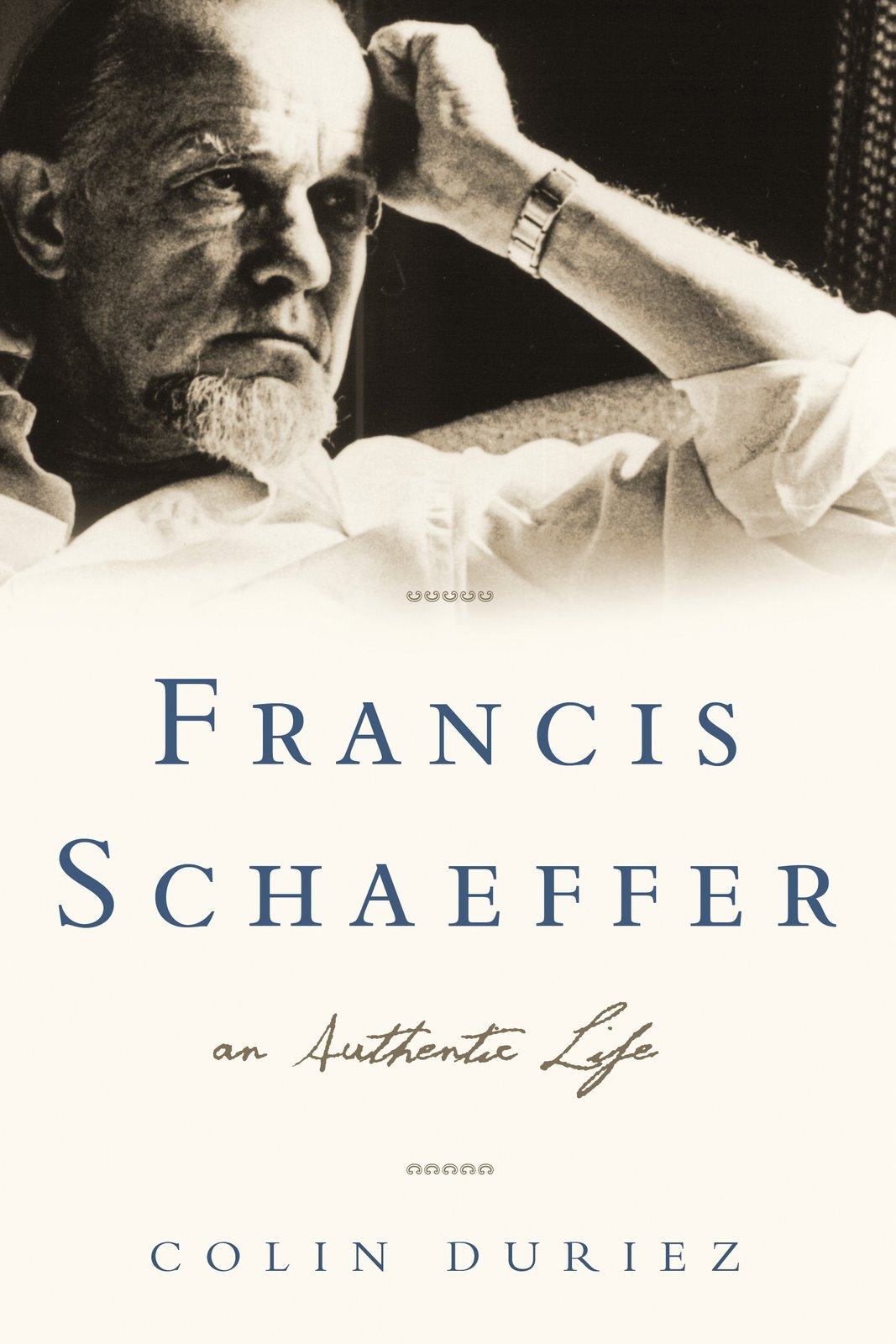
Colin Duriez

As a PhD student, I provided research assistance to the Baylor historian Barry Hankins as he wrote his biography of Francis Schaeffer (Francis Schaeffer and the Shaping of Evangelical America [Grand Rapids: Eerdmans, 2008]). At the time, I remember asking Professor Hankins if the family had been cooperative. They had not. Having read Colin Duriez’s treatment of Schaeffer, I think I know why. The family was cooperating with him, so much so that this book could be considered an authorized biography. Duriez’s portrayal is very powerfully personal, more so than anything I have read save Schaeffer’s own books, which are self-revelatory to some degree.

An Authentic Life features a number of unforgettable scenes from Schaeffer’s life. The reader who has a jaundiced view of Schaeffer as some kind of plastic-mold religious right stereotype will encounter a complex man who had a powerful instinct for justice. As a teenager, young Fran had a job with RCA Victor where he worked in the factory. The women posted along the production line were mistreated and overworked. One day, a woman stopped her work and began calling for a strike. She was soon joined by Schaeffer, who jumped up on a counter, yelling in his piercing voice, “Strike, Strike” (p. 24). This was, after all, the same man who would one day criticize comfortable American Christians for their addiction to personal peace and affluence and their non-compassionate use of wealth.

The pioneer of Christian worldview had a hard road to ministry. His father asked to speak to him at 5:30 a.m. on the morning he was to leave for college and pre-ministerial studies. When they met, his father bluntly told Schaeffer that he did not want a minister for a son and did not want him to go. The young man asked to go pray about it. Tearfully, he tossed a coin three times with each outcome landing in favor of going on to college at Hampden-Sydney. He informed his father, “I’ve got to go.” Just before slamming the door on his way out, his father promised to pay for the “first half year” (pp. 25–26). Time would bring the father to share his son’s beliefs.

Duriez’s book is full of similar interesting vignettes from Schaeffer’s life. One theme stands out very clearly. Francis Schaeffer was a man filled with love for the so-called “little people” who were not valued by the world. While he was still a young minister, we discover that he tutored a young boy with Down Syndrome twice each week and took great delight in every increment of progress. He felt the boy’s forward steps were just as important, in his wife Edith’s words, “as talking to any university student about his intellectual problems” (pp. 50–51). This event perfectly foreshadows his later powerful insistence upon the importance of the sanctity of life, an area in which he was far ahead of the main body of evangelicals and fundamentalists.

Connecting the young Schaeffer to the more famous, older man is a great strength of Colin Duriez’s book. It has become well-accepted to break Schaeffer’s life up into segments and to characterize him as three different people. There is the young, fire breathing fundamentalist eager to “be ye separate” from the impure compromisers; the artsy, compassionate, bohemian founder of L’abri in Switzerland; and then the old man, brushing off his best instincts and returning to his fundamentalist roots to fight for the doctrine of inerrancy and “Christian America.” While it is possible to reach such a conclusion by looking at his early career and then considering the chronological development of his publications, this book rejects that approach by portraying Schaeffer as a consistent personality throughout.

The man who cared enough to tutor a little boy with Down Syndrome is also the man who told his church in St. Louis that he would resign if a black person ever came to his church and felt unwelcome. The budding intellectual who answered the existential questions of college students in Europe is also the agitator who took up the cause of the unborn and became arguably the finest shaper of and advocate for a potent evangelical critique of modern culture. Two sentences in the book make this point about Schaeffer brilliantly: “It was not a new Schaeffer that was emerging. His theology, honed over many decades since the passionate articles of the later forties and early fifties, was that of the lordship of Christ over every area of life—the womb as well as the university seminar room” (p. 182).

If one could ask for anything more from this book, it would be on the subject of Frank (AKA Franky Schaeffer). As Francis Schaeffer’s son has aged, he has increasingly distanced himself from his father’s legacy. First, Frank converted to the Eastern Orthodox Church. More significantly, he wrote thinly disguised novels about his family life that were unflattering to his father and then made a massive turn left politically, ultimately supporting Barack Obama despite his laissez faire policies on abortion. One suspects this topic was left alone for two reasons. The first is that, as I wrote above, this book feels like an authorized biography with the family’s full cooperation. They probably did not want this story to include the later years of Frank Schaeffer. The second is that the book very likely neared completion during the time of Frank’s increasing heterodoxy. Regardless, readers hungry for more on this front should look to Os Guinness’s powerful rejoinder to Frank in the journal Books and Culture (March 1, 2008; available at http:// www.christianitytoday.com/bc/2008/marapr/1.32.html).

Duriez’s book is an important contribution to Schaeffer scholarship and will challenge those who have portrayed an interesting Schaeffer with a unique voice who morphs into a conventional Christian rightist over time. Francis Schaeffer: An Authentic Life deserves a wide readership and may well be the standard in the field for some time to come.
Hunter Baker
Houston Baptist University
Houston, Texas, USA

“Sanctity of Life Saturday” Remembering Dr. C. Everett Koop with pictures and quotes Part 22 (includes editorial cartoon)

MemFormer Surgeon General C.Everett Koop © A Genuine G-Shot.wmv

Pictured with Ronald Reagan above.

On 2-25-13 we lost a great man when we lost Dr. C. Everett Koop. I have written over and over the last few years quoting Dr. C. Everett Koop and his good friend Francis Schaeffer. They both came together for the first time in 1973 when Dr. Koop operated on Schaeffer’s daughter and as a result they became close friends. That led to their involvement together in the book and film series “WHATEVER HAPPENED TO THE HUMAN RACE?” in 1979.

A Physician Speaks About Abortion

This chapter was written by the former Surgeon General of the United States, Dr. C. Everett Koop.

Abortion [killing infants before birth], infanticide [killing infants after birth], and euthanasia [killing adults] stand before us like dominoes; the first to fall has been abortion on demand. It is a grave issue. Nothing like it has separated our society since the days of slavery.

It simply isn’t true. Abortions in the United States for rape, incest, to protect the life of the mother, or to void a defective fetus comprise less than five percent of all abortions. The rest are performed just for convenience. And we’re talking about one million abortions a year.

Rape practically never results in pregnancy. Studies in Pennsylvania and Minnesota concerning rape and pregnancy show that as many as five thousand rapes have occurred successively without a single pregnancy . .

Most people do not know that the younger the mother is the more likely she will suffer sterility later if she has an abortion. Studies in Canada indicate that sterility is as high as thirty percent among women fifteen to seventeen years old who have had abortions . .

Protection of the life of the mother as an excuse for an abortion is a smoke screen. In my thirty-six years in pediatric surgery I have never known of one instance where the child had to be be aborted to save the mother’s life.

When a woman is pregnant, her obstetrician takes on the care of two patients—the mother-to-be and the unborn baby. If, toward the end of the pregnancy complications arise that threaten the mother’s health, he will take the child by inducing labor or performing a Caesarian section.

His intention is still to save the life of both the mother and the baby. The baby will be premature . . The baby is never willfully destroyed because the mother’s life is in danger.

Infanticide was the second domino, and it fell very silently. Unless you know someone who talks about his work in an intensive care unit for newborns, there is no way the public would know about this. Abortion is legal. Infanticide is murder.

It is still illegal in every state in the union; yet for some reason when a newborn baby is starved or in some other way allowed to die, the law turns its back. It isn’t that the law doesn’t know about it because reputable medical journals publish papers where authors acknowledge that they have engineered the deaths of babies under their care . .

Corruptive forces are exerting an influence on medical men and women in this country. Some obstetricians admit that they abort because the patient wants them to, even if it is not medically required . .

Zoologists and biologists say life is a continuum from fertilization until the death of the organism, whether earthworm or baboon or fox or pigeon. Is it different for man?

We’re just smoke-screened to death.

The medical profession must not let itself be pushed by society and by our social planners into the role of social executioner. For as the medical person becomes an abortionist, he becomes the social executioner of the unborn.

As he allows infanticide in his intensive care unit, he becomes the social executioner of the newly born. In days ahead, he may well be required to commit euthanasia and become the executioner of the elderly.

“Parental rights are [now legally] gone. Spousal rights [of the husband] are gone. The rights of the child are gone. Legally, a minor child may now have an abortion without her parents’ knowledge; but, technically, she cannot have her ears pierced for earrings without parental consent.

Abortion is an atrocity changing the whole thought process of our country. More than a million unborn lives a year cannot be violently terminated without taking its toll on us as a nation.

Japan has records of more than fifty million legal abortions since World War II. That country is less than one percent Christian. Here in America we will destroy a larger number than that in the same amount of time, and we’re supposed to be a Christian country.

I have spent thirty-six years in the practice of pediatric [infant and child] surgery, longer than anybody else now practicing in this country . .

Some raise Exodus 21 as a proof text that God doesn’t regard the unborn child in the same way as He does the newly born child. But if you read the text carefully, you will find it says that if a man in an argument with another man accidentally strikes a woman and she has a premature birth, there is to be a fine. Nothing here is premeditated.

But if any further mischief is done—and I take that to mean a deformity of the baby or the death of the baby—then the old law applies of an eye for an eye and a tooth for a tooth.

Francis Schaeffer checked the exegesis [meaning] of these verses with five Hebrew scholars and was convinced that God means just that, and in no way does He mean to down-grade the worth of the unborn child.

The story of the incarnation leaves no room for doubt. The angel told Joseph, “That which is conceived in her is of the Holy Spirit.” From the moment of conception God had entered human life. The soul that I am has also existed from the moment of conception . .

I have always been interested in the fact that when the preborn John the Baptist leaped in Elizabeth’s womb because of the presence of the Lord in Mary’s womb (Luke 1:41,44), He—the Lord—was a very tiny baby. [John was six months older than Jesus, and already well-enough developed for vigorous movement.] He would not have been discernible as an individual at that time, but He certainly was a Person.

Our churches must get educated. That means they’ve got to find somebody who can talk to them about the origin of life. Many of our people don’t realize that by the twenty-first day—before most women even know they are pregnant—the baby’s heart demonstrates its first feeble beats.

By the sixth week the adrenal gland and the thyroid are functioning. A child’s fingerprints are indelibly in place by the twelfth week. Abortion kills a developing human being! No matter how old or how large the organism is when he/she leaves the womb, that emergence—by whatever means—is still a birth. .

An orthodox Jewish law student gave up a year of his time at Boston University to go to Akron [Ohio) to fight legislation through the courts. He sought passage of an ordinance requiring that a woman know what the unborn child she is aborting looks like by having the physician show her a picture of a fetus of the same gestation [age] he thinks her child is.

The ordinance passed. It also asked that the woman not have the abortion until twenty-four or forty-eight hours have gone by after she has signed the papers for operative permission.

But the pro-abortion forces do not want the pregnant woman to know what she is aborting and they don’t want her to have the time to think it over.

But this idea is contrary to everything happening in this country; there is a tremendous movement now for informed consent. Legally, if you bring a child to me for a hernia repair; I can’t tell you that he should be operated upon or even schedule him for admission unless I tell you all of the possible good and bad results from that hospitalization.

With abortion, the counseling is not done, and the clinics do not tell you about alternatives to abortion; but worse yet, the pro-abortion people get terribly upset if somebody pushes for informed consent . .

I believe that infanticide, now practiced illegally behind closed doors, will become legal and eventually, for certain types of deformity, may become mandatory.

I believe that through the Living-Will, passive euthanasia will become so much a part of our culture that after we’ve had it for five years or so we will adopt active euthanasia.

So, what will be next? The parallels that can be drawn between Germany with its holocaust and America here and now are frightening. We are too close to the abyss. We are right at the edge.”—C. Everett Koop, M. D., as told to Dick Bohrer, in “Moody Monthly,” May, 1980. Reprinted by permission.

_______________

In the film series “WHATEVER HAPPENED TO THE HUMAN RACE?” the arguments are presented  against abortion (Episode 1),  infanticide (Episode 2),   euthenasia (Episode 3), and then there is a discussion of the Christian versus Humanist worldview concerning the issue of “the basis for human dignity” in Episode 4 and then in the last episode a close look at the truth claims of the Bible.

In this 1979 film series they dealt with the big social issues and predicted what social problems we have in the future because of humanism. For instance, they knew that the Jack Kevorkians of the world would be coming down the pike. They predicted that there was a slippery slope from abortion to infanticide to youth euthanasia brought on by the materialistic worldview.

Dr. C. Everett Koop is pictured above.

Francis Schaeffer: “Whatever Happened to the Human Race” (Episode 1) ABORTION OF THE HUMAN RACE

Published on Oct 6, 2012 by

When Obamacare was originally pitched to congress many pro-life representatives were promised by President Obama that Obamacare would not provide abortions but that simply is not true anymore. Take a look at this editorial cartoon below.

C. Everett Koop

Related posts:

Remembering Dr. C. Everett Koop with pictures and quotes Part 12 (with editorial cartoon)

Dr. C. Everett Koop on Baby Doe, euthanasia, abortion Uploaded on Nov 3, 2008 Dr. Koop answers questions on Baby Doe, euthanasia and abortion during interview at Wheaton College, Wheaton, IL http://www.christianethics.org Dr. Koop   On 2-25-13 we lost a great man when we lost Dr. C. Everett Koop. I have written over and over […]

Remembering Dr. C. Everett Koop with pictures and quotes Part 11 (including editorial cartoon on abortion)

Dr. Koop Memorial Tribute Former Surgeon General C.Everett Koop © A Genuine G-Shot.wmv On 2-25-13 we lost a great man when we lost Dr. C. Everett Koop. I have written over and over the last few years quoting Dr. C. Everett Koop and his good friend Francis Schaeffer. They both came together for the first […]

Remembering Dr. C. Everett Koop with pictures and quotes Part 10 (includes editorial cartoon about abortion)

Newsmaker Interview with Surgeon General C. Everett Koop Published on Feb 25, 2013 The PBS NewsHour interviewed former Surgeon General, Dr. C. Everett Koop, on the anniversary of the first surgeon general’s report on smoking. Jim Lehrer interviewed Koop for a newsmaker conversation for the The MacNeil/Lehrer NewsHour from the surgeon general’s office in Washington […]

Remembering Dr. C. Everett Koop with pictures and quotes Part 9 (Picture of Joycelyn Elders with Koop)

Dr. C. Everett Koop on Baby Doe, euthanasia, abortion Uploaded on Nov 3, 2008 Dr. Koop answers questions on Baby Doe, euthanasia and abortion during interview at Wheaton College, Wheaton, IL http://www.christianethics.org Dr. Koop   Joycelyn Elders was the first black Surgeon General of the USA and I have a picture of her with Dr. C. […]

Remembering Dr. C. Everett Koop with pictures and quotes Part 8 (editorial picture about Surgeon General)

Memorial Tribute Former Surgeon General C.Everett Koop © A Genuine G-Shot.wmv Dr. Koop. C. Everett Koop Before Dr. C. Everett Koop arrived in 1981 as Surgeon General could anybody ever name who the Surgeon General was? Koop also caused lots of editorial cartoons to be drawn about him because of his positions he took on […]

Remembering Dr. C. Everett Koop with pictures and quotes Part 7 (Public Health poster)

Newsmaker Interview with Surgeon General C. Everett Koop Published on Feb 25, 2013 The PBS NewsHour interviewed former Surgeon General, Dr. C. Everett Koop, on the anniversary of the first surgeon general’s report on smoking. Jim Lehrer interviewed Koop for a newsmaker conversation for the The MacNeil/Lehrer NewsHour from the surgeon general’s office in Washington […]

Remembering Dr. C. Everett Koop with pictures and quotes Part 6 (includes funniest cartoon ever during Koop’s tenure)

Dr. C. Everett Koop on Baby Doe, euthanasia, abortion Uploaded on Nov 3, 2008 Dr. Koop answers questions on Baby Doe, euthanasia and abortion during interview at Wheaton College, Wheaton, IL http://www.christianethics.org Dr. Koop. C. Everett Koop On June 8, 1988 Ralph Dunagin of the LA Times came out with the funniest editorial cartoon I […]

Remembering Dr. C. Everett Koop with pictures and quotes Part 5 (Public Health poster developed under Koop)

Memorial Tribute Former Surgeon General C.Everett Koop © A Genuine G-Shot.wmv Dr. C. Everett Koop was active on getting the word out about how people could catch AIDS. Public Health officials during the second half of the 1980s became concerned about the spread of AIDS particularly among minorities, a disproportionate number of whom were intravenous […]

Remembering Dr. C. Everett Koop with pictures and quotes Part 4 (funny editorial cartoon too)

Dr. Koop Gary Brookings of the Richmond Times Dispatch did a very funny editorial cartoon about the time in 1988 when Dr. C. Everett Koop sent the unapproved mail  piece out to millions of homes about AIDS. There were many such cartoons at the time since everyone knew Dr. Koop got the mail piece out […]

Remembering Dr. C. Everett Koop with pictures and quotes Part 3 ( three more editorial cartoons too)

Dr. Koop with Hillary Clinton In 1980 I really was influenced at my highschool by a teacher of mine named Mark Brink. He introduced me to the film series “Whatever happened to the human race?” by Francis Schaeffer and Dr. C. Everett Koop. In this  film series that came out in 1979 they dealt with […]

Remembering Dr. C. Everett Koop with pictures and quotes Part 2 (Doonesbury cartoon by Gary Trudeau included)

Dr. Koop On 2-25-13 we lost a great man when we lost Dr. C. Everett Koop. I have written over and over the last few years quoting Dr. C. Everett Koop and his good friend Francis Schaeffer. They both came together for the first time in 1973 when Dr. Koop operated on Schaeffer’s daughter and […]

Remembering Dr. C. Everett Koop with pictures and quotes Part 1

Dr. C. Everett Koop is pictured above. Francis Schaeffer: “Whatever Happened to the Human Race” (Episode 1) ABORTION OF THE HUMAN RACE Published on Oct 6, 2012 by AdamMetropolis Dr. Koop On 2-25-13 we lost a great man when we lost Dr. C. Everett Koop. I have written over and over the last few years […]

Open letter to President Obama (Part 232 B) Dr. C. Everett Koop and Reagan pictured together

Dr. C. Everett Koop with Ronald Reagan. Dr. Koop was delayed in his confirmation by Ted Kennedy because of his film Whatever Happened to the Human Race? President Obama c/o The White House 1600 Pennsylvania Avenue NW Washington, DC 20500 Dear Mr. President, I know that you receive 20,000 letters a day and that you […]

“Sanctity of Life Saturday” Francis Schaeffer and Dr. C. Everett Koop asked Reagan to issue pro-life proclamation in 1983 (includes video ABORTION OF THE HUMAN RACE)

In the film series “WHATEVER HAPPENED TO THE HUMAN RACE?” the arguments are presented  against abortion (Episode 1),  infanticide (Episode 2),   euthenasia (Episode 3), and then there is a discussion of the Christian versus Humanist worldview concerning the issue of “the basis for human dignity” in Episode 4 and then in the last episode a close […]

Dr. C. Everett Koop on abortion’s 1973 Roe v. Wade impact on child abuse

Dr. C. Everett Koop with Ronald Reagan. Dr. Koop was delayed in his confirmation by Ted Kennedy because of his film Whatever Happened to the Human Race? Watch the film below starting at the 19 minute mark and that will lead into a powerful question from Dr. C. Everett Koop. This 1979 film is WHATEVER […]

Open letter to President Obama (Part 221 B) Dr. C. Everett Koop and Francis Schaeffer rightly called abortion “the watershed issue of our era”

 Dr. Koop was delayed in his confirmation by Ted Kennedy because of his film Whatever Happened to the Human Race? Francis Schaeffer February 21, 1982 (Part 1) Uploaded by DeBunker7 on Feb 21, 2008 READ THIS FIRST: In decline of all civilizations we first see a war against the freedom of ideas. Discussion is limited […]

Francis Schaeffer and C. Everette Koop on the Hippocratic oath (March for Life January 20, 2013)

Dr. C. Everett Koop was appointed to the Reagan administration but was held up in the Senate in his confirmation hearings by Ted Kennedy because of his work in pro-life causes. I was thinking about the March for Life that is coming up on Jan 20, 2013  and that is why I posted this today […]

Ronald Wilson Reagan pictured with Dr. C. Everett Koop

High resolution version (11,426,583 Bytes) Description: The photograph is signed by President Ronald Reagan with the inscription “To Chick Koop, With Best Wishes.” Chick, from chicken coop, was the nickname Koop gained will attending Dartmouth College in the mid-1930s. Koop maintained a cordial relationship with President Reagan, despite his disappointment over Reagan’s refusal to address […]

Francis Schaeffer and C. Everett Koop were prophetic (jh29)

Francis Schaeffer and C. Everett Koop were prophetic (jh29) What Ever Happened to the Human Race? I recently heard this Breakpoint Commentary by Chuck Colson and it just reminded me of how prophetic Francis Schaeffer and C. Everett Koop were in the late 1970′s with their book and film series “Whatever happened to the human […]

Should Michele Bachmann be punished for taking pro-life views from Schaeffer and Koop? (March for Life January 20, 2013)

  Dr. C. Everett Koop I was thinking about the March for Life that is coming up on Jan 20, 2013  and that is why I posted this today Secular leaps of faith 39 Comments Written by Janie B. Cheaney August 15, 2011, 2:17 PM I’m willing to cut Ryan Lizza some slack. His profile […]

“Schaeffer Sundays” Francis Schaeffer’s own words concerning humanism and its bad results

Francis Schaeffer: “Whatever Happened to the Human Race?” (Episode 2) SLAUGHTER OF THE INNOCENTS Published on Oct 6, 2012 by AdamMetropolis The 45 minute video above is from the film series created from Francis Schaeffer’s book “Whatever Happened to the Human Race?” with Dr. C. Everett Koop. This book  really helped develop my political views concerning […]

“Sanctity of Life Saturday”:Derek Melleby’s review of the book “Francis Schaeffer: An Authentic Life” (includes film THE BASIS FOR HUMAN DIGNITY)

  I truly believe that many of the problems we have today in the USA are due to the advancement of humanism in the last few decades in our society. Ronald Reagan appointed the evangelical Dr. C. Everett Koop to the position of Surgeon General in his administration. He partnered with Dr. Francis Schaeffer in making […]

Taking on Ark Times bloggers about abortion on the 40th anniversary date of Roe v. Wade (Part 5) “Slavery issue compared to rights of unborn child”

The best pro-life film I have ever seen below by Francis Schaeffer and Dr. C. Everett Koop “Whatever happened to the human race?” Over the years I have taken on the Ark Times liberal bloggers over and over and over concerning the issue of abortion. I asked over and over again for one liberal blogger […]

Taking on Ark Times bloggers about abortion on the 40th anniversary date of Roe v. Wade (Part 4) “How do pro-lifers react to the movie THE CIDER HOUSE RULES?”

Francis Schaeffer pictured above._________ The best pro-life film I have ever seen below by Francis Schaeffer and Dr. C. Everett Koop “Whatever happened to the human race?” Over the years I have taken on the Ark Times liberal bloggers over and over and over concerning the issue of abortion. I asked over and over again […]

Taking on Ark Times bloggers about abortion on the 40th anniversary date of Roe v. Wade (Part 3) “What should be the punishment for abortion doctors?”

The best pro-life film I have ever seen below by Francis Schaeffer and Dr. C. Everett Koop “Whatever happened to the human race?” On 1-24-13 I took on the child abuse argument put forth by Ark Times Blogger “Deathbyinches,” and the day before I pointed out that because the unborn baby has all the genetic code […]

Taking on Ark Times bloggers about abortion on the 40th anniversary date of Roe v. Wade (Part 2) “The pro-abortion child abuse argument destroyed here”

PHOTO BY STATON BREIDENTHAL from Pro-life march in Little Rock on 1-20-13. Tim Tebow on pro-life super bowl commercial. Over the years I have taken on the Ark Times liberal bloggers over and over and over concerning the issue of abortion. Here is another encounter below. On January 22, 2013 (on the 40th anniversary of the […]

Taking on Ark Times bloggers about abortion on the 40th anniversary date of Roe v. Wade (Part 6) For many pro-abortionists ” …the problem is not determining when actual human life begins, but when the value of that life begins to out weigh other considerations”

The best pro-life film I have ever seen below by Francis Schaeffer and Dr. C. Everett Koop “Whatever happened to the human race?” Francis Schaeffer pictured above._________ The 45 minute video above is from the film series created from Francis Schaeffer’s book “Whatever Happened to the Human Race?” with Dr. C. Everett Koop. This book  really […]

Taking on Ark Times bloggers about abortion on the 40th anniversary date of Roe v. Wade (Part 7) “Poverty not good reason for abortion, why not give up for adoption?”

Dr Richard Land discusses abortion and slavery – 10/14/2004 – part 3 The best pro-life film I have ever seen below by Francis Schaeffer and Dr. C. Everett Koop “Whatever happened to the human race?” Over the years I have taken on the Ark Times liberal bloggers over and over and over concerning the issue […]

Taking on Ark Times bloggers about abortion on the 40th anniversary date of Roe v. Wade (Part 1)

Dr Richard Land discusses abortion and slavery – 10/14/2004 – part 3 The best pro-life film I have ever seen below by Francis Schaeffer and Dr. C. Everett Koop “Whatever happened to the human race?” Over the years I have taken on the Ark Times liberal bloggers over and over and over concerning the issue […]

Paul Greenberg became pro-life because we are all “endowed with certain unalienable rights”

On January 20, 2013 I heard Paul Greenberg talk about the words of Thomas Jefferson that we are all “endowed with certain unalienable rights” and the most important one is the right to life. He mentioned this also in this speech below from 2011: Paul Greenberg Dinner Speech 2011 Fall 2011 Issue Some of you […]

How Pulitzer Prize-winning Paul Greenberg, one of the most respected and honored commentators in America, changed his mind about abortion and endorses now the pro-life view

It is not possible to know where the pro-life evangelicals are coming from unless you look at the work of the person who inspired them the most. That person was Francis Schaeffer.  I do care about economic issues but the pro-life issue is the most important to me. Several years ago Adrian Rogers (past president of […]

Taking on Ark Times Bloggers on the “Absurdity of Life without God!!” Part 10 (Evolution’s time and chance impersonal universe is purposeless, but the alternative is God)

_________________

The Existence of God (Part 5)

The Bible and Science (Part 02)

How Can We Demonstrate that Objective Moral Values Exist to a Nihilist Who Holds

Published on Dec 17, 2012

For more resources visit: http://www.reasonablefaith.org

The Bethinking National Apologetics Day Conference: “Countering the New Atheism” took place during the UK Reasonable Faith Tour in October 2011. Christian academics William Lane Craig, John Lennox, Peter J Williams and Gary Habermas lead 600 people in training on how to defend and proclaim the credibility of Christianity against the growing tide of secularism and New Atheist popular thought in western society.

In this session, William Lane Craig delivers his critique of Richard Dawkins’ objections to arguments for the existence of God, followed by questions and answers from the audience. In this clip, Dr Craig addresses a question about how objective moral values can be demonstrated to a Nihilist, who hold that they are illusory.

Richard Dawkins Vs. William Lane Craig Debate

Uploaded on Oct 23, 2011

Richard Dawkins TIMES:
7:20
32:15
1:03:05
1:19:33
1:39:33

William Lane Craig TIMES:
13:39
46:27
1:14:04
1:36:08

__________________

Francis Schaeffer – The Biblical Flow of History & Truth (1)

Francis and Edith Schaeffer pictured below:

HOW SHOULD WE THEN LIVE? was both a book and a film series.

______________

_________________

Life without God in the picture is absurdity!!!. That was the view of King Solomon when he wrote the Book of Ecclesiastes 3000 years ago and it is the view of many of the modern philosophers today. Modern man has tried to come up with a lasting meaning for life without God in the picture (life under the sun), but it is not possible. Without the infinite-personal God of the Bible to reveal moral absolutes then man is left to embrace moral relativism. In a time plus chance universe man is reduced to a machine and can not find a place for values such as love. Both of Francis Schaeffer’s film series have tackled these subjects and he shows how this is reflected in the arts.

Here are some posts I have done on the series “HOW SHOULD WE THEN LIVE? : Francis Schaeffer’s “How should we then live?” Video and outline of episode 10 “Final Choices” episode 9 “The Age of Personal Peace and Affluence”episode 8 “The Age of Fragmentation”episode 7 “The Age of Non-Reason” episode 6 “The Scientific Age”  episode 5 “The Revolutionary Age” episode 4 “The Reformation” episode 3 “The Renaissance”episode 2 “The Middle Ages,”, and  episode 1 “The Roman Age,” .

In the film series “WHATEVER HAPPENED TO THE HUMAN RACE?” the arguments are presented  against abortion (Episode 1),  infanticide (Episode 2),   euthenasia (Episode 3), and then there is a discussion of the Christian versus Humanist worldview concerning the issue of “the basis for human dignity” in Episode 4 and then in the last episode a close look at the truth claims of the Bible.

I have discussed many subjects with my liberal friends over at the Ark Times Blog in the past and I have taken them on now on the subject of the absurdity of life without God in the picture. Most of my responses included quotes from William Lane Craig’s book THE ABSURDITY OF LIFE WITHOUT GOD.  Here is the result of one of those encounters from June of 2013:

I have enjoyed discussing this big question about how to find lasting meaning in one’s life without God in the picture and I am betting that Zatharus, Doigotta, Citizen1, Hackett and Elwood who have all interacted with me on this, all firmly believe in evolution and I imagine that you all think their is a feeling of upward mobility somehow through that theory but if it is just an impersonal universe here from the combination of time and chance then there is no lasting meaning to our lives.

William Lane Craig touched on this issue too:

Finally, let’s look at the problem of purpose in life. Unable to live in an impersonal universe in which everything is the product of blind chance, atheists sometimes begin to ascribe personality and motives to the physical processes themselves. It is a bizarre way of speaking and represents a leap from the lower to the upper story. For example, the brilliant Russian physicists Zeldovich and Novikov, in contemplating the properties of the universe, ask, why did “Nature” choose to create this sort of universe instead of another? “Nature” has obviously become a sort of God-substitute, filling the role and function of God. Francis Crick halfway through his book The Origin of the Genetic Code begins to spell nature with a capital N and elsewhere speaks of natural selection as being “clever” and as “thinking” of what it will do. Sir Fred Hoyle, the English astronomer, attributes to the universe itself the qualities of God. For Carl Sagan the “Cosmos,” which he always spelled with a capital letter, obviously fills the role of a God-substitute. Though these men profess not to believe in God, they smuggle in a God-substitute through the back door because they cannot bear to live in a universe in which everything is the chance result of impersonal forces.

Moreover, the only way that most people who deny purpose in life live happily is either by making up some purpose—which amounts to self-delusion as we saw with Sartre—or by not carrying their view to its logical conclusions. Take the problem of death, for example. According to Ernst Bloch, the only way modern man lives in the face of death is by subconsciously borrowing the belief in immortality that his forefathers held to, even though he himself has no basis for this belief, since he does not believe in God. Bloch states that the belief that life ends in nothing is hardly, in his words, “sufficient to keep the head high and to work as if there were no end.” By borrowing the remnants of a belief in immortality, writes Bloch, “modern man does not feel the chasm that unceasingly surrounds him and that will certainly engulf him at last. Through these remnants, he saves his sense of self-identity. Through them the impression arises that man is not perishing, but only that one day the world has the whim no longer to appear to him.” Bloch concludes, “This quite shallow courage feasts on a borrowed credit card. It lives from earlier hopes and the support that they once had provided.”26 Modern man no longer has any right to that support, since he rejects God. But in order to live purposefully, he makes a leap of faith to affirm a reason for living.

Finding ourselves cast into a mindless universe with no apparent purpose or hope of deliverance from thermodynamic extinction, the temptation to invest one’s own petty plans and projects with objective significance and thereby to find some purpose to one’s life is almost irresistible.

Related posts:

Francis Schaeffer’s “How should we then live?” Video and outline of episode 10 “Final Choices” (Schaeffer Sundays)

E P I S O D E 1 0   Dr. Francis Schaeffer – Episode X – Final Choices 27 min FINAL CHOICES I. Authoritarianism the Only Humanistic Social Option One man or an elite giving authoritative arbitrary absolutes. A. Society is sole absolute in absence of other absolutes. B. But society has to be […]

Francis Schaeffer’s “How should we then live?” Video and outline of episode 9 “The Age of Personal Peace and Affluence” (Schaeffer Sundays)

E P I S O D E 9 Dr. Francis Schaeffer – Episode IX – The Age of Personal Peace and Affluence 27 min T h e Age of Personal Peace and Afflunce I. By the Early 1960s People Were Bombarded From Every Side by Modern Man’s Humanistic Thought II. Modern Form of Humanistic Thought Leads […]

Francis Schaeffer’s “How should we then live?” Video and outline of episode 8 “The Age of Fragmentation” (Schaeffer Sundays)

E P I S O D E 8 Dr. Francis Schaeffer – Episode VIII – The Age of Fragmentation 27 min I saw this film series in 1979 and it had a major impact on me. T h e Age of FRAGMENTATION I. Art As a Vehicle Of Modern Thought A. Impressionism (Monet, Renoir, Pissarro, Sisley, […]

Francis Schaeffer’s “How should we then live?” Video and outline of episode 7 “The Age of Non-Reason” (Schaeffer Sundays)

E P I S O D E 7 Dr. Francis Schaeffer – Episode VII – The Age of Non Reason I am thrilled to get this film series with you. I saw it first in 1979 and it had such a big impact on me. Today’s episode is where we see modern humanist man act […]

Francis Schaeffer’s “How should we then live?” Video and outline of episode 6 “The Scientific Age” (Schaeffer Sundays)

E P I S O D E 6 How Should We Then Live 6#1 Uploaded by NoMirrorHDDHrorriMoN on Oct 3, 2011 How Should We Then Live? Episode 6 of 12 ________ I am sharing with you a film series that I saw in 1979. In this film Francis Schaeffer asserted that was a shift in […]

Francis Schaeffer’s “How should we then live?” Video and outline of episode 5 “The Revolutionary Age” (Schaeffer Sundays)

E P I S O D E 5 How Should We Then Live? Episode 5: The Revolutionary Age I was impacted by this film series by Francis Schaeffer back in the 1970′s and I wanted to share it with you. Francis Schaeffer noted, “Reformation Did Not Bring Perfection. But gradually on basis of biblical teaching there […]

Francis Schaeffer’s “How should we then live?” Video and outline of episode 4 “The Reformation” (Schaeffer Sundays)

Dr. Francis Schaeffer – Episode IV – The Reformation 27 min I was impacted by this film series by Francis Schaeffer back in the 1970′s and I wanted to share it with you. Schaeffer makes three key points concerning the Reformation: “1. Erasmian Christian humanism rejected by Farel. 2. Bible gives needed answers not only as to […]

“Schaeffer Sundays” Francis Schaeffer’s “How should we then live?” Video and outline of episode 3 “The Renaissance”

Francis Schaeffer’s “How should we then live?” Video and outline of episode 3 “The Renaissance” Francis Schaeffer: “How Should We Then Live?” (Episode 3) THE RENAISSANCE I was impacted by this film series by Francis Schaeffer back in the 1970′s and I wanted to share it with you. Schaeffer really shows why we have so […]

Francis Schaeffer’s “How should we then live?” Video and outline of episode 2 “The Middle Ages” (Schaeffer Sundays)

  Francis Schaeffer: “How Should We Then Live?” (Episode 2) THE MIDDLE AGES I was impacted by this film series by Francis Schaeffer back in the 1970′s and I wanted to share it with you. Schaeffer points out that during this time period unfortunately we have the “Church’s deviation from early church’s teaching in regard […]

Francis Schaeffer’s “How should we then live?” Video and outline of episode 1 “The Roman Age” (Schaeffer Sundays)

Francis Schaeffer: “How Should We Then Live?” (Episode 1) THE ROMAN AGE   Today I am starting a series that really had a big impact on my life back in the 1970′s when I first saw it. There are ten parts and today is the first. Francis Schaeffer takes a look at Rome and why […]

Francis Schaeffer: “Whatever Happened to the Human Race” (Episode 5) TRUTH AND HISTORY

Francis Schaeffer: “Whatever Happened to the Human Race” (Episode 5) TRUTH AND HISTORY Published on Oct 7, 2012 by AdamMetropolis This crucial series is narrated by the late Dr. Francis Schaeffer and former Surgeon General Dr. C. Everett Koop. Today, choices are being made that undermine human rights at their most basic level. Practices once […]

Francis Schaeffer: “Whatever Happened to the Human Race” (Episode 4) THE BASIS FOR HUMAN DIGNITY

The opening song at the beginning of this episode is very insightful. Francis Schaeffer: “Whatever Happened to the Human Race” (Episode 4) THE BASIS FOR HUMAN DIGNITY Published on Oct 7, 2012 by AdamMetropolis This crucial series is narrated by the late Dr. Francis Schaeffer and former Surgeon General Dr. C. Everett Koop. Today, choices […]

Francis Schaeffer: “Whatever Happened to the Human Race” (Episode 3) DEATH BY SOMEONE’S CHOICE

Francis Schaeffer: “Whatever Happened to the Human Race” (Episode 3) DEATH BY SOMEONE’S CHOICE Published on Oct 6, 2012 by AdamMetropolis This crucial series is narrated by the late Dr. Francis Schaeffer and former Surgeon General Dr. C. Everett Koop. Today, choices are being made that undermine human rights at their most basic level. Practices […]

Francis Schaeffer: “Whatever Happened to the Human Race?” (Episode 2) SLAUGHTER OF THE INNOCENTS

Francis Schaeffer: “Whatever Happened to the Human Race?” (Episode 2) SLAUGHTER OF THE INNOCENTS Published on Oct 6, 2012 by AdamMetropolis This crucial series is narrated by the late Dr. Francis Schaeffer and former Surgeon General Dr. C. Everett Koop. Today, choices are being made that undermine human rights at their most basic level. Practices […]

Francis Schaeffer: “Whatever Happened to the Human Race” (Episode 1) ABORTION OF THE HUMAN RACE

It is not possible to know where the pro-life evangelicals are coming from unless you look at the work of the person who inspired them the most. That person was Francis Schaeffer.  I do care about economic issues but the pro-life issue is the most important to me. Several years ago Adrian Rogers (past president of […]

Ecclesiastes, Purpose, Meaning, and the Necessity of God by Suiwen Liang (Quotes Will Durant, Madalyn Murray O’Hair, Stephen Jay Gould,Richard Dawkins, Jean-Paul Sartre,Bertrand Russell, Leo Tolstoy, Loren Eiseley,Aldous Huxley, G.K. Chesterton, Ravi Zacharias, and C.S. Lewis.)

Ecclesiastes 2-3 Published on Sep 19, 2012 Calvary Chapel Spring Valley | Sunday Evening | September 16, 2012 | Derek Neider _____________________________ I have written on the Book of Ecclesiastes and the subject of the meaning of our lives on several occasions on this blog. In this series on Ecclesiastes I hope to show how secular […]

Robert Leroe on Ecclesiastes (Mentions Thomas Aquinas, Princess Diana, Mother Teresa, King Solomon, King Rehoboam, Eugene Peterson, Chuck Swindoll, and John Newton.)

Ecclesiastes 1 Published on Sep 4, 2012 Calvary Chapel Spring Valley | Sunday Evening | September 2, 2012 | Pastor Derek Neider _____________________ I have written on the Book of Ecclesiastes and the subject of the meaning of our lives on several occasions on this blog. In this series on Ecclesiastes I hope to show how […]

Super Bowl, Black Eyed Peas, and the Meaning of Life and Ecclesiastes

Ecclesiastes 8-10 | Still Searching After All These Years Published on Oct 9, 2012 Calvary Chapel Spring Valley | Sunday Evening | October 7, 2012 | Pastor Derek Neider _______________________ Ecclesiastes 11-12 | Solomon Finds His Way Published on Oct 30, 2012 Calvary Chapel Spring Valley | Sunday Evening | October 28, 2012 | Pastor Derek Neider […]

Brian LePort on Ecclesiastes

Ecclesiastes 6-8 | Solomon Turns Over a New Leaf Published on Oct 2, 2012 Calvary Chapel Spring Valley | Sunday Evening | September 30, 2012 | Pastor Derek Neider _____________________ I have written on the Book of Ecclesiastes and the subject of the meaning of our lives on several occasions on this blog. In this series […]

J.W. Wartick on Ecclesiastes

Ecclesiastes 4-6 | Solomon’s Dissatisfaction Published on Sep 24, 2012 Calvary Chapel Spring Valley | Sunday Evening | September 23, 2012 | Pastor Derek Neider ___________________ I have written on the Book of Ecclesiastes and the subject of the meaning of our lives on several occasions on this blog. In this series on Ecclesiastes I hope […]

Overview of the Book of Ecclesiastes

Overview of the Book of Ecclesiastes Overview of the Book of EcclesiastesAuthor: Solomon or an unknown sage in the royal courtPurpose: To demonstrate that life viewed merely from a realistic human perspective must result in pessimism, and to offer hope through humble obedience and faithfulness to God until the final judgment.Date: 930-586 B.C. Ecclesiastes 2-3 Published on Sep 19, […]

Doy Moyer on the Book of Ecclesiastes and Apologetics

Ecclesiastes 1 Published on Sep 4, 2012 Calvary Chapel Spring Valley | Sunday Evening | September 2, 2012 | Pastor Derek Neider _____________________ I have written on the Book of Ecclesiastes and the subject of the meaning of our lives on several occasions on this blog. In this series on Ecclesiastes I hope to show how […]

Solomon was the author of Ecclesiastes

Ecclesiastes 8-10 | Still Searching After All These Years Published on Oct 9, 2012 Calvary Chapel Spring Valley | Sunday Evening | October 7, 2012 | Pastor Derek Neider _______________________ Ecclesiastes 11-12 | Solomon Finds His Way Published on Oct 30, 2012 Calvary Chapel Spring Valley | Sunday Evening | October 28, 2012 | Pastor Derek Neider […]

By Everette Hatcher III | Posted in Current Events | Edit | Comments (0)

Clips of Adrian Rogers and Francis Schaeffer from the film “With God on our side”

Clips of Adrian Rogers and Francis Schaeffer from the film “With God on our side”

______________________

I grew up in Memphis going to Bellevue Baptist Church and Adrian Rogers was our pastor and he had a great impact on me. He had a lot to say on the issues  of the day and that included social issues like abortion too. Dr. Francis Schaeffer also influenced me through his books and film series. Both of these men can be seen in this film “With God on our side.” I have included the three clips where they are pictured. In Part 8 Adrian Rogers is praying for President Bush in the White House at the 51 second mark and Rogers is pictured in Part 3 at the 2:09 mark sitting behind Ronald Reagan in August of 1980 during Reagan’s speech in Dallas at the Religious Roundtable meeting and Francis Schaeffer’s voice can be heard while his film WHATEVER HAPPENED TO THE RACE? is playing in Part 2 at the 7:54 mark.

Picture of Adrian Rogers above from 1970’s while pastor of Bellevue Baptist of Memphis, and president of Southern Baptist Convention. (Little known fact, Rogers was the starting quarterback his senior year of the Palm Beach High School football team that won the state title and a hero to a 7th grader at the same school named Burt Reynolds.)

With God on Our Side! Part 8

With God on Our Side! Part 3

With God on Our Side! Part 4

There is a difference between believing the Bible is true and the Bible contains truth

I love the works of Francis Schaeffer and I have been on the internet reading several blogs that talk about Schaeffer’s work and the work below was really helpful. Schaeffer’s film series “How should we then live?  Wikipedia notes, “According to Schaeffer, How Should We Then Live traces Western history from Ancient Rome until the time of writing (1976) along three lines: the philosophic, scientific, and religious.[3] He also makes extensive references to art and architecture as a means of showing how these movements reflected changing patterns of thought through time. Schaeffer’s central premise is: when we base society on the Bible, on the infinite-personal God who is there and has spoken,[4] this provides an absolute by which we can conduct our lives and by which we can judge society.  Here are some posts I have done on this series: Francis Schaeffer’s “How should we then live?” Video and outline of episode 10 “Final Choices” episode 9 “The Age of Personal Peace and Affluence”episode 8 “The Age of Fragmentation”episode 7 “The Age of Non-Reason” episode 6 “The Scientific Age”  episode 5 “The Revolutionary Age” episode 4 “The Reformation” episode 3 “The Renaissance”episode 2 “The Middle Ages,”, and  episode 1 “The Roman Age,” .

In the film series “WHATEVER HAPPENED TO THE HUMAN RACE?” the arguments are presented  against abortion (Episode 1),  infanticide (Episode 2),   euthanasia (Episode 3), and then there is a discussion of the Christian versus Humanist worldview concerning the issue of “the basis for human dignity” in Episode 4 and then in the last episode a close look at the truth claims of the Bible.

Francis Schaeffer

__________________________

I truly believe that many of the problems we have today in the USA are due to the advancement of humanism in the last few decades in our society. Ronald Reagan appointed the evangelical Dr. C. Everett Koop to the position of Surgeon General in his administration. He partnered with Dr. Francis Schaeffer in making the video below. It is very valuable information for Christians to have.  Actually I have included a video below that includes comments from him on this subject.

Francis Schaeffer

Published on Oct 6, 2012 by 

Francis Schaeffer: “Whatever Happened to the Human Race” (Episode 4) THE BASIS FOR HUMAN DIGNITY

There is a difference between believing the Bible is true and the Bible contains truth. (The 3:31 mark from this episode is actually the clip used above in the film “With God on our side.”)

____________________

Related posts:

“Schaeffer Sunday” Francis Schaeffer: “Whatever Happened to the Human Race” (Episode 1) ABORTION OF THE HUMAN RACE

It is not possible to know where the pro-life evangelicals are coming from unless you look at the work of the person who inspired them the most. That person was Francis Schaeffer.  I do care about economic issues but the pro-life issue is the most important to me. Several years ago Adrian Rogers (past president of […]

“Schaeffer Sunday” Francis Schaeffer: “Whatever Happened to the Human Race?” (Episode 2) SLAUGHTER OF THE INNOCENTS

Francis Schaeffer: “Whatever Happened to the Human Race?” (Episode 2) SLAUGHTER OF THE INNOCENTS Published on Oct 6, 2012 by AdamMetropolis This crucial series is narrated by the late Dr. Francis Schaeffer and former Surgeon General Dr. C. Everett Koop. Today, choices are being made that undermine human rights at their most basic level. Practices […]

“Schaeffer Sunday” Francis Schaeffer: “Whatever Happened to the Human Race” (Episode 3) DEATH BY SOMEONE’S CHOICE

Francis Schaeffer: “Whatever Happened to the Human Race” (Episode 3) DEATH BY SOMEONE’S CHOICE Published on Oct 6, 2012 by AdamMetropolis This crucial series is narrated by the late Dr. Francis Schaeffer and former Surgeon General Dr. C. Everett Koop. Today, choices are being made that undermine human rights at their most basic level. Practices […]

“Schaeffer Sunday” Francis Schaeffer: “Whatever Happened to the Human Race” (Episode 4) THE BASIS FOR HUMAN DIGNITY

The opening song at the beginning of this episode is very insightful. Francis Schaeffer: “Whatever Happened to the Human Race” (Episode 4) THE BASIS FOR HUMAN DIGNITY Published on Oct 7, 2012 by AdamMetropolis This crucial series is narrated by the late Dr. Francis Schaeffer and former Surgeon General Dr. C. Everett Koop. Today, choices […]

“Schaeffer Sunday” Francis Schaeffer: “Whatever Happened to the Human Race” (Episode 5) TRUTH AND HISTORY

Francis Schaeffer: “Whatever Happened to the Human Race” (Episode 5) TRUTH AND HISTORY Published on Oct 7, 2012 by AdamMetropolis This crucial series is narrated by the late Dr. Francis Schaeffer and former Surgeon General Dr. C. Everett Koop. Today, choices are being made that undermine human rights at their most basic level. Practices once […]

Truth Tuesday:Alive to the Voice of God

_______________

Episode VII – The Age of Non Reason

____________________


Dr. Schaeffer’s sweeping epic on the rise and decline of Western thought and Culture

_______________________

I love the works of Francis Schaeffer and I have been on the internet reading several blogs that talk about Schaeffer’s work and the work below from Chris’ blog was really helpful. Schaeffer’s film series “How should we then live?  Wikipedia notes, “According to Schaeffer, How Should We Then Live traces Western history from Ancient Rome until the time of writing (1976) along three lines: the philosophic, scientific, and religious.[3] He also makes extensive references to art and architecture as a means of showing how these movements reflected changing patterns of thought through time. Schaeffer’s central premise is: when we base society on the Bible, on the infinite-personal God who is there and has spoken,[4] this provides an absolute by which we can conduct our lives and by which we can judge society.  Here are some posts I have done on this series: Francis Schaeffer’s “How should we then live?” Video and outline of episode 10 “Final Choices” episode 9 “The Age of Personal Peace and Affluence”episode 8 “The Age of Fragmentation”episode 7 “The Age of Non-Reason” episode 6 “The Scientific Age”  episode 5 “The Revolutionary Age” episode 4 “The Reformation” episode 3 “The Renaissance”episode 2 “The Middle Ages,”, and  episode 1 “The Roman Age,” .

In the film series “WHATEVER HAPPENED TO THE HUMAN RACE?” the arguments are presented  against abortion (Episode 1),  infanticide (Episode 2),   euthanasia (Episode 3), and then there is a discussion of the Christian versus Humanist worldview concerning the issue of “the basis for human dignity” in Episode 4 and then in the last episode a close look at the truth claims of the Bible.

Francis Schaeffer

__________________________

________________

Alive to the Voice of God

Posted on April 7, 2013 by

On Sunday afternoons I like to read a sermon or two. Today it was from a volume of sermons by Francis Schaeffer that I have had for over thirty years. He is preaching on Romans 12:2, on not being conformed to the world but being transformed by the renewal of your mind. The technology he mentions is dated now, but the insights he presents about culture are perennial.

People today are afraid to be alone. This fear is a dominant mark of our society. Many now ceaselessly sit in the cinema or read novels about other people’s lives or watch dramas. Why? Simply to avoid facing their own existence. Many of us can sit in front of the television and, except on rare occasions, not face our own private life. Entertainment so fills every cranny of our culture we can easily escape thinking.

Alcohol has always been a way of escape; now our generation has added drugs. And many young people now are leaving drugs to return to alcohol. But alcoholics and drug users are not the only escapists. So is the one who stands with a transistor radio plugged into his ear much of the day. No one seems to want (and no one can find) a place for quiet–because, when you are quiet, you have to face reality. Many in the present generation dare not do this because on their own basis reality leads them to meaninglessness; so they fill their lives with entertainment, even if it is only noise.

There is a place for proper entertainment, but we are not to be caught up in ceaseless motion which prevents us from ever being quiet. Rather we are to put everything second so we can be alive to the voice of God and allow it to speak to us.

___________________

Related posts:

Taking on Ark Times bloggers about abortion on the 40th anniversary date of Roe v. Wade (Part 7) “Poverty not good reason for abortion, why not give up for adoption?”

Dr Richard Land discusses abortion and slavery – 10/14/2004 – part 3 The best pro-life film I have ever seen below by Francis Schaeffer and Dr. C. Everett Koop “Whatever happened to the human race?” Over the years I have taken on the Ark Times liberal bloggers over and over and over concerning the issue […]

Taking on Ark Times bloggers about abortion on the 40th anniversary date of Roe v. Wade (Part 6) For many pro-abortionists ” …the problem is not determining when actual human life begins, but when the value of that life begins to out weigh other considerations”

The best pro-life film I have ever seen below by Francis Schaeffer and Dr. C. Everett Koop “Whatever happened to the human race?” Francis Schaeffer pictured above._________ The 45 minute video above is from the film series created from Francis Schaeffer’s book “Whatever Happened to the Human Race?” with Dr. C. Everett Koop. This book  really […]

Taking on Ark Times bloggers about abortion on the 40th anniversary date of Roe v. Wade (Part 5) “Slavery issue compared to rights of unborn child”

The best pro-life film I have ever seen below by Francis Schaeffer and Dr. C. Everett Koop “Whatever happened to the human race?” Over the years I have taken on the Ark Times liberal bloggers over and over and over concerning the issue of abortion. I asked over and over again for one liberal blogger […]

Taking on Ark Times bloggers about abortion on the 40th anniversary date of Roe v. Wade (Part 4) “How do pro-lifers react to the movie THE CIDER HOUSE RULES?”

Francis Schaeffer pictured above._________ The best pro-life film I have ever seen below by Francis Schaeffer and Dr. C. Everett Koop “Whatever happened to the human race?” Over the years I have taken on the Ark Times liberal bloggers over and over and over concerning the issue of abortion. I asked over and over again […]

Taking on Ark Times bloggers about abortion on the 40th anniversary date of Roe v. Wade (Part 3) “What should be the punishment for abortion doctors?”

The best pro-life film I have ever seen below by Francis Schaeffer and Dr. C. Everett Koop “Whatever happened to the human race?” On 1-24-13 I took on the child abuse argument put forth by Ark Times Blogger “Deathbyinches,” and the day before I pointed out that because the unborn baby has all the genetic code […]

Taking on Ark Times bloggers about abortion on the 40th anniversary date of Roe v. Wade (Part 2) “The pro-abortion child abuse argument destroyed here”

PHOTO BY STATON BREIDENTHAL from Pro-life march in Little Rock on 1-20-13. Tim Tebow on pro-life super bowl commercial. Over the years I have taken on the Ark Times liberal bloggers over and over and over concerning the issue of abortion. Here is another encounter below. On January 22, 2013 (on the 40th anniversary of the […]

Taking on Ark Times bloggers about abortion on the 40th anniversary date of Roe v. Wade (Part 1)

Dr Richard Land discusses abortion and slavery – 10/14/2004 – part 3 The best pro-life film I have ever seen below by Francis Schaeffer and Dr. C. Everett Koop “Whatever happened to the human race?” Over the years I have taken on the Ark Times liberal bloggers over and over and over concerning the issue […]

By Everette Hatcher III | Posted in Arkansas TimesFrancis SchaefferProlife | Edit | Comments (0)

“Schaeffer Sunday” The following essay explores the role that Francis Schaeffer played in the rise of the pro-life movement. It examines the place of How Should We Then Live?, Whatever Happened to the Human Race?, and A Christian Manifesto in that process.

Francis Schaeffer Whatever Happened to the Human Race (Episode 1) ABORTION


This essay below is worth the read.

Schaeffer, Francis – “Francis Schaeffer and the Pro-Life Movement” [How Should We Then Live?, Whatever Happened to the Human Race?, A Christian Manifesto]

Editor note: <p> </p>

[The following essay explores the role that Francis Schaeffer played in the rise of the pro-life movement.  It examines the place of How Should We Then Live?, Whatever Happened to the Human Race?, and A Christian Manifesto in that process.]

One of the most enigmatic, controversial, and influential figures in the growth of the “pro-life” movement was Francis August Schaeffer.  It was the issue of abortion in particular that drove Schaeffer to shift his later work in the direction of political involvement and mobilization.(1)  Yet, despite the enormous impact of his books and films on the public, it was in his influencing of key individuals that Schaeffer made his greatest contribution.
The most effective way to understand Schaeffer’s impact on the Pro-Life movement is to consider the appearance and influence of his 1976 book and film How Should We Then Live?, his 1979 book and film Whatever Happened to the Human Race?, and his 1981 book A Christian Manifesto.  These three works represent an important evolution in both Schaeffer’s and a large part of American Evangelicalism’s understanding of and willingness to participate in the abortion debate.

Schaeffer’s Shift to Political Activism

In the late 1970’s and early 1980’s, it was becoming apparent to many of Francis Schaeffer’s followers that he had made a rather substantial shift in his work.  Whereas he had previously focused on merely critiquing and explaining philosophy, culture, and the church, he was now seen to be flirting too much with political activism.  Ronald Wells bemoaned in 1983 that Schaeffer’s “present fixation is with political action and social protest” and that what was damaging to Schaeffer and his followers was for them to “embrace and baptize the Christian Right.”(2)  Regardless of Schaeffer’s efforts to downplay any idea of his having abandoned his earlier focus, it was apparent to all that a shift had indeed taken place.(3)

Yet the presence of Schaeffer’s voice in the growing political activity of fundamentalist Christians, and particularly in the fight against abortion, was seen as a truly powerful catalyst for and in the growth of the movement.  So great was Schaeffer’s influence and so early was it recognized that Newsweek magazine wrote a full page article on him in 1982 and declared him “the newest celebrity in the fundamentalist firmament.”(4)  Richard Pierard would later declare that the “coopting” of Schaeffer’s voice with the growing movement of political activism among fundamentalists was “the Right’s biggest coup by far.”(5)

While the recognition of Schaeffer’s influence among certain circles of Christians was correct and justifiable, the failure of the above-mentioned sources to understand Schaeffer as a cause of the rise of the Christian Right is mistaken.  He was not merely “coopted” into the movement, he was a major cause of it.  The beginning of his influence in the rising political activism of fundamentalists, and in particular in their efforts against abortion, is found in 1976 and the introduction of the film and book How Should We Then Live? to the public.

How Should We Then Live?

It is difficult to imagine How Should We Then Live? as a book which took a prominent place in the growth of a “grass-roots” movement such as fundamentalist political activism.  The book seeks to trace the historical, philosophical, and cultural events in which an “existential methodology” entered into society and into the hearts of modern men and women, detached the culture from its previous anchoring in an objective source of truth (the Bible), allowed for the growth of humanism, and susequently allowed morality and ethics to be defined in a purely arbitrary and relative way.(6)  While the book does not really differ from his earlier work in regards to its discussion of humanism and its effects, it did vary greatly in its discussion of the Supreme Court’s 1973 Roe v. Wade decision concerning abortion as a product of humanistic ideology.(7)  Even more substantial is the fact that Schaeffer’s first plea for Christian activism against abortion is found in this book.(8)

While the discussion on abortion does not take up a major part of the book, How Should We Then Live? must be seen as the work in which the public was first introduced to Schaeffer’s view on the subject.  Had the book received little attention, then it would have to be considered largely irrelevent in the formation of the Pro-Live movement.  Yet the presence of an accompanying film and lecture tour, however, helped to make it a major factor indeed.

In 1976, the year of the book’s release, Schaeffer went on an eighteen city tour in which he showed the ten-part film version of the book.(9)  The response was overwhelming.  Forty-five hundred people viewed the film in Oakland, thirty-one hundred in Chicago, sixty-six hundred in Los Angeles, and forty-four hundred in Toronto.(10)  It was also shown in England and much of Europe.(11)  The film broke the all-time “booking” record for Gospel Films.(12)

The book, undoubtedly helped by the film, sold forty thousand copies in its first three months.(13)  Three years later, in 1979, it was still selling fifteen-hundred copies a month.(14)  These numbers alone seem to lend credence to L.G. Parkhurst’s suggestion that the book and film “had a remarkable effect upon Western culture and Christian leaders in various governments around the world.”(15)

Through this medium, then, Schaeffer’s assessment of abortion and the need for Christian opposition gained a wide audience.  One important figure in this audience was John W. Whithead, the founder and president of The Rutherford Institute.  The Rutherford Institute has become a major vehicle of Christian political activism as well as a strong voice against the practice of abortion.  It seeks to battle in the courts over free speech and religious issues.(16)

Whitehead notes that How Should We Then Live? was “an important catalyst for me and other Christian lawyers interested in seeing society positively influenced by Christianity.”(17)  He was similiarly moved by the book’s claim that abortion was a violation of the sanctity of life.  After making the important point that Schaeffer was the first main Protestant leader to launch a strong attack against abortion, he notes that “Schaeffer’s critique of the abortion issue was the initial impetus for my own defense of the sanctity of human life.”(18)

How Should We Then Live? takes its place as the starting point of Schaeffer’s impact on the Pro-Life Movement.  First, it introduced a unique critique of abortion as well as the suggestion that the church should raise its voice against the practice.  Second, by the use of film, Schaeffer reached an extremely large audience, widened his influence, and drew national attention to the issues he raised.  And lastly, the book and film inspired John Whitehead to steer The Rutherford Institute  (an institution which is still very important to many in the Christian Right and Pro-Life movement) in the direction of free speech issues, religious issues, political activism and opposition to abortion.

Whatever Happened to the Human Race?

While How Should We Then Live? introduced Schaeffer’s views on abortion and Christian activism, his 1979 book and film series entitled Whatever Happened to the Human Race?, co-authored with soon-to-be Surgeon General C. Everett Koop, catapulted the subject of abortion as an evil to be opposed into the middle of the evangelical mind set.  The book suggests that abortion has become possible because America has released itself from its “Judeo-Christian moorings.”(19)  It then suggests that abortion naturally leads to infanticide and euthanasia.(20)  Lastly, Schaeffer appeals for Christian involvement in the fight against abortion.(21)

The film version of the book would prove to have a tremendous impact on the Pro-Life movement.  In September, 1979, Schaeffer and Koop began a film/lecture tour in Philadelphia and travelled west showing it in other major cities of the country.(22)  In February, 1980, Schaeffer showed the film to a group of Congressmen in Washington, D.C.(23)  Schaeffer, Dr. Koop, and an English doctor then sparked a great deal of attention as they showed the film throughout England.(24)  While this tour drew smaller crowds than the How Should We Then Live? tour, it is widely agreed that its impact on the Pro-Life movement was even greater than that of the first tour.(25)

The film was also shown on various television stations throughout the United States and other countries.  The Humanist magazine, in an extremely critical article, would later call Schaeffer a “prominent figure in the Pro-Life movement” and suggest that the film was “seen by millions” on television. (26)

It also gained national attention, as well as criticism from Planned Parenthood, the National Organization of Women, and the National Abortion Rights Action League, when a group of Pentecostal Christians bought air time at a Washington, D.C., television station and showed Whatever Happened to the Human Race? during the confirmation process of C. Everett Koop as the Reagan Surgeon General.(27)

The impact of Whatever Happened to the Human Race? on the Pro-Life movement was enormous.  Harold O.J. Brown suggests that “nothing has had an impact across the board that compares to the Schaeffer-Koop series.”(28)  Historian William Martin notes that the book, film, and tour are “often credited with having been the single most important factor in bringing evangelicals into the fight against abortion.”(29)  Denis Haack suggests that, while Schaeffer and Koop were not the first evangelicals to attack the issue, the book and film were instrumental in bringing more evangelicals into the fight against abortion.(30)  Feminist author Rosaling Petchesky also revealed the importance of the film when she condemned it as “a major ‘right-to-life’ propaganda piece.”(31)

The most important contribution that the book and film made to the Pro-Life movement, however, was in its influencing of a young man at Elim Bible Institute.  It was there that Randall Terry would see Whatever Happened to the Human Race?.(32)  Terry points to his viewing of the film as the defining moment in his life and as the point of awakening in which he realized that he must do something about abortion.(33)  He would later use this conviction to found Operation Rescue, undoubtedly the most well known and controversial wing of the Pro-Life movement.(34)  In the case of Randall Terry, as in the case of John Whitehead, the assertion that Schaeffer’s greatest impact on the Pro-Life movement was in the people he influenced is proven true again.

A Christian Manifesto

How Should We Then Live? and Whatever Happened to the Human Race? were powerful in convicting the Evangelical community about the need to combat abortion.  It was in A Christian Manifesto, however, that Schaeffer gave his clearest, and most controversial, call to political activism.  Schaeffer considered A Christian Manifesto to be “the next logical step” in his call for Christian involvement against abortion.(35)

In this important book, Schaeffer begins by condemning the Evangelical church for its apathy about issues such as abortion.(36) He then makes his most blatant call for political action by showing that there is “a window of opportunity” open to the Christians in the conservative Reagan administration.(37)  He concludes with his extremely controversial suggestion that, if “the window” closes, Christians must consider civil disobedience and possibly even the use of force to oppose “authoritarianism” and the promotion of humanistic practices such as abortion.(38)

While the book proved to be extremely influential in bringing Evangelicals into the political arena, it also served to polarize Schaeffer from many in the Christian community.  Ronald Wells suggested that the book should have been entitled “A Fundamentalist Manifesto,” “because it bears all the marks of that unfortunate movement.”(39)  W. Merwin Forbes wrote of his uneasiness with it and suggested that, after having read it, he was sure that a true “Christian manifesto” had not yet been written.(40)

Regardless of these and other criticisms, the book exploded onto the scene.  It sold two hundred and ninety thousand copies in its first year.(41)  Newsweek reported that Schaeffer spoke to an audience consisting of Sen. Paul Laxalt, Rep. Jack Kemp, and various other government officials in the winter of 1981 about the book and its contents.  Conservative columnist Cal Thomas praised the book as a “a battle plan for the rest of the century” and Bill Bright of Campus Crusade for Christ praised Schaeffer as “one of the greatest men of our times.”(42)  Pat Robertson was also greatly influenced by it.(43)  Furthermore, Randall Terry suggested that, while Whatever Happened to the Human Race? convicted him about abortion, A Christian Manifesto gave him instructions on how to act out his convictions.

The greatest impact of the book, however, was found in the figure of Jerry Falwell.  Falwell notes that he was early on convicted by the writings of Schaeffer and Dr. Jack Wilke concerning abortion.(44)  Despite being moved by their arguments, his convictions concerning Christian exclusivism left him with “terrific problem”  concerning how one could go about mobilizing a large enough group of people to make a difference.(45)  It was Schaeffer’s call for Christians to cooperate with non-Christians in social causes that gave Falwell a peace about founding such cooperative efforts as The Moral Majority.(46)

Falwell took a particular interest in A Christian Manifesto.  He purchased sixty-two thousand copies of the book and distributed it over his television show, “The Old Time Gospel Hour.”(47)  Furthermore, Falwell began following Schaeffer’s advice to him that he use “The Old Time Gospel Hour” as a political action vehicle.(48)  Through Falwell, then, Schaeffer was able to have a tremendous impact on the rise of the Pro Life movement and on Christian political action in general.

The cumulative effect of How Should We Then Live?, Whatever Happened to the Human Race?, and A Christian Manifesto on the Pro-Life movement is certainly significant.  The three works constitute a progression from the initial introduction of the practice of abortion as it fits within humanistic ideology (HSWTL?), to a passionate description of the practices and results of abortion (WHTTHR?), to an appeal for Christian political involvement in the fight to stop abortion (Manifesto).  Most important of all is the fact that these three works directly influenced the growth, development, and direction of Whitehead’s Rutherford Institute, Terry’s Operation Rescue, and Falwell’s Moral Majority.

How Schaeffer is Remembered

Another way of understanding Schaeffer’s impact on the Pro-Life movement is to view how he is remembered by both his followers and his critics.  Denis Haack views Schaeffer as a “champion” of the sanctity of human life.(49)  Earl Lee, an opponent of Schaeffer, referred to him as a “prominent figure in the Pro-Life movement.”(50)  Schaeffer’s obituary in The New York Times referred him as an author and as an architect of “a much publicized crusade against abortion.”(51)  Marian Faux called Schaeffer the “philosopher-king” of Pro-Life leaders such as Randall Terry.(52)  Ronald Nash remembered Schaeffer as one who “captured the spirit of millions of evangelicals” concerning the abortion issue.(53)  Lastly, while suggesting that Schaeffer’s followers have possibly overstated his importance in other areas, Richard Neuhaus does praise him for bringing the issue of abortion into the discussions, minds, and hearts of Protestants.(54)

But Schaeffer’s influence on the Pro-Life movement must undoubtedly return to a consideration of those he influenced.  Nash rightly considers Schaeffer’s influence over others who would carry on the work as his “greatest accomplishment.”(55)  The list includes: Harold O.J. Brown, Os Guinness, Jack Kemp, C. Everett Koop, Randall Terry, Jerry Falwell, and Pat Robertson.(56)

1. Michael S Hamilton, “The Dissatisfaction of Francis Schaeffer,” Christianity Today, 3 March 1997, 30.
2. Ronald Wells, “Whatever Happened to Francis Schaeffer?,”  The Reformed Journal 33 (May 1983): 11,13.
3. Francis Schaeffer, The Great Evangelical Disaster (Westchester: Crossway Books, 1984), 185n16.
4. Kenneth Woodward, “Guru of Fudamentalism,” Newsweek, 1 November 1982, 88.
5. Richard V. Pierard, Religion and State: Essays in Honor of Leo Pfeffer, ed. James E. Wood, Jr. (Waco: Baylor University Press, 1985), 400-401.
6. Francis Schaeffer, How Should We Then Live? (Old Tappan, N.J.: Fleming H. Revell, Co., 1976), 255-256.
7. Hamilton, 28.
8. Schaeffer, HSWTL?, 256.
9. Hamilton, 28.
10. Stephen Board, “The Rise of Francis Schaeffer,” Eternity, June 1977, 40.
11. D. Keith Mano, review of How Should We Then Live?, by Francis Schaeffer, National Review, 18 March 1977, 345.
12. Philip Yancey, “Francis Schaeffer: A Prophet for Our Times?,” Christianity Today, 23 March 1979, 17.
13. Mano, 345.
14. Yancey, 17.
15. L.G. Parkhurst, Jr., Francis and Edith Schaeffer (Minneapolis: Bethany House Publishers, 1996), 115.
16. John W. Whitehead, Francis A. Schaeffer: Portraits of the Man and His Work., ed. Lane T. Dennis (Westchester: Crossway Books, 1986), 177.
17. Ibid., 181.
18. Ibid., 182.
19. The Complete Works of Francis A. Schaeffer, ed. Francis A. Schaeffer, vol.5, Whatever Happened to the Human Race?, with C. Everett Koop (Westchester: Crossway Books, 1982), 284.
20. Ibid., 308,329.
21. Ibid., 405-410.
22. Parkhurst, 124.
23. Ibid., 125.
24. Parkhurst, 126.
25. Hamilton, 28.
26. Earl Lee, “Francis Schaeffer: Prophet of the Religious Right,” The Humanist, September/October 1988, 27.
27. C. Everett Koop, M.D., Koop: The Memoirs of America’s Family Doctor (New York: Random House, 1991), 130.
28. Martin, 194.
29. Ibid., 239.
30. Denis Haack, “Francis August Schaeffer, RIP,” National Review, 15 June 1984, 20.
31. Rosaling Pollack Petchesky, Abortion and Woman’s Choice (New York: Longman Inc., 1984), 339-340.
32. Marian Faux, Crusaders: Voices From the Abortion Front (New York: Carol Publishing Group, 1990, 133.
33. Martin, 321.
34. Faux, 138.
35. The Complete Works of Francis A. Schaeffer, ed. Francis A. Schaeffer, vol.5, A Christian Manifesto (Westchester: Crossway Books, 1982), 417.
36. Ibid., 454-455.
37. Ibid., 457.
38. Ibid., 475-482, 483-491.
39. Ronald A. Wells, “Francis Schaeffer’s Jeremiad,” The Reformed Journal 32 (May 1982): 19.
40. W. Merwin Forbes, review of A Christian Manifesto, by Francis Schaeffer, Grace Theological Journal 4 (Fall 1983): 309.
41. Woodward, 88.
42. Ibid., 88.
43. Hamilton, 29.
44. Jerry Falwell, Strength for the Journey:  An Autobiography (New York: Simon and Schuster, 1987), 335.
45. Ibid., 361.
46. Ibid., 361-362.
47. Woodward, 88.
48. Martin, 197.
49. Haack, 20.
50. Lee, 27.
51. The New York Times (New York), 17 May 1984.
52. Faux, 134.
53. Ronald Nash, Evangelicals in America (Nashville: Abingdon Press, 1987, 105.
54. Richard John Neuhaus, “The Schaeffer Legacy,” First Things, June/July 1993, 64.
55. Nash, 92.
56. Michael G. Maudlin, “Midwives of Francis Schaeffer,” Christianity Today, 3 March 1997, 6.

Author: Wyman Richardson