Woody Allen’s new film “Midnight in Paris” starring Owen Wilson, Rachel McAdams and Oscar winner Marion Cotillard opened Friday, June 10th at Rave Motion Pictures in Davenport, Iowa. “Midnight in Paris” stars Owen Wilson as a blocked novelist in Paris on a terrible vacation with his shrewish wife (McAdams) who finds solitude and discovery while walking the streets of Paris after midnight.
“Midnight in Paris” reminded me of many of my favorite Woody Allen classics and with that in mind, here are my five favorite Woody Allen classics.
Zelig
This remarkably put together pseudo-documentary stars Woody Allen as Leonard Zelig, a human chameleon who can become anyone. This fresh and witty movie takes Allen only slightly away from his usual neurotic meanderings on life, love and death as he visits upon the character of Zelig a series of comic mishaps whose underlying meaning reflects Allen’s worldview without existing within Allen’s usual conversational style.
Stardust Memories
The most self referential of Woody Allen’s films, “Stardust Memories” is about a director who agrees to appear at a film festival and finds himself assailed by fans repeatedly reminding him how much they prefer his ‘earlier, funnier movies.’ Charlotte Rampling plays his ex-girlfriend, a slightly crazed actress. Meta before the new definition of the word existed; “Stardust Memories” is Woody Allen commenting on the state of his own career from the agents and producers to the fans both sycophantic and demanding.
Purple Rose of Cairo
There is an astonishing innocence to “The Purple Rose of Cairo” that comes from the purest love of the movies. In “Purple Rose of Cairo” Mia Farrow plays a woman who dreams about movie heroes and Jeff Daniels plays a movie hero who comes down off the screen and into real life. Daniels also plays the role of the actor whose character comes off the screen. “Purple Rose of Cairo” is Woody Allen at his most romantic both in terms of characters in love and our love affair with movies.
Annie Hall
If you don’t love “Annie Hall” then you probably don’t love Woody Allen. “Annie Hall” is his masterpiece; a talky, oddly romantic, neurotic mess that finds laughs in the exasperations of the daily lives of two people attempting to be in love or in love with love or whatever it is that men and women do to keep themselves company.
Match Point
If for some reason you’ve questioned Woody Allen’s talent as a director, watch “Match Point” and you will be convinced. “Match Point” is a Hitchcockian thriller starring Jonathan Rhys Meyers and Scarlett Johannsen as sexy social climbers who begin an affair that endangers their status-seeking until finally murder is the only option left to one of them. The elegance of “Match Point” is what is so surprising and effective about it. There is little of Allen’s usual kvetching in the dialogue but the nature of the film, the malleable morality, is all his.
“Midnight in Paris” is a little young to make this list but I cannot wait to watch it again as I feel it will age well and likely displace one of the movies on this list. See “Midnight in Paris” at Rave Motion Pictures in Davenport, 3601 East 53rd street, for the next month or so.
The Heritage plan achieves fiscal balance by ensuring that tax receipts will
match government expenditures. If no action is taken, the deficit in the current
law baseline is 3.2 percent of GDP in 2021 and 5 percent in 2035. The Heritage
plan balances the federal budget by 2021, with spending and revenues each
reaching 18.5 percent of GDP. The budget stays balanced without exceeding those
levels through the entire time frame. This leads to a sharp reduction in debt as
a percentage of GDP. In the extended baseline scenario, debt climbs to 91.5
percent of GDP by 2035. The Heritage plan reduces the debt by two-thirds to 30
percent of GDP. A smaller national debt results in savings to taxpayers as
interest payments fall sharply from an annual share of 4.6 percent of GDP to 1.7
percent in the Heritage plan, a savings of more than $1 trillion each year.
Reduced interest payments on the national debt account for almost one-third of
the reduced government spending, which is a result of the strong budget reforms
contained in the Heritage plan.
Stuart M. Butleris Distinguished
Fellow and Director of the Center for Policy Innovation, Alison Acosta Fraser
is Director of the Thomas A. Roe Institute for Economic Policy Studies, and William W.
Beach is Director of the Center for Data Analysis, at The Heritage
Foundation. The editors are grateful to the team leaders who worked with policy
experts throughout The Heritage Foundation to develop this report: J. D. Foster, Ph.D., Norman B. Ture
Senior Fellow in the Economics of Fiscal Policy; Rea S. Hederman, Jr., Assistant
Director and Research Fellow in the Center for Data Analysis; David C. John, Senior Research Fellow in
Retirement Security and Financial Institutions; Robert E. Moffit, Ph.D., Senior
Fellow in the Center for Policy Innovation; Nina Owcharenko, Director of the
Center for Health Policy Studies; and Brian
M. Riedl, Grover M. Hermann Research Fellow in Federal Budgetary
Affairs.
_______
This plan was developed as part of the Solutions Initiative and funded by the
Peter G. Peterson Foundation.
The Peterson Foundation convened organizations with a variety of perspectives
to develop plans addressing our nation’s fiscal challenges. The American
Enterprise Institute, Bipartisan Policy Center, Center for American Progress,
Economic Policy Institute, The Heritage Foundation, and Roosevelt Institute
Campus Network each received grants. All organizations had discretion and
independence to develop their own goals and propose comprehensive solutions. The
Peterson Foundation’s involvement with this project does not represent
endorsement of any plan. The final plans developed by all six organizations will
be presented as part of the Peterson Foundation’s second annual Fiscal Summit in
May 2011.
Over and over the people representing us in Washington say they want to get serious about reducing our national debt and they want to balance the budget. One big step in the right direction would be to eliminate the Dept of Education which spends over 100 billion every year.
1. The Constitution provides no authority whatsoever for the federal government to be involved in education. Eliminating the department on those grounds would help to reestablish the original understanding of the enumerated powers of the federal government.
2. No matter how brilliantly designed a federal government program may be, it creates a uniformity among states that is harmful to creativity and improvement. Getting the federal government out of the picture would allow states and local governments to create better ways of addressing education issues and problems.
3. If education were left at the local level, parents would become more involved in reform efforts. Differences in school effectiveness among states and communities would be noted, and other regions would copy the more effective programs and policies.
4. The contest between Congress and state legislatures to demonstrate who cares more about education would be over, allowing members of Congress to focus on areas and problems for which they have legitimate responsibility.
5. Since most information about the problems and challenges of education is present at the local level, Congress simply does not have the ability to improve learning in school classrooms thousands of miles away. These problems are best understood and addressed by local authorities and parents.
6. The inevitable pattern of bureaucracy is to grow bigger and bigger. The Department of Education should be eliminated now, before it evolves into an even larger entity consuming more and more resources that could be better spent by parents themselves.
7. The $47.6 billion spent each year by the Department of Education could be much better spent if it were simply returned to the American people in the form of a tax cut. Parents themselves could then decide how best to spend that money. (Actually in 2011 it will be over 100 billion)
8. The Department of Education has a record of waste and abuse. For example, the department reported losing track of $450 million during three consecutive General Accounting Office audits.
9. The Department of Education is an expensive failure that has added paperwork and bureaucracy but little value to the nation’s classrooms.
Amy Winehouse died at age 27 and unfornately joined the “27 club” which is made of famous rockers that died at age 27. Pete Ham was a member of Bad Finger which was one of my favorite groups that I followed. “Come and get it” was my favorite song of theirs.
___________________________________
Badfinger perform a lipsync to their song Without You – made most famous by Harry Nilsson, Mariah Carey, Il Divo, Shirley Bassey, Clay Aiken, Heart, and even Frank Sinatra did this onstage. Pete Ham and Tom Evans wrote it. Ham also wrote Baby Blue, Day After Day, Name Of The Game, and Lonely You. Great site on badfinger http://www.badfingerlibrary.com
If ever a band was cursed by good fortune, it was Badfinger. The first band signed to Apple Records, they scored several hit singles right out of the gate. But it’s no secret that the Beatles were better musicians than label heads, and soon their protégés were adrift in a sea of bad contracts and diminishing returns. The low point came when a crooked business manager began withholding money from Ham shortly after he’d bought a house and shortly before the birth of his daughter. Combined with what he perceived to be his failure as a recording artist and the intractability of his business affairs, his inability to earn money led Ham to despair. The band’s most distinctive singer and one of its primary songwriters hanged himself in his garage on April 24, 1975, three days shy of his 28th birthday. (To make a sad story sadder: Ham’s bandmate Tom Evans also hanged himself, eight years later.)
Badfinger Doc 1 of 6
Badfinger Doc 2 of 6
Badfinger Doc 3 of 6
Badfinger Doc 4 of 6
Badfinger Doc 5 of 6
Badfinger Doc 6 of 6
________________________
I highly recommend Bill Muehlenberg’s website. He looks into modern culture from a Christian perspective. I wanted to share with you a great article he wrote recently concerning Amy Winehouse.
As everyone now knows, troubled singer Amy Winehouse passed away on Saturday. She was as famous for her drug and alcohol-plagued life as her musical career. The English singer-songwriter had a short but controversial run with fame as a musician.
While it is still somewhat early to state with any sort of certainty, it seems her death was due to her on-going struggles with substance abuse, and perhaps to some mental-health problems she was also dealing with. The talented singer who was also known for her foul-mouth was born into a Jewish home.
But she seems to have moved beyond her religious roots. And as many have already noted, her death at just 27 years of age puts her into a club of other famous rock stars and musicians who also died at that age, often due to similar problems. Consider this short list of some of the more well known examples of this:
-Brian Jones (Rolling Stones), died July 1969, drug related
-Jimi Hendrix, died September 1970, drug overdose
-Janis Joplin, died October 1970, drug overdose
-Jim Morrison (Doors), died July 1971, drug overdose
-Kurt Cobain (Nirvana), died April 1994, suicide
Many other lesser known musicians have also passed away at age 27. One has to ask just what is it about the rock star and celebrity culture that seems to lead to such tragic and untimely deaths, due to such reckless lifestyles. It probably comes down to a combination of factors as young people seek to deal with their newfound fame and fortune.
It seems that such hard living, hard rocking and hard partying lifestyles are not very helpful to health and longevity. But while not everyone will be familiar with Winehouse and her work, perhaps even fewer people will be aware of Danniella Westbrook and her work.
I for one was not aware of her until I saw a news report about her in today’s press. It seems that she too was another wild, drug-taking celeb who was on a path of self-destruction. By her own description, she too was headed for an early grave.
The English actress was heading down the celebrity highway to an early exit, but unlike the other famous names mentioned above, she was rescued by a divine encounter. A relationship with Christ has turned her life around. Here is how the story covers this radical transformation:
“Danniella Westbrook, who starred as Samantha Mitchell in award-winning soap drama Eastenders which is shown on UKTV, said she is dedicating the rest of her life to the evangelical The Sanctuary in Westminster, California, after being ‘saved by Jesus Christ.’ Pop star Katy Perry’s parents Keith and Mary Hudson are pastors at the church. ‘Gucci and Prada used to be my God. Now I have given my life to the Lord,’ Westbrook, whose nose was ravaged by snorting cocaine, told the Mirror in the UK.
“‘If you had told me two years ago that I was going to be Christian, I would have laughed. I used to tell people, “I’m way past saving”.’ Westbrook quit Eastenders and moved with her husband to California where the couple were introduced to former drug addict and professional skateboarder turned pastor, Jay Haizlip, by mutual friends. Haizlip is senior pastor of The Sanctuary.
“‘The first time I came to this church, I felt something so spiritual and amazing, I wanted to cry,’ 37-year-old Westbrook said. ‘After a few visits I found myself walking up to the altar to ask the Lord for forgiveness for my sins. It was an incredible experience. I have realised that there have been things I have struggled with, like guilt, that I would have never found a solution for. Because there are things that a therapist cannot give me – that I can only get from Jesus Christ.’
“Westbrook, who made repeated suicide attempts when addicted to cocaine and saw her weight plummet to 38kg (6 stone). She says she would have spent $375,000 on cocaine. ‘I feel that me working on EastEnders and becoming a Christian might be God’s way of leading people to the Lord,’ she said.”
Wow, that is quite a story, and quite a contrast to the life of Winehouse, who as far as we know, never had such a life-changing encounter with the risen Christ. Jesus Christ is in the business of changing lives, and setting people free from their destructive addictions and harmful lifestyles.
It is a pity that more troubled and needy celebs and pop stars have not realised the truths which Danniella has, and have allowed a loving Father to help redeem their messed up lives. God yearns to break into these lives and turn them around by his power and grace.
Please keep Danniella in prayer. It sounds like she is a rather new Christian, and there will be lots of pressure put on her to go back to her old destructive ways. Pray that she grows in her faith and develops her powerful testimony even further, becoming a beacon for others to find hope and new life in Christ.
midnight in paris transports you to the stein salons in paris during the 1920’s.
in one scene, gertrude stein (played by kathy bates), is seated in the salon of her residence at 27 rue des fleures in front of the picasso portrait of gertrude stein from the exhibition.
stein and picasso (played by argentinian actor, marical di fonzo bo) are discussing a (faux) portrait of picasso’s (fictional) mistress, adriana (played by marion cotillard).
tHenri Matissehe midnight in paris cast of characters also includes gertrude stein’s brother, leo stein (1872-1947), her partner, alice b. toklas (1877-1967) (who answers the front door), and other avant-garde artists, writers, or musicians who could have frequented the stein salons in paris during the 1920’s.
cameo appearances include:
artist
salvatore dali (played by adrien brody)
photographer
man ray (played by tom cordier)
writers
ernest hemingway (played by corey stoll)
f. scott (and zelda) fitzgerald (played by tom hiddleston and alison pill)
t.s. eliott (played by david lowe)
filmmaker luis bunuel (played by adrien de van)
and, musician
Nelson Terry is new to the world of movie reviews, but not to movies.
Midnight in Paris is a 2011 film by Woody Allen. It stars Owen Wilson, Rachel McAdams, Marion Cotillard, Adrien Brody, Kathy Bates, Tom Hiddleton, Kurt Fuller, Mimi Kennedy, Michael Sheen, Alison Pill, Corey Stoll, Carla Bruni, and Lea Seydoux. it is currently showing at Market Street Cinema and at Rave Motion Pictures Theaters in Little Rock.
This is my first Woody Allen movie. I think this may be his 40th or 41st film, and I am just now getting to him.
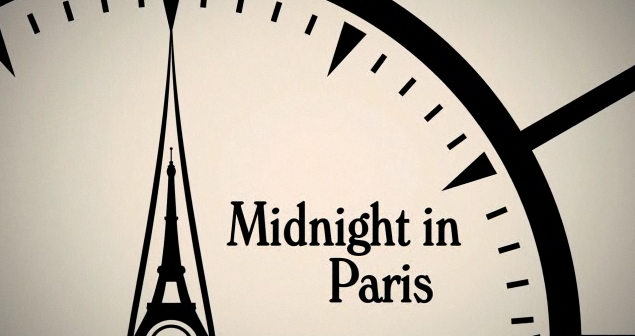
The film begins with a cinematic montage of famous Parisian locales. It’s pretty obvious this film is a love letter to the city. Then we get the opening title sequence, and hear the voices of Gil (Owen Wilson) and Inez (Rachel McAdams). What becomes obvious after the first minute that this engaged couple is completely mismatched. That they are engaged (much less together at all) makes no sense. Inez (who is totally unlikable) has no interests in Gil’s interests, he has no interest in hers. And it turns out she may not even respect him at all, there are several scenes in which she talks to him as if he were a child. Gil wishes to ditch his successful yet unfulfilling career as a Hollywood screenwriter and become a novelist, Inez think this is silly. Her unlikable parents (Kurt Fuller and Mimi Kennedy) are even more dismissive of Gil than Inez is. That Gil and Inez are even a couple isn’t at all believable, but maybe that’s the point.
Things get going when an inebriated Gil leaves Inez with her friends. He attempts to walk off the wine, and a 1920’s era car pulls up to him, and the people inside beckon him in. The car turns out to be Woody Allen’s version of Doc Brown’s DeLorean, and Gil finds himself in the Roaring Twenties.
“If you’re gonna build a time machine into a car, why not do it with some style?” – Doc Brown
Our funny-nosed hero arrives in a party attended by none other than F. Scott Fitzgerald (Tom Hiddleton), his girl Zelda (Alison Pill), and a hardened Ernest Hemingway. He later meets Pablo Picasso, Gertrude Stein (Kathy Bates), Salvador Dali (Adrien Brody), and Picasso’s muse named Adrianna (Marion Cotillard, who shines even when the movie does not) who studied fashion under the wing of Coco Chanel. At first, I thought that Gil was merely drunk and/or delusional. The historical figures seemed not to resemble real-life people, but exaggerated versions of their biographies. It later becomes clear that yes, he did indeed travel through time. He goes back and forth from the past to the present, and does this while acknowledging and dealing with a personal crisis. While that sounds like it would lead to a satisfying conclusion, it ultimately does not.
There are multiple levels of nostalgia on display here. Internally, Gil is nostalgic for his idealized version of 1920’s-era Paris. Externally, film critics and Woody Allen fans are nostalgic for the high standard of films Allen used to make. Many of them seem to be giving this one a pass simply because it’s:
‘…better than anything he’s done in a decade!’
The consensus seems to be that it’s been a while since Allen has done a superb film. While that may certainly be true, that’s not the proper way to judge a film. We shouldn’t be judging Midnight in Paris on whether it makes up for his mediocre recent films. The question should be:
Does this film stand firm on its own?
In my opinion, no. Gil and Adrianna are the only characters with any real dimension in this film. The time-travel scenes are packed to the brim with talented actors and actresses playing legendary authors, but that’s precisely the problem. Each of them does what they can with such limited screen time, but it’s all for naught. There’s so many of them, that none of them can claim enough screen time to make an emotional impact. It’s all just fluff. Pretty, Parisian fluff. And the present-day scenes are just flat-out painful. Every present-day character apart from Gil (and maybe the street vendor, played by Lea Seydoux) is a loathsome caricature. Versatile actress Rachael McAdams’ is reduced to playing a one-note harpy. She’s had more human roles in films such as epic tearjerker The Notebook and even Guy Ritchie’s Sherlock Holmes. Midnight in Paris might has worked had Allen chose not to have Gil go back-and-forth from past to present-day, but to simply have one time travel sequence that took up the bulk of the movie. A lot of top-notch talent in this picture, but most of it goes to waste.
This is the fourth movie I’ve seen that stars Marion Cotillard (also Inception, Nine, and Public Enemies), and she’s played sad/tragic roles in all four (great roles, don’t get me wrong). I’d like to see at least one movie where she has a happy ending. I like Cotillard, I think she’s one of the best current actresses in Hollywood (or anywhere else).
I can’t completely dismiss the film. There are some good moments (mostly the scenes when Gil allows himself to have a good time), but those moments are fleeting. Midnight in Paris wants to say something deep, but lacks the courage to go all-in.
But then again, maybe this is just Woody Allen’s style, and maybe I’m just not a Woody Allen fan.
Brian’s Blues,
Brian Jones on guitar in the early stones years.
unreleased track
Brian Jones died at age 27 just like Amy Winehouse did. I remember like yesterday when I first heard the song “I can’t get no satisfaction” by the Rolling Stones. I immediately thought about Solomon’s search for satisfaction in the Book of Ecclesiastes. Solomon went to the extreme in his searching in the Book of Ecclesiastes for satisfaction, but he did not find any satisfaction in pleasure (2:1), education (2:3), work (2:4), wealth (2:8) or fame (2:9). Finally he turned his attention to serving God in the last chapter.
The impact on the music scene in the 60’s was immeasurable as British bands soaked up the influence of American Blues artist, Muddy Waters , Howlin’ Wolf, B.B.King, and John Lee Hooker conquered our shores, and over a 1000 full time working bands in the 60’s was spawned. The Yardbirds, Eric Clapton, Them The Rolling Stones, Manfred Mann absorbed the sound and headed to the States with their own brand of Blues.
it’s hard to top keith for cool but i think brian jones during his tenure with the stones may have shown keith the way. i also read that he even took more drugs than keith. imagine that.
jones was charismatic and beautiful, a rebellious fashion plate and a ladies’ man with a wickedly sly grin and a mop of golden blonde hair. jones really was one of the all time great pretty boys. he was also a “bad boy”, and that combination equaled back then (and will forever forward) “the girls all want you and the fellas all want to be you”.
like all the players of that era jones was a blues fanatic and he was also a multi instrumentalist. he became derailed when the glimmer twins hit-making machine started to crank them out, changing the direction of the band. having had leadership and founding-father status with the band at one time, he now found himself more and more marginalized. of course this feeling of ostracism lead to an increase in drug taking and outlandish behaviour which eventually lead to poor brian being asked to step aside.
although he will always be a stone he was not a member of the band when he was found “mysteriously” drowned in his pool at his home on cotchford farm. after his death pete townshend wrote a poem for brian entitled “a normal day for brian, a man who died everyday”. if your vices are too much for the stones, lord have mercy!
A message by Marvin A. McMickle | Senior Pastor, Antioch Baptist Church, Cleveland, Ohio.
As you may know, Cleveland, Ohio, is the home of the Rock and Roll Hall of Fame. That’s because back in the 1950s, there was a disc jockey by the name of Alan Freed who worked for an AM radio station in Cleveland. He began referring to the music of Little Richard, Chuck Berry and Elvis Presley as “rock ‘n’ roll music.” Even though the inductions into the Rock and Roll Hall of Fame take place in New York City, the origin of the term rock ‘n’ roll music began in Cleveland.
In keeping with that 50-year legacy, a poll was taken of radio listeners and disc jockeys across the country concerning the No. 1 rock ‘n’ roll song of all time. I was not especially interested in the outcome—I have a preference for the rhythm and blues music of Otis Redding, Aretha Franklin and The Temptations—but I must confess I was somewhat surprised when it was revealed that Chuck Berry, Little Richard, Jerry Lee Lewis or even Elvis Presley was not associated with the No. 1 rock ‘n’ roll song song of all time. Instead, the poll revealed that the No. 1 rock ‘n’ roll song song of all time was by the British band, The Rolling Stones, titled “I Can’t Get No Satisfaction.”
It occurred to me that the popularity and longevity of that particular song can be attributed to a simple observation: That song speaks to the fundamental dilemma of so many people in our society who are in a constant quest for something that can bring them satisfaction. The song has a refrain that says, “And I tried—and I tried—and I tried—and I tried—I can’t get no satisfaction.”
You can almost see the history of the last 40 years of American life and culture written through the lens and lyrics of that song: “I have tried sex and orgies, and I can’t get satisfaction.” “I have tried LSD and cocaine, and I can’t get satisfaction.” “I have tried alcohol and amphetamines, and I still can’t get satisfaction.” “I have tried money and materialism, and all I can say is I can’t get no satisfaction.”
Perhaps the reason the song has remained so appealing to Americans is because the song speaks to an aspiration that reaches deep into our psyche and to a frustration that burns within so many of our fellow citizens: “I tried, and I tried, and I tried, and I tried—but I can’t get no satisfaction.”
The search for satisfaction can take at least four different faces in our world today, and most of us have gotten stuck trying to find satisfaction in one of three distinct ways. The things we keep trying in our vain attempts to find satisfaction are called happiness, pleasure and thrills.
How strange that all three of these things are referred to in one way or another by the apostle Paul in Galatians 5:19-21 as being related to the works of the flesh or the acts of the sinful nature.” Paul refers to them by such names as drunkenness, debauchery, discord and dissensions. We can refer to the same impulses of the human spirit by different names, but the motivation and the desired outcome are the same; we are trying to create satisfaction for ourselves.
Some people are obsessed with the quest for happiness. They want to find that time and place in life where there will always be a smile on their face and no tears in their eyes. They want to live in Disney World all the time, forgetting that Disney World is a great illusion, as life for the executives and employees of the Disney Corporation reveal every day.
Jesus tells us in no uncertain terms, “In this world you will have tribulation” (John 16:33). In our hearts we know that to be true, but still we behave like the lyrics of the song by The Rolling Stones: I tried—and I tried—and I tried—and I tried, but I can’t get no happiness, because happiness does not and cannot last.
Sometimes, after we discover that happiness does not last, we try something else; and that next thing might be thrills. There is an obsession in this country with thrills. It is why we buy cars that can be driven faster than any highway in America would allow us to drive. It is why we jump out of airplanes and free-fall from thousands of feet in the atmosphere. It is why some people want to bungee jump, or go plunging down the steep and twisting hills of roller coasters.
We want that adrenaline rush. We want that sensation of living dangerously. We want what some people call the rush that comes when we live close to the edge of death itself. The richest among us buy a seat on the space shuttle, not because they care one iota about science or space research; they do it because they are attempting to buy for themselves the ultimate thrill.
For other people the thrill is linked to the allure and excitement of gambling of one kind or another. Whatever the thrill of gambling might be, we should not lose sight of the sorrow it produces. How many people have lost their rent or mortgage money as they got caught up in the thrill that the next roll of the dice or the next pull of the lever on the slot machine might bring a big payday? People go into casinos knowing the house always wins, yet are willing to risk their paycheck on a game of chance. It is not a rational decision; it is the mark of a society that has embraced the thrill as a way to approach how they live their lives.
However, just like happiness, people soon discover that thrills cannot satisfy because they cannot be made to last. They come and go with equal suddenness. Blues singer B.B. King is world famous primarily for the lyrics of his song that says, “The thrill is gone, the thrill is gone away.”
Of course, what happens to a thrill seeker when the present thrill is gone? Like the song says, they just try something else. There are many in our society whose lives are driven by the pursuit of satisfaction, and they try one thing after another trying to attain that goal.
For some, the quest for satisfaction leads down the path of pleasure. Let’s be clear about this—I am talking about sensual things. I am talking about the fact that pornography in the form of videos, magazine and Web sites now grosses more revenue than the money Americans spend on all professional sports combined.
I am talking about our national fascination with sex and the fact that some people are preoccupied with the cheap, fleeting, loveless encounters that are so much a mark of our present culture. It is why commercials for such products as Viagra, Levitra and Cialis are as popular and as frequent as they are; for some people it is all about pleasure.
Never mind the fact that our country is overrun with teenage pregnancy, unwanted births, a staggering use of abortion as a means of birth control and once-solid marriages that are destabilized by extra-marital affairs. There is a high price to be paid for our fascination with the pursuit of pleasure, and our society is paying that price right now. This, too, is part of what The Rolling Stones meant when they said, “I tried—and I tried—and I tried—and I tried, and I can’t get no satisfaction.” We try the pursuit of happiness, thrills and pleasure, but something is always missing.
Many search for satisfaction attempting to combine all three devices—happiness, thrills, pleasure when they turn to illegal drugs and other things that can help them get high. Americans are the most chemically dependent people on earth—we take more prescription drugs than any other nation, though that simply could be a sign of an advanced medical system. Good medicine does not explain why we are also the world’s largest consumers of illegal drugs or the fact that one out of every six Americans is an alcoholic.
Here is the truth about all of our pursuits for satisfaction, be it in the form of happiness, thrills or various pleasures: At best, all those things can do is bring us a little bit of peace for a short period of time!
There is a reason none of these things can bring us any lasting satisfaction. It is because all of these things that fuel our futile pursuit of satisfaction are things that work from the outside in. All of these things are behaviors or experiences that must be drawn from the world around us and then brought into our lives. As a result, whenever the world around us shifts or changes in even the most negligible way, we are made to realize over and over again that satisfaction—that sense of being completely content—once again has eluded us. The works of the flesh or the acts of the sinful nature are forever unsatisfying because in order for any of them to work there is something outside ourselves that must occur.
Thankfully, that is not the case with the fruits of the spirit as found in Galatians 5:22-23. Satisfaction is found in such things as love, joy, peace, patience, kindness, goodness, faithfulness and self-control. These qualities work from the inside out. These are the spiritual formation issues that take root inside the followers of Jesus Christ that sustain them even when the conditions around them are being turned upside down. In this season of Advent, let me make the case that I would rather have the joy of the Lord than the satisfactions of the world any day of the week. Here are the reasons why:
First, joy comes as a result of the faith and trust that resides within me and not in relation to the material or sensual things going on around me.
It is important that we talk about joy vs. happiness and pleasure during the Advent and Christmas seasons, because it is so easy even for us as Christians to get caught up in the shopping and materialistic observance of Christmas. We so easily can forget that the “glad tidings of great joy” spoken to the shepherds of Bethlehem by the angels of heaven was about the birth of a Savior and not about the discounted prices at Wal-Mart or the luxury items available from a fashionable boutique.
The joy of Christmas is about the love of God Who sent a Savior into our world to redeem us from the behaviors that constantly pull us away from God. After all, the song says, “Joy to the world, the Lord is come.” It does not say that Santa has come, or Rudolph the Red-Nosed Reindeer has come; the joy of Christmas is centered in the fact that the Lord has come. God is with us. Immanuel. Our joy is anchored in that knowledge. I may not receive any of the material gifts that so many people point to as the center of Christmas; but when I receive the Christ of Christmas, I can find the joy that will forever elude those who are searching after satisfaction.
Second, the joy of the Lord is available to us even though none of us is deserving of God’s love. The gifts God offers—love, joy, peace and the others—are not reserved for those who have proven themselves deserving of God’s attention. They are the freely given and freely received signs of God’s amazing grace.
From a theological point of view, it is important to remember that God does not wait until we become the people He would like for us to be before He acts on our behalf. God loves us, and Christ died for us while we were the sinful and rebellious people we are. There is no need to get right with God before we can enjoy the fruits of the Spirit. The wonder and miracle of Christmas is that it is done on behalf of people deeply entrenched in the works of the flesh or the actions of the sinful nature. That is the knowledge that brings me an unspeakable joy.
The third thing I want to say about joy is something I learned in a profound way from my wife last year. (I share these with her permission and her blessings.)
Late last year, Peggy and I sat in a doctor’s office where we talked about how to treat the breast cancer with which she had just been diagnosed. It was surprising and unsettling enough that she was diagnosed with cancer just a few years after I had gone through a battle with prostate cancer. However, life was not through with us so far as surprises were concerned. Later that afternoon, while we were away from the house, Peggy’s mother fell while coming down the stairs. She had been doing so well in recent weeks, but now was bed-ridden with a fractured pelvis.
Wanting to comfort Peggy, I remarked how ironic it seemed that, on the week when our faith directs us to the word of joy she had so much hardship and stress placed upon her. I thought maybe she would break down and cry; instead she said, “Oh, I still have my joy.”
That response reminds me of the gospel song that says, “After all I’ve been through, I still have joy.” That is what separates joy from the false gods of happiness, pleasure and thrills. When you have joy, the devil can throw everything he has against you and you just keep on pushing—not because you are that strong, but because God is bigger than anything that life can do to you.
Every year at about this time, I remind you of the difference between the phrase all is right and all is well. The first phrase suggests everything in your life is in order and under perfect control. It suggests everything is going exactly as you desire and you do not have a worry in the world. I cannot think of many days in my life when I can say with a straight face that all is right.
However, the phrase all is well suggests something very different. All is well suggests that things may not be going according to my plan. Things may not be right with my body. My finances and my relationships may not be right according to the standards of this world. Nevertheless, I can still sing the song that says:
When peace like a river attendeth my way,
when sorrows like sea billows roll;
whatever my lot, thou has taught me to say,
it is well; it is well with my soul.
Things have not been alright this week, but it is well with my soul. In the words of the commercial by Nationwide Insurance Company, “Sometimes life comes at you fast”—but it is well with my soul. After all I’ve been through, I still have joy and it is well with my soul.
I have some advice for those still saying, “I can’t get no satisfaction”—they need to look somewhere else for their contentment. They should consider Isaiah 55:2, 6 which says, “Why do you spend your money for that which is not bread, and your labor for that which does not satisfy?…Seek ye the Lord while he may be found.”
This is the gift of the Advent season; it is a season when we are reminded that the best things in life work from the inside out, not from the outside in. Life is not about happiness, pleasure, thrills or highs. Real satisfaction in life comes from the themes of Advent, three of which are also listed among the fruits of the Spirit—love, joy and peace.
There is a song I learned in the devotional services of the Baptist church that says:
“This joy I have the world didn’t give to me,
The world didn’t give it, and the world
can’t take it away.”
This is what separates joy from the cheap thrills, the fleeting happiness and the temporal pleasures associated with this world; only joy can say, “The world didn’t give it, and the world can’t take it away.”
Co-founder, spiritual leader and aesthetic conscience of the Rolling Stones, Brian Jones was the band’s resident R&B purist, and, though it’s hard to imagine now, rival to Mick Jagger for the role of band face. When the Stones first arrived, it was as a blues band. The group’s origins lay in Jones’, Jagger’s, and Keith Richards’ passion for obscure American race records. But as the novelty of five skinny white Brits singing and playing like black men wore off and Mick and Keith started writing originals, Jones resisted the urge to go pop. He also developed a heroic appetite for narcotics and hallucinogens, leading him to be fired from the group he helped create. Depending on which story you believe, Jones either drowned or was forcibly drowned in his own pool July 3, 1969.
very rarely does an artist come along and not just upset the “apple cart” but drops a nuclear bomb on the friggin thing. i used to refer to kurt back then as the career killer. he literally almost single handedly shut down an entire genre that had been at the top of charts for ten years. that west coast, sunset strip, glamrock dudefest of a scene was annihilated by a kid from seattle with a guitar and his grandfather’s sweater.
i remember the first time i heard “smells like teen spirit” on the radio and as the song finished i thought to myself “i must hear that again, now”. i hopped in my car and booted down to the record shop (remember those), picked it up, took it home and played it all night. every track rocked and that album is truly a masterpiece.
as good as i thought nevermind was, though, i was even more blown away when i heard the unplugged album. i realized this was more than a great songwriter with rockstar looks and a bad drug habit. this guy was in “tortured artist” territory and to listen to his take on some of those old blues standards is haunting especially on “in the pines” a.k.a. “where did you sleep last night”. the pain in his voice is palpable and heart wrenching and i’m not saying i knew he was going to check himself out but you could kind of hear it in his voice.
it’s a shame kurt couldn’t have cleaned up and gotten some help, not just for him and his family but also for the legions of fans gypped out of all the amazing nirvana music that will never exist. “it gets better kurt, it gets better”…damn what a waste.
The suicide of Kurt Cobain, on April 5, 1994, was a defining moment of music culture in the 1990s. It signaled the death not only of one fantastically important musician, but of all the generational identity that had been conferred on him by his legions of fans (and just as many of his detractors). To hear his songs, to see his image in photos and videos, to think of all that lay ahead for him and his band, Nirvana, Cobain’s death seemed equally unimaginable and inevitable. His arrival felt like a minor revolution in popular culture. So did his departure.
I found the artlicle below on the internet. It was thought provoking.
This book by Vishal Mangalwadi is fabulous, timely, relevant and contemporary reading for Postmodern world. It rightly evaluates the present thought pattern and reminds the origin of original ideas that transformed West made it as the best civilization in the history of humanity. The author rightly says that Christian professors in India and America have very little idea about the importance of the Bible and its contribution for making the modern world. The book has seven parts: The soul of Western civilization; A Personal pilgrimage; The seeds of Western Civilization; The Millennium’s revolution; The Intellectual Revolution; What made the West the Best?: and Globalizing Modernity
Kurt Cobain a rock band singer who created Nirvana committed suicide. The hurt from divorced parents could not be healed by music, fame, money, sex, drugs…etc. He accepted the noble truth of Buddha that life is suffering hence did not have emotional, social, spiritual center that led to his suicide. Many teenagers are committing suicide because of lack of this spiritual anchor. Buddha’s rejection of self appealed to skeptics like Pyrrho of Elea (360-270 BC) who travelled to India and started teaching that nothing is truly knowable. So people stopped paying to philosophers for teaching nothing. This led the decline of education, philosophy and science in Greece. West like ancient Greece is embracing Buddha’s pessimism. If nothingness is ultimate, it cannot do anything positive. So Cobain committed suicide.
A pessimistic religion cannot appreciate music, so did not leave music tradition or instrument, as Buddhist monks goal was silence of their tongues and their thoughts. St. Augustine introduced music in western education and worldview. Since, the essence of music is mathematical numbers; saw scientific basis for music. The longest book in the bible is Psalms. Western musicians assumed that the world is cosmos and not chaos. Benedictine monks built the world’s largest pipe organ in the cathedral of Winchester, England that required seventy men and twenty-six bellows to supply wind to its four hundred pipes; which was most advance machine until the invention of mechanical clock.
The Salvation Kurt Cobain was so desperate to experience is found only in Christ. FIRST-PERSON: 10 years after Kurt Cobain’s death FIRST-PERSON: 10 years after Kurt Cobain’s death Posted on Apr 8, 2004 | by Kelly BoggsMcMINNVILLE, Ore. (BP)–Ten years ago one of the poster boys of postmodernism died. Kurt Cobain, front man for the grunge band […]
The Rise And Rise Of Kurt Cobain part 1/3 Amy Winehouse joined the “Club 27 the other day with her early death. I am going through the others one by one. Today is Kurt Cobain. 7. Kurt Cobain very rarely does an artist come along and not just upset the “apple cart” but drops […]
I’m In A Rock ‘N’ Roll Band – The Singer (Part 1) Jim Morrison – books on tape – w subtitles Light My Fire – The Doors The Rolling Stones – Satisfaction ________________________ The Rolling Stones – The Breakthrough The Rolling Stones – Brian Jones The Rolling Stones- Paint it Black Nirvana – Smells Like […]
It was so sad to lose these people so soon. The Curse of 27 This page is in response to my most frequently asked questions – is there really a Curse of 27, how many musicians actually died at that age, and who are they. When legendary Blues man, Robert Johnson, was killed at the age […]
Amy Winehouse died last week and she joined the “27 club.” Pete de Freitas of Echo and the Bunnymen is also a member of the “27 Club.” This is group of rockers that have died at age 27. A tribute to the amazing drummer of one of our biggest influences, Echo & The Bunnymen. We […]
cc ‘Janis Joplin’ 2/5 from True Hollywood Story (Janis was having affair with Pigpen) Jerry Garcia (guitar, vocals), Ron “Pigpen” McKernan (vocals, harmonica), Bob Weir (guitar, vocals), Phil Lesh (bass), Mickey Hart (drums), Bill Kreutzman (drums). Grateful Dead “Don’t Ease Me In” Live @ Canadian National Exhibition Hall Toronto, CA June 27th, 1970 Grateful Dead […]
Amy Winehouse died last week and joined the “27 club” which is a group of rockers that died at age 27. Gary Thain also joined that same group long ago and I wanted to look at his life today. Uriah Heep – Wizard bb By Sean Nelson, Special to MSN Music , July 23, 2011 […]
Recently Amy Winehouse joined the “27 Club” when she died of a drug overdose. The “27 Club” is a group of rockers that died at age 27. Unfortunately Jimi Hendrix died at age 27 in 1970 and Janis Joplin did the same three weeks later. Today we are going to look at her life and […]
JIMI HENDRIX : FINAL INTERVIEW . The other day when Amy Winehouse died she joined the “27 Club” which includes other famous rockers who died at age 27. Most of them died because of drugs. Unfortunately Jimi Hendrix joined the club for the same reason. Something special for all music and Beat Club-Lovers on YouTube: […]
Amy Winehouse died at age 27 and unfornately joined the “27 club” which is made of famous rockers that died at age 27. Pete Ham was a member of Bad Finger which was one of my favorite groups that I followed. “Come and get it” was my favorite song of theirs. ___________________________________ Badfinger perform a […]
Brian’s Blues, Brian Jones on guitar in the early stones years. unreleased track Brian Jones died at age 27 just like Amy Winehouse did. I remember like yesterday when I first heard the song “I can’t get no satisfaction” by the Rolling Stones. I immediately thought about Solomon’s search for satisfaction in the Book of […]
Jim Morrison – Feast Of Friends – (The Doors Documentary) (1969) (Paul Ferrara) 1/4 I was saddened by the recent death of Amy Winehouse and her inclusion into the “27 Club.” This series I am starting today looks at the search that each one of these entertainers were on during their lives. Today I look […]
Ecclesiastes 1 Published on Sep 4, 2012 Calvary Chapel Spring Valley | Sunday Evening | September 2, 2012 | Pastor Derek Neider _____________________ I have written on the Book of Ecclesiastes and the subject of the meaning of our lives on several occasions on this blog. In this series on Ecclesiastes I hope to show how […]
Sad news today from Heber Springs, Arkansas. Mindy McCready Dead Of An Apparent Suicide By Lyndsey Parker Posts By Lyndsey Parker | Our Country – 9 hours ago Mindy McCready, 1975-2013 [photo: Frederick Breedon IV]Troubled country singer Mindy McCready, age 37, has died of an apparent suicide, the result of a single self-inflicted gunshot, the Cleburne […]
Bob Welch chose suicide because he felt there was no other way like so many others today. (Details of his suicide below later in this post.) It is sad that this is such a pressing problem. I think of songs that point this out: Adam’s Song, The Last Resort, etc. There are two usual approaches to […]
CNN reported today: NEW YORK (CNNMoney) — Ilya Zhitomirskiy, one of four co-founders of social network Diaspora, died over the weekend in San Francisco at age 22. Zhitomirskiy committed suicide, a source close to the company told CNNMoney on Sunday. A San Francisco Police Department officer confirmed on Monday that a police report about […]
In “Evangelical dynasty undone,” Arkansas Times Blog, August 20, 2011,Max Brantley wrote: Ever heard of the influential evangelical Francis Schaeffer? (Mike Huckabee once said his favorite book after the Bible was Schaeffer’s “Whatever Happened to the Human Race” and he’s been described as having a “profound” influence on Michele Bachmann.) Best reading of the morning is this New York […]
Former Duke basketball captain found dead in NYC Ex-Duke basketball team captain, Bulls draft pick Tom Emma jumps to death from roof of Midtown club BY Rocco Parascandola, John Lauinger, Edgar Sandoval and Joe Kemp DAILY NEWS STAFF WRITERS Tuesday, June 7th 2011, 8:03 PM powerperformance.net Thomas Emma died in a fall from the New […]
I Still Haven’t Found What Im Looking For Live From Milan Marilyn Monroe THE LAST INTERVIEW Part 1 Wikipedia notes: Many questions remain unanswered regarding the circumstances and timeline of Monroe’s death after her body was found. 7-7:15p.m. Joe DiMaggio, after trying to get in touch with Monroe all day, speaks with Monroe about DiMaggio’s broken […]
This weekend, my wife and I went to see Midnight in Paris, starring Owen Wilson and Rachel McAdams. I was surprised by how much it inspired me as a writer and artist.
Midnight in Paris, a film by Woody Allen
I dare say that it was the first Woody Allen film I thoroughly enjoyed. The score is definitively Parisian, the cinematography nostalgic, and the plot inventively clever. Onereviewer wrote:
Midnight in Paris is a loving embrace of the city, of art and of life itself.
I couldn’t agree more. But what I loved about the movie is that it was made particularly for creatives. Here’s the plot in a nutshell:
A mismatched couple engaged to be married goes to Paris for vacation.
Aspiring novelist Gil (Wilson) spends his nights falling in love with the city, while his fiancee Inez (McAdams) criticizes his dreams.
One night as the clock strikes 12, Wilson’s character is transported back to the 1920s (his favorite era), meeting Ernest Hemingway, Gertrude Stein, Pablo Picasso, and others.
The protagonist ultimately must reconcile his passion for the past and living in the present, while being true to his calling as a writer.
While full of comic moments, Midnight in Paris makes a poignant commentary about the life of an artist.
Lessons about Art from Midnight in Paris
As a writer, I took great solace in how the film portrayed the basic struggles of artists and the inherent lessons in those struggles.
Paris cityscape from Midnight in Paris
Artists are misunderstood
Gil is not only misunderstood by Inez; he is disdained by her.
She and others regularly scoff at his lofty dreams of traveling and writing a novel. At best, he istolerated by them.
This ultimately sends him searching.
We artists need to come to grips with the fact that to be creative is to be misunderstood, and yet temper this with the importance of not disconnecting ourselves entirely from the rest of the world.
We cannot inspire that which we are not a part of.
Artists are discontented
Gil is writing a novel about himself — it’s the story of a man who owns a nostalgia shop and cannot help but consider that to live in another time would be better, simpler.
When he finds himself in the company of those from that era, he finds that they themselves are longing for another “Golden Age.”
This struggle is what makes artists great. The longing for something more is what drives us to create magnificent works of art.
But it can also lead us to an an artist’s demise. Unchecked discontent can lead to unhealthy thrill-seeking (as with Picasso’s lust for new lovers and Hemingway’s obsession with adventure and alcohol).
Artists need community
The fact that Gil is so misunderstood and restless is what leads him to walk the streets of Paris at night. When he finds a community of world-famous writers and artists that take him in, he learns two lessons:
He needs the companionship of others to be true to his voice as an artist.
The community around him is not the right one.
He learns, as all artists must, the importance of embracing tension.
The main lesson?
You are not alone.
You, the brilliant artist, are not alone. That’s the lesson every writer, painter, photographer, and film-maker must learn.
You, the creative person full of oddities and eccentricities that may have been the source of shame and embarrassment at one time, are not alone.
You, who feels so out of place in this world, are not alone.
The challenge
You must find a community that will encourage you, even if it means leaving the one to which you currently belong.
You must live in the tension of being misunderstood and dissatisfied with the way things are and being called to create art that inspires and leads people to believe in something more.
Medicare. The Heritage plan changes Medicare by moving to a defined
contribution premium-support system subject to competitive bidding. The CDA
projects that the Heritage plan will save almost $1.6 trillion by 2021 compared
with the current law baseline and $9.4 trillion by 2035. Overall, federal health
care spending is 40 percent less under the Heritage plan.
Premium support and competitive bidding are not new
ideas and have been analyzed before. In December 2006, the CBO estimated that a
premium-support program with competitive bidding could reduce Medicare
expenditures by 8 percent to 11 percent, although it would not significantly
affect underlying spending growth.[10] Another study on the benefits of consumer
choice through such approaches found that Medicare spending would fall by 8
percent as a result of choice and competition.[11] The CDA assumes that, when the Heritage plan
is fully implemented, Medicare spending will fall by 5 percent annually because
of the budgeted defined contribution and competitive bidding.However,
there are reasons to believe that Medicare cost growth would fall by much more
as seniors are given a reason to be cost-conscious consumers of health care.
Therefore, the 5 percent decrease that we estimate from the competition reform
is likely a lower bound.
Wealthier seniors contribute more toward their health care under the Heritage
plan. The CDA used the Current Population Survey to estimate how many seniors
have adjusted gross income in excess of the phaseout thresholds. Under the plan
the value of the premium contribution is reduced by 1.82 percent for each $1,000
in excess of the phaseout level. The CDA estimates that just over 9 percent of
seniors have income in excess of the phaseout threshold.
Other changes in Medicare include increasing the
eligibility age and requiring higher Part B premiums for those continuing to
participate in the traditional Medicare fee-for-service program. The CDA scoring
of these changes closely matches CBO scoring estimates of various budget
options.[12]
Medicaid and the Working-Age Population. The Medicaid reforms in the
Heritage plan will significantly strengthen the economy by slowing down health
care costs and federal spending on health care, reducing barriers to economic
mobility, and encouraging work and savings.
The Heritage plan makes several reforms to Medicaid, reshaping the program to
focus on the disabled and elderly with very low incomes and providing
able-bodied adults and their families with assistance to buy private insurance
instead of Medicaid. This is an especially important component of the plan
because it will reduce barriers for many non-disabled adults to return to work.
Today, many lose coverage if they take a job with an employer that does not
offer insurance. By introducing stricter eligibility requirements for the
program (with the alternative assistance for certain current enrollees) and
capping spending growth, the Heritage plan will bring Medicaid spending and its
growth path under control, saving taxpayers $1.1 trillion compared with the
baseline in the first 10 years and $8.2 trillion by 2035.
The Heritage plan replaces Medicaid coverage for non-disabled adults and
children with a tax credit and voucher for purchasing health insurance in the
private market.
Social Security Modernization. The Heritage plan works to protect
seniors from poverty, but also transparently reduces checks to more affluent
seniors. Today, the benefits of more affluent seniors are taxed, and the taxes
reduce checks at much lower income levels than the phasedown threshold in the
Heritage plan. The Heritage plan also adjusts the retirement age to take into
account increased life expectancy.
With modeling assistance from the American Enterprise Institute, the CDA
estimates that the Heritage reforms will reduce federal spending by $1.7
trillion from 2012 to 2021 and $10.9 trillion cumulative by 2035. This is a
reduction of almost 4 percent in annual Social Security outlays by 2035 while
ensuring that no eligible senior falls below the poverty line.
Kiss singer/bassist Gene Simmons proposed to his longtime girlfriend Shannon Tweed in Belize recently, TMZ reports. The couple has been together 28 years and share two children, 22-year-old son Nicholas and 18-year-old daughter Sophie.
Simmons popped the question on the A&E reality show ‘Gene Simmons Family Jewels,’ which has followed the life of the Simmons brood since 2006. The couple’s relationship has come under duress recently after Simmons joked about his inability to commit to marriage, tweeting “If you never get married you can never get divorced” last month. Tweed also walked out on Simmons in the season’s first episode.
On the show, Tweed was shown flabbergasted, as Mr. Simmons popped the question from bended knee.
__________________________________-
Tonight Gene notes that he has been dating Shannon for 28 years and he knows that he needs to marry her. He knows what it feels to be without her and he never wants to feel that way again. He told her, “I want to apologize for being so selfish.”
In this episode tonight Gene asked Shannon’s mother permission to marry her daughter and she responds, “You are not the best husband material. If you hurt my daughter then you are dead meat!!!”
It is obvious that Gene has been guilty of affairs all during the last 28 years. Will he straighten up and realize what he has in his family and be faithful to his wife?
In the sermon at Fellowship Bible Church at July 24, 2011, teaching pastor Brandon Barnard made a great point about the two choices that you have. You can walk down the pathway of purity or impurity. The pathway of impurity is both persuasive and inviting.
Proverbs 5:3
English Standard Version (ESV)
3For the lips of a forbidden[a] woman drip honey,
and her speech[b] is smoother than oil,
Proverbs 6:24
English Standard Version (ESV)
24to preserve you from the evil woman,[a]
from the smooth tongue of the adulteress.[b]
Proverbs 7:10-20
English Standard Version (ESV)
10And behold, the woman meets him,
dressed as a prostitute, wily of heart.[a] 11She is loud and wayward;
her feet do not stay at home; 12now in the street, now in the market,
and at every corner she lies in wait. 13She seizes him and kisses him,
and with bold face she says to him, 14“I had to offer sacrifices,[b]
and today I have paid my vows; 15so now I have come out to meet you,
to seek you eagerly, and I have found you. 16I have spread my couch with coverings,
colored linens from Egyptian linen; 17I have perfumed my bed with myrrh,
aloes, and cinnamon. 18Come, let us take our fill of love till morning;
let us delight ourselves with love. 19For my husband is not at home;
he has gone on a long journey; 20he took a bag of money with him;
at full moon he will come home.”
___________________________
After his marriage to Shannon will he be faithful? Is Gene Simmons going to continue to have affairs with other women that are evil? However, the Bible calls her an “evil woman.” What kind of future will have with an evil woman that is not your the wife of your youth? Later in chapter 7 Solomon says, “All at once he follows her, as an ox goes to the slaughter, or as a stag is caught fast[c] 23till an arrow pierces its liver; as a bird rushes into a snare; he does not know that it will cost him his life.27Her house is the way to Sheol, going down to the chambers of death. ”
Gene Simmons Proposes To Shannon Tweed Kiss singer/bassist Gene Simmons proposed to his longtime girlfriend Shannon Tweed in Belize recently, TMZ reports. The couple has been together 28 years and share two children, 22-year-old son Nicholas and 18-year-old daughter Sophie. Simmons popped the question on the A&E reality show ‘Gene Simmons Family Jewels,’ which has followed the life of the Simmons brood since […]
Last Tuesday night I watched Gene Simmons Family Jewels and I commented how I was struck by the good advice that his son Nick gave him. He told him that he grew up thinking that his father was the best. However, now that the marital infidility has come out, it has made Nick think long and hard […]
Last night I watched Gene Simmons Family Jewels and I was struck by the good advice that his son Nick gave him. He told him that he grew up thinking that his father was the best. However, now that the marital infidility has come out, it has made Nick think long and hard about what […]
I watched with great interest the first episode of Gene Simmons show two days ago when his wife left him because of his repeated unfaithfulness. Nerve editors are divided on the subject of Chelsea Handler, by which I mean that I find her kind of funny and Ben made a barfy face when I said […]





 Henri Matissehe





 The Daily Hatch