Lee Strobel interviews philosopher and scholar Antony Flew on his conversion from atheism to deism. Much of it has to do with intelligent design. Flew was considered one of the most influential and important thinker for atheism during his time before his death (he’s a much better thinker than Richard Dawkins too – even when he was an atheist). His conversion to God-belief has caused an uproar among atheists. They have done all they can to lessen the impact of his famous conversion by shamelessly suggesting he’s too old, senile and mentally deranged to understand logic and science anymore.
The Kalam Cosmological Argument (Scientific Evidence) (Henry Schaefer, PhD)
Published on Jun 11, 2012
Scientist Dr. Henry “Fritz” Schaefer gives a lecture on the cosmological argument and shows how contemporary science backs it up.
______________
It was my view in 1994 when I started corresponding with Antony Flew that he was the most well known and respected atheist scholar of the 20th century.
Roy Abraham Varghese has stated:
It is not too much to say that within the last hundred years, no mainstream philosopher has developed the kind of systematic, comprehensive, original, and influential exposition of atheism that is to be found in Antony Flew’s fifty years of antitheological writings. (ix)
by Denyse O’Leary
ARN correspondentAntony Flew, 84, is the author of over 30 professional philosophical works. His Theology and Falsification, first read in 1950 to the Oxford University Socratic Club chaired by CS Lewis, was very widely circulated. Flew, throughout his long life, sought the best reasons for atheism that he could find, and then, in his 80s, decided that it all wasn’t really working – but mainly because of the evidence from science.Roy Abraham Varghese, who had organized philosophical symposia since 1985, at most of which Flew made the case for atheism, describes the significance of his 2004 change of mind thus:
It is not too much to say that within the last hundred years, no mainstream philosopher has developed the kind of systematic, comprehensive, original, and influential exposition of atheism that is to be found in Antony Flew’s fifty years of antitheological writings. (ix)
One needs to look back to such 18th and 19th century figures as David Hume or Friedrich Nietzsche for anything like the depth of Flew’s work.
There were, of course, many other 20th century atheist thinkers. But Varghese argues that thinkers like Ayer, Sartre, Camus, Heidegger, Rorty, and Derrida differed from Flew in that they offered systems of thought, one of whose byproducts was atheism.
Essentially, they were saying, my system is right – oh, and by the way, there’s no God. But that means that you must buy into the system to get the atheism. And if you come to doubt the system, why believe the atheism?
Flew’s God & Philosophy and The Presumption of Atheism took a different tack. They provide arguments against theism (belief in God) that do not depend on buying into a system but follow from logical assumptions. For example, in God and Philosophy, Flew argued that God is an incoherent concept and in The Presumption of Atheism, he argued that the burden of proof lies on theism, and that atheism should be the default position meanwhile. These are much stronger arguments and harder to counter because they do not depend on the task of undermining a system (which, in the case of Nietzsche and Derrida, for example, may be quite easy to do). Flew’s arguments and assumptions forced theists to grapple seriously with why they believe as they do. Varghese believes that the challenge that Flew provided had the unintended effect of revitalizing philosophical theism.
Varghese is, by contrast, sharply dismissive of the “new atheists,” Daniel Dennett, Richard Dawkins, Lewis Wolpert, Victor Stenger, and Sam Harris (xvi-xvii), of whom he writes,
The authors, for the most part, sound like hellfire-and-brimstone preachers warning us of dire retribution, even of apocalypse, if we do not repent of our wayward beliefs and associated practices. There is no room for ambiguity or subtlety. It’s black and white. Either you are with us all the way or one with the enemy. Even eminent thinkers who express some sympathy for the other side are denounced as traitors. The evangelists themselves are courageous souls preaching their message in the face of imminent martyrdom.
But when it comes to seriously engaging the intellectual arguments for the existence of God, the new atheists are AWOL in his view.
In The Spiritual Brain, Mario Beauregard and I similarly noted a general decline in the quality of thought in atheism in recent years, which – it seems to me – curiously parallels the decline in Christian thought noted by Mark Noll in The Scandal of the Evangelical Mind. Often the best that the new atheists can do is to come up with some harebrained theory of how religion might have been passed on from our ancient ancestors in our selfish genes. Now that the human genome has been mapped, it might be a good idea to declare a moratorium on all such theorizing unless the theorist can point to the specific genes about which the claim is made, and demonstrate the effect unambiguously.
Too much certainty is bad for us, apparently. Life should be an adventure.
Varghese is particularly hard on Richard Dawkins, accusing him of being “patently dishonest” in his description of Albert Einstein’s views. More on that later, from Flew.
He also writes,
Dawkins, in fact, belongs to the same peculiar club of popular science writers as Carl Sagan and Isaac Asimov from a previous generation. These popularizers saw themselves not simply as scribes, but as high priests. Like Dawkins, they took on themselves the task not just of educating the public on the findings of science, but also of deciding what it is permissible for the scientific faithful to believe on matters metaphysical. But let us be clear here. Many of the greatest scientists saw a direct connection between their scientific work and their affirmation of a “superior mind,” the Mind of God. Explain it how you will, but this is a plain fact that the popularizers with their own agendas cannot be allowed to hide. (xxiii-xxiv)
Flew is far and away atheism’s best and most consistent shot. A serious intellectual theist might merely dismiss Dawkins as a shrill hatemonger but he must grapple with Flew.
That is, until the day Flew turned around and said, there Is a God . Now let us look at how he came to say that.
Next: Part Two: Following the argument wherever it leads
Toronto-based Canadian journalist Denyse O’Leary (www.designorchance.com) is the author of the multiple award-winning By Design or by Chance? (Augsburg Fortress 2004), an overview of the intelligent design controversy. She was named CBA Canada’s Recommended Author of the Year in 2005 and is co-author, with Montreal neuroscientist Mario Beauregard, of the The Spiritual Brain: A Neuroscientist’s Case for the Existence of the Soul (Harper 2007).
____ Does God Exist? Thomas Warren vs. Antony Flew Published on Jan 2, 2014 Date: September 20-23, 1976 Location: North Texas State University Christian debater: Thomas B. Warren Atheist debater: Antony G.N. Flew For Thomas Warren: http://www.warrenapologeticscenter.org/ ______________________ Antony Flew and his conversion to theism Uploaded on Aug 12, 2011 Antony Flew, a well known […]
__________ Discussion (1 of 3): Antony Flew, N.T. Wright, and Gary Habermas Uploaded on Sep 22, 2010 A discussion with Antony Flew, N.T. Wright, and Gary Habermas. This was held at Westminster Chapel March, 2008 Debate – William Lane Craig vs Christopher Hitchens – Does God Exist? Uploaded on Jan 27, 2011 April 4, 2009 – Craig […]
________ William Lane Craig versus Eddie Tabash Debate Uploaded on Feb 6, 2012 Secular Humanism versus Christianity, Lawyer versus Theologian. Evangelical Christian apologist William Lane Craig debates humanist atheist lawyer Eddie Tabash at Pepperdine University, February 8, 1999. Visit http://www.Infidels.org andhttp://www.WilliamLaneCraig.com ________________ Antony Flew on God and Atheism Published on Feb 11, 2013 Lee […]
___________ Does God Exist? Thomas Warren vs. Antony Flew Published on Jan 2, 2014 Date: September 20-23, 1976 Location: North Texas State University Christian debater: Thomas B. Warren Atheist debater: Antony G.N. Flew For Thomas Warren: http://www.warrenapologeticscenter.org/ ______________________ Antony Flew and his conversion to theism Uploaded on Aug 12, 2011 Antony Flew, a well known […]
_____________ Antony Flew on God and Atheism Published on Feb 11, 2013 Lee Strobel interviews philosopher and scholar Antony Flew on his conversion from atheism to deism. Much of it has to do with intelligent design. Flew was considered one of the most influential and important thinker for atheism during his time before his death […]
___________ Does God Exist?: William Lane Craig vs Antony Flew Uploaded on Dec 16, 2010 http://drcraigvideos.blogspot.com – William Lane Craig and Antony Flew met in 1998 on the 50th anniversary of the famous Copleston/Russell debate to discuss the question of God’s existence in a public debate. Unlike Richard Dawkins, Flew was one of the most respected […]
___________ ________ Jesus’ Resurrection: Atheist, Antony Flew, and Theist, Gary Habermas, Dialogue Published on Apr 7, 2012 http://www.veritas.org/talks –Did Jesus die, was he buried, and what happened afterward? Join legendary atheist Antony Flew and Christian historian and apologist Gary Habermas in a discussion about the facts surrounding the death and resurrection of Jesus Christ. Join […]
___________ ________ Antony Flew – World’s Most Famous Atheist Accepts Existence of God Uploaded on Nov 28, 2008 Has Science Discovered God? A half-century ago, in 1955, Professor Antony Flew set the agenda for modern atheism with his Theology and Falsification, a paper presented in a debate with C.S. Lewis. This work became the most […]
________ Antony Flew on God and Atheism Published on Feb 11, 2013 Lee Strobel interviews philosopher and scholar Antony Flew on his conversion from atheism to deism. Much of it has to do with intelligent design. Flew was considered one of the most influential and important thinker for atheism during his time before his death […]
Discussion (2 of 3): Antony Flew, N.T. Wright, and Gary Habermas ______________ Atheist Lawrence Krauss loses debate to wiser Christian Published on Sep 13, 2013 http://www.reasonablefaith.org More of this here The Bible and Science (Part 02) The Kalam Cosmological Argument (Scientific Evidence) (Henry Schaefer, PhD) Published on Jun 11, 2012 Scientist Dr. Henry “Fritz” Schaefer gives a lecture […]
Henry “Fritz” Schaefer comments on a popular quote made by scientist Robert Jastrow. Jastrow (who Carl Sagan was too scared to debate) is an agnostic but believes that the Big Bang leaves room for the existence of God.
____________
Discussion (3 of 3): Antony Flew, N.T. Wright, and Gary Habermas
_____________
William Lane Craig vs Peter Atkins: “Does God Exist?”, University of Manchester, October 2011
Published on Apr 10, 2012
This debate on “Does God Exist?” took place in front of a capacity audience at the University of Manchester (including an overspill room). It was recorded on Wednesday 26th October 2011 as part of the UK Reasonable Faith Tour with William Lane Craig.
William Lane Craig is Research Professor of Philosophy at Talbot School of Theology, La Mirada, California and a leading philosopher of religion. Peter Atkins is former Professor of Chemistry at the University of Oxford and a Fellow of Lincoln College.
The debate was chaired by Christopher Whitehead, Head of Chemistry School at the University. Post-debate discussion was moderated by Peter S Williams, Philosopher in Residence at the Damaris Trust, UK.
_____________
Making Sense of Faith and Science
Uploaded on May 16, 2008
Dr. H. Fritz Schaefer confronts the assertion that one cannot believe in God and be a credible scientist. He explains that the theistic world view of Bacon, Kepler, Pascal, Boyle, Newton, Faraday and Maxwell was instrumental in the rise of modern science itself. Presented as part of the Let There be Light series. Series: Let There Be Light [5/2003] [Humanities] [Show ID: 7338]
___________________________________
The primary reason Antony Flew has become a theist is that scientific evidence has convinced him that the origin of life required intelligent design!
Professor Antony Flew, 81 years old, is: “a legendary British philosopher and atheist and has been an icon and champion for unbelievers for decades.”[1] In his most famous book, God and Philosophy, Flew concluded:
Though as always subject to correction by further evidence and further argument, that the universe itself is ultimate; and, hence, that whatever science may from time to time hold to be the most fundamental laws of nature, must, equally provisionally, be taken as the last words in any series of answers to questions as to why things are as they are.[2]
In other words, nature (probably) explains everything about itself that is explicable, and so there is no need to believe in any sort of Creator. One can read several debates in which Flew argues for atheism against Christian philosophers such as William Lane Craig, Gary R. Habermas and Terry L. Miethe.[3] In recent years, Flew has been called: ‘the world’s most influential philosophical atheist.’[4] Writing on the Secular Web, Richard Carrier acknowledges Flew as, ‘one of the most renowned atheists of the 20th Century, even making the shortlist of “Contemporary Atheists” at About.com.’[5]
The shortlist needs to be updated.[6] Flew has changed his mind, and has let it be known that he is now a theist (at least in the broad sense of the term) because, ‘the case for an Aristotelian God who has the characteristics of power and also intelligence, is now much stronger than it ever was before.’[7]
Flew says that he simply, ‘had to go where the evidence leads.’[8] His atheism truly was provisional and ‘subject to correction by further evidence and further argument …’[9] ‘It speaks very well of Professor Flew’s honesty,’ observes America’s pre-eminent philosopher of religion, Alvin Plantinga. ‘After all these years of opposing the idea of a Creator, he reverses his position on the basis of the evidence.’[10]
Flew’s change of mind is big news, ‘not only about his personal journey, but also about the persuasive power of the arguments modern theists have been using to challenge atheistic naturalism’[11], says philosopher Craig J. Hazen. Flew’s acknowledgement of theism was greeted with not a little scepticism by some of his former atheistic comrades.[12] In part, this scepticism has been fuelled by the fact that a rumour about Flew converting to Christianity hit the internet in 2001 and surfaced again in 2003. On each occasion, ‘Flew refuted the claim personally …’[13]This time, however, Flew has personally confirmed that he is a convert to theism (not Christian theism), and the story has been covered by major news organizations such as ABC News[14] and the BBC. If his new-found belief upsets people, well, ‘that’s too bad,’ says Flew. ‘My whole life has been guided by the principle of Plato’s Socrates: Follow the evidence, wherever it leads.’[15] As Jonathan Witt says, ‘Those who admired [Flew’s] intellect when he was an atheist should listen carefully to his reasoning now – for if a man suddenly becomes persona non grata for changing his mind, then the possibility of reasoned civil discourse withers.’[16]
Tracing the News
I first heard about Flew’s change of mind in June 2004, whilst attending the European Leadership Forum in Hungary. A number of well-placed sources said that Flew had recently come to believe in the existence of some kind of God, and that this shift in thinking was due in no small part to the kinds of arguments advanced by the Intelligent Design movement. Flew has since confirmed to The Associated Press that: ‘his current ideas have some similarity with American “intelligent design” theorists, who see evidence for a guiding force in the construction of the universe. He accepts Darwinian evolution but doubts it can explain the ultimate origins of life.’[17]
Then, in a letter to Philosophy Now magazine (Issue 47, August / September 2004, p. 22, cf. http://www.philosophynow.org), Flew pointed out, ‘the limits of the negative theological implications of Darwin’s Theory of Evolution by Natural Selection.’[18]Quoting from Darwin, Flew noted that the theory of evolution by natural selection does not account for the origin of life, and observed that: ‘Probably Darwin himself believed that life was miraculously breathed into that primordial form of not always consistently reproducing life by God …’[19] Flew also said that:
The evidential situation of natural (as opposed to revealed) theology has been transformed in the more than fifty years since Watson and Crick won the Nobel Prize for their discovery of the double helix structure of DNA. It has become inordinately difficult even to begin to think about constructing a naturalistic theory of the evolution of that first reproducing organism.[20]
Flew recommended two books that tackle this issue from a theistic perspective. The first book was Roy Abraham Varghese’s The Wonderful World: A Journey from Modern Science to the Mind of God (Fountain Hills, Arizona: Tyr Publishing, 2003) [10f. http://www.thewonderoftheworld.com/%5D. The second book was Gerald L Schroeder’sThe Hidden Face of God: Science Reveals the Ultimate Truth (Touchstone, New York 2001).
Flew ended with what the editor of Philosophy Now called his ‘tantalising comments’ by writing:
Anyone who should happen to want to know what I myself now believe will have to wait until the publication, promised for early 2005, by Prometheus of Amherst, NY, of the final edition of my God and Philosophy with a new introduction of it as ‘an historical relic’. That book was a study of the arguments for Christian theism, first published in 1966 … My own commitment then as a philosopher who was also a religious unbeliever was and remains that of Plato’s Socrates: ‘We must follow the argument wherever it leads.’
Yours, Antony Flew.
If Flew’s letter didn’t actually say he had come to believe in God, it was a very heavy hint.
On 9 October 2004, American philosopher J P Moreland noted Flew’s conversion to belief in God on national television, whilst arguing for theism in an episode of Faith Under Fire, hosted by journalist and Christian apologist Lee Strobel.[21]
Following up the Varghese connection threw more light on Flew’s thinking. In his review of Varghese’s book, Flew refers to a point ‘made in an Introduction for a possible new and final edition of my God and Philosophy‘:
First, a substantial case of agreement. Richard Dawkins has famously asserted that ‘Natural selection … the blind automatic process which Darwin has discovered … we now know is the explanation for the existence and apparently purposeful form of all life.’ Against that claim I pointed out, after quoting a significant sentence from the fourteenth and final chapter of The Origin of Species, that one place where, until a satisfactory naturalistic explanation has been developed, there would appear to be room for an Argument to Design is at the first emergence of living from non-living matter. And, unless that first living matter already possessed the capacity to reproduce itself genetically, there will still be room for a second argument to Design until a satisfactory explanation is found for its acquisition of that capacity. You have in your book deployed abundant evidence indicating that it is likely to be a very long time before such naturalistic explanations are developed, if indeed there ever could be.
Our disagreements begin with any shift from the God of natural theology to the God of a Revelation. For the writings of Aristotle, which ultimately supplied Aquinas with most of his arguments for the existence of his God, contain no definition of the word ‘God’ and no concept of an omniscient and omnipotent personal Being unceasingly observing human thought and human conduct, much less a concept of a Being demanding our obedience and threatening us with an eternity of extreme torture for what He insists on perceiving as our unnecessitated and unforgiven disobedience. So the five Aristotelian arguments which Aquinas famously offered as proofs of the existence of the Christian God are surely today more appropriately to be seen as arguments for the existence of a Spinozistic or Deistic ‘God of Nature’ who or which leaves Nature and its creatures (including its human creatures) entirely to their own devices. The nearest which Aristotle ever came to the God or Gods of Christianity or Islam was when in the Nicomachean Ethics (X, viii, 8) he argued that ‘if as is generally believed, [not God but] the gods exercise some superintendence over human affairs, it is reasonable to suppose that they take pleasure in that part of man which is best and most akin to themselves, namely the intellect, and that they recompense with their favours those who esteem and honour this most because these care for the things dear to themselves and act rightly and nobly. Now it is clear that all these attributes belong most of all to the wise man. He therefore is most beloved by the gods, and, if so, he is naturally most happy.’ Antony Flew.[22]
While Flew restricts the design argument to situations where no ‘satisfactory naturalistic explanation has been developed’ (something that not all design argument advocates, let alone all theists, would agree with), it is significant to find Flew arguing against Dawkins that natural selection does not explain the existence of life, affirming that there is today no satisfactory naturalistic explanation for the first emergence of living from non-living matter, or for the capacity of life to reproduce itself genetically, and observing that there isn’t even any sign of such an explanation on the horizon ‘if indeed there ever could be.’
In a recording of the 2004 symposium ‘Has Science Discovered God’, organised byThe Institute for Metascientific Research, Professor Flew says: ‘What I think the DNA material has done is show that intelligence must have been involved in getting these extraordinarily diverse elements together … The enormous complexity by which the results were achieved look to me like the work of intelligence.’[23]
Together with an increasing number of scholars, Flew believes that the prospects of a satisfactory naturalistic explanation for certain facets of biological reality are dim (‘It has become inordinately difficult even to begin to think about constructing a naturalistic theory of the evolution of that first reproducing organism’).[24] He also thinks that the best explanation of the evidence is to posit some form of intelligent design, even ‘the God of natural theology’ (Flew only parts company from Varghese, ‘with any shift from the God of natural theology to the God of a Revelation’).
However, while it was clear from Flew’s review of Varghese that he now believes in a God, it was still unclear exactly what sort of God Flew has in mind. One source reported that Flew had described himself to a mutual contact as a ‘minimal deist’ (a deist is usually defined as someone who believes in a God who created the universe but then left creation to its own devices).
Pilgrimage from Atheism to Theism
Clarity on the question of the nature of Flew’s theism is provided by an exclusive and wide ranging interview Flew has given to Philosophia Christi, one of the top-circulating philosophy of religion journals in the world.[25] The interviewer was Christian philosopher and historian Dr. Gary R. Habermas, a Professor of Philosophy and Theology who is on the editorial board of Philosophia Christi, and a long standing personal friend of Flew: ‘despite their years of disagreement on the existence of God.’[26]
Philosophia Christi reveals that ‘certain philosophical and scientific considerations were causing [Flew] to do some serious rethinking’[27] on the God question as long ago as January 2003: ‘He characterised his position as that of atheism standing in tension with several huge question marks.’[28] Then, ‘in January 2004, Flew informed Habermas that he had indeed become a theist. While still rejecting the concept of special revelation, whether Christian, Jewish or Islamic, nonetheless he had concluded that theism was true.’[29]
The title of the article presenting Flew’s interview with Habermas is: ‘My Pilgrimage from Atheism to Theism: An Exclusive Interview with Former British Atheist Professor Antony Flew.’ So what of ‘minimal deism’? Asked whether his view might be called deism Flew replies:
Yes, absolutely right. What Deists, such as the Mr. Jefferson who drafted the American Declaration of Independence, believed was that, while reason, mainly in the form of arguments to design, assures us that there is a God, there is no room either for any supernatural revelation of that God or for any transactions between that God and individual human beings.[30]
It seems that Flew is prepared to accept the label ‘Deist’ on the grounds that deists believe in God but neither revelation nor relational transactions between God and individuals concerning salvation or any afterlife. Indeed, Flew says: ‘I am open to … but not enthusiastic about potential revelation from God.’[31]
Flew also clarifies his comments about Spinoza’s God made in his review of Varghese: ‘for me the most important thing about Spinoza is not what he says but what he does not say. He does not say that God has any preferences either about or any intentions concerning human behaviour or about the eternal destinies of human beings.’[32] Hence Flew is not implying, with some interpreters of Spinoza, that God is pantheistic (i.e. that everything is God).
The ‘minimal’ part of Flew’s deism may stem from the fact that Flew is not committed to the goodness of God, being unconvinced by the moral argument for God,[33] and noting that ‘what Aristotle had to say about justice … was very much a human idea’[34] that had nothing to do with God. Regarding J P Moreland’s use of Flew’s change of mind in support of belief in the supernatural, Flew has said: ‘my God is not his … Mine is emphatically not good (or evil) or interested in human conduct.’[35] Flew reports how, ‘as a schoolboy of fifteen years, it first appeared to me that the thesis that the universe was created and is sustained by a Being of infinite power and goodness is flatly incompatible with the occurrence of massive undeniable and undenied evil in that universe …’[36] Flew’s belief in a God who is not defined as being infinitely good is compatible with his belief that the logical problem of evil is a sound argument because that argument only claims to rule out the existence of a God who has infinite power and goodness (and knowledge).[37]
However, Flew’s position is not deistic if one defines deism in terms of rejecting the belief that God has acted as a primary cause (as opposed to acting via secondary causes) within creation. This is because Flew now posits God as the best explanation for the origin of evolvable life. He does not accept the view of theistic evolutionists that nature has the capacity to produce evolvable life-forms using only its God-given resources. Flew says that naturalistic efforts have never succeeded in producing ‘a plausible conjecture as to how any of these complex molecules might have evolved from simple entities.’[38] Flew observes: ‘I think that the most impressive arguments for God’s existence are those that are supported by recent scientific discoveries … I think the argument to Intelligent Design is enormously stronger than it was when I first met it.’[39] Flew returns to his critique of Richard Dawkins:
It seems to me that Richard Dawkins constantly overlooks the fact that Darwin himself, in the fourteenth chapter of The Origin of Species, pointed out that his whole argument began with a being which already possessed reproductive powers. This is the creature the evolution of which a truly comprehensive theory of evolution must give some account. Darwin himself was well aware that he had not produced such an account. It now seems to me that the finding of more than fifty years of DNA research have provided materials for a new and enormously powerful argument to design.[40]
Flew also tentatively mentions that: ‘There does seem to be a reason for a First Cause’,[41] which implies ‘creation “in the beginning”‘[42], although he is ‘not at all sure how much we have to explain here.’[43]
Conclusion
It is now clear that Flew has become a philosophical theist – someone who believes in the existence of a God (a transcendent intelligence of perhaps infinite power but not infinite goodness) who created the cosmos and has acted within it, although not to produce any supernatural revelation, or to interact with humans on an individual basis concerning any scheme of salvation or any sort of life after death. The primary reason Flew has become a theist is that scientific evidence has convinced him that the origin of life required intelligent design. In Flew’s assessment, the scientific data indicates that one cannot argue, as he once argued, that ‘it does not seem … that there is any good evidence [to] postulate anything behind or beyond this natural universe’[44] and that ‘the most fundamental laws of nature, must … be taken as the last words in any series of answers to questions as to why things are as they are.’[45] Instead, Flew now argues that there is good reason to ‘postulate something behind or beyond the natural universe’ precisely because the ‘fundamental laws of nature’ cannot ‘be taken as the last word in all series of answers to questions about why things are as they are’. Specifically, this can not be done with regard to the origin of life.
On the one hand, says Flew, naturalistic efforts have failed to provide ‘a plausible conjecture as to how any of these complex molecules might have evolved from simple entities’,[46] and, ‘It has become inordinately difficult even to begin to think about constructing a naturalistic theory of the evolution of that first reproducing organism.’[47] On the other hand, ‘The enormous complexity by which the results were achieved looks to me like the work of intelligence.’[48] As Jonathan Witt comments:
Such evidence has drawn Flew from atheism to a non-specific theism. He isn’t ready to accept the God of a particular religion, nor does he believe in an afterlife. The change is, nevertheless, significant. He no longer inhabits a worldview where the miraculous and the irrational are synonymous.
The amazing complexity of even the simplest cell; the information-bearing properties of DNA; the exquisite fine-tuning of the laws and constants of physics that make organic life possible … these signs of intelligence do not compel our belief in a God who thundered from Mount Sinai, lay in a manger or hung from a cross. But the evidence does have metaphysical implications, drawing us to a still place of wonder where such notions can be reasonably entertained.[49]
R. Douglas Geivett & Gary R. Habermas (ed.’s), In Defence of Miracles, (Apollos, 1997) (Includes a chapter by Antony Flew arguing against miracles and a response by Norman L. Geisler)
[2] Antony Flew, God and Philosophy, second edition, (Hutchinson of London, 1966), p. 194.
[3] cf. Stan W. Wallace (ed.), Does God Exist? The Craig-Flew Debate, (Ashgate, 2003); Gary R. Habermas & Antony Flew, Did Jesus Rise from the Dead?: The Resurrection Debate, (Wipf & Stock Publishers, 2003); Terry L. Miethe & Antony Flew, Does God Exist?, (New York: Harper Collins, 1991)
[4] Comment quoted by Gary R. Habermas, ‘My Pilgrimage from Atheism to Theism: An Exclusive Interview with Former British Atheist Professor Antony Flew’, op cit.
[26] Hazen, Preface to the pre-publication release of ‘My Pilgrimage from Atheism to Theism: An Exclusive Interview with Former British Atheist Professor Antony Flew’, op cit.
[27] ‘My Pilgrimage from Atheism to Theism: An Exclusive Interview with Former British Atheist Professor Antony Flew.’
[28] ‘My Pilgrimage from Atheism to Theism: An Exclusive Interview with Former British Atheist Professor Antony Flew’, op cit.
[37] On the problem of evil, cf. Greg Bahnsen, ‘The Problem of Evil‘; Kelly James Clark, ‘I Believe in God, the Father, Almighty‘; Gregory Koukl, ‘Evil as Evidence for God‘ (free registration necessary); Peter Kreeft, The Problem of Evil; Daniel Howard-Snyder (ed.), The Evidential Argument from Evil, (Bloomington: Indiana University, 1996); John Perry, Dialogue on Good, Evil, and the Existence of God, (Indianapolis: Hackett, 1999)
[38] Antony Flew, ‘God and the Big Bang’, (Lecture, 2000).
[39] Flew, ‘My Pilgrimage from Atheism to Theism: An Exclusive Interview with Former British Atheist Professor Antony Flew’, op cit.
____ Does God Exist? Thomas Warren vs. Antony Flew Published on Jan 2, 2014 Date: September 20-23, 1976 Location: North Texas State University Christian debater: Thomas B. Warren Atheist debater: Antony G.N. Flew For Thomas Warren: http://www.warrenapologeticscenter.org/ ______________________ Antony Flew and his conversion to theism Uploaded on Aug 12, 2011 Antony Flew, a well known […]
__________ Discussion (1 of 3): Antony Flew, N.T. Wright, and Gary Habermas Uploaded on Sep 22, 2010 A discussion with Antony Flew, N.T. Wright, and Gary Habermas. This was held at Westminster Chapel March, 2008 Debate – William Lane Craig vs Christopher Hitchens – Does God Exist? Uploaded on Jan 27, 2011 April 4, 2009 – Craig […]
________ William Lane Craig versus Eddie Tabash Debate Uploaded on Feb 6, 2012 Secular Humanism versus Christianity, Lawyer versus Theologian. Evangelical Christian apologist William Lane Craig debates humanist atheist lawyer Eddie Tabash at Pepperdine University, February 8, 1999. Visit http://www.Infidels.org andhttp://www.WilliamLaneCraig.com ________________ Antony Flew on God and Atheism Published on Feb 11, 2013 Lee […]
___________ Does God Exist? Thomas Warren vs. Antony Flew Published on Jan 2, 2014 Date: September 20-23, 1976 Location: North Texas State University Christian debater: Thomas B. Warren Atheist debater: Antony G.N. Flew For Thomas Warren: http://www.warrenapologeticscenter.org/ ______________________ Antony Flew and his conversion to theism Uploaded on Aug 12, 2011 Antony Flew, a well known […]
_____________ Antony Flew on God and Atheism Published on Feb 11, 2013 Lee Strobel interviews philosopher and scholar Antony Flew on his conversion from atheism to deism. Much of it has to do with intelligent design. Flew was considered one of the most influential and important thinker for atheism during his time before his death […]
___________ Does God Exist?: William Lane Craig vs Antony Flew Uploaded on Dec 16, 2010 http://drcraigvideos.blogspot.com – William Lane Craig and Antony Flew met in 1998 on the 50th anniversary of the famous Copleston/Russell debate to discuss the question of God’s existence in a public debate. Unlike Richard Dawkins, Flew was one of the most respected […]
___________ ________ Jesus’ Resurrection: Atheist, Antony Flew, and Theist, Gary Habermas, Dialogue Published on Apr 7, 2012 http://www.veritas.org/talks –Did Jesus die, was he buried, and what happened afterward? Join legendary atheist Antony Flew and Christian historian and apologist Gary Habermas in a discussion about the facts surrounding the death and resurrection of Jesus Christ. Join […]
___________ ________ Antony Flew – World’s Most Famous Atheist Accepts Existence of God Uploaded on Nov 28, 2008 Has Science Discovered God? A half-century ago, in 1955, Professor Antony Flew set the agenda for modern atheism with his Theology and Falsification, a paper presented in a debate with C.S. Lewis. This work became the most […]
________ Antony Flew on God and Atheism Published on Feb 11, 2013 Lee Strobel interviews philosopher and scholar Antony Flew on his conversion from atheism to deism. Much of it has to do with intelligent design. Flew was considered one of the most influential and important thinker for atheism during his time before his death […]
Discussion (2 of 3): Antony Flew, N.T. Wright, and Gary Habermas ______________ Atheist Lawrence Krauss loses debate to wiser Christian Published on Sep 13, 2013 http://www.reasonablefaith.org More of this here The Bible and Science (Part 02) The Kalam Cosmological Argument (Scientific Evidence) (Henry Schaefer, PhD) Published on Jun 11, 2012 Scientist Dr. Henry “Fritz” Schaefer gives a lecture […]
Dr. H. Fritz Schaefer confronts the assertion that one cannot believe in God and be a credible scientist. He explains that the theistic world view of Bacon, Kepler, Pascal, Boyle, Newton, Faraday and Maxwell was instrumental in the rise of modern science itself. Presented as part of the Let There be Light series. Series: Let There Be Light [5/2003] [Humanities] [Show ID: 7338]
___________________
Antony Flew – World’s Most Famous Atheist Accepts Existence of God
Uploaded on Nov 28, 2008
Has Science Discovered God?
A half-century ago, in 1955, Professor Antony Flew set the agenda for modern atheism with his Theology and Falsification, a paper presented in a debate with C.S. Lewis. This work became the most widely reprinted philosophical publication of the last 50 years. Over the decades, he published more than 30 books attacking belief in God and debated a wide range of religious believers.
Then, in a 2004 Summit at New York University, Professor Flew announced that the discoveries of modern science have led him to the conclusion that the universe is indeed the creation of infinite Intelligence.
In November 2006, several of the world’s leading atheistic evolutionary scientists gathered in La Jolla, California for the first “Beyond Belief” symposium (see Lyons and Butt, 2007), which the scientific journal New Scientist called “an ‘atheist love fest’” (Reilly, 2007, 196[2629]:7). The conference was held to discuss science, religion, and God, and specifically whether science should “do away with religion” (Brooks, 2006, 192[2578]:9). New Scientist writer Michael Brooks summarized the overall attitude of the attendees in the following words: “science can take on religion and win” (p. 11). The participants were ready to roll up their sleeves and “get on with it” (p. 11). They were ready to put science “In Place of God,” as Brooks titled his article.
Fast-forward one year to 2007—to the “Beyond Belief II” symposium—where some of the participants apparently approached the idea of a Supernatural Being much more cautiously. Even New Scientist, who covered the conference for a second year in a row, chose a drastically different article title the second time around—from “In Place of God” to the more sober, “God’s Place in a Rational World” (see Reilly, 196[2629]:7, emp. added). Author Michael Reilly gave some insight into the meeting by recording what one attendee, Edward Slingerland of the University of British Columbia (and founder of the Centre for the Study of Human Evolution, Cognition and Culture), openly acknowledged.
“Religion is not going away,” he announced. Even those of us who fancy ourselves rationalists and scientists, he said, rely on moral values—a set of distinctly unscientific beliefs.
Where, for instance, does our conviction that human rights are universal come from? “Humans’ rights to me are as mysterious as the holy trinity…. You can’t do a CT scan to show where humans’ rights are, you can’t cut someone open and show us their human rights…. It’s not an empirical thing, it’s just something we strongly believe. It’s a purely metaphysical entity” (p. 7, emp. added).
Although some at the conference had the naïve belief that “[g]iven time and persistence, science will conquer all of nature’s mysteries” (Reilly, p. 7, emp. added), it is encouraging to know that at least one person alluded to one of the greatest proofs for God’s existence—the moral argument.
OBJECTIVE MORALITY
Why do most rational people believe in objective morality? That is, why do people generally think that some actions are “right” and some actions are “wrong,” regardless of people’s subjective opinions? Why do most people believe that it is “evil” or “wicked” (1) for someone to walk into a random house, shoot everyone in it, and steal everything in sight? (2) for a man to beat and rape a kind, innocent woman? (3) for an adult to torture an innocent child simply for the fun of it? or (4) for parents to have children for the sole purpose of abusing them sexually every day of their lives? Because, as evolutionist Edward Slingerland noted, humans have metaphysical rights—rights that are “a reality beyond what is perceptible to the senses” (“Metaphysical,” 2011)—and “rely on moral values.” The fact is, most people, even many atheists, have admitted that real, objective good and evil exist.
Antony Flew
During the last half of the 20th century, Dr. Antony Flew, Professor of Philosophy at the University of Reading in Reading, England, was considered one of the world’s most well known atheistic philosophers. From 1955-2000, he lectured and wrote extensively on matters pertaining to atheism. Some of his works include, but in no way are limited to, God and Philosophy (1966), Evolutionary Ethics (1967), Darwinian Evolution (1984), The Presumption of Atheism (1976), and Atheistic Humanism (1993). In September 1976, Dr. Flew debated Dr. Thomas B. Warren, Professor of Philosophy of Religion and Christian Apologetics at Harding Graduate School of Religion in Memphis, Tennessee. Prior to this four-night debate on the existence of God, Warren, in agreement with the rules of the debate, asked Flew several questions in writing, including the following: “True/False. In murdering six million Jewish men, women, and children the Nazis were guilty of real (objective) moral wrong.” Flew answered “True.” He acknowledged the existence of “real (objective) moral wrong” (Warren and Flew, 1977, p. 248). [NOTE: In 2004, Flew started taking steps toward theism as he acknowledged the impossibility of a purely naturalistic explanation for life. See Miller, 2004 for more information.]
Wallace Matson
In 1978, Dr. Warren met Dr. Wallace Matson, Professor of Philosophy at the University of California in Berkeley, California, in a public debate on the existence of God in Tampa, Florida. Once again, per the agreed-upon guidelines, the disputants were allowed to ask up to 10 questions prior to their debate. Once more, Warren asked: “True/False. In murdering six million Jewish men, women, and children the Nazis were guilty of real (objective) moral wrong.” Like Flew, Matson answered “True:” “real (objective) moral wrong” exists (Warren and Matson, 1978, p. 353). Matson even acknowledged in the affirmative (i.e., “true”) that “[i]f you had been a soldier during World War II and if the Nazis (1) had captured you and (2) had given you the choice of either joining them in their efforts to exterminate the Jews or being murdered, you would have had the objective moral obligation to die rather than to join them in the murder of Jewish men, women, and children” (p. 353, underline in orig.). Do not miss the point: Matson not only said that the Nazis were guilty of objective moral wrong, he even indicated that a person would have the “objective moral obligation to die” rather than join up with the murderous Nazi regime.
As Easy as 2 + 2
Although objective morality may be outside the realm of the scientific method, every rational person can know that some things are innately good, while other things are innately evil. Antony Flew and Wallace Matson, two of the leading atheistic philosophers of the 20th century, forthrightly acknowledged the existence of objective morality. Though at times atheist Michael Ruse has seemed opposed to the idea of moral objectivity (see Ruse, 1989, p. 268), evenhe admitted in his book Darwinism Defended that “[t]he man who says that it is morally acceptable to rape little children, is just asmistaken as the man who says that 2 + 2 = 5” (1982, p. 275, emp. added). Indeed, one of the many reasons that “religion (i.e., God—EL) is not going away,” to use Edward Slingerland’s words, is because moral values are a metaphysical reality (cf. Romans 2:14-15). Philosophers Francis Beckwith and Gregory Koukl said it well: “Those who deny obvious moral rules—who say that murder and rape are morally benign, that cruelty is not a vice, and that cowardice is a virtue—do not merely have a different moral point of view; theyhave something wrong with them” (1998, p. 59, emp. added).
THE MORAL ARGUMENT
The moral argument for the existence of God has been stated in a variety of ways through the centuries. One way in which the basic argument has been worded is as follows (see Craig, n.d.; Craig and Tooley, 1994; Cowan, 2005, p. 166):
Premise 1: If God does not exist, then objective moral values do not exist.
Premise 2: Objective moral values exist.
Conclusion: God exists.
Thomas B. Warren worded the argument in a positive, more detailed manner in his debates with atheist Antony Flew (p. 173) and Wallace Matson (p. 285).
If the moral code and/or actions of any individual or society can properly be subjects of criticism (as to real moral wrong), then there must be some objective standard (some “higher law which transcends the provincial and transient”) which is other than the particular moral code and which has an obligatory character which can be recognized.
The moral code and/or actions of any individual or society can properly be subjects of criticism (as to real moral wrong).
Therefore, there must be some objective standard (some “higher law which transcends the provincial and transient”) which is other than the particular moral code and which has an obligatory character which can be recognized.
The “society” that Warren used as a case study in his debates was Adolf Hitler’s Nazi regime. In the 1930s and 40s, Nazi Germany committed state-sponsored genocide of so-called “inferior races.” Of the approximately nine million Jews who lived in Europe at the beginning of the 1930s, some six million of them were exterminated. The Nazis murdered approximately one million Jewish children, two million Jewish women, and three million Jewish men. The Nazis herded them into railway cars like cattle, shipping them to concentration camps. Sometimes the floors of the railway cars were layered with quicklime, which would burn the feet of the prisoners, including the children. The Jews were starved, gassed, and experimented on like animals. Hitler slaughtered another three million Poles, Soviets, gypsies, and people with disabilities (see “Holocaust,” 2011 for more information).
So were the Nazis guilty of “real (objective) moral wrong”? According to atheist Antony Flew, they were (Warren and Flew, p. 248). Atheist Wallace Matson agreed (Warren and Matson, p. 353). Whether theist or atheist, most rational people admit that some things really are atrocious. People do not merely feel like rape and child abuse may be wrong; they are wrong—innately wrong. Just as two plus two can really be known to be four, every rational human can know that some things are objectively good, while other things are objectively evil. However, reason demands that objective good and evil can only exist if there is some real, objective point of reference. If something (e.g., rape) “can properly be the subject of criticism (as to real moral wrong) then there must be some objective standard (some ‘higher law which transcends the provincial and transient’) which is other than the particular moral code and which has an obligatory character which can be recognized” (Warren and Matson, p. 284, emp. added).
DOES ATHEISM PROVIDE A LEGITIMATE OBJECTIVE STANDARD FOR MORALITY?
Recognition by atheists of anything being morally wrong begs the question: How can an atheistlogically call something atrocious, deplorable, evil, or wicked? According to atheism, man is nothing but matter in motion. Humankind allegedly evolved from rocks and slime over billions of years. But who ever speaks of “wrong rocks,” “moral minerals,” “corrupt chemicals,” or “sinful slime?” People do not talk about morally depraved donkeys, evil elephants, or immoral monkeys. Pigs are not punished for being immoral when they eat their young. Komodo dragons are not corrupt because 10% of their diet consists of younger Komodo dragons. Killer whales are not guilty of murder. Black widows are not exterminated simply because the female often kills the male after copulation. Male animals are not tried for rape if they appear to forcibly copulate with females (cf. Thornhill, 2001). Dogs are not depraved for stealing the bone of another dog.
The fact that humans even contemplate morality testifies to the huge chasm between man and animals. Atheistic evolutionists have admitted that morals arise only in humans. According to Antony Flew, man is a moral being, yet “value did not exist before the first human being” (Warren and Flew, p. 248). Flew believed that morals came into existence only after man evolved, not beforehand when allegedly only animals existed on Earth. Though George Gaylord Simpson, one of the most recognized atheistic evolutionists of the 20th century, believed that “man is the result of a purposeless and materialistic process that did not have him in mind,” he confessed that “[g]ood and evil, right and wrong, concepts irrelevant in natureexcept from the human viewpoint, become real and pressing features of the whole cosmos as viewed morally because morals arise only in man” (1951, p. 179, emp. added). Atheists admit that people (i.e., even “atheists”) have “their own innate sense of morality” (“Do Atheists…?, n.d.). No rational person makes such admissions about animals. As evolutionist Edward Slingerland stated, “Humans,” not animals, “rely on moral values” (as quoted in Reilly, 2007, 196[2629]:7).
Atheistic evolution cannot logically explain morals. Real, objective moral right or wrong cannot exist if humans are the offspring of animals. Young people (who are not allowed to act like animals at school) are frequently “reminded” in public school textbooks that they are the offspring of animals. According to one Earth science textbook, “Humans probably evolved from bacteria that lived more than 4 billion years ago” (Earth Science, 1989, p. 356).
When I graduated from high school in 1994, millions of public high school students in America were introduced to a new biology textbook by Holt, Rinehart, and Winston. What sort of amazing things did they learn? For one, they were informed, “You are an animal and share a common heritage with earthworms” (Johnson, 1994, p. 453, emp. added). Allegedly, man not only descended from fish and four-footed beasts, we are beasts. Charles Darwin declared in chapter two of his book The Descent of Man: “My object in this chapter is solely to show that there is no fundamental difference between man and the higher mammals in their mental faculties” (1871, 1:34). More recently, evolutionary environmentalist David Suzuki was interviewed by Jo Marchant of New Scientist magazine. Suzuki proclaimed: “[W]e must acknowledge that we are animals…. We like to think of ourselves as elevated above other creatures. But the human body evolved” from animals (as quoted in Marchant, 2008, 200[2678]:44, emp. added). One has to look no further than Marchant’s title to know his view of humanity. Allegedly, “We Should Act Like the Animals We Are” (p. 44, emp. added). The fact is, as Thomas B. Warren concluded in his debate with Antony Flew, “[T]he basic implication of the atheistic system does not allow objective moral right or objective moral wrong” (1977, p. 49).
ATHEISM: CONTRADICTORY AT BEST, HIDEOUS AT WORST
Atheists cannot logically condemn the Nazis for objective moral evil, while simultaneously saying that we arose from rocks and rodents. They cannot reasonably rebuke a child molester for being immoral, while at the same time believing that we evolved from slime. Reason demands that objective good and evil can only exist if there is some real, objective reference point. As Warren stated: “[T]here must be some objective standard (some “higher law which transcends the provincial and transient”) which is other than the particular moral code and which has an obligatory character which can be recognized” (Warren and Matson, p. 284).
Atheists find themselves in a conundrum: (1) They must admit to objective morality (which ultimately means that a moral lawgiver, i.e., God, Who is above and beyond the provincial and the transient, exists); or, (2) They must contend that everything is relative—that no action on Earth could ever be objectively good or evil. Rather, everything is subjective and situational.
Relatively few atheists seem to have had the courage (or audacity) to say forthrightly that atheism implies that objective good and evil do not exist. However, a few have. Some of the leading atheists and agnostics in the world, in fact, understand that if there is no God, then there can be no ultimate, binding standard of morality for humanity. Charles Darwin understood perfectly the moral implications of atheism, which is one reason he gave for being “content to remain an Agnostic” (1958, p. 94). In his autobiography, he wrote: “A man who has no assured and ever present belief in the existence of a personal God or of a future existence with retribution and reward, can have for his rule of life, as far as I can see, only to follow those impulses and instincts which are the strongest or which seem to him the best ones” (1958, p. 94, emp. added). If a person has the urge to suffocate innocent children, like a snake may suffocate its victims (including people), then, if there is no God, there is no objective moral law against suffocating children. If a person impulsively drowns a kind elderly person, similar to a crocodile drowning its prey, then, if atheism is true, this action could neither be regarded as objectively good or evil.
According to Richard Dawkins, one of the early 21st century’s most famous atheists, “[L]ife has no higher purpose than to perpetuate the survival of DNA” (1995, 273[5]:80):
So long as DNA is passed on, it does not matter who or what gets hurt in the process. Genes don’t care about suffering, because they don’t care about anything…. DNA neither cares nor knows. DNA just is. And we dance to its music…. This universe that we observe has precisely the properties we should expect if there is, at bottom, no design, no purpose, no evil and no good, nothing but pitiless indifference (p. 85, emp. added).
Although Dawkins could never prove that life’s sole purpose is to perpetuate DNA, he is right about one thing: if there is no God, then there is no good and no evil, only “pitiless indifference.” “It does not matter” to atheistic evolution “who or what gets hurt.”
Like Darwin and Dawkins, atheistic evolutionary biologist William Provine implicitly acknowledged the truthfulness of the first premise of the moral argument as stated by philosophers Craig and Cowan (“If God does not exist, then objective moral values do not exist”). In 1988, Provine penned an article for The Scientist titled, “Scientists, Face It! Science and Religion are Incompatible” (2[16]:10). Although true science and Christianity live in perfect harmony with each other, Provine, in so far as he was referring to evolutionary science and its implications, was exactly right: evolutionary science and religion are incompatible. According to Provine,
No purposive principles exist in nature. Organic evolution has occurred by various combinations of random genetic drift, natural selection, Mendelian heredity, and many other purposeless mechanisms. Humans are complex organic machines that die completely with no survival of soul or psyche. Humans and other animals make choices frequently, but these are determined by the interaction of heredity and environment and are not the result of free will. No inherent moral or ethical laws exist, nor are there absolute guiding principles for human society. The universe cares nothing for us and we have no ultimate meaning in life (1988, p. 10, emp. added).
Provine went on in the article to accuse evolutionists who fail to take their theory to its logical conclusion of suffering from the “trying to have one’s cake and eat it, too” syndrome. He supposed that they may be acting out of fear or wishful thinking or may just be intellectually dishonest. Why? Because they do not boldly admit what he does: atheistic evolution is true. Therefore, “No inherent moral or ethical laws exist.”
Atheistic philosopher Jean Paul Sartre summarized atheism well in a lecture he gave in 1946 titled “Existentialism is a Humanism.” Sartre stated, “Everything is indeed permitted if God does not exist…. [H]e cannot find anything to depend upon either within or outside himself ” (1989, emp. added). “If God does not exist,” Sartre recognized that we have no “values or commands that could legitimise our behaviour. Thus we have neither behind us, nor before us in a luminous realm of values, any means of justification or excuse” (1989).
Though few they may be, atheists such as Provine, Sartre, and others refuse to walk down the road of contradiction. That is, rather than deny the premise: “If God does not exist, then objective moral values do not exist,” they acknowledge it: “[e]verything is indeed permitted if God does not exist” (Sartre, 1989). Yet, if atheists refuse to admit that real moral objectivity exists, then they are forced to admit that, for example, when the Jews were starved, gassed, and experimented on “like the animals” they reportedly were (cf. Marchant, 2008), the Nazis did nothing inherently wrong. They were, to borrow from Provine, merely complex organic, meaningless mechanisms that chose to follow the orders of the Fuhrer. Or, to apply Dawkins reasoning, how could Hitler be guilty of wrong doing if he was simply trying to perpetuate the survival of the “best” DNA possible? “[I]t does not matter who or what gets hurt in the process,” right? “So long as DNA is passed on” (Dawkins, 273[5]:85). Should we not just react with “pitiless indifference” since atheism implies that objective good and evil do not exist (p. 85)?
What about most of humanity’s condemnation of rape as an objective moral evil? Is it really an inherently evil act? Although evolutionist Randy Thornhill, co-author of the book A Natural History of Rape, “would like to see rape eradicated from human life” (Thornhill and Palmer, 2000, p. xi), he touted in a 2001 speech he delivered in Vancouver that rape is actually “evolutionary, biological and natural…. Our male ancestors became ancestors in part because they conditionally used rape” (2001). According to Thornhill and Palmer, “Evolutionary theory applies to rape, as it does to other areas of human affairs, on both logical and evidentiary grounds. There is no legitimate scientific reason not to apply evolutionary or ultimate hypotheses to rape…. Human rape arises from men’s evolved machinery for obtaining a high number of mates in an environment where females choose mates” (2000, pp. 55,190). If God does not exist, and if man evolved from lower life forms, in part because they “conditionally used rape,” then even rape cannot be called an objective moral evil. In fact, that is exactly what atheist Dan Barker admitted.
In his 2005 debate with Peter Payne on Does Ethics Require God?, Barker stated: “All actions are situational. There is not an action that is right or wrong. I can think of an exception in any case” (emp. added). Four years later, Kyle Butt asked Barker in their debate on the existence of God, “When would rape be acceptable?” (2009, p. 33). Although Barker tried to make his response as palatable as possible, he ultimately admitted that rape would be permissible if, for example, it meant saving humanity from certain destruction (pp. 33-34). [NOTE: One wonders how Barker can logically say that no actions are right or wrong, but then claim that situation ethics is right? Such a claim is a self-defeating statement. “Nothing is right. But situation ethics is right!?” Furthermore, on what basis does Barker think it is “right” to save humanity? His entire answer ultimately contradicts his already contradictory contentions.] Barker went on to admit (and even disturbingly joke) that it would be acceptable to rape two, two thousand, or even two million women, if, say, it resulted in saving six billion people from hypothetical alien invaders (p. 34). [NOTE: Alien invaders are not really all that imaginary in the world of atheism. After all, since life supposedly evolved on Earth, according to atheistic evolutionists it had to have also evolved in one form or another on some other distant planets in the Universe.] Do not miss the point. Dan Barker admitted that rape would be acceptable given certain circumstances. One obvious question is: who gets to decide the circumstances that warrant the rape of innocent women? Who is Barker to say that a man would be wrong to rape a woman for revenge, say, because she crashed into his new car? Or, who is Barker to say that it would be wrong to rape a woman for stealing $1,000 from him, etc. The fact is, once Barker (or any atheist) alleges that (1) God does not exist, and (2) therefore, “[n]o inherent moral or ethical laws exist” (Provine, 1988, 2[16]:10; a logical deduction if God does not exist), then no one can logically be criticized for anything. As Sartre put it: “Everything is indeed permitted if God does not exist” (1989). Rape, child abuse, multiple murder, pedophilia, bestiality, etc. cannot be condemned as objective evil, if God does not exist.
What happens when atheistic evolutionists take their godless philosophy to its logical conclusion, at least theoretically? They unveil the true, hideous nature of atheism. Consider, for example, the comments evolutionary ecologist Eric Pianka made in 2006 in Beaumont, Texas where he was recognized as the Distinguished Texas Scientist of the Year. According to Forrest M. Mimms, III, Chairman of the Environmental Science Section of the Texas Academy of Science, Pianka condemned “the idea that humankind occupies a privileged position in the Universe” and “hammered his point home by exclaiming, ‘We’re no better than bacteria!’” (Mims, 2006). Pianka followed up this comment by expressing his concerns “about how human overpopulation is ruining the Earth” (Mims). According to Mims,
Professor Pianka said the Earth as we know it will not survive without drastic measures. Then, and without presenting any data to justify this number, he asserted that the only feasible solution to saving the Earth is to reduce the population to 10 percent of the present number…. His favorite candidate for eliminating 90 percent of the world’s population is airborne Ebola (Ebola Reston), because it is both highly lethal and it kills in days, instead of years (2006; for more information, see Butt, 2008, 28[7]:51-52).
Although most people (a good 90% anyway) find Pianka’s suggestion appalling, if atheism is true, and humanity really “evolved from bacteria” (Earth Science, 1989, p. 356), there would be nothing inherently wrong for a man to attempt to murder billions of people, especially if he is doing it for a “good” reason (i.e., to save the only planet in the Universe on which we know for sure life exists). [NOTE: Again, such a reason that is deemed “good” can only exist if God does.]
CONCLUSION
The moral argument for God’s existence exposes atheism as the self-contradictory, atrocious philosophy that it is. Atheists must either reject the truthfulness of the moral argument’s first premise (“If God does not exist, then objective moral values do not exist”) and illogically accept the indefensible idea that objective morality somehow arose from rocks and reptiles, or (2) they must reject the argument’s second premise (“Objective moral values exist”), and accept the insane, utterly repulsive idea that genocide, rape, murder, theft, child abuse, etc. can never once be condemned as objectively “wrong.” According to atheism, individuals who commit such actions are merely doing what their DNA led them to do. They are simply following through with their raw impulses and instincts, which allegedly evolved from our animal ancestors. What’s more, if atheism is true, individuals could never logically be punished for such immoral actions, since “no inherent moral or ethical laws exist” (Provine, 1988, p. 10).
For those who refuse to have God in their knowledge (Romans 1:28), life will forever be filled with the self-contradictory, unreasonable, inhumane lies of atheistic evolution. Indeed, “The fool has said in his heart, ‘There is no God’” (Psalm 14:1a). When atheists actually follow through with their godless philosophy and let it complete its journey of indifference, they peel back the phony charming façade of atheism and reveal it for what the psalmist said that it actually is: corrupt and abominable, where no one does good (Psalm 14:1b). On the other hand, when theists follow the evidence to the Creator (cf. Psalm 19:1-4), they discover a benevolent God Who is good (Psalm 100:5; Mark 10:18) and Who demands that His obedient followers “do good to all” (Galatians 6:10).
Cowan, Steven (2005), “The Question of Moral Values,” The Big Argument: Does God Exist?, eds. John Ashton and Michael Westcott (Green Forest, AR: Master Books).
Darwin, Charles (1871), The Descent of Man: Volume 1 (New York: Appleton), http://books.google.com /books?id=ZvsHAAAAIAAJ&pg=PA126&dq=The+Descent+of+Man+volume+1&hl=en&ei=vzwwTtjoDurc0QH7 mNWFAw&sa=X&oi=book_result&ct=result&resnum=2&ved=0CC4Q6AEwAQ#v=onepage&q&f=false.
Darwin, Charles (1958), The Autobiography of Charles Darwin, ed. Nora Barlow (New York: W.W. Norton).
Dawkins, Richard (1995), “God’s Utility Function,” Scientific American, 273[5]:80-85, November.
Thornhill, Randy and Craig T. Palmer (2000), A Natural History of Rape (Cambridge: MIT Press).
Warren, Thomas and Antony G.N. Flew (1977), The Warren-Flew Debate on the Existence of God (Ramer, TN: National Christian Press), info@nationalchristianpress.net.
Warren, Thomas B. and Wallace I. Matson (1978), The Warren-Matson Debate (Ramer, TN: National Christian Press), info@nationalchristianpress.net.
____ Does God Exist? Thomas Warren vs. Antony Flew Published on Jan 2, 2014 Date: September 20-23, 1976 Location: North Texas State University Christian debater: Thomas B. Warren Atheist debater: Antony G.N. Flew For Thomas Warren: http://www.warrenapologeticscenter.org/ ______________________ Antony Flew and his conversion to theism Uploaded on Aug 12, 2011 Antony Flew, a well known […]
__________ Discussion (1 of 3): Antony Flew, N.T. Wright, and Gary Habermas Uploaded on Sep 22, 2010 A discussion with Antony Flew, N.T. Wright, and Gary Habermas. This was held at Westminster Chapel March, 2008 Debate – William Lane Craig vs Christopher Hitchens – Does God Exist? Uploaded on Jan 27, 2011 April 4, 2009 – Craig […]
________ William Lane Craig versus Eddie Tabash Debate Uploaded on Feb 6, 2012 Secular Humanism versus Christianity, Lawyer versus Theologian. Evangelical Christian apologist William Lane Craig debates humanist atheist lawyer Eddie Tabash at Pepperdine University, February 8, 1999. Visit http://www.Infidels.org andhttp://www.WilliamLaneCraig.com ________________ Antony Flew on God and Atheism Published on Feb 11, 2013 Lee […]
___________ Does God Exist? Thomas Warren vs. Antony Flew Published on Jan 2, 2014 Date: September 20-23, 1976 Location: North Texas State University Christian debater: Thomas B. Warren Atheist debater: Antony G.N. Flew For Thomas Warren: http://www.warrenapologeticscenter.org/ ______________________ Antony Flew and his conversion to theism Uploaded on Aug 12, 2011 Antony Flew, a well known […]
_____________ Antony Flew on God and Atheism Published on Feb 11, 2013 Lee Strobel interviews philosopher and scholar Antony Flew on his conversion from atheism to deism. Much of it has to do with intelligent design. Flew was considered one of the most influential and important thinker for atheism during his time before his death […]
___________ Does God Exist?: William Lane Craig vs Antony Flew Uploaded on Dec 16, 2010 http://drcraigvideos.blogspot.com – William Lane Craig and Antony Flew met in 1998 on the 50th anniversary of the famous Copleston/Russell debate to discuss the question of God’s existence in a public debate. Unlike Richard Dawkins, Flew was one of the most respected […]
___________ ________ Jesus’ Resurrection: Atheist, Antony Flew, and Theist, Gary Habermas, Dialogue Published on Apr 7, 2012 http://www.veritas.org/talks –Did Jesus die, was he buried, and what happened afterward? Join legendary atheist Antony Flew and Christian historian and apologist Gary Habermas in a discussion about the facts surrounding the death and resurrection of Jesus Christ. Join […]
___________ ________ Antony Flew – World’s Most Famous Atheist Accepts Existence of God Uploaded on Nov 28, 2008 Has Science Discovered God? A half-century ago, in 1955, Professor Antony Flew set the agenda for modern atheism with his Theology and Falsification, a paper presented in a debate with C.S. Lewis. This work became the most […]
________ Antony Flew on God and Atheism Published on Feb 11, 2013 Lee Strobel interviews philosopher and scholar Antony Flew on his conversion from atheism to deism. Much of it has to do with intelligent design. Flew was considered one of the most influential and important thinker for atheism during his time before his death […]
Discussion (2 of 3): Antony Flew, N.T. Wright, and Gary Habermas ______________ Atheist Lawrence Krauss loses debate to wiser Christian Published on Sep 13, 2013 http://www.reasonablefaith.org More of this here The Bible and Science (Part 02) The Kalam Cosmological Argument (Scientific Evidence) (Henry Schaefer, PhD) Published on Jun 11, 2012 Scientist Dr. Henry “Fritz” Schaefer gives a lecture […]
One of my property law professors once complained about legal writers who circle around a point for many prefatory revolutions before making it, like dogs encircling a resting place before laying down. Thus, he would have loved the writing in Antony Flew’s (with Roy Abraham Varghese) There is a God: How the World’s Most Notorious Atheist Changed His Mind.
Surprisingly concise at 158 pages (sans appendices), There is a God gets right to the heart of the matter. It explains the philosophic basis for Flew’s changing his mind about God’s existence. At its core, Flew now finds the design argument persuasive, although he recasts it a bit.
“Perhaps the most popular and intuitively plausible argument for God’s existence is the so-called argument from design. According to this argument, the design that is apparent in nature suggests the existence of a cosmic Designer. I have often stressed that this is actually an argument to design from order, as such arguments proceed from the perceived order in nature to show evidence of design, and thus, a Designer. Although I was once sharply critical of the argument to design, I have since come to see that, when correctly formulated, this argument constitutes a persuasive case for the existence of God.” (p. 95; emphasis in original.)
Notably, Flew characterizes his arrival at this conclusion as “a pilgrimage of reason and not of faith.” (p. 93.) He stresses that his “discovery of the Divine has proceeded on a purely natural level, wihout any reference to supernatural phenomena.” (p. 93.)
In roughly the first half of There is a God, entitled “My Denial of the Divine“, Flew provides his athestic background primarly as an academic and author, and in the second half, entitled “My Discovery of the Divine”, he explains how he came to believe that God exists.
Christians, for example, should not be so quick to adopt Flew as one of their own, however. Flew stresses that he makes no claim to “any personal experience of God or any experience that may be called supernatural or miraculous.” (p. 93.) On the other hand, Flex repeats an intriguing line: “As I have said more than once, no other religion [besides Christianity] enjoys anything like the combination of a charismatic figure like Jesus and a first-class intellectual like St. Paul. If you’re wanting omnipotence to set up a religion, it seems to me that this is the one to beat!” (p. 157; see also pp. 185-86.) Flew continues: “I think that the Christian religion is the one religion that most clearly deserves to be honored and respected whether or not its claim to be a divine revelation is true.” (p. 185.)
In this vein, Flew includes an excellent appendix from New Testament scholar N.T. Wright that succinctly addresses these core questions, “How Do We Know that Jesus Existed?”; “What Grounds Are There for Claiming from the Texts, That Jesus Is God Incarnate?”; and “What Evidence Is There for the Resurrection of Christ?” (pp. 187-213.) Flew responds: “I am very impressed with Bishop Wright’s approach, which is absolutely fresh. He presents the case for Christianity as something new for the first time….It is absolutely wonderful, absolutely radical, and very powerful.” (p. 213.)
Accordingly, it’s a compelling combination to find two building blocks of the Christian religion in a single, lean volume. Flew outlines the architecture for the existence of God, and Wright sketches it for Christianity. Thus, one doesn’t have to go round-and-round with redundancies or irrelevancies–like following a dog encircling his mat–to get to the heart of these crucial inquiries.
Location: Newport Beach, California, United States
Like the blog motto, my background is an intersection of law and theology. I hold three graduate degrees. Two are in law (a J.D. and an LL.M. in Taxation), and one is in theology. In law school, I served on the Law Review, and received the American Jurisprudence Award in Trial Advocacy. Likewise, my professional background is an intersection of law and education. In addition to being a named partner in an A-V rated Newport Beach, California trial and appellate law firm, emphasizing business and real estate, I’ve taught Constitutional law, civil procedure and ethics in law school. I am also a published author. I live at the beach in Southern California, am engaged and am a fitness, book, music, film and travel enthusiast. Reach me at rjr (at) reichradcliffe (dot) com. Follow me at twitter.com/nblaw
____ Does God Exist? Thomas Warren vs. Antony Flew Published on Jan 2, 2014 Date: September 20-23, 1976 Location: North Texas State University Christian debater: Thomas B. Warren Atheist debater: Antony G.N. Flew For Thomas Warren: http://www.warrenapologeticscenter.org/ ______________________ Antony Flew and his conversion to theism Uploaded on Aug 12, 2011 Antony Flew, a well known […]
__________ Discussion (1 of 3): Antony Flew, N.T. Wright, and Gary Habermas Uploaded on Sep 22, 2010 A discussion with Antony Flew, N.T. Wright, and Gary Habermas. This was held at Westminster Chapel March, 2008 Debate – William Lane Craig vs Christopher Hitchens – Does God Exist? Uploaded on Jan 27, 2011 April 4, 2009 – Craig […]
________ William Lane Craig versus Eddie Tabash Debate Uploaded on Feb 6, 2012 Secular Humanism versus Christianity, Lawyer versus Theologian. Evangelical Christian apologist William Lane Craig debates humanist atheist lawyer Eddie Tabash at Pepperdine University, February 8, 1999. Visit http://www.Infidels.org andhttp://www.WilliamLaneCraig.com ________________ Antony Flew on God and Atheism Published on Feb 11, 2013 Lee […]
___________ Does God Exist? Thomas Warren vs. Antony Flew Published on Jan 2, 2014 Date: September 20-23, 1976 Location: North Texas State University Christian debater: Thomas B. Warren Atheist debater: Antony G.N. Flew For Thomas Warren: http://www.warrenapologeticscenter.org/ ______________________ Antony Flew and his conversion to theism Uploaded on Aug 12, 2011 Antony Flew, a well known […]
_____________ Antony Flew on God and Atheism Published on Feb 11, 2013 Lee Strobel interviews philosopher and scholar Antony Flew on his conversion from atheism to deism. Much of it has to do with intelligent design. Flew was considered one of the most influential and important thinker for atheism during his time before his death […]
___________ Does God Exist?: William Lane Craig vs Antony Flew Uploaded on Dec 16, 2010 http://drcraigvideos.blogspot.com – William Lane Craig and Antony Flew met in 1998 on the 50th anniversary of the famous Copleston/Russell debate to discuss the question of God’s existence in a public debate. Unlike Richard Dawkins, Flew was one of the most respected […]
___________ ________ Jesus’ Resurrection: Atheist, Antony Flew, and Theist, Gary Habermas, Dialogue Published on Apr 7, 2012 http://www.veritas.org/talks –Did Jesus die, was he buried, and what happened afterward? Join legendary atheist Antony Flew and Christian historian and apologist Gary Habermas in a discussion about the facts surrounding the death and resurrection of Jesus Christ. Join […]
___________ ________ Antony Flew – World’s Most Famous Atheist Accepts Existence of God Uploaded on Nov 28, 2008 Has Science Discovered God? A half-century ago, in 1955, Professor Antony Flew set the agenda for modern atheism with his Theology and Falsification, a paper presented in a debate with C.S. Lewis. This work became the most […]
________ Antony Flew on God and Atheism Published on Feb 11, 2013 Lee Strobel interviews philosopher and scholar Antony Flew on his conversion from atheism to deism. Much of it has to do with intelligent design. Flew was considered one of the most influential and important thinker for atheism during his time before his death […]
Discussion (2 of 3): Antony Flew, N.T. Wright, and Gary Habermas ______________ Atheist Lawrence Krauss loses debate to wiser Christian Published on Sep 13, 2013 http://www.reasonablefaith.org More of this here The Bible and Science (Part 02) The Kalam Cosmological Argument (Scientific Evidence) (Henry Schaefer, PhD) Published on Jun 11, 2012 Scientist Dr. Henry “Fritz” Schaefer gives a lecture […]
Dr. H. Fritz Schaefer confronts the assertion that one cannot believe in God and be a credible scientist. He explains that the theistic world view of Bacon, Kepler, Pascal, Boyle, Newton, Faraday and Maxwell was instrumental in the rise of modern science itself. Presented as part of the Let There be Light series. Series: Let There Be Light [5/2003] [Humanities] [Show ID: 7338]
In this context, “almost surely” is a mathematical term with a precise meaning, and the “monkey” is not an actual monkey, but a metaphor for an abstract device that produces an endless random sequence of letters and symbols. One of the earliest instances of the use of the “monkey metaphor” is that of French mathematician Émile Borel in 1913,[1] but the earliest instance may be even earlier. The relevance of the theorem is questionable—the probability of a universe full of monkeys typing a complete work such as Shakespeare’s Hamlet is so tiny that the chance of it occurring during a period of time hundreds of thousands of orders of magnitude longer than the age of the universe is extremely low (but technically not zero).
Variants of the theorem include multiple and even infinitely many typists, and the target text varies between an entire library and a single sentence. The history of these statements can be traced back to Aristotle‘s On Generation and Corruption and Cicero‘s De natura deorum (On the Nature of the Gods), through Blaise Pascal and Jonathan Swift, and finally to modern statements with their iconic simians and typewriters. In the early 20th century, Émile Borel and Arthur Eddington used the theorem to illustrate the timescales implicit in the foundations of statistical mechanics.
A chimpanzee (rather than a monkey) sitting at a typewriter. Given enough time, a hypothetical monkey (or in this case ape) typing at random would, as part of its output, almost surely produce all of Shakespeare’s plays.
Anthony Flew is a world renowned philosopher who has aggressively advocated atheism for more than 50 years. Recently he changed his mind. He says he is now convinced on the basis of reason alone that atheism is no longer a viable option. He has just published a new book entitled “There is a God; How the world’s most notorious atheist changed his mind” (He notes that the title was not his idea). In this book Flew says,
“I was particularly impressed with Gerry Schroeder’s point-by-point refutation of what I call the ‘monkey theorem.” This idea, which has been presented in a number of forms and variations, defends the possibility of life arising by chance using
the analogy of a multitude of monkeys banging away on computer keyboards and
eventually ending up writing a Shakespearean sonnet.”
Schroeder first referred to an experiment conducted by the British National Council of Arts. A computer was placed in a cage with six monkeys. After one month of hammering away at it (as well as using it as a bathroom!), the monkeys produced fifty pages—but not a single word. Schroeder noted that this was the case even though the shortest word in the English language is one letter (a or I). A is a word
only if there is a space on either side of it. If we take it that the keyboard
has thirty characters (the twenty-six letters and other symbols), then the
likelihood of getting a one-letter word is 30 times 30 times 30, which is
27,000. The likelihood of getting a one-letter word is one chance out of
27,000. (76-77)
Schroeder then calculates the probability of producing a Shakespearean sonnet. All sonnets are 14 lines long. The one he chose happened to have 488 letters in it. The chance that these monkeys would produce a sonnet like this by chance turns out to be a 1 followed by 690 zeros. If you wonder how big that is, Schroeder points out that the number of estimated particles (protons, electrons, neutrons) in the entire universe is only 1 followed by 80 zeros!.
Needless to say, the very simplest living cell is incalculably more complicated than a Shakespearean sonnet! Most of us simply don’t have enough faith to believe the universe originated without some kind of intelligent designer.
I am a library director, Bible professor, and pastor with masters’ degrees in library science and theological studies, and a doctor of philosophy in religion and society. This blog contains some of my articles, essays and posts.
____ Does God Exist? Thomas Warren vs. Antony Flew Published on Jan 2, 2014 Date: September 20-23, 1976 Location: North Texas State University Christian debater: Thomas B. Warren Atheist debater: Antony G.N. Flew For Thomas Warren: http://www.warrenapologeticscenter.org/ ______________________ Antony Flew and his conversion to theism Uploaded on Aug 12, 2011 Antony Flew, a well known […]
__________ Discussion (1 of 3): Antony Flew, N.T. Wright, and Gary Habermas Uploaded on Sep 22, 2010 A discussion with Antony Flew, N.T. Wright, and Gary Habermas. This was held at Westminster Chapel March, 2008 Debate – William Lane Craig vs Christopher Hitchens – Does God Exist? Uploaded on Jan 27, 2011 April 4, 2009 – Craig […]
________ William Lane Craig versus Eddie Tabash Debate Uploaded on Feb 6, 2012 Secular Humanism versus Christianity, Lawyer versus Theologian. Evangelical Christian apologist William Lane Craig debates humanist atheist lawyer Eddie Tabash at Pepperdine University, February 8, 1999. Visit http://www.Infidels.org andhttp://www.WilliamLaneCraig.com ________________ Antony Flew on God and Atheism Published on Feb 11, 2013 Lee […]
___________ Does God Exist? Thomas Warren vs. Antony Flew Published on Jan 2, 2014 Date: September 20-23, 1976 Location: North Texas State University Christian debater: Thomas B. Warren Atheist debater: Antony G.N. Flew For Thomas Warren: http://www.warrenapologeticscenter.org/ ______________________ Antony Flew and his conversion to theism Uploaded on Aug 12, 2011 Antony Flew, a well known […]
_____________ Antony Flew on God and Atheism Published on Feb 11, 2013 Lee Strobel interviews philosopher and scholar Antony Flew on his conversion from atheism to deism. Much of it has to do with intelligent design. Flew was considered one of the most influential and important thinker for atheism during his time before his death […]
___________ Does God Exist?: William Lane Craig vs Antony Flew Uploaded on Dec 16, 2010 http://drcraigvideos.blogspot.com – William Lane Craig and Antony Flew met in 1998 on the 50th anniversary of the famous Copleston/Russell debate to discuss the question of God’s existence in a public debate. Unlike Richard Dawkins, Flew was one of the most respected […]
___________ ________ Jesus’ Resurrection: Atheist, Antony Flew, and Theist, Gary Habermas, Dialogue Published on Apr 7, 2012 http://www.veritas.org/talks –Did Jesus die, was he buried, and what happened afterward? Join legendary atheist Antony Flew and Christian historian and apologist Gary Habermas in a discussion about the facts surrounding the death and resurrection of Jesus Christ. Join […]
___________ ________ Antony Flew – World’s Most Famous Atheist Accepts Existence of God Uploaded on Nov 28, 2008 Has Science Discovered God? A half-century ago, in 1955, Professor Antony Flew set the agenda for modern atheism with his Theology and Falsification, a paper presented in a debate with C.S. Lewis. This work became the most […]
________ Antony Flew on God and Atheism Published on Feb 11, 2013 Lee Strobel interviews philosopher and scholar Antony Flew on his conversion from atheism to deism. Much of it has to do with intelligent design. Flew was considered one of the most influential and important thinker for atheism during his time before his death […]
Discussion (2 of 3): Antony Flew, N.T. Wright, and Gary Habermas ______________ Atheist Lawrence Krauss loses debate to wiser Christian Published on Sep 13, 2013 http://www.reasonablefaith.org More of this here The Bible and Science (Part 02) The Kalam Cosmological Argument (Scientific Evidence) (Henry Schaefer, PhD) Published on Jun 11, 2012 Scientist Dr. Henry “Fritz” Schaefer gives a lecture […]
Want to re-watch some of your favorite interviews? Head over to our Top 20 section for videos, photos and more! You can also catch Top 20 Extras, cast your votes and take a look at the current chart to see where your favorite videos land. Visit our Top 20 section »
See You Again is a song released by the American country recording artist Carrie Underwood. It was written by Underwood, Hillary Lindsey andDavid Hodges. It was released as the fourth single from Underwood’s fourth studio album, Blown Away, on April 15, 2013.[1] Underwood announced the single on her official Twitter account.[2]
“See You Again” tells the story of moving onwards after experiencing the death of a loved one in life. The lyrics provide hope and promise through Underwood’s strong Christian faith that one will reunite with every fallen loved one in the afterlife. The song’s opening consists of a solo piano, followed by a backing chorus and band kicking in shortly after.
“See You Again” was originally one of three songs written for the 2010 feature film The Chronicles of Narnia: The Voyage of the Dawn Treader. Of the three songs that Underwood, Hodges, and Lindsey co-wrote for the film, the workers behind the project opted to choose “There’s a Place For Us.” Underwood pushed to include “See You Again” on her fourth studio album, Blown Away, during the writing process of the album.
The song has received positive reviews from music critics. Billboard.com described the song to be “truly a taste of heaven.” [3] Kevin John Coyne of Country Universe included the song in his personal favorite tracks from the Blown Away studio album in the website’s 2012 year-end countdown of editors’ favorite Country albums of the year,[4] as did Matt Bjorke of Roughstock for their album countdown.[5] Liv Carter of Urban Country News gave the song a “thumbs up”, adding “what pulls it over the line however, and presumably why it has become a fan-favorite, is its sincerity in wishing to bring comfort and Underwood’s confident performance.”[6] Jonathan Keefe of Slant Magazine was less favorable, saying that “the chorus of power ballad “See You Again” is marred by dated, campy arena-rock clichés.”[7]
On June 7, 2013, Good Morning America gave a first look for the music video for “See You Again”. The full video premiered soon after on ABCNews.com [8] The music video was directed by Eric Welch.[9] It showed the aftermaths of the Sandy Hook Elementary School shooting and the recent Moore, Oklahoma tornado.
David Hodges is a Grammy award-winning writer/producer/artist hailing from Little Rock, AR.
As the former writer and keyboardist of the band Evanescence, he and his band mates took home Best New Artist as well as the Best Hard Rock Performance trophy for their hit “Bring Me To Life” in 2004. Evanescence’s debut album Fallen has sold over 15 million copies worldwide.
David went on to write and produce Kelly Clarkson’s biggest worldwide single to date, “Because Of You”, which appeared on Clarkson’s 11 million-selling album Breakaway and garnered him the 2007 BMI Song Of The Year honor. The song was covered by Reba McEntire as the first single off her Duets album, and quickly rose up the country charts in 2007 becoming McEntire’s 30th Top 2 country single.
Hodges also penned the single, “What About Now”, which appears on American Idol Chris Daughtry’s debut album Daughtry. The 4x platinum Daughtry to date is credited as the fastest selling debut rock album in Soundscan history. “What About Now” also happens to be the first single on Westlife’s album “Who We Are.” David also won a BMI Pop award for this song.
David wrote the first single “Crush” for American Idol’s David Archuleta, which had the highest chart debut of any single since January 2007. David has since written songs for & released by Carrie Underwood, Train, Christina Perri, Celine Dion, David Cook, Lauren Alaina, The Cab, & many others.
In less than 10 years, David Hodges has been nominated for 6 Grammys & 1 Golden Globe, has won 5 BMI pop awards & 1 BMI country award, has had at least one album in the Billboard 200 for the last 8 consecutive years, and has written on albums that have sold over 50 million copies worldwide.
Christina Perri ‘Safe Haven’ Interview- New Album Coming! Published on Feb 6, 2013 http://bit.ly/ClevverMusic – Subscribe to ClevverMusic! We caught up with “Jar of Hearts” singer Christina Perri at the Safe Haven movie premiere where her song “Arms” is featured on the soundtrack. We chatted with her on the red carpet about the song, and […]
David Hodges is a graduate of Arkansas Baptist High School in Little Rock and he co-wrote the song “A Thousand Years,”with Christina Perri. It was featured in the movie “Breaking Dawn Part 2.” David is one of the three founding members of Evanescence and he has written for Kelly Clarkson, Celine Dion, Reba McEntire, Carrie Underwood, […]
The “American Idol” contestant-turned-actress is getting positive reviews for her role in “Smash.” The singer plays an actress who is competing for the part of Marilyn Monroe in a Broadway show. The Hollywood Reporter calls it “‘Glee’ for grownups” and Entertainment Weekly calls McPhee “mediocre” but “very likable.” Great song: Uploaded by KatharineMcPheeVEVO on Nov […]
Little Rock native and Arkansas Baptist High School graduate David Hodges co-wrote a song for the blockbuster movie “Breaking Dawn” that comes out this Friday. Interview: Breaking Dawn’s Christina Perri Twi’s Hard, Dreams Big By Leah Collins, Dose.ca Nov 1, 2011 More Images » OMG. Christina Perri went from a […]
Antony Flew – World’s Most Famous Atheist Accepts Existence of God
Uploaded on Nov 28, 2008
Has Science Discovered God?
A half-century ago, in 1955, Professor Antony Flew set the agenda for modern atheism with his Theology and Falsification, a paper presented in a debate with C.S. Lewis. This work became the most widely reprinted philosophical publication of the last 50 years. Over the decades, he published more than 30 books attacking belief in God and debated a wide range of religious believers.
Then, in a 2004 Summit at New York University, Professor Flew announced that the discoveries of modern science have led him to the conclusion that the universe is indeed the creation of infinite Intelligence.
Richard Dawkins vs William Lane Craig – Full Debate –
Antony Flew on God and Atheism
Published on Feb 11, 2013
Lee Strobel interviews philosopher and scholar Antony Flew on his conversion from atheism to deism. Much of it has to do with intelligent design. Flew was considered one of the most influential and important thinker for atheism during his time before his death (he’s a much better thinker than Richard Dawkins too – even when he was an atheist). His conversion to God-belief has caused an uproar among atheists. They have done all they can to lessen the impact of his famous conversion by shamelessly suggesting he’s too old, senile and mentally deranged to understand logic and science anymore.
“We must follow the argument wherever it leads”, a principle that Plato attributed to Socrates, was the norm to which Flew followed (Flew 2007: 46). With increasing evidences of the teleological argument, Flew had to change his position.
“I must say again that the journey to my discovery of the Divine”, explained Flew, “has thus far been a pilgrimage of reason.”(Flew 2007: 155). He further expounded,
Science qua science cannot furnish an argument for God’s existence. But the three items of evidence we have considered in this volume the laws of nature, life with its teleological organization, and the existence of the universe can only be explained in the light of an Intelligence that explains both its own existence and that of the world. Such a discovery of the Divine does not come through experiments and equations, but through an understanding of the structures they unveil and map.
Flew pointed out that even though “[s]ome have said that the laws of nature are simply accidental results of the way the universe cooled after the big bang”, Martin Rees showed that there are “laws governing the ensemble of universes”. He explained,
Again, even the evolution of the laws of nature and changes to the constants follow certain laws. “We’re still left with the question of how these ‘deeper’ laws originated. No matter how far you push back the properties of the universe as somehow ‘emergent,’ their very emergence has to follow certain prior laws.”[ Rees 2000: 87]
“So multiverse or not,” argued Flew, “we still have to come to terms with the origin of the laws of nature. And the only viable explanation here is the divine Mind.”(ibid 120-121)
Richard Dawkins was and is not pleased with Flew’s U-turned position. In The God Delusion, Dawkins asserted that “[o]ne can’t help wondering whether Flew realizes that he is being used”(Dawkins 2006: 82). In a recent Playboy interview, Dawkin explained,
What’s rather wicked is when religious apologists exploit that, as they did in the case of Flew, who in his old age was persuaded to put his name to a book saying that he’d been converted to a form of deism. Not only did he not write the book, he didn’t even read it.
According to Dawkins, Flew changed from atheism to deism because “he went gaga”. It is sad that Dawkins keep giving false account of Flew conversion knowing that Flew had already responded to the same Dawkinian’s charges in June 4th 2008 letter. Flew wrote,
I have rebutted these criticisms in the following statement: “My name is on the book and it represents exactly my opinions. I would not have a book issued in my name that I do not 100 per cent agree with. I needed someone to do the actual writing because I’m 84 and that was Roy Varghese’s role. The idea that someone manipulated me because I’m old is exactly wrong. I may be old but it is hard to manipulate me. That is my book and it represents my thinking.”
Flew also answered Dawkins’ The God Delusion’s notes’ assertion of his position in a great length. He admitted that Dawkins’ The God Delusion was “remarkable in the first place for having achieved some sort of record by selling over a million copies”. He further wrote,
But what is much more remarkable than that economic achievement is that the contents or rather lack of contents of this book show Dawkins himself to have become what he and his fellow secularists typically believe to be an impossibility: namely, a secularist bigot.
Turning to page 82 of The God Delusion’s footnote, Flew answered Dawkins “remarkable note” of his decision to convert from atheism to deism. Flew explained that Dawkins caricature of his decision does not say much about Flew but about Dawkins himself. Flew wrote,
For if he had had any interest in the truth of the matter of which he was making so much he would surely have brought himself to write me a letter of enquiry. (When I received a torrent of enquiries after an account of my conversion to Deism had been published in the quarterly of the Royal Institute of Philosophy I managed, I believe, eventually to reply to every letter.)
For Flew, this indicated that Dawkins was “not interested in the truth as such but is primarily concerned to discredit an ideological opponent by any available means”. Flew suspected that Dawkins’ did not set to “discover and spread knowledge of the existence or non-existence of God” in The God Delusion, but to spread his own convictions.
Bibliography
Dawkins, Richard (2006) The God Delusion. Bantam Press
Flew, Antony (2007) There is a God: How the World’s Most Notorious Atheist Changed His Mind. HarperOne
____ Does God Exist? Thomas Warren vs. Antony Flew Published on Jan 2, 2014 Date: September 20-23, 1976 Location: North Texas State University Christian debater: Thomas B. Warren Atheist debater: Antony G.N. Flew For Thomas Warren: http://www.warrenapologeticscenter.org/ ______________________ Antony Flew and his conversion to theism Uploaded on Aug 12, 2011 Antony Flew, a well known […]
__________ Discussion (1 of 3): Antony Flew, N.T. Wright, and Gary Habermas Uploaded on Sep 22, 2010 A discussion with Antony Flew, N.T. Wright, and Gary Habermas. This was held at Westminster Chapel March, 2008 Debate – William Lane Craig vs Christopher Hitchens – Does God Exist? Uploaded on Jan 27, 2011 April 4, 2009 – Craig […]
________ William Lane Craig versus Eddie Tabash Debate Uploaded on Feb 6, 2012 Secular Humanism versus Christianity, Lawyer versus Theologian. Evangelical Christian apologist William Lane Craig debates humanist atheist lawyer Eddie Tabash at Pepperdine University, February 8, 1999. Visit http://www.Infidels.org andhttp://www.WilliamLaneCraig.com ________________ Antony Flew on God and Atheism Published on Feb 11, 2013 Lee […]
___________ Does God Exist? Thomas Warren vs. Antony Flew Published on Jan 2, 2014 Date: September 20-23, 1976 Location: North Texas State University Christian debater: Thomas B. Warren Atheist debater: Antony G.N. Flew For Thomas Warren: http://www.warrenapologeticscenter.org/ ______________________ Antony Flew and his conversion to theism Uploaded on Aug 12, 2011 Antony Flew, a well known […]
_____________ Antony Flew on God and Atheism Published on Feb 11, 2013 Lee Strobel interviews philosopher and scholar Antony Flew on his conversion from atheism to deism. Much of it has to do with intelligent design. Flew was considered one of the most influential and important thinker for atheism during his time before his death […]
___________ Does God Exist?: William Lane Craig vs Antony Flew Uploaded on Dec 16, 2010 http://drcraigvideos.blogspot.com – William Lane Craig and Antony Flew met in 1998 on the 50th anniversary of the famous Copleston/Russell debate to discuss the question of God’s existence in a public debate. Unlike Richard Dawkins, Flew was one of the most respected […]
___________ ________ Jesus’ Resurrection: Atheist, Antony Flew, and Theist, Gary Habermas, Dialogue Published on Apr 7, 2012 http://www.veritas.org/talks –Did Jesus die, was he buried, and what happened afterward? Join legendary atheist Antony Flew and Christian historian and apologist Gary Habermas in a discussion about the facts surrounding the death and resurrection of Jesus Christ. Join […]
___________ ________ Antony Flew – World’s Most Famous Atheist Accepts Existence of God Uploaded on Nov 28, 2008 Has Science Discovered God? A half-century ago, in 1955, Professor Antony Flew set the agenda for modern atheism with his Theology and Falsification, a paper presented in a debate with C.S. Lewis. This work became the most […]
________ Antony Flew on God and Atheism Published on Feb 11, 2013 Lee Strobel interviews philosopher and scholar Antony Flew on his conversion from atheism to deism. Much of it has to do with intelligent design. Flew was considered one of the most influential and important thinker for atheism during his time before his death […]
Discussion (2 of 3): Antony Flew, N.T. Wright, and Gary Habermas ______________ Atheist Lawrence Krauss loses debate to wiser Christian Published on Sep 13, 2013 http://www.reasonablefaith.org More of this here The Bible and Science (Part 02) The Kalam Cosmological Argument (Scientific Evidence) (Henry Schaefer, PhD) Published on Jun 11, 2012 Scientist Dr. Henry “Fritz” Schaefer gives a lecture […]
Jesus’ Resurrection: Atheist, Antony Flew, and Theist, Gary Habermas, Dialogue
Published on Apr 7, 2012
http://www.veritas.org/talks – Did Jesus die, was he buried, and what happened afterward? Join legendary atheist Antony Flew and Christian historian and apologist Gary Habermas in a discussion about the facts surrounding the death and resurrection of Jesus Christ. Join the third and final debate between Flew and Habermas, one that took place shortly before Flew admitted there might be a God, just before his death.
Over the past two decades, The Veritas Forum has been hosting vibrant discussions on life’s hardest questions and engaging the world’s leading colleges and universities with Christian perspectives and the relevance of Jesus. Learn more at http://www.veritas.org, with upcoming events and over 600 pieces of media on topics including science, philosophy, music, business, medicine, and more!
_________________
The God Debate II: Harris vs. Craig
Uploaded on Apr 12, 2011
The second annual God Debate features atheist neuroscientist Sam Harris and Evangelical Christian apologist William Lane Craig as they debate the topic: “Is Good From God?” The debate was sponsored in large part by the Notre Dame College of Arts and Letters: The Henkels Lecturer Series, The Center for Philosophy of Religion and the Institute for Scholarship in the Liberal Arts.
_____________________
_________________
Antony Flew splits the design argument into two prongs: “The first is the question of the origin of the laws of nature and the related insights of eminent modern scientists. The second is the question of the origin of life and reproduction.”
After all the investigation Antony Flew’s final decision was, “I must say again that the journey to my discovery of the Divine has thus far been a pilgrimage of reason. I have followed the argument where it has led me. And it has led me to accept the existence of a self-existent, immutable, immaterial, omnipotent, and omniscient Being.”
There is a God: How the World’s Most Notorious Atheist Changed His Mind is Antony Flew’s personal biographical account of his intellectual journey from the belief that there is no God to the belief that there is a God. The narrative is both fascinating and very readable. The purpose this review is to provide a brief synopsis and to highlight some of Flew’s reflections.In part one, My Denial of the Divine, Flew talks about his atheism. In part two, My Discovery of the Divine, Flew talks about his reasons for believing that God exists. Flew puts in concisely in the introduction: “In brief, as the title says, I now believe there is a God!” (252-58)* The goal of his book is to chart his intellectual pilgrimage. He emphasizes the fact that this is strictly the result of considering the arguments and evidence. He says: “For the record, then, I want to lay to rest all those rumors that have me placing Pascalian bets.” (267-73)
In chapter one, The Creation of an Atheist, Flew lays out a bit of the history of his former atheism. He explains that he never felt any desire to commune with God, even though he said prayers, went to church, engaged in various religious practices and his father was a Methodist minister. But one of his early reasons for conversion to atheism was the problem of evil. Even so, he maintained an interest in religion, even being a regular participant in C.S. Lewis’s Socratic Club at Oxford. Flew elaborates:
…my long-standing interest in religion was never anything other than prudential, moral, or simply curious. I say prudential since, if there is a God or gods who involve themselves in human affairs, it would be madly imprudent not to try as far as possible to keep on the right side of them. (508-15)
In chapter two, Where the Evidence Leads, Flew discusses his philosophical career, complete with accomplishments, embarrassments, and various changes of mind. Chapter three, Atheism Calmly Considered, continues to detail his atheist career, with insights and reflections on his substantial contributions to philosophy and the atheist position. He briefly recounts his numerous debates with leading Christian thinkers, such as Alvin Plantinga, Richard Swinburne, and William Lane Craig.
Flew also retells what he calls his “New York debut” in 2004. In what was to be a debate involving Israeli scientist Gerald Schroeder and Scottish philosopher John Haldane, Flew amazes everyone:
To the surprise of all concerned, I announced at the start that I now accepted the existence of a God. What might have been an intense exchange of opposing views ended up as a joint exploration of the developments in modern science that seemed to point to a higher Intelligence. (973-79)
Part two of the book begins with chapter four, A Pilgrimage of Reason. Flew challenges dogmatic atheism, pointing out that preconceived theories shape the way we view evidence instead of letting the evidence shape the theories. (1059-66) He challenges: “I therefore put to my former fellow-atheists the simple central question: ‘What would have to occur or to have occurred to constitute for you a reason to at least consider the existence of a superior Mind?’” (1080-86)
Then Flew lays his cards on the table:
I now believe that the universe was brought into existence by an infinite Intelligence. I believe that this universe’s intricate laws manifest what scientists have called the Mind of God. I believe that life and reproduction originate in a divine Source. (1087-92)
And he explains the reasons for his views:
Why do I believe this, given that I expounded and defended atheism for more than a half century? The short answer is this: this is the world picture, as I see it, that has emerged from modern science. Science spotlights three dimensions of nature that point to God. The first is the fact that nature obeys laws. The second is the dimension of life, of intelligently organized and purpose-driven beings, which arose from matter. The third is the very existence of nature. But it is not science alone that has guided me. I have also been helped by a renewed study of the classical philosophical arguments.” (1087-92)
Flew repeats his mantra that “we must follow the argument wherever it leads.”(1093-99) He emphasizes the role of reason in his journey:
I must stress that my discovery of the Divine has proceeded on a purely natural level, without any reference to supernatural phenomena. It has been an exercise in what is traditionally called natural theology. […] In short, my discovery of the Divine has been a pilgrimage of reason and not of faith. (1136-40)
In chapter five, Who Wrote the Laws of Nature, the author begins to expand on the reasons for his belief. “Perhaps the most popular and intuitively plausible argument for God’s existence is the so-called argument from design.” (1148-54) This was not an argument Flew liked: “Although I was once sharply critical of the argument to design, I have since come to see that, when correctly formatted, this argument constitutes a persuasive case for the existence of God.” (1148-54)
Flew splits the design argument into two prongs: “The first is the question of the origin of the laws of nature and the related insights of eminent modern scientists. The second is the question of the origin of life and reproduction.” (1148-54) Throughout the chapter the author quotes statements from Einstein, Max Plank, Werner Heisenberg, Erwin Schrodinger, Paul Dirak, and others who also saw good reason to infer an intelligent cause behind the apparent design of life and the cosmos.
Did the Universe Know We Were Coming? is the appropriate title for chapter six, in which Flew elaborates on the fine-tuning of the universe for intelligent life; the anthropic cosmological principle. Flew explains that “virtually no major scientist today claims that the fine tuning was purely a result of chance factors at work in a single universe.” (1336-43) He continues: “What is especially important here is the fact that the existence of a multiverse does not explain the origin of the laws of nature.” (1380-86) He explains that resorting to a multiverse hypothesis does not eliminate the problem that faces the atheist. “So multiverse or not, we still have to come to terms with the origin of the laws of nature. And the only viable explanation here is the divine Mind.” (1395-98)
Chapter seven is entitled How Did Life Go Live? Here Flew shows that the origin of life question needs an adequate explanation, and he does not find a satisfactory naturalistic solution: “…the age of the universe gives too little time for these theories of abiogenesis to get the job done.” (1407-13) But there is more to the question than just living cells. Flew is also looking at such factors as consciousness, DNA coding, and self-replication:
The philosophical question that has not been answered in origin-of-life studies is this: How can a universe of mindless matter produce beings with intrinsic ends, self-replication capabilities, and ‘coded chemistry’? Here we are not dealing with biology, but an entirely different category of problem. (1414-20)
Flew observes that “Living matter possesses an inherent goal or end-centered organization that is nowhere present in the matter that preceded it.” (1414-20) He also observes, “but there is no law of nature that instructs matter to produce end-directed, self-replicating entities.” (1478-84) And so Flew concludes: “The only satisfactory explanation for the origin of such ‘end-directed, self-replicating’ life as we see on earth is an infinitely intelligent Mind.” (1492-93)
In chapter eight Flew looks at modern cosmology: Did Something Come From Nothing?Flew explains that many years ago he was content in assuming an eternal universe, but no more: “the big-bang theory changed all that. If the universe had a beginning, it became entirely sensible, almost inevitable, to ask what produced this beginning. This radically altered the situation.” (1530-36) The author describes the effect of new cosmological discoveries:
Modern cosmologists seemed just as disturbed as atheists about the potential theological implications of their work. Consequently, they devised influential escape routes that sought to preserve the nontheist status quo. These routes included the idea of the multiverse, numerous universes generated by endless vacuum fluctuation events, and Stephen Hawking’s notion of a self-contained universe. (1537-42)
Flew also expresses his opinion on the multiverse:
The postulation of multiple universes, I maintained, is a truly desperate alternative. […] It seems a little like the case of a schoolboy whose teacher doesn’t believe his dog ate his homework, so he replaces the first version with the story that a pack of dogs – too many to count – ate his homework. (1537-42)
One more barrier that came down for Flew is described in chapter nine: Finding Space for God. Here the author explains his change of mind about the coherence of the idea of God being a person without a body. He explains the philosophical arguments that persuaded him. Although brief, this chapter is another shining example of a man willing to change his mind.
In chapter ten, Open to Omnipotence, the author sums up his findings:
I must say again that the journey to my discovery of the Divine has thus far been a pilgrimage of reason. I have followed the argument where it has led me. And it has led me to accept the existence of a self-existent, immutable, immaterial, omnipotent, and omniscient Being. (1706-12)
Flew also concludes that, “the existence of God does not depend on the existence of warranted or unwarranted evil.” (1706-12) Notable, as this was one of his earliest reasons for embracing atheism.
This final chapter closes with an optimistic and open note by Flew: “Where do I go from here? In the first place, I am entirely open to learning more about the divine Reality, especially in the light of what we know about the history of nature.” (1713-19)
“Some claim to have made contact with this Mind. I have not – yet. But who knows what could happen next? Someday I might hear a Voice that says, ‘Can you hear me now?’” (1733-35)
The ten chapters of There is a God is followed by Appendix A, which is a critical appraisal of Dawkins, Dennett, Wolpert, Harris, and Stenger by Roy Abraham Varghese. Appendix B is a dialogue between N.T. Wright and Antony Flew on the self-revelation of God in human history. Both of these supplemental chapters provide very good insights from both Varghese and Wright. In answering Wright’s case for Christianity, Flew responds: “In point of fact, I think that the Christian religion is the one religion that most clearly deserves to be honored and respected whether or not its claim to be a divine revelation is true.” (2002-8)
____ Does God Exist? Thomas Warren vs. Antony Flew Published on Jan 2, 2014 Date: September 20-23, 1976 Location: North Texas State University Christian debater: Thomas B. Warren Atheist debater: Antony G.N. Flew For Thomas Warren: http://www.warrenapologeticscenter.org/ ______________________ Antony Flew and his conversion to theism Uploaded on Aug 12, 2011 Antony Flew, a well known […]
__________ Discussion (1 of 3): Antony Flew, N.T. Wright, and Gary Habermas Uploaded on Sep 22, 2010 A discussion with Antony Flew, N.T. Wright, and Gary Habermas. This was held at Westminster Chapel March, 2008 Debate – William Lane Craig vs Christopher Hitchens – Does God Exist? Uploaded on Jan 27, 2011 April 4, 2009 – Craig […]
________ William Lane Craig versus Eddie Tabash Debate Uploaded on Feb 6, 2012 Secular Humanism versus Christianity, Lawyer versus Theologian. Evangelical Christian apologist William Lane Craig debates humanist atheist lawyer Eddie Tabash at Pepperdine University, February 8, 1999. Visit http://www.Infidels.org andhttp://www.WilliamLaneCraig.com ________________ Antony Flew on God and Atheism Published on Feb 11, 2013 Lee […]
___________ Does God Exist? Thomas Warren vs. Antony Flew Published on Jan 2, 2014 Date: September 20-23, 1976 Location: North Texas State University Christian debater: Thomas B. Warren Atheist debater: Antony G.N. Flew For Thomas Warren: http://www.warrenapologeticscenter.org/ ______________________ Antony Flew and his conversion to theism Uploaded on Aug 12, 2011 Antony Flew, a well known […]
_____________ Antony Flew on God and Atheism Published on Feb 11, 2013 Lee Strobel interviews philosopher and scholar Antony Flew on his conversion from atheism to deism. Much of it has to do with intelligent design. Flew was considered one of the most influential and important thinker for atheism during his time before his death […]
___________ Does God Exist?: William Lane Craig vs Antony Flew Uploaded on Dec 16, 2010 http://drcraigvideos.blogspot.com – William Lane Craig and Antony Flew met in 1998 on the 50th anniversary of the famous Copleston/Russell debate to discuss the question of God’s existence in a public debate. Unlike Richard Dawkins, Flew was one of the most respected […]
___________ ________ Jesus’ Resurrection: Atheist, Antony Flew, and Theist, Gary Habermas, Dialogue Published on Apr 7, 2012 http://www.veritas.org/talks –Did Jesus die, was he buried, and what happened afterward? Join legendary atheist Antony Flew and Christian historian and apologist Gary Habermas in a discussion about the facts surrounding the death and resurrection of Jesus Christ. Join […]
___________ ________ Antony Flew – World’s Most Famous Atheist Accepts Existence of God Uploaded on Nov 28, 2008 Has Science Discovered God? A half-century ago, in 1955, Professor Antony Flew set the agenda for modern atheism with his Theology and Falsification, a paper presented in a debate with C.S. Lewis. This work became the most […]
________ Antony Flew on God and Atheism Published on Feb 11, 2013 Lee Strobel interviews philosopher and scholar Antony Flew on his conversion from atheism to deism. Much of it has to do with intelligent design. Flew was considered one of the most influential and important thinker for atheism during his time before his death […]
Discussion (2 of 3): Antony Flew, N.T. Wright, and Gary Habermas ______________ Atheist Lawrence Krauss loses debate to wiser Christian Published on Sep 13, 2013 http://www.reasonablefaith.org More of this here The Bible and Science (Part 02) The Kalam Cosmological Argument (Scientific Evidence) (Henry Schaefer, PhD) Published on Jun 11, 2012 Scientist Dr. Henry “Fritz” Schaefer gives a lecture […]
Nancy Pearcey described a worldview as a mental map that helps us effectively navigate our world. The better our worldview, the more effectively we ought to be able to navigate reality with it. Faulty worldviews are easy to spot because they always run contrary to our pre-theoretical experience of reality at one point or another. For example, scientific naturalists claim the material world—working according to natural processes—is all there is to reality. There is no God, there are no angels, and there are no souls. All that exists is what we can put in a test-tube. This creates a problem for the concept of free-will, which in turn creates a problem for the concept of moral responsibility.
If there is no God everything is purely material, including ourselves. Material things do not make decisions, but respond in determined ways to prior physical events. They don’t act, but simply react to prior physical factors. For any particular event there exists a series of prior physical causes that not only results in the event, but necessitates it. Life, according to scientific naturalism, is like a series of falling dominoes. When you ask “Why did domino 121 fall?” it will be answered, “Because domino 120 fell.” Domino 121 could not decide to not fall when acted upon by domino 120. It must fall. If man is just physical stuff, then our “choices” and “knowledge” are like falling dominos: nothing but necessary reactions to prior physical processes. There is no free will. Scientific naturalists admit as much. Naturalistic philosopher, John Searle, wrote, “Our conception of physical reality simply does not allow for radical freedom.”[1] He admitted that there is no hope of reconciling libertarian freedom with naturalism when he wrote:
In order for us to have radical freedom, it looks as if we would have to postulate that inside each of us was a self that was capable of interfering with the causal order of nature. That is, it looks as if we would have to contain some entity that was capable of making molecules swerve from their paths. I don’t know if such a view is even intelligible, but it’s certainly not consistent with what we know about how the world works from physics.[2]
Searle sees two pictures of the world that are at war with one another. On the one hand science tells us that we are machines, and yet we seem to be aware of ourselves as free, rational decision makers. He says “we can’t give up our conviction of our own freedom, even though there’s no ground for it.”[3] During an interview he said, “The conviction of freedom is built into our experiences; we can’t just give it up. If we tried to, we couldn’t live with it. We can say, OK, I believe in determinism; but then when we go into a restaurant we have to make up our mind what we’re going to order, and that’s a free choice.”[4]
Marvin Minsky of MIT, in The Society of the Mind wrote, “The physical world provides no room for freedom of will,” but “that concept is essential to our models of the mental realm. Too much of our psychology is based on it for us to ever give it up. We’re virtually forced to maintain that belief, even though we know it’s false.”[5]
John Bishop writes that “the problem of natural agency is an ontological problem—a problem about whether the existence of actions can be admitted within a natural scientific perspective… Agent causal-relations do not belong to the ontology of the natural perspective. Naturalism does not essentially employ the concept of a causal relation whose first member is in the category of person or agent (or even…in the broader category of continuant or ‘substance’). All natural causal relations have first members in the category of event or state of affairs.”
If there is no free-will, then what of morality? Our moral choices are not truly chosen; therefore, we cannot be held responsible for our wrongdoing, or praised for what we have done well. In fact, if there is no God the very concepts of “good” and “evil” are entirely vacuous of true moral content. Actions simply are; they have no moral significance other than what we determine to assign them for our own purposes.
Steven Pinker of MIT, a leader in the field of cognitive science, describes the dilemma scientists of the mind find themselves in: “Ethical theory requires idealizations like free, sentient, rational, equivalent agents whose behavior is uncaused,” and yet “the world, as seen by science, does not really have uncaused events.”[6] He wants to maintain that man is both a machine and a morally free-agent, even though they are contradictory. He writes, “A human being is simultaneously a machine and a sentient free agent, depending on the purpose of the discussion.”
John Bishop candidly stated that “the idea of a responsible agent, with the ‘originative’ ability to initiate events in the natural world, does not sit easily with the idea of a natural organism…. Our scientific understanding of human behavior seems to be in tension with a presupposition of the ethical stance we adopt toward it.”[7]
Notice what each of these scientists and philosophers have said. They agreed that their worldview does not allow for free-will and ethical responsibility, and yet they are forced to believe in such concepts when they leave the lab or university. As Pearcey noted, “Adherents of scientific naturalism freely acknowledge that in ordinary life they have to switch to a different paradigm. That ought to tell them something. After all, the purpose of a worldview is to explain the world—and if it fails to explain some part of the world, then there’s something wrong with that worldview. … Since their metaphysical beliefs do not fit the world God created, their lives will be more or less inconsistent with those beliefs. Living in the real world requires them to function in ways that are not supported by their worldview.”
This is where evangelism comes in. Again Pearcey writes, “In evangelism we can draw people’s attention to the conflict between what they know on the basis of experience and what they profess in their stated beliefs—because that is a sure sign that something is wrong with their beliefs. … An effective method of apologetics can be to compel people to face the logical conclusions of their own premises. … The task of evangelism starts with helping the nonbeliever face squarely the inconsistencies between his professed beliefs and his actual experience.”
I couldn’t have said it better myself. The non-Christians’ mental map is simply insufficient to navigate the real world in an effective manner. There will always be some areas of reality they will run into conflict with; areas in which their professed beliefs conflict with their experience of reality. Our job is simply to point those areas out, and then demonstrate how the Christian worldview does not run into the same problems. The great appeal of the Christian worldview is that our mental map of the world is congruent with our experience of the world.
[1]John Searle, Minds, Brains, and Science (Cambridge: Harvard University Press, 1984), p. 98, quoted in J.P. Moreland and Scott B. Rae, Body & Soul: Human Nature & the Crisis in Ethics (Downers Grove, IL: InterVarsity Press, 2000), p. 104.
[2]John Searle, Minds, Brains, and Science (Cambridge: Harvard University Press, 1984), p. 92, quoted in J.P.Moreland and Scott B. Rae, Body & Soul: Human Nature & the Crisis in Ethics (Downers Grove, IL: InterVarsity Press, 2000), p. 106.
[3]Transcript of a television interview with John Searle from a program titled “Thinking Allowed: Conversations on the Leading Edge of Knowledge and Discovery,” with Dr. Jeffrey Mishlove at http://www.williamjames.com/transcripts/searle.htm, quoted in Nancy Pearcey, Total Truth: Liberating Christianity from Its Cultural Captivity (Wheaton, IL: Crossway Book, 2004), 110.
[4]John Searle, interview by Jeffrey Mishlove, Thinking Allowed: Conversations on the Leading Edge of Knowledge and Discovery, PBS, at http://www.williamjames.com/transcripts/searle.htm, quoted in Nancy Pearcey, Total Truth: Liberating Christianity from Its Cultural Captivity (Wheaton, IL: Crossway Book, 2004), 394.
[5]Marvin Minsky, The Society of Mind (New York: Simon & Schuster, 1985), 301, quoted in Nancy Pearcey, Total Truth: Liberating Christianity from Its Cultural Captivity (Wheaton, IL: Crossway Book, 2004), 109.
[6]Steven Pinker, How the Mind Works, 55, quoted in Nancy Pearcey, Total Truth: Liberating Christianity from Its Cultural Captivity (Wheaton, IL: Crossway Book, 2004), 107.
[7]John Bishop, Natural Agency (Cambridge: Harvard University Press, 1971), p. 1, quoted in J.P. Moreland and Scott B. Rae, Body & Soul: Human Nature & the Crisis in Ethics (Downers Grove, IL: InterVarsity Press, 2000), p. 104.
June 25, 2009 at 6:13 am The naturalist will claim that we are deterministically “hard-wired” to think (mistakenly) that we have free will, and that human ethics developed deterministically because it provided greater survival value for the species as a whole. Of course, there is no way to falsify this kind of “just so” story–how could we “prove” that we really do have free will to someone who insists otherwise? Also, if we really have no choice but to believe that we can legitimately make choices, why do we bother arguing about it at all?
June 25, 2009 at 11:37 am You are right. I would add more point. If we are determined, we could never know that to be true in any meaningful sense of the word “know,” because what we know is determined by physics, not good and independent reasons. So if determinism is true, it is irrational to think you know it to be true. I deal with this at some length here: http://www.apostolic.net/biblicalstudies/knowrequiresgod.htm
Jason
Marvin Minsky Says:
June 29, 2009 at 6:59 pm This article nicely summarizes some of the problems that come from the concept of free will — but it fails to see that the same sorts of problems come back at the conclusion of the article. For, the God Hypothesis only makes things worse; it simply ‘chooses’ to not ask how the God works! Are its decisions determined by laws—or by some capricious causeless cause? Evangelism doesn’t help, but only tries to ‘pass the buck’—because “it’s turtles all the way up,” which leaves us asking which God to choose.
In other words, as Mark Twain said, “Faith is believing what you know ain’t true.”
God is a personal, immaterial being, so He would also possesses freedom of the will. In the same way we cannot predict what you will freely choose, we cannot predict what God will choose.
God, if He exists, is the causeless cause. He could not be determined by laws, otherwise those laws would be the ultimate. But philosophers agree that if God exists, He is the metaphysical ultimate.
Yes, there are two steps to the God question. First we must determine if a divine being(s) exist(s). If he/she/it/they exist(s), then we have to determine what he/she/it/they is/are like. Interestingly, the evidence in favor of God’s existence narrows this down for us to a personal, immaterial, eternal, non-spatial, powerful, intelligent being who transcends the physical universe. That rules out many options, leaving only a few to sort through.
Mark Twain was wrong. That is not the biblical view of faith, and it is not mine either. Faith is active trust in what we have reason to believe is true.
July 1, 2009 at 7:30 am Along similar lines, I recently came across this definition of faith from C. S. Lewis: “the art of holding onto things your reason has once accepted, in spite of your changing moods.”
Regarding the necessary attributes of God, Paul K. Moser had this to say: “In keeping with a familiar theistic tradition, let’s use the term ‘God’ as a supreme title. It requires of its holder: (a) worthiness of worship and full life-commitment and thus (b) moral perfection and (c) an all-loving character. This does not settle the issue whether God actually exists, as the title might be satisfied by no one at all. The term might connote while failing to denote. Since God must be worthy of worship and full trust, God must be altogether morally good, a God of unflagging righteousness. A morally corrupt all-powerful being might merit fear from us but would not be worthy of our worship and full trust. So not just any unstoppable bully can satisfy the job description for ‘God.’ Even an all-powerful being who is altogether just, or fair, but nonetheless unloving would not fit the bill.” He goes on to suggest that the Jewish-Christian God is the most plausible candidate for such a being from all of world history.
Ricky Gervais: Christians Haven’t Got A Monopoly On Good Josh Wilson – Before The Morning (Official Music Video) One of my favorite songs is called “Before the Morning” and it is by the Christian singer Josh Wilson. The lyrics start out: “Why do you have to feel the things that hurt you? If there’s a […]
______ 115. Filosofia: Richard Dawkins Vs Alister McGrath Published on Dec 21, 2012 Neste vídeo: Richard Dawkins Vs Alister McGrath Curta nossa página no facebook: https://www.facebook.com/multiversosp… ____________________ At the 40 minute mark Richard Dawkins and Alister McGrath discuss Deena Burnett’s assertion that her husband Tom was an instrument carrying out God’s will in stopping the plane […]
___________ Surgeon General of the United States In office January 21, 1982 – October 1, 1989 President Ronald Reagan George H. W. Bush Francis Schaeffer Founder of the L’Abri community Born Francis August Schaeffer January 30, 1912 Died May 15, 1984 (aged 72) I truly believe that many of the problems we have today in the USA […]
I have written on the Book of Ecclesiastes and the subject of the meaning of our lives on several occasions on this blog. In this series on Ecclesiastes I hope to show how secular humanist man can not hope to find a lasting meaning to his life in a closed system without bringing God back […]
The Fruits of Atheism (Part 4) Uploaded on Apr 10, 2009 Examining the Creation/Evolution Controversy in Light of Reason and Revelation Evolutionary Hoaxes (Part 1/4) Uploaded on Apr 10, 2009 Examining the Creation/Evolution Controversy in Light of Reason and Revelation ___________________ Evolutionary Hoaxes (Part 2/4) Uploaded on Apr 10, 2009 Examining the Creation/Evolution Controversy in Light of Reason […]
(Emailed to White House on 1-3-13.) President Obama c/o The White House 1600 Pennsylvania Avenue NW Washington, DC 20500 Dear Mr. President, I know that you receive 20,000 letters a day and that you actually read 10 of them every day. I really do respect you for trying to get a pulse on what is […]
Does God Exist?: William Lane Craig vs Antony Flew
Uploaded on Dec 16, 2010
http://drcraigvideos.blogspot.com – William Lane Craig and Antony Flew met in 1998 on the 50th anniversary of the famous Copleston/Russell debate to discuss the question of God’s existence in a public debate. Unlike Richard Dawkins, Flew was one of the most respected atheist thinkers of the 20th and early 21st century (his scholarly works on David Hume are still studied today, and his “presumption of atheism” argument is still used by atheists). He became a deist* shortly before he died in April, 2010 (although he was an atheist when he debated Craig). The debate was transcribed into a book: http://www.amazon.com/Does-God-Exist-…
Discussion (3 of 3): Antony Flew, N.T. Wright, and Gary Habermas
The Kalam Cosmological Argument (Scientific Evidence) (Henry Schaefer, PhD)
Published on Jun 11, 2012
Scientist Dr. Henry “Fritz” Schaefer gives a lecture on the cosmological argument and shows how contemporary science backs it up.
___________________________
_____________
During the 1990′s I actually made it a practice to write famous atheists and scientists that were mentioned by Adrian Rogers and Francis Schaeffer and challenge them with the evidence for the Bible’s historicity and the claims of the gospel. Usually I would send them a cassette tape of Adrian Rogers’ messages “6 reasons I know the Bible is True,” “The Final Judgement,” “Who is Jesus?” and the message by Bill Elliff, “How to get a pure heart.” I would also send them printed material from the works of Francis Schaeffer and a personal apologetic letter from me addressing some of the issues in their work. My second cassette tape that I sent to both Antony Flew and George Wald was Adrian Rogers’ sermon on evolution.
_____________________________________
Below is the video of Rogers’ sermon on Evolution.
I think that Antony Flew may have pondered this quote from George Wald which was in Adrian Rogers’ sermon.
Dr. George Wald of Harvard:
“When it comes to the origin of life, we have only two possibilities as to how life arose. One is spontaneous generation arising to evolution; the other is a supernatural creative act of God. There is no third possibility…Spontaneous generation was scientifically disproved one hundred years ago by Louis Pasteur, Spellanzani, Reddy and others. That leads us scientifically to only one possible conclusion — that life arose as a supernatural creative act of God…I will not accept that philosophically because I do not want to believe in God. Therefore, I choose to believe in that which I know is scientifically impossible, spontaneous generationarising to evolution.” – Scientific American, August, 1954.
Adrian Rogers said the lack of an answer for the origin of life was a big reason Rogers rejected evolution. Rogers noted, “Evolution offers no answers to the origin of life. It simply pushes the question farther back in time, back to some primordial event in space or an act of spontaneous generation in which life simply sprang from nothing.”
I actually had the chance to correspond with George Wald twice before his death. He wrote me two letters and in the first one he suggested that he was just using hyperbole when he made the assertion that is quoted by Dr. Rogers. He also suggested the religion of Buddhism although he said he was not a Buddhist himself, but he thought that would be closest to the truth which he thought was atheism. This does seem to contradict what Flew says of Wald’s views in the 1990’s. Flew contended concerning Wald:
In later years, he concluded that a preexisting mind, which he posits as the matrix of physical reality, composed a physical universe that breeds life: ‘the stuff of which physical reality is constructed is mind-stuff. It is mind that has composed a physical universe that breeds life…’
According to Antony Flew in 2007 there are 3 factors from science that point to God. 1. Nature obeys laws. 2. Intelligently organized purpose-beings. 3. The existence of nature!! Notice the George Wald quote find in Antony Flew’s book: “Since we cannot accept a transcendent source of life, we choose to believe the impossible: that life arose spontaneously by chance from matter.’
A friend of mine and I have been reading Antony Flew’s new book THERE IS A GOD. Flew had been the English-speaking world’s most prominent atheist until Richard Dawkins assumed that role. A few years ago, Flew announced his conversion to theism (though not full-blown Christianity). This caused a stir at the time, but true to their materialist bias, the academy and media quickly fluffed it off (“poor Antony — he’s just getting old and a bit soft in the head”). As the following excerpts (that my friend collected) attest, Flew knew exactly what he was doing in rejecting his lifelong commitment to atheism. Also, a refreshing feature of the book is Flew’s evident grace, good will, and sensitivity — the contrast with the boorishness of neo-atheists like Dawkins-Hitchens-Harris is stark.
>From p. 79 ff:
“For Dawkins, the main means for producing human behavior is to
attribute to genes characteristics that can significantly be
attributed only to humans. Then, after insisting that we are all the
choiceless creatures of our genes, he infers that we cannot help but
share the unlovely personal characteristics of those all-controlling
monads.
“Genes, of course, can be neither selfish nor unselfish any more than
they or any other nonconscious entities can engage in competition or
make selections. (Natural selection is, notoriously, not selection;
and it is a somewhat less familiar logical fact that, below the human
level, the struggle for existence is not “competetive” in the true
sense of the word.) But this did not stop Dawkins from proclaiming
that his book ‘is not science fiction; it is science …. We are
survival machines — robot vehicles blindly programmed to preserve the
selfish molecules known as genes.’ Although he later issued occasional
disavowals, Dawkins gave no warning in his book against taking him
literally. He added, sensationally, that ‘the argument of this book
is that we, and all other animals, are machines created by our genes’
“If any of this were true, it would be no use to go on, as Dawkins
does, to preach: ‘Let us try to teach generosity and altruism, because
we are born selfish.’ No eloquence can move programmed robots. But in
fact none of it is true — or even faintly sensible. Genes, as we have
seen, do not and cannot necessitate our conduct. Nor are they capable
of the calculation and understanding required to plot a course of
either ruthless selfishness or sacrificial compassion.”
>From p. 85 ff:
“Let us begin with a parable. Imagine that a satellie phone is washed
ashore on a remote island inhabited by a tribe that has never had
contact with modern civilization. The natives play with the numbers on
the dial pad and hear different voices upon hitting certain sequences.
They assume first that it’s the device that makes these noises. Some
of the cleverer natives, the scientists of the tribe, assemble an
exact replica and hit the numbers again. They hear the voices again.
The conclusion seems obvious to them. This particular combination of
crystals and metals and chemicals produces what seems like human
voices, and this means that the voices are simply properties of this
device.
“But the tribal sage summons the scientists for a discussion. He has
thought long and hard on the matter and has reached the following
conclusion: the voices coming through the instrument must be coming
from people like themselves, people who are living and conscious
although speaking in another language. Instead of assuming that the
voices are simply properties of the handset, they should investigate
the possibility that through some mysterious communication network
they are ‘in touch’ with other humans. Perhaps further study along
these lines could lead to a greater understanding of the world beyond
their island. But the scientists simply laugh at the sage and say,
‘Look, when we damage the instrument, the voices stop coming. So
they’re obviously nothing more than sounds produced by a unique
combinatino of lithium and printed circuit boards and light-emitting
diodes.
“In this parable we see how easy it is to let preconceived theories
shape the way we view evidence instead of letting the evidence shape
our theories…. And in this, it seems to me, lies the peculiar
danger, the endemic evil, of dogmatic atheism. Take such utterances as
‘We should not ask for an explanation of how it is that the world
exists; it is here and that’s all’ or “Since we cannot accept a transcendent source of life, we choose to believe the impossible: that life arose spontaneously by chance from matter’ or ‘The laws of
physics are “lawless laws” that arise from the void — end of
discussion.’ They look at first sight like rational arguments that
have a special authority because they have a no-nonsense air about
them. Of course, this is no more sign that they are either rational or
arguments….
“… I therefore put to my former fellow-atheists the simple central
question: ‘What would have to occur or to have occurred to constitute
for you a reason to at least consider the existence of a superior
Mind?
Moving on now from the parable, it’s time for me to lay my cards on
the table, to set out my own views and the reasons that support them.
I now believe that the universe was brought into existence by an
infinite Intelligence. I believe that this universe’s intricate laws
manifest what scientists have called the Mind of God. I believe that
life and reproduction originate in a divine Source.
Why do I believe this, given that I expounded and defended atheism for more than half a century? The short answer is this: this is the world picture, as I see it, that has emerged from modern science. Science spotlights three dimensions that point to God. The first is the fact that nature obeys laws. The second is the dimension of life, of intelligently organized and purpose-driven beings, which arose from matter. The third is the very existence of nature. But it is not this alone that has guided me. I have also been helped by a renewed study of the classical philosophical arguments.”
______________
In the above book, Flew writes (pp. 88-89):
LAYING THE CARDS ON THE TABLE… I now believe that the universe was brought into existence by an infinite Intelligence…
Why do I believe this, given that I expounded and defended atheism for more than half a century? The short answer is this: this is the world picture as I see it, that has emerged from modern science. Science spotlights three dimensions of nature that point to God. The first is the fact that nature obeys laws. The second is the dimension of life, of intelligently organized and purpose-driven beings, which arose from matter. The third, is the very existence of nature…
And also on (p. 89):
My departure from atheism was not occasioned by any new phenomenon or argument. Over the last two decades my whole framework of thought has been in a stage of migration. This was a consequence of my continuing assessment of the evidence of nature …
And also on (p. 91)
Three domains of scientific enquiry have been especially important for me, and I will consider them as we proceed in the light of today’s evidence. The first is the question that puzzled and continues to puzzle most reflective scientists: How did the laws of nature come to be? The second is evident to all. How did life as a phenomenon originate from nonlife? And the third is the problem that the philosophers handed over to the cosmologists: How did the universe, by which we mean all that is physical, come into existence?
____ Does God Exist? Thomas Warren vs. Antony Flew Published on Jan 2, 2014 Date: September 20-23, 1976 Location: North Texas State University Christian debater: Thomas B. Warren Atheist debater: Antony G.N. Flew For Thomas Warren: http://www.warrenapologeticscenter.org/ ______________________ Antony Flew and his conversion to theism Uploaded on Aug 12, 2011 Antony Flew, a well known […]
__________ Discussion (1 of 3): Antony Flew, N.T. Wright, and Gary Habermas Uploaded on Sep 22, 2010 A discussion with Antony Flew, N.T. Wright, and Gary Habermas. This was held at Westminster Chapel March, 2008 Debate – William Lane Craig vs Christopher Hitchens – Does God Exist? Uploaded on Jan 27, 2011 April 4, 2009 – Craig […]
________ William Lane Craig versus Eddie Tabash Debate Uploaded on Feb 6, 2012 Secular Humanism versus Christianity, Lawyer versus Theologian. Evangelical Christian apologist William Lane Craig debates humanist atheist lawyer Eddie Tabash at Pepperdine University, February 8, 1999. Visit http://www.Infidels.org andhttp://www.WilliamLaneCraig.com ________________ Antony Flew on God and Atheism Published on Feb 11, 2013 Lee […]
___________ Does God Exist? Thomas Warren vs. Antony Flew Published on Jan 2, 2014 Date: September 20-23, 1976 Location: North Texas State University Christian debater: Thomas B. Warren Atheist debater: Antony G.N. Flew For Thomas Warren: http://www.warrenapologeticscenter.org/ ______________________ Antony Flew and his conversion to theism Uploaded on Aug 12, 2011 Antony Flew, a well known […]
_____________ Antony Flew on God and Atheism Published on Feb 11, 2013 Lee Strobel interviews philosopher and scholar Antony Flew on his conversion from atheism to deism. Much of it has to do with intelligent design. Flew was considered one of the most influential and important thinker for atheism during his time before his death […]
___________ Does God Exist?: William Lane Craig vs Antony Flew Uploaded on Dec 16, 2010 http://drcraigvideos.blogspot.com – William Lane Craig and Antony Flew met in 1998 on the 50th anniversary of the famous Copleston/Russell debate to discuss the question of God’s existence in a public debate. Unlike Richard Dawkins, Flew was one of the most respected […]
___________ ________ Jesus’ Resurrection: Atheist, Antony Flew, and Theist, Gary Habermas, Dialogue Published on Apr 7, 2012 http://www.veritas.org/talks –Did Jesus die, was he buried, and what happened afterward? Join legendary atheist Antony Flew and Christian historian and apologist Gary Habermas in a discussion about the facts surrounding the death and resurrection of Jesus Christ. Join […]
___________ ________ Antony Flew – World’s Most Famous Atheist Accepts Existence of God Uploaded on Nov 28, 2008 Has Science Discovered God? A half-century ago, in 1955, Professor Antony Flew set the agenda for modern atheism with his Theology and Falsification, a paper presented in a debate with C.S. Lewis. This work became the most […]
________ Antony Flew on God and Atheism Published on Feb 11, 2013 Lee Strobel interviews philosopher and scholar Antony Flew on his conversion from atheism to deism. Much of it has to do with intelligent design. Flew was considered one of the most influential and important thinker for atheism during his time before his death […]
Discussion (2 of 3): Antony Flew, N.T. Wright, and Gary Habermas ______________ Atheist Lawrence Krauss loses debate to wiser Christian Published on Sep 13, 2013 http://www.reasonablefaith.org More of this here The Bible and Science (Part 02) The Kalam Cosmological Argument (Scientific Evidence) (Henry Schaefer, PhD) Published on Jun 11, 2012 Scientist Dr. Henry “Fritz” Schaefer gives a lecture […]


 and
and  took a different tack. They provide arguments against theism (belief in God) that do not depend on buying into a system but follow from logical assumptions. For example, in God and Philosophy, Flew argued that God is an incoherent concept and in The Presumption of Atheism, he argued that the burden of proof lies on theism, and that atheism should be the default position meanwhile. These are much stronger arguments and harder to counter because they do not depend on the task of undermining a system (which, in the case of Nietzsche and Derrida, for example, may be quite easy to do). Flew’s arguments and assumptions forced theists to grapple seriously with why they believe as they do. Varghese believes that the challenge that Flew provided had the unintended effect of revitalizing philosophical theism.
 , Mario Beauregard and I similarly noted a general decline in the quality of thought in atheism in recent years, which – it seems to me – curiously parallels the decline in Christian thought noted by Mark Noll in
  . Often the best that the new atheists can do is to come up with some harebrained theory of how religion might have been passed on from our ancient ancestors in our selfish genes. Now that the human genome has been mapped, it might be a good idea to declare a moratorium on all such theorizing unless the theorist can point to the specific genes about which the claim is made, and demonstrate the effect unambiguously.
 of the intelligent design controversy. She was named CBA Canada’s Recommended Author of the Year in 2005 and is co-author, with Montreal neuroscientist Mario Beauregard, of the


 In November 2006, several of the world’s leading atheistic evolutionary scientists gathered in La Jolla, California for the first “Beyond Belief” symposium (see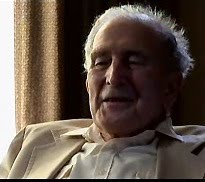




 is Antony Flew’s personal biographical account of his intellectual journey from the belief that there is no God to the belief that there is a God. The narrative is both fascinating and very readable. The purpose this review is to provide a brief synopsis and to highlight some of Flew’s reflections.In part one, My Denial of the Divine, Flew talks about his atheism. In part two, My Discovery of the Divine, Flew talks about his reasons for believing that God exists. Flew puts in concisely in the introduction: “In brief, as the title says, I now believe there is a God!” (252-58)* The goal of his book is to chart his intellectual pilgrimage. He emphasizes the fact that this is strictly the result of considering the arguments and evidence. He says: “For the record, then, I want to lay to rest all those rumors that have me placing Pascalian bets.” (267-73)
 book was read on an

 LAYING THE CARDS ON THE TABLE… I now believe that the universe was brought into existence by an infinite Intelligence…


 The Daily Hatch
June 25, 2009 at 6:13 am The naturalist will claim that we are deterministically “hard-wired” to think (mistakenly) that we have free will, and that human ethics developed deterministically because it provided greater survival value for the species as a whole. Of course, there is no way to falsify this kind of “just so” story–how could we “prove” that we really do have free will to someone who insists otherwise? Also, if we really have no choice but to believe that we can legitimately make choices, why do we bother arguing about it at all?
June 25, 2009 at 11:37 am You are right. I would add more point. If we are determined, we could never know that to be true in any meaningful sense of the word “know,” because what we know is determined by physics, not good and independent reasons. So if determinism is true, it is irrational to think you know it to be true. I deal with this at some length here: http://www.apostolic.net/biblicalstudies/knowrequiresgod.htm
Jason
June 29, 2009 at 6:59 pm This article nicely summarizes some of the problems that come from the concept of free will — but it fails to see that the same sorts of problems come back at the conclusion of the article. For, the God Hypothesis only makes things worse; it simply ‘chooses’ to not ask how the God works! Are its decisions determined by laws—or by some capricious causeless cause? Evangelism doesn’t help, but only tries to ‘pass the buck’—because “it’s turtles all the way up,” which leaves us asking which God to choose.
In other words, as Mark Twain said, “Faith is believing what you know ain’t true.”
June 30, 2009 at 10:29 am Marvin Minsky,
God is a personal, immaterial being, so He would also possesses freedom of the will. In the same way we cannot predict what you will freely choose, we cannot predict what God will choose.
God, if He exists, is the causeless cause. He could not be determined by laws, otherwise those laws would be the ultimate. But philosophers agree that if God exists, He is the metaphysical ultimate.
Yes, there are two steps to the God question. First we must determine if a divine being(s) exist(s). If he/she/it/they exist(s), then we have to determine what he/she/it/they is/are like. Interestingly, the evidence in favor of God’s existence narrows this down for us to a personal, immaterial, eternal, non-spatial, powerful, intelligent being who transcends the physical universe. That rules out many options, leaving only a few to sort through.
Mark Twain was wrong. That is not the biblical view of faith, and it is not mine either. Faith is active trust in what we have reason to believe is true.
Jason
July 1, 2009 at 7:30 am Along similar lines, I recently came across this definition of faith from C. S. Lewis: “the art of holding onto things your reason has once accepted, in spite of your changing moods.”
Regarding the necessary attributes of God, Paul K. Moser had this to say: “In keeping with a familiar theistic tradition, let’s use the term ‘God’ as a supreme title. It requires of its holder: (a) worthiness of worship and full life-commitment and thus (b) moral perfection and (c) an all-loving character. This does not settle the issue whether God actually exists, as the title might be satisfied by no one at all. The term might connote while failing to denote. Since God must be worthy of worship and full trust, God must be altogether morally good, a God of unflagging righteousness. A morally corrupt all-powerful being might merit fear from us but would not be worthy of our worship and full trust. So not just any unstoppable bully can satisfy the job description for ‘God.’ Even an all-powerful being who is altogether just, or fair, but nonetheless unloving would not fit the bill.” He goes on to suggest that the Jewish-Christian God is the most plausible candidate for such a being from all of world history.