The Bible and Archaeology – Is the Bible from God? (Kyle Butt 42 min)
Why Can’t Morals Be Grounded In Society?
Published onAug 31, 2012
Dr William Lane Craig was invited by the School of Oriental and African Studies (SOAS) Christian Union, London to give a lecture titled “Can we be good without God?” In this video Dr Craig answers a question about the objectivity of morality. Should we consider morals to be objective? If so, why can’t morals be “abiding” and objectively grounded in society?
The lecture formed part of the Reasonable Faith Tour in October 2011. The Tour was sponsored by Damaris Trust, UCCF and Premier Christian Radio.
(Samuel Beckett example: Life is meaningless, live in tension with reality)
(Modern man sees no hope for the future and has deluded himself by appealing to nonreason to stay sane. Look at the example of the lady tied to the railroad tracks in this above video as a example.)
Francis and Edith Schaeffer pictured below:
HOW SHOULD WE THEN LIVE? was both a book and a film series.
I have discussed many subjects with my liberal friends over at the Ark Times Blog in the past and I have taken them on now on the subject of the absurdity of life without God in the picture. Most of my responses included quotes fromWilliam Lane Craig’sbookTHE ABSURDITY OF LIFE WITHOUT GOD. Here is the result of one ofthose encounters from June of 2013:
Hackett’s secular atheist worldview could only lead to one conclusion and sure enough he stated, “Yeah! SR you’re going to the same place I am…straight into the dirt.”
I SALUTE YOU HACKETT FOR FOLLOWING A GOOD LINE OF LOGIC!!!! THIS QUOTE FROM BERTRAND RUSSELL COMES TO THE SAME CONCLUSION THAT YOU DO, “All the noonday brightness of human genius, [is] destined to extinction in the vast death of the solar system, and that the whole temple of Man’s achievement must inevitably be buried beneath the debris of a universe in ruins.” (Bertrand Russell, “A Free Man’s Worship,” Two Modern Essays on Religion (Hanover, NH: Westholm Publications, 1959) 25)
DO YOU REALLY BELIEVE THERE IS NO GOD OR DO YOU WANT TO AVOID BELIEVING IN GOD BECAUSE YOU DON’T WANT TO OBEY HIM? A THIEF DOESN’T WANT TO FIND A POLICEMAN EITHER!!!!!
The atheist ALDOUS HUXLEY found the logical conclusion that life is meaningless exhilarating:
“We objected to the morality because it interfered with our sexual freedom; we objected to the political and economic system because it was unjust. The supporters of these systems claimed that in some way they embodied the meaning (a Christian meaning, they insisted) of the world. There was one admirably simple method of confuting these people at the same time justifying ourselves… we could deny that the world had any meaning.” (Aldous Huxley, Ends and Means (New York and London: Harper & Brothers Publishers, 1937) 316)
E P I S O D E 1 0 Dr. Francis Schaeffer – Episode X – Final Choices 27 min FINAL CHOICES I. Authoritarianism the Only Humanistic Social Option One man or an elite giving authoritative arbitrary absolutes. A. Society is sole absolute in absence of other absolutes. B. But society has to be […]
E P I S O D E 9 Dr. Francis Schaeffer – Episode IX – The Age of Personal Peace and Affluence 27 min T h e Age of Personal Peace and Afflunce I. By the Early 1960s People Were Bombarded From Every Side by Modern Man’s Humanistic Thought II. Modern Form of Humanistic Thought Leads […]
E P I S O D E 8 Dr. Francis Schaeffer – Episode VIII – The Age of Fragmentation 27 min I saw this film series in 1979 and it had a major impact on me. T h e Age of FRAGMENTATION I. Art As a Vehicle Of Modern Thought A. Impressionism (Monet, Renoir, Pissarro, Sisley, […]
E P I S O D E 7 Dr. Francis Schaeffer – Episode VII – The Age of Non Reason I am thrilled to get this film series with you. I saw it first in 1979 and it had such a big impact on me. Today’s episode is where we see modern humanist man act […]
E P I S O D E 6 How Should We Then Live 6#1 Uploaded by NoMirrorHDDHrorriMoN on Oct 3, 2011 How Should We Then Live? Episode 6 of 12 ________ I am sharing with you a film series that I saw in 1979. In this film Francis Schaeffer asserted that was a shift in […]
E P I S O D E 5 How Should We Then Live? Episode 5: The Revolutionary Age I was impacted by this film series by Francis Schaeffer back in the 1970′s and I wanted to share it with you. Francis Schaeffer noted, “Reformation Did Not Bring Perfection. But gradually on basis of biblical teaching there […]
Dr. Francis Schaeffer – Episode IV – The Reformation 27 min I was impacted by this film series by Francis Schaeffer back in the 1970′s and I wanted to share it with you. Schaeffer makes three key points concerning the Reformation: “1. Erasmian Christian humanism rejected by Farel. 2. Bible gives needed answers not only as to […]
Francis Schaeffer’s “How should we then live?” Video and outline of episode 3 “The Renaissance” Francis Schaeffer: “How Should We Then Live?” (Episode 3) THE RENAISSANCE I was impacted by this film series by Francis Schaeffer back in the 1970′s and I wanted to share it with you. Schaeffer really shows why we have so […]
Francis Schaeffer: “How Should We Then Live?” (Episode 2) THE MIDDLE AGES I was impacted by this film series by Francis Schaeffer back in the 1970′s and I wanted to share it with you. Schaeffer points out that during this time period unfortunately we have the “Church’s deviation from early church’s teaching in regard […]
Francis Schaeffer: “How Should We Then Live?” (Episode 1) THE ROMAN AGE Today I am starting a series that really had a big impact on my life back in the 1970′s when I first saw it. There are ten parts and today is the first. Francis Schaeffer takes a look at Rome and why […]
Francis Schaeffer: “Whatever Happened to the Human Race” (Episode 5) TRUTH AND HISTORY Published on Oct 7, 2012 by AdamMetropolis This crucial series is narrated by the late Dr. Francis Schaeffer and former Surgeon General Dr. C. Everett Koop. Today, choices are being made that undermine human rights at their most basic level. Practices once […]
The opening song at the beginning of this episode is very insightful. Francis Schaeffer: “Whatever Happened to the Human Race” (Episode 4) THE BASIS FOR HUMAN DIGNITY Published on Oct 7, 2012 by AdamMetropolis This crucial series is narrated by the late Dr. Francis Schaeffer and former Surgeon General Dr. C. Everett Koop. Today, choices […]
Francis Schaeffer: “Whatever Happened to the Human Race” (Episode 3) DEATH BY SOMEONE’S CHOICE Published on Oct 6, 2012 by AdamMetropolis This crucial series is narrated by the late Dr. Francis Schaeffer and former Surgeon General Dr. C. Everett Koop. Today, choices are being made that undermine human rights at their most basic level. Practices […]
Francis Schaeffer: “Whatever Happened to the Human Race?” (Episode 2) SLAUGHTER OF THE INNOCENTS Published on Oct 6, 2012 by AdamMetropolis This crucial series is narrated by the late Dr. Francis Schaeffer and former Surgeon General Dr. C. Everett Koop. Today, choices are being made that undermine human rights at their most basic level. Practices […]
It is not possible to know where the pro-life evangelicals are coming from unless you look at the work of the person who inspired them the most. That person was Francis Schaeffer. I do care about economic issues but the pro-life issue is the most important to me. Several years ago Adrian Rogers (past president of […]
Ecclesiastes 2-3 Published on Sep 19, 2012 Calvary Chapel Spring Valley | Sunday Evening | September 16, 2012 | Derek Neider _____________________________ I have written on the Book of Ecclesiastes and the subject of the meaning of our lives on several occasions on this blog. In this series on Ecclesiastes I hope to show how secular […]
Ecclesiastes 1 Published on Sep 4, 2012 Calvary Chapel Spring Valley | Sunday Evening | September 2, 2012 | Pastor Derek Neider _____________________ I have written on the Book of Ecclesiastes and the subject of the meaning of our lives on several occasions on this blog. In this series on Ecclesiastes I hope to show how […]
Ecclesiastes 8-10 | Still Searching After All These Years Published on Oct 9, 2012 Calvary Chapel Spring Valley | Sunday Evening | October 7, 2012 | Pastor Derek Neider _______________________ Ecclesiastes 11-12 | Solomon Finds His Way Published on Oct 30, 2012 Calvary Chapel Spring Valley | Sunday Evening | October 28, 2012 | Pastor Derek Neider […]
Ecclesiastes 6-8 | Solomon Turns Over a New Leaf Published on Oct 2, 2012 Calvary Chapel Spring Valley | Sunday Evening | September 30, 2012 | Pastor Derek Neider _____________________ I have written on the Book of Ecclesiastes and the subject of the meaning of our lives on several occasions on this blog. In this series […]
Ecclesiastes 4-6 | Solomon’s Dissatisfaction Published on Sep 24, 2012 Calvary Chapel Spring Valley | Sunday Evening | September 23, 2012 | Pastor Derek Neider ___________________ I have written on the Book of Ecclesiastes and the subject of the meaning of our lives on several occasions on this blog. In this series on Ecclesiastes I hope […]
Overview of the Book of Ecclesiastes Overview of the Book of EcclesiastesAuthor: Solomon or an unknown sage in the royal courtPurpose: To demonstrate that life viewed merely from a realistic human perspective must result in pessimism, and to offer hope through humble obedience and faithfulness to God until the final judgment.Date: 930-586 B.C. Ecclesiastes 2-3 Published on Sep 19, […]
Ecclesiastes 1 Published on Sep 4, 2012 Calvary Chapel Spring Valley | Sunday Evening | September 2, 2012 | Pastor Derek Neider _____________________ I have written on the Book of Ecclesiastes and the subject of the meaning of our lives on several occasions on this blog. In this series on Ecclesiastes I hope to show how […]
Ecclesiastes 8-10 | Still Searching After All These Years Published on Oct 9, 2012 Calvary Chapel Spring Valley | Sunday Evening | October 7, 2012 | Pastor Derek Neider _______________________ Ecclesiastes 11-12 | Solomon Finds His Way Published on Oct 30, 2012 Calvary Chapel Spring Valley | Sunday Evening | October 28, 2012 | Pastor Derek Neider […]
On September 29th, 2012, William Lane Craig participated in the Contending with Christianity’s Critics Conference held at Watermark Community Church in Dallas, TX. In this short clip, Dr. Craig uses the technique of Eastwooding to deal with Richard Dawkins’ attempted refutations of the moral argument for God’s existence.
The statements ascribed to Richard Dawkins in this presentation are statements actually made by Prof. Dawkins. The following is a list of the sources of such statements:
Dawkins, Richard. “Afterword.” In Lawrence Krauss, A Universe from Nothing. New York: Free Press, 2012.
Citations of these statements with references may be found in:
“Richard Dawkins on Arguments for God.” In God Is Great, God Is Good, pp. 13-31. Ed. Wm. L Craig and Chad Meister. Downers Grove, Ill.: Inter-Varsity, 2009.
I have discussed many subjects with my liberal friends over at the Ark Times Blog in the past and I have taken them on now on the subject of the absurdity of life without God in the picture. Most of my responses included quotes fromWilliam Lane Craig’sbookTHE ABSURDITY OF LIFE WITHOUT GOD. Here is the result of one ofthose encounters from June of 2013:
Hackett wrote, “I’m quite content with the reality of life as it is and have no need of faith and belief in any invisible being. This despair you feel must also require faith & belief.”
_______________
I DO NOT FEEL ANY DESPAIR ABOUT MY FUTURE BECAUSE I KNOW WHERE I AM GOING. ATHEISM FAILS IN THIS REGARD THOUGH.
William Lane Craig wrote:
According to the Christian worldview, God does exist, and man’s life does not end at the grave. In the resurrection body man may enjoy eternal life and fellowship with God. Biblical Christianity therefore provides the two conditions necessary for a meaningful, valuable, and purposeful life for man: God and immortality. Because of this, we can live consistently and happily. Thus, biblical Christianity succeeds precisely where atheism breaks down.
Now I want to make it clear that I have not yet shown biblical Christianity to be true. But what I have done is clearly spell out the alternatives. If God does not exist, then life is futile. If the God of the Bible does exist, then life is meaningful. Only the second of these two alternatives enables us to live happily and consistently. Therefore, it seems to me that even if the evidence for these two options were absolutely equal, a rational person ought to choose biblical Christianity. It seems to me positively irrational to prefer death, futility, and destruction to life, meaningfulness, and happiness. As Pascal said, we have nothing to lose and infinity to gain.
E P I S O D E 1 0 Dr. Francis Schaeffer – Episode X – Final Choices 27 min FINAL CHOICES I. Authoritarianism the Only Humanistic Social Option One man or an elite giving authoritative arbitrary absolutes. A. Society is sole absolute in absence of other absolutes. B. But society has to be […]
E P I S O D E 9 Dr. Francis Schaeffer – Episode IX – The Age of Personal Peace and Affluence 27 min T h e Age of Personal Peace and Afflunce I. By the Early 1960s People Were Bombarded From Every Side by Modern Man’s Humanistic Thought II. Modern Form of Humanistic Thought Leads […]
E P I S O D E 8 Dr. Francis Schaeffer – Episode VIII – The Age of Fragmentation 27 min I saw this film series in 1979 and it had a major impact on me. T h e Age of FRAGMENTATION I. Art As a Vehicle Of Modern Thought A. Impressionism (Monet, Renoir, Pissarro, Sisley, […]
E P I S O D E 7 Dr. Francis Schaeffer – Episode VII – The Age of Non Reason I am thrilled to get this film series with you. I saw it first in 1979 and it had such a big impact on me. Today’s episode is where we see modern humanist man act […]
E P I S O D E 6 How Should We Then Live 6#1 Uploaded by NoMirrorHDDHrorriMoN on Oct 3, 2011 How Should We Then Live? Episode 6 of 12 ________ I am sharing with you a film series that I saw in 1979. In this film Francis Schaeffer asserted that was a shift in […]
E P I S O D E 5 How Should We Then Live? Episode 5: The Revolutionary Age I was impacted by this film series by Francis Schaeffer back in the 1970′s and I wanted to share it with you. Francis Schaeffer noted, “Reformation Did Not Bring Perfection. But gradually on basis of biblical teaching there […]
Dr. Francis Schaeffer – Episode IV – The Reformation 27 min I was impacted by this film series by Francis Schaeffer back in the 1970′s and I wanted to share it with you. Schaeffer makes three key points concerning the Reformation: “1. Erasmian Christian humanism rejected by Farel. 2. Bible gives needed answers not only as to […]
Francis Schaeffer’s “How should we then live?” Video and outline of episode 3 “The Renaissance” Francis Schaeffer: “How Should We Then Live?” (Episode 3) THE RENAISSANCE I was impacted by this film series by Francis Schaeffer back in the 1970′s and I wanted to share it with you. Schaeffer really shows why we have so […]
Francis Schaeffer: “How Should We Then Live?” (Episode 2) THE MIDDLE AGES I was impacted by this film series by Francis Schaeffer back in the 1970′s and I wanted to share it with you. Schaeffer points out that during this time period unfortunately we have the “Church’s deviation from early church’s teaching in regard […]
Francis Schaeffer: “How Should We Then Live?” (Episode 1) THE ROMAN AGE Today I am starting a series that really had a big impact on my life back in the 1970′s when I first saw it. There are ten parts and today is the first. Francis Schaeffer takes a look at Rome and why […]
Francis Schaeffer: “Whatever Happened to the Human Race” (Episode 5) TRUTH AND HISTORY Published on Oct 7, 2012 by AdamMetropolis This crucial series is narrated by the late Dr. Francis Schaeffer and former Surgeon General Dr. C. Everett Koop. Today, choices are being made that undermine human rights at their most basic level. Practices once […]
The opening song at the beginning of this episode is very insightful. Francis Schaeffer: “Whatever Happened to the Human Race” (Episode 4) THE BASIS FOR HUMAN DIGNITY Published on Oct 7, 2012 by AdamMetropolis This crucial series is narrated by the late Dr. Francis Schaeffer and former Surgeon General Dr. C. Everett Koop. Today, choices […]
Francis Schaeffer: “Whatever Happened to the Human Race” (Episode 3) DEATH BY SOMEONE’S CHOICE Published on Oct 6, 2012 by AdamMetropolis This crucial series is narrated by the late Dr. Francis Schaeffer and former Surgeon General Dr. C. Everett Koop. Today, choices are being made that undermine human rights at their most basic level. Practices […]
Francis Schaeffer: “Whatever Happened to the Human Race?” (Episode 2) SLAUGHTER OF THE INNOCENTS Published on Oct 6, 2012 by AdamMetropolis This crucial series is narrated by the late Dr. Francis Schaeffer and former Surgeon General Dr. C. Everett Koop. Today, choices are being made that undermine human rights at their most basic level. Practices […]
It is not possible to know where the pro-life evangelicals are coming from unless you look at the work of the person who inspired them the most. That person was Francis Schaeffer. I do care about economic issues but the pro-life issue is the most important to me. Several years ago Adrian Rogers (past president of […]
Ecclesiastes 2-3 Published on Sep 19, 2012 Calvary Chapel Spring Valley | Sunday Evening | September 16, 2012 | Derek Neider _____________________________ I have written on the Book of Ecclesiastes and the subject of the meaning of our lives on several occasions on this blog. In this series on Ecclesiastes I hope to show how secular […]
Ecclesiastes 1 Published on Sep 4, 2012 Calvary Chapel Spring Valley | Sunday Evening | September 2, 2012 | Pastor Derek Neider _____________________ I have written on the Book of Ecclesiastes and the subject of the meaning of our lives on several occasions on this blog. In this series on Ecclesiastes I hope to show how […]
Ecclesiastes 8-10 | Still Searching After All These Years Published on Oct 9, 2012 Calvary Chapel Spring Valley | Sunday Evening | October 7, 2012 | Pastor Derek Neider _______________________ Ecclesiastes 11-12 | Solomon Finds His Way Published on Oct 30, 2012 Calvary Chapel Spring Valley | Sunday Evening | October 28, 2012 | Pastor Derek Neider […]
Ecclesiastes 6-8 | Solomon Turns Over a New Leaf Published on Oct 2, 2012 Calvary Chapel Spring Valley | Sunday Evening | September 30, 2012 | Pastor Derek Neider _____________________ I have written on the Book of Ecclesiastes and the subject of the meaning of our lives on several occasions on this blog. In this series […]
Ecclesiastes 4-6 | Solomon’s Dissatisfaction Published on Sep 24, 2012 Calvary Chapel Spring Valley | Sunday Evening | September 23, 2012 | Pastor Derek Neider ___________________ I have written on the Book of Ecclesiastes and the subject of the meaning of our lives on several occasions on this blog. In this series on Ecclesiastes I hope […]
Overview of the Book of Ecclesiastes Overview of the Book of EcclesiastesAuthor: Solomon or an unknown sage in the royal courtPurpose: To demonstrate that life viewed merely from a realistic human perspective must result in pessimism, and to offer hope through humble obedience and faithfulness to God until the final judgment.Date: 930-586 B.C. Ecclesiastes 2-3 Published on Sep 19, […]
Ecclesiastes 1 Published on Sep 4, 2012 Calvary Chapel Spring Valley | Sunday Evening | September 2, 2012 | Pastor Derek Neider _____________________ I have written on the Book of Ecclesiastes and the subject of the meaning of our lives on several occasions on this blog. In this series on Ecclesiastes I hope to show how […]
Ecclesiastes 8-10 | Still Searching After All These Years Published on Oct 9, 2012 Calvary Chapel Spring Valley | Sunday Evening | October 7, 2012 | Pastor Derek Neider _______________________ Ecclesiastes 11-12 | Solomon Finds His Way Published on Oct 30, 2012 Calvary Chapel Spring Valley | Sunday Evening | October 28, 2012 | Pastor Derek Neider […]
The Bethinking National Apologetics Day Conference: “Countering the New Atheism” took place during the UK Reasonable Faith Tour in October 2011. Christian academics William Lane Craig, John Lennox, Peter J Williams and Gary Habermas lead 600 people in training on how to defend and proclaim the credibility of Christianity against the growing tide of secularism and New Atheist popular thought in western society.
In this session, William Lane Craig delivers his critique of Richard Dawkins’ objections to arguments for the existence of God, followed by questions and answers from the audience. In this clip, Dr Craig addresses a question about objective moral values and distinguishes them from absolute moral values.
Dr. Francis Schaeffer – The Biblical Flow of Truth & History (part 2)
I have discussed many subjects with my liberal friends over at the Ark Times Blog in the past and I have taken them on now on the subject of the absurdity of life without God in the picture. Most of my responses included quotes fromWilliam Lane Craig’sbookTHE ABSURDITY OF LIFE WITHOUT GOD. Here is the result of one ofthose encounters from June of 2013:
I wrote:
Citzen1 wrote, “I am not troubled that I will not be known by distant generations. Being appreciated by current ones is enough for me.”
Citzen1, if there is no lasting meaning to our lives then isn’t life utterly without reason?
Zatharus wrote, “…knowledge of an afterlife is even less knowable than a before life.”
Zatharus, then if this life doesn’t count then Hitler is never going to be punished for what he did in this life!!!! We can know if there is an afterlife. The Bible is a testable document. There are fulfilled prophecies in it from the Old Testament that have been fulfilled in history.
The secular view is totally bankrupt when it comes to this issue of finding a lasting meaning to our lives.
William Lane Craig wrote:
If death stands with open arms at the end of life’s trail, then what is the goal of life? To what end has life been lived? Is it all for nothing? Is there no reason for life? And what of the universe? Is it utterly pointless? If its destiny is a cold grave in the recesses of outer space, the answer must be yes—it is pointless. There is no goal, no purpose, for the universe. The litter of a dead universe will just go on expanding and expanding—forever.
And what of man? Is there no purpose at all for the human race? Or will it simply peter out someday, lost in the oblivion of an indifferent universe? The English writer H. G. Wells foresaw such a prospect. In his novel The Time Machine Wells’s time traveler journeys far into the future to discover the destiny of man. All he finds is a dead earth, save for a few lichens and moss, orbiting a gigantic red sun. The only sounds are the rush of the wind and the gentle ripple of the sea. “Beyond these lifeless sounds,” writes Wells, “the world was silent. Silent? It would be hard to convey the stillness of it. All the sounds of man, the bleating of sheep, the cries of birds, the hum of insects, the stir that makes the background of our lives—all that was over.”11 And so Wells’s time traveler returned. But to what?—to merely an earlier point on the purposeless rush toward oblivion. When as a non-Christian I first read Wells’s book, I thought, “No, no! It can’t end that way!” But if there is no God, it will end that way, like it or not. This is reality in a universe without God: there is no hope; there is no purpose. It reminds me of T.S. Eliot’s haunting lines:
This is the way the world ends
This is the way the world ends
This is the way the world ends
Not with a bang but a whimper.12
What is true of mankind as a whole is true of each of us individually: we are here to no purpose. If there is no God, then our life is not fundamentally different from that of a dog. I know that’s harsh, but it’s true. As the ancient writer of Ecclesiastes put it: “The fate of the sons of men and the fate of beasts is the same. As one dies so dies the other; indeed, they all have the same breath and there is no advantage for man over beast, for all is vanity. All go to the same place. All come from the dust and all return to the dust” (Eccles. 3:19–20 AT). In this book, which reads more like a piece of modern existentialist literature than a book of the Bible, the writer shows the futility of pleasure, wealth, education, political fame, and honor in a life doomed to end in death. His verdict? “Vanity of vanities! All is vanity” (1:2 ESV). If life ends at the grave, then we have no ultimate purpose for living.
But more than that: even if it did not end in death, without God life would still be without purpose. For man and the universe would then be simple accidents of chance, thrust into existence for no reason. Without God the universe is the result of a cosmic accident, a chance explosion. There is no reason for which it exists. As for man, he is a freak of nature—a blind product of matter plus time plus chance. Man is just a lump of slime that evolved rationality. There is no more purpose in life for the human race than for a species of insect; for both are the result of the blind interaction of chance and necessity. As one philosopher has put it: “Human life is mounted upon a subhuman pedestal and must shift for itself alone in the heart of a silent and mindless universe.”13
What is true of the universe and of the human race is also true of us as individuals. Insofar as we are individual human beings, we are the result of certain combinations of heredity and environment. We are victims of a kind of genetic and environmental roulette. Biologists like Richard Dawkins regard man as an electro-chemical machine controlled by its mindless genes. If God does not exist, then you are just a miscarriage of nature, thrust into a purposeless universe to live a purposeless life.
So if God does not exist, that means that man and the universe exist to no purpose—since the end of everything is death—and that they came to be for no purpose, since they are only blind products of chance. In short, life is utterly without reason.
E P I S O D E 1 0 Dr. Francis Schaeffer – Episode X – Final Choices 27 min FINAL CHOICES I. Authoritarianism the Only Humanistic Social Option One man or an elite giving authoritative arbitrary absolutes. A. Society is sole absolute in absence of other absolutes. B. But society has to be […]
E P I S O D E 9 Dr. Francis Schaeffer – Episode IX – The Age of Personal Peace and Affluence 27 min T h e Age of Personal Peace and Afflunce I. By the Early 1960s People Were Bombarded From Every Side by Modern Man’s Humanistic Thought II. Modern Form of Humanistic Thought Leads […]
E P I S O D E 8 Dr. Francis Schaeffer – Episode VIII – The Age of Fragmentation 27 min I saw this film series in 1979 and it had a major impact on me. T h e Age of FRAGMENTATION I. Art As a Vehicle Of Modern Thought A. Impressionism (Monet, Renoir, Pissarro, Sisley, […]
E P I S O D E 7 Dr. Francis Schaeffer – Episode VII – The Age of Non Reason I am thrilled to get this film series with you. I saw it first in 1979 and it had such a big impact on me. Today’s episode is where we see modern humanist man act […]
E P I S O D E 6 How Should We Then Live 6#1 Uploaded by NoMirrorHDDHrorriMoN on Oct 3, 2011 How Should We Then Live? Episode 6 of 12 ________ I am sharing with you a film series that I saw in 1979. In this film Francis Schaeffer asserted that was a shift in […]
E P I S O D E 5 How Should We Then Live? Episode 5: The Revolutionary Age I was impacted by this film series by Francis Schaeffer back in the 1970′s and I wanted to share it with you. Francis Schaeffer noted, “Reformation Did Not Bring Perfection. But gradually on basis of biblical teaching there […]
Dr. Francis Schaeffer – Episode IV – The Reformation 27 min I was impacted by this film series by Francis Schaeffer back in the 1970′s and I wanted to share it with you. Schaeffer makes three key points concerning the Reformation: “1. Erasmian Christian humanism rejected by Farel. 2. Bible gives needed answers not only as to […]
Francis Schaeffer’s “How should we then live?” Video and outline of episode 3 “The Renaissance” Francis Schaeffer: “How Should We Then Live?” (Episode 3) THE RENAISSANCE I was impacted by this film series by Francis Schaeffer back in the 1970′s and I wanted to share it with you. Schaeffer really shows why we have so […]
Francis Schaeffer: “How Should We Then Live?” (Episode 2) THE MIDDLE AGES I was impacted by this film series by Francis Schaeffer back in the 1970′s and I wanted to share it with you. Schaeffer points out that during this time period unfortunately we have the “Church’s deviation from early church’s teaching in regard […]
Francis Schaeffer: “How Should We Then Live?” (Episode 1) THE ROMAN AGE Today I am starting a series that really had a big impact on my life back in the 1970′s when I first saw it. There are ten parts and today is the first. Francis Schaeffer takes a look at Rome and why […]
Francis Schaeffer: “Whatever Happened to the Human Race” (Episode 5) TRUTH AND HISTORY Published on Oct 7, 2012 by AdamMetropolis This crucial series is narrated by the late Dr. Francis Schaeffer and former Surgeon General Dr. C. Everett Koop. Today, choices are being made that undermine human rights at their most basic level. Practices once […]
The opening song at the beginning of this episode is very insightful. Francis Schaeffer: “Whatever Happened to the Human Race” (Episode 4) THE BASIS FOR HUMAN DIGNITY Published on Oct 7, 2012 by AdamMetropolis This crucial series is narrated by the late Dr. Francis Schaeffer and former Surgeon General Dr. C. Everett Koop. Today, choices […]
Francis Schaeffer: “Whatever Happened to the Human Race” (Episode 3) DEATH BY SOMEONE’S CHOICE Published on Oct 6, 2012 by AdamMetropolis This crucial series is narrated by the late Dr. Francis Schaeffer and former Surgeon General Dr. C. Everett Koop. Today, choices are being made that undermine human rights at their most basic level. Practices […]
Francis Schaeffer: “Whatever Happened to the Human Race?” (Episode 2) SLAUGHTER OF THE INNOCENTS Published on Oct 6, 2012 by AdamMetropolis This crucial series is narrated by the late Dr. Francis Schaeffer and former Surgeon General Dr. C. Everett Koop. Today, choices are being made that undermine human rights at their most basic level. Practices […]
It is not possible to know where the pro-life evangelicals are coming from unless you look at the work of the person who inspired them the most. That person was Francis Schaeffer. I do care about economic issues but the pro-life issue is the most important to me. Several years ago Adrian Rogers (past president of […]
Ecclesiastes 2-3 Published on Sep 19, 2012 Calvary Chapel Spring Valley | Sunday Evening | September 16, 2012 | Derek Neider _____________________________ I have written on the Book of Ecclesiastes and the subject of the meaning of our lives on several occasions on this blog. In this series on Ecclesiastes I hope to show how secular […]
Ecclesiastes 1 Published on Sep 4, 2012 Calvary Chapel Spring Valley | Sunday Evening | September 2, 2012 | Pastor Derek Neider _____________________ I have written on the Book of Ecclesiastes and the subject of the meaning of our lives on several occasions on this blog. In this series on Ecclesiastes I hope to show how […]
Ecclesiastes 8-10 | Still Searching After All These Years Published on Oct 9, 2012 Calvary Chapel Spring Valley | Sunday Evening | October 7, 2012 | Pastor Derek Neider _______________________ Ecclesiastes 11-12 | Solomon Finds His Way Published on Oct 30, 2012 Calvary Chapel Spring Valley | Sunday Evening | October 28, 2012 | Pastor Derek Neider […]
Ecclesiastes 6-8 | Solomon Turns Over a New Leaf Published on Oct 2, 2012 Calvary Chapel Spring Valley | Sunday Evening | September 30, 2012 | Pastor Derek Neider _____________________ I have written on the Book of Ecclesiastes and the subject of the meaning of our lives on several occasions on this blog. In this series […]
Ecclesiastes 4-6 | Solomon’s Dissatisfaction Published on Sep 24, 2012 Calvary Chapel Spring Valley | Sunday Evening | September 23, 2012 | Pastor Derek Neider ___________________ I have written on the Book of Ecclesiastes and the subject of the meaning of our lives on several occasions on this blog. In this series on Ecclesiastes I hope […]
Overview of the Book of Ecclesiastes Overview of the Book of EcclesiastesAuthor: Solomon or an unknown sage in the royal courtPurpose: To demonstrate that life viewed merely from a realistic human perspective must result in pessimism, and to offer hope through humble obedience and faithfulness to God until the final judgment.Date: 930-586 B.C. Ecclesiastes 2-3 Published on Sep 19, […]
Ecclesiastes 1 Published on Sep 4, 2012 Calvary Chapel Spring Valley | Sunday Evening | September 2, 2012 | Pastor Derek Neider _____________________ I have written on the Book of Ecclesiastes and the subject of the meaning of our lives on several occasions on this blog. In this series on Ecclesiastes I hope to show how […]
Ecclesiastes 8-10 | Still Searching After All These Years Published on Oct 9, 2012 Calvary Chapel Spring Valley | Sunday Evening | October 7, 2012 | Pastor Derek Neider _______________________ Ecclesiastes 11-12 | Solomon Finds His Way Published on Oct 30, 2012 Calvary Chapel Spring Valley | Sunday Evening | October 28, 2012 | Pastor Derek Neider […]
The Bethinking National Apologetics Day Conference: “Countering the New Atheism” took place during the UK Reasonable Faith Tour in October 2011. Christian academics William Lane Craig, John Lennox, Peter J Williams and Gary Habermas lead 600 people in training on how to defend and proclaim the credibility of Christianity against the growing tide of secularism and New Atheist popular thought in western society.
In this session, William Lane Craig delivers his critique of Richard Dawkins’ objections to arguments for the existence of God, followed by questions and answers from the audience. In this clip, Dr Craig addresses a question about how objective moral values can be demonstrated to a Nihilist, who hold that they are illusory.
I have discussed many subjects with my liberal friends over at the Ark Times Blog in the past and I have taken them on now on the subject of the absurdity of life without God in the picture. Most of my responses included quotes fromWilliam Lane Craig’sbookTHE ABSURDITY OF LIFE WITHOUT GOD. Here is the result of one ofthose encounters from June of 2013:
I wrote:
Zatharus, let me show you the result of your atheism. You wrote, “You are here because your parents had sex; knowledge of an afterlife is even less knowable than a before life; other than that created by the person, 42. Can we now discuss the dichotomy of existentialism?”
Then you quoted, Friedrich Nietzsche, “To live is to suffer, to survive is to find some meaning in the suffering.”
________________
NIETZSCHE understood what a lot of people today fail to realize.
William Lane Craig writes:
Do you understand the gravity of the alternatives before us? For if God exists, then there is hope for man. But if God does not exist, then all we are left with is despair. Do you understand why the question of God’s existence is so vital to man? As Francis Schaeffer aptly put it, “If God is dead, then man is dead, too.”
Unfortunately, the mass of mankind do not realize this fact. They continue on as though nothing has changed. I’m reminded of NIETZSCHE’S story of the madman who in the early morning hours burst into the marketplace, lantern in hand, crying, “I seek God! I seek God!” Since many of those standing about did not believe in God, he provoked much laughter. “Did God get lost?” they taunted him. “Or is he hiding? Or maybe he has gone on a voyage or emigrated!” Thus they yelled and laughed. Then, writes Nietzsche, the madman turned in their midst and pierced them with his eyes.
“Whither is God?” he cried, “I shall tell you. We have killed him—you and I. All of us are his murderers. But how have we done this? How were we able to drink up the sea? Who gave us the sponge to wipe away the entire horizon? What did we do when we unchained this earth from its sun? Whither is it moving now? Away from all suns? Are we not plunging continually? Backward, sideward, forward, in all directions? Is there any up or down left? Are we not straying as through an infinite nothing? Do we not feel the breath of empty space? Has it not become colder? Is not night and more night coming on all the while? Must not lanterns be lit in the morning? Do we not hear anything yet of the noise of the gravediggers who are burying God? … God is dead…. And we have killed him. How shall we, the murderers of all murderers, comfort ourselves?”14
The crowd stared at the madman in silence and astonishment. At last he dashed his lantern to the ground. “I have come too early,” he said. “This tremendous event is still on its way—it has not yet reached the ears of man.” People did not yet truly comprehend the consequences of what they had done in killing God. But NIETZSCHE predicted that someday people would realize the implications of their atheism; and this realization would usher in an age of nihilism—the destruction of all meaning and value in life. The end of Christianity, wrote NIETZSCHE, means the advent of nihilism. This most gruesome of guests is standing already at the door. “Our whole European culture is moving for some time now,” wrote NIETZSCHE, “with a tortured tension that is growing from decade to decade, as toward a catastrophe: restlessly, violently, headlong, like a river that wants to reach the end, that no longer reflects, that is afraid to reflect.”15
MOST PEOPLE STILL DO NOT REFLECT ON THE CONSEQUENCES OF ATHEISM AND SO, LIKE THE CROWD IN THE MARKETPLACE, GO UNKNOWINGLY ON THEIR WAY. But when we realize, as did Nietzsche, what atheism implies, then his question presses hard upon us: how shall we, the murderers of all murderers, comfort ourselves?
E P I S O D E 1 0 Dr. Francis Schaeffer – Episode X – Final Choices 27 min FINAL CHOICES I. Authoritarianism the Only Humanistic Social Option One man or an elite giving authoritative arbitrary absolutes. A. Society is sole absolute in absence of other absolutes. B. But society has to be […]
E P I S O D E 9 Dr. Francis Schaeffer – Episode IX – The Age of Personal Peace and Affluence 27 min T h e Age of Personal Peace and Afflunce I. By the Early 1960s People Were Bombarded From Every Side by Modern Man’s Humanistic Thought II. Modern Form of Humanistic Thought Leads […]
E P I S O D E 8 Dr. Francis Schaeffer – Episode VIII – The Age of Fragmentation 27 min I saw this film series in 1979 and it had a major impact on me. T h e Age of FRAGMENTATION I. Art As a Vehicle Of Modern Thought A. Impressionism (Monet, Renoir, Pissarro, Sisley, […]
E P I S O D E 7 Dr. Francis Schaeffer – Episode VII – The Age of Non Reason I am thrilled to get this film series with you. I saw it first in 1979 and it had such a big impact on me. Today’s episode is where we see modern humanist man act […]
E P I S O D E 6 How Should We Then Live 6#1 Uploaded by NoMirrorHDDHrorriMoN on Oct 3, 2011 How Should We Then Live? Episode 6 of 12 ________ I am sharing with you a film series that I saw in 1979. In this film Francis Schaeffer asserted that was a shift in […]
E P I S O D E 5 How Should We Then Live? Episode 5: The Revolutionary Age I was impacted by this film series by Francis Schaeffer back in the 1970′s and I wanted to share it with you. Francis Schaeffer noted, “Reformation Did Not Bring Perfection. But gradually on basis of biblical teaching there […]
Dr. Francis Schaeffer – Episode IV – The Reformation 27 min I was impacted by this film series by Francis Schaeffer back in the 1970′s and I wanted to share it with you. Schaeffer makes three key points concerning the Reformation: “1. Erasmian Christian humanism rejected by Farel. 2. Bible gives needed answers not only as to […]
Francis Schaeffer’s “How should we then live?” Video and outline of episode 3 “The Renaissance” Francis Schaeffer: “How Should We Then Live?” (Episode 3) THE RENAISSANCE I was impacted by this film series by Francis Schaeffer back in the 1970′s and I wanted to share it with you. Schaeffer really shows why we have so […]
Francis Schaeffer: “How Should We Then Live?” (Episode 2) THE MIDDLE AGES I was impacted by this film series by Francis Schaeffer back in the 1970′s and I wanted to share it with you. Schaeffer points out that during this time period unfortunately we have the “Church’s deviation from early church’s teaching in regard […]
Francis Schaeffer: “How Should We Then Live?” (Episode 1) THE ROMAN AGE Today I am starting a series that really had a big impact on my life back in the 1970′s when I first saw it. There are ten parts and today is the first. Francis Schaeffer takes a look at Rome and why […]
Francis Schaeffer: “Whatever Happened to the Human Race” (Episode 5) TRUTH AND HISTORY Published on Oct 7, 2012 by AdamMetropolis This crucial series is narrated by the late Dr. Francis Schaeffer and former Surgeon General Dr. C. Everett Koop. Today, choices are being made that undermine human rights at their most basic level. Practices once […]
The opening song at the beginning of this episode is very insightful. Francis Schaeffer: “Whatever Happened to the Human Race” (Episode 4) THE BASIS FOR HUMAN DIGNITY Published on Oct 7, 2012 by AdamMetropolis This crucial series is narrated by the late Dr. Francis Schaeffer and former Surgeon General Dr. C. Everett Koop. Today, choices […]
Francis Schaeffer: “Whatever Happened to the Human Race” (Episode 3) DEATH BY SOMEONE’S CHOICE Published on Oct 6, 2012 by AdamMetropolis This crucial series is narrated by the late Dr. Francis Schaeffer and former Surgeon General Dr. C. Everett Koop. Today, choices are being made that undermine human rights at their most basic level. Practices […]
Francis Schaeffer: “Whatever Happened to the Human Race?” (Episode 2) SLAUGHTER OF THE INNOCENTS Published on Oct 6, 2012 by AdamMetropolis This crucial series is narrated by the late Dr. Francis Schaeffer and former Surgeon General Dr. C. Everett Koop. Today, choices are being made that undermine human rights at their most basic level. Practices […]
It is not possible to know where the pro-life evangelicals are coming from unless you look at the work of the person who inspired them the most. That person was Francis Schaeffer. I do care about economic issues but the pro-life issue is the most important to me. Several years ago Adrian Rogers (past president of […]
Ecclesiastes 2-3 Published on Sep 19, 2012 Calvary Chapel Spring Valley | Sunday Evening | September 16, 2012 | Derek Neider _____________________________ I have written on the Book of Ecclesiastes and the subject of the meaning of our lives on several occasions on this blog. In this series on Ecclesiastes I hope to show how secular […]
Ecclesiastes 1 Published on Sep 4, 2012 Calvary Chapel Spring Valley | Sunday Evening | September 2, 2012 | Pastor Derek Neider _____________________ I have written on the Book of Ecclesiastes and the subject of the meaning of our lives on several occasions on this blog. In this series on Ecclesiastes I hope to show how […]
Ecclesiastes 8-10 | Still Searching After All These Years Published on Oct 9, 2012 Calvary Chapel Spring Valley | Sunday Evening | October 7, 2012 | Pastor Derek Neider _______________________ Ecclesiastes 11-12 | Solomon Finds His Way Published on Oct 30, 2012 Calvary Chapel Spring Valley | Sunday Evening | October 28, 2012 | Pastor Derek Neider […]
Ecclesiastes 6-8 | Solomon Turns Over a New Leaf Published on Oct 2, 2012 Calvary Chapel Spring Valley | Sunday Evening | September 30, 2012 | Pastor Derek Neider _____________________ I have written on the Book of Ecclesiastes and the subject of the meaning of our lives on several occasions on this blog. In this series […]
Ecclesiastes 4-6 | Solomon’s Dissatisfaction Published on Sep 24, 2012 Calvary Chapel Spring Valley | Sunday Evening | September 23, 2012 | Pastor Derek Neider ___________________ I have written on the Book of Ecclesiastes and the subject of the meaning of our lives on several occasions on this blog. In this series on Ecclesiastes I hope […]
Overview of the Book of Ecclesiastes Overview of the Book of EcclesiastesAuthor: Solomon or an unknown sage in the royal courtPurpose: To demonstrate that life viewed merely from a realistic human perspective must result in pessimism, and to offer hope through humble obedience and faithfulness to God until the final judgment.Date: 930-586 B.C. Ecclesiastes 2-3 Published on Sep 19, […]
Ecclesiastes 1 Published on Sep 4, 2012 Calvary Chapel Spring Valley | Sunday Evening | September 2, 2012 | Pastor Derek Neider _____________________ I have written on the Book of Ecclesiastes and the subject of the meaning of our lives on several occasions on this blog. In this series on Ecclesiastes I hope to show how […]
Ecclesiastes 8-10 | Still Searching After All These Years Published on Oct 9, 2012 Calvary Chapel Spring Valley | Sunday Evening | October 7, 2012 | Pastor Derek Neider _______________________ Ecclesiastes 11-12 | Solomon Finds His Way Published on Oct 30, 2012 Calvary Chapel Spring Valley | Sunday Evening | October 28, 2012 | Pastor Derek Neider […]
The Bible and Science – Is the Bible from God? (Kyle Butt)
Atheists Trying to Have Their Cake and Eat It Too on Morality
Uploaded on Jul 27, 2011
http://reasonablefaith.org – Atheists Trying to Have Their Cake and Eat It Too on Morality. This video shows that when an atheist denies objective morality they also affirm moral good and evil without the thought of any contradiction or inconsistency on their part.
William Lane Craig and his arguments and evidence for God:
I have discussed many subjects with my liberal friends over at the Ark Times Blog in the past and I have taken them on now on the subject of the absurdity of life without God in the picture. Most of my responses included quotes from William Lane Craig’s book THE ABSURDITY OF LIFE WITHOUT GOD. Here is the result of one of those encounters from June of 2013:
I wrote:
Why do so many people never get around to the big questions in life? (Why am I here? Is there an afterlife? Is there a purpose and lasting meaning to our lives?)
At least many of the readers of the Ark Times have wrestled with these questions.
William Lane Craig in his book “The Absurdity of Life without God,” opens the book by giving noting that one of the earliest examples of a Christian apology appealing to the human predicament is the Pensées of the French mathematician and physicist Blaise Pascal (1623–1662). Having come to a personal faith in Christ in 1654, Pascal had planned to write a defense of the Christian faith entitled L’Apologie de la religion chrétienne, but he died of a debilitating disease at the age of only thirty-nine years, leaving behind hundreds of notes for the work, which were then published posthumously as the Pensées…Despite their predicament, however, most people, incredibly, refuse to seek an answer or even to think about their dilemma. Instead, they lose themselves in escapisms. Listen to Pascal’s description of the reasoning of such a person:
I know not who sent me into the world, nor what the world is, nor what I myself am. I am terribly ignorant of everything. I know not what my body is, nor my senses, nor my soul and that part of me which thinks what I say, which reflects upon itself as well as upon all external things, and has no more knowledge of itself than of them.
I see the terrifying immensity of the universe which surrounds me, and find myself limited to one corner of this vast expanse, without knowing why I am set down here rather than elsewhere, nor why the brief period appointed for my life is assigned to me at this moment rather than another in all the eternity that has gone before and will come after me. On all sides I behold nothing but infinity, in which I am a mere atom, a mere passing shadow that returns no more. All I know is that I must soon die, but what I understand least of all is this very death which I cannot escape.
As I know not whence I come, so I know not whither I go. I only know that on leaving this world I fall for ever into nothingness or into the hands of a wrathful God, without knowing to which of these two states I shall be everlastingly consigned. Such is my condition, full of weakness and uncertainty. From all this I conclude that I ought to spend every day of my life without seeking to know my fate. I might perhaps be able to find a solution to my doubts; but I cannot be bothered to do so, I will not take one step towards its discovery.3
_________________
Pascal can only regard such indifference as insane. Man’s condition ought to impel him to seek to discover whether there is a God and a solution to his predicament. But people occupy their time and their thoughts with trivialities and distractions, so as to avoid the despair, boredom, and anxiety that would inevitably result if those diversions were removed.
______
Zartharus responded:
You are here because your parents had sex; knowledge of an afterlife is even less knowable than a before life; other than that created by the person, 42. Can we now discuss the dichotomy of existentialism?
“To live is to suffer, to survive is to find some meaning in the suffering.”
Friedrich Nietzsche
E P I S O D E 1 0 Dr. Francis Schaeffer – Episode X – Final Choices 27 min FINAL CHOICES I. Authoritarianism the Only Humanistic Social Option One man or an elite giving authoritative arbitrary absolutes. A. Society is sole absolute in absence of other absolutes. B. But society has to be […]
E P I S O D E 9 Dr. Francis Schaeffer – Episode IX – The Age of Personal Peace and Affluence 27 min T h e Age of Personal Peace and Afflunce I. By the Early 1960s People Were Bombarded From Every Side by Modern Man’s Humanistic Thought II. Modern Form of Humanistic Thought Leads […]
E P I S O D E 8 Dr. Francis Schaeffer – Episode VIII – The Age of Fragmentation 27 min I saw this film series in 1979 and it had a major impact on me. T h e Age of FRAGMENTATION I. Art As a Vehicle Of Modern Thought A. Impressionism (Monet, Renoir, Pissarro, Sisley, […]
E P I S O D E 7 Dr. Francis Schaeffer – Episode VII – The Age of Non Reason I am thrilled to get this film series with you. I saw it first in 1979 and it had such a big impact on me. Today’s episode is where we see modern humanist man act […]
E P I S O D E 6 How Should We Then Live 6#1 Uploaded by NoMirrorHDDHrorriMoN on Oct 3, 2011 How Should We Then Live? Episode 6 of 12 ________ I am sharing with you a film series that I saw in 1979. In this film Francis Schaeffer asserted that was a shift in […]
E P I S O D E 5 How Should We Then Live? Episode 5: The Revolutionary Age I was impacted by this film series by Francis Schaeffer back in the 1970′s and I wanted to share it with you. Francis Schaeffer noted, “Reformation Did Not Bring Perfection. But gradually on basis of biblical teaching there […]
Dr. Francis Schaeffer – Episode IV – The Reformation 27 min I was impacted by this film series by Francis Schaeffer back in the 1970′s and I wanted to share it with you. Schaeffer makes three key points concerning the Reformation: “1. Erasmian Christian humanism rejected by Farel. 2. Bible gives needed answers not only as to […]
Francis Schaeffer’s “How should we then live?” Video and outline of episode 3 “The Renaissance” Francis Schaeffer: “How Should We Then Live?” (Episode 3) THE RENAISSANCE I was impacted by this film series by Francis Schaeffer back in the 1970′s and I wanted to share it with you. Schaeffer really shows why we have so […]
Francis Schaeffer: “How Should We Then Live?” (Episode 2) THE MIDDLE AGES I was impacted by this film series by Francis Schaeffer back in the 1970′s and I wanted to share it with you. Schaeffer points out that during this time period unfortunately we have the “Church’s deviation from early church’s teaching in regard […]
Francis Schaeffer: “How Should We Then Live?” (Episode 1) THE ROMAN AGE Today I am starting a series that really had a big impact on my life back in the 1970′s when I first saw it. There are ten parts and today is the first. Francis Schaeffer takes a look at Rome and why […]
Francis Schaeffer: “Whatever Happened to the Human Race” (Episode 5) TRUTH AND HISTORY Published on Oct 7, 2012 by AdamMetropolis This crucial series is narrated by the late Dr. Francis Schaeffer and former Surgeon General Dr. C. Everett Koop. Today, choices are being made that undermine human rights at their most basic level. Practices once […]
The opening song at the beginning of this episode is very insightful. Francis Schaeffer: “Whatever Happened to the Human Race” (Episode 4) THE BASIS FOR HUMAN DIGNITY Published on Oct 7, 2012 by AdamMetropolis This crucial series is narrated by the late Dr. Francis Schaeffer and former Surgeon General Dr. C. Everett Koop. Today, choices […]
Francis Schaeffer: “Whatever Happened to the Human Race” (Episode 3) DEATH BY SOMEONE’S CHOICE Published on Oct 6, 2012 by AdamMetropolis This crucial series is narrated by the late Dr. Francis Schaeffer and former Surgeon General Dr. C. Everett Koop. Today, choices are being made that undermine human rights at their most basic level. Practices […]
Francis Schaeffer: “Whatever Happened to the Human Race?” (Episode 2) SLAUGHTER OF THE INNOCENTS Published on Oct 6, 2012 by AdamMetropolis This crucial series is narrated by the late Dr. Francis Schaeffer and former Surgeon General Dr. C. Everett Koop. Today, choices are being made that undermine human rights at their most basic level. Practices […]
It is not possible to know where the pro-life evangelicals are coming from unless you look at the work of the person who inspired them the most. That person was Francis Schaeffer. I do care about economic issues but the pro-life issue is the most important to me. Several years ago Adrian Rogers (past president of […]
Ecclesiastes 2-3 Published on Sep 19, 2012 Calvary Chapel Spring Valley | Sunday Evening | September 16, 2012 | Derek Neider _____________________________ I have written on the Book of Ecclesiastes and the subject of the meaning of our lives on several occasions on this blog. In this series on Ecclesiastes I hope to show how secular […]
Ecclesiastes 1 Published on Sep 4, 2012 Calvary Chapel Spring Valley | Sunday Evening | September 2, 2012 | Pastor Derek Neider _____________________ I have written on the Book of Ecclesiastes and the subject of the meaning of our lives on several occasions on this blog. In this series on Ecclesiastes I hope to show how […]
Ecclesiastes 8-10 | Still Searching After All These Years Published on Oct 9, 2012 Calvary Chapel Spring Valley | Sunday Evening | October 7, 2012 | Pastor Derek Neider _______________________ Ecclesiastes 11-12 | Solomon Finds His Way Published on Oct 30, 2012 Calvary Chapel Spring Valley | Sunday Evening | October 28, 2012 | Pastor Derek Neider […]
Ecclesiastes 6-8 | Solomon Turns Over a New Leaf Published on Oct 2, 2012 Calvary Chapel Spring Valley | Sunday Evening | September 30, 2012 | Pastor Derek Neider _____________________ I have written on the Book of Ecclesiastes and the subject of the meaning of our lives on several occasions on this blog. In this series […]
Ecclesiastes 4-6 | Solomon’s Dissatisfaction Published on Sep 24, 2012 Calvary Chapel Spring Valley | Sunday Evening | September 23, 2012 | Pastor Derek Neider ___________________ I have written on the Book of Ecclesiastes and the subject of the meaning of our lives on several occasions on this blog. In this series on Ecclesiastes I hope […]
Overview of the Book of Ecclesiastes Overview of the Book of EcclesiastesAuthor: Solomon or an unknown sage in the royal courtPurpose: To demonstrate that life viewed merely from a realistic human perspective must result in pessimism, and to offer hope through humble obedience and faithfulness to God until the final judgment.Date: 930-586 B.C. Ecclesiastes 2-3 Published on Sep 19, […]
Ecclesiastes 1 Published on Sep 4, 2012 Calvary Chapel Spring Valley | Sunday Evening | September 2, 2012 | Pastor Derek Neider _____________________ I have written on the Book of Ecclesiastes and the subject of the meaning of our lives on several occasions on this blog. In this series on Ecclesiastes I hope to show how […]
Ecclesiastes 8-10 | Still Searching After All These Years Published on Oct 9, 2012 Calvary Chapel Spring Valley | Sunday Evening | October 7, 2012 | Pastor Derek Neider _______________________ Ecclesiastes 11-12 | Solomon Finds His Way Published on Oct 30, 2012 Calvary Chapel Spring Valley | Sunday Evening | October 28, 2012 | Pastor Derek Neider […]
2 Kings 20v20 states that Hezekiah ‘Made the Pool and the conduit and brought water into the city’
and in 2 Chronicles 32v30 that he closed the upper outlet of the waters of Gihon and directed them down to the West side of the City of David.
This refers to the tunnel which connects the ‘Spring of Gihon’, through the rock to the reservoir called the Pool of Siloam.
It was found in 1838 when it was explored by the American traveller, Edward Robinson, and his missionary friend Eli Smith.
They first attempted to crawl through the tunnel from the Siloam end but found that they were not suitably dressed to crawl through the narrow passage. Three days later and dressed in only a wide pair of Arab drawers, they entered the tunnel from the ‘Spring of Gihon’. And advanced much of the way on their hands and knees and sometimes flat on their stomachs, they went the full distance.
They measured the tunnel and found it to be 1750 ft in length. The tunnel was full of twists and turns. The straight line distance from the Spring of Gihon to the Pool of Siloam is only 762 ft, less than half the length of the tunnel.
In 1867 Captain Charles Warren also explored the tunnel. He also excavated ‘Warren’s Shaft. which was the earlier tunnel through which the people of Jerusalem were able to obtain water.
In 1880 a boy, in the tunnel noticed an inscription on the walls and reported it to his school teacher Herr Conrad Schick who made the information available to schollars. It was written in old Hebrew (Canaanite), and said “..when (the tunnel) was driven through, while ….were still…..axes. Each man towards his fellow, and while there were still three cubits to be cut through there was heard the voice of a man calling to his fellow for there was an overlap in the rock on the right. And when the tunnel was driven through, the quarrymen hewed each man towards his fellow, axe against axe, and the water flowed from the spring towards the reservoir for 1200 cubits’.(Ancient Near Eastern Text). In 1890 a vandal entered the tunnel and cut the inscription out of the rock, and it was found, later, in several pieces, in the possession of a Greek in Jerusalem who had bought it off an Arab. At least two other conduits were built from the Spring of Gihon into Jerusalem before the Siloam Tunnel.
There had been a tunnel at that place since David’s time, and possibly before the Israelites conquered the Promised Land, because when David wanted the City as his capital city, the Bible records that it was still in the possession of a tribe of Canaanites called the Jebusites, and David conquered the city from the Jebusites by taking his soldiers from the Spring, through the tunnel, under the walls and into the Jebusite City.
The Gihon Spring is not at the bottom of the valley but is on the Western slope, from the City walls down to the Brook Kidron. (The water comes out of the limestone a little way up the valley slope). This seems to suggest that there is an underground, natural watercourse which collects the rainwater which falls on Mount Moriah (Jerusalem), travels under the City, errupts at the spring Gihon, in the valley of Kidron, only to be taken back into the City through both the ancient and Hezekiah’s tunnel.
There are deep wells within the City, (Captain Warren had to block one of these off, for safety reasons, when he was excavating Hezekiah’s tunnel). These wells could have been one of the reasons why Jerusalem was built there in the first place, way back in antiquity.
Hezekiah’s works were two-fold.
1. To improve the access to the water from the Gihon.
2. To hide the spring Gihon from attackers.
Before Hezekiah, the people in Jerusalem used to walk about 30 yards to a shaft where they lifted up the water using a bucket. (see the OPHEL diagram).
Jerusalem is on a hill and the Siloam Pool is on the lower slope of the hill and is lower than the Gihon Spring.
This picture shows the elevation of Hezekiah’s Tunnel and Warren’s Shaft in relation to the Gihon Spring and the Pool at Siloam.
See this site
Hezekiahs Tunnel
Some accounts say that Edward Robinson discovered Hezehiah’s Tunnel in 1838.
Some accounts say that Sir Charles Warren found Hezekiah’s Tunnel in 1867.
There are THREE known tunnels from the Spring Gihon, and a very good, and scollarly account, which questions whether the tunnel was built by Hezekiah at all, is given at this site
The Biblical Archaeologist
In 1880, a boy found the ‘Siloam Inscription’ in the tunnel entrance to Hezekiah’s tunnel.
This photo of the Pool of Hezekiah was taken in approx 1937
This shows Hexzekiah’s tunnel at the Siloam Exit in 1937
This photo was taken in approx 1890 and shows the Pool of Siloam before the tunnel was discovered.
This shows the Pool of Siloam. The Bible gives the dimensions as 55ft square. In 1937 it measured18ft wide, 53 ft long and 19ft deep. The opening of the tunnel can be seen on the left. Its original height was increased by cutting done in the fifth century AD
If, as it has been confidently asserted, the Spring Gihon (or the Fount of the Virgin) is the only spring in the immediate vicinity of Jerusalem, then it would have been the one that was used by people before King David conquered the City from the Jebusites. That the Jebusies had access to this well or spring from within their walls is clear, but in the end it proved their undoing, for David’s men obtained possession of Jerusalem, (then called Jebus), by means of the ‘Zinnor’, (AV = gutter) i.e. the channel and shaft leading from the well to the City. The spring is intermittent, overflowing periodically, thus pointing to the existence of either a natural chasm or reservoir, or a man-made reservoir (made in antiquity), whose site is unknown. Possibly it is under mount Moriah itself. Tradition has much to say about a deep well within an unfailing water supply beneath the Temple area. It could have been one of the chief reasons why the City was built in that place originally. Somehow this well must have been forgotten and the people had to rely upon the Spring Gihon.
Before the time of Hezekiah, the City of David was dependant upon this source for its water supply in times of danger threatened from without in the same manner that the Jebusites were. The Jebusites were descended from Ophel by means of rock hewn passages with steps and slopes (still in existence) till they reached the top of ‘Warren’s Shaft’, and by means of buckets drew their water from the unfailing well spring some 40 to 50 feet below. At the top of this shaft is still to be seen the iron ring employed for this purpose.
The rock hewn conduit and tunnel discovered by Sir Charles Warren in 1867 conveyed the overflow water from the Spring to the Pool of Siloam. (Before Hezekiah’s time the overflow wate rmust have escaped from the Virgin’s fountain at a lower level than is now possible and flowed out and down the lower end of the Kidron Valley, past the King’s Garden, possibly being the feeder for Joab’s Well.)
Hezekiah, before the Assyrian invasion in 603 BC constructed the tunnel and brought the water from Gihon to a new pool that he had made for the purpose. (2 Kings 20v20). This pool henseforth became known as the King’s Pool (Neh 2v14). When the Assyrian Army approached, Hezekiah stopped the waters from the fountains that were without the City (he concealed their extra mural approaches and outlets.
The ‘Siloam Inscription’ discovered in 1880 on a stone on the right wall of the tunnel about 20ft from its exit into the Pool of Siloam is undoubtedly the work of Hezekiah. An interesting fact with regard to its inscription is that it giveds the length of the conduit in cubits which being compared to the modern measurement in English feet yield a cubit of 17½ inches.
Sir Charles Warren wrote “It is impossible that any of the plans of the aqueduct can be rigidly correct because the roof is so low that your head is horizontal in looking at the compass so that you can only squint at it. It is necessary to remember this warning coming from such a source. Never-the -less the figures as above shown are highly interesting.”
The Siloam Inscription is graven in ancient Hebrew characters similar to those of the Moabite Stone on occupies six lines the translation of which is given below.
Line 1. [Behold] the excavation. Now is the history of the breaking through. While the workmen were still lifting up
Line 2. The pickaxe, each towards his neighbour, and while three cubits still remained to [cut through, each heard] the voice of the other calling.
Line 3. To his neighbour, for there was an excess (or cleft) in the rock on the right.And on the day of the
Line 4. Breaking through the excavators struck, each to meet the other, pickaxe against pickaxe, and their flowed
Line 5. The waters from the spring to the pool over [a space of] one thousand and two hundred cubits. And…
Line 6. Of a cubit was the height of the rock above the heads of the excavators.
The Zondervan Pictoral Bible Dictionary has this
Through the Kidron Valley ran a winter torrent but was dry much of the year. The earliest knowledge of the tunnel dates from 1838 when it was explored by the American traveler and scholar Edward Robinson.and his missionary friend Eli Smith. They first attemped to crawl through the tunnel from the Siloam End but found that they were nt suitably dressed to crawl through the passages. Three days later dressed only in a wide pair of Arab drawers they entered the tunnel from the spring of Gihon and advancing much of the way on their hands and knees and sometimes flat on their stomachs they went the full distance. They measured the tunnel and found it to be 1750ft in length.
The tunnel is full of twists and turns. The straight-line distance from the Spring Gihon to the Pool of Siloam is only 762 feet, less than half the length of the tunnel. Why it follows such a circuitous route has never been adequately explained. Grollenberg suggests that it may have been “to avoid at all costs any interference with the royal tombs, which were quite deeply hewn into the rock on the eastern slope of Ophel” (Atlas of the Bible, New York: Nelson, 1956, p. 93).
In 1867 Captain Charles Warren also explored the tunnel, but neither he nor Robinson and Smith before him, noticed the inscription on the wall of the tunnel near the Siloam end. This was discovered in 1880 by a native boy who, while wading in the tunnel, slipped and fell into the water. When he looked up he noticed the inscription. The boy reported his discovery to his teacher, Herr Conrad Schick, who made the information available to scholars. The inscription was deciphered by A. H.
Sayce, with the help of others. It consists of six lines written in Old Hebrew (Canaanite) with prong-like characters. The first half of the inscription is missing, but what remains reads as follows:
“[… when] (the tunnel) was driven through: while [ . . . ] (were) still [ . . . ] axe(s), each man toward his fellow, and while there were still three cubits to be cut through, [there was heard] the voice of a man calling to his fellow, for there was an overlap in the rock on the right [and on the left]. And when the tunnel was driven through, the quarrymen hewed (the rock), each man toward his fellow, axe against axe; and the water flowed from the spring toward the reservoir for 1,200 cubits, and the height of the rock above the head(s) of the quarrymen was 100 cubits”
(Ancient Near Eastern Texts ed. James B. Prichard, Princeton ‘1 University Press, 1955, p. 321).
In 1890 a vandal entered the tunnel and cut the inscription out of the rock. It was subsequently found in several pieces in the possession of a Greek in Jerusalem who claimed he had purchased it from an Arab. The Turkish officials seized the pieces and removed them to Istanbul where they are today.
The Siloam tunnel was not the only conduit which had been built to bring water from the Spring of Gihon into Jerusalem. At least two others preceded it, but neither was adequately protected against enemy attack. It was probably to one of these former conduits that Isaiah referred in the words, “the waters of Shiloah that flow gently” (Isa. 8:6).
The New Bible Dictionary has this
SILOAM. One of the principal sources of water supply to Jerusalem was the intermittent pool of Gihon (‘Virgin’s Fountain’) below the Fountain Gate (Ne. iii. 15) and ESE of the city. It fed water along an open canal, which flowed slowly along the south-eastern slopes, called Siloah (Is. viii. 6). It followed the line of the later ‘second aqueduct’ which fell only ~ inch in 300 yards, discharging into the Lower or Old Pool (mod. Birket ei~!5Iamra) at the end of the central valley between the walls of the south-eastern and south-western hills. It thus ran below ‘the svall of the pool of Shiloah’ (Ne. iii. 15) and watered the ‘king’s garden’ on the adjacent slopes.
This Old Pool was probably the ‘Pool of Siloam’ in use in New Testament times for sick persons and others to wash (Jn. ix. 7—il). The ‘Tower of Siloam’ which fell and killed eighteen persons – a disaster well known in our Lord’s day (Lk. xiii. 4)—was probably sited on the Ophel ridge above the pool which, according to Josephus (BJ v. 4. 1), was near the bend of the old wall below Ophlas (Ophel). According to the Talmud (Sukkoth iv. 9), water was drawn from Siloam’s Pooi in a golden vessel to be carried in procession to the Temple on the Feast of Tabernacles. Though there are traces of a Herodian bath and open reservoir (about 58 feet x 18 feet, originally 71 feet x 71 feet with steps on the west side), there can be no certainty that this was the actual pool in question. It has been suggested that the part of the city round the Upper Pool (‘Am Silwdn) 100 yards above was called ‘Siloam’, the Lower being the King’s Pool (Ne. ii. 14) or Lower Gihon.
When Hezekiah was faced with the threat of invasion by the Assyrian army under Sennacherib he ‘stopped all the fountains’, that is, all the rivulets and subsidiary canals leading down into the Kedron ‘brook that ran through the midst of the land’ (2 Ch. xxxii. 4). Traces of canals blocked at about this time were found by the Parker Mission. The king then diverted the upper Gihon waters through a ‘conduit’ or tunnel into an upper cistern or pool (the normal method of storing water) on the west side of the city of David (2 Ki. xx. 20). Ben Sira tells how ‘Hezekiah fortified his city and brought the water into its midst; he pierced the rock with iron and enclosed the pool with mountains’ (Ecclus. xlviii. 17—19). Hezekiah clearly defended the new source of supply with a rampart (2 Ch. xxxii. 30). The digging of the reservoir may be referred to by Isaiah (xxii. 11).
In 1880 bathers in the upper pool (also called hirket siht’dn) found the entrance to a tunnel and about 15 feet inside a cursive Hebrew inscription, now in Istanbul, which reads:
” was being dug out. It was cut in the following manner . . . axes, each man towards his fellow, and while there were still three cubits to be cut through, the voice of one man calling to the other was heard, showing that he was deviating to the right. When the tunnel was driven through, the excavators met man to man, axe to axe, and the water flowed for 1,200 cubits from the spring to the reservoir. The height of the rock above the heads of the excavators was 100 cubits’ .
—————————————————————————-
(The Bible as History romances this story but gives an eye witness account of walking through the tunnel. It says…
Two Arab boys were playing there, one of them fell in. Paddling for all he was worth he landed on the other side where a rock wall rose above the pool. Suddenly it was pitch black all round him. He groped about anxiously and discovered a small passage. The name of the Arab boy was forgotten but not his story. It was followed up and a long underground tunnel was discovered. A narrow passage about 2ft wide and barely 5ft high had been cut through the limestone. It can only be negotiated with rubber boots and a slight stoop. Water, knee deep rushes to meet you. For about 500 yards the passage winds imperceptibly uphill. It ends at the Virgin’s fountain, Jerusalem’s Water supply since ancient times. In Biblical days it was called ‘The Fountain of Gihon’. As experts were examining the passage they noticed by the light of their torches old Hebrew letter on the wall. The inscription which was scratched on the rock only a few paces from the entrance at the pool of Siloam reads as follows….”The boring through is completed and this is the story of the boring. While yet they plied the pick each towards his fellow and while yet there were three cubits to be bored through there was heard the voice of one calling to the other that there was a hole in the rock on the right hand and on the left hand, And on the day of the boring the workers in the tunnel struck each to meet his fellow, pick upon pick. Then the water poured from the source to the pool twelve hundred cubits and a hundred cubits was the height of the rock above the heads of the workers in the tunnel.”
The Turkish Government had the inscription prized out before the First World War. It is now exhibited in the museum at Istanbul.
During a siege the number one problem is that of drinking water. The founders of Jerusalem, the Jebusites, had sunk a shaft through the rock to the Fountain of Gihon. Hezehiah directed its water, which would have otherwise flowed into the Kidron Valley through the mountain to the west side of the City. The Pool of Siloam lies inside the second perimeter wall which he constructed.
There was no time to lose. Assyrian troops could be at the gates of Jerusalem overnight. The workmen therefore tackled the tunnel from both ends. The marks of the pickaxes point to each other as the inscription describes.
Oddly enough the canal takes an ‘S’ shaped course through the rock. Why did the workmen not dig this underground tunnel the shortest way to meet each other, that is in a straight line. The wretched job would have been finished quicker. 700ft of hard work would have been saved out of a total of 1700ft.
Locally there is an old story which has been handed down which claims to explain why they had to go the long way round. Deep in the rock between the spring and the pool are supposed to lie the graves of David and Solomon. Archaeologists took this remarkable piece of folk-law seriously and systematically tapped the walls of the narrow damp tunnel. They sank shafts into the rock from the summit, but they found nothing.
———————————————-
When this remarkable Judean engineering feat was excavated the marks of the picks and deviations to effect a junction midway were traced. The tunnel traverses 1,777 feet (others 1,749 feet), twisting to avoid constructions or rock faults or to follow a fissure, to cover a direct line of 1,090 feet. It is about 6 feet high and in parts only 20 inches wide. It has been suggested that this or a similar tunnel was the gutter (sjnndr) up which David’s men climbed to capture the Jebusite city (2 Sa. v. 8). Modern buildings prevent any archaeological check that the upper pool is the ‘reservoir’ (bereicd) of Hezekiah or that from this the waters overflowed direct to the lower pool.
———————————————–
The New Bible dictionary has this…
Below the southern wall, in the bill opposite the village of Silwan (Siloam) where the old Jebusite stronghold stood that afterwards became the city of David, the famous Siloam inscription was found cut in Hebraic characters of the time of King Hezekiah on the rocky side of the water channel made by this monarch, when he “turned the upper water course of Gihon and brought it straight down to the west side of the city of David” The piece of rock bearing this inscription has recently been removed and broken, but was fortunately recovered, and now rests in the Ottoman Museum at Constantinople. Another inscription of almost equal importance was found at the north-west corner of the Haram enclosure, on a tablet that formerly served as a notice forbidding strangers to enter the Temple Courts on pain of death. Built in the wall over the Double Gate on the south side of the Temple Area, is a Latin inscription that originally belonged to a statue of Hadrian. On this, the south side of the city, but further west, below Neby Daud, where excavations are being carried on at the present time, old Jebusite houses have been brought to light. Other work is in contemplation that will probably settle the position of the city of David and open the tombs of the Kings of Judah.
The Kidron is the only stream of water in Jerusalem the people of Jerusalem ever see without setting out on a day’s journey. It appears at rare intervals of one or two years, and then only after a plentiful supply of rain. As soon as the water begins to flow the news spreads over the City and men women and children flock to see it, In their anxiety to see most of the wonder they picnic there all day long and hold a general holiday.
It now runs only from ‘Bir Eyub’ (Job’s Well) when this overflows; but in the days of old, when Hezekiah was King, and compelled to keep constant watch over his Assyrian enemy, Sennacherib, it ran all down the valley from Ain Umm ed Deraj (Spring of the Mother of Steps), the Virgin’s Fountain, and was known as ‘the brook that overflowed in the midst of the land’. (2 Chron 32v4).
Its course was, however, perverted by the primitive Jewish Engineers in order to provide for the wants of the City, and cut off the water supply of the besieging army. (see 2 Chron 32v30).
“The same Hezekiah also stopped up the upper watercourse of Gihon and brought it straight down to the west side of the City of David”.
The channels that were made for this purpose have since been found and one contained the famous Siloam inscription, one of the most valuable and interesting ever discovered. It has lately been removed and broken but a photograph of a squeeze with a translation is sold by the Palestine Exploration Fund. This practically settles the site of the ‘City of David’. ‘the stronghold of Zion’, the hill above the spring through which these channels were cut from the Virgin’s Fountain, (the upper watercourse of Gihon).in the Kedron Valley.on the East to the ‘King’s Pool.’ ‘The Pool of Hezekiah’ now the ‘Pool of Siloam’ in the Tyropean Valley on the ‘west side’.
The upper watercourse of Gihon that played such an important part in the reign of Hezekiahis an intermittent spring in the Kedron Valley below the southern wall of the City. It is now known to Europeans as the ‘Virgin’s Fountain. And to the natives as ‘Ain Umm ed Deraj’. The peasants call it also the ‘Dragon’s Well’ because they believe a dragon lives in the bottom who swallows up the water, which can only escape when he is asleap. This spring has been a subject of many a conroversy, and is still, but has fairly proven to be the ‘Upper Watercourse of Gihon’, and is claimed by some to be ‘En Rogel’. mentioned in Joshua 15v7.and again in 18v16 as well.
“And the border came down to the end of the mountain that lieth before the valley of the son of Hinnom to the side of Jebusi on the South and descended to En Rogel
The identification of the large stone near the ‘Virgin’s Fountain’ on the rocky side of the village of Silwan (Siloam) by M. Clermont-Gannneau now called in Arabic ‘Zehwele’ with the ‘stone of Zoheleth’ naturally assisted in identifying this as the mark of the tribal border of Judah and Benjamin.
But, unfortunately, its position does not answer the requirements of the text quoted above, “to the end of the mountain that lieth before the valley of Hinnom to the side of Jebusi on the south.” “The end of the mountain” is lower down the valley, below the Pool of Siloam, where the Tyropeon joins the Kedron, and near to this is “Bir Eyub” (Job’s Well), “before the valley of the son of Hinnom.”
Before the water of the “upper watercourse of Gihon” was turned by the Jewish king to the Pool of Siloam (the lower pool of Gihon’), itflowed straight down the valley to Job’s Well (En Rogel), and watered the King’s gardens that lay between, where now the best vegetables are grown for the Jerusalem market.
Job’s Well (Bir Eyub), or, as it is often termed, Joab’s Well, on account of its identification as En Rogel, has never been properly examined. It was opened by the Crusaders in 1184 A.D.,and during the 15th and 16th centuries was known as the well of Nehemiah. There can be no doubt that it is in some way connected with an intermittent spring, as the flow from it after heavy rains is more than enough to empty the well itself. The hillside on the east of this well has the same rocky character as that above the Virgin’s Fountain When Adonijah was making his feast (1 Kings 1v9), on being proclaimed King, the noise of the revellers was heard in the city. So Bathsheba, the mother of Solomon, went to the aged King David, and told him what was taking place, reminding him at the same time of his promise of the kingdom for her son. After seeing the prophet Nathan, he said: “Cause Solomon, my son, to ride upon mine own mule and bring him down to Gihon.” He was there anointed King, and the sound of rejoicing that went through the city was heard also by Adonijah and his adherents, but a bend in the valley hid the scene from view. Soon, however, the news was carried to him that Solomon had been anointed king in Gihon. This could very easily have been the lower Gihon if the En Rogel is the “Upper Gihon,” as one is on the eastern side of the hill, and the other on the “west side.”
(See 1 Kings 1.)
The most reasonable conclusion to be drawn is that Bir Eyub is En Rogel, and the spring further up the valley, Virgin’s Fountain, is the upper watercourse of Gihon, The pool on the “west side” of the hill, that separates the Kedron Valley from the Tyropeon, is the lower pool of Gihon, the pool of Hezekiah,’ “King’s Pool” (of Nehemiah), and the pooi of Siloam, in the time of our Saviour.
See (Joshua 15. 7 and 17v16, 2 Chron. 17v4-30, I. Kings 1)
The Brook Kedron (2 Sam. 15v23, 1. Kings 15v13, 2 Kings 23v6, 2. Chron. 29v16, Jer. 31v40, John 18v1)
is now a dry torrent bed, except what is seen in the picture, and that, as before mentioned, appears only once or twice in as many years. It runs along the eastern side of Jerusalem, commencing some distance to the north-east, broad and shallow at first, deepening only as it separates the city from the slope of the Mount of Olives. Between the south-east corner and the village of Silwan (Siloam) it becomes a deep ravine, widening out again towards the Virgin’s Fountain (Mn Umm ed Deraj) into the King’s gardens, where it is joined, after passing the Pool of Siloam on the west, by the Valley of Hinnom, close to Bir Eyub, and afterwards pursues its course towards the wilderness of the Dead Sea, as Wady en Nar, i.e., the Valley of Fire.
__________________
The Bible and Archaeology – Is the Bible from God? (Kyle Butt 42 min)
I have gone back and forth and back and forth with many liberals on the Arkansas Times Blog on many issues such as abortion, human rights, welfare, poverty, gun control and issues dealing with popular culture. Here is another exchange I had with them a while back. My username at the Ark Times Blog is Saline […]
I have posted many of the sermons by John MacArthur. He is a great bible teacher and this sermon below is another great message. His series on the Book of Proverbs was outstanding too. I also have posted several of the visits MacArthur made to Larry King’s Show. One of two most popular posts I […]
I have posted many of the sermons by John MacArthur. He is a great bible teacher and this sermon below is another great message. His series on the Book of Proverbs was outstanding too. I also have posted several of the visits MacArthur made to Larry King’s Show. One of two most popular posts I […]
Prophecy–The Biblical Prophesy About Tyre.mp4 Uploaded by TruthIsLife7 on Dec 5, 2010 A short summary of the prophecy about Tyre and it’s precise fulfillment. Go to this link and watch the whole series for the amazing fulfillment from secular sources. http://www.youtube.com/watch?v=qvt4mDZUefo ________________ John MacArthur on the amazing fulfilled prophecy on Tyre and how it was fulfilled […]
John MacArthur on the Bible and Science (Part 2) I have posted many of the sermons by John MacArthur. He is a great bible teacher and this sermon below is another great message. His series on the Book of Proverbs was outstanding too. I also have posted several of the visits MacArthur made to Larry […]
John MacArthur on the Bible and Science (Part 1) I have posted many of the sermons by John MacArthur. He is a great bible teacher and this sermon below is another great message. His series on the Book of Proverbs was outstanding too. I also have posted several of the visits MacArthur made to Larry […]
Adrian Rogers – How you can be certain the Bible is the word of God Great article by Adrian Rogers. What evidence is there that the Bible is in fact God’s Word? I want to give you five reasons to affirm the Bible is the Word of God. First, I believe the Bible is the […]
Is there any evidence the Bible is true? Articles By PleaseConvinceMe Apologetics Radio The Old Testament is Filled with Fulfilled Prophecy Jim Wallace A Simple Litmus Test There are many ways to verify the reliability of scripture from both internal evidences of transmission and agreement, to external confirmation through archeology and science. But perhaps the […]
I have gone back and forth and back and forth with many liberals on the Arkansas Times Blog on many issues such as abortion, human rights, welfare, poverty, gun control and issues dealing with popular culture. Here is another exchange I had with them a while back. My username at the Ark Times Blog is […]
Here is some very convincing evidence that points to the view that the Bible is historically accurate. Archaeological and External Evidence for the Bible Archeology consistently confirms the Bible! Archaeology and the Old Testament Ebla tablets—discovered in 1970s in Northern Syria. Documents written on clay tablets from around 2300 B.C. demonstrate that personal and place […]
The scepter shall not depart from Judah
Nor the ruler’s staff from between his feet,
Until Shiloh comes,
And to him shall be the obedience of the peoples. (Genesis 49:10).
The promise of kingship from the line of Judah had a long tradition, going back all the way to the prophecy of Jacob. Reuben, the firstborn of Jacob, had sinned against his father and lost the birthright. Simeon and Levi had also disqualified themselves from leadership. This promise of leadership had come to Judah.
Judah was the tribe from which David had come. Because of this, when the other tribes split off and went their own way, Judah remained faithful to the lineage of David. Even though Jerusalem was thought of as a neutral city, it still lay within the boundaries of the lands of Judah. Furthermore, Judah had been exempted from the forced labor which Solomon demanded of the rest of Israel.
The land of Judah was geographically divided from the rest of Israel by the deep valley of Sorek. It was bordered in the east by the Dead Sea, on the west by the lands of the Philistines and in the south by Edom and the Sinai Desert.
The history of the northern and southern kingdoms would run in parallel courses. Though both of these kingdoms would see periods of rebellion against the Lord, Judah’s history would be marked by occasional periods of repentance and return.
SOUTHERN KINGDOM OF JUDAH
CATEGORY
NORTHERN KINGDOM OF ISRAEL
19 Kings, 1 Queen
Kings
19 Kings
Jerusalem
Capital
Samaria
1 Dynasty – the line of David
Dynasties
5 Dynasties and several independent kings.
Judah & Benjamin
Tribes
10 Northern Tribes.
Most were unstable; some were good & some were bad.
Character of the Kings
All were bad, but only Ahab and Ahaziah were Baal worshipers.
By Babylon in 586 B.C.
Conquered
By Assyria in 721 B.C.
Returned to the land.
Afterward
No return.
REHOBOAM OF JUDAH
Rehoboam was the son of Solomon who found himself ruling, not over Israel, but only over the southern kingdom of Judah.
1. Rehoboam.
Now Rehoboam the son of Solomon reigned in Judah. Rehoboam was forty-one years old when he became king, and he reigned seventeen years in Jerusalem, the city which the Lord had chosen from all the tribes of Israel to put His name there. And his mother’s name was Naamah the Ammonitess. (1 Kings 14:21).
Rehoboam was the son of Solomon. His mother was of the country of Ammon – presumably one of the 700 foreign wives which Solomon had married. Theirs had been a political marriage and it had produced this young man.
The parallel account in 2 Chronicles 11:17 tells us that the people of Judah served the Lord for three years. It was only after Rehoboam felt himself secure and established as king of Judah that he led the nation in forsaking the way of the Lord (2 Chronicles 12:1).
Rehoboam’s story is one of good beginnings but poor endings. It is a pattern which we shall see repeated in a number of the kings of Judah. It began with Solomon. And now it is seen in his son.
It is often seen in people today. The Christian life has been likened to a race. Paul said that we all run. But it is not a sprint. It is a marathon. We are in for the long haul. We are running for eternity. No one ever won only the first half of a race. You only win if you cross the finish line.
a. The Sins of Judah.
Judah did evil in the sight of the Lord, and they provoked Him to jealousy more than all that their fathers had done, with the sins which they committed.
For they also built for themselves high places and sacred pillars and Asherim on every high hill and beneath every luxuriant tree.
There were also male cult prostitutes in the land. They did according to all the abominations of the nations which the Lord dispossessed before the sons of Israel. (1 Kings 14:22-24).
Judah actually seems to have descended more readily into idolatry and the worship of false gods than did Israel. This process had begun with Solomon and the pagan practices of his foreign wives. It now returned with a vengeance.
High Places:
It was the custom throughout the entire fertile crescent to conduct worship in a “high place.” The origin of this practice may go back all the way to the Tower of Babel.
Sacred Pillars:
This is different from a support pillar or column. This is an obelisk. They were used by the Canaanites as fertility symbols.
Asherim:
An Asherah was a tree which was used for worship. Asherim (plural) were an entire grove of such trees.
Male Cult Prostitutes:
A part of the pagan worship involved homosexual acts within the places of worship. It was thought that participation in such actions would incite the various gods who ruled over the wind and the rain to participate and thus bring fertility to the land.
The people of Israel had been forbidden from participating in these pagan practices. But now they entered into them with a passion. As a result, the Lord soon brought judgment upon the land.
b. Invasion from Egypt.
Now it happened in the fifth year of King Rehoboam, that Shishak the king of Egypt came up against Jerusalem.
He took away the treasures of the house of the Lord and the treasures of the king’s house, and he took everything, even taking all the shields of gold which Solomon had made.
So King Rehoboam made shields of bronze in their place, and committed them to the care of the commanders of the guard who guarded the_doorway of the king’s house.
Then it happened as often as the king entered the house of the Lord, that the guards would carry them and would bring them back into the guards’ room. (1 Kings 14:25-28).
The 21st Dynasty of Egypt had been friendly to Israel to the point of Pharaoh’s daughter being wedded to King Solomon. However these good relations did not last past Solomon’s death.
Now there came a Libyan to the throne who founded a new ruling family – the 22nd Dynasty. He is known in historical records as Sheshonq (the Biblical Shishak). He was able to reunify the country which had been previously divided and brought a certain amount of stability to the crown. He then turned his attention to foreign policy, renewing an alliance with Byblos and regaining control of Nubia.
It is likely this same Sheshonq who had given refuge to such enemies of Israel as Jeroboam and Hadad the Edomite.
Now he marched into Judah. Archaeological records list 150 cities which he claimed to have taken in this campaign. Among the cities which were looted was Jerusalem and its temple.
Egyptian records list the thousands of pounds of gold and silver that the son of Shishak offered to the Egyptian gods following his raid into Canaan. This was the plunder which he had taken from Solomon’s Temple.
From this time on, the reign of Rehoboam would be only a shadow of its former glory. The golden shields of Solomon were replaced by shields of bronze, a less-valued commodity. The old forms continued, but they lost some of their luster.
2. Abijam (913-911 B.C.).
Rehoboam was followed by his son, Abijam. The reader should take care not to confuse Abijah, son of Jeroboam with Abijam, son of Rehoboam. Like his father before him, Abijam followed Yahweh sometimes and even showed a certain amount of faith when he was in trouble; but he worshiped other gods and was not consistent.
Judah and Israel went to war during his reign. At the Battle of Zemaraim, Israel ambushed the army of Judah in a pincer movement and with a force that outnumbered Judah by a factor of two to one.
In the midst of this situation, the Lord gave the victory to Judah. This ended the war as Jeroboam retreated back to Israel.
THE FIRST REFORMATION PERIOD
1. Asa (911-870 B.C.).
Abijam was succeeded by his son Asa. He was the first godly king of the Divided Monarchy. With his advent began a period of national reform in Judah.
a. Religious reform.
Asa did what was right in the sight of the Lord, like David his father. (1 Kings 15:11).
Throughout the rest of the book of Kings, we will read of each of the kings of Judah a summary statement of the way in which he conducted himself. This summary will say one of two things.
(1) He walked in the sins of his fathers.
Or…
(2) He walked right in the sight of the Lord like David.
Asa tore down all of the heathen temples and altars in Judah, leading the Jews back into the exclusive worship of Yahweh and renewing the covenant promises. He even removed his own mother from the office of queen because of her idol worship.
He also put away the male cult prostitutes from the land and removed all the idols which his fathers had made.
He also removed Maacah his mother from being queen mother, because she had made a horrid image as an Asherah; and Asa cut down her horrid image and burned it at the brook Kidron. (1 Kings 15:12-13).
The writer of Kings make no mention of the prophet Azariah (2 Chronicles 15:1-7) who was a moving influence in the life of Asa. There are times when God will use a man or a woman as an influence for good behind the scenes.
b. Military reform.
He guaranteed peace and security for Judah by building up his military machine. When an army of Ethiopians threatened to invade from the south, they were beaten off.
c. War with Israel.
The reforms which Asa brought about in Judah served as a beacon for the worship of the Lord to all Israelites. He gave an open invitation to members of every tribe of Israel to come and to worship in the Temple.
And he gathered all Judah and Benjamin and those from Ephraim, Manasseh and Simeon who resided with them, for many defected to him from Israel when they saw that the Lord was with him. (2 Chronicles 15:9).
This was seen as a threat to the continued security of the Northern Kingdom and the response was an embargo against all traffic coming from or going into Judah.
Now there was war between Asa and Baasha king of Israel all their days.
Baasha king of Israel went up against Judah and fortified Ramah in order to prevent anyone from going out or coming in to Asa king of Judah. (1 Kings 15:16-17).
Baasha was a usurper to the throne of Israel. He gained the throne by murdering all of the dynasty of Jeroboam. He invaded Judah and captured the city of Ramah, a scant 5 miles north of Jerusalem. There are several different cities in Palestine by this name. The name means “high place.” Those towns with this name were all built on top of a mountain.
The purpose of Baasha’s taking of this city was to prevent anyone from going out or coming in to Asa king of Judah. It was not enough for Baasha to walk in the path of idolatry. He also wanted to stop others from worshiping the Lord. Evil is like that. Evil always wants company.
d. Alliance with Aram.
Then Asa took all the silver and the gold which were left in the treasuries of the house of the Lord and the treasuries of the king’s house, and delivered them into the hand of his servants. And King Asa sent them to Ben-hadad the son of Tabrimmon, the son of Hezion, king of Aram, who lived in Damascus, saying, 19 “Let there be a treaty between you and me, as between my father and your father. Behold, I have sent you a present of silver and gold; go, break your treaty with Baasha king of Israel so that he will withdraw from me.”
So Ben-hadad listened to King Asa and sent the commanders of his armies against the cities of Israel, and conquered Ijon, Dan, Abel-beth-maacah and all Chinneroth, besides all the land of Naphtali. (1 Kings 15:18-20).
Instead of turning to the Lord for help, Asa responds to the incursion by soliciting assistance from the King of Aram (modern Syria), the country to the northeast of Israel.
The Aramaeans had been long-standing enemies of Israel. David had subdued the Aramaean tribes, occupying Damascus (2 Samuel 8:6), but in the days of Solomon, Rezon ben Eliada had retaken Damascus, being “Israel’s adversary as long as Solomon lived” (1 Kings 11:23-25).
Now there was a new dynasty in Damascus headed by Ben-Hadad (there will be several kings of Damascus with this name. Hadad was the name one of the pagan deities of that day).
Asa stripped the treasures of the Temple and used them to bribe Benhadad into invading Israel from the north.
For relying upon a Syrian alliance instead of upon Yahweh, Asa was rebuked by the prophet Hanani. Instead of repenting, Asa responded by throwing Hanani. into prison.
As a result, the Lord afflicted him with political unrest and with a disease which affected his feet. Even then, he refused to return to the Lord.
2. Jehoshaphat (870-848 B.C.).
Jehoshaphat became co-regent with his father as his health continued to fail. Once his father died, Jehoshaphat became king. He followed his father s early example in worshiping Yahweh.
a. Religious policy.
Jehoshaphat sent officials throughout Judah accompanied by Levites to teach the Law of the Lord to the people.
b. Military policy.
He had a strong military policy, fortifying the cities of Judah and even establishing garrisons within territories belonging to Ephraim. He was able to field an army of nearly a million men. Both the Philistines and the Arabians were vassal states to Judah during this period.
It was during his reign that Assyria was repulsed by a coalition of Israel, Aram and a number of other countries at Qarqar.
c. Alliance with Israel.
When Ahab approached him with the offer of an alliance, Jehoshaphat was agreeable. The alliance was sealed by the marriage of Ahab s daughter to Jehoshaphat’s son.
Later in the same year, Ahab and Jehoshaphat marched against Damascus and were defeated. Ahab was killed in the battle and Jehoshaphat barely escaped.
d. Repentance.
Returning to Judah, Jehoshaphat was rebuked by the prophet Jehu for having entered into the alliance with an enemy of Yahweh. Jehoshaphat repented of his sin and continued his religious reforms, establishing a judicial system invested in the Levites and priests.
3. Jehoram (848-841 B.C.).
Jehoshaphat had several sons. Jehoram, as the firstborn, was made co-regent for several years and then became king upon the death of his father.
a. Murder of his brothers.
The first thing that Jehoram did upon coming to the throne was to murder all of his brothers and other high-ranking nobles so that none might pose a threat to his authority.
b. Apostasy.
Jehoram had married Athaliah, daughter to Ahab and Jezebel. He followed after his wife in the Canaanite religious system. Shrines to Baal were set up in the high places around Judah.
c. Military defeats.
During his reign, Edom revolted and became an independent state. Perceiving this weakness, the Philistines and the Arabs raided Judah, murdering and pillaging. They even plundered the king’s own palace and put to death most of his sons.
Ultimately, the Lord judged Jehoram with a disease which caused his bowels to fall out. He died a terrible and painful death.
4. Ahaziah (841 B.C.).
The young son of Jehoram came to the throne at the death of his father. Like his father and mother, Ahaziah worshiped false gods and practiced the Canaanite cultic rituals.
He joined with his uncle Joram, king of Israel, in a war against Aram. The battle ended in defeat and Ahaziah was wounded. He was convalescing in Jezreel when a palace revolt broke out in Israel, led by Jehu. Ahaziah sought refuge in Samaria, but was captured, brought before Jehu, and put to death.
5. Athaliah (841-835 B.C.).
Athaliah, the queen mother used this opportunity to seize power, murdering all of her children and grandchildren. However, one of her daughters took her infant nephew and hid him in the temple, a building that had been all but deserted by the Jews. His name was Joash.
The young crown prince Joash was raised in the temple by Jehoida, a faithful priest. After six years, a conspiracy successfully placed the young prince upon the throne. Athaliah was put to death.
THE SECOND REFORMATION PERIOD
The Second Reformation Period was to see only a partial return from the paganism that was beginning to be entrenched in Judah.
1. Joash (835-796 B.C.).
Joash was only 7 years old when he came to the throne of Judah. For many years, Jehoida, the high priest who had raised him, was the ruling power of Judah.
a. Policies during Jehoida’s life.
As long as Jehoida lived to guide the young king, the nation prospered. Under his direction, the Temple was cleansed and restored. The sacrifices which had been abandoned were reinstated.
b. Policies after Jehoida’s death.
After the death of Jehoida, Joash was swayed by the opinion of the young liberal party and began to worship false gods.
He even went so far as to have Zechariah, the son of Jehoida, stoned when he spoke out against this idolatry.
c. Invasion from Aram.
The Arameans invaded Judah and Jerusalem, pillaging the city and killing many of the king’s officers. What was remarkable about this invasion is that the victorious invaders were vastly outnumbered by the military forces of Judah.
Indeed the army of the Arameans came with a small number of men; yet the Lord delivered a very great army into their hands, because they had forsaken the Lord, the God of their fathers. Thus they executed judgment on Joash. (2 Chronicles 24:24).
This military defeat was a judgment from the Lord against Judah and her wayward king. Joash was finally assassinated by his own servants.
2. Amaziah (796-767 B.C.).
Amaziah was 25 years old when he came to the throne, he was to rule Judah for the next 29 years.
a. Religious policies.
Amaziah was a good king, obeying all of the commands of Yahweh during the first part of his reign.
b. Spiritual failure.
After a successful expedition into Edom, he brought back the idols of the Edomites and set them up for display. It was not long before they were being worshiped.
c. Military defeat.
Soon after this, Amaziah was defeated in battle against the Israelites of the Northern Kingdom. The Israelites led Amaziah in chains back to Judah. They pillaged Jerusalem, tearing down a portion of the wall and looting the gold and silver in the Temple.
When a conspiracy was uncovered, Amaziah fled to Lachish to escape assassination. The conspirators followed him there and put him to death.
Apparently this was not considered to be a move against the Davidic Dynasty, but rather was designed to place a worshiper of Yahweh upon the throne (2 Chronicles 25:27).
3. Uzziah (767-740 B.C.).
Uzziah had already served as co-regent with his father for 23 years when he was crowned king of Judah.
a. Religious policy.
Like his father before him, Uzziah began his reign with a return to Yahweh.
b. Military policy.
Uzziah concentrated on building up a very strong, professional military. He used this to conquer the Philistines and the Arabians.
He also built up much of Jerusalem, adding towers, gates and war machines to protect the city.
c. The Beth-Yahweh Ostraca.
Ostraca is a piece of broken pottery. It was used as scrap paper. In this case, it served as a receipt. Dated between the 7th and 9th century B.C., it is not known where it was originally discovered, but it somehow made its way into the private collection of Shlomo Moussaieff (London, England).
Translation reads as follows: According to your order, Ashyahu the king, to give by the hand of [Z]echaryahu silver of Tarshish for the house of Yahweh 3 shekels.
Language
Hebrew
Medium
Ostracon (pottery)
Size
8.6 centimeters high
10.9 centimeters wide
5 lines of writingGenreTemple receiptDate7th-9th century B.C.Current LocationPrivate collection of Shlomo Moussaieff (London, England)
4. Jotham (740-732 B.C.).
Jotham followed his father’s example by obeying the Law of the Lord. However, it is notable that he never entered the Temple. There are several possible reasons for this.
He may have been showing respect for his father who had been judged for his sin in the Temple. Or he may have been superstitious about entering the Temple, thinking that he might also contract leprosy.
As a result of Jotham’s obedience, Judah prospered in both the areas of military strength as well as in the economy.
5. Ahaz (732-716 B.C.).
The name Ahaz is shortened from Jehoahaz, meaning Possession of Yahweh. Perhaps the reason that his name was shortened was that he was so rebellious to the Lord. Ahaz was the complete opposite of his father.
a. Religious policy.
As soon as he came to the throne, Ahaz began to follow the Canaanite religious practices, even sacrificing his own children to the false gods.
b. Military defeats.
Because of the sins of Ahaz, the Lord allowed the Philistines, the Edomites and the Syrians to invade and conquer the border cities of Judah. It was at this time that Judah lost the port of Elath on the Gulf of Aqaba.
c. Alliance with Assyria.
Because of these military threats, Ahaz made an alliance with the Assyrians, robbing the Temple to send money to bribe Tiglath-Pileser. In return, the Assyrians offered to attack Aram and Israel (they had been planning to do so anyway).
Isaiah confronted Ahaz and advised him to trust in the Lord instead of Assyria. He even offered to give Ahaz a sign from the Lord to prove the truth of his words. When Ahaz refused to choose a sign, the Lord Himself chose one, promising that a child world be born and that, before the child had reached a certain age, the kings of Aram and Israel would be overthrown.
It is in the midst of this prophecy that Isaiah tells of a Child whose name would be Immanuel, literally “God with us.”
d. Destruction of Samaria.
Tiglath-Pileser 3rd died in 727 B.C. and Israel took this opportunity to revolt, stopping payment of the annual tribute. Ahaz wisely continued to pay the required tribute as the Assyrians swept down from the north, laying siege to the capital city of Samaria. For three years, Samaria held out under the siege until famine and disease had decimated the population. When the city fell in 721 B.C., the surviving population was deported. The Northern Kingdom of Israel had ceased to exist.
The Jews of the Southern Kingdom were terrified as they watched the inhuman cruelties which the Assyrians inflicted upon their captives.
Now. the Assyrians began to eye the Southern Kingdom of Judah. It was only a matter of time before they attacked.
THE THIRD REFORMATION PERIOD
The Third Reformation Period took place at a time when Judah seemed to be on the verge of extinction. The power of the entire Assyrian Empire was poised about the tiny Kingdom.
1. Hezekiah (715-686 B.C.).
Hezekiah was 25 years old when he came to the throne. The prophet Isaiah had already been ministering for 35 years. With the advent of Hezekiah, a great revival began.
a. Religious reform.
Hezekiah began his reign by destroying all of the Canaanite idols and then repairing the Temple of God.
b. Envoys from Merodach-baladan.
Merodach-baladan had managed to snatch Babylon and hold it from the Assyrians. Looking for allies against Assyria, he sent envoys to Hezekiah, king of Judah. In a moment of pride, Hezekiah foolishly showed these envoys all of the treasures of the temple. As a result, the word got out of the great wealth that was stored up in Jerusalem.
c. Solicitations to rebellion.
Philistia, Egypt and Ethiopia sent envoys to Hezekiah, urging him to join in a rebellion. Isaiah warned him not to put his trust in Egypt.
And the Lord said, “Even as My servant Isaiah has gone naked and barefoot three years as a sign and token against Egypt and Cush, 4 so the king of Assyria will lead away the captives of Egypt and the exiles of Cush, young and old, naked and barefoot with buttocks uncovered, to the shame of Egypt.
“Then they shall be dismayed and ashamed because of Cush their hope and Egypt their boast.” (Isaiah 20:3-5).
Hezekiah listened to the warning of Isaiah and continued to pay homage to Assyria.
d. Revolt against Assyria.
When Assyria was drawn into an extended conflict with Merodach-baladan, Hezekiah was persuaded to join Egypt; in a revolt. The cities of Philistia also joined in, along with Tyre and Sidon.
In 701 B.C. Sennacherib conducted a massive campaign against this western alliance. The Phoenician cities each submitted or were destroyed. The Egyptians were routed and Judah was left to face Sennacherib alone.
Hezekiah offered to pay any tribute in return for peace. Sennacherib set the price at 300 talents of silver and 30 talents of gold (in that day even a single talent was considered to be a fortune).
And Hezekiah gave him all the silver which was found in the house of the Lord, and in the treasuries of the king’s house.
At that time Hezekiah cut off the gold from the doors of the temple of the Lord, and from the doorposts which Hezekiah king of Judah had overlaid, and gave it to the king of Assyria. (2 Kings 18:15-16).
Instead of keeping his agreement, Sennacherib changed his mind and decided to try to take Jerusalem.
e. Hezekiah’s Tunnel and the Siloam Inscription.
Now the rest of the acts of Hezekiah and all his might, and how he made the pool and the conduit, and brought water into the city, are they not written in the Book of the Chronicles of the Kings of Judah” (2 Kings 20:20).
Now when Hezekiah saw that Sennacherib had come, and that he intended to make war on Jerusalem, 3 he decided with his officers and his warriors to cut off the supply of water from the springs which were outside the city, and they helped him. (2 Chronicles 32:2-3).
It was Hezekiah who stopped the upper outlet of the waters of Gihon and directed them to the west side of the city of David. And Hezekiah prospered in all that he did. (2 Chronicles 32:30).
Hezekiah ordered a tunnel to be cut through the mountain on which Jerusalem rests. This tunnel served to bring water from the Gihon Spring down into the city. The tunnel can still be seen today. It winds its way 1900 feet under the city of Jerusalem.
This tunnel was explored by Edward Robinson when he arrived in Jerusalem in April of 1838. He made the first scientific study of this amazing engineering feat. The conduit, cut from solid rock in a rather circuitous route, was 1,750 feet long, with an average width of 2 feet, and an average height of six feet. Because the workmen’s chisel marks changed directions at about the half-way point, Robinson speculated that two crews had dug the tunnel, starting at opposite ends, finally meeting in the middle. His theory was later confirmed.
In 1880 a boy was wading in the pool of Siloam and entered Hezekiah’s Tunnel. Nineteen feet inside the entrance, he noticed marks on the wall of the tunnel. It was an inscription. It was later cut out and taken by the Turkish government to the Ottoman Museum in Constantinople. It related how a team cut through each end of the mountain to some together at a point in the middle.
“The boring through is completed. And this is the story of the boring through: while yet they plied the drill, each toward his fellow, and while yet there were three cubits to be bored through, there was heard the voice of one calling unto another, for there was a crevice in the rock on the right hand. And on the day of the boring through the stone cutters struck, each to meet his fellow, drill upon drill; and the water flowed from the source to the pool for a thousand and two hundred cubits, and a hundred cubits was the height of the rock above the heads of the stone cutters.”
While the Biblical narrative recounts Hezekiah’s part in the construction, this inscription tells the same story from the point of view of the workers who dug the tunnel.
f. Jerusalem delivered.
This time, Hezekiah turned to the Lord for help and was promised deliverance. In a single night, the Assyrian army was overthrown.
Then it happened that night that the angel of the Lord went out, and struck 185,000 in the camp of the Assyrians; and when men rose early in the morning, behold, all of them were dead.
So Sennacherib king of Assyria departed and returned home, and lived at Nineveh. (2 Kings 19:35-36).
The palace of Sennacherib was discovered in 1847 by the English archaeologist Austen Henry Layard at Kuyunjik. A total of 71 rooms were uncovered. Many of the walls were lined with sculptured slabs. One of Sennacherib’s campaigns is described on the Taylor Prism, a clay octagonal cylinder which today resides in the British Museum (an even better copy is on a prism at the Oriental Institute of the University of Chicago). It contains the following:
“As for Hezekiah, the Jew, who did not submit to my yoke, 46 of his strong walled cities, as well as the small cities in their neighborhood, which were without number, by escalade and bringing up siege engines, by attacking and storming on foot, by mines, tunnels and breaches, I besieged and took 200,150 people, great and small, male and female, horses, mules, asses, camels, cattle and sheep without number, I brought away from them and counted as spoil. Himself, like a caged bird, I shut up in Jerusalem, his royal city. Earthworks I threw up against him. The one coming out of his city gate I turned back to his misery. The cities of his which I had despoiled, I cut off from his land and gave them to Mitinti king of Ashdod, Padi king of Ekron, and Silili-bel king of Gaza. Thus I diminished his land. I added to the former tribute and laid upon him as their yearly payment a tax in the form of gifts for my majesty. As for Hezekiah, the terrifying splendor of my majesty overcame him and the Urbi and his mercenary troops which he had brought in to strengthen Jerusalem, his royal city, deserted him. In addition to 30 talents of gold and 800 talents of silver, there were gems, antimony, jewels, large sandu stones, couches of ivory, house chairs of ivory, elephant’s hide, ivory, maple, boxwood, all kinds of valuable treasures, as well as his daughters, his harem, his male and female musicians, which he had them bring after me to Nineveh, my royal city. To pay tribute and to accept servitude he dispatched his messengers.”
It is interesting to note Sennacherib’s description of this campaign. He brags about how he had besieged the city of Jerusalem, closing up Hezekiah as a bird in a cage, but makes no mention of the outcome of the battle.
The remaining years of Hezekiah’s life were peaceful and prosperous as the Lord continued to bless him.
2. Manasseh (686-642 B.C.).
Manasseh has the distinction of being one of the worst kings that Judah ever had.
a. Murder of Isaiah.
One of Manasseh’s first acts was the arrest and execution of the prophet Isaiah. The old prophet was placed inside a hollow tree trunk and then sawn apart.
b. Apostasy.
Manasseh was involved in all of the practices of the Canaanite religious system.
(1) Worship of false gods.
(2) Child sacrifice.
(3) Sorcery.
(4) Idols in the Temple of God.
c. Assyrian invasion.
Because of Manasseh’s sin, the Lord allowed the Assyrians to invade Judah. The Scriptures tell how Manasseh was captured and taken in chains to Babylon. At this time in history, Babylon was a part of the Assyrian Empire and Esarhaddon, the king of Assyria, used it as his southern palace.
d. Repentance.
In Babylon, Manasseh repented and turned back to God. Soon after this, he was released and allowed to return to Jerusalem. He now led Judah back to the Lord, tearing down the false idols in the land.
3. Amon (642-640 B.C.).
Amon was 22 years old when he came to the throne. He quickly undid much of what his father had accomplished, leading the Jews back into idolatry. He was murdered by his own servants after a short reign of only two years.
THE FOURTH REFORMATION PERIOD
The Fourth Reformation Period of Judah was to be the last before the nation disintegrated in the Babylonian Captivity.
1. Josiah (640-609 B.C.).
Josiah was only an 8 year old boy when he came to the throne. Even as a boy, he served Yahweh and began to bring a revival to Judah.
a. Religious reform.
As he grew older, Josiah began a program of reforms, breaking down the idols and executing the Canaanite priests. Then he began the work of rebuilding the Temple.
While the Temple was being restored, a copy of the Scriptures was located. It was brought to Josiah and read to him.
Moreover, Shaphan the scribe told the king saying, “Hilkiah the priest has given me a book.” And Shaphan read it in the presence of the king.
And it came about when the king heard the words of the hook of the law, that he tore his clothes. (2 Kings 22:10-11).
When Josiah heard the terms of the covenant of Yahweh read, he was struck with the realization that Judah had transgressed that covenant. Accordingly he now led the nation in a prayer of repentance. For this, he was informed by the prophetess Huldah that the nation would not be judged in his lifetime.
b. Fall of Assyria.
The final years of Josiah’s reign saw a great number of changes on the international scene. Nineveh, the capital of Assyria, fell to the combined assault of the Medes and the Chaldeans in 612 B.C.
A remnant of Assyrians escaped to Carchemish where they allied themselves to the Egyptians in an attempt to hold off the Medes and the Chaldeans.
c. Battle of Megiddo.
When Pharaoh Echo, the king of Egypt, began to march through Palestine toward Carchemish, Josiah tried to intercept him at Megiddo.
After all this, when Josiah had set the temple in order, Neco king of Egypt came up to make war at Carchemish on the Euphrates, and Josiah went out to engage him.
But Neco sent messengers to him, saying, “What have we to do with each other, O King of Judah? I am not coming against you today but against the house with which I am at war, and God has ordered me to hurry. Stop for your own sake from interfering with God who is with me, that He may not destroy you.”
However, Josiah would not turn away from him, hut disguised himself in order to make war with him; nor did he listen to the words of Neco from the mouth of God, but came to make war on the plain of Megiddo. (2 Chronicles 35:20-22).
In spite of the warning of Necho that he had been sent by God, Josiah met him in battle in the Valley of Megiddo. In the heat of the battle, Josiah was shot by a stray arrow and he ultimately died from his injury.
Josiah had left three sons and a grandson. Each one of them would sit for a time upon the throne of Judah. With Josiah dead, the people of Judah placed Joahaz upon the throne.
2. Joahaz (609 B.C.).
Joahaz remained on the throne for three months. At the end of that time, Pharaoh Necho came to Jerusalem and deposed Joahaz, placing a tribute on the land of Judah of 100 talents of silver and a talent of gold. Joahaz was taken to Egypt for the remainder of his life.
3. Jehoiakim (609-597 B.C.).
Necho now placed Eliakim upon the throne of Judah and changed his name to Jehoiakim. Jeremiah had been prophesying for nearly 20 years when Jehoiakim became king. The prophet denounced the wickedness of the leadership of Judah and warned that Jehoiakim would die and, instead of a royal burial, would be given that accorded to a beast of burden.
a. The Battle of Carchemish (605 B.C.).
Pharaoh Necho met Nebuchadnezzar at Carchemish on the Euphrates in 605 B.C. The Egyptians were defeated with enormous losses. They retreated south with Nebuchadnezzar hot on their heels.
b. Nebuchadnezzar in Palestine.
Prince Nebuchadnezzar pursued the Egyptian forces all the way down to Palestine, encountering no serious resistance along the way.
As Nebuchadnezzar arrived in Canaan, he called for Jehoiakim, king of Judah, to swear allegiance to him and pay a tribute. Jehoiakim complied and was permitted to retain his throne.
Nebuchadnezzar also took hostages from among the Hebrew nobility at this time. Among these hostages was Daniel.
c. The Chaldean/Egyptian War.
Nebuchadnezzar mounted an invasion into Egypt in 601 B.C. The outcome of this campaign was indecisive with each side inflicting heavy casualties upon the other. As a result, Nebuchadnezzar returned to Babylon to regroup and strengthen his forces.
d. Judah’s Rebellion (597 B.C.).
Jehoiakim saw this and interpreted it as a defeat for Nebuchadnezzar. He promptly rebelled and allied himself with the Egyptians. Retribution from Babylon was quick in coming.
Nebuchadnezzar captured Jerusalem and threw Jehoiakim into chains, and placed his 18 year old son Jehoiachin on the throne.
4. Jehoiachin (597 B.C.).
Jehoiachin, also known as Coniah, was only 18 years old when he became king of Judah. Nebuchadnezzar set him upon the throne and then moved down against Egypt. While he was in Egypt, young Jehoiachin foolishly rebelled, contrary to the advice of Jeremiah.
Nebuchadnezzar returned, recaptured Jerusalem, and took Jehoiachin, his family, servants and princes, threw them into chains, and marched them away to Babylon.
This second deportation was made up of about 10,000 of the nobles of Judah. Among them was the prophet Ezekiel.
5. Zedekiah (597-586 B.C.).
Having deposed Jehoiachin, Nebuchadnezzar now placed Zedekiah, uncle to Jehoiachin, upon the throne of Judah.
a. Intrigue with Egypt.
Zedekiah was constantly vacillating between Egypt and Babylon. In 593 B.C. when Pharaoh Necho died, representatives from the city-states of Edom, Moab, Ammon and Tyre met in Jerusalem, hoping that the new Egyptian ruler would join them in a new rebellion against Babylon.
However, the new pharaoh, Psammetichus 2nd, adopted a policy of non-interference. The plot against Babylon left Zedekiah on the spot and he had to travel to Babylon where he swore allegiance once again to Nebuchadnezzar.
b. Rebellion.
In 588 B.C. Psammetichus 2nd died and Pharaoh Hophra (Apries) came to the throne of Egypt. He immediately persuaded the countries of Palestine to join him in a revolt against Babylon.
c. Jerusalem under siege.
Nebuchadnezzar assembled his army and invaded Palestine, setting up his headquarters at Riblah on the Orontes River. From there, he launched simultaneous invasions of Judah, Ammon, Edom and Tyre with a small reconnaissance patrol to the Egyptian border.
Zedekiah sent messengers to Jeremiah, asking for help from the Lord. Jeremiah’s response was that the city of Jerusalem was doomed.
You shall also say to this people, “Thus says the Lord, Behold, I set before you the way of life and the way of death.
“He who dwells in this city will die by the sword and by famine and by pestilence; but he who goes out and falls away to the Chaldeans who are besieging you will live, and he will have his own life as booty.
“For I have set My face against this city for harm and not for good,’ declares the Lord. ‘It will be given into the hand of the king of Babylon, and he will burn it with fire.” (Jeremiah 21:8-10).
Judah was quickly overrun except for the cities of Jerusalem, Lachish and Eziekah. The siege of Jerusalem began on January 588 B.C. It would be another year and a half before the city was taken.
d. The siege lifted.
The siege of Jerusalem was temporarily interrupted when Pharaoh Hophra led the Egyptian army up into Palestine in an attempt to relieve Tyre and Sidon.
Meanwhile, Pharaoh’s army had set out from Egypt; and when the Chaldeans who had been besieging Jerusalem heard the report about them, they lifted the siege from Jerusalem (Jeremiah 37:5).
Many of the inhabitants of the city were heartened by this, thinking that it indicated a turn in their fortunes. Instead of heeding the warnings of Jeremiah, they strengthened their resolve to hold out against; Nebuchadnezzar.
As Pharaoh Hophra marched up along the Way of the Philistines, the Chaldeans who had been besieging Jerusalem pulled out and hit the Egyptians, driving them back into Egypt. Having defeated the Egyptian threat, they returned to Jerusalem.
e. The fall of Jerusalem.
The siege continued for many long months as the food ran out and disease and starvation spread through the city.
On July 10, 586 B.C. Nebuchadnezzar’s forces broke through the northern wall of Jerusalem. It would be another month before the southern wall could be taken.
On the ninth day of the fourth month the famine was so severe in the city that there was no food for the people of the land. Then the city was broken into, and all the men of war fled by night by way of the gate between the two walls beside the king s garden, though the Chaldeans were all around the city. And they went by way of the Arabah. But the army of the Chaldeans pursued the king and overtook him in the plains of Jericho and all his army was scattered from him. Then they captured the king and brought him to the king of Babylon at Riblah, and he passed sentence on him. During this siege, Zedekiah and the remnants of his army broke out of Jerusalem and fled east toward Jericho, only to be captured and brought to Riblah where Nebuchadnezzar still maintained his headquarters. When he was come. Nebuchadnezzar began to call him a wicked wretch and a covenant-breaker and one that had forgotten his former words, when he promised to keep the country for him. (Antiquities 10:8:2).
Zedekiah was forced to watch his sons being executed and then his eyes were put out. He was thrown into chains to be dragged back to Babylon where he would die in prison.
The Jewish survivors were hauled across the Syrian Desert to Babylon, many of them perishing en route. The Southern Kingdom of Judah had ceased to exist.
Jerusalem was burned and the walls of the city were torn down. All military, civil and religious leaders were either executed or carried away into captivity. Only the poorest of the peasants of Judah were allowed to remain in the land that was by now completely desolate.
6. The Lachish Letters.
Lachish was one of the city-forts in Judah at the time of the Babylonian Captivity. It lay about 20 miles to the southwest of Jerusalem. Tel Lachish was partially excavated from 1932 to 1938 by James L. Starkey who led a large-scale British expedition. This work ended abruptly when Starkey was murdered by Arab bandits while traveling from Lachish to Jerusalem.
Starkey uncovered massive fortifications built in the 17th century B.C. which extended down the entire slope of the tel, ending at the bottom in a dry moat (fosse). Subsequent digs uncovered more of the history of this city.
Level
History
7
Egyptian influences.
No fortifications discovered – possibly due to protection from Egypt.
Destroyed by fire, but soon rebuilt (See Joshua 10:31-32).
6
Another Canaanite city was built showing a marked architectural change from Level 7, but with a clear cultural continuity and having a marked Egyptian presence and influence.
Destroyed by fire after 1150 B.C., after which the site was abandoned and not rebuilt until the 10th century B.C.
No fortifications have been discovered.
5
Judean palace-fort in the days of Solomon.
4
Judean palace-fort in the days of the divided Kingdom.
There were two city walls and gates during this period.
3
The city appears to have been densely populated and fortified with two walls. An Assyrian siege ramp has been found along with a Judean counter-ramp.
City destroyed by Sennacherib in 721 B.C.
2
City was rebuilt in 701 B.C. as a fortified city.
This is the period from which the Lachish Letters were written.
The city was destroyed by Nebuchadnezzar in 588-586 B.C.
1
The city was rebuilt during the Persian period with a palace and a fortified city wall and gate. It continued into the Hellenistic period.
Archaeologists have not found walled fortifications at either Level 6 or Level 7, the two Canaanite occupations of the Late Bronze Age.
A cartouche was discovered bearing the name of Rameses 3rd at Level 6, indicating that the destruction of this level did not take place until after his period (Rameses 3rd is dated at 1182-151 B.C.).
In 1935, J. L. Starkey discovered an ostraca in what was thought to be a guard room adjoining the gate of Lachish. The ostraca was buried in a burnt layer of charcoal and ashes. There were 18 ostraca found here. Most of them were letters written by a man named Hoshaiah who was a military officer reporting to a higher commander at Lachish named Jaosh. They are written just prior to the final fall of Lachish in 588 B.C.
Letter #3 reads as follows:
“Your servant Hoshaiah has sent to inform my lord Yaosh. May Yahweh cause my lord to hear tidings of peace! And now you have sent a letter but my lord has not enlightened your servant concerning the letter which you sent to your servant yesterday evening, for the heart of your servant has been sick since you wrote to your servant. And as for what my lord has said, ‘You do not know it! Read any letter,’ as Yahweh lives no one has undertaken to read me a letter at any time, nor have I read any letter that may have come to me nor would I give anything for it! And it has been reported to your servant saying, ‘The commander of the host, Coniah son of Elnathan, has come down in order to go into Egypt and unto Hodaviah son of Ahijah and his men has he sent to obtains things from him.’ And as for the letter of Tobiah, servant of the king, which came to Shallum son of Yaddua through the prophet, saying ‘Beware,’ your servant has sent it to my lord.”
Is this the same Hoshaiah who is mentioned in Jeremiah 42:1? We have no way of knowing and this may have been a fairly common name.
Letter #6 contains the following message:
“Who is thy slave, a dog, that my lord has sent the letter of the king and the letter of the officers, saying, Read, I pray thee, and thou wilt see; THE WORDS OF THE (PROPHET) ARE NOT GOOD, TO LOOSEN THE HANDS, TO (MAKE) SINK THE HANDS OF THE COUNTRY AND CITY.”
This is remarkably similar to the words recorded in Jeremiah:
Thus saith the Lord, “This city shall surely be given into the hand of the king of Babylon’s army, which shall take it.” 4 Therefore the princes said unto the king, “We beseech thee, let this man be put to death: for thus HE WEAKENETH THE HANDS OF THE MEN OF WAR that remain in this city, and the hands of all the people in speaking such words unto them: for this man seeketh not the welfare of this people, but the hurt.” (Jeremiah 38:3-4).
7. Gedaliah (587-583 B.C.).
To maintain order over the desolate country, Nebuchadnezzar appointed a Jewish noble named Gedaliah. A seal which has been discovered at Lachish indicates that he had served as the chief minister on Zedekiah s cabinet. His family had evidently been pro-Chaldean and friendly to Jeremiah (Jeremiah 26:24). He was given command of a Babylonian garrison at Mizpah.
Nebuchadnezzar had underestimated the poor of Judah. Once again they rose up, killing Gedaliah and wiping out the Babylonian garrison. In 582 B.C. Nebuchadnezzar made another march to Palestine and another deportation left the land almost unpopulated. Refugees from this incident fled to Egypt. Jewish tradition has it that Jeremiah was taken along to Egypt at this time.
I have gone back and forth and back and forth with many liberals on the Arkansas Times Blog on many issues such as abortion, human rights, welfare, poverty, gun control and issues dealing with popular culture. Here is another exchange I had with them a while back. My username at the Ark Times Blog is Saline […]
I have posted many of the sermons by John MacArthur. He is a great bible teacher and this sermon below is another great message. His series on the Book of Proverbs was outstanding too. I also have posted several of the visits MacArthur made to Larry King’s Show. One of two most popular posts I […]
I have posted many of the sermons by John MacArthur. He is a great bible teacher and this sermon below is another great message. His series on the Book of Proverbs was outstanding too. I also have posted several of the visits MacArthur made to Larry King’s Show. One of two most popular posts I […]
Prophecy–The Biblical Prophesy About Tyre.mp4 Uploaded by TruthIsLife7 on Dec 5, 2010 A short summary of the prophecy about Tyre and it’s precise fulfillment. Go to this link and watch the whole series for the amazing fulfillment from secular sources. http://www.youtube.com/watch?v=qvt4mDZUefo ________________ John MacArthur on the amazing fulfilled prophecy on Tyre and how it was fulfilled […]
John MacArthur on the Bible and Science (Part 2) I have posted many of the sermons by John MacArthur. He is a great bible teacher and this sermon below is another great message. His series on the Book of Proverbs was outstanding too. I also have posted several of the visits MacArthur made to Larry […]
John MacArthur on the Bible and Science (Part 1) I have posted many of the sermons by John MacArthur. He is a great bible teacher and this sermon below is another great message. His series on the Book of Proverbs was outstanding too. I also have posted several of the visits MacArthur made to Larry […]
Adrian Rogers – How you can be certain the Bible is the word of God Great article by Adrian Rogers. What evidence is there that the Bible is in fact God’s Word? I want to give you five reasons to affirm the Bible is the Word of God. First, I believe the Bible is the […]
Is there any evidence the Bible is true? Articles By PleaseConvinceMe Apologetics Radio The Old Testament is Filled with Fulfilled Prophecy Jim Wallace A Simple Litmus Test There are many ways to verify the reliability of scripture from both internal evidences of transmission and agreement, to external confirmation through archeology and science. But perhaps the […]
I have gone back and forth and back and forth with many liberals on the Arkansas Times Blog on many issues such as abortion, human rights, welfare, poverty, gun control and issues dealing with popular culture. Here is another exchange I had with them a while back. My username at the Ark Times Blog is […]
Here is some very convincing evidence that points to the view that the Bible is historically accurate. Archaeological and External Evidence for the Bible Archeology consistently confirms the Bible! Archaeology and the Old Testament Ebla tablets—discovered in 1970s in Northern Syria. Documents written on clay tablets from around 2300 B.C. demonstrate that personal and place […]
Frequently the Bible records the statements of various foreign rulers. One such record is that of the Assyrian king Sennacherib.
When he heard them say concerning Tirhakah king of Cush, “Behold, he has come out to fight against you,” he sent messengers again to Hezekiah saying, “Thus you shall say to Hezekiah king of Judah, ‘Do not let your God in whom you trust deceive you saying, “Jerusalem will not be given into the hand of the king of Assyria.” (2 Kings 19:9-10)
The Theological Wordbook of the Old Testament comments on the term Cush(Ethiopia) as it is used in several Old Testament prophecies.
In several cases, especially in the prophets, Ethiopia is used in parallel construction as a synonym of Egypt (Isa 20:3-5; Ezek 30:4; Nah 3:9). This probably represents the dominance of Ethiopia (or, more precisely, Nubia) over Egypt between 750 and 663 B.C. Terhakah was a notable Nubian pharaoh who tried, unsuccessfully, to block Sennacherib’s westward expansion (2Kings 19:9 ; Isa 37:9). After 663 B. C. Egypt was independent of Nubia (Jer 46:9; Ezek 25:4, 5, 9).
This colossal statue shows Tirhakah standing under the protection of the god Amun shown as a recumbent ram. The gray granite sculpture, dating to about 675 B.C., was found at Karnak. This granite is typical of the Aswan area.
Yesterday afternoon we visited a Nubian Village on the banks of the Nile River at the first cataract of the Nile at Aswan. The Nubians at the village originally lived south of Aswan in the ancient territory of Cush. When the new High Dam was built on the Nile the Nubians were moved to other settlements.
One of the interesting things I observed at the village was a shop of some sort called House of Kush (Cush). A sign on top of the building added “Welcome to Taharka Kingdom.”
This photo is especially for Mrs. Caldwell’s class at the Florida College Academy. I hope you are enjoying the photos of Egypt.
The Bible and Archaeology – Is the Bible from God? (Kyle Butt 42 min)
I have gone back and forth and back and forth with many liberals on the Arkansas Times Blog on many issues such as abortion, human rights, welfare, poverty, gun control and issues dealing with popular culture. Here is another exchange I had with them a while back. My username at the Ark Times Blog is Saline […]
I have posted many of the sermons by John MacArthur. He is a great bible teacher and this sermon below is another great message. His series on the Book of Proverbs was outstanding too. I also have posted several of the visits MacArthur made to Larry King’s Show. One of two most popular posts I […]
I have posted many of the sermons by John MacArthur. He is a great bible teacher and this sermon below is another great message. His series on the Book of Proverbs was outstanding too. I also have posted several of the visits MacArthur made to Larry King’s Show. One of two most popular posts I […]
Prophecy–The Biblical Prophesy About Tyre.mp4 Uploaded by TruthIsLife7 on Dec 5, 2010 A short summary of the prophecy about Tyre and it’s precise fulfillment. Go to this link and watch the whole series for the amazing fulfillment from secular sources. http://www.youtube.com/watch?v=qvt4mDZUefo ________________ John MacArthur on the amazing fulfilled prophecy on Tyre and how it was fulfilled […]
John MacArthur on the Bible and Science (Part 2) I have posted many of the sermons by John MacArthur. He is a great bible teacher and this sermon below is another great message. His series on the Book of Proverbs was outstanding too. I also have posted several of the visits MacArthur made to Larry […]
John MacArthur on the Bible and Science (Part 1) I have posted many of the sermons by John MacArthur. He is a great bible teacher and this sermon below is another great message. His series on the Book of Proverbs was outstanding too. I also have posted several of the visits MacArthur made to Larry […]
Adrian Rogers – How you can be certain the Bible is the word of God Great article by Adrian Rogers. What evidence is there that the Bible is in fact God’s Word? I want to give you five reasons to affirm the Bible is the Word of God. First, I believe the Bible is the […]
Is there any evidence the Bible is true? Articles By PleaseConvinceMe Apologetics Radio The Old Testament is Filled with Fulfilled Prophecy Jim Wallace A Simple Litmus Test There are many ways to verify the reliability of scripture from both internal evidences of transmission and agreement, to external confirmation through archeology and science. But perhaps the […]
I have gone back and forth and back and forth with many liberals on the Arkansas Times Blog on many issues such as abortion, human rights, welfare, poverty, gun control and issues dealing with popular culture. Here is another exchange I had with them a while back. My username at the Ark Times Blog is […]
Here is some very convincing evidence that points to the view that the Bible is historically accurate. Archaeological and External Evidence for the Bible Archeology consistently confirms the Bible! Archaeology and the Old Testament Ebla tablets—discovered in 1970s in Northern Syria. Documents written on clay tablets from around 2300 B.C. demonstrate that personal and place […]
BiblicalTraining is a not-for-profit, fully supported by donations. Would you consider making a donation to support the ongoing development of the library and the site?
SILOAM (sĭ-lō’ăm, Gr. Silōam). A reservoir located within the city walls of Jerusalem at the southern end of the Tyropoean Valley. 2Kgs.20.20 states that Hezekiah “made the pool and the tunnel by which he brought water into the city,” and 2Chr.32.30 says that he “blocked the upper outlet of the Gihon spring and channeled the water down to the west side of the City of David.” These words undoubtedly refer to the conduit leading from the intermittent Spring of Gihon (Jerusalem’s most important water supply) through the rock Ophel to the reservoir called the Pool of Siloam. The earliest knowledge of this tunnel dates back to a.d. 1838 when it was explored by the American traveler and scholar Edward Robinson and his missionary friend Eli Smith. They first attempted to crawl through the tunnel from the Siloam end, but soon found that they were not suitably dressed to crawl through the narrow passage. Three days later, dressed only in a wide pair of Arab drawers, they entered the tunnel from the Spring of Gihon end and, advancing much of the way on their hands and knees and sometimes flat on their stomachs, went the full distance. They measured the tunnel and found it to be 1,750 feet (547 m.) in length.
The tunnel has many twists and turns. The straight line distance from the Spring of Gihon to the Pool of Siloam is only 762 feet (238 m.), less than half the length of the tunnel. Why it follows such a circuitous route has never been adequately explained. Grollenberg suggests that it may have been “to avoid at all costs any interference with the royal tombs, which were quite deeply hewn into the rock on the eastern slope of Ophel” (Atlas of the Bible, 1956, p. 93).
In a.d. 1867 Captain Charles Warren also explored the tunnel, but neither he nor Robinson and Smith before him, noticed the inscription on the wall of the tunnel near the Siloam end. This was discovered in 1880 by a native boy who, while wading in the tunnel, slipped and fell into the water. When he looked he noticed the inscription. The boy reported his discovery to his teacher, Herr Conrad Schick, who made the information available to scholars. The inscription was deciphered by A. H. Sayce, with the help of others. It consists of six lines written in Old Hebrew (Canaanite) with pronglike characters. The first half of the inscription is missing, but what remains reads as follows: “[…when] (the tunnel) was driven through:—while […] (were) still […] axe(s), each man toward his fellow, and while there were still three cubits to be cut through, [there was heard] the voice of a man calling to his fellow, for there was an overlap in the rock on the right [and on the left]. And when the tunnel was driven through, the quarrymen hewed (the rock), each man toward his fellow, axe against axe; and the water flowed from the spring toward the reservoir for 1,200 cubits, and the height of the rock above the head(s) of the quarrymen was 100 cubits” (ANET, p. 321).
The importance of the Siloam inscription can scarcely be overestimated. Not only does it give a fascinating account of the building of the tunnel, but as G. Ernest Wright says, it “has for many years been the most important monumental piece of writing in Israelite Palestine, and other Hebrew inscriptions have been dated by comparing the shapes of letters with it” (Biblical Archaeology, 1957, p. 169).
In a.d. 1890 a vandal entered the tunnel and cut the inscription out of the rock. It was subsequently found in several pieces in the possession of a Greek in Jerusalem who claimed he had purchased it from an Arab. The Turkish officials seized the pieces and removed them to Istanbul where they are today.
The Siloam tunnel was not the only conduit that had been built to bring water from the Spring of Gihon into Jerusalem. At least two others preceded it, but neither was adequately protected against enemy attack. It was probably to one of these former conduits that Isaiah referred in the words “the flowing waters of Shiloah” (Isa.8.6).
It was to the Pool of Siloam that Jesus sent the blind man with the command, “Go,…wash” (John.9.7). He obeyed and came back seeing.——WWW
The Pool of Siloam.
Hezekiah’s water tunnel that goes from the Gihon Spring to the Pool of Siloam.
SILOAMsī lō’ əm (Σιλωάμ, G4978, sending). A pool and tower in Biblical Jerusalem. The term is also currently applied to the water tunnel that empties into the pool.
As a defense against the attacks by Assyria, which culminated in Sennacherib’s campaign of 701 b.c. (cf. 2 Chron 32:4), Hezekiah of Judah constructed the Siloam water tunnel from the Gihon spring, southwestward through the rocky core of Mt. Zion, and out into the central Tyropoeon Valley of Jerusalem, q.v., II, C (v. 30). The tunnel is square cut, averaging two ft. wide and six ft. high. It follows an S-shaped course, so that the direct distance of 1090 ft. involves 1750 ft. of actual tunneling. This may reflect attempts to avoid harder rock formations or deeply cut structures at higher levels, as tombs; certain of the turns were produced as the crews, working inward from both ends simultaneously, sought to contact each other. As it turned out, considerable additional construction became necessary in the S portion, namely, a lowering of the tunnel floor in order to allow a gravity flow of the water. An inscr. just inside the SW portal was discovered in 1880, which has now been cut out from the rock and removed to the Istanbul Museum. Literally tr. from the archaic Heb. (Phoen.) letters it reads: “The boring through [is completed]. And this is the story of the boring through: while yet [they plied] the drill, each toward his fellow, and while yet there were three cubits to be bored through; there was heard the voice of one calling unto another, for there was a crevice in the rock on the right hand. On the day of the boring through the stonecutters struck, each to meet his fellow, drill upon drill; and the water flowed from the source to the pool for a thousand and two hundred cubits, and a hundred cubits was the height of the rock above the head of the stone cutters” (E. Kautzsch, Gesenius’ Hebrew Grammar, frontispiece: photograph, tracing, and transcription into square character).
By Christian times the name Siloam had, understandably, become transferred to the newer pool; for Josephus refers to the πηγή, G4380, spring, fountain, by which he intended the water at the outlet of Hezekiah’s tunnel (War V. 4. 1, 2). The Tower of Siloam, which collapsed at the cost of eighteen lives (Luke 13:4), must have stood on the slope of Mt. Zion to its E. The NT thus designates this pool, to which Jesus sent the man who had been born blind, as the Pool of Siloam and appropriately interprets it to signify “sent” (John 9:7). Traces remain of a Herodian reservoir and bath structure, c. seventy ft. square, with steps on the W side. Here the man would have washed, and he miraculously received his sight (vv. 8, 10).
A commemorative Byzantine church was constructed just NW of the reservoir in c. a.d. 440 by the Empress Eudocia, together with elaborate porticoes about the pool. Only fragments remain visible, and the pool itself now rests eighteen ft. below the surrounding ground level. The surviving pool carries the title Birket Silwan, may be reached by a steep flight of stone steps, and measures 16X50 ft. A small mosque stands over the ruins of the church, and the name Silwan has become attached to the Arab village across the Kidron Valley to the E.
Bibliography
G. A. Smith, Jerusalem (1907), I: 91-98; H. Vincent and F.-M. Abel, Jérusalem Nouvelle, IV (1926), 860-864; J. Simons, Jerusalem in the OT (1952), 175-194; H. Vincent, Jérusalem de l’At, I (1954), 264-284, 289-297; IDB, IV: 352-355; K. Kenyon, Jerusalem, Excavating 3000 Years of History (1967), 69-77, 96-99.
(3) ten kolumbethran tou (or ton) Siloam, “the pool of Siloam” (Joh 9:7).
(4) ho purgos en to Siloam, “the tower in Siloam” (Lu 13:4).
1. The Modern Silwan:
Although the name is chiefly used in the Old Testament and Josephus as the name of certain “waters,” the surviving name today, Silwan, is that of a fairly prosperous village which extends along the steep east side of the Kidron valley from a little North of the “Virgin’s Fountain” as far as Bir Eyyub. The greater part of the village, the older and better built section, belongs to Moslem fellahin who cultivate the well-watered gardens in the valley and on the hill slopes opposite, but a southern part has recently been built in an extremely primitive manner by Yemen Jews, immigrants from South Arabia, and still farther South, in the commencement of the Wady en Nar, is the wretched settlement of the lepers. How long the site of Silwan has been occupied it is impossible to say. The village is mentioned in the 10th century by the Arab writer Muqaddasi. The numerous rock cuttings, steps, houses, caves, etc., some of which have at times served as chapels, show that the site has been much inhabited in the past, and at one period at least by hermits. The mention of “those eighteen, upon whom the tower in Siloam fell, and killed them” (Lu 13:4) certainly suggests that there was a settlement there in New Testament times, although some writers consider that this may have reference to some tower on the city walls near the Pool of Siloam.
2. The Siloam Aqueduct:
Opposite to the main part of Silwan is the “Virgin’s Fount,” ancient GIHON (which see), whose waters are practically monopolized by the villagers. It is the waters of this spring which are referred to in Isa 8:5,6: “Forasmuch as this people have refused the waters of Shiloah that go softly, …. now therefore, behold, the Lord bringeth up upon them the waters of the River.”
The contrast between the little stream flowing from the Gihon and the great Euphrates is used as a figure of the vast difference between the apparent strength of the little kingdom of Judah and the House of David on the one hand, and the might of “Rezin and Remaliah’s son” and “all his glory.” Although it is quite probable that in those days there was an open streamlet in the valley, yet the meaning of Shiloah, “sent” or “conducted,” rather implies some kind of artificial channel, and there is also archaeological evidence that some at least of the waters of Gihon were even at that time conducted by a rock-cut aqueduct along the side of the Kidron valley (see JERUSALEM, VII, 5). It was not, however, till the days of Hezekiah that the great tunnel aqueduct, Siloam’s most famous work, was made (2Ki 20:20): “Hezekiah also stopped the upper spring of the waters of Gihon, and brought them, straight down on the west side of the City of David” (2Ch 32:30); “They stopped all the fountains, and the brook (nachal) that flowed through the midst of the land, saying, Why should the kings of Assyria come, and find much water?” (2Ch 32:4; Ecclesiasticus 48:17). Probably the exit of the water at Gihon was entirely covered up and the water flowed through the 1,700 ft. of tunnel and merged in the pool made for it (now known as the Birket Silwan) near the mouth of the Tyropceon valley. This extraordinary winding aqueduct along which the waters of the “Virgin’s Fount” still flow is described in JERUSALEM, VII, 4 (which see). The lower end of this tunnel which now emerges under a modern arch has long been known as `Ain Silwan, the “Fountain of Siloam,” and indeed, until the rediscovery of the tunnel connecting this with the Virgin’s Fount (a fact known to some in the 13th century, but by no means generally known until the last century), it was thought this was simply a spring. So many springs all over Palestine issue from artificial tunnels–it is indeed the rule in Judea–that the mistake is natural. Josephus gives no hint that he knew of so great a work as this of Hezekiah’s, and in the 5th century a church was erected, probably by the empress Eudoxia, at this spot, with the high altar over the sacred “spring.” The only pilgrim who mentions this church is Antonius Martyr (circa 570), and after its destruction, probably by the Persians in 614, it was entirely lost sight of until excavated by Messrs. Bliss and Dickie. It is a church of extraordinary architectural features; the floor of the center aisle is still visible.
3. The “Pool of Siloam”:
The water from the Siloam aqueduct, emerging at `Ain Silwan, flows today into a narrow shallow pool, approached by a steep flight of modern steps; from the southern extremity of this pool the water crosses under the modern road by means of an aqueduct, and after traversing a deeply cut rock channel below the scarped cliffs on the north side of el-Wad, it crosses under the main road up the Kidron and enters a number of channels of irrigation distributed among the gardens of the people of Silwan. The water here, as at its origin, is brackish and impregnated with sewage.
The modern Birket es-Silwan is but a poor survivor of the fine pool which once was here. Bliss showed by his excavations at the site that once there was a great rock-cut pool, 71 ft. North and South, by 75 ft. East and West, which may, in part at least, have been the work of Hezekiah (2Ki 20:20), approached by a splendid flight of steps along its west side. The pool was surrounded by an arcade 12 ft. wide and 22 1/2 ft. high, and was divided by a central arcade, to make in all probability a pool for men and another for women. These buildings were probably Herodian, if not earlier, and therefore this, we may reasonably picture, was the condition of the pool at the time of the incident in Joh 9:7, when Jesus sent the blind man to “wash in the pool of Siloam.”
This pool is also probably the Pool of Shelah described in Ne 3:15 as lying between the Fountain Gate and the King’s Garden. It may also be the “king’s pool” of Ne 2:14. If we were in any doubt regarding the position of the pool of Siloam, the explicit statement of Josephus (BJ, V, iv, 1) that the fountain of Siloam, which he says was a plentiful spring of sweet water, was at the mouth of the Tyropoeon would make us sure.
4. The Birket el Chamra:
A little below this pool, at the very mouth of el-Wad, is a dry pool, now a vegetable garden, known as Birket el Chamra (“the red pool”). For many years the sewage of Jerusalem found its way to this spot, but when in 1904 an ancient city sewer was rediscovered (see PEFS, 1904, 392-94), the sewage was diverted and the site was sold to the Greek convent which surrounded it with a wall. Although this is no longer a pool, there is no doubt but that hereabouts there existed a pool because the great and massive dam which Bliss excavated here (see JERUSALEM, VI, 5) had clearly been made originally to support a large body of water. It is commonly supposed that the original pool here was older than the Birket Silwan, having been fed by an aqueduct which was constructed from Gihon along the side of the Kidron valley before Hezekiah’s great tunnel. If this is correct (and excavations are needed here to confirm this theory), then this may be the “lower pool” referred to in Isa 22:9, the waters of which Hezekiah “stopped,” and perhaps, too, that described in the same passage as the “old pool.”
5. The Siloam Aqueduct:
The earliest known Hebrew inscription of any length was accidentally discovered near the lower end of the Siloam aqueduct in 1880, and reported by Dr. Schick. It was inscribed upon a rock-smoothed surface about 27 in. square, some 15 ft. from the mouth of the aqueduct; it was about 3 ft. above the bottom of the channel on the east side. The inscription consisted of six lines in archaic Hebrew, and has been translated by Professor Sayce as follows:
(1) Behold the excavation. Now this (is) the history of the tunnel: while the excavators were still lifting up
(2) The pick toward each other, and while there were yet three cubits (to be broken through) …. the voice of the one called
(3) To his neighbor, for there was an (?) excess in the rock on the right. They rose up …. they struck on the west of the
(4) Excavation; the excavators struck, each to meet the other, pick to pick. And there flowed
(5) The waters from their outlet to the pool for a thousand, two hundred cubits; and (?)
(6) Of a cubit, was the height of the rock over the head of the excavators ….
It is only a roughly scratched inscription of the nature of a graffito; the flowing nature of the writing is fully explained by Dr. Reissner’s recent discovery of ostraca at Samaria written with pen and ink. It is not an official inscription, and consequently there is no kingly name and no date, but the prevalent view that it was made by the work people who carried out Hezekiah’s great work (2Ki 20:20) is now further confirmed by the character of the Hebrew in the ostraca which Reissner dates as of the time of Ahab.
Unfortunately this priceless monument of antiquity was violently removed from its place by some miscreants. The fragments have been collected and are now pieced together in the Constantinople museum. Fortunately several excellent “squeezes” as well as transcriptions were made before the inscription was broken up, so that the damage done is to be regretted rather on sentimental than on literary grounds.
___________
The Bible and Archaeology – Is the Bible from God? (Kyle Butt 42 min)
I have gone back and forth and back and forth with many liberals on the Arkansas Times Blog on many issues such as abortion, human rights, welfare, poverty, gun control and issues dealing with popular culture. Here is another exchange I had with them a while back. My username at the Ark Times Blog is Saline […]
I have posted many of the sermons by John MacArthur. He is a great bible teacher and this sermon below is another great message. His series on the Book of Proverbs was outstanding too. I also have posted several of the visits MacArthur made to Larry King’s Show. One of two most popular posts I […]
I have posted many of the sermons by John MacArthur. He is a great bible teacher and this sermon below is another great message. His series on the Book of Proverbs was outstanding too. I also have posted several of the visits MacArthur made to Larry King’s Show. One of two most popular posts I […]
Prophecy–The Biblical Prophesy About Tyre.mp4 Uploaded by TruthIsLife7 on Dec 5, 2010 A short summary of the prophecy about Tyre and it’s precise fulfillment. Go to this link and watch the whole series for the amazing fulfillment from secular sources. http://www.youtube.com/watch?v=qvt4mDZUefo ________________ John MacArthur on the amazing fulfilled prophecy on Tyre and how it was fulfilled […]
John MacArthur on the Bible and Science (Part 2) I have posted many of the sermons by John MacArthur. He is a great bible teacher and this sermon below is another great message. His series on the Book of Proverbs was outstanding too. I also have posted several of the visits MacArthur made to Larry […]
John MacArthur on the Bible and Science (Part 1) I have posted many of the sermons by John MacArthur. He is a great bible teacher and this sermon below is another great message. His series on the Book of Proverbs was outstanding too. I also have posted several of the visits MacArthur made to Larry […]
Adrian Rogers – How you can be certain the Bible is the word of God Great article by Adrian Rogers. What evidence is there that the Bible is in fact God’s Word? I want to give you five reasons to affirm the Bible is the Word of God. First, I believe the Bible is the […]
Is there any evidence the Bible is true? Articles By PleaseConvinceMe Apologetics Radio The Old Testament is Filled with Fulfilled Prophecy Jim Wallace A Simple Litmus Test There are many ways to verify the reliability of scripture from both internal evidences of transmission and agreement, to external confirmation through archeology and science. But perhaps the […]
I have gone back and forth and back and forth with many liberals on the Arkansas Times Blog on many issues such as abortion, human rights, welfare, poverty, gun control and issues dealing with popular culture. Here is another exchange I had with them a while back. My username at the Ark Times Blog is […]
Here is some very convincing evidence that points to the view that the Bible is historically accurate. Archaeological and External Evidence for the Bible Archeology consistently confirms the Bible! Archaeology and the Old Testament Ebla tablets—discovered in 1970s in Northern Syria. Documents written on clay tablets from around 2300 B.C. demonstrate that personal and place […]
This article was first published in the Summer 2007 issue of Bible and Spade.
Nebo who? You mean you don’t remember Nebo-Sarsekim? No wonder, because if you consult your concordance, you will find that he is referred to but once in the Old Testament. Nebo-Sarsekim was a high Babylonian official named in Jeremiah 39:3. The mention of this individual in the Hebrew Bible is yet another example of an obscure “factoid” which demonstrates the historical accuracy and eyewitness nature of the Biblical record.
The time was the ninth day of the fourth month of the 11th year of the reign of Zedekiah (Jer 39:2), i.e., July 18, 587 BC. The place was Jerusalem. The event was the fall of Jerusalem and the Southern Kingdom of Judah to the Babylonians under Nebuchadnezzar after a siege of two and a half years, a very sad time in the history of God’s people. After the city wall was broken through,all the officials of the king of Babylon came and took seats in the Middle Gate: Nergal-Sharezer of Samgar, Nebo-Sarsekim a chief officer, Nergal-Sharezer a high official and all the other officials of the king of Babylon (Jer 39:3).
The tablet mentioning Nebo-Sarsekim was found in Sippar, an ancient Babylonian city 20 mi (32 km) southwest of modern Baghdad and 35 mi (57 km) north of Babylon. In the late 19th century, tens of thousands of cuneiform tablets were recovered from the site and brought to the British Museum (Gasche and Janssen 1997). Later, in 1920, the Nebo-Sarsekim tablet, only 2.13 in (5.5 cm) wide, from the same site, was acquired by the museum. Credit: Ian Jones/Telegraph
Michael Jursa, associate professor at the University of Vienna, made the discovery. Since 1991, he has been sifting through the approximately 130,000 inscribed tablets at the British Museum to ferret out data on Babylonian officials. On July 5, 2007, just another day in the tablet room, Jursa made the find of a lifetime when he discovered the Biblical name (Reynolds 2007). The tablet is so well preserved that it took him only minutes to decipher (Alberge 2007). It was a mundane receipt acknowledging Nebo-Sarsekim’s payment of 1.7 lb (0.75 kg) of gold to a temple in Babylon. Dated to the tenth year of Nebuchadnezzar (595 BC), eight years before the fall of Jerusalem, the tablet reads in full:
[Regarding] 1.5 minas [0.75 kg] of gold, the property of Nabu-sharrussu-ukin, the chief eunuch, which he sent via Arad-Banitu the eunuch to [the temple] Esangila: Arad-Banitu has delivered [it] to Esangila. In the presence of Bel-usat, son of Alpaya, the royal bodyguard, [and of ] Nadin, son of Marduk-zer-ibni, Month XI, day 18, year 10 [of] Nebuchadnezzar, king of Babylon (Reynolds 2007).
The Hebrew spelling of the name is slightly different from the cuneiform, but there is no question that it is the same person. Although the NIV translates Nebo-Sarsekim’s title as “chief officer,” the literal translation is “chief eunuch,” exactly the same as in the tablet.
Reflecting on his discovery, Jursa commented, “It is very exciting and very surprising. Finding something like this tablet, where we see a person named in the Bible making an everyday payment to the temple in Babylon and quoting the exact date is quite extraordinary” (Alberge 2007). Irving Finkel, Assistant Keeper in the Department of the Middle East at the British Museum, stated,
This is a fantastic discovery, a world-class find. If Nebo-Sarsekim existed, which other lesser figures in the Old Testament existed? A throwaway detail in the Old Testament turns out to be accurate and true. I think that it means that the whole of the narrative [of Jeremiah] takes on a new kind of power” (Reynolds 2007).
This is not the first archaeological discovery relating to the fall of Jerusalem. Nebuchadnezzar, king of Babylon at the time and leader of the invading force, is well known to us. His palace has been excavated in Babylon and many of his records recovered (Wiseman 1985; Klengel-Brandt 1997: 252–54). One such record, the Babylonian Chronicle for the years 605–595 BC, describes the fall of Jerusalem to Nebuchadnezzar in 597 BC, the so-called “second deportation,” the first being in 605 BC when Daniel and his companions were taken to Babylon (Dan 1:1–5). The tablet was found in Babylon and purchased by the British Museum in the 19th century. The section pertaining to the fall of Jerusalem reads,
Year 7 [597 BC] in Kislev the king of Babylonia [Nebuchadnezzar] called out his army and marched to Hattu [the west]. He set his camp against the city of Judah and on the second Adar [March 16] he took the city and captured the king [Jehoiachin]. He appointed a king of his choosing there [Zedekiah], took heavy tribute and returned to Babylon (Millard 1997: 468).
Babylonian Chronicle for the year 605–595 BC. First published by Donald J. Wiseman in 1956, it records the last (21st) year of the reign of Nabopolassar and the first 11 years of his son Nebuchadnezzar. Among Nebuchadnezzar’s accomplishments was the capture of Jerusalem, dated precisely to March 16, 597 BC. The document is on display in the British Museum, London. Credit: Michael Luddeni
The Bible describes the same events in some detail. When Nebuchadnezzar besieged and captured Jerusalem in 597 BC, Jehoiachin was on the throne. He took Jehoiachin, the royal family and important men in the kingdom to Babylon. He then placed Jehoiachin’s uncle, Mattaniah, on Judah’s throne and changed his name to Zedekiah (2 Kgs 24:11–17). Jehoiachin was a young man of 18 when he became king of Judah. He reigned but three months before being carried off to Babylon, where he lived out the rest of his days (2 Kgs 24:8, 12, 15; 25:27–30). Four tablets found in Nebuchadnezzar’s palace name Jehoiachin and his family as among those who were receiving rations from the king (Weidner 1939; Wiseman 1985: 81–82).
Ration record from Babylon mentioning Jehoiachin. During Robert Koldeway’s excavations at Babylon at the turn of the 20th century, he discovered what archaeologists call the “Northern Palace,” most likely the royal residence of King Nebuchadnezzar. Koldeway found there a number of cuneiform-inscribed clay tablets dating to the years 594–569 BC. They list kings captured from throughout the ancient Near East who were living in the palace and receiving rations of grain and oil from the king. Four of the tablets list rations for “Jehoiachin, king of Judah” and his family. These tablets are today in the Pergamum Museum, Berlin. Credit: Walter Pasedag
In his campaign against Jerusalem in 589–587 BC, Nebuchadnezzar laid waste all the fortified cities of Judah. While Jerusalem was being besieged, Jeremiah delivered a message to king Zedekiah concerning the fate that awaited him (Jer 34:1–7). The passage ends with the statement that the only fortified cities that were still holding out, apart from Jerusalem, were Lachish and Azekah (Jer 34:7). A group of 21 letters found at the site of Lachish date from this time period. They appear to be military communiqués sent to the military commander at Lachish from another outpost. The final words of Letter 4 echo those of Jeremiah 34:7: “we are watching the [fire] signals of Lachish…for we cannot see Azekah” (Pardee 2002: 80).
Lachish Letters 1 (left) and 2 (right), on display in the British Museum, London. A British expedition to Lachish under the direction of James Starkey in the 1930s discovered 21 letters in a chamber of the city gate written on flat, broken pieces of pottery (ostraca). The stratum where they were found and the shape of the script indicates that they date to the time of the Babylonian invasion of Judah, 589–587 BC. Their content reflects the turmoil that was taking place in Judah at that time. Credit: Michael Luddeni
Another official named in Jeremiah 39:3 is also known from cuneiform sources as Nergal-Sharezer. Jeremiah 39:13–14 goes on to say that he was instrumental in releasing Jeremiah from the Courtyard of the Guard where he was being held as prisoner. Nergal-Sharezer was married to Nebuchadnezzar’s daughter Kashshaia and later became king of Babylon (559–556 BC), the Neriglissar of the classical sources (Wiseman 1985: 10–12; Leick 1999: 122).
In addition to Nebo-Sarsekim, Nebuchadnezzar and Nergal-Sharezer, the name of yet another Babylonian official has turned up in a Babylonian text. His name is Nebuzaradan. He played a significant role in the events of 587 BC. Nebuzaradan was a high-ranking military official, called “Captain of the Guard” in the Biblical text, perhaps reporting directly to Nebuchadnezzar. He was responsible for supervising the burning of the city (2 Kgs 25:8–9; Jer 39:8a 52:12–13), tearing down the defenses (2 Kgs 25:10; Jer 39:8b 52:14), deporting 832 captives to Babylon (2 Kgs 25:11; Jer 39:9; 52:15, 29), plundering the Temple (2 Kgs 25:15; Jer 52:17–19), and rounding up Judean officials to appear before Nebuchadnezzar (2 Kgs 25:18–21; Jer 52:24–27).
Nebuchadnezzar gave Nebuzaradan specific instructions to deal kindly with Jeremiah (Jer 39:11–12). He released Jeremiah and gave him a choice of either going to Babylon or remaining in Judah (Jer 40:2–4). Jeremiah chose to remain in Judah, and joined the newly appointed Judean leader Gedaliah at Mizpah (Jer 39:14; 40:5–6). Five years later, Nebuzaradan returned to Jerusalem and deported another 745 people to Babylon (Jer 52:30). A clay prism found in Nebuchadnezzar’s palace, dating to ca. 570 BC, contains a list of court officials. Among them is Nebuzaradan, with the title “Chancellor” or “Chief Baker” (Wiseman 1985: 73–75).
We sometimes wonder why such mundane details as the names of Babylonian officials are recoded in God’s word. Yet, it is these seemingly insignificant bits of information that demonstrate the historical accuracy of the Biblical text and how that accuracy has been preserved through the centuries.
The Bible and Archaeology – Is the Bible from God? (Kyle Butt 42 min)
I have gone back and forth and back and forth with many liberals on the Arkansas Times Blog on many issues such as abortion, human rights, welfare, poverty, gun control and issues dealing with popular culture. Here is another exchange I had with them a while back. My username at the Ark Times Blog is Saline […]
I have posted many of the sermons by John MacArthur. He is a great bible teacher and this sermon below is another great message. His series on the Book of Proverbs was outstanding too. I also have posted several of the visits MacArthur made to Larry King’s Show. One of two most popular posts I […]
I have posted many of the sermons by John MacArthur. He is a great bible teacher and this sermon below is another great message. His series on the Book of Proverbs was outstanding too. I also have posted several of the visits MacArthur made to Larry King’s Show. One of two most popular posts I […]
Prophecy–The Biblical Prophesy About Tyre.mp4 Uploaded by TruthIsLife7 on Dec 5, 2010 A short summary of the prophecy about Tyre and it’s precise fulfillment. Go to this link and watch the whole series for the amazing fulfillment from secular sources. http://www.youtube.com/watch?v=qvt4mDZUefo ________________ John MacArthur on the amazing fulfilled prophecy on Tyre and how it was fulfilled […]
John MacArthur on the Bible and Science (Part 2) I have posted many of the sermons by John MacArthur. He is a great bible teacher and this sermon below is another great message. His series on the Book of Proverbs was outstanding too. I also have posted several of the visits MacArthur made to Larry […]
John MacArthur on the Bible and Science (Part 1) I have posted many of the sermons by John MacArthur. He is a great bible teacher and this sermon below is another great message. His series on the Book of Proverbs was outstanding too. I also have posted several of the visits MacArthur made to Larry […]
Adrian Rogers – How you can be certain the Bible is the word of God Great article by Adrian Rogers. What evidence is there that the Bible is in fact God’s Word? I want to give you five reasons to affirm the Bible is the Word of God. First, I believe the Bible is the […]
Is there any evidence the Bible is true? Articles By PleaseConvinceMe Apologetics Radio The Old Testament is Filled with Fulfilled Prophecy Jim Wallace A Simple Litmus Test There are many ways to verify the reliability of scripture from both internal evidences of transmission and agreement, to external confirmation through archeology and science. But perhaps the […]
I have gone back and forth and back and forth with many liberals on the Arkansas Times Blog on many issues such as abortion, human rights, welfare, poverty, gun control and issues dealing with popular culture. Here is another exchange I had with them a while back. My username at the Ark Times Blog is […]
Here is some very convincing evidence that points to the view that the Bible is historically accurate. Archaeological and External Evidence for the Bible Archeology consistently confirms the Bible! Archaeology and the Old Testament Ebla tablets—discovered in 1970s in Northern Syria. Documents written on clay tablets from around 2300 B.C. demonstrate that personal and place […]




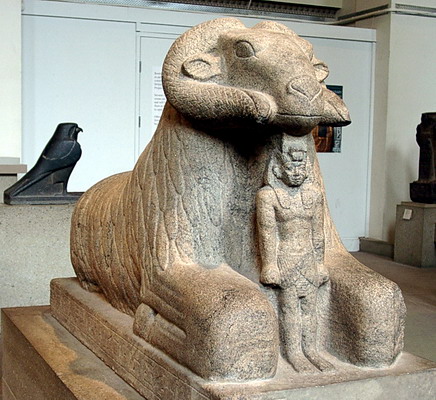


 The Daily Hatch