My name is Everette Hatcher III. I am a businessman in Little Rock and have been living in Bryant since 1993. My wife Jill and I have four kids (Rett 24, Hunter 22, Murphey 16, and Wilson 14).
We’re a little more than a month into a new year, so it’s a good time to take a spiritual inventory. As a Christian, you love Jesus Christ, you thank Him for His sacrifice for you, and you want to please Him. When you have someone in your life you deeply love, you want to find out their likes and dislikes and please them with what they really like. If you find out there’s something your loved one actually hates, you try to steer clear of that!
Are you aware that there are things God actually hates? “Oh,” you say, “but God is a God of love! Surely He doesn’t hate…” Listen to Proverbs 6:16-19.
These six things doth the Lord hate: yea, seven are an abomination unto him: A proud look, a lying tongue, and hands that shed innocent blood, An heart that deviseth wicked imaginations, feet that be swift in running to mischief, A false witness that speaketh lies, and he that soweth discord among brethren.
That’s quite an inventory. And at the top of these seven worst-of-the-worst traits is pride.
Pride is effective because it is deceptive. The more you have, the less you think you have it. Do you have a problem with pride? If your answer is yes, this study may be for you; but if your answer is no, there’s no doubt about it: this study is definitely for you!
Real pride — sinful, destructive pride — is a declaration of independence. It says, “God, I am self‑sufficient. I have everything I need. Your services are no longer required.” The truth is, we are in no way self‑sufficient.
Here are some perils of pride:
Pride Provokes Deity — Pride angers God. Proverbs 16:5 reads, “Every one that is proud in heart is an abomination to the Lord.” Can you imagine being an abomination to the Lord? Why does God feel this way about pride? It caused Lucifer to fall from heaven (Isaiah 14:12-14). Pride made the devil what he is. Pride ruined the entire human race when the devil baited Eve (Genesis 3:1-7). Satan does the same thing today when he tempts us—he appeals to our pride.
Pride Proves Depravity —Some people avoid the notable sins: they don’t “smoke, drink, chew, or run with those who do.” They feel proud of themselves! They fall into the sin worse than all of these. Proverbs 16:5 uses the phrase “proud in heart.”Pride never reaches the hands or feet. It resides within the heart. It is there from birth.
Pride Promotes Dissension — At the root of every quarrel, conflict, battle, and war is the sin of pride. Proverbs 13:10 says, “Only by pride cometh contention.” The next argument we hear, the next church that divides, the next divorce that destroys a home — we will know what is at the root in someone’s heart.
Pride Promotes Dishonor — Jesus said, “And whosoever shall exalt himself shall be abased; and he that shall humble himself shall be exalted”(Matthew 23:12). The way up is always down. Satan fell because he said, “I will ascend into heaven, I will exalt my throne above the stars of God” (Isaiah 14:13). He sought honor and dishonored himself.
How opposite was the attitude of our Lord Jesus Christ! He said, “I will descend.” Though He was God, He didn’t clutch at His divine rights. Instead He humbled Himself, and so God exalted Him. (Philippians 2:6‑11).
Here’s a quick test. Give yourself a good reality check:
· Are you irritated when you are corrected for a mistake?
· Do you find yourself accepting praise for things over which you have no control?
· Do you tend to forget Who blessed you with talents and abilities?
· When you make a mistake, are you quick with an alibi?
· Is everything someone else’s fault?
· When there is a personal conflict, are you quick to tell yourself you can get along without that person?
· Are you prone to think you can go it alone?
· Is it difficult for you to take advice? Are you extremely reluctant to seek it?
· Do you have an ungrateful spirit toward what God has given you and a bitterness about what you think you deserve?
· Is your life marked by a sense of competition? Do you measure success by victories over other people?
Do you see in yourself an independence from God and a sense of self‑sufficiency? It’s a recipe for disaster.
Pride Precedes Destruction — “The Lord will destroy the house of the proud” (Proverbs 15:25). When we’re ruled by pride, we’re taking a stand against God. Left unchecked, we can become hardened to pride and deaf to God’s calling us to repentance. Pride will eventually destroy us.There is no better day than today take a pride inventory, repent, humble yourself, and admit your total dependence upon God.
Ecclesiastes 8-10 | Still Searching After All These Years Published on Oct 9, 2012 Calvary Chapel Spring Valley | Sunday Evening | October 7, 2012 | Pastor Derek Neider _______________________ Ecclesiastes 11-12 | Solomon Finds His Way Published on Oct 30, 2012 Calvary Chapel Spring Valley | Sunday Evening | October 28, 2012 | Pastor Derek Neider […]By Everette Hatcher III | Posted in Current Events | Edit | Comments (0)
Over and over in Proverbs you hear the words “fear the Lord.” In fact, some of he references are Proverbs 1:7, 29; 2:5; 8:13; 9:10;14:26,27; 15:16 and many more. Below is a sermon by John MacArthur from the Book of Luke on 3 reasons we should fear the Lord. (I have posted John MacArthur’s amazing […]By Everette Hatcher III | Posted in Adrian Rogers, Current Events | Edit | Comments (0)
Over and over in Proverbs you hear the words “fear the Lord.” In fact, some of he references are Proverbs 1:7, 29; 2:5; 8:13; 9:10;14:26,27; 15:16 and many more. Below is a sermon by John MacArthur from the Book of Luke on 3 reasons we should fear the Lord. (I have posted John MacArthur’s amazing […]By Everette Hatcher III | Posted in Adrian Rogers, Current Events | Edit | Comments (0)
Over and over in Proverbs you hear the words “fear the Lord.” In fact, some of he references are Proverbs 1:7, 29; 2:5; 8:13; 9:10;14:26,27; 15:16 and many more. Below is a sermon by John MacArthur from the Book of Luke on 3 reasons we should fear the Lord. (I have posted John MacArthur’s amazing […]By Everette Hatcher III | Posted in Adrian Rogers, Current Events | Edit | Comments (0)
Over and over in Proverbs you hear the words “fear the Lord.” In fact, some of he references are Proverbs 1:7, 29; 2:5; 8:13; 9:10;14:26,27; 15:16 and many more. Below is a sermon by John MacArthur from the Book of Luke on 3 reasons we should fear the Lord. (I have posted John MacArthur’s amazing […]By Everette Hatcher III | Posted in Adrian Rogers, Current Events | Edit | Comments (0)
Over and over in Proverbs you hear the words “fear the Lord.” In fact, some of he references are Proverbs 1:7, 29; 2:5; 8:13; 9:10;14:26,27; 15:16 and many more. Below is a sermon by John MacArthur from the Book of Luke on 3 reasons we should fear the Lord. (I have posted John MacArthur’s amazing […]By Everette Hatcher III | Posted in Adrian Rogers, Current Events | Tagged Gene Bartow, John Wooden | Edit | Comments (0)
Over and over in Proverbs you hear the words “fear the Lord.” In fact, some of he references are Proverbs 1:7, 29; 2:5; 8:13; 9:10;14:26,27; 15:16 and many more. Below is a sermon by John MacArthur from the Book of Luke on 3 reasons we should fear the Lord. (I have posted John MacArthur’s amazing […]By Everette Hatcher III | Posted in Adrian Rogers, Current Events | Edit | Comments (0)
Over and over in Proverbs you hear the words “fear the Lord.” In fact, some of he references are Proverbs 1:7, 29; 2:5; 8:13; 9:10;14:26,27; 15:16 and many more. Below is a sermon by John MacArthur from the Book of Luke on 3 reasons we should fear the Lord. (I have posted John MacArthur’s amazing […]By Everette Hatcher III | Posted in Adrian Rogers, Current Events | Edit | Comments (0)
Over and over in Proverbs you hear the words “fear the Lord.” In fact, some of he references are Proverbs 1:7, 29; 2:5; 8:13; 9:10;14:26,27; 15:16 and many more. Below is a sermon by John MacArthur from the Book of Luke on 3 reasons we should fear the Lord. It is tough to guard your […]By Everette Hatcher III | Posted in Adrian Rogers, Current Events | Edit | Comments (0)
Over and over in Proverbs you hear the words “fear the Lord.” In fact, some of he references are Proverbs 1:7, 29; 2:5; 8:13; 9:10;14:26,27; 15:16 and many more. Below is a sermon by John MacArthur from the Book of Luke on 3 reasons we should fear the Lord. What does it mean to fear […]By Everette Hatcher III | Posted in Current Events, Uncategorized | Edit | Comments (0)
Ecclesiastes 6-8 | Solomon Turns Over a New Leaf Published on Oct 2, 2012 Calvary Chapel Spring Valley | Sunday Evening | September 30, 2012 | Pastor Derek Neider _____________________ I have written on the Book of Ecclesiastes and the subject of the meaning of our lives on several occasions on this blog. In this series on Ecclesiastes I […]By Everette Hatcher III | Posted in Current Events | Edit | Comments (0)
Ecclesiastes 1 Published on Sep 4, 2012 Calvary Chapel Spring Valley | Sunday Evening | September 2, 2012 | Pastor Derek Neider _____________________ I have written on the Book of Ecclesiastes and the subject of the meaning of our lives on several occasions on this blog. In this series on Ecclesiastes I hope to show how […]By Everette Hatcher III | Posted in Current Events | Edit | Comments (0)
Ecclesiastes 1 Published on Sep 4, 2012 Calvary Chapel Spring Valley | Sunday Evening | September 2, 2012 | Pastor Derek Neider _____________________ I have written on the Book of Ecclesiastes and the subject of the meaning of our lives on several occasions on this blog. In this series on Ecclesiastes I hope to show how […]By Everette Hatcher III | Posted in Current Events | Edit | Comments (0)
Ecclesiastes 8-10 | Still Searching After All These Years Published on Oct 9, 2012 Calvary Chapel Spring Valley | Sunday Evening | October 7, 2012 | Pastor Derek Neider _______________________ Ecclesiastes 11-12 | Solomon Finds His Way Published on Oct 30, 2012 Calvary Chapel Spring Valley | Sunday Evening | October 28, 2012 | Pastor Derek Neider […]By Everette Hatcher III | Posted in Current Events | Edit | Comments (0)
Ecclesiastes 6-8 | Solomon Turns Over a New Leaf Published on Oct 2, 2012 Calvary Chapel Spring Valley | Sunday Evening | September 30, 2012 | Pastor Derek Neider _____________________ I have written on the Book of Ecclesiastes and the subject of the meaning of our lives on several occasions on this blog. In this series […]By Everette Hatcher III | Posted in Current Events | Edit | Comments (0)
Ecclesiastes 4-6 | Solomon’s Dissatisfaction Published on Sep 24, 2012 Calvary Chapel Spring Valley | Sunday Evening | September 23, 2012 | Pastor Derek Neider ___________________ I have written on the Book of Ecclesiastes and the subject of the meaning of our lives on several occasions on this blog. In this series on Ecclesiastes I hope […]By Everette Hatcher III | Posted in Current Events | Edit | Comments (0)
Ecclesiastes 8-10 | Still Searching After All These Years Published on Oct 9, 2012 Calvary Chapel Spring Valley | Sunday Evening | October 7, 2012 | Pastor Derek Neider _______________________ Ecclesiastes 11-12 | Solomon Finds His Way Published on Oct 30, 2012 Calvary Chapel Spring Valley | Sunday Evening | October 28, 2012 | Pastor Derek Neider […]By Everette Hatcher III | Posted in Current Events | Edit | Comments (0)
Ecclesiastes 8-10 | Still Searching After All These Years Published on Oct 9, 2012 Calvary Chapel Spring Valley | Sunday Evening | October 7, 2012 | Pastor Derek Neider _______________________ Ecclesiastes 11-12 | Solomon Finds His Way Published on Oct 30, 2012 Calvary Chapel Spring Valley | Sunday Evening | October 28, 2012 | Pastor Derek Neider […]By Everette Hatcher III | Posted in Current Events | Edit | Comments (0)
Tom Brady “More than this…” Uploaded by EdenWorshipCenter on Jan 22, 2008 EWC sermon illustration showing a clip from the 2005 Tom Brady 60 minutes interview. _______________________ Tom Brady ESPN Interview Tom Brady has famous wife earned over 76 million dollars last year. However, has Brady found lasting satifaction in his life? It does not […]By Everette Hatcher III | Posted in Current Events | Edit | Comments (0)
Adrian Rogers: How to Be a Child of a Happy Mother Published on Nov 13, 2012 Series: Fortifying Your Family (To read along turn on the annotations.) Adrian Rogers looks at the 5th commandment and the relationship of motherhood in the commandment to honor your father and mother, because the faith that doesn’t begin at home, […]By Everette Hatcher III | Posted in Adrian Rogers, Current Events | Edit | Comments (0)
Ecclesiastes 1 Published on Sep 4, 2012 Calvary Chapel Spring Valley | Sunday Evening | September 2, 2012 | Pastor Derek Neider _____________________ I have written on the Book of Ecclesiastes and the subject of the meaning of our lives on several occasions on this blog. In this series on Ecclesiastes I hope to show how secular humanist man […]By Everette Hatcher III | Posted in Current Events | Edit | Comments (0)
Adrian Rogers – How to Cultivate a Marriage Another great article from Adrian Rogers. Are fathers necessary? “Artificial insemination is the ideal method of producing a pregnancy, and a lesbian partner should have the same parenting rights accorded historically to biological fathers.” Quoted from the United Nations Fourth World Conference on Women, summer of 1995. […]By Everette Hatcher III | Posted in Adrian Rogers, Current Events | Edit | Comments (0)
Tom Brady “More than this…” Uploaded by EdenWorshipCenter on Jan 22, 2008 EWC sermon illustration showing a clip from the 2005 Tom Brady 60 minutes interview. To Download this video copy the URL to http://www.vixy.net ________________ Obviously from the video clip above, Tom Brady has realized that even though he has won many Super Bowls […]
The Inflation Reduction Act being considered by Congress would vastly expand the Internal Revenue Service. The IRS currently has 82,000 employees, and the legislation would boost the number by roughly 87,000, according to a related Treasury estimate (Table 3).
Of the $80 billion increased IRS funding in the Act, $46 billion would go to enforcement. That expansion promises to damage small‐ and medium‐sized businesses and undermine civil liberties. Politicians complain about tax cheats, but noncompliance is low in the United Statescompared to other countries.
All those new IRS employees would undermine GDP rather than producing it. But that would be only part of the waste. Another cost would be the increased time and energy needed by taxpayers, lawyers, and accountants to defend against a more aggressive IRS.
The Inflation Reduction Act adds or expands a slew of special‐interest tax breaks and creates a parallel corporate tax structurebased on financial statement income. Those misguided changes would also increase tax compliance costs on the private sector.
The Office of Management and Budget estimates that individuals and businesses currently spend 6.5 billion hours a year on federal tax paperwork, which is equivalent to 3.6 million people working full‐time on this unproductive activity. That “Tax Army” is two and half times larger than our uniformed military of 1.4 million service members, as shown in the chart.
The Inflation Reduction Act will prompt an expansion in the private‐sector Tax Army. If the Tax Army expands even 10 percent, that would be 140,000 more Americans consumed in unproductive paperwork, tax planning, and IRS defense activities.
Congress has created a tax code at war with growth and efficiency. The government needs to collect adequate revenue, but we could reduce the compliance burden by 90 percent if we replaced the income tax with a consumption‐based flat tax. We could demobilize most of the Tax Army and put people back to work adding to the nation’s economy.
RELATED TAGS
Several scholars have pointed out that Lois Lerner waived her right to invoke the 5th!!!! The Heritage Foundation, The Washington Post, and The Week, all have articles on this issue. Here is one below I found on Townhall.com:
There was no way Lois Lerner’s part in the IRS saga would end quietly, even as she invoked her right to remain silent.
Rep. Darrell Issa, chairman of the House Oversight and Government Reform Committee, boldly asserted this afternoon that Lerner “waived” her right to plead the Fifth Amendment when she made an opening statement at this morning’s hearing. From POLITICO:
The California Republican said Lerner’s Fifth Amendment right to avoid self-incrimination was voided when she gave an opening statement this morning denying any wrongdoing and professing pride in her government service.
“When I asked her her questions from the very beginning, I did so so she could assert her rights prior to any statement,” Issa told POLITICO. “She chose not to do so — so she waived.” …
“The precedents are clear that this is not something you can turn on and turn off,” he told POLITICO. “She made testimony after she was sworn in, asserted her innocence in a number of areas, even answered questions asserting that a document was true … So she gave partial testimony and then tried to revoke that.” …
“I understand from her counsel that there was a plan to assert her Fifth Amendment rights,” he continued. “She went ahead and made a statement, so counsel let her effectively under the precedent, waive — so we now have someone who no longer has that ability.”
Essentially, he argues, her opening statement, in which she proclaimed her innocence, constituted a forfeiture of Fifth Amendment protection because she spoke on her own behalf about her involvement in the matter. Issa intends to invite Lerner before the committee again in the hopes of conducting a proper grilling, and others–including Rep. Trey Gowdy–agree that she must now give testimony.
“Mr. Cummings just said we should run this hearing like a courtroom, and I agree with him,” Gowdy thundered. “[Lerner] just testified. She just waived her Fifth Amendment right. You don’t get to tell your side of the story and then not be subjected to cross examination — that’s not the way it works. She waived her right to Fifth Amendment privilege by issuing an opening statement. She ought to stand here and answer our questions.”
However, it’s not so simple as that. Legal scholars say that the Fifth Amendment works differently in Congressional fact-finding hearings than in a court of law–one cannot simply conflate the two, as they exist for different purposes. Fifth Amendment expert James Duane gave the following explanation (h/t to Allahpundit for the link):
First, unlike in a trial, where she could choose to take the stand or not, Lerner had no choice but to appear before the committee. Second, in a trial there would be a justifiable concern about compromising a judge or jury by providing them with “selective, partial presentation of the facts.” But Congress is merely pursuing information as part of an investigation, not making a definitive ruling on Lerner’s guilt or innocence.
“When somebody is in this situation,” says Duane, a Harvard Law graduate whose 2008 lecture on invoking the Fifth Amendment with police has been viewed on YouTube nearly 2.5 million times, “when they are involuntarily summoned before grand jury or before legislative body, it is well settled that they have a right to make a ‘selective invocation,’ as it’s called, with respect to questions that they think might raise a meaningful risk of incriminating themselves.”
In fact, Duane says, “even if Ms. Lerner had given answers to a few questions — five, ten, twenty questions — before she decided, ‘That’s where I draw the line, I’m not answering any more questions,’ she would be able to do that as well.” Such uses of selective invocation “happen all the time.”
Unfortunately for Issa and company, it seems Lerner was within her rights to make a statement and then clam up. Of course, drawing greater attention to her silence could, ultimately, help in the investigation of the IRS; if they ask her back and she stonewalls, the public might want to know why. Hopefully, in any event, someone–anyone–will bear some legitimate responsibility for the whole affair, and lose the job they clearly never should have had in the first place.
We got to lower the size of government so we don’t have these abuses like this in the IRS. Cartoonists v. the IRS May 23, 2013 by Dan Mitchell Call me perverse, but I’m enjoying this IRS scandal. It’s good to see them suffer a tiny fraction of the agony they impose on the American people. I’ve already […]
Dear Senator Pryor, Why not pass the Balanced Budget Amendment? As you know that federal deficit is at all time high (1.6 trillion deficit with revenues of 2.2 trillion and spending at 3.8 trillion). On my blog http://www.HaltingArkansasLiberalswithTruth.com I took you at your word and sent you over 100 emails with specific spending cut ideas. However, […]
Is the irs out of control? Here is the link from cato: MAY 22, 2013 8:47AM Can You Vague That Up for Me? By TREVOR BURRUS SHARE As the IRS scandal thickens, targeted groups are coming out to describe their ordeals in dealing with that most-reviled of government agencies. The Ohio Liberty Coalition was one of […]
Get Ready to Be Reamed May 17, 2013 by Dan Mitchell With so many scandals percolating, there are lots of good cartoons being produced. But I think this Chip Bok gem deserves special praise. It manages to weave together both the costly Obamacare boondoggle with the reprehensible politicization of the IRS. So BOHICA, my friends. If […]
You want to talk about irony then look at President Obama’s speech a few days ago when he joked about a potential audit of Ohio St by the IRS then a few days later the IRS scandal breaks!!!! The I.R.S. Abusing Americans Is Nothing New Published on May 15, 2013 The I.R.S. targeting of tea party […]
Dear Senator Pryor, Why not pass the Balanced Budget Amendment? As you know that federal deficit is at all time high (1.6 trillion deficit with revenues of 2.2 trillion and spending at 3.8 trillion). On my blog http://www.HaltingArkansasLiberalswithTruth.com I took you at your word and sent you over 100 emails with specific spending cut ideas. However, […]
We could put in a flat tax and it would enable us to cut billions out of the IRS budget!!!! May 14, 2013 2:34PM IRS Budget Soars By Chris Edwards Share The revelations of IRS officials targeting conservative and libertarian groups suggest that now is a good time for lawmakers to review a broad range […]
The IRS has thuggish employees and the President was right to condemn their latest actions. Let’s Thank President Obama for Reminding Americans that They Should Distrust the IRS May 14, 2013 by Dan Mitchell Last week, while writing about the latest IRS scandal, I noted that the IRS has a long record of abusive actions. It has thieving employees. […]
House Speaker Nancy Pelosi, speaking to reporters Friday, praises the contents of Democrats’ Inflation Reduction Act. (Photo: Chip Somodevilla/Getty Images)
On a party-line vote, the House narrowly passed a $737 billion measure Friday to dramatically expand green energy subsidies and health care programs while nearly doubling the size of the Internal Revenue Service.
As Republicans decried the inclusion of about $740 billion in new tax revenues, the bill that Democrats dub the Inflation Reduction Act cleared the House at 5:42 p.m. by a vote of 220-207 along party lines.
Four Republicans didn’t vote.
House Speaker Nancy Pelosi, D-Calif., announced the vote total and said, “The motion is adopted,” spurring cheers from fellow Democrats.
Want to keep up with the 24/7 news cycle? Want to know the most important stories of the day for conservatives? Need news you can trust? Subscribe to The Daily Signal’s email newsletter. Learn more >>
The vote followed hours of debate.
“Today we make good on our promise to take on climate change and climate justice with historic investment in green technology that will cut carbon emissions by 40% by 2030, create over 9 million good-paying jobs, put $60 billion into environmental justice, and cut energy costs for the average American family by almost $1,000 per year,” Rep. Pramila Jayapal, D-Wash., said in remarks on the House floor.
“For the first time we take on big pharma’s price gouging, finally allowing Medicare to negotiate prescription drug prices,” said Jayapal, who was first elected in 2016 and chairs the House’s Progressive Caucus.
The Senate voted Sunday evening, also along party lines, to pass the package, which President Joe Biden has said he would sign.
Rep. Chip Roy, R-Texas, accused House Democrats of having “unicorn” energy policies.
“My colleagues now today are going to dump hundreds of billions of dollars into corporate America, screwing over the American people every single day with tax audits, increased energy prices, and increased taxes,” Roy said. “Congratulations. Take that to the polls.”
The bill allocates $79.6 billion to expanding the IRS to boost revenue to pay for Democrats’ pet programs.
Biden and other Democrats have argued that no American making less than $400,000 per year would be audited by the IRS.
Although Biden and the Democrats assert that no one earning less than $400,000 a year will face new taxes, other analysts project that the bill will impose a $4,500 tax increase on the average American over the next decade.
The bill also includes limits on the sale of oil and natural gas leases on federal lands.
The nonpartisan Congressional Joint Committee on Taxation determined that taxes would increase by up to $16.7 billion for Americans making less than $200,000 in 2023, and increase by $14.1 billion for those earning between $200,000 and $500,000.
The next Congress and next president should reverse Democrats’ legislation, said Matthew Dickerson, director of the Hermann Center for the Federal Budget at The Heritage Foundation, parent organization of The Daily Signal.
“The new spending, tax increases, manipulative subsidies, and price controls in the act will only make stagflation worse. [A total of] 87,000 new IRS agents will increase audits for small businesses and middle-class and working taxpayers,” Dickerson said in a prepared statement, adding:
Harmful new taxes will reduce investment and be shouldered by workers, violating President Biden’s pledge to not increase taxes on working Americans. Hundreds of billions of dollars in taxpayer-funded corporate welfare will subsidize special interests and drive up energy costs for consumers. And the bill will reduce access to life-saving medical advances.
An analysis of the so-called Inflation Reduction Act by the Wharton School at the University of Pennsylvania says, in part: “The Act would very slightly increase inflation until 2024 and decrease inflation thereafter. These point estimates are statistically indistinguishable from zero, thereby indicating low confidence that the legislation will have any impact on inflation.”
“Americans are suffering,” Rep. Jason Smith, R-Mo., said in remarks on the House floor. “Are we here to debate how we alleviate that suffering? No. We are debating what Democrats call the Inflation Reduction Act, which everyone from the Congressional Budget Office to 230 different economists—even Sen. Bernie Sanders—says will not actually reduce inflation.”
Smith said that stripping away the “fake sunset policies,” the bill would spend $745 billion and add $146 billion to the national debt, with $54 billion of that debt in the first five years.
“Lots of spending up front, lots of debt up front, and maybe savings eight years from now?” Smith asked rhetorically, adding:
How is that going to put out the fire of inflation when the price of groceries is up 13.1% over the past year? … [The bill] doubles the size of the IRS so it can target and audit more middle-class families and snoop into their bank accounts. I’m not sure how subjecting Americans to more audits solves the inflation crisis.
However, Rep. Jim McGovern, D-Mass., called the legislation a bold step forward that his party should be proud of.
“I am proud of what we are doing here. I am proud that we are finally allowing drug prices to be negotiated, to lower those costs,” McGovern said, adding:
I’m proud that we are extending the biggest expansion in health care in a decade. I’m proud that we are reducing future energy costs for thousands of families. I am proud that we are making the biggest investment to combat climate change ever. … We have done it. We have moved the ball.
Have an opinion about this article? To sound off, please emailletters@DailySignal.com and we’ll consider publishing your edited remarks in our regular “We Hear You” feature. Remember to include the url or headline of the article plus your name and town and/or state.
Several scholars have pointed out that Lois Lerner waived her right to invoke the 5th!!!! The Heritage Foundation, The Washington Post, and The Week, all have articles on this issue. Here is one below I found on Townhall.com:
There was no way Lois Lerner’s part in the IRS saga would end quietly, even as she invoked her right to remain silent.
Rep. Darrell Issa, chairman of the House Oversight and Government Reform Committee, boldly asserted this afternoon that Lerner “waived” her right to plead the Fifth Amendment when she made an opening statement at this morning’s hearing. From POLITICO:
The California Republican said Lerner’s Fifth Amendment right to avoid self-incrimination was voided when she gave an opening statement this morning denying any wrongdoing and professing pride in her government service.
“When I asked her her questions from the very beginning, I did so so she could assert her rights prior to any statement,” Issa told POLITICO. “She chose not to do so — so she waived.” …
“The precedents are clear that this is not something you can turn on and turn off,” he told POLITICO. “She made testimony after she was sworn in, asserted her innocence in a number of areas, even answered questions asserting that a document was true … So she gave partial testimony and then tried to revoke that.” …
“I understand from her counsel that there was a plan to assert her Fifth Amendment rights,” he continued. “She went ahead and made a statement, so counsel let her effectively under the precedent, waive — so we now have someone who no longer has that ability.”
Essentially, he argues, her opening statement, in which she proclaimed her innocence, constituted a forfeiture of Fifth Amendment protection because she spoke on her own behalf about her involvement in the matter. Issa intends to invite Lerner before the committee again in the hopes of conducting a proper grilling, and others–including Rep. Trey Gowdy–agree that she must now give testimony.
“Mr. Cummings just said we should run this hearing like a courtroom, and I agree with him,” Gowdy thundered. “[Lerner] just testified. She just waived her Fifth Amendment right. You don’t get to tell your side of the story and then not be subjected to cross examination — that’s not the way it works. She waived her right to Fifth Amendment privilege by issuing an opening statement. She ought to stand here and answer our questions.”
However, it’s not so simple as that. Legal scholars say that the Fifth Amendment works differently in Congressional fact-finding hearings than in a court of law–one cannot simply conflate the two, as they exist for different purposes. Fifth Amendment expert James Duane gave the following explanation (h/t to Allahpundit for the link):
First, unlike in a trial, where she could choose to take the stand or not, Lerner had no choice but to appear before the committee. Second, in a trial there would be a justifiable concern about compromising a judge or jury by providing them with “selective, partial presentation of the facts.” But Congress is merely pursuing information as part of an investigation, not making a definitive ruling on Lerner’s guilt or innocence.
“When somebody is in this situation,” says Duane, a Harvard Law graduate whose 2008 lecture on invoking the Fifth Amendment with police has been viewed on YouTube nearly 2.5 million times, “when they are involuntarily summoned before grand jury or before legislative body, it is well settled that they have a right to make a ‘selective invocation,’ as it’s called, with respect to questions that they think might raise a meaningful risk of incriminating themselves.”
In fact, Duane says, “even if Ms. Lerner had given answers to a few questions — five, ten, twenty questions — before she decided, ‘That’s where I draw the line, I’m not answering any more questions,’ she would be able to do that as well.” Such uses of selective invocation “happen all the time.”
Unfortunately for Issa and company, it seems Lerner was within her rights to make a statement and then clam up. Of course, drawing greater attention to her silence could, ultimately, help in the investigation of the IRS; if they ask her back and she stonewalls, the public might want to know why. Hopefully, in any event, someone–anyone–will bear some legitimate responsibility for the whole affair, and lose the job they clearly never should have had in the first place.
We got to lower the size of government so we don’t have these abuses like this in the IRS. Cartoonists v. the IRS May 23, 2013 by Dan Mitchell Call me perverse, but I’m enjoying this IRS scandal. It’s good to see them suffer a tiny fraction of the agony they impose on the American people. I’ve already […]
Dear Senator Pryor, Why not pass the Balanced Budget Amendment? As you know that federal deficit is at all time high (1.6 trillion deficit with revenues of 2.2 trillion and spending at 3.8 trillion). On my blog http://www.HaltingArkansasLiberalswithTruth.com I took you at your word and sent you over 100 emails with specific spending cut ideas. However, […]
Is the irs out of control? Here is the link from cato: MAY 22, 2013 8:47AM Can You Vague That Up for Me? By TREVOR BURRUS SHARE As the IRS scandal thickens, targeted groups are coming out to describe their ordeals in dealing with that most-reviled of government agencies. The Ohio Liberty Coalition was one of […]
Get Ready to Be Reamed May 17, 2013 by Dan Mitchell With so many scandals percolating, there are lots of good cartoons being produced. But I think this Chip Bok gem deserves special praise. It manages to weave together both the costly Obamacare boondoggle with the reprehensible politicization of the IRS. So BOHICA, my friends. If […]
You want to talk about irony then look at President Obama’s speech a few days ago when he joked about a potential audit of Ohio St by the IRS then a few days later the IRS scandal breaks!!!! The I.R.S. Abusing Americans Is Nothing New Published on May 15, 2013 The I.R.S. targeting of tea party […]
Dear Senator Pryor, Why not pass the Balanced Budget Amendment? As you know that federal deficit is at all time high (1.6 trillion deficit with revenues of 2.2 trillion and spending at 3.8 trillion). On my blog http://www.HaltingArkansasLiberalswithTruth.com I took you at your word and sent you over 100 emails with specific spending cut ideas. However, […]
We could put in a flat tax and it would enable us to cut billions out of the IRS budget!!!! May 14, 2013 2:34PM IRS Budget Soars By Chris Edwards Share The revelations of IRS officials targeting conservative and libertarian groups suggest that now is a good time for lawmakers to review a broad range […]
The IRS has thuggish employees and the President was right to condemn their latest actions. Let’s Thank President Obama for Reminding Americans that They Should Distrust the IRS May 14, 2013 by Dan Mitchell Last week, while writing about the latest IRS scandal, I noted that the IRS has a long record of abusive actions. It has thieving employees. […]
The homepage of the Internal Revenue Service website seen on a computer screen through a magnifying glass. The Inflation Reduction Act would massively increase the funding and scope of the tax agency. (Photo: Rafael Henrique/SOPA Images/LightRocket/Getty Images)
In 2021, the IRS issued a report that described what the tax-collecting agency could do with nearly $80 billion in new funding, if only Congress would pass the American Families Plan. The Internal Revenue Service was making the case that the Biden administration’s plan to supercharge funding of the IRS would reap dividends for the federal government.
In a table in that report, the IRS shows that part of the “return on investment” for America would be that by 2031 the IRS could increase the size of its workforce by 86,852 full-time employees.
Last week, that estimate took on renewed significance when the Senate passed HR 5376, the bill called the Inflation Reduction Act but would be more aptly dubbed the IRS Reinforcements Act.
The Inflation Reduction Act includes the same nearly $80 billion in new funding for the IRS over nine years as the American Families Plan, which would increase the IRS’ annual spending by an estimated $14.6 billion by 2031. Since the IRS funding plan remains almost the same, the IRS’ estimate of adding roughly 87,000 full-time employees to its ranks should still be a reasonable approximation.
Unfortunately for the nation’s tax-collecting agency, the idea of adding 87,000 new IRS agents doesn’t appeal to most Americans.
The Senate passage of the Inflation Reduction Act has led many Americans to recount horror stories of IRS harassment. Others remember the political weaponization of the IRS by presidential administrations from Richard Nixon to Barack Obama, not to mention the agency’s still unexplained leak of a massive trove of taxpayer data just a year ago. That data leak was exploited for political purposes.
Now, the IRS and its allies are downplaying the size of the reinforcements they’re receiving, portraying the boost in IRS staffing as a moderate increase that will be largely offset by attrition and other factors.
In a Time fact check, a counselor for tax policy at the Treasury Department was quoted as saying: “There’s a big wave of attrition that’s coming and a lot of these resources are just about filling those positions.”
The Time article claimed that the IRS might net roughly 20,000 to 30,000 more employees from the funding. But this is not what the IRS report from last year said.
While the political calculus may have changed, the numbers haven’t.
The 24-page IRS report has only one rather obscure reference to attrition and that’s not in the context of hiring new agents.
Here’s how the IRS describes the expansion of its workforce: “Because the expansion in the IRS’s budget is phased in over a 10-year horizon, each year the IRS’s workforce should grow by no more than a manageable 15%.”
Notice, the IRS describes a growing workforce, and notice that is a rapid rate. If the IRS were to grow by 15% each year for nine years, that would mean a 252% increase in the size of the IRS’ current 81,836-person workforce. That would mean more than 206,000 more IRS employees than today.
That number is clearly unrealistically high, even for the large amount of funding the IRS would receive. But even if the agency grew at an annual rate of 8.4% for nine years—barely over half of the ceiling described by the IRS—the agency would surpass 87,000 new employees.
But was the IRS right? Is there enough funding in this bill for the agency to add 87,000 employees to its ranks? The numbers projected by the Congressional Budget Office suggest the 87,000 figure is very close.
The IRS spent roughly $13.7 billion in 2021 and had 81,600 employees, or about $167,900 per employee. If the IRS were to hire 87,000 additional employees at the same cost per employee, it would cost $14.6 billion, the same amount of funding that the government forecasters projected the IRS would spend in 2031.
So, yes, the IRS’ own estimate of an 87,000-person expansion of the IRS was solid.
One would hope that with millions more audits of American taxpayers coming, at least taxpayer services would improve. But that’s unlikely.
Only $3.2 billion would go to taxpayer services, despite the IRS answering only 18% of the phone calls it received in 2022. That’s a mere 9% increase for funding in things like account services, taxpayer education, and filing assistance.
The lion’s share of the new funding, $45.6 billion, will go to enforcement activities like new audits, litigation, asset monitoring, and collections.
And don’t be fooled by bogus claims that the middle class won’t be affected by the new audits. As Heritage Foundation senior research fellow Rachel Greszler explains, even a 3,000% increase in audit rates for taxpayers making more than $400,000 would fall well short of raising the new revenues being claimed in 2031.
So, if the Inflation Reduction Act passes the House of Representatives and is signed into law, get ready to dust off your copy of the 7,000-pagetax code and 14,000 pages of IRS regulations.
Have an opinion about this article? To sound off, please emailletters@DailySignal.com and we’ll consider publishing your edited remarks in our regular “We Hear You” feature. Remember to include the url or headline of the article plus your name and town and/or state.
Laura Ingraham analyzed how the raid of former President Donald Trump’s home at Mar-a-Lago happened because of a document dispute even after Trump’s legal team voluntarily met with government investigators on “The Ingraham Angle.”
LAURA INGRAHAM: Just hours ago, we learned more about just how petty and venal Attorney General Merrick Garland is that he would send federal agents into the home of a former president and likely 2024 candidate over a document dispute. The Washington Post is reporting tonight that Monday’s raid came months after the Trump legal team voluntarily met with government investigators at Mar-a-Lago.
This was back in June. Now, the ostensible reason for the visit was the concern that some documents were retained by Trump when he left office rather than being turned in to the National Archives. Trump stopped by the meetings as it began to greet the investigators, but was not interviewed. The lawyer showed the federal officials the boxes, and DOJ officials spent some time looking through the material.
Attorney General Merrick Garland. (Photo by Drew Angerer/Getty Images)
According to Trump’s attorney, Christina Bobb, Justice Department officials commented that they did not believe the storage unit where these moving boxes were kept was properly secured. So Trump officials added a lock to the facility. Sounds reasonable. When the FBI agents searched the property on Monday, Bobb added, that they broke through the lock that had been added to the door. Of course, at the federal authorities‘ request, they broke their own lock. Keystone Cops here with DOJ credentials. This is absurd.
If you take a group of Democrats who are also unionized government employees, and put them in charge of policing political speech, it doesn’t matter how professional and well-intentioned they are. The result will be much like the debacle in the Cincinnati office of the IRS. …there’s no reason to even posit evil intent by the IRS officials who formulated, approved or executed the inappropriate guidelines for picking groups to scrutinize most closely. …The public servants figuring out which groups qualified for 501(c)4 “social welfare” non-profit status were mostly Democrats surrounded by mostly Democrats. …In the 2012 election, every donation traceable to this office went to President Obama or liberal Sen. Sherrod Brown. This is an environment where even those trying to be fair could develop a disproportionate distrust of the Tea Party. One IRS worker — a member of NTEU and contributor to its PAC, which gives 96 percent of its money to Democratic candidates — explained it this way: “The reason NTEU mostly supports Democratic candidates for office is because Democratic candidates are mostly more supportive of civil servants/government employees.”
Tim concludes with a wise observation.
As long as we have a civil service workforce that leans Left, and as long as we have an income tax system that requires the IRS to police political speech, conservative groups can always expect special IRS scrutiny.
The real issue is the expansive, expensive bureaucratic state and its inherent threat to any system of limited government, rule of law, and individual liberty. …the broader the government’s authority, the greater its need for revenue, the wider its enforcement power, the more expansive the bureaucracy’s discretion, the increasingly important the battle for political control, and the more bitter the partisan fight, the more likely government officials will abuse their positions, violate rules, laws, and Constitution, and sacrifice people’s liberties. The blame falls squarely on Congress, not the IRS.
…the denizens of Capitol Hill also have created a tax code marked by outrageous complexity, special interest electioneering, and systematic social engineering. Legislators have intentionally created avenues for tax avoidance to win votes, and then complained about widespread tax avoidance to win votes.
So what’s the answer?
The most obvious response to the scandal — beyond punishing anyone who violated the law — is tax reform. Implement a flat tax and you’d still have an IRS, but the income tax would be less complex, there would be fewer “preferences” for the agency to police, and rates would be lower, leaving taxpayers with less incentive for aggressive tax avoidance. …Failing to address the broader underlying factors also would merely set the stage for a repeat performance in some form a few years hence. …More fundamentally, government, and especially the national government, should do less. Efficient social engineering may be slightly better than inefficient social engineering, but no social engineering would be far better.
But here’s the challenge. We know the solution, but it will be almost impossible to implement good policy unless we figure out some way to restrain the spending side of the fiscal ledger.
___________________________
At the risk of over-simplifying, we will never get tax reform unless we figure out how to implement entitlement reform.
Here’s another Foden cartoon, which I like because it has the same theme asthis Jerry Holbert cartoon, showing big government as a destructive and malicious force.
_____________
Thank you so much for your time. I know how valuable it is. I also appreciate the fine family that you have and your commitment as a father and a husband.
Sincerely,
Everette Hatcher III, 13900 Cottontail Lane, Alexander, AR 72002, ph 501-920-5733, lowcostsqueegees@yahoo.com
We know the IRS commissioner wasn’t telling the truth in March 2012, when he testified: “There’s absolutely no targeting.”However, Lois Lerner knew different when she misled people with those words. Two important points made by Noonan in the Wall Street Journal in the article below: First, only conservative groups were targeted in this scandal by […]
Ohio Liberty Coalition versus the I.R.S. (Tom Zawistowski) Published on May 20, 2013 The Ohio Liberty Coalition was among tea party groups that received special scrutiny from the I.R.S. Tom Zawistowski says his story is not unique. He argues the kinds of questions the I.R.S. asked his group amounts to little more than “opposition research.” Video […]
Francis Schaeffer: “Whatever Happened to the Human Race?” (Episode 2) SLAUGHTER OF THE INNOCENTS Published on Oct 6, 2012 by AdamMetropolis The 45 minute video above is from the film series created from Francis Schaeffer’s book “Whatever Happened to the Human Race?” with Dr. C. Everett Koop. This book really helped develop my political views concerning […]
We got to lower the size of government so we don’t have these abuses like this in the IRS. Cartoonists v. the IRS May 23, 2013 by Dan Mitchell Call me perverse, but I’m enjoying this IRS scandal. It’s good to see them suffer a tiny fraction of the agony they impose on the American people. I’ve already […]
Dear Senator Pryor, Why not pass the Balanced Budget Amendment? As you know that federal deficit is at all time high (1.6 trillion deficit with revenues of 2.2 trillion and spending at 3.8 trillion). On my blog http://www.HaltingArkansasLiberalswithTruth.com I took you at your word and sent you over 100 emails with specific spending cut ideas. However, […]
Is the irs out of control? Here is the link from cato: MAY 22, 2013 8:47AM Can You Vague That Up for Me? By TREVOR BURRUS SHARE As the IRS scandal thickens, targeted groups are coming out to describe their ordeals in dealing with that most-reviled of government agencies. The Ohio Liberty Coalition was one of […]
Get Ready to Be Reamed May 17, 2013 by Dan Mitchell With so many scandals percolating, there are lots of good cartoons being produced. But I think this Chip Bok gem deserves special praise. It manages to weave together both the costly Obamacare boondoggle with the reprehensible politicization of the IRS. So BOHICA, my friends. If […]
You want to talk about irony then look at President Obama’s speech a few days ago when he joked about a potential audit of Ohio St by the IRS then a few days later the IRS scandal breaks!!!! The I.R.S. Abusing Americans Is Nothing New Published on May 15, 2013 The I.R.S. targeting of tea party […]
Dear Senator Pryor, Why not pass the Balanced Budget Amendment? As you know that federal deficit is at all time high (1.6 trillion deficit with revenues of 2.2 trillion and spending at 3.8 trillion). On my blog http://www.HaltingArkansasLiberalswithTruth.com I took you at your word and sent you over 100 emails with specific spending cut ideas. However, […]
We could put in a flat tax and it would enable us to cut billions out of the IRS budget!!!! May 14, 2013 2:34PM IRS Budget Soars By Chris Edwards Share The revelations of IRS officials targeting conservative and libertarian groups suggest that now is a good time for lawmakers to review a broad range […]
With congressional Democrats voting to add 87,000 agents at the Internal Revenue Service, here are some surprising facts about the IRS gun arsenal. (Photo: Stefani Reynolds/AFP/Getty Images)
Some of the 87,000 new agents whom Democrats propose to hire at the Internal Revenue Service could come with some extra firepower.
On Friday, House Democrats gave final passage to the tax and spending bill they dubbed the Inflation Reduction Act, which, among other things, would double the size of the IRS with 87,000 new agents to beef up enforcement.
As of two years ago, the IRS had an arsenal of 4,600 guns, reported OpenTheBooks, a government watchdog group.
Two federal investigations in the past decade found that IRS agents had not been sufficiently trained and were accident-prone with the weapons they have. Armed IRS raids on nonviolent taxpayers surfaced as a concern almost 25 years ago during a Senate hearing.
Want to keep up with the 24/7 news cycle? Want to know the most important stories of the day for conservatives? Need news you can trust? Subscribe to The Daily Signal’s email newsletter. Learn more >>
Democrats’ bill, which the Senate passed Sunday, awaits the signature of President Joe Biden should it clear the House as early as Friday.
The legislation, which unwinds from 2023 through 2031, would devote $80 billion to expanding the IRS and boosting tax revenue to pay for Democrats’ green energy subsidies and other pet projects.
Americans for Tax Reform, a conservative group that opposes the legislation, assembled information about the IRS arsenal from government and media reports.
During the House floor debate Friday, Rep. Lauren Boebert, R-Colo., raised concerns about arming IRS agents.
“This bill has new IRS agents and they are armed, and the job description tells them that they need to be required to carry a firearm and expect to use deadly force if necessary,” Boebert said. “Excessive taxation is theft. You are using the power of the federal government for armed robbery on the taxpayers.”
Rep. John Yarmuth, D-Ky., suggested that no IRS agents are armed.
“The idea that they are armed—I know that Ms. Boebert would like everybody to be armed, but that’s not what IRS agents do,” Yarmuth said. “I would implore my Republican colleagues to cut out the scare tactics. Quit making things up.”
In a posted job opening for a special agent, the IRS specified that applicants should be “willing and able to participate in arrests, execution of search warrants, and other dangerous assignments,” and able to carry “a firearm and be willing to use deadly force, if necessary.”
After sparking some controversy amid the proposed expansion of the agency, the IRS deleted “willing to use deadly force” from the job description.
The IRS referred questions to the Treasury Department as to whether the arsenal would increase as the number of personnel multiplies.
The Treasury Department did not immediately respond to The Daily Signal’s request for comment for this report.
Here are four key things to know about the Internal Revenue Service and weapons.
1. IRS Guns and Ammo
The current IRS workforce includes 78,661 full-time employees, so Democrats’ legislation, if passed as written, would more than double the agency’s employees.
The firearms include 3,282 pistols, 621 shotguns, 539 rifles, 15 fully automatic firearms, and four revolvers, the report says.
The Government Accountability Office, a federal watchdog agency, reported in 2018 that the IRS had 3.1 million rounds of ammunition for pistols and revolvers.
The tax agency had 1.4 million rounds of ammunition for rifles, the GAO report said, along with 367,750 shotgun rounds and 56,000 rounds for automatic weapons.
2. Armed Agents ‘Not Properly Trained’
The IRS’s National Criminal Investigation Training Academy has the responsibility to implement firearms training and a related qualification program nationwide.
However, IRS agents assigned to the Criminal Investigation division regularly failed to stay up to date with training or to report incidents of improper firearms use, according to a 2018 report from the Treasury Department’s inspector general for tax administration.
The inspector general’s report notes that “there is no national level review of firearms training records to ensure that all special agents meet the qualification requirements.”
“Special agents not properly trained in the use of firearms could endanger the public, as well as their fellow special agents, and expose the IRS to possible litigation over injuries or for damages,” the report says.
For qualification, each agent must score 75% or higher on the firing range, but the IRS lacked documentation showing its agents met the standards, according to the inspector general.
The report says that 79 of the 459 special agents in the agency’s long gun cadre failed to meet standard qualification requirements. Further, the report says the IRS could not provide information about whether 1,500 special agents were trained in tactical equipment proficiency.
In fiscal year 2016, the inspector general’s report determined, the IRS Criminal Investigation division “did not maintain documented evidence that 145 out of 2,126 special agents met the firearm standards established by CI [Criminal Investigation] and therefore were not qualified law enforcement officers.”
3. More Unintended Discharges Than Intended Ones
The poor firearms training for IRS agents has led to more accidental firings than intentional firings, according to a separate inspector general’s report from 2012.
“Having the availability of deadly force puts hiring so many new agents into perspective,” Grover Norquist, president of Americans for Tax Reform, told The Daily Signal.
The inspector general for tax administration “found they fired their guns more times by accident than on purpose,” Norquist said. “I’m not sure if that’s good or bad.”
The poor training was not a new problem, since the 2012 report from the inspector general found similar issues with firearms training.
“If there is insufficient oversight, special agents in possession of firearms who are not properly trained and qualified could endanger other special agents and the public,” the report says.
The 2012 report not only found that IRS agents fired their weapons by accident more times than intentionally, but that the agency concealed details about the accidental discharges.
“There were a total of eight firearm discharges classified as intentional use of force incidents and 11 discharges classified as accidental during FYs 2009 through 2011,” the report says.
And, the inspector general’s report continues, “we found that four accidental discharges were not properly reported.”
It says that “the accidental discharges may have resulted in property damage or personal injury.”
The public report, however, redacts four references to unreported accidental discharges of firearms.
4. IRS History of Armed Raids
In 1998, the Senate Finance Committee held investigative hearings into IRS abuses that featured testimony from a Virginia restaurant owner.
The restaurant owner said that armed IRS agents with drug-sniffing dogs burst into his restaurant during breakfast hours and ordered customers to get out.
Agents took his cash register and records, the restaurant owner told the Senate committee. When he returned home, he found that his door had been kicked open and his residence had been raided.
A tax preparer from Oklahoma gave similar testimony, saying that about 15 armed IRS agents came to his business and harassed his clients.
The owner of a Texas oil company recounted that agents came to his office and told employees: “Remove your hands from the keyboards and back away from the computers. And remember, we’re armed!”
In each case, the agents came up empty-handed.
The Washington Post reported at the time that Democrat and Republican lawmakers alike expressed dismay, and that the Clinton administration’s IRS commissioner, Charles O. Rossotti, promised an investigation of such actions.
At a separate hearing that year before the same Senate committee, Treasury Department’s inspector general, Harry G. Patsalides, told senators that the IRS had tolerated car thefts and anonymous bullying by promoting an agent accused of sexual harassment and allowing agents to conduct armed raids on nonviolent taxpayers.
Have an opinion about this article? To sound off, please email letters@DailySignal.com and we’ll consider publishing your edited remarks in our regular “We Hear You” feature. Remember to include the url or headline of the article plus your name and town and/or state.
So let’s celebrate (or commiserate) this awful day by wading into the debate about whether the Internal Revenue Service should have a bigger budget.
Proponents usually claim the IRS is under-funded by comparing today’s budget to how much the bureaucracy received in 2011.
But that was a one-year spike because of all the money in Obama’s failed stimulus package. If you review long-run data, you can see that the IRS’s budget has increased significantly.
And these numbers are adjusted for inflation.
But perhaps proponents are right, even if they use deceptive numbers.
The Washington Post has a new editorial on this topic, arguing that the bureaucracy needs more money.
The IRS is currently limping along without enough staff or funding. Congress, especially Republicans, needs to face up to reality. …It’s not a mystery how the IRS deteriorated. …the core problem is that Republicans slashed the IRS budget about 18 percent in the past decade. That’s not belt-tightening, it’s gutting an agency. …The Biden administration is rightly asking for a big increase for 2023 (a request of $14.1 billion). This isn’t some Democratic wish list item; it’s about restoring the basic functions of America’s tax collection agency.
When this topic was being debated last year, Ryan Ellis explained that the IRS will target small businesses if it gets a bigger budget.
Here are some excerpts from his piece in National Review.
…the idea is that if taxpayers fund the IRS to the tune of $40 billion over the next decade, the IRS will step up audits and collect an additional $100 billion in tax revenue, penalties, and interest. This is lauded as a good because of the supposed “tax gap,”… Apparently, it doesn’t occur to anyone that the IRS, which is seeking this extra $40 billion in taxpayer funding, has every incentive in the world to exaggerate this “tax gap” and to make wild promises about the new money that additional enforcement will yield for the Treasury. …Giving money to IRS bureaucrats to conduct fishing expedition audits on millions of honest self-employed people? The same IRS behind the Lois Lerner scandal a decade ago, when the IRS inappropriately targeted conservative political groups during the 2012 election season, when Obama was running for reelection?
Ryan is right to point out that the IRS is undeserving because of bad behavior.
Advocates of more funding will argue that the bureaucracy’s malfeasance is a separate issue and that more employees and more audits are needed regardless of whether criminals at the IRS are caught and punished.
But this brings us to another important topic, which is whether it would be best to fix the underlying tax laws instead of throwing more money at the IRS.
In a column for the Louisville Courier-Times, we get this point of view from Richard Williams of George Mason University’s Mercatus Center.
…money won’t fix this problem. …Another approach would be drastically reducing the complexity of federal taxes. …The Tax Foundation estimates that we give up 3.24 billion hours and $37 billion to comply with federal taxes each year. Given the headaches and anxiety that come with this, Americans don’t need more IRS workers. We need a leaner agency…individual filers and small businesses represent a huge proportion of the public who would gain from simplification. …There is no need to hire more people to oversee a reformed system. What’s not to like?
And that’s just a brief list of the things that the IRS now does in addition to generating revenue.
Get rid of these added roles, ideally as part of a total replacement of the tax code with a flat tax, and the discussion would be about how much money could be saved by reducing the IRS’s budget.
But that means less power for politicians, so don’t hold your breath waiting for genuine tax reform.
That being said, supporters of good policy should feel no obligation to help prop up the current system by shoveling more money to the IRS.
An underfunded corrupt IRS administering a bad tax code is better than a well-funded corrupt IRS administering a bad tax code.
*April 15 may be the worst day of the year, but there’s an argument to be made that October 3 is the worst day in history.
P.S. From my archives, here are some examples of the bureaucrats who will benefit from a bigger IRS budget.
It is now well known that the IRS targeted tea party organizations. What is less well known, but perhaps even more scandalous, is that the IRS also targeted those who would educate their fellow citizens about the United States Constitution.
According to the inspector general’s report (pp. 30 & 38), this particular IRS targeting commenced on Jan. 25, 2012 — the beginning of the election year for President Obama’s second campaign. On that date: “the BOLO [‘be on the lookout’] criteria were again updated.” The revised criteria included “political action type organizations involved in … educating on the Constitution and Bill of Rights.”
Grass-roots organizations around the country, such as the Linchpins of Liberty (Tennessee), the Spirit of Freedom Institute (Wyoming), and the Constitutional Organization of Liberty (Pennsylvania), allege that they were singled out for special scrutiny at least in part for their work in constitutional education. There may have been many more.
The tea party is viewed with general suspicion in some quarters, and it is not difficult, alas, to imagine the mindset of the officials who decided to target tea party organizations for special scrutiny. But federal officers swear an oath to “support and defend the Constitution of the United States against all enemies, foreign and domestic.” It is chilling to think that these same officials who are suspicious of the tea party are equally suspicious of the Constitution itself.
What is most corrosive about this IRS tripwire is that it is triggered by a particular point of view; it is not, as First Amendment scholars say, viewpoint-neutral. It does not includeobfuscating or denigrating the Constitution; only those “involved in … educating on the Constitution” are captured by this criterion. This viewpoint targeting potentially skews every national debate about politics or government. And the skew in not strictly liberal; indeed, it should trouble liberals as much as conservatives. The ultimate checks on executive power are to be found in the United States Constitution. Insidiously, then, suppressing those “involved in … educating on the Constitution” actually skews national debate in favor of unchecked executive power.
For example, this IRS tripwire would not be triggered by arguing that the NSA should collect the phone records of every American citizen. But it would be triggered by teaching that the Fourth Amendment forbids “unreasonable searches and seizures.” This tripwire would not be triggered by arguing that the president should unilaterally suspend politically inconvenient provisions of federal law, like ObamaCare. But it would be triggered by teaching that, under Article II, section 3, the president “shall take care that the laws be faithfully executed.” This tripwire would not be triggered by arguing that the president should appoint NLRB members unilaterally. But it would be triggered by teaching that, under Article II, section 2, such appointments require “the Advice and Consent of the Senate.” This tripwire would not be triggered by arguing that the president should target and kill U.S. citizens abroad. But it would be triggered by teaching that, per the Fifth Amendment, no person shall “be deprived of life … without due process of law.” This tripwire would not be triggered by arguing that the president should declare war unilaterally. But it would be triggered by teaching that, under Article I, section 8, “Congress shall have Power … To declare War.” In short, the IRS was “on the lookout,” not for those who preach unlimited executive power, but for those who would teach about constitutional constraints.
Even more to the point, perhaps, this IRS tripwire would not be triggered by arguing that the IRS should discriminate against the tea party. But it would be triggered by teaching that such discrimination constitutes unfaithful execution of the tax laws. And thus, alas, there is a perverse logic to targeting constitutional educators alongside tea party organizations. Political discrimination in the administration of the tax laws is not merely “outrageous,” as President Obama has said; it is an assault on our constitutional structure itself. For an official who has chosen to go down this road and target the tea party, there is an Orwellian logic to targeting constitutional educators as well. After all, they are the ones who might shed light on this very point.
This is a new low for American government — targeting those who would teach others about its founding document. Forty years ago, President Richard Nixon went to great lengths to try to conceal the facts of his constitutional violations, but it never occurred to him to conceal the meaning of the Constitution itself, by targeting its teachers. Politicians have always been tempted to try to censor their political adversaries; but none has been so bold as to try to suppress constitutional education directly. Presidents have always sought to push against the constitutional limits of their power; but never have they targeted those who merely teach about such limits. In short, never before has the federal government singled out for special scrutiny those who would teach their fellow citizens about our magnificent Constitution. This is the new innovation of Obama’s IRS.
“We the People” do not yet know who first decided to target “political action type organizations involved in … educating on the Constitution and Bill of Rights.” But there is at least one person who does know. Ironically, though, Lois Lerner, former director of the Exempt Organizations Division of the IRS, is making full use of her own constitutional education: “I have been advised by my counsel to assert my constitutional right not to testify …. One of the basic functions of the Fifth Amendment is to protect innocent individuals, and that is the protection I’m invoking today.”
Five years ago, President Obama, our constitutional law professor-in-chief, presented his first, ringing Constitution Day proclamation: “To succeed, the democracy established in our Constitution requires the active participation of its citizenry. Each of us has a responsibility to learn about our Constitution and teach younger generations about its contents and history.” Quite so. Perhaps this year, Obama could explain why his IRS would target those who answered this call.
(Emailed to White House on 3-15-13.) President Obama c/o The White House 1600 Pennsylvania Avenue NW Washington, DC 20500 Dear Mr. President, I know that you receive 20,000 letters a day and that you actually read 10 of them every day. I really do respect you for trying to get a pulse on what is […]
(Emailed to White House on 3-15-13.) President Obama c/o The White House 1600 Pennsylvania Avenue NW Washington, DC 20500 Dear Mr. President, I know that you receive 20,000 letters a day and that you actually read 10 of them every day. I really do respect you for trying to get a pulse on what is […]
(Emailed to White House on 3-15-13.) President Obama c/o The White House 1600 Pennsylvania Avenue NW Washington, DC 20500 Dear Mr. President, I know that you receive 20,000 letters a day and that you actually read 10 of them every day. I really do respect you for trying to get a pulse on what is […]
(Emailed to White House on 3-15-13.) President Obama c/o The White House 1600 Pennsylvania Avenue NW Washington, DC 20500 Dear Mr. President, I know that you receive 20,000 letters a day and that you actually read 10 of them every day. I really do respect you for trying to get a pulse on what is […]
(Emailed to White House on 3-15-13.) President Obama c/o The White House 1600 Pennsylvania Avenue NW Washington, DC 20500 Dear Mr. President, I know that you receive 20,000 letters a day and that you actually read 10 of them every day. I really do respect you for trying to get a pulse on what is […]
(Emailed to White House on 3-15-13.) President Obama c/o The White House 1600 Pennsylvania Avenue NW Washington, DC 20500 Dear Mr. President, I know that you receive 20,000 letters a day and that you actually read 10 of them every day. I really do respect you for trying to get a pulse on what is […]
_ Dear Senator Pryor, here are some spending cut suggestions (“Thirsty Thursday”, Open letter to Senator Pryor) __________________ Senator Pryor pictured below: Why do I keep writing and emailing Senator Pryor suggestions on how to cut our budget? I gave him hundreds of ideas about how to cut spending and as far as I can […]
Open letter to President Obama (Part 644) (Emailed to White House on 6-10-13.) President Obama c/o The White House 1600 Pennsylvania Avenue NW Washington, DC 20500 Dear Mr. President, I know that you receive 20,000 letters a day and that you actually read 10 of them every day. I really do respect you for trying to get […]
___________________ Senator Pryor pictured below: Why do I keep writing and emailing Senator Pryor suggestions on how to cut our budget? I gave him hundreds of ideas about how to cut spending and as far as I can tell he has taken none of my suggestions. You can find some of my suggestions here, here, here, here, here, here, here, here, here, here, here, here, here, here, here, here, here, here, here, here, and here, and […]
________ ________________ Pres Obama talking to a youngster outside Arthur Bryant’s BBQ tonight in KC on July 29, 2013. What It’s Like To Get Invited By Obama For Dinner President Obama spends the night in downtown Kansas City Kansas City is ready to host President Obama President Obama has dinner at Arthur Bryant’s Raw: Obama […]
Treasury Secretary Janet Yellen, pictured July 28 at a press conference, writes: “I direct that any additional resources—including any new personnel or auditors that are hired—shall not be used to increase the share of small business or households below the $400,000 threshold that are audited relative to historical levels.” (Photo: Win McNamee/Getty Images)
The Biden administration has promised not to raise taxes on anyone making under $400,000 a year. And despite estimates from official congressional scorekeepers that the Schumer-Manchin-Biden tax increase indeed would raise taxes on those Americans, the administration has doubled down on the claim as a final vote nears on Democrats’ bill.
Treasury Secretary Janet Yellen sent a letterWednesday to IRS Commissioner Charles P. Rettig that includes this statement:
Specifically, I direct that any additional resources—including any new personnel or auditors that are hired—shall not be used to increase the share of small business or households below the $400,000 threshold that are audited relative to historical levels.
Yellen’s directive follows Rettig’s Aug. 4 letter to U.S. senators declaring the same objective:
These resources are absolutely not about increasing audit scrutiny on small businesses or middle-income Americans. As we’ve been planning, our investment of these enforcement resources is designed around the Department of the Treasury’s directive that audit rates will not rise relative to recent years for households making under $400,000.
But considering the sheer magnitude of 87,000 new IRS agents and an estimated $204 billion in new revenues from enforcement, is it possible for all those new audits and revenues to involve only taxpayers making over $400,000?
—Returning to 2010 audit rates for all individuals making over $400,000 would generate only 28%, or $9.9 billion, out of the estimated $35.3 billion in new IRS enforcement revenues in 2031.
—Even increasing recent audit rates thirtyfold for taxpayers making over $400,000—including 100% audit rates on taxpayers with incomes over $10 million—still would fall more than 20% short of raising the estimated $35.3 billion in new revenues in 2031.
Note: This assumes a 98% increase in the number of tax filers making over $400,000 between 2019 and 2031, based on annual growth rates between 2014 and 2019. Audit rates from 2010 to 2019 by income group and additional tax per individual tax return audited for 2021 is available here from the nonpartisan Government Accountability Office.
Estimated revenues from a thirtyfold increase in audits almost certainly is overstated, since 30% to 40% of audits in these income groups result in no additional tax being owed, and audits already target returns with higher likelihoods of underpayments.
—Auditing every single taxpayer with annual income over $1 million would require only 25,000 new IRS enforcement agents, but Democrats’ bill calls for 87,000 new agents. What will all those extra agents be doing?
Calculations also assume that 8.9% of IRS enforcement agents would be assigned to corporate audits, based on the Congressional Budget Office’s estimate that corporations account for 8.9% of the tax gap. Enforcement agents are assumed to spend 75% of their paid time auditing tax returns.
Despite the Biden administration’s claims, it’s almost certain that households making less than $400,000 a year would face increased audits under Democrats’ bill.
And that seems to be the true intent of the IRS. According to a 2021 report from the Government Accountability Office, “From fiscal years 2010 to 2021, the majority of the additional taxes IRS recommended from audits came from taxpayers with incomes below $200,000.”
That recommendation is based on audits of lower-income tax returns producing more bang for the buck, as the report noted:
Audits of the lowest-income taxpayers, particularly those claiming the EITC [earned income tax credit], resulted in higher amounts of recommended additional tax per audit hour compared to all income groups except for the highest-income taxpayers.
The Treasury Department’s report on the proposed new funding includes a footnote highlighting the already-high prevalence of IRS audits among low-income households:
“Work by former IRS economist Kim Bloomquist points out that the five counties with the highest audit rates are predominantly African-American, rural counties in the South,” the report says.
High rates of return from auditing low-income households alongside the average large corporate tax filing totaling nearly 6,000 pages says that our current tax code is far too complex.
Instead of increasing taxpayer audits, policymakers should simplify taxes across the board. That way, it would be easier for everyone to pay the correct amount to the government.
Have an opinion about this article? To sound off, please email letters@DailySignal.com and we’ll consider publishing your edited remarks in our regular “We Hear You” feature. Remember to include the URL or headline of the article plus your name and town and/or state.
Want to keep up with the 24/7 news cycle? Want to know the most important stories of the day for conservatives? Need news you can trust? Subscribe to The Daily Signal’s email newsletter. Learn more >>
Several scholars have pointed out that Lois Lerner waived her right to invoke the 5th!!!! The Heritage Foundation, The Washington Post, and The Week, all have articles on this issue. Here is one below I found on Townhall.com:
There was no way Lois Lerner’s part in the IRS saga would end quietly, even as she invoked her right to remain silent.
Rep. Darrell Issa, chairman of the House Oversight and Government Reform Committee, boldly asserted this afternoon that Lerner “waived” her right to plead the Fifth Amendment when she made an opening statement at this morning’s hearing. From POLITICO:
The California Republican said Lerner’s Fifth Amendment right to avoid self-incrimination was voided when she gave an opening statement this morning denying any wrongdoing and professing pride in her government service.
“When I asked her her questions from the very beginning, I did so so she could assert her rights prior to any statement,” Issa told POLITICO. “She chose not to do so — so she waived.” …
“The precedents are clear that this is not something you can turn on and turn off,” he told POLITICO. “She made testimony after she was sworn in, asserted her innocence in a number of areas, even answered questions asserting that a document was true … So she gave partial testimony and then tried to revoke that.” …
“I understand from her counsel that there was a plan to assert her Fifth Amendment rights,” he continued. “She went ahead and made a statement, so counsel let her effectively under the precedent, waive — so we now have someone who no longer has that ability.”
Essentially, he argues, her opening statement, in which she proclaimed her innocence, constituted a forfeiture of Fifth Amendment protection because she spoke on her own behalf about her involvement in the matter. Issa intends to invite Lerner before the committee again in the hopes of conducting a proper grilling, and others–including Rep. Trey Gowdy–agree that she must now give testimony.
“Mr. Cummings just said we should run this hearing like a courtroom, and I agree with him,” Gowdy thundered. “[Lerner] just testified. She just waived her Fifth Amendment right. You don’t get to tell your side of the story and then not be subjected to cross examination — that’s not the way it works. She waived her right to Fifth Amendment privilege by issuing an opening statement. She ought to stand here and answer our questions.”
However, it’s not so simple as that. Legal scholars say that the Fifth Amendment works differently in Congressional fact-finding hearings than in a court of law–one cannot simply conflate the two, as they exist for different purposes. Fifth Amendment expert James Duane gave the following explanation (h/t to Allahpundit for the link):
First, unlike in a trial, where she could choose to take the stand or not, Lerner had no choice but to appear before the committee. Second, in a trial there would be a justifiable concern about compromising a judge or jury by providing them with “selective, partial presentation of the facts.” But Congress is merely pursuing information as part of an investigation, not making a definitive ruling on Lerner’s guilt or innocence.
“When somebody is in this situation,” says Duane, a Harvard Law graduate whose 2008 lecture on invoking the Fifth Amendment with police has been viewed on YouTube nearly 2.5 million times, “when they are involuntarily summoned before grand jury or before legislative body, it is well settled that they have a right to make a ‘selective invocation,’ as it’s called, with respect to questions that they think might raise a meaningful risk of incriminating themselves.”
In fact, Duane says, “even if Ms. Lerner had given answers to a few questions — five, ten, twenty questions — before she decided, ‘That’s where I draw the line, I’m not answering any more questions,’ she would be able to do that as well.” Such uses of selective invocation “happen all the time.”
Unfortunately for Issa and company, it seems Lerner was within her rights to make a statement and then clam up. Of course, drawing greater attention to her silence could, ultimately, help in the investigation of the IRS; if they ask her back and she stonewalls, the public might want to know why. Hopefully, in any event, someone–anyone–will bear some legitimate responsibility for the whole affair, and lose the job they clearly never should have had in the first place.
We got to lower the size of government so we don’t have these abuses like this in the IRS. Cartoonists v. the IRS May 23, 2013 by Dan Mitchell Call me perverse, but I’m enjoying this IRS scandal. It’s good to see them suffer a tiny fraction of the agony they impose on the American people. I’ve already […]
Dear Senator Pryor, Why not pass the Balanced Budget Amendment? As you know that federal deficit is at all time high (1.6 trillion deficit with revenues of 2.2 trillion and spending at 3.8 trillion). On my blog http://www.HaltingArkansasLiberalswithTruth.com I took you at your word and sent you over 100 emails with specific spending cut ideas. However, […]
Is the irs out of control? Here is the link from cato: MAY 22, 2013 8:47AM Can You Vague That Up for Me? By TREVOR BURRUS SHARE As the IRS scandal thickens, targeted groups are coming out to describe their ordeals in dealing with that most-reviled of government agencies. The Ohio Liberty Coalition was one of […]
Get Ready to Be Reamed May 17, 2013 by Dan Mitchell With so many scandals percolating, there are lots of good cartoons being produced. But I think this Chip Bok gem deserves special praise. It manages to weave together both the costly Obamacare boondoggle with the reprehensible politicization of the IRS. So BOHICA, my friends. If […]
You want to talk about irony then look at President Obama’s speech a few days ago when he joked about a potential audit of Ohio St by the IRS then a few days later the IRS scandal breaks!!!! The I.R.S. Abusing Americans Is Nothing New Published on May 15, 2013 The I.R.S. targeting of tea party […]
Dear Senator Pryor, Why not pass the Balanced Budget Amendment? As you know that federal deficit is at all time high (1.6 trillion deficit with revenues of 2.2 trillion and spending at 3.8 trillion). On my blog http://www.HaltingArkansasLiberalswithTruth.com I took you at your word and sent you over 100 emails with specific spending cut ideas. However, […]
We could put in a flat tax and it would enable us to cut billions out of the IRS budget!!!! May 14, 2013 2:34PM IRS Budget Soars By Chris Edwards Share The revelations of IRS officials targeting conservative and libertarian groups suggest that now is a good time for lawmakers to review a broad range […]
The IRS has thuggish employees and the President was right to condemn their latest actions. Let’s Thank President Obama for Reminding Americans that They Should Distrust the IRS May 14, 2013 by Dan Mitchell Last week, while writing about the latest IRS scandal, I noted that the IRS has a long record of abusive actions. It has thieving employees. […]
A heavy heart is the beginning of misery, and we were never meant to carry the load.
A burdened soul breaks the spirit. A broken spirit thins the immunity of the body. The body then begins to wither, and we get ill. In fact, studies have shown that emotions largely contribute to one’s overall state of health. Doctors call it Emotionally Induced Illness (E.I.I.), and it is the idea that physical sickness can be a result of emotional illness.
The entire body is affected by a heavy heart. But God has given us a remedy for the soul, the spirit, and the body. And it is good medicine…Joy!
Not mere laughter, not mere joking, not mere fun and games, but deep, abiding joy is our strongest medicine and greatest weapon. Joy doesn’t depend upon material things or circumstances. It doesn’t depend upon thrills. It comes straight from the heart.
In the Gospel of John, Jesus spoke of the joy in His own heart, and He promised to give us a dose of it; not just some cheap imitation… He wants to give us the real thing. “My joy have I given unto you.” Jesus said, “I want that joy to remain in you.”
We don’t root our happiness in circumstances, because those can change in an instant and leave us emotionally stranded. We root our joy in Christ alone, who is the same yesterday, today, and forever. (Hebrews 13:8)
“Without joy, life is meaningless!” Acclaimed pastor and teacher, Adrian Rogers says, “That joy is found only in Jesus. And we ought to share the secret, the source of our joy —the Lord Jesus Christ.”
Apply it to your life
Joy is something freely given, but it must be received, day by day. Today, seek it out through prayer and in Scripture. Let it be seen in your countenance as you go about your day, and share it with someone else.
Attorney General Merrick Garland tells reporters that he won’t take questions about the FBI raid of Donald Trump’s Florida home after delivering a prepared statement Thursday at the Justice Department in Washington. (Photo: Drew Angerer/Getty Images)
Attorney General Merrick Garland said Thursday that he signed off on the FBI raid of former President Donald Trump’s home in Florida, but provided few more details other than to announce that the Justice Department had asked a court to unseal the search warrant.
“I personally approved the decision to seek a search warrant in this manner,” Garland told reporters in reading from a prepared statement, adding: “The Department does not take such a decision lightly. Where possible, it is standard practice to seek less intrusive means as an alternative to a search and narrowly scope any search that is undertaken.”
The attorney general did not explain why standard practice wasn’t possible in Trump’s case.
The Justice Department earlier Thursday filed a motion in the U.S. District Court in the Southern District of Florida to unseal the search warrant used by the FBI to raid Trump’s Mar-a-Lago estateMonday.
President Joe Biden, who defeated Trump in the 2020 election, appointed Garland as attorney general; the former federal judge had been nominated unsuccessfully to the Supreme Court in 2016 by President Barack Obama. Trump has hinted that he would run again for president in 2024, which could mean a rematch with Biden.
Garland, speaking for just under four minutes Thursday afternoon, said he would let public court documents speak to specifics of the Trump raid. The attorney general declined to take questions from reporters, after noting that such investigations typically are conducted outside the public eye.
The Justice Department also asked the federal court in Florida to release the property receipt, Garland said, referring to a document listing what was seized that law enforcement agents are required to leave with a property owner after a search.
The Justice Department asked the federal court for a “redacted Property Receipt listing items seized pursuant to the search.” A redaction could be necessary if the information sought were classified.
“The department filed a motion to make public the warrant and receipt in light of the former president’s public acknowledgment of the search and the surrounding circumstances and the substantial public interest in this matter,” Garland said.
Garland’s announcement Thursday came after a federal judge ordered the Justice Department to respond by next Monday to a lawsuit over the search filed by Judicial Watch, a conservative legal group.
“Judicial Watch legal pressure forced this important first step by the Biden Justice Department to disclose Attorney General Garland’s role in the abusive Trump raid and other urgent information to the American people,” Judicial Watch President Tom Fitton said in a written statement.
“It remains to be seen exactly what documents are ultimately released about this unprecedented, reckless, and dangerous raid on the home of former President Trump,” Fitton said.
Initial media reports suggested the FBI raid pertained to the Presidential Records Act and potentially classified information taken from the White House to Trump’s Florida home after he left office in January 2021.
However, the unprecedented FBI raid of a former president’s home came after suggestions of a potential prosecution in relation to a House special committee’s investigation of the Capitol riot on Jan. 6, 2021.
Garland said in his brief remarks that Trump’s lawyers were privy to the basis of the search warrant executed at Mar-a-Lago while Trump was in New York.
“The former president publicly confirmed the search that evening, as is his right,” Garland said. “Copies of both the warrant and the FBI property receipt were provided on the day of the search to the former president’s counsel, who was onsite during the search.”
Garland, repeating a familiar sentiment, said the Justice Department is “applying the law without fear or favor.”
“Federal law, longstanding department rules, and our ethical obligations prevent me from providing further details as to the basis of the search at this time,” Garland said.
The search of a former president’s home drew immediate criticism from Republican lawmakers, who argued that it violated norms and vowed accountability from the Justice Department. That agency already has weathered criticism from its own Office of Inspector General for past probes of Trump while he was in office.
Speaking to reporters, Garland defended the actions of the department he leads.
“The men and women at the FBI and the Justice Department are dedicated, patriotic, public servants,” Garland said. “Every day, they protect the American people from violent crime, terrorism, and other threats to their safety while safeguarding our civil rights.”
Have an opinion about this article? To sound off, please email letters@DailySignal.com, and we’ll consider publishing your edited remarks in our regular “We Hear You” feature. Remember to include the URL or headline of the article plus your name and town and/or state.
So let’s celebrate (or commiserate) this awful day by wading into the debate about whether the Internal Revenue Service should have a bigger budget.
Proponents usually claim the IRS is under-funded by comparing today’s budget to how much the bureaucracy received in 2011.
But that was a one-year spike because of all the money in Obama’s failed stimulus package. If you review long-run data, you can see that the IRS’s budget has increased significantly.
And these numbers are adjusted for inflation.
But perhaps proponents are right, even if they use deceptive numbers.
The Washington Post has a new editorial on this topic, arguing that the bureaucracy needs more money.
The IRS is currently limping along without enough staff or funding. Congress, especially Republicans, needs to face up to reality. …It’s not a mystery how the IRS deteriorated. …the core problem is that Republicans slashed the IRS budget about 18 percent in the past decade. That’s not belt-tightening, it’s gutting an agency. …The Biden administration is rightly asking for a big increase for 2023 (a request of $14.1 billion). This isn’t some Democratic wish list item; it’s about restoring the basic functions of America’s tax collection agency.
When this topic was being debated last year, Ryan Ellis explained that the IRS will target small businesses if it gets a bigger budget.
Here are some excerpts from his piece in National Review.
…the idea is that if taxpayers fund the IRS to the tune of $40 billion over the next decade, the IRS will step up audits and collect an additional $100 billion in tax revenue, penalties, and interest. This is lauded as a good because of the supposed “tax gap,”… Apparently, it doesn’t occur to anyone that the IRS, which is seeking this extra $40 billion in taxpayer funding, has every incentive in the world to exaggerate this “tax gap” and to make wild promises about the new money that additional enforcement will yield for the Treasury. …Giving money to IRS bureaucrats to conduct fishing expedition audits on millions of honest self-employed people? The same IRS behind the Lois Lerner scandal a decade ago, when the IRS inappropriately targeted conservative political groups during the 2012 election season, when Obama was running for reelection?
Ryan is right to point out that the IRS is undeserving because of bad behavior.
Advocates of more funding will argue that the bureaucracy’s malfeasance is a separate issue and that more employees and more audits are needed regardless of whether criminals at the IRS are caught and punished.
But this brings us to another important topic, which is whether it would be best to fix the underlying tax laws instead of throwing more money at the IRS.
In a column for the Louisville Courier-Times, we get this point of view from Richard Williams of George Mason University’s Mercatus Center.
…money won’t fix this problem. …Another approach would be drastically reducing the complexity of federal taxes. …The Tax Foundation estimates that we give up 3.24 billion hours and $37 billion to comply with federal taxes each year. Given the headaches and anxiety that come with this, Americans don’t need more IRS workers. We need a leaner agency…individual filers and small businesses represent a huge proportion of the public who would gain from simplification. …There is no need to hire more people to oversee a reformed system. What’s not to like?
And that’s just a brief list of the things that the IRS now does in addition to generating revenue.
Get rid of these added roles, ideally as part of a total replacement of the tax code with a flat tax, and the discussion would be about how much money could be saved by reducing the IRS’s budget.
But that means less power for politicians, so don’t hold your breath waiting for genuine tax reform.
That being said, supporters of good policy should feel no obligation to help prop up the current system by shoveling more money to the IRS.
An underfunded corrupt IRS administering a bad tax code is better than a well-funded corrupt IRS administering a bad tax code.
*April 15 may be the worst day of the year, but there’s an argument to be made that October 3 is the worst day in history.
P.S. From my archives, here are some examples of the bureaucrats who will benefit from a bigger IRS budget.
It is now well known that the IRS targeted tea party organizations. What is less well known, but perhaps even more scandalous, is that the IRS also targeted those who would educate their fellow citizens about the United States Constitution.
According to the inspector general’s report (pp. 30 & 38), this particular IRS targeting commenced on Jan. 25, 2012 — the beginning of the election year for President Obama’s second campaign. On that date: “the BOLO [‘be on the lookout’] criteria were again updated.” The revised criteria included “political action type organizations involved in … educating on the Constitution and Bill of Rights.”
Grass-roots organizations around the country, such as the Linchpins of Liberty (Tennessee), the Spirit of Freedom Institute (Wyoming), and the Constitutional Organization of Liberty (Pennsylvania), allege that they were singled out for special scrutiny at least in part for their work in constitutional education. There may have been many more.
The tea party is viewed with general suspicion in some quarters, and it is not difficult, alas, to imagine the mindset of the officials who decided to target tea party organizations for special scrutiny. But federal officers swear an oath to “support and defend the Constitution of the United States against all enemies, foreign and domestic.” It is chilling to think that these same officials who are suspicious of the tea party are equally suspicious of the Constitution itself.
What is most corrosive about this IRS tripwire is that it is triggered by a particular point of view; it is not, as First Amendment scholars say, viewpoint-neutral. It does not includeobfuscating or denigrating the Constitution; only those “involved in … educating on the Constitution” are captured by this criterion. This viewpoint targeting potentially skews every national debate about politics or government. And the skew in not strictly liberal; indeed, it should trouble liberals as much as conservatives. The ultimate checks on executive power are to be found in the United States Constitution. Insidiously, then, suppressing those “involved in … educating on the Constitution” actually skews national debate in favor of unchecked executive power.
For example, this IRS tripwire would not be triggered by arguing that the NSA should collect the phone records of every American citizen. But it would be triggered by teaching that the Fourth Amendment forbids “unreasonable searches and seizures.” This tripwire would not be triggered by arguing that the president should unilaterally suspend politically inconvenient provisions of federal law, like ObamaCare. But it would be triggered by teaching that, under Article II, section 3, the president “shall take care that the laws be faithfully executed.” This tripwire would not be triggered by arguing that the president should appoint NLRB members unilaterally. But it would be triggered by teaching that, under Article II, section 2, such appointments require “the Advice and Consent of the Senate.” This tripwire would not be triggered by arguing that the president should target and kill U.S. citizens abroad. But it would be triggered by teaching that, per the Fifth Amendment, no person shall “be deprived of life … without due process of law.” This tripwire would not be triggered by arguing that the president should declare war unilaterally. But it would be triggered by teaching that, under Article I, section 8, “Congress shall have Power … To declare War.” In short, the IRS was “on the lookout,” not for those who preach unlimited executive power, but for those who would teach about constitutional constraints.
Even more to the point, perhaps, this IRS tripwire would not be triggered by arguing that the IRS should discriminate against the tea party. But it would be triggered by teaching that such discrimination constitutes unfaithful execution of the tax laws. And thus, alas, there is a perverse logic to targeting constitutional educators alongside tea party organizations. Political discrimination in the administration of the tax laws is not merely “outrageous,” as President Obama has said; it is an assault on our constitutional structure itself. For an official who has chosen to go down this road and target the tea party, there is an Orwellian logic to targeting constitutional educators as well. After all, they are the ones who might shed light on this very point.
This is a new low for American government — targeting those who would teach others about its founding document. Forty years ago, President Richard Nixon went to great lengths to try to conceal the facts of his constitutional violations, but it never occurred to him to conceal the meaning of the Constitution itself, by targeting its teachers. Politicians have always been tempted to try to censor their political adversaries; but none has been so bold as to try to suppress constitutional education directly. Presidents have always sought to push against the constitutional limits of their power; but never have they targeted those who merely teach about such limits. In short, never before has the federal government singled out for special scrutiny those who would teach their fellow citizens about our magnificent Constitution. This is the new innovation of Obama’s IRS.
“We the People” do not yet know who first decided to target “political action type organizations involved in … educating on the Constitution and Bill of Rights.” But there is at least one person who does know. Ironically, though, Lois Lerner, former director of the Exempt Organizations Division of the IRS, is making full use of her own constitutional education: “I have been advised by my counsel to assert my constitutional right not to testify …. One of the basic functions of the Fifth Amendment is to protect innocent individuals, and that is the protection I’m invoking today.”
Five years ago, President Obama, our constitutional law professor-in-chief, presented his first, ringing Constitution Day proclamation: “To succeed, the democracy established in our Constitution requires the active participation of its citizenry. Each of us has a responsibility to learn about our Constitution and teach younger generations about its contents and history.” Quite so. Perhaps this year, Obama could explain why his IRS would target those who answered this call.
(Emailed to White House on 3-15-13.) President Obama c/o The White House 1600 Pennsylvania Avenue NW Washington, DC 20500 Dear Mr. President, I know that you receive 20,000 letters a day and that you actually read 10 of them every day. I really do respect you for trying to get a pulse on what is […]
(Emailed to White House on 3-15-13.) President Obama c/o The White House 1600 Pennsylvania Avenue NW Washington, DC 20500 Dear Mr. President, I know that you receive 20,000 letters a day and that you actually read 10 of them every day. I really do respect you for trying to get a pulse on what is […]
(Emailed to White House on 3-15-13.) President Obama c/o The White House 1600 Pennsylvania Avenue NW Washington, DC 20500 Dear Mr. President, I know that you receive 20,000 letters a day and that you actually read 10 of them every day. I really do respect you for trying to get a pulse on what is […]
(Emailed to White House on 3-15-13.) President Obama c/o The White House 1600 Pennsylvania Avenue NW Washington, DC 20500 Dear Mr. President, I know that you receive 20,000 letters a day and that you actually read 10 of them every day. I really do respect you for trying to get a pulse on what is […]
(Emailed to White House on 3-15-13.) President Obama c/o The White House 1600 Pennsylvania Avenue NW Washington, DC 20500 Dear Mr. President, I know that you receive 20,000 letters a day and that you actually read 10 of them every day. I really do respect you for trying to get a pulse on what is […]
(Emailed to White House on 3-15-13.) President Obama c/o The White House 1600 Pennsylvania Avenue NW Washington, DC 20500 Dear Mr. President, I know that you receive 20,000 letters a day and that you actually read 10 of them every day. I really do respect you for trying to get a pulse on what is […]
_ Dear Senator Pryor, here are some spending cut suggestions (“Thirsty Thursday”, Open letter to Senator Pryor) __________________ Senator Pryor pictured below: Why do I keep writing and emailing Senator Pryor suggestions on how to cut our budget? I gave him hundreds of ideas about how to cut spending and as far as I can […]
Open letter to President Obama (Part 644) (Emailed to White House on 6-10-13.) President Obama c/o The White House 1600 Pennsylvania Avenue NW Washington, DC 20500 Dear Mr. President, I know that you receive 20,000 letters a day and that you actually read 10 of them every day. I really do respect you for trying to get […]
___________________ Senator Pryor pictured below: Why do I keep writing and emailing Senator Pryor suggestions on how to cut our budget? I gave him hundreds of ideas about how to cut spending and as far as I can tell he has taken none of my suggestions. You can find some of my suggestions here, here, here, here, here, here, here, here, here, here, here, here, here, here, here, here, here, here, here, here, and here, and […]
________ ________________ Pres Obama talking to a youngster outside Arthur Bryant’s BBQ tonight in KC on July 29, 2013. What It’s Like To Get Invited By Obama For Dinner President Obama spends the night in downtown Kansas City Kansas City is ready to host President Obama President Obama has dinner at Arthur Bryant’s Raw: Obama […]
And that’s a very effective strategy for winning reelection.
The obvious example is Ronald Reagan, who won a landslide in 1984 even though (or, actually, because) he aggressively fought to reduce the burden of federal spending.
But not everybody agrees with me.
In a column for the Washington Post, Henry Olsen argues that the Republican Party needs to ignore libertarian ideas and embrace activist government.
Many conservatives recognize that attracting a new, diverse, working-class voter base also entails a new, non-libertarian approach to economics. …Liberty-minded intellectuals might rail against widespread government involvement in the economy, but voters like free public education, subsidized health care and generous pensions. …voters…prefer the Scylla of tax increases to the Charybdis of entitlement cuts as aging populations put fiscal pressure on health-care and retirement programs. …The Chips package should serve as a symbol of what government will need to do to reinvigorate an economy that builds things.
I’ll make my main points about taxes and entitlements at the end of the column, but I can’t resist some editorializing on two things from the above excerpt.
Past Republican efforts to limit the growth of entitlement spending after GOP landslides in 1994 and 2010 backfired politically, helping to reelect presidents Bill Clinton and Barack Obama. The fact is that 63 percent of Trump voters care more about keeping Social Security benefits than preventing tax hikes, and 45 percent care more about giving seniors on Medicare what they need than about controlling program costs. …Any serious effort to retain these largely working-class voters — and attract more in the future — must come to grips with these views. …Modern conservatism needs to refine Reagan’s insights and explicitly adopt a theory of when government should act to enhance people’s lives.
My first instinct is to ask for examples of how and when government enhances people’s lives. Or to provide examples of where Reagan thought government did a good job.
But maybe Reagan’s own words were insincere. That seems to be what Olsen thinks since he wrote that “the conservative idol implicitly sanctioned government action if it helped people live dignified lives of their own choosing.”
So let’s forget about words and look at the track record.
But don’t believe me. The data from the Historical Tables of the Budget unambiguously show that Reagan was far better than any other president in the past 50-plus years.
I’ll close by questioning Olsen’s claim that voters prefer tax increases over spending restraint.
I very much suspect that is only the case if they think someone else’s taxes are being increased.
If you don’t believe me, I invite you to look at this polling data from left-wing supporters of Bernie Sanders. And if hard-left voters are not willing to pay more to finance European-sized government, what are the odds that Republican voters are willing to pay more?
This past article below from Dan Mitchell tells the story of Ronald Reagan’s successful strategy against inflation. I had a front row seat since I got to read the book and see the film FREE TO CHOOSE by Milton Friedman in 1980 who Reagan agreed with on this issue and I have included below the episode on inflation!
He also restored America’s national defenses and reoriented foreign policy, both of which led to the collapse of the Soviet Empire, a stupendous achievement that makes Reagan worthy of Mount Rushmore.
But he also has another great achievement, one that doesn’t receive nearly the level of appreciation that it deserves. President Reagan demolished the economic cancer of inflation.
Even Paul Krugman has acknowledged that reining in double-digit inflation was a major positive achievement. Because of his anti-Reagan bias, though, he wants to deny the Gipper any credit.
Robert Samuelson, in a column for the Washington Post, corrects the historical record.
Krugman recently wrote acolumnarguing that the decline of double-digit inflation in the 1980s was the decade’s big economic event, not the cuts in tax rates usually touted by conservatives. Actually, I agree with Krugman on this. But then he asserted that Ronald Reagan had almost nothing to do with it. That’s historically incorrect. Reagan was crucial. …Krugman’s error is so glaring.
Samuelson first provides the historical context.
For those too young to remember, here’s background. From 1960 to 1980, inflation — the general rise of retail prices —marched relentlessly upward. It went from 1.4 percent in 1960 to 5.9 percent in 1969 to 13.3 percent in 1979. The higher it rose, the more unpopular it became. …Worse, government seemed powerless to defeat it. Presidents deployed complex wage and price controls and guidelines. They didn’t work. The Federal Reserve — custodian of credit policies — veered between easy money and tight money, striving both to subdue inflation and to maintain “full employment” (taken as a 4 percent to 5 percent unemployment rate). It achieved neither. From the late 1960s to the early 1980s, there werefour recessions. Inflation became a monster, destabilizing the economy.
The column then explains that there was a dramatic turnaround in the early 1980s, as Fed Chairman Paul Volcker adopted a tight-money policy and inflation was squeezed out of the system much faster than almost anybody thought was possible.
But Krugman wants his readers to think that Reagan played no role in this dramatic and positive development.
Samuelson says this is nonsense. Vanquishing inflation would have been impossible without Reagan’s involvement.
What Reagan provided was political protection. The Fed’s previous failures to stifle inflation reflected its unwillingness to maintain tight-money policies long enough… Successive presidents preferred a different approach: the wage-price policies built on the pleasing (but unrealistic) premise that these could quell inflation without jeopardizing full employment. Reagan rejected this futile path. As the gruesome social costs of Volcker’s policies mounted — the monthly unemployment rate would ultimately rise to a post-World War II high of10.8 percent— Reagan’s approval ratings plunged. In May 1981, they were at 68 percent; by January 1983, 35 percent. Still, he supported the Fed. …It’s doubtful that any other plausible presidential candidate, Republican or Democrat, would have been so forbearing.
What’s the bottom line?
What Volcker and Reagan accomplished was an economic and political triumph. Economically, ending double-digit inflation set the stage for a quarter-century of near-automatic expansion… Politically, Reagan and Volcker showed that leaders can take actions that, though initially painful and unpopular, served the country’s long-term interests. …There was no explicit bargain between them. They had what I’ve called a “compact of conviction.”
By the way, Krugman then put forth a rather lame response to Samuelson, including the rather amazing claim that “[t]he 1980s were a triumph of Keynesian economics.”
As preached and practiced since the 1960s, Keynesian economics promised to stabilize the economy at levels of low inflation and high employment. By the early 1980s, this vision was in tatters, and many economists were fatalistic about controlling high inflation. Maybe it could be contained. It couldn’t be eliminated, because the social costs (high unemployment, lost output) would be too great. …This was a clever rationale for tolerating high inflation, and the Volcker-Reagan monetary onslaught demolished it. High inflation was not an intrinsic condition of wealthy democracies. It was the product of bad economic policies. This was the 1980s’ true lesson, not the contrived triumph of Keynesianism.
If anything, Samuelson is being too kind.
One of the key tenets of Keynesian economics is that there’s a tradeoff between inflation and unemployment (the so-called Phillips Curve).
Yet in the 1970s we had rising inflation and rising unemployment.
While in the 1980s, we had falling inflation and falling unemployment.
But if you’re Paul Krugman and you already have a very long list of mistakes (see here, here, here, here,here,here,here, here, andherefor a few examples), then why not go for the gold and try to give Keynes credit for the supply-side boom of the 1980s
P.S. Since today’s topic is Reagan, it’s a good opportunity to share my favorite poll of the past five years.
P.P.S. Here are some great videos of Reagan in action. And here’s one more if you need another Reagan fix.
Milton Friedman’s FREE TO CHOOSE “How to cure inflation” Transcript and Video (60 Minutes)
In 1980 I read the book FREE TO CHOOSE by Milton Friedman and it really enlightened me a tremendous amount. I suggest checking out these episodes and transcripts of Milton Friedman’s film series FREE TO CHOOSE: “The Failure of Socialism” and “What is wrong with our schools?” and “Created Equal” and From Cradle to Grave, and – Power of the Market.“If we could just stop the printing presses, we would stop inflation,” Milton Friedman says in “How to Cure Inflation” from the Free To Choose series. Now as then, there is only one cause of inflation, and that is when governments print too much money. Milton explains why it is that politicians like inflation, and why wage and price controls are not solutions to the problem.
http://www.freetochoosemedia.org/freetochoose/detail_ftc1980_transcript.php?page=9While many people have a fairly good grasp of what inflation is, few really understand its fundamental cause. There are many popular scapegoats: labor unions, big business, spendthrift consumers, greed, and international forces. Dr. Friedman explains that the actual cause is a government that has exclusive control of the money supply. Friedman says that the solution to inflation is well known among those who have the power to stop it: simply slow down the rate at which new money is printed. But government is one of the primary beneficiaries of inflation. By inflating the currency, tax revenues rise as families are pushed into higher income tax brackets. Thus, inflation transfers wealth and resources from the private to the public sector. In short, inflation is attractive to government because it is a way of increasing taxes without having to pass new legislation to raise tax rates. Inflation is in fact taxation without representation. Wage and price controls are not the cure for inflation because they treat only the symptom (rising prices) and not the disease (monetary expansion). History records that such controls do not work; instead, they have perverse effects on both prices and economic growth and undermine the fundamental productivity of the economy. There is only one cure for inflation: slow the printing presses. But the cure produces the painful side effects of a temporary increase in unemployment and reduced economic growth. It takes considerable political courage to undergo the cure. Friedman cites the example of Japan, which successfully underwent the cure in the mid-seventies but took five years to squeeze inflation out of the system. Inflation is a social disease that has the potential for destroying a free society if it is unchecked. Prolonged inflation undermines belief in the basic equity of the free market system because it tends to destroy the link between effort and reward. And it tears the social fabric because it divides society into winners and losers and sets group against group.(Taxation without representation: Getting knocked up to higher tax brackets because of inflation pt 1)http://www.youtube.com/watch?v=b1dTWDNKH3c
Volume 9 – How to Cure Inflation
Transcript:
Friedman: The Sierra Nevada’s in California 10,000 feet above sea level, in the winter temperatures drop to 40 below zero, in the summer the place bakes in the thin mountain air. In this unlikely spot the town of Body sprang up. In its day Body was filled with prostitutes, drunkards and gamblers part of a colorful history of the American West.
A century ago, this was a town of 10,000 people. What brought them here? Gold. If this were real gold, people would be scrambling for it. The series of gold strikes throughout the West brought people from all over the world, all kinds of people. They came here for one purpose and one purpose only, to strike it rich, quick. But in the process, they built towns, cities, in places where nobody would otherwise have dreamed of building a city. Gold built these cities and when the gold was exhausted, the cities collapsed and became ghost towns. Many of the people who came here ended up the way they began, broke and unhappy. But a few struck it rich. For them, gold was real wealth. But was it for the world as a whole. People couldn’t eat the gold, they couldn’t wear the gold, they couldn’t live in houses made of gold. Because there was more gold, they had to pay a little more gold to buy goods and services. The prices of things in terms of gold went up.
At tremendous cost, at sacrifice of lives, people dug gold out of the bowels of the earth. What happened to that gold? Eventually, at long last, it was transported to distant places only to be buried again under the ground. This time in the vaults of banks throughout the world. There is hardly anything that hasn’t been used for money; rock salt in Ethiopia, brass rings in West Africa, Calgary shells in Uganda, even a toy cannon. Anything can be used as money. Crocodile money in Malaysia, absurd isn’t it?
That beleaguered minority of the population that still smokes may recognize this stuff as the raw material from which their cigarettes are made. But in the early days of the colonies, long before the U.S. was established, this was money. It was the common money of Virginia, Maryland and the Carolinas. It was used for all sorts of things. The legislature voted that it could be used legally to pay taxes. It was used to buy food, clothing and housing. Indeed, one of the most interesting sites was to see the husky young fellows at that time, lug 100 pounds of it down to the docks to pay the costs of the passage of the beauteous young ladies who had come over from England to be their brides.
Now you know how money is. There’s a tendency for it to grow, for more and more of it to be produced and that’s what happened with this tobacco. As more tobacco was produced, there was more money. And as always when there’s more money, prices went up. Inflation. Indeed, at the very end of the process, prices were 40 times as high in terms of tobacco as they had been at the beginning of the process. And as always when inflation occurs, people complained. And as always, the legislature tried to do something. And as always, to very little avail. They prohibited certain classes of people from growing tobacco. They tried to reduce the total amount of tobacco grown, they required people to destroy part of their tobacco. But it did no good. Finally, many people took it into their own hands and they went around destroying other people’s tobacco fields. That was too much. Then they passed a law making it a capital offense, punishable by death, to destroy somebody else’s tobacco. Grecian’s Law, one of the oldest laws in economics, was well illustrated. That law says that cheap money drives out dear money and so it was with tobacco. Anybody who had a debt to pay, of course, tried to pay it in the worst quality of tobacco he had. He saved the good tobacco to sell overseas for hard money. The result was that bad money drove out good money.
Finally, almost a century after they had started using tobacco as money, they established warehouses in which tobacco was deposited in barrels, certified by an inspector according to his views as to it’s quality and quantity. And they issued warehouse certificates which people gave from one to another to pay for the bills that they accumulated.
These pieces of green printed paper are today’s counterparts of those tobacco certificates. Except that they bear no relation to any commodity. In this program I want to take you to Britain to see how inflation weakens the social fabric of society. Then to Tokyo, where the Japanese have the courage to cure inflation. To Berlin, where there is a lesson to be learned from the West Germans and how so called cures are often worse than the disease. And to Washington where our government keeps these machines working overtime. And I am going to show you how inflation can be cured.
The fact is that most people enjoy the early stages of the inflationary process. Britain, in the swinging 60’s, there was plenty of money around, business was brisk, jobs were plentiful and prices had not yet taken off. Everybody seemed happy at first. But by the early 70’s, as the good times rolled along, prices started to rise more and more rapidly. Soon, some of these people are going to lose their jobs. The party was coming to an end.
The story is much the same in the U.S. Only the process started a little later. We’ve had one inflationary party after another. Yet we still can’t seem to avoid them. How come?
Before every election our representatives would like to make us think we are getting a tax break. When they are able to do it, while at the same time actually raising our taxes because of a bit of magic they have in their kit bag. That magic is inflation. They reduced the tax rates but the taxes we have to pay go up because we are automatically shoved into higher brackets by the effective inflation. A neat trick. Taxation without representation.
_________________________________________
Pt 2 Many a political leader has been tempted to turn to wage and price controls despite their repeated failure in practice. On this subject they never seem to learn. But some lessons may be learned. That happened to British P
Bob Crawford: The more I work, it seems like the more they take off me. I know if I work an extra day or two extra days, what they take in federal income tax alone is almost doubled because apparently it puts you in a higher income tax bracket and it takes more off you.
Friedman: Bob Crawford lives with his wife and three children in a suburb of Pittsburgh. They’re a fairly average American family.
Mrs. Crawford: Don’t slam the door Daphne. Okay. Alright. What are you doing? Making your favorite dish.
Friedman: We went to the Crawford’s home after he had spent a couple of days working out his federal and state income taxes for the year. For our benefit, he tried to estimate all the other taxes he had paid as well. In the end, though, he didn’t discover much that would surprise anybody.
Bob Crawford: Inflation is going up, everything is getting more expensive. No matter what you do, as soon as you walk out of the house, everything went up. Your gas bills keep going up, electric bills, your gasoline, you can name a thousand things that are going up. Everything is going sky high. Your food. My wife goes to the grocery store. We used to live on say, $60 or $50 every two weeks just for our basic food. Now it’s $80 or $90 every two weeks. Things are just going out of sight as far as expense to live on. Like I say it’s getting tough. It seems like every month it gets worse and worse. And I don’t know where it’s going to end. At the end of the day that I spend nearly $6,000 of my earnings on taxes. That leaves me with a total of $12,000 to live on. It might seem like a lot of money, but five, six years ago I was earning $12,000.
Friedman: How does taxation without representation really effect how much the Crawford family has left to spend after it’s paid its income taxes. Well in 1972 Bob Crawford earned $12,000. Some of that income was not subject to income tax. After paying income tax on the rest he had this much left to spend. Six years later he was earning $18,000 a year. By 1978 the amount free from tax was larger. But he was now in a higher tax bracket so his taxes went up by a larger percentage than his income. However, those dollars weren’t worth anything like as much. Even his wages, let alone his income after taxes, hadn’t kept up with inflation. His buying power was lower than before. That is taxation without representation in practice.
Unnamed Individual: We have with us today you brothers that are sitting here today that were with us on that committee and I’d like to tell you….
Friedman: There are many traditional scapegoats blamed for inflation. How often have you heard inflation blamed on labor unions for pushing up wages. Workers, of course, don’t agree.
Unnamed Individual: But fellows this is not true. This is subterfuge. This is a myth. Your wage rates are not creating inflation.
Friedman: And he’s right. Higher wages are mostly a result of inflation rather than a cause of it. Indeed, the impression that unions cause inflation arises partly because union wages are slow to react to inflation and then there is pressure to catch up.
Worker: On a day to day basis, try to represent our own numbers. But that in fact is not the case. Not only can we not play catch up, we can’t even maintain a wage rate commensurate with the cost of living that’s gone up in this country.
Friedman: Another scapegoat for inflation is the cost of goods coming from abroad. Inflation, we’re told, is imported. Higher prices abroad driving up prices at home. It’s another way government can blame someone else for inflation. But this argument, too, is wrong. The prices of imports and the countries from which they come are not in terms of dollars, they are in terms of lira or yen or other foreign currencies. What happens to their prices in dollars depends on exchange rates which in turn reflect inflation in the United States.
Since 1973 some governments have had a field day blaming the Arabs for inflation. But if high oil prices were the cause of inflation, how is it that inflation has been less here in Germany, a country that must import every drop of oil and gas that it uses on the roads and in industry, then for example it is in the U.S. which produces half of its own oil. Japan has no oil of its own at all. Yet at the very time the Arabs were quadrupling oil prices, the Japanese people were bringing inflation down from 30 to less than 5% a year. The fallacy is to confuse particular prices like the price of oil, with prices in general. Back at home, President Nixon understood this.
Nixon: “Now here’s what I will not do. I will not take this nation down the road of wage and price controls however politically expedient that may seem. The pros of rationing may seem like an easy way out, but they are really an easy way in for more trouble. To the explosion that follows when you try to clamp a lid on a rising head of steam without turning down the fire under the pot, wage and price controls only postpone the day of reckoning. And in so doing, they rob every American of a very important part of his freedom.
Friedman: Now listen to this:
Nixon: “The time has come for decisive action. Action that will break the vicious circle of spiraling prices and costs. I am today ordering a freeze on all prices and wages throughout the United States for a period of 90 days. In addition, I call upon corporations to extend the wage price freeze to all dividends.”
Friedman: Many a political leader has been tempted to turn to wage and price controls despite their repeated failure in practice. On this subject they never seem to learn. But some lessons may be learned. That happened to British Prime Minister James Callahan who finally discovered that a very different economic myth was wrong. He told the Labor Party Conference about it in 1976.
James Callahan: “We used to think that you could use, spend your way out of a recession and increase employment by cutting taxes and boosting government spending. I tell you in all candor that option no longer exists. It only works on each occasion since the war by injecting a bigger dose of inflation into the economy followed by a higher level of unemployment as the next step. That’s the history of the last 20 years.”
Friedman: Well, it’s one thing to say it. One reason why inflation does so much harm is because it effects different groups differently. Some benefit and of course they attribute that to their own cleverness. Some are hurt, but of course they attribute that to the evil actions of other people. And the whole problem is made far worse by the false cures which government adopts, particularly wage and price control.
The garbage collectors in London felt justifiably aggrieved because their wages had not been permitted to keep pace with the cost of living. They struck, hurting not the people who impose the controls, but their friends and neighbors who had to live with mounting piles of rat infested garbage. Hospital attendants felt justifiably aggrieved because their wages had not been permitted to keep up with the cost of living. They struck, hurting not the people who impose the controls, but cancer patients who were turned out of hospital beds. The attendants behaved as a group in a way they never would have behaved as individuals. One group is set against another group. The social fabric of society is torn apart inflicting scars that it will take decades to heal and all to no avail because wage and price controls, far from being a cure for inflation, only make inflation worse.
Within the memory of most of our political leaders, there’s one vivid example of how economic ruin can be magnified by controls. And the classic demonstration of what to do when it happens.
_______________________________________________
(Wage and Price Controls don’t work)
Inflation is just like alcoholism. In both cases when you start drinking or when you start printing too much money, the good effects come first. The bad effects only come later.
That’s why in both cases there is a strong temptation to overdo it. To drink too much and to print too much money. When it comes to the cure, it’s the other way around. When you stop drinking or when you stop printing money, the bad effects come first and the good effects only come later.
Pt 3
Germany, 1945, a devastated country. A nation defeated in war. The new governing body was the Allied Control Commission, representing the United States, Britain, France and the Soviet Union. They imposed strict controls on practically every aspect of life including wages and prices. Along with the effects of war, the results were tragic. The basic economic order of the country began to collapse. Money lost its value. People reverted to primitive barter where they used cameras, fountain pens, cigarettes, whiskey as money. That was less than 40 years ago.
This is Germany as we know it today. Transformed into a place a lot of people would like to live in. How did they achieve their miraculous recovery? What did they know that we don’t know?
Early one Sunday morning, it was June 20, 1948, the German Minister of Economics, Ludwig Earhardt, a professional economist, simultaneously introduced a new currency, today’s Deutsche Mark, and in one fell swoop, abolished almost all controls on prices and wages. Why did he do it on a Sunday morning? It wasn’t as you might suppose because the Stock Markets were closed on that day, it was, as he loved to confess, because the offices of the American, the British, and the French occupation authorities were closed that day. He was sure that if he had done it when they open they would have countermanded the order. It worked like a charm. Within days, the shops were full of goods. Within months, the German economy was humming along at full steam. Economists weren’t surprised at the results, after all, that’s what a price system is for. But to the rest of the world it seemed an economic miracle that a defeated and devastated country could in little more than a decade become the strongest economy on the continent of Europe.
In a sense this city, West Berlin, is something of a unique economic test tube. Set as it is deep in Communist East Germany. Two fundamentally different economic systems collide here in Europe. Ours and theirs, separated by political philosophies, definitions of freedom and a steel and concrete wall.
To digress from inflation, economic freedom does not stand alone. It is part of a wider order. I wanted to show you how much difference it makes by letting you see how the people live on the other side of that Berlin Wall. But the East German authorities wouldn’t let us. The people over there speak the same language as the people over here. They have the same culture. They have the same for bearers. They are the same people. Yet you don’t need me to tell you how differently they live. There is one simple explanation. The political system over there cannot tolerate economic freedom. The political system over here could not exist without it.
But political freedom cannot be preserved unless inflation is kept in bounds. That’s the responsibility of government which has a monopoly over places like this. The reason we have inflation in the United States or for that matter anywhere in the world is because these pieces of paper and the accompanying book entry or their counterparts in other nations are growing more rapidly than the quantity of goods and services produced. The truth is inflation is made in one place and in one place only. Here in Washington. This is the only place were there are presses like this that turn out these pieces of paper we call money. This is the place where the power resides to determine how rapidly the amount of money shall increase.
What happened to all that noise? That’s what would happen to inflation if we stop letting the amount of money grow so rapidly. This is not a new idea. It’s not a new cure. It’s not a new problem. It’s happened over and over again in history. Sometimes inflation has been cured this way on purpose. Sometimes it’s happened by accident. During the Civil War the North, late in the Civil War, overran the place in the South where the printing presses were sitting up, where the pieces of paper were being turned out. Prior to that point, the South had a very rapid inflation. If my memory serves me right, something like 4% a month. It took the Confederacy something over two weeks to find a new place where they could set up their printing presses and start them going again. During that two week period, inflation came to a halt. After the two week period, when the presses started running again, inflation started up again. It’s that clear, that straightforward. More recently, there’s another dramatic example of the only effective way to deal with rampant inflation.
In 1973, Japanese housewives going to market were faced with an unpleasant fact. The cash in their purses seemed to be losing its value. Prices were starting to sore as the awful story of inflation began to unfold once again. The Japanese government knew what to do. What’s more, they were prepared to do it. When it was all over, economists were able to record precisely what had happened. In 1971 the quantity of money started to grow more rapidly. As always happens, inflation wasn’t affected for a time. But by late 1972 it started to respond. In early 73 the government reacted. It started to cut monetary growth. But inflation continued to soar for a time. The delayed reaction made 1973 a very tough year of recession. Inflation tumbled only when the government demonstrated its determination to keep monetary growth in check. It took five years to squeeze inflation out of the system. Japan attained relative stability. Unfortunately, there’s no way to avoid the difficult road the Japanese had to follow before they could have both low inflation and a healthy economy. First they had to live through a recession until slow monetary growth had its delayed effect on inflation.
Inflation is just like alcoholism. In both cases when you start drinking or when you start printing too much money, the good effects come first. The bad effects only come later.
That’s why in both cases there is a strong temptation to overdo it. To drink too much and to print too much money. When it comes to the cure, it’s the other way around. When you stop drinking or when you stop printing money, the bad effects come first and the good effects only come later. That’s why it’s so hard to persist with the cure. In the United States, four times in the 20 years after 1957, we undertook the cure. But each time we lacked the will to continue. As a result, we had all the bad effects and none of the good effects. Japan on the other hand, by sticking to a policy of slowing down the printing presses for five years, was by 1978 able to reap all the benefits, low inflation and a recovering economy. But there is nothing special about Japan. Every country that has had the courage to persist in a policy of slow monetary growth has been able to cure inflation and at the same time achieve a healthy economy.
___________________________________
Pt 4
The job of the Federal Reserve is not to run government spending; it’s not to run government taxation. The job of the Federal Reserve is to control the money supply and I believe, frankly, I have always believed as you know, that these are excuses and not reasons for the performance.
DISCUSSION
Participants: Robert McKenzie, Moderator; Milton Friedman; Congressman Clarence J. Brown; William M. Martin, Chairman of Federal Reserve 1951_1970; Beryl W. Sprinkel, Executive Vice President, Harris Bank, Chicago; Otmar Emminger, President, Ieutsche Bundesbank, Frankfurt West Germany
MCKENZIE: And here at the Harper Library of the University of Chicago, our distinguished guests have their own ideas, too. So, lets join them now.
BROWN: If you could control the money supply, you can certainly cut back or control the rate of inflation. I’d have to say that that prescription is a little bit easier to write than it is to fill. I think there are some other ways to do it and I would relate the money supply __ I think inflation is a measure of the relationship between money and the goods and services that money is meant to cover. And so if you can stimulate the goods, the production of goods and services, it’s helpful. It’s a little tougher to control the money supply, although I think it can be done, than just saying that you should control it, because we’ve got the growth of credit cards, which is a form of money; created, in effect, by the free enterprise system. It isn’t all just printed in Washington, but that may sound too defensive. I think he was right in saying that the inflation is Washington based.
MCKENZIE: Mr. Martin, nobody has been in the firing line longer than you, 17 years head of the Fed. Could you briefly comment on that and we’ll go around the group.
MARTIN: I want to say 19 years.
(Laughter)
MARTIN: I wouldn’t be out here if it weren’t for Milton Friedman, today. He came down and gave us advice from time to time.
FRIEDMAN: You’ve never taken it.
(Laughter)
MCKENZIE: He’s going to do some interviewing later, I warn you.
MARTIN: And I’m rather glad we didn’t take it __
(Laughter)
MARTIN: __ all the time.
SPRINKEL: In your 19 years as Chairman of the Federal Reserve, Bill, the average growth in the money supply was 3.1 percent per year. The inflation rate was 2.2 percent. Since you left, the money supply has exactly doubled. The inflation rate is average over 7 percent, and, of course, in recent times the money supply has been growing in double-digit territory as has our inflation rate.
EMMINGER: May I, first of all, confirm two facts which have been so vividly brought out in the film of Professor Friedman; namely, that at the basis of the relatively good performance of Western Germany were really two events. One, the establishment of a new sound money which we try to preserve sound afterwards. And, secondly, the jump overnight into a free market economy without any controls over prices and wages. These are the two fundamental facts. We have tried to preserve monetary stability by just trying to follow this prescription of Professor Friedman; namely, monetary discipline. Keeping monetary growth relatively moderate. I must, however, warn you it’s not so easy as it looks. If you just say, governments have to have the courage to persist in that course.
FRIEDMAN: Nobody does disagree with the proposition that excessive growth in money supply is an essential element in the inflationary process and that the real problem is not what to do, but how to have the courage and the will to do it. And I want to go and start, if I may, on that subject; because I think that’s what we ought to explore. Why is it we haven’t had the courage and don’t, and under what circumstances will we? And I want to start with Bill Martin because his experience is a very interesting experience. His 19 years was divided into different periods. In the first period, that average that Beryl Sprinkel spoke about, averaged two very different periods. An early period of very slow growth and slow inflation; a later period of what at the time was regarded as creeping inflation __ now we’d be delighted to get back to it. People don’t remember that at the time that Mr. Nixon introduced price and wage controls in 1971 to control an outrageous inflation, the rate of inflation was four-and-a-half percent per year. Today we’d regard that as a major achievement; but the part of the period when you were Chairman, was a period when the inflation rate was starting to creep up and money growth rate was also creeping up. Now if I go from your period, you were eloquent in your statements to the public, to the press, to everyone, about the evils of inflation, and about the determination on the Federal Reserve not to be the architect of inflation. Your successor, Arthur Burns, was just as eloquent. Made exactly the same kinds of statements as effectively, and again over and over again said the Federal Reserve will not be the architect of inflation. His successor, Mr. G. William Miller, made the same speeches, and the same statements, and the same protestations. His successor, Paul Volcker, he is making the same statements. Now my question to you is: Why is it that there has been such a striking difference between the excellent pronouncements of all Chairmen of the Fed, therefore it’s not personal on you. You have a lot of company, unfortunately for the country. Why is it that there has been such a wide diversion between the excellent pronouncements on the one hand and what I regard as a very poor performance on the other?
MARTIN: Because monetary policy is not the only element. Fiscal policy is equally important.
FRIEDMAN: You’re shifting the buck to the Treasury.
MARTIN: Yes.
FRIEDMAN: To the Congress. We’ll get to Mr. Brown, don’t worry.
MARTIN: Yeah, that’s right.
(Laughter)
MARTIN: The relationship of fiscal policy to monetary policy is one of the important things.
MCKENZIE: Would you remind us, the general audience, when you say “fiscal policy”, what you mean in distinction to “monetary policy”?
MARTIN: Well, taxation.
MCKENZIE: Yeah.
MARTIN: The raising revenue.
FRIEDMAN: And spending.
MARTIN: And spending.
FRIEDMAN: And deficits.
MARTIN: And deficits, yes, exactly. And I think that you have to realize that when I’ve talked for a long time about the independence of the Federal Reserve. That’s independence within the government, not independence of the government. And I’ve worked consistently with the Treasury to try to see that the government is financed. Now this gets back to spending. The government says they’re gonna spend a certain amount, and then it turns out they don’t spend that amount. It doubles.
FRIEDMAN: The job of the Federal Reserve is not to run government spending; it’s not to run government taxation. The job of the Federal Reserve is to control the money supply and I believe, frankly, I have always believed as you know, that these are excuses and not reasons for the performance.
MARTIN: Well that’s where you and I differ, because I think we would be irresponsible if we didn’t take into account the needs and what the government is saying and doing. I think if we just went on our own, irresponsibly, I say it on this, because I was in the Treasury before I came to this __
FRIEDMAN: I know. I know.
MARTIN: __ go to the Fed; and I know the other side of the picture. I think we’d be rightly condemned by the American people and by the electorate.
FRIEDMAN: Every central bank in this world, including the German Central Bank, including the Federal Reserve System, has the technical capacity to make the money supply do over a period of two or three or four months, not daily, but over a period, has the technical capacity to control it.
(Several people talking at once.)
FRIEDMAN: I cannot explain the kind of excessive money creation that has occurred, in terms of the technical incapacity of the Federal Reserve System or of the German Central Bank, or of the Bank of England, or any other central bank in the world.
EMMINGER: I wouldn’t say technically we are incapable of doing that, although we have never succeeded in controlling the money supply month that way. But I would say we can, technically, control it half yearly, from one half-year period to the next and that would be sufficient __
FRIEDMAN: That would be sufficient.
EMMINGER: __ for controlling inflation. But however I __
VOICE OFF SCREEN: It doesn’t move.
FRIEDMAN: I’m an economic scientist, and I’m trying to observe phenomena, and I observe that every Federal Reserve Chairman says one thing and does another. I don’t mean he does, the system does.
MCKENZIE: Yeah. How different is your setup in Germany? You’ve heard this problem of governments getting committed to spending and the Fed having, one way or the other, to accommodate itself to it. Now what’s your position on this very interesting problem?
EMMINGER: We are very independent of the government, from the government, but, on the other hand, we are an advisor of the government. Also on the budget deficits and they would not easily go before Parliament with a deficit which much of it is openly criticized and disapproved by the same bank. Why because we have a tradition in our country that we can also publicly criticize the government on his account. And second, as if happened in our case too, the government goes beyond what is tolerable for the sake of moral equilibrium. We have let it come through in the capital markets. That is to say they have enough interest rates that has drawn public criticism and that has had some effect on their attitude.
_________________________________________
Pt 5
I think that is a very important point that Dr. Emminger just made because there is not a one-to-one relationship between government deficits and what happens to the money supply at all. The pressure on the Federal Reserve comes indirectly. It comes because large government deficits, if they are financed in the general capital market, will drive up interest rates and then we have the right patents in Congress and their successors pressuring the Federal Reserve to enter in and finance the deficit by printing money as a way of supposedly holding down interest rates. Now before I turn to Mr. Brown and ask him that, I just want to make one point which is very important. The Federal Reserve’s activities in trying to hold down interest rates have put us in a position where we have the highest interest rates in history. It’s another example of how, of the difference between the announced intentions of a policy, and the actual results. But now I want to come to Clarence Brown and ask him, shift the buck to him, and put him on the hot seat for a bit. The government spending has been going up rapidly, Republican administration or Democratic administration. This is a nonpartisan issue, it doesn’t matter. Government deficits have been going up rapidly. Republican administration or Democratic administration. Why is it that here again you have the difference between pronouncements and performance? There is no Congressman, no Senator, who will come out and say, “I am in favor of inflation.” There is not a single one who will say, “I am in favor of big deficits.” They’ll all say we want to balance the budget, we want to hold down spending, we want an economical government. How do you explain the difference between performance and talk on the side of Congress?
BROWN:
FRIEDMAN: I think that is a very important point that Dr. Emminger just made because there is not a one-to-one relationship between government deficits and what happens to the money supply at all. The pressure on the Federal Reserve comes indirectly. It comes because large government deficits, if they are financed in the general capital market, will drive up interest rates and then we have the right patents in Congress and their successors pressuring the Federal Reserve to enter in and finance the deficit by printing money as a way of supposedly holding down interest rates. Now before I turn to Mr. Brown and ask him that, I just want to make one point which is very important. The Federal Reserve’s activities in trying to hold down interest rates have put us in a position where we have the highest interest rates in history. It’s another example of how, of the difference between the announced intentions of a policy, and the actual results. But now I want to come to Clarence Brown and ask him, shift the buck to him, and put him on the hot seat for a bit. The government spending has been going up rapidly, Republican administration or Democratic administration. This is a nonpartisan issue, it doesn’t matter. Government deficits have been going up rapidly. Republican administration or Democratic administration. Why is it that here again you have the difference between pronouncements and performance? There is no Congressman, no Senator, who will come out and say, “I am in favor of inflation.” There is not a single one who will say, “I am in favor of big deficits.” They’ll all say we want to balance the budget, we want to hold down spending, we want an economical government. How do you explain the difference between performance and talk on the side of Congress?
BROWN: Well, first I think we have to make one point. I’m not so much with the government as I am against it.
FRIEDMAN: I understand.
BROWN: As you know, I’m a minority member of Congress.
FRIEDMAN: Again, I’m not __ I’m not directing this at you personally.
BROWN: I understand, of course; and while the administrations, as you’ve mentioned, Republican and Democratic administrations, have both been responsible for increases in spending, at least in terms of their recommendations. It is the Congress and only the Congress that appropriates the funds and determines what the taxes are. The President has no authority to do that and so one must lay it at the feet of the U.S. Congress. Now, I guess we’d have to concede that it’s a little bit more fun to give away things than it is to withhold them. And this is the reason that the Congress responds to a general public that says, “I want you to cut everybody else’s program but the one in which I am most particularly interested. Save money, but incidentally, my wife is taking care of the orphanages and so lets try to help the orphanages,” or whatever it is. Let me try to make a point, if I can, however, on what I think is a new spirit moving within the Congress and that is that inflation, as a national affliction, is beginning to have an impact on the political psychology of many Americans. Now the Germans, the Japanese and others have had this terrific postwar inflation. The Germans have been through it twice, after World War I and World War II, and it’s a part of their national psyche. But we are affected in this country by the depression. Our whole tax structure is built on the depression. The idea of the tax structure in the past has been to get the money out of the mattress where it went after the banks failed in this country and jobs were lost, and out of the woodshed or the tin box in the back yard, get it out of there and put it into circulation. Get it moving, get things going. And one of the ways to do that was to encourage inflation. Because if you held on to it, the money would depreciate; and the other way was to tax it away from people and let the government spend it. Now there’s a reaction to that and people are beginning to say, “Wait just a minute. We’re not afflicted as much as we were by depression. We’re now afflicted by inflation, and we’d like for you to get it under control.” Now you can do that in another way and that without reducing the money supply radically. I think the Joint Economic Committee has recommended that we do it gradually. But the way that you can do it is to reduce taxes and the impact of government, that is the weight of government and increase private savings so that the private savings can finance some of the debt that you have.
FRIEDMAN: There is no way you can do it without reducing, in my opinion, the rate of monetary growth. And I, recognizing the facts, even though they ought not to be that way, I wonder whether you can reduce the rate of monetary growth unless Congress actually does reduce government spending as well as government taxes.
BROWN: The problem is that every time we use demand management, we get into a kind of an iron maiden kind of situation. We twist this way and one of the spikes grabs us here, so we twist that way and a spike over here gets us. And every recession has had higher basic unemployment rates than the previous recession in the last several years and every inflation has had higher inflation. We’ve got to get that tilt out of the society.
MCKENZIE: Wouldn’t it be fair to say, though, that a fundamental difference is the Germans are more deeply fearful of a return to inflation, having had the horrifying experience between the wars, especially. We tend to be more afraid of recession turning into depression.
EMMINGER: I think there is something in it and in particular in Germany the government would have to fear very much in their electoral prospects if they went into such an election period with a high inflation rate. But there is another important difference.
MARTIN: We fear unemployment more than inflation it seems.
EMMINGER: You fear unemployment, but unemployment is feared with us, too, but inflation is just as much feared. But there is another difference; namely, once you have got into that escalating inflation, every time the base, the plateau is higher, it’s extremely difficult to get out of it. You must avoid getting into that, now that’s very cheap advice from me because you are now.
(Laughing)
EMMINGER: But we had, for the last fifteen, twenty years, always studied foreign experiences, and told ourselves we never must get into this vicious circle. Once you are in, it takes a long time to get out of it. That is what I am preaching now, that we should avoid at all costs to get again into this vicious circle as we had it already in ’73_’74. It took us, also, four years to get out of it, although we were only at eight percent inflation. Four years to get down to three percent. So you __
MCKENZIE: Those were __ yes.
EMMINGER: You have, I think, the question of whether you can do if in a gradualist way over many, many years, or whether you don’t need a sort of shock treatment.
____________________________________
her we go into a period of still higher unemployment later on and have it to do all over again. That’s the only choice we face. And when the public at large recognizes that, they will then elect people to Congress, and a President to office who is committed to less government spending and to less government printing of money and until that happens we will not cure inflation
Pt 6
SPRINKEL: The film said it took the Japanese _ what _ four years?
FRIEDMAN: Five years.
SPRINKEL: Five years. But one of my greatest concerns is that we haven’t suffered enough yet. Most of the nations that have finally got their inflations __
BROWN: Bad election speech.
SPRINKEL: __ well, I’m not running for office, Clarence.
(Laughter)
SPRINKEL: Most countries that finally got their inflation under control had 20, 30 percent or worse inflation. Germany had much worse and the public supports them. We live in a Democracy, and we’re getting constituencies that gain from inflation. You look at people that own real estate, they’ve done very well.
MCKENZIE: Yes.
SPRINKEL: And how can we get there without going through even more pain, and I doubt that we will.
FRIEDMAN: If you ask who are the constituencies that have benefited most from inflation there are no doubt, it is the homeowners.
SPRINKEL: Yes.
FRIEDMAN: But it’s also the __ it’s also the Congressmen who have been able to vote higher spending without having to vote higher taxes. They have in fact __
BROWN: That’s right.
FRIEDMAN: __ Congress has in fact voted for inflation. But you have never had a Congressman on record to that effect. It’s the government civil servants who have their own salaries are indexed and tied to inflation. They have a retirement benefit, a retirement pension that’s tied to inflation. They qualify, a large fraction of them, for Social Security as well, which is tied to inflation. So that the beneficial __
BROWN: Labor contracts that are indexed and many pricing things that are tied to it.
FRIEDMAN: But the one thing that isn’t tied to inflation and here I want to come back and ask why Congress has been so __ so bad in this area, is our taxes. It has been impossible to get Congress to index the tax system so that you don’t have the present effect where every one percent increase in inflation pushes people up into higher brackets and forces them to pay higher taxes.
BROWN: Well, as you know, I’m an advocate of that.
FRIEDMAN: I know you are.
MCKENZIE: Some countries do that, of course.
FRIEDMAN: Oh, of course.
MCKENZIE: Canada does that. Indexes the __
BROWN: And I went up to Canada on a little weekend seminar program on indexing and came back an advocate of indexing because I found out that the people who are delighted with indexing are the taxpayers.
FRIEDMAN: Absolutely.
BROWN: Because as the inflation rate goes up their tax level either maintains at the same level or goes down. The people who are least __ well, the people who are very unhappy with it are the people who have to plan government spending because it is reducing the amount of money that the government has rather than watching it go up by ten or twelve billion. You get a little dividend to spend in this country, the bureaucrats do every year, but the politicians are unhappy with it too, as Dr. Friedman points out because, you see, politicians don’t get to vote a tax reduction, it happens automatically.
MCKENZIE: Yeah.
BROWN: And so you can’t go back and in a praiseworthy way tell your constituents that I am for you, I voted a tax reduction. And I think we ought to be able to index the tax system so that tax reduction is automatic, rather than have what we’ve had in the past, and that is an automatic increase in the taxes. And the politicians say, “Well, we’re sorry about inflation, but __”.
FRIEDMAN: You’re right and I want to __ I want to go and make a very different point. I sit here and berate you and you as government officials, and so on, but I understand very well that the real culprits are not the politicians, are not the central bankers, but it’s I and my fellow citizens. I always say to people when I talk about this, “If you want to know who’s responsible for inflation, look in the mirror.” It’s not because of the way you spend you money. Inflation doesn’t arise because you got consumers who are spendthrifts; they’ve always been spendthrifts. It doesn’t arise because you’ve got businessmen who are greedy. They’ve always been greedy. Inflation arises because we as citizens have been asking you as politicians to perform an impossible task. We’ve been asking you to spend somebody else’s money on us, but not to spend our money on anybody else.
BROWN: You don’t want us to cut back those dollars for education, right?
FRIEDMAN: Right. And, therefore, __ well, no, I do.
MCKENZIE: We’ve already had a program on that.
FRIEDMAN: We’ve already had a program on that and there’s no viewer of these programs who will be in any doubt about my position on that. But the public at large has not and this is where we come to the political will that Dr. Emminger quite properly talked about. It is __ everybody talks against inflation, but what he means is that he wants the prices of the things he sells to go up and the prices of the things he buys to go down. But, sooner or later, we come to the point where it will be politically profitable to end inflation. This is the point that __
SPRINKEL: Yes.
FRIEDMAN: __ I think you were making.
SPRINKEL: The suffering idea.
FRIEDMAN: Where do you think the __ you know, what do you think the rate of inflation has to be and judged by the experience of other countries before we will be in that position and when do you think that will happen?
SPRINKEL: Well, the evidence says it’s got to be over 20 percent. Now you would think we could learn from others rather than have to repeat mistakes.
FRIEDMAN: Apparently nobody can learn from history.
SPRINKEL: But at the present time we’re going toward higher and not lower inflation.
MCKENZIE: You said earlier, if you want to see who causes inflation look in the mirror.
FRIEDMAN: Right.
MCKENZIE: Now, for everybody watching and taking part in this, there must be some moral to that. What does need __ what has to be the change of attitude of the man in the mirror you’re looking at before we can effectively implement what you call a tough policy that takes courage?
FRIEDMAN: I think that the man in the mirror has to come to recognize that inflation is the most destructive disease known to modern society. There is nothing which will destroy a society so thoroughly and so fully as letting inflation run riot. He must come to recognize that he doesn’t have any good choices. That there are no easy answers. That once you get in this situation where the economy is sick of this insidious disease, there’s gonna be no miracle drug which will enable them to be well tomorrow. That the only choices he has, do I go through a tough period for four or five years of relatively high unemployment, relatively low growth or do I try to push it off by taking some more of the hair of the dog that bit me and get around it now at the cost of still higher unemployment, as Clarence Brown said, later on. The only choice this country faces, is whether we have temporary unemployment for a short period, as a side effect of curling inflation or whether we go into a period of still higher unemployment later on and have it to do all over again. That’s the only choice we face. And when the public at large recognizes that, they will then elect people to Congress, and a President to office who is committed to less government spending and to less government printing of money and until that happens we will not cure inflation.
____________________________________
FRIEDMAN: And therefore the crucial thing is to cut down total government spending from the point of view of inflation. From the point of view of productivity, some of the other measures you were talking about are far more important.
BROWN
Pt 7
BROWN: But, Dr. Friedman, let me __
(Applause)
BROWN: Let me differ with you to this extent. I think it is important that at the time you are trying to get inflation out of the economy that you also give the man in the street, the common man, the opportunity to have a little bit more of his own resources to spend. And if you can reduce his taxes at that time and then reduce government in that process, you give him his money to spend rather than having to yield up all that money to government. If you cut his taxes in a way to encourage it, to putting that money into savings, you can encourage the additional savings in a private sense to finance the debt that you have to carry, and you can also encourage the stimulation of growth in the society, that is the investment into the capital improvements of modernization of plant, make the U.S. more competitive with other countries. And we can try to do it without as much painful unemployment as we can get by with. Don’t you think that has some merit?
FRIEDMAN: The only way __ I am all in favor, as you know, of cutting government spending. I am all in favor of getting rid of the counterproductive government regulation that reduces productivity and disrupts investment. But __
BROWN: And we do that, we can cut taxes some, can we not?
FRIEDMAN: We should __ taxes __ but you are introducing a confusion that has confused the American people. And that is the confusion between spending and taxes. The real tax on the American people is not what you label taxes. It’s total spending. If Congress spends fifty billion dollars more than it takes in, if government spends fifty billion dollars, who do you suppose pays that fifty billion dollars?
BROWN: Of course, of course.
FRIEDMAN: The Arab Sheiks aren’t paying it. Santa Claus isn’t paying it. The Tooth Fairy isn’t paying it. You and I as taxpayers are paying it indirectly through hidden taxation.
MCKENZIE: Your view __
FRIEDMAN: And therefore the crucial thing is to cut down total government spending from the point of view of inflation. From the point of view of productivity, some of the other measures you were talking about are far more important.
BROWN: But if you concede that inflation and taxes are both part and parcel of the same thing, and if you cut spending __
FRIEDMAN: They’re not part and parcel of the same thing.
BROWN: If you cut spending you __ well, but, you take the money from them in one way or another. The average citizen.
FRIEDMAN: Absolutely.
BROWN: To finance the growth of government.
FRIEDMAN: That’s right.
BROWN: So if you cut back the size of government, you can cut both their inflation and their taxes.
FRIEDMAN: That’s right.
BROWN: If you __
FRIEDMAN: I am all in favor of that.
BROWN: All right.
FRIEDMAN: All I am saying is don’t kid yourself into thinking that there is some painless way to do it. There just is not.
BROWN: One other way is productivity. If you can __ if you can increase production, then the impact of inflation is less because you have more goods chasing __
FRIEDMAN: Absolutely, but you have to have a sense of proportion. From the point of view of the real income of the American people, nothing is more important than increasing productivity. But from the point of view of inflation, it’s a bit actor. It would be a miracle if we could raise our productivity from three to five percent a year, that would reduce inflation by two percent.
BROWN: No question, it won’t happen overnight, but it’s part of the __ it’s part of a long range squeezing out of inflation.
FRIEDMAN: There is only one way to ease the __ in my opinion there is only one way to ease the pains of curing inflation and that way is not available. That way is to make it credible to the American people that you are really going to follow the policy you say you’re going to follow. Unfortunately I don’t see any way we can do that.
(Several people talking at once.)
EMMINGER: Professor Friedman, that’s exactly the point which I wanted to illustrate by our own experience. We also had to squeeze out inflation and there was a painful time of one-and-a-half years, but after that we had a continuous lowering of the inflation rate with a slow upward movement in the economy since 1975. Year by year inflation went down and we had a moderate growth rate which has led us now to full employment.
FRIEDMAN: That’s what __
EMMINGER: So you can shorten this period by just this credibility and by a consensus you must have, also with the trade unions, with the whole population that they acknowledge that policy and also play their part in it. Then the pains will be much less.
SPRINKEL: You see in our case, expectations are that inflation’s going to get worse because it always has. This means we must disappoint in a very painful way those expectations and it’s likely to take longer, at least the first time around. Now our real problem has not been that we haven’t tried. We have tried and brought inflation down. Our real problem was, we didn’t stick to it. And then you have it all to do over.
BROWN: Well I would __ I would concede that psychology plays a great, perhaps even the major part, but I do believe that if you have private savings stimulated by your tax system, rather than discouraged by your tax system, you can finance some of that public debt by private savings rather than by inflation and the result will be to ease to some degree the paint of that heavy unemployment that you seem to suggest is the only way to deal with the problem.
FRIEDMAN: The talk is fine, but the problem is that it’s used to evade the key issue: How do you make it credible to the public that you are really going to stick to a policy? Four times we’ve tried it and four times we’ve stopped before we’ve run the course.
(Several people talking at once.)
MCKENZIE: There we leave the matter for tonight, and next week’s concluding program in this series is not to be missed.
Milton Friedman The Power of the Market 1-5 How can we have personal freedom without economic freedom? That is why I don’t understand why socialists who value individual freedoms want to take away our economic freedoms. I wanted to share this info below with you from Milton Friedman who has influenced me greatly over the […]
Milton Friedman: Free To Choose – The Failure Of Socialism With Ronald Reagan (Full) Published on Mar 19, 2012 by NoNationalityNeeded Milton Friedman’s writings affected me greatly when I first discovered them and I wanted to share with you. We must not head down the path of socialism like Greece has done. Abstract: Ronald Reagan […]
Worse still, America’s depression was to become worldwide because of what lies behind these doors. This is the vault of the Federal Reserve Bank of New York. Inside is the largest horde of gold in the world. Because the world was on a gold standard in 1929, these vaults, where the U.S. gold was stored, […]
George Eccles: Well, then we called all our employees together. And we told them to be at the bank at their place at 8:00 a.m. and just act as if nothing was happening, just have a smile on their face, if they could, and me too. And we have four savings windows and we […]
Milton Friedman’s Free to Choose (1980), episode 3 – Anatomy of a Crisis. part 1 FREE TO CHOOSE: Anatomy of Crisis Friedman Delancy Street in New York’s lower east side, hardly one of the city’s best known sites, yet what happened in this street nearly 50 years ago continues to effect all of us today. […]
Friedman Friday” Free to Choose by Milton Friedman: Episode “What is wrong with our schools?” (Part 3 of transcript and video) Here is the video clip and transcript of the film series FREE TO CHOOSE episode “What is wrong with our schools?” Part 3 of 6. Volume 6 – What’s Wrong with our Schools Transcript: If it […]
Here is the video clip and transcript of the film series FREE TO CHOOSE episode “What is wrong with our schools?” Part 2 of 6. Volume 6 – What’s Wrong with our Schools Transcript: Groups of concerned parents and teachers decided to do something about it. They used private funds to take over empty stores and they […]
Here is the video clip and transcript of the film series FREE TO CHOOSE episode “What is wrong with our schools?” Part 1 of 6. Volume 6 – What’s Wrong with our Schools Transcript: Friedman: These youngsters are beginning another day at one of America’s public schools, Hyde Park High School in Boston. What happens when […]
Friedman Friday” Free to Choose by Milton Friedman: Episode “Created Equal” (Part 3 of transcript and video) Liberals like President Obama want to shoot for an equality of outcome. That system does not work. In fact, our free society allows for the closest gap between the wealthy and the poor. Unlike other countries where free enterprise and other […]
Free to Choose by Milton Friedman: Episode “Created Equal” (Part 2 of transcript and video) Liberals like President Obama want to shoot for an equality of outcome. That system does not work. In fact, our free society allows for the closest gap between the wealthy and the poor. Unlike other countries where free enterprise and other freedoms are […]
Milton Friedman and Ronald Reagan Liberals like President Obama (and John Brummett) want to shoot for an equality of outcome. That system does not work. In fact, our free society allows for the closest gap between the wealthy and the poor. Unlike other countries where free enterprise and other freedoms are not present. This is a seven part series. […]
I am currently going through his film series “Free to Choose” which is one the most powerful film series I have ever seen. PART 3 OF 7 Worse still, America’s depression was to become worldwide because of what lies behind these doors. This is the vault of the Federal Reserve Bank of New York. Inside […]
I am currently going through his film series “Free to Choose” which is one the most powerful film series I have ever seen. For the past 7 years Maureen Ramsey has had to buy food and clothes for her family out of a government handout. For the whole of that time, her husband, Steve, hasn’t […]
Friedman Friday:(“Free to Choose” episode 4 – From Cradle to Grave, Part 1 of 7) Volume 4 – From Cradle to Grave Abstract: Since the Depression years of the 1930s, there has been almost continuous expansion of governmental efforts to provide for people’s welfare. First, there was a tremendous expansion of public works. The Social Security Act […]
_________________________ Pt3 Nowadays there’s a considerable amount of traffic at this border. People cross a little more freely than they use to. Many people from Hong Kong trade in China and the market has helped bring the two countries closer together, but the barriers between them are still very real. On this side […]
Aside from its harbor, the only other important resource of Hong Kong is people __ over 4_ million of them. Like America a century ago, Hong Kong in the past few decades has been a haven for people who sought the freedom to make the most of their own abilities. Many of them are […]
“FREE TO CHOOSE” 1: The Power of the Market (Milton Friedman) Free to Choose ^ | 1980 | Milton Friedman Posted on Monday, July 17, 2006 4:20:46 PM by Choose Ye This Day FREE TO CHOOSE: The Power of the Market Friedman: Once all of this was a swamp, covered with forest. The Canarce Indians […]
Milton Friedman: Free To Choose – The Failure Of Socialism With Ronald Reagan (Full) Published on Mar 19, 2012 by NoNationalityNeeded Milton Friedman’s writings affected me greatly when I first discovered them and I wanted to share with you. We must not head down the path of socialism like Greece has done. Abstract: Ronald Reagan […]
Be not wise in thine own eyes: fear the LORD, and depart from evil. It shall be health to thy navel, and marrow to thy bones. Honour the LORD with thy substance, and with the firstfruits of all thine increase: So shall thy barns be filled with plenty, and thy presses shall burst out with new wine.Proverbs 3:7-10
Finances are a topic everyone is interested in! In fact, perhaps your mind is racing with details of taxes. In order to have a proper perspective, take some time right now and evaluate your financial freedom.
God wants all of us to be at peace with possessions and to experience freedom from bondage to anyone or anything. He wants His children to master their money, rather than be mastered by it. So what does God’s Word say about our financial planning and how we can achieve financial freedom? What do you think? – Are you at peace financially? – Do you feel enslaved by financial matters or possessions? – Is God honored with the way you handle your money? – Why do you think Jesus spoke more often about money and possessions than any other subject in the gospels?
The Ruin of Financial Bondage There is much haggling and squabbling over money. Almost every family has experienced this. Marriages even sometimes split over debt disagreements. Perhaps you are in financial bondage; why not ask yourself the following questions: – Do you charge daily expenditures because you don’t have enough cash to pay for them? – Do you find yourself putting off paying bills or paying them at the last minute because of a lack of money? – Do you borrow money to pay fixed expenses such as taxes, insurance, or rent? – Do you find yourself unaware of just how much you owe? – Do you have creditors and bill collectors calling or writing you about past due bills? – Have you taken new loans to pay off old ones? – Do you argue over finances with your spouse? – Have you ever thought about being dishonest about money, such as cheating on income tax or participating in an unethical financial deal? – Do you find it difficult to return God’s tithe? – Do you rationalize withholding from His offering?
If you answered yes to several of these questions, you are in financial bondage. If you don’t agree, then how would you define financial bondage?
God is opposed to any kind of bondage that enslaves us. He wants to break those shackles and set us free to be slaves of Christ, Who is the only Master Who wants His servants to have freedom, fulfillment, prosperity, and power.
Even a wealthy person may feel the false self-assurance. You may feel you have plenty of security, so financial bondage is the least of your worries. Yet you may be in great trouble. – Do you find yourself putting more faith in your money than in God? – Do you continue to ask God for your daily bread?
If you think that is unnecessary, you are putting your faith in your wealth. If your personal goals in life are no longer God’s goals, you are in bondage.
The Avoidance of Financial Bondage The Principle of Priority God is our priority, and we shouldn’t let possessions get in the way. When this priority is maintained, life is successful. What do Deuteronomy 26:2 and Matthew 6:33 say about our priorities?
The Principle of Industry Many people want more money so they won’t have to work anymore. But God created us to work. As His workmanship, we have the need to work built into us. To cease being productive in life is disastrous. Even retirement simply means more time to serve God. What do Proverbs 10:4 and Proverbs 20:4 have to say about God’s attitude towards laziness?
The Principle of Generosity God blesses us when we learn to share. The more we share, the more we have. The more we hoard, the less we have. What do Proverbs 11:24 and Luke 6:38 say about generosity?
The Principle of Reliability God is reliable. As we handle our possessions and our industry, we can, and must, trust God at all times. We know He will provide and care for us. What does God say in Philippians 4:19 about relying on God?
The Principle of Integrity We must be faithful in what we have. Luke 16:10tells us to be faithful even in the little. What is integrity? What warning does 1 Timothy 6:9-10offer?
The Principle of Sufficiency God is far more than sufficient to care for His children. What does Ecclesiastes 5:19 say about our possessions? If we will honor God with what He has already given us, He will pour out more blessings than we have the ability to handle (Malachi 3:10).
Conclusion Poverty is no sign of godliness, and wealth is no sign of wickedness. God wants us to have wealth with godliness. Prosperity is simply having what we need to do what God wants us to do.
Now you are armed with what God’s word says. Why not start now and evaluate your finances based on what you’ve read and if necessary, take some immediate steps to find the financial freedom that God promises and desires for you.
Ecclesiastes 8-10 | Still Searching After All These Years Published on Oct 9, 2012 Calvary Chapel Spring Valley | Sunday Evening | October 7, 2012 | Pastor Derek Neider _______________________ Ecclesiastes 11-12 | Solomon Finds His Way Published on Oct 30, 2012 Calvary Chapel Spring Valley | Sunday Evening | October 28, 2012 | Pastor Derek Neider […]By Everette Hatcher III | Posted in Current Events | Edit | Comments (0)
Over and over in Proverbs you hear the words “fear the Lord.” In fact, some of he references are Proverbs 1:7, 29; 2:5; 8:13; 9:10;14:26,27; 15:16 and many more. Below is a sermon by John MacArthur from the Book of Luke on 3 reasons we should fear the Lord. (I have posted John MacArthur’s amazing […]By Everette Hatcher III | Posted in Adrian Rogers, Current Events | Edit | Comments (0)
Over and over in Proverbs you hear the words “fear the Lord.” In fact, some of he references are Proverbs 1:7, 29; 2:5; 8:13; 9:10;14:26,27; 15:16 and many more. Below is a sermon by John MacArthur from the Book of Luke on 3 reasons we should fear the Lord. (I have posted John MacArthur’s amazing […]By Everette Hatcher III | Posted in Adrian Rogers, Current Events | Edit | Comments (0)
Over and over in Proverbs you hear the words “fear the Lord.” In fact, some of he references are Proverbs 1:7, 29; 2:5; 8:13; 9:10;14:26,27; 15:16 and many more. Below is a sermon by John MacArthur from the Book of Luke on 3 reasons we should fear the Lord. (I have posted John MacArthur’s amazing […]By Everette Hatcher III | Posted in Adrian Rogers, Current Events | Edit | Comments (0)
Over and over in Proverbs you hear the words “fear the Lord.” In fact, some of he references are Proverbs 1:7, 29; 2:5; 8:13; 9:10;14:26,27; 15:16 and many more. Below is a sermon by John MacArthur from the Book of Luke on 3 reasons we should fear the Lord. (I have posted John MacArthur’s amazing […]By Everette Hatcher III | Posted in Adrian Rogers, Current Events | Edit | Comments (0)
Over and over in Proverbs you hear the words “fear the Lord.” In fact, some of he references are Proverbs 1:7, 29; 2:5; 8:13; 9:10;14:26,27; 15:16 and many more. Below is a sermon by John MacArthur from the Book of Luke on 3 reasons we should fear the Lord. (I have posted John MacArthur’s amazing […]By Everette Hatcher III | Posted in Adrian Rogers, Current Events | Tagged Gene Bartow, John Wooden | Edit | Comments (0)
Over and over in Proverbs you hear the words “fear the Lord.” In fact, some of he references are Proverbs 1:7, 29; 2:5; 8:13; 9:10;14:26,27; 15:16 and many more. Below is a sermon by John MacArthur from the Book of Luke on 3 reasons we should fear the Lord. (I have posted John MacArthur’s amazing […]By Everette Hatcher III | Posted in Adrian Rogers, Current Events | Edit | Comments (0)
Over and over in Proverbs you hear the words “fear the Lord.” In fact, some of he references are Proverbs 1:7, 29; 2:5; 8:13; 9:10;14:26,27; 15:16 and many more. Below is a sermon by John MacArthur from the Book of Luke on 3 reasons we should fear the Lord. (I have posted John MacArthur’s amazing […]By Everette Hatcher III | Posted in Adrian Rogers, Current Events | Edit | Comments (0)
Over and over in Proverbs you hear the words “fear the Lord.” In fact, some of he references are Proverbs 1:7, 29; 2:5; 8:13; 9:10;14:26,27; 15:16 and many more. Below is a sermon by John MacArthur from the Book of Luke on 3 reasons we should fear the Lord. It is tough to guard your […]By Everette Hatcher III | Posted in Adrian Rogers, Current Events | Edit | Comments (0)
Over and over in Proverbs you hear the words “fear the Lord.” In fact, some of he references are Proverbs 1:7, 29; 2:5; 8:13; 9:10;14:26,27; 15:16 and many more. Below is a sermon by John MacArthur from the Book of Luke on 3 reasons we should fear the Lord. What does it mean to fear […]By Everette Hatcher III | Posted in Current Events, Uncategorized | Edit | Comments (0)
Ecclesiastes 6-8 | Solomon Turns Over a New Leaf Published on Oct 2, 2012 Calvary Chapel Spring Valley | Sunday Evening | September 30, 2012 | Pastor Derek Neider _____________________ I have written on the Book of Ecclesiastes and the subject of the meaning of our lives on several occasions on this blog. In this series on Ecclesiastes I […]By Everette Hatcher III | Posted in Current Events | Edit | Comments (0)
Ecclesiastes 1 Published on Sep 4, 2012 Calvary Chapel Spring Valley | Sunday Evening | September 2, 2012 | Pastor Derek Neider _____________________ I have written on the Book of Ecclesiastes and the subject of the meaning of our lives on several occasions on this blog. In this series on Ecclesiastes I hope to show how […]By Everette Hatcher III | Posted in Current Events | Edit | Comments (0)
Ecclesiastes 1 Published on Sep 4, 2012 Calvary Chapel Spring Valley | Sunday Evening | September 2, 2012 | Pastor Derek Neider _____________________ I have written on the Book of Ecclesiastes and the subject of the meaning of our lives on several occasions on this blog. In this series on Ecclesiastes I hope to show how […]By Everette Hatcher III | Posted in Current Events | Edit | Comments (0)
Ecclesiastes 8-10 | Still Searching After All These Years Published on Oct 9, 2012 Calvary Chapel Spring Valley | Sunday Evening | October 7, 2012 | Pastor Derek Neider _______________________ Ecclesiastes 11-12 | Solomon Finds His Way Published on Oct 30, 2012 Calvary Chapel Spring Valley | Sunday Evening | October 28, 2012 | Pastor Derek Neider […]By Everette Hatcher III | Posted in Current Events | Edit | Comments (0)
Ecclesiastes 6-8 | Solomon Turns Over a New Leaf Published on Oct 2, 2012 Calvary Chapel Spring Valley | Sunday Evening | September 30, 2012 | Pastor Derek Neider _____________________ I have written on the Book of Ecclesiastes and the subject of the meaning of our lives on several occasions on this blog. In this series […]By Everette Hatcher III | Posted in Current Events | Edit | Comments (0)
Ecclesiastes 4-6 | Solomon’s Dissatisfaction Published on Sep 24, 2012 Calvary Chapel Spring Valley | Sunday Evening | September 23, 2012 | Pastor Derek Neider ___________________ I have written on the Book of Ecclesiastes and the subject of the meaning of our lives on several occasions on this blog. In this series on Ecclesiastes I hope […]By Everette Hatcher III | Posted in Current Events | Edit | Comments (0)
Ecclesiastes 8-10 | Still Searching After All These Years Published on Oct 9, 2012 Calvary Chapel Spring Valley | Sunday Evening | October 7, 2012 | Pastor Derek Neider _______________________ Ecclesiastes 11-12 | Solomon Finds His Way Published on Oct 30, 2012 Calvary Chapel Spring Valley | Sunday Evening | October 28, 2012 | Pastor Derek Neider […]By Everette Hatcher III | Posted in Current Events | Edit | Comments (0)
Ecclesiastes 8-10 | Still Searching After All These Years Published on Oct 9, 2012 Calvary Chapel Spring Valley | Sunday Evening | October 7, 2012 | Pastor Derek Neider _______________________ Ecclesiastes 11-12 | Solomon Finds His Way Published on Oct 30, 2012 Calvary Chapel Spring Valley | Sunday Evening | October 28, 2012 | Pastor Derek Neider […]By Everette Hatcher III | Posted in Current Events | Edit | Comments (0)
Tom Brady “More than this…” Uploaded by EdenWorshipCenter on Jan 22, 2008 EWC sermon illustration showing a clip from the 2005 Tom Brady 60 minutes interview. _______________________ Tom Brady ESPN Interview Tom Brady has famous wife earned over 76 million dollars last year. However, has Brady found lasting satifaction in his life? It does not […]By Everette Hatcher III | Posted in Current Events | Edit | Comments (0)
Adrian Rogers: How to Be a Child of a Happy Mother Published on Nov 13, 2012 Series: Fortifying Your Family (To read along turn on the annotations.) Adrian Rogers looks at the 5th commandment and the relationship of motherhood in the commandment to honor your father and mother, because the faith that doesn’t begin at home, […]By Everette Hatcher III | Posted in Adrian Rogers, Current Events | Edit | Comments (0)
Ecclesiastes 1 Published on Sep 4, 2012 Calvary Chapel Spring Valley | Sunday Evening | September 2, 2012 | Pastor Derek Neider _____________________ I have written on the Book of Ecclesiastes and the subject of the meaning of our lives on several occasions on this blog. In this series on Ecclesiastes I hope to show how secular humanist man […]By Everette Hatcher III | Posted in Current Events | Edit | Comments (0)
Adrian Rogers – How to Cultivate a Marriage Another great article from Adrian Rogers. Are fathers necessary? “Artificial insemination is the ideal method of producing a pregnancy, and a lesbian partner should have the same parenting rights accorded historically to biological fathers.” Quoted from the United Nations Fourth World Conference on Women, summer of 1995. […]By Everette Hatcher III | Posted in Adrian Rogers, Current Events | Edit | Comments (0)
Tom Brady “More than this…” Uploaded by EdenWorshipCenter on Jan 22, 2008 EWC sermon illustration showing a clip from the 2005 Tom Brady 60 minutes interview. To Download this video copy the URL to http://www.vixy.net ________________ Obviously from the video clip above, Tom Brady has realized that even though he has won many Super Bowls […]

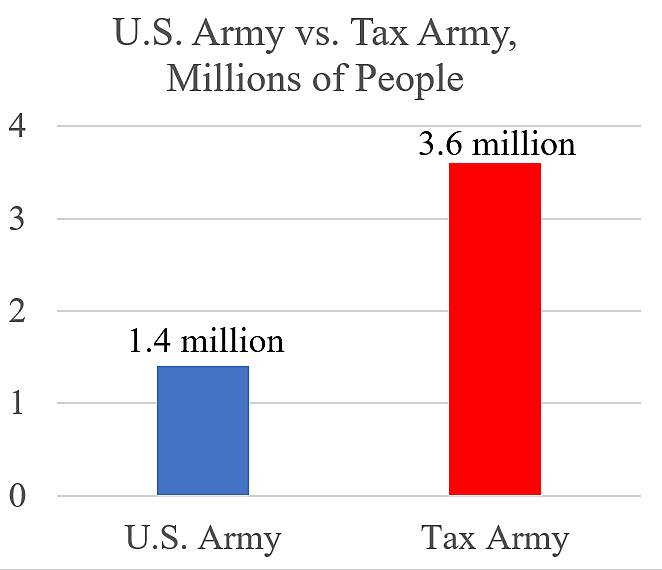


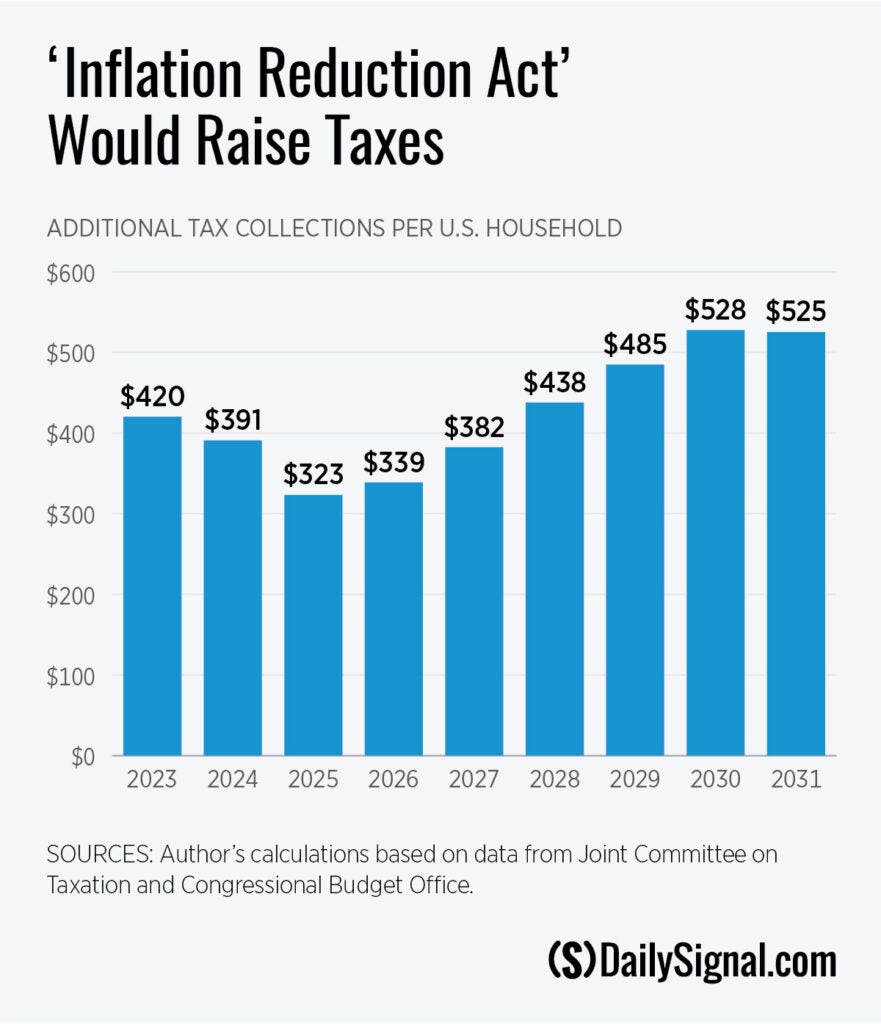
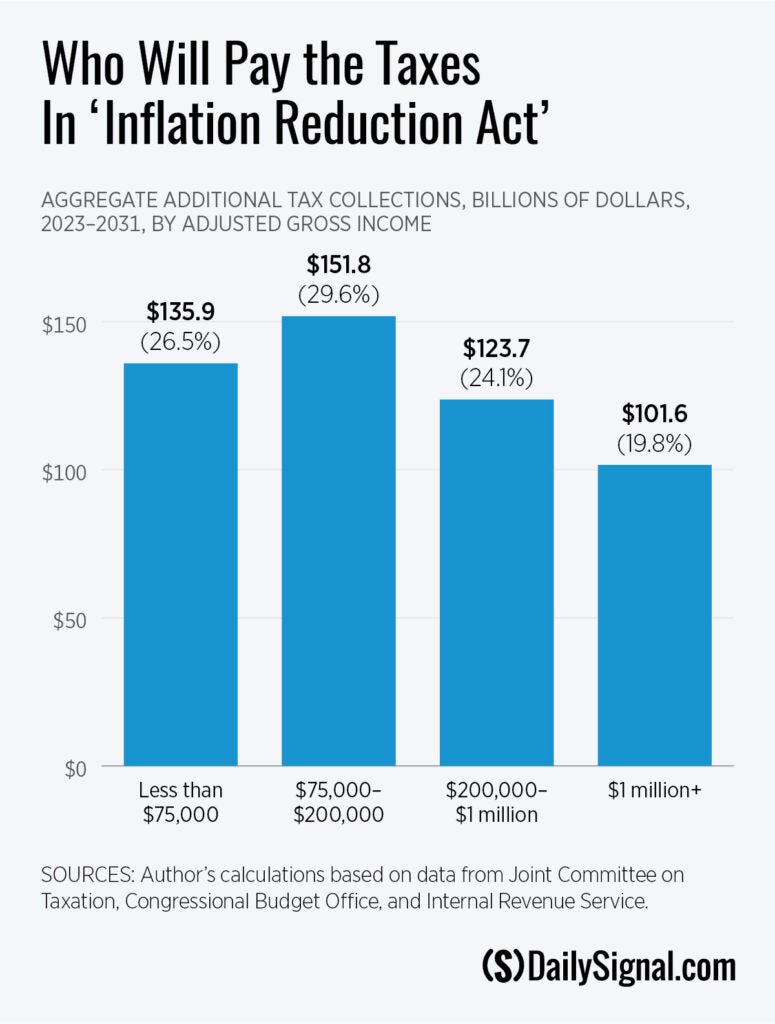
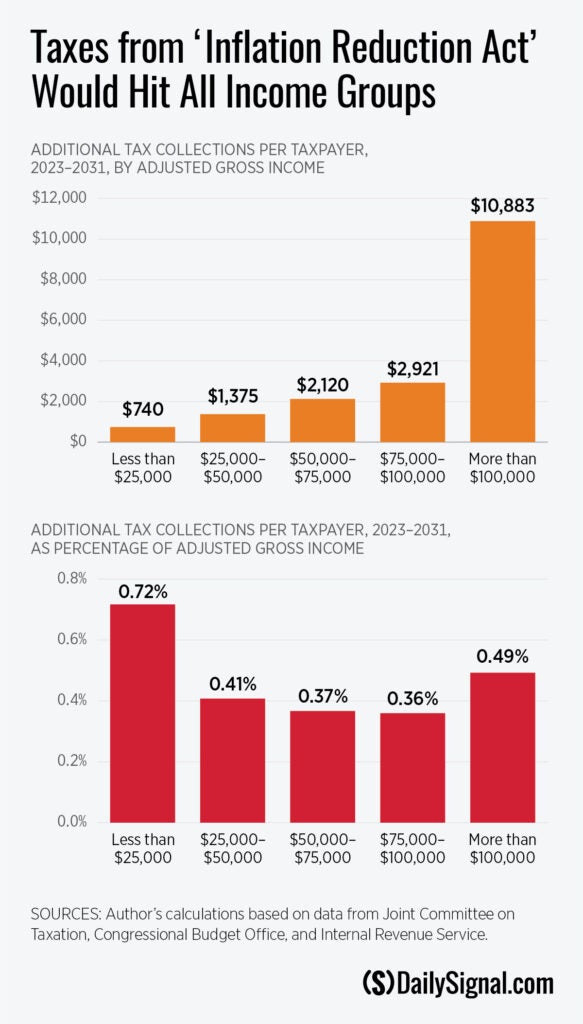
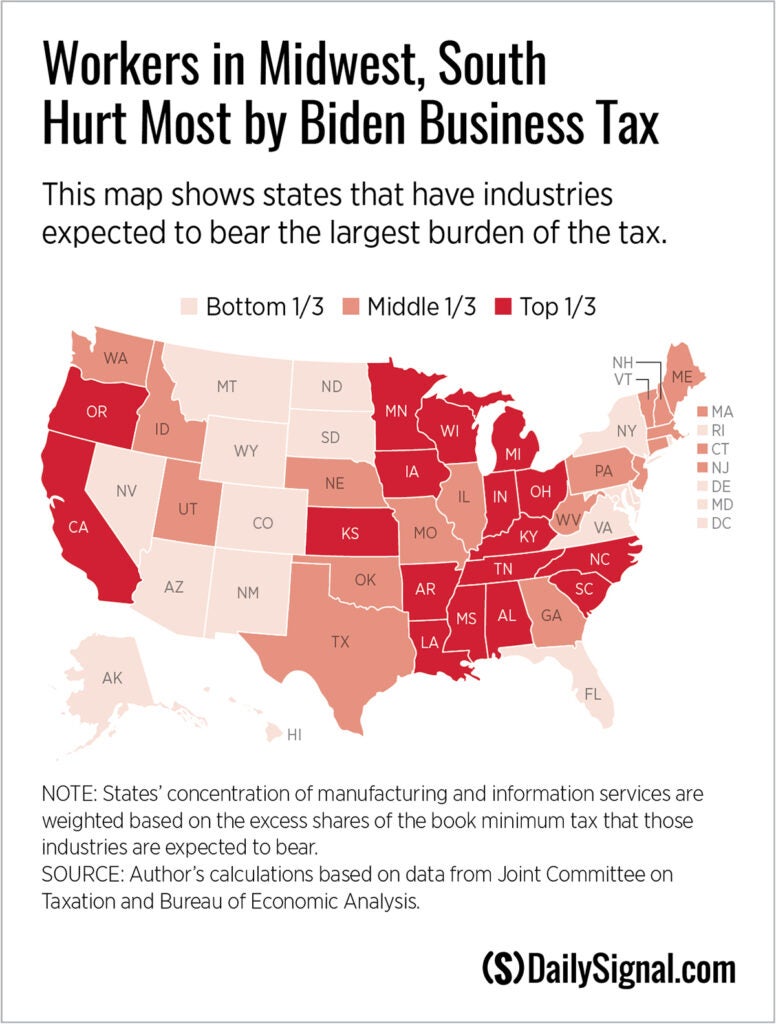
















 The Daily Hatch