
–
–
—
–
–
XXXXXXXXXXXXXXXXXXXXXXXX

__________
Letter #3 (2180 words, 8 pgs, including Old and New Pics) Woody Allen, Situation Ethics, Crimes and Misdemeanors, Hezekiah’s Tunnel 10-23-16
_________________
October 23, 2015
Hugh Hefner
Playboy Mansion
10236 Charing Cross Road
Los Angeles, CA 90024-1815
Dear Mr. Hefner,
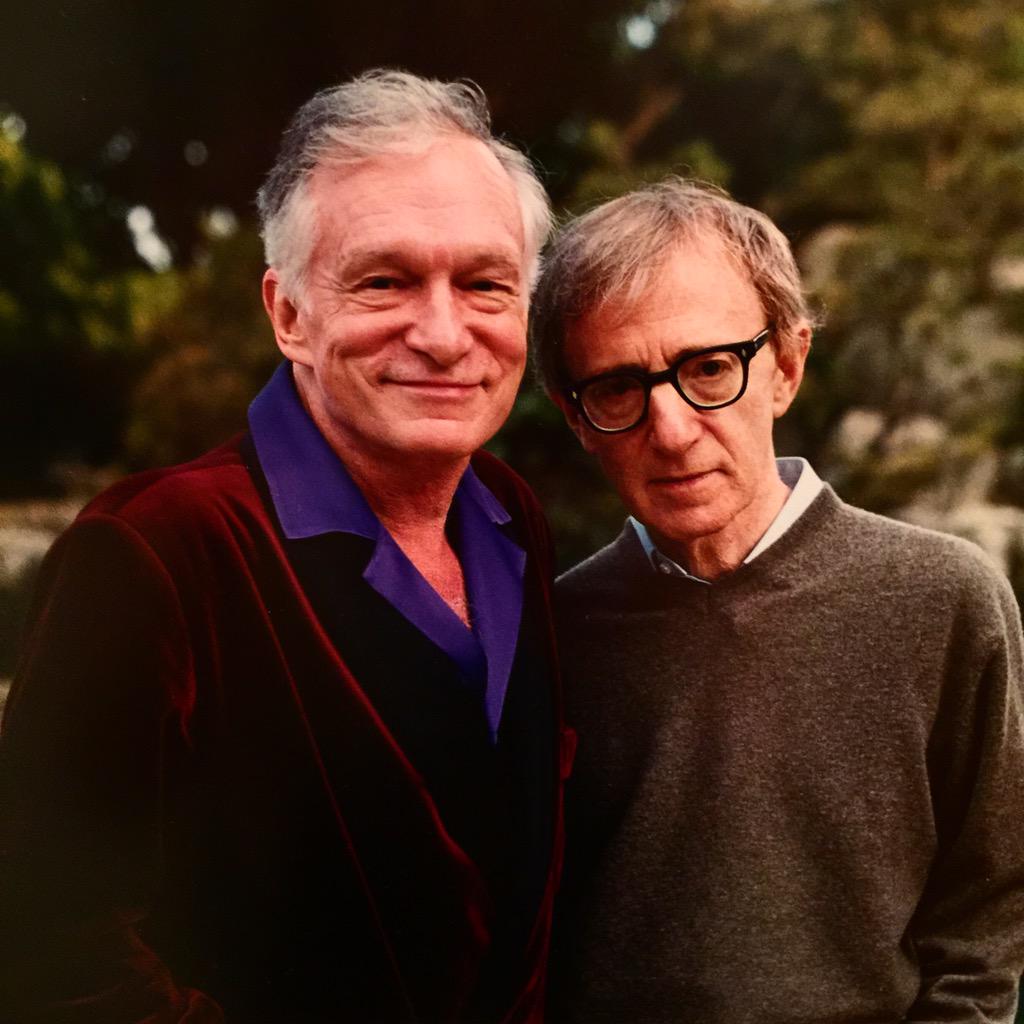
You are a big fan of Woody Allen movies and I understand that Woody has visited with you on occasion. I am also a HUGE WOODY ALLEN FAN and I wanted to ask you a question later in this letter that is purely based on a situation in a Woody Allen movie.
In one of your interviews you noted:
I hope that we can begin to, and what I called back in the sixties, a new a new morality, that we begin to find a form of situation ethics that would define sexual values not as a set of absolutesbut a things that really were good for people and would permit a more human humanizing and loving interconnection between people.
Crimes and Misdemeanors: A Discussion: Part 1
Uploaded by camdiscussion on Sep 23, 2007
Part 1 of 3: ‘What Does Judah Believe?’
A discussion of Woody Allen’s 1989 movie, perhaps his finest.
By Anton Scamvougeras.
http://camdiscussion.blogspot.com/antons@mail.ubc.ca
In the first two letters I sent you I referenced the sermon “THE PLAYBOY’S PAYDAY,” by Adrian Rogers which was delivered in 1984 and based on Proverbs 5. I wanted to quote from that sermon the following words:
Proverbs Chapter 5
My son, give attention to my wisdom,
Incline your ear to my understanding;
2 That you may observe discretion
And your lips may reserve knowledge.
3 For the lips of an adulteress drip honey
And smoother than oil is her speech;
4 But in the end she is bitter as wormwood,
Sharp as a two-edged sword.
6 She does not ponder the path of life;
Her ways are unstable, she does not know it.
Now, where is a young man going to get discretion? Where are we going to learn knowledge? How are we going to learn what is right and what is wrong in our sexual relationships? Do you think we’re going to learn it from Hollywood? Do you think we’re going to learn it from television? Do you think we’re going to learn from Hugh Hefner, Margaret Mead, Johnny Carson? Shall they be our teachers? Are they going to tell us?
__________
Crimes and Misdemeanors: A Discussion: Part 1
Uploaded by camdiscussion on Sep 23, 2007
Part 1 of 3: ‘What Does Judah Believe?’
A discussion of Woody Allen’s 1989 movie, perhaps his finest.
By Anton Scamvougeras.
http://camdiscussion.blogspot.com/antons@mail.ubc.ca
While on FIRING LINE you were asked by William F. Buckley on what authority do you make these pronouncements and it was clear that you do not have one except to say that you believe in this idea of situation ethics. As a Christian I believe the Bible is the inerrant word of God and as such it gives us an absolute authority to follow. However, lets take a look at your situation ethics approach for a moment.
Woody Allen’s 1989 movie, CRIMES AND MISDEMEANORS , is an excellent movie that demonstrates the need of God while making decisions in the area of personal morality. In this film, Allen attacks his own atheistic view of morality. Martin Landau plays a Jewish eye doctor named Judah Rosenthal raised by a religious father who always told him, “The eyes of God are always upon you.” However, Judah later concludes that God doesn’t exist. He has his mistress (played in the film by Anjelica Huston) murdered because she continually threatened to blow the whistle on his past questionable, probably illegal, business activities. She also attempted to break up Judah ‘s respectable marriage by going public with their two-year affair. Judah struggles with his conscience throughout the remainder of the movie. He continues to be haunted by his father’s words: “The eyes of God are always upon you.” This is a very scary phrase to a young boy, Judah observes. He often wondered how penetrating God’s eyes are.
Later in the film, Judah reflects on the conversation his religious father had with Judah ‘s unbelieving Aunt May at the dinner table many years ago:
“Come on Sol, open your eyes. Six million Jews burned to death by the Nazis, and they got away with it because might makes right,” says aunt May
Sol replies, “May, how did they get away with it?”
Judah asks, “If a man kills, then what?”
Sol responds to his son, “Then in one way or another he will be punished.”
Aunt May comments, “I say if he can do it and get away with it and he chooses not to be bothered by the ethics, then he is home free.”
Judah ‘s final conclusion was that might did make right. He observed that one day, because of this conclusion, he woke up and the cloud of guilt was gone. He was, as his aunt said, “home free.”
Woody Allen has exposed a weakness in his own humanistic view that God is not necessary as a basis for good ethics. There must be an enforcement factor in order to convince Judah not to resort to murder. Otherwise, it is fully to Judah ‘s advantage to remove this troublesome woman from his life.
The Bible tells us, “{God} has also set eternity in the hearts of men…” (Ecclesiastes 3:11 NIV). The secularist calls this an illusion, but the Bible tells us that the idea that we will survive the grave was planted in everyone’s heart by God Himself. Romans 1:19-21 tells us that God has instilled a conscience in everyone that points each of them to Him and tells them what is right and wrong (also Romans 2:14 -15).
It’s no wonder, then, that one of Allen’s fellow humanists would comment, “Certain moral truths — such as do not kill, do not steal, and do not lie — do have a special status of being not just ‘mere opinion’ but bulwarks of humanitarian action. I have no intention of saying, ‘I think Hitler was wrong.’ Hitler WAS wrong.” (Gloria Leitner, “A Perspective on Belief,” THE HUMANIST, May/June 1997, pp. 38-39)
Here Leitner is reasoning from her God-given conscience and not from humanist philosophy. It wasn’t long before she received criticism. Humanist Abigail Ann Martin responded, “Neither am I an advocate of Hitler; however, by whose criteria is he evil?” (THE HUMANIST, September/October 1997, p. 2)
The secularist can only give incomplete answers to these questions: How could you, HUGH, have convinced Judah not to kill? On what basis could you convince Judah it was wrong for him to murder? WHAT IN YOUR SYSTEM OF “SITUATION ETHICS” COULD HAVE DONE THE JOB?
As a Christian, I would agree with Judah ‘s father that “The eyes of God are always upon us.” Proverbs 5:21 asserts, “For the ways of man are before the eyes of the Lord, and He ponders all his paths.” Revelation 20:12 states, “…And the dead were judged (sentenced) by what they had done (their whole way of feeling and acting, their aims and endeavors) in accordance with what was recorded in the books” (Amplified Version). The Bible is revealed truth from God. It is the basis for our morality. Judah inherited the Jewish ethical values of the Ten Commandments from his father, but, through years of life as a skeptic, his standards had been lowered. Finally, we discover that Judah ‘s secular version of morality does not resemble his father’s biblically-based morality. HUGH YOU INHERITED THE ETHICAL VALUES OF THE TEN COMMANDMENTS FROM YOUR PARENTS BUT YOU TURNED AWAY FROM THE CHRISTIAN FAITH. RECENTLY I READ SOMETHING ON JOHN ANKERBERG’S WEBSITE THAT GAVE ME HOPE THAT YOU BE OPEN TO LOOKING AT THE HISTORICAL CLAIMS OF THE BIBLE. HERE IS A QUOTE FROM LEE STROBEL:I had a chance to go to the Playboy Mansion, interview Hugh Hefner for a TV program that I was doing. And I asked him about the resurrection. And he seemed confused. And I said, “What about the evidence for the resurrection?” and he said, “What are you talking about?” And I said, “What do you do with the historical data that support the return of Jesus from the dead?” And he said, “I have never heard this before.” And I gave him a copy of my book The Case for Christ. And he was looking through the Table of Contents and said, “This is fascinating. Nobody has ever told me this before.”And then he said something very interesting. He said, “If this is true, this trips a whole bunch of dominoes that have a wonderful effect.” He said, “I am getting to be an old man. I wish it were true that there were eternal life.” And I said, “You know what, look into the evidence yourself. Come to your own verdict. But I am telling you there is convincing, there is powerful, persuasive, compelling evidence that Jesus did return from the dead. And when He tells His followers they will spend eternity with Him, we can believe Him as a result.”
The answer to find meaning in life is found in putting your faith and trust in Jesus Christ. The Bible is true from cover to cover and can be trusted.
THE FIRST STEP TO FINDING OUT IF THE BIBLE IS TRUE TO INVESTIGATE ITS HISTORICAL CLAIMS. God created the universe and reached out to humankind with the Bible. Below is a piece of that evidence given by Francis Schaeffer and Dr. C. Everett Koop in their book WHATEVER HAPPENED TO THE HUMAN RACE? Chapter 5 concerning the accuracy of the Bible:
We looked earlier at the city of Lachish. Let us return to the same period in Israel’s history when Lachich was besieged and captured by the Assyrian King Sennacherib. The king of Judah at the time was Hezekiah.
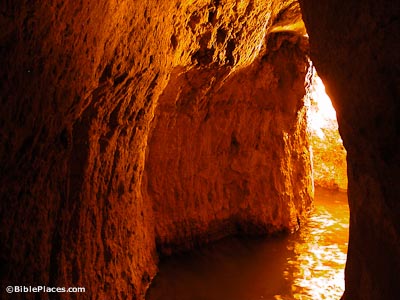
Perhaps you remember the story of how Jesus healed a blind man and told him to go and wash in the Pool of Siloam. It is the same place known by King Hezekiah, approximately 700 years earlier. One of the remarkable things about the flow of the Bible is that historical events separated by hundreds of years took place in the same geographic spots, and standing in these places today, we can feel that flow of history about us. The crucial archaeological discovery which relates the Pool of Siloam is the tunnel which lies behind it.
One day in 1880 a small Arab boy was playing with his friend and fell into the pool. When he clambered out, he found a small opening about two feet wide and five feet high. On examination, it turned out to be a tunnel reaching back into the rock. But that was not all. On the side of the tunnel an inscribed stone (now kept in the museum in Istanbul) was discovered, which told how the tunnel had been built originally. The inscription in classical Hebrew reads as follows:
The boring through is completed. And this is the story of the boring: while yet they plied the pick, each toward his fellow, and while there were yet three cubits [4 14 feet] to be bored through, there was heard the voice of one calling to the other that there was a hole in the rock on the right hand and on the left hand. And on the day of the boring through the workers on the tunnel struck each to meet his fellow, pick upon pick. Then the water poured from the source to the Pool 1,200 cubits [about 600 yards] and a 100 cubits was the height of the rock above the heads of the workers in the tunnel.
We know this as Hezekiah’s Tunnel. The Bible tells us how Hezekiah made provision for a better water supply to the city:Now the rest of the acts of Hezekiah and all his might, and how he made the pool and the conduit and brought water into the city, are they not written in the Book of the Chronicles of the Kings of Judah?(II Kings 20:20). We know here three things: the biblical account, the tunnel itself of which the Bible speaks, and the original stone with its inscription in classical Hebrew.
From the Assyrian side, there is additional confirmation of the incidents mentioned in the Bible. There is a clay prism in the British Museum called the Taylor Prism (British Museum, Ref. 91032). It is only fifteen inches high and was discovered in the Assyrian palace at Nineveh. This particular prism dates from about 691 B.C. and tells about Sennacherib’s exploits. A section from the prism reads, “As for Hezekiah, the Jew, who did not submit to my yoke, forty-six of his strong walled cities, as well as small cities in their neighborhood I have besieged and took…himself like a caged bird, I shut up in Jerusalem, his royal city. Earthworks I threw up against him,” Thus, there is a three-way confirmation concerning Hezekiah’s tunnel from the Hebrew side and this amazing confirmation from the Assyrian side.
___________
Thank you again for your time and I know how busy you are.
Everette Hatcher, everettehatcher@gmail.com, http://www.thedailyhatch.org, cell ph 501-920-5733, Box 23416, LittleRock, AR 72221
PS: I plan to write you again and will be responding to your past statements like I did today. Since you and I are both big Woody Allen fans I wanted to encourage you to google “WOODY ALLEN CHARACTERS REFERENCED” and it will list several posts from my blog http://www.thedailyhatch.org. I actually went through all 39 historical characters referenced in the Woody Allen film MIDNIGHT IN PARIS.
Stephanie syjuco
Featured artist is Stephanie Syjuco

Stephanie Syjuco was born in Manila, Philippines, in 1974. Syjuco works in photography, sculpture, and installation, moving from handmade and craft-inspired mediums to digital editing. Her work explores the tension between the authentic and the counterfeit, challenging deep-seated assumptions about history, race, and labor.
Syjuco’s installations frequently invite viewers to be active participants, from crocheting counterfeit designer handbags to purchasing items at an alternative gift shop within a museum, in order to investigate global consumerism, capitalism and its effects on artists. Through photographic portraits composed in the studio, Syjuco further explores economies of labor and value, with a political dimension inspired by colonialist ethnographic photography, her identity as an immigrant, and media-filtered protest imagery.
Stephanie Syjuco received her BFA from the San Francisco Art Institute and MFA from Stanford University. Her awards and residencies include the Guggenheim Fellowship (2014), Artadia Fellowship Residency Award at the International Studio and Curatorial Program (2010), Joan Mitchell Painters & Sculptors Award (2009), and Skowhegan School of Painting and Sculpture (1997). She has had major exhibitions at the Museum of Modern Art (2018); the San Francisco Museum of Modern Art (2018, 2017, 2011, 2000); Havana Biennial (2015); Asian Art Biennial (2015); Z33 Space for Contemporary Art (2012); ZKM Center for Art and Media Technology (2011); MoMA P.S.1 (2009, 2006); and Whitney Museum of American Art (2005). Syjuco is a long-time educator and currently an assistant professor of sculpture at the University of California, Berkeley. She lives and works in Oakland, California.
Related posts:
Ecclesiastes 2 — The Quest For Meaning and the failed examples of Howard Hughes and Hugh Hefner
Ecclesiastes 2-3 Published on Sep 19, 2012 Calvary Chapel Spring Valley | Sunday Evening | September 16, 2012 | Derek Neider _____________________________ I have written on the Book of Ecclesiastes and the subject of the meaning of our lives on several occasions on this blog. In this series on Ecclesiastes I hope to show how secular […] By Everette Hatcher III | Posted in Current Events | Edit | Comments (0)
FRANCIS SCHAEFFER ANALYZES ART AND CULTURE PART 162 A look at the BEATLES Breaking down the song ALL WE NEED IS LOVE Part C (Featured artist is Grace Slick)
Is Love All You Need? Jesus v. Lennon Posted on January 19, 2011 by Jovan Payes 0 On June 25, 1967, the Beatles participated in the first worldwide TV special called “Our World”. During this special, the Beatles introduced “All You Need is Love”; one of their most famous and recognizable songs. In it, John Lennon […] By Everette Hatcher III | Posted in Francis Schaeffer | Edit | Comments (0)
FRANCIS SCHAEFFER ANALYZES ART AND CULTURE Part 158 THE BEATLES (breaking down the song WHY DON’T WE DO IT IN THE ROAD?) Photographer Bob Gomel featured today!
___________________ Something happened to the Beatles in their journey through the 1960’s and although they started off wanting only to hold their girlfriend’s hand it later evolved into wanting to smash all previous sexual standards. The Beatles: Why Don’t We Do It in the Road? _______ Beatle Ringo Starr, and his girlfriend, later his wife, […] By Everette Hatcher III | Posted in Current Events | Edit | Comments (0)
FRANCIS SCHAEFFER ANALYZES ART AND CULTURE PART 142 Marvin Minsky Part G (Featured artist is Red Grooms)
__________ Marvin Minsky __ I was sorry recently to learn of the passing of one of the great scholars of our generation. I have written about Marvin Minsky several times before in this series and today I again look at a letter I wrote to him in the last couple of years. It is my […] By Everette Hatcher III | Posted in Adrian Rogers, Francis Schaeffer | Edit | Comments (0)
FRANCIS SCHAEFFER ANALYZES ART AND CULTURE Part 118 THE BEATLES (Why was Tony Curtis on cover of SGT PEP?) (Feature on artist Jeffrey Gibson )
Why was Tony Curtis on the cover of SGT PEPPERS? I have no idea but if I had to hazard a guess I would say that probably it was because he was in the smash hit SOME LIKE IT HOT. Above from the movie SOME LIKE IT HOT __ __ Jojo was a man who […] By Everette Hatcher III | Posted in Current Events | Edit | Comments (0)
FRANCIS SCHAEFFER ANALYZES ART AND CULTURE Part 101 BEATLES,(MANY CHRISTIANS ATTACKED THE BEATLES WHILE FRANCIS SCHAEFFER STUDIED THEIR MUSIC! Part B) Artist featured today is Cartoonist Gahan Wilson
—


 The Daily Hatch