
–
–
–
Reaganomics generated much better results than Obamanomics. Milton Friedman had a lot to do with the success of Reagan.

Daniel J. Mitchell of the Cato Institute:

Dr. Koop with President Ronald Reagan on his appointment as Surgeon General.

“He will long be remembered as one of the great Christian thinkers of our century, with a childlike faith and a profound compassion toward others. It can rarely be said of an individual that his life touched many others and affected them for the better; it will be said of Francis Schaeffer that his life touched millions of souls and brought them to the truth of their creator.” ~ Ronald Reagan

Bernard N. Nathanson (July 31, 1926 – February 21, 2011) was an American medical doctor from New York, co-founder in 1969 of the National Association for the Repeal of Abortion Laws — NARAL — later renamed National Abortion Rights Action League. Dr. Bernard Nathanson was also the former director of New York City’s Center for Reproductive and Sexual Health, but later became a pro-life activist. He was the narrator for the controversial 1984 anti-abortion film The Silent Scream.
____
March 2, 2016
Hugh Hefner
Playboy Mansion
10236 Charing Cross Road
Los Angeles, CA 90024-1815
Dear Mr. Hefner,
Yesterday was SUPER TUESDAY and I had a special interest in the results of that day since I was seeking re-election to JUSTICE OF THE PEACE (District 2 of Saline County) which is located outside of Little Rock. I was able to win in the Republican Primary but I have to face a Democrat this fall in what is the most Democratic friendly district in our county. Over the last few years Saline has grown to be the 3rd largest county in Arkansas. I am glad to say that Saline County is one of only 2 counties in the whole state that do not have a countywide sales tax.
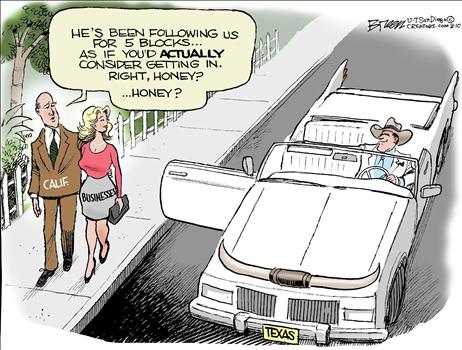
HUGH I know that you have been involved in politics for a long time so I thought this subject would interest you today. I have 3 political heroes I wanted to mention. Milton Friedman was my hero in the area of economics and his film series FREE TO CHOOSE is on You Tube and Ronald Reagan appeared in a promo for it. Friedman pointed out that liberalism will kill the economy but cutting taxes and the size of government will grow the economy. Dan Mitchell noted in his article, “Texas vs. California,” February 11, 2013:
I’ve been pointing out the differences between California stagnation and Texas prosperity for quite some time. And since California voters approved a new 13.3 percent top tax rate last November, I expect the gap to become even wider. Simply stated, California is the France of America and Texas is the Cayman Islands of America. So it’s understandable that the Governor of Texas is telling employers in California that his state has a better climate for job creation.
Texas is clearly doing better on jobs, and it’s easy to avoid higher taxes when you obey Mitchell’s Golden Rule and restrain the burden of government spending.
Indeed, in the last five years Texas has gained 400,000 new jobs while California has lost 640,000. The Lone Star State’s rate of job growth was 33 percent higher than California’s last year, even as the Golden State finally pulled out of the recession. …Texas’s legislature has just trimmed its $188 billion two-year budget by 8 percent, and the state may have more revenue than it can legally spend because it is barred from raising outlays more than the rate of economic growth.
Here’s a very good Steve Breen cartoon about Perry’s fishing trip to the west coast.
__
Ronald Reagan is my second political hero for 2 reasons. First, Reagan cut taxes in a big way during his time as president. Secondly, he appointed C. Everett Koop at Surgeon General and appointed many PRO-LIFE JUDGES. This leads me to my third political hero who was C. Everett Koop’s best friend Francis Schaeffer.
A Christian Manifesto
by Dr. Francis A. Schaeffer
This address was delivered by the late Dr. Schaeffer in 1982 at the Coral Ridge Presbyterian Church, Fort Lauderdale, Florida. It is based on one of his books, which bears the same title.
Dr. C. Everett Koop, in our seminars for Whatever Happened to the Human Race, often said that (speaking for himself), “When I graduated from medical school, the idea was ‘how can I save this life?’ But for a great number of the medical students now, it’s not, ‘How can I save this life?’, but ‘Should I save this life?'”
Believe me, it’s everywhere. It isn’t just abortion. It’s infanticide. It’s allowing the babies to starve to death after they are born. If they do not come up to some doctor’s concept of a quality of life worth living. I’ll just say in passing — and never forget it – it takes about 15 days, often, for these babies to starve to death. And I’d say something else that we haven’t stressed enough. In abortion itself, there is no abortion method that is not painful to the child — just as painful that month before birth as the baby you see a month after birth in one of these cribs down here that I passed — just as painful…
The January 11 Newsweek has an article about the baby in the womb. The first 5 or 6 pages are marvelous. If you haven’t seen it, you should see if you can get that issue. It’s January 11 and about the first 5 or 6 pages show conclusively what every biologist has known all along, and that is that human life begins at conception. There is no other time for human life to begin, except at conception. Monkey life begins at conception. Donkey life begins at conception. And human life begins at conception. Biologically, there is no discussion — never should have been — from a scientific viewpoint. I am not speaking of religion now. And this 5 or 6 pages very carefully goes into the fact that human life begins at conception. But you flip the page and there is this big black headline, “But is it a person?” And I’ll read the last sentence, “The problem is not determining when actual human life begins, but when the value of that life begins to out weigh other considerations, such as the health or even the happiness of the mother.”
We are not just talking about the health of the mother (it’s a propaganda line), or even the happiness of the mother. Listen! Spell that out! It means that the mother, FOR HER OWN HENDONISTIC HAPPINESS — selfish happiness — can take human life by her choice, by law. Do you understand what I have said? By law, on the basis of her individual choice of what makes her happy. She can take what has been declared to be, in the first five pages [of the article], without any question, human life. In other words, they acknowledge that human life is there, but it is an open question as to whether it is not right to kill that human life if it makes the mother happy.
And basically that is no different than Stalin, Mao, or Hitler, killing who they killed for what they conceived to be the good of society. There is absolutely no line between the two statements — no absolute line, whatsoever. One follows along: Once that it is acknowledged that it is human life that is involved (and as I said, this issue of Newsweek shows conclusively that it is) the acceptance of death of human life in babies born or unborn, opens the door to the arbitrary taking of any human life. From then on, it’s purely arbitrary.
I got a question for you HUGH? I understand you support financially NARAL. Did you know that the founder of NARAL left the abortion business because as technology advanced he discovered that the unborn baby experienced pain? Here is a little more about Dr. Bernard Nathanson:
Bernard Nathanson: A Life Transformed by Truth
In 1985, Nathanson employed the new fetal imaging technology to produce a documentary film, “The Silent Scream,” which energized the pro-life movement and threw the pro-choice side onto the defensive by showing in graphic detail the killing of a twelve-week-old fetus in a suction abortion. Nathanson used the footage to describe the facts of fetal development and to make the case for the humanity and dignity of the child in the womb. At one point, viewers see the child draw back from the surgical instrument and open his mouth: “This,” Nathanson says in the narration, “is the silent scream of a child threatened imminently with extinction.”
Publicity for “The Silent Scream” was provided by no less a figure than President Ronald Reagan, who showed the film in the White House and touted it in speeches. Like Nathanson, Reagan, who had signed one of the first abortion-legalization bills when he was Governor of California, was a zealous convert to the pro-life cause. During his term as president, Reagan wrote and published a powerful pro-life book entitled Abortion and the Conscience of the Nation—a book that Nathanson praised for telling the truth about the life of the child in the womb and the injustice of abortion.
I wanted to quote directly from you HUGH. Hugh Hefner: GOP ‘war against sex’, By Patrick Gavin, 04/23/12 12:23 PM EDT:
Hefner concludes that, “If these zealots have their way, our hard-won sexual liberation — women’s rights, reproductive rights and rights to privacy — lie in peril. We won’t let that happen.
My last question to you today is WHAT ABOUT UNBORN WOMAN’S RIGHTS? Don’t little baby girls who are just months away from being born have the right to life? This letter has been about politics but the spiritual answers your heart is seeking can be found in putting your faith and trust in Jesus Christ. The Bible is true from cover to cover and can be trusted. Without the Bible then we are left with Schaeffer’s final conclusion,“If there are no absolutes by which to judge society, then society is absolute.”
Thanks for your time.
Sincerely,
Everette Hatcher, everettehatcher@gmail.com, http://www.thedailyhatch.org, cell ph 501-920-5733, Box 23416, LittleRock, AR 72221
PS: I have written you every week since October of 2015, and again today in this 22nd letter I challenged you on one aspect of your life and this letter centered in on your support of NARAL. Why am I involved in politics today? The answer is because God wants us to submit to the standards given in the Bible. Francis Schaeffer noted, “They founded the country on the base that there is a God who is the Creator (now I come to the next central phrase) who gave the inalienable rights. We must understand something very thoroughly. If society — if the state gives the rights, it can take them away — they’re not inalienable. If the states give the rights, they can change them and manipulate them. But this was not the view of the founding fathers of this country. They believed, although not all of them were individual Christians, that there was a Creator and that this Creator gave the inalienable rights — this upon which our country was founded and which has given us the freedoms which we still have — even the freedoms which are being used now to destroy the freedoms.”
–
—
–
–
Featured artist is Jan van Goyen Goyen, Jan van – by H.R. Rookmaaker
A landscape by Jan van Goyenby H.R. Rookmaaker Jan van Goyen is one of the most brilliant landscape painters of all time. He was productive between 1620 and 1656, the year of his death. His art improved in a direct line, and the works he made after 1640 are virtually all masterpieces. We shall discuss one of his paintings from 1646, Approaching storm.

Jan van Goyen: Approaching Storm, 1646
Jan van Goyen is almost unrivalled as a master of representing space.
He was in complete command of the devices that had been developed
for this since the beginning of the modern period, and he applied them
brilliantly. In the first place there is his perspective – figures appear
smaller the further away they are from us – but possibly even more
important is his atmospheric perspective – the tone and colour of an
object that is further from us is lighter and softer than that of a similar
object viewed at closer range (compare the sails of the boats in this
painting). He also uses repoussoir – setting a lighter object against a dark
background or a darker object against a light background so that it
thereby appears to be located to the fore while the background is
pushed back (repousser). And, finally, he uses lighter and darker strokes
in the water so that a clear spatial arrangement is achieved and things
are put in their right place, as it were. In this painting we see the
repoussoir in the sails as they stand out against the sky but also in the
dark boat set against the lighter strip of water, which is thereby clearly
pushed back. Through that repoussoir the artist can make things clear
and define them distinctly in their interconnectedness. Jan van Goyen
knows how to use this device in such a way that we hardly notice it, it
seems so natural. Only upon looking more closely do we discover the
mastery and realize that it is not a simple matter of course.
It is remarkable how the painter is able to use the darkly clouded sky
to draw our eye towards the back, where the lightest part of the painting
is at the most distant horizon. In the clouds too one can point out
repoussoir (one against the other). Yet it is still more remarkable when
we come to realize just what van Goyen accomplishes with the clouds,
how he divides them as dark tones across the flat surface to thereby
reinforce the entire construction of his composition.
With that we have arrived at the real problem, which led us to select
this painting for discussion which at first glance may appear to be just
another representation of a scene one could have witnessed any time,
and possibly still can, somewhere in the Netherlands along one of the
great rivers or the former Zuiderzee or Haarlemmermeer. For Jan van
Goyen knew, perhaps better than anyone else, that a painting is in the
first place a flat surface on which we work with our painting materials to
call up our picture. In spite of the fact that he knew infallibly how to use
the depth-depicting devices we have described, the syntax of his times,
one can never accuse him, as some modern artists have reproached the
old masters for doing, of tricking us by suggesting a ‘hole in the wall’,
namely a real depth. On the contrary, Jan van Goyen knew not only how
to maintain the surface but also how to use it in a wonderful way to serve
his purposes.
Van Goyen’s compositions are very tightly constructed and guided
by an almost symphonic feel for form. Left . . . yes, one ‘reads’ a painting
from left to right. This probably is because of the direction in which we
write (and it would therefore be the reverse for, e.g. Chinese people).
Naturally we can look at a painting from right to left or in any other way,
but only after we have read it in the right direction first. In a similar way
we have to read a sonnet first from top to bottom, and only after we have
done that can we go back and re-read one line or another, and figure out
how the way the sonnet ends is prepared and called up in earlier lines.
The correct order of reading is presupposed in the creative process. But
to return to our earlier discussion: at the left of the landscape we see the
‘introduction’ by means of a little boat, which draws us into the space
and positions us on the water, as it were. Then we come to the first
theme, which we could call ‘distance with storm cloud’. Next we have the
transitional theme in the pair of slightly larger sailboats, precisely in the
middle of the canvas. Following that we come to the second main theme:
ships tied up at a mooring, at a harbour, suggested by a few houses
entirely to the right, which at the same time form the light coda. The
main element in the second theme is the ship with the large dark sail,
which finds its direct ‘response’ in the somewhat smaller and lighter sail
just behind it. That second theme is more loaded, busier and manifests
more movement, and it fixes our eye on a less remote distance parallel
to the surface of the painting.
And now, if we look at the clouds again, we see that, like a kind of
countermelody, a bass line, they follow the themes, and so also the main
organizing principle of the painting. Thus the ‘reading direction’ from
left to right is anything but arbitrary. We cannot turn this painting
around – just try holding the page up to the light on which it is
reproduced here and look at it from the back. It immediately becomes
difficult to see the two themes. It is still possible to do so in this case, but
much more difficult in many others. That it is still possible here, at least
to a degree, is due to the serenity; it is not possible where ships are in
motion, with their sails fixing the direction of observation.
Typically, the second theme has much more complex, and plural,
constructive elements. Moving from left to right, one discovers
that matters also often become more complex in a painting. It can
be compared in this respect with a novel that begins with a single
character but in which gradually an ever larger number of people come
to play a part.
In this painting we therefore do not have some kind of copy of reality,
not a photograph of what we would have seen had we been there.
Rather, we enter another world, the world of the painting. And Jan van
Goyen has clearly set the world of painting off from our own world with
a ‘threshold’, the dark strip in the foreground.
Thus this world does not offer us exactly what we would have seen in
reality with our own eyes, had we been there. Rather, what we have here
is Jan van Goyen’s view of what was there, his own poetic view of a slice
of reality, his own ‘song’ about the beauty at the calm mouth of a river.
The things he notices and shows us are not necessarily self-evident, we
must learn to observe them. And if Dutch people today cherish such
beauties – and often, happily, they do – then they have to thank for that
the lessons in observation that they learned from this artist (and those
who followed after him), even if they are not conscious of it and, yes,
may indeed never have been personally involved with such art. Once
eyes have been opened to something so real and pure, so true, in which
there is so much humanity and in which justice is done to all the
elements, it is not easily forgotten. Fathers pass it on to their sons.
It is remarkable that this unifying effect, the distinctive quality of this
‘symphonic poem in paint’, arises in the composition. It would carry us
too far afield to introduce a great deal of comparative material here. But
it is precisely the use of two themes and the other elements we discussed
that call forth this effect. By simply drawing a certain view of a wide river
we cannot achieve such artistic content and such a suggestive result. It is
therefore no surprise, as becomes evident when we examine Jan van
Goyen’s works carefully, that the artist seldom stuck closely to a precisely
identifiable phenomenon. His art is not topographical, it does not
portray exact locations, although he occasionally incorporates a
‘citation’ or visual reference to an existing tower, for example the one in
Dordt. What he shows us, rather, is the structure of the landscape, in this
case of a river-mouth or a lake, where the beauty forms an integrating
part of the whole.
Could this view of reality not have had something to do with the
Reformation? Could it be a fruit of our having opened ourselves up once
again to reality as we learn to know it in the Bible? The Reformation
liberated art from the chains of the domination of church and devotion,
and it did so without secularization, without seeing the world as
something detached from God. Such a hymn to the unity of creation, in
its beauty, in its multiformity, in its richness and intimate connection
with humanity – without idealistic exaltation, without making the world
a sort of humanistic paradise where one is always on vacation with no
difficulty or care – is something we can look at with jealousy today. No,
this is no vacation paradise, no world of labourless rest and ‘ideal
beauty’; it is much more sober. It is as sober as the music of Heinrich
Schütz can be, without frills, direct, and always with complete unity
between means and ends.
In a painting like the one we have been discussing there is a
complete unity between the iconic elements and the aesthetic structure,
such that the content of the work cannot be considered apart from the
manner of artistic realization: the theme is not an excuse to paint
something, and the composition is not just coincidental, an
embellishment of something that could have been said just as well in a
few words.
We said that we might be looking here at one of the fruits of the
Reformation. The painting reflects the spiritual climate in Holland
during the first half of the seventeenth century. And it does so despite
the fact that van Goyen was a Roman Catholic. His view is conditioned
by the world in which he lived, and the word ‘Counter-Reformation’ has
no meaning in connection with this river scene. Nor has it any meaning
in connection with the work of van Goyen’s son-in-law Jan Steen.
Compare Steen’s art with the art of Rubens and the difference will be
even more clear.
Published in Dutch in Kunst en Amusement, Kok – Kampen, 1962.
Published in English in M. Hengelaar-Rookmaaker (ed.): H.R. Rookmaaker: The Complete Works 3, Piquant – Carlisle, 2003. Also obtainable as a CD-Rom.
piquanteditions.com/product_info.php and
piquanteditions.com/product_info.php
Related posts:
Ecclesiastes 2 — The Quest For Meaning and the failed examples of Howard Hughes and Hugh Hefner
Ecclesiastes 2-3 Published on Sep 19, 2012 Calvary Chapel Spring Valley | Sunday Evening | September 16, 2012 | Derek Neider _____________________________ I have written on the Book of Ecclesiastes and the subject of the meaning of our lives on several occasions on this blog. In this series on Ecclesiastes I hope to show how secular […] By Everette Hatcher III | Posted in Current Events | Edit | Comments (0)
FRANCIS SCHAEFFER ANALYZES ART AND CULTURE PART 162 A look at the BEATLES Breaking down the song ALL WE NEED IS LOVE Part C (Featured artist is Grace Slick)
Is Love All You Need? Jesus v. Lennon Posted on January 19, 2011 by Jovan Payes 0 On June 25, 1967, the Beatles participated in the first worldwide TV special called “Our World”. During this special, the Beatles introduced “All You Need is Love”; one of their most famous and recognizable songs. In it, John Lennon […] By Everette Hatcher III | Posted in Francis Schaeffer | Edit | Comments (0)
FRANCIS SCHAEFFER ANALYZES ART AND CULTURE Part 158 THE BEATLES (breaking down the song WHY DON’T WE DO IT IN THE ROAD?) Photographer Bob Gomel featured today!
___________________ Something happened to the Beatles in their journey through the 1960’s and although they started off wanting only to hold their girlfriend’s hand it later evolved into wanting to smash all previous sexual standards. The Beatles: Why Don’t We Do It in the Road? _______ Beatle Ringo Starr, and his girlfriend, later his wife, […] By Everette Hatcher III | Posted in Current Events | Edit | Comments (0)
FRANCIS SCHAEFFER ANALYZES ART AND CULTURE PART 142 Marvin Minsky Part G (Featured artist is Red Grooms)
__________ Marvin Minsky __ I was sorry recently to learn of the passing of one of the great scholars of our generation. I have written about Marvin Minsky several times before in this series and today I again look at a letter I wrote to him in the last couple of years. It is my […] By Everette Hatcher III | Posted in Adrian Rogers, Francis Schaeffer | Edit | Comments (0)
FRANCIS SCHAEFFER ANALYZES ART AND CULTURE Part 118 THE BEATLES (Why was Tony Curtis on cover of SGT PEP?) (Feature on artist Jeffrey Gibson )
Why was Tony Curtis on the cover of SGT PEPPERS? I have no idea but if I had to hazard a guess I would say that probably it was because he was in the smash hit SOME LIKE IT HOT. Above from the movie SOME LIKE IT HOT __ __ Jojo was a man who […] By Everette Hatcher III | Posted in Current Events | Edit | Comments (0)
FRANCIS SCHAEFFER ANALYZES ART AND CULTURE Part 101 BEATLES,(MANY CHRISTIANS ATTACKED THE BEATLES WHILE FRANCIS SCHAEFFER STUDIED THEIR MUSIC! Part B) Artist featured today is Cartoonist Gahan Wilson
—


 The Daily Hatch