
________________________
I wanted to share with you some information from a book by Francis Schaeffer that was read by Eric Clapton and Jimmy Page back in the 1970’s. Francis Schaeffer talked about the views of the Beatles and many other Rock Groups in the 1960’s and 1970’s. His son Frank wrote recently about the impact of SGT. PEPPER’S LONELY HEARTS CLUB BAND:
“Sgt. Pepper’s” became my personal sound track of liberation back then…Genie, my wife of 44 years… grew up in the Bay Area and as a teen had the distinction of seeing the Beatles three times (!) live and the Rolling Stones four times (!) live.
Meanwhile, I was growing up in Switzerland in a mission(L’Abri Fellowship), and my “almost famous” rock-n-roll high point came when I got a job helping with theLed Zeppelin’slight show at the Montreux Jazz/rock festival.I met Jimmy Page and noticed he was reading one of my dad’s first books, ESCAPE FROM REASON. (No kidding.)
This was back in the days when Dad was a sort of hippie guru for Jesus catering to Beats, hippies and dropouts hitching across Europe.Eric Claptonhad given Page the book as it turned out. I was trying to be “cool” that day on the light show crew… and I wasn’t too pleased to find my brief escape into the rock world from the world of my Dad’s evangelical mission was no escape from my God-world at all. He’d been giving lectures on Bob Dylan, and drug guru Timothy Leary had been a guest at L’Abri. And now I got to briefly “hang out with the band” and Dad got there first, or at least one of his books did! Sheesh! It’s hard to be cool!
…Anyway… Just before coming to my parent’s mission in 1969 – Genie was visiting a friend and knew nothing about the place — she was hanging out with the Santana drummer in California. My then teen bride-to-be Genie might as well have gone to another planet when she stumbled into Dad and Mom’s ministry. The only Billy Graham she’d ever heard of was the Fillmore West manager!
I wonder if my wife-to-be was in the Fillmore West rock palace when Dad and I were there one night in 1968 listening to the Jefferson Airplane together and some hippie handed Dad a joint? Dad passed it on down the row, not taking any himself but totally un-shocked and loving Grace Slick as much as I did… if only Jerry Falwell could have seen us then…
This was back in the days when Dad was a sort of hippie guru for Jesus catering to Beats, hippies and dropouts hitching across Europe. Eric Clapton had given Page the book as it turned out.

In his book HOW SHOULD WE THEN LIVE? Francis Schaeffer noted:
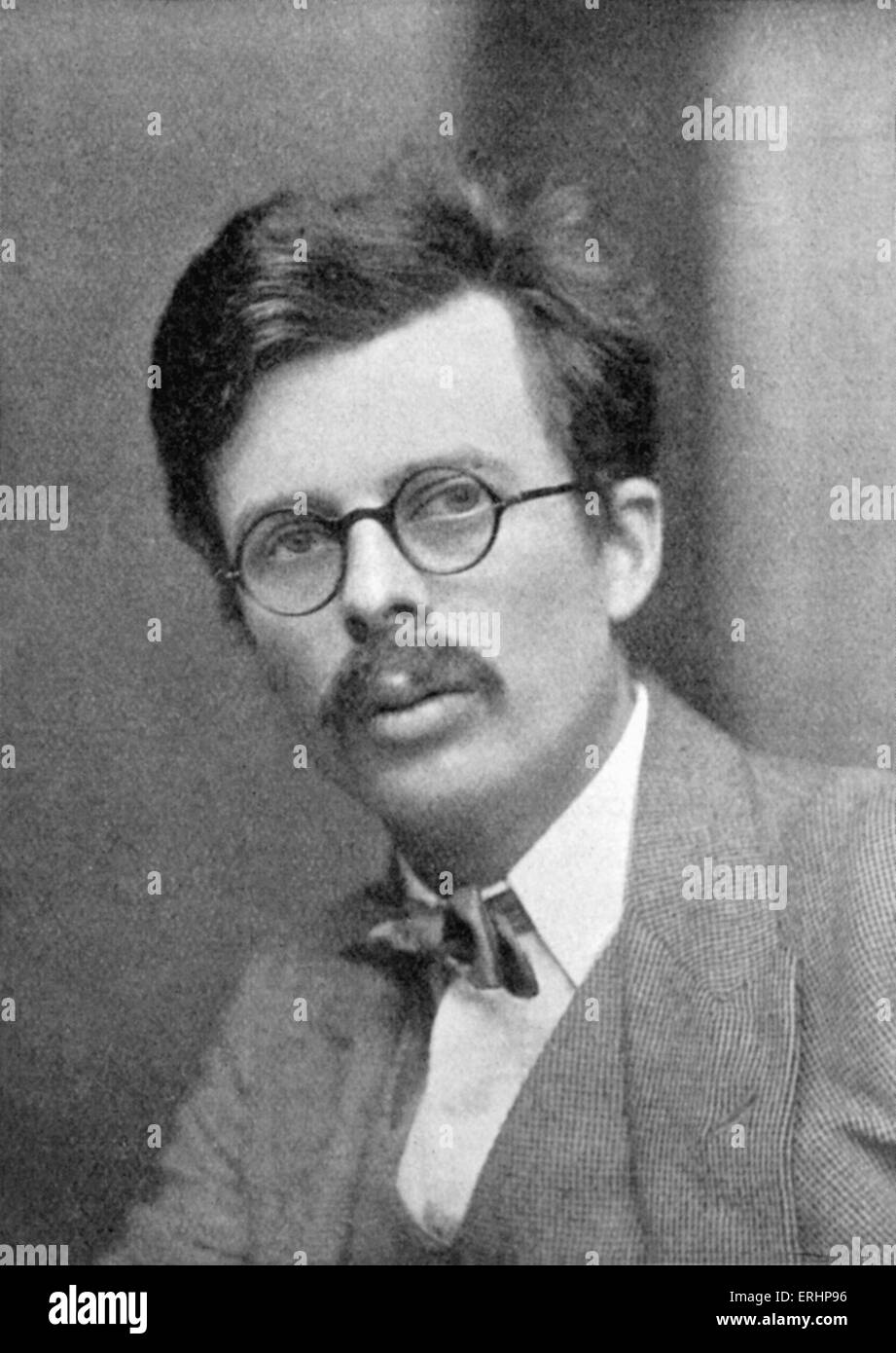
The man who followed on from that point was English–Aldous Huxley (1894-1963). He proposed drugs as a solution. We should, he said, give healthy people drugs and they can then find truth inside their own heads. All that was left for Aldous Huxley and those who followed him was truth inside a person’s own head. With Huxley’s idea, what began with the existential philosophers – man’s individual subjectivity attempting to give order as well as meaning, in contrast to order being shaped by what is objective or external to oneself – came to its logical conclusion. Truth is in one’s own head. The ideal of objective truth was gone.
This emphasis on hallucinogenic drugs brought with it many rock groups–for example, Cream, Jefferson Airplane, Grateful Dead, Incredible String Band, Pink Floyd, and Jimi Hendrix. Most of their work was from 1965-1958. The Beatles’Sergeant Pepper’s Lonely Hearts Club Band (1967) also fits here. This disc is a total unity, not just an isolated series of individual songs, and for a time it became the rallying cry for young people throughout the world. As a whole, this music was the vehicle to carry the drug culture and the mentality which went with it across frontiers which were almost impassible by other means of communication.
Here is a good review of the episode 016 HSWTL The Age of Non-Reason of HOW SHOULD WE THEN LIVE?, December 23, 2007:
Together with the advent of the “drug Age” was the increased interest in the West in the religious experience of Hinduism and Buddhism. Schaeffer tells us that: “This grasping for a nonrational meaning to life and values is the central reason that these Eastern religions are so popular in the West today.” Drugs and Eastern religions came like a flood into the Western world. They became the way that people chose to find meaning and values in life. By themselves or together, drugs and Eastern religion became the way that people searched inside themselves for ultimate truth.
Along with drugs and Eastern religions there has been a remarkable increase “of the occult appearing as an upper-story hope.” As modern man searches for answers it “many moderns would rather have demons than be left with the idea that everything in the universe is only one big machine.” For many people having the “occult in the upper story of nonreason in the hope of having meaning” is better than leaving the upper story of nonreason empty. For them horror or the macabre are more acceptable than the idea that they are just a machine.
—

Sir Julian Sorell Huxley FRS (22 June 1887 – 14 February 1975) was an English evolutionary biologist, humanist and internationalist.

Timothy F. Leary (1920�1996), an American writer, psychologist, campaigner for psychedelic drug research and use and 60s counterculture icon, with Laura Huxley
Timothy F. Leary and Laura Huxley

__

Leary and the Huxleys at the 14th Annual Congress of Applied Psychology, Copenhagen, Aug. 1961 Original: Leary Archives, NY Public Library
__________
Never Before Published Photo of Timothy Leary with Aldous and Laura Huxley
Leary and the Huxleys at the 14th Annual Congress of Applied Psychology, Copenhagen, Aug. 1961 Original: Leary Archives, NY Public Library
By Michael Horowitz and Lisa Rein
This photograph–possibly the only one in existence of Timothy Leary and Aldous Huxley (there are some with Laura from later years)–documents a historic moment: the only time the two appeared on stage and gave talks at the same public event.
It also marked a milestone in Leary’s career: it was the first time he addressed an international conference, where he spoke about the psychedelic research project at Harvard–an event that had both personal and professional implications for him and his associate, Richard Alpert (Ram Dass).

Reprint of the two talks distributed by IFIF (International Federation for Internal Freedom) in 1963. Original from Michael Horowitz’ Archives
The event was the 14th Annual Congress of Applied Psychology, held in Copenhagen in August, 1961. Leary chaired the symposium on psychiatric drugs. It was he who invited Aldous to attend. The two had met some months earlier, when Tim invited the author of the first two major works of modern psychedelic literature (The Doors of Perception and Heaven and Hell) to participate in the Harvard research program. Huxley agreed and was “Subject no.11” in a group psilocybin session run by Leary in November 1960.
In Copenhagen, Huxley spoke on the subject of “Visionary Experience,” a topic he often revisited. After discussing various non-drug methods of achieving visionary experiences, he came around to this:
“In modern times pharmacology has produced, partly by more refined methods of extracts and partly by methods of synthesis, a number of mind-changing drugs of extraordinary power, but remarkable for the fact that they have very little harmful effect on the body….With such drugs as psilocybin, it is possible for the majority of people to go into this other world with very little trouble and with almost no harm to themselves.”
He concluded his talk by noting that “we shall hear from Dr. Leary of the induction of such experiences by such substances as psilocybin,” anticipating Leary’s subject by noting that psychedelic drugs “may be very, very important in changing our lives, changing our mode of consciousness, perceiving that there are other ways of looking at the world than the ordinary, utilitarian manner, and it may also result in significant changes in behavior.”
It is noteworthy that Frank Barron, Leary’s lifelong friend and colleague, also spoke. His talk made reference to his “commending the mushroom to the attention of Dr. Leary, who immediately seized upon its possibilities as a vehicle for inducing change in behavior as a result of the altered state of consciousness which the drug produced.”
Leary spoke later in the day on the topic, “How To Change Behavior,” during which he summarized the work he and his team had done since initiating the Psilocybin Research Project in the fall of 1960, offering some controversial opinions:
“For many people, one or two psilocybin experiences can accomplish the goals of a long and successful psychotherapy…. The non-game visionary experiences are, I submit, the key to behavior change. Drug-induced satori. In three hours under the right circumstances the cortex can be cleared. The games that frustrate and torment can be seen in the cosmic dimension.”
The way Robert Greenfield tells it in Timothy Leary: A Biography, Leary’s talk deeply disturbed many of the professional psychologists in the audience (which included several of his nervous academic superiors at Harvard), who believed mind-expanding drugs caused temporary psychosis and should only be used under strict medical supervision. Richard Alpert (almost a decade before he became known as Ram Dass) followed Tim at the podium, freaking out the assembly even further with the notion that psilocybin and LSD produced genuine mystical experiences, which was an end in itself.
Their deviation from the medical model was more than anyone in the audience could handle —with the exception of Aldous Huxley, who had made similar assertions in his talk, though with a less impassioned tone.
Tim was later told by some psychologists who were present that his talk “had set Danish psychology back twenty years.” Their Harvard colleague, George Littwin, claimed that this event proved to be the beginning of the end, not only for the research program but of Leary and Alpert’s time at Harvard, which came to a close in June 1963.
Nonetheless, “How To Change Behavior” proved to be one of Leary’s most popular writings, being reprinted in a number of books and journals.
The Copenhagen congress thus represented the first public pronouncement by Leary and Alpert who, taking their cues from Huxley and the results of their own scientific research, were early on convinced that the advent of synthetic psychedelics was a major evolutionary stage for humanity, destined to bring about a cultural revolution which they had no hesitation in facilitating if not spearheading.
___
“Practical Atheism” – Psalm 14Introduction
|


_______________


 The Daily Hatch