Milton Friedman PBS Free to Choose 1980 Vol 4 of 10 From Cradle to Grave
Milton Friedman – Whats wrong with welfare? (Q&A)
Free To Choose – Milton Friedman on The Welfare System (1978) | Thomas S…
Milton Friedman Speaks: What is Wrong with the Welfare State? (B1229) – …
April 4, 2021
Office of Barack and Michelle Obama P.O. Box 91000 Washington, DC 20066
Dear President Obama,
I wrote you over 700 letters while you were President and I mailed them to the White House and also published them on my blog http://www.thedailyhatch.org .I received several letters back from your staff and I wanted to thank you for those letters.
There are several issues raised in your book that I would like to discuss with you such as the minimum wage law, the liberal press, the cause of 2007 financial meltdown, and especially your pro-choice (what I call pro-abortion) view which I strongly object to on both religious and scientific grounds, Two of the most impressive things in your book were your dedication to both the National Prayer Breakfast (which spoke at 8 times and your many visits to the sides of wounded warriors!!
I have been reading your autobiography A PROMISED LAND and I have been enjoying it.
Let me make a few comments on it, and here is the first quote of yours I want to comment on:
As our society grew more complex, more and more of the government’s function took the form of social insurance, with each of us chipping in through our tax dollars to protect ourselves collectively—for disaster relief if our house was destroyed in a hurricane; unemployment insurance if we lost a job; Social Security and Medicare to lessen the indignities of old age; reliable electricity and phone service for those who lived in rural areas where utility companies wouldn’t otherwise make a profit; public schools and universities to make education more egalitarian. It worked, more or less. In the span of a generation and for a majority of Americans, life got better, safer, more prosperous, and more just. A broad middle class flourished. The rich remained rich, if maybe not quite as rich as they would have liked, and the poor were fewer in number, and not as poor as they’d otherwise have been. And if we sometimes debated whether taxes were too high or certain regulations were discouraging innovation, whether the “nanny state” was sapping individual initiative or this or that program was wasteful, we generally understood the advantages of a society that at least tried to offer a fair shake to everyone and built a floor beneath which nobody could sink. Maintaining this social compact, though, required trust. It required that we see ourselves as bound together, if not as a family then at least as a community, each member worthy of concern and able to make claims on the whole. It required us to believe that whatever actions the government might take to help those in need were available to you and people like you; that nobody was gaming the system and that the misfortunes or stumbles or circumstances that caused others to suffer were ones to which you at some point in your life might fall prey.
Deroy Murdock explains in National Review how politicians in Washington have imposed legislation – which most Americans still don’t know about – to ban traditional light bulbs.
As American as the grand slam, the Mustang convertible, and the constitutional republic, Thomas Alva Edison’s incandescent light bulb is among this nation’s most enduring gifts to mankind. …Today’s federal government, naturally, had to hammer something that has hummed along nicely for 130 years. In one of his most shameful moments, former president George W. Bush foolishly signed the Energy Independence and Security Act of 2007. EISA establishes performance criteria that Edisonian bulbs cannot meet. …Few Americans realize that federal busybodies plan to snatch their traditional bulbs. Sylvania’s December 2009 survey of 302 adults found that “awareness of the 2012 100-watt bulb phase-out” is just 18 percent (error margin: +/- 5.7 percent).
The political elite are imposing these rules on us because they think we’re too stupid to make intelligent decisions about the tradeoff between cost and energy. That’s offensive, but it’s just one of the problems. Deroy also points out that there are potentially serious health risks associated with the new light bulbs we’ll be forced to use.
CFLs should be discarded at recycling centers. Hundreds of millions of busy Americans, however, will toss these dangerous bulbs in the trash, atop table scraps and junk mail. CFLs will clog landfills from coast to coast. Decades hence, mercury will have leeched into the environment. Americans will wonder why people are suffering brain, kidney, and lung damage. Medical visits will yield lawsuits. And yet another national disaster will erupt, courtesy of Washington, D.C. …“Here we have the government entering all of our homes. Our homes are our castles,” says Brandston, a former adjunct professor of architecture at Rensselaer Polytechnic Institute and a founder of its Lighting Research Center. “Now they are telling us how to light our homes, and they are putting onerous burdens on us in terms of handling these toxic CFLs. The government should not enter our homes, tell us how to live, endanger our health, and ruin our quality of life.” Republicans and thinking Democrats running for Congress this fall should pledge publicly to repeal the federal ban on Thomas Edison’s monumental creation. Why not try something worthy of the Spirit of ’76? Keep traditional bulbs, CFLs, halogens, and everything else on the market, and allow Americans to purchase whatever bulbs help them pursue happiness.
Sincerely,
Everette Hatcher III, 13900 Cottontail Lane, Alexander, AR 72002, ph 501-920-5733 everettehatcher@gmail.com
President Obama c/o The White House 1600 Pennsylvania Avenue NW Washington, DC 20500 Dear Mr. President, I know that you receive 20,000 letters a day and that you actually read 10 of them every day. I really do respect you for trying to get a pulse on what is going on out here. There have […]By Everette Hatcher III | Posted in David Barton, Founding Fathers, President Obama | Edit |Comments (0)
There have been many articles written by evangelicals like me who fear that our founding fathers would not recognize our country today because secular humanism has rid our nation of spiritual roots. I am deeply troubled by the secular agenda of those who are at war with religion in our public life. Lillian Kwon quoted somebody […]By Everette Hatcher III | Posted in David Barton, Founding Fathers | Edit | Comments (0)
There have been many articles written by evangelicals like me who fear that our founding fathers would not recognize our country today because secular humanism has rid our nation of spiritual roots. I am deeply troubled by the secular agenda of those who are at war with religion in our public life. Lillian Kwon quoted somebody […]By Everette Hatcher III | Posted in David Barton, Founding Fathers | Edit | Comments (0)
There have been many articles written by evangelicals like me who fear that our founding fathers would not recognize our country today because secular humanism has rid our nation of spiritual roots. I am deeply troubled by the secular agenda of those who are at war with religion in our public life. Lillian Kwon quoted somebody […]By Everette Hatcher III | Posted in David Barton, Founding Fathers | Edit | Comments (0)
There have been many articles written by evangelicals like me who fear that our founding fathers would not recognize our country today because secular humanism has rid our nation of spiritual roots. I am deeply troubled by the secular agenda of those who are at war with religion in our public life. Lillian Kwon quoted somebody […]By Everette Hatcher III | Posted in David Barton, Founding Fathers | Edit | Comments (0)
There have been many articles written by evangelicals like me who fear that our founding fathers would not recognize our country today because secular humanism has rid our nation of spiritual roots. I am deeply troubled by the secular agenda of those who are at war with religion in our public life. Lillian Kwon quoted somebody […]By Everette Hatcher III | Posted in Founding Fathers | Edit | Comments (0)
President Obama Speaks at The Ohio State University Commencement Ceremony Published on May 5, 2013 President Obama delivers the commencement address at The Ohio State University. May 5, 2013. You can learn a lot about what President Obama thinks the founding fathers were all about from his recent speech at Ohio State. May 7, 2013, […]By Everette Hatcher III | Posted in Founding Fathers, President Obama | Edit | Comments (0)
Dr. C. Everett Koop with Bill Graham. Francis Schaeffer: “Whatever Happened to the Human Race” (Episode 4) THE BASIS FOR HUMAN DIGNITY Published on Oct 7, 2012 by AdamMetropolis The 45 minute video above is from the film series created from Francis Schaeffer’s book “Whatever Happened to the Human Race?” with Dr. C. Everett Koop. This […]By Everette Hatcher III | Posted in Founding Fathers, Francis Schaeffer, Prolife | Edit |Comments (1)
America’s Founding Fathers Deist or Christian? – David Barton 4/6 There have been many articles written by evangelicals like me who fear that our founding fathers would not recognize our country today because secular humanism has rid our nation of spiritual roots. I am deeply troubled by the secular agenda of those who are at […]By Everette Hatcher III | Posted in David Barton, Founding Fathers | Tagged governor of connecticut, john witherspoon, jonathan trumbull | Edit | Comments (1)
3 Of 5 / The Bible’s Influence In America / American Heritage Series / David Barton There were 55 gentlemen who put together the constitution and their church affliation is of public record. Greg Koukl notes: Members of the Constitutional Convention, the most influential group of men shaping the political foundations of our nation, were […]By Everette Hatcher III | Posted in Founding Fathers | Edit | Comments (0)
I do not think that John Quincy Adams was a founding father in the same sense that his father was. However, I do think he was involved in the early days of our government working with many of the founding fathers. Michele Bachmann got into another history-related tussle on ABC’s “Good Morning America” today, standing […]By Everette Hatcher III | Posted in David Barton, Founding Fathers | Edit | Comments (0)
I have gone back and forth and back and forth with many liberals on the Arkansas Times Blog on many issues such as abortion, human rights, welfare, poverty, gun control and issues dealing with popular culture. Here is another exchange I had with them a while back. My username at the Ark Times Blog is Saline […]By Everette Hatcher III | Posted in Arkansas Times, Francis Schaeffer, Prolife | Edit |Comments (0)
I truly believe that many of the problems we have today in the USA are due to the advancement of humanism in the last few decades in our society. Ronald Reagan appointed the evangelical Dr. C. Everett Koop to the position of Surgeon General in his administration. He partnered with Dr. Francis Schaeffer in making the […]By Everette Hatcher III | Posted in Adrian Rogers, Francis Schaeffer | Edit | Comments (0)
Francis Schaeffer: “Whatever Happened to the Human Race” (Episode 4) THE BASIS FOR HUMAN DIGNITY Published on Oct 7, 2012 by AdamMetropolis ____________ The 45 minute video above is from the film series created from Francis Schaeffer’s book “Whatever Happened to the Human Race?” with Dr. C. Everett Koop. This book really helped develop my political […]By Everette Hatcher III | Posted in Francis Schaeffer | Edit | Comments (0)
Infrastructure often is a good thing. Government-financed infrastructure is a questionable thing. Infrastructure financed by Uncle Sam is a bad thing. Those three rules guide my thinkingand make for a perfect introduction to this must-watch videofrom Reason on high-speed rail.
That means shutting down the entire Department of Transportation.
But let’s focus specifically on Amtrak. Chris Edwards wrote wisely on the topic for the Foundation for Economic Education.
The federal government does a lot of things poorly… After the government helped ruin private passenger rail in the post-WWII years, it took over the remaining passenger rail routes in the 1970s under the Amtrak brand. Amtrak was supposed to become self-supporting, but it has consumed tens of billions of taxpayer dollars over the years. …Amtrak operates 44 routes on 21,000 miles of track in 46 states. Amtrak owns the trains, but freight rail companies own nearly all the track. A Pew analysis found that Amtrak loses money on 41 of its 44 routes… The few routes that earn positive returns are in the Northeast, and the biggest money losers are the long-distance routes. …the best fit for the future would be a privatized Amtrak. Privatization would allow for innovation and cost-cutting to improve service and make rail more financially viable. A private rail company (or companies) could…end harmful union rules. It would be able to close the routes that are losing the most money and shift resources to the core routes to improve service quality. Congress should get out of the passenger rail business and give rail the private-sector flexibility it needs to better compete against other transportation modes.
Amen. If inter-city rail travel makes sense, it can and will attract funding from the private sector.
Sadly, President Biden wants to move in the opposite direction. His so-called infrastructure plan makes taxpayers foot the bill.
The White House wants $80 billion for rail, though it’s unclear how much money would be allocated specifically to Amtrak compared to other rail projects.
President Joe Biden signs the American Rescue Plan as Vice President Kamala Harris looks on in the Oval Office of the White House on March 11, 2021. Though regularly billed as “the COVID-19 relief bill,” the legislation is not focused on reducing the spread of the disease. (Photo: Doug Mills-Pool/Getty Images)
Though regularly billed as “the COVID-19 relief bill,” Democrats’ legislation is not focused on reducing the spread of the disease. Instead, it is stuffed with a wish list of progressive policies that have nothing to do with the pandemic.
In fact, less than 10% of the bill’s spending will be dedicated to public health. The vast majority will go to special interest payoffs and other wasteful spending that will do little to reduce the spread of COVID-19 or help the economy recover.
For example, nearly $90 billion is earmarked for a taxpayer-funded bailout of union pension plans that were massively underfunded long before COVID-19. This union bailout gets about twice as much funding as COVID-19 testing and contact tracing.
Want to keep up with the 24/7 news cycle? Want to know the most important stories of the day for conservatives? Need news you can trust? Subscribe to The Daily Signal’s email newsletter. Learn more >>
The bill would provide $126 billion for K-12 schools around the country. But the nonpartisan Congressional Budget Office says that only $6.2 billion of that—just 5%—would actually be spent by October.
More of this funding will be spent in 2026 than in 2021. How is that supposed to help reopen our schools?
The bill will send another $350 billion to state and local governments, on top of the hundreds of billions already provided. This spending is completely unwarranted, as last year’s coronavirus relief measures have already given states windfall funding well in excess of their projected revenue shortfalls.
Worse, this round of bailouts will reward those states that enacted especially draconian lockdowns that wrecked their economies, closing businesses and pushing workers onto unemployment.
One of the most expensive provisions in the bill provides a third round of “stimulus” checks to most Americans. Individuals earning up to $75,000 and couples earning $150,000 are eligible for $1,400 checks.
Sending checks to people who have been able to continue working and are even earning up to two-and-half times the median household income is not targeted aid.
Astonishingly, the package could even open the door to taxpayer-funded abortions.
In one bit of good news, the misguided proposal to increase the minimum wage to $15 per hour, which would have killed 1.4 million jobs, was thankfully dropped from the bill. The fact that this terrible idea was even included in a “COVID-19 stimulus” bill shows just how out of touch the “stimulus” bill is.
According to the Committee for a Responsible Budget’s COVID Money Tracker, of the $4.1 trillion in federal “coronavirus response funding” previously signed into law, about $1 trillion still remains unspent. Adding another $1.9 trillion to the national debt is a bad idea.
Even Larry Summers, chairman of President Barack Obama’s National Economic Council, has expressed fear that this new package is so costly, it could backfire, hurting the economy.
One year ago, America entered a sharp economic downturn as state governments began closing down normal business operations. This caused the unemployment rate to spike to 14.8% last April. Now, however, the economy is showing welcome improvement.
The most recent jobs report showed more than 400,000 private sector jobs were added last month, with the unemployment rate dropping to 6.2%. For the sake of comparison, the unemployment rate didn’t fall back to this level during the Great Recession until April 2014, more than five years after the crash began.
With the pace of vaccine distribution accelerating, safe reopenings and job gains should hopefully continue over the coming months.
While the health and economic trends have been positive, too many people are still out of work. Instead of wasting trillions of dollars on things that have nothing to do with COVID-19, the correct response to this problem should be targeted and temporary policies that are focused on reducing the spread of the virus.
For just a fraction of the bill’s $1.9 trillion price tag, we could deploy rapid self-administered COVID-19 testing around the country. This would allow those who have not yet been vaccinated to be regularly equipped with knowledge about their infection status and to make informed decisions about safely resuming work and other activities in a more normal way.
Instead of this massive and partisan legislative package, lawmakers should work together on a strategy that we know would bring the spread of the disease under control and allow the economy to continue improving.
This commentary originally was published by National Interest.
It’s also worth pointing out that Keynesians have been consistently wrong with predicting economic damage during periods of spending restraint.
They were wrong about growth after World War II (and would have been wrong, if they were around at the time, about growth when Harding slashed spending in the early 1920s).
They were wrong about unemployment benefits in 2020.
This story needs to be told, again and again, especially since we’re now going to have another real-world test case thanks to President Biden’s so-called American Rescue Plan.
I just wrote a column on Biden’s proposal for the Foundation for Economic Education, and it is co-authored by Robert O’Quinn, who most recently served as the Chief Economist at the Department of Labor.
We started by pointing out that Biden is basically copying Trump’s big-spending approach, but with a different justification (Keynesianism instead of coronavirus).
Mr. Biden is bringing a new twist to the profligacy. Instead of trying to justify the new spending by saying it is needed to compensate households and businesses for government-mandated lockdowns, he is making the Keynesian argument that the new spending is a way of stimulating the economy.The same approach was used when he was Vice President, of course, but did not yield positive results. …Mr. Biden and his team apparently think the anemic results were a consequence of not spending enough money. Hence, the huge $1.9 trillion price tag for his plan. Will his approach work? …We can learn about economic recovery today by reviewing what happened during the Great Recession earlier this century and what happened at the end of World War II.
We explain the causes of the previous recession and point out that Obama’s so-called stimulus didn’t work.
…the Great Recession…was the result of an unsustainable housing bubble caused by overly accommodative monetary policy from the Federal Reserve and misguided housing policies. …it took years to clean up the mess from the bursting of the housing bubble. Households slowly rebuilt their savings and cleaned up their balance sheets. …Banks had to work out problem loans and rebuild their capital… Obama’s stimulus did not drive that healing process and spending more money would have done little to accelerate it.
And we also point out that the economy recovered very quickly after World War II, even though the Keynesians predicted disaster in the absence of a giant new package such as Truman’s 21-Point Program (his version of FDR’s horrible visionof an entitlement society).
Keynesians feared that demobilization would throw the US economy into a deep depression as federal spending was reduced. Paul Samuelson even wrote in 1943 that a failure to come up with alternative forms of government spending would lead to “the greatest period of unemployment and industrial dislocation which any economy has ever faced.” …President Harry Truman proposed “a 21-Point Program for the Reconversion Period” shortly after the war ended. But his plan, which was basically a reprise of Franklin Roosevelt’s New Deal, was largely ignored by Congress. Did the economy collapse, as the Keynesians feared? Hardly. …Spared a repeat of FDR’s interventionism, the economy enjoyed strong growth. One of the big tailwinds for growth is that the forced savings accumulated during the war years allowed consumers to go on a peacetime buying binge.
That last sentence in the above excerpt is key because 2021 is a lot like 1945. Back then, households had lots of money in the bank (wartime rationing and controls meant there wasn’t much to buy), which helped trigger the post-war boom.
Something similar is about to happen, as we explain in the column.
The current economic conditions are somewhat reminiscent of the ones that existed after World War II. The limited ability to spend money during the pandemic has helped boost the personal saving rate… In aggregate terms, personal saving soared from $1.2 trillion in 2019 to $2.9 trillion in 2020. …pent-up demand funded with more than $1 trillion in excess savings will resuscitate…GDP.
So what does all this mean? Well, the good news is that 2021 is going to be a very good year for the economy. That’s already baked into the cake.
The bad news is that Biden is taking advantage of the current political situation to increase the burden of government spending.
…the economy prospered after World War II despite (or perhaps because of) the failure of Mr. Truman’s 21-point proposal. President Biden’s team is either unaware of this history, or they simply do not care. Perhaps they simply want to take advantage of the current environment to reward key constituencies. Or they may be trying to resuscitate the tattered reputation of Keynesian economics by spending a bunch of money so they can take credit for an economic recovery that is already destined to happen.
Since I gave the good news and bad news, I’ll close with the worse news.
There’s every reason to expect very strong growth in 2021, but Biden’s spending binge means that future growth won’t be as robust
Especially since the economy also is saddled with lots of wasteful spending by Bush, Obama, and Trump.
And especially if Biden is able to push through his agendaof higher taxes on work, saving, and investment.
The bottom line is that the United States is becoming more like Europe and the economic data tells us that means less prosperity and lower living standards.
—
Milton Friedman – Stimulus and Inflation
—-
Daniel J. Mitchell on Obama’s Economic Stimulus Plan
Dan Mitchell discusses Ineffectiveness of Stimulus Spending
January 21, 2021
Office of Barack and Michelle Obama P.O. Box 91000 Washington, DC 20066
Dear President Obama,
I wrote you over 700 letters while you were President and I mailed them to the White House and also published them on my blog http://www.thedailyhatch.org .I received several letters back from your staff and I wanted to thank you for those letters.
I have been reading your autobiography A PROMISED LAND and I have been enjoying it.
Let me make a few comments on it, and here is the first quote of yours I want to comment on:
Page 244
We proposed that nearly $800 billion be divided into three buckets of roughly equal size. In bucket one, emergency payments like supplementary unemployment insurance and direct aid to states to slow further mass layoffs of teachers, police officers, and other public workers. In bucket two, tax cuts targeted at the middle class, as well as various business tax breaks that gave companies a big incentive to invest in new plants or equipment now instead of later. Both the emergency payments and the tax cuts had the advantage of being easy to administer; we could quickly get money out the door and into the pockets of consumers and businesses. Tax cuts also had the added benefit of potentially attracting Republican support. The third bucket, on the other hand, contained initiatives that were harder to design and would take longer to implement but might have a bigger long-term impact: not just traditional infrastructure spending like road construction and sewer repair but also high-speed rail, solar and wind power installation, broadband lines for underserved rural areas, and incentives for states to reform their education systems—all intended not only to put people to work but to make America more competitive. Considering how many unmet needs there were in communities all across the country, I was surprised by how much work it took for our team to find worthy projects of sufficient scale for the Recovery Act to fund. Some promising ideas we rejected because they would take too long to stand up or required a huge new bureaucracy to manage. Others missed the cut because they wouldn’t boost demand sufficiently. Mindful of accusations that I planned to use the economic crisis as an excuse for an orgy of wasteful liberal boondoggles (and because I in fact wanted to prevent Congress from engaging in wasteful boondoggles, liberal or otherwise), we put in place a series of good-government safeguards: a competitive application process for state and local governments seeking funding; strict audit and reporting requirements; and, in a move we knew would draw howls from Capitol Hill, a firm policy of no “earmarks”—to use the innocuous name for a time-honored practice in which members of Congress insert various pet projects (many dubious) into must-pass legislation.
PAGE 257
I stepped up to speak. It was my first time at a House Republicans gathering, and it was hard not to be struck by the room’s uniformity: row after row of mostly middle-aged white men, with a dozen or so women and maybe two or three Hispanics and Asians. Most sat stone-faced as I briefly made the case for stimulus—citing the latest data on the economy’s meltdown, the need for quick action, the fact that our package contained tax cuts Republicans had long promoted, and our commitment to long-term deficit reduction once the crisis had passed. The audience did perk up when I opened the floor for a series of questions (or, more accurately, talking points pretending to be questions), all of which I cheerfully responded to as if my answers mattered.
Ted Dehaven rightly notes below:
Or was it because the recession created a “window of opportunity” for politicians to quickly spend a bunch of additional money on pet causes, which had the effect of benefitting certain areas of the country?
A study [$] published in the winter edition of Political Science Quarterly considers two possible reasons for why the 2009 American Recovery and Reinvestment Act (ARRA) failed to sprinkle Uncle Sam’s magic dust onto those areas of the country that were being hardest hit by the recession.
Was it because well‐positioned politicians were successful in delivering the pork?
Or was it because the recession created a “window of opportunity” for politicians to quickly spend a bunch of additional money on pet causes, which had the effect of benefitting certain areas of the country?
I’m going to skip right to the answer: the uneven geographic distribution of stimulus funds had only a little to do with traditional pork barreling and much to do with Obama’s then chief of staff Rahm Emmanuel’s famous quip that “You never want a serious crisis to go to waste.”
On the possibility of traditional pork‐barreling, the authors found no statistically significant relationship between the distribution of funds and whether a county was represented by a politician serving on a congressional committee relevant to stimulus funding. Nor was a relationship found between funding and counties that were represented by a Democrat in the House or Senate. However, a relationship was found between funding and those counties that overwhelmingly voted for the president:
There does, however, appear to be a distinct tilt toward counties that were stronger for the Democratic Party in 2008. All else equal, counties at the 90th percentile of Democratic share presidential vote ’08 received between $35 and $36 more per capita in both total funding and infrastructure projects than did counties at the 10th percentile (p ≤ .001)…The effect of presidential politics may be especially relevant for the distribution of ARRA funds because most of the grants, loans, and contracts funded by the stimulus were in discretionary programs overseen by administrative agencies, over which presidents and their political appointees exercise influence.
On the other hand, the authors found that a county possessing attributes that synched with the policies funded in ARRA were more likely to receive money. For example, a county with a lot of interstate highway mileage made out better than a county that did not. Another example is counties that had a larger share of state and local government workers received a larger share of funds.
While it’s not surprising that legislation that funds highway infrastructure projects would benefit areas with more highway mileage, let’s remember that the stimulus was sold by many politicians as being necessary to help those with the greatest need. Indeed, as the authors point out, the text of the legislation stated that a main goal was “to assist those most impacted by the recession.”
The bottom line is that the Obama administration used the economic downturn to spend a bunch of money it otherwise would not have been able to on a stack of its pet policies. In the process, the counties that did the most to put Obama in the White House received a taxpayer‐funded thank you in return. TopicsTax and Budget Policy
Sincerely,
Everette Hatcher III, 13900 Cottontail Lane, Alexander, AR 72002, ph 501-920-5733 everettehatcher@gmail.com
President Obama c/o The White House 1600 Pennsylvania Avenue NW Washington, DC 20500 Dear Mr. President, I know that you receive 20,000 letters a day and that you actually read 10 of them every day. I really do respect you for trying to get a pulse on what is going on out here. There have […]By Everette Hatcher III | Posted in David Barton, Founding Fathers, President Obama | Edit |Comments (0)
There have been many articles written by evangelicals like me who fear that our founding fathers would not recognize our country today because secular humanism has rid our nation of spiritual roots. I am deeply troubled by the secular agenda of those who are at war with religion in our public life. Lillian Kwon quoted somebody […]By Everette Hatcher III | Posted in David Barton, Founding Fathers | Edit | Comments (0)
There have been many articles written by evangelicals like me who fear that our founding fathers would not recognize our country today because secular humanism has rid our nation of spiritual roots. I am deeply troubled by the secular agenda of those who are at war with religion in our public life. Lillian Kwon quoted somebody […]By Everette Hatcher III | Posted in David Barton, Founding Fathers | Edit | Comments (0)
There have been many articles written by evangelicals like me who fear that our founding fathers would not recognize our country today because secular humanism has rid our nation of spiritual roots. I am deeply troubled by the secular agenda of those who are at war with religion in our public life. Lillian Kwon quoted somebody […]By Everette Hatcher III | Posted in David Barton, Founding Fathers | Edit | Comments (0)
There have been many articles written by evangelicals like me who fear that our founding fathers would not recognize our country today because secular humanism has rid our nation of spiritual roots. I am deeply troubled by the secular agenda of those who are at war with religion in our public life. Lillian Kwon quoted somebody […]By Everette Hatcher III | Posted in David Barton, Founding Fathers | Edit | Comments (0)
There have been many articles written by evangelicals like me who fear that our founding fathers would not recognize our country today because secular humanism has rid our nation of spiritual roots. I am deeply troubled by the secular agenda of those who are at war with religion in our public life. Lillian Kwon quoted somebody […]By Everette Hatcher III | Posted in Founding Fathers | Edit | Comments (0)
President Obama Speaks at The Ohio State University Commencement Ceremony Published on May 5, 2013 President Obama delivers the commencement address at The Ohio State University. May 5, 2013. You can learn a lot about what President Obama thinks the founding fathers were all about from his recent speech at Ohio State. May 7, 2013, […]By Everette Hatcher III | Posted in Founding Fathers, President Obama | Edit | Comments (0)
Dr. C. Everett Koop with Bill Graham. Francis Schaeffer: “Whatever Happened to the Human Race” (Episode 4) THE BASIS FOR HUMAN DIGNITY Published on Oct 7, 2012 by AdamMetropolis The 45 minute video above is from the film series created from Francis Schaeffer’s book “Whatever Happened to the Human Race?” with Dr. C. Everett Koop. This […]By Everette Hatcher III | Posted in Founding Fathers, Francis Schaeffer, Prolife | Edit |Comments (1)
America’s Founding Fathers Deist or Christian? – David Barton 4/6 There have been many articles written by evangelicals like me who fear that our founding fathers would not recognize our country today because secular humanism has rid our nation of spiritual roots. I am deeply troubled by the secular agenda of those who are at […]By Everette Hatcher III | Posted in David Barton, Founding Fathers | Tagged governor of connecticut, john witherspoon, jonathan trumbull | Edit | Comments (1)
3 Of 5 / The Bible’s Influence In America / American Heritage Series / David Barton There were 55 gentlemen who put together the constitution and their church affliation is of public record. Greg Koukl notes: Members of the Constitutional Convention, the most influential group of men shaping the political foundations of our nation, were […]By Everette Hatcher III | Posted in Founding Fathers | Edit | Comments (0)
I do not think that John Quincy Adams was a founding father in the same sense that his father was. However, I do think he was involved in the early days of our government working with many of the founding fathers. Michele Bachmann got into another history-related tussle on ABC’s “Good Morning America” today, standing […]By Everette Hatcher III | Posted in David Barton, Founding Fathers | Edit | Comments (0)
I have gone back and forth and back and forth with many liberals on the Arkansas Times Blog on many issues such as abortion, human rights, welfare, poverty, gun control and issues dealing with popular culture. Here is another exchange I had with them a while back. My username at the Ark Times Blog is Saline […]By Everette Hatcher III | Posted in Arkansas Times, Francis Schaeffer, Prolife | Edit |Comments (0)
I truly believe that many of the problems we have today in the USA are due to the advancement of humanism in the last few decades in our society. Ronald Reagan appointed the evangelical Dr. C. Everett Koop to the position of Surgeon General in his administration. He partnered with Dr. Francis Schaeffer in making the […]By Everette Hatcher III | Posted in Adrian Rogers, Francis Schaeffer | Edit | Comments (0)
Francis Schaeffer: “Whatever Happened to the Human Race” (Episode 4) THE BASIS FOR HUMAN DIGNITY Published on Oct 7, 2012 by AdamMetropolis ____________ The 45 minute video above is from the film series created from Francis Schaeffer’s book “Whatever Happened to the Human Race?” with Dr. C. Everett Koop. This book really helped develop my political […]By Everette Hatcher III | Posted in Francis Schaeffer | Edit | Comments (0)
As progressives push hard for Democrats to eliminate the legislative filibuster after gaining control of the Senate, House and the presidency, many Democratic senators are distancing themselves from a letter they signed in 2017 backing the procedure.
Sens. Susan Collins, R-Maine, and Chris Coons, D-Del., led a letter in 2017 that asked Republican Leader Mitch McConnell, R-Ky., and Democratic Leader Chuck Schumer, D-N.Y., to preserve the legislative filibuster. As it’s existed for decades, the filibuster requires 60 votes in order to end debate on a bill and proceed to a final vote.
“We are writing to urge you to support our efforts to preserve existing rules, practices, and traditions” on the filibuster, the letter said.
Besides Collins and Coons, 59 other senators joined on the letter. Of that group, 27 Democratic signatories still hold federal elected office. Twenty-six still hold their Senate seats, and Vice President Harris assumed her new job on Jan. 20, vacating her former California Senate seat.
Sen. Chris Coons, D-Del., speaks as the Senate Judiciary Committee hears from legal experts on the final day of the confirmation hearing for Supreme Court nominee Amy Coney Barrett, on Capitol Hill in Washington, Thursday, Oct. 15, 2020. Coons has softened his support for the legislative filibuster in recent years after leading an effort to protect it in 2017. (AP Photo/J. Scott Applewhite)
But now, the momentum among Senate Democrats is for either full abolition of the filibuster or significantly weakening it. President Biden endorsed the latter idea Tuesday, announcing his support for a “talking filibuster.”
“I don’t think that you have to eliminate the filibuster, you have to do it what it used to be when I first got to the Senate back in the old days,” Biden told ABC. “You had to stand up and command the floor, you had to keep talking.”
The legislative filibuster has been a 60-vote threshold for what is called a “cloture vote” — or a vote to end debate on a bill — meaning that any 41 senators could prevent a bill from getting to a final vote. If there are not 60 votes, the bill cannot proceed.
The “talking filibuster” — as it was most recently seriously articulated by Sen. Jeff Merkley, D-Ore., in 2012 — would allow 41 senators to prevent a final vote by talking incessantly, around-the-clock, on the Senate floor. But once those senators stop talking, the threshold for a cloture vote is lowered to 51.
Harris’ office confirmed to Fox News Wednesday that she is now aligned with Biden on the filibuster issue. She’d previously taken an even more hostile position to the filibuster, saying she would fully “get rid” of it “to pass a Green New Deal” at a CNN town hall in 2019.
The legislative filibuster has been a 60-vote threshold for what is called a “cloture vote” — or a vote to end debate on a bill — meaning that any 41 senators could prevent a bill from getting to a final vote. If there are not 60 votes, the bill cannot proceed.
The “talking filibuster” — as it was most recently seriously articulated by Sen. Jeff Merkley, D-Ore., in 2012 — would allow 41 senators to prevent a final vote by talking incessantly, around-the-clock, on the Senate floor. But once those senators stop talking, the threshold for a cloture vote is lowered to 51.
Harris’ office confirmed to Fox News Wednesday that she is now aligned with Biden on the filibuster issue. She’d previously taken an even more hostile position to the filibuster, saying she would fully “get rid” of it “to pass a Green New Deal” at a CNN town hall in 2019.
Coons, who led the 2017 letter along with Collins, has also distanced himself from his previous stance.
Vice President Kamala Harris attends a ceremonial swearing-in for Sen. Patrick Leahy, D-Vt., as President Pro Tempore of the Senate on Capitol Hill in Washington, Thursday, Feb. 4, 2021. Harris has changed her stance on the legislative filibuster since signing a letter in 2017 backing it. (Michael Reynolds/Pool via AP) (AP)
“I’m going to try my hardest, first, to work across the aisle,” he said in September when asked about ending the filibuster. “Then, if, tragically, Republicans don’t change the tune or their behavior at all, I would.”
Fox News reached out to all of the other 26 Democratic signatories of the 2017 letter, and they all either distanced themselves from that position or did not respond to Fox News’ inquiry.
“Less than four years ago, when Donald Trump was President and Mitch McConnell was the Majority Leader, 61 Senators, including more than 25 Democrats, signed their names in opposition to any efforts that would curtail the filibuster,” a GOP aide told Fox News. “Other than the occupant of the White House, and the balance of power in the Senate, what’s changed?”
“I’m interested in getting results for the American people, and I hope we will find common ground to advance key priorities,” Sen. Tim Kaine. D-Va., said in a statement. “If Republicans try to use arcane rules to block us from getting results for the American people, then we’ll have a conversation at that time.”
Added Sen. Mark Warner, D-Va: “I am still hopeful that the Senate can work together in a bipartisan way to address the enormous challenges facing the country. But when it comes to fundamental issues like protecting Americans from draconian efforts attacking their constitutional right to vote, it would be a mistake to take any option off the table.”
“Senator Stabenow understands the urgency of passing important legislation, including voting rights, and thinks it warrants a discussion about the filibuster if Republicans refuse to work across the aisle,” Robyn Bryan, a spokesperson for Sen. Debbie Stabenow, D-Mich., said.
FILE – In this Oct. 26, 2018, file photo, Sen.Bob Casey, D-Pa., speaks to reporters in the studio of KDKA-TV in Pittsburgh. Casey has reversed his stance on the legislative filibuster since signing a 2017 letter in support of it. (AP Photo/Gene J. Puskar, File)
Representatives for Sen. Bob Casey, D-Pa., pointed to recent comments he made on MSNBC.
“Yes, absolutely,” Casey said when asked if he would support a “talking filibuster” or something similar. “Major changes to the filibuster for someone like me would not have been on the agenda even a few years ago. But the Senate does not work like it used to.”
“I hope any Democratic senator who’s not currently in support of changing the rules or altering them substantially, I hope they would change their minds,” Casey added.
Representatives for Sen. Angus King, I-Vt., who caucuses with Democrats, meanwhile, references a Bangor Daily News editorial that said King was completely against the filibuster in 2012 but now believes it’s helpful in stopping bad legislation. It said, however, that King is open to “modifications” similar to a talking filibuster.
The senators who did not respond to questions on their 2017 support of the filibuster were Sens. Joe Manchin. D-W.Va.; Patrick Leahy, D-Vt.; Amy Klobuchar, D-Minn.; Jeanne Shaheen, D-N.H.; Michael Bennet, D-Colo.; Martin Heinrich, D-N.M.; Sherrod Brown, D-Ohio; Dianne Feinstein, D-Calif.; Kirsten Gillibrand, D-N.Y.; Brian Schatz, D-Hawaii; Cory Booker, D-N.J.; Maria Cantwell, D-Wash.; Maize Hirono, D-Hawaii; John Tester, D-Mont.; Tom Carper, D-Del.; Maggie Hassan, D-N.H.; Tammy Duckworth, D-Ill.; Jack Reed, D-R-I.; Ed Markey, D-Mass.; Sheldon Whitehouse, D-R.I.; and Bob Menendez, D-N.J.
Some of these senators, however, have addressed the filibuster in other recent comments.
Sen. Dianne Feinstein, D-Calif., on Wednesday was asked if she supported changing the filibuster threshold by CNN and said she is still opposed to the idea. “Not at this time,” Feinstein said.
Sen. Mazie Hirono, D-Hawaii, speaks to reporters on Capitol Hill in Washington, Thursday, Jan. 30, 2020, during the impeachment trial of President Donald Trump on charges of abuse of power and obstruction of Congress. Hirono has changed her opinion on the legislative filibuster since signing a 2017 letter supporting it. (AP Photo/Julio Cortez)
Sen. Maize Hirono, D-Hawaii, meanwhile said last week she is already for getting rid of the current 60-vote threshold and thinks other Democrats will sign on soon.
“If Mitch McConnell continues to be totally an obstructionist, and he wants to use the 60 votes to stymie everything that President Biden wants to do and that we Democrats want to do that will actually help people,” Hirono said, “then I think the recognition will be among the Democrats that we’re gonna need to.”
The most recent talk about either removing or significantly weakening the filibuster was spurred by comments from Manchin that appeared to indicate he would be open to a talking filibuster. He said filibustering a bill should be more “painful” for a minority.
Manchin appeared to walk back any talk of a talking filibuster on Wednesday, however.
“You know where my position is,” he said. “There’s no little bit of this and a little bit — there’s no little bit here. You either protect the Senate, you protect the institution and you protect democracy or you don’t.”
Manchin and Sen. Kyrsten Sinema, D-Ariz., both committed to supporting the current form of the filibuster earlier this year. Sinema was not in the Senate in 2017.
Senate Minority Mitch McConnell, R-Ky., said their comments gave him the reassurance he needed to drop a demand that Senate Majority Leader Chuck Schumer, D-N.Y., put filibuster protections into the Senate’s organizing resolution.
But with Manchin seeming to flake at least in the eyes of some, other Democrats are beginning to push harder for filibuster changes.
BROKEN PROMISE: : While running for Senate, an opposition ad claimed that Booker condoned abortion at any stage of pregnancy and without restrictions. Booker’s campaign responded that Booker does support restrictions: “Mayor Booker does not oppose restrictions on post-viability abortions if exceptions are made for the health and the life of the mother.” Booker attempted to appear more moderate on abortion by parsing meaningless differences in policy: we call that “legalism.”
ANALYSIS: Booker was pressed for specifics during the campaign and said he accepted “post-viability exceptions.” But then he co-sponsored a bill that banned post-viability exceptions. Booker might say, “Well, SOME post-viability exceptions are ok, but not THOSE post-viability exceptions.” But THOSE post-viability exceptions are the currently controversial ones, which come up on pro-life bills for votes in the Senate.
Senator, I wanted to talk to you about why I am pro-life.
Carl Sagan stated, “So if a sperm and egg are as human as the fertilized egg produced by their union, and if it is murder to destroy a fertilized egg–despite the fact that it’s only potentially a baby–why isn’t it murder to destroy a sperm or an egg?”
Newsweek answered the question life begins long ago (see below).
This address was delivered by the late Dr. Schaeffer in 1982 at the Coral Ridge Presbyterian Church, Fort Lauderdale, Florida. It is based on one of his books, which bears the same title.
Dr. C. Everett Koop, in our seminars for Whatever Happened to the Human Race, often said that (speaking for himself), “When I graduated from medical school, the idea was ‘how can I save this life?’ But for a great number of the medical students now, it’s not, ‘How can I save this life?’, but ‘Should I save this life?’”
Believe me, it’s everywhere. It isn’t just abortion. It’s infanticide. It’s allowing the babies to starve to death after they are born. If they do not come up to some doctor’s concept of a quality of life worth living. I’ll just say in passing — and never forget it – it takes about 15 days, often, for these babies to starve to death. And I’d say something else that we haven’t stressed enough. In abortion itself, there is no abortion method that is not painful to the child — just as painful that month before birth as the baby you see a month after birth in one of these cribs down here that I passed — just as painful…
The January 11 Newsweek has an article about the baby in the womb. The first 5 or 6 pages are marvelous. If you haven’t seen it, you should see if you can get that issue. It’s January 11 and about the first 5 or 6 pages show conclusively what every biologist has known all along, and that is that human life begins at conception. There is no other time for human life to begin, except at conception. Monkey life begins at conception. Donkey life begins at conception. And human life begins at conception. Biologically, there is no discussion — never should have been — from a scientific viewpoint. I am not speaking of religion now. And this 5 or 6 pages very carefully goes into the fact that human life begins at conception. But you flip the page and there is this big black headline, “But is it a person?” And I’ll read the last sentence, “The problem is not determining when actual human life begins, but when the value of that life begins to out weigh other considerations, such as the health or even the happiness of the mother.”
We are not just talking about the health of the mother (it’s a propaganda line), or even the happiness of the mother. Listen! Spell that out! It means that the mother, FOR HER OWN HENDONISTIC HAPPINESS — selfish happiness — can take human life by her choice, by law. Do you understand what I have said? By law, on the basis of her individual choice of what makes her happy. She can take what has been declared to be, in the first five pages [of the article], without any question, human life. In other words, they acknowledge that human life is there, but it is an open question as to whether it is not right to kill that human life if it makes the mother happy.
And basically that is no different than Stalin, Mao, or Hitler, killing who they killed for what they conceived to be the good of society. There is absolutely no line between the two statements — no absolute line, whatsoever. One follows along: Once that it is acknowledged that it is human life that is involved (and as I said, this issue of Newsweek shows conclusively that it is) the acceptance of death of human life in babies born or unborn, opens the door to the arbitrary taking of any human life. From then on, it’s purely arbitrary.
I understand many humanists support financially NARAL.Did you know that the founder of NARAL left the abortion business because as technology advanced he discovered that the unborn baby experienced pain? Here is a little more about Dr. Bernard Nathanson:
In 1985, Nathanson employed the new fetal imaging technology to produce a documentary film, “The Silent Scream,” which energized the pro-life movement and threw the pro-choice side onto the defensive by showing in graphic detail the killing of a twelve-week-old fetus in a suction abortion. Nathanson used the footage to describe the facts of fetal development and to make the case for the humanity and dignity of the child in the womb. At one point, viewers see the child draw back from the surgical instrument and open his mouth: “This,” Nathanson says in the narration, “is the silent scream of a child threatened imminently with extinction.”
Publicity for “The Silent Scream” was provided by no less a figure than President Ronald Reagan, who showed the film in the White House and touted it in speeches. Like Nathanson, Reagan, who had signed one of the first abortion-legalization bills when he was Governor of California, was a zealous convert to the pro-life cause. During his term as president, Reagan wrote and published a powerful pro-life book entitled Abortion and the Conscience of the Nation—a book that Nathanson praised for telling the truth about the life of the child in the womb and the injustice of abortion.
My last question to you today is WHAT ABOUT UNBORN WOMAN’S RIGHTS? Don’t little baby girls who are just months away from being born have the right to life? This letter has been about politics but the spiritual answers your heart is seeking can be found in putting your faith and trust in Jesus Christ. The Bible is true from cover to cover and can be trusted. Without the Bible then we are left with Schaeffer’s final conclusion,“If there are no absolutes by which to judge society, then society is absolute.”
Sincerely,
Everette Hatcher III, 13900 Cottontail Lane, Alexander, AR 72002, ph 501-920-5733 everettehatcher@gmail.com
(Emailed to White House on 12-21-12.) President Obama c/o The White House 1600 Pennsylvania Avenue NW Washington, DC 20500 Dear Mr. President, I know that you receive 20,000 letters a day and that you actually read 10 of them every day. I really do respect you for trying to get a pulse on […]By Everette Hatcher III | Posted in Milton Friedman, President Obama, spending out of control, Taxes | Edit | Comments (0)
(Emailed to White House on 12-21-12.) President Obama c/o The White House 1600 Pennsylvania Avenue NW Washington, DC 20500 Dear Mr. President, I know that you receive 20,000 letters a day and that you actually read 10 of them every day. I really do respect you for trying to get a pulse on what is […]By Everette Hatcher III | Posted in Milton Friedman, President Obama, Ronald Reagan, spending out of control, Taxes | Edit | Comments (0)
(Emailed to White House on 12-21-12) President Obama c/o The White House 1600 Pennsylvania Avenue NW Washington, DC 20500 Dear Mr. President, I know that you receive 20,000 letters a day and that you actually read 10 of them every day. I really do respect you for trying to get a pulse on what is […]By Everette Hatcher III | Posted in President Obama, Ronald Reagan, spending out of control, Taxes | Edit | Comments (0)
The federal government has a spending problem and Milton Friedman came up with the negative income tax to help poor people get out of the welfare trap. It seems that the government screws up about everything. Then why is President Obama wanting more taxes? _______________ Milton Friedman – The Negative Income Tax Published on […]By Everette Hatcher III | Posted in President Obama, spending out of control, Taxes | Edit | Comments (0)
I was sad to read that the Speaker John Boehner has been involved in punishing tea party republicans. Actually I have written letters to several of these same tea party heroes telling them that I have emailed Boehner encouraging him to listen to them. Rep. David Schweikert (R-AZ),Justin Amash (R-MI), and Tim Huelskamp (R-KS). have been contacted […]By Everette Hatcher III | Posted in Current Events, Speaker of the House John Boehner, spending out of control | Edit | Comments (0)
Michael Tanner of the Cato Institute in his article, “Hitting the Ceiling,” National Review Online, March 7, 2012 noted: After all, despite all the sturm und drang about spending cuts as part of last year’s debt-ceiling deal, federal spending not only increased from 2011 to 2012, it rose faster than inflation and population growth combined. […]By Everette Hatcher III | Posted in spending out of control, Taxes| Edit | Comments (0)
Michael Tanner of the Cato Institute in his article, “Hitting the Ceiling,” National Review Online, March 7, 2012 noted: After all, despite all the sturm und drang about spending cuts as part of last year’s debt-ceiling deal, federal spending not only increased from 2011 to 2012, it rose faster than inflation and population growth combined. […]By Everette Hatcher III | Posted in spending out of control, Taxes| Edit | Comments (0)
Some of the heroes are Mo Brooks, Martha Roby, Jeff Flake, Trent Franks, Duncan Hunter, Tom Mcclintock, Devin Nunes, Scott Tipton, Bill Posey, Steve Southerland and those others below in the following posts. THEY VOTED AGAINST THE DEBT CEILING INCREASE IN 2011 AND WE NEED THAT TYPE OF LEADERSHIP NOW SINCE PRESIDENT OBAMA HAS BEEN […]By Everette Hatcher III | Posted in spending out of control, Taxes| Edit | Comments (0)
I hated to see that Allen West may be on the way out. ABC News reported: Nov 7, 2012 7:20am What Happened to the Tea Party (and the Blue Dogs?) Some of the Republican Party‘s most controversial House members are clinging to narrow leads in races where only a few votes are left to count. […]By Everette Hatcher III | Posted in Current Events | Edit | Comments (0)
Rep Himes and Rep Schweikert Discuss the Debt and Budget Deal Michael Tanner of the Cato Institute in his article, “Hitting the Ceiling,” National Review Online, March 7, 2012 noted: After all, despite all the sturm und drang about spending cuts as part of last year’s debt-ceiling deal, federal spending not only increased from 2011 […]By Everette Hatcher III | Posted in spending out of control, Taxes| Edit | Comments (0)
From school choice to personalized lifelong learning.
Sixty years ago, Milton Friedman came up with a profound idea for improving education. Rather than paying public schools to educate the students in their districts, the future Nobel Laureate argued, the government should provide parents with vouchers to allow them to choose what school each child would attend.
In cities such as Milwaukee and Cleveland and Washington, D.C., and states such as Arizona and Florida and Indiana, families across America have benefited from programs designed to give families educational choice. Empirical evidence assessing these programs shows that allowing parents to choose their children’s schools results in greater parental satisfaction, higher student test scores, and improved graduation rates.
But in 2015, the landscape of K–12 and higher education, as well as the economy and the labor market as a whole, are changing. And these changes require us to rethink how choice in education could best help children and adults succeed. Consider two key trends:
First, students of all ages now have unprecedented opportunities to benefit from affordable and high-quality learning experiences. In 2015, a student in the United States — or anywhere in the world — with an Internet connection has the opportunity to learn from a wide variety of terrific teachers.
Many schools are using technology to offer personalized and challenging forms of instruction. Brilliant educators like Salman Khan — the founder of Khan Academy — are providing lessons online, for free, for any student who is willing to do the work. Colleges like MIT and Stanford now offer coursework online for free and even award credentials to those who pass an exam.
For motivated students of all ages, learning is becoming a personalized journey that can happen any day, at any hour, at their own pace, not just within the walls of a traditional classroom or during the school year. Students will experience education through multiple channels, and not just from one school.
Second, it is becoming increasingly clear that the need to learn doesn’t end with earning a diploma. Many adults who have traditional credentials like college degrees are struggling to find well-paying jobs. According to the New York Federal Reserve Bank, 44 percent of recent college graduates are in jobs that don’t require a college degree. Some professions that once were secure livelihoods are being disrupted or replaced by machines, technologies, or new enterprises. As a result, many workers are being forced to acquire new skills in order to change careers.
What do these trends mean for Milton Friedman’s original idea of using school vouchers to improve education?
We should be giving families control of the funds that they will spend on K–12 and higher education throughout their lives.
Instead of simply providing parents with the power to choose which school their child attends during a given school year, we should be giving them — and eventually the students themselves, when they reach adulthood — control of the funds that they will spend on K–12 and higher education throughout their lives. Rather than only allowing parents to answer the question of where a child goes to school, we should let students (or, initially, their parents) control where, when, how, and from whom they learn.
Five states, led by Arizona, have introduced state-funded education savings accounts that give families this control of K–12 funding. Parents can use funds in the account to pay for school tuition, tutoring, online classes, and instructional materials, and if there is anything left in a given year, to save it for future years. The state maintains proper oversight by tracking how funds are spent.
Nevada recently enacted a universal education-savings-account program that will offer the parents of all public-school students the chance to take direct control of their children’s education in this way.
Besides these promising state efforts, Congress has an opportunity to begin giving families direct control over how their education funds are spent over the course of a lifetime. Congress could reform federal 529 savings plans, which allow tax-free saving for college, to include other allowable uses — from preschool and K–12 education to post-college job training.
Transforming 529 accounts into Lifelong Learning Education Savings Accounts would provide an immediate benefit to the families of the 12 million holders of 529 savings accounts. Use of the accounts would likely grow if other expenses were allowed, since 35 states and D.C. offer tax incentives for contributions into 529 accounts. Congress could also give families the option of receiving their share of federal education funds directly into an account if they forgo public programs such as Head Start. This would ensure that disadvantaged students also have the opportunity to benefit.
Parents should be thankful for Milton Friedman’s vision for school choice, which has improved educational opportunities for millions. But in 2015, education savings accounts and lifelong learning offer a more promising answer to the question of how best to equip Americans to learn, succeed, and pursue happiness throughout their lives.
— Dan Lips is a fellow with the Goldwater Institute. In 2005, he wrote a paper for the Institute proposing the nation’s first state-funded K–12 education-savings-account program for Arizona.
Michael Harrington: If you don’t have the expertise, the knowledge technology today, you’re out of the debate. And I think that we have to democratize information and government as well as the economy and society. FRIEDMAN: I am sorry to say Michael Harrington’s solution is not a solution to it. He wants minority rule, I […]
By Everette Hatcher III | Posted in Current Events, Milton Friedman | Edit | Comments (0)
PETERSON: Well, let me ask you how you would cope with this problem, Dr. Friedman. The people decided that they wanted cool air, and there was tremendous need, and so we built a huge industry, the air conditioning industry, hundreds of thousands of jobs, tremendous earnings opportunities and nearly all of us now have air […]
By Everette Hatcher III | Posted in Current Events, Milton Friedman | Edit | Comments (0)
Part 5 Milton Friedman: I do not believe it’s proper to put the situation in terms of industrialist versus government. On the contrary, one of the reasons why I am in favor of less government is because when you have more government industrialists take it over, and the two together form a coalition against the ordinary […]
By Everette Hatcher III | Posted in Current Events, Milton Friedman | Edit | Comments (0)
The fundamental principal of the free society is voluntary cooperation. The economic market, buying and selling, is one example. But it’s only one example. Voluntary cooperation is far broader than that. To take an example that at first sight seems about as far away as you can get __ the language we speak; the words […]
By Everette Hatcher III | Posted in Current Events, Milton Friedman | Edit | Comments (0)
_________________________ Pt3 Nowadays there’s a considerable amount of traffic at this border. People cross a little more freely than they use to. Many people from Hong Kong trade in China and the market has helped bring the two countries closer together, but the barriers between them are still very real. On this side […]
By Everette Hatcher III | Posted in Current Events, Milton Friedman | Edit | Comments (0)
Aside from its harbor, the only other important resource of Hong Kong is people __ over 4_ million of them. Like America a century ago, Hong Kong in the past few decades has been a haven for people who sought the freedom to make the most of their own abilities. Many of them are […]
By Everette Hatcher III | Posted in Current Events, Milton Friedman | Edit | Comments (0)
“FREE TO CHOOSE” 1: The Power of the Market (Milton Friedman) Free to Choose ^ | 1980 | Milton Friedman Posted on Monday, July 17, 2006 4:20:46 PM by Choose Ye This Day FREE TO CHOOSE: The Power of the Market Friedman: Once all of this was a swamp, covered with forest. The Canarce Indians […]
If you would like to see the first three episodes on inflation in Milton Friedman’s film series “Free to Choose” then go to a previous post I did. Ep. 9 – How to Cure Inflation [4/7]. Milton Friedman’s Free to Choose (1980) Uploaded by investbligurucom on Jun 16, 2010 While many people have a fairly […]
Charlie Rose interview of Milton Friedman My favorite economist: Milton Friedman : A Great Champion of Liberty by V. Sundaram Milton Friedman, the Nobel Prize-winning economist who advocated an unfettered free market and had the ear of three US Presidents – Nixon, Ford and Reagan – died last Thursday (16 November, 2006 ) in San Francisco […]
By Everette Hatcher III | Posted in Milton Friedman | Edit | Comments (0)
Stearns Speaks on House Floor in Support of Balanced Budget Amendment Uploaded by RepCliffStearns on Nov 18, 2011 Speaking on House floor in support of Balanced Budget Resolution, 11/18/2011 ___________ Below are some of the main proposals of Milton Friedman. I highly respected his work. David J. Theroux said this about Milton Friedman’s view concerning […]
By Everette Hatcher III | Posted in Milton Friedman | Edit | Comments (0)
Milton Friedman: Free To Choose – The Failure Of Socialism With Ronald Reagan (Full) Published on Mar 19, 2012 by NoNationalityNeeded Milton Friedman’s writings affected me greatly when I first discovered them and I wanted to share with you. We must not head down the path of socialism like Greece has done. Abstract: Ronald Reagan […]
By Everette Hatcher III | Posted in Milton Friedman, President Obama | Edit | Comments (1)
What a great defense of Milton Friedman!!!! Defaming Milton Friedman by Johan Norberg This article appeared in Reason Online on September 26, 2008 PRINT PAGE CITE THIS Sans Serif Serif Share with your friends: ShareThis In the future, if you tell a student or a journalist that you favor free markets and limited government, there is […]
Free to Choose Part 3: Anatomy of a Crisis (Featuring Milton Friedman)
—
April 3, 2021
Office of Barack and Michelle Obama P.O. Box 91000 Washington, DC 20066
Dear President Obama,
I wrote you over 700 letters while you were President and I mailed them to the White House and also published them on my blog http://www.thedailyhatch.org .I received several letters back from your staff and I wanted to thank you for those letters.
There are several issues raised in your book that I would like to discuss with you such as the minimum wage law, the liberal press, the cause of 2007 financial meltdown, and especially your pro-choice (what I call pro-abortion) view which I strongly object to on both religious and scientific grounds, Two of the most impressive things in your book were your dedication to both the National Prayer Breakfast (which spoke at 8 times and your many visits to the sides of wounded warriors!!
I have been reading your autobiography A PROMISED LAND and I have been enjoying it.
Let me make a few comments on it, and here is the first quote of yours I want to comment on:
In another place in the book you say “FDR had saved capitalism from itself, laying the foundation for a post–World War II boom.”
Then at the end of chapter 13 you also imply about the failures of the free market and capitalism in 2007 but the REAL cause of the crisis was government housing policies (encouraged by Bill Clinton), implemented principally by Fannie Mae and Freddie Mac!
And for the moment, at least, it felt to them like they might have followed us over a cliff {following Free Enterprise System}.
Milton Friedman rightly pointed out that the crisis of the Great Depression was not a failure of the free market system but of government and Dan Mitchell concurs!!!
It’s difficult to promote good economic policy when some policy makers have a deeply flawed grasp of history.
This is why I’ve tried to educate people, for instance, that government intervention bears the blame for the 2008 financial crisis, not capitalism or deregulation.
But one of the biggest challenges is correcting the mythologythat capitalism caused the Great Depression and that government pulled the economy out of its tailspin.
Now, to augment that analysis, we have a video from Learn Liberty. Narrated by Professor Stephen Davies, it punctures several of the myths about government policy in the 1930s.
Top Three Myths about the Great Depression and the New Deal
Sincerely,
Everette Hatcher III, 13900 Cottontail Lane, Alexander, AR 72002, ph 501-920-5733 everettehatcher@gmail.com
President Obama c/o The White House 1600 Pennsylvania Avenue NW Washington, DC 20500 Dear Mr. President, I know that you receive 20,000 letters a day and that you actually read 10 of them every day. I really do respect you for trying to get a pulse on what is going on out here. There have […]By Everette Hatcher III | Posted in David Barton, Founding Fathers, President Obama | Edit |Comments (0)
There have been many articles written by evangelicals like me who fear that our founding fathers would not recognize our country today because secular humanism has rid our nation of spiritual roots. I am deeply troubled by the secular agenda of those who are at war with religion in our public life. Lillian Kwon quoted somebody […]By Everette Hatcher III | Posted in David Barton, Founding Fathers | Edit | Comments (0)
There have been many articles written by evangelicals like me who fear that our founding fathers would not recognize our country today because secular humanism has rid our nation of spiritual roots. I am deeply troubled by the secular agenda of those who are at war with religion in our public life. Lillian Kwon quoted somebody […]By Everette Hatcher III | Posted in David Barton, Founding Fathers | Edit | Comments (0)
There have been many articles written by evangelicals like me who fear that our founding fathers would not recognize our country today because secular humanism has rid our nation of spiritual roots. I am deeply troubled by the secular agenda of those who are at war with religion in our public life. Lillian Kwon quoted somebody […]By Everette Hatcher III | Posted in David Barton, Founding Fathers | Edit | Comments (0)
There have been many articles written by evangelicals like me who fear that our founding fathers would not recognize our country today because secular humanism has rid our nation of spiritual roots. I am deeply troubled by the secular agenda of those who are at war with religion in our public life. Lillian Kwon quoted somebody […]By Everette Hatcher III | Posted in David Barton, Founding Fathers | Edit | Comments (0)
There have been many articles written by evangelicals like me who fear that our founding fathers would not recognize our country today because secular humanism has rid our nation of spiritual roots. I am deeply troubled by the secular agenda of those who are at war with religion in our public life. Lillian Kwon quoted somebody […]By Everette Hatcher III | Posted in Founding Fathers | Edit | Comments (0)
President Obama Speaks at The Ohio State University Commencement Ceremony Published on May 5, 2013 President Obama delivers the commencement address at The Ohio State University. May 5, 2013. You can learn a lot about what President Obama thinks the founding fathers were all about from his recent speech at Ohio State. May 7, 2013, […]By Everette Hatcher III | Posted in Founding Fathers, President Obama | Edit | Comments (0)
Dr. C. Everett Koop with Bill Graham. Francis Schaeffer: “Whatever Happened to the Human Race” (Episode 4) THE BASIS FOR HUMAN DIGNITY Published on Oct 7, 2012 by AdamMetropolis The 45 minute video above is from the film series created from Francis Schaeffer’s book “Whatever Happened to the Human Race?” with Dr. C. Everett Koop. This […]By Everette Hatcher III | Posted in Founding Fathers, Francis Schaeffer, Prolife | Edit |Comments (1)
America’s Founding Fathers Deist or Christian? – David Barton 4/6 There have been many articles written by evangelicals like me who fear that our founding fathers would not recognize our country today because secular humanism has rid our nation of spiritual roots. I am deeply troubled by the secular agenda of those who are at […]By Everette Hatcher III | Posted in David Barton, Founding Fathers | Tagged governor of connecticut, john witherspoon, jonathan trumbull | Edit | Comments (1)
3 Of 5 / The Bible’s Influence In America / American Heritage Series / David Barton There were 55 gentlemen who put together the constitution and their church affliation is of public record. Greg Koukl notes: Members of the Constitutional Convention, the most influential group of men shaping the political foundations of our nation, were […]By Everette Hatcher III | Posted in Founding Fathers | Edit | Comments (0)
I do not think that John Quincy Adams was a founding father in the same sense that his father was. However, I do think he was involved in the early days of our government working with many of the founding fathers. Michele Bachmann got into another history-related tussle on ABC’s “Good Morning America” today, standing […]By Everette Hatcher III | Posted in David Barton, Founding Fathers | Edit | Comments (0)
I have gone back and forth and back and forth with many liberals on the Arkansas Times Blog on many issues such as abortion, human rights, welfare, poverty, gun control and issues dealing with popular culture. Here is another exchange I had with them a while back. My username at the Ark Times Blog is Saline […]By Everette Hatcher III | Posted in Arkansas Times, Francis Schaeffer, Prolife | Edit |Comments (0)
I truly believe that many of the problems we have today in the USA are due to the advancement of humanism in the last few decades in our society. Ronald Reagan appointed the evangelical Dr. C. Everett Koop to the position of Surgeon General in his administration. He partnered with Dr. Francis Schaeffer in making the […]By Everette Hatcher III | Posted in Adrian Rogers, Francis Schaeffer | Edit | Comments (0)
Francis Schaeffer: “Whatever Happened to the Human Race” (Episode 4) THE BASIS FOR HUMAN DIGNITY Published on Oct 7, 2012 by AdamMetropolis ____________ The 45 minute video above is from the film series created from Francis Schaeffer’s book “Whatever Happened to the Human Race?” with Dr. C. Everett Koop. This book really helped develop my political […]By Everette Hatcher III | Posted in Francis Schaeffer | Edit | Comments (0)
It’s simple to mock Democrats like Joe Biden, Alexandria Ocasio-Cortez, and Bernie Sanders. One reason they’re easy targets is they want people to believe that America can finance a European-style welfare state with higher taxes on the rich.
Some folks on the left admit this is true. I’ve shared many examples of big-government proponents who openly acknowledge that lower-income and middle-class people will need to be pillaged as well.
In 2019, an out-of-the-closet socialist admitted a big welfare state requires big tax hikes on lower-income and middle-class people.
Last year, two leftists opined in the Washington Post that ordinary people need to pay much higher taxes to finance bigger government.
I disagree with these people on policy, but I applaud them for being straight shooters. They get membership in my “Honest Leftists” club.
And we have a new member of that group.
Catherine Rampell opines in the Washington Post that President Biden should tax openly embrace tax increases on everybody.
President Biden is trying to address…big, thorny problems…with one hand tied behind his back. Yet he’s the one who tied it, with a pledge to bankroll every solution solely by soaking the rich. …Some have compared Biden’s efforts to Franklin D. Roosevelt’s New Deal, Lyndon B. Johnson’s Great Society or other ambitious endeavors of the pre-Reagan era — when government was more commonly seen as a solution rather than the problem. …Like many Democrats before him, Biden has promised to pay for government expansions by raising taxes only on corporations and the “rich,” everyone else spared.Exactly who counts as “rich” is an ever-shrinking sliver of the population. Barack Obama defined it as households making $250,000 or more a year; now, Biden says it’s anyone making $400,000 or more. …more than 95 percent of Americans are excluded from helping to foot the bill… But…there aren’t enough ultrarich people and megacorporations out there to fund the massive new economic investments and social services Democrats say they want… Democrats sometimes point to Sweden or Denmark as examples of generous,successful welfare states. But in those countries, taxes are higher and broader-based. Here, the middle class pays much lower taxes… Here’s the argument I wish Biden would make: These new spending projects are worth doing. …we should all be financially invested in their success, at least a little. Taxation is the price we pay for a civilized society, as Supreme Court Justice Oliver Wendell Holmes Jr. put it. …If Biden wants to permanently transform the role of government, that may need to be his trajectory.
Needless to say, I fundamentally disagree with Ms. Rampell’s support for an even bigger welfare state, regardless of which taxpayers are being pillaged.
But at least she wants to pay for it and knows that means the IRS reaching into all of our pockets. And kudos to her for acknowledging the high tax burdens on lower-income and middle-class people in nations such as Sweden and Denmark.
Though I can’t resist commenting on the quote (“Taxation is the price we pay for a civilized society”) from Oliver Wendell Holmes.
People on the left love to cite that sentence, but they conveniently never explain that Holmes reportedly made that statement in 1904, nine years before there was an income tax, and then again in 1927, when federal taxes amounted to only $4 billion and the federal government consumed only about 5 percent of economic output.
As I wrote in 2013, “I’ll gladly pay for that amount of civilization.”
Let’s close with a couple of tweets that underscore how Democrats are pushing for giant spending increases, well beyond what can be financed by confiscating more money from the rich.
First, a reporter from the Washington Postlists some of the insanely expensive spending schemes being pushed on Capitol Hill.
And “SALT change” refers to restoring the state and local tax deduction, which is supported by many Democrats from high-tax states even though (or perhaps because) it is a huge tax break for the rich.
What tax increases (on the rich) will be left when the left want to push their “green new deal“? Or the “public option” for Medicare? Or any of the other spending schemes circulating in Washington.
The bottom line is that – sooner or later – politicians will follow Ms. Rampell’s advice and squeeze you and me.
P.S. It’s not a good idea to turn America into a European-style welfare state – unless the goal is much lower living standards.
Open letter to President Obama (Part 466)
(Emailed to White House on 4-9-13.)
President Obama c/o The White House 1600 Pennsylvania Avenue NW Washington, DC 20500
When I see taxes go up then I expect to see people try to avoid paying the higher taxes. Why can’t liberals see that is going to happen? Look at this stats below.
All over the world, governments impose draconian taxes on tobacco, and then they wind up surprised that projected revenues don’t materialize. We’ve seen this inBulgaria and Romania, and we’ve seen thisLaffer Curveeffect inWashington, DC, andMichigan.
…new Department of Finance figures showing that tobacco excise tax receipts are falling dramatically short of targets, even though taxes have increased and the number of people smoking has remained constant…the latest upsurge in smuggling…is costing the state hundreds of millions in lost revenue. Criminal gangs are openly selling smuggled cigarettes on the streets of central Dublin and other cities, door to door and at fairs and markets. Counterfeit cigarettes can be brought to the Irish market at a cost of just 20 cents a pack and sold on the black market at €4.50. The average selling price of legitimate cigarettes is €9.20 a pack. …Ireland has the most expensive cigarettes in the European Union, meaning that smugglers can make big profits by offering them at cheaper prices.
I have to laugh at the part of the article that says, “receipts are falling dramatically short of targets, even though taxes have increased.”
This is what’s called the Fox Butterfield effect, when a leftist expresses puzzlement about something that’s actually common sense. Named after a formerNew York Timesreporter,who was baffled that more people were in prison at the same time that crime rates were falling, it also shows up in tax policy whenstatists are surprised that tax revenues don’t automatically rise when tax rates become oppressive.
You can see one of my favorite political cartoons, produced by Chuck Asay, byclicking this link. It shows how a burdensome welfare state undermines growth by creating too heavy a load for the economy to carry.
What makes the cartoon especially effective is that it not only shows that higher tax burden is designed to finance more spending, but also it makes clear that soaking-the-rich won’t be enough.
P.S. My two other favorite Lisa Benson cartoons can be enjoyedhereandhere.
P.P.S. For Chuck Asay fans, my two other top choices for his work can be seenhereandhere.
___________________
Thank you so much for your time. I know how valuable it is. I also appreciate the fine family that you have and your commitment as a father and a husband.
Sincerely,
Everette Hatcher III, 13900 Cottontail Lane, Alexander, AR 72002, ph 501-920-5733, lowcostsqueegees@yahoo.com
Former President Barack Obama speaks in support of Democratic presidential nominee Joe Biden during a drive-in rally at the Florida International University in Miami, Florida, Nov. 2, 2020. (Photo: Joe Raedle/Getty Images)
Larry Elder is a bestselling author and nationally syndicated radio talk-show host. His latest book is “The New Trump Standard.”
A couple of years ago, I gave a speech before a conservative, predominantly white audience. I couldn’t help but notice a tall, heavyset black man, arms folded, standing in the back. From time to time, I would look at him, only to see him frown and shake his head, I assumed disapprovingly, when I made what I considered important points.
After the speech, he came up to me. “I am angry,” he said. “Not at you—at myself. I thought I was well-informed. I read the news. I watch the news. I now see I’ve been manipulated by the party that I voted for all my life.”
He then ticked off some of the points I made in my speech that he said surprised or even shocked him.
He said he had no idea that (according to a 2004 Thomas B. Fordham Institute study) 44% of Philadelphia public school teachers send their own school-age kids to private school. Yet the Democratic Party adamantly opposes school vouchers, which would give K-12 children of urban parents a chance at a better school.
Want to keep up with the 24/7 news cycle? Want to know the most important stories of the day for conservatives? Need news you can trust? Subscribe to The Daily Signal’s email newsletter. Learn more >>
He did not know that Democrats, including President Barack Obama, tried to end the Washington, D.C., Opportunity Scholarship Program. It is a lottery that allows fortunate parents to opt out of their local public school for a better private school. The program is so popular that there are far more parents who want to participate than there are seats.
“What’s more important, ” he asked me, “than making sure are kids are well-educated?”
He did not know that, in 1965, 25% of black kids were born outside of wedlock, versus 70% today, a phenomenon that cannot be attributed to slavery and Jim Crow. He did not know that Obama once said, “Children who grow up without a father are five times more likely to live in poverty and commit crime; nine times more likely to drop out of schools, and 20 times more likely to end up in prison.”
He said he was unaware that out of the approximately 390,000 slave owners in 1860, no more than a “handful” were Republican, according to conservative Dinesh D’Souza.
He did not know that more Republicans, as a percentage of their party, voted for the Civil Rights Act of 1964 than did Democrats. Nor did he know that more Republicans, as a percentage of their party, voted for the Voting Rights Act of 1965 than did Democrats. He did not know that Democrats founded the Ku Klux Klan and that one of its goals was to stop the spread of the Republican Party.
He said he was unaware that, before 1938, when the first federal minimum wage law was enacted, a black teenager was more likely to be employed than a white teenager.
He did not know that, according to Harvard economist George Borjas, illegal immigration creates winners and losers. But the big losers are low- and unskilled American workers of color who compete against low- and unskilled illegal immigrant workers—who place downward pressure on the wages of the native-born.
The man did not know that, according to The Washington Post, in recent years, more unarmed whites have been killed by the police than unarmed blacks. He was unaware of studies, including one by a black Harvard economist, that found the police more hesitant, more reluctant, to pull the trigger on a black suspect than on a white suspect. He did not know that, according to the Centers for Disease Control and Prevention, police killings of blacks declined almost 80% from the late ’60s through the 2010s, while police killings of whites have flatlined.
He did not know that, about racism, then-Sen. Barack Obama said: “The previous generation, the Moses generation, pointed the way. They took us 90% of the way there. We still got that 10% in order to cross over to the other side.” This would be the same Obama who, when he became president, said: “The legacy of slavery, Jim Crow, discrimination in almost every institution of our lives—you know, that casts a long shadow. And that’s still part of our DNA that’s passed on. We’re not cured of it.”
According to MSNBC political analyst Steve Kornacki, 43,000 votes in just three states would have switched the winner from Joe Biden to Donald Trump. This means all Republicans need to do is change the minds of a small percentage of the electorate.
The man at my speech proves this is more than doable.
January 26, 2021
Office of Barack and Michelle Obama P.O. Box 91000 Washington, DC 20066
Dear President Obama,
I wrote you over 700 letters while you were President and I mailed them to the White House and also published them on my blog http://www.thedailyhatch.org .I received several letters back from your staff and I wanted to thank you for those letters.
I have been reading your autobiography A PROMISED LAND and I have been enjoying it.
Let me make a few comments on it, and here is the first quote of yours I want to comment on:
The story of how this postwar consensus broke down—starting with LBJ’s signing of the Civil Rights Act of 1964 and his prediction that it would lead to the South’s wholesale abandonment of the Democratic Party—has been told many times before. The realignment Johnson foresaw ended up taking longer than he had expected. But steadily, year by year—through Vietnam, riots… and Nixon’s southern strategy; through BUSING, Roe v. Wade, urban crime, and white flight; through affirmative action, the Moral Majority, union busting, and Robert Bork; through assault weapons bans and the rise of Newt Gingrich…and the Clinton impeachment—America’s voters and their representatives became more and more polarized.
—
I have put many posts up on my blog about school vouchers and how they would lower the cost of good education and give inner city children the chance to go to better schools since their parents would have real school choice!!! Why do you think inner city schools have the worst schools? The answer is those kids are trapped in schools where those educators know their students are trapped!
According to the union bosses at the National Education Association, November 18-22 is National Education Week and a “wonderful opportunity to celebrate public education.”
Let’s start with this stunning visual from Mark Perry at the American Enterprise Institute. As you can see, the main takeaways are that costs have soared and bureaucracy has expanded.
And if you look at this chart, you’ll see that test scores have been flat.
Indeed, an article in National Review explains that all this money and this bureaucracy has produced a negative rate of return
A Nation at Risk…revealed, in the words of Ronald Reagan, an education system plagued by “low standards, lack of purpose, ineffective use of resources, and a failure to challenge students to push performance to the boundaries of individual ability.” …Since then the nation has devoted a great deal of attention to getting education right. To little avail. …The results of the 2017 National Assessment of Educational Progress (NAEP)…, released this month, are dismal. Fewer than half of students are rated “proficient” in each of these subjects.
But it’s not just folks on the right who think the current system is a failure.
An article in left-of-center Vox is even more dour about the effectiveness of government schools.
…cast a cold look at the performance of schools… Consider the trends: Since 2005, SAT reading scores have dropped by 14 points. A writing component was added to the SAT in 2006, and scores have dropped every year since then except for two years when they were flat. Math scores for 2015 were the lowest in 20 years. …On the ACT’s measure of “college readiness” in math, English, reading, and science, slightly more than one-third of test takers met the benchmarks in three subjects, while another one-third did not meet any(!) of the benchmarks. …According to the National Assessment of Educational Progress exams (the “Nation’s Report Card,” administered by the Education Department’s National Center for Educational Statistics), only one-quarter of 12th-graders are proficient in civics, one-fifth in geography, just over one-third (37 percent) in reading, one-fifth (22 percent) in science, and one-eighth (12 percent) in US history. Only one-quarter of them reach proficiency in math. …At the same time, we have another discrepancy, outcomes versus public school funding. …Adjusted for inflation, the national average for per-pupil spending rose steadily…the cost-benefit numbers continue to look bleak.
The fundamental problem is that teacher unions are in bed with politicians.
This doesn’t just mean that government schools are needlessly expensive (and they are). It also means that the government monopoly primarily exists as a tool to serve bureaucracy rather than students.
Does collective bargaining by teachers help or hurt students?Two Cornell academics— Michael Lovenheim, an associate professor of policy analysis and management, and Alexander Willén, a doctoral student—have recently completed a study that tries to answer it. In “A Bad Bargain: How teacher collective bargaining affects students’ employment and earnings later in life,” the professors conclude: “We find strong evidence that teacher collective bargaining has a negative effect on students’ earnings as adults.” …Students who spent all 12 years of their elementary and secondary education in schools with mandatory collective bargain earned $795 less per year as adults than their peers who weren’t in such schools. They also worked on average a half hour less per week, were 0.9% less likely to be employed, and were in occupations requiring lower skills. The authors found that these add up to a large overall loss of $196 billion per year…collective bargaining may be profitable for the teachers and staff of public schools, but the price is being paid by the students.
Washington-driven policies certainly haven’t helped. Bush’s so-called No Child Left Behind scheme failed, and the same is true for Obama’s Common Core.
Indeed, this article from the Federalist documents the failure of Obama’s approach.
…the Obama administration lured states into adopting Common Core sight unseen, with promises it would improve student achievement. Like President Obama’s other big promises — “If you like your doctor, you can keep your doctor” — this one’s been proven a scam. …Race to the Top was a $4 billion money pot inside the 2009 stimulus that helped bribe states into Common Core. …Are American children increasingly prepared…? We’re actually seeing the opposite. They’re increasingly less prepared. And there’s mounting evidence that Common Core deserves some of the blame. …ACT scores released earlier this month show that students’ math achievement is at a 20-year low. The latest English ACT scores are slightly down since 2007, and students’ readiness for college-level English was at its lowest level since ACT’s creators began measuring that item…the latest round of international tests…showed U.S. fourth graders declining on reading achievement. …Common Core sucked all the energy, money, and motivation right out of desperately needed potential reforms to U.S. public schools for a decade, and for nothing. It’s more money right down our nation’s gigantic debt hole, another generation lost to sickening ignorance, another set of corrupt bureaucrats‘ careers and bank accounts built out of the wreckage of American minds.
We can also see the dismal impact of bigger budgets by looking at experiences in various cities.
Throwing more money at the government monopoly didn’t work in New York City.
Mayor Bill de Blasio is canceling one of his signature education initiatives, acknowledging that despite spending $773 million he was unable to turn around many long-struggling public schools in three years after decades of previous interventions had also failed. …the program has been plagued by bureaucratic confusion and uneven academic results… The question of how to fix broken schools is a great unknown in education…no large school system has cracked the code, despite decades of often costly attempts. …the program was based on the union-friendly theory that struggling schools need more resources.
(For some very grim first-hand accounts of New York City’s government schools, click here, here, and here.)
Booker pitched Facebook founder Mark Zuckerberg that, with $100 million, they “could flip a whole city!” In September 2010, the troika appeared on Oprah Winfrey’s television show to present and accept the gift. For education reformers convinced that poverty could be solved given the will and the money, it was a dream come true. …the reformers’ dreams turned into a political nightmare. …Hopes for a game-changing teacher contract were quickly dashed, as reformers learned that teacher tenure protections were enshrined in state law. …Newark public schools spend $19,650 per pupil, but only $9,604 reaches the classroom.
Denver’s once-celebrated ProComp pay system…was jointly developed by the DCTA and Denver Public Schools in 2005. …Back then, ProComp was heralded as a pioneering step forward on pay-for-performance/merit pay… The only problem? This narrative is bunk. For all the talk about “merit” and “performance,” ProComp is almost wholly devoid of any links between pay and teacher performance. …ProComp is mostly designed to reward the usual credentialism… Denver’s situation is so noteworthy because Denver is no laggard. Indeed, for many years, it has been celebrated as a “model” district by reformers. So it’s disheartening how little progress the city has actually made.
And you won’t be surprised to learn it didn’t work in D.C.
The much-celebrated success of education reform in the nation’s capital turns out to have been a lie. …Education reformers used to celebrate D.C.’s dramatic decline in school suspensions. Then a Washington Post investigation revealed that it was fake; administrators had merely taken suspensions off the books. The same reformers used to celebrate D.C.’s sharp increase in high-school graduations. Then an NPR investigation revealed that it, too, was fake; almost half of students who missed more than half the year graduated. …consider Abdullah Zaki, who back in 2013 was named DCPS principal of the year. He was just placed on administrative leave (not fired, mind you) after an audit revealed that 4,000 changes were made to 118 students’ attendance records at his high school. …consider Yetunde Reeves…who took Ballou High School from 57 percent graduation to 100 percent college acceptance in just one year. She was placed on administrative leave (again, not fired) after NPR reported teacher allegations that she leveraged the teacher-evaluation system to coerce teachers to go along with her scheme.
I realize I’m being repetitive, but more money for the government monopoly also didn’t work in Providence.
Rhode Island’s politicians this summer made a show of decrying the shameful condition of Providence public schools…peeling lead paint, vermin, brown water, leaking sewage—from a Johns Hopkins Institute for Education Policy 93-page report on Providence schools… Student test scores are the worst in Rhode Island and lower than districts in other states with similar demographics. …“the district’s performance is continuing to decline despite increased interventions and funding.” Providence’s school budget has increased by nearly a quarter since 2011.
You can also click here to read about failure in Patterson, N.J., and Los Angeles, CA. The bottom line is that more spending does not lead to better student performance.
It’s also nauseating that government schools try to brainwash kids with leftist pabulum.
California’s Education Department has issued an “Ethnic Studies Model Curriculum”…written by an advisory board of teachers, academics and bureaucrats. It’s as bad as you imagine. …The document is filled with fashionable academic jargon like “positionalities,” “hybridities,” “nepantlas” and “misogynoir.” It includes faddish social-science lingo like “cis-heteropatriarchy”… It is difficult to comprehend the depth and breadth of the ideological bias and misrepresentations without reading the whole curriculum—something few will want to do. Begin with economics. Capitalism is described as a “form of power and oppression,” alongside “patriarchy,” “racism,” “white supremacy” and “ableism.” …Housing policy gets the treatment. The curriculum describes subprime loans as an attack on home buyers with low incomes rather than a misguided attempt by the government to help such home buyers. …This curriculum explicitly aims at encouraging students to become “agents of change, social justice organizers and advocates.”
Seattle’s public-school district has proposed a new math curriculum that would teach its students all about how math has been “appropriated” — and how it “continues to be used to oppress and marginalize people and communities.” …the social-justice approach to teaching math has officially entered the mainstream (and taxpayer-funded!) arena. …this approach to teaching math will only end up harming the very groups it claims it champions. …The minority students, the members of the very groups that this curriculum presumably aims to aid, are actually going to be learning less math than they would have without it — because they will be spending some of that class time learning about how math’s racism has hurt them.
To round out our discussion, here’s a video from Reason.
So what’s the solution?
Writing for Real Clear Politics, Heather Wilhelm says we need to give up on the government monopoly.
…there might not be much left to do but vote with your feet. The term “Go Galt,” which comes from Ayn Rand’s “Atlas Shrugged,” refers to citizens retreating from a political system that basically takes their money and otherwise does them no good. …odds are the public school system isn’t doing you any favors. If you’re a poor kid in the inner city, the damage and injustice is obvious… “If you send your kid to a private school,” Slate’s Allison Benedikt wrote in a 2013 essay-gone-viral, you are “a bad person … ruining one of our nation’s most essential institutions.” News flash: The public school system is already a mess, it’s getting messier, and it can only improve the old-fashioned way — through competition.
If you prefer, this quote from Thomas Sowell is spot on.
The bottom line is that government has created a bad system. It doesn’t matter that most teachers have noble intentions. It doesn’t matter that most kids are capable of higher achievement. Monopolies simply don’t perform, especially when mixed with special-interest politics.
Here is the video clip and transcript of the film series FREE TO CHOOSE episode “What is wrong with our schools?” Part 6 of 6. Volume 6 – What’s Wrong with our Schools Transcript: FRIEDMAN: But I personally think it’s a good thing. But I don’t see that any reason whatsoever why I shouldn’t have been required […]By Everette Hatcher III | Posted in Milton Friedman, Vouchers | Edit | Comments (0)
Here is the video clip and transcript of the film series FREE TO CHOOSE episode “What is wrong with our schools?” Part 5 of 6. Volume 6 – What’s Wrong with our Schools Transcript: Are your voucher schools going to accept these tough children? COONS: You bet they are. (Several talking at once.) COONS: May I answer […]By Everette Hatcher III | Posted in Milton Friedman, Vouchers | Edit | Comments (0)
Here is the video clip and transcript of the film series FREE TO CHOOSE episode “What is wrong with our schools?” Part 2 of 6. Volume 6 – What’s Wrong with our Schools Transcript: Groups of concerned parents and teachers decided to do something about it. They used private funds to take over empty stores and they […]By Everette Hatcher III | Posted in Milton Friedman, Vouchers | Edit | Comments (0)
Here is the video clip and transcript of the film series FREE TO CHOOSE episode “What is wrong with our schools?” Part 1 of 6. Volume 6 – What’s Wrong with our Schools Transcript: Friedman: These youngsters are beginning another day at one of America’s public schools, Hyde Park High School in Boston. What happens when […]
I am currently going through his film series “Free to Choose” which is one the most powerful film series I have ever seen. TEMIN: We don’t think the big capital arose before the government did? VON HOFFMAN: Listen, what are we doing here? I mean __ defending big government is like defending death and taxes. […]By Everette Hatcher III | Edit | Comments (0)
I am currently going through his film series “Free to Choose” which is one the most powerful film series I have ever seen worked pretty well for a whole generation. Now anything that works well for a whole generation isn’t entirely bad. From the fact __ from that fact, and the undeniable fact that things […]By Everette Hatcher III | Edit | Comments (0)
I am currently going through his film series “Free to Choose” which is one the most powerful film series I have ever seen. PART 5 of 7 MCKENZIE: Ah, well, that’s not on our agenda actually. (Laughter) VOICE OFF SCREEN: Why not? MCKENZIE: I boldly repeat the question, though, the expectation having been __ having […]By Everette Hatcher III | Edit | Comments (0)
I am currently going through his film series “Free to Choose” which is one the most powerful film series I have ever seen. PART 4 of 7 The massive growth of central government that started after the depression has continued ever since. If anything, it has even speeded up in recent years. Each year there […]
I am currently going through his film series “Free to Choose” which is one the most powerful film series I have ever seen. PART 3 OF 7 Worse still, America’s depression was to become worldwide because of what lies behind these doors. This is the vault of the Federal Reserve Bank of New York. Inside […]
I am currently going through his film series “Free to Choose” which is one the most powerful film series I have ever seen. For the past 7 years Maureen Ramsey has had to buy food and clothes for her family out of a government handout. For the whole of that time, her husband, Steve, hasn’t […]By Everette Hatcher III | Edit | Comments (0)
Friedman Friday:(“Free to Choose” episode 4 – From Cradle to Grave, Part 1 of 7) Volume 4 – From Cradle to Grave Abstract: Since the Depression years of the 1930s, there has been almost continuous expansion of governmental efforts to provide for people’s welfare. First, there was a tremendous expansion of public works. The Social Security Act […]
Michael Harrington: If you don’t have the expertise, the knowledge technology today, you’re out of the debate. And I think that we have to democratize information and government as well as the economy and society. FRIEDMAN: I am sorry to say Michael Harrington’s solution is not a solution to it. He wants minority rule, I […]By Everette Hatcher III | Posted in Current Events, Milton Friedman | Edit | Comments (0)
PETERSON: Well, let me ask you how you would cope with this problem, Dr. Friedman. The people decided that they wanted cool air, and there was tremendous need, and so we built a huge industry, the air conditioning industry, hundreds of thousands of jobs, tremendous earnings opportunities and nearly all of us now have air […]By Everette Hatcher III | Posted in Current Events, Milton Friedman | Edit | Comments (0)
Part 5 Milton Friedman: I do not believe it’s proper to put the situation in terms of industrialist versus government. On the contrary, one of the reasons why I am in favor of less government is because when you have more government industrialists take it over, and the two together form a coalition against the ordinary […]By Everette Hatcher III | Posted in Current Events, Milton Friedman | Edit | Comments (0)
The fundamental principal of the free society is voluntary cooperation. The economic market, buying and selling, is one example. But it’s only one example. Voluntary cooperation is far broader than that. To take an example that at first sight seems about as far away as you can get __ the language we speak; the words […]By Everette Hatcher III | Posted in Current Events, Milton Friedman | Edit | Comments (0)
_________________________ Pt3 Nowadays there’s a considerable amount of traffic at this border. People cross a little more freely than they use to. Many people from Hong Kong trade in China and the market has helped bring the two countries closer together, but the barriers between them are still very real. On this side […]By Everette Hatcher III | Posted in Current Events, Milton Friedman | Edit | Comments (0)
Aside from its harbor, the only other important resource of Hong Kong is people __ over 4_ million of them. Like America a century ago, Hong Kong in the past few decades has been a haven for people who sought the freedom to make the most of their own abilities. Many of them are […]By Everette Hatcher III | Posted in Current Events, Milton Friedman | Edit | Comments (0)
“FREE TO CHOOSE” 1: The Power of the Market (Milton Friedman) Free to Choose ^ | 1980 | Milton Friedman Posted on Monday, July 17, 2006 4:20:46 PM by Choose Ye This Day FREE TO CHOOSE: The Power of the Market Friedman: Once all of this was a swamp, covered with forest. The Canarce Indians […]
If you would like to see the first three episodes on inflation in Milton Friedman’s film series “Free to Choose” then go to a previous post I did. Ep. 9 – How to Cure Inflation [4/7]. Milton Friedman’s Free to Choose (1980) Uploaded by investbligurucom on Jun 16, 2010 While many people have a fairly […]
Charlie Rose interview of Milton Friedman My favorite economist: Milton Friedman : A Great Champion of Liberty by V. Sundaram Milton Friedman, the Nobel Prize-winning economist who advocated an unfettered free market and had the ear of three US Presidents – Nixon, Ford and Reagan – died last Thursday (16 November, 2006 ) in San Francisco […]By Everette Hatcher III | Posted in Milton Friedman | Edit | Comments (0)
Stearns Speaks on House Floor in Support of Balanced Budget Amendment Uploaded by RepCliffStearns on Nov 18, 2011 Speaking on House floor in support of Balanced Budget Resolution, 11/18/2011 ___________ Below are some of the main proposals of Milton Friedman. I highly respected his work. David J. Theroux said this about Milton Friedman’s view concerning […]By Everette Hatcher III | Posted in Milton Friedman | Edit | Comments (0)
Milton Friedman: Free To Choose – The Failure Of Socialism With Ronald Reagan (Full) Published on Mar 19, 2012 by NoNationalityNeeded Milton Friedman’s writings affected me greatly when I first discovered them and I wanted to share with you. We must not head down the path of socialism like Greece has done. Abstract: Ronald Reagan […]By Everette Hatcher III | Posted in Milton Friedman, President Obama | Edit | Comments (1)
What a great defense of Milton Friedman!!!! Defaming Milton Friedman by Johan Norberg This article appeared in Reason Online on September 26, 2008 PRINT PAGE CITE THIS Sans Serif Serif Share with your friends: ShareThis In the future, if you tell a student or a journalist that you favor free markets and limited government, there is […]By Everette Hatcher III | Posted in Milton Friedman | Edit | Comments (0)
Milton Friedman on Hayek’s “Road to Serfdom” 1994 Interview 2 of 2 Uploaded by PenguinProseMedia on Oct 26, 2011 2nd half of 1994 interview. ________________ I have a lot of respect for the Friedmans.Two Lucky People by Milton and Rose Friedman reviewed by David Frum — October 1998. However, I liked this review below better. It […]By Everette Hatcher III | Posted in Current Events, Milton Friedman | Edit | Comments (0)
Milton Friedman on Hayek’s “Road to Serfdom” 1994 Interview 1 of 2 Uploaded by PenguinProseMedia on Oct 25, 2011 Says Federal Reserve should be abolished, criticizes Keynes. One of Friedman’s best interviews, discussion spans Friedman’s career and his view of numerous political figures and public policy issues. ___________________ Here is a review of “Two Lucky People.” […]By Everette Hatcher III | Posted in Milton Friedman | Edit | Comments (0)
Charlie Rose interview of Milton Friedman My favorite economist: Milton Friedman : A Great Champion of Liberty by V. Sundaram Milton Friedman, the Nobel Prize-winning economist who advocated an unfettered free market and had the ear of three US Presidents – Nixon, Ford and Reagan – died last Thursday (16 November, 2006 ) in San Francisco […]By Everette Hatcher III | Posted in Milton Friedman | Edit | Comments (0)
Milton Friedman: Free To Choose – The Failure Of Socialism With Ronald Reagan (Full) Published on Mar 19, 2012 by NoNationalityNeeded Milton Friedman’s writings affected me greatly when I first discovered them and I wanted to share with you. We must not head down the path of socialism like Greece has done. Abstract: Ronald Reagan […]By Everette Hatcher III | Posted in Milton Friedman, Ronald Reagan | Edit | Comments (0)
President Obama c/o The White House 1600 Pennsylvania Avenue NW Washington, DC 20500 Dear Mr. President, I know that you receive 20,000 letters a day and that you actually read 10 of them every day. I really do respect you for trying to get a pulse on what is going on out here. There have […]By Everette Hatcher III | Posted in David Barton, Founding Fathers, President Obama | Edit |Comments (0)
There have been many articles written by evangelicals like me who fear that our founding fathers would not recognize our country today because secular humanism has rid our nation of spiritual roots. I am deeply troubled by the secular agenda of those who are at war with religion in our public life. Lillian Kwon quoted somebody […]By Everette Hatcher III | Posted in David Barton, Founding Fathers | Edit | Comments (0)
There have been many articles written by evangelicals like me who fear that our founding fathers would not recognize our country today because secular humanism has rid our nation of spiritual roots. I am deeply troubled by the secular agenda of those who are at war with religion in our public life. Lillian Kwon quoted somebody […]By Everette Hatcher III | Posted in David Barton, Founding Fathers | Edit | Comments (0)
There have been many articles written by evangelicals like me who fear that our founding fathers would not recognize our country today because secular humanism has rid our nation of spiritual roots. I am deeply troubled by the secular agenda of those who are at war with religion in our public life. Lillian Kwon quoted somebody […]By Everette Hatcher III | Posted in David Barton, Founding Fathers | Edit | Comments (0)
There have been many articles written by evangelicals like me who fear that our founding fathers would not recognize our country today because secular humanism has rid our nation of spiritual roots. I am deeply troubled by the secular agenda of those who are at war with religion in our public life. Lillian Kwon quoted somebody […]By Everette Hatcher III | Posted in David Barton, Founding Fathers | Edit | Comments (0)
There have been many articles written by evangelicals like me who fear that our founding fathers would not recognize our country today because secular humanism has rid our nation of spiritual roots. I am deeply troubled by the secular agenda of those who are at war with religion in our public life. Lillian Kwon quoted somebody […]By Everette Hatcher III | Posted in Founding Fathers | Edit | Comments (0)
President Obama Speaks at The Ohio State University Commencement Ceremony Published on May 5, 2013 President Obama delivers the commencement address at The Ohio State University. May 5, 2013. You can learn a lot about what President Obama thinks the founding fathers were all about from his recent speech at Ohio State. May 7, 2013, […]By Everette Hatcher III | Posted in Founding Fathers, President Obama | Edit | Comments (0)
Dr. C. Everett Koop with Bill Graham. Francis Schaeffer: “Whatever Happened to the Human Race” (Episode 4) THE BASIS FOR HUMAN DIGNITY Published on Oct 7, 2012 by AdamMetropolis The 45 minute video above is from the film series created from Francis Schaeffer’s book “Whatever Happened to the Human Race?” with Dr. C. Everett Koop. This […]By Everette Hatcher III | Posted in Founding Fathers, Francis Schaeffer, Prolife | Edit |Comments (1)
America’s Founding Fathers Deist or Christian? – David Barton 4/6 There have been many articles written by evangelicals like me who fear that our founding fathers would not recognize our country today because secular humanism has rid our nation of spiritual roots. I am deeply troubled by the secular agenda of those who are at […]By Everette Hatcher III | Posted in David Barton, Founding Fathers | Tagged governor of connecticut, john witherspoon, jonathan trumbull | Edit | Comments (1)
3 Of 5 / The Bible’s Influence In America / American Heritage Series / David Barton There were 55 gentlemen who put together the constitution and their church affliation is of public record. Greg Koukl notes: Members of the Constitutional Convention, the most influential group of men shaping the political foundations of our nation, were […]By Everette Hatcher III | Posted in Founding Fathers | Edit | Comments (0)
I do not think that John Quincy Adams was a founding father in the same sense that his father was. However, I do think he was involved in the early days of our government working with many of the founding fathers. Michele Bachmann got into another history-related tussle on ABC’s “Good Morning America” today, standing […]By Everette Hatcher III | Posted in David Barton, Founding Fathers | Edit | Comments (0)
I have gone back and forth and back and forth with many liberals on the Arkansas Times Blog on many issues such as abortion, human rights, welfare, poverty, gun control and issues dealing with popular culture. Here is another exchange I had with them a while back. My username at the Ark Times Blog is Saline […]By Everette Hatcher III | Posted in Arkansas Times, Francis Schaeffer, Prolife | Edit |Comments (0)
I truly believe that many of the problems we have today in the USA are due to the advancement of humanism in the last few decades in our society. Ronald Reagan appointed the evangelical Dr. C. Everett Koop to the position of Surgeon General in his administration. He partnered with Dr. Francis Schaeffer in making the […]By Everette Hatcher III | Posted in Adrian Rogers, Francis Schaeffer | Edit | Comments (0)
Francis Schaeffer: “Whatever Happened to the Human Race” (Episode 4) THE BASIS FOR HUMAN DIGNITY Published on Oct 7, 2012 by AdamMetropolis ____________ The 45 minute video above is from the film series created from Francis Schaeffer’s book “Whatever Happened to the Human Race?” with Dr. C. Everett Koop. This book really helped develop my political […]By Everette Hatcher III | Posted in Francis Schaeffer | Edit | Comments (0)
President Trump approved $900 billion in stimulus spending in December and President Biden approved another $1.9 trillion in March. Biden is set to propose a further $3 trillion on infrastructure, and Majority Leader Chuck Schumer is exploringways to bend Senate rules to keep the spending flowing.
This gusher of spending is greatly damaging. This is not monopoly money, but rather it represents real resources that will be confiscated from people when the bills come due. Even without an infrastructure package, the federal government will spend $6.8 trillion this year, or double the $3.4 trillion the government will collect in tax revenues. That means the politicians are putting us another $3.4 trillion in debt just this year. That is like a family earning $34,000 and then spending $68,000 with $34,000 on credit cards.
When politicians issue debt, it is a uniquely damaging and unfair policy action. In general, Congress cannot bind future Congresses, which is called “legislative entrenchment.” Congress can pass laws restricting civil liberties today, but we can always get future Congresses to repeal them and end the damage. But with debt, Congress binds future taxpayers. It creates irreversible damage, an anchor that drags down the standard of living of Americans for decades to come.
Today’s vast federal spending is particularly unjust to young people, who will have their own crises and costs to deal with down the road. Huge deficit spending may prompt a financial crisis, induce rising inflation and interest rates, and generate long‐term economic harm. The average standard of living, or real GDP per capita, in Greece today is still 20 percent below the level reached prior to its government debt crisis a decade ago.
Washington’s reckless deficit spending has been building since the 1930s. From 1791 to 1930, federal politicians balanced the budget 68 percent of the years, but since 1931 they have balanced it only 13 percent of the years. Furthermore, deficits have become larger over time relative to the size of the economy.
The chart shows federal budget deficits as a percent of GDP since the end of World War II. The projection to 2031 is the CBO baseline from February plus the effects of Biden’s stimulus passed in March.
I have fitted a trend line on the chart, the Path of Fiscal Doom. The other day, the CDC director worried about “impending doom” from the coronavirus, but that is a problem that the private sector can, and will, solve. The scary thing about the Path of Fiscal Doom is that only the politicians can solve it, but most of them are super‐spreaders of damaging fiscal ideas.
Yesterday, the Congressional Budget Office released updated budget projections. The most important numbers in that report show what’s happening with the overall fiscal burden of government – measured by both taxes and spending.
As you can see, there’s a big one-time spike in coronavirus-related spending this year. That’s not good news, but more worrisome is the the longer-run trend of government spending gradually climbing as a share of economic output (and the numbers are significantly worse if you look at CBO’s 30-year projection).
Most reporters and fiscal wonks overlooked the spending data, however, and instead focused on the CBO’s projection for government debt.
That being said, Figure 3 from the CBO report shows that there’s also an upward-spike in federal debt.
And it is true (remember Greece) that high levels of debt can, by themselves, produce a crisis. This happens when investors suddenly stop buying government bonds because they think there’s a risk of default (which happens when a government is incapable or unwilling to make promised payments to lenders).
I think some nations are on the verge of having that kind of crisis, most notably Italy.
In other words, what nations are approaching a tipping point?
A new study from the European Central Bank may help answer these questions. Authored by Pablo Burriel, Cristina Checherita-Westphal, Pascal Jacquinot, Matthias Schön, and Nikolai Stähler, it uses several economic models to measure the downside risks of excessive debt.
The 2009 global financial and economic crisis left a legacy of historically high levels of public debt in advanced economies, at a scale unseen during modern peace time. …The coronavirus (COVID-19) pandemic is a different type of shock that has dramatically affected global economic activity… Fiscal positions are projected to be strongly hit by the crisis…once the crisis is over and the recovery firmly sets in, keeping public debt at high levels over the medium term is a source of vulnerability… The main objective of this paper is to contribute to the stabilisation vs. sustainability debate in the euro area by reviewing through the lens of large scale DSGE models the economic risks associated with regimes of high public debt.
Here’s what they found, none of which should be a surprise.
…we evaluate the economic consequences of high public debt using simulations with three DSGE models… Our DSGE simulations also suggest that high-debt economies…can lose more output in a crisis…have less scope for counter-cyclical fiscal policy and…are adversely affected in terms of potential (long-term) output, with a significant impairment in case of large sovereign risk premia reaction and use of most distortionary type of taxation to finance the additional public debt burden in the future.
Here’s a useful chart from the study. It shows some sort of shock on the left (2008 financial crisis or coronavirus being obvious examples), which then produces a recession (lower GDP) and rising debt.
That outcome isn’t good for nations with “low” levels of debt, but it can be really bad for nations with “high” debt burdens because they have to deal with much higher interest payments, much bigger tax increases, and much bigger reductions in economic output.
For what it’s worth, I don’t think the study actually gives us any way of determining which nations are near the tipping point. That’s because “low” and “high” are subjective. Japan has an enormous amount of debt, yet investors don’t think there’s any meaningful risk that Japan’s government will default, so it is a “low” debt nation for purposes of the above illustration.
By contrast, there’s a much lower level of debt in Argentina, but investors have almost no trust in that nation’s especially venal politicians, so it’s a “high” debt nation for purposes of this analysis.
The United States, in my humble opinion, is more like Japan. As I wrote last year, “We probably won’t even have a crisis in the next 10 years or 20 years.” And that’s still my view, even after all the spending and debt for coronavirus.
The study concludes with some common-sense advice about using spending restraint and pro-market reforms to create buffers (some people refer to this as “fiscal space“).
Overall, once the COVID-19 crisis is over and the economic recovery firmly re-established, further efforts to build fiscal buffers in good times and mitigate fiscal risks over the medium term are needed at the national level. Such efforts should be guided by risks to debt sustainability. High debt countries, in particular, should implement a mix of fiscal discipline and wide-ranging growth-enhancing reforms.
P.S. Here’s another chart from the ECB study that is worth sharing because it confirms that not all tax increases do the same amount of economic damage.
We see that consumption taxes (red line) are bad, but income taxes on workers (green line) are even worse.
P.P.P.S. There’s a related study from the IMF that shows how excessive spending is a major warning sign that nations will be vulnerable to fiscal crisis.
Back in 2017, I compared the welfare state vision of “positive rights” with the classical liberal vision of “negative rights.”
To elaborate, here’s a video from Learn Liberty that compares these visions.
—
For what it’s worth, I don’t like the terms “positive rights” and “negative rights” for the simple reason that an uninformed person understandably might conclude that “positive” is good and “negative” is bad.
Needless to say, I don’t think it’s good for people to think they have a right to other people’s money.
That’s why I prefer Professor Skoble’s use of the terms “liberties” and “entitlements,” which we also find in this slide from Professor Imran Ahmad Sajid of the University of Pakistan.
As you might expect, there are plenty of politicians who try to buy votes with an agenda of “positive rights.” Bernie Sanders, for instance, constantly argued that people have a “right” to all sorts of goodies.
But he wasn’t the first to make the case for unlimited entitlements.
Let’s see what some other people have to say about this topic.
In his National Reviewcolumn, Kevin Williamson looks at the logical fallacy of positive rights.
Positive rights run into some pretty obvious problems if you think about them for a minute, which is why so much of our political discourse is dedicated to moralistic thundering specifically designed to prevent such thinking. Consider, in the American context, the notion that health care is a right. Declaring a right in a scarce good such as health care is intellectually void, because moral declarations about rights do not change material facts.If you have five children and three apples and then declare that every child has a right to an apple of his own, then you have five children and three apples and some meaningless posturing — i.e., nothing in reality has changed, and you have added only rhetoric instead of adding apples. In the United States, we have so many doctors, so many hospitals and clinics, so many MRI machines, etc. This imposes real constraints on the provision of health care. If my doctor works 40 hours a week, does my right to health care mean that a judge can order him to work extra hours to accommodate my rights? For free? If I have a right to health care, how can a clinic or a physician charge me for exercising my right? If doctors and hospitals have rights of their own — for example, property rights in their labor and facilities — how is it that my rights supersede those rights?
And here’s what he says about “negative rights.”
A negative right is a right to not be constrained. The right to free speech, for example, implies only non-interference. The right to freedom of the press doesn’t mean the government has to give you a press. The good of negative freedom is, in the economic sense, not rivalrous — your exercise of free speech doesn’t leave less freedom of speech out there for others to enjoy
And Larry Reed opines on the issue for the Foundation for Economic Education.
America is a nation founded on the notion of rights. …Despite the centrality of rights in American history, it’s readily apparent todaythat Americans are of widely different views on what a right is, how many we have, where rights come from, or why we have any in the first place. …if you need something, does that mean you have a right to it? If I require a kidney, do I have a right to one of yours? Is a right something that can or should be granted or denied by majority vote?
He helpfully provides a list of negative rights (a.k.a., liberties).
And he argues that positive rights (a.k.a., entitlements) are not real rights.
The bottom line, he explains, is that so-called positive rights impose obligations on other people.
Indeed, they can only be provided by coercion.
The first list comprises what are often called both “natural rights” and “negative rights”—natural because they derive from our essential nature as unique, sensate individuals and negative because they don’t impose obligations on others beyond a commitment to not violate them. The items in the second are called “positive rights” because others must give them to you or be coerced into doing so if they decline. …while I believe neither you nor I have a right to any of those disparate things in the second list, I hasten to add that we certainly have the right to seek them, to create them, to receive them as gifts from willing benefactors, or to trade for them. We just don’t have a right to compel anyone to give them to us or pay for them.
There’s not much I can add to this issue, given the wisdom contained in the video and in the articles by Williamson and Reed.
So I’ll close with the should-be-obvious point that a system based on entitlements only works if there are enough people pulling the wagon to support all the people riding in the wagon.
Which means, as Margaret Thatcher warned us, that positive rights can’t be provided when politicians run out of other people’s money.
—
-_
Free-market economics meets free-market policies at The Heritage Foundation’s Tenth Anniversary dinner in 1983. Nobel Laureate Milton Friedman and his wife Rose with President Ronald Reagan and Heritage President Ed Feulner.
Since the passing of Milton Friedman who was my favorite economist, I have been reading the works of Daniel Mitchell and he quotes Milton Friedman a lot, and you can reach Dan’s website here.
Mitchell in February 2011.
Wikipedia noted concerning Dan:
Mitchell’s career as an economist began in the United States Senate, working for Oregon Senator Bob Packwood and the Senate Finance Committee. He also served on the transition team of President-Elect Bush and Vice President-Elect Quayle in 1988. In 1990, he began work at the Heritage Foundation. At Heritage, Mitchell worked on tax policy issues and began advocating for income tax reform.[1]
In 2007, Mitchell left the Heritage Foundation, and joined the Cato Institute as a Senior Fellow. Mitchell continues to work in tax policy, and deals with issues such as the flat tax and international tax competition.[2]
In addition to his Cato Institute responsibilities, Mitchell co-founded the Center for Freedom and Prosperity, an organization formed to protect international tax competition.[1]
January 29, 2020
President Biden, c/o The White House 1600 Pennsylvania Avenue NW Washington, DC 20500
Dear Mr. President,
The FOUNDERS never intended the government to get into the welfare business!!!!
One is the growing welfare state. I have posted an article below about what the welfare state is doing to England because we need to learn from their mistakes.
Milton Friedman The Power of the Market 5-5 How can we have personal freedom without economic freedom? That is why I don’t understand why socialists who value individual freedoms want to take away our economic freedoms. I wanted to share this info below with you from Milton Friedman who has influenced me greatly over the […]
Milton Friedman The Power of the Market 4-5 How can we have personal freedom without economic freedom? That is why I don’t understand why socialists who value individual freedoms want to take away our economic freedoms. I wanted to share this info below with you from Milton Friedman who has influenced me greatly over the […]
Milton Friedman The Power of the Market 3-5 How can we have personal freedom without economic freedom? That is why I don’t understand why socialists who value individual freedoms want to take away our economic freedoms. I wanted to share this info below with you from Milton Friedman who has influenced me greatly over the […]
Milton Friedman The Power of the Market 2-5 How can we have personal freedom without economic freedom? That is why I don’t understand why socialists who value individual freedoms want to take away our economic freedoms. I wanted to share this info below with you from Milton Friedman who has influenced me greatly over the […]
Milton Friedman The Power of the Market 1-5 How can we have personal freedom without economic freedom? That is why I don’t understand why socialists who value individual freedoms want to take away our economic freedoms. I wanted to share this info below with you from Milton Friedman who has influenced me greatly over the […]
Washington is lecturing us about eating too much when they are spending addicts!!!! Let’s Fix the Real Obesity Problem in Washington May 11, 2013 by Dan Mitchell Whenever someone proposes that we need more intervention from the federal government, I always go to the Constitution and check Article I, Section VIII. This is because I’m old fashioned and […]
You want a suggestion on how to cut the government then start at HUD. I would prefer to eliminate all of it. Here are Dan Mitchell’s thoughts below: Sequestration’s Impact on HUD: Just 358 More Days and Mission Accomplished March 12, 2013 by Dan Mitchell As part of my “Question of the Week” series, I had […]
Real Time with Bill Maher March 16 2012 – Alexandra Pelosi Interviews Welfare Recipients in NYC Published on Mar 18, 2012 by vclubscenedotcom Real Time with Bill Maher March 16 2012 – Alexandra Pelosi Interviews Welfare Recipients __________ President Obama c/o The White House 1600 Pennsylvania Avenue NW Washington, DC 20500 Dear Mr. President, I […]
Real Time with Bill Maher March 16 2012 – Alexandra Pelosi Interviews Welfare Recipients in NYC Published on Mar 18, 2012 by vclubscenedotcom Real Time with Bill Maher March 16 2012 – Alexandra Pelosi Interviews Welfare Recipients __________ Liberals like the idea of the welfare state while conservatives suggest charity through private organizations serve the […]
Washington Could Learn a Lot from a Drug Addict What kind of intervention does Congress need to get it to spend with its spending addiction? Back in 1982 Reagan was promised $3 in cuts for every $1 in tax increases but the cuts never came. In 1990 Bush was promised 2 for 1 but they […]
Senator Mark Pryor wants our ideas on how to cut federal spending. Take a look at this video clip below: Senator Pryor has asked us to send our ideas to him at cutspending@pryor.senate.gov and I have done so (at 4:04 pm CST on April 7th, 2011, and will continue to do so in the […]
Back in 2009 President Obama famously proclaimed, “There is no disagreement that we need action by our government, a recovery plan that will help to jumpstart the economy.” And Vice President Biden chimed in: “Every economist, as I’ve said, from conservative to liberal, acknowledges that direct government spending on a direct program now is the best way to infuse economic growth and create jobs.” And the Cato Institute famously pointed out that those claims were false.
Now, as president, Joe Biden is at it again: “The American Rescue Plan … will generate economic growth for the entire nation. That’s why major economists — left, right, and center — support this plan,” he said Monday at the White House. And also last Friday: “Every single major economist out there — left, right, and center — supported this plan.” Obviously, he loves this claim.
And once again, with all due respect, Mr. President, that is not true.
It’s easier to claim this time that there’s widespread support for the actual Covid‐related measures in the bill regarding testing, vaccination, and relief. But the $1.9 trillion wish‐list of unrelated expansions of government, on top of another $4.1 trillionin the past year? There are plenty of economists opposed to that.
Start with Lawrence H. Summers, winner of the John Bates Clark Medal and former chief economist of the World Bank, Treasury Secretary for President Clinton, and director of President Obama’s National Economic Council. He wrote in the Washington Post that the total size of the package “is at least three times the size of the output shortfall” and thus six times the relative size of Obama’s 2009 stimulus bill. He warned that the massive injection of borrowed money into the economy might well spur inflation and would surely crowd out further Democratic wish‐list programs.
And then we find major economists from left, right, and center also opposing the plan as proposed and passed. Like GregMankiw, chief economic adviser to President George W. Bush. And Olivier Blanchard, former chief economist of the IMF. Michael Strain of the American Enterprise Institute. David Henderson and John Cochrane of the Hoover Institution. Constance Hunter, chief economist at KPMG, and the vast majorityof business economists. Tyler Cowen of George Mason University. Nobel laureate Eugene Fama. Even Jason Furman, former chairman of President Obama’s Council of Economic Advisers, while saying he would support the plan on a “yes or no” vote, warned that it risked triggering inflation and should be better designed.
The point of this post is not to lay out a critique of the bill, but my colleague Scott Lincicome published a pretty comprehensive one. My point here is just that President Biden should not make false claims. And it is false today, as it was in 2009, to claim that “every single major economist” supported this $1.9 trillion debt‐financed, heavy‐regulation plan.
January 31, 2021
President Obama c/o The White House 1600 Pennsylvania Avenue NW Washington, DC 20500
Remember the debt? That $17 trillion problem? Some in Washington seem to think it’s gone away.
The Washington Post reported that “the national debt is no longer growing out of control.” Lawmakers and liberal inside-the-Beltway organizations are floating the notion that it’s not a high priority any more.
We beg to differ, so we came up with 17 reasons that $17 trillion in debt is still a big, bad deal.
Some families and businesses won’t be able to borrow money because of high interest rates on mortgages, car loans, and more – the dream of starting a business could be out of reach.
5.High debt and high spending won’t help the economy.
8. Jeopardizes the stability of Medicare, Social Security, and Medicaid.
Millions of people depend on Medicare, Medicaid, and Social Security, but these programs are also the main drivers of the growing debt. Congress has yet to take the steps needed to make these programs affordable and sustainable to preserve benefits for those who need them the most.
9. Washington collects a lot, and then spends a ton. Where are your tax dollars going?
In 2012, Washington collected $2.4 trillion in taxes—more than $20,000 per household. But it wasn’t enough for Washington’s spending habits. The federal government actually spent $3.5 trillion.
College students from all over the country got together in February at a “Millennial Meetup” to talk about how the national debt impacts their generation.
14. Makes us more vulnerable to the next economic crisis.
According to the Congressional Budget Office’s 2012 Long-Term Budget Outlook, “growing federal debt also would increase the probability of a sudden fiscal crisis.”
15. Washington racked up $300 billion in more debt in less than four months.
Read the Morning Bell and more en español every day at Heritage Libertad.
_____________
Thank you so much for your time. I know how valuable it is. I also appreciate the fine family that you have and your commitment as a father and a husband.
Sincerely,
Everette Hatcher III, 13900 Cottontail Lane, Alexander, AR 72002, ph 501-920-5733,
Related posts:
Milton Friedman’s Free to Choose (1980), episode 3 – Anatomy of a Crisis. part 1
Milton Friedman The Power of the Market 5-5 How can we have personal freedom without economic freedom? That is why I don’t understand why socialists who value individual freedoms want to take away our economic freedoms. I wanted to share this info below with you from Milton Friedman who has influenced me greatly over the […]
Milton Friedman The Power of the Market 4-5 How can we have personal freedom without economic freedom? That is why I don’t understand why socialists who value individual freedoms want to take away our economic freedoms. I wanted to share this info below with you from Milton Friedman who has influenced me greatly over the […]
Milton Friedman The Power of the Market 3-5 How can we have personal freedom without economic freedom? That is why I don’t understand why socialists who value individual freedoms want to take away our economic freedoms. I wanted to share this info below with you from Milton Friedman who has influenced me greatly over the […]
Milton Friedman The Power of the Market 2-5 How can we have personal freedom without economic freedom? That is why I don’t understand why socialists who value individual freedoms want to take away our economic freedoms. I wanted to share this info below with you from Milton Friedman who has influenced me greatly over the […]
Milton Friedman The Power of the Market 1-5 How can we have personal freedom without economic freedom? That is why I don’t understand why socialists who value individual freedoms want to take away our economic freedoms. I wanted to share this info below with you from Milton Friedman who has influenced me greatly over the […]
“The credit of the United States ‘is not a bargaining chip,’ Obama said on 1-14-13. However, President Obama keeps getting our country’s credit rating downgraded as he raises the debt ceiling higher and higher!!!! Washington Could Learn a Lot from a Drug Addict Just spend more, don’t know how to cut!!! Really!!! That is not […]
We got to stop all the red ink. New Video Is a Strong Indictment of Obama’s Dismal Record on Spending August 13, 2012 by Dan Mitchell The burden of federal spending in the United States was down to 18.2 percent of gross domestic product when Bill Clinton left office. But this progress didn’t last long. Thanks […]
In One Year, Spending on Interest on the National Debt Is Greater Than Funding for Most Programs Everyone wants to know more about the budget and here is some key information with a chart from the Heritage Foundation and a video from the Cato Institute. In 2010, the U.S. spent more on interest on the national debt than […]
National Debt Set to Skyrocket Everyone wants to know more about the budget and here is some key information with a chart from the Heritage Foundation and a video from the Cato Institute. In the past, wars and the Great Depression contributed to rapid but temporary increases in the national debt. Over the next few decades, runaway spending […]
Each American’s Share of National Debt Is Growing Everyone wants to know more about the budget and here is some key information with a chart from the Heritage Foundation and a video from the Cato Institute. As Washington continues to spend more than it can afford, future generations of taxpayers will be on the hook for increasing levels […]
I have been writing President Obama letters and have not received a personal response yet. (He reads 10 letters a day personally and responds to each of them.) However, I did receive a form letter in the form of an email on May 9, 2012. I don’t know which letter of mine generated this response so I have […]
Uploaded by PBS on Jan 4, 2008 Thousands of media outlets descended on Iowa, erecting a powerful wall of TV cameras and reporters between the voters and candidates. Bill Moyers talks with Ron Paul who knows well the power of the press to set expectations and transform the agenda. ____________________________ We should not be running […]
Liam Fox Issues a Warning to America Uploaded by HeritageFoundation on Feb 28, 2012 Britain’s Liam Fox has a warning for America: Fix the debt problem now or suffer the consequences of less power on the world stage. The former U.K. secretary of state for defense visited Heritage to explain why the America’s debt is […]
Liam Fox Issues a Warning to America Uploaded by HeritageFoundation on Feb 28, 2012 Britain’s Liam Fox has a warning for America: Fix the debt problem now or suffer the consequences of less power on the world stage. The former U.K. secretary of state for defense visited Heritage to explain why the America’s debt is […]
Each American’s Share of National Debt Is Growing Everyone wants to know more about the budget and here is some key information with a chart from the Heritage Foundation and a video from the Cato Institute. As Washington continues to spend more than it can afford, future generations of taxpayers will be on the hook for increasing levels […]
I have a four-part series (here, here, here, and here) about the conceptual downsides of Joe Biden’s class-warfare approach to tax policy.
Now it’s time to focus on the component parts of his agenda. Today’s column will review his plan for a big increase in the corporate tax rate. But since I’ve written about corporate tax rates over and over and over again, we’re going to approach this issue is a new way.
I’m going to share five visuals that (hopefully) make a compelling case why higher tax rates on companies would be a big mistake.
Visual #1
One thing every student should learn from an introductory economics class is that corporations don’t actually pay tax. Instead, businesses collect taxes that are actually borne by workers, consumers, and investors.
There’s lots of debate in the profession, of course, about which group bears what share of the tax. But there’s universal agreement that higher taxes lead to less investment, which leads to less productivity, which leads to lower pay.
Here’s a depiction of the relationship of corporate taxes and worker pay.
asdf
Visual #2
The previous image explains the theory. Now it’s time for some evidence.
Here’s a look at how much faster wages have grown in countries with low corporate tax rates compared to nations with high corporate tax rates.
Biden, for reasons beyond my comprehension, wants America on the red line.
It’s very bad news that Biden wants a big increase in the corporate tax rate, but let’s not forget that the IRS double-taxes corporate income (i.e., that same income is subject to a second layer of tax when shareholders receive dividends).
The combined effect, as shown in this visual, is that the United States will have the dubious honor of having the highest effective corporate tax rate in the entire developed world.
The economic damage of higher corporate tax rates means that there is less taxable income (i.e., we need to remember the Laffer Curve).
Will the damage be so extensive, causing taxable income to fall so much, that the IRS collects less revenue with a higher tax rate?
We’ll learn the answer to that question over time, but we have some very strong evidence from the IMF that lower corporate tax rates don’t lead to less revenue. As you can see from this chart, revenues held steady as tax rates plummeted over the past few decades.
In other words, lower rates led to enough additional economic activity that governments have collected just as much money with lower tax rates. But now Biden wants to run this experiment in reverse.
It’s possible the government will collect more revenue, of course, but only at a very high cost to workers, consumers, and shareholders.
Those pictures probably tell you everything you need to know about this issue.
But let’s add some more analysis. The Wall Street Journalopined today on Biden’s class-warfare agenda. Here are some of the key passages from the editorial.
The bill for President Biden’s agenda is coming due, starting with Wednesday’s proposal for the largest corporate tax increase in decades. …Mr. Biden’s corporate increase amounts to the restoration of the Obama-era corporate tax burden, only much more so. …Mr. Biden wants to raise the corporate rate back up to 28%, but that’s the least of his proposals. He also wants to add penalties that would make inversions punitive, and he’d impose a global minimum corporate tax of 21%. This would shoot the tax burden on U.S. companies back toward the top of the developed world list. …The larger Biden goal is to end global tax competition… “The United States can lead the world to end the race to the bottom on corporate tax rates,” says the White House fact sheet. Mr. Biden says he wants “other countries to adopt strong minimum taxes on corporations” so nations like Ireland can no longer compete for capital with lower tax rates. This has long been the dream of the French and Germans, working through the Organization for Economic Cooperation and Development. …All of this is in addition to the looming Biden tax increases on dividends, capital gains and other investment income. …Mr. Biden’s corporate tax increases will hit the middle class hard—in the value of their 401(k)s, the size of their pay packets, and what they pay for goods and services.
Amen.
Let’s conclude with some gallows humor.
This meme shows how some of our leftist friends will celebrate if the tax increase is imposed.
Free-market economics meets free-market policies at The Heritage Foundation’s Tenth Anniversary dinner in 1983. Nobel Laureate Milton Friedman and his wife Rose with President Ronald Reagan and Heritage President Ed Feulner.
Since the passing of Milton Friedman who was my favorite economist, I have been reading the works of Daniel Mitchell and he quotes Milton Friedman a lot, and you can reach Dan’s website here.
Mitchell in February 2011.
Wikipedia noted concerning Dan:
Mitchell’s career as an economist began in the United States Senate, working for Oregon Senator Bob Packwood and the Senate Finance Committee. He also served on the transition team of President-Elect Bush and Vice President-Elect Quayle in 1988. In 1990, he began work at the Heritage Foundation. At Heritage, Mitchell worked on tax policy issues and began advocating for income tax reform.[1]
In 2007, Mitchell left the Heritage Foundation, and joined the Cato Institute as a Senior Fellow. Mitchell continues to work in tax policy, and deals with issues such as the flat tax and international tax competition.[2]
In addition to his Cato Institute responsibilities, Mitchell co-founded the Center for Freedom and Prosperity, an organization formed to protect international tax competition.[1]
January 27, 2021
President Biden, c/o The White House 1600 Pennsylvania Avenue NW Washington, DC 20500
What did we learn from the Laffer Curve in the 1980’s? Lowering top tax rate from 70% to 28% from 1980 to 1988 and those earning over $200,000 paid 99 billion in taxes instead of 19 billion!!!!
This means teaching folks on the left that tax policy affects incentives to earn and report taxable income. As such, I try to explain, this means it is wrong to assume a simplistic linear relationship between tax rates and tax revenue. If you double tax rates, for instance,you won’t double tax revenue.
But it also means teaching folks on the right that it is wildly wrong to claim that “all tax cuts pay for themselves” or that “tax increases always mean less revenue.” Those results occur in rare circumstances, but thereal lesson of the Laffer Curveis that some types of tax policy changes will result in changes to taxable income, and those shifts in taxable income will partially offset the impact of changes in tax rates.
However, even though both sides may need some education, it seems that the folks on the left are harder to teach – probably because the Laffer Curve is more of a threat to their core beliefs.
If you explain to a conservative politician that a goofy tax cut (such as a new loophole to help housing) won’t boost the economy and that the static revenue estimate from the bureaucrats at the Joint Committee on Taxation is probably right, they usually understand.
But liberal politicians get very agitated if you tell them that higher marginal tax rates on investors, entrepreneurs, and small business owners probably won’t generate much tax revenue because of incentives (and ability) to reduce taxable income.
To be fair, though, some folks on the left are open to real-world evidence. And thisIRS data from the 1980s is particularly effectiveat helping them understand the high cost of class-warfare taxation.
There’s lots of data here, but pay close attention to the columns on the right and see how much income tax was collected from the rich in 1980, when the top tax rate was 70 percent, and how much was collected from the rich in 1988, when the top tax rate was 28 percent.
The key takeaway is that the IRS collected fives times as much income tax from the rich when the tax rate was far lower. This isn’t just an example of the Laffer Curve. It’s the Laffer Curve on steroids and it’s one of those rare examples of a tax cut paying for itself.
Folks on the right, however, should be careful about over-interpreting this data. There were lots of factors that presumably helped generate these results, including inflation, population growth, and some of Reagan’s other policies. So we don’t know whether the lower tax rates on the rich caused revenues to double, triple, or quadruple. Ask five economists and you’ll get nine answers.
But we do know that the rich paid much more when the tax rate was much lower.
This is an important lesson because Obama wants to run this experiment in reverse. He hasn’t proposed to push the top tax rate up to 70 percent, thank goodness, but the combined effect of his class-warfare policies would mean a substantial increase in marginal tax rates.
To broaden the understanding of the Laffer Curve, share these three videos with your friends and colleagues.
This first video explains the theory of the Laffer Curve.
The Laffer Curve, Part I: Understanding the Theory
Uploaded onJan 28, 2008
The Laffer Curve charts a relationship between tax rates and tax revenue. While the theory behind the Laffer Curve is widely accepted, the concept has become very controversial because politicians on both sides of the debate exaggerate. This video shows the middle ground between those who claim “all tax cuts pay for themselves” and those who claim tax policy has no impact on economic performance. This video, focusing on the theory of the Laffer Curve, is Part I of a three-part series. Part II reviews evidence of Laffer-Curve responses. Part III discusses how the revenue-estimating process in Washington can be improved. For more information please visit the Center for Freedom and Prosperity’s web site: http://www.freedomandprosperity.org
This second video reviews some of the real-world evidence.
The Laffer Curve, Part II: Reviewing the Evidence
Uploaded onFeb 24, 2008
This video reviews real-world evidence showing that changes in marginal tax rates can have a significant impact on taxable income, thus leading to substantial amounts of revenue feedback. In a few cases, tax-rate reductions even “pay for themselves,” though the key lesson is the more modest point that pro-growth changes in tax policy will have a positive impact on economic performance and that good tax cuts therefore do not “cost” the government much in terms of foregone tax revenue.
This video is second installment of a three-part series. Part I reviews theoretical relationship between tax rates, taxable income, and tax revenue. Part III discusses how the revenue-estimating process in Washington can be improved. For more information please visit the Center for Freedom and Prosperity’s web site: http://www.freedomandprosperity.org.
___________________
And this video exposes the biased an inaccurate “static scoring” of the Joint Committee on Taxation.
The Laffer Curve, Part III: Dynamic Scoring
Uploaded onMay 28, 2008
A video by CF&P Foundation that builds on the discussion of theory in Part I and evidence in Part II, this concluding video in the series on the Laffer Curve explains how the Joint Committee on Taxation’s revenue-estimating process is based on the absurd theory that changes in tax policy – even dramatic reforms such as a flat tax – do not effect economic growth. In other words, the current system assumes the Laffer Curve does not exist. Because of congressional budget rules, this leads to a bias for tax increases and against tax cuts. The video explains that “static scoring” should be replaced with “dynamic scoring” so that lawmakers will have more accurate information when making decisions about tax policy. For more information please visit the Center for Freedom and Prosperity’s web site: http://www.freedomandprosperity.org.
Thank you so much for your time. I know how valuable it is. I also appreciate the fine family that you have and your commitment as a father and a husband.
Sincerely,
Everette Hatcher III, 13900 Cottontail Lane, Alexander, AR 72002, ph 501-920-5733,
Related posts:
Milton Friedman’s Free to Choose (1980), episode 3 – Anatomy of a Crisis. part 1
Milton Friedman The Power of the Market 5-5 How can we have personal freedom without economic freedom? That is why I don’t understand why socialists who value individual freedoms want to take away our economic freedoms. I wanted to share this info below with you from Milton Friedman who has influenced me greatly over the […]
Milton Friedman The Power of the Market 4-5 How can we have personal freedom without economic freedom? That is why I don’t understand why socialists who value individual freedoms want to take away our economic freedoms. I wanted to share this info below with you from Milton Friedman who has influenced me greatly over the […]
Milton Friedman The Power of the Market 3-5 How can we have personal freedom without economic freedom? That is why I don’t understand why socialists who value individual freedoms want to take away our economic freedoms. I wanted to share this info below with you from Milton Friedman who has influenced me greatly over the […]
Milton Friedman The Power of the Market 2-5 How can we have personal freedom without economic freedom? That is why I don’t understand why socialists who value individual freedoms want to take away our economic freedoms. I wanted to share this info below with you from Milton Friedman who has influenced me greatly over the […]
Milton Friedman The Power of the Market 1-5 How can we have personal freedom without economic freedom? That is why I don’t understand why socialists who value individual freedoms want to take away our economic freedoms. I wanted to share this info below with you from Milton Friedman who has influenced me greatly over the […]
President Obama c/o The White House 1600 Pennsylvania Avenue NW Washington, DC 20500 Dear Mr. President, I know that you receive 20,000 letters a day and that you actually read 10 of them every day. I really do respect you for trying to get a pulse on what is going on out here. The way […]
Dan Mitchell does a great job explaining the Laffer Curve President Obama c/o The White House 1600 Pennsylvania Avenue NW Washington, DC 20500 Dear Mr. President, I know that you receive 20,000 letters a day and that you actually read 10 of them every day. I really do respect you for trying to get a […]
I have put up lots of cartoons from Dan Mitchell’s blog before and they have got lots of hits before. Many of them have dealt with the economy, eternal unemployment benefits, socialism, Greece, welfare state or on gun control. Today’s cartoon deals with the Laffer curve. Revenge of the Laffer Curve…Again and Again and Again March 27, 2013 […]
Class Warfare just don’t pay it seems. Why can’t we learn from other countries’ mistakes? Class Warfare Tax Policy Causes Portugal to Crash on the Laffer Curve, but Will Obama Learn from this Mistake? December 31, 2012 by Dan Mitchell Back in mid-2010, I wrote that Portugal was going to exacerbate its fiscal problems by raising […]
The Laffer Curve – Explained Uploaded by Eddie Stannard on Nov 14, 2011 This video explains the relationship between tax rates, taxable income, and tax revenue. The key lesson is that the Laffer Curve is not an all-or-nothing proposition, where we have to choose between the exaggerated claim that “all tax cuts pay for themselves” […]
I enjoyed this article below because it demonstrates that the Laffer Curve has been working for almost 100 years now when it is put to the test in the USA. I actually got to hear Arthur Laffer speak in person in 1981 and he told us in advance what was going to happen the 1980′s […]
I got to hear Arthur Laffer speak back in 1981 and he predicted what would happen in the next few years with the Reagan tax cuts and he was right with every prediction. The Laffer Curve Wreaks Havoc in the United Kingdom July 1, 2012 by Dan Mitchell Back in 2010, I excoriated the new […]
Raising taxes will not work. Liberals act like the Laffer Curve does not exist. The Laffer Curve Shows that Tax Increases Are a Very Bad Idea – even if They Generate More Tax Revenue April 10, 2012 by Dan Mitchell The Laffer Curve is a graphical representation of the relationship between tax rates, tax revenue, and […]
(This letter was emailed to White House on 11-21-11.) President Obama c/o The White House 1600 Pennsylvania Avenue NW Washington, DC 20500 Dear Mr. President, I know that you receive 20,000 letters a day and that you actually read 10 of them every day. I really do respect you for trying to get a pulse […]
Will Rogers has a great quote that I love. He noted, “Lord, the money we do spend on Government and it’s not one bit better than the government we got for one-third the money twenty years ago”(Paula McSpadden Love, The Will Rogers Book, (1972) p. 20.) Dan Mitchell praises Calvin Coolidge for keeping the federal government small. […]

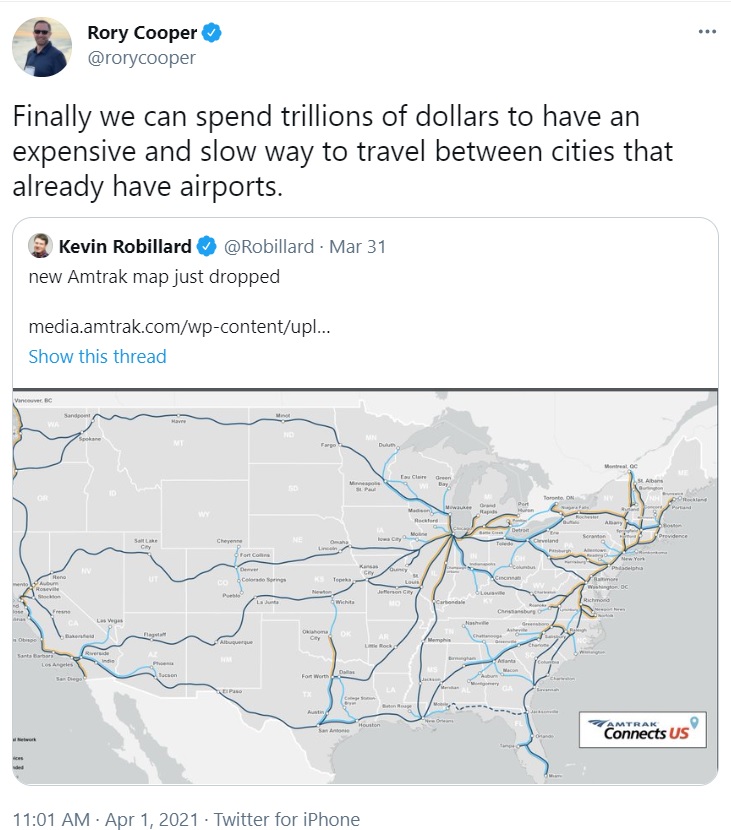

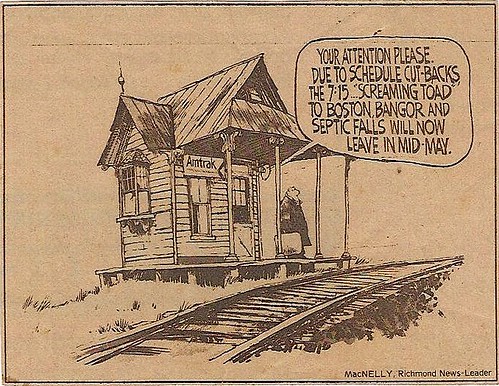
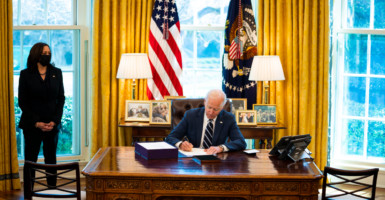
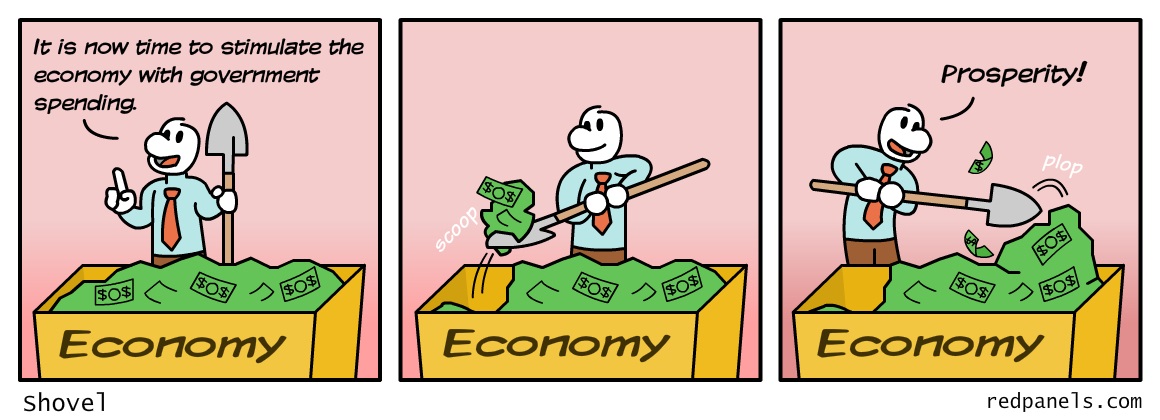



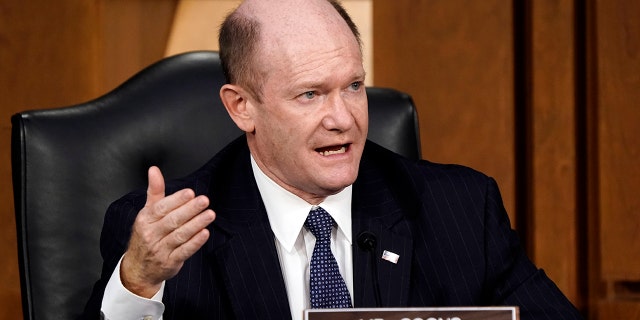
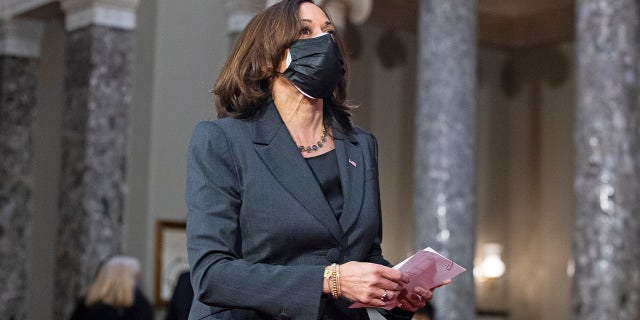
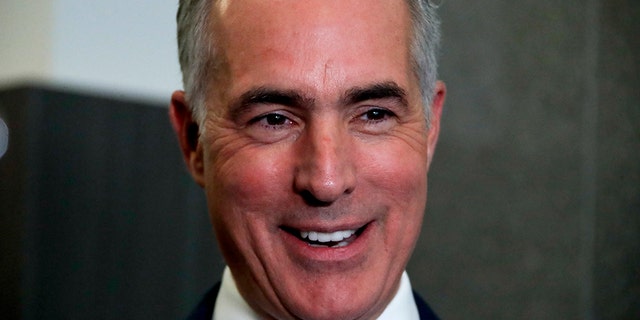
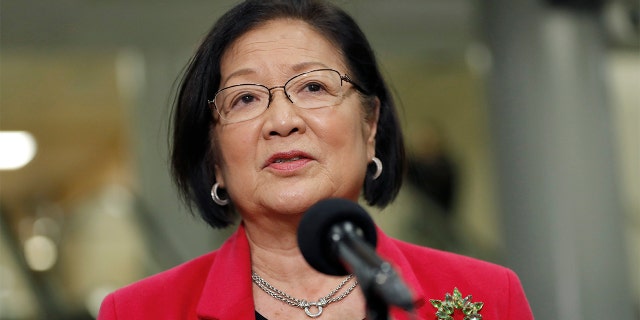



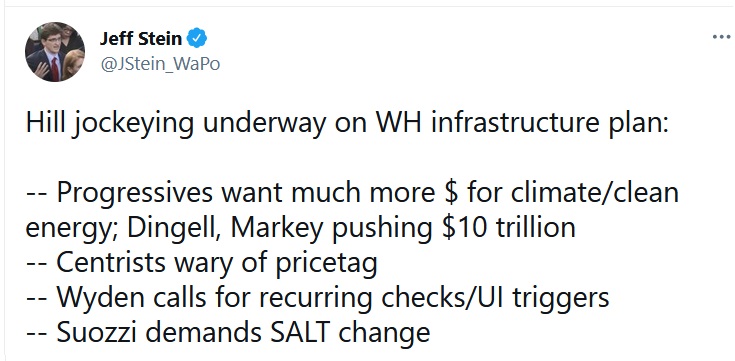
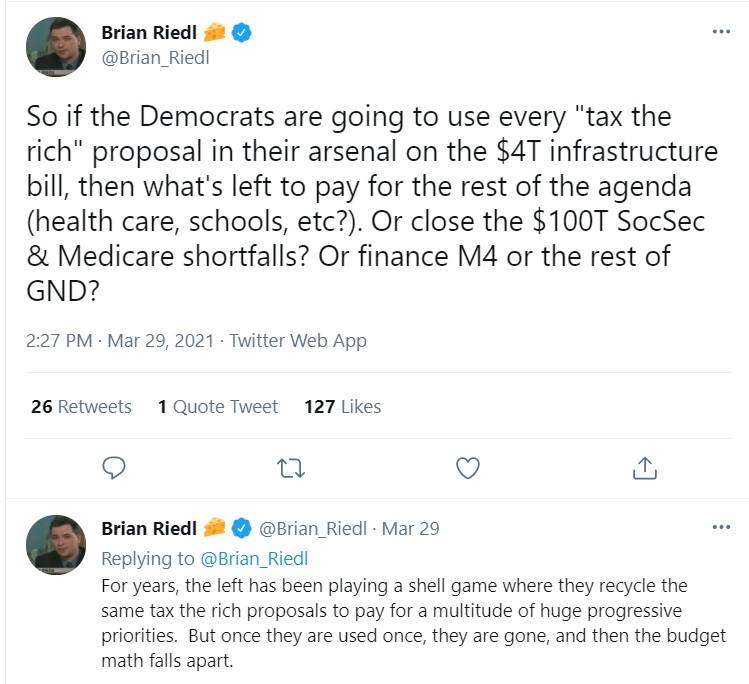













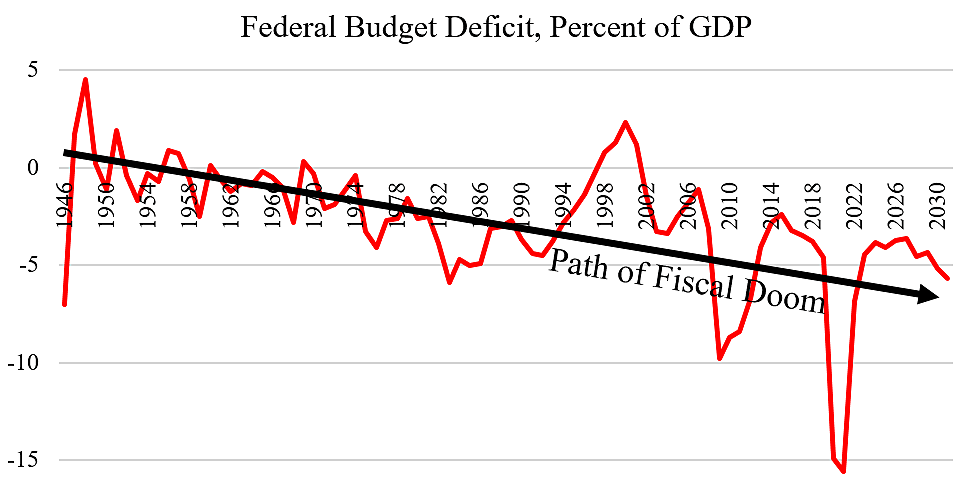
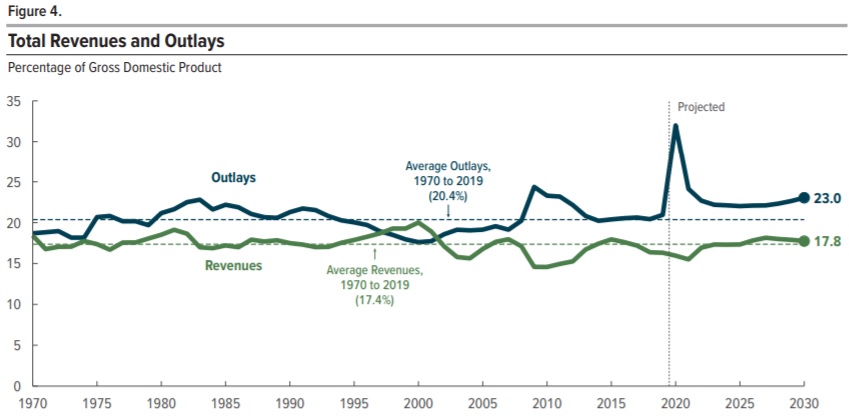

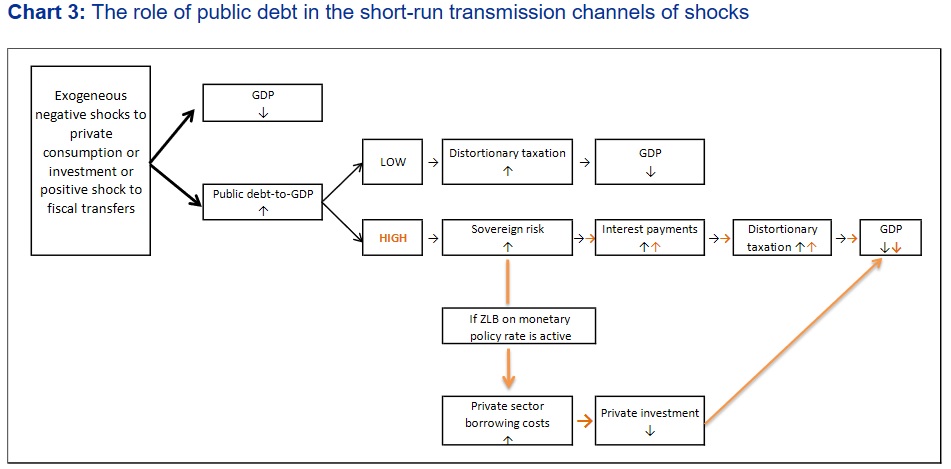
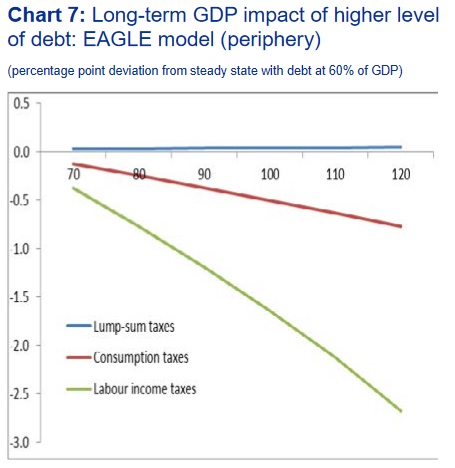
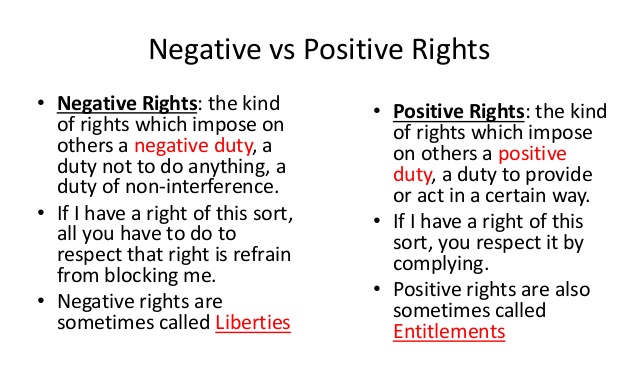

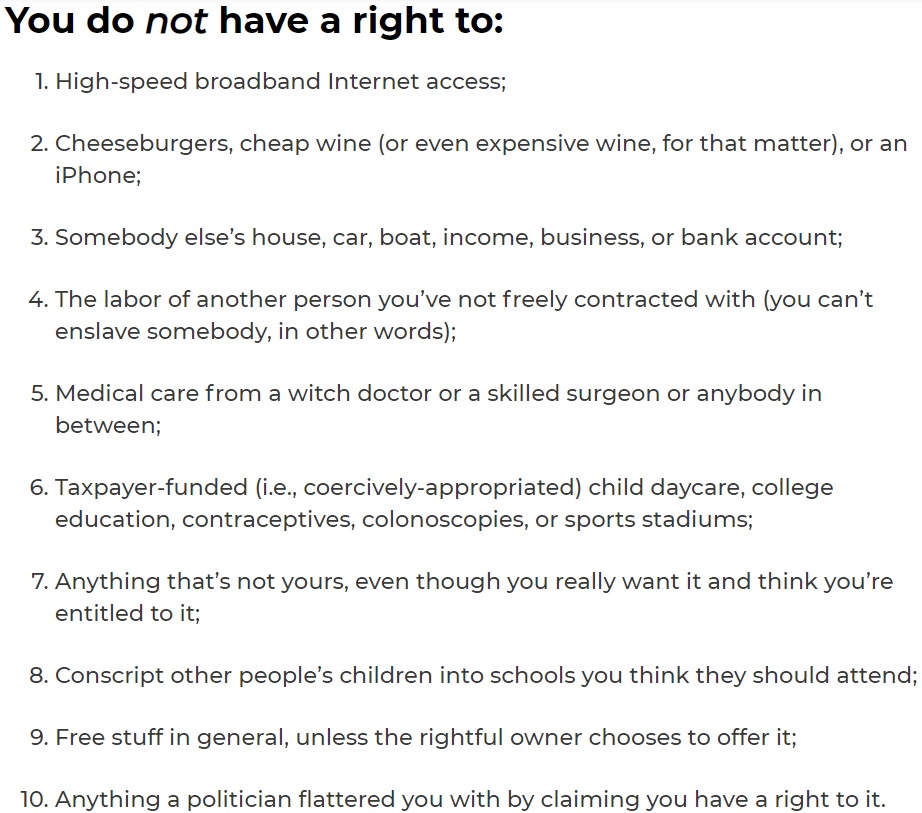


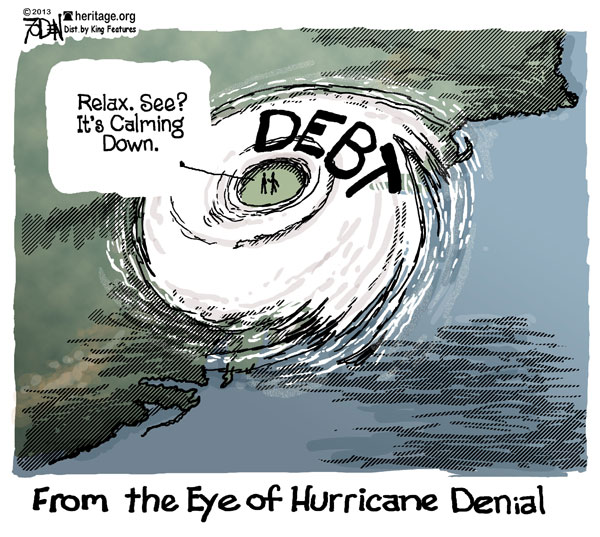
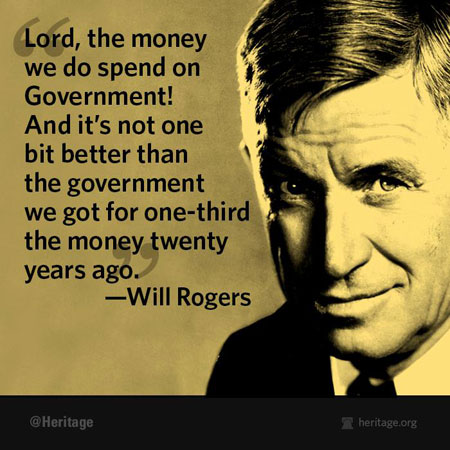
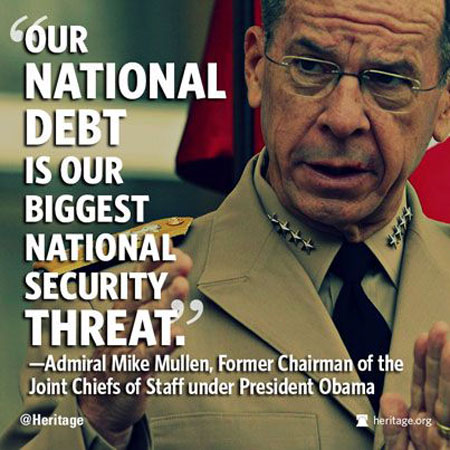
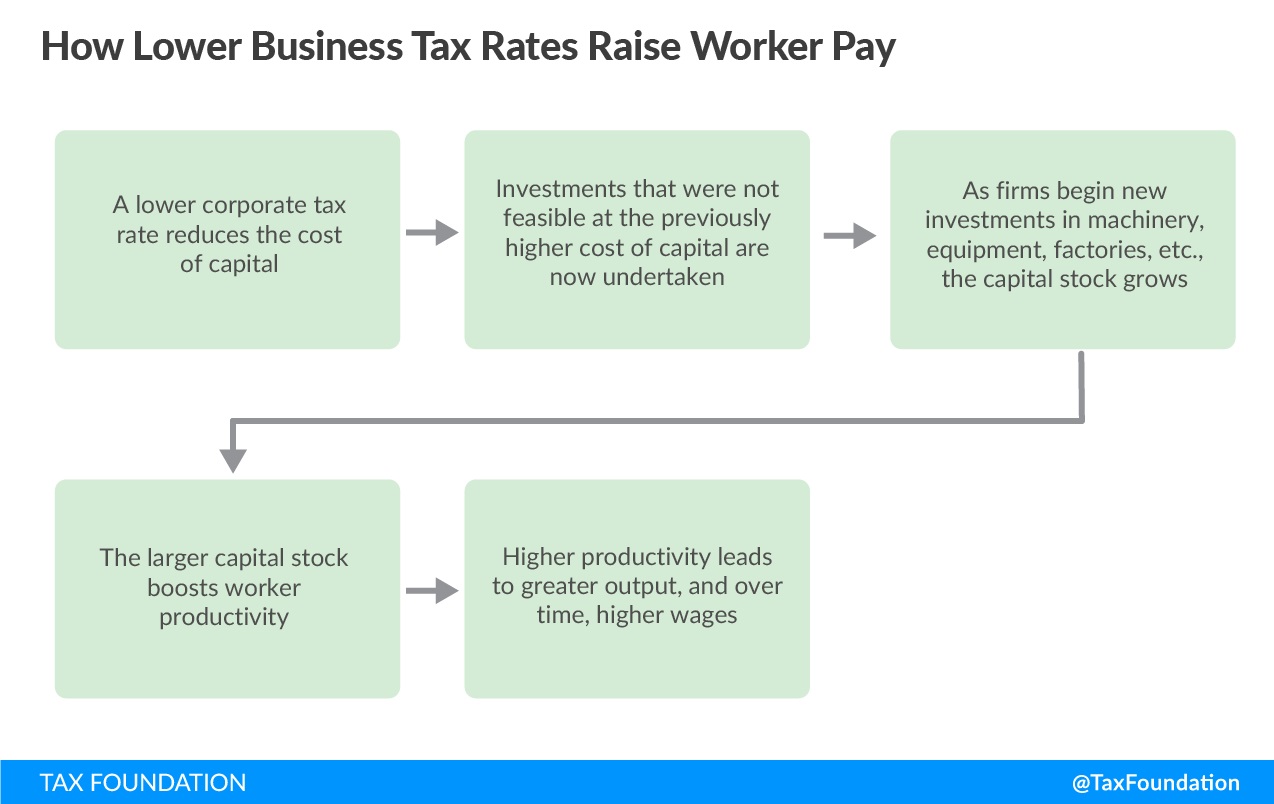

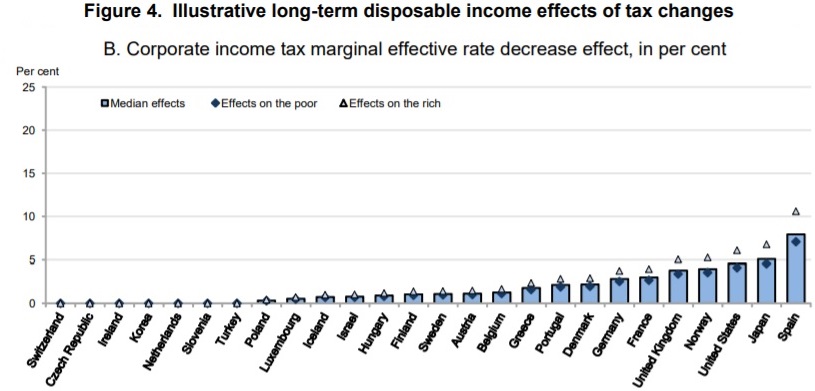
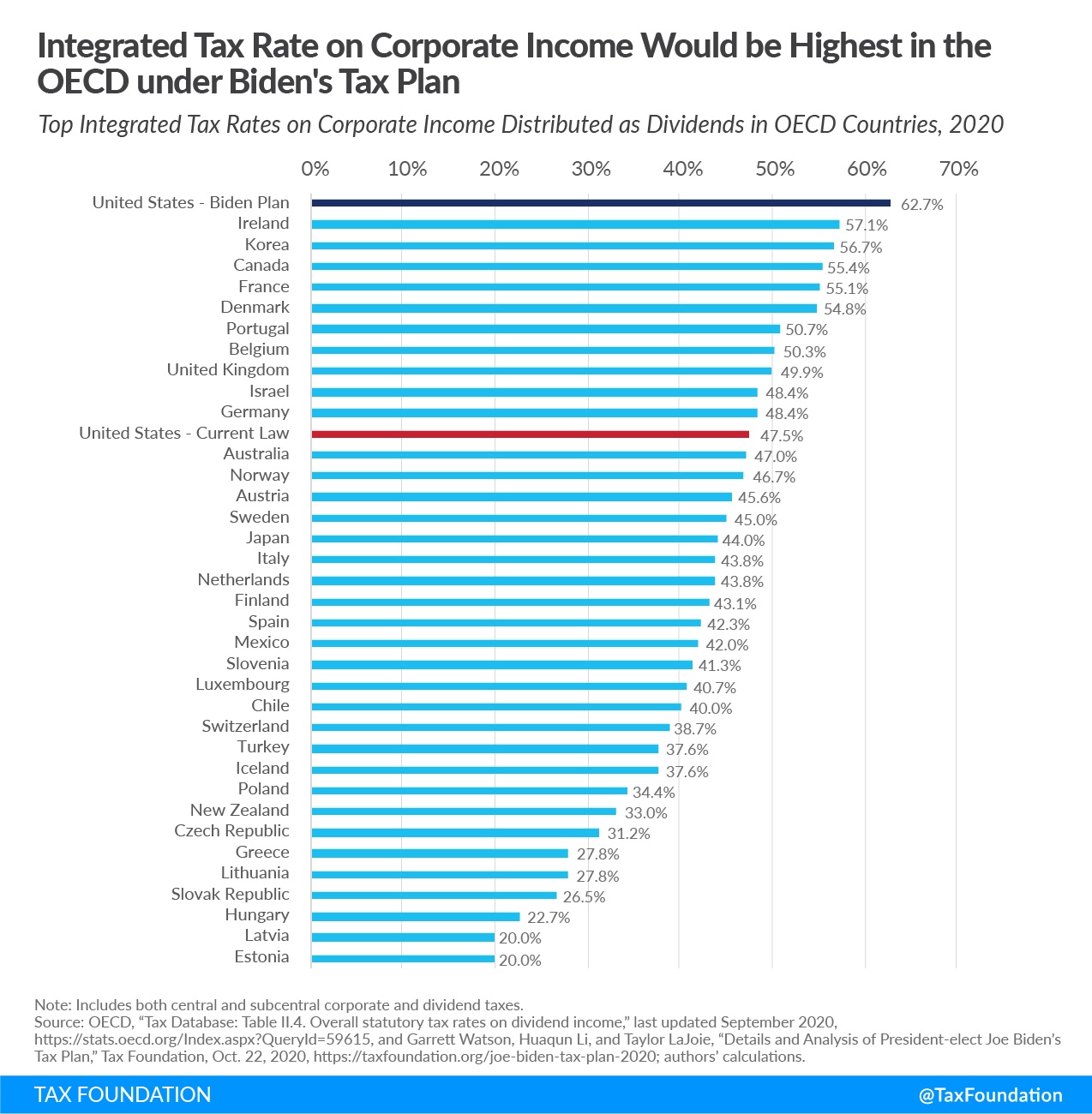
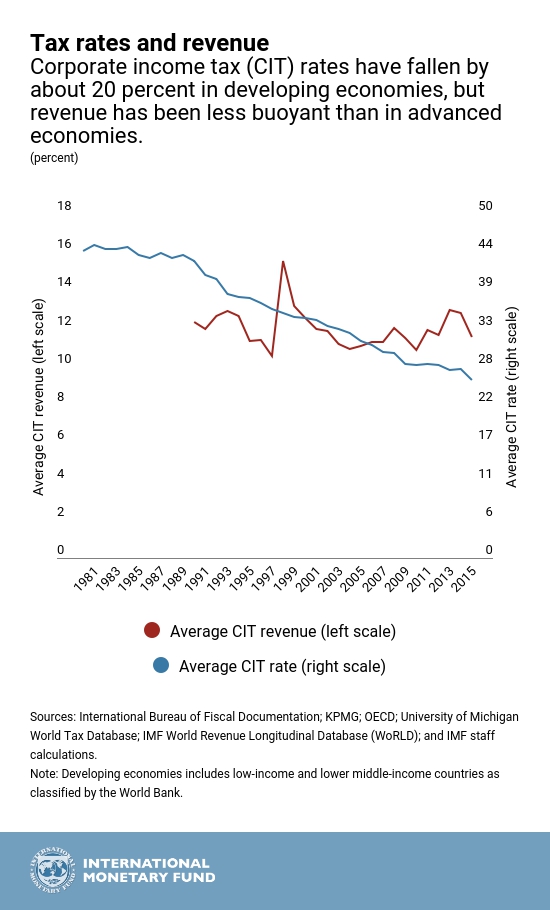
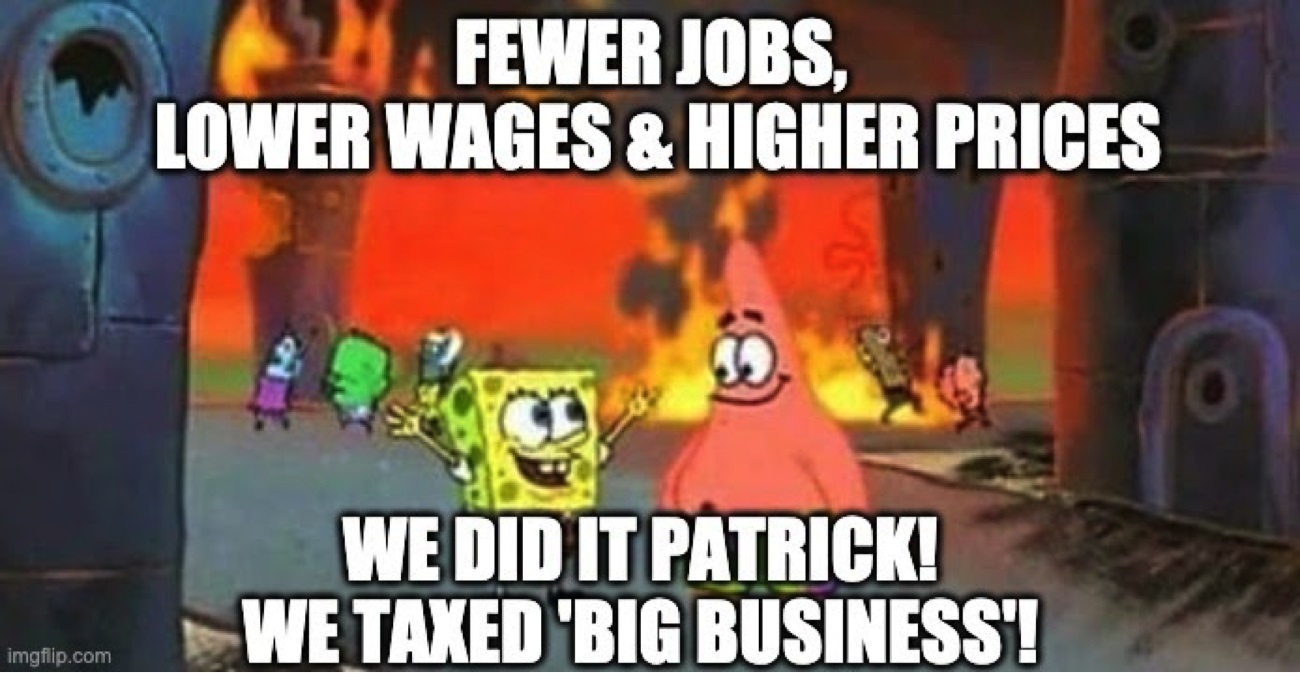
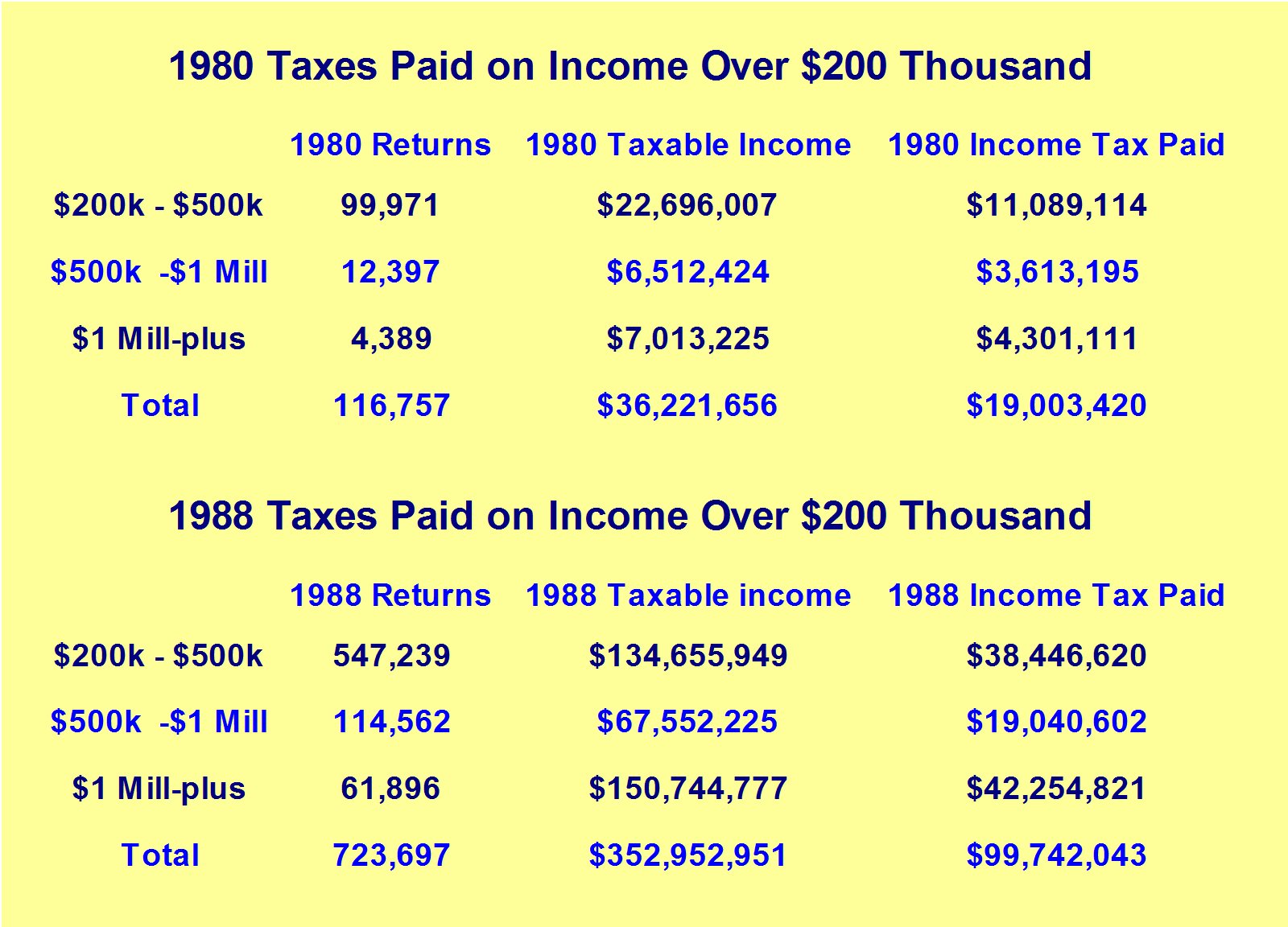


 The Daily Hatch