Monthly Archives: January 2021

The Moral Necessity by Mark Dunagan

________________

Sunday Sermons

The Second Question

Mark Dunagan
09/05/10 – Sunday Evening

The Second Question
The Moral Necessity

As we observed in the first question, The Three Questions, Francis Schaeffer noted that philosophy and religion deal with the same three fundamental questions. 1. The question of existence: Where did all this come from? 2. The question of man: Who is man and what is the basic of morality. 3. And last, the question of knowing: How do we know that we know? In this lesson I want to deal with the second question. In the book He Is There And He Is Not Silent, Schaeffer writes, “We now turn to the second area of philosophic thought, which is man and the dilemma of man. There are, as we have seen, two problems concerning man and his dilemma. The first of them is the fact that man is personal, different from non-man, yet finite. Because he is finite, he has no sufficient integration point in himself. Again, as Jean Paul Sartre put it, if a finite point does not have an infinite reference point, it is meaningless and absurd. The second point concerning man and the dilemma of man is what I call the nobility of man… There is a wonder of man – but contrasted with this there is his cruelty. So man stands with all his wonder and nobility, and yet also with his horrible cruelty that runs throughout the warp and woof of man’s history” (pp. 21-22).

No Sufficient Integration Point in Himself

In other words, seeing that man is finite and limited, man himself cannot be the absolute reference point of truth. Man cannot say, “This is true, because I say so”. This is one reason why it is so ridiculous to say, “What is true, is what is true for me”. In Jesus’ day people understood that authority that rests solely with man is a very weak argument, when they asked, “The baptism of John was from what source, from heaven or from men?” (Matthew 21:25). In fact, man is so finite that claiming that the authority for something a person believes or does rests purely on human authority, is viewed as an insult, “But if we say, ‘From men’, we fear the multitude; for they all hold John to be a prophet” (Matthew 21:26), or as in, “You must made that up, didn’t you”?

Impersonal Beginnings and Morals

“With an impersonal beginning (everything just came from energy or matter, plus time, plus chance) morals really do not exist as morals. If one starts with an impersonal beginning, the answer to morals eventually turns out to be the assertion that there are no morals (in however sophisticated way this may be expressed). This is true whether one begins with the Eastern pantheism or the new theology’s pantheism, or with the energy particle. With an impersonal beginning, everything is finally equal in the area of morals… Let in this position, we can talk about what is antisocial, or what society does not like, or even what I do not like, but we cannot talk about what is really right and what is really wrong” (pp. 22-23).

Statistical Ethics

In 1972 Schaeffer quoted Marshall McLuhan in reference to the idea that democracy was finished and in its place there would be coming a time in the global village when we will be able to wire everybody up to a giant computer, and what the computer strikes as the average at any given moment will be what is right and wrong. We might not be wired up to a giant computer, but most people today are wired up to the Internet. Thus if we begin with something impersonal, like Evolution, we end up with nothing more than “statistic ethics”, that is, something is right or wrong only because at least 51% of the people think it is. In fact, it is worse than that. Seeing that many people opt out, and many do not vote and others simply respond “I don’t know” or “I don’t care”, often something is right or wrong because 43% of a group says it is. Yet even unbelievers often do not accept statistical ethics. This was recently seen in the last election. The majority of people in the State of California said “no” to gay marriage, and this “statistical moral code” was not accepted by the homosexual community. Before we move on, we need to remind ourselves that God is obviously not into statistical ethics. Even if everyone contradicts something that God has said, God is still right (Romans 3:4). If the entire world stands against God and His eight followers, God and His eight followers are still right and the world is wrong (2 Peter 2:5). It is noteworthy that Abraham did not believe that truth was with numbers, rather he hoped that a small minority that was right could keep God’s judgment from destroying the city in which a loved one lived (Genesis 18:25-33).

What Man Really Believes

  • It is clear that men have always felt that things are right and wrong. “I am not talking about certain norms being right and wrong. All men have this sense of moral motions. You do not find man without them anywhere back in antiquity” (p. 23). We see such emotions in men like Abimelech, who said to Abraham, “You have done to me things that ought not to be done” (Genesis 20:9). 
  • Wherever you go, and whenever you live, you will find that people have definite feelings about various actions. In our modern society, people have strong feelings about perceived greed that has affected them or what they consider to be “torture” or “unjust”. Therefore, no one is an “true” relativist.

Man’s Attempted Answer for Man’s Cruelty

“There are two possibilities. The first is that man as he is now in his cruelty is what he has always intrinsically been: that is what man is. The symbol m-a-n equals that which is cruel, and the two cannot be separated” (p. 27). Yet there are a couple of problems with this point of view. First, we have too many examples of man not being cruel, and we ourselves have been the recipients of many acts of human kindness. We actually do see people living the precepts of Scripture (Galatians 5:22-24; 2 Peter 1:5-11), and history is filled with many examples of nobility (Hebrews, chapter 11). Second, if man was created by a personal God, and if man is inherently cruel, then how does one escape the conclusion that the Creator must be equally cruel? At this point Schaeffer notes that much of liberal theology in the West says something like, “’We have no answer for this, but let us take a step of faith against all reason and all reasonableness and say that God is good’. That is the position of all modern liberal theology… I have said that people who argue irrationality to be the answer are always selective about where they will become irrational… Suddenly men who have been saying that they are arguing with great reason become irrationalists at this point… The other tension that is immediately set up when people give this answer is to spin off in the opposite direction, towards making everything irrational. As they spin off towards irrationality, they ask, where do I stop?” (pp. 28, 29). Schaeffer also reminds us, “The difference between Christian thinking and the non-Christian philosopher has always been at this point. The non-Christian philosopher has always said that man is normal now, but biblical Christianity says he is abnormal now” (p. 31).

The Bible’s Answer

“Behold, I have found only this, that God made men upright, but they have sought out many devices” (Ecclesiastes 7:29). This is one reason why Genesis, and respecting the historical integrity and inspiration of Genesis is so essential. Jesus certainly took Genesis seriously and used it as an essential reference point (Matthew 19:8 “but from the beginning it has not been this way”). Schaeffer rightly observes, “Often I find evangelicals playing games with the first half of Genesis. But if you remove a true, historic, space-time fall, the answers are unfinished. It is not only that historic, biblical Christianity as it stands in the stream of history is gone, but every answer we possess in the area of morals in the area of man and his dilemma, is gone” (p. 35). Consider what we learn from taking Genesis seriously:

  • Man was created good, by a good and loving God (Genesis 1:26), and there is an answer for man’s cruelty (Ephesians 4:24ff), that does not shift the blame to God.
  • Man is now cruel, because man decided to rebel against his Creator (Genesis 3), and this rebellion was completely unreasonable.
  • Yet the good Creator immediately provided man with a path back to goodness (Genesis 3:15; 4:1ff).
  • Man has an eternal Creator, therefore man’s reference point for who he is and what is right and wrong will only be found in His Creator. “Plato was entirely right when he held that unless you have absolutes morals do not exist. Here is the complete answer to Plato’s dilemma; he spent his time trying to find a place to root his absolutes but he was never able to do so because his gods were not enough. But here is the infinite-personal God who has a character from which all evil is excluded (1 John 1:5; Titus 1:2), and so His character is the moral absolute of the universe” (p. 33).
  • We therefore have a real ground for fighting evil, including social evil and social injustices. “Modern man has no real basis for fighting evil, because he sees man as normal… But the Christian has – he can fight evil without fighting God. He has the solution… we can fight evil without fighting God, because God did not make things as they are now – as man in his cruelty has made them… These are abnormal, contrary to what God made, and so we can fight the evil without fighting God” (p. 32).
  • Finally we can fight evil or abhor evil (Romans 12:9), without abhorring ourselves or man in general. Seeing that evil is not inherently part of us, we can love people and see them for what they could become if they would only come back to their Creator.

Mark Dunagan/Beaverton Church of Christ

________________

Francis Schaeffer [1912-1984]

_____________________

We cannot deal with people like human beings, we cannot deal with them on the high level of true humanity, unless we really know their origin—who they are. God tells man who he is. God tells us that He created man in His image. So man is some- thing wonderful.

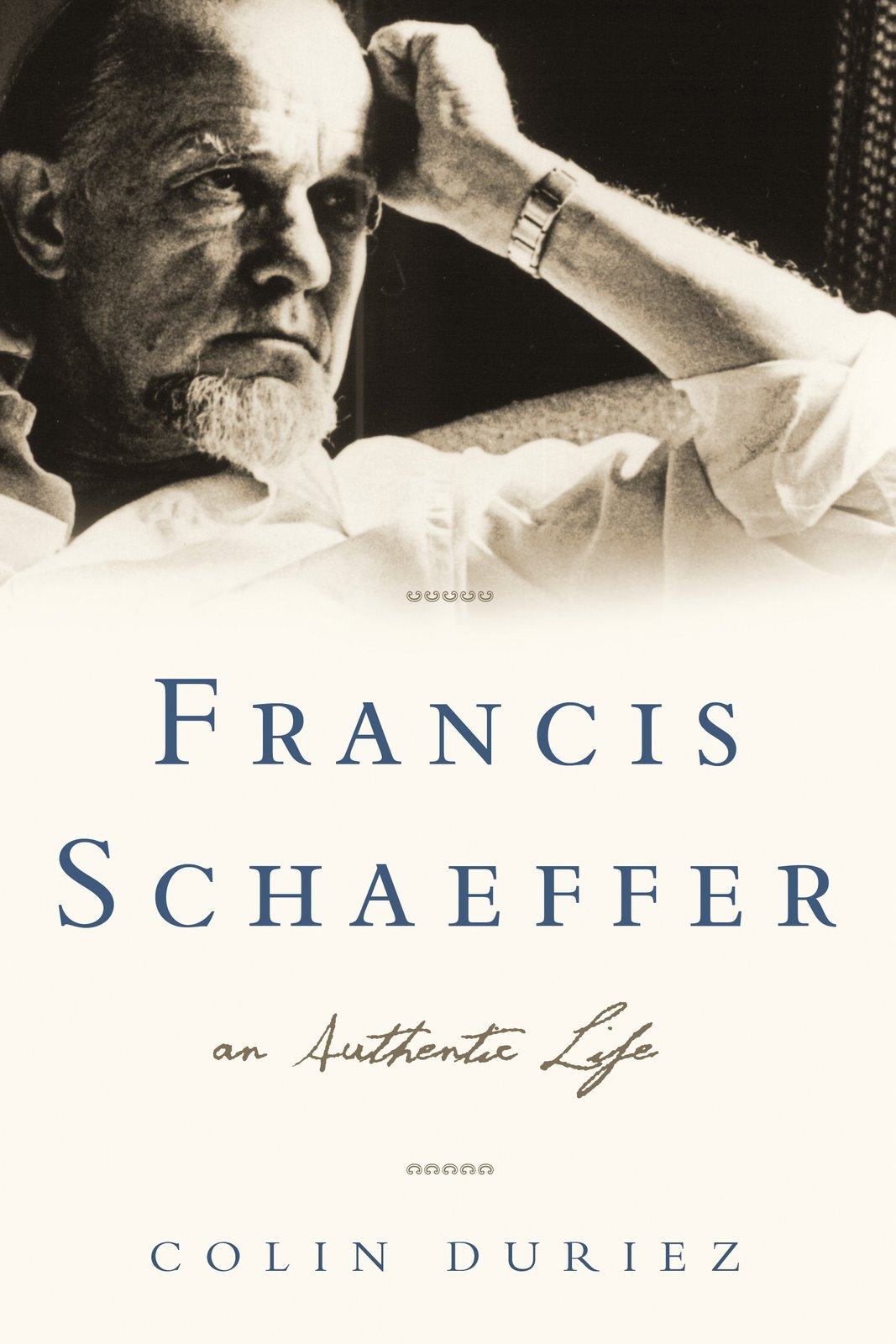
Francis Schaeffer is one of the most influential Christians to have lived in the twentieth century. His life closely paralleled the rise and fall of godless communism in Europe. Schaeffer spent many of those years fighting to instill a depleted western Protestantism and an increasingly materialistic America with a sense of God’s presence and His voice in human affairs.

Francis SchaefferFrancis Schaeffer

Schaeffer began his career as a simple minister of the gospel, a shepherd of a flock. From the beginning, he had a special affinity for young people. Programs he and his wife Edith put together for children proved to be strikingly successful. After pastoring in America for a few years, he and Edith went to Europe as missionaries. They would find their destiny at a Swiss chalet they called L’Abri (the shelter). There, they entertained college students tramping about Europe. Schaeffer relished engaging them in debate about the things they were learning in universities. From this small beginning emerged taped lectures, books (Escape from Reason, The God Who Is There, and many others), and then films (Whatever Happened to the Human Race?, How Should We Then Live?) that would shape the minds of evangelical Christians for decades.

Three key themes dominated Schaeffer’s relentless assault upon social decline and spiritual impoverishment. First, he insisted that Biblical occurrences, like the resurrection of Christ, were real events in space and time. In this sense, he was an apologist for the Christian faith and saw these Biblical truths as the only legitimate foundation for our ethics. Second, he pulled Christian pietists out of a purely devotional faith by demonstrating the massive impact the faith has had on the development of civilization. For Schaeffer, the Christian faith was not some exercise in supernatural therapy for people bewildered by the adversities of life. Instead, he drew out the connections between Christianity, social events, art, history, music, government, and the many other endeavors of human beings in the world. His faith led Christians out of their tiny reading room and into an enormous library of human experience and learning. Third, and finally, Schaeffer made a powerful stand against the shallow materialism increasingly manifest in western society. He criticized the addiction of many Americans to their own “personal peace and affluence” while being insulated against the travails of the poor. And he crusaded fiercely against the devaluation of human life, particularly in the realm of bioethics. In this regard, he helped forge a bond between Catholics and Protestants as he urged them to engage in co-belligerency against a culture in love with death.

Though it is sometimes fashionable to criticize Schaeffer for a misreading of one thinker or the other in his voluminous work, the simple fact is that this minister of the gospel sallied forth into battle during a time when the world sorely needed men like him. And it still does. Thank God for sending them.

Read the entire article on the Acton Institute website (new window will open). Reprinted with permission.

Published: June 10, 2010

Copyright © 2001-2014 OrthodoxyToday.org. All rights reserved. Any reproduction of this article is subject to the policy of the individual copyright holder. Follow copyright link for details.

_______________________

What is Art? Dec 13 Posted by rpviv (About Francis Schaeffer)

____________________

What is Art?

Posted by

Recently, I read Saving Leonardo by Nancy Pearcey and How Should We Then Live by Francis Schaeffer.  Both books have opened my eyes to the importance of art.  I used to think art was simply for people who were gifted in music, painting, acting etc.  Or, it was the fall back for those who couldn’t cut it in sports.  As for me, I never had artistic gifts.  And as to my sports career, I was twice cut before the second day of practice, after attempting to walk-on to two different NAIA Division II basketball teams!  Needless to say, I couldn’t make athleticism an art form, nor could I create anything of real artistic value in any other manner.  So I never really considered it much–until recently.

Art is the ability to take an experience, either real or imagined, and re-create it for others.  The format may be music, mat, wood, word, dance, drama, rhyme, rhythm or other.  Art will draw a person into the experience, heighten the senses, engage the emotions, block out what was or what will be, and bring to the now a full appreciation of the gift the artist offers.  The best art will instruct us to live better lives and appreciate each “now” for the gift that it is.

And art doesn’t always have to be created by others for us.  We can have our own artistic moments that bring us to an awareness and appreciation of life that is outside the norm.

I remember my last solo flight at pilot training.  It was a late afternoon flight, so the sun was setting and the orange of the sky gave the old beat up black and white jet brand new paint–it shined with the setting sun.  The sky was perfectly clear and its color ranged from bright orange to deep purple and the transition in between was, in itself, worthy of capture to understand how it connects the two extremes.  But the flying would not permit the time.  Because the moment the color struck me, was the brief moment when I was flat on my back as the nose of my aircraft stood perfectly between the orange and purple.  And though I wouldn’t get to fully appreciate the glory of God’s canvas, I was about to revel in one of the things I love most about flying–when I look up to see what is beneath me, or look down to see what is above me.  Both phrases making absolutely no sense, and at the same time, make perfect sense, whether my head is bowed or tilted back.  My feet rest on the moon’s ellipse, and I look up to behold the Texas fall, horizon to horizon, as if it was, itself, the perfect transition from orange to purple.  That afternoon God gave me a true appreciation for his creation and his artistry.   And I didn’t recognize it as art in the moment, but it impacted me as true art always does.

So in the end, art, ultimately, reveals God to us.  It shows us His glory, impresses upon us His majesty.  It is, for us, a tiny glimpse of the Creator, Sustainer, and Savior.  That is Art.

________________

SCHAEFFER SUNDAY Congressman Jack Kemp introduced Francis Schaeffer to Washington insiders!!!!

Congressman Jack Kemp introduced Francis Schaeffer to Washington insiders!!!! This article below pointed this out and this video below shows Jack Kemp tracing the roots of the Conservative movement in the USA to the Bible.

Jack Kemp: An American Conservative Statesman

Published on Jul 30, 2013

Had there never been a Reagan Revolution, there might well have been a Kemp Revolution. Jack Kemp established himself as one of the conservative policy movement’s most articulate speakers and defenders of personal liberty and responsibility. The public first knew of Kemp for his exploits on the gridiron. Kemp played in all three major professional football leagues, the NFL, the AFL and the Canadian Football League. Schooled in supply-side economics, the second part of his life found Kemp serving nine terms in Congress and then as Housing Secretary under President George H.W. Bush, Kemp was a 1988 Republican candidate for President and he was the Republican 1996 nominee for Vice President. Kemp spoke to the Public Policy Foundation on October 20, 1993. Jack Kemp died May 2, 2009 and with his passing, the American conservative movement lost one of its most articulate statesmen.

_________________________________

Joe Carter|10:15 PM CT

Know Your Evangelicals: Francis Schaeffer

Name: Francis A. Schaeffer (1912-1984)

Why you should know him: Schaeffer was one of the most influential figures in American evangelicalism in the period between World War II and the mid-1980s.

Previous roles: Founder of L’Abri Fellowship International; Lecturer and author of eighteen books.

Education:
B.A., Hampden-Sydney College
B.Div. Faith Theological Seminary
Honorary D.Div., Highland College

Area of expertise/interest: Apologetics, philosophy, Western culture, abortion, neo-Calvinism

Books: The God Who is There (1968); Escape from Reason (1968); Death in the City (1969); The Church at the End of the Twentieth Century (1970); The Mark of a Christian (1970); Pollution and the Death of Man (1970); The Church Before the Watching World (1971); True Spirituality (1971); Back to Freedom and Dignity (1972); Basic Bible Studies (1972); Genesis in Space and Time (1972); He is There and He is Not Silent (1972); The New Super-Spirituality (1972); Art and the Bible (1973); Everybody Can Know (1973); No Little People (1974); Two Contents, Two Realities (1974); Joshua and the Biblical Flow of History (1975); No Final Conflict (1975); How Should We Then Live? (1976); Whatever Happened to the Human Race? (with C. Everett Koop) (1979); A Christian Manifesto (1981); The Great Evangelical Disaster (1983)

Online essays and articles:
A Christian Manifesto (A lecture based on the book of the same title.)
Francis Schaeffer’s Philosophy of History [PDF]
Schaeffer on Education

Biography and Assessment: In the late 1940’s, Schaeffer and his wife Edith moved to Switzerland as long-term missionaries. They initially began a program called “Children for Christ” and on weekends entertained groups of schoolgirls on ski holidays in their Swiss chalet. By 1955 the couple had set up their own independent ministry organization called L’Abri (“The Shelter”) in the mountain village of Huemoz. They began taking guests, and developed a regular weekend schedule that consisted of conversations about religion, philosophy, art, and culture. L’Abri became popular among student circles, and by 1957 the Schaeffers were hosting about 25 guests every weekend.

The European students that showed up at L’Abri were well-versed in the post-Enlightenment philosophers like Kierkegaard and Hegel and with the existentialist literature of Camus and Sartre. As historian Michael S. Hamilton notes,

These students tutored Francis in the details of modern post-Christian thought, while he observed its impact on their lives. They had been taught that human beings were the mere product of time and chance in a materialistic world. This left many of them unable to find any basis for distinctions between right and wrong nor meaning in the normal activities of human life. The young people’s self-destructive moral confusion, alienation from society, and sincere search for something better stirred the Schaeffers’ compassion. It made the cost of an open home worth bearing, and it compelled Francis into ever-deeper reflection on the trajectory of modern culture.

The popularity of L’Abri continued to increase and by 1960 even Time magazine was taking notice. Workers at the chalet began recording Schaeffer’s lectures on the philosophical meaning of modern theology and culture. The tapes quickly developed an international circulation prompting the evangelist to return to the states. In 1965 Schaeffer took his first speaking trip to the United States, giving a series of lectures in the Boston area. He then gave a series of talks at Wheaton College that were later published as The God Who Is There. Although he dressed like a Swiss farmer, wearing knickers and an alpine hiking outfit, the most unusual aspect about Schaeffer was the way in which he differed from other evangelicals in engaging with the broader culture. Hamilton points out,

At Wheaton College, students were fighting to show films like Bambi, while Francis was talking about the films of Bergman and Fellini. Administrators were censoring existential themes out of student publications, while Francis was discussing Camus, Sartre, and Heidegger. He quoted Dylan Thomas, knew the artwork of Salvador Dali, listened to the music of the Beatles and John Cage.

Over the next ten years Francis and Edith became increasingly influential figures within American evangelicalism. Francis published eighteen books and booklets, most of which came out of lectures and talks he had been giving since the 1950s, that sold over 2.5 million copies in the U.S.

Schaeffer often railed against the middle-class evangelical mindset that placed an emphasis on “personal peace and affluence” and became an intellectual hero to Christian counter-culture figures like Jack Sparks, founder of Berkeley’s Christian World Liberation Front, and Larry Norman, “poet laureate of the Jesus Revolution.” By the 1970’s, though, he had also begun to gain a hearing within what would later be viewed as the “religious right.” Congressman Jack Kemp introduced the Schaeffers to Washington insiders and an encounter with L’Abri student Michael Ford led to a private dinner in the Ford White House.

In 1974, Schaeffer’s son Franky, a budding filmmaker, designed a ten-part documentary film series intended as a Christian response to Kenneth Clark’s widely viewed Civilization series. The project, How Should We Then Live?, consisted of an 18-city tour that attracted tens of thousands of people and was viewed as a resounding success.

What set the film series apart was the focus on legalized abortion. By the late 1970s, Schaeffer began devoting his full attention to the issue and encouraged pediatric surgeon C. Everett Koop to collaborate on a five-part film series with accompanying book, action handbook, and international lecture tour. In Whatever Happened to the Human Race? , Schaeffer argued that secular humanism had led to the devaluation of human life while Koop presented testimony about the widespread practice of infanticide in hospitals and its links to abortion. Koop later wrote that his involvement in this project was his first step toward becoming President Reagan’s surgeon general.

Unlike his first series, Human Race failed to garner a large audience and even lost money in some of the locations it was screened. Undaunted, Schaeffer continued to focus on abortion, calling it the hinge issue for American society in his book A Christian Manifesto. The book inspired Jerry Falwell to take a stand against abortion and inspired Operation Rescue founder Randall Terry to start a new kind of abortion protest employing passive resistance techniques used in the civil-rights struggle.

In early 1984 he had just enough strength left from his battle with cancer to complete a 13-city tour lecturing on this theme. A month after the tour was complete, he died at his home in Rochester, Minnesota.

Schaeffer—who always claimed to be an evangelist and not a philosopher—was often criticized for the way his work oversimplified intellectual history and philosophy. Even his most ardent admirers admit that he made significant errors in detail and overly broad generalizations. His books, which were often edited together from lecture notes, often fail to provide a systematic coherence that would allow them to withstand greater scrutiny.

Michael Hamilton rightly acknowledges, though, that Schaeffer played a vital role in “stepping stone scholarship.” His work provided an opening to the intellectual depths of Christianity that had been sorely lacking in conservative Protestant Christianity. Schaeffer helped to restore the value of developing a Christian worldview and offered the intellectuals tools that evangelicals needed to properly engage with the secular culture. The effect of his legacy still reverberates through evangelicalism. His influence shaped such thinkers as Chuck Colson, Nancy Pearcey, Cal Thomas, Ron Sider, Harold O. J. Brown, Os Guinness, Thomas Morris, Clark Pinnock, Mark Noll, Doug Groothuis, Jim Sire, and Ronald Wells. Perhaps the best summation of the evangelist who was considered both a “missionary to intellectuals” and a “guru to fundamentalists” is the one provided by Albert Mohler:

Schaeffer served as a prophet of cultural engagement during an age of rebellion among America’s youth, and he shaped the thinking of an entire generation of theologically-minded Christian young people.

(Primary source: Michael Hamilton, The Dissatisfaction of Francis Schaeffer )

[Note: If you find a story our community should know about, please send the link to joe.carter *at* thegospelcoalition.org.]

Joe Carter is an editor for The Gospel Coalition and the co-author of How to Argue Like Jesus: Learning Persuasion from History’s Greatest Communicator. You can follow him on Twitter.

Francis Schaeffer


______________________

In the film series “WHATEVER HAPPENED TO THE HUMAN RACE?” the arguments are presented  against abortion (Episode 1),  infanticide (Episode 2),   euthanasia (Episode 3), and then there is a discussion of the Christian versus Humanist

Dr. Francis schaeffer – The flow of Materialism(from Part 4 of Whatever happened to human race?)

Dr. Francis Schaeffer – The Biblical flow of Truth & History (intro)

Francis Schaeffer – The Biblical Flow of History & Truth (1)

Dr. Francis Schaeffer – The Biblical Flow of Truth & History (part 2)

Related posts:

Francis Schaeffer’s prayer for us in USA

 Francis Schaeffer: “Whatever Happened to the Human Race” (Episode 1) ABORTION OF THE HUMAN RACE Published on Oct 6, 2012 by AdamMetropolis The 45 minute video above is from the film series created from Francis Schaeffer’s book “Whatever Happened to the Human Race?” with Dr. C. Everett Koop. This book  really helped develop my political views […]

Francis Schaeffer’s “How should we then live?” Video and outline of episode 10 “Final Choices” (Schaeffer Sundays)

E P I S O D E 1 0   Dr. Francis Schaeffer – Episode X – Final Choices 27 min FINAL CHOICES I. Authoritarianism the Only Humanistic Social Option One man or an elite giving authoritative arbitrary absolutes. A. Society is sole absolute in absence of other absolutes. B. But society has to be […]

Francis Schaeffer’s “How should we then live?” Video and outline of episode 9 “The Age of Personal Peace and Affluence” (Schaeffer Sundays)

E P I S O D E 9 Dr. Francis Schaeffer – Episode IX – The Age of Personal Peace and Affluence 27 min T h e Age of Personal Peace and Afflunce I. By the Early 1960s People Were Bombarded From Every Side by Modern Man’s Humanistic Thought II. Modern Form of Humanistic Thought Leads […]

Francis Schaeffer’s “How should we then live?” Video and outline of episode 8 “The Age of Fragmentation” (Schaeffer Sundays)

E P I S O D E 8 Dr. Francis Schaeffer – Episode VIII – The Age of Fragmentation 27 min I saw this film series in 1979 and it had a major impact on me. T h e Age of FRAGMENTATION I. Art As a Vehicle Of Modern Thought A. Impressionism (Monet, Renoir, Pissarro, Sisley, […]

Francis Schaeffer’s “How should we then live?” Video and outline of episode 7 “The Age of Non-Reason” (Schaeffer Sundays)

E P I S O D E 7 Dr. Francis Schaeffer – Episode VII – The Age of Non Reason I am thrilled to get this film series with you. I saw it first in 1979 and it had such a big impact on me. Today’s episode is where we see modern humanist man act […]

Francis Schaeffer’s “How should we then live?” Video and outline of episode 6 “The Scientific Age” (Schaeffer Sundays)

E P I S O D E 6 How Should We Then Live 6#1 Uploaded by NoMirrorHDDHrorriMoN on Oct 3, 2011 How Should We Then Live? Episode 6 of 12 ________ I am sharing with you a film series that I saw in 1979. In this film Francis Schaeffer asserted that was a shift in […]

Francis Schaeffer’s “How should we then live?” Video and outline of episode 5 “The Revolutionary Age” (Schaeffer Sundays)

E P I S O D E 5 How Should We Then Live? Episode 5: The Revolutionary Age I was impacted by this film series by Francis Schaeffer back in the 1970′s and I wanted to share it with you. Francis Schaeffer noted, “Reformation Did Not Bring Perfection. But gradually on basis of biblical teaching there […]

Francis Schaeffer’s “How should we then live?” Video and outline of episode 4 “The Reformation” (Schaeffer Sundays)

Dr. Francis Schaeffer – Episode IV – The Reformation 27 min I was impacted by this film series by Francis Schaeffer back in the 1970′s and I wanted to share it with you. Schaeffer makes three key points concerning the Reformation: “1. Erasmian Christian humanism rejected by Farel. 2. Bible gives needed answers not only as to […]

“Schaeffer Sundays” Francis Schaeffer’s “How should we then live?” Video and outline of episode 3 “The Renaissance”

Francis Schaeffer’s “How should we then live?” Video and outline of episode 3 “The Renaissance” Francis Schaeffer: “How Should We Then Live?” (Episode 3) THE RENAISSANCE I was impacted by this film series by Francis Schaeffer back in the 1970′s and I wanted to share it with you. Schaeffer really shows why we have so […]

Francis Schaeffer’s “How should we then live?” Video and outline of episode 2 “The Middle Ages” (Schaeffer Sundays)

  Francis Schaeffer: “How Should We Then Live?” (Episode 2) THE MIDDLE AGES I was impacted by this film series by Francis Schaeffer back in the 1970′s and I wanted to share it with you. Schaeffer points out that during this time period unfortunately we have the “Church’s deviation from early church’s teaching in regard […]

Francis Schaeffer’s “How should we then live?” Video and outline of episode 1 “The Roman Age” (Schaeffer Sundays)

Francis Schaeffer: “How Should We Then Live?” (Episode 1) THE ROMAN AGE   Today I am starting a series that really had a big impact on my life back in the 1970′s when I first saw it. There are ten parts and today is the first. Francis Schaeffer takes a look at Rome and why […]

Francis Schaeffer: “Whatever Happened to the Human Race” (Episode 5) TRUTH AND HISTORY

Francis Schaeffer: “Whatever Happened to the Human Race” (Episode 5) TRUTH AND HISTORY Published on Oct 7, 2012 by AdamMetropolis This crucial series is narrated by the late Dr. Francis Schaeffer and former Surgeon General Dr. C. Everett Koop. Today, choices are being made that undermine human rights at their most basic level. Practices once […]

Francis Schaeffer: “Whatever Happened to the Human Race” (Episode 4) THE BASIS FOR HUMAN DIGNITY

The opening song at the beginning of this episode is very insightful. Francis Schaeffer: “Whatever Happened to the Human Race” (Episode 4) THE BASIS FOR HUMAN DIGNITY Published on Oct 7, 2012 by AdamMetropolis This crucial series is narrated by the late Dr. Francis Schaeffer and former Surgeon General Dr. C. Everett Koop. Today, choices […]

Francis Schaeffer: “Whatever Happened to the Human Race” (Episode 3) DEATH BY SOMEONE’S CHOICE

Francis Schaeffer: “Whatever Happened to the Human Race” (Episode 3) DEATH BY SOMEONE’S CHOICE Published on Oct 6, 2012 by AdamMetropolis This crucial series is narrated by the late Dr. Francis Schaeffer and former Surgeon General Dr. C. Everett Koop. Today, choices are being made that undermine human rights at their most basic level. Practices […]

Francis Schaeffer: “Whatever Happened to the Human Race?” (Episode 2) SLAUGHTER OF THE INNOCENTS

Francis Schaeffer: “Whatever Happened to the Human Race?” (Episode 2) SLAUGHTER OF THE INNOCENTS Published on Oct 6, 2012 by AdamMetropolis This crucial series is narrated by the late Dr. Francis Schaeffer and former Surgeon General Dr. C. Everett Koop. Today, choices are being made that undermine human rights at their most basic level. Practices […]

Francis Schaeffer: “Whatever Happened to the Human Race” (Episode 1) ABORTION OF THE HUMAN RACE

It is not possible to know where the pro-life evangelicals are coming from unless you look at the work of the person who inspired them the most. That person was Francis Schaeffer.  I do care about economic issues but the pro-life issue is the most important to me. Several years ago Adrian Rogers (past president of […]

The following essay explores the role that Francis Schaeffer played in the rise of the pro-life movement. It examines the place of How Should We Then Live?, Whatever Happened to the Human Race?, and A Christian Manifesto in that process.

This essay below is worth the read. Schaeffer, Francis – “Francis Schaeffer and the Pro-Life Movement” [How Should We Then Live?, Whatever Happened to the Human Race?, A Christian Manifesto] Editor note: <p> </p> [The following essay explores the role that Francis Schaeffer played in the rise of the pro-life movement.  It examines the place of […]

Who was Francis Schaeffer? by Udo Middelmann

Great article on Schaeffer. Who was Dr. Francis A. Schaeffer? By Francis Schaeffer The unique contribution of Dr. Francis Schaeffer on a whole generation was the ability to communicate the truth of historic Biblical Christianity in a way that combined intellectual integrity with practical, loving care. This grew out of his extensive understanding of the Bible […]

.

Taking on Ark Times bloggers about abortion on the 40th anniversary date of Roe v. Wade (Part 7) “Poverty not good reason for abortion, why not give up for adoption?”

Dr Richard Land discusses abortion and slavery – 10/14/2004 – part 3 The best pro-life film I have ever seen below by Francis Schaeffer and Dr. C. Everett Koop “Whatever happened to the human race?” Over the years I have taken on the Ark Times liberal bloggers over and over and over concerning the issue […]

Taking on Ark Times bloggers about abortion on the 40th anniversary date of Roe v. Wade (Part 6) For many pro-abortionists ” …the problem is not determining when actual human life begins, but when the value of that life begins to out weigh other considerations”

The best pro-life film I have ever seen below by Francis Schaeffer and Dr. C. Everett Koop “Whatever happened to the human race?” Francis Schaeffer pictured above._________ The 45 minute video above is from the film series created from Francis Schaeffer’s book “Whatever Happened to the Human Race?” with Dr. C. Everett Koop. This book  really […]

Taking on Ark Times bloggers about abortion on the 40th anniversary date of Roe v. Wade (Part 5) “Slavery issue compared to rights of unborn child”

The best pro-life film I have ever seen below by Francis Schaeffer and Dr. C. Everett Koop “Whatever happened to the human race?” Over the years I have taken on the Ark Times liberal bloggers over and over and over concerning the issue of abortion. I asked over and over again for one liberal blogger […]

Taking on Ark Times bloggers about abortion on the 40th anniversary date of Roe v. Wade (Part 4) “How do pro-lifers react to the movie THE CIDER HOUSE RULES?”

Francis Schaeffer pictured above._________ The best pro-life film I have ever seen below by Francis Schaeffer and Dr. C. Everett Koop “Whatever happened to the human race?” Over the years I have taken on the Ark Times liberal bloggers over and over and over concerning the issue of abortion. I asked over and over again […]

Taking on Ark Times bloggers about abortion on the 40th anniversary date of Roe v. Wade (Part 3) “What should be the punishment for abortion doctors?”

The best pro-life film I have ever seen below by Francis Schaeffer and Dr. C. Everett Koop “Whatever happened to the human race?” On 1-24-13 I took on the child abuse argument put forth by Ark Times Blogger “Deathbyinches,” and the day before I pointed out that because the unborn baby has all the genetic code […]

Taking on Ark Times bloggers about abortion on the 40th anniversary date of Roe v. Wade (Part 2) “The pro-abortion child abuse argument destroyed here”

PHOTO BY STATON BREIDENTHAL from Pro-life march in Little Rock on 1-20-13. Tim Tebow on pro-life super bowl commercial. Over the years I have taken on the Ark Times liberal bloggers over and over and over concerning the issue of abortion. Here is another encounter below. On January 22, 2013 (on the 40th anniversary of the […]

Taking on Ark Times bloggers about abortion on the 40th anniversary date of Roe v. Wade (Part 1)

Dr Richard Land discusses abortion and slavery – 10/14/2004 – part 3 The best pro-life film I have ever seen below by Francis Schaeffer and Dr. C. Everett Koop “Whatever happened to the human race?” Over the years I have taken on the Ark Times liberal bloggers over and over and over concerning the issue […]

By Everette Hatcher III | Posted in Arkansas Times, Francis Schaeffer, Prolife | Edit | Comments (0)

My rough draft letter to President Elect Biden that will be mailed on March 16, 2021! (Part 56) “Raising taxes on those evil rich people does not work!!!”

March 16, 2021

President Biden c/o The White House
1600 Pennsylvania Avenue NW
Washington, DC 20500

Dear Mr. President,

Is our country learning from history? California keeps raising their taxes on the wealthy and people keep moving from California to Texas. What does our federal government do? They also have been raising taxes on the wealthy lately. Take a look at this excellent video below and then read a great article by Dan Mitchell of the Cato Institute on what is happening in California right now.

Will Higher Tax Rates Balance the Budget?

Published on Apr 11, 2012

As the U.S. debt and deficit grows, some politicians and economist have called for higher tax rates in order to balance the budget. The question becomes: when the government raises taxes, does it actually collect a larger portion of the US economy?

Professor Antony Davies examines 50 years of economic data and finds that regardless of tax rates, the percentage of GDP that the government collects has remained relatively constant. In other words, no matter how high government sets tax rates, the government gets about the same portion. According to Davies, if we’re concerned about balancing the budget, we should worry less about raising tax revenue and more about growing the economy. The recipe for growth? Lower tax rates and a simplified tax code.

Like most people, I’m a sucker for a heartwarming story around the holidays.

Sometimes, you get that nice feeling when good things happen to good people, like you find at the end of a classic movie like “It’s a Wonderful Life.”

But since I’m a bit of a curmudgeon, I also feel all warm and fuzzy when bad things happen to bad people.

That’s why I always smile when I read stories about taxpayers moving across borders, thus preventing greedy tax-hiking politicians from collecting more revenue.

“Where’s our tax revenue?!?”

I’m glad when that happens to French politicians. I’m glad when it happens to Italian politicians. I’m glad when it happens to Illinois politicians. And British politicians. And Spanish politicians. And Maryland politicians. I could continue, but I think you get the point.

I’m even glad when it happens to the politicians in Washington.

I smile because I envision the moment when some budget geek tells these sleazy politicians that projected revenues aren’t materializing and they don’t have more money to spend.

So I wish I could be a fly on the wall when this moment of truth happens to California politicians. They convinced voters in the state to enact Prop 30, a huge tax increase targeting those evil, awful, bad rich people.

Governor Brown and his fellow kleptocrats in Sacramento doubtlessly are salivating at the thought of more money to waste.

But notwithstanding a satirical suggestion from Walter Williams, there aren’t guard towers and barbed-wire fences surrounding the state. Productive people can leave, and that’s happening every day. And they take their taxable income with them.

Usually in ways that don’t attract attention. But sometimes a bunch of them leave at the same times, and that is newsworthy. Here’s an example of that happening, as reported by the San Francisco Chronicle.

Chevron Corp. will move up to 800 jobs – about a quarter of its current headquarters staff – from the Bay Area to Houston over the next two years but will remain based in San Ramon, the oil company told employees Thursday. …The company already employs far more people in Houston – about 9,000 full-time employees and contractors – than it does in San Ramon.

We don’t know a lot of details, but these were positions at the company’s headquarters and they were “technical positions dealing with information and advanced energy technologies…tied to Chevron’s worldwide oil exploration and production business.”

Let’s assume these highly skilled employees earn an average of $250,000. I imagine that’s a low-ball estimate, but this is just for purposes of a thought experiment. Now multiply that average salary by 800 workers and you get $200 million of income.

And every penny of that $200 million no longer will be subject to tax by the kleptocrats in the state’s capital.

In other words, we’re seeing the Laffer Curve in action.

Politicians can raise tax rates all day long, but that doesn’t automatically translate into more tax revenue. Politicians keep forgetting that taxable income is not a fixed variable.

What’s happening in a big way with Chevron is happening in small ways every single day with investors, entrepreneurs, small business owners, and other “rich’ people.

That’s good for the people escaping. And it also will warm my heart when California’s despicable politicians discover next year that there’s an “unexpected” revenue shortfall.

P.S. It’s just an anecdote that the Chevron jobs are going to Texas. But when you add together a bunch of anecdotes, you get data. And according to the data, Texas is kicking the you-know-what out of California. Maybe there’s a lesson to be learned?

__________

___________

Thank you so much for your time. I know how valuable it is. I also appreciate the fine family that you have and your commitment as a father and a husband.

Sincerely,

Everette Hatcher III, 13900 Cottontail Lane, Alexander, AR 72002, ph 501-920-5733

Williams with Sowell – Minimum Wage

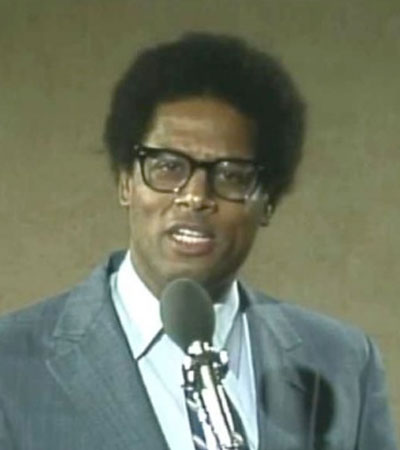
Thomas Sowell

Thomas Sowell – Reducing Black Unemployment

By WALTER WILLIAMS

—-

Ronald Reagan with Milton Friedman
Milton Friedman The Power of the Market 2-5
Related posts:

Open letter to President Obama (Part 201)Tea Party favorite Representative links article “Prescott and Ohanian: Taxes Are Much Higher Than You Think”

    (Emailed to White House on 12-21-12.) President Obama c/o The White House 1600 Pennsylvania Avenue NW Washington, DC 20500 Dear Mr. President, I know that you receive 20,000 letters a day and that you actually read 10 of them every day. I really do respect you for trying to get a pulse on […]

Open letter to President Obama (Part 200.2)Tea Party Republican Representative takes on the President concerning fiscal cliff

(Emailed to White House on 12-21-12.) President Obama c/o The White House 1600 Pennsylvania Avenue NW Washington, DC 20500 Dear Mr. President, I know that you receive 20,000 letters a day and that you actually read 10 of them every day. I really do respect you for trying to get a pulse on what is […]

Open letter to President Obama (Part 200.1)Tea Party favorite Representative shares link on facebook

(Emailed to White House on 12-21-12) President Obama c/o The White House 1600 Pennsylvania Avenue NW Washington, DC 20500 Dear Mr. President, I know that you receive 20,000 letters a day and that you actually read 10 of them every day. I really do respect you for trying to get a pulse on what is […]

Open letter to President Obama (Part 199) Tea Party favorite takes on President

  The federal government has a spending problem and Milton Friedman came up with the negative income tax to help poor people get out of the welfare trap. It seems that the government screws up about everything. Then why is President Obama wanting more taxes? _______________ Milton Friedman – The Negative Income Tax Published on […]

Tea Party Heroes Rep. David Schweikert (R-AZ),Justin Amash (R-MI), Tim Huelskamp (R-KS) have been punished by Boehner

I was sad to read that the Speaker John Boehner has been involved in punishing tea  party republicans. Actually I have written letters to several of these same tea party heroes telling them that I have emailed Boehner encouraging him to listen to them. Rep. David Schweikert (R-AZ),Justin Amash (R-MI), and Tim Huelskamp (R-KS). have been contacted […]

Some Tea Party heroes (Part 10)

Michael Tanner of the Cato Institute in his article, “Hitting the Ceiling,” National Review Online, March 7, 2012 noted: After all, despite all the sturm und drang about spending cuts as part of last year’s debt-ceiling deal, federal spending not only increased from 2011 to 2012, it rose faster than inflation and population growth combined. […]

Some Tea Party heroes (Part 9)

Michael Tanner of the Cato Institute in his article, “Hitting the Ceiling,” National Review Online, March 7, 2012 noted: After all, despite all the sturm und drang about spending cuts as part of last year’s debt-ceiling deal, federal spending not only increased from 2011 to 2012, it rose faster than inflation and population growth combined. […]

49 posts on Tea Party heroes of mine

Some of the heroes are Mo Brooks, Martha Roby, Jeff Flake, Trent Franks, Duncan Hunter, Tom Mcclintock, Devin Nunes, Scott Tipton, Bill Posey, Steve Southerland and those others below in the following posts. THEY VOTED AGAINST THE DEBT CEILING INCREASE IN 2011 AND WE NEED THAT TYPE OF LEADERSHIP NOW SINCE PRESIDENT OBAMA HAS BEEN […]

Some Tea Party Republicans win and some lose

I hated to see that Allen West may be on the way out. ABC News reported: Nov 7, 2012 7:20am What Happened to the Tea Party (and the Blue Dogs?) Some of the Republican Party‘s most controversial House members are clinging to narrow leads in races where only a few votes are left to count. […]

Some Tea Party heroes (Part 8)

Rep Himes and Rep Schweikert Discuss the Debt and Budget Deal Michael Tanner of the Cato Institute in his article, “Hitting the Ceiling,” National Review Online, March 7, 2012 noted: After all, despite all the sturm und drang about spending cuts as part of last year’s debt-ceiling deal, federal spending not only increased from 2011 […]

Quotes from How Should we then live?

________________

“That it was the Christians that were able to resist religious mixtures, syncretism, and the effects of the weaknesses of culture speaks of the strength of the Christian world view. This strength rested on God being infinite personal God”
(pg. 22)They [earliest Christians] rejected all forms of syncretism…they allowed no mixture: all other Gods were seen as false Gods
(pg. 26)After Constantine …the majority of the people went on in their old ways.
( pg. 26)
Augustine (354-430) strongly emphasized a true biblical Christianity …Later in the Church there was an increasing distortion away from the biblical teaching… [incorporating Greek] (pg. 30)
Increasingly, the authority of the church took precedence over their teaching of the Bible
(pg. 32)
Much of Christianity up until the sixteenth century was either reaction against or reaffirmation of these distortions of the original Christian, biblical teaching
(pg. 32)
Aquinas has already begun in difference to Aristotle (384-322BC), to open the door to placing revelation and human reason on an equal footing
(pg. 43)
Aquinas thought that the Fall did not affect man as a whole but only in part. In his view the will was fallen or corrupted but the intellect was not affected. Thus peopled could rely on their own human wisdom, and this meant that people were free to mix teaching of the Bible with the teachings of non-Christian philosophers.
(pg. 52)…to Thomas Aquinas the will was fallen after man had revolted but the mind was not.
(pg. 81)
…as a result philosophy was gradually separated from revelation – from the Bible – and philosophers began to act in an increasingly independent autonomous manner.
(pg. 52)
In 1263 Pope Urban IV had forbidden the study of Aristotle in the universities. Aquinas managed to have Aristotle accepted, so the ancient non-Christian philosophy was re enthroned.
(pg. 52)
Two things …laid the foundation for what was to follow: first the gradually awakened cultural thought and awakened piety [he thinks this is bad] of the Middle Ages; and second, an increasing distortion of the teaching of the Bible and the early church. Humanist elements had entered. For example, the authority of the church took precedence over the teaching of the Bible; Fallen man was considered able to return to God by meriting the merit of Christ; and there was a mixture of Christian and ancient non-Christian thought (as Aquinas’s emphasis on Aristotle). This opened the way for people to think of themselves as autonomous and the center of all things.(then he sets Wycliffe and Huss against that)
(pg. 56)
Prior to this time [Renaissance], Mary was considered very high and holy. Earlier she was considered so much above normal people that she was painted as a symbol. When in the Renaissance Mary was painted as a real person, …but now not only was the king’s mistress painted as Mary with all of the holiness removed, but the meaning, too was being destroyed.
(pg. 71)
Huss returned to the teachings of the Bible and of the early church and stressed that the Bible is the only source of final authority and that salvation comes only through Christ and his work.
(pg. 80)
The Reformers turned not to man as beginning only from himself, but to the original Christianity of the Bible and the Early Church. Gradually they came to see that the church founded by Christ had since been marred by distortions. … Rather they took seriously the Bible’s own claim for itself-that it is the only final authority…the Reformers accepted the Bible as the Word of God in all that it teaches…it was Sola Sciptura, the Scriptures only. This stood in contrast to the humanism that had infiltrated the church after the first centuries of Christianity.
(pg. 81-82)
At its core, therefore, the Reformation was the removing of the humanistic distortions which had entered the Church.
(pg. 82)
But Michelangelo, on the ceiling of the Sistine Chapel in the Vatican, also combined biblical teaching and non-Christian pagan thought; he made the pagan prophetesses equal to the Old Testament prophets.
(pg. 82)
The Reformers wanted to go back to the church as it originally was, with the authority being the Bible only…
(pg. 82)
they [Reformers] indeed had many and serious weaknesses, in to regard to religious and secular humanism…they did not mix humanism with their position.
(pg. 82)
…the Bible gives unity to the universal and the particulars.
(pg. 82 theme on pg. 86)
The individual person, they [Reformers] taught, could come to God directly by faith through the finished work of Christ.
(pg. 87)
To men and women of the time, these were images of worship. The men of the Reformation saw that the Bible stressed there is only one mediator between Toe and man, Christ Jesus. (pg. 88)
This rested on the fact that the Bible gives unity to the universal and the particulars, and therefore the particulars have meaning. …variety and diversity without chaos. There is variety yet resolution…
(pg. 92)
We must of course, remember Handel …Handel followed the Bible’s teaching exactly …
(pg. 92)
Anyone…who reads Martin Luther’s books, can see how his teaching is so clear and transparent when he sets for the holy gospel
(pg. 97)
Salvation didn’t come through the addition of man’s works but through Christ and his work only…
(pg. 97)
It is not only Christians who can paint with beauty, nor for that matter only Christians who can love or who have creative stirrings. Even though the image is now contorted, people are made in the image of God. This is who people are, whether or not they know or acknowledge it. God is the great Creator, and part of the unique mannishness of man, as made i9n God’s image, is creativity. Thus man as man paints, sows creativity in science and engineering and so on. Such activity does not require a special impulse from God, and it does not mean that people are not alienated from God .
(pg. 97)
In 1609 Galileo began to use the newly invented telescope …Aristotle had been mistaken in his pronouncements about the makeup of the universe.
(pg. 132)
These creative stirrings are rooted in the fact that people are made in the image of God, the great Creator, whether or not an individual knows or acknowledges it
(pg. 132)
…it is not only a Christian who can paint beauty or who ha creative stirrings in the area of science. These creative stirrings are rooted in the fact that people are made in the image of God, the great Creator, whether or not an individual knows or acknowledges it, and even though the image of God in people is now contorted. This creativeness-whether in are, science, or engineering – is a part of the unique mannishness of man as made in the image of God.
(pg. 133)
Non-Christian philosophers from the time of the Greeks …assumed that man…can gather enough particulars to make his own universals.
(pg. 145)
Existentialism…[tries] to find an answer in something totally separated from reason.
(pg. 169)

____________

FRANCIS SCHAEFFER: A CHRISTIAN MANIFESTO Chapter Seven: The Limits of Civil Obedience

________________

FRANCIS SCHAEFFER: A CHRISTIAN MANIFESTO

Chapter Seven: The Limits of Civil Obedience

Thinking to the bottom line:
1. What is the final relationship to the state on the part of anyone whose base
is the existence of God? Those in our present material-energy, chance
oriented generation have no reason to obey the state except that the state
has the guns and has the patronage.
2. Has God set up an authority in the state that is autonomous from Himself?
God has ordained the state as a delegated authority; it is not autonomous.
Romans 13:1-4; 1 Peter 2:13-17
[Comment: Sovereignty (ultimate authority) is an inescapable concept.
Autonomy is the view that man is either above the law or lives apart from it.]

Historical examples of civil disobedience by Christians:
1. William Tyndale, the English translator of the Bible, was condemned as a
heretic, tried and executed in 1536.
2. John Bunyan, a Nonconformist clergyman who was arrested for preaching
without a license and failing to attend the Church of England, wrote
Pilgrim’s Progress in his jail cell.

In almost every place where the Reformation had success there was some form of civil
disobedience or armed rebellion:
1. Spanish Netherlands: Battle of Leyden, 1574 [The Dutch led by William the
Silent won their independence as the United States of the Netherlands].
2. Sweden: Gustavus Vasa broke Sweden off from Denmark and established
the Lutheran church in 1527.
3. Denmark: The Protestant party of the nobility overthrew the Catholic
dynasty in 1536.
4. Germany: Martin Luther was protected by the Duke of Saxony against the
political and military power of Charles V, the Holy Roman Emperor.
The Peace of Augsburg of 1555 established the ruler’s religion in the
German states. The Counter-Reformation led to the Thirty Years War. The
Peace of Westphalia (1648) ratified the Peace of Augsburg.
5. Switzerland: Cantons established Protestantism by vote of the community.
6. Scotland: John Knox openly defied the authorities by holding services on
weekdays to refute what the priests preached on Sundays. His Admonition
to England (1554) developed a theology of resistance to tyranny. He upheld
the right and duty of the common people to resist if state officials ruled
contrary to the Bible. [“Resistance to tyrants is obedience to God”]

Elsewhere, Protestantism was stamped out by force: Hungary, Bohemia (the site of Jan
Hus’s pre-Reformation revolt), France (the St. Bartholomew’s Day Massacre of 1572),
and Spain.

______________

Samuel Rutherford’s Lex Rex: The civil magistrate is a fiduciary figure. The office is
distinguished from the man. [Medieval counterpart: The King’s Two Bodies]

Chapter Eight: The Use of Civil Disobedience

Rutherford: three appropriate levels of resistance: 1) protest [or petition: see
the First Amendment], 2) flight [note the Pilgrim church which settled in
Leyden], and 3) force.
1. For a corporate body, resistance should be under the protection of duly
constituted authorities [rule of the lesser magistrates].
2. John Locke drew from the Presbyterian tradition when he maintained: 1)
inalienable rights, 2) government by consent, 3) separation of powers, and
4) right of resistance.

A distinction must be made between force and violence. Os Guinness: responsibility
implies discipline.
1. [Speaker of the House Robert Winthrop (1849): “The less they have of stringent
State Government, the more they must have of individual self-government. .
. . Men, in a word, must necessarily be controlled, either by a power within
them, or by a power without them; either by the word of God, or by the
strong arm of man; either by the Bible, or by the bayonet.”]

Illustration of the need for protest: tax money being used for abortion. The Hyde
Amendment removed the use of national tax funds for abortions.

The materialistic, humanistic world view is being taught exclusively in most state schools.
Those holding it also seek to control Christian and other private schools.
1. Erik von Kuehnelt-Leddihn: “The state will not tolerate any gods besides
itself.”

Chapter Nine: The Use of Force

Bottom line: “If there is no final place for civil disobedience, then the government has
been made autonomous, and as such, it has been put in the place of the Living God.”

RESOURCES
Evans, M. Stanton. The Theme Is Freedom, 1994.
Garman, Eliza Miner, ed. Letters, Lectures, and Addresses of Charles Edward
Garman, 1909. “Sovereignty from the Standpoint of Theism.”
Hall, Verna M., comp. The Christian History of the American Revolution, 1976.
“The Bible.”
Lieber, Francis. On Civil Liberty and Self-Government, 1853.
Rosenstock-Huessy, Eugen. Out of Revolution: The Autobiography of Western
Man, 1938.
Rushdoony, Rousas John. Institutes of Biblical Law, 1973. “The Sixth
Commandment.”

____________________

_____________

A review of How Should We Then Live? (Introduction)

____________________

    August 12, 2010 · 12:38 pm

How Should We Then Live? (Introduction)

“There is a flow to history and culture. This flow is rooted and has its wellspring in the thoughts of people. People are unique in the inner life of the mind – what they are in their thought world determines how they act. This is true of their value systems and it is true of their creativity. It is true of their corporate actions, such as political decision, and it is true of their personal lives. The results of their thought world flow through their fingers or from their tongues into the external world. This is true of Michelangelo’s chisel, and it is true of a dictator’s sword.”

Francis Schaeffer’s book How Should We Then Live? is a study of “the rise and decline of western thought and culture” from a Christian worldview. Published in the mid-seventies, it was written during a time when historians were trying to make sense of the sixties’ cultural upheaval and its implications for the future of the church and American society. Armed with the presupposition that all humans have presuppositions, Schaeffer begins his analysis with the fall of Rome, followed by the Middle Ages, the Renaissance, the Reformation, and last but certainly least, the Enlightenment, focusing primarily on the influences of twentieth century art, music, literature, and film.

How should we then live? is a question to each of us as we see trace the ascent or descent of truth and morality throughout history. Schaeffer’s answer is found in God’s response to the prophet’s identical question in Ezekiel 33: “But if the wicked turn from his wickedness, and do that which is lawful and right, he shall live thereby.”

In Schaeffer’s own words, “This book is written in the hope that this generation may turn from…the paths of death and may live.”

________________

Christianity, Culture and the L’Abri Community by Jim Watkins

_____________

Christianity, Culture and the L’Abri Community

Since the beginning of May, my family and I have had the opportunity to live in the home originally owned by Francis and Edith Schaeffer, where the L’Abri community came into being. This experience has been a privilege in so many ways. The chalet is perched on the side of a mountain, and every morning we wake up to the sun rising over a beautiful Swiss valley. We have taken family hikes on mountain trails and explored the nearby city of Lausanne. I’ve had some time for my own study, reading several of Francis Schaeffer’s books and Edith Schaeffer’s The L’Abri Story.  I’ve also had the opportunity to present several lectures. More than anything else, however, I’ve enjoyed participating in the life the L’Abri community and engaging in serious discussion with those who are here.

The L’Abri community, now over 50 years old, is located just outside a small town called Huémoz in the French speaking part of Switzerland. Francis and Edith Schaeffer began the ministry by opening their home to friends and strangers as a place to discuss important questions about the Christian faith. Christians and non-Christians alike were, and still are, welcome at L’Abri, and the community continues to provide a safe and hospitable environment for discussing questions that are both intellectually challenging and deeply personal.

I think it is fair to describe Francis Schaeffer as one of the twentieth century’s great Christian apologists. He is, perhaps, most well known for his ‘cultural approach’ to apologetics. By this, I mean that Schaeffer deliberately sought out the significant cultural movements of his day, and he considered them in light of his Christian ‘worldview.’ Schaeffer’s writings have had a profound influence upon American evangelicalism; to such an extent that we may now find his work to be a little old-fashioned and simplistic. In his day, however, Schaeffer’s writing and the L’Abri community were a catalyst for more careful thought about the relationship between Christianity and culture. In his foreward to the Francis A. Schaeffer Trilogy, J. I. Packer remarks,

I am sure that I shall not be at all wrong when I hail Francis Schaeffer, the little Presbyterian pastor who saw so much more of what he was looking at and agonized over it so much more tenderly than the rest of us do, as one of the truly great Christians of my time.

I am pleased to say that L’Abri remains a stimulating place where people gather to discuss the ‘big questions’ of our day. L’Abri is even making some impact in the academic community. The Swiss L’Abri’s current director, Greg Laughery, and former worker, George Diepstra, have recently published a series of articles on the relationship between Genesis and science in the European Journal of Theology, and James K. A. Smith, in his book Desiring the Kingdom (Baker, 2009), acknowledges the Swiss L’Abri as a significant catalyst for his current research project.

Even more than the excellent teaching content of L’Abri, the communal life may be its most powerful component. Each day has a set structure that typically includes time for personal study, for work to sustain the community, for group discussion over a meal and for recreation.  For a more detailed account of daily life at L’Abri, you can visit my wife’s blog, where she is posting about each day of the week at L’Abri.

The communal life at L’Abri is something that soaks into your bones, and I like to think of it as practicing the Kingdom of God. For those take the opportunity, it can be a place to explore, in a very practical way, what it means to live in right relationship with God, self, others and the environment. The practical side of L’Abri is like an engine room, which ensures that the intellectual side remains vibrant and relevant.

L’Abri is a wonderful place, and I cannot recommend it more. While the Swiss L’Abri is where this ministry began, now you can find other L’Abri communities all over the world.  See L’Abri International’s website for more information, and for ways to support this ministry.

If you have any questions about L’Abri, please leave a comment and I will answer to the best of my ability.

Photo Credits: Emily Watkins

Related posts:

Francis Schaeffer’s “How should we then live?” Video and outline of episode 10 “Final Choices” (Schaeffer Sundays)

E P I S O D E 1 0   Dr. Francis Schaeffer – Episode X – Final Choices 27 min FINAL CHOICES I. Authoritarianism the Only Humanistic Social Option One man or an elite giving authoritative arbitrary absolutes. A. Society is sole absolute in absence of other absolutes. B. But society has to be […]

Francis Schaeffer’s “How should we then live?” Video and outline of episode 9 “The Age of Personal Peace and Affluence” (Schaeffer Sundays)

E P I S O D E 9 Dr. Francis Schaeffer – Episode IX – The Age of Personal Peace and Affluence 27 min T h e Age of Personal Peace and Afflunce I. By the Early 1960s People Were Bombarded From Every Side by Modern Man’s Humanistic Thought II. Modern Form of Humanistic Thought Leads […]

Francis Schaeffer’s “How should we then live?” Video and outline of episode 8 “The Age of Fragmentation” (Schaeffer Sundays)

E P I S O D E 8 Dr. Francis Schaeffer – Episode VIII – The Age of Fragmentation 27 min I saw this film series in 1979 and it had a major impact on me. T h e Age of FRAGMENTATION I. Art As a Vehicle Of Modern Thought A. Impressionism (Monet, Renoir, Pissarro, Sisley, […]

Francis Schaeffer’s “How should we then live?” Video and outline of episode 7 “The Age of Non-Reason” (Schaeffer Sundays)

E P I S O D E 7 Dr. Francis Schaeffer – Episode VII – The Age of Non Reason I am thrilled to get this film series with you. I saw it first in 1979 and it had such a big impact on me. Today’s episode is where we see modern humanist man act […]

Francis Schaeffer’s “How should we then live?” Video and outline of episode 6 “The Scientific Age” (Schaeffer Sundays)

E P I S O D E 6 How Should We Then Live 6#1 Uploaded by NoMirrorHDDHrorriMoN on Oct 3, 2011 How Should We Then Live? Episode 6 of 12 ________ I am sharing with you a film series that I saw in 1979. In this film Francis Schaeffer asserted that was a shift in […]

Francis Schaeffer’s “How should we then live?” Video and outline of episode 5 “The Revolutionary Age” (Schaeffer Sundays)

E P I S O D E 5 How Should We Then Live? Episode 5: The Revolutionary Age I was impacted by this film series by Francis Schaeffer back in the 1970′s and I wanted to share it with you. Francis Schaeffer noted, “Reformation Did Not Bring Perfection. But gradually on basis of biblical teaching there […]

Francis Schaeffer’s “How should we then live?” Video and outline of episode 4 “The Reformation” (Schaeffer Sundays)

Dr. Francis Schaeffer – Episode IV – The Reformation 27 min I was impacted by this film series by Francis Schaeffer back in the 1970′s and I wanted to share it with you. Schaeffer makes three key points concerning the Reformation: “1. Erasmian Christian humanism rejected by Farel. 2. Bible gives needed answers not only as to […]

“Schaeffer Sundays” Francis Schaeffer’s “How should we then live?” Video and outline of episode 3 “The Renaissance”

Francis Schaeffer’s “How should we then live?” Video and outline of episode 3 “The Renaissance” Francis Schaeffer: “How Should We Then Live?” (Episode 3) THE RENAISSANCE I was impacted by this film series by Francis Schaeffer back in the 1970′s and I wanted to share it with you. Schaeffer really shows why we have so […]

Francis Schaeffer’s “How should we then live?” Video and outline of episode 2 “The Middle Ages” (Schaeffer Sundays)

  Francis Schaeffer: “How Should We Then Live?” (Episode 2) THE MIDDLE AGES I was impacted by this film series by Francis Schaeffer back in the 1970′s and I wanted to share it with you. Schaeffer points out that during this time period unfortunately we have the “Church’s deviation from early church’s teaching in regard […]

Francis Schaeffer’s “How should we then live?” Video and outline of episode 1 “The Roman Age” (Schaeffer Sundays)

Francis Schaeffer: “How Should We Then Live?” (Episode 1) THE ROMAN AGE   Today I am starting a series that really had a big impact on my life back in the 1970′s when I first saw it. There are ten parts and today is the first. Francis Schaeffer takes a look at Rome and why […]

Francis Schaeffer: “Whatever Happened to the Human Race” (Episode 5) TRUTH AND HISTORY

Francis Schaeffer: “Whatever Happened to the Human Race” (Episode 5) TRUTH AND HISTORY Published on Oct 7, 2012 by AdamMetropolis This crucial series is narrated by the late Dr. Francis Schaeffer and former Surgeon General Dr. C. Everett Koop. Today, choices are being made that undermine human rights at their most basic level. Practices once […]

Francis Schaeffer: “Whatever Happened to the Human Race” (Episode 4) THE BASIS FOR HUMAN DIGNITY

The opening song at the beginning of this episode is very insightful. Francis Schaeffer: “Whatever Happened to the Human Race” (Episode 4) THE BASIS FOR HUMAN DIGNITY Published on Oct 7, 2012 by AdamMetropolis This crucial series is narrated by the late Dr. Francis Schaeffer and former Surgeon General Dr. C. Everett Koop. Today, choices […]

Francis Schaeffer: “Whatever Happened to the Human Race” (Episode 3) DEATH BY SOMEONE’S CHOICE

Francis Schaeffer: “Whatever Happened to the Human Race” (Episode 3) DEATH BY SOMEONE’S CHOICE Published on Oct 6, 2012 by AdamMetropolis This crucial series is narrated by the late Dr. Francis Schaeffer and former Surgeon General Dr. C. Everett Koop. Today, choices are being made that undermine human rights at their most basic level. Practices […]

Francis Schaeffer: “Whatever Happened to the Human Race?” (Episode 2) SLAUGHTER OF THE INNOCENTS

Francis Schaeffer: “Whatever Happened to the Human Race?” (Episode 2) SLAUGHTER OF THE INNOCENTS Published on Oct 6, 2012 by AdamMetropolis This crucial series is narrated by the late Dr. Francis Schaeffer and former Surgeon General Dr. C. Everett Koop. Today, choices are being made that undermine human rights at their most basic level. Practices […]

Francis Schaeffer: “Whatever Happened to the Human Race” (Episode 1) ABORTION OF THE HUMAN RACE

It is not possible to know where the pro-life evangelicals are coming from unless you look at the work of the person who inspired them the most. That person was Francis Schaeffer.  I do care about economic issues but the pro-life issue is the most important to me. Several years ago Adrian Rogers (past president of […]

The Characters referenced in Woody Allen’s “Midnight in Paris” (Part 29, Pablo Picasso)

In his weekly opinion piece, Andy Rooney shares his views on public art. I have really enjoyed this series on the characters referenced in the film “Midnight in Paris.” I can’t express how much I have learned during this series on the characters referenced in Woody Allen’s latest movie “Midnight  in Paris.” Today I am looking […]

Picasso painting “The acrobat” in Woody Allen movie “Midnight in Paris”

Pablo Picasso, ‘The acrobat,’ January 18, 1930 Picasso Dreamed About Limbs by DAVE SEGAL The Acrobat (1930) is a simple, surreal cartoon, almost comical in its minimalism. It’s practically a one-line drawing that was seemingly slapdashed off in a few minutes, offering a barely feasible depiction of the body’s pliability. With utmost economy (a black […]

The characters referenced in Woody Allen’s movie “Midnight in Paris” (Part 23,Adriana, fictional mistress of Picasso)

(UPDATE: A reader that used the username “therealchirpy” notes, “Although any affair with Picasso may be fictional, isn’t the ‘Adriana’ referred to in Allen’s ‘Midnight in Paris’ based on Hemingway’s mistress Adriana Ivancich.” I have found some evidence for that. I read a review that draws that same conclusion although some have said that Hemingway […]

“Woody Wednesday” Here is a list of the top 100 most Spiritually Significant films and Woody Allen’s movie “Crimes and Misdemeanors” made the list!

Woody Allen’s film “Crimes and Misdemeanors” makes the top 100 list!!! I have written about this movie over and over and over and I have even discussed this movie on the Arkansas Times Blog. Here is a list of the top 100 most Spiritually Significant films and Woody Allen’s movie “Crimes and Misdemeanors” made the […]

“Woody Wednesday” A fine review of Woody Allen’s good movie “Another Woman”

A fine review of a good Woody Allen movie. Another Woman An unfairly overlooked semi-classic that improves on Allen’s Bergmanesque dramas, thanks to a formidable cast that includes Gena Rowlands. 2011-09-12 Woody Allen Trevor Gilks 1988 Another Woman, like September, looks like an inessential Woody Allen film. It is yet another unpopular, moderately reviewed movie […]

“Woody Wednesday” A review of Woody Allens movies from John Dart

I enjoyed this review from the 1970′s of Woody Allen movies from John Dart. Woody Allen, Theologian by John Dart Formerly religion religion writer for the Los Angeles Times, John Dart is news editor of the Christian Century magazine. This article appeared in the Christian Century June 22-29, 1977, p. 585. Copyright by the Christian […]

“Woody Wednesday” A review of the movie “Whatever Works” by an Evangelical

A review of the movie “Whatever Works” by an Evangelical. Woody Allen’s nihilist liberalism goes activist Echoing a remark by Malcolm Muggeridge, Mark Richardson at Oz Conservative writes that liberalism is the last surviving extreme ideology, and he gives several example of what he means by this extremism. I added to the thread my own […]

“Woody Wednesday” A review of the Woody Allen movie “Another Woman”

A very interesting review. Eileen A. Joy Southern Illinois University Edwardsville Dept. of English Language and Literature ejoy@siue.edu College of Arts & Sciences Spring Colloquium “Thinking About the University” 9 – 11 April, 2007 Session 2 (Friday, Apr. 11): Staring Back in the Mirror: Professors Consider Their Depiction in Literature and Film “You Must Change […]

By Everette Hatcher III | Posted in Woody Allen | Edit | Comments (0)

Thursday, 13 February 2014 To Find Meaning and Purpose by Michael K. Lilley

______________

Michael K Lilley

Michael K Lilley
This blog serves to provide the intellectual tools to educate, equip and encourage fellow Christians so that they have the confidence to face the challenges to their faith. This blog stands to build a strong foundation on the case for faith. John 16:1, 1 Corinthians 1:19, 2 Corinthians 10:5, Philippians 3:1, 1 Peter 3:15, Jude 1:3

Thursday, 13 February 2014

To Find Meaning and Purpose

I used to believe that I was a product of mere chance. Anyone could have taken my place at birth, but I happened to be the autonomous one conceived by my parents. This is the view I had on life. One based in a universe that happened by time plus chance. Christianity rejects this. It insists that each individual person exists as a being created in the image of God, and that therefore each person is an ongoing entity with dignity. With Christianity there is purpose and meaning in life. Without God there is no purpose or stature on which an individual can find meaning.
Fredrich Nietzsche, German philosopher who said ‘God is Dead’, said “But all pleasure seeks eternity – a deep and profound eternity.”
Francis A. Schaeffer replied to this by saying, “With no personal God, all is dead. Yet man, being truly man (no matter what he says he is), cries out for a meaning that can only be found in the existence of the infinite-personal God.”
Aldous Huxley’s “drug soma” suggests that we should give healthy people drugs and they can then find truth inside their own heads; for that final experience that would give one meaning to life, in the next trip trying to find truth in one’s own head but left in despair with no way to be sure, trying to find meaning without reason through a blind leap of faith in non-reason.
American journalist Lee Strobel said, “You don’t have to commit intellectual suicide to come to the conclusion that there is an intelligent designer because today science is pointing more directly and more powerfully toward a Creator than any other time in the history of the world.”

___________