Monthly Archives: September 2019

A Jigsaw Guide to Making Sense of the World Article By Alex McLellan


A Jigsaw Guide to Making Sense of the World

Article ByAlex McLellan

Many people look at this broken world and think we can’t make sense of it all. However, like when were doing a jigsaw, if we want to see the big picture we don’t need every piece of a puzzle. All we need is enough important parts that stand out and fit together.

Taken from A Jigsaw Guide to Making Sense of the World by Alex McLellan. Copyright(c) 2012 by Alex McLellan. Used by permission of InterVarsity Press, P.O. Box 1400, Downers Grove, IL 60515-1426. www.ivpress.com.

My eldest daughter used to love doing jigsaws as a young girl, and one day I spoke to her about a puzzle she was working on. “Sophia, I wonder what the picture is?” She confidently responded, “Dad, it’s Cinderella!” I recognized a teachable moment and pointed out, “But you haven’t put all the pieces together.” She merely tilted her head and said, “Dad, it’s Cinderella!”

I faked a serious expression and challenged her again, this time with more emotion. “Sophia, wait, it’s not too late to change your mind. You can’t be sure because you haven’t completed the puzzle.” Sophia, who is used to her dad asking unusual questions, merely rolled her eyes the way only a daughter can. “Dad, it’s Cinderella and I’m sure because I have enough pieces in place.”

Clearly Sophia had seen the box and retained this picture in her mind. In fact, it would be easy to assume this was what she was referring to when I asked her about the big picture. But note what she said: “Dad, I have enough pieces in place.” Sophia’s attention had shifted from the box to the puzzle pieces. These were now responsible for her confidence about the big picture. My daughter had stumbled on something significant about this broken world, and I wanted to be sure she remembered it: We can know the truth—and we can know the truth without knowing everything.

I have lost count of the number of times a meaningful conversation has ground to a halt when someone shrugged his or her shoulders and said, “Well, we can’t really know because we’ll never have all the answers.” I normally agree that we’ll never find every answer to every question, but I like to get the conversation back on track. Many people look at this broken world and think we can’t make sense of it all. However, like when we’re doing a jigsaw, if we want to see the big picture we don’t need every piece of a puzzle. All we need is enough important parts that stand out and fit together.

Don’t be put off by things in life that don’t make sense or stumped by parts that don’t seem to fit. Turn your attention to what clearly stands out and start snapping things into place. While it can be frustrating to know we’ll never complete this puzzle, it’s worth the effort to try to see the big picture. When you’ve done enough to see enough, you’ll be confident you know the truth.

This is a jigsaw guide to making sense of the world, and it is a strategy that comes naturally. Transcending boundaries of age, language, intellect and culture, the jigsaw idea has connected with people around the world, and we can use it everywhere to talk about things that really matter. I’ve stood before the Scottish Parliament and used the jigsaw to make a cumulative case for the truth and reasonableness of the Christian worldview. When you hold this key to confident Christianity, you are prepared to share anywhere!

For a long time I’ve known that Christianity is more than endorsing tradition or subscribing to a religion because it offers a unique relationship with God that changes lives. I learned this firsthand as a young boy growing up in Edinburgh, Scotland. My parents, Alex and June McLellan, were unchurched and non-Christian. By the time I was three years old, my sister Paula and I joined the long list of children whose families had been fragmented by divorce. However, a few years later my parents became Christians, radically changed for the better and decided to get remarried—to each other. Witnessing this transformation got my attention and encouraged me to commit my life to Jesus Christ.

If Christianity is real, change is important, but I came to understand that change is not enough. The ultimate question is not “does it work?” but “is it true?” In my teenage years I wrestled with this question until an absence of answers made it easier to drift away from God, and this steady slide continued until difficult circumstances drew me back to faith. The sharp edges of life remind us that we cannot put off until tomorrow what we need to do today. I knew I had to decide where I stood in relation to God and his Son, Jesus Christ. I needed to switch my attention from the missing pieces of the puzzle to what I believed about the big picture. I realized my faith still stood—and stood strong—because it rang true. Therefore I was responsible to do something about it, and I wholeheartedly recommitted my life to Christ.

C.S. Lewis, one of the most influential Christian writers of the twentieth century, said, “If you examined a hundred people who had lost their faith in Christianity, I wonder how many of them would turn out to have been reasoned out of it by honest argument? Do not most people simply drift away?”1 I knew the danger of this, so I was determined to do whatever it took to strengthen my belief and add weight to the anchor in my soul: to know what I believed and the reasons I believed it. This was the first step on a lifelong journey. I knew I needed God’s help, so like the man in Mark’s Gospel I prayed, “[Lord,] I do believe; help me overcome my unbelief!” (Mk 9:24).

Today I am the founder and executive director of Reason Why International, traveling broadly to speak at churches, universities, schools, camps, conferences and a variety of outreach events and sharing the good news of Jesus Christ. What changed? My overwhelming conviction that Christianity is true! How did this happen? I was not zapped by a supernatural bolt of understanding. Rather, I learned many good reasons to believe that a biblical perspective provides the right framework for life and resonates with reality.

Be Prepared to See It

Imagine the wonder of waking up every morning knowing you have discovered the meaning of life—and that it is good news. What would you do? Who would you tell? It may sound too good to be true, but this should be the confident claim of every Christian. Followers of Jesus Christ hold a belief that is supernaturally signed and sealed, but it is also a faith anchored in the real world. Christian apologist Ravi Zacharias has defended this message in some of the most prestigious religious, academic and political settings around the world. He notes, “God has a script. He has spoken of it in His Scriptures. Finding the script moves us closer to solving the mystery.”2

Life is mysterious, but God’s natural revelation is designed to shine light on the truth and point us in the direction of his supernatural revelation (Rom 1:20Ps 19:1). As author Paul Little has said, “God expects us to believe in him based on comprehensible evidence. He gives us intelligent and logical reasons. He is saying, ‘Look at the natural world, even the universe or your own body and you will have ample evidence for belief.’”3

G.K. Chesterton is one of my favorite authors. A prolific and engaging writer, he has been described as a man of colossal genius, and his classic work Orthodoxy powerfully captures the role of reason in his journey to Christian faith. It also discusses the limits of responsibility when it comes to sharing one’s faith with others: “It is the purpose of the writer to attempt an explanation, not of whether the Christian faith can be believed, but of how he personally has come to believe it.”4 As a Christian, I am responsible to share why I believe what I believe with those who are willing to listen. I cannot make anyone believe anything, nor should I try. Yet like Chesterton I firmly believe that ultimate answers are within the reach of everyone who is prepared to look for them with open eyes and an open mind. We will never exhaust the wonders of this world but we can still grasp—and gasp at—the significance of the big picture.

Whenever we are disillusioned by missing pieces of the puzzle or parts that don’t seem to fit, we can turn our attention to things that do snap into place. There is a basic level of revelation that allows everyone to grasp something of the wonder of this world without ever exhausting the depths of knowledge available. Chesterton demonstrates this paradox powerfully: “The good news is so simple a child can understand it at once, and so subtle that the greatest intellects never quite get to the bottom of it.”5 We will never complete the puzzle of this world, but people of all ages and stages can do enough to see the big picture, and the jigsaw puzzle provides a simple mechanism that drives home this wonderful reality. 

A Strategy That Comes Naturally 

Earlier I described how my daughter was able to look at the jumbled pieces of a Cinderella puzzle and snap them into place. But what if she was able to do this only because she had seen the box? Sophia may have switched her attention to the puzzle pieces, yet it’s possible she was relying on her previous exposure to the picture to guide her. In real life we don’t have this advantage; we are not granted direct access to life’s big picture— which is the reason many people are so confused. And any illustration that offers hope of making sense of the real world must take this into consideration. 

Jigsaw 2.0. 

Let’s consider a situation where Sophia is confronted by a puzzle and hasn’t had access to the big picture. We’ll call this illustration jigsaw 2.0. Let’s say there was a mix-up at the factory and the Cinderella puzzle pieces were placed in a box with a picture of Sleeping Beauty on it. Sophia is given the jigsaw, but she does not have the picture on the box to guide her. Even worse, she doesn’t know she’s contending with the wrong box. This would be a frustrating experience, and the disparity would encourage her to eventually forget about the box and focus entirely on the puzzle pieces. What is curious—and crucial—is we would expect her to find a way to snap important pieces into place, perhaps enough to see the big picture begin to emerge.

Still, while Sophia lacks the right picture in her hand, she still has the right picture in her mind. She’s already familiar with Cinderella. Perhaps through sheer luck she stumbles on the fact that this is what the jigsaw represents. If so, her progress from that point on will still owe everything to having the right guide, albeit one planted in her mind rather than painted on a box. If this explains the outcome, then once again the illustration loses its luster. Skeptics will contend that in real life we don’t have access to the big picture—one painted on a box or planted in our mind.

Jigsaw 3.0.

We need to anticipate this objection and undercut it by going straight to jigsaw 3.0. This time Sophia is given a blank box with a Dinderella puzzle inside. (Dinderella is my imaginary addition to the princess hall of fame; I’m willing to develop her if Disney shows an interest.) Sophia has no previous knowledge of this character. There is no concrete image to guide her—in her mind or on a box. Yet we would still expect her to find a way to fit things together. Examining the broken puzzle would take more time, but she could still snap important pieces into place. With patience and perseverance, Sophia would do enough to start to glimpse the big picture, discovering the general nature of this new character without knowing her name or what she looks like, and this suggests that something else is going on.

Sophia has a basic level of understanding about the world—prior knowledge of the way princesses (or people) are and ought to be—and this helps her recognize particular patterns that stand out and fit together. She never really starts with a clean slate or works with a blank canvas; she has a fuzzy familiarity that allows her to look at a broken puzzle and naturally put pieces together. This admission does not undermine the jigsaw approach to making sense of the world. In fact, it provides the transition we need to illustrate why it works.

Sophia can look at a broken puzzle with a sense of the way things are and ought to be, and the jigsaw analogy suggests that we look at the world the same way. We do not start out in life with a clean slate, nor do we work with a blank canvas. We have a fuzzy familiarity with the world that helps us see that it is broken, and this allows us to put important pieces back together. There may be no concrete image in our minds to guide us, but there is a degree of awareness that makes particular pieces of the puzzle stand out and get our attention. Whether it’s Cinderella, Dinderella or making sense of the world, we have a basic ability to snap a number of important things into place, and if we can do enough to see the big picture we will have good reason to believe we know the truth.5

Digging Deeper 

You don’t have to dig too deep to remind people that they do know some things are and ought to be, and some things ought not to be. But reason is never enough to convince those determined to resist a particular conclusion. I once spoke at a high school conference on ethical issues and one student was eager to speak to me afterward. He rejected my defense of absolute moral values, defiantly stating, “It all depends on the situation.” I said I appreciated that there are gray areas when it comes to ethics, adding, “But surely we can know that particular acts—for example, the torture of innocent children for fun—are absolutely wrong.” He hesitated before shaking his head. “I couldn’t say it was absolutely wrong.” This kind of steely determination to turn away from an objective moral value, one that slaps us in the face, was disturbing, but he was ready to do what was necessary to keep up the pretense of his moral autonomy.

The encounter reminded me of a story told by one of my philosophy professors. J. P. Moreland is Distinguished Professor of Philosophy at Talbot School of Theology, and he once had a similar dialogue with a student who was holding tight to everyone’s right to do what they want. Eventually J. P. pretended to end the conversation and walk away, stopping only long enough to pick up the student’s music player on his way out the door. As the young man rose to his feet in protest, J. P. paused and asked why this was a problem.6 In practice we do not really support everyone’s right to do what they want, but we like to superficially suggest it whenever it’s convenient, using it as a thinly veiled warning for people to leave us alone.

Identifying examples of absolute right and absolute wrong is a powerful way to start talking about things that really matter. We can make a good case for the way the world ought to be and ought not to be. It is worth sounding a note of caution: this will take us into sensitive areas, so we need to tread carefully—but the fact is we need to tread. There is a natural order that we can recognize, standards above and beyond us that serve as an ultimate guide to putting things right. Even Greek philosopher Plato said, “In heaven … there is laid up a pattern for it, methinks, which he who desires may behold, and beholding, may set his own house in order.”7 So our goal should be to discern and learn from this heavenly sense of direction, snapping things into place on earth so we can see the big picture and start living in light of the truth.

The challenge is that every religion claims to grant such heavenly insight, and many peer groups will pull together to defend what is common sense, at least to them. They may even point to a few pieces of the puzzle that seem to go together and support their view. A small sample of life can give you a glimpse of the big picture but it can also distort it, and when someone has drifted off course we need to try to steer them back in the right direction. Raising questions and reflecting on critical issues encourages people to stand back and take stock, and we can share the reasons we believe our worldview fills in critical gaps and captures the big picture better than anything else. Our goal is to arrive at that “Eureka!” moment when someone starts to make sense of the world. But a number of obstacles stand in the way.

The First Obstacle: A Random World 

If you were presented with a completely random assortment of broken puzzle pieces, there would be no point trying to fit things together. You could amuse yourself by creating pretty patterns, but there would be nothing reasonable or rational for you to discover. The first obstacle relates to the fact that some people look at the world the same way and come to the same conclusion. Influential atheist philosopher Bertrand Russell won the Nobel Prize for literature in 1950, and he famously said we are simply “the accidental outcome of a collocation of atoms.”8 If this is true, the world is only a random collection of broken parts that will not make sense in any satisfying way, and it’s not worth the effort to look for ultimate answers when the world is the result of cosmic disorder. But it’s worth considering how an accidental outcome of a collocation of atoms is able to figure out that he is an accidental outcome of a collocation of atoms. As John Gray has argued, “If Darwin’s theory of natural selection is true … the human mind serves evolutionary success, not truth,”9 and the outworking of atheism is that “humans cannot be other than irrational. Curiously, this is a conclusion that few rationalists have been ready to accept.”10 Gray has written several books on politics and philosophy, and his honesty about the logical consequences of atheism is admirable, particularly since he seems to hold an atheistic outlook on life.11One cannot help but wonder about the self-defeating nature of Russell’s statement. Chesterton remarked on this kind of curiosity (with a smile, I am sure): “Descartes said, ‘I think; therefore I am!’ The philosophic evolutionist reverses and negates this epigram. He says, ‘I am not; therefore I cannot think.’”12 However, let us be gracious and give Russell (and Gray?) the benefit of the doubt, thinking for a moment about this natural perspective, since it drives the anchor of the first obstacle deep into the ground.

Seeing the world without God’s glasses means seeing reality as a random array of broken bits and pieces and, as a consequence, our lives as insignificant pieces of a meaningless puzzle. This worldview has special prominence in our culture. Indeed, it shapes many people’s outlook on life, and if it’s true, we are simply the byproduct of a cosmic accident. I enjoy standing up in schools and being open and honest about what this means for young people today: You are a grown-up germ! What surprises me is that a secular education that preaches this with such passion wrinkles its collective forehead when students take it to heart and start acting like it. We rebuke rowdy students for behaving like animals—after indoctrinating them with the belief that they are animals. What should we expect from an evolved bacterium that has learned to survive by selfishly promoting its own ends and eradicating everything that stands in its way?

Despite this embarrassing ancestry, atheists still like to inject meaning into a meaningless existence, as the Philosopher’s Magazine cofounder Julian Baggini demonstrates: “What most atheists do believe is that although there is only one kind of stuff in the universe and it is physical, out of this stuff comes minds, beauty, emotions, moral values—in short the full gamut of phenomena that gives richness to human life.”13 A natural ability to recognize this world of wonders comes as no surprise to those who hold a Christian worldview, but the real issue is that a godless perspective has no philosophical justification for it. In other words, Baggini et al. are writing existential checks their worldview cannot cash.

I am thrilled when people have an opportunity to hear what atheism has to say, particularly when Christians can stand on the same platform and point out the logical consequences of this worldview. Atheism results in a world where there is no basis for rationality, human beings have no intrinsic value, life has no absolute meaning, and there is no hope for the future—all beliefs that strike us as deeply problematic. It is not just that these conclusions are uncomfortable; they completely contradict our experience and fall short of our expectations.

The idea that the world is meaningless does not sit comfortably with us, and this should raise a red flag. To suggest that we are simply an insignificant part of a meaningless picture troubles us and reveals something very important. We do not live like this is true, we do not want to live like this is true, and we are unable to live like this is true. So it is worth considering why we should believe this is true when we seem to be wired for so much more. Turn your attention for a moment to the Christian worldview and you discover there is a basis for rationality, every person has absolute value, life has real meaning, and there is hope for the future. When you discover that a number of important arrows are pointing in one direction, it makes sense to pay attention. Atheism, on the other hand, seems to be pointing us in the wrong direction. We need to engage those whose minds have been subtly saturated by this way of thinking to share the reasons it does not fit and is not true. Christians are called to invest their hearts, minds and souls in meeting this challenge, and when we share the good news it is tremendously exciting to see eternal hope rise from the ashes of ultimate despair.

G.K. Chesterton and C.S. Lewis unmask the insufficiency of a godless worldview grounded in meaninglessness, pointing out, “Christian optimism is based on the fact that we do not fit this world,”14 and “If I find in myself a desire which no experience in this world can satisfy, the most probable explanation is that I was made for another world.”15 We are born with the expectation that the world ought to make sense, life really means something, and we live in hope of finding ultimate answers. Naturalism, curiously enough, does not come naturally, and despite the pressure of a secular society that indirectly promotes these “values,” our internal compass stubbornly steers us in another direction. This overcomes the suggestion that there is no point in trying to make sense of the world—there is—or that we have no hope of finding ultimate answers—we do. So we are ready to move on and consider the next obstacle to a jigsaw guide to making sense of the world: what about the picture on the box?

The Second Obstacle: A World Without A Box 

There are generally two ways to tackle a jigsaw puzzle: top-down and bottom-up. The top-down method is when you start with a big picture and search for puzzle pieces that correspond to it. The bottom-up approach is when you immediately start trying to snap the puzzle pieces into place. Typically you employ both methods at the same time, but when it comes to solving the puzzle of the world we will consider each in turn. The top-down approach overcomes the second obstacle (a world without a box), and we will return to the bottom-up approach when we focus on the third obstacle (a world of broken pieces).

The beauty of the top-down approach is that it addresses the concerns of someone who looks at life and wonders how to find the right guide to making sense of the world. Many people assume we live in a world without the box, yet many others are looking for the right box to fit this world. Look around and you see that there is no lack of ultimate guides on offer, but how do you know which one is the right one—if any of them are? The best way to begin is to choose one and put it to the test. Every worldview claims to paint the big picture, representing the right way to see the real world; therefore it should connect with life’s broken pieces. The more it corresponds to critical things that stand out in this world, the more we will be inclined to believe it is accurate—and truly reflects the big picture. So when you hear someone say we cannot make sense of the world because we cannot be sure we have the right guide, ask them: why not try one to see how it measures up?

All individuals have a worldview, whether or not they realize it, and it’s possible to put your worldview to the test to see what it’s made of. No one can boast of twenty-twenty vision when it comes to making sense of the world, but we can discover the extent of our shortsightedness. Francis Schaeffer was a Christian author and speaker who was responsible for starting L’Abri Fellowship, a community that has grown into an international network of study centers for those seeking answers to life’s ultimate questions. He noted, “People’s presuppositions lay a grid for all they bring forth into the external world. Their presuppositions also provide a basis for their values and therefore the basis for their decisions. ‘As a man thinketh, so is he.’”16Internal forces are at work that taint the way we see things, so we do not approach the world directly as a blank slate, or tabula rasa,17 but neither do we have the power to “create a world or environment from scratch and then live in it,” says R. C. Sproul. “Rather we step into a world and culture that already exists, and we learn to interact with it.”18There is an objective world out there, existing in spite of us and independent from us. And while some things are out of focus and out of reach, there are times when we can directly engage with the world and see it as it is.

We all have a worldview, but this does not mean we are locked in to a particular perspective. Any disconnect between what we expect and what we experience will raise the question: does my worldview really measure up? Earlier I pointed out the hollow outcome of viewing the human race as a byproduct of a chemical collision, and some people even suggest that it more closely resembles a virus. “The human species is now so numerous as to constitute a serious planetary malady … a plague of people.”19 If this big picture is true, our lives do not add up to much. Those who hold to naturalism do not shout this from the rooftops but it is the logical outworking of their worldview. It presents the picture on the box and suggests that it is up to us (or others) whether to assign value to human existence. We should be thankful that most atheists who hold this view do not practice what they preach.

Those with the power to promote this kind of godless ideology have demonstrated how damaging it can be. The pages of human history were deeply stained when Hitler attached his political ambition to a philosophy inspired by the writings of atheist philosopher Friedrich Nietzsche. Nietzsche preached Darwin’s survival of the fittest, arguing that our creed should be to ensure the evolution of human beings and the realization of their full potential through the “will to power.”20 Hitler embraced this ideology and put it into practice, combining it with his Darwinian ideals focused on survival of the strong.21 When people talk about survival of the fittest, they tend to forget the other side of the coin: eradication of the weak.22 Hitler did not, and six million people lost their lives when they were deemed worse than worthless and weeded out of the human gene pool.

Many of Darwin’s defenders argue that any social application of his theories is a misapplication, but on what basis? How can you defend the red tooth and claw of the animal kingdom and then suggest that it does not apply to us? Peter Singer is an ethicist from Princeton University who would argue that this is simply speciesism: “a prejudice or attitude of bias toward the interests of members of one’s own species and against those of members of another species.”23Naturalism is a worldview that runs into trouble when we try to use it consistently as a guide to life, and our persistent belief in human life as absolutely valuable is a serious stumbling block to its success. It presents the kind of big picture that does not make sense of the world, others or ourselves, and this is a good reason to reject it and look for another to take its place.

The Christian worldview presents a radically different top-down approach. Rather than undermine the belief that human life is absolutely valuable, the biblical perspective promotes it and provides a reasonable basis for it. Every human being is made by God, for God and in the image of God. This means every person is stamped with absolute value, and it is not up to us to assign value to human beings or take it away. This cornerstone of Christian belief has motivated acts of kindness and sacrifice throughout history. Jesus himself set the ultimate standard of altruism by giving everything—literally—for everyone else. This is the kind of behavior that is generally lauded and applauded, deemed to be a good thing, even described as something we ought to do—but why? A popular cosmetics company coined a phrase that inadvertently answers this question and captures the ethos of the Christian worldview: “Because you’re worth it!”

The value of human life, in real terms, is one of the most fundamental issues we can address, and to dismiss the fact that Christianity explains it and sustains it is like cutting off your nose to spite your face. We cannot deny that there are difficult pieces of the puzzle, whatever our worldview, but the jigsaw encourages us to build on the things that do make sense and do the best we can fitting the other pieces together. If we have enough pieces in place, we can be confident we know the truth.

The Third Obstacle: A World of Broken Pieces 

We now turn our attention to the third obstacle, switching to a bottom-up approach to making sense of the world. Instead of starting with the picture on the box that represents a particular worldview, we focus directly on the broken pieces of life to see whether anything stands out and gets our attention.

Just as you can look at an ordinary puzzle and pick out corners, straight edges, and colorful details, so we can naturally identify things in the real world that help us understand more about life and see it in its true context. This chapter has already considered the belief that human beings are absolutely valuable, working from the top down, and we seem to know this is true from the bottom up, without referring to a big picture. There is something special about a person that sets him or her apart from other physical things, and our natural ability to recognize this helps us build a worldview that resembles reality.

Another important piece of the puzzle that stands out and shapes our understanding relates to the world and where it came from. Consider the origin of the universe. There is good reason to believe the universe started to exist, and if it did, then the universe must have a cause.24 The universe could not have brought itself into existence, since it was not around at the time, so we need to posit the existence of something outside the universe, to be responsible. While this sounds reasonable, it is often viewed as fighting talk among those who have closed their minds to such a possibility.

When you hear the statement “the universe came into existence from nothing,” you cannot assume that truly means nothing. I encountered serious equivocation on this issue in a debate at the National Law Library of Scotland. Pointing out the problem with a universe that came into existence from nothing without a cause, one of my opponents, a physics teacher, accused me of ignorance: “You don’t understand what nothing is. If you know a bit of physics, nothing is not nothing, it’s things emerging in and out of existence.”25 I could counter that absence of evidence is not the same as evidence of absence. The belief that things can “emerge in and out of existence” moves beyond the test tube, since we have no physical apparatus to confirm something is out of existence, and if you mean what you say it is always better to say what you mean.

Yet many people, some physicists included, will do anything to resist the conclusion that something exists outside the physical universe. Equivocation is employed to balance the scientific evidence that suggests the universe started from nothing with a philosophical presupposition that nothing can exist outside the physical universe—to start it. In other words, you can talk about a big bang while refusing to concede there had to be a big banger. The statement “the universe started from nothing” must be subtly manipulated in light of the profound consequences. Otherwise you are effectively admitting something (or someone) incredibly powerful (and personal) was responsible. As Stephen Hawking, one of the world’s giants of science, has admitted, “Many people do not like the idea that time has a beginning, probably because it smacks of divine intervention.”26

Working from the bottom up, we know that human life is absolutely valuable, a universe that began to exist must have a cause, and particular human actions and attitudes seem to be right, that is, consider the belief that we ought to have a basic level of respect for other people. This moral value has not always been promoted, but wherever it has gone wrong it has resulted in serious damage until powerful forces emerged to try to put it right. It seems to be the way things ought to be. Philosophers may debate the merits of objective morality, but I take comfort from the fact that those who deny it continue to demonstrate it. Michel Foucault was a twentieth-century French philosopher, one of the leading lights in a movement to break free from absolute moral values, yet he could not restrain himself in reacting to the immorality of France’s war in Algeria.27 This brought him into conflict with others who shared his worldview, as they knew he was undermining his own position by indirectly suggesting we can make sense of the world and recognize the way things ought to be.

As you start putting the pieces together to make sense of this broken world, the first thing to do is always the thing to do first: start with what you do know. I was granted the opportunity to do this at the Scottish Parliament, and my confidence was not based on the belief that I know it all (I do not know it all, and I know that I don’t). I was prepared to share because I knew I could put the pieces together and make a cumulative case for the truth and reasonableness of the Christian worldview. There remain many, many things that I do not know, but what I do know clearly stands out.

Consider the universe—where did it come from? I believe in God because something from someone is more probable than something from nothing.

Consider Jesus of Nazareth—a man who lived in a remote place with little money, no political power and no military might. He never wrote a book, taught for only three years and yet turned the history of the world upside-down. I believe that the life, teaching and impact of Jesus Christ confirms he is the Son of God. Consider our experience—a desire for significance in a universe where we are less than a speck, a desire for relationship in a world that is socially broken and fragmented, and a desire for permanence in a life that is fleeting. I believe the Bible makes sense when it says we were made by God (significance), we were created to know God (relationship) and God wants us to spend eternity with him (permanence). As G. K. Chesterton said, the fact that we do not fit this world is the best evidence that we were made for another world, and Christianity offers the reason why.

It’s fascinating that in such a diverse and complex world we share an amazing level of agreement about the way the world is and ought to be. Not that we agree on everything or automatically rubber-stamp whatever appears to be the consensus. Consensus (or what we believe the consensus to be) can often take us in the wrong direction. However, particular beliefs persist and seem to have a transcendent quality; they deserve our special attention. For example, those who experience the bitter taste of injustice feel a searing pain that suggests something significant: the reversal of a universal standard. As Chesterton observed, “Reason and justice grip the remotest and the loneliest star…. On plains of opal, under cliffs cut out of pearl, you would still find a notice-board, ‘Thou shall not steal!’”28 C. S. Lewis extended this thought when he remarked, “Think of a country where people were admired for running away in battle, or where a man felt proud of double-crossing all the people who had been kindest to him. You might just as well try to imagine a country where two and two made five.”29 In cases where such “universal” standards break down, we generally believe these countercultures to be the result of a broken understanding, and this is reinforced when those who hold such views are willing to reject them in favor of embracing another way of looking at the world.30

The Fourth Obstacle: A World Out of Reach 

We can empathize with those who think making sense of the world is a pointless exercise. The scale of the problem can be overwhelming, and that’s why some people choose to stand back and hold their head in their hands. When we don’t know what to do, sometimes it’s easier to do nothing. However, a jigsaw guide helps us overcome the fourth obstacle, grasping a world that seems out of reach. The answer? Think big by starting small. Do not be daunted; just look for the next piece of the puzzle. Take hold of what stands out in this world and then consider what comes next.

There’s a good illustration of this in the movie What About Bob? The main character, played by Bill Murray, suffers from numerous phobias and visits a respected psychiatrist who helps him move toward recovery by introducing him to his latest book, Baby Steps. Suddenly all of Bob’s greatest fears are reduced to bite-sized chunks, small enough to swallow, and he’s able to move forward and overcome them (here’s the comic twist) by breaking everything down into baby steps. When Bob leaves the psychiatrist’s office he doesn’t know how he’ll get home, but he’s willing to put one foot in front of the other, which is enough to get him where he needs to go. If we are going to make sense of the world we need to take it one step at a time. Think big by starting small, and put the pieces in place one at a time.

What does this look like? Take one important piece we’ve already identified: a universe that started to exist needs a cause. This raises the next question, or presents the next piece of the puzzle: what kind of cause? The universe that exists is incredibly ordered and complex, which makes it hard to believe that it’s the result of unguided forces.31 While it is possible that such a finely tuned universe is the accidental outcome of a cosmic explosion, science—as well as our own experience—tells us that order does not tend to come from disorder.32 Therefore, it is more reasonable to believe that some kind of intelligence is responsible, so we can fit these two things together and get a better idea about the big picture: our universe was created by an intelligence that is out of this world.

I remember meeting a medical doctor who surprised me when he said, “Hemoglobin encouraged me to believe in God.” The function of this protein in our blood shouted purpose and design, loud enough to get his attention. Even among those who eventually go a different direction, many are willing to admit that the evidence initially supports this conclusion.33 Much in this world strongly suggests that an intelligent agent is necessary to make sense of it all, and with every piece that fits together there is more reason to believe it is true.

It is exciting when you use a jigsaw guide to making sense of the world and start to see things taking shape, and I enjoy turning to popular atheist Richard Dawkins to reinforce the way things seem to fit together. A scientist with a gift for communicating with the general public, Dawkins seems to have taken on responsibility for shooting down the reasonable foundation for all religious belief. Yet even in his book The God Delusion he cannot deny the remarkable truth that the planet earth resides in “the Goldilocks zone.” In the story of Goldilocks and the three bears, the little girl wanders into the forest and ends up in the home of three bears. She decides to sample the three bowls of porridge on the table. The first bowl is too hot, the second too cold, so she turns to the last bowl and exclaims it is just right! This picture of perfection has been used to describe the earth’s position in relation to the sun, since “it is not too hot and not too cold, but just right.”34 Hence the Goldilocks zone. The science behind this is incredibly complex, and while Dawkins and others try to put it down to unbelievable good fortune on our part,35 the probability of this naturally occurring—as the product of unguided forces—is off the chart. 36

For a scientist who should always make an inference to the best explanation, Dawkins seems determined to believe in anything but God. But for those who are more open-minded there should be a growing sense that something else is going on: someone or something out there must be responsible for it all. The Goldilocks zone is a great piece of this broken world that stands out and gets our attention.

This kind of revelation stirs a sense of excitement in my soul. People are not condemned to look at the stars and wonder, “Is anybody out there?” We can make sense of the world and begin to see things clearly. There are good reasons to believe that life and intelligence out there are responsible for what we see down here. Do not look at the world and be overwhelmed by the scale of the problem. Take baby steps toward finding the solution. Think big by starting small.

Other Barriers 

Christianity is entirely reasonable and we need to share good reasons to believe it, but making the intellectual case clears away only one level of obstacles. There are still reasons to reject the big picture, and among the most powerful are moral, emotional and spiritual reasons.

Moral resistance: Multiple barriers stand in the way of someone hearing, understanding and embracing the Christian worldview. So when it comes to knowing how much is enough to see the big picture, Christians are responsible only to prayerfully and practically do their best and trust God to take care of the rest. We need to live as a good example of the truth, speak in a way that makes people think about the truth, and allow God to deal with the heart of the matter—the matter of the heart. 37

Jesus understood this better than anyone, and he exposed the underlying obstacles in his conversation with a rich young ruler (Mt 19:16-22). This man appeared to be ready to follow Jesus, having overcome the intellectual obstacles and realizing he spoke the truth; however, his instructions to “go sell your possessions and give to the poor” identified the greater issue and the real stumbling block. Instead of doing what Jesus asked, the man turned and walked away. You do not have to be rich to count the cost of following Christ because we all understand the aversion to giving up what we cling to in life. God requires us to let go and let him take control, while we are determined to hang on to our life with white knuckles. Moral obstacles are often what really stand in the way of people embracing the truth of the Christian worldview, and when this is the case no reason to believe will ever be good enough.

Hitting back in hurt: Emotions are another powerful force at work in our lives, and when we have been deeply wounded in some way it is not unusual to take this out on God. I have read the arguments of some of Christianity’s fiercest critics, and what they lack in substance they generally make up for with rage or sarcasm. A degree of knowledge about God can encourage this response, because God has revealed that he chooses to make himself vulnerable to our actions and attitudes; people can cause God pain (Gen 6:6Eph 4:30). Among those who resist him the most are those trying to hurt him the best. C. S. Lewis was reflecting on his own experience when he said, “All that stuff about the cosmic sadist was not so much the expression of thought as of hatred. I was getting from it the only pleasure a man in anguish can get; the pleasure of hitting back.”38 

Other people may be less vindictive but equally scarred by life’s circumstances. They would rather resist God if it means they can hold on to their pain or anger. Christianity offers forgiveness from God, but it also demands that we be willing to forgive others (and ourselves). When the greater attraction is holding a grudge against those responsible for our deepest hurts, emotional barriers will stand between us and doing what it takes to embrace the Christian worldview.

Spiritual blindness: Another obstacle that leads to resistance, perhaps starting out as a moral or emotional barrier, is spiritual blindness. The Bible says everyone has a natural inclination to resist God’s truth and revelation in the world (Jn 3:19-20), so you could say we are all spiritually shortsighted. No one can see the truth until God supernaturally makes the truth known. However, some people persist in denying God’s revelation (and prompting) for so long that their hearts become hardened (Ps 95:8Heb 3:8). This is not irrevocable, since God will open eyes and reveal the truth to all those who genuinely seek it (Jer 29:12-13), but when spiritual blindness stands in the way there is nothing more you can do or say but pray.

When I was a student at seminary I found a part-time job gardening for a retired couple, and while the lady was very warm and friendly to me her husband had a strong revulsion toward Christianity. It was intense in a way I had never witnessed before. I could not even raise the subject of my studies without him hardening his expression and turning away, as if something seized him from within. There was no willingness to discuss anything related to the Christian worldview, and he made me think of a seafarer determined to remain onboard as captain of his ship even when that ship was sinking. The tragedy was that this man wasn’t in good health, and in real terms his ship was sinking, but he seemed determined to grit his teeth and resist anything I could do or say.

While I look back on this I regret never breaking through this barrier to talk about things that really matter, but I take heart from the fact that no one is out of reach of the truth. In fact, the apostle Paul, one of the greatest ambassadors of the Christian message, started out as one of its fiercest opponents. A violent persecutor of Christians, he was determined to eradicate Christian faith from the world, and there is no natural explanation for why his life completely turned around. That is why Paul’s conversion has been long regarded as a substantial evidence for the truth of.39 I can only hope that the power of God was at work in this man’s life too, able to turn things around in time.

The best worldview is always the one that resonates with reality. While some people automatically rule out anything supernatural, there is no valid reason to do so—without demonstrating an antisupernatural bias. We should be open to natural and supernatural explanations as we try to make sense of the world, and the Christian worldview draws from both realms to put the pieces together. Seeing the big picture is never enough for someone to embrace Christianity and follow Jesus Christ; however, demonstrating that it is the best way to make sense of the world will do three important things: those who grasp it will have reason to hold on to it, those who seek truth will have reason to consider it, and those who reject it will have reason to regret it (and hopefully take time to reconsider).

Putting the Pieces Together 

G. K. Chesterton became convinced that Christianity was true and reflective of the real world based on “an enormous accumulation of small but unanimous facts.”40 Certainly Chesterton’s faith was built on more than his intellect, but this reasonable foundation gave him tremendous confidence in the truth of the gospel and enabled him to successfully share his faith with others. Chesterton effectively used a jigsaw guide to making sense of the world to anchor his belief and undercut popular arguments that life’s big questions were too hard or too heavy. On the contrary, ultimate answers are available, and while people have different levels of access to the world there is sufficient evidence—within the world and within us—to point us in the right direction (see Rom 1:20). Identify things that stand out in the world, start putting the pieces together, and when you have enough pieces of the puzzle in place you can be confident that you see the big picture.

A jigsaw guide to making sense of the world will not answer every question, but it will help you start putting the pieces together so you can make sense of this broken world and see the big picture. Listen before you leap into a conversation that counts, learn to talk about things that really matter and be prepared to share the reason why the Christian worldview resonates with reality.

____________________

Alex McLellan is founder and executive director of Reason Why International and serves as an associate with RZIM Europe.

1 C.S. Lewis, Mere Christianity (New York, NY: Scribner, 1952), 109.

2 Ravi Zacharias, Jesus Among Other Gods(Nashville: W Publishing Group, 2000), 128.

3 Paul Little, How to Give Away Your Faith, 2nd ed. (Downer’s Grove, Ill.: InterVarsity Press, 1988), 22.

4 G.K. Chesterton, Orthodoxy (Colorado Springs, CO: Shaw Books, 2001), xxiii.

5 A jigsaw guide to making sense of the world could be described as “exploratory particularism.” See Philosophical Foundations for a Christian Worldview, ed., J. P. Moreland & William Lane Craig (Downers Grove, Ill.: InterVarsity Press, 2003), 99-102.

6 J.P. Moreland, Love Your God with All Your Mind (Colorado Springs: NavPress 1997), 153.

7 Plato, “Knowledge and Virtue” in Great Traditions in Ethics, ed. Theodore Denise, Sheldon Peterfreund and Nicholas White (Belmont, CA: Wadsworth Publishing Company, 1999), 21.

8 Bertrand Russell, “A Free Man’s Worship,” in Why I Am Not A Christianed. Paul Edwards (New York: Simon & Schuster, 1957), 107.

9 John Gray, Straw Dogs, 3rd ed. (London: Granta Publications, 2003), 26.

10Ibid., 28.

11Ibid., xi.

12Orthodoxy, 43.

13 Julian Baggini, Atheism: A Very Short Introduction (New York: Oxford University Press, 2003), 6.

14 Chesterton, Orthodoxy, 116.

15Mere Christianity, 106.

16 Francis A. Schaeffer, How Should We Then Live? (Wheaton, Ill.: Crossway Books, 1976), 19.

17 John Locke, the seventeenth -century British philosopher, coined this term to describe the belief that the mind at birth is a blank tablet and the only input is ideas of sensation and reflection. See Nicholas P. Wolterstorff, “The Essay” in Cambridge Dictionary of Philosophyed. Robert Audi, 2nd ed. (New York: Cambridge University Press, 1999), 506.

18 R.C. Sproul, The Consequences of Ideas(Wheaton, Ill.: Crossway Books, 2000), 9.

19 Gray (quoting James Lovelock), Straw Dogs, 6.

20 Friedrich Nietzsche, “The Transvaluation of Values” in Ethical Theory: Classical and Contemporary Readings, ed. Louis P. Pojman, 3rd ed. (Belmont, CA: Wadsworth Publishing, 1998), 161-168.

21 “The Fuhrer exhorted them to have no mercy. ‘Might is right.’” See John Toland, Adolf Hitler (New York: First Anchor Books Edition, 1992), 544.

22 “Over and over he preached his pseudo-Darwinist sermon of nature’s way: conquest of the weak by the strong.” Ibid., 226.

23 Peter Singer, “All Animals Are Equal,” Morality and Moral Controversiesed. John Arthur, 5th ed., (Upper Saddle River, NJ: Prentice Hall 1981), 134.

24 This presents one form of the cosmological argument for the existence of God.

25 One of my opponents, a physics teacher, made this statement during a debate at the National Law Library in Edinburgh, Scotland, October 2009.

26 Stephen Hawking, A Brief History of Time(New York: Bantam, 1998), 49.

27 James Miller, The Passion of Michel Foucault (Cambridge, MA: Harvard University Press, 1993), 185.

28 G.K. Chesterton, The Annotated Innocence of Father Brown (New York: Dover Publications, 1998), 35.

29Mere Christianity, 5.

30 See Don Richardson, Peace Child (Ventura, CA: Regal Books, 2005) and Lords of the Earth (Ventura, CA: Regal Books, 2008) as good examples of those standards that generally reflect a broken society in need of repair.

31 “The theistic conclusion is not logically coercive, but it can claim serious consideration as an intellectually satisfying understanding of what would otherwise be unintelligible good fortune.” John Polkinghorne, Belief in God in an Age of Science (New Haven, CT: Yale University Press 1998), 10.

32 The second law of thermodynamics, or the law of entropy, confirms that order tends towards disorder.

33 “The process that Darwin discovered … does all the work of explaining the means/ends economy of biological nature that shouts out ‘purpose’ or ‘design’ at us.” See “The Disenchanted Naturalist’s Guide to Reality,” On the Human: A project of the National Humanities Center, www.onthehuman.org/2009/11/the-disenchanted-naturalists-guide-to-reality.

34 Richard Dawkins, The God Delusion(London: Bantam Press, 2006), 135.

35Ibid., 140.

36 John Lennox, God’s Undertaker: Has Science Buried God? (Oxford, England: Lion Books 2007), 69.

37 I use the word heart in the biblical sense—that is it applies to the essence of the whole person, not simply the emotions.

38 C.S. Lewis, A Grief Observed (New York: Harper One, 2001), p.52.

39 F.F. Bruce, The New Testament Documents: Are They Reliable? (Grand Rapids: Eerdmans, 1981), 76.

40Orthodoxy, 216.

Times Shared

FacebookTwitterEmail

Related posts:

Taking on Ark Times Bloggers on various issues Part I “Old Testament Bible Prophecy” includes the film TRUTH AND HISTORY and article ” Jane Roe became pro-life”

April 12, 2013 – 5:45 am

I have gone back and forth and back and forth with many liberals on the Arkansas Times Blog on many issues such as abortion, human rights, welfare, poverty, gun control  and issues dealing with popular culture. Here is another exchange I had with them a while back. My username at the Ark Times Blog is Saline […]By Everette Hatcher III | Posted in Biblical ArchaeologyFrancis SchaefferProlife | Edit | Comments (0)

John MacArthur on fulfilled prophecy from the Bible Part 2

August 8, 2013 – 1:28 am

I have posted many of the sermons by John MacArthur. He is a great bible teacher and this sermon below is another great message. His series on the Book of Proverbs was outstanding too.  I also have posted several of the visits MacArthur made to Larry King’s Show. One of two most popular posts I […]By Everette Hatcher III | Posted in Adrian RogersCurrent Events | Edit | Comments (0)

John MacArthur on fulfilled prophecy from the Bible Part 1

August 6, 2013 – 1:24 am

I have posted many of the sermons by John MacArthur. He is a great bible teacher and this sermon below is another great message. His series on the Book of Proverbs was outstanding too.  I also have posted several of the visits MacArthur made to Larry King’s Show. One of two most popular posts I […]By Everette Hatcher III | Posted in Adrian RogersCurrent Events | Tagged Bible Prophecyjohn macarthur | Edit | Comments (0)

John MacArthur: Fulfilled prophecy in the Bible? (Ezekiel 26-28 and the story of Tyre, video clips)

April 5, 2012 – 10:39 am

Prophecy–The Biblical Prophesy About Tyre.mp4 Uploaded by TruthIsLife7 on Dec 5, 2010 A short summary of the prophecy about Tyre and it’s precise fulfillment. Go to this link and watch the whole series for the amazing fulfillment from secular sources. http://www.youtube.com/watch?v=qvt4mDZUefo ________________ John MacArthur on the amazing fulfilled prophecy on Tyre and how it was fulfilled […]By Everette Hatcher III | Posted in Biblical Archaeology | Edit | Comments (1)

John MacArthur on the Bible and Science (Part 2)

August 1, 2013 – 12:10 am

John MacArthur on the Bible and Science (Part 2) I have posted many of the sermons by John MacArthur. He is a great bible teacher and this sermon below is another great message. His series on the Book of Proverbs was outstanding too.  I also have posted several of the visits MacArthur made to Larry […]By Everette Hatcher III | Posted in Current Events | Edit | Comments (0)

John MacArthur on the Bible and Science (Part 1)

July 30, 2013 – 1:32 am

John MacArthur on the Bible and Science (Part 1) I have posted many of the sermons by John MacArthur. He is a great bible teacher and this sermon below is another great message. His series on the Book of Proverbs was outstanding too.  I also have posted several of the visits MacArthur made to Larry […]By Everette Hatcher III | Posted in Current Events | Edit | Comments (0)

Adrian Rogers: “Why I believe the Bible is true”

July 9, 2013 – 8:38 am

Adrian Rogers – How you can be certain the Bible is the word of God Great article by Adrian Rogers. What evidence is there that the Bible is in fact God’s Word? I want to give you five reasons to affirm the Bible is the Word of God. First, I believe the Bible is the […]By Everette Hatcher III | Posted in Adrian RogersBiblical Archaeology | Edit | Comments (0)

The Old Testament is Filled with Fulfilled Prophecy by Jim Wallace

June 24, 2013 – 9:47 am

Is there any evidence the Bible is true? Articles By PleaseConvinceMe Apologetics Radio The Old Testament is Filled with Fulfilled Prophecy Jim Wallace A Simple Litmus Test There are many ways to verify the reliability of scripture from both internal evidences of transmission and agreement, to external confirmation through archeology and science. But perhaps the […]By Everette Hatcher III | Posted in Biblical ArchaeologyCurrent Events | Edit | Comments (0)

Taking on Ark Times Bloggers on various issues Part M “Old Testament prophecy fulfilled?”Part 3(includes film DEATH BY SOMEONE’S CHOICE)

April 19, 2013 – 1:52 am

  I have gone back and forth and back and forth with many liberals on the Arkansas Times Blog on many issues such as abortion, human rights, welfare, poverty, gun control  and issues dealing with popular culture. Here is another exchange I had with them a while back. My username at the Ark Times Blog is […]By Everette Hatcher III | Posted in Francis SchaefferProlife | Edit | Comments (0)

Evidence for the Bible

March 27, 2013 – 9:43 pm

Here is some very convincing evidence that points to the view that the Bible is historically accurate. Archaeological and External Evidence for the Bible Archeology consistently confirms the Bible! Archaeology and the Old Testament Ebla tablets—discovered in 1970s in Northern Syria. Documents written on clay tablets from around 2300 B.C. demonstrate that personal and place […]By Everette Hatcher III | Posted in Biblical Archaeology | Edit | Comments (0)

Related posts:

FRANCIS SCHAEFFER ANALYZES ART AND CULTURE Part 53 THE BEATLES (Part E, Stg. Pepper’s and John Lennon’s search in 1967 for truth was through drugs, money, laughter, etc & similar to King Solomon’s, LOTS OF PICTURES OF JOHN AND CYNTHIA) (Feature on artist Yoko Ono)

April 2, 2015 – 7:05 am

The John Lennon and the Beatles really were on a long search for meaning and fulfillment in their lives  just like King Solomon did in the Book of Ecclesiastes. Solomon looked into learning (1:12-18, 2:12-17), laughter, ladies, luxuries, and liquor (2:1-2, 8, 10, 11), and labor (2:4-6, 18-20). He fount that without God in the picture all […]

FRANCIS SCHAEFFER ANALYZES ART AND CULTURE Part 52 THE BEATLES (Part D, There is evidence that the Beatles may have been exposed to Francis Schaeffer!!!) (Feature on artist Anna Margaret Rose Freeman )

March 22, 2015 – 12:30 am

______________   George Harrison Swears & Insults Paul and Yoko Lucy in the Sky with Diamonds- The Beatles The Beatles:   I have dedicated several posts to this series on the Beatles and I don’t know when this series will end because Francis Schaeffer spent a lot of time listening to the Beatles and talking […]

FRANCIS SCHAEFFER ANALYZES ART AND CULTURE Part 51 THE BEATLES (Part C, List of those on cover of Stg.Pepper’s ) (Feature on artist Raqib Shaw )

March 19, 2015 – 12:21 am

  The Beatles in a press conference after their Return from the USA Uploaded on Nov 29, 2010 The Beatles in a press conference after their Return from the USA. The Beatles:   I have dedicated several posts to this series on the Beatles and I don’t know when this series will end because Francis […]

FRANCIS SCHAEFFER ANALYZES ART AND CULTURE Part 50 THE BEATLES (Part B, The Psychedelic Music of the Beatles) (Feature on artist Peter Blake )

March 12, 2015 – 12:16 am

__________________   Beatles 1966 Last interview I have dedicated several posts to this series on the Beatles and I don’t know when this series will end because Francis Schaeffer spent a lot of time listening to the Beatles and talking and writing about them and their impact on the culture of the 1960’s. In this […]

FRANCIS SCHAEFFER ANALYZES ART AND CULTURE Part 49 THE BEATLES (Part A, The Meaning of Stg. Pepper’s Cover) (Feature on artist Mika Tajima)

March 5, 2015 – 4:47 am

_______________ The Beatles documentary || A Long and Winding Road || Episode 5 (This video discusses Stg. Pepper’s creation I have dedicated several posts to this series on the Beatles and I don’t know when this series will end because Francis Schaeffer spent a lot of time listening to the Beatles and talking and writing about […]

FRANCIS SCHAEFFER ANALYZES ART AND CULTURE PART 48 “BLOW UP” by Michelangelo Antonioni makes Philosophic Statement (Feature on artist Nancy Holt)

February 26, 2015 – 4:57 am

_______________ Francis Schaeffer pictured below: _____________________ I have included the 27 minute  episode THE AGE OF NONREASON by Francis Schaeffer. In that video Schaeffer noted,  ” Sergeant Pepper’s Lonely Hearts Club Band…for a time it became the rallying cry for young people throughout the world. It expressed the essence of their lives, thoughts and their feelings.” How Should […]

FRANCIS SCHAEFFER ANALYZES ART AND CULTURE Part 47 Woody Allen and Professor Levy and the death of “Optimistic Humanism” from the movie CRIMES AND MISDEMEANORS Plus Charles Darwin’s comments too!!! (Feature on artist Rodney Graham)

February 19, 2015 – 5:33 am

Crimes and Misdemeanors: A Discussion: Part 1 ___________________________________ Today I will answer the simple question: IS IT POSSIBLE TO BE AN OPTIMISTIC SECULAR HUMANIST THAT DOES NOT BELIEVE IN GOD OR AN AFTERLIFE? This question has been around for a long time and you can go back to the 19th century and read this same […]

FRANCIS SCHAEFFER ANALYZES ART AND CULTURE PART 46 Friedrich Nietzsche (Featured artist is Thomas Schütte)

February 12, 2015 – 5:00 am

____________________________________ Francis Schaeffer pictured below: __________ Francis Schaeffer has written extensively on art and culture spanning the last 2000years and here are some posts I have done on this subject before : Francis Schaeffer’s “How should we then live?” Video and outline of episode 10 “Final Choices” , episode 9 “The Age of Personal Peace and Affluence”, episode 8 […]

Insights into Humanism (Humanism is the placing of Man at the center of all things and making him the measure of all things)

INSIGHTS INTO HUMANISM

Robert L. Waggoner[1]

Humanism is the primary modern philosophical enemy of Christianity. Even so, most Christians know little, if anything about it – what it is, or how it functions. The term “humanism” has been around since the Renaissance, although only recently has the man on the street began to use it. Many who do use the term do not sufficiently understand its ideals and concepts.

To help clarify this lack of understanding, “humanism” and some of its related terms will be defined within their historical and philosophical contexts and some short working philosophical definitions of modern humanism will be given. Humanism will be shown to be a method for making decisions. Major philosophical concepts of humanism will be briefly noted, after which terms that modify humanism will be discussed. Finally the seriousness of humanism will be demonstrated by noting its progress in its opposition to Christianity.

Humanistic Terms Often Need Clarification

Humanism is often confusing to people because the primary meanings of many of its basic words have changed. Humanism is often associated with related words such as “humanist,” “humane,” “humanities,” and “humanitarian.” Words may sometimes have dual meanings. However, their primary meanings are generally consistent with the time period in which they are used. Modern humanism frequently promotes its acceptance by utilizing confusion created by words that have dual meanings. A proper understanding of humanism requires knowledge of how a particular word is used within its historical or philosophical context. The original meanings of words related to humanism are generally best understood within their historical context. The current meanings of these words are generally best understood within their philosophical context.

Humanism

Although “humanism” is a philosophical, religious and moral point of view as old as human civilization itself,”[2] and although “humanism traces its roots from ancient China, classical Greece and Rome, through the Renaissance, and the Enlightenment to the scientific revolution of the modern world,”[3] the primary impetus toward the development of modern humanism comes from the Renaissance era, and was strongly re-enforced by the so-called age of Enlightenment.

Petrarch (1304-1374) is considered to be “the father of the new humanism.”[4] A steady stream of professional humanists came after Petrarch. For Petrarch and his peers, humanism meant veneration for the works of ancient humanity, especially the literature of Greece and Rome. Although the content of humanistic studies at first included early church history, Renaissance humanism clearly emphasized non-Christian literature.

Humanist

Most humanists of the early Renaissance, being Catholic, would have claimed themselves to be Christians. Strictly speaking, a “humanist” then was a scholar who engaged in the study of “humane” literature. It was then called “profane” to distinguish it from biblical literature. The “humane” literature then studied was primarily the classical Greek and Latin languages and the ancient non-Christian literary documents written in those languages. Since these scholars studied primarily the “humane” literary works of humanity, their studies were categorically referred to as the “humanities”.

The word “humanists” during the Renaissance era simply described an individual who was a student of humane literature. Although a “humanist” may still be a student of humane literature, the term today does not necessarily refer to a student of humanities. That’s because as Renaissance humanists studied ancient humane literature, they began to accept the beliefs, values, and concepts they read from non-Christian literature. It was not long until they came to prefer a sort of human autonomy rooted in the belief that man is his own judge – totally independent from God. God was either removed from their portraits of reality, or God was placed in the far distant background, and man was positioned at center stage.

Because humanists rejected God in practical matters, the word “humanist” came to mean not only one who studied ancient works of humanity, but also one who believed ancient non-Christian human ideals and values. Whereas the word “humanist” had originally designated what a person did, it came in time to designate what a person believed. The word “humanist” may now describe one who is not even a student of the humanities, but who nonetheless believes those concepts that have come to public consciousness from “humane” literature.

Humanities

The study of humanities for university students today differs from the study of humanities by Renaissance humanists. University students today generally read modern translations of ancient literary words such as Homer’s Illiad and The Odyssey, and the Latin works by Ovid and Virgil, etc., although they do not generally study these works in their original languages. Moreover humanities as studied by modern university students is not limited to literature. Rather, the study of humanities generally includes many other type works of humanity in such fields as music and the arts, in addition to a historical study of the Renaissance humanists and their works.

Humane

Like the words “humanities” and “humanist,” the word “humane” sometimes undergoes changes in its meaning. Whereas it was once designated non-Christian literature, it is now often used to imply human conduct that is kind, tender, merciful and compassionate. This meaning of “humane” is changed because of its association with a concept of modern humanism about the nature of man, namely, that man is basically good.

The Bible does not teach that mankind is basically good. Rather it declares that by Adam sin entered into the world (Romans 5:12), that everyone sins (Roman 3:23; 3:10), and that therefore all everyone is in need of salvation (Romans 1:16, 17; Titus 2:11; Hebrews 2:1-3; 5:9). This does not mean, however, that all people are basically evil. Rather, the Bible declares that people are free to choose whether they will do good or whether they will do evil (John 5:28-29; 2 Corinthians 5:10).

The humanist portrayal of mankind as basically good reflects the strong influence of modern humanism upon our culture. Moreover, cultural acceptance of humanity as “humane” has now influenced the general concept of humanism, so that many, who do not realize the horrible consequences of modern humanism, mistakenly think that a humanistic lifestyle is one of compassionate concern and caring for humanity.

Humanitarian

Likewise, the word “humanitarian” has also changed its meaning from what it was originally. “Humanitarianism was the term originally applied to the followers of a group of eighteenth-century theologians who affirmed the humanity but denied the deity of Christ. It was later used when speaking of the Religion of Humanity, and it carries the subsidiary meaning of the worship of the human race. It is only recently that humanitarianism has come to imply almost exclusively the doing of good deeds that help people. That recent usage should not be allowed to obscure the origins and motivations of humanitarianism. It is above all a religious term.”[5]

Just as words related to humanism have had their meanings changed, so also the meaning of “humanism” itself has also changed. Whereas “humanism” once referred to respect for classical writings of antiquity, the term has now come to mean a respect for human (as opposed to Godly) values that are recorded in these non-Christian documents. Modern humanism must therefore be understood within its philosophical context, not its historical origins.

Humanism May Be Defined Philosophically

There is no single philosophical definition of humanism that is a commonly accepted standard for everyone. There are about as many definitions as there are scholars who discuss the subject. Nonetheless, some basic ideals of humanism may be perceived through reviewing some short working philosophical definitions. 

“Simply defined, humanism is man’s attempt to solve his problems independently of God.”[6]

“Humanism is the religion which deifies man and dethrones God.”[7]

Humanism is “a pre-occupation with man as the supreme value in the universe and the sole solver of the problems of the universe.”[8]

“Humanism is a philosophy which affirms the value of what is human, or which holds that humans have value in and of themselves.”[9]

“Humanism is the viewpoint that men have but one life to live and that human happiness is its own justification and needs no sanction or support from supernatural sources; that, in any case, the supernatural does not exist.”[10]

“Humanism is the placing of Man at the center of all things and making him the measure of all things.” It “means Man beginning from himself, with no knowledge except what he himself can discover and no standards outside himself.”[11]

The basic idea of humanism was expressed by the ancient Greek, Protagoras (c. 485-415 BC) when he said, “Man is the measure of all things, of things that are, that they are; and of things that are not, that they are not.”[12] Humanism sounds positive, being for man. However, to the Christian, humanism is really negative, being against God. “Humanism is a polite term for atheism.”[13] In practice, humanism is a system of beliefs about humanity that excludes God from reality and makes man the judge of all things.

Humanism Is A Method For Making Decisions

However helpful scholarly definitions may be, humanism cannot really be understood until it’s realized that it is primarily a method to be used in making moral decisions. As Paul Kurtz puts it, “[s]ecular humanism is not so much a specific morality as it is a method for the explanation and discovery of rational principles.”[14]

This method is best understood when illustrated. Below are three paragraphs of a magazine article designed for teenagers.[15] As you read these paragraphs, see if you recognize modern humanism. You’ll notice that the word “humanism” (or its related terms) does not appear in these paragraphs. However, some basic concepts of modern humanism are there. Ask yourself whether you agree with the ideas expressed in these paragraphs. Here’s the first one.

“Decisions are an essential part of living. You have to make decisions every day of your life, from deciding what to wear to school to deciding what type work you want to do for the rest of your life. You even have to decide whether or not you want to have a sexual relationship. This is what the decisions section is about.”

That paragraph is primarily introductory. While there may be nothing within it with which we would disagree explicitly, an older generation than ours would have been shocked to read that there are implied alternatives regarding “whether or not you want to have a sexual relationship.”

Godly people understand that a “sexual relationship” outside of marriage is sinful. “You shall not commit adultery” (Exodus 20:14; Deuteronomy 5:18) “Flee fornication” (I Corinthians 6:18), and “whoever looks at a woman to lust for her has already committed adultery with her in his heart” (Matthew 5:28), are but a few prohibitions from God on this subject. For all who respect God’s authority, there is no reason to even consider the question of “whether or not you want to have a sexual relationship.”

Now read the second paragraph.

“We’ve asked a doctor, a minister, two parents and three teenagers to tell us how they feel about sex. These are their opinions and not necessarily yours. We only hope that when you read their letters, you will be able to understand why they made the kind of decisions that they did. This will hopefully help you find the why’s behind your decisions.”

Did you notice the implication in that paragraph? What is implicit there is explicit in the next paragraph.

“The decision of whether or not to have sex is not a one-time thing. Each time that you have or do not have sex, when the opportunity arises, a choice is made. It takes careful thought. Think about your feelings, important people’s opinions that you value, your religious beliefs, and any other thing that influences how you think, feel, or behave. You are the only person who knows what is right for you. The final decision is yours.”

Do you agree that you are the only person who knows what is right for you? Did you notice that in these paragraphs appealed to the only human authorities? These paragraphs do not appeal to Divine authority – God, Christ, or the Bible. Nor do they suggest that any human authority is better for you than you are for yourself! In other words, these paragraphs teach that you are sovereign in determining your own conduct!

In contrast, the Bible teaches that God is the only sovereign being (Genesis 1:1; 14:19; Exodus 8:22; 15:18; Deuteronomy 4:39; I Chronicles 19:11-12; Psalms 22:28: 24:1; Acts 17:24-31; Romans 14:11). The Bible teaches that man needs guidance from God because “the way of man is not in himself; it is not in man who walks to direct his own steps” (Jeremiah 10:23). “There is a way which seems right to a man, but its end is the way of death” (Proverbs 14:12; 16:25).

Placing humanity at the center of all things, and making humanity the judge of all things is the primary belief and method of modern humanism. While modern humanism may be considered a type of atheism, it is unlike atheism in that it does not generally argue about the existence of God. Its method is simply to assume that God does not exist. By assuming that God does not exist, humanism dismisses God as irrelevant and makes man his own God. Because humanism rejects God and the Bible, moral decisions can then be based only upon what man learns from nature through natural experiences and observations. While all men may glean from the best of human wisdom in arriving at personal moral decisions, in the final analysis, each man determines for himself what is right and what is wrong.

This belief and process of modern humanism is boldly declared within basic documents of humanism. Humanism affirms that “moral values derive their source from human experience. Ethics is autonomous and situational, needing no theological or ideological sanction. Ethics stems from human needs and interest.”[16] “We reject all religious, ideological, or moral codes that denigrate the individual, suppress freedom, dull intellect, dehumanize personality. We believe in maximum individual autonomy consonant with social responsibility . . . the possibilities of individual freedom of choice exist in human life and should be increased.”[17] The sixth article of Humanist Manifesto II declares that “individuals should be permitted to express their sexual proclivities and pursue their life-styles as they desire.” The fourth item of A Secular Humanist Declaration states that “secularists deny that morality needs to be deduced from religious belief or that those who do not espouse a religious doctrine are immoral.” And the conclusion of that document includes the statement that “secular humanism places trust in human intelligence rather than in divine guidance.”

Philosophical Concepts of Humanism 

Modern humanism is a method of thinking that dethrones God and deifies humanity. It is also a philosophical worldview that has certain well-defined major concepts. While all humanists do not necessarily subscribe to every aspect of these concepts, they are generally agreed upon a broad consensus. These concepts are clearly documented by Humanist Manifestos I and IIA Secular Humanist Declaration, and A Declaration of Interdependence: A New Global Ethics.[18]

Major philosophical concepts of modern humanism can be summarized under three basic categories – God, nature, and man. Concepts regarding the first two categories can be quickly and easily summarized. Regarding God – humanist generally believe either that God does not exist, or that, if he does, he is not relevant to mankind. Humanists therefore believe that theism is unrealistic and detrimental to humanity. Regarding nature – humanists believe that the universe is “self-existing,” that nature is all there is, and that all things within nature, including mankind, evolve by chance.

Humanist concepts regarding mankind are not so briefly summarized. Humanism is essentially a human-centered philosophy. It is concerned primarily with mankind’s physical and moral natures. But these must be understood, according to humanists, by human reasoning, scientific observations, and critical thinking rather than by divine revelation. 

Humanists realize that tensions exist between themselves and theists and that if humanism is to prevail over theism, then God and Divine revelation must be excluded from the process by which people acquire knowledge of all things. They therefore insist upon the right to inquire freely about everything and to act according to their own understandings of humanity and nature without social or legal restrictions imposed upon them by believers in God. If humanists are to achieve their desired freedoms and objectives, they think it essential to their cause that public policies in governmental, professional and social areas of human life not be determined according to Divine revelation, but only from knowledge gleaned by human reasoning, scientific discoveries, and critical intelligence.

Humanists believe that humans have only a physical nature. They deny that mankind is spiritual, or that humans have life after death. Humanists believe that mankind is self-sufficient through the use of reason and critical intelligence. That is, they think that humanity needs no Divine guidance or direction from any source other than humanity. Humanists believe that humanity is basically good. That is, they think people do not sin, and therefore that people have no need of eternal salvation. Since humanity is assumed to be basically good, then whatever mankind does which does not encroach on others’ freedoms is also thought to be good. Thus, the use of pornography, by those who desire it, is sanctioned by humanism.

Humanists believe that man is a moral being. Morality to humanists, however, does not mean the same thing as it does to Christians. Christians believe that moral standard is set by God. It is absolute, constant, and fixed by God in scripture. For humanists, however, moral standards are relative, situational, and autonomous. That is, for humanists, morality is pluralistic, determined by each person for himself. A person is moral, according to humanism, whenever he or she does whatever he of she thinks is right. For Christians, however, a person is moral whenever he or she does whatever God says is right.

Humanists believe there is one moral principle that is universal to all people. That’s the principle of “moral equality.” By that, humanists mean that all people are morally equal. Therefore, all discrimination, whether based on age, sex, religion, race, color, national origin, etc., is considered to be immoral. Humanists apply their principle of moral equality to all people in two major ways. One is related to sex, the other is related to economics.

As applied to sex, the humanistic principle of moral equality means that men and women have equal authority, rights, and functions, in every aspect of life. In other words, there should be no distinguishable differences of authority between men and women in society, and neither should there be distinguishable differences of sexual roles between men and women. In practical terms, this means that husbands should have no more authority over their families than do their wives, that wives should have no more responsibility for house-keeping than do their husbands, and that husbands should have no more responsibility for providing for their families than do their wives. It also means that marriage is but only one legitimate arrangement of convenience for cohabitation between men and women. It means that homosexual and lesbian marriages are just as permissible as are heterosexual marriages. It means that unmarried couples living together are equally as respectable as are married couples and that “short of harming others or compelling them to do likewise, individuals should be permitted to express their sexual proclivities and pursue their lifestyles as they desire.”[19]

As applied to economics, the humanistic principle of moral equality means that society “should provide means to satisfy basic [individual] economic, health, and cultural needs, including wherever resources make possible, a guaranteed annual income.”[20] In other words, humanism is generally opposed to an economy based upon capitalism. It usually insists upon an economy based upon socialistic premises. In practical terms, this means that there should be no economic categories of the rich and the poor, but that all individuals should be economically equal. It means that individuals are not necessarily responsible to provide economically for themselves and their families, but that civil governments are responsible for providing economic needs for all their citizens. It also means, whenever this principle is carried to its logical conclusion, that nationalism must eventually be eliminated, and that in its place must be established an international one-world government. Since economic growth and development is worldwide in scope, humanism declares that “it is the moral obligation of the developed nations to provide – through an international authority that safeguards human rights – massive technical, agricultural, medical, and economic assistance, including birth control techniques, to the developing portions of the globe.”[21]Humanists believe that in order to help less-developed nations become more self-sufficient “we need to work out some equitable form of taxation on a worldwide basis.”[22]

Modifiers of Humanism: Secular, Religious, and Christian

Any assessment of humanism would not be complete if it did not include an understanding of terms that sometimes are used to modify the word “humanism”. Three major terms often used to modify humanism are “secular,” “religious,” and “Christian.” Confusion often surrounds these terms as modifiers of humanism just as confusion surrounds the word “humanism” itself.

Secular Humanism

The most common term now used to modify humanism is the word “secular,” which comes from the Latin saeculum. It means ‘time’ or ‘age.’ Secular is that which pertains to this world, temporal, related to, or connected with worldly things. Secularism knows nothing of the majesty of a sovereign God who transcends and rules over the universe. 

In contrast to secularism, Christianity promotes belief in God and in heavenly and eternal things. No one doubts that Christianity is a religion. Humanists want people to equate religion with concerns about God, the church, personal salvation, and things heavenly and eternal. Since humanists reject beliefs about God, personal salvation, eternal life, etc., humanists want people to think of humanism as secular, not as religious. 

A major modern popular concept of the secular is that there are certain areas of human life and activity that may be legitimately separated from religion. These areas of life are now generally presumed to include politics, the arts, education, science, commerce, entertainment, economics, foreign affairs, environmental issues, industry, journalism, transportation, business, civil governments, etc. By applying the term “secular” to all these areas, humanism identifies itself with all these areas, and seeks to separate them from the influence of religion. 

Humanists argue that religious people should confine their religion to matters of worship and attending to the spiritual needs of individuals in their private lives. They argue that religion is only a private matter, and that therefore Christians should have nothing to do with these public matters. Many who profess Christianity seem to have accepted this humanistic way of thinking. Humanists have deceived many professed Christians into believing that the categorical distinction between the secular and the religious is a proper distinction. It is not! The Bible never makes a categorical distinction between the secular and the religious. In fact, the modern concept of the secular, as distinguished from the religious, is never found in the Bible. This categorical distinction is a relatively modern concept, unknown to history until after the time of Thomas Acquinas (1225-1274 AD).

Religion touches all areas of life. The Christian religion is just as concerned with life in this world as it is with eternal life. For Christians, there is no area of life that should not be regulated by the word of God. “Whatever you do, in word or deed, do all in the name of the Lord Jesus” (Colossians 3:17). Any Christian who thinks his religion is only a private matter has too limited an understanding of Christianity. Christians cannot be the salt of the earth, the light of the world, or a leavening influence within the world unless the Christian faith is applied to all public and private sectors of life.

Religious Humanism

Humanists have not always wanted people to think of humanism as secular. They now want people to think of them as secular because that now seems to be to their advantage. There was a time, however, when humanists thought it was to their advantage to be known as a religion. They then used the word “religious” to modify humanism. Although modern humanists do not now generally refer to their philosophy as a religion, and although many of them will object to modern humanism being classified as a religion, it is nonetheless true that modern humanism is indeed a religion. 

Modern humanism claims to be a religion. Claims made by humanists that humanism is a religion date back more than a century. “As early as 1872, Octavius B. Frothingham wrote Religion of Humanity in which he used the doctrine of evolution to establish a humanistic, naturalistic concept of religious and ethical values.”[23] In 1930, Charles F. Potter, one of the signers of Humanist Manifesto I, wrote a book entitled Humanism: A New Religion. The first sentence in the preface states, “The purpose of this book is to set forth . . . the main outline and principal points of the new religion called humanism.”[24] Many other statements in that book also claim that humanism is a religion. The signers of Humanist Manifesto I believed that the circumstances of their world had “created a situation which requires a new statement of the means and purposes of religion.”[25] They believed that “to establish such a religion is a major necessity of the present.”[26] They declared that in “order that religious humanism may be better understood, we, the undersigned, desire to make certain affirmations which we believe the facts of our contemporary life demonstrate.”[27] Humanist Manifesto I affirmed fifteen principles. Of these, eight use language that requires recognition that humanism be considered a religion. The last paragraph of that document begins with the words, “So stands the theses of religious humanism.”[28] Forty years later, Paul Kurtz stated that Humanist Manifesto I “was concerned with expressing a general religious and philosophical outlook”[29] He also noted that Humanist Manifesto II also addressed itself to “the problems of religion.”[30]

In addition to claiming to be a religion, humanism has religious characteristics. Among these are faith assumptions, attempts to answer basic and ultimate religious concerns, creedal statements, etc.[31] Moreover, humanism has been legally declared, on several occasions, to be a religion. The U. S. Supreme Court declared in 1961 that among “religions in this country which do not teach what would generally be considered a belief in the existence of God are Buddhism, Taoism, Ethical Culture, secular Humanism and others.”[32]

Humanists apparently do not now wish for humanism to be considered a religion because – with the prevailing concept of the secular as opposed to the religious, if humanism were generally thought of as a religion – humanism would then have no better standing in the popular mind than is now generally given to Christianity. Moreover, humanism would then not be able to identify itself with the secular. In short, religion was once held in high esteem in this country. Now, however, religion is out, secularism is in!

As religion, humanism is a form of self-worship. Humanism as self-worship in our society manifests itself in two primary ways. One is the quest for things (materialism) and the other is the quest for pleasure (hedonism). The quest for these makes many moderns act like they think humanity is only physical and temporal. Whereas humanism emphasizes self-hood, Christianity emphasizes self-denial (Matthew 16:24; Mark 8:34; Luke 9:23). For Christians, material things and pleasurable experiences are not evil in themselves, but their singular pursuit causes modern man to forget the spiritual nature and eternal destiny of his soul. Christians should remember that Jesus taught that in order to gain life, one must lose it (Matthew 16:25; Luke 17:33; John 12:25).

Christian Humanism

Just as the term “religious” preceded “secular” in modifying humanism, so also did the word “Christian” precede “religious” in modifying humanism. There are two senses in which the word “Christian” has been used as a modifier of humanism. The first sense is of Catholic scholars like Erasmus of Rotterdam and Thomas More in England who studied ancient classical literature, but who professed belief in Christ. The other sense relates to persons of more recently times, like C. S. Lewis and other Christian apologists. For them, humanism meant something different from that indicated by modern humanism. For them, humanism referred to the dignity of man as created by God and made in Cod’s image. Man’s eternal worth, his dominion over nature, his immortality and his creative ability were central concepts of Christian humanism. Even here, however, many who considered themselves Christian humanists had so compromised Christianity with naturalism that they were often more in tune with modern humanism than they were with Christianity.[33]

The strength of modern humanism is such that, for all practical purposes, the expression “Christian humanism” is now a contradiction in terms inasmuch as genuine Christianity is generally realized to be just the opposite of humanism. Paul Kurtz, a leading spokesman of modern humanism and former editor of The Humanist magazine, says “Humanism cannot in any fair sense of the word apply to one who still believes in God as the source and the creator of the universe. Christian Humanism would be possible only for those who are willing to admit that they are atheistic Humanists. It surely does not apply to God-intoxicated believers.”[34]

Humanism Is Now The Primary Philosophical Enemy of Christianity

Until the 1960s the word “humanism” was seldom heard by the man on the street. Most Christians seem to find it difficult to believe that in the battle for the mind of modern men, humanism has confronted Christianity and now appears to have greater influence in the Western World than does Christianity. Christians know that biblical morality has severely deteriorated since mid-twentieth century, but Christians have generally not known why.

Now, all of a sudden, Christians are beginning to learn that humanism has ruling control over every discipline of study in all public elementary and secondary schools, and in all state colleges and universities; that humanism is the major ruling philosophy in all major professions such as law, medicine, the media, sociology and psychology; and that it’s values dictate most policies of our federal and state bureaucracies. Humanism rules in industry and commerce, in the arts and in foreign affairs. Humanism has turned the Christian world upside down – a reversal from accomplishments of apostolic Christianity! (See Acts 17:6).

A thought provoking assessment of changes humanism has brought about in modern America is given by William A. Stanmeyer. He writes that . . . 

“in the watershed generation since World War II, secular humanism took an aggressive, intolerant, even imperialistic stance. Through variegated cultural and legal changes, secular humanists have modified the public order so that it no longer reinforces Christian values or supports private religious efforts to transmit traditional standards, norms, and values to one’s children. Society’s public policies and laws are no longer a simple extension of the basic commitments and priorities of the Christian individuals who make up that society. In field after field of human endeavor, an extraordinary transformation has take place, as if a butterfly has reversed the process of metamorphosis and changed from a beautiful winged flutterer back to an ugly crawling caterpillar. A society not long ago Christian is now pagan, and the change took place right before our eyes! At the risk of some over-simplification one could summarize the metamorphosis this way: three decades ago, the secular humanist voice was scarcely heard in public policy; two decades ago, it was one among a few; one decade ago, it became the loudest and most influential; in the decade to come, it will seek to silence all other voices. As they seek to gain control of the organs of public policy, the secular humanists will attack enclaves of Christian communal life, such as schools, hospitals, and other charitable organizations transfused with religious commitment. Their goal will be to reduce Christian influence on public morality to the most token and accidental sort”[35]

After giving numerous examples of how humanism has changed, and is still changing our society, Stanmeyer then says, “an ominous pattern is developing: a multifaceted campaign is mounting to remove Christian influence from society entirely – from its schools, its medical practice, its social service institutions, its laws.”[36]

Conclusion

We who claim to be Christians have allowed humanism to make fundamental changes within our culture. Humanism will continue to change our culture until and unless we Christians understand it. We must rise up against modern humanism, “stand in the gap” (Ezekiel 22:30), do battle against it where it is most operative and powerful, and restore the principles of Christianity to the cultural and legal foundations which govern our society.


[1]Copyright © by Robert L. Waggoner, 1987, Revised, 2001. Permission is granted to reproduce and distribute this document for non-commercial educational purposes when unaltered provided that copyright and authorship is given. All other rights reserved. 

[2]Paul Kurtz, “Preface,” Humanist Manifestos I and II. (Buffalo, NY: Prometheus Books, 1973), 3.

[3]Paul Kurtz, Same as above, 15. 

[4]Francis A. Schaeffer, How Should We Then Live? The Rise and Decline of Western Thought and Culture (Old Tappan, N. J.: Fleming H. Revell Company. 1976), 58.

[5]Herbert Schlossberg. Idols For Destruction: Christian Faith and Its Confrontation with American Society. (Nashville: Thomas Nelson Publishers, 1983), 50, with footnote, “See the Oxford English Dictionary, Vol. 5, 445; also Encyclopedia Brittanica, 11th ed., 1911, Vol. 13, 872.”

[6]Tim LaHaye. The Battle For the Mind. (Old Tappan, NJ: Fleming H. Revell Company, 1980), 26.

[7]Homer Duncan. Secular Humanism: The Most Dangerous Religion in America (Lubbock, TX: Missionary Crusader, 1979), 7.

[8]John Eidsmoe. The Christian Legal Advisor (Milford, MI: Mott Media, 1984), 180.

[9]Norman Geisler. Is Man the Measure? An Evaluation of Contemporary Humanism. (Grand Rapids: Baker Book House, 1983), 104.

[10]Corliss Lamont. The Philosophy of Humanism. (New York: Frederick Ungar Publishing Co., 1949).

[11]Francis Schaeffer. The Christian Manifesto(Westchester, IL: Crossway Books, 1981), 23-24. 

[12]Milton C. Nahm, ed. Selections From Early Greek Philosophy. (Crofts, 1934), 239, as cited by A. James Reichley. Religion in American Public Life (Washington, DC: The Brookings Institution, 1985), 42.

[13]James Curry, President of American Humanist Association. Quoted from FAC-Sheet #18-A, “Humanism,” Plymouth Rock Foundation, O. Box 425, Martborough, NH 03455-1425.

[14]Paul Kurtz. “A Secular Humanist Declaration”, Free Inquiry, Vol. 1, No. 1, Winter, 1980/81, 5.

[15]The source of this article is unknown to me. I received it as a clipping from a friend.

[16]Humanist Manifesto II, Third.

[17]Humanist Manifesto II, Fifth.

[18]Humanist Manifesto I was drafted by Roy Wood Sellers. It was first published in The New Humanist, (May/June, 1933, Vol. VI, No. 3). It was signed by thirty-four people, including John Dewey. Humanist Manifesto II was first published in The Humanist, (September/October, 1973, Vol. XXXIII, No. 5). It was signed by 114 prominent persons, including Isaac Asimov, Edd Doerr, Anthony Flew, Sidney Hook, Lester Kirkendall, Paul Kurtz, Corless Lamont, Lester Mondale, and B. F. Skinner. A Secular Humanist Declaration was drafted by Paul Kurtz. It first appeared in Free Inquiry, (Winter, 1980/81, Vol. 1, No. 1. 3-6). In that issue it was endorsed by fifty-eight people from eight countries, among which were Isaac Asimov, Joseph Fletcher, Sidney Hook, Floyd Matson, and B. F. Skinner. Twenty-three additional endorsements too late for publication then arrived for listing in the next issue. A Declaration of Interdependence: A New Global Ethics first appeared in Free Inquiry, (Fall, 1988, Vol. 8, No. 4, 4-7). It was endorsed by fourteen Humanist Laureates of the Academy of Humanism. This document was also endorsed by the Board of Directors of the International Humanist and Ethical Union and the Tenth World Congress of the International Humanist and Ethical Union. 

[19]Humanist Manifesto II, Sixth. 

[20]Humanist Manifesto II, Eleventh. 

[21]Humanist Manifesto II, Fifteenth.

[22]Paul Kurtz, “A Declaration of Interdependence: A New Global Ethics,” Free Inquiry, (Fall, 1988, Vol. 8, No. 4, 6). 

[23]John Eidsmoe, 189. (See chapter 12, “Humanism as an Establishment of Religion,” 179-199). 

[24]Charles F. Potter, Humanism: A New Religion, (New York: Simon and Schuster, 1930). 

[25]Paul Kurtz, Humanist Manifestos I and II, 8. 

[26]Same as above. 

[27]Same source, 7.

[28]Same source, 10. 

[29]Same source, 3, opening statement in Preface. 

[30]Same source.

[31]For further discussion of humanism as a religion, read Chapter 12, “Humanism as an Establishment of Religion,” of John Eidsmoe, The Christian Legal Advisor, 170-199; and Homer Duncan, The Religion of Secular Humanism and The Public Schools, (Lubbock, TX: Missionary Crusader, 1983) 

[32]367 U.S. 488 (196), footnote 11.

[33]For a discussion of “Christian humanism,” read Chapter 8, “Christian Humanism,” of Norman L. Geisler, Is Man The Measure? An Evaluation of Contemporary Humanism, (Grand Rapids: Baker book House, 1983), 95-107.

[34]Cited by James Hitchcock, What Is Secular Humanism? Why Humanism Became Secular and How It Is Changing Our World, (Ann Arbor, MI: Servant Books, 1982), 15, 17.

[35]William A. Stanmeyer, Clear and Present Danger: Church and State in Post-Christian America. (Ann Arbor, MI: Servant Books, 1983), 4-5. 

[36]Same source, 7.

Related posts:

Taking on Ark Times Bloggers on various issues Part I “Old Testament Bible Prophecy” includes the film TRUTH AND HISTORY and article ” Jane Roe became pro-life”

April 12, 2013 – 5:45 am

I have gone back and forth and back and forth with many liberals on the Arkansas Times Blog on many issues such as abortion, human rights, welfare, poverty, gun control  and issues dealing with popular culture. Here is another exchange I had with them a while back. My username at the Ark Times Blog is Saline […]By Everette Hatcher III | Posted in Biblical ArchaeologyFrancis SchaefferProlife | Edit | Comments (0)

John MacArthur on fulfilled prophecy from the Bible Part 2

August 8, 2013 – 1:28 am

I have posted many of the sermons by John MacArthur. He is a great bible teacher and this sermon below is another great message. His series on the Book of Proverbs was outstanding too.  I also have posted several of the visits MacArthur made to Larry King’s Show. One of two most popular posts I […]By Everette Hatcher III | Posted in Adrian RogersCurrent Events | Edit | Comments (0)

John MacArthur on fulfilled prophecy from the Bible Part 1

August 6, 2013 – 1:24 am

I have posted many of the sermons by John MacArthur. He is a great bible teacher and this sermon below is another great message. His series on the Book of Proverbs was outstanding too.  I also have posted several of the visits MacArthur made to Larry King’s Show. One of two most popular posts I […]By Everette Hatcher III | Posted in Adrian RogersCurrent Events | Tagged Bible Prophecyjohn macarthur | Edit | Comments (0)

John MacArthur: Fulfilled prophecy in the Bible? (Ezekiel 26-28 and the story of Tyre, video clips)

April 5, 2012 – 10:39 am

Prophecy–The Biblical Prophesy About Tyre.mp4 Uploaded by TruthIsLife7 on Dec 5, 2010 A short summary of the prophecy about Tyre and it’s precise fulfillment. Go to this link and watch the whole series for the amazing fulfillment from secular sources. http://www.youtube.com/watch?v=qvt4mDZUefo ________________ John MacArthur on the amazing fulfilled prophecy on Tyre and how it was fulfilled […]By Everette Hatcher III | Posted in Biblical Archaeology | Edit | Comments (1)

John MacArthur on the Bible and Science (Part 2)

August 1, 2013 – 12:10 am

John MacArthur on the Bible and Science (Part 2) I have posted many of the sermons by John MacArthur. He is a great bible teacher and this sermon below is another great message. His series on the Book of Proverbs was outstanding too.  I also have posted several of the visits MacArthur made to Larry […]By Everette Hatcher III | Posted in Current Events | Edit | Comments (0)

John MacArthur on the Bible and Science (Part 1)

July 30, 2013 – 1:32 am

John MacArthur on the Bible and Science (Part 1) I have posted many of the sermons by John MacArthur. He is a great bible teacher and this sermon below is another great message. His series on the Book of Proverbs was outstanding too.  I also have posted several of the visits MacArthur made to Larry […]By Everette Hatcher III | Posted in Current Events | Edit | Comments (0)

Adrian Rogers: “Why I believe the Bible is true”

July 9, 2013 – 8:38 am

Adrian Rogers – How you can be certain the Bible is the word of God Great article by Adrian Rogers. What evidence is there that the Bible is in fact God’s Word? I want to give you five reasons to affirm the Bible is the Word of God. First, I believe the Bible is the […]By Everette Hatcher III | Posted in Adrian RogersBiblical Archaeology | Edit | Comments (0)

The Old Testament is Filled with Fulfilled Prophecy by Jim Wallace

June 24, 2013 – 9:47 am

Is there any evidence the Bible is true? Articles By PleaseConvinceMe Apologetics Radio The Old Testament is Filled with Fulfilled Prophecy Jim Wallace A Simple Litmus Test There are many ways to verify the reliability of scripture from both internal evidences of transmission and agreement, to external confirmation through archeology and science. But perhaps the […]By Everette Hatcher III | Posted in Biblical ArchaeologyCurrent Events | Edit | Comments (0)

Taking on Ark Times Bloggers on various issues Part M “Old Testament prophecy fulfilled?”Part 3(includes film DEATH BY SOMEONE’S CHOICE)

April 19, 2013 – 1:52 am

  I have gone back and forth and back and forth with many liberals on the Arkansas Times Blog on many issues such as abortion, human rights, welfare, poverty, gun control  and issues dealing with popular culture. Here is another exchange I had with them a while back. My username at the Ark Times Blog is […]By Everette Hatcher III | Posted in Francis SchaefferProlife | Edit | Comments (0)

Evidence for the Bible

March 27, 2013 – 9:43 pm

Here is some very convincing evidence that points to the view that the Bible is historically accurate. Archaeological and External Evidence for the Bible Archeology consistently confirms the Bible! Archaeology and the Old Testament Ebla tablets—discovered in 1970s in Northern Syria. Documents written on clay tablets from around 2300 B.C. demonstrate that personal and place […]By Everette Hatcher III | Posted in Biblical Archaeology | Edit | Comments (0)

Related posts:

FRANCIS SCHAEFFER ANALYZES ART AND CULTURE Part 53 THE BEATLES (Part E, Stg. Pepper’s and John Lennon’s search in 1967 for truth was through drugs, money, laughter, etc & similar to King Solomon’s, LOTS OF PICTURES OF JOHN AND CYNTHIA) (Feature on artist Yoko Ono)

April 2, 2015 – 7:05 am

The John Lennon and the Beatles really were on a long search for meaning and fulfillment in their lives  just like King Solomon did in the Book of Ecclesiastes. Solomon looked into learning (1:12-18, 2:12-17), laughter, ladies, luxuries, and liquor (2:1-2, 8, 10, 11), and labor (2:4-6, 18-20). He fount that without God in the picture all […]

FRANCIS SCHAEFFER ANALYZES ART AND CULTURE Part 52 THE BEATLES (Part D, There is evidence that the Beatles may have been exposed to Francis Schaeffer!!!) (Feature on artist Anna Margaret Rose Freeman )

March 22, 2015 – 12:30 am

______________   George Harrison Swears & Insults Paul and Yoko Lucy in the Sky with Diamonds- The Beatles The Beatles:   I have dedicated several posts to this series on the Beatles and I don’t know when this series will end because Francis Schaeffer spent a lot of time listening to the Beatles and talking […]

FRANCIS SCHAEFFER ANALYZES ART AND CULTURE Part 51 THE BEATLES (Part C, List of those on cover of Stg.Pepper’s ) (Feature on artist Raqib Shaw )

March 19, 2015 – 12:21 am

  The Beatles in a press conference after their Return from the USA Uploaded on Nov 29, 2010 The Beatles in a press conference after their Return from the USA. The Beatles:   I have dedicated several posts to this series on the Beatles and I don’t know when this series will end because Francis […]

FRANCIS SCHAEFFER ANALYZES ART AND CULTURE Part 50 THE BEATLES (Part B, The Psychedelic Music of the Beatles) (Feature on artist Peter Blake )

March 12, 2015 – 12:16 am

__________________   Beatles 1966 Last interview I have dedicated several posts to this series on the Beatles and I don’t know when this series will end because Francis Schaeffer spent a lot of time listening to the Beatles and talking and writing about them and their impact on the culture of the 1960’s. In this […]

FRANCIS SCHAEFFER ANALYZES ART AND CULTURE Part 49 THE BEATLES (Part A, The Meaning of Stg. Pepper’s Cover) (Feature on artist Mika Tajima)

March 5, 2015 – 4:47 am

_______________ The Beatles documentary || A Long and Winding Road || Episode 5 (This video discusses Stg. Pepper’s creation I have dedicated several posts to this series on the Beatles and I don’t know when this series will end because Francis Schaeffer spent a lot of time listening to the Beatles and talking and writing about […]

FRANCIS SCHAEFFER ANALYZES ART AND CULTURE PART 48 “BLOW UP” by Michelangelo Antonioni makes Philosophic Statement (Feature on artist Nancy Holt)

February 26, 2015 – 4:57 am

_______________ Francis Schaeffer pictured below: _____________________ I have included the 27 minute  episode THE AGE OF NONREASON by Francis Schaeffer. In that video Schaeffer noted,  ” Sergeant Pepper’s Lonely Hearts Club Band…for a time it became the rallying cry for young people throughout the world. It expressed the essence of their lives, thoughts and their feelings.” How Should […]

FRANCIS SCHAEFFER ANALYZES ART AND CULTURE Part 47 Woody Allen and Professor Levy and the death of “Optimistic Humanism” from the movie CRIMES AND MISDEMEANORS Plus Charles Darwin’s comments too!!! (Feature on artist Rodney Graham)

February 19, 2015 – 5:33 am

Crimes and Misdemeanors: A Discussion: Part 1 ___________________________________ Today I will answer the simple question: IS IT POSSIBLE TO BE AN OPTIMISTIC SECULAR HUMANIST THAT DOES NOT BELIEVE IN GOD OR AN AFTERLIFE? This question has been around for a long time and you can go back to the 19th century and read this same […]

FRANCIS SCHAEFFER ANALYZES ART AND CULTURE PART 46 Friedrich Nietzsche (Featured artist is Thomas Schütte)

February 12, 2015 – 5:00 am

____________________________________ Francis Schaeffer pictured below: __________ Francis Schaeffer has written extensively on art and culture spanning the last 2000years and here are some posts I have done on this subject before : Francis Schaeffer’s “How should we then live?” Video and outline of episode 10 “Final Choices” , episode 9 “The Age of Personal Peace and Affluence”, episode 8 […]
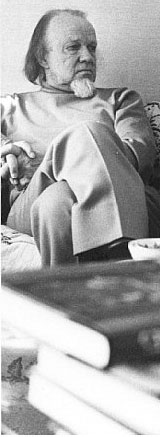
Woody Allen on the Emptiness of Life by Toby Simmons

I have spent alot of time talking about Woody Allen films on this blog and looking at his worldview. He has a hopelessmeaningless, nihilistic worldview that believes we are going to turn to dust and there is no afterlife. Even though he has this view he has taken the opportunity to look at the weaknesses of his own secular view. I salute him for doing that. That is why I have returned to his work over and over and presented my own Christian worldview as an alternative. Take a moment and read again a good article on Woody Allen below. There are some links below to some other posts about him.

Francis Schaeffer two months before he died made the following comments in Knoxville, TN in 1984 and he comments on Woody Allen:

I would emphasize and it grows on me always with intensified strength the older I live that there is only ONE REASON to be a Christian and that is because it is TRUTH. There is no other reason to be a Christian.

The reason to become a Christian is not because it gives you butterflies in your stomach on Sunday morning. The reason for being a Christian is because it is true.

We at L’Abri talk about it being TRUE TRUTH and we are talking about it not just being religiously true but true in all reality. In other words, if you don’t have the Bible and you don’t act upon it, it isn’t that you just don’t know how to escape hell and go to heaven, you do that too happily, but it also is true that without the Bible we won’t know who God is and we would know who people are.

That is what is wrong with our generation and that is why it accepted abortion and the infanticide and youth euthanasia came in quickly with such a flood because this generation doesn’t understand who people are.

I don’t know if you say the TIME editorial a short time ago called THINKING ANIMAL THOUGHTS. It did so much better than most of our evangelical magazines did on dealing with this because what they said was (it was from a non-christian point of view) if you take away the biblical view of who God is and man being made in his image then there is no basis for a distinction between human life and other forms of life. You only have distinctions and that is life and non-life, and he carried it out quite properly to its extension. What right does the human race to perform experimentation’s on animals if the human race is good and the human race is only the same qualification of life? This author really understood the game much better than most Christians seem to understand it.

What I’m saying is without the Bible it isn’t just that you don’t know how to go to heaven, but without the Bible you don’t know who people are and you don’t know what this world is. When you watch the birds fly across the sky  if you really don’t have the Bible to tell you who created this world and what the world is even the birds flying across the sky is very different. We have many people that come to L’Abri that have thought this out to the very end properly and that is there is no meaning to life, no meaning to life, no meaning to human life. They are not wrong. They are right.

The younger generation who grab the needle and shoot it up because they can’t find any meaning to life, they are not wrong. They are right. if you take the Bible away it is not just that people are lost for eternity, but they are lost now. They have no meaning to life…. If I was talking to a gentleman I was sitting next  to on an airplane about Christ I wouldn’t necessarily start off quoting Bible verses. I would go back rather to their dilemma if they hold the modern worldview of the final reality only being energy, etc., I would start with that. I would begin as I stress in the book THE GOD WHO IS THERE about their own [humanist] prophets who really show where their view goes. For instance, Jacques Monod, Nobel Prize winner from France, in his book NECESSITY AND CHANCE said there is no way to tell the OUGHT from the IS. In other words, you live in a TOTALLY SILENT  universe. 

The men like Monod and Sartre or whoever the man might know that is his [humanist] prophet and they point out quite properly and conclusively what life is like, not just that there is no meaningfulness in life but everyone according to modern man is just living out some kind of game plan. It may be knocking 1/10th of a second off a downhill ski run or making one more million dollars. But all you are doing is making a game plan within the mix of a meaningless situation. WOODY ALLEN exploits this very strongly in his films. He really lives it. I feel for that man, and he has expressed it so thoroughly in ANNIE HALL and MANHATTAN and so on.

September 3, 2011 · 5:16 PM

Woody Allen on the Emptiness of Life

In the final scene of Manhattan, Woody Allen’s character, Isaac, is lying on the sofa with a microphone and a tape-recorder, dictating to himself an idea for a short story. It’ll be about “people in Manhattan,” he says, “who are constantly creating these real unnecessary, neurotic problems for themselves” because they cannot bear to confront the “more unsolvable, terrible problems about the universe.” In an attempt to keep it optimistic, he begins by asking himself the question, “Why is life worth living?” He gives it some thought. “That’s a very good question,” he says, “There are certain things, I guess, that make it worthwhile.” And then the list begins: Groucho Marx, Willie Mays, the second movement of Mozart’s ‘Jupiter Symphony,’ Louis Armstrong’s recording of Potato Head Blues, “Swedish movies, naturally,” Flaubert’s Sentimental Education, Marlon Brando, Frank Sinatra, “those incredible apples and pears by Cézanne, the crabs at Sam Wo’s … Tracy’s face.”

This list acts as an important hinge in the film’s narrative, the point at which Isaac suddenly becomes aware of his feelings for Tracy and resolves to go after her. But within the list there is also something far greater being communicated, something which, I believe, can be described as the central subject of nearly every Woody Allen film, or, perhaps, as the thing that compels him to make films in the first place. Isaac is conveying here a belief in the sheer power of art, its ability to provide a sense of worth to an otherwise empty existence. Art, Woody Allen seems to be saying, is the only valuable response – or the only conceivable response – to the dreadful human predicament as he sees it.

~ ~ ~

“My relationship with death remains the same: I’m strongly against it.”

~ ~ ~

Recently, at the Cannes Film Festival, Woody Allen was asked about what motivates him. He simply laughed and said, “Fear is what drives me.” Work, for Allen, is a wonderful distraction from the “terrible truth” – the ostensible meaninglessness of life, the apparent futility of all human endeavour, the inevitability of sickness, the unescapable prognosis of death. Film-making, like the “unnecessay, neurotic problems” dreamt up by the characters in Isaac’s short story, diverts Allen’s attention away from this reality, from the fear that presents itself when he stops to think about the fact that eventually everybody dies, “the sun burns out, and the earth is gone, and … all the stars, all the planets, the entire universe, goes, disappears.” So this fear is the reason for his prolificity, the impulse behind all of his artistic achievements. Manhattan, Annie Hall, Hannah and Her Sisters, Sleeper came about, first of all, as distractions, projects that prevented him from having to “sit in a chair and think about what a terrible situation all human beings are in.”

I believe there’s a lot of truth in Woody Allen’s perspective. We distract ourselves constantly, we refuse to think about the meaning of our existence, we skirt around the inevitable. Certainly – and he acknowledges this – Allen is not the first person to have hit upon this truth. It’s been recognised by thinkers such as Kierkegaard, Nietzsche, Freud, Sartre, the Buddha and the writer of Ecclesiastes. And Allen knows, too, that one can’t live in a perpetual awareness of this fact. Such a life would be crippling torment. Indeed, it’s this very torment that Tolstoy found himself in after having realised that there was “nothing ahead other than deception of life and of happiness, and the reality of suffering and death: of complete annihilation.” After realising, in other words, the sheer absurdness of human existence, the meaninglessness of life without God. In his Confession he writes:

My life came to a standstill. I could breathe, eat, drink and sleep and I could not help breathing, eating, drinking and sleeping; but there was no life in me because I had no desires whose gratification I would have deemed it reasonable to fulfil. If I wanted something I knew in advance that whether or not I satisfied my desire nothing would come of it.

We can’t live like this, says Woody Allen. We must provide ourselves with necessary delusions in order to carry ourselves through life. He remarks that, in fact, it’s only those people whom he calls “self-deluded” that seem to find any kind of real satisfaction in living, any peace or enjoyment. These people can say, “Well, my priest, or my rabbi tells me everthing’s going to be all right,” and they find their answers in what he calls “magical solutions.” And this recourse to the “magical” he dismisses as nonsense.

It’s worth comparing Woody Allen’s pessimistic agnosticism with the utopian atheism of someone like Richard Dawkins. Evidently, the former worldview is entirely consistent with non-belief in God, but it’s not clear that the latter is. In fact, it appears unfounded, false. Dawkins removes God from the picture entirely, yet clings persistently to a belief in life’s meaning, grounding this meaning, it appears, in natural selection. There’s a contradiction here in Dawkins’ thought. On the one hand, he claims that science “can tell us why we are here, tell us the purpose of human existence,” yet, on the other, he insists on characterising natural selection itself as a blind mechanism, containing “no design, no purpose, no evil, no good, nothing but pointless indifference.”

Whilst I myself do believe in God and don’t share Woody Allen’s agnostic belief, I can respect his consistency, his willingness to acknowledge an existence without God for what it really is: “a grim, painful, nightmarish, meaningless experience.” His worldview follows naturally from what Heidegger termed the state of human “abandonment,” the absence of God in all human affairs. Dawkins’ worldview, however, doesn’t – it’s an embarrassing mishmash of strict empricist and naturalistic belief with what really amounts to a kind of foggy mysticism, a belief system according to which human beings can create for themselves an objective purpose. What he fails to realise is that this purpose is nothing more than a delusion, a mere appearance of purpose. It might get us up in the morning, but, once again, it’s no more real than the neurotic problems dreamt up by Isaac’s characters.

~ ~ ~

“It is impossible to experience one’s death objectively and still carry a tune.”

~ ~ ~

Let’s return to Woody Allen’s seemingly affirmative opinion of art. Given his lifelong insistence on the belief that human existence is “a big, meaningless thing,” how are we to make sense of Isaac’s list? Is it really possible to reconcile Woody Allen’s adament nihilism with his invocation of the power of art, its ability to stand firm in the face of such a “terrible truth”? The point to be made, I believe, is a very subtle one. In that same interview at Cannes, Allen talks about the role of the artist as he sees it: essentially, they must respond to the question that Isaac poses, “Why is life worth living?” Faced with the emptiness of life, they must try to “figure out – knowing that it’s trueknowing the worst – why it’s still worthwhile.” Allen isn’t, I believe, claiming that art can provide objective meaning to life. Such an assertion would conflict with his unswerving pessimism. Instead, he’s saying that the essence of art, what animates it, what inspires it to flourish, is a courageous struggle against this “terrible truth.” The artist, he says, must confront the futility of life, look at it in the face, embrace it in all of its hopelessness and despair, and provide humanity with an honest reply. The question we should ask in response, then, isn’t, ‘Can Woody Allen justify his belief in objective meaning as embodied in art?’ I don’t think he believes in objective meaning, a necessary purpose for human existence. Rather, the question should be, ‘Is it possible for the artist to look squarely at the human predicament and supply humanity with a worthwhile answer?’

And this, I want to say, still isn’t possible. As we’ve seen in the example of Tolstoy, one can’t live one’s life in full awareness of its apparent futility, of the imminence of death, of the falsity of one’s happiness, and yet carry on as normal. One would end up utterly debilitated. And if this is indeed how artists have been living for centuries, confronting the inevitable, facing the dismal truth, then art itself is an inexplicable phenomenon.

~ ~ ~

“On the plus side, death is one of the few things that can be done just as easily lying down.”

~ ~ ~

The answer isn’t to appeal to art as something that can provide human existence with objective meaning. Such a ‘faith in art’ would merely beg the question, ‘But why is art so special?’ How can art, if viewed as just another custom, an event within the world, give purpose and value to human life? How can that which is within the world give meaning to that which is also within the world? Meaning, I believe, can only come from without, from a personal God who transcends the world, yet is immanent within it, actively involved in human existence, instilling it with significance and worth. One of the purposes of art, I believe, is to reflect the being and glory of God, who is the ground of being itself. Far from art being an escape from a “terrible truth” or a desperate attempt to confront and suppress nihilism, it should be seen as an affirmative activity, an act of creative celebration to be enjoyed in the company of our good Creator God.

Here is a complete list of all the posts I did on the film “Midnight in Paris”

What can we learn from Woody Allen Films?, August 1, 2011 – 6:30 am

Movie Review of “Midnight in Paris” lastest movie by Woody Allen, July 30, 2011 – 6:52 am

Leo Stein and sister Gertrude Stein’s salon is in the Woody Allen film “Midnight in Paris”, July 28, 2011 – 6:22 am

Great review on Midnight in Paris with talk about artists being disatisfied, July 27, 2011 – 6:20 am

Critical review of Woody Allen’s latest movie “Midnight in Paris”, July 24, 2011 – 5:56 am

Not everyone liked “Midnight in Paris”, July 22, 2011 – 5:38 am

“Midnight in Paris” one of Woody Allen’s biggest movie hits in recent years, July 18, 2011 – 6:00 am

(Part 32, Jean-Paul Sartre)July 10, 2011 – 5:53 am

 (Part 29, Pablo Picasso) July 7, 2011 – 4:33 am

(Part 28,Van Gogh) July 6, 2011 – 4:03 am

(Part 27, Man Ray) July 5, 2011 – 4:49 am

(Part 26,James Joyce) July 4, 2011 – 5:55 am

(Part 25, T.S.Elliot) July 3, 2011 – 4:46 am

(Part 24, Djuna Barnes) July 2, 2011 – 7:28 am

(Part 23,Adriana, fictional mistress of Picasso) July 1, 2011 – 12:28 am

(Part 22, Silvia Beach and the Shakespeare and Company Bookstore) June 30, 2011 – 12:58 am

(Part 21,Versailles and the French Revolution) June 29, 2011 – 5:34 am

(Part 16, Josephine Baker) June 24, 2011 – 5:18 am

(Part 15, Luis Bunuel) June 23, 2011 – 5:37 am

“Woody Wednesday” The heart wants what it wants”jh67

I read this on http://www.crosswalk.com which is one of my favorite websites. Life Lessons from Woody Allen Stephen McGarvey I confess I am a huge film buff. But I’ve never really been a Woody Allen fan, even though most film critics consider him to be one of the most gifted and influential filmmakers of our […]

“Music Monday”:Coldplay’s best songs of all time (Part 6)

  “Music Monday”:Coldplay’s best songs of all time (Part 6) This is “Music Monday” and I always look at a band with some of their best music. I am currently looking at Coldplay’s best songs. Here are a few followed by another person’s preference: My son Hunter Hatcher’s 15th favorite song is “trouble.” Even though […]

“Woody Wednesday” Allen once wrote these words: “Do you realize what a thread were all hanging by? Can you understand how meaningless everything is? Everything. I gotta get some answers.” jh31

Woody Allen, the film writer, director, and actor, has consistently populated his scripts with characters who exchange dialogue concerning meaning and purpose. In Hannah and Her Sisters a character named Mickey says, “Do you realize what a thread were all hanging by? Can you understand how meaningless everything is? Everything. I gotta get some answers.”{7} […]

“Music Monday”:Coldplay’s best songs of all time (Part 5)

“Music Monday”:Coldplay’s best songs of all time (Part 5) This is “Music Monday” and I always look at a band with some of their best music. I am currently looking at Coldplay’s best songs. Here are a few followed by another person’s preference: Hunter picked “Don’t Panic,” as his number 16 pick of Coldplay’s best […]

Steve Jobs’ view of death and what the Bible has to say about it jh55

(If you want to check out other posts I have done about about Steve Jobs:Some say Steve Jobs was an atheist , Steve Jobs and Adoption , What is the eternal impact of Steve Jobs’ life? ,Steve Jobs versus President Obama: Who created more jobs? ,Steve Jobs’ view of death and what the Bible has to say about it ,8 things you might not know about Steve Jobs ,Steve […]

“Woody Wednesday” A review of some of the past Allen films jh32

I am a big Woody Allen fan. Not all his films can be recommended but he does look at some great issues and he causes the viewer to ask the right questions. My favorite is “Crimes and Misdemeanors” but the recent film “Midnight in Paris” was excellent too. Looking at the (sometimes skewed) morality of […]

Good without God?

(The signs are up on the buses in Little Rock now and the leader of the movement to put them up said on the radio today that he does not anticipate any physical actions against the signs by Christians. He noted that the Christians that he knows would never stoop to that level.) Debate: Christianity […]

“Music Monday”:Coldplay’s best songs of all time (Part 4)

Dave Hogan/ Getty Images This is “Music Monday” and I always look at a band with some of their best music. I am currently looking at Coldplay’s best songs. Here are a few followed by another person’s preference: For the 17th best Coldplay song of all-time, Hunter picks “42.” He notes, “You thought you might […]

Francis Schaeffer’s term the “Mannishness of Man” and how it relates to Woody Allen and Charles Darwin!!!

___________

Dr. Francis Schaeffer – The Naturalistic, Materialistic, World View

Francis Schaeffer and  Gospel of Christ in the pages of the Bible

Francis Schaeffer’s term the “Mannishness of Man” and how it relates to Woody Allen and Charles Darwin!!! Schaeffer noted that everyone has these two things constantly pulling at them. First, it is the universe and its form and second, it is the mannishness of man. If one does not realize that God created them in the image of God where they can know right and wrong and worship their Creator then they will be longing throughout their life and even though they may say that we are a product of chance, like Allen did in his recent film MAGIC IN THE MOONLIGHT, he still is left with an empty feeling. Furthermore, Paul in  Romans 1 brings out these same two factors. In this post I am not going to spend much time on the demonstration that Woody Allen has dealt with the issues for the simple reason that I have done that over and over again in my previous posts. However, I will look at what Schaeffer says about Allen but mostly what he says about Charles Darwin and I will be providing extensive quotes from Darwin’s own autobiography Darwin, Francis ed. 1892. Charles Darwin: his life told in an autobiographical chapter, and in a selected series of his published letters [abridged edition]. London: John Murray.

The Search for an Adequate World-View: A Question of Method
Before we consider various possibilities, we must settle the question of method. What is it we are expecting our “answer” to answer?
There are a number of things we could consider, but at this point we want to concentrate on just two. The first is what we will call “the universe and its form,” and the second is “the mannishness of man.” The first draws attention to the fact that the universe around us is like an amazing jigsaw puzzle. We see many details, and we want to know how they fit together. That is what science is all about. Scientists look at the details and try to find out how they all cohere. So the first question that has to be answered is: how did the universe get this way? How did it get this form, this pattern, this jigsawlike quality it now has?
Second, “the mannishness of man” draws attention to the fact that human beings are different from all other things in the world. Think, for example, of creativity. People in all cultures of all ages have created many kinds of things, from “High Art” to flower arrangements, from silver ornaments to high-technology supersonic aircraft. This is in contrast to the animals about us. People also fear death, and they have the aspiration to truly choose. Incidentally, even those who in their writings say we only think we choose quickly fall into words and phrases that only make sense if they are wrong and we do truly choose. Human beings are also unique in that they verbalize. That is, people put concrete and abstract concepts into words which communicate these concepts to other people. People also have an inner life of the mind; they remember the past and make projections into the future. One could name other factors, but these are enough to differentiate people from other things in the world.
What world-view adequately explains the remarkable phenomenon of the distinctiveness of human beings? There is one world-view which can explain the explain the existence of the universe, its form, and the uniqueness of people – the world-view given to us in the Bible. There is a remarkable parallel between the way scientists go about checking to see if what they think about reality does in fact correspond to it and the way the biblical world-view can be checked to see if it is true.
Many people, however, react strongly against this sort of claim. They see the problem – Where has everything come from and why is it the way it is? – but they do not want to consider a solution which involves God. God, they say, belongs to “religion,” and religious answers, they say, do not deal with facts. Only science deals with facts. Thus, they say, Christian answers are not real answers; they are “faith answers.”
This is a strange reaction, because modern people pride themselves on being open to new ideas, on being willing to consider opinions which contradict what has been believed for a long time. They think this is what “being scientific” necessitates. Suddenly, however, when one crosses into the area of the “big” and most basic questions (like those we are considering now) with an answer involving God, the shutters are pulled down, the open mind closes and a very different attitude, a dogmatic rationalism, takes over.80
This is curious -first, because few seem to notice that the humanist explanations of the big and most basic questions is just as much a “faith answer” as any could be. With the humanist world-view everything begins with only matter; whatever has developed has developed only within matter, a reordering of matter by chance.
Even though materialistic scientists have no scientific understanding of why things exist, nor any certain scientific understanding of how life began, and even though this world-view leaves them with vast problems – the problems Woody Allen has described of “alienation, loneliness [and] emptiness verging on madness” – many modern people still reject at once any solution which uses the word God, in favor of the materialistic humanist “answer” which answers nothing. This is simply prejudice at work.
We need to understand, however, that this prejudice is both recent and arbitrary. Professor Ernest Becker, who taught at the University of California at Berkeley and San Francisco State College, said that for the last half-million years people have always believed in two worlds – one that was visible and one that was invisible. The visible world was where they lived their everyday lives; the invisible world was more powerful, for the meaning and existence of the visible world was dependent on it. Suddenly in the last century and a half, as the ideas of the Enlightenment have spread to the whole of Western culture, we have been told quite arbitrarily that there is no invisible world. This has become dogma for many secular people today.
Christians try to answer prejudices like these by pointing out that the biblical system does not have to be accepted blindly, any more than the scientific hypotheses have to be accepted blindly. What a scientist does is to examine certain phenomena in the world. He then casts about for an explanation that will make sense of these phenomena. That is the hypothesis. But the hypothesis has to be checked. So a careful checking operation is set up, designed to see if there is, in fact, a correspondence between what has been observed and what has been hypothesized. If it does correspond, a scientist accepts the explanation as correct; if it does not, he rejects it as false and looks for an alternative explanation. Depending on how substantially the statement has been “verified,” it becomes accepted as a “law” within science, such as the law of gravity or the second law of thermodynamics.
What we should notice is the method. It is rather like trying to find the right key to fit a particular lock. We try the first key and then the next and the next until finally, if we are fortunate, one of them fits. The same principle applies, so Christians maintain, when we consider the big questions. Here are the phenomena. What key unlocks their meaning? What explanation is correct?
We may consider the materialistic humanist alternative, the Eastern religious alternative, and so on. But each of these leaves at least a part of these most basic questions unanswered. So we turn to examine the Christian alternative.
Obviously, Christians do not look on the Bible as simply an alternative. As Christians we consider it to be objectively true, because we have found that it does give the answers both in knowledge and in life. For the purposes of discussion, however, we invite non-Christians to consider it as an alternative – not to be accepted blindly, but for good and sufficient reasons.
But note this – the physical scientist does something very easy, compared to those who tackle the really important and central questions for mankind. He examines a tiny portion of the real world – a leaf, a cell, an atom, a particle – and, because these things are not personal and obey very precise laws, he is able to arrive at explanations with relative ease. C. F. A. Pantin, who was professor of zoology at Cambridge University, once said: “Very clever men are answering the relatively easy questions of the natural examination paper.” This is not to disparage physical science. It works consistently with its own principles of investigation, looking further and further into the material of the world around us. But it only looks at part of the world. As Professor W. H. Thorpe of Cambridge University says, it is “a deliberate restriction to certain areas of our total experience – a technique for understanding certain parts of that experience and achieving mastery over nature.”
We are not then moving from definite things to indefinite things, when we look at those aspects of our experience which are more central than the study of an individual physical thing such as a leaf, a cell, an atom, or a particle. Rather, we are turning from a small part of reality to a larger part of reality. Picture a scientist for a moment: he is looking at a particular detail and carrying out his scientific investigation according to the recognized procedures. We have already discussed the method he uses to find the answers. Now we need to draw back and consider the whole phenomenon we are looking at, that is, the scientist carrying out his experiment. When the scientist is seated at his desk, he is able to find answers to his questions only because he has made two colossal assumptions about his situation, in fact about the entire world. He is assuming first of all that the things he is looking at do fit together somehow, even if some areas – such as particle physics – cannot at this time be fitted into a simple explanation. If the scientist did not assume that the things he is studying somehow fit together, he would not be trying to find an answer. Second, he is assuming that he as a person is able to find answers.
In other words, the big questions constitute the very framework within which the scientist is operating. To quote Thorpe again, “I recently heard one of the most distinguished theoretical scientists state that his own scientific drive was based on two fundamental attitudes: a conviction of his own responsibility and an awe at the beauty and harmony of nature.” So we have to resist any suggestion that to be involved in answering the big questions is somehow to be getting further and further away from “the real world.”
The opposite is the case. It is as we come to these big questions that we approach the real world that every one of us is living in twenty-four hours a day – the world of real persons who can think and so work out problems such as how to get to the other side of town, persons who can love, persons who can make moral decisions. These are, in other words, the phenomena which cry out for an adequate explanation. These are the things we know best about ourselves and the world around us. What world-view can encompass them?
C. S. Lewis pointed out that there are only two alternatives to the Christian answer – the humanist philosophy of the West and the pantheist philosophy of the East. We would agree. We agree, too, with his observation that Eastern philosophy is an “opposite” to the Christian system, but we shall look at that later. For the present our attention is directed toward the materialistic world-view of the West.
From time to time we read in the press or hear on the radio that an oil tanker has run aground on rocks and that the crude oil is being driven by the wind and currents onto an otherwise beautiful coast. We can picture the problem of humanism in that way. There is a rock on which all humanist philosophy must run aground. It is the problem of relative knowledge and relative morality or, to put it another way, the problem of finiteness or limitation. Even if mankind now had perfect moral integrity regarding the world, people would still be finite. People are limited. This fact, coupled with the rejection of the possibility of having answers from God, leads humanists into the problem of relative knowledge. There has been no alternative to this relativity for the past 200 years, and there can be no alternative within the humanist world-view. That is what we want to show now.

Francis Schaeffer pictured below:

_________________

A nice parallel can be made between Woody Allen’s struggle with the issue of the mannishness of man and that of Charles Darwin. Below is something that Charles Darwin wrote looking back on his life:

“It is impossible to answer your question briefly; and I am not sure that I could do so, even if I wrote at some length. But I may say that the impossibility of conceiving that this grand and wondrous universe, with our conscious selves, arose through chance, seems to me the chief argument for the existence of God; but whether this is an argument of real value, I have never been able to decide.

Francis Schaeffer observed:

So he sees here exactly the same that I would labor and what Paul gives in Romans chapter one, and that is first this tremendous universe [and it’s form] and the second thing, the mannishness of man and the concept of this arising from chance is very difficult for him to come to accept and he is forced to leap into this, his own kind of Kierkegaardian leap, but he is forced to leap into this because of his presuppositions but when in reality the real world troubles him. He sees there is no third alternative. If you do not have the existence of God then you only have chance. In my own lectures I am constantly pointing out there are only two possibilities, a personal God or this concept of the impersonal plus time plus chance.  You will notice that he divides it into the same two points that Paul does in Romans into and that Carl Gustav Jung (1875-1961) will in the problem of existence, the external universe, and man and his consciousness. Paul points out there are these two things that man is confronted with. Two things is the real world, the universe and its form and I usually quote Jean Paul Sartre here, and Sartre says the basic philosophic problem is that something is there rather than nothing is there and I then I add at the point the very thing that Darwin feels and that is it isn’t a bare universe that is out there, it is an universe in a specific form. I always bring in Einstein and the uniformity of the form of the universe and that it is constructed as a well formulated word puzzle or you have Carl Gustav Jung who says two things cut across a man’s will that he can not truly be automous, the external world and what Carl Gustav Jung would call his “collected unconsciousness.” It is the thing that curns up out of man, the mannishness of man. Darwin understood way back here this is a real problem. So he says “the impossibility of conceiving that this grand and wondrouse universe,” part one, the real world, the external universe, and part two “with our conscious selves arose through chance” and then he goes on and says this is not “an argument of real value.” This only thing he has to put in its place is his faith in his own theory.

______________

Here below is the Romans passage that Schaeffer is referring to and verse 19 refers to what Schaeffer calls “the mannishness of man” and verse 20 refers to Schaeffer’s other point which is  “the universe and it’s form.”

Romans 1:18-22Amplified Bible (AMP)

18 For God’s [holy] wrath and indignation are revealed from heaven against all ungodliness and unrighteousness of men, who in their wickedness repress and hinder the truth and make it inoperative.

19 For that which is known about God is evident to them and made plain in their inner consciousness, because God [Himself] has shown it to them.

20 For ever since the creation of the world His invisible nature and attributes, that is, His eternal power and divinity, have been made intelligible and clearly discernible in and through the things that have been made (His handiworks). So [men] are without excuse [altogether without any defense or justification],

21 Because when they knew and recognized Him as God, they did not honor andglorify Him as God or give Him thanks. But instead they became futile andgodless in their thinking [with vain imaginings, foolish reasoning, and stupid speculations] and their senseless minds were darkened.

22 Claiming to be wise, they became fools [professing to be smart, they made simpletons of themselves].

Francis Schaeffer commented:

Now Darwin is going to set forth two arguments for God in this and again you will find when he comes to the end of this that he is in tremendous tension. Darwin wrote, 

“At the present day the most usual argument for the existence of an intelligent God is drawn from the deep inward conviction and feelings which are experienced by most persons. Formerly I was led by feelings such as those just referred to (although I do not think that the religious sentiment was ever strongly developed in me), to the firm conviction of the existence of God and of the immortality of the soul. In my Journal I wrote that whilst standing in the midst of the grandeur of a Brazilian forest, ‘it is not possible to give an adequate idea of the higher feelings of wonder, admiration, and devotion which fill and elevate the mind.’ I well remember my conviction that there is more in man than the mere breath of his body; but now the grandest scenes would not cause any such convictions and feelings to rise in my mind. It may be truly said that I am like a man who has become colour-blind,


Francis Schaeffer observed:


Now Darwin says when I look back and when I look at nature I came to the conclusion that man can not be just a fly! But now Darwin has moved from being a younger man to an older man and he has allowed his presuppositions to enter in to block his logic. These things at the end of his life he had no intellectual answer for. To block them out in favor of his theory. Remember the letter of his that said he had lost all aesthetic senses when he had got older and he had become a clod himself. Now interesting he says just the same thing, but not in relation to the arts, namely music, pictures, etc, but to nature itself. Darwin said, “But now the grandest scenes would not cause any such convictions  and feelings to rise in my mind. It may be truly said that I am like a man who has become colour-blind…” So now you see that his presuppositions have not only robbed him of the beauty of man’s creation in art, but now the universe. He can’t look at it now and see the beauty. The reason he can’t see the beauty is very simple: THE BEAUTY DRIVES HIM TO DISTRACTION. THIS IS WHERE MODERN MAN IS AND IT IS HELL. The art is hell because it reminds him of man and how great man is, and where does it fit in his system? It doesn’t. When he looks at nature and it’s beauty he is driven to the same distraction and so consequently you find what has built up inside him is a real death, not  only the beauty of the artistic but the beauty of nature. 

Darwin wrote:

…and the universal belief by men of the existence of redness makes my present loss of perception of not the least value as evidence. This argument would be a valid one if all men of all races had the same inward conviction of the existence of one God; but we know that this is very far from being the case. Therefore I cannot see that such inward convictions and feelings are of any weight as evidence of what really exists. The state of mind which grand scenes formerly excited in me, and which was intimately connected with a belief in God, did not essentially differ from that which is often called the sense of sublimity; and however difficult it may be to explain the genesis of this sense, it can hardly be advanced as an argument for the existence of God, any more than the powerful though vague and similar feelings excited by music.

Francis Schaeffer noted:

You notice that Darwin had already said he had lost his sense of music [appreciation]. However, he brings forth what I think is a false argument. I usually use it in the area of morality. I mention that anthropologists point out that different people have different moral [systems]  and this is perfectly true, but what the materialist anthropologist can never point out is why man has a sense of moral motion and that is the problem here. Therefore, it is perfectly true that men have different concepts of God and different concepts of moral motion, but Darwin himself is not satisfied in his own position and WHERE DO THEY [MORAL MOTIONS] COME FROM AT ALL? So you are wrestling with the same dilemma here in this reference as you do in the area of all things human. For these men it is not the distinction that raises the problem, but it is the overwhelming factor of the existence of the humanness of man, the mannishness of man. The simple fact is he saw that you are shut up to either God or chance, and he said basically “I don’t see how it could be chance” and at the same time he looks at a mountain or listens to a piece of music it is a testimony that really chance isn’t sufficient enough. So gradually with the sensitivity of his own inborn self conscience he kills it. He deliberately  kills the beauty so it doesn’t argue with his theory. Maybe I am being false to Darwin here. Who can say about Darwin’s subconscious thoughts? It seems to me though this is exactly the case. What you find is a man who can’t stand the argument of the external beauty and the mannishness of man so he just gives it up in this particular place.

The Best Art References in Woody Allen Films Image via Complex / APJAC Productions

Film: Play It Again, Sam (1972)

In 1972’s Play It Again, Sam, Allen plays a film critic trying to get over his wife’s leaving him by dating again. In one scene, Allen tries to pick up a depressive woman in front of the early Jackson Pollock work. This painting, because of its elusive title, has been the subject of much debate as to what it portrays. This makes for a nifty gag when Allen strolls up and asks the suicidal belle, “What does it say to you?”

______________

Woody Allen in Play It Again Sam

Uploaded on May 20, 2009

Scene from ‘Play it Again Sam’ (1972)

____________

Allan: That’s quite a lovely Jackson Pollock, isn’t it?

Museum Girl: Yes, it is.

Allan: What does it say to you?

Museum Girl: It restates the negativeness of the universe. The hideous lonely emptiness of existence. Nothingness. The predicament of Man forced to live in a barren, Godless eternity like a tiny flame flickering in an immense void with nothing but waste, horror and degradation, forming a useless bleak straitjacket in a black absurd cosmos.

Allan: What are you doing Saturday night?

Museum Girl: Committing suicide.

Allan: What about Friday night?

___________________________________


Woody Allen Contemplates God in “Hannah & Her Sisters”

_________

Woody Allen on insanity and Cate Blanchett

http://www.youtube.com/watch?v=Y3qOHNqg5ys


12 Questions for Woody Allen


__________________________________

____________


Related posts:

WOODY WEDNESDAY Woody Allen’s past movies and the subject of the Meaning of Life examined by Kyle Turner

____ Woody Allen’s past movies and the subject of the Meaning of Life examined!!! Out of the Past: Woody Allen, Nostalgia, the Meaning of Life, and Radio Days Kyle Turner Jul 25, 2014 Film, Twilight Time 1 Comment “I firmly believe, and I don’t say this as a criticism, that life is meaningless.” – Woody […]

WOODY WEDNESDAY Woody Allen said that “80% of success is showing up,” By that standard, President Obama is a failure when it comes to fighting jihadists!!!!

__________ I wrote on this yesterday and will continue to write on it for a while. Below is a very fine article by Mike Huckabee on the subject. American people have to take up the slack for absentee president. (Photo: Philippe Wojazer, AFP/Getty Images) 3237CONNECT 21TWEETLINKEDIN 35COMMENTEMAILMORE Woody Allen said that “80% of success is […]

WOODY WEDNESDAY 40 songs from Past Woody Films plus song I suggested for Woody Allen’s new film from Pee Wee Spitelera (Clarinetist at Al Hirts’ Club, New Orleans)

40 songs from Past Woody Films plus song I suggested for Woody Allen’s new film from Pee Wee Spitelera (Clarinetist at Al Hirts’ Club, New Orleans) ___________ Woody Allen – Songs from Woody Allen’s Films Published on Oct 7, 2013 Woody Allen – Songs from Woody Allen’s Films Upload the album here :http://bit.ly/17BenPD iTunes […]

God and Carpeting: The Theology of Woody Allen Details Written by David M. of the group “Jews for Jesus”

______________________ God and Carpeting: The Theology of Woody Allen Details Written by David M. of the group “Jews for Jesus” Woody Allen about meaning and truth of life on Earth Dick & Woody get semi-metaphysical Woody Allen interview 1971 PART 2/4 Woody Allen interview 1971 PART 1/4   God and Carpeting: The Theology of Woody […]

Woody Allen’s recent films have done very well!!!

_______ Woody Allen’s recent films have done very well!!! Below Allen discusses them. 12 Questions for Woody Allen Woody Allen: American Master The reluctant auteur opens up By Roger Friedman | 07/30/14 11:13am Would it kill you to know that Woody Allen is just like us? He’s got two teenage girls who listen to pop […]

WOODY WEDNESDAY Everything You Always Wanted To Know About Woody Allen’s 2015 Film September 26, 2014 · by William Miller

____________ Everything You Always Wanted To Know About Woody Allen’s 2015 Film September 26, 2014 · by William Miller · in Actors, Everything You Always Wanted To Know, Films In keeping with his decades old habit of a film a year, there will be a 2015 Film written and directed by Woody Allen. With production […]

Everything You Always Wanted To Know About Woody Allen’s 2015 Film September 26, 2014 · by William Miller

____________ Everything You Always Wanted To Know About Woody Allen’s 2015 Film September 26, 2014 · by William Miller · in Actors, Everything You Always Wanted To Know, Films In keeping with his decades old habit of a film a year, there will be a 2015 Film written and directed by Woody Allen. With production […]

WOODY WEDNESDAY Woody Allen’s recent films have done very well!!!

_______ Woody Allen’s recent films have done very well!!! Below Allen discusses them. 12 Questions for Woody Allen Woody Allen: American Master The reluctant auteur opens up By Roger Friedman | 07/30/14 11:13am Would it kill you to know that Woody Allen is just like us? He’s got two teenage girls who listen to pop […]

FRANCIS SCHAEFFER ANALYZES ART AND CULTURE Part 38 Woody Allen and Albert Camus “There is but one truly serious philosophical problem, and that is suicide” (Feature on artist Hamish Fulton Photographer )

____________________________________________________________________________________________________ Francis Schaeffer below pictured on cover of World Magazine:   __________________ Francis Schaeffer has written extensively on art and culture spanning the last 2000years and here are some posts I have done on this subject before : Francis Schaeffer’s “How should we then live?” Video and outline of episode 10 “Final Choices” , episode 9 “The Age […]

WOODY WEDNESDAY God and Carpeting: The Theology of Woody Allen Details Written by David M. of the group “Jews for Jesus”

______________________ God and Carpeting: The Theology of Woody Allen Details Written by David M. of the group “Jews for Jesus” Woody Allen about meaning and truth of life on Earth Dick & Woody get semi-metaphysical Woody Allen interview 1971 PART 2/4 Woody Allen interview 1971 PART 1/4 God and Carpeting: The Theology of Woody Allen […]

_______________

Francis Schaeffer analyzes Woody Allen!!

___

Annie Hall – The Opening Scene [HD]

https://www.youtube.com/watch?v=EsHwIBR6ivA

Manhattan

Francis Schaeffer two months before he died said if he was talking to a gentleman he was sitting next to on an airplane about Christ he wouldn’t start off quoting Bible verses. Schaeffer asserted:

I would go back rather to their dilemma if they hold the modern worldview of the final reality only being energy, etc., I would start with that. I would begin as I stress in the book THE GOD WHO IS THERE about their own [humanist] prophets who really show where their view goes. For instance, Jacques Monod, Nobel Prize winner from France, in his book NECESSITY AND CHANCE said there is no way to tell the OUGHT from the IS. In other words, you live in a totally silent universe. 

The men like Monod and Sartre or whoever the man might know that is his [humanist] prophet and they point out quite properly and conclusively what life is like, not just that there is no meaningfulness in life but everyone according to modern man is just living out some kind of game plan. It may be knocking 1/10th of a second off a downhill ski run or making one more million dollars. But all you are doing is making a game plan within the mix of a meaningless situation. WOODY ALLEN exploits this very strongly in his films. He really lives it. I feel for that man, and he has expressed it so thoroughly in ANNIE HALL and MANHATTAN and so on.

According to the Humanist worldview Jacques Monod the universe is silent about values and therefore his good friend Woody Allen demonstrated this very fact so well in his 1989 movie CRIMES AND MISDEMEANORS. In other words, if we can’t get our values from the Bible then  the answer is MIGHT MAKES RIGHT!!!!

__

The question now becomes do you want to know if there is a God or not? Are you willing to examine the same evidence that I provided to the world’s leading atheistic philosopher in 1994 (Antony Flew)? Here some are links below that examine the subjects that Antony Flew studied before he switched from away from atheism, followed by the sermon by Adrian Rogers that I provided to Antony Flew and he said he enjoyed listening to.

Former atheist Antony Flew: “Although I was once sharply critical of the argument to design, I have since come to see that, when correctly formulated, this argument constitutes a persuasive case for the existence of God!

Former atheist Antony Flew said, “I was particularly impressed with Gerry Schroeder’s point-by-point refutation of what I call the MONKEY THEOREM!

Why the world’s most famous atheist (Antony Flew) now believes in God by James A. Beverley

BP)–Antony Flew, a legendary British philosopher and atheist, has changed his mind about the existence of God in light of recent scientific evidence.Flew –

Former Atheist Antony Flew noted that Evolutionists failed to show “Where did a living, self-reproducing organism come from in the first place?”

Former atheist Antony Flew pointed out that natural selection can’t explain the origin of first life and in every other case, information necessarily points to an intelligent source!

https://www.youtube.com/watch?v=LhlG_r1GDyM


Related posts:

Former atheist Antony Flew: “Although I was once sharply critical of the argument to design, I have since come to see that, when correctly formulated, this argument constitutes a persuasive case for the existence of God!”

Discussion (1 of 3): Antony Flew, N.T. Wright, and Gary Habermas Uploaded on Sep 22, 2010 A discussion with Antony Flew, N.T. Wright, and Gary Habermas. This was held at Westminster Chapel March, 2008 Debate – William Lane Craig vs Christopher Hitchens – Does God Exist? Uploaded on Jan 27, 2011 April 4, 2009 – Craig vs. […]

Former atheist Antony Flew said, “I was particularly impressed with Gerry Schroeder’s point-by-point refutation of what I call the MONKEY THEOREM!”

____________ Discussion (1 of 3): Antony Flew, N.T. Wright, and Gary Habermas Uploaded on Sep 22, 2010 A discussion with Antony Flew, N.T. Wright, and Gary Habermas. This was held at Westminster Chapel March, 2008 Is Goodness Without God is Good Enough? William Lane Craig vs. Paul Kurtz Published on Jul 29, 2013 Date: October 24, 2001 […]

The argument from design led former atheist Antony Flew to assert: “I must say again that the journey to my discovery of the Divine has thus far been a pilgrimage of reason, and it has led me to accept the existence of a self-existent, immutable, immaterial, omnipotent, and omniscient Being!”

  ____________ Jesus’ Resurrection: Atheist, Antony Flew, and Theist, Gary Habermas, Dialogue Published on Apr 7, 2012 http://www.veritas.org/talks – Did Jesus die, was he buried, and what happened afterward? Join legendary atheist Antony Flew and Christian historian and apologist Gary Habermas in a discussion about the facts surrounding the death and resurrection of Jesus Christ. Join […]

Former atheist Antony Flew pointed out that natural selection can’t explain the origin of first life and in every other case, information necessarily points to an intelligent source!

______________ Does God Exist? Thomas Warren vs. Antony Flew Published on Jan 2, 2014 Date: September 20-23, 1976 Location: North Texas State University Christian debater: Thomas B. Warren Atheist debater: Antony G.N. Flew For Thomas Warren: http://www.warrenapologeticscenter.org/ ______________________ Antony Flew and his conversion to theism Uploaded on Aug 12, 2011 Antony Flew, a well known spokesperson […]

Former Atheist Antony Flew noted that Evolutionists failed to show “Where did a living, self-reproducing organism come from in the first place?”

____   Does God Exist? Thomas Warren vs. Antony Flew Published on Jan 2, 2014 Date: September 20-23, 1976 Location: North Texas State University Christian debater: Thomas B. Warren Atheist debater: Antony G.N. Flew For Thomas Warren: http://www.warrenapologeticscenter.org/ ______________________ Antony Flew and his conversion to theism Uploaded on Aug 12, 2011 Antony Flew, a well known […]

(BP)–Antony Flew, a legendary British philosopher and atheist, has changed his mind about the existence of God in light of recent scientific evidence.Flew –

_____________ Famed atheist sees evidence for God, cites recent discoveries Antony Flew NASHVILLE, Tenn. (BP)–Antony Flew, a legendary British philosopher and atheist, has changed his mind about the existence of God in light of recent scientific evidence.Flew — a prolific author who has argued against the existence of God and the claims of Christianity for […]

Antony Flew in his book THERE IS A GOD talks about his “notoriety” as an atheist! ( also 7 News : Web Extra: Ricky Gervais on God)

  7News : Web Extra: Ricky Gervais on God Published on Mar 23, 2014 He’s not shy about sharing his opinion with 5 million social media followers so Ricky Gervais was happy to clear a few things up for us too. __________________________________ Discussion (2 of 3): Antony Flew, N.T. Wright, and Gary Habermas Atheist Lawrence Krauss loses debate […]

Was Antony Flew the most prominent atheist of the 20th century?

_________ Antony Flew on God and Atheism Published on Feb 11, 2013 Lee Strobel interviews philosopher and scholar Antony Flew on his conversion from atheism to deism. Much of it has to do with intelligent design. Flew was considered one of the most influential and important thinker for atheism during his time before his death […]

Why the world’s most famous atheist (Antony Flew) now believes in God by James A. Beverley

____________ Antony Flew on God and Atheism Published on Feb 11, 2013 Lee Strobel interviews philosopher and scholar Antony Flew on his conversion from atheism to deism. Much of it has to do with intelligent design. Flew was considered one of the most influential and important thinker for atheism during his time before his death […]

The Death of a (Former) Atheist — Antony Flew, 1923-2010 Antony Flew’s rejection of atheism is an encouragement, but his rejection of Christianity is a warning. Rejecting atheism is simply not enough, by Al Mohler

Discussion (1 of 3): Antony Flew, N.T. Wright, and Gary Habermas Uploaded on Sep 22, 2010 A discussion with Antony Flew, N.T. Wright, and Gary Habermas. This was held at Westminster Chapel March, 2008 ______________________ Making Sense of Faith and Science Uploaded on May 16, 2008 Dr. H. Fritz Schaefer confronts the assertion that one cannot believe […]

__

THE QUESTION OF MORALITY (Woody Allen v Francis Schaeffer)

THE QUESTION OF MORALITY

“THE PROBLEM OF MODERN MAN IS A FEELING OF COSMIC ALIENATION, INCLUDING THE AREA OF MORALS.  MAN HAS A FEELING  OF MORAL MOTIONS, YET IN THE UNIVERSE AS IT IS, IT IS COMPLETELY OUT OF LINE WITH WHAT IS THERE.”

– FRANCIS SCHAEFFER

As we consider man’s finiteness and his cruelty, it would certainly seem that these things are not one, but two.  Mankind has always thought of these things as being different.  Man’s finiteness is his smallness; he is not a sufficient reference point to himself.  But his cruelty has always been considered as distinct from his finiteness.  Yet we must notice something.  If we accept the impersonal beginning, finally we will come to the place where man’s finiteness and his cruelty become the same thing.

With an impersonal beginning, everything is finally equal in the area of morals.  With an impersonal beginning, eventually morals is just another form of metaphysics, of being.  Morals disappear and there is only one area rather than two.  Left in this position, we can talk about what is antisocial, or what society does not like, or even what I do not like, but we cannot talk about what is really right and what is really wrong.

Hence, what is left may be worded in many different ways in different cultures, but it is only the relative – that which is sociological, statistical, situational – nothing else.  You have situational, statistical ethics – the standard of averages – but you cannot have morality . . . we are just the little against the big, and nothing that has meaning in right and wrong.

Now let us look at the opposite answer – the personal beginning.  In this answer, there is a possibility of keeping morals and metaphysics separate.  This is a profound thing, though it may sound simple.  Whereas the impersonal beginning leads us to a merging of morals and metaphysics, the personal beginning provides the possibility of keeping them separate.  In other words, man’s finiteness may be separated from his cruelty.  God’s character is the moral absolute of the universe.  Plato was entirely right when he held that unless you have absolutes morals do not exist.

Again, as in the area of metaphysics, we must understand that this is not simply the best answer – it is the only answer in morals for man.  The only answer in the area of morals, as true morals, turns upon the fact of God’s being there.  If God is not there (not just the word “God,” but God himself being there), there is no answer and at all to the problem of evil, and morals.

(These selections are from the book, He is there and he is not silent, Chapter 2, “The Moral Necessity” where this is further discussed.)

“I JUST WANTED TO ILLUSTRATE IN AN ENTERTAINING WAY THAT THERE’S NO GOD, THAT WE’RE ALONE IN THE UNIVERSE, AND THAT THERE IS NOBODY OUT THERE TO PUNISH YOU, THAT THERE’S NOT GOING TO BE ANY KIND OF HOLLYWOOD ENDING TO YOUR LIFE IN ANY WAY, AND THAT YOUR MORALITY IS STRICTLY UP TO YOU.”

– WOODY ALLEN, COMMENTING ON THE FILM, “CRIMES AND MISDEMEANORS.”

Related posts:

Taking on Ark Times Bloggers on various issues Part I “Old Testament Bible Prophecy” includes the film TRUTH AND HISTORY and article ” Jane Roe became pro-life”

April 12, 2013 – 5:45 am

I have gone back and forth and back and forth with many liberals on the Arkansas Times Blog on many issues such as abortion, human rights, welfare, poverty, gun control  and issues dealing with popular culture. Here is another exchange I had with them a while back. My username at the Ark Times Blog is Saline […]By Everette Hatcher III | Posted in Biblical ArchaeologyFrancis SchaefferProlife | Edit | Comments (0)

John MacArthur on fulfilled prophecy from the Bible Part 2

August 8, 2013 – 1:28 am

I have posted many of the sermons by John MacArthur. He is a great bible teacher and this sermon below is another great message. His series on the Book of Proverbs was outstanding too.  I also have posted several of the visits MacArthur made to Larry King’s Show. One of two most popular posts I […]By Everette Hatcher III | Posted in Adrian RogersCurrent Events | Edit | Comments (0)

John MacArthur on fulfilled prophecy from the Bible Part 1

August 6, 2013 – 1:24 am

I have posted many of the sermons by John MacArthur. He is a great bible teacher and this sermon below is another great message. His series on the Book of Proverbs was outstanding too.  I also have posted several of the visits MacArthur made to Larry King’s Show. One of two most popular posts I […]By Everette Hatcher III | Posted in Adrian RogersCurrent Events | Tagged Bible Prophecyjohn macarthur | Edit | Comments (0)

John MacArthur: Fulfilled prophecy in the Bible? (Ezekiel 26-28 and the story of Tyre, video clips)

April 5, 2012 – 10:39 am

Prophecy–The Biblical Prophesy About Tyre.mp4 Uploaded by TruthIsLife7 on Dec 5, 2010 A short summary of the prophecy about Tyre and it’s precise fulfillment. Go to this link and watch the whole series for the amazing fulfillment from secular sources. http://www.youtube.com/watch?v=qvt4mDZUefo ________________ John MacArthur on the amazing fulfilled prophecy on Tyre and how it was fulfilled […]By Everette Hatcher III | Posted in Biblical Archaeology | Edit | Comments (1)

John MacArthur on the Bible and Science (Part 2)

August 1, 2013 – 12:10 am

John MacArthur on the Bible and Science (Part 2) I have posted many of the sermons by John MacArthur. He is a great bible teacher and this sermon below is another great message. His series on the Book of Proverbs was outstanding too.  I also have posted several of the visits MacArthur made to Larry […]By Everette Hatcher III | Posted in Current Events | Edit | Comments (0)

John MacArthur on the Bible and Science (Part 1)

July 30, 2013 – 1:32 am

John MacArthur on the Bible and Science (Part 1) I have posted many of the sermons by John MacArthur. He is a great bible teacher and this sermon below is another great message. His series on the Book of Proverbs was outstanding too.  I also have posted several of the visits MacArthur made to Larry […]By Everette Hatcher III | Posted in Current Events | Edit | Comments (0)

Adrian Rogers: “Why I believe the Bible is true”

July 9, 2013 – 8:38 am

Adrian Rogers – How you can be certain the Bible is the word of God Great article by Adrian Rogers. What evidence is there that the Bible is in fact God’s Word? I want to give you five reasons to affirm the Bible is the Word of God. First, I believe the Bible is the […]By Everette Hatcher III | Posted in Adrian RogersBiblical Archaeology | Edit | Comments (0)

The Old Testament is Filled with Fulfilled Prophecy by Jim Wallace

June 24, 2013 – 9:47 am

Is there any evidence the Bible is true? Articles By PleaseConvinceMe Apologetics Radio The Old Testament is Filled with Fulfilled Prophecy Jim Wallace A Simple Litmus Test There are many ways to verify the reliability of scripture from both internal evidences of transmission and agreement, to external confirmation through archeology and science. But perhaps the […]By Everette Hatcher III | Posted in Biblical ArchaeologyCurrent Events | Edit | Comments (0)

Taking on Ark Times Bloggers on various issues Part M “Old Testament prophecy fulfilled?”Part 3(includes film DEATH BY SOMEONE’S CHOICE)

April 19, 2013 – 1:52 am

  I have gone back and forth and back and forth with many liberals on the Arkansas Times Blog on many issues such as abortion, human rights, welfare, poverty, gun control  and issues dealing with popular culture. Here is another exchange I had with them a while back. My username at the Ark Times Blog is […]By Everette Hatcher III | Posted in Francis SchaefferProlife | Edit | Comments (0)

Evidence for the Bible

March 27, 2013 – 9:43 pm

Here is some very convincing evidence that points to the view that the Bible is historically accurate. Archaeological and External Evidence for the Bible Archeology consistently confirms the Bible! Archaeology and the Old Testament Ebla tablets—discovered in 1970s in Northern Syria. Documents written on clay tablets from around 2300 B.C. demonstrate that personal and place […]By Everette Hatcher III | Posted in Biblical Archaeology | Edit | Comments (0)

Related posts:

FRANCIS SCHAEFFER ANALYZES ART AND CULTURE Part 53 THE BEATLES (Part E, Stg. Pepper’s and John Lennon’s search in 1967 for truth was through drugs, money, laughter, etc & similar to King Solomon’s, LOTS OF PICTURES OF JOHN AND CYNTHIA) (Feature on artist Yoko Ono)

April 2, 2015 – 7:05 am

The John Lennon and the Beatles really were on a long search for meaning and fulfillment in their lives  just like King Solomon did in the Book of Ecclesiastes. Solomon looked into learning (1:12-18, 2:12-17), laughter, ladies, luxuries, and liquor (2:1-2, 8, 10, 11), and labor (2:4-6, 18-20). He fount that without God in the picture all […]

FRANCIS SCHAEFFER ANALYZES ART AND CULTURE Part 52 THE BEATLES (Part D, There is evidence that the Beatles may have been exposed to Francis Schaeffer!!!) (Feature on artist Anna Margaret Rose Freeman )

March 22, 2015 – 12:30 am

______________   George Harrison Swears & Insults Paul and Yoko Lucy in the Sky with Diamonds- The Beatles The Beatles:   I have dedicated several posts to this series on the Beatles and I don’t know when this series will end because Francis Schaeffer spent a lot of time listening to the Beatles and talking […]

FRANCIS SCHAEFFER ANALYZES ART AND CULTURE Part 51 THE BEATLES (Part C, List of those on cover of Stg.Pepper’s ) (Feature on artist Raqib Shaw )

March 19, 2015 – 12:21 am

  The Beatles in a press conference after their Return from the USA Uploaded on Nov 29, 2010 The Beatles in a press conference after their Return from the USA. The Beatles:   I have dedicated several posts to this series on the Beatles and I don’t know when this series will end because Francis […]

FRANCIS SCHAEFFER ANALYZES ART AND CULTURE Part 50 THE BEATLES (Part B, The Psychedelic Music of the Beatles) (Feature on artist Peter Blake )

March 12, 2015 – 12:16 am

__________________   Beatles 1966 Last interview I have dedicated several posts to this series on the Beatles and I don’t know when this series will end because Francis Schaeffer spent a lot of time listening to the Beatles and talking and writing about them and their impact on the culture of the 1960’s. In this […]

FRANCIS SCHAEFFER ANALYZES ART AND CULTURE Part 49 THE BEATLES (Part A, The Meaning of Stg. Pepper’s Cover) (Feature on artist Mika Tajima)

March 5, 2015 – 4:47 am

_______________ The Beatles documentary || A Long and Winding Road || Episode 5 (This video discusses Stg. Pepper’s creation I have dedicated several posts to this series on the Beatles and I don’t know when this series will end because Francis Schaeffer spent a lot of time listening to the Beatles and talking and writing about […]

FRANCIS SCHAEFFER ANALYZES ART AND CULTURE PART 48 “BLOW UP” by Michelangelo Antonioni makes Philosophic Statement (Feature on artist Nancy Holt)

February 26, 2015 – 4:57 am

_______________ Francis Schaeffer pictured below: _____________________ I have included the 27 minute  episode THE AGE OF NONREASON by Francis Schaeffer. In that video Schaeffer noted,  ” Sergeant Pepper’s Lonely Hearts Club Band…for a time it became the rallying cry for young people throughout the world. It expressed the essence of their lives, thoughts and their feelings.” How Should […]

FRANCIS SCHAEFFER ANALYZES ART AND CULTURE Part 47 Woody Allen and Professor Levy and the death of “Optimistic Humanism” from the movie CRIMES AND MISDEMEANORS Plus Charles Darwin’s comments too!!! (Feature on artist Rodney Graham)

February 19, 2015 – 5:33 am

Crimes and Misdemeanors: A Discussion: Part 1 ___________________________________ Today I will answer the simple question: IS IT POSSIBLE TO BE AN OPTIMISTIC SECULAR HUMANIST THAT DOES NOT BELIEVE IN GOD OR AN AFTERLIFE? This question has been around for a long time and you can go back to the 19th century and read this same […]

FRANCIS SCHAEFFER ANALYZES ART AND CULTURE PART 46 Friedrich Nietzsche (Featured artist is Thomas Schütte)

February 12, 2015 – 5:00 am

____________________________________ Francis Schaeffer pictured below: __________ Francis Schaeffer has written extensively on art and culture spanning the last 2000years and here are some posts I have done on this subject before : Francis Schaeffer’s “How should we then live?” Video and outline of episode 10 “Final Choices” , episode 9 “The Age of Personal Peace and Affluence”, episode 8 […]

Dr Shirley sermon “Four Fearsome Factors” Romans 1 (Tells of Adrian Rogers NASA story)

__

Four Fearsome Factors

Romans 1:16–20

Recommend this sermon to others.  [A new window will open.  Rate this sermon from 1 to 5 ‘stars’ with just a click, then close.]

Is God a righteous God? Is God a just God? Is God fair to let a person die and go to Hell who has never even once heard the name of Jesus? You’ll have to admit that’s a good question, isn’t it?

God is righteous, and God is just. And there is no other way to Heaven apart from Jesus Christ. Don’t get the sentimental idea that all the world religions are somehow connected. Oh, no. Jesus Christ said, in John chapter 14, verse 6: “I am the way, the truth, and the life”—now listen to this—and “no man cometh unto the Father, but by me” (John 14:6). Now, if somebody can come some other way, then what does that make Jesus? That makes Jesus a liar. And, if Jesus Christ is a liar, not only is He not their Savior, He’s not my Savior, because a liar is nobody’s Savior. And, what did the apostles say in Acts chapter 4, verse 12, when they said this: “Neither is there salvation in any other; for there is no other name under heaven given among men, whereby we must be saved?” (Acts 4:12).

This puts us on the horns of a major dilemma. Can a righteous, a good, a loving, a holy God let a man die and go to Hell who never once heard the name of Jesus? How are we going to answer that question? Well, the Apostle Paul is going to answer it for us in Romans chapter 1. So, I pray that you will listen and listen carefully, because we don’t have to be ashamed of the gospel of Jesus Christ.

Notice how Paul begins in verse 16: “For I am not ashamed of the gospel of Christ” (Romans 1:16). And, look up here, and let me give you a good look at a man who also is not ashamed of the gospel of Christ. I’ve been preaching it now for 20 years. The more I preach it, the more I marvel at it, the more I thank God for it, the more I stand by it, the more I believe in it. “I am not ashamed of the gospel of Christ; for it”—the gospel—“is the power of God unto salvation to everyone that believeth;”

Read vv. 17–20

Now, what about those who’ve never heard the gospel, those who are lost, who’ve never heard the gospel? Is God just? Is God righteous? Is God good?

Is God loving if He could let such an one go to hell? I want to write four things upon your heart, this morning. I want to give you four factors that will help you to understand this, and put it all together.

I. The Revelation Factor

Factor number one is the revelation factor. All men have some light.

I want you to imagine that the end of time has come, that time we know as the final judgment, and I want you to see out there what we would call the heathen—those who have never heard the gospel of Jesus Christ. The accusation is made, the indictment is given: “For the wrath of God is revealed from heaven against all ungodliness … of men, who hold the truth in unrighteousness” (Romans 1:18). The heathen, the pagans, they say, “Your Honor, not guilty, not guilty! We never heard the gospel, we never knew how to be saved; we are innocent by reason of ignorance. We never heard, we never knew.” And, the Apostle Paul becomes the prosecuting attorney. And, the Apostle Paul says to the Father, “Your Honor, I will prove that they are guilty; I will prove that they are not innocent because of ignorance. I will show that they cannot say they’ve never had a fair and an equal chance. And, I call two witnesses to testify against these who say they never knew, they never heard.

Witness number one: Will you take the stand? Witness number one: Give the court your name.” He says, “My name is Creation.” “Oh, Creation, you’re the witness that God exists?” “Yes, I am the witness that God exists.”

vv. 19-20

Creation testifies to the fact of God. Psalm 19, verse 1 says: “The heavens declare the glory of God” (Psalm 19:1). Now, if you have a creation, you have to have a Creator, and the Bible says that the Creator is clearly seen by the things that are made. When I see a piano, here, and it’s finely tuned, I know that somebody crafted it. When I see a watch that runs with precision, I say that somebody crafted that watch. When I see a building put together in symmetry and balance and purpose, I say that there is an architect. And, when I see this mighty universe put together, when I see creation, I say Creator. When I see order and system, I say intelligence. When I see design, I know there’s a Designer!

That’s the reason the Bible says: “The fool hath said in his heart, There is no God” (Psalm 14:1). Because, witness number one is creation.

But then, Creation steps down from the witness stand, and the Apostle Paul says, “Now I call my second witness. Would you take the stand? Will you tell the truth, the whole truth, and nothing but the truth?” “I will.” “Will you give your name?” Witness number two says, “My name is Conscience.” So, there are two witnesses. Number one is Creation; that is, the outward, objective witness. The second is Conscience; that is, the inward, subjective witness.

v. 19

Unto them is Creation, in them is Conscience.

2:14-15    “For when the Gentiles”—now, another word for Gentiles is pagan, or those who’ve never heard the gospel—“For when the Gentiles, who have not the law”—the law here means the Old Testament law—“For when the Gentiles, who have not the law, do by nature the things contained in the law, these, having not the law, are a law unto themselves; who show the work of the law written in their hearts, their conscience also bearing witness, and their thoughts the meanwhile accusing or else excusing one another” (Romans 2:14–15).

So, there are two witnesses that all pagans, all heathen, and all the people on all the face of the Earth have. One is the outward objective witness called Creation. The other is the inward subjective witness called Conscience. There is a built-in knowledge of God. It’s a God shaped void inside of us put in us by our Creator.

ill.–Augustine said the soul of man is restless until it finds its rest in God. God made man to serve him, to know him, and until he does, he’s like a round peg in a square hole, or he is out of fellowship.

Now, what is an atheist? There’s no real intellectual atheist. Atheists are not atheists because of intellectual problems; they’re atheists because of moral problems. “Ah,” you say, “but I know some brilliant people who are atheists.” Well, so what? I know some brilliant people who are not. You say, “Well, I know some foolish people who believe in God.” Well, I know everybody who doesn’t believe is foolish. You see, it’s not a matter of intelligence. The Bible says in v. 22 “Professing themselves to be wise, they became fools” (Romans 1:22). Why? Because, you see, all of us have a God-consciousness. It is not a matter of intellectualism; it is a matter of morality. “The fool hath said in his heart, There is no God” (Psalm 14:1).

An atheist is somebody who has the idea of God that makes him uncomfortable, so he says, “If I can get rid of this idea of God, I can get rid of this uncomfortable feeling.” But, he really doesn’t get rid of it, not down deep. He’s like the man who bought a new boomerang and killed himself trying to throw the old one away. The idea of God is still there; and, the more he tries to get rid of it subconsciously, the more he knows that God exists, because down in his heart is that conscience.

“Me thinks thou dost protest too much” wrote Shakespeare in Hamlet.  Have you noticed how adamantly so called atheists make their point.  They harp on it so continuously because they are forever trying to convince themselves…and they are so threatened by the truth that they cannot just drop it and step away. They are very defensive about it. Too much…they give away how deeply plagued they are with it all. It’s like those who blast Sarah Palin day in and day out.  If she’s really the ‘nothing’ that they claim, they should be able to walk away from it after they say their peace.  But they are deeply threatened by what she represents, and they have to fight that battle everyday because it won’t go away in their conscience!

So, what is the first factor? It is the revelation factor. All men have some light.

John 1:9 
That was the true Light, which lighteth every man that cometh into the world.

You can’t get around that. “[Christ is] the true Light, which lighteth every man that cometh into the world” (John 1:9). Two witnesses, Creation and Conscience, testify that the heathen, the pagans, no matter who they are or where they are, have some light. I didn’t say all light, just some.

II. The Refusal Factor

Now, here’s the second proposition. The first factor is the revelation factor. The second factor is the refusal factor. And, what is this factor? Light refused increases darkness.

vv. 21-22

“Because, when they knew God”—that is, they know by creation and conscience that God exists—“they glorified him not as God, neither were thankful, but became vain in their imaginations, and their foolish heart was darkened” (Romans 1:21). Darkened. All men have some light. But light refused increases darkness. Now, you see, you cannot just simply take light or truth and put it on ice. You cannot put truth in your pocket and say, “That’s very interesting, I’ll spend it some day if I need it.” No, when God gives you light, when creation and conscience speak to the heart of any pagan or any individual anywhere on the face of this earth, when God gives him some light, if he does not glorify God, if he does not believe in God, if he does not trust God, he does not remain stationary; he begins to regress and he loses even the light that he has. His foolish heart will be darkened.

In the Bible, the opposite of truth is not error; it issin. Now, the error is the baggage that comes with the sin. I’m not saying that a man does not have error if he refuses truth. But, why does he refuse truth? He refuses truth because of the sin that is in his heart.

v. 18        ‘hold the truth in unrighteousness.’

Now, look at the word ‘hold.’ You know what that word hold means? It literally means “who resist the truth, who smother the truth, who hold back the truth.” And, how do they hold back the truth? Not in error, but in unrighteousness. Why does a man not believe in God? Because, to believe in God means that he has to adjust his lifestyle. His lifestyle is his unrighteousness…let’s picture it on his left. Creation and Conscience…here on his right…tell him there’s a God. His lifestyle says, “If I admit that, I’m going to have to change this.” So, he’s in a quandary between the two. If he turns this way, he turns from that; but if he turns this way, he turns from that. So, when he says, “I will resist the truth in unrighteousness,” then, when he turns this way, he gets further from that. And, he goes away into the darkness, and his foolish heart is darkened.

The unbelief is the baggage that comes with his sin. Now, I don’t think it’s more graphically illustrated than in the book of 2 Thessalonians 2:9-12.

        I want you to listen to it. I think it is some of the most terrifying Scripture in all of the Bible. It speaks of the Antichrist who’s coming, and it says: “Even him whose coming is after the working of Satan with all power and signs and lying wonders, and with all deceivableness of unrighteousness in them that perish, because they received not the love of the truth, that they might be saved”—now, listen to verses 11 and 12—“And for this cause God shall send them strong delusion” (2 Thessalonians 2:9–11). “Hold it, Pastor, hold it! God doesn’t send anybody delusion.” Well, you’d better go back and read it.  It says that God will send them strong delusion. Well, why on Earth would God send them strong delusion? Well, just continue to read: “That they should believe the lie” (2 Thessalonians 2:11). It gets worse, doesn’t it? God sends delusion. And, why does God send delusion? “That they should believe the lie” (2 Thessalonians 2:11). Well, why would God send a lie? Well, let’s continue to read: “God shall send them strong delusion, that they should believe the lie, that they all might be damned” (2 Thessalonians 2:11–12). Seems to get worse, doesn’t it? God sends delusion; they believe a lie, that they all might be damned. Why? Why would God do that? Well, continue to read: “That they all might be damned who believed not the truth”—they had the truth, they believed not the truth—“but had pleasure in unrighteousness” (2 Thessalonians 2:12). They heard the truth; they knew the truth; they turned from the truth; and they had pleasure in their filthy, dirty, rotten sin! And, God says, “All right, that’s what you want. You want your sin, and with that sin, the baggage is delusion, a lie, and damnation.” You understand it?

Maybe I can illustrate it this way: Here’s a man who comes to Grace on Easter, and we’re taking a love offering for Jesus. He goes away and he says, “Ha! Those Baptists! All they ever talk about is money.” And, he goes away all steamed, hot under the collar. “It’s the last time I’m ever going to go down to that church. All they ever talk about is money, money, money.” That’s a lie. We talk about Jesus here, and we talk about giving to Jesus, and we’re glad to do it. But, you see, this man’s problem is not the truth. He doesn’t stop to ask, “Are we preaching the truth?” That’s not his problem at all. He knows, if he’ll open the Bible and listen to the Spirit of God, that the truth is there. But, the problem is his rotten greed—his greed! That’s why he got so upset to begin with. So, he leaves, and he says, “I am never going back to that church again.” Now, his problem, there, is not between truth and error, but between truth and greed. And so, he chooses his greed. Now, what happens? He’s home on a Sunday morning, several months from now. Somebody knocks at the door. He’s sitting there watching television, reading the sports page, got a six-pack of embalming fluid there, by his side, and he’s unshaven—just sitting there, on Sunday morning—wife and kids are off at church. He’s by himself. There’s a knock at the door. He opens the door and it’s two of Jehovah’s False Witnesses. And, he says, “What do you want?” And, to cut to the chase, “we’re here to tell you there is no Hell.” He says, “Come in, come in.” And, he listens to them. They tell him a lie. He believes a lie. He’s damned, and lost, and on the road to the very Hell he says he doesn’t believe in. Why? “[He] received not the love of the truth” (2 Thessalonians 2:10). “[He] had pleasure in unrighteousness” (2 Thessalonians 2:12). “For this cause God shall send [him] strong delusion, that [he] should believe the lie, that [he] might be damned” (2 Thessalonians 2:11–12).

Now, folks, you listen to me. All people have some light. That’s the revelation factor. The refusal factor is: Light refused increases darkness.

By the way, these people who are in darkness, really think that they are in the light—if you would look in verse 22: “Professing themselves to be wise, they became fools” (Romans 1:22). They’re the ones who think we’re the fools. Now, they may have a PhD, but in spiritual things it stands for phenomenal dud. They worship science as a god, rather than worshipping the God of science. They never asked, “How did all of this get here?”  Or they worship themselves, because they don’t want to humble themselves and worship God.

—–

pt. 2


III. The Reception Factor

All men have some light. That’s the revelation factor. The refusal factor is: light refused increases darkness, “their foolish heart was darkened” (Romans 1:21).

The reception factor is this: Light obeyed increases light. But some may say, “Now Pastor, there’s a flaw in what you’ve been saying thus far. You’ve been saying that no man can go to Heaven apart from Jesus, and neither creation nor conscience tells you about Jesus. And so, when you say that all men have some light, that’s still not enough to save them, according to what you’ve said.” And, you’re absolutely right. Creation and conscience only bring us to the fact of God. But, if a man is not interested in the fact of God, he’s certainly not going to be interested in the way to God. And, God is under no obligation to show any man the way to God who’s not even interested in the fact of God.

So, what is the reception factor? The reception factor is that light obeyed increases light. Light refused increases darkness. Light obeyed increases light.

vv. 16-17

How is the righteousness of God revealed? “From faith to faith”. That’s the revelation factor. God gives you truth. You believe that truth, and God gives you more truth. You see, “unto every one who hath shall be given” (Matthew 25:29). The more you obey the light, the more light you get.

Here’s a man—God speaks to him, thru the witnesses of Creation and Conscience. He says, “God, I want to know You, I need to know You, I believe that You exist.” That’s faith, and he goes from faith to faith. God gives him more light. He says, “I believe that,” and he goes from faith to faith, and he goes stepping in the light until he comes to the Lord Jesus Christ. When a man is ready to receive the gospel, God will get the gospel to that man if he has to wreck an airplane and parachute a missionary in. I believe with all of my heart there’s never been a man who ever lived on the face of this Earth, or a woman who died, without some opportunity to have received Christ, had they lived up to the light that God gave them. While all men don’t have enough light to save them, all men have enough light to damn them. Had they lived up to the light that they had, they would’ve received more light.

You can find illustrations of this in the Bible. What about that Ethiopian eunuch in Acts chapter 8? He’d been to Jerusalem, the most religious city on the face of the Earth. Why had he gone there? He had gone there to worship. He had come all the way from northern Africa, from Ethiopia, in that day when there were no airplanes. He’s traveling now by chariot—can you imagine that—all the way to Jerusalem. And, why had he gone? It was the most religious city on the face of the Earth. He was seeking for God. But, the wells of religion were dry. He’s coming back. He’s reading the prophet Isaiah. He’s trying to understand. Do you know what God does for this man who’s living up to the light that he has? God goes down to Samaria. He gets a preacher named Philip who’s in the middle of a big revival campaign. He says, “Son, leave that revival campaign. I want you to go out in the desert. I’ve got one man out there, and I want you to tell him how to be saved.” You remember that story in Acts chapter 8? That Ethiopian eunuch, that “opportunity on wheels,” got saved, and God brought a missionary to that man to tell him how to be saved (Acts 8). And very cool, when done, God whisked him away…he vanished!

There was another man in Acts chapter 10; his name was Cornelius. The Bible says he was a Gentile, he was not of the household of Israel. But, Cornelius, an army officer, had a hunger to know God. He looked up in the starry heavens, one night, perhaps, as a private on sentry duty, and he said, “Oh, that didn’t just happen. O God, whoever You are, wherever You are, whatever You are, I want to know You.” And, God gave Cornelius a vision. And then, God got Simon Peter over here in the house of Simon the tanner, and said, “Simon Peter, I want you to go over there. There’s a man named Cornelius. I have spoken to him in a vision. You go tell him and his house how to be saved.” And God got the two together (Acts 10).

When you obey the light that you have, God will give you more light. Now, I want to say this to all of those of you who are saved: The reason that some of us don’t understand the Bible any more than we do is that we have not been living up to the light that God is already giving us. Why should God show you morein the Word of God until you obey what you already know? Isn’t that a good question? Some have never submitted to believer’s baptism. They know what the Bible teaches. But they say, “Well, I’ve got a forty dollar hairdo I don’t want to mess up.” And then later, they’re reading a passage of Scripture, and they’re saying, “I wonder why I don’t understand this. God show me what this means.” God says, “Why should I show you what that means? You haven’t obeyed what I’ve already showed you?” “Unto every one who hath shall be given; and from him that hath not, even that which he hath shall be taken away from him” (Matthew 25:29). What I’m trying to say is: Light obeyed increases light. And, if you want to understand the part of the Bible you don’t understand, begin to obey the part you do understand, and you’ll understand what you didn’t understand.

Again, the problem is not in the head; the problem is in the heart. One of the greatest promises in all of the Bible is in John chapter 7, verse 17. They were wondering about Jesus Christ: “Who is Jesus Christ?” The Pharisees were testing Him, taunting Him, picking at Him, and Jesus, said: “My doctrine is not mine, but his that sent me”—and then, Jesus gave this challenge. He said—“If any man will do his will, he shall know of the doctrine, whether it be of God, or whether I speak of myself” (John 7:16–17). Do you will to do the will of God? Then, you’ll know.

Listen to this story I heard Dr. Adrian Rogers share:

“When I was in the Space Center, down at Merritt Island, I was in my office, one day, and a man came up in a big Cadillac, parked his car, came in, and said, “Mr. Rogers, I need to talk with you.” He was one of the big shots out at the Space Center, helping to put a man on the moon. I said to him, “Well, what do you want to talk about?” He said, “I want to talk about my wife. She wants to commit suicide, and I don’t want her to.” Well, I thought that was nice—he didn’t want her to commit suicide. So, he said, “Would you talk with my wife?” I said, “Well, I will if you’ll come with her.” So, the two of them came and sat down, and I said, “Tell me, lady, what your problems are.” And, her problems were this man! This man was a liar. He was a drunkard. He was an adulterer. He was a gambler. He was a blasphemer. A wife abuser. I mean, he was rotten. And, that’s mildly put. And so, I just stopped talking to her, and I started talking to him. I said, “Sir, I want to ask you a question. Are you a Christian?” He laughed a scornful laugh, and said, “No! I’m not a Christian; I’m an atheist.” I said, “Oh, an atheist.” I said, “An atheist is a man who says there’s no God and he knows there’s no God. Do you know there’s no God?” And, he said, “Yes.” I said, “Well, that’s interesting.” I said, “Of all there is to know, how much do you know? Do you know half of everything there is to know?” He said, “Of course not.” “But, you said you know there’s no God. Wouldn’t you have to admit the possibility that God might exist in that half of the knowledge you don’t have?” “Well,” he said, “okay, you got me. I’m not an atheist, I’m an agnostic.” I didn’t tell him the Latin equivalent of agnostic is ignoramus. It’s the same word in Latin or Greek: agnostic in Greek, Latin ignoramus. It means just, “I don’t know, I’m ignorant.” I said, “That’s just a fancy word for a doubter. Are you a doubter?” He said, “Yes, and a big one.” I said, “I don’t care what size; I want to know what kind.” He said, “What do you mean?” I said, “Well, there are two kinds of doubters: There are honest doubters and dishonest doubters. Which kind are you?” He said, “Well, what’s the difference?” I said, “An honest doubter doesn’t know, but he wants to know, and therefore he investigates. A dishonest doubter doesn’t know because he doesn’t want to know. And, he can’t find God for the same reason a thief can’t find a policeman. Jesus said, ‘They hate the light, and they will not come to the light, because their deeds are evil’” (John 3:20). He said, “Well…” I said, “Sir, would you like to find out whether you’re an honest doubter or a dishonest doubter?” He said, “Yes.” I said, “Would you sign this statement: ‘God, I don’t know whether You exist or not. I don’t know whether the Bible is Your Word or not. I don’t know whether Jesus Christ is Your Son or not. I don’t know, but I want to know. And, because I want to know, I will make an honest investigation. And, because it is an honest investigation, I will follow the results of that investigation wherever they lead me, regardless of the cost?’” I said, “Would you sign that statement?” He said, “I’d like to be honest.” I said, “Wonderful!” I gave him an assignment. I said, “I want you to begin to read the gospel of John. He said, “But, I don’t believe.” I said, “That’s all right. You just make an honest investigation. You say to God, ‘God, I don’t know whether this is Your Word or not. If this is Your Word, show me, and I’ll make up my mind before the fact that I will obey You, only if you show me this is Your Word and speak to my heart.’” He said, “That’s fair enough.” What happened? In a few weeks, he came back, said, “I believe that Jesus Christ is the Son of God,” got on his knees like a little child and wept his way to the arms of Jesus. That was many, many years ago. I got a letter from him a while back. He’s up in Bangor, Maine now. He has a tape ministry and is teaching the Bible. And, this is what he said to me: He said, “Mr. Rogers, I want to thank you for spending time with this general in the devil’s army.”

Where was that man’s problem? He thought his problem was intellectual. His problem was his will. When a man surrenders his will, God will speak to him. Light obeyed increases light. Live up to the light that you have and God will give you more light.

IV. The Reckoning Factor

When God comes to judge us, what is God going to judge us by? Do you think that God is going to judge us by the sin that we’ve committed? No! God is going to judge us by the light that we’ve rejected.

2:5, 11

He’s just simply saying that God knows how much light you have. Many of us have far more light than other people. Not because you necessarily sought it; you just happen to live in America where there’s a church on every street corner. There are Bibles everywhere. And, it’s not so much because you sought it; it’s just simply by the providence of God that you have more light than others. Now, what is God going to do? God is going to hold you accountable more so than the person who’s never heard.

Luke 12:48 
But he that knew not, and did commit things worthy of stripes, shall be beaten with few stripes. For unto whomsoever much is given, of him shall be much required: and to whom men have committed much, of him they will ask the more.

It would be bad enough for the pagan in darkest Africa to die and go to Hell, who never heard the name of Jesus, who refused to live up to the light that even he did have. But, how much more for a person who would sit in an auditorium like this, air-conditioned, with a Bible in their hand, hear a preacher tear his heart out and beg people to be saved, and say “no.” If I had to go to Hell, I’d much rather go to Hell as a pagan never having heard the name of Jesus than to go to Hell from GBC, from a service like this.

Listen to me: The burning question is not, “What is God going to do with the heathen who never heard?” The burning question is, “What is God going to do with you who heard the gospel of Jesus?” You’ve heard the message that Jesus died in agony and blood upon the cross, and you said “no” to the Lord Jesus. Do you know what our Lord said? Our Lord said to a soul winner, “When you go out soul winning, you knock on a door and the people won’t hear you”—He said—“shake the dust off your shoes. Shake the dust off your shoes” (Matthew 10:14). Well, why would He do that? God says, “Because, there’s coming a judgment, and in that day, in that judgment, you may stand before God and say, ‘O God, O God, have mercy. I didn’t have a chance.’” And God can say, “Officer, would you bring the evidence into the court?” “What is that evidence?” “Would you look at that, sir?” “What is that?” “That’s the dust off Jerry’s shoes. Those are the shoes he was wearing when he preached the gospel to you.”

        And, Jesus said to Capernaum, His headquarter city, It would be better for Sodom and Gomorrah in the judgment than for that city where He preached and taught, and yet, they turned their back on Him and never received Him. All men have some light. Light refused increases darkness. Light obeyed increases light. And, men are judged according to the light that they have.

Related posts:

FRANCIS SCHAEFFER ANALYZES ART AND CULTURE Part 53 THE BEATLES (Part E, Stg. Pepper’s and John Lennon’s search in 1967 for truth was through drugs, money, laughter, etc & similar to King Solomon’s, LOTS OF PICTURES OF JOHN AND CYNTHIA) (Feature on artist Yoko Ono)

The John Lennon and the Beatles really were on a long search for meaning and fulfillment in their lives  just like King Solomon did in the Book of Ecclesiastes. Solomon looked into learning (1:12-18, 2:12-17), laughter, ladies, luxuries, and liquor (2:1-2, 8, 10, 11), and labor (2:4-6, 18-20). He fount that without God in the picture all […]

FRANCIS SCHAEFFER ANALYZES ART AND CULTURE Part 52 THE BEATLES (Part D, There is evidence that the Beatles may have been exposed to Francis Schaeffer!!!) (Feature on artist Anna Margaret Rose Freeman )

______________   George Harrison Swears & Insults Paul and Yoko Lucy in the Sky with Diamonds- The Beatles The Beatles:   I have dedicated several posts to this series on the Beatles and I don’t know when this series will end because Francis Schaeffer spent a lot of time listening to the Beatles and talking […]

FRANCIS SCHAEFFER ANALYZES ART AND CULTURE Part 51 THE BEATLES (Part C, List of those on cover of Stg.Pepper’s ) (Feature on artist Raqib Shaw )

  The Beatles in a press conference after their Return from the USA Uploaded on Nov 29, 2010 The Beatles in a press conference after their Return from the USA. The Beatles:   I have dedicated several posts to this series on the Beatles and I don’t know when this series will end because Francis […]

FRANCIS SCHAEFFER ANALYZES ART AND CULTURE Part 50 THE BEATLES (Part B, The Psychedelic Music of the Beatles) (Feature on artist Peter Blake )

__________________   Beatles 1966 Last interview I have dedicated several posts to this series on the Beatles and I don’t know when this series will end because Francis Schaeffer spent a lot of time listening to the Beatles and talking and writing about them and their impact on the culture of the 1960’s. In this […]

FRANCIS SCHAEFFER ANALYZES ART AND CULTURE Part 49 THE BEATLES (Part A, The Meaning of Stg. Pepper’s Cover) (Feature on artist Mika Tajima)

_______________ The Beatles documentary || A Long and Winding Road || Episode 5 (This video discusses Stg. Pepper’s creation I have dedicated several posts to this series on the Beatles and I don’t know when this series will end because Francis Schaeffer spent a lot of time listening to the Beatles and talking and writing about […]

FRANCIS SCHAEFFER ANALYZES ART AND CULTURE PART 48 “BLOW UP” by Michelangelo Antonioni makes Philosophic Statement (Feature on artist Nancy Holt)

_______________ Francis Schaeffer pictured below: _____________________ I have included the 27 minute  episode THE AGE OF NONREASON by Francis Schaeffer. In that video Schaeffer noted,  ” Sergeant Pepper’s Lonely Hearts Club Band…for a time it became the rallying cry for young people throughout the world. It expressed the essence of their lives, thoughts and their feelings.” How Should […]

FRANCIS SCHAEFFER ANALYZES ART AND CULTURE Part 47 Woody Allen and Professor Levy and the death of “Optimistic Humanism” from the movie CRIMES AND MISDEMEANORS Plus Charles Darwin’s comments too!!! (Feature on artist Rodney Graham)

Crimes and Misdemeanors: A Discussion: Part 1 ___________________________________ Today I will answer the simple question: IS IT POSSIBLE TO BE AN OPTIMISTIC SECULAR HUMANIST THAT DOES NOT BELIEVE IN GOD OR AN AFTERLIFE? This question has been around for a long time and you can go back to the 19th century and read this same […]

FRANCIS SCHAEFFER ANALYZES ART AND CULTURE PART 46 Friedrich Nietzsche (Featured artist is Thomas Schütte)

____________________________________ Francis Schaeffer pictured below: __________ Francis Schaeffer has written extensively on art and culture spanning the last 2000years and here are some posts I have done on this subject before : Francis Schaeffer’s “How should we then live?” Video and outline of episode 10 “Final Choices” , episode 9 “The Age of Personal Peace and Affluence”, episode 8 […]

__

The Morality of the West From Bad to Worse Ray Cotton

______________

The Morality of the West

From Bad to Worse

Ray Cotton


Cheating in the Schools

According to a study by Rutgers University, over 70% of all university students admit they have cheated at least once. And there’s probably a few more who wouldn’t admit it. The most common form of cheating admitted to is plagiarism. Students have always copied from someone else’s paper or stealthily brought forbidden notes into the classroom. But the incidence is rising. Nineteen percent admit they have faked a bibliography, and fourteen percent say they have handed in a computer program written by someone else. {1}

This report highlights the fact that many students today are either unable or unwilling to act in an ethical manner. William Kilpatrick, in his book Why Johnny Can’t Tell Right From Wrong, brings to light the millions of crimes committed yearly on or near school property. Children go to school scared and intimidated. Many teachers contemplate and actually do leave the profession because of all the discipline and behavior problems.{2} A professor of philosophy at Clark University says:

Students come to college today as moral stutterers. They haven’t been taught much respect for what I call “plain moral facts,” the need for honesty, integrity, responsibility. It doesn’t take a blue-ribbon commission to see this. Students don’t reason morally. They don’t know what that means.{3}

Also, Mr. Michael Josephson, founder and president of the Josephson Institute for the Advancement of Ethics, said “Far too many young people have abandoned traditional ethical values in favor of self- absorbed, win-at-any-cost attitudes that threaten to unravel the moral fabric of American society.”{4} This “self-absorbed” attitude is based on a whole new set of assumptions about how we should adopt our values and the right of individuals to construct their own values.

Where do these ideas come from? Are our young people only now discovering the difference between what their parents have preached to them and what they actually do? Is it simply due to the fact that society is changing? Or is this an ethical vacuum caused by a value system without a solid foundation?

Some have suggested that we have simply discovered more efficient ways of uncovering people’s wrongdoing so it just seems that people are less moral in their dealings. In other words, we are just more aware of the imperfections that were always there. A more interesting question, however is whether the behavior is the result of values being communicated by society? Have the rules changed? and who makes these rules, God or men? The Christian and the theist turn toward the Creator of the Universe. The humanist or atheist turns toward himself. This distinction between theism and humanism is the fundamental division in moral theory.

It appears that we are rapidly approaching a Godless, valueless society in which “power ethics” or the “political rationalism” of humanism is replacing the Judeo-Christian ethical base of traditional morality. The roots of our present dilemma go all the way back to the secular humanism of the fifteenth- and sixteenth- century Renaissance, and the Enlightenment of the seventeenth and eighteenth centuries. The idea of the sufficiency of human reason grew stronger during these periods, continually challenging Judeo- Christian values in an increasingly sophisticated way. Humanity was placed at the center of the universe, rather than God.

The Moral Results of Reason Alone

Just as our Lord said that man cannot live by bread alone, so man cannot live by reason alone. If we exclude revelation as a source of direction in discovering who man is and rely solely on our intellect, and our own ideas of how we came to be, then we will naturally slip into a pessimistic and ultimately depressing view of human nature.

The seventeenth-century philosopher John Locke said that all knowledge comes from sensation. In other words, the only reality is what we can see, hear, feel, smell, taste, or measure. Not much room for revelation here. Other philosophers have followed up on this idea and have concluded that man is shaped by evolutionary processes and the culture that surrounds us. The notion that man is born with some innate nature has been rejected. Men like Hegel, Darwin, and Marx believed that all living forms and social systems were nothing more than the result of progressive transformations over time. As the influence of the religious community began to wane in the nineteenth century, many began to search for a meaning to life totally apart from God. Man simply no longer believed he had a place in eternity. Therefore all he could do was hope to find his place in the movement of history.{5}

Charles Darwin’s Origin of the Species catapulted the abandonment of God and revelation by attempting to show that God was not even necessary in the creation of living things. If God did not create us, then we certainly could not gain our sense of meaning and purpose from a book purportedly written by Him. Frederich Nietzsche purposed to highlight the ethical implications of Darwinism. Nietzsche’s “superman” concept transformed man into the maker of his own destiny. Man was truly the measure of all things. If God is dead, as Nietzsche declared, and nature is all there is, then what is, is right. Human life was therefore stripped of any purpose or goal. The contemporary Harvard professor, E. O. Wilson has stated, “No species, ours included, possesses a purpose beyond the imperatives created by its genetic history.” Elsewhere he declares that our dilemma is that “we have no particular place to go. The species lacks any goal external to its own biological nature.” This will ultimately result in a sense of hopelessness, pessimism, apathy, and absurdity. William Kilpatrick in his book Why Johnny Can’t Tell Right From Wrong, says “Suicides among young people have risen by 300 percent over the last thirty years.”{6} Next to accidents it is now the second leading cause of death in teenagers. Many of the deaths due to accidents are the result of auto accidents in which alcohol has played a role which can also be traced back to a sense of hopelessness and despair. Young people who may have never heard of Nietzsche are nevertheless living their lives in accordance with his philosophy of living recklessly.

A group of scholars presented the case of biblical authority to a group of students at Princeton University. At the conclusion of their presentation, a student stood and said:

I am surprised that I found myself feeling that you two were right and all of us were wrong, at least insofar as this very basic point: why we stand where we stand makes all the difference in the world. So the weakness of your presentation was that you were arguing on the basis of logic and presuppositions and intellectual integrity with persons who are perfectly ready to dispense with all three.{7}

Our young people are so far removed from a rational discussion of what is right and what is wrong that they are unable to even decide what criterion should be used to make the decision, let alone make the decision itself. This is the inevitable result of the philosophical trend to utilize human reason alone apart from the revelation in Scripture. As our creator, God alone has the authority and knowledge to inform us as to how we are to act. Left to ourselves, we will only be confused.

Why Are Biblical Values No Longer Taught in Schools?

Many students today are so confused that they not only don’t know what ethical system is valid, but they don’t even know how to evaluate them. One might ask, why aren’t the schools teaching the values our children need, values that will work for them rather than against them?

To understand the lack of values being taught in our educational institutions, we need to go back to the biblical critics who were writing in Germany in the nineteenth century. The product of an attempt to operate by human reason alone, this movement placed the claims of religion and particularly the Bible outside the realm of human reason. If the Bible was not reasonable, then the Scriptures lost their foundation in real history. The traditions of the faith were seen as merely that, tradition with no basis in reality. This meant that the events contained in the Bible were to be evaluated on whether they were reasonable within a universe where the supernatural was assumed to be nonexistent or at least not involved in the real world. These scholars, called higher critics, believed that all morality is totally relative to historical time and place. The laws of the Bible were now to be seen as being understood only within the times that the Bible was describing. A Sabbath was only useful to an agrarian and shepherding culture. The same would be true for adultery or taking the Lord’s name in vain.

This approach essentially denies the unity and moral integrity of the entire Bible.{8} The end result is that in people’s minds, their ethics became separated from their faith. This eventually resulted in deism, a view that says that God only provided the necessary input to get the universe started but left it completely on its own after creation. He never intervened in natural or human history again. God is still there, but there is no possibility of any communication between God and His creation. Well, if you can’t communicate with God and He has no influence over your life, why bother with worrying whether God existed at all? The world view of naturalism quickly follows which says that there is no God.

Nietzsche’s “madman” said, “God is dead!”{9} God was now out of the picture. Nietzsche simply took the next step. He tried to force men and women to, “feel the breath of empty space.” If you have been following the train of thought here you are probably beginning to see the connection between Nietzsche’s ideas and the state of our youth today. Many young people feel that there is no grand purpose for their life. Life is empty and cheap. If you believe in some form of a grand purpose, it is really only a grand illusion. All that is left, therefore, is to live for the pleasure of the moment. Gain what pleasure you can in an absurd universe. This will ultimately lead to an attitude of despair. If God is dead, what’s the use of conforming to any rules. If I die as a result of my actions, so what, life is absurd anyway.

Students today often seem to be lost in relativism and are unable to think about or look into their futures. They shrivel up within the confines of their immediate surroundings. There is no longer any hope in eternity or in real justice.

Many of today’s young people wander about their school halls with no hope, no dreams, no optimism about their future. Rock groups such as Nirvana and Nine Inch Nails continually fill their heads with the meaninglessness of a universe in which God is dead and life is absurd. We should be filled with great sadness when we witness the destruction this kind of thinking results in such as the suicide of Nirvana’s heart and soul, Curt Cobain. I believe we should also see such people as Jesus does, as lost sheep. They are a great mission field for which the truth and historical reality of the gospel can find fertile ground.

The Twentieth Century Results of a “God Is Dead” Universe

The Greek philosopher Plato understood that there must be some universal or absolute under which the individual things (the particulars, the details) must fit. Something beyond the everyday must be there to give it all unity and meaning. Even the atheist and existentialist, Jean-Paul Sartre, realized that a finite point is absurd if it has no infinite reference point.{10} Sartre chose to believe that this infinite reference point did not exist, therefore, the only thing worth doing is existing and making choices, regardless of what those choices may be. But how can we tell students, our children, that anything is right or wrong if there is no absolute reference point such as the Bible, to base this on?

Existentialism says that we need to make a “leap of faith”{11} and seek to find our meaning without reason. In other words, we just have to find what works for us. And as we go through life, what works will constantly be changing. If we actually try to think about it, if we try to rationalize a meaning, we will only get depressed. According to existentialism, the only way to be happy, is to not think, to be blindly optimistic.

Another perspective is power ethics or “political naturalism.” Niccolo Machiavelli (1469-1527) was a great voice in the revival of political naturalism in the sixteenth century. In his book The Prince, a ruler who wants to keep his post must learn how not to be good, and use that knowledge, or refrain from using it, as necessity requires.{12} In other words, do what you need to do to preserve your position and don’t concern yourself with what is ethical. Just preserve your power. Machiavelli’s ethical stance of whatever strengthens the state is right had a great influence on the thinking of Ludwig Feuerbach (1804-1872). Feuerbach’s claim that God was merely a human invention had a lot to do with the writings of Karl Marx (1819-1883) who took these ideas as validation of his own views. His ideas provided a foundation upon which Lenin and Stalin were able to build a society around the power ethics of political rationalism. Feuerbach and Marx rejoiced in the fact that the loosing grasp of religion had made it possible to create a city of man in an entirely human space.{13} In Russia there was a concerted attempt to root out Christianity and substitute an extremely intolerant and militant form of the religion of the Enlightenment.{14}

Adolph Hitler is another example. So profound was Nietzsche’s philosophy upon Hitler, that it provided the framework for his tireless efforts to obliterate the Jews and the weak of this world.{15} Nietzsche had proclaimed the coming of the Master Race, and a Superman who would unify Germany and perhaps the world.{16} Hitler, in his book Mein Kampf, clearly announced his intent to take Nietzsche’s logic and drive the atheistic world view to its logical conclusion. In Nietzschean terms, atheism will inevitably lead to violence and hedonism.{17} Hitler personally presented a copy of Nietzsche’s works to Benito Mussolini, and Mussolini submitted a thesis on Machiavelli for his doctor’s degree.

When human reason is allowed to be unaccountable it becomes solely a function of power, it legitimatizes the construction of a totalitarian state and in the case of Hitler the end result was the Holocaust. The real legacy of unbridled humanism is terror.{18}

The Purification of Moral Relativism

We construct museums so that we may never forget the horror of the German Holocaust. Russia is trying to recover from a total collapse of a power structure that was based on political rationalism and historical materialism. They had to find out the hard way. The fundamental dogma of the Enlightenment, the natural goodness and/or reasonableness of man, is a myth at best. It was Aleksandr Solzhenitsyn who related what he overheard two old peasants say during the blood baths of Stalin’s regime, “It is because we have forgotten God. That is why all this is happening to us.” Out of the rubble of a failed system rose a people desperate to reestablish an ethical base that will work for them rather than against them. An article in USA Today illustrates a new hope for values in Russia. It reports that:

Officials say up to 55% of Russian teachers, many of whom were former atheists, have made personal commitments to Christ. Many are using the New Testament in schools. “For ages, (Russia) was a country of believers and morality was very close to the people,” says assistant principal Olga Meinikova, 32, of school No. 788. “For a short period 74 years we lost it all. All Russian teachers should teach this course; Americans too. The Bible is part of normal education.”{19}

Teams of Americans are helping to train Russian teachers how to teach Judeo-Christian morals and values based on a system of biblical ethics. The military has also been retraining their staff in Judeo-Christian morality, ethics, and values. Russia reached the bottom of a Godless society and is making an effort to rebuild its ethical base.

We face a dilemma in Western culture. We can continue along the line of thinking that “reason” is our only hope and trust in the natural goodness and/or reasonableness of man. Another extreme is to throw out reason altogether and embrace the philosophy and religion of the new age. The biblical view is to return to the concept of the fallen nature of mankind and rebuild on the traditional base of historic Christianity, which puts reason under the authority of Scripture. This is the traditional basis for ethical teaching in Western culture. It applies to all our institutions of training, including churches and ministries. The ethics modeled by too many Christian leaders is at best a utilitarian form of ethics. At worst, it is a pragmatic form of ethics that serves the self-centered goals of the individual or institution.

In conclusion, ethics based on Enlightenment thinking is not the answer. Crane Brinton, in his book A History of Western Morals says, “the religion of the Enlightenment has a long and unpredictable way to go before it can face the facts of life as effectively as does Christianity.”{20} We appear to have an implosion of values in a society. Many are seeking to teach our children that there is no God and no afterlife, but if you live an ethical life it will pay off. It is a standard without a foundation, floating in mid air. Society must re-evaluate its commitment to Enlightenment ethics and thinking. Until it does, we will see a continuing loss of values and respect for humanity.

© 1996 Probe Ministries

Notes

1. “College A Cheating Haven,” Parents of Teenagers, Feb/Mar 1992, p. 5. 2. Kilpatrick, William. Why Johnny Can’t Tell Right From Wrong. New York: Simon & Schuster, 1992, p. 14.
3. Marquand, Robert. “Moral Education.” Ethics, Easier Said Than Done. Vol. 1, No. 1, Winter 1988, p. 34.
4. “U.S. Youths’ Ethics Alarming, Study Says.” The Dallas Morning News, 15 November 1992, p. 5A.
5. Kern, Stephen. The Culture of Time & Space 1880-1918. Cambridge, Mass.: Harvard University, 1983, p. 51.
6. Kilpatrick, 14.
7. Update, International Council on Biblical Inerrancy, Spring 1979. 8. North, Gary. The Hoax of Higher Criticism. Tyler, Tex.: Institute for Christian Economics, 1989, p. 33.
9. Nietzsche, Friedrich. Thus Spoke Zarathustra. London: Penguin Books, 1969, p. 41.
10. Schaeffer, Francis A. How Should We Then Live? Old Tappan, N.J.: Fleming H. Revell, 1976, p. 145.
11. Schacht, Richard. Hegel and After: Studies in Continental Philosophy Between Kant and Sartre. Pittsburgh: University of Pittsburgh Press, 1975, p. 5.
12. Machiavelli, Niccolo. The Prince. New York: W. W. Norton & Company, 1977, p. 44.
13. Kern, 178.
14. Brinton, Crane. A History of Western Morals. New York: Paragon House, 1990, p. 472.
15. Zacharias, Ravi. A Shattered Visage: The Real Face of Atheism. Grand Rapids, Mich.: Baker Books, 1990, p. 17.
16. Lutzer, Erwin W. Hitler’s Cross. Chicago: Moody Press, 1995, p. 27.
17. Zacharias, 26.
18. Levin, David Michael. The Opening of Vision: Nihilism and the Postmodern Situation. New York: Routledge, Capman & Hall, 1988, p. 4.
19. USA Today, Tuesday, 18 May 1993, 9A.
20. Brinton, 462.

______________

Related posts:

FRANCIS SCHAEFFER ANALYZES ART AND CULTURE Part 53 THE BEATLES (Part E, Stg. Pepper’s and John Lennon’s search in 1967 for truth was through drugs, money, laughter, etc & similar to King Solomon’s, LOTS OF PICTURES OF JOHN AND CYNTHIA) (Feature on artist Yoko Ono)

The John Lennon and the Beatles really were on a long search for meaning and fulfillment in their lives  just like King Solomon did in the Book of Ecclesiastes. Solomon looked into learning (1:12-18, 2:12-17), laughter, ladies, luxuries, and liquor (2:1-2, 8, 10, 11), and labor (2:4-6, 18-20). He fount that without God in the picture all […]

FRANCIS SCHAEFFER ANALYZES ART AND CULTURE Part 52 THE BEATLES (Part D, There is evidence that the Beatles may have been exposed to Francis Schaeffer!!!) (Feature on artist Anna Margaret Rose Freeman )

______________   George Harrison Swears & Insults Paul and Yoko Lucy in the Sky with Diamonds- The Beatles The Beatles:   I have dedicated several posts to this series on the Beatles and I don’t know when this series will end because Francis Schaeffer spent a lot of time listening to the Beatles and talking […]

FRANCIS SCHAEFFER ANALYZES ART AND CULTURE Part 51 THE BEATLES (Part C, List of those on cover of Stg.Pepper’s ) (Feature on artist Raqib Shaw )

  The Beatles in a press conference after their Return from the USA Uploaded on Nov 29, 2010 The Beatles in a press conference after their Return from the USA. The Beatles:   I have dedicated several posts to this series on the Beatles and I don’t know when this series will end because Francis […]

FRANCIS SCHAEFFER ANALYZES ART AND CULTURE Part 50 THE BEATLES (Part B, The Psychedelic Music of the Beatles) (Feature on artist Peter Blake )

__________________   Beatles 1966 Last interview I have dedicated several posts to this series on the Beatles and I don’t know when this series will end because Francis Schaeffer spent a lot of time listening to the Beatles and talking and writing about them and their impact on the culture of the 1960’s. In this […]

FRANCIS SCHAEFFER ANALYZES ART AND CULTURE Part 49 THE BEATLES (Part A, The Meaning of Stg. Pepper’s Cover) (Feature on artist Mika Tajima)

_______________ The Beatles documentary || A Long and Winding Road || Episode 5 (This video discusses Stg. Pepper’s creation I have dedicated several posts to this series on the Beatles and I don’t know when this series will end because Francis Schaeffer spent a lot of time listening to the Beatles and talking and writing about […]

FRANCIS SCHAEFFER ANALYZES ART AND CULTURE PART 48 “BLOW UP” by Michelangelo Antonioni makes Philosophic Statement (Feature on artist Nancy Holt)

_______________ Francis Schaeffer pictured below: _____________________ I have included the 27 minute  episode THE AGE OF NONREASON by Francis Schaeffer. In that video Schaeffer noted,  ” Sergeant Pepper’s Lonely Hearts Club Band…for a time it became the rallying cry for young people throughout the world. It expressed the essence of their lives, thoughts and their feelings.” How Should […]

FRANCIS SCHAEFFER ANALYZES ART AND CULTURE Part 47 Woody Allen and Professor Levy and the death of “Optimistic Humanism” from the movie CRIMES AND MISDEMEANORS Plus Charles Darwin’s comments too!!! (Feature on artist Rodney Graham)

Crimes and Misdemeanors: A Discussion: Part 1 ___________________________________ Today I will answer the simple question: IS IT POSSIBLE TO BE AN OPTIMISTIC SECULAR HUMANIST THAT DOES NOT BELIEVE IN GOD OR AN AFTERLIFE? This question has been around for a long time and you can go back to the 19th century and read this same […]

FRANCIS SCHAEFFER ANALYZES ART AND CULTURE PART 46 Friedrich Nietzsche (Featured artist is Thomas Schütte)

____________________________________ Francis Schaeffer pictured below: __________ Francis Schaeffer has written extensively on art and culture spanning the last 2000years and here are some posts I have done on this subject before : Francis Schaeffer’s “How should we then live?” Video and outline of episode 10 “Final Choices” , episode 9 “The Age of Personal Peace and Affluence”, episode 8 […]
Answers to Critics on Science and the Bible

_____

https://youtu.be/Xzjg5RW_L74?si=YjnYzLCMc_8itLjK
Let me quote from my former pastor Adrian Rogers:

Skeptics seem to think that the Bible is full of scientific errors. However, before an individual can make that assertion, they had better make sure they know both science and Scripture. You see, I have heard unbelievers state that the Bible is not a book of science, but a book of religion, which is basically true. It is not written to teach us about science, but to teach us about God. But the God of salvation and the God of creation are the same. Science doesn’t take God by surprise. A close look at Scripture reveals that it is scientifically accurate.

Every now and then science may disagree with the Bible, but usually science just needs time to catch up. For example, in 1861 a French scientific academy printed a brochure offering 51 incontrovertible facts that proved the Bible in error. Today there is not a single reputable scientist who would support those supposed “facts,” because modern science has disproved them all!

The ancients believed the earth was held up by Atlas, or resting on pillars, or even seated on the backs of elephants. But today we know the earth is suspended in space, a fact the Word of God records in Job 26:7: “He . . . hangeth the earth upon nothing.” God revealed the facts of cosmology long before man had any idea of the truth.

For centuries man believed the earth was flat, but now we know the earth is a globe. The prophet Isaiah, writing 750 years before the birth of Christ, revealed that “God sitteth upon the circle of the earth” (Isaiah 40:22). The word translated here as “circle” was more commonly translated “sphere.” In other words, Isaiah explained that the earth was a globe centuries before science discovered it.

When Ptolemy charted the heavens, he counted 1026 stars in the sky. But with the invention of the telescope man discovered millions and millions of stars, something that Jeremiah 33:22 revealed nearly three thousand years ago: “The host of heaven cannot be numbered.” How did these men of God know the truth of science long before the rest of the world discovered it? They were moved by the Holy Spirit to write the truth. God’s Word is not filled with errors. It is filled with facts, even scientific facts.

When the black plague was killing one quarter of Europe’s population in the fourteenth century, it was the church, not science, that helped overcome the dread disease. The leaders in the church noticed the instructions given by the Lord to Moses in Leviticus 13:46: “All the days wherein the plague shall be in him he shall be defiled; he is unclean: he shall dwell alone; without the camp shall his habitation be.” These early believers did not know microbiology or understand what germs were, but they could understand a clear teaching to quarantine someone who was sick. So they followed the Biblical dictum, quarantined those sick with the plague, and stopped it from spreading. The Bible had its science correct even before man discovered the truth! Don’t accept the charge that the Bible is filled with scientific errors. Modern science seems determined to explain God away, and refuses to acknowledge any evidence of the supernatural. But the science of Scripture is one reason to accept the Bible as God’s word. 

https://www.youtube.com/watch?v=LhlG_r1GDyM

_______________

John MacArthur on the Bible and Science (Part 2)

I have posted many of the sermons by John MacArthur. He is a great bible teacher and this sermon below is another great message. His series on the Book of Proverbs was outstanding too.  I also have posted several of the visits MacArthur made to Larry King’s Show. One of two most popular posts I have ever done are posts from John MacArthur. One is on what the Bible has to say about alcohol and then what the Bible says concerning the prophecy of the city of Tyre.

Biblical Inspiration Validated By Science, Part 2 (Selected Scriptures) John MacArthur

We are examining the great doctrine of biblical inspiration. We are looking at the reality that God wrote the Bible and the question always comes up…How do we know God wrote the Bible? There are a number of ways to answer that question. One way to answer it is to look at what the Bible says about the scientific world. To put it simply, whoever designed the universe understands it. Whoever created everything understands His creation, from the microcosm of the minute world of atomic energy, to the macrocosm of limitless space. Whoever created it all understands it because He conceived it and he made it and He sustains it. And whoever is intelligent enough to create this universe with its astonishing and immeasurable complexity is certainly capable of writing a book explaining the way things really are in a simple enough fashion so as to leave His stamp on that book as the divine author. And the fact of the matter is, communication is not something difficult for the creator, He is a communication genius beyond all comprehension. God is the source of all the information that exists and He has appropriately spread it throughout His universe as He deemed necessary to accomplish His purpose.

Post-modernists philosopher Richard Rorty admits that the idea of truth is coherent only in the context of a Christian world view. He said this, “The suggestion that truth is out there, objective and universal, is a legacy of an age in which the world was seen as the creation of a being who had a language of his own, a non-human language which he wrote into the cosmos.” Now he depreciates that view but that is precisely the biblical view and that is precisely what Christians believe, that God is there…as Francis Schaeffer says…and He is not silent. He has spoken, He has spoken throughout His creation sometimes in the written Word of God and sometimes with a language of His own that is non-human. But the Creator speaks and science is more and more month by month year by year discovering what He has said.

For example, the discovery of DNA, the coded instruction that is in every cell of every living thing means that at the heart of all life is language, a message, information. In other words, the organic world is really a book, it is a repository of complex biological information. And not only the organic world, information has become the key for interpreting the physical universe as well. Everything in creation operates on information that has been transmitted to it in a language from the creator. Scientific American journal said recently, “Ask anybody what the physical world is made of and you are likely to be told matter and energy. Yet if we have learned anything from engineering, biology and physics, information is just as crucial an ingredient. Indeed, some physicists now regard the physical world as made of information with energy and matter as incidentals.” And where does information come from? “In all human experience.” I’ll say that again, “In all human experience, information comes from an intelligent source.” Never is it generated by blind material forces, chance or coincidence. In all human experience information comes only by an intelligent agent, an intelligent agent who can assemble that information and communicate effectively that information to another intelligent agent or to an another receptor of that information that then can function on the basis of that information.

If you look at the microcosm of the world, it is loaded with information. Think of the genetic code. Scientists have now discovered that the genetic code is digital, it’s not analogous to a digital code, it is digital. It is exactly as a digitized computer code. It is not like it, it is in reality a digital code of information. More than a hundred years ago when Darwin came up with his theory, his idea was that a cell was extremely simple, just a bubble of protoplasm, a bubble of jelly. Over the past few decades, however, new technology like electron microscopes have produced a revolution in molecular biology, we now know that the cell is not just simple jelly, simple protoplasm, it is a high-tech molecular machine far more complex than any machine ever built by a human being, and I’m talking about every single cell. Scientists tell us now that every cell is like a miniature factory town. Every single cell hums with power plants, automated factories and recycling centers. In the nucleus is a cellular library of every cell, housing blueprints and plans that are copied and transported to the factories in the cell, each of which is filled with molecular machines that function like computerized motors. These manufacture the immense array of products needed within the cell with the processes all regulated by enzymes that function as stop watches to ensure that everything is perfectly timed. And all things are assembled, gathered, transported and delivered in exactly the required moment. It was Francis Crick of DNA fame who said, “The cell is thus a minute factory bristling with rapid organized chemical activity.” Even the outside of the cell, the surface, the membrane is studded with censors, gates, pumps and identification markers to regulate traffic coming in and out of that cell. Today biologists can not even describe the cell without using the language of machines and engineering.
It was Michael Behe who wrote the blockbuster Darwin’s Black Box in which he posited the obvious truth of intelligent design behind creation, rather than random chance. And Behee describes a cell like this. “Each cell has an automated rapid transit system in which certain molecules function as tiny monorail trains running along tracks to whisk cargo around from one part of the cell to the other. Other molecules act as loading machines, filling up the train cars and attaching address labels. When the train reaches the right address in another part of the cell, it is met by other molecules that act as docking machines, opening them up and removing the supplies. To frame a mental image of the cell, picture it as a large and complex model train layout with tracks crisscrossing everywhere. Its switches and signals perfectly timed so that no trains collide and the cargo reaches its destination precisely when needed.” And Behee goes on to say, and here’s his main point, “This is a level of complexity that Darwin never dreamed of and his theory utterly fails to account for. Why? Because a system of coordinated interlocking parts like this can only operate after all the pieces are in place, which means they must all appear simultaneously, not by any gradual piece by piece process.” Therefore, Behee coined the term “Irreducible complexity.” “To refer to the minimum level of complexity, it must be present before such a highly integrated system can function at all. It cannot evolve piece by piece, it must appear simultaneously in the very same moment. Irreducibly complex systems don’t have any function without this minimum number of parts in place, which means they can’t occur by natural selection.”

As another illustration of this, consider the tiny string-like flagellum attached like a tail to some bacteria. Have you ever seen in a microscope a bacteria with a little tail? As the bacterium swims around in its environment, the flagellum whips around like a propellor and from a diagram if you were to see it, you would consider it to be a kind of motorized machine like you would have in an outboard motor. It is a microscopic rotary motor that comes equipped, scientists tell us, with a hook joint, a drive shaft, o rings, a starter and a bidirectional acid power motor that can hum along at up to…are you ready for this?…one hundred thousand revolutions per minute. Structures like these require dozens of precisely tailored, intricately interacting parts which could not emerge by any gradual process. Instead the coordinated parts must somehow appear on the scene all at the same time, combined and perfectly coordinated in the right patterns for the molecular machine to function at all. And all of this is dependent upon information, operational manuals in every part of the organic world.

This has to come from intelligence. It has to come from the Creator who is communicating this information to His creation. If you go from the micro world to the macro world, it’s the same thing. In fact, I am fascinated, and always have been, by the macro world…stars, space. And science is continuing to discover the complexity of our cosmology. This universe, as we know it, is intricately balanced as if on an edge of a knife. Take, for example, just the force of gravity. If it were only slightly weaker, all stars would be red dwarfs, too cold to support life in the universe. If it were only slightly stronger, all stars would be blue giants burning too briefly for life to develop. The margin of error in the universe expansion rate is only one part in ten to the sixtieth power. Cosmologists speaks of cosmic coincidences, meaning that the fundamental forces of the universe just happen to have the exact numerical value required to make life possible. The slightest change would yield a universe inhospitable to life.
What makes the question so puzzling is that there is no physical cause explaining this fine tuned complexity. George Greenstein(?), writes, “Nothing in all of physics explains why its fundamental principles should conform themselves so precisely to life’s requirement.” In other words, there is no physical explanation for why the universe is the way it is. To make it even more clear, perhaps, imagine that you found a huge universe-creating machine, okay? And it had thousands of dials on this machine representing the gravitational constant and the strong nuclear force and the weak nuclear force and the electromagnetic force and the ratio of the mass of the protein and the electron and all the rest of the complexity of matter, and imagine that each dial has hundreds of possible settings and you can spin them and twirl them around at your will. Nothing is preset to any particular value. What you discover is, however, that the infinite number of dials just happen to be set exactly at the right value everywhere in the entire complexity of the universe so that it all operates perfectly when even the slightest tweak of one of the cosmic knobs would produce a universe where life was impossible. As a science reporter puts it, “They are like the knobs on God’s console counsel and they seem almost miraculously tuned to allow life.” And so they are. They are not constrained by any natural law, that’s what Einstein couldn’t find, that’s what scientists can’t find today. And yet scientists are reluctant to acknowledge a creator. Astronomer Heinz Oberhummer  says, “I am not a religious person, but I could say this universe is designed very well.” Well you ought to be a religious person if you can say that. How about astronomer Fred Hoyle, he said this, it’s a famous quote, “A common sense interpretation of the facts suggests that a super-intellect has monkeyed with the physics.” Who is that super-intellect? Hoyle says, “An alien mind from another universe,” which just moves his problem somewhere else.

All of that to say that the Creator is the master of information, the master of information in the microcosm, the master of information in the macrocosm. So the Creator knows His creation and the Creator knows the complexity of His creation and He knows the simplicity of His creation and He knows what scientists are going to find out. And He has to write a book that when time goes on and centuries go on and millennia goes on and science digs deeper and deeper and deeper into the matter and the organic life of the universe, nothing that He has said is going to be wrong. And so He speaks in His Word and since He is the Creator, what He says in His Word is absolutely accurate, absolutely right. His Word does not speak about the complexity of the atomic world or the world of cellular structure in the organic realm and the world of complex atomic structure in the inorganic world. It doesn’t speak about that which is only observable to a high-tech far-advanced society. It speaks to those things which are observable by everyone and have always been observable to one degree or another, but it speaks also of things that were not discovered at the time that they were basically written in the Word of God. In fact, they were contrary to common belief at that time. And yet as time has gone on, they have proven to be exactly accurate.

Let’s take some simple categories and look at them. First of all, hydrology…hydrology. This deals with the subject of water…of water, the waters of the earth. You can get all the way in to the seventeenth century, the sixteen hundreds, and you will find scientists puzzled about the source of water, talking about subterranean reservoirs where water is held down in the belly of the earth and comes up from there. But in the seventeenth century, scientists such as Edmé Mariotte, Pierre Perrault, and Edmond Halley, all three in the seventeenth century, opened up the modern understanding of hydrological motion, or the hydrological cycle, how there is only an original mass of water. It is always the same, it always has been the same, it always will be the same. This is the first law of thermodynamics. This same mass of water, this same cycle of the combination of H2O moves continually through a process of evaporation, transportation, precipitation and irrigation, and then run off back to start the process all over again. The Bible is absolutely accurate in the way it presents the hydrological cycle.
Listen to the language of Isaiah 55 and verse 10. “For as the rain and snow come down from heaven and do not return there without watering the earth and making it bear and sprout and furnish seed to the sower and bread to the eater, so shall My Word be which goes forth from My mouth. It shall not return to Me empty without accomplishing what I desire and without succeeding in the matter for which I said it.” Now the point of that statement by the prophet is to show that the Word of God always accomplishes its purposes as God sends it forth. But the analogy, and the Bible isn’t a book trying to teach you science, but when it uses a scientific analogy it is an accurate one. It’s as the rain comes down from heaven and returns there but only after its watered the earth that you see the hydrological cycle.

If you turn with me for a moment to Ecclesiastes chapter 1, you find again a reference to this. In verse 6 it talks about how the sun rises, the sun sets, hastening to its place. It rises there again, blowing toward the south and turning toward the north. The wind continues swirling along. Talks about wind currents as well. And on its circular courses the wind returns, the wind runs in circles. This is before they knew the earth was a circle. But the wind is running the circle of the earth. You have in verse 7 hydrology, all the rivers flow into the sea yet the sea is not full, or the sea does not overflow. Why? Because when all the water flows into the sea, it evaporates back out of the sea up to the heavens where it is retained in the clouds and then deposited again on the earth and runs the same cycle again and again.

In Job, perhaps the first book ever written, talking about the same time as the Pentateuch would be written, you have this in Job 36 verses 27 and 28, “For He draws up the drops of water, He draws them up, they distill rain from the midst which the clouds pour down. They drip upon man abundantly.” Now it’s starting to put together the rain and the snow come out of the sky, they come down, they irrigate the earth, they go into the rivers and the streams, they flow into the sea, the sea never overflows because the water is drawn up and distilled in the clouds. The clouds move over the land and they drip upon man abundantly and the cycle goes on. Psalm 135:7, “He causes the vapors to ascend to the ends of the earth. He makes lightnings for the rain.” There you have all of those elements of evaporation, transportation, precipitation, irrigation and run off and the cycle goes on again.

And Scripture speaks about this not infrequently, but quite frequently. Just a couple of other passages that show this. The twenty-sixth chapter of Job verse 8, “He wraps up the waters in His clouds and the cloud does not burst under them.” God collects the evaporated water in the clouds and the clouds as…as thin as they are, as seemingly weak as they are…hold the water. They hold massive, massive amounts of water as we well know who have lived through severe storms when those clouds bring that water, collecting it off the sea as they go and bursting upon the land even to the degree of hurricanes and their horrific deluges.

There is in Psalm 33:7, and I don’t want to go to every passage, I’ll skip a few. Psalm 33:7, “He gathers the waters of the sea together as a heap.” This pictures the great ocean reservoir. “He lays up the deeps in storehouses.” God’s storehouse for the water is the deep, is the ocean.
In Job 38:22 it says, “Have you entered the storehouses of the snow? Or have you seen the storehouses of the hail?” That is to say, have you ever ascended into heaven and gone into a cloud?

Water is an amazing thing. I was reading this week about a mole…m-o-l-e…. It is a collection of molecules and in one mole of water which is 18 grams of water, you have six-hundred-billion-trillion molecules. It is a staggering amount of material in one mole of water. And this massive amount of water moves in this continual cycle that God has designed and simply explained in Scripture not as a scientific explanation but almost in each case either to show the ignorance of man and the inability of man to ascend into the place where God dwells, or to use as an illustration of some spiritual truth.

Going beyond that, let’s talk about astronomy. The most amazing fact of modern astronomy is the essentially infinite size of the universe and the infinite variety of the physical components of that universe, including the stars. And after years and years, there’s universal agreement on the nature of space and all that occupies it.

To show you something of the Scripture’s understanding of this, go to Psalm 103…Psalm 103. Remember now, whoever wrote this book understood this perfectly at a time when no one else did because He is the Creator. In Psalm 103 and verse 11 we read this, “For as high as the heavens are above the earth, so great is His loving kindness toward those who fear Him.” Now again we find God making statements that are a true indication of cosmology, a true indication true science and a true understanding of the universe, but not for the sake of the science but for the sake of the illustration. And he is trying to express the infinite nature of His loving kindness and he parallels it to the height of the heavens, as high as the heavens are above the earth, that is how great is the loving kindness of God toward those who fear Him. And just how great is it? It is equal to the distance between the east and the west. Now try to figure that out. How far is east from west? It’s impossible because it’s an infinite line…it’s an infinite line. And there is that point being made. That’s how far He’s removed our transgressions from us. He has removed them infinitely from us as far as east is from west because His loving kindness is infinite, it is as far up as this universe will go. And so we find that God speaks of His infinite loving kindness and His infinite forgiveness by describing the infinity of what we now know is an infinite universe.

In Job 22:12 we read, “Is not God in the height of heaven? Look also at the distant stars, how high they are.”

And Jeremiah 31 verses 35 to 37 is another very straightforward and accurate statement with regard to astronomy. Jeremiah 31:35, “Thus says the Lord who gives the sun for light by day and the fixed order of the moon and the stars for light by night.” We now know that they all move in a fixed order in orbits, in motions that are fixed and permanently controlled and varying. This is our God and this is His creation and He knows how it operates.

Go down to verse 37, “Thus says the Lord, if the heavens above can be measured and the foundations of the earth searched out below, then I will also cast off all the offspring of Israel.” Meaning, you cannot measure the height of the heavens and you cannot discern what holds the earth in its place, anymore than I will cast off the offspring of Israel. Pretty important statement eschatologically, too, isn’t it?

In the third chapter of Jeremiah and verse 22, a very interesting statement. “As the host of heaven cannot be counted and the sand of the sea cannot be measured, so I will multiply the descendants of David.” Here the Bible says you can’t count the stars and you can’t count the sand on the seashores of the world. That we would agree would be utterly impossible.

However, before the seventeenth century, Hipparchus said there one-thousand and twenty-two stars. Ptolemy said there are one-thousand-fifty-six. Kepler said there are one-thousand and fifty-five. And today scientists tell us there are over one-hundred-billion in our galaxy and billions and billions of uncounted galaxies. Scientists have also discovered in recent centuries that stars are different sizes, different temperatures, various kinds of stars, different varieties. And they are busy cataloging the numerous types of stars.

Listen to 1 Corinthians 15:41, “There is one glory of the sun and another glory of the moon.” The moon is not like the sun. “Another glory of the stars, for star differs from star in glory.” This is to illustrate that in the resurrection we will have a different kind of body. And the Bible is right. There are all kinds of stars and they differ one from another. Science has also charted the absolute patterns of orbits which do not vary. The consistency of these bodies in motion, the great astronomer Kepler had predicted mathematically that on December 6, 1631 the planet Venus would pass in front of the sun. He predicted that based upon the fixed orbit of the planet Venus. He didn’t live to see it but a Frenchman, Pierre Gassendi, prepared to see it occur and it did so as predicted. According to Kepler, a transit again would occur over a hundred years later. But there was an English school boy who calculated orbits and found it should occur frankly in two years…to years after the original one calculated by Kepler, it should happen on December 4 in 1639 and it did.

How can you predict that? Because the orbits are fixed and unwavering. And that’s exactly what we’ve just read. The Lord sets things in their place in fixed orbits. Listen to Jeremiah 31:35 and 36, “Thus says the Lord who gives the sun for light by day and the fixed order of the moon and the stars for light by night. If this fixed order departs from before Me, then the offspring of Israel shall also cease from being a nation before Me forever.”
Look at Psalm 19 for just a moment, in the sixth verse of Psalm 19 a statement is made that science used to laugh at and use it to debunk the accuracy of the Bible. It says in verse 6, speaking of the sun, that the sun is like a bridegroom coming out of his chamber, rejoices as a strong man to run his course, its rising is from one end of the heavens and its circuit to the other end of them and there is nothing hidden from its heat.” And here the psalmist says that the sun moves from one end of heaven to the other. There were people up until the seventeenth century who thought the sun didn’t move at all. But the psalmist tells us it does move, we now know that the sun is in constant motion, it is in orbit dragging our entire solar system with it and the sun is moving through space at 72 thousand miles per hour in a gigantic orbit that takes two million centuries to complete, based upon that speed. Not many years ago scientists taught that the moon was a great luminous globe like the sun even though 25 centuries ago Job said, “Look to the moon, it does not shine,” Job 25:5. It has no light of its own, it is merely a reflector of the sun.

When you look at the Bible and you look for hydrology and you look for astronomy, the scientific facts are correct. How about geology, the science of the earth? There are a lot of geological things that we could talk about, and I confess that I am not a scientist, but I can read like anybody else and find the things that science is interested in and compare them with the Word of God which is basically what I’ve endeavored to do. But in the realm of geology there is a science called isostasy…isostasy. It is the study of the balance of the earth. It really didn’t come into prominence until around 1959 and it deals with the landmass the mountains, the seas, and how those things all effect the weight of the earth. That is the foundation of what are called geo…what is called geophysics. And the Bible acknowledges this whole matter of isostasy..weight. Isaiah 40 and verse 12, “Behold the Lord God who has measured the waters in the hallow of His hand and marked off the heavens by a span and calculated the dust of the earth by the measure and weighed the mountains in a balance and the hills in a pair of scales.”

God knows who much everything weight…weighs. It is in perfect harmony. You have all taken a basketball that was not round and have rolled it, right? And seen it go like that….and that’s what we would be doing every so often, bouncing a little if the earth did not move in a balanced fashion. Psalm 104 verses 5 through 8, “He established the earth upon its foundations so that it will not totter. The mountains rose, the valleys sank down to the place which Thou didst establish for them.” The right height of the mountains, the right depth of the valleys, the right weight of the water, the right weight of the dirt and the dust and it all is in perfect balance.

Geology has another sub-science called geodesy, dealing with the shape of the earth. The shape of the earth, we know what it is, it is round. It is spherical. The ancients taught that it was flat, as you well know, and they thought even up to Columbus’ time that if you just kept sailing, you’d fall off the edge. In fact, they used to think that if you sailed through the gates of Pericles, that was the ancient name of Gibralter, if you passed the land mass North Africa and Spain, that was the end and you would fall into nothingness.
But the Bible was crystal-clear about that. Long before that, Isaiah 40 verse 22. “It is He who sits on the circle of the earth.” Circle is a Hebrew word meaning sphere, meaning sphere. The earth is a circle. The Bible says that. And it even goes further than that. In Job 22 verse 14 it talks about the circle of heaven. And in Proverbs 8 and verse 27, that might be a verse just to point to you, Proverbs 8:27, “When He established the heavens, I was there when He inscribed a circle on the face of the deep.” What’s that? That’s the one place where you and I can see the circular character of the earth standing on the beach looking at the circle on the horizon across the edge of the deep. The Bible is crystal clear that this is a sphere, that it is a circle and that it is visible on the horizon.

Even more. Job 38, two verses in Job 38, verses 13 and 14. And again remember, these are usually in the context of making a spiritual point or indicating what it is that God knows that we don’t know unless He reveals it to us. But in Job 38 verse 13 it talks about taking hold of the ends of the earth. What in the world does that mean, taking hold of the ends of the earth? If you go to verse 14 you find out. It is turned…the Hebrew says it is turned like clay under the seal, or clay to the seal. You will notice that under is added. It is rotated like clay to the seal. You take a hold of the ends of the earth and you rotate it like clay to the seal.

Here’s what happened. When in ancient times you wanted to write something, you wrote it in clay before paper. In Job’s time you would have written it in soft clay, like God wrote His Law. And then you would have sealed it so everyone had a seal with his name on it. And you took the soft clay and you rolled the seal of your name across the clay which imprinted your signature. That’s how printing is done even today on a cylinder, it’s rolled across. And Job…God is telling Job that the earth, you take the ends of it and you turn it like you turn that clay signature across soft clay to make an imprint. It is rotated on an axis, you take two ends and the earth rotates on the axis around those two ends, one at the north and one at the south. And we saw even in Job, the oldest book, the understanding that the earth is a sphere, that it is a circle and that it rotates on an axis.

It was the seventeenth century when Newton discovered gravity. That was big. Gravity had always been around, he just identified it for what it was. But it was Job chapter 26 verse 7, “He hangs the earth on nothing. He hangs the earth on nothing.” And gravity is even indicated, go to Job 38 for a minute, verses 31 and 32…Job 38:31 and 32. The Lord’s talking again and He’s giving Job a very important lesson about Job’s ignorance. And He says, “You must think you’re something, Job, so let me give you a few things to think about,” verse 31, “Can you bind the chains of the Pleiades, or loose the cords of Orion?” What’s He talking about there? He’s talking about gravity. All those stars that move in space in those constellations are held together by divine chains, by divine cords. Who do you think you are? “Do you think you can hold the constellations together? Can you lead forth a constellation in its season? Can you move it through space? Can you guide the bear with her satellites? Do you know the ordinances of the heavens and…or fix their rule over the earth?” Who do you think you are?

There is knowledge…if you go back to the fourteenth chapter of Job of another element of geology…in Job 14 and verse 18, “But the falling mountain crumbles away and the rock moves from its place, water wears away stones. Its torrents wash away the dust of the earth.” This is erosion. This is rock erosion. People didn’t live their life long enough to see it. Post-flood, they…they…they would never have known this. No one is around long enough to see that really take place.

In the thirty-eighth chapter, go back again to Job 38 verses 29 and 30, “From whose womb has come the ice and the frost of heaven? Who has given it birth?” Where does the frost come from? The dew. Where does the ice come from? Water becomes hard like stone and the surface of the deep is imprisoned. What’s that? That’s a glacier. You even have here an understanding of the hardness, the dense hardness of glaciers.

So whether you’re talking about hydrology, whether you’re talking about astronomy, whether you’re talking about geology, the Bible shows the designer and the creator’s understanding of all these things in simple enough expressions for everyone to understand. Let’s talk about meteorology for a minute. This is the circulation of the atmosphere, and I already read you how the wind moves in cycles and in circles because it circles the circle of the earth. It wasn’t until the seventeenth century that Galileo discovered that wind had circuits. We read that in Ecclesiastes 1:6. And no scientist before Galileo knew or believed that the air had weight…that it had weight. But Job 28:25 says God imparted weight to the wind…weight to the air.

Let’s talk about physiology briefly…physiology. It wasn’t until 1628 and this was a huge change in the world, that William Harvey discovered the circulation of blood was the key to life. Prior to that, if you got sick, what did they do? Took your blood away. They bled you, stuck leeches on you, cut you open and let you bleed. Not until 1628 did they know what is in Leviticus 17:11, “For the life of the flesh is in the blood.” That is scientifically correct. It was about the 1950’s when medicine began to look in psychosomatic illnesses. And there was a book that came out called Personality Manifestations in Psycho…Psychosomatic Illnessand it began for the first time to understand how emotions cause changes in the body, they cause physiology to change. The Bible completely understood this. Psalm 32, David understood it so well, “How blessed,” he starts in Psalm 32, “is he whose transgression is forgiven, whose sin is covered. How blessed is the man whom the Lord does not impute iniquity and in whose spirit there is no deceit.” It’s wonderful…he says…to be forgiven, what a blessing it is to be delivered from guilt.
On the other hand, “When I kept silent about my sin, my body wasted away.” It had physiological effects. “Through my groaning all day long.” What he means is, I was weakened by my guilt, it affected my strength, it sapped me of my energy. He said, “For day and night thy hand was heavy upon me, my life juices…literally…my life juices…in the Hebrew…drained away as in the fever heat of summer.” It was like…it was like having…being dehydrated, all my life’s juices disappeared. What are life juices? Well the fluids in your body…blood, secretions of the glands, saliva. The emotional experience of this kind of guilt produced changing amount of blood flow. That’s why when people get angry their face gets red…or when people get frightened their face gets white…or when people lie their mouth gets dry. Excess thyroxin produced by emotion and poured into the blood stream can produce all kinds of things, even fatal heart disease. Also changes muscle tension. In Proverbs 16:24 we read this, “Pleasant words are a honeycomb, sweet to the soul and healing to the bones.” Pleasant words make you feel better, right? It’s like Proverbs 17:22, “A merry heart does good like a medicine.” Happiness produces a self of well-being, you feel better. The Bible is accurate about everything, even down to these physiological realities.

Well, that’s only an introduction to the vastness of this wonderful subject. But let’s close by looking at Proverbs 30…Proverbs 30. And this is a good place to bring our thoughts to a conclusion. “The words of Agur, the son of Jakeh, the oracle. The man declares to Ithiel, to Ithiel and Ucal.” Listen to what he says. “Surely I am more stupid than any man and I do not have the understanding of a man, neither have I learned wisdom, nor do I have the knowledge of the Holy One.” On my own I am stupid, I don’t know anything. Verse 4, “Who has ascended into heaven and descended? Who has gathered the wind in His fists? Who has wrapped the waters in His garment? Who has established all the ends of the earth? What is His name, or His Son’s name? Surely you know.” We do? How do we know? Verse 5, “Because every word of God is…what?…is pure, proven, tested.” You know the Holy One, you know that He came from heaven. You know He created the wind and the waters and the ends of the earth and you know His name, and by the way, you know His Son’s name, through His revelation. “And you know that He’s a shield to those who take refuge in Him and do not add to His words, lest He reprove you and you be proved a liar.” What that is saying is simply this, God has spoken and what He said is here. Don’t add to it. And whether it talks about spiritual things, or whether it talks about material things, it is the truth because it is written by the creator who knows. Pray with me.

Father, we are so stunned in one sense to look into the passages of Scripture from ancient books, way back at the beginning, millennia ago, long before man was ever able to develop the skill and the equipment to understand these things, but was all laid out accurately. And herein is the evidence that this book comes from the creator who knows. There is no way that the writers could have known. Moses who wrote the Pentateuch couldn’t have known, apart from revelation all these things, nor could Isaiah the prophet, nor could the writer of Job, or the psalmist or even the Apostles of the New Testament who talked about the differing character of the sun, the moon and the variety of stars. It’s all reflective of one single author who is himself the creator. And how wonderful it is that the one who made all this is none other than the one who came incarnate, for in the beginning was the Word and the Word was with God and the Word was God and all things were made by Him and without Him was not anything made that was made. But the Word also became flesh and dwelt among us and we beheld His glory, the glory as of the only begotten of the Father, full of grace and truth. And as many as received Him, to them He gave the right, the authority and the power to be called the sons of God. We thank You that we can know You, the true and living God. You are the One who made this universe, You are the One who came down to provide spiritual life, eternal life to all who would put their trust in You. And all that You desire to say to us spiritually and to confirm that You indeed are the Creator, you have placed in Your Word. Increase our confidence in it, our love for it, our devotion to it, to know it and thereby to know You, to proclaim it, to defend it to the glory that You deserve as its author and the final object of its purpose which is to redeem sinners for Your eternal glory. We thank You again for the power of the Word in Christ’s name. Amen.

Related posts:

FRANCIS SCHAEFFER ANALYZES ART AND CULTURE Part 53 THE BEATLES (Part E, Stg. Pepper’s and John Lennon’s search in 1967 for truth was through drugs, money, laughter, etc & similar to King Solomon’s, LOTS OF PICTURES OF JOHN AND CYNTHIA) (Feature on artist Yoko Ono)

The John Lennon and the Beatles really were on a long search for meaning and fulfillment in their lives  just like King Solomon did in the Book of Ecclesiastes. Solomon looked into learning (1:12-18, 2:12-17), laughter, ladies, luxuries, and liquor (2:1-2, 8, 10, 11), and labor (2:4-6, 18-20). He fount that without God in the picture all […]

FRANCIS SCHAEFFER ANALYZES ART AND CULTURE Part 52 THE BEATLES (Part D, There is evidence that the Beatles may have been exposed to Francis Schaeffer!!!) (Feature on artist Anna Margaret Rose Freeman )

______________   George Harrison Swears & Insults Paul and Yoko Lucy in the Sky with Diamonds- The Beatles The Beatles:   I have dedicated several posts to this series on the Beatles and I don’t know when this series will end because Francis Schaeffer spent a lot of time listening to the Beatles and talking […]

FRANCIS SCHAEFFER ANALYZES ART AND CULTURE Part 51 THE BEATLES (Part C, List of those on cover of Stg.Pepper’s ) (Feature on artist Raqib Shaw )

  The Beatles in a press conference after their Return from the USA Uploaded on Nov 29, 2010 The Beatles in a press conference after their Return from the USA. The Beatles:   I have dedicated several posts to this series on the Beatles and I don’t know when this series will end because Francis […]

FRANCIS SCHAEFFER ANALYZES ART AND CULTURE Part 50 THE BEATLES (Part B, The Psychedelic Music of the Beatles) (Feature on artist Peter Blake )

__________________   Beatles 1966 Last interview I have dedicated several posts to this series on the Beatles and I don’t know when this series will end because Francis Schaeffer spent a lot of time listening to the Beatles and talking and writing about them and their impact on the culture of the 1960’s. In this […]

FRANCIS SCHAEFFER ANALYZES ART AND CULTURE Part 49 THE BEATLES (Part A, The Meaning of Stg. Pepper’s Cover) (Feature on artist Mika Tajima)

_______________ The Beatles documentary || A Long and Winding Road || Episode 5 (This video discusses Stg. Pepper’s creation I have dedicated several posts to this series on the Beatles and I don’t know when this series will end because Francis Schaeffer spent a lot of time listening to the Beatles and talking and writing about […]

FRANCIS SCHAEFFER ANALYZES ART AND CULTURE PART 48 “BLOW UP” by Michelangelo Antonioni makes Philosophic Statement (Feature on artist Nancy Holt)

_______________ Francis Schaeffer pictured below: _____________________ I have included the 27 minute  episode THE AGE OF NONREASON by Francis Schaeffer. In that video Schaeffer noted,  ” Sergeant Pepper’s Lonely Hearts Club Band…for a time it became the rallying cry for young people throughout the world. It expressed the essence of their lives, thoughts and their feelings.” How Should […]

FRANCIS SCHAEFFER ANALYZES ART AND CULTURE Part 47 Woody Allen and Professor Levy and the death of “Optimistic Humanism” from the movie CRIMES AND MISDEMEANORS Plus Charles Darwin’s comments too!!! (Feature on artist Rodney Graham)

Crimes and Misdemeanors: A Discussion: Part 1 ___________________________________ Today I will answer the simple question: IS IT POSSIBLE TO BE AN OPTIMISTIC SECULAR HUMANIST THAT DOES NOT BELIEVE IN GOD OR AN AFTERLIFE? This question has been around for a long time and you can go back to the 19th century and read this same […]

FRANCIS SCHAEFFER ANALYZES ART AND CULTURE PART 46 Friedrich Nietzsche (Featured artist is Thomas Schütte)

____________________________________ Francis Schaeffer pictured below: __________ Francis Schaeffer has written extensively on art and culture spanning the last 2000years and here are some posts I have done on this subject before : Francis Schaeffer’s “How should we then live?” Video and outline of episode 10 “Final Choices” , episode 9 “The Age of Personal Peace and Affluence”, episode 8 […]

_____

The Naturalist Dilemma and Why Christianity Supports a Better Science by Peter Blair (The works of thinkers like prominent evolutionary scientist Richard Dawkins have fueled widespread belief in the incompatibility of science and religion. In The Devil’s Chaplain, Dawkins)

_____________

The Naturalist Dilemma and Why Christianity Supports a Better Science

Peter Blair

View comments

The works of thinkers like prominent evolutionary scientist Richard Dawkins have fueled widespread belief in the incompatibility of science and religion. In The Devil’s Chaplain, Dawkins comments,

Are science and religion converging? No. There are modern scientists whose words sound religious but whose beliefs, on close examination, turn out to be identical to those of other scientists who straightforwardly call themselves atheists…To an honest judge, the alleged convergence between religion and science is a shallow, empty, hollow, spin-doctored sham.1

In The God Delusion, Dawkins supports his claim by citing a 1998 study showing that only seven percent of the scientists in the National Academy of Sciences believe in a personal God.2According to Dawkins, the evidence indicates that naturalism is the only acceptable and consistent worldview for a scientist to have.The philosophical underpinnings of theistic and naturalistic worldviews, however, indicate that the true conflict is not between science and religion, but rather between science and naturalism. A naturalist (also known as a materialist) is Somebody who believes there is nothing beyond the natural, physical world, no supernatural creative intelligence lurking behind the observable universe, no soul that outlasts the body and no miracles.3 For the naturalist, there is no afterlife, no soul and no supernatural being. As scientist Carl Sagan put it, naturalism is the belief that The Cosmos is all there is, has ever been or ever will be.Many people would argue that such an idea is a critical component of the scientific worldview.

Contrary to that popular belief, naturalism actually undermines scientific inquiry. If naturalism is true, then rational thought is the product of purely nonrational processes. According to a strictly naturalistic worldview, our beliefs and thoughts come solely from physical reactions in our brain. Alvin Plantinga, a professor of philosophy at Notre Dame University, puts it this way:

According to materialists, beliefs, along with the rest of mental life, are caused or determined by neurophysiology, by what goes on in the brain and nervous system. Neurophysiology, furthermore, also causes behavior. According to the usual story, electrical signals proceed via afferent nerves from the sense organs to the brain; there some processing goes on; then electrical impulses go via efferent nerves from the brain to other organs including muscles; in response to these signals, certain muscles contract, thus causing movement and behavior…Now this same neurophysiology, according to the materialist, also causes belief.5

If reason is the product of nonrational forces, why should we treat its dictates as reliable? We would not, in any other area, associate physical processes with rationality or meaning; in fact, we typically consider beliefs that arise from nonrational causes to be unreliable. Consider tasseography, the process of divining the future from the patterns formed by tea-leaves at the bottom of a cup. Although tea-leaves settle in the bottom of the cup according to physical constants, we do not consider information thus divined to be reliable, because the physical process, which determines the pattern, is nonrational. From the naturalistic perspective, all of our beliefs are formed through the same type of physical, nonrational processes that create seemingly meaningful patterns for the tasseographer. Hormones and electricity are merely settling in our brains to form patterns that we then interpret to create meaning.
Therefore, in naturalist thought or any other worldview that explains reasoning in terms of nonrational causes, reason is potentially unreliable. Paradoxically, like any other philosophical system naturalism is a product of reason. Therefore, by demonstrating that human reason is not necessarily reliable, naturalism undermines itself. Furthermore, scientific theory depends upon the reliability of our observations and our ability to draw logical conclusions from those observations, so naturalism undermines science as well.

Some philosophers and evolutionary scientists have responded to this argument by suggesting that evolution makes naturalism compatible with science because human beings’ cognitive faculties would have evolved to be reliable. They hypothesize that the ability to use reason to draw correct conclusions about reality helps mankind to survive, so natural selection favors reliable cognitive faculties and disfavors unreliable ones. For example, the philosopher William Ramsey argues:

A cognitive system that generates the belief that tigers are large, cuddly pussycats or the belief that the best way to get near something is to run away from it…will, down the road, get you into trouble. If your cognitive system is prone to these sorts of errors, then you aren’t going to be around for long.6

Therefore, because true belief helps our survival and false belief hurts it, our mental faculties would have evolved to enable us to reach true conclusions about reality. And indeed, this response is superficially compelling. It is advantageous for our survival to believe in, for example, the existence of the external world and in certain scientific laws like gravity, and there is good reason to think these beliefs are true.The question becomes “Have our cognitive faculties produced any beliefs about reality that, while false, help us to survive?” According to the naturalist, the belief in God is necessarily false. Yet historically, the majority of people have believed in the existence of at least one god. How would a naturalist account for this phenomenon? One might say that people have historically believed in God not because God exists, but rather because that belief helped them to survive. Evolutionist David Sloan Wilson has written that the belief in God is so widespread because it makes people happier and more unselfish, enabling them to get better mates and helping their families to survive longer.7 Similarly, Richard Dawkins has argued that we believe in God because certain traits that promote survival also tend to cause one to believe in agents and actors that don’t actually exist.8

The argument that evolution produces false beliefs to aid in survival directly contradicts the argument that evolution produces reliable cognitive faculties. In the service of survival, evolution has no regard for the truth or falsity of a statement. Philosopher Patricia Churchland writes:

The principle chore of [the brain] is to get the body parts where they should be in order that the organism may survive. Improvements in sensorimotor control confer an evolutionary advantage: a fancier style of representing [the world] is advantageous so long as it…enhances the organism’s chances for survival. Truth, whatever it is, takes the hindmost.9

If evolution cares only to promote that which helps an organism survive, and potentially false beliefs like religious faith can do this, then evolution will favor a mental system that produces both true and false beliefs. In other words, it would produce untrustworthy cognitive faculties. Charles Darwin himself, recognizing this problem, wrote to a friend The horrid doubt always arises whether the convictions of man’s mind, which has developed from the mind of lower animals, are of any value or at all trustworthy.10 Evolution does not provide an answer to the initial problem. Naturalism, even evolutionary naturalism, still undermines our rational trust in the reliability of our cognitive faculties and consequently in any disciplines, including science, that depend on that reliability.Christianity on the other hand, far from conflicting with science, actually provides both a motivation and a solid epistemological basis for scientific endeavors. Christianity holds that God created everything, including our reason, our senses and the natural laws that govern the universe.11 Therefore a Christian can look at science as an attempt to learn more about God and His works.12 This viewpoint endows scientific endeavors with great significance and purpose; it consecrates and dignifies intellectual life.

Furthermore, the Christian worldview teaches that God is not deceptive, and therefore Christianity provides all scientists with a reason to trust their cognitive faculties on a general basis. Christianity asserts that the world is fundamentally rational and meaningful, and that our thoughts are not just the product of nonrational processes. Christians believe there is purpose in life and there is knowable truth which, when fully grasped and understood, brings people closer to God.13 For these reasons, a Christian can be motivated to study science and justify doing so.

The history of Western science is partially the story of faith’s enriching influence. Theologian and philosopher Francis Schaeffer writes:

The rise of modern science did not conflict with what the Bible teaches; indeed, at a crucial point the Scientific Revolution rested upon what the Bible teaches…because the early scientists believed that the world was created by a reasonable God, they were not surprised to discover that people could find out something true about nature and the universe on the basis of reason…scientists could move with confidence, expecting to be able to find out about the world by observation and experimentation…without this foundation, Western modern science would not have been born.14

Schaeffer goes on to discuss the major scientists of the Western tradition and their relationship to the Christian faith. Francis Bacon,The major prophet of the Scientific Revolution, Johannes Kepler, the man who showed that the planets’ orbits are elliptical, Sir Isaac Newton, a scientist who later in life wrote more about the Bible than he wrote about science, Blaise Pascal, maker of the first successful barometer and Michael Faraday, discoverer of the induction of electric current were all practicing Christians, as were the majority of early members in the Royal Society of London for Improving Natural Knowledge.15

These men believed Christianity justified their scientific work. Francis Bacon wrote:

Let no man out of weak conceit of sobriety, or in ill applied moderation, think or maintain, that a man can search too far or be too well studied in the book of God’s word [the Bible] or the book of God’s works [nature].16

Bacon thought science was important precisely because of his Christian faith; he believed that the study of nature was the study of God. Schaeffer points out, furthermore, that even those few founders of modern science who were not Christians Were living within the thought forms brought forth by Christianity, especially the belief that God as the Creator and Lawgiver has implanted laws in his creation which man can discover.17C.S. Lewis gives a beautiful summary of Christianity’s foundational and illuminative power: I believe in Christianity as I believe that the sun has risen; not only because I see it, but because by it I see everything else.18 Naturalism, because it leads us to doubt our cognitive faculties and our ability to reason, darkens and obscures science. Christianity, however, succeeds where naturalism fails. Illuminated by the Christian worldview, science makes sense. Through Christianity, we are able to see science in its proper and natural place as a valuable pursuit with a solid foundation.

1 Richard Dawkins, The Devil’s Chaplain (New York: Houghton Mifflin, 2003), 146.2 Timothy Keller, The Reason for God (New York: Penguin Group, 2008), 84.3 Richard Dawkins, The God Delusion (Boston: Houghton Mifflin, 2006), 14.4 Carl Sagan, Cosmos (New York: Random House, 1980), 1.5 Evolution vs. Naturalism, Books and Culture. July/August 2008.6 Beilby, James (ed.), Naturalism Defeated? Essays on Plantinga’s Evolutionary Argument Against Naturalism, (New York: Cornell University Press, 2002), 21.7 Timothy Keller, The Reason for God (New York: Penguin Group, 2008), 136.8 Ibid.9 Ibid, 137.10 Ibid, 138.11 Genesis 1:1 In the beginning God created the heavens and the earth12 Romans 1:20 For since the creation of the world God’s invisible qualities—his eternal power and divine nature—have been clearly seen, being understood from what has been made.13 As Romans 1:20 states.14 Francis Schaeffer, How Should We Then Live? (Illinois: Crossway Books, 2005), 132-134.15 Ibid, 134-138.16 Ibid, 142.17 Ibid, 138.18 C.S. Lewis, Is Theology Poetry? The Weight of Glory and other Addresses (New York: HarperCollins Publishers, 1980), 140.Staff writer Peter Blair ’12 is from Newton Square, Pennsylvania. He is a Government and Philosophy double major.

Related posts:

FRANCIS SCHAEFFER ANALYZES ART AND CULTURE Part 53 THE BEATLES (Part E, Stg. Pepper’s and John Lennon’s search in 1967 for truth was through drugs, money, laughter, etc & similar to King Solomon’s, LOTS OF PICTURES OF JOHN AND CYNTHIA) (Feature on artist Yoko Ono)

The John Lennon and the Beatles really were on a long search for meaning and fulfillment in their lives  just like King Solomon did in the Book of Ecclesiastes. Solomon looked into learning (1:12-18, 2:12-17), laughter, ladies, luxuries, and liquor (2:1-2, 8, 10, 11), and labor (2:4-6, 18-20). He fount that without God in the picture all […]

FRANCIS SCHAEFFER ANALYZES ART AND CULTURE Part 52 THE BEATLES (Part D, There is evidence that the Beatles may have been exposed to Francis Schaeffer!!!) (Feature on artist Anna Margaret Rose Freeman )

______________   George Harrison Swears & Insults Paul and Yoko Lucy in the Sky with Diamonds- The Beatles The Beatles:   I have dedicated several posts to this series on the Beatles and I don’t know when this series will end because Francis Schaeffer spent a lot of time listening to the Beatles and talking […]

FRANCIS SCHAEFFER ANALYZES ART AND CULTURE Part 51 THE BEATLES (Part C, List of those on cover of Stg.Pepper’s ) (Feature on artist Raqib Shaw )

  The Beatles in a press conference after their Return from the USA Uploaded on Nov 29, 2010 The Beatles in a press conference after their Return from the USA. The Beatles:   I have dedicated several posts to this series on the Beatles and I don’t know when this series will end because Francis […]

FRANCIS SCHAEFFER ANALYZES ART AND CULTURE Part 50 THE BEATLES (Part B, The Psychedelic Music of the Beatles) (Feature on artist Peter Blake )

__________________   Beatles 1966 Last interview I have dedicated several posts to this series on the Beatles and I don’t know when this series will end because Francis Schaeffer spent a lot of time listening to the Beatles and talking and writing about them and their impact on the culture of the 1960’s. In this […]

FRANCIS SCHAEFFER ANALYZES ART AND CULTURE Part 49 THE BEATLES (Part A, The Meaning of Stg. Pepper’s Cover) (Feature on artist Mika Tajima)

_______________ The Beatles documentary || A Long and Winding Road || Episode 5 (This video discusses Stg. Pepper’s creation I have dedicated several posts to this series on the Beatles and I don’t know when this series will end because Francis Schaeffer spent a lot of time listening to the Beatles and talking and writing about […]

FRANCIS SCHAEFFER ANALYZES ART AND CULTURE PART 48 “BLOW UP” by Michelangelo Antonioni makes Philosophic Statement (Feature on artist Nancy Holt)

_______________ Francis Schaeffer pictured below: _____________________ I have included the 27 minute  episode THE AGE OF NONREASON by Francis Schaeffer. In that video Schaeffer noted,  ” Sergeant Pepper’s Lonely Hearts Club Band…for a time it became the rallying cry for young people throughout the world. It expressed the essence of their lives, thoughts and their feelings.” How Should […]

FRANCIS SCHAEFFER ANALYZES ART AND CULTURE Part 47 Woody Allen and Professor Levy and the death of “Optimistic Humanism” from the movie CRIMES AND MISDEMEANORS Plus Charles Darwin’s comments too!!! (Feature on artist Rodney Graham)

Crimes and Misdemeanors: A Discussion: Part 1 ___________________________________ Today I will answer the simple question: IS IT POSSIBLE TO BE AN OPTIMISTIC SECULAR HUMANIST THAT DOES NOT BELIEVE IN GOD OR AN AFTERLIFE? This question has been around for a long time and you can go back to the 19th century and read this same […]

FRANCIS SCHAEFFER ANALYZES ART AND CULTURE PART 46 Friedrich Nietzsche (Featured artist is Thomas Schütte)

____________________________________ Francis Schaeffer pictured below: __________ Francis Schaeffer has written extensively on art and culture spanning the last 2000years and here are some posts I have done on this subject before : Francis Schaeffer’s “How should we then live?” Video and outline of episode 10 “Final Choices” , episode 9 “The Age of Personal Peace and Affluence”, episode 8 […]

______________