That’s my attitude about Hillary Clinton. She proposes misguided policies at such a rapid rate that I feel like I’m having to spend too much of each day trying to correct all the economic mistakes that emanate from her and her campaign.
For the fifth time over the last seven days (see other examples here, here, here, and here), I feel obliged to do it again.
Our topic is her proposal to increase handouts, subsidies, and bailouts for colleges and universities.
Here’s a brief interview I just did on the topic. Our discussion had to be abruptly ended because of what the industry calls a “hard break,” but I got out my main points that 1) subsidies benefit college bureaucracies rather than students and 2) that Hillary’s ostensible reforms will make things worse.
By the way, I can’t resist chuckling about the main assertion put forth by Alan Colmes. He thought it would be effective to point out that some of the handouts started under President George W. Bush.
But so what?!? The fact that a bad policy originated under a Republican before being expanded by a Democrat doesn’t somehow turn a pig’s ear into a silk purse.
Also, just in case you’re curious about what I was planning to say when the interview was cut off. I was going to point out that I agreed with Alan about President Bush’s role, but I was going to say that was additional evidence (given Bush’s overall statist record while president) against what Hillary is proposing.
And then, my additional point was going to be that it’s a very bad idea to allow loan forgiveness just for former students who become bureaucrats (i.e., go into “public service”). For Heaven’s sake, people who get government jobs already are getting far higher compensation than taxpayers in the private sector. Needless to say, it’s not a good idea to make a life of bureaucratic indolence even more attractive.
But let’s return to the bigger issue of why it’s misguided to have bailouts, subsidies, and handouts for higher education. If you want the opinions of a real expert on this issue, Charlie Sykes has a column on the topic in the Wall Street Journal.
Hillary Clinton’s plan for higher education is simple: a massive bailout wrapped in the promise of free tuition and relief from student loans. It’s a proposal that seems specifically designed to further inflate the higher-education bubble, while relieving the college-industrial complex of any pressure to reform. …College today costs too much, takes too long and offers dubious value to too many students. For decades, the price of a degree has risen much faster than the rate of inflation. …schools are spending more than ever on administration, promotions, athletics and noninstructional student services. The New England Center for Investigative Reporting and the American Institutes for Research found that between 1987 and 2012, colleges added 517,636 administrators and professional employees, creating a ratio at public colleges of two non-academic staffers for every full-time, tenure-track faculty member.
If the student finances the bill with loans, it’s more like buying a Lamborghini on credit—and then driving it off a cliff. Total student-loan debt has hit $1.3 trillion, according to the Federal Reserve, exceeding both the nation’s credit-card debt and its auto loans. Two-thirds of students now borrow to pay for their education, up from 45% in 1993, according to a New York Times analysis of federal data. At the end of 2014 the average student-loan borrower owed $26,700,according to analysts at the New York Fed, while 4% owed $100,000 or more.
More giveaways from government may seem like a good idea for students, but that’s only made possible by instead hurting taxpayers.
And students almost surely will suffer as well when you consider the indirect effectsof this intervention.
Forgiving student debt or providing “free” tuition, with no new accountability measures, will only worsen today’s problems for future generations. The multibillion-dollar bailout Mrs. Clinton has proposed would only shift the costs of higher education to taxpayers, many of whom have not had the benefit of college. The Democratic nominee’s plan would also encourage more students to make poor educational choices by creating the illusion that college is free.
By the way, it’s very important to note that taxpayers are getting a rotten deal.
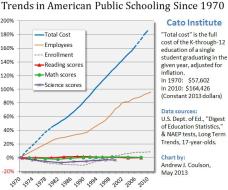
We’ve had lots more spending in recent decades, but no actual improvement in education.
Over the past five decades, billions in state and federal subsidies have contributed significantly to the exploding cost of higher education by making it easier for colleges to justify outrageous amenities. “Free” tuition will only further distort the incentives. …there is little evidence that additional spending has enhanced the value of the college degree. In a 2014 academic study of collegiate spending, economists Robert E. Martin and R. Carter Hill noted that research universities had cumulatively spent more than half a trillion dollars from 1987 to 2005. “There should be evidence of higher quality at these investment levels,” they wrote. Instead, “completion rates declined, grade inflation increased, students spend less time studying, adult numeracy/literacy rates declined, and critical thinking skills did not improve.”
Amen.
Indeed, this is exactly what we’ve seen in K-12 education.
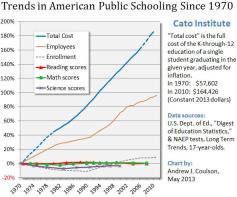
Someone (more clever than me) needs to come up with the collegiate equivalent ofthis famous chart from the late Andrew Coulson.
We already know that the United Statesspends more per student on K-12 education than any other nation and gets mediocre results . That’s probably mostly due to the inefficient monopoly structureof elementary and secondary education.
The bottom line is that Hillary is right when she says higher-education spending is an investment. The problem is that she likes making investments that generate negative returns.
P.S. You won’t be surprised to learn that Paul Krugman also approves of investments with negative returns.
Reduce Out-of-Control College Costs by Ending Government Subsidies April 5, 2015 by Dan Mitchell I’ve written many times about the shortcomings of government schools at the K-12 level. We spend more on our kids than any other nation, yet our test scores are comparatively dismal. And one of my points, based on this very sobering […]
College costs are soaring higher than inflation ever since 1981 and the government has a lot to do with that. Who Should Be Blamed for the Rising Cost of College? December 11, 2012 by Dan Mitchell Notwithstanding the title of this post, perhaps nobody deserves blame. Sometimes, a good or service rises in price solely as […]
While economists are famous for their disagreements (and their incompetent forecasts), there is universal consensus in the profession that demand curves slope downward. That may be meaningless jargon to non-economists, but it simply means that people buy less of something when it becomes more expensive.
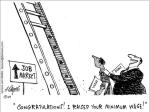
And this is why it makes no senseto impose minimum wage requirements, or to increase mandated wages where such laws already exist.
If you don’t understand this, just do a thought experiment and imagine what would happen if the minimum wage was $100 per hour. The answer is terrible unemployment, of course, which means it’s a very bad idea.
So why, then, is it okay to throw a “modest” number of people into the unemployment line with a “small” increase in the minimum wage?
Yet some politicians can’t resist pushing such policies because it makes them seem like Santa Claus to low-information voters. Vote for me, they assert, because I’ll get you a pay raise!
All of this sounds good, and it may even be the final result for some workers. But there’s overwhelming evidence that you get more unemployment when politicians boost the minimum wage.
There are no “magic boats.” In the real world, businesses only hire workers when they expect that additional employees will generate more than enough revenue to offset their costs. So when politicians artificially increase the cost of hiring workers, there will be some workers (particularly those with low skills) who become redundant.
And that’s exactly what we’re seeing in cities that have chosen to mandate higher minimum wages.
The Wall Street Journalopines on Seattle’s numbers.
Seattle’s increase last year seems to be reducing employment. That’s the finding of a new report by researchers at the University of Washington. The study compared nine months of 2015 in Seattle, where the wage is ticking up gradually and hit $13 an hour in January, with similar areas elsewhere in Washington. …The researchers found that the ordinance decreased the low-wage employment rate by about one-percentage point. …The ordinance “modestly held back” employment of low-wage earners, and hours worked “lagged behind” regional trends, on average four hours each quarter (or 19 minutes a week). Many such individuals moved to take jobs outside the city at “an elevated rate compared to historical patterns,” says the report. …None of this will surprise anyone who understands that increasing the cost of something will reduce the demand for it. Then again, that concept seems to elude both major presidential candidates, who have floated national minimum-wage increases.
And it goes without saying that Obama has been a demagogue on the issue.
Sigh.
Let’s examine evidence from another city. Mark Perry of the American Enterprise Institute looks at what has been happening in Washington, DC.
Since the DC minimum wage increased in July 2015 to $10.50 an hour, restaurant employment in the city has increased less than 1% (and by 500 jobs), while restaurant jobs in the surrounding suburbs increased 4.2% (and by 7,300 jobs). An even more dramatic effect has taken place since the start of this year – DC restaurant jobs fell by 1,400 jobs (and by 2.7%) in the first six months of 2016 between January and July – that’s the largest loss of District food jobs during a 6-month period in 15 years. Perhaps some of those job losses were related to the $1 an hour minimum wage hike on July 1, bringing the city’s new minimum wage to $11.50 an hour. In contrast, restaurant employment outside the city grew at a 1.6% rate in the suburbs (and by 2,900 jobs) during the January to July period. …While it might take several more years to assess the full impact, the preliminary evidence so far suggests that DC’s minimum wage law is having a negative effect on staffing levels at the city’s restaurants. At the same time that suburban restaurants have increased employment levels by nearly 3,000 new positions since January, restaurants in the District have shed jobs in five out of the last six months, with a total loss of 1,400 jobs during that period (an average of nearly 8 jobs lost every day). The last time DC experienced restaurant job losses in five out of six consecutive months was 25 years ago in 1991, and the last time 1,400 jobs were lost over any six-month period was 15 years ago during the 2001 recession.
Here’s a chart looking at how restaurant employment in DC and the suburbs used to be closely correlated, but how there’s been a divergence since the city hiked the minimum wage.
As Mark noted, we’ll know even more as time passes, but the net result so far is predictably negative.
For additional background info, this video is a succinct explanation of why minimum-wage mandates are such a bad idea.
Let’s close with something rather amusing. It turns out that the State Department, during Hillary Clinton’s tenure, actually understood that higher minimum wages destroy jobs. Indeed, her people were even willing to fight against such job-killing measures.
But in Haiti rather than America, as Politifactreports.
Memos from 2008 and 2009 obtained by Wikileaks strongly suggest…that the State Department helped block the proposed minimum wage increase. The memos show that U.S. Embassy officials in Haiti clearly opposed the wage hike and met multiple times with factory owners who directly lobbied against it to the Haitian president. …media outlets assessed the cables and found, among many other revelations, that the “U.S. Embassy in Haiti worked closely with factory owners contracted by Levi’s, Hanes, and Fruit of the Loom to aggressively block a paltry minimum wage increase” for workers in apparel factories. …Deputy Chief of Mission David Lindwall put it most bluntly, when he said the minimum wage law “did not take economic reality into account but that appealed to the unemployed and underpaid masses.” …The U.S. Embassy, meanwhile, continued to lament the hike… USAID studies found that a 200 gourdes minimum wage “would make the sector economically unviable and consequently force factories to shut down.”
Hmmm…., I wonder if some of those textile companies made contributions to theClinton Foundation?
P.S. People in Switzerland obviously understand this issue, overwhelmingly voting against a minimum-wage mandate in 2014.
____ February 13, 2013 1:07PM Obama’s Minimum Wage Plan By Chris Edwards Share Economic research has only a tenuous relationship to economic policymaking in Washington. President Obama’s new proposal to raise the federal minimum wage from $7.25 to $9.00 is a case in point. It would bad for workers and the economy, but the administration […]
_______ February 13, 2013 1:07PM Obama’s Minimum Wage Plan By Chris Edwards Share Economic research has only a tenuous relationship to economic policymaking in Washington. President Obama’s new proposal to raise the federal minimum wage from $7.25 to $9.00 is a case in point. It would bad for workers and the economy, but the administration […]
________ A Little Café shows the USA the real cost of the Minimum Wage Increase!!!! A Little Cafe That Sparked a Big Minimum Wage Debate Eric Boehm / @Watchdogorg / August 15, 2014 / 0 comments STILLWATER, Minn.—With its waitress and single cook, its retro-style booths with pale green cushions and its stainless steel wrap-around […]
___________ Jerry Brown raised taxes in California and a rise in the minimum wage, but it won’t work like Krugman thinks!!!! This cartoon below shows what will eventually happen to California and any other state that keeps raising taxes higher and higher. Krugman’s “Gotcha” Moment Leaves Something to Be Desired July 25, 2014 by […]
Open letter to President Obama (Part 513) (Emailed to White House on 5-4-13.) President Obama c/o The White House 1600 Pennsylvania Avenue NW Washington, DC 20500 Dear Mr. President, I know that you receive 20,000 letters a day and that you actually read 10 of them every day. I really do respect you for trying to get […]
Open letter to President Obama (Part 468) (Emailed to White House on 4-9-13.) President Obama c/o The White House 1600 Pennsylvania Avenue NW Washington, DC 20500 Dear Mr. President, I know that you receive 20,000 letters a day and that you actually read 10 of them every day. I really do respect you for trying […]
State of the Union 2013 Published on Feb 13, 2013 Cato Institute scholars Michael Tanner, Alex Nowrasteh, Julian Sanchez, Simon Lester, John Samples, Pat Michaels, Jagadeesh Gokhale, Michael F. Cannon, Jim Harper, Malou Innocent, Juan Carlos Hidalgo, Ilya Shapiro, Trevor Burrus and Neal McCluskey respond to President Obama’s 2013 State of the Union Address. Video […]
I have put up lots of cartoons from Dan Mitchell’s blog before and they have got lots of hits before. Many of them have dealt with the economy, eternal unemployment benefits, socialism, Greece, welfare state or on gun control. Funny…but Sad…Look at How the Minimum Wage Destroys Opportunity July 2, 2011 by Dan Mitchell My Cato colleague, Mark […]
It seems that everything President Obama does to help the economy actually does the opposite. Minimum Wage, Maximum Foolishness March 7, 2013 by Dan Mitchell Should the federal government make life more difficult for low-skilled workers? I hope everyone will emphatically say “NO!” Heck, most people understandably will think you’re crazy for even asking such […]
Williams with Sowell – Minimum Wage Why do the liberals want to increase unemployment more by increasing minimum wage? With Unemployment Already High, Why Are Leftists Pushing for an Increase in the Minimum Wage? September 3, 2012 by Dan Mitchell The unemployment rate has been stuck above 8 percent ever since Obama pushed through his ill-fated […]
Way back in 2009, some folks on the left shared a chart showing that national expenditures on healthcare compared to life expectancy.
This comparison was not favorable to the United States, which easily spent the most money but didn’t have concomitantly impressive life expectancy.
At the very least, people looking at the chart were supposed to conclude that other nations had better healthcare systems.
And since the chart circulated while Obamacare was being debated, supporters of that initiative clearly wanted people to believe that the U.S. somehow could get better results at lower cost if the government played a bigger role in the healthcare sector.
There were all sorts of reasons to think that chart was misleading (higher average incomes in the United States, more obesity in the United States, different demographics in the United States, etc), but my main gripe was that the chart was being used to advance the cause of bigger government when it actually showed – at least in part – the consequences of government intervention.
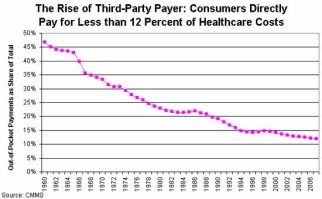
The real problem, I argued, was third-party payer. Thanks to programs such asMedicare and Medicaid, government already was paying for nearly 50 percent of all heath spending in the United States (indeed, the U.S. has more government spending for health programs than some nations with single-payer systems!).
But that’s just party of the story. Thanks to a loophole in the tax code for fringe benefits (a.k.a., the healthcare exclusion), there’s a huge incentive for both employers and employees to provide compensation in the form of very generous health insurance policies. And this means a big chunk of health spending is paid by insurance companies.
The combination of these direct and indirect government policies is that consumers pay very little for their healthcare. Or, to be more precise, they may pay a lot in terms of taxes and foregone cash compensation, but their direct out-of-pocket expenditures are relatively modest.
And this is why I said the national health spending vs life expectancy chart was far less important than a chart I put together showing the relentless expansion of third-party payer. And the reason this chart is so important is that it helps to explain why healthcare costs are so high and why there’s so much inefficiency in the health sector.
Simply stated, doctors, hospitals, and other providers have very little market-based incentive to control costs and be efficient because they know that the overwhelming majority of consumers won’t care because they are buying care with other people’s money.
To get this point across, I sometimes ask audiences how their behavior would change if I told them I would pay 89 percent of their dinner bill on Friday night. Would they be more likely to eat at McDonald’s or a fancy steakhouse? The answer is obvious (or should be obvious) since they are in box 2 of Milton Friedman’s matrix.
So why, then, would anybody think that Obamacare – a program that was designed to expand third-party payer – was going to control costs?
Though I guess it doesn’t matter what anybody thought at the time. The sad reality is that Obamacare was enacted. The President famously promised healthcare would be more affordable under his new system, both for consumers and for taxpayers.
But let’s focus today on households, which haveborne the brunt of the President’s bad policies. The Wall Street Journal had a report a few days ago about what’s been happening to the spending patterns of middle-class households.
The numbers are rather grim, at least for those who thought Obamacare would control health costs.
A June Brookings Institution study found middle-income households now devote the largest share of their spending to health care, 8.9%… By 2014, middle-income households’ health-care spending was 25% higher than what they were spending before the recession that began in 2007, even as spending fell for other “basic needs” such as food, housing, clothing and transportation, according to an analysis for The Wall Street Journal by Brookings senior fellow Diane Schanzenbach. …Workers aren’t the only ones feeling the pain of rising health-care costs. Employers still typically pay roughly 80% of individual health-insurance premiums… In 2015, 8% of Americans’ household spending went toward health care, up from 5.8% in 2007, according to the Labor Department.
Here’s a chart from the story. It looks at data from 2007-2014, so it surely wouldn’t be fair to say Obamacare caused all the increase. But it would be fair to say that the law hasn’t delivered on the empty promise of lower costs.
Let’s close with a few important observations.
First, there’s a very strong case to repeal Obamacare, but nobody should be under the illusion that this will solve the myriad problems in the health sector. It would be a good start, but never forget that the third-party payer problem existed before Obamacare.
Second, undoing third-party payer will be like putting toothpaste back in a tube. Even though there are some powerful examples of how healthcare costs are constrained when genuine market forces are allowed to operate, consumers will be very worried about shifting to a system where they pay directly for a greater share of their healthcare costs.
Third, there’s one part of Obamacare that shouldn’t be repealed. The so-called Cadillac Tax may not be the right way to deal with the distorting impact of the healthcare exclusion, but it’s better than nothing.
Actually, we could add one final observation since the Obama era will soon be ending. When historians write about his presidency, will his main legacy be the Obamacare failure? Or will they focus more on the failed stimulus? Or maybe the economic stagnation that was caused by his policies?
Michael Cannon observed, “The centerpiece of Rubio’s proposal… If you purchase a government-approved health plan, you could save, for example, $2,000 on your taxes. If you don’t, you pay that $2,000 to the government. That is exactly how Obamacare’s individual mandate works.” The Obama-Rubio “Healthcare Mandate” Controversy March 2, 2016 by Dan Mitchell My colleague […]
Milton Friedman – Health Care Reform (1992) pt 1/4 Milton Friedman – Health Care Reform (1992) pt 2/4 Milton Friedman on the Energy Crisis (and ObamaCare to come) By Robert Bradley Jr. — July 31, 2013 July 31st is the birth date of one of the great intellectuals of the freedom philosophy. Milton Friedman (1912–2006) would have […]
Milton Friedman – Health Care Reform (1992) pt 1/4 Milton Friedman – Health Care Reform (1992) pt 2/4 Milton Friedman – Health Care Reform (1992) pt 3/4 Milton Friedman – Health Care Reform (1992) pt 4/4 Milton Friedman And ObamaCare November 4, 2013 Where is Milton Friedman when we need him most? His ability to […]
Milton Friedman – Health Care Reform (1992) pt 1/4 Milton Friedman – Health Care Reform (1992) pt 2/4 Milton Friedman on the Energy Crisis (and ObamaCare to come) By Robert Bradley Jr. — July 31, 2013 July 31st is the birth date of one of the great intellectuals of the freedom philosophy. Milton Friedman (1912–2006) would have […]
I’ve explained many times that an economy’s wealth and output depend on thequantity and quality of labor and capital and how effectively those two factors of production are combined.
Let’s look today on the labor portion of that formula. And since I’ve alreadyexpressed my concerns about the quantity of labor that is being productively utilized, now let’s focus on the quality of labor. In other words, we’ll look at the degree to which the workforce has the skills, knowledge, and ethics to be productive.
This is why education is very important, but also why we have big reasons to be concerned in the United States. Consider, for instance, the late Andrew Coulson’s famous (and discouraging) chart. It shows that politicians routinely increase the amount of money that’s being spent (on a per-student basis, American schools get more funding than any other nation), yet student test scores are both mediocre and flat.
But that’s just part of the story. We also have the national disgrace of substandard education for minority communities.
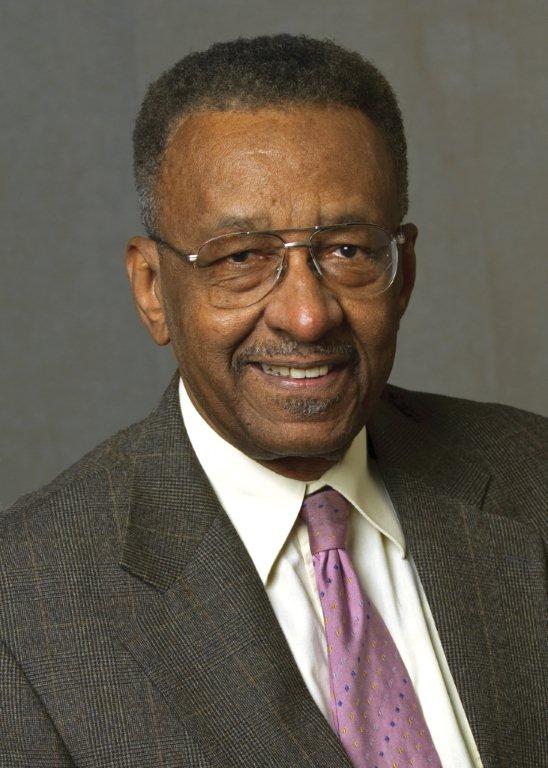
Here’s some of what Walter Williams wrote about the scandalous failure of government schools to produce quality education for minority children.
According to the National Assessment of Educational Progress, sometimes called the Nation’s Report Card, nationally, most black 12th-graders’ test scores are either basic or below basic in reading, writing, math and science. “Below basic” is the score received when a student is unable to demonstrate even partial mastery of knowledge and skills fundamental for proficient work at his grade level. “Basic” indicates only partial mastery. Put another way, the average black 12th-grader has the academic achievement level of the average white seventh- or eighth-grader. …In terms of public policy, what to do? …Many black parents want a better education and safer schools for their children. The way to deliver on that desire is to offer parents alternatives to poorly performing and unsafe public schools. Expansion of charter schools is one way to provide choice. The problem is that charter school waiting lists number in the tens of thousands. In Philadelphia, for example, there are 22,000 families on charter school waiting lists. Charter school advocates estimate that nationally, over 1 million parents are on charter school waiting lists.
The above excerpt from Walter’s column is scandalous.
The excerpt that follows is nauseating.
The National Education Association and its political and civil rights organization handmaidens preach that we should improve, not abandon, public schools. Such a position is callous deceit, for many of them have abandoned public schools. Let’s look at it. Nationwide, about 12 percent of parents have their children enrolled in private schools. In Chicago, 44 percent of public-school teachers have their own children enrolled in private schools. In Philadelphia, it’s also 44 percent. In Baltimore, it’s 35 percent, and in San Francisco, it’s 34 percent. That ought to tell us something. …Politicians who fight against school choice behave the way teachers do. Fifty-two percent of the members of the Congressional Black Caucus who have school-age children have them enrolled in private schools.
By the way, what happens when ordinary black children have a chance to escape the government’s monopoly school system?
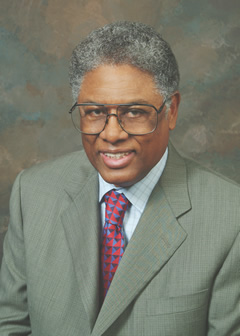
Thomas Sowell has opined on the amazingly positive results that occur when black children have this opportunity.
We keep hearing that “black lives matter,” but they seem to matter only when that helps politicians to get votes… What about black success? Does that matter? Apparently not so much. We have heard a lot about black students failing to meet academic standards. So you might think that it would be front-page news when…ghetto schools not only meet, but exceed, the academic standards of schools in more upscale communities. …Only 39 percent of all students in New York state schools who were tested recently scored at the “proficient” level in math, but 100 percent of the students at the Crown Heights Success Academy school scored at that level in math. Blacks and Hispanics are 90 percent of the students in the Crown Heights Success Academy. The Success Academy schools in general ranked in the top 2 percent in English and in the top 1 percent in math. …Black students in these Success Academy schools reached the “proficient” level more than twice as often as black students in the regular public schools. What makes this all the more amazing is that these charter schools are typically located in the same ghettos or barrios where other blacks or Hispanics are failing miserably on the same tests. More than that, successful charter schools are often physically housed in the very same buildings as the unsuccessful public schools.
But Prof. Sowell echoes the point Prof. Williams made about poor children being trapped in bad schools because of limits on school choice.
If black success was considered half as newsworthy as black failures, such facts would be headline news — and people who have the real interests of black and other minority students at heart would be asking, “Wow! How can we get more kids into these charter schools?” …minority parents have already taken notice. More than 43,000 families are on waiting lists to get their children into charter schools. But admission is by lottery, and far more have to be turned away than can be admitted. Why? Because the teachers’ unions are opposed to charter schools — and they give big bucks to politicians, who in turn put obstacles and restrictions on the expansion of charter schools. …If you want to understand this crazy and unconscionable situation, just follow the money and follow the votes. Black success is a threat to political empires and to a whole social vision behind those empires. That social vision has politicians like Bill de Blasio and Hillary Clinton cast in the role of rescuers and protectors of blacks.
Notwithstanding everything written up to this point, the purpose of today’s column isn’t to argue in favor of school choice.
But I want to focus instead on the question of why school choice hasn’t become the civil rights issue of the 21st century. And to be even more specific, I want to explorethe scandalous decision by some people at the NAACP to betray black children.
The Wall Street Journal opined about this topic today.
The outfit that helped end segregation in public education now works to trap poor and minority kids in dysfunctional schools. Last month the National Association for the Advancement of Colored People introduced a resolution at its national convention in Cincinnati calling for a moratorium on charter schools… The resolution must be formally adopted at a board meeting later this year.
Here’s some very relevant data.
Some 28% of charter-school students are black, which is almost double the figure for traditional public schools. A report last year from Stanford’s Center for Research on Education Outcomes found that across 41 urban areas black students in charters gained on average 36 extra days in math learning a year and 26 in reading… Black students in poverty notched 59 more days in math. This is the definition of “advancement.” …A 2013 poll of black voters in four southern states by the Black Alliance for Educational Options found that at least 85% agreed that “government should provide parents with as many choices as possible.” …Another sign of support is the hundreds of thousands of black students nationwide who sign up for lotteries for a seat at a charter.
The conclusion is very unflattering.
The group’s real motive is following orders from its teacher-union patrons. …The National Education Association dropped $100,000 in 2014 for a partnership with the NAACP.
Jason Russell of the Washington Examiner was similarly scathing about the NAACP’s actions.
One of the few education reforms that has actually succeeded in helping African-American students get a better education is school choice, especially the growth of public charter schools. So it didn’t make much sense, to put it kindly, when the NAACP approved a resolution calling for a moratorium on new charter schools. …Jacqueline Cooper, president of the Black Alliance for Educational Options, told theWashington Examiner that…”The fact that the NAACP wants a national moratorium on charter schools, many of which offer a high-quality education to low-income and working-class black children, is inexplicable,”…Shavar Jeffries, president of Democrats for Education Reform, also criticized the NAACP in a statement. “The public charter school moratorium put forward at this year’s NAACP convention does a disservice to communities of color,” Jeffries said. …Steve Perry, founder and head of Capital Preparatory Schools,…said the national group is “out of touch even with their own chapters … This is more proof that the NAACP has been mortgaged by the teachers union and they keep paying y’all to say what they want to say.”
Since this has been a depressing topic, let’s end with an uplifting video from Reason TV about the success of various models of charter schools.
How To End Poverty in the South Bronx
P.S. Even though I’m not partisan, I understand that coalition politics are important. Reagan, for instance, had his three-legged stool of small-government libertarians, social conservatives, and military/foreign policy hawks. All three groups were united in the belief that their respective goals could be advanced by Reagan, even if they bickered with each other about the relative importance of various issues and occasionally had fights with each other (one of my first battles in Washington was advocating for a sequester during Reagan’s second term over the objections of the hawks, a battle that was repeated back in 2013).
With this in mind (and especially since the teacher unions bring a lot of campaign money to the table), I definitely understand why Democratic politicians are willing to sacrifice the interests of black families and their children by opposing education reform. I even partially understand why the NAACP feels pressure to accommodate the demands of teacher unions (and I fully understand, from the perspective of coalition politics, why the NAACP made absurd accusations against the Tea Party).
But surely there must be a point where coalition politics has to take second place and the interests of black families should be in first place (an issue addressed inanother great video from Reason).
P.P.S. Some folks on the left are willing to break ranks. Jonathan Alter wrote aboutcharter schools for the Daily Beast. Here are some excerpts.
…the backlash against education reform among liberals who should know better has been disheartening. …the top quintile of charters—the highly effective ones run by experienced and widely-respected charter operators—not only beat traditional public schools serving students in the same demographic cohorts, they often outperform them by 20, 30, or even 50 points on many metrics.
He cites New Orleans as an example.
New Orleans is a good example of where charters, which now educate 95 percent of New Orleans public school students, are working. A decade ago, New Orleans had the worst schools in the country…The results in New Orleans are impressive. Over the last decade, graduation rates have surged from 54 percent to 73 percent, and college enrollment after graduation from 37 percent to 59 percent. (There’s also a new emphasis on helping those who attend college to complete it.) Before Katrina, 62 percent of schools were failing. Today, it’s 6 percent. The biggest beneficiaries have been African-American children, who make up 85 percent of New Orleans enrollment. The high school graduation rate nationally for black students is 59 percent. In New Orleans, it’s 65 percent, which is also much higher than the state average. Test scores are still low overall, but thousands more African-American students are taking the ACTs and doing better on them.
And even Newark.
In Newark, where 25 percent of students attend charter schools, the percentage of African-Americans choosing charters is closer to 50 percent in some grade levels. Contrary to the claim that charters succeed only by “skimming” or “creaming” the students from more stable and middle-class families, Newark’s charters enroll a higher percentage of poor students than district schools.CREDO numbers show Newark charter school students gaining the equivalent of more than five months per year in performance in reading and math—a huge advantage over their counterparts in district schools. The percentage of black students in Newark who are doing better than the state average for African-Americans has more than doubled.
Open letter to President Obama (Part 581) (Emailed to White House on 6-25-13.) President Obama c/o The White House 1600 Pennsylvania Avenue NW Washington, DC 20500 Dear Mr. President, I know that you receive 20,000 letters a day and that you actually read 10 of them every day. I really do respect you for trying to get […]
Public schools need more competition and vouchers is the answer. Related posts: Powerful Evidence for School Choice April 22, 2013 by Dan Mitchell I expressed pessimism a few days ago about the possibility of replacing the corrupt internal revenue code with a flat tax. Either now or in the future. But that’s an exception to my […]
Milton Friedman – Public Schools / Voucher System Published on May 9, 2012 by BasicEconomics The Machine: The Truth Behind Teachers Unions Published on Sep 4, 2012 by ReasonTV America’s public education system is failing. We’re spending more money on education but not getting better results for our children. That’s because the machine that runs […]
(This letter was mailed before Oct 25, 2012.) President Obama c/o The White House 1600 Pennsylvania Avenue NW Washington, DC 20500 Dear Mr. President, I know that you receive 20,000 letters a day and that you actually read 10 of them every day. I really do respect you for trying to get a pulse on […]
The Machine: The Truth Behind Teachers Unions Published on Sep 4, 2012 by ReasonTV America’s public education system is failing. We’re spending more money on education but not getting better results for our children. That’s because the machine that runs the K-12 education system isn’t designed to produce better schools. It’s designed to produce more […]
The Machine: The Truth Behind Teachers Unions Published on Sep 4, 2012 by ReasonTV America’s public education system is failing. We’re spending more money on education but not getting better results for our children. That’s because the machine that runs the K-12 education system isn’t designed to produce better schools. It’s designed to produce more […]
I have always favored the voucher system to create more competition between schools. Ryan Makes Case for School Choice Lindsey Burke October 25, 2012 at 12:00 pm House Budget Committee chairman Paul Ryan (R–WI) made a strong case yesterday for the need to ensure that every child in America has the opportunity to attend a […]
Introducing the ‘Obama Rule’ Posted by Neal McCluskey In his latest weekly radio address, President Obama featured what will no doubt be a mainstay of his reelection campaign: the “Buffett Rule,” which says that rich people should pay at least the same tax rate as middle-class folks. It’s named after mega-investor Warren Buffett, who famously declared […]
John Brummett in his article, “A new civil rights struggle in Little Rock?” Arkansas News Burea, August 25, 2011, asserted the main role vouchers should have is “providing new models for regular public schools to emulate, not about replacing regular public schools.” The Heritage Foundation cares nothing about saving the public schools. If the public […]
On the Arkansas Times Blog the person using the username “Jake da Snake” noted, “Friedman also railed long and hard for school vouchers to be adopted, to little avail…” (June 11, 2011). Milton Friedman firmly believed, “competition is a way in which both public and private schools can be required to satisfy their customers.” Here […]
My previous post dealing with whether citizenship should be automatic for babies born to illegals generated a lot of commentary, so it is with some trepidation that I wade back into the issue. But the Wall Street Journal column excerpted belowseems to strike exactly the right chord and should (at least I think!) meet with approval from both sides of the immigration debate. And by “both sides,” I’m referring to the debate on the right (with some conservatives and libertarians on both sides of the issue) regarding the benefits of immigration generally and the treatment of illegals specifically.
…a larger welfare state is not conducive to comprehensive immigration reform. If foreigners start coming for handouts instead of economic opportunity, tighter restrictions will be justified. … A 2005 World Values Survey found that 71% of Americans see poverty as a condition that can be overcome by dint of hard work, while only 40% of Europeans share that viewpoint. …Belief in social mobility has informed welfare and immigration policy from colonial times. In 1645 the Massachusetts Bay colony was already barring paupers. And in 1882, when Congress finally passed the country’s first major piece of immigration legislation, it specifically prohibited entry to “any person unable to take care of himself or herself without becoming a public charge.” A problem that immigration reformers face is the public perception—fed by restrictionists and exacerbated during economic downturns—that the U.S. welfare state is already a magnet for poor immigrants in search of government assistance. It’s true that the U.S. attracts poor people, but it’s also true that they come here to work, not to go on the dole. We know this because the data consistently show that foreign nationals in the U.S. are more likely than natives to be employed and less likely than low-income natives to be receiving public benefits. …While there’s no evidence that immigrants come here for public assistance, that could change as the U.S. welfare state grows. And one consequence could be less-welcoming immigration policies. The European experience is instructive. In countries such as France, Italy and the Netherlands, excessively generous public benefits have lured poor migrants who tend to be heavy users of welfare and less likely than natives to join the work force. Milton Friedman famously remarked, “you can’t have free immigration and a welfare state.” There is a tipping point, even if the U.S. has yet to reach it.
Security from CRADLE TO GRAVE never quite works out!!! Free to Choose Part 4: From Cradle to Grave Featuring Milton Friedman The Entitlement Disaster that Hillary Clinton and Donald Trump Are Ignoring July 8, 2016 by Dan Mitchell I’m like a broken record when it comes to entitlement spending. I’ve explained, ad nauseam, that programs such […]
Milton Friedman and Dan Mitchell on the Post Office!!! Ep. 10 – How to Stay Free [3/7]. Milton Friedman’s Free to Choose (1980) Pat Brennan became something of a celebrity in 1978 because she was delivering mail in competition with the United States Post Office. With her husband she set up business in a basement […]
Testing Milton Friedman: Free Markets – Full Video Hong Kong and the Miracle of Compounding Long-Run Growth March 11, 2016 by Dan Mitchell Hong Kong is a truly remarkable jurisdiction. Can you name, after all, another government in the world that brags about how little it spends on redistribution programs andhow few people are dependent on […]
Friedman & Sowell: Should Our School System Be Privatized? America’s Government School System: Never Have so Many Paid so Much to Achieve so Little March 20, 2015 by Dan Mitchell No other nation in the world spends as much on education as the United States. According to our leftist friends, who prefer to measure inputs rather […]
Friedman & Sowell: Should Our School System Be Privatized? What if the NFL Was Run Like the Government School System? October 4, 2011 by Dan Mitchell Regular readers know that the two things that get me most excited are the Georgia Bulldogs and the fight against a bloated public sector that is ineffective in the best […]
_ Friedman & Sowell: Should Our School System Be Privatized? Excellent Washington Post Editorial (Yes, Really) on School Choice September 3, 2013 by Dan Mitchell School choice should be a slam-dunk issue. There’s very powerful evidence that we can provide superior education for lower cost if we shift away from monopoly government schools to a system […]
The War on Work Testing Milton Friedman: Government Control – Full Video More Great Moments in Federal Government Incompetence April 2, 2016 by Dan Mitchell I used to think the Equal Employment Opportunity Commission was the worst federal bureaucracy. After all, these are the pinheads who are infamous for bone-headed initiatives, such as: The EEOC making […]
Dr. Walter Williams Highlights from – Testing Milton Friedman Milton Friedman PBS Free to Choose 1980 Vol 8 of 10 Who Protects the Worker The Left’s Inequality Fixation Is Economically Foolish and Politically Impotent April 22, 2015 by Dan Mitchell I don’t understand the left’s myopic fixation on income inequality. If they genuinely care about the […]
Dr. Walter Williams Highlights from – Testing Milton Friedman Milton Friedman PBS Free to Choose 1980 Vol 8 of 10 Who Protects the Worker Walter E Williams – A Discussion About Fairness & Redistribution Testing Milton Friedman: Equality of Opportunity – Full Video Walter Williams, Freedom Fighter March 23, 2011 by Dan Mitchell I’ve been fortunate […]
__ Milton Friedman – The Four Ways to Spend Money What establishments are you most unsatisfied with? Probably government organizations like Dept of Motor Vehicles or Public Schools because there is no profit motive and they are not careful in the way they spend our money. Three Cheers for Profits and Free Markets April 7, 2015 […]
Setting the record straight was Will Provine’s widow Gail when she stated, “[Will] did not believe in an ULTIMATE meaning in life (i.e. God’s plan), but he did believe in proximate meaning (i.e. relationships with people — friendship and especially LOVE 🙂 ). So one’s existence is ultimately senseless and useless, but certainly not to those whose lives we touch here on earth.”
Many humanists today try to leave the impression that nothing is lost by giving up belief in God, but Will Provine made it clear that one’s existence is ultimately senseless and useless in the big scheme of things. Sadly many humanists are living in denial. Will Provine was a very kind man who had many close friendships and lived a fulfilling life and I salute him for his observations in this area.
We covered the passing of our evolutionary interlocutor Will Provine, an honest and loving atheist, at some length (see here, here, here, here, and here). One sweet thing that came out of this was hearing from Professor Provine’s widow, Gail Provine.
She emailed to express her approval of what we wrote, which not only gave me the opportunity to personally wish her comfort but, frankly, also made my day, despite the sad occasion. Some of us had the merit of meeting and knowing her late husband; others (such as myself) unfortunately did not. We evidently got something right, nevertheless, and despite the divergence of his picture of reality from ours.
However, Mrs. Provine took issue with our word choice in one respect and I wanted to acknowledge that. Commenting on the initial post at ENV, “William Provine, RIP: Noble in His Honesty,” she wrote:
Kudos to you! You really got Will, and I think he would have agreed with everything you said except probably your use of the word “nihilistic” to describe his worldview. If you accept this definition of nihilist from the Merriam-Webster dictionary,
a: a viewpoint that traditional values and beliefs are unfounded and that existence is senseless and useless
b: a doctrine that denies any objective ground of truth and especially of moral truths
then I would say that Will’s worldview was in no way nihilistic. He did not believe in an ULTIMATE foundation for ethics (i.e. the Bible), but he certainly thought that as a society we must have a robust set of ethics and morals that we teach our children (and that we learn from our parents and community). In the same way, he did not believe in an ULTIMATE meaning in life (i.e. God’s plan), but he did believe in proximate meaning (i.e. relationships with people — friendship and especially LOVE 🙂 ). So one’s existence is ultimately senseless and useless, but certainly not to those whose lives we touch here on earth.
Anyway, I found your obit to be the most accurate portrayal of Will of those out there. Thank you again.
Best wishes,
Gail
What a wonderful email, and what an admirably upbeat, appreciative attitude from a woman who has recently lost, at least in this life, the man she loves. Wow. As Paul Nelson observed, some people of religious faith could take a lesson from that.
As to the point about “nihilism,” she observed in a follow-up note, “I remember someone kept trying to label Will a ‘nihilist’ in his Wiki entry, and he kept taking it out.” It’s interesting to learn that some atheist evolutionary advocates too are plagued by disinformation specialists on Wikipedia, an experience we know well.
I leave to philosophers the task of defining the term nihilist, but I think intelligent design advocates should know as well as anyone the importance of allowing honest people to label and define their beliefs as they see fit. The courtesy is withheld from us by some on the evolutionary side of the Darwin debate, so we owe to it Professor Provine not to stick a word on him that he explicitly rejected.
Thank you, Mrs. Provine, for your kind words and gentle correction! I’m glad to offer my apology.
Photo: Gail and Will Provine, courtesy of Mrs. Provine.
Photo taken in 1944 after a reading of Picasso’s play El deseo pillado por la cola: Standing from left to right: Jacques Lacan, Cécile Éluard, Pierre Reverdy, Louise Leiris, Pablo Picasso, Zanie de Campan, Valentine Hugo, Simone de Beauvoir, Brassaï. Sitting, from left to right: Jean-Paul Sartre, Albert Camus, Michel Leiris, Jean Aubier. Photo by Brassaï. –
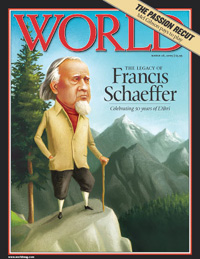
Schaeffer was the closest thing to a “man of sorrows” I have seen. He could not allow himself to be happy when most of the world was desperately lost and he knew why. He was the first Christian I found who could embrace faith and the despair of a lost humanity all at the same time. Though he had been found, he still knew what it was to be lost.
Schaeffer was the first Christian leader who taught me to weep over the world instead of judging it. Schaeffer modeled a caring and thoughtful engagement in the history of philosophy and its influence through movies, novels, plays, music, and art. Here was Schaeffer, teaching at Wheaton College about the existential dilemma expressed in Michelangelo Antonioni’s 1966 film, Blowup, when movies were still forbidden to students. He didn’t bat an eye. He ignored our legalism and went on teaching because he had been personally gripped by the desperation of such cultural statements.
Schaeffer taught his followers not to sneer at or dismiss the dissonance in modern art. He showed how these artists were merely expressing the outcome of the presuppositions of the modern era that did away with God and put all conclusions on a strictly human, rational level. Instead of shaking our heads at a depressing, dark, abstract work of art, the true Christian reaction should be to weep for the lost person who created it. Schaeffer was a rare Christian leader who advocated understanding and empathizing with non-Christians instead of taking issue with them.
Francis Schaeffer in Art and the Bible noted, “Many modern artists, it seems to me, have forgotten the value that art has in itself. Much modern art is far too intellectual to be great art. Many modern artists seem not to see the distinction between man and non-man, and it is a part of the lostness of modern man that they no longer see value in the work of art as a work of art.”
Many modern artists are left in this point of desperation that Schaeffer points out and it reminds me of the despair that Solomon speaks of in Ecclesiastes. Christian scholar Ravi Zacharias has noted, “The key to understanding the Book of Ecclesiastes is the term ‘under the sun.’ What that literally means is you lock God out of a closed system, and you are left with only this world of time plus chanceplus matter.” THIS IS EXACT POINT SCHAEFFER SAYS SECULAR ARTISTSARE PAINTING FROM TODAY BECAUSE THEY BELIEVED ARE A RESULTOF MINDLESS CHANCE.
___________
Existentialism and the Meaningful Life [The Common Room]
Published on Jul 7, 2015
Torrey Common Room Discussion with Janelle Aijian, Matt Jenson, and Diane Vincent
The hallmark of the Enlightenment had been “Reason Is King.” The leading thinkers had consciously rejected the need for revelation. As Paul Hazard in European Thought in the Eighteenth Century says, they put Christianity on trial.91
Gradually, however, the problems of this enthronement of human reason emerged. The reason of man was not big enough to handle the big questions, and what man was left with relative knowledge and relative morality. The noose around the humanist’s neck tightened with every passing decade and generation.
What would he do?
Ironically, even though the basis of the humanists’ whole endeavor had been the central importance of man’s reason, when faced with the problems of relative knowledge and relative morality they repudiated reason. Rather than admit defeat in front of God’s revelation, the humanists extended the revolution further – and in a direction which would have been quite unthinkable to their eighteenth-century predecessors. Modern irrationalism was born.
We could go back as far as Immanuel Kant (1724-1804) in philosophy and to Friedrich Schleiermacher (1768-1834) in theology. Modern existentialism is also related to Søren Kierkegaard (1813-1855). However, our intention here is neither to go into the history of irrationalism, nor to examine the proponents of existentialism in our own century, but rather to concentrate on its main thesis. It is this that confronts us on all sides today, and it is impossible to understand modern man without understanding this concept.
Because we shall be using several terms a great deal now, we would ask the reader to attend carefully. When we speak of irrationalism or existentialism or the existential methodology, we are pointing to a quite simple idea. It may have been expressed in a variety of complicated ways by philosophers, but it is not a difficult concept.
Imagine that you are at the movies watching a suspense film. As the story unfolds, the tension increases until finally the hero is trapped in some impossible situation and everyone is groaning inwardly, wondering how he is going to get out of the mess. The suspense is heightened by the knowledge (of the audience, not the hero) that help is on the way in the form of the good guys. The only question is: will the good guys arrive in time?
Now imagine for a moment that the audience is slipped the information that there are no good guys, that the situation of the hero is not just desperate, but completely hopeless. Obviously, the first thing that would happen is that the suspense would be gone. You and the entire audience would simply be waiting for the axe to fall.
If the hero faced the end with courage, this would be morally edifying, but the situation itself would be tragic. If, however, the hero acted as if help were around the corner and kept buoying himself up with this thought (“Someone is on the way!” – “Help is at hand!”), all you could feel for him would be pity. It would be a means to keep hope alive within a hopeless situation. The hero’s hope would change nothing on the outside; it would be unable to manufacture, out of nothing, good guys coming to the rescue. All it would achieve would the hero’s own mental state of hopefulness rather than hopelessness.
The hopefulness itself would rest on a lie or an illusion and thus, viewed objectively, would be finally absurd. And if the hero really knew what the situation was, but consciously used the falsehood to buoy up his feelings and go whistling along, we would either say, “Poor guy!” or “He’s a fool.” It is this kind of conscious deceit that someone like Woody Allen has looked full in the face and will have none of.
Now this is what the existential methodology is about. If the universe we are living in is what the materialistic humanists say it is, then with our reason (when we stop to think about it) we could find absolutely no way to have meaning or morality or hope or beauty. This would plunge us into despair. We would have to take seriously the challenge of Albert Camus (1913-1960) in the first sentence of The Myth of Sisyphus: “There is but one truly serious philosophical problem, and that is suicide.”92 Why stay alive in an absurd universe? Ah! But that is not where we stop. We say to ourselves – “There is hope!” (even though there is no help). “We shall overcome!” (even though nothing is more certain than that we shall be destroyed, both individually at death and cosmically with the end of all conscious life). This is what confronts us on all sides today: the modern irrational-ism.
_________________
Robert Zaretsky, Author, “A Life Worth Living: Albert Camus and the Quest for Meaning,”7 Things You Didn’t Know About Albert Camus,“Posted: 11/07/2013 7:38 am, “Camus was not a pessimist. Sure, he liked to remind us that there was no reason to hope. How could one in a universe of “tender indifference” to our repeated demands for meaning? But this was never a reason for despair. Think of the scene from “Annie Hall,” where Woody Allen puts the moves on a young woman who, while staring at a Jackson Pollock canvas, replies with an apocalyptic vision of the world. Like Allen, Camus would have asked if she was busy tomorrow night and, upon hearing she planned to commit suicide then, would pause only a moment before asking if she was busy tonight.”
How can we reconcile the statement of Zaretsky with Camus’ own words: “There is but one truly serious philosophical problem, and that is suicide.”
In 1972’s Play It Again, Sam, Allen plays a film critic trying to get over his wife’s leaving him by dating again. In one scene, Allen tries to pick up a depressive woman in front of the early Jackson Pollock work. This painting, because of its elusive title, has been the subject of much debate as to what it portrays. This makes for a nifty gag when Allen strolls up and asks the suicidal belle, “What does it say to you?”
______________
Woody Allen in Play It Again Sam
Uploaded on May 20, 2009
Scene from ‘Play it Again Sam’ (1972)
____________
Allan: That’s quite a lovely Jackson Pollock, isn’t it?
Museum Girl: It restates the negativeness of the universe. The hideous lonely emptiness of existence. Nothingness. The predicament of Man forced to live in a barren, Godless eternity like a tiny flame flickering in an immense void with nothing but waste, horror and degradation, forming a useless bleak straitjacket in a black absurd cosmos.
Awesome Jim Dine Artist #9 Jim Dine Artwork Description
One main reason why home renovation Awesome Jim Dine Artist #9 Jim Dine Artwork is quite well-liked by homeowners is the fact that it amplifies the valuation on a home. These uncomplicated upgrades by Carolyn Alexandra could increase the value of your property.
The majority of home improvement specialists confirm that front doorstep really is the top improvement goal. Though some premium front doors are a little costly, they are going to go very far with minimal maintenance. Steel doors are more advantageous simply because it has more beneficial security and insulation compared to hardwood entrance doors.
Another desired transformation is adding up wood patio. Search the web for wooden deck area Awesome Jim Dine Artist #9 Jim Dine Artwork photographs so you have an idea of the reason why the valuation on your house can jump high after adding this impressive functionality.
Almost all experts agree that kitchen redesigning is among major priorities in home remodeling Jim Dine Artist. You may start off kitchen redesigning with minor improvements like putting in better kitchen sink unit, remarkable backsplash and shelves.
Each time you find yourself doubtful with your Awesome Jim Dine Artist #9 Jim Dine Artwork improvement plan, do not think twice to work with interior designer.
Awesome Jim Dine Artist #9 Jim Dine Artwork Details
Title : Awesome Jim Dine Artist #9 Jim Dine Artwork
He first earned respect in the art world with his Happenings. Pioneered with artists Claes Oldenburg and Allan Kaprow, in conjunction with musician John Cage, the “Happenings” were chaotic performance art that was a stark contrast with the more somber mood of the expressionists popular in the New York art world. The first of these was the 30 second The Smiling Worker performed in 1959.
In the early 1960s, he began attaching objects, particularly tools of autobiographical significance, to his canvases.[3]Job #1 from 1962, in the collection of the Honolulu Museum of Art, which incorporates paint cans, paint brushes, a screwdriver, and a piece of wood is an example of such a pop art work. These provided commercial as well as critical success, but left Dine unsatisfied. In September 1966 police raided an exhibition of his work displayed atRobert Fraser‘s gallery in London, England. Twenty of his works were seized and Fraser was charged under the Obscene Publications Act of 1959, Dine’s work was found to be indecent but not obscene and Fraser was fined 20 guineas.[4] The following year Dine moved to London and continued to be represented by Fraser, spending the next four years developing his art.
Returning to the United States in 1971 he focused on several series of drawings. Since 1976 Dine has been represented by The Pace Gallery. In the 1980s sculpture resumed a prominent place in his art. In the time since then there has been an apparent shift in the subject of his art from man-made objects to nature.
The Virginia Museum of Fine Arts purchased six works by Dine, and in 1983 he was a juror in “The Next Juried Show” at the VMFA, judging prints and drawings. The juried shows at the VMFA were a series of biennial exhibitions covering all areas including Communication Arts, Craft Media, Painting & Sculpture, Photography, Video Arts, and Prints and Drawings, each on an every-other-year schedule. “The Next Juried Show” was the last of the series, however.
In 1984 the Walker Art Center in Minneapolis, Minnesota, exhibited his work as “Jim Dine: Five Themes”. 1987 saw the publication of the book Jim Dine: Drawings 1973 – 1987,[5] to coincide with a touring exhibition. In 1989 the Minneapolis Institute of Arts hosted Jim Dine Drawings: 1973-1987. In 1983, he was elected into the National Academy of Design as an Associate member, and became a full Academician in 1994.
Dine at the Galerie de Bellefeuille, Westmount, Quebec, Canada, 2009
On May 16, 2008, Jim Dine formally presented a nine meter high bronze statue depicting a walking Pinocchio, named Walking to Borås to the city of Borås, Sweden.
Dine previously worked on a commercial book, paintings, and sculptures that focused on Pinocchio.
Another large bronze sculpture of Pinocchio by Jim Dine exists near the entrance of the Cincinnati Art Museum.
Chris Bruce, compiler, with an essay by Jim Dine. Extending the Artist’s Hand: Contemporary Sculpture from the Walla Walla Foundry. Pullman, Washington: Museum of Art, Washington State University, 2004. ISBN 978-0-9755662-0-6
John Coplans, “New Paintings of Common Objects”, Artforum, November, 1962. (Illustrations)
Jump up^Dine, Jim; Celant, Germano; Bell, Clare; Solomon R. Guggenheim Museum; Cincinnati Art Museum (1999-01-01). Jim Dine : walking memory, 1959-1969. New York : Guggenheim Museum : Hardcover edition distributed by H.N. Abrams.
Jump up^Honolulu Museum of Art, wall label, Job #1 by Jim Dine, 1962, accession TCM.1991.22.16.ab
Jump up^Jones, Jonathan (November 3, 2001). “My name is Jimmy”. London: Guardian.co.uk. Retrieved 2010-02-07.
E P I S O D E 5 How Should We Then Live? Episode 5: The Revolutionary Age I was impacted by this film series by Francis Schaeffer back in the 1970′s and I wanted to share it with you. Francis Schaeffer noted, “Reformation Did Not Bring Perfection. But gradually on basis of biblical teaching there […]
Dr. Francis Schaeffer – Episode IV – The Reformation 27 min I was impacted by this film series by Francis Schaeffer back in the 1970′s and I wanted to share it with you. Schaeffer makes three key points concerning the Reformation: “1. Erasmian Christian humanism rejected by Farel. 2. Bible gives needed answers not only as to […]
Francis Schaeffer’s “How should we then live?” Video and outline of episode 3 “The Renaissance” Francis Schaeffer: “How Should We Then Live?” (Episode 3) THE RENAISSANCE I was impacted by this film series by Francis Schaeffer back in the 1970′s and I wanted to share it with you. Schaeffer really shows why we have so […]
Francis Schaeffer: “How Should We Then Live?” (Episode 2) THE MIDDLE AGES I was impacted by this film series by Francis Schaeffer back in the 1970′s and I wanted to share it with you. Schaeffer points out that during this time period unfortunately we have the “Church’s deviation from early church’s teaching in regard […]
Francis Schaeffer: “How Should We Then Live?” (Episode 1) THE ROMAN AGE Today I am starting a series that really had a big impact on my life back in the 1970′s when I first saw it. There are ten parts and today is the first. Francis Schaeffer takes a look at Rome and why […]

 For the fifth time over the last seven days (see other examples here, here, here, and here), I feel obliged to do it again.
 Someone (more clever than me) needs to come up with the collegiate equivalent ofthis famous chart from the late Andrew Coulson.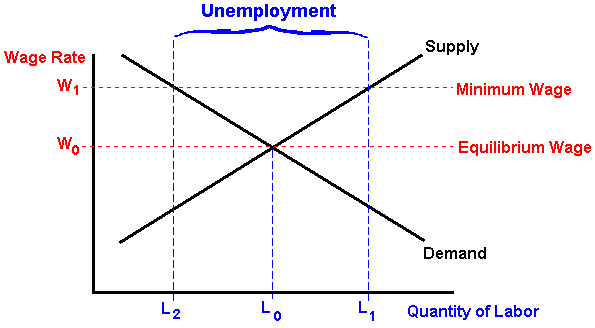









 The Daily Hatch